
pre-order now10.10.2025
expected to be published on 10.10.2025
22,90€
expected to be published on 10.10.2025

expected to be published on 10.10.2025

Very exclusive high quality De La Soul T shirt print with raised embossed fabric graffiti design of Mase, Pos and Dove along with the De La font logo. An extremely well made design on a cool light T -shirt material fabric that's perfect for the summer. This is a one-off limited edition. Once they're gone, they're gone. Comes in 3 different colours Black, White and Khaki, in sizes Large, Extra Large and Double Extra Large.
Order now and we will order the item for you at our supplier.

Pete Rock’s Return Of The SP-1200 Volume 2 in an opaque red pressing. Pete Rock is widely recognized as one of the greatest hip hop producers of all time. His name is oft included in the pantheon of the greatest, alongside DJ Premier, RZA and J Dilla. In addition, Pete has one of the world’s most extensive vinyl collections, the sort of collection whose size can only be estimated, and that estimate stands in excess of 100,000 LPs.
expected to be published on 01.08.2025

* V Recordings and Tim Reaper's Future Retro London have joined forces to unleash "One Stop Mr Driver," a track that channels the raw energy of '90s jungle. This release features both the original mix by the legendary Krust and a fresh remix by Tim Reaper, bridging the genre's roots with its modern resurgence.
* Kirk Thompson, professionally known as Krust, is a seminal figure in drum and bass. Emerging from Bristol's vibrant music scene, Krust co-founded the influential Full Cycle Records alongside Roni Size, DJ Die, and Suv. His innovative approach has produced classics like "Warhead" and "Soul in Motion," tracks that have left an indelible mark on the genre.
* London-based DJ and producer Tim Reaper has been pivotal in the revival of jungle music. Through his label, Future Retro London, Tim has showcased a plethora of talent from the modern jungle scene, earning accolades such as DJ Mag's Best of British Breakthrough Label award in 2021.
* "One Stop Mr Driver" was a coveted dubplate from the '90s, never officially released but highly sought after by enthusiasts. Recognizing its timeless appeal, Tim Reaper has crafted a remix that preserves the original's amen break-driven intensity while infusing it with razor-sharp modern production.
* Bryan Gee, the visionary behind V Recordings, has long admired Tim Reaper's contributions to the scene. This collaboration marks a rare partnership in V Recordings' three-decade history. The fusion of Krust's pioneering sound with Tim Reaper's modern touch honors its roots while embracing the future of drum and bass and jungle music.
* "One Stop Mr Driver" will be available digitally and as a limited edition 12" vinyl release.
Order now and we will order the item for you at our supplier.

Tamako Kitashirakawa is a secondary school pupil. She divides her time between her badminton club and the family shop, where mochi (rice cakes) are made and sold.
Her quiet life is disrupted by the arrival of a strange talking bird who moves in with Tamako...
The vinyl includes the credits from the anime as well as the most memorable BGMs*. The music is very peaceful, relaxing and almost nostalgic for fans of the series, with a strong piano presence on many of the BGMs.
expected to be published on 18.07.2025

Sneaker Social Club is pleased to direct your attention to this sparse and weighty club gear incoming from a sizeable new talent on the scene, Beton Brut.
Following on from his previous drops on Plasma Sources and Coyote Records, Beton Brut steps onto this latest platter with a surefooted sound. It’s informed by weightless grime, minimal techno and brittle electro, but he carves his own incisive path towards the hoods-up-heads-down Dancefloor.
This is stark, moody gear to get lost in — the dexterous sound design slipping around the rhythm core of ‘Tobacco Earthworm’; gleams in high-definition, but never at the expense of the eerily stripped-back atmosphere. ‘Booters’ snips up a clutch of clippings from grime and scatters them across the timeline in a scrapbook style, making a deadly, dislocated love letter to the sound in the process. Approaching mutant, hybrid club music with a considered poise, this is exactly the kind of forward-thinking bassweight gear that Sneaker thrives on.
Order now and we will order the item for you at our supplier.

Very exclusive high quality De La Soul T shirt print with raised embossed fabric graffiti design of Mase, Pos and Dove along with the De La font logo. An extremely well made design on a cool light T -shirt material fabric that's perfect for the summer. This is a one-off limited edition. Once they're gone, they're gone. Comes in 3 different colours Black, White and Khaki, in sizes Large, Extra Large and Double Extra Large.
expected to be published on 11.07.2025

Very exclusive high quality De La Soul T shirt print with raised embossed fabric graffiti design of Mase, Pos and Dove along with the De La font logo. An extremely well made design on a cool light T -shirt material fabric that's perfect for the summer. This is a one-off limited edition. Once they're gone, they're gone. Comes in 3 different colours Black, White and Khaki, in sizes Large, Extra Large and Double Extra Large.
expected to be published on 11.07.2025

Very exclusive high quality De La Soul T shirt print with raised embossed fabric graffiti design of Mase, Pos and Dove along with the De La font logo. An extremely well made design on a cool light T -shirt material fabric that's perfect for the summer. This is a one-off limited edition. Once they're gone, they're gone. Comes in 3 different colours Black, White and Khaki, in sizes Large, Extra Large and Double Extra Large.
expected to be published on 11.07.2025

Santana Bridges the Divide Between Live and Studio Material on Moonflower: 1977 Double Album Features Extraordinary Performances, Soulful Vibes, and Dynamic Mix of Latin, Rock, Funk, and Blues
Sourced from the Original Master Tapes and Strictly Limited to 3,000 Numbered Copies: Mobile Fidelity’s 180g 33RPM 2LP Set Plays with Audiophile-Quality Detail, Balance, and Imaging
1/4” / 15 IPS original analogue non-Dolby master to DSD 256 to analogue console to lathe
Though it may seem strange now, Moonflower stood for nearly 15 years as Santana’s first and only live record released in the United States. This despite the fact that roughly half of the double album consists of new studio songs, including a zesty cover of the Zombies classic “She’s Not There” that reached the Top 30 of the singles charts.
However unconventional, the “split” strategy went over like gangbusters. Moonflower reached the Top 10 of the Billboard Top 200 and achieved double-platinum status — feats the group would not again replicate for 22 years. These, and the beautiful quality of the program itself, are among the reasons why the 1977 effort remains viewed by critics and fans alike as must-have Santana.
Sourced from the original master tapes, pressed at Fidelity Record Pressing in California, housed in a Stoughton jacket, and strictly limited to 3,000 numbered copies, Mobile Fidelity’s 180g 33RPM 2LP set of Moonflower presents the record in audiophile sound for the first time on a domestic reissue. Part of the MoFi’s Santana catalog restoration series, this collectible version features quiet surfaces and black backgrounds that expose the critical details, liquid tones, and dynamic interplay central to Santana’s music.
The enhanced sonics extend not only to Carlos Santana’s six-string wizardry, but to the rhythmic, melodic, and vocal elements that course throughout both the studio and live cuts on Moonflower. The grip and depth of the bass lines; the wash of the organ; the scope and carry of the vocals; the extension and weight of the low-end frequencies; the rich textures of the guitars, percussive devices, and keyboards: all appear amid wide, balanced soundstages and image with right-sized dimensionality.
Significantly rooted in the styles and approaches that inform the group’s first three records, Moonflower captures the final appearances of iconic percussionist Jose “Chepito” Areas and go-to keyboardist Tom Coster on a Santana album. As he did during the preceding five-year stretch, Coster inhabits a large role here, sharing songwriting credits on a majority of the new cuts and helping steer the arrangements toward spiritually minded albeit concise directions that encompass vibrant Latin, rock, and blues themes that began to escape the ensemble shortly after his departure.
Close your eyes and feel the warmth of the sun on the R&B-kissed “I’ll Be Waiting,” anchored by Carlos Santana’s gliding fretwork and Greg Walker’s creamy vocals. Enter the cosmic universe of “Zulu,” on which Coster’s nimble phrasing opens the gate to polyrhythmic beats, knotty grooves, and interlocking funk. Grab the album cover and drift off to paradise amid the equally evocative “Flor d’Luna (Moonflower),” a romantic slow dance that Carlos Santana ensures tiptoes en route to its blissful destination. Channeling a different spirit animal, the guitarist later lets loose on the hard-hitting “El Morocco,” on which he seemingly engages in a shootout with himself and wades into the rippling psychedelia that elevated the band’s early material.
Speaking of the past, Moonflower triumphs on that level as well. In more ways than one, the live selections — and the caliber of the performances — chosen for inclusion represent an abbreviated greatest-hits survey of the band up to that point. And, at the very least, a convincing argument about why Santana had progressed into one of the most formidable bands you could hope to see on a stage in the mid ‘70s.
Simultaneously representative and illustrative of the group’s breadth, tracks stem from the collective’s eponymous debut, Abraxas, and Santana III as well as the then-more recent Amigos and Festival. Whether you fall for the sidewinding spell of a spicy rendition of “Black Magic Woman/Gypsy Queen,” lose your head to the positively epic momentum of “Soul Sacrifice/Head, Hands & Feet,” or keep dropping the needle on the savory grace of the brilliant reading of “Europa (Earth’s Cry Heaven’s Smile),” this pressing of Moonflower puts you — and Santana’s first-chapter legacy — in good hands.
expected to be published on 30.06.2025

A noughties classic, an earworming anthem, an eventual schoolyard ringtone favourite; Roman Flügel’s once inescapable ‘Geht’s Noch?’ celebrates turning 21 on Running Back, refreshed and remixed by a scene-spanning set of artists paying keen tribute to its absurdist energy.
Casually released as part of a Cocoon Records compilation in 2004, ‘Geht’s Noch?’ rose from the depths with the support of Sven Väth, becoming an international phenomenon, conquering and uniting the dominant scenes of minimal and electroclash alike. Some have said it laid the foundations for the ‘Dirty Dutch’
house scene, albeit from over the border in Germany.
Well known for injecting much-needed levity into the contemporary club landscape via her Live From Earth parties, DJ Gigola adds additional firepower to ‘Geht’s Noch?’, inducing a planet-shaking kick drum, before sending the track’s signature bleeps into nonsensical Morse code for even greater pleasure. Another rave
culture connoisseur, Luca Lozano, offers two alternate takes; his ‘Technocs’ mix rolls deep with additional cowbells, robotic voice commands and stadium-sized claps. Meanwhile, the ‘Gehts Garage Remix’ draws a savvy connection with the original’s as-yet-untapped UK funky potential.
Peder Mannerfelt, who straddles the line between innovation, functionality, humor and seriousness quite like its original author, takes ‘Geht’s Noch?’ to truly wuthering heights. His remix builds unexpected drama and catharsis around the enduring riff, before a collaboration with studio partner Par Grindvik as Aasthma
spins the club out with a glossy, anime-tinted take, full of whimsy and colour.
And while the digital release of Geht’s Noch? also spans interpretations from Audion, Domnik Eulberg & Moguai, this vinyl release presses Steve Angello vs Who’s Who remix to wax, that which helped take ‘Geht’s Noch?’ out of the underground and into the stratosphere. Twenty years on, and Flügel’s offbeat hit is always ascending. Love it or hate it, ‘Geht’s Noch?' will still get you good.
Words by John Loveless
Order now and we will order the item for you at our supplier.

A tangle of word and melody, old and new, NIGHTJAR evokes journeys along ghostly paths, country lanes and starlit shorelines, alive with shimmering patterns of a flowing tide. Stories of childhood, of loves and rivalries, fair maidens, cruel sisters and winged sorcerers are interwoven with glimpses of the natural world. NIGHTJAR is Liz Overs' debut solo release, having previously been signed to Atlantic in the late '90s as part of indie-dance crossover band Pocket Size, and she was also lead singer and songwriter for the Sussex-based folk band Chalk Horse Music.
Liz's haunting, unaccompanied version of The Birds in the Spring was featured in Dylan Howitt's award-winning documentary The Nettle Dress, and she performed live at several key screenings of the film in the UK.
Standard weight single black vinyl LP in picture sleeve
expected to be published on 06.06.2025

COOL HAND FLEX - MELODY MADNESS
BLADERUNNER / OUTRAGE / RONI SIZE REMIXES AND REMASTERED ORIGINAL
Suburban Base returns with a heavyweight release, delivering fresh remixes of the classic Melody Madness by Cool Hand Flex, reimagined by two of the most respected names in the scene—Bladerunner and Outrage.
Bladerunner brings his signature rolling basslines and crisp production to the track, delivering a modern take while staying true to the original’s deep jungle roots. On the flip, Outrage delivers the AWOL Remix, a tribute to the legendary club night, channeling the raw energy of those iconic sessions with rugged breakbeats and deep, atmospheric textures.
This double A-side includes the highly valued Original Version and the much sought after Roni Size Remix from 1995, the release bridges the old and the new, paying homage to a foundational anthem while pushing the sound forward.
Order now and we will order the item for you at our supplier.
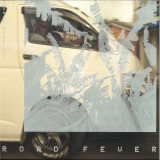
New Generation Carnival Riddims from St. Lucia and Dominica A hurricane of turbo-charged, body-buzzing tracks collide on Road Fever, a compilation of razor-produced, road-tested instrumental riddims from St. Lucia, Dominica & Guadeloupe that showcases the producers forging the future of Caribbean music in 2025. Road Fever draws together instrumental Dennery Segment and Bouyon riddims originally made for vocalists, presented for the first time as stand alone pieces of music. Distilling carnival riddims down to the bare bones, producers push minimal 150+bpms, FL-percussion packs, DJ/vox samples & synth riffs, bridging trap, drill, dancehall, sped-up Haitian konpa & Angolan kuduro. Ricocheting at the intersection of TikTok culture, best heard blasted through walls of speakers travelled by stage-sized carnival trucks or via bluetooth car speakers, St.Lucia"s "Dennery Segment" sound, (as iconic producer, G6 described in an interview), "sparks your inside; a sound you can"t hear and not move". Amsterdam-based, Curaçao-raised compiler Rozaly echoes G6: "Once you hear it, you can"t unhear or unfeel it. This is a musical movement with an entire history with so many relevant reasons why it still exists, and why it exists the way it exists right now". Rozaly concludes, "there is nothing more simple, let the artists speak."
Order now and we will order the item for you at our supplier.

2025 Repress
Jim Coles once again turns the tide towards a new horizon and travels further into the echo chamber. Leading on from the much-lauded ‘Secret Location’ mini-album with Seekersinternational, one-offs such as ‘Open Palms dub’ (Dub Stuy) and other teasings, ‘Acid Dub Studies’ is the fully-fledged result of the merging of the calligraphic expression of the 303 Acid bassline with the stern sway of Dub Reggae and the hazier edges of Dub Techno and Ambient music.
For those who have been paying close attention, this project will come as a welcome return to the vulnerability and playfulness of early Om Unit records such as his sub-radar single from 2010 ‘Lightgrids/Lavender’ (All City Records) or the unearthed chugging ambience of ‘Friend of Day’ (Idle Hands) and indeed in some sense draws from similar wellsprings as moments on 2013’s Bass classic ‘Threads’.
Whilst being perhaps an ‘interim project’ this is still a vital and important expression of exploration and playfulness. A study in the true sense and borne out of a subtle but pervasive frustration with the rigidity found in musical words he has up to now been cohabiting, Acid Dub Studies comes from the pressing need to break with perceived expectation and to explore an honest and natural space away from the genre labels and tags that had been often lazily applied to his sizeable catalogue of music.
With no desire to reinvent the wheel, rather to paint pictures in an honest framework, the LP was crafted using a medley of classic analogue mixing techniques inspired as much by the adventurous dubbing of Adrian Sherwood as by the inward-delving haze of Scott Monteith’s Deadbeat project. Created during a period of lonely introspective walks through his home town of Bristol, the cover art is a photograph of some of the iron kerbstones that are found almost exclusively in the characterful and hardy city which were installed in the late 1800’s to protect pavements from cart wheels. Something about the permanence of those iron slabs and cobblestones inspired a sense of comfort and determination.
Acid Dub Studies is due for release as yet another self-released label-free project leading on from recent EP titles ‘Violet’ and ‘Submerged’ both of which hinted at some of the shapes found in this full length album.
Once again Jim has shown a rare convincing adaptability that few electronic artists can embody. Another step on the journey of personal and creative curiosity that fans are sure to appreciate.
Order now and we will order the item for you at our supplier.

If Hawalat sounds like a world tour that’s because it essentially is. “As much as Marzipan is a picture of Lebanon from the inside, Hawalat kind of picks up from where Marzipan finished but more looking to the outside, the diaspora, to the notion of exile.” Megarbane says he is interested in the connections between the global and the domestic, the mundane and the cosmic, and wanted to create space for non-linear progression.
Hawalat is based on the idea of hawala, informal money transfers that you can make to certain countries impacted by a lack of currency or unstable political and economic contexts. His use of the term on this album is not a financial one, Megarbane explains, but a nod to notions of creative exchange between “places, persons, generations.” It is the first time Megarbane called on other musicians in this way to inform his sound, including a collaboration with Sven Wunder on the song Helia featuring strings by the Stockholm Studio Orchestra.
The album opens with first single Hanadi, a punchy Somali-inspired track with warm non-lexical vocals and saxophone. It immediately pivots to the Dreams of an Insomniac, which balances soft, effortless vocals and keys with urgent violin intrusions. Al Dollarji feels like Megarbane’s bread and butter, that is Mediterranean sounds with intricate strings, while Al Bahriye takes this staple and introduces hip hop inflections. The result is a rich 17 track album that effortlessly blends genres and styles.
Including 8 page, 12" sized booklet with unseen photos and liner notes by Armani Syed.
Order now and we will order the item for you at our supplier.

On a creative roll of late, Linkwoods productions have branched out in many directions, a collaboration LP with jazz Genius Greg Foat, Another with Local Edinburgh Legend Other lands and a load more yet to surface. Linkwood now comes back to solo work with a hyper focused piece of electro goodness. Lo-fi but all the better for it, Mono comprises 14 deeply distilled tracks. After producing some more complex records it was time for a pure palate cleanser so we locked Nick in the Athens of the north studio for a week with his friends Moog and Oberheim to see what might happen. Somewhere between Electro, Early 80s Synth pop and techno the album is an extremely listenable piece as a whole, unpretentious and timeless. Sprinklings ofDave Stewart pop noodles, Newbuild, Early Era Nu Groove but very much Linkwood at the same time, I cant recommend this enough.
Order now and we will order the item for you at our supplier.
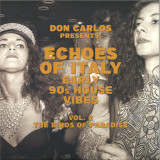
Vol 1[28,99 €]
Googling “paradise house”, the first results to pop up are an endless list of European b&b’s with whitewashed lime façades, all of them promising “…an unmatched travel experience a few steps from the sea”. Next, a little further down, are the institutional websites of a few select semi-luxury retirement homes (no photos shown, but lots of stock images of smiling nurses with reassuring looks). To find the “paradise house” we’re after, we have to scroll even further down. Much further down.
It feels like yesterday, and at the same time it seems like a million years ago. The Eighties had just ended, and it was still unclear what to expect from the Nineties. Mobile phones that were not the size of a briefcase and did not cost as much as a car? A frightening economic crisis? The guitar-rock revival?! Certainly, the best place to observe that moment of transition was the dancefloor. Truly epochal transformations were happening there. From America, within a short distance one from the other, two revolutionary new musical styles had arrived: the first one sounded a bit like an “on a budget” version of the best Seventies disco-music – Philly sound made with a set of piano-bar keyboards! – the other was even more sparse, futuristic and extraterrestrial. It was a music with a quite distinct “physical” component, which at the same time, to be fully grasped, seemed to call for the knotty theories of certain French post-modern philosophers: Gilles Deleuze, Félix Guattari, Paul Virilio... Both those genres – we would learn shortly after – were born in the black communities of Chicago and Detroit, although listening to those vinyl 12” (often wrapped in generic white covers, and with little indication in the label) you could not easily guess whether behind them there was a black boy from somewhere in the Usa, or a girl from Berlin, or a pale kid from a Cornish coastal town.
Quickly, similar sounds began to show up from all corners of Europe. A thousand variations of the same intuition: leaner, less lean, happier, slightly less intoxicated, more broken, slower, faster, much faster... Boom! From the dancefloors – the London ones at least, whose chronicles we eagerly read every month in the pages of The Face and i-D – came tales of a new generation of clubbers who had completely stopped “dressing up” to go dancing; of hot tempered hooligans bursting into tears and hugging everyone under the strobe lights as the notes of Strings of Life rose up through the fumes of dry ice (certain “smiling” pills were also involved, sure). At this point, however, we must move on to Switzerland.
In Switzerland, in the quiet and diligent town of Lugano, between the 1980s and 1990s there was a club called “Morandi”. Its hot night was on Wednesdays, when the audience also came from Milan, Como, Varese and Zurich. Legend goes that, one night, none less than Prince and Sheila E were spotted hiding among the sofas, on a day-off of the Italian dates of the Nude Tour… The Wednesday resident and superstar was an Italian dj with an exotic name: Don Carlos. The soundtrack he devised was a mixture of Chicago, Detroit, the most progressive R&B and certain forgotten classics of old disco music: practically, what the Paradise Garage in New York might have sounded like had it not closed in 1987. In between, Don Carlos also managed to squeeze in some tracks he had worked on in his studio on Lago Maggiore. One in particular: a track that was rather slow compared to the BPM in fashion at the time, but which was a perfect bridge between house and R&B. The title was Alone: Don Carlos would explain years later that it had to be intended both in the English meaning of “by itself” and like the Italian word meaning “halo”. That wasn’t the only double entendre about the song, anyway. Its own very deep nature was, indeed, double. On the one hand, Alone was built around an angelic keyboard pattern and a romantic piano riff that took you straight to heaven; on the other, it showcased enough electronic squelches (plus a sax part that sounded like it had been dissolved by acid rain) to pigeonhole the tune into the “junk modernity” section, aka the hallmark of all the most innovative sounds of the time: music that sounded like it was hand-crafted from the scraps of glittering overground pop.
No one knows who was the first to call it “paradise house”, nor when it happened. Alternative definitions on the same topic one happened to hear included “ambient house”, “dream house”, “Mediterranean progressive”… but of course none were as good (and alluring) as “paradise house”. What is certain is that such inclination for sounds that were in equal measure angelic and neurotic, romantic and unaffective, quickly became the trademark of the second generation of Italian house. Music that seemed shyly equidistant from all the rhythmic and electronic revolutions that had happened up to that moment (“Music perfectly adept at going nowhere slowly” as noted by English journalist Craig McLean in a legendary field report for Blah Blah Blah magazine). Music that to a inattentive ear might have sounded as anonymous as a snapshot of a random group of passers-by at 10AM in the centre of any major city, but perfectly described the (slow) awakening in the real world after the universal love binge of the so-called Second Summer of Love.
For a brief but unforgettable season, in Italy “paradise house” was the official soundtrack of interminable weekends spent inside the car, darting from one club to another, cutting the peninsula from North to centre, from East to West coast in pursuit of the latest after-hours disco, trading kilometres per hour with beats per minute: practically, a new New Year’s Eve every Friday and Saturday night. This too was no small transformation, as well as a shock for an adult Italy that was encountering for the first time – thanks to its sons and daughters – the wild side of industrial modernity. The clubbers of the so-called “fuoriorario” scene were the balls gone mad in the pinball machine most feared by newspapers, magazines and TV pundits. What they did each and every weekend, apart from going crazy to the sound of the current white labels, was linking distant geographical points and non-places (thank you Marc Augé!) – old dance halls, farmhouses and business centres – transformed for one night into house music heaven. As Marco D’Eramo wrote in his 1995 essay on Chicago, Il maiale e il grattacielo: “Four-wheeled capitalism distorts our age-old image of the city, it allows the suburbs to be connected to each other, whereas before they were connected only by the centre (…) It makes possible a metropolitan area without a metropolis, without a city centre, without downtown. The periphery is no longer a periphery of any centre, but is self-centred”.
“Paradise house” perfectly understood all of this and turned it into a sort of cyber-blues that didn’t even need words, and unexpectedly brought back a drop of melancholic (post?)-humanity within a world that by then – as we would wholly realise in the decades to come – was fully inhuman and heartless. A world where we were all alone, and surrounded by a sinister yellowish halo, like a neon at the end of its life cycle. But, for one night at least, happy."
Order now and we will order the item for you at our supplier.

The Austin, TX-based singer-songwriter—whose decades-long career has seen six full-length studio albums, three EPs, countless collaborations, and an illustrious supergroup project in Glorietta—spent a season of rest away from his focus on writing songs. In the wake of the end of a long relationship, he wanted to prioritize processing his grief as a human, not as an artist bleeding on the page. “I love all the records I’ve made in the past. But in making them, there was always the thought in the back of my mind of where and what it could get me. I made both creative and business decisions with a goal in mind... a goal that often never came. This time it was all about just the joy of making it, about having fun with it.”
expected to be published on 21.03.2025

Introducing the first 4-wheel DJ trolley designed for ultimate convenience. The SOLID BLAZE CABIN-TROLLEY allows DJs and music producers to easily navigate airports, train stations, and more while traveling to gigs. Safely transport essential gear like laptops, mixers, drum samplers, DAW controllers and 12“records with ease.
Made from recycled plastic bottles, this sustainable trolley also features interchangeable wear-and-tear components, including the trolley handle and wheels, for long-lasting performance.
Travel smart and eco-friendly with the new SOLID BLAZE CABIN-TROLLEY, perfectly sized to meet cabin luggage standards of most airlines
Outer dimensions (H/B/T):
55 x 39 x 23 cm / 21.6 x 15.3 x 9 inch
Inner dimensions:
45 x 36 x 15 cm (main compartment) / 17.7 x 14.17 x 5.9
expected to be published on 07.03.2025

The 7” SlingBag 60 is a small size bag that holds approximately 60 pieces of 7-inch records. It has a small pocket in the front and mesh pocket in the inside for small accessories. Next to this the bag features the special soft fleeced interior provides protection from bumps and knocks. It comes with a handgrip, detachable and adjustable shoulder strap. The 7” SlingBag 60 the one bag a DJ need to carry around 7-inch records. A perfect size bag for a minimalist DJ set!
Color Black
Weight 0,35 kg / 0.77 lbs
Outer Dimensions (W x H x D) cm: 21 x 21 x 16.5 | inch: 8.3 x 8.3 x 6.5
Inner Dimensions (W x H x D) cm: 20.5 x 19 x 15 | inch: 8.1 x 7.5 x 5.9
Material Water resistant Ballistic Nylon 1680D
Protection:
Soft fleeced interior provides protection from bumps and knocks
Extra's:
Inside mesh pocket for USB drives, SD cards and small accessories
Small front pocket for smaller gears
Adjustable shoulder strap
Convenient carry handles
Fits:
Holds up to 60 x 7” records,
USB drives
SD cards
Small accessories
Order now and we will order the item for you at our supplier.
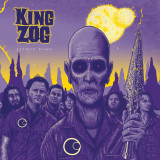
Gelobt sei das allmächtige Riff! Triumphaler, großartiger, schwerer und kraftvoller Stoner Metal.Das Debütalbum von King Zog aus dem Jahr 2017
führte einen neuen Titanen in die Unterwelt des Doom ein und erntete einseitige Fangemeinde und Kritikerlob für sein hingebungsvolles Opfer an die
Götter des Metal. Songs wie Temple's Temple, Man-sized Rotisserie und Witchsmoker klangen so, wie das ikonische Album-Artwork von Dominic
Sohor aussah: feurig und grausam.Seit dem Erscheinen dieses musikalischen Leviathans haben King Zog an einer unermüdlichen Mission gearbeitet.
Daniel Durack (Gesang/Gitarre), Connor Pitts-West (Gitarre), Martin Gonzalez (Bass) und Sean Ryan (Schlagzeug) haben keinen einzigen Tag
vergeudet, sich während der Pandemie in die Kisten gekauert, um Album Nr. 2 zu schreiben, und nach Aufhebung der Sperren unermüdlich performt.
Die Belohnung für ihre Mühen steht kurz bevor: „Second Dawn“ soll Anfang 2024 auf Hammerheart Records erscheinen. Größer, schwerer und
doomiger als sein Vorgänger, ist King Zogs zweites Album alles, was Fans sich wünschen: ein wütender Stier aus iommischen Riffs, seismischen Bässen
und donnernden Rhythmen. Downtuned und verzerrt, das erdrückende Gewicht.
expected to be published on 21.02.2025

Loyle Carner will release his highly anticipated sophomore record, 'Not Waving, But Drowning' on 19 April via AMF Records.
'Not Waving, But Drowning' follows Loyle's BRIT (Best Male, Best Newcomer) and Mercury Prize nominated, top 20 debut 'Yesterday's Gone'. The bedrock of honest and raw sentimentality that you heard on 'Yesterday's Gone' left an inextinguishable mark on music in general and UK Hip Hop in particular, standing out as an ageless, bulletproof debut.
'Not Waving, But Drowning', Loyle's new album, gives yet more evidence - as if it were needed - of his razor-sharp flow and his unique storytelling ability. Yes, he can rap, but he allies that with the sensitivity of a poet, the observational skills of a novelist, and warmth of your best friend. The album opens with 'Dear Jean', a letter to his mother in which he's telling her that he has found the love of his life, 'a woman from the skies', and he's moving out.
It goes without saying that Loyle's music is hard to categorise, but what is even more impressive is that for someone who grew up listening to Mos Def, Biggie Smalls, Roots Manuva, and Wu Tang Clan, he doesn't sound like any of them. Although he might from time to time give lyrical nods to them, he's no imitator.
Loyle loves cooking. There are two tracks on this album named after chefs. The British-Israeli chef Yotam Ottolenghi, and the now deceased Italian chef Antonio Carluccio. 'Ottolenghi' the first single from the album was featured on the BBC Radio 1 B-list, BBC 6 Music A-list and has already been streamed over 5 million times.
Loyle refers to real life for everything, the title of 'Yesterday's Gone' came from a song of his step father, the title of his new album 'Not Waving, But Drowning' comes from a poem by his grandfather, which in turn came from a Stevie Smith poem. What you hear on the track 'Krispy' is real. He is pouring his heart out to his best friend Rebel Kleff after their relationship went downhill, he invites him on the track to say his piece but he doesn't turn up, so we get a flugel solo instead.
Loyle also has his own personal black consciousness movement. When he refers to his 'fathers' in the track 'Looking Back' he really is referring to two fathers. His biological father, a black man who he knows, but knows very little of, and his step father, a poet and musician who happens to be a white man but died a sudden unexpected death from epilepsy (SUDEP). With no real emotional ties to his biological father, but a deep connection with a deceased step-father, where does a young child turn He succinctly captures many of the great, unspoken, cultural and historical paradoxes of multicultural Britain on 'Looking Back'.
An album like this is hard to find. It is for those who like their Hip Hop to have soul, and their soul to have spirit. This is because it works on so many levels, but it is reflecting the personality of its creator. There are a host of collaborators here, Jorja Smith, Rebel Kleff, Kiko Bun, Kwes, Jordan Rakei, Sampha, Tom Misch and more, but none are overpowering. They blend righteously into place.
Loyle is not bitter with people who have let him down, or a society that lets so many down, but the combination of anger and love he has gives his voice the perfect blend of strength and vulnerability. This might be a coming of age album, but it's also a coming of ageless album. Loyle's 2019 Spring tour - which includes London's Roundhouse - sold out within 20 minutes of being on sale.
Not Waving, But Drowning
A rapper that raps about family is hard to find. The boys in the 'hood' tend not to be that interested in how much a 'brother' loves his mother, or how much he misses his dad, or even how much he misses his best friend. The boys in the 'hood' tend to be obsessed with the size of their cars, girls, bank accounts, and other personal 'possessions'. Loyle Carner's Mercury and BRIT Prize nominated debut 'Yesterday's Gone' (Released 2017), made it clear that he wasn't that kind of rapper. In fact, every time I talk to him about his work we talk about the world, and we tended to confuse ourselves by calling his work rap, poems, or songs, sometimes in the same sentence. They are in truth all of these things.
Here's some poetry.
Honestly I need them.
I hate them but I grieve them
I think I've finally found the reason
Trust
Like the fire needs the air.
I won't burn unless you're there.
'Not Waving, But Drowning', Loyle's forthcoming new album, gives us yet more evidence, (if it were needed), that he still has what rappers call, flow, but he hasn't lost any of his story telling qualities. Yes, the boy can rap, but a rapper with the sensitivity of a true poet, the observational skills of a novelist, and warmth of your best friend. The album opens with 'Dear Jean', a letter to his mother in which he's telling her that he has found the love of his life, (a woman from the skies), and he's moving out. He really loves the woman from the skies, but he still loves his mum, and so he reassures her that there is no competition, and tells her that 'She's not behind me or behind you, but beside we and beside two', his words. Or to put it another way, moving out without moving out. My words.
It goes without saying that Loyle's music is hard to categorise, but what is even more impressive is that for someone who grew up listening to Mos Def, Biggie Smalls, Roots Manuva, and Wu Tang Clan, he doesn't sound like any of them. Although he might from time to time give lyrical nods to them, he's no imitator. He says finding his own voice was something he always found easy. Although young, (in terms of a musical career), he has confidence in his own words and his own voice, and has never been tempted to sound like he's been hanging out in the USA, or rolling in 'Grime' on the mean streets of East London. And so when it comes to the creative process he doesn't simply find a beat to jump on and ride. Beats are important, but they are tenderly layered with samples, keyboards, or live drums, all imaginatively assembled for the laying on of words. Some tracks start with the idea, some with poetry, and some with a verse from a singer or some other melodic inspiration, but there is no formula.
Here's some poetry.
Don't hold any memories of us
Rather hold you everyday until the memories are dust
Yo we only caught the train
Cos you know I hate the bus
A prolific reader, who has dyslexia is hard to find. Add ADHD (Attention deficit hyperactivity disorder) to that and life should become even more difficult. To deal with your difficulties you devise coping strategies, which can differ from person to person. Loyle loves cooking. There are two tracks on this album named after chefs. The British-Israeli chef Ottolenghi, and the now deceased Italian chef Antonio Carluccio. Loyle describes himself as 'weird' because he is happy to read a cookbook as if he was reading a novel or a book of poetry. He has opened a cookery school for young adults not just because he loves food and wants to make more of it, but because it is one of the few things that can focus the ADHD mind. And when it comes to his other love, football, his approach is the same. Focus. He wanted to be a striker he says, up front scoring goals, but found his best position was in midfield because he was able to focus, check options, and see passes ahead of time, providing passes for other players just when they needed them. He says, 'You don't grow out of ADHD, you grow into it.' Loyle is also working with Levi's® on their music project where he is mentoring young musicians over a six month period, culminating at Liverpool Sound City festival.
More poetry.
When the going is tough
I wait till it falls on deaf ears
Hearsay
Without the boundaries of love
He also said, 'Ask most people and they will say that they love their mothers, but most are not going to rap about her'. On his first album Loyle's mum Jean wrote about the 'scribble of a boy' that growing up would take things apart to see how they worked. On this album she speaks with pride about a man who has found his place in the world.
Yes, poetry.
I'm still looking for the answers
Trying to find the right questions
Still waiting for my fathers
But can't break them in to sections
This poetry is serious. Loyle has his own personal black consciousness movement. He told me that he always felt safe at home, and being the darkest one in the family never meant a thing, but then when he had to face the outside world he felt hostility. It shook him up. Now he had to start asking questions, but what were the questions. This is serious. When he refers to his 'fathers' in the verse above taken from the track 'Looking Back' he really is referring to two fathers. His biological father, a black man who he knows, but knows very little of, and his step father, a poet and musician who happens to be a white man but died a sudden unexpected death from epilepsy (SUDEP). So to whom would a young black (or mixed race) kid turn He succinctly captures many of the great, unspoken, cultural and historical paradoxes of multicultural Britain when he says, 'My great grandfather could of owned my other one.' We are a people descended from enslaved people on one hand, and enslavers on the other, something we are still struggling to come to terms with, and this can be apparent in one family. A big book could have told you that, but here we get it in one line on the track, Looking Back.
Loyle refers to real life for everything. The album is peppered with captured moments that he records on his phone. These moments can range from conversations with taxi drivers, to capturing the moment when England scores a goal in the world cup. The title of 'Yesterday's Gone' came from a song of his step father, the title of his new album 'Not Waving but Drowning' comes from a poem by his grandfather, which in turn came from a Stevie Smith poem. What you hear on the track 'Krispy' is real. He is pouring his heart out to his best friend after their relationship went downhill, he invites him on the track to say his piece but he doesn't turn up, so we get a flugel solo instead. Yes people, this is real.
An album like this is hard to find. It is for those who like their Hip Hop to have soul, and their soul to have spirit, this is an album for those who have, (I'm sorry, I'm going to say it), emotional intelligence. This is because it works on so many levels, but it is reflecting the personality of its creator. There are a host of collaborators here, Jorja Smith, Rebel Kleff, Kiko Bun, Jordan Rakei, Sampha, Tom Misch and more, but none are overpowering. They blend righteously into place. Loyle is not bitter with people who have let him down, or the society that has let him down, but the combination of anger and love he has gives his voice the perfect blend of strength and vulnerability. This might be a coming of age album, but it's also a coming of ageless album. His first album worked, and this second album is a continuation of that work. Not creating a form, but being formless, as someone like Bruce Lee once said.
And here's some poetry from mum.
We talked long in to the darkest hours
Until we saw the burnished sky
And our eyes stung
As our words blurred and became thoughts
As we were silenced by the dawn
We clung to each other like sailors in a storm
Order now and we will order the item for you at our supplier.

Vol 2[28,99 €]
Volume 1 of this expertly curated project of 90s Italian House - put together by Don Carlos.
If Paradise was half as nice… by Fabio De Luca.
Googling “paradise house”, the first results to pop up are an endless list of European b&b’s with whitewashed lime façades, all of them promising “…an unmatched travel experience a few steps from the sea”. Next, a little further down, are the institutional websites of a few select semi-luxury retirement homes (no photos shown, but lots of stock images of smiling nurses with reassuring looks). To find the “paradise house” we’re after, we have to scroll even further down. Much further down.
It feels like yesterday, and at the same time it seems like a million years ago. The Eighties had just ended, and it was still unclear what to expect from the Nineties. Mobile phones that were not the size of a briefcase and did not cost as much as a car? A frightening economic crisis? The guitar-rock revival?! Certainly, the best place to observe that moment of transition was the dancefloor. Truly epochal transformations were happening there. From America, within a short distance one from the other, two revolutionary new musical styles had arrived: the first one sounded a bit like an “on a budget” version of the best Seventies disco-music – Philly sound made with a set of piano-bar keyboards! – the other was even more sparse, futuristic and extraterrestrial. It was a music with a quite distinct “physical” component, which at the same time, to be fully grasped, seemed to call for the knotty theories of certain French post-modern philosophers: Gilles Deleuze, Félix Guattari, Paul Virilio... Both those genres – we would learn shortly after – were born in the black communities of Chicago and Detroit, although listening to those vinyl 12” (often wrapped in generic white covers, and with little indication in the label) you could not easily guess whether behind them there was a black boy from somewhere in the Usa, or a girl from Berlin, or a pale kid from a Cornish coastal town.
Quickly, similar sounds began to show up from all corners of Europe. A thousand variations of the same intuition: leaner, less lean, happier, slightly less intoxicated, more broken, slower, faster, much faster... Boom! From the dancefloors – the London ones at least, whose chronicles we eagerly read every month in the pages of The Face and i-D – came tales of a new generation of clubbers who had completely stopped “dressing up” to go dancing; of hot tempered hooligans bursting into tears and hugging everyone under the strobe lights as the notes of Strings of Life rose up through the fumes of dry ice (certain “smiling” pills were also involved, sure). At this point, however, we must move on to Switzerland.
In Switzerland, in the quiet and diligent town of Lugano, between the 1980s and 1990s there was a club called “Morandi”. Its hot night was on Wednesdays, when the audience also came from Milan, Como, Varese and Zurich. Legend goes that, one night, none less than Prince and Sheila E were spotted hiding among the sofas, on a day-off of the Italian dates of the Nude Tour… The Wednesday resident and superstar was an Italian dj with an exotic name: Don Carlos. The soundtrack he devised was a mixture of Chicago, Detroit, the most progressive R&B and certain forgotten classics of old disco music: practically, what the Paradise Garage in New York might have sounded like had it not closed in 1987. In between, Don Carlos also managed to squeeze in some tracks he had worked on in his studio on Lago Maggiore. One in particular: a track that was rather slow compared to the BPM in fashion at the time, but which was a perfect bridge between house and R&B. The title was Alone: Don Carlos would explain years later that it had to be intended both in the English meaning of “by itself” and like the Italian word meaning “halo”. That wasn’t the only double entendre about the song, anyway. Its own very deep nature was, indeed, double. On the one hand, Alone was built around an angelic keyboard pattern and a romantic piano riff that took you straight to heaven; on the other, it showcased enough electronic squelches (plus a sax part that sounded like it had been dissolved by acid rain) to pigeonhole the tune into the “junk modernity” section, aka the hallmark of all the most innovative sounds of the time: music that sounded like it was hand-crafted from the scraps of glittering overground pop.
No one knows who was the first to call it “paradise house”, nor when it happened. Alternative definitions on the same topic one happened to hear included “ambient house”, “dream house”, “Mediterranean progressive”… but of course none were as good (and alluring) as “paradise house”. What is certain is that such inclination for sounds that were in equal measure angelic and neurotic, romantic and unaffective, quickly became the trademark of the second generation of Italian house. Music that seemed shyly equidistant from all the rhythmic and electronic revolutions that had happened up to that moment (“Music perfectly adept at going nowhere slowly” as noted by English journalist Craig McLean in a legendary field report for Blah Blah Blah magazine). Music that to a inattentive ear might have sounded as anonymous as a snapshot of a random group of passers-by at 10AM in the centre of any major city, but perfectly described the (slow) awakening in the real world after the universal love binge of the so-called Second Summer of Love.
For a brief but unforgettable season, in Italy “paradise house” was the official soundtrack of interminable weekends spent inside the car, darting from one club to another, cutting the peninsula from North to centre, from East to West coast in pursuit of the latest after-hours disco, trading kilometres per hour with beats per minute: practically, a new New Year’s Eve every Friday and Saturday night. This too was no small transformation, as well as a shock for an adult Italy that was encountering for the first time – thanks to its sons and daughters – the wild side of industrial modernity. The clubbers of the so-called “fuoriorario” scene were the balls gone mad in the pinball machine most feared by newspapers, magazines and TV pundits. What they did each and every weekend, apart from going crazy to the sound of the current white labels, was linking distant geographical points and non-places (thank you Marc Augé!) – old dance halls, farmhouses and business centres – transformed for one night into house music heaven. As Marco D’Eramo wrote in his 1995 essay on Chicago, Il maiale e il grattacielo: “Four-wheeled capitalism distorts our age-old image of the city, it allows the suburbs to be connected to each other, whereas before they were connected only by the centre (…) It makes possible a metropolitan area without a metropolis, without a city centre, without downtown. The periphery is no longer a periphery of any centre, but is self-centred”.
“Paradise house” perfectly understood all of this and turned it into a sort of cyber-blues that didn’t even need words, and unexpectedly brought back a drop of melancholic (post?)-humanity within a world that by then – as we would wholly realise in the decades to come – was fully inhuman and heartless. A world where we were all alone, and surrounded by a sinister yellowish halo, like a neon at the end of its life cycle. But, for one night at least, happy.
Order now and we will order the item for you at our supplier.

Fumitake Tamura (Leaving Records) and Jason Kolàr (Dauw, Stroom) return to Dauw with 'Suki-Ma', a cassette only mixtape including music from the same sessions that led to their debut 'Ōki-sa' which was released last year. According to the artists, 'Suki-Ma' is conceived as a mixtape rather than a new album. A draft rather than a new step.
隙間 (Suki-Ma) refers to the space or gap between objects, a concept that invites reflection on what lies between the defined and the undefined. This mixtape embodies that in-between state: a fluid, open sketch existing at the intersection of ideas. Despite its more polished production, it embraces imperfection and incompleteness, serving as a continuation of Ōki-sa (大きさ, meaning ‘size’, ‘largeness’ or ‘spaciousness’), while embracing further misunderstandings in the creation of a new record.
expected to be published on 07.02.2025

* 180 gram audiophile vinyl
* Gatefold sleeve
This is a re-release of the famous 'red sleeve' Fleetwood Mac Greatest Hits album. This record was a stalwart of every decent album collection in the early 1970s as it represented the first greatest hits package from Fleetwood Mac, covering the period from the band's beginning in 1968 through to 1971.
Fleetwood Mac in their original incarnation were led by guitarist Peter Green and were leaders of the second British Blues boom of the late 1960s. Fleetwood Mac enjoyed several hit singles in the United Kingdom at that time and these are collated here for this album, originally issued on CBS Records only in the U.K.
"Albatross" was a huge chart hit in the UK whilst the single "Black Magic Woman" helped to break Fleetwood Mac in the U.S. via a cover version by Santana, that landed in the Top Five of the Billboard Top 40.
The album gatefold shows a full-size photo of the post-Green line up of the band with Christine McVie (nee Perfect), even though she just plays piano on a couple of tracks and wasn't a full-fledged member until after "Kiln House" was released.
Order now and we will order the item for you at our supplier.

The Sound System has become part of today’s musical/cultural heritage, playing the people’s favourite hits or just as important, breaking some new tunes.
But perhaps less known are the roots of the Sound System, which began way back when…in Kingston….
Around the late 1940’s the Sound System began to overtake the big bands that usually played at the dances in Kingston.
The American Rhythm and Blues records that were so popular at the time would find their way to Jamaica via the merchant sailors and migrant workers returning from their stints in America. For economical reasons alone it would pay to have a DJ on hand to play these hits rather than a 10 piece band that could eat and drink the promotor out of the house and on curried goat!!
The early Sound Systems were basic affairs built around a single record deck, a valve amp and a speaker.
But by the 1950’s they had grown to purpose built speakers the size of wardrobes that could be heard blocks away.
Record producer Bunny ‘Striker’ Lee would remember the time ‘Sound Systems was like our radio station…not many people on the island would own a wireless, so it was the way for the people to hear their music.
So this selection of Lovers, Ballads, Root’s classic’s made the Sound Sytems of Jamaica the place to be.
So sit back and enjoy the ride….SOUND SYSTEM ROCKERS …one and all
Order now and we will order the item for you at our supplier.

part 7[26,01 €]
The genius of Lord Kitchener has been the mainstay of our series. In this volume devoted to his post-war London recordings, Kitch plays his many roles with signature aplomb and poised subtlety. First there is the hooligan chantwell, up for anything in the hurly-burly of carnival proper; and then the casual reporter, firing off postcards to Trinidad about taxis, flashy booze, fast women and football in Manchester, with homesickness and grievance nestled just behind the optimism, pride and tentative senses of belonging. There is the bearer of news from home, in detailed accounts of murders, tales of stupid local coppers, and reminiscences about food and particular mango trees; the political thinker, considering racism and Africa; and the diarist, with his vivid tales of infidelity, and disclosure of the break-up of his marriage, and his desire to get away. One foot in the UK, the other in Trinidad; but the man himself somewhere in-between. Kitch In The Jungle, nobody around. A ‘diasporic explorer’; a key twentieth-century witness, alongside such hallowed figures as Samuel Selvon and Edward Kamau Braithwaite. Though in frustration Kitch would sometimes take over double-bass duties himself, the musicianship of Rupert Nurse, Fitzroy Coleman and co is top-notch. The original glorious sound is down to Denys Preston, recording for Melodisc, often at Abbey Road Studios (where we transferred and restored the 78s compiled here). Presented in a lovely gatefold sleeve, with a full-size booklet containing superb, specially-commissioned sleevenotes by Kitch biographer Anthony Joseph, and fabulous, previously-unseen photographs.
This item has not yet been released. You can pre-order the product now.

Get to your destination in style and comfort with the Magma Riot Carry-On Trolley. Specially designed to meet international carry-on restrictions, the Riot Carry-On Trolley is the perfect companion for air travel. Featuring only the highest-grade materials, the Riot Carry-On Trolley provides smooth rolling precision inline wheels and solid construction to protect your valuable gear. It easily holds any battle or club mixer to 12”, or a mid-sized controller along with a laptop, records and accessories.
+ Fits
Laptop up to 17”
12’ vinyl
+ BASICS
Crafted from hardwearing and 100% waterproof PVC Tarpaulin
PVC-coated (waterproof zippers)
Smooth rolling, precision inline wheels and sturdy built-in tuck away handle
Integrated PVC body, 3 cm bottom and 1 cm side padding
Soft-fleece lining
Lockable zippers on main compartment
Main compartment includes 4 adjustment foams and 1 divider/protection panel
Built-in, fully padded laptop sleeve up to 19”
Large front compartment with mesh organizers for cables and small accessories + separate quick access pocket for traveling documents
Rubber corner protectors
Internal rain cover protects trolley handle access
Horizontal and vertical carrying handles
Hand luggage compatible
+ SPECS
+ Outer dimensions: 55 x 37 x 23 cm
+ Inner dimensions: 45 x 34 x 16 cm (Hauptfach)
+ Weight: 4,4 kg
This item has not yet been released. You can pre-order the product now.

A nod to when it all started with 'Mystery of Love' on 'My Label' Alleviated Records. Blue silk screen print on white shirt. Heavy Cotton Adult T-Shirt Size S: White Unisex 100% jersey cotton (180g/m²) from ethical and sustainable sources Measurements S: chest: 46 cm, back: 72 cm Measurements M: chest: 51 cm, back: 74 cm Measurements L: chest: 56 cm, back: 77 cm Measurements XL: chest: 61 cm, back: 79 cm Measurements XXL: chest: 67 cm, back: 81 cm
Order now and we will order the item for you at our supplier.

expected to be published on 13.12.2024

expected to be published on 13.12.2024

Order now and we will order the item for you at our supplier.

Order now and we will order the item for you at our supplier.

expected to be published on 02.12.2024
![[ K S R ] & Konny Kon - Part of the Plan / Faded from the Jump](https://www.deejay.de/images/l/9/4/1111094.jpg)
First Word Records areproud to present a new double-AA sided collaboration from K S R and Konny Kon (Children of Zeus) - 'Part of the Plan / Faded from the Jump', available on 7" vinyl and digital.
Two of Manchester's finest r&b ambassadors, the duo team up for two tracks displaying very different styles of soul music.
'Part of the Plan' has a timeless classic feel, nodding back to the likes of Stax and Atlantic, akin to the contemporary sound of Daptone artists like Jalen Ngonda or Thee Sacred Souls. Waves crash on the dock of the bay, with [ K S R ]'s soulful tones and Konny's laidback production (accompanied by Son of Zeus, Tyler Daley on the backing vox).
'Faded from the Jump' is another three and a half minutes of bliss, taking on a sound that's more signature to the duo's previous work, individually and collectively, sitting somewhere between future r&b, neo-soul and classic Manny street soul. [ K S R ] again takes the lead on this smoothed-out cut, with Konny behind the boards on production.
[ K S R ] hails from Moss Side and has been steadily building a strong rep for himself over the past few years with a slew of releases, including an EP and several singles via First Word. He was named "R&B act to watch" by Complex, and hand-picked by Mahalia to perform an event she curated personally at London's Jazz Cafe. He's toured with artists including Pip Millet, Etta Bond, Mica Miller & The Mouse Outfit, and also collaborated with various d&b artists, such as Zero T, Lenzman, Searchlight and Makoto. Music aside, [ K S R ] has also been creative ambassador for New Balance, Foot Locker, Nike, Size? and Manchester United.
Konny Kon is best known for being one half of hip hop soul duo, Children of Zeus. With performances for Colors and Soulection, and support from peers Jazzy Jeff, Jazzie B, Loose Ends & countless others, Children of Zeus have released two highly-acclaimed albums and two EPs on Worldwide Award winning-label, First Word. Additionally to writing, performing and producing, Konny is a formidable DJ, hosting a popular monthly show on NTS Radio, and performing at numerous events; most recently supporting Mercury Award-winner's Ezra Collective at every date on their European tour, culminating in a show with Children of Zeus at Wembley Arena, London.
Both artists have had wide support across the board from numerous tastemakers, including 1Xtra, BBC Radio 1, BBC 6 Music, Rinse, Represent, Unity, Mixmag, Notion, Hypebeast and tons more. The duo have previously collaborated on 'All on You' (from the CoZ album 'Travel Light') and single 'CGWY' (from [ K S R ]'s EP 'Peace + Harmony').
This single showcases the vocals of [ K S R ] and the production of Konny Kon to a degree that exudes pure quality and class, exemplifying the power of modern British soul music.
'Part of the Plan / Faded from the Jump' is released on 7" vinyl and digital, 22nd November 2024.
expected to be published on 29.11.2024

To give you an idea of what the New Jersey, USA band Cowardice sound like, “Atavist” exists somewhere on the spectrum between the sombre strains of Bell Witch and the tormented tones of Body Void, with the first half of the album (“Suzerain”) erring more towards the bleakly melodic style of the former, while part two (“Sentinel”) shifts the focus towards a darker, dirgier approach; somewhere on the edges between melancholic doom and experimental sludge metal. Perhaps inevitably, it’s not quite that cut and dry - the gut-churning grind of “Unforgeable Key” for example, is just as nasty and gnarly as anything found on “Sentinel”, while the desolate disharmonies of “The Diminutive Principle” channel a similarly angst-ridden aura as much of “Suzerain” - but this distinction between the two halves, subtle as it may be, plays a big role in giving the whole album its sense of direction and progression.
And while it is always recommended to listen to the totality of “Atavist” so as to get the most out of it - especially if you’re a fan of the likes of Cavernlight and/or Chained To The Bottom Of The Ocean, both of whom also serve as useful touchstones for any prospective listener - also pay extra attention to the gorgeously gloomy slow-burn of opener “To The Hilt Of Humanity”, the haunting melodies and heaving grooves of the sludge-soaked “Clairvoyance Anxiety” and the morbid majesty of “Hall Of Mages”, as some of the record’s major highlights. Indeed, it’s this last track which will both test your resolve and prove, once and for all, that “Atavist” is more than worth every second you’ve invested into listening to it so far, with every crushing, cathartic chord and ringing, harmonic note… every tortured, suffering snarl and trembling, melancholy melody… coming together over the course of seventeen absolutely massive minutes to demonstrate that, despite its imposing size and intense sound, “Atavist” is nothing to be afraid of. Green and red coloured double vinyl edition.
expected to be published on 29.11.2024

Anything goes, everything is OK,’ is New Cool Collective’s free and easy creed. These eight jazz players are continually reinventing themselves, finding new inspiration and inspiring others. Brilliant as ever under a new spotlight, New Cool Collective excels on their 25th album Everything is OK, released by Dox Records this autumn on 25 October 2024.
Earlier this year, the band celebrated its thirtieth anniversary with a pocket-sized ode to their prolific past: 30 Years Live. Having played and partied, the group turned their attention to the future: what next for an ensemble that thrives on musical experiment and collaboration? Where to now? Which way to go to rekindle that creative spark and foster that flame?
New Cool Collective has met the challenge head-on, determined to surprise their audience, and themselves too. They spent a little time reflecting, considering suggestions, weighing up options – eight creative artists exploring, coalescing. Soon their ideas gelled into something special. They laid down a series of tracks that both build on the band’s thirty-year history and feed on a newfound freedom to simply be New Cool Collective. Everything is OK embodies that sense of a group which knows how to surpass expectations, to make music from the heart, to go back to their roots, back to the essence of those early years.
Anything goes, everything is okay on a record that features extensive brass arrangements and orchestral elements. There’s something magnificent about those seductively intimate tracks, something way beyond the traditional orchestral big band sound. New Cool love to experiment with alternative production techniques, developing the final mix themselves to create a unique, unmistakably recognizable sound – however surprising or unusual the music, you know you’re listening to New Cool Collective – like you’re there and the band is playing just for you.
Everything is OK is brimming with ideas, surprise and humour. The music is contemplative, yet it also leads straight to the dance floor: it gets you moving – body and soul. This is music for the intellect, to take you out of your comfort zone and to show you subtly, ironically: is everything really ok?
expected to be published on 29.11.2024

Released on 15th November via Polydor Records, “Small Changes” is the eagerly anticipated follow-up to Michael’s eponymous third LP, the Mercury Prize winning, and Grammy Award nominated “KIWANUKA”.
“Small Changes” was produced alongside Danger Mouse and Inflo, the team behind the globally acclaimed “KIWANUKA” and its equally acclaimed predecessor, “Love & Hate”. The new record was recorded between London and Los Angeles. The core trio made up of Kiwanuka and his trusty co-producers expanded into a wish-list ensemble that featured legendary bassist Pino Palladino (D’Angelo, John Mayer, Beyoncé) and Jimmy Jam of the iconic Jam and Lewis songwriting and production duo (Janet Jackson, Prince, SOS Band).
A welcome return for one of Britain’s most talented of songwriters, most recognisable of vocalists, and most virtuosic of guitarists.
Art by YOUT and photography by Marco Grey.
180g heavyweight black vinyl in gatefold sleeve. Includes full size 12pg lyric booklet.
Order now and we will order the item for you at our supplier.