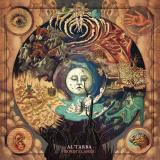
Pete Lambrou, the visionary composer and multi-instrumentalist behind VLMV (pronounced "Alma"), is one of the most singular voices emerging from the ambient, post-rock, and experimental scenes in the UK. With a career that spans atmospheric solo work, film and television scoring, and evocative live performance, Lambrou has carved out a distinctive sonic universe he describes as "ambient-ish post-something" (Pete Lambrou) a playful yet accurate summation of a sound that is at once genre-fluid and deeply immersive. The album takes its title from Sara Teasdale's 1918 poem and Ray Bradbury's later short story, both of which imagine a world continuing quietly after humanity's disappearance. This idea became the gravitational centre around which the record formed. Written during a period of deep engagement with climate fiction and ecological thought, `There Will Come Soft Rains` reflects on humanity's legacy, its technological ambition, and its uneasy relationship with the natural world. A century on from Teasdale's poem, the balance of power feels less certain, and Lambrou's music inhabits that tension with remarkable subtlety. "The initial ideas stem mostly from chaos, randomness or sound exploration and then get shaped as I go. Typically, and certainly for this album. It's evolved since album 1, which was more song / chord based. It's a fun process of finding the sound and then working out whether it's speaking to me - or merely just a cool noise. That's fun, but it sometimes can't evolve or progress, so then begins the long journey of shaping it into some sort of song format - which doesn't have to be a-typica,l but whatever feels right to me. The subject matter and overall theme is important too - it's got to all make sense within itself. There's no point having a slowly creeping theme and then rush the music." (Pete Lambrou) VLMV embody an emotional honesty that works with patience and nuance. Whether you're encountering his music for the first time or returning to its quiet depths, VLMV offers an aural space that resonates long after the final note fades. Lambrou's singular sonic language sits at the intersection of ambient, post-rock, modern classical, and experimental electronic music, while remaining unmistakably human at its core. "Instrumentally it's far more synth based - as soon as I had the concept, I wanted to make sure technology clash and marry with traditional instruments (at different times) in a sort of slow-moving dance I suppose. One is nature, one is human development and technology. Sometimes working together and sometimes in opposition. On my previous albums I'd say that at least half of the tracks started life as songs, whereas with `There Will Come Soft Rains` I think the majority (if not all) started as experiments in sound." (Pete Lambrou) Sonically, the album is VLMV at its most cinematic and textural. Warm, intimate piano figures and elegiac string arrangements are set against unstable modular synthesis, fractured rhythms, and evolving sound design. The organic and the artificial are locked in a slow, shifting dialogue, mirroring the album's central themes. At times the music feels tender and nostalgic, at others unpredictable and mournful, yet it never tips into despair. Instead, a quiet resilience runs throughout the record. "The album is slightly unusual in that it was mixed in Dolby Atmos before being mixed down to stereo. Most, if not all, do it the other way round. That's because I got to work with a superb mix engineer who just happens to live opposite. It was extremely random and lucky, moving to a tiny hamlet in the South of England and there being a Dolby Atmos studio opposite with a genius of an engineer. We had in mind that we would do it this way round and enjoy the mix process and give everything its own space - it still had issues when folding down to stereo, but overall a more pleasurable mix!" (Pete Lambrou) There Will Come Soft Rains has a geological sense of time: themes creep, expand, erode, and reform, resisting conventional structures in favour of something more patient and immersive. Each sound exists because it needs to; they move, recede, and emerge with a three-dimensional clarity that enhances the music's cinematic quality, giving each element room to breathe while maintaining an enveloping sense of cohesion. Lambrou's unique voice is Intimate and fragile, his vocals hover above the instrumentation, a guiding thread through the expansive soundscapes, drawing listeners closer into the emotional core of each piece. "Long time vocal collaborator Anja Madhvani did lots of harmonies on the album - I wanted to include her voice as much as possible on this album. In terms of string players - 3/4 have been long term collaborators with me. Marie Schreer actually recorded all strings on my first album ALMA, and Fraser & Clodagh have worked on every album (and occasional live shows) since Stranded Not Lost. In terms of art - Joel Cammarata designed the cover, and accompanying art - he designed Sing With Abandon and I absolutely adore his work, but also - he's so great at understanding and developing and capturing the concept." (Pete Lambrou) Layered harmonies drift through the music like distant signals or half-remembered voices. Madhvani's presence adds a human fragility to the album's vast soundscapes, reinforcing the sense of memory and longing that runs beneath the surface. The strings, performed by a close circle of trusted collaborators, further ground the record in warmth and physicality, acting as a counterweight to the synthetic elements that threaten to unravel it. "Despite the heavy subject matter, I wanted to create an album that imparts hope and optimism, marrying traditional instrumentation as nostalgia, with technological innovation through the randomness of modular synths." (Pete Lambrou) The partnership with Pelagic Records feels both organic and significant. Known for championing artists who value emotional weight, sonic ambition, and artistic integrity, the label provides a natural home for VLMV's work. Lambrou's music shares Pelagic's ethos: immersive, patient, and unafraid of scale whether intimate or vast. With There Will Come Soft Rains, Pete Lambrou has crafted a work that feels timely without being didactic, expansive without being overwhelming. It stands as a quiet, but powerful statement that lingers long after the final notes fade. FOR FANS OF Sigur Ros * Olafur Arnalds * Radiohead * Keaton Henson * This Will Destroy You
40 Thieves have been part of the Leng family since 2011 during which time they have released many quality singles and EPs as well as their sole full-length album, 2014’s epic The Sky Is Yours. Even so, double A-side ‘Love Is’/’Let Me Show You’ still marks their first release on Leng for almost three years.
In keeping with their signature sound, ‘Love Is’ is trippy, hallucinatory and gently mind-altering, with psychedelic guitar sounds, echoing percussion, and a heady lead vocal courtesy of crew member and Alona, all of which rides a chunky dub disco bassline and chugging mid-tempo beats. Richard Sen, a DJ and producer known for his love of dubbed-out sonics and pulsating grooves, delivers a typically spaced-out and otherworldly rework. Rooting his revision to the dancefloor via an undulating electronic bassline that throbs away restlessly throughout, Sen stretches out the track and emphasises its more trippy elements before introducing dreamier chords and heady vocals with a brilliant interpretation.
On ‘Let Me Show You’, 40 Thieves step things up to deep house tempo while remaining firmly rooted in 21st century San Francisco nu-disco with rich, dubby bass guitar, tactile piano chords, futurist synths and knowing nods to Patrick Cowley productions of the late 1970s and early ‘80s. The track is presented in two forms: the superb ‘Vocal Mix’, where Alona’s vocal rises above the groove and intoxicating electronics, and a genuinely radical and out-there dancefloor focused ‘Dub’. Pushing the track’s wilder and more out-there elements to the max via stripped-back arrangements and a smorgasbord of effects, 40 Thieves re-wire the cut as a heads-down psychedelic disco chugger topped off with wonderfully loved-up chords.
pas en stock
Dernière livraison il y a 69 jours réapprovisionnement sans garantie
The fringes of the desert have a way of changing a man, but the high-altitude chill of the Sierras will strip him down to his soul.
Following the gritty, neon-soaked introduction of his debut, Red Leather returns with his sophomore studio album, TAHOE. If his first record was a desperate sprint through the dark alleys of the soul, TAHOE is the cold morning after—a cinematic, sweeping exploration of isolation, clarity, and the jagged edges of recovery.
Named after the alpine lake that serves as both a sanctuary and a graveyard for secrets, the album navigates the duality of the landscape.
The songwriting dives deep into the "blue" period of his life—tackling themes of sobriety, the weight of sudden fame, and the ghosts of past versions of himself. It is an album about the silence that follows the storm, and the realization that the higher you climb, the thinner the air becomes.
The upcoming album is sharp, cohesive, and rooted in who she's always been. Growing up in North London, she absorbed the chaos and hooks of the indie sleaze scene, and now she channels that restless energy into songs that feel alive, pulsing like a sweaty gig in Camden or Shoreditch. It's classic girli alt-pop -- nostalgic, chaotic, and fearless, but sharpened with a bold new edge. girli has been teasing the new era since the end of 2025, sharing 'Better Undressed' and the powerful recent single 'Slap on the Wrist'. Known for her shimmering, highconcept production and fearless commentary, girli now pivots toward a more grounded, girl- next- door energy, trading gloss for grit, and polish for raw, intimate expression. Since emerging with her breakthrough sophomore album, 'Matriarchy', girli has carved a space in the alternative scene for bold, boundary-pushing storytelling. Her ability to merge pop essence with underground energy has earned her a tight- knit and dedicated fanbase.
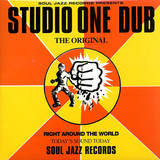
Firstly, there is also a new special limited-edition one-off pressing edition orange-pressed CD enclosed in jewel case and slipcase. 18 years on from its original release Studio One Dub remains super-hard hitting featuring classic + rare Dub tracks from Studio One, many available on vinyl for the first time in over thirty years.
Studio One Dub includes the dubs of many classic tracks such as Horace Andy’s “Skylarkin”, Johnny Osbourne’s “Truth and Rights”, John Holt’s “Hooligan”, Freddie McGregor’s “Bobby Bobylon” plus many more rare tracks.
The album also comes with two rare interviews - one with Clement 'Sir Coxsone' Dodd about dub and dubplates and one with the sound engineer Sylvan Morris, talking about his groundbreaking period at Studio One and his many innovations that he evolved there.
In short, this is a 100% essential album!
"Almighty slab of dub featuring loads of rare and classic dub versions of Studio One's foundation tracks." Rough Trade
“Quite a treat awaiting here for the unsuspecting reggae faithful – as always with Soul jazz chock full of a bunch of big tunes – but here in version form lies some of the freshest rhythms and most radical revisions of some of the greatest Studio One music. The darkest and the absolute deepest in the series – naturally essential.” Boomkat
"Continuing the Studio 1 Series this album features classic and rare Dub tracks from Studio One, many available for the first time in over thirty years. Studio One Dub includes the dubs of many classic tracks such as Horace Andy’s “Skylarkin”, Johnny Osbourne’s “Truth and Rights”,
John Holt’s “Hooligan”, Freddie McGregor’s “Bobby
Bobylon” plus many more rare tracks. In short, this is an essential album!" Wax Museum
The Official Vinyl Release from The Dreamworks Animated Feature Film
Deluxe 2xLP Crystal Clear with Blue Orb & Green, Mint, Blue, and Black Splatter
Heavyweight Gatefold Packaging with Matte Satin Coating
Exclusive Director and Composer Liner Notes
12 Page Booklet with Artwork from The Film
In partnership with Back Lot Music, Waxwork Records is thrilled to release THE WILD ROBOT Original Motion Picture Soundtrack Music by Kris Bowers.
The soundtrack also features two songs performed by Maren Morris titled Kiss The Sky and Even When I'm Not.
Waxwork Records is ecstatic to release THE WILD ROBOT Original Motion Picture Soundtrack Music by Kris Bowers as a deluxe double LP
featuring crystal clear vinyl with blue orb and green, mint, and black splatter housed in a heavyweight gatefold jacket with matte satin coating.
Also included is a 12-page booklet with exclusive liner notes by director Chris Sanders and composer Kris Bowers alongside artwork from the film.
Oceanine, Jolanda Moletta’s third album and her first for Beacon Sound, is a powerful and ethereal statement of artistic community. Expanding on her previous work, each track represents a collaboration with a different female vocalist, with the foundational elements being generated entirely by her own voice. By turns haunting, enchanting, and inspiring, you won’t want to come up for air once you’ve been pulled under. Representing a musical practice that is distinctly feminist, this is an album with a longer view in mind, to an age when the altars were to goddesses and women were centered as powerful beings representing the earth’s cycles of regeneration and renewal. Oceanine then, in all its beauty, can be viewed as an album of survival. It is deeply transportive, accessing something that lies within all of us. As the late, great Lithuanian folklorist and archaeologist Marija Gimbutas noted, “We must refocus our collective memory. The necessity for this has never been greater as we discover that the path of 'progress' is extinguishing the very conditions for life on earth.”
Jolanda Moletta is a multimedia artist and one-woman electronic choir. She creates wordless compositions through extended vocal techniques, integrating wearable-controlled live processing, alongside symbolic visuals. Moletta considers her performances to be a collective ritual and creates her Sonic & Visual Spells following the cycles of nature and the moon. Jolanda's 2022 critically acclaimed album Nine Spells was released on the Ambientologist label, followed by Night Caves on Whitelabrecs in 2025. Moletta’s artistic practice is a radical and spiritual journey through sound art, ritual, and the symbolic archaeology of the feminine.
Oceanine is inspired by sirens, water nymphs, and the timeless call of the sea. At its core lies Jolanda’s deep, lifelong connection to the Mediterranean Sea and to the ancient and modern myths and folklore that have emerged from its waters. Growing up by the Mar Ligure, Jolanda was surrounded by stories carried by salt, wind, and waves: legends of sirens, echoes of ancient voices, and the sea as both origin and oracle. This intimate relationship with the Mediterranean is not merely a backdrop, but a living source that shapes Oceanine’s emotional, symbolic, and sonic world.
Each track features a different female vocalist, creating a rich tapestry of voices, styles, and perspectives. This artistic choice not only broadens the album’s sonic palette, but also deepens its narrative core: celebrating the power, beauty, and mystique of feminine energy through myth, history, and sound.
The entire album is built exclusively from the human voice, processed and layered, yet always remaining voice, and nothing else. For each piece, Jolanda invited every vocalist involved to contribute a raw stem: a short, unedited melodic fragment of just a few seconds, inspired by the album’s themes. These intimate vocal seeds became the foundation of each track: the guest artists’ voices appear as brief, melodic stems, while the entire surrounding “orchestral” fabric is created solely from Jolanda’s own layered and processed voice. In this way, Jolanda’s voice becomes the Ocean itself, embracing, absorbing, and carrying the sirens’ calls within a vast, immersive soundscape. Every song is a unique expression of the feminine experience, revealing its depth, complexity, and emotional range, echoing the call of the sea and the many faces of the siren archetype.
The figure of the siren has transformed across centuries. In myths of Ancient Greece and Rome, sirens were hybrid beings, part woman, part bird, whose irresistible songs lured sailors to their doom. During the Middle Ages, the image shifted toward the half-woman, half-fish figure, often associated with temptation and danger. Historically, the voice of women has often been feared. Sirens were considered harbingers of misfortune not simply because they seduced or destroyed, but because they were powerful liminal beings.
In Ancient Greek, sirens functioned as psychopomps: figures who existed between worlds and guided souls, especially between life and death. Their songs were believed to carry forbidden knowledge, including prophetic insight and the ability to reveal truths about fate and the future. The danger of the sirens lay in what they revealed: knowledge that humans were not meant, or ready, to hear.
Oceanine confronts this legacy head-on. The voices heard throughout the album are not merely beautiful: they are dark and luminous, wild and enchanting, magical, soothing, dreamy, and at times fractured or distorted. They whisper, lament, beckon, and enchant. Like sirens, they skim the surface of the water and sink into its depths, hovering on the edge between tenderness and danger, vulnerability and power. They rise toward the sky, dissolve into mist, and return as echoes charged with raw, elemental emotion: voices that seduce, warn, mourn, and remember. They refuse to be reduced to decoration.
Alongside the album’s release in May, Oceanine will also unfold as a visual and performative work through a short art film. The film includes a live session recorded inside a sea cave facing the Mar Ligure, the very coastline where Jolanda spent her childhood, dreaming of sirens and listening to the sea as if it were speaking directly to her. This site-specific performance reconnects the music to its place of origin, allowing the voice to resonate within stone, water, and air, and transforming the cave into both a sanctuary and a threshold between myth and reality.
What if the sirens’ songs were considered dangerous because they carried another truth, an ancient truth long forgotten?
Oceanine embraces the idea that we are still deeply woven into myth. Though we may see ourselves as rational and modern beings, our world is saturated with ancient symbols and archetypes, often distorted, simplified, or stripped of their original meaning. And if those symbols are allowed to shift, if the mirror once held by the siren becomes an invitation to look beyond appearances and into what has been obscured, then we may finally uncover a deeper truth and reclaim the voice that was always ours.
Oceanine is not just an album. It is a reclamation, a spell, and a call from the depths.
Lo Recordings is proud to present a brand new compilation by Russian electronic producer/composer OID, spanning 25 years of music that blends in and out of focus, inhabiting styles from dub techno to ambient, vaporwave, space gamelan, electronica and beyond. The album is both a retrospective and a celebration, a journey into a singular world that exists only in OID’s imagination, available digitally and on Ltd cassette from 24th April 2026.
“I first met OID in an illicit ‘Sky High’ bar in Moscow. It was a club for people who liked to jump from high buildings. OID played the piano whilst a tea ceremony took place. It was all like some kind of strange dream. The music he creates sounds like that kind of dream. Some of the tracks are reminiscent of the music released by ALEXANDROID on the ‘False Starts’ album way back in 2003 - a legendary album, in our minds at least. Alex tragically passed away in 2009, leaving only OID.
The music on this album is a testament to the beauty of friendship, the everlasting meaning of music and the light that shines forever.” -
Jon Tye, Lo Recordings
We’re very happy to announce the vinyl release of kuniyuki’s masterpiece “all these things”.
Originally it’s released on only cd in 2007. it was his 2nd album but it’s substantially his first album because the first album was a col-lection of kuniyuki’s early productions.
The first track “the guitar song” is one of our most favorite song of kuniyuki,it’s like a real good mixture of jazz, fusion, world music and electronic music.
The second track featuring african vocalist and percussionist “omar guaindefall”,we still love amazing henrik schwarz remix.
The third track “you get me” featuring our favorite singer “josee hurlock”,we’ve knew about her from the fantastic album “residue” by hefner in 2000. she is featured to the fourth track “all these things” too. we’re hoping to repress an amazing joe claussell remix.
The fifth track “flying music” featuring our good friend “alex from tokyo” as poetry reading and shuichiro sakaguchi( a popular trumpeter in tokyo) as a trumpeter. this long version was put to single cut release on 12inch.
The sixth track “the session” is a collaboration of song with henrik schwarz. they have met at mule musiq’s party in tokyo and clicked immediately.
The seventh track “touch” sounds very nostalgic african jazz or spanish fusion which is popular these days as balearic music.
The last track “rain of ocean” is a primitive african minimal deep house.this song is put to the single cut from this album(not put to the album) and we almost forgot this song but when we’re compiling the vinyl edition of album, we noticed how this song is beautiful.
Here are the collection of eight timeless and genreless music.
Auf ihrem neuen Album ,Delusion" begibt sich Tempers - das musikalische Pseudonym der in New York lebenden Künstlerin Jasmine Golestaneh - auf eine nichtlineare Reise der Heilung und des Werdens. In zehn Tracks navigiert sie durch stürmische emotionale Gezeiten und tastet sich durch einen Fiebertraum aus Gewitterwolken und Sonnenstrahlen hin zu seelischer Klarheit, wobei sie einen Soundtrack für "diejenigen, die zu sehr lieben, zu tief fallen und zu lebhaft träumen" kreiert. "Delusion" bewegt sich fließend zwischen verschiedenen Genres, von Art-Pop bis Techno, Grunge bis Metal, mit epischen balladischen Momenten, die überall verstreut sind. Das Album wurde von Golestaneh und Jorge Elbrecht (Sky Ferreira, Crushed, Wild Nothing) co-produziert und enthält Kollaborationen mit Camille Henrot, Estelle Hoy und Sandra Mujinga. Das mit Spannung erwartete neue Album von Tempers folgt auf das Debütalbum "Services" aus dem Jahr 2015, das den Underground-Dance-Hit ,Strange Harvest" enthielt. Im Jahr 2019 veröffentlichten Tempers das Album "Private Life", das einen eher introspektiven Sound präsentierte, gefolgt von "New Meaning" im Jahr 2022, das von einem Buch mit Golestanehs originellen Collagen begleitet wurde, die von dem Album inspiriert waren. Die Neigung von Tempers zur Kunstwelt hat zu einzigartigen Kooperationen geführt, darunter Auftritte in Museen, Galerien und O-Spaces, eine EP (Fundamental Fantasy aus dem Jahr 2017), die aus einer Künstlerresidenz bei The Vinyl Factory hervorgegangen ist, und die Veröffentlichung von Junkspace feat. Rem Koolhaas im Jahr 2018.
Auf ihrem neuen Album ,Delusion" begibt sich Tempers - das musikalische Pseudonym der in New York lebenden Künstlerin Jasmine Golestaneh - auf eine nichtlineare Reise der Heilung und des Werdens. In zehn Tracks navigiert sie durch stürmische emotionale Gezeiten und tastet sich durch einen Fiebertraum aus Gewitterwolken und Sonnenstrahlen hin zu seelischer Klarheit, wobei sie einen Soundtrack für "diejenigen, die zu sehr lieben, zu tief fallen und zu lebhaft träumen" kreiert. "Delusion" bewegt sich fließend zwischen verschiedenen Genres, von Art-Pop bis Techno, Grunge bis Metal, mit epischen balladischen Momenten, die überall verstreut sind. Das Album wurde von Golestaneh und Jorge Elbrecht (Sky Ferreira, Crushed, Wild Nothing) co-produziert und enthält Kollaborationen mit Camille Henrot, Estelle Hoy und Sandra Mujinga. Das mit Spannung erwartete neue Album von Tempers folgt auf das Debütalbum "Services" aus dem Jahr 2015, das den Underground-Dance-Hit ,Strange Harvest" enthielt. Im Jahr 2019 veröffentlichten Tempers das Album "Private Life", das einen eher introspektiven Sound präsentierte, gefolgt von "New Meaning" im Jahr 2022, das von einem Buch mit Golestanehs originellen Collagen begleitet wurde, die von dem Album inspiriert waren. Die Neigung von Tempers zur Kunstwelt hat zu einzigartigen Kooperationen geführt, darunter Auftritte in Museen, Galerien und O-Spaces, eine EP (Fundamental Fantasy aus dem Jahr 2017), die aus einer Künstlerresidenz bei The Vinyl Factory hervorgegangen ist, und die Veröffentlichung von Junkspace feat. Rem Koolhaas im Jahr 2018.
Hrishikesh Hirway, Musiker, Komponist und Podcast-Ersteller, bekannt für seinen preisgekrönten Podcast und die Netflix-Serie ,Song Exploder" sowie Kompositionen für Film und Fernsehen, darunter ,Companion", Save The Date, Our Nixon und Everything Sucks!, begann sein eigenes Musikprojekt unter dem Namen One AM Radio und änderte seinen Namen mit der Veröffentlichung von To Call My Own EP im Jahr 2022. Produziert vom Grammy-Gewinner Philip Weinrobe (Big Thief, Adrienne Lenker, Theo Katzman, Cass McCombs), In the Last Hour of Light ist eine Erinnerung daran, loszulassen - von Menschen, von Erinnerungen, vom Wunsch, die Zeit davon abzuhalten, zu schnell zu vergehen. Die Songs entstanden nach dem Tod von Hrishikeshs Mutter, als die Jahre sie immer weiter in die Vergangenheit drängten; in den Momenten, in denen er in seinem Krankenhauszimmer darauf wartete, dass sich sein Vater erholte; in dem Traum von einer Tochter, die er nie haben wird. Es gibt auch Liebeslieder - aber es ist die Art von Liebe, die die Patina eines langen gemeinsamen Lebens trägt, in dem man ebenso viel Zeit hinter sich hat wie vor sich. Die Band von Hrishikesh bestand aus Shahzad Ismaily (Feist, Arooj Aftab), Ken Pomeroy, Mike Haldeman (Moses Sumney, Dawn Richards) und Joshua Crumbly. Zur Besetzung von Hrishikeshs Band gehörten Shahzad Ismaily (Feist, Arooj Aftab), Ken Pomeroy, Mike Haldeman (Moses Sumney, Dawn Richards), Joshua Crumbly (Leon Bridges, Kamasi Washington), Oliver Hill (Kevin Morby, Broken Bells, Vagabon), Sean Mullins (Sam Evian) und Cole Kamen-Green (Beyoncé, Taylor Swift); mit Gastauftritten von Iron & Wine, Fenne Lily, Ken Pomeroy und Uwade Hart (St. Vincent), Zosha Warpeha (L'Rain) und Dustin O'Halloran.
This is the second 7"single cut project from the album"Ghibli HOUSE essential PIANO set", which blends the beautiful melodies of the original Ghibli classic songs with the vibrancy and exuberance of house!
"Kaze Ni Naru" is a refreshing arrangement of the theme song for the movie"The Cat Returns"released by Ayano Tsuji in 2002. The song incorporates the essence of house music without losing the bright atmosphere of the original. The B-side "Kimi Wo Nosete" is an instrumental cover of the theme song for "Castle in the Sky," written by Hayao Miyazaki and composed by Joe Hisaishi in 1988. The beautiful melody with a hint of sadness is reworked in an up-tempo style, making it perfect for floor use. A must have for Ghibli and house fans!
Venturing into “a limbo world between medieval tropes and modern-day decay”, New Orleans musician Urq (half of art punk duo Spllit) returns with a new solo offering. Recorded over a single, intense month, This Dismal Village is a homespun document that sits somewhere between jittery punk, dreary psychedelia, and hooky bedroom pop. Recorded to 4-track, the record embraces limitation as a creative engine, resulting in a sound that is raw, unsettled, and deeply atmospheric.
The album is set not in a fixed point in time or geography, but a liminal environment where dystopic visions and archaic fixtures exist side by side. In the dismal village, kings and witches share space with televisions, skyscrapers, and modern enterprise; organ fanfares echo down streets populated by disgruntled townsfolk and whispered gossip. It is simultaneously the dark ages, 1950s suburbia, and a 21st-century metropolis. Embracing anachronism was central to the project’s identity, an attempt to collapse history into a single, uneasy present.
Sonically and philosophically, the album sits firmly in the tradition of rough and raw cassette rock. Guided By Voices’ Bee Thousand looms large as an influence, particularly its ability to build an entire world through unpolished, first-take recordings. Robert Pollard’s idea of the “four P’s” (psych, punk, prog, and pop) serves as a neat summary of the artist’s musical instincts and each element can be traced right through the heart of This Dismal Village. Further inspiration comes from post-punk’s so-called “Calgary Sound,” a loose movement blending psych pop, post-punk, and math/prog elements with a home-recorded, unpretentious ethos.
The result is an album that unrolls like a place wandered through, uneasy, occasionally familiar, and impossible to pin down in time. All captured on tape before it could disappear like an apparition, like a dream only half-remembered.
From Detroit’s techno resistance to Berlin’s elastic minimalism, Lusaka’s ancestral futurism to Chicago’s house communion, When There Is No Sun is a recording project, uniting visionary electronic music producers to reimagine the universe of Sun Ra. One of the most radical musical pioneers of the 20th century, Sun Ra used jazz, electronics, poetry, and performance to expand the possibilities of sound, identity, and imagination. Commissioned by Omni Sound and curated by Ricardo Villalobos, the series brings together Underground Resistance, Chez Damier & Ben Vedren, Calibre, A Guy Called Gerald, She Spells Doom, Barış K, and Ricardo Villalobos himself. Drawing from Omni Sound’s recordings of Living Sky by the Sun Ra Arkestra and My Words Are Music of Sun Ra’s poetry, the producers pull fragments of sound and text into their own creative orbits, passing through the portal that Sun Ra opened into a realm where the impossible is possible. Saul Williams, Tunde Adebimpe, Mahogany L. Browne, Abiodun Oyewole, Anthony Joseph and Tara Middleton are the featured voices that turn rhyme into rhythm and revelation into resistance Rooted in deep reverence for Sun Ra’s legacy, yet reaching forward as a living, generative force, When There Is No Sun is not a tribute but a continuum, balancing the pulse of electronic music with the spirit of experimentation, embodying Sun Ra’s promise that ‘there are other worlds’ if you are willing to see them.
pas en stock
Dernière livraison il y a 5 mois réapprovisionnement sans garantie
From Detroit’s techno resistance to Berlin’s elastic minimalism, Lusaka’s ancestral futurism to Chicago’s house communion, When There Is No Sun is a recording project, uniting visionary electronic music producers to reimagine the universe of Sun Ra. One of the most radical musical pioneers of the 20th century, Sun Ra used jazz, electronics, poetry, and performance to expand the possibilities of sound, identity, and imagination. Commissioned by Omni Sound and curated by Ricardo Villalobos, the series brings together Underground Resistance, Chez Damier & Ben Vedren, Calibre, A Guy Called Gerald, She Spells Doom, Barış K, and Ricardo Villalobos himself. Drawing from Omni Sound’s recordings of Living Sky by the Sun Ra Arkestra and My Words Are Music of Sun Ra’s poetry, the producers pull fragments of sound and text into their own creative orbits, passing through the portal that Sun Ra opened into a realm where the impossible is possible. Saul Williams, Tunde Adebimpe, Mahogany L. Browne, Abiodun Oyewole, Anthony Joseph and Tara Middleton are the featured voices that turn rhyme into rhythm and revelation into resistance Rooted in deep reverence for Sun Ra’s legacy, yet reaching forward as a living, generative force, When There Is No Sun is not a tribute but a continuum, balancing the pulse of electronic music with the spirit of experimentation, embodying Sun Ra’s promise that ‘there are other worlds’ if you are willing to see them.
pas en stock
Dernière livraison il y a 5 mois réapprovisionnement sans garantie
From Detroit’s techno resistance to Berlin’s elastic minimalism, Lusaka’s ancestral futurism to Chicago’s house communion, When There Is No Sun is a recording project, uniting visionary electronic music producers to reimagine the universe of Sun Ra. One of the most radical musical pioneers of the 20th century, Sun Ra used jazz, electronics, poetry, and performance to expand the possibilities of sound, identity, and imagination. Commissioned by Omni Sound and curated by Ricardo Villalobos, the series brings together Underground Resistance, Chez Damier & Ben Vedren, Calibre, A Guy Called Gerald, She Spells Doom, Barış K, and Ricardo Villalobos himself. Drawing from Omni Sound’s recordings of Living Sky by the Sun Ra Arkestra and My Words Are Music of Sun Ra’s poetry, the producers pull fragments of sound and text into their own creative orbits, passing through the portal that Sun Ra opened into a realm where the impossible is possible. Saul Williams, Tunde Adebimpe, Mahogany L. Browne, Abiodun Oyewole, Anthony Joseph and Tara Middleton are the featured voices that turn rhyme into rhythm and revelation into resistance Rooted in deep reverence for Sun Ra’s legacy, yet reaching forward as a living, generative force, When There Is No Sun is not a tribute but a continuum, balancing the pulse of electronic music with the spirit of experimentation, embodying Sun Ra’s promise that ‘there are other worlds’ if you are willing to see them.
pas en stock
Dernière livraison il y a 5 mois réapprovisionnement sans garantie
GENERATION RADIO return with "Take Two", the eagerly awaited follow-up to their acclaimed debut, delivering another masterclass in AOR/West Coast rock infused with just the right touch of the Nashville sound. Produced by founding members Jay DeMarcus (Rascal Flatts) and Jason Scheff (former Chicago), the band features an all-star lineup: Steve Ferrone (Tom Petty & the Heartbreakers, Average White Band) joins on drums, replacing the formidable Deen Castronovo (who returned to Journey as full-time member), while Tom Yankton (guitar, vocals) and Chris Rodriguez (guitar, vocals) round up the powerhouse ensemble. “Take Two” is rich with pristine harmonies, unforgettable hooks, and timeless songwriting—hallmarks of the genre delivered with class and authenticity.
Tracks like the widescreen, harmony-laden “Montana Sky,” the hook-filled “The Melody,” and the emotionally charged ballad “Hate This Heart” showcase the band’s signature blend of melodic precision and heartfelt performance. Adding depth to the album’s appeal, Generation Radio also offers reimagined versions of timeless classics that shine in their live sets: Whitesnake’s “Here I Go Again,” Chicago’s “You’re the Inspiration,” Kenny Loggins’ “I’m Alright,” and a rock version of Rascal Flatts’ classic “These Days.” With "Take Two," Generation Radio not only honors the legacy of AOR and West Coast rock—they elevate it, combining elite musicianship and genre-crossing influences into a record that’s as fresh as it is nostalgic.
Pulitzer Prize-winning American composer John Luther Adams wrote this piece for the Australian Chamber Orchestra. Inspired by his recent relocation to Australia and his travels across the continent - from the Northern Territory and the Red Centre all the way to Tasmania - 'Horizon' is an immersive audio experience exploring the relationship between the visible horizon, with its trees, its mountains and its human structures, and the true horizon: the enveloping circle where the sky meets the earth. How long might it take us to traverse that distance, from where we are to as far as we can see? And what lies beyond that edge of the known? The Australian Chamber Orchestra brings its passion, its virtuosity and its vibrant energy to this exquisitely unique musical experience.
Im April 2026 bringt Eaves Wilder ihr heiß erwartetes Debütalbum ,Little Miss Sunshine" raus. Die Platte ist ein krasser Entwicklungssprung für die Singer-Songwriterin aus Nord-London, die 2020 mit 16 Jahren mit ihrem selbst aufgenommenen Lockdown-Release ,Won't You Be Happy" zum ersten Mal auf sich aufmerksam gemacht hat. Eaves begann mit der Arbeit an ,Little Miss Sunshine" nach einer Phase des Nachdenkens, in der sie sich fragte, ob sie der Musik in ihrem Kopf letztlich gerecht werden könnte. Wer sich mit dem Album beschäftigt, entdeckt zehn Songs, die sich an den Zyklen der Natur orientieren, um die emotionalen Stimmungen zu erklären und zu feiern, die uns zu Menschen machen. ,Als ich am Boden war", erinnert sich Eaves, die an einer Stelle sogar lacht, als sie sich daran erinnert, wie sie beschloss, die Musik ganz aufzugeben, um in ein Kloster einzutreten: ,Ich wollte einfach nur unmenschlich, gefühllos und unbewegt sein. Wie ein Berg oder ein Baum. Oder der Himmel. Das sind alles Dinge, die einen Zweck haben, aber ich wusste nicht, was mein Zweck war. Und so musste ich es herausfinden, Song für Song." Auf Little Miss Sunshine wird diese Geschichte in spannenden Episoden erzählt, angefangen mit den ersten Sekunden des Albums und der Lead-Single Hurricane Girl, einer sensationellen Synergie aus durchscheinenden Shoegaze-Harmonien und elementaren Rockgitarren, inspiriert durch Dokumentarfilme über Sturmjäger, wobei die Metapher verwendet wird, um ein Licht auf Freunde zu werfen, die gezwungen waren, stürmische Beziehungen zu suchen. ,Ich habe das Gefühl, dass dies mein Pearl-Jam-Song ist", erklärt sie. ,Das erste Mal, als ich Pearl Jam hörte, war ich auf einem riesigen Berg in Wales. In derselben Woche hörte ich auch zum ersten Mal Jagged Little Pill von Alanis Morissette." Von hier aus, bis hin zu seinem schmerzlich bewegenden Requiem an die Kindheit Summer Rolls fungiert jeder Song auf Little Miss Sunshine als leuchtender Koordinatenpunkt in einem Bogen der Selbstfindung. Da ist der hochfliegende Klangrausch Everybody Talks, mit seinem ansteigenden Crescendo aus aufdringlichen Stimmen, der auf beiden Seiten des Atlantiks große Unterstützung im Radio fand. Für Mountain Sized bezog sie sich auf Lily Allens Single The Fear aus dem Jahr 2009 - ,weil da diese eine Frau ist, die ganz beiläufig all die schlimmsten Dinge über sich selbst aufzählt, Dinge, die man sich eigentlich nicht trauen würde zuzugeben". In Eaves' Song wird diese aufkommende Angst jedoch durch einen panoramischen Refrain ausgelöscht, in dem sie die Grenzen ihrer realen Welt durchbricht, um zu verkünden: ,But in my mind/But in my mind/I am taller than the highest mountain sides." In dem schmerzlich melodiösen ,The Great Plains" hinterfragt Eaves ihre frühesten Erinnerungen, in denen sie ihre ältere Schwester Dora vergötterte. ,Sie war so zurückhaltend und wie eine Meerjungfrau", erinnert sich Eaves, ,und ich wurde von meinen Emotionen beherrscht - und je mehr ich versuchte, das nicht zu sein, desto mehr wurde mir klar, dass ich niemals wie sie sein könnte." In dem Song findet Eaves eine Art Selbstakzeptanz, indem sie auf die Natur schaut, um zu erfahren, dass es okay ist, so zu sein, wie sie ist: "As I erupt into a blaze / It's ok the sky will do the same/Let no-one bat an eye when / Every year I'll hibernate till May / Because no-one blames the clouds for rain / So take me as I am, tears down my face." Als die Sessions an Fahrt gewannen, fand Eaves Inspiration in zeitgenössischen Veröffentlichungen. Beispiele dafür waren Wolf Alice (,die einzige Band, die die Balance gefunden hat, die ich immer suche - die Kombination aus schweren Gitarren und hohen, ätherischen Vocals"), Mannequin Pussy (,sie gaben mir etwas von dem, was ich in der Ära von Riot Grrrl vermisst habe, als L7 und Babes In Toyland auf Tour waren") und CMATs ,geradlinig brillantes Songwriting". Weitere Highlights auf einem Album, das von ihnen geprägt ist, sind Daisy Chain Reaction, dessen glitzernder Power-Pop-Glanz einen Text über die Kultur des Wettbewerbs rund um Essstörungen verbirgt, und der unangenehme, mechanisierte Angriff von Just Say No, ein Song, der auf den brutalen Wahrheiten basiert, die Eaves und ihre Freundinnen in ihren Auseinandersetzungen mit missbräuchlichen Männern gesammelt haben. Zwei Jahre lang hat Eaves unermüdlich daran gearbeitet, jeden einzelnen Vers, Refrain, Pre-Chorus und Middle Eight auf Little Miss Sunshine zu verfeinern, bevor sie mit dem Co-Produzenten des Albums, Andy Savours (My Bloody Valentine, The Killers, The Horrors), ins Studio ging. Dies ist ein Album, auf dem jedes einzelne Detail seinen Platz verdient hat und das Zeugnis ablegt von der einzigartigen musikalischen Vision seiner Schöpferin.
Soulful Motown City deep house, hip hop interludes, swinging techno, and early Chicago-inspired cuts. Donato Basile steps out onto DVS1's Mistress Recordings label with two 12-inches: Mistress 18 and Mistress 18.5. Pressed in tandem, each record draws upon Basile's dual aliases to go head-to-head as Dona vs. DJ Plant Texture. Rhythmic machine grooves and masterful MPC work that pay respect to the diverse sounds of the metropolis Midwest cities.
pas en stock
Dernière livraison il y a 4 mois réapprovisionnement sans garantie
There’s this feeling that House Music is sometimes diluted into a pleasant, non-offensive and conformist formula. Well, Jackie Gritness - you may have heard of her big bro Gary - is bringin’ all the sweat, the attitude and the filth down - take it or leave it.
Jackie introduces herself from both sides on this well-strapped debut 12” - the slick swingin’ & sangin’
on the bass-heavy A side, and the raw clave trax and cunty snarls of the acid-laced B side.
No trace of over-production or tired sampling here: this is just Jackie, her mic and her lil’ groovebox -
gettin’ raw in the studio just like she does onstage. Only thing added is some wall-shaking mastering by New York OG Dietrich Schoenemann.
This is the kinda House that’s supposed to make regular folks wanna turn it off. This ain’t rated E for Everyone, it’s rated F for Freaks.
It’s music from the underground, for the underground - as it was first revealed on the runway of Glastonbury’s infamous NYC Downlow last summer.
And if that’s more than you can take - it’s alright. It’s not like Jackie will hold it against you.
Jackie Gritness
“Gary’s little sister.” His studio session resume reads like a House music who’s who - from David Morales to Fred P. He’s also been rockin’ clubs with the Playin’ 4 The City and MLIU crews - but she’s also been seen on Gideon’s fierce Homo-Centric Records. See, this bitch’s true feelings about House are stripped-down, bare-bones, and unapologetically sexual. With a radical ‘live’ attitude, she’s serving the realness with an irresistibly acidic zing.
pas en stock
Dernière livraison il y a 5 mois réapprovisionnement sans garantie
Like its cover, Nicolas Remondino's Hìeratico plays in the rich shades of crepuscular spaces. A night-tuned, percussion led album where prepared drums are accompanied by flickers of spoken word, acoustic instruments and muted electronics,
The title translates to 'hieratic', for Remondino a "black and gold" term laden with dualities and complex connotations. A sense of teetering between sparkling light and richly coloured darkness imbues the music, the compositions simulating a sense of heightened acuity as they convey us through a spooky elemental soundworld. The opening title track begins with a metallic shimmer, a drum skin activated in a way that sounds like it's being smelted. A cushioned rhythm enters, a smothered timbre akin to hearing something lurking around the garden. On "litho non-danse", percussion cracks like branches and dried foliage under foot.
Remondino recorded initial outlines for the pieces at Giuseppe Ielasi's studio in Milan, before fleshing out these ideas with his own additional instrumentation and contributions from a globe-spanning network of collaborators. On "blue hymne", chiming percussion equal parts jubilant and sinister heralds spoken word from Limpe Fuchs. "Tombal" opens with Massimo Silverio whispering in the Carnic dialect, a minority language from the Carnic Alps. Around, Marco Baldini, Pierre Bastien and Remondino construct a somber soundscape that cranks and sighs in the crevices.
Hìeratico is an album of hybrids. Diverse voices, accents and dialects deliver its lyrics, the instrumentation underpinning it crosses idioms. The drumkit at its core is modified to amplify its resonant tones and harmonics. Inspired by natural substances and phenomena: stone, wood, wind, earth, metal, grass, rain, clouds and bark, Remondino explores how percussion could evoke their materiality, treating drums as lucid textural instruments as much as rhythmic timekeepers. It gives the album a finely shaded depth and clarity as it conjures the vibrancies that reside in darkened corners. Hìeratico dwells in a sensation that crosses borders, the speckles of light in the oblique night sky. Listening is an aural equivalent to stepping into a pitch black forest and waiting for your eyes to adjust, a lightless void turning into a spectacular tableau of shadows and glows. Daryl Worthington
pas en stock
Dernière livraison il y a 6 mois réapprovisionnement sans garantie
Writings on the topic that go off in all directions, mind-numbing lectures given by academics, and testimonies, most of them heavily doctored, from those who “lived through that era”: so many people today fantasize about the early days of punk in our country… This blessed moment when no one had yet thought of flaunting a ridiculous green mohawk, taking Sid Vicious as a hero, or – even worse – making the so-called alternative scene both festive and boorish. There was no such thing in 1976 or 1977, when it wasn’t easy to get hold of the first 45s by the Pistols or the Clash. Few people were aware of what was happening on the fringes of the fringes at the time. Malcolm McLaren was virtually unknown, and having short hair made you seem strange. Who knew then that rock music, which had taken a very bad turn since the early 1970s, would once again become an essential element of liberation? That, thanks to short and fast songs, it would once again rediscover that primitive, social side that was so hated by older generations? Who knew that, besides a few loners who read the music press (it was even better if they read it in English) and frequented the right record stores? Many of these formed bands, because it was impossible to do otherwise. We quickly went from listening to the Velvet Underground to trying to play the Stooges’ intros. It’s a somewhat collective story, even though there weren’t many people to start it.
The Guilty Razors were among those who took part in this initial upheaval in Paris. They were far from being the worst. They had something special and even released a single that was well above the national average. They also had enough songs to fill an album, the one you’re holding. In everyone’s opinion, they were definitely not among the punk impostors that followed in their wake. They were, at least, genuine and credible.
Guilty Razors, Parisian punk band (1975-1978). To understand something about their somewhat linear but very energetic sound, we might need to talk about the context in which it was born and, more broadly, recall the boredom (a theme that would become capital in punk songs) coupled with the desire to blow everything off, which were the basis for the formation of bands playing a rejuvenated rock music ; about the passion for a few records by the Kinks or the early Who, by the Stooges, by the Velvet mostly, which set you apart from the crowd.
And of course, we should remember this new wave, which was promoted by a few articles in the specialized press and some cutting-edge record stores, coming from New York or London, whose small but powerful influence could be felt in Paris and in a handful of isolated places in the provinces, lulled to sleep by so many appalling things, from Tangerine Dream to President Giscard d’Estaing...
In 1975-76, French music was, as almost always, in a sorry state ; it was still dominated by Johnny Hallyday and Sylvie Vartan. Local rock music was also rather bleak, apart from Bijou and Little Bob who tried to revive this small scene with poorly sound-engineered gigs played to almost no one.
In the working class suburbs at the time, it was mainly hard rock music played to 11 that helped people forget about their gruelling shifts at the factory. Here and there, on the outskirts of major cities, you still could find a few rockers with sideburns wearing black armbands since the death of Gene Vincent, but it wasn’t a proper mass movement, just a source of real danger to anyone they came across who wasn't like them. In August 1976, a festival unlike any other took place in Mont-de-Marsan – the First European Punk Festival as the poster said – with almost as many people on stage as in the audience. Yet, on that day, a quasi historical event happened, when, under the blazing afternoon sun, a band of unknowns called The Damned made an unprecedented noise in the arena, reminiscent of the chaotic Stooges in their early adolescence. They were the first genuine punk band to perform in our country: from then on, anything was possible, almost anything seemed permissible.
It makes sense that the four+1 members of Guilty Razors, who initially amplified acoustic guitars with crappy tape recorder microphones, would adopt punk music (pronounced paink in French) naturally and instinctively, since it combines liberating noise with speed of execution and – crucially – a very healthy sense of rebellion (the protesters of May 1968 proclaimed, and it was even a slogan, that they weren’t against old people, but against what had made them grow old. In the mid-1970s, it seemed normal and obvious that old people should now ALSO be targeted!!!).
At the time, the desire to fight back, and break down authority and apathy, was either red or black, often taking the form of leafleting, tumultuous general assemblies in the schoolyard, and massive or shabby demonstrations, most of the time overflowing with an exciting vitality that sometimes turned into fights with the riot police. Indeed, soon after the end of the Vietnam War and following Pinochet’s coup in Chile, all over France, Trotskyist and anarcho-libertarian fervour was firmly entrenched among parts of the educated youth population, who were equally rebellious and troublemakers whenever they had the chance. It should also be noted that when the single "Anarchy in the UK" was first heard, even though not many of us had access to it, both the title and its explosive sound immediately resonated with some of those troublemakers crying out for ANARCHY!!! Meanwhile, the left-wing majority still equated punks with reckless young neo-Nazis. Of course, the widely circulated photos in the mainstream press of Siouxsie Sioux with her swastikas didn’t necessarily help to win over the theorists of the Great Revolution. It took Joe Strummer to introduce The Clash as an anti-racist, anti-fascist and anti-ignorance band for the rejection of old-school revolutionaries to fade a little.
The Lycée Jean-Baptiste Say at Porte d’Auteuil, despite being located in the very posh and very exclusive 16th arrondissement of Paris, didn’t escape these "committed" upheavals, which doubled as the perfect outlet for the less timid members of this generation.
“Back then, politics were fun,” says Tristam Nada, who studied there and went on to become Guilty Razors’ frontman. “Jean-Baptiste was the leftist high-school in the neighbourhood. When the far right guys from the GUD came down there, the Communist League guys from elsewhere helped us fight them off.”
Anything that could challenge authority was fair game and of course, strikes for just about any reason would lead to increasingly frequent truancy (with a definitive farewell to education that would soon follow). Tristam Nada spent his 10th and 11th unfinished grades with José Perez, who had come from Spain, where his father, a janitor, had been sentenced to death by Franco. “José steered my tastes towards solid acts such as The Who. Like most teenagers, I had previously absorbed just about everything that came my way, from Yes to Led Zeppelin to Genesis. I was exploring… And then one day, he told me that he and his brother Carlos wanted to start a rock band.” The Perez brothers already played guitar. “Of course, they were Spanish!”, jokes their singer. “Then, somewhat reluctantly, José took up the bass and we were soon joined by Jano – who called himself Jano Homicid – who took up the rhythm guitar.” Several drummers would later join this core of not easily intimidated young guys who didn’t let adversity get the better of them.
The first rehearsals of the newly named Guilty Razors took place in the bedroom of a Perez aunt. There, the three rookies tried to cover a few standards, songs that often were an integral part of their lives. During a first, short gig, in front of a bewildered audience of tough old-school rockers, they launched into a clunky version of the Velvet Underground's “Heroin”. Challenge or recklessness? A bit of both, probably… And then, step by step, their limited repertoire expanded as they decided to write their own songs, sung in a not always very accurate or academic English, but who cared about proper grammar or the right vocabulary, since what truly mattered was to make the words sound as good as possible while playing very, very fast music? And spitting out those words in a language that left no doubt as to what it conveyed mattered as well.
Trying their hand a the kind of rock music disliked by most of the neighbourhood, making noise, being fiercely provocative: they still belonged to a tiny clique who, at this very moment, had chosen to impose this difference. And there were very few places in France or elsewhere, where one could witness the first stirrings of something that wasn’t a trend yet, let alone a movement.
In the provinces, in late 1976 or early 1977, there couldn’t be more than thirty record stores that were a bit more discerning than average, where you could hear this new kind of short-haired rock music called “punk”. The old clientele, who previously had no problem coming in to buy the latest McCartney or Aerosmith LP, now felt a little less comfortable there…
In Paris, these enlightened places were quite rare and often located nex to what would become the Forum des Halles, a big shopping mall. Between three aging sex workers, a couple of second-hand clothes shops, sellers of hippie paraphernalia and small fashion designers, the good word was loudly spread in two pioneering places – propagators of what was still only a new underground movement. Historically, the first one was the Open Market, a kind of poorly, but tastefully stocked cave. Speakers blasted out the sound of sixties garage bands from the Nuggets compilation (a crucial reference for José Perez) or the badly dressed English kids of Eddie and the Hot Rods. This black-painted den was opened a few years earlier by Marc Zermati, a character who wasn’t always in a sunny disposition, but always quite radical in his (good) choices and his opinions. He founded the independent label Skydog and was one of the promoters of the Mont-de-Marsan punk festivals. Not far from there was Harry Cover, another store more in tune with the new New York scene, which was amply covered in the house fanzine, Rock News (even though it was in it that the photos of the Sex Pistols were first published in France).
It was a favorite hang-out of the Perez brothers and Tristam Nada, as the latter explained. “It’s at Harry Cover’s that we first heard the Pistols and Clash’s 45s, and after that, we decided to start writing our first songs. If they could do it, so could we!”
The sonic shocks that were “Anarchy in the UK”, “White Riot” or the Buzzcocks’s EP, “Spiral Scratch” – which Guilty Razors' sound is reminiscent of – were soon to be amplified by an unparalleled visual shock. In April 1977, right after the release of their first LP, The Clash performed at the Palais des Glaces in Paris, during a punk night organised by Marc Zermati. For many who were there, it was the gig of a lifetime…
Of course, Guilty Razors and Tristam were in the audience: “That concert was fabulous… We Parisian punks were almost all dressed in black and white, with white shirts, skinny leather ties, bikers jackets or light jackets, etc. The Clash, on the other hand, wore colourful clothes. Well, the next day, at the Gibus, you’d spot everyone who had been at this concert, but they weren’t wearing anything black, they were all wearing colours.”
It makes sense to mention the Gibus club, as Guilty Razors often played there (sometimes in front of a hostile audience). It was also the only place in Paris that regularly scheduled new Parisian or Anglo-Saxon acts, such as Generation X, Siouxsie and the Banshees, the Slits, and Johnny Thunders who would become a kind of messed-up mascot for the venue. A little later, in 1978, the Rose Bonbon – formerly the Nashville – also attracted nightly owls in search of electric thrills… In 1977, the iconic but not necessarily excellent Asphalt Jungle often played at the Gibus, sometimes sharing the bill with Metal Urbain, the only band whose aura would later transcend the French borders (“I saw them as the French Sex Pistols,” said Geoff Travis, head of their British label Rough Trade). Already established in this small scene, Metal Urbain helped the young and restless Guilty Razors who had just arrived. Guitarist for Metal Urbain Hermann Schwartz remembers it: “They were younger than us, we were a bit like their mentors even if it’s too strong a word… At least they were credible. We thought they were good, and they had good songs which reminded of the Buzzcocks that I liked a lot. But at some point, they started hanging out with the Hells Angels. That’s when we stopped following them.”
The break-up was mutual, since, Guilty Razors, for their part, were shocked when they saw a fringe element of the audience at Metal Urbain concerts who repeatedly shouted “Sieg Heil” and gave Nazi salutes. These provocations, even still minor (the bulk of the skinhead crowd would later make their presence felt during concerts), weren’t really to the liking of the Perez brothers, whose anti-fascist convictions were firmly rooted. Some things are non-negotiable.
A few months earlier (in July 1978), Guilty Razors had nevertheless opened very successfully for Metal Urbain at the Bus Palladium, a more traditonally old-school rock night-club. But, as was sometimes the case back then, the night turned into a mass brawl when suburban rockers came to “beat up punks”.
Back then, Parisian nights weren’t always sweet and serene.
So, after opening as best as they could for The Jam (their sound having been ruined by the PA system), our local heroes were – once again – met outside by a horde of greasers out to get them. “Thankfully,” says Tristam, “we were with our roadies, motorless bikers who acted as a protective barrier. We were chased in the neighbouring streets and the whole thing ended in front of a bar, with the owner coming out with a rifle…”
Although Tristam and the Perez brothers narrowly escaped various, potentially bloody, incidents, they weren’t completely innocent of wrongdoing either. They still find amusing their mugging of two strangers in the street for example (“We were broke and we simply wanted to buy tickets for the Heartbreakers concert that night,” says Tristam). It so happened that their victims were two key figures in the rock business at the time: radio presenter Alain Manneval and music publisher Philippe Constantin. They filed a complaint and sought monetary compensation, but somehow the band’s manager, the skilful but very controversial Alexis, managed to get the complaint withdrawn and Guilty Razors ended up signing with Constantin with a substantial advance.
They also signed with Polydor and the label released in 1978 their only three-track 45, featuring “I Don't Wanna be A Rich”, “Hurts and Noises” and “Provocate” (songs that exuded perpetual rebellion and an unquenchable desire for “class” confrontation). It was a very good record, but due to a lack of promotion (radio stations didn’t play French artists singing in English), it didn’t sell very well. Only 800 copies were allegedly sold and the rest of the stock was pulped… Initially, the three tracks were to be included on a LP that never came to be, since they were dropped by Polydor (“Let’s say we sometimes caused a ruckus in their offices!” laughs Tristam.) In order to perfect the long-awaited LP, the band recorded demos of other tracks. There was a cover of Pink Floyd's “Lucifer Sam” from the Syd Barrett era – proof of an enduring love for the sixties’ greats –, “Wake Up” a hangover tale and “Bad Heart” about the Baader-Meinhof gang, whose actions had a profound impact on the era and on a generation seeking extreme dissent... On the album you’re now discovering, you can also hear five previously unreleased tracks recorded a bit later during an extended and freezing stay in Madrid, in a makeshift studio with the invaluable help of a drummer also acting as sound engineer. He was both an enthusiastic old hippie and a proper whizz at sound engineering. Here too, certain influences from the fifties and sixties (Link Wray, the Troggs) are more than obvious in the band’s music.
Shortly after a final stormy and rather barbaric (on the audience’s side) “Punk night” at the Olympia in June 1978, Tristam left the band ; his bandmates continued without him for a short while.
But like most pioneering punk bands of the era, Guilty Razors eventually split up for good after three years (besides once in Spain, they’d only played in Paris). The reason for ceasing business activities were more or less the same for everyone: there were no venues outside one’s small circuit to play this kind of rock music, which was still frightening, unknown, or of little interest to most people. The chances of recording an LP were virtually null, since major labels were only signing unoriginal but reassuring sub-Téléphone clones, and the smaller ones were only interested in progressive rock or French chanson for youth clubs. And what about self-production? No one in our small safety-pinned world had thought about it yet. There wasn’t enough money to embark on that sort of venture anyway.
So yes, the early days of punk in France were truly No Future!
pas en stock
Dernière livraison il y a 6 mois réapprovisionnement sans garantie
Sound Records proudly presents ‘Morpho’, the debut LP from UK-based producer Benyayer, formerly one-third of celebrated electronic trio Dark Sky. A deeply personal record and a symbolic transition, Morpho captures the emotional and sonic evolution of an artist in metamorphosis.
Having stepped into the solo spotlight following his successful Infiltrator EP, Benyayer (aka Matt) delivers a bold, vinyl release that combines seven previously digital-only tracks with a brand new cut, ‘The Return’, all meticulously curated and pressed for the first time on wax.
Bridging influences from techno, UK bass, Afrofuturism, and electronica, Morpho is a meticulous exploration of rhythm designed to excite, cause chaos, personal reflection and movement. Each track is a raw, rhythmic exploration that draws on his time spent busking on the streets of London with found objects, experimentation with modular synths and years of experience honing his craft as a performer at some of the finest establishments in the electronic music landscape.
This initial vinyl edition is limited to just 300 copies. Designed in collaboration with Harry Cresswell, each sleeve features a deconstructed butterfly motif, laser-cut on both sides of heavy matte stock, paired with a matte-printed inner sleeve and a transparent vinyl disc, making each copy a true collector’s item.
The LP arrives amid support from tastemakers like Gilles Peterson, Benji B, and Tom Ravenscroft (BBC 6 Music), as well as heavyweight artists including Ben UFO, Bicep, Laurent Garnier, Bonobo, and Modeselektor.
Benyayer's new live show, built around these very tools, has already been trailed to great acclaim across Europe, adding a powerful performative dimension to the record. With previous performances at Berghain, Fabric, Glastonbury, MUTEK, Dimensions and Melt Festival. Benyayer's solo trajectory continues to rise with intent, mystery, and a fierce sense of artistic purpose.
pas en stock
Dernière livraison il y a 6 mois réapprovisionnement sans garantie
Heavyweight psychedelic improvisers EarthBall are back with their third and most monstrous record to date: ‘Outside Over There’, released on Upset The Rhythm (Nov 7th). Born from the haunted basements of Nanaimo, Canada, the quintet thrives on spontaneity, shaping improvisation into jagged hallucinations and ecstatic eruptions.
Recorded live-off-the-floor in 2024 in Jeremy, Izzy, and Kellen’s basement, and mixed by drummer John Brennan, ‘Outside Over There’ is an album that feels both summoned and inevitable. Each track lands with uncanny purpose, as if uncovered rather than written.
The opener, 100%, features a cameo from comedian and English icon Stewart Lee, who lent his blessing for the band to use a fragment of his stand-up. The album was mastered by John Dieterich (Deerhoof), with liner text contributed by longtime comrade John Olson (Wolf Eyes). Olson describes the album in his unmistakable style:
“This eight-track odyssey unfolds like a dreamscape, where whispered incantations brush against the shadowy fringes of the cosmos, and wild, Cézanne-inspired rock anthems erupt like geysers of color in the midst of a western warm and wet rain storm… culminating in the sprawling eleven minute masterpiece, ‘And The Music Shall Untune The Sky,’ aptly dubbed the Earth Crusher. A creation so utterly deconstructed and intertwined with the pulse of nature itself that if AI was called upon to conceive ‘Outside Over There’ anew, it would just spit back, “F.U. in Tree Font”. An enchanting invitation for even the flat-earthers to join the circle, if only just a little.”
EarthBall’s trajectory has been relentless. Their 2024 album ‘It’s Yours’ was praised by The Quietus as “fully aggressive and fully life-affirming,” and by The Wire as "a boisterous mind-melting album”. The band’s live double set LP ‘Actual Earth Music Vol. 1 & 2’ (2025) captured blistering performances: a performance opening for Wolf Eyes at the Fox Cabaret, and a Café OTO improvised throw-down featuring Chris Corsano and Steve Beresford. These releases on their own confirm them as one of Canada’s most vital experimental exports, not to mention the impressive self-released discography on their Bandcamp. The band’s reach has stretched far beyond their west coast roots with a UK tour May 2024, plus this past June, EarthBall closed Montreal’s Suoni Per Il Popolo Festival alongside Pulitzer Prize-winning composer Raven Chacon. This November they will perform at Le Guess Who? Festival in Utrecht, with a European tour to follow (tour dates below). Outside of EarthBall, each member carries their own torch. Jeremy Van Wyck, founding member of the legendary Shearing Pinx, has toured extensively, released over 100 records, and has been a vital force in the Vancouver and West Coast underground for the past 25 years. He and Isabel Ford (Izzy) play together not only in EarthBall, but also in Psychedelic Dirt, Shearing Pinx, Behaviours, and Crotch.
John Brennan collaborates widely, including recently with Endlings (Raven Chacon and John Dieterich), Evichen (Victoria Shen), Francesco Fonassi, Plan Your Future (with Greg Saunier of Deerhoof), Brennan/Corsano duo and Physics with John Dieterich. Kellen Maclaughlin performs with KVMP and Ora Corgan, while saxophonist Liam Murphy is a west coast staple, playing with the best across Vancouver Island and the mainland. On three of the tracks of ‘Outside Over There’, the band is joined by their comrade Justin Patterson, who also plays with Brennan in the duo Modale. This cross-pollination fuels EarthBall’s sound - a collective improvisation, psychically overdriven, and grinding into bloom.
Outside Over There’ is more than an album though, it is a ritual, a gathering of sound at the forest’s edge; where feedback, saxophone screams, and ecstatic vocals dissolve the boundary between chaos and clarity. EarthBall invite you into their circle, to share in the joyful terror of spontaneous creation. ‘Outside Over There’ will be released on November 7th through Upset The Rhythm digitally and as a limited blue-in-black vinyl LP.
The album opens with the ominous guitar-driven Hollow Sky, accompanied by its haunting music video's verdant vistas. The song, with Iceglass ghostly vocals, shimmers with that sounds like an Omnichord flittering like sonic firefly lights and brooding bass. This perfectly scores the less traveled wanderings through the dark wooden path of Dante's perdition, leading to the titular well that graces the album cover. The Crater opens with an unsettling riff and bass, with low, repetitive frequencies on the synth create a sense of unease. Here, Iceglass recounts a fatalistic requiem for the king of romance that is cataclysmic and leaves a scar upon the earth. With Fall Industrial Wall, once again, Iceglass channels a silky and Nico-like emotive deadpan; against a dirgelike melody backed by minimal synth, bass, and drum. Almost medieval and plaintive, with its folk droning horns, deep and shallow in their resonance. This song is anachronistic, setting the scene of ruins centuries-old with crumbling edifices strewn about like memories lost in time. With the poetic lyrics of The Chamber do we find the eponymous abyss. Here, dualities are laid bare; besides love, there is heartbreak, and without this sorrow, what meaning would there be to love if one knows not what it is to lose? This song encapsulates the idea that love is heartbreak, and love lost is reaching the deepest chamber of the heart. This is carried through a sombre horn, minimalist drum machine, and deliberate bassline overlaid with Iceglass german and english lyrics. The Well is led in with a softly distorted bassline overlaid with eerie banshee howls give way to Iceglass otherworld vocal refrain, echoing through time as if emanating from a hole in the ground, and encircling that hole is a garden of woe and despair. The sinfully seductive song The Moor features a captivating SAX SOLO courtesy of Perseas; a welcome shift in tone, juxtaposed well with the intensity of Iceglass tenebrous vocal purr. This hitherto unexplored foray into dark sensuality takes the song into sordid mid 80s territory, bringing to mind a dusky drive along a serpentine road, with equally haunting instrumentations straddling time with icy fire. Broken Characters is an acoustic folk interlude featuring Selofan's Dimitris Pavlidis on guitar. Here we find a more gentle approach with its earnest and romantic lyrics. The song's melodic hook is a soft caress along with the forlorn horn elements highlighting Iceglass at her most Nico-sounding vocal yet, singing the sorrowful truth that most artists are indeed broken characters. Chimerical opens with dirgelike synth organs. The chill of winter has befallen the lamentations sung by Iceglass carried by haunting chord progressions and minimal percussion, plaintively beseeching the song's subject to remain elusive, idealistic, and a dreamer. After an album highlighting more Jill than Jack, our male protagonist finally makes his ascent in the sonorous and breathtaking Dark Hill, a masterful march of sweeping synth horns, and trepidatious drum machine with William Maybelline's bellowing voice cracking like thunder, rattling the atmosphere like his heart against his ribs. Spirals swirls in a cautionary knell of cathedral-esque droning synth dirge, with Icarian lyrics shining like a sombre ray of hope; like the sun's rays creeping into the darkest of places. The song, minimalist in its tight percussion, echoes with the solace of Larissa Iceglass vocal litany; invoking elements of the supernatural, almost like a Casio preset sequenced to the beating of an angel's wings.
Market East teilt endlich seine wichtigste Botschaft mit der Welt in Form seines Debütalbums ,French Street". Die Band, bestehend aus Kurt Cain (Gesang), Vincent John (Gesang, Bass, Gitarre und Keyboard) und Maxwell Perla (Gesang, Schlagzeug und Percussion), liefert ihre charakteristischen himmlischen dreistimmigen Harmonien über Arrangements, die noch nie so reichhaltig und fesselnd geklungen haben. ,French Street" ist extrem gefühlvoll und die Vocals sind üppig, als hätten die Zombies in Muscle Shoals aufgenommen. Die Texte sind poetisch und nostalgisch, da die Band Songs über ihre vergangenen ,goldenen" Jahre geschrieben hat. Damals hatten die Jungs nicht viel außer einander und ihrer gemeinsamen Liebe zur Musik. Sänger Kurt Cain lebte in einem kleinen Reihenhaus in North Philadelphia in einer fast verlassenen Gasse namens French Street. Hier trafen sich Cain, John und Perla jede Woche, um der Realität zu entfliehen und sich gemeinsam an der Musik zu berauschen. Sie entwickelten eine tiefe Wertschätzung für alles aus den 60er- und 70er-Jahren, von Simon & Garfunkel bis The Moments und allem, was dazwischen liegt. All diese Jahre später hat Market East ein eigenes klassisches Album geschaffen. Vom Barock-Pop des Titelsongs und dem mitreißenden Soul von ,Roses" bis hin zu den lateinamerikanischen Klängen von ,Echoes of My Heart" und den orchestralen Klängen von ,Everyday, Springtime" zeigt Market East ihre beeindruckende Bandbreite. Die Platte wurde in Philadelphia auf Analogband aufgenommen und von Market East und Eraserhood Sound produziert. Hol dir noch heute dein Exemplar dieses zeitlosen Klassikers.
Market East teilt endlich seine wichtigste Botschaft mit der Welt in Form seines Debütalbums ,French Street". Die Band, bestehend aus Kurt Cain (Gesang), Vincent John (Gesang, Bass, Gitarre und Keyboard) und Maxwell Perla (Gesang, Schlagzeug und Percussion), liefert ihre charakteristischen himmlischen dreistimmigen Harmonien über Arrangements, die noch nie so reichhaltig und fesselnd geklungen haben. ,French Street" ist extrem gefühlvoll und die Vocals sind üppig, als hätten die Zombies in Muscle Shoals aufgenommen. Die Texte sind poetisch und nostalgisch, da die Band Songs über ihre vergangenen ,goldenen" Jahre geschrieben hat. Damals hatten die Jungs nicht viel außer einander und ihrer gemeinsamen Liebe zur Musik. Sänger Kurt Cain lebte in einem kleinen Reihenhaus in North Philadelphia in einer fast verlassenen Gasse namens French Street. Hier trafen sich Cain, John und Perla jede Woche, um der Realität zu entfliehen und sich gemeinsam an der Musik zu berauschen. Sie entwickelten eine tiefe Wertschätzung für alles aus den 60er- und 70er-Jahren, von Simon & Garfunkel bis The Moments und allem, was dazwischen liegt. All diese Jahre später hat Market East ein eigenes klassisches Album geschaffen. Vom Barock-Pop des Titelsongs und dem mitreißenden Soul von ,Roses" bis hin zu den lateinamerikanischen Klängen von ,Echoes of My Heart" und den orchestralen Klängen von ,Everyday, Springtime" zeigt Market East ihre beeindruckende Bandbreite. Die Platte wurde in Philadelphia auf Analogband aufgenommen und von Market East und Eraserhood Sound produziert. Hol dir noch heute dein Exemplar dieses zeitlosen Klassikers.
‘Warriors Of The Sea’ is the name of DORO Pesch's special release, with which the Metal Queen is shortening the wait for a new studio album for her numerous fans.
‘Warriors Of The Sea’ is now available as petrol with white and black marbled vinyl. The idea for this special release came about as a result of the two sold-out ‘Metal Queen Metal Cruises’, which were a huge hit with fans at the end of May/beginning of June and – in addition to a third cruise (06.06.26) – simply left them wanting more music.
The title track of the album was written by DORO especially as an anthem for the cruise and immediately became an absolute fan favourite at summer festivals worldwide.
The remaining nine tracks are a hand-picked selection by DORO on the themes of ‘Warriors’ and ‘Cruise’. All of them are rarities and for fans, collectors and metal pirates.
With bands such as Hellhammer/Celtic Frost and Coroner, but also more obscure formations such as Fear Of God, Excruciation, and Infected, Switzerland has always been a fertile breeding ground for extreme metal. Messiah, originally formed in 1984, also played a major role in the development of thrash and death metal in Switzerland. They released two groundbreaking albums on Chainsaw Murder Records: “Hymn To Abramelin” in 1986 and “Extreme Cold Weather” a year later. In the early nineties, Messiah signed a contract with Karl Walterbach's label Noise Records, on which three more albums were released: “Choir Of Horrors” (1991), “Rotten Perish” (1992), and “Underground” (1994). The classic lineup of Messiah during the Noise era consisted of vocalist Andy Kaina, who passed away far too early in 2022, Steve Karrer on drums, Patrick Hersche on bass, and band founder Brögi on guitar. Many consider “Choir Of Horrors” from 1991, produced by Sven Conquest at Sky Trak Studios in Berlin, to be the pinnacle of Messiah's work. Messiah Infernal Thrashing Records (MITR) is now releasing the 35th anniversary edition of this classic on vinyl
Mark Ambrose has always been a mainstay of his Crayon label and it's there he returns with more from his Skymaster project. He ups the tempo a little with hard, driving sounds for both cosy peak times and heady back rooms at the afters. 'Light Speed' shimmers with Detroit soul and rides on booming but soft-edged kicks, then a new Modern Mix of his classis 'Dream Mode' is nicely toned out and hypnotic with whimsical pads floating up high. Last but not least is 'Dessert Horizon', which is a little more menacing and dark to close out a stylish EP.
pas en stock
Dernière livraison il y a 14 jours réapprovisionnement sans garantie
DJ Support: Garnier, Opolopo, Worldwide FM, Marcia Carr, Bill Brewster, Timeout Moscow, Craig Smith, Delfonic, Tony Nwachukwu, Marcel Dettmann, DJ Rocca, Shuya Okino, Borrowed Identity, Titonton Duvante, Alex Attias, Rainer Truby, Sol Power All-Stars, Kyri R2, Robert Luis, Severino Panzetta, Lars Behrenroth, Kassian, Alkalino, Getdown Edits, Moodymanc, Gerd, Lea Lisa, Young Pulse, Mark de Clive-Lowe, Mark Grusane, Alex Barck….
International dance music heavyweight, producer and DJ Alexander Lay-Far returns with a powerful new chapter - Lay-Far Dance Orchestra (LFDO) - a fully-fledged live band project that reconnects him with his jazz-funk and fusion DNA while pushing dance music forward with unmistakable groove, musicianship and emotional weight. Formed in early 2024, LFDO is no nostalgia exercise. With Lay-Far at the helm as bassist, bandleader, composer, arranger and sound engineer, the orchestra has already been turning heads with explosive live performances, reinventing classic Lay-Far cuts, and now unveil their first album “Skybreak” with all new and original material written and produced by Lay-Far together with his bandmates and star guests, including Lipelis, Antoha MC and Seven Davis Jr. This work shows the departure from the predominantly electronic sound of Lay-Far's previous solo albums in favour of live instrumentation recorded to analogue tape and effortlessly bridging the gap between Jazz, Library Music, Disco-Funk, House, Broken Beat and Drum’n’Bass. “Skybreak” is dynamic, passionate, spiritual, cinematic, playful, heartfelt, life-affirming, dreamy and deeply romantic. Ultimately, there’s something profoundly romantic in recording and releasing such music in this day and age!
“Take Flight (Part 1)” is opening the album with style. It takes us on a beautifully orchestrated journey, blending the sensuality of Library Music with high-octane Jazz-Funk and raw b-boy breaks, propelled by breathtaking flute and Rhodes solos of Timur Nekrasov and Maxim Glonti. This aural symbiosis of “beauty and the beats” will become more and more prominent as the album unfolds.
It’s time for “Aquarius Love” created with the inimitable artist and vocalist Seven Davis Jr. (Secret Angels, Ninja Tune). In this composition cinematic soul and heavy jazz meet the restless energy of live drum & bass with deep and heartfelt vocals - timeless sound combined with a timeless message about love and life!
Next is “Head In The Clouds” - a theme for an imaginary rom-com, an ode to all the dreamers - sweet, light, naive and heartwarming. Space-Disco-Funk at its best!
“Where You From” is a fiery Soulful House number with heavy Afro-Latin influences recorded in collaboration with Lipelis. It’s full of Sun, joy and passion. Its irresistible rhythm is emphasised by funky octave bass, wah-wah guitar, catchy piano riffs, guitar solo by Lipelis and seemingly light conscious message delivered by Lay-Far and Maryag. Summer is here!
Now the album takes an unexpected twist in the form of “The Harp of Boom” which at first glance appears to be a classic-sounding Boom-Bap banger. Yes, It’s loud, raw, and gritty, yet it gradually evolves into something delicately-touching and deeply-soulful thanks to a memorable flute melody and lush string arrangement. Definitely recorded with tongue in cheek.
Next is “Feel The Moment” a remarkable collaboration with one of the most recognisable and distinctive Russian artists, singer, trumpeter and cultural icon Antoha MC. It’s a feel-good song, hopeful, life-affirming and bittersweet. A stylish excursion into Brit-Funk and Soviet Jazz-Fusion sound, drawing inspiration from the likes of Atmosfear, Light Of The World or Soviet Jazz bands like Allegro and Arsenal, but reimagining the influences through the modern West London broken beat lens.
The spectacular music journey continuous with “Take Flight (Part 2)” - it’s all about the deep infectious jazz-funk groove, heavy beats, rolling percussion and the glory of the soloing instruments - saxophone and flute by Timur Nekrasov, demonstrating the wide range of emotions from thoughtful and lyrical to restless and borderline vicious. One for freestyle dancing!
As the album draws to an end a vibrant musical triptych “Soul Constant” awaits, mixing together the deep and sensual mood of spiritual jazz with heavy syncopated drum’n’bass rhythms by Michail Fotchenkov, lush orchestration, expressive saxophone solos and the ending which can simply be described as “aural bliss”. It’s breath-taking!
A pleasant bonus is the exclusive version of “Where You From” by Lipelis himself, who is taking it into dub territories, further enhancing the rhythm section and enriching the song with his trademark playful synth flourishes and dreamy guitar solos for maximum effect (and appeal).
The album “Skybreak” by Lay-Far Dance Orchestra is the work of real artistry and craftsmanship with timeless sound that’s not only deeply-rooted but also forward-thinking.
pas en stock
Dernière livraison il y a 4 mois réapprovisionnement sans garantie
The Black Hole EP continues in the vein of recent Maximum Minimum releases with some hi-octane techno from Ciuciek, Dilks, Luca Pointzero, and Pest Control - all acid artists showing what they can do without their trademark 303 blitzkrieg. Ciuciek pounds the st out on 'Lost In Underground' whilst Dilks and Luca Pointzero create some driving Acid Techno (but without the 303) on their respective tracks 'Blatant Fkery' and 'Virus', whilst Pest Control whips up a stunning old school rave homage on the brilliant 'Nomads Of The Sky'.
pas en stock
Dernière livraison il y a 3 jours réapprovisionnement sans garantie
Bruno Silva, operating here under his restless Serpente alias, returns with Visita do Fogo — a sharp, stripped-back and incendiary counterpoint to the drifting, dream-jazz abstractions of Dias da Aranha. If that record floated like smoke, this one crackles and snaps like dry wood.
Visita do Fogo finds Silva stepping back into the heat of his beat-driven origins, embracing a raw, forward-leaning approach that feels closer to his live detonation than a studio construction. The record is built on stark materials — drum fragments, percussive jolts, scorched-earth loops — all manipulated with his unmistakable “screw” instincts: micro-cuts, sudden pivots, rhythmic false floors and the sense that the track might turn itself inside-out at any moment.
Rather than smoothing edges or leaning into atmospherics, Serpente doubles down on urgency. Each piece moves through the record with a chop-and-go physicality, a kind of ritual propulsion that never settles into comfort. Silva’s rhythmic language remains entirely his own: crooked but precise, feral yet meticulous, rooted in dance structures but constantly mutating away from them.
Visita do Fogo is less a sequel to Dias da Aranha than a flare shot into the same night sky — brighter, hotter, and designed to leave afterimages. It captures an artist burning forward, shedding everything unnecessary, trusting the flame.
Pariah’s cult album re-issued! “Blaze of Obscurity” brings you pure Thrash Metal fury! Satan changed their name to Pariah in 1988-1989. There’s Heavy Metal, Power Metal, Thrash Metal, Death Metal, the list seems almost endless. Sub-genres are important in metal and bands are quickly classified and labeled. Pariah (the last re-incarnation of Satan) is one of few bands that are difficult if not impossible to classify. Is it Heavy metal? NWOBHM? Thrash Metal? Pariah did not make it easy to describe their sound. It might be too sophisticated to simply label it Heavy Metal, which in its infancy was a rather simple affair.
They don’t sound like any Metal band out there, perhaps discounting some of the more aggressive and technical ones, and then the signature NWOBHM sound is added. The guitar playing by Russ Tippins and Steve Ramsey is undeniably what defines Pariah as well as Satan in the past. Undeniably, Satan has gone a long way; from humble NWOBHM beginnings, to Experimental/Melodic Mettal (in Blind Fury) and something that could be described as a NWOBHM/Thrash Metal hybrid (“The Kindred”). It’s as if they’ve been experimenting trying to find their identity, and theyfinally found it. Stylistically, “Blaze of Obscurity” could be seen a step back to “Suspended Sentence”, but this time around they got everything right, down to the last note. Those who have heard Satan know what to expect: great guitar playing.
And sure enough, “Blaze of Obscurity” is a demonstration of guitar mastery and is overall a very guitar-driven album, with plenty of mind-boggling riffs and solos are all over the place, but more importantly, it’s a demonstration of some amazing songwriting as well. This is easily Pariah/Satan’s creative peak and one of the most consistent albums I’ve ever heard, featuring eight great and conceptually perfect songs with lyrics that come across as sophisticated and thought-provoking. It is not fair to put the entire spotlight on Tippins and Ramsey though since the drumming and bass work from Sean Taylor and Graham English really shines. The rhythm is fast and tight, keeping it focused, aggressive and intense till the end. Vocalist Michael Jackson (yes, that’s his name) has to be commended too as this is easily his careers best performance.
The verdict: “Blaze of Obscurity”: the level of musical genius expressed here, along with near flawless songwriting, is more than enough to skyrocket it to heights reserved only for classics. Probably not your choice for some light listening those quiet Sunday evenings, but those who take a more serious, intellectual approach when selecting their music will find very much to appreciate here.
Tracklisting
Hurts Like Hell ist Charlotte Cornfields sechstes Album und das erste, das sie seit der Geburt ihrer Tochter aufgenommen hat - ein Wendepunkt für sie als Mensch und Künstlerin. Die wiederkehrenden Themen des Albums - persönliche Entwicklung und Erneuerung, die Beständigkeit der Liebe trotz Schwierigkeiten, Scham und Unbeholfenheit - haben dort ihren Ursprung. ,Diese Erfahrung hat mich aus mir selbst herausgeholt und mir eine andere Sichtweise auf die Dinge gegeben", sagt sie. ,Die Verletzlichkeit, Zerbrechlichkeit und Wildheit des Ganzen haben dazu geführt, dass ich mich weniger auf mich selbst konzentriere und mehr Abstand gewinne." Hurts Like Hell ist das offenste und stimmgewaltigste Album ihrer Karriere und auch dasjenige, an dem am meisten mitgearbeitet wurde. Cornfield zog sich in Philip Weinrobes Sugar Mountain Studio in Brooklyn zurück und wurde von einer kompletten Begleitband unterstützt, darunter El Kempner von Palehound, Bridget Kearney von Lake Street Dive, Adam Brisbin und Sean Mullins, mit wichtigen Beiträgen von Núria Graham und Daniel Pencer. Cornfield holte dann Feist, Buck Meek, Christian Lee Hutson und Maia Friedman als Gastsänger für das Album dazu. Das Ergebnis dieses Prozesses wird sofort in der Lead-Single ,Hurts Like Hell" deutlich, einem von Country-Klängen durchdrungenen Sehnsuchtslied, das Cornfield als ,eine Liebesgeschichte schüchterner Menschen" bezeichnet, wobei die Band Cornfields eigenwilligen Flow aufnimmt, als wolle sie das Herz ihrer Protagonistin wiegen. Dass der Song so verletzlich und so lebendig ist, ist eine Frage des Vertrauens zwischen Cornfield und ihren Bandkollegen, untereinander und in ihr Bauchgefühl. Ihr Sound liegt irgendwo zwischen Nashville Skyline und Harvest - eine warme, reichhaltige Antwort auf ihren verletzten, aber suchenden Ruf. Ein Großteil der Magie von Hurts Like Hell entsteht in dem Raum, den Cornfield für Harmonie schafft. Von Meek oder Hutson aufgegriffen, werden die Charaktere wie mit einem Pinselstrich zum Leben erweckt. Wenn Kempner oder Kearney hinzukommen, entsteht eine schillernde Facette der natürlichen, blitzartigen Chemie ihrer Band. In ,Kitchen" spiegelt Friedman Cornfields Erstaunen darüber wider, dass sie sich verliebt hat, und bringt die Emotion auf ihren ätherischen Höhepunkt. In ,Living With It" wird sie von Feist begleitet, die Cornfield über einen Gruppenchat für Mütter, die als Musikerinnen auf Tournee sind, kennengelernt hat. Cornfield ist mit den Narben ihrer Vergangenheit und der Hoffnung für die Zukunft zu diesem Album gekommen. Sie hat sich selbst von außen betrachtet und überlegt, was sie mit ihrer Musik nach der Geburt ihres Kindes erreichen will. Dabei war sie mutig genug, um Freiraum, Zeit und Hilfe von vertrauten und unerwarteten Quellen zu bitten - einem Gruppenchat, Songwritern, die sie bewundert, aber nicht persönlich kennt, Freunden, deren längst vergessener Song ihr den Refrain für einen neuen Song geliefert hat. Jedes ,Ja", jede Sprachmemo, jede geteilte Datei, jede offene Tür führte zu diesem Moment in Charlotte Cornfields Karriere. Nenn diesen Moment, wie du willst - eine Erweiterung, eine Wiedergeburt, ein Durchbruch - Hurts Like Hell ist groß genug, um ihm gerecht zu werden, und hat nichts von Cornfields Charme, Witz oder Dringlichkeit verloren. Es ist gleichzeitig eine Bestätigung ihrer Stellung unter den großen Singer-Songwritern ihrer Generation und die erste Formulierung ihrer Zukunft, egal welche Unsicherheiten und welche Liebe sie mit sich bringen mag.
Hurts Like Hell ist Charlotte Cornfields sechstes Album und das erste, das sie seit der Geburt ihrer Tochter aufgenommen hat - ein Wendepunkt für sie als Mensch und Künstlerin. Die wiederkehrenden Themen des Albums - persönliche Entwicklung und Erneuerung, die Beständigkeit der Liebe trotz Schwierigkeiten, Scham und Unbeholfenheit - haben dort ihren Ursprung. ,Diese Erfahrung hat mich aus mir selbst herausgeholt und mir eine andere Sichtweise auf die Dinge gegeben", sagt sie. ,Die Verletzlichkeit, Zerbrechlichkeit und Wildheit des Ganzen haben dazu geführt, dass ich mich weniger auf mich selbst konzentriere und mehr Abstand gewinne." Hurts Like Hell ist das offenste und stimmgewaltigste Album ihrer Karriere und auch dasjenige, an dem am meisten mitgearbeitet wurde. Cornfield zog sich in Philip Weinrobes Sugar Mountain Studio in Brooklyn zurück und wurde von einer kompletten Begleitband unterstützt, darunter El Kempner von Palehound, Bridget Kearney von Lake Street Dive, Adam Brisbin und Sean Mullins, mit wichtigen Beiträgen von Núria Graham und Daniel Pencer. Cornfield holte dann Feist, Buck Meek, Christian Lee Hutson und Maia Friedman als Gastsänger für das Album dazu. Das Ergebnis dieses Prozesses wird sofort in der Lead-Single ,Hurts Like Hell" deutlich, einem von Country-Klängen durchdrungenen Sehnsuchtslied, das Cornfield als ,eine Liebesgeschichte schüchterner Menschen" bezeichnet, wobei die Band Cornfields eigenwilligen Flow aufnimmt, als wolle sie das Herz ihrer Protagonistin wiegen. Dass der Song so verletzlich und so lebendig ist, ist eine Frage des Vertrauens zwischen Cornfield und ihren Bandkollegen, untereinander und in ihr Bauchgefühl. Ihr Sound liegt irgendwo zwischen Nashville Skyline und Harvest - eine warme, reichhaltige Antwort auf ihren verletzten, aber suchenden Ruf. Ein Großteil der Magie von Hurts Like Hell entsteht in dem Raum, den Cornfield für Harmonie schafft. Von Meek oder Hutson aufgegriffen, werden die Charaktere wie mit einem Pinselstrich zum Leben erweckt. Wenn Kempner oder Kearney hinzukommen, entsteht eine schillernde Facette der natürlichen, blitzartigen Chemie ihrer Band. In ,Kitchen" spiegelt Friedman Cornfields Erstaunen darüber wider, dass sie sich verliebt hat, und bringt die Emotion auf ihren ätherischen Höhepunkt. In ,Living With It" wird sie von Feist begleitet, die Cornfield über einen Gruppenchat für Mütter, die als Musikerinnen auf Tournee sind, kennengelernt hat. Cornfield ist mit den Narben ihrer Vergangenheit und der Hoffnung für die Zukunft zu diesem Album gekommen. Sie hat sich selbst von außen betrachtet und überlegt, was sie mit ihrer Musik nach der Geburt ihres Kindes erreichen will. Dabei war sie mutig genug, um Freiraum, Zeit und Hilfe von vertrauten und unerwarteten Quellen zu bitten - einem Gruppenchat, Songwritern, die sie bewundert, aber nicht persönlich kennt, Freunden, deren längst vergessener Song ihr den Refrain für einen neuen Song geliefert hat. Jedes ,Ja", jede Sprachmemo, jede geteilte Datei, jede offene Tür führte zu diesem Moment in Charlotte Cornfields Karriere. Nenn diesen Moment, wie du willst - eine Erweiterung, eine Wiedergeburt, ein Durchbruch - Hurts Like Hell ist groß genug, um ihm gerecht zu werden, und hat nichts von Cornfields Charme, Witz oder Dringlichkeit verloren. Es ist gleichzeitig eine Bestätigung ihrer Stellung unter den großen Singer-Songwritern ihrer Generation und die erste Formulierung ihrer Zukunft, egal welche Unsicherheiten und welche Liebe sie mit sich bringen mag.
Experience the profound artistry of Ryuichi Sakamoto with Opus, a definitive vinyl collection curated by the composer himself. Spanning decades of groundbreaking work, this 4-LP set brings together iconic film scores, Yellow Magic Orchestra classics, and deeply personal compositions that reflect Sakamoto’s singular musical voice. Highlights include Merry Christmas Mr. Lawrence, Andata, and Aqua, alongside never-before-released pieces including for Jóhann (a tribute to Jóhann Jóhannsson), BB (dedicated to Bernardo Bertolucci), and 20180219 (featuring prepared piano).
Pressed at 45 RPM across four heavyweight LPs for exceptional audio fidelity, each disc is housed in its own jacket with matching black paper dust sleeves. The set is encased in a hand-crafted textured slipcase with elegant black foil detailing and includes a collector’s booklet with composition notes and credits. Opus is more than a retrospective; it’s a final statement from one of the most influential composers of our time.