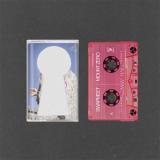
There’s something quietly defiant about Melody Boy. Written and recorded in a tiny beach hut studio on the English coast, and notably know for his previous work with Paul Weller and The Moons, Andy Crofts’ debut solo album arrives without compromise or concession to trend. It’s a record built on melody above all else, songs that feel unearthed rather than manufactured, guided by instinct, memory, and a lifelong obsession with the craft of songwriting.
Crofts, long established as a songwriter and musician, steps forward here with a voice that feels both seasoned and strangely elusive. There’s no rush to explain, no attempt to overstate. Instead, Melody Boy unfolds with a natural confidence, hook laden, harmonically rich, and emotionally direct without ever losing its sense of mystery.
Drawing from a lineage of classic songwriting while remaining firmly his own, the album leans into warmth, analogue textures, and a sense of timelessness that resists the churn of the modern music cycle. It’s not chasing a moment, it’s creating its own space.
Lead single “Blue” introduced that world: melodic, reflective, quietly anthemic. Across the album, that same thread runs deep, songs that reveal themselves slowly, rewarding repeat listens rather than demanding immediate attention.
There’s a deliberate sense of distance in Melody Boy. Not coldness, but clarity. A refusal to overexplain. The result is a body of work that feels personal without being confessional, detailed without being crowded.
In a landscape built on constant output and fleeting attention, Andy Crofts offers something else entirely: a record that trusts the listener to meet it halfway.
"Blue is another song that I can't get enough of at the moment" - Gary Crowley (BBC London)
There’s something quietly defiant about Melody Boy. Written and recorded in a tiny beach hut studio on the English coast, and notably know for his previous work with Paul Weller and The Moons, Andy Crofts’ debut solo album arrives without compromise or concession to trend. It’s a record built on melody above all else, songs that feel unearthed rather than manufactured, guided by instinct, memory, and a lifelong obsession with the craft of songwriting.
Crofts, long established as a songwriter and musician, steps forward here with a voice that feels both seasoned and strangely elusive. There’s no rush to explain, no attempt to overstate. Instead, Melody Boy unfolds with a natural confidence, hook laden, harmonically rich, and emotionally direct without ever losing its sense of mystery.
Drawing from a lineage of classic songwriting while remaining firmly his own, the album leans into warmth, analogue textures, and a sense of timelessness that resists the churn of the modern music cycle. It’s not chasing a moment, it’s creating its own space.
Lead single “Blue” introduced that world: melodic, reflective, quietly anthemic. Across the album, that same thread runs deep, songs that reveal themselves slowly, rewarding repeat listens rather than demanding immediate attention.
There’s a deliberate sense of distance in Melody Boy. Not coldness, but clarity. A refusal to overexplain. The result is a body of work that feels personal without being confessional, detailed without being crowded.
In a landscape built on constant output and fleeting attention, Andy Crofts offers something else entirely: a record that trusts the listener to meet it halfway.
"Blue is another song that I can't get enough of at the moment" - Gary Crowley (BBC London)
Spectral death metal conjurations will grasp you with their doom-tinged tendrils from the onset of this record. The gritty, booming riffs open a chasm of darkness for the punishing drums to cast skulls into. Met by otherworldly vocals, this is certain to grip any fan of sepulchral music with its enchanting and intense abyssal atmosphere. Do not be fooled by the slower lumbering moments into thinking this will be an easy listen. Stampeding ferocity and wild madness soon erupt from the charnel openings to give a burst of frantic psychopathy to the experience. Churning doomed violence and convulsive bestial onslaughts entwine around each other to project forth arcane death metal violence with huge dynamics and an utterly savage feeling to every second. With a natural, organic production to convey the filthy nature of the music perfectly; this is not a record that will hold your hand rather drop you into a void of souls with malicious intentions.
From the devastating drum work and monstrous riffing to the wickedly contorting bass lines; each instrument complements the others in this storm of triumphant vitriol while the commanding vocals spew malice to superb effect. The low end murmurings and rusted blades of the leads are an idyllic balance of inhospitable sounds that will surely satisfy any real underground lunatic seeking dark music. These five pieces clock in at 35 minutes and the sheer intensity is upheld for every second. Crypt-lurking doomed despair and utter ferocity become companions while the groove of the more mid tempo sections tie everything together. There is certainly nothing missing for an impactful and memorable experience. Allowing itself to decay and reform throughout; you will see, hear, feel, smell and maybe even taste the stages of cranial decay and the anguish of the brain matter breaking down into nothingness. This is a record which doesn’t follow predictable patterns nor rules but wildly possesses you with the malignant spirits from death metal’s darkest corners…
Edena Gardens unleash their most expansive work to date. Quintessence is structured in 4 parts as a Magnum Opus—the ancient alchemical process of transformation. But this is not a work of high fantasy. It is a seismic meditation. A study of deep time, weighted matter, and the crushing gravity of change. Quintessence is massive. 79+ minutes of tethered magnitude, carved into six sprawling tracks. The trio pushes further down into the void, discovering new dimensions. Each piece allow the form to stretch. To break its own boundaries. Shifting terrains and unpredictable geometry. The core remains unhurried: A slow, relentless, unabridged crawl. This sort of alchemy demands patience, allowing every sonic mutation to breathe, shift, and solidify in a new atmosphere.
Recorded by Jonas Munk (Causa Sui), the sound is rooted in a natural, anchored production, as if the band is right in front of you: Causa Sui drummer Jakob Skøtt drives the pulse and adds ghostly, sparse treatment to the mix. Nicklas Sørensen (Papir) weaves angular guitar geometry over the deep sediment of Martin Rude’s bass and baritone strings. Martin also supplies the original artwork, spreading across 4 panels (one for each vinyl side), coloured by Jakob Skøtt: A work in its own right. The final work is a massive, physical expanse: Their Quintessence.
Recorded April 17 and 18, 1993, at the Union Grove Baptist Church, Ozark, Alabama.
The Wiregrass Singers' Dewey Williams began learning the shape-note tradition in his childhood. He studied under Judge Jackson, who authored the landmark 1934 hymnbook The Colored Sacred Harp. In 1971, Williams formally organized The Wiregrass Sacred Harp Singers to preserve the music full-time. This unified troupe began touring nationally and leading workshops, which ultimately launched them onto stages at the Smithsonian and Newport folk festivals up until Williams' passing in 1995 when the group disbanded. The African-American Sacred Harp tradition in the Wiregrass region has steeply declined since the start of the 21st century, due to an aging generation of singers, and today it is largely sustained through archival preservation and occasional multi-book singing meetups.
This raw recording, made at the Union Grove Baptist Church, Ozark in mid-April 1993 finds the group singing from B. F. White’s The Sacred Harp (1844), which together with his brother-in-law William Walker’s Southern Harmony (1835) formed the musical backbone of generations of Southern music and Southern musical styles.
"On almost any Sunday between the months of March and October, the season most conducive to travel and outdoor dinner-on-the- grounds, Sacred Harp devotés join with fellow songsters at the County Line Church in Slocomb, or the Mount Sinai Church in Henry County, or the Union Grove Baptist Church in Dale County, or at any one of a dozen or so churches in the southeast Alabama counties of Barbour, Coffee, Dale, Geneva, Houston and Pike, to form the square and sing fa-sol-la. Approximately fifteen African-American Sacred Harp singings occur annually in the Wiregrass region of southeast Alabama. A singing tradition characteristically associated with white culture in the Deep South, southeast Alabama has enjoyed a vibrant African-American Sacred Harp tradition for well over a century.
On a day of a typical African-American Sacred Harp Singing, the participants arrive casually in the late morning, seat themselves in the square according to voice part, and begin to sing. A dinner break occurs in the early afternoon, and the singers enjoy a covered-dish "dinner-on-the-grounds" (or in the church basement) prepared by the women. The most intense and emotional singing typically occurs after the dinner break. Each singer takes a turn leading the song of his choice. He walks to the middle of the square, calls out the song's page number and waits for the designated tuner to key the song. Singers are discouraged by the other singers from repeating a song that has already been sung, or "used." This proscription is often dispensed with, however, if the singer is particularly young, particularly old, or if the song has special significance to the individual song leader (perhaps the favorite song of a recently deceased relative).
Every singer is given an opportunity to lead a song. Often, older or more infirm singers will request younger singers to lead their songs for them. The motions of the song leaders are highly stylistic and often emotional. Young children are taught in singing school to mark time with their right arm while holding the book in their left. Typically, a singer will stand in place at the center of the square while leading the singing of the notes. When he begins to lead the lyrics portion of the song, he will often begin to "walk time," rhythmically pacing from one side of the square to the other, being careful never to turn his back on the tenor section. This "walking time" is unique to the African-American tradition. As a singer grows more confident he develops his own distinctive leading style. During fuguing songs in particular, he may gesture to each section of the square as its part joins in. Skilled song leaders often elicit applause or other emotional responses from the group. Occasionally a singer may fall into a state of spiritual ecstasy and "get happy." The episode might include a personal testimonial followed by a repeat of the last verse or refrain from the previous song. The singings break up around 5 P.M."
—Henry Willett, 1997 credits
Chloe Lula Announces Syntax: A Singular Vision Connecting Ambient Meditations and Hypnotic Techno San Francisco-born, Berlin-based artist Chloe Lula announces the launch of Syntax, a record label that codifies her unique position within the electronic music landscape. Arriving as the definitive home for her work as a DJ, producer and cellist, Syntax follows her established residency at Tresor and acclaimed releases on foundational labels including Mord, Blueprint and the highly esteemed experimental imprint Subtext. Her label is the culmination of a decade spent as both a participant in and a defining voice in the scene—a space where Lula’s deep and cohesive vision of electronic music finally converge. The label’s name refers to the arrangement of elements to forge new meaning, a philosophy Lula applies to her singular musical grammar. Whether through her slow-burning, exacting techno or her instrumental compositions, Lula’s work is characterized by a patience that understands nuance and counterpoint. This vision is reflected in the label's structure: releases will arrive in thematic series that bypass traditional genre markers to focus on atmosphere, immersion and hypnotica. The imprint’s debut, SYN-PLS01, marks the beginning of the Pulse series, a collection specifically engineered for the floor. For this inaugural release, Lula took recordings from Swiss electroacoustic composer Alexandra Bellon as a jumping-off point, molding Bellon's architectural sense of space into six tracks of driving techno. Future series will expand the catalog into ambient and instrumental territories, reconciling formal acoustic tradition with the raw functionality of the electronic landscape. With a career spanning editorial leadership at Resident Advisor and her work shaping the dialogue of the culture through her writing and interviews, Lula brings a deep, analytical knowledge to her craft. Syntax is the connective tissue between her work in the booth and her critical contributions to the field—a project that formalizes her distinct perspective as both a curator and a creator. SYN-PLS01 arrives on May 8. Follow @syntax.records for updates.
out of Stock
Last delivered 60 days ago available to reorder, subject to availability
Tomoyoshi Date and Stijn Hüwels met for the first time in 2015 in Tokyo, being introduced to each other by Chihei Hatakeyama. That same evening, they recorded what would later become Hochu-Ekki-Tou, their first album, released on Home Normal in 2019, followed by 遠き火、遠き雲 (A Distant Fire, A Distant Cloud) in 2021 on LAAPS.
Tomoyoshi Date creates acoustic and organic sounds with a little touch of digital processing. He began to create electronic music in 1998. In 2003, he forms the group Opitope with Chihei Hatakeyama (released by SPEKK), in 2012 the group ILLUHA with Corey Fuller (released by 12k), and the group Melodia with Federico Durand (Home Normal). His solo albums were released from Flyrec (2009, Japan) and Own Records (2011, Luxembourg). Also he worked as emergency doctor until 2014, and started his ambient oriental medical clinic "Tsuyukusa Clinic" in Tokyo since 2014. Tomoyoshi currently resides in Narita, close to Tokyo.
Stijn Hüwels has a profound fascination for minimalism. He's using mainly layers of processed guitar and field recordings. He released on Dauw, mAtter, Eilean Rec., Home Normal, White Paddy Mountain and Slowcraft/Lifelines. He released albums in collaboration with Chihei Hatakeyama, Norihito Suda, An Moku and Ian Hawgood. Together with James Murray he forms Silent Vigils. Stijn lives and works in Leuven and Brussels, Belgium. He's also curating Slaapwel Records since 2014, a label dedicated to music to fall asleep with.
out of Stock
Last delivered 72 days ago available to reorder, subject to availability
includes DL code and insert with English & Japanese lyrics
The terms “nursery rhymes” and “children’s songs” may give rise to visions of idyllic innocence and the charms of childhood, but "Play Nursery Rhymes and Children's Songs" by Tokiyo Ooto & Orhythmo, their first release on EM Records, brings forth quite different aural imagery: this is an eerie and unsettling sonic picture book which hints at the darkness and mystery which form the hidden heart of many traditional songs and rhymes. The length of the songs provides a hint: each piece delves deeply into the latent uncanniness of the music, with superficial innocence gradually displaced as electric guitar, bass, field recordings and concrete sounds draw the listener into a chilly forest, while Tokiyo Ooto’s voice croons dark “lullabies for adults,” blending elements of folk, slowcore and dream pop. The Tokiyo Ooto & Orhythmo duo formed in 2023, releasing their first album in 2024. This release updates two pieces from the first album, and also includes a traditional Japanese children’s song from Shiga Prefecture and a masterpiece for children by composer Yasushi Akutagawa. Both musicians are Osaka-based: Ooto is a guitarist and singer-songwriter who also works in band and solo contexts; Orhythmo is a bassist with hardcore punk roots who focuses on improvisation, drone, noise and ambient sound. This release is available on CD, vinyl and DL; physical versions feature a printed insert with Japanese and English lyrics. The evocative cover is by Yoshitomo Ano.
Discrepant presents the LP edition of Tales from the Source, the original film soundtrack by Bear Bones, Lay Low and Laszlo Umbreit.
Originally composed for Belgian-Congolese artist Léonard Pongo’s 2024 film of the same name, this release reworks the film's audio into a continuous, fluid listening experience.
The album is built on a direct contrast between heavy electronic manipulation and raw environmental audio. Laszlo Umbreit captured the foundation of the record through field recordings and additional electronics, focusing on the quiet, tactile sounds of water, riverbeds, and natural spaces. These recordings were then processed and expanded by Bear Bones, Lay Low, who layered the tracks using synthesizers, samplers and various effects processors.
Rather than acting as a standard background score, the music functions as a detailed piece of environmental sound art. The tracks are edited to blend into one another without distinct gaps, mirroring the slow pace and visual flow of the film. Through the use of tape loops, filtering, and electronic processing, the natural landscapes are systematically distorted and rearranged. The result is a dark, slow-moving suite of electroacoustic music that strips away traditional melody to focus entirely on texture,
The recordings on Volume II were captured in Copenhagen, Denmark on January 18, 2020. Guided as much by human instinct as by musical intention, the ensemble moved through the evening with a shared sensitivity…listening, responding, and trusting the moment as it unfolded. Though Morten McCoy admits to having felt quite ill that evening, nothing in the music suggests restraint. Instead, what remains is a vivid, playful exchange, where McCoy and Johannes Wamberg carry both Part I and Part II as a flowing conversation, speaking through sound rather than words.
Part I begins abruptly, almost throwing the listener back in time to the exact moment the improvisation was born. Jonathan Bremer steps to the forefront, providing a solid, melodic bassline as Kristoffer and Eliel, perfectly in sync, lay down a steady foundation for whichever voice chooses to rise above the rhythm.
This is also one of the few I Am An Instrument recordings to feature two guitarists. Johannes Wamberg leads the way, shaping the harmonic direction, while Steven Jess Borth II adds subtle rhythmic textures through muted palm work, deepening the groove without ever stepping into the foreground.
Part II unfolds with Morten McCoy on his Moog One, delivering a beautiful, expansive solo. Using a carefully chosen patch, the sound pulses through the rhythm, moving with the groove rather than above it, riding the beat like a wave through the ocean.
Shaped by trust, presence, and collective improvisation, Volume II captures a group deeply attuned to one another, allowing intuition and momentum to guide the unfolding form.
——
Volume III was recorded in Copenhagen on March 5, 2020. Little did anyone know that only days later, the world would be placed on pause for years. Captured just before that moment of global stillness, this session carries a heightened sense of presence, a final gathering before silence reshaped everything. Recorded in a space more commonly associated with a club atmosphere, the music draws on a different kind of energy and immediacy. With Eliel Lazo unable to attend, the group invited Victor Dybbroe of Girls In Airports to join on percussion, subtly reshaping the ensemble while preserving its core spirit. Part I opens with Steven Jess Borth II calling out on tenor saxophone, answered by Morten McCoy on Wurlitzer electric piano. The piece gradually unfolds into a meditative groove, patient and expansive, carrying the listener through an eight-minute journey of layered rhythm and restraint.
Part II begins with Jonathan Bremer on stand up bass, slowly joined by the rest of the ensemble as each voice enters with intention. Midway through, an unexpected vocal melody from Borth emerges, drenched in reverb and delay, later reappearing as a melodic line on the tenor saxophone.
Part III is led by Morten McCoy on Wurlitzer electric piano. His signature melodic language sets the direction, guiding the ensemble while leaving ample space for the music to breathe and evolve through collective improvisation. Reprise returns to the closing moments of Part II, its title reflecting its origin. The familiar groove reappears, transformed into a distinctly Jamaican-influenced rhythm, over which Borth delivers a final tenor saxophone solo, bringing the conversation to rest.
Any questions about any of these products feel free to get in touch and we'll help you out!
a a1. Part I [Vol.2]
[b] a2. Part II [Vol.2]
[c] a3. Part I [Vol.3]
[d] b1. Part II [Vol.3]
[e] b2. Part III [Vol.3]
[f] b3. Reprise [Vol.3]
out of Stock
Last delivered 78 days ago available to reorder, subject to availability
Red Dwarf Star emerges as a striking new chapter for Coley Taylor of famous US/CH based MASERATI, a new project that captures a deeply personal arc that spans continents, relationships, and creative reinvention. Working largely alone, Taylor embraced a deliberately stripped-down approach, navigating unfamiliar technology with joyously unpolished determination. Much of the material was recorded in a modest, direct manner that prioritizes feeling over finesse. This DIY ethos is balanced by key collaborations that elevate the record's sonic depth. Drums were recorded in Los Angeles by Kellii Scott, whose distinctive style adds weight and clarity, while contributions from Allen Epley and Jenna Fournier introduce subtle vocal textures that expand the emotional range of the songs. Despite its introspective origins, Red Dwarf Star is not intended to remain a solitary endeavor. What began as a personal outlet is evolving into a fully realised band, with a lineup assembled to bring these songs into a more expansive, dynamic setting. This shift signals not only a new phase for the project, but also a broader artistic trajectory. Taylor is known best for his work with Maserati, a legendary outfit that leans into collaborative, rhythm-driven expanses rooted in krautrock and electronic psych. Through Red Dwarf Star Taylor's lineage of influence is felt, echoing the raw emotional immediacy of `90s alternative, post-hardcore, and the textured atmospheres of jagged dream-pop that bleeds. These are sounds that have lingered in Taylor's creative subconscious for decades, now resurfacing with renewed urgency. For fans of MASERATI, FAILURE, SLOWDIVE, QUICKSAND, SHINER, HUM Black or coloured vinyl LP or CD available
2026 marks a historic chapter in his musical journey as Ross prepares for the release of his twelfth studio album, Set In Stone, slated to drop in July 2026. The highly anticipated album rollout was ignited by the Top 10 radio single "Minks In Miami," an opulent track featuring French Montana and Max B. To further commemorate his enduring legacy, Ross is currently celebrating the twentieth anniversary of his debut number-one album, Port of Miami. Honoring the milestone, he is embarking on a grand 17-city orchestra tour, performing his timeless classics alongside the soaring live instrumentation of the Renaissance Orchestra and the powerful vocals of the Sainted Trap Choir. In addition to the new album Rick Ross' also released his 3rd book "Renaissance Of A Boss."
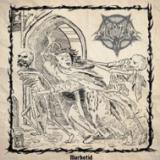
Dark Hardcore, fat and slow... But still I wonder if first tune of A side and first tune of B side can be good a 45RPM... Anyway a nice mid-tempo doomer !
Carve is the second full-length by Bay Area artist Kathryn Mohr. Written over the course of five years and recorded over several weeks in a rural singlewide in the Mojave Desert, the album centers on love experienced as a form of grief, not as an aftermath of loss, but as a condition of intimacy itself.
Mohr describes Carve as an album about how memory exists outside the body, embedded in places and landscapes. It is shaped by her first return to the American Southwest since a childhood road trip at age five, and by the experience of moving through terrain that holds emotional weight long after its origins fade. The record considers how intimacy feels after years of isolation, and what it takes to carve out a life that allows for trust, presence, and feeling rather than mere survival. The project took form after a difficult tour that ended in Joshua Tree. Mohr pointed her car into the desert and drove alone, crisscrossing the Mojave on dirt roads. Months later, she returned to record the album, working alone with an acoustic guitar, a field recorder, and limited supplies. Following that period, Mohr began to allow for intimacy and connection. The time she spent recording Carve in the desert did not create isolation so much as mirror it. Working alone out of an old, western-themed jail Airbnb, the physical enclosure reflected the emotional conditions under which much of the record had been written: distance, restraint, and long stretches of stillness. In that context, love was not experienced as escape, but as something inseparable from impermanence and the awareness of loss.
This tension between connection and inevitability sits at the center of Carve. Some of the album’s songs were written earlier, during a prolonged period marked by emotional distance and apathy. Over those four years, Mohr was working through unprocessed childhood memories and their long-term effects on her ability to connect with others. The work was slow and difficult, involving a fundamental reshaping of how she related to herself and to the world. Carve was mixed by Richard Chowenhill of Flenser labelmates Agriculture. Rather than offering resolution, the album documents the act of remaining present within tension. Carve is not about escaping grief, but about accepting it as inseparable from love itself. Kathryn Mohr’s previous effort “Waiting Room” received the coveted ‘Best New Music' designation and a score of 8.4 from Pitchfork.
out of Stock
Last delivered 81 days ago available to reorder, subject to availability
Jennifer Touch release her next LP 'Aging at Airports' on Fabrika Records. The idea for the record title came before the music even existed as Touch was spending an increasing amount of time in airports while touring. In her own words: "It felt like I waste a large part of my life waiting for the next show to come, to entertain and perform my music and build timeless moments with others. This waiting, the slowly ticking time at the gate, was in complete contrast to what I want to do as an artist: to be in flux, to create things that will last forever. The airport, as a busy hub, was like a symbol of this ambivalence. And a reminder: every second, whether waiting or on the move, I have to accept that I am fading, that my creative power, my face, and my body are fading. As a (performing) artist, everything feels like a strange contrast. While you want to stay true to yourself and speak authentically from the soul, you are also expected to appear forever young, and powerful. Artists are often wanted to distract people, but creating this art forces me to confront my own transience. I feel the struggle to fit into this powerful artificial framework that the world has set and the desire to break free from it."
out of Stock
Last delivered 81 days ago available to reorder, subject to availability
The music of La lucha es un poema colectivo was conceived and composed during a long artistic residency at IRCAM in Paris in November 2023 and will be released by Superpang. ‘In November 2023, we were in residence in Paris when we found ourselves in the midst of protests and strikes by workers at the Centre Georges Pompidou. They were demanding the respect of their rights. Entering that place as outsiders, making art while hundreds of people outside risked losing their jobs, was disorienting.
This is the starting point for the title of this album, evocative yet at the same time tangible. A phrase, as often happens, borrowed from those who had, in turn, borrowed it before us, words that are not and
cannot be only ours. Words too heavy to be slaves to context or syntax, yet words that resonate within us, move us, and open rifts in our history as a group. A strange plunge, strange despite the fact that the premises were clear from the start, with well-defined lines of a unified design. And if we ask ourselves, looking around, not so much what but rather with whom we would like to share it, we imagine the music of this album within that groove, in that intangible bond that unites a collective of people who, upon reading this sentence written on a wall, in a street, pause for a moment, slow down, rest their gaze, and know they are still alive.”
Music From The Star Wars Saga - The Essential Collection is an orchestral music compilation including tracks from Star Wars: Episode I - The Phantom Menace until Star Wars: Episode VIII - The Last Jedi.
On the occasion of the release of the final episode of the nine-part Star Wars saga: The Rise Of Skywalker, all songs were re-recorded by Robert Ziegler, alongside the Slovak National Symphony Orchestra and members of the Slovak Philharmonic Choir. These includes the iconic “Main Title” composition, “Duel Of The Fates”, “Yoda’s Theme” and “The Imperial March”.
Music From The Star Wars Saga - The Essential Collection is available as an exclusive “May The 4th Be With You” edition of 1000 individually numbered copies on 'Hyperspace' blue splatter vinyl. This 2LP is packaged in a gatefold sleeve and includes an insert.
out of Stock
Last delivered 86 days ago available to reorder, subject to availability
motor.de:
"Ex-Blackmailer Aydo Abay legt sich ein elektronisches Alter Ego zu: von düsteren Zukunftsvisionen, dem
Überwachungsstaat und New-Wave-Sound.
Wir kennen das schon aus „Keine Lieder über Liebe“: Für das Filmprojekt von 2005 wurde mit der Hansen Band ein
Projekt für die Kamera erschaffen, das aber auch echte Konzerte gab und ein Album herausbrachte. Im Jahr 2010
erleben wir nun ein ähnliches Projekt: Für die Crossmedia-Serie „Alpha 0.7“ formierte sich Crash:Conspiracy rund um
Mastermind Aydo Abay. Genau genommen IST der Ex-Blackmail-Sänger Crash:Conspiracy. Für die Aufnahmen der
Platte und auch für die kommenden Konzerte arbeitete er mit wechselnden Musikern zusammen und ist somit das
einzige stetige Mitglied der Band.
out of Stock
Last delivered 87 days ago available to reorder, subject to availability
Der Erfinder der "Infinite Guitar", der kanadische Musiker Michael Brook, schuf mit seinem 1992 bei 4AD erschienenen Album Cobalt Blue eine zeitlose und leise überwältigende Sammlung instrumentaler Stücke und schimmernder Klanglandschaften. Mit Beiträgen des Ambient-Pioniers Brian Eno, des Komponisten und Multiinstrumentalisten Roger Eno sowie des Grammy-prämierten Produzenten Daniel Lanois. Live at the Aquarium, später im selben Jahr aufgenommen, dokumentiert einen seltenen Soloauftritt Brooks in London und hebt das hypnotische Sustain und die atmosphärische Tiefe hervor, die sein Werk prägen. Über seine Alben hinaus komponierte Brook Filmmusiken für gefeierte Filme wie Into the Wild, Brooklyn und An Inconvenient Truth. Neu remastert von Rashad Becker und präsentiert als kristallklares 2LP-Set mit Artwork von Alison Fielding auf Basis der originalen v23-Designs, markiert diese Veröffentlichung die erste Vinyl-Wiederauflage von Cobalt Blue sowie das Vinyl-Debüt von Live at the Aquarium - eine längst überfällige Würdigung eines unterschätzten Juwels im 4AD-Katalog.
out of Stock
Last delivered 88 days ago available to reorder, subject to availability
Die Gründungsmitglieder von Mojave 3 sind Sänger/Gitarrist Neil Halstead, Bassistin/Sängerin Rachel Goswell und Schlagzeuger Ian McCutcheon. Die Band trat 1995 erstmals in Erscheinung, als ein Demo mit sechs Tracks 4AD so sehr beeindruckte, dass ihnen ein Plattenvertrag angeboten wurde - trotz des damals vorherrschenden musikalischen Klimas des selbstbewussten Britpop, der scheinbar völlig im Widerspruch zu dem stand, was Mojave 3 machten. Diese Unvereinbarkeit war kaum überraschend, wenn man bedenkt, dass Halstead, Goswell und McCutcheon zuvor Mitglieder der prägenden Shoegaze-Band Slowdive waren, während Gitarrist Simon Rowe zuvor bei den Dream-Pop-Verwandten von Chapterhouse gespielt hatte. Das dritte Album, Excuses For Travellers, enthielt einige der bis dahin ambitioniertesten Kompositionen Halsteads.
out of Stock
Last delivered 32 days ago available to reorder, subject to availability
Early Days (2016-2019) is a new collection of previously unreleased songs from Mauri Tapia a.k.a Los Retros. From a young age, Tapia has been a prolific songwriter, spending his teenage years writing and recording song after song. Influenced by soft rock and left-field South American pop, Early Days (2016-2019) captures the sound of this formative era Streaming everywhere today, Early Days consisting of 15 tracks, recorded from Mauri's parents' living room using nothing more than an old four-track recorder, that only existed in low quality online, now mastered, sequenced, and physically released for the first time. It was during these sessions that Los Retros created the song "Someone to Spend Time With", now certified Gold. Early Days comes with a companion visual for "Without You", edited by close friend and collaborator Ross Harris from found footage of early Los Retros tour stops. Check out Los Retros proper debut "Odisea" released simultaneously too. FFO soul, bedroom pop, indie, modern jazz, downtempo, soft rock, Mac DeMarco, Thee Sacred Souls, Skinshape, Men I Trust, Too Slow To Disco
out of Stock
Last delivered 89 days ago available to reorder, subject to availability
,Mount Zero", das Debütalbum von Swapmeet, ist ein mitreißender, gitarrenlastiger Road Trip, der an den Slowcore und Alternative Rock der 90er und frühen 2000er Jahre erinnert und diesen Stil neu belebt. Es markiert den Moment, in dem das australische Quartett zu seiner eigenen Identität findet. Nach ihrer verträumten Debüt-EP ,Oxalis" aus dem Jahr 2024 erscheint ,Mount Zero" kurz nach der Unterzeichnung des Bandvertrags beim in LA ansässigen Label Winspear, nachdem sie in ganz Australien für Aufsehen gesorgt hatten, bei den South Australian Music Awards Auszeichnungen für die beste Veröffentlichung und den besten Song (,Ceiling Fan") mit nach Hause nahmen und bei SXSW Sydney den Titel ,Bester Newcomer" erhielten. ,Mount Zero" verbindet luftige Sanftheit mit schrägem Surrealismus und verwandelt so viele der Bedauern und Unsicherheiten des jungen Erwachsenenalters in ein aufkeimendes, neu gewonnenes Selbstvertrauen. Obwohl die Mitglieder von Swapmeet ihre Songs oft zunächst einzeln schreiben, drehten sich die Titel auf ,Mount Zero" letztendlich um gemeinsame Themen: erste Lieben, erste Liebeskummer, erste Peinlichkeiten, erste Katastrophen. Wie schon seit ihren Anfängen als Band tauschten Swapmeet auch bei ,Mount Zero" die Instrumente untereinander aus und teilten sich die Produktionsaufgaben als Quartett. Sie entwickelten ihren Sound, indem sie Dutzende (manchmal Hunderte) von Spuren in jedem Song übereinanderlegten und dann sorgfältig Elemente entfernten, bis die Produktion eine klare Form annahm. Das Ergebnis ist ein Album, auf dem Swapmeet die zähneknirschende Intensität einfangen, die man empfindet, wenn man sich unter dem unerbittlichen Druck der Realität auf zellulärer Ebene verändert. Es ist eine Hommage an all die Leben, die niemals gelebt werden können, an all die Wege, die niemals beschritten werden - und zugleich eine Ode an das Leben, das direkt vor uns liegt.
,Mount Zero", das Debütalbum von Swapmeet, ist ein mitreißender, gitarrenlastiger Road Trip, der an den Slowcore und Alternative Rock der 90er und frühen 2000er Jahre erinnert und diesen Stil neu belebt. Es markiert den Moment, in dem das australische Quartett zu seiner eigenen Identität findet. Nach ihrer verträumten Debüt-EP ,Oxalis" aus dem Jahr 2024 erscheint ,Mount Zero" kurz nach der Unterzeichnung des Bandvertrags beim in LA ansässigen Label Winspear, nachdem sie in ganz Australien für Aufsehen gesorgt hatten, bei den South Australian Music Awards Auszeichnungen für die beste Veröffentlichung und den besten Song (,Ceiling Fan") mit nach Hause nahmen und bei SXSW Sydney den Titel ,Bester Newcomer" erhielten. ,Mount Zero" verbindet luftige Sanftheit mit schrägem Surrealismus und verwandelt so viele der Bedauern und Unsicherheiten des jungen Erwachsenenalters in ein aufkeimendes, neu gewonnenes Selbstvertrauen. Obwohl die Mitglieder von Swapmeet ihre Songs oft zunächst einzeln schreiben, drehten sich die Titel auf ,Mount Zero" letztendlich um gemeinsame Themen: erste Lieben, erste Liebeskummer, erste Peinlichkeiten, erste Katastrophen. Wie schon seit ihren Anfängen als Band tauschten Swapmeet auch bei ,Mount Zero" die Instrumente untereinander aus und teilten sich die Produktionsaufgaben als Quartett. Sie entwickelten ihren Sound, indem sie Dutzende (manchmal Hunderte) von Spuren in jedem Song übereinanderlegten und dann sorgfältig Elemente entfernten, bis die Produktion eine klare Form annahm. Das Ergebnis ist ein Album, auf dem Swapmeet die zähneknirschende Intensität einfangen, die man empfindet, wenn man sich unter dem unerbittlichen Druck der Realität auf zellulärer Ebene verändert. Es ist eine Hommage an all die Leben, die niemals gelebt werden können, an all die Wege, die niemals beschritten werden - und zugleich eine Ode an das Leben, das direkt vor uns liegt.
Known for his signature positive vibes and the triple-platinum single “GOOD TIME,” country star Niko Moon digs into his own origin story on his new 15-track album, ROOTS. Following his 2025 tropical album AMERICAN PALM, ROOTS shifts the scenery to the verdant hills of Georgia where Moon grew up, balancing his trademark optimism with unprecedented transparency about his journey. On the track “AMERICAN DREAMIN’,” he reflects on a lean childhood moving between trailers and motels, inspired by the resilient optimism of his truck-driver dad and waitress mom. He fast-forwards to his current life in Nashville on the ballad “RICH MAN,” celebrating his wife and two children as his true source of wealth, while tracks like “GET COUNTRY” deliver a trap-beat party anthem designed for pure escapism. The album's centerpiece, “GEORGIA (ROOTS),” interpolates the classic "Georgia on My Mind" to celebrate his home state with a feature from his own daughter. Beyond the music, Moon channels his pay-it-forward mentality into his Happy Cowboy Foundation, which provides affordable therapy, proving that his signature smile isn't from a lack of hardship, but a conscious choice to spread encouragement.
Words by Costanza Acernese
MOVING PRESSURE 04 / Obscur
With its fourth release, Moving Pressure welcomes its first external artist: young Slovenian producer Obscur. With a signature sound that is driving and subtly psychedelic, his debut on the label doesn't stray from the core tenets of its sonic ethos. Obscur delivers minimalism with purpose-dynamic, intentional, and wholly physical.
'F135' opens the A-side with a sinister tilt-rubbery squeaks stretch and coil around a flickering, synthetic voice. It's tactile and strange, without losing movement. 'Soul Eater' follows with a slow-burn crescendo, nestling psychedelic inflections into a warm low-end. On the flip, 'Stockholm Syndrome' pares things back. Dry, stripped rhythms carry an atmospheric tension-it's austere yet playful, leaving space for darker hues to linger without fully settling. A precise, heads-down statement. 'Blasphemy' follows with a tighter percussive grip and Feral-esque, panning modulations. Highs slice through a foundation of finely textured grooves-functional at its core, but laced with enough detail to give the track a sharper, more intricate edge. The digital bonus, 'Diamond City', stretches the sonic palette even further. Not through layers, but through tone: steel blues and deep violets bounce off metallic bleeps with cinematic restraint, closing the EP on a reflective note.
Adeen Records is next to give weight to the rising profile of Paolo Aniello aka New Digital Fidelity, an accomplished house producer who heads up his own Scopic label which this release is in collaboration with. Raised in Bari and now based in London, Aniello shows this love of Midwestern classics with a release that is slow burning and soulful rather than extroverted in its grooves. The A-side cruiser '4 Hours Away From Southside' sets a smooth tone with gentle chords awakening your soul then '9 Hours Landing' has a jumbled percussive element and heavy, almost beatdown kicks. 'Lake Shore Drive' glides into candlelit late-night territory with dusty drums and frayed analogue edges that get reworked by Ge-Ology into something more busy and futuristic.
out of Stock
Last delivered 19 days ago available to reorder, subject to availability
In spring 2025, Abul Mogard and Rafael Anton Irisarri created the source material for their second album, Where Light Pauses in the Silence of the Sun, during a three-day residency at Morphine Raum in Berlin. Functioning as both recording studio and performance venue, the space has no stage, with the audience gathered around the performers. Working within an open framework, the duo reshaped the music each evening while recording the performances live to multitrack. Rotary speakers, modular synthesizers and bowed guitar formed the core of their sonic language, captured through a 1970s mixing console and microphones placed around the room.
Back in Mogard’s studio in Rome, the material was further crafted as motifs were stretched, fragments isolated, and tempos dissolved. Irisarri recorded additional guitar textures and treatments in New York, while passages recorded by Martina Bertoni and Andrea Burelli in Berlin reinforced the harmonic centres and brought breath, refinement and a new sensibility to their compositions. The process continued as Mogard’s layering and subtraction reassembled everyone’s parts into the final arrangement.
The album opens with “In the Eastern Wild,” building from a sparse outline into a monumental formation of low-frequency weight, its internal motion shaped by the rotating Leslie speaker. “Over the Domes” widens into a broader acoustic field, where sustained modular tones meet waves of softly plucked guitar. The music then turns inward with “A Blue Descent,” centred on Bertoni’s cello, whose growling timbre introduces a melancholic depth.
At the album’s centre, “In a Quiet Radiance” unfolds around a slow guitar ostinato, its luminous stillness opening into a more expansive and reflective state. Across its ten-minute span, Burelli’s violin lines and Bertoni’s lower cello phrases gradually surface, weaving through the harmonic field. Mogard brings Burelli’s processed voice to the fore, its emotive, operatic presence becoming one of the record’s pivotal moments. “Of Blessed Ages” suspends the sonic flow, shifting between parallel major and minor chords as lingering, slowly decaying melodies shape the music’s internal drift. The closing “Among Shadows” settles into a darker resonance as layered textures recede.
Mogard and Irisarri’s shared language balances restraint and maximalism. UK magazine Crack describes the music as “a tidal wave held in suspension,” while Dutch newspaper de Volkskrant writes, “What a colossal sound, and how this music strikes at the emotions.” Reflecting on the residency sessions, Irisarri recalls: “At moments I genuinely couldn’t tell if a sound was coming from me or from Abul. It stopped feeling like two people making decisions and began to feel like we were inside a system moving on its own."
Marja de Sanctis’ cover artwork revisits the vessel sculpture from the duo’s first album, Impossibly Distant, Impossibly Close. There it appeared as raw, unfired clay. Here it has been fired in the kiln and finished with a glaze. Light gathers on its polished surface and spills into the surrounding space. As she explains, “I wanted to convey the idea of continuity within the duo, and the vessel became a kind of container for that idea. However, their music felt different this time, and with the collaboration of Martina and Andrea, I felt it should have a sleeker, softer, more glamorous look, very distant from the first raw appearance.” The transformation of the vessel from raw clay to fired form suggests a passage from immediacy toward permanence, mirroring the music’s gradual expansion.
out of Stock
Last delivered 3 months ago available to reorder, subject to availability
In spring 2025, Abul Mogard and Rafael Anton Irisarri created the source material for their second album, Where Light Pauses in the Silence of the Sun, during a three-day residency at Morphine Raum in Berlin. Functioning as both recording studio and performance venue, the space has no stage, with the audience gathered around the performers. Working within an open framework, the duo reshaped the music each evening while recording the performances live to multitrack. Rotary speakers, modular synthesizers and bowed guitar formed the core of their sonic language, captured through a 1970s mixing console and microphones placed around the room.
Back in Mogard’s studio in Rome, the material was further crafted as motifs were stretched, fragments isolated, and tempos dissolved. Irisarri recorded additional guitar textures and treatments in New York, while passages recorded by Martina Bertoni and Andrea Burelli in Berlin reinforced the harmonic centres and brought breath, refinement and a new sensibility to their compositions. The process continued as Mogard’s layering and subtraction reassembled everyone’s parts into the final arrangement.
The album opens with “In the Eastern Wild,” building from a sparse outline into a monumental formation of low-frequency weight, its internal motion shaped by the rotating Leslie speaker. “Over the Domes” widens into a broader acoustic field, where sustained modular tones meet waves of softly plucked guitar. The music then turns inward with “A Blue Descent,” centred on Bertoni’s cello, whose growling timbre introduces a melancholic depth.
At the album’s centre, “In a Quiet Radiance” unfolds around a slow guitar ostinato, its luminous stillness opening into a more expansive and reflective state. Across its ten-minute span, Burelli’s violin lines and Bertoni’s lower cello phrases gradually surface, weaving through the harmonic field. Mogard brings Burelli’s processed voice to the fore, its emotive, operatic presence becoming one of the record’s pivotal moments. “Of Blessed Ages” suspends the sonic flow, shifting between parallel major and minor chords as lingering, slowly decaying melodies shape the music’s internal drift. The closing “Among Shadows” settles into a darker resonance as layered textures recede.
Mogard and Irisarri’s shared language balances restraint and maximalism. UK magazine Crack describes the music as “a tidal wave held in suspension,” while Dutch newspaper de Volkskrant writes, “What a colossal sound, and how this music strikes at the emotions.” Reflecting on the residency sessions, Irisarri recalls: “At moments I genuinely couldn’t tell if a sound was coming from me or from Abul. It stopped feeling like two people making decisions and began to feel like we were inside a system moving on its own."
Marja de Sanctis’ cover artwork revisits the vessel sculpture from the duo’s first album, Impossibly Distant, Impossibly Close. There it appeared as raw, unfired clay. Here it has been fired in the kiln and finished with a glaze. Light gathers on its polished surface and spills into the surrounding space. As she explains, “I wanted to convey the idea of continuity within the duo, and the vessel became a kind of container for that idea. However, their music felt different this time, and with the collaboration of Martina and Andrea, I felt it should have a sleeker, softer, more glamorous look, very distant from the first raw appearance.” The transformation of the vessel from raw clay to fired form suggests a passage from immediacy toward permanence, mirroring the music’s gradual expansion.
out of Stock
Last delivered 3 months ago available to reorder, subject to availability
In spring 2025, Abul Mogard and Rafael Anton Irisarri created the source material for their second album, Where Light Pauses in the Silence of the Sun, during a three-day residency at Morphine Raum in Berlin. Functioning as both recording studio and performance venue, the space has no stage, with the audience gathered around the performers. Working within an open framework, the duo reshaped the music each evening while recording the performances live to multitrack. Rotary speakers, modular synthesizers and bowed guitar formed the core of their sonic language, captured through a 1970s mixing console and microphones placed around the room.
Back in Mogard’s studio in Rome, the material was further crafted as motifs were stretched, fragments isolated, and tempos dissolved. Irisarri recorded additional guitar textures and treatments in New York, while passages recorded by Martina Bertoni and Andrea Burelli in Berlin reinforced the harmonic centres and brought breath, refinement and a new sensibility to their compositions. The process continued as Mogard’s layering and subtraction reassembled everyone’s parts into the final arrangement.
The album opens with “In the Eastern Wild,” building from a sparse outline into a monumental formation of low-frequency weight, its internal motion shaped by the rotating Leslie speaker. “Over the Domes” widens into a broader acoustic field, where sustained modular tones meet waves of softly plucked guitar. The music then turns inward with “A Blue Descent,” centred on Bertoni’s cello, whose growling timbre introduces a melancholic depth.
At the album’s centre, “In a Quiet Radiance” unfolds around a slow guitar ostinato, its luminous stillness opening into a more expansive and reflective state. Across its ten-minute span, Burelli’s violin lines and Bertoni’s lower cello phrases gradually surface, weaving through the harmonic field. Mogard brings Burelli’s processed voice to the fore, its emotive, operatic presence becoming one of the record’s pivotal moments. “Of Blessed Ages” suspends the sonic flow, shifting between parallel major and minor chords as lingering, slowly decaying melodies shape the music’s internal drift. The closing “Among Shadows” settles into a darker resonance as layered textures recede.
Mogard and Irisarri’s shared language balances restraint and maximalism. UK magazine Crack describes the music as “a tidal wave held in suspension,” while Dutch newspaper de Volkskrant writes, “What a colossal sound, and how this music strikes at the emotions.” Reflecting on the residency sessions, Irisarri recalls: “At moments I genuinely couldn’t tell if a sound was coming from me or from Abul. It stopped feeling like two people making decisions and began to feel like we were inside a system moving on its own."
Marja de Sanctis’ cover artwork revisits the vessel sculpture from the duo’s first album, Impossibly Distant, Impossibly Close. There it appeared as raw, unfired clay. Here it has been fired in the kiln and finished with a glaze. Light gathers on its polished surface and spills into the surrounding space. As she explains, “I wanted to convey the idea of continuity within the duo, and the vessel became a kind of container for that idea. However, their music felt different this time, and with the collaboration of Martina and Andrea, I felt it should have a sleeker, softer, more glamorous look, very distant from the first raw appearance.” The transformation of the vessel from raw clay to fired form suggests a passage from immediacy toward permanence, mirroring the music’s gradual expansion.
out of Stock
Last delivered 3 months ago available to reorder, subject to availability
Off the back of an epic 3 part triple album “Sidequests”, Session Victim kept the collaborators in tow with “The Disconnect” EP, featuring the talents of Kenneth Scott, Rossano Snel, and Quarion across 5 tracks. It’s the Empire Strikes Back of Rhythm Section EPs – following up from widely acclaimed and best seller “Basic Instinct”. Balancing funk elements of breakbeats, bass guitar, rhodes and mellow synths with finessed modern production, the duo have assembled another masterclass in precise yet characterful house music.
The record begins with “Hey, Activate!”, oozing funk, ambient pads, a groove bassline and optimal arpeggiated synth noodling sets the tone for the whole EP. “Dream Theory” is quite it’s namesake, with a distant sax solo, tremolo sine motifs and a sumptuous lick combining piano and the Session Victim trademark bass guitar.
B-side opener “Flotsam” comes through with smooth breaks and incidental style sampling harking back to the vibes of Herbert, with slow filtered chord groove referencing the vibes of early French Touch masterminds Cassius.
Progressing into more relaxed territory, still ideal for dancefloor moments: “Open Minds” is indebted to old soul jams with bongos, muted guitars and rhodes followed by “Loom”, using similar elements with a vibe akin to early Bonobo.
This EP is testament to Session Victim’s mastery of housemusic, being their 40th EP and standing firm in a crowded scene. Their consistent application of production precision is carried by an emotional heart of gold that you can hear in every record they make. Not to be missed.
out of Stock
Last delivered 46 days ago available to reorder, subject to availability
On their fresh imprint, In.Visible, Uruguayan mainstays Kino and Manuel Jelen turn their sonics towards the slower, and stranger. On the front is Italian legend Dionigi’s first posthumous release, having sadly passed away during the making of the record, with ‘Komp 22’ an ethereal yet eye-closing opener, plodding through luscious strings and mysterious retrofuturistic sound design. The mechanically swung percussion of ‘Dust Distortion’ takes the record into straighter territory until it code-switches into a synth workout close, while ‘Bhaskara’ rounds offthe side by wiggling and scuttling through offkilter syncopations, bassline bleeps, and hellish, claustrophobic arpeggios. The flip is helmed by UK acid day-oner Scott Hallam; ‘Larb’ offers a moody, squelching downtempo groove, before closing with the most club ready (at a push) track on the record, ‘Stupendous’ – a soaring electro number bookmarked by oddball English vocal samples.
out of Stock
Last delivered 3 months ago available to reorder, subject to availability
Omega Sunrise was a US funk and soul outfit made from several members of the Seawind Horns and spent around eight months a year on the road from 1979 to 1986. They recorded a debut album in 1983 that charted well nationally and years on, Feel The Change remains a favourite of deep diggers. It was a 1983 private press release that had it all, from tight, snappy drums with mellow soul vocals and jazzy melodies drenched in spiritual vibes to more slow funk cuts with more defined drums. Brass tones, synth glows and a devotional energy all pervade the 11 cuts and this is its first-ever vinyl reissue, so do not sleep.
out of Stock
Last delivered 3 months ago available to reorder, subject to availability
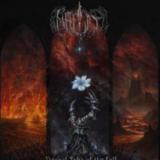
Riff-driven and immediate, MALIST's style is rooted in the best Atmospheric Black Metal imprint, although experimenting with Post-Metal passages and modern-oriented melodic approaches Often epic and fierce, "Eternal Echo of the Fall" allows the listener to experience the perfect balance between anger and melancholy, as well as a raw, suggestive quality, thanks to mutable sections that float between slow, magical atmospheres and more fiery, aggressive ones. A particular attention to arrangements and a certain amount of ideas seal this album as an intriguing musical journey, in which each song has distinctive traits when compared to the others.
T. VINCENT: LIVE IN LONDON! (Total Pleasure/Virgin Music Group) offers up the opportunity to relive or experience for the first time that enthralling evening, a historic occasion that found Annie Clark, Buckley and the orchestra reimagining 19 classics, staples and rarely played deep cuts spanning the St. Vincent catalog from 2007’s solo debut Marry Me up to 2024’s multiple-GRAMMY-winning All Born Screaming.
Album Background
A complete live recording of St. Vincent's triumphant BBC Prom performance at The Royal Albert Hall with The Jules Buckley Orchestra. Featuring reimagined works from across her entire career, this is a chance for fans to experience an evening that Rolling Stone UK called "A glorious re-imagination," what The Times Of London classified as "Here's how to do a classical crossover," and about which Far Out Magazine UK said "There are certain gigs that are always destined to be great -- like St. Vincent, at the Royal Albert Hall, with an orchestra."
"It began somewhere between sleep and memory.
After first meeting in dreams, in Brussels and Berlin, on landscapes that felt strangely close to Vilnius, Marija Rasa aka emer and Ugnė Uma leisurely rewrote those visions into songs.
What followed became a collection of moments suspended in idle summers, familiar faces, gentle motions, skin touched by golden sun. These songs wander through closeness and distance, tracing the delicate emotional shifts between us, who almost understand each other completely.
‘you and me’ lives in the space where magical realism meets everyday intimacy: honey-colored evenings, recurring thoughts, and the slow surrender to things unfolding on their own."
out of Stock
Last delivered 5 days ago available to reorder, subject to availability
Originally released in 2003, With A Heartbeat brings together Pharoah Sanders, Bill Laswell and Graham Haynes in a collaboration that remains as elusive as it is forward-thinking. Now reissued by Glossy Mistakes, the album receives its first official vinyl edition, remastered and available both in standard black and a limited burgundy pressing.
At the core of the record lies an unusual but striking element: the steady pulse of a human heartbeat. Rather than a conceptual gesture, it becomes the foundation of the music itself-treated as a deep, bass-like rhythm that anchors the entire album. Around it, Laswell builds his unmistakable sonic world, drawing from dub techniques where basslines expand, dissolve, and re-emerge, and where space becomes as important as sound.
Across its extended compositions, the album unfolds slowly and deliberately. Layers of electric sitar, guitar, keyboards and subtle percussion drift in and out, creating a fluid, almost tidal movement. The heartbeat remains present throughout, grounding even the most abstract passages in something physical and immediate.
At the center stands Sanders' saxophone-searching, expansive, and deeply spiritual. His playing moves freely across the structures, at times echoing the lineage of John Coltrane, while also reaching beyond it. Alongside him, Haynes adds a complementary voice, weaving through the shifting textures.
The result is a work that resists easy definition: part spiritual jazz, part future-facing experiment, shaped by dub's sense of space and transformation. Meditative, immersive, and deeply rhythmic, With A Heartbeat unfolds like a living organism-guided not by fixed tempo, but by the pulse of life itself.
With this release, Glossy Mistakes continues its work of bringing essential and forward-thinking recordings into new formats, preserving their depth while opening them to new listeners.
out of Stock
Last delivered 3 months ago available to reorder, subject to availability
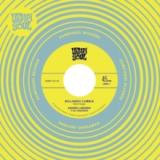
Andrés Landero embodies like no other the spirit that made it possible to bring cumbia to the world. The two cumbias included on this 45 have been taken from his rare and never-reissued 1979 LP on Discos Fuentes. They became popular rebajadas (slowed down cumbias) in the Mexican sonidero scene and have not been previously available on 45. First-ever reissue. Andrés Landero legacy represents a creative pinnacle of tropical music and has influenced countless artists. In 1965, he joined the line-up of artists on Discos Fuentes' payroll. After some years releasing music on different labels, Landero returned to Discos Fuentes in 1979 with the album "Bailando cumbia". The two cumbias included on this 45 have been taken from this rare and never-reissued LP. They became popular rebajadas (slowed down cumbias) in the Mexican sonidero scene and have not been previously available on 45.
out of Stock
Last delivered 3 months ago available to reorder, subject to availability
Ever since the late 1950s bossa-nova revolution, Brazil’s influence on French music has been undeniable. Pierre Barouh, Georges Moustaki and a vast array of lesser known artists, all made the Musica Popular Brasileira (MPB) an axis of promotion at the service of a cool and metaphysical, modern and mixed Brazilian lifestyle. Some were seduced by the poetic languors of the bossa, some were looking for fun, and others just loved the American hybridization of jazz-bossa, jazz-samba.
What is bossa nova? One of its creators, Joao Gilberto said: "Its style, cadence, everything is samba. At the very start, we didn't call it bossa nova, we sang a little samba made up of a single note - Samba de uma nota so .... The discussion around the origins of bossa nova is therefore useless”. It is nevertheless useful to remember that these magnificent Brazilian songs, which the guitarist describes as samba, were shifted and balanced around improbable chords. "I like things that lean, the in-betweens that limp with grace," said Pierre Barrouh, quoting Jean Cocteau.
With emotion, arrangements for violin and supple guitar licks, bossa nova rapidly changed. A transformation that can be heard in the Tchic, tchic, French Bossa Nova 1963-1974 compilation, the result of a cultural reappropriation, which traveled through the United States and supplemented itself in France.
A musical revolution that has remained significant, bossa nova was born in Rio. From 1956 to 1961, Brazil lived through its golden years. In five years, the country had invented its modernist style. Elected president in 1956, Juscelino Kubitschek de Oliveira, an elegant man with a broad forehead, brandished a promising slogan: "Fifty years of progress in five years". He quickly got to work. Not worried about increasing debt, he launched the project for a new federal capital, Brasilia, designed by the communist architect Oscar Niemeyer. Volkswagen opened state-of-the-art factories and created the “fusquinha”, the Beetle. In Rio, the Vespa made its first appearance. The Arpoador Surf Club crew run into the “girl” from Ipanema, Helô Pinheiro - the tanned garota ("chick"), between a flower and mermaid, who at 17 walked by the Veloso bar, where the fiery author and composer, Tom Jobim and Vinicius de Moraes, were getting drunk on whiskey. From then on, bossa symbolized cool.
In 1958, Joao Gilberto recorded Chega de Saudade, which the directors of Philips denied, calling it "music for fagots". The marketing director, who believed in it, secretly pressed 3000 78-inch vinyls and distributed them at schools around Rio, creating a tidal wave.
American jazzmen then took over. In particular, trumpeter Dizzy Gillespie and guitarist Charlie Byrd. In November 1962, the Brazilian Ministry of Foreign Affairs funded a "Bossa-Nova" concert at Carnegie Hall in New York, inviting the genre’s pioneers. Unprepared, the show soon turned to disaster. But the troupe was invited to the White House by Jackie Kennedy. The first lady loved "the new beat" and in particular Maria Ninguem, a song by Carlos Lyra, later covered by Brigitte Bardot.
In Brazil, the 1964 military coup quickly ended this euphoria. The destructive atmosphere that ensued pushed many Brazilian musicians to leave, if not to exile. Thus, Tom Jobim, Sergio Mendes and Joao Gilberto arrived to the United States. In New York, Joao Gilberto met saxophonist Stan Getz. At the time, he was married to the Bahianese Astrud Weinert Gilberto, who had a German father. She had never sung before, but she knew how to speak English. Getz therefore asked her to replace her husband on The Girl From Ipanema. The Getz/Gilberto record with Tom Jobim on piano, was released in March 1964. Phil Ramone, the "pope of pop" was in charge of sound.
Bossa nova arrived in Paris through the classic “guitar-voice” channel (Pierre Barouh, Baden Powell, Moustaki…) But France loved jazz and Paris had already welcomed its American contributors. All these good people were to pass through Saint-Germain-des-Prés. The cabaret l'Escale became the Mecca of Latin American sound where one could find Pierre Barrouh and his friends, such as the Camara Trio, samba-jazz aces, whose only record was published by the Saravah label. With a band strangely called Les Masques (a band that included Nicole Croisille and Pierre Vassiliu, among others), the Camara Trio recorded an interesting Brazilian Sound, including the track Il faut tenir which is present on this tasty compilation of rarities.
Other enlightened musicians can also be found on the compilation, such as Jean-Pierre Sabar (songwriter for Hardy, Auffray, Leforestier ...) and the French pop rock organist Balthazar. In 1975, Sabar recorded Aurinkoinen Musiikkimatka on a Finnish label, which featured the crazy Vai, Vai, included on this record. We are now following the footsteps of Brazilian electronic musicians such as Sergio Mendes, Eumir Deodato or Marcos Valle who created funk and disco sounds on their keyboards and synthesizers. A style that influenced Véronique Sanson when she wrote Jusqu’à la Tombée de la nuit in 1969 for Isabelle de Funès, the niece of Louis and a great friend of Michel Berger - Sanson did end up singing this track on her 1992 Sans Regret record.
The pinnacle of exoticism and travel, Sylvia Fels’ Corto Maltese includes bongos, sea mist and ocean sounds. The title was taken from Jacky Chalard’s concept album written in 1974, Je suis vivant, mais j’ai peur (I am alive, but I am scared), based on Gilbert Deflez’s science fiction novel.
However, bossa nova extended the scope of popularity. "In the 1970s, I was a fan of Sergio Mendes, Getz / Gilberto. I fell in love with this music that I knew because I had been an orchestral singer, " explained Isabelle Aubret, who in 1971 delivered a composite record of covers by the very funky Jorge Ben, Orfeu Negro, Tom Jobim, Vinicius de Morais and Jean Ferrat. "I recorded this album for Meys Records in Paris, far from Brazil, with wonderful musicians, François Raubert, Roland Vincent, Alain Goraguer...". The latter wrote the arrangements for Casa Forte, a very percussive title borrowed from Edu Lobo, one of the initiators of the bossa who spent time in California. "Jazz and bossa came together and produced very rhythmic music. I love singing, it allows me to dream, to have fun, to feel a high on stage, and these songs brought me joy, made me swing, my singing felt like a dance.”
The world tours of French singers and their desire for the tropics, often brought them to Rio with its hills, forests, caipirinhas and tanned bodies. There are surprises though, like this Iemenja (Iemenja is the goddess of the sea in the Afro-Brazilian candomblé religion). Not unlike the composer and musician Jean-Pierre Lang, based in Sao Paulo, Claire Chevalier taught Brazil to Brazil. In 1970, the singer and painter published a 45-inch vinyl, Mon mari et mes amants (My husband and my lovers), under the improbable pseudonym of Clarinha (little Claire). She was then living in Rio, with her husband, Joël Leibovitz, who founded a band called Azimuth, and who owned a record label specialized in "sambas enredos" songs for samba school parades.
For its B side, she asked Pierre Perret to come up with lyrics for a song composed by Carlos Imperial: "Oh goddess of the sea, o goddess Iemenja, I bring a white rose to adorn your long hair ..." . "Perret came to see us, and we had fun, remembers Joël Leibovitz. We wrote Lemenja for fun, we recorded it at the Havaí studio, behind the Central do Brasil the central station. Erlon Chaves, the arranger who worked with Elis Regina, joined us" adding his share of Afro-Brazilian percussions and funky brass to the mix.
There is a common misunderstanding in Franco-Brazilian history: that bossa, admittedly hedonistic, is perceived as funny, even though the poets who wrote the texts are often philosophizing on the human condition. Its French interpreters pull it towards a carnival inspired universe, far removed from its fundamental essence. Thus, Jean Constantin covered the famous Samba da minha terra, an ode to the art of samba written by the classic Bahian composer Dorival Caymmi, renaming it with the enticing title of Pas tant de tchi tchi pompon: "On your pier there is no tchi tchi / when you arch your back, you know everything is alright ”(lyrics by Gérard Calvi). This expedited bossa aims for the absurd, but retains a certain elegance.
Indeed, Jean Constantin was not an idiot, the rather large man had a huge mustache and liked fantasy, (Les pantoufles à papa, Le pacha, inspired by cha-cha-cha-cha, salsa and jazz) but he was also the lyricist of Mon manège à moi interpreted by Edith Piaf, the composer of Mon Truc en plume by Zizi Jeanmaire and the soundtrack of François Truffaut’s 400 Blows. Le Poulpe, published in 1970, from which this bossa is extract, was arranged by Jean-Claude Vannier, an accomplice of Serge Gainsbourg’s Melody Nelson. In short: "There is enough of samba / By looking at the parasol / Because my poor cabeza / Is going to die in the sun".
Even the American actress Marpessa Down, who was at the heart of the bossa nova revolution with her role as Euridyce in Marcel Camus’ film Orfeu Negro, winner of the 1959 Cannes Palme d'or, fed the clichée with Je voudrais parler au petit cuica - "Tell me how you manage to always make people want to dance / It's true, I must admit that I cannot resist your magic" - in consequence, once can hear the cuica, a little drum inherited from the Bantu.
But bossa nova had many angles. Societal, of course, pushing actresses who were symbols of women's liberation like Brigitte Bardot, Jeanne Moreau, or Sophia Loren to engage in the exercise of accelerated bossa. In February of 1963, Sophia Loren made a record in French in Rome, Je ne t'aime plus, featuring the song De jour en jour, a bossa written by two Italians, Armando Trovajoli and Tino Fornai, which was released a little later by Barclay. Bossa accompanied the 1960s, a decade of moral liberation. Ann Sorel, who interpreted La Poupée des favellas, caused a sensation with L’amour à plusieurs, a provocative song written by Frédéric Bottom and Jean-Claude Vannier. As for the actress Andrea Parisy, she displayed her bourgeois cheekiness in Marcel Carné's Les Tricheurs before interpreting Les mains qui font du bien. And Magalie Noël, the friend of Boris Vian, who sung Johnny fais-moi mal, was hired to sing Une énorme Samba, composed by Alain Goraguer (arranger to Gainsbourg, Bobby Lapointe and Jean Ferrat) with lyrics by Frédéric Botton.
But in the end, of what wood is bossa nova made of? The answer is given by Christianne Legrand, daughter of Raymond the conductor, and sister to Michel the composer: "With me, with jà" - jà means "immediately" in Portuguese. In 1972, the singer, an expert in vocal jazz and a member of the Double Six, published Le Brésil de Christianne Legrand. Two songs included on the Tchic Tchic compilation that demonstrate how bossa, jazz, funk, rock, etc. work like a swiss army knife: the music is used to denounce broken systems, or miracles, HLM et ciné roman, Cent mille poissons dans ton filet, two songs from the O Cafona soundtrack, a successful telenovela broadcast, at the time in black and white, on TV Globo. The first was adapted in French by the fighter and friend of the Legrand tribe, Agnès Varda. The second is content with a play on words, jostling them into a summer fun.
Véronique Mortaigne
out of Stock
Last delivered 3 months ago available to reorder, subject to availability
Formed by Marius Vold & Steinar Sverd Johnsen in 1989, Mortem was one of the first black metal bands to crawl out of the woodwork in Norway, releasing the highly coveted & brutal 'Slow Death' demo, with Euronymous & Dead of Mayhem acting as producer & cover artist respectively (whilst also featuring Hellhammer on session drums). After the release of 'Slow Death', the band was laid to rest, with members going on to form & feature in acclaimed titans such as Arcturus & Thorns, both of which would become mainstays in the black metal scene & beyond. It wasn't until 2019, when Mortem's studio debut 'Ravnsvart' was released, & the magic of old undoubtedly returned with that same spirit & brutality of the original incarnation, whilst injecting new elements to form an opus of ferocious yet atmospheric horror. This was followed soon after by the fully re-recorded & re-worked 'Slow Death' tracks.
Formed by Marius Vold & Steinar Sverd Johnsen in 1989, Mortem was one of the first black metal bands to crawl out of the woodwork in Norway, releasing the highly coveted & brutal 'Slow Death' demo, with Euronymous & Dead of Mayhem acting as producer & cover artist respectively (whilst also featuring Hellhammer on session drums). After the release of 'Slow Death', the band was laid to rest, with members going on to form & feature in acclaimed titans such as Arcturus & Thorns, both of which would become mainstays in the black metal scene & beyond. It wasn't until 2019, when Mortem's studio debut 'Ravnsvart' was released, & the magic of old undoubtedly returned with that same spirit & brutality of the original incarnation, whilst injecting new elements to form an opus of ferocious yet atmospheric horror. This was followed soon after by the fully re-recorded & re-worked 'Slow Death' tracks.