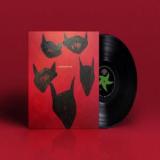
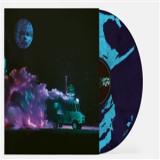
Like a thief in the night, and almost 4 for years after his critically acclaimed full-length album Kabul Fire Vol 2, beat virtuoso Farhot has returned to the (crime) scene with his latest all-instrumental record "stealing from cats". While on his last LP, he took listeners on a journey to the dusty streets of his birthplace Kabul, he is now taking them along as he goes out stealing sounds from dusty Jazz archives. Reminiscent of that time when Blue Note invited Madlib into their catacombs to create the seminal "Shades of Blue" LP, this slow-paced record sees Farhot eclectically fusing Jazz samples with downtempo, instrumental hip-hop art. From the hazy, chopped vocal samples of the intro tune "selfish" to the dreamy closer "they need me", this 12-song masterpiece is as much an homage to the virtuosity of Jazz cats as it is to the fine art of sampling that Farhot cheekily calls stealing.
Newly signed to Heist or Hit (Westside Cowboy, Her’s, Nature TV), Georgian's forthcoming debut EP 'Crackled Grounds' reads like an anthology in the vein of The Ballad of Buster Scruggs. These aren’t just songs, but scenes, self-contained worlds that glimmer with strange detail before dissolving into mirage. “We recorded on a farm just north of Amsterdam” states James. “It gave us space and focus and helped us channel the Western feel we wanted to impress upon the tracks. Arno gave us lots of pedal board options and guitar choices. Those things in particular helped us fine-tune the sound we were chasing.” The resulting collection chronicles the ups and downs of existence and blooms with natural imagery. ‘Strike a Wound’ seethes with revenge. The slow attack on the guitars has the onomatopoeic effect of enacting each blow. ‘Crackled Grounds’ conjures an apocalyptic wilderness that wouldn’t be out of place on the ‘Kill Bill’ soundtrack. ‘Medusa’ is a parable of strong women overcoming obstacles and jolts with the energy of those early Johnny Cash Sun recordings. ‘Gardens’ lingers on the awkward tenderness of running into a long-lost lover; while ‘Californian Jeans’ pays homage to denim as talisman, armour, and second skin.
French label Latency presents ‘Estradas (Versions)’ - a dynamic reimagining of the acclaimed collaboration between drummer-composer Valentina Magaletti and Afro-Portuguese producer Nídia. Following Estradas’ recognition as one of 2024’s Best Albums by Pitchfork, The Wire, Resident Advisor, Artforum, Bandcamp, and more, ‘Estradas (Versions)’ invites a diverse lineup of producers and DJs to deconstruct and reimagine the raw percussive language initially crafted by Magaletti and Nídia. Where the original Estradas channeled their distinct rhythmic sensibili- ties into a bold sonic statement, this collection pushes those ideas further - opening the material to radical transformation across tempo, genre, and mood.
One of the leading baile funk innovators from Belo Horizonte, Dj Anderson do Paraíso opens the release by transforming “Andiamo” into a slow-burning, hallucinatory drift. Mexico-based Rosa Pistola and Freebot follow with “Rapido,” infusing it with syncopated, raw heat drawn from the pulse of underground Latin dancefloors. Lebanese-Australian producer Dj Plead pares “Sicilia” down to its core, distilling its essence into stripped-back, polyrhythmic ten- sion. On “Mata,” Brazilian DJ and producer BADSISTA delivers a fierce, bass-heavy version driven by slicing synths and unrelenting club pressure. Multidisciplinary artist FAUZIA sharpens the rhythmic intricacy of “Nasty” with her signature blend of speed and emotion.
London-born DJ, producer, and label founder Sherelle - known for her high-octane 160bpm mix of footwork and jungle - injects “Estradas” with blistering breakbeat energy, reframing its urgency through a razor-sharp UK lens. Chinese musician and sound artist Yu Su offers a fluid, atmospheric reinterpretation of the same track, softening its edges while preserving its momentum. Scottish composer and producer Fergus Jones pulls “No Promises” into hypnotic new rhythmic terrain. Dominican producer and multidisciplinary artist Kelman Duran stretches “Ta A Bater Ya” into a shadowy, reverberant space, while Lebanese composer and multi-instrumentalist Charif Megarbane and its Cosmic Analog Ensemble reimagines it with layered, cinematic textures echoing vintage library music and psych-jazz soundtracks.
These artists treat Estradas as raw material - reframing its structures and reactivating its rhythmic possibilities through entirely new prisms. What emerges is not a conventional remix album, but a vibrant constellation of versions : a response to Estradas’ percussive provoca- tions, and an extension of its spirit of exploration - all while keeping its pulse alive.
On his new album, Micha Acher rearranged compositions for bands such as Tied & Tickled Trio and Ms. John Soda from previous years.
Why are we interested in ghosts? What fascinates us about the eerie? According to cultural theorist Mark Fisher, the allure that the eerie possesses is not captured by the idea that we „enjoy what scares us“. It has, rather, to do with a fascination for the outside. For that which lies beyond standard perception, cognition or experience, as he writes in his book „The Weird and the Eerie“.
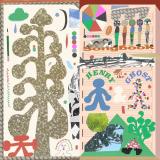
In fact, also none of the 15 pieces from Henry and the Ghost is really scary. On the contrary, they all feel strangely familiar. Like revenants or doppelgängers, which in fact they are. They have all been released before. But in a different form. In different line-ups. With different band projects such as Tied & Tickled Trio, The Notwist or the Alien Ensemble.
With the „Songbook“, Micha Acher's aim was, as he says, to find out how the familiar pieces sound in a chamber music instrumentation. Therefore he met with Theresa Loibl (bass clarinet, piano), Timm Kornelius (bassoon), Markus Rom (guitar, banjo, electronics) and Simon Popp (drums, percussion) in his living room for a musical séance in the summer of 2022. The séance lasted two days. Afterwards, Markus Rom (Oh No Noh), added some haunting electronical ideas.
The mood of most of the pieces is melancholic. There are surprising twists and siren-like melodies. Just as ghost stories should be. However, most of the songs sound very light-footed. With their feet in pop, folk, jazz and classical music. Pieces such as „Johanna“ with its wheezing harmonium and spooky piano, or the dreamy „Modest Farewell“ on the other hand have a cinematic flair. Immediately faces and scenes arise in the mind. But at the beginning, there is „Hamlet“. It starts with ghostly electronics and merges into a calm, almost classical guitar piece. Could it be that the ghost of Hamlet's father is hiding between the strings?
„34E“ begins with a banjo. Then the deep humming of Micha Achers sousaphone and the other brass instruments kick in. In the slow, solemn „Aelita“, the sousaphone starts a dialogue with a children's piano. With the banjo and the other wind instruments acting as mediators. The title of „All Tomorrow's Past“ brings Velvet Undergrounds „All Tomorrow's Parties“ to mind. Another ghost from the past. What connects the two pieces is free-floating percussion, which accompanies the sumptuous melodies.
„Arc“ takes us on an exhilarating voyage at sea, with the sousaphone providing powerful propulsion. Towards the end, things get quite turbulent. With the clarinet stirring up the water, before the sea calms down again. „Henry and the Ghost“ is characterised by a ghostly mood change between major and minor. In „Radio Four“ the banjo with its stoic chords keeps the lively brass section in check. „Solid Ground“ is imbued with melancholy. „Space Minor“ takes us into outer space, with the power of sousaphone and percussion.
„Tomorrows“ is filled with cautious optimism. And the concluding „Nordlead“ turns out to be a revenant of the instrumental „N.L.“ from The Notwist's legendary album „Shrink“ from 1998. In the new version, the piece sounds like a distant echo. One that also brings to mind how Micha Acher's music has evolved. Which new worlds he explored and opened up since the nineties. And yet Acher's signature is recognisable in every single note of this fascinating „Songbook“.
Formed in 2022 and already moving with the assurance of a band far beyond its years, Hanry stands at the confluence of atmosphere and impact, restraint and eruption. Hanry return with `What Came From Silence`, their first full-length album that captures the band at a decisive moment in their evolution. Their performance at the legendary Trans Musicales in Rennes, broadcast nationally to an audience of thousands, marked a defining moment, and the forthcoming live session with KEXP signals Hanry's international ascent The new album is a cinematic journey that is all at once introspective, soaring and meticulously curated. Hanry transform restraint into resonance, and `What Came From Silence` is an album that invites immersion; it begins in stillness and slowly, inexorably, unfolds into something vast and luminous Sonically, the album deepens Hanry's exploration of contrast. Clean guitar tones shimmer with crystalline precision, only to dissolve into waves of saturated distortion. Ambient passages feel suspended in time, yet the band resists drifting into passivity. Even at their most delicate, there is motion; subtle pulses and evolving textures that suggest forward momentum. When the band unleashes its full force, the sound remains articulate; each instrument retains its identity within the surge. "The main new element on this album is our collaboration with the pianist Mariposa, who worked with us on the track Phantom Rush. His sensitivity and musical depth brought a new dimension to the piece. He took the composition into a space we likely would not have explored on our own, adding both emotional intensity and richness to the track." (Hanry) FOR FANS OF Explosion in the Sky * Boards of Canada * Massive Attack
Formed in 2022 and already moving with the assurance of a band far beyond its years, Hanry stands at the confluence of atmosphere and impact, restraint and eruption. Hanry return with `What Came From Silence`, their first full-length album that captures the band at a decisive moment in their evolution. Their performance at the legendary Trans Musicales in Rennes, broadcast nationally to an audience of thousands, marked a defining moment, and the forthcoming live session with KEXP signals Hanry's international ascent The new album is a cinematic journey that is all at once introspective, soaring and meticulously curated. Hanry transform restraint into resonance, and `What Came From Silence` is an album that invites immersion; it begins in stillness and slowly, inexorably, unfolds into something vast and luminous Sonically, the album deepens Hanry's exploration of contrast. Clean guitar tones shimmer with crystalline precision, only to dissolve into waves of saturated distortion. Ambient passages feel suspended in time, yet the band resists drifting into passivity. Even at their most delicate, there is motion; subtle pulses and evolving textures that suggest forward momentum. When the band unleashes its full force, the sound remains articulate; each instrument retains its identity within the surge. "The main new element on this album is our collaboration with the pianist Mariposa, who worked with us on the track Phantom Rush. His sensitivity and musical depth brought a new dimension to the piece. He took the composition into a space we likely would not have explored on our own, adding both emotional intensity and richness to the track." (Hanry) FOR FANS OF Explosion in the Sky * Boards of Canada * Massive Attack
German-Turkish singer and composer Alev Lenz follows her self-released album 4 in a Cycle of Thirds (Jan 2026) with a complete, album length ambient rework by Simian Mobile Disco co-founder Jas Shaw. “The two records are very much intertwined," writes London-based German-Turkish singer and composer Alev Lenz. "I made 4 in a Cycle of Thirds with Jas in mind, inspired by a mix he created for my last album.” Lenz and Shaw have previously worked together on 2024 collaboration EP Bring Your Friends, as well as album mixes for Lenz' previous two solo records. Lenz' original album was created from a series of single-note drones, one for each note of the chromatic scale. "When I had this idea, I wanted Jas’ touch involved somehow. I asked him for drones on each note. He sent me 12 and I wrote most of the album listening to these drones. They eventually left the picture and were replaced by new drones I made, new sounds or vocals. But the memory of them lingers in the songs, like an imprint on the retina, an afterimage.
So naturally when the record was finished I sent the totality of it to Jas and said: here you go, make your versions!" 4 in a Cycle of Thirds in its original form touches on traditional folk musics, chamber music, contemporary composition, film score, and even interweaves subtle metal inflections, but now presented on double vinyl alongside Jas Shaw's versions as twin records, it has a newly foregrounded quietude, spectral and delicately nuanced. Through reduction, meticulous replacement, and sensitively applied edits, Shaw gently rebalances the light and shadow of the original pieces, coaxing new subtleties and harmonic resonance. "It occupies a space that is in-between the lines," describes Lenz. Shaw employs a "feedback system" he created for his piano, applied here to devastating effect. "Take the key bed off it and set up a resonators, mics and a mixer. Lots of gaffa tape, lots of precarious propping stuff open. You grub around on the floor and slowly the room fills with harmonics, it’s wonderful." And, on the relationship between the original record and these new versions, he explains "we could really let the songs drift into a different shape without worrying that we were missing elements that were great."
Alev Lenz is a singer, songwriter, composer, and producer born to a Turkish actor, activist, and artist mother and an Oscar-winning German engineer father. Alev’s creative foundation is as diverse as her musical output. Her solo discography includes three albums - Storytelling Piano Playing Fräulein (2009), Two-Headed Girl (2017), and 3 (2019). She has contributed vocals to scores by Oscar-winning composer Volker Bertelmann, including the US drama Conclave. She has collaborated with artists such as Anoushka Shankar, Jas Shaw (Simian Mobile Disco), Roomful of Teeth, and plenty more. Songwriter, composer, and producer Jas Shaw is best known for his work with Simian Mobile Disco, whom he co-founded in 2003. He mixed Alev Lenz' 2016 and 2019 albums Two-Headed Girl and 3, and also performs with Selling alongside Gold Panda, and Shaw & Grossfeldt with visual artist Bas Grossfeldt. Shaw and Lenz released the collaboration EP Bring Your Friends in 2024.
Even in these most turbulent of times, dub musician and fatigued onlooker Elijah Minnelli remains an inexplicable stalwart on the lower rungs of the Breadminster County Council.
His latest record ‘Clams As A Main Meal’ continues his astute siphoning of council funds, this time with help from the Breadminster Board of Abstinence. As a further mark of respect, the original head of the Board, Dr. K'houldoux, graces the cover art in his infamous ‘Looming Moon of Desire’ guise.*
As fine a backdrop as any for Minneli’s off-brand dub experiments, and ‘Clams...’ is the truest representation of his varied wheelhouse yet...
We find vocal appearances from dub goliath Dennis Bovell and Welsh-language singer Carwyn Ellis. A pair of tracks which build on 2024’s acclaimed ‘Perpetual Musket’, a collection of folk songs reworked alongside reggae vocalists, released by FatCat Records. It garnered glowing reviews, with nods from The Guardian and The Quietus concluding with prominent appearances on their respective yearly round-up lists.
Elsewhere, the album finds Minnelli in a more experimental mode, all wheezing contraptions and cockeyed bass, creaking with the weight of creation, a satisfying tactility laid seam-side up.
As well as ‘Perpetual Musket’, the new album follows years of sold out 7" singles, handmade and self-released. Online, the tracks have amassed global streams numbering in the millions. His tracks have found play across an eclectic range of radio mixes and dance floors, most notably the likes of Andrew Weatherall, Batu, Optimo and Zakia Sewell (BBC6Music).
It is perhaps worth mentioning that this everbuilding interest in his work is at great odds with the growing suspicions amongst his fellow townsfolk, who see his Breadminster County Council Music Initiative as nothing more than an empty cash-grab.
Further Reading on the Breadminster Board of Abstinence
In the late 70s, Breadminster was awash with the last vestiges of the hippy era. Though the flared silhouette of the lower leg remained, the utopian ideals that had once flowed merrily around the youth's shaded ankles had begun to wane. LSD and free love had led to a sharp spike in population and a generation of children raised by air-headed psychonauts unprepared for the bleary-eyed strictures of parenthood.
Aware of the crisis, the County Council entrusted Dr. Paulinque K'houldoux to spearhead a pushback, and it was his pro-abstinence movement - a mixture of education initiatives and radical renutrition campaigns - that came to impact Breadminster's census deep into the new millennium.
Being a pseudo-archipelago Breadminster has fundamentally limited resources, however deep-seated ties to distant coastal villages meant that oysters were a regular part of the local diet. K'houldoux pinpointed this as a factor in the town's overpopulation, and believed that simply replacing these with clams (a “lesser mollusk”) would help lower the erotic urges of the people. It was his “anti-aphrodesia” movement that first championed the idea of “Clams As A Main Meal,” and the slogan “Consider Abstinence” carried the message yet further.
The Breadminster Board of Abstinence soon became involved in all cultural happenings in the area, with K'houldoux MCing at prominent festivals and performances, sometimes dressed as the “Looming Moon of Desire” - an idea of his relating to the tide, seafood, menstrual cycles, and his privately held celestial predilections.
It was in 1981 that it was revealed Dr. K'houldoux had never fully qualified as a doctor and was seeking exile in Breadminster due to a series of botched bracelet heists in which he had previously been involved. K'houldoux was subsequently extradited to Basingstoke, where he served 3 of a 12-year sentence, owing to the lunar-oriented prisoner health campaigns he helped implement.
It has been a strange twist of bureaucratic fate that the Breadminster Board of Abstinence has never stopped receiving public funding, despite its lack of clear utility. And while its roots are tied to a rose-tinted past, the Board continues to sponsor cultural events and projects to this day.
An extract from: Eugeniq Schooner's article in Sydney Parishioner: “Clams, Breadminster and Countercultural Abstinence Trends” (2008)
out of Stock
Last delivered 4 months ago available to reorder, subject to availability
The first release of the False Mov Rec. label, an international joint venture between two underground imprints located in Germany and Greece respectively is as unusual as it is unique in many ways. Released in 2017 this split 7" sees DYL from Romania and Paragon from the UK pairing up for the A-Side track "Unstable", a deeply hypnotic and driving minimal take on Halfstep Drum'n'Bass / Bass Music for late night dancefloors whereas Greek producer PS Stamps Back delivers a bass-driven take on psychedelia-infused slow motion Techno for illegal forest raves with "Beyond Lies The Wub" which also comes in handy for tripped out after hours and similar occasions.
Never officially distributed before and available in extremely limited quantities only.
out of Stock
Last delivered 4 months ago available to reorder, subject to availability
Filmmaking and music-making share a common element of worldbuilding. Whole cloth, environments are raised in which a perspective can be placed; the viewer, the listener, is taken on a ride into the unknown for a time. Movie, the newest album by DMV-based duo Lifted, is like a film shot with microphones rather than cameras, using the pacing, spatialization, and semiotics of cinematic sound design to lead us through a surreal soundworld that draws as much from Foley artistry as dub, jazz, and electronic music. Musical elements and field recordings shift in and out of focus, collaged in spontaneous improvisation sessions on CDJs by the core duo of Andrew Field-Pickering (Max D, Dolo Percussion, Beautiful Swimmers) and Matt Papich (Co La, Ecstatic Sunshine). We may not see where we are, but our ears give us all the information we need.
We open on a pedal steel, played by More Eaze, but it’s been warped and slowed, gradually pitching upward until it's met by drums and electronics. Imagine the THX logo emerging onscreen. Movie is bookended by two related themes, “The Ice Chewers (Opening Credits), ” and “Midnight Snack (End Credits), ” giving the spatial experiments at the heart of the record form and focus. If there’s a broader narrative to latch onto, it’s in the transition moments, the juxtaposition of various field recordings that indicate movement of characters through space and life happening at its own pace. Tracks are defined by other thematic elements: a wandering piano in "Repossessed, " the drone of Duncan Moore’s bagpipe on “Melts Very Nasty, ” the delicate dance of Dustin Wong’s guitar over Jeremy Hyman’s drums on “Midnight Snack. ” Even with such an expansive ensemble cast, the focus remains squarely on the flow from one scene to the next.
Robert Altman’s use of sonic perspective shifting, as well as Apichatpong Weerasethakul’s intricate construction of environmental ambience and aural representations of the unknown, were both inspirational for Lifted’s focus on sound as a way to establish set and setting in film. We hear Altman especially in the way dialogue emerges and recedes: as Papich puts in a sandwich order, as Field-Pickering browses the grocery store. These techniques have been a part of the duo’s arsenal in Lifted and their own projects for years, but here, without the mandate to make something overtly musical, they are foregrounded and placed in crisp focus. Here is another way to listen to the world, to understand how time, place, and personality are communicated through sound as Lifted closes the gap between artforms. What you can’t see only drives the imagination to more brilliantly invent.
Bolka is known as the man with the cap. His cap has lived through a lot: his glitchy and microtonal experiments, studies at Institute of Sonology in The Hague or through countless performative works. A few years ago, Bolka’s cap fell apart. By that time he was already a fixture on the slovak experimental scene, but only releasing his debut album, “smutné stropy.” He started wearing new caps from then: somehow reminiscent of the old one, but much more varied — same as “smutné stropy,” bubbling with motifs, charming humour and pop sensitivity layered over detailed soundscapes popping with surprises.
On schwarzkopf, Bolka returns wishing for a thick black hair. With his charming love songs, that are positioned somewhere between a tightly run freak folk orchestra, deconstructed ballads and colorful ecstatic melancholy, he creates an album that thrives on juxtapositions that are completely unique, yet strangely familiar. Bolka’s songwriting is at once tender and irreverent — lovestruck whispering suddenly tripping over absurdist jokes and surreal images that fizz like soda. His songs move in that strange space between vulnerability and mischief, where intimate confessions collide with radical playfulness and the poetic rubs shoulders with the delightfully ridiculous.
On schwarzkopf, Bolka expands his world with a wide circle of collaborators and an even richer sonic palette. The album is meticulously detailed yet carefree: delicate moments sit next to sudden explosions, drifting from gentle pop to bursts of noise. Toward the end, the album even slips into a footwork-infused remix by Kodiki, passes through Julek ploski’s signature neon-baroque string perspective, and briefly wanders into Lénok’s cinematic sonic world. Bolka sings that he wants to dissolve into a healing ointment, to be ground in a mortar with calendula — and he invites us into this musical spa with him: a place that stings a little but ultimately soothes, a gorgeous soundscape that is both painful and joyful at the same time.
In 1979, the Soviet label Melodiya released a record that immediately stood apart from most Soviet jazz of its time and perhaps for that very reason never became widely known. Oriental Suite by Oleg Gotskosik Quintet is a rare example of jazz, Eastern musical tradition, and compositional thinking coming together not as an exotic stylization but as a fully formed artistic statement.
This is not “Oriental colour” used as decoration, nor folklore treated as an ornament. Oriental Suite grows from within another musical tradition, with its monody, modal logic, slow unfolding of form, and focus on inner states rather than outward effect. The music is calm and concentrated. It does not try to impress, but gradually draws the listener into its own space.
Oleg Gotskozik was born in Tashkent in 1951, a city where Eastern music was part of everyday life rather than something distant or exotic. That may explain why his engagement with traditional material sounds so natural. He does not quote or stylize; he thinks in the same musical categories. By temperament, he was closer to a composer than to a jazz musician in the conventional sense. For him, jazz was not a style but a way of working with form and improvisation.There is no standard “theme and solos” logic in Oriental Suite. Improvisation is woven into the fabric of the music itself and unfolds in the same way as in oral traditions, gradually, with rising tension and a clear sense of arrival. Individual sections refer to traditional Uzbek genres such as lullabies, lyrical songs, and funeral laments, but these are not genre sketches. They are states of being. The music unfolds slowly, avoiding familiar harmonic drama and relying instead on modal scales and subtle internal movement.
A special role is played by trumpeter Yuri Parfyonov. His approach, with delayed vibrato, micro-glissandi, and melismatic phrasing, sounded unexpected at the end of the 1970s and still feels remarkably fresh today. This is not expressive jazz virtuosity but a focused, almost meditative voice, where improvisation becomes a form of inner speech.
It is also important to note that the original recording was not without technical flaws. Like many Soviet jazz releases of the time, Oriental Suite was captured under far from ideal conditions, and the master contained audible imperfections that were never part of the music itself. For this edition, the restoration was approached with great care and respect, working through the recording moment by moment to remove unwanted artifacts while preserving the character and atmosphere of the original. The aim was simple: to make sure nothing stands in the way of fully experiencing the music.
In the early 1980s, Oleg Gotskozik left the Soviet Union, and after that his name virtually disappeared from Soviet music journalism and literature. There were no official bans or public statements. He was simply no longer mentioned. Oriental Suite continued to exist on its own, without an author and without context. The record never entered the canon, received no continuation, and was never officially reissued. It seemed to fall out of time.
The original vinyl pressing was released in a run of around 32,000 copies, but most of them remained within the republic and never reached wide circulation. Today, original copies are hard to find and have long become objects of interest for collectors. There have been no official reissues, only attempts that never went beyond test pressings.
Today, Oriental Suite sounds surprisingly contemporary. It is music that can be described as deep ethno-jazz and even, in a certain sense, spiritual jazz. There is no exoticism here, no decorative borrowing, only a complete immersion in another musical way of thinking. It does not require explanations and does not need to be justified by its time.
This is not a forgotten curiosity revived for collectors’ sake. It is music that simply waited for the moment when it could be heard without ideological filters or genre expectations. Now it is returning quietly, without noise or hype, but with the clear sense that this is not an artifact of an era, but a living and genuinely rare artistic statement.
Shooting Daggers are a band that never seems to stop. Sal, Bea and Raquel are one of the hardest working outfits out there, constantly playing shows and lending their support to myriad causes all around the U.K. and Europe. So, it’s always an exciting prospect when the band takes some time out from the maelstrom to write and record new material. And 2 years on from the release of their acclaimed debut album ‘Love & Rage’ the band have been in Bear Bites Horse Studio with Wayne Adams (Big Lad, Green Lung) at the controls to come up with the goods once again. ‘The Real Life Thing’ is the latest hardcore sonic missive from one of London’s must-see bands, and it absolutely does not disappoint. Shooting Daggers are the real deal; the best, and most exciting and adventurous hardcore-inspired band in the country. A ‘mini album‘. 7 songs and 20 minutes of driving rocket fuelled punk meets melody picking up from their debut to go further into their own space. A selection of songs that are marked by a fierce energy, variety and cool musical nous, but always with a message firmly at its core. The band says … ‘It's a crucial time to focus on what really matters. Be present, be aware of real things happening in the world, with integrity and love we can make a difference as a community. There is hope out there, and if we all start treating nature, people and animals with respect and empathy we will be able to become better humans and coexist. In this mini album, we express the full range of our emotions through various sounds and genres. From cheerfulness to anger and hopefulness.
From hardcore punk, to shoegaze, to post hardcore and riot grrrl. We embrace our authentic self, with sensitivity in response to injustice, we act out, and all the while savouring every moment, being unapologetically yourself, empowering ourselves and each other’. With the help of some very special guests in the form of ‘The Menstrual Cramps' and Dennis Lyxzén from Refused, that message is driven home ‘big time’. ‘Adrenaline’ is as full on and heavy as Daggers have ever been, all buzzsaw riffs and rousing vocals, it’s a smart and catchy punch in the face to kick off proceedings. ‘My Oh My’ sweetens the vibe if only a bit with its layered post shoegaze guitars and anthemic vocals, exquisitely arranged we may add. It really shows how Daggers have taken the 90’s elements from Love & Rage and expanded it into something all their own. ‘T.R.L.T.’ back to ‘in yer face’ Daggers trademark off kilter punk, chants, fast bit, slow bits all straight into your head. ‘We just Wanna Play’ is, as Daggers put it ... ‘Empowering playground song for girls and queers to sing and play’. The perfect intro to … ‘Loud Mouths’ the first track to feature bestie guesties ‘The Menstrual Cramps’. A riotous call to arms. We are united with our sisters and queer folks in punk and hardcore, queercore is strong and more alive than ever. Together we will denounce problematic behaviours unapologetically, we won't shut up. Things must change and it’s happening when problems are pointed out and sorted. The scene is for everybody, and we are making it happen’. ‘Le Soleil’ is another step forward … a left field, almost dubby vibe with a dreamy melodic swirling vocal performance from Sal.
When Daggers decide to step outside the box, they do it seductively in style. ‘Glow’ is the second collaboration; this one featuring Dennis Lyxzén from Refused on dual vocal duties. A no brainer it seems … ‘Refused has been a band that never wanted to fit in with a specific sound, they are pioneers of experimental punk while still being rooted in hardcore. They believe in what we believe in, antifascism, veganism, social justice and Dennis on stage is anything but a generic hardcore singer’. It’s a celebration. It’s fuzzy, it's hooky and it’s heavy with, dare we say it, a bit of My Bloody Valentine in there too, generic hardcore it is not. And that pretty much sums up ‘The Real Life Thing’. This album and this band are anything but ‘generic’. They never stand still and continue to push the boundaries of what is ‘hardcore’ or ‘punk’ or whatever people think they are. T.R.L.T. is a delight and a surprise from start to finish, refreshing, abrasive, melodic and with a true beating heart. Embrace it.
"I decided to just let myself go," Zzzahara says of their new record, 'Spiral Your Way Out' "I think I finally came to this acceptance that I don't have to be perfect. I want to be a good role model to my fans and stuff like that, but I also don't want to hide who I am." Zzzahara's music wades into the deep waters of love, lust, and self-discovery in a part of the world where artifice and authenticity co-exist. Emerging from the heart of LA's alternative music scene, their sound is raw in feeling and rebellious by nature.
Their 2022 debut album, Liminal Spaces, chronicles a coming- of- age in Highland Park, following painful childhood memories through to late- night, live- fast coping mechanisms, and the changes the neighbourhood has endured over the same period of time. Their 2023 follow- up, Tender, marked a period of slowing down, looking inward, and embracing a softer side of being. 'Spiral Your Way Out' sees Zzzahara evolve again. Emotionally, its foundations are built on scorched earth.
The album finds Zzzahara in the aftermath of a relationship spent trying to fit someone else's mould, being jerked around by indecision, and then hitting "emotional rock bottom." Made in a three-month burst that let all their pent-up frustrations loose, 'Spiral Your Way Out' is in part a work of self-reclamation, swapping there 2nd album Tender's meditative state for something fiery and more assertive. The new album marks another sonic evolution as much as an emotional one. Zzzahara's songs have always come wrapped in a warm glow that reflects how they were written -namely at home in their bedroom.
That glow remains on 'Spiral Your Way Out', but it also packs an ambitious streak and a gutsy punch. Taking a more collaborative approach than usual, Zzzahara worked with a range of producers including Jorge Elbrecht (Japanese Breakfast, No Joy, Sky Ferreira), Sarah Tudzin (boygenius / Cloud Nothings / The Armed), former Ducktails guitarist Alex Craig (Jelani Aryeh / re6ce) and Halsey tour drummer Franco Reid, who helped harness their intimate style of writing and blow it up into something more panoptic. After a year of upheaval, Zzzahara finally feels "calm." The musical equivalent to going several rounds on a punching bag, 'Spiral Your Way Out' finds solace between extremes. It licks its wounds in a place where pain and love, healing and abandon, sit side-by-side. If it has a message, it's one of standing tall in your own shoes - scuffs and all.
"I decided to just let myself go," Zzzahara says of their new record, 'Spiral Your Way Out' "I think I finally came to this acceptance that I don't have to be perfect. I want to be a good role model to my fans and stuff like that, but I also don't want to hide who I am." Zzzahara's music wades into the deep waters of love, lust, and self-discovery in a part of the world where artifice and authenticity co-exist. Emerging from the heart of LA's alternative music scene, their sound is raw in feeling and rebellious by nature.
Their 2022 debut album, Liminal Spaces, chronicles a coming- of- age in Highland Park, following painful childhood memories through to late- night, live- fast coping mechanisms, and the changes the neighbourhood has endured over the same period of time. Their 2023 follow- up, Tender, marked a period of slowing down, looking inward, and embracing a softer side of being. 'Spiral Your Way Out' sees Zzzahara evolve again. Emotionally, its foundations are built on scorched earth.
The album finds Zzzahara in the aftermath of a relationship spent trying to fit someone else's mould, being jerked around by indecision, and then hitting "emotional rock bottom." Made in a three-month burst that let all their pent-up frustrations loose, 'Spiral Your Way Out' is in part a work of self-reclamation, swapping there 2nd album Tender's meditative state for something fiery and more assertive. The new album marks another sonic evolution as much as an emotional one. Zzzahara's songs have always come wrapped in a warm glow that reflects how they were written -namely at home in their bedroom.
That glow remains on 'Spiral Your Way Out', but it also packs an ambitious streak and a gutsy punch. Taking a more collaborative approach than usual, Zzzahara worked with a range of producers including Jorge Elbrecht (Japanese Breakfast, No Joy, Sky Ferreira), Sarah Tudzin (boygenius / Cloud Nothings / The Armed), former Ducktails guitarist Alex Craig (Jelani Aryeh / re6ce) and Halsey tour drummer Franco Reid, who helped harness their intimate style of writing and blow it up into something more panoptic. After a year of upheaval, Zzzahara finally feels "calm." The musical equivalent to going several rounds on a punching bag, 'Spiral Your Way Out' finds solace between extremes. It licks its wounds in a place where pain and love, healing and abandon, sit side-by-side. If it has a message, it's one of standing tall in your own shoes - scuffs and all.
A transcendental journey through the shadows of consciousness - remastered and expanded for the deepest listening experience yet With Metamorphyses , Swedish dark ambient pioneer Peter Andersson (RAISON D'ETRE) invites us into a labyrinth of sound and soul, where drone, ritualism, and neoclassical minimalism converge into something vast, immersive, and transformative. Originally released in the mid-2000s, this defining work now returns in a gloriously expanded edition - and for the first time ever, pressed onto double vinyl.
This 2025 edition, meticulously remastered to K14- level standards by Andersson himself, features not only the core studio album (Disc I, recorded winter 2005-2006), but also two full discs of evocative live performances from across Europe, including Gent, Sofia, Salzburg, Alkmaar, Budapest, and a stunning set recorded in the Sophienkirche of Wuppertal during the Phobos II Dark Ambient Festival (2010) - a performance that plays like a liturgy for forgotten gods. The sound is monumental yet subtle: subterranean drones coil beneath spectral chants, decaying harmonics ripple through ancient cathedrals of reverb, and slowshifting textures create a space where the listener floats between the sacred and the surreal. There are echoes here of Lustmord's somber gravity, Thomas Koner 's icy isolationism, and the ritualistic depth of Inade or Desiderii Marginis, but it's RAISON D'ETRE's singular spiritual voice that rises from the abyss. The artwork by Kati Astraeir perfectly captures the album's meditative darkness - fluid forms, organic decay, and transcendent abstraction - while the layout, also designed by Andersson, reinforces the ritualistic purity of the listening experience.
A transcendental journey through the shadows of consciousness - remastered and expanded for the deepest listening experience yet With Metamorphyses , Swedish dark ambient pioneer Peter Andersson (RAISON D'ETRE) invites us into a labyrinth of sound and soul, where drone, ritualism, and neoclassical minimalism converge into something vast, immersive, and transformative. Originally released in the mid-2000s, this defining work now returns in a gloriously expanded edition - and for the first time ever, pressed onto double vinyl.
This 2025 edition, meticulously remastered to K14- level standards by Andersson himself, features not only the core studio album (Disc I, recorded winter 2005-2006), but also two full discs of evocative live performances from across Europe, including Gent, Sofia, Salzburg, Alkmaar, Budapest, and a stunning set recorded in the Sophienkirche of Wuppertal during the Phobos II Dark Ambient Festival (2010) - a performance that plays like a liturgy for forgotten gods. The sound is monumental yet subtle: subterranean drones coil beneath spectral chants, decaying harmonics ripple through ancient cathedrals of reverb, and slowshifting textures create a space where the listener floats between the sacred and the surreal. There are echoes here of Lustmord's somber gravity, Thomas Koner 's icy isolationism, and the ritualistic depth of Inade or Desiderii Marginis, but it's RAISON D'ETRE's singular spiritual voice that rises from the abyss. The artwork by Kati Astraeir perfectly captures the album's meditative darkness - fluid forms, organic decay, and transcendent abstraction - while the layout, also designed by Andersson, reinforces the ritualistic purity of the listening experience.
For the 4th release in this Electro Acid VA series, we present 303 craftsmanship, seamlessly blended into an electrifying electro setting.
Johnfaustus returns with two raw, otherworldly musical tales, staying true to the signature style we know and this time, he takes it to an even greater level. Akkaelle channels old-school vibes with a bass-driven, slow-burning groove, and Axis3340 closes the EP by plunging you into uncharted freaky depths with their dark and haunting track "Ashes." This track set you in fire, leaving smoldering embers in its wake.
out of Stock
Last delivered 4 months ago available to reorder, subject to availability
Jim O'Rourke and Jos Smolders teamed up again after their first collaboration, Additive Inverse from 2021. Over a period of three years, both artists worked in sessions of a day, each in their own studio.
The result is sometimes like a warm cloud of sounds, suddenly breaking up into a rhythmic, irregular pattern, after which it dives into introverted mindsets. The music is in constant flux
The project followed the same workflow, but this time Jim took the lead and kicked off with a salvo of sounds that he extracted from his Kyma System. Both Jos and Jim were quite interested in the spectral character of sounds. Jim applied Kyma algorithms while Jos granulated his basic recordings. That way, textures are built, quite slowly moving from warm to gritty, from hard surfaces to deep sonic wells.
Ten years ago, Adolph Robert Thornton Jr. planted his flag. Released on February 19, 2016, King of Memphis wasn't just a debut studio album; it was a bold declaration of independence and a flawless blueprint for self-made success. To celebrate a decade of this foundational Southern rap masterpiece, Paper Route Empire is honoring Young Dolph’s legacy with a series of exclusive, limited-edition 10th Anniversary vinyl variants.
Before King of Memphis, Dolph had already built a massive underground following through a relentless run of mixtapes. But this official debut elevated him from a local hero to a national powerhouse.
By bypassing the major label system and releasing the project entirely through his own Paper Route Empire (PRE), Dolph proved that undeniable talent, relentless hustle, and business savvy were all you needed to take the crown. The album peaked in the Top 50 of the Billboard 200, an incredible feat for a fiercely independent artist at the time, and cemented his status as a CEO who called his own shots.
King of Memphis is all killer, no filler. Over 11 tracks, Dolph's signature slow-flow delivery and larger-than-life charisma glide over heavy-hitting, trap-defining production from a legendary lineup of producers, including Mike WiLL Made-It, Zaytoven, TM88, and Cassius Jay.
With zero guest features, the project relies entirely on Dolph’s magnetic presence. From the motivational hustler's anthem "Get Paid" to the menacing confidence of "Let Me See It" and "Royalty," the album plays like a victory lap for a self-made king.
Maybe it was inevitable that Vilhelm Bromander and Fredrik Rasten would find each other. A symbiotic musical alliance of suggestive combinatory magic that stretches back to the interstitial two day space that separates their dates of birth and manifests here as the movement between ‘perfect’ or ‘just’ intonation and the ragged, psychoactive energy of the slippages from and towards that togetherness that render otherwise simple patterns or generally understood repetitions as wildly other and alive.
Astral Twins shares ‘twin’ works by each composer. The patiently unfolding real time retuning of Fredrik Rasten’s guitars on the a-side’s Sojourns and Vilhelm Bromander’s quickened steps and spry looping melodies on the flip’s Partially Dancing.
Both artists have history of going deep into the aesthetic and acoustic impact of intonation (how you think about what is ‘in tune’). Where their first LP (...for some reason that escapes us, 2019, Differ Records) shared a gorgeous set of sustained tone colour fields, this time they lean more explicitly into the folk music traditions of Scandinavia and further afield, whilst echoing the zoned minimalist atmosphere of Arthur Russell’s classic Instrumentals.
Recorded up close and in real time at Fylkingen’s soon-to-be-abandoned temporary location in Stockholm’s southern suburb of Bredäng, Astral Twins sings with the possibility that one plus one can equal more than two.
Fredrik Rasten: Sojourns explores the live retuning of guitar and double bass in a sequence of just intonation harmonies. A guitar ostinato runs throughout the piece where the retuning becomes an integral part of the composition. The slow pace reveals every detail in the transition from one harmonic arpeggio to another — how interfering waves emerge and disappear as the tonal interactions settle in electric clarity. The double bass shadows the guitar's process and comments with occasional pizzicato tones and register jumps, at times providing a low foundation for the sound and sometimes soaring together with the guitar. This is music that is deeply listening; experimental and at the same time humbly inviting many kinds of being with sound.
Vilhelm Bromander: As the title suggests, this song has a partially dancing character. The title also has a double meaning with reference to the partials and harmonics that dance together. The basic idea was to write music in just intonation that instead of being drone-based is reminiscent of a lightly dancing folk music, where the joyous feeling of just being in the music — “musicking" — is allowed to lead the way.
The double bass plays repeated overtone double stops in an open harmonic progression with subtle modulations that is inspired in equal parts by Steve Lacy's persistent repetition of phrases as east-asian khaen music. The guitars and mandolin have a freer role, with plucked retuned strings that enhance the bass's modulations and provide forward movement. The music invites to both melodic and spectral listening, suddenly halting so that other focal points can reveal themselves. For example, a chord sequence suddenly transitions to a more spectral part where Fredrik is playing a bowed guitar with a chain, several plucking guitars, voices, and pitch pipes. I wanted to make something ‘orchestral’ with just two people and no overdubs: a dance of overtones and open resonant strings, where we seamlessly take turns standing in the foreground.
Underneath his mysterious metal mask, MF DOOM hides the cachet underground legends are made of. After his first group KMD’s sophomore album Black Bastards was shelved by Elektra in 1994, and his blood brother Subroc — one half of the sibling rap duo — passed away, surviving frontman Zev Love X slowly mutated into the supervillain MC known as MF DOOM, and the rap world is better for it.
The 1999 release of Operation: Doomsday marked MF DOOM’s official debut, reintroducing a mysterious figure who would soon become one of underground rap’s greatest voices. Within its 19 tracks, Operation: Doomsday reveals the confluence of DOOM’s tragic past, personal interests and daring creativity. His clever rhymes and remarkable schemes stood out against the landscape, and every sound he touched — from cartoon theme songs, to ‘80s soul, to rap classics and more — got reinterpreted into something brand new and surreal.
Decades later, MF DOOM is still celebrated for all facets of his work and influence. In the face of tragedy, DOOM re-infiltrated the rap game on his own terms, and crafted an instant cult classic. Operation: Doomsday stands as a testament to the power of betting on yourself against all odds.
Multi award-winning film Sideways was the surprise box office hit of 2004 and its story of two disillusioned forty-somethings on a wine infused road trip around California still holds a unique mixture of comedy and pathos. Rolfe Kent's jazz inflected soundtrack accompanies them on their journey, its subtle lightness of touch the perfect accompaniment to their mid-life crises.
'Tickles the palate like a crisp Chablis in June' - Mojo
'The seduction, making midlife seem funky, is slow, shy and as narcotic as it is nostalgic' - Uncut
Sideways will be screened with pre-performance wine tasting and live music from the soundtrack on 30th September
A unique collaboration between Industrial Breakbeat pioneers Meat Beat Manifesto (Jack Dangers) and the undisputed king of Japanese noise, Merzbow (Masami Akita). "We may not speak the same language, but in the vortex of sound, there's a raw, primal understanding that transcends words. Noise can be art, a visual representation could maybe be Jackson Pollock's No 5, a plexus of chaos redefining what music can and could be. Pushing boundaries with Masami wasn't just a musical adventure, it was a masterclass in sonic anarchy"
(Jack Dangers, January 2024). 'Extinct' sees the duo take listeners on a transcendental journey, focusing on the dismantling of beat and structure and recycling the result through layers of beautifully crafted noise and feedback loops, giving birth to new rhythms buried deep in the dirt. The 20 minute opener 'FLAKKA' takes constantly evolving breakbeats which are gradually broken down over time, driven through a filter of harsh noise, destroying the old to give birth to the new. Raw and unforgiving, the track is a behemoth that blends mutant forms of broken beats and hints of dub, creating rhythmic noise of the highest calibre in the process. 'Burner' takes the record to its ultimate conclusion, the initial drum beat broken down so that it is barely recognisable. Pulsating distortion and high end audio fragments bleed into each other as the track lumbers forth and destroys everything in its path before slowly unravelling, degrading and falling apart. A harrowing yet somewhat cathartic trip through walls of harsh industrial noise and audio degradation, 'Extinct' is a masterful pairing of artists who have delivered something truly unique yet totally relevant. Don't sleep on this one! (Todd Robinson / Subunit) Composed, recorded and produced November 2023 - January 2024 by Jack Dangers and Masami Akita.
The final album recorded by the late double-Grammy-winning Chuck Mangione, Everything for Love, was the flugelhorn maestro's second outing for Chesky Records, a New York label renowned for its audiophile-quality recordings and for cutting its artists live in what producer David Chesky described as "reverberant spaces" using a single microphone
Alex Wann & JUNO combine for ‘Allo’ on Crosstown Rebels.
Out on 8th May 2026, the two in-demand talents combine for a cinematic label debut on Damian Lazarus’ imprint. Parisian DJ/producer Alex Wann joins forces with German talent JUNO for a brooding two-track EP arriving via Crosstown Rebels on 8th May. Alex has become a formidable force within the melodic house landscape, performing at festivals and venues from Tomorrowland to Pacha Ibiza, while holding a Las Vegas residency at Wynn’s XS Nightclub. His reach extends far beyond the booth, with multiple Beatport chart-topping releases on renowned imprints and notable support from Keinemusik, Diplo, John Summit, BLOND:ISH, and more. Here he collaborates with JUNO, who comes off a breakout 2025 marked by his standout hit ‘Last Dance’ on Magnifik Music and a Hot Mix for Pete Tong on BBC Radio 1, delivering an impressive label debut for the pair.
Title track ‘Allo’ sees the pair lock into a deep, groove-led collaboration that balances warmth and intensity, built around a driving low end and a steadily rising sense of pressure as its growling basslines, echoing synth textures, and razor-sharp percussion slowly unfold. On the fl ip, ‘IDONE’ fi nds Alex Wann stepping out solo with an introspective fi nish, featuring pulsing riff s and pensive, elongated piano chords, threaded by a winding, gritty synth line that gradually builds toward a powerful climax.
out of Stock
Last delivered 4 days ago available to reorder, subject to availability
Limitierte Auflage von Alex Gs Original-Soundtrack zu ,I Saw the TV Glow", gepresst auf blauem Glow-Vinyl, mit holografischem Cover und einem ,Mr. Melancholy"-Aufkleber. Der von Alex G komponierte Soundtrack zu ,I Saw The TV Glow" (Original Motion Picture Score) wurde am 16. Mai 2024 von A24 Music veröffentlicht und umfasst 20 atmosphärische und eindringliche Titel. Das Album hat eine Spieldauer von 41 Minuten und enthält Titel wie ,Opening Theme from The Pink Opaque" und ,Downed Power Line", die die unheimliche Klangwelt für Jane Schoenbruns Film untermalen. Dieses Projekt ist Alex Gs zweiter Film-Score nach seiner Arbeit an ,We're All Going to the World's Fair". Der Alex G Original Score von "I Saw The TV Glow" unterscheidet sich vom Soundtrack-Album des Films, auf dem Künstler wie Caroline Polachek, Phoebe Bridgers und Sloppy Jane zu hören sind.
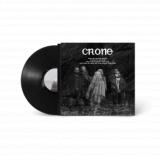
Irish drone-doom-folk act One Leg One Eye, the project of founding Lankum member Ian Lynch and veteran noise monger George Brennan, announce their new album, CRONE, out on 1 May on AD 93.
Today the group share the first track on the album, ‘Many are my Names Besides’, on which they are joined by the elemental force that is legendary actor, performer, writer and director Olwen Fouéré (Operating Theatre) contributing vocals.
Olwen Fouéré comments:
“When Ian and George first approached me to work with them, they were already creating the Crone album as a sonic invocation of the ‘sovereignty goddess’, who personifies the land and the legitimacy to rule it, in her darkest and most terrifying form. As we spoke, the triple goddess figure of the Morrigan entered my mind, reinforced by a marked presence of crows every time we met. The Morrigan is essentially a war goddess, frequently appearing as a crow in a battlefield, a death prophet, a guardian of sovereignty, and a very powerful figure in Irish Mythology.
So I invoked her energy as a starting point, using text extracts that Ian sent me from the Ulster Cycle and other sources. The voice recording was done in one day, improvising the source material while the already composed music occupied my psyche through headphones.
Listening back, at this time in our world, I can only wonder at how much blood and war the Crone/ Crow of sovereignty is preparing to unleash now. Watch out.”
CRONE is the second album from Lynch and Brennan, following on from 2022’s slowburn slab of ambient grit, …And Take The Black Worm With Me. Bewildering, psychedelic and ultimately transcendental, the four tracks of One Leg One Eye’s CRONE shapeshift and morph endlessly in a coarse miasma. Traditional song structures and vocal melody are eschewed, instead the trio directly channel energies from the rich seams of mythological significance submerged below the Irish psyche. The anger, rage and beauty of the sovereignty goddess burn a consistent and deliberate line through the album in the form of obscure incantations and dire pronouncements, the gnarled sinews that bind it all together.
Just as the subject matter of the tracks delve deeper into Irish myth and the remote past, the temporal reality of the album reaches back into the bands prehistory, with the majority of it the material being recorded by Lynch and Brennan in 2021 before One Leg One Eye was conceived of as an entity with Brennan working on the CRONE project while Lynch worked on …And Take The Black Worm With Me.
When they were there they saw a lone woman coming to the door of the Hostel, after sunset, and seeking to be let in. As long as a weaver’s beam was each of her two shins, and they were as dark as the back of a stag-beetle. A greyish, wooly mantle she wore. Her lower hair used to reach as far as her knee. Her lips were on one side of her head.
She came and put one of her shoulders against the door-post of the house, casting the evil eye on the king and the youths who surrounded him in the Hostel. He himself addressed her from within.
"Well, O woman," says Conaire, "if thou art a wizard, what seest thou for us?"
"Truly I see for thee," she answers, "that neither fell nor flesh of thine shall escape from the place into which thou hast come, save what birds will bear away in their claws."
"It was not an evil omen we foreboded, O woman," saith he: "it is not thou that always augurs for us. What is thy name, O woman?"
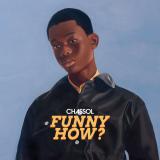
While it builds directly on his work with the “Ultrascores,” it also marks a turning point: a more contemporary sound, broader songwriting, and more explicitly political and social themes make Funny How? his most accomplished album to date. It’s also his most accessible: inspired by American stand-up comedy, Funny How? sounds like a joyful mix of all the music that inspires the artist: soul, jazz, rap, musicals… Thus, throughout the album, major stand-up figures like Dave Chappelle, Marina Franklin, Dulcé Sloan, and Tiny Thickemz appear alongside emerging comedians filmed in more intimate comedy clubs, composing a moving portrait of the new American scene.
Drawing on archival footage and sequences shot for the project in New York and Chicago, and true to his principle of harmonizing reality, he reveals its hidden notes, replaying and developing them throughout a fascinating process. The result is a major work, a choral, political, and deeply musical narrative. In concert, the work unfolds majestically through a hybrid performance where music and images respond to and converse with one another.
The premiere of Funny How? on April 17 and 18, 2026, at the Cité de la Musique in Paris is already sold out. The album is scheduled for release on May 22, 2026.
Time To Get On Board A New Black Universal Express.
With each new recording Anthony Joseph presents an imaginative, personal vision of contemporary black culture, and The Ark is yet another compelling album by the award-winning Trinidadian poet and musician. This second part of a sequence of two albums launched with last year’s Rowing Up River To Get Our Names Back, finds Joseph giving full vent to his desire to explore many thought-provoking themes. However, there is a specific thread running through the glorious offering of sounds.
”I was especially interested in the idea of using Afrofuturism as a means of using the future in order to correct the wrongs of the past,” explains Joseph. “And so a lot of lyrics reimage or imagine an alternate black history. At the same time there are elements of autobiography.” The aforesaid cultural phenomenon, a view of the black experience through the prism of science fiction and ancient Egypt and Africa, as mapped out by visionaries from music and literature such as Sun Ra, Parliament-Funkadelic and Octavia E. Butler, has previously inspired Joseph. His 2006 novel The African Origins Of UFOs was a multi-hued work, and the new music shows how Joseph
has, much like all significant artists, gone on to broaden his conceptual palette, creating beguiling new stories and images set to startling rhythms and tones. Tracks such as ‘James’, with its taut, crisp bass and dubbed-up brass, and ‘Transposition Of Space (Glissant)’, a potent evocation of the influential Martiniquan theorist set in a haze of jazz guitar and ambient synthesizers, are marvels of text-sound painting.
As for ‘Baron Samedi’, shaped by a languid, almost wounded guitar line and slow rise of horns that frame Joseph’s journey to the ‘mountain of fire, almost touching the sky’ it is an epic blend of commanding vocal delivery and dramatic sonic tapestry.
Joseph led the Spasm band in the early 2000s and recorded well-received albums such as Bird Head Son and Time, in which songs were largely based on spirituals or chants enhanced by improvisation. But his musical curiosity has naturally led to collaborations, and the new work is produced by Dave Okumu, the prodigiously talented guitarist-vocalist-composer known as the leader of Mercury Music Prize-nominated The Invisible, and who was also a member of the seminal band Jade Fox.
Having first performed together at a show curated by influential saxophonist-flautist Shabaka Hutchings at the storied Total Refreshment Centre In London during lockdown, Joseph and Okumu struck up a rapport that further developed when the former guested on he latter’s album. With the connection made Joseph knew Okumu was the ideal producer for this latest project, which has a freewheeling, almost black psychedelic thing. After sifting through demos and loops the guitarist made on pro-tools the poet started to live with the music. Many months later words began to take shape. Joseph then went into the studio with Okumu’s band and set about creating a magnum opus. Boasting a stellar cast such as vocalist Eska Mtungwazi, trumpeter Byron Wallen and keyboardist Nick Ramm, The Ark is a highly intricate musical mosaic framed by simmering funk grooves, wily jazz improvisation and haunting dub effects. Through the use of many genres the music has simply become its own genre.
The Ark can be perceived as a vessel or means of transport to new worlds, along the lines of Sun Ra’s Ark or Funkadelic’s Mothership, and the material it contains is a unique blend of who Anthony Joseph is and how he sees the world and society in these stimulating, challenging times. “It balances the personal with the universal in a much more vulnerable, accessible way than on previous albums,” Joseph explains.
“It has become less about a personal experience and more about a collective, communal experience in which the artist is conduit, messenger, urban griot.”
Dead Calm is a band from Liam McCay... a young, prolific Irish musician from County Donegal, known for creating music under numerous aliases, most notably Sign Crushes Motorist, Dead Calm, and Take Care, exploring genres like slowcore and indie rock with poignant, introspective, and often melancholic themes, gaining significant online traction while maintaining a low-key, hobbyist approach to his rapidly growing career. He began with the fiddle, pivoted to guitar during the pandemic, and has since released extensive work, even turning down record deals to keep his creative process personal.
Dead Calm is a band from Liam McCay... a young, prolific Irish musician from County Donegal, known for creating music under numerous aliases, most notably Sign Crushes Motorist, Dead Calm, and Take Care, exploring genres like slowcore and indie rock with poignant, introspective, and often melancholic themes, gaining significant online traction while maintaining a low-key, hobbyist approach to his rapidly growing career. He began with the fiddle, pivoted to guitar during the pandemic, and has since released extensive work, even turning down record deals to keep his creative process personal.
British alt-rock favourites A return with PRANG, their first studio album in over 20 years, released via Cooking Vinyl. Sparked by the effervescent lead single "Hello Sunshine," the album finds the band rediscovering their identity with the carefree spirit and stylish sloppiness that defined their early days. Written and recorded free from expectation or pressure, PRANG is a vibrant, hook-laden reaffirmation of A"s enduring appeal - balancing punchy, riff-driven anthems with heartfelt, soul-baring moments. Frontman Jason Perry, now a Grammy Award-winning producer known for his work with Don Broco, McFly and Kids In Glass Houses, helms production to preserve the band"s DIY ethos and singular personality. Lyrically, PRANG is A"s most open and reflective work to date. Drawing on two decades of life experience, Perry explores gratitude, resilience, mental health and friendship with warmth and disarming honesty. The result is an album that feels both nostalgic and strikingly modern - each track its own colourful island, yet unmistakably A. Twenty years in the making, PRANG is more than a comeback; it"s a rebirth. Cathartic, melodic and life-affirming, it marks a bold new chapter for one of Britain"s most beloved rock bands.
Lau Nau (Laura Naukkarinen), Linda Fredriksson and Matti Bye enter the We Jazz Records realm as Kiri Ra!, a trio that creates their sound slowly, in a process of improvisation and discovery. Filtered through the musicians" long-standing friendship and collaboration, Kiri Ra!"s music is a testament to the joy of creation and invention. Their sound together draws from each of the the artists" work before, while creating new world of sound. Their music is about letting go and being free to take in the even softest whisper and the most minute sonic particle to complete a mosaic filled with beauty. Kiri Ra! follow their own path with courage, showing how letting go can create new worlds.
Peach’s Soak Vol. 1 is a cross-Canadian link-up with Mood Hut that moves through slower, deeper waters.
The mini-LP was written after a tour through Asia that opened up something new in how Peach approaches making music. The turning point, as she tells it, came during a visit to a neighbourhood sento in Tokyo, while surrounded by steam rising in suspended time, something clicked about the relationship between the body and the sounds she wanted to make.
She’d been learning about cycle synching and working out with the phases of her hormonal cycle, respecting energy fluctuations throughout the course of a month, and decided to apply the approach to writing music. She allowed shifts in energy to guide tempo, density, and emotional tone rather than strictly answering to the floor.
Soak came out of this exploration, sketched and layered with field recordings from her trips to Vietnam and the Philippines during a challenging time in her life. Fragments of heat, air, and shoreline are absorbed into the music itself. Vapourous pads, low-end weight, fractured percussion, and melodies hover at the edge of dissolution. Water runs structurally through the record in surges, in tidal pacing, in the slow accumulation of texture.
Wherever this music finds you, please enjoy the Soak.
Australian composer-performers Judith Hamann and James Rushford have worked together in countless projects for two decades, perhaps most notably in Golden Fur, their trio with Sam Dunscombe. Black Truffle is pleased to announce Midmeste, their first work as a duo. Its title is Middle English for ‘the middlemost point’, alluding to how the piece builds on the points of overlap between the highly personalised musical languages Hamann and Rushford have developed in recent years. Performed on cello and a variety of pipe organs, Midmeste is a spacious, sometimes unsettling exploration of their shared interest in alternative tunings, psychoacoustic phenomena, the physical properties of their instruments, and the usually peripheral sounds generated by the performing body.
Beginning with a sequence of austerely vibrato-less harmonics from Hamann's cello, trailed by Rushford's whistling portative organ tones, the music soon expands into a slow-moving melodic wander, pausing at times to linger over an uncomfortable harmony or particularly resonant cello tone. Hamann and Rushford have long histories of engagement with pre-Classical European musical traditions, having in past projects performed and radically extended the work of Solage, Louis Couperin, Johann Conrad Beissell and other composers. Here they use a 15th century song by John Dunstaple, ‘O rosa bella’, which returns throughout the piece, distorted, aerated and splayed into new forms.
Developed while the two shared residencies at Akademie Schloss Solitude, Stuttgart in 2020 and La Becque on Lake Geneva in 2023, Midmeste integrates recordings made (at at the invitation of the Biennale Son) on the organ of the Basilica St Valere in Sion, Switzerland—the world’s oldest playable organ, built in the early 15th century. Played by both Rushford and Hamann, the instrument’s idiosyncratic features, including bellows pumped manually using massive wooden beams, are integrated into the music through amplification. Creaks and thumps locate the music physically both in the performers’ bodies and the specific site of its making. Moving through a series of distinct episodes across its forty-minute span, Midmeste makes space for near-silent duets of high harmonics and hissing air, moments where twittering high tones and rumbling sub-bass could be electronic, and static fields that unexpectedly blossom into almost Romantic harmonies.
Listeners familiar with Hamann and Rushford’s work will find many familiar features here: the stunningly rich cello tones, their patient sustain allowing heightened awareness of the inner life of sound and its interactions with the environment; the care with which acoustic space is activated, becoming at times a third instrumental voice; the attention to fragile, unstable sonorities that sometimes have a comic edge. A major work from two key figures in contemporary experimental music, Midmeste synthesises rigorous exploration of fundamental questions of sound and performance with an unapologetic embrace of beauty.
XKatedral Anthology I is the first in a series of archival releases dedicated to presenting music by XKatedral affiliated composers working within the realm of slowly evolving harmonic and timbral music. This double-vinyl set contains an array of pieces dating from 2010 - 2020. Four of the works included here were originally released on cassette tape early on in the label's history, while the two remaining pieces are presented by the label for the first time.
"The works Ir Himinn, Grooenn by Kristoffer Svensson, Disquiet (Heart) by Marta Forsberg and Lamé by Isak Edberg were first released on the compilation XKatedral Volume II in 2016. Svenssons piece from 2014 combines justly tuned gamelan percussion and prepared piano intricately interwoven in a way that obscures the boundaries between the two instrument groups. Forsberg and Edbergs pieces both use a monolithic form to explore the timbral and harmonic spaces provided by the Düben Baroque organ situated in Tyska Kyrkan in the oldest part of Stockholm. While similar in terms of instrumentation the two works differ formally - Edbergs Lamé composed in 2010 uses the registers of the organ to articulate a seamless spectral transformation while Forsbergs Disquiet (Heart) from 2014 deals in blocks of sound with a varying degree of opacity, saturation and intensity.
Glory for two electric guitars by Caterina Barbieri and Kali Malone was composed and recorded in Tempo Reale in Florence, Italy, and was originally released on the cassette compilation XKatedral Volume III in 2016. This music takes the form of an ever-evolving hypnotic pattern shared by the two instruments articulated through an additive and subtractive canon. Dissolving Ceremony, composed in 2012 by Edberg/Erlandsson/Lisinski, was first presented publicly on the self-released record Stratum. The music contained in that release was formed from a collection of gamelan percussion instruments augmented by two sets of live-electronic instruments tuned to the harmonic framework formed by the partials of the metal percussion. Originally positioned in the center of the record running order between two long monolithic process-based pieces, Dissolving Ceremony now stands on its own as a memory of a time and methodology from the not so distant past.
The newest piece in this set is Shipwrecks by Daniel M Karlsson. While this work is a recent one Karlsson should be considered one of the forerunners of the musical expression contained within this record set. Active within new music for two decades his strongly articulated musical ideas and constantly evolving craftsmanship has resulted in an enormous body of work, and has served as an inspiration for many of his fellow composers. This piece is a celebration of transposition and its immense capacity for timbral transformation using a vast array of instruments performed, recorded and electronically treated by the composer to form a liquid uncanny topography where a deeply personal harmonic language constantly shifts, slides and shivers."
out of Stock
Last delivered 4 months ago available to reorder, subject to availability
There is an abruptness to waking up to the sight of the other person’s back, a quiet violence hidden in the impression of intimacy, that’s leaving an aftertaste of emptiness. The feeling of losing oneself completely in a love that is given but never returned. Or the slower, less immediate one - the gradual disintegration of a world into which so much was once invested.
Love, Diskito is like a worn out overdubbed cassette found in a drawer, with its underlying tracks flickering between contrasting emotional states. Written, produced and mixed by GbClifford, the release follows up on the elusive, multifaceted output of the Prague-based experimental artist, who dresses fleeting glimpses of youthful yearning, sentiment and fragility in the blunt apparel of distortion and immediacy.
Drawing from their idiosyncratic, collage-like approach to music production, GbClifford condenses on Love, Diskito a varied palette of field recordings, samples, distorted instruments and ambient sounds. They resemble doodles in the corner of a school notebook, tightly overlapping with the evocative, minimalistic artwork by Czech artist Kateřina Šípová.
The guidance of GbClifford’s personless, at times highly decomposed vocals modulates the emotional urgency of the recording and reflects on the past. “I’m so close to relapsing, I’m here for you, closer than ever,” echoes in the elusive track So Only Yours, carrying the undercurrents of surrendering to the sole necessity of caring, even at the cost of individual ache. While the album does not forgo its earthbound, bare setting, there is something deeply pastoral and sky-gazing in the layered, multi-pitched vocals, horn-like tones and sense of space that Love, Diskito evokes.
‘Tippex in My Eye’, Roman Flügel’s third single with Erol Alkan’s Phantasy Sound, nonetheless charts exciting new territory for the prolific German producer, finding him in collaboration with London-based vocalist and songwriter, PYTKO. Already established as a member of Phantasy’s creative family following her cultishly received 2022 debut LP ‘The Way We Blush’, PYTKO searching, surrealist lyrics and performance provide perfect synthesis for Flügel’s first ever vocal collaboration.
Somewhere between digital dub and avant garde shades of electro-pop, ‘Tippex in My Eye’ slowly works a strange and spacious magic, meditating on bassweight while moving ever-forward with sparse piano and distinctly Flugelesque synthesis. Throughout, PYTKO’s enigmatic vocals intertwine with this ambitious arrangement, acting as an incantation for a brief but refreshingly strange journey.
Each of these elements are repurposed with hypnotic, psychedelic impact on an alternate ‘Dance Mix’. Immediately tapping into Flügel’s well-established nous for turning minimalism into euphoria, PYTKO herself becomes a guiding force for the dancefloor, as the track builds thrillingly toward a cosmic breakdown and dramatic release.
Roman Flügel’s ‘Tippex in My Eye (ft. PYTKO)’ will be released on Phantasy on May 15th 2026, available on limited-edition vinyl and streaming.
out of Stock
Last delivered 40 days ago available to reorder, subject to availability
Carmy Love is mainstay of the Big AC Records label by now with the likes of 'Rebel', 'Together Again' and 'Thinkin Bout You' all establishing her sound. Here she embodies a love of, or certainly respect for, Southern Soul here with a bog and bold stomper that has brassy horns and loose tambourines backing a lung busting vocal that is powerful and emotive. It's a track that has an authentic old school sound but with modern production heft. Flip it over and you'll find the equally magical 'Together Again' which is a slower sound that sinks in deeper and with more pain.