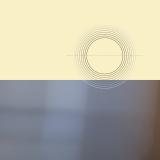
Mutual Rytm spawns new sub-label ‘Versus’ with debut EP from longtime techno associates Regent and Chontane. Continuing to expand its creative world, SHDW’s Mutual Rytm imprint now introduces ‘Versus’ - a new sub- label crafted for creative symbiosis between two artists across one shared release. Opening the series with authority, Regent and Chontane man the debut offering - two close friends and native Berliners who have been shaping techno for more than 15 years. Both long-standing members of the Mutual Rytm family, having released multiple times here before, the pair have always created music informed by life immersed in their local scene. Having both mutually influenced one another over the years, here they present their shared interpretation of techno with individual artistic DNA, forming a unified sound that represents the best of both worlds. Regent goes first, leaning towards functional, anthemic, dance-floor-focused techno. ‘Ephemera’ is tight, minimal but forceful; ‘Slow Burn’ has synth tension rising through the dark, next to glitchy percussion; and ‘Afterglow’ lets in more light, bringing otherworldly synths that hang above the groove and consume your focus. Chontane then explores a more musical and unconventional approach. ‘Plaxaric’ is supple, warm, and deep techno that tunnels into an abyss. ‘Grounding Factor’ is just as economical in design, but with introverted funk and evolving layers of sound. ‘Mental Lab’ spins out into complex rhythms inspired equally by IDM, jungle, and techno. It’s a mental workout as well as a physical one. Both artists add a pair of digital bonus tracks. Regent’s ‘Control Room’ and ‘Rarely Enough’ deliver elevated, hypnotic tools, before Chontane’s ‘Escore’ and ‘Outside In’ bring extroverted drum patterns along with contrasting melodic unease
out of Stock
Last delivered 43 days ago available to reorder, subject to availability
With Zera, Len Faki returns to Figure with a tightly focused EP that moves between raw, driving functionality and more open, atmospheric moments. Across five tracks, he explores variations in groove, tone and energy, balancing direct, floor-ready structures with a more fluid and spacious approach.
Opening cut Maschine Girl locks into a restless, forward-driving groove. Crisp percussion and a tightly coiled low end create immediate momentum, while sharp synth fragments and metallic accents add a nervous edge. The track stays stripped and efficient, letting its steady build and controlled tension carry the energy.
Kobold follows with a darker and more twisted tone. Warped synth figures weave through a heavy rhythmic backbone, giving the track a slightly mischievous character while maintaining a firm, heads-down drive. The interplay between tonal movement and grounded percussion keeps the groove dynamic without breaking its focus.
Closing the A-side, Maschine Girl (Version) revisits the opener from a different angle. Elements are tightened and subtly rebalanced, shifting the emphasis further toward rhythm and direct impact. More reduced and tool-like in nature, it pushes the groove forward with a sharper, club-ready feel.
On the flip, Zera unfolds with a broader sense of space. Hypnotic synth movement and layered atmospheres sit atop a firm low-end framework, gradually building intensity while maintaining a deep, immersive flow. The track thrives on its slow development, drawing the listener further into its evolving structure.
Rounding out the release, Zera (Hardspace Mix) reimagines the original with a heavier, more physical approach. The groove becomes more pronounced and the rhythmic pressure more direct, tightening the structure into a denser, floor-driven tool that emphasises impact and propulsion.
With Zera, Len Faki delivers a cohesive and wide-ranging release that connects raw, driving tools with more expansive, early morning-leaning grooves — further reflecting the breadth and versatility that has defined his output in recent years.
out of Stock
Last delivered 5 months ago available to reorder, subject to availability
KITCHEN. LABEL is proud to present AGATE, the latest album by Japanese artist MEITEI, marking a deepening of the world he first shaped through his Kofū trilogy released between 2020 - 2023.
Named after the mineral agate, a stone formed through slow accumulation, pressure, and time, the album reflects MEITEI’s patient approach to sound. AGATE brings together extended and newly rearranged works from across the Kofū cycle alongside new compositions and passages, refining material developed through years of performance and sustained practice.
The album presents seven tracks:
HAŌ (Previously unreleased track)
SHIN-OIRAN (Remodeled from Oiran I, Kofū 2020)
SHIN-SADAYAKKO (Remodeled from Sadayakko, Kofū 2020)
SHIN-WAROSOKU (Remodeled from Wa-rōsoku, Kofū III 2023)
KYŪGEKI (Remodeled from Shinobi and Akira Kurosawa, Kofū II 2021)
SHIN-OIRAN II (Remodeled from Oiran II, Kofū 2020)
SHIN-EDOGAWARANPO (Remodeled from Edogawa Ranpo, Kofū III 2023)
Across these works, MEITEI expands the musical vocabulary first introduced in Kofū, a sound he once described as “lost Japanese mood.” While Kofū drew from fragments of folklore, theatre, ghost stories, and forgotten urban memory, it was never an act of historical reconstruction. Rather, it reflected a sensibility of the past observed from the present. With AGATE, this worldview is clarified as Shinpu, a process of discovery in which historical awareness becomes a foundation for contemporary creation rather than a constraint.
During five years of Kofū tours across Japan, Europe, and Asia, MEITEI performed this material in a wide range of spaces, from underground live houses and listening rooms to culturally significant sites. These environments influenced pacing, dynamics, and structure, shaping how the material evolved over time. AGATE is therefore not only a studio album, but the result of material refined through repeated performance.
If the Kofū albums were windows into forgotten eras, AGATE explores what lies beneath, sediment and strata formed through time and pressure. MEITEI’s approach to sound mirrors the nature of agate itself. Grains become texture. Texture becomes narrative. Voices drift through decaying layers of sound, while ancient instruments are used in non-traditional ways, forming distinctive percussive rhythms and melodies that appear and vanish without fixed resolution.
The album’s visual materials were developed under MEITEI’s direction through physical art-making processes. The cover artwork originates from a letterpress print created by Kamisoe, a Karakami atelier in Nishijin, Kyoto, using Kyo-karakami paper. The original artwork, produced through traditional woodblock techniques on handmade washi, was subsequently reproduced on print for the album edition. Kamisoe continues to reinterpret this historical Kyoto craft with a contemporary sensibility.
The title calligraphy was created by Bio Xie, whom MEITEI personally invited to participate in the project. During his performances abroad, MEITEI encountered in Taiwan a lingering atmosphere reminiscent of “Shitsunihon” — a sense of old Japanese memory that quietly endures beyond time. He was deeply drawn to Bio Xie’s distinctive use of Chinese characters, which resonated with this experience, and asked him to contribute to the visual expression of AGATE.
In parallel, MEITEI continues to reinterpret Japanese sensibility through his concept of “Shitsunihon,” presenting it as a contemporary musical language. The refined Kyoto motifs envisioned by Kamisoe and the distinctive calligraphic expression by Bio Xie intersect with MEITEI’s singular artistic direction, weaving together a newly articulated worldview.
The accompanying visual imagery, including the liner photographs, was created by photographer Hiroshi Okamoto, who was also responsible for the visual direction of MEITEI’s previous work, “Sen'nyū.” It draws from MEITEI’s lived experiences of winter seas, solitary cliffs, and breaking waves. These scenes symbolize the inner conflicts of the ten years he spent living in Hiroshima, and his confrontation with solitude and the sounds he creates.
AGATE will be released on 17 April 2025 via KITCHEN. LABEL on 180g vinyl, CD, and digital formats. The album is mastered by Kelly Hibbert, known for his work with Flying Lotus, Madlib, and J Dilla.
With AGATE, MEITEI returns to the material of Kofū with greater focus and discipline, continuing an ongoing process of working forward with inherited material.
out of Stock
Last delivered 3 months ago available to reorder, subject to availability
Fresh from releasing projects on Method 808 and Future Classic, landing a huge collaboration with Chloé Caillet, and delivering an official remix for Fatboy Slim, PPJ are entering a new chapter in full force. Their expansive take on global street sounds, ranging from neoperreo to Miami bass, gets a cool re-coating.
Led by the magnetic vocalist Páula, with production from Povoa (individually supported by Four Tet, Ben UFO, and Barry Can't Swim, with recent releases on Live From Earth), the duo operates in maximalist mode: playful, sensual, and slightly unhinged.PPJ’s new era, JOKER, embraces a figure that appears everywhere from card decks to carnival culture as a symbol that mirrors their own DNA: funny, eerie, seductive, unpredictable. The EP leans further into club territory, but rather than polishing their edges, PPJ amplify them.
At the emotional core of the record sits “Coeur,” co-produced with Chloé Caillet. It begins with an MPB-tinged foundation flirting with bossa nova. It’s unmistakably Brazilian, bathed in sunset hues before being sped up and twisted into a dance-floor-ready electronic form. The groove shimmers with tension: warm percussion, elastic basslines, and Páula’s voice hovering between intimacy and tease. It feels like a remix of itself, romantic, but slightly untrustworthy.
If “Coeur” glows, “To Nem Ai” is a slow burner. A very deep and downtempo house cut, it unfolds slowly, almost luxuriously, guided by sensual vocals that feel whispered directly into the ear of the listener. A hypnotizing piano sample that feels like a late-night confession. It’s the kind of record that transforms a dancefloor into something tactile.
Elsewhere, “Me Pega” is a high-energy reinterpretation of the tech-house sounds from Santa Catarina, one of southern Brazil’s most feverish party states, twisted and accelerated for ferocious impact. Drawing direct inspiration from Sarro, a raw and vibrant Brazilian street dance, the track captures physical intensity in its purest form: sweat, bass pressure, collective release.
Its counterpart, “Tem Carnaval” channels Páula’s vivid storytelling into a thunderous ode to Rio’s carnival spirit, euphoric, chaotic, cinematic landed just in time for this year’s celebrations.
On “Sexy Doce,” rugged electroclash melodies collide with unexpected references. “It was inspired by Budots, which is dance music from the streets in the Philippines,” Povoa explains. “Then we mixed it with Páula’s Brazilian vocals. Baile funk is similarly from the streets, so there is a connection.” The result is raw yet futuristic, a cross-continental flirtation that feels both underground and explosive.
With this new EP, PPJ make music like they’re tuning into a dozen pirate frequencies at once. Pirate radio from Rio to Berlin to Manila intercepting fragments of street culture, sensuality, and chaos, and stitching them into something deliriously cohesive.
JOKER doesn’t just nod to club culture. It challenges it, twists expectation and leaves a lasting impression.
Seit nunmehr über zwanzig Jahren als Duo zusammen, setzen Hammock ihre bemerkenswerte Reihe klanglicher Entdeckungsreisen mit The Second Coming Was A Moonrise" fort. Der Titel fängt einen Moment der Entdeckung ein, als Byrd und ein Freund in seinen späten Teenagerjahren unter dem Einfluss von Psychedelika den Mondaufgang für die Wiederkunft Christi hielten. Byrd und Thompson, beide in erster Linie Gitarristen, haben festgestellt, dass ihre musikalische Verbundenheit immer stärker wird, während ihre gemeinsame Arbeit im Laufe der Jahre noch dramatischer und reichhaltiger wird, auf der Suche nach einem Gefühl von mitreißender, schimmernder klanglicher Ehrfurcht, das sich niemals einfach als etwas anderes als sich selbst zusammenfassen lässt. The Second Coming Was A Moonrise" setzt diese Empfindungen der Entdeckung fort und fühlt sich gleichzeitig wie eines ihrer intimsten Alben an, während es das reiche Gefühl von Erhabenheit erforscht, das sie im Gegenzug erschaffen können. Ein Großteil von The Second Coming" ist instrumental oder fügt nur wortlose Gesangssenken und Texturen hinzu, wenn auch immer mit Titeln, die bewusst gewählt wurden. Byrd greift mit Chemicals Make You Small" erneut auf seine drogenbefeuerten Fluchtversuche zurück, wobei zwei namhafte Gäste mitwirken: Wayne Coyne und Steven Drozd von The Flaming Lips, die Gesang und Keyboards beisteuern. Zu den weiteren wiederkehrenden Gastmusikern gehören der regelmäßige Mitstreiter Matt Kidd von Slow Meadow, der Streicher und Gitarre beisteuert, Matthew Doty von Deserta an Synthesizern und Gitarre, Christine Byrd von Lumenette mit engelsgleichem Gesang, Chad Howat am Keyboard und Bass sowie Jake Finch mit bemerkenswertem Schlagzeugspiel.
Yearly compilation series RADAR KEROXEN return with its sixth volume of theme-driven releases, continuing to chart the fractured sonic terrain of the Canary Islands’ undergrowth.
After digging through indie, psychedelia, shoegaze, and site-specific drone, Vol. 6 dives headfirst into the after-hours circuitry of the islas afortunadas, assembling a hand-picked selection of underground club mutations from five long-standing operators within the local electronic ecosystem.
If Vol. 5 was shaped by the cavernous resonance of Santa Cruz’s obsolete gasoline tank, Vol. 6 is fuelled by late-night club aesthetics and mid-90s hardware obsession. Opening the record, Dancelwerk — one of the archipelago’s early modular practitioners — delivers tightly wound structures nodding to Warp-era golden agefuturism and southern Tenerife’s rave boom. Cmos34 follow with their first-ever published material, injecting instability into the system through improvised techno rituals built on friction and feedback.
Jorganes drags the narrative deeper into hypnotic territory, stripping club music down to its skeletal pulse and channeling disciplined repetition and late-90s minimalism into austere, trance-inducing momentum. From Gran Canaria, Sunday German Flowers bends the mood toward cinematic dub: heavy low-end pressure, spoken word, and nocturnal atmospheres stitched into slow-burning club noir.
Closing the circle, Nico Hernández pulls the compilation back to volcanic ground with ambient compositions shaped by Lanzarote’s raw geological landscape — basalt echoes, tectonic silence, and island isolation rendered in sound.
As always, the release is housed in a post-tropical collage artwork by Pura Márquez.
Los Angeles alt-punks Death Lens return with What"s Left Now?, an album that feels like a jolt of clarity after a year that never seemed to slow down. Fresh off touring with Militarie Gun, they dove into the studio with producer mixer Zach Tuch (Knocked Loose, Touché Amoré) to craft their first new music since 2024"s Cold World. The result is a set of songs that coil hooky guitar lines around lyrics about taking stock of what you have, what"s been taken from you, and confronting what remains without any sugar coating. Death Lens have always played with contrast: ferocity disguised by swagger, volatility wrapped in melody. Onstage, they transform that tension into something communal-cathartic enough to leave rooms wrecked, connective enough to leave people changed. Once a crew of partydriven garage punks, they"ve sharpened their voice into something broader and more urgent, speaking on life in heavily policed neighborhoods, immigration reform, and the responsibility to lift up the communities that raised them. What"s Left Now? pushes that vision forward, framing resilience not as a slogan but as a lived philosophy: one world, one community, one band refusing to stand still. Death Lens is comprised of Bryan Torres (vocals), Jhon Reyes (guitar, backing vocals), Tony Rangel (drums), and Ernie Gutierrez (guitar).
A century-old grand piano, a secluded house surrounded by the greenery of Brittany, no internet connection, and a reel-to-reel recorder.L'Écho de Bretagne, the new EP by Niklas Paschburg, set for release from fall 2025 via Nettwerk Music Group, is a solo piano record as essential as it is intense. An album made of silences, space, slowness. A music that doesn't chase impact, but truth.
the album release is march 26th - 2026.
If his previous work, Mexican Alps (2025), marked the first time the German composer and producer created an ambient-electronic album without his instrument of choice, the piano, L'Écho de Bretagne emerges as a direct response to that absence. "It was exactly the lack of piano that brought about the need for this new record, which instead puts that instrument, so vital to me, at the very center, stripping everything else away," Niklas explains.
Born in 1994, Paschburg has shaped over the years a musical path deeply connected to travel, nature, and introspection. From his debutTuur Mang Welten(2016) toOceanic(2018),Svalbard(2020),Panta Rhei(2023), and the aforementionedMexican Alps— alongside soundtracks, remixes, and collaborations with artists like RY X, Hania Rani, Ásgeir, and Bryan Senti — his sound bridges neoclassical, electronic, ambient, and pop-driven composition.
WithL'Écho de Bretagne, the Hamburg-born, Berlin-based musician continues his exploration by seeking solitude in nature, much like he did onSvalbard, but this time with an even more radical choice: disconnecting completely from the internet, and switching off both computer and smartphone for a while, in order to fully immerse himself in his new music. "I rented an old cottage in Paimpol, Brittany, where I knew there was a grand piano," he recounts. "When I got there, I discovered that not only was the piano more than a hundred years old, but it was also of an unknown brand, never restored, and quite difficult to play. But that gave it a unique character, and I didn't give up. Sure, it was an instrument left to its own fate, I couldn't play anything too fast. But how fascinating was that? I'm convinced that setting limits, instead of giving yourself total freedom when composing, can become an extraordinary source of inspiration."
As for the decision to temporarily detach from a life that demands we stay constantly connected, Niklas describes it as both a creative and human experiment. "I had my laptop and phone with me, just in case, but I kept them turned off. That choice made me wantL'Écho de Bretagneto be a fully analog work, even in how it was recorded." A way of clearing the mind. "I don't think I've ever been as calm as I was during those days in Paimpol. Even though I was working on a very specific project and didn't have much time, that period was more relaxing than any vacation."
Not that it was free of hiccups. "I'd borrowed a reel-to-reel recorder small enough to travel with me, but after recording a session on the piano, I realized it wasn't working properly, the sound was distorted, full of crackles. I got worried, because I wasn't near any big city where I could find a technician. Luckily, I figured out the problem was the old tape reels I had brought along. That was the only time I had to go online, to order new ones. But it was just for a moment. I shut everything off again right after." At that point, Niklas was waiting for the new tapes to arrive. He found out, completely by chance, from a local UPS courier that they had been delivered to a nearby village. "Since my phone was off, I couldn't track the shipment. So one day I asked this delivery guy, who didn't know anything about it. But from that point on, we'd see each other daily and talk… That's what being disconnected also means: reconnecting with people around you, even strangers. It was thanks to that courier that I found out where the tapes had ended up. And he even helped me get them back, writing directions for me on a scrap of paper."
But there's another element that makes this new EP unique.L'Écho de Bretagnewas recorded entirely live; its tracks are all improvised, complete with their imperfections. This approach leads to a sound that is pure, profoundly organic, and deeply authentic, intentionally preserved to give the listener the feeling of a live performance happening in their own living room. The touch of fingers on the keys, the breath of the wood, the tension of the vibrating string, all become part of the music. There is no construction, only expression. "Even now, when I listen back to it, I feel that moment I gave myself to step away from everything: from reality, from words, from noise." The result is a collection of suspended melodies and atmospheres, reflecting a state of the soul. A refuge from the rush of time. A pause from the world.
Bright morning. To noon and into afternoon. To dusk and the inky night.
A major new exhibition of Mammo’s music spread across a triple disc, twelve track album. Call it a compendium or summary, a network of sparking neurons and painted landscapes in techno.
It folds in all the aspects of his other identities (self-)released over the last few years into an ultimate package ~ Heaven Smile, A∞x, CoA-A, E35, Puddlerunner; really any other project Fabiano has assumed an identity under. It all finds its way into the code and format of Lateral in some way or another.
Here the ground is given for the listener to hear just how much range and individual language there is in the music he’s been making. Fully immersive, inventive and detailed while also elegant and light of touch. It’s quite a package from one of the most talented techno producers right now, gesturing towards different genres and novel ideas in beautiful and intuitive fashion.
Break the pack down for your preferred disc of the day if you like. It’s designed with that modularity in mind. Disc one sparkles with vitality and a buoyancy. The middle disc has more drive and harder bites that you may want to amplify and split out to slot in a DJ bag. Sides five and six move into deeper, dreamier and more emotional techno in twilight. Each one is a little distinct and has its own orbit.
But give it your full attention on the turntable platter too. A listen from beginning to end. There’s lovely dynamics and interplays in the narrative, and its a remarkable new body of work to let your time dilate to.
Mastered and cut by Rashad Becker.
Art by Mammo.Works.
out of Stock
Last delivered 86 days ago available to reorder, subject to availability
Kēpa is built whole, even if life has broken a few bones along the way.
Back when he was a pro skater, he gave everything to the board. Today, he gives that same intensity to the stage, delivering hypnotic cine-concerts where motion, sound, and image blur into one. The only falls left now are the ringing final chords of his guitar — not just an instrument, but an extension of his body.
Fingerpicking is his native tongue. So much so that Kēpa no longer sings — he lets the strings speak. Percussive, alive, essential. This music isn’t about performance, it’s about living: a personal quest, a way to reach others by first going inward. Moving against the current without fighting the wind. Finding breath, essence, and remembering we’re all drifting on a spinning planet, surrounded by forces bigger than us.
It’s easier to look away. Easier to follow noise, fear, or false prophets. Harder — and braver — to truly connect.
Released in late 2025, Hotline Service opened the door, offering a wide-open, spiritual escape. With SOUL WASH SERVICES— produced by Timber Timbre — Kēpa goes further. Warmer, deeper, more focused. The album feels like sunlight on asphalt, a long drive with the windows down, time slowing just enough to let something real surface.
A kindred spirit to Hermanos Gutiérrez, Kēpa plays the role of a modern, pagan preacher — guiding us through a dusty, golden road movie that unfolds entirely inside the listener. His music doesn’t shout; it cleans.
Kēpa does it all: writes, plays, films, edits, mixes. Music becomes image, image becomes music. Nothing is separate, on record or on stage. There’s no excess, no showboating — just an open invitation to slow down, go deeper, aim higher.
Tracks like Solarium and Paradisiac reach the peaks with minimal gear: five strings, a few picks, and total control of touch and space. Listening to Kēpa feels like checking in with yourself — a quiet inner trip shaped by sounds from every corner of the world. Blues, not to feel them, but to leave them behind.
After years devoted to picking, his playing has become something sacred.
And if you let it, it carries you with it.
out of Stock
Last delivered 5 months ago available to reorder, subject to availability
First coming to prominence purely as a drum & bass artist, with the likes of Metalheadz, Digital's Function and Klute's Commercial Suicide labels all over his material, veteran Slough producer Amit has, in more recent years, spread his stylistic base via his Amar label to take in deep dubstep and a touch of acid as well as ruffneck junglist behaviour. This 12", his first for more than five years, is heavyweight dub business, with echo chambers set to maximum dubbage and shuddering sub causing potential structural damage to all but the sturdiest buildings in a five mile radius. 'Dem Rude', with its gunshots and sonic soup, takes the A-side, while the flip tune 'Hush Up' marries more aural abstractions with another stepping rhythm, the hi hats fizzing and sizzling like they're encased in a deep fat fryer. Great to have this vastly underrated underground trooper back in the ranks - and well worth the wait.
out of Stock
Last delivered 5 months ago available to reorder, subject to availability
Intense and intensely personal, The Dead Ones marks The Last Ten Seconds of Life’s Metal Blade label debut. 10 original tracks of pulverizing deathcore produced by Carson Slovak and Grant McFarland of Pennsylvania’s Atrium Audio. In creating The Dead Ones, “everyone took what we learned from the past two releases and assembled what we thought would bring out the best of us from song structure, tonality of instruments, the mix/master, and the lyrical themes,” furthers McLaughlin.
The end result reflects a more personal and human experience rather than the philosophical and fictional approach used on earlier releases. The Dead Ones follows 2024’s acclaimed No Name Graves in the theme of death and rebirth, but in contrast, is directly focused on the human experience and the band members’ own struggles.
When you name your band Prince Daddy & The Hyena, you sort of accept that chaos isn’t a chapter in your story – it’s the entire ethos. Since forming out of Albany, NY’s DIY scene, Prince Daddy & The Hyena have built a career out of reaching their breaking point and continuing forward anyway. Their first LP, produced by Joe Reinhart, captured a very young band figuring things out in real time; their massive conceptual undertaking Cosmic Thrill Seekers followed and pushed their ambition (and patience) to new extremes. Not long after, a serious van accident nearly took their lives, directly informing the intensity of their self-titled record.
Over the last decade, the band has lost close friends and collaborators, endured relationship struggles, and faced countless moments that would have ended most bands without question. But those experiences never slowed Prince Daddy & The Hyena down. On their upcoming fourth album, Hotwire Trip Switch, they recalibrate and reconnect with their roots while sounding more focused and self-aware than ever. Reuniting with Joe Reinhart for the first time in nearly a decade, the album pulls from the punchy lineage of Green Day, the hook-driven quirk of Weezer, the snarky urgency of Joyce Manor and Jeff Rosenstock – all through the distinctly bratty lens of songwriter and vocalist Kory Gregory.
Carve is the second full-length by Bay Area artist Kathryn Mohr. Written over the course of five years and recorded over several weeks in a rural singlewide in the Mojave Desert, the album centers on love experienced as a form of grief, not as an aftermath of loss, but as a condition of intimacy itself.
Mohr describes Carve as an album about how memory exists outside the body, embedded in places and landscapes. It is shaped by her first return to the American Southwest since a childhood road trip at age five, and by the experience of moving through terrain that holds emotional weight long after its origins fade. The record considers how intimacy feels after years of isolation, and what it takes to carve out a life that allows for trust, presence, and feeling rather than mere survival. The project took form after a difficult tour that ended in Joshua Tree. Mohr pointed her car into the desert and drove alone, crisscrossing the Mojave on dirt roads. Months later, she returned to record the album, working alone with an acoustic guitar, a field recorder, and limited supplies. Following that period, Mohr began to allow for intimacy and connection. The time she spent recording Carve in the desert did not create isolation so much as mirror it. Working alone out of an old, western-themed jail Airbnb, the physical enclosure reflected the emotional conditions under which much of the record had been written: distance, restraint, and long stretches of stillness. In that context, love was not experienced as escape, but as something inseparable from impermanence and the awareness of loss.
This tension between connection and inevitability sits at the center of Carve. Some of the album’s songs were written earlier, during a prolonged period marked by emotional distance and apathy. Over those four years, Mohr was working through unprocessed childhood memories and their long-term effects on her ability to connect with others. The work was slow and difficult, involving a fundamental reshaping of how she related to herself and to the world. Carve was mixed by Richard Chowenhill of Flenser labelmates Agriculture. Rather than offering resolution, the album documents the act of remaining present within tension. Carve is not about escaping grief, but about accepting it as inseparable from love itself. Kathryn Mohr’s previous effort “Waiting Room” received the coveted ‘Best New Music' designation and a score of 8.4 from Pitchfork.
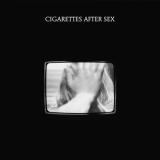
Cigarettes After Sex return with a double single that showcases both their future and their past. The single featured on the B-side, “Anna Karenina,” is a quintessential Cigs track, sensual, slow-burning, and emotionally oversized, with lyrics so confessional they verge on too much. But its inclusion of spoken word verses adds a striking new dimension to Greg Gonzalez’s world, expanding the band’s intimate palette. Its chorus (“I cried at the end of Anna Karenina, when she threw herself under the train”) might be the most Cigarettes After Sex lyric ever written. The A-side is a long-rumored fan favorite finally seeing release: a gorgeously faithful cover of The Doors’ “The Crystal Ship,” recast in the band’s signature haze. Jim Morrison’s romantic fatalism never sounded more at home.
French duo Froid Dub keeps twisting its slow-motion dub DNA and hits hard with the release of Positive and Natural on Delodio— instant classic that grabs you from the very first spin with its “minimal maximal” drive. Hypnotic and raw, this eight-track manifesto glides across the holy trinity: 808, 303 and tape delays—colliding true-school dub synths, club culture and experimental twists. A masterclass of a record that flaunts its roots and stays deeply personal. Froid Dub once again proves its singular talent for pumping up a dance floor at an average of 85 BPM.
out of Stock
Last delivered 5 months ago available to reorder, subject to availability
LS002 marks the first vinyl chapter of 20, Eitan Reiter's two-decade retrospective, distilled through key collaborations and remixes. Featuring Patrice Bäumel, Infected Mushroom, Shpongle, Red Axes, and Echo, this six-track release connects psychedelic heritage with contemporary indie dance and deep electronic aesthetics.
20 (Part 1) is a 12-inch vinyl edition featuring exclusive vinyl cuts, available only on this pressing. The selection reflects Reiter's ability to honor his roots while maintaining a distinctly modern sound,blending psychedelic foundations with cluboriented precision.
A1 - Eitan Reiter - Blue Planet (Remix) Vinyl Cut
The A-side opens with a spacious, atmospheric rework of Blue Planet, balancing restrained tension with melodic clarity.
A2 - Eitan Reiter - X-Vision feat. Echo Vinyl Cut
Echo's vocal performance anchors the track, presented here in a refined vinyl cut that enhances its emotional depth.
A3 - Eitan Reiter & A. Balter - E0E (Eitan Reiter Remix) Vinyl Cut
A driving, hypnotic groove where rhythmic focus meets evolving textures.
A4 - Infected Mushroom & Yahel - Electro Panic (Eitan Reiter Remix) [Vinyl Cut]
A confident reworking of a psytrance classic, reshaped into an 80s-leaning indie dance format.
B1 - Eitan Reiter - Eat You (Patrice Bäumel Remix)
Patrice Bäumel heightens the track's underlying tension with a slow-building, immersive reinterpretation.
B2 - Out of Orbit & Shpongle - No Disco (Red Axes Remix)
Red Axes flip the original into a dark disco framework, adding weight, swing, and late-night character.
LS002 presents a vinyl-focused snapshot of Eitan Reiter's collaborative output, with each track adapted for turntable playback.
out of Stock
Last delivered 10 days ago available to reorder, subject to availability
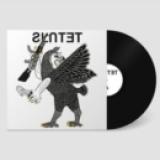
Second release from London based jazz quartet and recorded at Abbey Road Studios. Sguardo Celestiale kicks things off with some heavy jazz funk vibes for the dancers. Five Days slows things down a little and veers more towards the bands library influence. Limited to 250 copies.
out of Stock
Last delivered 6 months ago available to reorder, subject to availability
The beautifully crafted twelve-track opus is out now via Stil vor Talent.
Berlin-based artist, DJ, producer and Stil vor Talent co-founder Oliver Koletzki today releases his twelfth studio album, “12” — a deeply considered, emotionally rich long-player that marks the next chapter in a career spanning more than two decades at the forefront of electronic music. The album is out now on Stil vor Talent in digital formats and as a 2x12” gatefold vinyl.
Serving as both a milestone and a manifesto, “12” distils Koletzki’s evolving sound into its most refined form yet. Across twelve tracks, the album explores atmosphere, restraint and emotional clarity, balancing slow-burning club energy with introspective storytelling. It’s a record shaped by experience, patience and an unwavering attention to detail; qualities that have long defined Koletzki’s output as both an artist and a label curator.
The journey begins with album opener “Petrichor”, a quietly powerful introduction built around wistful organ chords that gradually unfold into a warm, hypnotic groove. Acting as the album’s emotional threshold, the track sets the tone for what follows: music that rewards immersion, thrives on nuance and unfolds with deliberate pace. From there, 12 moves seamlessly between introspective moments and more direct dance floor statements, always guided by Koletzki’s unmistakable melodic sensibility.
Singles released in the lead-up to the album offered carefully sequenced glimpses into its breadth. December’s “Trip With Me”, a collaboration with Frida Darko, brought playful energy and sharp modern club dynamics, while January’s “I Don’t Need Your Love” delivered a confident, emotionally charged statement rooted in Koletzki’s introspective yet club-ready DNA. February’s “Petrichor” revealed the album’s cinematic depth, followed by “Schnapsidee” in March — a track that leans into groove, character and subtle eccentricity.
Elsewhere on the album, tracks like “Logic”, “It’s All Gone” and “Tick Tick” showcase Koletzki’s ability to create tension and release through finely balanced arrangements, while “La Hora de Mosquitos” and “Calle Sur” hint at the global influences that continue to shape his sound. The closing stretch — from “About the Fox and a Tiger” through “What Remains” to “Voice or Noise” (with Frida Darko) — brings the album to a reflective, yet characteristically playful conclusion.
As a whole, “12” feels purposeful and cohesive, guided by a clear narrative arc rather than fleeting trends. It reflects the maturity of an artist with nothing left to prove, yet still driven by curiosity and a desire to evolve. Much like Koletzki’s previous albums, “12” stands as a self-contained world, inviting listeners to step inside and stay.
Released on Stil vor Talent, the album also reinforces the label’s ethos of artistic freedom, quality and long-term vision. Now over 20 years strong, the imprint continues to shape contemporary electronic music while remaining deeply rooted in underground culture: a balance Koletzki himself has embodied throughout his career.
out of Stock
Last delivered 23 days ago available to reorder, subject to availability
Following the strong reception of their second album, Totem of Quiet Mystic (2023) Jiyu have earned praises from outlets such as Jazzwise, Enlace Funk and The Chillout Tent, as well as support from a wide range of iconic DJs including Patrick Forge & Chris Coco. The singles to this new album, Cumulus & the Subterranean, Smell of Fire and Deep Woods, have immediately been embraced—drawing glowing reactions and airplay from dj's like, Phil Cooper, Dj Vadim, Fred Everything, David Patterson, Jon Kennedy and Curtis Colin
On this third album from Jiyu, the Copenhagen band stretch their cosmic–spiritual jazz language into deeper, wilder terrain. Dropping April 10th on vinyl and digital via Dubsoul Records, the record captures six musicians in full telepathic flight, recorded at 12 Ton Studio in Copenhagen. Across eight tracks, elastic basslines, jazz-dub-soul—tinted drums and percussion, Wurlitzer and jazz-guitar glow and flute-swept atmospheres drift between grounded groove and open-sky improvisation, while guest vocalist Mai Lan Doky adds dreamlike textures on Cumulus & the Subterranean. From the shuffled broken-beat pulse of Smell of Fire to the slow-burn haze of Deep Woods, the Wild Things album is a rich analogue-soul excursion—earthy, exploratory and tuned to the outer frequencies.
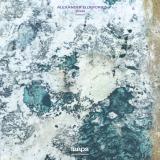
Vivel is Alexander Eldefors’ second release under his own name. Built around eurorack and field recordings, many captured during still moments while traveling to visit family and friends. The album was created during a period of transition. It functions as an anchor in a time of change, representing a sense of home, safety, and stillness.
Alexander Eldefors is a producer, composer, and mixing engineer based in the countryside outside of Stockholm, Sweden. With a background as both a sound engineer and musician, he has spent years recording, mixing and playing in a wide range of bands and solo projects. In 2019, he consciously slowed down and returned to a more intimate and quiet musical expression, leading to the release of his debut album Bergen in 2020 under his own name. Bergen is the Swedish word for mountains and reflects the fact that Alexander grew up in the north of Sweden close to the mountains.
His music is minimalistic, melodic, and embracing, shaped by a deep connection to nature. Natural environments are a constant presence in his work, serving both as inspiration and as a sound source. Alongside this, he is drawn to the raw textures of everyday objects, working with foley sounds and field recordings. His arrangements unfold as organic sound collages, where elements blend freely and imperfections are preserved to maintain a natural, human feel.
New album from Pictish Trail, AKA Johnny Lynch, known for his wildly inventive electro-acoustic psych-pop. Life Slime is the sixth full-length album by Pictish Trail (AKA Johnny Lynch) - a strange, tender, psychedelic electro-pop record shaped by transformation, exhaustion, hope, guilt, and renewal. Written at home on the Isle of Eigg and recorded at Mike Lindsay's studio down in Margate (Tunng / LUMP), the album follows 2022's critically acclaimed Island Family, further refining Lynch's world of lo-fi electronics, warped pop melodies, baggy psych rhythms and emotionally direct songwriting. It's a record that balances woozy synth-pop, motorik propulsion and intimate acoustic songwriting, all infused with the emotional messiness that gives the album its title. Across the album's singles - the guilt-stained psych-pop ballad 'Hold It', the life-affirming shimmer of 'Infinity Ooze', the late-night confession of 'Torch Song', the expansive eight-minute centrepiece 'Another Way', and the cinematic closer 'Werewolf Ending' - Life Slime charts a journey from emotional fracture to uneasy release. 'Sorry Eyes' brings a punchy electro-pop strut with a sharp emotional edge, 'Crystal Cave' drifts through crystalline guitars and shoegaze haze into transformation, and the title track 'Life Slime' moves with a slow, weary swagger toward bittersweet acceptance. Together, these tracks form a cohesive album statement about surrender, resistance, change and renewal. "Wonderfully weird pop"- Brooklyn Vegan For fans of Hot Chip, The Flaming Lips, Liars, Mercury Rev, Beck, John Grant, Empire of the Sun, Grandaddy. Colour vinyl and digisleeve CD
Brighton four-piece Lime Garden return with their self-reckoning second album 'Maybe Not Tonight' So Young Records (the record label launched by So Young Magazine).
'Maybe Not Tonight' unfolds as a full night out, charting the pleasures and perils of partying and impulsive decisions.
Vocalist and guitarist Chloe Howard says: “The album is about a night out, from start to finish. As the night progresses, you’re having a great time, until your ex walks in with someone else. You hate the way you look but rather than going home, you press the big red button and get even more drunk. Eventually, you take yourself home full of melancholy, chaos and anger.”
Following their critically acclaimed 2024 debut 'One More Thing', which captured the raw live energy that earned them slots at festivals including Glastonbury and Green Man, Maybe Not Tonight sees Lime Garden expand their signature “wonk-pop” sound upwards and outwards. The result is their most intoxicating and luminous material to date.
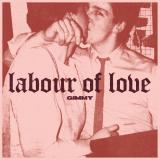
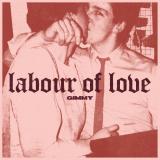
Australian indie and garage-rock firebrand, GIMMY unveils her new EP Labour of Love — a raw, emotionally charged collection that fuses gritty indie rock, post-punk bite and tender poetic expression, all powered by Gemma Owens’ unmistakable vibrato and fiercely honest songwriting.
Where her 2024 debut Things Look Different Now was a slow-burn, two-to-three–year voyage of change and introspection, Labour of Love hits with an entirely new force: intuitive, immediate and deeply connected to Owens’ emotional world. Written over six months and captured in an intense 4–5 day studio burst with producer Sam Joseph (King Gizzard), the EP moves with the urgency of something that needed to be felt and heard, right away.
Across seven compelling tracks, GIMMY dives into social anxiety, grief, falling in love and the chaotic beauty of everyday life, with each song arriving “on its own terms” — born from late-night home writing sessions, snippets of inspiration while travelling and moments of full-band electricity. Sonically, Labour of Love nods to Soft Play, Nick Cave, Fontaines D.C., The Preatures and The Smiths, yet remains unmistakably GIMMY: expressive, gritty, vulnerable, cheeky and alive in every moment.
Ultimately, the EP is an unfiltered snapshot of emotional truth, celebrating life’s highs, lows and everything in between, and showcasing GIMMY at her most dynamic, powerful and compelling to date.
Australian indie and garage-rock firebrand, GIMMY unveils her new EP Labour of Love — a raw, emotionally charged collection that fuses gritty indie rock, post-punk bite and tender poetic expression, all powered by Gemma Owens’ unmistakable vibrato and fiercely honest songwriting.
Where her 2024 debut Things Look Different Now was a slow-burn, two-to-three–year voyage of change and introspection, Labour of Love hits with an entirely new force: intuitive, immediate and deeply connected to Owens’ emotional world. Written over six months and captured in an intense 4–5 day studio burst with producer Sam Joseph (King Gizzard), the EP moves with the urgency of something that needed to be felt and heard, right away.
Across seven compelling tracks, GIMMY dives into social anxiety, grief, falling in love and the chaotic beauty of everyday life, with each song arriving “on its own terms” — born from late-night home writing sessions, snippets of inspiration while travelling and moments of full-band electricity. Sonically, Labour of Love nods to Soft Play, Nick Cave, Fontaines D.C., The Preatures and The Smiths, yet remains unmistakably GIMMY: expressive, gritty, vulnerable, cheeky and alive in every moment.
Ultimately, the EP is an unfiltered snapshot of emotional truth, celebrating life’s highs, lows and everything in between, and showcasing GIMMY at her most dynamic, powerful and compelling to date.
With Variations for Light Waves, Swedish composer Linnéa Talp deepens the focus and intensity that shaped her 2022 debut Arch of Motion. Once again, the breath and hum of the pipe organ form the album’s core, but here she pushes further into deep listening and sonic nuance. Across seven pieces, she lingers on the instrument’s most resonant points, allowing its character to reveal itself slowly and patiently.
Talp’s path to this work has unfolded with similar steadiness. After first emerging with her project Deerest, she shifted toward improvisation and minimal composition, guided by an increasing sensitivity to sound and perception. Careful listening is now central to her practice, informing both her methods and her musical language.
The album was recorded over four years on pipe organs across Sweden, including a small funeral-chapel instrument in Lötsjökapellet—an environment Talp describes as an exceptional space for listening. Several pieces feature Christer Bothén (contrabass clarinet) and Mats Äleklint (trombone), whose playing blends seamlessly into her aerated organ tones. The improvisation “Air On Both Sides,” recorded in 2022 with Bothén, became the project’s starting point, an immersive bath in glowing harmonics. At times she interweaves Buchla recordings, setting electronic breath against acoustic resonance.
Talp’s fascination with quietness and delicacy is balanced by an interest in sonic brittleness. The closing title track gradually dismantles a downward chord progression, drifting into gentle collapse, while the brief opener pushes the organ’s pipes into gasping strain. These moments create a music open to chance, instability, and transformation.
Threads running through the album include an interest in chords, subtle improvisation, light, and memories of coastal landscapes. Talp also connects the work to the “thick white fog” surrounding her daughter’s birth. The result is music that envelopes like mist yet continually reveals new shapes—a world o
American Steel is the last great band to come out of Berkeley's 924 Gilman scene. Forged in the same ¬res as Operation Ivy, Crimpshrine, and Rancid, these soulful punks have at long last decided to unearth their self-titled album from 1998. AmSteel evolved into one of the most artful and sophisticated punk bands around, but this quartet began as a truly raw and wrathful DIY outfit, and we're grateful for the opportunity to share this 17-song hidden gem. We have been begging the band to release this material since Red Scare first began. Literally pestering them for twenty years. Listen to this dynamic debut and you will understand why.
Playing further in the conceptual universe of Ginger Root came Nisemono EP. In the universe, Cameron is now writing and producing for a new Japanese Idol named Kimiko Takeguchi. At the last minute before Kimiko debuts on national TV, she quits and Cameron is thrust into the spotlight to perform the song ‘Loneliness’ which launches him into stardom.
This cycle included music videos for each track on the album and narrative videos of a fake news station “Juban TV” which reported on the story of the rise of Ginger Root. The episodic rollout on Ginger Roots YouTube was filmed in the same 80s noir style of the City Slicker videos with a much bigger narrative undertaking to provide a creative backdrop to the EPs storyline. The EP was lauded by old and new fans for its captivating storyline and nostalgic visuals. Ginger Root went on to tour the US, Europe, and Japan for the first time where he sold out every show. Nisemono was ranked by music critic Anthony Fantano as his #1 EP of 2022.
Crypt of the Wizard is proud to make available two legendary underground albums by Slutet on vinyl and digital formats. Here we present the debut self titled LP Slutet - Slutet
Slutet originated in Uppsala well over a decade ago, first emerging as a loose idea around 2010. The original cluster of strangely like minded individuals - Dingir, Ryttersson, J.P., Sviatopolk, were equally set on starting a cult as they were a band, the former emerging as a loose collective known as The End Commune, while the latter eventually began rehearsing together as Slutet on September 1, 2013.
From this constellation three notorious demo tapes sprung which were self-released in very limited numbers, and only available by trading bodily fluids, blood, and/or hair for the cassettes. “A very loose guess but we made probably around 20-30 hand-drawn/custom demo tapes of the first three releases. We got blood and hair from many places, actually the very first offering was from INDONESIA. Slovakia, Germany, USA, Argentina, Norway, Canada, Finland followed.... if my memory serves..... hazy years indeed”
J.P. left early 2015. Later that year, after trying the band as a bass-drum-vocals outfit for a while, Fjalar joined on guitar. This is the classic constellation. Dingir, Ryttersson, Fjalar, Sviatopolk. The same troupe playing to this very day.
While the difficulty of obtaining the demos certainly added to the band’s bottomless mystique, the subsequent release of the self-titled compilation / LP secured their reputation as one of the most interesting and unorthodox bands recording under the somewhat ill-fitting moniker of ‘underground black metal’.
First released as a cassette by Berlin label Teratology Sound & Vision, and later on vinyl in an edition of 100 by Goatowarex, the self-titled LP is the definitive document of the very early and very wild years of the band as they begin to take form, fulminating against whatever was on offer.
“Between September 2013 and September 2014 we rehearsed and recorded 3 very crude demo cassettes; although sub-par in many musical and performance-wise aspects, the passion seeping through those recordings were evidently very real.”
Carlos Giffoni reconnects with Thurston Moore for two sides of loose-limbed axe noise, oscillator worship and hard-phased, Spacemen 3-style feedback.
Giffoni’s been on a roll recently. Since the No Fun founder returned to the scene with »Vain¡, a genius set of synth mutations that appeared in iDEAL back in 2018, he’s been slowly ramping up the activity, dropping the celestial »Dream Walker« on Stephen O’Malley’s Ideologic Organ in 2024 and following it with »Pendulum«, a bumper compendium of collaborations, just a few weeks back. For those who remember Giffoni’s first trip round the block, he was always able to hold his own chopping it up in person, not just by mail.
Just scrub through his early catalog and you’ll see collabs with Nels Cline and Chris Corsano, Merzbow, Jim O’Rourke and Lasse Marhaug, and of course, Thurston Moore. The two rekindle their thing on »IGUANA’« picking up where 2001’s fabled »4 Guitars Live« performance left off. Here, Giffoni straddles a tabletop synth and FX while Moore attacks his signature Jazzmaster with a drumstick and a screwdriver – vibes fully intact.
Moore is on blistering form, sounding as if he’s taken a step back to refresh his approach since the early ‘00s when he could be spotted moonlighting on any number of basement-adjacent noise sides. Sawing at his strings and turning the guitar into a shrieking resonator, he leaves only faint vapours of the classic Sonic Youth sound as opiating accents on his animalistic wails and rumbles. On the opening half, his whammy – assisted shreds are balanced out by Giffoni’s off-world whirrs and airlocked vibrations, building a dense wall of noise towards an unexpectedly elegiac conclusion. At some point, Giffoni’s rasping churr transforms into a simmering shudder and Moore’s into hymnal drones – squint a bit and you could almost call it pretty.
Of course, they ramp things up on the flip, dissolving the melancholia with smokey white noise and twangy, post-Derek Bailey chimes that Giffoni accompanies with aggy oscillations. Like every great taped noise set, the recording quality is crucial - »IGUANA« was captured from the pit by Guillermo Hernandez Avendano, the dad of Lia Miranda who provides the cover photo. It’s that kinda show.
Writings on the topic that go off in all directions, mind-numbing lectures given by academics, and testimonies, most of them heavily doctored, from those who “lived through that era”: so many people today fantasize about the early days of punk in our country… This blessed moment when no one had yet thought of flaunting a ridiculous green mohawk, taking Sid Vicious as a hero, or – even worse – making the so-called alternative scene both festive and boorish. There was no such thing in 1976 or 1977, when it wasn’t easy to get hold of the first 45s by the Pistols or the Clash. Few people were aware of what was happening on the fringes of the fringes at the time. Malcolm McLaren was virtually unknown, and having short hair made you seem strange. Who knew then that rock music, which had taken a very bad turn since the early 1970s, would once again become an essential element of liberation? That, thanks to short and fast songs, it would once again rediscover that primitive, social side that was so hated by older generations? Who knew that, besides a few loners who read the music press (it was even better if they read it in English) and frequented the right record stores? Many of these formed bands, because it was impossible to do otherwise. We quickly went from listening to the Velvet Underground to trying to play the Stooges’ intros. It’s a somewhat collective story, even though there weren’t many people to start it.
The Guilty Razors were among those who took part in this initial upheaval in Paris. They were far from being the worst. They had something special and even released a single that was well above the national average. They also had enough songs to fill an album, the one you’re holding. In everyone’s opinion, they were definitely not among the punk impostors that followed in their wake. They were, at least, genuine and credible.
Guilty Razors, Parisian punk band (1975-1978). To understand something about their somewhat linear but very energetic sound, we might need to talk about the context in which it was born and, more broadly, recall the boredom (a theme that would become capital in punk songs) coupled with the desire to blow everything off, which were the basis for the formation of bands playing a rejuvenated rock music ; about the passion for a few records by the Kinks or the early Who, by the Stooges, by the Velvet mostly, which set you apart from the crowd.
And of course, we should remember this new wave, which was promoted by a few articles in the specialized press and some cutting-edge record stores, coming from New York or London, whose small but powerful influence could be felt in Paris and in a handful of isolated places in the provinces, lulled to sleep by so many appalling things, from Tangerine Dream to President Giscard d’Estaing...
In 1975-76, French music was, as almost always, in a sorry state ; it was still dominated by Johnny Hallyday and Sylvie Vartan. Local rock music was also rather bleak, apart from Bijou and Little Bob who tried to revive this small scene with poorly sound-engineered gigs played to almost no one.
In the working class suburbs at the time, it was mainly hard rock music played to 11 that helped people forget about their gruelling shifts at the factory. Here and there, on the outskirts of major cities, you still could find a few rockers with sideburns wearing black armbands since the death of Gene Vincent, but it wasn’t a proper mass movement, just a source of real danger to anyone they came across who wasn't like them. In August 1976, a festival unlike any other took place in Mont-de-Marsan – the First European Punk Festival as the poster said – with almost as many people on stage as in the audience. Yet, on that day, a quasi historical event happened, when, under the blazing afternoon sun, a band of unknowns called The Damned made an unprecedented noise in the arena, reminiscent of the chaotic Stooges in their early adolescence. They were the first genuine punk band to perform in our country: from then on, anything was possible, almost anything seemed permissible.
It makes sense that the four+1 members of Guilty Razors, who initially amplified acoustic guitars with crappy tape recorder microphones, would adopt punk music (pronounced paink in French) naturally and instinctively, since it combines liberating noise with speed of execution and – crucially – a very healthy sense of rebellion (the protesters of May 1968 proclaimed, and it was even a slogan, that they weren’t against old people, but against what had made them grow old. In the mid-1970s, it seemed normal and obvious that old people should now ALSO be targeted!!!).
At the time, the desire to fight back, and break down authority and apathy, was either red or black, often taking the form of leafleting, tumultuous general assemblies in the schoolyard, and massive or shabby demonstrations, most of the time overflowing with an exciting vitality that sometimes turned into fights with the riot police. Indeed, soon after the end of the Vietnam War and following Pinochet’s coup in Chile, all over France, Trotskyist and anarcho-libertarian fervour was firmly entrenched among parts of the educated youth population, who were equally rebellious and troublemakers whenever they had the chance. It should also be noted that when the single "Anarchy in the UK" was first heard, even though not many of us had access to it, both the title and its explosive sound immediately resonated with some of those troublemakers crying out for ANARCHY!!! Meanwhile, the left-wing majority still equated punks with reckless young neo-Nazis. Of course, the widely circulated photos in the mainstream press of Siouxsie Sioux with her swastikas didn’t necessarily help to win over the theorists of the Great Revolution. It took Joe Strummer to introduce The Clash as an anti-racist, anti-fascist and anti-ignorance band for the rejection of old-school revolutionaries to fade a little.
The Lycée Jean-Baptiste Say at Porte d’Auteuil, despite being located in the very posh and very exclusive 16th arrondissement of Paris, didn’t escape these "committed" upheavals, which doubled as the perfect outlet for the less timid members of this generation.
“Back then, politics were fun,” says Tristam Nada, who studied there and went on to become Guilty Razors’ frontman. “Jean-Baptiste was the leftist high-school in the neighbourhood. When the far right guys from the GUD came down there, the Communist League guys from elsewhere helped us fight them off.”
Anything that could challenge authority was fair game and of course, strikes for just about any reason would lead to increasingly frequent truancy (with a definitive farewell to education that would soon follow). Tristam Nada spent his 10th and 11th unfinished grades with José Perez, who had come from Spain, where his father, a janitor, had been sentenced to death by Franco. “José steered my tastes towards solid acts such as The Who. Like most teenagers, I had previously absorbed just about everything that came my way, from Yes to Led Zeppelin to Genesis. I was exploring… And then one day, he told me that he and his brother Carlos wanted to start a rock band.” The Perez brothers already played guitar. “Of course, they were Spanish!”, jokes their singer. “Then, somewhat reluctantly, José took up the bass and we were soon joined by Jano – who called himself Jano Homicid – who took up the rhythm guitar.” Several drummers would later join this core of not easily intimidated young guys who didn’t let adversity get the better of them.
The first rehearsals of the newly named Guilty Razors took place in the bedroom of a Perez aunt. There, the three rookies tried to cover a few standards, songs that often were an integral part of their lives. During a first, short gig, in front of a bewildered audience of tough old-school rockers, they launched into a clunky version of the Velvet Underground's “Heroin”. Challenge or recklessness? A bit of both, probably… And then, step by step, their limited repertoire expanded as they decided to write their own songs, sung in a not always very accurate or academic English, but who cared about proper grammar or the right vocabulary, since what truly mattered was to make the words sound as good as possible while playing very, very fast music? And spitting out those words in a language that left no doubt as to what it conveyed mattered as well.
Trying their hand a the kind of rock music disliked by most of the neighbourhood, making noise, being fiercely provocative: they still belonged to a tiny clique who, at this very moment, had chosen to impose this difference. And there were very few places in France or elsewhere, where one could witness the first stirrings of something that wasn’t a trend yet, let alone a movement.
In the provinces, in late 1976 or early 1977, there couldn’t be more than thirty record stores that were a bit more discerning than average, where you could hear this new kind of short-haired rock music called “punk”. The old clientele, who previously had no problem coming in to buy the latest McCartney or Aerosmith LP, now felt a little less comfortable there…
In Paris, these enlightened places were quite rare and often located nex to what would become the Forum des Halles, a big shopping mall. Between three aging sex workers, a couple of second-hand clothes shops, sellers of hippie paraphernalia and small fashion designers, the good word was loudly spread in two pioneering places – propagators of what was still only a new underground movement. Historically, the first one was the Open Market, a kind of poorly, but tastefully stocked cave. Speakers blasted out the sound of sixties garage bands from the Nuggets compilation (a crucial reference for José Perez) or the badly dressed English kids of Eddie and the Hot Rods. This black-painted den was opened a few years earlier by Marc Zermati, a character who wasn’t always in a sunny disposition, but always quite radical in his (good) choices and his opinions. He founded the independent label Skydog and was one of the promoters of the Mont-de-Marsan punk festivals. Not far from there was Harry Cover, another store more in tune with the new New York scene, which was amply covered in the house fanzine, Rock News (even though it was in it that the photos of the Sex Pistols were first published in France).
It was a favorite hang-out of the Perez brothers and Tristam Nada, as the latter explained. “It’s at Harry Cover’s that we first heard the Pistols and Clash’s 45s, and after that, we decided to start writing our first songs. If they could do it, so could we!”
The sonic shocks that were “Anarchy in the UK”, “White Riot” or the Buzzcocks’s EP, “Spiral Scratch” – which Guilty Razors' sound is reminiscent of – were soon to be amplified by an unparalleled visual shock. In April 1977, right after the release of their first LP, The Clash performed at the Palais des Glaces in Paris, during a punk night organised by Marc Zermati. For many who were there, it was the gig of a lifetime…
Of course, Guilty Razors and Tristam were in the audience: “That concert was fabulous… We Parisian punks were almost all dressed in black and white, with white shirts, skinny leather ties, bikers jackets or light jackets, etc. The Clash, on the other hand, wore colourful clothes. Well, the next day, at the Gibus, you’d spot everyone who had been at this concert, but they weren’t wearing anything black, they were all wearing colours.”
It makes sense to mention the Gibus club, as Guilty Razors often played there (sometimes in front of a hostile audience). It was also the only place in Paris that regularly scheduled new Parisian or Anglo-Saxon acts, such as Generation X, Siouxsie and the Banshees, the Slits, and Johnny Thunders who would become a kind of messed-up mascot for the venue. A little later, in 1978, the Rose Bonbon – formerly the Nashville – also attracted nightly owls in search of electric thrills… In 1977, the iconic but not necessarily excellent Asphalt Jungle often played at the Gibus, sometimes sharing the bill with Metal Urbain, the only band whose aura would later transcend the French borders (“I saw them as the French Sex Pistols,” said Geoff Travis, head of their British label Rough Trade). Already established in this small scene, Metal Urbain helped the young and restless Guilty Razors who had just arrived. Guitarist for Metal Urbain Hermann Schwartz remembers it: “They were younger than us, we were a bit like their mentors even if it’s too strong a word… At least they were credible. We thought they were good, and they had good songs which reminded of the Buzzcocks that I liked a lot. But at some point, they started hanging out with the Hells Angels. That’s when we stopped following them.”
The break-up was mutual, since, Guilty Razors, for their part, were shocked when they saw a fringe element of the audience at Metal Urbain concerts who repeatedly shouted “Sieg Heil” and gave Nazi salutes. These provocations, even still minor (the bulk of the skinhead crowd would later make their presence felt during concerts), weren’t really to the liking of the Perez brothers, whose anti-fascist convictions were firmly rooted. Some things are non-negotiable.
A few months earlier (in July 1978), Guilty Razors had nevertheless opened very successfully for Metal Urbain at the Bus Palladium, a more traditonally old-school rock night-club. But, as was sometimes the case back then, the night turned into a mass brawl when suburban rockers came to “beat up punks”.
Back then, Parisian nights weren’t always sweet and serene.
So, after opening as best as they could for The Jam (their sound having been ruined by the PA system), our local heroes were – once again – met outside by a horde of greasers out to get them. “Thankfully,” says Tristam, “we were with our roadies, motorless bikers who acted as a protective barrier. We were chased in the neighbouring streets and the whole thing ended in front of a bar, with the owner coming out with a rifle…”
Although Tristam and the Perez brothers narrowly escaped various, potentially bloody, incidents, they weren’t completely innocent of wrongdoing either. They still find amusing their mugging of two strangers in the street for example (“We were broke and we simply wanted to buy tickets for the Heartbreakers concert that night,” says Tristam). It so happened that their victims were two key figures in the rock business at the time: radio presenter Alain Manneval and music publisher Philippe Constantin. They filed a complaint and sought monetary compensation, but somehow the band’s manager, the skilful but very controversial Alexis, managed to get the complaint withdrawn and Guilty Razors ended up signing with Constantin with a substantial advance.
They also signed with Polydor and the label released in 1978 their only three-track 45, featuring “I Don't Wanna be A Rich”, “Hurts and Noises” and “Provocate” (songs that exuded perpetual rebellion and an unquenchable desire for “class” confrontation). It was a very good record, but due to a lack of promotion (radio stations didn’t play French artists singing in English), it didn’t sell very well. Only 800 copies were allegedly sold and the rest of the stock was pulped… Initially, the three tracks were to be included on a LP that never came to be, since they were dropped by Polydor (“Let’s say we sometimes caused a ruckus in their offices!” laughs Tristam.) In order to perfect the long-awaited LP, the band recorded demos of other tracks. There was a cover of Pink Floyd's “Lucifer Sam” from the Syd Barrett era – proof of an enduring love for the sixties’ greats –, “Wake Up” a hangover tale and “Bad Heart” about the Baader-Meinhof gang, whose actions had a profound impact on the era and on a generation seeking extreme dissent... On the album you’re now discovering, you can also hear five previously unreleased tracks recorded a bit later during an extended and freezing stay in Madrid, in a makeshift studio with the invaluable help of a drummer also acting as sound engineer. He was both an enthusiastic old hippie and a proper whizz at sound engineering. Here too, certain influences from the fifties and sixties (Link Wray, the Troggs) are more than obvious in the band’s music.
Shortly after a final stormy and rather barbaric (on the audience’s side) “Punk night” at the Olympia in June 1978, Tristam left the band ; his bandmates continued without him for a short while.
But like most pioneering punk bands of the era, Guilty Razors eventually split up for good after three years (besides once in Spain, they’d only played in Paris). The reason for ceasing business activities were more or less the same for everyone: there were no venues outside one’s small circuit to play this kind of rock music, which was still frightening, unknown, or of little interest to most people. The chances of recording an LP were virtually null, since major labels were only signing unoriginal but reassuring sub-Téléphone clones, and the smaller ones were only interested in progressive rock or French chanson for youth clubs. And what about self-production? No one in our small safety-pinned world had thought about it yet. There wasn’t enough money to embark on that sort of venture anyway.
So yes, the early days of punk in France were truly No Future!
out of Stock
Last delivered 6 months ago available to reorder, subject to availability
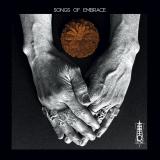
Embrace The Abandon is the new project by THE MON, the solo vision of Urlo, vocalist, bassist, and founding member of the Italian heavy-psych veterans Ufomammut.
Structured in two complementary chapters - Songs of Abandon (November 7th, 2025) and Songs of Embrace (March 6th, 2026) - the project tells a journey of duality: loss and surrender on one side, acceptance and rebirth on the other.
“
Songs Of Embrace” is the second chapter of “Embrace The Abandon”, expanding its emotional landscape rather than closing it.
Where the first part explored abandonment and loss, “Songs Of Embrace” focuses on presence, proximity, and the physical act of staying.
It is the answering breath, the inner voice.
The album avoids resolution and comfort, embracing slowness, repetition, and bodily tension.
It is not just music, it is a stream of consciousness, an inner search, a way of inhabiting what weighs without letting go.
While “Songs Of Abandon” is a collection of songs, nine tracks written in nine days, Songs Of Embrace is a continuous musical flow.
It is a movement that changes, grows, erupts, slows down, settles, and rises again.
It feels like the sea: calm and still one moment, then moved by a simple breath of wind, suddenly breaking into a storm.
“Songs Of Embrace” was conceived more like a ritual, a work of classical music, a suite.
Different parts unfolding one into the next, each a continuation of the previous one, finding meaning only as a whole.
The pieces are deeply interconnected, like embraces: some bring comfort, others carry pain.
These are compositions meant to be listened to in one continuous breath, allowing yourself to be held, rocked, and sometimes pushed away, just like in an embrace.
With two albums released—and a third arriving—in less than two years, Agitator are as ferocious in their release pace as they are on stage. All the more surprising, then, that the forthcoming album "Året av sex" is the darkest and slowest work they have made to date. Influenced as much by chanting witch doctors as by Christian Kjellvander and Leonard Cohen, and drawing from electronic and avant-garde music, the band reshapes its sound into something more brooding and expansive.
Partly recorded in a barn on the island of Öland, the album’s soundscape sees the drum kit augmented—and at times replaced—by scrap metal found in a nearby bay. Through this process, Agitator expand the idea of both what a creative process can be and what a rock band might look like in 2026. The result is bold, unsettling, and compelling: an album that digs deeper than many are willing to in Sweden today.
The lyrics on "Året av sex" are darker, more dangerous, and more precise than ever before. Given greater space within the broader sonic landscape, they become central to understanding this new incarnation of Agitator.
Agitator’s new album is released on March 27 via Adrian Recordings, preceded by three singles. The band’s first two albums have previously been praised by outlets including Dagens Nyheter, P3, Gaffa, Café, and PSL, leading to sold-out tours. A full Swedish tour is scheduled in connection with the album release.
Hip-Hop veteran Andy Cooper (Ugly Duckling/The Allergies) and world champion DJ Robert Smith have combined to create a Classic Hip-Hop album which showcases incredible mic skill alongside flawless turntable prowess. With side one of the LP dedicated to lyrical ability and side two focused on the wheels of steel, old school enthusiasts and new listeners will be blown away by the level of craftsmanship on display.
After the success of the first single 'All That Mess' (Juno's Breakbeat chart track of the year which received worldwide airplay on shows like DJ Shan's Groove Theory in Australia and DJ Static's WeFunk Radio show in Canada), the full-length is ready to be released in early 2026.
out of Stock
Last delivered 6 months ago available to reorder, subject to availability
Tom Misch’s long-awaited sophomore album Full Circle finds the London-based artist, songwriter, and producer at his most personal and honest. Exploring the moments that have shaped him over the last four years: family, friendships, nature, and celebrates the work of finding his way back to himself. Made during his time spent between London, Cornwall, Portugal, and Nashville with a focus on classic songwriting, honing a collection of eleven timeless songs including the previously released singles ‘Old Man’ and ‘Red Moon’. While Full Circle contends with some of quieter moments of the last four years, it remains optimistic and effortlessly listenable, anchored by unadorned vocals and a warm, analogue sound. And the beauty of Full Circle lies in the universality of its lyrics, inviting listeners to inhabit Tom’s world or trace their own path within it. Full Circle stands as both a reflection of his journey and a statement of ongoing evolution.
out of Stock
Last delivered 57 days ago available to reorder, subject to availability
David Grays ,Nightjar" erscheint als Begleitwerk zur 20-jährigen Jubiläumsausgabe von ,Life in Slow Motion"; eine Sammlung von 19 bisher unveröffentlichten Songs. ,Nightjar" entstand aus denselben Songwriting-Sessions wie ,Life in Slow Motion" und ist ein Schatzkästchen mit klassischen David-Gray-Songs, aber auch experimentelleren Stücken und unerwarteten Wendungen.
British rock singer Chez Kane is back with her third studio album, “Reckless” — an explosive blend of arena-ready hooks, slick guitar work, and unapologetic 80s-style swagger. Following the success of her first two records, Chez levels up with a collection that’s bigger in sound, richer in emotion, and packed with pure melodic firepower. Once again written and produced by Danny Rexon, frontman of Swedish hard rockers Crazy Lixx, “Reckless” channels the golden age of melodic rock while injecting it with fresh energy and modern production. The chemistry between Chez and Danny continues to shine, resulting in a record that blends 80s-inspired anthems, infectious hooks, and soaring vocals into a modern rock statement with attitude.
From glam-infused bangers to emotional slow-burners, “Reckless” showcases Chez’s growing confidence and undeniable charisma, proving she’s not just riding the revival wave — she’s leading it. If you’re craving fist-pumping choruses, soaring vocals, and a no-holds-barred throwback to the glory days of rock, look no further. Chez Kane’s “Reckless” is melodic rock done right — bold, catchy, and undeniably alive. Turn it up loud. This one’s recklessly unforgettable.
British rock singer Chez Kane is back with her third studio album, “Reckless” — an explosive blend of arena-ready hooks, slick guitar work, and unapologetic 80s-style swagger. Following the success of her first two records, Chez levels up with a collection that’s bigger in sound, richer in emotion, and packed with pure melodic firepower. Once again written and produced by Danny Rexon, frontman of Swedish hard rockers Crazy Lixx, “Reckless” channels the golden age of melodic rock while injecting it with fresh energy and modern production. The chemistry between Chez and Danny continues to shine, resulting in a record that blends 80s-inspired anthems, infectious hooks, and soaring vocals into a modern rock statement with attitude.
From glam-infused bangers to emotional slow-burners, “Reckless” showcases Chez’s growing confidence and undeniable charisma, proving she’s not just riding the revival wave — she’s leading it. If you’re craving fist-pumping choruses, soaring vocals, and a no-holds-barred throwback to the glory days of rock, look no further. Chez Kane’s “Reckless” is melodic rock done right — bold, catchy, and undeniably alive. Turn it up loud. This one’s recklessly unforgettable.
Jeb Loy Nichols is at it again with a brand new 7” that pairs two sides of his soulful storytelling. On the A-side, the exclusive cut “Do The Get Together” makes its debut – a slow-burning southern soul dancer that gently calls people closer, both on the dancefloor and beyond it. With warmth, patience, and a steady groove, Nichols invites connection without force, offering a quiet reminder that togetherness can still feel natural and unpretentious.
Driven by Cold Diamond & Mink’s deep-pocket rhythm and understated analog textures, “Do The Get Together” unfolds with ease. The groove never rushes, allowing Jeb’s voice to guide the message with soft authority and lived-in wisdom. It’s a song that feels tailor-made for late-night spins, where movement and meaning find common ground.
On the flip, “First Night Away From Home” brings listeners back to the opening chapter of Nichols’ latest album This House is Empty Without You. Warm, melodic, and intimate, the track captures that mix of vulnerability and quiet resolve that defines Jeb’s songwriting. Together, these two sides form a perfect 7” pairing, pressed for those who value soul that speaks gently but stays with you