To those who embraced 2000’s Nixon—Lambchop’s fifth album, whose luscious country soul grooves provided the sprawling Nashville collective with a significant British breakthrough that even found them selling out London’s 2,500-capacity Royal Festival Hall—the deceptively gentle Is a Woman, delivered two years later, administered a quiet but compelling shock. Gone almost entirely was frontman Kurt Wagner’s euphoric, Curtis Mayfield-esque falsetto, replaced by a tranquil, contemplative vocal style; and instead of the joyfully warm brass arrangements that had encouraged Zero 7 to remix “Up With People,” one of Nixon’s standouts, pianist Tony Crow now took center stage, teasing out gentle, ingenious melodies. The contrast was acute.
To discover the true spirit of Is a Woman, however, one need only listen to the remarkable “My Blue Wave,” one of the band’s finest recordings to date. Here, Wagner depicts a world of helpless tragedy in which comfort can nonetheless be found in the smallest of gestures, as he journeys from the contented sight of his pets—“You lay around the house… Just bones and squirrels inside your head”—to recollections of a devastating phone call from friend and bandmate William Tyler: “And William called and tried to tell me /
That his sister’s boyfriend has just died / He’s not sure what to do / And I’m not sure what to tell him he should do / Sometimes William, we’re just screwed / In my blue wave.”
quête:small world disco
On their third album, »Rideau«, Swedish trio Tape made their great leap forward. Released in 2005 on Häpna, following two albums of pastoral folk meets electronica, »Rideau« saw the trio of Andreas and Johan Berthling, and Tomas Hallonsten, working with an outside producer, Marcus Schmickler (best known for his post-rock outfit Pluramon). On »Rideau«, Tape’s music opened out considerably, embracing traditional minimalism, and luscious melodicism. Now, seventeen years later, »Rideau« has a new home with Morr Music, who are reissuing the album on vinyl, marking its first appearance on the format, including an extra track.
It’s only logical that »Rideau« should reappear via Morr Music. Like Tape themselves, Morr Music was a significant part of the worldwide gang busy reconciling electronica, pop, and acoustic, group- oriented sound across the 2000s, and »Rideau« sits neatly alongside other releases of similar heritage. And yet, »Rideau« feels contemporary, suggesting the creative discoveries made by the trio have ongoing resonance; their elliptical poetry echoes through recent music from the likes of Tara Clerkin Trio, and Tape’s sometime collaborators, Tenniscoats.
Asked about the album, Johan Berthling recalls, “»Rideau« was a special album for us to make”. While they had previously recorded their albums in rural Sweden, for »Rideau«, the trio decamped to Schmickler’s Piethopraxis Studio in Cologne. The creative space that Schmickler carved out for the group allowed them to explore this new material to its fullest. For his part, Schmickler found himself drawn to Tape’s music –“Their focus was a combination of seemingly timeless folk influences with noisy electronics and field recordings,” he explains. You can hear Schmickler’s influence at an almost molecular level – Tape had never sounded quite so graceful and assured with their compositions. “Marcus really shaped the music, working architecturally to build the form of the pieces,” Berthling recalls.
»Rideau« represents a collective exhalation for Tape, with the trio exploring more involved, longer pieces, which situates them in yet broader musical contexts. There are clear connections with the history of minimalism, for example, via the repeating organ phrase of »Sunrefrain«, and the insistent piano arpeggio of »A Spire«, which builds into a Reich-ian dream song, with sensuous electronics and glinting vibraphone dappling abstract shapes across the song’s stretched canvas.
Reflecting on Tape’s essence, Schmickler isolates their “uncompromised ethos, caring about small details.” This echoes most radically through the twilight environment of »Long Lost Engine«, which sets the listener adrift on impossibly radiant drones, while a gentle, almost Feldman-esque melody plays out over the song’s surface. It’s followed by the reissue’s extra track, Japanese electronica quartet Minamo’s remix of »Roulette«, a connection that would lead to a Minamo/Tape collaborative album, »Birds Of A Feather« (2007).
For now, though, here is the gorgeous, penumbral abstraction of »Rideau«, an album of whispers and clues, quiet moments and grand gestures, reintroduced to a welcoming world.
- A1: Sharon Jones & The Dap-Kings - Ain't No Chimneys In The Project
- A2: Wayne Champion - It's Xmas Time
- A3: Bey Ireland - All I Want For Christmas Is A Go-Go Girl
- A4: Hot & Sassy - Christmas Strutt
- A5: Bill Deal With Pure Pleasure - It Feels Like Christmas
- A6: Major Handy - I Won't Be Home For Christmas
- B1: Sam Applebaum - The Year Around Christmas
- B2: Ray Williams & The Space Men - Santa Claus
- B3: Bobby Peterson - Christmas Presents
- B4: Tiny Powell - Christmas Time Again
- B5: Eddie &The De-Havelons - Xmas Party
- B6: Fred Sabastian - Everybody Is A Santa Claus
- C1: Ruth Harley - Christmas Is
- D1: Ruth Harley - Santa Baby
** INITIAL 400 LPs CONTAIN A BONUS 7" OF A RARE XMAS SOUL 45! **
** THE 4th VOLUME OF RARE & HIP-SHAKING SEASONAL GROOVES!! **
Dear Santa, we just loved "Santa's Funk & Soul Christmas Party," Volumes 1-3 TRLP-9013, TRLP-9027, TRLP-9050, and we have really tried to be good this year! Please bring us a whole 'nother album's worth of rare and obscure Christmas-themed funk and soul!
When the third volume of "Santa's Funk & Soul Christmas Party" was released in 2015, everybody involved was certain that it would be the final one. For years, the curators had been looking for "Christmas Rare Grooves" until they finally realized there was nothing left to discover that would justify a fourth volume. Sure, it would have been an easy task to dig through the catalogues of major labels to come up with 40 minutes of more-or-less trivial Christmas soul music. But who on earth would want that kind of album? Since the foundation of Tramp Records in 2003, the label has gained a high reputation as one of the very few German reissue labels of obscure funk, soul, and jazz music. 99% of the songs originate from 7" singles, the small and handy standard-format of the 1960s, which, like Santa's sleigh magically circling the planet on Christmas Eve, spins at forty-five revolutions per minute on the turntable.
So, what can you expect from this, the fourth volume of a series which had ostensibly been completed with only three volumes? After some seven years of digging across the world wide web with open ears and eyes, never tiring of the hundreds of (mainly) shitty songs, hoping to find that kind of monster soul or funk track that constituted the hallmark of the previous volumes, the compilers slowly and surprisingly began to see a fourth volume taking shape. Finally, after more than two thousand days, a complete album's worth of quality tunes had been discovered and secured for release.
"Santa's Funk & Soul Christmas Party Vol. 4" contains a highly diverse selection of obscure Christmas songs. For example, take Bey Ireland's garage-mod-rocker "All I Want For Christmas Is A Go-Go Girl," is something to get you go-going around the tree! Do you prefer mirror-balls to tinsel? Check out Bill Deal with Pure Pleasure. Too fast? How about the dazzling-melancholic "I Won't Be Home For Christmas"? Do you prefer rap music while you wrap presents? Then your choice is going to be Hot & Sassy. Old-School-Hip Hop at its best. Every single song has a compelling reason to be included in this extraordinary selection. Not least is the opening track by Sharon Jones & the Dap-Kings. Their contribution represents the soul sound of the 21st century. Charming soul music with sociocritical lyrics, something you rarely find in the current musical landscape.
Even though the selected tracks that the two compilers and their worker elves proudly present on "Santa's Funk & Soul Christmas Party Vol. 4" are unbelievable, they are very real and will be the surprise gift from Santa this season that can be enjoyed year-round! It took seven years to complete, but believe us when we say it was well worth the wait. Merry Christmas, everybody!
Key selling points:
- initial 400 LPs contain a BONUS 7" of a ULTRA-RARE Christmas soul 45
- ALL but one song appear on CD, Vinyl LP and digital for the very first-time
- the vinyl LP comes with a full album download code
- fold-out CD-booklet and gatefold LP come with liner notes and label scans
Written and recorded between 1972 and 1982 in Western Oregon, Back to the Woodlands is a previously unreleased, and nearly lost, album made by Ernest Hood during the same era as his near mythical album Neighborhoods . A visionary combination of field recordings, zithers, and synthesizers, Back to the Woodlands offers an unprecedented depth of access to this singular artistic mind. Born into a musical family, Ernest Hood began a promising career as a jazz guitarist during the 1940s, touring internationally with his brother Bill Hood and the saxophonist Charlie Barnet , before contracting polio in his late twenties. The disease left Ernest unable to play the guitar and confined him to a wheelchair for the rest of his life. It also forced him to adapt and innovate around his musical practices in the face of adversity; Hood's value of sound matured with a remarkably democratic and nonhierarchical approach and application. Taking up the zither, a less physically-demanding stringed instrument to the guitar, embarking upon the unprecedented process of incorporating field recordings into his work as early as 1956, and eventually discovering the synthesizer, Hood's music became imbued with optimism and subtle cultural critique. This ethos and technique - refined over the coming decades - would lay the groundwork for a sprawling body of radio work, mail order recordings for homebound listeners, and Neighborhoods , self- issued as a small vinyl edition in 1975. Where Neighborhoods , a nostalgic opus, drawing from a well of collective memory of the 1950s, is defined by traces of human activity, Back to the Woodlands leaves the modern world behind, delving into Hood's love for nature. Only recently discovered in his archives, the album dramatically expands his concept of "musical cinematography," imagistically triggering states of sensory memory from within its zither and synthesizer melodies, intertwined with field recordings made during Hood's extensive travels throughout Oregon. If Neighborhoods is a retreat into the gauzy joys of a romanticized past, Back to the Woodlands is an immersion in the timeless sanctuary of the natural world. A fascinating counterpoint to its predecessor, Back to the Woodlands brings us even closer to Hood's belief in the transportive qualities of sound; that field recordings could serve as a vehicle for the imagination and liberation, particularly for those with similar mobile disabilities as his own. Across the album's twelve compositions, the rippling instrumental harmonics - shifting between abstraction and playful melody - fold so seamlessly into the birdsong, bubbling brooks, and other environmental ambiences, that they often give the impression of having been recording within the landscapes toward which they whisper. Falling somewhere between the immersive calm of healing music and New Age, the creative field recording practices of sound ecologists world building for Folkways, and the jazz infected ambiences during Obscure / Editions EG's highest heights, Back to the Woodlands sculpts an singular proximity of music for its moment; a form of ambient sonic realism that draws the consciousness toward its surroundings as much as within. Working closely with his estate to maintain his original vision, Freedom to Spend has restored and remastered this never before released, lost masterpiece by Ernest Hood from the original tapes. Ernest Hood's Back to the Woodlands will be issued on vinyl, as well as on CD in combination with its contemporary Where the Woods Begin , with new liner notes by Michael Klausman . On behalf of Ernest Hood and Freedom To Spend, a portion of the proceeds from this release will benefit Oregon Wild, an organization dedicated to protecting and restoring Oregon's wildlands, wildlife, and waters as an enduring legacy for future generations.
Written and recorded between 1972 and 1982 in Western Oregon, Back to the Woodlands is a previously unreleased, and nearly lost, album made by Ernest Hood during the same era as his near mythical album Neighborhoods. A visionary combination of field recordings, zithers, and synthesizers, Back to the Woodlands offers an unprecedented depth of access to this singular artistic mind.
Born into a musical family, Ernest Hood began a promising career as a jazz guitarist during the 1940s, touring internationally with his brother Bill Hood and the saxophonist Charlie Barnet, before contracting polio in his late twenties. The disease left Ernest unable to play the guitar and confined him to a wheelchair for the rest of his life. It also forced him to adapt and innovate around his musical practices in the face of adversity; Hood’s value of sound matured with a remarkably democratic and nonhierarchical approach and application.
Taking up the zither, a less physically-demanding stringed instrument to the guitar, embarking upon the unprecedented process of incorporating field recordings into his work as early as 1956, and eventually discovering the synthesizer, Hood’s music became imbued with optimism and subtle cultural critique. This ethos and technique - refined over the coming decades - would lay the groundwork for a sprawling body of radio work, mail order recordings for homebound listeners, and Neighborhoods, self-issued as a small vinyl edition in 1975.
Where Neighborhoods, a nostalgic opus, drawing from a well of collective memory of the 1950s, is defined by traces of human activity, Back to the Woodlands leaves the modern world behind, delving into Hood’s love for nature. Only recently discovered in his archives, the album dramatically expands his concept of “musical cinematography,” imagistically triggering states of sensory memory from within its zither and synthesizer melodies, intertwined with field recordings made during Hood’s extensive travels throughout Oregon. If Neighborhoods is a retreat into the gauzy joys of a romanticized past, Back to the Woodlands is an immersion in the timeless sanctuary of the natural world.
ASA 808's new album Boy, crush is a very personal inner journey as well as a call to fight and free ourselves from toxic masculinity. In eight tracks that subtly merge electronica, ambient, breakbeat and house, the Berlin-based artist process their own quest for gender identity. Out on vinyl and digital via the TOYS Berlin imprint, the album proposes new, softer and more diverse forms of gender fluidity.
ASA 808 invites listeners to expand their views of the gender spectrum. The title Boy, crush plays with the term "boy crush" and is meant as an encouragement for all men to "collectively crush manhood" with all its toxic traits and consequences:
"Toxic masculinity has kept our grandmothers and mothers small and brought deviant boys into line. It took me a long time to unlearn so much sexism and queerphobia and find my inner queer child again to let it grow, bloom and shine. I dream of a world in which men emasculate themselves. In which masculinity (if we feel it's still needed) will embrace softness, weakness, vulnerability, solidarity, consideration, mindfulness, self-reflectiveness and nonviolence", explains the non-binary producer and DJ who discovered their gender-nonconforming side already at an early age.
Wildly creative free-form songwriter Rachael Dadd is set to release
her brand new studio album, ‘Kaleidoscope’, via Memphis Industries.
The album follows 2019’s ‘Flux’, which was released to much
acclaim, and was the album she was touring when the pandemic
struck. Like so many people disconnected from their communities and
struggling through the lockdowns, Rachael Dadd turned inwards,
seeking escape through music and connection through songwriting,
and her hope is that when people listen to ‘Kaleidoscope’, “they will
feel held and find space to breathe, grieve and celebrate.”
“This album is a lot more honest and personal than ‘Flux’” she shares,
“but I feel the songs are universal as they are largely rooted in truth
and love. If I had to pick a favourite album it would be this one
because of the magical rekindling of human connection when me and
my band got back in a room together again. All that magic went into
these songs.”
Co-produced “intuitively, boldly, and playfully” by Rachael and Rob
Pemberton (The Staves, Emily Barker, Maja Lena), ‘Kaleidoscope’
includes musical collaborators such as Maja Lena (Low Chimes),
longtime collaborator Emma Gatrill (Willy Mason), Alex Heane (bass),
Charlotte West (synths), Alex Garden (strings) and ‘Flux’ producer
Marcus Hamblett (Villagers, James Holden, The Staves), giving the
record “just the right colour combination, just the right pattern of
shapes, plenty of space where needed and finally landing in a sound
world that feels fresh and open and true,” reflects Rachael.
Japanese aesthetics absorbed from her time spent living there are
subconsciously woven into Rachael’s songs. “I first stepped foot in
Tokyo in 2008, sparked by the adventure of such a rich and different
culture and later on I lived on a small island and experienced an
appealing and balanced way of life: the aesthetics, the art and the
traditions,” she recalls. “There was a lot of caring for each other, a lot
of gentleness, and a lot of simple living in harmony with nature. Japan
left its cultural mark on me and is now part of my inner world and I’m
sure this comes out with the words and music I write.”
“But overall,” Rachael explains, “this is an album of homecoming and
reconnecting to my own truth, to my community here, to the earthy
land that I love and to the sky that I know.”
- 1: Killer Klowns (From Outer Space)
- 2: Hidden Klown Ship
- 3: Mike And Debbie's Discovery
- 4: Escape From The Klown Ship
- 5: Killer Klown March
- 6: Visit To The Drugstore
- 7: Glactic Globetheater
- 8: The Empty Forest
- 9: Knock My Block Off
- 10: Little Girl Too Klose
- 11: Top Of The World
- 12: Muscle Klown Kar March
- 13: Growing Korn
- 14: Shadow Show
- 15: Officer Mooney
- 16: Dave And The Aftermath
- 17: Ventriloquist Mooney
- 18: The Inevitable Part I
- 19: The Inevitable Part Ii
- 20: Debbi'es Been Kaught
- 21: Amusement Park / Death Pies
- 22: The Fun House Part I
- 23: The Fun House Part Ii
- 24: Escape Into Klown Kathedral
- 25: Klownfrontation
- 26: Truck Escape And Klownzila
- 27: Final Konfrontation & Reunion
- 28: Klowns Kidnap
- 1: 29Galactic Globe Theater (Extended)
- The Complete 1988 Film Score by John Massari - Available For The First Time On Vinyl 180 Gram Violet and Blue Vinyl (Light In The Attic Exclusive Variant) - Exclusive Liner Notes by Composer John Massari - Exclusive Liner Notes by Killer Klowns Co-Creator Stephen Chiodo - Heavyweight 12" x 12" Art Print - Old-Style Tip-On Jackets with Matte Satin Coating // KILLER KLOWNS FROM OUTER SPACE have finally landed at Waxwork Records! After much anticipation, we are thrilled to present the official 1988 Original Motion Picture Soundtrack by John Massari for the very first time on vinyl! Would you believe someone if they told you a circus tent-shaped spaceship landed in your small town and was abducting your neighbors to store them in cotton candy cocoons? In this '80's cult classic, teens Mike Tobacco (Grant Cramer) and Debbie Stone (Suzanne Snyder) have to fight both the diabolical bozos and the local law enforcement's disbelief to save themselves and their community! The original score to Killer Klowns From Outer Space is kicked off by the classic 80's horror movie theme track, Killer Klowns (From Outer Space) by California punk band, The Dickies. The 'nightmare merry-go-round' continues with a smattering of menacing electronic brass sections, electric guitar, bombastic drum machine beats, & harpsichord combined with sci-fi synth elements to capture the ultra-specific origins of the antagonists. Massari's score to Klowns is a retro-synth joyride from start to finish featuring immediately recognizable cues from the beloved 80's cult-classic! Waxwork Records is thrilled to present the official Killer Klowns From Outer Space double LP, released for the first time on vinyl. Complete with 180 gram "Cotton Candy" and "Popcorn" vinyl, deluxe packaging, new artwork by Ruiz Burgos, old-style tip-on jackets with matte coating, a heavyweight 12"x12" art print, and liner notes by composer Massari and Klowns co-creator Stephen Chiodo!
Freestyle dig out another rarity in the form of a DIY brit-funk 7" from Highway Motion aka David Humphrey (a session drummer who played with Sparks, and with PiL on the iconic Metal Box LP & Death Disco 12"). Tinged with raw post-punk edge and 70s library music-style synth leads, this 45 is quite simply massive amounts of fun.
------------
David Humphrey's professional career as a drummer began aged 19 with Public Image Ltd, providing some of the drum tracks on their iconic Metal Box album and Death Disco single. Humphrey would then go on to work with Mike Oldfield and then Sparks, playing with the latter on their Number One Song in Heaven tour, Top of The Pops and recording sessions for Beat the Clock and Tryouts for the Human Race (those sessions were included and featured in Edgar Wright's recent film 'The Sparks Brothers).
In 1980, Clap Hands and Double O One Disco were recorded under the name 'Highway Motion' - intended by Humphrey as "raw experimental tracks" they were both laid down on a 4-track and subsequently released on the DIY Star Records imprint. Rough, grooving, candid and playful; these two tracks seem to somehow simultaneously meld the burgeoning brit-funk sound of the early 80s with a riotous post-punk edge, along with a good dollop of synth-led library music.
Following it's release David formed the group Reflex, recording and releasing the Funny Situation 7" in 1981 - forming the only other title in the Star Records catalogue. A more straight-up brit-funk dancer yet still pressed and sold in small quantities, Funny Situation became a sought-after record on the second hand collector's market, and finally saw reissue last September 2020 on the start-up Paint A Picture label - garnering plays from from Gilles Peterson on BBC 6 Music and Worldwide FM, StreetSounds radio and reaching No 1 in Juno records Chart. David has now started to working on new music using the name Davey H, and released his first new material in decades recently on Six Nine Records.
Completely unknown album by Salah Ragab's Cairo Jazz Band vocalist Maha, recorded in Cairo in 1979. Features productions by Hany Shenoda of Al Massrieen. Maha’s “Orkos,” originally released on cassette, is one of these standout musical diamonds that combines Jazz and Egyptian vocal traditions with Funk, Latin and Soul. Out via Habibi Funk October 10th.
Maha’s “Orkos” immediately catches your ear as a unique album. A strong and energetic voice, equally grounded in jazz as well as Egyptian vocal traditions, Maha sings over instrumentals that offer a wide palette of influences, sonically emblematic of the cultural changes that were occurring in the country. The album features rich compositions and productions by renown Egyptian musician Hany Shenoda, who’s group, Al Massrieen, Habibi Funk worked with in 2017 (the release led to sync placements in Hulu’s “Ramy” TV Series).
At the time of its release, however, the “Orkos” cassette quickly faded away among the growing number of releases populating the Egyptian musical soundscape. For more than 40 years, it sat in near obscurity before being given new life in the form of a properly licensed vinyl release. Habibi Funk and Disco Arabesquo are honored to play a part in sharing Maha’s story. Below is a bit more context around the release as well as the campaign schedule.
The arrival of the cassette brought a seismic shift in how music was produced and consumed around the world. Smaller bands and labels were able to release music without the logistical and financial barrier present in vinyl manufacturing. At the same time, in Egypt, a new crop of musicians and composers made their way into the scene, seeking to bring something fresh to what was perceived as the widely monophonic musical traditions of Egypt. Hany Shenoda, Mohamed Mounir, Magdy El Hossainy, Omar Korshid, Salah Ragab and Hamid El Shaeri are some names that come to mind. Many built their sounds combining their own musical upbringing with influences coming from the outside. The success of these projects varied widely, but for each there were numerous lesser-known bands and singers. Many of these often-short-lived projects would release their music on cassettes on tiny labels only to fade into the musical ether.
Maha’s “Orkos” album fits this category. Put out in a small run of cassettes, it’s fair to say that the singer’s sole recording outing was not a financial success when it was originally released by Egyptian label Sout El Hob in 1979. While it may not have found an engaged and open-eared audience upon its release, the first few bars of the album indicate this is a special, timeless album that transcends the musical boundaries that many artists were seeking to break through at the time.
From the funk sounds of “Law Laffeina El Ard” (Single 1, out September 1 with Pre-Order announcement); the moody, mellow sounds of “Kabl Ma Nessallem We Nemshy” (Single 2, out September 23) or “We Mesheet;” to excursions into Latin sounds in the title track “Orkos,” and disco with “Ana Gaya” (Album Focus Track, out October 10) the album is an amalgamation of genres that stands out from the immense creativity present in Egypt at the time.
We connected Maha in late 2021 and she was clearly surprised to have someone call about music she recorded more than 40 years ago. She also seemed interested in the idea in bringing her music back to people’s attention. A few weeks later we were speaking with our friend Moataz, who runs the Disco Arabesquo project and showed him this great new album we found and to our surprise he knew the album, having found a copy of it a year or two before, in Cairo. It was then obvious to team up for a collaboration for this project. You can find Moataz’s story about Maha and her music, as well as extensive interviews with Maha herself, in the booklet accompanying the release.
As always, both vinyl and CD come with an extensive booklet featuring interviews with Maha as well as unseen photos.
Luca LTJ Trevisi (LTJ Xperience) began his dj/producer career in the 80s. As resident dj in two of the most famous Italian clubs of the time, Kinky in Bologna and Cap Creus in Imola, he was one of the first Italian jocks to spin House and to re-propose those black music, jazz and latin-bossa classics from the 70s that at the end of the same decade would have given birth to the Acid Jazz and Rare Groove movements. His first single release in 1988, titled First Job, together with Kekkotronics, was also the first release ever on Bologna based Irma Records. It was featured in a lot of compilations of the time and entered several playlists, rapidly reaching cult status for many UK and US djs. During the early 90s LTJ delivered a couple of singles in a kind of pre-breakbeat style: Dont Stop The Sax, released all over Europe, and Funky Superfly. He also produced US singer Tameka Starrs single Going In Circles, always for Irma Records, still a classic in the downtempo/r&b field. In the second half of the nineties Luca began to produce acid jazz bands like Bossa Nostra, still today one of Irma Records main acts. Their first album had Vicky Anderson as special
guest and today is still considered one of the most important European acid jazz albums. In the following years he concentrated on developing his activity as collector and rare vinyl merchant, which gave him the chance to get in touch with djs from all over the World and to discover many forgotten gems from the past years. Thanks to this experience he was able to create two extremely successful rarities series on Irma Records:
Groovy and Suono Libero. In the meanwhile LTJ started to dj outside Italy too, performing in important venues like the Blue Note and Jazz Café in London, Giant Step in New York and Montreux Jazz Festival in Switzerland. In 1999 saw the release of his first solo album under the LTJ Xperience moniker. The album was produced with the collaboration of fellow Irma artist and producer Ohm Guru and had Taka Boom and Jackson Sloan among the guests. Two of the main tracks on the album are brazil house classic Sombre Guitar and title track Moon Beat, which became a true hit of the Chill Out genre, featured in dozens of important compilations.
After making countless productions for Irma Records, including their second album When The Rain Begins To Fall (with the participation of the historic Spanish-American singer Joe Bataan), and the recents singles as ORGAN MIND / I LOVE YOU (favorite track by Larry Heard ) & ON THE FLOOR / SOUND MACHINE, LTJ is devoted almost exclusively to re-edit and reconstruct tracks from the past with the addition of sounds and rhythms in post production for labels like SUPER VALUE, SMALL WORLD DISCO, HOT GROOVY RECORDS, OH CRISTO! increasing the production of this new musical genre that is currently defined as beatdown/slo-mo, working with international labels such as Far Out Recordings, Sleazy Beats, Future Classics, E.A.R. Music For Dreams, Apersonal Music, Roam Recordings, !K7.
- A1: Laboratorija - Jugoton Express
- A2: Laboratorija - Devica 69
- A3: D'boys - Zaba
- A4: Beograd - Sanjas Li U Boji
- A5: Data - Neka Ti Se Dese Prave Stvari
- A6: Brazil - Gdje Nema Te
- B1: Denis & Denis - Jugoton Express
- B2: Denis & Denis - Ti I Ja
- B3: Du Du A - Romance
- B4: The Master Scratch Band - Pocket
- B5: U Skripcu - Noc Ca, Ca, Ca
- B6: Parlament - Kad Je Kraj Blizu
- C1: Dorian Gray - Jugoton Express
- C2: Dorian Gray - Tonemo U Mrak
- C3: Hc Andersen - Palcica
- C4: Sladana & Neutral Design - Neko Je Tu (Sa Mnom U Sobi) (Sa Mnom U Sobi)
- C5: Amila - Vodi Me Iz Ovog Grada
- C6: Tuzne Usi - Ti Me Uci
- C7: Zana - On
- D1: Oliver Mandic - Jugoton Express
- D2: Oliver Mandic - Dode Mi Da Vrisnem Tvoje Ime
- D3: Hc Andersen - Snjezna Kraljica
- D4: Dubravka - Harakiri
- D5: Milka Lenac - Ponocni Express
- D6: Nicky - Radio Video
- D7: Mladen Kusec - Tonkica Palonkica Frrrrrrr
Synthetic Music From Yugoslavia 1980-1989
"The galloping technical progress in the second half of the last century dominated all spheres of daily life, art and culture. In the music industry machines took over the role of classical instruments and did not stop at RnR, punk nor industrial music. No one could resist the challenge, but also the prevailing trends in the 80s. The music industry was influenced by the electronic virus globally, not sparing even the remotest corners of the planet, producing bands like Depeche Mode, New Order, Soft Cell or lesser known ones like Liquid Liquid, Section 25, The Wake as well as the pioneers of the electronic music Silver Apples, Pierre Henry,etc .
What was going on in the music industry of former Yugoslavia and at Jugoton, the biggest YU music label at that time? The all over answer is given by a new release of Everland Music: Electronic Jugoton - Synthetic music from Yugoslavia 1964. - 1989. Vol. 1
Electronic Jugoton is the first part of two double albums, where the second part will even go back to pre-electronic music from 1964. Both double albums were initially released by Croatia Records (ex-Jugoton) in 2014 on a 2CD set with no less than two and a half hours of material (47 songs, 35 performers), showing the contemporary trend of Jugoton at that time towards avant-garde and provocative directions in electronic music. This untimely compilation is released for the first time on vinyl now on two double LPs, housed in gatefold sleeves by Everland Music, where part 2 will be released in 2023.
The brave and insightful creators of the compilation Electronic Jugoton, veteran crate diggers Višeslav Laboš and Zeljko Luketić, have excelled at reconstructing the musical past of electronic music in Yugoslavia from 1964 – 1989. Jugoton's extensive research included the most exciting and progressive moments of pop and disco music, early rap, electronic responses of new wave, RnR, post punk and industrial bands to the current trend of the 80s, but also pioneers of avant-garde electronic music.
Electronic Jugoton part 1 is officially opened by the band Laboratorija with the song Devica 69, which opens a window to a completely new and experimental world in former Yugoslavia.Laboš and Luketić have boldly chosen the material without reservations, suggesting that for the first time in one place we have a section of forgotten, unique underground bands like Beograd, Data, Brazil, The Master Scratch band, DU DU A and beyond.
Besides the excellent underground bands, we find popular performers of the time performing less well-known songs: Denis & Denis, Oliver Mandić, Slađana & Neutral Design.
Electronic Jugoton part 2 is partly dedicated to unique electronic music in the performance of important Yugoslav punk, new wave, RnR and industrial bands: Zana, Pekinška patka, Električni orgazam and Borghesia, while the second part of the material is focused on avant-garde early electronic music in Yugoslavia, where the works of composers Igor Savin, Branimir Sakac, Igor Kuljerić and Miroslav Miletić were presented. Luketić and Laboš rescued the obscure electronic tune Elektra by Zdenka Kovačiček, who was at that time Jugoslovska Soul and funk diva.
The uniqueness and quality of this compilation are also audio stories for children, which were extremely fertile ground for an experimentation with electronic sounds, as they should be highly imaginative to attract the attention of the childrens. Electronic Jugoton is also the first compilation in which the listener will find fragments of interviews with actors from the time gave for Jugoton Express. This was a series of promo vinyls printed in extremely small quantities in the 80's and intended to be exclusively for radio stations. An average of 30 minutes of promotion material and interviews with musicians were available for the first time through this compilation.
The value of this compilation is time and priceless. The only question is whether you will be fast enough to catch your copy of the limited double vinyl editions!"
"What took you so long?" might be a valid question concerning the ten year gap between Zanshin's new album "In Any Case By Any Chance" and his first album "Rain Are In Clouds".
Of course it is a question that the Viennese musician has asked himself quite startled in his usual self-critical manner, just to realize at a closer look that it has not been a lack of creativity or laziness at least. He used the Zanshin moniker on four EP releases and several remixes, plus a game soundtrack. Not to forget all his output as one half of producer duo Ogris Debris (the album "Constant Spring" from 2016 and roughly two dozen singles and remixes) and the many, partly award-winning audiovisual installations and performances with Leonhard Lass as DEPART (depart.at). Furthermore he has also built two sound installations in 2021, "I Gong" at Elevate Festival and "Cymatic Sands" at Ars Electronica. In addition, Zanshin performs with the Max-Brand-Synthesizer from time to time as part of the compositions by Elisabeth Schimana, and together with label mate Dorian Concept he has also composed and performed the piece "Half Chance/Music for Moogtonium" for this unique instrument, built by Bob Moog himself.
Not spared by certain global developments of recent years, but rather invigorated by exploring his own resilience, Zanshin had a talk with Affine Records Operator Jamal in the beginning of 2021, speaking of future ideas and releases. And what was initially a single release spawned into a whole album in seemingly no time. An old skit ("Polar Polychrome") on the Roland MC-505 groove-box that had never really been forgotten, but was rather waiting patiently somewhere in the back of his mind, suddenly proved to be the initial spark for the album.
The term "Zanshin", roughly translated as un-focussed attention, is in fact more than just a pseudonym but rather a directive in the artists life. Zanshin really likes to go in several directions at once, kind of according to Wittgenstein's claim that "The world is everything that is the case.", to find out where his love for music might lead him this time. He also somehow went back to his roots with this album. Not necessarily in the sense of certain musical influences or genres, because then the album would be even more eclectic than it already is. More like a focus on the core values in the fabrication process of the music itself, the freedom to rather follow the structures and sounds than to shape them in a completely predetermined way. Somebody once called it, "to weave what the music demands."
In this regard, Zanshin often feels more like a sculptor and tries not toadhereto strongly to the rules of specific sub-genres of electronic music. Searching for sounds and designing them is one of the energies that fuels his interest the most, thus at the beginning of a lot of tracks there are small skits and ideas that have the freedom to grow in whatever direction.
Hence this album has no elaborate story to tell, there is no extensive "narrative" or big time "storytelling" at work. "In Any Case By Any Chance" is not a novel but rather a collection of short stories (which are certainly dense and have complex plots nonetheless). The result is a long-player where playful electronica, skillful songwriting, extrovert dance music and symphonic film music enter into a symbiotic relationship. Returning to another Wittgenstein quote, "Whereof one cannot speak, thereof one must be silent", the emotional impact of music is the main focus and the results can be quite solemn at times, but around the corner always lurks the next bone-breaking rhythm pattern and gnarly sound design.
The infamous saying, "writing about music is like dancing about architecture", is another brick in the wall of sound in Zanshin's approach to music. He rarely roots himself in traditions or uses them too overtly, he really likes to agglomerate sounds, to challenge the listeners. It seems like he tries to avoid classification on purpose, because he knows that everyone has their own perception anyway. The only thing that this music demands implicitly is a willingness to listen attentively.
Very dense, at times really heavy and massive, then again airy and playful. "Music for clubs that don't exist.", might be another fitting caption to describe this album, which lasts for a little more than an hour.
The opener "Heatseeker" rushes to a sudden head start with its steel pan extravaganza, tropical vibes meet a bass line drenched in electro funk, and electrified synth stabs support the declaration of love in the lyrics. Kind of Jamie XX meets Electro meets Diva House. The monster that is "Bronteroc Brawl" is up next, a serious test for the speakers and a wild ride with metallic, growling sounds. The aggressive sound design reminds of suspense ridden shark chases, vicious dogs and cunning dinosaurs, in any case a track for people who love a proper bass stomper.
A new approach for the "indie discotheque" brings the emotional roller-coaster "In Gloom" with snappy drums and hypnotic synth motives á la Alessandro Cortini, creating an epic atmosphere together with the multi-layered vocals. A psycho-acoustic treat is position 4, the crisp instrumental "Polar Polychrome", you could even go as far as calling this a Zanshin signature track. Like mentioned before, the roots of this track go back to 2002 and you can hear the unmistakable influence of beat wizards like Photek, a piercing bass line is supported by poly-rhythmic drums, while dense pads try to escape the claustrophobic lockdown mood of winter 2020/21.
Another round of intense pathos waits for the listeners in the ensuing track "In Search Of". Moderat say "Hello", a melancholy piano melody is rushed to a climax by a wild bass arpeggio and forceful drums, the desire for a perfect sunrise at the next after-hour to the max. Initially just an appendix to the preceding track, "Time After Thought" swiftly developed from a mere improvisation to an ambient epic with a croaking alien piano, as if Keith Jarrett were on his way to Alpha Centauri.
Up next is the first single "Because Why", a breakbeat driven, synth-heavy track with winged vocals and a popular film quote. The title refers to the movie "Alphaville" by Jean-Luc Godard, a dystopian science fiction film noir, in which an omniscient computer system named Alpha 60 is ruling society and humans can only say "because" but never "why". As if the gears of a galactic mechanism were spinning into motion sounds "Identity Slices". A raspy chord structure finds its counterbalance in a kind of stumbling, wonky beat, and Zanshin would never deny the huge influence that Autechre's sounds and structures always have had on his music. Micro- and macrocosm meet on the same level and this friction is also a metaphor for questions of identity and self-awareness, without using voices or lyrics.
Off we go into the IDM bubble bath of "Enzyme Enigma", the bass drum is stomping and a fizzy acid-line is twisting in all directions behind rolling dub-techno chords. "Corrosion Creak" is a kind of acoustic degradation process, the rave dogs are finally let loose and everything happens at once, funky synths shred, string sounds wail and then there is this bass that sounds like smashing a rusty metal plate in the junk yard with a vengeance.
Towards the end everything slows down a bit, the beat in "Whatever Words" is Warp school cerebral hop at its best and therefore loads of glittery, creaky sounds swarm out until the synapses are overloaded, cumulating in a mighty bass ending. Last but never least, "Rebus Redux" guides us into the limitless night sky, with long indulgent pads dotted by an aimlessly wandering piano, while a compact net of tamed resonances and meandering sub frequencies unfolds in the background, enticing navel-gazing imagination.
Like the many Banded Stilts that spread across the cover of her newest album, ‘Flood’, Stella
Donnelly is wading into uncharted territory. Here, she finds herself discovering who she is as
an artist among the flock, and how abundant one individual can be.
‘Flood’ is Donnelly’s record of this rediscovery: the product of months of risky experimentation,
hard moments of introspection, and a lot of moving around.
Donnelly’s early reflections on the relationship between the individual and the many can be
traced back to her time in the rainforests of Bellingen, where she took to birdwatching as both a
hobby and an escape in a border-restricted world. By paying closer attention to the natural
world around her, Donnelly recalls “I was able to lose that feeling of anyone’s reaction to me. I
forgot who I was as a musician, which was a humbling experience of just being; being my small
self.”
Reconnecting with this ‘small self’ allowed Donnelly to tap into creative wells she didn’t know
existed. Soon songs were coming to her in a way she could not control and over the coming
months, Donnelly accumulated 43 tracks as she moved out of Bellingen and around the
country, often finding herself displaced due to border restrictions and a tough rental market.
Though the writing of ‘Flood’ was an intensely personal undertaking, Donnelly still saw the
recording process as one of her most collaborative projects yet. Along with her band members,
co-producing the record beside Anna Laverty and Methyl Ethyl’s Jake Webb helped to foster
an important spontaneity in the studio. With Webb, Donnelly could “dig in” and discover a
“forward-leaning sound” she’d been searching for, while Laverty’s ability to “capture the piano”
and discern the “perfect take” allowed the songwriter to take risks, many of which have clearly
paid off.
Looking back at the Banded Stilt, Donnelly ultimately appreciates how when “seen in a crowd
they create an optical illusion, but on its own it’s this singular piece of art.” While each song in
‘Flood’ is a singular artwork unto itself, the collective shares all of Stella Donnelly in abundance:
her inner child, her nurturing self, her nightmare self; all of herself has gone into the making of
this record and, although it would take an ocean to fathom everything she feels, it’s well worth
diving in
Like the many Banded Stilts that spread across the cover of her newest album, ‘Flood’, Stella
Donnelly is wading into uncharted territory. Here, she finds herself discovering who she is as
an artist among the flock, and how abundant one individual can be.
‘Flood’ is Donnelly’s record of this rediscovery: the product of months of risky experimentation,
hard moments of introspection, and a lot of moving around.
Donnelly’s early reflections on the relationship between the individual and the many can be
traced back to her time in the rainforests of Bellingen, where she took to birdwatching as both a
hobby and an escape in a border-restricted world. By paying closer attention to the natural
world around her, Donnelly recalls “I was able to lose that feeling of anyone’s reaction to me. I
forgot who I was as a musician, which was a humbling experience of just being; being my small
self.”
Reconnecting with this ‘small self’ allowed Donnelly to tap into creative wells she didn’t know
existed. Soon songs were coming to her in a way she could not control and over the coming
months, Donnelly accumulated 43 tracks as she moved out of Bellingen and around the
country, often finding herself displaced due to border restrictions and a tough rental market.
Though the writing of ‘Flood’ was an intensely personal undertaking, Donnelly still saw the
recording process as one of her most collaborative projects yet. Along with her band members,
co-producing the record beside Anna Laverty and Methyl Ethyl’s Jake Webb helped to foster
an important spontaneity in the studio. With Webb, Donnelly could “dig in” and discover a
“forward-leaning sound” she’d been searching for, while Laverty’s ability to “capture the piano”
and discern the “perfect take” allowed the songwriter to take risks, many of which have clearly
paid off.
Looking back at the Banded Stilt, Donnelly ultimately appreciates how when “seen in a crowd
they create an optical illusion, but on its own it’s this singular piece of art.” While each song in
‘Flood’ is a singular artwork unto itself, the collective shares all of Stella Donnelly in abundance:
her inner child, her nurturing self, her nightmare self; all of herself has gone into the making of
this record and, although it would take an ocean to fathom everything she feels, it’s well worth
diving in
Like the many Banded Stilts that spread across the cover of her newest album, ‘Flood’, Stella
Donnelly is wading into uncharted territory. Here, she finds herself discovering who she is as
an artist among the flock, and how abundant one individual can be.
‘Flood’ is Donnelly’s record of this rediscovery: the product of months of risky experimentation,
hard moments of introspection, and a lot of moving around.
Donnelly’s early reflections on the relationship between the individual and the many can be
traced back to her time in the rainforests of Bellingen, where she took to birdwatching as both a
hobby and an escape in a border-restricted world. By paying closer attention to the natural
world around her, Donnelly recalls “I was able to lose that feeling of anyone’s reaction to me. I
forgot who I was as a musician, which was a humbling experience of just being; being my small
self.”
Reconnecting with this ‘small self’ allowed Donnelly to tap into creative wells she didn’t know
existed. Soon songs were coming to her in a way she could not control and over the coming
months, Donnelly accumulated 43 tracks as she moved out of Bellingen and around the
country, often finding herself displaced due to border restrictions and a tough rental market.
Though the writing of ‘Flood’ was an intensely personal undertaking, Donnelly still saw the
recording process as one of her most collaborative projects yet. Along with her band members,
co-producing the record beside Anna Laverty and Methyl Ethyl’s Jake Webb helped to foster
an important spontaneity in the studio. With Webb, Donnelly could “dig in” and discover a
“forward-leaning sound” she’d been searching for, while Laverty’s ability to “capture the piano”
and discern the “perfect take” allowed the songwriter to take risks, many of which have clearly
paid off.
Looking back at the Banded Stilt, Donnelly ultimately appreciates how when “seen in a crowd
they create an optical illusion, but on its own it’s this singular piece of art.” While each song in
‘Flood’ is a singular artwork unto itself, the collective shares all of Stella Donnelly in abundance:
her inner child, her nurturing self, her nightmare self; all of herself has gone into the making of
this record and, although it would take an ocean to fathom everything she feels, it’s well worth
diving in
- 11: Non- Specific Song
- 12: Charterhouse
- 13: Happy Shopper
- 14: Useless Second Cousin
- 15: Ex- Cable Street Tomorrow Attacking
- 16: Son Of Nothing
- 17: Ropeswing
- 18: Rent Act
- 19: Invisible People
- 20: A Mess Of Paradise
- 21: No Soap In A Dirty War
- 22: Red Tape Red Light
- 23: Natural Disasters
- 24: Cottonmouth, Torture
- 25: Tied The Small Death
- 26: A Mess Of Paradise (Scarf Demo)
- 27: I’m Not Like Everybody Else
- 28: Set Me Free
- 29: Second Son
- 30: Everybody, Recycle
Deluxe reissue of their 1989 sophomore album pressed on pale blue colour vinyl.
Presented in a gloss laminated gatefold sleeve, which features the original LP plus a bonus disc with all the A and B sides, some compilation tracks and an outtake, plus a 12-page booklet containing previously unpublished lyrics and tons of contemporary reviews and photos.
Completely remastered for your listening pleasure.
In 1989, while the musical world was fêting serial-killer worshipping noise bands, white boys with dreadlocks and the first glimmers of techno, one band – The Wolfhounds – was describing the times and the country exactly as they were. Or at least as they saw it.
Well, not exactly. The privations of finding enough money to live on, a semi-permanent roof over your head and perhaps the hope of real change were all there in the lyrics along with the multitudinous shards of ideas in the music, both raging and reflective – but there was also a sense of magical realism and authentic personal circumstance imbued in it all.
Formed as a frantic noisy fusion of sixties garage and independent post-punk in Romford in 1984, by 1986 it was the band’s misfortunate to be corralled with the jangly and quirky bands of the era-defining C86 tape, given away free with the NME that year. The frustration of being lumped with the lumpen was already spilling over into a heightened creativity that would see the band release three LPs in 18 months, the first and perhaps most fully realised of which was Bright & Guilty.
The band’s sense of melody saw three singles taken off it, and all received plentiful radio play that resulted in enthusiastic audience responses when the band toured with My Bloody Valentine and the House of Love shortly after the LP came out. This renewed attention also saw them being threatened with legal action by the food company satirically targeted by one of the singles – Happy Shopper.
The band’s magpie listening habits also saw the first glimmers of an interest in sampling with the track Cottonmouth, hip hop in the drum rhythms of Invisible People and Son of Nothing, discordant post- hardcore in Non-specific Song and even percussive hints of Tom Waits’ Rain Dogs in Charterhouse.
The album’s lyrical themes have sustained the relevance of these 30-something year-old songs. The dictatorship of the class system over the economy is touched on in Charterhouse, the unfairness of housing policy in Rent Act and Red Tape Red Light, the desperation of not having enough money to even seek employment in Useless Second Cousin. But there is contemplation and mystery, too: Rope Swing’s nostalgia for pre-teen childhood, Invisible People’s detailing of intangible weaknesses.
Of all their peers, The Wolfhounds post-C86 output stands up straight and proud, and you’ll find echoes of their sound in Fontaines DC, Idles and many others – but not performed with the brashness, vigour and uniqueness of the originals.
Nuovo singolo per Luca Trevisi con il suo alias LTJ Xperience.
In questo nuovo EP sono stati raccolti quattro dei più riusciti remix prodotti da LTJ dal catalogo IRMA negli ultimi anni.
I brani non sono mai usciti su vinile prima di questa pubblicazione.
Gli artisti remixati sono: Papik & Sarah Jane Morris, The Soultrend Orchestra, Black MIghty Wax e Vasquez. Luca LTJ Trevisi (LTJ Xperience) began his dj/producer career in the 80s. As resident dj in two of the most famous Italian clubs of the time, Kinky in Bologna and Cap Creus in Imola, he was one of the first Italian jocks to spin House and to re-propose those black music, jazz and latin-bossa classics from the 70s that at the end of the same decade would have given birth to the Acid Jazz and Rare Groove movements. His first single
release in 1988, titled First Job, together with Kekkotronics, was also the first release ever on Bologna based Irma Records. It was featured in a lot of compilations of the time and entered several playlists, rapidly reaching cult status for many UK and US djs. During the early 90s LTJ delivered a couple of singles in a kind of pre-breakbeat style: Dont Stop The Sax, released all over Europe, and Funky Superfly. He also produced US singer Tameka Starrs single Going In Circles, always for Irma Records, still a classic in the downtempo/r&b field. In the second half of the nineties Luca began to produce acid jazz bands like Bossa Nostra, still today one of Irma Records main acts. Their first album had Vicky Anderson as special guest and today is still considered one of the most important European acid jazz albums. In the following years he concentrated on developing his activity as collector and rare vinyl merchant, which gave him the chance to get in touch with djs from all over the World and to discover many forgotten gems from the past years. Thanks to this experience he was able to create two extremely successful rarities series on Irma Records:
Groovy and Suono Libero. In the meanwhile LTJ started to dj outside Italy too, performing in important venues like the Blue Note and Jazz Café in London, Giant Step in New York and Montreux Jazz Festival in Switzerland. In 1999 saw the release of his first solo album under the LTJ Xperience moniker. The album was produced with the collaboration of fellow Irma artist and producer Ohm Guru and had Taka Boom and Jackson Sloan among the guests. Two of the main tracks on the album are brazil house classic Sombre Guitar and title track Moon Beat, which became a true hit of the Chill Out genre, featured in dozens of important compilations.
After making countless productions for Irma Records, including their second album When The Rain Begins To Fall (with the participation of the historic Spanish-American singer Joe Bataan), and the recents singles as ORGAN MIND / I LOVE YOU (favorite track by Larry Heard ) & ON THE FLOOR / SOUND MACHINE, LTJ is devoted almost exclusively to re-edit and reconstruct tracks from the past with the addition of sounds and rhythms in post production for labels like SUPER VALUE, SMALL WORLD DISCO, HOT GROOVY RECORDS, OH CRISTO! increasing the production of this new musical genre that is currently defined as beatdown/slo-mo, working with international labels such as Far Out Recordings, Sleazy Beats, Future Classics, E.A.R. Music For Dreams, Apersonal Music, Roam Recordings, !K7.
- A1: Natalino Otto – Bossa Figgieu
- A2: Gino Paoli – O Straccè
- A3: Bruno Lauzi – O Frigideiro
- A4: Gino Paolillo – Sognado Rio
- A5: Natalino Otto – O Pescou
- A6: Bruno Lauzi – Sto Cicchetton De Un Gioan
- B1: Augusto Martelli – Bom De De Bom Bom
- B2: Roberto Arnaldi – Ho Fatto Un Viaggio
- B3: Gino Paolillo – Seduzione
- B4: Augusto Martelli – Scia Cattaen, Scia Me I Fa I Taggiaen
- B5: Natalino Otto – Arrio
- B6: Nino Ferrer – Rua Madureira (Italian Version)
South American Jazz & Bossanova flavours from 60s & 70s in Liguria, north west Italy. Melody sounds really close to Brazilian Portuguese and instrumental tracks smells of South American Jazz.
Nonetheless, the sound landscape clearly reflects the Italian Library Music of the time. This mingling was made possible by the commercial and cultural interconnections during the discovery of the New World: the local Ligurian language was influenced by new stimuli from the new territories and vice-versa. Moreover, from the end of the Nineteenth Century, a strong migration of Italians involved South America, with numbers comparable to the Italian migration in the USA, but less known because less represented in films or narrative.
As a result of these connections, these songs sound mellow, carioca and exotic, based on the phonetics of one of the most musical, folkloric and peculiar Italian dialects.
The artwork project is a homage to lithographs and ADV that were inspired by the first tourist and migration trips departing from Genoa towards Rio De Janeiro. The lithographs were recovered by “L’Image” an existing art gallery in Alassio, a small town in Liguria.
"Bossa Ligure" can be seen as a micro-genre and a different form and aesthetic of Brazilian music, which is unknown to many, but that we would like to make available with this collectanea. A musical and a
cultural expression which reveals a strong influence and connection to the Brasileiro sound in an unexpected territory.
After an extended interval between releases, Data Arts Group owner/operator Document Swell (real name Simon Cotter), presents his first full length LP "Hybrid Emotion". Document Swell's first musical contribution to Data Arts Group is also the first vinyl release for the label and brings DAG into the new world of 2022 and beyond. Song-writing, and sound sketches for "Hybrid Emotion" took place over a time span of approximately 5 years in various bedroom studios and life-phases throughout northern Melbourne/Naarm, as well as small setups in the Berlin localities of Templehof and Schöneberg. Arranging and mixing was completed in Northcote, throughout that period of ample time in Melbourne's Covid-19 lockdowns. The album spans a rich tapestry of ideas and moods which can be perceived as something between Document Swell's classic playful dance floor style to a more reflective and brooding tone.
The opening track "River Heart", is built of rudimentary pitched percussion, warm Juno pads and randomised Blofeld synthesis to construct an electronic impression and nostalgic sense of life by the river. The title track "Hybrid Emotion" brings the album closer to the realm of the club with relaxed house grooves and moody but spirited melodies, along with hybridised vocal samples."Why Then Here" pushes the album's character towards something less human, with a more synthetic affection portrayed by repetitive vocal samples and individualistic synth tangents. "Now and Then" realigns the trajectory to a warmer and more predictable landscape with chugging Balearic rhythms, glassy synths and jottings of lush electric guitar. On the flip side, "Day of Thunder" drops things down into an animated variety of industrial darkness, with heavy weight kick drums, metallic percussion and bleak vocal messaging. "Little G", an ode to a well loved cat, lightens things up instantly with playful synth noodlings, disco beats and clatter from pots and pans. "Vergangenheit" exhibits Simon's explorations into the acid world, with 303 squawks, cassette crunched drums and shadowy synth pads. The closing track "Epic Sands" ends the album, not with an end note, but a sense of ongoing possibilities.
"A collection of pieces about the discovery of sounds and sonic universes hidden in objects, places and within yourself." - Feldermelder & Julian Sartorius
Commissioned by the legendary concert venue Bad Bonn in Düdingen, Switzerland, and the KRAN project, 'Bonn Route' is a collaborative album by electronic musician Feldermelder and percussionist Julian Sartorius. A location- based sound walk that can be experienced both on-site in the village of Düdingen, and as a full-length album. The eleven tracks are a sonic homage to, and an artistic interpretation of, a small village in Switzerland's heartland.
Building on his practice of site-specific performances and percussive sound walks, Julian Sartorius captured sounds and patterns at eleven locations: the train station and cemetery, on the banks of a stream, on a bicycle path, and in an intimate cavern above the village's lake, amongst other locales. Sartorius documented the soundscape of the village in field recordings, recorded samples of objects and captured percussive patterns by playing on the architecture and vegetation found on-site.
Feldermelder then processed these recordings into eleven compositions, preserving the locations' acoustic identities, but expanding on Sartorius' material. Besides the bassline on 'Veloweg', Feldermelder used only sound reactive synthesis and resonators to create additional sounds, layers and tracks, thus multiplying the spectrum and rhythms of the original material. 'Bonn Route' is a musical journey rooted in the emittance of sound, and our resonation with the world around us.
Feldermelder is a Swiss musician, sound designer, producer and installation artist. He is co-founder of -OUS and part of the audiovisual collective Encor.studio. He has previously released several releases on -OUS, both solo and in collaboration with Sara Oswald.
Drummer, artist and percussionist Julian Sartorius' precise and multi-layered rhythmical patterns are keen excursions into the hidden tones of found objects and prepared instruments, bridging the gap between organic timbres and the vocabulary of (experimental) electronic music. He has previously released his album "Locked Grooves" on -OUS.
By now counting more than four decades of constant activity, Pierre Bastien erected such a towering and influential body of work that any blurb attempt regarding his music could easily fall into redundancy. Not that his revolving soundworld, deeply personal and unique, has ever stalled into gimmick or self mimicry, being Bastien the tireless explorer whose vision can never be complete, only continuously redefined in a process of discovery equally playful and challenging. So, completely in touch with Discrepant's ethos.
Returning to the label after 2017 The Mecanocentric Worlds of Pierre Bastien, the french musician, composer and instrument builder, brings an array of instruments from different cartographies and legacies with the appropriately titled Sonic Folkways. Resorting to different types of horns, prepared trumpet, an army of percussion, from gongs and tambourine to castanets and maracas, violin and too many others to mention here, Bastien weaves together a highly textured and hypnotic mosaic that projects an exotica beamed from scraps of the future. 'Aha!' in the same interstellar wavelength as Sun Ra's cosmic tones, 'Moor's Room’ almost orchestral tapestry of small percussion and insects or the non-western strings and tunings salvaged from ancient alien ceremonies on 'Pan's Nap'.
In an era where so much ink has been shed about world building in experimental music, Bastien can actually claim that to himself. The otherworld is right here, indeed.
- A1: A Planet
- A2: Going In
- A3: Engineers
- A4: Life
- A5: Weyland
- A6: Discovery
- B1: Not Human
- B2: Too Close
- B3: Try Harder
- B4: David
- B5: Hammerpede
- B6: We Were Right
- C1: Earth
- C2: Infected
- C3: Hyper Sleep
- C4: Small Beginnings
- C5: Hello Mommy
- C6: Friend From The Past (Contains “Theme From Alien”)
- C7: Dazed
- D1: Space Jockey
- D2: Collision 3
- D3: Debris
- D4: Planting The Seed
- D5: Invitation
- D6: Birth
Prometheus is the 2012 science fiction horror film directed by Ridley Scott, written by Jon Spaihts and Damon Lindelof and starring Noomi Rapace, Michael Fassbender, Guy Pearce, Idris Elba, Logan Marshall-Green and Charlize Theron. It is set in the late 21st century and centers on the crew of the spaceship Prometheus as it follows a star map discovered among the artifacts of several ancient Earth cultures. Seeking the origins of humanity, the crew arrives on a distant world and discovers a threat that could cause the extinction of the human species.
Marc Streitenfeld is a German composer. He has frequently collaborated with director Ridley Scott. Streitenfeld has composed the music for many high-profile Hollywood features as well as critically acclaimed independent films, including American Gangster, Body of Lies, The Grey, Poltergeist and All I See Is You.
Prometheus became the fifth collaboration between the composer and the director. The score was recorded over one week with a 90-piece orchestra at Abbey Road Studios. Streitenfeld began coming up with ideas for the score after reading the script prior to the commencement of filming. To create an “unsettling” sound, he provided the orchestra with reversed music sheets to have them play segments of the score backwards, before then digitally reversing it. The track “Friend from the Past” reprises Jerry Goldsmith’s original main title from the Alien soundtrack.
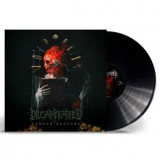
Across eight studio albums, DECAPITATED grew from the adolescent dream of teenagers from a small Central European town to one of the leaders of the metal genre. Each successive album further expands the band’s sound with genre-bending authenticity and integrity. As Metal Injection rightfully observed, “any self-respecting death metalhead knows the name well.”
DECAPITATED’s music is a weapon forged by four young men from a historic medieval-fortified town in Poland, which catapulted them to the top of a worldwide subculture. Like a rose in the devil’s garden, the DECAPITATED story builds triumph from tragedy. The gleeful grotesquery of extreme metal imagery and rifftastic bludgeoning beckons listeners to uncover broader truths.Upon the release of 2017’s Anticult, Metal Hammer declared DECAPITATED “a serious successor to the likes of Pantera and Lamb Of God – a band who can draw new legions into the metal world as its new champions.” Their diverse follow-up, 2022’s Cancer Culture, delivers on that promise.
Instantly recognizable devastation and deceptively sinister hooks abound. Freshly minted DECAPITATED anthems like “Last Supper,” “Hello Death,” “Just Cigarette,” “No Cure,” “Iconoclast,” and “Cancer Culture” shimmer with sonically sharp production and unrelenting bombast. There’s also a newly increased emphasis on melody, even venturing into darkly romantic territory. Wacław "Vogg" Kiełtyka (guitar), Rafał "Rasta" Piotrowski (vocals), Paweł Pasek (bass), and James Stewart (drums) are at the top of their game, delivering the goods at peak performance. Jinjer vocalist Tatiana Shmayluk and Machine Head frontman Robb Flynn make guest appearances.
Set on the descending plains of a mountain range amid a dense forest, Krosno boasts a 14th-century Gothic church, a Subcarpathian museum, and stunning artisan glassware. In this Polish town, teenage music student Wacław "Vogg" Kiełtyka discovered records from bands like Morbid Angel, Cannibal Corpse, Metallica, and Machine Head. The guitarist and his younger brother, drummer Witold “Vitek” Kiełtyka, cofounded DECAPITATED in 1996, inspired by a wide range of technical death, blackened thrash, and local heroes, like KAT and the world-renowned Vader. Death and black metal reigned supreme in the Polish scene of the 1990s, where Behemoth originated as well. In fact, a Vader song called “Decapitated Saints” inspired the band’s moniker.
The organic musical chemistry between the Kiełtykas was akin to the brotherly connectivity and vibe driving Pantera, Gojira, and the classic era of Sepultura. In 2006, Kerrang! praised the first three DECAPITATED albums - Winds of Creation (2000), Nihility (2002), and The Negation (2004) – as “superbly conceived and executed eruptions of technical brilliance and razor-sharp songwriting that turned these youthful Poles into one of the genre’s most widely respected bands.” That year’s Organic Hallucinosis further perfected Vogg’s penchant for blending extremity with catchy hooks.
The rule-breaking ferocity and invention of the first four albums reinvigorated death metal, as DECAPITATED inspired a new generation of bands who followed suit. Sadly, this era came to a shocking end in late 2007. While touring Russia, the band’s bus collided with a large truck near the border with Belarus. Both Vitak and then-singer Adrian “Covan” Kowanek sustained severe head injuries. Tragically, Vitak passed away in a Russian hospital a few days later. He was just 23.Vogg summoned the courage to continue, in honor of his brother and what they created, and returned with a new incarnation of DECAPITATED and the fiercely adventurous comeback album, Carnival is Forever (2011) featuring new vocalist Rafał "Rasta" Piotrowski. Blood Mantra (2014) introduced bassist, Paweł Pasek. Blabbermouth declared it “perhaps the most poised and gutsy” DECAPITATED album, adding “its courageous bends make it a turbulent but pleasurable ride.”
Cancer Culture sounds brilliant, modern, and tasty. “There is no place for any fake, plastic, bullshit drum machine or anything like that,” Vogg insists. “It’s all organic, pure, and clear, showing the true face of the band. Vogg and company entrusted the Cancer Culture mix to David Castillo at Sweden’s Fascination Street Studios / Studio Gröndahl (Sepultura, Carcass, Opeth, Katatonia), and legendary American producer Ted Jensen (Metallica, Slipknot, Pantera, Machine Head, Korn).
The devoted supporters who traveled to see DECAPITATED on international tours with the likes of Lamb Of God, Meshuggah, Soulfly, Fear Factory, and Suffocation over the years will recognize the ever-present pummeling backbone. Longtime fans and newcomers alike will connect to the variety of atmospheric depth throughout Cancer Culture’s ten boundlessly energetic and creative tracks.
“If you told me 25 years ago, in my neighborhood in the South of Poland, that I would be in Machine Head, sharing riffs with Robb Flynn,” Vogg marvels. “It’s simply incredible. It means that everything is possible in your life. That gives me the faith to believe that I can achieve even more in my career. The dreams we have when we are kids, things we can barely imagine, can happen.” Flynn contributes a hauntingly beautiful vocal to the Cancer Culture track “Iconoclast.” “Clean vocal singing is a really new thing in DECAPITATED,” Vogg notes. “It’s really unique and amazing.”
Driven by Vogg’s passion and integrity, the dual emphasis on creative invention and technical prowess maintains DECAPITATED’s stature as genre-leaders in 2022 and beyond. The band’s supporters continually demonstrate confidence and absolute certainty DECAPITATED will deliver.
Across eight studio albums, DECAPITATED grew from the adolescent dream of teenagers from a small Central European town to one of the leaders of the metal genre. Each successive album further expands the band’s sound with genre-bending authenticity and integrity. As Metal Injection rightfully observed, “any self-respecting death metalhead knows the name well.”
DECAPITATED’s music is a weapon forged by four young men from a historic medieval-fortified town in Poland, which catapulted them to the top of a worldwide subculture. Like a rose in the devil’s garden, the DECAPITATED story builds triumph from tragedy. The gleeful grotesquery of extreme metal imagery and rifftastic bludgeoning beckons listeners to uncover broader truths.Upon the release of 2017’s Anticult, Metal Hammer declared DECAPITATED “a serious successor to the likes of Pantera and Lamb Of God – a band who can draw new legions into the metal world as its new champions.” Their diverse follow-up, 2022’s Cancer Culture, delivers on that promise.
Instantly recognizable devastation and deceptively sinister hooks abound. Freshly minted DECAPITATED anthems like “Last Supper,” “Hello Death,” “Just Cigarette,” “No Cure,” “Iconoclast,” and “Cancer Culture” shimmer with sonically sharp production and unrelenting bombast. There’s also a newly increased emphasis on melody, even venturing into darkly romantic territory. Wacław "Vogg" Kiełtyka (guitar), Rafał "Rasta" Piotrowski (vocals), Paweł Pasek (bass), and James Stewart (drums) are at the top of their game, delivering the goods at peak performance. Jinjer vocalist Tatiana Shmayluk and Machine Head frontman Robb Flynn make guest appearances.
Set on the descending plains of a mountain range amid a dense forest, Krosno boasts a 14th-century Gothic church, a Subcarpathian museum, and stunning artisan glassware. In this Polish town, teenage music student Wacław "Vogg" Kiełtyka discovered records from bands like Morbid Angel, Cannibal Corpse, Metallica, and Machine Head. The guitarist and his younger brother, drummer Witold “Vitek” Kiełtyka, cofounded DECAPITATED in 1996, inspired by a wide range of technical death, blackened thrash, and local heroes, like KAT and the world-renowned Vader. Death and black metal reigned supreme in the Polish scene of the 1990s, where Behemoth originated as well. In fact, a Vader song called “Decapitated Saints” inspired the band’s moniker.
The organic musical chemistry between the Kiełtykas was akin to the brotherly connectivity and vibe driving Pantera, Gojira, and the classic era of Sepultura. In 2006, Kerrang! praised the first three DECAPITATED albums - Winds of Creation (2000), Nihility (2002), and The Negation (2004) – as “superbly conceived and executed eruptions of technical brilliance and razor-sharp songwriting that turned these youthful Poles into one of the genre’s most widely respected bands.” That year’s Organic Hallucinosis further perfected Vogg’s penchant for blending extremity with catchy hooks.
The rule-breaking ferocity and invention of the first four albums reinvigorated death metal, as DECAPITATED inspired a new generation of bands who followed suit. Sadly, this era came to a shocking end in late 2007. While touring Russia, the band’s bus collided with a large truck near the border with Belarus. Both Vitak and then-singer Adrian “Covan” Kowanek sustained severe head injuries. Tragically, Vitak passed away in a Russian hospital a few days later. He was just 23.Vogg summoned the courage to continue, in honor of his brother and what they created, and returned with a new incarnation of DECAPITATED and the fiercely adventurous comeback album, Carnival is Forever (2011) featuring new vocalist Rafał "Rasta" Piotrowski. Blood Mantra (2014) introduced bassist, Paweł Pasek. Blabbermouth declared it “perhaps the most poised and gutsy” DECAPITATED album, adding “its courageous bends make it a turbulent but pleasurable ride.”
Cancer Culture sounds brilliant, modern, and tasty. “There is no place for any fake, plastic, bullshit drum machine or anything like that,” Vogg insists. “It’s all organic, pure, and clear, showing the true face of the band. Vogg and company entrusted the Cancer Culture mix to David Castillo at Sweden’s Fascination Street Studios / Studio Gröndahl (Sepultura, Carcass, Opeth, Katatonia), and legendary American producer Ted Jensen (Metallica, Slipknot, Pantera, Machine Head, Korn).
The devoted supporters who traveled to see DECAPITATED on international tours with the likes of Lamb Of God, Meshuggah, Soulfly, Fear Factory, and Suffocation over the years will recognize the ever-present pummeling backbone. Longtime fans and newcomers alike will connect to the variety of atmospheric depth throughout Cancer Culture’s ten boundlessly energetic and creative tracks.
“If you told me 25 years ago, in my neighborhood in the South of Poland, that I would be in Machine Head, sharing riffs with Robb Flynn,” Vogg marvels. “It’s simply incredible. It means that everything is possible in your life. That gives me the faith to believe that I can achieve even more in my career. The dreams we have when we are kids, things we can barely imagine, can happen.” Flynn contributes a hauntingly beautiful vocal to the Cancer Culture track “Iconoclast.” “Clean vocal singing is a really new thing in DECAPITATED,” Vogg notes. “It’s really unique and amazing.”
Driven by Vogg’s passion and integrity, the dual emphasis on creative invention and technical prowess maintains DECAPITATED’s stature as genre-leaders in 2022 and beyond. The band’s supporters continually demonstrate confidence and absolute certainty DECAPITATED will deliver.
- A1: The Beach Boys - Good Vibrations
- A2: The Who - Pinball Wizard
- A3: Dusty Springfield - Son Of A Preacher Man
- A4: David Bowie - Love You Till Tuesday
- A5: Joe South - Hush
- A6: Marianne Faithfull - As Tears Go By
- A7: The First Edition - Just Dropped In (To See What Condition My Condition Was In)
- A8: Sly & The Family Stone - Underdog
- B1: Love - Alone Again Or
- B2: Traffic - Dear Mr. Fantasy
- B3: Bob Dylan - Subterranean Homesick Blues
- B4: Cher - Bang Bang (My Baby Shot Me Down)
- B5: The Band - Up On Cripple Creek
- B6: Ten Years After - I’m Going Home
- B7: The Mamas & The Papas - Monday, Monday
- C1: Tom Jones - It’s Not Unusual
- C2: Nina Simone - I Put A Spell On You
- C3: The Yardbirds - Little Games
- C4: The Animals- House Of The Rising Sun
- C5: The Crazy World Of Arthur Brown - Fire
- C6: Diana Ross & The Supremes - Love Child
- C7: The Blues Magoos - (We Ain’t Got) Nothin’ Yet
- C8: The Flying Burrito Brothers - Hot Burrito #1
- D1: Steppenwolf - Magic Carpet Ride
- D4: Bobbie Gentry - Ode To Billie Joe
- D5: Thunderclap Newman - Something In The Air
- D2: Rod Stewart - Handbags & Gladrags
- D3: Small Faces - Sha-La-La-La-Lee
Vol.2[20,80 €]
The Decades Collected compilations are part of the Collected compilation series, which is a collaboration between Universal Music and Music On Vinyl. The compilations bring together the biggest names of each decade, combined with forgotten hits and less discovered gems, giving the listener an experience of listening to their favourite tunes while uncovering new musical grounds at the same time.
Various Artists - Sixties Collected features Love “Alone Again Or”, Cher “Bang Bang (My Baby Shot Me Down)”, The Who “Pinball Wizard”, Diana Ross & The Supremes “Love Child”, Steppenwolf “Magic Carpet Ride”, The Animals “House Of The Rising Sun”, The Beach Boys “Good Vibrations”, David Bowie “Love You Till Tuesday”, Bob Dylan “Subterranean Homesick Blues”, Tom Jones “It’s Not Unusual”, Nina Simone “I Put A Spell On You”, Rod Stewart “Handbags & Gladrags” a.o.
Various Artists - Sixties Collected is available on black vinyl and includes an insert.
'Other Dimensions Lp', Terrence Dixon's latest work and the new adventure in 30D's ExoPlanets sublabel, comes for the very first time released in full length format, split in two sides, showing Terrence's two faces. As everyone knows, words can not describe the music of this Detroit visionary, but we'll try. Futuristic, avant-garde-esque, mesmerizing, trippy and minimalistic / reduced techno funk as expected in A side, but highly emotional and evocative, as only he can do. On the flip side, Terrence redefines and takes to another level the concept of dark, experimental, abstract, atmospheric, alienated and dystopian music, a true musical trip (perhaps a nightmare???) to dive into. An extremely personal and intimate album.
With Plum, the songwriting partnership rooted in the creative rapport between bandleader Molly Hamilton and guitarist Robert Earl Thomas continues to expand on shared visions, delving deeper into what was always there: dusty guitars, ear-worm melodies, warm expansive arrangements. Each entry to their catalog has marked a subtle reimagining of Widowspeak's sound, though perennial points of reference remain the same: 90's dream pop, 60's psych rock, a certain unshakeable Pacific-Northwestness. Speaking to the timeless feeling of each, the albums continue to be discovered well beyond their respective PR cycles, made beloved by new listeners through word of mouth. The band's fifth album feels comfortable and lived-in: humble in structure, heavy on mood. Perhaps that came taking time off from the touring grind, instead working full-time jobs and settling into the rhythm of daily life in a small upstate New York town. Plum was recorded over a handful of weekends last winter by Sam Evian (Cass McCombs, Kazu Makino, Hannah Cohen) at his Flying Cloud studio in the Catskills, and was mixed by Ali Chant (PJ Harvey, Aldous Harding, Perfume Genius). In addition to Hamilton (vocals, guitar) and Thomas (guitars, bass, synth), it features instrumental contributions by Andy Weaver (drums), Michael Hess (piano), and Sam himself (bass, synth). Plum nestles into the band's canon like it was always there, but with new textures coming to the fore, like the polyrhythmic pulse of "Amy" and "The Good Ones", or the watery, Terry Riley-influenced track "Jeanie" Plum navigates the spaces between the lesser emotions of modern life. Hamilton's lyrics speak to the unique turmoil of anyone who creates as their work, who must somehow survive off such "fruits of their labor." Yet, Widowspeak have always made a bitter pill much easier to swallow. The majestic "Breadwinner", the luminous "Even True Love" - these songs here were made to be listened to, enjoyed. "Money" is particularly hypnotic, built around a repeating, cyclical motif that serves as both skeleton and body. "Will you get back what you put in?" Hamilton asks over an insistent guitar riff. The line is delivered with a knowingness that transcends its surface critiques of late-stage capitalism, asking both herself and the listener whether this is, in fact, the world we want to live in. Through Plum, Widowspeak have brought something into the world that seems to know its own worth, even as it wonders aloud about what is to come. What value and meaning do we assign ourselves, our time, and how do we spend it?
The Flower-Corsano Duo, the world’s best and only drums / Japan banjo duo return to VHF for their first album since 2009’s monumental The Four Aims. Mick Flower (Vibracathedral Orchestra) and Chris Corsano (frequently seen with Bill Orcutt, Joe McPhee, and other luminaries) work an area that’s not really jazz, not really anything—a stream of endlessly mutating free sound, a unique mind-merge between Corsano’s nimble drums and percussion and Flower’s amplified Japan banjo (also known as a Shahi Baaja, a type of electric Indian zither with both fretted / keyed and drone strings).
Flower cuts a highly original line, playing neither “leads” nor making drone-music. Less amplified here than on the more “heavy” The Four Aims, the strings ring out with distinct clarity in short snippets of melody and a canvas of pleasing electric sound. Corsano’s bag is to charm out a flow of thoughtful percussion engagement, rolling around on his kit, continually varying his attack and approach in conversational free-jazz style. The Halcyon is a precious addition to a tiny discography, a fortunate event even in today’s world of small press overabundance. Thanks guys!
Press confirmed to run on this includes a lead full page review in Uncut and a boxed out review in MOJO. The Guardian are also running a feature with interview & much more tbc. Optimism is the debut album from Jana Horn of Austin, Texas. Originally self-released in a small vinyl edition, now widely available. Horn says the LP, "seemed to come about indirectly, almost in passing, a feeling of being in-between things. I was really mobile at that time, living wherever... I had just discovered, late, Raymond Carver Broadcast, Sybil Baier, Annette Peacock, Richard & Linda Thompson, a short story called “Car Crash While Hitchhiking” by Denis Johnson. I had “Heart Needs a Home” in mind, “The Great Valerio;” I was just really moving through the world, hanging in the shadows of the people I wanted to be. Hoping, looking out, this is Optimism. I was looking for anything."
- A1: Gary Moore - Sea Lapping (Harbour & Estuary)
- D5: Gary Moore - Swifts & Swallows
- D6: Ame - Doldrums
- A2: Natural Calamity - Have You Seen The Sun Today
- A3: Gary Moore - Ships Horn
- A4: Paqua - Escondidio (Instrumental)
- A5: Gary Moore - Avocets
- A6: Coyote - The Fade
- A7: Gary Moore - Cormorants
- A8: Greymatter & Goldslang - Black Turns To Blue
- B1: Gary Moore - Nightjar (Heathland & Moorland)
- B2: Crack'd Man - Between The Midst & The Sun
- B3: Gary Moore - Wood Ants
- B4: Kirk Degiorgio Presents As One - Orwell Rising
- B5: Gary Moore - Stonechat
- B6: Turtle - Heathland Haze
- B7: Gary Moore - Natterjack Toads
- B8: Brainchild - Beyond Because
- C1: Gary Moore - Woodland Canopy (Woodland & Forest)
- C2: Richard Norris - Warm Hunger
- C3: Gary Moore - Great Spotted Woodpecker
- C4: Fug - From Little Seeds We Grow
- C5: Gary Moore - Tawny Owls
- C6: Bobby Lee & Mia Doi Todd - Walking With Trees
- D1: Gary Moore - Cliff Top (Beach & Cliffs)
- D2: World Of Apples - Bluemill Sound
- D3: Gary Moore - Puffins
- D4: Pablo Color & Hove - Licht
Warm presents a brand new compilation called 'Home'; a soundtrack for when we pause, take a breath, and use our senses to explore the magic of the world on our doorsteps. Morning to evening, dawn to dusk, our lives continue moving but sometimes the need to step back and reset is essential to create a balance in our lives. As we open our eyes and ears to our surroundings, our senses become stimulated by small details. Whether it be the sound of the sea lapping on the sand, the wind blowing through the canopy of trees or a robin heralding a new day; nothing is the same but all are unique.
'Home' has been pieced together over the last year by Warm’s Ali Tillett. With the majority of Warm - booking agents for Colleen ‘Cosmo’ Murphy, Gerd Janson, Horse Meat Disco, Hot Chip DJs, Lou Hayter, Luke Una - on pause, Ali took the chance to immerse himself in bringing together his passion for music, nature and art.
The 14 tracks, the majority exclusive and specially made for the compilation, includes contributions by Âme, Bobby Lee & Mia Doi Todd, Coyote, Crack’d Man (aka Crooked Man who produced Roisin Murphy's last album), Fug (with their first material for over ten years), Kirk Degiorgio presents As One, Turtle, and Ewan Pearson's World of Apples project (with their first material for nearly 20 years!). The tracks align with specific habitats in the local Dorset area, where Ali is situated, such as Harbour/Estuary, Heathland/Moorland, Woodland/Forest, and Beach/Cliffs.
To immerse the listener even further into the soundscape, critically acclaimed sound and field recording artist Gary Moore, of Springwatch/Autumnwatch fame, has been involved to help bring nature even further to the ears. Intertwined between the music are field recordings specific to area and habitat; whether it be the sound of a ship's horn in Poole harbour, avocets on the scrape, the tawny owl in the woodland or Puffins on the ledges of cliffs.
Gareth Fuller, a fabulous artist who previously lived in Dorset, has kindly allowed one of his artworks to become the centrepiece for the compilation. Titled 'Purbeck', it's a truly wonderful piece of art that encapsulates everything about the area and enables an added dimension to the immersive experience for the listener.
- A1: Willie Ninja - I’m Hot (Louie Vega & Josh Milan Remix)
- A2: Willie Ninja - I’m Hot (Expansions Nyc Dub)
- B1: Willie Ninja - Hot (Louie Vega’s Why Because I’m Hot Original Mix)
- C1: Ralph Falcon - Break You (Radio Slave Remix)
- D1: Ralph Falcon - Break You (Original Mix)
- E1: The Messenger - End This Hate (Tensnake Remix)
- E2: The Messenger - End This Hate (Todd Edwards Original Mix)
- F1: Beltram Presents Phuture Trax - Future Groove (Agent Orange Dj Rework)
- F2: Beltram Presents Phuture Trax - Future Groove (Maxed Out Original Mix)
- G1: Kim English - Unspeakable Joy (Dr Packer Remix)
- G2: Kim English - Unspeakable Joy (Maurice Joshua Original Mix)
- H1: Byron Stingily - You Make Me Feel Mighty Real (Kevin Mckay Remix)
- H2: Look Out - Let Your Body Go (Franky Rizardo Remix)
part 2[37,77 €]
Nervous Records, the iconic label synonymous with the rise of house from the streets of New York City, will mark 30 years in the music industry by releasing the celebratory compilation LP ‘Nervous Records: 30 Years’ on October 1st (Part 1) and October 15th (Part 2).
Featuring original mixes of the label’s biggest tracks, plus remixes by some of its most celebrated acts, ‘Nervous Records: 30 Years’ is both a celebration of the past and of the future. Featuring a who’s who of electronic dance music, the long player sees names including Louie Vega, David Morales Darius Syrossian, Tensnake, Monki, Franky Rizardo, Danny Howard and more take on iconic Nervous cuts: ‘You Make Me Feel Mighty Real’, ‘Treat Me Right’, ‘Future Groove’, ‘Feel Like Singing’, ‘Get Up Everybody’, ‘Break You’, ‘Hot’, ‘End This Hate’, ‘Unspeakable Joy’, ‘Can Ya Tell Me’, ‘Jerk It’, ‘The Anthem’, ‘It Makes A Difference’, ‘Learn 2 Luv’ and ‘Don’t You Ever Give Up’.
The album marks one of the most enduring, extraordinary legacies to grace America’s illustrious music history, not just in electronica but far beyond. Founded in 1991 by Michael and his father Sam Weiss, and recognizable immediately by its distinctive character logo, the label grew rapidly, in no small part due to Michael Weiss’ practically unmatched passion for discovering new music.
“Louie Vega and Kenny Dope woke me at 4am on Tuesday night, Wednesday morning from their studio telling me they had something really different that I needed to hear,” Michael recollects. “I asked if they could play it over the phone. They said if I wanted to hear it I had to come to the studio. So of course I got myself up, got dressed and went there. That “really different track” ended up being ‘The Nervous Track’, a tune that became our signature release and was also highly instrumental in the emergency of London’s ‘Broken Beat’ movement.”
The label’s willingness to take chances on fresh sounds and innovative concepts rising up from the melting pot sidewalks of NYC ensured a body of work that has become a living musical history of the city. House cuts ‘Unspeakable Joy’ and ‘Nitelife’ (Kim English), ‘Get Up (Everybody)’ (Byron Stingily) and ‘Feel Like Singing’ (Sandy B) bump up against hip-hop anthems like ‘Who Got Da Props’ (Black Moon) and “Bucktown” (Smif-n-Wessun) and reggae cut ‘Take It Easy’ (Mad Lion); soulful flows from Mood II Swing (Kim English ‘Learn 2 Luv’, Loni Clark “Rushing”), Armand Van Helden (‘The Anthem’) and Nuyorican Soul (‘Mind Fluid’) sit alongside seminal techno singles like Winx’ ‘Don’t Laugh’. The young artists and producers who joined the Nervous Records’ family have gone on to become some of the most hallowed and celebrated dance acts of all time: Louie Vega, Kenny Dope, David Morales, Tony Humphries, Roger Sanchez, Armand Van Helden, Kerri Chandler, Kim English, Byron Stingily, Josh Wink, to name just a handful.
“We did a release with Josh Wink under his Winx alias entitled ‘Nervous Build-Up’,” Michael said. “It did well and it was obvious how talented Josh was. Subsequent to that release I was pretty persistent in asking him to continue to play me his new demos. During one phone conversation he said, “Mike I’m gonna play you something over the phone but don’t laugh when you hear it.” That demo ended up being ‘Don’t Laugh’, which became one of our biggest international hits and still to this day is one of America’s earliest and most impactful techno hits.”
As much a celebration of the label’s future as it is of their past, Nervous Records: 30 Years is but a marker in the imprints’ history, a clear sign of where they’ve been and also where they’re going. With 30 years behind them, the label’s determination to unearth new raw diamonds in the rough is as unwavering as ever.
“I’ve always been one to look at what others are doing (the industry at large) and think, “ok, are they doing this specific thing for a reason, or doing it because everyone else is doing the same thing” and make my decision based on that,” says Nervous Records’ General Manager Andrew Salsano. “In an age where data metrics and analytics reign supreme, I remain steadfast that they should be complementary to your decision and not the sole indicator to make one. So many songs today are written with 15 second hooks in mind for social media, and while there’s nothing wrong with that business model you will always be chasing the wave instead of carving out your own path and identity.
“My primary focus for the sound of the label has and will continue to revolve around signing good songs and music that has the ability to react at the street level first. The best results come from artists that are firstly given a bit of local love that grows into a global impact. Fresh ideas that express child-like curiosity and artists showing vulnerability in their music are also something I look for, artists and producers that are not making music with certain markets in mind, but rather their own style and signature that is unique but able to straddle the fine line of underground and overground.”
Still as raw, as underground and as finely tuned to the dance floor as they ever have been, perhaps the secret to the success - and the longevity - of Nervous Records has something to do with that hard, dogged, no-holds-barred NYC edge that runs through the veins of the label. With the next generation of producers rising from the clubs of New York, one thing is certain; Nervous Records will be there to find them, nurture them and bring them to the world at large, over the next decade and beyond.
- 1: Anders P. Jensen – Gamut (Uddrag)
- 2: Ib101 – Real (Demo)
- 3: The Bleeder Group – Here Come The Dead
- 4: Small White Man – The World To You
- 5: Eric Copeland – Fool
- 6: Homies– Live Tomorrow Edit
- 7: Bona Fide – Slouching Towards Bethlehem
- 8: Smerz – Før Og Etter
- 9: Yangze – Keep Me Cold
- 10: August Rosenbaum – Selfish (Selma Harp)
- 11: Bishbusch – Svl Lvn
- 12: Liss – My Lovin
- 13: Søren Kjærgaard – Hiatus 7
- 14: Baby In Vain – Unlikely
- 15: Puyain Sanati – The Rest Is Silence
- 16: Astrid Sonne – Tiden Der Gik
- 17: Joanne Robertson – Doubt
- 18: Ydegirl – Yde In Me
- 19: Søren Kjærgaard – Hiatus 3
- 20: Varnrable – There Are So Many Things Without Any Meaning
- 21: Gullo Gullo – Love Boat
- 22: First Hate – Vampire Boy ¯\_(ツ)_/¯
- 23: Søren Kjærgaard – Hiatus 8
- 24: Iceage – Lord Knows Best
- 25: Collider – When Will It End
- 26: Dane Ts Hawk – Tribute To Cockpit Music
- 27: Søren Kjærgaard – Hiatus 6
- 28: Kh Marie – Hvor Mange
- 29: Thulebasen – Detroit
- 30: Excepter – Abelene
Copenhagen based label Escho release “Escho 15 år: Burgers for my new life” - an extensive compilation of exclusive material for their 15th anniversary (2005-2020). The compilation gathers music by all the currently active artists of Escho - both Danish and international - 27 artists in total. Contributing artists for the compilation are (in alphabetical order): Anders P Jensen, August Rosenbaum, Astrid Sonne, Baby In Vain, BishBusch, The Bleeder Group, Bona Fide, Collider, Dane TS Hawk, Eric Copeland, Excepter, First Hate, Gullo Gullo, Homies, iB101, Iceage, Joanne Robertson, Kh Marie, Liss, Puyain Sanati, Small White Man, Smerz, Søren Kjærgaard, Thulebasen, Varnrable, Yangze and Ydegirl. About Escho and the compilation: The Escho sound was born 15 years ago in small apartments around Enghave Plads, a slightly run-down square at the west end of Vesterbro, Copenhagen, past the kebab shops and the porno shops and the drunks. A few years earlier, as teenagers, several members of the Escho crew had made extremely strange, crisp metal in a very popular band. Escho was a promoter and booking agent as much as it was a label in the early days. They put on small shows to foster and hype the local scene and they brought important performers from all over the world to Copenhagen for the first time. Black Dice, Gang Gang Dance, White Magic, Excepter, Hype Williams, Boredoms, Charles Hayward, they rippled through Copenhagen after they came. Eric Copeland stayed for months. Lorenzo Senni, now well known as a vanguard dance producer, brought his high-school hardcore band to Copenhagen. Escho found and asked these artists to play. And Escho played their humble part in giving sound back to the world. Iceage, Posh Isolation and the Mayhem scene went global. Escho is a lot about being in Denmark, what that sounds like, and projecting it for anyone to hear. Across its releases, Escho’s aesthetic has allowed for the amateurish and the obsessive, the soft and the hard. Escho is about the power of shared experimental experience. Escho has been going for such a long time that the kids who started it are now twice as old as they were when they came up with the name, the idea, the desire to start something. Much younger people, generations younger, work at the label. The world has transformed since then. Escho was born in a period of time where alternative and underground music existed on a private, separate plane to mass culture, and it now finds itself in a time where mass culture and the underground are porous. Tribalism and niche knowledge has been blended by the internet, erasing the border between mainstream and underground modes. Alternative thinking takes many forms now, and new artists continue to expand and interpret the sound of Escho, carrying with them the same curiosity that lit the first Escho sparks 15 years ago. As a whole, this compilation — it is important to note — is jagged in form and tone. It is not even close to a conventional scene compilation, where the sound of a clan flows together. This record doesn’t flow like that. And this, fittingly, makes this anniversary album a ‘classic’ Escho release, because conventions about form and presentation are thrown out the window and new conventions proposed. It is a reminder that Escho quietly remains an ongoing art project as much as anything else. More than its form and tone, however, this compilation is jagged because it is a document of today. It is not final, or conclusive in any way, because the contours of contemporary music are boundless. It’s jagged because Escho has been to a million shows, and put on a million shows, and still loves going to shows. It is a picture of pluralism, discovery and openness. It makes a case for having ears, and making art, and propagating this so that successive generations of young people do it too. This is exactly as it was in the beginning
[v] 22 First Hate – Vampire Boy ¯\_(ツ)_/¯ [2020 Demo]
- 01: An Easy Slide On
- 02: Weird Little Gopher
- 03: Pulses Of Wind, Real Or Imagined (Feat. David Leon)
- 04: Slow Bell Jawn B (Feat. Ramon Landolt)
- 05: Telefunk
- 06: Dust Moths (Feat. Jaimie Branch &Amp; Matt Mitchell)
- 07: Rain On Cape (Feat. Michael Coleman)
- 08: Days &Amp; Nights, For Em (Feat. Grey Mcmurray)
- 09: Goodnight Moss
Brooklyn based drummer/producer Jason Nazary (of Anteloper) makes his We Jazz Records debut with "Spring Collection", released on 25 June. The album sees Nazary crafting some deliciously sparkly solo cuts plus working long disctance with choice collaborators Jaimie Branch, David Leon, Ramon Landolt, Matt Mitchell, Grey McMurray and Michael Coleman. This is essentially a collection of home recordings and the whole operation has an infectious feeling of immediacy to it. The result is improv adjacent electronic music, with modern production aesthetics transposed over spontaneous compositions.
Jason writes:
"With Spring Collection, my aim was to capture the spirit of spontaneity & collaboration lost in the absence of live music. Like most everyone else last spring, I suddenly had a lot of time on my hands and with all my work cancelled, and with an indefinite lockdown in effect, it became immediately apparent that most of my time – save a walk or two a day around the neighborhood – would be spent in the tiny one bedroom apartment I share with my wife and two cats.
What kind of music does one make during lockdown? I would begin my days with a cup of coffee and all the cables of my modest little modular set up in my lap, slowly discovering new sound worlds as I connected one cable after another – these became the beginnings for the pieces in Spring Collection. With these unformed sketches, I would record an improvisation, an exploration of sonics: a small kit of bells, shakers, pans, pots; their resonance captured in fine detail with ultra sensitive microphones. These became, in effect, a conversation first with myself, but later one I knew I had to open up, make social. In the desire not to diminish my collaborative impulses, I felt compelled to involve some of my favorite musicians in the process alongside me."
"Spring Collection" is released by We Jazz Records on 25 June on vinyl (neon orange & black vinyl editions), tape and digital formats. The vinyl edition comes with a booklet including original artwork and poetry by Todd Colby.
Habibi Funk presents a selection of works by Algerian-born, Amazigh artist Majid Soula. Majid’s music blends the best of Arab-disco, highlife and groovy funk into something wholly unique.
Born in Kabylie, Algeria - a place that remains fundamental to his career - Majid Soula is a self-made musician, artist and producer. With no formal music education, Majid’s tenacity has led to a career that is still blossoming. His synths, driving drums, guitar & strong lyrics make a unique sound. A strong proponent for the rights of the Amazigh, he has a band that to this day plays shows, most linked to cultural events of the Amazigh diaspora in France, as well as in Belgium, Russia the UK and Sweden. He was part of a new wave of widely popular and successful Kabyle artists in the 1980s, such as Ait Menguellet, Lounès Matoub, Takfarinas, Idir and many more.
Habibi Funk as a label is dedicated to re-releasing music from “The Arab World”, but this release shows how reductive this term can be, as the countries from North Africa and West Asia being summarized under this term include a vast number of languages and identities. Obviously, headlines sometimes come with limited space, and one can’t avoid using terms that paint a half-finished picture. That being the case, however, we are even more happy that Majid Soula liked our idea to work on a release of a selection of his music with us. The tracks here are incredible and need to be introduced to a new generation of listeners.
For Majid Soula music is more than just entertainment. He considers himself an activist through music, and foremost a “chanteur engagé”, as he says of himself: „I take my inspiration from the daily life of my people and I share all their aspirations, mainly the official recognition of Tamazight as a language, culture and identity.”
He still works on new music in his small home studio in Belleville and occasionally plays concerts for the Amazigh community of the city.
We sincerely hope that for you reading this and listening to Majid’s album, his music will have the same revelatory feeling it had on us, and that this will be part of a momentum that will allow Majid to keep on working, playing, and sharing his message for many years to come.
Brooklyn based drummer/producer Jason Nazary (of Anteloper) makes his We Jazz Records debut with "Spring Collection", released on 25 June. The album sees Nazary crafting some deliciously sparkly solo cuts plus working long disctance with choice collaborators Jaimie Branch, David Leon, Ramon Landolt, Matt Mitchell, Grey McMurray and Michael Coleman. This is essentially a collection of home recordings and the whole operation has an infectious feeling of immediacy to it. The result is improv adjacent electronic music, with modern production aesthetics transposed over spontaneous compositions.
Jason writes:
"With Spring Collection, my aim was to capture the spirit of spontaneity & collaboration lost in the absence of live music. Like most everyone else last spring, I suddenly had a lot of time on my hands and with all my work cancelled, and with an indefinite lockdown in effect, it became immediately apparent that most of my time – save a walk or two a day around the neighborhood – would be spent in the tiny one bedroom apartment I share with my wife and two cats.
What kind of music does one make during lockdown? I would begin my days with a cup of coffee and all the cables of my modest little modular set up in my lap, slowly discovering new sound worlds as I connected one cable after another – these became the beginnings for the pieces in Spring Collection. With these unformed sketches, I would record an improvisation, an exploration of sonics: a small kit of bells, shakers, pans, pots; their resonance captured in fine detail with ultra sensitive microphones. These became, in effect, a conversation first with myself, but later one I knew I had to open up, make social. In the desire not to diminish my collaborative impulses, I felt compelled to involve some of my favorite musicians in the process alongside me."
"Spring Collection" is released by We Jazz Records on 25 June on vinyl (neon orange & black vinyl editions), tape and digital formats. The vinyl edition comes with a booklet including original artwork and poetry by Todd Colby.
- 01: An Easy Slide On
- 02: Weird Little Gopher
- 03: Pulses Of Wind, Real Or Imagined (Feat. David Leon)
- 04: Slow Bell Jawn B (Feat. Ramon Landolt)
- 05: Telefunk
- 06: Dust Moths (Feat. Jaimie Branch &Amp; Matt Mitchell)
- 07: Rain On Cape (Feat. Michael Coleman)
- 08: Days &Amp; Nights, For Em (Feat. Grey Mcmurray)
- 09: Goodnight Moss
Orange Vinyl[23,32 €]
Brooklyn based drummer/producer Jason Nazary (of Anteloper) makes his We Jazz Records debut with "Spring Collection", released on 25 June. The album sees Nazary crafting some deliciously sparkly solo cuts plus working long disctance with choice collaborators Jaimie Branch, David Leon, Ramon Landolt, Matt Mitchell, Grey McMurray and Michael Coleman. This is essentially a collection of home recordings and the whole operation has an infectious feeling of immediacy to it. The result is improv adjacent electronic music, with modern production aesthetics transposed over spontaneous compositions.
Jason writes:
"With Spring Collection, my aim was to capture the spirit of spontaneity & collaboration lost in the absence of live music. Like most everyone else last spring, I suddenly had a lot of time on my hands and with all my work cancelled, and with an indefinite lockdown in effect, it became immediately apparent that most of my time – save a walk or two a day around the neighborhood – would be spent in the tiny one bedroom apartment I share with my wife and two cats.
What kind of music does one make during lockdown? I would begin my days with a cup of coffee and all the cables of my modest little modular set up in my lap, slowly discovering new sound worlds as I connected one cable after another – these became the beginnings for the pieces in Spring Collection. With these unformed sketches, I would record an improvisation, an exploration of sonics: a small kit of bells, shakers, pans, pots; their resonance captured in fine detail with ultra sensitive microphones. These became, in effect, a conversation first with myself, but later one I knew I had to open up, make social. In the desire not to diminish my collaborative impulses, I felt compelled to involve some of my favorite musicians in the process alongside me."
"Spring Collection" is released by We Jazz Records on 25 June on vinyl (neon orange & black vinyl editions), tape and digital formats. The vinyl edition comes with a booklet including original artwork and poetry by Todd Colby.
- A1: Semi-Fraudulent / Direct-From-Hollywood Overture
- A2: Mystery Roach
- A3: Dance Of The Rock & Roll Interviewers
- A4: This Town Is A Sealed Tuna Sandwich (Prologue)
- A5: Tuna Fish Promenade
- A6: Dance Of The Just Plain Folks
- A7: This Town Is A Sealed Tuna Sandwich (Reprise)
- A8: The Sealed Tuna Bolero
- A9: Lonesome Cowboy Burt
- B1: Touring Can Make You Crazy
- B2: Would You Like A Snack?
- B3: Redneck Eats
- B4: Centerville
- B5: She Painted Up Her Face
- B6: Janet's Big Dance Number
- B7: Half A Dozen Provocative Squats
- B8: Mysterioso
- B9: Shove It Right In
- B10: Lucy's Seduction Of A Bored Violinist & Postlude
- C1: I'm Stealing The Towels
- C2: Dental Hygiene Dilemma
- C3: Does This Kind Of Life Look Interesting To You?
- C4: Daddy, Daddy, Daddy
- C5: Penis Dimension
- C6: What Will This Evening Bring Me This Morning
- D1: A Nun Suit Painted On Some Old Boxes
- D2: Magic Fingers
- D3: Motorhead's Midnight Ranch
- D4: Dew On The Newts We Got
- D5: The Lad Searches The Night For His Newts
- D6: The Girl Wants To Fix Him Some Broth
- D7: The Girl's Dream
- D8: Little Green Scratchy Sweaters & Courduroy Ponce
- D9: Strictly Genteel (The Finale)
Frank Zappa’s “200 Motels” was a miraculous feat, a cinematic collision of the venerated musician and composer’s kaleidoscopic musical and visual worlds that brought together Zappa and his band, The Mothers, Ringo Starr as Zappa – as “a large dwarf” – Keith Moon as a perverted nun, Pamela Des Barres in her acting debut, noted thespian Theodore Bikel, the Royal Philharmonic Orchestra, and an incredible assortment of characters (both on screen and off) for a “surrealistic documentary” about the bizarre life of a touring musician. In celebration of “200 Motels” golden anniversary, Zappa Records, UMC and MGM have assembled a definitive Super Deluxe six-disc box set of the beloved, yet hard to find, soundtrack for release on November 19. Fully authorized by the Zappa Trust and produced by Ahmet Zappa and Zappa Vaultmeister Joe Travers, the monstrous 200 Motels 50th Anniversary Edition brings together the original soundtrack, newly remastered by Bernie Grundman at Bernie Grundman Mastering, along with a staggering amount of unreleased and rare material unearthed from FZ’s Vault, including original demos, studio outtakes, work mixes, interviews and movie ads, along with newly discovered dialog reels, revealing an early audio edit of the film. Also included is a wealth of never-before-heard audio documentary material surrounding the project. The six-disc set will be housed in a 64-page hardcover book in a handsome 12” x 12” slipcase. The packaging replicates the original booklet updated with revealing new liner notes from Pamela Des Barres, Ruth Underwood and Joe Travers, as well as Patrick Pending’s essay from the 1997 reissue, and is chock full of motion picture artwork, stills and images, from the film and its making, many which have never been seen before. This must-have collector’s release will also include a custom “200 Motels” keychain and Do-No-Disturb motel door hanger and a full-size replica of the original movie poster. Years in the making, all the audio was meticulously identified and transferred over several years as Travers dug through the Vault to create a new high resolution 96K/24B digital patchwork stereo master from the original analog tapes. The Vault material was mastered by John Polito in 2021. The remastered 200 Motels soundtrack will also be reissued on vinyl as a 2LP pressed on 180-gram black vinyl and on a 2CD format - both will include a smaller version of the movie poster.
In the afterglow of her acclaimed 2020 album Silver Ladders, Los Angeles-based harpist Mary Lattimore returns with a culminating counterpart release, Collected Pieces: 2015- 2020. The limited-edition LP features new and previously unreleased material, Bandcamp-only singles, and other obscurities alongside standouts from her 2017 tape Collected Pieces. Beyond the vinyl compendium, an expanded tracklist on the cassette/digital version brings more of Lattimore's archives together for the first time. Lattimore has described the process of arranging these releases as akin to "opening a box filled with memories," and here that box continues to populate, accessible for both the artist and fans. Evocative material separated by years, framed as a portrait of an instrumental storyteller who rarely pauses, recording and often sharing music as soon as it strikes her. Seemingly in constant forward motion for the last five years since her Ghostly debut, Lattimore glances back for a breath, inviting new chances to live in these fleeting moments and emotions; all the beauty, sorrow, sunshine, and darkness housed within. Opening the cassette version is "Mary, You Were Wrong," which mirrors an author's bout with a broken heart. "It's about how you have to keep on going even if you make some mistakes," she says. The bittersweet refrain cycles throughout, a little brighter every time, slowly, like the way time tends to heal. Unreleased track "Sleeping Deer" came together during Lattimore's artist residency on a cattle ranch in Wyoming. She remembers, "a small deer whose mother I think had been run over by a car would hang out in the yard. I called him Lollipop and would leave vegetable scraps out." Lollipop returned daily to eat, rest, and wait for more. The music this vision inspired is patient and droning, with light plucks giving way to deeper, vibrating tones, permeating with a sense of anticipation. Next is a newer single, "We Wave From Our Boats," which she improvised after walking her neighborhood during the early days of lockdown in 2020, and shared on her Bandcamp. "I would just wave at neighbors I didn't know in a gesture of solidarity and it reminded me of how you're compelled to wave at people on the other boat when you're on a boat yourself, or on a bridge or something. The pull to wave feels very innate and natural." The heart of the track is a somber loop, over top which Lattimore's synth notes ruminate, each a gentle shimmer of optimism in the most anxious and absurd of days. Also recorded in 2020, "What The Living Do" is inspired by Marie Howe's poem of the same name, which reflects on loss through an appreciation for the mundane messiness of being human. The echoed, slow-marching track has a distant feel to it, as if the listener is outside of it, watching life play out as a film. "Princess Nicotine (1909)" scores actual footage, a dream sequence Lattimore imagined for J. Stuart Blackton's surreal silent film Princess Nicotine; or, the Smoke Fairy. She adopted the same approach for "Polly of the Circus," explaining it was the name of one of the old silent films discovered in permafrost in the Yukon featured in the documentary Dawson City: Frozen Time, "the only copy that survived and it kind of warped in the aging process." A trove of pieces are collected here, most recorded in the moment, just Lattimore and her Lyon and Healy Concert Grand Harp, contact mics, and pedals. Like her most affecting work, these songs showcase Lattimore's gifts as an observer, able to shape her craft around emotional frequencies and scenes. Her power as a musician is rooted in how she sees the world: in vivid detail, profoundly empathic, with deep gratitude for nature and nuance.
Forming off the back of contemporary jazz outfit Zeitgeist, Voronoi take the power and rhythmic complexity of heavier prog-metal and fuse it with the sophistication of classical music and jazz. A passion for science fiction thematically drives the band’s heaving and
chopping style, whereas artists such as Autechre, Car Bomb, Tigran Hamasyan and J.S. Bach help shape the rigid, experimental structure of The Last Three Seconds.
“Compositionally and stylistically we have moved into much heavier territory than our contemporary jazz foundations,” says Keyboardist Aleks Podraza. “It really shows. If you were to put this record against the first tunes we played together as Zeitgeist, it would be like introducing a much capable Thelonious Monk to a less hectic Dillinger Escape Plan.”
As the first single off The Last Three Seconds, Gamma Signals serves as a toe in the water for the depth of things to come. The full-bodied riffwork captures the stop-start format of prog-metal heavyweights without being explicitly metal. Yet beyond this, glitchy, experimental electronics cut through the composition like a knife. The final product is something that captures the magic of the cosmos – a place where worlds orbit worlds, genres orbit genres. Each element remains different and unique, but still intrinsically tied to the other.
“Gamma Signals is about pulsars and how when Jocelyn Bell-Burnell first discovered them, the media thought they were aliens trying to contact us,” says Podraza. “Broadly, this song is about my love for and fascination with cosmology as a whole. That's a theme that runs through the veins of most of the album.”
Those following Vorono’s career will need little convincing on the quality of The Last Three Seconds. Collectively, band members have performed and recorded with groups like The Cinematic Orchestra, KOYO, NJYO, Jenova Collective, The Often Herd, Mik Artistik’s Ego Trip, Wandering Monster and more. This in turn has garnered sizable attention at festivals such as Leeds and Reading Festival, Download Festival, Ronnie Scott’s Jazz Club - not to mention Voronoi’s thrashing set at 2019’s ArcTanGent.
The cool and collected chaos of The Last Three Seconds serves as a snapshot of this live energy, as passion and fury hum at the end of every complex composition. From start to finish, the record is nothing less than executed perfectly, undoubtedly appealing to even the most seasoned of prog-lovers