quête:so what music

Genres
Tout
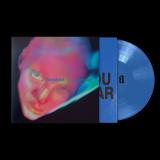
Groove Armada - Late Night Tales Pres. Automatic Soul (3lp+mp3)

It is 1983 and you've just stepped into your Ford Capri with your girlfriend Julie. You live in Harlow, but in your head you're really somewhere near Salou in Spain, next to your yacht. But the thing you really love is soul and they play nothing but at Sups in Loughton. OK, so It's not 1983 at all. It's 2014, but listening to this electrofied soul, will put you back in the zone. Tom Findlay, one half of Grammy-nominated Groove Armada, has put this collection together: a stamp of authenticity in itself. Tom has also put a few of these through the edit wringer, reworking many of the tunes for maximum towelling sockability.

You'll probably recognise a few tunes. There's Mtume's incredible 'Juicy Fruit', still sounding advanced and modern, while 'I Specialize In Love, mixed by disco legend Tee Scott, is even older yet sounds equally perky.

The 1980s was a period that was pretty much owned by Minneapolis thanks to Prince and former cohorts Jam & Lewis and the latter weigh in with a pair of killer productions, Thelma Houston's 'You Used To Hold Me So Tight' and Alexander O'Neal's 'What's Missing'. And since this is Late Night Tales, there is always our exclusive cover version, this time done by Findlay and Tim Hutton's Sugardaddy, who've delivered an ace version of 'Don't Look Any Further'.

Grab yourself a bar stool, order a cocktail, take a sip and make believe you're lying on a shagpile carpet with the soul star of your dreams.

Bill Brewster

Automatic Soul, like my previously compiled Late Night Tales Music For Pleasure, is based very much on a sound. It's a sound that I feel has been overlooked: 80s R&B-infused music, with drum machines, synths and invariably brilliant vocals. It's formed the bedrock of my rare groove sets for all the years I've played. It's not the most fashionable, but to me it's the perfect marriage of technology and soul, hence the title for this album, Automatic Soul. There are plenty of songs I could have included, and no doubt some that I shouldn't, but I've tried to represent what's best to me from this era. It's not a classic Late Night Tales. It's a pretty personal journey, which I hope some of you might be willing to share... Tom Findlay Groove Armada September 2014.

En stock

Disponible en stock et prêt pour l'expédition

28,99
Ibibio Sound Machine - Doko Mien

Eno Williams, frontwoman of Ibibio Sound Machine, uses both English and the Nigerian language from which her band's name is derived for the dazzling new album Doko Mien. Long lauded for jubilant, explosive live shows, Ibibio Sound Machine fully capture that energy on Doko Mien, the followup to their Merge debut Uyai.
In a glowing piece in the New York Times, those songs were praised for following 'in the tradition of much African music, [making] themselves the conscience of a community.' By pulsing the mystic shapes of Williams' lines through further inventive, glittering collages of genre, Ibibio Sound Machine crack apart the horizon separating cultures, between nature and technology, between joy and pain, between tradition and future. That propensity for duality and paradox seems common in people whose lives span continents.

Williams was born in the UK, but grew up in Nigeria, always steeped in her family heritage. She obsessed over West African electronic music, highlife, and the like, but was equally empowered by Western genres such as post-punk, disco, and funk. The London octet have enveloped themselves in that maximalist quilt proudly since their 2013 formation. Though it can often bring with it news of stress and uncertainty, the modern world further brings all these disparate traditions into connection.
'Everyone has everything now,' says multi-instrumentalist Max Grunhard. 'Everyone has immediate access to every genre, picking things up from everywhere—like magpies.' And while they haven't suddenly left their African roots behind, Doko Mien does find increased representation of English lyrics in the ratio. By sharing more directly with more universal lyrics, the record feels more anthemic, reaching for grander heights.
'We wanted to give people a reason to sing along, to find their soundtrack every day,' Williams says. 'We wanted everyone to feel as if they're part of the music as well.'

Late album highlight 'Guess We Found a Way' addresses the change with a coy smile. 'Guess we found a way to speak to you/ Guess we found a way to say what's true/ To say what's real,' Williams coos over glistening chains of reverberant synth and diamond dust percussion, before returning to Ibibio in the chorus. Perhaps the best example of the group's ability to convey meaning across language and tradition, to blend past and future into a singular present comes on 'She Work Very Hard'. The traditional Ibibio folk tale bobs over the waves of tuned percussion, chunky synth, and pinprick highlife-esque guitar, while Jose Joyette's drums and Derrick McIntyre's bass funk groove bring everyone to the dance floor. 'These stories won't be forgotten. Feel the music: it speaks to everybody,' Williams says. 'We can travel back in time together, while convening on a futuristic, present tense. We hope that we can give people that reason to wake up, that one song to sing and dance and be happy.'

Doko Mien: Tell me everything. On their new album, Ibibio Sound Machine provide the perfect companion, ready to digest as much as possible and then further unfurl beauty and hope. They remember and honor the past and charge forward toward the future, all while intensely expanding the present.

pas en stock

Commandez maintenant et nous commanderons l'article pour vous chez notre fournisseur.

19,29

Last In: 6 years ago
Barry White - The 20th Century Records Album (9LP Vinyl Box)
  • A1: Standing In The Shadows Of Love
  • A2: Bring Back My Yesterday
  • B1: I've Found Someone
  • B2: I've Got So Much To Give
  • B3: I'm Gonna Love You Just A Little More Baby
  • C1: Girl It's True, Yes I'll Always Love You
  • C2: Honey Please, Can't Ya See
  • D1: You're My Baby
  • D2: Hard To Believe That I Found You
  • D3: Never, Never Gonna Give Ya Up
  • E1: Mellow Mood (Pt. 1)
  • E2: You're The First, The Last, My Everything
  • E3: I Can't Believe You Love Me
  • F1: Can't Get Enough Of Your Love
  • F2: Oh Love, Well We Finally Made It
  • F3: I Love You More Than Anything (In This World Girl)
  • F4: Mellow Mood (Pt. 2)
  • G1: Heavenly, That's What You Are To Me
  • G2: I'll Do For You Anything You Want Me To
  • G3: All Because Of You
  • G4: Love Serenade
  • H1: What Am I Gonna Do With You
  • H2: Let Me Live My Life Lovin' You Babe
  • H3: Love Serenade
  • I1: I Don't Know Where Love Has Gone
  • I2: If You Know, Won't You Tell Me
  • I3: I'm So Blue And You Are Too
  • J1: Baby We Better Try To Get It Together
  • J2: You See The Trouble With Me
  • J3: Let The Music Play
  • K1: Don't Make Me Wait Too Long
  • K2: Your Love - So Good I Can Taste It
  • L1: I'm Qualified To Satisfy You
  • L2: I Wanna Lay Down With You Baby
  • L3: Now I'm Gonna Make Love To You
  • M1: Playing Your Game, Baby
  • M2: It's Ecstasy When You Lay Down To Me
  • M3: You're So Good You're Bad
  • N1: Never Thought I'd Fall In Love With You
  • N2: You Turned My Whole World Around
  • N3: Oh What A Night For Dancing
  • N4: Of All The Guys In The World
  • O1: Look At Her
  • O2: Your Sweetness Is My Weakness
  • O3: Sha La La Means I Love You
  • P1: September When I First Met You
  • P2: It's Only Love Doing It's Thing
  • P3: Just The Way You Are
  • P4: Early Years
  • Q1: I Love To Sing The Songs I Sing
  • Q2: Girl, What's Your Name
  • Q3: Once Upon A Time (You Were A Friend Of Mine)

15 Jahre nach seinem frühen Tod feiert - The 20th Century Records Albums (1973-1979)' Barry White als einen der größten Künstler / Songwriter / Produzenten der 70er Jahre. Er etablierte den neuen Klang der Orchesterseele, der über das Jahrzehnt und darüber hinaus zu einem Grundbestandteil wurde. Das Vinyl-Box-Set enthält alle 9 LP-Alben, die Barry White über das Label 20th Century Records veröffentlicht hat und werden hier zum ersten Mal zusammengestellt. Alle neun Alben wurden zum ersten Mal seit ihrer Veröffentlichung in den 70er Jahren von den originalen analogen Masterbändern remastert und werden hier mit ihrem originalen Sleeve und Label Art präsentiert. Die Alben wurden in den Abbey Road Studios in London auf hochwertigem 180g Vinyl geschnitten, um die höchstmögliche Audioqualität zu garantieren.


[ZZA] q4 | Oh Me, Oh My (I'm Such a Lucky Guy)
[ZZB] r1 | I Can't Leave You Alone
[ZZC] r2 | Call Me, Baby
[ZZD] r3 | How Did You Know It Was Me

pas en stock

Commandez maintenant et nous commanderons l'article pour vous chez notre fournisseur.

144,24

Last In: 7 years ago
Emilie Nana - The Meeting Legacy (2lp+cd Edition)

Die in Genf lebende, in Lyon, mit Vorfahren aus Kamerun, geborene Emilie Nana ist ein Wunderkind. 'The Meeting Legacy' beinhaltet eine eklektische Selektion, die Vieles von dem beinhaltet, was Emilie ausmacht.

'The Meeting Legacy' umfasst 11 Stücke, inclusive Like You, welches bereits Anfang 2013 auf Compost Black Label als Maxi veröffentlicht wurde. Die Black Label # 61 wurde digital veröffentlicht und die Black Label # 95 gibt es auf Vinyl. 2013 war das eine von fünf EPs, die Emilie Nana bis dato herausgebracht hatte. I'm Childish, So What!, was erstmals im Sommer 2015 als Teil der COMPOST 500 - Compilation zu hören. Dieses Juwel ist von Emilie's Neffen inspiriert und basiert auf der Idee, dass wir, egal in welcher Lebensphase, stets zu uns selbst stehen sollen. Es ist der einzige Track auf dem Album mit französischen Vocals und vermittelt ein getragenes, leicht verrücktes, regelloses Gefühl, ein absolut fantasievolles Glanzstück. Drei Stücke des Albums: Tolstoy' Changes, Music und The Meeting Legacy, werden 2016 als Compost Black Label - Remix - Maxi erscheinen, mit Remixen von Manoo, Beanfield & Thomas Herb, Floyd Lavine.

The Meeting Legacy, der Titeltrack des Albums, ist purer Musik-Aktivismus. Der Text stammt von Elaine Brown, eine schwarze amerikanische Aktivistin und Künstlerin, Vorsitzende der Black Panther Partei. Der Bass dieses gemächlich stolzierenden Kampfsymbols ist Nana-esk und die Vocals heben sich mit Leichtigkeit ab und positionieren diesen Track auf ergreifende Weise.

Black Like Me erhebt einen fortwährenden Anspruch auf Fiktion und Non-Fiktion und verkörpert die gelebten und kenntnisreichen Erfahrungen Emilie Nanas. Eine warme, melodiöse Kreation, mit einfachsten Lyrics und im Hintergrund dümpelnden Marimbas. Es ist die musikalische Interpretation des Buches 'Black Like Me' von John Howard Griffin. Er erzählt hier die Geschichte des weissen Journalisten, der sich einer Hautverdunkelung unterzog, um sich im schwarzen Leben des separierten Südens der U.S.A. zu engagieren. Emilie's musikalische Interpretation erfasst die bunten kulturellen Äußerungen, welchen der weisse Journalist im gelebten schwarzen Alltag begegnet.

Track Fünf des Albums, dem inoffiziellen 'letzten Track von Teil 1' heist Confessions Of No Language. Während Emilie Nana hier ihre innersten Erfahrungen transponiert, oder transportiert, zielt sie auf eine 'gewisse' Körperzone. Welche Das muss man hören.

Das Album beginnt mit Off The Street, die wilden Begleiterscheinungen einer durchfeierten Nacht von Party-Girls, geht weiter mit dem, durch die frühen 90er Jahre von Janet Jackson und Prince beeinflussten Music, bei dem wir Emilie Nana sehr warm und cool erleben. Schliesslich entdecken wir sie in Inward Path, wenn sie resümiert, dass es mehr Glücklichkeit als Traurigkeit gibt, da immer Hoffnung in uns selbst existiert.

Dieses Werk erfreut sich an dem Erguss aus Nana's grazilem und dennoch lebhaftem Wesen und trachtet erfolgreich nach dem Brechen der Regeln, mit denen Kunst oft behaftet ist. Indem sie ihr Leben vergegenwärtigt, führt sie uns gekonnt, mit Kindesaugen, Teenage-Erfahrungen bis erwachsenen Sehnsüchten und ausgereif-ten Konversationen, durch Subkultur, Kampf und verschiedenen sozialen Einflüsse. Nach vier Jahren Produktionszeit, liefert Emilie Nana ein Album, das ihr verspielten, aber reifen Geist widerspiegelt und ihre Seele miteinbezieht, The Meeting Legacy.

pas en stock

Commandez maintenant et nous commanderons l'article pour vous chez notre fournisseur.

17,61

Last In: 8 years ago
D.A.F. - El Que (Terence Fixmer Remixes)

Mannequin Records presents a special release that bridges two generations of electronic body music: DAF’s iconic track “El Que” reimagined by French techno and EBM pioneer Terence Fixmer.

A lifelong admirer of DAF, Fixmer has been playing El Que in his DJ sets for years, considering it one of the band’s most enduring and powerful pieces. His connection to the track and to DAF’s groundbreaking legacy is the core inspiration behind these two new remixes, created with both reverence and bold creative vision.

On the “El Que (Terence Fixmer Leather Remix)”, Fixmer remains close to the original’s raw, muscular pulse while injecting a sharp, modern club sensibility. The remix builds on DAF’s unmistakable rhythmics but adds a contemporary momentum that feels like a natural extension of the band’s DNA. “It was like imagining what I would do if I were a member of DAF today,” Fixmer says.

The second version, “El Que (Terence Fixmer Drive Remix)”, ventures deeper into Fixmer’s own territory: darker, hypnotic, and peak-time focused. Tension and release are crafted with surgical precision, taking the original’s spirit into a harder-edged, suspense-driven sound world. It’s a version built for late-night floors without ever losing the soul of El Que.

Fixmer explains:
“I’ve been playing DAF’s El Que in many of my DJ sets for years. It’s a track I deeply loved from the first listen. I’m super proud to have remixed DAF — one of my cult bands and a major influence on my sound and electronic universe. For the "Leather Remix", I wanted to stay close to the original while bringing modernity and club momentum. For the "Drive Remix", I pushed the track toward darker, peak-time and hypnotic techno, keeping the soul of the original intact. I wanted to make versions that make you think: ‘I know this track… but wait — what is this version? I want it!’ When I tested them, that’s exactly what happened.”

DAF remains one of the most influential bands in electronic music history. These new remixes by Terence Fixmer reinforce the timeless power of El Que while offering two striking, club-ready perspectives for a new generation of listeners.

En stock

Disponible en stock et prêt pour l'expédition

17,44
Purple Disco Machine - Dished (Male Stripper)

Collecting Orders For 2025 Repress

Backing it up can mean so many things. According to the urban dictionary, it means to carry on drinking the next day in spite of a rather large one the night before. According to Apple, it means to take your I-phone and attach it to an I-pad or Apple Mac - and copy the information to the cloud. Or the device. But in music.....what we mean is basically this....."Damn......that was a big hit......how the hell are they going to emulate that success on the next one."And it's hard for so many reasons. Was it luck Timing That one in a million sample With all the pressure, soon the artist can start second guessing themselves........and that's when backing it up becomes a real problem.But not for our boy PURPLE DISCO MACHINE. If BODY FUNK, his last outing on CLUB SWEAT, wasn't one of THE biggest songs of last year, from Ibiza to Miami and back again.....played by every single DJ under the sun, from BLACK MADONNA to JAMIE JONES to your mama......then I'm not sitting at my lap top writing this shpeel....which I'm very sure I am. AND I'm going to back myself (see what I did there) - and say that DISHED (MALE STRIPPER) is the best way to back up a hit ever. With another hit. Doesn't sound the same....doesn't worry about what the last one did...just does what it does.....which to be honest - is GO OFF!!!! It builds and builds and builds and......In the same way that BODY FUNK masterly made the sum of 2 disco songs bigger than their parts had ever been, this time PDM takes some Italo Disco from MAN TO MAN MEET MAN PARRISH's MALE STRIPPER and mashes it with the aptly named ELLIS D's DISHAPELLA to create a 12/10. Back it up PDM - you are a legend!!!!

pré-commande17.04.2026

il devrait être publié sur 17.04.2026

13,66

Last In: 2 years ago
Various - Digging Central Asia: Musical Archaeology Along the Silk Road LP

Death Is Not The End collaborate with Uzbek label Maqom Soul to deliver an LP counterpart to last year's mixtape of the same title, compiling specially picked & fully licensed individual belters from the ex-soviet studios of Central Asian republics between 1978 and 1989 - incl. Uzbek, Tajik, Kurdish & Uyghur artists pulling traditional folk motifs together with pop & rock and psych elements.

"These recordings do not form a smooth or coherent history. They feel more like a sequence of discoveries made at different moments and in different circumstances. Songs and instrumental pieces that once lived inside specific contexts radio broadcasts, philharmonic programs, touring routes now sit side by side, revealing hidden connections as well as clear fractures between them.

Nasiba Abdullaeva appears here as a voice from the end of an era. Trained within a conservatory system, she worked inside the format of the Soviet pop song while filling it with melodic logic that did not come from Moscow or Leningrad. Her voice is soft and sustained, shaped by Eastern melisma, and it never functions as decoration. Even in tightly structured songs there is a sense of resistance, an effort to preserve a musical language rooted in Uzbek tradition rather than fully adapted to an all Union standard.

The ensemble Sintez, later renamed Navo, represents a different path. Beginning as a student rock group, the band was gradually absorbed into the official VIA system with all its limitations and compromises. Yet it was precisely within those boundaries that Sintez and Navo developed a recognizable sound. Electric guitars and jazz rock harmonies do not overpower the folk material but remain in tension with it. Their recordings feel like negotiations between what the musicians wanted to play and what they were allowed to perform.

The Tajik ensemble Gulshan reflects an institutional approach carried to a high professional level. Formed under television and radio structures, the group treated folk material almost as a written score. Carefully constructed arrangements, close attention to orchestration, and restrained use of pop techniques define their sound. There is less spontaneity here, but a strong sense of discipline and structure, where national melody becomes part of a carefully controlled sonic framework.

Koma Wetan occupies a very different space. Formed in the 1970s, this Kurdish rock group approached poetry and folklore as tools of cultural assertion. Their psychedelic rock never feels like a stylistic borrowing. Instead it functions as a contemporary vessel for language and themes that might otherwise have remained unheard. Even today these recordings sound fragile and stubborn at the same time.

The Uyghur ensemble Yashlik, closely connected to a musical drama theatre, operated somewhere between stage performance and popular music. Their songs are built on folk melodies but shaped for wide audiences. What emerges is a constant attempt to preserve the recognizability of Uyghur musical identity without freezing it in a folkloric frame. Yashlik's music exists in a state of balance between representation and development.

Digging Central Asia does not attempt to establish hierarchies or offer a single wayof listening. Names and dates matter less than the sound itself. Tape noise, abrupt transitions, and unexpected timbres remain part of the material rather than flaws to be corrected. This music existed at the crossroads of multiple routes geographic, cultural, and ideological. Heard today in a new context, it no longer feels peripheral. Instead it stands as a reminder that the history of popular music is far more fragmented, layered, and polyphonic than it is usually allowed to be."

pré-commande17.04.2026

il devrait être publié sur 17.04.2026

22,48
Benjamin	Tod - Vengeance and Grace LP 2x12"
  • 1: Vengeance And Grace
  • 2: End Of My Rope
  • 3: It's What You Meant
  • 4: Goner
  • 5: Closing The Door
  • 6: Martyr Of A Man
  • 7: My Pride
  • 8: Ticket Home
  • 9: The Bottle's Gone
  • 10: I Ain't Bound
  • 11: Vengeance And Grace (Alone)
  • 12: End Of My Rope (Alone)
  • 13: It's What You Meant (Alone)
  • 14: Goner (Alone)
  • 15: Closing The Door (Alone)
  • 16: Martyr Of A Man (Alone)
  • 17: My Pride (Alone)
  • 18: Ticket Home (Alone)
  • 19: The Bottle's Gone (Alone)
  • 20: I Ain't Bound (Alone)
également disponible

Opaque Red Vinyl[32,98 €]


Grounded in a season of life that has been earned rather than borrowed, Benjamin Tod speaks with the ease of someone no longer running from himself. There is joy now - a steadiness that comes from commitment. With the recent arrival of his son and a deep well of new music on the horizon, Tod is firmly rooted in both purpose and possibility. That clarity is evident in Vengeance and Grace, the Lost Dog Street Band frontman's forthcoming and most expansive solo album to date. Conceived as a "dual-version" release, the project presents two parallel worlds: (Alone) is a stripped solo-acoustic version, along with its full band counterpart.

Together, the two versions form the full range of what Tod is capable of: restraint on one side, force on the other. At the core of Tod's writing is a simple conviction: music should serve something larger than the moment. His writing speaks to mind, body, and soul, shaped by faith, discipline, and a hard-earned understanding of consequence. The darkness that once defined him is neither denied nor indulged. It is understood and no longer in control. Today, Tod moves with a sense of calm that wasn't always there. He is grateful, settled, and intentional, continuing to follow the compass that's guided him from the beginning. Rooted in traditional country and folk, his work stands firmly in the modern music landscape, shaped by experience, restraint, and the life he's built around it.

pré-commande17.04.2026

il devrait être publié sur 17.04.2026

29,20
Christina Kubisch - TUNING

Christina Kubisch

TUNING

12inchFAIT-41LP
Faitiche
17.04.2026

Faitiche welcomes a new artist: Christina Kubisch belongs to the first generation of sound artists. Her practice ranges from performances, concerts, to works with video and visual art, but she is best known for her sound installations and electro-acoustic compositions.

TUNING brings together three pieces by Christina Kubisch from different periods of her oeuvre. What they have in common is the way they transform sound phenomena originally considered “non-music” into compositions.

Jan Jelinek: Gaming in Silence (2024) is the most recent work on this compilation. It’s a collage of electromagnetic waves, voice, and abstract sound textures. How did this combination come about?

Christina Kubisch: Gaming was commissioned as a fixed-media composition for the Sound Dome at ZKM Karlsruhe. Since Resonances: The Electromagnetic Bodies Project (2005), I’ve been making recordings in the old and new server rooms at the ZKM and in their permanent collection of historical computer games. Computer games like Asteroids (Atari, 1979) and Poly-Play (VEB Polytechnik, 1986) have specially generated analogue electromagnetic waves that interest me in particular on account of their density, rhythms and textures. I originally studied painting and to me the work of composition often feels like painting an abstract picture. I alter my source material as little as possible, layering and overlapping until a distinctive sound space emerges. In recent pieces, I sometimes combine magnetic waves with field recordings or live instruments. In Gaming it’s my recording of a Chinese song about silence.

JJ: Two persons walking through a street in Madrid (2004) is a recording from your Electrical Walks series. Here we should give a brief explanation of one of your best known works: participants in an Electrical Walk move through public spaces wearing prepared headphones that allow them to receive electromagnetic waves from their surroundings – for example from security gates, ATMs or neon signs. They discover a situation that normally is inaudible to the human ear and they can actively shape it by choreographing their movements. I really admire this piece, not least because there’s no clear dividing line between participants and artist. What exactly do we hear in Two persons walking through a street in Madrid (2004)?

CK: With this early work, I wanted to understand what is heard by people participating in an Electrical Walk in the same place but moving in different ways. The Spanish composer Miguel Alvarez-Fernàndez and I set off from opposite ends of a major shopping street in Madrid, met briefly in the middle, and then continued to the end. We both recorded our walks and I then layered them over one another. You might call it a work of electromagnetic conceptualism.

JJ: Diapason (2009 version) is an installation that plays a composition based on sounds from fifteen tuning forks. This setting is audible in the recording: there’s no dramatic arc, no beginning or end – instead, it recalls a piece of aleatoric music focussing on the decay phase. How did you come to make this work and could you tell us something about your compositional method?

CK: Diapason is part of a series of three pieces that deal with “non-instruments” or instruments that no longer exist: electrical mine bells used to send signals to the workers underground; a historical glass harmonica originally used for medicinal purposes; and tuning forks that were used by doctors to test people’s hearing. All of these methods are no longer in use. The sound of the tuning forks, audible only if held close to the ear, was recorded at the electronic studio at Berlin’s Technical University in such a way that even their decay remained audible. The frequencies range between 64 and 2048 Hertz and they can be adjusted at micro-intervals using small movable weights. The sequence and the duration of the pauses are dictated by chance and were not defined in advance. The 2009 version was created for an installation in the historic Holy Cross Church (Korskirken) in Bergen. Visitors could enter and leave the space at any time, deciding for themselves where and for how long they wished to listen to the sounds played back over an array of small loudspeakers placed on the floor of the apse.

Credits:

Gaming in Silence: commission of the ZKM/Hertzlab, Karlsruhe 2023
elektronic sound processing: Tom Thiel
sound engineering and mixing: Eckehard Güther

Diapason: produced at Elektronisches Studio of TU Berlin
rearrangement: Eckehard Güther

Christina Kubisch, published by Edition Christina Kubisch / Random Musick Publishing

image front: Transitionen 2021 by C. Kubisch, sonagrams of electronic waves (courtesy: Galerie Mazzoli Berlin)
image back: Diapason Tuning Fork, property of Folkmar Hein, Photo: Archiv Christina Kubisch

design by Tim Tetzner
mastered by Giuseppe Ielasi
Thanks to Miguel Álvarez-Fernández, Folkmar Hein, Dominik Kautz and Mario Mazzoli

pré-commande17.04.2026

il devrait être publié sur 17.04.2026

27,31
Bosse-De-Nage - Hidden Fires Burn Hottest (2x12")

There's a tendency in metal to mistake aggression for honesty, volume for depth. To confuse the performance of darkness with its actual weight. Hidden Fires Burn Hottest, the new album from San Francisco-based post-black metal band Bosse-de-Nage, sidesteps this entirely. It’s the group’s most fully realized work yet, precisely because it refuses to be pinned down.

Bosse-de-Nage have been working with The Flenser for over fifteen years. They were one of the first bands the label ever partnered with and have the longest active relationship in the label's history. But unlike most bands who build momentum through constant touring and visibility, Bosse-de-Nage has largely existed apart from the music world's usual machinery. They've evolved on their own terms, in relative isolation, allowing the work to develop without outside pressure or influence. What began rooted in black metal anonymity has mutated into something that actively defies categorization. The aggression is still there, but it's no longer the point. Hidden Fires Burn Hottest finds the band treating emotions like physical objects, feelings with spatial properties. “No Such Place"" describes a space that can't exist but does anyway, somewhere between thought and location. ""Immortality Project"" examines infinite possibility not as promise but as problem, endless options collapsing under their own weight. These songs don't use metaphor to describe emotion. They make emotion into something you could theoretically touch.
Tracked by Jack Shirley (Deafheaven, Oathbreaker) at Atomic Garden East and mixed and mastered by Richard Chowenhill of Agriculture, Hidden Fires Burn Hottest was years in development, with some tracks beginning in 2018.

The long writing process offered time that most records don't get. Time to live with ideas, revise endlessly, to let structures settle. For the first time, lyricist Bryan Manning wrote everything in advance, creating a surplus to pull from rather than working under deadline pressure. The difference shows.
Coming off Further Still, an album built on constraint and economy, Bosse-de-Nage sought the opposite: sprawl, strangeness, fewer rules. Space for ideas to develop without rushing them. Dynamics that move through quiet as much as noise. Presence earned through atmosphere instead of volume. The record even includes ""Mementos,"" which might be considered the first love song the band has ever written.

Nothing here coheres into a theme. These are pieces pulled from low moments and private feelings made public through sound. The band has never been interested in positivity, in music that resolves cleanly or offers comfort. But bleakness doesn't mean humorlessness. There's something darkly funny running through much of it, even when it shouldn't be.
Hidden Fires Burn Hottest doesn't explain itself. It just insists: what you feel is as real as what you can see."

pré-commande17.04.2026

il devrait être publié sur 17.04.2026

34,03
Various - Tchic Tchic: French Bossa Nova 1963-1974  Colored Edition LP 2x12"
  • A1: Les Masques - Il Faut Tenir (1969)
  • A2: Isabelle Aubret - Casa Forte (1971)
  • A3: Christianne Legrand - Hlm Et Ciné Roman (1972)
  • A4: Jean Constantin - Pas Tant D'chichi Ponpon (1972)
  • A5: Billy Nencioli & Baden Powell - Si Rien Ne Va (1969)
  • B1-: Marpessa Dawn - Le Petit Cuica (1963)
  • B2: Jean-Pierre Sabar - Vai Vai (1974)
  • B3: Sophia Loren - De Jour En Jour (1963)
  • B4: Isabelle - Jusqu’à La Tombée Du Jour (1969)
  • B5: Sylvia Fels - Corto Maltesse (1974)
  • C1: Frank Gérard - Comme Une Samba (1972)
  • C2: Ann Sorel - La Poupée Des Favellas (1971)
  • C3: Charles Level - Un Enfant Café Au Lait (1971)
  • C4: Andrea Parisy - Les Mains Qui Font Du Bien (1970)
  • C5: Audrey Arno - Quand Jean-Paul Rentrera (1969)
  • C6: Aldo Frank - T’as Vu Ce Printemps (1970)
  • D1: Christianne Legrand - Cent Mille Poissons Dans Ton Filet (1972)
  • D2: Clarinha - Lemenja (1970)
  • D3: Hit Parade Des Enfants - Aquarela (1976)
  • D4: Jean-Pierre Lang - Tendresse (1965)
  • D5: Magalie Noël - Une Énorme Samba (1970)
  • D6: Françoise Legrand - La Lune

Ever since the late 1950s bossa-nova revolution, Brazil’s influence on French music has been undeniable. Pierre Barouh, Georges Moustaki and a vast array of lesser known artists, all made the Musica Popular Brasileira (MPB) an axis of promotion at the service of a cool and metaphysical, modern and mixed Brazilian lifestyle. Some were seduced by the poetic languors of the bossa, some were looking for fun, and others just loved the American hybridization of jazz-bossa, jazz-samba.


What is bossa nova? One of its creators, Joao Gilberto said: "Its style, cadence, everything is samba. At the very start, we didn't call it bossa nova, we sang a little samba made up of a single note - Samba de uma nota so .... The discussion around the origins of bossa nova is therefore useless”. It is nevertheless useful to remember that these magnificent Brazilian songs, which the guitarist describes as samba, were shifted and balanced around improbable chords. "I like things that lean, the in-betweens that limp with grace," said Pierre Barrouh, quoting Jean Cocteau.


With emotion, arrangements for violin and supple guitar licks, bossa nova rapidly changed. A transformation that can be heard in the Tchic, tchic, French Bossa Nova 1963-1974 compilation, the result of a cultural reappropriation, which traveled through the United States and supplemented itself in France.

A musical revolution that has remained significant, bossa nova was born in Rio. From 1956 to 1961, Brazil lived through its golden years. In five years, the country had invented its modernist style. Elected president in 1956, Juscelino Kubitschek de Oliveira, an elegant man with a broad forehead, brandished a promising slogan: "Fifty years of progress in five years". He quickly got to work. Not worried about increasing debt, he launched the project for a new federal capital, Brasilia, designed by the communist architect Oscar Niemeyer. Volkswagen opened state-of-the-art factories and created the “fusquinha”, the Beetle. In Rio, the Vespa made its first appearance. The Arpoador Surf Club crew run into the “girl” from Ipanema, Helô Pinheiro - the tanned garota ("chick"), between a flower and mermaid, who at 17 walked by the Veloso bar, where the fiery author and composer, Tom Jobim and Vinicius de Moraes, were getting drunk on whiskey. From then on, bossa symbolized cool.

In 1958, Joao Gilberto recorded Chega de Saudade, which the directors of Philips denied, calling it "music for fagots". The marketing director, who believed in it, secretly pressed 3000 78-inch vinyls and distributed them at schools around Rio, creating a tidal wave.

American jazzmen then took over. In particular, trumpeter Dizzy Gillespie and guitarist Charlie Byrd. In November 1962, the Brazilian Ministry of Foreign Affairs funded a "Bossa-Nova" concert at Carnegie Hall in New York, inviting the genre’s pioneers. Unprepared, the show soon turned to disaster. But the troupe was invited to the White House by Jackie Kennedy. The first lady loved "the new beat" and in particular Maria Ninguem, a song by Carlos Lyra, later covered by Brigitte Bardot.

In Brazil, the 1964 military coup quickly ended this euphoria. The destructive atmosphere that ensued pushed many Brazilian musicians to leave, if not to exile. Thus, Tom Jobim, Sergio Mendes and Joao Gilberto arrived to the United States. In New York, Joao Gilberto met saxophonist Stan Getz. At the time, he was married to the Bahianese Astrud Weinert Gilberto, who had a German father. She had never sung before, but she knew how to speak English. Getz therefore asked her to replace her husband on The Girl From Ipanema. The Getz/Gilberto record with Tom Jobim on piano, was released in March 1964. Phil Ramone, the "pope of pop" was in charge of sound.

Bossa nova arrived in Paris through the classic “guitar-voice” channel (Pierre Barouh, Baden Powell, Moustaki…) But France loved jazz and Paris had already welcomed its American contributors. All these good people were to pass through Saint-Germain-des-Prés. The cabaret l'Escale became the Mecca of Latin American sound where one could find Pierre Barrouh and his friends, such as the Camara Trio, samba-jazz aces, whose only record was published by the Saravah label. With a band strangely called Les Masques (a band that included Nicole Croisille and Pierre Vassiliu, among others), the Camara Trio recorded an interesting Brazilian Sound, including the track Il faut tenir which is present on this tasty compilation of rarities.

Other enlightened musicians can also be found on the compilation, such as Jean-Pierre Sabar (songwriter for Hardy, Auffray, Leforestier ...) and the French pop rock organist Balthazar. In 1975, Sabar recorded Aurinkoinen Musiikkimatka on a Finnish label, which featured the crazy Vai, Vai, included on this record. We are now following the footsteps of Brazilian electronic musicians such as Sergio Mendes, Eumir Deodato or Marcos Valle who created funk and disco sounds on their keyboards and synthesizers. A style that influenced Véronique Sanson when she wrote Jusqu’à la Tombée de la nuit in 1969 for Isabelle de Funès, the niece of Louis and a great friend of Michel Berger - Sanson did end up singing this track on her 1992 Sans Regret record.


The pinnacle of exoticism and travel, Sylvia Fels’ Corto Maltese includes bongos, sea mist and ocean sounds. The title was taken from Jacky Chalard’s concept album written in 1974, Je suis vivant, mais j’ai peur (I am alive, but I am scared), based on Gilbert Deflez’s science fiction novel.


However, bossa nova extended the scope of popularity. "In the 1970s, I was a fan of Sergio Mendes, Getz / Gilberto. I fell in love with this music that I knew because I had been an orchestral singer, " explained Isabelle Aubret, who in 1971 delivered a composite record of covers by the very funky Jorge Ben, Orfeu Negro, Tom Jobim, Vinicius de Morais and Jean Ferrat. "I recorded this album for Meys Records in Paris, far from Brazil, with wonderful musicians, François Raubert, Roland Vincent, Alain Goraguer...". The latter wrote the arrangements for Casa Forte, a very percussive title borrowed from Edu Lobo, one of the initiators of the bossa who spent time in California. "Jazz and bossa came together and produced very rhythmic music. I love singing, it allows me to dream, to have fun, to feel a high on stage, and these songs brought me joy, made me swing, my singing felt like a dance.”


The world tours of French singers and their desire for the tropics, often brought them to Rio with its hills, forests, caipirinhas and tanned bodies. There are surprises though, like this Iemenja (Iemenja is the goddess of the sea in the Afro-Brazilian candomblé religion). Not unlike the composer and musician Jean-Pierre Lang, based in Sao Paulo, Claire Chevalier taught Brazil to Brazil. In 1970, the singer and painter published a 45-inch vinyl, Mon mari et mes amants (My husband and my lovers), under the improbable pseudonym of Clarinha (little Claire). She was then living in Rio, with her husband, Joël Leibovitz, who founded a band called Azimuth, and who owned a record label specialized in "sambas enredos" songs for samba school parades.


For its B side, she asked Pierre Perret to come up with lyrics for a song composed by Carlos Imperial: "Oh goddess of the sea, o goddess Iemenja, I bring a white rose to adorn your long hair ..." . "Perret came to see us, and we had fun, remembers Joël Leibovitz. We wrote Lemenja for fun, we recorded it at the Havaí studio, behind the Central do Brasil the central station. Erlon Chaves, the arranger who worked with Elis Regina, joined us" adding his share of Afro-Brazilian percussions and funky brass to the mix.

There is a common misunderstanding in Franco-Brazilian history: that bossa, admittedly hedonistic, is perceived as funny, even though the poets who wrote the texts are often philosophizing on the human condition. Its French interpreters pull it towards a carnival inspired universe, far removed from its fundamental essence. Thus, Jean Constantin covered the famous Samba da minha terra, an ode to the art of samba written by the classic Bahian composer Dorival Caymmi, renaming it with the enticing title of Pas tant de tchi tchi pompon: "On your pier there is no tchi tchi / when you arch your back, you know everything is alright ”(lyrics by Gérard Calvi). This expedited bossa aims for the absurd, but retains a certain elegance.

Indeed, Jean Constantin was not an idiot, the rather large man had a huge mustache and liked fantasy, (Les pantoufles à papa, Le pacha, inspired by cha-cha-cha-cha, salsa and jazz) but he was also the lyricist of Mon manège à moi interpreted by Edith Piaf, the composer of Mon Truc en plume by Zizi Jeanmaire and the soundtrack of François Truffaut’s 400 Blows. Le Poulpe, published in 1970, from which this bossa is extract, was arranged by Jean-Claude Vannier, an accomplice of Serge Gainsbourg’s Melody Nelson. In short: "There is enough of samba / By looking at the parasol / Because my poor cabeza / Is going to die in the sun".

Even the American actress Marpessa Down, who was at the heart of the bossa nova revolution with her role as Euridyce in Marcel Camus’ film Orfeu Negro, winner of the 1959 Cannes Palme d'or, fed the clichée with Je voudrais parler au petit cuica - "Tell me how you manage to always make people want to dance / It's true, I must admit that I cannot resist your magic" - in consequence, once can hear the cuica, a little drum inherited from the Bantu.


But bossa nova had many angles. Societal, of course, pushing actresses who were symbols of women's liberation like Brigitte Bardot, Jeanne Moreau, or Sophia Loren to engage in the exercise of accelerated bossa. In February of 1963, Sophia Loren made a record in French in Rome, Je ne t'aime plus, featuring the song De jour en jour, a bossa written by two Italians, Armando Trovajoli and Tino Fornai, which was released a little later by Barclay. Bossa accompanied the 1960s, a decade of moral liberation. Ann Sorel, who interpreted La Poupée des favellas, caused a sensation with L’amour à plusieurs, a provocative song written by Frédéric Bottom and Jean-Claude Vannier. As for the actress Andrea Parisy, she displayed her bourgeois cheekiness in Marcel Carné's Les Tricheurs before interpreting Les mains qui font du bien. And Magalie Noël, the friend of Boris Vian, who sung Johnny fais-moi mal, was hired to sing Une énorme Samba, composed by Alain Goraguer (arranger to Gainsbourg, Bobby Lapointe and Jean Ferrat) with lyrics by Frédéric Botton.

But in the end, of what wood is bossa nova made of? The answer is given by Christianne Legrand, daughter of Raymond the conductor, and sister to Michel the composer: "With me, with jà" - jà means "immediately" in Portuguese. In 1972, the singer, an expert in vocal jazz and a member of the Double Six, published Le Brésil de Christianne Legrand. Two songs included on the Tchic Tchic compilation that demonstrate how bossa, jazz, funk, rock, etc. work like a swiss army knife: the music is used to denounce broken systems, or miracles, HLM et ciné roman, Cent mille poissons dans ton filet, two songs from the O Cafona soundtrack, a successful telenovela broadcast, at the time in black and white, on TV Globo. The first was adapted in French by the fighter and friend of the Legrand tribe, Agnès Varda. The second is content with a play on words, jostling them into a summer fun.


Véronique Mortaigne

pré-commande17.04.2026

il devrait être publié sur 17.04.2026

27,31
Jane Remover - Heart LP 2x12"
  • 1: Magic I Want U
  • 2: So What?
  • 3: Music Baby
  • 4: Flash In The Pan
  • 5: How To Teleport
  • 6: Dream Sequence
  • 7: Magic I Want U - Instrumental
  • 8: So What? - Instrumental
  • 9: Music Baby - Instrumental
  • 10: Flash In The Pan - Instrumental
  • 11: How To Teleport - Instrumental
  • 12: Dream Sequence - Instrumental

2xLP Black Vinyl. Jane Remover is something of an internet legend. They are credited with playing a key role in the creation of the digicore music microgenre, an overstimulated relative of hyperpop.
In fact, everything Jane Remover does has an overdose of stimuli: their songs are like the Tasmanian devil from Looney Tunes. A whirlwind of warped and excessive digital pop.

pré-commande17.04.2026

il devrait être publié sur 17.04.2026

33,19
Deadbeat & Paul St Hilaire - The Infinity Dub Sessions

2026 Repress

Deadbeat & Tikiman's occasional collaborative performances have since blown the minds of many audiences

Deadbeat. Tikiman. Infinity. Dub. A quadrangle of such obvious statement and perfect musical inference may very well never have been uttered for those of the wholly weeded out persuasion. Indeed, when the great book of Dub music is written the names Scott Monteith and Paul St Hilaire will undoubtedly figure highly in its chapters devoted to recent years. Monteith, the last great prodigal son of the doctrine handed down from the Blue Mount of Lord Scratch and King Tubby, St Hilaire the undisputed voice of a generation, those fanatical warrior monks, followers of the most Holy House of Ernestus and Von Oswald incarnate.

Having developed a fast friendship from their very first meeting in Montreal at the premier Micro Mutek event a decade ago, Deadbeat and Tikiman's occasional collaborative performances have since blown the minds of audiences from Berlin to Tokyo and many points in between. No great surprise then that their first album length venture is a Tour de Force of Dub music of the highest order.

Nearly a year in the making, the genetic code of Deadbeat's Infinity Dubs series gets shot through with a Dreader than Dread Kingstonian logic, hi hats dropping back from the three to the one, Tikiman at his most militant, poetic, fierce, and flowing. These are the recordings of two lions uncaged, and none who bare witness shall escape their fiery judgement.

If music is truly eternal, here be two voices which shall echo in infinity with all the weight, reverence, and dire power unleashed with every tectonic bass hit, and every whimsical turn of phrase. And if these eight burnt offerings are any indication of what happens when these two sit down for a session of smoke and reasoning, here's hoping they choose to do it frequently. Dub without end. Ad Infinitum.

pré-commande17.04.2026

il devrait être publié sur 17.04.2026

27,31

Last In: 6 years ago
Conic Rose - wedding  LP

Conic Rose

wedding LP

12inchCONICROSELP03
Conic Rose
17.04.2026

A guitar stands alone in Wedding, that metropolitan biotope in the western center of Berlin, caught in constant transformation between idyll and abyss. It lets its gaze wander, unsettled, almost shy, until it encounters a trumpet, with which it begins a cautious, then ever more intimate pas de deux.
Welcome to the second studio album by the Berlin-based band Conic Rose.
The album title Wedding is no coincidence. The story of Conic Rose is closely intertwined with the Berlin neighborhood that gives the record its name. The band's studio is located here, and both studio albums were created in the immediate vicinity of the small river Panke. This place settles over the music like a warming patina. The album feels as though the musicians and the neighborhood have invited one another to get to know each other. Not least because Wedding also means marriage. These marriages between a band and an urban landscape, a fading past and an emerging future, fear and hope - unfold in every single song on Wedding.
For their second album, Conic Rose repositioned themselves completely. Not in terms of personnel, but in the question of how to move forward. Conic Rose still sound like Conic Rose; their distinctive blend of cinematic jazz, ambient textures and guitar-led contemporary music remains untouched. And yet Wedding is, in many ways, the conceptual counterpart to their debut album Heller Tag. Where the debut documented movement within an urban setting, Wedding describes a state of being. Behind every piece seems to hover a large question mark.The group opens up its palette, allowing more influences, becoming at once more subtle, more profound, more filigree. It is less about definition than about the spaces in between. The most immediately striking difference from the previous album is the strong presence of the guitar. In Bertram Burkert's playing, many voices seem to converge. His yearning openness forms an equal counterpoint to Döben's trumpet and flugelhorn. Blurred and layered sounds occasionally make the ground seem to slip away beneath one's feet, while Döben's gliding lines create both closeness and distance. Together, the band express in a deeply subtle way a sense of life that corresponds precisely to our time. Something lurks in the background, omnipresent yet still unnameable. Conic Rose need no words to convey this feeling of uncertainty with remarkable eloquence. Perhaps this has something to do with Wedding being a place of confrontational introspection, but Conic Rose confront the escape from escape itself. With the recording and release of Wedding, this process is far from complete. The seed only begins to grow in the listener's ear. With every listen and the echo it leaves behind in memory, the studio bud continues to bloom. The album is merely the point of departure. What ultimately matters is what it sets in motion within those who encounter it.

pré-commande17.04.2026

il devrait être publié sur 17.04.2026

19,96
Loom & Thread - Dispersion (LP)

Loom & Thread

Dispersion (LP)

12inchMACROM83
Macro Recordings
17.04.2026

With Dispersion, Loom & Thread return to the volatile architecture of the expanded piano trio - and quietly fracture it from within.

Daniel Klein (drums), Tobias Fröhlich (double bass) and Tom Schneider (keys, sampler) remain the sole agents on stage and in the final recording. The triangle holds. And yet, the field has expanded. For their second studio album, the trio fed their improvisations with the timbral signatures of guest saxophone and vibraphone players - not just as additional voices to be featured, but also as material to be absorbed, atomized and redistributed. The result is not augmentation but thorough refraction.

Where the debut album explored the recursive labyrinth of Schneider's live sampling of his own piano, Dispersion introduces an external grain into the feedback system. Breath and metal. Reed turbulence and struck resonance. The trio sampled extended improvisations by saxophone and vibes players: Victor Fox, Asger Nissen, Volker Heuken, and L&T's own Daniel Klein; dissected their attacks, overtones and decay curves, and integrated these fragments into the trio's internal circuitry. What emerges is a play of presences without bodies - instrumental ghosts circulating through the dense weave of rhythm and keys.

At first, one might hear the familiar relational tension: Klein's polyrhythmic elasticity interlocking with Fröhlich's tensile double bass figurations, Schneider poised at the hinge between tonal field and percussive impulse. But soon, the surface splinters - again. A vibraphone shimmer appears, yet no mallets are visible. A reed multiphonic surges through the texture, bending space between bass and drums. These events are neither quotations nor overlays; they are redistributed energies, dispersed across the trio's grammar. A digital multidimensional interplay ensues.

If the first album unfolded as a two-tiered game - live phrase and sampled reflection - Dispersion adds a further axis. The sampled materials from other improvisers are stripped of their erstwhile two-way interaction and reconstituted as malleable particles. Signifier detached from origin, resonance detached from gesture. The trio navigates a constantly shifting topology in which acoustic memory and electronic manipulation are indistinguishable.

Crucially, the album never abandons the physical urgency of three musicians reacting in real time. The additional timbral layers do not thicken the texture into opacity; rather, they introduce stark points and arrows of diffraction. Density opens into prismatic clarity. Lines splinter and regroup. What seems like a quartet or quintet collapses back into three bodies negotiating an expanded field.

Dispersion is not about addition but about distribution - of agency, of timbre, of temporal perspective. It is an album in which the trio setting becomes a site of multiplicity without surrendering its immediacy. A dissolution not only of the divide between present experience and memory, but between inside and outside, self and other.

Three musicians. Countless vectors. A music that fractures in order to cohere.

CREDITS:
Tom Schneider: piano & sampler
Tobi Fröhlich: double bass
Daniel Klein: drums & percussion

sample sources:
Victor Fox: tenor saxophone
Asger Nissen: alto saxophone
Volker Heuken: vibes
Daniel Klein: vibes

Recorded by Martin Dressler at Bauer Studios, Ludwigsburg.
Mixed & mastered by Martin Ruch.
Artwork by Viet Hoa Le.

pré-commande17.04.2026

il devrait être publié sur 17.04.2026

17,61
Lone - Hyperphantasia LP 2x12"

Lone

Hyperphantasia LP 2x12"

2x12inchGREC100LP
Greco Roman
17.04.2026

DJ Support: Paul Woolford, Machinedrum, Kettama, LDLDN, Sinistarr, A.Fruit, Machine Woman, Octo Octa, Paco Osuna, Bradley Zero, Tzusing, Lefto, Synkro, John Tejada, 12x12 and many more

BBC6Music - Gilles Peterson

NTS - LDLDN

BBC6Music - SHERELLE - DJ Mix and Interview

NTS - Ross Allen
Enter the kaleidoscopic world of Lone - returning to Greco-Roman for his first album in five years, ‘Hyperphantasia’

An artist who has been soundtracking dancefloors since the early 2000s, Lonemade his production debut in 2008 with “Lemurian”, a hip-hop inspired release before moving into the vibrant future-facing soundscapes we have come to know. His back catalogue ranges through house, rave, ambient and electronica, and on ‘Hyperphantasia’, Cutler sets himself the challenge to bring all of those influences together for one body of work that he describes ‘like an album in my mind’. Referring back to the album title, the definition of hyperphantasia is a condition characterized by exceptionally vivid and detailed mental imagery and for this album he tested himself to see how close he could get the music to sound exactly like what he was hearing in his imagination.

On Hyperphantasia, Lone deepens his relationship with vocals. Having previously relied on vocal samples or more abstract live vocal treatments, this latest album marks a shift toward richer, more pop-leaning sensibilities. Cutler makes a clear lyrical statement, enlisting a diverse and carefully chosen cast of collaborators: London-based artists and fellow Greco-Roman affiliates Ell Murphy and Lou Hayter, Barcelona’s breakthrough singer Bikôkô, cult Nottingham rapper Juga-Naut, and Hong Kong-born, London-based musician Merry Lamb Lamb. Together, they contribute to what stands as a career-defining project.

The end result is a cinematic experience exploding full of colour. You are introduced to the album with an old school rave anthem ‘Life Spark’ and an interlude welcoming you into this musical world. Like chapters in a novel, the album ebbs and flows beautifully between stripped-back melodies ‘Opening A Portal’, ‘Photographs That Don’t Exist’, ‘Sickly, Sweetly, Summer Movie’ and ‘Fruit Rots, Water Floats Downstream’, bubbling feel-good house ‘Affinity (Cloud Four Four Mix)’, ‘Triton’ and ‘ Wemove’, the rap-influenced ‘Throw The Ember’ and epic future-pop tracks ‘Miracle Mile’, ‘Big World’, ‘Scattergun’ and ‘Home’. The album ends with a full circle moment, back to the early hardcore and jungle rave scene, on ‘Ascenscion.png’.

pré-commande17.04.2026

il devrait être publié sur 17.04.2026

25,84
VARIOUS - TEN YEARS OF GALA LP 2x12"

GALA announce Ten Years of GALA – a compilation marking a decade of independent culture

Ten Years of GALA is both an archive and a horizon: a reflection on where GALA has come from, and a signal of what lies ahead.

Founded in 2016 as a one-day gathering in South London, GALA has grown into a global point of reference for dancers, artists and collectives drawn together by a shared commitment to independence, collaboration and underground music culture. Rather than charting success through scale alone, the festival has consistently prioritised integrity, community and musical curiosity – values that underpin this release.

Spanning fifteen tracks, Ten Years of GALA unfolds as a considered journey. It opens with an intimate spoken contribution from Charlie Dark, grounding the compilation firmly in GALA’s home of Peckham before gradually expanding outward into fuller, club-focused terrain. From there, the record moves between moods and tempos, tracing a path from reflective moments into the physical language of the dancefloor.

The compilation brings together longtime friends of the festival alongside newer voices drawn into its orbit in recent years. Each artist contributes a distinct perspective, but collectively the tracks form a coherent portrait – not of a single sound, but of a shared ethos shaped over ten years of gatherings, collaborations and days spent dancing together.

Rather than a retrospective in the conventional sense, Ten Years of GALA functions as a living document. It captures fragments of past editions, scenes and relationships, while remaining firmly oriented toward the future. These are not museum pieces, but records designed to be played, shared and folded back into the spaces from which they came.

Together, the compilation holds a piece of GALA’s first decade – not as a closed chapter, but as a foundation for what comes next.

pré-commande17.04.2026

il devrait être publié sur 17.04.2026

29,37
Rickey Kelly - My Kind Of Music LP + Mp3
  • 01: The Ark
  • 02: The Masai
  • 03: Dream Dance
  • 04: Belize
  • 05: As You Are
  • 06: Danakil Warrior

Our latest Holy Grail reissue is this private press spiritual jazz gem out of California from Rickey Kelly and his vibes & marimba. Features Diane Reeves (vocals) & Adele Sebastian (flute)!

Heavyweight 180g LP with tip-on sleeve, individually numbered 1-1000, card enclosed for liner notes & audio download

"Rickey, I know these are your friends, the guys you went to school with, but if you wanna record an album, you record with musicians who have been playing their whole life; whatever you write, they'll put their whole life into it. You play with your friends; they may not even play in tune."

These are the words of Slave guitarist Kevin Johnson, and they were to change the course of young Rickey Kelly's life.

It was 1978, and music student Kelly had approached Johnson with a tape of rough demos of some songs he'd written. A San Francisco native, Kelly had recently moved the short distance south to study music at LA City College in East Hollywood. He was a member of E.W. Wainwright Jr.'s African Roots of Jazz, and was spending up to 10 hours a day in practice on both vibes and marimba. He also played with Horace Tapscott, and had his own band made up of fellow students, but it was his ambition to make an album that led to the conversation with Johnson. It was a turning point in his education, and a decision was looming.

The next thing Johnson said was "You call the best jazz musicians. How'd you like to play with Billy Higgins?", a line that would seal it for anyone; for a youngster like Rickey just starting out in the business, you just don't turn down the opportunity to play with the likes of highly accomplished musicians, especially those of the calibre of legendary jazz drummer Billy Higgins.

Some calls were made and the date was set to record at Studio Masters on Beverly Blvd, a studio set up just a few years previous in 1973, owned and operated by Dot Records founder Randy Wood with his son John. Some of the other music professionals set to record with Kelley that day were flautist Adele Sebastian, bass player Tony Dumas, saxophonist Charles Owens and vocalist Diane Reeves, none of whom had previously played with Kelly before.

Kelly was impressed with the studio, with the gold records displayed on the walls and the famous musicians hanging out. 'It took a lot of humility for me to record with them, I mean I was nobody, nothing, and for not a lot of money either' remembers Rickey in a later interview with Calvin Lincoln, 'It taught me a lot, to practice hard, and study for the rest of your life, to give your all, and there's a lot of all to give'.

As the recording session took place, John Wood was listening in. He was impressed. Kelly didn't have the funds to manufacture and release the album himself, so Wood suggested it was pressed up on his in-house studio label, Los Angeles Phonograph Records, and thus the LP 'My Kind of Music' was released early in 1979. The album also saw a subsequent pressing soon afterwards on Dennis Sullivan's New Note label.

Kelly remains humble and proud of his debut album to this day. 'I was still a beginner' he says, 'These masters walked in, smiling, and gave me something worth gold'.

pré-commande17.04.2026

il devrait être publié sur 17.04.2026

24,16
Articles par page:
N/ABPM
Vinyl