High Hopes - New album from the Mole.
High Hopes is 17 songs across 40 minutes on one slice of wax that, as advertised, sounds nothing like last month’s Ep, High Dreams. Here, rather than the long form dance form, is a continuation of the beat tape pacing from the last album, a collection of moments posing as ideas posing as a narrative stuffed with oddities and surprises that reward the close listen.
What’s heard on High Hopes is the Mole’s exploration of a love letter, from one person to a family, from the northern Pacific to the southern Atlantic, from a boy to a painted bird. Vancouver Island to Manantiales. The songs range from ambient sound bath and hip hop sludge, up to micro boogie and almost House before tumbling back down and forth again. Bubbling synths, MPCs swung out, samples chopped and chewed, bass and violins from Rick and Sophie, field recordings of birds and frogs and beaches, friends and family and fiestas. Did we mention the love ?! This album has got it all! Original collages from Antonio Carrau envelope this wax: jacket, sleeve and cookie. Antonio’s work is typified by playful combinations and bold statements about living in a embrace of analog and digital health. His co lages marry the corporeal world with an updated, digitalized age of reproduction, inducing feelings of gratitude for the simple everyday scenes we sometimes lose touch with when we forget to slow down. Good living, like breathing, requires inhaling as well as exhaling.
We can’t always produce content, make art, we must also pause, and listen. And enjoy. The Mole is joined by friends and colleagues on several songs included on High Hopes. Rick May plays bass on both Que Rico and album stand out GoinF4er. Sophie Trudeau (Godspeed You Black Emperor) plays and arranges violins on GoinF4er and Danuel Tate (Cobblestone Jazz) and Julz Chaz (Wagon Repair) both play Vibes and Emaxx throughout the album. Working with these incredible talents not only enriched this album, but fulfilled a long standing goal of the Mole’s; to work again with the musicians from whom he learned so much. People who helped inform the shape of Mole to come.
The Mole who was As High As The Sky. The Mole has been ‘recognized’ by the ‘global underground’ since his critically celebrated premiere album, As High As The Sky, but his earlier Eps (Wagon Repair, Philpot, Musique Risquee) got the attention of Top DJs, clubs, and festivals around the world first. His sound remains unique, fresh and deep: enjoying plays in a wide variety of spaces and places.
High Hopes is the Mole’s 5th solo album and his 2nd album for Circus Company (The River Widens) who have also proudly released two eps of Mole magic (Little Sunshine, High Dreams).
*Isn’t that too much time for one record? Short answer - No. Long answer - depends on the material. Due to the many quiet passages in the album, the groove spacing can be modulated and the needle can slow it’s progress towards the center/end resulting in longer sides with continued high gain and low distortion.
Поиск:solo sounds
Все
Black vinyl 180g made only in 100 numbered copies.
This record is different. It is different from what might be expected of Jan Emil Mlynarski by those who know him, from sold-out shows and platinum albums of his bands – Jazz Band Młynarski – Masecki and Warsaw Dance Combo, as an old-timer, curator and reenactor of pre-World War II Warsaw's plush dancehalls and backyards folklore. Quite likely they may not recognize him until the last song, when he removes his shaman mask and bows down: Yeah, that's really me, folks, your good ol' Jan Emil, the entertainer. They might not have even known that he ever played drums because in his flagship bands, clad in a white tux in the former or in a Peaky Blinder hat in the latter, he sings and plays mandolin banjo. In fact, Młynarski has been a drummer for a lot longer than a singer. He stands clear of the jazz mainstream but is active on the progressive scene. A record he contributed to, trumpeter Tomasz Dąbrowski's 2022 release The Individual Beings, was recognized by Downbeat magazine as "excellent" and awarded the highest rating of five stars.
However, this is the first instrumental record to bear his name. As an album by a drummer, it stands out from other records, especially as it features drums as the principal content rather than the performance by a band with a drummer as the leader. It's all about drums, there is neither an articulate melody – because the melodies that are there are only micro-linesencased in ostinato modules – nor is harmony as an intentional chord progression – because whatever harmony-wise there is, is rather a product of the counterpoint of overlapping voices. All sounds other than the drums make only a riverbed through which runs a raging stream of rhythms. And indeed, this record took off just with this stream. At first all the drums were recorded live onto an analog tape, all at once, without overdubs or editing. After that, synthesizer riffs were added, and the record was ultimately assembled on tape without the use of computers or complex postproduction, which sets it apart from most releases today.
Młynarski the drummer acknowledges that he follows the trail beaten by Art Blakey, Max Roach, Roy Haynes, and Billy Higgins, but he walks it in his own strides. He treats the jazz drumming with specific reversed engineering by decompiling the jazz drum kit originally compiled by the pioneer jazz drummers from an array of instruments that had made their way from a jungle to New Orleans, first to Congo Square and then to street brass bands.
This takes him back to the jungle, his drums don't sound like jazz drums, the snare is rare, and the hi-hat and ride aren't there at all. Instead, there are drums and bells from Nigeria, Ghana, Burkina Faso, and Côte d'Ivoire. He doesn't sound like a jazz drummer either, but like a gang of drummers, each playing their own rhythm, and it's hard to believe that all this is the work of one man.
Not only his drumware comes from the jungle, but also the software – his approach to rhythm and time. Its essence is polyrhythm and ostinato. The polyrhythmic matters were unveiled to Młynarski and Piotr Zabrodzki, his creative partner in many projects and co-composer/producer of this album, by the legendary eccentric veteran-drummer Władysław Jagiełło, who introduced them, aged thirteen, to his concept and practice of "17 Latino rhythms at once". Ostinato, an obstinate repetition of a phrase or rhythm, "arrests" time, turning its linear course into cyclical in-place rotations. This is specific not only to African music but also to cultural music of other regions and differs from Western artistic music in that it does not "run" to fulfil an aesthetic intention but "stays" to provide the framework for recurrent routines of communal proceedings.
So, this record is different. And, if you are different too, this is the record for you.
*** TRILOGY ***
post-punk experiments
VOLUME 3 of a series of 3 re-releases of the 80s underground solo cassette tapes by Menko Konings (aka EM / Menko / eM.)
This third re-release/remaster is the cassette tape album “To To New York” (1984) by EM
Remaster (2024) by Rude 66
Limited edition of 50 (hand numbered) green colored cassette tapes with original J-card
“When I went solo in 1983 I only had a guitar, a bass and a four track cassette tape recorder. Sometimes I borrowed a rithmebox or a synth for a couple of days. These solo cassette tapes were created in that period.” (MK)
Music journalist Oscar Smit described these tapes in the 80s - in his column Dolby of the legendary Dutch magazine Vinyl - s.a.: “Big city music, metropolis beat, drum composers, funking basses, nervous rhythm guitars, radio and TV sounds in the background and intonationless vocals.”
Menko Konings was also the founder s.a. of S.M. Nurse, Plastic Cocon, No Honey From These and Top Tape.
Lily Seabird is a perceptive songwriter who can channel moments when everything feels raw and overwhelming into something healing and galvanizing. With Alas, the Burlington, VT-based artist's sophomore album, she confronts grief with palpable clarity on tracks that careen from delicate folk to blistering indie rock. While it's her second LP, it serves as a proper introduction to an undeniable and idiosyncratic voice. "Alas, sounds way more like me," she says. "This is the album I wanted to make in the first place." Though Seabird is now known as a solo artist and collaborator in Burlington's vibrant music community as the bassist for Greg Freeman and other acts, her journey started in Pennsylvania when she picked up the saxophone as a kid. At 14, she learned guitar and started performing as Lily Seabird. After a brief stint in New York City playing in bands, she moved to Vermont, which has been her home since 2018. "When I came to Vermont, I was playing solo a lot but then I started a band with Greg Freeman," she says. "Since 2018, it's been me and Greg and a bunch of different casts of characters have been in the band since then it's an ever-evolving thing. It's just us playing my songs."The songs on Alas, came from a particularly unmoored period for Seabird. "I wrote this album in 2021 and 2022 on the road, trying to figure out who I am," she says. "A lot of them also deal with the time when my close friend passed away. The title Alas, meant a lot to her." Even if the songs don't always directly tackle this specific loss, there's a sense of mourning in how relationships change and dissolve. Take "Grace," a reflection on female friendship, which features the lines, "I hope she's happy now she should be 25 / She taught me something that I thought I'd always hide." Elsewhere, the knotty and unpredictable "Dirge" finds her singing, "I don't know if I believe in god / I don't know if I know how to go on." Seabird and Benny Yurco produced Alas, which was recorded at Burlington's Little Jamaica Studios with Freeman and drummer Zack James (Benny Yurco). It's a quietly expansive album full of subdued, organic textures and moods. Songs like "Cavity" are lush and inviting with silky guitar and Seabird's expressive saxophone playing. The 10 songs on Alas, stretch out and leave space for introspection and deep listening with some tracks taking nearly seven minutes to mesmerizingly unfold. It's a remarkably assured and vital statement from one of the most promising new songwriters alongside peers Merce Lemon, Squirrel Flower, and Allegra Krieger."The album is about loss, coming of age, and sadness but there are also all these moments where happiness takes over," says Seabird. "It can be two things at once: life isn't just pain and sadness, there's also joy. They can all exist at the same time. Alas, is an expression of grief but it's also for letting go."
- 1: Cypress Crossing
- 2: Pink River Dolphins
- 3: Ride To Cerro Rico
- 4: Dust From The Mines
- 5: The Shadow Song
- 6: Irene, Goodnight
Ava Mendoza has never made an album quite as personal as her second solo full-length, The Circular Train. Through her decades of collaborations with Nels Cline, Carla Bozulich, William Parker, Fred Frith, Matana Roberts, and Mick Barr—plus years leading her power trio Unnatural Ways and playing in Bill Orcutt’s quartet—the guitarist’s name has become synonymous with virtuoso technique, raw passion, and visceral resonance, a player pushing the edges of the guitar’s possibilities. Along the way, from 2007 to 2023, Mendoza was writing these slow-burning, incandescent songs. The Circular Train is comprised solely of her single-tracked guitar playing and, on two songs, her corporeal singing. Her first solo LP of original material since relocating from California to New York City a decade ago, much of The Circular Train was honed amid pandemic years that clarified the virtues of slowing down. This expressive avant-rock is a definitive introduction to one of the most uncompromising and inquisitive visions in creative music. Mendoza’s thrilling melange of free jazz, blues, noise, classical training, and blazing experimental rock’n’roll all coheres with ecstatic feedback, with picking and solos that crest with shimmer. Sometimes she sounds like a one-woman Sonic Youth with guttural and poised vocals that equally evoke Patti Smith and blues greats like Jessie Mae Hemphill. Conceptually, The Circular Train is presented as a psychogeographical train ride through certain of Mendoza’s musical homelands. The songs draw on ancestral and recent familial memories, notably of her parents’ roots in mining towns—in her father’s home country of Bolivia and mother’s hometown of Butte, Montana, each country with its own history of colonialism, racism, forced labor, the eradication of culture and the subsequent excavation of it. These adventurous songs were composed in cars and planes, in the heart of the Mississippi Delta, in Los Angeles and upstate New York—which is to say in motion. “Ride to Cerro Rico,” named for the mountain and silver mine at the center of Potosi, Bolivia, was inspired by Mendoza’s great grandmother’s life there in a Quechua mining family. “Dust From the Mines” drew from that history as well as Mendoza’s familial lineage of miners in Montana, building up to stunning swaths of shredded iridescence. “Pink River Dolphins” was inspired by a visit to the Amazon rainforest, swimming with dolphins alongside her father—the pink bufeos that inhabit both Bolivia and Columbia—and the song is dedicated to the memory of Mendoza’s late friend, the Colombian-American trumpeter jaimie branch. They shared a fascination with those intelligent and agile creatures who often communicate by echolocation. “Make a sound, it comes back around,” Mendoza sings, and later, “Echo, echo/The answer in a sound,” evoking what branch knew well: through music we navigate life. The Circular Train contains one cover, “Irene, Goodnight,” composed by Gussie Lord Davis and popularized by Leadbelly; Mendoza has been performing it for over 20 years. Almost as deeply embedded in her repertoire is the penultimate track, “The Shadow Song.” “Treat your shadow kind and it might treat you good,” Mendoza sings on this song that she’s been reworking for over a decade, an emblem of devotion. “Treat your shadow kind and it might treat you right,” she repeats, becoming a blues mantra. What is a shadow self if not one’s secret world, which, once laid bare, awaits an echo, a return?
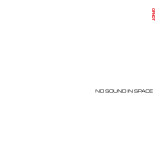
Blake Lee has always been fascinated by the unknown, and space, in its isolating, mysterious vastness, embodies this theme immaculately. The open void, captured so memorably by Stanley Kubrick in '2001: A Space Odyssey', is Blake's far-reaching canvas on 'No Sound In Space', a cinematic meditation on the cosmos that's painted in nuanced, emotionally sincere colors. The Los Angeles-based composer has been contemplating his full-length debut since 2021, using his guitar as a sonic paintbrush rather than find himself snared in its traditional aesthetic constraints. Transforming its characteristics with effects and subtle processes, he layers sustained tones and intimate improvisations, creating richly visual polychromatic utopias teeming with unknown life.
Since 2011, Blake has been most known for being the guitarist and a music director for Lana Del Rey, notching up three songwriting credits on her acclaimed ‘Ultraviolence’ full length. He sees his solo work is a form of escapism, a place where he can experiment and find comfort and catharsis outside of expectations and formal structure. The album was written instinctively, and Blake made sure he didn't force anything, letting go and getting out of his own way, listening intently as sounds and textures materialized organically. "I didn't want to ruin it by being a perfectionist," he laughs. And his collaboration with Kenyan sound artist KMRU, who runs the OFNOT label and contributes to two of the tracks on the album, occurred similarly organically.
Blake was moved to reach out to KMRU when he caught a performance of 'Natur' at Los Angeles' Zebulon in 2022, leading to a prolonged back-and-forth. They didn't meet in person until earlier this year, by which time they'd become firm friends, continuously sharing music and conversation. KMRU had lent a valuable ear to Blake, who sent early playlists of 'NSIS' that, over the months, slowly evolved into the finished album. It's the first release on OFNOT that's not by KMRU himself; the label emerged last year with the release of KMRU's own 'Dissolution Grip', and Blake's debut immediately expands its sonic universe. Alongside the playlists, Blake also provided KMRU with the tracks' raw stems, which KMRU began to edit and expand in his Berlin studio. 'Miura' and 'Waiting' are the result of this process, two sublime abstractions that augment Blake's dreamlike, euphoric tones with KMRU's pebbly distortions and booming low-end rumbles. And this same playful sense of freeness seeps into Blake's other compositions.
On the misty 'In A Cloud', he surrounds cascading string tones with soft-focus pads that swell until they're like crashing waves, and on the two 'Echoplexx' pieces, he uses delay and reverb to smudge his sounds until they're viscous residue, the harmonies obscured by whooshes of white noise and distant chimes. The mood is quieted somewhat on 'Moving Air', as Blake's swirling tones form half-heard lullabies, coalescing into a dense, melancholy crescendo, and he fills out the sound with reverberant airport recordings on 'Pan Am', letting pitchy My Bloody Valentine-esque drones warble beneath the transitory chatter. Each track melts into the next, forming a billowing, cryptic narrative that leaves more questions than answers. Blake is constantly searching, and fills his unoccupied space with warmth, perception and sensitivity.
Blake Lee has always been fascinated by the unknown, and space, in its isolating, mysterious vastness, embodies this theme immaculately. The open void, captured so memorably by Stanley Kubrick in '2001: A Space Odyssey', is Blake's far-reaching canvas on 'No Sound In Space', a cinematic meditation on the cosmos that's painted in nuanced, emotionally sincere colors. The Los Angeles-based composer has been contemplating his full-length debut since 2021, using his guitar as a sonic paintbrush rather than find himself snared in its traditional aesthetic constraints. Transforming its characteristics with effects and subtle processes, he layers sustained tones and intimate improvisations, creating richly visual polychromatic utopias teeming with unknown life.
Since 2011, Blake has been most known for being the guitarist and a music director for Lana Del Rey, notching up three songwriting credits on her acclaimed ‘Ultraviolence’ full length. He sees his solo work is a form of escapism, a place where he can experiment and find comfort and catharsis outside of expectations and formal structure. The album was written instinctively, and Blake made sure he didn't force anything, letting go and getting out of his own way, listening intently as sounds and textures materialized organically. "I didn't want to ruin it by being a perfectionist," he laughs. And his collaboration with Kenyan sound artist KMRU, who runs the OFNOT label and contributes to two of the tracks on the album, occurred similarly organically.
Blake was moved to reach out to KMRU when he caught a performance of 'Natur' at Los Angeles' Zebulon in 2022, leading to a prolonged back-and-forth. They didn't meet in person until earlier this year, by which time they'd become firm friends, continuously sharing music and conversation. KMRU had lent a valuable ear to Blake, who sent early playlists of 'NSIS' that, over the months, slowly evolved into the finished album. It's the first release on OFNOT that's not by KMRU himself; the label emerged last year with the release of KMRU's own 'Dissolution Grip', and Blake's debut immediately expands its sonic universe. Alongside the playlists, Blake also provided KMRU with the tracks' raw stems, which KMRU began to edit and expand in his Berlin studio. 'Miura' and 'Waiting' are the result of this process, two sublime abstractions that augment Blake's dreamlike, euphoric tones with KMRU's pebbly distortions and booming low-end rumbles. And this same playful sense of freeness seeps into Blake's other compositions.
On the misty 'In A Cloud', he surrounds cascading string tones with soft-focus pads that swell until they're like crashing waves, and on the two 'Echoplexx' pieces, he uses delay and reverb to smudge his sounds until they're viscous residue, the harmonies obscured by whooshes of white noise and distant chimes. The mood is quieted somewhat on 'Moving Air', as Blake's swirling tones form half-heard lullabies, coalescing into a dense, melancholy crescendo, and he fills out the sound with reverberant airport recordings on 'Pan Am', letting pitchy My Bloody Valentine-esque drones warble beneath the transitory chatter. Each track melts into the next, forming a billowing, cryptic narrative that leaves more questions than answers. Blake is constantly searching, and fills his unoccupied space with warmth, perception and sensitivity.
Lili Holland-Fricke and Sean Rogan’s debut album “dear alien” is a constellation of radiant improvised impulses, imagined in lucent fragments of cello, guitar and voice. Spacious, tender and glistening with rich electronic distortion, the record melds a spectrum of processed and natural sound as the artists invite listeners into their dreamlike world of synergetic introspections.
Cultivated through a shared spirit of resourcefulness and play, “dear alien” emerges as an organic meeting place in the compositional output of British-German experimental cellist Lili Holland-Fricke and Manchester-born guitarist and producer Sean Rogan. Having studied their respective instruments at the Royal Northern College of Music, both artists have flourished in eclectic solo and collaborative projects, creating intricate and intimate spheres of sound with a deep appreciation for songwriting and improvisation.
Holland-Fricke’s transition from the classical world to writing her own material, and later vastly expanding her palette with electronics, first converged with Rogan’s distinctive flair for production in 2022 on her EP “birdsong for breakfast” and single ‘draw on the walls’. Now, the duo present an album envisioned through true ‘50/50’ collaboration during the summer of 2023, written across two intensive weeks of improvising and experimenting at Rogan’s Greenwich home studio. A convergence of the artists’ sounds and influences, the music was fostered by the idea of making an album with ‘no plan’ and their shared recent discovery of Arthur Russell, to whom the final track is dedicated.
“dear alien” assembles eight compositions that emerged naturally as the duo created sketches with cello and pedals, guitar, tape loops and poetic vocal musings, forming songs that explore themes of waiting, circling back around, and glitchy communication. Moments of drifting through pillowy layers of sound contrast with saturated visions of electronic modification, where the record’s glowing instrumental contours are pushed to the extremes.
The plaintive shades of ‘half blue’ and meandering deliberations of ‘slow thing’ are teased by the friction of static signals and a sense of ever-mutating sonic mass – a sensibility most acutely realised in ‘dawning’, where cello-vocoder eruptions grow in magnitude, the absence of sound between them burdened with something sinister and unspoken. As the artists expand on this piece, ‘It’s the sound equivalent of squeezing your eyes shut to shield against the brightness of something you don’t want to see, only to find that each time you open them again the world is not softening but getting more relentlessly overwhelming, to the point of being totally blinding.’
Three tracks with lyrics – ‘at first’, ‘dear alien’ and ‘seem asleep’ – refract the album’s wistful and melancholic colours into poetic imagery and metaphors, ushering in reflections on relationship tensions and someone close feeling unknown, with hints towards wider unsettled feelings about climate change. In the spirit of lyrical improv, ‘seem asleep’ compiles lone lines from Holland-Fricke’s journals into a cut-and-paste collage around hopeful patience or futile lingering – either way conjuring a softness that welcomes the hazy ambience of ‘for a. r.’, the final composition which soundscapes the summer days spent making the album. As the artists describe of this track, ‘The music kind of leads somewhere, but then kind of leads nowhere, and just meanders around where it is, content to just be walking in a circle back to where it started.’
You find Andrew Gabbard on the road and in his creative prime on this astral road trip, collecting songs like a cosmic traveler hitching a ride. "Ramble & Rave On!," Andrew's third solo LP, sounds like the kind of weathered tattoo you'd see etched on a barfly's forearm as he slams another drink in a dive. Like its title, the record feels like something that's always been around; a trusty mixtape that everyone can agree on. Andrew comes to this collection of songs with something that very much feels like a `studio' record, the kind of album a 60s rock star feels like they've built the confidence to make, to shake off a rawness for something fuller and more realized. The fact that this record was yet again a homemade effort, with Andrew playing everything (apart from Sven Kahns' pedal steel), gives you an idea of how devoted and studied he is to creating that perfect song. `Ramble & Rave On!' is Andrew's most personal album yet, it finds him journeying between his worlds as a decades-long touring & studio musician/vocalist for the Black Keys, as a songwriter with his head-in-the-stars, and as the man in his home with the people he holds dearest and with the studio where he brings it all together. It is clear that Andrew finds himself at this prolific point in his career completely beholden to songs, to their absolute power, and to their otherworldly ability to connect. He has mastered his craft, and proves throughout the course of this album that he can truly make a pitstop stop at every genre.
- Dark Omens (Latin Speech By Mario "The Black" Di Donato)
- Last Christmas I Gave You My Death
- Once Upon The Fireflies (Organ And Strings By Il Diavolo Misterioso)
- Profondo Nero/Life In Black (Guitar Solo By James Murphy)
- Cold Grave Marble (Winter Moon) (Desperate Scream By Veronica G.)
- Without A Shadow
- The Great Void
- Filthy Shades Of Death (Storytelling Intro By Nequam)
- Continuum Pt. 2&3 (Ultima Luce)
- Buio
MARBLED VINYL[25,00 €]
In the beginning, THERE WAS DOOM. The five piece gathers its forces together with the clear intention of celebrating in music one of the first raw appearances of metal: Doom! After a year or so of songwriting and the usual lineup setups, the 5-piece throws in what will become their first studio effort in 2005: a Heavy, Drunken, Doom, Metal demo (with their 700 sold-out copies, now fully downloadable due to popular demand), where the title "Heavy Drunken Doom" clearly and quickly reveals the attitude of the band. Cold Grave Marble, the 6th Doomraiser full doom length, is a frozen view in the darker side of life: Death, the Omega of our earthly dimension. The album is made up of raw riffing seasoned up in heavy, dark and gloomy dreaming atmospheres, and explores a plethora of styles with different sounds and solutions. The songwriting approach is rougher than before, experimental, suggestive, still preserving the classic Doomraiser characteristic sound.
- Dark Omens (Latin Speech By Mario "The Black" Di Donato)
- Last Christmas I Gave You My Death
- Once Upon The Fireflies (Organ And Strings By Il Diavolo Misterioso)
- Profondo Nero/Life In Black (Guitar Solo By James Murphy)
- Cold Grave Marble (Winter Moon) (Desperate Scream By Veronica G.)
- Without A Shadow
- The Great Void
- Filthy Shades Of Death (Storytelling Intro By Nequam)
- Continuum Pt. 2&3 (Ultima Luce)
- Buio
Black Vinyl[23,32 €]
Ltd. Marbled Vinyl. In the beginning, THERE WAS DOOM. The five piece gathers its forces together with the clear intention of celebrating in music one of the first raw appearances of metal: Doom! After a year or so of songwriting and the usual lineup setups, the 5-piece throws in what will become their first studio effort in 2005: a Heavy, Drunken, Doom, Metal demo (with their 700 sold-out copies, now fully downloadable due to popular demand), where the title "Heavy Drunken Doom" clearly and quickly reveals the attitude of the band. Cold Grave Marble, the 6th Doomraiser full doom length, is a frozen view in the darker side of life: Death, the Omega of our earthly dimension. The album is made up of raw riffing seasoned up in heavy, dark and gloomy dreaming atmospheres, and explores a plethora of styles with different sounds and solutions. The songwriting approach is rougher than before, experimental, suggestive, still preserving the classic Doomraiser characteristic sound.
Uni Cover[11,72 €]
Aussie techno innovator Alpharisc returns to Mutual Rytm for a second standout EP.
Shane Yates, aka Alpharisc, has been living and breathing techno for over 30 years. He first began producing in the mid-90s and has amassed a fine hardware collection that lends his sounds a raw, rugged feel. After breaking through with the Wetmusik party and label collective, he has let his music do the talking and isn't afraid of colouring it with a hint of nostalgia. Previous material has come via several notable labels over the years, but his most recent outings have been on SHDW's Mutual Rytm imprint, with his solo EP 'Ram Face' from 2023 becoming an underground favourite alongside a fine outing as part of the label's 'Federation Of Rytm II' and 'Federation Of Rytm III' compilations. Once again, he returns in style, uncovering an impactful selection of gems across his new 'Remain Seated' EP.
The opener 'Peace Be With You' is a straight-up techno weapon with urgent synth flashes peeling off the groove like a police siren. The drums hit hard in true Alpharisc style before 'Hail' builds on that with a more hard-edge groove topped with frosty waves of white noise that electrify the dance floor. 'Remain Seated' brings a hint of trance-leaning energy with its bright sheets of synth lighting up the driving drums and saw-tooth bass loops. Next, 'Look At This' is another brilliantly forceful techno sound with slamming drums and rusty synth loops, layering melancholic pads up top and adding a cerebral edge, while closer 'In Your Mind' is from the Jeff Mills school of synth-laced and serene deep techno with lush pads radiating cosmic light. As a bonus, digital-only cut 'Expedition' brings some backlit celestial synth work to a rubbery and pummelling drum pattern for pure techno escapism.
- Meditation
- Going Home
- A-1 Funk
- Every Step Of The Way
- Black Magic Woman
- Gypsy Queen
- Oye Como Va
- Yours Is The Light
- Batukada Xibaba (She-Ba-Ba)
- Stone Flower (Introduction)
- Waiting
- Castillos De Arena, Part I
- (Sand Castle)
- Free Angela
- Samba De Sausalito
- Matra
- Kyoto
- Castillos De Arena, Part Ii
- (Sand Castle)
- Se A Cabo
- Samba Pa Ti
- Mr. Udo
- Toussaint L’overture
- Incident At Neshabur
One of the Most Exhilarating Live Albums Ever Released: Santana’s Lotus Documents 1973 Performances Distinguished by Passionate Soulfulness, Chemistry, and Inventiveness
Mobile Fidelity’s 180g 33RPM 3LP Set Features Reference Sound and Deluxe Trifold Packaging Faithful to That of the Original Japanese Import: Strictly Limited to 5,000 Numbered Copies, Includes Four Photo Inserts and Two Fold-Out Posters
The bizarre legacy of Lotus transcends its status as both the definitive onstage document of Santana’s career and one of the most spectacular live albums ever released. Originally issued in 1974, the triple LP contains exhilarating performances of the band recorded at two shows in early July 1973 at the 2400-seat Osaka Kosei Nenkin Kaikan concert hall. It bears witness to the eight-piece collective playing with a chemistry, inventiveness, cohesiveness, and soulfulness no other Santana lineup would ever surpass. Featuring seven previously unreleased tracks as well as remarkable renditions of material from Santana’s first four albums and the Carlos SantanaJohn McLaughlin collaboration Love Devotion Surrender, Lotus simultaneously suggests and inspires, dreams and delivers.
Transferred by original engineer Tomoo Suzuki, strictly limited to 3,000 numbered copies, and housed in deluxe trifold packaging faithful to that of the original pressing, Lotus benefits from reference audiophile treatment on Mobile Fidelity’s 180g 3LP set. Featuring rich tones, smooth dynamics, excellent separation, deep soundstages, and involving presence, this reissue pays tribute to both the virtuosic lineup and the magnetic fusion of Latin- and Afro-Cuban-influenced jazz, rock, psychedelia, R&B, and blues. The complexity of the spiritual passages, demands of the crescendos, delicacy of the calm transitions, electricity of the solos: everything is rendered with superb balance and free of the harshness, compression, and fatiguing peaks that would otherwise distract from the presentations at hand. Black magic, indeed.
- Big Love
- Seven Wonders
- Everywhere
- Caroline
- Tango In The Night
- Mystified
- Little Lies
- Family Man
- Welcome To The Room…Sara
- Isn’t It Midnight
- When I See You Again
- You And I, Part Ii
A Universe of Pop: Fleetwood Mac’s Tango in the Night Features Meticulous Production, Includes the Hits “Big Love,” “Everywhere,” “Seven Wonders,” and “Little Lies”
Experience the 1987 Album in Audiophile Sound for the First Time:
Mobile Fidelity’s Numbered-Edition 180g 45RPM 2LP Set Captures the Perfectionist Details
1/2" / 30 IPS analogue master to DSD 256 to analogue console to lathe
The perfectionism involved in crafting Fleetwood Mac’s Tango in the Night reached a level of intensity experienced by few artists before or since. Commercially and creatively, the painstaking efforts paid off. Recorded over the span of 18 months, the triple-platinum album spawned four hit singles and put Fleetwood Mac back at the center of mainstream conversation. Its demands also ultimately forced its primary architect, guitarist-singer Lindsey Buckingham, to leave the group shortly after its completion. Was it all worth it? A thousand times “yes.”
Sourced from the original master tapes, pressed at Fidelity Record Pressing, and housed in a Stoughton jacket, Mobile Fidelity’s numbered-edition 180g 45RPM 2LP set of Tango in the Night presents the 1987 record in audiophile sound for the first time. Everything co-producers Buckingham and Richard Dashut sought to instill in the music — the exacting tones, gauzy textures, plush atmospherics, shifted harmonics, unique pitches, pristine acoustics, biting rhythms — can now be heard with elevated accuracy, range, depth, and detail.
Made under challenging circumstances, Tango in the Night is as much a universe of sound as it is an album. This reissue conveys that sonic spectrum in exhaustive manners that go beyond prior editions by playing with a combination of transparency, imaging, openness, and dynamics that provides uncanny insight into the meticulously layered vocal and instrumental tracks. Equally important, it also amplifies your connection to the elaborate melodies, contagious hooks, and airy highs that account for the album’s ageless pop brilliance.
As for the wondrous array of percussive accents, synthesizer elements, interlaced guitars, and lush choruses — all seemingly occupying the exact right place amid the soundstages and taking on shapes and forms that lend them a living, breathing quality? If your audio system is up to the task, the realism, presence, and warmth of Mobile Fidelity’s collectible edition will have you considering Tango in the Night from a new perspective — one that puts its lavish, gorgeous creations on a par with those from Rumours and Tusk.
Unlike those records, Tango in the Night began from a more individualistic perspective in that it sprang from what originally was intended to become a Buckingham solo effort. Instead, it remains the final album credited to the peak Fleetwood Mac lineup involving Buckingham, Stevie Nicks, Christine McVie, Mick Fleetwood, and John McVie. Though the participation of all the members varies from track to track, the cohesive arrangements and alchemic production on Tango in the Night suggest a unity that remains on a par with the band’s other landmark works.
Largely constructed from laborious methods that involved recording at half speed to achieve the desired sonics and tonal nuances, piecing together verses and choruses to attain seamless synchronicity, and Buckingham using a Fairlight CMI synthesizer/workstation in visionary ways, the songs pair electronic and acoustic elements to radiant effect. Tango in the Night also possesses light dance structures that resulted in several tunes being recast as dance mixes on extended-play singles. Above all, however, this is music that appears to float and cast dreamy spells.
Surrender to the frisky interplay of the opening “Big Love,” big pop punctuated with Buckingham’s back-and-forth “oh-ah” sighs that ping the Top 5 smash with innocuous sensuality and toe-tapping momentum. Delight amid the shimmering lights of “Seven Wonders,” whose shades and shadows shift amid Nicks’ raspy vocals and a large group chorus. Wrap yourself in the warmth of the weightless “Everywhere,” a flawless slice of hummable pop that topped with Adult Contemporary charts for three weeks and towers as an ode to the love everyone desires. Stare into the mysterious landscape of the title track (and dig the synthesized harp) just before it explodes, briefly ceding to a terse riff and locked-in grooves.
Tango in the Night teems with delightful surprises and well-honed specifics, especially when Buckingham and Christine McVie team together. In addition to the aforementioned “Everywhere,” the singer born Christine Anne Perfect plays a major role on four more cuts — all highlights — from the breathy, head-over-heels emotionalism of “Mystified” to the sweet, sweeping escapism of “Little Lies,” a cover-up of romantic despair aided by Nicks’ irreplaceable background vocals.
“If I see you again/Will it be the same,” asks Buckingham on “When I See You Again,” finishing up a song a longing-sounding Nicks had started while voicing words that many likely knew would resonate far beyond the confines of the heartfelt song — a goodbye wearing a faint disguise. Though Fleetwood Mac would never again reach the heights maintained throughout Tango in the Night, and members would go their own way, the album towers as a paean to what’s possible in the fields of pop, rock, and studio wizardry.
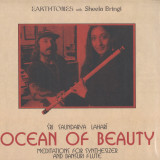
Multi Culti World Records venture deeper into the new new age with the release of 'Ocean of Beauty - Meditations for Synthesizer and Bansuri Flute,' a collaboration between California-based artist/DJ Earthtones and Indian classical musician Sheela Bringi. Earthtones, fresh off his genre-defying debut album on Wonderwheel, here dives into the deep end of the ocean of ambient. With music that traverses cultures,he’s known for bridging influences from Cumbia to hip hop and house music. Here he presents his most consciousness-expanding work yet, no doubt influenced by his involvement in Ojai new age culture,years living in ashrams, practicing Shaktism,+ spending as much time curating sounds suitable foraural healing and meditation as for dance-floors. He’s found a perfect muse in Boulder-based Sheela Bringi, whose virtuosity in Indian classical music sets the tone of the record with her bansuri (Indianbamboo flute) & harp, blending traditional instrumentation with more contemporary influences. Bringi was a direct disciple of bansuri master GSSachdev, and represents a devotional musical lineage. She has released two solo albums, 'Shakti Sutra' and 'Incantations,' and her work has been featured on over 50 world and ambient records, plus publicly on outlets from NPR to NBC News, & more. 'Ocean of Beauty' is the English translation of an ancient Sanskrit text devoted to the divine mother, the Sri Saundarya Lahari, The song titles are taken from verses in that text, and the album is in fact a dedication to the goddess Lalita Devi. It creates a serene, meditative space which seamlessly blends traditions; synth-driven ragas with a spirit of tranquility that nurtures Multi Culti’s philosophical bent towards ‘music without borders.’
- Specimen_Uno_____(Probe#1162011)
- _Specimen_Due_____(Probe#1292011)
- _Specimen_Tre_____(Probe#1312011)
- _Specimen_Quattro_(Probe#1132010)
- _Specimen_Cinque__(Probe#0542009)
- _Specimen_Sei_____(Probe#1262011)
- _Specimen_Sette___(Probe#1012010)
- _Specimen_Otto____(Probe#1082010)
- _Specimen_Nove____(Probe#0532009)
- _Specimen_Zero____(Probe#1642024)
arottenbit is an electronic music project born in 2008 by Alessandro 'Otto' Galli (FOH Sound Engineer for Messa, Deafheaven, Pallbearer, Truckfighters, Bongzilla, Fuoco Fatuo). Playing solo with a 1989 NINTENDO GAME BOY or accompanied by hardcore punk drummer Guido Montanarini (PARADISE LOST, IMPLORE, THE SECRET), he soon found himself opening for some of his favorite bands like MELVINS, ATARI TEENAGE RIOT, THE BODY, MELT BANANA, AUTHOR & PUNISHER, FULL OF HELL and performing at major international festivals like ROADBURN 2022, HELLFEST 2022. "You Don't Know What Chiptune Is" is a bold exploration of the chiptune genre, pushing the boundaries of 8-bit music with an experimental and innovative approach. Each track on the album is a unique specimen, meticulously crafted to showcase the versatility and depth of chiptune sounds. The album is characterized by its inventive use of 8-bit sound chips, evoking the essence of vintage gaming consoles like Game Boy. arottenbit skillfully manipulates these sounds to create a wide range of textures and atmospheres. The lo-fi, raw quality of the 8-bit era is preserved, while contemporary production techniques enhance the overall listening experience.
Giuseppe Crisci is a musician and composer who splits his life in between London and Naples.
Known for his previous Acid House projects under the pseudonyms of DoTheDu and Crishi, he released several records on labels like Senseverse Records, Stealth Mission, and Pareidolia Recordings.
Conceived and written in his apartment in London and mostly recorded in his studio in Santa Maria Capua Vetere, this album proposes the sound of an evolving artist who drags himself into the deepest corners of heart and soul using profound synthesisers sounds which are coloured by intimate saxophone solos and rusty piano chords that enfasise strengthen the true sentiment of his lyrics narrated in English and Neapolitan dialect.
“My aim is to reach people’s soul and humbly influence them positively by trying to express what I feel deep inside myself, beyond meanings and words”— Giuseppe Crisci
Keshavara tragen prächtige Schnurrbärte, verwegene Kopfbedeckungen und sprechen ein abenteuerliches Patois aus Englisch, Hindi, Deutsch und Gibberish. Auf ihrem neuen Album "III" kreieren die Kölner um den deutsch-indischen Musiker Keshav Purushotham Klänge, wie andere Leute Drinks mixen, nachdem sie schon drei genossen haben: Verwaschener Kraut-Pop und diasporische Dub-not-Dub-Exkursionen werden nach Augenmaß miteinander kombiniert und wild geschüttelt. Zuckersüß mäandernde Melodien, entlehnt einem fantastischen Niemandsland in der Grenzregion zwischen exotischen Library-Kompositionen und psychedelischen Soundtracks, verschmelzen mit den Grooves einer Rhythmusgruppe, die sich auch in den Tonstudios des funky Beirut der Mittsiebziger Zuhause gefühlt hätte. Das Ergebnis sind mit surrealistischem Zuckerrand gekrönte Cocktails mit der Wirkung einer halluzinogenen Götterspeise. Musik, die schillert und flirrt, wie eine Fata Morgana in der Wüste. Keshavara klingen in einem Moment, als hätte Ennio Morricone einen Bollywood-Film vertont, und im nächsten wie ein von Curt Boettcher produzierter Eden-Ahbez-Song, oder - nicht ganz so spinös aber nichts desto weniger fantastisch - als hätten Khruangbin und Sven Wunder endlich ein gemeinsames Album aufgenommen. In den glanzvollsten Momenten fügt sich das alles wie von magischer Hand zusammen und kulminiert dann in Songs wie "Spiegelmann" und "Tableau Vivant" - fantasmorgiastischen Partys voller transkultureller Clashes, die uns Hörer dazu einladen, sie in farbenprächtige Gruppenchoreografien zu überführen.
War das Debüt von Keshavara noch ein Solo- und der Nachfolger "Kabinett der Fantasie" im Kern ein Duo-Album, so sind Keshav Purushotham, Niklas Schneider, Benedikt Filleböck und Christopher Martin mit ihrem selbstproduzierten, schlicht "III" betitelten dritten Album endgültig zu einer vierköpfigen Band zusammengewachsen … und zwar um eine alte Farfisa-Orgel herum, die eines Tages als Geschenk im Proberaum gelandet ist: Ein, auf sämtlichen Songs mal mehr, mal weniger präsentes UFO aus einer Zeit der Slow-Jams, Live-Takes und des exzessiven Space-Echo-Einsatzes. Sein analoges Blubbern und sein wabernder Funk rollt dem warmen, organischen Bandsound den roten Teppich aus, und verpasst ihm einen zärtlichen Schubs Richtung 70er. Erfrischenderweise kommt er dort niemals so richtig an, sondern bleibt immer im Fluss. Denn das eigentliche Ziel der halldurchtränkten Korridore dieses Albums ist stets der Weg, genau genommen der kunstvoll gezimmerte Holzweg, der phantastische Irrpfad. "III" ist eine Reise, auf der Zeiten und Orte keine Fixpunkte sind, sondern austauschbare Koordinaten eines augenzwinkernden Vexierspiels. Da ist es nur folgerichtig über "Indische Götter im Sauerland" zu singen. Dass ungeachtet der Nostalgie, die alle neun Songs durchweht wie ein warmer Mittelmeerwind, niemals Sentimentalität aufkommt, ist nicht zuletzt diesem Humor geschuldet.
Die ätherischen Drones, sanft nuschelnden Akkorde und geisterhaft seufzenden Soundschwaden, die Keyboarder Benedikt Filleböck seiner altersschwachen Farfisa bevorzugt in den ruhigeren Momenten und den Instrumentalnummern des Albums entlockt, bilden einen stimmungsvollen Kontrast zu den beiden anderen Säulen des Keshavara-Sounds: Christopher Martins leichtfüßig hüpfenden Bass-Dreiecken und Keshavs sonnendurchfluteten Gitarren-Ornamenten. Im Zusammenspiel mit Niklas Schneiders crispen Drumbeats entsteht ein Fundament, mit dem die kaleidoskopischen Texturen und Melodien vollständig verschmelzen.
Das Ergebnis ist das bisher homogenste Album des Quartetts. Mit "III" erweisen sich Keshavara als gewiefte Soundalchemisten und Weltenwanderer, als eine softe Macht, deren Stärke sich aus ihrer enormen Musikalität, ihrer Fabulierlust und ihrem surrealistischen Witz speist.
Leng’s San Francisco connection has long been strong, with the 40 Thieves collective – and their friend Cole Odin – providing some of the label’s most memorable releases of the last decade. That Bay Area connection comes to the fore once more on the imprint’s latest release, which sees Odin join forces with fellow San Francisco resident Marshall Watson, a long-serving producer, engineer and live performer known globally for his Balearic-minded productions.
‘Voyager’, the pair’s first collaborative single, is a genuine meeting of minds. It combines Odin’s love of low-slung dub disco, dancefloor psychedelia and low-tempo cosmic house with Watson’s
picturesque Balearic synths, sparkling piano riffs and immersive sound design. It’s this blend that dominates on the EP-opening Original Mix, an infectious workout that gets progressively more blissed-out and saucer-eyed as it progresses. Listen carefully and you’ll hear some suitably psychedelic guitar solos nestling amongst the heady washes of sound, sun-bright piano riffs and weighty bass.
Those languid, stretched-out guitar parts naturally take a more prominent role on the Extended
Guitar Mix. On this alternative take, the pair deliver a lightly tweaked take on the original groove, stretching it out while overlaying eyes-closed guitar solos, pots-and-pans percussion and a more DJ-friendly outro. It’s effectively an extended club mix – the club in question being a Bay Area basement at 5am. To round off the EP, Odin and Watson dust off their dancing shoes and pay tribute to San Francisco great Patrick Cowley. On the appropriately titled Cosmic Rave Mix, the pair swap their bass guitar for a pulsating sequenced bassline, trance-inducing synth sounds, and locked-in electronic loops designed to take you to a higher state of consciousness. By the time the track’s familiar piano refrain drops midway through, you’ll be reaching for the lasers in no time at all.