"It's time. Africa, it's time. It's time that Africa changes. It's time our leaders change. Everything that happens in Africa is extraordinary. We have everything: water, earth, sun, fields of oil, gas. We have all this in Africa, but Africa is still poor. It's time we change our way of thinking. It's time for Africans to take their destiny into their own hands. If not, others will take it." This is the message instrumental guitarist Tidiane Thiam hopes to convey with his new solo album, Africa Yontii, a Pulaar title that translates to "Africa Time." To a casual listener, Thiam's bold statement starkly contrasts with his melodic playing. But a closer listen to Thiam's expressive playing reveals a thoughtful voice that stands out from the crop of contemporary guitarists. "What I should be singing (with words) I'm instead saying with my guitar," he says. Hailing from the sleepy fishing Senegalese fishing town of Podor, home of the great Baaba Maal, Thiam taught himself guitar by playing along to late-night radio broadcasts of Manding music. He soon developed his style, often reworking Pulaar folk themes into his compositions. On Africa Yontii, Thiam's third album for Sahel Sounds, he teamed up with hip-hop beat maker Ndiaye Moctar from studio M.N. Records to provide accompaniment, integrating unexpected elements such as field recordings and electronic sounds. In the liner notes for Africa Yontii, Thiam voices his concerns about the lack of opportunities for Africa's youth and the lonely road that can come with leaving behind loved ones in the hope of a better life. He also sprinkles in a philosophical query about the eroding state of the world alongside two more hopeful, traditional offerings in the form of wedding and river songs. Despite the sometimes heavy subject matter, Thiam's love for his homeland and heritage shines through. Tidiane Thiam's Africa Yontii reclaims the maligned "world music" genre within a sonic space that has long been dominated by others telling the story. As the title suggests - It's time!
Search:solo sounds
Solo Throat is the first solo LP from vocalist, composer and movement artist Elaine Mitchener. Drawing on the work of African-American and African-Caribbean poets Edward Kamau Brathwaite, Aimé Césaire, Una Marson and N. H. Pritchard, these twelve new vocal compositions disrupt semantic sense, play with the margins of lyrical translation, and give rise to new voicings. Elaine Mitchener is a veteran of vocal expression in the global Black Avant Garde, traversing free improvisation, cross-disciplinary music theatre and contemporary composition with clarity and joy. Most recently, Mitchener has been improvising and composing with the written word as source material - challenging classical ensembles with her piece (“the/e so/ou/nd be/t/ween”), and commissioning composers Matana Roberts, Jason Yarde and George Lewis to respond to the work of Sylvia Wynter (“On Being Human as Praxis”, Donaueschinger Musiktage, 2020). Her performance of Umbra poet N.H Pritchard’s text FR/OG at OTO in 2021 was a revelation - a solo vocal recasting of the powerful visual-material form that Pritchard uses to disrupt semantic ‘sense’. Building on this performance, Solo Throat takes the work of Pritchard alongside poets Edward Kamau Brathwaite, Aimé Césaire and Una Marson as its source material. Its compositions are a loose translation - a carrying from text to voice which holds multiplicity and celebrates the transformative power of literary possibility. Surrendered to the spacing and repetition of consonants and vowels, Michener’s exceptional phonetic freedom gives rise to a sensuous experience which intensifies the roles of rhythm, timbre and breath in expressing meaning. Solo Throat comes together as much through difference as similarity. Mitchener’s own solo improvisations sit alongside the work of Brathwaite, Césaire, Marson and Pritchard, forming a constellation of unlikely alignments which make no aesthetic conclusion. Instead, Solo Throat is a site of encounter, an irreducibly plural de-composition of words into a heterogeneous assemblage of sounds and impulses, emphasising what Anthony Reed calls, “the play on and the surplus of margins of lyrical translation to resituate other pathways of expression”. Just as the poets cited use white space to complicate our act of reading, so Mitchener utilises silence and multiphonics to complicate the act of voicing and the way we listen. Genre: Experimental / Vocal / Poetry
- A1: Rainbow Crutch - Lookin` Back
- A2: The Black River Circus - A Ritual Melody
- A3: The Cherry Fogg - Nervous Conclusion
- A4: Timmy Sims - Corporation (Feat His Organ Combo)
- A5: The Tears - A Soulful Feeling
- B1: The Young Ones - Harbor Melon
- B2: Kurrt Watkins - Theme For Billy (Feat Soul Sister 7)
- B3: Ron Anthony - Just Funky (Feat Classiques)
- B4: Soul Brothers - Miss Delores Funk
- B5: The Group Solo - Beware Of The Dog
- B6: Earnie - Soul Shakin`(Feat The Soul Shakers)
The Hammond organ was first manufactured in 1935. In 1954, the now famous Hammond B3 model was introduced with additional harmonic percussion feature. When the company went out of business in 1985, around two million of various models of the Hammond organ have been produced.
The Hammond B3 was originally marketed to churches as a lower-cost alternative to the wind-driven pipe organ. It quickly became popular with professional jazz musicians in organ trios. Jimmy Smith's use of the Hammond B3 inspired a generation of organ players, and its use became more widespread in the 1960s and 1970s in rhythm and blues, rock, reggae, and progressive rock.
This collection is centered on the exciting and dynamic sounds of the Hammond B3 organ!
Neon Lies started as a synth wave bedroom solo adventure in late 2015 by Goran Lautar while he was still singing and playing guitar in prominent bands from Zagreb’s D.I.Y. punk and post punk scene.
His fourth full length album “Demons” is the logical progression from the minimalistic lo-fi darkwave sound crafted on the highly praised previous album “Loveless Adventures”, but on this one you can expect even more of this desperate and introspective display, dwelling into the darker dystopian side of up-to-date electronic sounds from European underground clubs and sweaty stroboscopic flash dance floors. Both restless and intimate, “Demons” brings eleven personal hymns full of icy synth lines, rubbery bass punches along with minimal wave drum beats that are all accompanied by desperate and warm cry out of his vocal manoeuvres.
UK jazz ensemble The Jazz Defenders release their third album "Memory In Motion" in April on Haggis Records (home of The Haggis Horns and Malcolm Strachan). The Bristol jazz boppers deliver another quality release of original material that takes in their usual diverse mix of influences and genres, from timeless acoustic jazz referencing the classic sounds of Blue Note Records, to a more contemporary fusion where jazz meets soul, funk and hip-hop.
Although they love to mix things up, their roots are in the classic acoustic jazz quintet sound of the late 1950s/early 1960s, back when hard bop and modal jazz ruled. They have already explored this musical path well on their previous albums but they still deliver a couple of classic inspired jazz cuts here. "Chasing Fantasies" and "Fuffle Kerfuffle" both give the band some space to cut loose on solos over swing jazz beats that will keep their original jazz audience happy. The latter bubbles away with a jazz shuffle beat that would make drum legend Art Blakey smile.
"Meanderthal" and "Snakebite Playfight" bring soul to this jazz party. Exactly like jazz legends Lee Morgan/Herbie Hancock/Freddie Hubbard etc did back in the early-mid 1960s. The first is a feel-good, toe-tapping gem that's heavy on the backbeat and short and snappy on the solos, the exact reasons that made it the perfect opening single from the album. "Snakebite Playfight" comes with a jaunty New Orleans shuffle before transforming into a heavy psychedelic soul jazz burner, flipping back with ease to the NOLA shuffle for the Mardi Gras meets bebop piano solo by band leader George Cooper.
"Rolling On A High" is a hip-hop/jazz banger that sees the band continue their collaborations with UK rapper Doc Brown, a perfect combination that began on their second album "King Phoenix''. This time, the Doc spits some old-school block party-style bars over a bouncy uptempo funky beat with the band cooking up some soul stew behind him. Definitely dancefloor material.
Another uptempo jam is the heavy jazz fusion jam "Net Zero". It kicks off with some live broken beat kit playing and piano/bass staccato vamping before taking off into Headhunters territory on the solos, sounding both contemporary and classic at the same time. This is The Jazz Defenders at their fiercest and toughest and delivering a track that will have jazz dancers worldwide in an utter frenzy.
It's not all uptempo numbers or dancefloor-oriented compositions on this album. Two tracks take the musical dynamics right down to give a temporary break from the high-energy numbers. "Take A Minute" has a rolling double bass line locked into the groove while the horns play a lazy and laid-back theme with vibes embellishment, sounding like some trippy independent film soundtrack. Another recurring musical reference point for this band over the years.
The album finishes on a poignant and introspective note with a beautiful piano and double bass feature for George Cooper and bassist Will Harris. It's called "Enigma", it was recorded live in Paris and it closes the album on a peaceful note evoking the music and playing of Bill Evans. The perfect way to close this brilliant third album from The Jazz Defenders.
With Memory In Motion, pianist George Cooper and his band undoubtedly pay great homage to a golden era of jazz music that they love, but also elaborate on this influence with a wealth of modern musical experience, to create their own raw and vibrant compositions. The result is an enthrallingly unique sound that is as danceable as it is listenable.
Melbourne pop eccentric Gregor releases his fourth album Satanic Lullabies, his deepest and darkest record yet. In the years since his first album, 2016's Thoughts & Faults, Gregor's music has got progressively odder, more challenging and more rewarding. The spacious, acerbic pop of Silver Drop (2018), featuring touching single A Song About Holding Hands, was followed by the lovesick Destiny (2020), which put Gregor's inquisitive pop through a warped filter. Now Satanic Lullabies has polar extremes of wide-eyed innocence and deep despair. There are moments of great musical beauty that segue into harsh, bleak soundscapes. "I'm seeking to draw attention to the similarities between heaven and hell," says Gregor, "and to comfort anyone who recognises these." Satanic Lullabies is a modern epic, a bedroom odyssey, like if pre-MAGA Kanye made a Disney soundtrack. Gregor's live show ranges from solo mode up to a ten piece band, and he has played festivals such as Golden Plains, Dark Mofo, Inner Varnika, Boogie and The Others Way (NZ). He was nominated for Best Album and Best Solo Artist in the 2019 Music Victoria Awards, and Best Pop Act in 2021.
Alex Andrikopolous AKA Lex (Athens) released his brilliant debut album Waving in 2022 on Leng and he now returns with an EP combining fine remixes of tracks from Waving alongside two new previously unheard cuts.
The remixes are undeniably special. Fittingly, the EP begins with the first of these, a sensationally sun-soaked revision of one of Andrikopolous’s most Balearic moments – previous single ‘Punta Allen’ – by former Nuphonic fusionists and FAR label founders Faze Action. The Lee brothers’ take is one of those sunset-friendly workouts that wraps glistening guitar licks, steel pan style motifs, Lex’s gorgeous lead lines, hazy electric piano solos and life-affirming keyboard riffs around rolling nu-disco beats and a new rubbery bassline courtesy of Robin Lee himself. It has the feel of a pool-side anthem in the making.
Just as potent is the typically quirky and hard-to-pigeonhole revision of ‘Prezend’ by Manchester maverick Ruf Dug. Here he offers up a genuinely revolutionary rework, re-imaging the track as a sparse-but-colourful fusion of vintage acid house bass, saucer-eyed piano riffs, dubbed-out synth sounds, jacking lo-fi drum machine beats and squelchy TB-303 tweaks. While fresh and undeniably contemporary, the remix has an alluringly nostalgic, retro-futurist vibe.
Clustered around these two top-notch revisions is a pair of previously unreleased Lex originals. He joins forces with regular collaborator Locke once more on ‘Libre De Amor’, an infectious chunk of, low-slung dub disco marked out by weighty bass, jammed-out electric piano motifs, spacey pads, intergalactic effects and mazy synth solos. Dotted with additional percussion hits and echoing female vocal snippets, it’s one of the pair’s most potent dancefloor workouts of recent times.
To round off a rock-solid EP, the Athens-based veteran blurs the boundaries between stripped-back, late-80s house nostalgia and nu-disco. ‘Super Awake’ boasts cowbell-sporting Chicago house beats and acid house inspired bass, on to which he’s layered all manner of colourful synth sounds, jangly piano stabs and spacey electronics. Throw in some typically immersive chords and progressively more psychedelic TB-303 motifs, and you have a genuinely triumphant conclusion to a formidably floor-focused EP.
Randy Wiper is only known for this highly sought-after 100% pure Italo-Disco song from 1984, but the reason why he hasn't published anything else is that the artist embarked on a career as a film actor immediately after. The beginning of the song "I'd Like To Know" could be divided into three, the pattern of which is repeated in the subsequent instrumental parts, the piece possesses the sidereal energy of space disco. When it seems that we will leave the planet on board a shuttle, the soloist's voice enters, full of personality, it is that of Marcello Arcangeli and has the gift of inflections that sometimes recall that of Roy Orbison, at other times that of David Bowie. What remains most imprinted on the listener is the romantic part of the ballad, highlighted by the piano and passion. Finally there is the chorus which sounds exclamatory, imploring, but at the same time casual and danceable. Through a unique theme, that of a rare piece like "I'd Like To Know", we explore space, the heart, the disco.
Four years and one pandemic after his latest Dreams Of A Dark Building EP, the herald of dungeon synth pop is finally back from his shallow grave.
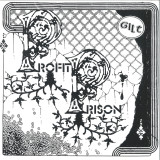
Life has not been gentle with Seattle-based solo producer Parker Lautenschlager over the past few years, imposing its unpredictability and forcing him to channel all the feelings that come with it into Profit Prison’s music.
It’s no surprise that his first full-length album Gilt marks one futher step towards the dark corners of italo / hi-nrg body music. Typical Profit Prison’s vocals and melodies, reminiscent of OG synth masters Kraftwerk, Giorgio Moroder and Orchestral Manoeuvres in the Dark, are still here, buried in the mix and waiting to haunt the listeners and drag them down in one sulfurous dancing spiral.
Lead single Sophia juxtaposes some weirdly camouflaged vocals with one heavenly chorus that seems willing to revive your fortunes while instead it literally sings “But I lost it all”. A Matter Of Tact displays pop escapism over some throbbing minimal synth tension, Seven Words sounds like a throwback to 70’s italo filtered through the eyes of a 21st century punk rocker. Katalina has a rampant synth à la Carpenter climbing over a story of loss and Katalina, An Ascetic is a solo ramble reaching for the inner light on a carpet of cold keys.
What’s more, tracks got longer in Parker’s recent songwriting, with most of the songs being now five minute long and reaching peaks of seven minutes with the closing, almost progressive disco jam of A.R.P. (Amphetamine Research Project), nothing short of a lucid dream on the floor of Studio 54.
Last but not least, the artwork by French artist Robin Roche delivers medieval-yet-punk graphic vibes to match just perfectly the sounds on this record.
Four years and one pandemic after his latest Dreams Of A Dark Building EP, the herald of dungeon synth pop is finally back from his shallow grave.
Life has not been gentle with Seattle-based solo producer Parker Lautenschlager over the past few years, imposing its unpredictability and forcing him to channel all the feelings that come with it into Profit Prison’s music.
It’s no surprise that his first full-length album Gilt marks one futher step towards the dark corners of italo / hi-nrg body music. Typical Profit Prison’s vocals and melodies, reminiscent of OG synth masters Kraftwerk, Giorgio Moroder and Orchestral Manoeuvres in the Dark, are still here, buried in the mix and waiting to haunt the listeners and drag them down in one sulfurous dancing spiral.
Lead single Sophia juxtaposes some weirdly camouflaged vocals with one heavenly chorus that seems willing to revive your fortunes while instead it literally sings “But I lost it all”. A Matter Of Tact displays pop escapism over some throbbing minimal synth tension, Seven Words sounds like a throwback to 70’s italo filtered through the eyes of a 21st century punk rocker. Katalina has a rampant synth à la Carpenter climbing over a story of loss and Katalina, An Ascetic is a solo ramble reaching for the inner light on a carpet of cold keys.
What’s more, tracks got longer in Parker’s recent songwriting, with most of the songs being now five minute long and reaching peaks of seven minutes with the closing, almost progressive disco jam of A.R.P. (Amphetamine Research Project), nothing short of a lucid dream on the floor of Studio 54.
Last but not least, the artwork by French artist Robin Roche delivers medieval-yet-punk graphic vibes to match just perfectly the sounds on this record.
Christina Kubisch’s Stromsänger finds this legendary sound artist at the top of her game mixing electromagnetic wave recordings with a score for six voices, creating powerful results. Stromsänger is based on a collaboration with the Norwegian vocal ensemble Trondheim Voices and on a special experience while researching and recording electromagnetic waves in the city of Trondheim.
“The general theme of the composition is the idea of sounds which travel. During a tram ride from the city up to the hills with an old tram I discovered not only stunning views of the surrounding landscape but as well a special soundscape. Wearing a custom made induction headphones, I could hear the normally hidden electromagnetic fields of the tram, which were so impressive and musical to me that I immediately decided to base my piece for Trondheim Voices on this discovery.
As a start, a series of pure vocal recordings were produced by Trondheim Voices while listening to a choice of electromagnetic tram sounds and following score instructions. This material was mixed in my Berlin studio and afterward was played back through a multi-loudspeaker setup into the room of the Elisabeth Church in Berlin and was instantaneously recorded. The emerged recording was played back and recorded again. The process of playing back the previous recording was repeated numerous times, generating numerous “re-recordings”, until the voices sounded aethereal and abstract. The last one of these recordings became the very beginning of the Stromsänger piece.
Part A is based on the electromagnetic sounds of the waiting tram and previously recorded voices. The singers come on stage and start to sing together with their recorded part which slowly fades out while the live singing takes over: a kind of choral for electrical tram waves and voices.
Part B is based on the actual tram ride with strong and intense electromagnetic sounds. The single recordings were treated electronically and were divided into six channels. Each singer has chosen one of these files and improvises with the magnetic sounds as a soloist or in duos or trios.
Part C is based on the itinerary of the tram ride to Lian, where a pilgrim's path starts. The names of the single stops, which have very beautiful and poetic names, are performed together as a kind of "sound poetry". The singers walk around on stage and/or can choose special positions for their performance. The recording of the word "Lian", the final stop, was recorded beforehand and played back and re-recorded several times in the open Norwegian landscape near the final tram stop. The voices slowly disappear and fade out.”
Christina Kubisch, 2024
Apparel Wax's 7inches vinyl series continues with a release focused on new, exciting sounds. APLMINI003, which drops in late January 2024 is composed, as usual, of two tracks, one per side. Side A kicks off with a nu-disco track, in which the solos of a wild sax and a loopy guitar riff takes the listener by the hand until the very last second. Side B, however, shows the more experimental part of APLWAX's soul, with a beat that seems nostalgic of the 90s/00s UK sounds, a broken beat and a decidedly more pressing rhythm, which recalls D&B influences, British-style Electronica. The possibility of combining tracks with different styles on the same record represents a sonic challenge, but APLWAX has always been accustomed to combining different musical currents, keeping the fresh and happy soul of its brand clear. Everything is represented by the new, elegant graphic design of APLWAXMINI, in which even the smallest details and small changes fill the record's release with anticipation. APLWAXMINI003 is coming.
"Disneyland After Dark" ist das neue Soloalbum von König Boris, Mitglied des aufgelösten HipHop-Trios Fettes Brot. Die musikalische Richtung weist ins Party-England der frühen 90er, frei interpretiert mit ganz modernen Einflüssen. Elektronische Rave-Sounds, mächtige Beats, melancholische Klangwände, düstere Harmonien und dicke Bretter. Darüber erzählt König Boris König Boris alltägliche Stadtgeschichten, mal von weiter weg betrachtet, mal tief in den Mikrokosmos hineingezoomt. Mal gerappt, mal gesungen, aber häufig auch stimmlich ganz wandlungsfähig in der Spoken-Word-Tradition. "Disneyland After Dark" ist eine mitfühlende Liebeserklärung an alle Menschen da draußen. Alle werden mit der gleichen Empathie behandelt, alle sind wichtig im Stadtbild. Die Worte geben ihnen eine Stimme, der Sound gibt ihnen eine Form. Das macht die Größ dieser Platte aus.
- A1: Magic Momentum
- A2: Rockets To Mars
- A3: The News These Days
- A4: Life (Skit)
- A5: Love Vibration
- B1: Original Flow
- B2: Hold On
- B3: Surviver (Skit)
- B4: Tatamaka Pt.1
- B5: Tatamaka Pt.2
- C1: Time (Skit)
- C2: Time
- C3: Jinja (Skit)
- C4: Kochirakoso
- C5: Our Tactus
- C6: Nah Personal
- D1: No Chains
- D2: Push Comes To Shove
- D3: We No Let Y'all In
- D4: Mexico (Skit)
- D5: Future For Our Children
We Release JAZZ is very happy to announce an exciting new body of work by Joseph Deenmamode aka Mo Kolours. The singular musical spirit’s new 21-track album Original Flow is available as a double LP housed in a heavy 350gsm sleeve with original artwork by Mo Kolours himself and the classic WRJ obi strip, as well as in digipack CD and digital formats.
A catalog of critically acclaimed records, including his self-titled debut (2014), ‘Texture Like Like Sun’ (2015), 2018 album ‘Inner Symbols’ and three companion EPs, established Deenmamode as a prodigious musician and vocalist. Pitchfork extolled his “hypnotic, tribal-infused dance grooves”, DJ Mag appreciated the “colourful celebration of soundsystem culture”, and Resident Advisor advocated that “no one sounds quite like Mo Kolours”. Musical analogies were drawn by The Guardian as “The best album Curtis Mayfield never made with A Tribe Called Quest and Lee Perry” and Mojo as “like Marvin Gaye produced by J Dilla”.
Five years ago, Deenmamode moved to the Japanese countryside. Far away from familiarity, he contemplated his place and further questioned his identity. “I had none of my ‘own’ people around. I had time to really find what makes me tick musically. Japan has helped me go back to those subconscious leanings, really go deep, and reflect the aspects that make up my story”.
The tracks on ‘Original Flow’ have been constructed from sessions, improvisations and soundbites captured around the world during this time; collecting contributions from musicians including Deenamode’s brothers Reginald Omas Mamode and Jeen Bassa plus Andrew Ashong, Charles Bullen, Dwaye Kilvington, Eddie Hick, Stefan Asanovic, Myele Manzanza, Ross Hughes, and Tom Dreissler. Deenamode says “I’m proud of this album’s creative process. Coming from a tradition of scouring through hours of records, I wanted to create my own samples, to find that perfect loop that no other producer could put their hands on. I decided to invite a group of friends and acquaintances, who also happen to be incredible musicians, to a studio in Crystal Palace to improvise based on some loose ideas I had. We spent all day, and recorded everything”.
‘Original Flow’ is an album of UK street-soul nouveau, future indigenous jazz fusion, Rasta Segga, Nyahbinghi jazz, Malagasy Hebrew hip hop. While retaining a spirit of exploration and improvisation, it sees Deenmamode grow and flex beyond beat tape brevity, expanding composition and stretching his musical muscle to play live with other musicians. Themes of empowerment, overcoming adversity, and mental liberation coexist with notes from ancient history, futurism, and science, as well as musings on family and togetherness.
‘Magik Momentum’ springs from a discussion that features at the start of the song, an inspiring mentor answering a question from Deenmamode about improvisation and what role it plays in life when planning and manifesting the future. ‘Rockets to Mars’ questions the lack of care for the billions of people with nothing, while governments plan to explore space. “This sparked a comparison in my mind to a Sonny Okuson song that I would reference when performing. Okuson’s song talked of the lack of resources in many communities in the world, while governments go to the moon”.
He says the music behind ‘The News These Days’ is “possibly my favourite on the album”. Looped like he would a late sixty jazz-fusion sample, there was nothing added and the track was complete within a matter of minutes. “It was the first and best moment from the entire Crystal Palace session”, he adds. The album’s contrasting title track with minimal instrumentation played solo by Deenamode. While frustratingly searching for gems in past recordings, he thought in a burst of ego, “I don’t need no-one else to make a dope beat!” picked up his ravanne, (the traditional frame drum of his fathers home-land of Mauritius), pressed record, and started to play. He says, “In my thoughts were the rhythms of the Nubians in Upper-Egypt and Sudan, the swing of the huge drums played by Mauritanian women, of-course the Sega beat of Mauritius, and the ever inspiring beat of James Yancey”.
Driven by UK broken beat, Cuban congas, Nigerian and Mauritian inflections, ‘Love Vibration’ follows the concept that all emotions carry a vibratory frequency and pays homage to the frequency of creation and the power of love. The two part ‘Tatamaka’ tells of the history of Deenmamode’s ancestors, the maroons of Mauritius. “We are people who managed to run from our oppressors and find refuge in a corner of the island called ‘Le Morne’ where they could not reach us. One bloody day they came in numbers to re-capture, to revenge. Many of us chose to jump to our deaths, rather than be taken back into subjugation. The poem by Creole Richard Sedley Assonne says; “there were hundreds of them, but my people, the maroons chose the kiss of death over the chains of slavery”. Tatamaka was the name of a famed maroon leader who was murdered for claiming his, and our people’s freedom. The song is the imagined journey of escape and freedom by an ancestor of the maroons of Le Morne”.
Born in the west midlands and raised on the traditional sega music of his father’s Indian Ocean homeland of Mauritius alongside records by the likes of Jimi Hendrix, Santana and Michael Jackson; his influences expanded with late 90s jungle and drum and bass nights in Bristol, experiments at art college in Camberwell, and the rich culture of Peckham, “at the time we called it the Afro Quarters of London” says Deenmamode, adding hip hop, dub, soul and soundsystem styles to his individual sound.
He explains, “I love drum music, from hand-drums to 808s. I love music from the ancient past, heritage music, indigenous music, traditional music passed down from the beginning of time. Music from the body, hand claps, grunts and foot stomps. Music with audible depth, busy, bustling, highly charged. Music from the soul, the music from beyond. I love music from the islands and the mountains. The music of the streets, hustle music, alleyway beats. Club music”.
He describes the creative process as thinking in images. “The visual world and the world of sound seem to intermingle in my thought process. When I play the drum with my eyes closed, a world of imagery dances and moves with beat. Improvised drumming feels like I am listening to what I want to hear, rather than trying to play what I want to hear. Following the rhythm and finding new pathways to walk within the patterns is what I experience. In this way I often feel I am just a listener, instead of the player”.
Original Flow is pressed on biovinyl, a sustainable alternative to traditional vinyl. Biovinyl replaces petroleum in S-PVC by recycling used cooking oil or industrial waste gases, resulting in 100% CO2 savings in bio-based S-PVC production. Furthermore, it is 100% recyclable and reusable, embracing the circular economy ideology.
New album by the successful duo Steve Kilbey (The Church) and Martin Kennedy. Interest and profile of Steve Kilbey has been raised considerably over the past year due to The Church re-forming, touring and issuing 2 new albums. Steve’s solo albums are all getting a complete makeover and the fan clubs are ablaze with rumours and gossips regarding forthcoming releases. Reviews & advertising in Vive Le Rock, Record Collector, Classic Rock, R2, The Big Takeover. Embark on a mesmerising journey with the third and culminating chapter of the highly acclaimed trilogy by Steve Kilbey and Martin Kennedy. Building on the success of Jupiter 13 (2021) and The Strange Life of Persephone Nimbus (2022), their latest epic, 'Premonition K,' unveils a sumptuous and organic sonic landscape, delving into the dark and enigmatic realms that exist between the boundaries of life and death. This album, a testament to their musical synergy, encapsulates a darkly beautiful soundscape, drawing inspiration from diverse sources, ranging from the haunting tones of Roger Waters' Final Cut to the shadowy depths explored by early 1970s Black Sabbath. Steve Kilbey, best known as frontman of legendary Aussie post-prog rockers The Church, infuses each track with an emotional resonance and sense of mystery. Martin Kennedy co-pilots this sonic odyssey with Steve Kilbey, weaving an intricate musical bed for Kilbey's lyrical dreamings. Drawing from his twenty years of soundscaping with All India Radio, Kennedy adds layers of sonic complexity, at once warmly familiar and mysteriously strange, creating an immersive experience for the listener. Together, Kilbey and Kennedy invite you to break out the Ouija board, turn off the lights, and immerse yourself in the mysteries of 'Premonition K'
Available on ltd edition white vinyl, only 300 pressed. Includes extended album download.
Ivan The Tolerable is the alter ego solo project of Middlesbrough based musical wizard Oli Heffernan. Aside from his solo work as ITT, Oli has played in numerous bands over the years including Year Of Birds, King Champion Sounds with members of the Ex, Detective Instinct, and Shrug, and has collaborated with icons like Mike Watts of the Minutemen, and J Mascis of Dinosaur Jr.
On Black Water/Brown Earth, Heff called in the help of his Dutch friends Mees and Elsa in King Champion Sounds again and wrote the album in a long-distance session. The album feels like an excursion in nature, featuring bird song, flowing water, pots and pans percussion, and a genuine feel of wandering about and experiencing the outside world with eyes and ears wide open. It is a band effort too, with organic sounding drums, the characteristic saxophone, and droning synths.
‘Elsewhere, gentle intonations of morning with almost childlike embellishments and rhythmic beats, and more flute, might lull and comfort but nothing ever sits exactly in time which might make this Ivan The Tolerable’s most frustrating album at times but also one of his most interesting to really delve into aurally. ‘Sawdust’ is another sonic interlude, little more than a purge of effects and ideas but in a place where effects and ideas are plentiful. However, it’s centrepieces ‘Seaweed’ and ‘Signs’ that provide the pulsing, grooving dual that makes the second half of Black Water/Brown Earth a sheer delight. The former being simply kind of folky with a bit of sitar but utterly immersive, the latter oddly upbeat with eastern vibes and tubular rhythms, combined it is nearly twenty minutes of serene experimentalism.
The shorter tracks are perhaps designed to temper the mood or counter and reflect the passage of time on an album of mostly structured improvisation, and it may only be closer ‘Memory’ that is truly free to roam musically, its long jazzy segments skipping off into the farthest corners of the left field’.
Don't judge a book by its cover. Judge a record by its cover.
And, perhaps, its title.
Cedar Walton's Mobius is as outrageously, disorientatingly brilliant as the stunning jacket design, featuring the legendary jazz pianist morphing into a mobius strip, set against a beautiful sky filled with cumulus clouds. A proper jazz-funk fusion slapfest, Mobius is a stellar electric set from - essentially - one *hell* of a SUPERBAND.
Yes, in addition to Walton's Fender Rhodes wizardry, Mobius is elevated by Ryo Kawasaki's stinging electric guitar, pristinely clear vocals by Adrienne Albert and Lani Groves, rootsy percussion by Ray Mantilla and Omar Clay, alto and baritone from Charles Davis, trumpet from Roy Burrowes, Gordon Edwards on bass and Frank Foster's tenor sax. Oh and did we mention STEVE GADD ON DRUMS?!?!
Gem after gem of looping, bliss-inducing gold, it's an incredibly revelatory album. It presents a thrilling synthesis of R&B, funk, blues and hard bop (with a hint of rock), all driven by an idiosyncratic electronic keyboard. Walton, a giant in the jazz world, got quite the workout every time he played, from piano to arp synthesizer to clarinet to electric piano to mini-moog and back again.
Mobius was Cedar Walton's debut for RCA in 1975. The versatile artist confirmed his abilities as a player, composer, interpreter and arranger with this stunning record, and his own bright compositions offered a springboard for the improvisations of the different soloists. Coltrane's "Blue Trane" is the first classic to be given the funkafied Mobius treatment, Ryo Kawasaki let loose all over neck-snapping Gadd-drum gold before the horns take a fiery turn and subsequently give way to Cedar's virtuosity. A sparkling b-boy break version of Thelonious Monk's "Off Minor" (featuring an absolutely *fire* solo from Walton) really sets proceedings alight. Of the three original pieces, the shuffling, percussive power of "Soho" is just absolutely mind bending Latin-influenced jazzy soul whilst the mellow vibes of "The Maestro" bring elegant, sumptuous soul. And then there's the effortlessly funky "Road Island Red". Just too, too good.
Cedar Walton was born in Dallas, Texas, on January 17, 1934 and began his professional career in 1959 when he began touring for several years with the J.J. Johnson Quintet. He later joined the Art Farmer-Benny Golson Jazztet and then Art Blakey's Jazz Messengers. Pretty solid credentials, right? While based in New York City, Cedar played with such luminaries as Donald Byrd, Eddie Harris, Blue Mitchell, Kenny Dorham, Lee Morgan, Freddie Hubbard, Jimmy Heath and Milt Jackson. Without question, he was one of the most complete and gifted musicians of his time and Mobius provides proof of that. The fresh, danceable tracks, all firmly rooted in the living tradition of blues and gospel, are skilfully presented by a master who enjoyed keeping abreast of contemporary tastes and was always keen to renew his language.
As the album notes state: “Mobius, which is the theoretical shape of the infinite universe, makes use of the most modern recording techniques and synthesizers. We mastered and mixed so that it’s hotter than the competition, which should help radio play and in-store demonstration.” Indeed. Mobius is really gorgeous mid-70s fusion, ranging from the funky to the ecstatic. It's an absolute MONSTER that will completely blow you away; and, yes, it's as wild and hypnotic as the cover. The audio for Mobius has been carefully remastered by Be With regular Simon Francis, ensuring it sounds better than ever. Cicely Balston's expert skills have made sure nothing is lost in the cut whilst the records have been pressed to the highest possible standard at Record Industry in Holland. The original, iconic sleeve has been restored here at Be With HQ as the finishing touch to this long overdue re-issue.
Quantum´s upcoming album, "Down the Mountainside", contains eight very elaborate and intense compositions, spanning 45 minutes of music that shimmers in acoustic soundscapes one minute to explode into spastic grooves in the next. The lyrical themes deal with humans alter egos - or masks - that people in our society rely on in order to get by with their everyday lives, and how these affect them psychologically and eventually lead them towards a breaking point. There is also commentary on how this behavior affects the general attitude in the society we live in. Overall, with "Down the Mountainside", Quantum has created a timeless progressive rock album, which feels both fresh and innovative, which will appeal to old prog diggers as well as listeners of the more modern school.
The album features guitar solos from the brilliant Richard Henshall and Tom MacLean from the band Haken.
Quantum´s upcoming album, "Down the Mountainside", contains eight very elaborate and intense compositions, spanning 45 minutes of music that shimmers in acoustic soundscapes one minute to explode into spastic grooves in the next. The lyrical themes deal with humans alter egos - or masks - that people in our society rely on in order to get by with their everyday lives, and how these affect them psychologically and eventually lead them towards a breaking point. There is also commentary on how this behavior affects the general attitude in the society we live in. Overall, with "Down the Mountainside", Quantum has created a timeless progressive rock album, which feels both fresh and innovative, which will appeal to old prog diggers as well as listeners of the more modern school.
The album features guitar solos from the brilliant Richard Henshall and Tom MacLean from the band Haken.
How do you follow up a work described in the Independent on Sunday as “the best debut album since Marquee Moon”? That’s the question facing singer-songwriter John Canning Yates, twenty years on from the critically acclaimed ‘The First Album’ by his band Ella Guru.
‘The Quiet Portraits’ will appeal to anyone who loves the beautiful melodic soundscapes woven by Brian Wilson, Burt Bacharach, and Tom Waits, while Yates’s unique vocals evoke the emotional fragility and compelling narrative of Neil Young, Paul Buchanan, Mark Linkous and Elliott Smith.
Mastered by Jason Mitchell (PJ Harvey, Robert Forster), and featuring guest contributions from pedal steel maestro BJ Cole and friend and multi-instrumentalist Andy Frizell (Kevin Ayers, Wizards of Twiddly), those dedicated followers of Ella Guru who stayed the path will find their patience very well rewarded. ‘The Quiet Portraits’ is a remarkable achievement from an unassuming, yet hugely talented artist.
It’s a welcome relief amid the rapidly changing musical landscape to find that all that has changed in John’s world is the number of musicians around him. The beautiful storytelling, the art of finding those magical musical moments that will remain with you for years to come: all of that has survived the passing of time intact.
Happiest with headphones on, working alone in the small hours from his Liverpool home, Yates has created another masterpiece.
He explains: “In the wee small hours, with loved ones safely asleep and the busy day done, there comes a hush. Within it, you can breathe and listen. Listen for the infinite possibilities. From those possibilities emerged these portraits. I have sought to find those precious moments: of love and peace in turbulent times, of truth and hope for calmer days ahead. I hope you find them too.”
Entitled ‘The Quiet Portraits,’ the new solo album from John Canning Yates tells tales of people and places, of time, family, history, belonging, forgetting and remembering.