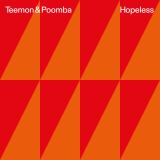
Teemon and Poomba go looking for light in the darkness on their new EP “Hopeless.” The Madrid duo have a knack for dragging nostalgic sounds into the present, and this release is no exception. With equal parts Hi-NRG euphoria and dark disco dread, the four tracks feel like a glitchy transmission beamed in from another decade, or perhaps another galaxy…
The title track, “Hopeless,” sends us hurtling down a wormhole. Powered by a cavernous bass, we are propelled through kick drums, warp effects and sparkly synths, while a distant voice calls at us through the darkness.
Iranian producer Amirali takes “Hopeless” somewhere a little lighter with his remix, easing the intensity down before letting it slowly climb again. His version foregrounds the track’s earworm synth line and builds on it, layering and expanding on the vocal line until it sounds celestial. Amirali’s skills as a classically trained pianist feel reflective here in his compositional approach.
If “Hopeless” is the wormhole down, then “Moon Connections” is what’s waiting on the other side. The track leans heavily into sharp, percussive sounds that form a grounding contrast to the high synths that glitter above. With a spoken word line that sounds like it’s being transmitted through a space-age radio and enough deep warp effects to get lost in, this B side sends us to the stars.
Closing things out, the Eagles & Butterflies remix of Moon Connections brings us down to earth. Chill, deep-house adjacent and with a hint of Daft Punk in its DNA, it wraps a heavily filtered guitar line around a softened groove built for the comedown – the sound of the sun coming up on the last people left on the floor.
Techno is an experimental journey: deep, moving, cinematic, carried by science-fiction dreams steeped in true melancholy. Over time, much of this heritage has faded away. The soul and spirituality of the music have receded, giving way to the oversized ego of some, and to the constant need to show off on social media: a techno that looks beautiful, but is sterile, limited, meaningless, with no jazz, gospel or disco influence at all. The innovators, whether African-American in Detroit, Chicago and New York, or German with Kraftwerk, bet everything on the hypnotic and mesmerizing side of this music. "Lost Spiritual" was born from this observation, with a simple idea: to give more credit to the music and what it makes you feel than to the musician's look or haircut. This record is a tribute, an inspiration, and the hope that the spiritual dimension, which was the priority in the early 80s, will never die.
La techno est un voyage expérimental : profond, émouvant, cinématographique, porté par des rêves de science-fiction empreints d'une véritable mélancolie. Avec le temps, une grande partie de cet héritage s'est effacée. L'âme et la spiritualité de la musique ont reculé, laissant place à l'ego démesuré de certains, au besoin permanent de s'afficher sur les réseaux sociaux : une techno belle en apparence, mais stérile, limitée, vide de sens, sans aucune influence jazz, gospel ou disco. Les innovateurs, qu'ils soient afro-américains à Détroit, Chicago et New York, ou allemands avec Kraftwerk, misaient tout sur l'aspect hypnotique et envoûtant de cette musique. « Lost Spiritual » est né de ce constat, avec une idée simple : donner plus de crédit à la musique et à ce qu'elle procure qu'au look du musicien ou à sa coupe de cheveux. Ce disque est un hommage, une inspiration, et l'espoir que la dimension spirituelle, qui était la priorité au début des années 80, ne meure jamais.
Flowgeist emerges from a shared inquiry into sound and aesthetics. Genre remains peripheral; meaning stays tethered to sensation. The self-titled debut, released on Evighet Records (EVIGHET007), follows that logic across a full record, moving from matter to memory and giving passing states somewhere to stay. Trip Hop, Drum and Bass, post-punk, breakbeat, EBM, Techno and modular electronics all surface within it, summoned only where a feeling demands them, with acoustic instruments retaining their grain inside the electronic frame. The A side keeps its instruments close and its focus intimate, opening on "Molecules," where Zainab J Lascandri's voice and Arthur Boudet's guitar set the album's tone before it moves through cycles that won't break: a life stuck in place, a trust already gone bu14t still being tended, an attraction whose charm thins out under repetition. That inward attention eventually turns outward, closing the side on a colder note about how influence gets performed and mistaken for substance. The B side works through broken rhythm and cinematic scale. It examines political language for the seams in its polish, follows a relationship reduced to proximity without real contact, and rises to the record's most forceful club passage before settling into "Crystal Muse," where Massimo Capobianco's guitar moves alongside an extended modular passage, luminous and unhurried. The album closes by turning its attention to composition itself, treating the act of writing music as a way of holding onto experience before it disappears. Across both sides, the record travels from immediate, bodily feeling toward something more contemplative, carrying the same emotional attention from private entanglement into wider systems and finally into the quiet work of making the record itself.
Spanning Portland, Bristol, London and beyond, Cold Light has evolved from a friends-and-family label into something stranger but more cohesive. It's a collective spanning Best Available Technology, Birthmark, Withdrawn, the wind between, CSNL and Rael, plus a wider orbit including Elaine Malone and Tony Onuchukwu. What began as a 2019 tour experiment and crystallised during lockdown into the Live at the Laundromat sessions has now fully matured into a singular sound rather than a patchwork of ideas. Dub sits at the centre, most clearly on the sprawling 'Fields in B', but the group folds in haunted boom-bap, gritty noise-rock and ghostly trip-hop with equal confidence. 'Riot' and 'I've Known Fires' both hover in that murky, half-familiar space the collective has made its own.
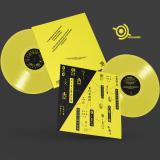
Oráculo Records joins forces once again with Unknown Pleasures Records under the banner of “The Black Alliance” to celebrate one of electronic music’s most influential acts: SUICIDE. Widely regarded as pioneers whose radical approach helped lay the foundations of minimal synth and darkwave, Alan Vega and Martin Rev receive a tribute from artists who carried their influence into new territories. Absolute Body Control, Gabi Delgado of DAF, Patrick Codenys and Richard 23 of Front 242, and Dirk Da Davo of The Neon Judgement appear alongside some of the most compelling contemporary projects in the international dark music underground. Spread across two records, this collection of cover versions also features SUICIDE songs revisited by Alan Vega himself with Marc Hurtado, presented on vinyl for the first time. Their presence creates a direct connection between the original voice of SUICIDE and the generations shaped by the duo’s uncompromising vision. An instant classic in spirit and scope, “SUICIDE Pioneers’ Celebration” honours a legacy that continues to resonate across the underground. Produced in a one-off pressing of just 500 copies, this is a collector’s edition to discover, play and treasure for years to come.
Producer Addalog makes his mark on Memory Believes Before Knowing Remembers with a debut 12" that reads like a journey through desolate, sun-bleached landscapes, somewhere between a spaghetti western and a late-night basement rave.
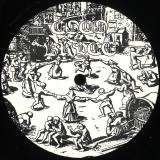
Rare! Limited! Hand Stamped! First and un-official Love Parade theme from 1989 and remained unreleased to this day. The Techno Deep Club were 8 guys from the early acid house scene in Berlin who organized some of the first acid house parties in both West and East Berlin, starting even before the wall came down in 1989. These three acid-experimental tracks have been recently rediscovered and are now being immortalized for the first time in a small edition remastered on vinyl.
Black Truffle is pleased to present Even Colder Spring, the latest release from the mysterious and wildly prolific Cities Aviv (a.k.a. Wilbert Gavin Mays, who also records as African-American Sound Recordings), a rare appearance from the artist outside his own D.O.T. Audio Arts label. For over a decade, Cities Aviv has twisted hip-hop conventions into the most skewed and splayed forms, layering and lacerating twitching loops, extreme production techniques and his mercurial vocal stylings into hermetic décollage. Across 16 tracks, Even Colder Spring charts Mays’ restlessly experimental approach: what sound like fully formed productions are interrupted suddenly after seconds; interjections of field recordings cue unexpected shifts; details drown under layers of fuzz. His vocal delivery takes in rhythmically intricate rap, barely articulate murmurs and freely melodic song, the latter often with a disorientating lack of connection to the track’s harmonies. The lyrical shifts are as paratactical as the musical movements. Apocalyptic visions of social and cultural uniformity alternate with reflections on mortality, glimpses of everyday life and head-scratching one-liners: ‘Maybe Mars is bougie?’ His reference points are as surprising as ever, the Dante quotes of previous releases joined here by a track named after Henri Bergson’s idea of the élan vital. Australian listeners, in particular, might be especially taken aback to hear ‘Closing Door’ open with the phrase ‘the tyranny of distance’.
While Mays’ work can sometimes be claustrophobically bleak, the productions here are often sparkling, at times touching on the shimmer of private-issue New Age sounds and the more playful end of krautrock. The instrumental ‘Martine Drift’ could almost be a snatch of Cluster’s Zuckerzeit caught through dial-up internet. The distant echoing drums of ‘L_area’ cross Persona’s Som with lo-fi IDM, while closer ‘Final Heaven’ dissolves a cloud of loops across almost seven minutes into ecstatic, rippling distortion. The graphic design, at the artist’s request closely modelled on the format of Corwood Industries, offers as good a clue as any to what awaits the listener on Even Colder Spring: a world at once impossibly opaque and intensely personal.
This year marks the 40th anniversary of one of the true cult classics of the Italo Disco universe: Mike Mareen’s “Love Spy.” Released in 1986, the track sounded strikingly different from much of the dance music around it: futuristic, dramatic, playful and instantly recognisable. It quickly found its way into DJ cases across Europe and became one of the records that would define Mike Mareen’s electronic sound.
But the story actually began under a different name. An early incarnation of the song was called “Batman,” with lyrics inspired by the adventures of the famous comic-book hero and the villains surrounding him. A small number of promotional copies circulated before copyright concerns meant that the concept had to be abandoned. The title and lyrics were rewritten and “Love Spy” was born. The early “Batman” version has since become one of the most fascinating curiosities in Mike Mareen’s catalogue.
Four decades later, we felt an anniversary like this deserved something special.
LOVE SPY 40th Anniversary will therefore arrive in two parts, bringing together some of our favourite producers from today’s Italo, synth and electronic scene.
Part One features brand-new remixes by Luca Dell’Orso, Flemming Dalum, Also Playable Mono and Disco Computer. And enthusiasm was never going to be a problem here. “Love Spy” is not simply an ’80s classic, it remains a genuine DJ favourite, loved by old-school collectors and a new generation of Italo-wave selectors alike.
Alongside four killer new interpretations, we are bringing back the original Badman Mix, plus the highly sought-after “MAKE YOUR OWN MIX” material – rare set of individual elements created for DJs to deconstruct, combine and rebuild “Love Spy” themselves. These samples have become particularly desirable among collectors and make the perfect addition to the first chapter of our anniversary edition.
Four new remixes. Two pieces of history. Forty years of LOVE SPY.
And we are only halfway there.
LOVE SPY 40th Anniversary Part Two, featuring another line-up of major names from our scene arrives in November.
Out soon via Heads In The Clouds - H004 - Josh Wink & DJ ESP - Stairway To Headphones (12") Re-issue from 1995
Communique Records re-issues an classic by Josh Wink & ESP aka Woody McBride on the sublabel "Head In The Clouds"
from 1995. All tracks are re-mastered and re-recorded from original DAT.
Highly recommended!
When Khalab and Baba Sissoko first recorded together in 2015, they produced something definitive: a record where electronics and griot tradition achieved genuine synthesis rather than polite cohabitation.
Not layered genres maintaining separate identities, but two forms evolving into something singular. "Tata" took Track of the Year at the 2016 Gilles Peterson Worldwide Awards, found champions in Laurent Garnier, Ben UFO, Matthew Dear, Bonobo, and many others — but more significantly, it established a working method built to last.
Eleven years on, they return with Foli Bah on Hyperjazz Records. Theirs is a relationship built on trust. Khalab constructs structures that don't develop linearly but spiral inward — loops that reveal something new with each rotation, tightening until the listener stops resisting and surrenders. Sonic architectures that don't expand outward but deepen over time, layering toward saturation. Baba Sissoko inhabits these structures with instruments from Malian tradition, not as ornamentation but as load-bearing elements: the tradition becomes structure, not decoration. Electronics and griot practice stop negotiating terms and start speaking the same language.
In the early ‘10’s the WPH Summer Special was a yearly tradition: a stamped vinyl only releases featuring lost tracks, one-off collabs, dreaded digital only gems, etc. Some summer specials were so hot we released them in the winter to battle the cold…
Guess what? It’s back! Four killer tracks on one slice of vinyl. Satoshi Fumi remixing Ian O’Donovan to devastating Detroit-styled effect, Red D taking things deep with some dreamy deep house magic, Fabrice Lig going from ‘Border 2 Border’ on vinyl with Red D & Lady Linn and then Uit De Hoogte teaming up with Lefto for an oldskool house jam that will only be available on this release.
If this doesn’t get your heat up…
Ame: Thanks for ‘Border 2 Border’
Frankey & Sandrino: Great music in here, thanks!
Ben Sims: Ian O’Donovan one…asap!
Axel Boman: The dancefloor is open indeed.
Terre Theamlitz: Thank you for ‘Sweet Synthie Pauline’.
Simon Caldwell: Lovely E.P. of reminiscence!
Satoshi Fumi: Cool pack J
Red Rack’em: Love the Satoshi Fumi remix.
Severino Panzetta: Grooovy!
Jimpster: I can imagine the Ian O’Donovan working nicely. Classy stuff!
Cold, Bold & Together (CBT) CBT was founded in Bellingham, Washington in 1971 by percussionist Tony Gable and musicians Solomon Harris, Keith Hooks and twin brothers TC & Jamar Jenkins. It soon became evident that Bellingham was not a particularly welcoming environment for R&B music, so they moved to Seattle to try their luck and plumb the rich supply of venues, which they successfully did until disbanding in 1978. They spent their early Seattle years playing a combination of covers and originals in clubs, later becoming the "go to" opening act for various nationally known artists, such as Ohio Players, Kool and the Gang and Earth, Wind & Fire. While they were paying their club circuit and opening act dues, they squeezed in recording sessions whenever they could and released their own material, which was well-received and got strong regional airplay. However, because of the feudal nature of the music business at the time, they just couldn't break out, and like a lot of Northwest bands with great potential, they inevitably broke up and went their separate ways. Upon disbanding, they left behind a collection of original recordings at Seattle's legendary Kaye-Smith studios.
Unfortunately for CBT, the studio passed through several owners and at some unknown point in time, one of them did the unforgivable and destroyed the storied studio inventory of two-inch tapes and quarter-inch masters. Unknown to the band, a copy of their masters was smuggled out by their producer who added them to his legacy collection of cloned quarter-inch masters. After several years and many moves, he became concerned about the tendency for magnetic tape to deteriorate over time.
He sent the tapes to a Seattle lab to be restored and digitized, with the hope that perhaps, some day, they might be made available for the listening pleasure of R&B fans. The hoped-for day has finally arrived. Russell Paine and Super Disco Edits has pressed two of the Kaye-Smith CBT tracks: "Go For It", a jazz-influenced instrumental, featuring Kenny G, and "Unity", sung by the group en masse with Tony Gable singing lead. The musicians on these tracks are: Tony Gable, leader, vocals and percussion Harry Alexander, drums Kenny Gorelick (now world-renowned "Kenny G"), sax, flute and horn arrangements Chris Ishi, trumpet Michael Young, Trombone Jamar Jenkins guitar, vocals TC Jenkins bass, vocals 1 Philip Woo, keyboards Footnotes: CBT gave legendary saxophonist Kenny G his start in the music business. Kenny was still in high school when he was recruited to play sax and write horn arrangements. Kenny co-wrote, arranged and played sax and flute on the instrumental "Go For It." He rips a smoking tenor sax solo in the middle, which showcases his already masterful technique and solidifies his R&B bona fides. He went on to have a spectacular career recording for Clive Davis and Arista Records. Before his untimely passing in 2016, Tony Gable went on to found contemporary Jazz group, "Tony Gable and 206" (206 being Seattle's then only area code). With songwriting, performance and production help from Kenny G.
The clergy is pleased to introduce you to a new initiate: Birds ov Paradise. This highly anticipated Hypnus debut comes split into three separate EP's which will be released one each full moon starting October.
Some of you may be acquainted with the music of Birds ov Paradise already as he's put out two stellar records on Jens and Aniara Recordings in 2016-2017, as well as making a contribution to our podcast series The Memoir where his sound was put on a grand display. Those of you who are new to the fantastic dream world of this very talented artist will quickly get lost in the flowing rhythms that drives his magical deep techno sound.
Early support from Etapp Kyle, Ness, Slam, Iori, Refracted, Svreca, Cio D'Or and Dorisburg to name a few.
2026 Repress
Temudo - Meteora (FUSE06) by Noah Hocker
A leader of the Portuguese wave in techno co-founding Hayes Collective while boasting acclaimed releases on Klockworks, Blueprint, and Soma, Temudo grabs the reins to take club music back to its days of audacity and risk taking. A more than promising up-and-comer turned modern reference, Temudo defends his reputation with a release showcasing depth in his various sonic universes and a deep understanding of his music's history. For its seventh release, Temudo's 'Meteora' is a logical next step for the club's direction - a sweet spot between dancefloor efficiency and enduring aesthetic.
Combining the intrigue of mental soundscapes with the reliability of imposing rhythm, 'Meteora' finds itself collected, expressing effect through restraint. The title track, claiming the EP's A1, is just that - a force of interweaving sound design and powerful micro transitions. Some believe the best techno records are able to express emotion and attitude despite its dissonant and machinelike nature; if that's the case then Temudo has mastered the craft. 'When I Grow Up', however, puts the focus back on the body. What sounds like warbling tape modulation over a percussive lead makes this record an addictively delirious ride from start to finish, fitting in with the track before while shifting to different priorities. Proving his versatility, 'Vrthng' at first seems reminiscent of the minimal Berlin style with a higher pace, but quickly progresses into something intensely euphoric. With experience and measure, an out of the box approach can really pay off, and the added emotion in 'Vrthng' is certainly a turning point in the EP. This mindset is clearly carried over in the project's conclusion : 'It's Always Past'. A surprising use of harmony and storytelling, this final chapter ends with Temudo sealing his style with confidence. The track is mystified by its chords, ending 'Meteora' with a question mark that leaves us in anticipation for what Temudo dares to do next.
In these cold days we're pleased to present a potion to warm the soul as Feral finally release his 5th Hypnus record. This is the first release of our 6th year which introduces a new, custom made sleeve design that further articulates the adventurous and cinematic philosophy of our music.
Most of you will be acquainted with Feral by now as he's been an essential part of our guild for quite some time. Those of you who enjoyed his last two EP's will be pleased to find the sound of "Court of Light" to be a solid evolution of his inimitable dubbed out deep techno sound.
Early support from Claudio PRC, Deepbass, Ness, Svreca & TM404 to name a few.
2026 Repress in White Vinyl
There are few people across the globe, who will have not been touched by the work of Frankie Knuckles. Forever regarded as ‘The Godfather of House’. A Grammy Award winner, Frankie had a street in Chicago named after him where the old Warehouse once stood to commemorate the first ever Frankie Knuckles Day on 25th August 2004. Five years ago, Frankie passed away in Chicago on 31st March 2014 leaving behind one of the greatest house music legacies spanning almost four decades.
Now he is commemorated once again by long time writing and production partner Eric Kupper who will release part II of the special commemorative album on vinyl around this date. Eric, himself a seasoned DJ producer and writer, working side by side with Frankie on many his seminal classics, as well as personally working on over 116 Billboard #1 Dance Records. Having both worked together for many years they established themselves at ‘Director’s Cut’ from 2011 and set about producing original releases and remixes based on the classic ‘Def Mix’ sound while sharing equal credits for their creations.
The album features some of Directors Cut’s best works with the Re-Directed version of the seminal classic ‘Baby Wants To Ride’ plus their re rubs of Inaya Day, Sybil, Hardsoul and Lou Rawls - You’ll Never Find Another Love Like Mine (Kenny Summit, Frankie Knuckles & Eric Kupper Unreleased Anthem).
This album is to be released in collaboration with The Frankie Knuckles Foundation who work to continue Frankie’s legacy whilst focusing on music in schools, LGBTQ youth homelessness, AIDS research / prevention & diabetes research / education.
Culoe De Song brings ancestral rhythm to his Crosstown Rebels debut EP, ‘Moonhound’.
The Afro house veteran delivers a three-track excursion, featuring remixes from Manoo. One of South Africa’s most storied house exports, Culoe De Song, lands on Crosstown Rebels for the first time with ‘Moonhound’, a three-track EP fusing organic, electronic textures around a minimal core. His take on deep, Afro-house has carried him from a breakout year in 2008 to an acclaimed run of albums via labels including Innervisions, Mule Musiq and his own De Song Music. With a career spanning more than fi fteen years, he has shared line-ups with the likes of Black Coff ee, Seth Troxler, Louie Vega, Carl Craig, Âme, and, in particular, label boss Damian Lazarus, at some of the world’s most renowned festivals and venues. His arrival this August feels like a natural convergence of two paths that have long run in parallel, less like a debut and more like an overdue reunion that channels percussive rhythms into a stripped-back, hypnotic core.
Title track ‘Moonhound’ eases in slowly, layering organic textures over brooding rhythms as whimsical, drifting elements and soft synth lines pull it into a steady ebb and fl ow. ‘The Spiker’ follows, driven by a punchy bassline and animalistic vocal calls and chants, before crisp percussion builds and breaks down into panning melodies for a blissful close. With releases on MoBlack, Classic Music Company and Deeply Rooted, French house mainstay Manoo brings his instinct for groove to ‘The Spiker’, with his ‘Abstrakt Remix’ showcasing a hypnotic rework that stretches the original’s key elements into a tone-setter for the evening ahead. He then doubles up via his ‘Club Remix’, a digital-only addition that trades the ‘Abstrakt’ interpretation’s slow build for echoing synths and syncopated rhythms, bringing a heads-down, functional cut built squarely for the club.
Autumn of 2022 marked 20 years since the initial release of Metro Area's first and only album, Metro Area. Environ had already remastered and re-released this essential LP for its 15th anniversary. So this time around, we're doing something a bit different.
To celebrate two decades of Metro Area, Environ has partnered with renowned mastering engineer Matt Colton (Metropolis Studios) to remaster and recut the first four Metro Area 12"s: Metro Area, Metro Area 2, Metro Area 3 and Metro Area 4. Unlike the album reissue, these records include the original, extended 12" versions of all songs, including some which have never been re-released.
Metro Area is the duo's first 12" EP, originally released in 1999.
FatCat was recorded in a single session-live, with all four musicians together in the same place. What you hear on the record isn't a polished production, but a one-of-a-kind recording of four people playing at the same time in the same room.
This is not a nostalgic gesture. It's a stance. As music is increasingly understood as the output of a prompt, the question of what actually makes music becomes urgent again. Not flawless, efficient production, but the imperfect moment and its context. Not the result, but the process in which four people listen to each other, react to each other, misjudge, and find one another. This fallibility - the hesitation before an entrance, the slight pull in the timing, the glance between musicians that signals a turn - is not a weakness but the substance itself. It cannot be synthesized, because it isn't a data point but a lived relationship: between the instruments, between the people, between their shared history and what emerges new in this one take. The album is thus also a statement on the question of where, in the age of generative music, authorship and art can still be located: not in the result alone, but in the shared risk taken in creating it.
"The question was always: how do I bring my work as a producer and beatmaker onto the stage? How can something that usually happens alone behind closed studio doors become a live experience?" With the album FatCat, Sepalot pursues this question to its logical conclusion: what began as a live performance now becomes the recording itself - the studio becomes a stage for a day, and the stage becomes the definitive version of the album.
The love for electronic music remains, the raw pressure of hip hop is still palpable - and yet everything on FatCat sounds like a fresh start, captured in the very breath in which it was played.
On stage as in the studio, the four characters fit together like a puzzle. Sepalot's signature as producer and mastermind is unmistakable. On drums, Fabian Füss, longtime partner behind the kit and the voice that makes Sepalot's radio hit "Rainbows" so unforgettable. On bass, Robin Jermer. On trumpet, Matthias Lindermayr, multiple award-winning jazz virtuoso with his own albums on Enja Records. And then there's Sepalot himself, who turns it all into more than just the sum of its parts.
The eclectic beats, the pulsing bass, Sepalot's passion for atmospheric sound design - all of it remains, now joined by an element of jazz and captured in its most immediate, unpolished form. The album shows what four people in one room are capable of: a sound born of shared experience, and precisely for that reason, unique.
Truths and secrets often reveal themselves at night, under the freedom of shadowy darkness, away from prying eyes. In creating Given to the Night, sisters Valentine and Clementine Nixon have crafted a world that drifts through the in-between: between dream and reality, between day and night and the undefined, and ultimately a world that embraces the discomfort of being untethered. A process that follows simplicity and intuition rather than pre-determined narratives. “We recorded songs as they appeared, which sometimes felt like catching light. Before we realised it we had a record”, the duo explain.
While making the record Valentine and Clementine gently pushed away from the world- deleted social media, retreated into the trees of their native New Zealand - and only invited a couple of people in during the recording process. From that space, the album came together in an eerily easeful way.
There is a dream-like drift and sonic timelessness to the the record, as reflected in its nocturnal title, which can be read in two ways:
“Being taken by, or being inclined towards nighttime, preferring its blurry cloak of shadows to the harsh light of day; or giving oneself up to night, in sacrifice, letting go of fear and melting into the darkness.”
Written during a time of personal transition there was “a sense of finding the light in the shadow” they add. Guitar lines float, synth lines entwine, tapes hiss and vocals stream creating a kaleidoscopic montage of transient memories and emotions. A spectrum of feelings arise - isolation and joy, insomnia and manic highs, confusion and fleeting clarity, grief and healings. In the record, these feelings all merge and fade into one another in a nonlinear manner, as life tends to do; creating something deeply human that simultaneously gestures towards the transcendental.
Consummate selector DJ Sundae returns to Efficient Space with Nothing Ever Was, an immaculate compendium of phantom independent melancholia spanning '60s/'70s village green folk, outsider shoegaze and new millennium domestic pop. Each recording an emotional exorcism, Sundae breathes oxygen into music that was barely there in its own time, made in quiet places and crawl spaces, shared only with a precious few via private presses, hobby labels and now-decaying CD-Rs.
Free of any prescribed epoch, continent, scene or rarity, Noughties homemade indie pop opens both sides with the 4-track wonders of The Motifs and Betelmire, unlinked contemporaries finding their place alongside Andrew Jay's Crazy Horse rust, the regional-garage adolescence of Pauline Scribner and the anaesthetised Mancunian guitar-poetry of the late Quigley.
The remaining coordinates zigzag between the UK and US. Folk wayfarers John Strang & Valentine Lewis Lloyd, Virgin Insanity, Kusudo & Worth and Penny Wager's spartan Garden of Eden acoustica find their mirror in Empress and Slumber's close-quarters indie pangs. Chicago power pop fixture Phil Angotti is caught at his most tender, while Teri Rini takes the final bow with her universe-stopping hotel lounge torch song.
A deeper, more personal exploration of Sky Girl's sentimental songwriting, Sundae found himself amassing a cache of tracks too undeniable to remain confined to his anonymous mixtapes for TTT, P.A.M. and Good Morning Tapes, or bi-monthly hour on NTS Radio. Again his emotional sorcery draws together an unlikely cast, their unwritten narrative assembled from fragmented memories of past lives left behind by future horse trainers, ketamine therapists and Fab Four cover band careerists.
With not a second squandered across 1LP, it took a village to bring this new companion into being, with David Bergot's forensic audio restoration, dreamlike imagery from Matthieu Crozier, Ivan Liechti's elegant design and a perceptive foreword by kindred spirit Jessica Pratt.
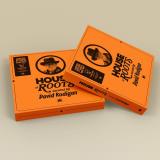
David Rodigan MBE and Defected Records announce the release of House Of Roots; a specially curated three-track remix project by the legendary tastemaker, DJ & broadcaster, reimagining Defected classics as they’ve never been heard before.
House Of Roots has been born out of a partnership that’s blossomed since David first touched down at Defected Croatia in 2025, with his performance becoming one of the defining moments of the entire festival. After returning to Croatia for this summer’s festival finale, Rodigan - this time armed with the House Of Roots remixes - delivered another landmark set, underlining exactly why he remains such a revered DJ & selector.
The House Of Roots project reimagines Defected’s rich catalogue through the lens of reggae, dub and drum & bass in a celebration of music genres that have continually inspired one another throughout the decades.
Enlisting legendary drum & bass originator Shy FX, jungle maximalist CLIPZ, and fabled dub reggae producer & engineer, Prince Fatty, to remix three of the label’s seminal records - Fish Go Deep’s 2006 classic ‘The Cure & The Cause’, Soul Central’s ‘Strings Of Life’ (2004) and The Vision’s ‘Heaven’ (2019) - House Of Roots marks some of David’s most important and intriguing curatorial work yet.
House of Roots comes as a limited edition 7” box set including the 3 remixes plus exclusive dubs and instrumentals plus a 16 page sleeve note collectors booklet.
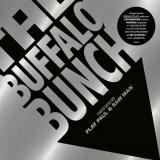
A key name from the golden era of French Touch, The Buffalo Bunch return to the spotlight with a selection of some of their most essential cuts, including their highly sought-after remix of Phoenix’s “If I Ever Feel Better” — a track that has become increasingly elusive on vinyl over the years.
Also featured is We In Music’s “Grandlife”, a cult early-2000s gem born from the same creative circle. Built on addictive disco-funk loops and straight-to-the-floor energy, it sits perfectly alongside The Buffalo Bunch’s signature productions.
Filtered house, disco, funk and raw groove collide throughout the compilation, capturing the unmistakable sound of a duo whose records have become firm favourites among DJs and collectors.
More than twenty-five years after their first releases, TMS Records brings these tracks back into circulation with a vinyl edition made for the dancefloor, the record bag and a new generation digging deeper into the French Touch legacy.
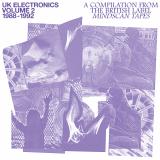
For this second volume of UK ELECTRONICS, we’ve once again selected, here at Delodio, some of our favourite tracks from Mindscan Tapes, an English DIY label active from 1988 to 1994, run by Robert Maycock, a young Englishman with an extraordinary ear.. Its Beatronic and UK Electronics compilations brought together electro, early techno, ambient, experimental, house and industrial music at a time when most labels stayed within clearly defined genres.
Here at Delodio, we are amazed by the contrast between the quality of these cassettes and the label’s extremely underground nature: its best-selling title has barely sold 30 copies.
More than a compilation, the album is a tribute to the artists involved, Robert’s artistic vision, and the pre-internet DIY culture that connected music obsessives through mail, flyers and home-copied cassettes.
A snapshot of an era when a young Englishman spent his dole money bringing unheard music into the world.
Elypsia Records presents A Future Tribe, the new album from Italian electronic music producers CEM3340 & 2030. Rooted in the formative language of electro and early techno, A Future Tribe channels the past through a lens very much focused on the future. Across the album, analogue warmth, machine-driven funk, synthetic textures and futuristic atmospheres come together in a sound that channels the pioneering spirit of early Detroit while remaining unmistakably connected to the present. For CEM3340 and 2030, machines are not simply tools, they are central to the creative process. Both producers have spent years immersed in the culture of electronic hardware. They've been carefully building and refining their own approach to production through an extensive collection of synthesisers, drum machines, sequencers and studio equipment. Based in Bari, southern Italy, their work reflects a deep fascination with the physicality of electronic music: oscillators, circuitry, voltage, rhythm and the unpredictable character of machines programmed and played with a human touch. That philosophy is deeply embedded in A Future Tribe. Rather than treating the early years of techno as a museum piece, CEM3340 & 2030 approach its foundational ideas as a living language - one that can be stripped back, re-translated and taken somewhere new. The influence of Detroit's first generation of electronic innovators is unmistakable. There are echoes of the futuristic electro and techno pioneered by artists including Juan Atkins and his contemporaries, where funk, science fiction, machines and the possibilities of tomorrow became part of a new musical vocabulary. It is an approach that has already earned the duo recognition within that lineage. Their previous Machines Awake EP, released through Atkins' Metroplex Records, was described as paying homage to the classic foundations of the genre while pushing them into new territory. Juan himself gave the release his sonic approval. But A Future Tribe is not an exercise in retro-futurism for its own sake. The album comes from two producers who understand the history, have the hardware to explore it and, crucially, are interested in what happens when those influences are given space to evolve. The result is electronic music that is full of funk, groove and a kind of nostalgia that is pure and intentional without being a pastiche. Together, they make music that is rooted in one simple truth: machines can't come to life without human creativity.
Infusing his cinematic, psychedelic musical vision into cutting-edge, bass-heavy electronics, Kutiman presents a euphoric club journey through UK garage, D&B, post-dubstep, and futuristic dance music.
With syncopated drums, deep basslines, and R&B-soaked vocals from standout artists like Jenny Penkin, Misha Sutherland and Odelya Illouz, the project bridges the gap between the indie electronica of Four Tet, Caribou, and Jamie xx and classic alternative club sounds.
Club music is emotional at its heart, and this release captures its essence perfectly; the peak-time euphoria, the moments of introspection & the times spent lost in the music.
Aura Safari are taking it back to the source with new album Spaced Out Disco on Hell Yeah. The eight-track record is inspired by the iconic sound, feel and studio techniques of the original 1970s disco and was played entirely live with real instruments.
Aura Safari are Andrea Moretti, Lorenzo Lavoratori, Daniele Melloni and Nicholas Iammatteo, and they have been releasing EPs, LPs and remixes on this label since 2020. They have long been entrenched in the local scene of Perugia and are live specialists with a unique chemistry that allows them to translate funk, jazz, soul, disco and house into their own timeless and universal musical language.
Integral to the album is the live performance aspect. All the band members hooked up in the studio and played together, often laying down tunes in one take and then adding some post-production for a modern edge. Disco, dub, jazz-funk and instrumental grooves define the sounds while the creative use of classic delay, echo, spacey FX and dubbed out arrangements lead the record the same Jamaican character that inspired original dub-disco pioneers like Arthur Russell, the Compass Point Studio and labels like Prelude and West End.
'Starlove' opens with low-slung grooves and squelchy bass that twist you inside out before 'Spaced Out' shimmers with astral melodies and synths that rise like a rocket disappearing into the night sky. Funky claps and flashes of Dexter Wansel-inspired soul complete the picture, while 'Santa Barbara' eases the pace with a brain-bending dub workout full of weighty low-end and warm, sun-kissed chords. 'Cosmic Affair' lives up to its name, gliding through the galaxy on uplifting guitars and slinky drums, all wrapped in irresistible retro-futurist magic and lit by the moon.
'Disco Mirage' turns inward with simmering bass, dusty open hi-hats and hazy synth trails drifting through effervescent jazz keys that rise like champagne bubbles. 'Magik Space Dust' stretches towards the stars with soaring leads and knotted bass locked into an effortless groove.
Spaced Out Disco does exactly what it promises and plots a richly imagined journey that never stops looking towards the stars while keeping its feet firmly on the dancefloor.
16 bongo bashin' tropic-trashin' mambo-shmambo monsteros!!
Everybody likes a bit of LATIN. It's steamy. It's tropical. It's hot. It gets the dames a-dancin' and the guys pay attention. Those wild rhythms are the sound of sweat. It's the heat that can't be beat.
Now let me tell you about LATIN. Real LATIN, bangin' LATIN. Not the sweet soft stuff your mama used to play. I'm talkin' hard bangin' LATIN that's the real deal. The stuff that makes you move. The motion of the ocean. Hot, wild, sexy rhythms. Skin slappin' coconut crackin' conga crushin' caliente copana. And horns to die for!!
You got your rhumba, your mambo, you got your cha cha cha. You got your Cuban heat, Brasilian beat, colourful Colombian cumbia and pure fire from all those little islands in the Caribbean. You cut 'em, you chop 'em, you cook 'em on up with a slug of jazz and some downhome RnB and you got yourself the devil's own firecracker. It's a sauce like liquid lava. It's LATIN that's off the scale.
Now you add your mezcal, your Carolina Reaper, you add yourself whatever you want, and that right there is a volcano in a bottle. Krakatoa ain't got nothin' on this baby! Put the needle on the record, watch your dancefloor EXPLODE!
The Godfather of Ancestral House delivers 4 edits of typical Yoruba Soul quality. A delightful collection of tribal percussive dancefloor bombs that will have a wide appeal.
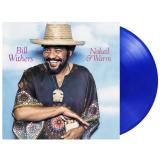
Bill Withers was a modest, gentle, and yet towering musical figure responsible for some of the most important, universally known soul hits ever written. It’s no wonder that “Just the Two of Us” and “Ain’t No Sunshine” won him two Grammy awards and undoubtedly played a huge role in getting him inducted into both the Songwriters and Rock and Roll Hall of Fame.
Naked & Warm is Withers' fifth studio album, released in 1976. A year earlier, the Sussex label—home to Bill's first four landmark albums—ceased operations. Withers then signed with the mighty Columbia Records, which would remain his home until the end of his recording career. While Naked & Warm retains Bill's unique, earthy approach to soul that made him Sussex's biggest star, it's clear that musically too, he was in transition; the first half of the album is full of synthesized jazz-funk vamps, while "City Of The Angels" is an almost 11 minutes long cosmic funk excursion combining biting Rhodes chords with swirling synth pads and Dorothy Ashby's spiritual harp work. All in all, Naked & Warm might be one of Bill's most underrated records, simply because his previous work for Sussex was just that impactful.
Naked & Warm is available as a 50th anniversary edition of 1500 individually numbered copies on blue vinyl and includes a 4-page booklet featuring lyrics and new liner notes written by Marcia Withers.
Kisah Pasar Baru: The Modern Sound of 1950s Indonesia
When Indonesia gained its independence from the Dutch colonial government in 1945, politicians and soldiers weren’t the only ones playing a major role in building the sense of national identity.
Also working on the nationalist front were merchants and traders of phonograph records, who prior to the country’s independence served as local agents for foreign labels like Odeon and Beka. In Batavia, one of these traders were Tio Tek Hong, distributor of the international label Odeon and the other figure was Soejoso Soekarso, who also served in the Indonesian Military as an Air Force Marshall.
Irama Records, the music label he founded in 1951, was first attempt to “nationalize” the means of production of “indigenous music” from both foreign labels and intermediaries like Tio.
Soejoso stood at the intersection of music, business, and nationalism. He was the vanguard in the process of popularizing of a new breed of “national” music, especially the type he showcased in the compilation Kisah Pasar Baru: The Modern Sound of 1950s Indonesia, released in 1958.
Yet, the idea of an indigenous music championed by Soejoso was in fact the amalgamation of a myriad of cosmopolitan strands. As an air force officer, Soejoso spent some of his time playing in the Hawaiian band Lieve Souvenier in Semarang before relocating to Jakarta and started jamming with the band Elshinta Hawaiian Senior.
In addition to Hawaiian music, Soejoso was a versatile musician who also had the chops for jazz, a musical genre wildly popular in the 1940s and early 1950s Indonesia. And it was jazz that he first recorded for his Irama Records label.
One night in 1951, he squeezed pianist Nick Mamahit, bassist Max van Dalm, drummer Dirk van der Capellen, and guitarist Dick Abel into a 2×3-meter studio on Jl. H. Agus Salim, Central Jakarta, to record the first local jazz album of the post-independence era.
Kisah Pasar Baru is a compilation of hybrid music that Soejoso and his coterie of musicians championed in the early 1950s, a mix of Hawaiian, Keroncong and Jazz and it became a hit soon after being release.
One of the best compositions on this album, “Pajung Fantasi,” composed by the legendary composer Ismail Marzuki, is essentially built from Bing Slamet’s baritone—Indonesia’s equivalent of Bing Crosby--and the distinctive Hawaiian-styled steel guitar. The most famous song on the album, “Sabda Alam,” also written by Ismail Marzuki, follows the same pattern, its steel-guitar works now backing Theresa Zen’s hauntingly ethereal vocals.
Kisah Pasar Baru was never designed to be a long-playing record, and its presence on the market was to capitalize on a new trend in the recording industry. The album is a greatest-hits compilation, with songs in this album previously circulating individually on 78-rpm discs—a format that was gradually abandoned following the invention of the 7-inch single and the 12-inch long-play vinyl.
This is the first time this monumental record is being reissued for the international market outside of Indonesia.
Terramar is the confluence of Causa Sui and SoCal guitar genius Isaiah Mitchell. Recorded during a week-long immersion in the El Paraiso studio in Odense, Denmark, the group manifests deep currents of psychedelia and kosmische, riding them into a heavy, uncharted swell of sonic exploration.
On the group's self-titled debut album, Isaiah Mitchell – best known for expansive, high-powered guitar solos in Earthless – brings previously unrecognized sides of his musical personality to the surface. And what better assemblage for this endeavor than the El Paraiso Records crew – known for their genre-defying deep dives that explore krautrock, spiritual jazz and even electronic minimalism? The result is exactly what one could have hoped for in a trans-atlantic session like this: a collaboration where each party reveals new angles in the other's musicianship. A joint venture that manages to bring something new to light by paying homage to traditions of the past: Californian psychedelia, German kosmische and Scandinavian commune rock.
The group flies high on tracks such as ”Swell” and the scorching ”Melted Mountain”, but pushes into deeper experimental territory on ”Ritual De Fantasmas”, ”Caterpillar” and ”Borrego”, weaving synthesizers and studio manipulation into the fabric of their sound. Terramar is a true psychedelic delight.
Terramar is the confluence of Causa Sui and SoCal guitar genius Isaiah Mitchell. Recorded during a week-long immersion in the El Paraiso studio in Odense, Denmark, the group manifests deep currents of psychedelia and kosmische, riding them into a heavy, uncharted swell of sonic exploration.
On the group's self-titled debut album, Isaiah Mitchell – best known for expansive, high-powered guitar solos in Earthless – brings previously unrecognized sides of his musical personality to the surface. And what better assemblage for this endeavor than the El Paraiso Records crew – known for their genre-defying deep dives that explore krautrock, spiritual jazz and even electronic minimalism? The result is exactly what one could have hoped for in a trans-atlantic session like this: a collaboration where each party reveals new angles in the other's musicianship. A joint venture that manages to bring something new to light by paying homage to traditions of the past: Californian psychedelia, German kosmische and Scandinavian commune rock.
The group flies high on tracks such as ”Swell” and the scorching ”Melted Mountain”, but pushes into deeper experimental territory on ”Ritual De Fantasmas”, ”Caterpillar” and ”Borrego”, weaving synthesizers and studio manipulation into the fabric of their sound. Terramar is a true psychedelic delight.
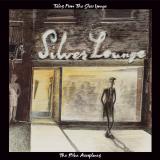
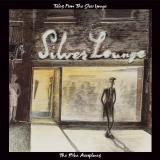
The Blue Aeroplanes have been delivering their distinctive brand of rackety sprechgesang for four decades now, and they are showing no signs of slowing down. Their new studio album, ‘Tales From The Silver Lounge’ is based on overheard conversations between the clientele of The Silver Lounge, a rather louche café/bar in an unnamed city on an unknown planet much like ours, and in an unknown time, though the decor tends to the late 50’s, early 60’s.
The identities of the members of the Silver Lounge are, of course, confidential.
This is the 14th Blue Aeroplanes studio album and the third with the current line-up, which is:
Gerard Langley: vocals
Bec Jevons: guitar, vocal and backing vocals
Mike Youé: guitar, vocal and backing vocals
Rita Lynch: guitar, vocal and backing vocals
Chris Sharp: bass and backing vocals
John Langley: drums and percussion
Ed Taylor: many different instruments and backing vocals
Wojtek Dmochowski: dance
Alexander Dmochowski guests on saxophone and clarinet, Will Diamond on violin and Steve Bush adds backing vocals.
After two best-of compilation albums were released by Chrysalis Records in 2025 (‘Magical Realism’: The Best Of The Blue Aeroplanes’ and ‘Outsider Art’: The Other Best Of The Blue Aeroplanes’), the band are now back firmly in a sort of present with a new album that features all the guitar-band flavours that anyone could need, with poems that cover name-doppelgangers, falconry terms, Don Marquis, postcards, Greek mythology, abandoned Teslas, the First World War and the surreal nature of music-hall jokes.
“The Blue Aeroplanes? Not my cup of tea, but I can see what people see in them.” Mark E. Smith
The Blue Aeroplanes have been delivering their distinctive brand of rackety sprechgesang for four decades now, and they are showing no signs of slowing down. Their new studio album, ‘Tales From The Silver Lounge’ is based on overheard conversations between the clientele of The Silver Lounge, a rather louche café/bar in an unnamed city on an unknown planet much like ours, and in an unknown time, though the decor tends to the late 50’s, early 60’s.
The identities of the members of the Silver Lounge are, of course, confidential.
This is the 14th Blue Aeroplanes studio album and the third with the current line-up, which is:
Gerard Langley: vocals
Bec Jevons: guitar, vocal and backing vocals
Mike Youé: guitar, vocal and backing vocals
Rita Lynch: guitar, vocal and backing vocals
Chris Sharp: bass and backing vocals
John Langley: drums and percussion
Ed Taylor: many different instruments and backing vocals
Wojtek Dmochowski: dance
Alexander Dmochowski guests on saxophone and clarinet, Will Diamond on violin and Steve Bush adds backing vocals.
After two best-of compilation albums were released by Chrysalis Records in 2025 (‘Magical Realism’: The Best Of The Blue Aeroplanes’ and ‘Outsider Art’: The Other Best Of The Blue Aeroplanes’), the band are now back firmly in a sort of present with a new album that features all the guitar-band flavours that anyone could need, with poems that cover name-doppelgangers, falconry terms, Don Marquis, postcards, Greek mythology, abandoned Teslas, the First World War and the surreal nature of music-hall jokes.
“The Blue Aeroplanes? Not my cup of tea, but I can see what people see in them.” Mark E. Smith
Another release on 25Hours is out. Label’s boss Giacomo Silvestri returns with two killer tunes, this time in collaboration with his close friend, and talented producers, Andrea Giuliani. They deliver something solid and catchy, perfect for the dancefloor.
You can also find two massive remixes by other two artists well known in the music industry: Manuel De Lorenzi, with his unique touch rolling and underground, and Jamahr who made something more electro with his solid signature.
This release will make you dance from start till the last second, don’t miss it.
Somewhere between extraterrestrial techno and intergalactic disco lies Oli Silva. A waveform of multi-dimensional energy filled with analog heart and electric soul.
His first outing finds him land his spaceship directly on Craig Richards' The Nothing Special, with the genre bending Unlikely Punctuality EP.
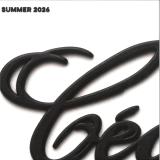
Cécille Summer 2026 Compilation
Summer and Cécille have always gone hand in hand.
For 2026, we’re back with another carefully selected collection of records that perfectly capture where house music feels today. Eleven tracks from artists we’ve admired for years, longtime friends of the label, exciting
newcomers, and fresh faces joining the Cécille family for the very first time.
Piem opens the journey with his long-awaited Cécille debut. A respected name in the scene for many years, his unmistakable groove has been on our radar for a long time, and we’re proud to finally welcome him to the label with Give Me The Rhythm.
Leon returns to where it all began. Since his very first Cécille release back in 2009, he’s been an important part of the label’s story. Let Bass Kick is classic Leon—timeless, understated and effortlessly effective.
UK duo Late Replies continue their incredible rise with Moment 4 U. Their fresh take on house music has been impossible to ignore, and we’re thrilled to have them on this year’s compilation.
Dutch mainstay Jesse Maas delivers Voices In My Head, another classy slice of groove from one of the most consistent names in the Netherlands’ house scene.
Buenos Aires’ Manu Desrets impressed us so much that one track simply wasn’t enough. His two contributions, Get GG and Voy No Kako, showcase two different shades of his sound and perfectly reflect why he’s become
one of the most exciting producers coming out of Argentina.
Andrew Azara has become a true part of the Cécille family over the years. This time he teams up with Traumer, who makes his label debut with a beautifully understated deep house record. Need You is one of those tracks
that quietly sticks with you.
We’re also excited to welcome Jay de Lys to the family. Together with Simon Kidzoo and Monölitio, the trio delivers Into The Light—a warm, feel-good house record that instantly became one of our favourites. Three
artists from Argentina, the Netherlands and Barcelona coming together exactly the way house music should.
After turning heads on last year’s Costa compilation, Brazil’s Classmatic returns alongside fellow Florianópolis producer Marian. Brazilian Madness is exactly what you’d expect: infectious groove, irresistible swing and that
unmistakable Brazilian sense of rhythm.
One of the hottest young names coming out of the Netherlands right now, Stefan Meser delivers Don’t Hesitate—one of those records that gets stuck in your head after the very first listen.
Closing the compilation is someone who’s been part of the Cécille story since the very beginning. Christian Burkhardt has been a longtime friend of the label and one of Frankfurt’s finest. Specialo lived in our vault for almost two years while we waited for the right moment to release it. This felt like the perfect place for it, and the perfect way to close another Cécille summer.
Eleven tunes. Eleven different stories. One soundtrack for Summer 2026. Welcome to the next chapter of Cécille.
Magazine Announces 15th Anniversary Remaster of Barnt’s Techno Classic Geffen
Cologne-based record label Magazine celebrates the 15th anniversary of Barnt’s visionary anthem Geffen. One of electronic music's most defining tracks of the 2010s will be reissued in a 2026 remaster edition, marking the first time it receives its own dedicated standalone release.
Originally published on the legendary Cómeme imprint as part of the Various Artists EP The Power Of Now, the track rapidly became a global phenomenon. Looking back, one can hardly imagine Geffen without the 2010s, or, conversely, maybe even electronic music of that era without it. The composition mirrors the expressive possibilities of bedroom producers at the beginning of that decade—an era where artists could launch tracks into the world and have them resonate through their sheer sonic power, without major marketing efforts.
Barnt remembers: "It was one of my earliest tracks. I had just entered art school and didn't own much equipment. My MIDI keyboard only had two octaves. I would always play notes with my right hand while simultaneously shifting through the octaves with my left. This is how the hook line came to life. The production only consisted of seven or eight stems, and barely any equalizers were used during the mixdown. In hindsight, this sparse approach to production probably made it sound different and is why it hits so hard on big sound systems (while sounding unfinished to some on YouTube). At that time, we were doing a small festival on a playground in the center of Cologne. When I played the CDR there, Matias Aguayo demanded it right after. That is how it ended up on Cómeme."
The release comes with two very Magazine-esque reinterpretations from the label's two other co-founders alongside Barnt: a powerful atmospheric club remix by Jens-Uwe Beyer, and Magazine Hallucination, a wild, collaborative, psychedelic mutation by Crato and Beyer.
Jörg Burger, who already mastered the original track, is also responsible for the mastering of this release.
NIX doesn’t do compilations very often. They’d rather focus on artist EPs. But every now and then a track comes along that deserves to be released, even if it doesn’t quite belong anywhere else.
NIXW006 brings together a handful of those tracks - some of their favourites, finally finding their place.
Please can someone please give me a better word for Sexy? Because the thesaurus is giving me ick...Send help because this is a SEXY record – and (football analogy incoming) – a sexy summer signing....
Yes, that’s right ODF’s summer transfer to the Shall Not Fade main label is complete. ‘The Rhythm Grooves’ makes a hat trick of 12”s for us after the UK OTW producer’s double sell out EPs ‘Deep Step’& ‘Rock With Me’ on our Time is Now imprint. The UKG and grooving breaks specialist has been developing his game and steps into House territory for something of a statement EP and we’re (hot and) here for it. Since launching his own On Da Floor label last year ODF has been on a tear and this record perfectly encapsulates why. Four double threat tracks that can be weaponised both as main stage WMDs or as deadly 3am tickets to another place....
This invisible dichotomy is most clearly on show in title track & A side opener ‘The Rhythm Grooves’ is equal parts hot under the collar and hands in the air. Deep and sexy house but with a stepping baseline and a big vocal. ‘Free Your Soul’ stays deep, a swung jacking house cut with big M1 stabs and piano riffs and cheeky breakbeat breakdowns. That palette is timeless and there’s every reason this track will be too.
The B-side leans more into sweaty room & heads down territory but just like before there’s that double threat and we’ve seen both these tracks go off in big rooms at peak time. ‘Back to Mine’ calls back to that sweet spot in the early 2000s with French Touch inspired tech house was dominating Ibiza...Sleazy and sunbaked? Check. But what we didn't realise was missing w as some Accieeeed. Big shout from ODF there.. ‘Do You Feel Me?’ closes out in celebratory style. A proper tech house tool complete
with chugging bassline and more sexy breathy vocals. It’s the after hours roller.
A serious note to close, because I don’t want the playfulness of this press release to make you overlook this (sexy) EP as it’s appeal is more than skin deep. Having sat with – and lusted over –these tracks for a while I can tell you that they just get better (and hotter) with every outing. The Rhythm Grooves is out 28th August 2026 on Shall Not Fade.
Following the launch of the SOMA35 project with a celebration of Soma’s enduring catalogue, SOMA35.2 turns its attention to one of the defining releases in Soma Records history—Surgeon's seminal 1996 EP, Muggerscum Out. As Soma Records continues its 35th anniversary celebrations, the SOMA35 series shines a light on the records that helped define not only the label's identity, but the evolution of techno itself, creating a dialogue between the label's past, present and future. Originally released at a pivotal moment in UK techno, Muggerscum Out captured Surgeon at his most uncompromising. Its stripped-back intensity, industrial edge and hypnotic power would go on to become hallmarks of Birmingham techno, influencing countless artists while cementing Soma's reputation as a home for fearless electronic music. For SOMA35.2, four respected producers each take a unique approach to reimagining these timeless cuts.
Turbo was a part of Joe Robinson and Sylvia Robinson’s All-Platinum Records set up in New Jersey which operated from 1967 to 1979. At one stage the fiercely independent and proudly black owned label threatened to become another Motown or Philadelphia International. That never happened, but the Robinson’s dream of worldwide success came later when Sylvia discovered Rap, recorded Rappers Delight by The Sugarhill Gang and Sugar Hill records was born.
Music historian Steve Guarnori describes All Platinum as "probably the most unusual record company there ever was. Dysfunctional, but at the same time wonderful."
The All-Platinum chaos extended to Turbo. But despite anarchy - some superb albums went straight from manufacture to be deleted and sold as cut-outs - sublime music was created. This 10" 6-track release collects together some of the most hallowed Turbo releases which between them have become cherished by collectors.
Brother to Brother "The Bottle" captures the label at its most astute. Gil Scott-Heron and Brian Jackson’s original version was an album only track on Strata-East so Turbo seized the opportunity to quickly make a worthy cover version and rush release it a single which enjoyed success.
"Ton Of Dynamite" by Frankie "Love Man" Crocker was Turbo’s debut release in 1968 (it actually sounds a later recording). At the time Frankie was a DJ on WWRL radio station in New York and the release was essentially a reward for his previous support of All-Platinum releases. The record (a b-side) is actually made Willie & The Mighty Magnificent who went on to re-record it as
"Funky 8 Corners". It took until 1975 for "Ton Of Dynamite" to get recognition when it became an anthem as the UK Northern Soul scene adopted it as part of the movement away from old skool 1960’s Soul. Whatever its’ provenance, "Ton Of Dynamite" is now revered by the Rare Soul and Funk communities.
The Optimistics "Man" from 1971 is another b side single. The group specialised in smooth harmony Soul but "Man" is a funkier affair which won support from Rare Soul aficionados and will cost you £600 plus if you are lucky enough to locate a copy of the hard to find 45.
Willie & West "Attica Massacre", also from 1971, is an even more elusive single. It is a powerful protest against the killing of 29 prisoners, many black, following a riot at a prison - Attica Correctional Facility in New York. The deaths and a subsequently discredited cover up caused outrage. John Lennon was amongst the first musicans to make a recording about the bloodbath, but the most emotional protest is this Willie & West track. Only 300 copies were manufactured of one of the most powerful civil rights recordings ever made. The vocal sounds like anti-War Edwin Starr at his most bristlingly aggressive.
Perhaps the strangeness of All-Platinum is best illustrated by the later success of Lonnie Youngblood "Sweet Sweet Tootie" which is essentially the backing track of "Attica Massacre" plus exquisite sax playing by Lonnie. Despite it selling 100,000 plus copies the label did not see this as a reason to reissue "Attica Massacre". Strange. Or as Marvin asked "What’s Going On"?
The New Sounds "Don’t Take Your Love From Me" was only issued by Turbo as an album track. Despite good music on it the LP was poorly (it at all)/ promoted and flopped. The superb "Don’t Take Your Love From Me" is a long time Northern Soul / X-Over favourite.
Larry Saunders mesmerising "On The Real Side" made no impact when released on Turbo in 1974 but was nevertheless issued in the UK by London Records. The Northern Soul discerning dancers instantly latched on to its combination of uplifting lyrics, heartfelt vocal and clomping beat and since then its’ appeal has extended across the whole of the Soul community. Without doubt an all time classic.
So six treasures from a label that despite frequently advocating cash out of chaos frequently conjured up awesome music.
ANORAX is grateful to have the opportunity to present this very special Soul selection.
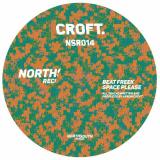
London-based NorthSouth Records has been quietly going about solid business for eight or so years now, and the 14th outing is a fresh one from CROFT. about whom we know little. But this EP suggests he's a slick hand in the studio with a love of melody twisting and psyched-out tech house. 'Beat Freek' is fast and punchy with nice neon colours swirling through the mix. 'Space Please' has a more broken and physical beat with some warped low end, and 'Licking Shells' then plays with synth texture across some shimmering arps that take centre stage in the mix before the closer is the sleaziest of the lot. 'West Ryder' has molten bass and rasping lines worming in and out of a crispy beat. Varied and brilliant throughout.
There are two version of the LP - limited to 100 numbered copies with transparent wax and classic black wax edition. Both 180g with special OBI strip.
Maciej Envee Goliński is an artist who probably needs no introduction. He has been working with U Know Me practically since the label's inception. His last album ("Time & Light") made a huge impact worldwide, but we had to wait eight years for the next vinyl release. In the meantime, Maciej has certainly been busy – he has released numerous club singles under several aliases, and has helped record and mix numerous albums from the world of jazz, soul, and electronica. "Wyszymory" is a carefully crafted concept album, inspired by our roots. "Wyszymory" is an album on which every open-minded listener will find something that has been playing in their soul for a long time...
"Of all things visible and invisible, my life is most filled with music and a fascination with sound. It matters not whether they are natural or artificial, isolated or resonating through space. Sounds that evoke
memories, as well as those entirely new. Some of them have resonated unchanged for thousands of years. Certain resonances and rhythms have remained unaltered for generations so distant that they have left no other trace in human civilization.
This bond with our ancestors truly fascinates me. Ever since I realized it, I have become more attuned to inspiration. Listening to traditional and classical music, I kept finding new anchor points. I was constantly surprised by new invitations to ponder what connects – or divides – the pulse of our region’s traditional music with the rhythms of Africa, the tribes of the vast East, or the frozen North. My great authority, Tomasz Stańko, in interviews conducted by Tomek Michałowski, used beautiful parables of love and creativity to bring me closer to the Cro-Magnon cave artists. The Icelandic literary magician Andri Snær Magnason, in his book On Time and Water, captivated me with the fascinating observation that through emotional contact, words, ideas, or memory, we reach back and forward two or even three generations – spanning a period of about 270 years. Then there is Sam Kowalski, who with his wonderful obereks played on the gitalele, took me on a hypnotic journey, from which one returns with a deep admiration for the art of musical storytelling, passed down from generation to generation. Finally, my own children surprise me with talents, behaviors, and increasingly distinct features of those generations that now dwell only in my hazy memory and on old photographs.
I wanted the protagonists of this album to be the very phenomena that modern humans share with their ancestors, regardless of the level of civilization. Most vital among them is the relationship between humans, nature, and their own emotions. Wyszymory has nothing to do with an academic study, though I did delve into Slavic mythology, archaeology, and history in search of inspiration. Nor is it an album of traditional music, even if such music is present thanks to wonderful instrumentalists. I managed to invite artists who cross boundaries daily, working not only with Polish music but also with Hindu and African traditions, and even jazz, with its long history of blending influences. Naturally, the album became a kind of sonic comic book, where individual scenes and stories – the sounds, pulsations, and ideas on how to use them – came to me over time, often under unique circumstances and in inspiring contexts."
Envee
Often credited as the father of multi-media theatre, Alwin Nikolais (1910-1993) took complete creative control over his productions - including cutting-edge approaches to lighting and costume that transformed human bodies into shifting sculptural shapes, while also composing wildly innovative electro-acoustic and synth-based audio as accompaniment.
After initially experimenting with musique concrète and tape manipulation (as demonstrated on the 1959 LP Choreosonic Music of the New Dance Theatre of Alwin Nikolais) Nikolais became the first owner of Robert Moog's synthesizer at the Audio Engineering Society convention in New York in late 1964. Relying heavily on the Moog and later the Synclavier synth/sampler, these 21 tracks document Nikolais' highly-prescient compositions across the mid 1960s through to the late 1980s - existing not only as extensions of his other-worldly choreographic productions, but standalone pieces of foundational mid-century American electronic and experimental music.
"Born in Southington, Connecticut in 1910, Nikolais’s early years and early career were in acting, music and puppetry. It was not until the late 1930s that he began his work as dancer/choreographer in Hartford, Connecticut, where he was commissioned by the Avery Memorial Theatre, a part of the Wadsworth Atheneum, to create an evening-length work to the music of Ernst Krenek. Previously his work and study as a pianist-organist found him accompanying silent films. This sort of accompaniment required from the musician not only a playing skill but also a versatility in improvisation, matching movement to sound, and evoking mood to situation.
Nik was drawn initially to dance by his involvement with the percussion scores used by the illustrious early twentieth century German dancer Mary Wigman. In trying to learn more about percussion, he was lured into dance class and thus his career began. His development of music and dance occurred simultaneously. His introduction to the twelve-tone technique opened his mind to the expanding areas of atonal music, and his dealing with music as sound per se. In 1948, after being appointed director of the Henry Street Playhouse in New York, Nikolais formed the Playhouse Dance Company, later known as the Nikolais Dance Theater, and began his aesthetic orientation toward dance as a study of motion. By the 1950s, he had ceased creating literal dances and began his explorations and eventual milieu as an abstractionist.
Sound became an important part of his abstract theatre. For his first dances, which involved his new thinking of dance as both a visual and kinetic art, he used live percussion scores in which he directed his dancers to play instruments of all nature. There was a combination of children’s toy instruments as well as harsh and resonant automobile brake drums, and other pitched auto parts which he also used to accompany classes. Once he installed his own tape recording machines, he quickly used the limited range these instruments provided in a new way, slowing and increasing speed and reversing sound. He also made the sounds adhere to the choreographic structure (not the other way around), thereby giving the dance its independence from the musical phrasing. But the real need remained: the search for new sound. Nik made a sound library, recording noises and percussion and vocal sounds, which the French aptly called musique concrète. Needless to say, he became a master at splicing bits and pieces.
From 1956 to 1962 Nikolais composed eleven major scores for his theatre pieces using such techniques. In 1963, James Seawright, who at the time was assisting Nik in his productions and also working at the Columbia-Princeton Center for Electronic Music, recorded a sound bank for the production Imago (1963). With this material, Nikolais created his first synthesizer score. Imago won the Paris Grand Prix in 1968 and launched the Nikolais Dance Theatre towards its national and primarily international acclaim.
During the same period, Seawright came to Nik and told him of a young man who had invented and constructed a simplified synthesizer and insisted that Nik visit the electronic fair currently being held in New York. Nik did so and met Robert Moog. He was completely taken by the new machine and after making some suggestions to Moog, (which Moog made), Nik bought the inventor’s first machine with the aid of a Guggenheim Fellowship. Moog himself was astonished by what his machine could produce for Nik. This machine was later acquired by the Museum of Musical Instruments at the University of Michigan at Ann Arbor as the first Moog synthesizer. The Synclavier was Nik’s next source of sound and since the mid-1970s remained the major instrument in the Nikolais soundroom.
Alwin Nikolais has been honored and awarded throughout the world. He has received the French Legion of Honor, the Kennedy Center Honors, National Medal of the Arts, two Guggenheim Fellowships, as well as Mellon, Ford, and Rockefeller grants. He has been a recipient of NEA grants since 1966, been awarded five honorary doctorates, all for his remarkable achievements in Dance Theater. His genius has influenced several generations of artists."
—Murray Louis
Jungle cemented their status as a major global force with their 2023 album ‘Volcano’ - a record that earned them their first BRIT Award and featured their worldwide smash hit single ‘Back On 74’. The trio - J Lloyd, Tom McFarland and Lydia Kitto - return with their eagerly anticipated new album ‘Sunshine’ set for release on August 14th. The album is launched alongside the new single ‘Carry On’, which was premiered as BBC Radio 1’s Hottest Record. Along with the single release and album announcement, Jungle have also confirmed details of their forthcoming global headline tour this autumn, which includes arena shows spanning three continents. 'Sunshine' will be available digitally and across a range of physical formats: standard black vinyl, 'desert peach' vinyl, translucent brown marble vinyl — all as single gatefold LPs — plus a digipak CD.
Part 2 of the jungle series, it's another 4-tracker for fuzzy Akai hardware samplers, Technics turntable, analog monosynth bass and wide stretches of polysynths. Built with strictly old-school hardware with a loose groove, it's somewhere to get lost, down those night roads, and early mornings in the sky. Soak it up, and let's let time move a little faster.
New release from Stockholm-based producer Anders Enge (BÖRFT rec, Blank Forms), once again based on tracks pulled from his live set: L’Angle du Hasard and Tempest Chords. Two solid and moody pieces with a healthy dose of euphoria stuck in there somewhere. They are complemented by a slightly more experimental and housey approach with Rêve Familier and Winny & Wanda. All things considered an interesting ride! Handstamped discobag with download code. Edition of 100. Mastered by Jesper Dahlbäck.
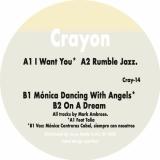
Mark Ambrose has been a serious house head since the 1980s and has always brought his own flavours to the original Chicago and Detroit sound. He heads up the Crayon label, which is where much of his music comes from, including this latest deep dive into groove. 'I Want You' (feat Talia) kicks off with a meandering lead synth that comforts over a warm bed of drums as a sultry vocal whisper brings some intimacy. 'Rumble Jazz' then rocks back and forth a little more with swaggering attitude and hints of darkness and 'Monica Dancing With Angels' is a smooth cruiser with a far-sighted melodic edge. 'On A Dream' brings a sultry jazz flourish with some sombre trumpets lingering above classic deep house drums and bass that take you way back.
Toka Project was a collective from Nottingham's fertile 90s party scene, including members Andrew Macari, Andy Riley and Steve Walker amongst others, and they dropped their 'One Day' EP in 1999 on Filter Flow, which now revisits the title cut with a new set of remixes. The original is a deep house sound with a rough metallic edge and humid pads infused with whispered vocals. Di Saronno remixes it into something more light and airy, with a subtle skip in the drums that recalls the best of Melchior LTD. Andrew Macari's version has a little cheeky wiggle and sunny synth work, then Latenight Society remixes it into a slower sound with a swirling backdrop of pastoral melodic colours. A dreamy close to a fine set of new versions.
"ASSEMBLE MUSIC 15 YEARS - Part III : Founded in Lisbon in 2011, Assemble Music celebrates its 15th anniversary with a three-part vinyl compilation, bringing together fifteen artists who, in different ways, reflect the label's past, present and future. Released simultaneously in November 2026 and distributed worldwide by Clone Distribution, the three records are less a retrospective than a continuation of what Assemble has been building since the beginning: music with character, made by artists with their own language, away from trends and easy categorisation. Across fifteen years, Assemble has moved freely between house, techno, electro, dub and more experimental forms of electronic music. The catalogue has never been defined by one particular sound, but rather by a certain approach, personal, uncompromising and built to last. Part III brings together another five artists particularly close to Assemble's musical universe. Lowtec has spent decades developing one of the most distinctive languages in European house and techno, both through his own productions and his own label Workshop. His music shares something fundamental with Assemble, restraint, depth and an unwillingness to follow obvious paths and thats exactly what he delivers with "Dutch Angle" exploring the more ambient and abstract side of house. Welsh modular artist Steevio, co-founder of Freerotation, approaches electronic music through improvisation and live interaction with machines. His contribution to the compilation reflects the human, unpredictable side of electronic music that has always fascinated the label. Reedale Rise returns after becoming an important part of Assemble's recent chapter. Moving naturally between electro, techno and house, his music combines precision with an unmistakable melodic and emotional quality. With his track he explores a slightly darker path here, with deeper, more shadowy melodies revealing a different side of his distinctive sound. Lerosa's "Love Money" and Vera's "Take Me" are two very special tracks in our back catalogue, and we felt it was time to bring them back to life for our 15th anniversary. Vera was one of the first artists to collaborate with Assemble, with Lerosa joining not long after. Over the years, both have become an important part of the label's story, through releases, many shared showcases, and above all, a great friendship that has grown along the way."
Some things in life are meant to be consumed whole: a perfectly paced movie, an oyster at Whitstable Bay, a novella on a sunny afternoon. Into this pantheon of singular experiences comes Runners, the second album from London instrumental rock quartet Dog Unit. The follow-up to At Home, the band’s cult favourite 2024 debut album, Runners moves seamlessly across its 42-minute runtime. It finds the quartet – comprising Sam Walton, Henry Scowcroft, James Weaver and Lucy Jamieson – crafting tracks that undulate, churn and yearn in service of a greater purpose as they plough fertile fields of sonic storytelling. Made over the first four months of 2026 at the band’s studio in Limehouse, East London, Runners finds the core group, alongside producer and long-time collaborator Mark Estall, operating with greater ambition and scope than ever before. This time they commissioned a string quartet specifically for this project, and reappointed noted experimental bass clarinetist Heather Roche, as well as taking in a cavalcade of instruments at their studio, including vintage synths, drum machines, pianos, and harmonium. The band’s music is often compared to cinema, and if At Homewas a charming micro-budget indie flick bursting with potential, Runners is a widescreen realisation that stands up to repeat viewings.
Following his recent appearance on Blueprint, Mark Broom returns to the label with a unique project, revisiting the work of techno pioneer Regis. Entitled "Power Is Neutral", the release sees Broom rework a selection of seminal Regis recordings originally released on Downwards Records across the albums Gymnastics (1996), Delivered Into The Hands Of Indifference (1998) and Penetration (2001).
Known as one of the key architects of the Birmingham techno sound, Regis (Karl O'Connor) helped shape British techno through his work as co-founder of Downwards Records and a catalogue that continues to influence generations of artists.
For Mark Broom, few artists embody British rave culture quite like Regis. Drawing on source material that has long stood as a cornerstone of UK techno, Broom approaches these edits with both respect and imagination. As Regis puts it, "Mark Broom is like some modern day Bagpuss... he has fired up his techno mouseorgan and polished old relics to make them all shiny and new."
Power Is Neutral delivers six expertly crafted reinterpretations that bridge the raw energy of Regis' original works with Broom's unmistakable contemporary dancefloor sensibility, bringing these timeless tracks to a new generation of listeners.
Hell Yeah welcomes back Tonarunur for an EP of future-facing Balearica straight out of his native Iceland. Someone Else EP is drawn from vast production archives and reveals two distinct sides to his sound, with artwork from Planet Luke.
Tonarunur last appeared on the label with a track for the Buena Onda compilation in 2021, and has also released his unique blend of electronic boogie and space disco on Citizen of Vice, Eskimo Recordings and Whiskey Disco. Whether laying down horizontal Sunday sounds or soundtracking the dance floor, he always brings a strong sense of personality.
Both A-side cuts feature Norway's bass player Arctander, starting with opener 'Someone Else' is a lithe mid-tempo groove with a playful, wriggling groove and sun-dappled 80s keys. The blissful 'Dawn' unfolds slowly through liquid rhythms, gently broken beats and cosmic melodies awash with good vibrations. On the flip, 'Lundur 1' drifts into the stars on shimmering pads and floating grooves and is romantic yet melancholic, before 'Lundur 2' closes with a more grounded rhythm and wispy melodies tracing patterns across a starry night sky.
Equal parts sunset escapism and after-hours introspection, Someone Else EP drifts effortlessly between the club and the cosmos.
*TIP* Previously released on Low Company in 2023, now back... a weirdo lo fi gem
Naturestrip, Naarm, Australia write:
"purely physical teeny tapes perform an invaluable public service in exhuming static cleaner lost reward’s ‘breathing under honey from the heady year o’ 2023’, a slack-jawed riddle within the all-consuming enigma that is thee world of tarquin manek™.
few records command a reissue so soon after their release, the soil heaped atop the (sainted) low company corpse still remaining more than a little damp, but this one’s discreet-to-the-point-of-fury initial release justifies the flogging of the proverbial carked horse, boiled back down into glue for a fresh round of rollicking mucky. arriving as the last release on that fine imprint, ‘breathing under honey’ represents (obliquely, natch) something of a convenient summary of that aforementioned elegantly sloshed world™, condensing as it does the artist’s proclivities exercised among the sweetest of contemporary depth-dwellers, articulated alongside/within y.l. hooi, bum creek, carla dal forno, f ingers, kallista kult, under endless solo monikers…the fun never ends.
let loose here in a suitably gonzo/spellunked mood, the second full-length under the static cleaner moniker (see debut $mile$ from 2013 thru altered states) is compiled of delirious half-thoughts & riddimic gestures accumulated between 2013 & 2020, everything wet & awash with a fine sprouting of lysergic mush between its digits. the implication thereof might suggest something schlonky or amateurish, but fear not, prospective listener, for your ears are in the sticky hands of one of the finest shit-savant prodigies these times have known, crud-caked technoid shapes & blissed pop-glob nous submerged in sublime dubbed-out grog, the resulting sonar-pong shards positively chemical in their ability to simultaneously slant + seduce.
think: martin denny face-deep in a paper bag at the black ark, graciously fucked tropicalia, liquid dub techno housed in vat of spiked quaff, the skaters infiltrating urban tribe, lopsided + caked to the nines in glitter for the gutter.
utterly tranced, sumptuous/sweet & patently ill. a classique of this modern horror epoch if there ever was one."
The debut release by Confusion on Incompetence Records documents an exercise in disciplined spontaneity, a jam session where organic interaction is rigorously shaped into form. Recorded live in Belgrade by Dmitrii Steinberg, Aleksei Siubaev, Viktor Volkovich, Evgenii Piankov, and Leonid Lipelis, the material was subsequently dissected and reassembled with a scalpel like precision reminiscent of Teo Macero’s landmark edits for Miles Davis. What emerges is not a loose improvisational document but a suite of cohesive constructed pieces: weightless structures suspended over a hypnotic pulse, steeped in cosmic vibes and soft psychedelia. There is a slo mo insistence to the grooves, a kosmiche drift that folds jazz funk rituals into something both intimate and expansive. For musicians previously orbiting rare groove, house, indie rock, and modern composition, Confusion expands their explorations into a terrain where genre dissolves into texture and intention. The record’s mesmerizing beauty lies in its restraint, motifs surface, dissolve, and return as if refracted through magnetic tape memory, each fragment locked into place yet breathing with human elasticity. Rather than presenting virtuosity, the quintet channels it into atmosphere, into a patient, glowing continuum that feels less like a jam and more like a carefully mapped inner cosmos, calibrated for deep listening and slow revelation.
DJ Support: Sam Don, Severino Panzetta (Horse Meat Disco), Chris Howler, Sean Johnston, Bill Brewster, For Mankind, Craig Thompson, Andy Taylor, Massimiliano Pagliara, Dean Dixon, Nathan Detroit and many more
Underground Institution Stompa Phunk Re-Launches Vinyl Label with Raw, Chi-House-Inspired Energy. After three decades of defining the UK’s underground club landscape, legendary Brighton party collective Stompa Phunk is officially moving from the dancefloor to the wax with the relaunch of Stompa Phunk Records Inc.
The Heritage: From The Warehouse: The releases will directly honour the roots of house music, a genre born in 1977 at Chicago’s legendary nightclub, The Warehouse. As that scene matured, a grittier, faster, and more experimental counterpart emerged. Defined by an uninhibited, bass-heavy style, it was a movement driven by local innovators who pushed drum machines and synthesisers to their breaking point... It wasn't just a genre; it was a collision between pure imagination and raw machines. A true "sound klash" transformed the local underground subculture into something global...
Release 1: You Had It (Edit) / Music Got (Dub): Capturing the exact spirit of rough, tape-spliced dubbed cuts. The 12-inch from SP resident Sound Klash pairs a vintage production ethos with old hardware pushed to its limits...
The Philosophy: This EP perfectly mirrors the exact philosophy that has fueled Stompa Phunk’s dancefloors since 1996: uncompromising electronic music rooted in heavy sample-delia, jackin' bodies, Acid energy, disco-dub mentality and second-hand technology. Jackinacidiscotech!
After thirteen years of silence from the compound, during which anticipation has grown day by day, Boards of Canada finally return. Inferno retains their signature melodies and atmospheres, drawing on the esoteric influences explored in Societas X Tape (their 2019 NTS mix for Warp Records’ 30th anniversary) and the darker ambience introduced on Tomorrow’s Harvest, further deepened by an expanded role for speech soundbites.
Spanning seventy minutes, the new album is available on special edition limited red translucent 2LP vinyl in triple gatefold sleeve with a 16-page booklet, black 2LP vinyl and CD with 20-page booklet.
Industrial badman Sei2ure back on PRSPCT release with a huge 2 track vinyl EP.
Some say industrial hardcore is dead. If that were the case then this one is for sure the one to bring it back to life!
On the A side we have Send You To Hell. A 175BPM monster containing almost everything both Sei2ure and PRSPCT stand for. Driving pounding kick drums, catchy hooks and that perfect dose of snare drum warfare making this the perfect track to kill it on both Hardcore & Drum & Bass events. Huge track!
On the flip we have Push The Prozac. A 190BPM beast tune pushing up the tempo a bit without losing the groove and that dark Industrial vibe we love to death and have been missing so much.
Again another release on PRSPCT that is All Killer, No Filler. Enjoy!
In 1991, the rave scene was at its peak in Italy, and DJ Cirillo was right at the heart of it.
It felt only natural for him to join forces with another rave legend, Leo Young, and create four tracks that were pressed in extremely limited quantities and distributed by hand to a carefully selected group of DJs.
The record quickly found its way into the hands of some of the era's most influential figures, including Lory D, Grooverider, DJ Cirillo himself, and many others.
We are truly proud to present the official release of this record on a label—and even prouder that our label is the one bringing it to the world.
Thank you to the master, DJ Cirillo, for continuing to inspire us, and thank you to Leo Young for being a true pioneer and for always pushing things forward.d.d
Casabianca returns with Omatucada, the second vinyl release from Zagreb-based DJ and producer MIMI.
Omatucada is a journey through percussive sampled rhythms, combining live-recorded instruments, vocal textures, and analog synths across four original productions.
The title track, "Omatucada" opens with a rolling tribal beat and hypnotic vocal fragments, revisiting one of MIMI's earliest productions, originally written many years ago.
"O Lado Negro De Felix" ventures even deeper into dark tribal grooves, suggesting that there is always some light within the darkness, and vice versa.
The B-side moves into more cinematic territory. "VCM" builds driving momentum, drawing heavy influence fro
Portuguese techno force Lewis Fautzi debuts under his own name on Mutual Rytm with ‘Beneath The Surface’. Hailing from Barcelos, Portuguese maestro Lewis Fautzi has carved out a formidable reputation through a run of uncompromising releases and a sound rooted in tension, precision and raw power - exemplified by his recent outing on the agenda-setting Hayes Collective. He has previously established his fierce, potent sound on Soma, PoleGroup, Mord, and a number of other influential labels, while also heading up Faut Section. Having previously appeared on Mutual Rytm’s Federation Of Rytm III compilation under his Non Cyclic alias, he now steps out on SHDW’s label with a six-tracker busting full of impactful techno cuts. The heavily-requested ‘Beneath The Surface’ opens the EP with menacing low-end and tightly coiled pressure that's released through simmering valves and hissing synths. ‘The Hollow Cycle’ brings a loopy, tunnelling groove with a snaking lead and snaking metallic percussion, while ‘Inner Mechanism’ keeps things dark, deep and driving with a backlit glow that pulls you in. ‘Nonlinear Form’ is streamlined deep techno that fizzes with texture, spraying chords and a rumbling sub-bass, while closer ‘Anamorph’ rides meticulously designed broken beats with an ever-present sense of bass-driven foreboding. For digital purchasers, sparse and eerie bonus ‘Surface’ slams down with industrial weight and real warehouse grit, shaping up another weighty offering for the label.
ANNE and Sera J close their Symbiosis series on Mutual Rytm with third and most refined EP yet.
This final chapter reflects everything the collaboration has stood for across a trio of inventive techno releases on SHDW's imprint. Creative and life partners ANNE and Sera J have been two voices growing in parallel, evolving separately but moving with the same pulse. ANNE is well established thanks to standout EPs on the likes of Soma and Hardgroove, while Sera J has released on the likes of Life in Patterns and Renegade Methodz, and both have featured on Mutual Rytm's 'Federation Of Rytm' series before now. 'Symbiosis III' is the moment where everything comes full circle: the culmination of a journey built on respect, creativity, and the freedom to explore their own paths while lifting each other forward.
Sera J kicks off with 'Ransomware', a commanding and driving techno cut lit up with flashy synths but always moving with urgency. 'Phosphate' keeps the energy levels high with stripped-back drums and bass designed to perfection, while 'Anthrax' has an anxious edge. The synths are wispy but evocative as bass kills and swiping filters bring the drama.
ANNE then ups the ante with the acid-tinged 'Dementia', which is loopy and unrelenting before 'A Taste of a Real Woman' gets more seductive with a sultry spoken word and sustained chords that bring the paranoia. 'Heart Rate' is propulsive with Detroit-style synth soul and an aching vocal, before Sera J returns with 'On the Run' - a percussive, trippy and eerie roller. His final Cut 'Similar Minds' has a searching synth surveying a desolate landscape, before ANNE then closes the EP with the punchy drum patterns and icy hi hats of 'Primal Howl Of Ego' and a blend of deep drums and evocative synth work on the 'Analog Heartbeat' - which proves potent techno can be beautiful.
SHORT INFOS
Because Music celebrates the 50th Anniversary of Cerrone's debut album "Love In C Minor (Cerrone I)" .
A record which is one of the mots important of its time. It brought French Disco to the World and established Cerrone as the French King of Disco.
- Pressed in exclusive 2026 Apple Green Crystal Clear vinyl
- Original 1976 artwork - Digitally remastered from original tapes.
BIOG
Cerrone I
Love in C Minor (1976)
The story behind Cerrone's first album could be summarised in the libertarian atmosphere and the creative energy of the 70s, inherited from the 60s revolutions, spiritual, aesthetic or sexual. Looking back now, this record is one of the most important of its time. It helped creating the sound of an era and brought French disco to the world. It is also, and this is fundamental to understand its success, the result of a man's vision: Marc Cerrone, a free spirit inhabited by music, who ended up with a major work of art. With this album, Cerrone accumulated the main elements that make a record timeless, even bigger than its creator: the pure originality, the madness of a vision without compromise, a sense of the market and a great dose of luck too. To some extent, this is the perfect record to start a career, even though Cerrone's one already existed in an implicit way. He actually began in a rather popular band, Kongas, signed by Barclay. Between 1972 and 1974, the band was famous and made it abroad, particularly in Japan, where people loved its sound. Despite this success, probably fed up with the music and not ready to follow the orders of a label that wanted the band to sound more pop, Cerrone disbanded Kongas. He had the sound of his instrument in mind and mostly its central element: the bass drum. The idea of this first solo album came to him after a detour via selling records. Wishing to forget about the studios, he took the head of a small chain of stores, selling records imported from the States. That's when he discovered a daring new sound coming from New York: disco music. This energy inspired him to record again. He then remembered the crazy reaction of the audience when, during the Kongas' concerts, he used to hit his bass drum hard. Cerrone felt like going back into the studio but to make something different. He decided to record a sixteen minutes long track, driven by its beat, that would fit on its own on one side of a LP (during these vinyl days, musicians used to think in terms of sides…), with girls' voices simulating sex. This concept of musical and physical orgasm was recorded at Trident Studios in London (where pop stars used to record at the time… ) with Don Ray, of Kongas, man in the shadows and brilliant arranger who'd follow Cerrone during his whole career. Obviously, like always in pop music (it happened to the Beatles), record companies started by turning this weird track down, convinced that radios would never play sixteen minutes of beats and moaning. Cerrone, a born fighter, decided to trust his instinct (a mix of ego and business sense) and chose to believe that if the radios wouldn't play the track, people would dance to it in the clubs. He released the record himself, with a sexy cover a bit provocative where he wore a black bathrobe, a young short-haired girl leaning on him. Being played here and there, thanks to Cerrone's own network, the record started to work a bit in France. But luckily, things really happened in the States. Due to a mistake, a box of "Love In C Minor" albums were sent to the States via Cerrone's record shop instead of some unsold American LPs. Once in New York, the box was opened and the record with its intriguing cover was instantly loved and passed through the hands of radio and club DJs. All of a sudden, and unknown to its creator, the track that was turned down by every French label, became a hit on the New York disco scene. Casablanca, the US disco label, released a cover recorded by an ad hoc band because nobody knew Cerrone of how to find him. Once he discovered what was happening in the States, Cerrone flew to New York. He realised he had a hit, one of the biggest then, that opened the doors to every record company and especially Atlantic. He was welcome by Ahmet Ertegun, one of the main visionaries of the American music who, among other artists, signed Aretha Franklin and John Coltrane. It's believed that Ertegun understood that the French young musician, like some Atlantic artists, was about to define the sound of his time and that his work would live long after its birth date. "Love In C Minor" was the first step, adamant and successful.
By Most Bands' Fifth Album, The Sound Is Pretty Set. Parameters
Established. Refinement Dissipated In Favour Of Formulaic Execution Of
What's Worked In The Past. Fair Enough. All Them Witches Take A
Harder Route. In 2017, The Nashville Four-piece Offered What Might've
Otherwise Become Their Own Template In Their Fourth Album, 'sleeping
Through The War'. Their Second For New West Records Following
2015's Mellow-vibing 'dying Surfer Meets His Maker', 'sleeping
Through The War' Brought Larger Production Values To Dug-in Heavy
Psych Blues Jamming With Oversight From Producer Dave Cobb (jason
Isbell, Sturgill Simpson). After Exploring New Ground On 2013's
'lightning At The Door' And 2012's 'our Mother Electricity' As Well As
'dying Surfer Meets His Maker', With 'sleeping Through The War' The
Band Had Arrived At Something New, Something Sprawling, And
Grander-feeling Than Anything Before It.
So Naturally, In A Year's Time They've Thrown That All To The
Appalachian Wind, Turned The Process Completely On Its Head And
Reversed Paths - Recording In A Cabin In Kingston Springs, About 20
Miles Outside Of Nashville On I-40, With Guitarist Ben Mcleod At The
Helm. The Result, Mixed By Rob Schnapf (beck, Elliott Smith, Kurt
Vile), Is The Most Intimate, Human-sounding Album All Them Witches
Have Ever Recorded And Another Redefinition Of The Band. Introducing
Keyboardist / Percussionist Jonathan Draper To The Fold With Mcleod,
Bassist / Vocalist Charles Michael Parks, Jr., And Drummer / Graphic
Artist Robby Staebler, The New Eponymous Record Isn't Self-titled By
Mistake. It's The Band Confirming And Continuing To Develop Their
Approach, In The Shuffle Of 'fishbelly 86 Onions', The Organ-laced
Groove Of 'half-tongue', The Tense Build Of 'hjtc' And The Fluid Jam In
Closer 'rob's Dream'.
From The Sustained Consonants In Parks' Vocals To Mcleod's
Commanding Slide In 'workhorse' And Drifting Melancholy At The
Outset Of 'harvest Feast', All Them Witches Are Laying Claim To The
Essential Facets Of Their Identity.
Lp Format Pressed On Red Transparent 140g Double Vinyl In A Gatefold
Sleeve.
For Fans Of The Oh Sees, Baroness, Mastadon.
Between 2024 and 2025, Tour-Maubourg launched his Ensemble live formation alongside saxophonist Ismael Ndir and drummer Fréjus Méa. Fresh from Panorama Studio in Brussels, they unveiled two EPs featuring live reworks and exclusive tracks, a project that has already gathered millions of streams and led the trio to perform in some of Europe's most exciting venues.
Between 2024 and 2025, Tour-Maubourg launched his Ensemble live formation alongside saxophonist Ismael Ndir and drummer Fréjus Méa. Fresh from Panorama Studio in Brussels, they unveiled two EPs featuring live reworks and exclusive tracks, a project that has already gathered millions of streams and led the trio to perform in some of Europe's most exciting venues.
*First-ever release on vinyl
*Produced in full cooperation with Hiroshi Yoshimura's estate
*Remastered from original sources by John Baldwin
*English translations of original 1996 release liner notes
*Reproductions of Yoshimura's handwritten recording notes
*Vinyl includes 5" x 7" postcard print
"My encounter with the Hoh Rain Forest, located inside Olympic National Park across the water from Seattle, felt like seeing a whole new world for the first time in my life. Long green fronds draped along the branches, like a scene in which fairies could be heard whispering to one another. But when you try to listen, no sound can be heard. Amidst the mysterious silence, in which no birds or insects make a sound, every living thing seemed to have stopped in its place, only to start dancing when some kind of spell is cast over them.
-Hiroshi Yoshimura
Originally issued on compact disc in 1996, Quiet Forest was Hiroshi Yoshimura’s last album-length work to be released before his passing in 2003. Largely inspired by his trip to the vast forests of the North American Pacific Northwest, the album is an aural reflection of the fantastical, surreal beauty he experienced as he walked through the otherworldly wilderness for the first time. The basic tracks were recorded in the fall of 1993. After numerous revisions to the song titles and a scrapped idea to overlay the tracks with nature field recordings, Hiroshi ultimately produced a latter-day masterwork that feels like the spiritual follow-up to Green, one of his defining works from a decade earlier."
*Produced in full cooperation with Hiroshi Yoshimura's estate
*Remastered from original sources by John Baldwin
*English translations of original 1996 release liner notes
*Reproductions of Yoshimura's handwritten recording notes
"My encounter with the Hoh Rain Forest, located inside Olympic National Park across the water from Seattle, felt like seeing a whole new world for the first time in my life. Long green fronds draped along the branches, like a scene in which fairies could be heard whispering to one another. But when you try to listen, no sound can be heard. Amidst the mysterious silence, in which no birds or insects make a sound, every living thing seemed to have stopped in its place, only to start dancing when some kind of spell is cast over them.
-Hiroshi Yoshimura
Originally issued on compact disc in 1996, Quiet Forest was Hiroshi Yoshimura’s last album-length work to be released before his passing in 2003. Largely inspired by his trip to the vast forests of the North American Pacific Northwest, the album is an aural reflection of the fantastical, surreal beauty he experienced as he walked through the otherworldly wilderness for the first time. The basic tracks were recorded in the fall of 1993. After numerous revisions to the song titles and a scrapped idea to overlay the tracks with nature field recordings, Hiroshi ultimately produced a latter-day masterwork that feels like the spiritual follow-up to Green, one of his defining works from a decade earlier."
At the height of grunge, Morphine sounded like nobody else. The Boston trio built their own strange, seductive musical language (coined "low rock" by frontman Mark Sandman), built around Sandman's two-string slide bass and unmistakable voice, Dana Colley’s baritone & tenor saxophone, and stripped-back drums (Jerome Deupree, Billy Conway). Morphine became one of the defining cult bands of the ’90s, but their story came to an abrupt end in 1999, when Sandman suffered a fatal heart attack on stage during a concert in Italy.
More than 25 years later, Cocoon offers an extraordinary final chapter. Its eight songs were recorded during Morphine’s late-’90s sessions before Sandman ultimately shelved the material on the path toward what would become their final album. Rediscovered in the band’s archives decades later, Sandman’s life partner and Morphine estate manager Sabine Hrechdakian and producer Paul Q. Kolderie (Radiohead, Pixies) transferred the original tapes and carefully assembled this unified collection of Morphine songs. Dana Colley returned to add new saxophone parts, and Kolderie then brought new mixes to the table. Rather than a collection of demos or outtakes, Cocoon is a fully realized Morphine album revealing a band still pushing forward that somehow waited nearly three decades to find its way into the world
Album Background
The background on the album is that the majority of the songs existed in demo form on a CD release called "Sandbox" a semi-legit release of Mark Sandman music on 2004. These versions are the completed tracks that include contributions from Morphine saxphonist
Dana Colley and produced and mastered by Morphine's long time producer Paul Kolderie.
At the height of grunge, Morphine sounded like nobody else. The Boston trio built their own strange, seductive musical language (coined "low rock" by frontman Mark Sandman), built around Sandman's two-string slide bass and unmistakable voice, Dana Colley’s baritone & tenor saxophone, and stripped-back drums (Jerome Deupree, Billy Conway). Morphine became one of the defining cult bands of the ’90s, but their story came to an abrupt end in 1999, when Sandman suffered a fatal heart attack on stage during a concert in Italy.
More than 25 years later, Cocoon offers an extraordinary final chapter. Its eight songs were recorded during Morphine’s late-’90s sessions before Sandman ultimately shelved the material on the path toward what would become their final album. Rediscovered in the band’s archives decades later, Sandman’s life partner and Morphine estate manager Sabine Hrechdakian and producer Paul Q. Kolderie (Radiohead, Pixies) transferred the original tapes and carefully assembled this unified collection of Morphine songs. Dana Colley returned to add new saxophone parts, and Kolderie then brought new mixes to the table. Rather than a collection of demos or outtakes, Cocoon is a fully realized Morphine album revealing a band still pushing forward that somehow waited nearly three decades to find its way into the world
Album Background
The background on the album is that the majority of the songs existed in demo form on a CD release called "Sandbox" a semi-legit release of Mark Sandman music on 2004. These versions are the completed tracks that include contributions from Morphine saxphonist
Dana Colley and produced and mastered by Morphine's long time producer Paul Kolderie.
Soak’s fourth album, decembers, was born in literal silence. Contending with an autoimmune disease that prevented them from singing, it was the absence of sound that birthed the Derry artist’s most sonically and lyrically remarkable album to date.
The space that expanded from that enforced quiet, and the life lived within it - transitionary, liminal, escaping in search of connection - cracked something open. What floods in, is an album of stunning tenderness, honesty, and astonishing storytelling from an artist discovering the revelations at the end of the line.
In decembers, we travel on the road through America, walk the frost-glistened paths of Dublin at night, search for a meteor in Portugal, and return home to Derry. Everywhere, here is an artist evolving, exploring, releasing themselves, coming undone, and eventually, becoming.
At the core of the album is this lyrical statement: “Getting lost is getting free.” How brave it is to face the unknown. Because when you really go there, that’s where discovery lies. That discovery in decembers is a creative one, but it’s also about connection to people and place, to forgiveness, and ultimately to prioritising honesty. “A consistent theme is struggling for direction, battling the urge to run,” Soak says, “and instead, planting my feet.”
Soak’s fourth album, decembers, was born in literal silence. Contending with an autoimmune disease that prevented them from singing, it was the absence of sound that birthed the Derry artist’s most sonically and lyrically remarkable album to date.
The space that expanded from that enforced quiet, and the life lived within it - transitionary, liminal, escaping in search of connection - cracked something open. What floods in, is an album of stunning tenderness, honesty, and astonishing storytelling from an artist discovering the revelations at the end of the line.
In decembers, we travel on the road through America, walk the frost-glistened paths of Dublin at night, search for a meteor in Portugal, and return home to Derry. Everywhere, here is an artist evolving, exploring, releasing themselves, coming undone, and eventually, becoming.
At the core of the album is this lyrical statement: “Getting lost is getting free.” How brave it is to face the unknown. Because when you really go there, that’s where discovery lies. That discovery in decembers is a creative one, but it’s also about connection to people and place, to forgiveness, and ultimately to prioritising honesty. “A consistent theme is struggling for direction, battling the urge to run,” Soak says, “and instead, planting my feet.”
Mario Batkovic’s music occupies a singular space between composition, performance and sonic experimentation.
Based in Bern, Switzerland, the composer, accordionist and multi-instrumentalist has developed an intensely personal musical language rooted in a radical interrogation of the accordion — its timbre, mechanics, physicality and rhythmic potential. In Batkovic’s hands, the instrument becomes something far beyond its conventional role: a source of intricate, evolving sound in which performer and machine appear to become one.
Batkovic received International critical acclaim when his eponymous debut album was released on Invada Records in 2017, with Rolling Stone listing it in the top 10 avant-garde albums of the year. ‘INTROSPECTIO’ followed, a self-questioning, self-examination of society which featured collaborations with Colin Stetson, James Holden and Clive Deamer (Radiohead / Portishead).
II sees Batkovic venture further into radical, uncompromising and experimental territory, both in the reduction and the expansion of sound. Voices overlap, rhythmic structures develop an almost mechanical force, and layers of sound evoke analogue synthesizers. Then everything falls away: near-total silence, the breath of the bellows, a single frequency. Sounds emerge that can barely be traced back to any particular instrument.
The album is built entirely around the physical relationship between one musician and one instrument. No loops, no electronic layers. Everything you hear comes from an uncompromising exploration of the instrument itself. A primal force of creation and destruction.
With credits that include music for the global hit game 'Red Dead Redemption II’, commissions for AMI Paris, Cartier Fondation, Hugo Boss, Chanel and film scores ‘Mad Heidi’ and ’Shame and Money’ his compositional work has extended into some of the most distinctive fields of contemporary culture.
The project first appeared as an anonymous transmission: a folder sent through the network, containing music, instructions and a name - Transpac. No photograph. No biography. Just the request to use the name and let the music speak.
There have been several transmissions since. Still no interviews, no confirmed identity, no explanation of who - or what - is behind the name.
Some say Transpac is a person. Others insist it is a machine. A few believe it is simply a data packet that escaped the network and somehow learned how to make music.
The name itself offers a possible clue. TRANSPAC was once the name of a French public data network, launched in 1978 and built around X.25 packet switching - breaking information into packets and moving them across a network long before the Internet became what it is today.
Perhaps Transpac has been travelling ever since.
Packet Switching EP is the latest intercepted transmission: six packets of pure machine music, assembled somewhere between circuitry, communication protocols and whatever exists on the other side of the network.
Whilst the packets have been received, the sender remains unknown.
Synaptic Cliffs is particularly pleased to have brought Transpac into its network - a feat made possible, not least, by its principal operative, pdqb. Through communication channels inaccessible to ordinary Earthlings, pdqb was able to locate Transpac with remarkable ease and secure its transmission for the label.
The artwork, rendered in yellow and black and largely composed of binary code, echoes the visual language of the early machine age - a world of geometric systems, electronic signals and human beings beginning to communicate with machines. Created by the legendary Infamous Image Division.