Following their hotly tipped 2018 debut album 'On' - Altin Gün returns with an exhilarating second album. 'Gece' firmly establishes the band as essential interpreters of the Anatolian rock and folk legacy and as a leading voice in the emergent global psych-rock scene. Explosive, funky and transcendent.
Some words from the label:
The world is rarely what it seems. A quick glance doesn't always reveal the full truth. To find that, you need to burrow deeper. Listen to Altin Gün, for example: they sound utterly Turkish, but only one of the Netherlands based band's six members was actually born there. And while their new album, Gece, is absolutely electric, filled with funk-like grooves and explosive psychedelic textures, what they play - by their own estimation - is folk music.
'It really is,' insists band founder and bass player Jasper Verhulst. 'The songs come out of a long tradition. This is music that tries to be a voice for a lot of other people.'
While most of the material here has been a familiar part of Turkish life for many years - some of it associated with the late national icon Neset Ertas - it's definitely never been heard like this before. This music is electric Turkish history, shot through with a heady buzz of 21st century intensity.
Pumping, flowing, a new and leading voice in the emergent global psych scene.
'We do have a weak spot for the music of the late '60s and '70s,' Verhulst admits. 'With all the instruments and effects that arrived then, it was an exciting time. Everything was new, and it still feels fresh. We're not trying to copy it, but these are the sounds we like and we're trying to make them our own.'
And what they create really is theirs. Altin Gün radically reimagine an entire tradition. The electric saz (a three-string Turkish lute) and voice of Erdinç Ecevit (who has Turkish roots) is urgent and immediately distinctive, while keyboards, guitar, bass, drums, and percussion power the surging rhythms and Merve Dasdemir (born and raised in Istanbul) sings with the mesmerizing power of a young Grace Slick. This isn't music that seduces the listener: it demands attention.
Altin Gün - the name translates as 'golden day' - are focused, relentless and absolutely assured in what they do. What is remarkable is the band has only existed for two years and didn't play in public until November 2017; now they have almost 200 shows under their belt. It all grew from Verhulst's obsession with Turkish music. He'd been aware of it for some time but a trip to Istanbul while playing in another band gave him the chance to discover so much more. But Verhulst wasn't content to just listen, he had a vision for what the music could be. And Altin Gün was born.
'For me, finding out about this music is crate digging,' he admits. 'None of it is widely available in the Netherlands. Of course, since our singers are Turkish, they know many of these pieces. All this is part of the country's musical past, their heritage, like 'House of The Rising Sun' is in America.'
As Verhulst delves deeper and deeper into old Turkish music, he's constantly seeking out things that grab his ear.
'I'm listening for something we can change and make into our own. You have to understand that most of these songs have had hundreds of different interpretations over the years. We need something that will make people stop and listen, as if it's the first time they've heard it.'
It's a testament to Altin Gün's work and vision that everything on Gece sounds so cohesive. They bring together music from many different Anatolian sources (the only original is the improvised piece 'Soför Bey') so that it bristles with the power and tightness of a rock band; echoing new textures and radiating a spectrum of vibrant color (ironic, as gece means 'night' in Turkish). It's the sound of a band both committed to its sources and excitedly transforming them. It's the sound of Altin Gün. Incandescent and sweltering.
Creating the band's sound is very much a collaborative process, Verhulst explains.
'Sometimes me or the singer will come in with a demo of our ideas. Sometimes an idea will just come up and we'll work on it together at rehearsals. However we start, it's always finished by the whole band. We can feel very quickly if it's going to work, if this is really our song.'
Just how Altin Gün can collectively spark and burn is evident in the YouTube concert video they made for the legendary Seattle radio station KEXP. In just under 20 minutes they set out their irresistible manifesto for an electrified, contemporary Turkish folk rock. It's utterly compelling. And with around 800,000 views, it has helped make them known around the world.
'It certainly got us a lot of attention,' Verhulst agrees. 'I think a lot of that interest originally came from Turkey, plenty of people there shared it.'
That might be how it began, but it's not the whole tale. The waves have spread far beyond the Bosphorus. What started out as a deep passion for Turkish folk and psychedelia has taken on a resonance that now travels widely. The band has played all over Europe, has ventured to Turkey and Australia and will soon bring their music to North America for the first time.
'Not a lot of other bands are doing what we do,' he says, 'playing songs in that style and seeing folk music in the same way.'
Suche:some other people
Dubplate’s Don Persian has repressed this Hardcore Breaks Techno Riddim, seeing there were only 100 in existence before going for crazy prices, now including a mix from S.Bell capturing a shimmering soundscape vibe, adding perfection to his unsung abilities. This E.P. has some speaker destroyer’s on there, introducing the MixMaster Max into the pot alongside the Persian doing what can only be called world dub music. Sterling breaks shuffling at a downtempo 8 bit vibe with a really heavy bass! MixMaster Max’s history is interesting to say the least...
Born October 1966. Break Dancer in 1984, under the moniker Mad Max, started a crew named The Back Street Warriors, busking all over the UK at places such as Covent Garden/Leicester Square Performing on stage & in clubs. They once jammed with The Rock Steady Crew in Camden Palace in front of an audience.
Then in 1987 he became a DJ, playing all genre’s of music, he first played on RJR Radio, playing Electro, Hip Hop, Soul, R&B & Reggae. Moving forward he started playing Acid House & Four to the Floor Music styles, by the early 90’s he played on Weekend Rush & then went onto Defection, Touchdown, Don & Passion FM, playing Acid & Hardcore Jungle.
In the early day’s, MixMaster Max was one of the Innovator’s of Jungle music by mixing Hardcore, Reggae & Hip Hop together, helping other’s to produce, fuse & gain idea’s in the music industry. He was by Far the most Original, Innovative, DJ anybody had ever heard.
In 1991 he played alongside John Saunderson at the Camden Palace on a Friday night, he also played at the Famous Hacienda Club in Manchester.
He was the first DJ to create the Topsy Turvey, which is one turntable on top of the other, he came runner up in the DMC World Championships in the early 90’s.
He played at some of the Biggest Rave’s back in the day, Pirate club 93, Fantazia 92, Dungeon’s 91/92, Turnmills 92, to mention a few. He also played on Avenues FM & People’s Choice, which were legal Radio Station’s, not forgetting Kool FM & Centreforce.
He performed on stage with the We Papa Girl Rapper’s in 1990 at the Notting Hill Carnival. This Legendary Cult figure is a Master of the Nunchucker’s & TurnTable’s!
His innovative Mixes were ‘legendary’ he was a pioneer precursor to the Art form known as Jungle Music, not to mention his Scratching abilities, which was ‘extraordinary’!
For those that listened to pirate radio back in the day, he was the legendary cult figure that inspired us all, giving us the freshest musical styles that had never been heard before!
He can still be heard on Radio today...What an inspiration this Unsung Hero has been to us All!
After expanding its roster and musical scope into jazzier terrains with Jukka Eskola Soul Trio, Timmion now introduces Sami Linna Quartet. Led by guitarist Linna, this international group of elite players paves way for their full length album with the single release "Mode For Tomorrow" b/w "Umoya".
The single hints to what's to come with a deep modal tune referencing 1970's spiritual jazz on the A-side, and groovy soul jazz on the flip. You can immediately hear that these compositions have been crafted with thorough understanding of the tradition, but with passion and capability to breath them to life in this modern age.
The lineup is truly something to write home to. Linna himself has over 20 years of experience working in the Finnish jazz scene, same as saxophonist Jussi Kannaste. Organist Mikko Helevä plays in Jukka Eskola Soul Trio as well as a host of other top jazz groups. But it is drummer Dana Hall who's is the most seasoned member of this experienced troupe. Namedropping might seen lame, but in this case we'll take it there as Hall has worked side to side with Joe Henderson, Kenny Barron, Bobby Hutcherson, Ray Charles, Horace Silver, and Benny Golson to name a few.
Both tracks get a single edit treatment here and the full length versions will be available on the coming album. This is not jazz for the faint hearted, but the real deal meant for real people.
* Dom & Roland Productions, the label, has gone from strength to strength since its conception in 2006.
It Features Dom's new solo work and his collaborations with other visionary artists such as Noisia, Hive and Amon
Tobin. The label has continued to push sonic boundaries whilst staying true to it's ethos of 'not selling out'.
* BEACH BUM - DOM & ROLAND
There's someone on the beach playing a catchy picked out guitar riff. The waves are lapping. A surfer walks along the beach carrying their surfboard, their hair is blowing in the wind. They are thinking about how powerful and awesome the ocean is in it's contrast to the serene and quiet sunset beach, They like the guitar a lot!
* DRED SOUND - DOM & ROLAND
Big Sound! In a large warehouse in Kingston Jamaica, a kid turns up with his laptop and a keyboard full of playable samples. The kid's twisted some funk era breakbeats into gigantic proportions and is trying out song structure ideas whilst listening back on the the huge sub bass system. There are a lot of people sitting around, everyone stops to listen, they never heard anything like this. It's raw, and powerful, and they like it!
The KBCS are:
Lucas Kochbeck - Drums
Nicolas Börger - Keyboards
Lars Coelln - Guitars
Daniel Stritzke - Bass
The KBCS were born in the northern hemisphere under the zodiac sign of snowman. They sound like Föhr and nicely topped pizza, tight as thinly folded pizza boxes and with drums dry as flour that would nearly make you cough. But hotter. Laughing is part of their ritual to get into the zone. Even though some of them prefer Ph without coriander, they still won't order it online because of plastic waste.
The moon shone happily while they recorded their spiced up cinematic, funky & atmospheric lowdown grooves album.And since the polar star was missing, they headed for Venus instead. Luckily, they didn't keep it four-dimensional but had old friend and funk head Mr Flo Mega himself on keys and good vibes - things got really wicked from there. Few people were present and those who were are not entirely sure how it all happened or where it began. Some people say it was Roy, others blame it on the sauna. Fact is that the session took its own course and most people were smiling during the recordings.
Nobody knew then about the flamingo on the cover or why the bird at least looks like one. Hailing from Hamburg, Germany the KBCS not only love to record but also play around Europe. Be sure to welcome them with a Ph in your city and they will surely return the favor by taking you on a ride utilizing a special horse: the (space) funk lama.
The fourth AF Trax release is a three-track EP from our long time ally The Fantastic Twins, who has the following to say about her EP:
This EP is a small collection of works I crafted over the past couple of years in the process of working on my live show. I have been performing versions of these tracks countless times and yet never played them twice the same way. To me, they have been material in constant motion, so shaping them into a 'finished' form was a risky challenge. Something I was also wary of - would it mean they would become set in stone Would it mean I'd have to somehow 'rationalise" the music - via the mind - as opposed to letting it run into the wildness of its physical live experiences
Whilst editing these tracks into a format that could be released, I realised that instead of shaping them into the mould my mind first intended to give them, I could in fact use the power they revealed each time I performed them to an audience and inject some of that energy - as much as it is possible to capture and recreate it in the studio - back into this EP. Then of course, it meant letting go on things I usually like to control more, and better.
But isn't it the power of music to let it take you where you didn't plan to go And how incomplete would the music be if our inspiration didn't feed off the collective experience of dancing to music together I've lost myself (and my twins) many times throughout the process - not only on German soil - I have sometimes landed in the wrong place, but I may have found one answer yet in the form of another question. Why are we here if we can't dance
That reminds me of the words of Pina Bausch 'Dance, dance or we are lost'. Lost in our internal struggles as individuals (or imaginary twins). Lost in a society where our relation to the other is often marked by fear, power or violence. We feel the need to resist. Yet nowadays, taking a political stance as an artist is too often being instrumentalised as another tactics or accessory to gather more popularity, reducing the political message to nothing else but a branding attempt. Isn't it anyway the power of capitalism to assimilate everything, even contradictory or once-upon-a-time subversive voices All to end up on a 'Rave' or 'Feminist' H&M t-shirt. Slogans that have been emptied of their initial force and substance, now replaced by their commercial value. I strongly doubt that more empty words poured in vain on social media will help us much. But, like Pina Bausch, like JD Twitch, I have always firmly believed in dancing as a physical, social and fundamental act that leads us to share a common space with others and embrace otherness. Standing together, dancing together when everything else forces us to divide.
Laid back and chilled out, Andrew never lets anything or anyone bother him. He has an air of mystique about him which others often envy.
(Andrea Solitario) ANDREW SOUL Andrew from his real name, Soul as the part where his inspiration come from, is a native italian producer born in 1986.
Music has been the first and everlasting love for this guy who soon came into his city's underground scene: he was 15 years old when he walked into a club for the first time. Then everything came by itself: a fusion of house and techno, the passion for the acidized sounds filled his mind and his heart.
But listening wasn't enough: the love for the music was to much for not to create something.
So Andrew started a path made by wicked grooves, dropping acid synths and emotional vibes, huge baseline, soulfoul vocals, roland tr-707 on the drums: these featuring characterize at best Andrew's sound.
The love for the analog sound push him over the years to purchase some vintage drum machine and keyboards, to make his sound as better as he can, and to add to his sound some cool old flavour.
Having DJd for years in his native Italy, Andrew turned his hand to production a few years back and promptly set about making some of the most emotive and engaging analogue house and techno around.
Vinyl collector, record lover, for him there's nothing better than watching a wax riding a turntable and listen the music that come from it.
As an eclectic artist, in his sets, Andrew likes to mix from deep to techno, through the house, but people never know what to expect from his large underground music knowledge; old, classic, brand new tunes and own productions makes his set really sophisticated and different each time.
After working on music collaborations for several years, with some friends , early 2011 was time to start sharing solo productions with his first release on Paulatine Records, wellknowed Uner's label. 4 tracks that take attention of many wellknowed djs, like X-Press2 that played the tracks at MOS and on their radioshow, Adam Port who said "Finally something different..." and many others..
Then two vinyl release: first one on the great Barcelona based Kiara Records "Too Much Love Will Kill You", Julien Chaptal on remix, and second one on the New York based imprint Stranjjur Inc, on remix Kris Wadsworth and Baldo; "Close To You" placed 29th on RA Chart.
A great tune with the close friend Frank Naht alongside a remix for Fabio Monesi on friend's label Blackrose Records, and an EP on Espai Music to follow.
End of 2012 was good: EP come out on the Defected's sub label "Tenth Circle"
November 2012 was also time for releasing on Safari Numerique with David Labeji on remix, and the track "No Way" played by Richie Hawtin.
2013 full of work and innovation, with 2 remixes on italian Moan Rec for Meeph, and U.S. based Undulate Recordings for Frank Nath, a really deep EP on his new family Popcorn Records, and jacking mode on for the new release on Safari Numerique.
2014 starts with a vinyl only release on Popcorn Records Ltd, special collaboration with Peter JD and remixes from Amir Alexander and Franco Cinelli.
The path is long and Andrew's research is still long way to end...
" I used to live in rue de Clignancourt, and remember as a kid going to the 14th of July West Indian ball organized by my father rue André Del Sartre in Montmartre every year. There I would meet, among others, saxophonist Robert Mavounzy. Sticking to the area, my older brother had a band and often played at the famous venue La Cigale, where even Henri Salvador joined him for a jam from time to time."Since childhood Serge Fabriano bathed in music, to-ing and fro-ing between his native Guadeloupe and Paris where he grew up. He attended the music conservatory, learnt how to play bass, met and played with many musicians and was ultimately angling for a career as a music teacher. But Serge had wanderlust; he lived to meet new people and was passionate about travel.Thus, it was in a squat located rue de Flandres in the 19th district of Paris that Serge Fabriano met by chance zarb player Djamchid Chemirami, one of Iran's greatest percussionists, who invited him to the Arts Festival of Shiraz-Persepolis. After a month-long motorcycle journey, he and his guitar teacher, Roger Bénichou, arrived in Tehran. Sadly their guitars didn't survive the journey. It was there that he met, among others, Woody Shaw, Max Roach and his wife Abbey Lincoln. Serge also formed a friendship with saxophonist Gary Bartz and stayed on a month playing with the cream of the musicians who'd attended to the Festival.During the mid-70's, he alternated between teaching classes and live gigs, and performed in Germany with a funk band comprised of ex-GIs from the US Army. He also met the members of Chick Corea's group, Return to Forever, and especially Stanley Clarke who became a great source of inspiration to him.From 1978 onwards, Serge Fabriano put aside teaching and devoted more time to music. He became a musician's musician, doing studio recordings with rock bands. He also played with members of the Caribbean diaspora, which included the great drummer Marcel Lollia (known as Velo), Patrick Jean-Marie, Guy Conquette, Winston Berkley, Mino CineluDuring the "Ayatollah Comédie" musical comedy tour organized by the Journal Liberation, Serge met actor Pierre Clémenti (Il Gattopardo, Belle De Jour, The Conformist). This was a game-changer : "I was trying to record my first record. Clémenti suggested the Studio Beaubourg in Paris. "The group Fabriano Fuzion - Fabriano Unit Zion - was born.The band brought together some of the Caribbean's most inspired musicians: Martinican-born Mario Canonge on the piano (his first appearance on an album), Alain-Jean Marie on the synthesizer, Edouard and Pierre Labor on saxophones, Claude Vamur (Kassav ') on the drums, singer/percussionists Marie-Reine Lamoureux and Marie-Céline Lafontaine, percussionists Roger Raspail, Sully Cally and Hector Ficadière (Tumblack, Vent Levé) on Ka percussions.It is precisely the Gwo Ka - this ancestral 'root' music deeply embedded in the heart of the Guadeloupe musician - which constitutes the rhythmic backbone of this first opus. The Gwo Ka, the jazz, the poetry and the spiritual vibe are gathered here to form a splendid album; one of the true masterpieces to emerge from the French West Indies.Rarely will a band have borne its name so well than Fabriano Fuzion - its music is a multiple and collective work in which each element brings its identity and its richness, conferring to this major work a truly fusional dimension.
Following 1 or 2 small run / mailorder lathe cuts, Polytechnic Youth follow it's hugely successful 'Popcorn Lung' label compilation LP, with it's first full length of the new year, and man... this one is just wonderful! A mighty record to kick off what promises to be another hugely productive, constantly busy year for the Crouch End based synth label.
PY often likes to quote the artist directly in it's press releases, and this one is no exception. Gabe's own words, more than adequately explaining the path leading to this killer set for 2019; 'It feels a little ridiculous to pretend that the person introducing you to Gabe Knox is some kind of bigwig press agent and not just Gabe Knox himself, so let me, Gabe Knox, tell you a little about myself in that hopes that you'll give my music a listen.
In 2014, after years of moderate success as a local musician and club DJ in Toronto, Canada, I looked at my collection of barely functioning analogue synths and drum machines and said to myself 'Instead of trying to unsuccessfully make music you think other people will like, why don't you make something that you'd actually want to listen to for once' I wanted to make music that had the drive shaft of Neu!, the punishing low end of King Tubby, the interleaved melodic lines of Vince Clarke, the melancholic, otherworldly whimsy of Raymond Scott and Delia Derbyshire, the hypnotic drone of Spacemen 3, and the analogue intimacy of Le Car. I wanted to bring the euphoria and hypnosis of dance music to the rock kids, and the energy and excitement of rock music to the dance kids.
This was going to be a tough sell in the clique-y Toronto music scene, so I figured the best way to get the music out there would be by recording when I can and self-releasing a steady stream of EPs online. They would all be a series, a snapshot of the evolution of that initial idea. ABC represents a compilation of the best songs of the first three EPs, subtly remixed and remastered to best suit vinyl. I hope you love listening to it as much as I loved making it.'
This really is a remarkable record. Displaying all the PY traits of icy cool blasts of minimal synth, motorik grooves, melodic pop via passing nods to early mute and sky records. Never before did label head Dom think he'd get the chance to namecheck 2 musical heroes from wildly differing poles -Vince Clarke and Spacemen 3- into one LP PR sheet, so he's understandably excited for this one's release!
250 copies on yellow wax in hand numbered, reverse board sleeves. Sure to go real quick....
I was thrilled when Joe Goddard asked if he could make an EP for the label and were even more thrilled when I heard it. The fact that he roped in the legendary Kool Keith to appear on one track just kept on bringing the thrills.
Here are some lovely words from Joe about this release - 'It's an honour to release some music for this label. I feel that due to the ravages of unrestrained and brutal capitalism, people across the world are finding life particularly difficult right now- both economically and emotionally. Capitalism is an insidious and elusive enemy and many people are currently turning to intolerance and hatred instead of recognising that at these times what we really should attempt to do is love and respect each other as much as possible. Therefore I support Keith's efforts wholeheartedly, and on a personal level I couldn't think of a nicer or more talented person to release an EP with.'
AF Trax's message is very simple. The far right ultimately wish for the destruction of our way of life and indeed the lives of many of the people we love. The message is love. The message is solidarity. The message is No Pasaran - They shall not pass. It is a call to stand together, it is a call to stand up, it is a call to ACT. Individually we may be powerless, but together we are strong.
If you're not outraged, you're not paying attention!
Chemistry between individuals is an amorphous and elusive notion. It is usually seen as something that occurs between two people who are sharing a physical space, with access to each other's body language and energy. However, modern technology has provided many other opportunities for chemistry to blossom and be explored and this record is just one example of that: Vent is proud to present Kina, a double LP of musical collaborations between MAYa and Tolga Baklacioglu.
Tolga Baklacioglu is an associate professor in aeronautical engineering. He is also a musician. For several years, he has been steadily building a body of work that explores the outer boundaries where techno and abstract textures merge and blur. In 2014, Tolga created a label, VENT, as a platform for his explorations and those of likeminded travelers within this sonic realm.
MAYa Hardinge works in film. She is also a musician. She has collaborated with numerous artists. Beginning in 2008, She released 4 EPs under her solo guise MAYa. Considering her background in film, it comes as no surprise that her work has a strong visual element. Pre- dating Beyonce´'s Lemonade by many years, her last two EPs were visual albums made in
collaboration with various directors.
It makes total sense that MAYa and Tolga should have made an album together. Their interests and backgrounds overlap and diverge meaningfully in a way that has all the hallmarks of good musical chemistry. There is however one unusual element to their collaboration: they have never met. Tolga lives in Eskisehir (Turkey) and MAYa lives in New York City.
Always on the look out for inspiration and new collaborators, Tolga stumbled across MAYa's videos online. What he saw and heard inspired him to reach out and contact her. After some correspondence they decided to experiment with the prospect of making music together. Perhaps deprived of the traditional notions of chemistry defined by proximity, they found inspiration across time and space in the name of exploration and discovery. Tolga began by sending MAYa files of beats and ambiance. Upon finding the ones that spoke to her, MAYa went to work disassembling, adding, subtracting and rearranging. MAYa's work would then go back to Tolga, a world away, for further input and then back again. In this way each track was painstakingly constructed and a true chemistry was born. One built on sensitivity, support and honest artistic communication. In a word: LISTENING.
The songs cover a broad spectrum of topics, from the deeply personal feelings and experiences, to world events, and the fundamental aspects of life and death. Kina is a document of two artists from different backgrounds and their shared visions of the interplay
between one's private microcosm and the global macrocosm of our time; a testament to the fact that, for all its vastness and diversity, this world offers inspiration and potential collaboration around every corner. The music contained within has traveled around the world many times before reaching your ears. As MAYa and Tolga have done before, it is now your turn to LISTEN.
Lyrics, ideas and sounds were exchanged at the speed of broadband with Maite (Mursego). Aiora (Zea Mays) required only two lines, executing like an emotive, humanity-filled machine. Gaizka & Ager (Audience) arrived as they always do, fitting their music into impossible spaces. Miren (Mice) voiced her heart while opening up her throat, while Rafa Rodrigo really strummed his guitar. Ainara LeGardon brought the extremes, the excitement. Our cries arrived while listening to hundreds of horses galloping across the plains, dust floating in the air behind them. The feeling of everything falling into place, finally.
All of this had just become an album. Aitor Etxebarria closed the door, elegantly. Moxal is the name given to a foal. Sensitive to the environment, the places it wanders and the beings around it. Sometimes doubtful, impatient, though always ready to listen while growing and learning to walk alone. Moxal is a project coordinated by musician and producer Hannot. After Audience, his new proposal is a space for others to inhabit.
Though wild, Moxal lets people come close, basking in the warmth, assembling things and building oneself through proximity and untamed listening.
My love wears forbidden colours My life believesMy love wears forbidden colours My life believes in you once again
The 'Insights' EP is Spinscott's second release on the US based Elm Imprint label, as a highly anticipated follow up to the internationally successful 'Make It Funky / Lovelight' single. 'Insights' features 3 tracks that represent a progression of styles, and satisfies the demand for Classic Jungle sounds, fresh Drum And Bass, and deep '160' flavors.
Side A: 'Phaseout' - This forward-thinking Drum And Bass tune starts out with a moody & mixable intro, staccato drums and bass hits, before dropping into a precisely arranged dancefloor rhythm. Impact exceeds maximum threshold after the break, with the injection of an unexpected layered kick pattern, which has proven to leave no one standing still! But don't mix out too soon... the final phase features an exclusive drum break sourced from a family 45 pressing, circa 1968, sliced and reworked for it's debut appearance here. Phaseout has moved audiences during pre-release plays at Spinscott performances in the US, UK, and beyond.
Side B1: 'Rocker' - This 160 BPM tune was meticulously crafted using drums, effects, and other sounds from multiple genres of dance music, and engineered to make people move! Starting out on a jazzy tip with 808s, sax notes and various fx elements, it doesn't waste time getting to an onslaught of swinging drums and vocal artifacts. Rounding out with some classy Rhodes melodies, strings & short-cut Amens, 'Rocker' delivers an audible message for people to rock, swing, and move to the music! DJs will enjoy cutting in and out of this one, with many changes and elements to mix & blend with.
Side B2: (vinyl exclusive): '#7' - This oldschool style Jungle track FINALLY appears on the vinyl version of this release to satisfy over 5 years of relentless demand! Originally filmed as one of Spinscott's Real-Time Jungle videos, '#7' is the one that opened the floodgates to international recognition and performances worldwide. (see link below) Previously only available in video or performed live at shows, Spinscott has produced a full length 'dj friendly' version, featuring all the original elements of the original performance. '#7' was created and produced 100% on the MPC 1000 (as seen in the video), and features classic drum chops and layers, reverse bass, raw pads, and more.
The record you are holding in your hands is a previously unheard masterpiece of Israeli multimedia artist Ami Shavit. As a professor of both philosophy and art and established kinetic artist in the 1970s Shavit was fascinated with new and interactive technologies. While mostly focusing on visual art and mixed-media installations, a trip to New York in 1972 introduced him to synthesizers and triggered his curiosity to do some explorations into the world of music or "sound" as he preferred to call it.
Ami's research was focused on the concept of meditative music that would help people to relax and create a cosy mood associated to the alpha brain waves and biofeedback. Before starting his artistic career, like all Israeli citizens, he had to serve in the army to his personal regret. Shavit had an operational position, which meant a high probability to get involved in a so called 'hot situation'. When in 1973 the Yom Kippur war broke out, Ami was enlisted again and got the unfortunate opportunity to encounter, in Hanoch Levin's words 'the dead'. Being an operation officer he was in charge of evacuating Israeli wounded officers from battlefields to hospitals. Some 6000 injured men passed through us during that war, he recalled one year later in a newspaper interview.
'I witnessed some sights that I can hardly forget. On the one hand I felt that as an artist I had to express the war events, on the other hand I felt that this is an almost impossible mission. Only Goya and Picasso, in his Guernica, addressed this topic successfully.'
Yom Kippur is the final and seminal of Shavit's sound experiments ever recorded and now finally available to the world. We believe that this is an extraordinary strong piece in which the hectic moods and terrific experiences of war are deeply transmitted to the listener. May all soldiers, who are often forced to go through traumatic experiences beyond their own will, find ways to artistically digest and process the unwanted memories.
Ami Shavit was born in 1934 in Tel Aviv-Jaffa. Known as visual artist, his work involves in creating virtual environments with optic and kinetic art, including structures worked by electricity, moving tubular configurations illuminated by colored lights. He published In Alpha Mood in 1977 on Amis records, his own record company, at 500 copies, republished by Finders Keepers Records in 2015 and Neural Oscillations And Alpha Rhythms in 2018. Yom Kippur is his ultime recordings.
- A1: Where Am I Gonna Find Ya
- A2: I'm Going Back
- A3: I Can Get Along Without You
- A4: One O' Them Days
- A5: Sunday
- A6: There In Your Eyes
- B1: I Miss Ya Girl (New Version)
- B2: Wish I Could Write A Love Song
- B3: Old Dog & Me
- B4: Flying
- B5: When Days Were Long (But Far Too Short)
- B6: Ain't No Pleasing You
- Chas's very sad passing in September this year has made this release all the more poignant, as he had been planning
it for a while. Here is how Dave describes the LP:
- 'It had been on Chas's mind for quite some time to showcase our more laid-back numbers. A lot of people had never
heard this side of what we do even though our biggest hit - 'Ain't No Pleasing You' - was a ballad. So when the
opportunity came to put together this compilation, it became a labour of love for Chas. In fact, it was the last release
that he was involved with and wrote sleeve notes for. Enjoy listening to our 'other side''.
- The inner sleeve features many photos and Chas's commentary, and the record is pressed on 180 gram white vinyl.
I B3. Old Dog & Me [new version]
- A1: Dim Grimm -Drivel To Balsam
- A2: Zimpel / Ziolek - Wrens
- A3: Tujiko Noriko - Tennisplayer Makes A Smile
- A4: Gerhard Zander - Wabi Sabi 35
- A5: A.p.a.t.t - Young Free & Parasite
- A6: Ssellf - Visitors
- B1: The Reboot Joy Confession - Enjoy Solitude
- B2: Merz Feat. Sartorius Drum Ensemble - The Hunting Owl (Julian Sartorius Drum & Vocal Rendition)
- B3: Helen Money - Mf
- B4: Oceaneer - The Sea
'For The Colleagues Of Ubu & Their Authorities' is the brainchild of Vienna based vinyl enthusiast, DJ & producer The Reboot Joy Confession. What once started as a series of mixes has been expanded into this compilation, on which he brings together diverse genres of music like electronica, modern minimalism, folk, post-rock, avant-garde or modular music, which also reflect his own versatile musical taste. 'As I stopped thinking in genres, my attempt was to merge my musical taste in the most fluent way possible onto one record. There are mesmerizing songs from some of my favourite contemporary artists - I feel a timelessness in their music, I can ´t get tired of. With the compilation I wanted to create a contemplative, fictitious, surreal world, merging those different styles together. Giving it that title, I wanted the listener to be able to imagine a tale that is building up with each song. I am really happy about the outcome of this compilation and hope that many other listeners can feel the magic.' The compilation includes the surreal work of Swiss producer Dim Grimm (also known as Dimlite), as well as a collaboration between Merz & Julian Sartorius Drum Ensemble who radically altered the original version of 'The Hunting Owl' into a monstrous percussive live version. Taken off the debut album from one of Poland ´s most interesting musicians at the moment, Waclaw Zimpel & Kuba Ziolek, 'Wrens' is a fusion of folk, jazz and modern minimal music. Experimental pop musician & filmmaker Tujiko Noriko appears with an emotional piece that challenges the paths between pop and avant-garde. Gerhard Zander, whose musical work started on the outskirts of experimental pop music in the early seventies in Germany, delivers a modular synth masterpiece with unique sounds, textures and a far-out synth choir. Rock and ambient influenced musician Helen Money (also known as Alison Chesley) is a Los Angeles based cellist and composer who appears with a massively dark post-rock song called 'MF', which was recorded at Steve Albini's Electrical Audio studio in Chicago in 2009. Often compared to Frank Zappa and known for their richness of ideas, Liverpool's a.P.A.t.T. contribute the hypnotic 'Young Free & Parasite', with references to British glam, post-punk or synth rock, but in a fresh and obscure sounding outfit. SSELLF, the moniker of New Zealand ´s Christoph El Truento, inspired by post-punk and noise. 'Visitors' is simple and simply in your face, with lo-fi drums, distorted synths and raw vocals by Christoph himself. After a few seclusive years, The Reboot Joy Confession returns with a new, crispy and soulful track. Cinematic strings written by Martin Riedler, arranged by Flip Phillip, and recorded at the established Vienna Konzerthaus, based on a properly arranged drum outfit and played by a villain named Gurlimu. Both strings and drums are guiding through the whole song and culminate in Glockenspiel and Rhodes melodies. Oceaneer aka Japanese pianist Oneechan Nanashi completes the compilation with her beautiful and profound composition 'The Sea, Forever'. She describes her music as 'improvised instrumental underwater music from the bottom of the Pacific Ocean, played with broken instruments, directed by the spirit of drowned people who are talking through the hands of the pianist. It's lonely and bleak music for the dead.'
White Shadows In The South Seas is the title of a book written in 1919 by Frederick O'Brien as part of a trilogy he wrote based on his experiences living in the Pacific islands in the early part of the 20th century. His book was taken as the starting point for a film to be directed, initially, by Robert Flaherty (famous at the time for his groundbreaking documentary / fiction film Nanook Of The North) with W.S.Van Dyke as his support. The film, ultimately, apart from the title, had little to do with O'Brien's book and Flaherty left the film after a few months leaving Van Dyke to finish it.
I purchased O'Brien's book, along with many others, from Basement Books, a secondhand bookstore in Melbourne/Australia. Part of my 'Islomania' and on going fascination with all things Pacific. When I discovered there was a 1929 silent film based on the book I sought it out and started to present it as part of my 'Live Music/Silent films' repertoire. Tabu by Frederick Murnau, which coincidently also had Flaherty as co-director originally, was the first film I ever wrote / improvised a score for and presented as a live film/music performance. My repertoire extends to over 23 films now.
My eclectic and diverse musical and artistic interests extend into 'Hawaiian', 'Exotica', 'Ambient' and 'Electronic' Music. I have produced several volumes of so called 'Electronic, Ambient, Exotica' on CD and Vinyl, including Kiribati, Globe Notes, Rayon Hula ( on Vinyl, CD and digital format ) and most recently, New Globe Note on Vinyl and White Shadows In The South Seas on CD.
White Shadows In The South Seas features some of the music presented in my live screenings of the 1929 silent film.
The film is the story of Dr. Matthew Lloyd, an alcoholic doctor who is disgusted by the exploitation by white people of the natives on a Polynesian island. The natives dive for pearls, however, numerous accidents occur and one diver dies. In anger, Dr. Lloyd punches Sebastian, the employer. As revenge and to prevent further interruption of his activities, he tricks Dr. Lloyd onto a ship with a diseased crew (thinking they are ill) and his men rough him up and send the ship off into a storm. Dr. Lloyd survives and is washed ashore on an island where none of the natives have ever seen a white man before. Lloyd is rescued and ultimately falls in love with the chief's daughter, who is Taboo, hence Lloyd is prevented from pursuing his love for her. An incident occurs and a young boy is thought to have drowned but Lloyd is able to revive him, earning him points and permission with the chief's daughter. Lloyd begins to realise that the local islanders have no sense of the value of the black pearls which grow in abundance around their island and he starts to dive for them and collect them. One morning the white man Sebastian unexpectedly turns up on a scooner and starts to offer the islanders trade for their pearls. Llloyd tries to interrupt the encounter and is shot and dies. His wife and the islanders morn for his dead body and, symbolically, the passing of a way of life.
Mike Cooper plays - Electric and acoustic lap steel guitars / electronics / Zoom Sampletrack / Kaos Pad / Casio SK1 / Korg Drum Machine / Self Made Instruments.
It also features field recordings made on Pulau Ubin by Mike Cooper during a month as Artist In Residence for The Artist Village / Singapore.
I would like to acknowledge and thank Lawrence English (Room40 Records) for his assistance and encouragement with the original recordings and the CD version of White Shadows In The South Seas.
All music written and played by Mike Cooper PRS/MCPS - except Po Mahina (trad. Arr. Cooper) and Hilo Hanakahi (trad. Arr. Cooper)
Recorded and Mixed at the Steelworks in Rome 2012/2013.
A White Shadow In The South Seas
In February 2014 'A White Shadow In The South Seas' was the title of an audio-visual installation I made at the Teatro In Scatola in Rome, Italy, presented as part of a series of sound installations titled 'Visitazioni' produced by Proposte Sonore.
The essay below, as well as our collection of Hawaiian shirts, Exotica and Hawaiian vinyl records, was an inspiration for this installation.
'..the transformation and reconstitution of the souvenir commodity as an indigenous ethnic art form and a scarce relic of Hawai'i's romanticized past...' from - Clothing and Textile Reasearch Journal - From Kitsch to Chic by Marcia A. Morgado.
And....
Michael Thompson's Rubbish Theory (1979)
' ...a critical aspect of Western culture is the pre-disposition to see objects in terms of two overt categories: the transient and the durable. Objects identified as transient have finite life spans and lose value over time, whereas those identified as durable have infinite lives and over time increae in value....category assignments are arbitrary, but once assigned a category membership determines relative value. Fashion apparel-by defenition-is assigned to the transient category; paintings commonly are designated durables....how is it that transient objects.. ( e.g. Hawaiian shirts and vinyl records ) ..sometimes become durables.
Objects assigned to the rubbish category are largely invisible, have no value and, ideally, no life span. Fashion for example, no longer worn and relegated to the back of the wardrobe has fallen into the covert rubbish category. But rubbish can be rescued and transformed. Thompson says ' What I believe happens is a transient object gradually declining in value and in expected life span may slide across into rubbish. Here it exists in a timeless and valueless limbo where it has a chance to be re-discovered and be successfully transformed to a durable. Such transferes are radical: objects gradually slide from transcience to rubbish, but the transformation from rubbish to durable involves an all-or-nothing leap across two boundaries, that separating the worthless from the valuable and that between the covert and the overt. Things drift into obscurity but they leap into prominence.
The delightful consequence of this hypothesis is that in order to study the social control of value we must study rubbish.
The rubbish-to-durable transformation is accompanied by the development of highly specialized knowledge derived from the discovery of subtle variations and complex details that went unnoticed in the objects transient stage. The discoveries initiate renewed interest in the object and its market value begins to climb. As prices soar beyond the reach of ordinary people, the object becomes available only in high priced collectors' markets. Furthermore, as market values rise, the aesthetic value of the object undergoes a reassessment as well, and it becomes increasingly apparent that the objects intrinsic beauty has been overlooked. Ultimately the object is re -assigned as a durable and becomes recognized as a timeless classic.
Exotica, Ambience and Pacificism - A dialogue with Mike Cooper & Professor Philip Hayward Deputy Pro Vice Chancellor of Research Southern Cross University, Lismore, Australia.
Vinyl limited edition, includes lyrics booklet, white vinyl, silver layer printed on cover art, % donated to charity.
To be released on World Mental Health Day, part of the album's proceeds will be donated to a UK-based mental health charity. 'I often wonder how sadness moves through people,' Emika says, 'through time, through stories and history, and if it's something that becomes us rather than coming from us.'
% of album sales will be donated to charity Help Musicians UK
emikarecords. com Invites fans to anonymously share their experiences of depression and create a waterfall of comments inspired by the song Wash It All Away
Studio video promoting the album via Soundcloud, Autumn
Live / DJ video, promoting the album with Beatport, Autumn
Live streaming of the album from Emika's studio via FB, Insta, YT, September.
Bookings by Christopher at Melt Bookings. Team chose to give fans time to listen to the album first, shows starting early 2019, special album show with live band and dome visuals planned in the Berlin Planetarium Feb 2019. A few promo shows summer / fall 2018.
Boiler Room live show as part of Open Dance Floor series tbc
* Given its years of manifestation behind the scenes of other projects, Falling In Love With Sadness reflects a renewed understanding of Emika's own genealogy, kindred lineage and its connection to modernity. Marking a drastic departure from the menacing, stripped-down qualities of albums past, Dva and Drei, Emika has surfaced with a new upwelling of sound gracing the bittersweet, melancholic and sanguine.
* With the interplay of myriad genres both rhythmically and melodically intertwining between spacey, dub tinged Promises, lush synth pop hooks on Escape and the title track's soulful electro, a full spectrum of musicology remains primary to the ever-evolving chroma of Emika's umbrous sound.
* Further characterised by the breathy sibilance and sultry tones of Emika's noirish, vocal aesthetic, the album navigates through the morose and trappings of misanthropy by illuminating a narrative of emotional resilience and recovery.
* Co-produced with Robert Witschakowski of The Exaltics, and continuing her collaboration with guitarist Chris Lockington (as heard on Drei and Dva), Falling In Love With Sadness provides a fifth solo album for Emika, but moreover, defines itself as an overture for her future works.
Part II The title of the project is: "An Intermediary Plane of Existence", an in-between world, a shadow zone, two universes, the place between the entrance and exit of a portal. Most electronic music producers probably know the feeling where they, after producing and recording a track they are extremely content with, are suddenly overcome with a slight fear: "what if my computer crashes, what if the file of the recording gets lost somehow and the music gets lost, it's gone forever...". That feeling and the fact that all music, ever written and even the music that has yet to be written, is "somewhere" when it's not
being played or made. It's either written down in notes, stored in
someone's mind, cut into a piece of vinyl, recorded on tape, converted into 0's and 1's hiding somewhere on a hard drive, a cloud, a CD or a USB stick. It's been taken form the place it was before it was made and stored in another place, in an intermediary plane of existence, waiting to be played, to come back to life and listened to again. We wanted to do this various artists album not with just any talented artist, but with people we've met the past years who became our friends and people we admire for their music and personalities. Friendship is also something that most of the time resides in an intermediary plane of existence. When a friend is not in the same room, city or even country it doesn't mean the friendship is not still there. If you've never even met
someone in person, it doesn't mean you can't be friends. Even if you haven't spoken to your friend for a long period of time, it doesn't mean the friendship doesn't exist anymore. The same goes for love I believe.
Some people you will never stop loving, alive, or dead. Both owners of P-RT-L lost their fathers within a week from each other last year, but I also know people who haven't seen or spoken to their dads or moms in over a year, yet somehow it feels completely different not seeing someone for a long time if you know a person is still alive, even though it's not sure you will ever see him or her again. Their dads went back to the place they were before they were born and they will never come back the way they knew them. Just like all music that went lost before we as humans had the ability to write it down, store it on a medium or pass it on otherwise. That exact music, just like their dads, is lost forever. I know this will probably sound a bit too philosophical for some of you readers, but it's something that keeps me awake at night, sometimes. This albums is a way for us to celebrate the fact that the music on it, will never be lost because we as humans have found a way to store and contain it in a place where we can easily reach it, for ever. We hope you will enjoy the music! P-RT-L Featuring artists: Alex Bau ,AnD,Anouk De Vos, D-Leria, Daniel Kane, Dasha Rush, Frame Six Micol Danieli
As the darkest month of the year draws upon the northern hemisphere, bbbbbb records introduces another Icelandic artist; the elusive electro producer Kuldaboli. With roots in hardcore-punk, metal-core and heavy-metal, Kuldaboli's electro bangers are as dark and grimy as they come. 'Ancient civilisations, 20th century history, the possibility of the existence of other dimensions along with the unbearable emptiness of human existence' are amongst the most prominent subjects of Kuldaboli's creations.
'Ég elska þig eilífa stríð' consists of five hypnotic tracks, some of which are overlaid with cryptic texts; ominous poetry recited in Icelandic. Icelandic is a dying language in many ways, only spoken by around 350.000 people and constantly giving in from outwards influences. Who knows, perhaps it will be wiped out all together in the near future. But then again, humanity might not persist for much longer either. Only time will tell.
On her deeply moving debut album At Weddings, Sarah Beth Tomberlin writes with the clarity and wisdom of an artist well beyond her years. Immeasurable space circulates within the album's ten songs, which set Tomberlin's searching voice against lush backdrops of piano and guitar. Like Julien Baker and Sufjan Stevens, she has a knack for transforming the personal into parable. Like Grouper, she has a feel for the transcendent within the ordinary.
Born in Jacksonville, Florida, and now based in Louisville, Kentucky, Tomberlin wrote most of At Weddings while living with her family in southern Illinois during her late teens and early twenties. At 16, she finished her homeschooling curriculum and went to college at a private Christian school she describes, only half-jokingly, as a "cult." By 17, she had dropped out of school, returned home, and begun to face a period of difficult transition in her life. The daughter of a Baptist pastor, Tomberlin found herself questioning not only her faith, but her identity, her purpose, and her place in the world.
"I was working, going to school, and experiencing heavy isolation," Tomberlin says of the time when she first began writing the songs on At Weddings. "It felt monotonous, like endless nothingness. It was a means to get through to the next step of life." In songwriting, Tomberlin found relief and lucidity she had trouble articulating otherwise. When she was 19, she wrote "Tornado" on her parents' piano, and began to develop confidence in her music. A year later, she had written enough songs to fill an album.
Throughout At Weddings, Tomberlin's lyrics yearn for stability and belonging, a near-universal desire among young people learning to define themselves on their own terms for the first time. "I am a tornado with big green eyes and a heartbeat," she sings on "Tornado," her voice stretching to the top of her range. Rich, idiosyncratic imagery — a fly killed with a self-help book, brown paper bags slashed violently open, clouds that weep over a lost love — sidle up to profound realizations about learning to be alive in this world. "To be a woman is to be in pain," Tomberlin notes on "I'm Not Scared." On "A Video Game," she muses, "I wish I was a hero with something beautiful to say."
Tomberlin cites the hymns she grew up singing in church as her greatest musical influence, and while At Weddings in many ways documents the unlearning of her childhood faith, it's easy to hear the reverential quality of sacred music in her songs. "A lot of hymns talk about really crazy stuff — being saved from the depths and the mire, judgment. When you actually realize what you're singing, it becomes really overwhelming," Tomberlin says. "I grew up singing in church. I was still helping to lead worship when I started coming to terms with the realization that I didn't know if I believed. I felt nauseous and shaky reading these words I was singing and feeling their intensity. If I did believe this, how could I sing these words without being scared out of my mind That's what's influenced how I write."
At Weddings is laden with reverence for music itself, for the power it has to heal others and help people navigate their lives. It is a record about learning to love oneself and others without reservation, from a place of deep sincerity — a lifelong challenge whose tribulations Tomberlin articulates beautifully. "My number one goal with my music is for honesty and transparency that helps other people find ways to exist," she says. With At Weddings, this remarkable young songwriter offers up comfort and wonder in equal measure.
a1 | Any Other Way
a2 | Untitled 1
a3 | Tornado
a4 | You Are Here
a5 | A Video Game
b1 | I'm Not Scared
b2 | Seventeen
b3 | Self Help
b4 | Untitled 2
b5 | February
- A1: Keith Mansfield - Tycoon
- A2: Keith Mansfield - Hot Property
- A3: Keith Mansfield - Whistle Stop Tour
- A4: Keith Mansfield - Power Complex
- A5: Keith Mansfield - Research Establishment
- A6: Keith Mansfield - Clean Air
- A7: Keith Mansfield - Fatal Error
- A8: Keith Mansfield - Sleeping Giant 1
- A9: Keith Mansfield - Sleeping Giant 2
- B1: Keith Mansfield - World In Action
- B2: Keith Mansfield - World In Action (Composite)
- B3: Keith Mansfield - Balance Of Power
- B4: Keith Mansfield - Motorail Express
- B5: Alan Hawkshaw - Road And Rail
- B6: David Snell (2) - International Flight
- B7: Keith Mansfield - Quality Fair
- B8: Keith Mansfield - Summer Location
LP,180, 2018 REISSUE - REMASTERED FROM ORIGINAL TAPES, CAREFULLY REPRODUCED ORIGINAL ART
The two sides of 1973's Big Business / Wind of Change are mainly the work of thegreat Keith Mansfeld but there's a killer cameo each from Alan Hawkshaw and David Snell to help deliver a thematic suite, diverse in mood, applicable to dramatic and environmental situations'. A Be With favourite and truly one for the heads.
The Big Business of side A is all the work of Keith Mansfeld. It's heavy on the suspense and features the vital Hot Property', an insistent groove so good that Madlib sampled it to lace the ace Long Awaited' by Lootpack with Dilated Peoples.
Sleeping Giant 1' is a more feshed out version of the equally-dazzling Fatal Error', evoking the orchestral magic of David Axelrod. Indeed, it conjures images of Diamond D falling over himself in the early-to-mid 90s to loop its intoxicatingly
eerie soundscape. Complete with guitar flls that recall Paris, Texas-era Ry Cooder, you need this record for this piece alone.
The horn-and-fute-led "Tycoon" is a head-nodder and "Power Complex" has some fantastic percussion. Other highlights include the breezy glide of Whistle Stop Tour' and its sister groove Clean Air.'
Over on Side B is the more expansive Wind Of Change, which includes the David Snell and the Alan Hawkshaw contributions. But these ain't no fller. Snell's shufing International Flight' sounds like a smooth Dorothy Ashby track tossed from the heavens. Hawkshaw's Road And Rail' is about as luxurious and strung-
out as the great man gets and it might just be the highlight of this whole set.
Not to be outdone, if Mansfeld's Balance Of Power' doesn't make you feel like king of the world then you must be playing it wrong. Oh, and did we mention World In Action'!
As with all ten re-issues, the audio for Big Business / Wind of Change comes from the original analogue tapes and has been remastered for vinyl by Be With regularSimon Francis. We've taken the same care with the sleeves, handing the reproduction duties over to Richard Robinson, the current custodian of KPM's
brand identity.
The new album from Danish electronic trio System is a special kind of collaborative effort with piano magician Nils Frahm. His purpose-built improvisations on synth, organ and piano served as source material for the members of System (Thomas Knak, Anders Remmer & Jesper Skaaning), who merged his warm acoustic tones with their minimalist digitalism and set out to translate their distinctive clicks 'n' cuts electronics into vivid soundscapes. Over two years in the making, the resulting nine tracks are as sonically intriguing as they are touching. Ranging from the mellow bliss of the title track to echoes of 90's and 2000's electronica and ambient sequences frequented by mesmerizing movements and sounds. The blending of piano and digital tones and noises into emotive pieces might instantly recall the work of Alva Noto and Ryuichi Sakamoto, though System and Frahm come to quite different results.
Thomas Knak met Nils Frahm at one of his concerts in Copenhagen. They stayed in touch, exchanging thoughts and ideas. Two years later, Anders Remmer was also introduced to Nils. From then serious ideas for a collaboration formed. As Nils was a fan of System's self-titled debut album (released in 2002 via Pole's Scape label) their talks centred around Dub and minimalism, elements that constitute most of System's music as well as their side and solo projects. This in mind, System began producing sketches and brought them to Nils´ Durton Studio in Berlin in December 2015, where they recorded ten hours of him playing keys and effects to their drafts. Back in Copenhagen, they decided to change direction. - As Nils had told us about his fascination with our debut album, we tried to rediscover this minimal clicks 'n' cuts era. But hearing Nils playing to our rhythmic beds, we felt the need to scrap those beats and instead head in a more cinematic direction.'
So they started building new pieces from the Durton recordings, maintaining some of the minimal and static quality while new layers of synth sounds and noises created a richer and more organic quality compared to older System albums. The solo projects of Thomas (Opiate), Anders (Dub Tractor) and Jesper (Acustic) always relied on steady beats or rhythmic material, so the productions of 'Plus' with their focus on acoustic and melodic elements, ambient layers and cinematic moods, sees them pushing forward into new areas.
This way, the trio avoided copying what they had already done years ago, when they built a reputation as Denmark's prime originators within electronic music in the 90's and 2000's. 'Plus' is a triumphant example of collaborative experimentation and may be the dawn of a new era for System: - For us it was really satisfying to focus more on actual sound rather than rhythmic aspects. There is a lot of potential in this field, so it would only be natural for us to pursue this, maybe as a series of collaborations with other people who's music we admire.'
Bastard Jazz is proud to present the next installment of our long running Tempo Dreams compilation series. As with previous volumes of the compilation, we've tapped an established artist that we're big fans of to shine a light on their personal favorite producers, and compile an album up of all unreleased music from emerging & underrated young talent. And with Volume 5, we're happy to welcome in the Los Angeles based but globetrotting selection of Free The Robots.
Rooted in Santa Ana, CA, Chris Alfaro aka Free the Robots has spent over a decade taking his craft to audiences around the globe. Known as one of the pioneering artists to come out of LA's infamous beat movement, the energy and technical skill behind his live performances have landed him among the greats, sharing stages with Dj Shadow, Prefuse 73, Flying Lotus, to Afrika Bambaataa. Crafting stories to tell with his ever-evolving solo project Free the Robots, he has always had the ability to jump in and out of other worlds inspiring a unique signature sound that hints at jazz, psych, electronic, and hip hop, while remaining un-genre-fiable.
Staying almost permanently on the road, Chris has come across an array of artists and scenes around the world. Different tours and temporary living situations have landed him in the middle of both the DIY underground and more mainstream clubs and stages. Some artists he's connected with have either kept it proudly local or breached international borders. Underrated, unknown, or already on the brink; these are just a few of the people that have crossed paths with Free The Robots. He's chosen these songs as a representation of some of the vibes that inspire his music: Jazz, Psychedelia, Dirtwave, Beats, and a little bit of Future Funk make up Volume 5 of his Tempo Dreams series.
As with all previous volumes, the compiler has produced a track exclusively for the album, which Chris delivers in the bass heavy, South East Asian vibes of "Nasi Goreng" (also available on a limited edition 7" with another unreleased FTR track). Other producers included on the album include Mophono, Never Ending Echo, Kuromoji, RSI-MSK, The Breathing Effect, Cazal Organism, Lefto, Chubby Boss, Caliph8, TITLE, Nois IV, The Heavy Twelves, Mu. and Markey Funk.
- A1: The Mirror (Feat. Kirk Lake)
- A2: Two Sisters (Feat. Anton Newcombe)
- A3: Maria's Theme
- A4: La Cavalerie
- B1: Russian Roulette
- B2: The Inventor
- B3: The Train Creep A-Loopin (Live)
- C1: Nuit Fantôme
- C2: The Gift (Anton Mix)
- C3: Angels And Devils
- C4: Witches Valley
- D1: Curse Of Santa Klaus
- D2: Time Will Tell
- D3: Wunderbar
- D4: The Woods
- D5: Lord Of Flashington
- D6: Silent Night
The Limiñanas are a couple and a band. They have produced records in their own garage in Cabestany located in the south of France for about ten years. They played in Australia, the US and toured Europe regularly. United Kingdom included. The first opus of the now series 'I have trouble in mind' was released on the initiative of Bill and Lisa Roe (iconic label 'trouble in mind") in the US in 2014. It combines all the 45t , unreleased songs recorded by the couple for 'Mojo magazine", tribute to Beach Boys, fanzines, micro labels. All the titles which were difficult to find and that fans were looking for. And now, here it is: I ve got trouble in mind vol 2. The Limiñanas now work mainly with the European label 'Because music". Thanks to their common forces, 3 albums were released. «Traité de guitarre Triolectique» with Pascal Comelade, 'Malamore", which was a tribute to Dino Risi and in 2018 'Shadow People' in the company of the American psychedelic pope Anton Newcombe. Marie and Lio work a lot, they record all the time and love 45t, maxi's and still collaborate with small labels from around the world for specific projects like the traditional song of Christmas 'Convenanza 'from Andrew Weatherall. In this second opus some covers of their favorite titles will be available. The lords of the new church 'Russia"n roulette", 'two sisters' from the Kinks which is the first song recorded with Anton and remixed by the American producer of the first White Stripes album Jim Diamond. 'Live will Tell' from Polnareff, a tribute to 'Suicide' recorded in Australia from the live version of the band and many others. The artwork was designed by Elric Duffau, as for the first volume. Small bonus: the two album covers placed side by side complement each other for a single piece.
To put it simply, 'True Meanings', the fourteenth Paul Weller solo album, the twenty sixth studio album of his entire career, is a record unlike any he has ever made before.
'True Meanings', is released on September 14th and is an album characterised by grandiose-yet-delicate, lush orchestration: an aesthetic to which Paul's better-than-ever voice, singing some of his most nakedly honest words, is perfectly suited. A dreamy, peaceful, pastoral set of songs to get lost in, it is both an album that a lot of his faithful audience have been wanting him to make for a long time, and an album that many new people outside of that audience will relate to.
On the 25th May this year, Paul Weller turned 60: a milestone that has unquestionably had an impact on the feel, both lyrically and musically, of 'True Meanings' which comes across being the most singer-songwriter-style album he has ever made. However, it is also the most collaborative: with more guests than any record he's been involved in before.
As well as all the members of Weller's band, Rod Argent of the Zombies provides Hammond organ on 'The Soul Searchers' and piano and Mellotron on 'White Horses'; folk legends Martin Carthy and Danny Thompson add picked guitar and double bass respectively to 'Come Along'; Little Barrie plays lead guitar on 'Old Castles'; Lucy Rose sings backup on 'Books'; and 'Movin On' is the result of a 'scratchy demo'on Paul's phone that was sent to Tom Doyle of the White Label project. Even Noel Gallagher makes a sneaky appearance.
Perhaps most surprisingly of all, especially given how personal and introspective 'True Meanings' feels, lyrics for four of the fourteen songs here were written, to Weller's melodies, by others. Connor O'Brien from Villagers came up with the words to opener 'The Soul Searchers', while 'Bowie', 'Wishing Well' and the closing 'White Horses' are all the work, lyrically, of Erland Cooper from Erland & The Carnival.
'True Meanings' was produced by Paul Weller except 'The Soul Searchers', which was co-produced by Paul and Conor O'Brien and 'Movin On' which was co-produced by Weller and White Label. The album was engineered and recorded by Charles Rees and mixed by Jan Stan Kybert.
The album was recorded in just over 3 weeks at Paul's own Black Barn Studio, with the aforementioned, revolving cast of characters dropping in for a day here and there. The orchestration was added soon after, and that was that. It is always a good sign when the recording of an album is swift, and here you can just hear that the man at the centre of these songs is as focused and inspired - more inspired, even - than he has ever been.
To be released on World Mental Health Day, part of the album's proceeds will be donated to a UK-based mental health charity. 'I often wonder how sadness moves through people,' Emika says, 'through time, through stories and history, and if it's something that becomes us rather than coming from us.'
% of album sales will be donated to charity Help Musicians UK
emikarecords. com Invites fans to anonymously share their experiences of depression and create a waterfall of comments inspired by the song Wash It All Away
Studio video promoting the album via Soundcloud, Autumn
Live / DJ video, promoting the album with Beatport, Autumn
Live streaming of the album from Emika's studio via FB, Insta, YT, September.
Bookings by Christopher at Melt Bookings. Team chose to give fans time to listen to the album first, shows starting early 2019, special album show with live band and dome visuals planned in the Berlin Planetarium Feb 2019. A few promo shows summer / fall 2018.
Boiler Room live show as part of Open Dance Floor series tbc
* Given its years of manifestation behind the scenes of other projects, Falling In Love With Sadness reflects a renewed understanding of Emika's own genealogy, kindred lineage and its connection to modernity. Marking a drastic departure from the menacing, stripped-down qualities of albums past, Dva and Drei, Emika has surfaced with a new upwelling of sound gracing the bittersweet, melancholic and sanguine.
* With the interplay of myriad genres both rhythmically and melodically intertwining between spacey, dub tinged Promises, lush synth pop hooks on Escape and the title track's soulful electro, a full spectrum of musicology remains primary to the ever-evolving chroma of Emika's umbrous sound.
* Further characterised by the breathy sibilance and sultry tones of Emika's noirish, vocal aesthetic, the album navigates through the morose and trappings of misanthropy by illuminating a narrative of emotional resilience and recovery.
* Co-produced with Robert Witschakowski of The Exaltics, and continuing her collaboration with guitarist Chris Lockington (as heard on Drei and Dva), Falling In Love With Sadness provides a fifth solo album for Emika, but moreover, defines itself as an overture for her future works.
Bill Brown and Al Hall jr met around 1971, they were both in south central L.A and shared the same apartment building, also in the same building was Doug Carn and brownstone singer billy Wilson.
These studio sessions were don't at Paramount studios Hollywood where Al Hall jr was working for producer Art Smith a&c music.
The main distributor for A&C was Accent records. So the Soul Injections very first single "Stay off the moon" was released via Accent, as was Bill Browns "Bip Bam" The group wasn't that pleased with how Accent handle the releases so Bill took it upon himself to set up his own label called Brownstone records. Many musicians were called in for studio sessions these included
Doug Carn, organ; Kirk Lightsey, keyboards; Mel Bolton,
guitars; Mel Lee, drums; Al Hall jr (trombones), Willaim 'Bill'Henderson strings.
The label was met with some confrontation from other Hollywood labels and many of the Brownstone releases were told not to hit the shops by Mafia run labels. Later around 1975 Brownstone released a track by Everyday people feat Alexis "world full of people"....A now cult soul 45 ....But wait, we at Super disco edits have unearthed the original tapes with the very first incarnation of that song and music, different lyric content and sung by Bill Brown. Not just this you get the instrumental on the b side!!
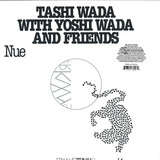
Composer Tashi Wada has performed for years with his father Yoshi Wada—artist, composer, and early member of the Fluxus movement. However, they have rarely appeared together in studio settings. Nue, the fourteenth entry in RVNG Intl.'s intergenerational FRKWYS series, finally brings Tashi and Yoshi, along with an eclectic group of close friends and extended family, together on tape.
Nue draws on aspects of Tashi's background for his widest vision to date—among them the minimalist bagpipe music of Yoshi, who co-composed three of the tracks, the psychoacoustic and perceptual explorations of his mentor, composer James Tenney, and reimagined forms of ancient and devotional music. The album, however, is not a tribute to the past or a recapitulation of familiar sounds. Instead, Nue is an intertwining of people and ideas as a means of growing, of looking inward to move outward, and of looking back to move forward.
To achieve this growth, Tashi assembled a core group of fellow travelers, including Yoshi, composer Julia Holter, producer Cole MGN, and percussionist Corey Fogel, to give life to this multifaceted suite. As an experience, Nue subtly navigates the interactions, intimacy and spaciousness of this group.
The album's title itself is a nod to Tashi's abiding interest in duality and the unknown: nue is a mythological Japanese chimera with the face of a monkey, the legs of a tiger, and a snake for a tail, a composite form, at once disturbing and otherworldly. But, as the composer points out, nue is also French for naked—stripped of complexity, bare and exposed, but also raw and essential.
From the doubling of tones—and the world of harmonic nuances such an action produces—to the rich interplay between individual musicians, all baring their own personalities and experiences through shared performance, Tashi's compositions allow space for these elements to join and grow. The multipartite creature that is an ensemble melds in the simplicity and purity of the music itself.
As explained by Tashi, each part was written with an individual in mind, not simply an instrument. And each individual performer makes their mark, from Holter's vocal performances on the cresting, oceanic 'Mutable Signs' and 'Ondine' with guest vocalists Simone Forti, Jessika Kenney and Laura Steenberge, to Fogel's resonant, precise percussion on 'Bottom of the Sky.' Producer Cole MGN, who has worked extensively with artists like Beck and Ariel Pink, helped to create a world of sound with minimal yet multi-dimensional materials. Like many of its influences, Nue uses deceivingly simple means to create complex, coherent worlds and narratives.
Tashi notes the influence of legendary Brazilian writer Clarice Lispector, whose work looked inward, investigating memory and emotion and dream, to understand the often overwhelming world outside the self. Like Lispector's classic novel Near to the Wild Heart, Nue cleaves these archetypal dualities—world/self, old/new, complex/simple—to create a work that allows them to coalesce into something singular.
As Tashi states in his liner notes: 'My desire was to create something both old and new sounding—ancient and futuristic—and ultimately something of its own world and other. Nue is a vision, an endless night of dreams, and a personal history of sorts, full of joys and demons.'
You May Not Have Heard The Name Jackson Almond Before, But You Will Have Likely Heard Some Of His Music. Having Released On Wotnot Back In 2013 Under The Name Real, With A Flurry Of Eps, Remixes And Bootlegs Under This Name And As Part Of Duo Boean (on Bbe, Warner, Xvi & Slowfoot Among Others), Jackson Has Been Delighting Ears For A While Now, With A Particular Knack For Balancing Hooks And Earworms With Original Ideas And Creative Production.
This Ep Began Life As A Series Of Headphone Jams Written When Jackson Was Living Outside Of The City In Self-imposed Exile, Tuning Into The Goings On In Dance Music From An External Position. It Was Then Polished Into Dancefloor Gems At The Wotnot Studio At The Total Refreshment Centre. The Music Reflects This, With The Sonic Palette Reflecting Lo-fi And Outsider House, But With A Warmth, Depth And Musicality Specific To His Own Personal Situation.
The Music Embodies The Hook Of The Title Track - Open Your Head - A Mix Of Influences And Sounds From World, Soul, Jazz, House And Techno Sources. In Oyh, A Child's Voice Floats Over Percussive Drum And Mbira Layers With African Flavours, While Soulful Guitar Stabs Widen The Palette. Ee Ye Follows A Similar Idea With Overseas Sounds Opening To Infectious House Organ Stabs. People, Places, Things In Spaces Is An Immersive Roller With Warming Wurlitzer Chords Providing An Almost Gospel-like Inflection.
The Attention To Detail Throughout The Ep Is Astonishing, The Best Example Being The Arrangement Of Our Personal Favourite Common, With The Irresistible Chord Progression Working Its Way Around Instruments, Patiently Building To Hit Its Peak Halfway Through The Track For The Ultimate Screwface Moment.
Ultimately This Rebirth Of Jackson Almond Sits Nicely With A Label Finding Their Stride Again, With Widely-praised Releases From Danvers And K15 Already This Year, Wotnot Are Staking Their Claim On People's Ears Once Again.
Early Dj Support:
Atjazz, Jimpster, Dave Harvey Futureboogie, &me, Robert Luis (tru Thoughts), Severino Panzetta (horsemeat Disco)
Le Matin, always rare and uncategorised, following the reissue of his early synthwavepop tunes on « poussière d'époque » and a track on the good Lena Wilikens' Dekmantel Selectors 005 comp, this new EP on Lost Dogs Ent. let you hear some of his last works. Expect an ultra-cold-minimal-electro riddim, a less-mental-nearly-good-for-the-dancefloor tune with depitched haunted r&b vocals, an analog and bassy arpeggio ride ... On the flip side, Oh My God ! This is the peak-time-for-weirdo-nearly-techno tune, a blast, only for craziest DJs that like broken-frustrated-uncomfortable dandefloors and to finish this well balanced 5 trackers : the « are you depressed that much It's the 10th time you're listening to this OST of a dying world, this won't get any better but at least this is good music ! » tune. Le Matin is a good kept secret that prefer to take care of his kids than to travel the world of nightclubbing with drunk teens (ok that's how it is in France, that looks better in some other countries), but sometime you can hear his music on decks of some wise people and DJs like Call Super, Lena Wilikens, House of Traps, Charles Drakeford, Jon K, Bergsonist, Body Motion...
One afternoon in 1975, friend and fellow music traveler, Harold Schroeder, showed up at Poo-Bah Record Shop where Tom Recchion worked selling records and experimental music to people, forcing them to buy albums that he swore would change their lives. Harold asked if Tom wanted to share in a studio space close to the shop. After seeing it Tom immediately said "YES!". They moved in and divided the space in half. On Tom's half he made drawings, paintings, performances, video, sculptures, installations, and music. Harold had his all set up for music with his newly acquired Steiner-Parker synth and guitars and things. At the beginning they played under the name The Two Who Do Duets. Soon the late-night jam sessions that took place in the back of Poo-Bah moved over to the fourth floor of 35 South Raymond. It was pretty beat up and derelict, the way one imagines an artist's studio to look. They could make all the noise they wanted. No one else was on their floor. The music heard on this LP has remained unheard since it was recorded and was created just before and right after the inaugural concert by the Los Angeles Free Music Society (LAFMS) groups Le Forte Four, Doo-Doettes, and Ace & Duce. That concert took place in late January 1976. The sessions on this release feature members of the newly formed and expanded Doo-Doettes, which now included Dennis Duck, Juan Gomez, Harold Schroeder, and Tom Recchion, as well as Ju Suk Reet Meate from Smegma and Ace, of Ace & Duce. 35 S. Raymond eventually became a sort of LAFMS headquarters, with Chip Chapman of Le Forte Four, artist and future Extended Organ vocalist/guitarist Paul McCarthy, and soon to become singer for Nervous Gender, punk/folk artist Phranc, who along with many other artists and musicians, moved into the building. 35 S. Raymond allowed for free expression and explorations of all sorts. Some wild parties ensued, not to mention the luxury of endless hours of experimentation. Parking was free and so was the art and music. Ace found the tapes for side one ("Tom's Studio") in his archive and Ju Suk Reet Meate found the tapes for side two ("50 Of Every American Are Machines") and edited them both for this release. No overdubs or remixing was emplo
Apollo is proud to welcome Paul Frick to the fold. Frick is a Berlin-born music composer primarily known as one part of the group Brandt Brauer Frick. Stunningly despite a 20+ year history of making music 'Second Yard Botanicals' is his debut album. With BBF keeping Frick inspired and busy since 2009, other ideas had piled up until a temporary break allowed him to fully dive into them - "While it took so long until I made my first album, it took about two months once I started.Exploring a vast number of instruments, field recording and deconstructed breakbeats woven with undulating filters and gossamer melodies, the album sees Frick drawing on the world around him in a free associative style ; "A word I sometimes had in mind was - Alltagspoesie', the poetry of everyday life," he explains. "The thought that however small and unimportant things and people are, they - or we - all hint towards each other, if not to say towards the whole. The fact that half of the pieces on the record are short miniatures has to do with that. Throwing something in and hearing what it tells.
- 1: Intro
- 2: Octopussies - Don't Skip That
- 3: Octopussies - Future Classic (Feat. Mista Min)
- 4: Blockboy - World Against Us (Feat. Mista Min)
- 5: Primatune - King Kong Rap (Feat. Masta Ace)
- 6: Blockboy - Bunnybreak
- 7: John Pussner - Riesen Himbeer Bonbon
- 8: Big Mama's Boys - Müncheeen (Feat. Epi.kur)
- 9: Epi.kur - Bis Wann
- 10: Mike Sense - Grown As Man
- 11: Danny Decock - Mosca
- 12: Blockboy - The Renaissance
- 13: Blockboy - Runaway (Feat. Ethic)
- 14: Primatune - Primat City Radio
- 15: Primatune - Oleg, Oleg (Feat. Gasreiz & Thk)
- 16: Primatune - Primat City Radio Werbepause
- 17: Dharmabums - Wassn Dassn!!
- 18: Primatune - So Sieht's Aus (Feat. Wordsworth)
- 19: Epi.kur - Wohin Die Reise Geht
- 20: Mikzn70 - Keinsommertrack (Feat. E.p.eazy & Pat Riot)
- 21: Blockboy - Blasdudler
- 22: Octopussies - Slidin
- 23: Mike Sense - Green Gold (Feat. Declaime)
- 24: Blockboy - Well Wicked
- 25: Blockboy - Woodbox Sonata No. 4
- 26: Blockboy - E E E (Jon Kennedy Remix / Pussner Edit)
- 27: Blockboy - Apache Walk (Asagaya Remix / Pussner Edit) (Feat. Nahawa Doumbia)
- 28: Lippovic - C.u
At a time when on every street corner, adolescent wannabe gangstas believed they had to tell everyone and their dog about their greatness and the inferiority of all others, there was a cadre of Munich-based Hip-Hop artists producing incredibly fresh and imaginative music, inspired, of course, by the golden era of the 90s. They played gigs in small clubs in front of some dozens of people, spread mixtapes and Eps and were celebrated by their friends and the rest of the scene. The world took no notice - until now ! Tramp Records, specializing in unearthing forgotten pearls of musical art, documents with "Golden Hits", an era of Munich underground Hip Hop which flew completely under the radar, spanning ten years from 2005 to 2015. The musical bandwidth and quality of the tracks is astonishing, but so much more could have been possible. Much of this music remained fragmented or unreleased for a host of reasons, families, stressful jobs, musical reorientation, and even lost hard disks... but one story has a happy ending! When Masta Ace had a live show at the legendary Atomic Cafe, Primatune's Fid Rizz was able to hand over a CD with demo beats. Unfortunately the CD was blank by mistake! But the curiosity of Masta Ace had been piqued, and he got back to him, the rest is history. Features of other stateside rap heroes like Wordsworth or Declaime followed.
The very best of this era, including tracks never before heard and ideas remaining fragmented, has now been compiled by Tramp Records to take you for a fascinating listening journey.
Hip Hop, as it was since it's inception in the Bronx, fresh and real, and made with passion by neighborhood kids spitting truth about life and the struggle!
Key selling points:
- including many unreleased songs
- the vinyl LP comes with a full album download code
"it Sounded All Right Through Two Walls, So What's The Problem" The Final Words Of 'two Walls', The Fast And Very Catchy Leading Track Of Dj Marcelle's New Record, Sum Up An Aesthetic Almost Lost In Today's Musical Climate, Where Often A Pleasing Attitude And Overproduced Music Sadly Rule, Even In So-called 'alternative' Circles.The Quote Comes From The Late Mark E. Smith (1957 - 2018), Legendary Frontman Of The Fall, And Is Taken From Some Of The Conversations Marcelle Had With Smith Over The Years. Smith Is Referring To A Recording Process But For Marcelle His Words Stand For Something Bigger.Although The Fall Have Been With Marcelle During Her Whole Musical Life (which More Or Less Started In 1977 During The Punk Wars) And She Has A Deep Love For Their Music, It Was Especially Smith's Attitude That Inspired Marcelle.Smith Was An Iconoclast, A Surrealist Dadaist Breaker Of Conventions In Music And Art More Generally. A Magically Creative Individual, A Brain-twisting Wordsmith. An Attacker Of The Pretentious And Dishonest Elements In Society And Music Scenes. An Autodidact Whose Singular Vision, Fired By Both Humour And Sharp Observation, Found A Voice In A Body Of Work Unlike Anything Else.The Day After Marcelle Heard Of Smith's Passing She Created A New Track, Lauding Smith, Whose Name Was An Institution In Itself: Mark E. Smith! Therefore, The Repetitious Use Of A John Peel Sample Pronouncing Smith's Name Celebrates The Life Of This Totally Unique Artist.This Track Opens With Another Smith Quote: "you're Probably Right, Marcelle". And Indeed, The Dutch Producer / Dj Shares Many Of Smith's Attitudes In That She Tries To Stay True To Herself, Doesn't Think Too Much About Audience Expectations And Always Tries To Stay Ahead Of The Public. 'punky' Energy Combined With The Avant-garde And Always Going Forward With Fresh Productions And Dj Sets. To Make And Play Music Which Reflects The Present And Doesn't Rest In The Comfort Zone Of One Dimensional Party Music.There Are Five More Versions Of 'two Walls' On This Ep, But They Differ So Much From The Original That You Can Count Them As Different Tracks. 'dubai Muezzin Dub' Was Partly Recorded In The United Emirates When Marcelle Played There Earlier In 2018. 'problematic Dub' Is Pure Industrial Techno Torn Apart By The Wildest Dub Effects, Its Coming And Going Of Sounds Equals A Ride In A Calypso. 'studio Door Dub' Celebrates The Repetition Of The Fall And The 'emerson, Lake & Palmer Symphony Dub' Is Both Pure Avant-garde And Hilarious Fun. And Belp, Who Owns The Jahmoni Label, Comes With A Wicked Abstract Noise Remix. The 'for' Ep Is The Fourth (get It) Vinyl Release Of Marcelle On The Munich Label Jahmoni Since 2016. As Always, Sleeve And Label Are Very Colourful. Both Labels Show Special Photos: On One Side We See An Old Picture Of Smith Embracing Marcelle, The Other Side Depicts The Label Of A 1985 The Fall Test Pressing That Once Belonged To John Peel But Which Was Stolen Out Of His Car In Amsterdam. Later Marcelle Found The Record On A Flea Market, Recognising Peel's Handwriting. "when I'm Dead And Gone" Smith Sang In The 1979 Song 'psychik Dancehall', "my Vibrations Will Live On, In Vibes On Vinyl Through The Years. People Will Dance To My Waves."Now We Can Listen And Dance To A Vinyl 'for' The Incomparable Mes, Made With Total Commitment And Which - Like The Fall - Defies Comparison.
WHITE RING mark a triumphant return with a brand new full-length Gate Of Grief, due out on Rocket Girl on 22 June 2018. Their debut album arrives a full eight years since their benchmark EP, Black Earth That Made Me, which sold out almost instantly, making their records some of the most highly sought after on the underground scene and earning them a cult following across the globe. Swerving from aggressively abrasive to beautifully ethereal, musically they draw from varied and challenging palette, whilst tackling themes of loss and acceptance due to struggles with drug addiction and existential dread on a broader scope.
WHITE RING were originally formed by Bryan Kurkimilis and Kendra Malia, before they were joined by Adina Viarengo, with Bryan and Adina currently touring as a duo. One of the most acclaimed proponents of the "Witch House" movement, WHITE RING blend heavy, distorted electronics with eerie, unsettling vocals. However, their new material, created over the course of seven years, pushes the boundaries further, subverting genre ideas and mashing them all together, with industrial, metal, rave, chopped and screwed, rap, grunge, neo folk, post punk and new wave all in the mix. As Bryan Kurkimilis explains; 'We treat our influences like tools to create a certain feeling. We are interested in covering more ground than sticking to a certain formula.'
Bryan and Kendra originally met on Myspace in 2006. At the time Bryan lived in New Orleans and Kendra was in New York, and they didn't even meet face-to-face until 2008 after they had already released a few singles. In 2010 they released the EP Black Earth That Made Me, which was a collection of songs that they mostly recorded before they met in person. The record confounded expectations by selling out immediately on pre-order, making it very rare and highly sought after, with copies going on Ebay for large sums. It was reissued by Rocket Girl in 2011 and still continues to sell in voluminous amounts.
They started playing live in 2009 and rapidly grew a reputation for their captivating performances, usually bringing their own lighting equipment and putting on a spectacular laser show. They have played for large crowds in their hometown of NYC and toured the UK in 2010 in support of their sold out split 7" with oOoOO, playing InTheCity and SWN festivals - which were their first shows outside of New York. They have since shared the stage with the likes of Cold Cave, araabMUZIK, Liturgy, Blank Dogs, Gatekeeper, Blondes, oOoOO, Clams Casino, and others.
They started recording Gate Of Grief in 2010, with the hope of exploring new musical territory, however they took a while to find their path. Bryan and Kendra had some tough personal battles to fight, a sense that pervades the whole album. Thematically it delves in to some pretty dark places whilst exploring the concept of time and what it does to people, relationships and society. As Bryan explains; 'There is a lot of tragedy in this album but there is also hope at the end of it.'
By 2016 pressure was building to finish recording, however due to Kendra's ill health, they needed to bring in someone new to assist with vocals. Fortunately they found Adina Viarengo, who had played in various bands and gave them the impetus needed to complete the album. Shortly after meeting in Brooklyn, Bryan and Adina moved to Joshua Tree, California to finish recording the album, before settling in Massachusetts. Her vocal style fitted in seamlessly with what Kendra had been doing, and although she sang on half the songs, it's almost impossible to tell who is singing on which track, thus making her the perfect addition to the band.
Gate of Grief can be considered the second part of Black Earth That Made Me, or rather, they are the first two chapters in an overarching trilogy about evolution. As Bryan explains; 'First you are born but then you realize what you are and what is against you and it's a flood of emotion that you can only hope to hold on for and let it pass.'
The album title, Gate of Grief, refers to the real gate between Africa and Saudi Arabia that is believed to be the spot where the first humans migrated out of Africa and went on to populate the rest of the world. The album art ties in with this concept, with an image depicting a group of settlers in the USA in early 1900 during a parade. They were actually from a cult in the early 1900s in Bryan's hometown of Fort Myers, Florida.
M 13) Burn It Down
Favorite Recordings proudly presents Combattant, first EP by Pat Kalla produced by Bruno Patchworks' Hovart (aka VOILAAA).
PAT KALLA is a musician, singer and storyteller. Patrice of his birth name, in tribute to the great Lumumba! Lover of words, French language, and music of course. Born in Lyon, from a Cameroonian father, musician and political activist, and a French and literary mother, he explores from his childhood the Soul, the Slam, the Funk ... and the art of telling stories, life being a great one...
After years of touring alongside many bands (Conte & Soul, Legend of Eboa King, Mento Cloub, Voilaaa Sound System), and several acclaimed titles on the two albums by Voilaaa, he comes back with this project to put a bit of primordial lightness in a rainy world: A tribute to the African culture in honor of a father with "Sawa" origins, the tribe from the people of Makossa.
Jojo Ngallé, Moni Bilé, Pain, Manu Dibango, Franco, Rochereau, Kabaselé, Fela, François Nkotti & The Black Style, all these legends' vinyls have turned on the family turntable and the collection has whetted the child's appetite. Through this new trip, he revisits styles that are sometimes little known to Western audiences, such as High-Life, Makossa, Angolan Music, Afrobeat, Afro-Disco and others. We could talk about Franc CFA', we could talk about Jacques Foccart, but we will rather dance, because "the dancer seems naive, but his feet must be connected with earth to understand history..."
Backed by the "Super Mojo Disco", a hyperactive band from Lyon with deep groove and positive energy, Pat Kalla offers us an anti-crisis project, where swaying and feel-good humor is mandatory! An album soon in the crates, beware « c'est médicament » (it's medicine)!!
- A1: Heron Dance
- A2: Twilight Song
- A3: Yes—Singing
- A4: Dragonfly Song
- A5: A Homesick Song
- A6: The Willows
- A7: Lullaby—Lahel
- B1: Long Singing
- B2: The Quail Song
- B3: A Teaching Poem
- B4: A River Song
- B5: Sun Dance Poem
- B6: A Music Of The Eighth House
Music and Poetry of the Kesh is the documentation of an invented Pacific Coast peoples from a far distant time, and the soundtrack of famed science fiction author, Ursula K. Le Guin's Always Coming Home In the novel, the story of Stone Telling, a young woman of the Kesh, is woven within a larger anthropological folklore and fantasy. The ways of the Kesh were originally presented in 1985 as a five hundred plus page book accompanied with illustrations of instruments and tools, maps, a glossary of terms, recipes, poems, an alphabet (Le Guin's conlang, so she could write non-English lyrics), and with early editions, a cassette of field recordings' and indigenous song. Le Guin wanted to hear the people she'd imagined, she embarked on an elaborate process with her friend Todd Barton to invoke their spirit and tradition.
For Music and Poetry of the Kesh, the words and lyrics are attributed to Le Guin as composed by Barton, an Oregon-based musician, composer and Buchla synthesist (the two worked together previously on public radio projects). But the cassette notes credit the sounds and voices to the world of the Kesh, making origins ambiguous. For instance, The River Song' description reads, The prominent rhythm instrument is the doubure binga, a set of nine brass bowls struck with cloth-covered wooden mallets, here played by Ready.' According to writer and long-time friend of LeGuin, Moe Bowstern (who pens the liners for the Freedom To Spend edition of Kesh), Barton built and then taught himself to play several instruments of Le Guin's design, among them the seven-foot horn known to the Kesh as the Houmbúta and the Wéosai Medoud Teyahi bone flute.' Barton's crafting of original instruments lends an other-worldly texture to the recordings of the Kesh, not unlike fellow builders Bobby Brown and Lonnie Holley. Bowstern notes, Other musician / makers have crafted their own Kesh instruments after encountering the earlier cassette recordings that accompanied some editions of the book.' Both Barton and Le Guin are sensitive to the sovereignty of indigenous Californians and were careful not to trample the traditions of the Tolowa people who lived in the valley long before the Kesh. You research deeply, and then you bring your own voice to the table,' said Barton. Within the Kesh culture, the numbers four and five shape the lives, society and rituals. Barton composed loosely around these numbers, patiently listening to the land of Napa Valley for signs and audio signals from the natural elements. Todd incorporated ambient sounds of the creek by Le Guin's house and a campfire they built together. The songs of Kesh are joyful, soothing and meditative, while the instrumental works drift far past the imaginary lands. Heron Dance' is an uplifting first track, featuring a Wéosai Medoud Teyahi (made from a deer or lamb thigh bone with a cattail reed) and the great Houmbúta (used for theatre and ceremony). A Music of the Eighth House' sends gossamer waves of the faintest sounds to float on the wind.' Like the languages invented in the vocal work of Anna Homler, Meredith Monk, and Elizabeth Fraser, the Kesh songs and poems play with the shape of voice.
The Music and Poetry of the Kesh cassette was meant to accompany and enhance the experience of reading Always Coming Home. Presented in this edition as a long-playing album, where only traces of the book linger (the jacket offers some of Le Guin's illustration, and a letterpressed bookmark featuring the the narrative modes of western civilization and the Kesh valley is included), the music alone breaking the silence of what might be. It can transport—offering a landscape for imagining a future homecoming. One in which we are balanced, peaceful, and tend to the earth and its creatures. A line from the Sun Dance poem reminds us, We are nothing much without one another.' Freedom To Spend gives new life to the recordings of the Kesh people in the first ever vinyl edition of Music and Poetry of the Kesh, out on LP, and digital formats on March 23, 2018. The LP will include a deluxe spot printed jacket with illustrations from Always Coming Home, a facsimile of the original lyric sheet, liner notes by Moe Bowstern, multi-format digital download code and a limited edition bookmark letter pressed by Stumptown Printers in Portland, OR.
This past Monday, January 22, Ursula passed from this realm to another leaving a life spent building and exploring other worlds while challenging social concepts of the real word she inhabited.
Freedom To Spend had been working under Ursula's enthusiastic endorsement and with Todd Barton, her musical collaborator on Kesh, to give the music that accompanied her 1985 epoch a new life. With the Le Guin family's encouragement to move forward with our planned release, we are humbled to play this small role in sharing Ursula's work.
As Pete Swanson, one third of Freedom To Spend, stated, Ursula's legacy is her work which transformed the world, and this is another piece of the universe that her imagination birthed becoming real.' Listen to A Teaching Poem / Heron Dance' below.
Twenty-eight Years Ago, Pissed-off Twelve-year-olds Around The Universe Discovered A New Planet, A Black Planet. Public Enemy's Aggressive, Benihana Beats And Incendiary Lyrics Instilled Fear Among Parents And Teachers Everywhere, Even In The Border Town Of Laredo, Texas, Home Of The Future Founders Of The Latin-funk-soul-breaks Super Group, Brownout. The Band's Sixth Full-length Album (out May 25th) Fear Of A Brown Planet Is A Musical Manifesto Inspired By Public Enemy's Music And Revolutionary Spirit.
Chuck D., The Bomb Squad, Flava Flav And The Rest Of The P.e. Posse Couldn't Possibly Have Expected That Their Golden-era Hip Hop Albums Would Sow The Seeds For Countless Public Enemy Sleeper Cells, One That Would Emerge Nearly Three Decades Later In Austin, Texas. Greg Gonzalez (bass) Remembers A Kid Back In Junior High Hipped Him To The Fact That Public Enemy's bring The Noise' Is Built On James Brown Samples, While A Teenaged Beto Martinez (guitar) Alternated Between Metal And Hip-hop In His Walk-man, And Adrian Quesada (guitar/keys) Remembers Falling In Love With Public Enemy's Sound At An Early Age. when I Got Into Hip Hop, I Was Looking For This Aggressive Outlet . . . And I Didn't Even Understand What They Were Pissed Off About, Because I Was Twelve And Lived In Laredo . . . But I Loved It And I Felt Angry Along With Them.'
Joseph Abajian (fat Beats' Owner) Must Have Sensed The Deep Hip-hop Well Lying Beneath The Versatile Band's Latin-funk Veneer. i Thought Their Sound Would Work Covering Public Enemy Songs,' Abajian Says, And, it Was Good To Know They Were P.e. Fans . . . We Came Up With A Track Listing And They Went To Work.' Despite The Band's Eagerness To Work On New Original Material (an Album Of Original Songs Is Slated For Next Year), They Couldn't Pass Up The Opportunity To Pay Homage To This Iconic And Influential Posse.
Translating Sample-based Music To A Live Band Turned Out To Be More Of A Challenge Than They Anticipated. Adrian Tried To Get Inside The Bomb Squad's (public Enemy's Producers/beat-making Team) Head In Order To Find The Inspiration To Reinterpret P.e.'s Songs: imagine The Bomb Squad Going Back In Time And Getting The J.b.s (james Brown's Funky Backing Band) In The Studio And Setting Up A Couple Analog Synths And Then Playing Those Songs.' While Some Songs Closely Follow The Original Musical Blueprint, Others Use The Source Breakbeats As Jumping-off Points Later Sweetened By Trombonist Mark speedy' Gonzales' Horn Arrangements, Synth Wizardry Courtesy Of Friend-of-the-band Peter Stopschinski, And Dj Trackstar's Turntable Scratches. But Don't Listen Expecting To Hear Paint-by-numbers Recreations Of Classic Public Enemy Jams. our Approach Is Never In The Tribute Sense,' Adrian Explains. we've Always Taken It And Made It Our Own, Whether It's The Brown Sabbath Thing Or This Public Enemy Thing.' Coming Off Numerous Tours As Brown Sabbath And Even A Stint Backing The Late Legend Prince, Brownout Is Arguably The Tightest And Funkiest Band On The Road Today And They're Psyched To Bring This Revolutionary Music To The People. For A Band Without An Overt Political Agenda, They Collectively Couldn't Resist The Opportunity To Play This Music Live, Especially Now. if There's Any Way That We Can Use The Already Political And Protest Nature (of P.e.'s Music), We Would Like To Try,' Beto Says. the Album's Title, Fear Of Brown Planet Is Definitely A Relevant Idea Today And We're Not Afraid To Put It Out There, Because We Want To Speak Out.' By Reinterpreting These Hip Hop Classics In Their Unique Style And Channeling The Spirit Of Public Enemy That First Echoed Around The World And Captured Their Imaginations All Those Years Ago, Brownout Is Doing Exactly That.
- A1: A Min We Vo Nou We - Les Sympathics De Porto Novo
- A2: Asaw Fofor - Ignace De Souza & The Melody Aces
- A3: Dja Dja Dja - Stanislas Tohon
- B1: L´enfance - Elias Akadiri & Sunny Black´s Band
- B2: Mé Adomina - Picoby Band D´abomey
- B3: Nounignon Ma Klon Midji - Antoine Dougbé
- B4: Moulon Devia - Orch. Poly-Rythmo De Cotonou
- C1: Paulina - Black Santiago
- C2: Glenon Ho Akue - Lokonon André Et Les Volcans
- C3: Sadé - Sebastien Pynasco And L´orchestre Black Santiago
- C4: Baba L´oke Ba´wagbe - Super Borgou De Parakou
- D1: Gangnidodo - Cornaire Salifou Michel Et L´orchestre El Rego & Ses Commandos
- D2: How Much Love Naturally Cost - Gnonnas Pedro And His Dadjes Band
- D3: Idavi - Orchestre Poly-Rythmo De Cotonou
African Scream Contest 2
A great compilation can open the gate to another world. Who knew that some of the most exciting Afro-funk records of all time were actually made in the small West African country of Benin Once Analog Africa released the first African Scream Contest in 2008, the proof was there for all to hear, gut-busting yelps, lethally well- drilled horn sections and irresistibly insistent rhythms added up to a record that took you into its own space with the same electrifying sureness as any favourite blues or soul or funk or punk sampler you might care to mention.
Ten years on, intrepid crate-digger Samy Ben Redjeb unveils a new treasure- trove of Vodoun-inspired Afrobeat heavy funk crossover greatness. Right from the laceratingly raw guitar fanfare which kicks o Les Sympathics' pile-driving opener, it's clear that African Scream Contest II is going to be every bit as joyous a voyage of discovery as its predecessor. And just as you're trying to get o the canvas after this one-punch knock out, an irresistible Afro-ska romp with a more than subliminal echo of the Batman theme puts you right back there. Ignace De Souza and the Melody Aces' Asaw Fofor" would've been a killer instrumental but once you've factored in the improbably-rich-to-the-point-of-being-Nat-King-Cole-influenced lead vocal, it's a total revelation.
The screaming does not stop there, in fact it's only just beginning. But the
strange thing about African Scream Contest II's celebration of unfettered Beninese creativity is that it would not have been possible without the assistance of a musician who had been trained by the Russian secret services to "search and destroy" enemies of the country's (then) Marxist-Leninist president Mathieu Kerekou.
Already familiar to fans of the first African Scream Contest as a mainstay of ruthlessly disciplined military band Les Volcans de la Capitale, Lokonon André vanished in a cloud of dust at Ben Redjeb's behest with a list of names and some petrol money, only to return a few days later having miraculously tracked down every single name he'd been given. The source of this Afrobeat bounty-hunter's impressive people-finding skills - his training with the KGB - highlights the tension between encroaching authoritarian politics and fearless expressions of personal creative freedom which is the back-story of so much great African music of the 60s and 70s. Happily, in this instance, Lokonon was tracking the artists down to oer them licensing deals, rather than to arrest them.
Where some purveyors of vintage African sounds seem to be strip-mining the
continent's musical heritage with no less rapacious intent than the mining companies and colonial authorities who previously extracted its mineral wealth, Samy Ben Redjeb's determination to track this amazing music to its human sources pays huge karmic dividends.
Like every other Analog Africa release, African Scream Contest II is illuminated by meticulously researched text and eortlessly fashion-forward photography supplied by the artists themselves. Looming large - alongside Lokonon André - in the cast of biopic-worthy characters to emerge from this seductive tropical miasma is visionary space-nerd Bernard Dohounso, who laid the foundations for Benin's vinyl predominance by importing and assembling the turntables that would play the products of his Bond villain-acronymed pressing plant SATEL, a factory that would revolutionise the music industry in the whole region.
The scene documented here couldn't have been born anywhere else but in the Benin Republic , and the prime reason for that is Vodoun. It's one of the world's most complex religions, involving the worship of some 250 divinities, where each divinity has its own specific set of rhythms, and the bands introduced on the African Scream Contest series and other compilations from that country were no less diverse than that army of dierent Gods. At once restless pioneers and masters of the art of modernising their own folklore, the mystic sound of Vodoun was their prime source of inspiration.
One especially irascible Vodoun-adept was Antoine Dougbe, who styled himself The devil's prime minister' while turning ancestral rhythms into satanically alluring modern beats. As Orchestre Poly-Rythmo songwriter Pynasco has observed sagely, Evil is not elsewhere, evil extends into the house'. And African Scream Contest II is a gloriously cinematic road-trip through an undiscovered realm of music lore whose familiarity is every bit as thrilling as its otherness.
Written by Ben Thomson, March 2018
South African Mbaqanga And Bubblegum Instrumentals For The Dance-floor. First Time Available Outside South Africa. Cult Favorite Among Collectors. Follows The Successful Reissue Of bafana Bafana' Last Year. Professor Rhythm's 1991 Recording Professor 3 Is A Vivid Reflection Of Urban South Africa As Apartheid Was Ending. Thami Mdluli's Production Project Had Young And Old Dancing To A Sound That Sought To Unite Blacks Within Southern Africa. our Music Gave Hope To The Hopeless,' He Says. Mdluli's Third Instrumental Album (which Contains Some Background Vocals, To Be Exact), Portrays The Moment When The Dominant Mbaqanga And American R&b-based Bubblegum Sounds Being Produced In Johannesburg And Other Urban Centers Were Transforming Into House And Hip-hop-inspired Kwaito. The Pop Of The 80's And All That Went With It—from The Models Of Synths And Drum Machines To The Lyrical Style—gave Way To A Changing Melodic Emphasis And New, Much Slower Tempi Using A Completely Different Rhythmic Skeleton. Upbeat, Chipper Bubblegum, Often With Double-time Breakdowns And Upstroke Syncopations, Faded And The Sounds Began To More Closely Resemble Those Of Contemporary Black America—where Hip-hop Was Slowing Down And The Bass-lines And Melodies Were Getting Moodier, Darker In General. At The Same Time House Music Had Briefly Reached Mainstream Acceptance In The States And That Popularity Continued To Feed Into Awareness Overseas. These Two Influences Blended With The Burgeoning House Music Scenes In Johannesburg And Pretoria As Professor Rhythm 3 Was Being Produced In March 1991 (the Same Year Apartheid Ended). Mdluli Explains, we Were Influenced By Foreign Bands And So People Updated Their Sound.' According To Mdluli, The Evolving Sound Was Bolstered By Widening Availability Of House And Rap Records From Abroad While, Most Importantly, An Increasing Sense That Apartheid Might Soon Be Finished Was Met With A New Positivity Vibe Society. 1991, '92, '93... Mandela Was Released. People Were Upbeat, They Were Happy, The Music Was Good.' Professor 3 Came Out On Vinyl As The Lp Business Was Dying In South Africa And Sold Around 20,000 Copies. It Was Mainly Distributed On Tape, Which Sold Closer To 100,000. With The Help Of Engineer Fab Rosso, The Recording Features Backing Vocalists From Mango Groove. After Making A Half-dozen Records As Professor Rhythm, Mdluli Once Again Shifted His Focus Musically. By The Mid-90's He Had Veered Off Gospel Music— And Left Playing In Bands And Started Making His Own Solo Recordings. His Enormous Success In The Gospel Realm In The Years Since Is A Remarkable Story In Its Own Right, But For Now We Are Only Dancing.
Mgun, Or Manuel Gonzales To His Friends, Has Long Been A Fixture Artist For Dba. Since Making His Uk Debut On The Label In 2012, Having Already Featured On Detroit's Celebrated Wild Oats Imprint, He Has Smoothly Yet Slowly Progressed Through The Presses Of Fellow Dance Music Tastemakers Third Ear Recordings And Kiev's Wicked Bass. Following 2016's Warmly Received 'gentium', 'axiom' Finds Manuel Gonzales Back On Dba With An Index Of Offbeat Jams That Couldn't Have Emerged From The Mind Or Studio Of Any Other Producer.
Once More Envisioned And Engineered In His Native City Of Detroit, The Record Finds Mgun In More Auspicious And Domestic Circumstances. Now Firmly A Father And A Homeowner, 'axiom' Allows Gonzales To Flex His Party Muscle, While Further Pushing The Elastic Boundaries Of His Notoriously Unpredictable And Brilliantly Raw Production Style. Across Twelve Tracks, Listeners Are Offered An Unpredictable Trip Into The Restlessly Experimental Snatches Of Studio Time Gonzales Is Afforded Away From His Day Job At The Legendary People's Records Store. It's Here That Gonzales Absorbs Endless Releases And Rediscoveries Passing Through The Stock, Trading The Occasional Tip With Some Of Detroit's Best Known Producers.
Beginning With The Off-kilter Funk Of 'you Inside Me', 'axiom' Expertly Toes The Line Between Full-bodied, Soulful Club Weapons ('you're Never Home', 'nichrome'), And The Sort Of Lo-fi Tinged Jams That Enable Gonzales's Unusual Weirder Hooks And Rhythms To Extend Into Something Altogether More Hypnotic And Psychedelic ('kartwheel', 'sil').
There Are New Sounds And Approaches Throughout. Centrepiece Track 'see It For Myself' Finds Gonzales On Vocal Duties For The First Time, And The Dystopian Tinted 'vap' Finds His Sound Expanding Into Weightless, Dreamlike Electro. And While Certain Tracks Date Back Years, Having Slowly Matured To Full Funk, Others, Such As The Gloriously Unhinged '359' Were Rapidly Produced To Capture The Inspiring Energy Of A Late-night Glaswegian Rave.
Simply Put, 'axiom' Does The Work Of Representing Mgun At His Musical Best, An Analogue Celebration Of Pure Party Potential.
Here We Are Releasing The Second Album Of Cologne Born Producer Thyladomid Who Is Familiar To Many Through His Work On Hamburg Label Diynamic Which Has Lead Him To Perform Around The World, Together With Artists Such As: Adriatique, Solomun, Kollektiv Turmstraße, Hosh, David August, Stimming, And Many More. More Then 30 Minutes Playing Time, 6 Tracks And Artwork By Florian Kramer Offer A Lot To Discover. Thyladomid Is Famous For His Forward Thinking Deep Melodic Dance Music Which Earned Him Respect And Support From Many People Of The Scene And Evolved Also In Cooperations With Adriatique And The Singer Mahfoud. You Can Find Two Tracks Featuring Mahfoud On The Album. With His First Album "interstellar Destiny" In 2015 Thyladomid Has Already Changed Towards More Introspective Music And You Will Hear He Has Taken That A Step Further Here. In Comparison To His First Album, "places" Refers To Different Places Which Inspired Him To Write The Album And Offers A Higher Level Of Complexity In The Making Of Music Which Has Helped Thyladomid To Enhance The Moody Quality In A Dazzling Way Sometimes Even Spine Tingling When You Let Yourself Go To Explore The Abundance Of The Trax. As He Said In His Own Words: - the Albums Intention Was That Of An Organic Produced Album With Different Moods. Instruments Such As Piano And And Violin As Well As Field Recording Bring Alive A Special Quality. The Bouncing Of Stones On A Frozen Pond Recorded With Multiple Microphones Suggest For Example An Authentic Spacious Quality. The Self Recorded Percussion, Sometimes Quite Exotic Were Included In All Of The Tracks. The Combination Of Synthetic Sounds With Traditionally Instruments Was One Of The Big Challenges For Me. The Piano And Prophet 6 Und The Moog Sub37 Were The Main Instruments Used For The Album'. Thyladomid Started Working On The Album 2 1/2 Years Ago. His Classical Training On The Piano Helped To Quickly Come Up With A Musical Theme Which Is Based On Different Tonalities Which Were Then Linked To Each Other And Which Actually Helped To Structure The Whole Release. The Good Weather In Summer Was A Good Inspiration And Finally Led To The Idea To Dedicate Tracks To A Certain Place, A Place Which Means A Lot For Him. From That Idea The Title Of The Whole Album Derived: "places ". "a Little Church In Amsterdam" As He Says "is Such A Track Encouraged By The City Of Amsterdam I Love And Respects So Much And Actually Have Spend So Much Time In. It Is A Track I Played Outside In My Garden To Friends And Which Works Perfectly For Me.' "a Little Church In Amsterdam" Is A Track Where Melodies Bloom And Flourish. It Feels Like Zooming In On Nature Grasping A Time Lapse Symphony. "blossoming Limburg Ft Mahfoud" Was Born In The Capital Of Limburg Which Is Located In The South Of The Netherlands And Reflects The Summer Of 2017 And Was Recorded In A Warehouse. It Reflects The Intimacy And Synergetic Level Between Mahfoud And Thyladomid. The Fantastic Deep Vocal Track Is Spiced Up With Lots Of Acoustic Details Which All Happen In The Background But Effectively Surface To Pull The Listener Into His World. "night Owl" Is A Lyrical Dreamy Piano Piece With A Melancholic Note And An Ear For Details. Acoustic Finesse Presented On An Episodic Scale. We Guess The Track Was Influenced By The Works Of Four Tet Or Pantha Du Prince. "kollwitzplatz" Is A Small Park In Berlin's Prenzlauer Berg Which Was Thyladomid's Home For 2 Years . - the Cafes And Restaurants Laced By The Alleys Of The Kollwitz District Resemble A Piece Of Home For Me And Represents The Time Of My Stay In Berlin'. Musically "kollwitzplatz" Is Full Of Life. You Can Hear Children Talking While The Piano Attracts Sounds Like Moths Are Attracted To Light. The Track Offers This Richness Of Percussive Elements And Sound Sources Creating A Stunning Complexity Which Does Not Limiting Itself But Rather Creates This Free Flow Of Acoustic Signals. You Instantly Will Feel: There Is A Lot To Discover At "kollwitzplatz". "underwater Rhapsody", The Title Says It All: It Has That Episodic, Free-flowing Structure, Featuring A Range Of Highly Contrasted Moods, Color And Tonality. What It Actually Means To The Listener Is That Grande Chords Meet Dissonances Of Sound That Fly In Like Drones Cross The Big Time Melodies That Gain A Centrifugal Force At Times... And All This Leaves You Dizzy And Creates Another Big Listening Experience As The Whole Album Is Directed To Entertain You In A Smart And Distinguished Way.
[E b2 | Places Ft. Mahfoud
originally released in 1990-with Liz Lamere - Never released on vinyl-
Born in Brooklyn, Alan Vega was reared on the rock 'n' roll sound of Elvis Presley and Roy Orbison, but originally struck out on a career as a visual artist and light sculptor, making pieces out of electronic debris. But on the occasion of seeing Iggy Pop fronting the Stooges at The Stooges at the New York State Pavilion in 1969 was an epiphany for Vega. It showed me you didn't have to do static artworks, you could create situations,' he said. That show was the first time in my life the audience and the stage merged into one." It was that eradication of barriers between the two that Vega took to heart.
Their first two albums, 1977's Suicide and their 1980 follow-up, remain two of the era's greatest touchstones, beacons for others seeking to transform their worlds with sound. And even during the group's hiatus through the 1980s, Vega continued to pursue his singular vision across an individualistic solo output. From his 1980 self-titled debut and rockabilly-infused albums like Saturn Strip, through bracing albums like Power On to Zero Hour and IT, Vega forged his own singular path.
For all the darkness and despair that encompasses this moment in our world - and despite his work being depicted as bleak and nihilistic - for Vega there was always a sense of hope and a place for dreams to become reality. People have always told me that my music is angry,' he said. To me, it was always just an energy. It was the way I perceived the world. The key Suicide song was 'Dream Baby Dream,' which was about the need to keep our dreams alive. I knew back then that something poisonous was encroaching on our lives, on all our freedoms.' He fought to his very last breath for that freedom.
originally released in 1993 - with Ric Ocasek & Liz Lamere-Never released on vinyl-
Born in Brooklyn, Alan Vega was reared on the rock 'n' roll sound of Elvis Presley and Roy Orbison, but originally struck out on a career as a visual artist and light sculptor, making pieces out of electronic debris. But on the occasion of seeing Iggy Pop fronting the Stooges at The Stooges at the New York State Pavilion in 1969 was an epiphany for Vega. It showed me you didn't have to do static artworks, you could create situations,' he said. That show was the first time in my life the audience and the stage merged into one." It was that eradication of barriers between the two that Vega took to heart.
Their first two albums, 1977's Suicide and their 1980 follow-up, remain two of the era's greatest touchstones, beacons for others seeking to transform their worlds with sound. And even during the group's hiatus through the 1980s, Vega continued to pursue his singular vision across an individualistic solo output. From his 1980 self-titled debut and rockabilly-infused albums like Saturn Strip, through bracing albums like Power On to Zero Hour and IT, Vega forged his own singular path.
For all the darkness and despair that encompasses this moment in our world - and despite his work being depicted as bleak and nihilistic - for Vega there was always a sense of hope and a place for dreams to become reality. People have always told me that my music is angry,' he said. To me, it was always just an energy. It was the way I perceived the world. The key Suicide song was 'Dream Baby Dream,' which was about the need to keep our dreams alive. I knew back then that something poisonous was encroaching on our lives, on all our freedoms.' He fought to his very last breath for that freedom.
Strut presents the brand new album from cosmic jazz travellers The Pyramids, led by saxophonist Idris Ackamoor, 'An Angel Fell'. I wanted to use folklore, fantasy and drama as a warning bell,' explains Ackamoor. The songs explore global themes that are important to me and to us all: the rise of catastrophic climate change and our lack of concern for our planet, loss of innocence and separation... but positive themes too, the healing power of music, collective action and the simple beauty of nature.' Produced by Malcolm Catto of The Heliocentrics, the album was recorded during an intense week at Quatermass studios in London and is one of the deepest, richest works yet from a band reaching their highest creative peak since the early '70s. Some of the many highlights include the poignant title track depicting a fallen angel in purgatory, outrage and grief on the powerful, hard hitting 'Soliloquy For Michael Brown' and the lilting, beautiful album closer, 'Sunset'.
The Pyramids originally came together in 1972 at Antioch College, Yellow Springs, Ohio where teachers included renowned pianist, Cecil Taylor. After forming in Paris and embarking on a cultural odyssey' across Africa, the group recorded three independent albums, 'Lalibela' (1973), 'King Of Kings' (1974) and 'Birth / Speed / Merging' (1976) and became renowned for their striking live shows, mixing percussive, spiritual and space-age jazz with performance theatre and dance. After migrating to San Francisco, they disbanded in 1977. 35 years later, the band reunited in 2012 following growing demand for their music from vinyl collectors. German label Disko B released the freeform album 'Otherwordly' and in 2016, they released their first album for Strut, the acclaimed 'We Be All Africans'.
'An Angel Fell' is released on Strut on 11th May 2018 and features full hand-painted artwork by Lewis Heriz.
New concept album by leading cosmic jazz collective exploring global apocalypse, climate change and the healing power of music
Produced by Malcolm Catto of The Heliocentrics - Superb cover painting by Lewis Heriz
Full priority worldwide PR campaign and marketing
Release supported by major European tour dates in May and key Summer festivals
Wave Stu might just be the Platonic ideal of icy, emotionally fraught synth-pop. On his debut release for Origin Peoples, Stockholm-based musician Michel Isorinne puts paragons of this style like Orchestral Manoeuvres In e Dark in his slipstream. Laced with spoken-word passages from films and television shows, Wave Stu weaves a loose tale about the nature of time, physics, and mortality that can be summarized by the key phrase, uttered by a woman scientist somewhere throughout the album, 'magic is in the molecules...'
Isorinne essentially creates introverted minimalist symphonies in which sprightly synth leads peacefully coexist with melancholy, drone-y undercurrents. Throughout the record, Isorinne's melodies bear a fruitful contrast between the morose and the jubilant. He repeatedly places exceptionally delicate and beautiful tunes amid subliminal waves of pensiveness. It truly is a masterly balancing act. e zenith of this approach is Side A's closing track, in which gorgeous countermelodies intertwine like lovers on a tropical beach while a pistoning rhythm pumps up the libido. It's instant paradisiacal bliss.
Side B contains Wave Stu 's most cheerful, uptempo track yet it never bursts into full-on euphoria. Elsewhere, Isorinne reverts back to more somber moods: an eerie, methodical chiller full of quiet wonderment and subdued sparkle reminiscent of Casino Versus Japan, Plone, and others of their gnomic ilk; a low-key anthem in which '70s Vangelis grandiosi meets the workmanlike bass-synth chug of Ulrich Schnauss; an elegiac piece that conjures an intimate majes ; a bass-heavy dirge festooned with forlorn wisps of melodiousness.
The complex, paradoxical happy/sad pendulum at the heart of Isorinne's music lends Wave Stu a tingly resonance that will reward repeat listens. Please welcome an extravagantly rich synth-pop classic.
- A1: Coco Feat. Lilja Bloom
- A2: Hurt
- A3: For Rose
- A4: True Romance Feat. Lilja Bloom
- A5: Distance Feat. Lylith
- A6: Wake Up Sister Feat. Max The Sax
- A7: Let's Roll Feat. Blaktroniks
- B1: Sunny Bunny Blues Feat Veda 36
- B2: Dandy Feat. Yola B
- B3: Your Man
- B4: Promises Feat. Klaus Hainy
- B5: Letoile Feat. Max The Sax
- B6: You And Me Feat. Lilja Bloom
- B7: The Mojo Radio Gang (Radio Version)
- C1: Ragtime Cat Feat. Lilja Bloom
- C2: Silent Snow Feat. Max The Sax
- C3: Libella Swing
- C4: Catgroove
- C5: Matilda
- C6: The Flame
- D1: Fleur De Lille
- D2: Hotel Axos
- D3: Monster
Coco finally available on double vinyl for the first time. With his unmistakable sound-mix of Jazzand Swing samples and electronic music, Parov Stelar has secured his own unique position in the world of music.
The double vinyl starts off where his former successful LP's ended. On the other hand he is consequently developing his established jazzy sound, by adding new stylistic elements to his tunes. Also his dancefloor-productions, which
have been published only as singles, now find a debut to a greater extent on this album. They meet with Stelar's melancholic-melodious trademark-sound, which is well known from his earlier albums, but now also spiced up with Hip-
Hop beats and synthpads. An electrifying album to fall for. The two vinyls are originally thought of as one with tracks that can be danced to and one with tracks just for listening. Nevertheless the line between those two approaches becomes blurred in Parov Stelar's newer compositions. The
album makes your feet tap more and more with every track. The musician himself sees the LP as a 'book for musical readers' which is classically defined in introduction, middle part and end. Because of streaming hit singles the
consumer behaviour changed, people don't listen to albums the same way they used to. The whole experience that includes refelecting on less prominent tracks somehow got lost. Parov Stelar sets 'Coco' as a statement against this habit.
"The kind of melancholia I'm talking about, by contrast, consists not in giving up on desire, but in refusing to yield. It consists, that is to say, in a refusal to adjust to what current conditions call 'reality' - even if the cost of that refusal is that you feel like an outcast in your own time." (Mark Fisher, Ghosts Of My Life, Zero Books 2014, p. 24) In Ghosts of My Life: Writings on Depression, Hauntology and Lost Futures', the author Mark Fisher outlines - to put it in a big way - a resistant melancholy. This stands in contrast to leftist melancholy resignation', as well as something which Fisher does not talk about: its common masculine counterpart, habitual post-left cynicism - as in seen it all before'. Fisher calls this hauntological melancholy. Haunting, spooks, ghosts and apparitions are an almost constant presence on I Started Wearing Black', the second album by the Cologne-based artist Sonae (pronounced so-nah'). The term hauntology shares a fate with retro-futurism when it comes to inflationary overuse and abuse. It's a conceptual container that looks good and can hold a lot, indeed, too much. Furthermore, hauntology has its peak season behind it, a term on the threshold of its expiration date. Nevertheless, I would like to rehabilitate hauntology and use it properly to characterize I Started Wearing Black', because the term is rarely as compelling to describe music as is the case here. The most recent other example could be Asiatisch' by Fatma Al Qadiri, but with a completely different frame of reference. What are the ghosts of this music It rustles, crackles, ruffles, crunches, rattles, scrapes, sometimes a beat emerges from the constant noise, sometimes an obscure voice mumbles incomprehensibly, sometimes a melancholy piano figure is prevented by this noise from coming too much to the foreground. It definitely is eerie - to bring into play another term used by Fisher in the title of his latest book, The Weird and the Eerie'. In British pop-jargon, eerie first occurred to me more often when referring to particularly leftfield, spooky and... well... ghostly dub, a bass-heavy, echoing noise, from Augustus Pablo to Creation Rebel to Burial. Unlike the Wald & Wagner records by Wolfgang Voigt, Sonae is not a kind of neo-romantic veiling with a tendency for escapist nebula. It is more a noise of latency. The noise signals a latent - not necessarily acute - threat, a latent uneasiness about... yes... about what About a System Immanent Value Defect' That's the name of a track on I Started Wearing Black' where something that sounds like a French Horn (or a foghorn) battles for attention through or against the background noise. An email from Sonae: The piece 'System Immanent Value Defect' should actually be called 'I See Turkey'. I wrote it for my fellow student Elif - she is a pianist and Gezi Park activist from Istanbul. Through her I witnessed the inner conflict and agitation that political circumstances can create: her feelings of guilt when there was an attack, with her safe in Germany as a student, watching the events from afar. It was horrible. When her mother begged her not to come home because she feared for her safety, I felt a cold shiver run down my spine. I started with the piece from this mood, beginning with the piano, then the noise (modulated sinusoidal curves), which reminded me of waves and the then heatedly discussed Mediterranean sea: atmospheric, melancholy motifs. In contrast is the anger, the pressure, represented in corresponding sounds - hopefully audible! - During this time I started to think about world views as they can be found around the globe, in how far they held by societies and their political representation. I realized that I know of no political system that is actually about the people and what would do them good. It's always about positions, power, money. I thought that was a lot more frightening on a global scale than merely viewing Turkey in isolation. That's why the piece is called "System Immanent Value Defect", because our world suffers from precisely that. Everywhere, it's all about the wrong things.' Between the wrong things there are happy moments. In the title track, after 184 seconds of rattling and hissing, a beat is unleashed, like an arrow released from a spanned bow, a beatific relief, if there is such a thing. White Trash Rouge Noir' first meanders along spookily, then after 144 seconds it transforms itself into a distant cousin of Einstu¨rzende Neubauten's Yu¨ Gung', but there is no Big Male Ego to be fed here, and the black in the album title is a completely different type of black from that of the Neubauten. Furthermore, I Started Wearing Black' was finished long before the black dresses were worn at the Golden Globes as a sign of protest against sexual violence. Sonae writes that she herself started wearing black some time ago. Her reasons are so-called personal ones: ... resulting from an individual situation (lovesickness), I started to wear black (gaining weight and feeling ugly).' The political dimension of gaining weight, feeling ugly and therefore dressing in black in I Started Wearing Black' lurks within the noise and never becomes explicit and only rarely manifest - or a manifesto. Sonae writes about the track We Are Here': A piece for minorities... in this case, considering the current pop-feminist discourse, explicitly for women. Female artists have long been saying loud and clear that 'we are here' and 'electronic music is not a boys club!' But this pop-feminist moment should only be seen as one part of the dedication of the piece. It is for minorities, for the oppressed, who didn't belong enough.'
Klaus Walter
- A1: Gee Gee Shinn & Boogie Kings - Fever
- A2: Connie Kaye Trio - I'm A Woman
- A3: Bus Brown - Mr. L.b.j
- A4: Earl Demus Band - Her Spare
- A5: Chuck Finney Combo - I Want A Man Like You
- B1: Chick Willis - Sometimes Soon
- B2: Australia - Wide Awake
- B3: J.r. - Any Time Now
- B4: Joe Akens - Nice
- C1: Hummingbird 4 - Cho Cho San
- C2: Evangeline Made - Burnt Flesh
- C3: Dario & The Inferno - Brother, Where Are You
- C4: Swoop - Upside Down
- D1: You - You Got It
- D2: Hot Cakes - Harlem Shuffle Theme
- D3: Reunion - When The Well Runs Dry
- D4: The Counts - Get Up, Get Dancin
2x LP + 7"[22,65 €]
IT'S TIME TO PAAAARTY! Why The Universe knows that Tramp is celebrating their 40th trip around the sun in 2018. And what about planet Earth Well... it is as blind as it is in so many other situations. Therefore, it is time to shine the light on Tramp for all of its unremitting efforts. As musical diversity is vanishing, especially in the field of African American music from the 1960s/70s, it is our duty to stop the extinction of threatened species of music in the same way an animal welfare activist would do anything to save a gorilla's life. Tramp Records keeps this beautiful heritage alive, every single day, again and again and again. So we are here wondering why Earth people and especially to those from our beloved home country, why why are you just sitting there, going about your life unaware of this historic event What a pity!
The announcement is especially striking when it comes to the prestigious "Movements" series. Like all its predecessors, this ninth volume contains Rare Groove nuggets recorded between the early 1960s and the late 1970s. The fact that only one of the songs appear anywhere else is a jaw-dropping phenomenon! The chronological track listing starts with two amazing cover versions: "Fever" by Gee Gee Shinn & the Boogie Kings and "I'm A Woman" by Connie Kaye Trio. Bus Brown, Earl Demus and Chuck Finney remain in the same direction although their contributions are slightly jazzier. Chick Willis' gut-wrenching "Sometime Soon" easily rivals James Brown's "It's A Man's World" and the recordings by Australia, J.R. and Joe Akens are beautiful examples of privately produced soul from the 1970s. The latin-soul of "Cho Cho San" by Hummingbird 4 heads the sound in another direction for the next three tunes, highlighted by one more stunning cover version, Oscar Brown Jr.'s "Brother, Where Are You". The album closes with some pre-disco tracks from The Counts, Reunion and Hot Cakes' dance floor bomb cover of "Harlem Shuffle".
Over a hundred great unknown songs have been re-released on the first eight volumes in the "Movements" series, the majority of which can not be found elsewhere, and Vol. 9 is no exception. The work of Germany's tiniest but grooviest record label is still incomprehensibly underestimated. We know you diggers, collectors, mavens, aficionados, fanatics, completists, enthusiasts, and just plain record geeks know what's up and we heartily salute you! Without your support there would be no Tramp Records. But now it's time for a broader cultural shift for good music and a sweeping move to uphold the legacy of the unsung heroes of funk and soul. Therefore, we humbly petition you: in 2018, Don't keep all this glory to yourself! Turn your friends and neighbors on! Thank you!
- the double vinyl LP comes with a full album download code
- deluxe double-gatefold LP with detailed liner notes, label scans & unseen photographs
- all but one song appear on vinyl-LP for the very first-time
- A1: Microglass Shaken
- A2: Glass Rod Vibrating
- A3: Turning Gong
- A4: Mini Mobile
- A5: Wine Glass
- A6: Water Gong
- A7: Two Ribbed Discs
- A8: Rod Across Edge Of Pane
- A9: Glass Bulb
- A10: Glissandi
- A11: Spinning Discs
- A12: Dialogue - Bottles And Jars
- B1: Vibrating Pane
- B2: Bubbling
- B3: Breathing Machine
- B4: Water Jars
- B5: Rod Roll
- B6: Micro Grass On Goblet
- B7: Micro Glass Along Pane
- B8: Cullet - Two Glass Rocks
- B9: Medium Mobile
- B10: Bottle Tree Showered With Fragments
- B11: Deep Water Gong
Ltd. edition of 500 numbered copies on clear vinyl New Zealand-born sound artist and composer Annea Lockwood received formal training at various institutions before exploring the sonorous potential of glass in a series of performances in the late 1960s. With plates of wired glass, glass discs, chunks of green cullet glass, glass tubing, sheets of micro-glass, glass jars and other incarnations of the material, Lockwood elicited a staggering array of sounds, some subtly uncanny and others as outlandish and alien as anything emitted from the era's early synthesizers. Lockwood's glass concerts yielded a text-score published in Northern California new-music journal Source: Music of the Avant-Garde and attracted the attention of South African producer Michael Steyn, who encouraged her to record the glass pieces for his label Tangent. They worked for two years in a small, resonant church in London to document a veritable catalogue of the materials' tone and timbre; Lockwood wished to present each sound as if it were a piece of music in and of itself. Glass World originally appeared on Tangent in 1970.
"I wanted to entice people into really listening intensively," Lockwood once reflected. "Into really listening. I wanted a deep immersion in the sounds of themselves, for the audience."
First-time vinyl reissue. Limited edition of 500 numbered copies on clear vinyl.
Mannik has already blown peoples minds with his debut track on Death To Digital (KF70). And his first full EP delivers on that promise. Pure, original hardcore, as it was meant to be. Unusual in concept, sonically devastating, and showing a rare confidence and power for a relatively new artist. This EP sounds like it is 1992 again. It fits somewhere between Sublove, Automation, Hyper On Experience and all NRG without sounding like any of them. Along side Idealz's 'Run The Tune' EP (KF72) they are showing how this renaissance of old skool hardcore can grow and develop without being a simple copy of what came before. This is forward thinking yet rooted in the ethics of the past. This is what Kniteforce is about.
Club / DJ Support
Billy Bunter, the Fat Controller, Glowkid, Slipmatt, Dj Jedi, Dj Luna-C, Dj Brisk, Clayfighter, Jimni Cricket, Bustin, Sc@r, Doughboy, Saiyan, Dave Skywalker, Ponder and many others
Limited Edition Clear Vinyl
Includes 12' Vinyl and Deluxe CD album, 30 page hard back book
Now that I've been to Nashville,' Kylie Minogue says with audible affection, I understand. It's like some sort of musical ley-line...'
Golden, Kylie's fourteenth studio album, is the result of an intensive working trip to the home of Country music, a city whose influence lingered on long after the pop legend and her team returned to London to finish the record: We definitely brought a bit of Nashville back with us,' she states. The album is a vibrant hybrid, blending Kylie's familiar pop-dance sound with an unmistakeable Tennessee twang. It was Jamie Nelson, Kylie's long-serving A&R man, who first came up with the concept of incorporating a Country element' into Kylie's tried-and-trusted style. That idea sat there for a little while, with Minogue and her team initially unsure about how to bring it to life. Then, when Grammy-winning songwriter Amy Wadge's publisher suggested Kylie should come over to collaborate in Nashville, a city Kylie had previously never visited, something clicked. You know when you're so excited about something,' she recalls, that you repeat it an octave higher and double the decibels I was like that. 'Nashville! Yes! Of course I would!'. I hoped it would help the album to reveal itself. I thought 'If I don't get it in Nashville, I'm not going to get it anywhere.''
Kylie's Nashville trip involved working alongside two key writers, both with homes in the city. One was British-born songwriter Steve McEwan (whose credits include huge Country hits for Keith Urban, Kenny Chesney and Carrie Underwood), and the other was the aforementioned Amy Wadge, another Brit (best known for her mega-selling work with Ed Sheeran). It was then a truly international project: Golden was mainly created with African-German producer Sky Adams and a list of contributors including Jesse Frasure, Eg White, Jon Green, Biff Stannard, Samuel Dixon, Danny Shah and Lindsay Rimes, and there's a duet with English singer Jack Savoretti.
However, the album's agenda-setting lead single Dancing was, significantly, first demoed with Nathan Chapman, the man who guided Taylor Swift's transition from Country starlet to Pop megastar. If anyone knows how to mix those two genres, Chapman does. Nathan was the only actual Nashvillean I worked with. He's got a huge studio in his house, which is probably due to his success with Taylor... there's plenty of platinum discs of her, and others on his walls.' There's something of the spirit of Peggy Lee's Is That All There Is, of Dylan Thomas' Do Not Go Gentle Into That Good Night, even of Liza Minnelli's Cabaret about Dancing, a song which not only opens the album but sets out its stall, providing a microcosm of what is to come. You've got the lyrical edge, that Country feel, mixed with some sampling of the voice and electronic elements, so it does what it says on the label. And I love that it's called 'Dancing', it's immediately accessible and seemingly so obvious, but there's depth within the song.'
The experience of simply being in Nashville was an overwhelming one, before Kylie had even arrived. Once I knew I was going to Nashville, people talked about the place with such enthusiasm. They said without doubt I would love it and, I would come back with songs. They were sending lists of restaurants, coffee shops and bars. It really was a beautiful and genuine response and it felt like I was about to have a life changing experience and in a way, I did.' The reality came as something of a surprise, when she found a far more modern metropolis than the vintage one she'd envisaged. I thought it would be like New Orleans: little houses and bars, with music spilling out onto the street. It reminded me more of Melbourne: apartment blocks going up everywhere! The main strip, Broadway, where the honky tonk bars are, that's where the street was filled with music and it was just amazing.' Mainly, Minogue remembers the heat and humidity. It was 100 degrees. It was like it was raining with no rain.' She also relished the chance to wander around unrecognised, visit a few venerable music bars and soak in the atmosphere. I didn't get to the Grand Ole Opry or the music museums but I managed to go to a couple of the institutions there like The Bluebird Cafe and The Listening Room, and just by being there, through some kind of osmosis, you get this rejuvenated respect for The Song, and the writing of The Song. There's no hoo-hah around it. There's a singer-songwriter there, talking about the song and singing the song, to an audience who are there to listen. Although, I have to confess I was guilty of starting to clap too soon during a long pause at the end of one of the songs. The guy made a bit of a joke out of it and got a laugh from it, but I thought 'Of all people in the audience, no...''
It's probably no coincidence, therefore, that every track on Golden is a Kylie co-write, making it arguably her most personal album to date. The end of 2016 was not a good time for me,' she says, referring to well-documented personal upheavals, so when I started working on the album in 2017, it was, in many ways, a great escape. Making this album was a kind of saviour. I'd been through some turmoil and was quite fragile when I started work on it, but being able to express myself in the studio made quick work of regaining my sense of self. Writing about various aspects of my life, the highs and lows, with a real sense of knowing and of truth. And irony. And joy!'
The songwriting process allowed Kylie to get a few things out of her system. Initially, she admits, it was cathartic, but it also wasn't very good. I think I was writing too literally. But I reached a point where I was writing about the bigger-picture, and that was a breakthrough. It made way for songs like Stop Me From Falling and One Last Kiss. It also meant I had enough distance to write an autobiographical song, like A Lifetime To Repair, with a certain amount of humour. The countdown in that song: 'Six-five-four-three, too many times...'. I don't know if that will be a single, but I can just imagine a girl with framed pictures of past boyfriends, and kind of going 'Oh god, when am I going to get this right'' When she listens back to Golden, Kylie can vividly hear the Nashville in it. It is, she'll agree, probably the first time that a Kylie album has sounded like the place it was made. You wouldn't normally relate my songs to the cities. Can't Get You Out Of My Head sounds more like Outer Space than London. But Shelby '68, for example, was written in London but it was done with Nashville in mind. It's about my Dad's car, and my brother recorded Dad driving it! I don't think I'd have written a number of the songs, including Shelby '68 and Radio On without having had that Nashville experience.'
The latter, she says, is about music being the one to save you.' Throwing herself into the making of the record, she says, crystallised that idea. If there's one love that will always be there for you, it's music. Well, it is for me, anyway.' That song, in particular, carries nostalgic echoes of the golden age of Country, as heard through Medium Wave transistors and tinny home stereos in the distant past. Like any child of the Seventies, Kylie had a basic grounding in Country music, mainly absorbed from older family members. My Step-Grandfather was born in Kentucky and though he lived most of his adult life in Australia, he never stopped listening to his beloved Country artists.' If there's any classic Country singer whose imprint can be heard on Golden, it's Dolly Parton.
Kylie saw Dolly live for the first time at the end of 2016, at the Hollywood Bowl. It was like seeing the light,' she beams. It was incredible. Everyone, whether they know it or not, is a Dolly Parton fan. When I was in Nashville, I did pick up a T-shirt that said 'What Would Dolly Do' Maybe that should be my mantra.' And, whether consciously or otherwise, there's a timbre and trill to Kylie's vocals on Radio On that is distinctly Parton-esque. My delivery is quite different on this album,' she says. A lot of things are 'sung' less. The first time I did that was with Where The Wild Roses Grow. On the day I met Nick Cave, when I recorded my vocals, he said 'Just sing it less. Talk it through, tell the story.' This album wasn't quite to that extreme, but a lot of the songs were done in fewer takes, to just capture the moment and keep imperfections that add to the song. I remember on my last album, a lot of producers were trying to take out literally every vibrato they heard. And that's not natural to my voice. I mean, I can make myself sound like a robot, but it's nice to sound like a human!' Working within the Country genre also gave Kylie permission to write in the Nashville vernacular. Because we were going there, I wasn't afraid to have lines like 'When he's fallen off the wagon we'd still dance to our favourite slow song', 'Ten sheets to the wind, I was all confused', 'I'll take the ride if it's your rodeo'. The challenge of bringing a Country element to the album made the process feel very fresh to me, kind of like starting over. I started to look at writing a different way, singing a different way.'
If ever Kylie lost confidence in the Country-Pop concept, and found herself pondering This is great, but back in the real world - my real world - how will this work', Jamie Nelson was there to badger her into sticking to the path. We found a way to make it a hybrid with what we'll call my 'usual' sound. It had to stay 'pop' enough to stay authentic to me, but country enough to be a new sound for this album. The closer we zoomed in, and the more we honed it, I knew Jamie was right. We sacrificed good songs that weren't right for this album, because we wanted it to be as cohesive as possible. The songs that were hitting the mark were these ones, so we decided to be strong, and that's how we wrapped up the album. What he said, that stuck with me, was that 'I'd hate to get to the end of this and really wish we'd gone for it.'' Having worked with Kylie for so long, Nelson was able to put this latest shift of direction into perspective. He said 'You've traditionally done it throughout your career. You had your PWL time, then you did a complete turn when you went to deConstruction, then another complete turn with Spinning Around, and R&B dance-pop, and then another turn with Can't Get You Out Of My Head, icy synth-pop, and this is another one.' He was right. It felt like the right time to have a change sonically. New label, new stories to tell, and a new decade almost upon me.'
Kylie Minogue will, it's scarcely believable, turn 50 this year. This looming milestone is partly behind the album's title, and title track. I had this line that I wanted to use: 'We're not young, we're not old, we're golden' because I'm asked so often about being my age in this industry. This year, I'll be 50. And I get it, I get the interest, but I don't know how to answer it. And that line, for my personal satisfaction, says it as succinctly as possible. We can't be anyone else, we can't be younger or older than we are, we can only be ourselves. We're golden. And the album title, Golden, reflects all of this. I liked the idea of everyone being golden, shining in their own way. The sun shines in daylight, the moon shines in darkness. Wherever we are in life, we are still golden.' One of the album's shiniest moments is Raining Glitter, an exuberant banger which ventures closest to Kylie's traditional dance-pop comfort zone. Eg White, who is one of the producers and writers and a great character, was talking about disco one day. I said 'I love disco, but you know the brief.' We needed to be going down the Country lane, so to speak. But we managed to bring them both together. When I wrote it, I was thinking about the Jacksons video for Can You Feel It where they're sprinkling glitter over everyone. And I think there's a Donna Summer record that's got that feel to it. I think that's my job: I basically leave a trail of glitter after every show I do anyway.'
Kylie is looking forward to the challenge of incorporating the Golden material into her live shows. Mixing these songs in with my existing catalogue is going to be fun. And it could be fun to do some of those songs with just a guitar. It'll make my acoustic set interesting...'Her incredibly loyal fans - to whom one Golden song, Sincerely Yours, is intended as a love letter' - will, she believes, have no problem with her latest stylistic shift. My audience have been with me on the journey, so I shouldn't be afraid that they won't come with me on this part. I've had fun with it, and I'm sure they will too.'
The time spent making Golden has, Kylie says, been a time of creative and personal renewal. I've met some amazing people, truly inspiring writers and musicians. My passion for music has never gone away, but it's got bigger and stronger.' And if there's an overriding theme to the record, it is one of acceptance. We're all human and it's OK to make mistakes, get it wrong, to want to run, to want to belong, to love, to dream. To be ourselves.'
I was able to both lose and find myself whilst making this album.'
There are some records that manage to sound both of a time and utterly timeless and Bon Voyage Organisation's Jungle Quelle Jungle (a nod to Supertramp's Crisis What Crisis) is one of those albums. Its silken-smooth production, irresistible grooves, funk-tinged guitars, lush soundscapes and general glowing presence could easily lead one to believe that have dug up a lost disco gem from the 1970s. However, behind the disco-pop gleam lies eerie dystopian sci-fi ruminations of a futuristic bent and tones that can often feel as French as they do Asian or African.
This sort of cross-continental exploration is an expansion on BVO's previous two EPs, the man behind the Organisation, Adrien Durand, says. 'I tried to continue the musical expedition between dystopian Science-Fiction Haunted Africa - plus Haitian Vaudou on 'Soleil Dieu' - and futuristic Asia. Addressing, in a double entendre manner, some of the political issues that I am sensitive to.' In fact the jungle in question in the album's title is a metaphorical one and one that creates a vast series of environments for Durand to explore such subjects as world trade, utopian ideals and themes of idols, as well as of time and communication. However, one will need to speak French to decipher such explorations, as well as shake off the natural impulse to move with every glorious beat on its 13 tracks, of which are moved along by Maud Nadal and Agathe Bonitzer's golden vocals.
Durand is a full-time producer based in Paris, working with the likes of Amadou & Mariam, so it makes sense that this record would absolutely sparkle in this department. Durand feeds off the variety of musicians coming and going during recording sessions as well as the rotating members and numbers of people involved with the band but fundamentally he writes all songs on piano first before bringing them to record live. 'We recorded a rhythm section of five - drums, percussion, guitar and myself on bass/synth bass and keyboards - at La Frette which is a studio located in a mansion outside of Paris and fitted with a beautiful 1973 NEVE desk. We only used analogue gear, by taste really, and found it a pretty reliable way of doing things. This simply consists of putting good players together in a room and waiting for the right take to happen.' Two four-day sessions and a 'cooling off' period (to let the recordings settle) soon followed before Durand picked the material back up to give it a final polish.
The resulting album is one loaded with intricacies and idiosyncrasies, something that Durand puts down to his own unique approach. 'I don't consider myself much of a songwriter but I love arranging rhythm sections and I'm pretty proud of the ones on this record.' This applies when it comes to working with such musicians as Inor Sotolongo Zapata, who with Durand used traditional Cuban percussive instruments and explored Haitian rhythms. When Durand expands on some of the ideas and influences that were funnelled into the record, you begin to get a sense of the vastness of the sounds that fill his world, from Trevor Horn's production work on ABC's Lexicon of Love, to the literary work of JG Ballard to the visual flair of the original Blade Runner and even the Tuareg sounds of Tinariwen, due to the fact that his studio neighbours their manager's and he would hear their rhythms bleeding through the walls. You therefore end up with an album that offers tracks such as 'GOMA' that fuses Chinese and African rhythms as well as 'SI D'Adventure' a piece of pop music that is dazzlingly hook-laden.
As a result of this cooking pot of sounds, influences, thoughts and creations, Durand has more of a gumbo approach to making this music than a set-out scientific formula. 'There is no definite recipe for me to like the production of a record,' he says. 'Of course it really sticks out that my work is really influenced by the 1978-1983 period, the golden age and last stand of analogue studios and session musicians.' Whilst Durand adores the traditional and conventional music, he really views this as something bigger and wider. 'I have a taste for the otherworldly vibe from records coming from less sought-after musical scenes, particularly Poland, Haiti, Ethiopia, Somalia, Congo and early Cantonese pop. Languages and the rapport of the people involved in the making of those records really inspires me. I particularly hate the use of the word 'World Music' as a potpourri for everything that doesn't sound quite western enough.'
Montreal electronic duo Essaie Pas are back with their fifth album (their second on DFA Records).
Essaie pas always seek out fresh challenges. After all, there's a whole universe of sounds, sights, and new ideas to explore. Emerging from Montreal's sprawling electronic scene, the duo - Marie Davidson and Pierre Guerineau- feel completely free to express themselves, to sketch out hitherto unmapped musical regions.
Forthcoming album New Path takes this one step further. The duo's fifth album to date - and second on powerhouse label DFA Records -is loosely based on Philip K. Dick's A Scanner Darkly', a classic of dystopian science fiction.
I read the book a long time ago, maybe 15 years ago, and it had a strong impression on me,' explains Pierre. In our previous work we always looked to music as inspiration in our lives, but this time we felt the desire to try something different, that's not based on ourselves but on someone else's universe. It was going to be more conceptual, more political.'
New Path touches on personal ground, on addiction, loss, and the lingering strength of identity within late capitalism's mass media paranoia. It pins down the central character's destructive addiction, using this as a metaphor to explore the dichotomous rupture between our inner lives and our social environment, one that is often fed and soothed by drug abuse, social media, or any kind of dependence.
I think it touches us on many levels,' Pierre continues. We can talk about drug addiction issues, we can talk about the mass surveillance world we live in, but there's also the experience of loss, of grief. I was surprised by how the book felt so modern and accurate to the time we live in right now. Dick's visions of surveillance are the reality of social control today.'
It's a record that continually ties itself in knots, a puzzle that is outwardly beguiling while the solutions remain inherently allusive. As Pierre points out, it's even present in the title. I like the fact that it sounds optimistic, but in the book it's actually an illusion,' he explains.
But it's a challenge met with humour, picking up on the wry elements of Philip K. Dick's own writing - witness the subtle wit of songs such as 'Complet Brouillé', 'Les Agents Des Stups' or as in 'Futur Parlé's tripped-out lyrics, offsetting intense themes with something a little more playful.
The conceptual nature of New Path belies the subtle personal shifts within the band. A husband and wife duo, Essaie pas thrive on freedom, on parting to focus on outside projects in Montreal and Berlin before returning renewed, flushed with fresh inspiration.
Both personally and for Essaie pas it's good that both of us have separate projects,' he explains. Marie has been constantly touring solo for the last year. On my side I've been producing other people's music (Bernardino Femminielli, Pelada or Sleazy to name a few). Collaborating in the studio with talented people with unique aesthetics and different creative processes is really refreshing as an artist.'
The complexity of the project mirrors the complexities within Essaie pas' career to date - forever unpredictable, their wiry, individual sound offers a tangled vision of tomorrow's aesthetics. I think this was the main challenge,' muses Pierre. To adapt what we've been doing live, which before was always changing, and corner it, make it cohesive'.
Ultimately, what the duo want is a challenge, to be forced to raise their expectations again and again, to look continually to the future. This is cold music for cold times, yet beneath this lies a continual search for the humane.
Alien Ensemble's trombone man Mathias Goetz caused quite a splash when he released his eponymous debut LP under his Le Millipede moniker back in 2015: The multi-instrumentalist's initial offering was clearly something else, impossible to grasp, a musical vessel beyond genre, beyond style or era, seemingly beyond space and time even, a vessel that carried an almost cosmic kind of song-craft - music with no fixed stamp of origin, though it did somehow feel like an Alien Transistor release. Followed by remix album Mirror Mirror, which comprised reworks by 1115, Protein, LeRoy, Olaf Opal, and Saroos, to name a few, it's now time for album #2: The Sun Has No Money.Let's face it: There's nothing as majestic as the sun. At least not in our world. If it runs out of juice one day, it's game over: The End. Light's out. For everyone. At that point, it wouldn't even matter if you're rich or poor. We're all equal under the sun. Same level. And yeah, this might not be major news, but then again... we're talking about the sun. The sun! Guess it's about time to acknowledge its power and superiority, right In fact, you can feel it on your bicycle: pedaling at night, when it's on duty in other hemispheres, and you're working hard at the dynamo, sweating, you can actually feel how powerful it is. In the end you get off the bike all recharged, a tune on your lips - and somehow feeling like a miniature version of the sun yourself. And whenever you feel like that, that's exactly the right moment to grab a melodica and get to work.Following an initial warm-up round sans electricity, this new album soon begins to glow: Mathias Goetz aka Le Millipede doesn't need pedals, he boosts circulation by single-handedly* playing tons and tons of different instruments - it actually feels like thousands, easily. And thus begins a show that has countless levels to it: There are various sonic illusions... and yet Le Millipede doesn't hide anything: He's also willing to show the inner workings, the actual recording process and everything else. In short: he goes meta. Makes songs about making songs. That's right: why not use all these beautiful means to address the issue of money It's not the sun that casts shadows, all it does is recharge, fuel: growth & thriving, that's the sun's area of responsibility. And yet there came a man whose plan was simple: steal the fruit from your garden, only to sell it right back to you, for money. We can hear the sea gulls crying in the distance, as somebody is throwing breadcrumbs up into the wind that carries their voices...It's not the sun that casts shadows - all it does is radiate light. And yet there came a time when someone blocked those rays of light. Now if you're some kind of Diogenes, you'll simply say, Move at least a little out of the sun.' But if you're a teacher, you'll maybe light up your pipe and use that to lighten up. What matters is that the percussion parts, in this case, resemble some serious musique concréte. The sun doesn't know shadows - all it knows, is itself. And yet somebody entered the picture and built an entire city. A city full of streets, so that houses can cast shadows into these avenues. Plus, there's music in the streets, music originally written inside the walls of said houses.One of those streets is known as the Tin Pan Alley: a place that got its name from a music writer who compared the sound of so many pianos to the banging of tin pans. That sound: that's one side of the road that is this album. Some of these melodies appear to be shadows of earlier tunes, dating back to, say, 1898 or even before that, melodies that were first registered in the Tin Pan Alley publishers' offices back in 1912 or 1917. We actually get to see this Alley at that point in time. We see the ropes, the workings. How things come together, the actual act of creation. Suddenly, we can hear the shadows!
Okay, so one side of this street is America. The US of A. The opposite side: Russia. And smack dab in the middle: Europe. A pothole in the center. All the back-and-forth that occurs between these two poles ultimately depends on the movement of the sun. Night and day, taking turns, commuting in and out of sight. We get to meet Prokofiew's and Scriabin's ghost, among other spirits, reframed and published by Le Millipede's own imaginary label imprint on the historic Tin Pan Alley. Indeed there are moments on this album when Le Millipede seems to be playing Scriabin's clavier a` lumie`res (tastiera per luce), when his performance seems to be based on synesthesia, a wild cross-pollination of colors and sounds. In case you didn't know this: In the States, Prokofiew goes by the name Brian Wilson, and Scriabin's also known as Sun Ra - yet another guy who's usually broke, but gets to spend a lot of time out in the sun. Together, these assorted protagonists ask the people of the Antilles for Mutabor dance-tokens and send postcards to Moondog in Germany, right back into the darkness. On the postcards you can see people dancing the Biguine...Firing foreign fossil fuels from all pipes (Brennelementsteuer!), Le Millipede controls the very center of this hustle and bustle: going as far as to employ some southern Chopped & Screwed styles, he's 100% current and zeitgeisty! Houston, we've got a problem: there's some kind of myriapod, centi- or millipede on the loose! Well, give me another sip of lean, sizzurp, dirty Sprite, and on goes the journey in the Pullman coach. Let's follow the sun! Keep on moving, keep things motorik! Here comes the Trans-Eureka-Express. Cherish the backpacking days! A piercing rhapsody of sound (bohrende Rhapsodie), we'll remember them fondly! And thus things move on, the sun, the days, the earth: rise, set, action, round and round... onwards eternally. The sun: the biggest loop known to mankind. As if it was some kind of sonic Rube Goldberg contraption, time seems to be stretching out while listening to that hmmm. After all: time is a lot (a lot!) more than just money. And yeah, the sun is the real big shot on (or rather: above) Planet Earth. Le Millipede's live line-up also includes Markus & Micha Acher (The Notwist etc.), Nico Sierig (Joasihno), and Manuela Rzytki (G. Rag & die Landlergschwister, Kamerakino etc.).
*sole exception: Evi Keglmaier (Zwirbeldirn, Hochzeitskapelle) plays the viola. Words/sun worship: Pico Be
- A1: Mundo - Algo Mas (Sansibar´s Tanz-Sane Mix)
- A2: Good Joe - No More Dreaming
- A3: Mirage Man - Amygdala Hijack
- B1: Trevor Deep Jr. - Transpose Believer
- B2: Lil' Tony - Drm
- B3: Byman/Stennabb - Modern Dynamic Lounge Music
- B4: Tdj - For The People (Skit)
- C1: Inbetween Nights - Other Place
- C2: Dj Rubio - The Domicile Of Endless Heartache
- C3: Bongo Rock - Love Theme From Siltanen
- D1: V_T_X - #9Rl
- D2: Shuffles - Ratina
- D3: Tdj - All I Have Is My Memoirs
As music continuously evolves, times change and new ideas and movements come & go. All of this functions in tandem with scientific, technological, social and political advancements in our society. The biggest component to that evolution is the people. There are creators and consumers. One cannot exist without the other. Throughout art, the audience defines quality, but artist has the power to introduce change and shift perception. Execution is key. The masses are always hungry for something fresh. Sometimes we're at the forefront of new trends and sometimes we find comfort innovating the past. No matter what, musicians have a responsibility to bridge the gap. Raw Poetic and Damu the Fudgemunk meet all of the above. Produced entirely by the artists, the new album "The Reflecting Sea" revisits sonic textures of yesteryear and combined with their own distinct ears for music, have created something uniquely foreign for the music world in our time. Speaking of the times, Raw Poetic's lyrical subject matter is nothing short of relevancy. Speaking from an observatory perspective in addition to his own personal experiences, the album's content is infinitely relatable. Although known primarily as hip hop acts, both Damu and Raw P stretched out to expand what the genre is known for. The combination of elements from the mix of live instrumentation, improvisation and sampling to the range of styles including jazz, fusion, rock, electronic and soul make The Reflecting Sea unlike anything else. Captured and recorded in it's rawest form, the album is honest expression. Masterminding the festival sounds is Damu the Fudgemunk. His voice is absent from the recordings, but his presence is immediately noticed throughout the 40 minute exhibition. Packed with tons of beats, tons of scratching, original compositions, upbeat and signature atmosphere, there's no question who's behind the boards. With the average tempo of over 100bpm, this is one of the most energetic releases in Redefinition's catalog. Raw P and the Fudgemunk aim to revitalize listeners of all types with their original sound. They call it "The Reflecting Sea: Welcome to a New Philosophy." Raw Poetic (MC), hails from the DMV area by way of Philadelphia. In addition to several collaborations with Damu the Fudgemunk, he's recorded 6 albums as a member of Panacea, 1 album with K-def, 1 album with Kev Brown and recent features with Brous One in which all have been met with critical acclaim. Damu the Fudgemunk (producer/DJ) is a DC native who co-owns and operates Redefinition Records. With several successful releases as a solo artist, his music has garnered a reputation in the last decade for it's consistent quality and conceptual structure.
- A1: Gee Gee Shinn & Boogie Kings - Fever
- A2: Connie Kaye Trio - I'm A Woman
- A3: Bus Brown - Mr. L.b.j
- A4: Earl Demus Band - Her Spare
- A5: Chuck Finney Combo - I Want A Man Like You
- B1: Chick Willis - Sometimes Soon
- B2: Australia - Wide Awake
- B3: J.r. - Any Time Now
- B4: Joe Akens - Nice
- C1: Hummingbird 4 - Cho Cho San
- C2: Evangeline Made - Burnt Flesh
- C3: Dario & The Inferno - Brother, Where Are You
- C4: Swoop - Upside Down
- D1: You - You Got It
- D2: Hot Cakes - Harlem Shuffle Theme
- D3: Reunion - When The Well Runs Dry
- D4: The Counts - Get Up, Get Dancin
2x LP[17,61 €]
**INITIAL 400 LPs CONTAIN A BONUS 7" BY MEL-O-MADNEZZ**
IT'S TIME TO PAAAARTY! Why The Universe knows that Tramp is celebrating their 40th trip around the sun in 2018. And what about planet Earth Well... it is as blind as it is in so many other situations. Therefore, it is time to shine the light on Tramp for all of its unremitting efforts. As musical diversity is vanishing, especially in the field of African American music from the 1960s/70s, it is our duty to stop the extinction of threatened species of music in the same way an animal welfare activist would do anything to save a gorilla's life. Tramp Records keeps this beautiful heritage alive, every single day, again and again and again. So we are here wondering why Earth people and especially to those from our beloved home country, why why are you just sitting there, going about your life unaware of this historic event What a pity!
The announcement is especially striking when it comes to the prestigious "Movements" series. Like all its predecessors, this ninth volume contains Rare Groove nuggets recorded between the early 1960s and the late 1970s. The fact that only one of the songs appear anywhere else is a jaw-dropping phenomenon! The chronological track listing starts with two amazing cover versions: "Fever" by Gee Gee Shinn & the Boogie Kings and "I'm A Woman" by Connie Kaye Trio. Bus Brown, Earl Demus and Chuck Finney remain in the same direction although their contributions are slightly jazzier. Chick Willis' gut-wrenching "Sometime Soon" easily rivals James Brown's "It's A Man's World" and the recordings by Australia, J.R. and Joe Akens are beautiful examples of privately produced soul from the 1970s. The latin-soul of "Cho Cho San" by Hummingbird 4 heads the sound in another direction for the next three tunes, highlighted by one more stunning cover version, Oscar Brown Jr.'s "Brother, Where Are You". The album closes with some pre-disco tracks from the mid-to-late 1970s. Funk 7" collectors will freak out to finally get a chance to listen to Mel-O-Madnezz' superheavy "What You Getting High On" but will certainly also enjoy The Counts, Reunion and Hot Cakes' dance floor bomb cover of "Harlem Shuffle".
Over a hundred great unknown songs have been re-released on the first eight volumes in the "Movements" series, the majority of which can not be found elsewhere, and Vol. 9 is no exception. The work of Germany's tiniest but grooviest record label is still incomprehensibly underestimated. We know you diggers, collectors, mavens, aficionados, fanatics, completists, enthusiasts, and just plain record geeks know what's up and we heartily salute you! Without your support there would be no Tramp Records. But now it's time for a broader cultural shift for good music and a sweeping move to uphold the legacy of the unsung heroes of funk and soul. Therefore, we humbly petition you: in 2018, Don't keep all this glory to yourself! Turn your friends and neighbors on! Thank you!
- initial 400 LPs contain a bonus 7" by Mel-O-Madnezz ("What You Getting High On")
- the double vinyl LP comes with a full album download code
- deluxe double-gatefold LP with detailed liner notes, label scans & unseen photographs
- all but one song appear on vinyl-LP for the very first-time
Awaken arrives ten years since the release of their first album, and Agrimonia have evolved notably over that period of time. Their sound has always been dense, immersive, ambitious even, and on Awaken, Agrimonia have evolved their prog-infused form of expansive metal into something energetic, dynamic and powerful.
On Awaken, Agrimonia are digging deep into their subconscious, trying to get an elevated state of mind, to connect the mind with sound and to find the combination of notes and melodies that evolves into a feeling or mood. Agrimonia channel the bittersweetness of life, and breathe air into thoughts, that cannot easily be put into words.
About Awaken the band comment "We are thrilled to see the release of our fourth album "Awaken". We are very proud of the outcome and feel that the album is our most dynamic and vital yet, and contains more of everything that is Agrimonia.'...they continue...'Awaken is the soundtrack to our existence, and I hope other people can feel that way too'.
Awaken was produced by the band then mixed and mastered by Henrik Udd, who also worked on the previous recording Rites of Separation, then under the Studio Fredman banner but now under his own name, Henrik Udd Recording Studios.
- A1: Trying To Find A Way
- A2: The Gembhre
- A3: Shimmy Shewobble
- A4: Parlour Blues
- B1: Thank You My People
- B2: Travelin' Man
- B3: Lullabye
Around the time of this recording, Stanley Cowell had achieved a degree of prominence as the pianist for the advanced bop quartet Music Inc., which he co-led with trumpeter Charles Tolliver, as well as for unusual projects like his Piano Choir. With Regeneration he chose another path, essentially trying to produce a jazz-infused pop album with strong African roots, perhaps owing a little bit to Stevie Wonder. He assembled an extremely strong cast of musicians for the venture, including Marion Brown, Billy Higgins, and Ed Blackwell, as well as several African string and percussion masters and, by and large, succeeded conceptually if not commercially. A few songs use vocals in a fairly standard pop framework, and, while they are performed capably enough, the lyrical content leaves something to be desired in typical mid-'70s fashion. But much of the rest of the music makes up for this with, among other things, a delightful fife and drum piece by Brown and strong bass work by Bill Lee (Spike's dad). Regeneration is an interesting, often enjoyable album which, aside from its own small pleasures, provides a snapshot of some of the cross-fertilization in genres occurring at the time.
The album is the fourth LP from FM Belfast. Broadcasting from their home on a remote island you can sense that the tracks are personal. The album has 11 tracks, 11 intimate stories to dance to. It's like you've been invited to a Cabin Fever Dance Party in their living room. The lyrics are about bliss, euphoria, trying to be a human in this strange world, friendship, of loss and growing up.
ALL MY POWER The first song of the album deals with guilt. When you're surrounded with people who wake up early and do everything they are supposed to do but you can't get out of your own bed. This will make you feel guilty. The others don't need to rub it in since you already have bad feelings about yourself. There are two characters in the song. One is a blamer while the other one is being blamed. FOLLOW ME I'm not longer blind, you can follow me". The song is about a person who is no longer blind to the world around her. It's about taking responsibility for your choices. We are not just a group of individuals, we are citizens of this planet and we can't stand idly by when powerful people are destroying it in front of our own eyes. We have ways to connect and we can band together against the hatred and violence. The rich and the greedy are taking everything and ruining it for the rest of us. Being kind is not the same as being naive, it's a choice everyone can make.
ENJOY
Enjoy life while it last. Don't watch the world go by without having a good time. "Here's to feeling alive, everywhere, all of the time".
UP ALL NIGHT
Sometimes you just postpone everything you're supposed to be doing and run away from your problems. The night is the best time for procrastination, you can hide in the dark and nobody can see you waste your life.
AGENT
Like many songs on the album, this one is about holding your head above water in this strange world we live in. It's easy to get blindsided and lost but who's going to speak up for the weak if you don't do it.
YOU'RE SO PRETTY
The lyrics for You're so Pretty originally come from a short story written by Lóa. They are about getting old without maturing. The song is about being restless and broke. Sometimes you feel like there is nothing left to do but shout.
STREAMERS
Streamers is a quiet love-story about having found the person you want to sit next to for the rest of your life and watch crappy TV together. Lyrics are by Árni and Lóa.
LEAVE A MARK
Even if things are not great today, there is always tomorrow. Leave a Mark is a personal reminder to do something about the life you are given and not waste time. It doesn't have to be important, it could just be writing your name on a wall. I little bit of "I was here" for the people who come after you.
FEARLESS YOUTH
It's a nostalgic song about being a fearless adolescent and the friends you used to have. The lyrics are written by Örvar who's also a founding member of MúM.
STROBE
The Strobe is an atmospheric track. It's made for people who want to dance in a euphoric bliss. The lyrics are like a mantra: It's getting dark so turn on the strobe. Don't think, just get lost in the dance.
THE GAME
The Game tells you to resist the power of bad people and bad governments. There's a big game being played and you don't need to participate, you can resist. The power hungry people of this world will never be satisfied but you don't have to support them.
Aketi Ray are an all-acoustic dub-jazz group, playing original compositions grounded in the instrumental music of post-independence Jamaica -ska, rocksteady, reggae, rockers, dub -but drawing inspiration and influence from Ethiopian and US jazz, west African percussion traditions, all with the mind set of UK steppas. An outernational sound: Kingston to Chicago to Addis Ababa to Dakar to London.The sound of "From Ever Since" draws on the vibes and heritage of pre-electr(on)ic music, but gives that traditional sound new power through the use of dub techniques of reverb, delay and EQ manipulation.The Aketi Ray sound Band leader 'Mikus' Gorecki explains: At the time I was listening to a lot of tuff digital dub tunes, and much as I love that sound still, I thought there was a lack of dubwise music getting made that had that live feel of the 60s and 70s. At the same time I didn't want to just rehash the past - the best you can do is come close to replicating that sound, you definitely won't beat it. So I decided to try something different, and bring in other connected jazz and African influences to the mix. 'Sometimes when people fuse different music traditions it can sound a bit of a collage, the elements are all there but they don't actually fuse together. I think we have our own sound, and it's greater than the sum of its parts.The compositions are forward-looking, form-pushing, and although there are no vocals, they are message-driven, concerned with conditions of modern life, spirituality and politics. Mikus says The music definitely has a message. Each track has a very clear subject in mind when writing it, but it's down to the listener to tune in to that and take from that what they will. I find you can say more with the abstract language of music than you can in words.'
Most of the musicians who gathered to record this fantastic spiritual jazz record for the Strata-East label on May 24th, 1974 had crossed each other's paths in various musical pairings over the preceding few years. Husband and wife team Dee Dee Bridgewater (vocals) and Cecil Bridgewater (trumpet) had been working together on albums like Frank Foster's "Loud Minority", and Roy Ayers' "Coffy" and "Virgo Red". Ten weeks before the "Freedom Of Speech" session, the couple had been joined in Tokyo by Cecil's brother Ronald Bridgewater (tenor saxaphone) to record Dee Dee's debut album, the beautiful "Afro Blue". Also in the studio on May 24th, 1974 was Donald Smith, (piano, vocals), fresh from recording on his older brother Lonnie Liston Smith's "Cosmic Funk" - on which Ronald Bridgewater had also played percussion. Cecil McBee (bass) was also there - just two weeks before, he'd completed his own Strata East date "Mutima", and in February he'd played on Mtume's "Rebirth Cycle" - with both albums also featuring Dee Dee Bridgewater on vocals. He'd also played on Lonnie Liston Smith's "Astral Travelling".
So 1974 was a huge year for all five of these people. Donald Smith and Cecil McBee were six months away from recording on Lonnie Liston Smith's massive "Expansions", with McBee fitting in a few Pharoah Sanders albums in between.
AND THEN, THE MYSTERY ... So with all this fervent activity, the question has to be asked ...Who was Billy Earl Parker Jr (drums), the leader of this session
Billy Parker remains unlisted as a musician on all major jazz sites. His only other recording appears to be as a percussionist on Charles Tolliver's "Impact" in 1975. Then there's nothing.
Finally, by backtracking one of those Zoom info pages, I found a summary of a "SUNY Rockland Community College" 2002 press release that no longer exists :
"Billy Parker's Fourth World Legacy Concert ...The concert, Billy Parker's Fourth World Legacy, is the eighth annual tribute honouring the late percussionist and RCC educator, Billy Parker. A long-time Rockland County resident, Parker began his affiliation with RCC in 1987, building its jazz program and maintaining his life-long tradition of teaching and inspiring others. A lifelong student himself, Parker was near completion of his doctorate in music education at New York University when he died in 1996.
But then people began to read this blog post, and in the comments, Aaron Fuller said :
"Billy Parker was my uncle. He was an incredibly talented, smart, and kind man. I'm very happy to see that folks are still enjoying his masterpiece. Just to give you a bit more information about him... He was born and raised in Buffalo, NY and then attended college at Michigan State University. He met my aunt in Lansing. They lived in NY and toured in Europe for quite a while. Sometime later they relocated to Nyack, NY and he ended up on the faculty of the community college while he pursued advanced degrees from NYU. He was an Ellington scholar. Although his name isn't well-known even among the most avid jazz fans, I think that if you were to talk to some of the great NY musicians that were around in the late 60s and 70s you would find that most knew him. He also had a huge impact as a music educator and I have no doubt that his former students are all over the place, continuing to put his love of the art into practice."
The wait is finally over. The greatest living female voice in African music, Oumou Sangare releases a new album "Mogoya" (meaning "people today") on a new record label with an all-new production team and a wonderful new set of songs.
The power of Oumou's voice and the potency of her message remain as strong as ever and, while her sound is rooted deep in the continuity of Malian tradition, Mogoya has a strong new sound. Co-produced by Andreas Unge in Stockholm and by the French production collective A.l.b.e.r.t. (who have worked with among others Air, Tony Allen, Charlotte Gainsbourg, Beck, Franz Ferdinand) in Paris, it draws on a rich musical heritage whilst also looking to the future.
"We wanted to emphasise the raw power of Oumou's voice and songs. We wanted to find a new modernity" says co-producer Ludovic Bruni, one of the three members of A.l.b.e.r.t. with Vincent Taurelle and Vincent Taeger.
On the album, traditional African instruments - the kamele n'goni (harp), karignan (metal scraper) and calabash percussion - are augmented by electric guitar, bass, keyboards and synths with Tony Allen on drums. As Oumou puts it, "This time round I wanted to go for more of a modern sound, to satisfy young people in Mali but being careful, all the while, to respect my culture and tradition".
The songs describe what Oumou knows best human relationships. She addresses difficult topics with incredible frankness - jealousy, ingratitude and betrayal never afraid to sing about the day-to-day problems faced by African society, particularly women.
Oumou has a high international profile, touring all over the world, collaborating with artists such as Alicia Keys, Tracy Chapman, Bela Fleck and Dee Dee Bridgewater and featuring on the soundtrack of Toni Morrison's Beloved. She is a Goodwill Ambassador for the United Nations Food and Agricultural Organisation and has three businesses in Mali a range of SUVs called 'Oum-Sang', a hotel in Bamako and 'Oumou Sangare 769, Rice', grown in her own fields.
She has released six albums on the World Circuit label: Moussolou, meaning "women"(1990), Ko Sira (1993), Worotan (1996), Oumou (2003), Seya (2009) and Kounadi (2012).
Music is at the absolute centre of Oumou's life: "without it I'm nothing and nothing can take it from me" and Mogoya represents an exciting new chapter in her career, something which she approaches with a mixture of boldness, humility and confidence."It was new for me because my music has never had this kind of arrangement and sound before. I've been totally in the tradition for years now so to get out of that and have a look around elsewhere was a total pleasure," Oumou Sangare.
First Word Records are very proud to present an EP by Manchester's finest Hip Hop and Soul exports, Children of Zeus. This is 'The Story So Far...'
Konny Kon & Tyler Daley met back in 2005, after both performing a show near Paris in their respective crews, Broke'N'£nglish and Body Roq. The duo met up back home in Manchester, spurred on initially by a mutual admiration of each others music, and produced their first track together, aptly entitled 'Coming Home To You'.
A few years later, Tyler approached Konny about producing a full EP together. These sessions included the creation of a track called 'Still Standing', which ultimately saw the light of day last Summer on First Word. Still a highlight in their live sets, the Lenzman rub won "Best Remix" at the 2016 Drum & Bass Awards. The original has become somewhat of a British Soul anthem since its release, with people that missed it first time round still clamouring for it on wax. So we've included it on this EP.
As they've grown within the family of Manchester's music scene, they've provided a tonic to the city's bass-orientated club scene, breathing Soul back into the city, whilst maintaining their heritage of Hip Hop swagger. As an MC, Konny takes no prisoners, whilst Tyler (a prolific MC in his own right) has gained a rep as one of the UK's strongest Soul voices. Both artists have been blessed with the talent of beat-making. A combined craftsmanship upon the boards and in the booth.
From building a grassroots following of fans, they've since travelled the globe, sharing stages with giants and catching the ear of peers far and wide, from Pete Rock to Zed Bias. As well as hosting their own monthly radio show on NTS, they've collaborated with numerous Hip Hop acts, both sides of the Atlantic, as well as Soul royalty in the form of Caron Wheeler and Drum'n'Bass legends, such as Goldie (Tyler featuring heavily across his latest album).
Children of Zeus have finally begun the process of crafting together their debut album. This EP is a compilation of the creations the duo have produced themselves over the past decade, put together to appease their loyal followers thus far, and as an introduction to those yet to discover their talents. A snapshot of what has been, and a mere taster of what's to come. It features brand new tracks such as 'Smoke With Me' and (vinyl-only cut) 'Tonight', the anthemic 'Crown' (featured on First Word's 'Two Syllables' compilation previously) and fan favourites such as 'No Sunshine Tomorrow' and 'Push On'. A collection of raw, gritty, Hip Hop Soul music.
The debut album will drop in 2018.
This collection signals the end of the first chapter. A prologue even.
Get on board now. The time is right. This is the story so far...
There is no end to composer Peter Broderick's creative output, and so we present to you his new album titled All Together Again — available worldwide on November 17th 2017 via Erased Tapes.They say music takes you on a journey, and this collection of commissioned work by Peter quite literally does that. From a ferry boat ride in Istanbul, to walking down the aisle at a wedding, these songs were created for particular situations, yet Peter found a way to work without any sort of limitations and on his own erms. The result is an assortment of works from the past ten years, coming together as one: Peter's new album. Words from Peter, October 2017: Ever since I started releasing records in 2007 (10 years ago now!), people have contacted me periodically to ask if I'd be interested in making music to accompany their projects. Most of these projects have been things like films, dance pieces and theatre plays . . . but every so often I get the odd request for something a little different. Peter, would you write a song for my wedding My one year anniversary A ferry boat ride
In early 2015 I was asked to perform 12 minutes of music during a runway show as part of New York Fashion Week. I agreed and began composing a 12-minute piece which I could perform on my own with a few different instruments and some looping pedals. I made a recording of the piece and sent it over to my contacts at the fashion show . . . but a few days before I was to fly out to New York, they wrote back and told me they actually just wanted me to play a few older songs that they were already familiar with. Feeling slightly disappointed, I shelved the other piece, giving it the title If I Were A Runway Model.It is with great pleasure that I now present this piece in a collection of commissioned works spanning the last decade . . . it's All Together Again. This group of oddball works does indeed include a couple pieces written for weddings (Our Future In Wedlock and The Walk), and a song someone asked me to write as a gift for his wife on their first year wedding anniversary (Emily). And indeed, there's a 17-minute piece written to accompany a ferry boat ride in Istanbul (A Ride On The Bosphorus). A few of the pieces were written for films (Robbie's Song, Atlantic and Seeing Things), and one for a kind of interactive installation (Unsung Heroes).In my early days of recording, I took pride in playing all the different instruments myself and doing the recording myself as well. And then at some point I started branching out, working with other musicians and recording engineers. But this record is very dear to me in that it's a return to that original approach . . . playing all the different instruments myself, working with my limits on each one, and my own limits in recording and mixing. I've always held a broad curiosity for all different instruments and all different styles of music, and if nothing else I hope this record will portray that curiosity, and my pure love for this thing we call music. Can you dig it The cover art was made by Peter himself in his hometown of Portland, Oregon, by cutting and sticking different coloured paper fragments to depict the individuality of each track.
he Copenhagen based pop wonders Blaue Blume return with a new EP - 'Sobs'. The band formed around 6 years ago in a provincial Danish town, drawn to each other's love for rich, playful music. Blaue Blume (blue flower) is the epitome of a romantic band, their songs are brimming with love and yearning. Now 'Sobs', the follow up to their 'Syzygy' album in 2015, continues to build their reputation as a best kept secret, about to find a whole new audience of devotees. All four tracks for the EP were recorded in late 2016 in a three story villa, formerly owned by a religious cult. The band used the weird space away from the city to create a framework for the lyrics and the music. The band explains: 'Blaue Blume has been our band for about 6 years. In a bigger provincial town we started playing right out of highschool. At the moment we live in Copenhagen and every day we play, write and work on sounds. It's sort of become a life project. In our heads we make music that is playful, rich in detail and popish or somewhat smiling. For some beautifully inexplicable reason we ended up doing music together. In a way it seems sacred or at least meaningful. Macabre is a happy song about being afraid of dying. Some of us find that even the best life can be lonely sometimes. We found it interesting to address this taboo within the frame of a song that people could potentially dance or sing along to.
Durban's 23 year-old producer Emo Kid has announced he is to release eight-track debut EP, 'Gqomtera', through Gqom Oh! on September 22nd. Although titled 'Gqomtera', which Emo Kid explains is a slang term he and others use for the music, the record actually explores Sgubhu — another strain of South African dance music that shares many stylistic parallels with Gqom, though is always written with a 4x4 beat. Like DJ Lag before him, an artist widely considered the king of Gqom, Emo Kid is also considered a pioneer in Durban; 'Some people call me the Sgubhu king, but I'm just happy they're enjoying my music', he says. Based in Inanda, in the Etafuleni area township in Durban, Emo Kid's house looks out over an area called Isandlwana — the spot where the Zulu army famously defeated the British Army in the Battle Of Isandlwana in 1879. It is from this backdrop that he has written the majority of his music over the last few years, including new record 'Gqomtera'. At eight tracks long, 'Gqomtera' provides a comprehensive overview of the Sgubhu sound, with the aim of taking the listener on their own 'Durban Journey'. 'I wanted to show the uniqueness of my own style which I would describe as more musical', Emo Kid explains, 'you can feel the music when you listen but it still hits hard with that Gqom flavour.' That Gqom flavour, powered by hard, fast, uncompromising drums, provides a solid core from which everything else functions. Bright, shimmering trance synths feature on 'Futuristic Gqom', while on 'Enkwarini' — 'another word for a party or fantastic get together' — vocalist Fawell skips over light, playful Sgubhu rhythms. There's also space for harder, deeper cuts like 'Ground Shaker', cut with a twinkling melody line, the charging pace and power of 'Insimbi Yase Dubane' and the anthemic 'Asbambeki' featuring local crew TLC Fam, translating loosely to being unstoppable; 'It means you can't catch us basically', Emo Kid says proudly, 'On the dance floor, you can't touch us, we're on fire.' Capturing the raw, street sounds of his city, Emo Kid is the latest Durban artist to take the music global and with 'Gqomtera', put Sgubhu firmly on the map.
It's already been 5 years since the last Zombie Zombie album 'Rituels d'un Nouveau Monde', after which the group explored other territories by signing 2 film scores, namely 'Loubia Hamra' by Narimane Mari and 'Irréprochable' by Sébastien Marnier, as well as creating the music accompanying a contemporary circus show called 'Slow Futur' created by Martin Palisse and Elsa Guérin. Wouldn't these beautiful parentheses make you want to return to the sources After 10 years at Versatile Records, 2017 also marks the decade anniversary of the release of their first album 'A Land for Renegades' in 2007, at the time considered to be one of the 10 best albums of the year according to Rough Trade.
'Livity' - Zombie Zombie's latest opus seems to plunge us deep into science fiction, with a cover designed by the mythic cartoonist Philippe Druillet, who is also the founder of the cult Métal Hurlant comic series. The title of the album is somewhat misleading, as one could mistakenly think of a certain dub record made at
the famous Island Records Compass Point studio in the Bahamas. For the uninitiated 'Livity' or 'Life force' is actually a Rastafarian spiritual concept based on the idea that an energy exists within, and flows through, all people and all living things. The record was recorded last winter in Paris, in a very short time frame. 7 tracks played live in 7 days, by Etienne Jaumet (synthesizers / rhythm box / metallophone / sax), Cosmic Neman (drums / vocals / sound effects), and Dr. Schonberg (percussion / electronics / trumpet), recorded at the Red Bull Studios by Thibaut Javoy and Jerome Caron, 2 very competent engineers. To keep it in the family, the album was then mixed by another member of the Versatile stable, the mysterious and legendary DJ/producer I:Cube, done in the label's Victor Studio.
On this album the principles that are dear to the group rest being respected, still as far away as always from the standards of 'radio play', A living kind of music, composed of long instrumental moments recorded with analog synthesizers and drum machines, accompanied by drums and percussion. But I:Cube's touch may bring the unique energy that one may find at Zombie Zombie's concerts; on certain cuts like title track 'Livity' that the group recorded in Laos, a wild combination of 808 kick drums and bewitching jungle sounds that sound quite unlike anything else out there, and especially on 'Hippocampe', which gives the impression of hearing an old school hip hop rhythm with the power of a metal band who have replaced their guitars with an army of synthesizers: we recommend you listen to this particular track in a convertible while speeding down the highway.
As with all of Zombie Zombie's music the cinematic component is still strong, on titles like 'Ils existent..' 'Acera' which was originally composed for ciné-concerts accompanying the films of Jean Painlevé et Maurice Pialat. The energy of the beginning is still very present, as is - of course - the kraut inspiration. But it's also an album that takes new directions and sonic risks, like on 'Looose', which brings to mind the Art Ensemble of Chicago, or the groove of James Chance in New York in the early 1980's, featuring the free sax solos of Etienne Jaumet and Dr. Schonberg on the trumpet. The group also offers some slower and calmer titles, like 'Heavy Meditation' as well as exploring more experimental tracks in the line of French 70's groups such as Lard Free or Richard Pinhas, for example on the bonus track 'Black Moon'.
Please - Take your time, and enjoy listening!
SPECIAL LIMITED EDITION X 300 WITH BONUS 7 :
Limited special edition with the 7" containing the track "Lune noire", in 2 parts - one per side.
It's already been 5 years since the last Zombie Zombie album 'Rituels d'un Nouveau Monde', after which the group explored other territories by signing 2 film scores, namely 'Loubia Hamra' by Narimane Mari and 'Irréprochable' by Sébastien Marnier, as well as creating the music accompanying a contemporary circus show called 'Slow Futur' created by Martin Palisse and Elsa Guérin. Wouldn't these beautiful parentheses make you want to return to the sources After 10 years at Versatile Records, 2017 also marks the decade anniversary of the release of their first album 'A Land for Renegades' in 2007, at the time considered to be one of the 10 best albums of the year according to Rough Trade.
'Livity' - Zombie Zombie's latest opus seems to plunge us deep into science fiction, with a cover designed by the mythic cartoonist Philippe Druillet, who is also the founder of the cult Métal Hurlant comic series. The title of the album is somewhat misleading, as one could mistakenly think of a certain dub record made at
the famous Island Records Compass Point studio in the Bahamas. For the uninitiated 'Livity' or 'Life force' is actually a Rastafarian spiritual concept based on the idea that an energy exists within, and flows through, all people and all living things. The record was recorded last winter in Paris, in a very short time frame. 7 tracks played live in 7 days, by Etienne Jaumet (synthesizers / rhythm box / metallophone / sax), Cosmic Neman (drums / vocals / sound effects), and Dr. Schonberg (percussion / electronics / trumpet), recorded at the Red Bull Studios by Thibaut Javoy and Jerome Caron, 2 very competent engineers. To keep it in the family, the album was then mixed by another member of the Versatile stable, the mysterious and legendary DJ/producer I:Cube, done in the label's Victor Studio.
On this album the principles that are dear to the group rest being respected, still as far away as always from the standards of 'radio play', A living kind of music, composed of long instrumental moments recorded with analog synthesizers and drum machines, accompanied by drums and percussion. But I:Cube's touch may bring the unique energy that one may find at Zombie Zombie's concerts; on certain cuts like title track 'Livity' that the group recorded in Laos, a wild combination of 808 kick drums and bewitching jungle sounds that sound quite unlike anything else out there, and especially on 'Hippocampe', which gives the impression of hearing an old school hip hop rhythm with the power of a metal band who have replaced their guitars with an army of synthesizers: we recommend you listen to this particular track in a convertible while speeding down the highway.
As with all of Zombie Zombie's music the cinematic component is still strong, on titles like 'Ils existent..' 'Acera' which was originally composed for ciné-concerts accompanying the films of Jean Painlevé et Maurice Pialat. The energy of the beginning is still very present, as is - of course - the kraut inspiration. But it's also an album that takes new directions and sonic risks, like on 'Looose', which brings to mind the Art Ensemble of Chicago, or the groove of James Chance in New York in the early 1980's, featuring the free sax solos of Etienne Jaumet and Dr. Schonberg on the trumpet. The group also offers some slower and calmer titles, like 'Heavy Meditation' as well as exploring more experimental tracks in the line of French 70's groups such as Lard Free or Richard Pinhas, for example on the bonus track 'Black Moon'.
Please - Take your time, and enjoy listening!
'Girlfriends and other machines' is another distinctive work by mostly undiscovered berlin based artist rhytch displaying his unique dirty and soulful sound. The 6 track EP varies from edgy deep house to weirdo krautrock reminding one of the genreroots, while sounding like a legit fresh reinterpretation. The artists voice being revealed on most of the tracks is giving the listener a glimpse of who he is and adds some character traits to infamous rhytch. The EP gets completed by an outstanding Marbod Remix, which is going to make people snap with its flickering distorted 909 hats woven into one of his typical psychedelic housepads creating an irresistible groove and atmosphere. The EP being released on berlin underground imprint lofile records is a nice prospect of what is to expect of further releases and obviously a wise choice for label and artist which share the same hobbies - drinking and smoking.
Professor Rhythm is the production moniker of South African music man Thami Mdluli. Throughout the 1980's, Mdluli was member of chart-topping groups Taboo and CJB, playing bubblegum pop to stadiums. Mdluli became an in-demand producer for influential artists (like Sox and Sensations, among many others) and in-house producer for important record companies like Eric Frisch and Tusk. During the early '80s, Mdluli projects usually featured an instrumental dance track. These hot instrumentals became rather popular. Fans demanded to hear more of these backing tracks without vocals, he says, so Mdluli began to make solo instrumental albums in 1985 as Professor Rhythm. He got the name before the recordings began, from fans, and positive momentum from audiences and other musicians drove him to invest himself in a full-on solo project. It was the era just before the end of apartheid and house music hadn't taken over yet. There wasn't instrumental electronic music yet in South Afric a. As the '80s came to a close, that was about to change. Professor Rhythm productions mirror the evolution of dance music in South Africa. They grew out of the bubblegum mold - which itself stems from band's channeling influences like Kool & the Gang and the Commodores - into something based on music for the club. His early instrumental recordings First Time Around and Professor 3 mostly distilled R&B, mbaqanga and bubblegum grooves into vocal-less pieces for the dance floor. Musically, these were a success and commercially the albums all went gold. There were countless bubblegum albums flooding the marketplace, with nearly disposable vocalists backed by mostly similar-sounding rhythm tracks. Most of the lyrical content was light and apolitical. But the keyboards used formed the musical basis for what would come next. By the time Professor 4 and this recording Bafana Bafana - the name references South Africa's national soccer team - were released in the mid-1990s, k waito had fully emerged. Access to instruments and freedom of expression helped its rise in influence among youth. According to Mdluli, "Once Mandela was released from prison and people felt more free to express themselves and move around town, kwaito was becoming the thing." Lyrically, kwaito championed the local township lingo while adapting "international music," house music, into the local context. "International Music," as house music and early kwaito were interchangeably known, in many ways reflects the sounds coming from America. But South Africans made it their own. Today, the largest part of the music industry is occupied by house music and its relatives.
The debut vinyl release from label Supervoid Records, out August 21st, 2017, has already made some waves, with two of its three tracks finding their way onto several prominent mixes, including Ben Sims' Run It Red' and Resident Advisor's 513th podcast, performed by Markus Suckut. The release has also been given the nod by other heavy-hitters, including members of the Droid Behavior crew and a Berghain resident. Label owner and artist Dustmite has been remixed by Audio Injection and long ago, Distance. His track Bare appeared on Photek's DJ Kicks.
The music of 7073 was largely inspired by the experience of an intimate, 6+ hour set by Jeff Mills in a US warehouse some years back. There is a feeling one can get in such a setting, with the right sound, the right DJ and the right people - a feeling that anyone who is reading this is probably familiar with - where at some point in the night, when people are in their own worlds, it feels as though at any moment the building could just lift into the sky. Simply put, the track entitled '7073' is Dustmite's attempt to capture some of that magic. Tracks 'Advanced Persistent Threat' and 'Lightwall' stand out as fast, sci-fi-inspired techno drivers, a modern take on early 2000's fast-paced, irreverent but melodic bangers.
Having worked in the video game industry for over a decade, Dustmite has taken a unique approach to pushing his vinyl-based label apart from the rest: each record has its own unique QR code, which, when scanned, will contribute to the unlocking of bonus content via a modern, interactive visual experience on the Supervoid website. Not only does this mean each record has its own distinct identity, which can be used in interesting ways, but those who purchase a future Supervoid release will have a singular narrative across their collection, which the label can use as a seed for generating content, experiences and rewards, unique to each individual.
Cardiff's Chain of Flowers return to Alter with their first new material since 2015's self-titled debut album. A double A sided single, 'Let Your Light In' and 'Flesh, Blood and Bone' are two tracks which see the band moving beyond the dense shoegaze sonics of their debut, bringing forward a more spacious and streamlined sound that emphasises the powerful urgency of their live performances.
Despite 'Let Your Light In' offering a more optimistic tone to what fans of their debut may be used to, the charismatic guitar hooks, hazy vocals and fist-to-the-horizon anthemic qualities of the group are no less present. On this new found optimism, vocalist Josh explains: "Relationships of all kinds keep this world moving. We live in times of profound darkness, though I somehow find myself lucky enough to be surrounded by people that pour some light and inspiration back in to my life and this is not to be taken for granted. This song is an ode to love and companionship around the world, a gratuitous nod to the better aspects of the human race. A thank you for being you."
'Flesh, Blood and Bone' on the other side appears to follow a darker and more pensive path at first with Josh singing at his most baritone and ominous. However when the chorus hits with its searing synthesiser melody, a switch is flipped. Musically it channels perfectly the bombastic new wave ambition of early Simple Minds, alongside the dramatic post-punk melancholy of the Chameleons. With this, Chain of Flowers are evidently making an effort to find a light within the darkness of the world and their own collective souls.
last year producer and dj eddie c released his third endless flight album 'on the shore'
- a compelling musical trip of drifting repetition in rhythm and melody.
now he drops a new ep, consisting of three new track and 'auf der ufer' - a tune he did with his norwegian buddy rune lindbaek, that is dancing a cosmic dance and that was never released on vinyl before.
the three other works are crossing different territories. the eight minutes meditation 'pumapunku' marries balearic flair with otherworldly synth-spheres.
the also epic 'inner piece' opens the house box with waving basslines, furious chord suspense and some unexpected breaks.
the final is marked by 'lonely without you'
- a funky blue tune that brings in some peoples potential unlimited vibes for endless autobahn rides.
another heartfelt arranged mix off instruments, synths, samples and drum machines by eddie c, the heartfelt canadian in berlin.
After a first release by Dub-Techno father Brendon Moeller, Submersive Records is back with a various artists ep. The Paris based label, launched in 2016 by Process B, is now introducing 3 artists who were invited to present 3 different visions of the label's musical identity, completed by a Albert van Abbe remix. The ep starts with the first appearance of french duo Bevel (Positive Clearance & Process B). Slow yet electric saga, 'Hob' swings between atmospheric, industrial and deep techno sounds. A perfect introduction to the label's roots. Elements come one after the other while holding a certain incisive vibe and giving birth to a track that can fit in both warmup or peak time sets. 9beats, young producer from Lyon, explores a more melodic side with 'Through An Interstellar Cloud'. Used to dive people into his spatial universe through his tracks or analog live sets, 9beats's travel is a good transition from ambient to techno.We said Techno Isolated Lines will not contradict and brings us straight in the middle of the night. Saturation, noises and modular variations are confronted to some melodic slackening, making this track a great immersive weapon.Invited to one of Submersive's label night at Batofar in 2015, Albert van Abbe closes the ep by giving us a completely new version of Bevel's Hob. We easily recognize the original track's lead, mixed this time with raw classic drum jams. Somewhere between Electro & Techno the Remodel version of Albert van Abbe overwhelms by its effective authenticity.From Brendon Moeller to the young and promising Techno scene, this second ep pursues Submersive's mission into the Techno abyssal depths.
Acclaimed Russian producer, DJ and live musician Kito Jempere is back with a stunning second album, this time on Italian label Hell Yeah. Entitled Sea Monster and due for release in early 2017, the nine track album is a fantastic fusion of live instrumentation and electronic production.
Kito Jempere is a musical polymath. The Russian artist, producer, multi-instrumentalist and band leader has been involved in many projects over the last ten years plus. These range from rock to acid jazz to electronic bands and often call upon a rotating cast of other members who are all equally talented.
From playing in small bars to headlining big shows for thousands of people in Saint Petersburg, he has put out a number of albums and singles on labels like Freerange, Room With A View and Hell Yeah and DJs around Europe.
Jempere plays live as the Kito Jempere Band, and here he calls upon his bandmates for their many skills to lend the album a richly musical feel.
Mixed and co-produced by band member Roman Urazov, the album features Artemiy Gunbin aka Noteless, the voice of the Kito Jempere Band and front man of his own rock band Videatape, as well as Ruslan Gadzhimuradov, a long time drummer on many projects, plus Matvey Averin, the bassist but also co-producer for cult group Manizha and finally Sergey Lipsky who here plays guitar and is also half of Simple Symmetry as well as having played for Kito's other project Saint Petersburg Disco Spin Club group.
Sea Monster kicks off with Lifetime Theme, a heavenly groove with loose drums and percussion and gorgeous keys. Form there, Artemiy Gunbin's ethereal and crystal clear vocals take centre stage amongst balearic guitars on album single 'Ampa', and then 'To Talk' is a deeper cut with bumpy drums, long tailed pads and shiny synths all making for a curious and whimsical atmosphere.
'Grid Cells' is a lush instrumental track with clever revel and echo adding a sense of grandeur to the freeform jazz drums and frazzled synths, 'Uohha' is as sunny and laid back as an afternoon on the beach and 'Puzzled' then layers up scuzzy basslines, popping hits and suspenseful synths into something smooth and seductive.
The final third of the album closes out with blissful guitar licks, lazy broken beats and brilliant drum playing that all have you wishing it was summer again.
This is an album with elements of jazz, house, disco, balearic and many more sounds all smoothly blended into one coherent and captivating album full of soul and musical skill.
Born on Chicago's southside 1970, Robert has an expansive Musical career that started at the age of 14 with Djing and remixing from the age of 18. In his cellar Robert started organising parties that became very popular in his neigbourhood. Some of the diehard visitors of Robert besement parties were inspired by him and became also DJs, amongst them was DJ Rush others became Rapstars like R Kelly. Robert was going to become a police officer up untill he spun abroad in Italy and realized his true passion. It was actually in Italy where his female fans named him Armani because of his designer clothes he loved to wear. Robert's Influences include Armando, Mike Dunn and Frankie Knuckles. He sees his music sticking with old styles and doing whatever comes to mind'. Producing with labels including Dance Mania, Pushpac, AVC, BML, High Octane and many more Armani has captured the ears of fans and promotors all over the world . He has played many international parties givig people his hard Techno fell. You name the place Armani has played there from Chicago to Japan.
- A1: Break A Day (Original Mix) (Feat. Doppia Erre & Sky 189)
- A2: Break A Day (Kid Stretch Remix) (Feat. Doppia Erre & Sky 189)
- A3: Break A Day (Funky Boogie Brothers Remix) (Feat. Doppia Erre & Sky 189)
- B1: Break A Day (Dubra X Arteo Remix) (Feat. Doppia Erre & Sky 189)
- B2: Break A Day (B-Side Remix) (Feat. Doppia Erre & Sky 189) (Clip)
- B3: Break A Day (Quincy Jointz Remix) (Feat. Doppia Erre & Sky 189)
Breakbeat Paradise Recordings has teamed up with The Chosen Few Records to proudly presents the latest escapade of TURNTILL & MERLIN: "BREAK A DAY". This tune is dedicated to all the b-boys and other funkateers worldwide that love the drumsound and the funk. The MCs on the song are DOPPIA ERRE from Apulia, Italy and SKY 189 from Capetown, South Africa.
Both are true Hip Hop heads that love the art of breaking! In the hook you hear the sweet, catchy voices of Stella Baraldo and Dominique Bouvier. A real powerful b-boy anthem and club joint alike, which is interpreted in five additional versions on a six track 12" vinyl release.
Guests on the A-Side are DJ KID STRETCH (Greece), FUNKY BOOGIE BROTHERS (Belarus) who is giving the tune a new flow in the oldskool b-boy direction. On the flip side we have invited some of the very best from the Ghetto-Funk scene to give the tunes an injection of electro vibes and big basslines. For this job we called upon the dream team DUBRA X ARTEO (Latvia) and ghetto funk superstar B-SIDE (United Kingdom) who are always armed to the teeth with big beats and electro basslines. Last but not least we sent for a true veteran and pioneer in the Nu Funk scene QUINCY JOINTZ (Germany) to do his thing on the electro side of this vinyl release.
The funky beats and breaks has once again brought people together from all over the world to collaborate on this big release that not only tips the hat to the b-boy community but also pushes the limit to the new eras of funk music. Something we share the vision for and feel strongly about on both Breakbeat Paradise Recordings and at The Chosen Few Records.
Peter Hunnigale aka Mr Honeyvibes was born in South London on December 12th, 1960. Peter Hunnigale was to develop into one of Britain's most formidable reggae 'Lovers Rock' artist of our time. It was clear at a tender age Peter's main interest was in music and being born of Jamaican parentage, he was exposed and influenced by music of West Indian culture.
Untamed Love is an UFO in Peter Hunnigale's career, recorded at Omega studio (London) and originally released on the Cosmic label in 1986. Some people have no words to describe it. You can call it brit-boogie, rare funk, sick jam, musical bomb, or god jam, whatever it's a typical mid 80's tune with a rhythmic background sound that is captivating and memorable, thanks to heavyweight synth and awesome vocals. The original 12'' vinyl record is still very hard to find and expensive nowadays. If you are about to discover this song, make sure you are sit down when you listen to it because this song will blow you down hey girl I like the way you smile'.
Growing up in Britain meant that Peter Hunnigale was also open to other genres of music and with seeing the popular acts of the day perform on television and hearing the songs on the radio Peter knew what he wanted to be. Peter is also a great musician and did live work with reggae legends such as The Chosen Few, The Pioneers, B.B. Seaton and many others, while earning the respect of their peers as a competent bassist and qualified engineer. He won a Best Newcomer award at the Celebrity Awards in 1987, and won Best British Reggae Album at the British Reggae Industry Awards the same year.
Art, of any kind, encompasses the unique and distinctive output of its creator: an inimitable human being. It points to a blueprint map of who this creator is, encapsulates their experiences and somehow points to how they arrive at their creation(s). This blueprint, although lending glimmer into one life, connects deeply into an unfathomable amount of other lives - lending an expression and effect. With this in mind, we go on a journey with Dowinowe - the first solo artist release for the Gqom oh! label - on his debut "GQOM004" Dominowe is a 19 year old producer from the Newlands east township of Durban, South Africa who started out making music just for his friends. This release snapshots important themes in his evocative personal journey - expressed in his own very unique style. Releasing on Vinyl in 27th of January 2017, the EP, titled SiyaThakatha', showcases Dominowe's original style in the context of the Durban electronic music scene especially when paced beside Gqom and Sghubu. The listener gets a real sense of his complexity and the variety of styles Dominowe is capable of producing. "SiyaThakatha", the EP name, is translated _black_ _magic,_ or, _we witching - _ which is right at the heart of this release: that listening to these sounds invite you into the universe of an unseen world, putting you in touch with what can only described as invisible energy - a combination of the ideal, the intangible, the unattainable and the other-worldly whilst on journey with a 19year old from Durban whose music is composed of influence and innovation. It is about gqom working its magic on the dance floor for people to move - to the distinctive beats and cultural rhythms. It features four tracks - including one skit outro - as well as three tracks on digital download. The tracks were chosen specifically as a reflection of the variety of styles Dominowe produces and the originality of his productions.
Fans donated €25,000 to Emika for the project
Fans paid for the album before hearing any music
Electronic & Neo Classical. Fits 2 genres / Cross over
The composition is inspired by electronic music
Emika hired double the amount of bass players in a normal orchestra
Emika created a new seating plan for the orchestra, to sound more like a wide stereo pop album
Echo concepts (electronic music)
Romantic piece, lyrical piece, universal themes of love and sadness, huge beautiful melodies
50 piece symphony orchestra
Silver-toned soprano Michaela Srumova
Composed in Berlin
Recorded in Prague at Czech Radio Studios.
* The crossover between electronic music and classical composition has never been in more vibrant and dynamic health. Multifarious musician Emika explores this fertile ground on her ambitious new opus 'Melanfonie': her first orchestral composition, some four years in the making.
* Funded by a hugely successful Kickstarter campaign that exceeded its target by an impressive €25,000.
* While many rebel from their classical training never to return to it explicitly, Emika has always been attracted to the potential and freedoms offered by the symphony form.
* As well as taking inspiration from her electronic music background in composing the music itself, Emika also applied some of production and playback principles from that realm to create a piece whose every element has been carefully considered.
* Emika is on a quest to try and change what we mean when we talk about 'classical music'. For her, the magic of the 'genre' is about the instruments themselves and more importantly the people who play them; not the restricting traditions and conventions of the classical world itself.
* I want to change the face of classical music and give it a more honest and real image. It is time we had something other than pomp and circumstance and avant-garde squeaks and pops..
Supported by
Chilly Gonzales, Zola Jezus, Ellen Alien, Nina Kraviz, Mala, Christian Kellersmann, The Barbican, Francesco Tristano.
Recorded in 1969, the fourth album from Sly And The Family Stone, "Stand!" was the crowning musical statement by this unisex, multi-racial rock and soul combo from the Bay Area of San Francisco, featuring four chart hits, including the number one smash "Everyday People", "Stand!" virtually invented the 'progressive' funk of the 1970s and 80s, jettisoning the trappings of 60s soul and paving the way for a new sound that would influence other artists to this day.
'I take my guitar and strum and sing some tings and blow people's mind. But I ain't trying to do anybody's music. I'm doing what I feel' - Shadow
When it came out in 1984 the far-out album Sweet Sweet Dreams by Trinidad & Tobago's Shadow (aka Winston Bailey) was described as 'way ahead of its time'. Undeservedly it was panned by critics and, unable to reach markets, disappeared into the dusty record collections of a few music aficionados. Now, more than three decades later that cosmic dance-floor UFO is about to take off again, change all that and set the record straight. Remastered and cut by Frank Meritt at The Carvery the album is truly a masterpiece.
But who is this Shadow behind Sweet Sweet Dreams Shadow is a man of understated magnitude. A truly enigmatic artist, he first emerged in Trinidad and Tobago during the 1970s, becoming a part of the tapestry of Caribbean music and reinvigorating calypso at the time. Calypso, the indigenous folk music of Trinidad and Tobago, has roots in West African kaiso rhythms, French Creole influences, and the hardships endured by the African slaves brought to Trinbago, whose descendants still use it as a tool for satire, self-expression, and social commentary. Calypso has also given birth to several other music genres, including soca, with its uptempo beats and festival context. Shadow effortlessly moves between both.
Shadow came from a humble but musical family and started writing songs as a youth while tending cattle in the fields. To his family's initial chagrin he chose calypso over church music but his talent and drive were undeniable. In the early days of his career Shadow's style was cramped when working with some of the more conservative music arrangers who felt that calypso and soca should fit a mould. But after a while Shadow teamed up with more innovative arrangers, including Arthur 'Art'de Coteau, who followed their and Shadow's intuitions resulting in a long line of hits.
'The first time we met for me to arrange his music we had a heated argument on the arrangement for one of his songs, I was theoretically correct but Shadow was musically right. Shadow broke all the traditional musical rules and made his own and that made him a musical giant. He changed the face of Calypso music in 1974 with the release of "Bassman" a tune in which Bass and magnificent horn line took central stage changing Soca music for ever. What Shadow did with his music was to put calypso on the International Dance circuit, giving it a totally different groove. You could take his music and swing it in any direction, Disco, Pop, Calypso, you name it. His music was different from anything that existed before'. - Carl "Beaver" Henderson, one of Trinidad's veteran producers.
This inert creativeness culminated in Sweet Sweet Dreams which was arranged by Shadow and deals with burning and ever-relevant themes like love and the ups and downs of relationships. a surprising fact for someone mainly known for his satirical and political lyrics. It prompted his manager to wonder if Shadow had written the lyrics while in a state of 'tabanca' (a word used in Trinidad and Tobago to describe lovesickness).
Sweet Sweet Dreams was recorded at the legendary SHARC studios, located on a hill in Chaguaramas (near Port of Spain) and despite a fantastic sound and monster Soca-boogie tunes like 'Lets get it together', 'Lets Make it Up' and 'Way, Way Out' the album was a commercial flop, probably due to the fact that it didn't sound like anything else coming out of Trinidad & Tobago at the time: It fused a range of different rhythms and new sounds, primarily heavy synth riffs.
Shadow took the album's lack of success in his stride with usual aplomb:
'When I did Sweet Dreams I expect something could happen. But nothing big happen because I have no big market and no distribution and all this thing now. So I just cool myself and move on to another song. I wasn't doing just one song. I used to always have plenty songs at the one time. And be writing music'.
What Shadow didn't realise back then was that the proto-electronic cocktail he had mixed in 1984 would only find the recognition it deserved three decades later. Life has swung full circle: Sweet Sweet Dreams has come true and been elevated to holy grail status becoming one of the most sought-after Caribbean disco records in existence.
For this re-release we carried out extensive interviews with Shadow and the musicians and have included as bonuses exclusive photos from Shadow's personal collection and the dancefloor filler tune 'D'Hardest' was added as a bonus track.
Beautiful Deluxe Artwork, Limited ot to not to is an experimental RnB project by VA native Ian Mugerwa that combines low fidelity electronic recording techniques with unconventional song structures to produce music that serves as homage to dusty old blues recordings. At 19, Ian left his hometown of Fairfax for Richmond, where he slept on friends' floors for several months while recording Goshen. During the day he would "hunt dussy" and during the night he would haul borrowed equipment over to the VCU music facilities and record until the morning. He was moderately successful on both fronts. The resultant recordings form a coming of age album, a snapshot of Ian from the ages of nineteen to twenty. Ian's goal was to explore new aesthetics in black music through use of nontraditional methods, creating less polished, less sterile RnB in the process. Such methods included layering 40+ cello tracks to create the illusion of an orchestra, or collaging four, separate, 4-minute tracks of improvised percussion into one. Most drums were recorded last. Despite the focus on experimentation, it was important to Ian that he be crafting pop music. It is his belief that an impactful artist has, at least to some degree, a moral responsibility to deliver their art to the maximum amount of people (to efficiently help art as a whole progress). In other words, if restraint can be exercised, it ought to be. Similar artists include James Blake, Phil Elvrum, Mark Hollis, and D'Angelo.
The sixth release from Hong Kong/Tokyo label Palms & Charms sees the return of Barnaby Bruce, and starts with a tale of daring escape.Hearing the approach of a loping synth, the protagonist checks the window: mysterious people are gathering outside his house! As a somewhat Gallic groove emerges, he and his girlfriend are in his car and heading south, driven on by the swing of the percussion. Will he find his deliverance On The Continent
Next up, Ruf Dug steps in with a spacious electronic reggae-esque remix, leading up to a killer piano line which pushes the groove straight onto the Autoroute. Ces't magnifique.
On the B-side, our erstwhile fugitive and partner awake by the side of a country road in southern France. A baguette, a bottle of wine and the sound of chattering insects. Oh, For The Cicadas!
As they head ever further south, they begin to reflect on what Other Worlds await them at journey's end. On the car radio a band plays a curious but driving blend of disco and percussion, with a distinctly house-influenced melody. Cette musique les deplace. Was it all just a crazy dream Grab your suitcase, head to the coast and pick up a copy of this limited edition record to find out...
he second time around: fred p aka fp-oner is back on mule musiq with another record that demonstrates the many cosmic qualities of his deeper shade of soul.
it is the second part of a trilogy that features his detailed sonic landscapes that are full of mystery and power. while his last fp-oner album 5' was leaning more to the jazzier, relaxed and atmospherically side of his artistically deep house expressions, the runner-up grinds even deeper into spherical worlds that enhance deep meditative highs.
they are not made for club use only. in fact all eleven compositions work also massively without big speakers. again the new york city native that is working on his very own music for almost 20 years produced a journey inwards that is compelling, mesmerising and enchanting.
you find cosmic dust in it as well as dark entropies, percussive power, sweet seducing melodies and rolling bass power that shakes your inner and outer profoundly. the tracks are listening to names like awakening co creator', alternate reality' or adjusted perception' and the album title 6' stands for a meaning,
that fp-oner describes like this: 6 represents the number of man and his or her limitations, weakness and imperfections.
this body of work examines and looks towards one awakening. adapting to a new way of being creating an alternative and reaping a higher state of mind and being. enhanced by love and serenity, satisfaction and joy.'
all tunes are produced around the world, as he is a guy who never stops feeling in sound. that is why he caries his studio around to get up in the middle of the night or right in the morning after a sweaty party to transfer his emotions directly into sound. the result is massively powerful music with slow, intimate passages for treacly melodies, stirring synth-lines and little rhythmical quaintness.
an almost lyrical house journey that works like a musical sculpture in which organic machine grooves float along keys on air. the evolution of the each track is impeccable and their power grows with any new listening session. fp-oner himself characterizes his art like that: 'my music is designed to enhance deep meditative, or altered states, to allow the listener to personally connect to the creator of all that exists in the universe.
my music style is to first create a foundation using cyclic, polyrhythmic music, then build several layers of improvised leads and rhythms that allows you to transcend time and space... we have memories of past lives that reverberate in our hearts like echoes from ancient caves'.
there is nothing more to add, except that those who do not know fp-oner so far should know that he danced in his younger years in legendary new york city clubs like the red zone, sound factory or tunnel to dj sets of larger-than-life selectors like david morales, frankie knuckles or danny tenaglia.
during those nights he learned that sometimes less is more. and that he should rather listen to your heart and soul, then to the susurrus of the music market. most of the eps and albums that he produced under his other monikers like fred p or black jazz consortium have been released via his very own label soul people music, which exists since more then ten years.
as fred p he also dropped 12inches on jus-ed's underground quality imprint as well as on toshiya kawasaki's mule musiq label. for the latter he now is working on a trilogy under the fp-oner alias. this little paper introduces the second part of it. the final one will hit your heart and soul in an unwritten future. whatever circumstances of life will be around by then: you can be sure that fp-oner will transfigure them into a dynamic emotional and spiritual terrain.
Our next release is by a young Brussels based artist that will be a new name to most of you.
Foreign Material has been into music since his youth. After studying percussions at the Conservatory and graduating in history, his interest in dark atmospheres led him to techno music. The spirit of his music is a mix of ancient myths and futuristic visions. Conceptual music, both mystical and cosmic, with a link between past and future. Here's what he had to say about his EP:
"'Omega System' is a journey to deep space and beyond, to the unknown destinations allowed by the mythical and mysterious Omega relay that's been turning around Omega's red sun since ages. But beware, the path that you will follow is dangerous and nobody ever came back. Some say that you will find death. Others that you will find great treasures. But some wise people think you will finally find Truth."
On remix duties are label friends Hiver, also known for their residency at Milan's Dude Club. Whereas the original tracks are more deep and floating, the Hiver remixes will be of high interest to many a dancefloor, you can trust us on that one.
First pressing on marbled vinyl.
DJ FEEDBACK
Early support from
Sven Väth: Nice spacey sounds !
Len Faki: awesome deep down grooves! beyond omega system are great. thX Len
Ame (Kristian): thanks
Marcel Dettmann: thx
Nick Höppner: I'm really into Hiver recently. Remix 2 is beautiful, will play for sure!
Locked Groove: great stuff
Baikal: remixes are nice especially 2
Pablo Bolivar: Serious tracks here, Hiver remix 2 is my pick!
Bruno Dietel (Radio Fritz / BLN.fm): Hiver Remix 1 is my favourite!
Tomaz (22tracks): love both hiver mixes
Deg (Fuse club): Thanks Tom !
We here at L A MISSION like to whip out our politics in public. We kinda get off on it. And so we're especially excited to slip you B EANER' s first solo outing on the label . From track titles to sound samples to magazine articles to packaging, this record / magazine / performance package highlights im/migration, the brown experience, and stripped identity. La Mission knows from brown. The collective is run by a crew of devastatingly handsome deviants whose racial identity is, well...it's complicated. We've lived our lives being neither white enough nor brown enough to fit neatly into racial categories. And so we took some time out from our usual exploits (like our MultiDirectional Playground Tire Swinging' orgies and Elected Candidate/Dead Pig/HungerGames slashfic) to focus on brownness. People started talking about cultural appropriation' when Miley Cyrus started twerking. We couldn't throw shade fast enough. But cooptation and exotification runs rampant in all genres of music-including dance music. We here at La Mission feel pretty fucking awkward about it. We've seen queerofcolor culture turned into whitedudebro business ventures. And as brown folks with stripped and fragmented identities, we're never sure of what culture is ours to use and abuse, anyway. Can we honor our own roots if they're messy and broken When we're inspired' by the music of other cultural groups, is that solidarity or stealing Nothing we have is whole. We can only work with the fragments we have at hand, well aware that there's unfinished business... BLACKMOUTH is the live version of the classic soul/disco sampling house tune. Take the work o f o t h e r s w h o c a m e b e f o r e y o u a n d t u r n i t i n t o a d a n c e a b l e j a m . G O T B L U E S u s e s t h e w o r k o f a b l i n d 1930s blues bongo player to form a weirdo repetitive rhythm tool: another example of using a forgotten artist for one's own gain.
Minimal Wave present an album of long lost tracks by Dutch electronic music pioneer Das Ding, entitled 'Missing Tapes'.
Danny Bosten formed Das Ding as a solo project in the early 1980s and released his music and friends' music via his own cassette label called Tear Apart Tapes. At the time, he was studying graphic design at art school, and in turn he ended up designing the artwork, cassette-sleeves and illustrations for the label himself. Meanwhile, he recorded his own music as Das Ding. Powerful dark electro, he made several addictive and danceable tracks which later become Minimal Wave hits. Danny made all his music in his bedroom which essentially turned into a small recording studio. He went on to release many of his own tapes and also played some live gigs.
Old tapes were uncovered around 2010, and Minimal Wave released a remastered version of 'H.S.T.A.' and select other tracks. A wave of renewed interest followed the record's release and soon people were in touch to propose live shows. Twenty years later, and after some deliberation, Das Ding was reincarnated under its old moniker but now with a revised line-up and a working set-up that reflected inevitable technological change.
Recently, Danny came across further tape archives from those early days. And from the batch, we selected our favorites to present to you in vinyl release form. 'Missing Tapes' is a limited edition LP pressed on 180 gram creamy yellow vinyl, and housed in a heavy weight printed glossy black and white sleeve featuring one of Danny's original illustrations from 1982.
The multi-talented musician/producer Bing Ji Ling (Tummy Touch Records/Ubiquity Records/Lovemonk Records/Claremont 56) and DJ Alex from Tokyo are very excited to share with you a brand new, collaborative track Not My Day', that encapsulates their experience in New York, as well as their friendship. It's been a few years in the making, but well worth the wait! Alex and Bing moved to New York around the same time, and met in a bar (filled with Loft heads) after one of David Mancuso's Loft parties. Bing recognized Alex's voice from his weekly Shibuya FM radio show in Tokyo, and went up to introduce himself, being a fan. Turns out, they have many friends in common in New York, Tokyo, and beyond. They were instant friends, family. The track came out of several listening sessions from Bing's basement studio in the East Village, where Alex shared some tracks he'd be digging, across a wide range of genres, eras, tempos, etc.. Everything was very easy, very natural...Back in Tokyo Alex and Isao bring their club vibe and remix the funky and groovy Not My Day' into a magnifique electronic deep house anthem!
On the flip is Bing's version of Lil Louis' club classic Lonely People' Alex has been playing non stop, providing along here his own DJ friendly Tokyo Black Star retouch club version. Bing's version was originally recorded for his covers album called Sunshine For Your Mind' that was first released in Japan on the label Rush Production. This album came about, after years of playing solo/acoustic covers with a looping pedal in Japan. Bing has since performed the song live in New York, London, and at Croatia's Garden Festival with rave reviews!
Bing Ji Ling and Alex now live just minutes from each other in New York City as well as the Catskills, and enjoy frequent meals, music and mountains. We hope you enjoy...Happy Spring!
- A1: Less Of Me
- B14: The Closet
- A2: My Eyes
- A3: Popularity Is So Boring
- A4: Orphans
- A5: Eliminate By Night
- A6: Freud In Flop
- A7: Burning Rubber
- A8: I Woke Up Dreaming
- A9: Crown Of Thorns
- A10: Baby Doll
- A11: Race Mixing
- A12: Don't Talk About Love
- A13: No Morality
- B1: Instrumental
- B2: Baby Doll
- B3: Freud In Flop
- B4: Race Mixing
- B5: Crown Of Thorns
- B6: Red Alert
- B7: The Closet
- B8: Instrumental
- B9: Freud In Flop
- B10: Burning Rubber
- B11: Red Alert
- B12: Orphans
- B13: Eliminate By Night
Teenage Jesus and the Jerks began to formulate their visionary brand of aural catharsis sometime during the first half of 1977, amidst the sordid ruins of a then fully down-and-out Lower Manhattan. The mastermind behind this juggernaut of sonic libertinage was a barely pubescent but world-weary runaway who called herself Lydia Lunch. Influenced strongly by the Marquis de Sade and Henry Miller, Lunch shrewdly decided to graft the existential horror of her own writing onto harsh, atonal music after being exposed to the room-clearing live output of other contemporary rock-music deconstructionists like Suicide and Mars. With an agenda of conjuring nightmarish intensity in lieu of technical instrumental ability, Teenage Jesus instantly made the supposedly nihilistic' and raw' current wave of so-called Punk acts sound like slick, good-timey pop music by comparison. Teenage Jesus and the Jerks were The Texas Chainsaw Massacre, lisa, She Wolf of the SS, and Salò, or the 120 Days of Sodom, transliterated into a blatant mockery of the increasingly tired, basic rock-band format. Posthumously, there have been numerous reissues of the primary Teenage Jesus corpus, namely the first side of the Lydia Lunch double compilation album Hysterie (CD Presents, 1986), a very incomplete anthology titled Everything (Atavistic, 1995) and Shut Up and Bleed (Cherry Red/Atavistic, 2008), which also featured Beirut Slump tracks. These less-than-fastidious documents contained reverb-laden transcriptions of the studio cuts directly from vinyl copies, as well as random live tracks of mediocre fidelity. This particular collection about to be released on Other-People is meticulously edited and mastered from rare bootlegs taped during the initial 1977-1979 period of classic band, and only one title (Crown of Thorns from January 17,1979) has been legitimately released to date, albeit in a completely different sound quality.
A collection of nine reworks crafted by fans and selected by Nils himself form the 'Screws Reworked' re-issue, also featuring his original 'Screws'. The 2012 album 'Screws' by Nils Frahm, was the result of inspiration from his fans and friends while he recovered from an unfortunate accident, which saw him fall from his bunk bed located directly above his studio, which resulted in a broken thumb.
These nine intimate recordings were offered to fans to download for free and in return fans thanked Nils by sending him their audio and visual reinterpretations. Fascinated by the results, Nils then publicly asked his fans to submit their reworks or any form of art that was inspired by the release and all these submissions have been collected since on a dedicated website: It gave birth to the 'Screws Reworked' project from which Nils selected nine reworks to feature on a special edition re-issue which also includes his original 'Screws'.
'Whenever you have to decide between two things, you end up favouring one over the other. In the case of this record, I had to choose nine out of hundreds of songs - but I didn't want to follow this logic, I didn't want the songs to compete against each other. I never liked music competitions, neither when I was a kid playing classical music contests nor today when the best album of 2015 is awarded.
Having been in the situation to pick my own tracks for my own records, I knew that the only way to manage this tough job is to concentrate on the cohesiveness of listening to the songs all together. Screws Reworked should sound like a record, not like a random collection of tracks.
The motivation to make such a record came with the release of Screws in 2012 as a gift to my listeners. I thought about it as a starting point for people to make their own interpretations of the songs. The feedback was overwhelming. A couple of months later, we counted over 300 contributions. Without going through a selection process, they were all available only online until now.
It seemed essential to make it a real record as I imagined how happy it must make those who would find their names - in most cases for the first time - on a real record.
Now is the time to thank you all for your numerous and beautiful contributions. In case you don't find your track here, please don't think it stands behind the others. This record means, in fact, that some of the most beautiful songs couldn't be included as they simply weren't 'good neighbours' and because there is only one rework for each of my original compositions.
However all of you opened your hearts and minds and shared your uniqueness with us and I feel incredibly blessed by each and every single rework of Screws. Thank you!' - Nils Frahm.
- A1: Abayomy - Obatala (Pd)
- A2: Zebrabeat_Zebrabeat Afro - Amazônia Orquestra (Zebrabeat)
- A3: Burro Morto - Lúcifer Colômbia (Daniel Jesi/Burro Morto)
- A4: Ive Seixas - Cervejas Populares (Ive Seixas)
- B1: Iconili - O Rei De Tupanga (Iconili)
- B2: Zulumbi - Zulumbi (Rodrigo Brandão / Lúcio Maia / Pg / Dengue)
- B3: Passo Torto - Faria Lima Pra Cá (Kiko Dinucci / Rodrigo Campos)
- B4: André Sampaio E Os Afromandinga - Ecos De Niafunke (André Sampaio)
- B5: Fabrício - Feito Tamborim, Pará Céu (Fabrício.)
Over the past few decades, there has been a seismic shift in Brazil's musical landscape. A plethora of varying musical undergrounds has developed across the nation. While Rio and São Paulo have been overwhelmed with networks of talented musicians for a long time, creative life is now bursting all over the country. Amplificador exists to document and propagate the wonderfully diverse music currently blossoming from Brazil's vivacious and geographically varied musical undergrounds. Presenting an up-to date insight into Brazilian music, this compilation draws together some of the components of 'Novíssima Música Brasileira' (brand new Brazilian music), ranging from afro-grooves to rock, to modern samba and MPB. The music reaches back across Brazil's incredibly rich musical and cultural traditions, while also taking in influence from other movements around the globe.
Having begun life in 2012 as a Brazilian music blog run by Marcelo Monteiro, Eduardo Rodrigues, Mateus Campos, and Ricardo Calazans, the aim of Amplificador is to document and propel to wider audiences, Brazilian music of the '00s and '10s generation. This is a task made more significant by obvious changes in the way music is consumed. 'People are no longer obliged to listen to what the radio and TV are presenting. There is a whole new generation that wants to listen to new bands and new sounds and we try to connect those bands with other bands, producers, fans and even the mainstream.' These changes in technology and the way music is discovered and shared have developed parallel to the proliferation of these emerging scenes. The ostensible decentralization of the music industry means the promoting and filtering work of journalists and blogs, like Amplificador, have become increasingly important, as people try to keep up with the tsunami of new music and media flooding the country on a daily basis.

Marcelo uses the example of the Mangue Beat movement to explain a trend in contemporary Brazilian music that looks both inwards, to Brazil's own musical traditions and outwards, to movements around the world to create a novel, localised identity: 'The 90's Pernambuco art-social movement was inspired by Coco, Maracatu and Forró all mixed with modern riffs and grooves. The mythical
revolutionary Chico Science, his Nação Zumbi, Mundo Livre, Siba, and many others do this blend perfectly. There are also the references to the older generations and masters - Gil, Caetano, Luiz Gonzaga, João Gilberto, Tim Maia, Jorge Benjor - as a constant inspiration for all bands.' This is very much the case for the Brazilian artists of today.
Music is unquestionably informed by place. Brazil has always been famed for its regional differences in this sense. Indeed there are still pronounced variations between the scenes of Rio, Sao Paulo, Natal, Goiânia, Belo Horizonte and Belém for example, there are also great divergences within cities and while technology has brought changes to the way musical influences are shared, there are cultural differences, rooted in folkloric traditions, that aren't going away. Expressing his appreciation for this fact, while highlighting the potential of Brazil's spread of musical flavours, Marcelo explains that 'what we have now is new ingredients to make an even better mixture.'
This compilation heavily features music from a scene in Brazil's current musical make-up, which draws inspiration from African music, particularly Afro-beat music. Abayomy Afrobeat Orchestra from Rio formed because of their shared love of the music of Fela Kuti, uniting initially in 2009 for a jam session in his honour. But what sets Abayomy apart from other groups of a similar nature, is the fact that their sound also brings with it the songs and rhythms of candomblé. In this sense, Abayomy was the first band of its kind. The thirteen members of the orchestra have a palpable current of Rio's musical heritage - its rhythms and culture - running through them. So while their sound is distinctly African, it is also inherently Brazilian. Similarly, Zebrabeat Afro-Amazônia Orquestra draw upon traditional guitarradas and carimbos from the state of Pará and fuse these with the poly-rhythms of Afrobeat to create another regional hybrid, which stays true to both its Amazonian and African roots, yet which results in a very fresh, Brazilian sound. From Belo Horizonte (capital of Minas Gerais), Iconilli are another key band on Brazil's Afro-groove scene. With influences as varied as funk, jazz and psychedelic rock, congado, mining harmonies, maracatu, coco, ijexá, carimbó, Iconilli somehow manage to balance all of these sounds in such a way that makes it impossible to pin them down. From the Northeastern city of Joao Pessao, Parayba, Burro Morto's pshychadelic afro sound leans more towards rock and funk influences, with hint of regional Brazilian rhythms such as frevo and forro. They add another flavour to the Brazilian afro-groove scene: just one of the many exciting facets of Novíssima Música Brasileira.
While African-inspired music features heavily on the compilation, it is just one of the many styles within. Ive Seixas has a fresh approach to MPB, based on traditional rhythms and instrumentation, punctuated by a pop sensibility, coupled with a powerful female vocal. As an artist she is a product of a 'Do It Yourself' outlook to creativity, taken from her love of rock growing up. In 2013 she embarked on a project of street performance: wandering, like a lonely troubadour with just her guitar. Ive and her project began to gain notoriety and shortly after, her first EP was recorded, featuring some important names of South Rio's underground scene. 'Cervejas Populares' taken from the EP, is a beautiful, sombre piece of modern Brazilian pop, with a traditional samba rhythm. Another artist of the new MPB scene is Fabricio, from the city of Vitoria, who's 'Feito Tamborim' melds rock and funk and is also clearly reminiscent of the old Brazilian masters. It's an appreciation for the national musical heritage, alongside a keen ear for melody and an acceptance of foreign influences that results in these promising new sounds of Brazilian MPB.
Sao Paulo's super group of the underground 'Passo Torto' have been at the helm of an emerging scene in the city: an innovative approach to samba which draws in and experiments with afro grooves, jazz melodies and rock structures. Their sound is naturally very Brazilian, but the nylon twang of Faira Lima Pra Ca, interspersed with ominous strings and light rolling percussion, seems reminiscent of Captain Beefheart or Tom Waits, as the band lament their frustrations with their native city through their music.
The Future of Novíssima Música Brasileira looks very bright. The main challenge (and purpose of this album) is to get the music beyond Brazil's underground and into view of international audiences. In the last 10 years this goal has become somewhat more attainable, as the Brazilian government has begun to see the internationalisation of the nation's culture as a strategic objective, with public projects gaining increased investment and backing. The continuing project of Amplificador is to reinforce this international bridge by writing, filtering and promoting the scene as a whole. There is a wealth of great music currently blooming in Brazil and using new media tools, Marcelo and the team, alongside many others, will passionately continue to get the voices of Brazil's underground heard.
For more than a decade, The Bunker New York has been a nexus point for the transnational techno community.
A chance meeting at The Bunker in 2011 brought together Gunnar Haslam and Johannes Auvinen (also known as Tin Man), who became fast friends and collaborators soon after, conceiving a joint project called Romans. The Bunker New York is proud to present Romans' Ambulare Aude, a collection of atmospheric acid techno tracks following the project's debut on Auvinen's own Global A in 2014."The Roman theme opens a world to explore beyond both of our past endeavours," says Auvinen, explaining
the conceptual genesis of the collaboration. "In the same way Ennio Morricone may have conceived the 'Spaghetti Western' genre by fusing together various contemporary motifs and moods to conjure the spirit of a past era, we're imagining stories and scenes from the Roman era, trying to manifest narratives while celebrating the distortions we see looking through the murky lens of time." And while Morricone may be a conceptual reference point for Romans, their sound is anything but—instead offering up a pair of murky, psychedelic acid-etched cuts (Emona, Delmenium) buffered by a gradually unfolding up-tempo floor-burner
(Coptos).
The record is the result of several extended improvisational jam sessions in Vienna and Brooklyn in which both
artists would play off of each other in the studio. Accordingly, each of the three tracks have a slight aleatory
air about them, as though both artists are being led down an unforeseen musical path, not entirely certain of
where it leads. This culminates in Delmenium, the record's B-side, a true techno journey, featuring an emotional, metallic synthesizer coruscating against a melancholy background.
"I like to think what we make sounds simultaneously like both of us and neither of us. We both push each other
in different ways," Haslam says, recounting their production process. Auvinen adds that "(Collaboration) offers a chance to hear from someone else's perspective. Working with others, I'm often reminded of how radically different the way people hear things, and relate to them in a musical context, can be."
'We Start Over' arrived on the desks at International Feel and it felt perfect for us. Deep electronics, a lovely mood, forward thinking and a gorgeous vocal from Trudie Dawn Smith. Lots to play with from a remix perspective and a great original track in itself. Steve Cobby is a British producer, musician, composer, and DJ, based in Kingston-upon-Hull, Yorkshire. He co-founded Fila Brazillia in 1990 and released 10 critically acclaimed LP's and produced over 70 remixes for artists as diverse as Radiohead, Busta Rhymes, Black Uhuru and A Certain Ratio. Cobby now releases music via his own label Déclassé label. His latest and third solo LP 'Saudade' was released in March 2014 and received considerable critical acclaim.
The first 12" consists of the original version and on the flip a remix by Apiento & Lx (their first track together since the underground classic 'The Orange Place' ). The remix is slow trance in its purest sense, made for lasers and dark nightclubs. It's already receiving club play and has been named by Andrew Weatherall and Sean Johnston's ALFOS as "one of the records of the summer". High praise.
On the second 12" the reins have been handed to Gerd Janson & Phillip Lauer a.k.a Tuff City Kids - two people making some of the finest house at their at the moment with Janson also getting massively known globally for his DJing. Their remixes are made for the clubs. The 'Garage Dub' is classic New York house that is as deep as you like and one of those hooky ones that does everything perfectly. The other, 'Private Acid Mix ' goes heavy on the beats and drops the 303 in a fine style with the vocal looped and twisted.
As you would expect from International Feel this is classy and classic club music covered from all angles from a balearic original, a deep chug remix from Apiento & Lx and the Tuff City Kids bringing the house vibe. Deep deep deep.
This EP was made during a period where my whole outlook on everything was transforming. The Voidloss project started as an investigation, I was conducting a lot of research and study on the mind, the occult, on different thought modes, and the Voidloss project represented this. The idea was about a leap in to the void. A leap of abandonment into the dark, with total acceptance, total commitment. The idea was to lose myself to the void. This was mainly a spiritual journey for me, and could be best explained by 3 things, the void of Miyamoto Musashi from Go Rin No Sho, The concept of the Tao from the writings of Lao Tzu, and the concept of the abyss from the works of Aleister Crowley. Part of this journey deep inside the self was frightening and horrific, the total loss of self, of all identity and ego, and part of it was beautiful and enlightening. I wanted the music to reflect this, and I wanted the music to change as I changed, as I went to and through all these interesting places. In essence this was about freedom. So fast forward some years and I felt I had sharpened my mind quite effectively, the music had twisted and changed and flowed with me. At the point I began making the music for this EP, I had grown quite angry with the amount of conformity I was perceiving in life. Politically, socially, musically, there was this drive of conformity in the world. I think part of it, and only a part, comes from the prevalence of social media, the need to belong and to be liked, the idea of judging yourself and your works through the perception of others. Musically I felt that within techno there was a tendency for the music to fit within a set of confines dictated by fashion and hype, and this was reducing the diversity of the music, it seemed also that the practices of commercial music were seeping in to techno as the music became more popular. Hype and business driven decisions, brand building and so on. I always felt techno was more about art, and I began to get frustrated. Equally I felt that politically there was less and less choice, as all decisions seemed to lead to the same outcomes. I became more interested in the concept of anarchism, of the idea that government was no longer needed. I have always in my life had a drive to question everything. I've always been 'naughty' and rebellious and done things my way, to my advantage or my disadvantage, I could never accept being anything other than myself all the way. If everyone walks in one direction, I will walk the other way, even if it takes me over the edge of a precipice, just to see what is there. All this stuff influences my music, and during the period of making this EP I was angry, kicking against the things I no longer liked or wanted, screaming dissent. There is a lot of anger and rage, and of course rebellion. I wanted the music to capture that unbridled fury you have when you are in your late teens, when you just start learning about yourself and you start rebelling and questioning things around the time the world is really pushing you to conform. I was soundtracking my own philosophical riot. Previous to this my Voidloss stuff had been more introverted, more pensive and melancholy, more self destructive, more cerebral. For this new music I wanted something more immediate but without being too obvious. In terms of the choices I made I still leaned more towards broken rhythms for beat structure. I find it very difficult to do anything interesting with 4x4 kicks any more, it's too rigid for me, it limits my freedom. I like the looseness you get from more 'drummer' like beats, I guess probably because I have been playing drums all my life. The challenge is to get the same rolling power from broken rhythms as you get from 4 to the floor. It's not easy, there is a ridiculous amount of trial and error and the rejection percentage is high. I also was trying to use less 'synthy' sounds. I wanted to try to take a more acousmatic approach to sound design. With the current modular synth revival in techno I was hearing a lot of 'old' synth sounds re-emerging, and this didn't seem like a progression to me. I wanted to make sounds that were hard to source for the listener, where they weren't sure if it was synth or real world sample, digital or analogue. This involved a lot of experimentation. My process involved a lot of field recording, especially with contact microphones, which open up a whole new world of interesting sounds. You are effectively recording sounds through objects in the environment, 'hearing' the world as these objects hear them, I was using guitars, feedback loops, handmade instruments as well. So I was combining this with different synthesis, granular synthesis, sample synthesis, physical modelling, FM synthesis and of course analogue. Everything was reprocessed and re-synthesised, I tried hard to obscure the source and make something new as much as possible. The stuff on this EP was part of my live PA for some time, so as I learned how the music worked live I could go back and make changes, sometimes the environment I was playing in transformed the sound as well, and so I would try to go back an incorporate this in to the music. For remixes I wanted to choose artists that I respected for their vision as well as for their output, so my list of people I wanted was extremely short. Inigo Kennedy has always been an artist I have respected greatly. His music has always been unique to himself, he remains outside of fashions and trends even though his name has become very big recently. He takes risks with his work, experimenting and exploring, yet remaining relevant to the club, and just tirelessly forging ahead, seemingly for the sake of art above all else. And he's just a really nice guy to deal with. His remix is everything I expected it to be in that it is the unexpected. Regis is another artist who forges his own path in music, you cant really even begin to discuss the avantgarde in techno without including his name, he is one of the foundation stones for artistry and the outsider mentality in techno. His music is always unique to his own vision, and along with it comes an interesting artistic philosophy taking in situationism, post punk and industrial ideology and a good dose of tricksterism ala PT Barnum, all of which comes out in his music and the way it is presented. The man is a truly singular force and it is an honour to have him on this record. Overall the concept here is that of rebellion and dissent. Of asking questions, following your own path, of maintaining some place in yourself that burns like a forest fire.
Whether or not I have succeeded I guess is down to the listener, I'm never happy with my music, I keep wanting to move forwards, or somewhere else, and am constantly trying and failing to capture some essence of perfection. But like Bukowski said
'It's the only good fight there is'
Leroy Smart the self proclaimed 'Don' carries much respect in the Jamaican musical community, he came through the Alpha boys school in Kingston that provided us with the cream of Jamaican artistic talent.
Such legends as Don Drummond,Tommy Mc Cook and Johnny Dizzy Moore to name but a few.
Leroy Smarts talent lay in his vocal attacking style that gives his lyrics and tune that extra meaning.
His best work came in the heady mid 70's working with 'The Hitmaker from Jamaica' Mr.Bunny Striker Lee.
Bunny put Leroy Smart on some of his best rhythms starting in 1973 with 'God Helps the Man' and 'Wreck up my Life'.
Other killer hits were to follow such as 'Mr.Smart','Pride and Ambition','Bad Minded People' and the attacking 'Mr.Richman'.
All tracks telling it like it is.............
We have compiled all these cuts together,every song a story in itself,told only as Leroy Smart could.
After one year from the foundation of ARTS, label boss Emmanuel focused on giving space for all the other sonic artists that he found on his road. He is back to give directives for the label, and give more sonic spectrum for the people. Mentality is the result of a long process, it focus on mechanical quality and precision, Scenario is a picture of something you do not know, but would like to see.
The Viennese duo, otherwise known as Tosca, confound expectations on their new album, 'Outta Here'. The sonic collages and smooth downbeat jams with which they made their name are replaced with a soul/jazz/blues confection that's closer to a band like Brand New Heavies than anything else. 'It's called 'Outta Here' for a reason,' explains Rupert Huber. 'The title stands for change, a change to the concept we've had so far. It refers to a change in energy and dynamic. We've been know for an almost ambient sounds. The new songs are much more beatoriented and direct. Basically, it's just a lot more energetic.' it certainly is that. See tracks such as 'Crazy Love' for evidence. Built on a muscular bassline, it sees Rob Gallagher (ex-Galliano) doing his slinky, soulful thing, while keyboards and muted sound effects flare in the background. The rare groove revival starts here. 'Swimswimswim' reworks the same elements, with the addition of Cath Coffey (Stereo MCs) into a irresistible pulse of feel good vibes. Meanwhile, the title track, 'Outta Here', sounds like a lost gem from the early '90s acid jazz era. 'It was a natural evolution,' says Richard Dorfmeister. 'In the past, we were very focussed internally because we were in a studio on our own, working slowly making sonic collages. This time, because we were working more with singers the process was naturally quicker and the results more instant and upbeat. In that sense the title 'Outta Here' literally means that we got out of our studio.'
Do Tosca think the new sound will wrong foot their fans 'It's not completely different. It's still our style and mood, it's just more direct,' says Richard Dorfmeister. 'People always have a picture of you and it can take a long time to change that. You stand for something and that's how they see you. I think people see us in that laid-back and chilled kind of way. Over the last 20 years we've been described as lounge, chill out, downbeat. We always ignored it because we felt it was more about the music. We've always seen ourselves more in terms of being an alternative to commercial music. That's still what we're doing, just in a different, more direct kind of way.'
- A1: Nicolas Jaar - The President's Answering Machine
- A2: Soul Keita - Freedom
- A3: Dave Harrington Feat. Tamara - Things Behind The Sun
- A4: Visuals - A Pixel
- B1: Darkside - What They Say
- B2: Ancient Astronaut Vs. Powell - Sscs (Powell's 'Lift Off
- B3: Darkside - Gone Too Soon
- C1: Ancient Astronaut Vs. Jelinek B2 (Jelinek Remix)
- C2: Dave Harrington - Form And Affect
- D1: Ancient Astronaut Vs. Francis Harris & Gabriel Hedrick - B2 (Dub)
- D2: Nicolas Jaar - The Boy Who Asked Too Much
LP with Gatefold Sleeve and silver hotfoil spine. Short info: Nearing its first birthday, Other People is celebrating the only way it knows how: Work. The label has put out new material every Sunday since it launched with last year's Trust compilation, and the culminating Work comp doesn't break that streak-consisting almost entirely of new material from Other People's artist roster, and a few remixes from some special guests. Work is not, however, an uncooked mash of music. It's sequencing is deliberate and its selection purposefully not encompassing. In fact, Work is more an album than anything else. Kicking off the affair is Soul Keita, whose roots run back to the days of Nicolas Jaar's first label, Clown & Sunset. Dave Harrington follows with a cover of the Nick Drake song 'Things Behind The Sun' with the singer Tamara. His amorphous chords flow right into the tight groove of VISUALS' 'A Pixel', produced by Nico and featuring some guitar by Dave. Darkside also pay their dues with two unreleased tracks from their Psychic sessions-'What They Say' and 'Gone Too Soon'. Putting a nail in the coffin, German pyro-techno duo Ancient Astronaut do battle with a troupe of remixers. The first comes in snarling at the hands of Powell. The second builds gently with the subtle touch of Jenilek. And last comes a deadly dub mix by Francis Harris and Gabriel Hedrick. Work paid off.
- A1: Typesun - Last Home
- A2: The Gino Fontaine - Revnorev
- A3: Salsoul Invention - Soul Machine
- A4: General Lee - Magic
- B1: Day Outside - Faraway Sensation
- B2: Mugwump - Boutade (Miseridub)
- C1: Hubbabubbaklubb - Mopedbart
- C2: Crowdpleaser & St Plomb - Not Yet Not Yet
- C3: The Grid & Robert Fripp - A Cabala Sky
- D1: Daniele Patucchi - People Come In (Mang Dynasty Edit)
- D2: Mang Dynasty - After Dark (Dub)
- D3: Detachments - The Flowers That Fell
Late Night Tales welcomes back the cult figure and ultimate musical connoisseur, Bill Brewster to compile his second episode of the curated compilation series 'After Dark'. An obscure and timeless DJled journey which begins somewhere out in the near ocean, the waves are rolling and lolling gently into the shore, while a full moon shines on the surface. It's only faint, but somewhere nearby is the sound of bass, pulsing slowly, almost in time to the waves. Welcome back to 'After Dark: Nightshift'. Once again Bill Brewster comes armed with a sensitivity and sense of occasion that few other DJs possess. Delivering another batch of slow cooked musical stews, making sure the tempo stays nice and steady and the emphasis is on funk, soul, grits and corn fried chicken, Brewster has done so much digging, Late Night Tales had to hire a forklift truck and tractor. Among the unreleased nuggets, there's the Fernando mix of The Detachments; inordinate excitement about Gino Fontaine, a tune spotted a year ago but has languished in Andy Meecham's Stafford catacombs ever since. Also unearthed are some hitherto secret recordings between Robert Fripp and The Grid, and there are also some proper club faves here, too, like the daft but brilliant 'Mopedbart' by Hubbabubbaklubb and the luminous 'Boutade' by Mugwump, as well as killer oldies like Salsoul Invention and General Lee
Right after the tremdendous irritation caused by Pommes 001 has reached its peak, here comes - surprise surprise: pommes002 ! This time reviving the worst or the best 90ies club music had to offer. The A-Side belongs to Daniel Nentwig aka one half of The Working Elite, one third of the now defunct Extraproduktionen and Whitest Boy Alive's Keyboard-Wizard. He's wearing his brandnew D'Lonely Al sweater and presents "We can have it all" , a well hung slice of sparkeling proto house that could have fit very well on a KissFM Mastermix by Tony Humphries! Next up we have the pleasure to present to you the debut release of Cologne based Skateboard Pro Jeremy Reinhard aka Jeremaier, who teamed up with Paco Guedes and no other than Arj Snoek (whose track People Know had been and still is a true milestone for the Terre De Pommes possee!) . "Goldnugget " is something like the alternative college radio version of Show Me Love by Robin S! Good vibes galore-- - Just like Robin Hood - Terre Des Pommes takes it from the rich and gives it to the poor.. Probably the only explanation for the Trance Acid Remix of tech house outlaw Phillip Lauer.. Panflutes anyone
Like the parent label, Optimo Trax will release music by new artists and excavate forgotten classics.
Optimo Trax is an offshoot label of Optimo Music for tracks aimed at DJs/dancefloors. Yes, we know there are too many record labels already, but we felt an overriding desire to start another one as so much music that didn't seem quite right for Optimo Music (i.e. music that was specifically designed for dancing) kept coming our way. Like the parent label, Optimo Trax will release music by new artists and excavate forgotten classics.
Michele Mininni is from Southern Italy where he says people are not interested in his type of music so he was forced to reach out to Glasgow where it turns out some people most defintely are. Citing his influences as kraut, post rock, new wave and electronic amongst others, this is his debut release and most accomplished it is too. Lowering the tempo somewhat compared with previous OT releases, Tupolev Love is a sub 100bpm cosmic trancer while Telekomdisko raises the tempo and heads off into sun drenched space territory. The EP is completed by Michele's fellow countrymen, Boot & Tax's great acid-inflected remix of Tupolev Love.
Jose Cabrera and Fred P split the first installment of the Perception series. The Determinism EP sees JC and FP giving their slant on principles of quantum level events through sound. Raw and driving, this EP is a more than an adequate DJ tool, it's a formula for the transportation of the subconscious.
Determinism is a metaphysical philosophical position stating that for everything that happens there are conditions such that, given those conditions, nothing else could happen. "There are many determinisms, depending upon what pre-conditions are considered to be determinative of an event." Deterministic theories throughout the history of philosophy have sprung from diverse motives and considerations, some of which overlap. Some forms of determinism can be tested empirically with ideas stemming from physics and the philosophy of physics. The opposite of determinism is some kind of indeterminism (otherwise called nondeterminism).
Lee Perry's time at WIRL Records, later to be renamed Dynamic Sounds Studios, was a very productive time
in his career. A run of great singles and the shaping of a new sound, the beginning of what we know today as
Reggae .
Lee Perry (b. Rainford Hugh Perry, 28 March 1936, Hanover,Jamaica) began his entry into the music business at
the age of 16.Moving up to Kingston Town and working around various Sound Systems, before finding
employment at Coxonne Dodd's Studio One set up, in the late 50's early 1960's. Perry started out as a record
scout, organising sessions and supervising auditions at Dodd's record shop on Orange Street. Helping to make
hits for Delroy Wilson ( 'Joe Liges','Spit In The Sky') and the Maytals, which would lead to his own vocal records
released through Studio One.The musical backing for which, came from legendary Studio One house band The
Skatalites. Another important relationship for Perry, his first recordings with Bob Marley came in the form of
the Wailers, also providing backing, alongside the Soulettes who featured Rita Marley. Cutting such tunes as
'Chicken Scratch' around 1965/1966. This tune was also to provide him with one of his future nicknames
'Scratch'. A dispute over credits and money saw Perry leave Studio One and work with various producers
including Clancy Eccles and J. J. Johnson, before arriving at the door of producer Joe Gibbs in 1967. Here he
would write songs and produce hits for artists such as, Errol Dunkley and the Pioneers. A tune cut during his
time with Gibbs, voiced a snipe at fellow employee Dodd, a trademark that would become an outlet for his
frustrations in the business.This particular tune 'The Upsetter' would also provide another moniker and a name
for his label 'Upsetter'. Again lack of musical credit and financial reward saw Perry move on this time to WIRL
(West Indies Records Limited) Records, working alongside manager Clifford Rae, who would provide studio
time and pay for pressings in return for helping to promote and distribute WIRL product, which Perry would
carry out on his trusted Honda 50 motorcycle around Kingston town.
This period at WIRL saw some inspired work from Perry. 'Run For Cover' was another musical blow to a
previous employer, Coxonne Dodd and featured the Sensations on backing vocals and Lynn Taitt's guitar
picking skills. 'People Funny Boy' was a massive hit for Perry going on to sell over 60,000 copies. Joe Gibbs
would be at the end of this musical attack. Perry had felt Joe Gibbs had turned his back on him, after he had
provided hits for groups like, The Pioneers amongst others. The song would be one of the first records to
feature a New Beat (Reggae) inspired by the sounds coming out of a Pocomania Church, Perry had heard one
night.The congregation inside, wailed in a more slower way than the current musical style of the time Ska!. Perry
worked up this new style with Clancy Eccles, who would come under attack himself in 'You Crummy'. Their
closeness, which as detailed in that song would find them, 'Even shared the same Gal' but 'Now it's plain to see we
reached the end'. 'Set Them Free' was an answer record to Prince Buster's 'Judge Dread' (which had
featured Perry on it) a plea to the Judges in Jamaica that handed out extremely harsh sentences to the young
offenders of the time. The track was cut on the same rhythm as 'Run For Cover' . 'Django Shoots First'
inspired by the Spaghetti Western film of the same name, features Sir Lord Comic. One of the early DJ's who
used a jive talking style over rhythms. 'Night Doctor' was a hit instrumental that featured the organ talents
of Ansel Collins, that really push the tune along. 'Something You Got' was a cover of an USA R& B track by
Chris Kenner and 'Wind Up Girl' was cut at the same session. 'Water Pump' was a rude style track that
was cut later and originally released in 1974.As was 'People Sokup Boy' a later version of 'People Funny Boy'.
'Labrish' which means idol talk and gossip, was one of the first great talk over tunes that features Lee Perry
and producer Bunny 'Striker' Lee talking about the Political situation in Jamaica at the time and their own
financial situation and stories of various comrades.The track was originally released in 1973.
Bunny Lee would play a major part in lee Perry's career around this time and they were very close, often
sharing sessions and rhythms. Ironically it would be Bunny Lee that took over Perry's roll at WIRL and become
responsible for the labels products in years to come. Clifford Rae who give control to Bunny for a lot of the
WIRL product and even gave him his shop 101 Orange Street. So here we have a collection of music born out
of a time spent at WIRL Records and providing an important chapter in Lee Perry's career and indeed to the
story of Reggae itself.
Hope you enjoy the set.
There has been much speculation about the significance of the Mayan system of timekeeping. Many researchers on the subject have verified that the Mayan long count calendar, which is only one of several advanced timekeeping tools devised by the Mayan people, comes to an end on December 21, 2012, with no real clear explanation as to what exactly that signifies. Some have speculated that it was meant to point to a cataclysmic event that would end the world as we previously knew it, while others have hypothesized it to indicate some worldwide shift in consciousness around that time. This musical offering is not meant to speculate on the meaning of this date. Instead, it serves as a tribute to one of the most astronomically, mathematically and architecturally advanced civilizations in the history of planet Earth. Each track is a tribute to one of the many Mayan spiritual sites known to date. While only four of these temples are acknowledged in this recording, many others have been rediscovered and more are yet to be found.
If geography has an impact on music, then Vienna has coloured Tosca's music at every turn. Over the course of a career spanning two decades, the Austrian capital has inspired Richard Dorfmeister (of Kruder & Dorfmeister fame) and Rupert Huber to make electronic mood pieces coloured with Mitteleuropean melancholy.It's a bittersweet juxtaposition that is much in evidence on the pair's new album, 'Odeon'. It opens with the hazy strings of 'Zur Guten', which ebbs into the oozing keys and pizzicato steel string guitars of 'What If', which features a smokey vocal from Sarah Carlier. Lead single 'Jayjay' is a haunted combination of sombre piano chords, rolling drums and weird, otherworldly vocals from JJ Jones. It's the pivotal track on a record that sees Tosca tapping into gothic atmospheres. It's darker than their previous five albums, more downbeat, at times ambient. It's unlike anything else out there at the moment.Is there a reason for this sombre tone Nothing specific. "Obviously our music is influenced by our experiences of life - it couldn't be any other way - so in some senses it's a kind of diary, but there weren't any single incidents that caused the record to be that little bit darker," says Dorfmeister. If anything, the exact opposite is true: life has been good. "Over the last year I think we've both learnt to be more generous and to understand our own limitations and other people's" says Huber. A case of musical yin and personal yang, then.The album's name, meanwhile, comes from the venue in Vienna where Tosca debuted the new material in October. The performance went so well they decided it would make a fortuitous name - the music/place interface in action once again. The performance features as a bonus disc on the deluxe version of the album, which will be available exclusively via !K7's webstore. More than anything, 'Odeon' is the sound of a band at the top of their game. A good time for them to release a career retrospective then. Dorfmeister reflects on the band's history. "It sounds like a cliche, but we've never really thought about other people's music when we're writing our own," he says. "We try and create our own sound. We really have always been like that. And I think we've developed a trademark sound because of that." They certainly have. It's been called the "Vienna sound". And, in updated form, it still sounds like nothing else.
Double Gatefold LP with bonus CD of the entire album
Tablon is a new France based independent record label. Supporting artists with a characteristic style, tablon releases music by passion, developing its own vision of today's and tomorrow's dance music.
After a first EP by Arnaud linked in a certain way to Greece, tablon 002 will come from Istanbul. Far from us the idea to make a worldwide music label or refer to any old war between two countries. It just happened like that. Sarp makes amazing music and we are proud to present his new EP. It is called "I care because you don't", the artwork is made by Nefelie and the mastering by Mathieu Berthet in Paris. As we care a lot about the vinyl thing, our releases appear first on 12" and then in digital.
"Hi, I am Sarp Yilmaz. No, not your household name, not the next megaDj, not the chart topper, just a guy with some machines and a passion in his heart, who is supported by some other guy who runs this young, fresh label, who is mad enough to release music that is not bassline obsessed, not fitting any of the genre slots of your favorite online store, that is as much hip hop and jazz as it's house. No, this will not destroy your dancefloor, nor will it make you dance like there's tomorrow, it's moody, sometimes even depressive, but I made it with a smile on my face. It's trippy, it's glitchy and it's slow. Music, I make to cure the sicknesses of my heart. Hope it puts a smile on your face too. I care because you don't".
Sarp Yilmaz - I care because you don't EP