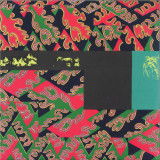
Sam Prekop's eponymously titled LP is a study in pop nuances. Simultaneously transporting the listener from mild climes and swinging palms to darkened skies and wind blown steppes, the record will be easily recognized by fans of The Sea and Cake. Known to many as the singer and main songwriter for said group, Mr. Prekop is assisted on this release by Chad Taylor (Chicago Underground Duo), Josh Abrams (ex-Roots, Town and Country), Jim O'Rourke (Gastr del Sol) and Archer Prewitt (The Sea and Cake). Those expecting to find more of the computer beats and trickery found on The Fawn and Two Gentlemen are in for a surprise. Whilst prevalent on "Faces and People" - (a lucious groove overlayed by cornet and guitar), the computer takes a back seat to real strings, drums, piano, electric piano and organ as well as electric and acoustic bass. The subtle grooves, a trademark of The Sea and Cake records, are still present here as Sam and his band blend West African rhythms with a bit of soul, jazz and pop. The resulting record is something wholly original, elegant and earthy. A cauldren, if you will, of sweet smelling and enlightening stew. So line up, grab a spoon, and dig in. All the ingredients and intoxicating aromas necessary for an auditory feast are contained within.
Following the release of Limewax's Untitled and Speed Dealer Moms' SDM-LA8-441-114-211, Trickfinger and Aura T-09's Evar Records imprint is keeping its foot on the gas, officially introducing the arrival of its sub-label, RAVE4EVAR. Embracing more of an outlaw mindset, RAVE4EVAR was created as a place for rebellion to collide with rave, offering refuge for off-the-cuff releases, special projects and occasional one-off collaborations.
Ushering in the sub-label's inaugural release, RAVE4EVAR is proud to present Chicago-based DJ, producer and new media artist S4M23's debut EP, Angelface. The five-track project, set to arrive on July 2nd via a limited edition cassette and digital download, combines haunting vocals with pounding kicks and rave synths to create a moving take on hardcore. Written and recorded during a weeklong session in April 2020, the creation of Angelface took place during a period of processing grave personal loss juxtaposed with the collective state of chaos, grief and fear brought on by the covid-19 pandemic.
Within that specific period of time, S4M23 channeled intense emotion to reflect how cathartic it can be to honor the connections we build with one another despite how frenetic and heart-wrenching the circumstances of a particular moment or experience can be. Pouring an immense spectrum of emotions into Angelface, these productions eschew simple repetition to create unexpectedly complex rhythms and textures that evoke the sounds of British club music and '90s rave, while simultaneously creating something entirely new.
Finnish producer Sasu Ripatti has been torching the fringes of electronic music since the mid 1990s, a process that's found him melting a wide spectrum of musical innovation into his cult brand of experimental minimalism. From the skeletal jazz deconstructions of his 1997 Vladislav Delay debut "The Kind of Blue EP" to the blurred dub techno variations of 2000's "Multila" and 2012's "Kuopio", Ripatti has betrayed a restless, voracious passion for sound. "Fun is Not A Straight Line" builds on this impressive legacy, retaining his sonic signature and adding a playfulness that harks back to his beloved deep house smash, Luomo's "Vocalcity". After becoming frustrated by the inflexibility of the 4/4 house idiom, Ripatti found solace in rap and bass music's rhythmic complexity and anarchic structures. "I bought Nas's 'Illmatic' when it came out in '94 and have more or less been listening to rap since," he explains. "I'm not really sure why now, but that rap influence wanted to come through." Chopped rap vocals, booming subs and gritty, neck-snapping beats are the primary colors of "Fun is Not A Straight Line", painted into the foreground and blended into an immediately recognizable rhythmic palette. The tracks cross into the same continuum as Chicago footwork, with stuttering samples that build thick walls of bass and flurries of wordless rhymes amid a narcotic haze of beats. On 'monolith', Ripatti's love of New York rap is in full focus as he obscures chipmunked vocals with tight, crackling percussion that disintegrates into rolling kicks; 'speedmemories' is even more upfront, channeling the raw sunshine energy of So So Def electro into rhythms that are powerfully skeletal. Elsewhere, syrupy Southern-fried TR-808 bass womps are tangled with molasses-slow vocals on 'videophonekitty', fuzzed into textured, dissociated ambience. Since the beginning, Ripatti has tried to find a balance between his experimental urges and drive to create more universal music. As his more recent albums have traveled into darker, more extreme realms, he has craved something different for balance. By drawing a crooked line between DJ Premier, DJ Screw and DJ Rashad, Sasu Ripatti has emerged with the most accessible and unashamedly enjoyable album he's produced in years.
LP edition of the sold out CD/Pamphlet from 2016. The score by Schmid, reading by Landry, and edited/produced by McCann. Includes a big poster of The St. Francis List.
Emily Martin and Derek Baron on St. Francis (Feb. 2021):
What does it mean to pray? To address someone, to plead for something, to welcome humiliation and failure: Please, let me forget about the China Chalet parties, please let there be no countries and no war, please let me love you. Is prayer iteration, or just repetition: My god, my god, my god, my god… To know spleen you just have to be down to be humiliated. But do we know for sure that we are miserable? How do we know?
This is how it has to go. We listened to this for the first time together in May 2017, while driving from Chicago to New York along the I-80 in Pennsylvania, stopping at the rest area that I later mistook for the famous picture of American “culture.” We stayed at a hotel and may have ordered a pizza. Content first, then, content again. Went inside and drank wine in relative silence, burping. Recognizing the sacredness in the plot of Friends. A choral melisma representative of holy Joy.
The dreams of moving through a convoluted space of passages, staircases, open courtyards, rooms just glimpsed past a door. It doesn’t seem possible that you can get from one place to the next but according to the logic of the dream you do. I think this has to do with how each little unit of ‘content’ happens at a different distance from your ear. The holiness of the periphery. That you can catch a shard of history if you only find the right distance to stand from the painting.
But prayer is also like the magic language we were talking about — faith that words do something more than just mean — they have the capacity to effect change in the world, and not just in the like, “words change ppl’s minds” kind of way, but in that the words themselves actually have agency. Form: sing-along.
Ulna’s OEA is a “bar-rock getting sober record.“ The first full length solo record of Ulna, aka Adam Schubert of Cafe Racer, OEA is an ode to reinvention. Along with the release comes a rebranding--formerly Ruins, Schubert’s new pseudonym ULNA is a reference to a pivotal moment in his childhood. At the age of 14, Schubert shattered the bone on the inside of his forearm in a skating accident, and took up the guitar. “That’s what made me serious about playing music,” says Schubert.
This name change also accompanied Schubert’s shift towards sobriety--OEA was created right as Schubert reconfigured his life without drugs or alcohol. With the exception of the final track, “Dead Friends,” the whole album was written while in a recovery program. “You have to reinvent your whole personality, you have to be a different person,” says Schubert.”Who am I if I’m not the crazy drunk dude who’s doing drugs in the bathroom?”
OEA is an intensely personal record, in subject matter but also quite literally--Schubert plays every instrument, though the record feels far from a home-demo, recorded and mastered by Robby Hanes at Strange Magic Recording in Chicago’s Logan Square. Schubert’s songs are ambling and full of picked guitar and retro harmonies, a stylistic sensibility he attributes to a love for the Beatles and “acoustic rock with a weird punk edge,” a-la Big Thief and Kurt Vile. Though instrumentally sunny, his vocals hint at something else - there’s an underlying ache. OEA is an easy listen, but with a depth of emotion that demands listeners’ attention.
OEA explores the range of emotions experienced in the transition to sobriety, from fear to backslide to self doubt. At first listen, “Turn The Record On” feels almost like a love song, with a chorus of “turn the record on/ you’re my favorite song,” but in actuality the song is the story of an empty encounter rather than romance. “It’s kind of about this sad hookup with someone else who is equal in your addiction, you’re just using each other because you don’t want to be alone in your using,” says Schubert. “We both have this problem and we can have fun in it together because we both understand. They know the score.”
While “Turn The Record On” speaks to a moment of shared addiction, other tracks examine what comes after sobriety. “And I took the pill like I should / and I stayed clean just like I said I would,” begins “Last Song,” which Schubert cites as one of the hardest tracks to write. “I got sober and I take medication and - I’m doing all this stuff now but nothing’s changed,” says Schubert. “ I think that’s pretty common in people who get sober. I did all this stuff and now what?”
The penultimate track on the album, “Last Song” fades into a noisy interlude that gives listeners the feeling of motion, like entering a tunnel and emerging into a quieter, lo-fi recording, the closing track “Dead Friends.” The only non-studio track, “Dead Friends” was recorded in Schubert’s home, and carries with it a warm intimacy. “I wanted it to sound like you’re outside somewhere, you're walking, and you step inside somewhere that feels safe,” says Schubert.
This closing track embodies the mood of OEA- warm but with a melancholy edge, like coming in from the cold but still feeling a lingering chill. It’s an album that feels comfortable and cohesive--though individual tracks stand alone, OEA works best when listened through start to finish. It’s a record to put on while cooking dinner and let sink in.
Hella Love, the Hardly Art debut from Marinero, is an album about closing a chapter. It’s Jess Sylvester’s grand farewell, and love letter to his hometown and the place he grew up, The San Francisco Bay Area, before relocating to Los Angeles after finishing his debut release. Using the moniker Marinero (which means “sailor” in Spanish), Jess Sylvester was drawn to this name as a means to honor his parent’s stories -- his father, a sailor, and mother, a Mexican-American who grew up in San Francisco. This record blends many worlds from beginning to end, and as you go deeper it hits harder. It’s his goodbye to The Bay. Pulling sonic influences from classic Latin American groups and international composers from the 60’s & 70’s: Los Terricolas, Ennio Morricone, Esquivel, Carole King and, Serge Gainsbourg Hella Love finds Sylvester fusing classical arrangements with a variety of different genres, evoking a sonic nostalgia blended with other contemporary artists like Chicano Batman, Connan Mockasin, and Chris Cohen. The album was written, played, and produced by Jess Sylvester with help from Bay Area engineer Jason Kick (Mild High Club’s Skiptracing) at Tunnel Vision and Santo Recording in Oakland, California. On the standout single “Nuestra Victoria,” Sylvester shares “It’s my way of talking about gentrification in SF, or specifically the Mission where my mom and family grew up. The song is about a bakery, or panaderia called La Victoria, and was a place where my mother and tias went growing up, a place I also went to that is no longer there.” It was one of the oldest Mexican-American businesses in SF and I wanted to honor it”. “Through the Fog” highlights Sylvester’s exploration of his influences from the Tropicalia movement, weaving bossa rhythms with lush percussion and orchestration. Using SF’s infamous fog as a metaphor for “tough times”, Sylvester expands that it is a dedication to his friends and family who have helped him get through substance abuse issues, heartbreak, and other painful experiences. “There are a few easter eggs in the lyrics for Bay Area folks or people who have followed my music in the past but it’s mostly about getting through something difficult with the love and support from the homies and fam.” The album’s title track, “Hella Love,” summarizes both of his parent’s stories of how they ended up in the bay. The first verse is about his father’s voyage out west as a sailor during the late ’60s while the second verse follows his mother’s experience moving to The Mission District when she was a young girl.
It’s difficult to classify or generalize about Marinero’s music or identity. To him, it’s important to let his music do the talking. “I’m Chicanx, a bay native, biracial, and I’ve luckily gotten to travel and spend time in Mexico and I feel like my personality and specific musical tastes come through on this album. More than these generalizations we often make, I’m just a human who can both fear and love, and I’m just hoping to connect with others to share optimism and experience joy and laughter, even if for a moment.” Lean your ear to the ground because Jess Sylvester has been many things and will continue to share his journey. It is clear this gifted creator has more to say.
-Luz Elena Mendoza
Originally released as a 12” single in 1982, ‘Every Brother Ain’t A Brother’ was the final record from Brooklyn multi-instrumentalist and producer Freddie Thompson’s Panaché band. Built around a fully cleared sampled bassline from ‘The Message’ by Grandmaster Flash & The Furious Five, ‘Every Brother Ain’t A Brother’ plays out like a summertime stroll through New York in the early 80s. The streets are full of excitement, but as the lyrics, written by vocalist Denise Williams (not to be confused with Deniece Williams of ‘Let’s Hear It For The Boy’ fame) make it clear, they’re dangerous as well.
Thirty-nine years later, Isle of Jura is proud to present the first official 12” reissue of ‘Every Brother Ain’t A Brother’. A cult classic from the disco-rap era, the reissue includes the original vocal and instrumental versions of ‘Every Brother Ain’t A Brother’ plus a Jura Soundsystem special version with additional live percussion.
Originally made up of Freddie, his wife, the singer Debra Thompson and keyboardist Douglas Glover, Panaché formed at the behest of a local disco DJ, Carl Nelson. In the wake of Chic’s early singles, Carl felt a French name would give Freddie a competitive edge. “He explained it to us that it was a French word for style and elegance. Panaché, a step above chic,” Freddie reflects.
Business minded, Freddie formed his own label, Roché Records and joined SIRMA - The Small Independent Music Manufacturers Association. “It was very hard for the independent manufacturers to get airplay and distribution at the time, so we all came together,” he remembers. Through SIRMA, Freddie met Joe and Sylvia Robinson from Sugar Hill Records, who several years later, let him sample ‘The Message’ for ‘Every Brother Ain’t A Brother’.
In 1979, Panaché scored some radioplay when they covered ‘Not On The Outside’ by ‘60s D.C R&B group The Moments. Emboldened, they brought onboard backing vocalists and recorded their only album. This Is Panache saw the band blurring the boundaries between soul, jazz-funk and disco and become a sought after collectible.
By 1982, Debra had stepped back, and one of Panaché’s backing singers was center stage, Denise Williams. “Denise was good with writing poetry,” says Freddie. "She had one called ‘Every Brother Ain’t A Brother’. It was about the unrest that was going on in the city at the time. I thought I could do something with that.”
After releasing ‘Every Brother Ain’t A Brother’ in 1982, Panaché quietly moved from center stage to behind the scenes. Over the last thirty-nine years, Freddie has continued to work in the music industry as a session musician and producer. “As soon as we stopped trying to become stars as Panaché, we became busy working in the industry,” Freddie laughs.
out of Stock
Last delivered 4 years ago available to reorder, subject to availability
Ryley Walker currently resides in New York City. But his latest LP is a Chicago record in spirit. The masterful Course In Fable, the songwriter’s fi@h solo effort,
draws from the deep well of that city’s ferCle 1990s scene, when bands like Tortoise, The Sea and Cake and Gastr del Sol were reshaping the underground,
mixing and matching indie rock, jazz, prog and beyond.
Walker spent his formaCve years in Chicago, absorbing those heady sounds and finding ways to make them his own. Even though he emerged at first in folkrock
troubadour mode, it makes sense that he’s arrived at this point; each LP has grown more intricate and assured, his influences disClling into something
original and unusual. To put it simply: Course In Fable is Walker’s best record yet, full of acCve imaginaCon and endless possibiliCes.
Last October, Ryley went straight to one of the primary architects of the Chicago sound to make the LP. John McEn:re, Course In Fable’s producer/engineer/
mixer, can rightly be called a legend for his work with Tortoise, Stereolab, The Red Krayola, Jim O’Rourke and countless others over a prolific career that now
spans more than three decades. Seeing his name in an album’s liners is preVy much a trademark of quality.
Another Windy City exile, McEnCre is based on the west coast these days, working out of the Portland, OR studio he’s dubbed Soma West. On the seven songs
here, he delivers the signature shimmering and prisCne sonics he’s become known for over the years. But McEnCre was also inCmately involved with Course
In Fable’s overall creaCve process. “I told him to take the mixes and have at it,” Walker says.
The result is a rich, immersive affair — a headphones record if ever there was one. Course In Fable’s songs are twisty, labyrinthine things, stuffed full of ideas
(Walker half-jokingly calls it his “prog record”). But no maVer how complex it gets, the album is never overwhelmingly busy. Wiry guitars melt into gorgeous
string secCons (arranged by Douglas Jenkins of the Portland Cello Project). Tricky Cme signatures abound but feel as natural as can be. Melodies o@en dri@ in
unexpected direcCons but remain downright hummable. Like Walker’s beloved Genesis, the pop element is never too far from the surface even when shit
gets weird. (And speaking of weird, Ryley says that in addiCon to Genesis, much of the album’s inspiraCon comes from “Australian extreme scooter riders on
YouTube and balding gear heads on Craigslist.” Go figure.)
To help put together these various puzzle pieces, Ryley assembled a band made up of several longCme collaborators. Bill MacKay (another Chicago mainstay)
and Walker have made two excellent instrumental duo records of interlocking guitars and warm give-and-take — a rapport very much in evidence
throughout Course In Fable. The freakishly talented drummer Ryan Jewell has performed with Walker for years now in a variety of seangs, from
straighborward song-centric sets to blown-out improv extravaganzas. Bassist Andrew ScoJ Young (Tiger Hatchery, Health&Beauty) has logged many miles on
tour with Walker; he and Jewell are frequently astonishing, a buoyant-but-always-locked-in rhythm secCon, able to navigate someCmes dizzying turnarounds
with apparent ease. Listening to the interplay between Walker and these musicians and you might be fooled into thinking they’d spent a year roadtesCng
Course In Fable’s songs. But it all came together relaCvely fast, thanks to demos, rehearsals and the kind of musical empathy that comes from years of
playing together.
Beneath the wondrous interplay, you’ll find some of Walker’s most personal – if sCll typically crypCc — lyrics, hinCng at some of the trials the songwriter has
been dealing with in recent years. Balanced with necessary doses of dark humor and oddball poetry, Course In Fable feels most of all like a life-affirming
record, fresh air in the lungs, sun on your skin. “Fuck me, I’m alive,” Ryley sings at one point, a moment of both disbelief and pure joy.
Walker has released his albums on a who’s-who of independent labels over the past decade — Tompkins Square, Dead Oceans, Thrill Jockey and Drag City
among them. This Cme around, he’s doing it DIY-style, puang Course In Fable out on his own Husky Pants imprint. You’re in good hands. This is an album that
sounds great (mastered by Greg Calbi), looks great (artwork by Jenny Nelson and design by Michael Vallera). It probably even smells great. Whether you’ve
been onboard since the beginning or are new to the Ryley Walker universe, you’re in for a treat.
Party tribe in a balkantek style !! At least something to complete the famous Balkantekl 001 in the miw ! And the Pin Up and the Resh G stuff...
DON'T MISS you deejay of the "bad vibes Full-stop" !!
out of Stock
Last delivered 5 years ago available to reorder, subject to availability
Rich in musical associations yet utterly singular in its voice, joyous with an inner tranquility, the music of Natural Information Society is unlike any other being made today. Their sixth album in eleven years for eremite records, descension (Out of Our Constrictions) is the first to be recorded live, featuring a set from London’s Cafe OTO with veteran English free-improv great Evan Parker, & the first to feature just one extended composition. The 75-minute performance, inspired by the galvanizing presence of Parker, is a sustained bacchanalia of collective ecstasy. You could call it their party album.
This was the second time Parker played with NIS. Joshua Abrams: “Both times we played compositions with Evan in mind. I don’t tell Evan anything. He’s a free agent.”
The music is focused & malleable, energized & even-keeled, drawing on concepts of ensemble playing common to musics from many locations & eras without any one specific aesthetic realization completely defining it.
“The rhythms that Mikel plays are not an exact reference to Chicago house, but that’s in there,” Abrams says. “I like to take a cyclic view of music history, can we take that four-on-the-floor, & consider how it connects to swing-era music? Can we articulate a through line? I dee-jayed for years in Chicago & lessons I learned from playing records for dancing inform how I think about the group’s music. The listener can make connections to aspects of soul music, electronic music, minimalism, traditional folk musics, & other musics of the diaspora as well. It’s about these aspects coming together. I don’t need to mimic something, I need to embody it to get to the spirit, to get to the living thing.”
For jazz fans, the sound of Parker’s soprano & Jason Stein’s bass clarinet might evoke Coltrane & Dolphy, even though they didn’t necessarily set out to do that & they play with complete individuality. Abrams sees a bridge to the historical precedent, too. “Since we first met in the 1990s, one of the things that Evan and I connected on was Coltrane’s music,” he says. “I hoped that we would tap into that sound world intuitively. In this case, I think that level of evocation adds another layer of depth, versus a layer of reference.”
Indeed, this is a performance in which the connections among the ensemble & the creative tension between improvisation and composition build into a complex mesh of associations & interactions. While the band confines itself to the territory mapped out by Abrams’ composition, they are remarkably attentive & responsive, making adjustments to Parker’s improvisations. When Parker’s intricate patterns of notes interweave with the band, the parts reinforce one another & the music rockets upward. Sometimes, Parker’s lines are cradled by the group’s gentle pulse & an unearthly lyrical balance is struck.
Drummer Mikel Patrick Avery is locked-in, playing with hellacious long-form discipline, feel & responsiveness. Jason Stein’s animated, vocalized bass clarinet weaves in & out with Lisa Alvarado’s harmonium to state the piece’s thematic material; the pulsing tremolo on the harmonium brings a Spacemen 3 vibe to the party. Abrams ties together melody & rhythm on guimbri, a presence that leads without seeming to. Like his bandmates, he shifts modes of playing frequently, improvising & then returning to the composed structure.
“As specific as the composition is, the goal is to internalize it & mix it up,” Abrams says. “The idea is to get so comfortable that we can make spontaneous changes, find new routes of activity, stasis & byways every gig. It’s like a web we’re spinning. If someone makes a move, we all aim to be aware of it, make room for it. Experiencing & listening is what it’s about, & Evan supercharges that.”
& “supercharged” is the word for this album. With Parker further opening up their music, descension (Out of Our Constrictions) is the sound of Natural Information Society growing both more disciplined and freer, one of the great bands of its time on a deep run.
Aguirre edition: Mastered by Helge Sten, Audio Virus, Oslo. Lacquers by Dubplates & Mastering. Liner Notes by Theaster Gates. LPs pressed on premium audiophile-quality vinyl at Pallas Records. US 2xLP edition available thru Eremite records.
out of Stock
Last delivered 5 years ago available to reorder, subject to availability
· First release of the Jagjaguwar 25th anniversary celebration happening in 2021. · Features production and composition accompaniment from Bon Iver, Mary Lattimore, Angel Bat Dawid, Gia Margaret, and Sam Gendel. · Limited edition Opaque Green vinyl. Over the last 12 years, Ross Gay's poems have given us indelible images and phrases of radical empathy and unabated gratitude; about community, collaboration, connectedness and hard work. They have crept into our hearts and made a home of all of us. And so we are launching our 25th Anniversary celebration with `Dilate Your Heart', our first spoken word album since titan Robert Creeley's self-titled release twenty years ago. "Catalog of Unabashed Gratitude" is given a gorgeous, slowly creeping bed of vines by Bon Iver, as Gay's unadorned voices speaks a lifetimes of Thank You's. On "Burial," harpist and composer Mary Lattimore's lunar landscape follows Gay's voice into space, telling of our endless energy exchange with nature. Chicago's Angel Bat Dawid dances with the frenetic, joyous scene Gay leads us through on "To the Fig Tree on 9th and Christian," in which a group of Philadelphia strangers scramble together to harvest the fruit of the titular urban fig tree. Songwriter Gia Margaret provides a mystical, amniotic environment for Gay's "Poem To My Child If Ever You Shall Be," a love letter to an imagined future child, treating Gay's voice like a message in a bottle to a far off idea made only of love and potential. Sam Gendel, a secret weapon collaborator, affects Gay's voice on "Sorrow Is Not My Name" to something glassy and almost singsongy. Throughout, Gay recites his poems with bright aliveness, his voice as warm and easy when he speaks about death as when he speaks about mercy, or love.
The three players in Chicago’s Moontype orbited each other for years before they came in phase. Bodies of Water, their debut album for local label Born Yesterday, documents travel, insecurity, friendship, and the titular element—all of which are representative of the band members’ strong connection to place and to one another. “Being rooted in the landscape became important to me while studying geology, which completely changed how I think about the world,” offers songwriter, vocalist and bassist Margaret McCarthy of the album’s central themes. The arrangements themselves feel like open-hearted negotiations; sparse fingerpicking gives way to saturated tube-screaming as naturally as the changing of tides. Over twelve tracks, Moontype revels in the woozy concoction of its many influences, but always lands on punchy hooks, shifting between arrangements both spacious and mystifying without abandoning their conversational warmth.
Conservatory students at Oberlin College’s prestigious music program, each member focused on exploring different sounds. Guitarist Ben Cruz, who came up on classic rock shredding and migrated into jazz performance, admired the indie pop of Fountains of Wayne, the groundbreaking composition work of pianist Vijay Iyer, and the genre-morphing folk of heavy hitters like Neil Young and Joni Mitchell. He played in several projects alongside Emerson Hunton, who’d drummed from age six and entrenched himself in the Twin Cities improvised music scene before even heading to college. Margaret—who grew up outside of Boston playing piano, singing in choirs and writing on guitar—spent her time creating knotty, riot grrrl-and-hyperpop inspired songs for bass and voice, as well as noise soundtracks for art installations. Inspired by artists like Adrianne Lenker and Gillian Welch, she recorded the EP bass tunes at home in an apartment over the town’s optician, releasing it upon graduation. A week later she migrated even farther west to Chicago, where Ben and Emerson had already enmeshed themselves in several projects, from avant garde ensembles to a country group.
Ben was instantly impressed by Margaret’s songs, at once “challenging and unlike anything I had played before.” The duo decided to try performing together, but knew this special music would be even better fortified with drums. Emerson was the obvious choice—as Ben puts it, “He’s our great friend and also the best drummer we know. Who else do you call?” Moontype-as-trio gigged around town, eventually embarking on a first fall tour in Emerson’s Prius. On that trip, they felt the music morph into something living, and the care and trust between them intensified. They decided to put together songs for a record, recorded at the end of 2019 with Jamdek Recording Studio’s Doug Malone, a dependable collaborator whose patient process perfectly captured the magic of their newfound familiarity. While Margaret’s skeletal demos still informed the bulk of Moontype’s full-band debut (some of which are re-recordings of bass tunes cuts), the resulting arrangements are songs reborn and strengthened by the three musicians’ absorption of one another’s ideas.
On Bodies of Water, Margaret’s soothing, unadorned alto is often peppered by the gliding, eerie harmonies of her bandmates. “We love the act of singing together,” explains Ben, who describes it as “connecting and grounding and wholesome.” The push-pull search for common ground characterizes the instrumentals as well. Round basslines occupy higher octaves, trading space with guitars chugging in lower registers, and all the while drums break apart and glue back together in idiosyncratic grooves that never lose the pocket. Of the complicated rhythms that sometimes result: “Any mathy moments are based on how the lyrics fall naturally, which feels like it frees us up from having to stay in one time signature,” says Emerson. “Rhythmic elements never feel like they’re being added in, more like they’re already there and we just float on through.”
Touring’s restlessness informed these songs, but so did the DIY scene that welcomed Moontype to Chicago—including, according to Margaret, the “wild harmonies” of Ohmme, the “deadpan explanatory rock” of Ratboys, and the “luxe math rock pattern music” of The Knees. Working at beloved venue Sleeping Village inspired Margaret’s observational vignettes; “We are sitting at the desk and you are mixing all the bands,” she reports in the middle of the dextrous folk hammer-ons of “3 Weeks,” gently admitting, “I am trying to have fun and I am trying to get paid” in a world of bikes, trucks, and velvet. “About You,” a robust power-popper written about a post-gig romp around Richmond with artist Bebé Machete, opens with a Phair-ian quip: “Looking at you with my fuck me eyes / Do you wanna get inside of mine?” Meanwhile, the spectre of lost camaraderie looms over “Ferry,” an atmospheric and anthemic standout that questions, “If I’m not your best friend / then who am I to anyone?” Alongside water, this preoccupation with friendship is a focal concern lyrically, but the palpable love between Moontype’s players is essential in communicating that desire for connection, and all three members are dedicated to exploring sound and meaning organically and together. Care and generosity are at the core of Moontype, and Bodies of Water is a clever album full of insightful music, as cosily enveloping as it is incisively honest.
For a band that resists repeating itself, picking up lessons from a decade prior is the strange route Cloud Nothings took to create their most fully-realized album. Their new record, The Shadow I Remember, marks eleven years of touring, a return to early songwriting practices, and revisiting the studio where they first recorded together.
In a way not previously captured, this album expertly combines the group’s pummeling, aggressive approach with singer-songwriter Dylan Baldi’s extraordinary talent for perfect pop. To document this newly realized maturity, the group returned to producer Steve Albini and his Electrical Audio studios in Chicago, where the band famously destroyed its initial reputation as a bedroom solo project with the release of 2012 album Attack on Memory.
Another throwback was Baldi’s return to constant songwriting à la the early solo days, which led to the nearly 30 demos that became the 11 songs on The Shadow I Remember. Instead of sticking to a tried-but-true formula, his songwriting stretched out while digging deeper into his melodic talents. “I felt like I was locked in a character,” Baldi says of becoming a reliable supplier of heavy, hook-filled rock songs. “I felt like I was playing a role and not myself. I really didn’t like that role.” More frequent writing led to the freedom in form heard on The Shadow I Remember. What he can’t do alone is get loud and play noisily, which is exactly what happened when the entire band— bassist TJ Duke, guitarist Chris Brown, and drummer Jayson Gerycz—convened.
The band had more fun in the studio than they’ve had in years, playing in their signature, pulverizing way, while also trying new things. The absurdly catchy “Nothing Without You” includes a first for the band: Macie Stewart of Ohmme contributes guest vocals. Elsewhere, celebrated electronic composer Brett Naucke adds subtle synthesizer parts.
The songs are kept trim, mostly around the three-minute mark, while being gleefully overstuffed. Almost every musical part turns into at least two parts, with guitar and drums opening up and the bass switching gears. “That’s the goal—I want the three-minute song to be an epic,” Baldi says. “That’s the short version of the long-ass jam.”
Lyrically, Baldi delivers an aching exploration of tortured existence, punishing self-doubt, and the familiar pangs of oppressive mystery. “Am I something?” Baldi screams on the song of the same name. “Does anybody living out there really need me?” It’s a heartbreaking admission of existential confusion, delivered hoarsely, with an instantly relatable melody.
“Is this the end/ of the life I've known?” he asks on lead single and album opener “Oslo.” “Am I older now/ or am I just another age?” Despite the questioning lyrics, the band plays with more assurance and joy than ever before. The Shadow I Remember announces Cloud Nothings’ second decade and it sounds like a new beginning.
For a band that resists repeating itself, picking up lessons from a decade prior is the strange route Cloud Nothings took to create their most fully-realized album. Their new record, The Shadow I Remember, marks eleven years of touring, a return to early songwriting practices, and revisiting the studio where they first recorded together.
In a way not previously captured, this album expertly combines the group’s pummeling, aggressive approach with singer-songwriter Dylan Baldi’s extraordinary talent for perfect pop. To document this newly realized maturity, the group returned to producer Steve Albini and his Electrical Audio studios in Chicago, where the band famously destroyed its initial reputation as a bedroom solo project with the release of 2012 album Attack on Memory.
Another throwback was Baldi’s return to constant songwriting à la the early solo days, which led to the nearly 30 demos that became the 11 songs on The Shadow I Remember. Instead of sticking to a tried-but-true formula, his songwriting stretched out while digging deeper into his melodic talents. “I felt like I was locked in a character,” Baldi says of becoming a reliable supplier of heavy, hook-filled rock songs. “I felt like I was playing a role and not myself. I really didn’t like that role.” More frequent writing led to the freedom in form heard on The Shadow I Remember. What he can’t do alone is get loud and play noisily, which is exactly what happened when the entire band— bassist TJ Duke, guitarist Chris Brown, and drummer Jayson Gerycz—convened.
The band had more fun in the studio than they’ve had in years, playing in their signature, pulverizing way, while also trying new things. The absurdly catchy “Nothing Without You” includes a first for the band: Macie Stewart of Ohmme contributes guest vocals. Elsewhere, celebrated electronic composer Brett Naucke adds subtle synthesizer parts.
The songs are kept trim, mostly around the three-minute mark, while being gleefully overstuffed. Almost every musical part turns into at least two parts, with guitar and drums opening up and the bass switching gears. “That’s the goal—I want the three-minute song to be an epic,” Baldi says. “That’s the short version of the long-ass jam.”
Lyrically, Baldi delivers an aching exploration of tortured existence, punishing self-doubt, and the familiar pangs of oppressive mystery. “Am I something?” Baldi screams on the song of the same name. “Does anybody living out there really need me?” It’s a heartbreaking admission of existential confusion, delivered hoarsely, with an instantly relatable melody.
“Is this the end/ of the life I've known?” he asks on lead single and album opener “Oslo.” “Am I older now/ or am I just another age?” Despite the questioning lyrics, the band plays with more assurance and joy than ever before. The Shadow I Remember announces Cloud Nothings’ second decade and it sounds like a new beginning.
NEP was a loose multimedia collective formed in 1982 Zagreb, ex-Yugoslavia. The founder Dejan Krsic collaborated with various artists in a quest of re-thinking the stale concepts of art history, position of the author and the barriers between pop and elitist high culture. Heavily influenced by Walter Benjamin and Andy Warhol in theory and Brian Eno and Kraftwerk in music, Krsic created NEP as an umbrella term (meaning Nova Evropa or New Europe) of diverse rule-breaking activities, covering graphic design, music, photography, video, news-media and theoretical work. Musically NEP focused on experiments in ambient and tape-music, self-released and hard to find compilation tapes like "The Cassette Played Poptones" (1988). Deeply immersed in pop-culture, politics and art theory Krsic's search for perfect pop music with cutting critical edge peaked in 1989, the year 'Decadance' track was conceived in studio. Fox & His Friends published the single in 2017 with Snuffo Remix on B-side. It received rave reviews in music press like MixMag and DJ Mag and it is still played on dance-floors around the world. But the story around the NEP is musically (as well as artistically) much wider: for the first time Fox & His Friends team compiles best cuts from unreleased and rare NEP tapes, covering the period from 1985 to 1989 on POP NOT POP abum. Dejan Krsic is now famous graphic designer and art historian in Croatia. Other collaborators include Laibach and Borghesia photographer Jane Stravs, artist and TV director Gordana Brzovic, Jovan Culibrk, now Bishop at The Serbian Orthodox Church and Anja Rupel, singer of cult Yugoslavian synth-pop group Videosex as well as the other members of Videosex, Iztok Turk and Janez Krizaj who produced some of the tracks. Other collaborators were talented producers Robert Logozar and Davor Daga Devcic, singers Linda Cooper, Natalija, Alexx Kovacs... The list of collaborations is long. Some of the memorable moments on POP NOT POP album are early demo version of Decadance 'How Do I Dance To This Music?' with blue movies samples and drum machine experiments like early Cabaret Voltaire, then Krsic's reinterpretation of legendary Kraftwerk's Trans Europe Express anthem as 'Transcendance', or 'Radical Chic', where Dejan himself and Anja Rupel from Videosex make lovely couple of dandy-esque fashionistas, singing chart-friendly radio synthpop tune that contrasts the A-side (The 'NOT POP' side) - full of experiments, dark wave and industrial nods to Test Department and Cabs. B-side is 'THE POP' side that will surprise most of the NEP followers from their early experimental cassette days. Sunny, danceable, joyfull pop that reveals the many faces of NEP. As Kraftwerk today is more of a concept than a band, NEP does the same by re-writing its products (musical, graphical, theoretical, activist) and constantly puts them in permanent state of change or re-mix. In the future, only NEP logo will be enough to consider something an art piece, and NEP will be everybody who wants to, as their Art Manifest claims. Until that day comes, 'POP NOT POP' is a document of how the vivid and creative were art-scenes in socialist Yugoslavia. Some of the graphic work, cut-ups from theory and Manifesto are also included on this LP, designed by Dejan Krsic aka NEP himself. This release is made from the original master tapes and published for the first time on vinyl.
out of Stock
Last delivered 5 years ago available to reorder, subject to availability
Second album release on Columbia Records from US hip hop/drill/rapper/singer/songwriter/producer. A 16 track double LP set on black vinyl. Collaborators include Juice WRLD and Lil' Baby. Specialist promo/marketing activity across all media outlets. The album reached #2 in the US Billboard charts when released earlier this year.
One thing hip-hop has never been great at – and certainly something for which it has zero reputation – is nuanced emotion. Enter Large Professor and ‘Looking at the Front Door’, the group’s first single on Wild Pitch Records and the lead out for their stunning ‘Breaking Atoms’ album.
Wrapped around a loop from Donald Byrd’s Blue Note classic ‘Think Twice’, bolstered by the infectious chorus of ‘Chick A Boom’ by The Pazant Brothers and Beaufort Express, it’s a melancholy tale of love gone wrong. It was a brave choice of lead single in the 1990 hip-hop landscape, plucked from an album full of genuine head-nodders and standout tracks. It was also the right choice – a piece of production perfection laced with romantic honesty.
The B-side also strikes a different tack, a tale of a brother who “doesn’t fight, his brain is his left and right.” Using a solid foundation of drums from Funkadelic’s ‘You’ll Like It Too’ (most famously used on Eric B & Rakim’s ‘I Know You Got Soul’), Large Pro weaves his tale of an ambitious, studious man over an original organ line (by JD Drumsticks) that wouldn’t sound out of place at a hockey rink. The theme is sledgehammer subtle – don’t sell drugs, stay in school – but delivered with the lightness of touch that would be Main Source’s signature.
This is the first official UK release, and the first time both sides have been together on a 7”.
out of Stock
Last delivered 5 years ago available to reorder, subject to availability
Whiskey Pickle returns with yet another 12" of eclectic leftfield deepness, this time around from prolific Italian producer DJ Rocca.
The first cut off the record 'Detox' is reminiscent of the early 80’s electronic sound with nice mellow synths and a clever breakbeat. The next track is the title cut 'Tropicale 17' a lovely arpeggiated bell laden jam that sounds something like Kraftwerk lost in the Japanese wilderness.
Side B is dedicated to the epic twelve plus minute 'Chicken Lips Malfunction' Chicken Lips remix of 'Tropicale 17'. This is the jam that got those fowl fellas (Andy Meecham & Dean Meredith) back in the studio and boy was it worth it!
out of Stock
Last delivered 5 years ago available to reorder, subject to availability
Carthago: Rare Tunisian Disco Including Unreleased Instrumentals And Eight Page Booklet When we first decided to start Habibi Funk, a label dedicated to re-releasing "funky" Arabic music from the 1960s to 1980s, a band called Dalton was the first release we worked on. Dalton was a band from the Tunisian capital of Tunis and they played a unique mix of soul & funk with an Arabic DNA. We licensed the release from the band's composer Fawzi Chekili, and when we spoke to him on the phone in preparation of the release he mentioned another band he was part of, called Carthago. Our work with Habibi Funk is like a big treasure hunt. There are too many great bands that fully vanished into obscurity and didn't leave any traces in the digital sphere yet. We are so used to the internet providing all informations we might be looking for, but Carthago was one of those bands where the internet largely failed to provide any infos despite the fact that Carthago created some incredible music in the form of an highly infectious Tunisian take on disco music. Luckily most of the members of the 1970s musical scene of Tunis are still around to tell their story.
Carthago was founded in the late 1970s as a fusion of Dalton and a second band called Marhaba Band. Both bands frequently played at hotels and night clubs in Tunis and Sousse. They had similar musical influences and despite the fact that they were competition for the most part, they came up with the idea to join forces for a new band. Musically Carthago kept on walking on the musical path of Dalton and Marhaba but incorporated disco music, a new style that was making its way to North Africa from Europe and North America. The band had quite some success on local radio and played a number of big shows with thousands of people showing up. The band's concerts were a mixture of their own compositions as well as cover versions of the hits of the time from Stevie Wonder to Chicago. At the end of the 70s they went to Paris to record their only, self titled album. For our reissue we picked out two of our favorite tracks: "Hanen" and the outstanding disco version of the Dalton track "Alech" which has proved to work on every dance floor we played over the last two years.
When I came to Tunis for the first time after the Dalton reissue I met Fawzi in person. He still lives in Tunis and still works as a full time musician though his focus has shifted more towards Jazz over the years. Luckily he did not only keep a spotless copy of the Carthago album but he also kept the master tape of the instrumental versions of the album which to this day were unreleased. Being able to add exclusive content to a reissue is something that is rare and we feel highly privileged to be able to do so. Futher more we are so happy that we will be able to add something new to the bands legacy not only musically but also visually: One day I realized that most of the releases from Tunisia I liked, be it from Dalton, Carthago or Marhaba Band had the same photographer credit.Hassen Turki started taking photos at a young age and when he was 18 he started going to the gigs of the bands of the time that were playing in the Marhaba Hotel which was managed by his father at the time. He became friends with the bands and ended up being the person to be asked when it came to shooting the photos for the covers of the records. After some research I managed to get in touch with Hassen and met him in his hometown Sousse. Luckily he kept most of the negatives of the photos he took so we're more than happy to be able to share these unseen photos with whoever is interested.
out of Stock
Last delivered 18 months ago available to reorder, subject to availability
MD Records, a small independent label started in 2018, are pleased to present the debut single from “Lost in Rio” on the new MD Gold series imprint.
Their debut single which will be out in August, ‘Little Piece of Heaven’ is a festival summer feel good slice of Latin pop featuring energetic musicianship and the vocals talents of Highland based Miss T.It is also something the guys are, rightly, very proud of.
The vinyl release of this single is presented as a double A side as both sides are phenomenal, with the remix bringing a NYC disco mix, designed purely for dancefloors with thumping bass, chic style guitars and soaring strings, think Studio 54 and the heady crossover soul of Philly meeting the early disco of New York.
Early plays by several funk and soul radio stations (Totally Wired Radio and FACE radio) has attracted interest from DJs keen to feedback with so many positive vibes and offers to collaborate on future songs.
Who Are Lost In Rio:
The band herald from the Highlands of Scotland. Inverness provides the base for a collection of musicians that have made their home here, whether they originated from Manchester, Melbourne, Malaysia or indeed the Highlands! The band has taken the funk and soul sound from their former incarnation, The Leonard Jones Potential (LJP) who were BBC6 Craig Charles Funk & Soul Show favourites with whom they undertook several live interviews on the show with Craig and also a popular live session as well as a number of joint live dates at Kendal Calling Festival, Inverness and Aberdeen. The guys were also asked to undertake some prestigious live work with world renowned DJ Carl Cox, on the bill at his personal request and alongside other acts such as Brand New Heavies, Danny Rampling, Gilles Peterson and of course, Carl himself.
The songwriting team behind all this - Anthony, Andy, Neil and Ruairi quickly set up Lost in Rio upon the demise of The LJP and began collaborating with a number of singers and a rapper (MC Butterscotch). They developed their sound into a smaller, tighter, groove based soul vibe.
From 2017 the grouped honed their sound with a number of live appearances across the Highlands including festivals and supporting acts such as Smoove and Turrell. Utilising guitars, bass, drums, Hammond and percussion, the guys set about leaning on key influences - Acid Jazz Corduroy and Brand New Heavies, dynamite disco guys Chic, Northern Soul, rare soul and a whole plethora of funky hip hop acts - The Allergies, The Herbaliser and Tribe called Quest to write a lot of new tunes. Latin influence comes to the fore in much of the groups new sound, particularly highlighting the impressive skills of Aussie percussionist Andy Pearce.
Live, the band have a good reputation and have been much sought after by promoters. Audiences have loved the tight rhythmic groove that these guys produce, meaning gigs are full of dancing and long encores. Recently the guys have been concentrating on driving up the already high standard of songwriting and production. This hard working band has plenty of material they are eager to share with those ears who are partial to quality funk, soul and pop and are looking for the right partners to work with and spread the message. Future releases will seek to exploit the wordsmith alacrity of MC Butterscotch who as well as Lost in Rio, also features as part of Scottish award winning hip hop act, Spring Break.
MD Records specialise in Unreleased soul and funk on its Yellow Series, contemporary soul and funk artists on the Gold Series, re-issue soul and funk on the Black Series and Missouri Soul and Blues via its Blue Lotus UK imprint.
out of Stock
Last delivered 5 years ago available to reorder, subject to availability
This is the debut release for WORQ RECORDS. An independent label out of Chicago USA. The label was an idea because of how hard it is these days to classify tracks into either House or Techno let alone one of the tons of sub genres of the two. Loving both genres and not wanting to label tracks or records with one group or the other, WORQ RECORDS was created. This debut release on 12" vinyl allows for a selector to blend these tracks into a variety of different mixes.
QUINROK1 sets the pace for what the WORQ RECORDS sound will be. A blend of House/Techno/Minimal/DubTechno. Born, raised and bred with the Chicago House sound and the underground rave scene culturing and shaping the flavor of where his House/Techno sound is today. This 6 track 12" will have something for your mix! Huge deep kicks, snappy snares, hats and claps with fat bass grooves and soul samples, its a recipe for some bangers!!
out of Stock
Last delivered 4 years ago available to reorder, subject to availability
Adeen Records 006 Introduces Bari born by way of Italy producer Nico Lahs. The South Italy producer delved deeper into his roots and returned using an array of vintage analog and digital hardwares, to give life in total freedom (as the name suggests) to his own sound and trademark.
The 2xLP album is the result of an unceasing and steadily research of one of the Italian music innovators, who doesn't just make house, but he's just as adept making hip-hop, downtempo, technoish and ethereal stuff deeply rooted into Chicago and Detroit history that starts with mellow atmospheres to then go up and down, skillfully juggling among samples, hardwares and artistry, showing his abilities with the sole purpose of calling out all the music heads, regardless of their taste, and unite 'em under one only message. Simply something for everyone!
out of Stock
Last delivered 6 years ago available to reorder, subject to availability
Albert Ayler’s 1969 album New Grass has been misunderstood from the day of its release. The album fi nds Ayler experimenting with soul music and digging back into his R&B roots (he started his career playing saxophone with Chicago bluesman Little Walter), fusing it with the avant-garde free jazz (the one element of the record which garnered consistent praise) and adding the vocals of Rose Marie McCoy, The Soul Singers and Ayler himself. As if predicting the divisiveness of the record to follow, Ayler speaks directly to the listener and explains that New Grass is nothing like his albums before — that it is of “a different dimension of his life” — in the album opener “Message from Albert.”
New Grass deserves reconsideration, if not for the heavy grooves and surprising arrangements, then for its bravery in challenging norms of the time; by the ‘60s, jazz was well-accepted as a uniquely American art form, while soul as a genre was very much still seen as primitive. Ayler melds them together and creates something novel, adventurous, and completely his own. At the time of its release, despite its divisive reception, New Grass helped break down the unnecessary walls dividing genres and revealed music’s potential freedoms. The album has gone on to infl uence generations of Jazz, R&B, Funk, Hip Hop, Post Punk, No Wave and unshrinking artists like Pharaoh Sanders, Alice Coltrane, Funkadelic, Jungle Brothers, Red Krayola, Sonic
Youth and Mark E. Smith.
Third Man Records can’t recommend this record highly enough. We are confi dent that it won’t take but one listen for you to understand New Grass is an undeniable healing force
out of Stock
Last delivered 6 years ago available to reorder, subject to availability
Producer, arranger, composer, saxophonist, band leader Willie Henderson started working for Brunswick. Records in 1968 and his sound and musical talents can be heard across many of the labels hits such as Tyrone Davis, Jackie Wilson, Chi-Lites and Barbara Acklin. With super funky instrumental takes on soul & funk classics, this 1974 album includes highlights such as ‘Loose Booty’ sampled by the Beastie Boys, ‘The Funky Chicken (Part 1). 1974 album is reissued on 140g classic black vinyl with original artwork and printed inner sleeve.
out of Stock
Last delivered 5 years ago available to reorder, subject to availability
The globetrotting beat maestro is back, with a truckload of tropical vibes and the irresistibly danceable soundtrack to your Summer! 3 years after releasing his groundbreaking collaborative album with singer Chico Mann (which landed him live sets on Boiler Room & KCRW's Morning Becomes Eclectic as well as a feature on NYTimes "Best Songs Of The Week") DJ/producer Captain Planet returns with NO VISA, set to drop June 26th on Bastard Jazz Recordings. In his trademark "Gumbo Funk" sound, the album mixes rhythms and musical styles from the Caribbean, Latin America, the Middle East and Africa, over highly danceable electronic beats, all firmly rooted in the hip hop, dancehall and house music that the Captain grew up playing as a DJ. Seamlessly bouncing from Brazilian Baile Funk, to Afrobeat, to Roots Reggae and Latin House, the entire record delivers the uplifting feel of one of the Captain's legendary boundary-crossing DJ sets. Building on these traditions he draws from, the Captain has created something fully original and unique.
NO VISA, the 5th full-length album from producer Charlie Wilder (aka Captain Planet), is both a return to form and a launchpad into the future. With 13 songs that feature vocalists from around the world, long-time fans will recognize several previous collaborators as well as the global influences that have always been central to Captain Planet's music. New friends, like prolific Zimbabwean-American singer Shungudzo (who has recent hits with Oliver Heldens & Rudimental), and Jamaican reggae star Jesse Royal, bring powerful subversive messages to the music as well. Showcasing the Captain's production chops and songwriting talents equally, the album unveils a unique musical landscape, a place where our political boundaries and cultural hierarchies begin to dissolve, where foreign languages mingle together and deep rooted traditions dance with the future.
With NO VISA, Captain Planet unveils a fully matured and truly unique form of electronic music- one that bridges gaps between worldwide cultural diasporas as well as contemporary dance music sub-genres (house, hip hop, dancehall & global bass). Throughout every Captain Planet song, it's clear to hear his inspired appreciation for breaking the boundaries between genres and bridging continents through rhythm.
out of Stock
Last delivered 5 years ago available to reorder, subject to availability
Never ones to turn down some acid, Schrödinger’s Box welcome a well-seasoned 303 master into its ranks. With more than a decade’s experience of knob jerking body bending bangers, Snuff Crew are true veterans.
The intent of Always Oldschool is laid bare on the needle drop. Throbbing beats are laced with silver-box squawk as vocals circle in the midnight sweat of “Mile High.” Forged in the sound of Chicago, “Mousehole Groove” is a gnarled and nasty banger brimming with attitude. Accentuating that attitude, Hard Ton arrives to bring his unique vocals to the proceedings. Drenched in simmering decay, spiked with rusted snares, “Jack Until” is an ode to the club and the possibilities it brings. Carrying on from that late night romp, we wake up with “Sunday Morning.” Club comedown? Think again. Piano keys cut a sharp and fine mood with lyrics only pushing the happiness even higher. Smouldering with a touch of something sinister, “Friendship” closes the proceedings.
Always Oldschool burns with a full intensity. A 12” of fiery floor funk and enflamed passions, a 12” that comes with Snuff Crew’s guarantee of sore muscles and a flourish of romance.
out of Stock
Last delivered 5 years ago available to reorder, subject to availability
Canyons are places of mystery and beauty. The interesting thing is, while they are one of the great wonders in the history of planet earth and attract scientists of all kinds of disciplines, they have also been a popular retreat for artists and musicians. You will have heard of Topanga Canyon, Rickie Lee Jones and Chicago recorded here. Laurel Canyon is even more well known, a mythical place where Crosby, Stills & Nash developed their unique vocal sound while hanging around Mama Cass' place. Or was it in Joni Mitchell's house on Lookout Mountain? Ok, you get the picture. There is something unexplainable, almost magical going on in canyons.
Maybe that's why Andy Platts and Shawn Lee were thinking of "Canyons" when they wrote and recorded their third album as Young Gun Silver Fox. With "West End Coast" and "AM Waves" these two very talented musicians, singers, songwriters, arrangers and producers already explored all things Westcoast, AOR, Softrock and Boogie. But - especially if you are a into the golden age of this sound running from circa 1976 to 1984 - you will be aware that there is no return once you started digging these unconditional musical delights with their timeless compositions, untouchable musicianship and refined arrangements. The great albums from that era appeared when punk broke and the musical establishment was shaken to the ground. Today they sound more up to date than ever. Who would have thought back then?
On "Canyons" Young Gun Silver Fox turned it up to eleven. They are nothing but "Kids" cruising in the fast lane, totally over the top searching for the "Dream Woman", touching down in Tokyo caught in a "Long Distance Love Affair", imagining the theme for a lost 70s TV series starring "Danny Jamaica", being on the winning side in a "Private Paradise", getting deep and soulful in "Things We Left Unsaid" and wondering how to spread "All This Love". Their bass lines, sound layers, brass arrangements and harmony vocals are immaculate. Everything fits perfectly. Just like this. "Who Needs Words" when everything is crystal clear? Exactly!
"Canyons", after all, are magical places of rare beauty. (Mr. Mellow - Porcaroc Club/Mr. Mellow's Sunday Scene/Soho Radio).
out of Stock
Last delivered 6 years ago available to reorder, subject to availability
After his debut on Wilson Records with his first LP, Sanso is back with another record which has been inspired by the US scene of Detroit and Chicago. If you like Theo Parrish, Kyle Hall, Jay Daniel and you are fan of early Dance Mania Records this is definitely something for you.
out of Stock
Last delivered 4 years ago available to reorder, subject to availability
Yes, at last! Kinky keyboard porn! Whisper porn! Vinyl Porn! And all at the same time.! And what an ASMR treat we have for you here.
Recordings of 12 incredible bespoke mechanical keyboards made and recorded by the master of this modern art, Taeha Types. Yes, this is actual typing sounds on amazing future/retro/cutting edge keyboards. Every track different. Every keyboard different. Listen and weep - Or sleep - Or something ... An INCREDIBLE & UNIQUE listening experience. The first mechanical keyboard album EVER !!!
For the last few years a small scene has been growing. The mechanical keyboard scene. It’s now quite a big scene actually.
It makes total sense as most of us use keyboards everyday, so why not have an amazing keyboard to use instead of the total crap one you have. I mean just look down. It’s shit isn’t it. So, some people worked out that things could be improved - A lot. - So they started to make incredible, kinky keyboards, using both old and new tech: and the possibilities and options in construction are endless.
There are key cap options (GMK ABS, PBT etc etc), spring options (Cherry MX, Pandas, Alps etc etc) and even backplate options (steel, aluminum, copper etc etc), and of course case options too. And all these options make a big or little difference. And once made these keyboards are carefully lubricated spring by spring to give them that little extra smoothness and “ping”.
The results are beautiful, fetishistic, futuristic in an odd retro style, and they sound AMAZING when they are typed on. This is classic ASMR / whisper porn, the gentle click and rattle of carefully lubed springy keyboards make the hairs on the back of your neck rise. Either that or they gently woo you into a peaceful, sublime state. This is a classic and groundbreaking new Trunk album for our modern stressful times.
The recordings on this album are the first ever release of mechanical keyboard sounds. They are from a selection of (enhanced) keyboards from the 80s, 90s and now. They were recorded by the master maker of the modern mechanical keyboard, Nathan from Taeha Types.
He has a large following on Instagram, YouTube (videos of his hands typing on his keyboards hit 10K in just a couple of days after upload), and he now has over half a million views on his Twitch channel where he constructs keyboards live.
Sleevenotes on the album have been put together by Jonny Trunk and Stu London (AKA Futurecrime) from the London mechanical Keyboard scene. He knows what the fuck he is talking about. And you might not understand it, but you can catch up real quick - like I did.
- Album mastered by Jon Brooks, who also really understand these
sounds. And if you don’t, don’t worry - lots of others will.
out of Stock
Last delivered 6 years ago available to reorder, subject to availability
For his return to Make Mistakes, Derek Russo ventures into the Belly of the Whale with three pieces of beautiful, retro future, dance floor chic.
Embryonic Speck opens up the record, evoking classic rave beats, in a crisp, clear, modern style. With this cut, Derek has crafted a late-night slayer for the discerning dance floor. A relentless groove drives the track along, creating the hypnotic, smoky dreams of rave’s past.
Night Sea Journey takes it down into disco depths. A wandering bassline swaggers through the track, crashing through dark waves of sound. Sexy and mysterious, made to drag the sweaty sea on the dance floor through the night.
Straddling, a piece of timeless, familiar house music, rounds things out by bringing in a touch more warmth and whimsy. Still for the darkness, but with a lighter mood, and booty wiggle bass. Deep, and grooving, with a playful sexiness, what more could you ask for?
“Consider the subtleness of the sea; how its most dreaded creatures glide under water, unapparent for the most part, and treacherously hidden beneath the loveliest tints of azure. Consider also the devilish brilliance and beauty of many of its most remorseless tribes, as the dainty embellished shape of many species of sharks. Consider, once more, the universal cannibalism of the sea; all whose creatures prey upon each other, carrying on eternal war since the world began.
Consider all this; and then turn to the green, gentle, and most docile earth; consider them both, the sea and the land; and do you not find a strange analogy to something in yourself? For as this appalling ocean surrounds the verdant land, so in the soul of man there lies one insular Tahiti, full of peace and joy, but encompassed by all the horrors of the half-known life. God keep thee! Push not off from that isle, thou canst never return!”
― Herman Melville, Moby Dick
out of Stock
Last delivered 6 years ago available to reorder, subject to availability
Neurot Recordings are proud to reissue the landmark collaboration Neurosis & Jarboe, which was originally released in 2003. This latest version is fully remastered and with entirely new artwork from Aaron Turner.
Very limited silver metallic and black swirl 2LP - Non-Returnable
Steve Von Till explains the idea behind the remastering; "Bob Weston (Chicago Mastering Service, and member of Shellac) worked closely with Noah on making these new versions sound as good as the possibly can. Noah has the most trained critical ear for fidelity out of all of us being an engineer himself. We recorded this ourselves with consumer level Pro Tools back then, in order to be able to experiment at home in getting different sounds and writing spontaneously. The technology has come a long way since then and we thought we could run it through better digital to analog conversion and trusted Bob Weston to be able to bring out the best in it....This new mastered version is a bit more open, with a better stereo image, and better final eq treatment."
He continues about the original artwork..."Aaron felt he could create something that would unify the energy of both Jarboe and Neurosis in an elegant manner. We let him do his thing and I think it definitely adds to mystery of the album and sets it apart from the rest of our catalog."
When two independent and distinct spheres overlap, the resulting ellipse tends to emphasise the most striking and powerful characteristics of each body. Such is the case with this particular collaboration between heavy music pioneers Neurosis and the multi-faceted performer Jarboe (who performed in Swans and who has collaborated with an array of people from Blixa Bargeld, J.G. Thirlwell, Attila Csihar, Bill Laswell, Merzbow, Justin K. Broadrick, Helen Money, Father Murphy, the list goes on...) The musicians pull from one another some of the most harrowing and unusual sounds ever heard from either artist at the time - a sentiment which also rings true to some 15 years later.
Neurosis & Jarboe opens with a high-pitched whirring sound winding up as Jason Roeder's ominous tom-drum beat and Noah Landis' slinking synth line writhe in unison until Jarboe drops in, drawling in her characteristic, corrupted Southern belle voice, "I tell ya, if God wants to take me, He will." From there on in, the album is a series of abrupt shifts and cleverly juxtaposed themes that flows in a rhythm of its own. The sinister and ethereal sounds, vocal coos and electro-pulses of "His Last Words" seem like the perfect soundtrack to a David Lynch film. On "Erase," song parts are dissected and grafted one atop the other, continually building tension as Jarboe wails and yelps with Banshee fervor.
The project began with the artists working in seclusion, recording the elements that would best highlight their own characteristic integrity and personality, rather than either attempting to mimic one another's familiar elements. As recorded ideas were passed back and forth, the collaboration proved to bring out the most unhinged and urgent talents of all those involved.
Throughout the album, that signature "Neurosis note" - the sound of something simultaneously recoiling and erupting, the apocalyptic tone announcing the birth of a new world - reaches its apex and becomes evermore icy and eviscerating. Guitarists Steve Von Till and Scott Kelly trim their tones for cleaner, chorus-drenched effects layered between the thunderous distortion blasts of bassist Dave Edwardson. Likewise, Jarboe's operatic wail and other vocal contortions sound perfectly suited to the eruptive emotional fray of the music.
The collaboration is a deeply textured mosaic that is a culmination of merged aesthetics from two major influences on free-thinking sounds. It unlocked the hidden potential of electronic music as a new force in heavy rock. At a time when groups like Oneida, Wolf Eyes and Black Dice were beginning to experiment with technology in making mind-numbing leaden electro-drone freed from any essence of "dance music," Neurosis & Jarboe redefined all notions of their past - and outlined the course of heavy music to come. It's interesting to look back through the lens of this release, and think about these ideas and concepts in the present.
Neurosis & Jarboe remains the meeting point of all art that takes us beyond ourselves.
out of Stock
Last delivered 6 years ago available to reorder, subject to availability
‘Synth Expressionism/Rhythmic Cubism’ LP from Chicago’s Jamal Moss aka Hieroglyphic Being is a collection of idioms that have no past and no future, his jarring use of polyrhythmic polyphony imbues a sense of timelessness.
The prolific catalog of Moss’ covers many musical dialects from his hometown and beyond. Never standing in one artistic sphere for too long, this adventure for On the Corner Records sees Hieroglyphic Being exploring a multitude of expressions of the American Avant-garde.
Abstractions Of The Future Past — Afro-Cubism: The Designation, conceived by an African With A Mainframe — An Etude Of Effigy — A Hieroglyphic Being.
Rhythmic Cubism: In this ‘Dissertation Of Disorientation’ Neal Andrew Emil Gustafson temporal considerations are put aside as polyrhythmic propulsion is the current flowing through the work. As prelude the fastidious ‘Rhythmic Cubism’, Moss enacts a flurry of white noise and musical coda as it phases in-and-out of synchronicity.
The disjointed dance of an alternative Black Music, ‘The Spiritual Or ‘Electromagnetic Worlds’ takes the meter down a fraction to exonerate a granular groove of visceral refracted complexity. Sonorus static sits alongside spastic shards of synthesis to reveal a melancholic medley before its conclusion.
‘Apocrypha’ collages distinct rhythmic source materials in an entrancing abstraction of ‘Hypersonic Hemiola’. An assertion of Art Blakey proportions. Perpetually pushed forward through the building of distorted percussion, Moss precludes into syncopated synapsis before and end of reductive symmetry.
Evolving into a studdered off-kilter groove, ‘The Redemption Project’ flows as a dissipating organ medley dissolves into a deluge of layered sonic textures, creating an indiscernible metric center before fading to a distant vanishing point.
Departing with a common-time ‘Timbuk2’ takes off like a classic Chicago Acid track, then makes a left turn towards the center as it drives the rhythmic motion into a dystopian dreamland, as the sax line surges forcing the track to break free from it’s charted course.
The Fragmented Fantasy of The Synth Expressionism/Rhythmic Cubism LP is a conclusive work that has no end, a conundrum of conceptual calculated improvisation. Drifting through time, this fragmented abstraction of Afro-Cubism leaves room for posterity, as each listen summons a new perspective on the suite. Something ever so common in the work of Jamal Moss. Charting new sonic directions, the very nature of its precedent makes it a truly Hieroglyphic affair.
Words By Neal Andrew Emil Gustafson
Destiny is made. Realised. Driven by the acts of vision. Hireroglyphic Being is a seer. Atomic resonance echoing from the big bang defies the conceptual reality of purity. The nuclear static of ‘white noise’ is HBs canvas. Channeling poly rhythms into the universe. Experience, repetition and eternal decay. From purity back to the absolute by way of a deluge of slurry across time. Infinite layers of distortion and refracted complexity. This is HBs canvas. Sound of eternity channelled through a bass bin, represented by its own impure reflection and fragments. Always more than it's whole but never as was before.
This album seeks to reach beyond ideas and emotions, beyond the comprehension of a human archetype. Beyond ultimate history, forwards and back. To ends and a singular beginnings. Timbuk2 is the frenetic intersection where the call and response of these ideas lock and dissipate back into the void.
out of Stock
Last delivered 6 years ago available to reorder, subject to availability
It’s electro, but definitely not as we know it. Sorrowbot arrives with a new perspective of the classic sound. Traditional frosted sounds are picked apart and injected with some new found energy. C64 chiptune chicanery is crumbled across thick bass lines, acid squirms atop biting beats as this newcomer offers something different to the ears of the machine funk faithful. A frigid style that skates on a shimmering surface of subtle shifts and warming currents. Braindance with a touch brainfreeze to it.
out of Stock
Last delivered 7 years ago available to reorder, subject to availability
Under the alias Ciel, Xi'an-born/Toronto-based producer, pianist, DJ, and Discwoman affiliate Cindy Li embodies the social conscience of progressive electronic music. She is at once a local and global artist, having flourished at the fringe of cutting-edge club culture since 2015, firmly rooted in her adopted city while reaching increasingly outward, her sets echoing from Berlin’s Berghain to Chicago’s Smartbar to Lisbon’s Lux Fragil. Back in Toronto, she co-runs the label Parallel Minds and event initiative Work In Progress, an extension of her radio show in both name and M.O. to improve female representation in the scene. She’s helped write safe space policies, hosted DJ workshops, and applied activist pressure on promoters through varying methods with a single-minded resolve. Those efforts have evoked responses, which Li has spent time reckoning with over the past two years. Now, manifesting as a self-guided reaction to her experiences as an artist and activist is Ciel’s Spectral Sound debut, Why Me?, a deeply personal and physical work.
Ciel’s stylistic pocket as a producer remains that of “soft-touch slammers,” but fans will note the material on Why Me? hits harder. “I wanted to write something that was heavy,” she says of the title track, the result of processing the noise leveled at her specifically after she amassed a database of female and nonbinary talents to highlight the lack of bookings amongst a subset of clubs in the community. “I was dealing with a lot... anger, despair, paranoia, feeling unjustly targeted.” She channeled these antiphons into her art. The cut’s namesake is sourced from the foregrounded sample, a snippet of dialogue from an old film about a man who believes he’s been abducted by aliens. Pulsing metallic drum patterns steer through the hypnotic passage; permeating beneath the beats are lush pads, washing the rattled urgency with unease.
Hardware-built tracks “Go Fish” and “Uri’s Song” came together over studio time with friend and occasional collaborator Colin Sims aka Wiretapping. Ciel brought her sampler to the sessions, with Sims contributing additional drums, which she’d arrange further at home, adding synth parts and basslines and effects, distilling it all down to its most potent core. The latter track — an effervescent minimal techno exercise both tender and tough — expresses Li’s reflections on today’s cyclical conditions for activism, dissension, and, ultimately, optimism. “These are harsher sounds but they also have elements that are really beautiful about them. I wanted to communicate that nothing is permanent, that there’s always hope for understanding and resolution.”
out of Stock
Last delivered 7 years ago available to reorder, subject to availability
Having previously collaborated with the likes of Shafiq Husayn, Chester Watson and Foreign Beggars, electronic space funk outfit Paper Tiger return from an explorative journey to the dark edges of the cosmos with their long-awaited third album ‘Rogue Planet’.
The Leeds and London-based outfit (whose collective playing credits include Yellow Days, Werkha, Nubiyan Twist, Cinematic Orchestra & more) once again seamlessly combine elements of live recording and improvisation, their emphasis on blending organic sounds with electronic production techniques. The result is music which is interesting and technically proficient, but remains vibrant, colourful and funky -captivating both in headphones and on the dancefloor.
Just like the journey from debut long-player ‘Laptop Suntan’ to sophomore album ‘Blast Off’, and in-keeping with the band’s space travel fascination, ‘Rogue Planet’ is a cosmic leap from its predecessor. Band leader Greg Surmacz explains: ‘There is still humour and a sense of playfulness hopefully -largely provided by our MC Raphael Attar -but the overall sound is much more lush, jazzy and soulful. We wanted to make something that fits into our universe but hits a deeper emotional nerve’.
With diverse guests ranging from the legendary Steve Spacek on lead single ‘The Cycle’ to Olivia Bhattacharjee (the vocalist of Gondwana Records-signed Noya Rao) on the shuffling, leftfield beats of ‘Bioluminescent’ and Chicago-born but LA-based MC Lando Chill’s quick-fire delivery on the ironically titled ‘Slow Motion’ the album is a rich and varied listen. It’s a record drenched in futuristic soul, brimming with textured samples and intriguing progressions demonstrating the enviable musicianship on show here. G-Funk-esque melodies run throughout, joined by reverberating celestial horns and scattered drum patterns.
out of Stock
Last delivered 7 years ago available to reorder, subject to availability
Next up on First Word Records, we welcome the return of Don Leisure, with an EP of beats that see his two alter-egos go head-to-head, 'Shaboo vs Halal Cool J'.
Probably best known as 50% of Darkhouse Family, along with Melange label boss Earl Jeffers, they released their acclaimed debut album 'The Offering' in 2017 and subsequent remix project last year, featuring DJ Spinna, Kaidi Tatham and more. The duo are coolly establishing themselves as Cardiff's very own Mizell Brothers, recently producing Kamaal William's latest work, featuring on Kutmah's recent Izwid compilation, and collaborating on the Chicago x London project 'Where We Come From', featuring Makaya McCraven, Joe Armon-Jones, Nubiya Garcia, Theon Cross and First Word label-mate Quiet Dawn, amongst others.
'Halal Cool J' appeared originally in early 2017 with 'An Ottoman Excursion' on our sister-label, Excursions. A series of edits born out of a decade-long love of Turkish music, and some record-digging expeditions in Istanbul, something Don Leisure did the very day after 'The Offering' release party, prompting another series of beats. Ahead of an all-new full-length Halal Cool J album, here we have two tracks to give you a taste, 'Kazakh Honey' and 'Kaymak'.
'Shaboo Strikes Back' on the flip-side, with a track of the same name, and 'Mango Season'. 'Shaboo' was the name of a beat album that came out on First Word in 2017, inspired largely by Don's Bollywood actor Uncle, Nasser 'Shaboo' Bharwani, and by memories of journey's with headphones hurling out Hip Hop, fused with the sonics of his Mum's interruptions, and her favourite Asian radio station. 'Shaboo' featured in several end-of-year album lists, with Piccadilly Records calling it "the best album of it's kind since Dilla's 'Donuts'. Unmissable."
Both prior projects got love from DJs and selectors far & wide, including Tom Ravenscroft, Lefto, Huey Morgan, Rob Da Bank, Om Unit, Simbad & Mr Thing. A truly global affair, the beat battle of 'Shaboo vs Halal Cool J' takes us on several short, sweet hikes across a variety of Eastern climes.
Join in the journey once again on 7" vinyl and digital on April 5th.
Long time unsung UK techno artist Aubrey is to release Gravitational Lensing, a first artist album since 2001 and his third in all. It lands in early 2019 on Out-ER and across 12 tracks it finds him getting more personal and instinctive than ever before with jazz, techno, broken beat and house all colouring this most coherent of musical adventures.
Aubrey s discography dates back to the early nineties, when he was a key part of the UK scene on labels like Solid Groove, Textures and Mosaic. Up there with the greats from Chicago and Detroit, he has turned out a steady stream of music that marries perfect dance floor functionality with real musical invention. Always inspired by anything deep with a good groove, everything from synth band Japan to funk king George Clinton, electro break beats to Jean Michel Jarre all inform his work.
As a DJ, he cut his teeth playing the biggest raves in the UK with names like Carl Cox and Eddie C having been swept up by the acid house records that hit English stores when he was just 15. Add in a love of jazz, ambient and US house, and you have all the eclectic influences that this criminally under-the-radar artist has drawn on for his latest album.
It is one that finds him really put his personal stamp on his sound. It s a chance to be more who you are and what you feel without pressure to conform to a particular sound, it s a chance to be free, says the artist of the album process. It was partially produced at Out-ER s studio in Nard , Lecce over the course of a year s worth of studio jam sessions, and is his finest and most cinematic work to date.
Things kick off with the ambient synth modulations of Aerglo Visible before exquisitely loose jazz drums and sci-fi pads suspend you in the cosmos on Floating to Rigel. There is an experimental feel to the off grid drums, rippling chords and drunken keys of Doctor Portia that keeps you brilliantly off balance, and the first deep techno trip is Journey To the Blue Planet , which has gorgeous ambience swirling over rolling, dubby kicks and soulful Detroit synth work. Carrying on through more lush, musical synth work and inventive drums, there are moments of heads down dance floor power and hi-tech soul, serene techno landscaping and chord-laced deep house that is superbly cerebral throughout the album.
In all, it makes for a complete and storytelling record that draws on a rich variety of genres and reworks them into something deep, multi-layered and hugely emotional that works as well in headphones, at home, as it will in the club.
The Seeds of Fulfillment by David Drazin (November 2018)
Andrew Venson founded Seeds of Fulfillment (SOF) in early 1978. In the 1960s he had played electric bass with Arthur Conley, and later the original Peaches and Herb. On the same bill with Big Brother and the Holding Company, he hung out backstage with Janis Joplin. Yes! Vince was hoping SOF would get all of us to the top. He composed three tunes for the band, and we always had a ball playing them.
Roger Myers is a marvelous drummer. We co-composed Namaste. Roger would settle on a drum pattern of four measures at a time that he wanted to keep, and I'd put chords and melody right on top of his pattern. When he layered a second drum pattern on top of the first one, we'd get two melodies at the same time. We thought we were going to collaborate on more songs this way, but it didn't happen.
Lee Savory is a very inventive jazz man. He's musically literate, and wrote excellent transpositions. I remember Lee's asking for my input while he was composing Tight Squeeze, but it was clear he had it down. Once when I was visiting a DJ who played the album in a local radio station, the total of checks next to Tight Squeeze for number of plays was by far the highest!
Randy Mather's sax playing always knocked me out. I could hardly wait to hear him solo. When he left SOF to go with Woody Herman's orchestra it was amazing, but true.
Jeanette Williams had recorded 45s for the Duke and Peacock label when she was 17 years old. Her powerful singing was incredible to me. When we needed an original for Jeanette, Vince composed it, and Roger's wife Linda wrote the lyrics.
In 1978 I was in my senior year at Ohio State University when I met Vince. He came into a bar called My Brother's Place where I was playing with a trumpet player named Bobby Alston. When I was a freshman at OSU I'd played in an off campus band called Akadama. Before that I played in my home town of Cleveland, Ohio in the Brush High School Stage Band and a jobbing band called The Midnight Combo.
Everyone in the band contributed something to Egg Cartons in a composition jam session. We rehearsed in Vince's basement, and he had covered the walls with egg cartons to make the room sound more like a recording studio. The Provider was inspired by Country Preacher by Joe Zawinul. In those days I especially admired the way Zawinul would get his soulful feelings across, but also loved Herbie Hancock and to a lesser degree Chick Corea too. It took two years (with a break of several months) for the band to conquer Self-Fulfilling Prophecy. It shows you what consideration and dedication is, that ultimately they felt it was worth learning.
We recorded at Fifth Floor Studios in Cincinnati, Ohio. While we were there I got to shake hands with Bootsy Collins, who was recording in the rooms downstairs at the same time. Years later, Fifth Floor burned down and all the master tapes were destroyed.
New Aussie label, Corella Records, run by producer/DJ Blind Tiger (formerly Captn K) is broadening the repertoire with a second release, a new indie disco
12" single, Forbidden Fruit.
Forbidden Fruit - Field of Fruit Mix, is the one to check out. It's an indie dance/nu-disco excursion with driving bass and piano. Reverb slathered vocals from Steve Hensby
and dreamy strings make this track an uplifting 8 minute journey.
With a touch of early Chicago House in the piano stabs, Georgio Moroder in the rhythm, the drive of Underworld and repetitive elements reminiscent of Field.
Forbidden Fruit - Original Mix, is serving up some classic disco with funky synth bass, driving drums and percussion and the full range of vocalist Steve Hensby makes this a great dance floor mover.
Forbidden Fruit - Fruit Jam Mix, Blind Tiger delivers party jam vibes. Complete with electro drum machine, party goers and warped electric guitar from Luke
Dux. It's a fun, stripped-back remix, that feels like the guys have stumbled on a vintage drum machine and a bunch of instruments at a house party and start cooking up a fruity jam.
A little of something for everyone on this one, check it out.
The godfather of acid house, DJ Pierre, is back - bringing four heavyweight Chicago cuts to the fore, two of which, 'Pinball Machine' & 'The Spirit' are unreleased, exclusives.
'Sexy Aquarian' showcases Pierre's unique style putting his trademark spin on this classic vocal, combining it with a bumping bass and dizzying acid lines, to trigger old memories whilst giving you something new for your mind, your body and your soul.
Next up 'Pinball Machine' goes in heavy on the percussion - filling those speakers with a barrage of weighty toms, crisp hats and crunched up snares. The frenzied synth line bounces around relentlessly, pinging off the sides of your brain like a sonic arcade.
Take to the flip for a lesson in how to take jackin' house to another level. 'Whats Mine is Mine' delves beyond the beat, mixing sassy vocals and spiritual organ stabs, with a touch of swing reminiscent of an era long gone.
Closing out the EP, 'The Spirit' utilises another treasured vocal layering it behind punchy drum programming, a rumbling bass and atmospheric touches that add an ethereal tinge to the track.
DJ Feedback:
The Black Madonna - We Still Believe / Liaison Artists - Excellent!
Eli Escobar - OH yes.
PBR Streetgang - 20/20 Vision - classic
Andy Caldwell - Nettraxx / Cr2 Records - Ooh so so sublime. Good shit here!
Tony Humphries - The Zanzibar / New York - Nice peak time banger.
Danny Howard - BBC Radio 1 / Nothing Else Matters - Aceeeee. Wicked vocal!!! Love the vibe