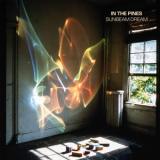
Oscar-nominated composer Rafiq Bhatia has only deepened his status as "one of the most intriguing figures in music today...who refuses to be pinned to one genre, culture or instrument" (New York Times). On his new album Environments out on September 12th, Bhatia makes sculptural, meticulously crafted music that finds common ground among ecstatic avant-garde jazz. New technological integrations have allowed Bhatia to merge his last decade of development as an electroacoustic composer back into his practice as an improvising guitarist, using real-time sampling and manipulation to express and develop multiple worlds of sound at once. Rafiq has previously co-scored Marvel"s Thunderbolts and the Oscar-nominated soundtrack for Everything Everywhere All AT Once with his bandmates, Son Lux.
quête:son lux
The beloved 2007 hit song by Shione Yukawa, which was also featured on NHK's "Minna no Uta," is finally being released on vinyl!
The long-awaited first 7" release of "Gingham Check no Kotori" comes with a rare, never-before-seen jacket shot taken by photographer Suilen Higashino at the time of its release!
The B-side features the 2008 hit "Kaze yo Fukanaide" recorded in London, making this a luxurious 7-inch vinyl. This must-have record for music fans showcases two exquisite tracks by the naturally gifted singer-songwriter Shione Yukawa, whose captivating voice continues to enchant audiences to this day.
- A1: Don’t Be Sorry, Be Careful
- A2: Champagne At The Harris Building
- A3: 10Xls In Tulum
- A4: Up The Price
- A5: Great American Poetry
- A6: Grr - Atl - Lga
- A7: Bases Loaded
- B1: Don’t Be Sorry, Be Careful - Instrumental
- B2: Champagne At The Harris Building - Instrumental
- B3: 10Xls In Tulum - Instrumental
- B4: Up The Price - Instrumental
- B5: Great American Poetry - Instrumental
- B6: Grr - Atl - Lga - Instrumental
- B7: Bases Loaded - Instrumental
Willie The Kid and V Don reunite for Catch Me If You Can 2, the anticipated sequel to their 2021 EP, delivering a concise yet potent project that encapsulates their signature blend of cinematic production and sharp lyricism.
V Don's production continues to shine with atmospheric and haunting beats, characterized by eerie samples and hard-hitting drums that create an unmistakable underground feel. This sonic backdrop provides the perfect canvas for Willie The Kid's intricate rhyme schemes and authoritative cadence, as he weaves tales of wealth, street knowledge, and introspection.
From the haunting opener “Don’t Be Sorry, Be Careful” to the luxurious tones of “Champagne at the Harris Building” and the streetwise reflections of “GRR – ATL – LGA,” this EP is a masterclass in refined underground hip-hop.
- A1: Paedo
- A2: Skins In The Pit
- A3: We're Only In It For The Money
- A4: Fuck You And Yer Politics
- A5: Cross And Flag
- A6: Hammer And Wrench
- A7: Watching A Friend Die Side 2
- B1: Don't Read The Papers
- B2: Soho Boho
- B3: Boomers And Groomers
- B4: Gun For Hire
- B5: Your Boys
- B6: Roots 'N' Boots
Du kannst sie nicht ab? Auch gut. Die SKINFLICKS machen ihr Ding so oder so.
Die Leute zerreißen sich gern das Maul, wollen andere lieber schnell abstempeln statt genauer hinzuschauen. Wie man sich auch anstellt, man wird verurteilt. Drum bleiben die SKINFLICKS sich treu, lassen sich von ihrem Pfad nicht abbringen und pfeifen auf das Geschwätz des Gesocks.
Nun sind „Luxemburgs meist Gehasste“ zurück mit ihrem fünften Album, „Condemnation, Inevitably“, auf dem sie wirklich ordentlich Gas geben! 13 Streetpunk-Granaten Marke Eigenbau, mit dem unverwechselbaren, hauseignen Sound, der euch die Ohren zum Schlackern bringen wird!
Wer Pogo mag kommt hier mit Krachern wie „Paedo“, „Skins in the Pit“, „Soho Boho“ und „Cross and Flag“ vollends auf seine Kosten. Gleichzeitig zeigen die Jungs ihre Vorliebe für eingängige Melodien, sodass selbst Hartgesottene nicht umhinkommen, bei „Hammer and Wrench“, „Your Boys“ und „Roots ’n' Boots“ inbrünstig mitzugröhlen.
Die SKINFLICKS sind natürlich auch bekannt für ihre äußerst provokanten und sarkastischen Texte. Dank der grosszügigen Prise Zynismus, die Songs wie „We're Only in it for the Money“, „F*** You and Yer Politics” sowie „Boomers and Groomers“ innewohnt, sind die Kritiker erst einmal wieder ausreichend versorgt.
Black 12" Vinyl, klassisch schwarz, 180 Gramm; extra audiophiler Tonträger von hoher Qualität - deutsche Pressung!; Stabile Kastentasche; Cover im Inside-Out Druckverfahren bedruckt, mehrfarbig bedruckte Innenhülle mit allen Songtexten, Innenhülle aus speziellem, rauem Papier; mehrfarbig bedruckte Vinyletiketten; CD mit allen Tracks des Albums; Handnummerierte Autogrammkarte von der gesamten Band signiert; limitiert auf 1.000 Exemplare.
- No Cederé (Feat. Susana Fátima)
- Rosa Era Inocente (Feat. Laura Rosales)
- Mascarilla (Feat. Luxsie)
- Como La Última Vez (Feat. Noelia Cabrera)
- La Ciudad De Los Incendios (Feat. Elva Cío)
- La Memoria Es Un Acto Político (No Hay Perdón Ni Olvido) (Feat. Kat Kathia)
- Fábricas Del Miedo (Feat. Anabhell)
- Testamento (Feat. Luminiscencia)
- No Cederé (Italoconnection Remix)
Buh Records presents Primera Secuencia, the debut album by Ballet Mecánico, the project of Fernando Pinzás. After his time in the synth-punk band Varsovia, Pinzás embarks on a new phase as a solo artist and producer, exploring electronic styles from the 1980s like synthpop, Hi-NRG, Italo disco, and techno pop. The album blends synthesizers, programmed sequences, and pulsating basslines to create a nostalgic yet danceable soundscape. Set against the backdrop of the pandemic and social movements in Peru, each track tells a story, featuring guest vocalists from the Peruvian independent scene, including Susana Fátima (Gomas), Noelia Cabrera (Blue Velvet, Silveria), Kat Kathia, Luxsie, Luminiscencia, Anabhell (Las Ratapunks), Laura Rosales (Solenoide), and Elva Cío (Specto Caligo). Singles No Cederé and Testamento define the project's dark and ethereal pop aesthetic. No Cederé, featuring Susana Fátima, critiques societal notions of success over an Italo disco and Hi-NRG beat. The track includes a remix by Italoconnection, the duo of Fred Ventura and Paolo Gozzetti, who take it into a hypnotic, spacey realm. Testamento, with Luminiscencia, reflects on the emotional weight of the pandemic, blending synthpop and ethereal pop. Other standout tracks include La ciudad de los incendios, a dystopian vision of Lima with dark disco rhythms, and Como la última vez, a synthpop-driven, melancholic song featuring Noelia Cabrera.
London-based DJ and producer Theo Kottis steps into a defining new chapter with his debut EP on Fabric Originals. A respected figure on the European scene, Theo has spent the last decade refining his craft, delivering euphoric, high-energy productions and magnetic performances that have earned him a dedicated following across the clubbing & festival circuits.
Following standout releases on tastemaker labels including Dekmantel - where his track Lighthouse was dubbed "song of the summer" by Resident Advisor - and Fuse London, Theo’s sound has become synonymous with nostalgia-soaked dancefloor moments, seamlessly fusing rave, garage & bassline textures. His tracks have seen support from top-tier selectors like Ben UFO, Francesco Del Garda & Eris Drew - & his sets at Panorama Bar, Lux Fragil, and Robert Johnson further cement his reputation as a selector with deep musical intuition.
Now releasing on Fabric Originals, Theo is on his best form - following a run of acclaimed EPs on Dekmantel and FUSE London, affirming his place as a versatile & vital force in underground music.
This new EP sees him channel his signature sound through the venue’s rich legacy & forward-thinking ethos. The result is a bold and genre-bending body of work, shaped by both personal reflection and creative momentum.
Opening track Drone was born out of angst - heard through the powerful synths, weighty bassline & unrelenting energy, capturing the tension of that moment. In contrast, Momentum introduces lush pads & evolving textures, expressing a sense of release and optimism, a reflection of renewed focus and belief in the road ahead. Together, the two tracks form a deeply personal narrative, blending emotional resonance with club-ready impact. With momentum building across 2024, this release signals an exciting evolution for Theo Kottis as he continues to shape dancefloors well into 2025 & beyond.
- 1: Coyote
- 2: Amelia
- 3: Furry Sings The Blues
- 4: A Strange Boy
- 5: Hejira
- 6: Song For Sharon
- 7: Black Crow
- 8: Blue Motel Room
- 9: Refuge Of The Roads
Mobile Fidelity's UltraDisc One-Step 180g 45RPM 2LP Set Plays with Authoritative Tonality, Airiness, and Clarity:
Pressed on MoFi SuperVinyl and Strictly Limited to
3,000 Numbered Copies
1/4” / 15 IPS Dolby A analogue master to DSD 256 to analogue console to lathe
Joni Mitchell is the only artist who could’ve made Hejira. The legendary singer-songwriter said as much when discussing the album decades after its release. Yet that fact seemed obvious from the moment the gold-certified effort streeted in fall 1976. An adventurous travelogue, probing narrative, and offbeat homage to freedom, Hejira remains an inimitable entry in the catalog of recorded music — a spare, gorgeous, meditative series of sonic vignettes comprised of floating harmonic pop, cool jazz, soft rock, and sensitive vocal elements that beckon feelings of motion, discovery, and self-examination.
Sourced from the original analog master tapes, pressed at Fidelity Record Pressing on MoFi SuperVinyl, and strictly limited to 3,000 numbered copies, Mobile Fidelity's UltraDisc One-Step 180g 45RPM 2LP set presents the record ranked the 133rd Greatest of All Time by Rolling Stone with definitive detail, richness, accuracy, and directness. Marking the first time the revered LP has received audiophile treatment, it's one of six iconic 1970s Mitchell records Mobile Fidelity is reissuing on vinyl and SACD.
Playing with a virtually nonexistent noise floor, dead-quiet surfaces, and superior groove definition, this collectible reissue reproduces in enveloping fashion the tones, textures, and craftsmanship that help Hejira function as the equivalent of a liberating trip down an open road with nothing but blue sky, natural landscape, and fresh air in the immediate vicinity. Passages bloom, carry, decay as they do amid an acoustically optimized environment. Soundstages extend far, wide, and deep, with black backgrounds and pinpoint images adding to the realism.
The reference-grade immediacy, airiness, and presence put in transparent perspective Mitchell’s dense strings of words, stream-of-conscious-like phrasing, and unhurried albeit forward momentum. Likewise, the instrumental contributions of her A-list support musicians — a cast that includes L.A. Express members John Guerin, Max Bennett and Tom Scott, plus Neil Young, Victor Feldman, and Abe Most — emerges with breathtaking clarity and dimensionality.
While Mitchell, whose intimate vocals and abstract guitar parts center everything, Mobile Fidelity's restoration of Hejira further reveals the visionary breadth of guitarist Larry Carlton and bassist Jaco Pastorius. Though heard on only four tracks, Pastorius' fretless bass epitomizes the fluid, subtle, flexible, roomy, and shape-shifting characteristics of songs that often appear to transpire out of nowhere akin to the formation of a puffy cumulus cloud overhead. In sync with Mitchell’s voice, Pastorius’ fusion hovers and floats, suspended in a fog you want to deeply inhale. The "grace notes" Mitchell desired on Hejira can now be heard in full. Ditto the luxurious tapestries of alinear lines, fills, and supplements unreeled on Carlton’s six-string.
Visually, the packaging of this UD1S set complements its identity as the copy to own. Housed in a deluxe slipcase, the LPs come in foil-stamped jackets with faithful-to-the-original graphics. This version is for listeners who desire to become immersed in everything about Hejira, including the unforgettable album cover — a pastiche of 14 different photos Mitchell used a Camera Lucida to assemble into one image that’s anchored by a portrait of her in a stoic pose — and the interior shots of Mitchell skating on a frozen Wisconsin lake wearing a pair of black skates, black shirt, and fur cape.
The notion of skating, feeling an awakening wind whipping against your face, and losing yourself to the surroundings are extremely apt for Hejira, which Mitchell wrote after a sequence of trips and relationships prompted her to reflect on the complicated conflicts between independence and marriage, success and satisfaction, duty and desire — and, more specifically, “the cost of being a woman.” The Canadian native delved into such themes before. But never as she does on Hejira, whose liberating, running-away aura doubles as another of Mitchell’s rejections of tradition as well as a suggestion of a better alternative.
At once observational and personal, expansive and insular, cheerful and poignant, Hejira spans a sea of human conditions, emotions, and circumstances. It addresses drifting, isolation, pleasure, place, time, and surroundings with strikingly poetic discourse matched with music that, save for the crooned ballad “Blue Motel Room,” forgoes conventional structures and choruses.
The jazz-based arrangements, marked by scaled-down percussion and all manner of bent, rounded, and unsettled notes, hint that Mitchell has no exact destination in mind. Excursions such as the moody “Furry Sings the Blues,” funky “Coyote” and edgy “Black Crow” throw open previously locked doors to possibility and journey. They signal it’s time for a welcome departure from norms and the past, one that leads to a heightened sense of clarity and perspective. Or, as Mitchell said upon choosing the album title, it’s time for “leaving the dream, no blame.”
- Three Score Years
- Stop Go
- John Jonah
- When Vincent Started To Play
- The Nothing Box
- Kevlar Heart
- Every Happy Day
- Time Turns Tail
- Uncrowned
- Deadpan Man
- The Good Ship
- Another Perfect Day
- Broken Hearts A Go Go
- When Did You Die
- Rags
- My Little World
"Unsent Letters" - ungeschriebene Briefe: liegengeblieben im Schreibtischwirrwarr oder der "Wenn, dann da-"Schublade bezeugen sie vergangene Lebensphasen, regnerische Nachmittage, Zweifel, Experiment und unfertige Gedankengänge. An den Rändern gekräuselt und angeraut, lange vergessen, kommt irgendwann der Zeitpunkt, an dem wir sie doch wieder wie einen Schatz heben und entdecken: hier gibt es Geschichten zu erzählen. So oder so ähnlich erging es Pete Astor. Der ist Musiker, Autor und Dozent. Er war Frontmann der Bands The Loft und The Weather Prophets auf dem Label Creation Records und schrieb Songs, die den Sound des Labels und das aufkommende Indie-Genre maßgeblich prägten. Seitdem hat er eine langjährige Solokarriere verfolgt und Musik auf verschiedenen Labels wie Matador, Heavenly, Warp, EMI und Fortuna Pop veröffentlicht. Er ist Senior Lecturer in Music an der University of Westminster. Neben umfangreichen Tourneen produziert er auch gemeinsam mit David Sheppard als Ellis Island Sound Platten und veröffentlicht sein Spoken-Word-Elektro-Pop-Projekt The Attendant zusammen mit Ian Button (Go Kart Mozart, Death in Vegas) auf dessen Label Faux Lux. Seit 2017 ist Astor beim angesehenen Label Tapete Records unter Vertrag, das auch Künstler wie Robert Forster, Lloyd Cole und Comet Gain beherbergt - neben vielen anderen großartigen Acts. 2025 ist ein Jahr, in dem Pete Astor seine erste Band The Loft wieder aufleben ließ. Die Band hatte sich 1985 getrennt und nun gerade ihr Debütalbum "Everything Changes Everything Stays the Same" fertiggestellt. Wie der Titel andeutet, ist die Band einerseits in der Vergangenheit verwurzelt, blickt aber unbestreitbar nach vorn in die Zukunft. "Unsent Letters" stammt aus einem ähnlichen Kontext: Es enthält Songs, die Astor bereits während seiner Zeit bei The Loft schrieb, die die Band aber nie spielte - zusammen mit Liedern aus seiner vierzigjährigen Karriere, die nun endlich das Licht der Welt erblicken.
- Ete
- Kharita
- Baynana
- Mudun
- Haigazian (October 22)
- Burj Al Murr (October 25 To 27)
- Markaz Azraq (December 6)
- Markaz Ahmar (December 6 Suite)
- Al Hisar (December 8)
- Holiday Inn (January To March)
- Holiday Inn (March 21 To 29)
- Al Irth
Mayssa Jallad is a Beirut-based bilingual singer-songwriter, architectural researcher and teacher. Her work deals with the highly personal as well as the political, as with her first solo album "Marjaa: The Battle of the Hotels", which explores the histories of urban battles that occurred before she was born, during the Lebanese Civil War, through a collaborative musical and architectural lens. "(Marjaa) is, as one might expect, a sombre affair largely comprised of Jallad's delicate vocals backed by acoustic guitar and ethereal synthesizer. Elsewhere, co-composer and producer Fadi Tabbal adds the crackle of distant artillery and a ghostly wind between the high-rise blocks." - Daniel Spicer, Songlines, April 2023 "Historical trauma, strings, drones, metallophones and buzuks wrap around powerful stories and gossamer vocals on Lebanese singer's tender, intimate debut. With shades of Nico, Jarboe and Elizabeth Fraser, '80s' 4AD fans will rejoice." - Andy Cowan, MOJO `Marjaa_' (tr. `reference') combined Mayssa Jallad's two main vocations: music and urban research/architectural history. The album was co-written with Fadi Tabbal and based on Mayssa's Historic Preservation master's thesis (`Beirut's Civil War Hotel District: Preserving the World's First High-Rise Urban Battlefield'). The thesis examined a 5-month conflict that took place within Beirut's skyscraper-laden luxury hotel district of Minet El Husn near the start of the Lebanese Civil War. Addressing a post-war generation who have never been taught this difficult history, `Marjaa_' was an attempt to process trauma, and "a call to protest for the renewal, rather than the recycling of the political class that once destroyed the country and holds us, to this day, hostage of its violence". In 2013, Mayssa founded indie-pop band Safar with guitarist Elie Abdelnour, releasing debut album In Transit with Lebanese indie label Ruptured in 2017, and follow-up EP Studies of an Unknown Lover in 2019. Both albums were produced by Lebanese producer Fadi Tabbal at Tunefork Studios in Beirut. Mayssa's most recent multi-genre collaborations include "Madina min Baeed" (2022) with electronic musician/producer Khaled Allaf; "Bi Kheir" and "Fil Aatma" (2022) with indie supergroup Baada Ab (Dani Shukri, Ezra Tenenbaum and Omaya Malaeb), released by Thawra records and Found Sound Nation. Next is the Versions version of Marjaa, which sees Civilistjävel! (aka Swedish producer Tomas Bodén) apply a stripped, dub methodology to Mayssa's original rich stems, refracting the Arabic source through the hazy prism of Northern European electronica. 140gsm vinyl, jacket printed on 20pt board with aqueous gloss coating, with a 3.5mm spine and a black paper inner dust sleeve.
- A1: Berlin (2025 Mix)
- A2: Rote Liebe (2025 Mix)
- A3: Telepathie (2025 Mix)
- A4: Blaue Augen (2025 Mix)
- A5: Hundsgemein (2025 Mix)
- B1: Luxus (2025 Mix)
- B2: Irre (2025 Mix)
- B3: Da Leg' Ich Mich Doch Lieber Hin (2025 Mix)
- B4: Telephon (2025 Mix)
- B5: Roter Rolls Royce (2025 Mix)
45 Jahre alt – und jetzt so frisch wie nie:
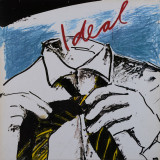
Am 27. Juni erscheint das selbstbetitelte Ideal-Debütalbum von 1980 in einer neu abgemischten Version. Für den „2025 Mix“ wurden die originalen Mehrspurbänder digitalisiert und von Moritz Enders (u.a. Kraftklub, Casper) und Annette Humpe neu abgemischt. Das Ergebnis klingt verblüffend direkt, greifbar und gegenwärtig – als wäre die Berliner Band gerade erst ins Studio gestiegen.
Der Clou: Für den neuen Mix kam ausschließlich Technik zum Einsatz, die bereits 1980 zur Verfügung stand. Der Sound ist also nicht einfach nur neu – sondern neu gedacht im Geist der alten Zeit. „Ideal (2025 Mix)“ ist nicht bloß ein nostalgischer Rückblick, sondern ein eindrucksvolles Update: Songs wie „Berlin“, „Blaue Augen“ oder „Hundsgemein“ wirken heute so kompromisslos, radikal und relevant wie eh und je.
- Introit
- Sanctus
- Kyrie Eleison
- Pie Jesu
- Sequentia
- Agnus Dei
- Lux ?Terna
- In Paradisum
All Men Unto Me is a project led by Rylan Gleave, composer and vocalist (most notably in Ashenspire and various Paraorchestra projects). Today, All Men Unto Me announces their second album Requiem, an album which re-imagines an ancient mourning in a real, contemporary setting. Taking the broad emotional arcs of the Missa pro Defunctis, these structures pave way for new songs, ruminating on patriarchal power systems and the conditions of transmasculinity within these, through the haze of Queer reverence and forgiveness. In Rylan's words, the Missa pro Defunctis "translates to ‘Mass for the dead’, and refers to the Catholic text taken from the Roman Missal. When set to music, it is called a ‘Requiem’. Requiem masses are usually performed at funerals. I’ve sung in a few Requiems — Mozart, Fauré, Duruflé — when I’ve been in choirs, and felt those dramatic arcs of the structure in my own voice. Writing a Requiem felt like processing my own complex feelings about the Church, patriarchal power within it (and more broadly), and the death of a part of me in a framework that allowed for mourning. The contours of sorrow, light, forgiveness, and reverence made space for these songs to speak to my own identity as a survivor, and use that structure in a way that let me direct an ancient narrative myself." Marrying traditional Anglican soundworlds of electro-pneumatic church organ and stacked choral vocals with heavier sounds, closer to experimental/noise rock and doom metal, Requiem sits at times near Swans, Kayo Dot, Lingua Ignota, Greet Death, and Scott Walker.
[e] SEQUENTIA [video]
Civilistjävel! x Mayssa Jallad’s ‘Marjaa: The Battle of the Hotels (Versions)’ is a radical response to Mayssa Jallad’s 2023 original LP, a lyrical account of epochal events in Beirut at the dawn of Lebanon's civil war. ‘…(Versions)’ sees Civilistjävel! (aka Swedish producer Tomas Bodén) apply a stripped, dub methodology to Mayssa's rich stems, refracting the Arabic source through the hazy prism of Northern European electronica. Retaining ‘Marjaa…’s deep spatial framing and vaporous, shifting nature, traces are lifted and set down in a new landscape: a ghost of a ghost. Informed by Tomas' singular strand of ambient, minimalist, dub techno, ‘… (Versions)’ recalls the reductive, shimmering pulse of pioneering Berlin-based practitioners Basic Channel/Chain Reaction, but with the parameters stretched into the ether. Where versions typically focus on a rhythm, here the anchor is the tone and texture of Mayssa’s voice, around which a new world has been constructed. Disembodied and liminal, it conjures an eerie panorama that feels like a postscript to the original, further emphasizing the geopolitical events that have had such devastating effect in Mayssa’s homeland of Lebanon since that record’s release. ‘Marjaa…’ (tr. ‘reference’) combined Mayssa Jallad’s two main vocations: music and urban research/architectural history. The album was co-written with Fadi Tabbal and based on Mayssa's Historic Preservation master's thesis (‘Beirut’s Civil War Hotel District: Preserving the World’s First High-Rise Urban Battlefield’). The thesis examined a 5-month conflict that took place within Beirut's skyscraper-laden luxury hotel district of Minet El Husn near the start of the Lebanese Civil War. Addressing a post-war generation who have never been taught this difficult history, ‘Marjaa…’ was an attempt to process trauma, and “a call to protest for the renewal, rather than the recycling of the political class that once destroyed the country and holds us, to this day, hostage of its violence.” Often perceived as a mysterious, shadowy presence, Civilistjävel! has come increasingly to the fore in recent years through a consistently dazzling stream of records, released both anonymously and via Fergus Jones’ FELT imprint, often appearing with scant information and tracks for the most part untitled. Having featured tracks from ‘Marjaa…’ on mixes, and included the album in his picks of 2023, in early 2024 Tomas asked Mayssa to provide vocals for a track on his album ‘Brödföda’. Mayssa remembers, “Tomas asked me to choose one of the tracks he was working on. I was in Boston at the time, so I took a walk and chose a track. I wrote the lyrics at the public park, wondering if I was the only one around that was losing sleep over the genocide in Palestine and the war in South Lebanon. I went back to the apartment and recorded the vocals on my phone, while listening to the track on headphones. Tomas reworked it with the voice and sent it back. I liked it immediately.” Despite the geographical distance from Beirut to Uppsala, Sweden, where Tomas resides, Mayssa’s contribution sounds very much at home in Civilistjävel!’s atmospheric, contemplative sound-world. Tomas’ request was reciprocated by Mayssa soon after, resulting in the spectral, glassy ambience of ‘Etel, Kharita (Version)’. This was followed by an invitation to work on more tracks, which Tomas immediately embraced, intensively jamming out versions live to two-track tape in downtime between travelling. If not entirely dissimilar to his regular working practice, the immediacy of it was unusual. Much was improvised live with just a keyboard (not tethered to a grid), and a restricted set-up that largely forbade later edits - only the rhythm tracks are programmed. A sharp conceptual thinker and composer, Tomas takes creative liberties with Mayssa’s songs in a way that is deeply felt and sympathetically aligned, whilst unashamedly outside of the original context of the record. The voice is leaned into as an instrument, without the clear, specific details of language, and this axis provides an uncertain, amorphous footing - structure is often suggested or hinted at, before disappearing or collapsing into fog, and folding back into the message within the song. A somewhat unprecedented source for an album of versions, even those familiar with ‘Marjaa: The Battle of the Hotels’ may at points struggle to hear the songs these versions are rebuilt from, despite the vocal narratives remaining virtually intact. The light has shifted; eroded buildings are foregrounded; fragments of memories appear in chiaroscuro. Signs and signifiers have been replaced. Shorn of the original's warm guitar, ‘Baynana (Version)’ feels like an ominous visitation, the sun no longer visible. ‘Holiday Inn (March 21 to 29) (Version)’ is a molten, clattering invocation. The beat-less tracks nod towards the cold, otherworldly sound-scaping of late '90s isolationism. More propulsive and embodied, ‘Holiday Inn (January to March) (Version)’ and ‘Kharita (Dub)’ are strobing, iridescent techno - lithe, shifting and mutating with almost implausible finesse. A stunning addition to Civilistjävel!’s growing catalogue, ‘…(Versions)’ is a luminous counterpoint to ‘Marjaa…’, and a welcome reminder of how incredible that record remains.
- A1: We Begged 2 Explode
- A2: Pash Rash
- A3: Festival Song
- A4: Staring Out The Window At Your Old Apartment
- A5: Wave Goodnight To Me
- A6: To Be A Ghost
- B1: Pietro, 60 Years Old
- B2: I Did Something Weird Last Night
- B3: Blast Damage Days
- B4: Bang On The Door
- B5: Rainbow
- B6: Planet Luxury
- B7: Helllhoooole
- B8: June 21St
- B9: The Fuzz
- B10: While You're Alive
- B11: Perfect Sound Whatever
- Through The Heat Waves
- Eight Miles High Alone 07:46
- In Motion
- Inhale
- Crystalline 06:38
- Exhale
- One More Rush
- Silence Is Gliding 05:56
- Cloud Surfing
Marconi Union, one of the most influential names in contemporary ambient and electronic music, announce their twelfth studio album, The Fear of Never Landing, set for release 6th June via Just Music. The news is paired with the release of first single Eight Miles High Alone, out 20th March on all major streaming platforms.
Known for their ability to craft cinematic, immersive soundscapes that blur the lines between ambient, electronic, and experimental music, the Manchester-based duo once again push the boundaries of sonic exploration. The Fear of Never Landing takes us on a dynamic journey that’s atmospheric, diaphanous and never short of mesmerising. While the new record is certainly infused with a sense of hope, there’s more than a soupçon of anxiety too, as the title suggests.
A 55-minute odyssey presented as one seamless piece divided into nine movements, they transcribe the nexus of modern living into a mostly wordless odyssey. The album encapsulates Marconi Union’s ability to translate the complexities of the human experience into sound, all while maintaining a stunning sense of cohesion.
While the music feels effortless, the creative process was anything but. During the two years it took to complete the album, members Jamie Crossley and Duncan Meadows faced creative struggles that even led them to briefly question the band’s future. A pivotal moment came when they performed a live soundtrack to the 1975 skateboarding film Downhill Motion, rekindling their connection to atmospheric composition. By testing new material live and returning to their roots, Marconi Union redefined their creative process, leading to some of their most emotionally impactful work to date.
“We’ve always made atmospheric music but we had started to lose that aspect. Other than some rough ideas, we had no sense of what we were doing anymore, a kind of musical wilderness. Eventually a couple of things fell into place, and it was like, ‘Ah, okay.”
With a foundation to build upon, they went back to basics and decided to take their time going forwards. “We tried out a few new tracks live which gave us the opportunity to see what worked and what didn’t. We've never given ourselves that luxury before.”
The first track to be shared, Eight Miles High Alone, is a mesmerizing sequencer-driven track that builds an immersive, atmospheric soundscape. Its hypnotic pulses and intricate layers evoke a sense of solitude and weightlessness, perfectly capturing the album’s blend of tension and introspection. “Eight Miles High Alone was the first piece that we managed to complete and helped to inform our approach to the rest of the album.”
Formed in Manchester in 2003, their debut album, Under Wires and Searchlights (2003), introduced their signature sound, but it was their 2011 release of Weightless that brought international acclaim. Developed in collaboration with a sound therapist, Weightless was scientifically recognised as “the world’s most relaxing song”, praised for its ability to reduce anxiety and heart rates. With over 900 million streams and widespread coverage across media, the track remains a cultural phenomenon.
Over the years, Marconi Union has continued to evolve, producing critically acclaimed albums such as Signals (2021), Ghost Stations (2016), and Tokyo+ (2017). Their work has been hailed for its emotional resonance and sonic depth, with The Quietus noting their ability to find “beauty in the bleakest places” and The Sunday Times describing them as “amongst today’s most talented musicians.”
Beyond their studio albums, Marconi Union has collaborated with visual artists, provided soundtracks for installations, and remixed notable acts like Max Richter and Vök. Their invitation by Brian Eno to perform at Norway’s Punkt Festival further cemented their reputation as innovators in the ambient music sphere.
With The Fear of Never Landing, Marconi Union once again showcases their unmatched ability to create immersive soundscapes that resonate deeply. The album reaffirms their position as masters of atmosphere and emotional storytelling, making it an essential addition to their storied catalog.
José James just can’t leave the ’70s alone. Or maybe it’s the other way around. The singer, songwriter, bandleader, and producer was born in 1978, after all, but over his past 17 years of fundamentally forward-looking, blessedly mercurial music, he keeps getting pulled back in. His 2013 Blue Note breakthrough No Beginning No End revisited the hooky, funky, jazz-streaked songcraft of the time through a modern crate-digger’s ears. On 2020’s No Beginning No End 2 — James’ debut on his own Rainbow Blonde Records — he went back through the portal with a small army of fellow celebrated eclecticists. Just last year, there was the album 1978, a richly layered love letter to said year that felt deep, luxe, and cool. It’s as if — vested with the restless fluidity of jazz, the tuned-in sensitivity of soul, and the revisionist grit of hip-hop — he is trying to play his way into the exact moment when, culturally speaking, everything was about to change.
“I'm still so fascinated by the tension in that era of all these seemingly clashing things happening at once,” says James. “The loft scene, the jazz scene, Elton and Billy, Bob Marley, the Isleys, Funkadelic, disco being this behemoth in a way I don't think we even understand today… And then there’s where everybody went from there — into hip-hop, into punk rock, exploding jazz. It's like a summation of the ’70s, and it's about to transform. It's the peak of the rollercoaster.”
Literally breaking into history is impossible, of course, but James’ new LP, 1978: Revenge of the Dragon, does feel like breaking through or bursting out. In loving contrast to its predecessor, the fresh set plays hot, like a Friday night out at the Mudd Club in its prime. Though he’s dreamt up albums with collaborator counts approaching the dozens, James gathered a tight crew for this one. Himself and Taali on vocals. BIGYUKI on keys and analog synth. Jharis Yokley on drums. Bass split between David Ginyard (Blood Orange, Terence Blanchard) and Kyle Miles (Michelle Ndgeocello, Nick Hakim). And an all-star brass lineup: Takuya Kuroda on trumpet, young lion Ebban Dorsey on alto sax, and genre-spanning ronin Ben Wendel on tenor sax. They set up in Dreamland Studios near Woodstock, a restored 19th century church, and recorded live to tape, two tracks, drums pushed to the max — “a small homage to the rise of punk,” says James.
In that place out of time, the band laid down a handful of choice covers and some wild originals, like the single “They Sleep, We Grind (for Badu),” a decades-collapsing cut powered by an ugly groove. Steeped in dub, funk, and sampledelia, James chants an artists’ mantra (“They sleep, we grind / Man, f--- your nine to five”), makes lyrical callouts to Marley and Nas, and channels everything from George Clinton to J Dilla, not to mention the earthy mysticism of Erykah Badu. In 2023, James released and toured his Badu covers LP, On & On. “Living in her musical house for a year was transformative,” he says. “This is my summary of everything I learned through her, tying it to this idea that artists move differently. We are in society but we are outside, too, looking out and in at the same time. Our hours are different, our schedules are different.”
To that point, James and co. actually began each day in the woods, filming the album’s visual companion piece, Revenge of the Dragon, an honest-to-God kung-fu short complete with bad overdubs, training montages, camera tricks, and plot twists. The film pays tribute not only to the genre’s greatest year (1978, of course), but also its cinematic exchange with Blaxploitation, plus James’ own recent Shaolin training and admiration for Bruce Lee as a culture-bridging force (the LP’s cover recreates an iconic shot of Lee). On top of that, says James, “We had this immediacy in the studio. Live, one take, no overdubbing. I feel like that's where the martial arts piece comes in, where it's about being relaxed but also aware, and there's immediacy in your movements.”
Across the project, tribute takes that refracted, multifaceted form. From his personal late-’70s playlist, James chose four covers reflecting the era’s disco-fied churn: the MJ-meets-Quincy dancefloor masterpiece “Rock With You”; Herbie Hancock’s prescient vocoder fever dream, “I Thought It Was You”; and a pair of Black-radio hits from two bands whose fans typically wouldn’t have been caught dead in the same stadium: “Miss You” by the Rolling Stones and the Bee Gees’ “Inside and Out.” All of it gets filtered through a contemporary Black (and beyond) lens, coming out loud, free, funky, and buzzing — dynamic, yes, but also of a joyous piece.
1978: Revenge of the Dragon transports you to a crowded room where all this is playing out in real time. That feeling is helped out by opener “Tokyo Daydream,” a bass-driven swan dive into a neverending night of boutique bar-hopping and neon revelry. Later, “Rise of the Tiger” finds James bringing rare braggadocio to a propulsive track with growling synth lines and a hunger for whatever comes next. And then there’s the closer, “Last Call at the Mudd Club,” which with its upbeat energy and string of Stevie-inspired pickup lines, evokes the sort of unabashedly elated track the DJ throws on at 3:56 a.m. before everyone is kicked out. “I wanted to leave the album on that note,” says James. “If this was a night out in New York, this would be the last thing you hear before you get in that taxi and go back to your apartment.” Or, perhaps, back to 2025.
- Violent Change
- Asylum
- Tyrants In Distress
- Social Fears
- Energetic Disassembly
- Argonne Forest
- Cimmerian Shadows
- Meltdown
Black Vinyl RE-MIX (LP)[30,88 €]
Re-Mix Golden Vinyl[30,88 €]
O-Mix Black Vinyl[30,88 €]
Als Watchtower im Jahre 1985 ihr Debütalbum "Energetic Disassembly" veröffentlichen, stellen sie die Metal-Welt auf den Kopf. Das Material setzt völlig neue Maßstäbe. Innovativer (und extremer) geht zu dieser Zeit niemand zu Werke. Unbeholfene Stilbeschreibungen wie "Jazz Metal" oder "Techno Thrash" werden kreiert. Ursprünglich werden Watchtower im Mai 1982 in Austin, Texas, aus der Taufe gehoben. In jenem Monat schließt sich Sänger Jason McMaster Bassist Doug Keyser, Schlagzeuger Rick Colaluca sowie Gitarrist Billy White an. In ihrem frühen Stadium zeigen sich Watchtower stark von der NWOBHM inspiriert und spielen Songs von Iron Maiden, Angel Witch und Raven nach - dazu natürlich etliche Nummern der kanadischen Prog-Götter Rush. In der Folge entwickelt die Band sukzessive ihren individuellen Stil und nimmt Demos mit eigenen Stücken auf. Aber die Plattenfirmen wollen nicht anbeißen. Aus diesem Grunde entschließt man sich dazu, auf dem eigenen Label Zombo Records das wegweisende Album "Energetic Disassembly" zu veröffentlichen (gepresst werden 3.500 LPs und 1.000 Kassetten).
"Ich kann mich noch lebhaft daran erinnern, wie ich Demokassetten an Fanzines verschickt habe und nahezu täglich Briefe mit Tapetradern ausgetauscht wurden," erinnert sich Sänger Jason Mc Master heute. "Ich erhielt u.a. Briefe von Gene Hoglan, Mike Portnoy, Jason Newsted und sogar Alan Tecchio Die Reaktionen waren fantastisch, aber wir klangen einfach so andersartig. Die Labels wussten nicht, wie sie uns seinerzeit hätten vermarkten sollen. Waren wir zu extrem? Ich denke schon." Pünktlich zum 40. Jubiläum von "Energetic Disassembly" erscheint über High Roller Records nicht nur eine De-Luxe-Edition des originalen Albums, sondern auch eine neue Abmischung. Die Re-Mixes wurden im Jahre 2009 von Jared Tuten, einem engen Freund von JasonMcMaster, in den Top Hat Studios angefertigt. Als Sahnehäubchen gesellen sich dazu vier Bonus-Stücke: eine Art Drum-Soundcheck namens "Rick On Parade", das kurze Gitarren-Instrumental "BW115" sowie frühe Fassungen von zwei Songs, die später auf dem zweiten Watchtower-Album landen sollten, hier aber noch mit Jason McMaster am Gesang - "Instruments Of Random Murder" und "The Eldritch". Jason McMaster verließ Watchtower im Jahre 1988 in Richtung Dangerous Toys. Sein Nachfolger war Alan Tecchio (von Hades). Zusammen mit ihm wurde 1989 in West-Berlin das zweite Album "Control And Resistance" für Noise Records aufgenommen.
- Asylum (2024 Remix)
- Meltdown (2024 Remix)
- Tyrants (2024 Remix)
- Argonne Forest (2024 Remix)
- Energetic Disassembly (2024 Remix)
- BW115: (2024 Remix)
- Violent Change (2024 Remix)
- Rick On Parade (2024 Remix)
- Social Fears (2024 Remix)
- Cimmerian Shadows (2024 Remix)
- Instruments Of ... (2024 Remix, Bonus Song)
- The Eldritch (2024 Remaster, Bonus Song)
-O-MIX Silver Sinyl[30,88 €]
Re-Mix Golden Vinyl[30,88 €]
O-Mix Black Vinyl[30,88 €]
Als Watchtower im Jahre 1985 ihr Debütalbum "Energetic Disassembly" veröffentlichen, stellen sie die Metal-Welt auf den Kopf. Das Material setzt völlig neue Maßstäbe. Innovativer (und extremer) geht zu dieser Zeit niemand zu Werke. Unbeholfene Stilbeschreibungen wie "Jazz Metal" oder "Techno Thrash" werden kreiert. Ursprünglich werden Watchtower im Mai 1982 in Austin, Texas, aus der Taufe gehoben. In jenem Monat schließt sich Sänger Jason McMaster Bassist Doug Keyser, Schlagzeuger Rick Colaluca sowie Gitarrist Billy White an. In ihrem frühen Stadium zeigen sich Watchtower stark von der NWOBHM inspiriert und spielen Songs von Iron Maiden, Angel Witch und Raven nach - dazu natürlich etliche Nummern der kanadischen Prog-Götter Rush. In der Folge entwickelt die Band sukzessive ihren individuellen Stil und nimmt Demos mit eigenen Stücken auf. Aber die Plattenfirmen wollen nicht anbeißen. Aus diesem Grunde entschließt man sich dazu, auf dem eigenen Label Zombo Records das wegweisende Album "Energetic Disassembly" zu veröffentlichen (gepresst werden 3.500 LPs und 1.000 Kassetten).
"Ich kann mich noch lebhaft daran erinnern, wie ich Demokassetten an Fanzines verschickt habe und nahezu täglich Briefe mit Tapetradern ausgetauscht wurden," erinnert sich Sänger Jason Mc Master heute. "Ich erhielt u.a. Briefe von Gene Hoglan, Mike Portnoy, Jason Newsted und sogar Alan Tecchio Die Reaktionen waren fantastisch, aber wir klangen einfach so andersartig. Die Labels wussten nicht, wie sie uns seinerzeit hätten vermarkten sollen. Waren wir zu extrem? Ich denke schon." Pünktlich zum 40. Jubiläum von "Energetic Disassembly" erscheint über High Roller Records nicht nur eine De-Luxe-Edition des originalen Albums, sondern auch eine neue Abmischung. Die Re-Mixes wurden im Jahre 2009 von Jared Tuten, einem engen Freund von JasonMcMaster, in den Top Hat Studios angefertigt. Als Sahnehäubchen gesellen sich dazu vier Bonus-Stücke: eine Art Drum-Soundcheck namens "Rick On Parade", das kurze Gitarren-Instrumental "BW115" sowie frühe Fassungen von zwei Songs, die später auf dem zweiten Watchtower-Album landen sollten, hier aber noch mit Jason McMaster am Gesang - "Instruments Of Random Murder" und "The Eldritch". Jason McMaster verließ Watchtower im Jahre 1988 in Richtung Dangerous Toys. Sein Nachfolger war Alan Tecchio (von Hades). Zusammen mit ihm wurde 1989 in West-Berlin das zweite Album "Control And Resistance" für Noise Records aufgenommen.
- Violent Change
- Asylum
- Tyrants In Distress
- Social Fears
- Energetic Disassembly
- Argonne Forest
- Cimmerian Shadows
- Meltdown
-O-MIX Silver Sinyl[30,88 €]
Black Vinyl RE-MIX (LP)[30,88 €]
Re-Mix Golden Vinyl[30,88 €]
Als Watchtower im Jahre 1985 ihr Debütalbum "Energetic Disassembly" veröffentlichen, stellen sie die Metal-Welt auf den Kopf. Das Material setzt völlig neue Maßstäbe. Innovativer (und extremer) geht zu dieser Zeit niemand zu Werke. Unbeholfene Stilbeschreibungen wie "Jazz Metal" oder "Techno Thrash" werden kreiert. Ursprünglich werden Watchtower im Mai 1982 in Austin, Texas, aus der Taufe gehoben. In jenem Monat schließt sich Sänger Jason McMaster Bassist Doug Keyser, Schlagzeuger Rick Colaluca sowie Gitarrist Billy White an. In ihrem frühen Stadium zeigen sich Watchtower stark von der NWOBHM inspiriert und spielen Songs von Iron Maiden, Angel Witch und Raven nach - dazu natürlich etliche Nummern der kanadischen Prog-Götter Rush. In der Folge entwickelt die Band sukzessive ihren individuellen Stil und nimmt Demos mit eigenen Stücken auf. Aber die Plattenfirmen wollen nicht anbeißen. Aus diesem Grunde entschließt man sich dazu, auf dem eigenen Label Zombo Records das wegweisende Album "Energetic Disassembly" zu veröffentlichen (gepresst werden 3.500 LPs und 1.000 Kassetten).
"Ich kann mich noch lebhaft daran erinnern, wie ich Demokassetten an Fanzines verschickt habe und nahezu täglich Briefe mit Tapetradern ausgetauscht wurden," erinnert sich Sänger Jason Mc Master heute. "Ich erhielt u.a. Briefe von Gene Hoglan, Mike Portnoy, Jason Newsted und sogar Alan Tecchio Die Reaktionen waren fantastisch, aber wir klangen einfach so andersartig. Die Labels wussten nicht, wie sie uns seinerzeit hätten vermarkten sollen. Waren wir zu extrem? Ich denke schon." Pünktlich zum 40. Jubiläum von "Energetic Disassembly" erscheint über High Roller Records nicht nur eine De-Luxe-Edition des originalen Albums, sondern auch eine neue Abmischung. Die Re-Mixes wurden im Jahre 2009 von Jared Tuten, einem engen Freund von JasonMcMaster, in den Top Hat Studios angefertigt. Als Sahnehäubchen gesellen sich dazu vier Bonus-Stücke: eine Art Drum-Soundcheck namens "Rick On Parade", das kurze Gitarren-Instrumental "BW115" sowie frühe Fassungen von zwei Songs, die später auf dem zweiten Watchtower-Album landen sollten, hier aber noch mit Jason McMaster am Gesang - "Instruments Of Random Murder" und "The Eldritch". Jason McMaster verließ Watchtower im Jahre 1988 in Richtung Dangerous Toys. Sein Nachfolger war Alan Tecchio (von Hades). Zusammen mit ihm wurde 1989 in West-Berlin das zweite Album "Control And Resistance" für Noise Records aufgenommen.
Black Vinyl[15,92 €]
2025 marks the triumphant return of Sitaro, the iconic track that once lit up dancefloors worldwide. Originally released in 2007 and championed by the likes of Carl Cox—earning its place on Carl Cox Ultimate (Universal Music)—Sitaro is back with a fresh 2K25 Edition on Move Recordings.
The Belgian techno duo End-Jy & Dimitri Andreas, known for their heavyweight releases on Lupp, Intec, Terminal M, Music Man, and Systematic, deliver an updated version of this melodic anthem. The remastered original brims with Sitaro's signature sound: hypnotic sitar riffs, emotive atmospheres, and a groove that’s as irresistible as ever—a true dancefloor odyssey packed with intensity and raw emotion.
And for the remix? Who better than Dimitri Andreas himself. With an illustrious career spanning decades and releases on Systematic, Music Man, Kling Klong, and Token, Andreas takes Sitaro to new heights. His remix is a masterclass in contemporary melodic techno, drawing comparisons to the work of Guy J, Sébastien Léger, and Roy Rosenfeld. Expect driving Latin-inspired percussion, lush synths, and dreamy soundscapes that seamlessly blend piano-laden breakdowns with deep, pulsating grooves.
The result is a stunning reinterpretation—eclectic yet cohesive, powerful yet delicate. Dimitri Andreas once again proves why he remains a pivotal figure in the global techno landscape.
Press play, and let the journey begin.
Early support from Lost Desert (All Day I Dream), Timo Maas (Systematic), Adriatique (Afterlife), Nick Varon (Sudbeat), Raw Main (Lost Miracle), Dclviii Ofc (Cod3qr), Alex Neri (Wildflower)…
Français
End-Jy - Sitaro (2K25 Edition) featuring Dimitri Andreas Remix
2025 marque le retour triomphal de Sitaro, le morceau emblématique qui a illuminé les pistes de danse du monde entier. Initialement sorti en 2007 et soutenu par des DJ comme Carl Cox—qui l’a même inclus dans Carl Cox Ultimate (Universal Music)—Sitaro fait son grand retour avec une toute nouvelle édition 2K25 sur Move Recordings.
Le duo techno belge End-Jy & Dimitri Andreas, connu pour leurs sorties majeures sur Lupp, Intec, Terminal M, Music Man et Systematic, propose une version actualisée de cet hymne mélodique. L’original remasterisé regorge de la sonorité signature de Sitaro : des riffs hypnotiques de sitar, des atmosphères émotionnelles, et un groove aussi irrésistible que jamais—une véritable odyssée sur la piste de danse, remplie d’intensité et d’émotion brute.
Et pour le remix ? Qui de mieux que Dimitri Andreas lui-même ? Avec une carrière illustre qui s’étend sur plusieurs décennies et des productions sur Systematic, Music Man, Kling Klong et Token, Andreas emmène Sitaro vers de nouveaux sommets. Son remix est une véritable masterclass de techno mélodique contemporaine, qui rappelle le travail de Guy J, Sébastien Léger et Roy Rosenfeld. Attendez-vous à des percussions latines entraînantes, des synthés luxuriants et des paysages sonores oniriques qui fusionnent parfaitement des breakdowns pianistiques avec des grooves profonds et pulsants.
Le résultat est une réinterprétation impressionnante—éclectique mais cohérente, puissante mais délicate. Dimitri Andreas prouve une fois de plus pourquoi il reste une figure incontournable du paysage techno mondial.
Appuyez sur play et laissez le voyage commencer.
Support de Lost Desert (All Day I Dream), Timo Maas (Systematic), Adriatique (Afterlife), Nick Varon (Sudbeat), Raw Main (Lost Miracle), Dclviii Ofc (Cod3qr), Alex Neri (Wildflower)…
- It's Luxury
- Instinct (Backtosense)
- Under Glass
- Memories Of Skin And Snow
- The Spirit Behind The Circus Dream
- The Ghost Never Smiles
- A Second Breath
- Everybody Is Christ
- Disintegrate
Cindytalk is the mercurial, expressionist outlet of Scottish artist Cinder, inspired by the crossroads of exploratory UK post-punk and early European industrial. Her work thrives on chance and transformation, collaging elements of noise, balladry, soundtrack, catharsis, and improvisation. "We were trying to find our own space," says Cinder of the formative period Camouflage Heart emerged from, amidst a move from Edinburgh to London and Cinder's evolving exploration of gender identity, well before culture at large was equipped to understand. With contemporary discourse we see that the project manifested her transgender ideas as visceral music. The guttural, feral sound marked a notably darker turn from The Freeze's sixyear run on the fringes of punk. Changing the project's name became vital, not just because they kept hearing the former was already taken, but the desire to embody the spiritual and sonic shift, "to uncover new pathways_to feminize it," she says. Cinder, with bandmates David Clancy and John Byrne, arrived at Cindytalk, a winking nod to Sindy, the British fashion doll rival to Barbie known then for its pull-string talking mechanism. "The goal was to have a more interesting narrative, more interesting dialogue. Music was ultimately my only way of talking to people. That was my conversation with the world, an abstracted conversation_an attempt to make some kind of tiny, tiny mark, if possible, you hope somebody will notice." Over the years, Cinder has heard from fans who did pick up on the signals and find refuge in Camouflage Heart. Camouflage Heart plays with tension and pace, from creeping to feverish to claustrophobic. The percussion moves between restless marches and barely-there pulses; for some parts, they scratched and hit a tin bath, among other objects. Guitar lines vibrate and stab as Cinder contorts her voice freely. She pulls poetry from a cerebral abyss, like "make the snake in your eye, pierce the camouflage heart" on the slow-droning centerpiece "The Spirit Behind the Circus Dream." In that register is raw power, both vulnerable and menacing, an ability to locate something deep and emotionally charged within. "I still remember that person who was way too intense for their own good," Cinder reflects. "I couldn't make a record like that now, certainly not vocally, while that anger hasn't dissipated; there's still a kind of warrior." For all the destruction and disintegration of Camouflage Heart, Cinder maintains the objective was never full-on fatalistic; these songs seek not to destroy but to poke and provoke, to transform and heal, to find cracks of light in a crumbling world. She points to the last lines of the opening track, "It's Luxury": "Don't look down," the lyric pines through static and rhythm. Cinder extrapolates, "I'm essentially saying, just keep fucking going. As time went on, for me, that falling became flying. Camouflage Heart is the beginning of believing in flight."
- 1: The American Dream Is Killing Me
- 2: Look Ma, No Brains!
- 3: Bobby Sox
- 4: One Eyed Bastard
- 5: Dilemma
- 6: 1981
- 7: Goodnight Adeline
- 8: Coma City
- 9: Corvette Summer
- 10: Suzie Chapstick
- 11: Strange Days Are Here To Stay
- 12: Living In The ’20S
- 13: Father To A Son
- 14: Saviors
- 15: Fancy Sauce
- 16: Smash It Like Belushi
- 17: Stay Young
- 18: Fuck Off
- 19: Ballyhoo
- 20: Suzie Chapstick (Acoustic)
- 21: Father To A Son (Acoustic)
- 22: Underdog
Black Vinyl[48,11 €]
Etwas mehr als ein Jahr nach der erfolgreichen Erstveröffentlichung wird am 23. Mai die "Saviors (édition de luxe)" über Reprise Records erscheinen. Diese erweiterte Ausgabe des Grammy-nominierten 14. Studioalbums enthält neben den bekannten Hits sieben zusätzliche, bisher unveröffentlichte Tracks, darunter exklusive Akustikversionen von "Suzie Chapstick" und "Father to a Son". Die Resonanz auf "Saviors" war bereits herausragend – mit einer Top #2 Platzierung in den deutschen Charts und drei Grammy-Nominierungen unterstreicht das Album die anhaltende Relevanz und Kreativität von Green Day.
Die Band festigt ihre globale Präsenz weiterhin durch Headliner-Auftritte bei renommierten Festivals wie Coachella und einem anstehenden Headliner-Slot beim Hurricane und Southside Festival.
- 1: The American Dream Is Killing Me
- 2: Look Ma, No Brains!
- 3: Bobby Sox
- 4: One Eyed Bastard
- 5: Dilemma
- 6: 1981
- 7: Goodnight Adeline
- 8: Coma City
- 9: Corvette Summer
- 10: Suzie Chapstick
- 11: Strange Days Are Here To Stay
- 12: Living In The ’20S
- 13: Father To A Son
- 14: Saviors
- 15: Fancy Sauce
- 16: Smash It Like Belushi
- 17: Stay Young
- 18: Fuck Off
- 19: Ballyhoo
- 20: Suzie Chapstick (Acoustic)
- 21: Father To A Son (Acoustic)
- 22: Underdog
Clear & Hot Pink Splattered Vinyl[48,11 €]
Etwas mehr als ein Jahr nach der erfolgreichen Erstveröffentlichung wird am 23. Mai die "Saviors (édition de luxe)" über Reprise Records erscheinen. Diese erweiterte Ausgabe des Grammy-nominierten 14. Studioalbums enthält neben den bekannten Hits sieben zusätzliche, bisher unveröffentlichte Tracks, darunter exklusive Akustikversionen von "Suzie Chapstick" und "Father to a Son". Die Resonanz auf "Saviors" war bereits herausragend – mit einer Top #2 Platzierung in den deutschen Charts und drei Grammy-Nominierungen unterstreicht das Album die anhaltende Relevanz und Kreativität von Green Day.
Die Band festigt ihre globale Präsenz weiterhin durch Headliner-Auftritte bei renommierten Festivals wie Coachella und einem anstehenden Headliner-Slot beim Hurricane und Southside Festival.
- A1: Upon The Emerald Isle
- A2: Give Your Heart To The Hawks
- A3: Muse Of Fire
- A4: An Der Landwehr (Lament Of An Icarus)
- A5: Eirigh Anois!
- B1: Hold The Line
- B2: My White Rose
- B3: The Tsarist Army
- B4: Caoineadh Na Solas (Lament For The Sun)
- B5: La Peau Dernière
- B6: Deoch An Dorais (The Final Salute)
m Herbst 2022 reiste Jerome Reuter, der luxemburgische Singer-Songwriter und Kreativkopf von ROME, erneut auf die grüne Insel, um dort einige entspannte Wochen mit seinen irischen Freunden zu verbringen. Wie nicht anders zu erwarten war, wurde viel getrunken und gelacht. Es entstanden aber auch Songs. Und am Ende der Reise erblickte eine weitere, faszinierende "Dublin Session" das Licht der Welt.
Wurden die Tracks der ersten Dublin Session noch im legendären "Sonic Studio" in der irischen Hauptstadt aufgenommen, zog man sich für die zweite Session bewusst in die grünen Hügel von Wexford County zurück, um in Brian Brodys "Ballycale Studio" vollkommen ungestört und ganz ohne Zeitdruck musizieren zu können. Alle daraus entstanden Lieder der "Dublin Session II" sind unveröffentlichte Neukompositionen, denen Dank renommierter, irischer Musiker der landestypische Folk-Sound innewohnt.
Auf "The Dublin Session II" verbindet sich auf fast schon ganz natürliche und vor allem sehr harmonische Art und Weise ROMEs ureigener Stil aus Proto-Folk mit dem Klang des Traditional Irish Folk. Hierfür rekrutierte Co-Produzent, langjähriger Freund und musikalischer Mitstreiter Brian Brody (Rack & Ruin) kurzerhand das Who-is-Who irischer Musiker wie Ronan O Snodaigh (Dead Can Dance, Kíla) am Bodhran, Eoin O Cionnaith (Van Morrison, Christy Moore) an den Uilleann Pipes, Matthew Hanaphy am Banjo und den Tin Whistles, Goshia Gasior auf der Violine und Andy Slowey am Bass.
Unter den Kompositionen befinden sich Lieder wie das eingängige, fast tanzbare "Hold the Line" oder das bitter-böse "The Tsarist Army", die einen Kontrapunkt zu melancholischeren Kompositionen wie "My White Rose" und "Muse of Fire" setzen. Nicht unbeeinflusst vom Kriegsgeschehen in Europa und den Zeichen der Zeit entstand so ein multilinguales Kleinod mit Liedtexten auf Französisch ("La Peau Dernière"), Deutsch ("An der Landwehr"), Englisch und Gälisch ("Eirigh Anois!" u.a.).
Totgeglaubte leben bekanntlich länger und so stellt man mit ROME fest: Der europäische Geist ist wohlauf!
- A1: The Secret Germany (For Paul Celan)
- A2: Solar Caesar
- A3: Ächtung, Baby! (Feat. Alan Averill)
- A4: How Came Beauty Against This Blackness
- A5: Who Only Europe Know
- B1: Kali Yuga Über Alles
- B2: Going Back To Kyiv (Live)
- B3: Parlez-Vous Hate?
- B4: Walking The Atlal
- B5: Evropa Irredenta (Feat. Thåström)
- C1: Todo Es Nada
- C2: Submission
- C3: Celine In Jerusalem
- C4: La France Nouvelle
- C5: Skirmishes For Diotima (Live)
- D1: Hunter
- D2: Coriolan
- D3: The Angry Cup (Feat. Nergal)
- D4: One Lion's Roar
- D5: Alesia
Melancholische Gitarrenakkorde, ein introspektiver Gesang, und immer wieder bedrohliche und energische Ausbrüche mit Percussions und Stakkato. Zwischen intimem Songwriting und Soundtrack-inspiriertem Pathos bewegt sich Jerome Reuter, der nun, 2025, das zweite Jahrzehnt seiner Band ROME feiert.
Zwei Dekaden begleitet das Luxemburgische Bandprojekt ROME nun also die Europäische Tragödie. Und während sich die Alben der ersten zehn Jahre noch vor allem historischen Themen widmeten, treten in der nicht mindert produktiven Ära zwischen 2016 und 2025, die auf dieser neuen "Anthologie" dokumentiert wird, auch aktuelle und grundsätzliche philosophische Fragestellungen ins Zentrum. ROME orientierte sich immer am großen Bild. Im Songwriting deutlich inspiriert vom französischen Chanson, dem späten Johnny Cash und Nick Cave, wurden von Beginn an auch literarische Quellen verarbeitet, und werden sie nicht namentlich genannt (wie bei "The Secret Germany" Paul Celan), so schwingen sie doch zwischen den Zeilen mit, die Denker - nicht nur - des 20. Jahrhunderts. Philosophische und gar okkulte Aspekte werden auf den Alben reflektiert ("The Hyperion Machine", "Hall of Thatch", "The Lone Furrow", "Le Ceneri di Heliodoro"), doch immer wieder wird es konkret, sei es mit Blick auf die russische Invasion in der Ukraine ("Gates of Europe", "World in Flames") und grundlegende Konflikte, die mythisch gelesen werden ("Coriolan", "Hegemonikon"). Wiederkehrend ist das mythische Motiv der Sonne, so auch auf dem jüngsten Werk "Civitas Solis".
Mal als volles Band-Line-Up, mal als Singer-Songwriter, und immer wieder im Austausch mit anderen Musikern (etwa Nergal von Behemoth oder der schwedischen Punklegende Thåström), Jerome Reuter erfindet sich beständig neu, und arbeitet kontinuierlich an einer singulären Stimme in der gegenwärtigen Popkultur. Wie ein Januskopf zurückgewandt in die Zukunft blickend.
- A1: Kumi Sasaki - Kuroda Bushi
- A2: Kosuke Ichihara & 3L - Yasuki Bushi
- A3: Zerosen - Cool Head
- A4: Shigeru Suzuki - On The Coast
- B1: Yasuko Agawa - La Night
- B2: Atsuko Nina - Teibo
- B3: Sadistics - On The Seashore
- C1: Sadistics - The Tokyo Taste
- C2: Kazuko Ishibashi - Iyo
- C3: Issei Noro - Transparency
- C4: Zerosen - Son Of Pin Head
- D1: Tetsuo Sakurai - Kimono
- D2: Yuji Ohno - The Dawn Of Seychelles
- D3: Hiroshi Fukumura - White Clouds
Renowned DJ and selector MURO is a Jedi-level compiler and this new collection of his delves into Victor's extensive archives to spotlight a world of Japanese jazz, fusion and AOR. It take sin plenty of internationally known names like Yasuko Agawa on the sunset sounds of 'L.A. Night', Sadistics who offers the more psyched out guitar leans of 'On the Seashore', Yuji Ohno's neo-Balaeric bliss-out 'The Dawn of Seychells' and Hiroshi Fukumura's soul soothing Ry Ayres-style melodies on 'White Clouds.' These are luxurious sounds and timeless tracks with MURO's signature funky perspective making this a brillaint choice for brighter, warmer days.
Kribbelnde Spannung im wahrsten Sinne des Wortes verheißt dieser Fall - die drei ??? juckt das nicht. Gilt es doch der attraktiven Letitia Radford beizustehen, die zwar im Luxus lebt, sich aber von allerlei Krabbelndem und obendrein einer lebendig gewordenen Vogelscheuche bedroht sieht! Der mutige Entschluss, es mit Ameisen und Schlimmerem aufzunehmen, bringt die drei ??? mit sonderbaren Zeitgenossen in Berührung ...
Another foggy day in Yorkshire. A steel grey sky. Raindrops tracing one another down the windowpane. Kirk Barley sits in his studio and assembles compositions from scraps of found sound and live instrumentation. Melodies swell, withdraw and repeat like waves. Time slows. Accelerates. Slows again. The light bends, tweaked at the edges. Twisted by rhythms that never quite resolve.
Written, recorded and produced by Barley in Yorkshire in early 2024, Lux picks up where 2023 LP Marionette leaves off, conjuring a mystical, reflective space between formal minimalism and sonic imaginaries of northern landscapes.
And yet, where Marionette relied at times on more recognisable field recordings, Lux leans into Barley’s skill as an instrumentalist and sound designer, working from a palette of short samples and utilising a variety of alternate tuning systems to build, layer and coax his compositions into being. Most evident on tracks ‘Vita’, ‘Sprite’ and ‘Descendent’, these tunings create an otherworldly harmonic language that is easier to perceive than describe.
Alongside more familiar instruments of guitar, bass, drums, organ and clarinet, here Barley draws on plastic saxophones and bells, and recordings of glass, wood and metal sound objects to provide the organic matter. Rather than directly representative of the natural world, Lux enters into a dialogue with it which, like the grasses and flowers of the album’s cover, exists somewhere between reality and artifice.
On album opener ‘Cache’, Barley constructs his own sense of time from a recording of an umbrella crank, a sparse and spectral piece which hints at memories embedded in the track’s title. Introspection blossoms into new life on ‘Vita’, crumpling again into the percussive ambience of ‘Verre’. A track that takes its harmonic lead from the clinks of glass, it features Barley’s long-time collaborator Matt Davies on drums, whose nuanced, tonally sensitive playing gives ‘Verre’ a fizzing, ice-like quality.
There are several moments where Lux picks up on themes Barley explored under electronic moniker Church Andrews on recent works with Davies, stretching and distorting temporalities most explicitly on ‘Descendent’, whose ritualistic air unfurls around a pattern in exponential decline.
Embracing the surrealism Barley absorbed over years watching classic film noir and the works of David Lynch and Federico Fellini, Lux wends its way through the enchanted sound worlds of ‘Sprite’ and ‘Balanced’ before arriving at the album’s title track.
An expression of his recent experiments in live, prepared guitar, ‘Lux’ brings the album back to earth, returning us to the room where the rain has stopped, the clouds have parted, and the soft warmth of the spring sun is pouring in through the open window.
50th ANNIVERSARY EDITION
Heavyweight Vinyl 45 RPM Cut / Original glued prints on Thick Cardboard 700 gram / 2 Separated parts hand-glued / Glossy lamination / PVC outer / 30x30 cm insert with interview to Steve Kuhn by Tony Higgins printed on 250 gram Favini Lanilla Yellow / 20 Pages 21 x 30 cm "Real Book" with transcripts of the songs in the "Real Book" style, handwritten by The Maestro Carlo Spanò with main theme, chords and lyrics printed on 120 gram Shiro Eco paper, 100 gram Favini Crush Alghe. Carlo also edited an introduction with technical analysis of the session, which solves some of the little mysteries around this music gem.
Personnel:
Steve Kuhn - Vocals, Piano
Airto Moreira - Percussions
Billy Cobham - Drums
Ron Carter - Bass
Gary McFarland - Arranged by
Notes:
The album features the group playing Gary McFarland arrangements of Kuhn's compositions, accompanied by a string section on several tracks, with Kuhn delivering stream of consciousness lyrics in an unplanned and largely improvised fashion in the studio. However, that wasn't the only surprising aspect to the session. Airto Moreira's appearance was more by chance than design, he having just popped by the studio, again, unplanned. The 'Steve Kuhn' album is all the stronger for these extemporaneous and serendipitous elements and showcases a band at the top of their game; tight and funky yet relaxed and flowing like molten gold, with stabs and washes of keyboard from Kuhn. Splashes of free playing enter the session, but the band never stray too far from a melodic and harmonious centre of gravity. Kuhn's deft keyboard skills provide melodic embroidery to the impressive rhythmic textures and tonal colours of Carter, Cobham and Moreira. As if the music wasn't enough, the album is given extra significance by the fact that, within a few months of the recording, McFarland would die after being mysteriously poisoned by methadone in a New York bar. In a sense, it is a valedictory album from McFarland, channeled by Kuhn and the band.
It's among the hardest of Kuhn's albums to find so this reissue is most welcome. Luxuriate in the glow of Kuhn's Fender Rhodes and the pliant funky bass of Ron Carter; immerse yourself in the percussive interplay of Moreira and Cobham, a pairing that has rarely sounded so good. This is such an exquisite album; you will lose yourself in its delicate power and find yourself coming back to it again and again.
- Vat 69
- Devil Woman
- Status: Hallucinogenic, Phase Ii
- You Got Me High
- Red Tab
- The Shipbuilder
- Electric Ryder
- Hexagram
- Monostereowhatever
- Get Your Love Outta Here
- Sold My Lady (Out The Back Of An Oldsmobile)
- Kvinna Du Ger Mig Ingen Kärlek
- Smell The Green
- Land Of Lincoln
- Status: Hallucinogenic
Revolution Rock Deluxe vereint das bahnbrechende erste Album von Greenleaf mit ihrer lange vergriffenen Debüt-EP in einer einzigen atemberaubenden Neuauflage! Angeführt von Gitarrist Tommi Holappa von den europäischen Wüstenrock-Ikonen Dozer, begannen Greenleaf als informelles Kollektiv von Freunden, die Musik machten, inspiriert von ihrer gemeinsamen Liebe zum Riff-Rock der 70er Jahre. Nachdem sie sich 2013 in eine richtige Band verwandelt haben, stehen Greenleaf jetzt an der Spitze der globalen Heavy-Szene, nachdem sie ihr letztes Album The Head & The Habit 2024 veröffentlicht haben. Im fünfundzwanzigsten Jahr ihrer unglaublichen Karriere markieren sie diese beeindruckende Leistung mit einer speziellen Neuauflage ihrer frühesten Veröffentlichungen. Mit Jungs von Dozer, Lowrider, Demon Cleaner und anderen wurde Greenleafs erstes Album Revolution Rock 2001 in Eigenregie veröffentlicht und seit der ursprünglichen Auflage von 500 Exemplaren noch nie neu aufgelegt. Revolution Rock Deluxe vereint dieses bahnbrechende Album mit der lange vergriffenen Debüt-EP von Greenleaf aus dem Jahr 2000 in einer einzigen, atemberaubenden Ausgabe. Alle Songs wurden von Karl Daniel Lidén komplett neu gemastert und das ursprüngliche Artwork und Design von Lowriders Peder Bergstrand brillant aufgefrischt und aktualisiert.Feiern wir ein Vierteljahrhundert majestätischer Riffs mit Revolution Rock Deluxe und erleben Greenleafs Big Bang zum ersten Mal wieder! Präsentiert in einer luxuriösen, aufklappbaren 2LP-Edition auf limitiertem farbigen Vinyl oder als Einzel-CD im Digipack. Alle Songs wurden vollständig neu gemastert und die Verpackung und das Design aktualisiert und aufgefrischt. Eine der aktivsten und beliebtesten Bands der europäischen Stoner-/Desert-Rock-Szene
- A1: My People Ft.. Ghetto Boy
- A2: Why Should I Smile Ft. Mélissa Laveaux
- A3: Solitude Ft. Isabel Sörling
- A4: Hey I Want You Ft. Olle Nyman
- A5: You Say (Inst.)
- A6: With Us Ft. Ben L’oncle Soul
- B1: California Intro (Inst.)
- B2: California Ft. Ala.ni
- B3: Loving You Is All I Want To Do Ft. Aloe Blacc
- B4: Mandolinho (Inst.)
- B5: Again Ft. Anna Majidson
"Float like a butterfly and sting like a bee" said the famous boxer Mohammed Ali, in reference to his legendary strike. This punchline also works wonderfully in music, listening to Roseaux's third album. A French success story, created with all modesty and honesty by the Parisian trio: Emile Omar, Alex Finkin and Clément Petit.
The three musketeers of sound cultivate their know-how, now acclaimed by critics and an ever-growing audience since their first project in 2012. It took them time to take a step back and gain perspective in order to offer us a return that is both joyful and resounding.
Roseaux takes root on the banks of soul, folk, jazz, and songs from all eras, a cascade of inexhaustible sounds, where the three composers draw their inspiration and merge their experiences.
The leaves of Roseaux soar to the breath of wonderful voices, chosen with precision by the three friends, like that of the American singer Aloe Blacc, present since the beginning of the adventure, essential enchanter of the three episodes.
Conceived as a dreamlike escapade full of emotions, on the fringes of the massive, instantaneous and often disembodied production, Roseaux is a totally artisanal group, a sort of UFO in the French musical landscape, which operates on instinct and above all on desire.
Thus, Roseaux has become an expert in bringing together, for the duration of a record, the artists who specifically form the DNA of their host: captivating voices, a plot on the piano and cello, but also encounters and reunions, in a poetic and deliberately nebulous universe.
A welcoming nebula, where the listener is invited to listen and immerse themselves without hindrance, in a luxuriant, wild, exciting sound forest. This third album is the work of 3 music lovers, capable of switching roles: writing, arrangements, production, from which emerge this time, eleven tracks with chiseled melodies including three colorful and unusual instrumentals.
A journey between melancholy and euphoria, which led Roseaux to the ends of the planet, from the Caribbean to Europe via Africa to unearth other vibrations and unique performers: the captivating Grenadian-British singer Ala.ni, the little English afropop prince from Ghana, Ghetto Boy, and the disturbing Swedish Isabel Sörling, sign here a first flamboyant collaboration with the group.
While the talented Haitian-Canadian Mélissa Laveaux, the hypnotic Scandinavian singer Olle Nyman, the sparkling French-Canadian Anna Majidson and our remarkable national Ben, already present on the second part, still manage to create a surprise by revealing new aspects of their range.
Roseaux's voices are decidedly impenetrable and its magic is renewed today by making the strength of all these scintillating elements dialogue, to be discovered in a setting of softness and voluptuousness.
Nature is full of reeds, this one is unique.
After humble lo-fi beginnings in the Australian Art-Pop Underground, Donny Benet has expanded his cult-like following across the Globe with a resonant Array of danceable Repertoire dealing with Love- and Affection. New album "Mr Experience" marks a new chapter, informed by a wealth of musical- and personal development.
For Mr Experience, Donny envisioned a Soundtrack to a Dinner-Party- Set in the late 1980's. While his earlier Recordings drew Inspiration from DIY Pop Conspirators such as Ariel Pink & John Maus, Donny channelled the Stylings of Bryan Ferry & Hiroshi Yoshimura as the Impetus for new Material, evident on the Intimacy found on ‘Girl Of My Dreams’ and it's lush production- with a soothing whistle-along Chorus for good Measure!
Sincerity has been a key component of Donny Benet’s output since the beginning. His songs deal with genuine Emotion served on a kitsch Platter. An alter-ego manifested in the beginning of the 2010's, Donny has blurred the Lines of Artifice to create a back- Catalogue that can embrace- and challenge, often simultaneously, - the notion of Irony in Art.
"Mr Experience" moves further away from ironic Notions as Donny explores lyrical- and musical themes which embody Observations of Maturation in his audience, his tightknit musical Community- and himself. While ‘mature’ is a term that often rings hollow as an album descriptor, the term couldn’t be more apt for Mr Experience.
Previous album The Don was created with the luxury of time. The phenomenal Response to that Album across Europe- and the United States - fuelled by accompanying Music Videos clocking in Views in the Millions- meant that there were scant Windows of Opportunity to write- and record a follow-up.
With a legacy in Sydney’s music community, working with Sarah Blasko, and tightknik collaborators Jack Ladder & Kirin J Callinan, Donny Benet is accustomed to collaboration on the Stage- and in the Studio, mostnotably on the 2014 full-length release Weekend At Donny’s.
“There is such immense talent evident in every aspect of the Donny Bene experience - the vision of the character, the steadfast adherence his narrative and the musicality of Benet himself all combine to makesomething truly genius.” - Double J, Australin.
“Donny Benet makes feminine music for everybody” - Vice, Netherlands.
“The Don does not sound like amusical copying machine”. - 3voor12 National, Netherlands.
“The set was punctuated with virtuosic solos and exquisite harmonies, and added another layer of genius to the show.
We almost couldn’t handle it... Donny for president!" - Indie Berlin.
“Everyone loves Donny Benet” - Feature in Gonzai, France.
“Phenomenal Australian Showman... Offers Top-Class Dance Music with Virtuose-Bass Guitar- and Keyboard Parts & incredible Sound-Colour feel.” - Podujatie.sk, Slovakia.
Donny has toured Europe five times since the start of 2018 and has played in the UK, Austria, Germany, Slovakia, France, Netherlands, Spain, Portugal, Belgium, Denmark, Switzerland, Czech Republic, Greece and Sweden. The Don will revisit Europe twice in 2020, once for his own headline shows in May then back again in August for festivals!
“Where is this? It looks like the grounds of a shrine. Like a deep, dark, forest. I'm wandering around. I can't get over the feeling that I've been to this place before. The temple and the tower look much bigger than usual, and I feel as if I were lost in a world of immensity. It's very dark with no sky up above, like being in the depths of the Earth. Anyway, it's a world I know.” - Leisure, the Sonorous Dream
For schuttle’s next unearthly contribution, we invite you to slip into the reassuring comforts of the simulated realm. Herein lies an open invitation to all of those tentative travellers willing to join us as we revel in four slices of post-biological optimism.
The world building begins with “Splan”. schuttle’s navigation vessel hovers steadily above a fractal landscape until a divine arp propels us skywards. We burst through the latent cloudsphere to marvel at the boundless synergy of the interlocking polygons. The sunburst gradient barely has time to load before an oscillating wriggle plunges us into a strangely familiar stomping ground. Hedonistic NPCs begin spawning at random, splurging joyful machine funk at each other before walking gleefully into walls. Finally, with a little help from a well known toad, schuttle unleashes the full might of his Mana on the nascent gathering.
We dock next in ‘Melonweed Musick’. Our vessel gently stirring the reeds as we descend into the marshland. The potent aroma of the swamp fills our nostrils, various apparitions seem to wriggle into view. What have we been inhaling? No time to consider, the loose murk of the breakbeat is starting to take effect and it’s all we can do to keep one foot squelching after the other. As we submit wholeheartedly to the sheer depth and clarity of the bassline, a kindly angel sweeps above the sphagnum, spraying a succession of cleansing chords over our slimy bodies. Refreshed with some useful navigation advice we continue.
In ‘Kitchen Sync’ our craft’s speedometer is tickled up to a cruising 120bpm. The world outside our window begins to swim with colour, prickly forms materialise then dissipate around us. The familiar shape of our old friend, the high priest 303 appears before us, steadying the ship. Its resonant flame warming our hearth, and our hearts too. Then begins a beautiful communion of the domestic and the otherworldly, through the interplay of acid under glimmering keys. Provoking within us an uncontrollable desire to open our curtains, to cast off our slippers and embrace the infinite morrow.
Our voyage concludes with ‘Inspo 2000’. Scintillating landing lights guide us toward our destination, our descent beckoned by woody and playful percussion. We tumble through the troposphere, our landing cushioned by the buoyancy of the gated chords, the kicks juicing what's left of our dwindling fuel supply. A luxurious breakdown brings the ground into focus. Perhaps this is home? The simulation is now so accurate that it seems pointless to question it, it is a world we have always known.
- 1: Canto De Enramada
- 2: A Temple By The River
- 3: Exuviae
- 4: Burial Of The Patriarchs
- 5: Siphonophores
- 6: Despe?Aperros
- 7: O Rubor
- 8: Fiat Lux
- 9: Kwisatz Haderach
Coloured Vinyl[29,20 €]
Maud the moth, the solo project of Spanish-born and Scotland-based pianist, singer and songwriter Amaya Lopez-Carromero announces her new album, The Distaff, to be released via The Larvarium (digital +CD) and La Rubia Producciones (vinyl) Amaya has long used the mantle of Maud the moth as an alter-ego, a séance-like conduit to explore themes of rootlessness, identity and trauma. The Distaff in particular refers to the stick or spindle onto which wool or flax is wound for spinning, and an object which has historically been used across multiple cultures as a symbol wielded by the “virtuous woman”, an authoritarian ideal around which much of the trauma surrounding the feminine coalesces. The album takes the form of a sort of self reflective and surreal autobiography. It was in part inspired by the poem of the same name written by the Greek poet Erinna, as she mourns her friend's loss of individuality and agency in exchange for marriage - and therefore safety and acceptance in the eyes of society. The album exists in an ethereal but violent world of aesthetic overlaps where time stands still and fictional and reimagined folk sits at the table with Maud the moth’s usual sonic menagerie. It is the result of a lifetime of obsession with sound and music, where glimpses of musical genre offer insight into Amaya’s artistic interests and her participation in the underground European scene for many years, in bands such as healthyliving. Heavier, darker, and more exposed than any of her previous works it features some highly accomplished artists, such as Seb Rochford (Patti Smith, Polar Bear, Sons of Kemet, Pulled by magnets, etc.) on drums, Alison Chesley (Helen Money) on cello, Fay Guiffo on violin and Scott McLean (Ashenspire, healthyliving, Falloch) on guitar, saxophone and synthesiser. Maud the moth shares the video for "Siphonophores". About the track, Maud the moth says; I wrote "Siphonophores" on guitar, during the first lockdown, a period where I was kind of trapped between an almost empty flat in Edinburgh and Dresden. It was an incredibly harrowing time, but also one of hope and where important new things were being birthed. I felt incredibly sensitive to everything, almost like life was happening in slow motion. I´m not a confident guitarist since I am completely self-taught, but, probably because of this, I feel that this instrument allows me to focus on aspects of the songwriting that I normally overlook when writing on piano, and I think it was a necessary step for this song to exist. Something else which I've been really exploiting lately and features strongly in the album is the percussive capabilities of the piano, and in particular, of the sustain pedal when mic'd up. This can be heard very clearly at the beginning of "Siphonophores". Written and arranged by Amaya, with some contributions in the later role from the aforementioned collaborators, the album presents nine tracks originally written entirely on acoustic piano as accompanied voice pieces, in pure singer-songwriter fashion. The album was co-produced and recorded by Scott and Amaya in different studios across the UK between January and July of 2024, in a process that started shortly after the 2020 pandemic and finished alongside the album recordings in a detailed, organic and at times obsessive process aimed primarily at capturing the natural dynamics and expression of free performance. The Distaff was mixed in its entirety by Scott and mastered at Abbey Road by Alex Wharton (Radiohead, My Bloody Valentine, Aurora, Kathryn Joseph etc.) Despite being born of a very personal point of view, the album lacks a specific narrator and was conceived almost as a sonic trousseau, where the needle point, silks and other family heirlooms have been swapped for out-of-the-corner-of-the-eye memories of rural Spain by the vineyards, family disputes, old tales of wartime pains, generational breaches and finally the conflict of migration and estrangement. The songs paint dystopian pastoral scenes which evolve throughout the span of one fictional day outside of time and coherent locations and where imagination (often the only account surviving from traumatic events and gaslighting) has become indistinguishable from fact. The Distaff attempts to acknowledge past trauma, comprehend and process some of the more difficult aspects which have contributed to our darker self and offer closure and solace through creative catharsis.
- 1: Prepad
- 2: Svetski Osmeh
- 3: Daj Mi Sansu
- 4: Progresio Sam
- 5: Djuskaj
- 6: Kupatilo Je Shvatilo
- 7: Meterology
- 8: Otisli Smo
Original[30,88 €]
ŽUR (‘Zhure’, party) is absolute cult and one of the most rare Yugoslavian disco funk albums, originally recorded in 1981, reissued on Everland Music for the first time since the original vinyl came out more than 40 years ago. The album was carefully and brilliantly remastered by grammy nominated sound engineer Jessica Thomson.
Boban Petrović is a legend of Belgrade's sophisticated disco funk scene from the late 70s and early 80s.
Back in the second half of the 70s Boban started one of the first disco clubs in Belgrade and he was one of the biggest organizers of private house parties.
The finest balance between Boban Petrović's big-hearted party-maker-turned-philanthropist personality and his hustler one was achieved on Žur.
On Žur, he is at home, in his safe place, since the parties, the music and the people are the first out of many things he had completely figured out in his life. He is at the top of his game, occasionally bothered by a casual heartbreak, but always feeling himself, coming out playful and fundamentally peaceful, satisfied and ready to transcend himself in order to put the rest of the world in the limelight. In fact, Žur isn’t about the party, music, lyrics or its, hands down, beautifully balanced sonics. It’s about Boban and the funk he lived thoroughly. The funk before, but the funk he lived after this album even more so. All the ups and downs that he faced since the moment the first needle dropped on a Žur record to this very day are on this album as the unwritten destiny of that lighthearted character he played.
In short, ŽUR represents the essence of underground club life in Belgrade from the late 70s, when the album was recorded.
The quality of this trust is confirmed by the fact that Boban Petrovic's music is still actively listened to today, not just anywhere, but at the finest club events.
High end production and extremely authentic arrangements outside the mold of classic disco music, and lyrics that literally convey the vibe of his already jet-set lifestyle in Belgrade at the time.
Shortly after his musical career, Boban Petrovic became a businessman of the conscious class. He was living in Spain on his own luxury yacht for years, he had a private airplane, a car park. But all this time living on highest class level he never lost his identity. In all his offices, yacht, airplane and everywhere was playing loud funk music and he was dressed like a musician who just finished or need to start a gig.
Along the way Boban also wrote two books: Rokanje 1 & 2 describing the time when the album ŽUR was created.
The ŽUR album is one of the the holy grails of disco funk music releases on a global level.
ŽUR (‘Zhure’, party) is absolute cult and one of the most rare Yugoslavian disco funk albums, originally recorded in 1981, reissued on Everland Music for the first time since the original vinyl came out more than 40 years ago. The album was carefully and brilliantly remastered by grammy nominated sound engineer Jessica Thomson.
Boban Petrović is a legend of Belgrade's sophisticated disco funk scene from the late 70s and early 80s.
Back in the second half of the 70s Boban started one of the first disco clubs in Belgrade and he was one of the biggest organizers of private house parties.
The finest balance between Boban Petrović's big-hearted party-maker-turned-philanthropist personality and his hustler one was achieved on Žur.
On Žur, he is at home, in his safe place, since the parties, the music and the people are the first out of many things he had completely figured out in his life. He is at the top of his game, occasionally bothered by a casual heartbreak, but always feeling himself, coming out playful and fundamentally peaceful, satisfied and ready to transcend himself in order to put the rest of the world in the limelight. In fact, Žur isn’t about the party, music, lyrics or its, hands down, beautifully balanced sonics. It’s about Boban and the funk he lived thoroughly. The funk before, but the funk he lived after this album even more so. All the ups and downs that he faced since the moment the first needle dropped on a Žur record to this very day are on this album as the unwritten destiny of that lighthearted character he played.
In short, ŽUR represents the essence of underground club life in Belgrade from the late 70s, when the album was recorded.
The quality of this trust is confirmed by the fact that Boban Petrovic's music is still actively listened to today, not just anywhere, but at the finest club events.
High end production and extremely authentic arrangements outside the mold of classic disco music, and lyrics that literally convey the vibe of his already jet-set lifestyle in Belgrade at the time.
Shortly after his musical career, Boban Petrovic became a businessman of the conscious class. He was living in Spain on his own luxury yacht for years, he had a private airplane, a car park. But all this time living on highest class level he never lost his identity. In all his offices, yacht, airplane and everywhere was playing loud funk music and he was dressed like a musician who just finished or need to start a gig.
Along the way Boban also wrote two books: Rokanje 1 & 2 describing the time when the album ŽUR was created.
The ŽUR album is one of the the holy grails of disco funk music releases on a global level.
- A1: Progetto Tribale - The Sweep
- A2: Onirico - Echo Giomini
- A3: Open Spaces - Artist In Wonderland
- B1: Alex Neri – The Wizard (Hot Funky Version)
- B2: M C.j. Feat. Sima - To Yourself Be Free - Instrumental Mix Energy Prod
- B3: Mato Grosso - Titanic Expande
- C1: Dreamatic - I Can Feel It (Part 1)
- C2: Carol Bailey - Understand Me Free Your Mind (Dream Piano Remix)
- C3: The True Underground Sound Of Rome - Secret Doctrine
- D1: Don Carlos - Boy
- D2: Lazy Bird – Jazzy Doll (Odyssey Dub)
Vol 2[28,99 €]
Volume 1 of this expertly curated project of 90s Italian House - put together by Don Carlos.
If Paradise was half as nice… by Fabio De Luca.
Googling “paradise house”, the first results to pop up are an endless list of European b&b’s with whitewashed lime façades, all of them promising “…an unmatched travel experience a few steps from the sea”. Next, a little further down, are the institutional websites of a few select semi-luxury retirement homes (no photos shown, but lots of stock images of smiling nurses with reassuring looks). To find the “paradise house” we’re after, we have to scroll even further down. Much further down.
It feels like yesterday, and at the same time it seems like a million years ago. The Eighties had just ended, and it was still unclear what to expect from the Nineties. Mobile phones that were not the size of a briefcase and did not cost as much as a car? A frightening economic crisis? The guitar-rock revival?! Certainly, the best place to observe that moment of transition was the dancefloor. Truly epochal transformations were happening there. From America, within a short distance one from the other, two revolutionary new musical styles had arrived: the first one sounded a bit like an “on a budget” version of the best Seventies disco-music – Philly sound made with a set of piano-bar keyboards! – the other was even more sparse, futuristic and extraterrestrial. It was a music with a quite distinct “physical” component, which at the same time, to be fully grasped, seemed to call for the knotty theories of certain French post-modern philosophers: Gilles Deleuze, Félix Guattari, Paul Virilio... Both those genres – we would learn shortly after – were born in the black communities of Chicago and Detroit, although listening to those vinyl 12” (often wrapped in generic white covers, and with little indication in the label) you could not easily guess whether behind them there was a black boy from somewhere in the Usa, or a girl from Berlin, or a pale kid from a Cornish coastal town.
Quickly, similar sounds began to show up from all corners of Europe. A thousand variations of the same intuition: leaner, less lean, happier, slightly less intoxicated, more broken, slower, faster, much faster... Boom! From the dancefloors – the London ones at least, whose chronicles we eagerly read every month in the pages of The Face and i-D – came tales of a new generation of clubbers who had completely stopped “dressing up” to go dancing; of hot tempered hooligans bursting into tears and hugging everyone under the strobe lights as the notes of Strings of Life rose up through the fumes of dry ice (certain “smiling” pills were also involved, sure). At this point, however, we must move on to Switzerland.
In Switzerland, in the quiet and diligent town of Lugano, between the 1980s and 1990s there was a club called “Morandi”. Its hot night was on Wednesdays, when the audience also came from Milan, Como, Varese and Zurich. Legend goes that, one night, none less than Prince and Sheila E were spotted hiding among the sofas, on a day-off of the Italian dates of the Nude Tour… The Wednesday resident and superstar was an Italian dj with an exotic name: Don Carlos. The soundtrack he devised was a mixture of Chicago, Detroit, the most progressive R&B and certain forgotten classics of old disco music: practically, what the Paradise Garage in New York might have sounded like had it not closed in 1987. In between, Don Carlos also managed to squeeze in some tracks he had worked on in his studio on Lago Maggiore. One in particular: a track that was rather slow compared to the BPM in fashion at the time, but which was a perfect bridge between house and R&B. The title was Alone: Don Carlos would explain years later that it had to be intended both in the English meaning of “by itself” and like the Italian word meaning “halo”. That wasn’t the only double entendre about the song, anyway. Its own very deep nature was, indeed, double. On the one hand, Alone was built around an angelic keyboard pattern and a romantic piano riff that took you straight to heaven; on the other, it showcased enough electronic squelches (plus a sax part that sounded like it had been dissolved by acid rain) to pigeonhole the tune into the “junk modernity” section, aka the hallmark of all the most innovative sounds of the time: music that sounded like it was hand-crafted from the scraps of glittering overground pop.
No one knows who was the first to call it “paradise house”, nor when it happened. Alternative definitions on the same topic one happened to hear included “ambient house”, “dream house”, “Mediterranean progressive”… but of course none were as good (and alluring) as “paradise house”. What is certain is that such inclination for sounds that were in equal measure angelic and neurotic, romantic and unaffective, quickly became the trademark of the second generation of Italian house. Music that seemed shyly equidistant from all the rhythmic and electronic revolutions that had happened up to that moment (“Music perfectly adept at going nowhere slowly” as noted by English journalist Craig McLean in a legendary field report for Blah Blah Blah magazine). Music that to a inattentive ear might have sounded as anonymous as a snapshot of a random group of passers-by at 10AM in the centre of any major city, but perfectly described the (slow) awakening in the real world after the universal love binge of the so-called Second Summer of Love.
For a brief but unforgettable season, in Italy “paradise house” was the official soundtrack of interminable weekends spent inside the car, darting from one club to another, cutting the peninsula from North to centre, from East to West coast in pursuit of the latest after-hours disco, trading kilometres per hour with beats per minute: practically, a new New Year’s Eve every Friday and Saturday night. This too was no small transformation, as well as a shock for an adult Italy that was encountering for the first time – thanks to its sons and daughters – the wild side of industrial modernity. The clubbers of the so-called “fuoriorario” scene were the balls gone mad in the pinball machine most feared by newspapers, magazines and TV pundits. What they did each and every weekend, apart from going crazy to the sound of the current white labels, was linking distant geographical points and non-places (thank you Marc Augé!) – old dance halls, farmhouses and business centres – transformed for one night into house music heaven. As Marco D’Eramo wrote in his 1995 essay on Chicago, Il maiale e il grattacielo: “Four-wheeled capitalism distorts our age-old image of the city, it allows the suburbs to be connected to each other, whereas before they were connected only by the centre (…) It makes possible a metropolitan area without a metropolis, without a city centre, without downtown. The periphery is no longer a periphery of any centre, but is self-centred”.
“Paradise house” perfectly understood all of this and turned it into a sort of cyber-blues that didn’t even need words, and unexpectedly brought back a drop of melancholic (post?)-humanity within a world that by then – as we would wholly realise in the decades to come – was fully inhuman and heartless. A world where we were all alone, and surrounded by a sinister yellowish halo, like a neon at the end of its life cycle. But, for one night at least, happy.
- Wooleh Booleh
- Buscando (Searchin')
- My Baby Cares For Me
- Just A Matter Of Time
- I Don't Want No Woman
- Hey Babe
- Golly Gee
- Stand-By Love
- Funny Funny Funny
- Is That Good Enough For You?
- Combo
- Warm And Tender Love
- If I Cry A Little More
- Just Me And You
- Love Me
- Just A Moment
- Slowly But Surely
- The Best Man Cried
- Someone Who Cares
- Too Late To Forgive
- Summer Is Here
- I Want To Be Loved
- Fever
- If It's Lovin' You Want
- Break It To Me Now
- She's Mine
- Sticks And Stones
- Workout
- Summer Rain
COLOR VINYL[32,35 €]
Bösartiger Tex-Mex-R&B und früher Rock'n'Roll aus San Antonios West Side-Szene. Von 1961 bis '67 hat der Königsmacher von Bexar County, Abe Epstein jede Teenie-Combo aufgenommen, die die Bühne des Patio Andaluz betrat, und begründete die Karrieren von Doug Sahm, The Royal Jesters, Sonny Ace, The Dreamliners und Hunderten mehr im Laufe des Jahrzehnts. Verteilt auf zwei luxuriöse Platten kompiliert The Cobra Label 28 neurotoxische Seiten von Epsteins Start ins Musikbiz.
- Wooleh Booleh
- Buscando (Searchin')
- My Baby Cares For Me
- Just A Matter Of Time
- I Don't Want No Woman
- Hey Babe
- Golly Gee
- Stand-By Love
- Funny Funny Funny
- Is That Good Enough For You?
- Combo
- Warm And Tender Love
- If I Cry A Little More
- Just Me And You
- Love Me
- Just A Moment
- Slowly But Surely
- The Best Man Cried
- Someone Who Cares
- Too Late To Forgive
- Summer Is Here
- I Want To Be Loved
- Fever
- If It's Lovin' You Want
- Sticks And Stones
- Workout
- Summer Rain
- Break It To Me Now
- She's Mine
Black Vinyl[31,05 €]
Westside Sound Horns Opaque Gold Colored Vinyl. Bösartiger Tex-Mex-R&B und früher Rock'n'Roll aus San Antonios West Side-Szene. Von 1961 bis '67 hat der Königsmacher von Bexar County, Abe Epstein jede Teenie-Combo aufgenommen, die die Bühne des Patio Andaluz betrat, und begründete die Karrieren von Doug Sahm, The Royal Jesters, Sonny Ace, The Dreamliners und Hunderten mehr im Laufe des Jahrzehnts. Verteilt auf zwei luxuriöse Platten kompiliert The Cobra Label 28 neurotoxische Seiten von Epsteins Start ins Musikbiz.
- A1: Funken Aus Kosmischer Flamme
- A2: Kabura-Ya
- A3: Interlude "Lux
- A4: Prelude
- B1: Emanation
- B2: Pan-Song
- B3: The Balance Of Isido
Die Wilde Jagd veröffentlicht gemeinsam mit dem Grammy-prämierten Metropole Orkest unter der Leitung von Simon Dobson das neue Album Lux Tenera - A Rite to Joy, eine Auftragsarbeit des Roadburn Festivals. In Lux Tenera, das am 21. April 2024 in Tilburg uraufgeführt wurde, verbindet Sebastian Lee Philipp, der kreative Kopf hinter Die Wilde Jagd, seine visionäre Musik mit den orchestralen Klangfarben des 50-köpfigen Metropole Orkests. Mit lyrischen Elementen auf Deutsch und Englisch sowie instrumentalen Besonderheiten wie Taiko-Trommeln und der historischen Carnyx führt das Werk die Zuhörenden in eine meditative Klangwelt voller Freude und Tiefe.