Mit "Nobody Loves You More" veröffentlicht Kim Deal am 22.11.24 auf 4AD ihr erstes Soloalbum. Die elf Songs umfassende Sammlung ist das erste Album der in Dayton, Ohio lebenden Künstlerin unter ihrem eigenen Namen. "Nobody Loves You More" ist Kim Deals Debütalbum, obwohl es nicht das erste Mal ist, dass sie einen Alleingang unternimmt - 2013 veröffentlichte sie im Eigenverlag eine fünfteilige Reihe von zehn Songs, die limitiert als 7" erschienen. Im Einklang mit Deals akribischer Herangehensweise an ihre Kunst, wurde das Album über mehrere Jahre hinweg verfeinert. Die ältesten Songs, "Are You Mine?" und "Wish I Was", wurden 2011 geschrieben und aufgenommen, kurz nachdem Deal von der "Lost Cities Tour" der Pixies zurückkam und nach Los Angeles umzog (frühe Versionen dieser Songs waren in der besagten Vinyl-Serie enthalten). Die letzten Aufnahmen für "Nobody Loves You More" fanden im November 2022 mit dem legendären Tontechniker und engen Freund Steve Albini statt, der den letzten Track "A Good Time Pushed" in seinem Electrical Audio Studio in Chicago einspielte. Auf dem Weg dorthin hat sie eine Vielzahl von Mitstreitern aus der Vergangenheit und Gegenwart hinzugezogen, von den Breeders (Mando Lopez, Zwillingsschwester Kelley Deal, Jim Macpherson, Britt Walford) oder auch Raymond McGinley (Teenage Fanclub), Jack Lawrence (Raconteurs) sowie Fay Milton und Ayse Hassan von den Savages. "Nobody Loves You More" wurde von Marta Salogni gemischt und von Heba Kadry gemastert. Zu jedem Song gibt es eine persönliche Geschichte. Sie handeln von den Winterferien mit ihren Eltern auf den Florida Keys ("Summerland"), einem Hochzeitsband-Cover von "Margaritaville" ("Coast") oder auch der Demenz ihrer Mutter ("Are You Mine?"). Die Platte zelebriert Deals unvergleichliche Kunstfertigkeit, die nicht nur auf die Höhepunkte ihrer Karriere mit gefeierten Bands der Alternative-Landschaft (Pixies, The Amps, The Breeders) verweist, sondern auch auf ihr unverrückbares kulturelles Gewicht, das über Generationen hinweg Musiker und Musikerinnen wie Kurt Cobain und Olivia Rodrigo beeinflusst hat.
out of Stock
Last delivered 20 months ago available to reorder, subject to availability
The long-awaited new album by the Belmondo
Brothers, their first in a decade.
Renowned internationally for their collaborations
with such luminaries as Milton Nascimento and
Yusef Lateef, trumpeter Stéphane Belmondo and
his brother saxophonist Lionel - the most famous
jazz siblings in France - celebrate their artistic
reunion.
The brothers salute their masters and synthesize a
quarter of century of musical adventures via a
series of new original compositions.
Featuring songs inspired and dedicated to Wayne
Shorter, Bill Evans, Yusef Lateef, Woody Shaw
and their late father Yvan.
Featuring the great Belgian Eric Legnini on piano
and a tight and full-bodied jazz quintet.
An original mix of modal and spiritual jazz with
hints of classical liturgical influences and ethnic
vibes.
For fans of John Coltrane, the Blue Note albums of
Wayne Shorter, Bill Evans, Freddie Hubbard,
Yusef Lateef, Herbie Hancock, Jacky Terrasson,
Lili Boulanger.
out of Stock
Last delivered 20 months ago available to reorder, subject to availability
Mit "Nobody Loves You More" veröffentlicht Kim Deal am 22.11.24 auf 4AD ihr erstes Soloalbum. Die elf Songs umfassende Sammlung ist das erste Album der in Dayton, Ohio lebenden Künstlerin unter ihrem eigenen Namen. "Nobody Loves You More" ist Kim Deals Debütalbum, obwohl es nicht das erste Mal ist, dass sie einen Alleingang unternimmt - 2013 veröffentlichte sie im Eigenverlag eine fünfteilige Reihe von zehn Songs, die limitiert als 7" erschienen. Im Einklang mit Deals akribischer Herangehensweise an ihre Kunst, wurde das Album über mehrere Jahre hinweg verfeinert. Die ältesten Songs, "Are You Mine?" und "Wish I Was", wurden 2011 geschrieben und aufgenommen, kurz nachdem Deal von der "Lost Cities Tour" der Pixies zurückkam und nach Los Angeles umzog (frühe Versionen dieser Songs waren in der besagten Vinyl-Serie enthalten). Die letzten Aufnahmen für "Nobody Loves You More" fanden im November 2022 mit dem legendären Tontechniker und engen Freund Steve Albini statt, der den letzten Track "A Good Time Pushed" in seinem Electrical Audio Studio in Chicago einspielte. Auf dem Weg dorthin hat sie eine Vielzahl von Mitstreitern aus der Vergangenheit und Gegenwart hinzugezogen, von den Breeders (Mando Lopez, Zwillingsschwester Kelley Deal, Jim Macpherson, Britt Walford) oder auch Raymond McGinley (Teenage Fanclub), Jack Lawrence (Raconteurs) sowie Fay Milton und Ayse Hassan von den Savages. "Nobody Loves You More" wurde von Marta Salogni gemischt und von Heba Kadry gemastert. Zu jedem Song gibt es eine persönliche Geschichte. Sie handeln von den Winterferien mit ihren Eltern auf den Florida Keys ("Summerland"), einem Hochzeitsband-Cover von "Margaritaville" ("Coast") oder auch der Demenz ihrer Mutter ("Are You Mine?"). Die Platte zelebriert Deals unvergleichliche Kunstfertigkeit, die nicht nur auf die Höhepunkte ihrer Karriere mit gefeierten Bands der Alternative-Landschaft (Pixies, The Amps, The Breeders) verweist, sondern auch auf ihr unverrückbares kulturelles Gewicht, das über Generationen hinweg Musiker und Musikerinnen wie Kurt Cobain und Olivia Rodrigo beeinflusst hat.
Born in Recife, Brazil, and currently residing in Lisbon, Sam Nóbrega is a singer-songwriter, multi-instrumentalist, arranger, and producer.Influenced by the Brazilian melodies his parents sang and listened to at home and on the radio, and driven by his love for Brazilian folk songs, street culture, and genres and movements like samba funk, forró, Ijexá, Manguebeat, and Bossa Nova, Sam embarked on a journey of musical self-discovery. In 2017, he took the stage with his first shows presenting his original music, performing at the Misturada festival in Florianópolis, southern Brazil, and at renowned venues in his hometown. However, it was in 2019 that Sam Nóbrega unveiled his debut single, "A Vida Vai e Volta," showcasing his instrumental prowess in a live video on top of a building. Subsequent releases like "Ruas Desertas," an independent release during the pandemic, demonstrated Sam's versatility.
His debut album "Ponta de Dois Lados," produced by Sam and Pedro Diniz, is slated for release by the British label Freestyle Records late November 2024. It is a rich sonic tapestry of Brazilian culture, blending traditional and popular elements with an indie and contemporary touch, creating an intriguing fusion of old and new sounds. Influences from João Donato, Marcos Valle, Milton Nascimento, Jorge Ben, Gilberto Gil, Novos Baianos, to the Manguebeat, Tropicalismo, and Vanguarda Paulista movements.
- 140G schwarzes Vinyl inklusive Einleger und Downloadkarte
Nach der Veröffentlichung von 'POPtical Illusion' Anfang des Jahres kündigt John Cale die Wiederveröffentlichung seines Album-Klassikers 'The Academy in Peril' für den 15.11.2024 an!
Das Album wurde von Heba Kadry neu gemastert und es ist die erste von Cale Künstler autorisierte Neuauflage des beliebten Albums. "The Academy in Peril" enthält enthält den Bonustrack "Temper" und wird auf CD, Vinyl und digital erhältlich sein.
"Das Wiederaufgreifen von Werken aus der Vergangenheit ist für mich ein zweischneidiges Schwert. Natürlich ist das unvermeidlich, wenn man seit 60 Jahren oder so Musik macht. Das Besondere an diesem Prozess bei Domino ist, dass sie es richtig machen wollen. Es geht nicht darum, etwas nur wegen eines Jubiläums neu aufzulegen oder einen Katalogfavoriten zu sammeln, sondern darum, neue Schätze zu finden und das hervorzuheben, was sie ursprünglich besonders gemacht hat. Nachdem ich die Testpressungen gehört hatte, kam mir der Gedanke, dass das neue Mastering einen wesentlichen Teil der Präsentation dieser Werke ausmacht, anstatt sie einfach nur zu konservieren. Es gibt Momente der Klarheit und sogar den einen oder anderen Lacher, wenn man nicht nur die Musik, sondern auch die Sessions (und Possen) Revue passieren lässt, aus denen diese beiden Aufnahmen entstanden sind. Es ist mir eine Freude, diese mit Ihnen zu teilen . . wieder." - John Cale, September 2024
Dischi Fantom’s Sussurra Luce series, blurring the boundaries between text, music and voice, returns with their fifth instalment, an expanded version of Hanne Lippard’s “Talk Shop”. Sculpting a fascinating bridge between radically experimental sound practice, conceptual art, and sound poetry, across its two sides the Berlin based multidisciplinary artist taps an almost dada sensibility, delivering a suite of poems and texts where singular words and sentences are looped and repeated creating a sensory experience of the efficiency and stress found in our private as well as public life.
Roughly a year ago, we had the pleasure of exploring the first two releases from Dischi Fantom’s emerging Sussurra Luce series, Ginevra Bompiani, Caterina Barbieri, and Tomoko Sauvage’s “Il Calore Animale” and Francesco Cavaliere’s “Zoomachia Disc 1”. An extension of the Milan based cultural platform Fantom’s broad and diverse activities (exhibitions, installations, performances, etc.) across numerous artistic disciplines, the series, curated by Francesco Cavaliere and Massimo Torrigiani, delves into the “science of imagination”, working with contemporary authors to explore and blur the boundaries between text, music and voice. Now the brilliant series returns with its latest entry, the Berlin based multidisciplinary artist Hanne Lippard’s “Talk Shop”. Released in a limited edition of 200 copies and coming with an LP-sized booklet, it combines orality and textuality with the idea of loop and repetition to explore the notion of time, and it’s a stunning gesture of performative poetics that plums a startling range of subjects through its sonorous forms.
Working across the fields of text, vocal performance, sound installation, printed objects and sculpture, for more than a decade Hanne Lippard has deployed language as the raw material for her work. Working within a practice that rests at the juncture of the spoken and written word, drawing upon content appropriated from the public sphere (found text) intertwined with her own words, Lippard’s work investigates how the rise in digital communication and mediation reprograms our relationship to language, presenting the subsequent fragility of language - its flaws, oddities, and potential for misinterpretation - and its attempts to convey meaning and sense.
“Talk Shop”, the fifth instalment of Dischi Fantom’s Sussurra Luce series and Lippard’s third recorded release - building upon the ground of 2020's “Work”, issued by Collapsing Market, and 2021's “PigeonPostParis”, released by Boomkat Editions - began as a live performance. Combining orality and textuality with the idea of loop and repetition to explore the notion of time, its relationship with the world of work today, and its personification through the experience of the human body - anonymity as the spearhead of the digital economy - the conceptual underpinnings of the piece depart from the notion that the human voice has become commodified by the ubiquitous nature of contemporary productivity, and intertwined with the mechanics of capital - the voices of satnavs, smart speakers and voicemail systems - while the written word has become increasingly anonymous online.
Addressing vocal anonymity as a spearhead of the digital economy, Lippard’s “Talk Shop” - regarded by the artist as “a compilation of poems and texts where singular words and sentences are looped and repeated creating a sensory experience of the efficiency and stress found in our private as well as public life” - taps an almost dada sensibility through its unexpected layers of meanings drawn from a maximalized approach to the potential of the human voice, creating an engrossing and challenging listen from the first sounding to the last, that continues to reveal itself and unfold with every return.
Sculpting a fascinating bridge between radically experimental sound practice, conceptual art, and sound poetry, it culminates as one of the most strikingly singular creative gestures we’re likely to encounter this year. Highly recommended and not to be missed.
Hanne Lippard (Milton Keynes, 1984) explores the social forms that govern discourse. Her artistic practice, which mainly takes the form of reading and sound installations, investigates the voice as an instrument of emancipation and alienation in times of hyper-connectivity. By mixing personal thoughts and appropriating texts from advertising, slogans and newspaper articles, the text becomes a mix of private and public that regains inventiveness and authorship through the use of the voice, becoming a body of its own. Her recent artistic research has focused on the use of the female body as a container of sounds, on the conscious and unconscious automation of speech and language.
No one has lived a life quite like Marcos Valle. He became an overnight international sensation, fled a military dictatorship, dodged the Vietnam war draft, had his music sung by Homer Simpson, made enemies with Marlon Brando, and became an unsuspecting fitness guru for multiple generations. But to truly understand the great Brazilian composer, arranger, singer and multi instrumentalist, one must listen to his music.
Lead Single (Life Is What It Is) : Between the release of his first album in 1962 and today, Marcos Valle has released twenty-two studio albums traversing definitive bossa nova, classic samba, iconic disco pop, psychedelic rock, nineties dance and orchestral music. He has also had his songs recorded by some of the all time greats, including Frank Sinatra, Sarah Vaughn, Sergio Mendes, Elis Regina, and (last but not least), Emma Button of the Spice Girls. He has also had his music sampled by Jay-Z, Kanye West, Pusha T and many more.
With his twenty-third studio album Túnel Acustico, Valle set out to bring it all together.
“I believe my music is many things. It goes in different directions. I have many different ways of writing music, sometimes it’s melodies and harmony, sometimes the groove is the focus. But all the music I have made over my sixty year career is unified. It is all natural and it is all sincere. And this is what I wanted to bring to my new album.”
A prominent feature of Valle’s career has been his dual residence between Brazil and the USA. Originally moving over in the mid-sixties on the back of bossa nova’s international proliferation, Valle toured with Sergio Mendes and became hugely in demand as a composer and arranger. But the Vietnam War loomed and the threat of being drafted saw him return to Brazil. He spent the following years in Rio writing music for TV and film, as well as four cult favourite albums in collaboration with some of Brazil’s most groundbreaking musicians including Milton Nascimento, Azymuth, Som Imaginario and O Terco.
By 1975, Brazil's military dictatorship was at its most oppressive, making living and working increasingly difficult. Valle moved back to the US where he would reside in LA, writing songs for, and collaborating with the likes of Eumir Deodato, Airto Moreira, Chicago, Sarah Vaughn and Leon Ware, amongst others.
Túnel Acústico features two songs originally conceived during Valle’s time on the West Coast: “Feels So Good”, a stirring two-step soul triumph written in 1979 with soul icon Leon Ware, and the sublime AOR disco track “Life Is What It Is”, composed around the same time, with percussionist Laudir De Oliveira from the group Chicago.
Built around an unfinished demo Marcos found on a shelf in his house 44 years after it was made, the “Feels So Good” demo was restored with the help of producer Daniel Maunick, who also utilised AI stem-separation to remove the placeholder vocal ad-libs. Valle added Portuguese lyrics to sit alongside Ware’s vocal hook, as well as extra keyboards and percussion.
Also written in late seventies LA, “Life Is What Is It” was co-penned by Laudir De Oliveira from the band Chicago and first released on the bands’ Chicago 13 album with lyrics by Robert Lamb. Another nod to his good times in LA, Valle recorded his own version for Túnel Acústico, upping the tempo and deepening the groove for a blast of irresistible summer soul.
On Túnel Acústico, Valle's core band features two members of the renowned Brazilian jazz-funk group Azymuth: Alex Malheiros on bass and Renato Massa on drums. The rhythm section is completed by percussionist Ian Moreira, with additional contributions from guitarist Paulinho Guitarra and trumpeter Jesse Sadoc.
The contemporarily composed music on Túnel Acústico features an impressive lineup of guest lyricists, including renowned Brazilian artists: Joyce Moreno (Bora Meu Vem), Céu (Nao Sei), and Moreno Veloso (Palavras Tão Gentis) as well as Valle's brother Paulo Sergio Valle (Tem Que Ser Feliz).
The album closes with "Thank You Burt (For Bacharach)", a tribute to the legendary composer who passed away in 2023.
Túnel Acústico will be released on 20th September 2024 via Far Out Recordings. Valle is set to tour Europe and America in support of the album.
out of Stock
Last delivered 19 months ago available to reorder, subject to availability
Kenner von Richard Swift wissen, dass sein Katalog umfangreich und phantasievoll ist, vollgepackt mit ebenso vielen ausgefeilten, eiskalten Klassikern wie verrückten Ein-Take-Experimenten. Diese Kleinode kommen in allen Formen und Größen, und während das den Eingefleischten nichts ausmacht, ist der Einstieg in die Musik von Swift für den Neuling schwierig: Wo soll man anfangen? Was kommt in die engere Wahl? Wie viele Crooner? Wie viele wilde Lieder? Vor diesem Hintergrund präsentiert Secretly Canadian "4 Hits & A Miss - The Essential Richard Swift", einen bescheidenen Versuch, die siebenundvierzig Minuten und vierzehn Songs zusammenzutragen, die die Uneingeweihten einführen können. Wenn Sie Richard Swift nicht kennen, lassen Sie sich von dem unvergleichlichen Kevin Morby aufklären: "Es gibt einen alten Pfadfindermythos, von dem ich als Kind gehört habe, dass man eine Kapelle bauen kann, wenn man die richtige Person mitten in den Wald setzt, bewaffnet nur mit einem Schweizer Taschenmesser. Wenn ich an diesen Mythos zurückdenke, denke ich an Richard Swift, der, wenn man ihn mitten im Wald mit einem 10-Dollar-Radio-Shack-Mikrofon absetzte, irgendwie ein Studio bauen konnte und in diesem Studio eine Kapelle des Klangs errichtete. Tatsächlich hat er genau das in seinem eigenen National Freedom Studio mitten in den Wäldern von Oregon getan, in einer Stadt namens Cottage Grove, wo er unzählige Stunden seiner eigenen Musik und der anderer Leute aufgenommen hat. Diese Kapellen des Klangs werden - und ich habe es bereits erlebt - kommende Generationen in Ehrfurcht versetzen und inspirieren, so wie es die Steinkapellen im frühen Europa tun. Beide lassen die Menschen verblüfft zurück und fragen sich: Wie konnte etwas so Massives und Schönes mit so minimalen und archaischen Mitteln gebaut werden - und in Richards Fall so schnell? Nach ihrem Tod scheinen die meisten Künstler endgültig zu ruhen, ihre Kataloge ruhen für immer neben ihnen. Aber Richard scheint aus dem Jenseits rastlos zu sein, und die Arbeit, die er hier unten auf der Erde begonnen hat, geht weiter. Sein letztes Album, The Hex, wurde nur wenige Monate nach seinem frühen Tod im Jahr 2018 veröffentlicht, und jetzt haben wir mit 4 Hits and A Miss eine Sammlung seiner beliebtesten Songs sowie einen neuen, noch nie zuvor gehörten Track "Common Law", aufgenommen um 2012. Ob Gelegenheitsfan oder Swift-Purist, 4 Hits & A Miss ist entweder ein perfekter Startpunkt oder ein Ziel für uns eingefleischte Fans, um wieder einmal etwas Neues zu finden, das uns beeindruckt und inspiriert. Wie ein versteckter Raum in seiner bereits beeindruckenden Kapelle gibt es immer etwas Neues von unserem geliebten Freund und Helden, dem verstorbenen großen Richard Swift, zu entdecken." Viel Spaß!
No one has lived a life quite like Marcos Valle. He became an overnight international sensation, fled a military dictatorship, dodged the Vietnam war draft, had his music sung by Homer Simpson, made enemies with Marlon Brando, and became an unsuspecting fitness guru for multiple generations. But to truly understand the great Brazilian composer, arranger, singer and multi instrumentalist, one must listen to his music.
Lead Single (Life Is What It Is) : Between the release of his first album in 1962 and today, Marcos Valle has released twenty-two studio albums traversing definitive bossa nova, classic samba, iconic disco pop, psychedelic rock, nineties dance and orchestral music. He has also had his songs recorded by some of the all time greats, including Frank Sinatra, Sarah Vaughn, Sergio Mendes, Elis Regina, and (last but not least), Emma Button of the Spice Girls. He has also had his music sampled by Jay-Z, Kanye West, Pusha T and many more.
With his twenty-third studio album Túnel Acustico, Valle set out to bring it all together.
“I believe my music is many things. It goes in different directions. I have many different ways of writing music, sometimes it’s melodies and harmony, sometimes the groove is the focus. But all the music I have made over my sixty year career is unified. It is all natural and it is all sincere. And this is what I wanted to bring to my new album.”
A prominent feature of Valle’s career has been his dual residence between Brazil and the USA. Originally moving over in the mid-sixties on the back of bossa nova’s international proliferation, Valle toured with Sergio Mendes and became hugely in demand as a composer and arranger. But the Vietnam War loomed and the threat of being drafted saw him return to Brazil. He spent the following years in Rio writing music for TV and film, as well as four cult favourite albums in collaboration with some of Brazil’s most groundbreaking musicians including Milton Nascimento, Azymuth, Som Imaginario and O Terco.
By 1975, Brazil's military dictatorship was at its most oppressive, making living and working increasingly difficult. Valle moved back to the US where he would reside in LA, writing songs for, and collaborating with the likes of Eumir Deodato, Airto Moreira, Chicago, Sarah Vaughn and Leon Ware, amongst others.
Túnel Acústico features two songs originally conceived during Valle’s time on the West Coast: “Feels So Good”, a stirring two-step soul triumph written in 1979 with soul icon Leon Ware, and the sublime AOR disco track “Life Is What It Is”, composed around the same time, with percussionist Laudir De Oliveira from the group Chicago.
Built around an unfinished demo Marcos found on a shelf in his house 44 years after it was made, the “Feels So Good” demo was restored with the help of producer Daniel Maunick, who also utilised AI stem-separation to remove the placeholder vocal ad-libs. Valle added Portuguese lyrics to sit alongside Ware’s vocal hook, as well as extra keyboards and percussion.
Also written in late seventies LA, “Life Is What Is It” was co-penned by Laudir De Oliveira from the band Chicago and first released on the bands’ Chicago 13 album with lyrics by Robert Lamb. Another nod to his good times in LA, Valle recorded his own version for Túnel Acústico, upping the tempo and deepening the groove for a blast of irresistible summer soul.
On Túnel Acústico, Valle's core band features two members of the renowned Brazilian jazz-funk group Azymuth: Alex Malheiros on bass and Renato Massa on drums. The rhythm section is completed by percussionist Ian Moreira, with additional contributions from guitarist Paulinho Guitarra and trumpeter Jesse Sadoc.
The contemporarily composed music on Túnel Acústico features an impressive lineup of guest lyricists, including renowned Brazilian artists: Joyce Moreno (Bora Meu Vem), Céu (Nao Sei), and Moreno Veloso (Palavras Tão Gentis) as well as Valle's brother Paulo Sergio Valle (Tem Que Ser Feliz).
The album closes with "Thank You Burt (For Bacharach)", a tribute to the legendary composer who passed away in 2023.
Túnel Acústico will be released on 20th September 2024 via Far Out Recordings. Valle is set to tour Europe and America in support of the album.
No one has lived a life quite like Marcos Valle. He became an overnight international sensation, fled a military dictatorship, dodged the Vietnam war draft, had his music sung by Homer Simpson, made enemies with Marlon Brando, and became an unsuspecting fitness guru for multiple generations. But to truly understand the great Brazilian composer, arranger, singer and multi instrumentalist, one must listen to his music.
Lead Single (Life Is What It Is) : Between the release of his first album in 1962 and today, Marcos Valle has released twenty-two studio albums traversing definitive bossa nova, classic samba, iconic disco pop, psychedelic rock, nineties dance and orchestral music. He has also had his songs recorded by some of the all time greats, including Frank Sinatra, Sarah Vaughn, Sergio Mendes, Elis Regina, and (last but not least), Emma Button of the Spice Girls. He has also had his music sampled by Jay-Z, Kanye West, Pusha T and many more.
With his twenty-third studio album Túnel Acustico, Valle set out to bring it all together.
“I believe my music is many things. It goes in different directions. I have many different ways of writing music, sometimes it’s melodies and harmony, sometimes the groove is the focus. But all the music I have made over my sixty year career is unified. It is all natural and it is all sincere. And this is what I wanted to bring to my new album.”
A prominent feature of Valle’s career has been his dual residence between Brazil and the USA. Originally moving over in the mid-sixties on the back of bossa nova’s international proliferation, Valle toured with Sergio Mendes and became hugely in demand as a composer and arranger. But the Vietnam War loomed and the threat of being drafted saw him return to Brazil. He spent the following years in Rio writing music for TV and film, as well as four cult favourite albums in collaboration with some of Brazil’s most groundbreaking musicians including Milton Nascimento, Azymuth, Som Imaginario and O Terco.
By 1975, Brazil's military dictatorship was at its most oppressive, making living and working increasingly difficult. Valle moved back to the US where he would reside in LA, writing songs for, and collaborating with the likes of Eumir Deodato, Airto Moreira, Chicago, Sarah Vaughn and Leon Ware, amongst others.
Túnel Acústico features two songs originally conceived during Valle’s time on the West Coast: “Feels So Good”, a stirring two-step soul triumph written in 1979 with soul icon Leon Ware, and the sublime AOR disco track “Life Is What It Is”, composed around the same time, with percussionist Laudir De Oliveira from the group Chicago.
Built around an unfinished demo Marcos found on a shelf in his house 44 years after it was made, the “Feels So Good” demo was restored with the help of producer Daniel Maunick, who also utilised AI stem-separation to remove the placeholder vocal ad-libs. Valle added Portuguese lyrics to sit alongside Ware’s vocal hook, as well as extra keyboards and percussion.
Also written in late seventies LA, “Life Is What Is It” was co-penned by Laudir De Oliveira from the band Chicago and first released on the bands’ Chicago 13 album with lyrics by Robert Lamb. Another nod to his good times in LA, Valle recorded his own version for Túnel Acústico, upping the tempo and deepening the groove for a blast of irresistible summer soul.
On Túnel Acústico, Valle's core band features two members of the renowned Brazilian jazz-funk group Azymuth: Alex Malheiros on bass and Renato Massa on drums. The rhythm section is completed by percussionist Ian Moreira, with additional contributions from guitarist Paulinho Guitarra and trumpeter Jesse Sadoc.
The contemporarily composed music on Túnel Acústico features an impressive lineup of guest lyricists, including renowned Brazilian artists: Joyce Moreno (Bora Meu Vem), Céu (Nao Sei), and Moreno Veloso (Palavras Tão Gentis) as well as Valle's brother Paulo Sergio Valle (Tem Que Ser Feliz).
The album closes with "Thank You Burt (For Bacharach)", a tribute to the legendary composer who passed away in 2023.
Túnel Acústico will be released on 20th September 2024 via Far Out Recordings. Valle is set to tour Europe and America in support of the album.
out of Stock
Last delivered 19 months ago available to reorder, subject to availability
"A Singular Blend of Dynamic Post-Pop & Electronic Production Featuring The Vibraphonist’s Remarkable Quartet Special Guests Gerald Clayton and Marquis Hill Named One Of Downbeat's 25 For The Future
“His music is fresh, it speaks to everyone. Never heard anyone play vibes like that before.” -Herbie Hancock
“Best vibes player I’ve heard...” -Quincy Jones
In discussing Elements of Light, his fifth album as a leader, the vibraphonist-composer Simon Moullier often returns to a specific term: unfolding.
“This is an important word — the unfolding of a song,” says Moullier, who was born in France and lives in New York. “It’s something I’m very attached to, and something I’m always working on.” As he explains, many of his essential influences —Wayne Shorter, Milton Nascimento, Toninho Horta, Radiohead’s Thom Yorke, Ravel, — have been masterful unfolders in their writing. Moullier admires the movement and design in their music and harmony, the way one section of a tune leads into the next, everything flowing in a natural, beautiful, inviting way. Even the most serious intellectual musical concepts are rendered with a directness, a simplicity that can captivate a general audience. “For me, no matter how complex an idea can get,” he says, “clarity is always key.”
That’s a mature, evolved outlook for a millennial jazz musician to embrace, and it’s shared among Moullier’s youthful quartet featuring pianist Lex Korten, bassist Rick Rosato and drummer Jongkuk “JK” Kim. What’s more, these musicians of astonishing technical facility interact with the selflessness and good taste that Moullier’s song-focused music requires; to say it another way, they use their virtuosity to make the bandleader’s compositions sound as human and affecting as possible — never to preen."
Milton + esperanza wurde 2023 in Brasilien aufgenommen und ist eine traumhafte Kollaboration und musikalische Verkörperung einer Freundschaft, die vor fast 15 Jahren begonnen hat. Das Album enthält
16 Tracks, die fünf von Nascimentos geliebten Klassikern feiern und neu interpretieren, neu geschriebene Originale von Spalding und faszinierende Interpretationen von „A Day In The Life“ von den Beatles und „Earth Song“ von Michael Jackson, neben anderen Werken, die liebevoll die Musik Brasiliens und weit darüber hinaus erkunden. Zu den besonderen Gastauftritten gehören Paul Simon, Dianne Reeves, Lianne La Havas, Maria Gadú, Tim Bernardes, Carolina Shorter, Shabaka Hutchings und andere. Milton +
Esperanza glänzt mit Duetten zwischen diesen beiden ikonischen Stimmen, exquisiter Musikalität und dem, was Spalding als zentrales Thema des Albums identifiziert: Die Bedeutung jüngerer Generationen, die mit den Älteren zusammen neue Räume schaffen, von ihnen lernen und neue Ideen entwickeln.
out of Stock
Last delivered 2 years ago available to reorder, subject to availability
Black Truffle is thrilled to announce a reissue of Chico Mello and Helinho Brandão’s self-titled release from 1984, the first return to vinyl of this classic of Brazilian experimental music with its original cover art and complete track listing. An under-recognised figure whose work inhabits a singular terrain where radical new music techniques and music theatre meet musica popular brasileira, Mello has lived and worked in Berlin since the late 1980s. A student of Dieter Schnebel, Mello played in the 90s iteration of Arnold Dreyblatt’s Orchestra of Excited Strings alongside compatriot Silvia Ocougne, with whom he produced a radical and hilarious deconstruction of MPB classics on Musica Brasileira De(s)composta (an early and rather atypical release on Edition Wandelweiser).
On this release, his only recording predating his move to Europe, Mello works with the alto saxophonist Helinho Brandão, who appears to be otherwise unknown outside Brazil. The record’s six tracks range from solo saxophone improvisation to densely layered ensemble works bridging minimalism, acoustic sound art and a plaintive melodic sensibility that calls up Edu Lobo or Milton Nascimento. Beginning with a dramatic, dissonant wind and string surge from which emerge ominously pounding piano chords, opener ‘Água’ slowly builds in intensity, a halo of clustered vocal harmonies gradually closing in on Brandão’s squealing sax until the piece opens up to reveal a gorgeous passage of melodic singing. The piano accompaniment reduces to tolling bass notes as the voice begins a repeated incantation, suggesting a ritualistic atmosphere reminiscent of parts of Xenakis’ setting of Oresteia. Dissonant, sawing tremolos on the strings climb to a crescendo before disappearing into the sounds of water being poured and splashed into metal vessels, presented not as a field recording but as a percussive element performed by the ensemble. A child’s voice then appears, singing to piano accompaniment the same melody heard earlier in the piece. After a brief solo alto improvisation from Brandão, working with the guttural pops and fleeting melodic gestures of Braxton or Roscoe Mitchell, the remainder of the first side is dedicated to the leisurely unfolding of ‘Baiando’ over the course of twelve minutes. A trio for Brandão on soprano saxophone, Mello on a very period-appropriate phased nylon string guitar and Edu Dequech on bongos, the performance eases its way hypnotically through subtle variations on a set of rhythmic and melodic patterns, almost derailed at points by Brandão’s wild forays into extended technique but held together by Mello’s droning guitar notes.
The second side opens with another multi-part epic for a larger ensemble, ‘Matraca’, which makes use of strings, electric guitars and a wide range of South American percussion instruments. Rasping violin harmonics hover as drum hits, repeated guitar notes and triangle accompany a slowly descending bass glissando. A sudden change in direction introduces a thrumming, incessantly repeated bowed bass tone, beginning a series of episodes of minimalist phasing and pattern variation, the combinations of electric guitars and orchestral instruments giving the ensemble an ad hoc charm like the early Penguin Café Orchestra but with more percussive drive. Eventually the piece is overrun by a cacophony of the titular matracas (a kind of ratchet/cog rattle). Following a lyrical trio improvisation by Mello, Brandão and Gerson Kornin on bass, the final ‘Danca’ focuses entirely on Mello’s layered acoustic guitars and vocals, using this restricted palette to build up a haunting piece of almost orchestral density, reminiscent of the 70s work of Egberto Gismonti in how it thickens a folkish ambience with harmonic sophistication.
Arriving in a starkly beautiful gatefold sleeve and sounding better than ever in its new remaster, one might call the stunning music contained on Chico Mello/Helinho Brandão ahead of its time. But what (other than some of Mello’s own work) produced in the years since its initial release has really touched the organic fusion of minimalism, free improvisation, radical instrumental technique and popular song achieved here? Forty years after its first release, Chico Mello/Helinho Brandão remains music of the future.
out of Stock
Last delivered 2 years ago available to reorder, subject to availability
The Brazilian composer, pianist and producer, Mário Castro Neves and his group, Samba S. A.'s self-titled album from 1967 is oozing with class. It possesses that archetypal 60's bossa nova, jazz, samba sound. We’d place it up there with Sergio Mendes at his finest, Tambo Trio or Milton Banana. It’s a breezy ride that touches on easy listening at times, but it holds it together with a cool swagger. Biba and Thaís Do Amaral's vocals are on point, with a relaxed delivery that compliments the tracks with the sublime beauty à la vocal groups such as Quarteto Em Cy, who Biba also sang with, as well as with Antonio Adolfo's e A Brazuca. Also appearing on the record is bassist extraordinaire, Novelli who worked with Milton Nascimento, Nelson Angelo E Joyce, Airto, and many of the greats of Brazilian music of the time.
The album has long been a favourite with DJs and collectors over the years, with songs selected for compilations by Gilles Peterson and Nicola Conte. One of the centrepieces of the album, 'Candomblé’, has been sampled by Cut Chemist on his track 'Povo De Santo'. The song 'Naña' is punchy and light with dancefloor-jazz appeal. The gloriously catchy 'Vem Balançar' is a brilliant bossa shuffler. A superb listen throughout, the album sticks to a framework but delivers in spades.
Though released on the major-label RCA Victor, original copies are elusive, sought-after items with a price tag to match. For this reissue, we have opted for the Mono master, mirroring the original 1967 Brazilian pressing. Instantly familiar, the album has a welcoming feeling of nostalgia and is something that stays with you from the first listen.
out of Stock
Last delivered 2 years ago available to reorder, subject to availability
Formed in 1968, Jazz Sabbath was considered by many to be at the forefront of the new jazz movement coming out of England at the time. The eagerly awaited debut album, scheduled for release on Friday 13th February 1970, was cancelled when news broke that founding member and pianist Milton Keanes was hospitalised with a massive heart attack which left him fighting for his life.
The record company shelved the album and cancelled the scheduled release out of financial uncertainty of releasing a debut album from a band without its musical leader. When Milton was released from hospital in September 1970, he found out that a band from Birmingham, conveniently called ‘Black Sabbath’, had since released two albums containing metal versions of what he claims were his songs.
All recalled Jazz Sabbath albums had been destroyed when the warehouse burned down in June 1970; which turned out to be a case of insurance fraud by the label owner, leaving only a few bootleg tapes of Jazz Sabbath’s live performances as proof of existence.
The album masters were said to be lost in the fire, but were actually misplaced and gathered dust in the basement vaults of the recording studio. These tapes have now been remixed and, half a decade later, will finally be heard; proving that the heavy metal band worshipped by millions around the world are in fact nothing more than musical charlatans, thieving the music from a bedridden, hospitalised genius.
out of Stock
Last delivered 5 years ago available to reorder, subject to availability
Formed in 1968, Jazz Sabbath was considered by many to be at the forefront of the new jazz movement coming out of England at the time. The eagerly awaited debut album, scheduled for release on Friday 13th February 1970, was cancelled when news broke that founding member and pianist Milton Keanes was hospitalised with a massive heart attack which left him fighting for his life.
The record company shelved the album and cancelled the scheduled release out of financial uncertainty of releasing a debut album from a band without its musical leader. When Milton was released from hospital in September 1970, he found out that a band from Birmingham, conveniently called ‘Black Sabbath’, had since released two albums containing metal versions of what he claims were his songs.
All recalled Jazz Sabbath albums had been destroyed when the warehouse burned down in June 1970; which turned out to be a case of insurance fraud by the label owner, leaving only a few bootleg tapes of Jazz Sabbath’s live performances as proof of existence.
The album masters were said to be lost in the fire, but were actually misplaced and gathered dust in the basement vaults of the recording studio. These tapes have now been remixed and, half a decade later, will finally be heard; proving that the heavy metal band worshipped by millions around the world are in fact nothing more than musical charlatans, thieving the music from a bedridden, hospitalised genius.
"Timeless Times," the first solo album from Detroit’s Brian Kage, is a masterful blend of classic house rhythms with the distinct edge of Detroit techno. Through this ambitious 19-track collection, Kage weaves a sonic tapestry through emotional landscapes, marked by ambient, and personal nostalgic vignettes that evoke a sense of timeless musical exploration.
Although this is Brian’s first solo album, he was not alone on this adventure. With “Timeless Times,” you will hear some exciting collaborations between Kage and legends like Mr. V, Milton Jackson, Jon Dixon, OB Ignitt, Luke Hess, Taho, Mesha Monique, RBJ, and many more surprises. Set to be released in early May 2024 on Brian's own label, Michigander, "Timeless Times" is not just an album; it's an auditory experience that encapsulates the very spirit of Detroit's electronic music scene along with his rich set of experiences throughout the beautiful state of Michigan.
out of Stock
Last delivered 10 months ago available to reorder, subject to availability
Bruno Berle, the young songwriter and poet originally hailing from Maceió, the capital of Brazil’s Alagoas state, crafts songs that are simple, direct, and full of tender nuance. With his first album No Reino Dos Afetos (which translates to "In the Realm of Affections” and was released in 2022), Berle firmly established himself as a unique and important voice in the burgeoning scene of new Brazilian artists making a global impact, including peers like Ana Frango Elétrico, Tim Bernardes, Bala Desejo, Sessa and more. Now back with his second album, No Reino Dos Afetos 2, he stretches that further.
Bruno Berle’s music lives between two worlds – a traditional Brazilian folk talent steeped in history, and a contemporary, dreamy electronic pop; the result is songwriting that’s genre-bending, intentional, iconoclastic and consuming, spacious and sinewy and singular, a striking reflection of its composer while leaving space for the listener to settle in. The album follows Bruno’s relocation to São Paulo, and the songs are a reflection of his past and present. A rebuke of former categorizations of his work in Brazilian music scenes, and an idea of where his music can move, unfettered.
Berle’s music is purposeful in being a true portrait of himself, and a reflection of the music, art, and fashion scenes he personally moves through. Berle aims to provide an entrypoint for Black queer joy in his music, in his storytelling, in his presence and vision as a creative. For him, it feels subversive to be playing MPB laced with dubstep and lo-fi, a sort of intentional sacrilege, capturing a dialogue of modernity in traditional music.
Berle wrote most of the arrangements and co-produced his new album, Reino Dos Afetos 2 with longtime friend and musical partner Batata Boy, who is also from Maceió; the album was recorded in Rio de Janeiro, Maceió, and São Paulo, his new home, and picks up the conversation begun in 2022 on Berle’s debut album No Reino dos Afetos. Both records are the result of a nonlinear but coherent seven-year music creation process culminating in these albums, holding hands across space and time.
“Tirolirole,” the first single from the record, was released at the end of 2023; sun-soaked rhythms and soft voice coat the song, the lilting refrain of “Tirolirole” throughout – hushed, gentle, but somehow almost tactile, a golden-hour moment unlocked in the mind. “Tirolirole” is a triumphant future classic about the temporality of a blossoming love, with Bruno’s stunning vocal soaring over melodies which ebb and flow like the waters on the Atlantic shore. Of the track, Berle explains: “Despite ‘Tirolirole’ being an expression that evokes my childhood, just like the light words about nature, the harmony, and the poetry are epic, carrying a great hope for love.”
In fact, the guiding theme of No Reino dos Afetos 2 is a relationship, unfolding in the arc of a weekend. It traverses the innocence of an early young love, how that can be formative, can stretch on to take new shapes, or shape you. The album happens at the genesis of meeting someone and falling for them, before the relationship is thrown into overdrive – set in a big city, against a backdrop of major life changes, rising energy, the sound of São Paulo.
Something transcendental emerges in “Dizer Adeus,” with an arrangement that echoes a gospel atmosphere (evangelical and Catholic environments were pivotal to Berle’s upbringing). On “É Só Você Chegar,” piano and flute gracefully intertwine, a dance, while “Quando Penso” skews sparser, the voice-and-guitar minimalism somehow cultivating an entirely different shape – somehow both cozy and melancholy, with the background sound of a rainy day. Coupled with the lo-fi aspects that shape much of the album’s personality in the vocals and the production, No Reino Dos Afetos 2 is meticulously elaborated by Berle’s sonic alchemy, like on the mid-album instrumental “Sonho,” which feels like floating. “It’s the apex. It’s when lovers are sleeping together,” Berle explains of the feeling he wanted to encapsulate in the song.
On “Love Comes Back” Berle interprets Arthur Russell, the late Iowa musician who only reached greater visibility after he died in 1992. “His way of making music is similar to mine,” Berle explains. “He sings in a more fragile way, has more of an experimental way of recording, letting ‘chance’ appear in the final work.”
Even so, Berle doesn’t want his music to be buried in sentimentality – and the purposefulness of his craft serves as a sort of north star. The production, the arrangements, his restraint and intentionality in crafting his songs feel just as vital as their emotional cores. His songwriting is amorphous, fluid, an encompassing genre-bending movement in-and-of-itself, quietly daring. The songs are often in conversation with other works – drinking in fountains as diverse as the filmmaking of Ingmar Bergman, the poetry of Walt Whitman, the rhythm of Djavan, and the painting of Maxwell Alexandre. Musically he weaves together a rich tapestry of Brazilian folk, UK 2-step garage/dub, trip hop and sun soaked west coast songwriters; something akin to the worlds of Milton Nascimento, Arthur Russell, James Blake, Feist, and Sade colliding into one. But even then No Reino Dos Afetos 2 floats separately, a romanticism driven by a simplicity and intimacy, an open-ended possibility, Berle’s singularity as an artist at the helm of the ship.
Sonic Behavior by Driftmachine & Ammer is an album exploring the origins of sound, noise, and various music genres. Alongside lyrical declarations of love for noise ("Song To Noise"), the album delves into sonic reflections on how beauty and emotion emerge from mundane vibrations in the air ("The Siren Is A Simple Device"). For the first time, the analog sound researchers of Driftmachine (Andreas Gerth, Florian Zimmer) incorporate spoken language and noise into their sound research. They have collaborated with word and sound artist Andreas Ammer, renowned for his radio plays with Acid Pauli, aka Console ("Spaceman 85"), or FM Einheit ("Radio Inferno," "Symphony of Sirens").
In "The Siren Is A Simple Device," the words are spoken by 81-year-old musician and poet legend Ted Milton (Blurt, Loopspool). Despite its simplicity and obvious ability to produce high volumes, the siren has led a marginal existence as a musical instrument. Yet, it is capable of evoking the most intense emotional states in the listener in the shortest possible time, like almost no other sound-producing mechanism. "Sonic Behavior" capitalizes on this fact. The familiar hypnotic sounds of Driftmachine are accompanied by a siren organ inspired by the revolutionary Russian futurist Arsenij Avranov and built by Andreas Ammer, while the lyrics talk about the simple physical reasons behind the sound chaos that has just been unleashed: A siren ... chops the air into sound.
The core of the album is "Song To Noise," an electro-acoustic mini-symphony about the beauties of noise and all its producers, which is based on a poem by the British poet Deryn Rees-Jones and spoken by the poet herself and Alexander Hacke (Einstürzende Neubauten, Hackedepicciotto). Driftmachine & Ammer develop a soundtrack that is as powerful as it is loud and danceable (which is why the LP also includes a textless version of the composition).
"Sonic Sculpture" is the zenith of the work: a text/music track spoken by Ted Milton, which creates the possibility of a sound sculpture that encompasses the universe: What if one could imagine the infernal sound that encompasses all conceivable harmonies at the same time? A piano does when you throw it down an earthly staircase (the epitome of music is a piano falling down the stairs) through silent space to the next theoretically life-filled, Earth-like planet, Proxima Centauri B. The radio makes it possible. Driftmachine & Ammer tried it. The result will be heard there in 4.24 light-years. On planet Earth, the time has come on May 2, 2024. On this day, Sonic Behavior will be released, a conceptual album by Driftmachine & Ammer exploring sound, its creation, and its power.
Meaning ‘Hi’ in Uruguayan slang, Opa are a South American jazz-funk phenomenon. Fusing Uruguay’s native Candombe rhythms with North American jazz and pop music, Opa’s space-age synthesizers, boisterous grooves and compositional magic expressed a distinctive Afro-Uruguayan voice within the global jazz vernacular: a voice which remains as vital and unique today as when it was recorded, almost half a century ago.
Having migrated to New York from Montevideo in the early seventies, Opa were heard playing in a nightclub by renowned producer and label owner Larry Rosen. At Holly Place Studios between July and August 1975, Rosen oversaw Opa’s first recordings using a four track TEAC 3340. The album would become home to some of Opa’s hardest hitting funk jams, with moments of songwriting wonderment and soulful pop and rock progressions combining with the jazz-funk fusion Opa would become known for.
Mysteriously (for reasons unknown to the band), Opa’s debut was shelved and remained so until the mid-1990s. But the Back Home recordings were used as demos, gaining Opa a record deal with Milestone Records and the subsequent release of two cult-favourite albums: Goldenwings (1976) and Magic Time (1977).
Opa would also collaborate with North American titans including bassist Ron Carter, producer Creed Taylor and Brazilian icons Airto Moreira, Flora Purim, Hermeto Pascoal and Milton Nascimento. In more recent years Opa’s music has found new audiences after being sampled by Captain Murphy (aka Flying Lotus) and Madlib.
For fans of Azymuth, Weather Report, Cortex and The Headhunters, Opa’s Back Home will be released on Vinyl LP and CD on the 8th March 2024 via Far Out Recordings
out of Stock
Last delivered 2 years ago available to reorder, subject to availability
Bruno Berle, the young songwriter and poet originally hailing from Maceió, the capital of Brazil’s Alagoas state, crafts songs that are simple, direct, and full of tender nuance. With his first album No Reino Dos Afetos (which translates to "In the Realm of Affections” and was released in 2022), Berle firmly established himself as a unique and important voice in the burgeoning scene of new Brazilian artists making a global impact, including peers like Ana Frango Elétrico, Tim Bernardes, Bala Desejo, Sessa and more. Now back with his second album, No Reino Dos Afetos 2, he stretches that further.
Bruno Berle’s music lives between two worlds – a traditional Brazilian folk talent steeped in history, and a contemporary, dreamy electronic pop; the result is songwriting that’s genre-bending, intentional, iconoclastic and consuming, spacious and sinewy and singular, a striking reflection of its composer while leaving space for the listener to settle in. The album follows Bruno’s relocation to São Paulo, and the songs are a reflection of his past and present. A rebuke of former categorizations of his work in Brazilian music scenes, and an idea of where his music can move, unfettered.
Berle’s music is purposeful in being a true portrait of himself, and a reflection of the music, art, and fashion scenes he personally moves through. Berle aims to provide an entrypoint for Black queer joy in his music, in his storytelling, in his presence and vision as a creative. For him, it feels subversive to be playing MPB laced with dubstep and lo-fi, a sort of intentional sacrilege, capturing a dialogue of modernity in traditional music.
Berle wrote most of the arrangements and co-produced his new album, Reino Dos Afetos 2 with longtime friend and musical partner Batata Boy, who is also from Maceió; the album was recorded in Rio de Janeiro, Maceió, and São Paulo, his new home, and picks up the conversation begun in 2022 on Berle’s debut album No Reino dos Afetos. Both records are the result of a nonlinear but coherent seven-year music creation process culminating in these albums, holding hands across space and time.
“Tirolirole,” the first single from the record, was released at the end of 2023; sun-soaked rhythms and soft voice coat the song, the lilting refrain of “Tirolirole” throughout – hushed, gentle, but somehow almost tactile, a golden-hour moment unlocked in the mind. “Tirolirole” is a triumphant future classic about the temporality of a blossoming love, with Bruno’s stunning vocal soaring over melodies which ebb and flow like the waters on the Atlantic shore. Of the track, Berle explains: “Despite ‘Tirolirole’ being an expression that evokes my childhood, just like the light words about nature, the harmony, and the poetry are epic, carrying a great hope for love.”
In fact, the guiding theme of No Reino dos Afetos 2 is a relationship, unfolding in the arc of a weekend. It traverses the innocence of an early young love, how that can be formative, can stretch on to take new shapes, or shape you. The album happens at the genesis of meeting someone and falling for them, before the relationship is thrown into overdrive – set in a big city, against a backdrop of major life changes, rising energy, the sound of São Paulo.
Something transcendental emerges in “Dizer Adeus,” with an arrangement that echoes a gospel atmosphere (evangelical and Catholic environments were pivotal to Berle’s upbringing). On “É Só Você Chegar,” piano and flute gracefully intertwine, a dance, while “Quando Penso” skews sparser, the voice-and-guitar minimalism somehow cultivating an entirely different shape – somehow both cozy and melancholy, with the background sound of a rainy day. Coupled with the lo-fi aspects that shape much of the album’s personality in the vocals and the production, No Reino Dos Afetos 2 is meticulously elaborated by Berle’s sonic alchemy, like on the mid-album instrumental “Sonho,” which feels like floating. “It’s the apex. It’s when lovers are sleeping together,” Berle explains of the feeling he wanted to encapsulate in the song.
On “Love Comes Back” Berle interprets Arthur Russell, the late Iowa musician who only reached greater visibility after he died in 1992. “His way of making music is similar to mine,” Berle explains. “He sings in a more fragile way, has more of an experimental way of recording, letting ‘chance’ appear in the final work.”
Even so, Berle doesn’t want his music to be buried in sentimentality – and the purposefulness of his craft serves as a sort of north star. The production, the arrangements, his restraint and intentionality in crafting his songs feel just as vital as their emotional cores. His songwriting is amorphous, fluid, an encompassing genre-bending movement in-and-of-itself, quietly daring. The songs are often in conversation with other works – drinking in fountains as diverse as the filmmaking of Ingmar Bergman, the poetry of Walt Whitman, the rhythm of Djavan, and the painting of Maxwell Alexandre. Musically he weaves together a rich tapestry of Brazilian folk, UK 2-step garage/dub, trip hop and sun soaked west coast songwriters; something akin to the worlds of Milton Nascimento, Arthur Russell, James Blake, Feist, and Sade colliding into one. But even then No Reino Dos Afetos 2 floats separately, a romanticism driven by a simplicity and intimacy, an open-ended possibility, Berle’s singularity as an artist at the helm of the ship.
out of Stock
Last delivered 2 years ago available to reorder, subject to availability
96kHz - 48-bit HD Audio with digital booklet including original photography by Christopher Kayfield and liner notes by Shaun Brady.
Pianist Kevin Hays, bassist Ben Street, and drummer Billy Hart reunite for a second, scintillating trio date, BRIDGES, featuring original compositions by Hays and Hart with classics by Wayne Shorter, Bill Frisell, The Beatles, and Milton Nascimento.
Hays Street Hart, the trio of pianist Kevin Hays, bassist Ben Street, and legendary drummer Billy Hart, recorded their acclaimed 2021 debut, ALL THINGS ARE, under less than optimal conditions. The album began life as a performance in honor of Hart’s 80th birthday in December 2020, live-streamed from an empty Smoke Jazz Club in the final weeks of that grueling pandemic year. Despite those adversities, the music they created that night was spectacular enough to convince all involved that it should be released.
Two years later, the trio has reconvened, this time fully cognizant that they were going to record an album at Sear Sound Studios in NYC. The captivating BRIDGES brilliantly spotlights the unique chemistry and shared spirit of exploration that emerged fully formed on that initial impromptu session. The title succinctly hints at some of the reasons why Hays, Street and Hart work so well together: this is a trio that bridges generations, certainly, as well as a wealth of diverse experience and inspiration. But it also sums up a mutual desire to bring people together through music.
“In this world that seems to be crumbling beneath our feet,” Hays explains, “we sense the need to make allies where there might be adversaries. On the most intimate level, interpersonally and inter-psychically we set out to overcome any number of misunderstandings and adversarial situations.”
Not that there was any antagonism to overcome within the trio itself. More than anything, Hays Street Hart is a mutual admiration society of the highest order. The esteem in which the pianist and bassist hold Billy Hart likely goes without saying. The drummer was ordained in 2022 as an NEA Jazz Master, just one of the many honors he has chalked up over a breathtaking career. He began his career with an apprenticeship under the revered vocalist Shirley Horn and went on to make notable music with such luminaries as Miles Davis, McCoy Tyner, Herbie Hancock, Wes Montgomery, Jimmy Smith, Stan Getz, and as part of the quartet Quest featuring David Liebman and Richie Beirach.
But Hart is if anything, even more laudatory toward his younger bandmates. Street has been a member of the drummer’s stellar quartet for two decades, alongside pianist Ethan Iverson and saxophonist Mark Turner, a tenure that speaks for itself. As for Hays, Hart is quick to place the pianist in the exalted company of some of his iconic former collaborators.
“I’ve been lucky enough to have the chance to perform with Herbie Hancock and McCoy Tyner,” says Hart modestly. “Each generation presents their own equivalent, and Kevin is an example of the latest innovations. There was Herbie and McCoy, then it was Chick Corea and Keith Jarrett, and then you have what's coming next. I think Kevin is definitely part of that continuum.”
Though Hays sticks strictly to the piano on BRIDGES, he is also an accomplished singer whose vocal instincts fuel his inventive and lyrical melodicism. Street points to those facets as key to the connection between the pianist and Hart, who has enjoyed several meaningful collaborations with vocalists.
“It always seems to me that Kevin has the capacity to sing in his mind and then accompany himself on the piano,” Street describes. “That makes for such a nice connection with Billy, who has played with and learned from so many singers. I don't even feel like we're playing as a piano trio most of the time; it feels more like a quartet.”
Those qualities are especially clear on Hays’ “Butterfly,” which opens the album. Though it’s performed here as an instrumental, the pianist has composed lyrics for the piece, and its gorgeous, song-like quality shines through. Hays also contributed the breathtaking ballad “Song for Peace,” highlighted by Hart’s gentle, embracing brushwork and Street’s sturdy, stentorian tone. The pianist’s third original, “Row Row Row,” is constructed on a twelve-tone row, but as the playful title suggests, it has none of the more stringent qualities of the serialist composers.
Hart’s stunning “Irah,” originally recorded on his quartet’s self-titled 2006 debut, is dedicated to the composer’s mother and was recorded at Street’s suggestion. The bassist also brought guitarist Bill Frisell’s reflective “Throughout” to the date, imagining Frisell’s Americana influences would resonate with the similarly inclined Hays, who approaches the tune with a harp-like beauty. Hays’ love of pop and rock music is also reflected by the inclusion of The Beatles classic “With a Little Help from My Friends.”
The trio pays tribute to the late, great Wayne Shorter with “Capricorn,” originally released on the composer’s 1969 Blue Note album SUPER NOVA and later included on the Miles Davis Quintet set WATER BABIES. Hart called Shorter one of a kind. I think of the many times I heard him excel – with the Maynard Ferguson Big Band, with Art Blakey's Jazz Messengers, with Weather Report. And in each case, he was innovative.”
BRIDGES closes with the title track, a dazzling piece by the great Brazilian singer and songwriter Milton Nascimento, which Hays calls “one of my favorite compositions ever, by anybody.”
BRIDGES was recorded under ideal studio conditions by a now-established trio with a weeks-long European tour under their belts. Perhaps what’s most remarkable about the album is not that Hays, Street, and Hart play so masterfully together – with three artists of their caliber, who could expect any less? – but that this second outing maintains the bold spirit of inquisitiveness and spontaneity that its predecessor naturally possessed. Credit that to a trio perpetually determined to discover new bridges worth building.
PREGOBLIN II is a strange name for a debut album. For the artist who created it, Alex Sebley aka PREGOBLIN, its astonishingly heartfelt and brilliantly catchy assemblage of songs is the culmination of a tortuous genesis period. Its release finally, he hopes, will usher in a fresh, more positive chapter for him, a sequel to all the misery and bullshit up to this point – hence the title. The creative journey to this point has been labyrinthine and frequently painful. As far back as the early ’10s, Sebley was registering his embryonic talent alongside Lias and Nathan Saoudi in The Saudis, the chaotic pre-Fat White Family ensemble where he played guitar and co-authored raw, post-punk material including FWF’s breakthrough tune ‘Touch The Leather’. PREGOBLIN receive a healthy 50,000 plays a month on Spotify. Previous singles include: Combustion which to date has amassed 2.2M streams and was dubbed ‘Single of the year’ last year in The Quietus. Other PREGOBLIN songs include Anna (flowers Won’t Grow), Love Letters, Snakes & Oranges and Wimpy & Wimpy Love with the Pop Group. “PREGOBLIN II’s genre-straddling dexterity and melodic riches mark it out as a loser classic fit to rank alongside Beck and Daniel Johnston. The tunes are memorable and the execution’s forward-facing and inspired” ★★★★ MOJO MAGAZINE // Live Shows February: 2nd Friday London - Amp Studios (with Harry Merry) 17th Saturday Leicester - Academy 2 (with Pip Blom) 19th Monday Cambridge - Junction 2 (with Pip Blom) 20th Tuesday Brighton - Chalk (with Pip Blom) 21st Wednesday London - Heaven (with Pip Blom) 24th Saturday Bristol - Simple Things Festival 25th Sunday Milton Keynes - MK11 (with the Libertines)
PREGOBLIN II is a strange name for a debut album. For the artist who created it, Alex Sebley aka PREGOBLIN, its astonishingly heartfelt and brilliantly catchy assemblage of songs is the culmination of a tortuous genesis period. Its release finally, he hopes, will usher in a fresh, more positive chapter for him, a sequel to all the misery and bullshit up to this point – hence the title. The creative journey to this point has been labyrinthine and frequently painful. As far back as the early ’10s, Sebley was registering his embryonic talent alongside Lias and Nathan Saoudi in The Saudis, the chaotic pre-Fat White Family ensemble where he played guitar and co-authored raw, post-punk material including FWF’s breakthrough tune ‘Touch The Leather’. PREGOBLIN receive a healthy 50,000 plays a month on Spotify. Previous singles include: Combustion which to date has amassed 2.2M streams and was dubbed ‘Single of the year’ last year in The Quietus. Other PREGOBLIN songs include Anna (flowers Won’t Grow), Love Letters, Snakes & Oranges and Wimpy & Wimpy Love with the Pop Group. “PREGOBLIN II’s genre-straddling dexterity and melodic riches mark it out as a loser classic fit to rank alongside Beck and Daniel Johnston. The tunes are memorable and the execution’s forward-facing and inspired” ★★★★ MOJO MAGAZINE // Live Shows February: 2nd Friday London - Amp Studios (with Harry Merry) 17th Saturday Leicester - Academy 2 (with Pip Blom) 19th Monday Cambridge - Junction 2 (with Pip Blom) 20th Tuesday Brighton - Chalk (with Pip Blom) 21st Wednesday London - Heaven (with Pip Blom) 24th Saturday Bristol - Simple Things Festival 25th Sunday Milton Keynes - MK11 (with the Libertines)
Lovely Is Today (Edit) by Eddie Harris b/w September 13 (Edit) by Deodato | Galaxy Sound Co. — GSC4540, test pressing | Hot off the presses via the always-on-point @galaxy_sound_company crew. This will mark number 40 in the GSC45 series. Every release has been stellar, elevating it to the rarified “buy-it-on-site” status. If you love hip-hop, broken beats & top-class edits, anything w/ their stamp on it — you know it’s going to be top notch. They’ve got a bottomless discography full of that good ish, & here comes another addition to the cannon in the form of a pair of glorious jazz-funk nuggets.
Side A is an edit of “Lovely Is Today” by Eddie Harris, which is taken from his brilliant 68 soul-jazz LP “Plug Me In”. Chicagoan Harris pioneered the usage of amplified electric Varitone saxophones. It features a stellar line-up: Ron Carter (bass), Haywood Henry (baritone sax), Jodie Christian (piano), Garnet Brown (trombone), James Bossy (trumpet), Grady Tate & Richard Smith on drums, &, of course, Harris on tenor sax. Here the edit trims off the intro noise & extends the breaks recalling hip-hop songs it sampled: “2 Deep” by Gang Starr, “Intro” by Mobb Deep, “It Ain’t Hard To Tell (The Stink Mix)” by Nas, “What’s My Name Yo?” by MC Lyte, among others.
Side B is an edit of “September 13” by Deodato, taken from his self-titled jazz-funk 73 LP. Deodato, aka Eumir Deodato De Almeida, is a Brazilian artist known for his range of production work for Kool & The Gang to Björk, as well as TV & film scores & collabs w/ Milton Nascimento, Ithamara Koorax & Marcos Valle. Heads will know this one as the source for heaters like “In The House” by Pete Rock & C.L. Smooth, “Park Joint” by Camp Lo, “Epoca” by Gotan Project, “Don’t U Know” by DJ Rels aka Madlib & “Track 13” on Beat CD #2 by J Dilla.
out of Stock
Last delivered 2 years ago available to reorder, subject to availability
"Cross My Heart" is a tribute to the harmonica player and singer James Cotton, one of Boney Fields" heroes and companions on the road, is certainly the most representative track of this thrilling groove mood that authentic blues musicians know how to infuse. Boney Fields possesses that almost funk tone matured enough to tickle our ears and make us tap our feet. By revitalizing, for example, "The Thrill Is Gone" in the spirit of its original author (Roy Hawkins), Boney Fields perpetuates the tradition of spirited orchestras of yesteryears without compromising the modernity of its irresistible tempo. Much more personal than all his previous albums, "Just Give Me Some Mo" is also the expression of introspection, that of a man who remembers without drowning in dark nostalgia. He thinks of the courage of his mother bravely facing obstacles in an unequal America. "Back in the Day" is not a sad song. It makes one stronger and nurtures faith in the future. This melody is certainly the most touching of the six compositions written by Boney Fields. From "Control of you" to "Something" holding me" or "I know yes I Know" he invites us into his intimate biography, the story of a large family shaken by inevitable upheavals that must be faced, the destiny of a combative musician who resists adversity. Boney Fields chose to let his soul speak. This effort of truth had to be supported by the artistic direction of a master. By enlisting Sebastian Danchin for the production of this album, Boney Fields turns to a historian of African-American culture whose keen ear has already won over Little Milton, Mighty Mo Rodgers, Toni Green, and Jean-Jacques Milteau, among others... Their exchanges uncovered a perfect understanding of "Chicago Blues" the brassy vigor of which they experienced firsthand 40 years ago. Surrounding oneself with the right people is quite a challenge. Fortunately, Boney Fields knows how to spot true talents. He was convinced that the Senegalese guitarist Hervé Samb would also be a good musical director. Hadn"t he been the first to highlight the expressive power of this luminous composer and arranger? The enduring vitality of the blues, when narrated with precision and insight, always manages to find its legitimacy. The months of reflection, of questioning, will not have been in vain. They have given substance and depth to this thrilling record which, we wager, will be a milestone. Boney Fields has waited long enough. Does he want more? We will give him more! "Just Give Me Some Mo" will now be a shared leitmotif, that of an insatiable conductor and that of enlightened admirers.
Produziert von Joe Bonamassa und Josh Smith in den Ocean Way Studios in Nashville, Tennessee, enthält 'The Blues Album' Joannes persönliche Coverversionen von elf seltenen Blues-Klassikern. Dabei zollt sie Künstlern und Bands Tribut, die nicht zur offensichtlichen Auswahl gehören, wie z.B. Little Village, Little Milton, The Fabulous Thunderbirds, James Ray, covert gleichzeitig aber auch bahnbrechende Blues-Ikonen wie Albert King, Peter Green von Fleetwood Mac und Magic Sam. Einige Songs sind B-Seiten von Singles. War es eine bewusste Entscheidung von Joanne, Songs zu covern, die keine bekannten Blues-Standards sind? 'Wir versuchen, nicht die ausgetretenen Pfade des Blues zu gehen', erklärt Bonamassa. 'Jeder Song muss für sich selbst stehen und gleichzeitig den ursprünglichen Meistern Tribut zollen.'
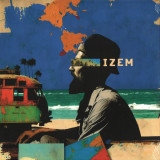
Following his first LP "Hafa" released by Soundway Records and a 12inch where he remixed Guts & Les Frères Smith (Pura Vida / Heavenly Sweetness), the nomadic producer iZem continues to blaze his own trail, offering a hybrid of Afro-Brazilian influences and electronic funk. After the release in 2022 of the EP "Yemamaya" composed with the Brazilian LuizGa, which was unanimously acclaimed by the public, he is releasing his second album "in Ze early morning", surrounded by artists and friends who have marked out his journey between South America, Portugal and France.
"in The early morning" is a fusion of musical aesthetics, the fruit of the artist's passionate quest to reveal links between cultures. iZem is constantly on the move, creating songs from loops and ideas initiated on the road, with his laptop as his companion. These first seeds are then developed with musicians from all over the world, to create innovative tracks that blend tropical trip-hop, Afro-Latin music and avant-garde electro beats.
out of Stock
Last delivered 2 years ago available to reorder, subject to availability
Music compilation and art book. We open the GLITZERBOX again and look into a glittering kaleidoscope of music and illustration. Crossing genres, in handmade editions and with great attention to detail, Jimmy Draht fuses artistic ideas into a new whole.
The vinyl contains beautiful folk songs, experimental collages, field recordings and lo-fi pop. All tracks are exclusive or have never been released on vinyl before.
Featuring music by: Maxine Funke, Tenniscoats, Mouth Harp Ensemble, How to count planets, A Happy Return, Benoit Pioulard, New North Wales, Dump, My Two Toms, Oro Swimming Hour, Matthew de Gennaro, The Gentlist, Andersens, Jam Money, Michael Tanner.
The artists, whether they paint, draw, scribble or cut, whether analogue or digital, whether they are graphic artists, illustrators or visual artists: they combine image and sound, discover connections and show that music can create images and vice versa.
Art by Petra Péterffy, Laurent Impeduglia, Nadine Spengler, Michael Dumontier, Tomoko Mori and Nicholas Stevenson.
A limited and numbered edition of 300, with hand-printed 3 color silkscreen book. Compiled by Markus Acher (The Notwist) and Jimmy Draht.
Since the late 90s JIMMY DRAHT publishes elaborately designed music-graphic-comic-text hybrids, most of them handmade and screenprinted. Initiated by Marion Epp, often in cooperation with a music label, artists from various genres are invited to participate. Each release is accompanied by exhibitions and music events.
Bands such as Calexico, The Notwist, Lali Puna, Neoangin, Pram, Otomo Yoshihide, A Million Mercies, Ted Milton, MS John Soda, Schwermut Forrest, Tied & Tickled Trio have participated (to name a few).
In terms of design we were lucky to showcase the works of ATAK, Anna Sommer, Knust, CX Huth, Katz & Goldt, Judith Zaugg, Thomas Ott, Jochen Gerner, Martin tom Dieck, Jim Avignon, Le Denier Cri, Elvisstudio and many more.
ALIEN TRANSISTOR was founded in 2003 by Markus & Micha Acher of The Notwist. The concept of the label is to produce music that has a musical or personal reference to the Notwist microcosm: From electronic soundscapes to abstract hip-hop to laptop-treated contemporary, from processed oriental music to Nick Drake-inspired songwriting. Alien Transistor respects no musical boundaries.
Ein europäischer Jazzklassiker - zum ersten Mal auf LP!
Jean-Jacques Milteau gilt seit den 1980er Jahren als der beste Blues Harp-Spieler Frankreichs. 2001 reiste er in die oft als Wiege des Blues bezeichnete Stadt Memphis in Tennessee, um dort mit international bekannten Größen der lokalen Szene dieses erstaunliche Album einzuspielen. Neben eigenen Stücken und Songs seiner Mitspieler erfahren hier auch Neil Youngs “Heart Of Gold” und Stings “If You Love Somebody Set Them Free” soulig-bluesige Überarbeitungen.
Nicky Prince has never been bound by musical genre. The Milton Keyes born and raised. Vocalist has the versatility to fit any vibe while not compromising her signature sound. Although best known for her Garage hits with Zed Bias in the early 2000s, Nicky was performing and recording with various acts well before the height of Garage’s popularity. She started her career singing in Soul and Funk bands, and over the last two decades has lent her voice to Electro, Hip-Hop, Drum & Bass, House, and Ska tracks.
In 2009 Nicky graced listeners with her debut solo EP “See What You Mean.” Within only five tracks the singer-songwriter displays impressive range, from the up-tempo, energetic funk of “I’m Hearing You” to a bluesy rendition of Nina Simone’s “Don’t Let Me Be Misunderstood,” to the hushed tones of the EP’s sole acoustic number, “Balancing Scales.” She is backed on this effort by her band Soul Selecta, which includes renowned UK session players Dave Baldwin on Hammond organ and Robert ‘Skins’ Anderson on drums/percussion. Sadly, the release was criminally slept-on.
While “See What You Mean” was available on streaming services and CD, the EP
never received the vinyl treatment. So, rather than simply reissuing the project, Nicky has teamed with KU to offer what she calls a “reincarnation” of her debut on wax.
Now retitled “Listen Up,” this underrated affair has had new life breathed into it. To bring out the best in the original recordings, each song has been meticulously remastered by Christian Obermayer at Strype Audio. Then to fill out the 12”, Nicky has added a handful of unreleased songs, including a heavy groove cover of Michael Jackson’s “I Can’t Help It,” which sees her reconnect with Zed Bias; a punchy, funked up tune titled “Listen Up;” and the original version of “Balancing Scales” that reveals what the track sounded like before it was stripped down to just guitar and vocals. This offering perfectly captures Nicky’s distinct tastes and inspirations. Further, it fills a hole in your record collection that you didn’t know was there until now.
The party goes on! Here, in the second part of the historic Christmas salsa album Asalto Navideño, Willie Colón and vocalist Héctor Lavoe treat us to more of the special sounds that made Volume 1 of the collection one of the most popular Latin music albums of all time. In Volume 2, the team of bandleader/trombonist Willie Colón and inimitable singer Lavoe joins forces again with premier cuatro player Yomo Toro and legendary percussionists Milton Cardona and José Mangual Jr. to cook up New York salsa versions of typical Christmas songs familiar to Puerto Rican audiences of all ages. This típico sound of traditional country music, called música jíbara, is mixed and blended, salsa-style, with a range of other rhythms, starting with Cuban guaguancó and son montuno and African-American jazz.
Ted Milton and Graham Lewis return as Elegiac with their second release – a four track EP inch titled “Meet My Stalker”. The pair of idiosyncratic sonic stylists, bullish outsiders with a Dadaist's ear for unexpected rhythms and ear-catching turns of phrase return showcasing a new track – the title of the EP - along with three bass heavy dubbed out no wave versions of tracks from their self titled debut LP.
Ted Milton is a prolific poet, with several volumes under his belt, as well as an avant-garde puppeteer. Yet he's probably best known as vocalist/saxophonist with psycho-funk afro punk fake no-wave pogo jazz trio Blurt. Milton's group has produced an impressive string of albums, not to mention his numerous solo recordings.
Meanwhile, Edvard Graham Lewis has a history of strong solo releases, both under his own name and as He Said. And of course, as bassist, lyricist and sometime vocalist with post punk innovators Wire, he's been responsible for numerous landmark releases, from 1977's Pink Flag, to 2003's Send, to 2020's Mind Hive.
Arranged, like the album, by electronic composer and sound artist Sam Britton whose sure touch pieces all the elements together. Kicking off with a stripped down driving shortened version of “He Folds” with its eerie honking sax and kraut like pulsating bass the perfect complement to Milton’s chorus echoing throughout. “Boat” is another album track beefed up with Milton’s chants backed by layered percussive blasts and squawking sax. “Meet My Stalker” makes its first appearance here with its infectious snarling looped bassline and Milton’s refrain “It’s a wind up”. Closing out with another album highlight an elongated version of “Vancouver Slim” all synth bleeps and ricocheting grumbling sax and hypnotic vocals. Punchy, idiosyncratic, packed with melody and groove, this second release is the fascinating sound of an evolving Elegiac.
out of Stock
Last delivered 7 months ago available to reorder, subject to availability
Songwriter Ron Stassens assembled a team of musicians in 1977 in anticipation of local side the Portland Trailblazers taking an NBA championship title. Milton Davis was the chosen front man and the music made got regional plays but not more so the band went their separate ways. But not before recording the album that is now presented here via Albina Music Trust. It is a funk work of the highest order with six super tight grooves all laden with percussion, disco energy and big vocals. These will all do plenty of damage in the right setting and remind why Davis is such a cult figure.
Originally released as a private pressed cassette tape only.
First Time On Vinyl.
Released in collaboration with the Numero Group.
180g BLACK vinyl limited to 500 copies w/obi strip. Non-Returnable.
Armed with little more than his Peavey T-60 guitar and a Jumbo Fuzz pedal, Errol Stubbs and his bar-band cohorts cranked out a self-released tape of funked-up disco soul in 1986. With no label or distribution to speak of, Errol would simply put on his best suit and sell the cassettes by hand. The tape languished into obscurity…until now!
The story of Errol Stubbs begins in Birmingham, Alabama in 1959. The youngest of five, he was surrounded by music as a child–his aunt taught piano at Daniel Payne College while his older brother, Avery Beavers, was an accomplished jazz trumpeter. Under the guidance of Avery, Errol started playing trumpet at the age of nine, though he gravitated toward songwriting and quickly picked up the guitar. Inspired by blues greats the likes of Albert King, Buddy Guy, and Little Milton, 12-year-old Errol began mimicking the sounds that filled southern airwaves. As a teenager, he played at barbecues, fish fries, and dive bars across the Magic City. After a brief stint at Jefferson State studying music, Errol’s passion for songwriting beckoned him away from the classroom.
Stubbs bounced around bar bands before settling on a live lineup and saving enough dough to take his vision to the recording studio. Over the course of two days, his well-rehearsed band recorded Turning it Out mostly live to tape at the Sound Of Birmingham Studio. Located on Birmingham’s east side, the state-of-the-art studio kept the lights on by recording commercial jingles but was more than happy to open their doors to local talent.
Taking notes from guitar god Ernie Isley and funk legend Rick James, the resulting recordings are drenched in cosmic phaser-fuzz guitar work, slapping bass lines, and sexual disco innuendos. Big brother Avery lends a hand on Clavinet for “Sweat,” while studio owner/engineer Don Mosley adds a tasteful dose of Moog synthesizer across a handful of cuts.
Soon after the Sound Of Birmingham sessions, Errol released the private pressed EP “Dancin’ Fancy,” b/w “Spaced Out On Your Love,” the latter of which was featured on Numero Group’s 2019 compilation Visible and Invisible Persons Distributed In Space.
The seven-song cassette Turning It Out was sold in local record stores and from night club stages, but only a few copies made their way out of Birmingham.
The follow-up to Snapped Ankles' 2018 RSD release, 'Violations' (which included new recordings of songs by Can, The Fugs, Joey Beltram and Comateens), 'Blurtations' sees the woodwose focus their eye on the work of a single artist.
Ted Milton's post-punk Dada-jazz stalwarts Blurt blazed a trail for acts like Snapped Ankles, and 'Blurtations' assembles covers of some of their finest works, including 'The Fish Needs A Bike'.
Packaged in a die-cut sleeve and pressed on yellow vinyl, 'Blurtations' also includes a postcard which riffs on the artwork of Blurt's self-titled debut studio album.
All six songs will be available exclusively on vinyl for RSD 2023. The EP builds on the success of 2021’s 'Forest Of Your Problems' album, which has seen Snapped Ankles grow their reputation as a formidable live force. Non-Returnable
Brazilian singer, guitarist and actor Seu Jorge returns with an intimate and stripped back session and album, a collaboration with his close friend and kindred spirit Rogê, for new UK based, direct-to-disc record label, Night Dreamer.
Recorded and cut direct-to-disc on Thursday 22nd & Friday 23rd August 2019 at Artone Studio, Haarlem, The Netherlands. Brazilian singer, guitarist and actor Seu Jorge turns to brother-in-arms Rogê, for their first ever album recording, celebrating 25 years of friendship and companionship as part of the latest instalment on UK based, direct-to-disc record label, Night Dreamer.
From concept to completion in four days, the Night Dreamer session commits a lifetime of collaboration and companionship to record for the first time, encapsulated by ‘Caminhão’ - the first song the duo ever wrote together 25 years ago.
Similar to his breakout album and Bowie homage, The Life Aquatic Studio Sessions, the new record is stripped back and raw but with an altogether different ambition - to create a 'classic Brazilian record'. Featuring both Seu Jorge and Rogê on guitar and vocals it also enlists the additional talents of two of Brazil’s most sought-after percussionists, Peu Meurray and Pretinho da Serrinha.
The seven original compositions recall the pairs plaintive and idiosyncratic melancholy and draws on the likes of Brazilian greats like Milton Nascimento, Gilberto Gil and orge Ben.
From Rio De Janeiro in Brazil, Jorge’s success has been witnessed by close friend Rogê – a story which has seen Jorge go from humble beginnings in Rio to working with the likes of Beck and Bowie, and starring in major film and television productions. Well known for his acting roles in,
City of God and the current Netflix hit series Irmandade (Brotherhood), it was Wes Anderson’s A Life Aquatic film that global audiences first saw Jorge on the screen performing as a troubadour strumming Portuguese-language covers of David Bowie classics. All in all, Seu Jorge has been a pioneering force in revitalising Brazilian popular music across the globe.
A songwriter, composer and musician in his own right, Rogê has received a Latin Grammy Nomination for ‘Na Veia’, his collaboration with samba legend Arlindo Cruz. With a strong catalogue of 7 albums and countless collaborations with Brazilian and international producers, Rogê represents the new generation of artists of the Brazilian Popular Music movement and has been instrumental in the pair building an archive of unrealised songs, sketches and ideas, some of which ultimately comprise the backbone of this session.
Like eavesdropping on a campfire session, the one-take direct-to-vinyl process at Artone captures the intensity of the duo’s relationship, setting the conditions for an extraordinarily intimate recording.
out of Stock
Last delivered 2 years ago available to reorder, subject to availability
Some records just stop you in your tracks. They resonate with you and feel instantly familiar like an old friend, even on the first listen. SOYUZ's third album ‘Force of the Wind’ is one of those records. It holds all the trademarks, beauty, and eccentricities of classic Brazilian recordings, from the 60s and 70s, that we have come to love. Think artists such as Milton Nascimento, Lô Borges, Burnier e Cartier, Arthur Verocai et al. But this record wasn’t made in Brazil and is in fact a brand-new release.
SOYUZ (which translates as 'union') is a creative collective from Minsk, Belarus, led by composer, arranger, and singer, Alex Chumak, multi-instrumentalist, Mikita Arlou, and drummer, Anton Nemahai. SOYUZ's previous albums explored and reimagined the legacy of jazz-oriented, non-English-language pop music of the 20th century. For their third album, there is a stronger focus, and it is influenced by 70s Música popular Brasileira and building bridges from it to present-day Belarus. Alex notes that from the moment he first encountered Brazilian music, he found in it a kind of concentrated emotion that felt as if it were familiar to him from his childhood. This non-verbal emotion and connection between the listener and musician echoes in the music, regardless of understanding of the language the album is recorded in.
‘Force of the Wind’ includes songs sung in Russian and Portuguese as well as instrumental compositions. Its musical palette is both acoustic and electroacoustic: rich warm Rhodes piano, soaring string arrangements, and a controlled drum swagger sounding both relaxed yet super tight. Alongside Alex's sublime vocals, that grace the majority of the tracks, the album features guest performances by multi-talented musician and vocalist Kate NV and rising Brazilian star, Sessa. Alex also recently arranged a number of tracks on Sessa's highly praised 2022 album 'Estrela Acesa'.
On the album, the trio is joined by a cast of friends; NY-based musician of Turkish origin percussionist, Cem Mısırlıoğlu, classically trained composer, Simon Hanes, who aided with string arrangements and conducting the string players, Netherlands-based Brazilian multi-instrumentalist, Gabriel Milliet, on flutes. With the collaboration of these friends SOYUZ have created nine songs/suites that are subtle and plenitude and like the best albums, leave you aching for more.
‘Force of the Wind’ is an enigma, Brazilian yet not Brazilian, vintage yet still contemporary, out of sync with modern culture yet completely relevant and necessary.
out of Stock
Last delivered 3 years ago available to reorder, subject to availability