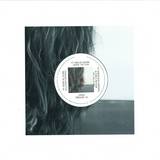
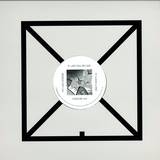
For our 50th release on Delusions Of Grandeur we're pleased to bring you seven exclusive tracks from a mighty-fine collection of both existing DOG artists and veritable newcomers alike.
Part Two opens with Underground Quality key player Son Of Sound who brings a bucketful of attitude on Under The Son, laying down a rough-edged groove and getting on one with his vintage keys.
Up next we have Sebastien Vorhaus & Ponty Mython who bring us the beast that is I'm The Slime. Easing us into things with gentle rhodes samples and a skippy groove, Vorhaus (of Soul Of Hex fame) and Mython soon develop things with hints of acid before unleashing a jazz piano riff that can be best described as unhinged.
Flipping over the mysterious Zepp001 hunt and gatherer brings us Enemy. There's elements of disco with bouncing syndrum fills and a mysterious mood prevails as shakers rattle, bells chime and congas slap but when the bassline drops it's clear we're into some serious future s**t here.
Finally, we have our very own Norm De Plume who lays down a bad-boy groove with a rocking bassline, clattering cowbells and tension-building pads bringing an intense build and rounding off our 50th release in fine fashion, we hope you agree.
Son Of Sound aka Henry Maldonado has been producing influential house music dating back right back to 1991.
He has released on Strictly Rhythm as House 2 House, Maxi Records as Deja Vu and MAW Records as Rhythm Section.
Son Of Sound has recently appeared on Tirk and Local Talk before dropping the bomb that is Jewel Eye Nights on Jus Ed's Underground Quality. He also has releases scheduled for later in the year on Razor n Tape and City Fly.
Currently working on a collaboration EP with Recloose for his own District 30 Label. Henry is also host of the highly regarded 'Hit It and Quit It' radio show on The Lot and East Village radio with Recloose and Private Panther.
Fresh off a collaborative release on Underground Quality under Grand Combo with DJ Jus-Ed and a solo EP on Patrice Scott's Sistrum, Henry Maldonado (p/k/a Son Of Sound) returns on his home-grown District 30 imprint with 4 tracks of deep, New York City grit in Machines On The Dresser.
No en stock
Última entrega hace 4 años disponible para reposición sin garantía
Sistrum welcomes Son of Sound aka Henry Maldonado for another round of high quality sound exploration. Son of Sound contibutes to the Sistrum legacy with three savory, deep house cuts that continue the sound which makes Sistrum what it is today.
No en stock
Última entrega hace 7 años disponible para reposición sin garantía
Native New Yorker Son Of Sound aka Henry Maldonado returns to Delusions of Grandeur with another fine EP including two floor-friendly originals plus a stripped back remix from Aroop Roy. For those too young to have been buying records in the early 90's Henry was a key figure, involved in seminal releases on Strictly Rhythm as House 2 House, Maxi Records as Deja Vu and MAW Records as Rhythm Section. To say this guy has history is something of an understatement having made an important contribution to the first wave of deep house with productions dating right back to '91. More recently he has created magic for Jus Ed's Underground Quality, Classic, Razor n Tape and Local Talk as well as establishing his own District30 imprint.
We kick off with NY Iz All I Know, a warm, soulful yet pumping slice of what can only be described as proper house music! Looped up vocal chops bounce around a classic disco groove until things breakdown into a new chord progression and saw wave bassline which add an interesting twist to the arrangement. Skin Tight drops next introducing a funk break underneath the solid four on the floor kick. One of Henry's trademark chord progressions emerges and the elements build up around to form another masterclass in sample-heavy house perfection.
Aroop Roy steps up for the remix following a run of fine edits and originals on the likes of Freestyle, Basic Fingers and House Of Disco. NY Iz All I Know gets stripped back and pumped up, taking the key elements and adding his own disco inspired groove and Moogy synth business for a floor- pleasing gem that we're sure will help find him new fans from across the house and disco spectrum.
Brooklyn's Son of Sound joins hometown label Razor-N-Tape with The Dusty Files EP, a 4-tracker that embodies the gritty and driving sound of the borough.
The A-side kicks off with Your Voodo's Broken, a track that builds to mid-tempo looped perfection even before the floor-shaking bass drops, followed by the beguiling synth patterns and efficient yet driving drums of No Bullets Left.
On the flip side, Nude Jerzee eschews the bridges and tunnels and takes us straight to NJ by way of outer space, and then What Do You Feel floats us gently back to earth on a cloud of strings, electric pianos and a chugging disco beat.
Fresh off Son Of Sound releases on Delusions Of Grandeur and Local Talk, New York based Henry Maldonado is back on his District 30 label with Son Of Sound 05 / The Love Up Beat Down. This 3-tracker features something for everyone, as Jackin' House, Disco-Chug and even Detroit Techno are well represented. Kicking things off on side A is 'Bout Love Again, an adrenalin induced shot of disco house served up the old fashioned New York way. MPC style loops, chop-ups and breakdowns give a nod to the '90s House 2 House style tracks Henry produced on Strictly Rhythm. Not falling too far from that tree is the disco-house chugger Need Each Other.
Rhodes chords accompany a bed of sliced-up New York Disco, for an infectious groove that will denitely keep that 120BPM momentum.Lastly we round out this EP with Inuence Is Bliss. This one will denitely appeal to lovers of Detroit Techno and House alike. Pounding drums, 16th note ride cymbals, arpeggiated synth lines and ghostly soulful chord progressions effectively distract you from the fact this track doesn't even have a bassline.
This is the new digitally remastered 2015 expanded edition of Soul Jazz Records' biggest ever selling release, 100% Dynamite! Ska, Soul, Rocksteady and Funk in Jamaica.
Since the album's original release nearly twenty years ago, 100% Dynamite has become a cornerstone of reggae: eighteen killer tracks that show the influence that American Jazz, Funk and Soul music had on Jamaican Reggae.
The proximity of the West Indies to the USA meant that many Jamaican musicians were influenced by American styles of music whilst at the same time defining new styles of their own such as Ska, Rocksteady and Dub.
100% Dynamite features some serious Jamaican funk by Jackie Mittoo, The Upsetters and Toots & The Maytals, the cream of Jamaica's jazz musicians such as Tommy McCook, Cedric Brooks and Lennie Hibbert. Also included here are heavyweight Reggae versions to Soul classics by Marlena Shaw's 'Woman of the Ghetto', Aretha Franklin's 'Rocksteady', Syl Johnson's 'Is It Because I'm Black', William DeVaughan's seminal 'Be Thankful' and more.
100% Dynamite also features revolutionary tunes such as Johnny Osbourne's 'We Need Love', Sound Dimension's 'Drum Song' and Lloyd Robinson's 'Cuss Cuss', songs that helped define a unique sound for Jamaican music in the sixties and seventies. These influences went both ways - check Brentford All Stars massive 'Greedy G', the basis for Boogie Down Productions' 'Jack of Spades', or Willie Williams' 'Armageddon Time', later covered by The Clash.
This new expanded edition features seminal tracks from the greatest Jamaican producers - Clement Dodd, Lee Perry, Winston Riley (Techniques) and many more.
The album is available as CD, heavyweight double vinyl (+download), plus digital.
This latest project by Groovedesign Kollective is rooted in movement, thoughtful tension, joyful repetition and dreamy release.
United Tribes
The Groovedesign factor shapes itself in the opening track 'United Tribes' by repositioning intimacy over chaos, a life affirming sound that belongs to those magic early morning hours that really shape experiences. And generations. A unique blend of Afro, Funky beat and Disco Clubby grooves merging with visionary House piano's themes within a rich, deep electronic tapestry and dubby effects.
Supremes
This track perfectly complements the previous yet it is its own groove and carries great dancefloor weight. Further developing the concept of exquisite fusion and fine contamination between already blurred genre's lines, where feelings and emotions meet their sonic counterparts.
Feeling the dancefloor comes as a second nature to Groovedesign: unrelenting yet subtle, innovative yet grounded. Their music carries experience and innovation without announcing itself, guided by an intuitive sense of energy rather than formulas.
Norwegian folk artist Juni Habel's latest album Evergreen In Your Mind is largely an ode to letting go, and at it’s inquisitive heart can be found ‘Pearl Cloud Song’. An instrumental four-and-a-half minutes, it came from a guitar tuning that Habel stumbled upon, the song tumbling out of the discovery on its own accord. Lush and vibrant and bristling with life, it’s a beautiful backdrop to stepping into nature, bringing together a simple drum machine pattern, steel-string guitar, pedal steel, considered effects, and the flicker of a voice somewhere in the far-off distance. Juni says "it gives the sensation of flying." With such ingredients it was rife for a remix.
'Pearl Cloud Song Reformations' is a very limited 12" (also available digitally) which features two remixes/reformations from Tom Sharkett and Minotaur Shock and also includes Juni Habel's original version. There will only be 200 ever made.
Tom Sharkett is a producer from Manchester, now based in Todmorden. Having cut his teeth as a founding member of synth-wave band W. H. Lung. Tom has gone on to forge his own path as an electronic artist with music on Optimo Music, DFA and Test Pressing. His work leans towards dark, wonky and psychedelic electronics and his edit of LCD Soundsystem’s ‘Home’ grabbed the attention of James Murphy which led to an official DFA release. The cosmic choogle of his 'Pearl Cloud Song Reformation' is Sharkett's first remix committed to vinyl since.
Minotaur Shock is the long-standing electronic project of Bristol-based producer David Edwards. With a discography spanning labels like 4AD, Melodic and Bytes, Edwards balances pastoral charm with IDM sensibilities, creating soundscapes that are as much about the heart as they are the head.
For over 25 years, David Madson (aka Odd Nosdam) has been stationed away from the light of the mainstream, diligently working the nightshift. Every so often, we awake to find another of his bleary and beautiful missives slung into the waking world – albums whose assemblages of sampled grooves, atmospheres and voices are unified by a hallucinatory sense of melody, like disparate visions strung together through ribbons of sleep-talk. From his earliest days as a member of the seminal group cLOUDDEAD, through his remixes for artists such as Boards of Canada and Black Moth Super Rainbow, Nosdam has been reporting back from his rounds upon the perimeters of culture and consciousness, forging a musical language all of his own.
On Patrol is the second Odd Nosdam LP to be released on The Notwist’s imprint Alien Transistor – following on from the 2019 album Mirrors – and continues a collaborative history that begun with a 2008 remix of The Notwist song, “Sleep”. It’s a love letter to the vinyl format, produced with the aim of optimizing for a single LP. This objective permeated every aspect of the album’s production, from the duration of each side through to the vinyl mastering (Jessica Thompson) and lacquer-cutting (Dubplates & Mastering, Berlin). As we've come to expect, the album is built almost entirely from found sounds, many of which were taken from obscure and second-hand vinyl gathered during Nosdam’s ceaseless crate-digging escapades. Other sources include field recordings made in 2022 at the Catalonia summer home of artist Salvador Dalí, which are baked into the swirling sci-fi glide of “Here to Know (Adéu Mix)”, and a sumptuous clunking bass line courtesy of Organi’s Mike Walti, which runs like an infinite highway through the fuzzy, sunbaked sprawl of “Deepsimple”.
Odd Nosdam’s work has always swept the entire atmospheric spectrum, from rhythmic vigour to levitational beauty. On Patrol is perhaps his finest assimilation of these extremes. “Sgt. Pepsi” is the perfect case in point: a formidable slow groove capsizes into vinyl crackle after a mere minute, before the song resurrects itself through sweeping strings and vocal harmonies, sliding against each other like the overlain romantic denouements to a dozen Hollywood films from the 1940s. Elsewhere, “Get You In (Belong Mix)” drapes shoegaze guitar over a trundling funk backbeat, straddling the physical world and the outer realms, while hushed voices point toward the song's implied themes of cultural cliques, critical consensus and the plight of the eternal outsider: “Sure, I can get you in... these people are my friends, I’m one of them - I belong.”
This is music that both endures and disappears. Odd Nosdam has always wielded a strange relationship with time, scrambling association with any specific era, weaving together numerous tempos simultaneously. There is no master clock. Each track could happily hold up as an infinite loop, yet Nosdam clearly favours the potency of the gone-too-soon, applying the fadeout just as hypnosis starts to crest. Indeed, the songs are both the product of meticulous long-term construction and spontaneity. While the foundations of On Patrol have come together over several years, the recording process involved channeling vibes through a vintage Roland Space Echo and bouncing song fragments back and forth from hard disk to cassette 8-track, gifting a phased permanence to creative decisions made on the fly – a hat-tip to the production processes of Nosdam's longtime hero, Lee ‘Scratch’ Perry. Like a recurring dream, On Patrol appeals to both the plains of momentary ephemera and the long-established backchannels of the unconscious, equal parts revelation and deja vu.
The sun sat high above the desert outside Joshua Tree on October 17, 2024, baking the rocks and shrubbery outside the Farrington Observatory as a small group of invited guests ventured up a steep path towards the telescope. Kyle Simon, the artist and printmaker who founded the Observatory, was standing outside the print studio sat below the towering cylindrical building, greeting friends alongside his wife Sarah and lifelong friend Brian Weitz, the musician widely known as Geologist of Animal Collective. Simon and Weitz had spent the previous day testing and retesting a system that would transform the light of the oncoming full moon captured by the gigantic telescope into a signal that would modulate the control voltage of Weitz’s modular synthesizer. As the sun dipped below the horizon line, the audience gathered on a small wooden patio surrounded by speakers while Weitz readied himself behind the array of patches and knobs. Simon addressed the group, presenting the history of The Sirens, the sonic exploration of the night sky’s mystical and scientific significance about to unfold.
The music conjured under the Hunter’s Moon that night is now documented on this first official release of The Sirens, which was conceived by Simon and Weitz as a recurring performance piece and sound installation. Over a decade ago, Simon began immersing himself in literature on humanity’s sonic relationship to the celestial realm, including Homer’s Odyssey, Plato’s “Spindle of Necessity, ” Kepler’s Harmonices Mundi, and the field of astroseismology. He fitted homemade telescopes with photodiodes and optical sensors to make the images audible, finding latent patterns in the noisy sonic signals he began receiving from the stars. With Weitz, the process expanded as the signal was routed through an analog amplifier and set to modulate the pitch, filter, and other elements of his synthesizer. Together they developed a system of improvisation, with Simon adjusting the telescope to change the intensity of the light based on its relationship with the moon’s position (imagine a theremin player moving their hands in subtle, meaningful motion), and Weitz responding to that input in real time: bending it, amplifying it, or letting it stand on its own. The duo debuted the piece at the Integretron in Joshua Tree in 2018, providing a crucial proof of concept for the performance at Farrington featured here.
The first thing the listener hears on The Sirens is the opening of Farrington Observatory, the cranking of motor and metal. As the lens of the telescope is exposed to the evening air, a wavering drone emerges from the synthesizer, flickering at the margins, the tuning of the oscillators adjusting to the rapidly cooling desert air. The piece progresses and the drone becomes a luminous, spherical constant, bathing the listener in pure tone as Weitz draws out harmonically ambiguous melodies that spiral upwards. Electronics crackle and convulse, coalescing into dense dissonance before widening out into an open octave. Just as the moon orbits the Earth and the stars shift as the planet rotates, so each sonic element appears in flux, interrelationships slowly forming and falling away. Divided into two parts, The Sirens flows as a continuous conversation between the artists and the starlight completing its thousand-year journey across the galaxy.
The Sirens belongs primarily to a lineage beyond music: of sea captains navigating by looking skyward, of astrophysicists studying the formation of the Milky Way, of the modern myths of werewolves, of the stories embedded in constellations. As Simon writes in the album’s extensive liner notes, “These stories and explorations reveal a collective yearning to become conscious of our connection to the universe, our deep-seated desire to understand how we fit into it all.” This music underscores the history of the night sky as the place where poetry and science find common ground, where exploration hinges on the imagination. Driven by curiosity and ingenuity, Weitz and Simon look up and wonder.
Madelyn Byrd returns to Glasgow’s Somewhere Press with a hazed set of weightless soundscapes. »Night Rider« opens in widescreen with the chirp of cicadas dancing across a desert landscape, before Shiroishi’s saxophone eventually cuts through the dark like neon. The story Byrd tells is close to their heart: they spent their teenage years in the Sonoran Desert, the vast subtropical expanse spanning parts of Arizona, California, and Mexico. Its seemingly alien landscape — pocked with giant, tree-like cacti and looming rocky outcrops — is lodged in the cultural memory, a quality Byrd draws on as they slowly reveal their poetic narrative.
The album plays like a road movie of sorts, moving through Byrd’s memories and setting them to very different rhythms. Clattering drums emerge on »Of Nature, Of Bodies, Of Dreams«, while Byrd’s soft tones, processed to sound almost otherworldly, glide gently across the metallic clangs. Each track highlights a form of movement: there is the microscopic, insectoid crunch of »Imprint«, where guitar prangs meet Shiroishi’s spirited runs, while »Into Sonoran Pool« creates motion from the atmosphere itself, recreating the thick desert air with shimmering electrical currents and psychedelic processes.
At this point, the album begins to echo Robert Ashley’s late-period theatrical work: compositions that broke with familiar formats, juxtaposing dialogue with knowingly experimental orchestral flourishes. Byrd strikes a similar note through a fusion of poetry, sound design, choral music, and chiming, listless ambient elements that also recall Harold Budd. Budd grew up in the Mojave Desert, which borders the Sonoran, creating an eerie parallel with the moods he conjured throughout his long career.
Byrd finds a similarly aesthetic link to the West Coast landscape, referencing the history of experimental music while establishing their own voice. As the album rides into the sunset with a roar of engines, they offer a distinct vision of pop: »What Is, What Was« integrates a chugging break and ketamised vocal hook, while the finale, »In Perfume, Remember«, lands as a James K-like heartmelter.
Annie Bloch’s luvt is a quiet reorientation of the organ: away from its monumental image and ritualised spaces, towards the delicate mechanics of touch, air and friction. Across seven compositions marking her debut on OOH-sounds, the Cologne based organist and composer turns to the chest organ, a small and mobile counterpart to its larger relative, traditionally used to accompany Baroque music. On luvt, Bloch limits herself to just three stops of wooden pipes, using the instrument’s sensitive keyboard, mechanical subtle effects to crystalline sound world shaped by meditative strategies and fanciful detailing. Bloch’s approach sits at the crossroads of modern composition, new psychedelia, ambient and minimalist traditions, with occasional traces of an avant pop sensibility, while keeping the unique sound and physical character of the chest organ at its core.
The title luvt derives from the German luven, “to turn to the wind” and Luft, “air”, a gesture Bloch extends beyond the mechanics of the chest organ towards what cannot quite be grasped or put into words. Bloch follows the organ into quieter, more intimate territory, letting its monumental potential fade into the background while exploring the sensual its sound. luvt is a gentle and immersive meditation on the sound of the chest organ, revealing the instrument’s contemporary relevance while pushing its expressive possibilities into new territory.
Annie Bloch (*1994) is an organist, composer and songwriter based in Cologne, Germany. As an organist she performs solo and in alternating constellations with an improvisational and situational approach. The reality that every pipe organ as well as the space it speaks in is unique, is something she not only adapts to, but actively works with. The resulting composed improvisations explore states of change. Her pieces focus on the in-between-spaces, that are already leaning towards the next event. Searching for the ambivalences in a sound and lingering on them, her music resists singular truths. The musical material she draws from is informed by her engagement with the experimental music scene, but also by compositional styles of pop and ambient music. She has performed at Huddersfield Contemporary Music Festival, Orgelpark Amsterdam, Philharmonie Köln, Moers Festival and others. As an indie-folk artist Annie Bloch released the album „I DEPEND“ (Papercup Records) with a chamber orchestral band, that she regularly performs with.
(remastered classic incl DL card) Environ is proud to present the Metro Area 15th Anniversary Edition, Metro Area's eponymous debut album, meticulously remastered using the original source tapes and generously spread across three slabs of vinyl. The12-track triple LP and digital package combines all the songs from both the original US and licensed European releases, and features new commemorative artwork unique to this edition. In the late nineties, the budding producers Morgan Geist and Darshan Jesrani bonded over their shared love of slower tempos and '70s and '80s NYC club culture. Obsessed with record digging and the sounds they heard on late-night "club classics" radio shows—and turned off by current releases they saw as artlessly "updating" sublime disco by sampling, filtering and subjugating them with huge kick drums —the duo set out to discover how their favorite old 12" records were made. They naturally gravitated towards extended dubs of songs—full of strange mistakes and echoing backing tracks—instead of the better-known vocal versions. Lacking the big budgets and gear that made so many of their favorite classic records come together, they were forced to take a guerrilla approach. They reprogrammed their techno-oriented arsenal of secondhand synths and samplers, using novel digital recording technology to capture live instrumentation and prioritizing mood over hooks, and the resulting music was just wrong enough to sound unlike anything else being released at the time.After just four underground 12" releases, the duo—now well-known as Metro Area—released their first and only album, Metro Area, in the fall of 2002. Fifteen years later, it's time to celebrate the culmination of their shared history and inspiration once again. Environ is proud to present the Metro Area 15th Anniversary Edition, Metro Area's eponymous debut album, meticulously remastered using the original source tapes and generously spread across three slabs of vinyl. The 12-track triple LP and digital package combines all the songs from both the original US and licensed European releases, and features new commemorative artwork unique to this edition.
Originally released by Umor Rex on cassette in 2018, Rafael Anton Irisarri’s Sirimiri is now available on vinyl for the first time, newly remastered for this edition. This LP marks the fourth and final installment in a series of four reissues released throughout 2026 to celebrate the 20th anniversary of Umor Rex.
It is a fitting way to close such a special anniversary year. Rafael is not only an artist who has released three albums on Umor Rex, but someone who has been part of the label’s history for more than a decade. His sensibility and way of listening have complemented and nourished the label throughout the years, while his mastering work has helped shape the sound of many of our releases. A close friend, and an essential part of what Umor Rex is today.
Sirimiri roughly translates as “drizzle” in Basque, and we can’t think of a better word to describe its content. The album consists of four long-form pieces, each shaped through different processes and with its own distinct identity, in which Irisarri seeks to blend subjective time with the listening experience through loops, repetition, and subsequence-based sound. Following Eno, nothing happens in quite the same way twice: perception is constantly shifting, and nothing stays in one place for long. The desolation and despair—in a strangely positive way—that we heard in The Shameless Years (Umor Rex, 2017) and later in FAÇADISMS (Black Knoll, 2024) are present here, but the impression is more concrete, unfolding through rawer, less rhetorical landscapes. If The Shameless Years existed somewhere between beauty and active tragedy, this record travels through the beauty and melancholy of an observing eye—a quiet, rebellious insurrection.
Written, produced, mixed & mastered by Rafael Anton Irisarri at Black Knoll Studio, NY. Carl Hultgren: Guitars on “Sonder”, Taylor Jordan: Electric Piano on “Mountain Stream”. Design by Daniel Castrejón.
Dina Summer is the Berlin-based collaborative project of Greek-German dark-disco couple Local Suicide and Bavarian electronic producer Kalipo. The supergroup began working together in 2019 and have since been refining their combined sound. It is a unique blend of their influences, drawing from 80s italo disco, new wave, EBM and early 00s electroclash for a dark retro-futuristic synth/wave pop sound that stands out with club-ready basslines, epic melodic hooks, and lyrics ranging from dadaist abstractions to empowering, thought-provoking themes.
The trio will return with their new mini album, “Children Of The Night”, bringing together all the elements that have defined their sound so far. From the disco infused synth pop of “Burning Heart” and “Bats In Paris,” recalling their debut album Rimini (2022), to the dark club driven tracks “Fuel”, “Komodo 3000”. and the title track “Children Of The Night,” which echo the atmosphere of Hide & Seek (2024), and the dark wave influenced indie songs “Rat Race” and “On The Road”, which would have felt right at home on “Girls Gang” (2025), the release showcases the full spectrum of the band's musical identity. The nine track record takes its title from and pays homage to Bela Lugosi's iconic line in Dracula (1931): “Listen to them. Children of the night… what music they make”.
Format: Ltd transparent clear vinyl
Dina Summer ist das in Berlin ansässige Gemeinschaftsprojekt des griechisch deutschen Dark Disco Duos Local Suicide und des bayerischen Elektronikproduzenten Kalipo. Die Supergroup begann 2019 gemeinsam zu arbeiten und hat seitdem ihren gemeinsamen Sound kontinuierlich weiterentwickelt. Dieser verbindet auf einzigartige Weise ihre Einflüsse und schöpft aus Italo Disco der 1980er Jahre, New Wave, EBM und Electroclash der frühen 2000er. Das Ergebnis ist ein dunkler, retro futuristischer Synth Wave Pop Sound, der sich durch clubtaugliche Basslines, epische melodische Hooks und Texte auszeichnet, die von dadaistischen Abstraktionen bis hin zu empowernden und zum Nachdenken anregenden Themen reichen.
Das Trio kehrt nun mit seinem neuen Mini Album „Children Of The Night“ zurück, das alle Elemente vereint, die ihren Sound bisher geprägt haben. Von dem Disco geprägten Synth Pop von „Burning Heart“ und „Bats In Paris“, der an ihr Debütalbum „Rimini“ (2022) erinnert, über die düsteren, cluborientierten Tracks „Fuel“, „Komodo 3000“ und den Titelsong „Children Of The Night“, die die Atmosphäre von „Hide & Seek“ (2024) aufgreifen, bis hin zu den von Dark Wave beeinflussten Indie Songs „Rat Race“ und „On The Road“, die ebenso gut auf „Girls Gang“ (2025) hätten erscheinen können, zeigt die Veröffentlichung die gesamte Bandbreite der musikalischen Identität der Band.
Das Album mit seinen neun Tracks trägt seinen Titel in Hommage an Bela Lugosis ikonische Zeile aus dem Film Dracula (1931): „Listen to them. Children of the night… what music they make.“
Murmuration’ is the low hum made by vast, beautifully choreographed flocks of starlings as they simultaneously flap their wings and take to the sky. Some people say that the frequency of this unique, rumbling, oscillating sound can cure diseases...
One of the most exciting live bands in the UK, British Birds combine the garage-punk energy of Billy Childish, the wry English sophistication of XTC and the witty pop inventiveness of The Lovely Eggs. Like a murmurating flock of starlings, they create a unique sound, and might even be able to cure diseases.
Based in Chorley, Lancashire, British Birds are a resolutely DIY band. Bobby records and mixes all the music; Emma creates all the artwork. Their first two albums were self-released, selling hundreds of copies at gigs and at a few chosen record stores. British Birds didn’t wait for permission to take flight. They just got on with it. Their songs are sophisticated, hard-hitting, and very skilful. It may be DIY, but it’s big and it’s ambitious.
Sessions for Marc Riley and Gideon Coe have followed, along with tours supporting The Bug Club, BC Camplight and Lovely Eggs.
‘Murmurate, Oscillate’ kicks off with Lie Down With Dogs, Stand Up With Fleas, a rousing expression of exasperation at our passivity in the face of lame authority. British Birds are acute observers of the English political scene, shrouding their observations in humour and surrealism. Polka Dot Eyes is another piece of sharp social observation: it portrays Lancashire lads – friends from school – who join the Army and return home physically and mentally damaged. The song is simultaneously disturbing, funny and catchy as hell. From the fog of disinformation and doubt that surrounds us all in 2020s Britian, British Birds embrace the darkness, but with wit and verve – no slogans, no easy answers – and with an energy that helps us escape the mundanity of a declining island. This might all sound a bit bleak, but it’s not: every single one of the songs on this album has a chorus as big as a house.
There are personal songs too: Scary Movies is a poignant description of Bobby and Emma’s grandfather, who delighted in showing them horror films when they were kids – giving them sneak previews of the darkness they’d come to embrace as adults; Just Like Them is a celebration of introversion: it might not be fun, but it’s better than being an idiot. (Paradoxically, any other introverts who hear this song will feel impelled to join in in the chorus.) Blame Game and Thunder Claps examine the darkness inherent in relationships: there is always an impending storm, if you recognise the low hum of the imminent thunder. Once again: the choruses of these songs confound the melancholy sentiment.
You’ll get the same impression if you see British Birds live: Bobby’s ferocious guitar and dark lyrics are counterpointed with Emma’s sometimes haunting, sometimes playful vocal responses and insistent rhythms. You’ll be swept away by the energy of a band who don’t know the meaning of limits. And as the songs get darker and darker the smile on your face gets wider and wider.
The core members of British Birds are siblings Bobby and Emma Townson, working from their HQ-cum-nest in Chorley. Drums are by Dominic Lawson (apart from Michael Aindley on ‘Just Like Them’). Bass is by James Robinson.
British Birds will be embarking on a headline tour of the UK in early 2027.
For the label's latest, Oath is proud to present 'Honey Tangerine', the newest mini-album from producer extortionaire Olsvangèr, who serves up his signature blend of hyper-kinetic, ever-shifting dance music.
Olsvangèr's sound and musical journey are forever rooted in the liminal spaces that make up the broad-reaching and ever-shifting electronic music landscape, with his records consistently channeling that in-betweenness that imprints lasting impressions. A classically trained musician with a profound passion for house and techno, Olsvangèr's sonic palette is one of both broad and delicate brush strokes, applying an array of compelling motifs within amorphous arrangements that blend and blur perspectives. His records seek out the faraway fringes as much as focusing on the intensity found in the detail, creating cavernous soundscapes that are impeccably tuned and effortlessly free-flowing. Seemingly genreless, his records are anchored in all that is known and loved, yet due to the music's perspective situated at the intersectionality of electronica, a beautiful anticipation resides within every stanza of his tracks at what may come next. His musical language has found him releasing on the likes of Kalahari Oyster Cult, Hooj Choons and Craigie Knowes, and follows through within his imprint Tofistock, which has been pushing some of the most forward-thinking dance music of recent times.
'Honey Tangerine' touches upon the classic motifs of Olsvangèr's sound, and as always, the room for growth within the record's parameters remains truly endless. Over six tracks, Olsvangèr lays bare the directions of travel, with paths unravelling that feel well trodden yet with some that branch out towards new horizons. 'Source of Thought' opens up proceedings with a captivating ambience, where twinkling hues and lively tones paint the parameters of sound. The chuggy breaks that land deep within the mix drop in and out of view, allowing a deft balance between pure ambiance and rhythm to exchange dialogue between one another. 'In a Nutshell' shifts gears in atmosphere and energy, with all eyes placed upon the club. The shifting rhythm section lifts the acidic melodic features up above, with driving bass notes and a euphoric vocal like lead linking the depths to the heavens. 'Tulpa Nine' swings into heads-down territory, where the drums swing slow and the throbbing bass hits heavy. The auto-tune vocal line up above creates an atmosphere of hazy, smoke-filled rooms, where the party yearns for downtime in anticipation of the next shift in energy.
'Sunrise on the Lips' gives over further chill out room vibrations, where the lights remain low, and smiles reside all around. The enriching drums provide the basis for sitars and glossy keys to glide across the top ends, with the mind invited to dip deep within this enthralling ensemble. 'Zoom It Out' provides the release into the room, with the ante upped. A breaky house leaning number, this cut grooves through its chiming melodic section and groove-laden bass line, with the polyrhythmic drumming pattern doing much to keep the energy residing very high indeed. The record is wrapped up with 'Some Air', which gives over one final jaunt through the airy, slowed-down slipstreams. A wondrous beat is complemented by melodic elements that chime, absorb and quiver, glowing through the night with such charm and feel. An engrossing composition that demonstrates what Olsvangèr is all about - a crafter of sound, where adventure is sought and found, never wavering but curating new connections, feelings, and tones, with an eye on what might come next.
Whether softly undulating or boundlessly expressive, Olsvangèr's music remains a beautiful enigma that serves up both the glorious knowns and the captivating unknowns - 'Honey Tangerine' is yet another chapter in his glorious discography.
Trumpeter, rapper and sonic wanderer Pan Amsterdam has carved out one of the most distinctive voices operating at the intersection of jazz and hip-hop today.
Pan Amsterdam is a musical enigma wrapped in an enduring riddle. His creator is a jazz musician from Houston who’s found fame working with Detroit punk rock God, Iggy Pop, and British indie royalty, Metronomy, and now makes shapeshifting, adventurous hip hop out of the music’s spiritual home, New York.
He’s an irreverent character born out of frustration and named after a misunderstanding, yet one who’s on the verge of releasing his fifth album of truth-slaying, genre-crossing rhymes and beats. The result is a catalogue that feels both deeply rooted in Black American musical tradition and completely untethered by convention.
Pan Amsterdam returns with ‘Panarama’, his fourth full length album and a bold reassertion of his hip hop identity, released via Def Pressé. Created by Houston-born, New York-based musician and composer Leron Thomas, the record finds Pan Amsterdam embracing the harder edges of his sound while continuing to blur the lines between jazz improvisation, abstract rap, punk attitude, and experimental production
Written as a response to contemporary life and the endless cycle of information, conflict and distraction that defines modern culture, ‘Panarama’ unfolds as a stream of consciousness journey through hyper-normalised realities. Across sixteen tracks, Thomas navigates social commentary, personal reflection, absurdist humour, and cultural critique, delivering his observations with the same spontaneity and freedom that have become central to the Pan Amsterdam project
Lead single ‘Szechuan Beef’, produced by acclaimed collaborator 1FS, serves as one of the album’s defining statements. Built around Thomas’ signature free-flowing delivery, the track explores the overwhelming nature of contemporary life, where domestic conflict, social division, entertainment scandals and political discourse become flattened into a constant stream of content.
In Thomas’ own words: “My stream of consciousness style comes quite naturally to me due to the conditioning of scroll down culture where everything, no matter how minor or extreme, is hyper normalised.”
Elsewhere, the track ‘Vanilla Ice’ was written in response to widely publicised ICE killings and the speed at which tragedy is absorbed and forgotten within online culture. Thomas channels the anxiety and emotional disorientation of endlessly consuming information, allowing his thoughts to unfold in real time as social commentary collides with everyday digital noise. The result is both deeply personal and sharply observational, reflecting the fragmented reality of modern life. Other album highlights include the cinematic, Interpol-esque opener - ‘Old Friend’ complete with shimmering guitar lines and an far-reaching introspective, no-filter vocal as Thomas teams up with Nick Zinner (Yeah Yeah Yeahs) and Brad Truax (Interpol) across multiple tracks, often the production traverses left-field indie territory, but always maintaining Pan Amsterdam’s unique musical identity throughout. For the hip hop purists and beats lovers there are plenty of riches to discover from the clever nostalgic sample flips of ‘Cutlery’, the sleepy lofi of ‘Shuriken’ and the wonky LA beat scene / early Flying Lotus era beats of ‘Drunken Noodles’ - all boasting quick witted lyricism. ‘Deep Fried Shiney Things’ explores early electro and industrial sonics while album finisher is an upbeat new wave / indie band cut which sees Thomas take a break from rapping, but of course never letting up on the sharp observations nonetheless
While his previous record explored more alternative territory, ‘Panarama’ marks a deliberate return to rap, as Pan Amsterdam explains:
“I just wanted to do a rap album again.I enjoyed making my last album, but I felt like rapping again. I like to have the freedom to move in between musical worlds that suit the current state I’m in. Frequency accommodating frequency.”
This philosophy runs throughout the album. Tracks move effortlessly between jazz-inflected arrangements, experimental beats, punk energy and underground hip hop aesthetics, allowing ideas to evolve organically rather than conforming to traditional structures. Thomas describes himself as an improviser first and foremost: “I think like an improvisor. That’s how my albums pretty much move. It’s improvisation.”
Featuring additional contributions from Spice Programmers, AnOtter and Mr. Shn, ‘Panarama’ presents a wide-ranging cast of collaborators while remaining firmly rooted in Thomas’ singular creative vision. The record embraces contradiction, humour and unpredictability, capturing fleeting thoughts and observations with the same freedom and spontaneity that define jazz improvisation itself.
A musical enigma wrapped in an enduring riddle, Pan Amsterdam has built a reputation as one of contemporary music’s true outsiders. The project emerged from frustration, experimentation and artistic freedom, with Thomas drawing equally from his background as a jazz musician and his collaborations with artists including Iggy Pop and Metronomy. Operating from New York while carrying the spirit of Houston’s musical heritage, Pan Amsterdam has developed a distinctive voice that sits comfortably between avant-garde jazz, underground hip hop and experimental music.
Reuniting with Def Pressé for ‘Panarama’, Thomas explores what he describes as the more hardcore side of his artistic identity:
“They let me do anything and everything I wanna do so long as it’s on audio, and I need that freedom. What may verbally be perceived as vulgar to one group of people may be very thoughtful and a poignant description of the times that we’re presently in, so I’m glad that I’m part of a label home that understands that.”
In the spring of 1971, somewhere between Brussels, Paris and a collective pop fever dream, Le Monde Fabuleux Des Yamasuki landed on vinyl. It sounded like nothing else then and it still does not today. More than half a century later, Sdban Records proudly presents a reissue of this singular cult album, available from April 3, 2026 on vinyl.
The album was produced by Jean Kluger and written both by Jean and Daniel Vangarde (aka Bangalter, later the father of Thomas Bangalter of Daft Punk), who were alreadywell ahead of their time, long before electronic music rewrote the rules of pop culture.
Released under the name Yamasuki, also referred to as The Yamasuki Singers, or The Yamasuki's, the project was never intended as a conventional band. It was a studio-born fantasy, a concept album disguised as a pop record. What began as a standalone single quickly expanded into a full-blown pan-cultural pop opera that ignored genres and common sense with joyful abandon.
Musically, the album sits at a delirious crossroads. Psychedelic pop collides with funk rhythms, samba and bubblegum melodies, full of chants and choruses in a phonetic pseudo-Japanese, written with the help of a dictionary. Kluger and Vangarde famously recruited a children's choir to perform the vocals, and for added spectacle, they brought in a Japanese judo grandmaster, whose ritualistic shouts and battle cries erupt throughout the record.
Several singles were released. One of them, Yamasuki, with accompanying dance move, appeared in the United Kingdom and France on John Peel's Dandelion label, a fitting home for a record that thrived on the margins of pop culture. Its B-side, Aieaoa, proved even more potent. In 1975, the song was reborn as A.I.E. (A Mwana) by Black Blood, an African group recording in Belgium, this time sung in Swahili. That melody would travel even further. Aie a Mwana became the debut single of English pop group Bananarama, and in 2010 it resurfaced once more as Helele, an official song of the FIFA World Cup, recorded by South African singer Velile Mchunu with Danish percussion duo Safri Duo. That version became the most widely known incarnation of the song. With Jean Kluger directly involved, it was less a cover than a continuation of the original idea.
The album's afterlife did not stop there. Over the years, Yamasuki has been quietly sampled, covered, and featured across media far beyond the realm of novelty pop. Kono Samourai was sampled in The Healer by Erykah Badu (2007), produced by Madlib, while Yama Yama has found its way into recent pop culture as well: appearing in the television series Fargo, on Angus Stone's project Dope Lemon, and on the 2008 Late Night Tales compilation curated by Arctic Monkeys drummer Matt Helders. Proof, if any were needed, that this strange little record carries a deeper musical DNA than its playful exterior might suggest.
This new reissue of Le Monde Fabuleux Des Yamasuki proves the renewed interest and respect for this cult album, faithful to the original spirit while finally giving it back the physical presence it deserves. In an era obsessed with genres and algorithmic neatness, Yamasuki still laughs, dances and karate-kicks its way past definitions. It reminds us that pop music can be playful without being disposable, strange without being cynical and joyfulwithout explanation. The world of Yamasuki was always fabulous, we are just lucky it found its way back to us!
The track titles on Post Dub Cities – the new album by Adriano Zanni, photographer, sound artist, and field recordist – evoke the aftermath, that moment when a place continues to exist and live on, but no longer serves anyone. The human element has vanished, whether it happened overnight or through a slow abandonment that lasted for years. The perspective shifts: buildings, homes and palaces reveal a dimension of reality all their own, in which even the ruins give shape to this landscape that endures, transforming into pure presence.
This, after all, is our fate. The fate of us human beings, of our civilisation, of every civilisation: to pass away, to be forgotten, to erect monuments whose significance no one will remember once we are gone.
The opening track Crisopoli transforms the sonic dimension of a city into an echo chamber: a dark, urban dub built from delays and resonances, holding the imprint of what is no longer there — like a bassline that keeps vibrating even after its source has gone silent. What we see is not the presence, but its reverb.
Available from September 11, second excerpt Warosha gives us a minimalist, enveloping, solemn beat, like the symbols on a map that no one can read anymore. Warosha was the district of luxury hotels overlooking the sea in the city of Famagusta. After the island of Cyprus was invaded by the Turkish army, the entire area, emptied of its inhabitants, who had fled south, was fenced off and surrounded by barbed wire. No one has been allowed to enter it since 1974. Now, on these unspoilt beaches, sea turtles have found the perfect place to breed.
Fordlândia, on the other hand, is the symbol of Henry Ford’s failed dream of conquest. An industrial settlement built deep within the Amazon rainforest, several hours’ boat journey from the nearest towns, to gain access to natural rubber for the tyres of his mass-produced cars in Michigan. An extremely costly project, it quickly became a ruinous pipe dream: a town that has been uninhabited for almost a century and has since been reclaimed by nature.
For a long time now, Adriano Zanni has been exploring, through music and photography, the landscape that unfolds before our eyes, as attentive yet silent observers. As if we were absent, a civilisation that has long since vanished: human presence has dissolved, preparing to fade into oblivion. The precise depiction of places through field recordings, and the black-and-white imagery, give rise to apparitions, hallucinations, and memories. The less present we are, the more we seek meaning. We resist abandonment and the indifference of time.
In the ten tracks (plus three bonus tracks) of Post Dub Cities the echoes and reverberations of dub grant us access to an unknown future, as yet untold – in which we are nothing more than a vague memory. The deep sound guides us through a landscape that is familiar yet unknown, unrecognisable. The cold, distant, industrial rhythm resonates within us as if we were the last, all too aware, inhabitant of a now-deserted village.
Every place – be it an abandoned mining settlement on an island in Svalbard, or a ghost town in Pennsylvania evacuated following an underground fire that has been burning for sixty years at a depth of one hundred metres – leaves questions unanswered, shrouds itself in mystery, and makes us wonder, ceaselessly: what happened here?
In the end, we realise that we don’t really care that much about knowing the details of the disappearance. We can guess them, we’ve seen it happen a thousand times before. Just like in the photos accompanying the album, portraits of ghostly, deserted cities: Belgrade, like Venice, Dublin, Sarajevo, Lisbon, Kraków, Sofia, Naples, Hanoi, Lampedusa, Tehran. Unexpectedly, pleasantly emptied of people, and of their obsessions, struggles, illusions.
Then, suddenly, the crowd returns. Busy, feverish, hardworking. The record ends, the spell is broken. We feel a sense of longing for a future that has not yet come to pass, for a place we were only able to observe because we were not there.
Love or its absence dominates the intimate songs on the new album from ARBORIST – the musical outlet of Mark McCambridge. Looking For Love, Arborist’s fourth album of exquisitely inventive Americana, places us firmly in his hometown of Belfast, allowing it to act as a microcosm of the wider-world, with all its foibles and charms. We find fictional protagonists scouring the dark corners of the city, wiling-away afternoons in strip clubs, wandering the streets in all weather and reflecting on the harsh reality of modern society, all in search of an elusive love – emphasising our need for it now more than ever.
Looking for Love is ARBORIST’s first album to be self-produced by McCambridge, largely from his home studio in Belfast – and at times it feels like we are in the room with him. It’s a different kind of record for him as previously he has always sought collaboration; whether it be with Kim Deal who chose to sing intertwined harmony on his debut single “Twisted Arrow”, or recording in The Curfew Tower owned by The KLF’s Bill Drummond who described Mark’s songwriting as being “riven with more loss than any record since Leonard Cohen quit this world”, and who Matthew E White and his Spacebomb band collaborated with to such astonishing effect on the previous Arborist LP, 2023’s An Endless Sequence of Dead Zeros, winner of the prestigious Northern Ireland Music Prize. This time, with no outside producer steering the way, McCambridge found that the quiet hours were where he felt most at ease, despite periods of trial and error, and, by his own admission, moments of feeling genuinely lost in it all.
Despite playing many of the parts himself, McCambridge still called upon old friends from the community around him; Spacebomb’s resident bassist Cameron Ralston (Bonnie Light Horseman, Hiss Golden Messenger) again features throughout the record, alongside Eamon Ferris (The Waterboys) on drums, with the great and the good from Belfast’s vibrant music scene. Grainne Meyer plays concert harp and Aga Olek plays violin for the quasi-title track “Looking 4 Love” – an off-kilter love-letter to Belfast. Meilana Gillard provides a sleazy saxophone on “Bye Bye Johnny Cash” – a seedy tale of a man obsessively visiting a dancer in a club, and The Larne Community Youth Choir provide backing vocals for “Go Kill The Fatted Calf” – a song Mark wrote about his son growing up, a take on the parable of the prodigal son, with Jonny Ashe’s blistering guitar solo adding an album highlight. The Errigal Ensemble String Quartet and Aisling Agnew’s breathtaking flute solo feature on “What Is It You’re Asking” – a song about love, or its absence, both personally and universally in these times.
McCambridge was recently honoured with a “Fellowship” by the Seamus Heaney Centre at Queen's University Belfast where he collaborated with such illustrious names from the literary world as Nick Laird, Caoilinn Hughes and Conor McPherson. Through the University he was given access to the music department's Steinways and pipe organs, and decided to try one out for the album’s centrepiece “I’ve Been A Flaneur”. As Mark explains, "The drone on the pipe organ — and the sound of it starting and stopping — was so visceral that I decided to try a half-written song against it right there and then, and this came out in one take… The song was a breakthrough artistically - I don't think I'll ever record in the same way again after this."
The album was engineered by longtime collaborator Ben McAuley (Van Morrison) and mixed by Jimmy Robertson (Anna Calvi, Beth Gibbons, Fat Dog). The results are staggering, devastating and uplifting in equal measure, calling to mind albums such as Songs Ohia’s Magnolia Electric Co., The Divine Comedy’s Regeneration, The Blue Nile’s Hats and Wilco’s Ode to Joy, as well as early-70s records from John Cale, John Lennon and Bill Fay.
Belfast native Mark McCambridge played his first show as Arborist supporting James Yorkston. A solo tour followed, and impressive performances led to notable support slots alongside Low, Cat Power, Echo & The Bunnymen and Guy Garvey. Arborist's debut single, the Americana-tinged "Twisted Arrow," caught the attention of the critics with an astonishing duet with Kim Deal of The Breeders. The debut album Home Burial (2016) and its follow-up, A Northern View, both received glowing praise, from The Guardian ("instant classic" ----) to MOJO ("devastatingly bleak… upliftingly beautiful" ----) to Uncut (8/10), with BBC 6 Music play from Cerys Matthews, Cillian Murphy, Lauren Laverne, Radcliffe and Maconie and Gideon Coe — and Steve Lamacq calling single "Taxi" "one of those records that makes you immediately stop what you're doing." He went on to even greater success with the 2023 Northern Irish Music Prize winning third LP, An Endless Sequence of Dead Zeroes, which was recorded at SpaceBomb Studios in Virginia with musician and producer Matthew E White. For his fourth LP, Looking For Love, he has signed with Fika Recordings and with a tour approaching in November, 2026 looks set to be a seminal year for the Irish artist.
Across the past decade, KAS has established herself as a unique voice in experimental electronic music, a composer and synthesist whose work dissolves the boundaries between ambient electronica, contemporary classical, composition, and immersive sound design. Her new album “Ruin: It’s Not Just Music” arrives with a distinctive gravitational pull. The record moves with greater physical force, placing rhythm and impact at the centre of its architecture, revealing a more confrontational and embodied dimension of KAS’s musical language.
The first single “Ruin” arrives May 22nd, with the full album released October 2nd via SOMEONE SPECIAL the new label co-founded by KAS.
Where much of KAS’s earlier work explored harmonic environments, the forthcoming album is built around tension and release. Inspired by the sound of drum and bass, breakbeats fracture through dense fields of synthesis, percussive patterns and her signature melodic fragments – motions that feel closer to the kinetic language of club music than the meditative spaces often associated with her past catalogue. The result is a body of work that feels both recognisably hers and newly charged, music that moves through the body as insistently as it engages the mind.
For listeners who first encountered KAS through the glowing synthesis of “Ears” (2016) or the intricate experimental pop of “The Kid” (2017), this direction may feel initially surprising, yet the shift has been quietly unfolding across the past several years. KAS’s practice has steadily expanded beyond the expectations placed upon experimental electronic artists, moving between orchestral composition, audiovisual installations, film scoring, and large-scale commissions while retaining the unmistakable sonic signature that defines her work.
The 2022 albums “I Could Be Your Dog / I Could Be Your Moon” (2022) and “Let’s Turn It Into Sound” (2022) explored a deeply immersive approach to composition, expanded her reputation and instinct for constructing detailed sonic ecosystems while continuing to blur the lines between experimental electronics and contemporary pop structures. KAS’s most recent output has continued to widen that field including the rhythm oriented electronic album “Gush” (2025) and her return to more orchestral roots with “Thoughts on the Future” (2025). Together these releases underscored the breadth of her practice.
Her prolific collaborators and creative partners have ranged from Patti Smith and Suzanne Ciani to Danny Elfman, Tycho, Glass Beams, RY X, Caribou, Four Tet, Reggie Watts, and Max Richter, while her compositions have appeared in projects with Apple, Chanel, Meow Wolf, the BBC Orchestra, and major film and television productions.
On “Ruin: It’s Not Just Music”, that vocabulary becomes more kinetic than ever before. The record draws energy from jungle, drum and bass, and dance-floor focused electronic music while retaining the intricate synthesis and tonal curiosity that have defined KAS’s work from the beginning. The result is a record that feels equally at home within club culture, contemporary composition, and the experimental spaces that have long championed her artistry.
On May 27th KAS will present a major performance at London’s Barbican Centre alongside the London Contemporary Orchestra, marking the ten-year anniversary of her landmark album Ears. The evening will trace the arc of her creative evolution while also introducing material from the new album.
On Oath's latest, the imprint keeps the jazz-fuelled atmospheres going with 'Seven Dogs', an EP that serves up an astonishing excursion through deeply hypnotic melodies and idiosyncratic grooves, courtesy of an iconic link-up between Rteph88 aka Robin Taylor-Firth and Steve Cobby.
Taylor-Firth and Cobby are musicians whose careers are so richly storied, broad-ranging, and impactful that it's difficult to summarise their output and impact in so few words. Both Taylor-Firth and Cobby firmly established themselves in the 90s, being involved in some of the era's most prominent and celebrated groups and for releasing some truly era-defining records. As such, their discographies reach far and wide, from house and techno cuts through to downtempo, drum'n'bass and leftfield, there is little that is left uncovered, and this spirit remains with them both as they continue to explore the outer parameters of their sounds.
Taylor-Firth, a songwriter, arranger, and producer, is perhaps best known for his long association with Warp Records and its sublabel Nucleus, and for his work as a member of Nightmares on Wax, where his signature keyboard playing style became a staple of the group's legendary sound. Alongside this, he has hundreds of songwriting and arranging credits on a dizzying array of records, and was a member of house music group Anon and Pio Bo alongside Richard Barratt - to name but a few selected highlights of his extraordinary career. Cobby's career is distinguished by his multitude of releases under a variety of aliases, along with his helming of a number of imprints, including Pork Recordings and his most recent label Déclassé. Experimenting with a wide variety of genres and sounds, perhaps his best-known work was with the duo Fila Brazillia alongside Dave McSherry, who released a plethora of immersive and innovative records in the 90s and beyond.
'Seven Dogs' represents a shared passion, vision, and musicality, two languages borne of similar spaces but reaching through time, space, and existence in creating a richly veiled musical experience that draws from lifetimes spent within the nucleus of music's soul. The EP speaks of the present as such as the past and indeed future, hinting with motifs that feel right at home within sun-kissed skies and within the walls of the chill out rooms. 'Early Doors', the EP's opener, displays the core fundamentals of the unfolding experience, namely the intrinsic relationship between keys and drums and how they express tone and mood. The piano gently caresses, ethereally floating with space to grow, as the drums lightly swing into life, providing an engrossing and rhythmically diverse groove that nods as much as it dives. The title track lands next and leads with a more driving feel. Sonically, the track leads with an oozing bass sequence that worms through the mid range before retreating under an array of compelling piano chords. The drums once again provide a strong backbone, allowing the melodic elements up top to fully express themselves - in a myriad of ways, murmuring and clamouring all at once.
'Visiting Hobo' brings the groove down a few notches. Slightly sombre in its delivery, the piano and bass interchange above a sparse yet hard-hitting groove, with as much emphasis placed on the emptiness as on the melodically full sections. The piano has a certain tonality here, with the notes containing a large amount of textural reverb that helps the track feel alive, almost growing out of the speakers. Wrapping things up is 'Titled', which begins with the keys and an array of whimsical features. The drums allow themselves time to grow into being, but when they do, they simmer within an enriching melange. It's a fitting end to a record that abounds with sonic consideration, environmental and emotive feeling, where two technicians bring their best and serve up four tracks of such sublimeness and thoughtfulness. One to drift deep within, on those hot summer days….
You've never played a game like Blippo+ before, and you've never heard a video game soundtrack quite like Greatest Hits from Planet Blip.
Composed by Rob Kieswetter and Jona Bechtolt from the LA-based trio YACHT, the soundtrack collects 71 tracks from the cult classic video game Blippo+, reworked and sequenced into a continuous listen for this special release —a TV static-speckled gatefold double LP, out Oct. 16 via Hologram Opera, marking the soundtrack’s physical debut.
Taking the form of a cable TV simulator, Blippo+ captures the magical feeling of seizing a mysterious signal from outer space and discovering the television programming of an alien culture. Soundtracking the game’s pastiche of programs is Rob and Jona’s genre-spanning score—synth-heavy, eccentrically electronic, with a skewed sensibility that pays homage to cable access, library music, video art, and the late-night margins of the 80s and 90s underground.
TV obsessives will find plenty to love in Greatest Hits from Planet Blip: with surreal theme songs, jangly jingles, zippystings, catchy kitsch, period-accurate menu music and even pop hits from the alien airwaves, this propulsively playful soundtrack will have channel-flippers tingling with nostalgia.
“Planet Blip is an alien planet where art and music are the only currency and ‘consciousness particles’ form the basis of all media. To capture the spirit of this world, we drew inspiration
from all the music we felt best embodied this ethos and ran it through our own utopian blender,” say Bechtolt and Kieswetter.
Blippo+ is an award-winning, experimental, live-action video game created by YACHT and Telefantasy Studios, along with developers Noble Robot and Dustin Mierau, and published by Panic Games. It was released for Steam, Playdate and Nintendo Switch in 2025 to widespread
critical acclaim and has earned a devoted fandom. A Mac version followed earlier this year, and was nominated for an Apple Design Award.
"Simultaneously nostalgic and futuristic, otherworldly yet
welcoming, Blippo+ is an absolute artistic triumph.
" —Deven McClure, Screen Rant
"Blippo+’s presentation might ape old traditions, but the collective impact of its content is richer, deeper, and more entertaining than any mere remembrance.
" —Garrett Martin, Paste/Endless Mode
"In the increasingly reactionary and prescriptive landscape of video games, it is remarkable to encounter something so distinctive, so hopeful, so celebratory, so devoted to expanding the possibility space of art beyond a single medium." —Sam Bodrojan
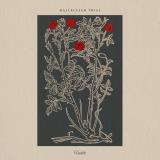
Hallelujah Trial is Tom Roberts (Cranebuilders, Beatowls) and John Canning Yates (Ella Guru): two Liverpool songwriters who knew each other for twenty years before they ever played a note together. Roberts brought a folder of songs to Yates' front room. Yates answered with piano. A weekly ritual of tea and talk became a repertoire, the repertoire became a debut performance at the final La Violette Società, and a few weeks later the songs became an album, recorded in May 2026 in the Gustav Adolf Church, the Scandinavian seamen's church on the edge of Liverpool's Baltic Triangle.
The sound is spacious, stripped back and gloriously melodic: voice, guitar and piano, songs in a room, storytelling that recalls Bill Callahan, Lee Hazlewood and the late Johnny Cash records. Yates' Ella Guru drew a Peel session and 'the best debut album since Marquee Moon' from the Independent on Sunday. Roberts' Cranebuilders recorded two Peel sessions of their own. The pedigree is genuine. The songs are better.
Recorded, mixed and produced by John Canning Yates. Mastered by Jason Mitchell (PJ Harvey, Aldous Harding). Sleeve by Pascal Blua, after a rose from William Turner's herbal of 1568. The closing 'Reprise' carries a hallelujah chorus of friends and family, recorded live in the ch
Celebrating the 30th anniversary of its original release, Night Song returns in a special edition on rose leaf green coloured vinyl. A Grammy Award nominee, the album captures the extraordinary meeting of the legendary Nusrat Fateh Ali Khan and Canadian guitarist, producer and composer Michael Brook, whose atmospheric soundscapes provide the perfect setting for Nusrat’s ecstatic, transcendent vocals.
With Nusrat’s legacy continuing to reach new audiences following the landmark 2024 release of the unearthed archive recording Chain of Light, Night Song remains one of the defining cross-cultural collaborations of its era. This anniversary edition includes a printed inner sleeve with updated liner notes and photographs.
TIM HECKER’s latest work approaches a form of secular musical transcendentalism from within the battered temple of spirituality.
Recorded in a church in Reykjavik, Iceland and using a pipe organ as the primary sound source, this new piece is essentially a live recording. In reality, it exists in a nether world between captured live performance and meticulous studio work, melding the two approaches to sonic artifice as a unity. It is in parts a document of air circulating within a wooden room, and also a pagan work of physical resonance within a space once reserved for the hallowed breath of the divine.
While the title of the piece “Hatred of Music” might be a clue, the album is also partly an attempt to confront a pervasive negativity surrounding music. Historical rituals of destroying pianos, mountains of pirated CDRs pushed by bulldozers in Eastern Europe, or the melancholy of the digital music era began as sideline motifs which quickly informed the work on this record. They also really didn't at all. Despite that the context is wide open in such a form of musical abstraction, the substance of these immersive compositions showcases Heckerʼs continued mastery of organizing sound into a visceral near entity. It is an almost physical presence that the listener feels as much as hears.
This work is a significant contribution to Hecker's oeuvre, one which spans over ten years of musical production. Ravedeath is an enigmatic document of beauty and force. The album was recorded mostly over the period of one day in July of 2010. Iceland-based musician Ben Frost assisted with the engineering and performs on this recording.
RECEIVED AN 8.6 BEST NEW MUSIC RATING FROM PITCHFORK.
The premise of this compilation is simple: music we’d like to hear at the airport.
The idea came after learning that Honolulu’s international airport has been playing AI-generated music over its speakers since November 2025. First reported by Civil Beat, the news has caused frustration and disappointment among residents and visitors, as well as within the local music community.
Everyone knows Hawaii is one of the most musically rich regions in the world — why then is the airport using AI music? 'Music For The Airport' is our response.
Located in the middle of the Pacific at the outskirts of one the most remote cities on the planet, Honolulu’s Daniel K. Inouye International Airport (HNL) is for most people the first place they encounter when they arrive in Hawaii. Warm sun, tropical tradewinds, playful palm trees and majestic mountains welcome every traveler, as do the sounds of birds, familiar music from Hawaiian artists like Aunty Genoa Keawe and Israel Kamakawiwo’ole, and—at least for now—seventeen “island-themed” AI-generated songs.
In late 1977, while sitting in Germany’s Cologne Bonn Airport on a Sunday morning, Brian Eno noticed how terribly uncomfortable he felt hearing the airport’s “muzak” overhead. For a harried, hurried place like the airport where travelers scramble to their gates, stand in long border control lines, and wait impatiently for their luggage at the carousels, music can create more anxiety than calm. Asking himself, "What should we be hearing here?", Eno soon created ‘Ambient 1: Music For Airports’, a sonic remedy aimed at reducing nervousness in public spaces.
When we heard the news that HNL airport is playing AI-generated “muzak”, we were immediately reminded of Eno’s genre-defying 1978 album. And we were similarly inspired to react. But how? Recreating an ambient masterpiece wasn’t in our wheelhouse. We started digging through our catalog of licensed music which we haven’t yet re-released. We quickly realized this was our chance to highlight some of favorite songs from the so-called CD era: the 1990s and 2000s (with a few exceptions). In less than 20 minutes, we pulled 17 original songs recorded by local artists between 1984 and 2017.
The speed at which this project came together surprised us; reactionary gut instinct often produces swift and lasting results. Ironically, our new compilation likely took less time than it did for the state Department of Transportation to commission its AI songs in question. But even though ‘Music for the Airport’ came together in less than one week, the truth is that this collection of 17 songs is the result of years of hard work, trust, sacrifice, patience, and understanding. Building relationships with and licensing music from artists doesn’t happen overnight, but more importantly: these songs are the result of people pouring their hearts and souls into something they believe in. This music wouldn’t exist today without the artists and their loved ones who supported them along the way.
As of this writing, the DOT states its intention in creating AI-generated songs is to “highlight different aspects of the islands, aviation and the airport” and that “no state funds were used to produce them”. Okay, but at what cost? Technology disrupting the music industry isn’t news to anyone. AI music in public spaces are cost-saving measures, since its users (airports, for example) don’t have to pay the licensing fees typically required, which can be a worthwhile source of revenue for artists. But what happens when a place like HNL airport, which hosts more than 21 million passengers annually, uses music created by machines instead of people to represent Hawaii? The identity of a place beings to erode, diluted by a language learning model’s conceptual summary of what a people and its culture sounds like. To echo Brian Eno: what should we be hearing here? In other words: what should the music of Hawaii sound like?
We believe in the power of music, especially when it comes from the soul. We believe in supporting artists, especially as AI disrupts our lives. We believe that Hawaii must be represented authentically, especially when it comes to song. And of course we believe in vinyl, especially since it was a record from 1978 (Mackey Feary Band’s debut LP) that inspired Aloha Got Soul’s origins in 2010.
We hope you find as much joy in this compilation as we have. Perhaps it’ll soundtrack your next journey to Hawaii. At the very least, we hope some people take a moment to hear these sounds: in your headphones for now‚ maybe someday overhead at the airport in Honolulu.
‘I have always been drawn to those ambiguous territories between beauty and terror, and the Trinity test is their epitome: magnificent, sublime, terrifying, annihilating. A destructive power that, somehow, only love can compare with.’
The prescriptive art and performance of Berlin based, French producer, Julienne Dessagne, has concluded with a starkly beautiful reimagining of Chris Isaak’s Wicked Game.
As Fantastic Twins, her continuing creative manifestation for music and performance, has released an array of electronic art for the body and mind. A sonic exploration of dual characters shaped through experimental pop, cinematic electronics and the outer edges of techno.
First appearing on the cult Hippie Dance label, before establishing a long and warm collaboration with Keith McIvor aka JD Twitch and his inspiring Optimo Music label, as well as her own House Of Slessor label, this release comes full of mythology and symbolism.
Immersive sound design, narrative tension, and emotionally charged atmospheres, the origin of the project – Wicked Game (Trinity Version) – was composed for a live performance at the Beta Biennale Of Architecture Of Timișoara in September 2024 and given a limited digital release soon after.
The impact on the artist and the music was multi-layered:
‘While recording this cover, images of the Trinity nuclear test, as reimagined by David Lynch in Twin Peaks (Season 3 / Episode 8) kept resurfacing, almost on a subliminal level, suggesting another wicked game: humanity’s love affair with science and technology, driven by the same mix of desire fascination and inevitability that animates Chris Isaak’s original song.’
Approached by Emotional Response, this updated “vinyl” edition is re-recorded / remastered and comes with new interpretations by Julienne herself, as well as remixes by Aho Ssan and Optimo (Espacio).
Dessagne offers a spectrum of mixes and moods; the centrifugal ‘Trinity Version’ a sweeping cinematic masterpiece, between beauty and terror, the artist transmits the aesthetics of sublime; while ‘Thousand Suns Version’ fuses industrial and techno soundscapes for a beatdown reimagining; the melancholia ‘Atomic Love Version’, where the beautiful vocals are matched with a glitchy, clipping ambience; and the finale, the ‘Core Version’ shines a personal, drifting odyssey.
The accompanying remixes see Aho Ssan (Niamké Désiré), composer and sound artist, his remake merging a love of darkcore drone with moments of uplifting energy, the ‘Core Version Aho Ssan Remix’, a fusion of craft and Dessagne’s vocals.
To close, taking up the Optimo remix mantle, Jonnie Wilkes embraces the propulsion, his ‘Thousand Suns Version Optimo (Espacio) Remix’, offering brooding, electro-driven percussion that overflows with emotion and completes this stunning, evolving, organic and singular remake.
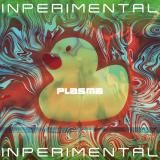
Inperimental is a bold return from Lithuanian electronic pioneers Plasma, presenting a meticulously crafted double LP that explores the intersections of techno, ambient, and forward-thinking electronic sound. Every element — sound, structure, and visual identity — is
intentional. This is not a collection of experiments, but a fully realized sonic architecture shaped by decades of experience and analog mastery. This vinyl edition is more than just an audio release — it's a multi-sensory experience.
The gatefold cover and packaging feature hidden artwork that can only be revealed using included red-lens glasses. This visual element isn’t just a gimmick — it reflects the same intentionality that defines the music. With no room for improvisation or trend-chasing, Inperimental is a precisely executed statement in both sound and form. The album blends ambient tones, analogue warmth, and dancefloor rhythms. It demonstrates a refined sound palette: humid techno grooves, cosmic textures, and cinematic depth.
Inperimental is described by the artist as a voyage where technology meets pure emotion — “a realm where warmth intertwines with technology, dreams blur into reality, and pure, authentic sound reigns supreme”. A digital download card is also included with each vinyl copy.
* long version / previously unreleased on vinyl
** exclusive / previously unreleased
Felix Laband's highly acclaimed electronica masterpiece album "Dark Days Exit" (2005) is now available as an Extended Version 2LP vinyl. Originally planned for last year's 20th anniversary, this special edition features a new design by Felix Laband and includes a double-sided DIN A2 art print. Dark Days Exit features four exclusive tracks, alongside five vinyl-only tracks available for the first time in their original long versions. Listening to the key track, Sleeping Household, on Dark Days Exit is unsettling: like being an impostor rambling around an uncanny house, a Lynchian leitmotif in the form of a young girl divulging secrets that you probably shouldn't hear. Dark Days Exit is an album that paints an interior landscape, an invitation to transgress private thresholds. Made with old-school production tools that require hands-on application, Dark Days Exit is a sound-production tour de force. The music is as wide as the savannah and microscopic at the same time, a lesson in what can be achieved when 'music' is placed on an equal footing with sound as a phenomenon, by an artist who decides to apply themselves without reserve. The masterful manipulation of reverb and delays and hyper-detail was a generation ahead of its time, and Dark Days Exit is preferred by audiophiles for testing their systems. Dark Days Exit is intimate, demanding, and a masterclass in tension, and Laband's ability to use all sound without hierarchy to paint a detailed personal vision — one that is less overtly political and streetwise than on subsequent albums — is unsurpassed. Most discerning listeners are into music because, in the hands of a master, it can manipulate our mood and transport us. Felix Laband opens with a sonic portrait of spring happiness and gradually dismantles the atmosphere in front of our ears, as epitomised by the haunting track Black Shoes. No sooner are we afraid than the artist drops us off where we started. In many ways, the intimacy derives from the tight group of friends and believers whom Laband corralled as contributors: Mark van Niekerk (xylophone, "Miss Teardrop"), Jane Rademeyer (clarinet, "Black Shoes," "Radio Right Now"), Brendon Bussy (mandolin, "Black Shoes"), and Derek Gripper (sampled violin, used throughout) and Alex van Heerden on Minka. The difficulty in categorising Dark Days Exit is probably due to Laband listening mostly to ambient and classical music at the time, and consequently registering the album at the lush, cinematic end of the electronic spectrum. There is poise and restraint in the spare use of beats, and when they do appear, they hit hard. Forged in the optimistic post-apartheid years, Dark Days Exit is music about life and death, spanning hope, despair, terror, tension, with humour and empathy. Twenty one years on, the album's gravity endures, due to its almost perverse authenticity, its timeless themes of hope and despair, and its apex level of technical mastery. The additional, immaculately produced tracks add new rooms to the uncanny house we are invited into.
It's hard to explain an album when one listen is enough. All the more so with MaMaMa: there's no room to stay passive. Listening to his new album, EST, means immersing yourself in an atmosphere that's softly psychedelic, comforting and organic all at once. A dreamy, electronic pop that proves this Strasbourg-at-heart, Paris-by-adoption musician, arranger, singer, songwriter and producer never stops reinventing himself. After changing his name — formerly Petit Prince — and delivering two critically acclaimed albums ("MaMaMa-gnificent." / "Hooks you carry in your head for a long time" / "sumptuous arrangements"), Elliott Diener now offers an even more sincere record. Real songs in French, after two albums where production sometimes took up all the space: "when you make heavily produced music, once you strip away the layers of sound, there's no fruit left underneath. On EST, I don't need makeup for the songs to work," he admits.
That's what this new album is about: the song and the French language first, then the pleasure of sound. An album less concerned with talking about its own making, more inhabited, more embodied, within a contemporary folklore. With this new album, don't expect to be bored: EST is his best record yet.
No pretense
Entirely conceived in his studio in Pantin — a room of his own, at last — imagined as a space free of any daydream, open to every sonic landscape, MaMaMa offers a record that's both hazy and downy soft. Often composed very early in the morning, it has become nostalgic without being dark, melancholic without being sad, with a few lineages showing through: Flavien Berger, Moodoïd, Feu! Chatterton for the taste for words and unease, Mount Kimbie for the approach to sound and rhythm. Unsurprising, given that EST was finalized with the British duo's producer. Live, MaMaMa is preparing a show in the style of Nicolas Jaar or UTO. Hypnotic and immersive.
The most liberating thing is that EST is an album without pretense. With it, we move through perseverance (in Aussi loin qu'il tiendra debout), the small arrangements we make to avoid facing reality (Tout sauf la vérité), and the fragility of bonds we thought were solid (Si bien ensemble). We also touch on lasting conflicts with the people we love (Anywhere You Are, There You Are), misunderstanding (Elle me parle une langue), and the erosion of friendships (S'envoler). EST draws an intimate and redemptive map of human relationships, in a body of work that's both lucid and sensitive — like when he also addresses social masks such as filial love (in Beau garçon, dedicated to his son) or relationships that have become impossible.
"It's really the album that sounds most like me, in terms of sonic landscape," Elliott points out. A record that rises above the noise of an imperfect, shifting world — like us — joyful in its words, liberating in its production. A true gem.
From Richmond, Virginia, Shy, Low have a reputation as one of the most compelling voices within the modern instrumental underground. Their music speaks to fans of post-rock's emotional grandeur and post-metal's crushing intensity alike, while simultaneously appealing to listeners drawn to experimental, atmospheric, and cinematic forms of heavy music. The band's ability to merge these seemingly disparate qualities has resulted in a body of work that is immediately recognizable and continually evolving. Luminous melodies, driving heaviness, layered textures, and carefully controlled tension allows `Purity Spiral' to move effortlessly between fragile moments of introspection and towering passages of intensity. Whether constructing intricate layers of harmony or driving songs toward explosive climaxes, there is a deep understanding of pacing, atmosphere, and the power of restraint. Momentum is at the heart of this album, through intricate rhythmic detail, and explosive bursts of energy, drums become the anchor and catalyst, supporting the band's expansive arrangements while pushing them toward moments of cathartic release. What distinguishes Shy, Low is their ability to balance enormity with restraint. Their music unfolds patiently, allowing tension to accumulate through layers of texture, melody, and dynamics. Moments of delicate clarity often coexist with overwhelming weight, creating a sense of organic motion. At the core of the band's sound lies an acute understanding of contrast. From shimmering, expansive passages to towering walls of distortion, the rhythm section provides both propulsion and atmosphere, becoming integral narrative voices that shape the emotion. There is a disciplined sense of purpose in their writing, an understanding that every note serves a larger arc. Shy, Low thrives in the space between introspection and catharsis, where subtle details become as impactful as the heaviest climaxes, and listeners are taken on a journey that is as visceral as it is profound. FOR FANS OF Caspian * Russian Circles * If These Trees Could Talk * Pelican * Toundra
From Richmond, Virginia, Shy, Low have a reputation as one of the most compelling voices within the modern instrumental underground. Their music speaks to fans of post-rock's emotional grandeur and post-metal's crushing intensity alike, while simultaneously appealing to listeners drawn to experimental, atmospheric, and cinematic forms of heavy music. The band's ability to merge these seemingly disparate qualities has resulted in a body of work that is immediately recognizable and continually evolving. Luminous melodies, driving heaviness, layered textures, and carefully controlled tension allows `Purity Spiral' to move effortlessly between fragile moments of introspection and towering passages of intensity. Whether constructing intricate layers of harmony or driving songs toward explosive climaxes, there is a deep understanding of pacing, atmosphere, and the power of restraint. Momentum is at the heart of this album, through intricate rhythmic detail, and explosive bursts of energy, drums become the anchor and catalyst, supporting the band's expansive arrangements while pushing them toward moments of cathartic release. What distinguishes Shy, Low is their ability to balance enormity with restraint. Their music unfolds patiently, allowing tension to accumulate through layers of texture, melody, and dynamics. Moments of delicate clarity often coexist with overwhelming weight, creating a sense of organic motion. At the core of the band's sound lies an acute understanding of contrast. From shimmering, expansive passages to towering walls of distortion, the rhythm section provides both propulsion and atmosphere, becoming integral narrative voices that shape the emotion. There is a disciplined sense of purpose in their writing, an understanding that every note serves a larger arc. Shy, Low thrives in the space between introspection and catharsis, where subtle details become as impactful as the heaviest climaxes, and listeners are taken on a journey that is as visceral as it is profound. FOR FANS OF Caspian * Russian Circles * If These Trees Could Talk * Pelican * Toundra
Across four tracks of lean and potent workouts with his unmistakable sonic signature, Peverelist returns to Livity Sound with his first release of 2026. After three years shaping out the Pulse series, Pace The Wrecks EP finds Pev shifting focus in subtle ways while upholding his focus on impactful, sprightly club modernism.
It's clear there are fresh inputs into the Peverelist sound from the very first note of 'Wreck I', which opens on an ominous lower-register piano note leading into a brooding house-tempo cut laced with sci-fi synth licks. On 'Wreck II' the dial shifts towards a more rapid-fire, electro-informed rush before swerving towards the bass-heavy, bleep-loaded jack of 'Wreck III'. 'Wreck IV' closes the EP out on a more sparsely arranged broken beat tip primed for lighter moments in the mix.
True to Pev's singular sound while maintaining the consistently fresh, uplifting energy of his recent output, Pace The Wrecks opens up the next phase in his studio work with assured poise and a sustained commitment to keep pushing forwards.
Superfan is the songwriting veil of Kali Priya Flanagan, the Brooklyn-based multi-instrumentalist and producer. While initially imagined as a solo act, ambitious string arrangements crafted in collaboration with cellist Omeed Almassi have come to define Superfan’s noisy and magnetic pop soundscape.
Today, Superfan announces their forthcoming album ‘My Piledriver Heart’ (MPDH), out October 16 via new label home AD 93 (Joanne Robertson, Dagmar Zuniga, YHWH Nailgun). Along with the announcement, Superfan presents his new single “In the Gold Room” paired with the live version filmed by Garrett Winston inside Agger Fish Building in the Brooklyn Navy Yard.
MPDH marks the first release outside of the record deal Flanagan signed at age 14. The album finds Flanagan embracing a more expansive, experimental vision of indie rock - melding deeply tuned acoustic guitar, cello, and Eastern musical influences into what he calls his “Acousticello” sound. Recorded largely live with cellist Omeed Almassi and producer Hudson Pollock, the record explores heartbreak, independence, and hopeful melancholia. Kali says “This time around it was about being (myself) versus becoming myself. This album was made to acknowledge the ebbs and flows in chugging along with life and love, from a place of comfort within the self that opens you up to the beauty in everyday life.” He does so through intimate performances that blur the line between folk, chamber music, pop-rock ballads, and alternative rock. Last year, he released the singles “Apeiron (Fantasy Football)” and “Miss W Jones” and earlier this year he released “Picture of Return.”
Following his acclaimed debut Tow Truck Jesus, Flanagan opened for The Strokes at Red Rocks, and has quietly become a fixture of New York’s DIY scene, performing alongside artists like Horsegirl, Knifeplay, and Quiet Light, while also playing support shows with King Woman and Victoryland this summer. He is also in the rising emo band Holidays in United States.
Before Superfan, Flanagan found success during the pandemic under his first moniker, “KALI.” His initial releases garnered millions of streams and led to collaborations with seasoned high-profile producers and industry teams. Despite his budding career as an indie-pop star, Flanagan was dissatisfied with the conditions of his artistic output and community as he reached adulthood. His coming-of-age years in Los Angeles were marked by an ever-present new-wave pop music oblivion: “hits” made in 5-hour sessions with strangers, a social life suffocated by others’ aspirations for fame, and an absent audience for live music that pushed past the prescriptions of recorded music. On MPDH, Kali says “I can’t help my urge to write these pop-rock ballads, but we really wanted to push the boundary of genre and expressing the sentiments of the songs through experimentation.”
The “Kisses at Midnight” remix is an explosion of pure energy, designed for those who experience music directly on their skin. The track stands out for its rich sound design of open, sharp, and percussive sounds, capable of filling the room and creating a magnetic atmosphere from the very first seconds—thanks in no small part to the high-quality original sounds that define its sonic texture.
The real driving force of the track is its driving, arpeggiated rhythm: a continuous, hypnotic flow that doesn’t let you go for a single second, sweeping the listener into a non-stop journey from start to finish.
A physical and overwhelming track that hits you straight in the chest, giving no respite to anyone who wants to feel like an active part of the dancefloor.
– INCOGNITO
There are sounds that transcend time, capable of evoking entire worlds without needing any introduction. “Incognito” is exactly that: a visceral and modern tribute to the golden years of Italian progressive techno—an era that rewrote the rules of global clubbing.
The beating heart of the track lies in its hypnotic power. From the very first beats, you are captured by a perfect interplay of tight percussive rhythms and magnetic arpeggios, elements engineered to lock the listener to the groove and never let go. It is a continuous evolution, a sonic flow that destabilizes and fascinates, carrying us on a unique, mental journey.
Angelo Bass is an Italian DJ and producer known for his seamless blend of sophisticated electronica, house, and techno. After rising as a resident for the Push collective, he has graced the decks of top-tier clubs like Cocoricò, Sankeys Ibiza, and Veniceberg Verona. His production footprint is equally strong, featuring the highly supported “Drawn to the Floor EP” (Trend Records), his latest “Raw Luv EP” (Sengiley Wax), and key releases on Less Is More and Blackboard. Currently based in Ibiza, Angelo balances international club gigs with his role as an instructor at Accademia Italiana DJ.