Nachpressung 2022 auf weißem Vinyl (1000 Stück weltweit)! Re-Issue des ersten Studioalbums von PERE UBU. Heute ist das Album noch immer so direkt und kraftvoll wie damals beim ersten Entdecken, doch wenn man das PERE UBU Debüt "The Modern Dance" , hört, muss man sich immer wieder fragen, was zur Hölle man da eigentlich wahrnimmt. Der Begriff ,Art-Punk" mag da ein wenig helfen. Verrückte Sounds, manische Rock'n'Roll Riffs, comicmäßiger Gesang und ein typischen Garage Sound machen das Album zu einem Meilenstein experimenteller Rockmusik. Mit einem Sound, der sich irgendwo zwischen VELVET UNDERGROUND, den SEX PISTOLS und THE RESIDENTS einpendelt, sorgt diese durchgedrehte ,Art-Punk" Band für ein wahrhaft außerirdisches Hörvergnügen. Mensch ist geneigt, Allmusic bei deren Beschreibung zuzustimmen: ,man wird sich bald bewusst, dass das Punkrock ist, wie man ihn nie zuvor gehört hat." Für diese Edition hat Paul Hamann von Suma die ursprünglichen analogen Bänder vom Zweispurgerät auf höchste digitale Auslösung hochgezogen, die mindestens vier Mal besser als die des Originals ist. Die Tracks wurden sorgfältig vom Soundarchitekten Brian Pyle neu gemastert, um die einzigartigen versteckten Qualitäten weiter herauszuarbeiten.
The austrian musician and Live-Act / DJ Lukas Poellauer has been establishing a distinct production style with recent releases and remixes on Luv Shack Records, Fine Coincidence, Fortunea Records and Schönbrunner Perlen, melting classic house with airy, catchy melodies and mature songwriting.
“I Don’t Care” is the name of his first single for an upcoming release on Luv Shack Records and features the austrian funk Band Mary Jane´s Soundgarden and the piano player Valentin Zopp. The vastly featured musical talent of the Band makes the track oscillate between tight, club ready production and earthy, live-jazz café vibes, with the hazy voice of singer Tanja Peinsipp at its core.
For his second track Lukas Poellauer teams up with legendary singer Hubert Tubbs of "Tower of Power" fame. Tubb´s remarkable vocal timbre perfectly contrasts the light footed instrumental, as he sings about "When A Groove Is In Control". The actual groove itself is reduced and rather laid back, but Lukas Poellauer manages to bring in both dramatic and quirky overtones with a plethora of mallet, brass and string melodies.
On the flip, Patrick Pulsinger & Sam Irl deliver a fabulous dub rendition of “I Don’t Care” with a mad wobble bassline and classic reggae stabs, sitting comfortably between Grace Jones’ electronic tango and the hazy studio wizardry of dub emperor Lee Perry.
Luv Shack´s very own Space Echo put their spin on “When A Groove Is In Control”, opting for a cold and eerie vibe with the help of digital bell pads and a tight, stripped down four to the floor groove.
Rounding off the package, we have the Pulsinger & Irl Dub Instrumental which really makes the fantastic arrangement and mix shine even more.
out of Stock
Last delivered 2 years ago available to reorder, subject to availability
Having initially met more than a decade ago at a local community radio station, sometimes doing guest slots on each other’s live, improvised noise shows, Cormac Culkeen and Dave Grenon knew they had a mutual interest in working with sonic textures. They listened to each other’s bands for a handful of years, and in 2017, “made good on a threat” that they’d been making for quite a long time: to start a band. At Cormac’s gentle but clear urging—declaring that they’d gone ahead and booked a space in which to record a video—the two wrote their first song, “Sebaldus,” an ambitious 12-minute trip, which also serves as the fireworks finale to their self-titled debut album. With surges of pathos that smooth out into something more soothing in turn, Cormac goes: “The hunter, you’ve seen him / The archer, his arrows are strong / And hunger, you’ve known her / I know the winter is long.” The track is as much about enduring a Canadian winter as it is about the eponymous 8th century hermit, shot through with sublimated desire. As Cormac put it, Joyful Joyful’s songs are “a little bit outside of time.” But while the lyrics beg close, oblique reading unto themselves, there’s also a distinct sense that they’re only one of many more ways that the duo shapes sound. Cormac, whose voice is like a sea with irregular tides, lights up about an idea in traditional sean-nós Irish music that songs already exist and are out there; it’s up to the singer to become the conduit. This belief in music as something to be channelled, and something more than sound, resonates with the singer’s fundamentalist religious past. To paraphrase: lots of group singing, harmonies, no instrumentation, totally unmediated, no priest, congregational—not choral, not a performance, not about talent, the spirit moves through people. “Of course that informs how I think about singing,” Cormac says. So, when they were exiled from the church because of their queerness, they took the music with them, dislocating it from its dogmatic bounds but not from its transcendent potential. This record might be thought of, then, as a kind of queering of sacred, devotional traditions—or at the very least, a space where all of these things can be held at once. Perhaps perceivable by some as contradictions, these intersecting influences create the conditions for an incredibly singular sound. Dave is steady and exploratory in his handling of this multiplicity, arranging sounds as they’re revealed, corralling them, coaxing them into form. “Because Dave is there,” Cormac says, “I get to sing three times higher, and three times lower, and faster, and backwards, and all of these sounds! That are there. They’re all there.” When asked about early musical memories, Cormac recalled an immediate fascination with harmony: from demanding that the first person they ever heard singing it explain what they were doing, to always (still, to this day) singing in harmony with their twin sister around the house, to being part of a children’s choir that sang soprano in Handel’s Messiah—not realizing until they entered the room with all the other ranges that their learned melody was but one part of the whole. Just as tellingly, Dave reflects on his early attraction to “abstraction and becoming abstract,” describing childhood afternoons messing with microphone and speaker feedback loops, producing long, enduring sounds with almost undetectable variations. In a way unique to the coalescing of these two listeners, notions of harmony are central to their output. Dave samples field recordings, old keyboards and synths, and vocal drones, running the live singing through four or five parallel effects chains, sampling and treating everything again in the moment. “Another way to put it is that Cormac’s voice comes into the board and then comes back out shifted, delayed, and shattered; Cormac and I hear it, live with it, and respond,” Dave says. This work is contingent not only on a deep intuition (neither of them read sheet music) of polyphony and due proportion (something St Thomas Aquinas famously listed as an attribute of beauty) but also on their connection to each other and ability to read subtle cues. Dave says they’d hold each other’s hands while performing if it was more convenient to do so, riffing on something else Cormac mentioned about traditional Irish singing: that someone would always hold the singer’s hand, for fear that without a tether to the ground they might find themselves utterly lost, unsure how to return. Joyful Joyful doesn’t shy away from offering such experiences of departure; they’re willing to unsettle their audiences because they themselves are unsettled. Their shared penchant for spooky, heavy music, and self-described “omnivorous” listening practices equip them with an array of sonic concepts that support this effort; Diamanda Galás, The Rankin Family, Pan Sonic, Pauline Oliveros, Keith Fullerton Whitman, Yma Sumac, and Catholic hymnody were just a few that came up. Observing their audience gives them insight about the effect of each song—something they considered while arranging the album. Its arc is marked by soft, sometimes sudden oscillations between cacophony and euphony, day and night (listen for insects), and from sexual, visceral entanglements to more ephemeral, celestial ones. Front to back, it arouses expansion, unraveling. Of lightning, Vicki Kirby writes: “quite curious initiation rites precede these electrical encounters. An intriguing communication, a sort of stuttering chatter between the ground and the sky, appears to anticipate the actual stroke.” By all accounts, something similar seems to happen at Joyful Joyful shows, between those on the stage and those off it, between what’s earthly and what’s beyond. “A lightning bolt is not a straightforward resolution of the buildup of a charge difference between the earth and a cloud … there is, as it were, some kind of nonlocal communication effected between the two,” writes Karen Barad, extrapolating on Kirby’s thought. Cormac acknowledges that while they and Dave play a role in this mysterious charge that comes about, they’re not solely responsible. However ineffable it may be, it’s undoubtedly a form of communion—and a sensuously shocking one at that
BLEEP was the hype par excellence at the beginning of the techno movement in 1990/91. BLEEP – inspired by the beeping sound of small toy robots – stood for a phase of good mood and sounds that had never existed before. LFO with their groundbreaking track of the same name and Tricky Disco were two protagonists of those happy days.
More than 30 years later, Jürgen Laarmann (editor of the legendary Frontpage Magazine 89-97, promoter of Love Parade and Mayday 91-97, Bash Rec. 91-94) had the thought that nothing is missing in current electronic dance music as much as bleep.
The idea came about when discussing how to create a soundtrack for the art and techno hype of the day and the crypto art moving currenting stirring up the art market. The comeback of bleeps in a new guise is surely a tried and true remedy: the Bleep Gigaverse makes the blockchain shake.
With his old friend and Bash Records buddy Mijk van Dijk, Laarmann developed the NFT anthem with the striking Fazer bullet intro and a fat 2022 bleep that has been extensively tested on post-Corona dancefloors. Club legend Justus Köhncke (Whirlpool Productions among others) himself a big Bleep fan and Laarmann’s neighbor, contributed a house mix. Most recently, they managed to bring the great Michael Wells – the Godfather of Bleep into the Bleep Gigaverse. He contributes as Tricky Disco with all new bleeps and also with a Hardstyle mix, so the EP offers a spectrum with really different mixes.
May it bleep forever now!
By Mijk van Dijk & Jürgen Laarmann
BLEEP war für wenige Monate zum Beginn des Technomovements in 1990/91 der Hype schlechthin. BLEEP – angelehnt an das fiependen Sound von kleinen Spielzeugrobotern – stand für eine Phase guter Laune und Klängen, die es nie zuvor gegeben hatte. LFO mit ihrem bahnbrechenden gleichnamigen Track und Tricky Disco waren zwei Protagonisten jener glücklichen Tage.
Mehr als 30 Jahre später hatte Jürgen Laarmann (Editor des legendären Frontpage Magazins 89-97, Veranstalter von Love Parade und Mayday 91-97, Bash Rec. 91-94) den Gedanken, dass nichts der aktuellen elektronischen Dance Musik so sehr fehlt wie der Bleep.
Die Idee entstand, als man darüber diskutierte, wie man einen Soundtrack für den Kunst- und Technohype dieser Tage erschaffen könnte, jene Kryptokunst, die den Kunstmarkt aufwirbelte. Das Comeback der Bleeps in neuem Gewand ist das probate Mittel: das Bleep Gigaverse lässt die Blockchain erbeben.
Mit seinem alten Freund und Bash Records Kumpel Mijk van Dijk entwickelte Laarmann die NFT Hymne mit dem markanten Fazer-Geschoss Intro und einem fetten 2022er Bleep, der auf den Post-Corona Dancefloors ausgiebig getestet wurde. Club Legende Justus Köhncke (u.a. Whirlpool Productions), selbst großer Bleep Fan und Laarmann‘s Nachbar, steuerte einen housigen Mix bei. Zuletzt gelang es ihnen, mit dem großen Michael Wells den Godfather of Bleep ins Bleep Gigaverse zu holen. Er steuert einen NFT Tricky Disco mit ganz neuen Bleeps und einen Hardstyle Mix bei, so dass die EP ein Spektrum mit wirklich unterschiedlichen Mixen bietet.
May it bleep forever now!
By Mijk van Dijk & Jürgen Laarmann
out of Stock
Last delivered 3 years ago available to reorder, subject to availability
HEAVY TEMPLE donnern mit ihrem Debütalbum wie ein röhrendes Mastodon über die Prärie. "Lupi Amoris" hat das Zeug zum Meilenstein: So progressiv, aber unbefangener als BARONESS, und so heavy, aber draufgängerischer als FU MANCHU, setzt das Trio aus Philadelphia alle Hebel der metallischen Riff-Maschine in Bewegung. "Lupi Amoris" ist ein One-Way-Trip durch die amerikanische Weite und tiefe Wälder. HEAVY TEMPLE wurden zur Wintersonnenwende 2012 aus purem Spaß an der Heavy-Musik ins Leben gerufen, was sich in den Pseudonymen der Gründungsmitglieder widerspiegelt: High Priestess Nighthawk, Rattlesnake und Bearadactyl. Zunächst spielte die Band nur lokale Shows in Philadelphia, was dem Trio schnell einen exzellenten Ruf einbrachte und zu Einladungen auf Touren mit RUBY THE HATCHET, MOTHERSHIP, ROYAL THUNDER und CORROSION OF CONFORMITY führte. Auch namhafte Festivals klopften an die Tür, wie neben vielen anderen das Maryland Doom Fest, Psycho Las Vegas und Decibel Metal & Beer. Es spricht Bände über das Riesentalent von HEAVY TEMPLE und ihre packenden Live-Shows, dass die Angebote weiter eintrudelten, ohne dass bisher ein Album vorlag. Obwohl HEAVY TEMPLE alle Merkmale des traditionell männlich orientierten Heavy Metal anhaften (bis zu dem Punkt, dass ihr Sound einen stolzen Vollbart tragen könnte), bringt die kraftvolle Präsenz von Frontfrau und einzig verbliebenem Gründungsmitglied High Priestess Nighthawk weibliche Stärke ein. Ihre lyrischen Konzepte erreichen literarisches Niveau. "Lupi Amoris" bedeutet "Wölfe der Liebe" in Latein und handelt davon, dass sich die Band aus Philadelphia mit Rotkäppchen verbündet, das sich von den traditionellen Fesseln und der Erwartungshaltung an Frauen befreit hat. HEAVY TEMPLE demonstrieren mit "Lupi Amoris" eindrucksvoll, dass es durchaus möglich ist, titanischen Stoner-Doom mit den Realitäten des Lebens zu verbinden, statt im Eskapismus zu verharren. Bei dieser Lautstärke kann die Welt gar nicht anders als zuzuhören.
Soul / Electro / jazz / trip hop. It was in 2019 that Matteo (one of the 3 members of the band Chinese Man and co-founder of the label CMR) met the first musicians who would be part of the project "Matteo & Bro". Starting with guitarist Karim Addadi and bassist Christophe Lincontang (with whom he collaborates on a film score), Matteo then surrounded himself with drummer Hugo Pollon and saxophonist, flutist and Duduk (Armenian flute) player Lamine Diagne. A real desire to launch a project where the musicians are at the heart of the creative process progressively grew as the meetings went on. The artists gather in Bron (near Lyon) for the composition of the eponymous opening track. On this album we also find the voices of two female artists, Isadora (Belgium) on "Sweet Shadows" and Tania Saleh (Lebanon) on "Sakakeen", as well as General Elektriks with its keyboards and its sublime groove on several tracks ("Bina" & "Prumirim"). Between programming & electronic production, arrangements and composition, the demos take shape, the groove and the universe between soul, funk, trip hop and world music extend the desire and the production of an album. Due to the health crisis, the album is finally recorded in late 2021 with the help of Sodi, sound engineer and producer of many albums (Fela & Femi Kuti, Saul Williams, Deluxe, IAM ...). For the orchestration of the tracks "Path" and "Sakakeen", Matteo also called on Franck Lebon (film music composer) to add a cinematic dimension to these two tracks. Tracklist : 01 – Bron / 02 - Prumirim ft. General Elektriks / 03 - Sweet Shadows ft. Isadora / 04 - With S / 05 - Path ft. Franck Lebon / 06 - Sakakeen ft. Tania Saleh / 07 - Bina ft. General Elektriks / 08 – Playa
"bit by bit" is the first full-length release from Toronto-based singer-songwriter Evan J Cartwright. This self produced album from the go-to drummer/collaborator (The Weather Station, U.S. Girls, Brodie West) presents a highly singular songwriting vision that combines existential lyrics with masterful musicianship. Steeped in jazz melodicism, Cartwright’s trumpet-like phrasing mixed with contemporary composition presents an eclectic art song performed by an artist that could perhaps be best described as a post-modern Chet Baker. Deep poetic observations on love and time paint an affecting picture of an artist reflecting on life’s universal truths. Visual in nature, "bit by bit" places its audience within a world of musical leitmotifs extracted from field recordings of bells and birdsong. Collected during years of touring, these sounds evoke extant spaces beyond that which the music inhabits. The use of this source material in its unaltered form evokes the feeling of a technicolour European film at one moment and then, as the extrapolated melodies are meticulously translated into electronic tone bank sequences, a modernist setting the next. One carillon melody is used as the basis for a wealth of the album’s musical material before its origin is finally revealed by the chiming of bells in the last seconds of the album. The result is a fragment of space between the constructed world of the musical compositions and the candid world of documentation, inviting the listener to ponder whether those two worlds are distinct or whether the songs and music are not simply “field recordings” themselves. Throughout "bit by bit" Cartwright drops staggering revelations hiding in plain prose that often involve the contemplation of time. In I Don’t Know he states “if I only trusted time / then I would wish it all away” and nearing the album’s end he opens impossibly blue with the phrase “the impossible truth of time”, playfully inserting a pregnant pause before the word time. A drummer’s fixation, to be certain, the album’s recurring theme of time is eclipsed only by Cartwright’s contemplation of human relationships. Here he elaborates on some of the album’s subjects: “Many of the lyrics circle, and try to give a name to the illegible space between human beings. “i DON’t know” celebrates the fact that we will never truly understand what love is. Its message is one of assurance. It says that we can never really touch love, and that is ok. “and you’ve got nobuddy” refers to life’s great tragedy: that we are unable to read each others’ experiences, and in reaction to this, we separate ourselves.” The entirety of "bit by bit" is a continuous work. There is seldom a clear demarcation of where one piece ends and another begins and when this does occur, it is done crudely, as if someone is flipping through a series of broadcasted channels. At times words are sliced right out of their lines and replaced by pure tones. This is both a comical interpretation of censorship and a reminder that there are things in life that will forever remain unseen and illegible. In fact, this statement lies at the centre of the LP and although hidden beauty does reveal itself through repeated listenings, "bit by bit’s" eccentric world remains just out of reach — an imaginary second story room viewed from a crowded city street.
Bobby Oroza puts his desire for the profound on wax with his sophomore album Get On The Otherside. Musically, he has updated the formula we were introduced to on the first record. But lyrically, songs are bravely rooted in the more complicated, ubiquitous inner tangles of life like self-examination and coming to terms with the vastness of the human experience. With Coronavirus bringing the world to a halt, Bobby-a father and husband-had to do something. No tours to play or studio time to fill, Bobby found himself back in the construction yard, doing blue-collar work to provide for his family. "I was super grateful for the work-a lot of my colleagues didn't have an option like that," Bobby admits. More than a few personal hardships forced him to acknowledge and work through some brutal truths. And what came of it? Well, for one, this new record Get On The Otherside which pretty well describes what Bobby's been through: He had to demolish his ego, his old ways of thinking, and his tried approaches to anchor into a refreshed perspective with new understandings. As Bobby tells it, "I had to do some real self-searching, come to terms with what was wrong, and how much of it I was responsible for." So how does this translate to the new album? Moments of clarity as to where the real value in life lies on "I Got Love," encouraging numbers like the title track "The Otherside", and declarations of self actualization on "My Place, My Time." Even the more straightforward love songs are outside the box lyrically like "Sweet Agony" and "Loving Body." If you have never had the pleasure of catching one of Bobby's live shows you may have no idea that he is a maverick on the guitar. He lets us in on a little of that on "Passing Things" with a solo that possesses the same restrained and space that his lyrics do. As we'd expect, the songwriting still has that raw, direct edge to it. But an evolution has taken place. There are new points of view on familiar territory which in Bobby's words "For me to love, I needed to take a bigger view of love. One with less ego and more empathy" really hold true. The result is a record with Bobby's new found humility on full display and a message of encouragement to anyone who is struggling and can't see a way out. It still may be hard to nail down and define Bobby and his sound. He's no one thing more than the other. But what he's showing us now, on Get On The Otherside, is that we can also label him a soulful, philosophical optimist. Someone who can say a lot with a little, and who wants us all to know that it's us that has to do the hard lifting to truly live a life in love-both with the world and with yourself.
out of Stock
Last delivered 4 years ago available to reorder, subject to availability
The past couple of years have provided an ideal breeding ground for periods of reflection. Of rediscovery. And for the reignition of dwindling flames. Perhaps this is why the meeting of Tom Churchill and 2Sox is the perfect match at the perfect time. A collision of minds stoking a fire that has sizzled away into a 12” slab of choice cuts. Introspective and deep, yet not forgetting what a dancefloor wants.
Tom started making music in the mid-90s, inspired by the house and techno records he was buying as a teenager growing up in Cardiff. Co-founder of cult 90’s label, Headspace Recordings and sister label Emoticon; Tom and partner Raeph Powell were responsible for some faultless releases in the 00’s. More recently, Tom has been one half of The Nuclear Family; a production, label and events project launched with Laurence Hughes in 2013. Much of what Tom has put his hand to over the years has been hot in demand. Incredibly, this is his first physical, solo release under his real name since 2002. Despite the 20 year gap, Tom’s enthuse for all things deep and electronic has arguably never been stronger.
“These tracks have been heavily inspired by two things - reconnecting with my surroundings and rediscovering my record collection - both of which have been made possible by the events over the past couple of years.” Tom says.
“As well as spending more time outdoors around my home on the west coast of Scotland, I recorded a lot of DJ mixes and radio shows during the first lockdown, which meant I spent a lot of time digging through older records. This reignited some creative energy that had been lying dormant for a while.
Before 2020 I’d been sporadically using a rented studio space to make music, but in that Spring I put together a basic, compact setup so I could work at home. My influences are pretty clear with these tracks - I’ve drawn on the palette of classic deep house, 90s techno and electro throughout - but while there are some retro elements and familiar sounds, I’ve tried to put my own twist on things. Being surrounded by nature and working exclusively on headphones has made for a more intimate sound, and these tracks are the most personal I’ve ever done.”
out of Stock
Last delivered 3 years ago available to reorder, subject to availability
"The dazzling symphonic album he always threatened to produce" UNCUT 5/5
"A soulful symphonic masterpiece" ROLLING STONE
Originally released in Japan only on CD in 2002, Plush's Fed lives up to the cult-like adulation it has garnered ever since. A stunning symphony of Bacharach-inspired pop, Toussaint-swing andMelody Nelson-era-Gainsbourg, it's an album bound together by Liam Hayes' maverick genius, an uncompromising Brian Wilson-esque quest for sonic perfection. Positively indulgent in every way, this sumptuous record has long deserved to be treated to a deluxe vinyl edition. Lovingly overseen by Hayes and recent collaborator Pat Sansone (Wilco/The Autumn Defense), it will finally be available on the format it should've always been, this Record Store Day 2018. Remastered and presented as a double LP - cut specially at 45rpm - it comes housed in a beautiful gatefold jacket with expanded artwork throughout.
Its expansive, singular vision infamously took years to realise, involving Earth Wind & Fire's horn arranger (the legendary Tom Tom MMLXXXIV) amongst other elite personnel. Recorded with five different engineers (including Steve Albini and John McEntire), Hayes meticulously extracted every ounce of pop from each note. A long list of renowned studio ringers (including soul drummer Morris Jennings) and Chicago regulars (McEntire, Rizzo, Parker) among many others provide playing of demonstrably professional precision. As such, Hayes' complex, meandering melodies are rendered far more coherent and satisfying than they otherwise might have appeared, bringing his epic, anguished pop to a rarely seen level of perfection and depth. This unstinting dedication to the overarching vision was rewarded handsomely - artistically, at least.
However, as might have been expected, his deluxe approach resulted in a bill too steep for any American or European label to ultimately support. It has since seemed unlikely that it would see the light of day on either side of the Atlantic. Yet we were determined not to allow Hayes' lifetime achievement to go unnoticed or let music fans across the world miss out on one of the finest albums of this century.
A wide-eyed opus of stunning intensity, Fed oozes Hayes' impeccable influences without ever becoming overwhelmed by them. Incredibly, it touches upon Blaxploitation soul, Boz Scaggs-soft-rock, hints of jazz and blues, timeless baroque and skewed pop. In one long minute, the stabbing, soulful "So Blind" moves through five different melodic segments, horns shift easily from haunting backdrop to explosive forefront, smoothly giving way to strings as Hayes' voice casts its bewitching spell. The ambitious soul of "Having It All" has been described as the diffident cousin of Marvin Gaye's "Save The Children" whilst the breezy "Greyhound Bus Station" is pure 70s AM Gold, evoking the easy warmth of Jimmy Webb's beloved Land's End period. The sublime resignation of "No Education", a beautifully slow number that begins, "Never read a book in my life/ But I feel just fine" is post-rock ballad heaven. Arriving towards the end, the title track arrives as a majestic suite, moving from a horn-and-guitar-led instrumental via shifting melodies to Hayes' compelling vocal bursts.
An album of such brilliance, Fed can comfortably sit alongside such staggering statement pieces as David Bowie's Young Americans, Randy Newman's 12 Songs or Harry Nilsson's Nilsson Schmilsson. Indeed, for all the sprawling elements that went in - lengthy guitar builds, exploding horn sections, solemn strings, female backup chorus - it is a deeply personal and original record. Employing a distinct "more is more" aesthetic, he demonstrates remarkable restraint in producing an album of such intimacy. "My creation has drowned me," he memorably sings on languid opener "Whose Blues", yet he navigates the shifting styles and ideas with enviable ease.
The second album from Wehrmacht, “Biermächt” saw the band maturing while still retaining their Thrashcore roots. Released in mid-1988, “Biermächt” featured a slightly cleaner production than the one found on their debut album. To some fans this rendered the album with much less intensity, but to our ears the sound was still very powerful. The massive reverb used on the first album made “Shark Attack” sound like a true shark attack and only added to the overall intensity. This time around the drums are more compressed and some blast beat parts tend to get lost in the overall blur of things. But on the same token, the guitars are much sharper sounding. Marco Zorich and John Duffy were truly evolving as guitar heroes. The thing that is really great and different compared to “Shark Attack” are the funny bit songs. We love them and enjoy them. A lot of the songs on “Biermächt” were leftovers from their demo days, including the phenomenal “Night Of Pain”, one of our all time favorite Thrash songs ever, but newer stuff like “Radical Dissection” and “Balance Of Opinion” showed the band handling a more mainstream Thrash sound somewhere in the middle of a Slayer/Kreator sound and Metallica/Megadeth. There is a certain progressiveness to those songs that hint to a more elaborate musical future. “Biermächt” is a very strong Crossover/Thrash album with a laid back party vibe to it. The sound, however, is very in-your-face. This is not a subtle album by any means. It’s not that they were the funniest bunch around (their side project Spazztic Blurr went a lot further). But Wehrmacht did have their own specific sound (mostly because of the vocals and guitars). Especially after all these years it becomes obvious all Crossover lovers and Thrashers from those days do in fact have this album and hold it dearly. The album has historic importance as well as huge sentimental value. Biermächt is a landmark in eighties Crossover Thrash and should be checked out immediately by all newbies.
On textstar+ Jan Jelinek brings together the material from the CMYK series, four EPs he released between 1999 and 2002 under the pseudonym farben (the German word for both colours and paints), on a vinyl double LP for the first time. The selection of tracks has been remastered from the original tapes, joined by two additional pieces that appeared on compilations during the same period.
A Polaroid. Still life with tangled leads and consumer electronics, late twentieth century. Black and various shades of dirty white are the dominant non-colours. The image’s spatial depth remains diffuse, the links between its elements speculative. A note stuck to the wall (a legend, perhaps, or an all-explaining blueprint in text form?) is impossible to decipher. You can’t see what connects the picture’s signs. You have to hear it.
farben says: Every sound is a text. A bearer of meaning in search of a reader. Hoping the ideas inscribed in its autonomous existence will be understood as intended. While its beauty lies precisely in misunderstanding, in reading the coded message a new way every time. A thousand colours of sound, a thousand different ways to hear, to see, to understand.
On textstar+ Jan Jelinek brings together the material from the CMYK series, four EPs he released between 1999 and 2002 under the pseudonym farben (the German word for both colours and paints), on a vinyl double LP for the first time. The selection of tracks has been remastered from the original tapes, joined by two additional pieces that appeared on compilations during the same period. Another new element is the Polaroid, showing the origins of a world: Jelinek’s home studio in Berlin at the time.
farben says: Move your body! The project has its roots in Jelinek’s love of house as a reductionist vision of soul. Of four to the floor as a proposition that can be accessed anywhere. Of electronic dance music as a realm of possibility that can be continually expanded. farben was written as contemporary house music. As a text about excitement and euphoria. The arrangements were made directly while recording to DAT, on a twelve-channel mixing desk. Several track titles suggest a link to live concerts, coupled with the context of machine music and bedroom recording. Others affirm pop music’s most extravagant stock phrases about various states of love.
Jelinek produced the tracks with the aim of making music for dancefloors. An idea that failed very productively. In the locations to which it was originally addressed, the project barely figured. But people did listen, and they listened all the more closely to this music that opened up new acoustic and associative scope for house. farben is the opposite of genre: a music spawning new terms (clicks & cuts, micro-house) that never manage to fully capture it.
farben says: Signifiers. The four CMYK EPs are designed as a network of references that cannot be missed but that can also never be precisely deciphered. The vectors of sound, word and image point to Isaac Hayes and Ornette Coleman, to Detroit and the first generation of the Red Army Faction, to Karl Marx and Friedrich Engels. So multifarious that they are distorted to the point of recognition. Overall we hear sonic docufictions whose appealing vagueness derives precisely from this oscillation between clarity and ambiguity, which is also the source of their poetry: the lyricism of the pure circulation of signs.
The artwork is based on photographs of former Red Army Faction members, broken down into the four colours of the CMYK model. The motifs dissolve into individual dots of a single colour, so close to the faces that their expressions are only hinted at. Taken together, the individual colours compose a new whole out of fragmentary material, defying definition and thus maintaining their vibrancy. The same occurs on the level of sound. The sampler Jelinek used for these tracks had to be fed with floppy disks, imposing a memory limit of 1.44 megabytes per audio quotation from soul or jazz records. As a necessary consequence of this, the individual references, like the dots of colour, are dissolved into details and abstractions. They appear as splinters that recombine in new ways to create new meanings. The joy of collapsing metaphors.
farben says: New departures. Even two decades after its original release, textstar+ does not come across as an epitaph to the modern era. Instead, it appears as a euphoric affirmation of the utopias of the twentieth century, translated into new sound texts via the aesthetic strategies of abstraction, collage, networking and speculation. 1.44 megabytes of history, one thousand signifiers, one album. From “Live ...” to “... Love”.
Arno Raffeiner, 2021
out of Stock
Last delivered 12 months ago available to reorder, subject to availability
Justin Thurgur has been at the heart of the UK's World Music scene for over twenty years; principally in his collaborations with the former Fela and Femi Kuti keyboardist, Dele Sosimi, and with the pianist and composer Kishon Khan, most recently in his groups Lokkhi Terra and Cubafrobeat. He has also worked with the likes of Afrobeat drum legend Tony Allen, and with the Cuban giants Giraldo Piloto, Julito Padron and Changuito. Thurgur is also a member of the seminal English folk group Bellowhead.
'Many Faces' brings together this musical journey, with Afro-infused grooves and nods towards Cuban Jazz and Dub, with Thurgur's early passion for the likes of Miles Davis, Coltrane, Lee Morgan, Wayne Shorter, Herbie Hancock, et al....
It features both Khan and Sosimi, who have contributed as co-writers as well as bringing their own inimitable sounds on piano, rhodes and hammond organ. Alongside them are some of the leading musicians on the UK's African, Cuban and Jazz scenes, plus collaborations with rising star singers Jade Pybus and Sahra Gure.
Justin Thurgur - trombone (and some additional keys)
Graeme Flowers - trumpet and flugel horn
Simeon May - tenor, baritone and alto sax
James Allsopp - bass clarinet
Jade Pybus - vocals (on 'Woman')
Sahra Gure - vocals (on 'Be A Little Wiser')
Kishon Khan - piano, rhodes and hammond organ (on tracks 1,3,4 and 5)
Dele Sosimi - piano (on tracks 2 and 6) and vocala (on track 6)
Phil Dawson - guitar
Suman Joshi - double bass (except track 5)
Jimmy Martinez - double bass (on track 5)
Tansay Omar - drums (on tracks 1,3 and 4)
Kunle Olofinjana - drums (on tracks 2 and 6)
Yoann Julliard - drums (on track 5)
Afla Sackey - congas and djembe (on tracks 1,2 and 6), shekere and cowbell, and vocals (on track 6)
Oreste 'Sambroso' Noda - congas (on tracks 3 and 5)
Evie Hilyer-Ziegler - violin and viola
Paul Sartin - violin
Track 1 written by J Thurgur and S Gure
Tracks 2 and 6 written by J Thurgur and Dele Sosimi
Track 3 written by J Thurgur
Track 4 written by J Thurgur and J Pybus
Track 5 written by J Thurgur and K Khan
Recorded at Fish Factory by Simone Gallizio and Sean Douglas, at Boneman Studios by Justin Thurgur, at Better Pass Your Own Studios by Phil Dawson, at Thank You Please Studio by Kishon Khan and at 224 Studios by Matteo Musetti.
Mixed at Hi Street Studio by Mauro Caccialanza.
Mastered at Gearbox by Caspar Sutton-Jones.
Artwork by Matthieu Dufour
Photos of by Siobhan Bradshaw, Justin Thurgur, Stephanie Sian Smith,
Chantal Azari, Alex Bonney, Heather Hoyle, Nicole Thurgur, Joanna Mendel, Tansay Omar, Richard Gearey, Faye Hilyer-Ziegler and Svetlana Onye.
For the label’s next release, the team at Leng Records has decided to offer-up something a little bit different: a 12” compilation of little-known and hard-to-find Balearic gems selected by friend of the label Paul Beckett.
Plucked from the dusty corners of his collection, the five tracks on show are quietly colourful, tactile and musically rich excursions that effortlessly blur the boundaries between genres and sound terrific blasting from speakers on a humid Mediterranean or Adriatic afternoon.
First up is Ray & John’s languid, subtly disco-tinged ‘Day By Day (Instrumental)’, which originally featured on the flipside of the Italian duo’s sole single from 1984. Rich in rubbery bass guitar, sequenced synth-bass, sharp disco guitar licks, Fairlight stabs, dreamy chords and occasional chanted vocals, it sounds like Please-era Pet Shop Boys reclining at a Rimini pool party after copious amounts of happy pills.
It’s followed by Angel’o’s ‘Angelo’, a turn-of-the-80s gem picked from the band’s long-forgotten album, Dream Machine. Marked out by warming electric piano motifs, squelchy synth-bass and hazy lead vocals, the track successfully mixes krautrock and space rock sounds with the then fresh sound of synth-pop.
Next up is All Trouvee’s ‘Darling’, a thoroughly overlooked 1987 single whose minimalistic sleeve artwork lists each of the now-classic – and then cutting edge – synthesizers used to make the sun-soaked blend of mid-80s synth disco, AOR pop and sunset-ready jazz-funk piano solos.
Equally as impactful is Angel’s ‘Tomorrow Night’, a classic – if little-known – chunk of glossy, laidback synth-pop from 1980 that sounds like something you’d hear on AM radio stations in the early hours of the morning. Its’ sound – all delay-laden Linn drums, synth-horns, Nile Rodgers style guitar licks and echoing lead lines – was actually far sighted for the time but would become more familiar to listeners as synth-pop boomed in the mid 1980s. Those who buy the digital version of the EP will also have access to a longer, club-style mix as well as the short version featured on the 12”.
Rounding off a fine package is ‘Feeling Action’ by Eggs Time, a deliciously warm and woozy chunk of fretless bass-sporting Italian pop/West Coast jazz-rock fusion plucked from a real since of buried treasure: an Italian compilation called – for reasons that aren’t clear – Moby Dick. There’s certainly a tinge of both yacht rock and blue-eyed soul about the track’s gorgeous blend of FM synth sounds, eyes-closed jazz guitar solos, unfussy beats and sweet female lead vocals. It provides a fittingly horizontal finish to a collection packed to the rafters with long-overlooked, sun-baked treats.
out of Stock
Last delivered 2 years ago available to reorder, subject to availability
"Escapism" is the second album produced by Piotr Rajski also known as Pepe.. Once again, he offered us music that is hard to close in one genre and is best described by the artist himself:
At the time of creating this album, the world was absolutely dominated by the pandemic turning our lives upside down. Writing new music has became a way to escape from disturbing reality.
According to Paweł Bartnik who also mixed and mastered my first album "Afterimages", the second one is more colourful and vivid. I think he described well the idea I had in mind while recording the new tracks. I wanted them to stay in that dreamy tone which can't be referred to only one genre.
The record was pressed on 180g vinyl.
Limited version was made in 100 copies - each vinyl record has a different splatter color! "Very Limited Surprise Edition"
I found "Escapism" a great opportunity to combine my UK inspirations ("Vanity Fair", "WQRWY") and rap fascinations from Money Sex Records or Tartelet Records ("Realizm Magiczny"). While working on the album my biggest inspirations were i.a. Madlib, D'Angelo, Samiyam, Ras G, Jai Paul and Overmono.
I'm extremely happy I could create some of the songs with such talented people as Moo Latte, Kasia Siepka from Byty, Paulina Przybysz, Immortal Onion, Baasch and Wuja HZG. Everyone's unique personality enriched the sound and compositions on the album.
The cover was designed by Beata Śliwińska "Barrakuz" and it's based on the summer photo taken by Kuba Olachowski. It's worth mentioning that it was created using analog collage technique.
And where did the title come from?
The songs on the album are for me the way to escape from the pandemic and explore new musical areas. I just wanted to forget about all the laws, quarantines and restrictions. Imagination turned out to be the perfect cure for this.
Adrian Quesada announces the release of ‘Boleros Psicodélicos’,
a sprawling and singular tribute to the golden era of balada music.
The brand-new album from the GRAMMY-nominated guitarist,
producer and Black Pumas co-founder serves as a celebration of
the super funky, slightly delirious and deeply soulful sounds that
transcended the cultural boundaries of Latin America throughout
the late 1960s and early 1970s.
Featuring vocals from Puerto Rican icon, GRAMMY-winner and
former Calle 13 member iLe, Colombian-American visionary
Gabriel Garzón-Montano, Mexican R&B star Girl Ultra, as well as
Angelica Garcia, Gaby Moreno, contributions from living legends
such as Marc Ribot and Beastie Boys musician Money Mark, and
many more, ‘Boleros Psicodélicos’ consists primarily of original
Adrian Quesada compositions, as well as covers of La Lupe’s
‘Puedes Decir De Mí’, Jeanette’s ‘El Muchacho De Los Ojos
Tristes’ and other balada classics.
All twelve tracks were produced, engineered, mixed and largely
performed by Adrian Quesada, honouring and extending the
influence of a personal obsession that he has cultivated over the
past 20 years.
Similar to his acclaimed 2018 album ‘Look At My Soul’, which
traced the deep roots and relationship between Latin and Texas
music, Adrian Quesada sees every song on ‘Boleros Psicodelicos’
as both a history lesson and a step towards a newly imagined,
more united future: “I always wanted to pay tribute to that sound
that I was already hearing in my head without realizing that people
had already done it. Balada changed the face of Latin music
forever. If something like that happened today, it would be normal
because everyone’s connected on Instagram. Think how powerful
this sound had to be for everyone to be connected through the
songs. As someone who grew up speaking two languages and
living on both sides of the border, I love how much music can
transcend barriers and boundaries. It really is a universal
language, especially back then.”
out of Stock
Last delivered 4 years ago available to reorder, subject to availability
A question popular among followers of Thrash Metal is undeniably this, “Which is considered the fastest Thrash Metal album of all time?”. There would be a high percentage of answers supporting “Reign In Blood”, Darkness Descends” or “Pleasure To Kill”. Now here’s a startling reality. Wehrmacht’s debut album makes those albums sound as if they were meant to be listed under progressive Metal. The sheer ferocity of these guys is enough to convince you why they were considered the fastest Heavy Metal band in the underground. So what is it that makes this record worthy of being called an underground classic? Right from production to musicianship, the concoction of several different ideas results into one colossal and inevitably unique style of their own. Many of you would probably wonder that there might just be a natural leaning towards sloppy playing especially considering my description of their astoundingly fast nature earlier. But the major surprise here is that all the musicians are extremely tight and precise with no single riff, solo or beat falling out of place. Tito Matos is one of the most versatile Thrash singers one has ever heard till date. His clarity of words and ability to keep up with the rest of the band with his lightning fast singing is simply commendable. The songs in here are all ridiculously speedy pieces of Thrash Metal with practically little or no remorse for the listener. The title track with that brilliant rendition of the famously eerie “Jaws” theme kicks off the onslaught with a tearing main riff that shreds away with speed and precision. Teutonic, Bay Area and a few east coast Thrash Metal bands have been instrumental in forging the whole genre altogether but taking the intensity a couple of notches higher was undoubtedly achieved by bands like Cryptic Slaughter, Soothsayer and finally Wehrmacht. For a year that was 1987, “Shark Attack” was way ahead of its time and has been highly regarded as the release that influenced many a band in the Grindcore and Black Metal genres. To testify this statement of mine, U.K Grindcore pioneers Napalm Death have covered Wehrmacht on one of their studio compilations, thus proving the exemplary effect this band had in the years to come. Yet the irony still stands out as to why only the most devoted of Thrash Metal/Crossover freaks know about this band. As for some of you guys, quit wasting your time listening to the senseless offshoots of Grindcore and shitty Black Metal and get a hold of this classic instead.
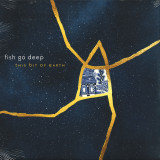
Greg Dowling and Shane Johnson return to the Go Deep label for their third album, ‘This Bit of Earth’. Beginning work in the relative normality of 2019 and finishing over the strange summer of 2020, the resulting music mirrors the thoughts that such upheaval brings out - our world and our place in it - while also functioning as a kind of travelogue of journeys past and planned, real and imaginary.
Mixing samples with modular synths, programmed drums with jazz loops, and quirky plugins with outboard gear, the album ranges far and wide while retaining a warm, natural core sound.
The title track opens proceedings on an ambiguous note. A simple double bass motif weaves around a misheard vocal sample, layers of piano and vibraphone take up the call, and the whole thing gradually spins off axis to a distorted, disjointed finish. ‘Suburban Key’ follows on a groove of busy drum work and deep sub bass, the stately piano and strings setting the stage for an undulating synth solo.
Further in, ‘Alice on Jupiter’ takes a deep breath and blends field recordings, gently swelling pads, modular bursts and a recurring picked melody.
‘Back Trace Dub’ strolls the imagined streets of Irish author Kevin Barry’s ‘City of Bohane’, noting the “taint of badness” in the air and revelling in the tense, dub-noir atmosphere. Later on, the spoken word intro of ‘I Could See’ expresses the dread of confinement and the relief and ecstasy of release, a theme the music reflects as it steadily builds to a joyful climax.
And closing the album on an optimistic note, the languid, emotional Culatra Ferry remembers better, beautiful days in the sun and looks hopefully forward to more.
“Highlights are the stunning sonics of Suburban Key, with its dusty groove and fast paced drums, stately piano, and cinematic strings reminiscent of a Four Hero orchestral masterpiece. High As Scaffold is full of warmth and soul and is yet another example of Fish Go Deep going even deeper into the dark blue waters of their brilliant musical minds.” Ban Ban Ton Ton review, Japan
“So good. Real beauty” Laurent Garnier, Radio FG, France
“Really liking this, would love to support on radio” Colleen 'Cosmo' Murphy, WorldwideFM, UK
“Lovely album” Osunlade, Yoruba Soul, US
“Very very nice album...love the new directions here” Charles Webster, Openlab, SA
“Absolutely beautiful piece of work” Darimont, RWAV, Germany
“A lovely LP of eclectic sounds” Jimpster, Freerange Records, UK
“Delightful album this. Very much appreciate the musicianship and we need that in the world right now as the commercial music world starts to fire up its nonsense for the new beginning” Vince Watson, Yoruba, Netherlands
“Such a fucking great body of work, and on par with ANY of the great albums I've listened to recently” Billy Scurry, Ireland
“There’s some REAL magic here. Possibly the deepest year from this duo” Charles Levine, Soul Clap, US
“A fabulous surprise. I'm sure if he were still alive Jose Padilla would have hailed this as his number one album of the year, it certainly is mine” Steve Miller, Afterlife, UK
“Great album... will play in next shows” Franck Roger, Real Tone, France
“Beautifully produced and great atmospherics” Ashley Beedle, Black Science Orchestra, UK
Radio and DJ support from Ron Trent, Hector Romero, Ame, Cian Ó Cíobháin, Bill Brewster, DJ Sprinkles, Harri, Honey Soundsystem, Alexkid, Moodymanc, Hifi Sean, Kassian, Freddie Garcia, 6th Borough Project, Stuart Patterson, Lars Behrenroth, Fred Everything, Mark Roberts, Cut n Shut, Will McGiven, Stefano Tucci, Tristan Jong, Matthias Schober, Trevor Fung, Ben Davis, Max P and more.
out of Stock
Last delivered 19 months ago available to reorder, subject to availability
Our man in London is back on the label! Exactly 1 year after his first release on Dirt Crew and two very successful records on
his own new imprint “Income Trax” and the New York based “Razor-N-Tape” label. Clive has been consistently growing his following this past year and refining his sound and production. So now we are truly excited to welcome him back, especially as this release will also be on a limited 12” vinyl.
The opener “Pearls” features the amazingly talented London based musician/ composer Jessica Roch on violin and vocals.
It’s an uplifting electronica meets deep house track that shines with positivity and beautiful melodies based on an analogue synth foundation by Clive himself. Truly a new addition to Clive’s musical language.
The A2 track “4 Time” is a swinging groover featuring a lush deep beat topped with piano and strings stabs and consisting of great funk all over. Followed be the super fun “Rough and Tough” as first track on then B side. Clive really gives us his new summer anthem here as far as we are concerned. Dance floor happiness guaranteed and we can’t wait to hear this one in an open field and on a big sound system!
As a treat for all fans, we decided to give “Gravitate” the well-deserved vinyl spot as the closing track to this great new record. This jam got massive support over the last months and is Clive’s best performing track on the digital platforms. Here we remastered it especially for vinyl and it sounds doper than ever! Enjoy!
All tracks have been mastered by Salz Mastering in Cologne. Art & Photography by Break 3000.
out of Stock
Last delivered 4 years ago available to reorder, subject to availability
Gondwana Records sign LA bassist and composer Seth Ford-Young's Phi-Psonics project and announce a remastered deluxe-edition of The Cradle featuring bonus material
Phi-Psonics is a meditative, immersive instrumental group from Los Angeles, led by bassist Seth Ford-Young and featuring Sylvain Carton on woodwinds, Mitchell Yoshida on electric piano, and Josh Collazo on drums. Their deeply soulfulmusic draws on jazz and classical influences together with Ford-Young's own musical experiences, relationships, and his introduction to spirituality, yoga and philosophy at a young age, to create something uniquely its own. Phi-Psonics' name and ultimate aim is to find 'Phi' – the golden mean – in art, nature and self. Ford-Young explains:
"It's a bit of a cliché, but music saved my life many times and instilled in me a belief in the great power of healing through art. It is my hope and intention that this music provides healing to someone somewhere."
Originally from Washington DC area, Ford-Young moved to California in the early 90s and fell in love with the deep sounds of the upright bass and the music of Charles Mingus, John and Alice Coltrane, and Duke Ellington along with Bach, Chopin, Pärt, and Satie. He immersed himself deeply in music and keen to learn combinedintense personal study with collaborations, tours, and recordings with artists such as Tom Waits, Beats Antique, and John Vanderslice. In 2010 he moved from the San-Francisco Bay area to the Los Angeles hills and continued his explorations. But great music is rarely just about music and Ford-Young's meditative, soulful music draws on more than just the twin wellsprings of jazz and classical music:
"My mother was a yoga teacher from the early 70's until recently and taught me yoga and meditation at an early age, my stepfather is an Aikido instructor and student of the teachings of Gurdjieff. Those were all early areas of study that I came back to many times throughout my life. Phi-Psonics has been a project that unapologetically synthesizes some of these ideas into our music".
It's this mixture of influences, musical and extramusical, that gives the music of Phi-Psonics it's immersive quality and quiet power. Revealingly the music that would becomeThe Cradle, wasn't written specifically for an album, originally Ford-Young was just writing down what was coming through. As time went by and the album began to take shape, the world situation seemed to be getting darker and his compositions aim to offer hope as a response to the negative influences that abound today. Remarkably for such a beautiful sounding record, it was recorded at the composer's home, rather than in a studio, but the relaxed nature of this process gives the music an airy lightness that propels the music to some magical spaces.
Originally self-released on vinyl in a limited run just as the world went into lockdown, The Cradle reached Matthew Halsall (founder of Gondwana Records) when he aws looking for music for his Worldwide FM show and he was blown away, hearing a kindred spirit at work. Halsall explains:
"Phi-Psonics make beautiful, humble and honest music, it's not showy, but it has a deep vibe that will elevate your mind and soul if you let it. When we heard The Cradle we reached out and are really super delighted to welcome Seth and his band to our label". Whereas for Ford Young: "Connecting with Matthew and the Gondwana records family has been a light in the darkness of the last years - to have my music make connections even as we are more isolated."
Ford-Young is currently putting the finishing touches to the second Phi-Psonics record, but aware that only a select few had heard The Cradle, let alone had the chance to buy a copy, and entranced by its deceptive simplicity and elevating energy, Halsall suggested that Gondwana present the album as a remastered 'deluxe edition' with an extended running time featuring extra tracks and new artwork from Daniel Halsall.
The Cradle starts with First Step, perfectly setting the tone for the whole album, it is a beautiful, soulful slice of musical calm gently propelled by Ford-Young's resonant bass and elevated by sublime flute and Wurlitzer electric piano solos. The seductive title track The Cradle was written way back in 2011 during a time of great personal change that led the composer to a feeling of newness and nurture. The magical, winsome Desert Ride is inspired by many rides through the grandly cinematic Mojave Desert. You can experience how incredibly full of life it's harsh landscape is if you slow down to its tempo. The gentle, sublime Mama is a tribute to mothers of all kinds, beautiful and heroic. Drum Talk was largely improvised, Ford-Young and the band agreed on a topic and recorded their conversation. Choosing their notes based on how Josh's drums were tuned. Like Glass is named for the special properties of Glass. Like some music, glass is delicate, yet has structure. The first of the two bonus tracks Still Dancing was written during the early days of 2020 in response to the challenges we all were facing then. It's a reminder that the figurative dance continues and that real dancing is essential. And the second, The Searcher, also written as a response to 2020, is a gently hypnotic song about the introspection and growth that can spring from a difficult situation.
This then is The Cradle, a quiet self-contained masterpiece, life-affirming and elevating in equal measure and the first offering from a wonderful new voice in spiritual jazz and the latest members of the global Gondwana Records family.
out of Stock
Last delivered 4 years ago available to reorder, subject to availability
"Escapism" is the second album produced by Piotr Rajski also known as Pepe.. Once again, he offered us music that is hard to close in one genre and is best described by the artist himself:
At the time of creating this album, the world was absolutely dominated by the pandemic turning our lives upside down. Writing new music has became a way to escape from disturbing reality.
According to Paweł Bartnik who also mixed and mastered my first album "Afterimages", the second one is more colourful and vivid. I think he described well the idea I had in mind while recording the new tracks. I wanted them to stay in that dreamy tone which can't be referred to only one genre.
The record was pressed on 180g vinyl.
Limited version was made in 100 copies - each vinyl record has a different splatter color! "Very Limited Surprise Edition"
I found "Escapism" a great opportunity to combine my UK inspirations ("Vanity Fair", "WQRWY") and rap fascinations from Money Sex Records or Tartelet Records ("Realizm Magiczny"). While working on the album my biggest inspirations were i.a. Madlib, D'Angelo, Samiyam, Ras G, Jai Paul and Overmono.
I'm extremely happy I could create some of the songs with such talented people as Moo Latte, Kasia Siepka from Byty, Paulina Przybysz, Immortal Onion, Baasch and Wuja HZG. Everyone's unique personality enriched the sound and compositions on the album.
The cover was designed by Beata Śliwińska "Barrakuz" and it's based on the summer photo taken by Kuba Olachowski. It's worth mentioning that it was created using analog collage technique.
And where did the title come from?
The songs on the album are for me the way to escape from the pandemic and explore new musical areas. I just wanted to forget about all the laws, quarantines and restrictions. Imagination turned out to be the perfect cure for this.
out of Stock
Last delivered 4 years ago available to reorder, subject to availability
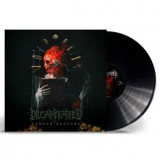
Across eight studio albums, DECAPITATED grew from the adolescent dream of teenagers from a small Central European town to one of the leaders of the metal genre. Each successive album further expands the band’s sound with genre-bending authenticity and integrity. As Metal Injection rightfully observed, “any self-respecting death metalhead knows the name well.”
DECAPITATED’s music is a weapon forged by four young men from a historic medieval-fortified town in Poland, which catapulted them to the top of a worldwide subculture. Like a rose in the devil’s garden, the DECAPITATED story builds triumph from tragedy. The gleeful grotesquery of extreme metal imagery and rifftastic bludgeoning beckons listeners to uncover broader truths.Upon the release of 2017’s Anticult, Metal Hammer declared DECAPITATED “a serious successor to the likes of Pantera and Lamb Of God – a band who can draw new legions into the metal world as its new champions.” Their diverse follow-up, 2022’s Cancer Culture, delivers on that promise.
Instantly recognizable devastation and deceptively sinister hooks abound. Freshly minted DECAPITATED anthems like “Last Supper,” “Hello Death,” “Just Cigarette,” “No Cure,” “Iconoclast,” and “Cancer Culture” shimmer with sonically sharp production and unrelenting bombast. There’s also a newly increased emphasis on melody, even venturing into darkly romantic territory. Wacław "Vogg" Kiełtyka (guitar), Rafał "Rasta" Piotrowski (vocals), Paweł Pasek (bass), and James Stewart (drums) are at the top of their game, delivering the goods at peak performance. Jinjer vocalist Tatiana Shmayluk and Machine Head frontman Robb Flynn make guest appearances.
Set on the descending plains of a mountain range amid a dense forest, Krosno boasts a 14th-century Gothic church, a Subcarpathian museum, and stunning artisan glassware. In this Polish town, teenage music student Wacław "Vogg" Kiełtyka discovered records from bands like Morbid Angel, Cannibal Corpse, Metallica, and Machine Head. The guitarist and his younger brother, drummer Witold “Vitek” Kiełtyka, cofounded DECAPITATED in 1996, inspired by a wide range of technical death, blackened thrash, and local heroes, like KAT and the world-renowned Vader. Death and black metal reigned supreme in the Polish scene of the 1990s, where Behemoth originated as well. In fact, a Vader song called “Decapitated Saints” inspired the band’s moniker.
The organic musical chemistry between the Kiełtykas was akin to the brotherly connectivity and vibe driving Pantera, Gojira, and the classic era of Sepultura. In 2006, Kerrang! praised the first three DECAPITATED albums - Winds of Creation (2000), Nihility (2002), and The Negation (2004) – as “superbly conceived and executed eruptions of technical brilliance and razor-sharp songwriting that turned these youthful Poles into one of the genre’s most widely respected bands.” That year’s Organic Hallucinosis further perfected Vogg’s penchant for blending extremity with catchy hooks.
The rule-breaking ferocity and invention of the first four albums reinvigorated death metal, as DECAPITATED inspired a new generation of bands who followed suit. Sadly, this era came to a shocking end in late 2007. While touring Russia, the band’s bus collided with a large truck near the border with Belarus. Both Vitak and then-singer Adrian “Covan” Kowanek sustained severe head injuries. Tragically, Vitak passed away in a Russian hospital a few days later. He was just 23.Vogg summoned the courage to continue, in honor of his brother and what they created, and returned with a new incarnation of DECAPITATED and the fiercely adventurous comeback album, Carnival is Forever (2011) featuring new vocalist Rafał "Rasta" Piotrowski. Blood Mantra (2014) introduced bassist, Paweł Pasek. Blabbermouth declared it “perhaps the most poised and gutsy” DECAPITATED album, adding “its courageous bends make it a turbulent but pleasurable ride.”
Cancer Culture sounds brilliant, modern, and tasty. “There is no place for any fake, plastic, bullshit drum machine or anything like that,” Vogg insists. “It’s all organic, pure, and clear, showing the true face of the band. Vogg and company entrusted the Cancer Culture mix to David Castillo at Sweden’s Fascination Street Studios / Studio Gröndahl (Sepultura, Carcass, Opeth, Katatonia), and legendary American producer Ted Jensen (Metallica, Slipknot, Pantera, Machine Head, Korn).
The devoted supporters who traveled to see DECAPITATED on international tours with the likes of Lamb Of God, Meshuggah, Soulfly, Fear Factory, and Suffocation over the years will recognize the ever-present pummeling backbone. Longtime fans and newcomers alike will connect to the variety of atmospheric depth throughout Cancer Culture’s ten boundlessly energetic and creative tracks.
“If you told me 25 years ago, in my neighborhood in the South of Poland, that I would be in Machine Head, sharing riffs with Robb Flynn,” Vogg marvels. “It’s simply incredible. It means that everything is possible in your life. That gives me the faith to believe that I can achieve even more in my career. The dreams we have when we are kids, things we can barely imagine, can happen.” Flynn contributes a hauntingly beautiful vocal to the Cancer Culture track “Iconoclast.” “Clean vocal singing is a really new thing in DECAPITATED,” Vogg notes. “It’s really unique and amazing.”
Driven by Vogg’s passion and integrity, the dual emphasis on creative invention and technical prowess maintains DECAPITATED’s stature as genre-leaders in 2022 and beyond. The band’s supporters continually demonstrate confidence and absolute certainty DECAPITATED will deliver.
Across eight studio albums, DECAPITATED grew from the adolescent dream of teenagers from a small Central European town to one of the leaders of the metal genre. Each successive album further expands the band’s sound with genre-bending authenticity and integrity. As Metal Injection rightfully observed, “any self-respecting death metalhead knows the name well.”
DECAPITATED’s music is a weapon forged by four young men from a historic medieval-fortified town in Poland, which catapulted them to the top of a worldwide subculture. Like a rose in the devil’s garden, the DECAPITATED story builds triumph from tragedy. The gleeful grotesquery of extreme metal imagery and rifftastic bludgeoning beckons listeners to uncover broader truths.Upon the release of 2017’s Anticult, Metal Hammer declared DECAPITATED “a serious successor to the likes of Pantera and Lamb Of God – a band who can draw new legions into the metal world as its new champions.” Their diverse follow-up, 2022’s Cancer Culture, delivers on that promise.
Instantly recognizable devastation and deceptively sinister hooks abound. Freshly minted DECAPITATED anthems like “Last Supper,” “Hello Death,” “Just Cigarette,” “No Cure,” “Iconoclast,” and “Cancer Culture” shimmer with sonically sharp production and unrelenting bombast. There’s also a newly increased emphasis on melody, even venturing into darkly romantic territory. Wacław "Vogg" Kiełtyka (guitar), Rafał "Rasta" Piotrowski (vocals), Paweł Pasek (bass), and James Stewart (drums) are at the top of their game, delivering the goods at peak performance. Jinjer vocalist Tatiana Shmayluk and Machine Head frontman Robb Flynn make guest appearances.
Set on the descending plains of a mountain range amid a dense forest, Krosno boasts a 14th-century Gothic church, a Subcarpathian museum, and stunning artisan glassware. In this Polish town, teenage music student Wacław "Vogg" Kiełtyka discovered records from bands like Morbid Angel, Cannibal Corpse, Metallica, and Machine Head. The guitarist and his younger brother, drummer Witold “Vitek” Kiełtyka, cofounded DECAPITATED in 1996, inspired by a wide range of technical death, blackened thrash, and local heroes, like KAT and the world-renowned Vader. Death and black metal reigned supreme in the Polish scene of the 1990s, where Behemoth originated as well. In fact, a Vader song called “Decapitated Saints” inspired the band’s moniker.
The organic musical chemistry between the Kiełtykas was akin to the brotherly connectivity and vibe driving Pantera, Gojira, and the classic era of Sepultura. In 2006, Kerrang! praised the first three DECAPITATED albums - Winds of Creation (2000), Nihility (2002), and The Negation (2004) – as “superbly conceived and executed eruptions of technical brilliance and razor-sharp songwriting that turned these youthful Poles into one of the genre’s most widely respected bands.” That year’s Organic Hallucinosis further perfected Vogg’s penchant for blending extremity with catchy hooks.
The rule-breaking ferocity and invention of the first four albums reinvigorated death metal, as DECAPITATED inspired a new generation of bands who followed suit. Sadly, this era came to a shocking end in late 2007. While touring Russia, the band’s bus collided with a large truck near the border with Belarus. Both Vitak and then-singer Adrian “Covan” Kowanek sustained severe head injuries. Tragically, Vitak passed away in a Russian hospital a few days later. He was just 23.Vogg summoned the courage to continue, in honor of his brother and what they created, and returned with a new incarnation of DECAPITATED and the fiercely adventurous comeback album, Carnival is Forever (2011) featuring new vocalist Rafał "Rasta" Piotrowski. Blood Mantra (2014) introduced bassist, Paweł Pasek. Blabbermouth declared it “perhaps the most poised and gutsy” DECAPITATED album, adding “its courageous bends make it a turbulent but pleasurable ride.”
Cancer Culture sounds brilliant, modern, and tasty. “There is no place for any fake, plastic, bullshit drum machine or anything like that,” Vogg insists. “It’s all organic, pure, and clear, showing the true face of the band. Vogg and company entrusted the Cancer Culture mix to David Castillo at Sweden’s Fascination Street Studios / Studio Gröndahl (Sepultura, Carcass, Opeth, Katatonia), and legendary American producer Ted Jensen (Metallica, Slipknot, Pantera, Machine Head, Korn).
The devoted supporters who traveled to see DECAPITATED on international tours with the likes of Lamb Of God, Meshuggah, Soulfly, Fear Factory, and Suffocation over the years will recognize the ever-present pummeling backbone. Longtime fans and newcomers alike will connect to the variety of atmospheric depth throughout Cancer Culture’s ten boundlessly energetic and creative tracks.
“If you told me 25 years ago, in my neighborhood in the South of Poland, that I would be in Machine Head, sharing riffs with Robb Flynn,” Vogg marvels. “It’s simply incredible. It means that everything is possible in your life. That gives me the faith to believe that I can achieve even more in my career. The dreams we have when we are kids, things we can barely imagine, can happen.” Flynn contributes a hauntingly beautiful vocal to the Cancer Culture track “Iconoclast.” “Clean vocal singing is a really new thing in DECAPITATED,” Vogg notes. “It’s really unique and amazing.”
Driven by Vogg’s passion and integrity, the dual emphasis on creative invention and technical prowess maintains DECAPITATED’s stature as genre-leaders in 2022 and beyond. The band’s supporters continually demonstrate confidence and absolute certainty DECAPITATED will deliver.
‘Heart Under’, Just Mustard’s second album and first for Partisan Records
(IDLES, Fontaines D.C., Laura Marling), is an album that asks you to forget
what you know. At every turn, this remarkable record reconfigures and
stretches the ideas and ambition of a rock band and turns a year of lockdown
and personal struggles into a breath-taking artistic statement.
Across its 10 tracks, the album presents a coherent style and ethos - those
scything guitars, Katie’s magical vocals - but still incorporates a wide and
untethered vision. There are brooding, atmospheric rock songs (‘Still’, ‘In
Shade’) and others that apply a lighter, dreamier touch (‘Sore’, ‘Mirrors’), all
tied together with impeccable instrumentation and a united vision.
On debut ‘Wednesday’, the band played with dreamier soundscapes and
production techniques, and ‘Heart Under’ serves as the next stage of this
development, with every instrument brilliantly pushed to its limit and every
boundary of the band stretched.
After the band had finished recording and producing the album, ‘Heart Under’
was pushed even further into singular territory when the band worked with
mixer David Wrench, whose previous collaborators include Frank Ocean,
Let’s Eat Grandma, Jamie xx, FKA twigs and beyond. “We wanted someone
who had done pop and electronic records and didn’t just work within rock
music,” Katie says.
“Ireland’s buzziest new band” - The FADER
“Their rapturous reception here at SXSW is a testament to their startling
evolution as well as the excitement that can only come from watching a band
just beginning to realise the full extent of their powers.” - NME
“They have well and truly mastered the art of atmospheric rock” - Loud And
Quiet (9/10)
Supporting Fontaines D.C. on their European and US tours this year. They
were handpicked by Robert Smith to support The Cure in Dublin in 2019.
Eire headline tour in June, UK headline tour in September, including Village
Underground, and EU headline tour in October.
Choice Music Prize nomination for Irish Album Of The Year for their debut
album, ‘Wednesday’.
CD housed in a cardboard wallet with lyric and photo insert.
LP pressed on black vinyl and housed in a single sleeve jacket with lyric and
photo insert.
Los Angeles-based experimental producer Al Lover will release his new studio album ‘Cosmic Joke’ on May 27th via Fuzz Club Records.
A staple of the global psychedelic scene, Lover has spent nearly a decade fine-tuning a broken, abstracted form of electronica that pools together a tapestry of trip-hop, synthesised krautrock, dub and dark ambient. Utilising an arsenal of samples, drum machine, analogue synths and live instrumentation, Lover’s is a kaleidoscopic sound that’s J-Dilla, DJ Shadow and Lee Scratch Perry by way of Brian Eno, Kraftwerk and Kluster. Central to Lover’s music is a desire to explore the fringes of psychedelic music and the common threads that run through its far-reaching styles, drawing elements from the past and connecting them to the future. Through the years he has released a number of studio albums and beat tapes, remixed the likes of Osees and Night Beats, been resident DJ for the Levitation and Desert Daze festivals and collaborated with the likes of Goat, Anton Newcombe, Cairo Liberation Front and White Fence. Now, Lover returns with his latest studio album, ‘Cosmic Joke’ – a series of synthesised philosophical meditations on modern life, in all its tragicomic absurdity. "'Cosmic Joke' came from observing the rising, compounded absurdity in recent years and seeing structures of normalcy dissolving. It’s my attempt to view these things as part of a higher-order process, through a metaphysical lens rather than an ideological one. It’s been an exercise in holding the paradoxical relationship of comedy and tragedy, joy and pain, growth and decay, scale and decline as part of an interlocked system that, at a deep level, is essential to how we interface with the world.”
Deluxe Edition is on 180g transparent green vinyl, gatefold sleeve, printed inner-sleeve.
Los Angeles-based experimental producer Al Lover will release his new studio album ‘Cosmic Joke’ on May 27th via Fuzz Club Records.
A staple of the global psychedelic scene, Lover has spent nearly a decade fine-tuning a broken, abstracted form of electronica that pools together a tapestry of trip-hop, synthesised krautrock, dub and dark ambient. Utilising an arsenal of samples, drum machine, analogue synths and live instrumentation, Lover’s is a kaleidoscopic sound that’s J-Dilla, DJ Shadow and Lee Scratch Perry by way of Brian Eno, Kraftwerk and Kluster. Central to Lover’s music is a desire to explore the fringes of psychedelic music and the common threads that run through its far-reaching styles, drawing elements from the past and connecting them to the future. Through the years he has released a number of studio albums and beat tapes, remixed the likes of Osees and Night Beats, been resident DJ for the Levitation and Desert Daze festivals and collaborated with the likes of Goat, Anton Newcombe, Cairo Liberation Front and White Fence. Now, Lover returns with his latest studio album, ‘Cosmic Joke’ – a series of synthesised philosophical meditations on modern life, in all its tragicomic absurdity. "'Cosmic Joke' came from observing the rising, compounded absurdity in recent years and seeing structures of normalcy dissolving. It’s my attempt to view these things as part of a higher-order process, through a metaphysical lens rather than an ideological one. It’s been an exercise in holding the paradoxical relationship of comedy and tragedy, joy and pain, growth and decay, scale and decline as part of an interlocked system that, at a deep level, is essential to how we interface with the world.”
After composing for cinema, theater, multi-platinum French rap singles and French Chanson albums, Gabriel Legeleux, aka Superpoze, continues his journey with electronic and instrumental music.
He expands his intimate and singular work with a third dense and extensive album, where strings, flutes and choirs join his trusty synthesizers, pianos and percussions.
" Nova Cardinale is an album conceived as a world rather than a story. A place made of sounds in which one can find a path, get lost or stay still and observe the surroundings. An album in which the tracks live on a grand scale, ranging from intimacy to emphasis. An album with perspective and vanishing points. It was an intimate and sensitive writing work, and also a real technical work of sound and production. Listening to the album, these two aspects seem to me indissociable today." Superpoze
out of Stock
Last delivered 4 years ago available to reorder, subject to availability
Lucille Mathis was a two-release mystery on the Abet label back in 1968.
‘I’m Not Your Regular Woman’ is a girl power anthem that was way ahead of its time.
The flipside of ‘Am I Asking Too Much’, the track is a stormer powered by roll-heavy drums and some great brass stings and goes for around £300 these days.
Cut with one of three singles by Holly St James (real name Lorraine Di Bonaventura) that also arrived in 1968.
‘That’s Not love’ is an enormous echoey Spectoresque wall-of sound that broods with incisive string chops and Holly’s groovy mid ‘60s vocal, a soul eruption that simmers with emotion.
A £40 price tag for the original.
Both sides remastered for dancefloor penetration.
out of Stock
Last delivered 4 years ago available to reorder, subject to availability
The latest offering from French shape-shifter Maxime Primault (High Wolf, Black Zone Myth Chant, etc.) is both a distillation and deepening of psychedelic soundsystem strategies honed across a decade plus of production and performance, in crisscrossing trenches of vibrational exploration. The four cuts comprising IN D EV IL were born of bass and syrup, designed as anthems for baser desires: “I just wanted to make bangers really.” Alien squelches and insectoid chatter pulse above thick swells of low end, intercut with sirens, screwed voices, and seasick wobble, alternately pummeling and prismatic. Masterfully disorienting, flickering with FX, drops, and narcotic murmuring, at the threshold of dissociative and dubstep.
Recent years spent performing in clubs influenced Primault’s listening habits, both in taste and production methods, skewing towards a starker contrast of highs and lows. IN D EV IL encapsulates this evolution, hallucinatory but urgent, like DJ tools for an underworld afterhours: tight, tripped, and lightless. The EP’s tracks vary in energy and density but share Primault’s premise of “tunes that sound fat and heavy.” Club music as dimensional gateway, booming and liminal, rippling with tremors, texture, and undertow. Whether deployed in public or private, these designs manifest vividly altered states, testament to their creator’s omnivorous vision of rhythm and sound.
out of Stock
Last delivered 4 years ago available to reorder, subject to availability
Modes continues the forward thinking soundscapes explored on Dyne’s recent album Teal, which garnered acclaim from peers and fans alike -including Late Night Tales, Toddla T, Ransom Note, and BBC6 Music presenters - and sold out quickly on vinyl.
Lush synths and dreamy vocals are paired with up-tempo afro-inspired house, with tinges of percussive jazz and future soul. Dyne's trademark slick production can be relied upon once more, as well as the music's insistent rhythmic drive and intensity.
Modes employs some of New Zealand's most well known and iconic vocalists, in addition to many new rising stars. Frequent collaborators Lord Echo, Ladi 6 and Mara TK (Electric Wire Hustle) return, alongside soul legends Dallas Tamaira aka Joe Dukie (Fat Freddys Drop), Che Fu and Troy Kingi.
Awe Kid explores ideas of trans-humanism, evolution and digital immortality on Body Logic, a fantastically lush new album for Atomnation. The immersive 10 track record plays with organic, breathing textures punctuated by moments of digital unrealness to result in an album permeated with a dream-like quality. This contrast is mirrored by the artwork from Portugal's acclaimed The Royal Studio.
Awe Kid is an alias of Sine Language Records co-founder Rick Parsons. It is the product of years spent exploring a multitude of different music. From early days in post-hardcore groups and on to a love of 90s Warp, electronic jazz and more experimental niches, the multi-instrumentalist has now settled on his own unique fusion of breaks, ambient and left-field dance music. This deft studio wizard mixes up melodic nostalgia with forward-thinking sound design using whatever he can get his hands on, from analog and modular hardware, to samplers, field recordings to digital techniques.
Says Parsons, “I love working with digital processes because you get these unexpected moments where you dial something in, that somehow takes on a tangible, organic form in the real world. Searching for these sweet spots was the motivation for the album, contrasting natural textures against synthetic elements, and finding ways to create something that feels like it exists outside of the computer.”
While the album pays homage to dance music traditions, such as the broken beat of title track 'Body Logic', and full-throttle breaks of 'Zenith', these are assimilated and repurposed to create something that defies genre categorization. The listener's journey is perfectly paced, with broody but uplifting cuts of electronica giving way to shimmering, celestial melodies, and dusty breakbeats emerging from dense layers of atmosphere, only for the mood to be reset with soothing, suspenseful synths and haunting vocal samples. Elsewhere, devastatingly emotional ambient is followed by punchy grooves and propulsive melodies to make for a real ride.
out of Stock
Last delivered 10 months ago available to reorder, subject to availability
Soul Jazz Records are releasing this 20th anniversary edition of their classic Studio One Rockers on unique Record Store Day EXCLUSIVE coloured vinyl + download code. This new edition is a one-off pressing exclusively for Record Store Day Owned and founded by Clement "Coxsone" Dodd, Studio One's output serves as a comprehensive guide to the history of Reggae music.
The music on Studio One Rockers covers all areas of Reggae such as Ska, Rocksteady, Roots and Dancehall, all areas in which Studio One led the field and has become the essential introduction to reggae fans throughout the world.
Included in this compilation are classic Ska tracks ("Phoenix City"), Rocksteady ("Feel Like Jumping"), Roots music ("Truth and Rights"), Dancehall (Freddy McGregor, Michigan and Smiley) and many more. Featured here are many of the classic tracks from Studio One. From Dawn Penn's legendary "No, No, No" to classics such as Horace Andy's "Skylarking" and Marcia Griffith's "Feel Like Jumping".
"Compilation of the year. 100% Essential” Time Out "Compilation of the year. A compilation of unbelievable quality. Awesome” DJ "A who's who of Jamaican music” The Times "An essential slice of musical history" Wire "The most credible compilation of reggae you can buy” - The Guardian.
Just as one can smell a storm swelling on the horizon, the cataclysmic tremor that is IMMOLATION approaches to unleash its latest, immense creation: ACTS OF GOD. Due to be released in winter of 2022, this 11th studio album serves as the next chapter of IMMOLATION’S Death Metal epic. With 5 long years passed since the most recent studio album, ATONEMENT, ACTS OF GOD vigorously showcases IMMOLATION’s ability to consistently create fascinating sounds, while still keeping their feet firmly rooted in the old school, New York Death Metal for which they are renowned.
Emblazoned with a haunting new masterpiece by artist Eliran Kantor, ACTS OF GOD displays a trifecta of angelic beings desperately trying to prevent one another’s flesh from melting in a blackened light from above. The muted colors and ethereal images will ring familiar to fans of IMMOLATION’s previous album covers. “We wanted this cover to feel much darker; more melancholy and hopeless. The music has always been very dark, and a lot of Kantor’s work had the feeling that we were going for; the semi-surreal colliding with a classic, almost renaissance feel,” explains founder and vocalist/bassist Ross Dolan. “It’s unnerving. It really reflects the music perfectly,” agrees founder and guitarist Robert Vigna.
The album’s third track “The Age Of No Light” is a powerful, hard hitting song with an extreme yet catchy melody. “It’s quick, hits hard, and gets straight to the point” explians Vigna. Consistently changing speeds and patterns throughout, the song is short but remains both dynamic and memorable.
“Blooded” has all the usual IMMOLATION elements: the slow, the fast, the explosive, the big overlaid sections of groovy harmony eventually dropping into evil, ripping guitar work. “It’s a little powerhouse,” describes Vigna, “it’s straightforward, and it has all the elements you would expect from us in a nice, neat package.”
A song like “Immoral Stain” is a slightly mid-paced track with an intense, creepy atmosphere. Equipped with plenty of unusual moments, the beat is catchy, dark, and echoing. Searing guitar starts to recite a story and then quickly begins a conversation with thunderous vocals and a vociferous beat. “That whole section of build up just needed to be done exactly as it is. That’s what makes it sound different and interesting,” describes Vigna. Much like the rest of the album, while the lyrics cover the usual, general topics of genuine evil and the great deception of religion, the specifics are most certainly left to the listener’s interpretation. Fortunately for IMMOLATION fans, there is no shortage of corruption and catastrophe in this world.
Fittingly, the concluding track “Apostle” was the last song written for the album. “Some of those chorus sections have a weird almost dream-like quality,” describes Dolan. Its steadily growing momentum discharges rounds of guitar solos and relentless vocals which eventually lead way to an explosive finale to the album.
The creative journey for ACTS OF GOD began with years of notes, and an abundance of inspiration. With Vigna at the helm of the structural writing as usual, further composing and concepts were tossed back and forth amongst all 4 members. Eventually, they began to skeletonize the beginning of what would become a full length, studio album. While the recording process and entering the studio can be a very sterile experience for some musicians, the ferocity of the demos combined with the expertise of long time friend and recording counterpart Paul Orofino of Millbrook Studios (BLUE OYSTER CULT, BAD CO, GOLDEN EARRING), assured that this would not be an issue for IMMOLATION. “Having such a level of comfort is key,” remarks Dolan. Final touches were brought about on the mixing and mastering by Zack Ohren of Castle Ultimate Studios.
Firmly aligned with Nuclear Blast Records, the often coveted sound of IMMOLATION has reemerged from the depths of a cursed and cruel world to illuminate our minds and ears with exquisite, sonic destruction.
“Modern Primitive” is the new album by SEPTICFLESH who present a stunning combination of symphonic and cinematic music with aggressive yet catchy Death Metal. Picking up on the group’s sonic evolution in the past decades, “Modern Primitive” proves to be more emotional, epic and heavy than ever.
SEPTICFLESH was formed as “Septic Flesh” in Greece in the early '90s by Spyridon Antoniou (a.k.a. Seth Siro Anton): vocals/bass, Christos Antoniou: guitar and Sotirios Vagenas (a.k.a. Sotiris Anunnaki V.): guitar/ clean vocals. A debut Ep was released in 1991, entitled "Temple of The Lost Race". Their first full-length album "Mystic Places of Dawn" was released in 1994, followed by "EΣΟΠΤΡΟΝ" that was released in 1995. With the release of "Ophidian Wheel" in 1997, a female soprano vocalist (Natalie Rassoulis) was introduced, as the band moved towards a more symphonic style. "A Fallen Temple" (1998) continued in the same musical direction. In 1999, "Revolution DNA" was released, followed by “Sumerian Daemons” in 2003, both albums produced by Fredrik Nordström (At The Gates, Opeth, In Flames). Although the band's popularity was growing, the band members decided to disband, in order to focus on other personal projects and goals. But that was not the end of the story... After a reunion, the band returned with the album "Communion" in 2008, again with Fredrik Nordström at the helm of production. From that point onwards, the symphonic element (composed by Christos Antoniou, that has a Master Degree in Concert Music) was fully implemented in the structure of the songs, with the collaboration of Filmharmonic Orchestra of Prague. “The Great Mass” (2011) followed with Peter Tägtgren (Hypocrisy, Pain) producing, "Titan" (2014) with Logan Mader (ex-Machine Head) as producer and "Codex Omega" (2017) which started the group’s collaboration with Jens Bogren that continues to the very day. In 2020, the recording of the epic and fully orchestrated Live in Mexico entitled "Infernus Sinfonica MMXIX", was released on CD/LP/DVD/Blu-Ray.
Now, SEPTICFLESH has joined forces with Nuclear Blast Records and initiates the next phase in the band’s history, with a new album to be released in May 2022. Once again Jens Bogren is responsible for the bombastic mix and sound whereas Seth Siro Anton - who is also in charge for the visual aesthetics of the band and worked for artists like Nile, Paradise Lost or Moonspell - has crafted a really intense cover and over-the-top artwork for this release. The new songs impress with many layers, gloomy and empowering atmosphere while being heavy and memorable. Besides the continuous collaboration with the Filmharmonic Orchestra of Prague, the band used a full adult choir, a full children choir and a variety of ethnic instruments.
Following a decorated career with Philly rock group Superheaven, singer and guitarist Taylor Madison meanders into newly-refined songwriter territory with the inception of Webbed Wing in 2018. Joined by Jake Clarke (drums) and Mike Paulshock (bass), the band fully realizes their innate genre-blending musicality.
Webbed Wing’s somewhat simplistic approach to songwriting explores what it means to birth a sad song without fully killing a mood, paired with a soundscape laden with nostalgia and a tasteful pop-rock resurgence. Taking notes from the likes of The Lemonheads and Teenage Fanclub, Webbed Wing encapsulates everything lyrically gripping about indie and everything vibrant about modern pop. While also expertly intertwining the heaviness of metal and the earnesty of country, the band blends all these different aspects of their craft into something highly palatable and new.
Repressed at last. The classic 1968 Debut Record, this is the Original MONO mix. The first time this has been reissued and its on Limited Green Vinyl. 1968 Debut album from the king of the psychedelic bayou – the hypnotic, mystical and powerful sound of the swamp coming to life. As he became Dr. John (real name Mac Rebennack), it was his LA session work with musicians like Sonny & Cher, Canned Heat, and Zappa that allowed him to start conjuring up his visions of guitar psych-pop to walk alongside his authentic New Orleans upbringing. While “Gris Gris” contains moments that make it a type stamped symbol of its era, it might have well been made in outer space. Recorded in its own psychic and stylistic vacuum, the album borrows as heavily from the New Orleans’ musical culture in which he grew up as it does the looming continuous pulse of war, heavy drugs, and the end of the free love/hippie movement. The album was taken under the wing of a small percentage of the “underground” upon its release in 1968 and did not find a true following for years. // Original 1968 Mono Mix // Sourced From The Original Master Tapes.
After more than two decades flexing his muscles on the local underground scene and gaining a legendary cult status on his Tenerife home turf, the island’s most famous postman, as he’s affectionately known by his consorts, Tomás de la Rosa aka Postman breaks radio silence to bulldoze his way through the canyons surrounding his hometown of Santa Cruz into an unknown and unsuspecting world. We present thus, Postman’s first ever album of original bangers, micro chopped two steppers and rage induced breakbeat anthems.
Constructed over the course of global confinement, Seeds of Light marks a return to creative activity from the man who regularly delivers your post (its not just a random artist name). Postman aka Tomás de la Rosa has taken his time, compiling sketches and unfinished songs, rummaging through the deep ends of his hardrive, stitching early production sketches with recent compositions, revising, reediting and rebuilding with a more mature and concise attitude, eventually completing, almost unintentionally, the perfect self referential retrospective album. Far from being just a compilation album, Tomás managed to create an explosive document, suspended in time, in which styles are intertwined regardless of fashions and fads – letting go of the ‘modern’ or ‘up to date’ burden - so common these days in electronic music.
It is not an easy album, like many of his previous work it demands extra attention to experience the full crystallization of his complex sound structures. We find ourselves in front of a truly surgically precise work of art whose result comes as a waterproof war machine, refined and incisive, resonating deep with soul and groove.
Postman develops his sound palette throughout the album from very basic sound snippets into a concrete dance world of synthetic sounds eventually creating a parallel reality where J. Dilla could be living in Chemnitz instead of Detroit and releasing records for a label called Raster-Throw. Glitch sampladelics!
Incursions into Grime are also abundant with nods to the ineffable East Man, reunions with his beloved Funkstörung or many other stimulating revisions of lifelong genres and breaks populate this multidimensional sound space, see soul, dancehall, breakbeat, two step and the UK hardcore continuum.
Special mention to the magnificent fluid artwork by the very talented Catalan visual artist Alba de Corral. A still photo from one of her kinetic AI systems programmed directly in code, which matches perfectly the essence of Postman's brutalist alien sound.
Vinyl limited to 200 copies
out of Stock
Last delivered 4 years ago available to reorder, subject to availability
French finest synth-pop band Bon Voyage Organisation release his second opus after a feature on Cocktail d'Amore 10 Years compilation.
"La Course" is a cinematic, synthesized and library-esque journey that could be a mixed-up between Italian early 80's productions and french 00's disco.
"This record marks the beginning of a new attitude towards recording," says Bon Voyage Organisation's Adrien Durand. "Switching from a busy studio that I shared to having my own very quiet cabin in the North West of Paris has inspired me to adopt a more meditative approach."
Whilst it's fair to say Durand has been constantly on the move for some time - be it touring or producing records for the likes of Amadou & Mariam, Papooz and Bagarre - there's a sense of new momentum, as well as stillness, that hangs over this record. One that's fully instrumental and as he describes being more free.
The band's trademark glistening production, disco flair, shimmering electronics and incandescent melodies still remain but a more intuitive and striped back approach was favoured this time around. Some of this attitude stemming from an evening opening for Kamasi Washington. "Because of the constraints of being an opening act we played as an instrumental quintet instead of our usual 9-piece band," says Durand. "We rehearsed the day before, our set opened with John Coltrane's 'Naïma' followed by a hard-bop ish version of Kraftwerk's 'Trans Europe Express'. It felt so good to perform that repertoire in that configuration that I had the vision of bringing this aspect of the band in the studio."
There was also a removed sense of pressure with this record - no major label expectation of a radio friendly record, combined with a deconstructed approach to songwriting. "Since 2014 I've been working mostly on projects involving a lot of conventional songwriting," Durand says. "I was keen on producing a record based on performance and atmospheres more than repertoire." He also sought inspiration from a perhaps unlikely source: The Arctic Monkeys. "I was really encouraged by them going out of their comfort zone on their last album - it really caught my attention in a Bowie / Berlin period way."
The result of the album is one that oozes the natural momentum of experimentation, texture, mood and intuition while managing to retain a sonic coherence. In a none-obvious and zeitgeist clichéd way, there is perhaps a more jazz-leaning approach to the record that weaves between soft subtle moments to the more atonal and experimental, all underpinned by sweeping, engulfing soundscapes and the usual touch of non-Western musical flourishes. This vibe came from a distinct lack of editing, says Durand. "In the studio we had everyone sitting in the same room - sometimes up to 6 players - and I never edited the playing. I just went on to record some additional synth and percussion, insert the soundscapes, and mix the record."
This less is more approach, avoiding indulgence and superfluousness, is something Durand can't help but feel is an artistic response to the pace of modern life. "There is a frenetic approach to everything," he says. "People want to binge on everything, expect ultra fast changes on any political cause etc. The response is a big comeback of things like the practice of meditation, yoga and ambient music." There are times when this record falls into the territory of meditative ambience, as on the immersive plunge one takes swimming through the beautiful 'Un Am Ricain En Danger'. It's an album to bathe in and to be carried along by, it's gripping by being so rather than fighting for your attention
Ultimately the record is one that feels it's been allowed room to breath, a sonic sphere in which musicians have been allowed to roam as freely and thoughtfully as the listener. "This record is about welcoming the music and being able to let each musician express themselves during the recording process," says Durand. "This is a valuable trade that takes time."
out of Stock
Last delivered 6 years ago available to reorder, subject to availability
From mimicking drum sounds with their mouths and then processing the result to create a world of intricate, intimate sound; to recording a short EP’s worth of work at the snail’s pace of a minimum 12 months, the Sydney based duo Thomas Gray & Liam Ebbs approach their work with a fascinating blend of impulse and consideration. Sounds can be carefully sulptured, massaged, edited and reworked, only to be thrown out the window and replaced with a whole new set of material at a moment’s notice. The pair pay acute attention to mood, space and atmosphere; they are not afraid to take their time. Listening to their compositions is like travelling through the countryside on a train, downriver on a boat, or rising into clouds through the windows of a commercial airliner. Gray and Ebbs’ music, it feels, is an accompaniment to thought and feeling, a personal soundtrack to carry in one’s head. As Eno said when famously coining the term ‘ambient’ - “Ambient music must be able to accommodate many levels of listening attention without enforcing one in particular; it must be as ignorable as it is interesting.” In 2022, the pair will return with a new EP, ‘Blue’, their first for the Bedroom Suck Records label. The five tracks on Blue continue to explore the world that lies somewhere between organic and electronic, between natural sound and manufactured signal. Acoustic instruments make a notable appearance, as does a strong lead vocal in ‘It’s Alright’. The music is evocative, nostalgic and inspirational; It leaves one feeling hopeful.
Bear’s Den have today announced the release of their eagerly anticipated fourth studio album, Blue Hours.
Set for release on May 13th via Communion Records, the album sees the much-loved folk-rock duo – made up of Andrew Davie and Kevin Jones – once again team up with producer Ian Grimble on what is one of their most personal records to date.
Speaking about the new album, Davie says: “Blue Hours is a kind of imaginary space you get into at night, a place where you process difficult things or where you try to figure everything out.”
Themes on the album include both self-reflection and mental health after both struggled with the latter in recent years. “It’s the main over-arching theme with this record,” Davie explains. The group, who have worked with mental health charity CALM (Campaign Against Living Miserably) previously added: “It probably speaks to our struggles and hopefully many other people’s too. Men are not very good at talking. We’re not really taught how to – men have no idea how to talk about this stuff, certainly to each other.”
The pair describe the conceptual blue hours headspace that gives the new album its title as being “somewhere between a hotel, a mental health hospital, a bar that stays open later than anywhere else, a paradise, a dream, a nightmare and an endless sea of corridors and staircases leading you to rooms that represent memories – good, bad, happy or difficult.”
Despite the album’s challenging themes, it’s an album drenched in hope too. “We wanted this to be a celebration of music,” Jones continues. “I think that informed some of the bolder decision making on this record. At a time when music was so distant, it felt important to make an album that sounded hopeful, celebratory, ambitious and beautiful in spite of the heavy subject matter in some of the songs.” Jones adds: “It was almost like we needed to shout louder than before because we felt that there were more barriers between the audience and us. We needed something to transcend that.”
Following on from the album’s lead single, ‘All That You Are’, which was released late last year, the group have also given a further taster of what to expect from the new album with the release today of their bold, electronic-driven latest single, ‘Spiders’. Stream the new single here.
Speaking about the song, Davie says: “I started writing ‘Spiders’ around the time we left London. In my head, I thought moving would solve lots of problems, like everything will be better – almost like this Neverland vibe,” he laughs. “‘Spiders’ is a song dealing with the fact that this absolutely wasn’t the case. I had this vision in my head that I’d be at one with nature, that I’d be calmer – but all the things that were rattling around in my brain before were still there after the move. The song is about the fact you can’t run away from the things that are bothering you.”
Adding, “While making the record we wanted to get across a kind of simmering intensity with the song and the idea of someone trying to keep their shit together while wrestling with these darker thoughts and feelings. We wanted to get across a sense of bravery & triumph in saying, “sometimes I can’t pull myself out” of these difficult situations. To celebrate the difficult moments because we all have them. They are a universally shared experience even if it feels sometimes like they’re not and you’re the only one who feels them.”
Melodically, the song is a gentle Wurlitzer and guitar-driven track filled with hope thanks to the electronic elements added by long-term producer, Ian Grimble. “This song maybe sparked a lot of detail that ended up coming out on other songs on the album,” Davie says. “The sound of this felt exciting to us both,” Jones adds.