Wielding an ethereal croon and masterful whistle crafted from a lifetime chasing lizards through the Ozark hills, Nick Shoulders is a living link to roots of country music with a penchant for the absurd. Combining his family's deep ties to regional traditional singing with his years of playing to crowded street corners, Nick has sought to forge a hybridized form of raucously clever country music; born of forgotten rocky hollers and bred to confront the tensions of the 21st century South. As evidenced by his surreal album art and anachronistic songwriting, Nick’s creative output is steeped in the complicated history of his beloved home of rural Arkansas, but crafted as a conscious rebuke of country music’s blind allegiance to historical seats of power and repression. With a kind word and a mean yodel, Nick hopes to put the ‘Try’ in country.
A cry out against the withering void of listless Americana, Okay, Crawdad, is the fledgling full-length album from Nick Shoulders and company. A two-step laden dose of indignation, loss and profound elation, the album is inspired as much by the chaos and decadence of south Louisiana as it is the rural sounds of yesteryear from which it sprang. Despite a pandemic-inspired relocation to his home in the Natural State, New Orleans and its community helped meld the forces at play on the album; pitting an adherence to tradition and refusal to conform against each other with grand results. Embracing the mania of the podunk zeitgeist while seeking to enfranchise the meek, Nick Shoulders is here to stay.
Поиск:sounds of life
Все
- 1: The Heart Of Life
- 2: Time To Fly
- 3: I Won’t Make It
- 4: Walking In Daylight
- 5: Deep Water Suite I: Introduction
- 6: Deep Water Suite Ii: Launch Out, Pt. One
- 7: Deep Water Suite Iii: Fires Of The Sunrise
- 8: Deep Water Suite Iv: Storm Surface
- 9: Deep Water Suite V: Nightmare In Paradise
- 10: Deep Water Suite Vi: Launch Out, Pt. Two
- 11: Deep Water Suite Vii: New Revelation
- 12: Deep Water Suite Viii: Launch Out, Pt. Three
- 13: Deep Water Suite Ix: The Door To Heaven
If you are a celebrated progressive rock musician who has produced dozens of albums, how do you make an album that is different to what is usually expected? One answer is to work with musicians who also have decades of experience and worldwide recognition, plant a few seeds, then stand back and see what happens. For the Cosmic Cathedral project and their debut album ‘Deep Water’, this is exactly what Neal Morse did, joining up with Chester Thompson (Genesis), Phil Keaggy & Byron House. Much of the album was created from jam sessions where Morse’s long-time audio partner Jerry Guidroz put the best parts together, such as for the 38 minute epic, Deep Water Suite. Says Morse, “Time To Fly, also came directly from one of the jam sessions, where we took one of Phil’s ideas and all four of us elaborated on it.” What resulted from all this was a more groove-orientated feel, which Morse calls a “prog meets yacht rock meets The Beatles” kind of album, with an unmistakable jazz fusion influence: “These guys are real groovers: even if they're playing proggy stuff, it has more of a Steely Dan feel to it, but when Phil and I start singing it sounds like The Beatles!” Available as Limited CD Digipak, Gatefold 2LP & as Digital Album.
2025 Repress!
Nine of the densest ambient and meditative music pieces since the dawn of music!! Sounds both extremely of this time, and of no time whatsoever. Monolithic and stark but extremely warm, intensely personal, and for every one in every which way. We are very happy to present to you "For Those Of You Who Have Never (And Also Those Who Have), an album by Huerco S.
- A1: Six Million Dollar Man Theme – Richard "Groove" Holmes
- A2: Super Strut - Cookin' Bag
- A3: Work Song - The Pazant Brothers
- A4: Peace & Love - Lonnie Liston Smith & The Cosmic Echoes
- A5: Skull Session - Oliver Nelson
- B1: Mama Soul - Harold Alexander
- B2: Head Start - Bob Thiele Emergency
- B3: Theme From The Men - Joe Bataan
- B4: Put It Where You Want It - Pretty Purdie
- B5: Drifting - Chucky Thurmon & Pharris Wheel
What it is, is funky! When the acid jazz scene ruled the world it looked for its inspiration in places that other jazz fans tended to overlook. The soul jazz of the late 60s and early 70s. The music of lounge bars and small clubs that fuelled the night life of black America. This compilation brings together ten examples of the sound and is a high quality listen from start to finish.
In the post-bebop world jazz was often condemned as an intellectual music aimed at the head not the feet, but a strain of the music was always for dancing, coming straight from the legacy of the big bands, and always tipping its head to what was going on in the R&B charts. The tracks included here all stay true to that legacy.
So whether we have Lonnie Liston Smith’s plea for 'Peace & Love' with its Bob Marley echoing horn lines, or Joe Bataan as band leader covering Isaac Hayes’ ‘Theme From the Men’, this is music allied with the contemporary sounds of the day. Oliver Nelson's synth heavy 'Skull Session' or his TV hit 'Theme From The Six Million Dollar Man' covered by Richard ‘Groove’ Holmes show this. At the heart of these recordings are the rhythms − and as such Bernard Purdie is the star either as a solo artist or simply as the man behind the kit with Harold Alexander.
This is Funky Jazz is an entry ticket to a party that everyone should want to be invited to.
- July Blue Skies
- Sky Train Baby
- Venus Of Barsoon
- Ikuchi
- Summer Of Synesthesia
- Tsicroxe
Embark on a funky synth-drenched journey as the cosmic count Jimi Tenor reunites with Timmion Records' soul architects Cold Diamond & Mink for yet another album. When placed side by side with the fellows' recent effort "Is There Love In Outer Space? "July Blue Skies" glides on a slightly more raw and mystical plane. Crafted over fiery sessions between Tenor and Cold Diamond & Mink, this vinyl release offers six soul-grasping tracks ranging from mellow groove to soundtrack funk. The album's opening title song kicks off with an extended analog synth intro which eventually develops into a sweet romantic invocation, painting a sonic canvas reminiscent of a boundless summer sky. The most vocal tune of this quite instrumental set of songs "Sky Train Baby" propels the listener on a locomotive ride through the star systems while "Venus of Barsoon" with its drum breaks and fuzz sounds blast you straight into sci fi movie funk territory. The album's B-side opens with "Ikuchi," where Tenor's always trusted flute and tenor sax take the spotlight over the slinky library beats. Closing the album we discover two single releases, the sublime "Summer Of Synesthesia" and the demonic "Tsicroxe" both completely worthy to hear sequenced inside this album as well. This album might be just the Spring jam that you needed in your life.
- A1: Blake Baxter - Sexuality
- A2: Suburban Knight - The Worlds
- B1: E-Dancer - Feel The Mood (N.y. Groove Mix)
- B2: Yvette - Pump Me (Mayday Mix)
- A1: Qx-1 - I Won't Hurt You (I Swear)
- A2: Fred Brown - Roman Days
- B1: Mr. Fingers - I'm Strong (Instrumental)
- B2: Laurent X - Machines (Apocalypse Mix)
- A1: Revelation - First Power (Original Mix)
- A2: Egotrip - Dreamworld (World Of Dreams Mix)
- B1: 33 1/3 Queen - Searchin
- B2: Bobby Konders - Let There Be House
- A1: Steve Poindexter - Computer Madness
- A2: Age Of Chance - Time's Up (Timeless)
- B1: Lfo - Lfo (Leeds Warehouse Mix)
- B2: Alice D In Wonderland - Time Problem (Techno Speed Work)
- A1: Joeski - My English Lover (Acid Mix)
- A2: Pleasure Zone - Fantasy
- B1: Mellow Man Ace - Rhyme Fighter (House Dub)
- B2: The Gherkin Jerks - Strange Creatures
- A1: The D.o.c. - Portrait Of A Masterpiece (Cj's Ed-Did-It-Mix)
- A2: Robert Armani - Circus Bells (Full Length Original Mix)
- B1: Todd Terry Presents Cls - Can You Feel It (In House Dub)
- B2: Virgo - Free Yourself
- B1: A Homeboy, A Hippie & A Funki Dredd - Total Confusion (Heavenly Mix)
- B2: 2 Men From Jersey - Track Werk (After Dark Mix)
- A1: Human Resource - Dominator (Frank De Wulf Remix)
- A2: Frankie Knuckles - Your Love
- B1: Simon Sed - Criminal
- B2: Tyree - Hardcore Hip House (Joe Smooths Too Deep Mix)
- A1: Frankie Bones - Call It Techno (House Mix)
- A2: Frank De Wulf - The Tape (Remix)
- B1: A Guy Called Gerald - Automanikk (Derrick May The Force Be With You Mix)
- B2: Sheer Taft - Cascades (Hypnotone Mix)
- A1: Tronikhouse - The Savage & Beyond (Savage Reese Mix)
- A2: The Orb - A Huge Evergrowing Pulsating Brain That Rules From The Centre Of The Ultraworld (Orbital Dance Mix)
- B1: Mental Mayhem - Where Are They Hiding
- B2: Edwards & Armani - Acid Drill
- A1: Njoi - Jupiter Re-Dawn
- A2: Basex - U-R-Self-Go (All Night Mix)
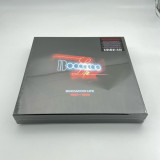
(10x12" box set, limited to 1000 copies, with premium finishing, uniquely numbered, incl. 10 records in individually printed sleeves, a booklet detailing the club's history & exclusive stickers) Boccaccio has secured its place among legendary venueslike Paradise Garage in New York and The Hacçinda in Manchester. Its bold fusion of emerging electronic genres such as New Beat, Acid, House, and Techno was way ahead of its time, drawing music lovers and clubbers from across Belgium and beyond.
Belgian label Music Man Records presents Boccaccio Life 1987-1993, a new compilation offering a fresh perspective on the legacy of the iconic Belgian club Boccaccio - often associated with the short-lived New Beat movement. The 40-track compilation highlights the raw and futuristic early house and techno sounds that were heard in the pioneering club.
Located in rural Destelbergen (Belgium), just a stone's throw from Ghent, Boccaccio has secured its place among legendary venues like Paradise Garage in New York and The Hacçinda in Manchester. Its bold fusion of emerging electronic genres such as New Beat, Acid, House, and Techno was way ahead of its time, drawing music lovers and clubbers from across Belgium and beyond. Sundays at Boccaccio were unlike anywhere else-offering sounds you couldn't hear anywhere else.
Boccaccio Life 1987-1993 is carefully curated by resident DJ Olivier Pieters and club regular Stefaan Vandenberghe, standing as the ultimate testament to a club that was more than just a venue. For those who experienced it, it was a community - a way of life. Hence the club's full name: Boccaccio Life.
This compilation stands as a testament to an innovative time in electronic music, capturing the raw, futuristic sounds of early house and techno. It sheds light on another side of Boccaccio, one that goes far beyond the short-lived New Beat scene. A carefully curated selection of 40 tracks, resonating with those who were there by offering familiar classics, while also reaching a new generation-those who never experienced it firsthand.
With tracks from Blake Baxter, Virgo, Frankie Knuckles, Tyree, and A Guy Called Gerald, the unmistakable influence of black American pioneers is clear-the originators of the firstanalog house and techno sounds. On the other hand, UK sound innovators such as The Orb and LFO bring both sharp textures and rough breakbeats to the table.
Club staple tracks include dreamy excursions from Roger Sanchez under his Egotrip moniker, the relentless basement house of Circus Bells by Robert Armani on Dance Mania, an uplifting take on a hip-house cut from The D.O.C. (Portrait of A Masterpiece in the CJ Ed-Did-It Mix), a timeless remix of UK Formation's Age of Chance from 1994, and an alternate take on The Tape by Boccaccio club regular and Belgian producer Frank De Wulf, taken from his B-Sides project.
While not always the obvious hits, these tracks have gracefully withstood the test of time, and were exclusive to Sundays at Boccaccio. Now, they are finally available to experience together in one collection, offering a timeless snapshot of a unique era.
The Ibex Band, with Giovanni Rico and Selam Woldemariam at the creative helm, provided the musical backbone for legends like Aster Aweke, Girma Beyene, Tilahun Gessesse, Mulatu Astatke, and Mahmoud Ahmed, including the iconic album Ere Mela Mela, shaping modern Ethiopian music as we know it today. This 1976 album (Ge’ez Year 1968) played a pivotal role in that legacy and has now resurfaced to set the record straight.
There’s a tendency to talk about the seventies as a golden age of Ethiopian music. There are good reasons for that, and just as good reasons against it. However, the notion of a golden past privileges the role of Western explorers and suggests that the pinnacle of Ethiopia’s musical culture is something only a foreigner can appreciate and unearth. It downplays the complexities of Ethiopia’s culture and history, creating an artificial divide between then and now. And it underestimates the constantly evolving sound that has followed.
The legendary musical outfit The Ibex Band, later metamorphosed into The Roha Band, has played a central role in defining the sound of many of the greatest stars on the music scene of Ethiopia from the mid-seventies onwards–but their golden output has never really waned. The story of the origins of the band that provided the musical backbone for greats such as Aster Aweke, Girma Beyene, Tilahun Gessesse, backing the solo career of group member Mahmoud Ahmed as well as backing Mulatu Astatke and many others has yet to be properly told.
Two misconceptions plague the image of Ethiopian music, one is that the music is pure because it is, by some notion, unexploited, the other is that it is all traditional. To begin with, a combination of political changes between the late sixties and the mid-nineties created an environment where only the most dedicated and skilled musicians struggled on and pursued a musical career against fierce odds. The whole Ibex Band, with Giovanni Rico and Selam “Selamino” Seyoum Woldermarian at the creative helm, are arguably the origo of the vibrant scene in the mid-seventies, and the said pair are foremost responsible for not only navigating the band through troubled times, but also modernizing the 6/8 chickchicka rhythm to a contemporary form. Giovanni laid the rhythmic foundation with heavy looped basslines that reinvented traditional melodies as dance music, and with Selamino’s innovative guitar work they influenced scores of musicians from Abegaz Kibrework Shiota to Henock Temesgen. Even Giovanni’s Fender bass and Selamino’s Gibson guitar inspired younger musicians in their choice of instruments. Not only in choice of instruments but also in sound–even as the digital revolution hit Ethiopian music, a lot of popular music still took its cue from the masters from Ibex and Roha.
Ibex emerged out of the ashes of the sixties group the Soul Echos band, adding Giovanni and Selamino to their ranks and taking their cues from a slew of influences, such as Motown and The Beatles, fused with traditional music. A tighter-knit unit than most bands at the time – Ibex has remained six to seven members throughout their whole career, compared to many bands that were as large as fifteen or sixteen men strong when Ibex set out. Their playing has been viciously focused, economical yet heavy. Just a year before the recording sessions of the album in your hands, Giovanni and Selamino made a contribution to the popular musical lexicon of Ethiopia that was simply defining the popular sound: their arrangement and recording of bandmate Mahmoud Ahmed’s solo effort and real commercial breakthrough tune and eponymous album, Ere Mela Mela, from 1975.
Selamino has never limited himself to being an adroit lead guitarist, but has always been a scholar of history, and as such he has probably contributed as much to modern Ethiopian music with his guitar playing and compositions as with a deepened understanding of modern or contemporary – Zemenawi – Ethiopian music. Selamino’s contributions serve as a metaphor for those of the whole band, at one and the same time creating and defining a new, danceable and updated sound anchored in Giovanni’s bass, whilst also elevating the broader scene through their support for others on the scene and on top of that, increasing the understanding of the music.
There is an understandable desire to romanticize the musical heyday Ibex and Roha were at the forefront of, because so much of the output is sorrowfully hard to come by. Ibex creativity was nothing short of ridiculously fierce compared to many of their Western contemporaries. Based on their sheer recorded output alone they could have usurped the title “hardest working in show business” from James Brown, recording more than 250 albums or 2500 songs in the seventies and eighties. Some only surface as cassettes today, others were never given full LP release, and some are simply impossible to find today. In the light of that, it’s nothing short of a miracle that the recording Stereo Instrumental Music from 1976 (Ge’ez Year 1968) has resurfaced. Unearthed in perfect condition on a chrome cassette, this is musical history comes alive–to set the future straight. Stereo Instrumental Music was recorded in collaboration with Karl-Gustav Lundgren, a Swedish national working for the Radio Voice of the Gospel. It took two sessions at the Ras Hotel ballroom in Addis Ababa. The Ibex Band was the first band in Ethiopia to employ a four-track recorder for their recording (the first available in the country, lent by Karl-Gustav). Later the same week, Giovanni and Selamino realized that, lengthwise, the recorded material fell short of what they wished for, so they recorded four more tracks in one more session on a single-track recorder. The Ras Hotel and Ghion Hotel, where the Ibex Band held musical residencies were to Ethiopia in general and Addis Ababa in particular what Motown was to the USA and Detroit a few years earlier – a hotbed of musical creativity and showmanship.
The most astonishing thing about Ethiopian music of the last half century is how tradition and modernity are intertwined. Because of this feature, it’s kind of hard to tell when there ever was or when we are in a “golden age”. So much of music from the past has been criminally neglected, but because of the hardships in the past, it would be an oversimplification to say that said past was a golden age. Probably, the golden age is what we are approaching, because for the first time both the past and future are accessible, and the monumental contributions from before can lay a firm foundation for a thriving music scene today. The Ibex Band stands firmly in the past, present and the future. That, if anything, is golden.
The detailed history of Stereo Instrumental Music is in many ways unique. To begin with, it couldn’t have been recorded earlier (there were no four-track recorders available) and it really couldn’t have been recorded afterwards either, at least not in the years directly following, because of the toll the musical scene took from the unfavorable political climate that followed when the nascent Derg regime and rival groups tried to assert themselves, the musical equipment lent from The Voice of Gospel Radio simply disappeared from Ethiopia when the radio station folded in 1977. Karl-Gustav Lundgren,
the Swedish foreign national who assisted during the recording, worked with the Ethiopian Evangelical Church Mekane Yesus at the time, recalls how they only had about fifteen minutes to get the microphones in place for the recording as to not alert neither the management at Ras Hotel nor the authorities and most importantly, to complete the recording before the curfew came into effect at midnight. In leaping to the opportunity to use previously unavailable equipment to push their sound forward and improvising to meet the logistical challenges, the Ibex Band displayed the very avant-gardism and adaptability that explains their longevity as a band through the years. The recording of Stereo Instrumental Music is from a given time in history, but it sounds as beyond time.
Much of the energy that burst out of the scene that Stereo Instrumental Music came out of dissipated or got sidetracked during the societal changes Ethiopia went through in the 1970s and 80s. Whilst leaders might have professed to be revolutionary, the work ethic of the Ibex Band can truly be described as that. They never called it quits, but adapted, toured extensively abroad in Africa, Europe, and the Middle East, and found ways to work even in the face of the curfew that curtailed a lot of musical life. They even played major arenas in the nineteen eighties, despite said curfew and restrictions. The whole extent of their legacy has never been told, but their music speaks louder than words, so therefore… tune in to the Ibex Band’s Stereo Instrumental Music.
Four Seasons in Kyoto’ marks the final chapter of The Kyoto Connection’s Ambient Japanese trilogy, following Postcards (2018) and The Flower, The Bird and The Mountain(2022). Like its predecessors, this album pays homage to the pioneering ambient and environmental music movements of 1980s and 1990s Japan.
The album unfolds as the imagined soundtrack to life in a quiet rural village, where nature and tradition shape the rhythm of everyday existence. Across 14 evocative compositions, The Kyoto Connection captures the essence of Japan’s ever-changing seasons, weaving together delicate melodies and immersive soundscapes. With contributions from friends and fans in Japan, Four Seasons in Kyoto is both a tribute and a transportive listening experience from producer Facundo Arena, the composer and producer behind The Kyoto Connection.
With Four Seasons in Kyoto, Facundo Arena continues his deep exploration of Japanese ambient and environmental music, blending his long-standing admiration for Kyoto’s cultural heritage with a sound that feels both nostalgic and timeless. While Postcards was an instinctive homage and The Flower, The Bird and The Mountain drew from real Kyoto field recordings, this final chapter in the trilogy leans further into the imagined, an intimate portrait of an unseen yet deeply felt Japan.
Recorded using a mix of vintage synths, delicate acoustic instrumentation, and subtle electronic textures, Four Seasons in Kyoto refines The Kyoto Connection’s signature approach. Organic soundscapes and drifting melodies mirror the slow change of seasons, evoking the impermanence central to Japanese aesthetics. The result is a record that seamlessly bridges the natural and the synthetic, memory and imagination, a fitting conclusion to a journey that began with an algorithmic discovery and blossomed into a rich sonic world of its own.
Ugly is the second album released by the New York alternative metal band Life of Agony. Produced by Steve Thompson, the album signalled a considerable shift from the hardcore and groove metal sounds which defined their 1993 debut album. The band ditched the gang vocals and instead let Keith (now Mina) display his newly developed crooning. Keith's new expressive style sounds more emotive and is perhaps more at heart with the era's alternative bands and it suits UGLY perfectly.
Musically, this album is a pretty interesting hybrid. The first half of the album opener "Seasons" shows Keith's vocals glide quietly over the top, only to break into higher notes more frequently as the song progresses into the soaring second half. This opening track is a strong introduction to the bands new sound.
The album also features the band's trademark pulverizing riffs as heard in "I Regret", "Damned If I Do" and "Fears", the gang vocals and double-kick drumming has been completely omitted. Songs like "Lost At 22," and "How It Would Be" all feel profound. "Drained" shows the serious hooks and "Let's Pretend" is a ballad written to Keith's mother who died shortly after his birth. The album ends with a rendition of Simple Minds' "Don't You Forget About Me" that arguably kicked off the trend of Roadrunner bands doing novelty covers.
It unquestionably belongs in the collection of anyone who has a love for quality 90s-era alternative rock music. The uglier the better!
- 1: Rain Crow
- 2: Brown’s Dream
- 3: Hook And Line
- 4: Pumpkin Pie
- 5: Duck’s Eyeball
- 6: Ryestraw
- 7: Little Brown Jug
- 8: Going To Raleigh
- 9: Country Waltz
- 10: Molly Put The Kettle On
- 11: Fly Around My Pretty Little Miss
- 12: John Henry
- 13: Love Somebody
- 14: Ebenezer
- 15: Old Joe Clark
- 16: Old Molly Hare
- 17: Marching Jaybird
- 18: Walkin’ In The Parlor
Rhiannon Giddens reunites with her former Carolina Chocolate Drops bandmate Justin Robinson on What Did the Blackbird Say to the Crow, an album of North Carolina fiddle and banjo music. Produced by Giddens and Joseph "joebass" DeJarnette, the album features Giddens on banjo and Robinson on fiddle, with the duo playing eighteen of their favourite North Carolina tunes: a mix of instrumentals and tunes with words.
Many were learned from their late mentor, the legendary North Carolina Piedmont musician Joe Thompson; one is from another musical hero, the late Etta Baker, from whom they also learned by listening to recordings of her playing. Giddens and Robinson recorded the album outdoors and on location at Thompson’s and Baker’s North Carolina homes, as well as the former plantation Mill Prong House. They were accompanied by the sounds of nature, including two different broods of cicadas, which had not emerged simultaneously since 1803, creating a true once-in-a-lifetime soundscape. The duo, along with four other string musicians including the multi-instrumentalist Dirk Powell, will embark on the Rhiannon Giddens & The Old-Time Revue North America tour in April.
“With the assaults on reality going on in the world today, we wanted to offer another kind of record, like walking back onto a gravel or dirt road while a stampede goes the other way,” Giddens says. “With the cicada choir, this record could’ve only happened at a certain time in the last 120 years. We doubled down on place, time, realness, and old-fashioned front porch music. It’s a reminder that another way exists, with music made for your community’s enjoyment and for dancing–not solely for commercial purposes.
“What is the role of music in our society?” she wonders. “How do we de-couple it from unfettered capitalism, where music is a product and musicians are incidental? How do we use the tools and system that we have been bequeathed in a way that reminds us of other ways of being?” Robinson adds, "Recording this album felt like being back in the saddle. Just this time Joe is not here, and his fiddle is under my chin. The album is about home, the cicadas, the storms, the music, and the people who make it feel like home."
Thompson was one of the last musicians of his era and his community to carry on the southern Black string band tradition. He played a crucial role in the lives of Giddens and Robinson, who, along with their Carolina Chocolate Drops bandmate Dom Flemons, spent their formative years learning from Thompson in traditional apprentice/mentor relationships. His influence has guided all of their artistic journeys as well as their mission to keep the legacy of the Black string band tradition alive.
In further tribute to Giddens’ North Carolina roots, What Did the Blackbird Say to the Crow will arrive just a week before Biscuits & Banjos, the inaugural edition of her first festival, which highlights the deep roots and enduring legacy of Black music, art, and culture while fostering community and storytelling. The sold-out festival will feature a much-anticipated Carolina Chocolate Drops reunion, their first performance together in more than a decade.
- To Myself
- Campus
- Unfaithful
- On Video
- Struck
- Lucky Star
- Falling Into You
- Phone
- Tomorrow
Kennedy Mann, indie singer-songwriter and lead singer of dream-pop band Highnoon, is a rising artist from the Philly DIY scene, in which she has become memorable for her poignant lyricism, tender vocals, and sharp melodic skill. Combining the analog sounds of dream pop, indie folk, and slowcore, Kennedy Mann's compositions strike you in the heart and linger like a bittersweet memory. Kennedy's journey as a songwriter began with the debut of Highnoon's first album Semi Sweet, a project consisting of self-written pop-rock tunes. As Kennedy continued to write, she quickly gathered a collection of demos that felt too intimate and singular for the traditional rock band format - a world of music she kept to herself like a secret. Kennedy finally launched her solo project in 2023 as a way to bring some of her most personal musical ideas to life. A prolific songwriter and creative force, she began performing her original acoustic demos on TikTok, quickly building a small devoted following around her vocals and songwriting. Through TikTok, Kennedy began to build her own music community, befriending fellow songwriters Kai Warrior, Tofusmell, and Leith Ross along the way. In recent months, Kennedy Mann embarked on the European leg of Leith Ross' first headline tour, allowing her the opportunity to bring her idiosyncratic talents to the world stage. In July of 2023, she released her debut solo single ?Crooked," a charming Kimya Dawson-inspired slowcore track that finds Kennedy pining over her partner's ?ugliest? and most undesirable traits.
- I Heard That Noise
- Enything
- Take It From Me
- This House
- This Room
- Beginning Band Day One
- I Punched Through The Wall
- Hero
- Raven
- Drawn Away
- You Are
Mint Green Vinyl. Graham Jonson is drawn to the comforts of melody and noise. How the two conspire in tension, tonally and atonally, stirring up memory and mood. This quality animates the technicolor world of quickly, quickly, the psych-pop project that emanates from Kenton Sound, his basement studio in Portland, Oregon. "Everywhere your eye lands, there's another curio to marvel over," noted Pitchfork's Philip Sherburne when he visited Jonson's recording space for a Rising feature just after the release of his "strikingly original" 2021 debut LP, The Long and Short of It. Since then, Jonson formed a live band, released his Easy Listening EP in 2023, and navigated the up-and-downs of a young musician, the sustainability of tours and relationships. While shaped by personal bouts and fallouts, his highly-anticipated full-length follow-up finds Jonson making music that's universal, open-ended, and rewarding, like great songwriters can do. He set out to make a folk album but couldn't help coloring it in with noise; a confluence of lush instrumentation and unexpected sounds. Ambitious yet intimate, hi-fi yet homespun, the idiosyncratic songs on I Heard That Noise curve around the contours of everyday life with warmth, wit, and dissonance.
- Rabat
- Federation Tunisienne De Football
- Fan For A Twenty Years Old Human Beingb
- A World Of Wonder
- C'mon Tigre
- December C
- Commute
- Queen In A
- Life As A Preened Tuxedo Jacketd
- Building Society - The Great Collapse
- Building Society - Renovation
- Welcome Back Monkeys
- Malta (The Bird And The Bear)
Drawing inspiration from a wide range of cultures and musical traditions, C"mon Tigre is a dynamic duo that developsits identity into a collective of musicians and artists from all over the world. Along the years, they have collaborated with musicians such as Colin Stetson, Seun Kuti, Arto Lindsay, Xênia França and artists Gianluigi Toccafondo, Harri Peccinotti, Danijel Zezelj and Paolo Pellegrin to name a few. TEN, which stands for Tenth Edition Newness, is an expanded edition of their iconic Self Titled debutalbum, which was initially publishedin 2015 through Africantape on a limitedvinyl pressing. It sold out quickly, was later repressedby the band and sold out again. Today, it finds its chance to be reissued with the Computer Students_äó treatment. Fans will love this remastered version, which sounds substantially better than the original. The album"s expansion features a slightly altered record cover in addition to a 12-page booklet with a number of writings and images. TEN will be offered on double blackvinyl, audiophile quality pressing 180-gram, inside a gatefold cover. The entire package is housed in a unique heat-sealed aluminum Type-2 foil bag, courtesy of Computer Students_äó.
- I Got Exactly What I Wanted
- Target Offer
- Dub Vultures
- Pray'r
- Waiting For A Train
- Opportunity
- Cafe Style
- That's Why I Never Became A Dancer
- Rats
- 2022:
- Western Pepsi
- Cola Town
- Vanity Shapes
- Fake That Feeling
On their second record as The Convenience, Like Cartoon Vampires, New Orleans multi-instrumentalists Nick Corson and Duncan Troast embrace a hypnotic physicality and collage-y, spur-of-the-moment approach to composition. The result is an avant-rock soundworld, peppered with spidery, atonal guitar work, pointy rhythms, and strident feedback, which may strike as a total reinvention following the sugary funk-pop of their 2021 debut album Accelerator. With their second LP, following their inspiration meant creating with their hands much more than buttons or switches. Sessions were characterized by gnarly, improvisational jams as they tinkered with everything from cassette loops, found sounds, and 808s. Tracks like "Target Offer" and "Fake the Feeling" quake with ear-splitting guitar feedback, while "Pray'r" and "Rats" eschew their groove worship in favor of haunting minimalism. Song after song, Accelerator's pop influences are traded in for more eccentric frontiers, with the clear common denominators of their first two records being the duo's spellbinding, funky instincts and a mastery of texture. Lyrically, Like Cartoon Vampires collects dispatches from a dying empire-characters are devoured by alienation and vanity, though society doesn't bat an eye. But make no mistake, these songs are not merely disaffected ennui-music-making and collaboration are intensely emotional practices for The Convenience, and they reflect a shrieking lust for life.
Due to popular demand... Les Disques bongo Joe are releasing a brand new 7"" of Nusantara Beat featuring the previously-released-digital-only single Mang Becak and a new killer track! For their third collaboration with Bongo Joe, the Amsterdam-based band reinvents two gems of Indonesian music on this 7"". Through these tracks, Nusantara Beat fuses traditional sounds with modernity, breathing new life into timeless classics.
Sex Tags UFO presents the first part of the non stop ongoing HOUSE music collaboration between
the Burger man and Berlin based DJ Sommer! Music created as house music as a FEELING!
A four track EP smashing out some fine underground house music, all with the mix of DJ Sommers studio skills and old-school hardware approach, and the Burger man's wonky touch! The almost weekly live session recorded in DJ Sommer's studio, then arranged and mixed at Casa de Fett bare some fruits, and here is their first record!
The opening track, the first one the duo ever produced. Heavy present bass and kicking 909, atmospheric deep soundscapes, and an emotional uplifting melody! Simple, basic and efficient. Heavy stomping groover and a classic house workout!
Second track a more mellow and relaxed tune, still got the groove and the 909, but this time with a classic Ibiza guitar to set the mood for the sunrise or sunset! Massive vibe, deep, emotional and groovy for a perfect vibe for promising events to come.
One the flip side another emotional house tune, with the driving present dance bass, a shuffled 909 workout to make it swing, the pads keeping it deep, sentimental and groovy! House music and the dreamscape meet.
The last tune on the record, a heavy acid house workout, loud, raw and unpolished in the edges, tougher than the previous tracks, but with an atmospheric pad that gives it deepens in combination with the intense landscapes of the drums and the acidic drips!
A versatile, simple, raw dance floor oriented HOUSE EP made in and for the underground!
Enjoy!
For Record Store Day 2020, Far Out Recordings presents a special 'poisoned vinyl' edition of Ivan 'Mamão' Conti's critically acclaimed Poison Fruit album. The 180g splattered colour LP is accompanied by an exclusive bonus 7” with a previously unreleased track from the original Poison Fruit sessions ‘Katmandu, and ‘Ninho’, a track never before released on vinyl.
From an artist in their seventies, you probably wouldn’t expect to hear an album like this. But Brazilian drumming legend Ivan ‘Mamão’ Conti has been experimenting and innovating for the last half a century. As one third of cult Rio jazz-funk trio Azymuth, Mamão was at the root of the group’s ‘samba doido’ (crazy samba) philosophy, which warped the traditional samba compass with jazz influences and space age electronics. Even with his lesser known jovem guarda group The Youngsters, Mamão was experimenting with tapes and delays to create unique, ahead-of-its-time sounds, way back in the sixties. More recently Mamão recorded an album with hip-hop royalty Madlib under the shared moniker ‘Jackson Conti’.
With his first album in over twenty years, and the first to be released on vinyl since his 1984 classic The Human Factor, Mamão shares his zany carioca character across eleven tracks of rootsy electronic samba and tripped out jazz, beats and dance music. Featuring Alex Malheiros and Kiko Continentino on a number of tracks, the Azymuth lifeblood runs deep, but venturing into the modern discotheque (as Mamão would call it), Poison Fruit also experiments with sounds more commonly associated with house and techno, with the help of London based producer Daniel Maunick (aka Dokta Venom) and Mamão's son Thiago Maranhão.
Take a bite of Mamão’s psychoactive Papaya and join the maestro on a weird and wonderful stroll through the Brazilian jung
- How Big Is Time
- It Happened Once
- The Quarry
- It Will Be Gone Adm
- The Most Special Place
Elori Saxl's soundtrack for the VR film Texada is an exploration of the smallness of human existence within the grand scope of geologic time, mirroring the film's exploration of Texada Island's limestone-rich landscape. Saxl, inspired by her own experiences of island life on Madeline Island, assembled a soundscape that captures both the vastness of Earth's ancient processes and the intimate moments of human existence. Using analog synthesizers, baritone saxophone (performed by Henry Solomon), and processed field recordings of water and rocks, she created ambient layers that evoke cycles, waves, and the transformative forces of nature. The score begins with an exploration of Earth's origins and the emptiness of a rocky planet before life emerged. This foundation grows into pieces like "The Quarry," where the central geological feature, limestone, takes on a dynamic presence. As loops and rumbling textures evoke the rise and movement of stone over millennia, as abstracted creatures spiral upwards, full of life. The album concludes with "The Most Special Place," which serves as a final bridge between the cosmic and the intimate, leaving a lasting impression of how deeply human lives are intertwined with the ancient geology beneath our feet. Saxl's compositional process itself mirrors the themes of transformation and cycles. Working with limited time and resources, she recorded Solomon's saxophone parts early in the project, later repurposing fragments through re-pitching, stretching, and digital effects. As she explains, "I experimented with bringing out the human character of the saxophone by highlighting breath and imperfections while also pushing it into an alien/unrecognizable/bigger world through digital processing and effects." The result is a soundtrack that feels both organic and otherworldly, capturing the grand scope of Earth's timeline while remaining grounded in human emotion and connection.