
In StockReady to ship
Ready to ship
Ready to ship

The Kniteforce White label is renowned for its original content and authentic old skool sound. The deepest of the underground cuts released by Kniteforce, this sub label gives new artists space to experiment, but keeps the vibe rare and sought after by never repressing and never remixing....
Ready to ship

HouseDeepProgressiveTechAmbient
the EP FACE I is an evolution from the previously released album JAHRE. it fits into the narrative of urban life and our own personal development. both chronology and emotions are explored here and adapted with lyricism and atmospheric digital and analog sound.
it starts with 1984, beginning of our emotional journey and also literary (GEORGE ORWELL) fixpoint of the electronic adaptation. we feel a kind of lightness in our society, upswing and freedom determine everyday life for a large part of germany. we are free, everything seems possible! almost we move through an utopia. new prosperity and contentment let us blossom, no digital friends and in-between worlds alienate our seemingly naive and peaceful being.
in TMV a first individual emotional world comes to the fore, the mood is mixed and seems fragile. euphoria and melancholy mix to an undefined state of emotional and musical confusion. LYRIK gets a first big space here and carries from the part of confusion into a part of detachment. despite the ambivalence of the first moment, the scene ends in a transcendental, positively driving state of letting go and rest ...
the next part takes us away from the familiar and seemingly peaceful MOMENTS. we jump into the year 2184! 200 years later we are sitting here now, society has turned into an emotional desert like in ORWELLS fiction. a lonely CYBORG sits in the ruins of our once joyful cathedrals and sings about his tearing apart. he can't be without, but also can't be with his own anymore. like a cursed of two worlds he sits stranded in space and time.
the conclusion is made by TMVA, here we get into a very intimate emotional farewell to a lost and unfulfilled love. the calm tempo lets everything flow out that has confused and driven us for years. who or what do we want to become emotionally? are we even capable of letting ourselves fall after decades of searching and disruption? are we already dying? in the end only art and the love of it remains to save us.
ALL LOVE
AMAS_DHE / AMAS_PHI
Ready to ship

HouseDeepClubElectronicaNeotrance
Grammy Award Nominated 'Solace' LP pressed on 180gram vinyl with a gatefold jacket.
It is through this seamless transcendence of styles that their own sonic realm has unfolded; a landscape painted with the club culture of yesteryear and a poignant yet infectious ability to be ever in the moment.
The Age newspaper called Solace "a triumphant record", writing that "Electronic music is often thought of as harsh and unlistenable, but Solace is delicate and incredibly sophisticated in its production. The lyrics hinge on one central theme of yearning, whether that be for change, company or space."
Ready to ship

In the fall 2021, Belgian saxophone player Robin Verheyen was invited by Kunstencentrum KAAP and W.E.R.F. records to play a solo concert during AMOK festival in the beautiful Bruges baroque church Walburga. The haunting concert was recorded in its entirety and additionally an extra recording session was scheduled in the Chamber Music Hall of the Bruges Concertgebouw. Both rooms have one thing in common: special acoustics. The playful dialogue Robin created with both spaces created an extremely unique sound and formed the basis for the title of this first solo album: Playing The Room.
Over the past two decades, Robin Verheyen has proven to be not only one of Belgium's brightest saxophonists of his generation, but also that he is a musical jack-of-all trades. Within his band with dEUS frontman Tom Barman - TaxiWars - he demonstrated his ability to rock, while with Bach Riddles he showed that he is no stranger to baroque music either. In his own bands he was often surrounded with illustrious American jazz greats like Joey Baron or Marc Copland, but with 'Playing The Room' Robin proves that he can hold his own as well and what an exceptional musician and improviser he is.
Playing The Room offers the listener a musical journey full of discoveries on the edge of spirituality and virtuosity. The album will be officially released on W.E.R.F records on Friday, May 5, and will be available in a limited edition on vinyl. An absolute must-have for any musical connoisseur.
Ready to ship

It's fair to say Malta's Sound Synthesis is associated with spacey, acid-flecked electro. But here, on his first album for Gated, a deep vein of old-school influenced breaks comes to the fore.
The infectious acid lines are ever-present - the hands-in-the-air breakdowns, the rolling basslines - but this is a different side to Keith Farrugia's prolific output that brings in influences from ambient to downtempo to bassbin-worrying bangers.
Take opener Ambient Talk, which kicks into life with skittish drums, or the woozy vocal-led All Night, which makes sharp use of the Amen break, as does album highlight 90s Chords.
Yes there are classic Sound Synthesis melodies throughout these nine tracks, but there's also a darker side, exemplified by the aptly-named 140BPMadness, which showcases Farrugia at his most ferocious.
Ready to ship
TechnoElectroTechnoExperimentalBeatsBreak-Beat
yet is a slippery word in English. Amorphous, these three letters in dierent contexts can define contrast or emphasis, set a place in time, show an expectation that something will occur or, paradoxically, that it is likely to stop.
It is this mercurial nature that makes yet the perfect title for Tresor’s latest compilation: the label follows on from the more explorative sections of 2021’s landmark Tresor 30 boxed set with a compilation, featuring 13 artists making music that resists easy definition.
Every track hints at and borrows from the familiar yet none follow the expected path: halfway through Deserto, Nandele & A-Tweed dramatically reveal a very dierent sonic landscape that was initially suggested; DJ Sotofett collaborates with Sri Lankan artist Kavadi with results that are unlike anything in the Norwegian producer’s catalogue as yet.
Further invention can be found as Jean Redondo’s Hypersonic moves across spaces inhabited by digital hardcore and hyperpop before swerving o-road and into a futuristic hip-hop section; on No Longer Human, Ireen Amnes takes a dierent path at the crossroads melding hyperpop, trance, and sci-fi soundtrack atmospherics, Significant Other heads towards UK Bass and Dubstep, and France’s Willis Anne skims by the outskirts of footwork with a piece that is almost completely uncategorisable.
Yet more sonic experimentation comes from E-Saggila, Nadia Struiwigh, NVST, Solid Blake, and Viikatory who oer unique takes on the well-established electro blueprint, while Ryan James Ford, and Nit. both find ways to blend elements normally found in ambient pieces with those heard on a dancefloor.
The feel of the compilation is yet again reflected in the enigmatic artwork by Malik Arbab, where shapes and colours suggest animals and plants but in a world that appears to be transient and constantly evolving.
Ready to ship

Ready to ship
BeatsAmbientJungleExperimentalAbstract
Packed Rich's Warp Fields LP depicts the journey of an individual traveling through a field of energy that connects different locations in space. Through the course of this journey the individual experiences a metamorphosis through different stages of physical existence and spiritual consciousness in order to overcome the borders of space and time.
The question remains if the individual will still maintain the same sense of consciousness and distinction of self that originally made up its personality.
Ready to ship

Berlin Based Nick Beringer is back with his first solo EP on abartik. Four tracks full of passion show Nick's full potential and turn the release into a journey through space and time. Brilliant weapons for every situation.
Order now. Collecting orders for repress.
JIMMY EDGAR's latest release for Innovative Leisure, LIQUIDS HEAVEN, is a psychedelic canvas of future R&B, euphoric bass, mutant tear-theclub-up rap, foundation-splintering noise, and gossamer soul.
On a surface level, it is a starburst of avant-garde fusion, collecting a diverse cast of eccentric geniuses and re- configured into an anthology of n - musique concrete.
As with all of his work, there is a deeper and subversive intent.
Do not mistakenly believe that LIQUIDS HEAVEN is merely a technicolor dream of ethereal abstractions. It bangs as hard as anything to ever bump from a subwoofer.
Over a polychromatic blast of crunk, bounce on Everybody like a rap
rave inside a 31st century space station. Bite That 2 finds Trinidad James spitting flames over booty- shaking, wall- crumbling bass. On Ya, 645AR chirps over a metallic chassis of booming industrial funk.For all the high energy propulsion, there is a counter-balance of melancholic beauty.
The album's opener, Euphoria features a Liz Y2K vocal that levitates with plaintive longing. The Milk- aided Dreams 1000000 sounds like the chimerical soundtrack to a manga utopia that needs to be imagined. Milk also appears on the finale, Never Leave, which
captures a bittersweet sadness, the wistful emotion of the tide slipping away.
Jimmy's career has been a series of fascinating left- turns. Signed to Warp Records as a teenage electronic music prodigy, his work needs a scholarly bibliography to properly assess. He's recorded for the world's most respected imprints (Warp, K7, Hotflush, Innovative Leisure and his own New Reality Now).
Raised in Detroit, there have been stints soaking up inspiration in Berlin, Atlanta, LA, and New York. His list of close collaborators includes the most innovative musicians of the millennium, including Hudson Mohawke, Danny Brown, SOPHIE, DAWN, Mykki Blanco, Vince Staples, and several full projects with Machinedrum
as J-E-T-S.
Ready to ship

Far Out Recordings proudly presents the self-titled debut album by Rio de Janeiro born multi-instrumentalist, composer and arranger Tunico. Honing Brazilian roots rhythms like maracatu, xanadu, and samba, to combine with a global contemporary jazz outlook, the newcomer adds a modern classic to the ever rich vein of Brazilian instrumental music.
Consider it a natural evolution from the legacies of greats like Quarteto Novo, Hermeto Pascoal, Banda Black Rio, Tamba Trio, and Dom Um Romão, Tunico’s debut brings together an eye catching ensemble of talents from the Rio jazz community, with whom he performs on a weekly basis at celebrated live sessions and jam’s at venues like Macuna and Comuna Lapa, which often go on all night.
Released in 2022, the album’s rip-roaring lead single “Galope” features the effervescent vocals of Katerina Assef, as well as consummate solos from all over the band, as Sounds & Colours put it “…it exudes distinction and promise”. “Sambola” calls on the signature swagger of Far Out favourite Antonio Neves, indulging us in irresistible swinging samba-funk, undeniably reminiscent of the aforementioned Banda Black Rio in their late 70s heyday.
Born and raised in an artistic Rio household, Antonio Secchin aka Tunico’s father was the painter Guilherme Secchin, whose original work is lovingly repurposed to create the album’s cover. Antonio learned his trade on guitar from a young age, which remains his primary method for composition, but at the age of eighteen he started to gravitate towards the saxophone, and in particular the soprano sax, from which he now leads bands despite being entirely self taught. He would develop his skills busking on curbsides and metro stations before becoming a mainstay player in venues and clubs around the city.
When the pandemic struck, Antonio retreated to his family home in the Rio countryside. With time and space to breathe and reflect in a natural environment, he set to work at fleshing out the compositions he’d written throughout his musical life into full bodied works. His affinity with his rural surroundings is reflected in the luscious, blossoming feel of this groovy, mystical and poignant instrumental debut album.
Tunico will be released on vinyl, CD and digital platf
Ready to ship

Futuristic electronics by Niels Luinenburg (Delta Funktionen) under his new guise Immediate Proximity - in collab with Diana Napirelly. Ambient, Bass, Electro and Techno are the main identifiers for their output. Deep and emotive is the mood, but at the same time the music is playful and has a robust and confident character. This distinct direction, which was laid-out on the pair's debut LP '2334', has now led to the start of their own label: IMPROX - on which they'll release a series of EPs. On IMPROX, the duo experiments vivaciously with color, rhythm, space and tempo. Hi-tech, yet tribalistic rhythms are interlaced with elusive sci-fi themes. Big stage anthems are comfortably combined with cinematic ambient excursions. And through self engineered audio-gen modules, backed by a stark focus on sound design, the IMPROX series marks a powerful upgrade to Luinenburg's production capabilities.
Ready to ship

Hip-HopFunkPopRockJazzElectroWorld Music
12" + 7" !
Mind Maze is, amazingly, Trees Speak’s fifth album to be released on Soul Jazz Records in the space of little over two years– an output matched only by the intensity of their music created during this short time.
The first pressing only of the album comes with a bonus seven-inch single containing two tracks that are not available on vinyl anywhere else.
As with all their previous releases, ‘Mind Maze’ is a mind-boggling tightrope walk across an array of musical influences that seamlessly create the unique present-day world of Trees Speak.
The band’s sound is characterized by a combination of German krautrock motoric-beat rhythms, angular New York post-punk attitude, 60s spy soundtracks, psych, rock, jazz, and 70s synthesizers and vocoders. There is also a cosmic spatial awareness to their sound; both personal inner space and galactic outer space, as well as a wilful pushing of sonic boundaries.
Trees Speak are a musical duo based in Tucson, Arizona, composed of Daniel Martin Diaz and Damian Diaz. Their music is heavily influenced by the cosmic magic of the natural desert landscapes of Arizona, creating a unique and captivating sound that is both experimental and innovative.
Here you will find the myriad sounds of 1970s German electronic music (everything from Can to Cluster, Popul Vuh to Tangerine Dream); 1980s New York post-punk and synthcore (from No Wave to Suicide); John Barry’s 1960s movies, John Carpenter’s 1970s horror. You will also hear the influences of French and Italian progressive rock (Magma, Goblin) as well as cosmic, new age and experimental space soundscapes …. an almost endless list of diverse influences that ebb and flow like an ocean of sound, in the process creating a truly unique soundscape that Trees Speak have made wholly their own.
The name Trees Speak reflects their interest in the concept of using future technologies to store information and data in trees and plants, with the idea that trees communicate collectively. This interest in nature and technology, combined with their passion for experimentation, has led Trees Speak to create a truly one-of-a-kind listening experience that is both unique and engaging.
If you ever wanted to hear Can, Neu!, Destroy All Monsters, Pere Ubu, electric eels, John Cage, Liquid Liquid, Tangerine Dream, Suicide, Laurie Spiegel, Art Ensemble of Chicago, John Barry, Mother Mallard’s Portable Masterpiece Company, Sun Ra, Stockhausen, John Carpenter, Electro-Acoustic and Musique Concrete and Mars in one band - then this is it! Trees Speak are a band that defies categorization and offer an eclectic listening experience, both exciting and memorable.
The two bonus tracks (‘Seraphim’ and ‘Orpheus’) included with the album give us a further window into the complex mind maze of the group - two stunning acoustic tracks that explore a distinct early 70s sound of Yes, Argent and other progressive rock accolytes.
Ready to ship

Global pointing Brazilian jazz trio releases their new album Agôra, that sparkles with electric funk and Herbie-esque eclecticism. It features a myriad of guest vocalists and musicians including Brazilians Xênia França and Zé Leônidas, Jembaa Groove's Ghanaian singer Eric Owusu and South African artists Bongani Givethanks & Mpho Nkuzo
Re-wiring the concept of 'fusion' for 2023, Agôra is Brazilian trio Caixa Cubo's resurgent new record with the title referring to 'now', based upon the intuitive and fluid nature of the trio's method, and this inspired recording. With shoots to black music culture, from Brazil to Brooklyn, Ghana and South Africa, Agôra is the group's ninth album yet is their first where they've invited guests, mainly singers, onto each track and follows their last, Angela from 2020, released on Heavenly Records, which won a BBC 6 Music Album of the Year (Huey Morgan's selection) granting them much deserved international recognition.
The core musical elements of Caixa Cubo are Henrique Gomide (keys), João Fideles (drums) and Noa Stroeter (bass), all from São Paulo, Brazil and where they met as teenagers and would continue their friendship and musical bond at the Royal Conservatory in The Hague, Netherlands. Now all in their mid thirties, João and Noa live back in the city where it all started but Henrique has settled in Cologne, Germany where the recording of Agôra took place, over the course of 3 days, at the home cum studio of Chris 'Dusty' Doepke, their friend and owner of the label they signed to, Jazz & Milk.
In line with all their creations where flow and energy provide the magic, allowing what the moment provides, the album shines not only for its virtuosity but for its minimalism, the depth of space, and for the first time, the ability to figure in and outside of the jazz fold, as the trio decided, for the first time, to bring in singers and add a new aesthetic to their sound.
"Agôra is a wake-up call to reality, a reminder that the infinite possibilities of technological progress should not disconnect us from the earth, from eye-to-eye relationships, and from moments lived in person" the band are keen to point out. "And that we must not be consumed by greed, for all we truly possess.... is the NOW."
Turning hope and metaphor into music, the debut single Sábado, an electrified future- jazz-fizz reflects perfectly the spontaneity that permeated the entire recording of the album. "When we got to the studio, we had no idea what we were going to record. We started playing a groove, kind of inspired by Gilberto Gil's 80s albums, and our drummer João started singing this funny song 'Sábado Barrigudão' (Big Belly Saturday) alongside the bass groove and that was that". Inspired by their city of birth, São Paulo, it features long time collaborator and vocalist Zé Leônidas, with cuicas, tamborim, agogo and shakers providing the most obvious Brazilian affect from the album.
Dreams is the band's first foray into R'n'B melding the group's simple and sporadic instrumentation of drums, keys and bass into a Jill Scott inspired song that could have been born in Brooklyn yet sung by Brazilian singer and Grammy nominated Xênia França and Zé Leônidas in both English and Portuguese. Xênia recently performed online for hip-to-it website Colors and it's her latest collaboration with Caixa Cubo, having first met in 2009 for a series of live performances.
South African artists Bongani Givethanks & Mpho Nkuzo come to the record with a wholly different approach on Ndiyakhangela, providing spoken word and vocal refrains on top of an Afro-Brazilian percussion jam with a delivery and verse in Xhosa, Zula and Ndebele. Asase is the album opener and features vocals of Eric Owusu who is part of highlife pioneer Pat Thomas's live band and most recently, co-leader of Jembaa Groove, an Afro-soul band from Berlin. It's a synth wig out with djembe grooves and offers a brand new take on Afro-soul-jazz.
Other contributions come from Cologne based jazz singer Rebekka Ziegler (Oblique Sunshine), São Paulo based guitarist Eduardo Camargo (Caio & Eric) and trumpet player Matthias Schriefl on Kismeti, a gorgeous and rolling number that ebbs and flows, exemplifying the group's effortless ability to craft a sound energised by a belief in one-self and the idea of having faith without the need to look at each other for verification.
As drummer and percussionist João Fideles perfectly surmised upon arriving for the recording session, "What drums do you have? Whatever you have, I'll use it". Agôra is testament to nearly 20 years of camaraderie, friendship and most importantly, trust.
Ready to ship

Angelo is an LP, named after a car, featuring nine songs Brijean have crafted and carried with them through a period of profound change, loss, and relocation. It finds percussionist/singer Brijean Murphy and multi-instrumentalist/producer Doug Stuart processing the impossible the only way they know how: through rhythm and movement. The months surrounding the acclaimed release of Feelings, their full-length Ghostly International debut in 2021 which celebrated tender self-reflection and new possibilities, rang bittersweet with the absence of touring and the sudden passing of Murphy’s father and both of Stuart’s parents. In a haze of heartache, the duo left the
Bay Area to be near family, resetting in four cities in under two years. Their to-go rig became their traveling studio and these tracks, along with Angelo, became their few constants. Whereas Feelings formed over collaborative jams with friends, Angelo’s sessions presented Murphy and Stuart a chance to record at their most intimate, “to get us out of our grief and into our bodies,” says Murphy. They explored new moods and styles, reaching for effervescent dance tempos and technicolor backdrops, vibrant hues in contrast to their more somber human experiences. Angelo beams with positivity and creative renewal — a resourceful, collective answer to “what happens now?”
Angelo the car is a 1981 Toyota Celica they got off Craigslist during their first stint in Los Angeles, where Murphy and Stuart have since settled. “Such a bro-y, ‘80s dude car, it’s been super fun to drive around in a new town,” Murphy says. “He’s older than us, he’s a classic, he’s got a story.” It is a spiritual vehicle with a cinematic appeal, first dropping them off in an alleyway for the scene-setting intro, “Which Way To The Club.” The question is quickly resolved by “Take A Trip” as a cruising bassline mingles with crowd sounds, hand-claps, cuíca hiccups, whip-cracks, even a horse neigh. Brijean have found some club on this cross-dimensional trip — the kind of
imagined space or chamber within one’s self capable of “shifting a fraction of who you are,” says Murphy. They wrote the track with the simple intention to be “as free as we could be,” adds Stuart, likening the flip on the B section to a realm unlocked: ”What if the world changed completely? You open the door to a new room.”
Next is “Shy Guy,” a motivational anthem for the wallflowers among us. Murphy sets up the daydream: “We are in junior high, we’re on the dance floor, what’s going down, who is dancing, who is not, how are we gonna make them dance?” The narrator, the MC, hypes up the room as conga-driven rhythms bounce between languid synth and guitar lines. “Show me how to move...I feel something...I know you feel it too,” Murphy sings sweetly, calling back to the opening lines of Feelings, and this time the audience chants it back. It is easy to picture Brijean performing this one — something they only got to do a handful of times until more recently, opening shows for Khruangbin and Washed Out, an experience they found informative. Murphy explains, “It was inspiring to be out there and let loose more. To see how people can expand their expression on stage gave me more liberty with how I viewed my musicianship. My role for so long was to be a backup percussionist, so why would I ever leave the drums, you know? But then after playing all these runs, you see these artists and realize you can, you have permission.”
“Angelo” and “Ooo La La” deliver the danciest stretch in Brijean’s catalog to date. The title track adopts a deep house pulse replete with strings, hi-hats, and kicks. The latter opts for a funkier groove that foregoes verses in favor of warbled hums and extended breakdowns. What follows is perhaps the duo’s dreamiest run, a comedown initiated with the honey-hued interlude “Colors” drifting into “Where Do We Go?”, a tropicália reverie where Murphy contemplates the passage of time and space.
It all culminates in “Caldwell’s Way,” a fond farewell to their Bay Area community — “a part of my life that I knew couldn’t come back,” says Murphy. Above shimmering organ sounds, lush strings, and the birdcall of their former neighborhood, she wistfully articulates the uncertainty of moving on by remembering the characters dear to them. There’s the wisdom of their neighbor, Santos, who refused payment when helping them move out: “I’d rather have 100 friends than 100 dollars.” And the song’s namesake, Benjamin Caldwell Brown, a friend and club night cohort for many years. “I’m only miles away, maybe I’m just feeling lonely,” the line resigns to warm nostalgia, and “Nostalgia” runs the closing credits to this healing and transportive collection.
Ready to ship
One of Drumcode's solid MVP's Wehbba comes strong with a sci-fi themed trio of tracks to kick off 2023.
The Brazilian enjoyed another stellar year in 2022, with highlights include the excellent 'Dynamo' EP on Drumcode in April, a contribution to A-Sides ‘The Next Step' and collaborating with Adam Beyer to remix the classic Planetary Assault Systems cut ‘In From The Night’.
He likewise played Drumcode's WHP, our NYC event at Avant Gardner and Drumcode São Paolo to round out the year.
His latest EP on Drumcode ‘Premonition’ is an atmosphere-rich, intergalactic-themed trip that plays out deliciously over three cuts. The title track is imagined as a kind of travel through space and time, propelled by sci-fi synths, Wehbba’s trademark full bodied basslines and a cleverly placed sample from a David Bowie interview.
‘The Message’ is a dynamic beast of a track driven by robotic synth stabs, a catchy melodic riff and memorable vocal refrain ‘Mars Needs Women’ sampled from a 1950s sci-fi film. It has all the ingredients to be another classic addition to Wehbba’s discography. ‘Inertia’ is led by a hypnotising riff that builds over six minutes.
“I love to play this track after a series of rave bangers to keep the energy levels up while taking people on a trip,” shares Wehbba.
Ready to ship

Free-roaming French techno talent Angioma lands on Lady Tazz's Mind Medizin with a new single that comes remixed by the legendary Kaiser, Fixon and Toru Ikemoto.
Angioma does it all from peak time and hypnotic techno to jacking house, all with his own signature exotic twist. He is currently Berlin-based and has released on Made of Concrete, but also co-runs with BLANKA the Room Trax label and Room Lab, contemporary local art and networking space. With increasingly high-profile sets in clubs like Egg London and Anomalie Berlin, Angioma is an ever more crucial part of the modern techno landscape.
The brilliant 'Unusual Suspect' is darkly seductive with its high-pressure techno rhythms and silky synth lines. Pulsing keys bring late-night hypnosis, and the icy hi-hats draw you in further to this shadowy and tunnelling groove. It's a warm, Mills-inspired sound that is stylish and dynamic.
The A Side also features a heart stopping Detroit infused remix courtesy of Mexican based Fixon (part of the Illegal Alien crew). On the flip and Gianluca Caiati aka Kaiser has been tearing up the techno scene for 15 years. His superb remix pairs things back but the pummeling, rubbery drums remain the focal point as whip-snapping snares lash about up top, incendiary hi-hat pressure grows, and the sleek synths intensify the trip. Finally, Japanese Techno hero Toru Ikemeto delivers an off-kilter slice of driving take on the original.
Ready to ship
TechnoExperimentalBeatsAmbient
Staran Wake is a collaborative project by Andrew Bunsell and Tom Relleen. After several years creating music in various groups together, followed by countless hazy late night recording sessions at each other’s studios and crisper afternoons producing the results, the British duo’s musical vision materialised with this self-titled instrumental album, taking nearly 4 years to complete.
This collection of pieces is composed with a wide range of instruments and combines multiple dark, experimental genres to form a rather lavish and unique proposition. It is imprinted with intense turgid textures, interweaving the hyper-tactile characteristics of analogue sound with field recording elements and sound effects.
Although the project’s name suggests a rather celestial concept (‘an’ means moon in one of the early protolanguages), the music actually explores the intimate feelings of transient space and otherness. It uses subtle build-ups of tension and repetitive progressions to shape an impression of distended time and space. More than a mere treat for the ears, it’s a multi-layered album that invites reflection.
All tracks composed, performed and recorded by Andrew Bunsell and Tom Relleen at Dalston Studios, Space Studios and The Bunker, London, UK
Arranged, produced and mixed by Andrew Bunsell and Tom Relleen at The Bunker, London, UK
Mixed and mastered by Marta Salogni at Studio Zona, London, UK
Artwork and design by Jonas Meier
Ready to ship

TechnoExperimentalBeatsAmbient
"Non Masse" is the new LP from Brussels-based artist and producer Apulati Bien.
After several notable releases on the Parisian label Promesses ("OO:NÉ", "RER TRACKS" & "Azone", jointly released on the Belgian label KRAAK) in solo or via the duo XOLOT he forms with artist Vica Pacheco, navigating in a neo-futuristic aesthetic with glitch and experimental influences mixed with juke, footwork and more broadly bass music heritage, Apulati Bien explores this time new territories, devoid of preconceived forms and leaving more space to each element.
Recorded at the time of the finalization of his last album "Azone" released in February 2022, with the will to proceed with a different method, even opposed to the one he knows, "Non Masse" (whose title is equivocal of the approach) is a more aerial object, with unquantified structures and sliding material, reflecting a feeling of "wanting to get out of (his) own mass", according to his words. A feeling certainly shared by many during the troubled period of the last two years, and which echoes a general desire for detachment, for withdrawal combined with a search for discovery in these overloaded times.
"Non Masse" is not however an object apart from Apulati Bien's discography, where we find the main elements of his music : futuristic references, glitch and digital contortions, which should not be approached as a light object but as a complex one, where the subtle details don't aim at diverting the attention, but on the contrary at nourishing a more global speech. The title "Alone Global" of one of the tracks is probably the most accurate definition of this project.
Ready to ship

This is another piece to my musical puzzle. After "The Forced..." album, I still felt there was further I could go in... So again, with David's support, we ended up here...what a place! Never stops amazing, what happens while making music from the soul. This album is dedicated to my amazing Mum Sylvia (all I am)! Pearls Don't Lay On The Shore will be released physically as 2 x 12" vinyl LP - each single copy coming in a unique coloured pressing - on March 27th 2023, followed by the digital release on March 31st 2023.
Ready to ship

BeatsExperimentalPopWorld MusicVocal
Through a musical collaboration between Italian musician Samuele Strufaldi and the villagers of Gohouo-Zagna in the Ivory Coast, a new album called Davorio released on Música Macondo Records, will raise money for a new community library and space in the village.
Davorio is the joint efforts of Samuele Strufaldi, and the Guéré musicians of Gohouo-Zagna, located in the Ivory Coast’s Guemon region. The record is a cross-cultural-conversation that tells the villagers’ stories through a modern musical language; one that blends together Guéré music, jazz, and electronica. More than just a record, Davorio is a story about the villagers of Gohouo-Zagna, with their lives, traditions, and cultures animated across the album’s 16-tracks. The profits from the vinyl and digital music streams of the project and the money raised from a Go Fund Me fundraising page, will be used to help construct a library for the villagers, that will provide them with the infrastructure to help further their culture and storytelling for years to come.
Ready to ship

Orange Vinyl
»Love As Projection« is the new album by Frankie Rose, her fifth studio LP and second for Night School following the reissue of her interpretation of The Cure’s »Seventeen Seconds«. Frankie Rose has forged an enviable musical legacy, from playing with bands like Crystal Stilts and The Vivian Girls but on »Love As Projection« she takes a bold step into electronic pop production. A sumptuous recorded statement, it dances in ecstasy and broods on the tumult of the western world’s decay in equal proportion. At the heart of the album is glowing, confident songwriting, resplendent in hooks and choruses but still touched with an optimism undimmed.
After spending nearly two decades establishing herself across New York and Los Angeles independent music circles, Rose re-emerges after six years with a fresh form, aesthetic, and ethos. Celebrated over the years for her expansive approach to songwriting, lush atmospherics, and transcendent vocal melodies and harmonies, »Love As Projection« is a reintroduction of her established style through the lens of contemporary electronic pop. Recorded with producer Brandt Gassman and mixed with long-term collaborator Jorge Elbrecht this is the album Frankie Rose has been building up to her entire career.
More than a rebirth, a refinement, a resurgence, »Love As Projection« boasts a widescreen scope: a long- form project heavily considered for half of a decade, culminating in the most personal and accessible collection of art-pop that Frankie has ever written. When Rose aims for the pop jugular as in first lead track »Anything«, the result is unstoppable. A majestic pop song built for radio, it erupts into an irresistible chorus that marries classic epic 80s American pop with the cult effervescence of Strawberry Switchblade »It’s like a prom scene in a John Hughes movie. It’s a hopeful song about abandoning fear even if the world is quite literally on fire.. In the end, at least we have each other,« says Rose. »Sixteen Ways« further boasts a propulsive, massive chorus, though tempered by a cynicism built in global post-truth, global malaise. »It’s about getting your hopes up, but simultaneously making lists in your head about how it will never work out in your favour.«
The big anthems don’t let up there. On »DOA« some massive, rolling drums lathered in big mid-80s gated reverb dovetail with a syncopated baseline for the ages as Rose’s vocal sails effortlessly above. The effect isn’t unlike ethereal vocalists Clannad circa Howard’s Way or Enya jamming with Simple Minds in their stadium-conquering heyday. Rose tempers the adrenalin with heart-tugging bittersweet tones and there are plenty of them. »Sleeping Night And Day« takes its time with an off-the-cuff chorus, swirling around in harmony and chorus-bass. »Saltwater Girl« picks up the balladeering baton with another nod to album track-mode Switchblade, deep space opening up in the mid-tempo drum track and soupy, digital atmospherics. Album closer »Song For A Horse«, reimagines modern Pop production a-la-PC Music but shorn of the meta-atmosphere. Pianos, swelling synths, minor keys cut through with major. These moments, also seen in Feel Light offer ballast to the soaring pop choruses. Moments like these are big oceans of emotion to fall into before being led out by Rose into a bright new day.
»Love As Projection« is released in the USA by Slumberland.
Ready to ship

Our second installment is going to be a classic 4-track various artist release. Carefully curated and selected pieces of music, produced by close friends, this release fulfills the label's mission of providing a platform for our loved ones. This issue features some incredible artists and friends united on wax.
The Berlin and Munich-based duo Medus & Niko S. offer a hybrid track with nostalgic elements of techno, breaks, and progressive house, capable of busting any dancefloor. Longtime Munich resident DJ and producer Dancing Lessons contributes a hypnotic tech-house infused tune with elements of breakbeat and electro, taking the listener on a personal journey through time and space. Munich's young and upcoming producer Johnmon and label owner of Powerloader Records chips in a proper 90s bomb with driving drums, dark, and quirky synths. An all-round tool suited for any dance floor situation. Finally, Vienna-based Doesntmatter polishes off the VA with an expertly crafted electro track. He is the veteran out of the bunch with various releases under his belt on labels such as Traumschallplatten, Reboot Prague, Vienna Underground Track, and Zone Focus.
Ready to ship

Obscure and Rare album of Spacey Fusion grooves, played by a group that includes Robert Rockwell on reeds, plus Bobby Lyle on piano and electric piano. Lyle's presence gives the album a nice groove.
Bob Rockwell, born in Miami, Oklahoma, is an American jazz saxophonist who emigrated to Denmark in 1983 and has lived ever since.
Ready to ship

Emerging talent Amazingblaze has unveiled his new EP ‘Can’t Stop’, out on 3rd March on Charlotte de Witte’s KNTXT imprint.
A four track release, the EP opens with trance cut ‘Can’t Stop’, an electrifying club record which is reminiscent of the 90s. Next up is ‘Got The Vibe’ following the theme of 90s raving, a pulsating, high energy cut. Combining heavy hitting techno beats, ‘Enter The Rave’ sets the tone of the EP, whilst the emotive ‘On The Grind’ closes off the EP with driving pummeling techno, laced with captivating hip-hop vocals.
“Can't Stop EP has a very individual vibe, this time I decided to go through some classic 90s trance & techno vibes and added some freshness by using hip-hop vocals.” Amazingblaze explains. “Each track has its own story. Here we got massive bangers for big venues and hard hitting tracks for clubs.”
Charlotte de Witte adds: “Amazingblaze is back on KNTXT with some truly magnificent tracks. Can’t Stop EP is filled with masterpieces that always turn out to be one of the highlights of my sets. His very distinctive sound just never disappoints. I’m very happy to have him on board for another massive EP on the label.”
Amazingblaze is a fast-rising newcomer on the scene who caught the attention of Charlotte de Witte with his unique talent and craft. Surrounded by music since childhood, Amazingblaze was intrigued by the mysterious vibrations of sound, which was his initial inspiration to produce electronic music. Arriving in St. Petersburg as a teenager, he met producer BMB Spacekid, who later became his mentor. Amazingblaze went onto releasing on Charlotte de Witte's iconic label KNTXT for the first time in 2022 with his ‘Venture EP’ that turned heads on a worldwide scale.
The ‘Can’t Stop EP’ showcases Amazingblaze’s meticulous craft as a fresh newcomer on the scene.
Ready to ship

HouseElectroElectronicaTechnoExperimental
Andrea opened this sophomore album Due In Color mostly during 2020 and 2021. You may reverb that those times were slightly crazy due to the small matter of a pandemic which is what lead the artists to explore a world of more hazy and experimental jazz sounds. That in turn inspired him to use more acoustic sounds in his music and so this is a record that turns its back on dark and booming club spaces and heads instead towards blooming fields of expansive downtempo, textured ambient and dreamy soundscapes.
Ready to ship

Get ready to embark on an ethereal journey with Jannis Carbotta's long-awaited debut solo EP. Jannis' artistic focus on the tension between analog and digital spaces is evident throughout the entire release, as he employs classic band instrumentation as well as processed field recordings and electronic experimentation to craft a unique and captivating sound. "A Magic Spin" was co-produced and mixed by the drumming wizard Jan Philipp, with whom Jannis also collaborates in the experimental indie band Infant Finches and forms the duo Aeol. This fusion of ambient, electronica, alt pop, and shoegaze effortlessly creates a soundscape that is both otherworldly and intimately personal. The record features 5 original tracks plus an exclusive bonus track, an exclusive reinterpretation of Slowdives ”Rutti", which will only be available digitally via Bandcamp. Mark your calendars, as "A Magic Spin" will be released via Kame House Records in February 2023.
Ready to ship

repressed !
From samba and bossa nova through to baile funk, with carioca expressions of jazz, rock and hip hop in between, the sound of Rio de Janeiro, while continually evolving, has always held an unnameable quality which reflects the magic and mystique of the city itself. Multi-instrumentalist and arranger Antonio Neves is the city’s newest trailblazer: the enfant-terrible of Rio’s music scene, leading a vital and diverse constellation of both emerging and well-known artists advancing the city’s musical legacy.
“It all started one sleepless night, after watching a Quincy Jones documentary”. Inspired by the legendary music magnate, Neves began writing a list of artists residing in Rio de Janeiro “people that I admire, that I consider geniuses of their instruments, who share with me affinities, anxieties and projects.” The list included some of Brazil’s most revered living musicians who Neves has worked with in recent years: Hamilton de Holanda, Leo Gandelman and Dorival Caymmi. Neves also called on some of Brazil's most exciting emerging talents including Alice Cayymii and Ana Frango Eletrico.
A Pegada Agora É Essa (The Sway Now) is Neves’ second album: a vibrant portrait of the current Brazilian music scene. From the regional to universal, popular to erudite, samba to rap, Latin rhythms to jazz, MPB and pop to good old rock'n'roll, Neves walks with fluency and mastery amongst all the musical genres that Brazil has to offer.
“My offer to the musicians was complete freedom to express themselves through the songs I proposed – classics like “Summertime”, “Luz Negra” and “Noite de Temporal”, and compositions of my own – creating a space of authorship for the band and the guests. A space for inventions, purges, delusions, laughter. The idea was to bring the freedom of jazz crossed by Brazilian rhythms, such as the traditionals Partido Alto (A Pegada Agora É Essa) and Jongo (Jongo no Feudo and Luz Negra); rhythms of African-Brazilian religions like Candomblé (Noite de Temporal) and Umbanda (Forte Apache); and a tribute to newest Rio de Janeiro’s contribution to Brazilian music, the Funk Carioca (Simba)”.
Coming from a musical family, Antonio’s father, Eduardo Neves, was a renowned conductor and a professor at Juilliard School of Music and the California Jazz Conservatory. In the bohemian neighbourhood of Lapa, aged 14, Antonio began his career as a drummer, before experimenting with brass. He would soon become a skilled trombonist and arranger achieving the recognition of his teachers and peers. It wasn’t long before he would be playing with some of the biggest names in Brazilian music, such as Hamilton de Holanda, Leo Gandelman, Moreno Veloso, Kassin and Elza Soares.
His debut album as a trombonist was PA7 (2017, Rock It), released at the same time he was travelling the world playing with artists like Moreno Veloso, Kassin and Leo Gandelman, and recording the albums Jobim, Orquestra e Convidados (2017, Biscoito Fino), with Mário Adnet and Paulo Jobim; and Elza Soares Canta e Chora Lupi (2017, Coqueiro Verde Records). More recently, Neves was the arranger for the acclaimed Little Electric Chicken Heart album, by Ana Frango Elétrico, which has been nominated for a Latin Grammy and voted 2019’s ‘Brazilian Music Revelation’ by The Art Critics Association of São Paulo.
Ready to ship
Welcoming Hermanez to Satya has naturally induced the label to transcend musical boundaries by opening up the creative parameters to more electronic artistry. Taking spring by storm, Hermanez has adopted 009 with grace and unequivocal individuality. With his full-body thrilling tracks, he empowers the listener to Rewire their listening programming, refreshing their palette with a high-energy burst of sexy flavors.
“The urge for freedom during the lockdown was a big thing for me. I personally had a production burst. Everyone needed to deal with what happened, so I did it in my own way by purely doing the only thing that kept me moving forward: creating a space to stock a feeling. Rewire is a story that is beyond words, as it is made up of healing sounds. Although there were cultural contradictions these past years, what mattered most for me was and still is people’s love for music. Overall, 009 was inspired by the beautiful collision of people and their experiences.” - Hermanez
Through defined grooves, rolling bass lines, granular uplifting synths and pad use, Rewire is literally wired with deeply hypnotic and mystical atmospheres. Hermanez truly strikes and presents us with four dance floor weapons.
When the body starts moving
And the mind stops racing,
The heart ends up pumping
And a smile keeps spreading.
Our programming is now rewiring
Our perspectives now expanding,
With all 5 senses heightening
Because of what is resetting,
Recalibrating and realizing.
Rewiring to a new reality.
- Ty Alexander
Ready to ship

EN
Belgian musician and visual artist Youniss announces his second album which is dubbed ‘White Space’.
The record deals with his own personal ‘panic attack’ instilled by the aftermath of the Black Lives Matter movement in 2020. The first single ‘Arms Bent Back’ is out now on Bandcamp and all digital platforms.
The record is set for release on March 8 on the Belgian label VIERNULVIER RECORDS.
FR
Le musicien et artiste visuel belge Youniss annonce son deuxième album intitulé «White Space». Le disque traite de sa propre attaque de panique amorcée par les séquelles du mouvement Black Lives Matter en 2020.
Le premier single «Arms Bent Back» est maintenant disponible sur Bandcamp et toutes les plateformes digitales.
L’album sortira le 8 mars sur le label belge VIERNULVIER RECORDS.
NL
De Belgische muzikant en visual artist Youniss kondigt zijn tweede album 'White Space' aan. Op de plaat onderzoekt hij zijn zwarte identiteit na gevoelens die Black Lives Matter in 2020 bij hem teweeg brachten.
De eerste single 'Arms Bent Back' is nu uit op Bandcamp en alle digitale platformen.
De plaat komt op 8 maart uit op VIERNULVIER RECORDS, het label van het Gentse Kunstencentrum VIERNULVIER.
Ready to ship

We've been writing new material as a trio since the first lockdown in the spring of 2020.
An organic and electro-acoustic impulse that translates both mine and Eliete's need of self-archiving,
re-inventing and auto-cannibalising Tetine's past, present and
future in order to explore other aural
landscapes and modes of composing intuitively, while at the same time, re-experiencing moments of our
trajectory as a hybrid organism.
Music For Breathing was born as a respiratory, meditative, and improvisatory piece of DIY
tropical-mutant-punk "chamber music" written for cello, voice, piano, organ and electronics.
The work responds to the suspended acts of breathing and vertigos experienced in contemporary polluted
environments in political, social and philosophical transitions, whilst investigating the
secret ontologies of inanimate objects and architectures, as well
as the echoes and ethics of modes of operating things.
Recorded during the intense period of heatwaves that hit London between July and August 2022, in
a small studio set up in our flat's kitchen - so that we could capture the acoustic instrumentation
(in particular, for the recording of cellos) without much
noise interference from the street -
this vinyl version of the album comprises of 5 distinct yet complementary reflective movements.
Musically and lyrically, it explores the atmospherics and syntaxes of time and space, voice, rhythm,
as well as themes such as hearing loss, menopause, pollution and respiration. It builds an expanded suite of unexpected
electro-acoustic textures through repetition, minimalistic motives, simple melodies, chromatic
developments, free counterpoint and atonalism. Conceived as an ode to the poetics of slowness,
the sounds you hear give continuity to the music we composed for the performance-film
The Ether - Prelude No.1 over the first lockdown in 2020 as it simultaneously explores the warmth,
melodiousness and power of the cello in conjunction with electronics.
Music For Breathing evokes this transitory moment: a place and time where language runs out,
communication and information lose their functions, sound and meaning do not correspond. Facts do not correspond to contexts. Spaced Out in Paradise. The last degree of the structure, the
loss of memory. The lost voice.
The album also features our 12-year-old daughter Yoko Afi on cello and vocals. It reflects
a period of free sound experimentation influenced both by romantic composers of the late
19th / early 20th centuries and contemporary electronic music. The pieces you hear were composed, arranged, and recorded
with the joy and melancholy of "those who do not know". In other words, "with the arrogance
of a second childhood" as Derek Jarman once put it. 'Agile and candid as a child'(1).
1) Manifesto da Poesia Pau-Brasil, Oswald de Andrade, Correio da Manhã, 18 de Março de 1924.
Ready to ship

HouseVocalClubElectronicaNu Disco
King of Town (KoT), originally from Johannesburg but now in the UK, is back after a nearly a decade hiatus from his mutant disco-inflected remixes.
Prior to his long break, King of Town remixed the likes of Franz Ferdinand, Slow Club, Alice Russell, the Detachments and the Phenomenal Handclap Band.
His remix of Desmond and the Tutus' 'Kiss You on the Cheek', released on Tigersushi in 2009, has become a regular feature of Spotify playlists and has racked up a few million listens across various streaming platforms.
For this release KoT serves up four exclusive re-edits.
Lord Have Mercy is a retouch of Willie West's slow-burn R&B lament of his own elegiac defiance, where KoT underpins West's groove with a 303 acid bassline and synth flourishes.
Swimming in Your Eyes is a beefing up of Pasteur Lappe's 1979 Rhodes-heavy space disco groove.
Troubles of this World takes OV Wrights ridiculously soulful take on a gospel classic and transforms it into a retro-futurist track aimed firmly at the dancefloor.
And with Khomo Tsaka Deile Kae KoT nods towards his roots and inserts drive and snap into fellow South African Marumo's 1982 kwela-touched stomper.
As always the artwork has been completed by the very talented Pedro Carvalho de Almeida.
Vinyl Only.
Ready to ship

HouseElectroProgressiveTechVinyl Only
Repressed & Recut
The title track "Ghost In The Shell" has a light and a dark side that fight with each other somewhere in 2077, and it's up to you to decide which one wins. “Ramayana” is an interpretation of the ancient Indian epic in the form of a meditative dub-techno-trance. "Wow!" dedication that occurred on August 15, 1977. A strong narrowband radio signal was detected by Dr. Jerry Eiman while working on the Big Ear radio telescope at Ohio State University. "Wow!" was the only signal in the history of mankind intercepted from the depths of space, which could not be deciphered, but the musicians tried. The EP closes with a slow track with an unearthly atmosphere, shimmering with contrasting electronic sound. "After Glow" - a neutrino of a thermonuclear sun, making its way through thunderclouds and bringing hope to the bright future of the present time. So Komponente & Kurilo made mystical EP with an unpredictable plot, which is a symbiosis of dub-techno and trance melodies.
Order now. Collecting orders for repress.
HouseDeepTechAcidBreaksTechnoTechno
SPF 50, real name Stephan Kimbel Olson, has graced New York’s finest sound systems with his deep, rolling club sets. In his numerous roles – DJ, engineer, party promoter, label head, producer and dancer – Stephan has become an essential contributor to New York’s nightlife culture, a fixture in the city’s extended sonic community.
On Social Life, his first release with NY label Bliss Point, Stephan has channeled two booming club workouts, each with modular synthesis evoking the organic: an unruly bassline snakes through the aural fauna of “Body Concept”, while breaks and acid fly by on “Liquid USB”, an intricate sonic constellation propelling through space, culminating in the release of classic house chords midway.
On the B side, Stephan takes us deeper into the unknown. “Grove Map” is world-building club ambiance aptly named after The Grove, a stage deep in the woods at New York’s Sustain-Release festival, where portals have long been known to be opened. “Iris (Bad Water Version)”, rounds out the offering, a drippy dub that time seems to slip off of, perfect for a melted warm up or come down.
Ready to ship

HouseDeepGarageProgressiveItalo
The unmistakable Skatebård classic “The Bells of Mist” has received special remix treatment by Bård’s friend and co-conspirator Lauer. Twice! Accompanying the original are two new takes on the tune, stirring up the heavy grit of the original with some complimentary upbeat melodic rhythms. “Lauer Flute Mix” is a punched up house version with melodic keys and a spacey backdrop, enhancing the playful elements of the track. The “Marshall Mix” adds a distorted gritty touch topped off with classic piano riffs. Together with the memorable dubbed-out disco tune “Farver/Flimrer” also found on CDIII, this release reunites us with two Skatebård hard-to-find-on-wax originals and hot interpretations by Lauer. On red vinyl!
Ready to ship

A release that doesn't bow to genre conventions, deeply emotional at its core. Sometimes cinematic, often infectious, and always loosening limbs on the dance floor. This is Man Power music.
Geoff Kirkwood's first vinyl release of 2023 comes courtesy of Helsinki's Echocentric Records. Kirkwood is just as comfortable writing and presenting experimental symphonies, ambient hauntology, and audio-visual orchestral performances as Bed Wetter or delivering raucous kinetic techno as MPX. For everything in between, he is Man Power
Ready to ship

2023 Repress
Almost 2 years after the success of the album The Tony Allen Experiments and a few months after the release of the 7inch Amore, Nu Guinea returns to the scene with a new LP published by their newborn label NG RECORDS.
After touring the world looking for sounds suitable for their vibrations, NU GUINEA decided to go back to square one, Napoli, where Massimo Di Lena and Lucio Aquilina were born and raised. They watched their city from a distance reconstructing its energy from their studio in
Berlin, calibrating the synths on the meridian of Vesuvius, the volcano that has always protected and threatened Napoli.
Nuova Napoli is the result of a long musical research that has become a historical investigation on the sound that shaped Napoli during the ‘70s and ‘80s, starting from the contamination of genres (disco, jazz-funk, African rhythms) which ended up in Nu Guinea’s DNA.
In this album the synthesizers fill the spaces between the past and the future, tightening in a single body acoustic instruments, electronics and voices in Neapolitan dialect. It is the first time that the duo has worked with such a large group of musicians, some of whom are exponents of the contemporary Neapolitan scene.
WARNING: We recommend listening to Nuova Napoli while walking in the alleys of Napoli’s
historic center, around wet clothes hanging and street vendors on tiny three-wheelers.
Ready to ship

After previous releases by Todd Modes, the mysterious K-6000 and long-time Urban Tribe member Kemetrix, 100 Limousines from Detroit presents this new album by DUNN.
A wonderful and deep sound exploration, ranging from peaceful meditative states to echoing sounds from outer space and even some warm Detroit house vibes in between.
In other words, a perfect release to expand 100 Limousines’ off-the-beaten-track catalogue. Bending genres and not sticking to any rules... Just as we like it.
Available to pre-order now! Also some very limited quantities left of 100LIM001 and 100LIM002…
Ready to ship

recut and repressed !
Summer is here, and we at OFF are proud to be once again a steady provider of sunny vibes with this lovely 2-track EP.
Purple Disco Machine from Dresden, Germany step up to the plate with a soul/disco-infused house tune with a driving flow and a killer beat, one made both for the club and the beach.
Second track comes from praised producer James Silk, from Liverpool, already familiar to the likes of Defected or Exploited, who delivers a west coast influenced deep house tune with an inspiring breakdown and a groove that will make everyone smile.
Another hit from OFF aimed straight to the soul!
---- Malente & Teenage Mutants - Blow My Mind
After the immense success of chart topper 'Hanging On' (Co-produced with Andre Crom), Teenage Mutants (Stil Vor Talent, Nurvous) makes yet another promising collaborating alliance with german superstar Malente (No Brainer, Defected, Fool's Gold, Southern Fried) to provide another hit single of huge proportions.
'Blow My Mind' is a nu-disco influenced funk bomb with a rocking synth bassline and hypnotic vocoder vocals that create a deep and spacey atmosphere. Another quality OFF installment destined to take dancefloors all over the world on a deep funky trip!
Order now. Collecting orders for repress.

There are two versions - 180g black vinyl and color vinyl version - limited to 100 copies and each vinyl has a different color. All versions has booklet inside with the special artwork dedicated to each track from teh album.
Things don't always go your way, especially when your plans involve space travel. In the case of Captain Harrison Focus's expedition, it started innocently, but no one was prepared for an emergency landing on the mysterious planet Carmin. Only then did the real fight for survival begin. This record tells the story of a dangerous expedition into space that began on February 6, 2023.
Twoosty Mayonez consists of Bartosz Wolert (drums) and Dominik Kaniewski (bass guitar and synthesizers). "Carmin" is their debut album, which is released primarily on vinyl by U Know Me Records.
Ready to ship
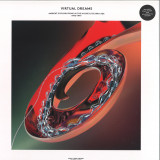
Music From Memory is delighted to be turning 50 with a special release: MFM050 - V/A - Virtual Dreams: Ambient Explorations In The House & Techno Age, 1993-1997 (3xLP/2xCD). The first in a series of compilations, alongside more in depth artist-focused releases, Virtual Dreams will delve into music produced during the 1990’s that redefined the boundaries of ‘Ambient’. This was music that explored the possibilities of Ambient music within a new setting, created often by House & Techno music producers for a world beyond dance floors but made very much with the pre and post-clubbing listener in mind.
When House and Techno exploded out of America in the mid 1980s a whole generation was redefined not only musically but also culturally and chemically speaking. Peaking, quite literally, with a second ‘Summer of Love’ in 1988, millions of young people across the world would experience the life-changing ups of a brave new world but with it of course came the downs; enter the concept of a ‘Chill-out’ room. Whilst early Chill-out rooms lacked a specific sound and were often soundtracked by music such as reggae and soul, slowly young Techno and House producers themselves would become increasingly interested in developing a futuristic ‘Ambient’ soundtrack to a world beyond the thud of the main room.
‘Ambient’ in this new age now though had sharper teeth than in Brian Eno's key text for ‘Music for Airports’, instead here the sounds were the mode of transport rather than the backdrop. While the melodies were pretty, the soundscape steered away from the pastoral, dreaming of outer-space and technology as opening up exciting new dimensions. Much like in the first Summer Of Love; the musicians were again exploring psychedelic, mind-altering and transcendental possibilities of music. And also much as in the first Summer Of Love, a psychedelic visual language would accompany the music. Though now the tracks could be accompanied by music videos, utilising early CGI techniques, they would look almost entirely to the future: envisioning technology, nature and humanity intertwined in a new Utopian future. Virtual Dreams of a better world.
From Ambient and early Chill-out classics, to lesser known one-off projects, as well as Ambient deviations by some of House and Techno’s leading producers, Volume One of Virtual Dreams features tracks by Bedouin Ascent, LA Synthesis, LFO, Marc Hollander, Mark Pritchard & Kirsty Hawkshaw, Richard H. Kirk and more.
To celebrate our 50th release the first 1000 copies include a holographic 'Virtual Dreams' sticker plus a special insert poster with artwork by Victoria Pacheco and design by Steele Bonus.
Ready to ship

SHIFTING - The brandnew album by FRANK POPP ENSEMBLE, the first since 2005! It has been quiet during the last years, apart from an album as „Frank Popp“ called „Receiver“ in 2009 on his own label TV Eye Records. Frank Popp was always busy tho, working as a producer for other bands (Odd Couple, Sun And The Wolf, etc), designing hundreds of posters and booking top notch concerts in Berlin (The Jesus And Mary Chain, Billy Childish or 60s legends The Pretty Things, just to name a few. Once a month Mr. Popp runs several dance partys since many years. Now he is back at his desk for his own musical project FRANK POPP ENSEMBLE! And again he got help from many wonderful special guests lending this project their voices, such as Jesper Munk, Aydo Abay, Lucy Kruger, Kat Ott from 24/7 Diva Heaven, Anna Glahn and classic FPE singer Sam Leigh-Brown. Mr. Popp wrote, recorded, produced and mixed „Shifting" in Spain between january and march 2021, accompanied by Jascha Kreft (Odd Couple) for the songwriting sessions. The 16-song heavyweight takes us on a colourful journey through vintage soul scorchers, psychedelic soundtrack scapes, spector-esque sound walls, bootboy glamrock and even a riviera space-disco tune can be found on the new longplayer. Of course lotsa things changed in that many years. Many lyrics are written by Popp himself, out for trouble in impertinent phrasing here and there. The music has become mature and deeper and his voice can be heard on two songs, the first time ever. It sure is a remarkable piece of high quality music, that’s been delivered here. Watch out, world!
Ready to ship

Max Von Sydow is the alias of Joakim hlund, founder of 90's electro-pop act Teddybears, garage-pop freaks Caesars and kraut space rockers Les Big Byrd among others
Max von Sydow is more of a sporadic experimental solo excursion, and he has previously released a couple of singles on Swedish labels Ingrid and Höga Nord for example. Here on his first release for Chimp Limbs he has taken the help of Gustav Ejstes from Dungen and Amason on flute and piano, as well as jazz prodigy Moussa Fadera on the drums.
The A-side, Fuzzy Ghost, has a driving bass line and an almost Klaus Dinger- like motorik drumbeat as well as hectic flute work and ethereal piano by Ejstes. And the B-side, Acid Sweat is a Moog synthdriven piece which features nice tape- echo flute- work by Ejstes and an
unrelenting funky drumbeat by Fadera.
Ready to ship

‘’In the interest of reverse osmosis, instead of entering into a microscopic world, we now enter into a GIGANTIC world. Roope Eronen, of the famed Finnish space rock band Avarus, has now expanded his entertainment of an emotive space lounge to the LARGEST media size know to man, GIANT disk.
Commissioned especially by Pacific City Sound Visions label chief and the creator of Monopoly Child Star Searchers, Spencer Clark, Roope was asked to craft short pop song versions of previously extended space-synth improvisations.
This disk's music has been ENLARGED to such an extreme size that the listener can now slowly float in and around the realms of the outer heavens to freshly reflect on Earth's material originality. The voices of angels are abound to imply the harmony of an over-sized life on XXXXL NATIVITY - an example of the Inflatable Worlds ability to be playful in the sights of the grandeur of heaven.
"Space Walk Rentals" and "Bassmaster Mania" entertain Roope's huge focus on the exotic lounge-ness of Interstellar Musics. The largeness of Roope's vision contends that progress lies in the tranquillity of big thoughts - and enormous essences rather than physical largess. BIG ideas have no threat of gravity, as they are allowed to float into the ether until they are grabbed down by the hands of humans to reflect what they can of their MASSIVE impression of heaven.’’
Spencer Clark, Tenerife 2021
Ready to ship

HouseDeepElectroProgressiveTech
After a couple of solo EPs to start the label, FAC-3 is comprised of four different artists, each with their own unique sound. Although a mix of up-and-coming and established producers, old and new music, there’s a common thread running through the EP.
First up, Justin Zerbst’s Waverider is an atmospheric nod to Detroit. Unearthed from a 90’s DAT, it’s built around some heavily modulated chords and 808 percussion which carry the track through to its string-laden climax.
Italian mainstay Luca Piermattei’s Venice is distinct end-of-night fare. Haunting pads sit atop a deftly-programmed bass which provides most of the movement over a tight drum groove.
While the A side has a undoubted warmth to it, the B dials things back and ups the intensity with two techier cuts. UK producer Skelter’s first release is a spacious acid groove, with the bassline taking centre stage amidst a nervy backdrop of percussive textures and reverb hits.
Finally, Brisbane’s Loif rounds things off with the simmering Digiburra; a dense, electro-tinged breakbeat aimed squarely at the dancefloor.
Ready to ship

Weorus is back. This time with four deeply minimalistic tracks.
The opening track comes with Andrea Ferlin’s masterpiece “TRK”. The evolution of the sound rising in it uplifts the sense of a deeper inner self. Perfect meditative notes bound together with miscellaneous hi-hats and organic tones.
The journey continues with Neem’s “Joke or serious”. Master Neem knows well how to touch souls and push the right buttons. The track is an evolution of a higher time space perspective. Listen carefully, it will change you.
Fabrizio Siano’s “L’erosione monometrica” flips the vinyl of the B side. Constant evolutionary and revolutionary sound design brought together with majestic writing. The micro minimalistic approach stands out in front of a constant kick and bass roll. The background piano gives the right atmosphere for a newer meaning of the track.
To close the 12” is Dragosh’s “Kardiomomo”, a one shot production that brings out drum based percussion throughout the track. Vocals and drifting concepts melt together with the less electronic touch of a piano. Perfect for afters and sophisticated mixes.
Weorus strikes again.
Watch out for its (r)evolution
Ready to ship

STAR BLAZER is a sub-label of RELIKT ( Vinyl only - Limited copies - No repress )
Order now. Collecting orders for repress.

August Greene culminates years of mutual respect and friendship, channeling the musicians’ various talents into a cohesive project. The perfect marriage of jazz, hip-hop and soul, it’s music that just is. This is black expression the way God intended: earnest, unfiltered, and harmonious. Throughout August Greene, you feel the abundance of Glasper’s rolling keys, the sheer honesty of Com’s lyrics, and the nuanced subtlety of Riggins’ drum work. It’s a fluid sound that’s sorely needed in today’s landscape, and a teachable moment for the next wave of creators. “I feel like we need to set the bar for this generation of musicians and producers,” Riggins says. “There’s a lot of computer-driven music. This is the opposite of that. We’re showing you can still use your creative muscle on an instrument to generate your own sound.” August Greene is a meditative offering that stands tall against the era of “fake news.” “They body snatching black girls in D.C. / Politics and propaganda on the TV,” Common observes on the opening track. On “Nirvana,” the lyricist uses a stuttering percussive loop and faint piano chords to search his inner being: “Thought I was gonna fly when Obama became the king … when it’s all done, will I have heaven’s dress code, and been able to let God and let go.” As Com puts it, Glasper and Riggins’ soundtrack allowed him to open up in ways he hadn’t done previously. Like on “Fly Away,” for instance, where he riffs on the public relationships he’s had. Other songs, like “Black Kennedy,” feel spacious and scenic. “I got to go new places with the music, and it didn’t have to fit within a genre for me to participate on it,” he says. “This gave me an experience I haven’t had in a long time, so I want people to feel that. I want this to be a cleansing of whatever doesn’t feel good or inspiring.” In the end, August Greene speaks to those pushing through the dark for brighter days. It's a masterpiece from which virtue can shine. “I want people to go on the ride and be open,” Glasper says. “We just created and it became a sound. I want people to approach this with an open mind and without expectations.” —Marcus J. Moore
Ready to ship

BeatsExperimentalPopWorld MusicFolk
Reissue of a traditional French Experimental/Folk rarity.
Be ready for a spaced out trip through French medieval times. Ancient instruments, musique concrete, spoken word, old Occitan dialect minstrel songs, drone, from dark ambient and minimal percussive tracks to Middle Ages fuzz delirium. File under : medieval folk / ambient / experimental.
Ready to ship

HouseBalearicBeatsAmbientLoungeExperimental
limited warehouse stock
Originally released in 2023, Vakula’s 108 Mysteries is available again through a limited warehouse find of copies from the original pressing. The double vinyl marked the 25th release on Arma and brings together nine tracks from the Ukrainian producer, including collaborations with vocalist Amrita Ananda.
Philosophical and meditative, 108 Mysteries represents a distinctive chapter in Vakula’s discography. Across the album, he moves through deep electronic textures, hypnotic rhythms and spacious arrangements, combining his experimental approach with a strong sense of atmosphere.
Tracks including “Highest Love”, “A Breath Of Life”, “Щедрий Вечор” and “Spirit Okarine” bring together electronic production with Eastern and Ukrainian folk influences, creating an unusual but cohesive mixture of traditional elements and contemporary sound.
Ready to ship

Following a first successful 2020 instalment and a contribution to our VA series, Blame The Mono are back on the Taapion mothership to deliver their second household EP. This 4-tracker stays true to the beloved influences of the duo by showcasing multiple genres and heavily using vocals, while keeping a dancefloor-focused essence. ''Sustain The Rigour'' translates the hard disciplined work Blame The Mono put in the studio switching over the techno recipe while keeping its original ingredients. Throughout the coldwave sonic explorations of Forlorn, endless vocal looping drive of Front Left Rodeo, bombastic Moog bassline of Conepusher or the spaced -out garagey vocal chops of Caledonian Woofers, this EP keeps both pace and inventivity rigorously high.
Ready to ship

Lescale Recordings releases "Falcon 9", a vinyl by Eliptica and including a Ramona Yacef Remix. A musical composition of the highest level, as the label has been getting us used to, dedicated to authentic experts of sound design. The Italian trio Eliptica (Howl Records), the recent project of the sound engineer Antonio Valente and his fellows Andrea Bruno & Rikha, surveys the modern musical landscape indulging in explicitly ambient realms, with an intro where spacey sounds and haunting tones take to the fore, making for an evocative atmosphere of beatless and experimental ambient. Eliptica follows with the EP title track, forgoing dub-centric rhythms and synth melodies filled with endless echoes on a steady and solid groove. Ramona Yacef brilliantly pushes the limits with upfront breaks and steady beats to reach a dancefloor intensity, with strictly percussion. With ‘Orion’ the tempo is lowered to a laid-back feel of a dub riddim inspired track with filtered stabs and lush pads on an atmospheric field. ‘Outro’ completes the journey with a subtle listen of rhythms buried in the mix and soft synths serving the melody.
Ready to ship

BeatsAmbientElectroExperimental
Dies Lexic is a duo by Inês Tartaruga Água and Xavier Paes. Part of Favela Discos collective and label, they explore the channelling potentialities of sound, wandering between spectrums, ethereal soundscapes and zones of sonic subduction through means of DIY electro-acoustic instruments, amplified objects, electronics and composition processes based on repetition, language, chaosmosis and error.
Lexicon Hall, the long overdue debut album by the Portuguese duo of intrepid sound explorers, is a sort of digital ayahuasca, an intense psychedelic journey guided by drums and harshly bowed strings, channelling voices from other planes and fusing them with Dies Lexic’s very own distinctive voice. If you close your eyes hard enough you can probably see Tony Conrad waving hello in the middle of a dark jungle that is inhabited by tribes of our ancestors.
Artists bio:
Inês Tartaruga Água is a multidisciplinary artist, focused on the issues of deep ecology and radical regeneration, sound explorer and practitioner of DIY philosophy as well as collaborative and participatory practices in public space. Participates in collective exhibitions since 2013, highlighting the “XIII International Biennial of Artistic Ceramics” (Aveiro, 2017), “Убежище / Suoja / Shelter Festival - Laboratory” (Helsinki, 2019), «48 часов Новосибирск» (Siberia, 2019), or “Soundscapes” (Bahrain, 2019), and has her first individual artistic residency “Méhtēr: Matter, Form and Transformation” at Júlio Dinis Museum in Ovar (2018). Recently, Água has debuted sound pieces in Casa de Serralves (Porto, 2021) and in Casa das Conchas (Spain, 2021).
Xavier Paes is a transdisciplinary artist based in Porto. He divides his practice between visual arts, sound, performance, gleaning improvisation and multi-instrumentalism, focusing on ideas such as acoustic phenomena, repetition, resonant and sympathetic bodies, echo and ecology. He has presented his work at institutions, galleries, festivals, kiosks, raves and after-parties, highlighting places such as Serralves Museum, Oliva Arts Center, Porto Municipal Gallery, Stichting Centrum (The Hague), OCCII and Vondelbunker (Amsterdam), La Pointe Lafayette and L'international (Paris), STUK (Louven), Overtoon (Brussels) and Villa Arson (Nice).
Ready to ship

Orizont is back for its second release. And just like its predecessor, "Orizont 02" introduces four tracks from different artists, each with its own style, circling the worlds of atmospheric minimal and deep tech-house: Dragusanu, Calinie, Andrei Voica and Cata.
Dragusanu kicks off the EP with 'Asa Dar', a thoroughly atmospheric minimal track drenched in dark tones and menacing grooves. Calinie's 'Substance' is the logical continuation to Dragusanu's darker tones, expertly expanding and emotionally charging the sonic space into the morning hours with finesse. Andrei Voica's 'Colors' entirely switches the colour of the EP, opting for warmth and a particular focus on groove and feel-good sounds. Cata's contribution, 'Morning Dew,' provides an adequately named (and particularly groovy) deep house track for the closing of the EP, fulfilling the desires of those looking for an EP that they can play at any given time, from dusk till dawn.
Ready to ship

Mennie heads to LOCUS for his label debut, delivering four slick productions across his ‘Jack & Jane’ EP.
Florence-based DJ and producer Mennie has been a fixture within the European house scene for years now, yet he’s still on the rise with plenty more on the horizon. A smooth operator when it comes to weaving rolling percussion with alluring basslines, the Italian’s outings via Deeperfect, Moscow Records, and Infuse have showcased his ability to deliver cuts that pack a punch yet are filled with subtle nuances. Heading into the peak summer months in style, early June brings a LOCUS debut as he drops his four-track ‘Jack & Jane’ EP.
‘Jack & Jane’ opens things with the title track bringing loopy, swinging drums alongside cosmic melodies, while ‘Space Rocket’ sees regimented drums shoulder emotive pads and zipping synths. On the flip, ‘What Happened’ buzzes into action armed with zigzagging leads and smooth rolling grooves, before ‘Just Like That’ turns up the heat with squelchy basslines, wonky, off-kilter effects and resonant vocals throughout.
Ready to ship

2022 Repress
14 years since it was originally released on Rephlex Records, Dopplereffekt's Calabi Yau Space (2007) finally gets a reissue on vinyl thanks to WeMe Records (following on their amazing reissue of Linear Accelerator). This album sees Dopplereffekt move even further out into their very own exploratory realm, where music and quantum physics meet. Eight tracks that when first released seemed challenging but with repeated exposure a strange almost supernatural event occurred as these new sounds and patterns gradually revealed a beauty and even simplicity about them. This is a brave album, epic in vision. An essential record for all fans of Techno in the sense that the term was originally intended.
Ready to ship

Presented together for the first time, American composer John McGuire’s Pulse Music series (1975-1979) blurs the popular narrative that Minimalism was a reaction against Europe’s angular, intellectual, inscrutable high-modernism. McGuire, born in California, studied at Occidental College in Los Angeles and UC Berkeley before going to Europe to study with Karlheinz Stockhausen, Krzysztof Penderecki, and Gottfried Michael Koenig. His compositions lock serialism’s warped geometries onto an evenly spaced grid, perfectly preserving serial music’s multi-dimensionality while smoothing its wildest disjunctures and sharpest angles. If serialism is Montreal’s Habitat 67 modular housing complex, McGuire’s Pulse Music compositions are the primary-colored grids of Le Corbusier’s L’Habitation apartment complex — an exuberant expression of the same materials and principles.
Every layer of pulses is made distinct through its timbre, register, and tempo. We hear them as a plurality, organized like stars in the sky. Every so often the sky rotates and the stars appear in a different arrangement. Our ear naturally starts to draw connections and, as it sweeps between one layer and another, what was discrete becomes continuous. Pulses become flows; quantitative reality becomes qualitative experience.
Ready to ship

Ready to ship

The third release from Edinburgh-based rave Headset, showcasing unsung Scottish artists making alternative house, techno, garage & breaks in dubby styles.
Debut release for DJ Posture, straight outta Livingston, providing 4 tracks of spacey, deeper House & Beats.
Pressed on heavyweight 180g vinyl
Mastered & cut by Optimum Mastering in Bristol (Livity Sound, Tectonic, Pressure Dome)
Pressed by Mobineko (Taiwan)
DJ approved by Hodge, Daisy Moon, Gulia Tess (Rinse), Chris Farrell (Idle Hands) & many more
Ready to ship

Following their iconic remix of ‘Space Date’ in 2019, the classic collaborative work of Adam Beyer, Layton Giordani and Green Velvet, we are thrilled to have Pleasurekraft back on Drumcode for their debut solo release on the label.
Not keen to colour within the lines, the production duo caught Adam Beyer’s ear as they carved out their self-dubbed ‘cosmic techno’ niche within the techno genre. Conceived as a musical vision that attempts to go beyond mere hands-in-the-air moments, Pleasurekraft incorporate a cinematic soundscape as a canvas for philosophical themes regarding humanity's place within the cosmos. Their 2020 album, ‘Love in the Age of Machines’ explored the myriad and often dystopian relationships we have with the ubiquitous technologies that pervade our every interaction.
The new two-tracker ‘Sex and the Machine’, continues this thematic trajectory in considering the role machines will increasingly play in satisfying the more carnal desires of our species. The title track considers questions such as, will machines of the future have the capacity for thoughts and feelings? Will our answers to such questions be forever tainted by our singular perspective, unable and unwilling to grant future silicon entities such capabilities? The EP’s second track, ‘Body Horror’, with its repeating refrain, “You are changing”, considers the manner in which future technologies will continue to merge with biological entities giving rise to all manner of unimagined consequences. Both tracks showcase the tough, yet still melody-driven cosmic techno sound Pleasurekraft has become synonymous with. However, despite the cerebral content that inspired the music – the form is still pure dance floor muscle.
Ready to ship

Superbly multifaceted nocturnal sound journey by prolific Swedish producer Peter Benisch, known under the name “Harmon Eyes”. Beautiful synth melodies, powerful drums: three techno/trance tracks from out of space. All tracks freshly remastered. Powerful, unique and must-have EP!
Ready to ship

TechnoTechnoBeatsAmbientExperimental
Leaving established paths to explore mysterious spaces below the surface.
Connecting with the elements to escape the hypnosis.
Drifting on a psychedelic trip to wake up the warrior.
Ready to ship

Ready to ship

After a long hiatus, Rotate is back for its 8th release. "Inner Space EP" by the duo Abé & Lowris as Labello is a three-track 12-inch with a strong focus on psychedelic sounds, warped vocals, hypnotic synths and finely-tuned drum programming.
Like yin and yang, both tracks on the A-side of the EP display exquisitely opposed tones crafted for distinct dancefloor moments. The bright, funky and appropriately named 'Goodtimes' stands very different from the dark, cinematic and thrilling 'Invisible Red'. Still, ensembled, they serve as a statement on the raw potential of sonic hypnotization, where shuffling grooves, wacky melodies and cinematic atmospheres work together to set the dancer's minds into a seemingly perpetual state of flow. B-side's extended cut 'Pkaila' is one of the deepest arrangements here, reminiscent of the golden age of techno minimalism where dancefloors needed little more than a rolling groove, shuffling drums and impeccable sound design slapping from its sound systems.
Bandcamp buyers also get "FCT", an exclusive downloadable bonus 18-minute jam that further showcases Labello's explorational side, rounding off "Inner Space" in a delightfully varied manner.
Ready to ship

Green Vinyl + Slipmat[62,14 €]
Ready to ship

TechnoElectroTechnoTranceTrance
For their sixth instalment, Lowlife Cartel follow up to their last two compilations (“Pimps Improvisations” in 2018 and “Omnia Vanitas” in 2020) with a new six-track VA named “Kodoku”; a vortical release, both bold and forward-looking, while fully geared for the club environment. Taking its title from a poisonous magic from the medieval Japanese era obtained by placing several venomous insects in a jar and letting them kill one another until only one survives, “Kodoku” - which interestingly also translates as “solitude” - features a cast of producers old and new to the fold including Saverio Celestri, the faceless △, Prince de Takicardie, Tundramane & Ko$te, Solar Alliance and Shampoo.
A staple element of the Lowlife Cartel bunch, Saverio Celestri paves the way and dishes out one of his signature jagged, EBM-informed weapons in “Sundays”. Through this hotchpotch of acid-steeped bass entangled with a frantic newbeat-ish swing and razor-sharp synthwaves, the Italian producer shows off the raw and playful facets of his craft to optimal effect. Unknown contributor △ clocks in with “Crachats de Lune”, a proper ominous banger going straight for the jugular with its clever mix of dusty, drum-laden churn, processed vox stabs and sci-fi-indebted laser bursts flashing by unrelentingly. Tailored for hi-octane action at the defunct Boccaccio or Hacienda, Prince de Takicardie “Jam’on’Acid (House Mix)” blows the winds of euphoria across the club like it was done in 1995. Vibing to a pulsating mix of rabid snares, 303-vehicled charges and mangled vocal samples on a classic free rave tip, throwback material that packs a punch.
Flip it over and here is North-American duo Tundramane & Ko$te shifting the scope to Memphis chopped-and-screwed in true hardcore fashion. Straight-out aggression, “Brick To The Face” lives up to its title, so expect leaving the place with a few teeth out your mouth and a good concussion, though more side effects could appear over repeated listens. A radical U-turn from the previous, Ute.- related triplet Solar Alliance - alias Ekkel, Oprofessionell and Mikkel Rev - bring their dashing trance touch to the comp with “Quest for Kiba”, an uptemp maelstrom for the senses, swirling and whirling up until space and time make no damn sense any more. Topping off that versatile tour de force, Japanese producer Shampoo adds his delectably sensuous spin on the record with the lush, sample-heavy lo-fi appeal of “四季ノ歌”. Unpolished feelgood vibes, sun- streaked soulfulness and deft-handed MPC wizardry are on the menu for this ultimate ride and jolly finale.
Ready to ship

Quoth is the brainchild of Alex Egan (Utter) and Mike Smaczylo (Half Edge). Singular in focus, this newly minted (sub)label harnesses the pair’s diverse and expansive tastes in weird and hallucinatory sonics, aimed squarely at the dancefloor. We're very proud to present ‘Barney’s Maze’, a four-track EP of twisted techno, drawing influence from IDM, bass, and older strains of textural music.
‘Barney’s Maze’ is the work of Nottingham producer Coralie (aka Steven Randall). It fell on our ears strangely dislocated from time and place. Its sound world is utterly modern, technical and weird; mangled sonics slip deftly out of reach of easy categorisation. But the spirits evoked feel ancient, spectral resonances of a psychedelic continuum older than memory.
Haunting voices predominate: human, not too human, but captured and distorted by technology, cut from any source of context and voided of meaning. The sonic spaces conjured here are cavernous; great cathedral-like structures resonating with the collapsed centuries of digital time. Broken techno rhythms roll echoing in an artificial void with synthetic voices, raised to synthetic heavens. Strains of the sacred glimmer within a form that’s entirely profane, the most human of constructs.
It’s a stunning EP - moody, atmospheric and gorgeous, each track a world unto itself, but fully primed for the dance. We recommend it wholeheartedly.
Coralie tells us it’s dedicated to his dog.
Available on hand stamped vinyl, limited to 200 copies (including insert), and digital formats. Mastered by Beau Thomas at Ten Eight Seven.
Ready to ship

The moons of Saturn are the inspiration for this brooding, often soaring and searching odyssey of dark electronica.
The second largest planet in the solar system after Jupiter, and the sixth planet from the sun, Saturn is orbited by 53 confirmed moons, with another 29 that are unnamed and still being studied.
Saturnian is a suite of thirteen choral tracks taking their names from some of Saturn's known moons; Dione, Daphnis, Phoebe, Prometheus, Rhea, Janus, Titan, Enceladus, Tethys, Telesto, Mimas, Hyperion and Iapetus, all named after figures from Greek and Roman mythology, each loaded with their own turbulent back stories. It is the debut release by Holmes + atten Ash, written, recorded and produced remotely in Edinburgh and Bristol by the duo Simon Holmes and Paul Nash.
Their project began during the 2020 lockdown. For Simon, time was spent exploring the Pentland Hills south of Edinburgh. For Paul, the Mendip Hills, south of Bristol. Both would experience the darker side of our human impact on the environment. Simon observed the wilderness as a wasteland, finding discarded, rusting metal littering the Pentland Hills while Paul witnessed the decimation of the ancient woodland of the Mendips' King's Wood due to the destructive tree fungus ash dieback.
These field trips fuelled a desire to navigate not just the landscape, but the duo's emotional place within it. Their collaboration led to a concept album that explores the outer reaches of the solar system, while simultaneously grounding them in a specific place. Looking inwards as much as outwards, theycreated soundscapes based on deeply imagined and felt connections to their surroundings.
After Simon had created a choral piece to accompany Luke Jerram's enormous, world touring artwork Museum of the Moon, Saturnian was a natural progression. When Simon was sent an initial score for the ethereal track Enceladus, composed by Paul in Bristol, he added choral arrangements recorded in Edinburgh. Their shimmering, tense opus continued to evolve from there. Just as the discarded bed springs and abandoned car parts that Simon stumbled upon in the Pentland Hills seemed to him at once "horrible but also oddly beautiful", Saturnian melds together melancholy and levity, fusing moments of dark angst with a celestial calm.
Opening with the glistening, hopeful brightness of Dione, increasingly urgent rhythms give way to digital, otherworldly calls from what might be rainforest creatures chirping into life with robotic squawks and delicate keyboard lines on Phoebe, followed by slowed down, monastic song on Rhea. Tethys is a hypnotic blur of synthesiser and soft chanting, while Rhea is a mysterious, echoing chasm, lifted by melodic, gentle male vocals. Janus has a glowing, effervescent energy, swiftly followed by a sense of tension on Titan, which throbs with driving percussive unease.
The album artwork is a pencil drawing created by Edinburgh artist Simon Kirby. It was made by a robot drawing machine, using custom algorithms that bring to life recordings of the sound of magnetic waves near Saturn's icy moon, Enceladus. The lines in the centre of the drawing are distorted by sound captured by the Cassini spacecraft which studied Saturn for over a decade.
Much like Saturn and its frozen, rocky moons, this debut album from Holmes + atten Ash is mysterious and beguiling, with a hint of foreboding in the depths of its powerful beauty and epic scale.
Ready to ship
Hypnotic techno and electro from the enigmatic Dutchman Taupe, who has released a steady stream of Detroit-influenced cuts across European labels like Impress and Tech-um, plus his own Colours label. For Gated he presents four tracks that remain pure to his strong Motor City influences.
Kicking off the wax, ‘Rootless’ is a spacey, mesmirising, and driving track that gradually builds momentum in the best way.
Next up, ‘Marrakesh’ takes things a little harder and deeper, keeping that tripped out vibe and pushing things forward.
For the B-side, ‘Terra’ brings out some eerie electro underpinned by a rolling bassline, while ‘Bloom’ rounds off the EP with perhaps the most melodic track of all.
Ready to ship

HouseMinimalProgressiveTechVinyl Only
BodyParts Vinyl resident Odessa-born Eric returns to the imprint with his new Gravity Precept EP, composed of three exquisitely produced originals and a remix from a master, Thomas Melchior. Gravity Precept explores the nooks and crannies between the minimal techno and spacey house genres and bends them together in a palette that is as coldly robotic as it is humanly warm. The dichotomy between the mechanical grooves and the delicately warm melodic elements raises the level of intimacy of this EP to a standard one would only find on the best of the after-hours.
On the remix duties, Melchior Productions Ltd. infused the original track with his immensely shuffled, signature rhythms and striped down the entire mixdown to its bare bones. Such headroom created the perfect space for the pads and melodic elements to grow, for added melodrama, yet focused, straight-to-the-point and endlessly deep.
Ready to ship

'A Winged Victory For The Sullen' is the first installment of the new collaboration between Stars Of The Lid member Adam Wiltzie and L.A. composer Dustin O'Halloran. The duo agreed to leave the comfort zone of their home studios and develop the recordings with the help of large acoustic spaces, hunting down a selection of 9ft grand pianos that had the ability to deliver extreme sonic low end.
Other traditional instrumentation was used including string quartet, French horn, and bassoon, but always juxtaposed is the sound of drifting guitar washed melodies. The recordings began with one late night session in the famed Grunewald Church in Berlin on a 1950's imperial B?sendorfer piano and strings were added in the historic East Berlin DDR radio studios along the River Spree. One last session on a handmade Fazioli piano in a private studio on the Northern cusp of Italy, before the final mixes took place in a 17th century villa near Ferrara with the assistance of Francesco Donadello. All songs were then processed completely analogue straight to magnetic tape.
Their secret to harvesting new melodic structures from the thin air of existence was for the duo to push themselves to dangerous territory, realising that clear thinking at the wrong moment could stifle the compositions. The final result is seven landscapes of harmonic ingemination. In 'Requiem For The Static King Part One' ? created in memory of the untimely passing of Mark Linkous ? they have taken the age-old idea of a string quartet and then shot it out of a cannon to reveal exquisite new levels of sonic bliss.
Of the 13 minute track 'Symphony Path?tique', Wiltzie says 'after almost 20 years of struggling to create interesting ambient drone music, I feel like I have finally figured out what I am doing'. Notable guest musicians include Icelandic cellist Hildur Gudnadottir, as well as Erased Tapes label comrade Peter Broderick on violin. A Winged Victory For The Sullen is not a side project ? it is the future of the late night record you have always dreamed of. A Major release for Forte, Non exportable.
Ready to ship

BeatsElectroHouseElectronicaPop
Rich Aucoin is announcing his next album entitled Synthetic - The record is a rare Quadruple Album with its 4 seasons/LPs being staggered in 6 month intervals over the next 2 years
The album, which began at The National Music Centre in Calgary, Alberta in March 2020, houses one of the world's most extensive collections of rare and historic synthesizers. There, Aucoin was doing the Artist In Residence program and recorded 51 synthesizers to begin the project. The project was paused with the start of the pandemic and Aucoin shifted back into film scoring and worked
on the critically- acclaimed and short- listed New Yorker - Films of the Year documentary, No Ordinary Man, about the trans- masculine jazz musician Billy Tipton.This record is a good demonstration of Aucoin's scoring potential as well as it's a quadruple instrumental album; a huge contrast to United States, Aucoin's previous, and most vocal heavy album to date. Lyrics just take me so long to write that I just want to take a couple years to make other kinds of albums before going back to lyrical music as I can write instrumental music much faster. This first fulllength features Aucoin as the solo musician playing some 37 synthesizers including: Arp 2600s, the Supertramp owned Elka Rhapsody 610 String Machine, Formanta Polivoks, Novatron T550, Oxford Synthesizer Company Oscar, Selmer Clavioline CM 8 and the legendary TONTO which the first release off the record
was made on.
Tracks: Tonto / Hypernormalization / Algorithm / Future / Buchla / Esc / 456 /
Space Western / Return
Ready to ship

Mesmerizing new abartik from one of the most talented swiss based artists. Abartik welcomes homeboy Aron for a stunning 4 track EP from outer space. This is definitely one for the books.
Order now. Collecting orders for repress.

Selected Productions is a collection of tracks produced by Tom Chasteen in the late 90s and released on the Exist Dance label.
Exist Dance started in Los Angeles in 1991 and was among the first labels to emerge from the LA Rave scene of the time, although musically the label pursued its own path , sometime in tune with rhythmic warehouse madness, sometimes heading elsewhere.
These tracks emerge from later in the Exist Dance story, when Tom Chasteen was living in Prescott, AZ, performing at Phoenix and Tucson raves and clubs and steadily releasing small pressings of 12” singles and EPs.
Ghost Story is a high desert tale, emerging from the hours long Roland 303 and Space Echo based live performances Tom was doing at the time, condensed into a dramatic vinyl side and featuring guest guitar work from Clive Wright.
Champion Sound is a remix of a 1991 Exist Dance release, the original being perhaps the first “Breakbeat” track from the West Coast. This version expands the concept of remix to its limits, keeping only some vocals from the original and setting them free in a new psychedelic landscape.
The Accident Of Birth takes the breakbeat style to a darker galaxy.
Ready to ship

On this third Hoot release, gols takes the first action on the A side as a former point guard with a nice off the dribble. His second on the same side 'tritony' fits perfectly in the space created after this dribble. On the B side it's a old teamplay by glazing (Gols & Tom Dazing).
Ready to ship

(Late Nite Tuff Guy & Farley 'Jackmaster' Funk Remixes)
An ‘80s dance classic from the legend John Rocca, gets a fresh new take from Aussie edit king Late Nite Tuff Guy alongside a remastered reissue of Chicago house royalty Farley 'Jackmaster' Funk’s 1987 Hot House Piano Remix.
The main man behind jazz funk favourites, Freeez, John Rocca took to the studio in ’84 and whipped up an electro-fied steamer in the form of ‘I Want It To Be Real’. Tantalizing synthwork, beefed up basslines, gated snares and pure ‘80s vocals, it’s a melting pot of influences with a catchiness that caused a serious stir.
This special double header of remixes kicks off with a brand new mix from Late Nite Tuff Guy. He builds up the brilliance with masterful effect, keeping the vocal in the back pocket till the final frontier whilst adding in some buttery new synth magic and deft filtering to the mix.
On the flip, Chicago house don Farley 'Jackmaster' Funk’s 1987 remix homes in on those blissful piano and vocal stabs for a dubbed out ‘Hot House Piano Mix’. Spiritual keys laid down with passion that will be sure to get any dancefloor hot under the collar.
DJ Feedback:
OPTIMO/ JD TWITCH
Nice! The Farley mix is an all time classic. Lovely version from LNTG.
GERD JANSON
I have love for this.
GRAEME PARK/ THE HACIENDA
I vividly remember playing this record the day it was released while working at Selectadisc in Nottingham like it was yesterday. I played it the same night at The Garage club not long after I started DJing there. It brings back some great memories and this superb remix is just wonderful. Its made me get all bleary eyed and tingly. Absolutely tremendous stuff.
AXEL BOMAN
Love this
KAI ALCE / NDATL
This is a HOT EDIT from Late Nite Tuff Guy!
A LOVE FROM OUTER SPACE/ SEAN JOHNSON
Killer - love it
NORM TALLEY
I love this!
CROSSTOWN REBELS
Nice one!!
JACQUES RENAULT / LETS PLAY HOUSE
LOVE the classic Farley piano mix and the LNTG version is a fun take too!
OSUNLADE/ YORUBA
LOVE THIS!!
DANIELE BALDELLI
Love this classic, and now more love for both new remixes
DANNY TENNAGLIA
I really like this remix
DANNY KRIVIT/ BODY & SOUL
Nice
DJ KEMIT/ ARRESTED DEVELOPMENT
An incredible beefed up edit of an international dance floor classic. 10/10
HELENA STAR / NTS
Amazing record, those chords!!
LOUISE CHEN/ NTS
I’d love to play this.
ERIC DUNCAN/ RUB N TUG
This ones cool.
MAKE A DANCE / BEN
Yes yes yes pease love the original so much.
HOT TODDY/ CRAZY P
The Farley mix is a total winner which is a new one on me, LNTG mix is pretty tasty also
TERRY FARLEY
Yes please. A big early House lesson for me BITD
SUB CLUB HARRI
Realy diigin this.
GROOVE ARMADA / TOM FINDLAY
Love this, production is so good!
Ready to ship

Home is a powerful concept with an abstract definition. This solo album takes those subjective ideas and unifies them under one roof. Evolving from Jerve’s #dailypiano posts in 2019, ‘The Soundtrack of My Home’ relays thoughts and improvisations that trace his journey from childhood home to adult and now, father. Nurturing a mood or feeling, each song begets a sonorous story of someone close to him, expressed through the language of piano playing.
Jerve makes use of his hands as a human step sequencer, often programming two or more motifs of varying lengths in a polymetric fashion. These melodic patterns and arpeggios evolve at varying rates but grow around clear progressions with standard 8-bar forms.
The first track - ‘Kjetil’ enters with an earnest, gentle and endearing character - like a young river near its source. As with such a river, it will grow to varied sizes throughout the album but must begin as a humble expression from the source. The following titles sketch his interpretations of the people that have made up his home.
There is a theme across the album that unites the songs, so much so that differentiating tracks can at times be difficult. Though, Jerve punctuates this overarching mood with a few distinct structures, as found in tracks ‘Karoline’ (wife), ‘Espen’ (brother) and ‘Sven’ (father). ‘Turid’ (daughter) and ‘Jon Eirik’ (brother) seem less directive and welcome more intrigue, reminiscent of a curious child wandering through the dappled light of a forest.
‘Iben’ (daughter) and ‘Eivor’ (daughter) have a hypnotic, three-pointed melodic structure that leaves the listener suspended; transfixed - while ‘Sussi’ (cat) carries unique momentum and suitably feline autonomy. ‘Mette’ (mother) has a mood of ascending, like that of a child's upward gaze at their maternal carer. Utterly nuanced in structure, Jerve leaves ample space for subjective interpretation and allows the listener to weave their own life into the tones.
As expected from the founder of Dugnad rec - this album signifies a deeply personal sentiment. Sometimes we are forced to confront the music and other times, we are left to wonder. Here, we find a balance and unity that allows little thoughts and worries to drift away, bringing us warmly to rest in the present. The LP edition's bonus track features producer/performer extraordinaire Stian Balducci, drawing a line to the next chapter of piano-based music from Dugnad rec: TOKYO TAPES: PIANO RECYCLE.
Ready to ship

Chloé Robinson & DJ ADHD still aren’t short on fuel. In fact, they seem to only be boosted further by their own supply. With such a weighty momentum driving forward their newly established identities, only one big question sits adjacent in the saddle: what’s next? It seems that Chloé and Alex already have the answer for today’s daily summon, and for the next Pretty Weird release, it’s a 4-track techno record reiterating the trusted adage of less being more. With an emphasis on space and silence placed intuitively, the first single from the ‘Steamin’ EP finally gets its much anticipated drop - including a killer remix from close friend Four Tet stamped on in classic, inimitable style.
‘Steamin’ is all serrated kicks, 909 drums and tenacious vocals that yell without inhibition, invoking the looseness of a party spiralling unphased into its collective apex.. ‘Redbull’ scales up on the pyrotechnics and rowdy behaviour, taking the sensation of several shots of caffeine and packaging it into a mean, raucous pick-me-up.
For ‘Pax’, Chloé and Alex continue on the stripped back disorder with white-hot conviction through rhythm and textures that find their power through no-frills, unpretentious simplicity. Kieran Hebden steps up for the remix, nodding back in appreciation to the past through the nestling of a sharply redefined ‘Pulse X’ sample alongside his addictive, punchy production all too suited to those can’t-go-home-just-yet stints.
Early support from artists including Four Tet, Peggy Gou, Jamie XX, Floating Points, Ben UFO, Caribou, Skrillex, Mary Anne Hobbs, Bradley Zero, Bonobo, Saoirse, Zenker Brothers, TSHA, HAAi, I. Jordan, Logic1000 and Pearson Sound.
Ready to ship

Force Placement's AEROBICIDE EP is a killer workout of afterhours acid and galaxian breakbeat.
Four hypnotic bangers from Los Angeles with remix support from DJ Manny, D.I.E., and Martyn Bootyspoon
Los Angeles – Following releases on 100% Silk, Clave House, BANK NYC and Lost Soul Enterprises, FORCE PLACEMENT arrives on EVAR Records with four tracks of naughty squelching acid and breakbeat techno hypnotically calling you to the afterhours, backed by a trio of remixes from Martyn Bootyspoon, Detroit In Effect, and DJ Manny, representing North American excellence in techno, electro, and footwork, respectively.
A longtime friend of the EVAR crew from renegade breakcore parties in Santa Barbara to underground experimental electronics happenings in Los Angeles, Into the Woods and The Black Lodge resident Jason "Force Placement" James taps into his love of weird trippy atmospherics, rhythmic complexity and DIY punk/noise aesthetics to create this quartet of mystic, mysterious bangers, crafted with the MPC1000, Elektron's Octatrack sampler, the Korg minilogue, and Ableton.
The AEROBICIDE EP begins its killer workout with "Yeeks," a cabalistic ass-mover driven by a haunted female vocal sample floating atop locomotive bass and shakers – a factory's worth of industrial sounds and eerie accents move in and out of the mix, adding intrigue and interest.
Moving to the main room of the rave, "Balloon Animal" shoots you through an inflatable tube of squelchy acid techno as knives cut the air around you, while "Upsetter" adds a shuffling breakbeat rave bounce into the acid mix. "Quartered" chops it up with Clone-style dark analog electro that gets increasingly deconstructed by dirty, stretched percussion and rivulets of synth reverb raining down the walls.
Rounding out this occult aerobics class, some of North America's most compelling forces in dance music are called in for remix duty. Unsung electro hero Detroit In Effect aka D.I.E. – the man behind such classics as "RU Married" and "Get Up" – leans deep into the classic Motor City palette, pairing lush, spacey pads with that hard-swung Detroit bounce to create a mellow groover that will keep you going all night. Montreal's world-class party starter M. Bootyspoon recalls Substance Abuse-era Hawtin and mid-'90s Midwest techno on his "Balloon Animals" remix, with nasty claps and concentric loops of hard acid bleeps and squelches. And who better to tackle "Upsetter" than Southside Chicago's footwork futurist DJ Manny? The Teklife king eschews the romantic R&B tones of his recent Planet Mu album for a tough-as-nails rework that ups the tension and the tempo to create an otherworldly saga for the dance circle.
Ready to ship

Amsterdam via Wales DJ & producer Maroki unveils a darker, more eccentric side to his productions, this time opting for four bass heavy, left-leaning cuts of idiosyncratic dance-floor experimentation on LTFIRE. Nestled amongst the trees along the river lJ, Maroki is surrounded by influence, from the city's bustling streets to the tranquility of nature's boundless beauty; Maroki's work walks the tight-tope between these two spaces, a place where machines and human complexity meet.
'Pots & Pans & Handstands' opens up the A-Side with a highoctane journey, meshing breaks and shape-shifting bass with hoovering pads that sound like landing UFOs. 'Hasnoot'
continues this menacing theme, providing an immersive experience that feels compulsive and raw. Yet, there's elements of fun and flashes of colour, adding to the almost audio visual vibe Maroki can create.
The B side opens with 'Boiler' a nocturnal groove that sways ominously in the wind; If the UFOs were landing on the records A side, this is the soundtrack to their dystopian future. Maroki completes his metamorphosis with 'San Andras', visuals of large spaces with high concrete ceilings come to mind, where the track's mechanics can thrive, reverberating beautifully amongst the looming shadows of dancers.
Ready to ship

Mr Projectile, one of our favorite IDM producers from back in the day, has given La Luna the chance to share some of his unreleased IDM tracks from the early 2000’s. The album is an eclectic blend of ambient, IDM and experimental electronics.
These sounds are a time machine to simpler, less chaotic times and have become essential listening these days. We envision this album spinning on a sunny Sunday afternoon, filling your room with the delicate and deep textures of electronic music and soothing your uncertainty. Enjoy a nice cup of coffee and explore your thoughts as you speed through time and space. Hopefully serving as a special reminder that we are all in this madness together.
Not only is the music stellar, but we are honoured to have Marcello Raeli, an Italian artist and car designer, accompany the music with his wonderfully mind bending artwork. Marcello is an artist who has designed some of the most insanely beautiful/fast cars on the planet. Here we get to take a deep look into his mind and marvel at the incredible interconnectedness created in this piece and appreciate the sense of depth and space created for this album.
Ready to ship

Known for creating enriching house music, Italian Canadian DJ and producer Paolo Rocco is in fine form once again as he makes his first outing on Chris Stussy’s up the stuss imprint.
Delivering a selection of silky, classy, deep, and spaced-out trips his “To The Stars And Beyond” EP is an exemplary showcase of his vast talent in the studio.
The package comes reinforced with a stand-out remix courtesy of mandar member and Vigenere boss Malin Genie.
If you’re after a cosmic journey loaded with classic nuances, look no further.
DJ Support:
Enzo Siragusa (FUSE) Very nice release! Thanks
Janeret (Yoyaku) BOMB! Dope ep!
East End Dubs (Eastenderz) Awesome EP.
Reiss (VBX) Malin remix is so so smooth :)
Toman (No Art / Moscow / LOCUS) chi chi boogie! dikkk thanks
Ben Rau (META / Inkal / FUSE)Nice deep cuts from Paolo To The stars and Chi Chi Boogie are cool for me
Locklead (Slapfunk) Up The Stuss does the trick again :) That Chi Chi boogie bass is killing me! Malin Genie remix will do the trick, what a vibe! Big up Paolo for the strong ep
Archie Hamilton (FUSE / Moscow / Moss. Co) Lovely stuff
Joris Voorn Downloaded, thanx.
Laurent Garnier Super cool music
Ready to ship

Supergrass’ hugely successful third album reached #3 in the UK album Charts and #13 US Billboard Heatseekers Chartin 1999 and has amassed over 300,000 sales in the UK alone since its release.
Released as 1LP black heavyweight vinyl, 1LP neon orange vinyl and 2CD.
This 2022 re-issue has been fully remastered from original sources and includes the hit singles ‘Pumping On Your Stereo’ (UK #11), ‘Moving’ (UK #9), ‘Mary’ (UK #36).
The 2CD is a 4 panel digipack with 16 page booklet featuring rare band photos and new sleeve notes.
By acclaimed journalist Charles Shaar Murray
Disc 1: remastered album, Disc 2: rare / demo tracks, alternate, live versions and 4 new track remixes (2 of which done by John Leckie). Includes several previously unreleased tracks and versions. Tracklist compiled by Supergrass..
Album remastered by original producer John Cornfield, with Supergrass bassist Mick Quinn.
Restored original artwork with newly inspired inner bag artwork from original 90s promo singles. Lovingly crafted by Supergrass.
Ready to ship

After his Top10 Orion release, Jay Lumen is back with his brand new EP. A side "Terra" track is a main stage weapon with the right balance of dirty and space synth sounds. It's a massive future techno vibe sprayed dancefloor filler. The B side "Pressing" song is the result of Jay's special collaboration with the young talent Wex10. That's a good proof of the energetic raw techno sound including some special Detroit elements. Enjoy!"
Order now. Collecting orders for repress.

Limited edition to 200 copies. Comes with printed inner sleeve + 20 page Photo-booklet. La Linea Gialla is a sonic exploration of space and time, consisting of processed field recordings captured by travelling through different Railway Stations across Europe. The Lp vinyl includes a collection of 16 tracks which aim to find a meeting point between the intricate simplicity of puristic sounds heard & recorded in the context of the "Non Places", and how they can be transformed electronically through active manipulation thereafter, rendering them new realities of their own.
Following the "Tribute to Harry Bertoia 100th anniversary" released in collaboration with Important Records and Sonambient the sound artist EMG uses the confines of La Linea Gialla to excavate new forms of production by filtering, re-sampling and re-arrangements through the use of different cassette record players. A unique and unconventional listening experience consisting of unedited live compositions blending the vast possibilities within Field Recordings, Sound Art, Industrial-Ambient and Experimentalism, supported by an accompanying - and visually representative photographic - artwork.
Ready to ship

Gated's second compilation takes inspiration from the path less travelled, the earthen underbelly that binds disparate threads to its wonky centre.So while the music here is from artists all over the world, each track is grounded in a quirky, off-kilter sound, from the opener by UK hardware house don Perseus Traxx to the closer by Space Agent, the alias of a yet-to-be unveiled techno artist.In between we get Gated stalwarts Guavid, Lucita Octans, Acidulant, and Lloyd Stellar with their takes on the wonk, plus glassy-eyed electro from Austin, USA-based Terrestrial Access Network, unusually banging fare from man of the moment MOY, and broken techno from the criminally under-appreciated Stacie-Anne Churchman. There's also the reissued and remastered sub-bass squelcher Beta Carotene by Modified Starch, which was originally released in 1998 on UK breaks label Slalom.
Play it loud.
Ready to ship

Wooohaaa! The figure 8 always meant more to us than just a symbol on your screen. For this very reason on our eighth vinyl release from Minor Notes Recordings we’re featuring non other than the legendary producer BMB SpaceKid. Stemming from St. Petersburg and from an early age, BMB proved himself to be an extraordinary musician. Able produces top quality compositions with ease, and in any style, but all with his unique twist.
To date BMB is best known in hip-hop circles as he made album beats for many key underground rap artists. He also went international and produced joint tracks with Dj Premier, Anderson Paak, Raekwon, GoldLink and many others.
BMB has also performed at the Fabric Club in London, the Outlook Origins festival, live on Boiler Room and BBC Radio 1. He also participated in the Red Bull Bass Camp and the Hip-Hop Academy.
On the record "Taste Booster" BMB SpaceKid showcases his taste and skills in the production of house style dance music. A tribute to the traditions of African-American music, the virtuoso mastery of MPC and sampling techniques, and an outstanding approach to melodic rhythms.
We are convinced that this record will appeal to everyone who loves true house music, acting as a breath of fresh air. To enhance the overall effect we invited one of our favorite French producers Art Of Tones, who for a long time, and just like us, has been promoting the organic sound of electronic music 4x4.
Ready to ship

AI-31 sees the debut release from a new collaboration between Samuel van Dijk (Netherlands) and Rasmus Hedlund (Finland). Both key proponents to the scene in Northern Europe, they come together with mutual understanding and a common vision to sound. Dialog acts as a conversational exchange that sees the interplay of dynamic frequencies, evocative imagery and contemporary sonic art. Spread across four sides, the album as a whole exists as a kind of metaphysical process, eternally growing and contracting — change is the only constant, marked by a continuous progression of sound and space.
Expansive, deep, and at moments arresting, Dialog unfolds with sweeping soundscapes and shimmers with tactile sonic details. A chasmic rift of scintillating drone structures, each layer exposes a series of ever-deeper shades. In a play of dynamic dualities, the pair harnesses both earthly materials as well as access to more ethereal dimensions in the music. Side A begins with sub-terrestrial ruptures, gestating in a process of constant elemental changes. Rattling hits sputter amongst a state of nascent chaos, yet continues to be maintained in self-regulating stasis. Side B sets a more introspective tone, whispering with ghostly artefacts and bubbling synth lines, before building into a driving energy of layered field recordings and mechanistic timbres. The essence of form continues to be contested, until it subsides into momentary calm on side C. A cleansing period of soft drones float into the space and the pace slows, washing away remnants of past. The journey continues with side D’s conclusion - a solemn contour that reaches its internal extent, to then finally return to its source.
Ready to ship

Initially released in 2006, ‘Revep’ is the third collaboration album between Alva Noto and Ryuichi Sakamoto and the third installment of V.I.R.U.S.’s five albums series.
Remastered in 2021 in collaboration with Calyx Studio, the album’s recordings are accompanied by three new compositions titled ‘City Radieuse’, ‘Veru 1’, and ‘Veru 2’.
‘City Radieuse’ was composed for the 2012 short cinematic essay titled ‘Cité Radieuse’ and part of Carsten Nicolai’s ‘future past perfect’ series.
The video shot at le Corbusier’s Unité D’Habitation in Nantes (called ‘cité radieuse’) takes the viewer through the modular system and design applied to the residential buildings. The film’s narrative unfolds
through a sequence of images tracking the apartments’ indoor space and details, and points to the different benchmarks of standardized production as they correlate to their environment and its inhabitants.
The album’s original recordings resulted from musical exchanges that began with ‘Vrioon’ and revolved around a collaborative arrangement of Sakamoto’s classic ‘Merry Christmas Mr. Lawrence,’ the theme music
to the 1983 movie starring David Bowie, Takeshi Kitano, and Ryuichi Sakamoto himself.
In ‘Revep,’ the piano takes the lead while the padded bass and pitched electronic frequencies mark sudden change. Deeply evocative and effortlessly colliding worlds of analog beauty and digital mastery,
this album is considered another indispensable record from the duo’s ongoing collaboration.
Ready to ship

Group Modular is celebrating 10 years of cinematic space age funk with a new double-sider on Delights.
The new 45 is a follow-up to the duo's highly-acclaimed second full-length "Time Masters" and sees Markey Funk and Mule Driver exploring and expanding their sonic palette even further. The result is two drum-heavy cuts, that take their inspiration from the synth-driven sci-fi/horror sound of Goblin, John Carpenter and the late great Vangelis: the sinister and spiky "Per Aspera" ("Through Hardships") on side A and spacy and dramatic "Ad Astra" ("To the Stars") - on the flip.
Ready to ship

When it comes to releasing groove-driven productions suited for the warm-up all the way through to the afters, there aren’t too many better than Michael James. A studio natural with innate talent earning him a reputation as a must-visit producer, the Manchester native’s growing discography has already welcomed stand-out material via Burnski’s Constant Sound and Constant Black alongside the likes of S.A.S.H., e1ven and INFUSE. Returning to FUSE for the first time since his huge collaborative ‘Weird Things’ EP in 2020 alongside imprint boss Enzo Siragusa, early May welcomes a big solo debut on the label as he drops his dynamic four-track EP, ‘Another Dimension’.
Lead cut ‘Nobody Does’ sees James skilfully fuse funk-fuelled bass licks with sharp drums and wonky synths, while title track ‘Another Dimension’ offers up weighty low-ends beneath skippy percussion and sweeping melodies for a powerful peak time anthem. ‘Downstream’ arrives full of swing as delicate pads float amongst the mix, before closing with the driving sonics and spacey electronics of digital exclusive ‘Underwater’.
Ready to ship

The debut full length album from Gloved Hands, entitled Empty Terminal, finds the musician straying from the dance floor in search of something amorphous and less tangible. Ambient in nature, the eight tracks that comprise the LP have a deep focus on texture, space, and human feelings rather than a need for constant propulsion and momentum.
The A-side, the more rhythmic and percussive of the two, is awash with vague echos and smudged, slow-moving chords. Subaqueous drums shift in and out of focus. Sound sources are at once distant and intimately close. The curtains part to reveal a glimpse of a crystalline melody or a fraction of a vocal phrase only for the room to fill with fragrant smoke and go dark. It is a place beyond the dance floor. Perhaps it's a place without any floor at all.
The B-side is even more fragile and diaphanous. The foreground and background are obscured, leaving a hazy mesh of delicate, interwoven forms and rhythms; glistening and brushing against one another in the warm, dimly-lit space in between. With a swirling mix of cavernous bass and sweet-but-never-saccharine melody, the details are stretched and abstracted into something new yet familiar. The compositions ripple in midair, appearing and vanishing, close but just out of reach.
b A2 The Hungry Army Arrived As the Beans Ripened Master
Ready to ship

Clear Vinyl
The debut album from Samuel Coates, AKA Setaoc Mass, crystallises the expansive, left-field vision that's been brewing in his techno-focused discography. Now, downtempo, drum & bass and electro-influenced soundscapes come through strong, as the Manchester-born, Berlin-residing artist combines a decade of dance floor experience and a lifetime of wide-ranging music tastes. The album's 14 tracks transcend the dance with rhythmic and tonal adventure. The urgency of Coates' techno records remains, though now suspended in an unbound space that switches between unpredictable body music and eyes closed moments of escape. Timeless melodies recall the golden era of UK electronica, while ultra-modern production drives the record's microscopic details home. A lovingly crafted collection of the tracks that have been kept for when the time is right. It's the sound of Samuel Coates, then Setaoc Mass - vulnerable but visceral music that demands your full attention.
Ready to ship

TechnoTechnoBeatsBreak-BeatBass
The Tears of Joy label boss returns with an encompassing tribute to the power of the dancefloor. As a member of Pacific Horizons and under a host of other aliases, the Los Angeles-based producer has explored the breadth of dance music - from Mancuso-inspired loft house to bassbin rumblers that nod to his familial relationship with the U.K. - but his most personal statements have been reserved for the Live For Each Moon moniker.
As a result of this, and also by nature of its journey/trip sequencing, 'A Vision of Dance' reaches for a comprehensive sound, honed over decades of observation and participation. The producer's varied interests shine through, and they are pushed beyond genre experiment into new, hybridized shapes - sinewy, searching, warehouse techno shares space with crunchy, heaving breakbeat cut-ups and churning, slow motion chugs. While the overall pace leans toward the trancelike whirlwind, a few atmospheric, introspective interludes are cut in as kind of existential breathers - nods to LFEM's back catalog of haunted ambience as much as ravers' respites.
Ready to ship

Cape Town based DJ & producer Saunter is up next on Chat Noir Tools ! His debut EP is comprised of four bleepy house tunes blending nostalgic feels, peak-time euphoria, spacey and ravey sounds. This toasty four-tracker is unashamedly and sturdily grooved-out, packed with warm depth, and a playful attitude.
Ready to ship
Three years after he released the incredible New Experience EP (picking up plaudits from Bill Brewster, Tim Sweeney, Laurent Garnier, Horse Meat Disco, Leo Mas & 6Music’s Tom Ravenscroft, among many more), Tokyo’s Kota Motomura returns to Hobbes Music for his debut LP, Pay It Forward. This is the first vinyl release on Hobbes Music since the much-loved ‘Aranath’ EP by Leonidas & Hobbes last Spring. While the label maintains the level of quality control for which it has become recognised, the artist continues to subvert electronic and dance music norms in his iconoclastic way on this extraordinary record.
He’s a mysterious character with an ear for idiosyncratic music that runs the gamut from ambient, exotica and jazz to disco, house and techno via post punk, new wave and funk. It’s highly original and all adds up to a confection perhaps best described as ‘Balearic’.
Album opener Paradise is a certified jazz-funk JAM. Destined for dance floors worldwide, this one’s been dropping well with DJs, Motomura demonstrating his piano chops alongside Mutsumi Takeuchi’s sax. Tropical pushes the boat in a more rhythmic direction, some pretty wild drum programming laced with more sounds of the, um, tropics, before mad vocal yelps suggest something yet more tribal. To Be Free initially resembles early 90s progressive house (pulsing bassline, synth-driven melodies), before the arrival of some new wave guitar licks a la classic Talking Heads/David Byrne and ooh ooh vocal chants take it to another dimension altogether.
B-side opener Emotion features Takeuchi again (on flute this time) and more vocal chants before things take a dramatic turn, threatening to open up into a full fanfare before calming and then bursting into wild life again with the exhortation that “C’mon, everybody dancing!” Rhythm flirts with an energy and pace more akin to a techno record: drums, drums, more drums plus a fair few yelps and chants - the kind of DJ tool that will send a simmering dance floor wild in the right hands. Flower closes things in a more melancholy style, familiar to fans of ‘Aboy’ from the New Experience EP, with plaintive acoustic guitar (performed by Akichi), birdsong and big piano chords.
Support from Bill Brewster, Leo Mas, Al Kent, Red Rack’em, Nick The Record, Phil Mison, Phat Phil Cooper, KZA, Sean Johnston (ALFOS), S/A/M, Dribbler, Joe Muggs, Monolith Cocktail and more…
‘Gonna review in MÜ mag... very fine stuff!’ JOE MUGGS
‘Will be reviewed on the blog’ MONOLITH COCKTAIL
BILL BREWSTER played Flower on the DJ History podcast #641 (25.3.22)
'I really like this album, Flower and Paradise are my favourite' LEO MAS
‘I like Paradise’ AL KENT
‘Woo this is tasty. DEFO playing on my next radio show. The label’s A&R is defo getting better and better. HM has been putting out some dope stuff and this one seems really good quality’ RED RACK’EM
‘Paradise and Flower sounding good’ NICK THE RECORD
‘Tunes sound great!’ PHIL MISON
‘Going to include Paradise and Flower on my Sunday Ibiza global radio show PHAT PHIL COOPER (Nu Northern Soul)
‘Very nice album with influences from many different genres. I especially like To Be Free with nice synths and guitar cutting, and Flower, which is a chill vibe’ KZA (Mule Musiq, Endless Flight)
'100% correct about the ALFOS potential of To Be Free!' SEAN JOHNSTON (A Love From Outer Space)
'Stunning, will fit perfectly with the vibe of my radio show’ S/A/M (Music For Dreams, DK; Playa Del Sol, Ibiza)
'Stellar work, i'll make a bet that Flowers is a Balaeric classic this summer' DRIBBLER (Breakfast Club, Ibiza)
‘It's cool in a nice smelling psycho sense, it was a very DEEP sound that I couldn't produce. Congrats!’ ALTZ (Altzmusica)
‘Paradise is my jam, it's deep, sunny and never boring. I'm interested to see how this will work on the dance floor. Overall a great album with solid composition and impressive use of live instruments!’ SOBRIETY (fka Chloé Juliette)
'Very tidy selection' ASTROJAZZ (Kelburn Garden Party, Wee Dub, Samedia Shebeen, Disco Makossa)
‘This is a lovely release. Follows on from New Experience in the best way possible. It's got lots of vibes going on but holds together as a cohesive piece of work. Love it’ JAMIE THOMSON (La Cheetah, Glasgow)
‘To Be Free is a track i could imagine Andy Weatherall playing in one of his sets at A Love From Outer Space’ KIRSTIE PATON aka She-Bang Rave Unit (Threads Radio, Radio Magnetic)
Ready to ship
Ready to ship

Debut vinyl release straight out of Amsterdam from Locked-In.
A 4 track compilation brought to you by a stellar lineup of Jhobei, V. Stuparenko, N-GYNN, and Garouda.
On the A1 Jhobei cooked up a psychedelic electro cut which carries you away on a trippy journey.
A2 Ukranian wiz kid V. Stuparenko delivers a unique composition of tribal elements perfectly setup for the afters.
On the flip. The B1 is handled by the one and only N-GYNN, that bouncy bassline leaves you no choice but to move in an almost mechanical way.
B2 is wrapped up by Garouda with the rolling house vibe, a hypnotic tempo straight from outer-space.
Order now. Collecting orders for repress.

Hip-HopR & BSoulBeatsExperimental
Sampled by Dr.Dre and Jay-Z, cult combo CALIBRO 35 release the new studio album "DECADE" and celebrate 10 years.
Italian super cult combo CALIBRO 35 release their 6th much awaited studio album "DECADE" on February the 9th 2018. "DECADE" marks 10 years of Calibro 35's releases and it's the very first album recorded by Calibro with an orchestral-inspired enlarged line-up that features horns, strings and percussions. Mixed and recorded by CALIBRO's usual suspect and Grammy Award winner Tommaso Colliva, on the album all the influences collected by the band during their last ten years' journey like music, collaborations, movies, gigs, books find their space. "DECADE" is CALIBRO 35's "time capsule" and is as rare and complex as a timeless work.
Musically CALIBRO 35's inner influences like Ennio Morricone, listen for instance to the epic journey of the album's end credits "Travelers", Luis Bacalov and David Axelrod are still there but are now mixed with elements from afrobeat or cosmic jazz. "Psycheground" sounds like Tony Allen involved in writing a score for a vintage Hollywood production while Sun Ra lurks on "Modo". Everything is mixed up with new influences from modern musical languages. References to Jaga Jazzist, Budos Band or Alternative Jazz and Alternative Hip Hop new acts such as Makaya McCraven, Yussef Kamaal, Oddisee can all be found on the album. In tracks such as "Modulor "you realize that Decade is certainly not a point of arrival and expresses the ambition of the band to look further and evolve. All classic Calibro's vintage instruments such as clavinet, eco, analog synths, fuzz guitars are now supported by new ones such as Dan Bau, Balafon and Waterphone ("Polymeri") in the band's new wall of sound. Thanks to the enlarged line-up and the orchestrated parts involved, which pushed the band to experiment new methods of composition, Calibro 35 on "DECADE" sound strong, full and tight as never before.
Active since 2008 CALIBRO 35 enjoys a worldwide reputation as one of the coolest independent band around. During their ten years career, they have been sampled by Dr. Dre on his Compton album, Jay-Z Love Child & Damon Albarn, they shared stages worldwide with the likes of Roy Ayers, Muse, Sun Ra Arkestra, Sharon Jones, Thundercat, Headhunters and as unique musicians they've collaborated with, amongst others PJ Harvey, Mike Patton, John Parish and Stewart Copeland and Nic Cester (The Jet). Described by Rolling Stone magazine's as "the most fascinating, retro-maniac and genuine thing, that happened to Italy in the last years", Calibro 35 now count on a number of aficionados worldwide which includes VIP's fans such as Dj Food (Ninja Tune), Mr Scruff and Huey Morgan (Fun Lovin' Criminals) among others.
Ready to ship

HouseNu DiscoHip-HopDownbeatReggae-Dub
Suns of Arqa is a sonic mission created by luminary Michael Wadada, who began in 1979 after receiving higher guidance in Jamaica while working with roots reggae chanter Prince Far-I. It is a prolific traveling music collective that has seen over 200 collaborators, meant to connect people from all cultures and walks of life through a “deeply spiritual vibration that merges cultures, faiths and musical genres”. Wadada combines ancient Hindustani raga systems with Piobaireachd and Nyabinghi roots drumming, creating ritualistic world music infused with dub and reggae.
The lyrics combine both mystical and sensory elements, often including prayer and referencing a higher power but finding root in experiences common to all people- memory, sight, and physical sensation.
Their first album, Revenge of the Mozabites, was a collaboration between Wadada and On-U Sound creator Adrian Sherwood. Following its 1980 release,Peter Gabriel invited them to perform at the first WOMAD festival. Today, the record is regarded by some as a cult classic. Over the years they have played at many major music festivals including Glastonbury, Big Chill, Telerama Dub Festival, and Transmusicales, and released over 40 albums on Virgin, EMI, Interchill Records, Antler Subway, Red Rhino, and their own label, Arka Sound.
Suns of Arqa has had a seminal influence on the World Beat sound, and continued to make appearances at seasonal festivals and sacred ritual spaces all over the world until 2021. Michael Wadada passed away in the midst of planning their U.S. tour for this release. The record is a compilation of some of Wadada’s and Sleepers Record’s favorite old Sun of Arqa tracks, mixed by Youth and Adrian Sherwood, and mastered by Eroc (drummer of Grobshnitt).
Notable collaborating artists include: Guy Called Gerald, UK producers Youth and John Leckie, Greg Hunter, 808 State's Graham Massey, Finley Quaye, Sounds From the Ground, Bryn Jones aka MuslimGauze, Adrian Sherwood, John Cooper-Clarke, The late great Professor Stanley Unwin, Eric Random, New age guru Tim Wheater, Astralasia, Prince Far-I, The Orb's Alex Patterson, Zion Train, and Gaudi.
"And although the Great Spiritual being Michael Wadada has returned to source and his body to earth at our time, his music is alive and will continue to be a great force for higher spiritual realms and raising vibration through occult frequencies...Suns of Arqa will continue to raise the vibration of the hearts and minds of humanity" – Angela aka Angel-Eye (Wadada's wife and bandmate)
Ready to ship

Ready to ship

HouseClassicsDeepAmbientHip-HopDownbeat
Estupendo is an alternative electronic band from Buenos Aires, Argentina, formed in 1993. San Antón presents newly remastered versions and bonus tracks from the pioneering album Bistró Málaga-originally released only on CD in 1994.
“San Antón” is a two-disc mind-bending collection of dystopian sci-fi electronica from the spaciest Buenos Aires-based legends Estupendo, reawakened and curated for the first time on vinyl by “The Pressure Company“. The record features a surreal tapestry of illuminated synthesizer layers, processed guitars, ample use of echo, blended watery pianos, and hypnotic soundscapes.
A perfect storm of catchy melodies along with a whole cosmos of ideas and dance-culture references packaged in a bundle of underground hits.
Order now. Collecting orders for repress.

HouseClassicsDeepAmbientHip-HopDownbeat
Estupendo is an alternative electronic band from Buenos Aires, Argentina, formed in 1993. San Antón presents newly remastered versions and bonus tracks from the pioneering album Bistró Málaga-originally released only on CD in 1994.
“San Antón” is a two-disc mind-bending collection of dystopian sci-fi electronica from the spaciest Buenos Aires-based legends Estupendo, reawakened and curated for the first time on vinyl by “The Pressure Company“. The record features a surreal tapestry of illuminated synthesizer layers, processed guitars, ample use of echo, blended watery pianos, and hypnotic soundscapes.
A perfect storm of catchy melodies along with a whole cosmos of ideas and dance-culture references packaged in a bundle of underground hits.
Ready to ship

Hip-HopFunkDownbeatBeatsAmbientExperimental
Piano, synthesizer enthusiast, composer, and arranger, Eric Borders aka Captain Supernova, makes first release under new moniker, E. Lundquist. Pushing the boundaries of funk fusion, it’s as much 70s library music, as it is Pink Floyd and The Flaming Lips at times. It often feels as if the planet is going to unfold.
Borders, born and raised on the westside of Los Angeles, is known for his cinematic and cosmic compositions that push jazz into a different time and space. ‘Multiple Images’, the debut release as E. Lundquist, is the composer's first attempt at making a Library Style record. A genre that lends itself well to the Sci-Fi and Jazz Fusion vibes that Borders has been known for in the past. The music often plays as if it is the soundtrack to something happening both simultaneously in and out of this universe.
“As we finished the record it sort of evolved from a library piece into a full fledged album with a mix of different inspirations from blaxploitation, 70s funk, soundtrack, themes, cinematic, and contemporary jazz-funk. It only felt right to break away from the fictional character and give this music a composer name as if you read it on the back of a KPM record. Then E. Lundquist was born.”
The new name pays homage to old family bloodlines, and is the last name of his biological grandfather. While Eric Borders was his given name, Borders has no actual blood relation to his family, it was the name his father had adopted from his Step-grandfather. The name of the album “Multiple Images” is an ode to one of Lundquist’s favorite Library tracks by Brian Bennett “Images”.
Ready to ship

Lined up next on Cosmocities is a special delivery and direct nod to our formative years’ loves - in this very case, trance music. Fruit of 90s cross-channel outfit Prism, the collaborative endeavour of French producer Pascal Eloy and UK-based Grant Wilkinson, the three-track EP “CMSR006” mixes unreleased music (Refraction), a 1996-issued goodie (Rain) and an exclusive remix from SYO, better known for his ambitiously retro-futuristic output under the S.O.N.S moniker.
Originally released as part of Planet Dog’s 1996 compilation “Feed Your Head”, “Rain” retains all of its original mystique and soulful use of modern production tools - letting a cascading flow of arpeggiated synths, stealth bass onslaughts and 303-borne trippiness pour down as a fully immersive digital shower for the senses.
An unheard gem from the vault, initially written and recorded in 1995, “Refraction” pulls further dynamic traction from a bubbling drum programming and damp, urban jungle-y atmosphere - beaming us straight back in the rave’s most compelling heyday with its feverish maelstrom of fluttering bleeps, spiralling tribal motifs and faux-organic, Neo-Easternmost harmonics.
Adding his ever innovative spin to the table, SYO cuts into the flesh of the original to deliver a further syncopated and spacious version, flush with complex rhythmic sleights of hand and subtle melodic trickery throughout, bound to keep you on the edge with every bar. 25 years on since it was first designed, Prism’s lasting relevancy shines bright on this all-road, bold-to-the-full trance epic that’s lost nothing of its flair.
Ready to ship
Ready to ship
TechnoClassicsElectroBeatsAmbient
Biosphere is the main recording name of Geir Jenssen (born 30 May 1962),(1) a Norwegian musician who has released a notable catalogue of ambient electronic music. He is well known for his works on ambient techno and arctic themed pieces, his use of music loops, and peculiar samples from sci-fi sources. His 1997 album Substrata was voted by the users of the Hyperreal website in 2001 as the best all-time classic ambient album.
Patashnik was originally released by R&S Records/Apollo in 1994. It was number 1 in NME´s Independent Chart in March 1994 and reached number 50 in the UK official album chart.
The track Novelty Waves was used in Michel Gondry's Levi's 501 Jeans "Drugstore" spot, and holds - according to the Guinness World Records 2004, the record for "Most awards won by a TV commercial".
One reason why Jenssen's work stands out from the flood of early '90s ambient/techno releases is his strong sense of the quirkily creepy -- not in an Aphex Twin mode, but in his own particular way. The contrasting samples of a child quaveringly saying, "We had a dream last night," followed by a rougher sample saying, "We had the same dream," gives opening number "Phantasm" an unsettling feeling. Intensified by the, on the one hand, pretty, on the other, disturbing music, buried synth strings and a soft pulse accentuated by clattering noises deep in the mix, it kicks off the striking Patashnik very well. Though not as openly dark as acts like Lull, for instance, Biosphere still has an edge which isn't just melancholic, it's downright ominous at point. There's the slow crawl of "Startoucher," for instance, with its buried vocal snippets and deep bass drone, or the blend of the space signal atmospheres of "Mir" into the low, brooding intro to "The Shield." Not everything is so shadowy, though, Patashnik is primarily a relax and chill listening experience, but not without its gentle high points. "Novelty Waves," which became a crossover single in some quarters, has a good dancefloor sharpness to it even as Jenssen slyly sneaks in odd drones and samples through the mix. The opening snippet talking about an extraterrestrial disc jockey on "SETI Project" is good for a smile, as well as acting as a sharp lead-in to a fast rhythm track. Mostly, though, things continue on a deliciously unnerving pace throughout, gentle enough to go down easy but still just off enough to ensure you can't call this new age folderol for the rave generation.
Ready to ship

Sisko Electrofanatik's Gain Records recently had a chart-topping hit with the label boss’ track “Only One”, and is back with a new collaborative EP by Roberto Pagliaccia and Dubskull.
Along with the three original tracks, the EP also features a remix from T78 who in addition to releasing on his own label Autektone Records has also featured on Filth on Acid, Intec, and Suara.
Roberto Pagliaccia and Dubskull are both Italian artists. Dubskull whose dark and atmospheric style has been a feature of labels like Reload and Riot, and this is their third time featuring on Gain. Roberto Pagliaccia is an exciting new talent, and this is only his 3rd release after a recent debut on Lapsus Music, Blackboard with AudioJack remix.
T78 has had a recent hit track made in collaboration with Space92, and in addition to his many hard-hitting solo releases, he has also worked with A*S*Y*S, Raito, and Maxie Devine.
With brooding tension and twisted euphoria, this release has a peak time energy with acid tones.
“Skil” opens the release with a slow-building tension before the uplifting energy of the lead synth, then T78 lifts the tempo of Skil with his explosive remix. “Loris” has a dystopian atmosphere filled with dark suspense, and “Acid Jungle“ closes out the release with its rubbery lead synth and modulating tones.
Order now. Collecting orders for repress.

black.round.twelve presents the second release on its imprint, signed by the Romanian talent Pîrvu.
Dance Refuge EP’ is a 4-track EP spanning from minimal house to broken beat, showcasing a collection of music drenched in vibrant and sincerely playful energy – a sonic naivety of sorts, very akin to Pîrvu’s own personality.
Both ‘Twelve’ and the title track ‘Dance Refuge’ fill the A-side of this record with a positively warm tone where the groove is king. Razor-sharp drum programming shines through compositions with hints of acid, profoundly accurate sub-basses, and just the right amount of atmosphere, creating a musical spectrum very prone to those floating, early-morning dancefloors. The flipside’s ‘Space’ follows the same groove-led narrative introduced previously and infuses it with an extra dose of playfulness and feel-good sound design before toning it down to the introspective ‘Lver,’ finishing this EP with just the right amount of breaks and warmth.
As usual, the cover of the EP was (undoubtedly) drawn and painted by the talented Berlin-based Juli Jah, beautifully portraying Pîrvu.
Ready to ship

Another day at Clear Memory’s ElectroFunk office: Robyrt Hecht is typesetting manuals for dancefloor-ready redesigns of historic Detroitian artifacts. Mesmerizing and energizing in one. Find out for yourself what is stronger – the grit or the groove.
Ready to ship

Argentinian producer Rigzz returns with another impressive four tracker, reflecting his unique sound.
Ready to ship

Back In Stock!
The debut collaboration between techno alchemists Ben Klock and Lucy will probably provoke quivers of anticipation before a single note has been heard. After all, both producers have carved out names for themselves as scene innovators at what they do, and both have already proven that they can more than capably work in a duo format without sacrificing an iota of their unique aesthetics: in Lucy's case, there has already been the sublime Zeitgeber pairing with Speedy J., and Klock has joined forces with the likes of Marcel Dettmann to craft some of the more memorable output from the Ostgut Ton label. This new release makes good on each producer's talent for working with epically unfolding tracks, maintaining a strong command of both 'drone' and melodicism, and envisioning sound as a kind of inter-dimensional mass transit. As the record indicates, things can get very interesting when the two working methods superimpose perfectly, but can be just as interesting when the two fall slightly out of phase with one another.
Listeners familiar with the classic kosmische feel will be taken immediately by the opening gambit "Bliss," whose feeling of floating through the coldness of space is accompanied here by nicely warm production values. The bassline that introduces the subsequent track ("War Lullaby") is close to being a continuation of the opener's leitmotif sequence, although with a change in atmosphere that will keep curious ears from turning away too soon: an FX-shrouded voice delivers a monologue at once seductive and foreboding, followed by a confident kick thump with ephemeral trailing clatters in tow. This affective orientation pulses through the whole record well, building up to the second rhythmic track ("Santeria") which is the busiest and most engaging of the bunch. Here a variety of sonic flavorings are ritually thrown into the pot and allowed to simmer - fleeting snatches of conga, phasing zaps and rhythmic ricochets all make for a rich concoction that epitomizes the progress that has been made in techno music within this decade. The closing "A Ghost Love story," like the opener, is a non-'dance' piece, but is no less compelling for that fact: as a foam of white noise pans between the listener's ears, a slurred / pitch-bent refrain conjures the feeling of either entering or exiting from some erotically tinged hypnagogic state.
Speaking of which, the overall impression given off by this record is that of a special kind of reciprocity: that is, of dreams influencing reality and reality feeding back into dreams. The rhythmic intensity of these tracks, at once an indicator of a hard and immediate reality, is regularly complemented by oneiric flourishes that make the partitioning line between these two realms of consciousness less distinct. As the next chapter in the Stroboscopic Artefacts saga, and in the personal journeys of both Ben Klock and Lucy, it will contribute to the ongoing mission of all these parties: giving longtime fans what they want while expanding their consciousness and inquisitiveness.
Ready to ship

DJ Frankie, future reality: LNCY001 is music for the megalopolis. After a brief but bloody desynchronisation in ‘Cobwebs of Blood’, we are back to life. Welcome to the club, welcome to the slaughterhouse – this feverish dreamspace of inverted nightmares is a divine comedy of lacerated lust. A visceral affair, the A2 invokes the fleshy body horror Cronenberg without breaking stride. Young’uns take note: this is a masterclass of retrograde futurism. A high NRG macro trip ‘Sweet Chainsaw’ is the coronary artery of the bustling cityscape capturing the pulsating romance of the underground: a frenzied maze of industrial estates, a reclamation of the forgotten spaces, and above a call to arms – let’s be having ye.
This is a feeling which DJ Frankie continues to thread on the flipside, in equal measure sexy and sentimental, balancing the serious futurism of US electro with the nostalgic optimism of UK hardcore. Re-historicising seemingly disparate strands of electronic music into something of ‘Ravers Guide’ – The Future Sound of the Past.
In essence, ‘Cobwebs of Blood’ is an ode to dunted dancefloors – for those looking to escape & those looking to connect. Big luv to all the original party crews and dancefloor young teams who have kept the fire at 38 Gower Street burning for seven years.
Ready to ship

HouseTechBreaksTechnoAcidElectroMinimal
For their second release Breidenbach Label once more gathers six artists from their regional circuit. Connected by their floating and sometimes even hypnotic soundscape, pulsating pads and strong grooves, each of the four tracks has its own intimate style.
With Love Entropy Crécy delivers a powerful and emotional ambient introduction to the A-Side. His fellow artist and close friend Ami adds a poetic layer: spoken word which shimmers through the sound, adding to the sentimental vibe. An atmospheric first serve. KliX picks up the love theme and transforms it into a mesmerizing ear catcher called Give Me Love. The somewhat trancy elements accompanied by evolving patterns, vocoder-vocals and classy 909 drums give this track its enticing and unique character.
Spaceloop on the records B-Side marks a debute release for the Mannheim based duo Seeder. They teamed up with Benny Delara to deliver a hip shaking dancefloor weapon that captivates through its strong and pulsating baseline combined with atmospheric elements that carry the records narrative. The EP is accomplished by Tech Report from the promising live-due CVSO. While blending breaky grooves with atmospheric elements the listener may find himself surprised by a jazzy piano melody that is proof of their creative and forward-thinking musical mindset.
Ready to ship

Over the past few years, Luca Binatti released a steady stream of quality EPs that showcased a remarkable talent with a clear understanding of what makes dance music unique. Also known for his guise as D:fferent Place, where house music is the main topic, Luca's boldest experiments belong under the Pressure Point project.
Pressure Point's debut on Pluie/Noir is no different — a collection of four ultra-personal tracks drenched in honest emotion and playful psychedelia. And it sounds as human as it sounds outer-worldly. Inspired by music genres unrestricted by the club ecosystems, "Ghost on Tape" features compositions that span from deeply spacial house to low-swung finely-detailed minimal.
Cover artwork features a stunning painting by the exquisite London-based artist David Surman. "Mask of a King / Midas" is inspired by Agamemnon's mask found in ancient Mycenae and Picasso's last self-portraits, furthering the emotional impact of the release as a whole. Limited pressing.
Ready to ship

The heat is rising with our 5th instalment coming from the volt of Meister Bert Ashra veteran from Berlin's 90s underground scene and active still in the city with his Mastering & Sound Design Studio and experimental audio production and studies.
The solo project B. Ashra has existed since 1993. B. Ashra is a live act, DJ, composer, sound designer and mastering engineer. The style is pretty cross-genre and ranges from ambient, experimental, soundscapes and trance techno to deep house and electronic jazz.
For his pure techno and house productions he uses the pseudonym Robert Templa and for the extremely experimental music, trash and gabba he calls himself Hackbert.
Furthermore, B. Ashra is active in several music projects and bands, including: Psychotikum, Cosmic Octave Orchestra, 70db, Morphon and Brain Entertainment Laboratory.
The collection is a double LP With a variety of sounds spacing between Ambient and Minimal - Techno vibes with deep bass-lines and layered melodic progressions written with special care to the evolution of the harmonies such to maintain those hypnotic feeling until the structure comes back together and releases a powerful groove.
A rich Album and a landmark in the growing of the label.
Ready to ship

Mischa Blanos - acoustic piano, electric piano, synthesizers.
Khori Ander - bass clarinet, clarinet.
Cezar Lazăr - electronics and sound manipulation on track 7.
"The seven stories unfolded on this album, debugged by a
fabulous clarinet technique and a wonderful piano craft, narrate
about the Universe, about the Chaos and also about the miracle
of the musical sound.
These imaginative stories, made with talent by musicians
Mischa Blanos & Khori Ander, talk about a special attitude
towards a distinguished estate of mind, a unique colour of the
space around us, devoted to a spirit of meditation, introspection
on vast temporal surfaces, each piece representing facets of the
same unique and unrepeatable algorithm of an improvisational
euphonious Universe.
By developing ideas in the process Cezar Lazar engineering
craftsmanship reveals the outcome of a thoughtful recording
and duo's synergy, refining and defying predictable musical
territories."
Dr. Irina Hasnas
Composer, Musicologist , Journalist and Professor
Recorded, engineered, mixed and produced by Cezar Lazăr
Assistant engineer Stefan Mihăilescu
Vinyl & Digital master Cezar Lazăr
Lacquer Cut Mike Grinser @ Manmade Mastering, Berlin
Recorded in 2019 @ Understand Studios, Bucharest
Ready to ship

One of the Netherlands most exciting rising names, Utrecht’s Locklead is emerging into the spotlight in style. Known for serving up heavy-hitting stabs of dancefloor driven material across SlapFunk, Pleasure Zone and Dungeon Meat, he now takes things deeper and brings his surging momentum to countryman Chris Stussy’s Up The Stuss imprint for the label’s first album release.
Stepping out into fresh territories, his eight-track debut LP ‘Square One’ showcases a previously unseen side to the Dutchman, revealing a collection of lush, deep journeys coupled with crisp house and vibrant, spacey cuts along the way.
Ready to ship

Ready to ship

A rare sought-after LP of French proto-disco from BERNARD ESTARDY (AKA ESTRAK LANCIOS) alongside JEAN-PIERRE BOURTAYRE. Composed during 1977, the time when space was the place and cosmic DJ DANIELE BALDELLI was rocking the world at Italian discotheques. Mystery colored vinyl! Pic sleeve.
Ready to ship
Multicast Dynamics returns to Astral Industries for AI-26, this time collaborating with Sid Hille, the German born, Finland based instrumentalist and composer. ‘Metamorphosis’ transmutes both artists’ unique styles into a synergistic blend of transportive storytelling, a delicate dance of light and dark.
Divided into two parts, ’Metamorphosis’ originates from a live performance recorded at Temppeliaukio church in Helsinki on March 2nd, 2019. The material was then edited, where Hille’s soothing keyboard work and haunting passages on the theremin, combine with processed textures and desolate sonic backdrops from Dijk. In this voyage beyond space and time, the subtle dialogue reveals new and perhaps unexpected dimensions in their creative arsenal, finding fresh new boundaries and enriching the palette of both performers. Encounters of sweet fleeting moments of lyricism emerge amidst the chilling outback, in which we're given some final consolation between the long lines of cavernous rifts and deep space tundra.
Ready to ship
BeatsSynthPopRockKrautrockWave
*2021 Repress*
Minami Deutsch 1st self-titled album. Minami Deutsch’s debut album is sated with an absolute love of Krautrock and the driving motorik beat.
=Band Description=
Minami Deutsch was formed by Kyotaro Miula (guitar, vocals, synthesizer) in Tokyo in 2014. Their sound is influenced by both their love for Krautrock legends such as Can and Neu!, and the band members being self-professed "repetition freaks" who heavily listen to minimal techno.
The music proceeds straightforwardly with the Motorik beat (Hammer beat), devised by Klaus Dinger (Kraftwerk, Neu!), as its central axis. Humorous, yet bizarre Japanese lyrics are whispered over a hard, cold beat that is maniacally repeated, creating a pleasant ambience of electronic pulses drifting in space. Sharp guitar tones reminiscent of Michael Karoli (Can) occasionally explode into fuzz distortion, on the verge of collapse.
Ready to ship
Tripmastaz is back, this time drenched in Summery, laid-back Sunday vibes. The main title, appropriately named 'Sunday Mix 1,' is steeped in rich organ arrangements, deep vocals, and funky bass stabs, the kind of combination one wishes on a laid-back Sunday afternoon. The subtle percussive variations and the thorough but discreet synth work fill up the sonic space with an infectious swag - which is even more evident on 'Mix # 3.1.'
And whereas the main title, "Sunday," relies on a more laid-back approach, the flip-side 'Puppi Luv' literally flips the gears to a scenario where the groove is the focal point, and everything is playful - but strangely hypnotic. "Partying With Illusions" is a lush, uplifting record that finds Tripmastaz once again showcasing his skills as an outstanding music producer.
Ready to ship

Here's a brand new EP for the italo lovers. Released for the first time
in 1982 on Full Time Production off-shoot Good Vibes, 4 M
International's "Space Operator" is repressed on hand-numbered limited edition vinyl on Mr Disc Organization!
This special EP includes the Techno producer Donato Dozzy cadillac
rhythms reshape and the vocal and instrumental versions of the record.
Spaced out disco electro. The mysteriously named 4M International was a side project of the production team behind the Italo group Trilogy ("Not Love", "Black Devil" etc). "Space Operator" is the only record the outfit recorded and is an ultra spacey, pitched down, cosmic anthem with a wealth of killer sound FX, synth washes and sinister vocoded voices inviting us to join them in some intergalactic space travel!
Ready to ship

After a vigorous start from the freshly formed Alzaya label, next up is the Chilean rising talent Paula Tape who has teamed up with Volantis for the new brand release ‘Octava Dimension’, including the remixes curated by the prince of Netherlands, Elias Mazian and the Australian icon Tornado Wallace, masters like few others.
Paula Tape has developed a signature style in front of listeners eyes and ears with her drum patterns and her voice samples. After ‘Agua Congas EP’ on SOBO was welcomed warmly around the world and opened the door for club-oriented releases on Rhythm Section and Permanent Vacation. The original track channels electro and dreamy vibes carefully crafted by Volantis with Paula Tape’s hypnotic voice, all blending together for a single summer heater.
Remix by Elias Mazian, that recently pleased us with a sophisticated electronic pop release, kicks things off with a beautiful, melodic, overwhelming tune.
Tornado Wallace revisited the original version with his spacious sense of deep house groove and an unique, relentless drum programming.
Ready to ship

“Dance dance otherwise we are lost” is a raw and insightful EP with 5 non-conformist tracks ranging from the hard hitting yet poetic peak time 141bpm Trans TanzTheater to Orbits of Happiness 135bpm an unstoppable rhythmic force carrying the weight of a thousand lives. Woven by an orchestra of synths and their unescapable gravitational force, pulling you in – ever developing, ever growing.
Next up is Incessant Maze 139bpm a projection of the mind itself. A mechanism of transcendence and transformation. A raw and ready psychedelic techno assault to shake your mind out of your body and back into again.
Following the three originals are two very special remixes from Filmmaker and Polanski that bend time and space: a blissfully dark slow tempo remix of “Orbits of Happiness” by London’s experimental techno Producer/DJ/Promoter all-in-all powerhouse Polanski. At 120bpm, the “Is this happiness?” remix has had its question answered already by the sensational feedback received so far: A sultry timeless cut. There’s no way to escape. Not that you would want to, anyway.
Finishing it off, undoubtedly one of the standout artists in 2019 rising star Colombian producer Faunes Efes’ Filmmaker project has released a slew of incredible albums and EP’s this year already. Here he delivers “The Quandary” a wild and psychedelic cut of Incessant Maze merging hypnotic vocals with an ever driving percussive power that is already getting some special support in Europe and South America 130bpm.
Ready to ship

Hip-HopDownbeatHip-HopBeatsExperimental
Packed Rich is back with the second record on our beat series, but this time he brought his childhood friend Sleepy Boy for an intergalactic space trip.
Ready to ship

Debut release for The Fear Ratio's Mark Broom and James Ruskin under their 'Deadhand' alias, which proceeds on a strictly experimental hip-hop tip, accompanied as they are here by 4 x world scratch champion DJ Prime Cuts (of The Scratch Perverts) and illbient rap legend Sensational, who brings his characteristic broken charm to the EP's itchy, spartan production vibes: "Step into my office, now we sparkin' it... I spit the isms in yer ear... you better recognise it's raw shit from orbit."
This pairing with Sens makes total sense: Distinct from Mark and James' work as The Fear Ratio, their Deadhand project delivers something closer to 90s illbient in any case: extending the boom-bap era of hip-hop production with elements of hallucinogenic dystopianism, the energy of the EP nevertheless vibes playfully: Given the dispiriting global situation at present, the EP title 'Meanwhile' might simply refer to getting on with things in spite of all the cultural and political misendeavor the era will no doubt be long remembered for. Despite the global health pandemic and the looming spectre of wide-scale environmental collapse, little despair or surrender prevails here, but rather a hankering to attempt a few tripped-out experiments.
Three remixes bring further twists of the screw: A cosmic break flex from ETCH resituates Sensational amidst the magmic glow of Reaktor bass ensembles, while DJ Prime Cuts repurposes 7" soul gold by way of a more 'traditional' SP1200 approach. 90s trip-hop pioneer and graffiti legend REQ steps up with all the painterly flair he is rightly renowned for, obliterating the Monster Orchestra's classic 'I Can't Stop' stab towards a double dose of galactic melancholia.
g 07: Touch (ETCH's Pink Ladies in Space Remix) feat. Sensational
[h] 08: Meanwhile (DJ Prime Cuts Remix) [feat. Sensational]
[i] 09: Touch (REQ's Dub) [feat. Sensational]
[feat. DJ Prime Cuts]
Ready to ship

Ready to ship
Third release for the young label Slow Bistro records, created by Slow-L in 2019. This is a brand new 2021 never released before 12” after two sold-out releases in 2019, we sold lots of these at french shop Dizonord and are happy to share the tip now.
Italo disco & new wave inspired tracks rather than pure house, these are still fitted for the clubs. Great pictures from the French Japanese artist Maï Saikuza on rear and front sleeve.
Ready to ship

After their debut last year on Cymawax, Ancestral Revolt is back now both as a production duo and a label. Still mysteriously anonymous and rhythmically mischievous...
The title track (A1) Changa Maranga is a percussive, slightly latin flavored ode to the ancient rituals of tryptamine inhalation.
The legendary British producer Aubrey has delivered a superb remix (A2) of this by keeping the spacey pads but turning it into his own signature deep and quirky techno sound.
(B1) Peak Hipster will make any hipster peak with pleasure while getting penetrated with the sounds of the latest modular gear while (B2) Pijos Piojosos takes it down into the dungeon and slaps you senseless while fiddling with your pleasure points.
Ready to ship

After several years of silence, Schema Records co-founder Luciano Cantone in collaboration with Gianluca Petrella and a new group of musicians, present The Invisible Session's second album "Echoes of Africa" on the newborn Space Echo label. This new chapter is borne out of afrobeat, Africa 70's records and Tony Allen's drumming; furthermore, other influences come into play, with melodiescentred on Eastern pentatonic scales, as well as funk, afrobeat, psychedelia, modal and Ethio jazz, plus forays into pop and cinematica. Ancestral melodies intersect and weave, encouraging escape and deeper feelings. Conceptually, "Echoes of Africa" deals with pacifism, human rights, anti-racism, nature and ecological themes. This is an album to be absorbed in its entirety – have a good listening!
Ready to ship

Part 2[14,08 €]
A rare treat for Drumcode faithful: A-Sides Vol.10 is set to drop in December, the second edition of the beloved series to come in 2020.
Fuelled by the extra time and space to be creative during lockdown, Drumcode’s collective of artists have stepped up. Across 17 contributions, the producers have gone deeper into their sonic repertoire, crafting powerful, yet reflective works that capture the range of the label’s sound.
Jay Lumen leads the way with a rousing riff-driven weapon, ‘Galactic Rainbow’, while Ramon Tapia brings us the muscular gem ‘Drum Control’, mixing up ruffneck techno with a barrage of synapse-tickling synths in the second half. Both rousing highlights of the compilation.
Victor Ruiz, Drumcode’s most prolific contributor in 2020, dishes up ‘Love Story’, led by a huge vocal lead. Zimmz also returns with ‘Tension’, which deftly combines deep squelchy grooves with a silky synth interlude. Thomas Hoffknecht follows up his debut on Vol.9 with ‘Escape’, keeping listeners on their toes with dynamic, choppy shifts throughout. Veerus joins with another stirring addition ‘I Know’, reinforcing why Beyer rates him so highly.
Elsewhere a string of debutants feature: buzzy newcomer Lilly Palmer gives us ‘Amnesie’, a brilliantly pummelling and eerie cut; Alex Lentini & Stomp Boxx serve up ‘Expanders’ mixing up drone effects, trippy vocals and an unsettling melody line; and Patrik Berg’s ‘Activated’ is full-bodied techno that drops down into funky rhythms.
Long-time DC family member Bart Skils brings his A-game with the thrilling no-nonsense ‘Solid State’ that hits like a steam train. Likewise, Alan Fitzpatrick who brings a momentous slab of techno energy with ‘Rochus’, while Thomas Schumacher, now feeling like a regular on the imprint, crafts another dark techno opus, this time in collaboration with CAITLIN.
There’s even a special appearance by the chief Adam Beyer, who makes a welcome return with the progressive-tinged ‘Changes’, driven by organic tones and spacey atmospherics. The track stands as his first original contribution to A-Sides since 2017.
Ready to ship

French techno artist Cøncenträte returns for his second vinyl release of Gynoid with a very deep and haunting track Semantika, that also gets a slightly more industrial rework by Jonas Kopp . The second track Timewarp is much fatter with lots of dance-floor punch and a bonus Developer remix.
The EP has already gained support from Ben Klock, Dave Clarke, Deep Space Helsinki, Drumcomplex, Kwartz, SLAM, Philippe Petit, Robert S (PT), Arnaud Le Texier, Rraph, Takaaki Itoh, Amelie Lens, Noaria, Advanced Human, Tom Hades, T-Dok, Unbalanace, Marcel Fengler, Cari Lekebusch.
Order now. Collecting orders for repress.

Lost Souls Of Saturn (Seth Troxler and Phil Moffa) launch their new label ‘Holoverse Research Labs’ as the hub for both LSOS’s audio transmissions and their adventures in media and technology.
The first release HRL 001 presents special interpretations of Lost Souls Of Saturn’s eponymous debut album by the legendary Pépé Bradock. ’Cycloned by Pépe Bradock’ finds Lost Souls of Saturn, in the words of Bradock, “Dreamed, Weighted and Micro-Waved”. This is the album shattered into pieces and brought back together into new forms as the parts and files fall. Deconstruction or reconstruction? It’s unclear. What’s tangible is that the new tracks are very special, with Pépé bringing his unique talents to the control room / operating table.
“Bouillabaisse From Space Remix” is the sound of Pepe singlehandedly launching the French space program to find lost dance floors deep in our own cerebral cortex. “Pacific Limbo Bonus Beat” channels more of the same. This is head music for the dance floor. No amateurs.
Further remixes of tracks from the ‘Lost Souls of Saturn’ album are to follow in March from Mathew Jonson, Freedom Engine and Carl Craig.
Ready to ship

A rare treat for Drumcode faithful: A-Sides Vol.10 is set to drop in December, the second edition of the beloved series to come in 2020.
Fuelled by the extra time and space to be creative during lockdown, Drumcode’s collective of artists have stepped up. Across 17 contributions, the producers have gone deeper into their sonic repertoire, crafting powerful, yet reflective works that capture the range of the label’s sound.
Jay Lumen leads the way with a rousing riff-driven weapon, ‘Galactic Rainbow’, while Ramon Tapia brings us the muscular gem ‘Drum Control’, mixing up ruffneck techno with a barrage of synapse-tickling synths in the second half. Both rousing highlights of the compilation.
Victor Ruiz, Drumcode’s most prolific contributor in 2020, dishes up ‘Love Story’, led by a huge vocal lead. Zimmz also returns with ‘Tension’, which deftly combines deep squelchy grooves with a silky synth interlude. Thomas Hoffknecht follows up his debut on Vol.9 with ‘Escape’, keeping listeners on their toes with dynamic, choppy shifts throughout. Veerus joins with another stirring addition ‘I Know’, reinforcing why Beyer rates him so highly.
Elsewhere a string of debutants feature: buzzy newcomer Lilly Palmer gives us ‘Amnesie’, a brilliantly pummelling and eerie cut; Alex Lentini & Stomp Boxx serve up ‘Expanders’ mixing up drone effects, trippy vocals and an unsettling melody line; and Patrik Berg’s ‘Activated’ is full-bodied techno that drops down into funky rhythms.
Long-time DC family member Bart Skils brings his A-game with the thrilling no-nonsense ‘Solid State’ that hits like a steam train. Likewise, Alan Fitzpatrick who brings a momentous slab of techno energy with ‘Rochus’, while Thomas Schumacher, now feeling like a regular on the imprint, crafts another dark techno opus, this time in collaboration with CAITLIN.
There’s even a special appearance by the chief Adam Beyer, who makes a welcome return with the progressive-tinged ‘Changes’, driven by organic tones and spacey atmospherics. The track stands as his first original contribution to A-Sides since 2017.
Ready to ship

"Do you feel what I feel too?" Brijean Murphy floats the question at the start of Feelings, the full-length Ghostly International debut from Brijean, her collaborative project with Doug Stuart. Guided by a lush mix of charismatic keyboard chords, grooving bass lines, and radiant bongo-driven rhythms, the "Day Dreaming" lyric doubles as an invitation and a statement of intention. Brijean want you to move, physically, mentally, dimensionally; this is dance music for the mind, body, and soul. With Feelings, they've manifested a gentle collective space for respite, for self-reflection, for self-care, for uninhibited imagination and new possibilities. The album cultivates a specific vibe, a softness Murphy has come to call "romancing the psyche." Growing up in a family immersed in jazz, Latin and soul music, Murphy would become an accomplished DJ, session and live player in Oakland's diverse music scene and one of indie's most in-demand percussionists (Poolside, Toro Y Moi, U.S. Girls). In 2018, she began recording songs with multi-instrumentalist and producer Doug Stuart, who shares a background in jazz and pop in bands such as Bells Atlas, Meernaa, and Luke Temple. Following their first sessions, which resulted in the mini-album Walkie Talkie (released in 2019 on Native Cat Recordings), the duo continued freeform hangs in Oakland, inviting friends Chaz Bear, Tony Peppers, and Hamir Atwal. "We improvised on different feels for hours," says Murphy. "Nothing quite developed at first but we had seeds. We re-opened the sessions a couple months later, after returning from tours, and spent a month developing the songs in a little 400 square foot cottage." Aforementioned album opener "Day Dreaming" is a dynamic celebration of newness: the excitement in finding deeper understandings of yourself as you get to know someone, something, or somewhere new. "Wifi Beach" drops a pin in pure psych-pop exotica. With Atwal on drums, Stuart on bass, Peppers on keys, and Bear engineering, the group improvised the track's intro sequence based on the vision of a lavish 1970s pool party. Establishing the scene is a mid-frequency drum kit disco shuffle augmented by tight congas and timbale effect, as Murphy sings in spurts: "I want to be / Deep in love / I want to be / Say you love me too / I want to be / Honey." The stanzas cut between "reflective moments of wants and being overwhelmed by feelings of the present," she explains. "A lot of the `love songs' I write are to my psyche, self-reflections on how to encourage tender perspectives and make more time for the sweet stuff." Though there is a loose, dance-oriented motif throughout, the material gives way to somnolent turns. On "Ocean," Brijean's anodyne lyrics, reminiscent of Astrud Gilberto's airy croon, float atop a brushed drum pattern, sparkling rhodes lines, and pittering and softly funky woodblock bops. The opening line sets up the rest, "In this gentle space we lay" _ among the album's propensity for movement, tracks like "Ocean" stand out by leaning back for momentary sways of blissful introspection. Murphy calls the charming "Hey Boy" a "psychedelic guide _ the exploration of finding what feels good _ through sorrow, anxiety, apathy." This mentality applies to Feelings on the whole: in these nebulous and verdant worlds of hazy melodies, feathery hooks, and percussive details, the songs simply want us to feel alive. They radiate in wonderful abandon and with a sense of devotion to the self. RIYL: Stereolab, Astrud Gilberto, Air, Little Dragon, Broadcast, Khruangbin, Poolside.
Ready to ship

The sublime songs comprising Los Angeles-based musician Ana Roxanne's second release, Because Of A Flower, germinated gradually across five years, inspired by interwoven notions of gender identity, beauty, and cruelty. She describes her process as beginning with “a drone element and a mood,” then intuiting melody, syllables, and lyrics incrementally, like sacred shapes materializing from mist.
The experience of identifying as intersex informs the album on levels both sonic and thematic, from spoken word texts borrowed from tonal harmony textbooks to cinematic dialogue samples and castrati aria allusions. It's an appropriately interstitial vision of ambient songcraft, a chemistry of wisps and whispers, sanctuary and sorrow, conjured through a fragile balance of voice, bass, space, and texture.
Despite a background studying at the prestigious Mills College in Oakland, Roxanne's music rarely feels conceptual, instead radiating an immediate and emotive aura, rooted in the present tense of her personal journey. She speaks of the flower in the title as a body, singular and sunlit, as many petals as thorns, an enigma beholden only to itself. But whether taken as surface or subtext, Because is a transfixing document of a rare artist in the spring of their ascension.
Ready to ship

I am very proud to have Spacefunk EP by Stussko aka Chris Stussy & Djoko on LAATE sub label. It is some of the best House Music that I have ever heard in a long time. To the menu : 4 tracks dedicated to the dancefloor. It’s Deep House, Groovy, Tool, Modern Tech House, always is a good way, smart and specific.You couldn’t resist, welcome on LAATE VAARIATION
Clayton Guifford ( Label Manager )
Order now. Collecting orders for repress.

*Repress*
Following on from last years exceptional 'Obsession EP' from Art Crime is a budding young talent by the name of Will Lister.
Originally from Lyme Regis, Will moved up to London to attend Goldsmiths University and in his spare time he helps us out behind the counter here at the shop. When he's not here at the shop you can also hear him playing records on his Balamii Radio Show or his monthly club night, 'The Aten'. 'The Phantom EP' is his production debut and we're extremely happy to be putting it out on our main imprint.
The title track opens up the EP with heavily reverbed pads, echoed claps, crunchy percussion and repetitive synth stabs that all work together to create spaced-out atmosphere that's full of twist and turns. Flipping over to the B-side, 'After The Light' picks up the pace with a driving high-hat rhythm and full-bodied kicks that underpin warm piano keys and smooth synth lines. 'Agency' closes proceedings by turning up the intensity to full with a masterclass in building tension.
Ready to ship

Milan Records is pleased to release this stunning vinyl edition of the soundtrack to the hit anime series Cowboy Bepop.
Originally aired in 1998, Cowboy Bebop became a critical and commercial success both in Japanese and international markets (most notably in the United States), garnered several major anime and science fiction awards upon its release, and received wide acclaim for its style, characters, story, voice acting, animation, and soundtrack
Seatbelts’s repertoire covers not only jazz but also rock, electronic, funk, blues, heavy metal, country and Jpop
Ready to ship

2020 sees Jazz & Milk celebrating its 15th anniversary! Since 2005 the label, founded by Dusty, offers an experimental playground for international artists that share a passion for organic and soulful dance music. Many legendary club nights and over 30 releases later, Jazz & Milk has become a household name amongst the eclectic music imprints. The focus has always been to transcend genres, including a broad spectrum of styles ranging from jazz, soul, brazil, afrobeat to house, broken beat and electronic music.
For this very special occasion, the label presents six exclusive tracks by the likes of Steve Spacek, Àbáse, Sam Irl, Feater, Bongani GiveThanks and Moe Fabrik - the club focused collaborative moniker of Wayne Snow, Ziggy Zeitgeist and StyleBoi 92.
With this compilation project, Jazz & Milk is not only celebrating an illustrious 15 years of operation. The label also wants to take the opportunity to highlight the importance of 'community', at a time when racism, greed, injustice and a deadly pandemic are jeopardizing our ability to harmoniously exist with one another.
Peace, Love & (Comm)Unity!
Ready to ship

Twenty vinyl releases is a strong landmark in any labels life most especially in these ever unpredictable days. Tropical Disco Records have reached that number with some verve. Over the last three years they have had a succession of chart-topping, sell-out releases fusing their love of the Jazzier edges of house music with contemporary disco and plenty of sure-fire club hits. So successful has the label been that they have in a short space of time that they have quickly become one of the most established labels releasing across the disco spectrum.
As you would expect Tropical Disco Records have put together a very special collection of tracks to celebrate their twentieth edition. Uniting Italian producer Paul Older with England’s Tung-Sol, Greek disco don C. Da Afro and London’s label head Sartorial the EP marks all points on the European compass. It’s an EP which shows the clear impact that Disco has had across the continent and indeed that we are all united by the power of music.
The opening move goes to Paul Older with his delightful track ‘Nothing’ and it’s the perfect feel-good moment. Wonderfully warm vocals, layers of Saxophone, guitar licks aplenty and some tight drum programming give it an energetic live feel as if Salsoul’s band are playing this in the corner of your club. ‘Nothing’ is a track which transcends pigeon holing and as such is perfect for a variety of situations from sun soaked day parties to peak-time dance-floors.
Tung-Sol’s ‘One for Frida’ is packed with layers of brass giving it a truly enigmatic feel. It’s a track which has discernible African overtones but as seen through the lens of American funk and transcribed by a disco loving auteur. Its effervescent feel is hammered home even further with the addition of Jazzy keys. ‘One For Frida’ is as multicultural a track as you will find in the Disco pantheon and as such will see this picked up by a multitude of genre hopping DJ’s.
‘Shiva’s Chant’ see’s label co-boss Sartorial adding Eastern influences to what is already a globe trotting selection of sounds on Volume 20. Its smooth keys and brass stabs give it an undeniable charm which will see it in heavy demand with sun worshiping DJ’s and for summer playlists alike. Sitars, guitars and trumpets combine here for an intoxicating mix of sounds which help this track stand out from the crowd.
Closing the EP out is perhaps Disco’s most prolific producer C. Da Afro. His sure hands deliver yet another club smash in the shape of 'Street Jam'. Powerful strings immediately establish this as a track which has no intention of letting you do anything other than dance with abandon. It’s a straight to the dance-floor combination of percussion, guitar licks and delightfully effusive vocals. Combining the best moments of 70’s disco he’s crated a sensational club jam.
With their twentieth release Tropical Disco Records continue to redefine the notions of what disco is in 2020. With releases this exciting we can’t wait for the next twenty.
Ready to ship

SUMMER OF SEVENTEEN are MONIKA KHOT (NORDRA, ZEN MOTHER), WILLIAM FOWLER COLLINS, DANIEL MENCHE, FAITH COLOCCIA (MAMIFFER), and AARON TURNER. (SUMAC, SPLIT CRANIUM).
Wildfires plagued Washington state during the summer of 2017, their smoke drifting westward toward the Seattle area and toxifying the air. Shortly before that trauma, MONIKA KHOT, WILLIAM FOWLER COLLINS, DANIEL MENCHE, FAITH COLOCCIA, and AARON TURNER had gathered at the latter two musicians' House Of Low Culture studio on idyllic Vashon Island with revered producer RANDALL DUNN. There they cut eight songs that capture the makeshift band's feelings of what COLOCCIA calls "a kind of doomsday lurking in the background." It's as if these highly attuned players had a premonition.
"Summer Of Seventeen" -which was edited and arranged by MONIKA KHOT, who records apocalyptic music solo as NORDRA and plays in the avant-rock band ZEN MOTHER—is a nuanced admixture of these musicians' sounds and a culmination of all of their previous collaborations. COLOCCIA and TURNER have created eldritch folk and chamber rock for over a decade in MAMIFFER while engaging in various solo and group projects that explore their profound spirituality in sound. MENCHE has been a fixture on the abstract composition scene for 31 years and COLLINS is a savvy explorer of drone and ambient forms. Their ephemeral summit meeting has yielded a masterwork for the ages.
A heaven/hell and beauty/beastliness dichotomy pervades the album—as if a titanic struggle was transpiring in that small studio. The fearsome trumpet fanfare that starts "Chorus Of The Innocents" heralds a baleful fate. With a subliminal industrial rhythm bristling beneath the eerie exhalations, the song submerges us in a slow-motion maelstrom, a horror-film facsimile of MILES DAVIS' "Bitches Brew". "Perceived Slight" threads death-metal screams through a stark, suspenseful atmosphere, with austere glints of guitar and beats like fists on a casket lid intensifying the dread.
Angelic chants and celestial drones perfume the air in several of the songs on "Summer Of Seventeen", countered with muted blast beats, serrated hums, jagged glitches, simulacra of grinding gears and lightning. It's as if no good deed goes unpunished. "Spirits Of Redeemer" could be an elegy for the human race while "Cultural Orphan" sounds like a symphony for a malfunctioning factory. The album ends with "Theatre Needs An Audience," a harrowing ballad somewhere between EINSTÜRZENDE NEUBAUTEN and MERZBOW; it's a savage rent in the space-time continuum.
"Thinking about this record now," COLOCCIA recalls, "it seems like we were all sort of anticipating something like this current pandemic happening, although we were thinking about it as fire in the hands of man (literal fire, and also gunfire) that would overturn the normal running of things and reveal the current false beliefs systems holding up most of America."
That grave aura infiltrates "Summer Of Seventeen", However, a hopefulness bubbles beneath the foreboding architecture of sound and noise summoned here. The bunker is the new penthouse.
-Dave Segal, April 2020
Ready to ship
TechnoElectroExperimentalBeatsAmbient
2024 repress
We are proud to present our second album “Cosmic Transmission”. In another time it felt like, only an unpredictable extreme event could change the way we choose to live together. Now it feels so crazy, it can be overwhelming, but always remember we are just a tiny micro spaceship traveling through a gigantic universe. When nothing is safe, all is possible. We are one - one love. M&D
Ready to ship

This music was composed for SKALAR, an audio-visual kinetic art installation by light artist Christopher Bauder & Kangding Ray SKALAR is a large-scale art installation that explores the complex impact of light and sound on human perception. Created by light artist Christopher Bauder and musician Kangding Ray, this monumental artwork is a reflection on the fundamental nature and essence of human emotions. By combining a vast array of kinetic mirrors and perfectly synchronized moving lights with a sophisticated multi-channel sound system, SKALAR offers an audio-visual narration of radiant light vector drawings and multi-dimensional sound in enormous pitch-dark spaces. SKALAR is an intense journey through the cycle of basic human emotions. Everchanging tonalities trigger the full spectrum of emotional experiences using light, sound, and motion. The feelings of awe, surprise, exhilaration, and anticipation of having one’s senses overwhelmed are created, explored, and repeated in cycles throughout the piece, providing a collective, yet highly individual emotional experience. Light and darkness as endless cycles of day and night define our perception of time and influence our emotions. SKALAR is a central piece within light artist Christopher Bauder’s body of work, reflecting his deep fascination with light. In this gigantic installation, light is treated as a solid material that can be dimensionally sculpted and shaped, evoking abstract emotional associations. Intertwined with the tireless exploration of textures, rhythm, and sound design by musician and composer Kangding Ray, the silence of darkness is filled with iridescent forms of spatial light and sound. The original composition is spatialised in 360° over a 12 channels sound system, this stereo version has been mixed and mastered to convey a similar sense of space. As of the release of this record, SKALAR has been presented in Berlin (Kraftwerk) in 2018, in Mexico City (Frontón) in 2019 & in Amsterdam (Gashouder) in 2020. Fore more information about the piece and its concept, please visit skalar.art
Ready to ship

2025 Repress
On his fourth album proper, Now Here No Where, Danish producer Kölsch (aka Rune Reilly Kölsch) is charting new terrain. Fans of his ‘years trilogy’ – 1977, 1983 and 1989, released on Kompakt over the past decade – were privy to a kind of sonic diary, an autobiography, tracking the artist’s early years through three albums of superior, meticulously rendered techno. Calling in collaborators where needed – most notably, the strings of Gregor Schwellenbach – there was still something deeply personal going down, not quite hermetic, but internally focused; the albums proved not only Kölsch’s mastery of his chosen form, but also his capacity to make techno personal, individual, and to trace histories of the self through music. But on Now Here No Where, Kölsch finds his feet firmly planted in the present. Reflecting on his new album, he notes, “It is fascinating to write about memories and feelings that have had years to manifest and develop, but how would I approach current emotions?” It’s a good question: our past coheres through the narratives we build around memories, but the moment we’re in, the newness of the now-ness, is harder to navigate; this story is as yet untold. For Kölsch, this makes Nowhere Now Here “an album about life in the year 2020. A time defined by confusion, misinformation and environmental challenges. It is an emotional interpretation of personal and mental challenges, observations and personal growth.” Kölsch does this with music that effortlessly balances emotional heft with the dancefloor’s brimming desires. It’s a space that Kölsch has navigated for a while now – one of techno’s breakthrough acts, an in-demand DJ across the globe and a prolific and restlessly creative producer, he’s also Kompakt’s biggest-selling act – but Now Here No Where ratchets up the lushness, making for a delirious drift across twelve tracks that are at once perfectly poised and deeply trippy. “Great Escape” is an elegant swoon, an opener that pivots on a sigh and a prayer; then “Shoulder Of Giants” bustles into view, subliminal clatter and an aching violin line giving way to a riff that glows with fluorescence and iridescence. “Remind You” combines an odd ECM jazziness with notes from a twenty-first century torch song; “Sleeper Must Awaken” mines huge buzzing synths and lets them float, in and out of sync, with reduced, ticking beats; “Traumfabrik” (dream factory – there’s a giveaway) is oddly lush, the tones malleable and plastic, morphing across a glitching undertow. There are sad, emotional washes of strings throughout the penultimate “While Waiting For Something To Care About”, while “Romtech User Manual”’s patterns twist and shape in the light. Throughout, Kölsch never keeps his eye off the dancefloor, and you can tell this is his still his home. “The amount of energy and joy I experience every time I perform, has a profound effect on me. It has inspired me so much of late and has become an integral part of my musicality.” “The way we join in expressing our hope for the future every weekend has given me so much,” Kölsch concludes. The club as a temporary autonomous zone, as a space both of freedom and of politics; somehow, that’s all here, Now Here No Where. “Most of all, it is an album about hope.”
Auf seinem vierten Album “Now Here No Where” betritt der dänische Produzent Kölsch (alias Rune Reilly Kölsch) neues Terrain. Seine Trilogie mit den Jahreszahlen 1977, 1983 und 1989, die in den letzten zehn Jahren bei Kompakt erschienen war, hatte seine Fans durch eine Art akustisches Tagebuch, eine Autobiografie geführt, die die frühen Jahre des Künstlers über die Länge von drei großartig produzierten Techno-Alben nachgezeichnet hatte. Wo es nötig war, wurden Kollaborateure hinzugezogen - allen voran für die Streicher, arrangiert von Gregor Schwellenbach -, dennoch zeichnete die Musik immer auch etwas zutiefst Persönliches aus, etwas nicht Hermetisches, auf eine bestimmte Art immer auch nach Innen fokussiert. Die Alben bewiesen nicht nur, wie sehr Kölsch die von ihm gewählte äußere Form beherrscht, sondern auch seine Fähigkeit, Techno zu etwas Persönlichem und Individuellem zu machen und der eigene Geschichte durch Musik näher zu kommen.
Auf “Now Here No Where” steht Kölsch nun mit beiden Beinen fest auf dem Boden der Gegenwart. Mit Blick auf sein neues Album stellt er fest: "Es ist faszinierend, über Erinnerungen und Gefühle zu schreiben, die Zeit hatten, sich zu manifestieren und zu entwickeln, aber wie nähere ich mich meinen aktuellen Emotionen?”. Eine gute Frage: Unsere Vergangenheit wird im Innersten zusammengehalten durch Geschichten, die aus Erinnerungen entstehen, aber der Moment, in dem wir uns befinden, die Neuheit des Neuen, ist schwieriger zu beschreiben; die Geschichte ist noch nicht erzählt. Für Kölsch ist “No Here Now Where” daher "ein Album über das Leben im Jahr 2020. Eine Zeit, die von Verwirrung, Desinformation und ökologischen Herausforderungen geprägt ist. Es geht dabei um die emotionale Interpretation von persönlichen und mentalen Herausforderungen, von Beobachtungen und der eigenen, individuellen Weiterentwicklung".
Kölsch tut dies mit Musik, die mühelos kleine Gefühlsausbrüche mit den großen Sehnsüchten der Tanzfläche in Einklang bringt. Es ist dieser Zwischenraum, in dem sich Kölsch schon seit einiger Zeit bewegt, als weltweit gefragter und gefeierter Live Act, DJ und so unermüdlicher wie kreativer Produzent (nicht umsonst ist Kölsch der “biggest-selling-artist” bei Kompakt), doch “Now Here No Where” treibt all das noch weiter auf die Spitze: ein enormer Sog entsteht, der uns über zwölf Tracks hinweg gefangen hält wie ein perfekt ausbalancierter Trip. Der Opener "Great Escape" ist pure Eleganz, ein Track, der irgendwo zwischen Seufzer und Gebet hin und her schwankt; dann drängt "Shoulder Of Giants" ins Blickfeld, ein unterschwelliges Geklapper, eine wehende Geige, schließlich ein schillernder Riff, der in der Dunkelheit zu leuchten und zu glühen scheint.
"Remind You" kombiniert seltsamen ECM-Jazz mit einem sentimentalen Liebeslied des 21. Jahrhunderts; "Sleeper Must Awaken" schürft im Bergwerk riesiger Synthesizer, mal im Takt, mal aus dem Takt ticken die minimalen Beats; "Traumfabrik" ist ungewöhnlich “lush”, die einzelnen Töne, geschmeidig und modelliert, zerfließen in einem glitzernden Abgrund. Das vorletzte Stück "While Waiting For Something To Care About" wird von traurigen, emotionalen Strings untermalt, während sich die Strukturen von "Romtech User Manual" im Licht drehen und immer wieder neu formieren. Die ganze Zeit über behält Kölsch die Tanzfläche im Auge, und man merkt ihm an, dass sie immer noch sein Zuhause ist: "Die Menge an Energie und Freude, die ich bei jedem Auftritt erlebe, hat eine tiefe Wirkung auf mich. Sie hat mich gerade in letzter Zeit stark inspiriert und ist zu einem integralen Bestandteil meiner Musik geworden.”
"Die Art und Weise, wie wir an jedem Wochenende gemeinsam unsere Hoffnung auf eine bessere Zukunft zum Ausdruck bringen, hat mir viel gegeben", so Kölsch abschließend. Die Vision des Clubs als eine temporäre autonome Zone, als ein Raum von großer Freiheit aber auch von politischen Ideen, das ist irgendwie alles hier drin, Now Here No Where. "Es ist vor allem ein Album über Hoffnung."
Ready to ship

2022 Repress
"Cellular Automata" is the new album from Dopplereffekt (Rudolf Klorzeiger and To-Nhan), their first in ten years since 2007's Calabi Yau Space on Rephlex.
Cellular Automata approaches mathematical growth and decay as an iterative process, with each data input considered individually relative to the overall model. The result represents one of the group's boldest creative endeavors, defying expectations while remaining unmistakably Dopplereffekt.
Cellular Automata is the third Dopplereffekt release to come via Berlin's Leisure System label, following 2013's "Tetrahymena" and 2014's "Hypnagogia".
Ready to ship
Underground electro-cult figures, ALIEN FM (Anthony'Blaktony' Horton & Keith'K-1' Tucker) return to the reactivated Puzzlebox label for 2020...and beyond.
1) "Monochromatic Images"- Flooded with spatial rhythms and atmosphere, the title tracks leads you into the eps theme. Echoed computerized vocals riding into spaced out beats from the two interstellar travelers.
2) "Record Man"- Signature K-1 big beats accompanied by a Blaktony vocal arrangement brings the formula for this 'dedication to vinyl lovers' song worldwide. A salute to the industry standard and new anthem for the format. Featuring a guest appearance by Kelyn McKnight (K-1s daughter).
3) "Out There"- Big, bad jeep-beat drama for heads. Deep and emotionally driven for your mind and body. 4) "Out There (K-1 remix)"- Certified a cosmic ass-whooping' of a track and take no prisoners approach by Dj K-1's remix. Block-rocking beats, futuristic backdrops. Monstrous.
Ready to ship

Welcome to the future, welcome to the year 2020 and at the same time to the end of the 80ies!
With Phoenix EP and ND001 NEXT Door rises from the ashes.
After 16 years of creative break SECTOR8 (formerly known as Lars Peet, Peter Sal, Polytechnique on Salpeter Records) is back in the studio and supplies analogue old school style 4 acid tracks.
The way of production is based on former live acts in various epic “Polytechnique” locations (e.g. Tresor Berlin, K2 Preschen, Triebwerk Dresden, SMS Saalburg, Kantine Erfurt, Parkhaus Sonneberg, …) but it also ties in new structures.
We are very excited to see what’s next!
Enjoy ND001!
Willkommen zurück in der Zukunft, willkommen in 2020 und gleichzeitig Ende der 80er!
Mit der Phoenix EP kommt Next Door mit der ND001 sprichwörtlich aus der Asche.
Nach ca. 16 Jahren Schaffenspause ist SECTOR8 (früher Lars Peet, Peter Sal, Polytechnique auf Salpeter Records) zurück ins Studio und bringt hier im analogen oldschoolstyle 4 Acid Tracks an den Start. Die Produktionsweise der Tracks geht aus den damaligen Liveacts in verschiedenen Kultlocations von „Polytechnique“(Tresor Berlin, K2 Preschen, Triebwerk Dresden, SMS Saalburg, Kantine Erfurt, Parkhaus Sonneberg etc…) hervor und knüpft neben neuen Strukturen daran an. Wir sind sehr gespannt was da jetzt alles noch kommt!
Viel Spass mit der ND001!!
Ready to ship
Hidden in a world of anonymity we are craving for intimacy.
AI. The second output in the MAT editions series on CLIKNO is a double 12" separated into "Anonymity" and "Intimacy". The digital world and social media in particular change our perception and behavior; our values and morals undergo a transformation and
shift. How much are we still anonymous? How much are we still intimate (with us/with others)? What does anonymity and intimacy mean to us today?
MUSIC. Dr.Nojoke shows on AI his deeper, darker and trippier side.
A. Petar Plet Plete is a Bulgarian tongue twister sung by anonymous voices, which hypnotize through endless repetitions over a straight Maurizio-esque groove with odd melodic percussion. Nivin grooves elegantly with typical Dr.Nojoke clicks and sophisticated loops of a mysterious female voice reminding slightly to Kraftwerk's Man-machine era.
I. EOW and Nuknot are both intimate orgies of thick textures of reverberations and reflections as if space is folding in itself and time is on hold. EOW seduces with a heavy kick-drum groove and a triplet bassline underneath crawling through unconscious memories. Woe! Nuknot is carried by transcending atmospheres, a dubby low end bassline and a repetitious glassy sound, that can drive a crowd into madness - inspired by Moritz von Oswald and Deadbeat. Nuknot ends with an ambient lock groove.
ART. CLIKNO curates artworks from living artists. On MAT ed.02 CLIKNO is proud to present digital artist Lucas Gutierrez and his work "Your Mesh.sgl", originally part of the exhibition - Knowledge Of - at Aperto Raum Berlin, 2017. An exhibition and dialogue exploring the term "knowledge" and the manner in which self-studies are structured within contemporary artistic approach.
TEXT. MAT02 comes with writings to anonymity and intimacy from the Danish philosopher, actress and choreographer Marianne Kjaer Klausen.
The album celebrates also the 15th CLIKNOversary of Dr.Nojoke.
Ready to ship

The next release in the Phonica Special Edition series comes from Ukrainian duo Asyncronous who first came to our attention after hearing their critically acclaimed debut on Berlin label Slow Life, 'The Art of Fighting In A Dream'.
A Phonica favourite, it provided the soundtrack to many days in the shop throughout the year, culminating in its inclusion in our top ten Best Singles of 2019!
The Phonica Special Edition series is focused on one-off projects, special remixes or collaborations, highlighting music that is slightly left of the dance floor and pairing it with unique artwork.
This time featuring a beautiful piece by celebrated Ukrainian artist, Mykyta Storozhkov.
The pair initially joined forces in an effort to explore human imagination and life experiences through music, focussing on creating feelings and atmosphere rather than be constrained by genre limitations. The result on this EP is a hazy cosmic trip through their universe of synth swells, deep sub bass and meticulous percussion.
The journey begins on 'Padma Kirtanam' with a constant drone providing the backbone to a building tension scattered with drums. The tension releases and makes way for A2 'Shinkansen', a beautiful track with minimal drums and dubbed out synths which echo around the listener's ear. Closing the A side 'Volta' continues this aesthetic but adds a 4x4 kick drum upping the groove to a cosmic deep house jam.
'Avalanche' kicks off the B side of the record with a syncopated bass line and skitterish hi hats. The energy is at its highest level here and only stops to make way for the next track 'Blocks of Despair'. The tempo drops and drum hits reverberate above stretched out bass notes creating arguably the most heartfelt tune of the release.
The EP ends with 'Midnight Sun' an ambient excursion that invites you to drift off with Asyncronous into outer space.
Today we have many opportunities to discover the world and travel through it without leaving your own room. In the age of globalisation, with the help of knowledge, technology and imagination, you can instantly teleport yourself to mystical temples of India or see the sun above the polar desert at midnight. No more borders - we are connected like never before, as if we are not at different ends of the globe, but on a single and indivisible continent that is not mapped but exists in a plexus of global events, information flows and digital environment.
This is our common home. Our new Pangaea.
Ready to ship

For that 15th Acid Avengers split EP, we welcome two providers of acid music who know each other very well, as they're also associated in the duo Nite Vision.
On the A-Side, English producer Perseus Traxx, known for his raw house & electro bombs on Bunker, Solar One, I Love Acid or his own imprint Future Flash.
On the B-Side, Barcelona-based producer Mantra, also know under his aliases Myriadd or Acid Phreex, and responsible of several ravey bangers on Pinkman, Creme Organization, Bunker and Polybius Trax.
Two virtuoso producers for five acid pearls!
Ready to ship

Melbourne based producer, DJ and co-founder of Sumac Records, Jon Watts delivers his Butter Sessions debut, Music for 3 CDJs. With over 10 years experimenting as an artist, Jon has an established history with the Australian underground scene. Music for 3 CDJs, showcases two contrasting sides, revealing his ability to seamlessly navigate manifold sounds.
The A-side presents three distinct tracks, thread together with restless percussion and a propulsive force. The introduction to the EP, Prohaasation, is a medley of techno and electro fabrics which progressively build before abruptly halting -- generating suspense for the track to follow. The feverish William gasps and screeches in tones that peak and fall, accompanied by audio maintained throughout; reminiscent of a malfunctioning fax machine. Now It's Done is a choppy and disjointed piece yet coherent in its structure that makes for a rewarding conclusion to the release's first chapter.
Subtlety and minimalism prevail for side B, as Jon gifts us with loops that swirl and churn. AMB 4 marks the first deviation from the narrative of Side A; sounding like hypnotic swelling from the bottom of a deep well. AMB 5 follows suit, divulging more of the picture. Carved out of a sound bed of field recordings, the nine and a half minute piece enchants with its repetitive arc, a spaciousness mirrored in the EP's farewell. The last track Piano 1, is an intricate study of a singular piano chord, examining the layers of the chord's sustain that are disclosed. A testament to Jon's unadorned restraint and confirmation of the old adage that less is really more.
Ready to ship

Spanish producer Pedro Vian is dreaming of the sea on “Ibillorca”, his third studio album.
Vian, whose Modern Obscure Music label is at the heart of the Barcelona electronic scene, moved to Amsterdam in 2018. While the Dutch capital has embraced this inventive producer and DJ, Vian says the new album is inspired by a feelings of absence and longing for his Mediterranean home. “On this album I explore my feelings of missing the light,” he says. “Ibillorca is a journey to a utopian island, a journey to a new state of mind.”
You can hear this displaced utopia on songs like “Can Mortera”, a dreamy reflection on house music, recorded in Ibiza in summer 2019, that brings to mind Larry Heard at his most meditative; or “Medusa” (featuring artist Rosalie Wammes), which sounds like Tangerine Dream drifting over the sea.
The Quietus called Pedro Vian’s debut album “Beautiful Things You Left Us For Memories” “the soundtrack to walking around the city at night”, while his eponymous second album was both deeply personal and more suited for the dance floor. “Ibillorca” is his Mediterranean album. “I love the Mediterranean sea,” Vian explains. “I come from there and I miss the light, the sun and the smell of the sea, so I dedicated this album to this feeling.” Fittingly, “Ibillorca”’s enigmatic cover art, painted by Spanish artist Blanca Miró, depicts the Mediterranean islands of Ibiza & Mallorca
“Ibillorca” is also Vian’s most varied release to date: “The Destiny Manifest” nods to drum and bass - albeit a touchingly Iberian take on the genre - while “Western Snow” has a hint of Erik Satie’s piano minimalism. Vian’s new home in The Netherlands also played a role in shaping “Ibillorca” .Vian recorded the album during his residency at HetHEM, a new contemporary space in Zandaam, 30 minutes from Amsterdam. “I have my studio at the top of the building, from there I can see all the boats going up and down the river IJ,” Vian says. “The art space is located in an industrial area, everything is grey, also the sky.” All the better, then, for dreaming of the sea.
Ready to ship
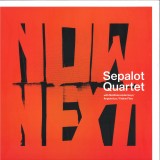
Hip-HopDownbeatBeatsAmbientLounge
NOWNEXT is a voyage from the past to the future, from now to then, from what's behind us to what's waiting for us just around the next corner. In musical terms these are the gaps that appear when you drift between genres and take risks. Strolling far from the well travelled Zeitgeist path. The second album by the Sepalot Quartet floats through this timeless space and fills those cracks with a relaxed fusion of Jazz meets Indie meets Electronica, not once denying Sepalots hip hop roots.
This freedom of expression can also be considered a sign of our times, with a generation coming of age without rivalling youth phenomena. Where a jazz show is held in a techno club with no further explaination needed.
With their first release the Quartet still relied on remakes from the established Sepalot dicography, with their current work they laid the foundation for a truly solid form of musical self discovery.
NOWNEXT is enlivened by this spirit and offers a fascinating and confindent blend of varied sounds spanning time and space.
With all this being said, NOWNEXT is truly an up to date album of international format, feeding from the rich experience of its diverse members (Sepalot, Angela Aux, Fabian Füss, Matthias Lindermayr). Memories, associations and a well carved vision are melted into a masterpiece.
NOWNEXT is the latest offering by SEPALOT and his QUARTET and needs to experienced with all senses.
Ready to ship
HouseElectroTribalElectronicaNu Disco
Berlin club and party-starters Sameheads return to black wax on April 10th with “ZEUG!”, a 4-track EP from various celebrated artists, who join forces in new and unheard ways for a stack of outernational and spaced-out dancefloor jams for creative dance floors worldwide and beyond.
Berlin-based CROSSLUCID, AKA Sylwana Zybura and Tomas C. Toth, have delivered another stunning example of their perception-bending otherworldly viewpoint with the artwork for the release. A purely analog production, fusing clever lighting tricks, hand-made props, and a healthy dose of shaving foam and dry ice… This “Cult of the Cosmic Swamp” chimes with the weird tribal rhythms contained on the record.
First up is Mameen 3 (a side-project from Brussels selector DJ Sofa) & Romanian pioneer Rodion G.A with ‘Planet Cluj’, a suitably off-world excursion through a fun-packed disco hall in some far-off colony where layered synths are stacked, elements seeping through one another to form a mesh of groove.
Anatolian Weapons’ cosmic fireside ritual, ‘Chant 3’, heats up the A2 with vibrant and punchy percussion loops woven together with a worldwide chorus of chanters. Building continuously, the tough workout is dosed up with a bassline saturated in attitude for a high-energy finish.
Picking up on the B side are KRENG (a morphic form composed of Don’t DJ and Dane Close), who slow the pace down with a latticed beatwork combining robust dance formulas and blasting syncopation. Letting the rhythm do the legwork for the first half of the track, the pair then pour out a sludged mess of grime-infused bass over the percussive chaos.
Silvia Kastel and Wilted Woman close proceedings as SHAKEY with a dubwise workout that straddles b-side house obscurity and stoned live dub improvisation: steel drums patter at the windows of Paradise Garage as Larry Levan fights off the vampires alongside Scientist.
The release is celebrated at Sameheads on April 10th with an extremely rare live show from Rodion G. A., an appearance from INVERSIONS label owner Milo Smee, and a b2b from Don’t Dj & Dane Close. Limited to 300 pieces, this record will find a home in the stacks of DJ’s willing to step outside genre and convention.
Ready to ship

The Austrian electronic music label fortunea starts off the new decade
with a bang! This time they come up with a new EP by label fellow
Peletronic.
It’s called ‚Secret Escape‘ and begins with the raw and energetic title
track, that is driven by MPC-style melody chops and a grooving bassline. Definitely a lot of peak time potential here. The original track is accompanied by a remix of charismatic Australian dj- and producer Jad & The, who transforms it into an euphoric deep house weapon with funky breaks and analogue infused acid sequences.
The first track of the B-side is setting up a darker mood. It’s called „My
House Is Your House“ and comes up with spaced out elements that
complement each other into a late night/early morning club atmosphere.
Voice- and effect artefacts sprinkle through the listeners head, while kick and bassline are holding everything together. Jon Gravy makes the remix dutys on B2 and delivers a stomping alternative to the original. A funky reverberant guitar, a staccato male vocal and high pitched piano stabs gives you back these feellings of mid 1990s chicago house memories.
All in all a must have house record for this upcoming festival season.
Don’t miss out!
Support by Rainer Trüby, Mr. Ties, Ame, Tensnake, Robert Owens, Fred P, Kassian, Horse Meat Disco, Loz Goddard, Jeremy Glenn, Intr0beatz, Franck Roger, Carlo, Replika, Just Her, Sune, Orlando B, Reece Johnson
Ready to ship

nfernal Sounds welcome the return of the illusive Irish producer Darkimh, plating up the scorching 'Tell Me Nothin' EP' as the follow up to his #IFS009 release which hit shelves in 2018. The title track features Manchester MC T-Man (one part of Levelz), a collaboration in the works for some time, providing the ultimate weight deliverance to the dance floor, igniting rigorous energy as soon as the tune drops. Darkimh backs this stand out piece with two different flips - a more trapped out track in 'Gin Swing' and the surreal and spacious number, 'Boneclick'. All tracks are perfect for different vibes and different situations, whether it's at home on your own, out at a house party or ready to lay siege on the dance floor. The release features a full sleeve artwork piece - designed and photographed by Gabrial Deacon.
Having received major support from the likes of Commodo, Sicaria Sound, N-Type and Truth, amongst many other top drawer DJ's, this is a must-own piece of black crack - pressed on 180g vinyl.
Ready to ship