Next up on Lonewolf is Bohm!
This fresh collab will see the Dutch producer bringing two EPs “Leaving Earth Part.1 and 2” on EYA Records sister label this year.
Intricate rhythms,bleeps and bass, emotive melodies and acid lines.
The artist opens a portal to new dimensions, it’s a powerful journey into timeless music and deep space. 5,4,3,2,1.. ignition and take off. The dream is alive.
Search:space fresh
Jasmyn is the new solo project created by Jasmyn Burke, former singer-songwriter and frontwoman of the critically acclaimed Canadian band, Weaves. Having two JUNO nominations for Alternative Album of the Year and two SOCAN Songwriting Prize nominations, Burke has established herself as one of Canada's most exciting and fresh voices. With this new project, she has decided to use her own name, Jasmyn, to mark the start of exploring her own unique sound as a solo artist. Collaborating remotely with Los Angeles-based producer John Congleton (St. Vincent, Angel Olsen, Sharon Van Etten) on a body of work she had compiled over months of being in lockdown. Finally in the Spring of 2021, Jasmyn went to LA to record with Congleton, exploring themes of finding patterns in life and how to perhaps change them. On the general direction of her new album In the Wild, Jasmyn said, "This was written during the Fall of 2020; The world was feeling pretty heavy, and I felt myself wanting to write music that created a mood of happiness and space to grow. I feel like I have grown and changed as a person over the last few years and wanted to write songs that created a sense of confidence and well-being." With Weaves receiving worldwide support from the likes of Rolling Stone Magazine, NPR, Pitchfork, and more, Jasmyn is excited to share a new side of herself, perhaps her most honest and raw work to date.
Following on from the success of 2018’s epic triple album The Saving Of Cadan, Cornwall’s space/psych/folk-rock/post-punk cross-pollinators HANTERHIR are back with a new studio album. After more than a decade, …Cadan finally found the band breaking out of their Redruth bolthole, playing a major headline show at London’s Kernow In The City festival in March 2020, just before lockdown. As with many others, this enforced break from gigging encouraged the band to get creative and the new album was soon progressing…Its Cornish title Nyns Eus Denvydth Bys Trest roughly translates as ‘There is no-one to trust’ – “Writing and recording the album was done over the backdrop of Brexit, a falling apart relationship and then Covid lockdowns,” explains singer, guitarist, and songwriter Ben Harris. “With all the wacky things that have come out of people’s mouths over the past few years I think the title pretty much sums everything up.” A massive labour of love for Ben, …Cadan was a sprawling concept based on Cornish legend, which required him to write within a theme. The creation of this album has therefore been a breath of fresh air, a more organic experience allowing him to write from a more personal and immediate perspective. Displaying elements of Hawkwind’s sturm und drang spacerock and Psychedelic Furs’ sax-driven post-punk squall, opener ‘Always On’ finds the septet celebrating themselves: “We play so many gigs with so many other bands and one thing that strikes me about us is that we're always ready, we don't spend hours soundchecking, just point us in the direction of a stage and we'll play there. “‘Honeybees’ is us singing to the people that it's possibly time to stop voting for the same political parties and following the same failed systems,” he continues. “As far as I can see nothing's got better over the past year, or ten years or whatever, things just get slowly worse and people accept it. ”The song ‘Yeah’, which fuses Steeleye Span folk-rock melody and Sonic Youth chaos with spiralling psych guitar, has backing vocals which translate as “I am the same as you”, which Ben thinks is very important: “We're all the same and no-one is more important that anyone else”. Recorded at MHRCC, The Chapel and VIP Lounge by Peasy and Dare Mason; produced by Peasy and mastered by Anders Petersen at Ghost Sounds, Stockholm.
Patrice returns to home base with a fresh trio of sonic delicacies for the Sistrum faithful. Bringing his signature depth of soundyet infusing a sense of funk, Patrice lays it out proper, as always. A1 Soulfood Crisp breaks meet a solid 4/4, moving quickly into top-shelf broken/nu-jazz vibrations. A deep, punchy bassline follows warm key stabs as metallic percussion shuffles amongst the tones. Think of modern, late night machine funk and you're on the right track with this savory slice of goodness. Soulfood for discerning ears, indeed. B1 Feels So Good A 4/4 rides over a looped break, warm chords float in and the groove is locked in. Sweet, jazzy stabs ensue before Patrice brings in that bassline... Punchy in all the right places. The title really says it all - this tune just feels good and could roll on forever, without a care in the world. B2 InstantGratification Patrice brings it back to traditional vibes with this deep, stripped down groove. As the kick marches on and looped hand percussion begins to hypnotize, a rotund square wave bassline bumps through the mix to excellent effect. Signature, deep Detroit keys creep in and are soon accompanied by delicately processed synth textures - like transmissions intercepted from deep space. Gratification comes to those who open their ears and hear between the sounds.
For the label’s next release, the team at Leng Records has decided to offer-up something a little bit different: a 12” compilation of little-known and hard-to-find Balearic gems selected by friend of the label Paul Beckett.
Plucked from the dusty corners of his collection, the five tracks on show are quietly colourful, tactile and musically rich excursions that effortlessly blur the boundaries between genres and sound terrific blasting from speakers on a humid Mediterranean or Adriatic afternoon.
First up is Ray & John’s languid, subtly disco-tinged ‘Day By Day (Instrumental)’, which originally featured on the flipside of the Italian duo’s sole single from 1984. Rich in rubbery bass guitar, sequenced synth-bass, sharp disco guitar licks, Fairlight stabs, dreamy chords and occasional chanted vocals, it sounds like Please-era Pet Shop Boys reclining at a Rimini pool party after copious amounts of happy pills.
It’s followed by Angel’o’s ‘Angelo’, a turn-of-the-80s gem picked from the band’s long-forgotten album, Dream Machine. Marked out by warming electric piano motifs, squelchy synth-bass and hazy lead vocals, the track successfully mixes krautrock and space rock sounds with the then fresh sound of synth-pop.
Next up is All Trouvee’s ‘Darling’, a thoroughly overlooked 1987 single whose minimalistic sleeve artwork lists each of the now-classic – and then cutting edge – synthesizers used to make the sun-soaked blend of mid-80s synth disco, AOR pop and sunset-ready jazz-funk piano solos.
Equally as impactful is Angel’s ‘Tomorrow Night’, a classic – if little-known – chunk of glossy, laidback synth-pop from 1980 that sounds like something you’d hear on AM radio stations in the early hours of the morning. Its’ sound – all delay-laden Linn drums, synth-horns, Nile Rodgers style guitar licks and echoing lead lines – was actually far sighted for the time but would become more familiar to listeners as synth-pop boomed in the mid 1980s. Those who buy the digital version of the EP will also have access to a longer, club-style mix as well as the short version featured on the 12”.
Rounding off a fine package is ‘Feeling Action’ by Eggs Time, a deliciously warm and woozy chunk of fretless bass-sporting Italian pop/West Coast jazz-rock fusion plucked from a real since of buried treasure: an Italian compilation called – for reasons that aren’t clear – Moby Dick. There’s certainly a tinge of both yacht rock and blue-eyed soul about the track’s gorgeous blend of FM synth sounds, eyes-closed jazz guitar solos, unfussy beats and sweet female lead vocals. It provides a fittingly horizontal finish to a collection packed to the rafters with long-overlooked, sun-baked treats.
• Limited edition of 800 copies
KU is paying tribute to one of the most acclaimed and iconic records in the NMS catalogue, with a 2LP vinyl release, with brand new artwork & a bonus remix. The re-release is an opportunity for new fans to be exposed to this masterpiece LP, old fans to explore a NMS classic through fresh ears, and for the band to reflect back on the record they made nearly 15 years ago.
As far as recording the record, there was nothing new about the approach. By this time the band had found a formula for making records that they found to make most sense and suit their chemistry well. Richard Formby was their goto engineer and Hall Place Studios in Leeds, was the space that breeds the desired sounds. This process would remain the same until the band started making records in the United States a few years later.
The KU ‘Plug & Play' Reissue is snapshot in time of a band that was around the 10 year mark of their career. There’s an undeniable chemistry and energy captured in the recordings that could only come from musicians who were tapped in and listening to one another's ideas and playing. With each track leaving you wondering how they were able to find that much pocket, and how much deeper could it possibly go!
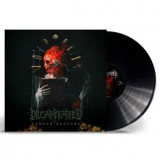
Across eight studio albums, DECAPITATED grew from the adolescent dream of teenagers from a small Central European town to one of the leaders of the metal genre. Each successive album further expands the band’s sound with genre-bending authenticity and integrity. As Metal Injection rightfully observed, “any self-respecting death metalhead knows the name well.”
DECAPITATED’s music is a weapon forged by four young men from a historic medieval-fortified town in Poland, which catapulted them to the top of a worldwide subculture. Like a rose in the devil’s garden, the DECAPITATED story builds triumph from tragedy. The gleeful grotesquery of extreme metal imagery and rifftastic bludgeoning beckons listeners to uncover broader truths.Upon the release of 2017’s Anticult, Metal Hammer declared DECAPITATED “a serious successor to the likes of Pantera and Lamb Of God – a band who can draw new legions into the metal world as its new champions.” Their diverse follow-up, 2022’s Cancer Culture, delivers on that promise.
Instantly recognizable devastation and deceptively sinister hooks abound. Freshly minted DECAPITATED anthems like “Last Supper,” “Hello Death,” “Just Cigarette,” “No Cure,” “Iconoclast,” and “Cancer Culture” shimmer with sonically sharp production and unrelenting bombast. There’s also a newly increased emphasis on melody, even venturing into darkly romantic territory. Wacław "Vogg" Kiełtyka (guitar), Rafał "Rasta" Piotrowski (vocals), Paweł Pasek (bass), and James Stewart (drums) are at the top of their game, delivering the goods at peak performance. Jinjer vocalist Tatiana Shmayluk and Machine Head frontman Robb Flynn make guest appearances.
Set on the descending plains of a mountain range amid a dense forest, Krosno boasts a 14th-century Gothic church, a Subcarpathian museum, and stunning artisan glassware. In this Polish town, teenage music student Wacław "Vogg" Kiełtyka discovered records from bands like Morbid Angel, Cannibal Corpse, Metallica, and Machine Head. The guitarist and his younger brother, drummer Witold “Vitek” Kiełtyka, cofounded DECAPITATED in 1996, inspired by a wide range of technical death, blackened thrash, and local heroes, like KAT and the world-renowned Vader. Death and black metal reigned supreme in the Polish scene of the 1990s, where Behemoth originated as well. In fact, a Vader song called “Decapitated Saints” inspired the band’s moniker.
The organic musical chemistry between the Kiełtykas was akin to the brotherly connectivity and vibe driving Pantera, Gojira, and the classic era of Sepultura. In 2006, Kerrang! praised the first three DECAPITATED albums - Winds of Creation (2000), Nihility (2002), and The Negation (2004) – as “superbly conceived and executed eruptions of technical brilliance and razor-sharp songwriting that turned these youthful Poles into one of the genre’s most widely respected bands.” That year’s Organic Hallucinosis further perfected Vogg’s penchant for blending extremity with catchy hooks.
The rule-breaking ferocity and invention of the first four albums reinvigorated death metal, as DECAPITATED inspired a new generation of bands who followed suit. Sadly, this era came to a shocking end in late 2007. While touring Russia, the band’s bus collided with a large truck near the border with Belarus. Both Vitak and then-singer Adrian “Covan” Kowanek sustained severe head injuries. Tragically, Vitak passed away in a Russian hospital a few days later. He was just 23.Vogg summoned the courage to continue, in honor of his brother and what they created, and returned with a new incarnation of DECAPITATED and the fiercely adventurous comeback album, Carnival is Forever (2011) featuring new vocalist Rafał "Rasta" Piotrowski. Blood Mantra (2014) introduced bassist, Paweł Pasek. Blabbermouth declared it “perhaps the most poised and gutsy” DECAPITATED album, adding “its courageous bends make it a turbulent but pleasurable ride.”
Cancer Culture sounds brilliant, modern, and tasty. “There is no place for any fake, plastic, bullshit drum machine or anything like that,” Vogg insists. “It’s all organic, pure, and clear, showing the true face of the band. Vogg and company entrusted the Cancer Culture mix to David Castillo at Sweden’s Fascination Street Studios / Studio Gröndahl (Sepultura, Carcass, Opeth, Katatonia), and legendary American producer Ted Jensen (Metallica, Slipknot, Pantera, Machine Head, Korn).
The devoted supporters who traveled to see DECAPITATED on international tours with the likes of Lamb Of God, Meshuggah, Soulfly, Fear Factory, and Suffocation over the years will recognize the ever-present pummeling backbone. Longtime fans and newcomers alike will connect to the variety of atmospheric depth throughout Cancer Culture’s ten boundlessly energetic and creative tracks.
“If you told me 25 years ago, in my neighborhood in the South of Poland, that I would be in Machine Head, sharing riffs with Robb Flynn,” Vogg marvels. “It’s simply incredible. It means that everything is possible in your life. That gives me the faith to believe that I can achieve even more in my career. The dreams we have when we are kids, things we can barely imagine, can happen.” Flynn contributes a hauntingly beautiful vocal to the Cancer Culture track “Iconoclast.” “Clean vocal singing is a really new thing in DECAPITATED,” Vogg notes. “It’s really unique and amazing.”
Driven by Vogg’s passion and integrity, the dual emphasis on creative invention and technical prowess maintains DECAPITATED’s stature as genre-leaders in 2022 and beyond. The band’s supporters continually demonstrate confidence and absolute certainty DECAPITATED will deliver.
Across eight studio albums, DECAPITATED grew from the adolescent dream of teenagers from a small Central European town to one of the leaders of the metal genre. Each successive album further expands the band’s sound with genre-bending authenticity and integrity. As Metal Injection rightfully observed, “any self-respecting death metalhead knows the name well.”
DECAPITATED’s music is a weapon forged by four young men from a historic medieval-fortified town in Poland, which catapulted them to the top of a worldwide subculture. Like a rose in the devil’s garden, the DECAPITATED story builds triumph from tragedy. The gleeful grotesquery of extreme metal imagery and rifftastic bludgeoning beckons listeners to uncover broader truths.Upon the release of 2017’s Anticult, Metal Hammer declared DECAPITATED “a serious successor to the likes of Pantera and Lamb Of God – a band who can draw new legions into the metal world as its new champions.” Their diverse follow-up, 2022’s Cancer Culture, delivers on that promise.
Instantly recognizable devastation and deceptively sinister hooks abound. Freshly minted DECAPITATED anthems like “Last Supper,” “Hello Death,” “Just Cigarette,” “No Cure,” “Iconoclast,” and “Cancer Culture” shimmer with sonically sharp production and unrelenting bombast. There’s also a newly increased emphasis on melody, even venturing into darkly romantic territory. Wacław "Vogg" Kiełtyka (guitar), Rafał "Rasta" Piotrowski (vocals), Paweł Pasek (bass), and James Stewart (drums) are at the top of their game, delivering the goods at peak performance. Jinjer vocalist Tatiana Shmayluk and Machine Head frontman Robb Flynn make guest appearances.
Set on the descending plains of a mountain range amid a dense forest, Krosno boasts a 14th-century Gothic church, a Subcarpathian museum, and stunning artisan glassware. In this Polish town, teenage music student Wacław "Vogg" Kiełtyka discovered records from bands like Morbid Angel, Cannibal Corpse, Metallica, and Machine Head. The guitarist and his younger brother, drummer Witold “Vitek” Kiełtyka, cofounded DECAPITATED in 1996, inspired by a wide range of technical death, blackened thrash, and local heroes, like KAT and the world-renowned Vader. Death and black metal reigned supreme in the Polish scene of the 1990s, where Behemoth originated as well. In fact, a Vader song called “Decapitated Saints” inspired the band’s moniker.
The organic musical chemistry between the Kiełtykas was akin to the brotherly connectivity and vibe driving Pantera, Gojira, and the classic era of Sepultura. In 2006, Kerrang! praised the first three DECAPITATED albums - Winds of Creation (2000), Nihility (2002), and The Negation (2004) – as “superbly conceived and executed eruptions of technical brilliance and razor-sharp songwriting that turned these youthful Poles into one of the genre’s most widely respected bands.” That year’s Organic Hallucinosis further perfected Vogg’s penchant for blending extremity with catchy hooks.
The rule-breaking ferocity and invention of the first four albums reinvigorated death metal, as DECAPITATED inspired a new generation of bands who followed suit. Sadly, this era came to a shocking end in late 2007. While touring Russia, the band’s bus collided with a large truck near the border with Belarus. Both Vitak and then-singer Adrian “Covan” Kowanek sustained severe head injuries. Tragically, Vitak passed away in a Russian hospital a few days later. He was just 23.Vogg summoned the courage to continue, in honor of his brother and what they created, and returned with a new incarnation of DECAPITATED and the fiercely adventurous comeback album, Carnival is Forever (2011) featuring new vocalist Rafał "Rasta" Piotrowski. Blood Mantra (2014) introduced bassist, Paweł Pasek. Blabbermouth declared it “perhaps the most poised and gutsy” DECAPITATED album, adding “its courageous bends make it a turbulent but pleasurable ride.”
Cancer Culture sounds brilliant, modern, and tasty. “There is no place for any fake, plastic, bullshit drum machine or anything like that,” Vogg insists. “It’s all organic, pure, and clear, showing the true face of the band. Vogg and company entrusted the Cancer Culture mix to David Castillo at Sweden’s Fascination Street Studios / Studio Gröndahl (Sepultura, Carcass, Opeth, Katatonia), and legendary American producer Ted Jensen (Metallica, Slipknot, Pantera, Machine Head, Korn).
The devoted supporters who traveled to see DECAPITATED on international tours with the likes of Lamb Of God, Meshuggah, Soulfly, Fear Factory, and Suffocation over the years will recognize the ever-present pummeling backbone. Longtime fans and newcomers alike will connect to the variety of atmospheric depth throughout Cancer Culture’s ten boundlessly energetic and creative tracks.
“If you told me 25 years ago, in my neighborhood in the South of Poland, that I would be in Machine Head, sharing riffs with Robb Flynn,” Vogg marvels. “It’s simply incredible. It means that everything is possible in your life. That gives me the faith to believe that I can achieve even more in my career. The dreams we have when we are kids, things we can barely imagine, can happen.” Flynn contributes a hauntingly beautiful vocal to the Cancer Culture track “Iconoclast.” “Clean vocal singing is a really new thing in DECAPITATED,” Vogg notes. “It’s really unique and amazing.”
Driven by Vogg’s passion and integrity, the dual emphasis on creative invention and technical prowess maintains DECAPITATED’s stature as genre-leaders in 2022 and beyond. The band’s supporters continually demonstrate confidence and absolute certainty DECAPITATED will deliver.
AOW is a new collaborative project from Dan Ghenacia and Tolga Fidan emerging from a new period of creativity and inspiration for the Lisbon-based artists.
Long time friends and fellow lynchpins of the European house and techno scene, Ghenacia and Fidan started working closely together through 2020 and 2021 while sharing studio space at Boa Lab. They found themselves at the heart of an artistic community of musicians, designers and engineers, which took shape around Ghenacia’s experiments with alpha wave generation, inspired by Bryon Gysin’s Dream Machine.
Ghenacia and engineer Anine Kirsten developed a modern update on Gysin’s 1950s design, which has been installed at exhibitions in London, Lisbon and Paris. At its heart, the project explores the natural hallucinatory effects of alpha wave projections on the eyelids, and the therapeutic benefits of the experience. Out of this spirit of psychedelically-charged experimentation, Ghenacia and Fidan have been working beyond the confines of their typical club-oriented material, creating ambient soundtracks to artist exhibitions in Boa and auditory backdrops to Alpha Wave Experience installations.
AOW bridges the gap between this new period of creativity and Ghenacia and Fidan’s life-long passion for electronic dance music. Compared to the strictures of house and techno they’re best known for, the three tracks on Hear the Light explore a more open, inquisitive sound with roots in UK electronica and West Coast psychedelic breaks (a seminal scene when Ghenacia was in the Bay Area in the 90s). Crucially though, it’s not a pointedly retro sound, but rather a result of rich streams of inspiration meeting and passing through crisp, modernist production techniques to offer something
genuinely fresh on the ears.
Working outside of their comfort zones and guided by creative philosophies springing from research, shared experience and community, Hear the Light marks a new step forward for Ghenacia and Fidan, with many more developments promised for the future.
- A1: Pawkarmayta - Qaaq
- A2: Qoqeqa - Xi
- A3: Sebuky - A Que No Me Lleva El Alcatraz
- A4: Mangle - Cacerola
- A5: Cruzloma - Brisas (Feat Humazapas)
- A6: Selvagia - Flores (Feat Corina Lawrence)
- A7: La Color - El Baucha (Yoyoyo Remix)
- A8: Akilin - Guaca Amarilla (Feat Bomani)
- A9: Maga Bo - Cade Ze (Feat Rosangela Macedo)
- A10: Galo Vermelho - Domingo Cura
- A11: Tremor - Subibaja
Born out of an underground Buenos Aires party and first launched in 2008, ZZK Records has spent more than a decade at the forefront of Latin American music, carving out space for artists putting a futuristic (and often electronic) spin on classic rhythms and folklore traditions. Along the way, the label spread across the globe and helped launch a few stars-Nicola Cruz, Chancha Vía Circuito, La Yegros and Son Rompe Pera among them-but ZZK's search for new artists, sounds and perspectives is never complete. ZZK Sound Vol. 4 brings together a fresh crop of talent from across Latin America, along with a pair of choice selections from veteran acts Maga Bo (Brazil) and Tremor (Argentina). Compiled by ZZK co-founder DJ Nim-the label's original A&R (and Chancha Vía Circuito's older brother), he'd actually taken a five-year hiatus from the project prior to 2020-the compilation's origins can be traced back to the early days of the pandemic. As the world went into lockdown, he put out a call for submissions, and within three months, he'd received more than 1000 tracks. Nim literally listened to them all, whittling the pile down to his 11 favorites, and after hearing his selections, Grant C. Dull-another ZZK co-founder, who runs the label's day-to-day operations-couldn't believe his ears. Nim had done it again. There were no notes, and no changes to the tracklist. ZZK Sound Vol. 4 was quickly put into production. At this point, few music fans need to be sold on the appeal of Latin music, but ZZK, which has been operating in this sphere long before the genre became the "next big thing," is dedicated to the idea that the potency of these sounds extends well beyond the pop charts. Hopping between continents and recontextualizing rhythmic lineages that date back centuries, ZZK Sound Vol. 4 is both an arresting snapshot of Latin America's electronic avant garde and a thrilling preview of its next wave.
Dena Miller grew up on a diet of folk before spending 6 years writing and exploring projects through Philly's punk scene, Oberlin's conservatory experimentalist and NY's DIY history before arriving at her debut album 'Woodpecker' . Think Waxahatchee, Told Slant & Moldy Peaches...
Black vinyl with inner sleeve lyrics & download.
Deer Scout’s debut full length Woodpecker is a record about memory and the subconscious. And like an unforgettable dream that keeps you puzzling over its riddles for days, it’s as packed with direct symbols as it is with ruminative haze. “I approach songwriting as a process of boxing things up, or putting away a time capsule,” explains front person Dena Miller, who wrote the album over a period of six years. It’s a culminating collection of the project’s many sounds and influences to date, from Philly’s punk cooperatives to Oberlin’s conservatory experimentalism to New York’s DIY history. At the center is Miller’s assured guitar fingerpicking and boldly clear voice, firmly grounded even as it gently probes uncertain emotional and musical terrain.
Raised by two folk musicians in Yonkers, Miller began recording songs as Deer Scout her freshman year of college in Philadelphia. There, she wrote Woodpecker’s earliest song “Synesthesia” about a train ride home from a basement show: “Night in the city / Big house on the corner / Her voice has the timbre of summers ago,” recalls Miller resonantly. After Miller’s transfer to Oberlin College, Deer Scout began touring DIY venues around the country and sharing stages with favorite artists including Waxahatchee and Told Slant. The twinned intimacy and intricacy of those two influences is reflected in the carefully adventurous arrangements on Woodpecker, which features, among other contributors, bass from close collaborator Ko Takasugi-Czernowin, cello from Zuzia Weyman, drums from Madel Rafter, and guitar from Miller’s father Mark—who also wrote the song “Peace with the Damage” and originally released it with his band Spuyten Duyvil in 2011.
Many of the songs on Woodpecker were written during periods of grief or change. “I used to sing myself to sleep as a baby and I think music still plays the same role in my life—it’s a way of self-soothing or seeking comfort,” explains Miller. “But there’s also part of it that comes from wanting to connect with people." Recorded and mixed primarily by Heather Jones at So Big Auditory in Philly with overdubs by Miller at home, Woodpecker is an exercise in portraying the incommunicable. “Cup”—about a relational psychology test called “a walk in the woods” that turns encounters with symbols into meaning—uses watery arpeggios, wintry strings, and roving bass to create a liminal sonic space, optimistic but tense. “Cowboy,” with airy layers of acoustic guitar riffs and Miller’s charmingly double tracked voice, takes its little fish, big pond inspiration from the character Joe Buck in Midnight Cowboy. And “Afterthought,” with its unexpectedly bright resolutions, is about God, love, and the complexity of empathy; “Heaven isn’t watching us,” sings Miller candidly over pedal steel.
Though Woodpecker is a record about uncertainty and the unknown, it’s also about compassion and connection—as Miller was able to find over the course of writing and recording this next chapter for Deer Scout and first release for Carpark, which she’s excited to at last share with the world.
Very limited vinyl pressing, 500 copies in a gatefold sleeve, a printed inner housing white and marbling effect vinyl with full download included. CD in a 4 panel digipack with a 4 page booklet. New Heavy Sounds is very proud to bring you Moongazer, the 2nd album by the 4 piece stoner rock powerhouse from Italy, TENEBRA. The band had already made waves on the scene with their debut album ‘Gen Nero’ before delivering ‘What We Do is Sacred’ their debut EP for New Heavy Sounds last year, 3 killer tracks that were but a taster of things to come. Moongazer takes the story a stage further with 9 slabs of crushing fuzzed up grooves, fuelled by 70’s proto metal, hard rock, punk, psych-blues and noise, loaded with great riffs and melody and topped off by gutsy soulful vocals. Musically, you could say that TENEBRA occupy similar musical terrain to bands such as Graveyard, Witchcraft, Kadaver and other bands of that ilk, but TENEBRA are very much their own beast. They have all the chops of course, but are musically less slavish, often adding a twist that keeps the songs fresh and now. There’s also very little reliance on Sabbath-isms (apart from one cheeky nod) and though occult rock is also part of the vibe, the music steers well clear of the cliches. In fact the band bring a clutch of left field influences into their melting pot as well, from June of 44 and Love Battery to the Misfits and the psych grunge of Screaming Trees. Of the 4 members, Claudio (bass), Emilio (guitar) and Mesca (drums) came from the hardcore and post-hardcore squat scene that gathered around Bologna, whereas their formidable vocalist Silvia (the youngest of the crew) is immersed in the underground rock of the '60s and' 70s. When you hear her sing you’ll know where she’s coming from as she has one helluva rock voice, laced with whiskey, smoke, grit, late nights and a whole lotta soul. Think Maggie Bell meets Betty Davis with a smattering of Gillan, and you'll be in the right ballpark. So what you get with ‘Moongazer’ is a band revelling in the spirit of 70’s rock rather than recreating it. ‘Heavy Crusher’ lulls you with its dreamy intro, but it’s not long before the riffs hit with Silvia in full effect. This pretty much sets the tone for the record, coiling proto metal riffs, executed with gusto and joie de vivre. And as with every track on this album, Silvia belts it out like she absolutely means it man. ‘Cracked Path’ continues the journey and ups the heavy fuzz a notch or 2. First heard on ‘What We Do Is Sacred’ (full length album version). ‘Black Lace’ is a brooding beast, epic and melodic, almost a ballad, with a heap of soul lurking within, courtesy of Silvia’s mighty voice. ‘Carry My Load’ keeps the brooding vibe going till the loping off kilter killer riffs kick in. This is definitely Silvia at her most Gillan-esque. ‘Winds Of Change’ does just that, dial things down to bluesy, almost psych feel, with dreamy solos and a hooky guitar break. ‘Stranded’ is a full on stoner rocker as is ‘Space Child’ with its short homage to the dark lords, there’s even a a sax solo. Never one’s to just play it straight these guys. ‘Dark And Distant Sky’ is pure proto metal, a la Bloodrock or Grand Funk, it truly rips, and once again, it’s construction veers it away from anything approaching what you’d expect. ‘Moon Maiden’ is the album’s closer, featuring Gary Lee Conner (no less) of the aforementioned grunge legends Screaming Trees, guesting on guitar. It’s a fitting and epic closer, by turns hard ‘n’ heavy, psychedelic and chock full of great ideas. MOONGAZER is without doubt an accomplished sophomore release that deserves to be heard and appreciated, purely because, though it may appear to reside in the world of stoner, it is so much more.
Fresh off the back of a debut album with sidekick Charlotte Adigéry Belgium-Chinese musician Bolis Pupul explores themes of heritage and identity on his new solo two-track 12-inch ‘Neon Buddha’ - out 6th May via Soulwax’s DEEWEE.
Mixing widescreen electronica – think early Mr Fingers-like techno and Yellow Magic Orchestra’s exuberant man-machine minimalism – with the warm-hearted and wonky naivete of Belgian New Beat Bolis’ singular sonics are at once playful emotive unrelenting and tender.
The title track is inspired by a dream Bolis had of a pagoda in Hong Kong featuring a contemplative Buddha made of neon lights. The music is similarly bright and exciting – an insistent acid squiggle giving the track the requisite Weatherall-friendly A Love from Outer Space chug.
Housed in a UV Gloss sleeve with a printed inner.
Martin Matiske's superb new six-track EP Circle Of Enlightenment on LDI Records is based around the concept of one-mindedness and togetherness. This German artist was fascinated with mixing records as early as his 10th birthday and had his first release on the legendary International Deejay Gigolo Records aged just 15. In the 20 years since he has released a selection of records on labels like Moustache Records and Bordello A Parigi. His timeless sound comes with a vintage touch and always fuses electro, italo and techno in fresh new ways. This new EP aims to describe the direct connection between human beings and the universe. Martin says: "Human beings are aliens always looking for answers to questions like why are we here and what life is about? We know the answer but won't accept it. We are made up of the elements of space and are directly connected to the universe. Each person contains the energy of the universe and is connected with everything that surrounds it. We are one! We are here because we are here! Our mission is to be!" The EP opens with 'Memory', and Martin explains that "Remembering is the ability to do things right but most of the time it causes pain." The track is a slick and icy electro workout with gorgeous retro-future pads bringing a cosmic sense of soul while the corrugated bass keeps busy below. 'Breakout' describes breaking out of normal thought and reaching a state of "no-mind." It is a playful and dynamic electro cut with characterful bass and synth stabs like shooting stars as shimmering arps ride up and down the scale. 'Lost In Space' deals with the idea that human beings on earth are just as lost in space as aliens. It's an interplanetary electro trip with glistening synths shining bright next to more twisted, tortured bass. 'Microbot' is about miniature robots that make our lives easier and ride on a punchy bassline, with neck-snapping snares and pads that circle around like spacecraft during battle. It is another lush electro workout that leads into 'Stars' and pays homage to the importance of these twinkling rays of light. It's a widescreen track with withering leads, cyborg vocals, and a real sense of hope as the snappy drums march into an unknown future. Last of all, 'Solaris' pays tribute to the life-giving force of the sun with another super crisp electro groove, slithering arps and conversational pads that make both a physical and emotional impact. Circle Of Enlightenment is a brilliantly adventurous and storytelling new EP from the ever-excellent Martin Matiske.
We've always done things our own way and without any outside pressure,” says Paul Isherwood of The Soundcarriers. “Making music like this keeps things fresh, you always lose something and gain something as you go along but I think of it as just another chapter.”
There have been many chapters in the life of the band to date and each one is defined by the singular approach and style of the group. Since forming in 2007 the band - comprised of Isherwood, Adam Cann, Dorian Conway and Leonore Wheatley - have released three albums that position them as a distinct and unique force in British music. Eschewing fads and trends that come and go, they have instead focused on honing their own sonic world that glides between woozy psychedelia, immersive grooves, subtle pop and rich, enveloping soundscapes. They’ve consistently moved at their own pace and on their own terms and on their fourth album, Wilds, they return after seven years since their last. “The sessions started in a cottage in the wilds so there's a literal meaning,” Isherwood says of the title. “But figuratively we've pretty much been in the wild for the last few years as far as a lot of people are concerned.”
The recording was staggered over a few different locations, from cottages to primary schools, before finishing in an art gallery. “The beauty of recording in non-studio studios is you have the time for the unexpected to happen,” says Isherwood. “Which is really what keeps you coming back for more.” As a result of the timeframe of the album, it’s one that has changed and grown a lot over the years. “The record has been through a lot of stages,” says Isherwood. “It's almost been circular. We started off wanting to do an album of more shorter, concise tracks and then sort of sidestepped into some more spacey ambient ideas so in a way the album is kind of a synthesis of the two phases, overall carrying on with many of the themes and influences of the first three but with a more focused approach.”
The opening ‘Waves’ leaps out the gate with an infectious hook kissed by a touch of French pop before leaping into a devilishly catchy chorus and into a mini prog-like flute breakdown. It sets the tone for an album that is rich in adventure and unpredictability that manages to balance experimentation with accessibility. ‘At The Time’ is almost unrelenting in its grinding charge, managing to create a groove that cracks and pulses at the same time, ‘Wilds’ is a gorgeously floating piece of music that skips along with strutting bass as Wheatley’s vocals merge melody with texture magically. The closing ‘Happens Too Soon gently stirs to life with an almost pastoral folk air to it, as it slowly builds into swirling psych pop rich in texture before reaching a rousing crescendo. “I feel this album sums up a lot of our influences,” says Isherwood. “There’s a strong folk influence in the sense of the actual songwriting but musically we wanted to create songs that were like those rare oddities you find on a bizarre charity shop record. A collection of "one offs" capturing a moment rather than trying to make a hit song.”
This sense of it being an album of unique songs is clearly apparent throughout but it also maintains a natural flow and cohesion. This is something that stems from the band’s approach to songwriting for the record. “A lot of the tracks started with a feel or groove,” says Isherwood. “Then building it into a more concise arranged piece. We were conscious that we didn't want the recording to sound too over-polished so although a lot of the tracks were quite painstaking in how they evolved we wanted the actual recording to be quite raw and not be reliant on cutting things up or overly editing things. We wanted it to sound natural rather than perfect.”
Now reduced to half price. The Moles is a fitting incognito pseudonym synonym nom de guerre pen name make believe disguise cloak for most of the musical ideas I get. The album has accumulated over many years. I recorded in Boston, New York, and Western Massachusetts when ideas and opportunities came along. It is almost like a journal covering 15 years,” explains legendary tunesmith Richard Davies (Cardinal, solo). Recorded with like-minded cohorts such as Boston veterans Bob Fay (Sebadoh) and Malcolm Travis (Sugar), as well as New York City fresh faces Dion Nania (Free Time) and Jarvis Taveniere (Woods), the collected songs continue his streak of dazzling and unique psych pop. The record follows on the heels of the 2014 comprehensive reissue of their past discography; “Flashbacks and Dream Sequences: The Story Of The Moles” as well as a triumphant show at Glastonbury. Quotes - “The greatest differentiator between the work of the Moles and that of their contemporaries, though, is Davies himself. As a presence, there is something deeply and beguilingly inscrutable about him, a purposeful blankness that betrays an enormous amount of weight and depth behind it, and oozes both vulnerability and vitriol when it breaks and cracks.” – PITCHFORK // “Classic sparkling Oceania indie-pop.” – STEREOGUM.
As we emerge into the Now with a fresh perspective and renewed vigour, Red Laser Records usher in a novel epoch of Manctalo movements for our post-COVID enjoyment.
Entrusting piloting duties to four well decorated RL commandos, the EP serves to remind us all that despite everything that's happened, we can still find solace in red lasers, smoke machines and high-powered strobe lights.
Splitting open the collective dancefloor inertia is Kid Machine's 'Only Machines Allowed'.
A cybernetic b-boy jam straight outta the planet MEGOH circa 4044. Guided by electrified vocoder lines and a plutonium-grade, armoured groove this impenetrable battle rocket should issue the much needed power boost to get your body kinetics firing again when they release the e-barriers to hedonism.
Returning star fleet lieutenant Count Van Delicious has been collecting entities from the outer galaxies since his appearance on RL EP 9 ('Dark Fruit' w/ Senor Chugger).
Here he announces his return with an end-credits epic, an #inabiteveryoneelse theme from this young vet on a pants-off permo-buzz, up-scrolling through technicolored c64 visuals and deploying his now trademark zoopa-arps, euphoric synth stabs and thunderous low end shudder to deadly effect.
Meanwhile, Ste Spandex continues his cybernetic realignment surgery, dissecting a well circulated disco meme and adding voluptuous gender-neutral enhancements that'll be getting the next generation of androids frisky, despite their lack of reproductive organs. Fizzling synths, spherical repetition and a multi-dimensional mix of high voltage rhythms leaving that vocal line permanently downloaded in your memory cloud. No sharing necessary.
Scottish deep space observer Ernesto Harmon provides some cosmic ruggedness to close off our mission. Reinforced & galvanised low-end rhymix coalescing with humanoid synth expression and an infinite, carbon-free energy source keeping momentum plateaued through the morning after the night before. There's no off switch baby!
For astral travellers seeking solace in the new Now, EP12 kindly acts as an upgrade to your possibly dormant dancing system as you stumble out into the new nocturnal environment. Hopefully reminding us that the simple act of moving alongside one another in a pitch black, laser-guided club space hasn't changed that much...
Limited press, with artwork which could be the next top selling NFT, we urge our RL family to bag this collectable chronicle from the Red Laser Corp.
Historically informed violin player, prize-winning street musician, new age experimentalist, chamber ensemble performer and conservatoire deviant. The career of Valentina Goncharova (b. Kyiv 1953) shares parallels with those associated with the broader new music movement of the 20th century and the dissemination of home recording technologies.
Valentina’s was a youth spent immersed in the world of classical music study under soviet rule, first in Kyiv- later in Leningrad & now St. Petersburg, from the age of 16. With the supervision of professors M. Vayman and B. Gutnikov she learned concert violin and developed alternate playing styles alongside skilled pianists. A student of the Leningrad conservatoire during the years 1969 - 1983, her repertoire included music for violin and later expanded to contemporary music composition.
The improvisatory nature of free jazz and then-budding experimental rock circles also intrigued Valentina during this period in Leningrad. Departing from the rules of the conservatoire, she briefly performed in underground rock clubs alongside future members of the industrial group Pop- Mechanika (Popular Mechanics). This perpetual state of flux is central to the variety found within ‘Recordings Vol. 1’, though as opposed to any degree of uncertainty Valentina’s practice is one
in flux by way of earnest curiosity.
Pushing further into an exploration of solo electro-acoustic sounds, she took to home taping on a modified Olimp reel to reel recorder. Intrigued by the manipulability of dubbing and the fresh sounds of DIY effects chains, Goncharova developed pickups alongside her husband Igor Zubkov. Her infatuation with the music of Stockhausen, Xenakis, Ganelin Trio and Pierre Boulez channels through considerations of space and erratic sound design, the 3 movements of ‘Metamorphoses’ embodying this textural approach to musique concrete.
The compositional skills developed in Leningrad unfold in the romantic gestures of ‘Higher Frequencies’, whilst manipulated cello combines with synthesise keys across ‘Passageway To Eternity’.
The slow, pulsating drone soundscapes recall the likes of Robert Rutman’s US Steel Cello Ensemble or even deep listening pioneer Pauline Oliveros.
The juxtaposition of written notation and improvisatory flare is central to Goncharova’s sound world. This period of home recording documents a confluence of minimalism, free form and flirtations
with new age tropes (inc. bell chimes and cavernous vocal mantras).
Experimenting with unusual performance techniques, such as shouting into amplified cello strings, Valentina’s home studio functioned as a place to foster full artistic and creative freedom
away from any academic strictures.
Relocating to Estonia in 1984, and in parallel to the deeply personal music of ‘Recordings Vol. 1’, Valentina performed at jazz festivals and gave classical concerts across Eastern Europe. In a sense, the recordings on these discs offer only a glimpse into her lifelong body of work. Over the past few decades she has taught at Tallinn Music College, expanded and updated post- Soviet popular music repertoire, collaborated with the Russian Philharmonic Society of Estonia and given concerts and charity events alongside the Catholic Church.
Hers is a life dedicated to the exploration of sound, a career forged through careful study and ceaseless intrigue. In a time where technological interconnectedness has allowed for music of the pas
to be continually mined and evaluated through new lenses, Shukai present an artist whose tendency for private home-taping had allowed recordings to go unheard for thirty years.
To a degree, all musicians are a product of their environment, the places they record and the venues they play. For proof, check out the alumni of the n-wave era CBGBs venue in New York, Cabaret Voltaire’s Western Works studio in Sheffield or more recently London’s Total Refreshment Centre.
We can now add to that list the Constellations Workshop in Colwick, Nottingham, a project that provides employment through making studio furniture, for out-of-work musicians. It was here, after-hours, that the music on Brown Fang’s impressive and ear-catching debut album took shape.
Both members of Brown Fang, bassist John Thompson and guitarist Henry Scott AKA Henry Claude, have a long association with the Constellations Workshop. Though their musical projects are manifold – Thompson having toured with the likes of The Nectarine No9 and The Selecter, with Scott being both a mainstay of Nottingham jazz circuit and recording ambient music as Fang Jr – the work provided by the community-minded project has kept their heads above water and allowed them a space to record in when the shutters go down and the bandsaws get switched off.
Yet the music showcased on Sherwood Pines is more morning-fresh and sun-kissed than industrial and sawdust-sprinkled. Combining the pair’s brilliant musicianship – think languid bass guitars and Pat Martino-esque jazz guitar licks – with saucer-eyed electronics, occasional downtempo drum machine rhythms and plenty of glistening special effects, the set’s eight tracks are as blissful and becalmed as an early morning saunter through Sherwood Forest on a misty autumn morning.
For proof, check epic opener ‘Tracing Paper’, a slow-build ambient soundscape in which bubbly electronic lead lines and colourful chords sashay around Scott’s sparkling, laidback guitars, and the beguiling ‘That’s All You Can Think’, a subtle tribute to Steve Reich masterpiece ‘Electric Counterpoint’ in which slow-burn, stretched out synthesizer sounds wave in and out of a gradually evolving cycle of delay-laden electric guitar motifs.
The band’s love of classic American minimalism – as well as a shared love of the Duratti Column and Robert Fripp – comes to the fore on ‘HDMI I Love You’, which boasts a deliciously dubby bassline, Tangerine Dream style synths and the deepest of ambient chords, while ‘I Nearly Married a Human’ and ‘Fridgewords’ balance bespoke electronics – languid, dewy eyed and comforting – with Scott’s gorgeously laidback, slow-release guitars.
Every great album needs a triumphant conclusion, and Sherwood Pines is no different. You can hear everything that makes Brown Fang great on ‘Goodbye Donkey Jacket’, from the pin sharp, effects laden jazziness of Scott’s guitars and the fluid dexterity of Thompson’s bass, to the pleasingly spacey pulse of the synths and the gentle rhythms of the soft-focus machine drums. It’s a confident, ear-catching conclusion to a debut album that’s been years in the making.
Back in stock !
There is geological time and deep-space time. The natural world's time, and quantum time. Humans started measuring time with the stars and seasons. Then came hourglasses and sundials. The first mechanical clocks weren't in Europe until the late 13th century. Then came industrial time, a wristwatch for all and then everything had a time. A time for everything. All feeding into our recently digitised time and its marching nanoseconds. Let us not forget however another way to measure time: That would be K&D time.
Yes, you can rush, but isn't it so much nicer to amble? This onception of time may well have its roots in those smoke mists, softly blowing through the pre-history of 1995, and if that was time - then we need space. In particular, one Viennese front room that has turned its bass bins out to the cosmos. That sweet smoke, shrouding the desk and sampler. A few old keyboards (as a friend skins up at the back) unnoticed on the couch - just passing through...
Those days of K&D time had been thought to have gone. But one of times tricks is to hide itself in music. Not long ago (after a box of DATs had been found, and a DAT player prised back into service) back through the music wormhole our heroes fell into that smoke laden room of 1995. The remix time hadn't arrived nor the intense touring schedule. It was before the K&D sessions release and all that came with it, before the solo projects of the Peace Orchestra and Tosca. This was a time before all of that. A time for literally living in the studio and experiencing the joy of creating tune after tune. Just the sound and the smoke and no boundaries.
It was before people started asking about when the album was coming out. Which developed its own time specific answers. The 90s answer was soon, 00s answer was not sure and then: never! from 2010 onwards. The truth was, an album had been finished by the spring of '95 and all recorded onto DAT and placed in a box. K&D pressed up 10 copies and gave 4 away to some suitably eccentric individuals. Then the room's doors opened and in a tremendously big cloud of smoke time rushed in, K&D rushed out, and the years went rolling by. The days got filled with remixes, touring and life.
Then in early 2020 that chance moving of a box at the back of a room exposed the DATs and their time transporting properties. As K&D went through them they ended up comfortable and back in the room and that wonderful haze of 1995. The music was transferred from the DATs and K&D painstakingly rebuilt every molecule that made up the original 10 copies. From the very first takes of the mixes printed onto tape, to the solid slab of black virgin vinyl, to the abused by many plays, white cover. Even down to the labels that says "'Unverkäufliche Musterplatte" (Testpressing - Not For Sale) in rather rude German.
It now looks, feels and sounds pretty much exactly the same as those original 10 copies did in 1995. The only thing that couldn't be don is the original clouds of smoke those 10 copies were bathed in. That will be left to the listener to wrap it in the fresh harvest of 2020. In one way it's a musical time warp space travel. In another, if the music becomes classic and timeless, then it's of its time, whatever the time. So as the rooms bass bins are once again turned out towards the cosmos, K&D are happy and proud to release what they thought were lost moments. Drop through the worm hole, take your place on the couch. The friend who is skinning up, always just passing through, listening to an album for the future called 1995. It all makes sense if you measure in K&D time.