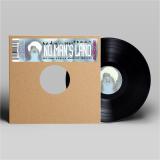
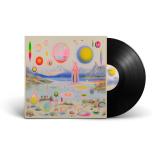
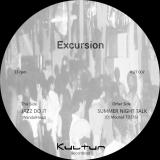
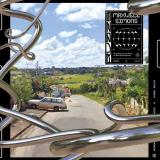
Complimenting his singular debut LP, 2025’s ‘Light Months Will Fly Over Us’, singer-songwriter and producer Addy Weitzman sees his thoughtful artrock and new wave aesthetic expanded by The Time & Space Machine for a limited three-track 12".
The long-running alias of British DJ, archivist and acid pioneer Richard Norris, this trio of remixes from The Time & Space Machine’s central processing unit finds Norris in a jubilant raving mode, his trademark psychedelia contributing to Slacker at its best and baggiest. The initial mix captures Weitzman’s songwriting in full, including his portentous vocal hook – “No man is a prophet in his own land” – a proverb first found in the gospels, blessed with the innovative Norris’s application of hypnotic groove, fat low-end and a ton of percussion.
The B-side sees Norris stripping things back in two directions: the Shango Dub draws focus on the higher vibrations found in the track’s beautifully intertwined percussive and synth elements, while the Riddim Mix reduces the frequencies further still, with a phased, slightly fried drum workout primed to spin heads as the night gets deeper and darker.
quête:space machine
Lenxi's debut album on Nous'klaer Audio receives a well-deserved remix treatment, breathing new life into its original dream world. Kindred spirits Polygonia, oma totem, Human Space Machine, and Daisy Moon each reimagine the material through their own distinct sound. A powerful and diverse collection of reinterpretations: From intricate, hypnotic textures to driving, dancefloor-ready energy, each remix opens a new pathway towards a vibrant second life primed for club systems and festival stages alike.
HSH is a new collaborative series by Human Space Machine and Sunju Hargun. It is an exploration of their shared friendship & connection to electronics, machines and the beauty of unpredictable mistakes, extending into long studio improvisations that shaped an EP born from free-spirited jam sessions.
This debut features four jams combining the strengths of both artists. It is heady and meticulously crafted, filled with subtle details, a trippy fusion of light and dark, thoughtful and physical techno with space to experiment.
Something for everyone, every space and every hour.
Credits:
Written, Produced and Recorded in Amsterdam, March 2025.
Distributed by One Eye Witness
Mastering: Giuseppe Tillieci (Neel) Enisslab
space•lab presents the Negen EP from Human Space Machine, a journey into Mike Jungerius’ unique take on the deeper shades of techno. Featuring four meticulously crafted tracks, this release showcases his signature sound—as rolling basslines and hypnotic acid lines weave seamlessly through intricate percussion, beautifully balanced with the perfect dose of melody and harmonics.
Each track offers a unique glimpse into Human Space Machine’s refined approach to techno: atmospheric yet grounded, minimal but rich in texture. With tracks ranging from 100BPM to 144BPM, this is the record you can reach for at any time of the night.

Rivertones - the recorded music of Caught by the River - have repressed their classic 2012 Dylan Thomas-in-dub 7" Under Dubwood by the Dubwood Allstars.
Although Under Dubwood might seem an incongruous mix - the words of Dylan Thomas, the voice of Richard Burton and the studio sounds of King Tubby - the resulting single actually makes perfect sense - a gloriously woozy psychedelic skank that places Llareggub somewhere just outside downtown Kingston, JA. Since its release five years ago, Under Dubwood has been a staple on BBC6 Music and was used as soundbed music for the BBC's coverage of Dylan Thomas' centenary in 2014. It remains hugely in demand from the Caught by the River shop and has been sold out for the last eighteen months. The identity of the Dubwood Allstars remains a mystery to all at Rivertones.
On the B-side of the Under Dubwood 7" is River Theme by the Time and Space Machine (aka acid house stalwart Richard Norris of the Grid and Beyond the Wizard's Sleeve). River Theme is a hypnotic, fuzzed-up garage groove that's equal parts Dirty Water Club and Trash.
- A1: Mattheis - Pt4
- A2: Aera - Glass Channel
- B1: Isole¦Üe - No Let
- B2: Dokumn - Come For You
- C1: Ed Davenport - Mendocino
- C2: The Drifter - Three Words Max
- D1: Human Space Machine - Mitochondria
- D2: Oliver Deutschmann - The Infidel
- E1: Mano Le Tough - An Hour In The Morning
- F1: Nathan Jonson - There's A Pink In There
- F2: Kev Sheridan - Samhain
Maeve kicks off their first label compilation 'Heavy Rotations Vol 1', covering all facets of the labels sound with tracks from Mano Le Tough, Isolée, Oliver Deutschmann, Ed Davenport, Aera and more. Comes as 3 LP in a specially designed cover consisting of 3 differently printed innersleves in a cut out outersleeve.
The next instalment of the Slow Motion Soundtracks Serie, this time from Pordenone's Alessandro Parisi.Interested in esoteric and religious texts, this comes across loud and clear in his stunning, ethereal E.P Andromeda, which at turns send shivers down your spine and expands your mind.Having released on the likes of Giallo Disco and Charlois, this is Alessandro's first release on Slow Motion. These ecclesiastical synth workouts are sure to inspire clubbers and thinkers alike. Solid.
It's been a while since Red Laser's last release which left a void in the UK output of Manctalo synth jams but now a planned schedule of three releases in quick succession means plenty more analogue chug for you to rattle your bones to.
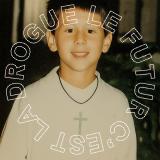
First of the 3 is this unique double gatefold LP from Red Laser original Kid Machine.Kid Machine delivers a 5 star upgrade to the signature sound that people worldwide have fallen in love with. 808 kicks and DX 7 licks bubble under the atmospheric chord changes creating a soundtrack which is just as comfortable on the dance floor as it is on a midnight drive.Alien Dance darts around to irregular delight. The dramatic score of Asteroids builds until it soars high above the grid. The bassline on Beast drills a blackened dance floor in preparation to be replaced with 80's discotheque neon squares.Beyond Cygnus takes flight and drifts across a Martian plane. The 808 kicks and orchestral synth stabs of Conquest crush all known reality into a space the size of a photon and the weight of its gravity is unbeatable. Standing out amongst the pack is the apply titled 'Forever Machine'.
A proper Manctalo synth anthem guaranteed to deliver speaker destruction.The LP closes with classic Machine style bangers 'Flight Manoeuvres' and 'Seconds From Oblivion'.
They bring this galactic odyssey to a confident end. This is a cracking journey through the outer rim and back.
- A1: As I Breathe On The T. T. C
- A2: Anna King
- A3: Space Age Punks
- A4: God Is A Machine
- A5: Feable
- A6: Got To Get Off The Earth
- B1: *Electronic Pink Panther
- B2: Human Question
- B3: Traffic
- B4: Loneliness
- B5: Jungle Chant
- B6: Hidden Melodies
- C1: This Time
- C2: Come On Over
- C3: Old Hollywood
- C4: A Kiss Without Lust
- C5: You Are The Special One
- C6: The Movement
- C7: Nuclear Waste
- D1: Fusion
- D2: Shadows
- D3: Interlude (Demo)
- D4: Feable (Demo)
- D5: Anna King (Demo)
- D6: Come On Over (Alt Version
Drama were the Canadian duo of Eric Simpson (Vocals, Bass Guitar, Guitar) and Don Stagg (Keyboards). Formed in in Mississauga, Ontario in 1978, the pair had previously played together in progressive psych bands Majik and VIIth Temple. Almost every Saturday, Eric and Don would record one song on a TEAC 4 track tape recorder after a couple of takes with very little over dubbing. The pair were influenced by what was playing on the radio during the recording sessions. Everyone else at that time was in a rock or pop band yet Drama were making electronic music. The pair released their debut LP 'Loneliness' on Psycho Records in 1979. There were 500 albums made and about 200 ended up in the garbage as band members shuffled from apartment to apartment. This was followed by a 4-track 7' later that year featuring live drums and additional guitar.
Seance Centre says it best, 'On Loneliness, the pair traded in their velvet and chord charts for thin ties and a cheap drum-machine. The LP still carries a whiff of patchouli, but the sound stings of solder and electricity, and inhabits a nascent zone somewhere between krautrock and new-wave. The vocal cuts are all clustered on the A-side, starting with an ode to the inefficiency of the Toronto Transit Commission - some things never change! The dystopian sci-fi themes are par for the League, and highlights are the love ballad 'Anna King' and the charming 'Feable'. The instrumentals on the B-side feel decidedly more Teutonic, and have a certain CBC charm that sounds like JP Decerf recording for Parry Music. It even opens with a slinky stoned Pink Panther.' For this first time vinyl reissue we've expanded to a double LP with a bonus album of the 4 songs from Old Hollywood 7' and 9 previously unreleased tracks and demo versions. All songs are remastered for vinyl by George Horn at Fantasy Studios in Berkeley. The vinyl comes housed in a jacket with original photo by Don Stagg taken from his apartment rooftop overlooking Toronto of a young teenager sniffing glue and includes an insert with photos and liner notes by Drama.
- A1: Post-Apocalypto Theme
- A2: Desolation
- A3: Hope
- A4: Cave Women
- A5: Making Love
- A6: Scientists
- A7: Tale Us Into Space
- A8: I've Got To Go
- A9: Fuck Yo-Yo Ma
- B1: Reunion / Not So Fast
- B2: Daddy Ding Dong
- B3: Chainsaw Bazooka Machine Gun
- B4: Robot
- B5: March
- B6: Turd Whistle
- B7: Colors
- B8: Who's Your Daddy
- B9: Jb Jr Rap
- B10: Woman Time
- B11: Save The World
- B12: Post-Apocalypto Theme (Reprise)
Jack Black and Kyle Glass release a 6 part series of animated videos, with one being released each Friday from September 28th. Each episode was hand drawn by Jack Black and every character voiced by Black/Glass. This new 21 track album is released by Columbia Records to accompany the animated videos and all tracks feature across the series. Formats are a single translucent green LP (initial pressing) and standard CD. Produced by John Spiker and features Dave Grohl on drums. Satellite TV ads. Online/social media activity. Ads, features and reviews across all press. Video plays across MTV/Vevo. Radio support across Kerrang and other rock music specialist shows. Poster campaign and database mailout.
- A1: Heliopause (Dbs & Aux 88) - Electro City
- A2: Middle Men - Space Quest Ii (Earth Odyssey)
- A3: Dibu-Z - Remote View
- B1: Kalson - Global Surveyor
- B2: Anthony Rother - Matrix
- B3: Keen K - Cat In Space
- C1: Tekkazula - Enya
- C2: Patronen - Zukunft Flug
- C3: Wilx - Vengonost
- D1: Amper Clap - Desolation (Robyrt Hecht Remix)
- D2: Tyraell - Paleocontact
- D3: C*Nt - Hunter
- E1: Silicon Scally - Machine Bias
- E2: Blake Casimir - At The Outer Sector
- E3: Low Orbit Satellite - Projected Memories
- F1: N-Ter - Agram Sunrise
- F2: Obsolete Robotics Feat. Phil Klein - Walk Alone
- F3: Hardfloor - Diet Starts Monday
- G1: Energy Principle - Tempus Fugit
- G2: Fleck E.s.c. - Phase 4
- G3: Adj - Days Of Light
- H1: Pi-Xl - Disciplinary Action (Remix)
- H2: Rauschenmaschine - Nebulous Spirograph (Subatomic Mix)
- H3: Visonia - Nausicaa
Electro globalisation! The German label Dominance Electricity presents Phase 4 of the Global Surveyor various artist album series (launched in 1998).
Featuring heavy-weights of the international Electro genre such as Anthony Rother, Hardfloor, Silicon Scally aka Carl Finlow and Heliopause (a project of Germany's Dynamik Bass System & Detroit's Keith Tucker of AUX 88) and many more, this carefully selected collection includes a total of 24 productions out of 13 countries / 5 continents ranging between clubbish acid power, deep space cruiser, playful kraftwerkesk melodic downtempo and ambient synth magic.
- A1: Umwelt - Gravitation Lens
- A2: Eomac - Angel In The Marble
- B1: Dez Williams - Drakonia
- B2: Bintus - Re-Clocking Knob
- C1: Detroit Grand Pubahs Pres. Techmarine Bottom Feeders - Demon Particle Influence
- C2: The Fool's Stone - Nonversation
- D1: Jerome Hill - Memory Machine
- D2: Furfriend - Numb
- E1: Kamikaze Space Programme - Absence
- E2: Cassegrain & Tin Man - Ad Hoc
- F1: Blake Baxter - Acid Warp Time Travel
- F2: Alex Cortex - Tensegrity
Killekill catalogue number 025 is a jubilee release:
It's KILLEKILL MEGAHITS II !!
But it's not only a jubilee release. It's also milestone and turning point in the Killekill history, because with this release Killekill closes one chapter, and opens up another.
We are constantly getting too many demos full with good music in way too many different styles to squeeze them onto one label. So finally we have come to the point where we will start a line of new labels with different profiles to give ourselves the opportunity to feature even more daring artists and release whatever we like in the most suitable outfit for it.
So far, there is this compilation, which has been carefully compiled for your pleasure. Label regulars such as Cassegrain & Tin Man, Furfriend, Alex Cortex or Eomac have delivered high quality stuff of all kinds, but we are also introducing a lot of artists who will feature on the coming labels:
Umwelt with his epic and dramatic electro, who will release an album with us later in 2016, Dez Williams with his genre-crossing sound which works on every dance floor plus Power Vacuum's Bintus who delivers his portion of electro/acid madness on Record 1.
Record 2 features the legendary Detroit Grand Pubahs, who present their electro outfit Techmarine Bottom Feeders, The Fool's Stone, which is a new project by Hard Ton, electro legend Adriano Canzian and italian queer artist Brigida plus London's underground hero Jerome Hill, who lets it jack and roll with his Memory Machine.
On Record 3 Kamikaze Space Programme surprises with some bell-driven percussive techno and what can we say It is with great pride that we include the acid techno epos by none other than the legendary 'Prince of Techno' Blake Baxter.
This compilation is a trip through a big musical universe. Enjoy!
Analog Fingerprints Vol. 0 is a compilation bringing together the early 2000s works of Marco Passarani under his Analog Fingerprints alias, collecting key tracks originally released on Rome’s Plasmek and Pigna labels.
For Numbers, the story starts long before the label itself. In their formative years, digging in Glasgow’s Rubadub, Passarani’s records felt like dispatches from a future city. Releases on his own Nature Records and on labels such as Generator and Interr-Ference Communications were mind blowing: rooted in Detroit techno, Chicago house and electro, yet pushing somewhere new. Much like fellow travellers Autechre, who would remix him in 2001, Passarani’s music balanced machine funk with restless experimentation.
Information was scarce, and you would hear these records first on the dancefloor or at listening stations in shops like Rubadub. Print fanzines like Ear and early web outposts such as Forcefield offered only fragments. But there was a palpable axis forming between Detroit techno and a new European wave of record labels including Skam, Rephlex, Clone, Viewlexx and Nature itself. It was the sound that defined Saturday nights at Rubadub’s ‘69’ parties in Paisley, just outside of Glasgow.

Passarani’s records, in particular, were instrumental in bringing together the future Numbers co-founders. Richard had already booked him pre-Numbers; meanwhile Calum (Spencer) and Jack (Jackmaster), then 16/17 year olds working alternate Saturdays in Rubadub, were so enamoured with the Roman sound that they travelled to Rome for the Bitz Festival in 2003 to seek out Passarani and Lory D at their source.
The first Analog Fingerprints release landed as a 12” on Plasmek in 2001, following the fractured, IDM-leaning 6 Katun material. For Passarani, the project marked a recalibration. A DJ first and foremost, he had moved into production via early computer setups, from a Commodore Amiga through primitive PC audio, Cubase and Logic, later experimenting with Ableton. The IDM scene had offered a playground for trial and error, but there was always a tension between abstraction and the dancefloor. Analog Fingerprints became the bridge: still intelligent, but with more dance than distance. After years of broken beats and complex arrangements, he wanted directness without surrendering identity.
Working closely with Francesco de Bellis and Mario Pierro in the Pigneto district, the trio formed Pigna as a vehicle for reclaiming a more accessible dance sound, deliberately steering away from the minimal wave beginning to dominate Europe. Sessions were fast, instinctive, often stretching late into the night with friends dropping by. It was a studio as social space, production as collective energy.
“In that constant search for balance, Analog Fingerprints was my way of expressing something closer to the classic dance floor. The track 'Tribute' - a tribute to my favourite early Detroit techno track of all time, 'First Bass' by Separate Minds - came after I realised I had almost lost my connection with the dance floor. The simplest step was to take inspiration from early Chicago and Detroit and twist it in our Roman ‘Pigna’ way. My goal was to create more accessible dancefloor tracks by mixing my unconscious Italo roots with my teenage love for that early US sound, ensuring the result was as far as possible from the minimal sound that was starting to dominate everywhere.” - Marco Passarani
Technically, the Analog Fingerprints tracks span a transitional era: Roland TR-909, SH-101 and Alpha Juno hardware met early software experiments. A Novation Drumstation rack stood in for the unattainable TR-808, syncing with TB-303 and TR-606. Yet the true secret weapon was Jeskola Buzz, a tracker-style modular environment that allowed step-by-step parameter control and strange melodic constructions, later exported into the audio sequencer. Even the lead on ‘Tribute’ came from an early PPG Wave-style plugin. It was hybrid thinking at a moment when digital tools still felt unstable but full of possibility for technologists like Passarani.
Behind the music sat Finalfrontier, a loose Roman collective orbiting Nature and Plasmek. Distribution and production were intertwined; importing obscure records into Italy built connections with like-minded outsiders across Europe and the US. Expensive phone bills and fax machines forged an “electronix network” that linked Rome to Clone, Viewlexx, Skam, Rephlex, Rubadub and Detroit’s Underground Resistance. There was a shared sense of survival and resistance, of operating against commercial systems.
Passarani recalls “The first time I found a sheet of paper inside an Underground Resistance 12” with info about upcoming releases... and a huge picture of Spock on the back. Imagine that: you love the music, you love Star Trek, and there’s someone on the other side of the ocean sharing those same values and sounds. It was the perfect match. We even gave our original company the suffix ‘Finalfrontier’: that says it all.”
Feedback in that era arrived physically: distributor faxes, conversations with visiting DJs, the experience of playing abroad and meeting kids who had connected with the records. Glasgow became a key node in a scattered outlier network. Passarani personally brought the first two Nature releases to Fat Cat in London, playing them in-store. Shortly after, a fax arrived from Rubadub in Glasgow requesting copies.
“I still remember that phone buzz and the fax paper slowly sliding out, with someone I didn’t know saying they wanted 75 copies of Nature 001. Or like the time we got a fax from the Rephlex crew just saying, “Hello Nature Records, Keep up the good work.” That was how we knew the message was getting through. It was a fantastic feeling; just one piece of thermal fax paper as an analog notification - the mood for the entire week would change.” - Passarani
The connection to Glasgow has since stretched across generations. As Passarani reflects, links often fracture as scenes renew themselves, but in Glasgow something different happened. New and old mixed seamlessly. There was a visible trust in what came before, and a willingness to carry it forward rather than discard it. Observed from Rome, it was deeply encouraging.
Analog Fingerprints Vol. 0 captures that moment of exchange: Rome to Glasgow, Detroit to Europe, experiment to dancefloor. It documents an artist recalibrating his sound and a network of scenes discovering one another in real time, connected by vinyl, faxes and shared intent.
There’s no direct English translation for the word “hiraeth”. In the Welsh language, it describes a form of longing for an intangible something, somewhere or someone that no longer exists. Sofie Birch and Antonina Nowacka draw on the concept to guide their second collaborative album, a suite of vulnerable, open-hearted improvisations and reflections that attempt to grasp an image of the past that’s chimeric, dissolving almost as soon as it materializes. The duo’s process follows the same distant beacon; unlike Languoria, their critically acclaimed debut, Hiraeth is, at heart, an acoustic record, informed by in-person improvisations with voices and string instruments that gesture to an era before computers, AI and DAWs. It’s just as lush, but Hiraeth is warmer and more muted than its predecessor.
Nowacka and Birch conceived the album in the wake of a slew of collaborative live concerts, spurred on by serendipitous improvisations and an interest in paring down their setup. Unsound arranged a retreat in Sokołowsko, an idyllic village nestled in the verdant hills of Southern Poland, close to the Czech border. Sokołowsko surrounds a large ruined sanatorium that’s rumored to have inspired Thomas Mann’s 1924 novel The Magic Mountain, and has long been a magnet for artists. The two took the opportunity to rethink their approach completely, arriving with just a guitar, a zither and a portable Nagra reel-to-reel machine. Recording directly to tape, they sketched out ideas with just their voices and instruments, reflecting their surroundings without being distracted or mediated by modern technology.
“We wanted to get away from screens as much as possible,” says Birch, “to bring to the world something vulnerable and honest. Without advance preparation, every day we went out into the open air, finding places to sit, during sunset or the midday sun. We discovered new tunings on our instruments, picked up a melody, and started the machine, playing over
and over till we got a take.” In the autumn, they met again in a Copenhagen studio, sparingly and carefully layering old synths and organs to add more depth without muddying the mix.
Both Nowacka and Birch sing throughout, their voices threading the acoustic instruments and tangling with each other, almost becoming one. But it’s the environment of Sokołowsko, “the birds and the light, even the wind playing against the harps,” that’s woven into the music’s lining. Affected by time spent meditating and in nature, as well as the fact that Birch was pregnant whilst recording, the album feels alive and remarkably present. Even the sound quality of the tape machine gives Hiraeth a tactile, organic quality, as Nowacka puts it, “like being in a warm bath.”
They still have the raw recordings from Sokołowsko on old reels, physical souvenirs of their time spent making music in a “habitat for intuitive songs, a little ecosystem, alive and spirited.” The outmoded gear and remote setting helped the duo disengage from the modern world for a few moments and imagine an existence that’s been lost to time and nominal progress. With digital technology receding into the background, Nowacka and Birch had space to make “intuitive connections with frequencies and people,” as Birch explains. Hiraeth is a testament not to nostalgia, but to the power of kinship.
Rave-o-lution - Teknology EP (HDK-3)is a manifesto disguised in project.
Forged in the raw energy of the underground, Rave-o-lution - Teknology EP explores the connection between machine, movement and collective consciousness. This is not nostalgia, it’s forward motion. Teknology as a tool, rave as a language, evolution as a necessity.
Across four different versions, the same core signal mutates and adapts, shifting pressure, tempo and density while staying locked to its original frequency. Each version is built for a different moment on the floor, from deep hypnosis to pure mechanical drive.
Sometimes a pad emerges in the break, a moment of suspension where emotion cuts through the structure. A brief opening. A breath inside the system. Proof that even the hardest teknology carries feeling beneath the steel.
HDK-3 is made for soundsystems at full power, bodies in sync, and minds ready to disconnect from the surface and dive deeper.
No compromise.
No decoration.
Just rave — evolved.
- 1: Where To Now?
- 2: Mementos
- 3: In The Name Of The Moth
- 4: With A Shrug
- 5: No Such Place
- 6: Triangular Dream
- 7: Underwater
- 8: Frenzy
- 9: Immortality Project
- 10: Leviathan
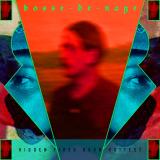
There's a tendency in metal to mistake aggression for honesty, volume for depth. To confuse the performance of darkness with its actual weight. Hidden Fires Burn Hottest, the new album from San Francisco-based post-black metal band Bosse-de-Nage, sidesteps this entirely. It’s the group’s most fully realized work yet, precisely because it refuses to be pinned down.
Bosse-de-Nage have been working with The Flenser for over fifteen years. They were one of the first bands the label ever partnered with and have the longest active relationship in the label's history. But unlike most bands who build momentum through constant touring and visibility, Bosse-de-Nage has largely existed apart from the music world's usual machinery. They've evolved on their own terms, in relative isolation, allowing the work to develop without outside pressure or influence. What began rooted in black metal anonymity has mutated into something that actively defies categorization. The aggression is still there, but it's no longer the point. Hidden Fires Burn Hottest finds the band treating emotions like physical objects, feelings with spatial properties. “No Such Place"" describes a space that can't exist but does anyway, somewhere between thought and location. ""Immortality Project"" examines infinite possibility not as promise but as problem, endless options collapsing under their own weight. These songs don't use metaphor to describe emotion. They make emotion into something you could theoretically touch.
Tracked by Jack Shirley (Deafheaven, Oathbreaker) at Atomic Garden East and mixed and mastered by Richard Chowenhill of Agriculture, Hidden Fires Burn Hottest was years in development, with some tracks beginning in 2018.
The long writing process offered time that most records don't get. Time to live with ideas, revise endlessly, to let structures settle. For the first time, lyricist Bryan Manning wrote everything in advance, creating a surplus to pull from rather than working under deadline pressure. The difference shows.
Coming off Further Still, an album built on constraint and economy, Bosse-de-Nage sought the opposite: sprawl, strangeness, fewer rules. Space for ideas to develop without rushing them. Dynamics that move through quiet as much as noise. Presence earned through atmosphere instead of volume. The record even includes ""Mementos,"" which might be considered the first love song the band has ever written.
Nothing here coheres into a theme. These are pieces pulled from low moments and private feelings made public through sound. The band has never been interested in positivity, in music that resolves cleanly or offers comfort. But bleakness doesn't mean humorlessness. There's something darkly funny running through much of it, even when it shouldn't be.
Hidden Fires Burn Hottest doesn't explain itself. It just insists: what you feel is as real as what you can see."
There's a tendency in metal to mistake aggression for honesty, volume for depth. To confuse the performance of darkness with its actual weight. Hidden Fires Burn Hottest, the new album from San Francisco-based post-black metal band Bosse-de-Nage, sidesteps this entirely. It’s the group’s most fully realized work yet, precisely because it refuses to be pinned down.
Bosse-de-Nage have been working with The Flenser for over fifteen years. They were one of the first bands the label ever partnered with and have the longest active relationship in the label's history. But unlike most bands who build momentum through constant touring and visibility, Bosse-de-Nage has largely existed apart from the music world's usual machinery. They've evolved on their own terms, in relative isolation, allowing the work to develop without outside pressure or influence. What began rooted in black metal anonymity has mutated into something that actively defies categorization. The aggression is still there, but it's no longer the point. Hidden Fires Burn Hottest finds the band treating emotions like physical objects, feelings with spatial properties. “No Such Place"" describes a space that can't exist but does anyway, somewhere between thought and location. ""Immortality Project"" examines infinite possibility not as promise but as problem, endless options collapsing under their own weight. These songs don't use metaphor to describe emotion. They make emotion into something you could theoretically touch.
Tracked by Jack Shirley (Deafheaven, Oathbreaker) at Atomic Garden East and mixed and mastered by Richard Chowenhill of Agriculture, Hidden Fires Burn Hottest was years in development, with some tracks beginning in 2018.
The long writing process offered time that most records don't get. Time to live with ideas, revise endlessly, to let structures settle. For the first time, lyricist Bryan Manning wrote everything in advance, creating a surplus to pull from rather than working under deadline pressure. The difference shows.
Coming off Further Still, an album built on constraint and economy, Bosse-de-Nage sought the opposite: sprawl, strangeness, fewer rules. Space for ideas to develop without rushing them. Dynamics that move through quiet as much as noise. Presence earned through atmosphere instead of volume. The record even includes ""Mementos,"" which might be considered the first love song the band has ever written.
Nothing here coheres into a theme. These are pieces pulled from low moments and private feelings made public through sound. The band has never been interested in positivity, in music that resolves cleanly or offers comfort. But bleakness doesn't mean humorlessness. There's something darkly funny running through much of it, even when it shouldn't be.
Hidden Fires Burn Hottest doesn't explain itself. It just insists: what you feel is as real as what you can see."
There's a tendency in metal to mistake aggression for honesty, volume for depth. To confuse the performance of darkness with its actual weight. Hidden Fires Burn Hottest, the new album from San Francisco-based post-black metal band Bosse-de-Nage, sidesteps this entirely. It’s the group’s most fully realized work yet, precisely because it refuses to be pinned down.
Bosse-de-Nage have been working with The Flenser for over fifteen years. They were one of the first bands the label ever partnered with and have the longest active relationship in the label's history. But unlike most bands who build momentum through constant touring and visibility, Bosse-de-Nage has largely existed apart from the music world's usual machinery. They've evolved on their own terms, in relative isolation, allowing the work to develop without outside pressure or influence. What began rooted in black metal anonymity has mutated into something that actively defies categorization. The aggression is still there, but it's no longer the point. Hidden Fires Burn Hottest finds the band treating emotions like physical objects, feelings with spatial properties. “No Such Place"" describes a space that can't exist but does anyway, somewhere between thought and location. ""Immortality Project"" examines infinite possibility not as promise but as problem, endless options collapsing under their own weight. These songs don't use metaphor to describe emotion. They make emotion into something you could theoretically touch.
Tracked by Jack Shirley (Deafheaven, Oathbreaker) at Atomic Garden East and mixed and mastered by Richard Chowenhill of Agriculture, Hidden Fires Burn Hottest was years in development, with some tracks beginning in 2018.
The long writing process offered time that most records don't get. Time to live with ideas, revise endlessly, to let structures settle. For the first time, lyricist Bryan Manning wrote everything in advance, creating a surplus to pull from rather than working under deadline pressure. The difference shows.
Coming off Further Still, an album built on constraint and economy, Bosse-de-Nage sought the opposite: sprawl, strangeness, fewer rules. Space for ideas to develop without rushing them. Dynamics that move through quiet as much as noise. Presence earned through atmosphere instead of volume. The record even includes ""Mementos,"" which might be considered the first love song the band has ever written.
Nothing here coheres into a theme. These are pieces pulled from low moments and private feelings made public through sound. The band has never been interested in positivity, in music that resolves cleanly or offers comfort. But bleakness doesn't mean humorlessness. There's something darkly funny running through much of it, even when it shouldn't be.
Hidden Fires Burn Hottest doesn't explain itself. It just insists: what you feel is as real as what you can see."
Le Futur c’est la drogue, which should here be translated as The Future Is the Drug, is not to be read as a promise, but as a statement of fact. The present is no longer an experience, but pure consumption. Life itself has taken the form of a dependency.
With this sixth album, Christophe Clébard goes straight to the point, driven by a free and repetitive form of writing, stripped of any syntactic rigidity. Words strike like balls against a wall, revealing darker zones of his mind where guilt, fear, and existential anxiety coexist.
The sound composition, equally minimal, sustains a dense and obsessive mental space, a vortex in which trance appears as the only escape. Driving drum machines, relentlessly hammered electronic loops, and a battered synthesizer, his music unfolds within a physical, strangely hypnotic synth-punk aesthetic that hits viscerally.
The Future Is the Drug is his sixth album.
- Spacetime
- Phase
- Composer
- Earthling
- Next 2 Me
- Rendezvous
- Future See Millenium
- Ghost Train
- Smoke Machine
- Holding U Closer
- How Did I Know
- Over End
- Only An Emotion
- Tenzillionlightyears
- Chasing Storms
- Tsechu
- A Thousand Stars Breathing
- Phoenix
- Forever
- Tangerine
- Arp80
- Crushed
- Almost Had It All
- Time Travel
Logistics makes a highly anticipated return after a three-year hiatus, with a whopping 24-track album.
Released across four 12 inch records, housed in spined sleeves, and presented in a premium two-piece lift-off box with scratch resistant matt laminate, matt varnish, and with fully printed packaging throughout. It is a beautiful presentation of this new LP from a Hospital Records legend.
Dropping almost out of the blue, the current reception from fans, artists & industry heads off the back of the 'ambush' announcement has been incredible. The album campaign is illusive, but rewarding to fans who have been waiting so long for brand new music from Logistics, they've now got 24 brand new tracks to get stuck into!
After a moment of calm, De Lichting returns with the fourth instalment in its double LP album series, Vier.
Never losing touch with its roots in emotional dance music, Vier is a tribute to the electronic soul, something increasingly overlooked on today’s dancefloors. queniv’s Frequency Match opens the album as a gentle invitation, built on minimal drum work and long, stretched pads. RDS’s Aerial Reflections continues in the same vein, leaning into a more serious mood with old school flavoured rhythms.
The first heavier club moment comes from Human Space Machine with Test Rec. A more tense, primetime leaning, proggy groove unfolds, washed in nostalgic strings and trippy elements for both body and mind. Nathan Kofi follows with Kinesis, a proper Detroit infused techno track that pushes the experimental edge further, darker and more driving.
On the second record, the mood shifts into deeper melancholy with Eversines’ Lift The Veil, featuring classic deep house textures of Rhodes chords and FM basses. Nearing the end of the album, Proxyan’s Another delivers pure credits rolling, emotion drenched analogue funk electro, a track the rest of the group had to beg Robbert to include. We are glad we did.
As a kind of bonus track, RDS and Eversines close Vier with a tech house rework of their earlier track Missing. Released on vinyl for the first time, it was previously available only in digital form via Kalahari Oyster Cult.
Since debuting his Black Eyes project on Lost Control 2097 back in 2022, Matthew Jesus has developed his own trademark take on deep house - a suitably aquatic and psychedelic affair that he calls 'Hydro-Trip'. Elements of that sound can be heard on his Selections label debut, alongside nods to Motor City deep house and more soulful flavours. For proof, check gorgeous and tactile opener 'Honeyfish' and the even more soulful warmth of 'Motor City Surfin', which doffs a cap to the likes of Alton Miller and Rick Wade. 'Seaweed Tongue' is a more drowsy, jazzy and immersive deep house workout with more sampled vocalisations, while 'Trippin' In Waves' pairs rubbery drums and P-funk bass and plenty of spacey electronics. Haf S reworks the latter via his 'JEEPMIX', a dreamy, hypnotic and spaced-out sunrise-ready delight.
Following the celebrated reissue of Classics Vol. 1, Metroplex unveils Model 500 - Classics Vol. 2, a powerful new collection of essential works from Juan Atkins--pioneer of Techno and architect of some of the most forward-thinking electronic music ever recorded. Bringing together key cuts, rare mixes, and long-sought favorites from across Atkins' groundbreaking output, this compilation highlights the full spectrum of his sonic universe: deep, rolling machine funk, shimmering electro-techno hybrids, and timeless futurist grooves that helped shape generations of electronic artists. Each track has been carefully remastered to enhance its original energy while preserving the raw spirit and space that define the Model 500 sound. From expansive, atmospheric journeys to soulful vocal transmissions and Detroit-powered rhythmic science, Classics Vol. 2 presents Juan Atkins at his most inspired--an essential document of a visionary whose influence continues to echo across dancefloors worldwide. Three decades on, these tracks have lost none of their immediacy, imagination, or futuristic pull. Restored for a new era, Classics Vol. 2 celebrates the legacy of Model 500 with pristine sound and renewed force. Pure Detroit heritage. Eternal future music.
L0N3R is a new label from French artist Elise Massoni, conceived as a space for inward movement, solitude and quiet attention, where introspective, groove-led techno takes shape through stripped-back structures and rhythmic, machine-driven jams. With its debut EP, the label sets out a warm, reduced and exploratory sound - rooted in rhythm yet open to narrative shifts - speaking as much to private listening and introspection as to the dancefloor.
Active in London’s electronic underground since the late 80s, Paul Hierophant has long worked in the space between techno, ambient, and dub, preferring atmosphere, tone, and slow-burn tension to obvious dancefloor tricks.
The Elder Gods finds him further out on the fringes of electro, where the synths loom large and the delay and reverb units are given a proper workout. The result is widescreen, ominous, and immersive.
The title track is a monolithic slab of rhythm where corroded synth pressure and ritualistic percussion feel less like a groove than some ancient machine grinding slowly back into life.
Titans stalks forward on a cavernous half-step pulse, all foggy bass weight and fractured metallic vocal echos, like dub techno that has wandered into darker mythological territory and decided to stay there.
The Hydra coils around a lurching low-end spine, its tentacular FX flickering and mutating while the groove stubbornly regenerates.
Works and Days rounds things off with a standout alien vocal loop drifting through pulsing bass and drums, lending the track a meditative feel that works just as well for late-night headphone sessions as it does in the deeper end of a DJ set.
This is an EP for selectors who like their electro expansive, slightly strange, and built for proper sound systems.
Placid aka Paul Wise is the operator in chief at ‘We’re Going Deep’ – an online community and record label born out of a lifelong love affair with the many shades of electronic rhythm, and an obsession for collecting records since 1988. With a mission to share and release new music via his We’re Going Deep and We’re Going Back imprints, you’ll find only the best in underground Acid, Electro, IDM, Techno and House for the dance floor and your listening pleasure.
Up next in the label series, We’re Going Deep is excited to welcome 4 tracks of fresh material from pivotal electronic music maker Gerard Hanson, under his much prized E.R.P. alias. Renown for keeping his profile below the radar and letting the machines do all the talking for him. Hanson’s work as a producer has been much coveted since his debut back in the mid 90s as Convextion. Hailing from Dallas, Texas, he has become something of a hero in the underground Electro community. His work as E.R.P. has left a huge impression on labels such as Frustrated Funk, Bleep43 and Semantica over the years. Renown for his distinctive shimmering machine funk aesthetic, he ably summons the outer reaches of deep space listening thanks to his innate mastery of brooding, sci-fi soundscapes that few can equal.
Following releases for Apnea and Synchrophone, Hanson lifts off with a heartfelt tribute to our recently departed friend James Baker on ‘One4ReKab’. Ascending with the pulse of a steady kick drum, precision snares take hold as whispered vocals seep in and out of consciousness. Underpinned by trademark angular bass tones, soaring strings inject a deep sense of foreboding as all the parts fuse with a fierce glow. Stepping things a notch back as the sonic trajectory levels out, ‘Onward’ takes a more contemplative stance in a fusion of hypnotic drum programming that leads the fray whilst subtle arpeggios flow, all whilst wistful melodies wind you in.
Over on the flipside, Hanson revisits his 2008 composition “Multipole Vector” to launch yet another interstellar cruise by mission in the shape of “Multipole Vector II”. Leading with the simplest of bass progressions and metronomic beat programming, twinkling synth elements reach across the void as chords sweep to and fro to powerful effect. Ending out on the uplifting yet almost IDM inflected tones of “Self Unemployed”, this low tempo air rounds the EP off on an equally captivating note filled with playful charm, that makes this collection of music all the more pleasing.
Sekhem opens a new portal. We are pleased to welcome Multivoq’s debut as Omega Tribe. He delivers four cuts engineered for the dancefloor, driven by razor-sharp grooves and strong basslines, with every element precisely tuned. Analog machines bring warmth, sequences pulse like coded transmissions, vocals drift through the mix as signals from space... Each detail shapes a journey built for powerful sound systems.
Returning with his first artist album in 13 years, revered techno innovator Mike Parker continues to shape out his explorations around 170 with his latest work for Samurai Music, Echo Disintegrator. Transcending genre lines with his unmistakable sonic stamp, the seasoned US producer crafts an extended trip through his exacting, lithe frequencies and brutalist rhythms. As evidenced on recent EPs Envenomations and Sabre-Tooth, Parker can comfortably slip into a hard-stepping D&B structure and make it his own. 'Earth Energy Imbalance' leaps forth with precision and purpose, wrapping atonal synth shapes around the stark beat in staggering high definition. 'Positronic Tentacles' finds a similar rolling momentum, even threading ruthlessly trimmed vocal snatches into the lyrical pulse of the lead tones. 'Radiative Force' teases its own mutant funk out of the envelopes shaping the molten sonics coursing through the middle of the frequency range. Elsewhere, Parker explores a variety of accented grooves around typical D&B tempos, remaining reliably broken while dipping into half-time space on 'Lunar Nocturne' and finding a low-slung swagger in the carefully deployed pressure of 'Ghost Rain' and 'Echo Disintegrator'. 'Beat Activator' pivots on a dense bed of bass with a crooked, off-beat slant before 'Dragon Bravo' casts a similarly dembow-informed beat into a dense tapestry of cyclical machine shrieks and snarls. There is a ruthless consistency to Parker's approach across Echo Disintegrator, riding the loops without flinching and forcing the focus deep into the minutae of every sonic element. Both brilliantly functional and profoundly subtle, there's a visceral, physical quality to the sound design that makes it a listening experience like no other.
About Alec Pace’s “Respiro 22:16”
Breath as rhythm. Breath as memory. Respiro 22:16, the debut album by Alec Pace, is a world suspended between intimacy and impact — where personal confessions are carried by low-end frequencies and fragile melodies are shaped into physical space.
Written, produced and mixed between London and Turin, this record reveals Alec Pace not only as a producer but as a storyteller through sound. Layer by layer, his voice, guitars, piano, synthesizers, drum machines, samplers, and field recordings converge to form a sonic diary — one that whispers, cracks, shimmers and erupts.
The album moves fluidly between dream pop, modern UK bass, breaks, jungle, and club music, yet its essence lies in emotion: love, memory, anticipation, release. Each track is a breath, an exhale, a fragment of something lived.
“The30th” opens with nostalgic warmth, darkness and breaks; “For You (Hello)” captures the tender rush of a love song over a drum & bass heartbeat; “Venus Winds” floats in a balance of techno pulse and harmonic light. “Angular Invariance” reshapes the floor beneath your feet, while “Respiro” pauses to listen inward — piano and air, fragile and close. “Anticipation” closes it all with a forward surge: emotional, propulsive, unresolved.
Respiro 22:16 is not just a collection of tracks, but a portrait of an artist learning to breathe out loud.
Alec Pace said:
“This album is about putting myself out there — letting every sound, chord and rhythm breathe,” says Pace. “Respiro is both a personal archive and a release.”
“Respiro 22:16” is available across all platforms on Friday 6th March 2026.
Marking their 51st release, long time label collaborator and friend Owain K returns to 200 with a brand new solo 4 track EP, Kinematic Equations.
Having joined 200 back in 2012 with the “Colonius EP”, a lot has happened in that time. With 50+ releases on the imprint and Owain setting up his own blog and a label under the Innate banner. However, some things remain - mutual friendship, a shared love of underground Electronic music and Kölsch!
15 years on the Welsh rooted, Bristol (UK) based artist delivers some of his best music to date in the shape of the “Kinematic Equations”. A four track journey into astral electronics that weave together his take on deep space sounds, fused with a healthy dose of dubby aesthetics that are close to the label’s heart.
Starting with the rhythmic pulse of ‘Axial Shifts’ on side A, chords steadily arc into life as the intensity rises and falls, all whilst keeping a measured trajectory. Drifting into the ether, ‘Open Cluster’ fills the zone where heavy sub meets filtered percussion to a rounded 909 kick, set with dreamy atmospherics and shimmering delays.
On side B ‘Eta Aquarid’ blazes a powerful trail to machine-like rumbling and evolving pads which burst brightly over the course. Last but not least, the magical aura of ‘Ghost Of Jupiter’ appears - a fusion of glimmering melodies that float over driving bottom end and steady percussion, bringing the EP to a perfect conclusion.
Written and produced by Owain Kimber
Mastered by Emanuel Geller at Salz Mastering
Few artists can conjure up the sort of spirituality that Fred P manages whenever he turns on his machines - and this brand new label from the artist means we'll be getting a shedload more of it. Sometimes it's deep, muggy, insular, at others more outward-looking and cosmic. And that's what we have here - emotionally dense sounds on 'Galaxy Walk (Journey mix)' with jazzy motifs off in the distance, spoken words in the foreground and dancing percussion that is optimistic and hopeful. 'Modern Art Talk' is just as balmy as you journey through a sound world that feels as infinite as space itself, while Fred himself muses on his art. 'Inner Channels (edit 4)' is a dusty shuffler marbled with muted chords and brighter melodic stars that feel impromptu and layered in live.
- A1: Intro
- A2: The Soundtrack Of Life
- A3: Journey
- A4: World Of Love
- A5: Laurie's Theme
- B1: Emotion Heater
- B2: Dream
- B3: Tiki Mix
- C1: Travel Bug
- C2: Le Tunnel De L'amour
- C3: Stay
- D1: A Close Encounter
- D2: Relaxation Central
- D3: Journey (Reprise)
- D4: Outro
- E1: Space Bubble
- E2: Star
- E3: Sunny Day (Demo)
- F1: Journey (Aphex Twin Care Mix)
- F2: Journey (Gentle Instrumental
WRWTFWW Records is proud to present THE GENTLE PEOPLE - Soundtracks for Living (Expanded Edition), ?the ultimate Lounge/Chill Out classic from 1997, reborn! Available as a limited edition white vinyl 3LP in heavyweight 3-panel gatefold sleeve.
When The Gentle People first glided into the mid-90s on clouds of strings, sugar and sine waves, they sounded like visitors from another, more glamorous planet. Signed to Richard D. James and Grant Wilson-Claridge's cult label Rephlex, this multinational "E-Z-Core" lounge unit took the aesthetics of 50s/60s easy listening and exotica and gently smuggled them into 1990s club culture.
Soundtracks for Living was their defining statement: an album that "takes the lounge scene and runs away with it entirely… blissful and heavenly," as one contemporary review put it. Imagine KLF's Chill Out or Space growing up on French 60/70s pop, bossa nova, soundtracks, vocal harmony groups, library music and easy listening then slipping out for a late-night date with dub, ambient techno and bubble-bath pop. That's Soundtracks for Living: a record that can score cocktail hour, 4am taxi rides, and daydreams in headphones with the same effortless grace.
The Gentle People - Dougee Dimensional, Laurie LeMans, Valentine Carnelian and Honeymink - began in early-90s Brixton, throwing dress-up theme parties before taking their audio-visual universe into the studio. For them, music was "a way of life": soothing to the ear, rich in pop hooks, and pitched somewhere between the playfully idiotic and the hyper-intelligent. Their debut on Rephlex was the single "Journey", later blessed with a shimmering Aphex Twin remix that pushed their sugar-coated sound even further into outer space.
This Expanded Edition of Soundtracks for Living finally gives this glambient lounge-pop milestone the treatment it has always deserved. Spread lovingly across 3LP, it features new mastering from the original sources, allowing every harp glissando, string swell and analog squiggle to float in high-fidelity widescreen. The core album is complemented by a bonus 12" of unreleased and rare material, offering a deeper dive into the Gentle world: alternate takes, lost interludes, and secret soundtrack cues for lives not yet lived.
Crucially, "Journey" appears here in its original version, Gentle Instrumental and the cult Aphex Twin remix, reuniting band and labelmate in one place and underlining the quietly radical nature of the project: this was lounge music that could sit next to braindance, acid and IDM and still steal the scene.
Pressed on limited edition white vinyl, Soundtrack for Living (Expanded Edition) invites long-time fans and new listeners alike to step back into The Gentle People's universe - a place of fondue parties, bubble chairs, star-lit elevators and endlessly rewinding sunsets, where "the pathway to the stars" is never quite out of reach.
In an era that often reduces the 90s to big-room bangers and grunge guitars, Soundtracks for Living remains a quietly subversive reminder that the decade was also about imagination, camp, softness and utopian possibility. As later writers have noted, The Gentle People weren't just a curiosity on a weird label; they became unlikely icons of a whole loungecore moment, gracing TV, compilations and magazine spreads, and proving that tenderness could be as futuristic as any drum machine.
In conjunction with this release, WRWTFWW has also unearthed The Gentle People's Peel Sessions, a 4-track EP from their 1997 BBC on-air performance, available on vinyl for the first time ever !
WRWTFWW Records releases THE GENTLE PEOPLE - The Peel Sessions, available on vinyl for the first time ever, in conjunction with the worldwide expanded reissue of the group's Soundtracks for Living. Lounge/Chill Out music reborn !
This is an exclusive 4-song EP recorded in 1997 on BBC's Peel Sessions, as The Gentle People were doing the rounds for the release of their legendary debut album. These live versions have never seen the light of day before - a must have for all the gentle fans !
When The Gentle People first glided into the mid-90s on clouds of strings, sugar and sine waves, they sounded like visitors from another, more glamorous planet. Signed to Richard D. James and Grant Wilson-Claridge's cult label Rephlex, this multinational "E-Z-Core" lounge unit took the aesthetics of 50s/60s easy listening and exotica and gently smuggled them into 1990s club culture.
Imagine KLF's Chill Out or Space growing up on French 60/70s pop, bossa nova, soundtracks, vocal harmony groups, library music and easy listening then slipping out for a late-night date with dub, ambient techno and bubble-bath pop. That's The Gentle People : music that can score cocktail hour, 4am taxi rides, and daydreams in headphones with the same effortless grace.
The Gentle People weren't just a curiosity on a weird label; they became unlikely icons of a whole loungecore moment, gracing TV, compilations and magazine spreads, and proving that tenderness could be as futuristic as any drum machine.
Music From Memory presents inrain, a collaborative project by Rudy Tambala of A.R. Kane and Alison Shaw of Cranes, originally recorded in the early 1990s.
inrain brought together two artists who were at the time shaping distinct yet quietly influential currents within alternative music. Through A.R. Kane, Tambala had helped redefine the possibilities of guitar music, placing atmosphere, abstraction, and emotional ambiguity at its centre in ways that would later resonate across dream pop, shoegaze, trip hop and experimental pop. At the same time, Shaw’s work with Cranes was establishing a singular vocal presence and a deeply intuitive approach to mood and space. inrain emerged at the intersection of these sensibilities.
The project began after Tambala was introduced to Shaw by Geoff Travis, leading to sessions at H.Ark! Studios in Stratford, East London. Working outside the expectations of their primary bands, the pair recorded informally over several months, building songs from minimal foundations. Early sampling technology, drum machines, acoustic guitar, and voice were used sparingly, with arrangements left open and space treated as an active element within the music. Vocals were often improvised, first takes preserved, and the atmosphere of the studio — calm, unhurried — became part of the sound itself.
Originally released in limited form during the early 1990s, the recordings carried subtle traces of the surrounding musical landscape: the low-end experimentation of emerging jungle, dub-influenced rhythmic structures, and a restrained melodic sensibility shaped as much by classical textures as by contemporary underground culture. Though modest in scale, the music feels quietly expansive — intimate, patient, and emotionally direct.
For this release, all tracks have been newly remastered from the original DAT tapes. This edition also includes the additional track 'Biology', written and recorded in 2012
After a series of successful outings alongside sidekicks Ofofo and Zongamin, studio wizard MYTRON turns in his debut solo full-length for Multi Culti World Records. With contributions on Invisible Inc, Calypso, Bongo Joe, Kalahari Oyster Cult, LYO, Codek Records and Earthly Measures, Mytron has carved out a name for himself in a carefully-curated left-field quadrant of the indie-dance galaxy. Tuning his oscillators to myriad sounds — from dub and disco to krautrock — the London-based producer perhaps most notably channels the pristine compositional style of Kraftwerk. While most apparent in the use of vocoder, there’s a consistent efficiency of arrangement that recalls the man-machine in effervescent, idealistic fashion. Mytron manages to keep it simple, funky and musical — whimsical tunes that bop along with analog grit, wilderness, and wonk. There’s a warmth and wit that shine through every synth line, an understated confidence that speaks of years spent tangled in wires and waveforms, with an inclusive sonic eclecticism that flattens hierarchies between genres, geographies, and generations. Each influence is invited to the table, treated not as pastiche but invited to dine and dance in a space where kosmische dub disco and Afro rhythms can coexist without borders. The sleeve design echoes this philosophy: video-feedback patterns hinting at our modern screens, both portals and filters — coloured, distorted intermediaries through which we perceive the world. In the trippiest sense, the record is both reflection and refraction — a sonic mirror held up to an interconnected, glitchy reality. Tailored equally for DJ use and home-listening head trip, the album is meticulous, mischievous and merry.
BanBanTonTon review:
On Mytron’s debut long-player for Multi Culti groovy 21st Century leftfield house gear collides with Daniele Baldelli and Beppe Loda’s hugely influential `80s afro / cosmic. The 9 tracks are chunky, chugging and full of funky, funny noises. Old school B-lines mixing with eccentric electronics. Spinning, spiralling sounds.
Sugar is an electro-pop, vocoder confection, cut from the same sonic cloth as cult classics like Codek’s Tam Tam. Created from tough trap drums, splashing effects and a mutant Giorgio Moroder bass arpeggio. The title track, Propellor, pits Kraftwerk-esque hardware harmonised vocals against a bongo loop and a whistling hook. Playground has simian shrieks surround tumbling tom-toms. Highway Maintenance adds kosmische synths to a dance of woodblocks and buzzing bottom end. Keep On Dubbing is an organ-led, clip clopping percussive canter.
Tracks such as Speaker Can Talk, shot through with disco lasers blasts and recalling Curt Cress’ Dschung Tek, also lift the tempo up, but the bulk of the music here is a mid-tempo, techno drum circle. Squelchy sequences gurgling in and out of programmed percussion. On Quasar, spiky acid edges in and slowly takes over.
Key references that come to mind are Baldelli’s own turn-of-the-2000s Cosmic Sound Project productions, and Wolf Müller’s scene shaking sides on Themes For Great Cites, from around a decade later.
While Toronto producer Demuir regularly features on a wide variety of house labels, it's always worth keeping an eye on his Purveyor Underground label and its' limited-edition offshoot. He's back on the latter label for this outing, where he shares vinyl space with long-serving Parisian producer (and Robsoul founder) Phil Weeks. Demuir handles side A, delivering two passes on 'The Spark': the lightly funk-fuelled original mix, where woozy jazz samples dance atop a rubbery bassline and vintage Masters at Work style beats, and the more bumpin', cut-up and sub-heavy swing of the 'Some Too Suspect remix'. On side B, Weeks delivers 'Party Time', a typically low-slung and analogue-rich deep house number where classic boogie-era vocal samples and occasional chords wrap around loose-limbed machine drums and a killer TB-303 acid bassline.
AUMATRA
The vibration that links the invisible. A shared pulse between mind, body and machine. AUMATRA is neither a place nor an object. It is a living structure: a sonic ritual activated when the pulses of different minds fall into sync.
A space where every sound becomes a frequency, and every frequency becomes a connection.
Inspired by the ancestral and shaped by the digital, AUMATRA is a weave of intensity, discipline and collective creation-an echo from the past projected toward what has yet to be name