Joe Powers is from Edinburgh, far outside the network of the Grime capital of London. His caffeinated productions as Proc Fiskal are faster than usual, with many clocking in at 160bpm. 'The Highland Mob', his 2017 debut EP, opened up his music to open-eared footwork and drum'n'bass fans as well as the grime crowd. After following that up with a jungle-inflected EP on Cosmic Bridge, 'Insula' switches the feel and intention towards a personal, and melodic music with one foot in Grime, infused with often comic, often wistful recorded moments from his environment. He says 'I wanted to be aware of where the music is coming from, referencing things I'm presently experiencing, like making Grime, my Radar radio show, phone addiction, alcohol, my surroundings, girls, depression, positivity, being unemployed, being employed and hating it, my friends etc. Trying to be true to myself instead of relying on other peoples' nostalgia, and focusing on now.'
The record is a huge leap in vision, with delicate, pointillist melodies and intricate edits reminiscent of Grime producers such as Terror Danjah. It also resonates with Japanese video game music like that recently explored on the 'Diggin' In The Carts' compilation.
'I think I probably make tunes to get out emotions I don't express in day-to-day life. I used clips of my friends talking, drunk folk, and general Scottish life to preserve and represent what my experience is like right now, like a time capsule. Social media notification sounds are designed to release serotonin, which is what I'd like my music to do, to make me, and other people happy, and in using these manipulative noises in a positive way, I like to think I'm taking back the power of the manipulation.'
Proc Fiskal is adventurous and thoughtful as a producer, and at the young age of 21, his debut album is very advanced in its ideas and execution.
Twenty-eight Years Ago, Pissed-off Twelve-year-olds Around The Universe Discovered A New Planet, A Black Planet. Public Enemy's Aggressive, Benihana Beats And Incendiary Lyrics Instilled Fear Among Parents And Teachers Everywhere, Even In The Border Town Of Laredo, Texas, Home Of The Future Founders Of The Latin-funk-soul-breaks Super Group, Brownout. The Band's Sixth Full-length Album (out May 25th) Fear Of A Brown Planet Is A Musical Manifesto Inspired By Public Enemy's Music And Revolutionary Spirit.
Chuck D., The Bomb Squad, Flava Flav And The Rest Of The P.e. Posse Couldn't Possibly Have Expected That Their Golden-era Hip Hop Albums Would Sow The Seeds For Countless Public Enemy Sleeper Cells, One That Would Emerge Nearly Three Decades Later In Austin, Texas. Greg Gonzalez (bass) Remembers A Kid Back In Junior High Hipped Him To The Fact That Public Enemy's bring The Noise' Is Built On James Brown Samples, While A Teenaged Beto Martinez (guitar) Alternated Between Metal And Hip-hop In His Walk-man, And Adrian Quesada (guitar/keys) Remembers Falling In Love With Public Enemy's Sound At An Early Age. when I Got Into Hip Hop, I Was Looking For This Aggressive Outlet . . . And I Didn't Even Understand What They Were Pissed Off About, Because I Was Twelve And Lived In Laredo . . . But I Loved It And I Felt Angry Along With Them.'
Joseph Abajian (fat Beats' Owner) Must Have Sensed The Deep Hip-hop Well Lying Beneath The Versatile Band's Latin-funk Veneer. i Thought Their Sound Would Work Covering Public Enemy Songs,' Abajian Says, And, it Was Good To Know They Were P.e. Fans . . . We Came Up With A Track Listing And They Went To Work.' Despite The Band's Eagerness To Work On New Original Material (an Album Of Original Songs Is Slated For Next Year), They Couldn't Pass Up The Opportunity To Pay Homage To This Iconic And Influential Posse.
Translating Sample-based Music To A Live Band Turned Out To Be More Of A Challenge Than They Anticipated. Adrian Tried To Get Inside The Bomb Squad's (public Enemy's Producers/beat-making Team) Head In Order To Find The Inspiration To Reinterpret P.e.'s Songs: imagine The Bomb Squad Going Back In Time And Getting The J.b.s (james Brown's Funky Backing Band) In The Studio And Setting Up A Couple Analog Synths And Then Playing Those Songs.' While Some Songs Closely Follow The Original Musical Blueprint, Others Use The Source Breakbeats As Jumping-off Points Later Sweetened By Trombonist Mark speedy' Gonzales' Horn Arrangements, Synth Wizardry Courtesy Of Friend-of-the-band Peter Stopschinski, And Dj Trackstar's Turntable Scratches. But Don't Listen Expecting To Hear Paint-by-numbers Recreations Of Classic Public Enemy Jams. our Approach Is Never In The Tribute Sense,' Adrian Explains. we've Always Taken It And Made It Our Own, Whether It's The Brown Sabbath Thing Or This Public Enemy Thing.' Coming Off Numerous Tours As Brown Sabbath And Even A Stint Backing The Late Legend Prince, Brownout Is Arguably The Tightest And Funkiest Band On The Road Today And They're Psyched To Bring This Revolutionary Music To The People. For A Band Without An Overt Political Agenda, They Collectively Couldn't Resist The Opportunity To Play This Music Live, Especially Now. if There's Any Way That We Can Use The Already Political And Protest Nature (of P.e.'s Music), We Would Like To Try,' Beto Says. the Album's Title, Fear Of Brown Planet Is Definitely A Relevant Idea Today And We're Not Afraid To Put It Out There, Because We Want To Speak Out.' By Reinterpreting These Hip Hop Classics In Their Unique Style And Channeling The Spirit Of Public Enemy That First Echoed Around The World And Captured Their Imaginations All Those Years Ago, Brownout Is Doing Exactly That.
Recorded by unknown at the University of Washington, HUB Auditorium, Seattle, Washington 15 March 1986 , concert co-sponsored by the UW Ethnomusicology Division and Ragamala.
Original digitally processed audio recording made with Panasonic PV-9000 VCR, Sony PCM-F1, PZM mics. Mastered & Cut by Rashad Becker at Dubplates & Mastering 1117 & 0318.
Liner notes by Renaud Brizard, Stephen O'Malley & Ian Christe.
Front and back cover photos by Niranjan B. Benegal, Seattle Center Folklife Festival 1979. Elizabeth Reeke & Annie Penta on tanpuras.
Inner gatefold photography by Niranjan B. Benegal & Ira Landgarten.
Around ten years ago, deep into a cozy and hazy night following a concert with my sound brothers Daniel O'Sullivan and Kristoffer Rygg in London (as Æthenor), they graciously introduced me to a recording of rudra veena (a kind of noble deeper bass relative to the sitar, in a way) as performed by dhrupad master Zia Mohiuddin Dagar.
Dhrupad, for those who do not know, is a branch of Hindustani classical music said to "show the raga in its clearest and purest form". It's pacing concentrates heavily on the slow, contemplative alap section and works with specific microtonal gestures and deep characteristics of resonance ... in short I was hooked on this new (to me) and ancient form of music from the first listen, and feel that a more or less continual listening & reviewing of Zia Mohiuddin Dagar's recordings in the years that followed have influenced my own approach to music quite heavily (if, albeit, indirectly).
In early 2015 I was able to make contact with Zia Mohiuddin Dagar's son Bahauddin and some of his American students/disciples, primarily Jeff Lewis. Over time we developed a friendly and educational exchange, access a massive archive of recordings and developed these two paired titles for my label. It's been a long path to arrive at actually releasing them but also probably in many ways one of the most significant releases I've worked on. And I'm proud to be able to reveal these to date unreleased archival recordings of one of the masters of dhrupad, Z. M. Dagar, to the public for the first time.
Zia Mohiuddin Dagar was the nineteenth generation in a family tradition known as Dagar gharana, a rich lineage which continued and performed the musical form of dhrupad (Bahauddin Dagar continues the lineage as a master rudra veena dhrupad player of note today). Initially, dhrupad was a rigorous, austere, devotional genre that was sung in Hindu temples. But between the 16th and the 18th centuries, it became the preeminent genre in royal courts in North and Central India, and the Dagar gharana developed and continued publicly following the eventual loss of court patronage for dhrupad in the 19th century. The French ethnomusicologist Renaud Brizard covers the story of Zia Mohiuddin Dagar's life and teaching (a long story also in Seattle, my hometown!), the Dagar family and gharana, the rudra veena and more topics in an extensive set of liner notes in this release.
Raga Yaman was recorded at a public concert in Seattle at the HUB Ballroom at the University of Washington in March 1986 (the week after the accompanying release SOMA028 Ragas Abhogi & Vardhani was recorded) at the end of his last tour of the United States. Yaman was a special raga for Zia Mohiuddin Dagar, one of his signature raags. For centuries, Yaman has been considered as one of the most fundamental ragas in Hindustani music and is one of the first ragas which is taught to students. A deep knowledge of Yaman gives a key for understanding many other ragas. It's filled with tranquility, contemplation, pathos and spiritual yearning. .
Debütalbum der kanadischen Musikerin, Sängerin und Fotografin Tess Roby, langjähriges Mitglied des Chors Canadian Children's Opera Company. Auf den 8 Songs auf "Beacon" besticht die Künstlerin mit einem elektronisch-spirituellen Dream-Pop, aufgenommen mit Drum Machines und Synthesizern, der ihre klassische Ausbildung und ihren Sinn für Ästhetik verdeutlicht. LP auf deckend-schwarzem 180g Vinyl.
Strut presents the brand new album from cosmic jazz travellers The Pyramids, led by saxophonist Idris Ackamoor, 'An Angel Fell'. I wanted to use folklore, fantasy and drama as a warning bell,' explains Ackamoor. The songs explore global themes that are important to me and to us all: the rise of catastrophic climate change and our lack of concern for our planet, loss of innocence and separation... but positive themes too, the healing power of music, collective action and the simple beauty of nature.' Produced by Malcolm Catto of The Heliocentrics, the album was recorded during an intense week at Quatermass studios in London and is one of the deepest, richest works yet from a band reaching their highest creative peak since the early '70s. Some of the many highlights include the poignant title track depicting a fallen angel in purgatory, outrage and grief on the powerful, hard hitting 'Soliloquy For Michael Brown' and the lilting, beautiful album closer, 'Sunset'.
The Pyramids originally came together in 1972 at Antioch College, Yellow Springs, Ohio where teachers included renowned pianist, Cecil Taylor. After forming in Paris and embarking on a cultural odyssey' across Africa, the group recorded three independent albums, 'Lalibela' (1973), 'King Of Kings' (1974) and 'Birth / Speed / Merging' (1976) and became renowned for their striking live shows, mixing percussive, spiritual and space-age jazz with performance theatre and dance. After migrating to San Francisco, they disbanded in 1977. 35 years later, the band reunited in 2012 following growing demand for their music from vinyl collectors. German label Disko B released the freeform album 'Otherwordly' and in 2016, they released their first album for Strut, the acclaimed 'We Be All Africans'.
'An Angel Fell' is released on Strut on 11th May 2018 and features full hand-painted artwork by Lewis Heriz.
New concept album by leading cosmic jazz collective exploring global apocalypse, climate change and the healing power of music
Produced by Malcolm Catto of The Heliocentrics - Superb cover painting by Lewis Heriz
Full priority worldwide PR campaign and marketing
Release supported by major European tour dates in May and key Summer festivals
Crying Bamboos is a translation of the pidgin description of the sound of sacred flutes: "Mambu i cry, i cry, i cry".
Sacred flutes are blown to make the cries of spirits by adult men in the Madang region of Papua New Guinea. Pairs of long bamboo male and female flutes are played for ceremonies in the coastal villages near the Ramu River. There are seven male initiation flute cries from Bosmun, four flute cries from Bak: Borai with occasional single garamut percussion and two flute cries from Kaean, one with vocals and hand drums. The flute players were of the last generation to have learned this skill during a complete cycle of male initiation. These previouslyunreleased recordings were made in 1979.
Recorded by Ragnar Johnson
Notes by Ragnar Johnson and Jessica Mayer
Photographs by Ragnar Johnson
Tape to digital transfer and mastering by Dave Hunt at
Dave Hunt Audio, London
Cut by Rashad Becker at Dubplates and Mastering, Berlin
The Works of John B. McLemore, the star of one of last years biggest podcasts, S-Town, which is coming out on Dais. The story behind this release is truly fascinating.. the music itself is ambient remixes of Tor Lundvall's best works, but with John's idiosyncratic slant on them, with some having been woven together using the horde of clocks he use to keep in his basement. This story is really worth a read if you get a chance."In September 2012, I received an e-mail from someone named John B. who said he had assembled a lengthy remix of my music, which also incorporated some of his own material. John asked if I'd mind if he posted this recording on YouTube, to which I agreed. He also mentioned that there was a second part to his mix that was "roughed out", but never completed. I was curious to hear both parts, so shortly afterwards, John mailed me two CDrs which I enjoyed very much. The recordings were hypnotic and haunting, evoking images of vast fields at twilight. I was especially fond of the second disc which had a darker atmosphere and featured more of John's original material, beginning with ghostly clock chimes and ending with a mysterious piece using dried seed pods and other cryptic sounds that slowly built-up into an intense, almost claustrophobic environment.
My correspondence with John lasted about two months. In one of his final e-mails, John said "I have to observe that your paintings seem to have a great deal of loneliness involved in them... even multiple characters seem to be together alone, so to speak... I really appreciate looking at your paintings as well as your music, I think I have connected with the spirit of them both as much as anyone can." He went on to discuss his struggles with depression, caring for his aging mom and his concerns about the future. I tried to encourage his music as a possible outlet, perhaps as a means to help transform his feelings of loneliness into a more content solitude. Always easy to say, but as I well know, not always easy to do.
In his last e-mail in late October 2012, John sent me a beautiful slideshow of his Fall flower beds and his dogs. I was touched and I told him how much watching his video had brightened my day. That was the last time I heard from him.
Last year, I visited John's YouTube channel to see if Part One of his mix was still posted, which it was, and still remains. I was shocked and saddened to read in the comments section that he had passed away. The comments also suggested that John had received some sort of national attention recently. This quickly led me to the S-Town podcast. Although I had mixed reactions after listening, I was thankful that S-Town shed more light on John and his remarkable life... but somehow, I just couldn't place the person in the podcast with the person I had corresponded with. Had I not listened to S-Town, I would have remembered John as a very private, somewhat dark and lonely person. He may have been these things, but there was obviously far more to him than that.
After finishing the final episode, I decided to play the second, unreleased CDr of John's recordings for the first time in years. Listening to his clock chimes ringing in the dark was an eerie and chilling moment. I was reminded of a line from my song "29" which says "I live with dreams and a lonely mind, my clock is set to a different time". I wondered what those lyrics might have meant to him.
John had mentioned that he wasn't satisfied with his final mix, but I felt his work was too special not to be heard. I hope that these recordings offer another glimpse into the creative mind of a unique, complex and gifted individual who tragically left this world all too early."
Tor Lundvall
January 17th, 2018
JOHN B.'s NOTES:
This is what was intended to be the second part of my Tor Lundvall Remix series. Unfortunately I am dissatisfied with it due to a few defects, and it is highly unlikely that I will ever be able to complete it. Still it serves as a testament to my interest in the work of Tor Lundvall that I made it this far. Defects are as follows: The first movement is too 'fussy', and the first section of the fifth movement seems a bit long and may bore the listener, but since it consisted of so many slow moving textures, I don't know how I could redo it and still achieve what I was wanting to accomplish. Additionally, this recording was done just days before my Father died, and there are many feelings of guilt associated with the time spent on it. If you are receiving this recording, either you are one of my better friends, or you are a great admirer of Tor Lundvall, and requested that I send it to you.
1st Part: Basically a track of me fiddling around with old clock bells, and air turbulence mixed with Tor Lundvall and Field Recordings of rain, birds, cicadas, frogs and such.
2nd Part: My interpretation of Lundvall's Dark Spring. This track was inspired by the music of Carl Michael von Hausswolff.
3rd Part: Very ambient Field Recordings inspired by the work of Francisco Lopez.
4th Part: A Very Quiet passage consisting of delicate Field Recordings.
5th Part: Music performed entirely by me inspired by the Darker paintings of Tor Lundvall. Most of the instruments on this piece consisted of dried seed pods from the plant; Showy Rattlebox (Crotolaria Spectabilis), that I had collected and dried the previous Fall. There are other sounds from my own environment as well.
This mix was assembled in the Late Fall of 2003. There are some very Quiet passages in this piece, so it requires a nearly Isolated listening environment... It should be heard After Midnight, in the Late Fall of the year, and, not surprisingly, a Very Long Attention span is a Prerequisite.
Black To Comm's Marc Richter returns under his Jemh Circs guise for a 2nd album of sonic abstractions. In contrast to Black To Comm's analogue tape and vinyl based sound, in Jemh Circs he works with digital sources by primarily sampling modern Pop Music (and various other oddities) on YouTube (et al.) and sending chunks of it through a variety of arcane transformations and mutations.Using similar esoteric methods as on his 2016 debut album but with very different results the record deconstructs the hypermodern sound of Pop Music with a Post Punk attitude, energy and primitivism. Richter's combining disparate elements that shouldn't really work together but somehow all the chaos is making strange sense creating a collection of oddly diverging sonic vignettes with a surreal and anarchic spirit. This is music deeply rooted in the present but still difficult to pinpoint to a certain year or style."(untitled) Kingdom" converts a seemingly one-dimensional concept into a complex puzzle of ideas, sounds and narratives, completely assimilating the original sources and transforming them into novel entities with an unexpected melodic and rhythmic quality.Some press clips for previous releases:The overall effect is quite remarkable. Each track is like a hologram of pop music itself, a tiny part that reflects the whole. You almost feel that you could open them out and re-create entire popular music cultures. We'll be grateful for that when the next solar storm fries all of our hard drives. (Ian Sherred / The Sound Projector) In that way Jemh Circs is a record about process - not just how Richter loops and distorts and mutates his samples, but how the sounds of pop music create a particular sonic signature, one that gets more interesting the farther they're pulled from their original context. (Marc Masters / The Out Door) Recycling random audio off YouTube, Jemh Circs' process couldn't be less sentimental, but the results turn out to be sneakily emotive. (Philip Sherburne / Pitchfork)
A repress of our & Co. EP, which was originally released in 2015. Features both a Rub-N-Tug remix and a Force of Nature remix of the title track 'Best of Friends.'
On side A is a remix from the once New York based DJ duo Rub-N-Tug.
A2 is from the Japanese DJ duo Force of Nature. Both are fitting to remix the title 'Best of Friends' since we feel they are close to us.
On the B Side, we have the sought after original 'Best Of Friends' track and 'Wine Cooler'
Bianca Chandon presents & Co.
& Co. started out as a small group of friends who surfed and skateboarded together. As they hung out in Venice and shared their interests and ideas about music, sounds started to take shape. What started off with no intentions of being anything serious began to develop, inspiring music composer Alberto Bof, music advisor Paul T. and music coordinator Alex Olson to think about avenues of release.
Inspired by a Seigen Ono record put out for Comme Des Garcons in 1988 Olson got the idea to release the trio's project under his brand Bianca Chandon. This limited 12†has embodied the spirit of the creators and the motivation of the brand to become Bianca's first record release.
2018 has a lot in store for London spiritual jazz outfit Emanative, with a full double LP and several remixes forthcoming, as well as some full live band appearances and DJ gigs. 'Planet B' is the band's first release of the year and it takes them in a slightly different direction, on a completely different vibration entirely, with an epic nine minute, almost post punk, afrobeat, disco and jazz inspired piece aimed at the leftfield dancefloor. The idea for this project grew from our interest in releasing the live version of the Ahmed Abdullah-written 'Lions Of Judah' (Steve Reid & The Legendary Master Brotherhood) , which appears on the B-side and was recorded live at London's famous Cafe´ OTO, an institution for experimental live music and free jazz. The version has become a Gilles Peterson favourite and a regular on his 6Music and Worldwide FM shows. Nick Woodmansey, the head of the group, wanted to include an original piece as well and so went in the studio with the band and a clear concept for recording 'Planet B'. Inspired originally by a Greenpeace poster and advert of the same name, as well as current adverse planetary situations. Musically it follows the spirit of Arthur Russell's leftfield disco of Dinosaur L project, no wave band ESG, and Sun Ra.
First ever Vinyl release of this iconic critically acclaimed Soul album from 2014 for RSD 2018. This record is one of the most significant and award winning Soul albums of the 21st century.
The album is presented a Double Vinyl with a gatefold sleeve limited to 750 copies.
The album draws on the spirit of Donny Hathaway and Marvin Gaye along with influences from Stevie Wonder and many of the Soul and Jazz greats, but Jarrod has created his own identity. The twelve self-penned songs have meaningful lyrics and a spirituality which is uncommon in contemporary music, making it a future classic. It has been one of the bestselling independent Soul albums in the last decade.
Jarrod Lawson has performed many times in the UK supporting the album at many venues including Ronnie Scott's, Jazz Café and at Shepherds Bush Empire as part of the London .Jazz Festival, building up a large fan base. Jarrod also recorded a session for Gilles Peterson's BBC6 which increased his profile.
The release will be backed up by an online eflyer and video campaign from both Soul Brother and Dome Records in the UK and internationally from Jarrod Himself, to create awareness and demand.
Includes 12' Vinyl and Deluxe CD album, 30 page hard back book
Now that I've been to Nashville,' Kylie Minogue says with audible affection, I understand. It's like some sort of musical ley-line...'
Golden, Kylie's fourteenth studio album, is the result of an intensive working trip to the home of Country music, a city whose influence lingered on long after the pop legend and her team returned to London to finish the record: We definitely brought a bit of Nashville back with us,' she states. The album is a vibrant hybrid, blending Kylie's familiar pop-dance sound with an unmistakeable Tennessee twang. It was Jamie Nelson, Kylie's long-serving A&R man, who first came up with the concept of incorporating a Country element' into Kylie's tried-and-trusted style. That idea sat there for a little while, with Minogue and her team initially unsure about how to bring it to life. Then, when Grammy-winning songwriter Amy Wadge's publisher suggested Kylie should come over to collaborate in Nashville, a city Kylie had previously never visited, something clicked. You know when you're so excited about something,' she recalls, that you repeat it an octave higher and double the decibels I was like that. 'Nashville! Yes! Of course I would!'. I hoped it would help the album to reveal itself. I thought 'If I don't get it in Nashville, I'm not going to get it anywhere.''
Kylie's Nashville trip involved working alongside two key writers, both with homes in the city. One was British-born songwriter Steve McEwan (whose credits include huge Country hits for Keith Urban, Kenny Chesney and Carrie Underwood), and the other was the aforementioned Amy Wadge, another Brit (best known for her mega-selling work with Ed Sheeran). It was then a truly international project: Golden was mainly created with African-German producer Sky Adams and a list of contributors including Jesse Frasure, Eg White, Jon Green, Biff Stannard, Samuel Dixon, Danny Shah and Lindsay Rimes, and there's a duet with English singer Jack Savoretti.
However, the album's agenda-setting lead single Dancing was, significantly, first demoed with Nathan Chapman, the man who guided Taylor Swift's transition from Country starlet to Pop megastar. If anyone knows how to mix those two genres, Chapman does. Nathan was the only actual Nashvillean I worked with. He's got a huge studio in his house, which is probably due to his success with Taylor... there's plenty of platinum discs of her, and others on his walls.' There's something of the spirit of Peggy Lee's Is That All There Is, of Dylan Thomas' Do Not Go Gentle Into That Good Night, even of Liza Minnelli's Cabaret about Dancing, a song which not only opens the album but sets out its stall, providing a microcosm of what is to come. You've got the lyrical edge, that Country feel, mixed with some sampling of the voice and electronic elements, so it does what it says on the label. And I love that it's called 'Dancing', it's immediately accessible and seemingly so obvious, but there's depth within the song.'
The experience of simply being in Nashville was an overwhelming one, before Kylie had even arrived. Once I knew I was going to Nashville, people talked about the place with such enthusiasm. They said without doubt I would love it and, I would come back with songs. They were sending lists of restaurants, coffee shops and bars. It really was a beautiful and genuine response and it felt like I was about to have a life changing experience and in a way, I did.' The reality came as something of a surprise, when she found a far more modern metropolis than the vintage one she'd envisaged. I thought it would be like New Orleans: little houses and bars, with music spilling out onto the street. It reminded me more of Melbourne: apartment blocks going up everywhere! The main strip, Broadway, where the honky tonk bars are, that's where the street was filled with music and it was just amazing.' Mainly, Minogue remembers the heat and humidity. It was 100 degrees. It was like it was raining with no rain.' She also relished the chance to wander around unrecognised, visit a few venerable music bars and soak in the atmosphere. I didn't get to the Grand Ole Opry or the music museums but I managed to go to a couple of the institutions there like The Bluebird Cafe and The Listening Room, and just by being there, through some kind of osmosis, you get this rejuvenated respect for The Song, and the writing of The Song. There's no hoo-hah around it. There's a singer-songwriter there, talking about the song and singing the song, to an audience who are there to listen. Although, I have to confess I was guilty of starting to clap too soon during a long pause at the end of one of the songs. The guy made a bit of a joke out of it and got a laugh from it, but I thought 'Of all people in the audience, no...''
It's probably no coincidence, therefore, that every track on Golden is a Kylie co-write, making it arguably her most personal album to date. The end of 2016 was not a good time for me,' she says, referring to well-documented personal upheavals, so when I started working on the album in 2017, it was, in many ways, a great escape. Making this album was a kind of saviour. I'd been through some turmoil and was quite fragile when I started work on it, but being able to express myself in the studio made quick work of regaining my sense of self. Writing about various aspects of my life, the highs and lows, with a real sense of knowing and of truth. And irony. And joy!'
The songwriting process allowed Kylie to get a few things out of her system. Initially, she admits, it was cathartic, but it also wasn't very good. I think I was writing too literally. But I reached a point where I was writing about the bigger-picture, and that was a breakthrough. It made way for songs like Stop Me From Falling and One Last Kiss. It also meant I had enough distance to write an autobiographical song, like A Lifetime To Repair, with a certain amount of humour. The countdown in that song: 'Six-five-four-three, too many times...'. I don't know if that will be a single, but I can just imagine a girl with framed pictures of past boyfriends, and kind of going 'Oh god, when am I going to get this right'' When she listens back to Golden, Kylie can vividly hear the Nashville in it. It is, she'll agree, probably the first time that a Kylie album has sounded like the place it was made. You wouldn't normally relate my songs to the cities. Can't Get You Out Of My Head sounds more like Outer Space than London. But Shelby '68, for example, was written in London but it was done with Nashville in mind. It's about my Dad's car, and my brother recorded Dad driving it! I don't think I'd have written a number of the songs, including Shelby '68 and Radio On without having had that Nashville experience.'
The latter, she says, is about music being the one to save you.' Throwing herself into the making of the record, she says, crystallised that idea. If there's one love that will always be there for you, it's music. Well, it is for me, anyway.' That song, in particular, carries nostalgic echoes of the golden age of Country, as heard through Medium Wave transistors and tinny home stereos in the distant past. Like any child of the Seventies, Kylie had a basic grounding in Country music, mainly absorbed from older family members. My Step-Grandfather was born in Kentucky and though he lived most of his adult life in Australia, he never stopped listening to his beloved Country artists.' If there's any classic Country singer whose imprint can be heard on Golden, it's Dolly Parton.
Kylie saw Dolly live for the first time at the end of 2016, at the Hollywood Bowl. It was like seeing the light,' she beams. It was incredible. Everyone, whether they know it or not, is a Dolly Parton fan. When I was in Nashville, I did pick up a T-shirt that said 'What Would Dolly Do' Maybe that should be my mantra.' And, whether consciously or otherwise, there's a timbre and trill to Kylie's vocals on Radio On that is distinctly Parton-esque. My delivery is quite different on this album,' she says. A lot of things are 'sung' less. The first time I did that was with Where The Wild Roses Grow. On the day I met Nick Cave, when I recorded my vocals, he said 'Just sing it less. Talk it through, tell the story.' This album wasn't quite to that extreme, but a lot of the songs were done in fewer takes, to just capture the moment and keep imperfections that add to the song. I remember on my last album, a lot of producers were trying to take out literally every vibrato they heard. And that's not natural to my voice. I mean, I can make myself sound like a robot, but it's nice to sound like a human!' Working within the Country genre also gave Kylie permission to write in the Nashville vernacular. Because we were going there, I wasn't afraid to have lines like 'When he's fallen off the wagon we'd still dance to our favourite slow song', 'Ten sheets to the wind, I was all confused', 'I'll take the ride if it's your rodeo'. The challenge of bringing a Country element to the album made the process feel very fresh to me, kind of like starting over. I started to look at writing a different way, singing a different way.'
If ever Kylie lost confidence in the Country-Pop concept, and found herself pondering This is great, but back in the real world - my real world - how will this work', Jamie Nelson was there to badger her into sticking to the path. We found a way to make it a hybrid with what we'll call my 'usual' sound. It had to stay 'pop' enough to stay authentic to me, but country enough to be a new sound for this album. The closer we zoomed in, and the more we honed it, I knew Jamie was right. We sacrificed good songs that weren't right for this album, because we wanted it to be as cohesive as possible. The songs that were hitting the mark were these ones, so we decided to be strong, and that's how we wrapped up the album. What he said, that stuck with me, was that 'I'd hate to get to the end of this and really wish we'd gone for it.'' Having worked with Kylie for so long, Nelson was able to put this latest shift of direction into perspective. He said 'You've traditionally done it throughout your career. You had your PWL time, then you did a complete turn when you went to deConstruction, then another complete turn with Spinning Around, and R&B dance-pop, and then another turn with Can't Get You Out Of My Head, icy synth-pop, and this is another one.' He was right. It felt like the right time to have a change sonically. New label, new stories to tell, and a new decade almost upon me.'
Kylie Minogue will, it's scarcely believable, turn 50 this year. This looming milestone is partly behind the album's title, and title track. I had this line that I wanted to use: 'We're not young, we're not old, we're golden' because I'm asked so often about being my age in this industry. This year, I'll be 50. And I get it, I get the interest, but I don't know how to answer it. And that line, for my personal satisfaction, says it as succinctly as possible. We can't be anyone else, we can't be younger or older than we are, we can only be ourselves. We're golden. And the album title, Golden, reflects all of this. I liked the idea of everyone being golden, shining in their own way. The sun shines in daylight, the moon shines in darkness. Wherever we are in life, we are still golden.' One of the album's shiniest moments is Raining Glitter, an exuberant banger which ventures closest to Kylie's traditional dance-pop comfort zone. Eg White, who is one of the producers and writers and a great character, was talking about disco one day. I said 'I love disco, but you know the brief.' We needed to be going down the Country lane, so to speak. But we managed to bring them both together. When I wrote it, I was thinking about the Jacksons video for Can You Feel It where they're sprinkling glitter over everyone. And I think there's a Donna Summer record that's got that feel to it. I think that's my job: I basically leave a trail of glitter after every show I do anyway.'
Kylie is looking forward to the challenge of incorporating the Golden material into her live shows. Mixing these songs in with my existing catalogue is going to be fun. And it could be fun to do some of those songs with just a guitar. It'll make my acoustic set interesting...'Her incredibly loyal fans - to whom one Golden song, Sincerely Yours, is intended as a love letter' - will, she believes, have no problem with her latest stylistic shift. My audience have been with me on the journey, so I shouldn't be afraid that they won't come with me on this part. I've had fun with it, and I'm sure they will too.'
The time spent making Golden has, Kylie says, been a time of creative and personal renewal. I've met some amazing people, truly inspiring writers and musicians. My passion for music has never gone away, but it's got bigger and stronger.' And if there's an overriding theme to the record, it is one of acceptance. We're all human and it's OK to make mistakes, get it wrong, to want to run, to want to belong, to love, to dream. To be ourselves.'
I was able to both lose and find myself whilst making this album.'
In an interview with Jazz Magazine in the early 1970s, Dharma, as a collective voice, outlined their method: 'we try to reach, within free jazz, the same sort of rhythmic cohesion as in Bop, a cohesion based not exactly on tempo, but something which feels like tempo. A kind of underlying pulse'. Evidence of these ideas can be heard immediately on listening to Mr Robinson, the first album by the Dharma Quintet, for whom community living seemed obvious, in order to add to the aforementioned cohesion. Through this, the group members played together on a daily basis, trying out things which were worked on day in, day out. They were also listening to a lot of records, with of course a preference for free jazz, but not forgetting Miles Davis in his electric period, notably for the keyboards of Keith Jarrett and Chick Corea. To which should be added esthetical-political concerns based on a refusal of hierarchy, and a desire to escape from a restrictive academic approach... It was within this framework that Jef Sicard and Gérard Coppéré (saxophones, flute, bass clarinet), Patricio Villarroel (electric and acoustic piano), Michel Gladieux (bass) and Jacques Mahieux (drums) formed the first version of a collective united by structured intentions. Because, within Dharma, individual improvisation cannot be envisaged outside of a clearly designated framework, even non-tempo. The result is a beneficial cohesion, and moments of great beauty born of a collective excitement and giving rise to ambiances which seemed almost possessed. The use of modes could seem to link Mr Robinson to the spiritual jazz of the past but that is without taking into account the fact that the benevolent spirit of Eric Dolphy seems to watch over this album. In France, a similar desire for cohesion could be found in the Cohelmec Ensemble, who had parallel preoccupations, to the point where their bassist, François Méchali, ended up by joining Dharma: there is unfortunately no recorded trace of this, just the memories. As a quintet, with however some personnel changes, Dharma recorded three albums (there is also one as a trio, under the name of Dharma Trio), which are all of fundamental importance (Dharma would also accompany, and to great effect, the songs of Jean-Marie Vivier and Colette Magny). Individually, the members would record with musicians passing through (notably Anthony Ortega, Dave Burrell) and participated in other key groups including Machi Oul and Full Moon Ensemble.
Seven years ago, Max Tundra sent Daphne and Celeste a tweet, asking if he could write and produce their comeback single. Four years later their song You & I Alone ripped through the internet. Today they announce the forthcoming release of the most unlikely comeback album of 2018.
Three years after their comeback song, 'BB' arrives online as their new album's appetiser, an uncompromising takedown of the anodyne and anonymous. BB stands for Basic Busker,' explains Max, any one of countless identikit instigators of mundane melodies that have brought the mood down in recent years. Pop music should lift the spirits - so why are the airwaves full of these mundane strummers'
The world has changed a hell of a lot since Daphne & Celeste stormed up the charts with their effervescent earworms U.G.L.Y. and Ooh Stick You, back near the birth of the 21st century. So you'd be forgiven for failing to predict the fruitful union of D&C with a maverick electronic producer known for his records on Warp and Domino Records. But Max Tundra has long held an ambition to become a pop producer, and this new album is an addictive combination of the eccentric, creative and melodic.
After an initial sharing of tracks and ideas around the release of that first single in 2015, Max Tundra set about writing an album's worth of material, inspired by the unique kinship, born of shared experience, between Daphne and Celeste, and his own unexpected part in their story. Last year, Tundra brought his suitcase full of songs to a desert retreat near Joshua Tree, where he joined D&C for the 'working holiday' that produced Daphne & Celeste Save The World.
A full-length album of giddy, ridiculous, genre-bursting pop, 'Daphne & Celeste Save The World' finds our friends in fine, soaring, melodic voice, with Tundra's restlessly inventive production a toothsome, chordy, maximalist feast. These 13 songs touch on subjects as varied as time travel, succulents, pipelines under the ocean, cabins in the wood, unadventurous guitarists and different regions of the brain, but above all the sweet, enduring friendship of those two people who, long ago, told us all to Ooh Stick You.
Capra Black remains one of the seminal recordings of jazz's black consciousness movement. A profoundly spiritual effort that channels both the intellectual complexity of the avant-garde as well as the emotional potency of gospel, its focus and assurance belie Billy Harper's inexperience as a leader. Backed by an all-star supporting unit including trombonist Julian Priester and drummer Billy Cobham, Harper's tenor summons the brute force and mystical resolve of John Coltrane but transcends its influences to communicate thoughts and feelings both idiosyncratic and universal. This is music of remarkable corporeal substance that somehow expresses the pure language of the soul.
Nat Birchall charts new paths toward spiritual communion, connecting jazz with classical Indian influences guided by the wistful flow of the harmonium.
Cosmic Language sees the UK-based saxophonist, composer and arranger return to Jazzman Records with a cross-cultural approach: an exploration of the parallel musical paths of jazz and Indian ragas. Here he takes influence from spiritual jazz forebears such as Alice Coltrane and Yusef Lateef and introduces the Indian harmonium to his band, where it takes the place of the piano. Making new connections to realise his transcendental ambitions, it's a logical next step in making music as spiritual cleanser.
The idea for the album was spawned from a one-off performance at a meditation centre, the Maharishi Golden Dome in West Lancashire. Seeking to bring a band set-up that was fitting to the quiet-minded setting, Birchall brought the harmonium with him. A small pump organ, it's an instrument he'd been in possession of for many years but hadn't previously used in his music. Building on the spiritual context of that show, and the associations of that instrument, it led naturally to the musical approach undertaken on the album.
Both the album and the show which preceded it were recorded with the same tight-knit group of players which have featured on Birchall's previous albums. All members of the group are part of the same like minded circle of Manchester-oriented jazz musicians, sharing stages and acquaintances with the likes of Matthew Halsall (a longtime collaborator with Birchall) and GoGo Penguin.
Birchall has always channeled wide-ranging ideas into music that's simple to understand, and this album is no exception. Album opener 'Man From Varanasi' is an ode to Bismillah Khan, one of Birchall's heroes of Indian music who hailed from the northern Indian city named in the title. It also sees him taking cues from the Indian raga tradition which, as with most other traditional Indian music, is a foundation which underpinned Khan's music.
Crucially, the ragas tap into the idea of of music as a means of spiritual release. As Birchall explains, "The whole act of making music is a spiritual experience. It's during performance and when playing music that I look for a kind of truth. It's with music where I find myself feel closest to attaining that 'enlightened' kind of feeling." "On rare occasions I've actually felt as though I was listening to the music being played rather than being involved in making it, almost like an out-of-body experience."
This natural feeling comes from Birchall's attitude toward jazz music. He sees it as an essential part of day-to-day life: instead of brightly-lit, occasional entertainment in lugubrious concert halls, he considers it an everyday, vital source of inspiration. At a moment where jazz-influenced music is undergoing creative renewal and wider appreciation, it's an important perspective that's found resonance elsewhere. His experiences and the world around him are filtered through his music, and he looks to have his music - be it live or on record - absorbed in the same quotidian way. "To me, it's an integral part of society, an everyday thing," he says. "You should hear the music every day."
Answer Code Request returns with his sophomore album Gens on Ostgut Ton, entering darker but equally bass-heavy territory.
Answer Code Request's 2014 debut LP Code was an exciting moment for electronic music in Berlin - one that offered a break from the eternal hall and monolithic 4/4 kicks that ruled the city's club landscape. As a hybrid gesture, the album's spirit recalled an especially fruitful era in the German capital from the mid-90s to early 2000s, when dub and paddriven Detroit techno cross-pollinated with Berlin's industrial aesthetic to create one of the city's most exciting musical chapters.
Today the musical vision offered by Berghain resident Answer Code Request, real name Patrick Gräser, has proved far-sighted. While at first glance electronic music in 2018 seems increasingly balkanized, borders between genres have once again become fuzzier.
Now, on his follow up LP Gens, Gräser looks beyond the bass euphoria of Code toward darker horizons and a desolate atmosphere befitting of current global circumstances.
In a sense, Gens (Latin for tribe or lineage) reverses the notion of the hardcore continuum as proposed by music journalist Simon Reynolds: embedded in a tradition of US andcontinental European techno, Gräser seeks its disruption through hardcore outgrowths, from ambient jungle to later variations of British bass music and IDM. It's an interesting twist when seen in the larger biographical context of Gräser who, born and raised outside of Berlin in early 1980s, jumped from East German youth radio DT64 to American hip-hop, acid and early UK hardcore - a radical shift of musical interest born of a radical shift in political circumstances. On Gens, the unsettling atmosphere is established early on with the fading rave opener of the album's synonymous title track, and continues through the scrambled military communications and post dubstep rhythms of 'Sphera'. From there, sci-fi pads, heavy phasing and alien syncopation lead explorative third track 'Ab Intus' out into space. Aglimmer of otherworldly positivity arrives with the warm, distorted breakbeats and interwoven synth melodies of album standout 'knbn2', while Gräser's most dancefloororiented melds jungle and techno, Amen and 4/4 kicks, on 'Cicadae'.
out of Stock
Last delivered 15 months ago available to reorder, subject to availability
B. Fleischmann, the longest-tenured solo artist on Morr Music, returns with indie-spirited, electronica-enhanced moments of bliss on his new album Stop Making Fans': Recorded with a little help from friends including vocalist Gloria Amesbauer, Markus Schneider (guitars), and Valentin Duit (drums), it's a two-part reflection on artistic self-reliance vs. fame-seeking conformism, another deeply personal, utterly idiosyncratic album by the Indietronic trailblazer.Stop it and just DO,' Sol LeWitt once wrote to sculptor Eva Hesse - and listening to B. Fleischmann's new album, he indeed does both: He slams on the brakes and stops looking at what anyone else is doing, stops pleasing, stops being restrained, and at the same time he floors the accelerator and delivers the kind of high-paced work that bursts at the seams with polyphonic energy and an urgency unique to his music.Arriving with interlocked bleeps, the hustle and bustle of an invisible grand station's atrium ( Here Comes The A Train'), Fleischmann's trademark vocals serve as a gentle reminder to resist the siren calls, to not trust the latest hype. Energy levels remain high throughout the first part of the LP - whether it's the mumbling, personal stocktaking of what feels like an underwater hymn ( There Is A Head'), the robotic, immodest pop tune It's Not Enough' (feat. Gloria Amesbauer) or the return to light-speed mode on Wakey Wakey' - the first half of this album is indeed all about letting off some steam.After the collected canter of 7-minute instrumental Hand In,' the multi-instrumentalist & his studio mates kick off the slower-paced part II with the title song: a note to self, a reminder to never buckle or water down an original vision... and indeed, it's a sonic tapestry that's impossible to compare or pigeonhole when he changes the rhythm in mid-track and turns yet another corner when you thought you had discovered a fixed pattern. That said, B. Fleischmann certainly knows how to orchestrate an entire funfair full of sonic attractions. Guest singer Gloria Amesbauer returns for soothing tunes The Pros of Your Children and "Hello Hello . B. Fleischmann guides us to his almost jazz-tinged Little Toy , and leaves behind an Endless Stunner — another typically dense and shape-shifting stream of harmonies that keeps winding its way until the very end of this album It's rare that an album is great because it does not live up to its title - but here's one. Stop Making Fans,' his first full-length release in five years, is another totally unique, and thus potentially fan-base enhancing release. But then again, it's always been like that: We're usually at our best when we care the least - look at the delightful ways of toddlers or really old people. That natural ease, those invisible shrugs of shoulders: it's what does the trick. And you can hear a lot of that on Stop Making Fans'.
We are proud to announce the kick-off of a new Dynamic Reflections subseries: Dynamic Reflection LTD. A series that is set to explore a broad spectrum of electronic music, and aims to cross the barrier between the club floors and home listening. And to start in a proper fashion, we launch the LTD-series with a very special vinyl + full digital album package by Jonas Korbl.
Three years in the making, this anticipated album chronicles the musical, and in many ways, spiritual coming-of-age of Jonas Korbl. Having started producing house music at a very young age, this debut album under his birth name signifies a new direction for the young Dutchman. In these pieces you hear him shaking off the restraints of formulaic working, opting for more experimental paths instead. You could say Discovered 5 is a story about learning about music; An expression of the author's experience in broadening his horizons.
In the full release Korbl presents nine tracks with a sleek and undeniably dark aesthetic, taking you from ambient soundscapes to main room techno and back, touching down in Berlin and London along the way. Downtempo excursions comfortably rub shoulders with rough-and-tumble club destroyers, but as varied and idiosyncratic as the album is, the music feels far from contrived. Instead, the variation keeps you engaged, with the quieter moments acting as a counterweight to the pieces with a more straightforward approach. Somehow he manages to make all these different places and moods uniquely his own.
The most remarkable thing about this LP is Korbl's uncanny ability to take familiar elements and bending them to his will, creating a new context for the listener to experience his personal brand of electronic music in. The adventurous DJ will surely find a track to create that special dance floor moment on the vinyl release, containing four club-ready tracks. However, for the full experience the entire album is a must-listen, connecting the dots between the highlights placed on the physical LP. All in all, this debut bodes very well. With skills and experience beyond his years, Korbl's star is sure to only rise from here.
ossession Records proudly present the new album by Soft Riot, entitled 'The Outsider In The Mirrors'.Soft Riot is the stylised musical alter-ego of JJD, Canadian by birth and an ex-resident of London and Sheffield, now based in Glasgow (so not unfamiliar with sites of post-industrial decay!). With over twenty years of playing in various post-punk and synth-punk bands, he has been crafting the sound of Soft Riot since the early turn of the decade, releasing a slew of albums across a multitude of labels and touring obsessively around Europe and beyond.With 'The Outsider In The Mirrors', his sixth full-length, he has found a new home for his sound on Possession Records, a fledgling Glasgow imprint founded by JJD, Claudia Nova (aka Hausfrau) and Andy Brown (Ubre Blanca). Their aim is to bring together their pool of musical talents and provide a more permanent home for their future creative endeavours, whether it be music, video or otherwise and to experiment with what it is to be a 'label' in the ever evolving 21st century. Future projects and releases will see them getting a select group of their peers and friends involved in Possession's focused vision, locally or from further afield.'The Outsider...' is a consolidation of all the stylistic elements Soft Riot has pursued in the past; the manic propulsive energy of 'Waiting For Something Terrible To Happen', the infectious, off-kilter dynamics of opener 'The Eyes On The Walls' and the pulsing, elegiac synth washes of 'The Saddest Music In The World'. Throughout the album Soft Riot fuses his maximalist sonic palette with a sharp-edged sense of post-punk anxiety, unique synth interplay and brooding, claustrophobic new-wave dread. Comparisons to musical kindred spirits like John Foxx, DAF, early Depeche Mode, Fad Gadget and Virgin-era Cabaret Voltaire would be analogous, but JJD is defiantly fusing these basic references into something highly idiosyncratic and personal.
The music on 'The Outsider...' is evocative of an kind of nostalgic futurism, of a refusal to give up on a desire for the future (dystopic or otherwise) and the unpredictable nature of the urban situation. The music is tense, synthetic and precise, embodying and exploring issues of isolation, urban alienation and social paranoia. Yet despite these dark thematic preoccupations the Soft Riot sound is not without its warmth and humour. Wry and self aware without irony, the songs are hook laden, infuriatingly catchy and designed for dancing as much for static listening. It is a peculiarly Soft Riot take on the electro pop sound that will engross and captivate any adventurous listener.
Version Galore is a newly found label, deeply rooted in the music culture. We bring you the selected reworks / versions from the top producers in the game, showing lots of respect and care for the original, but elevating it's spirit and taking it somewhere else. It's all about the dialogue of cultures and the idealistic desire to pass the music legacy on! No half-measures, played-out tunes, lazy cuts, or boring "808-kick boosting" biz!
K2 is an alias of someone who you should be very familiar with by now, especially if interested in quality house music. No clues He the music legend from Baltimore, one of the most versatile and technically-gifted DJs on the scene, a master of CDJs, who singlehandedly restored public's interest in gospel music with his ultimate dance bomb "Work It Out". Still Hesitant Ok we'll help you - it's the one and only Karizma!
A-side is a pure fire-starter! One of those tunes that works perfectly in any surrounding, location, context, club. Here Karizma flips a version of a certain African-American work song, which catchy refrain just seem to resonate with anyone, while the rough dirty beats with the cheeky start/pause technique destroy the dance floor! Essential party tool!
On B-Side the maestro travels in time to grace us with a retro-futuristic workout on the edge of jazz-fusion / prog-rock & Italo-disco. "In Spite Of" is a peculiar, yet beautiful combination of hypnotic chord progressions, step-sequenced synthetic bass-lines, the virtuoso dialogue of electric guitar and electric violin (yes), spiced up with African percussion and forceful beats, all working together in harmony in accordance with the intricate time signature of the song! That's Karizma at his most Balearic!
In the spirit of cultural pride, Rune Lindbaek provides the audio tour guide into the unexplored back streets of Norwegian Disco
His deep knowledge of Disco delicacies from the frozen north may be a revelation to those who've heard his more mediterranean outings,
however here we have an extended EP on untapped treats, leading with three hefty slabs of late seventies, matured Brunost on the A &
moving into more obscure territory on the flip, where the sought after I Dekning is followed by two more idiosyncratic jams, which possess the dancefloor heft of a well roasted reindeer shank
SUPER LIMITED !
out of Stock
Last delivered 6 years ago available to reorder, subject to availability
Henrique Oliveira aka HNQO, is the man responsible for this exciting full album release on DOC Records.
HNQO
is one of the fastest rising young stars in the techno, house and indie dance scene in Brazil.
Causing much attention and hype with his recent EP release on DOC Records (Balinese Death - also featured in MAGNUM VOL 1) and having reach the
#1 spot at Hot Creations Top selling single, it is time to introduce his first album "The Old Door", (influenced by Marlin Stimming and Anders Trentemøller, two of his heroes).
A weird string sound marks the opening of "The OId Door".
By mixing old sounds with new ideas, while recording different instruments, the track shows HNQO's life and it features Urzula Amen in the vocals.
"The Death of the Elephant' is a soundtrack to remind us how destructive human kind has been to the nature. Using sounds of Pizzicato Violin, "40s Cartoon' continues to take us to a journey through the artist's imagination.
The album is filled with the Henrique life moments during the year it took to produce the album.
For an example in "Egyptian Lover" HNQO describes how nice it would have been to have a lover flying overnight.
On this track Russian singer Cotry interprets the lyrics.
"Fallen Angel" is a dramatic piece telling a story still about flying.
"If" is another collaboration with the amazing Urzula Amen.
As we get closer to the end, when its finally time, 'Light a Cigarette' reaches a melancholic state where all melodies were recorded with eyes shut and in complete darkness.
A spiritual moment that became Henrique's favourite track of this project.
The scratch of a match, the flame and then a foggy synth that releases all the feelings in sound waves.
The album cover was inspired on a door.
A door that HNQO was able to enter by playing certain keys on his synths, percussions and strings that allowed him to reach a organic level while making it all a bit more human in terms of groove construction.
A poem from Rai Knight was perfect fit to give the density for the digital bonus track.
To get a better feel of what this album has to say, HNQO invites you to open 'The Old Door"
Rauch is a sonic interpretation of the work of photographer Friederike von Rauch, composed collaboratively by Berlin-based producers Felix K, Marcel Dettmann, Sa Pa and Simon Hoffmann. Arranged and mixed by Marcel Dettmann, the recording stands in dialogue with von Rauch's architectural images of post-World War II European monasteries, including La Tourette by Le Corbusier and Iannis Xenakis near Lyon, Roosenberg Abbey near Ghent and Maria Regina Martyrum in Berlin. The images were first exhibited together with the music on this LP as part
of an installation for von Rauch's solo show insgeheim ('in secret'), held at the Goethe-Institut Paris during the international Paris Photo art fair in November 2017.
While the complimentary relationship between the sounds of Rauch ('smoke') and the images exhibited in Paris invites interpretation, both can also be experienced as separate artistic entities. On the 42-minute-long LP, drones, modulating harmonic soundscapes and implied rhythms maintain an abstract emotional core while occasionally taking on vaporous, amorphous qualities. Similarly, von Rauch's images - often borderline abstract in composition - resist being identified by location or spatial context. Nevertheless, they also hint at their spiritual origin.
Rauch is part of an ongoing artistic collaboration between Marcel Dettmann and Friederike von Rauch, which includes 2011's Ash installation and three photographic works for Dettmann releases on Ostgut Ton.
(de) Rauch, geschrieben und produziert im Kollektiv von den Berliner Producern Felix K., Marcel Dettmann, Sa Pa und Simon Hoffmann, zusammengestellt und abgemischt von Marcel Dettmann, ist als ku¨nstlerische Anna¨herung und Dialog zu den Fotografien von Friederike von Rauch zu verstehen. In ihrer Ausstellung insgeheim im Goethe-Institut Paris, anla¨sslich der Paris Photo 2017, zeigt die Ku¨nstlerin Arbeiten, die in verschiedenen Klo¨stern der Nachkriegsmoderne - von La Tourette von Le Corbusier entworfen u¨ber Roosenberg Abbey nahe Gent zur Klosterkirche Maria Regina Martyrum in Berlin - entstanden sind und klanglich untermalt werden durch die Musik von Rauch.
Die Musik und die Bilder menschenleerer Ra¨ume stehen in unmittelbarem Bezug zueinander, suchen die Auseinandersetzung durch Begleitung und Interpretation. So entstand die 42-minu¨tige Komposition modulierender Klangschleifen und angedeuteter Rhythmik, den Namen von Rauchs beim Worte nehmend, musikalisch abstrahierend und doch im Detail ergreifend. Die Arbeiten Friederike von Rauchs lassen dabei kaum Ru¨ckschlu¨sse zu, welcher Ort sich dem Betrachter offenbart, der ra¨umliche Kontext bleibt verborgen und dennoch transportieren die konzentrierten und beinahe abstrakten Kompositionen, etwas von ihrem spirituellen Ursprung.
Rauch ist auch die Fortsetzung der ku¨nstlerischen
Kollaboration zwischen Marcel Dettmann und
Friederike von Rauch. Die beiden in Berlin
lebenden Ku¨nstler arbeiten hier nach Ash (2011)
zum zweiten Mal an der Schnittstelle Fotografie-Musik, daru¨berhinaus pra¨gten Friederike von Rauchs Fotografien drei Dettmann-Vero¨ffentlichungen auf Ostgut Ton.
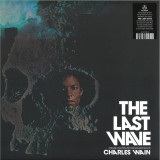
The premiere soundtrack release to Peter Weir's 1977 Australian New Wave classic.
Lost electronic score from the enigmatic composer Charles Wain.
12-track LP sourced from the original stereo master tapes.t.
180g vinyl and deluxe packaging including archival film stills and original press material
The Last Wave (also known as Black Rain in the US) was the final chapter in a trilogy of films scripted and directed by the leading auteur of the Australian New Wave, Peter Weir.
Beginning in 1974 with the absurdist black comedy-horror The Cars That Ate Paris, and followed a year later by the lush gothic mystery Picnic At Hanging Rock, The Last Wave was a landmark in existential horror. Sitting alongside other Australian eco-terror films (e.g. Long Weekend) the film featured a haunting electronic soundtrack that is as mysterious and beguiling as the spiritual themes of the film itself.
With no LP issued after the films premiere in 1977, and together with the mystery surrounding the true identity of its enigmatic composer 'Charles Wain', the score is a largely unheard recording of pioneering experimental film electronics, easily compared to the music that contemporaries Klaus Schulze and Tangerine Dream were composing for Australian films during the same period or the electronic soundtracks of John Carpenter.
Tense atonal electronics, synthesizer drones and manipulated Didjeridu all perfectly capture the film's ominous atmosphere, punctuating the slow hypnotic pace of this brooding supernatural thriller. The Last Wave soundtrack is released in conjunction with the lost film music to Nicolas Roeg's 1971 New Wave masterpiece Walkabout composed by John Barry.
Moullinex is back with his finest album up to date, HYPERSEX, a collective love letter to club culture and its celebration of difference, freedom and love. In his third length, Moullinex reached out to several guest singers: Fritz Helder (Azari & III), Georgia Anne Muldrow (Flying Lotus, Mos Def), Iwona Skwarek (Rebeka), Best Youth, Marta Ren, Da Chick, UhAhUh and Tee Flowers, crafting a uniquely fresh piece that combines many of his musical influences, from the funk, groove and sunshine of his debut "Flora" to the psychedelia and tropicalia of 'Elsewhere'. Moullinex is the alter ego of the Portuguese producer and multiinstrumentalist Luis Clara Gomes. He's established himself as one of the leading artists in the modern disco scene, with several singles such as 'Take My Pain Away' and 'Maniac' ft. Peaches, and remixes of acts like Røyksopp, Cut Copy, Two Door Cinema Club and Grammyawarded artist RAC. The road to HYPERSEX has been paved by various singles and videos in 2017, expanding the spirit of collaboration to directors and visual artists, and gathered wide support from international tastemakers across the globe, including Vice, NPR, KCRW, Triple J, Majestic Casual, Les Inrockuptibles and Tsugi Mag. HYPERSEX is like Hypertext between humans, a system designed to multiply ideas and connections between people. The dance floor is the perfect medium.
Following a run of local transmissions from A Sagittariun, Crump, Rob Smith and Atki2, Idle Hands turns its attention to Berlin and the straight-up, no-nonsense techno thrust of Johanna Knutsson and Hans Berg. Both respected artists and DJs in their own right, the pair have been turning out 12"s together for The Free Spirit Society, Klasse and Crime City Disco over the past few years, but most importantly they've been steering the excellent UFO Station Recordings as a vessel for their punchy, primal techno tracks.
The sound on this EP taps into the pure form of stern, dark dancefloor tackle favoured at Idle Hands - no extraneous filler, plenty of space in the mix, but equally built with warmth and personality rather than monochrome functionality. If you need further proof, just look to the fact the EP is named after a Swedish soap opera from the 90s.
The bleeps and bass tones that pulse through "Taggen" are so finely crafted they need not skip and dance around the arrangement. The melodic interplay on "Klimax" is subtle but ultimately uplifting and optimistic where so much techno concerns itself with oppressive gloom. "Bimbo" finds the pair embracing a more psychedelic approach, but even here the modulating effects processes are kept within certain boundaries so as to not dilute the impact on the floor. After all, this is music to dance to, to be felt over a large system (where possible).
Moving from leftfield bass excursions to minimalist 2-step, UK techno and now onto this much more continental sound, theMälarviken EP continues to widen the range of Idle Hands' musical tastes without losing sight of the complete picture.
It's already been 5 years since the last Zombie Zombie album 'Rituels d'un Nouveau Monde', after which the group explored other territories by signing 2 film scores, namely 'Loubia Hamra' by Narimane Mari and 'Irréprochable' by Sébastien Marnier, as well as creating the music accompanying a contemporary circus show called 'Slow Futur' created by Martin Palisse and Elsa Guérin. Wouldn't these beautiful parentheses make you want to return to the sources After 10 years at Versatile Records, 2017 also marks the decade anniversary of the release of their first album 'A Land for Renegades' in 2007, at the time considered to be one of the 10 best albums of the year according to Rough Trade.
'Livity' - Zombie Zombie's latest opus seems to plunge us deep into science fiction, with a cover designed by the mythic cartoonist Philippe Druillet, who is also the founder of the cult Métal Hurlant comic series. The title of the album is somewhat misleading, as one could mistakenly think of a certain dub record made at
the famous Island Records Compass Point studio in the Bahamas. For the uninitiated 'Livity' or 'Life force' is actually a Rastafarian spiritual concept based on the idea that an energy exists within, and flows through, all people and all living things. The record was recorded last winter in Paris, in a very short time frame. 7 tracks played live in 7 days, by Etienne Jaumet (synthesizers / rhythm box / metallophone / sax), Cosmic Neman (drums / vocals / sound effects), and Dr. Schonberg (percussion / electronics / trumpet), recorded at the Red Bull Studios by Thibaut Javoy and Jerome Caron, 2 very competent engineers. To keep it in the family, the album was then mixed by another member of the Versatile stable, the mysterious and legendary DJ/producer I:Cube, done in the label's Victor Studio.
On this album the principles that are dear to the group rest being respected, still as far away as always from the standards of 'radio play', A living kind of music, composed of long instrumental moments recorded with analog synthesizers and drum machines, accompanied by drums and percussion. But I:Cube's touch may bring the unique energy that one may find at Zombie Zombie's concerts; on certain cuts like title track 'Livity' that the group recorded in Laos, a wild combination of 808 kick drums and bewitching jungle sounds that sound quite unlike anything else out there, and especially on 'Hippocampe', which gives the impression of hearing an old school hip hop rhythm with the power of a metal band who have replaced their guitars with an army of synthesizers: we recommend you listen to this particular track in a convertible while speeding down the highway.
As with all of Zombie Zombie's music the cinematic component is still strong, on titles like 'Ils existent..' 'Acera' which was originally composed for ciné-concerts accompanying the films of Jean Painlevé et Maurice Pialat. The energy of the beginning is still very present, as is - of course - the kraut inspiration. But it's also an album that takes new directions and sonic risks, like on 'Looose', which brings to mind the Art Ensemble of Chicago, or the groove of James Chance in New York in the early 1980's, featuring the free sax solos of Etienne Jaumet and Dr. Schonberg on the trumpet. The group also offers some slower and calmer titles, like 'Heavy Meditation' as well as exploring more experimental tracks in the line of French 70's groups such as Lard Free or Richard Pinhas, for example on the bonus track 'Black Moon'.
Please - Take your time, and enjoy listening!
SPECIAL LIMITED EDITION X 300 WITH BONUS 7 :
Limited special edition with the 7" containing the track "Lune noire", in 2 parts - one per side.
It's already been 5 years since the last Zombie Zombie album 'Rituels d'un Nouveau Monde', after which the group explored other territories by signing 2 film scores, namely 'Loubia Hamra' by Narimane Mari and 'Irréprochable' by Sébastien Marnier, as well as creating the music accompanying a contemporary circus show called 'Slow Futur' created by Martin Palisse and Elsa Guérin. Wouldn't these beautiful parentheses make you want to return to the sources After 10 years at Versatile Records, 2017 also marks the decade anniversary of the release of their first album 'A Land for Renegades' in 2007, at the time considered to be one of the 10 best albums of the year according to Rough Trade.
'Livity' - Zombie Zombie's latest opus seems to plunge us deep into science fiction, with a cover designed by the mythic cartoonist Philippe Druillet, who is also the founder of the cult Métal Hurlant comic series. The title of the album is somewhat misleading, as one could mistakenly think of a certain dub record made at
the famous Island Records Compass Point studio in the Bahamas. For the uninitiated 'Livity' or 'Life force' is actually a Rastafarian spiritual concept based on the idea that an energy exists within, and flows through, all people and all living things. The record was recorded last winter in Paris, in a very short time frame. 7 tracks played live in 7 days, by Etienne Jaumet (synthesizers / rhythm box / metallophone / sax), Cosmic Neman (drums / vocals / sound effects), and Dr. Schonberg (percussion / electronics / trumpet), recorded at the Red Bull Studios by Thibaut Javoy and Jerome Caron, 2 very competent engineers. To keep it in the family, the album was then mixed by another member of the Versatile stable, the mysterious and legendary DJ/producer I:Cube, done in the label's Victor Studio.
On this album the principles that are dear to the group rest being respected, still as far away as always from the standards of 'radio play', A living kind of music, composed of long instrumental moments recorded with analog synthesizers and drum machines, accompanied by drums and percussion. But I:Cube's touch may bring the unique energy that one may find at Zombie Zombie's concerts; on certain cuts like title track 'Livity' that the group recorded in Laos, a wild combination of 808 kick drums and bewitching jungle sounds that sound quite unlike anything else out there, and especially on 'Hippocampe', which gives the impression of hearing an old school hip hop rhythm with the power of a metal band who have replaced their guitars with an army of synthesizers: we recommend you listen to this particular track in a convertible while speeding down the highway.
As with all of Zombie Zombie's music the cinematic component is still strong, on titles like 'Ils existent..' 'Acera' which was originally composed for ciné-concerts accompanying the films of Jean Painlevé et Maurice Pialat. The energy of the beginning is still very present, as is - of course - the kraut inspiration. But it's also an album that takes new directions and sonic risks, like on 'Looose', which brings to mind the Art Ensemble of Chicago, or the groove of James Chance in New York in the early 1980's, featuring the free sax solos of Etienne Jaumet and Dr. Schonberg on the trumpet. The group also offers some slower and calmer titles, like 'Heavy Meditation' as well as exploring more experimental tracks in the line of French 70's groups such as Lard Free or Richard Pinhas, for example on the bonus track 'Black Moon'.
Please - Take your time, and enjoy listening!
Bewitching Avant-Pop album from impromptu supergroup built around acclaimed Japanese duo, Tenniscoats. Featuring members of Notwist, Jam Money and Joasihno.
In these dark and uncertain times, there's an ever-growing collective of peaceful, loving types, bound together by an understanding of one peculiar word: Tenniscoats. Aside from being the name of an influential Tokyo-based duo, it represents fun, artistic freedom, experimentation and - perhaps most important of all - inclusivity.
A Tenniscoats gig is rarely the audience watching the performers. Instead, Saya and Takashi regularly shun the stage in favour of any particular spot that takes their fancy, whether it's an empty seat in the auditorium or the roof of a neighbouring cafe. In the world of Tenniscoats, music can happen anywhere, and everyone is invited to join in.
During the winter of 2016, the music happened in Munich. As a long-time fan, Markus Acher (Notwist) jumped at the chance not only to put Tenniscoats on the bill at the Alien Disko festival he was organising, but also to invite Saya & Takashi to a small apartment studio, together with Mat Fowler (Jam Money) and Cico Beck (Aloa Input, Notwist). This is where Spirit Fest was recorded over the following 14 days.
Tenniscoats are known for their collaborations - some of their finest work was done in conjunction with Tape, The Pastels, Jad Fair and many others - so making good use of the time and friends available was natural to them. For me, timing is important,' Saya said. We met in season, and the song flowers are now blooming!' Mat Fowler recalls the Spirit Fest sessions taking place in an idyllic, festive atmosphere. Every morning we'd all share breakfast, chat and learn about German Christmas customs. We'd catch the bus in the morning and walk home in the evening. The journey ran parallel to the beautiful flowing Isar River that bubbles, ebbs and flows right through the middle of Munich.'
While Tenniscoats sit at the heart of proceedings, it isn't their album alone. Markus, Mat and Cico also brought songs, providing a solid base on top of which the artistry could evolve. Mat explains that, a melody would begin, and slowly, each of us - in our own time - would find our way into the music.
Producer Tadklimp would sensitively set-up around us in this narrow window of time, so as to document that first and intuitive moment of collective discovery.' Nearly everything was recorded live,' agrees Markus, playing and singing together in one room with piano, guitars, percussion and some keyboards.' The collaborators came from Germany, Japan, the UK, Greece and beyond. That sense of inclusivity is palpable.
From the tender beauty of Markus's River River' and Saya's Mikan' to the electro-Merseybeat of Tenniscoat's Nambei' and the half-crazed pianica-reggae of Shuti Man', the resulting album is a testament to the manner of which these musicians are able to channel their songwriting through their spontaneity. It's also a snapshot of a gentle and intuitive moment in time - a beautiful meetup that expands this community, happily, even further.
What A decade deep into its ongoing investigations, documenting and pushing the sonic frisson and fusion between science and technology, SCI+TEC remain at the very forefront of electronic music. Its feet firmly on the dancefloor, its spirit deep inside the machines, its sights set on the future: Dubfire's label has continuously forged its own deep furrow and has been doing so from day one. With breakthrough Dubfire releases such as 'Roadkill' and 'I Feel Speed' SCI+TEC has managed to create a whole new framework for 21st century techno. All the while SCI+TEC has consistently championed and encouraged new and unsung talent from around the world, amplifying legions of rising names; Davide Squillace, Paul Ritch, SHADED, Simi, Delete, Harvard Bass, Joop Junior and countless more include SCI+TEC releases in their rich histories. This precision balance of stark sonic signature, technical ideology and nurturing new ideas and talent has led to SCI+TEC's perpetual momentum into every house and techno DJ's playlists and sets for the last 10 years. Be it the label's penchant for deep, undulating subby grooves or its passion for warehouse-razing thunder-powered techno, the SCI+TEC sound covers every corner of the floor and every chapter of the night; as proved by the label's many world tours. And proved once again by this fittingly stacked anniversary album. 10 tracks to celebrate 10 years from 10 of the label's most exciting artists, every track brings home the SCI+TEC message: The breath-taking atmospheres of Alex Mine's album scene-setter
Version Galore is a newly found label, deeply rooted into the music culture. We are bringing you the selected reworks / re-edits from the top producers in the game, showing lots of respect and care for the original, but elevating it's spirit and taking it somewhere else. It's all about the dialogue of cultures and the idealistic desire to pass the music legacy on! No half-measures, played-out tunes, lazy cuts, or boring "808-kick boosting" biz!
On the first release of the label we are delighted to bring you the chosen cuts from the man that needs no introduction - Opolopo. He knows a thing or two about making a personal version of a track that can easily overshadow the original, and we guess that's the case with the two cuts he prepared for us on this
records. Things escalate fast. On the A-side you will find originally a midtempo mild jam "Go Get It", which is turned by Opolopo into an effectively-upbeat stomper that will inject true feeling and groove in any house or disco set alike.
It's one of those rare occasions when a soulful tune turns out to be super dance-floor efficient no matter what!
The B-side is all about the raw and emotional funky madness of "American Promise". It's infectious groove, pinpointed with growling sub-bass is just devastating. Epithets are irrelevant here - just play it loud, but with caution! "Version Galore - play some more!"
out of Stock
Last delivered 20 months ago available to reorder, subject to availability
Spiritual jazz heavyweight and Kendrick Lamar collaborator Kamasi Washington's new EP Harmony of Difference, the first new music from Washington since his universally acclaimed 2015 debut album The Epic, is out September 29 via Young Turks.
Harmony of Difference premiered as part of the Whitney Museum of American Art 2017 Biennial alongside a film by A.G. Rojas and also featuring artwork by Kamasi Washington's sister, Amani Washington. The new music is an original six part suite that explores the philosophical possibilities of the musical technique known as 'counterpoint,' which Washington defines as 'the art of balancing similarity and difference to create harmony between separate melodies.' Beyond the artistic impulse to expand the possibilities within counterpoint, Washington wanted to create something that opened people's minds to the gift of diversity.
Each of the first five movements is its own unique composition. 'Truth,' the sixth movement, fuses all five compositions into one simultaneous performance. Echoing this fusion, Amani created five paintings focused on raw shapes and colors, each inspired by one of the first five movements of the suite. Amani then combined these paintings to create a sixth: an abstract depiction of a human face.
The film, directed by A.G. Rojas, brings the metaphoric ideas found in both the music and paintings to life. While still quite abstract, it focuses on the harmony found in people from South Central and East Los Angeles and shows the beauty in their differences.
'My hope is that witnessing the beautiful harmony created by merging different musical melodies will help people realize the beauty in our own differ
Underground Jazz, Street Funk & The Roots Of Rap 1968-79. Soul Jazz Records' new release 'Soul of a Nation: Afro-Centric Visions in the Age of Black Power' is released in conjunction with a major worldwide art exhibition, Soul of A Nation: Art in the The Age of Black Power which takes place at the Tate Modern, London, UK (July-Oct 2017) and The Brooklyn Museum, New York, USA.
The album shows how the ideals of the civil rights movement, black power and black nationalism influenced the evolvement of radical African-American music in the United States of America in the intensely political and revolutionary period at the end of the 1960s following the assassinations of Malcolm X, Martin Luther King and the rise of the Black Panther party.
Featuring groundbreaking artists such as Gil Scott-Heron, Roy Ayers, Don Cherry, Oneness of Juju, Sarah Webster Fabio, Horace Tapscott, Phil Ranelin and many others, Soul of A Nation shows how political themes led to the rise of 'conscious' black music as new afro-centric styles combined the musical radicalism and spirituality of John Coltrane and radical avant-garde jazz music alongside the intense funk and soul of James Brown and Aretha Franklin and the urban poetry and proto-rap of the streets.
The Soul of a Nation exhibition draws on the links between Black art forms - art, music, poetry - and how they came together during the civil rights and black power era as part of the wider black arts movement across the United States.
Iconic African-Amercian revolutionary figures such as Martin Luther King, Malcolm X and Angela Davis, John Coltrane, Muhammad Ali all appear in the radical artworks of Barkley L. Hendricks, Romare Bearden, Norman Lewis, Lorraine O'Grady and Betye Saar.
A selection of original radical jazz record sleeves artworks which appear in Soul Jazz Records' earlier groundbreaking Freedom, Rhythm and Sound - Revolutionary Jazz Original Cover Art book will also be on show at the Tate, London throughout the exhibition. The Freedom, Rhythm and Sound book is also newly back-in-print in conjunction with this major exhibition and the release of the Soul of a Nation album.
Stuart Baker (founder of Soul Jazz Records) will appear on the panel of Jazz for Soul of a Nation: Art in the Age of Black Power discussion at the gallery as part of the show. Soul of a Nation comes with extensive sleeve-notes and exclusive photography in a large 36-page outsize booklet and slipcase. Double gatefold vinyl album edition comes with full colour inners + bonus download code and includes full sleeve-notes/photography.
out of Stock
Last delivered 3 years ago available to reorder, subject to availability
NAISSANCE MUSIK proudly presents ELEPHANTOMS, the second EP, produced by HEAR and SAN PROPER.
Elephants represent past and present, but also part of our future.
They are among the largest and oldest animals on earth - powerful and yet fragile, eternal and yet almost extinct. When you think about music, similar ideas come to mind - of course the power of sound and dance, the energy of the party because of that group-feeling of the herd, but also the fragile aspect of harmony, the quality of family that is so difficult to reach in a formation of individuals, plus that moment when the music adapts to the people, and the people adapt to the music.
Elephants are phantoms in music, they haunt dancers and listeners. But they haunt us in a positive way, to remind us with the idea that we are part of a refreshing and renewing cycle, the circle of life. This is why this elephantism' brings awareness, love and care to your sound-system, think about it and remember.
(the first track Up the Hill' starts the journey and will make you climb the first mountain, then The Groin allows you to copulate and get sexy with your crew through the tune. Macha Moves brings laughter and tears after sex, makes sweat in the late hours but whips up breakfast and morning-glory at the same time, while the last track is a medley of memories, for an Elephantom remembers everything...).
ELEPHANTOMS is the collaboration between HEAR & SAN PROPER, two dedicated musicians who have created this EP in Canada, Lebanon, Holland and Germany in honour of a dying breed which is close to extinction.
This is for the spirit of the elephant.
While you purchase this piece of music, please also look into the right organisation to donate and help these dinosaurs before they will haunt you like phantoms. (Manuel Benguigui)
Searing platter of krautrock with scorching doses of The Stooges & Judas Priest. Another ripper from this legendary Finnish horde!
Circle are the very definition of genre-defying, a rare feat for any band, but effortlessly achieved by this prolific Finnish collective. Circle's latest album Terminal is pure hedonistic pleasure. Never content on staying the same, they have created an idiosyncratic cocktail of sonic fusions, conjuring an impulsive, dizzying energy that stirs a spirit of curiosity within the listener, and has the ability to possess all who encounter them.
Whilst many would run out of creative steam (certainly after 30+ albums), Circle continue to boldly explore sonic soundscapes, venturing curiously into terrains of Stooges-esque swagger, trance-inducing kraut rock mantras, beautiful electronic ambience, psychedelic rock noodling, arena storming AOR weirdness, 70s prog rock extravagance, glam pop pomp, and of course their core sound, heavy metal, not to mention other peculiar and daring sounds that simply cannot be pigeon-holed. Terminal is gloriously fruitful in tones, shapes, colours and sounds. Eccentric, accessible, delightful and thrilling.
Solune real name Etienne Dauta hails from France, the son of a record store owner father and artist mother. He moved to Berlin 6 years ago and for the last 3 years
co-ran the Bass Cadet record store. Solune has just released one EP in his short career on the Bass Cadet imprint but is also is one half of the Arcarsenal duo who also released on the label.
The EP kicks off with the mighty 'The Vision', a majestic New York inspired atmospheric stomper combining both spiritual and techy vibes that you can imagine hearing
pumping out over the system at The Sound Factory or Shelter.
'Sacred Smoke' is a hazy, languid percussive workout that will
sound perfect early doors to build the tension.
B1 'Rhythm School' does what it says on the tin and is a warm, driving housey cut. We wouldn't make these comparisons lightly but this sounds like a long lost Ron and Chez track to these ears. Last up is the exotic and mystical 'Idiom Of Peace'.
'The Hierophant' EP is a stunning EP of different flavours and a
perfect addition to the Secretsundaze catalogue.
* Includes a DIN A2long poster inside the 12" sleeve with edition number and music download code
* Rogue Style 1 EP is an international homage to b-boy culture, where the worlds of breakbeat music and breakdance collide. Sinistarr (USA), Kiat (Singapore), Kabuki (Germany) and HomeSick (Canada) are connected in many ways, now they lay bare their hip-hop roots and give something back with a fresh take through the eyes of drum & bass and juke/footwork. Here is what they have to say:
Sinistarr: "As a teenager I grew up as a b-boy, dancing anywhere I could: schools, parks, festivals, you name it, my crew was there with cardboard and a speaker. I eventually got deeper into DJing and making music and learned to bring a sound that's not just for the crowds and the purists, but also for all the dancers!"
Kiat: "Hip Hop has taught me to keep evolving, to explore new forms in all my art. Progression is the key to evolution. -- I met Sinistarr online thru myspace and we had a musical connection which led to our first collaboration 'Black Diamonds' which is still one of my personal favourite tunes I've been fortunate to be part of it's creation. With Kabuki, i've always been a fan of his work since his 'Makai' alias on No U-Turn, despite meeting him only recently thru the label.I've always known him to be constantly progressing his ideas in his music which I respect alot."
Kabuki: "B-boy culture has always been a strong influence on how I pursued my art, mainly because of its DIY ethos and attitude of perfecting your craft. Incidentally these were also the aspects that drew me to Jungle when I first discovered it in the nineties. -- I'm happy to rub shoulders with Kiat, Sinistarr and HomeSick on this release, as I'm a fan of their music foremost, but also because we became friends through the music."
HomeSick: "I was only a child in the 90s and as a result I feel like my understanding of b-boy culture was experienced second hand thanks to 90s/early 2000s hip hop music. I appreciate the parallels I can see with footwork culture, particularly the similarities to the community mentality of break dancing. -- I know Sinistarr through booking him for our local party night in Alberta, Canada called Percolate. Our city must have left an impression on him because a year later he made the move here from Detroit. Had the pleasure of hosting him as a room mate for a little over half a year, the home was a very potent creative space during this time. Kabuki hit me up a few years ago and we very quickly got to sharing tracks and collaborating together. Mans a master of production and a super important part of the global scene."
The idea for a reminiscence of b-boy culture stem from label owner Booga:
"Why am I interested in this so much I grew up in East Germany and as the movie "Beat Street" premiered in 1985 over here I was age 13 and blown away by the energy, the music, the wit, the style - everything in this movie was better than everyday life in Leipzig. So I started saving for a cassette recorder and taped music shows from West German radio and prepared tapes for school disco gigs to the hope somebody would do the "robot" to Arthur Baker "Breaker's Revenge". Unfortunately that never worked out hahaha. But I was hooked since then and as the wall came down in 1989 I travelled to West Berlin just to buy the Beats, Breaks and Scratches 1-4 vinyl box by Simon Harris. The fascination for breakbeats never stopped and before I discovered Jungle around '94 I was down with the British cut up house thing from the likes of Marrs, Krush and Coldcut as another form of breakbeat music. The "do it yourself" spirit from hip hop culture inspired me to start a local website called breaks.org in 2000 to locally promote the drum and bass scene with emerging producers, djs and mcs for a wider audience and I threw in some interviews with Storm, Kabuki, Rob Playford, Klute and John B. That turnt into a multi author blog called itsyours.info in 2004 which still exists - that is where I had the pleasure to introduce Kiat and Ash in 2007. All these years I was listening and playing drum and bass tunes when the occasional "bboy tune" came up, some were obvious like Alex Reece "B-Boy Flavour", Lemon D "B Boyz", Commix "Change" and some were not so much self-explanatory like Digital & Spirits "Phantom Force" and the remixes by T-Power & Codeine or Fracture's Astrophonica Edit - but I felt the hidden force of breakdancing nevertheless. With the Rogue Style series I have the first class opportunity to ask established and new Defrostatica artists to present a current interpretation of b-boy culture. This is a dream coming true."
Until he was about 20, Texas-born Melvin Sparks was a rhythm & blues guitarist, backing Jackie Wilson, Curtis Mayfield and Marvin Gaye as a member of The Upsetters. But Sparks gave up his seat on The Upsetters' bus in New York City, where a chance introduction to George Benson led him to a place in soul jazz history. Melvin played and recorded with Lou Donaldson, Leon Spencer, Bernard Purdie, Jack McDuff, Jimmy McGriff, Idris Muhammad, Dr. Lonnie Smith, Charles Earland, Grover Washington Jr., Reuben Wilson and so many more. Even during the quietest years of soul-jazz Melvin stayed relevant through hip-hop and r&b, a quick search at WhoSampled turns up more than 150 samples of his funky chicken scratch. And Melvin's legacy is heard in contemporary soul/funk bands like The New Mastersounds, Soulive and The Greyboy Allstars, all of whom he also guested with several times before his early departure from this realm in 2011.
This release documents Melvin's final band just months before his death. Organist Beau Sasser and drummer Bill Carbone had been working with Sparks for several years, and, despite the power dynamic - they were in their early 30s, Melvin an elder-statesmen of the genre - the unit was sharp, relaxed and performed Melvin's music with a jovial spirit. The trio played the Burlington, VT club Nectar's regularly, but this night featured two "onlys." Per the recommendation of Nectar's agent they used the "Grippo Horns," the only time Sparks used a horn section in the last several years of his life, and they allowed a multitrack recording of the show. Both were strong decisions.
The tracks on this album, lovingly mixed by guitarist, producer and Melvin Sparks fan Eddie Roberts, demonstrate that Melvin played as well in the final months of his life as at any time. Sparks counts "Whip! Whop!" off at what he said The Upsetters called a "showtime tempo," and peppers it, as well as most of the album, with quotes from jazz standards, pop songs and cartoon themes, all woven effortlessly into the bebop-funk dialect he helped create. He unfolds amiable melodies, patiently and methodically, through his several-minute lead on "Breezin'." And Sparks is audibly uplifted by the Grippo Horns helping him perform his 1973 arrangement of "Ain't No Woman" for the first time in decades.
Conceived, as its predecessors, as the ideal musical accompaniment to a packed dance hall, "Blue Latin" reinterprets a musical genre - jazz, of course! - which even decades ago was considered the dance music 'par excellence', and delivers it, extremely modernized, to the present day, contaminated by Afro-Cuban, Brazilian and Latin-jazz elements, all made fluid, compelling and above all..., danceable! The almost-meditative "Incanto" combines spiritual jazz influences and African atmospheres.