Fresh off of a pair of well-received EPs on his recently-launched Manhigh imprint, Berlin's highly respected techno auteur Henning Baer makes his first appearance on Nonplus with 4 excellently crafted, saturated machine techno tracks on The Idea of Instinct. Following on feelings suggested in the title, the EP opens with a pair of more contemplative pieces: the title track's spare arrangement puts mechanical rhythmic drive behind its exploration of dusky electronic atmospheres, while the feeling of 'DNA' is both brighter and slightly pacier, its hypnosis deriving from the pads and synthesizer sequences that circle the drums. 'CCC II' takes a darker approach to a similar idea, this time with the suggestion of polyrhythms in the distant and heavily-treated percussive elements circling in the background behind uneasy ambience. It builds to the closer 'Spiritual Quest', where overlaid rhythms in 3 and 4 are not easily reducible and create the tension at the track's centre driving it to its conclusion.
After a first collaboration focusing on the City of Angels, LA legend John Tejada and acid innovator Tin Man (Johannes Auvinen), this time brooding on the latter's home city, and former's birthplace, Vienna. The Austrian capital is known as "the city of music" and the "city of dreams," two broadly aligning concepts that go far in describing this beguiling 12-inch. The four songs were mixed down live to 2 tracks, created in the real world without a daw, or multi tracking, which has really captured the spirit of performance and improvisation. Succeeding "Railjet," a tense drum workout, comes "Bim," referring to the colorful trams that run through Vienna. Here, Auvinen sculpts his 303 into near-pizzicato form. The acid box is accompanied by stately pads making for one of the duo's most memorable tracks yet. The next cut, "Danube Nights," references the mighty, ancient river, the flow motion mirrored by a couple of widescreen acid lines. A pensive lead and some melancholy chords emerge, but the drums roll right along like the water- tough enough for a heaving floor with a hint of fragility for the headphones. The record concludes with the acidic "Prater Allee," named after idyllic, sprawling park on the banks of the Danube. The duo's love letter to Vienna is well-suited for travel, for the dance and for dreaming.
TS07 is the 4th EP of the TONE SERIES project and in line with the previous three releases TS08, -09 and -10. However, while MACHINE DREAM freezes you up with its winter grooves whilst on your way to the club, KEEP THE BOMB warms you up as soon as you get inside. Whereas MACHINE DREAM unveals shamanik percussions driving a tribal acid vibe with a big amount of pads that make the track ramping crescendo up, KEEP THE BOMB establishes itself as a major dance floor tune with its killer beast, cruising vibe and staccato voice percussion. With regard to the artwork, as shown on the cover, each track has its own colour. There is neither a A nor a B-side. The same applies to the record vinyl itself. Each track stands on it own. As a result, MACHINE DREAM and KEEP THE BOMB distinguish themselves from each other through their vibes and colours, although they remain in the same spirit. In summary, TONE SERIES brings together the idea of interdependence between music and design: what colour follows on from music and, in return, which musicality comes out of colours.TONE SERIES was born from the collaboration between late Villa's former bouncer (one of the most underground clubs of Berlin) Wolfram, French music producer, live performer and DJ David K, and LumièresLaNuit's co-founder and An der Grenze's founder.
out of Stock
Last delivered 6 years ago available to reorder, subject to availability
TS08 is the 3rd EP of the TONE SERIES project and in line with the previous two releases TS09 and TS10. However, its two tracks HAWAIAN JAM and 24 BAR PER DAY present rather refreshing grooves, right on time for the summer.
HAWAIAN JAM makes you feel like in a Jeep, driving around the Hill of Mauï while looking at the best waves. And whereas HAWAIAN JAM follows the rythm of cutting edge and caraibian slide guitars with a touch of reggae, 24 BAR PER DAY unveals jumping drums and druggie pumping sounds surrounded by bitchy voice cuts.
With regard to the artwork, as shown on the cover, each track has its own colour. There is neither a A nor a B-side. The same applies to the record vinyl itself. Each track stands on it own. As a result, HAWAIAN JAM and 24 BAR PER DAY distinguish themselves from each other through their vibes and colours, although they remain in the same spirit.
TONE SERIES was born from the collaboration between Villa's former bouncer (one of the most underground clubs of Berlin) - Wolfram, French music producer, live performer and DJ - David K, and LumièresLaNuit's co-founder and An der Grenze's
founder - Edouard. In summary, TONE SERIES brings together the idea of interdependence between music and design: what colour follows on from music and, in return, which musicality
comes out of colours.
out of Stock
Last delivered 6 years ago available to reorder, subject to availability
In the far reaches of space, an American pilot named Peter Quill finds himself the object of a manhunt after stealing an orb coveted by the villainous Ronan. In order to evade Ronan, Quill is forced into an uneasy truce with a group of misfits including Gamora, Rocket, Drax the Destroyer, and Groot. But when Quill discovers the true power of the orb and the menace it poses to the cosmos, he must rally his ragtag rivals for a last, desperate stand - with the galaxy's fate in the balance. Staring Chris Pratt, Zoe Saldana, John C. Reilly as well as the voices of Vin Diesel and Bradley Cooper.
This deluxe double vinyl edition of the soundtrack to the James Gunn-directed 2014 film Guardians Of The Galaxy includes classic 1970's songs from the movie like Blue Swede's "Hooked on a Feeling," David Bowie's "Moonage Daydream," 10cc's "I'm Not in Love," the Jackson 5's "I Want You Back," Redbone's "Come and Get Your Love," and The Runaways' "Cherry Bomb" plus the film's original score composed by Tyler Bates.
Music plays a major role in Guardians of the Galaxy as the 1970's songs featured in the film are part of the storyline in a unique way. Explaining how the songs come to play in the story, director James Gunn says, "One of the main story points in the movie is that Quill has this compilation tape (Awesome Mix #1) that he got from his mother before she died that she made for him. It was of songs that she loved, all songs from the 1970s, and that's the only thing he has left of his mother and that's the only thing he has left of his home on Earth. He uses that as a connection to his past and to the sadness that he feels of having left all that and lost all that."
Beautifully Designed 1LP, 180g Vinyl Press kit: Following his Extended Play EP on Other People last year, Jream House is the turbulent and spiritual debut LP of Mark Hurst aka A Pleasure. Blending mathematical composition with an unrestrained studio experimentalism, the sound of A Pleasure charts a space where formative influences confront the most immediate performative impulse. Using a process of numerical transposition, the names of personally significant bands and composers are converted into drum patterns. He then lets loose, improvising around these structures with a variety of traditional and unorthodox instruments: bass and guitar, bowed cymbals, drum machines juggled like turntables, blowtorch on aluminium, to name but a few. With his influences as start-points, he builds rhythmic structures literally in their namesake, blasting their hulls with walls of noise, monolithic basslines and any other jam-yielded shrapnel. Despite the chaos and complexity of the process, the results sound neither clinical, nor garbled. The tracks always find their way to an emotive melody or strong groove. Lush guitar strums and yearning keys ride the high-speed beat of Slow Channel", which seems to soar through cloud-cover as one snaking mass. The Order of Things' folds a cosmic guitar-part into a backdrop of heavily side-chained noise. Arthur Russell' features a neck-snapping rim-shot and crushed snare that splash up the bits of an elegiac vocal part. Through violent and idyllic atmospheres, Jream House jettisons its inspirations like landing shuttles, always in search of new ground. These are songs, not just experiments.
With House Warming - Andy Vaz returns with his 3rd full lenght album on his own Yore Imprint. Due to Andy's half Indian roots, he is lucky enough to owe a Beach House just outside of Mangaluru, South India in the State of Karnataka. - where most parts of the Album were written over a period of 6 months. In this totally isolated, entirely tourist free hidden spot, which had become Andy's second home over the past years, he found himself away from the usual routines of western life, to find himself in a position to simply sit down and create. The result is House Warming". As the Title suggest's - think of house, sure and no doubt- but here on this album, thought all the way thru from beginning to end. The result then is House Music in all it's aspects: The Soulful, the deep and the raw or if you want - Deep House, Acid House, Garage/Vocal House - the joints range from downtempo, elektro and even hip hop beats. Oldschool you may think Maybe in spirit, as entirely produced with analogue synths & the roland series from 808, 909, 505, 606 to the original 303, but used in a modern studio environment. Andy Vaz is someone who has been around long enough to know how to programme his very personal idea's into the music - without denying influences such as Detroit, Chicago and New Jersey, to create something that goes further than a simple reflection of the past. Deep isn't a genre, it's a feeling. A warm feeling most of all. Be invited to come and see if you'll find it here.
out of Stock
Last delivered 6 years ago available to reorder, subject to availability
This is France in the Mitterrand years: fashions fleet as fast as governments. In the early eighties, the happy-go-lucky gather the nectar of each and every new release.
Believing in a bright future for videotex, and loosened up by the sexy talks broadcasted on the budding pirate radios, the new generation dreams of dance floors and holiday clubs. French Boogie, which preserves the spirit of these years of boodle and bunkum, is the ideal soundtrack to their dreams.
What the web now refers to as French Boogie is some synthetic funk reflecting the spirit of those days when nothing was impossible, or so it seemed. Its syncopated flow heralded the dawning of French rap. Often considered as some kind of post-disco, inspired as much by black music as by new wave, this carefree pop music with bawdy lyrics indulged in simple pleasures: holidays, swank and sun were recurrent themes. Totally in tune with its time, it incidentally glorified luxury, success, and a certain consumerism embodied, for instance, in Bernard Tapie.
In popular clubs such as La Main Bleue in Montreuil, or L'Echappatoire in Clichy-sous-Bois - where Micky Milan could be seen behind the decks - an enthusiastic audience discovered this new sonic wave, influenced as much by French pop as by Sugar Hill Gang or Kurtis Blow. The artists who first launched the movement engaged in it wholeheartedly, but as often the case with new music trends in France, humour and casualness quickly became a decoy to impose a new style. This explosive mixture, in which startling and typically Frenchy French lyrics go along New-York-style tunes, is sometimes reminiscent of the kinky comedies directed by Max Pécas or Claude Zidi. On this prolific scene, partly originating from the Jewish community, everybody was looking for success, trying to hit the jackpot with what was to hand. Famous media personalities, one-hit wonders or John Does in quest of fame, all had a go at French Boogie - more or less successfully. Apart from « Vacances j'oublie tout » by Elégance, « Un fait divers et rien de plus » by Le Club, or « Chacun fait ce qui lui plaît » by Chagrin d'amour (produced by Patrick Bruel), very few songs became hits: the story of funk in France is that of a half-baked robbery.
In this myriad of new musicians, the very young François Feldman and Phil Barney pioneered a fresh and hybrid style. Other well-known artists like Gérard Blanc from Martin Circus (Attaché Case), Richard de Bordeaux (Ich), or Jean-Pierre Massiera (Anisette, Pirate Scratch Band, Mandrake, Scratch Man...) added an eccentric touch to this sound-wave, making it often entertaining, and sometimes showy.
Capture d'écran 2015-10-26 à 12.55.43Singers like Agathe (the author of 'La Fourmi' and of the hit song 'Je ne veux pas rentrer chez moi seule') were far more than just window dressing. They even tried to give an ironic and subversive twist to this rather harmless genre. The very vindictive rebel Gérard Vincent shared in this spirit, but as a whole, French Boogie became associated with nonchalance and sauciness. Thus, Stéphane Collaro, Gérard Jugnot, Alain Gillot Pétré and other TV clowns would clumsily contribute to this French variation on funky sounds. In a few but intense years, French Boogie gave all the tips to party with style.
If some hits made it possible for the happy few to get a real house under truly exotic palm trees, the wave actually ebbed away very quickly, leaving quite a few musicians stranded on the shore. Whether they were sincerely motivated, or simply opportunistic, they had failed. In 1984, French Boogie was already breathless, and got merged with other genres: on the one hand, rap and breakdance adapted its flow to a more urban world, especially with Sydney's show, H.I.P.H.O.P, and Dee Nasty's broadcasts on Radio Nova; on the other, italo, new beat and house began to rule over dance floors, even more strongly asserting the will to develop music for clubs.
Squeezed in between the age of disco and that of modern electronic music, French Boogie was a transitional phase, but it remains an amazingly refreshing testimony to the intermingling of pop and underground cultures. The genre was hastily categorized as anecdotal in spite of its pioneering synthetic groove and matchless bass lines. An attentive ear will discover the poetry of the ephemeral beyond the eccentricities of the genre, as well as a certain unexpected avant-gardism. At the origin of major music trends, always cheerful and catchy, French Boogie is what you need to party.
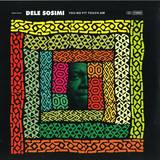
Wah Wah 45s are very proud to present the first full-length album in almost a decade from vocalist, keyboard player, Fela Kuti collaborator and afrobeat legend, Dele Sosimi!
You No Fit Touch Am represents where Dele is today - something of an untouchable force in the music scene that he has always been such a vital part of. The title is an uncompromising message that this man means business, and with his mammoth afrobeat orchestra on board that is definitely the case. Recorded at the Fish Market Studios in North-West London by Benedic Lamdin (AKA Nostalgia 77) the album provides a musical representation of Dele's strong socio-political opinions, as well as delivering classic song-writing that could have come straight out of 1970s Lagos!
Born in Hackney, East London, but soon to return to his parents' native Nigeria at the age of four, Dele Sosimi was schooled and raised in Fela Anikulapo Kuti's shadow at the height of early 70s afrobeat. Having been chosen by Fela to join his band at somewhat of a tender age, he was still a young man when sharing Fela's Glastonbury stage in 1984, and became both Musical Director for both Fela's Egypt 80 and Femi Kuti's Positive Force.
After Fela's passing in 1997, Dele went on to concentrate on his own solo career and, with diligent patience, carved out his own afrobeat crown. In London, where he now resides, his Afrobeat Vibration all-nighters are charged with his passion, labours and his unrelenting spirit.
Following on from his first two studio albums, Turbulent Times and Identity, this third long-player is sure to cement Dele Sosimi's position as a major player within afrobeat and beyond!
out of Stock
Last delivered 3 years ago available to reorder, subject to availability
Six years on from his debut album on Cadenza, Swiss DJ/producer Mirko Loko comes with the follow up to 2009's 'Seventynine' as he catapults us into the techno and electronica galaxy with 'Comet Plan'. 'Un voyage entre toute mes influences,' Mirko Loko shares, breaking into his mother tongue to describe the essence of his sophomore longplayer that was conceived in Berlin and later birthed in his hometown of Lausanne after a two-year gestation period. Literally translated as 'to travel between my influences', it's a fitting summation of an artist whose work has respectfully mined early inspiration from Detroit and Chicago that laid the foundations of the emotion-filled productions that we know of him from today. In addition to this, Mirko sees his connection with Luciano's Cadenza Music, a relationship that's been in existence since dot one and saw the likes of Ricardo Villalobos, Melchoir, Pedro and Rahdoo make up one of the most innovative crews in dance music, as leaving an indelible imprint on his musical DNA to this day. It's Mirko's strong sense of musical identity that is at the core of 'Comet Plan', a work that's equally informed by the artist's spiritual connection with the Motor City as his halcyon Cadenza roots. And one thing's for sure; he knows how to captivate: take 'Venus' whose trickles of melody and syncopated drum rhythms increases in intensity with each bar towards an eerie crescendo. Then there's 'U Special' that builds the kind of subtle party vibes you could imagine Luciano dropping to create one of those moments to a heaving blissed out dancefloor. 'Kolor' - the album's early single (also remixed by Carl Craig as part of an excellent EP package) is sprinkled with a dusting of xylophones, chimes and other bells as the melody is driven forward for a heady trip across the electronic galaxy.
This EP was made during a period where my whole outlook on everything was transforming. The Voidloss project started as an investigation, I was conducting a lot of research and study on the mind, the occult, on different thought modes, and the Voidloss project represented this. The idea was about a leap in to the void. A leap of abandonment into the dark, with total acceptance, total commitment. The idea was to lose myself to the void. This was mainly a spiritual journey for me, and could be best explained by 3 things, the void of Miyamoto Musashi from Go Rin No Sho, The concept of the Tao from the writings of Lao Tzu, and the concept of the abyss from the works of Aleister Crowley. Part of this journey deep inside the self was frightening and horrific, the total loss of self, of all identity and ego, and part of it was beautiful and enlightening. I wanted the music to reflect this, and I wanted the music to change as I changed, as I went to and through all these interesting places. In essence this was about freedom. So fast forward some years and I felt I had sharpened my mind quite effectively, the music had twisted and changed and flowed with me. At the point I began making the music for this EP, I had grown quite angry with the amount of conformity I was perceiving in life. Politically, socially, musically, there was this drive of conformity in the world. I think part of it, and only a part, comes from the prevalence of social media, the need to belong and to be liked, the idea of judging yourself and your works through the perception of others. Musically I felt that within techno there was a tendency for the music to fit within a set of confines dictated by fashion and hype, and this was reducing the diversity of the music, it seemed also that the practices of commercial music were seeping in to techno as the music became more popular. Hype and business driven decisions, brand building and so on. I always felt techno was more about art, and I began to get frustrated. Equally I felt that politically there was less and less choice, as all decisions seemed to lead to the same outcomes. I became more interested in the concept of anarchism, of the idea that government was no longer needed. I have always in my life had a drive to question everything. I've always been 'naughty' and rebellious and done things my way, to my advantage or my disadvantage, I could never accept being anything other than myself all the way. If everyone walks in one direction, I will walk the other way, even if it takes me over the edge of a precipice, just to see what is there. All this stuff influences my music, and during the period of making this EP I was angry, kicking against the things I no longer liked or wanted, screaming dissent. There is a lot of anger and rage, and of course rebellion. I wanted the music to capture that unbridled fury you have when you are in your late teens, when you just start learning about yourself and you start rebelling and questioning things around the time the world is really pushing you to conform. I was soundtracking my own philosophical riot. Previous to this my Voidloss stuff had been more introverted, more pensive and melancholy, more self destructive, more cerebral. For this new music I wanted something more immediate but without being too obvious. In terms of the choices I made I still leaned more towards broken rhythms for beat structure. I find it very difficult to do anything interesting with 4x4 kicks any more, it's too rigid for me, it limits my freedom. I like the looseness you get from more 'drummer' like beats, I guess probably because I have been playing drums all my life. The challenge is to get the same rolling power from broken rhythms as you get from 4 to the floor. It's not easy, there is a ridiculous amount of trial and error and the rejection percentage is high. I also was trying to use less 'synthy' sounds. I wanted to try to take a more acousmatic approach to sound design. With the current modular synth revival in techno I was hearing a lot of 'old' synth sounds re-emerging, and this didn't seem like a progression to me. I wanted to make sounds that were hard to source for the listener, where they weren't sure if it was synth or real world sample, digital or analogue. This involved a lot of experimentation. My process involved a lot of field recording, especially with contact microphones, which open up a whole new world of interesting sounds. You are effectively recording sounds through objects in the environment, 'hearing' the world as these objects hear them, I was using guitars, feedback loops, handmade instruments as well. So I was combining this with different synthesis, granular synthesis, sample synthesis, physical modelling, FM synthesis and of course analogue. Everything was reprocessed and re-synthesised, I tried hard to obscure the source and make something new as much as possible. The stuff on this EP was part of my live PA for some time, so as I learned how the music worked live I could go back and make changes, sometimes the environment I was playing in transformed the sound as well, and so I would try to go back an incorporate this in to the music. For remixes I wanted to choose artists that I respected for their vision as well as for their output, so my list of people I wanted was extremely short. Inigo Kennedy has always been an artist I have respected greatly. His music has always been unique to himself, he remains outside of fashions and trends even though his name has become very big recently. He takes risks with his work, experimenting and exploring, yet remaining relevant to the club, and just tirelessly forging ahead, seemingly for the sake of art above all else. And he's just a really nice guy to deal with. His remix is everything I expected it to be in that it is the unexpected. Regis is another artist who forges his own path in music, you cant really even begin to discuss the avantgarde in techno without including his name, he is one of the foundation stones for artistry and the outsider mentality in techno. His music is always unique to his own vision, and along with it comes an interesting artistic philosophy taking in situationism, post punk and industrial ideology and a good dose of tricksterism ala PT Barnum, all of which comes out in his music and the way it is presented. The man is a truly singular force and it is an honour to have him on this record. Overall the concept here is that of rebellion and dissent. Of asking questions, following your own path, of maintaining some place in yourself that burns like a forest fire.
Whether or not I have succeeded I guess is down to the listener, I'm never happy with my music, I keep wanting to move forwards, or somewhere else, and am constantly trying and failing to capture some essence of perfection. But like Bukowski said
'It's the only good fight there is'
in the past ten years lots of little and big stories happened in the music culture. house literally disappeared almost from the scene in order to come back as strong as never before.
minimal morphed back into techno while leaving the question mark why the term minimal ever got invented. some originators like frankie knuckles or romanthony passed away, while others like larry heard just stopped to perform.
in-between countless new artists appeared, twisted dance music with new perspectives on the old, and released their fresh ideas on even more countless labels out there in the void called music market.
one of the rare platforms that stayed solid as a rock in all these years is mule musiq, the tokyo based label that spreads miscellaneous sound vibes that long from jazz to disco, house, and unobtrusive ambient since 2004.
with a versatile artist roster consisting of producers such as henrik schwarz, lawrence, dj sprinkles, dj jus-ed, kuniyuki, eddie c, roedelius, or new kids on the blog like barnt or lord of the isles the japan based record company developed a status of her own for being one of the most free spirited organisations in contemporary music.
'if the music is good, any kind of music is welcome. i don't like labels which release one style music.'
mule musiq's mastermind toshiya kawasaki once said in a rare interview. now he celebrates a ten years of freedom jubilee with the sixth instalment of his famed 'i'm starting to feel ok' compilation serial. a real massive international anniversary celebration that is ventilating all what happened in the past ten years in order to form something that travels right into the future. and that is where mule musiq tries to be since a decade to tell some unheard musical stories that stay for good even when the future is long past.
Dutch DJ, producer and Wolfskuil label boss Darko Esser is to self-release his sophomore album, Anipintiros, in April 2014. The eight track album comes four years after his debut and is his first as Tripeo, the techno leaning alias he has been working under most often in recent times.
Working as Tripeo has reinvigorated Esser, who under his own name has been producing his unique take on electronic music for a decade now. 'It was liberating to have another persona take over,' says the man himself. 'I have been so inspired and productive ever since that I woke up one day with the thought 'I'm ready to do another album' and started straight away that day.'
Tripeo music is aimed squarely at the dancefloor, and there sure are some full blooded cuts on the album, but so to are there concessions to the listening experience, meaning deep, dark passages and more leftfield experiments help tie the whole thing together into one cohesive and coherent whole. 'Like all albums, this is a very personal statement,' explains Esser. 'It's just me trying to translate the overwhelming inspiration I feel right now into sound. That, and making the record as diverse as possible without losing the purist identity of Tripeo.'
That identity shines through right from the off on the album, which has been made using a knowing blend of both soft and hardware. 'Anipintiros #1' is a firmly rooted, rubbery bit of deep techno that works you into hypnosis and comes detailed with plenty of otherworldly ambiances. From there, Tripeo explores gallivanting techno run through with celestial pads on 'Anipintiros #2' and tripped out, ever shape shifting and dusty minimal sounds on 'Anipintiros #3'.
'Anipintiros #4' channels the widescreen and pumping techno of Detroit's finest whilst 'Anipintiros #5' is a more industrial and muscular track of the sorts that would sound perfect in the bowels of Berghain. 'Anipintiros #6' is one of the busier and more kinked techno rhythms with punchy drums and fax machine like melodies, before 'Anipintiros #7' thumps with real menace and 'Anipintiros #8' hums and hisses, spits and stutters like the suitably epic and melodic comedown you need after such a captivating ride.Everything, though is backed with serene synth work and an otherworldly sense of alien spirit that runs through all great techno.
There is plenty to get lost in throughout Anipintiros and it proves once again that Esser is someone able to coax far more feeling out of his machines than most.
DJ FEEDBACK
Early support from Blawan, Rødhåd, James Ruskin, Reeko, Exium, Mike Parker, Ben Sims, Rolando, Pfirter, Craig McWhinney, Cadans, Sandrien, Nuno Dos Santos
The time has come. The funky nerd and knob-handler Erdbeerschnitzel alias Tim Keiling is releasing his first physical album on Mirau. The young producer, who has moved from his hometown of Mittelfischbach to Bonn, tapped into the lode of versatility early on, and has been extracting one surprise after another ever since. After single-handedly releasing a first digital album that was obviously bursting with ideas ('Pathetik Party', 2009), Erdbeerschnitzel rapidly made himself a name with first-class single releases in the following years on 3rd Strike Records, 4 Lux and Mirau - a name not easily forgotten. The release of the much-celebrated single 'To an End' on Mirau made clear that this was but the beginning of a work together. In the wake of anticipation created by the digital single 'Through the Night', the album 'Tender Leaf' is now available on beautifully packed double vinyl. 'Tender Leaf' is a collection of 12 wonderful tracks, splashing at the edges with Erdbeerschnitzel's signature deep, driving vibe throughout the entire album, pulling us into a pool of swinging, iridescent oomph. Each elaborate audio-bouquet is full of spirit. Sometimes weirdly romantic and introverted, then breaking out into raucous assemblage, flaunting sonar reverb. Keiling's production makes these gems sound like an essence of all the music around us today, which calls out to us in echoing vocal traces. In 'The Mattress Excursions', guest singer 'The Drifter' steers his soulful voice through the escalating arrangement and broken beats as we remember from early Jamie Lidell tracks. Erdbeerschnitzel frequently gives things a humorous turn, flashing us winks from the midst of the fray. His characteristic beat programming, clever and exulting, makes otherwise bland patterns swing into pulsating vivacity; picking up on contemporary styles and aesthetics, he re-animates sounds within his own parameters. Multifacet-flow
With Contemplative Figuration we see Broshuda pushing his amorphous, impossible-to-pin-down music in exciting new directions. Stitched together in various European cities over the last few years, it is the artist’s most dynamic and ambitious release thus far, drawing equally from musique concrete, beat research, ambient, tape collage, and spoken word. Episodic in nature, the collection functions well as a sort of impressionistic travelogue, with romantic, hazy atmospheres coaxed from borrowed equipment, serendipitous recording sessions with old friends, and even a drum sequence programmed with Mario Paint, among other curios and sleights of hand. Broshuda deftly wrings bonafide cohesion and balance from these disparate source materials, tools, and locations, as on opener “Kakigori,” which allows a snaking harmonic drone the space to evolve before exploding it into a sort of seething, dubbed out pointillism. Later, “Lied Für Hase” concocts a potent, humid atmosphere of beautifully evolving acoustic piano loops and elegant narration. Taken as a whole, Contemplative Figuration is a weightless, transportive record, one that is bursting at the seams with ideas, mischief, and a restless spirit.
Mastered by Helmut Erler at D&M, Artwork by Alex McCullough and Niall Wynne Lewis.
out of Stock
Last delivered 6 years ago available to reorder, subject to availability