Cerca:spirit

Generi
Tutto
Chronofage - Chronofage LP

Chronophage’s third LP is a scarcely anticipated revelation full of poise and delicacy. Tough,tender, precise and unconstrained, it concentrates the tragic ingredients of the past two yearsinto ten songs. Each one is a decisive, well-cut crystal: sharp, clear, weighted. Can you envisiona midpoint between Big Star and the Homosexuals? Imagine Nick Lowe constructing defiantrejections of the civil structure? Chronophage’s unconstrained melodies and gleefullyimaginative structures enact such original, liberatory music.Chronophage began five years ago in Austin, Texas. Stout participants in the transgressive DIYpunk community patchworked throughout the world, the band have released two LPs and ahandful of cassettes, always demonstrating a kind of risk-taking that feels both gleeful and dire.It’s clear that they delight in making hard, unexpected decisions, but there’s a colder sense thattheir existence depends on this daring.Defying the band’s scratchy, 4-track history, ‘Chronophage’ blooms, distilling the warmest, mostcompelling, most vulnerable qualities of their music. It’s a product of their unhurried approach torecording this album, a six-week process of tinkering and clarifying. It’s also a product of thematerial conditions of their songwriting phase—”the pandemic making it where we just saw eachother all the time and were less influenced by scenes,” as explained by guitarist/singer ParkerAllen. Undoubtedly their most immediate record, but without sacrificing the mortalconsequences or thrills of their past. The danger and vigor remains, the spring is wound eventighter. It’s evidence of the band’s growing confidence, but speaks most clearly to the strength ofthe songs. Producer Craig Ross articulated this strength through his own experience of workingon ‘Chronophage’: "When I would run into a block, in terms of arrangement, the narrative of therecord told me exactly what to do. I realized I just had to stick to the record, it has all theanswers."‘Chronophage’ is released simultaneously by Post Present Medium (US) and Bruit Direct(Europe). TRACKLIST: A1 Love torn in a dream A2 after a storm A3 swimmer A4 summer to fall A5 cop in psyche B1 spirit armor B2 old city back again B3 black clouds B4 burst the shell B5 fear + agony Dooms horn

pre-ordina ora30.09.2022

dovrebbe essere pubblicato su 30.09.2022

22,06
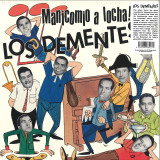
LOS DEMENTES - MANICOMIO A LOCHA LP

This album marks the debut recording for Venezuela's Velvet label by pianist Ray Pérez and his trombone-led salsa band Los Dementes. Heavy dance numbers and the distinctive vocals of Perucho Torcat make this historic 1967 rarity a sought-after collector's item. Now the LP has been lovingly restored, mastered from the original tapes, with its original artwork intact, preserving the legacy of Los Dementes for today's generation of salsa lovers everywhere. First time reissue. Salsa pianist, vocalist, composer and arranger Ray Pérez, acquired his nickname "Loco" by being a free, independent spirit, an innovator and iconoclast who was initially branded as "crazy" for the freshness and audacity of his sound. Amazingly, he is not that well known in the US, where he spent some time in the late 1960s and salsa was king during the 1970s. Yet he was quite popular in his home country from the beginning, especially amongst the working class of Caracas and Maracaibo, who adopted Cuban music played by New York Puerto Ricans as their own and called it "salsa" years before the term was employed by US labels like Fania as a marketing tool. Pérez is revered in Venezuela, as well as in Mexico and Colombia, and his storied career, which spans seven decades and thousands of concerts, has yielded more than 35 albums recorded by his various bands, including Los Dementes, Los Kenya, and Los Calvos, all of which are collector's items today. At the start of 1967 Pérez debuted Los Dementes, with vocalists Claudio Zerpa and Perucho Torcat backed by an ace band featuring only trombones in the brass section. Titled "¡Alerta mundo! Llegaron los 'The Crazy Men'" the record was released on the small Venezuelan label Prodansa. Soon after, Prodansa folded and Los Dementes were left without representation or much compensation for their efforts, being paid only in records. In the end of February of that year, Pérez returned to Caracas from a stint in Maracaibo in order to finish his first LP with the well-established and larger Velvet label, entitled "Manicomio a locha". In the first quarter of 1967, Velvet unleashed a trilogy of salsa records in order to compete with rival label Palacio and their recent success with Federico y su Combo Latino: "Porfi '67 Salsa & Boogaloo" by Porfi Jiménez y su Orquesta, "Guasancó" by Sexteto Juventud and lastly "Manicomio a locha". The LP begins appropriately with the boisterous title track, written by the band's conguero Carlos "Nené" Quintero, who would become a legend in coming years. Torcat describes a jam session in mental institution and introduces the band, with tasty solos by trombonist Rufo García followed by Ray on piano. Already you can hear something was different about Ray and his "Crazy Men"-a sound as wild and innovative as what was happening in New York with Eddie Palmieri, but with a more unhinged, raw feeling in line with Willie Colón and other younger Nuyorican bands. Next up is an intriguing track sung in a mix of Italian, English, Spanish and Papiamento by Pérez himself, performed in the complicated rhythm of the mozambique, an Afro-Cuban carnival beat developed in the early 1960s. This is followed by the heavy dancer 'Rico guaguancó', penned by Angelito Pérez, which changes from the guaguancó to the mozambique rhythm mid-way through, proving that Los Dementes were "different from the rest" as the lyrics say. 'Puerto Libre', sung by Torcat, is dedicated to the Venezuelan island of Margarita in the Oriente region, and the independent spirit of its working people. The rhythm changes from guaguancó to guajira and back again but remains danceable all the way through. The side closes out with a "3 in 1" medley inspired by the popular formula of the mosaicos of Billo's Caracas Boys, seamlessly knitting together several different tempos, rhythms, moods and compositions. Side two starts strong with the fierce yet satirical 'Corte e' patas', then 'Alma Cumanesa', a typical folk song refashioned as a guaguancó. This is followed by the funky 'Guajira con Boogaloo'. The tune echoes the sound of young Latin New York, pointing out the connection between Cuban and African American soul music. The pace picks up again with 'Fiesta de trombones', a hot descarga and then the album closes with another medley. Though this marks the end of a rather short album, it also signaled the emerging success of Los Dementes and their involvement with the salsa boom in Venezuela, quickly selling out of its initial run of 1000 records and making for a memorable debut on the Velvet label. Now this rare and sought-after LP has been lovingly restored, mastered from the original tapes, with its original artwork intact, preserving the legacy of Los Dementes for today's generation of salsa lovers everywhere.

non in magazzino

Ordina ora e ordineremo l'articolo per te presso il nostro fornitore.

24,58

Last In: 3 years ago
Nazamba - Vex

Nazamba

Vex

12inchPRESH004
Pressure
29.09.2022

Vex Is The Debut 12" From Nazamba, A Fire And Brimstone Dub Poet From Kingston, Jamaica Who Will Drop A Full Album With France's O.b.f. Sound System In The Fall. The Riddim Is Produced By G36, An Anarcho-dub Collective From Nagasaki, Japan Who Also Have Their Own Ep Incoming On Pressure.

The Spirit Of Prince Far I Reincarnated, Riding A Sci-fi Steppa That Relentlessly Aims To Flatten All Floors. Nazamba's Angry Rant Against The Global Epidemic Of Morally Bankrupt, Indelibly Corrupt Politicians, Is A Straight Shot To Babylon's Head...

non in magazzino

Ordina ora e ordineremo l'articolo per te presso il nostro fornitore.

19,29

Last In: 3 years ago
CHARLES AMOAH - SWEET VIBRATION LP

REISSUE

Following on from the runaway success of Soundway"s Kiki Gyan 24 Hours In A Disco, another Ghanaian legend looks to have his time to shine. One of the most well-known disco and burger highlife artists of the time, Charles Amoah originally began his career as a drummer. Playing with Alex Kunadu"s band, as well as the Precious Jewels and even Nana Tuffour, he then moved to Germany in the early 80s. His first album Sweet Vibration spawned several hits which went on to be released as separate singles, namely "Scratch My Back" and "Shake Your Body To The Beat". From the irresistible funk hooks of these singles, to the Lionel Richie-esque instrumentation of "Life"s Like Being In A Boxing Ring", or the kraut-rock stylings of "Jungle Rock" - there is little doubt that the blend of disco, funk and highlife that was unique to the Ghanaian-German scene can be experienced in its full splendour on Sweet Vibration.

non in magazzino

Ordina ora e ordineremo l'articolo per te presso il nostro fornitore.

18,61

Last In: 3 years ago
nthng - Sub-Sonar EP

Nthng

Sub-Sonar EP

12inch151DSR
Delsin Records
29.09.2022

Dutch producer nthng returns to Delsin with another four pieces of melodic, ambient-spirited techno following his 2017 label debut Turn To Gaia. Sub-Sonar opens with the beatless, melancholic reflection of 'Looking Outside' before drifting into the submersion chamber pulse of 'Liberate Truth'. Guided by the hypnotic allure of dub techno, the track follows a linear path through spacious chord drops and understated drum jack. Following a similar rhythmic tract, 'Sub-Sonar' offers up a cloudy, sombre beatdown shot through with winsome sine wave blips. As a surprise parting shot, '1 2 Butterfly' shakes up the scene with a crooked breakbeat treatment which cuts an angular path through the hazy atmospheric tones nthng has made his own. Photography by Wolfgang Tillmans.

non in magazzino

Ordina ora e ordineremo l'articolo per te presso il nostro fornitore.

11,30

Last In: 2 years ago
Fred P / Specter & Jose Rico - Yellow Jackets Vol. 4
 
2
disponibile anche

Volume 2[12,56 €]

Volume 3[11,72 €]

Volume 5[12,56 €]

Volume 6[11,72 €]

Vol.8[12,56 €]


Yellow Jackets number four follows the direction of the previous releases with more phat jams spread on a vinyl only 12’.

This time Fred P, who certainly doesnt need any introduction and who’s labels Private Society and Perpetual Sounds are distributed by Mother Tongue, offers the rhythmic yet melodic and spiritually engaging ‘Inspired By Dopeness’.

Chicago’s own Specter and Madrid’s Josè Rico, who often work together as Our Own Organization, go extradeep, raw and hipnotic on the other side with the aptly titled ‘You Don’t Believe’.

No frills, just the good shit!

non in magazzino

Ordina ora e ordineremo l'articolo per te presso il nostro fornitore.

11,72

Last In: 3 years ago
Lugnet - Tales From The Great Beyond

There’s no escaping the motherlode - that eternal continuum of high drama and overheated amp stacks fit to raise the pulse and revivify the spirits. It’s merely an unmistakable band chemistry that transforms base hard rock into gemstones, and this process is an increasingly rare phenomenon in the here and now. Luckily for Stockholm’s alchemists LUGNET, they are one of the few. Here in these steamrollering grooves and strident anthems is just the kind of swagger and bravado on which rock built its foundations in the ‘70s, yet without any of the cliches or the bloated self-importance. The roots of LUGNET may be visible to see, and the primal stomp of early Deep Purple, the apocalyptic sermonising of Black Sabbath and the cinematic majesty of Rainbow can easily be detected in the almighty sturm-und-drang. Yet this sound is delivered with charisma and maverick energy that effortlessly summons fresh vibrant life to a classic form. The spark that lit LUGNET originates in 2009, when Fredrik Jansson-Punkka (also drummer of Angel Witch, and whose storied history includes stints in Witchcraft, Abramis Brama and Count Raven) met bassist Lennart ‘Z’ Zethzon at Sweden Rock Festival and the two first discussed getting together to jam. Three years later this finally came to fruition and guitarists Bonden Jansson and Mackan Holten joined the fray, alongside vocalist Roger Solander. An original plan to play ‘70s blues-rock with Swedish lyrics was ultimately warped and transformed into the monumental attack of 2016’s self-titled debut proper on Pride & Joy Music. The road to ‘Nightwalker’ saw changes afoot in the band, as Solander was replaced by the soulful pipes of Johan Fahlberg, who matches the swashbuckling charm of the Dio/Coverdale tradition with flourishes and personality all his own, whilst Bonden Jansson made way for wunderkind new guitarist Matti Norlin. This was a quantum leap on from the debut, replete with fiery interplay and incisive song writing, from the slow Zeppelin-esque catharsis of ‘Death Laughs At You’ to the monstrous ‘Stargazer’-esque grandeur of the mellotron-assisted finale ‘Kill Us All’. The aftermath saw Lugnet traverse from strength to strength, a notable highlight being packing out their tent at Sweden Rock Festival in 2018 even whilst a certain Birmingham-birthed Prince Of Darkness himself occupied the main stage across the field. Michael Linder (formerly of Troubled Horse) soon replaced Mackan Holten, and this line-up has subsequently amassed enough material for two albums, with all members throwing their hat into the ring song writing-wise. One of these ‘Tales From The Great Beyond’ has already been recorded at SolnaSound Recording with the dream-team of Simon Johansson (Wolf/ Soilwork) and Mike Wead (King Diamond/ Mercyful Fate) at the helm / mixed by Marcus Jidell (Avatarium/ Candlemass). Just like for the debut album, the front cover artwork was designed by Vance Kelly. Whatever the future holds for Lugnet, only a fool would bet on the result not being a spectacular explosion of righteousness. This machine is firing on all cylinders, and rockers of all persuasions would be well advised to get on board or get out of the way. Track listing: Still A Sinner; In Harvest Time; Another World; Out Of My System; Svarv; Eaten Alive; Pale Design; I Can’t Wait; Black Sails; Tåsjö Kyrkmarsch

pre-ordina ora29.09.2022

dovrebbe essere pubblicato su 29.09.2022

25,63
"A" Trio - The Binding Third

"A" Trio

The Binding Third

12inchUNROCKLP024
Unrock
29.09.2022

***The legendary Lebanese trio of trumpeteer Mazen Kerbaj (Karkhana, Johnny Kafta), guitarrist Sharif Sehnaoui (Calamita, Karkhana, Johnny Kafta ) and bassist Raed Yassin (Praed, Praed Orchestra) celebrates their 20th anniversary with The Binding Third on Unrock. They still create acoustic improvised drones that range from insistent, chiming resonances with emergency alarm bells to low, thrumming hums but with growing intensity. Avoiding conventional technique, A Trio manages to create sounds like motorized devices to generate rattling, metallic vibrations, building a mechanistic backdrop out of which the instruments’ true voices occasionally arise. This recording, taken at Sound Disobidience in Llubljana in 2019 reaches an exceptional electro-acoustic depth with strange sounds boiling down to a dark, heavy spiritual essence. Call it Acoustic-Industrial-Free-Jazz or call it unrock. The Binding Third is „A“Trio’s first full length album since their 2014 release „Live In Nickelsdorf“. In between they released a collaboration with Sun City Girl Alan Bishop and another with UK-electro-acoustic pioneers AMM. Recently A-Trio joined forces with agyptian composer Maurice Louca on his solo-album The Luck Hour, released on Sub Rosa. TRACKLIST: Side A : The Binding Third (part 1) Side B : The Binding Third (part 2)

pre-ordina ora29.09.2022

dovrebbe essere pubblicato su 29.09.2022

31,47
Noveliss & Dixon Hill - Book of Changes

The first collaboration album between Noveliss and Dixon Hill comes in the form of a concept album based on the I Ching or Book of Changes. The track list was constructed using the ancient text and its overall theme stems from the wisdom therein. Conceived, written, and recorded in isolation, Book of Changes sets Noveliss as a hermetic sage seeking balance and enlightenment over Dixon Hill's ethereal musical backdrops. Dixon Hill used samples, live instruments, and field recordings to create the sonic template for this record. Each song transition smoothly from one to another using melodic elements and natural sounds to tether the songs together for a cohesive listening experience. TRACKLIST: 1. Empty 2. Feng Shui 3. Loss for Words 4. Sincerity and Reverence 5. Scheminonameanin' 6. Truthsayer 7. Escaping 8. Spirit Bomb 9. Cold Mountain 10. Permanent Waves

pre-ordina ora28.09.2022

dovrebbe essere pubblicato su 28.09.2022

30,46
Tommy Womack - 30 Years Shot To Hell: A Tommy Womack Anthology

"Tommy Womack has been a revered and fearless leader among his
generation of fellow artists and kindred spirits for a long time now
Even the stories he makes up are true" — Todd Snider."Tommy Womack is a multihyphenated treasure: what you get when you put Keith Richards, Billy Graham,
and Hunter S. Thompson in a blender and turn it on high." — Marshall Chapman,
author of Goodbye, Little Rock and Roller and They Came to Nashville"One of
Nashville's finest singer-songwriters. For round pegs in square holes everywhere."
- John Hiatt

pre-ordina ora28.09.2022

dovrebbe essere pubblicato su 28.09.2022

43,66
Kyle Kidd - Soothsayer

"Living as a queer, androgynous person, I have always seen the world
beyond the binary"" - That's Kyle Kidd (all pronouns) talking about their
debut solo album, Soothsayer
"Those who came before me," they say, "were deeply connected through
spirituality, with the gift to see the future wielded through the powers of ritual."
Kidd titled the album Soothsayer on the basis of this ancestral background. But
the title doesn't just reference a term, it clarifies what the album is: an expansive
rendering of life beyond the binary, balancing self- possession and selfpreservation, the challenges of vulnerability and the redemptive possibilities of
love -- all in a half- hour. Solo debut from member of Mourning A
BLKstar.Performs with Algiers and Richard Kennedy. Two singles with music
videos. Europe tour coinciding with album rollout.

pre-ordina ora28.09.2022

dovrebbe essere pubblicato su 28.09.2022

23,74
Henry Keen - Freedom in Movement LP

What do notions of freedom and movement mean to us as we experience unprecedented restrictions on travel, culture and socialisation? Henry Keen’s Freedom In Movement offers a soundtrack to both remember and look forward to freedom through music, movement and community.

The memory and feeling of the Plastic People dancefloor were often in Henry Keen's thoughts as he produced the tracks on this new LP. Inspired by the London club nights he frequented – Balance, CDR, and CoOp – Freedom in Movement is Henry’s first vinyl self-release, an embodiment of self-expression that compliments his contributions to projects Electric Jalaba and Soundspecies.

The soulful tracks on the album pick up where Henry Keen’s 70's Baby (Maddjazz Recordings, 2017) record and EPs as The Room Below on the Don't Be Afraid label left off, bringing a range of tempos to get heads nodding while hips and feet work out. Lovingly made, the collection of songs offer meditations on questions evoked by the record's title and respite from the heaviness of challenging times.

The lead single from the album is Dexter’s Breakfast, featuring London-based woodwind expert, and previous collaborator Ben Hadwen on baritone/tenor saxophone, and flute.

Dexter’s Breakfast was released digitally on 25th June 2021 and gained support from the likes of Adam Rock (Jazz Re:freshed), Kev Beadle (Mind Fluid), Simon Harrsion (Basic Soul), Psycut (Music Is My Sanctuary) and Laani and Papaoul (Worldwide FM) amongst others

non in magazzino

Ordina ora e ordineremo l'articolo per te presso il nostro fornitore.

21,64

Last In: 3 years ago
Inkswel & Colonel Red - Holders Of The Sun Vol. 1 LP

Hervorragendes Album eines fantastischen joint venture Teams: Inkswel aus Australien und Colonel Red aus Birmingham machen unbeschwerten Hip Hop-beeinflussten Downbeat mit Soul. Perfekt balancieren sie fette Beats, gute Melodien, geradeaus Messages mit geräuschvollen Unter- oder Obertönen.

Beide haben eine beeindruckende Vita mit tollen Produktionen. Colonel Red kennt man von einigen West London Produktionen (Bugz In The Attic) und cutting edge Songwriting für Teddy Pendergrass, Amp Fiddler, Maurice White, Tony Allen u.a.
Inkswel ist nicht nur durch seine Arbeiten für Talib Kweli, Lee Scratch Perry, Andrew Ashong, Dwight Trible, Amp Fiddler u.v.m. bekannt.

Checkt das Video zu “Make Me Crazy” und auch die grandiosen Remixe von Moodymann, Potatohead People, Moodorama.
Das Cover wurde von Our Machine aus Holland gestaltet, die viel für Kindred Spirit, Tom Trago, Versatile, Build An Arc et cetera designed haben.

non in magazzino

Ordina ora e ordineremo l'articolo per te presso il nostro fornitore.

21,81

Last In: 3 years ago
Lee Tracy & Isaac Manning - Is it What You Want LP

As the sun sets on a quaint East Nashville house, a young man bares a piece of his soul. Facing the camera, sporting a silky suit jacket/shirt/slacks/fingerless gloves ensemble that announces "singer" before he's even opened his mouth, Lee Tracy Johnson settles onto his stage, the front yard. He sways to the dirge-like drum machine pulse of a synth-soaked slow jam, extends his arms as if gaining his balance, and croons in affecting, fragile earnest, "I need your love… oh baby…"

Dogs in the yard next door begin barking. A mysterious cardboard robot figure, beamed in from galaxies unknown and affixed to a tree, is less vocal. Lee doesn't acknowledge either's presence. He's busy feeling it, arms and hands gesticulating. His voice rises in falsetto over the now-quiet dogs, over the ambient noise from the street that seeps into the handheld camcorder's microphone, over the recording of his own voice played back from a boombox off-camera. After six minutes the single, continuous shot ends. In this intimate creative universe there are no re-takes. There are many more music videos to shoot, and as Lee later puts it, "The first time you do it is actually the best. Because you can never get that again. You expressing yourself from within."

"I Need Your Love" dates from a lost heyday. From some time in the '80s or early '90s, when Lee Tracy (as he was known in performance) and his music partner/producer/manager Isaac Manning committed hours upon hours of their sonic and visual ideas to tape. Embracing drum machines and synthesizers – electronics that made their personal futurism palpable – they recorded exclusively at home, live in a room into a simple cassette deck. Soul, funk, electro and new wave informed their songs, yet Lee and Isaac eschewed the confinement of conventional categories and genres, preferring to let experimentation guide them.

"Anytime somebody put out a new record they had the same instruments or the same sound," explains Isaac. "So I basically wanted to find something that's really gonna stand out away from all of the rest of 'em." Their ethos meant that every idea they came up with was at least worth trying: echoed out half-rapped exhortations over frantic techno-style beats, gospel synth soul, modal electro-funk, oddball pop reinterpretations, emo AOR balladry, nods to Prince and the Fat Boys, or arrangements that might collapse mid-song into a mess of arcade game-ish blips before rallying to reach the finish line. All of it conjoined by consistent tape hiss, and most vitally, Lee's chameleonic voice, which managed to wildly shape shift and still evoke something sincere – whether toggling between falsetto and tenor exalting Jesus's return, or punctuating a melismatic romantic adlib with a succinct, "We all know how it feels to be alone."

"People think we went to a studio," says Isaac derisively. "We never went to no studio. We didn't have the money to go to no studio! We did this stuff at home. I shot videos in my front yard with whatever we could to get things together." Sometimes Isaac would just put on an instrumental record, be it "Planet Rock" or "Don't Cry For Me Argentina" (from Evita), press "record," and let Lee improvise over it, yielding peculiar love songs, would-be patriotic anthems, or Elvis Presley or Marilyn Monroe tributes. Technical limitations and a lack of professional polish never dissuaded them. They believed they were onto something.

"That struggle," Isaac says, "made that sound sound good to me."

In the parlance of modern music criticism Lee and Isaac's dizzying DIY efforts would inevitably be described as "outsider." But "outsider" carries the burden of untold additional layers of meaning if you're Black and from the South, creating on a budget, and trying to get someone, anyone within the country music capital of the world to take your vision seriously. "What category should we put it in?" Isaac asks rhetorically. "I don't know. All I know is feeling. I ain't gonna name it nothing. It's music. If it grabs your soul and touch your heart that's what it basically is supposed to do."

=

Born in 1963, the baby boy of nine siblings, Lee Tracy spent his earliest years living amidst the shotgun houses on Nashville's south side. "We was poor, man!" he says, recalling the outhouse his family used for a bathroom and the blocks of ice they kept in the kitchen to chill perishables. "But I actually don't think I really realized I was in poverty until I got grown and started thinking about it." Lee's mom worked at the Holiday Inn; his dad did whatever he had to do, from selling fruit from a horse drawn cart to bootlegging. "We didn't have much," Lee continues, "but my mother and my father got us the things we needed, the clothes on our back." By the end of the decade with the city's urban renewal programs razing entire neighborhoods to accommodate construction of the Interstate, the family moved to Edgehill Projects. Lee remembers music and art as a constant source of inspiration for he and his brothers and sisters – especially after seeing the Jackson 5 perform on Ed Sullivan. "As a small child I just knew that was what I wanted to do."

His older brother Don began musically mentoring him, introducing Lee to a variety of instruments and sounds. "He would never play one particular type of music, like R&B," says Lee. "I was surrounded by jazz, hard rock and roll, easy listening, gospel, reggae, country music; I mean I was a sponge absorbing all of that." Lee taught himself to play drums by beating on cardboard boxes, gaining a rep around the way for his timekeeping, and his singing voice. Emulating his favorites, Earth Wind & Fire and Cameo, he formed groups with other kids with era-evocative band names like Concept and TNT Connection, and emerged as the leader of disciplined rehearsals. "I made them practice," says Lee. "We practiced and practiced and practiced. Because I wanted that perfection." By high school the most accomplished of these bands would take top prize in a prominent local talent show. It was a big moment for Lee, and he felt ready to take things to the next level. But his band-mates had other ideas.

"I don't know what happened," he says, still miffed at the memory. "It must have blew they mind after we won and people started showing notice, because it's like everybody quit! I was like, where the hell did everybody go?" Lee had always made a point of interrogating prospective musicians about their intentions before joining his groups: were they really serious or just looking for a way to pick up girls? Now he understood even more the importance of finding a collaborator just as committed to the music as he was.

=

Isaac Manning had spent much of his life immersed in music and the arts – singing in the church choir with his family on Nashville's north side, writing, painting, dancing, and working various gigs within the entertainment industry. After serving in the armed forces, in the early '70s he ran The Teenage Place, a music and performance venue that catered to the local youth. But he was forced out of town when word of one of his recreational routines created a stir beyond the safe haven of his bohemian circles.

"I was growing marijuana," Isaac explains. "It wasn't no business, I was smoking it myself… I would put marijuana in scrambled eggs, cornbread and stuff." His weed use originated as a form of self-medication to combat severe tooth pain. But when he began sharing it with some of the other young people he hung out with, some of who just so happened to be the kids of Nashville politicians, the cops came calling. "When I got busted," he remembers, "they were talking about how they were gonna get rid of me because they didn't want me saying nothing about they children because of the politics and stuff. So I got my family, took two raggedy cars, and left Nashville and went to Vegas."

Out in the desert, Isaac happened to meet Chubby Checker of "The Twist" fame while the singer was gigging at The Flamingo. Impressed by Isaac's zeal, Checker invited him to go on the road with him as his tour manager/roadie/valet. The experience gave Isaac a window into a part of the entertainment world he'd never encountered – a glimpse of what a true pop act's audience looked like. "Chubby Checker, none of his shows were played for Black folks," he remembers. "All his gigs were done at high-class white people areas." Returning home after a few years with Chubby, Isaac was properly motivated to make it in Music City. He began writing songs and scouting around Nashville for local talent anywhere he could find it with an expressed goal: "Find someone who can deliver your songs the way you want 'em delivered and make people feel what you want them to feel."

One day while walking through Edgehill Projects Isaac heard someone playing the drums in a way that made him stop and take notice. "The music was so tight, just the drums made me feel like, oh I'm-a find this person," he recalls. "So I circled through the projects until I found who it was.

"That's how I met him – Lee Tracy. When I found him and he started singing and stuff, I said, ohhh, this is somebody different."

=

Theirs was a true complementary partnership: young Lee possessed the raw talent, the older Isaac the belief. "He's really the only one besides my brother and my family that really seen the potential in me," says Lee. "He made me see that I could do it."

Isaac long being a night owl, his house also made for a fertile collaborative environment – a space where there always seemed to be a new piece of his visual art on display: paintings, illustrations, and dolls and figures (including an enigmatic cardboard robot). Lee and Issac would hang out together and talk, listen to music, conjure ideas, and smoke the herb Isaac had resumed growing in his yard. "It got to where I could trust him, he could trust me," Isaac says of their bond. They also worked together for hours on drawings, spreading larges rolls of paper on the walls and sketching faces with abstract patterns and imagery: alien-like beings, tri-horned horse heads, inverted Janus-like characters where one visage blurred into the other.

Soon it became apparent that they didn't need other collaborators; self-sufficiency was the natural way forward. At Isaac's behest Lee, already fed up with dealing with band musicians, began playing around with a poly-sonic Yamaha keyboard at the local music store. "It had everything on it – trumpet, bass, drums, organ," remembers Lee. "And that's when I started recording my own stuff."

The technology afforded Lee the flexibility and independence he craved, setting him on a path other bedroom musicians and producers around the world were simultaneously following through the '80s into the early '90s. Saving up money from day jobs, he eventually supplemented the Yamaha Isaac had gotten him with Roland and Casio drum machines and a Moog. Lee was living in an apartment in Hillside at that point caring for his dad, who'd been partially paralyzed since early in life. In the evenings up in his second floor room, the music put him in a zone where he could tune out everything and lose himself in his ideas.

"Oh I loved it," he recalls. "I would really experiment with the instruments and use a lot of different sound effects. I was looking for something nobody else had. I wanted something totally different. And once I found the sound I was looking for, I would just smoke me a good joint and just let it go, hit the record button." More potent a creative stimulant than even Isaac's weed was the holistic flow and spontaneity of recording. Between sessions at Isaac's place and Lee's apartment, their volume of output quickly ballooned.

"We was always recording," says Lee. "That's why we have so much music. Even when I went to Isaac's and we start creating, I get home, my mind is racing, I gotta start creating, creating, creating. I remember there were times when I took a 90-minute tape from front to back and just filled it up."

"We never practiced," says Isaac. "See, that was just so odd about the whole thing. I could relate to him, and tell him about the songs I had ideas for and everything and stuff. And then he would bring it back or whatever, and we'd get together and put it down." Once the taskmaster hell bent on rehearsing, Lee had flipped a full 180. Perfection was no longer an aspiration, but the enemy of inspiration.

"I seen where practicing and practicing got me," says Lee. "A lot of musicians you get to playing and they gotta stop, they have to analyze the music. But while you analyzing you losing a lot of the greatness of what you creating. Stop analyzing what you play, just play! And it'll all take shape."

=

"I hope you understood the beginning of the record because this was invented from a dream I had today… (You tell me, I'll tell you, we'll figure it out together)" – Lee Tracy and Isaac Manning, "Hope You Understand"

Lee lets loose a maniacal cackle when he acknowledges that the material that he and Isaac recorded was by anyone's estimation pretty out there. It's the same laugh that commences "Hope You Understand" – a chaotic transmission that encapsulates the duality at the heart of their music: a stated desire to reach people and a compulsion to go as leftfield as they saw fit.

"We just did it," says Lee. "We cut the music on and cut loose. I don't sit around and write. I do it by listening, get a feeling, play the music, and the lyrics and stuff just come out of me."

The approach proved adaptable to interpreting other artists' material. While recording a cover of Whitney Houston's pop ballad "Saving All My Love For You," Lee played Whitney's version in his headphones as he laid down his own vocals – partially following the lyrics, partially using them as a departure point. The end result is barely recognizable compared with the original, Lee and Isaac having switched up the time signature and reinvented the melody along the way towards morphing a slick mainstream radio standard into something that sounds solely their own.

"I really used that song to get me started," says Lee. "Then I said, well I need something else, something is missing. Something just came over me. That's when I came up with 'Is It What You Want.'"

The song would become the centerpiece of Lee and Isaac's repertoire. Pushed along by a percolating metronomic Rhythm King style beat somewhere between a military march and a samba, "Is It What You Want" finds Lee pleading the sincerity of his commitment to a potential love interest embellished by vocal tics and hiccups subtlely reminiscent of his childhood hero MJ. Absent chord changes, only synth riffs gliding in and out like apparitions, the song achieves a lingering lo-fi power that leaves you feeling like it's still playing, somewhere, even after the fade out.

"I don't know, it's like a real spiritual song," Lee reflects. "But it's not just spiritual. To me the more I listen to it it's like about everything that you do in your everyday life, period. Is it what you want? Do you want a car or you don't want a car? Do you want Jesus or do you want the Devil? It's basically asking you the question. Can't nobody answer the question but you yourself."

In 1989 Lee won a lawsuit stemming from injuries sustained from a fight he'd gotten into. He took part of the settlement money and with Isaac pressed up "Saving All My Love For You" b/w "Is It What You Want" as a 45 single. Isaac christened the label One Chance Records. "Because that's all we wanted," he says with a laugh, "one chance."

Isaac sent the record out to radio stations and major labels, hoping for it to make enough noise to get picked up nationally. But the response he and Lee were hoping for never materialized. According to Isaac the closest the single got to getting played on the radio is when a disk jock from a local station made a highly unusual announcement on air: "The dude said on the radio, 107.5 – 'We are not gonna play 'Is It What You Want.' We cracked up! Wow, that's deep.

"It was a whole racist thing that was going on," he reflects. "So we just looked over and kept on going. That was it. That was about the way it goes… If you were Black and you were living in Nashville and stuff, that's the way you got treated." Isaac already knew as much from all the times he'd brought he and Lee's tapes (even their cache of country music tunes) over to Music Row to try to drum up interest to no avail.

"Isaac, he really worked his ass off," says Lee. "He probably been to every record place down on Music Row." Nashville's famed recording and music business corridor wasn't but a few blocks from where Lee grew up. Close enough, he remembers, for him to ride his bike along its back alleys and stumble upon the occasional random treasure, like a discarded box of harmonicas. Getting in through the front door, however, still felt a world away.

"I just don't think at the time our music fell into a category for them," he concedes. "It was before its time."

=

Lee stopped making music some time in the latter part of the '90s, around the time his mom passed away and life became increasingly tough to manage. "When my mother died I had a nervous breakdown," he says, "So I shut down for a long time. I was in such a sadness frame of mind. That's why nobody seen me. I had just disappeared off the map." He fell out of touch with Isaac, and in an indication of just how bad things had gotten for him, lost track of all the recordings they'd made together. Music became a distant memory.

Fortunately, Isaac kept the faith. In a self-published collection of his poetry – paeans to some of his favorite entertainment and public figures entitled Friends and Dick Clark – he'd written that he believed "music has a life of its own." But his prescience and presence of mind were truly manifested in the fact that he kept an archive of he and Lee's work. As perfectly imperfect as "Is It What You Want" now sounds in a post-Personal Space world, Lee and Isaac's lone official release was in fact just a taste. The bulk of the Is It What You Want album is culled from the pair's essentially unheard home recordings – complete songs, half-realized experiments, Isaac's blue monologues and pronouncements et al – compiled, mixed and programmed in the loose and impulsive creative spirit of their regular get-togethers from decades ago. The rest of us, it seems, may have finally caught up to them.

On the prospect of at long last reaching a wider audience, Isaac says simply, "I been trying for a long time, it feels good." Ever the survivor, he adds, "The only way I know how to make it to the top is to keep climbing. If one leg break on the ladder, hey, you gotta fix it and keep on going… That's where I be at. I'll kill death to make it out there."

For Lee it all feels akin to a personal resurrection: "It's like I was in a tomb and the tomb was opened and I'm back… Man, it feels so great. I feel like I'm gonna jump out of my skin." Success at this stage of his life, he realizes, probably means something different than what it did back when he was singing and dancing in Isaac's front yard. "What I really mean by 'making it,'" he explains isn't just the music being heard but, "the story being told."

Occasionally Lee will pull up "Is It What You Want" on YouTube on his phone, put on his headphones, and listen. He remembers the first time he heard his recorded voice. How surreal it was, how he thought to himself, "Is that really me?" What would he say to that younger version of himself now?

"I would probably tell myself, hang in there, don't give up. Keep striving for the goal. And everything will work out."

Despite what's printed on the record label, sometimes you do get more than one chance.

non in magazzino

Ordina ora e ordineremo l'articolo per te presso il nostro fornitore.

23,49

Last In: 3 years ago
Alhaji Waziri Oshomah - World Spirituality Classics 3: The Muslim Highlife LP (2x12")

3rd volume in Luaka Bop’s critically acclaimed World
Spirituality Classics series, illuminating the relationship between
music and belief following Alice Coltrane and “Time For Peace Is
Now”

Alhaji Waziri Oshomah begins his sermon before a dancing crowd. His
lyrics warn about the vice of jealousy but the congregation is here to get down. We’re in a small part of Edo State in southern Nigeria called
Afenmailand, which is known for being a harmonious region where Muslims and Christians live and dance together. The atmosphere is one of enjoyment, excitement, and pleasure, because to see Waziri perform is to be addressed, body and soul. He’s the creator of a unique dance music that’s fused with local folk styles, highlife, and Western pop, and imbued with Islamic values— and he’s the greatest entertainer in all of Edo State.

They call him the Etsako Super Star.

pre-ordina ora23.09.2022

dovrebbe essere pubblicato su 23.09.2022

31,72
GROUNATION - THE MYSTIC REVELATION OF RASTAFARI LP (3x12")

3xLP + 7" SINGLE, DOWNLOADCODE, ART PRINT, MAG/ZINE Like Sun Ra's Arkestra and John Coltrane are to jazz, the Mystic Revelation of Rastafari are to reggae - the ultimate expression of roots music and Rastafarian ideology in reggae music, music functioning at a high level of spiritual consciousness combined with an equally avant-garde and forward-looking approach to sound. The group's stunning, unique and groundbreaking 1973 album 'Grounation', a mighty conceptual triplealbum (the first ever reggae triple!) is, similar to Marvin Gaye's 'What's Goin' On', a definitive allencompassing cultural statement of its time and place. A sprawling album of raw and unique cultural expression that combined Rastafari consciousness with deep spiritual jazz music - an absolute and essential classic of Reggae music. The Mystic Revelation of Rastafari group came into existence at the start of 1970s, the union of two artists (and groups) of equal repute - Count Ossie and his African Drums and saxophonist Cedric 'Im' Brooks' and his group, The Mystics. Both Ossie and Brooks were alumni from the great Studio One Records.

pre-ordina ora23.09.2022

dovrebbe essere pubblicato su 23.09.2022

66,18
Herman Hitson - Let The Gods Sing LP

In the music business, there are certain sidemen — players who back the stars — who play with such prowess that they gain fame of their own. By all rights, Herman Hitson should be one of those people. Over the years, he played with Jimi Hendrix, James Brown, Joe Tex, Bobby Womack, Wilson Pickett, Garnet Mimms, Major Lance, Jackie Wilson, the Drifters, the Shirelles, Hank Ballard & the Midnighters and many others. “I played behind Jackie Wilson and Sam Cooke on the same doggone show,” he said, recalling one night at the Royal Peacock. Along the way, he picked up every style of music that was popular in the early years of his career. Arguably, the original seeds of psychedelic rock were planted after Hitson and Hendrix became running buddies in the early 1960s. Both were playing the Chitlin’ Circuit, tours that would load somewhere between ten and two dozen African American musicians on a bus and tour the South, playing Black nightclubs. The two spent weeks together, Herman says. As the 1970s rolled in, Herman wound up playing funk guitar, recording some tracks with the Ohio Players and releasing some of his own funk singles, including the powerful “Ain’t No Other Way,” a number firmly in the James Brown vein which he reprised on ‘Let The Gods Sing.’ In the mid-1960s, he moved to New York City, where he once again hooked up with Hendrix. Early in 1966, Herman began work on his own psychedelic rock album under the title “Free Spirit.” Hermon sang and played lead guitar, and Hendrix played bass on a few tracks that went unreleased by ATCO at the time. Those recordings wound up being the source of a controversy in the 1980s that brought Hermon’s name into the limelight in a different way. The title song of the album, “Free Spirit,” was released on two albums of music allegedly recorded by Hendrix and then “lost” to history. “That’s my song,” Herman says today. "He Hendrix didn’t never play no lead on nothing of mine. And he didn’t sing on nothing of mine. In fact, back then he thought he couldn’t sing. We had to keep pushing him". Jimi would say, ‘I can’t sing.’ I’d say, ‘Man, you don’t have to be Wilson Pickett. All you got to do is sing like you sing.” Recorded and co-produced by Bruce Watson at his Delta Sounds Studio in Memphis, Hitson’s backed on the new album by guitarist and co-producer Will Sexton and some of Memphis’ best musicians.

pre-ordina ora23.09.2022

dovrebbe essere pubblicato su 23.09.2022

20,55
Joanna Macy & Anita Barrows - Be Earth Now (Selections From Rainer Maria Rilke's 'The Book Of Hours’)

This is a limited edition pressing of 500, 140-gram, black vinyl records in deluxe tip-on “old style” jackets. Exquisitely printed on textured, water color paper. Digital download included. Be Earth Now comprises forty minutes of potent poetic recitation by Joanna Macy and Anita Barrows from their seminal translation of Rainer Maria Rilke’s The Book of Hours. Channeled in a spiritual fervor in 1899, The Books of Hours remains a profound and highly prescient body of work. Rilke’s poems illuminate paths of embodied mysticism, passionately express ecological grief, and reveal the exquisite expanses of the human heart. The Book of Hours, and now Be Earth Now, offer a poetic map for navigating the heartbreak, rage, and soaring love that so many of us feel in these ecologically urgent and socially emergent times. Rilke’s poems surge with passion and pain for a world that was already teetering toward peril at the turn of the last century, due to the rapid industrialization of Europe, and humankind’s increasing alienation from nature. This work flowed through Rilke in a torrent with sometimes as many as five or six poems arriving in a single day, each self-complete and with no need for later revision. While truly mystical poetry, Rilke’s musings on spirituality overtly critique fundamentalism and organized religion. Instead, Rilke extolls what he finds sacred in the mundane and conjures a sense of wonder for both the more-than-human-world and simply for existence itself. So, who better to give voice to these mystic treasures than Joanna Macy and Anita Barrows? Not only because of their enchanted translations, but also because these women are unquestionably two of our righteous elders. Macy and Barrows have worked diligently for many decades, through art, activism, education, psychology, and spiritual practice, to bring some balance back to this world. The same world that Rilke pleaded with his God to sustain for “just a few more hours,” so that we might have time to mend our relationship with the natural world, to cherish and connect with what is good and real, and to possibly even learn to “be earth now.” A1 Anita Barrows Recites Selections from Rainer Maria Rilke's 'The Book of Hours' B1 Joanna Macy Recites Selections from Rainer Maria Rilke's 'The Book of Hours'

pre-ordina ora23.09.2022

dovrebbe essere pubblicato su 23.09.2022

28,78
Rheinzand - AtlantisAtlantis 2x12"

Rheinzand are back with their electrifying new album

Upon turning on 'Atlantis Atlantis', the oh so welcome spectre of recently departed Maria Mendola - the airy chanteuse of the beloved Baccara - seems to appear. Charlotte Caluwaerts, a voice of similar purity proffers the message: “We’ll be alright” on their first single, offering a salve to the troubles the world has faced in recent years.

As with their previous work, melody is key. Rich arrangements abound, with Reinhard Vanbergen’s light and funky crevices detailing a home that feels cozy, inviting the listener into the best, most unexpected club around; the one in their living room with all their closest friends. The “Max Berlin” of the group, Mo Disko, is no stranger to bringing this kind of intimacy to his events and freewheeling DJ sets for decades in Gent, Belgium. Once again his spirit pushes the record into that inviting place where inhibition dissolves, (aka you can really freak out).

Much of Reinhard Vanbergen’s recent output for Music for Dreams has expertly traversed the forgotten worlds of virtuoso led experimental records; full lengths with tracks that maestros like DJ Harvey undoubtedly treasure. There are glimpses of these danceable instrumental improvisational landscapes such as ”Orange Bun”.

One thing about Rheinzand is that they are musicians driven to make dance music that harkens back to a moment when real players appeared on dance music records. These were musicians devoted to their instruments, the kind who made love to them on stage, unafraid of modulations, bombast, histrionics even (cue Elefantasi).
Slower subdued numbers reiterate the “journey to Atlantis” we are on, such as the a cover of “Love Games” an honest low slung boogie take on the track.

One of the biggest takeaways from 'Atlantis Atlantis' is the excavation of the real fun that was had in dance music before the advent of loop based technology. Epic chord progressions, singing songs in multiple languages - these are musicians exploring the colour palette of the entire Pantone spectrum, not only shades of grey and black. Are you up to see the world in colour, brave enough for a journey to Atlantis? Welcome aboard, Rheinzand are here to invite you to do so.

non in magazzino

Ordina ora e ordineremo l'articolo per te presso il nostro fornitore.

28,15

Last In: 15 months ago
Articoli per pagina:
N/ABPM
Vinyl