Nick Bike rides again with a new trip out on his Chosen Spokes label, and as always, these are on the money mixes for dub disco heads. 'Kiss Me Say It' is devilishly slow and purposeful with rotation dub and funky bass riffs rising and falling to irresistible effect. The strings bring sophistication and the chords a golden charm that swells the heart. The groove feels ever on the rise but never boils over. The flipside dub is even more focused, with the diva vocal doused in echo for a spaced out vibe. Pure perfection.
quête:spokes
- 1
2026 Repress
Nick Bike hops aboard his groove machine again for another tidy two tracker that does disco differently., The A-side is 'Yabba Dabba', which is an edit of a classic Scandi-pop gem with plenty of the original melodies reworked into a fatter groove with disco claps. It's full of fun but also nice chunky drums and subtle effects that draw out the magic and up the funk. On the flip side is a dub that is a little more airy and light, with a dreamier edge for the zoned-out moments, but also a reverb-drenched vocal. Two effective and charming cuts for grown-up floors and magic moments.
Nick Bike hops aboard his groove machine once again here for another superb run out, this time with his Italian mate Stan Brega on Chosen Spokes. 'Big Bizniss' gets going with a super cool and laid back downtempo, disco and funky fusion. Lavish horns, cowbells, sultry chords and effortlessly vibey vocals all make it an instantly lovable and hip-swinging summer classic. Flip it over and you'll find 'Forever & Ever', which is an epic, cosmic, Balearic, ambient and blissed out cover of a David Bowie mega-hit. Proggy guitars draw out the me option and make it a perfect end of the night tune to send people home teary-eyed but euphoric.
Nick Bike has been at it again, crafting high-grade club cuts that always make an impact. These two have already been well road-tested with great effects. 'Party People (Night & Day)' is the first and is a brilliant collision of some funky, soulful disco classics into one new and strident sound with irresistible claps and vocal hooks. On the flip is the scorching 'Every Night (Hold Me Tight)' which is just timeless and super smooth disco-funk with a persuasive charm. Two no-brainers here that will bring next-level fun to any set.
- Little League
- Oh Messy Life
- Puddle Splashers
- Flashpoint: Catheter
- In The Clear
- Yes, I Am Talking To You
- Basil's Knife
- Bluegrassish
- Planet Shhh
- The Sands've Turned Purple
- Precious
- Que Suerte!
Standard weight white vinyl remastered from the original tapes, restoring the original album on vinyl for the first time since 1995, including its original artwork. Includes download code.
In 1991, four kids from the suburbs of Chicago, IL formed Cap’n Jazz, arguably one of the most influential rock bands of the last 30 years. Those kids, brothers Tim & Mike Kinsella, Victor Villarreal, and Sam Zurick, were joined by Davey von Bohlen in 1994 and recorded their only full-length album before calling it quits - Burritos, Inspiration Point, Fork Balloon Sports, Cards in the Spokes, Automatic Biographies, Kites, Kung Fu, Trophies, Banana Peels We’ve Slipped on, and Egg Shells We’ve Tippy Toed Over - often referred to as Shmap’n Shmazz. Originally released on the Man With Gun label, the album quickly fell out of print after the band’s breakup, with the songs eventually making their way to the Analphabetapolothology compilation, released in 1998 via Jade Tree Records.
As a testament to this legendary debut, Polyvinyl is thrilled to announce the vinyl reissue of Shmap’n Shmazz, which has been remastered from the original tapes - restoring the original album on vinyl for the first time since 1995, including its original artwork. With the unmatched intensity heard in the opening track, “Little League,” coupled with eccentrically poetic lyrics, this iconic album has influenced countless artists since its release and unintentionally sparked a new genre. Pitchfork calls the album “a touchstone of Midwestern emo,” while Vulture placed “Little League” at #3 on their 100 Greatest Emo Songs of All Time list. Musician Devendra Banhart has also expressed his love for the band in a 2017 Joan of Arc documentary, describing Tim’s powerfully striking vocals like "going to the zoo on quaaludes, but all the other animals are on speed."
In addition to the band’s influential legacy, Cap’n Jazz was the catalyst to the formation of other notable bands featuring the original members, including American Football, Joan of Arc, The Promise Ring, Owls, Owen, Make Believe, Ghosts and Vodka and many more.
- A1: Dj Furax X Fred Baker - The Final Act (Official Anthem)
- A2: Dj Furax - Supersaw (The Dark Horror Remix)
- A3: Dj Furax - Big Orgus
- A4: Fvl - Seigneur
- B1: The Moon - Blow Up The Speakers
- B2: Tranceball - Tranceball
- B3: Dj Greg C - Color Sound
- A1: Ralph Fridge - Angel (Club Mix)
- A2: Blue Alphabet - Cybertrance
- A3: Zombie Squad - A New Decade
- B1: 3Xxx - Tyranny V.x
- B2: Spokesman - Acid Creak (Dj H.s. Contact Mix)
- B3: Tellurians - The Navigator
- A1: Insider - Destiny
- A2: Final Analyzis - El Punto Final (Power Mix)
- A3: T.m.f. - Fx Transmission
- B1: Crash Course In Science - Flying Turns
- B2: Tragic Error - Tanzen
- B3: Hardfloor - Drugoverlord (Overdose Mix)
Special 30th anniversary collector's (Limited) edition: a 3x12-inch Gatefold Green Coloured vinyl. This release offers a carefully curated retrospectiveof Furax' career, bringing together his most influential tracks alongside exclusive selections. Making it an essential piece for fans and collectors alike.
- Svitlana Nianio Phanton - Fake
- Svitlana Nianio Phanton - Manyspace
- Svitlana Nianio Phanton - Quiet Place
- Svitlana Nianio / Phanton - Політ Світляки
- Няньо, Гинерв & Таран - Nianio, Geenerve & Taran - Шепочуть Cтіни - Whispering Walls
- Няньо, Гинерв & Таран - Nianio, Geenerve & Taran - Pічка Bтома - Tired River
- Solar - Your Secret
- Solar - Three Steps
- Solar - August Samba
- Taran - Death And Bachelor
"I got to know visual artist, musician, and producer Guido Erfen and sound engineer, acoustic artist, and percussionist Michael Springer as part of a group of five by the name of SHM1. The members of the group organised concerts at Rhenania, a disused grain silo, where I performed with The Absurd in 1988 and 1989. The band was also featured on one of Erfen's tape releases. Erfen and Springer met when they were still at the same secondary school and soon became close friends and musical allies. With the other members of SHM they built an independent network for creating and distributing music beyond the mainstream in Cologne. Rent at Rhenania was incredibly low, allowing a recording studio to be established there.
The first traces of the Ukrainian Underground arrived at Erfen's door via a cassette tape with three bands from Kharkiv and Kyiv, the package including a long essay which detailed the rock scene in the two cities by Sergey Myasoyedow. In 1986, Myasoyedow, together with Sasha Panchenko, had founded the “Novaya Scena“ rock club in Kharkiv, presenting bands inspired by punk, the avant-garde, dadaism, and even medieval melodies. If Erfen hadn't been part of the independent mail-art scene, he wouldn't have had the chance to discover this unorthodox music. It was the summer of 1990, shortly before the Soviet Union collapsed and Ukraine became an independent state the following year.
In 1991, singer and keyboard player Soloveyka from Kharkiv arrived in Cologne and gave Erfen half a dozen cassettes with underground bands from Ukraine and a handful with bands from the Soviet Union. Intrigued by the original music of many of the acts, he visited Ukraine twice, made friends there, compiled a tape with his favourite tracks and finally succeeded in convincing Hamburg label boss Alfred Hilsberg to present underground music from Ukraine on the CD “Novaya Scena“ via his label What's So Funny About (the original home of Einstürzende Neubauten).
The album compiled 20 tracks recorded between 1986 and 1992 by 14 bands out of Kharkiv and Kyiv– music beyond the usual Perestroika records, often with jarring dissonances over grooves that fans of Captain Beefheart or The Fall would certainly enjoy.
On the other hand, there are tracks featuring flute and trumpet that seem inspired by folk, classical music, and punk. Ghostly chamber prog miniatures by Cukor Belaya Smert (lit. Sugar White Death) from Kyiv featuring, among others, the classically trained pianist and singer Svitlana Nianio (née Ochrimenko) and guitarist, visual artist, and spokesman Yewgeny "Yenia" Taran. Nianio sang in her native Ukrainian, as did two more of the bands. Today, this seems more relevant than ever, more culturally and historically significant from a Ukrainian point of view than it was even in 1993. Young Ukrainians were amazed at that time that rock music sung in their native tongue could work!
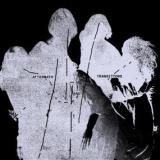
It is in the aftermath of the “Novaya Scena“ album that the music on this LP was created. About a year after the release of the CD in August 1993, Nianio and Taran came to Cologne to work on music for the dance production "Transilvania Smile" by the dance theatre ensemble Pentamonia2.
The seeds for the Traces of Ukrainian Underground in Cologne were sown. Starting in 1994, a series of informal recording sessions took place at Michael Springer’s Phanton Studio and at SHM studio in Rhenania. Together, these sessions formed the basis of the four different incarnations of the Ukraine-Cologne connection heard on STROOMS’s compilation.
- A1: Jimmy Olsen's Blues
- A2: What Time Is It?
- A3: Little Miss Can't Be Wrong
- A4: Forty Or Fifty
- A5: Refrigerator Car
- A6: More Than She Knows
- B1: Two Princes
- B2: Off My Line
- B3: How Could You Want Him (When You Know You Can Have Me)
- B4: Shinbone Alley / Hard To Exist
Definition of spin doctor: a spokesperson employed to give a favorable interpretation of events to the media, especially on behalf of a political party. Spin Doctors weren't part of a political party but spread the word about romance.
The band was formed in New York City, best known for their early 1990s hits "Two Princes" and "Little Miss Can't Be Wrong". Those 2 songs were hits all over the world, and are still big hits in the streaming era. Pocket Full of Kryptonite is the first studio album (and second release) by the Spin Doctors, and originally released in August 1991.
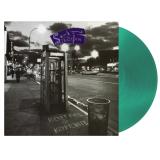
The album was a top 10 hit in many countries, including the UK, Denmark, Germany, Norway and Sweden. It was the band's bestselling album and was certified 5x Platinum in the US. Not to be confused with the 3 Doors Down song 'Kryptonite' from 2000, the Superman theme was all over the Spin Doctors' album, with the title, a song called "Jimmy Olsen's Blues" and the album cover showing a phone booth (referring to Clark Kent frequently ducking into a nearby phone booth to change into his Superman attire).
This pressing of Pocket Full of Kryptonite is a limited 35th anniversary edition of 4,000 individually numbered copies on green vinyl. The jacket has a deluxe leather-texture laminate finish.
Born in 1989 in Bamako, Mali, Nfaly Diakité is a member of the Donsow, Bambara animist hunters. Nfaly Diakité is named after his grandfather, the late Nfaly Diakité, one of Mali’s most respected donso chiefs. His grandfather did not play, but as a leading figure in the donso brotherhood, he was always accompanied by musician Yoro Sidibé. Nfaly grew up alongside Yoro Sidibé, who became his first master of the donso ngoni, a type of eight-stringed antelope skin harp. After leaving school to devote himself to his instrument, Nfaly continued his apprenticeship with Diakaria Diakité and Oumar Sidibé, two donso masters from the Wassolo region.
He quickly made a name for himself in the donso community and was much asked to play at the traditional ceremonies of his brotherhood. He then met percussionist Ibrahim Sarr and joined the BKO Quintet, with whom he recorded an album and toured Europe and the United States. His virtuosity on the donso ngoni soon attracted attention, and he took part in numerous music and dance festivals in Mali and abroad, with the aim of raising awareness of this little-known traditional instrument.
Nfaly Diakité is also a Kônô, meaning that he is responsible for passing on the history and culture of the Bambara people through music and song. He pursues his mission by combining tradition with more contemporary sounds and by collaborating with artists from a wide range of musical backgrounds. For him, music is a means of conveying messages of peace, love and harmony, and his compositions evoke the values of respect, tolerance and open-mindedness.
‘Tribute to Toumani Koné’ is Nfay Diakité’s first solo album, recorded in Bamako in June 2020. On the album, Nfaly is the only singer, providing backing vocals and playing the donso ngoni and keregne. The album is a tribute to the storyteller and poet Toumani Koné, the greatest donso ngoni player since N’gonifo Bourama. Nfaly Diakité is a representative of the new generation of donso ngoni players and he wishes to pay tribute to Toumani Koné, who throughout his long career has been a symbol of courage, daring, loyalty and honesty.
The nine-track of this solo album leaves no room for hesitation. Three instruments (donso ngoni, voice and keregne) manage to carry one into another dimension without ever tiring. The fitting and precise rhythm is a deep but melodious transe. Nfaly’s voice plays between expressive urgency and calm wisdom, and the choruses with his own voice multiply the planes of dimension of the music. The donso n’goni, of which Nfaly is an excellent player, sounds rough and earthy but always clear and sharp. All the strength of a music that does not belong to a single musician but to a long cultural tradition of which he is the spokesman is expressed here. The young Nfaly, thanks to his experience and sensitivity, succeeds on his own in pushing us into this world without feeling the weight of tradition but only the liberation of music that sounds all the more contemporary. This album is to be listened to in its entirety as one tight journey between repeated formulas, highlights and moments of rest within the same relentless rhythm. The densest moment is probably found in the heart of the album, between the tracks Nankama (the predestined one) and Mogote Diabeye (no one can please everyone). Here, the message, which can be deciphered from the translation of the lyrics, seems to transcend language barriers and intepret us directly about our human condition, urging us to move our bodies to the dense rhythm of life.
Malted Milk's 1975 album tackles subjects that concern the band's singer in particular, but also paints a picture of a society with which many people identify. Difficult present times, a broken family and dependent children. The character oscillates between moments of great lucidity and optimism, and moments of anger. Feelings that are reflected in a general vision of the world we live in today, devastated by the abuses of the powerful ones and rendered insensitive to the "false" freedoms they offer us. Could it be that the personal condition of the album's character is also the result of a twisted society?
Malted Milk takes a stylistic journey from strong soul and funk roots to resolutely more modern musical influences, all seasoned with sweet hooks ranging from disco to folk-world. Malted Milk is newly committed to speaking openly about uncomfortable subjects and honestly reflecting its passion for American and pop music. The result is an authentic album, in which the singer becomes kind of a spokesman for the band and the listener.
For 20 years the Tuareg culture and music has fascinated the world. Their quasi-sacred poetic songs inspire western songwriters like KURT VILE or JOSÉ GONZALEZ, while the virtuosity of their guitar playing fascinates guitar heroes like JIMMY PAGE, and finally the spirituality and meditative hypnotism impresses electronic music producers like FOUR TET.With two albums, IMARHAN has become an emblem of the new Tuareg generation, breathing new life into “Assouf”, the desert blues.
While most of current Tuareg productions are exiled to the United States, the group, led by Sadam, is part of their culture and their city, the capital of the Tuareg people, with an open door to the desert. By building their own studio in Tamanrasset Aboogi, Imarhan become the spokesmen of the young Tuareg lost generation (forgotten by Algerian, Nigerian and Malian governments).With their new album Aboogi, Imarhan manipulate the rights and ancestry of the Tuareg. By inviting the legendary Mohamed At Itlale aka Japonais (who has since, sadly, passed away) and the genius musician Abdallah Ag Alhousseyni, IMARHAN follows the heritage of TINARIWEN, the godfathers of Assouf. When they recorded with GRUFF RHYS of the SUPER FURRY ANIMALS, their brilliant and universal songwriting takes on every sense of the word. Finally, by inviting the Sudanese singer Sulafa Elyas, we understand that IMARHAN is open to all of Africa, defenders of the Tuaregs but above all spokesperson for the new African generation.
In the smoggy orange light of a new millennium, the young Deb Demure would take the bus, once a week, from his home in crumbling Hollywood to his grandmother's apartment, nestled in the pastel pristineness of Beverly Hills. During these visits, Deb couldn't help but notice the disconnect between the glow of his grandmother's temple, and the downtrodden, alienated figures that populated the seats of the mass transit that took him there. Week after week, he would observe these characters: fading B-movie starlets, leisure-suited alcoholics and forgotten civil servants. But one fateful commute home, as the twilight waned to the purple Los Angeles night, he realized these figures were not as lost as they appeared - there was a nobility in their failure, reflective of the dignity of the city's vanishing golden era. They were survivors, in need of a voice: a spokesperson for every color of hope and hopelessness, transcendent of gender and time; Drab Majesty became Deb's musical podium for this undertaking. Raised in a music-centric household, Deb would find the time to teach himself to play his father's right-handed guitar upside down and left-handed; an unorthodox fashion from where his earliest understanding of chords and harmony were conceived. Exploring the bins of discarded vinyl in his neighborhood thrift stores, his toolkit expanded with the subterranean sonic gems of the recent past. Influences range from the virtuosic arpeggiated guitar work of Felt's Maurice Deebank and the grittier pop progressions of Red Lorry Yellow Lorry's Chris Reed as well as Steve Severin from Siouxsie and The Banshees. He also studied the harmonic oscillations and utilization of the occult power of vibratory frequency present in New Age sounds of Greek artist, IASOS. In terms of orchestration, he consciously culls from the seaside maximalism of Martin Dupont and mechanized grooves of early Depeche Mode. Like a dualistic pendulum, his vocals swing from a preistly baritone to a choir boy's falsetto reflecting the sepulchral ambiance of church visits with his grandmother. Currently the drummer for Los Angeles lo-fi rock ensemble Marriages and having honed an unorthodox home recording style, Deb sources his sounds from a repository of "mid-fi" synthesizers and other lesser-quality instruments. Following the release of his debut cassette EP, "Unarian Dances", he also shared a split 12" with synth pop forefathers, Eleven Pond. During the Spring of 2015, Drab Majesty signed with Dais Records and released his first single, Unknown to the I, as a introduction for his first initial foray into the album format, romantically titled Careless. Written over the course of 2 years, "Careless" is a compendium of songs that have outlasted a malicious burglary of his studio, his struggles with substance addiction, and most recently, the death of his beloved grandmother.
- When Did I Lay Down And Die
- Cherryade
- Little Piggies
- Let It Burn
- This Is Forever
- Don't Be A Can't (All Your Life)
- A Simple Song
- It's A Scream
- Bad Energy
- Boxes Squares Etc
- Dear Universe
- I'm Alright (Dear Universe Reprise)
- Bad Scenes At The Eyelid Cinema
- Remedy
- Inaction Man
- Man You've Got To Help Yourself
"_Syd Barrett fronting Queens Of The Stone Age- surefooted, inventive and buzzing with surprises." - The Guardian "A refreshingly bold alt-rock sound." Alfitude NJ White - aka WHITEY - explodes out of the shadows with the announcement of his highly anticipated double LP MENTAL RADIO, out on 3rd October 2024. Pulling in influences from across decades of sound and putting it through the Whitey blender to create something musically fresh, MENTAL RADIO is an album that in turn is furious, raw, amused, politically razor sharp and poignant... a satirical take on 21st Century life, a musical pop art collage. As an individual, Whitey prefers to speak via his work, and has eluded all interviews for well over a decade - leading one journalist to describe him as 'the musical equivalent of Bigfoot'. Despite this elusive stance, his music continues to rack up many millions of plays and draw fans from all ages across the globe. Across a string of acclaimed albums, Whitey's music has made its mark, from rock'n'roll clubs to electronic dance floors, fashion catwalks to movie soundtracks, television to computer games, from Breaking Bad and the Sopranos to Grand Theft Auto. Whitey has built a strange home in the shadows between mainstream entertainment and the vanishing underground, an outsider who celebrates his outsider ethos in his work- and yet whose music is embraced by both popular and alternative culture. Whitey is a prominent spokesperson for independent music - his viral letter about 'fair fees for artists' was shared 500,000+ times; and made Newsweek, The Times, BBC Worldwide and the front editorial of Music Week. Whitey's back catalogue has previously received praise from the likes of The Independent, The Guardian, Record Collector, Uncut and Rock Sound to name a few. Available as a Double Vinyl LP, CD and cassette through NO! LABEL, published globally by Mute Song and repped for live by William Morris Entertainment- this is set to be a benchmark album of 2024. Housed in a Gatefold Sleeve (Gloss Finish plus Silver Foil Trim) Including two Printed Inner Sleeves (Gloss Finish).
- There Were Rebels
- Front-Load The Fun
- Yeah You, Person
- Don't Design Yourself This Way
- Furrowed Sugarloaf
- Rip The Atmosphere From The Wind
- Grow Like A Plant
- No One Displayed The Vigor Necessary To Avert Disaster's Approach
- Blame Yourself
- Instead Of Queen
- Not For Mating, Not For Pleasure, Not For Territory
- Playing Tunes Of Victory On The Instruments Of Our Defeat
It's already hard to describe what Deerhoof sounds like. So we'll skip that part and say this sounds a lot like Deerhoof with a different singer. And in keeping with 30-year Hoofian tradition, melodies soar, big hit earwigs abound, harmonies are complex, and keys change frequently and unexpectedly. Arrangements are in a constant state of impatient agitation. Emotions run high but delivery is usually a falsetto deadpan. We Sang, Therefore We Were is grief delivered in code. Greg plays everything save for a few birds who join in singing now and again. He keeps the instrumentarium severely limited, the sound shambling and anti-slick. It turns out Greg is a really good bass player and guitar player, if a bit more rudimentary and slicing compared to his Deerhoof bandmates. He does play more angry guitar solos. But don't expect another Chippendale/Saunier speed-drum freakout; the songwriting is gorgeous and sophisticated, and drums are almost an afterthought. Here, song is Queen. The singing is high and whispery, tending towards the three-part harmony. What we're saying is: We Sang, Therefore We Were sounds a bit like Deerhoof fronted by The Andrews Sisters. This is a peek inside the mind of one of indie rock's most celebrated drummers, many of whose fans may not even realize the relentlessness of his musicianship and compositional prolificacy. Mozartian chords and sounds insinuate themselves here and there on this record, finally taking over in a big climax at the end, when the drums break off unexpectedly into a laugh-or-cry orchestral outpouring that ironically may be the rawest part of a very raw album. "Satomi, Ed, John and I were chatting between shows in Austin in early December. They encouraged me to make a record on my own. With no one to please but myself, it came together way faster than usual. It was basically done by the holidays. I had been excited by the announcement that the new Rolling Stones record was going to sound 'angry.' I thought, 'Yes, I'm angry too.' But Hackney Diamonds turned out more like cotton candy than punk rock. So I went back to Nirvana. I always loved the catchy melody over massive distortion, the way their songs refused to conform to simple major or minor scales, the dark sarcasm which still resonates in this age of phony blue-check-washing of fascism." The album cover is all text, penned by Greg on the familiar topic of interspecies absurdist operatic anti-Cartesian revolution. The songs' lyrics are all drawn from this epic poem. White House spokespersons are recast as The Queen of the Night from The Magic Flute, The Queen of the Night is recast as a mockingbird singing all night in a battle for survival, and ultimately the mockingbird is recast as a campy drag artist taking pleasure in her own aggressive, tireless music-making.
Tessen were folding fans with concealed outer spokes made of heavy iron plates. Some swordsmanship schools provided training of the tessen as a weapon. Besides using the razor-sharp spokes as an attacking tool, the tessen was also used as a throwing weapon, for fending off knives and darts and as a swimming aid. Samurai could also secretly take them to places where overt weapons were not allowed.
One of the very first compositions by Bruno Sanchioni (Age of Love, BBE), released in 88 just at the beginning of the New Beat phenomenon that marked the history of Belgian music.
Along with Confetti's and Amnesia, it was one of the most popular tracks of its time and marked the start of a long and promising career for Bruno Sanchioni. Just 2 years later, he composed the original bassline for the legendary track "Age of Love", which, thanks to Jam & Spoon's remix, was to stamp the electronic music scene for several generations. Based on video clash created by the visionary Lil'Louis, the original slow tempo was enhanced by the highly recognisable vocal "The Story" and a simple but highly effective melody. It was already remixed 10 years later by Viper, with a rhythmic pattern once again inspired by the Chicago pioneers.
25 years on, this track still evokes emotion and still inspires a good number of artists to want to touch it up, and for the track's 35th anniversary it seemed appropriate to pay it a vibrant tribute by offering several remixes split into two different vinyl projects. In a faster, more acid-influenced style, the first project features a remix by DJHS, Manu Kenton and Furax, emblematic artists from the north of France, and is completed by Viper's excellent 98 remix for those who haven't heard it yet. DJHS is behind the legendary acid track 'Spokesman', Manu Kenton is one of the flagship artists of the 'Ghoststyle' label and Furax is behind 'Big Orgus'.
On the eve of her 80th birthday, Dona Onete - ‘the grande dame of Amazonian song’ - returns with Rebujo, a love letter to her hometown of Belém, situated deep in the Amazon.
Rebujo brims with two music styles born in Belém: carimbós, influenced by African grooves, and bangues, a ska-type rhythm, plus there’s a cumbia, brega (‘romantic’ music) and samba.
Since the release of her 2017 album Banzeiro, Onete has become a superstar in Brazil – she composed and sung the theme song for one of Brazil’s biggest soap operas (A Força do Querer), been awarded the Brazilian Ordem do Mérito Cultural in recognition for her contribution to Brazilian culture + her video for ‘No Meio do Pitiu’ has an impressive 9.2m views on Youtube.
Outside of Brazil she’s performed at Roskilde, Womad (UK, NZ & AUS), Gilles Peterson’s Worldwide Festival and TFF Rudolstadt and is a global spokesperson for indigenous cultures.
- 3rd album of funky Brazilian/Amazonian grooves from the ‘Diva of the Amazon’, mastered @ The Carvery
- David Byrne, Caetano Veloso, Gilles Peterson, Cerys Matthews all big supporters
On the eve of her 80th birthday, Dona Onete - ‘the grande dame of Amazonian song’ - returns with Rebujo, a love letter to her hometown of Belém, situated deep in the Amazon.
Rebujo brims with two music styles born in Belém: carimbós, influenced by African grooves, and bangues, a ska-type rhythm, plus there’s a cumbia, brega (‘romantic’ music) and samba.
Since the release of her 2017 album Banzeiro, Onete has become a superstar in Brazil – she composed and sung the theme song for one of Brazil’s biggest soap operas (A Força do Querer), been awarded the Brazilian Ordem do Mérito Cultural in recognition for her contribution to Brazilian culture + her video for ‘No Meio do Pitiu’ has an impressive 9.2m views on Youtube.
Outside of Brazil she’s performed at Roskilde, Womad (UK, NZ & AUS), Gilles Peterson’s Worldwide Festival and TFF Rudolstadt and is a global spokesperson for indigenous cultures.
- 3rd album of funky Brazilian/Amazonian grooves from the ‘Diva of the Amazon’, mastered @ The Carvery
- David Byrne, Caetano Veloso, Gilles Peterson, Cerys Matthews all big supporters
Cairo, late 2013. In a city in turmoil, where the curfew had just been lifted after a second coup d'état, where the walls were still covered in dreams and revolt, where even the clubs of the city-centre echoed with anti-Islamist and anti-army slogans, I was deeply touched by the voice of Abdullah Miniawy at the 100Copies music studio, a stone's throw from Tahrir Square. A singer, writer, poet, poetry-slammer and student from the El-Fayoum oasis, this spokesman for Egyptian youth was shaking up the music scene and social networks with his hypnotic voice and unique blend of electro, sufism and jazz music, both punk and psychedelic, secular and avant-garde. Three months later, Abdullah's first on-stage revelations took place at the La Voix est Libre festival in Cairo with the "Jimi Hendrix of oud", Mehdi Haddab, followed by his first meeting with composer and saxophonist Peter Corser at the D-CAF festival (Downtown Contemporary Art Festival), created in the aftermath of the revolution by leading figure in theater Ahmed El-Attar. After three years of administrative battles, while censorship was making a comeback in Egyptian artistic circles, Abdullah finally arrived in Paris where he recorded an initial version of Purple Feathers with Peter Corser, which was broadcast on Soundcloud.
In 2017, gripped from the very first seconds by these soaring vocal and instrumental performances, Erik Truffaz accepted our invitation to become involved with Peter's hypnotic loops and Abdullah's electric vocals, and was soon joined by the visceral strings of cellist Karsten Hochapfel. Five years later, Le Cri du Caire is still turning heads, and often moving audiences to tears. Both free and spiritual, sensitive and elusive, their music elevates the soul to giddy heights and flies towards what may well be one of the shortest paths from zero to infinity.
On Origins Chris Bartels takes on the role of singer-songwriter for the first time under his Elskavon moniker, unveiling a voice that wouldn't sound out of place next to vocal-forward artists like Justin Vernon, Jónsi, or Baths, who master the balance between conventional songcraft and bold, idiosyncratic experimentation. Origins is vast yet intimate, fluttering yet cohesive, tattered yet clean, a little like rainfall during sunlight. Shedding the ambient-classical confines of his previous output, the album's opener and title track, offers a swirling mosaic of acoustic textures that recall the beloved duo The Books, laced with warped vocal utterances flitting in and out of a club-friendly beat. "Origins" is followed by the equally danceable "Coastline," which drives home the smiling melodies and intricate sound-design that form the spine of Origins, keeping Bartels' voice in a largely decorative and impressionistic role up to this point. "Blossom and the Void" dissolves the introductory tension as Bartels comes out lyrically swinging, his digitized voice chanting widely over the mutated New Wave-esque anthem. Here, Bartels shows his instinct for dynamics by rising to bombast and quickly dispelling it, making steep yet grace- ful descents into skillfully delicate sound-design. Throughout Origins, the patient glacial aesthetic of his previous work is still discernible-- there are wordless, expansive panoramas that stretch out patiently for minutes at a time and smartly resist the impulse to pack each moment with a persona made even more impactful when Bartels chooses to wield it. At other times, his spokesmanship is woven discreetly into a larger tapestry, like on "See Out Loud" (and its ambient reprise) where Bartels' voice shimmers from a distance, covering the scene in diffuse splendor. "There is so much warping, mangling, re-sampling, reversing and pitching," Bartels says of his intricate vocal manipulations. "I printed a lot of the vocal recordings onto a tape machine from the `60s, first at one speed, and then I'd halve, or double the speed going back into my comput- er," he elaborates, illustrating how this kind of analog processing freed him from his habits. "Sometimes I'd do this multiple times on one recording or layer-- it gave me such a unique and unexpected sound. At this point, I threw away any inhibition on what type of vocals to have, or not have, on the album." This newfound freedom is palpable in the peaks of soaring grandeur that dot the emotional landscape of Origins. "All These Years" cathartically reaches one such summit in its second half after laying a path of gently plodding indie-IDM in its first. The cinematic vignette "Dreymur Aftur" provides pause for reflection amid its brisk procession of string plucks and rhythmic synthesizer while marching wordlessly into album-closer "This Won't Last Forever." Here at the end, Bartels' guitar playing is laid bare in the mix, skeletally framing a single ribbon of his voice as it unfurls into the atmosphere. Though the track isn't expressly lyrical, its starkness still exemplifies the new leaf of vulnerability Bartels has turned over on Origins, an album that documents his hard-won evolution from musician, to producer, to composer_ and finally_ his confident arrival in the role of songwriter.
For 20 years the Tuareg culture and music has fascinated the world. Their quasi-sacred poetic songs inspire western songwriters like KURT VILE or JOSÉ GONZALEZ, while the virtuosity of their guitar playing fascinates guitar heroes like JIMMY PAGE, and finally the spirituality and meditative hypnotism impresses electronic music producers like FOUR TET.With two albums, IMARHAN has become an emblem of the new Tuareg generation, breathing new life into “Assouf”, the desert blues.
While most of current Tuareg productions are exiled to the United States, the group, led by Sadam, is part of their culture and their city, the capital of the Tuareg people, with an open door to the desert. By building their own studio in Tamanrasset Aboogi, Imarhan become the spokesmen of the young Tuareg lost generation (forgotten by Algerian, Nigerian and Malian governments).With their new album Aboogi, Imarhan manipulate the rights and ancestry of the Tuareg. By inviting the legendary Mohamed At Itlale aka Japonais (who has since, sadly, passed away) and the genius musician Abdallah Ag Alhousseyni, IMARHAN follows the heritage of TINARIWEN, the godfathers of Assouf. When they recorded with GRUFF RHYS of the SUPER FURRY ANIMALS, their brilliant and universal songwriting takes on every sense of the word. Finally, by inviting the Sudanese singer Sulafa Elyas, we understand that IMARHAN is open to all of Africa, defenders of the Tuaregs but above all spokesperson for the new African generation.
- A1: Judgment, Rage, Retribution And Thyme
- A2: Generation Spokesmodel
- A3: What Moves The Heart?
- A4: Today, Is A Good Day
- A5: Into Yer Shtik
- A6: In My Finest Suit
- B1: F.d.k. (Fearless Doctor Killers)
- B2: Orange Ball-Peen Hammer
- B3: Crankcase Blues
- B4: Execution Style
- B5: Dissolve
- B6: 1995
- C1: Mudhoney Funky Butt
- C2: West Seattle Hardcore
- C3: Sissy Bar
- D1: Carjack ‘94
- D2: Sailor
- D3: Small Animals
MyBrothertheCow isthefourthstudioalbumbytheAmerican grunge band Mudhoney. The album includes several direct references to bands that influenced Mudhoney’s sound. For instance, “F.D.K. (Fearless Doctor Killers)” refers to the Bad Brains song “F.V.K. (Fearless Vampire Killers)”, “Orange Ball-Peen” alludes to Captain Beefheart and Led Zeppelin, and “1995” pays tribute to The Stooges.
Available as a limited edition of 1500 individually numbered
copies on turquoise coloured vinyl.
- A1: Beat For Ikutaro (Tape 52) (Tape 52)
- A2: Vega Drive (Tape 13) (Tape 13)
- A3: Heizungskeller (Tape 66) (Tape 66)
- A4: Ear Piercer (Tape 48) (Tape 48)
- A5: Murky Water (Tape 02) (Tape 02)
- A6: Floating Bottles (Tape 04) (Tape 04)
- A7: Spoken Letter (Tape 75) (Tape 75)
- A8: Wavy Rx (Tape 57) (Tape 57)
- B1: Nachtspaziergang (Tape 40) (Tape 40)
- B2: Grandma's Kitchen (Tape 29) (Tape 29)
- B3: Steam Engine (Tape 40) (Tape 40)
- B4: Bike Spokes (Tape 02) (Tape 02)
- B5: Fernsprecher (Tape 75) (Tape 75)
- B6: Submarines In Space (Tape 07) (Tape 07)
- B7: Film Drei (Tape 09) (Tape 09)
Die meisten der für dieses Album ausgewählten Tracks sind Aufnahmen, die mit einem einfachen Stereo- (2-Track) Kassettenrecorder aufgenommen wurden. Die Situation im Studio sah dann ungefähr so aus: Drumcomputer (ohne Midi) und Sequenzer waren miteinander verbunden, liefen somit rhythmisch synchron. Die darin eingestellten Tonfolgen und Rhythmen wurden dann meist manuell mit Hilfe der Tastaturen auf die jeweilige gewünschte Tonhöhe transponiert. Oft wurden während dieses Ablaufs noch weitere Instrumente dazu live gespielt. Dabei wurden mit Hilfe eines Mischpults die Summe aller Tonquellen für die Aufnahme in einer Art "Live Recording" zusammengemischt. Da man bei einem Fehler immer wieder von vorne anfangen musste, und viele der Klänge nach dem Verstellen der Regler nur mit viel Akribie wieder hergestellt werden konnten, kamen mit der Zeit viele Kassetten zusammen, oft mit endlos langen und verschiedenen Versionen des gleichen Titels. Demo Tapes 1984-86 umfasst eine Auswahl aus den Anfängen der elektronischen Musik und merkwürdigen Klangwelten von Heiko Maile
Saga: Ólafur Stephensen 01.02.1936 – 28.04.2016 Wife: Klara Stephensen Children: Ingibjörg “Día” Ambonguilat Stephensen, Stephan Stephensen, Magnús Stephensen & Ólafur Björn Stephensen
Ólafur was born in Reykjavik. His parents were Stephan Stephensen, a shopkeeper at Verðandi, and Ingibjörg Stephensen, a housewife.
Ólafur graduated from The Commercial College of Iceland on June 16, 1956 and then studied public relations as well as marketing and propaganda at Columbia University in New York where he graduated in 1962.
Ólafur was a pioneer in the advertising services in Iceland which with him turned away from being solely a profession of illustrators to a new era of marketing. Ólafur touched on many subjects through his career. Alongside his study Ólafur worked for NBC News and META educational TV. He reported for UN Radio and Voice of America as well as for AFRTS under the pen name of Sonny Greco. Ólafur was the managing director of The Icelandic Red Cross, a jazz pianist in Harlem, the spokesperson for the media center of the NATO ministerial summit in Reykjavík in 1968 and hosted a program on the Icelandic National Television. Ólafur was the first Scandinavian citizen to become a member of the Advertising Club of New York, the first president of the Reykjavik chapter of JC as well as the first vice-president of JC International, the host of a jazz program on Icelandic National Radio, a judge for the American Advertising Awards and an active Freemason in Iceland as well as Portugal. Ólafur was awarded a Badge of Honour by the Finnish Red Cross in 1967.
Ólafur founded both ÓSA advertising agency and later Gott Fólk and was the first elected president of the Icelandic Advertising Association. He wrote a large number of published newspaper and magazine articles on his trade of advertising and marketing and released a book on the subject, “New and Better”, in 1987. Ólafur Stephensen released three jazz albums with his jazz trio named Tríó Óla Steph, played music both in Iceland as well as internationally with various jazz combos and was a big fencing enthusiast.
In her varied career that would combine art gallery installations, major film soundtrackings and commissions for Atari, Suzanne Ciani’s earliest experiments remain some of her most challenging, beguiling and timeless... Flowers Of Evil ticks all the above boxes and flicks switches that would power-up a new uncharted universe of her own musical modernité. Finders Keepers present the first-ever release of these vital archive recordings.
As a genuine vanguard of electronic music composition at the forefront of the modular synthesiser revolution in the late 1960s, Suzanne Ciani’s forward-thinking approach to new music would rarely look to the past for inspiration, which makes this unheard composition from 1969 a rare exception to the collective futurist vision of Ciani and synthesiser designer Don Buchla. In choosing to adapt the controversial prose of French poet Charles Baudelaire, Suzanne would join the ranks of ongoing generations of pioneering musicians like Olivier Messiaen, Karlheinz Stockhausen, Serge Gainsbourg, Etron Fou Leloublan, Celtic Frost and Marc Almond (not forgetting Star Trek’s William Shatner!), all equally inspired by the 19th century writer’s works of “modernité” (modernity), a self-coined term dedicated to capturing the fleeting, ephemeral experience of life in an urban metropolis, best exemplified in his symbolic, erotic and macabre ode to Parisian industrialisation, Les Fleurs du mal (Flowers Of Evil).
In her varied career that would combine art gallery installations, major film soundtrackings and commissions for Atari, Suzanne Ciani’s earliest experiments remain some of her most challenging, beguiling and timeless... Flowers Of Evil ticks all the above boxes and flicks switches that would power-up a new uncharted universe of her own musical modernité. For the many enthusiasts that have already drawn the parallels between Baudelaire’s writings and experimental/electronic music (a relationship rivalled only by the likes of J. G. Ballard and Aldous
Huxley) some might instantly recognise an unconscious sistership between this recording and another 1969 electronic adaptation of Flowers Of Evil by celebrated female electronic composer Ruth White. An interesting distinction of White’s excellent version of Flowers Of Evil (released via Limelight records, home to the likes of Fifty Foot Hose and Paul Bley) is that its dark tone generation and vocal manipulation was created with a Moog synthesiser, the commercially triumphant
rival to Suzanne and Don’s Buchla Systems (Buchla and Moog’s historic, simultaneous, neck-and-neck synth developments are well documented.) The fact that Ciani’s version was never intended for commercial release (not unlike her 1975 Buchla concerts, which could easily have taken Morton Subotnick’s Bull by the horns!) is also poetically reflective of the nature of Ciani and Buchla’s alternative perspective. The choice to present this extract from Flowers Of Evil in its intended French language further distances Ciani’s faithful reaction from some of its better-known variations. Having attempted to voice the poem herself, the multilingual Italian-American composer’s French accent did not meet her own standards, resulting in the request for a fellow unnamed French student who lived on campus at Mills College in Oakland to accurately verbalise the section of Baudelaire’s collection entitled Élévation.
BAFTA award-winning actor Matt Berry looks to his formative years in this fascinating and unique take on the TV themes that have influenced and inspired him in his life. Recorded in his brand new studio with his regular band The Maypoles, Matt tackles eleven classic themes including well known titles such as 'Are You Being Served', 'Rainbow', 'The Liver Birds' and 'The Good Life' alongside some less obvious choices such as 'Picture Box', 'Wildtrak' and 'World In Action'. Released on CD, vinyl and digital formats, the release coincides with Matt's role as a spokesperson for the first National Album Day. This will see Matt appearing regularly in radio and in the press.
For a label that wasn't around long, Strata East achieved the same sort of label recognition that Impulse! or Blue Note managed to build. In other words, you knew what you were getting when you bought a record on the label, even if you didn't know the names on the outside of the cover. This is no exception. Who is Shamek Farrah Who knows Who cares It's the music that's important. This is the standard spiritually intense new jazz one learns to expect from the label, soaked in some Eastern influences but always with its ear to the street. Musicians took their roles as leaders and spokesmen very seriously back then. This very adult statement from a group of very serious men is no exception. However, what might be an average, forgettable session is rescued by the propulsive engine of Milton Suggs' bass. He adds the fire and the drive that keeps things interesting and prevents the music from wandering into a circular spiritual morass. For fans of the sound or the label, this can be heartily recommended.
- 1