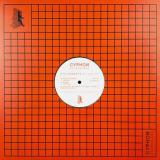
Over the last two decades, Ste Roberts has quietly established himself as one of the UK's more distinctive underground electronic producers. Drawing equally from house, techno, electro, IDM and experimental electronic music, his productions blur the line between dancefloor functionality and sonic exploration. His debut release for Cyphon Recordings continues that trajectory. Four transmissions exploring machine rhythms, synthetic environments, and fractured dancefloor architecture, where melody emerges through corrosion and groove survives mutation.
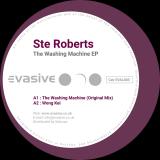
Ste Roberts delivers his debut vinyl EP for the label — four seriously solid cuts of twisted, underground tech house.
The title track “The Washing Machine” is a driving peak-time workout built around Ste's trademark analogue synths, drum machines, rolling sub bass, sharp drums, bleeps and plenty of weird little twists and turns. It's already had plenty of road testing through Ste's DJ sets, including Houghton and fabric, and it does exactly what you want it to do on a dancefloor.
The A2 “Wong Kei” keeps things rolling with another slick and twisted piece of Ste's production. Clever sound manipulation and a seriously infectious groove make this another one that's going to work hard for Djs.
Over on the flip, Evasive boss Rob Pearson gets stuck into B1 “The Washing Machine”, remixing it into his trademark peak time tech, rolling sub-bass territory and adding a few extra mangled instructions for your increasingly misbehaving washer.
B2 “Shoplifting Like That, Yeah” brings Ste’s trademark electro/breakbeat sound into the mix, with tripped-out vocals, wobbling bass and a groove that’s already been causing a real stir in his live sets. Ste has been using it to open his shows, and it’s easy to hear why — a twisted, energetic way to get things moving.
Four tracks, plenty of character and a record that's perfect to push forward the Evasive catalog in style.
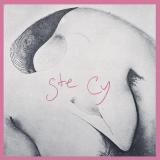
Ste Cy, the latest studio offering from the trio of Jac Berrocal, Vincent Epplay, and Timo van Luijk, ripens like a forbidden fruit—born of an improvised instrumental session captured in the secluded hush of Kulta Saha by Timo van Luijk. These raw recordings were later reshaped into 12 songs by Vincent Epplay at Studio Villejuif in Paris. And over it all drifts the poetry of Jac Berrocal— sensual and incendiary, seeping into the music like spice into flesh.
Back in 2023, I picked up a record by Jacob Dwyer — I was completely captivated. His lyrics weren’t just words; they were portals. I had to track him down. After some digging, I made contact — and asked him if he would like to collaborate with me.
He said yes.
Fast forward through months of back-and-forth, and then it landed — in my inbox — Tom’s House: a one-hour audio-drama written and performed by the incomparable Jacob Dwyer. It’s a hypnotic, surreal journey through the mind of someone returning home after 15 years — disorienting, poetic, and fully immersive.
To accompany this masterwork, I put together my take on Canon HF10 — 12 minutes of deep, rolling tech grooves, bouncing acid basslines, freaked-out synths, and lyrical gold. (“He demanded a fried egg sandwich…”)
Flip to the B-side and things get wild with The Baby Legit Upside Down — a full-tilt burner packed with razor-sharp 808 electro/techno drums, squelchy 101 bass stabs, swirling pads, and an evolving sub that’ll shake the foundations. Dwyer’s voice threads through the chaos with uncanny flair — bizarre, brilliant, unforgettable. The title means what it says.
We close the EP with Red Flowers — slowing the tempo, diving into squelchy breaks and textural weirdness, as Jacob drops in snippets of conversation with his sister, alongside more sharp, off-kilter reflections on Tom’s House.
Check the full audio-drama: Jacob Dwyer – Tom’s House
out of Stock
Last delivered 10 months ago available to reorder, subject to availability
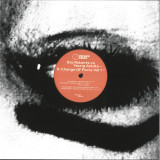
Label boss Ste Roberts makes his debut on his imprint Private Parts, and he has invited his favorite Dutch duo the Young Adults along for the ride. X-Change Of Parts Vol 1 brings one original track from each artist, and then remixed by each other. Kicking off the EP with the quirky and twisted minimal throbber of Brain Freeze. Fun and ideal to wig out any dancefloor in those early hours. Young Adults with a perfect remix, maintaining all the fun for a heads down shuffle. A cheeky toast-apella to round of the A. On The flip, you have Young Adults ramping up the tempo, and delivering some incredibly funky tech. This sounds like it could be 20 years old, timeless stuff. Rounding off the EP Ste Roberts twists things up with a pulsating bass heavy Electro remix.
out of Stock
Last delivered 7 months ago available to reorder, subject to availability
The long-awaited second installment of Route 8 & S. Olbricht "Selected Works" has arrived! Drenched in layers of the classic synths and drum machines of bygone eras, the Hungarian combo delivers a fresh testament to the power and warmth of analog production....."Selected Works 2" features some of the best cuts from their previous effort for Go! Finger, including "When I Pictured Myself", the banger "Horriflowers", "Nirrimi" and "Strobes". Mesmerizing deep analog material. Raw and physical sound at it's best..A must have! Available on 140 gr vinyl.
French producer LB aka Labat returns with a new LP named “Fake Memories” on his own label Alélah Records. He surprises us with some more Hip-Hop and R’n’B music, liberating his love for jazz rythms and harmonics.
The fifteenth album by Stevie Wonder, originally released in October 1972. As the second of five consecutive albums which made up Stevie's classic period, Talking Book found Wonder at the top of his game, combining tight song writing with warm electronic arrangements and effervescent vocal performances. Released in 1972 and sandwiched between the release of Music of My Mind and Innervisions, Talking Book saw the then 22 year-old Wonder enjoying more artistic freedom from Motown, taking over the production reins and playing most of the instruments himself. As a result, the sound of the album is sharply defined by Wonder's exquisite keyboard work, and his use of the Hohner clavinet model C on Superstition became widely regarded as one of the definitive tracks featuring the instrument. Despite making the majority of Talking Book himself, the album also benefits from the talents of guest guitarists Jeff Beck, Buzzy Feton and Ray Parker, Jr who featured on Maybe Your Baby and Lookin' For Another Pure Love.
In Gianfranco Rosi’s portrait of Naples, Sotto le Nuvole, the ground shakes periodically. Between Mount Vesuvius and the Tyrrhenian Sea, the fumaroles of the Phlegraean Fields hiss volcanic gas and steam. Below the sleeping volcano, modern day Naples emerges in black and white and fills with voices, with lives. From the traces of history and the concerns of the present, Rosi documents a city immersed in its continuous past, with Daniel Blumberg’s minimal soundscape hovering in a sonic space between liquid and air.
Tasked with creating a soundscape that would suspend space within Rosi’s film, Blumberg called upon the extended technique of saxophonists Seymour Wright and John Butcher to create a gossamer fabric of traces and sounds abstracted from their instruments. Having transitioned from theoretical physics to the saxophone, John Butcher has always deeply considered space in the context of his playing. His concerns are with flow, density and how the saxophone is situated in the living world. Zeroing in on the core sonic properties of the mechanical and acoustic components of the saxophone, Seymour Wright has integrated its every breath, reed vibration, keypad clatter and hissed microtone of his alto into his own, unique improvisational language. In his work with these two seminal players, Blumberg makes his most concentrated soundtrack to date - reinforcing the film's sense of overlapping time and space, and pushing at the limits of experimentation.
Initially recorded in Daniel’s flat in London, Butcher and Wright centre themselves around long, consistent tones, so soft that it seems breath is being gently pulled from the saxophone's bell by an invisible hand. Blumberg himself adds haunting bass harmonica, and recordings of Wright’s launeddas - a traditional and ancient triple pipe polyphonic reed instrument from Sardinia, Italy. Blumberg then travelled to the volcanic region of Baia, next to Pompeii. Once a flourishing classical Roman city loved by Nero, Baia slowly sank under hydrothermal pressure, leaving the city in a kind of geological purgatory. Using specialised geophones and hydrophones, Blumberg took those initial recordings and amplified them underwater, sending them calling out across the ruins of Baia’s mosaics, Nymphaeum statues and villas.
“It was important to me that the music was whispered in the same landscape that Gianfranco has worked for the past three years, so that you can hear the volcanic air gulping, the lapping of the waves, the steam and bubbles popping against John and Seymour’s saxophone breaths – an echo from a suspended time.”
What emerges is deeply melancholic, tender, subtle and right at the edges of audio technology. Submerged in an aquarian mausoleum, the mysterious vibrations of the saxophone and its bell become an echo of an echo, wading from the future into the past. ‘Sotto le Nuvole’ is less a soundtrack than a process of aeration - a sonic puncture in the material of the film which allows its central message to breathe, and a remarkable experiment at the limits of the saxophone’s possibility.
The first-ever collaboration between Satoshi Tomiie and Brazilian duo Stekke, Soraré is a three-track EP born from an intimate three-person studio session in Curitiba, Brazil. Created entirely through live jams, the recordings capture the spontaneous exchange of ideas as deep, hypnotic grooves emerged from an array of electronic instruments.
Featuring Soraré, Ventoma, and Neiro, the EP preserves the energy and spontaneity of the original sessions, capturing a unique moment of collective improvisation in the studio.
Compiled onto one vinyl album for the first time, Landlocked (Numbers, 2026) presents Hallucinator’s 1999 debut album originally released under Mark Ernestus and Moritz von Oswald’s label Chain Reaction. Writing much surrounding the culture of what would be later considered ‘Dub Techno’ and its’ primary distribution center, Hard Wax, leads one down roads of shifting primary sources and decades old overheard smoke break recollections. Maybe brevity primes the listener to the paralinguistic to approach the sound on its terms; focusing on how things are uttered and not what.
This theory will remain unconfirmed. Hallucinator original press release left us with three or so gestures to consider over the years since:
“A new act on CHAIN REACTION”s distinct productional thesis. HALLUCINATOR are 3 people from he UK/London and this their first release ever- that’s all what the artists want to let us know…. This record is dedidacted to the memory of Stephen Lawrence!”
The first gesture is one of personnel. Since ’99, we’ve gotten to learn a bit more about the artists behind the Hallucinator project. All London-based, all writers, composers, and sound-designers— Anna Piva, Edward George, Trevor Mathison. These three seem to flow between parameters as aesthetic tactic and tacit structure to the work itself. For example, other collaborative shapes have come from this lineup including Flow Motion (Piva, George and Mathison) as well as the now defunct Black Audio Film Collective of which George and Mathison are founding members.
The second gesture is in the second line of the previous press release, “distinct productional thesis.” Much of Landlocked’s affect and sequencing seems to suggest an emotional study of entropy at the level of sediment. Rhythms play with space and capacity through polyvalence. The production chose subtractive vertigo, often switching and bringing back in elements that vanished from the track 6 minutes ago. Dubbing out so much of a track, one begins to associate sound akin to memories held in the experience of running your hand across a concrete block as a child. Felt (re)memberance in lieu of narrative tale. Using textures that flicker between colour and percussion, Hallucinator’s 12-tracker of loudspeaker perception music might be a mediation on the psychic wake of the Cold War. Intermittent strata of ambience and groove convects an active margin rifting event underneath a scorched geology of power in Western Europe. Again, this is all grapevine hearsay.
But it’s silence that voices the third gesture. The album’s sparse application of the written word touches on the ennui paradox of being landlocked on an island. Stuck. Trapped in the psychosis of occidental hypercentricism. A looping silence of Black British tragedy: “to the memory of Stephen Lawrence”. 18 year-old Lawrence was stabbed to death at a bus stop in southeast London by six white men in 1993. The rift of grief and implicit reiteration of modern subordination left by this hate act went legally silent for almost two decades until Lawrence’s killers were ultimately sentenced to virtually life in jail in 2012. Only six years removed at the time of Hallucinator’s initial invocation of rememory, the mind-numbing accretion of what Black Studies Professor Denise Ferreira da Silva might call “unpayable debt”, finds demonic ground across Landlocked, forming an aural sense of what continues to be refused.
The album ventures through spaces of overactive non-happenings: ‘Red Angel’’s factory floor dub flashes between smokestack and jungle visions, or the halfway mark’s stilted breath of ‘Dusk’ lending its mood to the sort of sedated dreams built from daily life under colony rule for instance. That linked rhythm links us back to our linked fates across Black and Brown folk is real, thus the syncopated signals through this work behave on the level of transnational radiotelegraphy, sounding out its windswept tension of a body negotiating a meat-grinder schema of linear production and wage for others to know that unspeakable thing can be broadcast in every drum tongue.
As the silence continues to reverb, we return to the sort of meaning-making that cannot be told but felt. Soothing to some, disturbing to others. Landlocked, a Rorschach test for a crumbled empire.
'Double Seven, released by Trojan in late 1973, was the last album Lee 'Scratch' Perry would release on the label for some considerable time, and it was essentially the final album project he put together before establishing his own Black Ark studio. Opening track 'Kentucky Skank' sets the tone with a slow creeper whose frying sounds underscore its role as a praise song to the Colonel's KFC recipes; the cosmic Moog blips come courtesy of Ken Elliott at Camden's Chalk Farm studio, also prominently featured on U-Roy's double-tracked, stereo-panned gambling ode 'Double Six.' David Isaacs' 'Just Enough' was cut a few years prior, which makes it slightly out of phase with the rest of the set, though the enigmatic 'In The Iaah' sounds mightily fresh, with its uncredited chorus said to come courtesy of the Wailers. Perry's own 'Jungle Lion' has hilarious roars from the maestro at the start, strangely grafted atop a reggae re-make of Al Green's 'Love and Happiness.'
'Overall, Double Seven melds the soul, funk, reggae and dub elements that were constant in Perry's work during this phase. His enhanced audio spectrum and endless reference points would keep his music continually apart from that made by his peers.'
—David Katz (excerpt from the liner notes)
180g Heavy double vinyl LP with liner notes by Tyran Grillo. Limited Japanese Obi for the first pressing. Original artwork by Russell Mills and photography by Jean-Baptiste Mondino.
The third Time Capsule is a body of dub reinterpretations by celebrated producer Bill Laswell of Ethiopian singer Gigi. Curated by Tokyo record collector, music researcher and seasoned reissue supervisor Ken Hidaka, it is the first time Illuminated Audio is pressed to vinyl after its CD release in 2003.
Ejigayehu Shibabaw was born in 1974 in Chagni, northwestern Ethiopia and by pursuing a career as a singer, went against her father’s strict, traditional gender roles. As Gigi, she embraced the same musical freedom she had strived for in her personal life, incorporating the Ethiopian church, funk, hip-hop, West and South African music into her work. She first settled in Nairobi, then Addis Ababa, where she quickly established herself as one of the city’s leading singers. A move to San Francisco in 1998 led to a long and fruitful creative partnership with bassist and producer Bill Laswell.
Around the same time, Chris Blackwell had stepped away from Island Records to start the art house film company and label Palm Pictures. He took an interest in Gigi and together with Laswell, pulled together an all-star cast of musicians for her self-titled US debut album, including Herbie Hancock, Pharoah Sanders and Wayne Shorter. It won international critical acclaim, not just for its musicianship but for making Gigi a “defining voice for the Ethiopian expatriate community”, as journalist Tyran Grillo praises in his Time Capsule liner notes. From the nation-defining 1896 victory over Italian invaders to the quiet revolutionaries who wear simple shemma garments, Grillo believes the themes in Gigi make it “a shower of sunlight on her homeland for those ignorant of its struggles.”
After its success, Blackwell encouraged them to go back into the studio to rethink the album and Illuminated Audio was born. “Anyone can make a voice sound worldly”, Grillo remarks, “but rare are those who can make one sound inner-worldly.” Gigi was clear with Laswell to give her vocals a minor role “because it’s already been done.” Instead her Amharic verse is fleeting, exhaling through the textures like ghostly fragments; soaring yet muted. Yet the album is still titled under her name, an assertion by Laswell of her central role in the album’s creation. Not only was it a fully endorsed project by Gigi, but she would be present throughout its development, giving feedback on half-finished ideas as Laswell played them back in the studio. “It works perfectly”, she reflected after the album’s release. “We wanted to capture the whole spirit of each track, and Bill’s remixes create a different music language that really puts you in a pleasant place”.
This new vocabulary takes its lead from a technical approach that Laswell had been perfecting during a furtive creative period at the turn of the millennium. Much like his ambient interpretations of Miles Davis (Panthalassa, 1998), Bob Marley (Dreams of Freedom, 1997), and Carlos Santana (Divine Light, 2001), Laswell approached Illuminated Audio by returning to the original multitrack masters. Gigi wasn’t just reworked, but recomposed into an expansive lattice of instruments, submerged in a watery ambience of dub and trance undercurrents.
Sonically, this new language that Gigi refers to, is manifested by the original album’s more understated parts being pushed to the fore. Explaining his contrasting methods, Laswell saw Gigi as being “put together in a way that fits”. Contrastingly, in Illuminated Audio, “a lot of things that I featured in the remix weren’t as audible in the original.” Instrumentation laying near-dormant, deep in the mix, are brought to the fore: the acid rock guitar and Wayne Shorter’s saxophone on ‘Tew Ante Sew’, Graham Haynes’ flugelhorn on ‘Nafekeñ’, Laswell’s bass on ‘Kahn’, the melodica in Mengedegna or the floating synths and talking drums in ‘Gud Fella’.
Brought to his attention by mentor DJ Nori, Hidaka describes Illuminated Audio as a “masterful sonic exploration into ethereal ambience and dub” and made sure this reissue also contained a full remaster to give its “deep musicality” much better dynamics and density in the overall sound. Hidaka admits that Laswell's music “is sometimes so out-there, it is often misunderstood” and, indeed, to dub album non-believers this might seem like a prolific producer imposing himself on another artist’s work; eternally developing rearrangements that never quite get to its destination. But that’s missing its true power and triumph. This is more than the reissue of a remix, but “a wholly unique musical entity”, as Hidaka describes. Illuminated Audio refers to the illuminated manuscripts that comprise the major part of Ethiopian art and its new compositions stand in proud solitude as a rare body of reworks that both informs and enhances their originals.
Scofield and Metheny. What more needs to be said? A masterpiece meeting of musical minds, these two guitar virtuosos entered the studio in December 1993 with Steve Swallow on bass guitar and Bill Stewart on drums to create one of the greatest jazz guitar albums of all time. Produced by Lee Townsend, I Can See Your House From Here is an 11-track set of Scofield and Metheny originals including Sco’s expansive title track and Pat’s rocking “The Red One” and the stunning ballad “Message To My Friend.”
The roots of hard rock act Tucky Buzzard lie in psychedelic group, The End, who supported The Rolling Stones on an early tour, leading Bill Wyman to produce their sole LP. The band then morphed into Tucky Buzzard, now with scorching lead guitar licks and Hammond organ parts to the fore, and Wyman still on board as producer and manager. For their final album, Buzzard, released on Deep Purple’s Purple imprint in 1973, there is a mix of hard-edged blues rock, with a fine interpretation of perennial classic, “Who Do You Love,” and wistful originals like “Hanging On In There.” As ever, Wyman’s sterling production and presence on acoustic and electric piano makes this one a must for all Stones fans.
Accomplished trumpeter, composer, bandleader and educator, Kamal Abdul-Alim has been actively involved in creative music for decades. He has toured Africa, Europe, the Caribbean and the United States. He has recorded with all kinds of bands, large and small, and performed in festivals all over the world. “He takes the postbop of the 50s and free-form jazz of the 60s and turns it into an even balance of fine textures. Alim, who is highly underrated, has one of the most beautiful tones and concepts of jazz. A master of improvisation, he knows the art of weaving different ideas, whether they stem from Manhattan’s lower East Side or Europe” (Hugh Wyatt, New York Daily News). “Dance” was recorded in 1983 but first released on vinyl in 1987. Rhythm section includes drummer Idris Muhammad. Original pressings are extremely rare and expensive. “Brotherhood” is a much sought after track on the jazz dance scene. There is a high demand for this title again on vinyl and pressings are limited to 1000 copies, all individually hand numbered.
"Just As I Am" – wer spät seine Karriere startet, kann sich bereits ein ausdrucksvolles Persönlichkeitsprofil erarbeitet haben, auch wenn es so wie bei Bill Withers zunächst nicht von Musik geprägt worden ist. Withers diente viele Jahre in der US-Marine, jobbte als Milchmann und installierte bei einem amerikanischen Flugzeugbauer Toiletten in Jets, während seine selbst gefertigten und fleißig verschickten Demo-Tonbänder bei den Plattenfirmen im Abfluss landeten. 1971 folgte der steile Aufstieg, als der erfolgreiche Producer Booker T. Jones ihn ins Schlepptau nahm und ihm Top-Musiker wie den Gitarristen Stephen Stills, den Drummer Al Jackson und Donald 'Duck' Dunn als Bassmann ins Studio stellte.
In seinem Debüt-Album zeigt Withers seine universellen und ausgereiften Fähigkeiten als Sänger, Komponist und Interpret, die er in späteren Aufnahmen kaum mehr übertraf. "Harlem", ein ungeschönter Milieu-Funk über die die New Yorker Slums, "Grandma’s Hands", der obligatorische Rückblick in die Kindheit und die gemütslastige Ballade "Ain’t No Sunshine" mit ihrem gebetsmühlenartigen im Off-Beat kreisenden »I know, I know …« sind freigelegte musikalische Jahresringe eines erfahrenen Mittdreißigers, der endlich zu Wort kommt. Zu dieser Schallplatte des großen Songwriters mit dem kleinen Repertoire gibt es keine Alternative.