Formed by Alison Statton of much-loved Welsh avant-garde/indie pioneers the Young Marble Giants alongside guitarists Simon Booth and Spike, Weekend have been more than a cult band during their short career. La Varieté was their 1982 debut album a delicate collection of songs set against a jazz backdrop, switching across several musical settings including samba, cabaret, Afrobeat and truly original contemporary exotic pop. The album was originally released in 1982 on the Rough Trade label and still deserve the status of a masterpiece. It was revered by critics on release as a bold new departure from the prevailing post-punk ethos and served as a major influence on future indie stars as Saint Etienne and Belle And Sebastian.
Cerca:still music
The one arm keyboard luminary is well known in the entertainment circle of Western Jamaica. Born on the 2nd of March 1954, the accomplished singer and musician hails from Hayes, Clarendon. In 1969 he went to live in Kingston until 1973. Ancel's first effort in a recording studio was inside the popular Randy's in downtown Kingston. He did a single called 'Riding On' on the Musical Barber label out of Mandeville.
In 1977 he joined a group called Solid Foundation and stayed with them for two years. After that he moved to Montego Bay to sing with Stamma and the Sounds of Mobay, with who he appeared on Reggae Sunsplash festival in 1980.
Johnny made the move for the United States in 1982, and formed his first own band 'Uprisers' in Pittsburgh city.
One of the things he likes to talk about is how he once reunited the famed Clarendonians with Peter Austin and Ernest Wilson. Both pioneer icons were at irreconcilable odds with each other for quite some time. When he came back to Jamaica in 1985, he invited Ernest Wilson to do back-up vocals for him. For the same studio session, he also invited Peter Austin for the same back-up duties, and that was how the reunion came about. Inside famous Aquarius studio, there was Burning Spear's personal Band called Burning. The songs recorded there were 'Moving Out' and 'True Love' with top musicians : Tony Green on the saxophone, Bobby Ellis on the trumpet, Dwight Pinkney on the guitar, Calvin on percussion, Nelson Miller on the drums and Maurice Gordon on bass. This was not the first time Ancel was working with Peter Austin. When the split came in the ranks of the Clarendonians, Ancel was asked to fill the breach. He thus teamed up with Peter Austin and their first single together was entitled 'Out Of Sight'. They later entered the annual Jamaica Festival Song competition in 1975. Their entry was entitled 'Paradise On Earth' which Ancel said was quite popular. However, it was not popular enough to prevent the late Roman Stewart from copping the award with 'Hooray Festival'.
After the release of 'Moving Out', Johnny moved to Miami and continued his career as a solo artist, singing with different local bands. He did a number of singles, notably were 'Faith, Patience and Love' and 'Stand Back' for a producer called Jolly in Miami. In 1988 Powell formed his second band Benja, a band which gained increasing popularity in the time in South Florida. They have performed on several festivals, played in most major clubs and were a big success in Andros Island in the Bahamas for an audience who not necessarily consider Reggae their prime choice of music.
The saddest part of his life was when he lost his left hand to what doctors termed as a cancerous situation in 1977. This did not, however, stop him from learning how to play keyboards. Initially he was taught by the late Bobby Vaugh in Montego Bay and also got further teaching from jamaican saxophinist Reuben Alexander.
Now approaching 70 years old, Ancel is still very active in his music. In previous years he performed at the Marcus Garvey Celebration and is currently working with the “Synergy Band” at Royalton Hotel in Negril under the stage name “Ancel P.” Let the one arm keyboard luminary life and music live eternally !
Produced by Ancel "Johnny" Powell & Patricia Wallace
Engineer: Melvin Williams
Recorded at Aquarius Studio (Kingston, JA) in 1985
Bass: Maurice Gordon
Drums: Nelson Miller
Guitar: Dwight Pinkney
Saxophone: Tony Green
Trumpet: Bobby Ellis
Percussion: Calvin
Keyboards: Winston Wright
Backing vocals: Ernest Wilson & Peter Austin from the Clarendonians
When Leon Michels and El Michels Affair released their first record, Sounding Out The City, in 2005, it was hard to guess what was next for Michels and his then-introduced, now-patented “cinematic soul” sound. Now, four EMA studio albums and scores of tribute and remix projects later all while producing for some of the biggest names in the industry Michels has trademarked his sound, with each project taking audiences somewhere new and pushing the boundaries of what he is known for. The man is a river, not a lake and this time he takes his golden touch into the realm of hip-hop laying down a musical bed for one of the greatest to ever rhyme into a microphone: Black Thought of The Roots crew.
Releasing on Big Crown Records, the LP is called Glorious Game and it is a remarkable debut partnership in more ways than one. Michels provides his bottom-heavy, soul-tinged production for Black Thought who gives us some of the more personal and transparent verses we've ever heard from him. Michels and Black Thought have been in each other's orbit for a while now. The two first met in the 2000s when Thought was first getting familiar with the contemporary soul scene. "Out of that whole world, Menahan Street Band was probably my favorite," recalling the funk and soul group Michels was a founding member of back in 2007. Fast forward a few years and musicians from that collective Dave Guy on trumpet and Ian Hendrickson-Smith on sax are now full time players with The Roots. This connection eventually led Leon and Thought to doing a few fundraising events around NYC and Philly together. "Before long, Black Thought was coming around the studio and would jam with us from time to time," Michels explains. "Then, fast forward to 2020 and COVID lockdowns, he just hit me up out of the blue, wanting me to send him stuff to write to. We both were looking to stay busy."
Being that Black Thought is the co-founder and emcee for, hands down, the best live-band group in hip-hop. Michels took a decidedly different approach to this project and instead of sending recorded tracks of live compositions, he pulled out the sampler and sampled himself and some records from his collection. "I'm a big fan of soul music," as if Michels has to remind us. "And part of hip-hop's appeal to me has always been the sample-based production".
For Glorious Game, Michels would make wholly composed and recorded soul songs in his studio, sample himself, then chop and/or loop up his sounds and create instrumentals for Black Thought. On some tracks he took a more traditional hip-hop approach, starting from samples of other people’s music but then adding live instrumentation on top. But for the most part, it's him reinterpreting his own compositions into something new.
The result is an organic feel of loop-based tracks that breathe and fluctuate enough for Black Thought to ‑ex on. "What I write about is determined by the equation of the producer's energy and my energy," Black Thought says. "It's about where we meet." So armed with Michels sampled and re-sampled soul cinematics, Black Thought rhymes through personal memories and distinctive.
Introducing Marc Codsi's new Arabic infused synth oriented album, 'Songs from the Aftermath'.
Lebanese musician and composer Marc Codsi has released numerous albums with various projects
such as Scrambled Eggs, Lumi, Zalfa and many others whilst maintaining a very active career as asolo artist and film composer. 'Songs from the Aftermath' is his 5th album and presented as a natural
continuation to his 2019 opus work, ‘A New World’ (Annihaya Records).
Codsi continues his personal exploration of Arabic music codes, mainly investigating quarter tones
scales in an fully electronic environment in order to create new harmonies and textures that still
convey a feeling of familiarity whilst keeping a certain aura of strangeness and mystery.
The album was recorded between during 2021 and 2022 and the music eventually comes as a very
personal quest for transcendence. A sort of speculative answer to the world’s ongoing absurdity and
what seems to be an incessant array of conflicts, disasters and tragedies.
From these dark alleys may we still arise to proclaim a sense of beauty, poetry and elevation!
‘’Ace Todmorden label makes a significant discovery on its own doorstep: a superb cache of ‘loner folk’ songs recorded in the early-70s by Hebden Bridge’s answer to Nick Drake’’ UNCUT PLAYLIST
"This is music that can confidently hold its own with pioneers such as Davey Graham, Michael Chapman, Bert Jansch and Jackson C Frank, as influenced by jazz, blues and steel guitar as any of the old songbook classics from ancient Albion.” Benjamin Myers
"Defiantly Northern and out of this world" Folk Radio
Anti-counter culture loner folk from a teenage attic in the heart of rural Northern hippiedom.
Today the valley town of Hebden Bridge in West Yorkshire is world-renowned as something of a bohemian backwater. It wasn’t like this back in the late 1960s and the early 1970s, when a disparate selection of radicals, drop-outs, heads, musicians, artists and writers started to be attracted to the Calder Valley. Local lad and future poet laureate Ted Hughes called the area “the fouled nest of industrialisation”.
Over time, those seeds of radicalism and collectivism ensured Hebden Bridge evolved into a place where people could be themselves and all shades of individual oddness not only tolerated but actively encouraged. But back at the turn of the dreary 1970s it remained a monochrome world defined by its unforgiving surrounding landscapes, where the old gritstone over-dwellings were stained with soot and rain lashed down for weeks.
It was here that Trevor Beales, who was born in 1953, grew up, and from where he drew musical and lyrical inspiration.
Perhaps it was this dual nationality heritage, unusual in the valley’s largely white working class population at the time, that gave the teenager Trevor Beale’s music an outsider’s perspective. The discovery of Bob Dylan, Django Reinhardt, The Byrds and James Taylor at a young age, lead to him picking up a guitar at the age of ten, and he was soon writing his own originals and performing them at local (though often remote) folk clubs and pubs.
Recorded in the attic of the family home at Ivy Bank in Charlestown on the verdant wooded slopes at the edge of Hebden Bridge between 1971 and 1974, these early recordings are collected here for the first time and mark Trevor Beales long-overdue solo debut.
In these songs is a suffer-no-fools sense of realism that is defiantly Northern, yet also expresses a worldliness that belies Beales’ young years, whilst also showcasing an inherent storyteller’s ear for narrative. Here is a postcard from the past at that crucial musical period of transition, when the idealistic exponents of the 1960s emerged into an austere new decade that was to be shaped by strikes, rising unemployment and economic upheaval.
Two aspects of this music make it remarkable: Beales’ natural ability showcases a sophisticated guitar-picking style that was leagues ahead of many of his (older, more recognised) contemporaries. This is music that can confidently hold its own with pioneers such as Davey Graham, Michael Chapman, Dave Evans, Bert Jansch and Jackson C Frank, as influenced by jazz, blues and steel guitar as any of the old songbook classics from ancient Albion.
Secondly, his lyrics are a far cry from either the naïve bedroom scribblings of a teenager who has barely left his upland home, nor do they fall foul of the type of lazy cliches and sub-Tolkien imagery that was still in abundance in the early 1970s. Most remarkably the earliest songs here were laid down less than a year after he left school (an unearthed report written by his headteacher on July 3rd 1970 noted he had “a considerable ability and interest in music”, though his education ended abruptly when he simply walked out of a science lesson one sunny day while at sixth form, never to return).
Trevor’s music is grounded in reality – his reality. ‘Then I’ll Take You Home’, for example, considers the Guru Marajai, who encouraged his acolytes to give over their worldly possessions, yet who drove a Rolls Royce and lived like a playboy. Unsurprisingly, this latest in a long line of spiritual charlatans found several followers in Hebden Bridge, and Beales casts a disdainful eye over the growing popularity for such false prophets.
With its ancient narratives and propensity for myth-making, folk has certainly produced it’s fair share of cult figures who have enjoyed rediscovery or career resurgence and with this debut compilation of home recordings, rescued from cassette tapes, Trevor Beales might just be the latest addition. Certainly he was the real deal.
Crucially, Beales' music is never jaded or cynical, but instead possesses a poet’s ear, a strong sense of self and some sound critical faculties. And much of it recorded at an age when he could neither vote nor order a pint of heavy.
Trevor Beales died suddenly and unexpectedly on March 29th 1987, aged 33. He left behind Christine and their young child Lydia.
“Shambly Television Personalities/Swell Maps style earworm indie rock.” Brooklyn Vegan
“RIPPER! Melbourne’s TERRY return to complete a hat trick of three albums in three years (TERRYilogy?) that leaves the piss streak that is the rest of indie pop in 2018 dribbling down its own leg in the dust.” 8/10 CLASH
Call me Terry! It’s been a hot minute since we last heard from Terry, what’s he been up to? Five years on from their last album, ‘I’m Terry’, the Australian post-punk quartet proudly present their new record, ‘Call Me Terry’, for release on April 14th 2023.
Terry is made up of pairs Amy Hill & Al Montfort, and Xanthe Waite & Zephyr Pavey who started playing together for the fun of it in 2016. Seven years, four albums and three EP’s later, Terry is ready to pick up the phone again. Over the past few years Terry have kept themselves busy - but not only with Terry things. On top of numerous releases with alternating side projects (Constant Mongrel, The UV Race, Primo!, Sleeper & Snake, Chateau, Rocky, the list goes on… ) members of Terry have moved interstate, undertaken studies, had children and started new fields of work.
Terry began sharing the demos for ‘Call Me Terry’ online with each other in 2020 - as we all did - before getting together in 2021 at their trusty rehearsal space to record the beds. Overdubs were completed at Terry’s homes over the following year. Lyrically, in true Terry fashion, the record wastes no time in scrutinising Australia’s corrupt, colonial history. They sing it loud and sprawl it across the jacket of this record, highlighting the greed, privilege and entitlement of white, wealthy “Australia” which they won’t stand a second for.
Musically, ‘Call Me Terry’ still has the classic Terry sound; the four vocals singing as one gang, sharp guitars and quirky, burbling synths, the rolling bass and drums, all amidst their clever, dancey pop songs. Since day dot it’s been hard to reference a band that really sounds like Terry, which is always amazing. Truly a sound of their own!
But the sugar on top here may just be some of their finest horn, string and piano performances to date - all of which never feel crowded, cluttered or over-involved. More just excellent, necessary melodies. Rest assured Al still gives his famed Fuzz Factory a workout - and throws his tremolo into the pedal chain. It goes off. Tremolo is the order of the day for Amy and Xanthe too who also embrace the wobble, whilst Zephyr keeps the pulse of their politico-pop anchored.
Terry isn’t afraid to call the shots and Terry isn’t afraid to point the finger. Listen to what Terry has to say.
Red Vinyl
“Shambly Television Personalities/Swell Maps style earworm indie rock.” Brooklyn Vegan
“RIPPER! Melbourne’s TERRY return to complete a hat trick of three albums in three years (TERRYilogy?) that leaves the piss streak that is the rest of indie pop in 2018 dribbling down its own leg in the dust.” 8/10 CLASH
Call me Terry! It’s been a hot minute since we last heard from Terry, what’s he been up to? Five years on from their last album, ‘I’m Terry’, the Australian post-punk quartet proudly present their new record, ‘Call Me Terry’, for release on April 14th 2023.
Terry is made up of pairs Amy Hill & Al Montfort, and Xanthe Waite & Zephyr Pavey who started playing together for the fun of it in 2016. Seven years, four albums and three EP’s later, Terry is ready to pick up the phone again. Over the past few years Terry have kept themselves busy - but not only with Terry things. On top of numerous releases with alternating side projects (Constant Mongrel, The UV Race, Primo!, Sleeper & Snake, Chateau, Rocky, the list goes on… ) members of Terry have moved interstate, undertaken studies, had children and started new fields of work.
Terry began sharing the demos for ‘Call Me Terry’ online with each other in 2020 - as we all did - before getting together in 2021 at their trusty rehearsal space to record the beds. Overdubs were completed at Terry’s homes over the following year. Lyrically, in true Terry fashion, the record wastes no time in scrutinising Australia’s corrupt, colonial history. They sing it loud and sprawl it across the jacket of this record, highlighting the greed, privilege and entitlement of white, wealthy “Australia” which they won’t stand a second for.
Musically, ‘Call Me Terry’ still has the classic Terry sound; the four vocals singing as one gang, sharp guitars and quirky, burbling synths, the rolling bass and drums, all amidst their clever, dancey pop songs. Since day dot it’s been hard to reference a band that really sounds like Terry, which is always amazing. Truly a sound of their own!
But the sugar on top here may just be some of their finest horn, string and piano performances to date - all of which never feel crowded, cluttered or over-involved. More just excellent, necessary melodies. Rest assured Al still gives his famed Fuzz Factory a workout - and throws his tremolo into the pedal chain. It goes off. Tremolo is the order of the day for Amy and Xanthe too who also embrace the wobble, whilst Zephyr keeps the pulse of their politico-pop anchored.
Terry isn’t afraid to call the shots and Terry isn’t afraid to point the finger. Listen to what Terry has to say.
Repress!
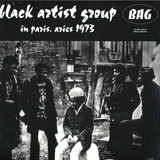
Outstanding free jazz session recorded in 1973 in Paris by Chicago outfit BAG.
It was Lester Bowie, trumpeter with the Art Ensemble of Chicago, who suggested that the Black Artists' Group (BAG) should head for Paris. In 1972 several members of BAG took his advice and flew to France for an extended stay. The following year a concert featuring saxophonist Oliver Lake, trumpeters Baikida Carroll and Floyd LeFlore, drummer Charles Bobo Shaw and trombonist Joseph Bowie (Lester's younger brother) was recorded and subsequently issued as In Paris, Aries 1973, a strictly limited edition LP on the group's own label.
Since the formation of Black Artists' Group in 1968, the home of this multidisciplinary arts collective had been St Louis, Missouri, the city where the Bowie brothers had grown up. It was there that Lester Bowie had started to investigate the expanding horizons of jazz before moving, in 1966, to Chicago where he joined the recently established Association for the Advancement of Creative Musicians (AACM). His close friend Oliver Lake visited Bowie, attended AACM concerts and meetings and was inspired not only by their artistic vision and integrity but also by their efficient organisation. In Chicago musicians were making things happen for themselves, taking control of their own destinies and giving shape to their lives as creative artists.
In June 1969, the Art Ensemble of Chicago had taken their music to France. During the preceding decade Paris had established a reputation for audiences that were unusually well-informed and open-minded, receptive to the uncompromising music of black American innovators such as Cecil Taylor, Ornette Coleman, Albert Ayler and Sun Ra. The city that had nurtured not only Cubism and Surrealism, but also Jean-Luc Godard and contemporary cinema's Nouvelle Vague was well prepared for the sonic collage forms and stylistic dislocations of the Art Ensemble. During that same month violinist Leroy Jenkins, trumpeter Leo Smith and saxophonist Anthony Braxton also arrived in Paris, three further emissaries from the AACM.
The adventure of collective improvisation resonated with the Parisian zeitgeist. Enthusiastic audiences attended their concerts and coverage in the media. In Paris, Aries 1973 offers an isolated and fascinating glimpse into that phase of the group's existence. The album is dedicated to the memory of Kada Kayan, a bassist who had hoped to make the trip from St Louis to France but, tragically, had grown ill and died. His absence adds special poignancy to the sound of the bass when it appears on this recording, played by Baikida Carroll. Listeners keen to hear Kayan himself in the company of Lake, Bowie, Shaw, LeFlore and Carroll should seek out Red, Black and Green by the 10-piece Solidarity Unit, Inc. That album, recorded on 18th September 1970 and dedicated to Jimi Hendrix, who died on that day, features an earlier version of Shaw's composition 'Something to Play On.'
In Paris, Aries 1973 reveals BAG's musical affinities with the Art Ensemble of Chicago. Both groups preserved an independently minded approach to the notion of free jazz and a carefully filtered awareness of pan-African musical practices, while their creative interest in space, mobile structure, chance occurrences and simultaneity also suggests parallels with the concerns of leading experimental composers working at that time. These performances in Paris of Shaw's 'Something to Play On' and Lake's 'Re-Cre-A-Tion,' plus two collective compositions/improvisations, display the dedication to structural fluency and sensitivity to coloration that accompanied BAG's unorthodox group dynamics and their unconventional instrumental combinations. In this case the musicians embrace congas, log drums, marimbas, woodblocks, cowbells and gongs. This is not a showcase for solos, but a shape-shifting and multi-centred statement of togetherness, quest and discovery. Removed from BAG's original multidisciplinary context the music still exudes an exhilarating spirit of collaborative exploration and shared excitement.
When Leon Michels and El Michels Affair released their rst record, Sounding Out The City, in 2005, it was hard to guess what was next for Michels and his then-introduced, now-patented "cinematic soul" sound. Now, four EMA studio albums and scores of tribute and remix projects later - all while producing for some of the biggest names in the industry - Michels has trademarked his sound, with each project taking audiences somewhere new and pushing the boundaries of what he is known for. The man is a river, not a lake and this time he takes his golden touch into the realm of hip-hop laying down a musical bed for one of the greatest to ever rhyme into a microphone: Black Thought of The Roots crew. Releasing on Big Crown Records, the LP is called Glorious Game and it is a remarkable debut partnership in more ways than one. Michels provides his bottom-heavy, soul-tinged production for Black Thought who gives us some of the more personal and transparent verses we've ever heard from him. Michels and Black Thought have been in each other's orbit for a while now. The two first met in the 2000s when Thought was first getting familiar with the contemporary soul scene. "Out of that whole world, Menahan Street Band was probably my favorite," recalling the funk and soul group Michels was a founding member of back in 2007. Fast forward a few years and musicians from that collective - Dave Guy on trumpet and Ian Hendrickson-Smith on sax - are now full time players with The Roots. This connection eventually led Leon and Thought to doing a few fundraising events around NYC and Philly together. "Before long, Black Thought was coming around the studio and would jam with us from time to time," Michels explains. "Then, fast forward to 2020 and COVID lockdowns, he just hit me up out of the blue, wanting me to send him stuff to write to. We both were looking to stay busy" Being that Black Thought is the co-founder and emcee for, hands down, the best live-band group in hip-hop. Michels took a decidedly different approach to this project and instead of sending recorded tracks of live compositions, he pulled out the sampler and sampled himself and some records from his collection. "I'm a big fan of soul music," as if Michels has to remind us. "And part of hip-hop's appeal to me has always been the sample-based production" For Glorious Game, Michels would make wholly composed and recorded soul songs in his studio, sample himself, then chop and/or loop up his sounds and create instrumentals for Black Thought. On some tracks he took a more traditional hip-hop approach, starting from samples of other people's music but then adding live instrumentation on top. But for the most part, it's him reinterpreting his own compositions into something new. The result is an organic feel of loop-based tracks that breathe and uctuate enough for Black Thought to ex on. "What I write about is determined by the equation of the producer's energy and my energy," Black Thought says. "It's about where we meet." So armed with Michels sampled and re-sampled soul cinematics, Black Thought rhymes through personal memories.
SKY HIGH BLUE COLOURED VINYL
When Leon Michels and El Michels Affair released their rst record, Sounding Out The City, in 2005, it was hard to guess what was next for Michels and his then-introduced, now-patented "cinematic soul" sound. Now, four EMA studio albums and scores of tribute and remix projects later - all while producing for some of the biggest names in the industry - Michels has trademarked his sound, with each project taking audiences somewhere new and pushing the boundaries of what he is known for. The man is a river, not a lake and this time he takes his golden touch into the realm of hip-hop laying down a musical bed for one of the greatest to ever rhyme into a microphone: Black Thought of The Roots crew. Releasing on Big Crown Records, the LP is called Glorious Game and it is a remarkable debut partnership in more ways than one. Michels provides his bottom-heavy, soul-tinged production for Black Thought who gives us some of the more personal and transparent verses we've ever heard from him. Michels and Black Thought have been in each other's orbit for a while now. The two first met in the 2000s when Thought was first getting familiar with the contemporary soul scene. "Out of that whole world, Menahan Street Band was probably my favorite," recalling the funk and soul group Michels was a founding member of back in 2007. Fast forward a few years and musicians from that collective - Dave Guy on trumpet and Ian Hendrickson-Smith on sax - are now full time players with The Roots. This connection eventually led Leon and Thought to doing a few fundraising events around NYC and Philly together. "Before long, Black Thought was coming around the studio and would jam with us from time to time," Michels explains. "Then, fast forward to 2020 and COVID lockdowns, he just hit me up out of the blue, wanting me to send him stuff to write to. We both were looking to stay busy" Being that Black Thought is the co-founder and emcee for, hands down, the best live-band group in hip-hop. Michels took a decidedly different approach to this project and instead of sending recorded tracks of live compositions, he pulled out the sampler and sampled himself and some records from his collection. "I'm a big fan of soul music," as if Michels has to remind us. "And part of hip-hop's appeal to me has always been the sample-based production" For Glorious Game, Michels would make wholly composed and recorded soul songs in his studio, sample himself, then chop and/or loop up his sounds and create instrumentals for Black Thought. On some tracks he took a more traditional hip-hop approach, starting from samples of other people's music but then adding live instrumentation on top. But for the most part, it's him reinterpreting his own compositions into something new. The result is an organic feel of loop-based tracks that breathe and uctuate enough for Black Thought to ex on. "What I write about is determined by the equation of the producer's energy and my energy," Black Thought says. "It's about where we meet." So armed with Michels sampled and re-sampled soul cinematics, Black Thought rhymes through personal memories.
Tape
When Leon Michels and El Michels Affair released their rst record, Sounding Out The City, in 2005, it was hard to guess what was next for Michels and his then-introduced, now-patented "cinematic soul" sound. Now, four EMA studio albums and scores of tribute and remix projects later - all while producing for some of the biggest names in the industry - Michels has trademarked his sound, with each project taking audiences somewhere new and pushing the boundaries of what he is known for. The man is a river, not a lake and this time he takes his golden touch into the realm of hip-hop laying down a musical bed for one of the greatest to ever rhyme into a microphone: Black Thought of The Roots crew. Releasing on Big Crown Records, the LP is called Glorious Game and it is a remarkable debut partnership in more ways than one. Michels provides his bottom-heavy, soul-tinged production for Black Thought who gives us some of the more personal and transparent verses we've ever heard from him. Michels and Black Thought have been in each other's orbit for a while now. The two first met in the 2000s when Thought was first getting familiar with the contemporary soul scene. "Out of that whole world, Menahan Street Band was probably my favorite," recalling the funk and soul group Michels was a founding member of back in 2007. Fast forward a few years and musicians from that collective - Dave Guy on trumpet and Ian Hendrickson-Smith on sax - are now full time players with The Roots. This connection eventually led Leon and Thought to doing a few fundraising events around NYC and Philly together. "Before long, Black Thought was coming around the studio and would jam with us from time to time," Michels explains. "Then, fast forward to 2020 and COVID lockdowns, he just hit me up out of the blue, wanting me to send him stuff to write to. We both were looking to stay busy" Being that Black Thought is the co-founder and emcee for, hands down, the best live-band group in hip-hop. Michels took a decidedly different approach to this project and instead of sending recorded tracks of live compositions, he pulled out the sampler and sampled himself and some records from his collection. "I'm a big fan of soul music," as if Michels has to remind us. "And part of hip-hop's appeal to me has always been the sample-based production" For Glorious Game, Michels would make wholly composed and recorded soul songs in his studio, sample himself, then chop and/or loop up his sounds and create instrumentals for Black Thought. On some tracks he took a more traditional hip-hop approach, starting from samples of other people's music but then adding live instrumentation on top. But for the most part, it's him reinterpreting his own compositions into something new. The result is an organic feel of loop-based tracks that breathe and uctuate enough for Black Thought to ex on. "What I write about is determined by the equation of the producer's energy and my energy," Black Thought says. "It's about where we meet." So armed with Michels sampled and re-sampled soul cinematics, Black Thought rhymes through personal memories.
We’re still harvesting the fruits of those past days in seclusion, the cabin fever induced creative outbursts, ideas that would probably have never surfaced without these enforced trips to our inner minds. Lockdown transcendence.
“Don’t Cry” by Italo-Brazilian DJ producer Stephan Barnem and Futuristant is another impressive testament of those days. Secluded in Stephan’s studio in Northern Italy, the duo subconsciously conjured the spirits of one of their mutual favorite bands, Depeche Mode and created a fierce, boombappy Neo New Wave smasher contrived to send rays of hope into the darkest corners of this mad world. We had to add a gratuitous beatless version to the EP that amplifies the cinematic depth and healing potency of this song.
If “Don’t Cry” echoes the dark brooding euphoria of Depeche Mode’s “Music For The Masses” era, the flipside cut “Elysium” harks back to the synthwave happy days of their debut “Speak & Spell”. It’s a wonderfully careless track that’s bringing a dearly needed breeze of fresh air to today’s discerning dancefloors.
Boys don’t cry for me Argentina. Save your tears for another day.
Wir ernten immer noch die Früchte jener vergangenen Tage in Abgeschiedenheit, der vom Lagerkoller verursachten kreativen Ausbrüche, Ideen, die ohne diese erzwungenen Reisen in unser Inneres wahrscheinlich nie entstanden wären. Lockdown-Transzendenz.
„Don’t Cry“ des italo-brasilianischen DJ-Produzenten Stephan Barnem und Futuristant ist ein weiteres beeindruckendes Zeugnis jener Tage. In der Abgeschiedenheit von Stephans Studio in Norditalien, beschwor das Duo unbewusst die Geister einer ihrer gemeinsamen Lieblingsbands, Depeche Mode, herauf und schuf einen wilden, boombappigen Neo-New-Wave-Smasher, der Licht in die dunkelsten Ecken dieser verrückten Welt senden wird. Wir mussten der EP eine Beatless-Version von “Don’t Cry” hinzufügen, die die filmische Tiefe und heilende Kraft dieses Songs noch verstärkt.
Wenn „Don’t Cry“ die dunkle, grüblerische Euphorie von Depeche Modes „Music For The Masses“-Ära widerspiegelt, erinnert der Flipside-Cut „Elysium“ an die Happy Synthwave-Tage ihres Debüts „Speak & Spell“. Es ist ein wunderbar sorgloser Track, der den dringend benötigten frischen Wind auf die anspruchsvollen Tanzflächen von heute bringt.
Boys don’t cry for me Argentina. Save your tears for another day.
Recorded in a little bedroom studio out in Durham, North Carolina, Amelia Meath and Nick Sanborn's debut LP as Sylvan Esso arrived in 2014 at the juncture of pop and experimental. Even now, years later, the LP remains an urgent and fitting introduction to a push-and-pull that would go on to inform the duo's sound - a thoughtful headiness that also wants you to get out on the dance floor. A blend of analog and digital, Meath and Sanborn were two unexpected puzzle pieces fitting together with singular ease, producing a ten-track LP that was both minimalist and shimmering, with dark undulations rippling beneath the synthy-surface and crystalline quality of Meath's voice. Before all of the international touring and festival headlining and critical acclaim, Sylvan Esso was just a shot-in-the dark of musical chemistry gone right. The original album bio for the self-titled presciently sets the stage for the thesis that has gone on to guide Meath and Sanborn's writing since then: "a collection of vivid addictions concerning suffering and love, darkness and deliverance" arriving as "a necessary pop balm, an album stuffed with songs that don't suffer the longstanding complications of that term." And so, even as the band continues to evolve and becomes amorphous, there's still that argument about what pop can be at its core. This is just the beginning of that conversation captured on tape.
- In The Air Tonight
- Story Of My Life
- Johnny B
- Time After Time
- Where The Streets Have No Name
- Ain't No Sunshine
- Red Baron
- Don't Look Back In Anger
- Mat Piano Song
- Hotel California
- Dancing Queen
- Dream On
- Drum Solo
- Flugzeuge Im Bauch
- Change
- Livin' On A Prayer
- Still Haven't Found
- Seven Nation Army
- When I Was In Town
- Fields Of Gold
”MIXTAPE Live” zum ersten Mal auf Vinyl!
Angelo Kelly ging 2014 das erste Mal auf MIXTAPE-Tour und die daraus entstandenen Liveaufnahmen sind mittlerweile legendär. Zum allerersten Mal wird dieser Klassiker von ihm als Vinyl-Edition erscheinen.
Mit insgesamt 20 Songs wird dieses legendäre Livealbum auf 2 LPs zu hören sein. Beide Schallplatten sind in einem mega coolen White & Black Splattered-Vinyl. Das ganze kommt dann noch in einem Gatefold Cover.
Viele haben danach gefragt und jetzt ist es endlich soweit: ”MIXTAPE Live“ zum ersten Mal auf Vinyl!
- A1: Undenying
- A2: Phasor Md
- A3: Galleon In The Clouds
- A4: Green Mirror
- A5: Technautic
- B1: Winding Up
- B2: Ripe Ready
- B3: Illuminated Knights
- B4: Tunnel Vision
- C1: Holding Pattern
- C2: Polygono
- C3: Every Day There's Something New To Say
- C4: Westward Glint
- C5: Play Music Now
- C6: Stillitude
- D1: Piece
- D2: Light On The Sand
- D3: Golden Fluoride
- D4: Thawing Stage
- D5: The Land Of Modor
- D6: The Song Of The Sea
It seems like a long time since we last heard anything from the talented Secret Circuit aka Eddie Ruscha!
Truth is he's been more prolific than ever...just not with his Secret Circuit alias.
For those of you unfamiliar with his work Secret Circuit is audiovisual artist and L.A. native Edward Ruscha V (yes indeed, son of THEE Ed Ruscha, legendary pop artist) who’s been on the music scene since time immemorial. He has been a member of innumerable bands and projects over the years including Medicine, Maids Of Gravity, Radar Bros and punk-dub outfit Future Pigeon to name a few as well as managing to squeeze in time for his equally multifarious and highly productive solo ventures. In just the last few years he's released a string of records under his own E Ruscha V moniker for labels such as Beats In Space, Good Morning Tapes and Fourth Sounds as well as finding time for several collaborations including Doctor Fluorescent (Crammed Discs), The Parels (Lal Lal Lal) and XLNT (DFA). You could say he's prolific!
So it's definitely a long overdue and most welcome return for Secret Circuit. The "Green Mirror" album is a double LP comprised of 21 new pieces (80+ minutes of music) recorded between 2020 and 2022. It captures that spacey otherworldly quality Secret Circuit is known for, but the music also veers towards the warmer, ambient textural territories that his recent E Ruscha V and Only Thingz projects explored...an altogether softer sensibility.
Yet nevertheless this album is very much "Secret Circuit". Invisible Inc wanted to explore a side of Ruscha's that hadn't been captured so clearly before, focussing on his more emotive yet at the same time experimental side (is that a paradox?). Very rarely do we hear musicians using modular synths to create something so human sounding, and when juxtaposed alongside slide guitars, live bass and vocodered vocals, we have something very special indeed.
Then there's the artwork...all lovingly drawn by the bubbling mind and deft fingers of Eddie himself. The package is made complete with a double-sided colour insert with liner notes (which happen to be written in reverse, naturally, so you'll need a mirror to read them) and another of Eddie's mind-warping doodles.
This is not like anything else you will hear...it's true art and you'll definitely need a very open mind to reap the rewards of this beautiful piece of work. A future weirdo classic in the making
For the lowriders, the souleros, and for any armchair drag racer who still has a record player within reach, Mid-Atlantic Story pays tribute to the aftermarket sounds of soul music, inspired by the record industry's metric trunkload of cruising compilations, legitimate and otherwise, that soundtracked an entire subculture. This getaway ride mixtape strips aesthetics from the timeless East Side Story series, and poaches music from the greater Chesapeake Bay region. Roll with a jacked-up masterpiece.
"Released in April 1966 by Decca Records, Aftermath was the Rolling Stones’ fourth British studio album. It was issued by London Records in the US in June 1966. Recorded at the RCA Studios in California, it was their first album released in true stereo.
It is also one of the first ‘popular’ albums to eclipse the 50-minute mark, and contains one of the earliest rock songs to exceed 10 minutes (the blues jam Goin’ Home). The album’s release was briefly delayed by controversy over the original packaging idea and title – Could You Walk on the Water? – due to London Reocord’s fear of offending Christians in the US.
The album was considered an artistic breakthrough for the band, being the first to consist entirely of Jagger–Richards compositions, (after their maverick young manager, Andrew Loog Oldham, had shut them in the kitchen of their flat until they had written some more original songs!).
It also featured strongly the immaculate guitar work of Brian Jones and the remarkably wry, observant song-writing of Jagger–Richards
Jones played a variety of instruments not usually associated with their music, including sitar, dulcimer, marimbas and Japanese koto, as well as guitar, harmonica and keyboards, though much of the music is still rooted in Chicago electric blues. The burgeoning influences of psychedelia, Bob Dylan and the tensions around the world, are evident in classics like Paint It Black, an eerily insistent number one hit, available on the US version of the LP.
Other classics included the jazzy Under My Thumb, where Jones added exotic accents with vibes, and the delicate Elizabethan ballad Lady Jane, with distinctive dulcimer, the wry observational Mother’s Little Helper with its unashamed lyrical drug references, and the overlooked gem – the brooding, meditative I Am Waiting.
The American edition was issued with a shorter track listing, substituting the single Paint It Black in place of four of the British version’s songs, in keeping with the industry preference for shorter LPs in the US market at the time."
"Released in April 1966 by Decca Records, Aftermath was the Rolling Stones’ fourth British studio album. It was issued by London Records in the US in June 1966. Recorded at the RCA Studios in California, it was their first album released in true stereo.
It is also one of the first ‘popular’ albums to eclipse the 50-minute mark, and contains one of the earliest rock songs to exceed 10 minutes (the blues jam Goin’ Home). The album’s release was briefly delayed by controversy over the original packaging idea and title – Could You Walk on the Water? – due to London Reocord’s fear of offending Christians in the US.
The album was considered an artistic breakthrough for the band, being the first to consist entirely of Jagger–Richards compositions, (after their maverick young manager, Andrew Loog Oldham, had shut them in the kitchen of their flat until they had written some more original songs!).
It also featured strongly the immaculate guitar work of Brian Jones and the remarkably wry, observant song-writing of Jagger–Richards
Jones played a variety of instruments not usually associated with their music, including sitar, dulcimer, marimbas and Japanese koto, as well as guitar, harmonica and keyboards, though much of the music is still rooted in Chicago electric blues. The burgeoning influences of psychedelia, Bob Dylan and the tensions around the world, are evident in classics like Paint It Black, an eerily insistent number one hit, available on the US version of the LP.
Other classics included the jazzy Under My Thumb, where Jones added exotic accents with vibes, and the delicate Elizabethan ballad Lady Jane, with distinctive dulcimer, the wry observational Mother’s Little Helper with its unashamed lyrical drug references, and the overlooked gem – the brooding, meditative I Am Waiting.
The American edition was issued with a shorter track listing, substituting the single Paint It Black in place of four of the British version’s songs, in keeping with the industry preference for shorter LPs in the US market at the time."
On Labyrinth, Heather Woods Broderick serves as our reflective host, subverting expectations of conventional songcraft with impressionistic language and quietly relentless explorations of the human experience that's at once light and dark, more circular and less linear. "Many of us yearn for stillness and peace, as an escape from the movement all around us," she explains when asked about the themes of the album. "Yet movement is perpetual, happening all the time on some level. It's as wild as the wind, yet eternally predictable in its inevitability. It is linear in part, but infinite in its circuitry. Our lives just punctuate it." Broderick began crafting Labyrinth in March 2020, when most forms of move- ment were brought to a screeching halt. The Maine-born, Los Angeles-based songwriter _ who, in addition to her work as a solo musician, built a life playing and touring with acts such as Sharon Van Etten, Beth Orton, Damien Jurado, and Efterklang _ was suddenly forced off the road for the first time in her career. She used this disruption as an opportunity to pare down her creation process and construct the scaffolding for Labyrinth in her apartment. Employing only the most crucial tools at her disposal, Broderick found herself opening different artistic doors as she focused on sharpening her recording skills, capturing the majority of the album on her own before finishing the remainder with co-producer D. James Goodwin. For all of Broderick's sage lyricism and vocal authority, Labyrinth never provides the listener with any easy answers. If the image of the labyrinth represents the enormity of modern life and the difficulty of navigating it, Heather Woods Broder- ick provides a guide to its endless kinetic wonders _ of being present, aware, and connected despite its disconnects. She describes the texture of its walls, its indifferent rhythms, and the inherent poeticism of feeling lost amid the dead-ends and unexpected turns. At this point in our history, perhaps that's all we need to keep moving.
Grey Vinyl
On Labyrinth, Heather Woods Broderick serves as our reflective host, subverting expectations of conventional songcraft with impressionistic language and quietly relentless explorations of the human experience that's at once light and dark, more circular and less linear. "Many of us yearn for stillness and peace, as an escape from the movement all around us," she explains when asked about the themes of the album. "Yet movement is perpetual, happening all the time on some level. It's as wild as the wind, yet eternally predictable in its inevitability. It is linear in part, but infinite in its circuitry. Our lives just punctuate it." Broderick began crafting Labyrinth in March 2020, when most forms of move- ment were brought to a screeching halt. The Maine-born, Los Angeles-based songwriter _ who, in addition to her work as a solo musician, built a life playing and touring with acts such as Sharon Van Etten, Beth Orton, Damien Jurado, and Efterklang _ was suddenly forced off the road for the first time in her career. She used this disruption as an opportunity to pare down her creation process and construct the scaffolding for Labyrinth in her apartment. Employing only the most crucial tools at her disposal, Broderick found herself opening different artistic doors as she focused on sharpening her recording skills, capturing the majority of the album on her own before finishing the remainder with co-producer D. James Goodwin. For all of Broderick's sage lyricism and vocal authority, Labyrinth never provides the listener with any easy answers. If the image of the labyrinth represents the enormity of modern life and the difficulty of navigating it, Heather Woods Broder- ick provides a guide to its endless kinetic wonders _ of being present, aware, and connected despite its disconnects. She describes the texture of its walls, its indifferent rhythms, and the inherent poeticism of feeling lost amid the dead-ends and unexpected turns. At this point in our history, perhaps that's all we need to keep moving.
The duo of Charles McCloud and Roslyn Johnson made only two albums during their career…but those two albums (Everything Must Change and Spirit of the Living God) are among the most collectible records ever made in the gospel genre. In fact, they are so hard to find that we’re still searching for Spirit of the Living God to scan the artwork, but we managed to snag a copy of their 1981 debut Everything Must Change on the obscure Cheri label (though we may have to pass a collection plate to recoup the cost!).
It’ll just take the first track to show you why these records are in such demand; you have never heard such a soulful (check out those harmonies!), slow-burning rendition of that hoary chestnut “Amazing Grace” in your sanctified life! And with able production by keyboardist Julius Brockington, who played with Larry Young and headed up several outfits of his own, Everything Must Change is a crossover album in the best sense of the word, blending the spiritual fervor of gospel with the danceable grooves of soul and—dare we say it?—disco. Don’t miss the Donny Hathaway cover “Someday We’ll All Be Free,” too. Black vinyl release, first ever reissue in any format…limited to 1000 copies!
This album originally came out on vinyl only in Europe, so there is still a lot of pent-up demand for a new LP reissue of this 1991
classic from the Voïvod catalog (especially in Canada, where the
band is worshipped). Produced by Terry Brown of Rush fame, Angel
Rat moved the band further into spacy psychedelic territory with
such tracks as “Golem” and the title track. A mesmerizing, moody head trip of a record. Metallic blue vinyl pressing. Remastered for vinyl by Peter Moore
’Military Arms’ is the debut output by Gothenburg-based sound-smith Irma Krook. Up until now primarily known as bass player & founding member of death pop vanguards Makthaverskan, Krook has composed four tracks of ethereal beauty, in the sanctity of her own home.
Limitation is the mother of invention and recording from a flat in Masthugget narrows the possibilities even more. Recording her vocals on her phone & making all instrumentals in GarageBand on an iPad - Krook has succeeded in making a big sound from small means.
Uniquely her own, while still honoring the inspirations. Kate Bush á Hounds Of Love-era, Anna Domino, 90’s era Talk Talk, This Mortal Coil & Julee Cruise.
Music you’ll need to take out your furniture before listening, for it to even fit in the room it’s occupying.
’Military Arms’ is available physically on a black vinyl 12” & digitally through all streaming.
It will be forerun by the double-single ’Find Me’ on the 15th of February, containing the B-side track ’I Keep On You’ which will not be available on the full-EP release.
Let's get it straight: "This is" is THE album by Ghia. It catches the band at its peak and features 10 songs, including not only their impeccable hit, "What's Your Voodoo?" but a full arsenal of yet unheard, timeless, and soulful music without equal. The songs on the album, which were recorded between 1988 and 1991, could be considered forerunners of the downtempo genre, with one foot in the late 1980s street soul direction but sparkling with touches of synth pop and contemporary jazz-funk. Genre limitations aside, all that Ghia ever wanted to do was create music-good music-and you will hear this in the depth of the compositions.
The album starts with "Keep Your House In Disorder," which has yet again become another classic song from the band's catalog since it was featured as the B-side of the "What's Your Voodoo?" reissue. The song is about a relationship in which the woman has trouble adapting to her boyfriend's turn in life. He tells her to "keep your house in disorder," meaning don't take things too seriously, don't stand still, and you will do better to take the sideroads in life.
"This Is" continues with the downtempo numbers "Crystal Silence" and "Close to You." Both are deep, one-of-a-kind, and previously unissued street soul ballads. On these two tracks, you can still hear the band's roots in jazz-funk. Hence, as a follower of the band's output may have yet recognized, instrumentals of these two tracks can be found on their first LP, "Curaçao Blue." In fact, "Close to You" was one of the band's first compositions. Earlier recordings of the song exist with different singers and different vocals, but it wasn't perfect until Lisa laid down the final version and a choir was added. It's difficult for us to recall any late-80s soul tune as beautiful and intriguing as this one. The final section, which begins with "so much baby we can say," sounds ahead of its time, reminiscent of mid-90s contemporary R&B.
Next up is "Eskimo," an equally brilliant and soulful downtempo composition, but with more focus on synth sounds than the previous tracks. Once more, it showcases the creative lyricism of the song writers, Boberg and Simon, imagining a train ride during a rainy and cold night: "feeling like an Eskimo in an igloo in New York."
Eskimo leads to the aforementioned classic, "What's Your Voodoo?" Originally released in 1991 on the small Mikado label, it was reissued on our label in 2019. We already called this "one of the most wonderful and mystic slow motion synth pop tunes ever recorded"-and we still mean it! Let's face it: this was done before British bands like Massive Attack, Tricky, and Portishead laid the foundation of trip-hop. Dare we call Ghia's music "proto trip-hop"? As a special bonus, the digital version of the LP features a previously unreleased mix of the song, which includes added samples; this should clarify how close Ghia actually was to the sound of the mid-'90s.
"Angel On Your Shoulder" and "L O M E" are two more completely unissued and great tracks from the band's shelved works. Being a bit more uptempo than the rest of the album, they fall between contemporary soul/R&B and synthesized pop music. And of course, another downtempo hit needed to be featured on the album: "You Won't Sleep on My Pillow." It was the original A-side of their single release in 1991, and since then it has been featured on various compilations.
The album concludes with a really strong ballad entitled "I Haven't Got The Power." Here we hear only pianist and keyboardist Lutz Boberg with Lisa Ohm, without further instrumentation. Basically recorded in a live session, this showcases once more the talent and ingenuity within the Ghia project.
Whether you agree or not, "This is" may easily be considered one of the best German late 80s/early 90s soul pop and downtempo albums ever recorded. Cautiously, it may even be submitted as the missing link between mid/late 80s soul by bands such as Sade, and later trip-hop groups like Massive Attack. Let us celebrate Ghia and their music, which had been shelved for more than 30 years but has now finally been released on The Outer Edge.
WRWTFWW Records is overjoyed to announce Ar Ais Arís, the third album by Irish producer Gareth Quinn Redmond, following his amazing Satoshi Ashikawa-inspired Laistigh Den Ghleo released in 2019 and this year’s ambient-meets-Irish-traditional-music soundscape Umcheol. The 8-track LP comes as a limited edition of 500 copies worldwide with an artwork by Dublin artist Barry Gibbons and liner notes from Gareth Quinn Redmond himself. It is available in digital format as well.
Ar Ais Arís is Gareth Quinn Redmond’s fortuitous love affair with the art of tape loops - a practice he discovered while performing with Ross Chaney and Myles O’Reilly in late November 2020. Fascinated, he spent months experimenting with the technique: "By cracking open the shell of a cassette, cutting the tape and splicing the ends together, I created repeating sound loops of varying lengths. After reassembling and slotting the cassette into the Tascam Portastudio, I recorded and played back the sounds of the tape loop. These sounds were then manipulated using the pitch wheel to make subtle and warbly inflections to the recordings. This is achieved by speeding up or slowing down the playback speed of the tape, which offers dynamic contrasts in both mood and texture."
The result is 8 deliciously enchanting minimalistic tape loops creating a very rare kind of daydreaming environmental music full of accidental miracles and dusty soothing backdrops. It’s a very very very pleasant listening experience inspiring a feeling of enveloping warmth and gentle coziness, with an uncanny touch of spellbinding magic. Press play.
Gareth Quinn Redmond’s previous albums, Laistigh Den Ghleo, an ode to the work of Satoshi Ashikawa, and Umcheol, mixing ambient with traditional Irish music instruments, are still available on WRWTFWW Records - perfect occasion to complete the collection!
Hot on the heels of last year’s Mermaids reissue retrospective, Hull’s deep listening house forerunners return: this time revisiting a pair of originals as well as previously unreleased versions.
It’s testament to the depth of feeling that Steve Cobby and David McSherry can conjure, that these tracks sound as potent and impactful as they did when they first came out - and not just for the dance. Throughout their 30+ years, the Yorkshire duo have produced ten albums amid many more collaborations, and transformed the remix into an artform, putting their fingerprints on everyone from Busta Rhymes to The Orb to Radiohead.
This EP collection finds them at the full scope of their powers: from disembodied mood music, to tripped-out dubby beats and raw house sessions for the club. The title track Subtle Body sounds like it drifted in through the window in the middle of a snowy night. Its layered chimes, looped delay feedback and floaty chords (played on a Wurlitzer Electronic Piano that Steve bought from Bill Nelson), mark it out as an enduring piece of ambient music, and a favorite for film-makers, able to soundtrack both haunted memories and afterparty comedowns with finesse. It precedes an unreleased instrumental version of Nightfall from Fila Brazillia’s 2002 album Jump Leads (named Mixmag’s chill album of the year), and as an instrumental, the chunky electro bass and mix of ephemeral tones and bird-like chirrups are brought clearly into focus. The attention to detail is what makes Fila Brazillia’s sound palette so rich, and Nightfall a certified smokers’ anthem.
On the B side, the tempo and temperature rises, and we’re treated to The Light Of Jesus, a favorite from Fila Brazillia’s 1994 debut LP Old Codes: New Chaos. Atop a bumping house groove, the song weaves together smooth organ pads and electrified guitar licks with syrupy bass and gospel-tinged exaltations from Charles Bukowski. The EP rounds out with Room ‘96, a live house jam from Hull’s Room nightclub, and a veritable time capsule back to the halcyon ‘90s rave days, when the lights were still on, everyone was home, and anything seemed possible.
The songs here on Subtle Body might be a window into a time long past, but they remain in the present: and as long as bodies seek pleasure, and dancers want to keep going til sunrise, Fila Brazillia will endure, and soundtrack those moments for us all to get lost in.
Eco Coloured Edition
Elena Tonra ist zwar keine passionierte Schwimmerin, aber der Sound auf dem neuen Daughter Album "Stereo Mind Game" klingt wie ein Ozean, in den man eintauchen möchte. Das dritte Album der britischen Band, gleichzeitig das erste Studioalbum seit sieben Jahren, setzt sich damit auseinander, was es bedeutet, von geliebten Menschen und auch von sich selbst getrennt zu sein - ein komplexes Thema. Daughter, das Trio bestehend aus Elena Tonra, Igor Haefeli und Remi Aguilella - wurde 2010 gegründet. Nach der Veröffentlichung von zwei Studioalben, "If You Leave" (2013) und "Not to Disappear" (2016), und dem Videospiel-Soundtrack Music "From Before the Storm" (2017), beschlossen sie, eine Auszeit voneinander zu nehmen. Kurz zuvor jammten sie allerdings noch gemeinsam in Los Angeles, zwischen einer Support-Tour für The National und ihren ersten Headline-Shows in Südamerika. Hier begann die Arbeit am neuen Album. Danach herrschte erst einmal Stille - als Band und untereinander. In den nächsten Jahren, in denen die Mitglieder an ihren eigenen Projekten arbeiteten, darunter auch Tonras Soloplatte als Ex:Re, trafen sich Daughter gelegentlich zum gemeinsamen Schreiben in Studios in London, Portland und San Diego, wo Haefeli 2019 für sechs Monate lebte. Die zentrale romantische Figur der Platte ist jemand, den Tonra dort kennengelernt hat, als sie aus London zu Besuch kam. Sie teilten eine bedeutende Verbindung, aber sie wusste, dass der Atlantik zwischen ihnen liegt. Daughter begann 2021 konkret mit den Aufnahmen für die zwölf Songs des Albums. Haefeli, der in Bristol lebt, traf sich mit Tonra in den Middle Farm Studios in Devon. Aguilella, der in Portland, Oregon, lebt, nahm seine Schlagzeugparts im Bocce Studio in Vancouver, Washington, auf. Haefeli produzierte eine Reihe der Songs, während Tonra "Junkmail" produzierte. Den Rest haben sie gemeinsam produziert. Die Sehnsucht, physische Entfernungen zu überwinden, ein Gefühl, das sich während der Pandemie noch verstärkt hat, ist in viele dieser Stücke eingeflossen. Auf "Wish I Could Cross the Sea" hören wir Sprachnotizen von Tonras junger Nichte und ihrem Neffen, die in Italien leben. "(Missed Calls)" enthält eine weitere Sprachnotiz, in der ein Freund einen Traum beschreibt. Gefüttert mit einigen modularen Effekten, klingt er geisterhaft eindringlich. Diese Nachrichten, Versuche einer Verbindung von geliebten Menschen, die man nicht sehen kann, "können einen aus dem Brunnen ziehen", sagt Tonra - aber nur, wenn man den Hörer abnimmt. Wenn man andere hereinlässt, kann Schönheit entstehen. Tiefes Gefühl kommt von den Bögen des 12 Ensemble, dem in London ansässigen Streichorchester, das bei vielen Stücken des Albums zu hören ist. Die von Haefeli und Tonra arrangierten und von Josephine Stephenson orchestrierten Stücke wurden, passenderweise, im The Pool aufgenommen, einem Raum in Bermondsey im Süden Londons, der eine ehemalige Badeanstalt war. Ein Blechbläserquartett verleiht auch "Neptune" und "To Rage" eine wohlig klangliche Wärme. Während Daughters frühere Arbeiten ihre Kraft in ihrer entwaffneten und emotionalen Ehrlichkeit fanden, handelt "Stereo Mind Game" von gegensätzlichen Gefühlen. "Es geht darum, nicht in absoluten Kategorien zu arbeiten", sagt Haefeli. Nach mehr als einem Jahrzehnt, in dem sie die dunkelsten Emotionen darstellten, haben Daughter ihr bisher optimistischstes und ein fast schon strahlendes Album aufgenommen.
Cairo, late 2013. In a city in turmoil, where the curfew had just been lifted after a second coup d'état, where the walls were still covered in dreams and revolt, where even the clubs of the city-centre echoed with anti-Islamist and anti-army slogans, I was deeply touched by the voice of Abdullah Miniawy at the 100Copies music studio, a stone's throw from Tahrir Square. A singer, writer, poet, poetry-slammer and student from the El-Fayoum oasis, this spokesman for Egyptian youth was shaking up the music scene and social networks with his hypnotic voice and unique blend of electro, sufism and jazz music, both punk and psychedelic, secular and avant-garde. Three months later, Abdullah's first on-stage revelations took place at the La Voix est Libre festival in Cairo with the "Jimi Hendrix of oud", Mehdi Haddab, followed by his first meeting with composer and saxophonist Peter Corser at the D-CAF festival (Downtown Contemporary Art Festival), created in the aftermath of the revolution by leading figure in theater Ahmed El-Attar. After three years of administrative battles, while censorship was making a comeback in Egyptian artistic circles, Abdullah finally arrived in Paris where he recorded an initial version of Purple Feathers with Peter Corser, which was broadcast on Soundcloud.
In 2017, gripped from the very first seconds by these soaring vocal and instrumental performances, Erik Truffaz accepted our invitation to become involved with Peter's hypnotic loops and Abdullah's electric vocals, and was soon joined by the visceral strings of cellist Karsten Hochapfel. Five years later, Le Cri du Caire is still turning heads, and often moving audiences to tears. Both free and spiritual, sensitive and elusive, their music elevates the soul to giddy heights and flies towards what may well be one of the shortest paths from zero to infinity.
The long awaited reissue of one of the bests albums of rare Eastern and psychedelic Jazz by the famous Hungarian guitarist. Carefully remastered by prolific Grammy nominated sound engineer Jessica Thompson. For fans of Grant Green, John Abercrombie, Pat Martino, Joe Pass, Wes Montgomery, Tal Farlow. Ultimate collector’s item for those who are deeply in Jazz and guitar music.
"Commemorating the 25th anniversary of Sir Georg Solti’s passing “The Greatest Recording Of All Time” Now sounding better than ever before on Hybrid SACD Transferred and remastered in HD sound at 24bit / 192kHz from the original two-track stereo mastertapes The first all-new transfer in over twenty-five years The first-ever stereo production of Wagner’s Ring cycle, still considered the benchmark today. “Here is the greatest achievement in gramophone history yet”, wrote Gramophone in 1965. For many, it still is!
ALL FOUR OPERAS IN THE CYCLE WILL BE RELEASED IN DELUXE HYBRID SACD EDITIONS:This iconic recording is released internationally for the first time on Hybrid SACD, delivering Solti & Culshaw’s sonic vision in the highest quality possible. The Hybrid SACD format combines the high density 24bit / 192kHz stereo mix with a standard CD layer meaning these discs will also play in any normal CD player, delivering unrivalled listening flexibility . Each edition includes lavishly illustrated booklets featuring technical information on the new HD remaster and original recording techniques, introduction to each opera by Producer John Culshaw, synopses and libretti in English & German plus many original session photographs and rare facsimiles “The greatest recording of all time”: Gramophone Magazine 1999 · BBC Music Magazine 2011 Grammy Award · Edison Award · Grand Prix Mondial du disque.
Darling West decamped for a tiny island on Norway’s west coast to begin writing what was to become Cosmos, their fifth studio album. For the first time, the band’s core – married couple Mari and Tor Egil Kreken – have included band members Thomas Gallatin and Christer Slaaen in the songwriting and production process. As a larger united, Darling West has really evolved. Cosmos is indeed the sound of expansion. West coast, cosmic folk, americana… Call it what you will – there are even hints of afro blues on here – but where the band once fit firmly in the folk/americana category, you might as well just call it pop these days. Cosmos was recorded and produced in its entirety by Darling West. Vocal guests on the album include Matthew Logan Vasquez (Delta Spirit) and Jarle Bernhoft, while David Wallumrød, Lars Horntveth and Torjus Vierli all excel on keys. Finally, the one and only Rob Moose (Paul Simon, Bon Iver, Sufjan Stevens, Phoebe Bridgers) provides strings on “Till Night Turns to Day” and “Old Man”. The listener is also awarded plenty of what we’ve come to love from Darling West: Mari Kreken’s gorgeous voice and Tor Egil Kreken’s incredibly versatile playing (guitar, bass, banjo, etc.) playing. The sum of these parts makes up a magical record, with songs and melodies that will stay on your mind for the unforeseeable future. While many struggled to keep their heads up during the pandemic, the band did their best to contribute positively, and came out on the other side with a growing, dedicated fanbase, due to their incredibly popular “Family Sessions” on Youtube. A recurring concept where they featured a host of friends and other artists, thus creating a community – or family – which is still going strong. The music on Cosmos searches outward, while the lyrics look inward. The resulting record includes elements of pop, while it pushes the envelope for what Norwegian americana can sound like. Cosmos is also about loving yourself, and there are of course a handful of love songs about shaky relationships – as we’ve come to expect from Darling West. The band continues to develop their unique musicianship and Cosmos is indeed another masterstroke from the band.
(2022 REISSUE)
"...some of the most delightful electronica to arise in Britain since Aphex Twin, the Black Dog and Global Communication." - Bethan Cole, The Sunday Times
"...electronica rarely comes as intriguing and atmospheric and laden with weirdly unshakable tunes" - Alexis Petridis, The Guardian
The first in a complete series of Ghost Box re-issues, starts with the 2004 EP Farmer’s Angle by Belbury Poly. The very first release for label co-founder Jim Jupp was joyfully naïve yet oddly sinister electronica. It very much set out Ghost Box’s stall with its strong roots in library music, TV soundtracks, folk and psychedelia.
Farmer’s Angle is issued on 7inch vinyl, CD and all digital channels. Packaged in the original sleeve art by Julian House that was to establish the label’s strong visual identity. Drawing influences from library music albums and Penguin books of the 60s and 70s with a classic British modernist aesthetic, House’s work for Ghost Box predated the eventually ubiquitous use of paperback book visuals in popular commercial graphic design. Farmer’s Angle was included in an Electronic Sound magazine feature, A History of Electronic Music in 75 Records.
Belbury Poly
Jim Jupp has released EPs, singles and seven albums on Ghost Box under the name of Belbury Poly. He is also a member of The Belbury Circle along with Cate Brooks (of The Advisory Circle) and occasional collaborator, John Foxx. In 2019 he co-wrote and produced the music and spoken word album Chanctonbury Rings with Justin Hopper and Sharron Kraus. He has recorded library tracks for KPM, BMG and Lo-Editions. He has remixed tracks for several artists including John Foxx and Bill Ryder-Jones (The Coral) and co-written a song with Paul Weller for his 2020 album On Sunset.
Still rooted in these early influences and with a consistent and strong visual identity, the label has developed over the years and now has a more international roster with a broader range of musical styles. But each new release continues to be a unique fit into the label’s distinctive parallel universe.
- A1: Naomi Akimoto - Bewitched (Are You Leaving Soon) (Are You Leaving Soon)
- A2: Atsuko Nina - Tonkachi
- A3: Miho Fujiwara - Heartbeat
- A4: Miharu Koshi - Scandal Night
- B1: Chu Kosaka - Shirakechimauze
- B2: Teresa Noda - Tropical Love
- B3: Makoto Matsusa - Business Man (Part 1)
- B4: Susan - Ah! Soka
- C1: Yukako Hayase - Suiyoubi Madeni Shinitaino
- C2: Parachute - Kowloon Daily
- C3: Hiroyuki Namba - Tropical Exposition (Who Done It? Version)
- C4: Pizzicato Five - Boy Meets Girl
- D1: Mari Iijima - Love Sick
- D2: 1986 Omega Tribe - Cosmic Love
- D3: Osamu Shoji - Pub Casablanca
- D4: Chiemi Manabe - Untotooku
Light in the Attic’s Pacific Breeze series has supplied the world’s growing legions of Japanese music fans with an expertly curated selection of the most sought-after City Pop recordings—the mesmerizing and nebulous genre of Japanese bubble-era music of the ‘70s-’80s that encompasses AOR, R&B, jazz fusion, funk, boogie and disco. These familiar sounds are spun through the unique lens of optimistic, cosmopolitan fantasy colored by Japan’s affluence at the time. Much of the music has previously been nearly impossible to acquire outside of Japan and continues to captivate listeners with its unique blend of groove-laden escapism, even birthing wholly new genres such as Vaporwave.
Pacific Breeze 3: Japanese City Pop, AOR & Boogie 1975-1987 marks the latest chapter in the famed series and features holy grails plus under-the-radar rarities. The collection bursts at the seams to reveal some of the greatest Japanese tracks ever laid to tape, pushing towards the edge of City Pop to reveal glimmers of the next waves of styles to spring forth from the country’s creative minds. The appearance of Pizzicato Five hint at the emergence of Shibuya-kei while the influence of hip hop and electro as an emerging global trend are also evident here through the prevalence of heavier programmed drum beats on tracks such as “Heartbeat” by Miho Fujiwara.
This volume of Pacific Breeze, like its predecessors, is a female-forward offering with many tracks being voiced by women who would become household names in Japan as actresses and pop idols. Their songs here subvert the norm and brim with an innovative spirit that shatters gender roles in favor of sonic transcendence. Techno-pop classics from Susan, Miharu Koshi and Chiemi Manabe sit alongside sublime funk from Atsuko Nina and Naomi Akimoto while Teresa Noda slides into the mix with a sultry reggae jam. The genre span is stretched wider with hypnotic jazz fusion by Parachute and Hiroyuki Namba, a synthesizer fantasy from Osamu Shoji, and magnetic pop by Makoto Matsushita and Chu Kosaka.
Although not front and center, the visionary members of Yellow Magic Orchestra are still very present on Pacific Breeze 3, with Haruomi Hosono, Ryuichi Sakamoto, and Yukihiro Takahashi taking up producer and musician roles on many of these tracks. Pacific Breeze 3 serves up a captivating musical journey that adds an essential chapter to the iconic compilation series.
Tracklist:
Naomi Akimoto - Bewitched (Are You Leaving Soon), Atsuko Nina - Tonkachi, Miho Fujiwara - Heartbeat, Miharu Koshi - Scandal Night, Chu Kosaka - Shirakechimauze, Teresa Noda - Tropical Love, Makoto Matsushita - Business Man Pt. 1, Susan - Ah! Soka, Yukako Hayase - Suiyoubi Madeni Shinitaino, Parachute - Kowloon Daily, Hiroyuki Namba - Tropical Exposition (Who Done It? Version), Pizzicato Five - Boy Meets Girl, Mari Iijima - Love Sick, 1986 Omega Tribe - Cosmic Love, Osamu Shoji - Pub Casablanca, Chiemi Manabe - Untotooku
The next album release on Goldie's fast-rising, boutique label Fallen Tree 1Hundred, The Day Out of Time by The Degrees is the Acid Jazz/Soul and Trip Hop long-player from drum and bass man of the moment Break, alsongside singer songwriter isha Campbell, heavily inspired by their home town of Bristol.
The album follows a year of lead-in singles nicely supported by Mary Anne Hobbs, Huey Morgan on BBC Radio 6Music, Mi-Soul, Solar and playlisted on the legendary Jazz FM.
Apparel Music Review:
Perhaps it's nostalgia for that wonderful time when making music was more challenging, at times laborious, and the more tiring was the process that led to the creation the more the final product acquired value, but this album brings you back to those times, without sounding outdated.
We know how much work goes into a record of this kind and, even if today's music world runs fast, presenting hundreds of thousands of releases a day, it is important to remember that records can still be timeless. Well, this is the first thing I thought while listening to this LP for the first time: it is timeless. It sounding ageless is perhaps ascribable to the fact that it recalls that famous sound coming from South-West England in the late 90s/early 00 but, having that musical wave had such an impact and therefore created a sonic standard, it can easily be revived and revisited in a current key without sounding obsolete. In addition, this album is full of different influences coming from R&B, Soul, Hip-Hop which, over the years, have grown and developed to become the daily bread of many listeners who have refined their taste with time, and can now perfectly incorporate the multiple sound stimuli coming from it, as 'The Day Out Of Time' satisfies every type of taste
Gargantuan volcanoes erupting with primal force, fountains of molten lava bursting sky high and massive boulders hurtling capriciously through the air. These potent and violently alluring images in the documentary series The Living Planet captivated Raoul Björkenheim's imagination in 1986. The search for a band name had come to an end. -”I was mesmerised. The name Krakatau sounded like a drum fill to me”. After studying at the Helsinki Conservatory for a year and the Berklee College of Music in Boston for three, Björkenheim relocated to Finland where he played in bands with Jone Takamäki, Antti Hytti and Tom Nekljudow, and later went on to work with composer and drummer Edward “Eetu” Vesala (1945-1999). His always original and highly demanding Sound & Fury workshops were a pivotal hotbed in the local improvised music scene, but after four years of Vesala's strict leadership Björkenheim felt a need to leave Sound & Fury behind and direct all of his attention towards Krakatau. The lineup on the first album “Ritual” consisted of reed virtuosos Jorma Tapio and Tapani Rinne, the bassist Sampo Lassila and two drummers, Michel Lambert and Heikki “Lefty” Lehto. “Krakatau’s debut album was very challenging to make, as I felt that it might be my one and only chance to record my own music, so I wanted it to be as intense and effective as possible”, says Björkenheim, “I was lucky enough to work with an incredibly talented cast of musicians. I can still listen to the album and feel satisfied that it really works. The first guitar solo illustrates what was to become my modus operandi: to try and play the electric guitar in unexpected ways.” Svart Records will release an expanded double LP version of Krakatau’s Ritual. Limited to 500 copies and due out on March 24th, the album contains an album’s worth of previously unheard material recorded in 1987 in Studio Helsinki and at the Finnish Broadcasting Corporation studio.
- A1: Never Seen A Girl Like Me
- A2: Sugar Town
- A3: Alright
- A4: Two Motorbikes
- A5: Tropics
- A6: On A Saturday Night At Home
- B1: Likagurl
- B2: Fish At Sea, Right?
- B3: Gettin
- B4: Mad
- B5: Fat-Mad-N-Gone
- B6: I Wanna Go To La
Yellow Vinyl[30,46 €]
ShitKid is the project of 24-year- old Åsa Söderqvist who made her debut last spring with a self-titled debut EP, which quickly propelled her into being one of the most talked about new acts in Sweden. The three-track ShitKid EP was released via the Stockholm based label PNKSLM Recordings in the spring of 2016 to great acclaim, reaching far beyond its lo-fi confines to find fans at the likes of The FADER, Pigeons & Planes and SPIN internationally, while her debut single "Oh Please Be A Cocky Cool Kid" appeared on national TV in Sweden the morning after it was released. An expanded version of the debut EP was released in the summer of 2016, which saw ShitKid playing several Swedish festivals before making her debut international appearances in the fall, alternating between playing to full houses in London and monthly shows in her new hometown Stockholm. Now ShitKid is ready to announce her long-awaited debut lp - titled "Fish" it's due for release on June 2 via PNKSLM Recordings on vinyl, cd and digitally. Recorded during the same sessions as "EP 2"it's another step on ShitKid's musical journey - offering up a sound that's clearer than the lo-fi murkiness of the debut EP but still very much the opposite to the slick pop dominating the musical landscape today. ShitKid will be doing select festival shows during the spring, leading up to a UK and EU tour around The Great Escape ahead of the album before spending the summer on the road with slots at ex Roskilde Festival announced already, with a lot more UK and EU dates TBA. Fish is written, recorded, performed and produced by Åsa Söderqvist and mixed by Simon Skeleton.
- 1: Intro
- 2: Half Life
- 3: Optichrome
- 4: The Holy Mountain Still Shines
- 5: Loma
- 6: Breathe Memories
- 7: M.f. Heaven
- 8: Signal To Noise
- 9: The Guidance
180g clear vinyl. This is for Indies only. Milan/London experimental band Throw Down Bones are returning with their new album 'Three' on February 24th. A towering body of work that feels both apocalyptic and jubilant, 'Three' is Throw Down Bones' eagerly-awaited return following 2018's 'Two' and the tragic passing of founding member Dave Cocks in a motorcycle accident in 2019. Choosing to continue the band in honour of Cocks, in February 2020, surviving co-founder Francesco Vanni returned to London's New River Studios with long-term collaborator and producer James Aparicio (Spiritualized, Nick Cave) and a new band in tow, made up of bassist Marion Andrau and drummer Raphael Mura. Working in the studio with the new band for the first time, several hours of improvised recordings were captured over the course of those early New River sessions, which were then expanded and pieced together between Aparicio in London and Vanni in Milan. Ready to lacerate eardrums and send into a trance once more, the result is a 9-track album spanning feedback-blasted industrial psychedelia, heavy electronics, krautrock and dark ambient. Overcoming huge psychological and practical difficulties, 'Three' is a powerful and moving record in more ways than one - a post-industrial triumph that's at once hedonistic, cathartic and poignant. Describing 'Three' and its intentions, Vanni says: "This album tries to reverse the usual band-listener interaction. We hold no truth and we're not willing to serve any universal answers to anything. Instead, we question the listener who, according to their experiences and sensitivity, will find a reply for themselves. That's the role of instrumental music and why we love it so much. It brings the listener to the centre of the project, giving them an active role in translating music into meaning. Every single note in this album is dedicated to our brother Dave Cocks."
Lyburnum Wits End Liberation Fly was the one and only full-length album by experimental post-punk innovators, Moss Icon . Recorded in 1988, Lyburnum would not be released until 1993 - several years after Moss Icon 's demise. Originally released on Vermiforn - the esoteric noise label founded by Sam McPheeters of Born Against - the vision that Moss Icon 's Tonie Joy had for Lyburnum failed to manifest in its finished product. Of the process of preparing Lyburnum for its eventual release, Joy recalls, "My creative mind was well into its next chapter, onto an apocalyptic order referring to Joy's post- Moss Icon band, Universal Order of Armageddon . Getting Lyburnum to look like what I envisioned in my mind became an uphill battle that involved misplaced photos, misunderstood instructions by the printer, increasing apathy, and lack of advanced printing knowledge (on my part), amongst many other technical and creative issues. With a deadline near it ended up being an it-is-what-it-is situation. Some corrections were attempted for the second pressing the following year, but a further lack of coordination between various parties saw it losing even more of the original vision." Despite these challenges and shortcomings, Lyburnum Wits End Liberation was instantly cherished as a feral masterpiece - a singular entity that would become a defining influence on post-hardcore and emo in the 1990s and beyond. Nothing before sounded like this, and nothing since has quite captured the same mysterious fury. Now, finally, Moss Icon 's seminal Lyburnum Wits End Liberation Fly LP will be released exactly as it was always intended to look, sound, and feel. The artwork has been fully restored, and includes previously unpublished photos that were inadvertently missing from the original release. Brilliantly remastered by Alan Douches at West West Side Music, the vinyl has been newly cut by Bob Weston at Chicago Mastering Service, and pressed onto audiophile-grade vinyl at Record Technology Inc.
CRYSTAL CLEAR VINYL
Lyburnum Wits End Liberation Fly was the one and only full-length album by experimental post-punk innovators, Moss Icon . Recorded in 1988, Lyburnum would not be released until 1993 - several years after Moss Icon 's demise. Originally released on Vermiforn - the esoteric noise label founded by Sam McPheeters of Born Against - the vision that Moss Icon 's Tonie Joy had for Lyburnum failed to manifest in its finished product. Of the process of preparing Lyburnum for its eventual release, Joy recalls, "My creative mind was well into its next chapter, onto an apocalyptic order referring to Joy's post- Moss Icon band, Universal Order of Armageddon . Getting Lyburnum to look like what I envisioned in my mind became an uphill battle that involved misplaced photos, misunderstood instructions by the printer, increasing apathy, and lack of advanced printing knowledge (on my part), amongst many other technical and creative issues. With a deadline near it ended up being an it-is-what-it-is situation. Some corrections were attempted for the second pressing the following year, but a further lack of coordination between various parties saw it losing even more of the original vision." Despite these challenges and shortcomings, Lyburnum Wits End Liberation was instantly cherished as a feral masterpiece - a singular entity that would become a defining influence on post-hardcore and emo in the 1990s and beyond. Nothing before sounded like this, and nothing since has quite captured the same mysterious fury. Now, finally, Moss Icon 's seminal Lyburnum Wits End Liberation Fly LP will be released exactly as it was always intended to look, sound, and feel. The artwork has been fully restored, and includes previously unpublished photos that were inadvertently missing from the original release. Brilliantly remastered by Alan Douches at West West Side Music, the vinyl has been newly cut by Bob Weston at Chicago Mastering Service, and pressed onto audiophile-grade vinyl at Record Technology Inc.
marbled vinyl in 3 different colours
Four years on from the release of Astral Projection, ASC's last LP for Horo, a re-listen reveals a body of work that still sounds prescient and current, mapping out a simmering landscape that stood proudly on it's own in the crowded world of electronica.
Hiding in Plain Sight takes the musical baton left by Astral Projection and expands the environment. The two opening tracks (No Mask, A Whisper In Your Ghost) are sumptuous palette cleansers that paint the walls with bliss. As we continue on, mesmerising waves of melancholy wash over Grey Area themed constructions, sometimes jagged (No Mask, Dying Star, Centrifuge, Galaxies), other times propulsive (Dreadnought, Surface Encounters). Pensive, frozen constructions that come off as soundtracks to movies only James has seen pepper the LP (Overscan, Dying Star, Mirrored Sequence) while the centrepiece of the LP soars unbound over stuttered, sculpted breaks (Orbiting Neptune).
ASC's great gift is his ability to create worlds of music that are densely layered and complex and yet project a sense of perfect effortlessness while they assimilate into your psyche.
Hiding In Plain Sight is not so much a journey, as a destination. A rich, full bodied alien planet intricately designed to envelop your senses.
Nearly five years on from their acclaimed debut, Bennett Wilson Poole reveal the follow up. It's been a long time coming, but...
That eponymous first album was only ever intended as a one-off collaborative project — a serendipitous series of events which began with a late evening session where the trio wrote ‘Hate Won't Win’. A response to the murder of MP Jo Cox, it was something of a fresh take on Crosby Stills Nash and Young’s classic protest song ‘Ohio’. The release saw Bennett Wilson Poole embraced by the Americana community, playing live on the Andrew Marr show and crowned as ‘UK Artist of the Year’ at the 2019 UK Americana Awards, in front of a watching crowd including Graham Nash himself.
The new album came together in similar fashion; Robin (Bennett) and Danny (Wilson) started writing new songs late into the night whilst on tour to promote the first record — a tour which unfolded from a three-night residency in a London pub into a year-long odyssey culminating in a headline show in Hall One at King’s Place — and before they knew it, there were enough songs to begin recording an unplanned second album.
Where the first record drank deep from 70s US west coast folk-rock, the second has been heavily spiked with 1960s British psychedelia, even featuring a cover by legendary counterculture artist John Hurford (whose credits include 60s artwork for Oz Magazine and International Times).*
Tony Poole’s meticulous and inspired production has spun Robin and Danny’s fresh batch of songs into a delicate web of musical delight. Fans of the ‘spot the reference’ game Tony started on the first record won’t be disappointed this time either, as there are plenty more to be found here.
As with the first album, the lyrics don’t shy away from current affairs – by the end of that year of touring, the band were already playing “I Wanna Love You (But I Can’t Right Now)”, reflecting on the state of US politics, yet optimistic that the problems are only temporary.
Many of the tracks on the new album feature live rhythm section Fin Kenny (drums) and Joe Bennett (bass) for the first time on a BWP record.
The title of the album comes from the lyrics of ‘Help Me See My Way’, the first single, a prayer for strength in difficult times, the trippy animated video for which was originally issued during lockdown. The dreamy positivity of the line "I saw a star behind your eyes" is tempered with the plea "don't let it die away", a message which feels as important as ever two years on.
All three collaborators have had critical acclaim in their own right. Danny Wilson’s credentials go back to his days in Grand Drive with brother Julian, and his consistent high calibre output with his Champions of the World led them to sweeping the board at the first UK Americana Awards with Album, Artist and Song of the year awards richly deserved; Tony Poole’s Starry Eyed and Laughing were hailed as “the English Byrds” on the back of their two CBS-released albums in the mid-seventies and he has since built an enviable reputation as producer and engineer; Robin Bennett has been relentlessly turning out timeless songs from his Oxfordshire base in bands from Goldrush to The Dreaming Spires
The undisputed kings of garage rock are back! It’s been 22 years since the last Headcoats album, but now Billy, Bruce, and Johnny return with a brand-new studio album!
Recorded last year at Ranscombe Studios in Rochester. Billy, Bruce, and Johnny kindly answered some pertinent questions…You got back together recently as Thee Headcoats Sect to make the ‘Tribute to Don Craine’ EP. What was it like working with each other again after all this time? BILLY: It was 'fab' and 'gear.' BRUCE: The weirdest thing for me was how weird it wasn't.
It was like time compressed, but to the 'good old days', early on. I was wary that it 'wouldn't be like Thee Headcoats', but it was. JOHNNY: I'm with Bruce and Billy on that one. I think we were all surprised how it all just worked. If I remember correctly, we kicked off role playing like we detested each other. Then we got started and well, you can hear the result.
What were the first songs you ran through when you got in the studio? BILLY: That’s a very good question. No idea. BRUCE: I can't remember. They all sound the same to me. JOHNNY: Bill had stuff on his phone that went “KSSHHCCCKSSHHHH”! So, we did that first. You’ve also paid tribute to Don with a track on the Irregularis album – ‘Oh Leader We Do Dig Thee’.
He was, along with the other members of Downliners Sect, a big inspiration to Thee Headcoats. When did you first become aware of his music and what was he like to work with? BRUCE: We were given (or possibly lent) a reissue of the Sect's first LP around 1977, marketed as 'Punk From The Vaults', which certainly floated our boats and definitely popped our corks, due to the somewhat aggressive yet carefree nature of the tunes and sound in general. Ollie, our old bassist, found an ad in a trade magazine for them with a contact number for a Michael O'Donnell, which I excitedly called almost immediately.
T'was none other than Don his'self and we managed to convince him into venturing down to Rochester to record some tunes with us which became the first Headcoat Sect EP. We were fairly starstruck and presented him with a brand new 'dearstalker' (or 'Headcoat', as they were now known). He was very accommodating and a great laugh and spent the evening with us, regaling us with tales of yore. I recorded a lot of it on cassette, which I may still have somewhere. Gawd bless Don
- A1: Mirror (2:17)
- A2: I'm Back Sleeping Or Fucking Or Something (3:10)
- A3: The Life (2:45)
- A4: Divinity Cove (4:57)
- A5: Locket (4:34)
- B1: Kick The Can (2:49)
- B2: Lyburnum Wits End Liberation Fly (11:24)
- B3: Cricketty Rise (Haverton Road - Browns And Greens) (1:41)
- B4: As Afterwards The Words Still Ring (3:53)
- B5: Happy (Unbounded Glory) (5:20)
Crystal Clear Vinyl[31,30 €]
Lyburnum Wits End Liberation Fly was the one and only full-length album by experimental post-punk innovators, Moss Icon. Recorded in 1988, Lyburnum would not be released until 1993 several years after Moss Icon’s demise.
Originally released on Vermiforn – the esoteric noise label founded by Sam McPheeters of Born Against – the vision that Moss Icon’s Tonie Joy had for Lyburnum failed to manifest in its finished product. Of the process of preparing Lyburnum for its eventual release, Joy recalls, “My creative mind was well into its next chapter, onto an apocalyptic order referring to Joy’s post-Moss Icon band, Universal Order of Armageddon.
Getting Lyburnum to look like what I envisioned in my mind became an uphill battle that involved misplaced photos, misunderstood instructions by the printer, increasing apathy, and lack of advanced printing knowledge (on my part), amongst many other technical and creative issues.
With a deadline near it ended up being an it-is-what-it-is situation. Some corrections were attempted for the second pressing the following year, but a further lack of coordination between various parties saw it losing even more of the original vision.”
Despite these challenges and shortcomings, Lyburnum Wits End Liberation was instantly cherished as a feral masterpiece a singular entity that would become a defining influence on post-hardcore and emo in the 1990s and beyond.
Nothing before sounded like this, and nothing since has quite captured the same mysterious fury. Now, finally, Moss Icon’s seminal Lyburnum Wits End Liberation Fly LP will be released exactly as it was always intended to look, sound, and feel. The artwork has been fully restored and includes previously unpublished photos that were inadvertently missing from the original release.
Brilliantly remastered by Alan Douches at West West Side Music, the vinyl has been newly cut by Bob Weston at Chicago Mastering Service, and pressed onto audiophile-grade vinyl at Record Technology Inc.
- A1: Mirror (2:17)
- A2: I'm Back Sleeping Or Fucking Or Something (3:10)
- A3: The Life (2:45)
- A4: Divinity Cove (4:57)
- A5: Locket (4:34)
- B1: Kick The Can (2:49)
- B2: Lyburnum Wits End Liberation Fly (11:24)
- B3: Cricketty Rise (Haverton Road - Browns And Greens) (1:41)
- B4: As Afterwards The Words Still Ring (3:53)
- B5: Happy (Unbounded Glory) (5:20)
Black Vinyl[27,69 €]
Lyburnum Wits End Liberation Fly was the one and only full-length album by experimental post-punk innovators, Moss Icon. Recorded in 1988, Lyburnum would not be released until 1993 several years after Moss Icon’s demise.
Originally released on Vermiforn – the esoteric noise label founded by Sam McPheeters of Born Against – the vision that Moss Icon’s Tonie Joy had for Lyburnum failed to manifest in its finished product. Of the process of preparing Lyburnum for its eventual release, Joy recalls, “My creative mind was well into its next chapter, onto an apocalyptic order referring to Joy’s post-Moss Icon band, Universal Order of Armageddon.
Getting Lyburnum to look like what I envisioned in my mind became an uphill battle that involved misplaced photos, misunderstood instructions by the printer, increasing apathy, and lack of advanced printing knowledge (on my part), amongst many other technical and creative issues.
With a deadline near it ended up being an it-is-what-it-is situation. Some corrections were attempted for the second pressing the following year, but a further lack of coordination between various parties saw it losing even more of the original vision.”
Despite these challenges and shortcomings, Lyburnum Wits End Liberation was instantly cherished as a feral masterpiece a singular entity that would become a defining influence on post-hardcore and emo in the 1990s and beyond.
Nothing before sounded like this, and nothing since has quite captured the same mysterious fury. Now, finally, Moss Icon’s seminal Lyburnum Wits End Liberation Fly LP will be released exactly as it was always intended to look, sound, and feel. The artwork has been fully restored and includes previously unpublished photos that were inadvertently missing from the original release.
Brilliantly remastered by Alan Douches at West West Side Music, the vinyl has been newly cut by Bob Weston at Chicago Mastering Service, and pressed onto audiophile-grade vinyl at Record Technology Inc.
- A1: Garbage Day #3
- A2: Get-U-Now
- A3: What A N*Gga Know?
- B1: Sweet Premium Wine
- B2: Plumskinzz (Loose Hoe, God & Cupid)
- B3: Smokin’ That S*#%
- C1: Contact Blitt
- C2: Gimme
- C3: Black Bastards!
- D1: It Sounded Like A Roc
- D2: Plumskinzz (Oh No I Don’t Believe It!)
- D3: Constipated Monkey
- D4: F*#@ Wit’ Ya Head
- D5: Suspended Animation
Red Coloured Vinyl[41,60 €]
Before MF DOOM donned his mask and became one of the most prolific MC-producers of modern Hip-Hop, he was a member of KMD, an early ‘90s rap group whose work still goes criminally under-appreciated to this day.
Following their 1991 debut album, Mr. Hood, the former trio shed one member leaving only two remaining – Subroc and his brother, Zev Love X (better known today as MF DOOM). Originally scheduled for release in 1994, their sophomore album Black Bastards showed clear progression from their debut. It was a truly amazing record, both sonically and lyrically, full of youthful creativity and tinged with the stresses of growing up as Black men in urban America. Songs like the lead single “What A N*gga Know”, the slippery, bass-driven “Get U Now”, and the album’s title track explore Black consciousness viewed through young-but-experienced eyes. Musically alternating between bouncy and raw – many times both, concurrently – the tracks gave the MC’s the springboard they needed to express themselves clearly.
Sadly, Subroc would face a sudden and untimely death in 1993, just as the duo were finishing the album. Grief-stricken, his brother Zev Love X – now the sole remaining member of the group – was determined to carry the legacy of KMD onward, but Elektra Records unceremoniously shelved the project in the eleventh hour, due to controversy surrounding the album’s provocative cover art. Following the fallout with Elektra, Zev tried for years to release the album on other labels, but he was continually met with dead ends. Struggling through the pain of losing his brother, coupled with the inability to release their final project together, a discouraged Zev Love X quietly withdrew from the scene and began quietly plotting his revenge on an industry that had broken him spiritually. Thus, in order to understand the true origin story of the super-villain, MF DOOM, one must recognize and appreciate the evolution of his former group, KMD, and the backstory of their pivotal album, Black Bastards.
New year, new energy, new music...
We’re all waiting for that tune to land in our lap, reach up and slap us simultaneously in the ears, feels, souls and feet. That big sonic blast of emotion and inspiration that sets the tone and gets us excited about a new season of shows.
Hard Times Records present ‘All I Need’, a powerful, slab of house music positivity that smacks of ‘first anthem of the year’ vibes and comes courtesy of one of house music’s biggest pioneers AND a certified UK House music institution that permanently changed the face of global club culture over 30 years ago... Steve ‘Silk’ Hurley and Hard Times.
Neither Hurley or Hard Times need any introductions, but both have histories that deserve so much more than this hype-fuelled promo blurb. Steve ‘Silk’ Hurley is a certified legend. As one of the pioneering House music artists to emerge from Chicago’s primordial 80s phenomenon and the first ever to score a UK number one Hit with ‘Jack Your Body’, the multiple Grammy nominated artist has been a powerful source of energy and inspiration ever since as one of the most consistent forefathers of this scene.
Hard Times have played an equally influential role and are arguably responsible for some of the most defining moments in uk House Music. One of the first club nights to import the US titans to UK dancefloors, the Yorkshire brand were instrumental in creating a blueprint in international DJ culture as they invited the biggest pioneers and legends to their events that began in the sleepy town of Mirfield, but eventually sprawled across the UK with line-ups that ranged from Todd Terry to Masters at Work to Deep Dish and every titan in between. A dominant force throughout the 90s, Hard Times wound down in the 2000s as its founder Steve Raine took a break from the industry to become a sheep farmer, which he still does to this day... Safe in the knowledge that he helped to create an ethos for uncompromising underground House Music that remains steadfast to this Day.
The Hard Times label originated back in 1994 And ran alongside the club night, boasting a small but elite catalogue. It’s about to thrive on a whole new level as Hard Times returns as a label with its first new material for over 20 years with ‘All I Need’.
Timeless yet forward-thinking, loaded to the brim with precision groovemanship, glazed with a strong Latin twist and sprinkled with the gorgeous vocals of Sara Garvey, who many will instantly recognise from her Nightmares On Wax collaborations, ‘All I Need’ is a pedigree house anthem-in-waiting. Universal in vibe and spirit, fully transcending trend or flavour-of-the-month fickleness, this taps into the source and has full potential to be the first big boundary-breaking house hit of 2023... 36 years after Steve ‘Silk’ Hurley topped the charts with ‘Jack Your Body’!
It comes complete with a rainbow of remixes from some equally eye-opening heavyweights: Alex Arnout, Eddie Leader, Terry Farley & Kevin Swain and DJ Skip (who runs S&S Records with ‘Hurley) all provide different perspectives on ‘All I Need’, giving it even more scope and depth to slap us simultaneously.
Orange Vinyl
Kero & Steph’s landmark collaboration Syndrome now sees a sumptuous release on vinyl and evocative music video, spinning data into densely layered visual treats.
Steph’s coolly ethereal voice and poignant writing drift in harmonies atop the sliced-up, glitched, hard-hitting precision of Kero’s productions. The unforgettable directness of her compositional sense is here, as her long resume of scores and placements would suggest. It finds an urban-technological counterpart in Kero’s frenetic sounds. The DU label boss is in full force straight from the chilling post-pop of the opening titular cut. “Walk in the park” is a production masterwork, punchy organic percussion against grinding bass. “Who am I to complain” is at once arresting and vulnerable with vocals, but still packs an emotional gut-punch in the accompanying instrumental. “Count down from 7” is more stripped down and urgent, melodic hooks propelled by lo-fi rhythmic mechanism’s menace.
For the remixes, Oberman Knocks unleashes utter digital destruction - computer memory banks dropped through a wormhole. That thoroughly deconstructs Mtch into composite textures -- and opens “Walk in the Park” to near-unrecognizable, yet somehow danceable mayhem.
The new physical and motion elements find a visual language for these sonic strata of imagination and digital construction. From designer Christoph Grünberger, known for his tome The Age of Data: Embracing Algorithms in Art & Design, we get the packed outer sleeve and 2D design. These enshroud a calm-looking Steph in a Shibuya Crossing-style trip inside Defasten’s geometries, opposite a catalog of branching visualizations and glyphs.
Defasten, known for his live AV work fusing virtual reality and performance, here explodes faceted 3D cubes, in the cover and further in the music video. These pulsing crystalline hyper-geometries delve into data as expressive medium, shifting and vibrating with the glowing tones and crisp percussive hits of Kero and Steph’s composition. It’s a rare music video that matches the music in intricacy and form - a world that can only exist in virtual space, but that feels as immersively dreamy as the sound score.
“Sugar coated fabric … in braided covers” and “silver linings” were never so tempting.
The first ever complete overview of Goth culture will be released in 2023.
Finally, after a decade of work, countless interviews and immersing himself into the culture, John Robb's definitive book is a journey far into The Art Of Darkness. The first in-depth book on Goth is a deep dive into the enduring culture and the social, historical and political backdrop that created the space for The Art Of Darkness to thrive.
680 pages with interviews with the likes of Andrew Eldritch, Killing Joke, Bauhaus, The Cult, The Banshees, The Damned, Einsturzende Neubauten, Danielle Dax, Johnny Marr, Trent Reznor, Adam Ant, Laibach, The Cure, Nick Cave and many others, this is a deep
dive and walk on the dark side and into the very heartland of Goth.
Every generation has got to deal with the blues - embrace the melancholy. Find a beauty in the darkness, a poetry in sex and death...Whether it’s the Roman love of ghost stories, European macabre folk tales of the Middle Ages, Romantic poets, or the original Gothic tribes sacking the Eternal City, a walk on the dark side has always had its attractions. In the post-punk period, Generation Xerox saw music, clothes and culture come together to create one of the most enduring pop cultures of them all that still resonates to this day..
Goth.
It may have been a retrospective term for a scene that was already thriving, but its back story goes back millennia. The book starts with the fall of Rome and ends with Instagram and Tik Tok influencers, taking diversions through Lord Byron, European folk tales, Indian sadhus, Gothic architecture, Romantic poets, philosophers and idealists before coalescing through the dark end of the Sixties’ youthquake, and then blooming like Baudelaire’s Les Fleurs Du Mal in the post-punk period.
Defying the broken heartland of the post-industrial cities, the semi-forgotten satellite towns and the grim real politic of the Thatcher years, this was a post-punk culture full of dark dance and a death disco. The music soundtracked the style and a Stygian obsidian soundtrack fused the many fragments of culture that had been flirted with in the post-war pop narrative; a darker culture that began to coalesce around the holy trinity of the Doors, the Velvets and the Stooges in the late Sixties before flirting with glam rock, being amplified by punk, exploding as Goth, and then splintering into electronic dance music, industrial, psychobilly and new Goth, before finally filtering through dystopian Hollywood blockbusters, modern literature and throughout the modern world.
In the late Seventies, Goth culture emerged around a clutch of bands who found a new form of beauty in the apocalyptic foreboding, as a new youth tribe took glam rock from the catwalk to the cobbles and onto their own dance floors, creating their own art of darkness.
One more drop from the Switch label vaults - another killer UK disco-boogie gem from T.J. Johnson, originally released in in 1982 and recorded at the legendary Landsdowne Studios!
--------
"Switch Records was started by myself alongside Bill Campbell in the early eighties", says Aaron Harry - a library music producer who began using Lansdowne Studios in Holland Park for his productions on the renowned Bruton Music label. The studios had been operating there since the late 1950s, becoming the breeding ground for some key & early UK jazz and pop records (owner Adrian Kerridge teamed up with Joe Meek to lay down the first recordings there in 1958). It was here that Harry and engineer Chris Dibble started to work together as a regular team. After spending some time at the studio observing them in action, Kerridge and (Burton MD) Robin Phillps "recognised what a good team Chris and I had become" says Harry, "so, it was inevitable that I would also make pop music alongside Production Library Music."
The output of the relatively obscure Switch label is the result of this work, and Freestyle has licensed 3 of the most hard to come by 12"s as part of their series of rare & foundation UK funk & soul records. This one, Pretty Lady b/w Come On Let's Do It (Let's Rock) is provided by T.J. Johnson - a talented and seasoned guitar T.J. Johnson aka T.J. Bedeau is still working the gig circuit to this day. Jump on it!
Elias Devoldere is the drummer in bands such as Nordmann, Hypochristmutreefuzz, Suwi, Robbing Millions, and John Ghost. Following an ep, Kaiku, released last summer, Bloomed > Exploded is his debut full length as a solo artist. Besides writing and singing, he composed, played, recorded, and produced the bulk of the ten songs himself. 'Everything blooms', he explains the title of his first album. 'Until it explodes, and something else is able to grow from it'. In this case, what came full cycle is an intimate coming-of-age album of intangible atmospherics, crisp melodies, and understated rhythmical patterns.
BLOOMED >
'As a kid, I just wanted to play football, you know?', says Elias. 'But when I was eight years old, my parents made me choose between drawing school and music school'. And thus began a dedication to rhythm for Elias. At 18, he enrolled at the Royal Academy of Fine Arts in his hometown of Ghent, opting for a jazz education. 'Not because I aspired to become a master 'jazz drummer', but to learn music, to become a good musician'. It was at the academy that, after an impromptu jam session, Nordmann first came together. The exhilarating instrumental quartet went on to win second place at the prestigious Humo's Rock Rally in 2014, and released three albums to critical acclaim, with a new one in the works.
Devoldere, in the meantime, had completed his degree with a craving - ironically - for music. 'I was in over my head with jazz for such a long time, and went on an epic discovering spree. Moses Sumney, James Blake, Kendrick Lamar, Connan Mockasin... Lots of stuff I had missed over the years. In a way, I reconnected with the kind of music I was into before jazz dominated my life. Pink Floyd was my first love, for instance, and later Radiohead proved to be a game changer. Diving back into those kind of sounds, I was feeling the urge to follow my old dreams, of being a solo artist - or something more than 'just' a drummer, anyway. So I bought a guitar, an interface for my laptop, and started writing'.
EXPLODED
When he released his 5 track ep Kaiku in the summer of 2021, it summarised a lot of firsts for Elias. First time writing lyrics, first time as a lead vocalist, first time recording his own songs all by himself. The songs had been around for a while, but taking those leaps took a long time. 'Making the ep helped me to find my voice, in every way possible'. Still, in the aftermath of the pandemic, the songs on Bloomed > Exploded sprouted in a time of upheaval. 'Musically the album is quite serene, gentle even. But the themes speak of internal unrest and uncertainty. There are a lot of questions on the album, as it turned out. Duality, as the title suggests, coming from the struggle between a wish to turn everything upside down and a search for peace. Honestly: the prospect of my 30th birthday was messing with my head too'.
Recording during a period of solitude in France, Elias initially relied heavily on synthesizers and drum machines. 'Explode / Boalis was one of the first songs I wrote for this album, and pivotal for its atmosphere, based mostly on electronic elements. Later, I did use 'real' drums on most of the other songs, though, and contributions from other musicians, but the overall mood is very cohesive'. 'Pure', that's how Bruno Ellingham, the UK engineer who mixed the album, described it. Much to the delight of Elias, who reached out to Ellingham because of his previous work with bands such as Massive Attack and Portishead. 'Hearing the end result, I thought he really captured the essence of the original demo's. For me, that adds to this album being a sincere reflection of my true self. 'Take a dive/ Into the place where it's more quiet', as I sing in the last song, that kind of sums it up for me'.
The incongruous, yet glorious, creative partnership between Nancy Sinatra and Lee Hazlewood was well underway when the two singular artists reunited to record 1972’s Nancy & Lee Again, a follow-up to their bestselling duet debut, Nancy & Lee. Nancy, the eldest daughter of Frank Sinatra, had been working with the Oklahoma-born songwriter since 1965, when she topped the pop charts with “These Boots Are Made For Walkin’.” Over the next five years, the two artists forged a prolific relationship in the studio, with Hazlewood writing and producing many of Nancy’s solo hits. Soon, the duo found success with a series of duets, including “Sand,” “Summer Wine,” and “Some Velvet Morning” – all of which appeared on their highly-influential 1968 debut.
Not long after the critical acclaim and chart success of Nancy & Lee died down, however, Hazlewood unexpectedly relocated to Sweden, leaving his musical partner in the proverbial dust. America, meanwhile, was in the midst of a cultural shift, as the Vietnam War waged on. By the turn of the decade, the musical landscape had changed significantly. “Trivial music and not profound music became unimportant,” recalls Nancy, speaking to Hunter Lea. “It was a tough time.” And yet, despite the circumstances, the stars somehow aligned for the duo to record some of their most magnificent music together.
Returning to Los Angeles for the project, Hazlewood – who reprised his role as producer – chose to take a new direction with the duo’s sophomore album. Nancy recalls, “It was more dramatic; it was more fun to do, more challenging to do…. It was more grandiose.” For the lush, orchestral arrangements, they collaborated with Larry Muhoberac (an original member of Elvis Presley’s TCB band, whose early ‘70s credits also included Barbra Streisand, Neil Diamond, and Lalo Schifrin) and Clark Gassman, who had worked on Hazlewood’s 1970 LP, Cowboy in Sweden. Backing vocals from brothers John and Tom Bahler, who remain two of the most recorded singers in history, added additional texture to several songs.
The big sound that Nancy describes above is exemplified in the album’s cinematic opener, “Arkansas Coal (Suite).” Clocking in at nearly six minutes long, the dynamic overture tells the tale of an ill-fated coal miner (sung by Hazlewood), while Nancy adjusts her vocals to sing as both the miner’s daughter and his wife. Hazlewood’s knack for vivid, nuanced storytelling shines throughout Nancy & Lee Again, particularly in “Paris Summer,” which details the conflict that a married woman faces, as she engages in a passionate affair. Another highlight is the country-inspired hit, “Did You Ever,” which was released as the album’s lead single. After it landed at No.2 on the U.K. pop charts, the song served as an alternate title track in several countries, including LP pressings in the U.K., Germany, and Canada.
One of the most emotionally-charged moments on Nancy & Lee Again is a cover of Dolly Parton’s “Down From Dover.” The heartbreaking tune tells the tale of a pregnant teenager, who has been abandoned by her lover and her family and ultimately gives birth to a stillborn baby. While Parton’s 1970 version was sung from the teenager’s point of view, Hazlewood and Sinatra transformed the country song into a duet. Hazlewood, who offers the man’s side of the story, sings in a notably deeper octave than his signature baritone.
Another poignant selection is “Congratulations,” which describes a soldier coming home from Vietnam. “His face has grown old and his eyes have grown cold/And they tell you of where he has been/Congratulations, you sure made a man out of him,” Hazlewood sings, pointedly. Nancy, who performs as the vet’s wife, argues that the song had a deeper meaning for her duet partner. “Lee started out a hawk, he was an army guy, so he was all for the war in the beginning. We didn’t talk about it, but at some point, he changed radically. ‘Congratulations’ was almost like an apology from him. I don’t want to put words in his mouth, but it was as though he was saying ‘I’m really sorry.’”
The song “Friendship Train” could also be interpreted as an apology of sorts – this time to Nancy. “You’ve been hurt and I’ve been hurt/Now we’re living pain,” the tune opens. When Hazlewood moved to Sweden without telling his longtime musical partner, Sinatra was understandably upset. “I felt pretty betrayed. I mean, who does that? Who just up and disappears like that? I’ll never understand it,” she reveals. But the uplifting duet – a slice of ‘70s pop perfection – offers reaffirming words of love between friends. “Lee felt things very deeply and tended to express his feelings in song instead of in real life,” explains Nancy.
The 10-track album closes with the stripped-down “Got It Together.” Backed by an acoustic guitar, the song is equal parts playful and candid, as the duo has an impromptu, spoken-word conversation about their lives. “I wish that we’d quit getting so old,” laments Nancy, who later shares her wish to have children (she would do so in the next few years). Hazlewood, meanwhile, attempts to remedy his past wrongdoings – this time asking his partner, “Can I go back to Sweden?” With that, Nancy gives her blessing.
This definitive reissue of Nancy & Lee Again also includes two bonus tracks. Both are stylistic departures for the duo – but fit right in with the psychedelic pop of the era. The first one, “Think I’m Coming Down,” is a harmony-filled reflection on a toxic relationship. “I think that was one of [Lee’s] drug things. I don’t mean that he used drugs; I mean that he was trying to be part of that culture. Trying to be hip,” explains Nancy, who delivers an emotive vocal performance on the solo track. Also included is “Machine Gun Kelly,” penned by a staple of the 70s singer-songwriter movement, Danny Kortchmar (James Taylor, Carole King, Linda Ronstadt). Recorded several months after the release of the album, the song found Nancy reuniting with Billy Strange, who arranged many of her solo albums, as well as Nancy & Lee. Sinatra and Hazlewood first performed “Machine Gun Kelly” during their residency at Las Vegas’ Riviera Hotel in February 1972 (later released as a concert documentary on Swedish television). While the recording has long remained a career favorite of Nancy’s, it would be decades before it was officially released.
Nancy & Lee Again remains a creative high point in the careers of Sinatra and Hazlewood and, upon its release, garnered rave reviews from Billboard, Record World, and Cash Box, among others. Yet, Nancy & Lee Again never received the spotlight it so utterly deserved. “We didn’t have label support at all in those days,” recalls Nancy. “Without the strength of a label, records die. We were old. We were old-fashioned. We were just not what was happening. It’s a very ageist kind of business.” Nevertheless, she adds, “I think it’s a very good album. I think it’s timeless.” Now, after years of being a sought-after rarity, this gem in the Sinatra-Hazlewood canon can finally get its due.
Five decades later, Nancy’s legacy only continues to grow, as new generations discover her impressive catalog (which boasts nearly 20 studio albums – her duets with Hazlewood among them – and dozens of charting singles, including the theme song to the 1967 James Bond film, You Only Live Twice). In 2020, Sinatra was recognized by her peers when “These Boots Are Made For Walkin’” was inducted into the GRAMMY® Hall of Fame. That same year, Sinatra partnered with Light in the Attic for Nancy Sinatra: Start Walkin’ 1965-1976, a definitive survey of her most prolific period. LITA has also reissued Sinatra’s classic debut, Boots, and her iconic, 1968 album with Lee Hazlewood, Nancy & Lee. The label looks forward to celebrating Nancy over the coming years with a variety of special releases, exclusive merchandise, and more.
The incongruous, yet glorious, creative partnership between Nancy Sinatra and Lee Hazlewood was well underway when the two singular artists reunited to record 1972’s Nancy & Lee Again, a follow-up to their bestselling duet debut, Nancy & Lee. Nancy, the eldest daughter of Frank Sinatra, had been working with the Oklahoma-born songwriter since 1965, when she topped the pop charts with “These Boots Are Made For Walkin’.” Over the next five years, the two artists forged a prolific relationship in the studio, with Hazlewood writing and producing many of Nancy’s solo hits. Soon, the duo found success with a series of duets, including “Sand,” “Summer Wine,” and “Some Velvet Morning” – all of which appeared on their highly-influential 1968 debut.
Not long after the critical acclaim and chart success of Nancy & Lee died down, however, Hazlewood unexpectedly relocated to Sweden, leaving his musical partner in the proverbial dust. America, meanwhile, was in the midst of a cultural shift, as the Vietnam War waged on. By the turn of the decade, the musical landscape had changed significantly. “Trivial music and not profound music became unimportant,” recalls Nancy, speaking to Hunter Lea. “It was a tough time.” And yet, despite the circumstances, the stars somehow aligned for the duo to record some of their most magnificent music together.
Returning to Los Angeles for the project, Hazlewood – who reprised his role as producer – chose to take a new direction with the duo’s sophomore album. Nancy recalls, “It was more dramatic; it was more fun to do, more challenging to do…. It was more grandiose.” For the lush, orchestral arrangements, they collaborated with Larry Muhoberac (an original member of Elvis Presley’s TCB band, whose early ‘70s credits also included Barbra Streisand, Neil Diamond, and Lalo Schifrin) and Clark Gassman, who had worked on Hazlewood’s 1970 LP, Cowboy in Sweden. Backing vocals from brothers John and Tom Bahler, who remain two of the most recorded singers in history, added additional texture to several songs.
The big sound that Nancy describes above is exemplified in the album’s cinematic opener, “Arkansas Coal (Suite).” Clocking in at nearly six minutes long, the dynamic overture tells the tale of an ill-fated coal miner (sung by Hazlewood), while Nancy adjusts her vocals to sing as both the miner’s daughter and his wife. Hazlewood’s knack for vivid, nuanced storytelling shines throughout Nancy & Lee Again, particularly in “Paris Summer,” which details the conflict that a married woman faces, as she engages in a passionate affair. Another highlight is the country-inspired hit, “Did You Ever,” which was released as the album’s lead single. After it landed at No.2 on the U.K. pop charts, the song served as an alternate title track in several countries, including LP pressings in the U.K., Germany, and Canada.
One of the most emotionally-charged moments on Nancy & Lee Again is a cover of Dolly Parton’s “Down From Dover.” The heartbreaking tune tells the tale of a pregnant teenager, who has been abandoned by her lover and her family and ultimately gives birth to a stillborn baby. While Parton’s 1970 version was sung from the teenager’s point of view, Hazlewood and Sinatra transformed the country song into a duet. Hazlewood, who offers the man’s side of the story, sings in a notably deeper octave than his signature baritone.
Another poignant selection is “Congratulations,” which describes a soldier coming home from Vietnam. “His face has grown old and his eyes have grown cold/And they tell you of where he has been/Congratulations, you sure made a man out of him,” Hazlewood sings, pointedly. Nancy, who performs as the vet’s wife, argues that the song had a deeper meaning for her duet partner. “Lee started out a hawk, he was an army guy, so he was all for the war in the beginning. We didn’t talk about it, but at some point, he changed radically. ‘Congratulations’ was almost like an apology from him. I don’t want to put words in his mouth, but it was as though he was saying ‘I’m really sorry.’”
The song “Friendship Train” could also be interpreted as an apology of sorts – this time to Nancy. “You’ve been hurt and I’ve been hurt/Now we’re living pain,” the tune opens. When Hazlewood moved to Sweden without telling his longtime musical partner, Sinatra was understandably upset. “I felt pretty betrayed. I mean, who does that? Who just up and disappears like that? I’ll never understand it,” she reveals. But the uplifting duet – a slice of ‘70s pop perfection – offers reaffirming words of love between friends. “Lee felt things very deeply and tended to express his feelings in song instead of in real life,” explains Nancy.
The 10-track album closes with the stripped-down “Got It Together.” Backed by an acoustic guitar, the song is equal parts playful and candid, as the duo has an impromptu, spoken-word conversation about their lives. “I wish that we’d quit getting so old,” laments Nancy, who later shares her wish to have children (she would do so in the next few years). Hazlewood, meanwhile, attempts to remedy his past wrongdoings – this time asking his partner, “Can I go back to Sweden?” With that, Nancy gives her blessing.
This definitive reissue of Nancy & Lee Again also includes two bonus tracks. Both are stylistic departures for the duo – but fit right in with the psychedelic pop of the era. The first one, “Think I’m Coming Down,” is a harmony-filled reflection on a toxic relationship. “I think that was one of Lee’s drug things. I don’t mean that he used drugs; I mean that he was trying to be part of that culture. Trying to be hip,” explains Nancy, who delivers an emotive vocal performance on the solo track. Also included is “Machine Gun Kelly,” penned by a staple of the 70s singer-songwriter movement, Danny Kortchmar (James Taylor, Carole King, Linda Ronstadt). Recorded several months after the release of the album, the song found Nancy reuniting with Billy Strange, who arranged many of her solo albums, as well as Nancy & Lee. Sinatra and Hazlewood first performed “Machine Gun Kelly” during their residency at Las Vegas’ Riviera Hotel in February 1972 (later released as a concert documentary on Swedish television). While the recording has long remained a career favorite of Nancy’s, it would be decades before it was officially released.
Nancy & Lee Again remains a creative high point in the careers of Sinatra and Hazlewood and, upon its release, garnered rave reviews from Billboard, Record World, and Cash Box, among others. Yet, Nancy & Lee Again never received the spotlight it so utterly deserved. “We didn’t have label support at all in those days,” recalls Nancy. “Without the strength of a label, records die. We were old. We were old-fashioned. We were just not what was happening. It’s a very ageist kind of business.” Nevertheless, she adds, “I think it’s a very good album. I think it’s timeless.” Now, after years of being a sought-after rarity, this gem in the Sinatra-Hazlewood canon can finally get its due.
Five decades later, Nancy’s legacy only continues to grow, as new generations discover her impressive catalog (which boasts nearly 20 studio albums – her duets with Hazlewood among them – and dozens of charting singles, including the theme song to the 1967 James Bond film, You Only Live Twice). In 2020, Sinatra was recognized by her peers when “These Boots Are Made For Walkin’” was inducted into the GRAMMY® Hall of Fame. That same year, Sinatra partnered with Light in the Attic for Nancy Sinatra: Start Walkin’ 1965-1976, a definitive survey of her most prolific period. LITA has also reissued Sinatra’s classic debut, Boots, and her iconic, 1968 album with Lee Hazlewood, Nancy & Lee. The label looks forward to celebrating Nancy over the coming years with a variety of special releases, exclusive merchandise, and more.
Third Pressing of Gilroy Mere's Adlestrop on blue vinyl with a blue cover.
Adlestrop is inspired by the remains of the rural railway stations, that were closed in the wake of the 1963 Beeching Report.
“This record started with Edward Thomas’s poem Adlestrop and a chance visit to the village that it takes its title from. I wanted to see the station, but found it was no longer there, all that remains is the old platform sign Adlestrop, now part of a local bus shelter. However as I walked around the village I was struck that; “all the birds of Oxfordshire and Gloucestershire” were still singing away - like ghosts from Thomas’ verse.
Visiting Adlestrop spurred me to get hold of a copy of the Beeching Report which, in Appendix 2, lists all the services and stations recommended for closure in the 1960s. The names read like an epic British poem, from halts to branch-line stops and stations and singular terminals for public schools, mines, ferries and even an asylum. There’s Ravenscar where a resort was planned but got no further in its construction than the station, and a hotel - the grid marked out for the roads never laid. Bethesda, a short branch line from Bangor up towards Snowdonia, was used for slate and passengers and is now just a quiet green valley, Christ’s Hospital on the old Cranleigh Line, opened with seven platforms to cope with the daily flood of pupils attending the famous school nearby which never came as it was a boarding school. Many of the stations have vanished, with just fields and car parks left in their place, some are repurposed as houses, or shops, or abandoned as artefacts of a lone-gone industrial past.
Armed with a digital recorder, and with a copy of Beechings Report as my guidebook I made notes and recordings on my travels around the country, and used them as the starting point for a set of pieces that try to capture the fading layers of history, in the areas where the stations had once stood making sure each track retains something of the real place within them. Back in my studio I reacted, improvised, and crafted musical responses to each station, trying to capture the ghosts and former lives of the stations and their imprint on the present.”
Gilroy Mere is Oliver Cherer who trading as Dollboy, Rhododendron, and Australian Testing Labs as well as his own name has meandered his way through the backwaters of left of centre English folk, ambient and electronic music, issuing numerous albums of original music to much critical acclaim via highly regarded boutique labels such as Static Caravan, Second Language, Deep Distance, Polytechnic Youth, and Awkward Formats.
Steve Gunn has always had one foot in indie rock and the other in an expansive improvisational scene. His songwriter albums alternate with freewheeling jams, most notably in his Gunn-Truscinski Duo, but are not confined to that. So when Gunn decided to revisit Other You, it made sense that he brought in some guests from the far side of the commercial/experimental spectrum to reimagine his songs. Nakama presents five tracks from that last album, reshaped by artists that Gunn admires. The process loosens the songs up considerably.
To start, he calls in Mdou Moctar’s backing band (the American bassist Mikey Coltun and the other guitarist Ahmoudou Madassane) for “Protection.” The song already had a bit of blues-y swagger to it, with sharper-edged guitar rhythms also heard on the ultra-smooth Other You, but here the heat has an otherworldly desert sheen. Its caravan-traveling rhythm sways from side to side, digging in to to the upbeats in a way that is both kinetic and also hypnotically still. There’s some crowd noise in the background, the knot of people that regularly forms when Mdou and his compatriots plug in from Agadez, and a few mournful afro-blues licks arcing off the vamp. But mostly it’s a cut that reminds you how much African guitar music Gunn has absorbed (listen to “Tommy’s Congo” from Way Out Weather for proof), and how well it fits with what he does.
Gunn also brings in Circuit Des Yeux’s Haley Fohr to reconfigure “Ever Feel That Way,” and she sets the song’s drifting melancholy amid pensive minor-key piano chords. She strips back the ambient whoosh that surrounds the original, slows down the pace and presents the song in startling, unadorned clarity. Her version removes some of the sticky, over-prettiness that I found so distracting in Other You. The melody is better, purer and more focused without the frills. There is also an electronic remake of “Reflection” from David Moore’s ambient ensemble Bing and Ruth, which traps Gunn’s fragile vocals in a shivering palace of synthetic tones. It’s enjoyable in its way, but the two sensibilities never quite meld together.
The best part comes when Gunn joins forces with Joshua Abrams’ Natural Information Society in remakes of “Good Wind” and “On the Way.” The former is a matter of subtle differences: the gentle pitch and roll under Gunn’s voice, the intermittent liquid runs of bass between widely spaced phrases. Abrams and his crew open up the jazz-leaning, reiterative possibilities under Gunn’s song, but they don’t change it fundamentally. “On the Way” is even stronger, a glowing drone and a pattern of hand drums enveloping the melody. It makes the music seem more spiritual, more resonant, more deep and full of mysteries. It was striking enough that I had to go back to Other You to hear again an album that had left me cold. This new version of “On the Way” didn’t change that chill, but it gave me an idea of how strong the songs might have sounded in another setting. (by Jennifer Kelly)
“These things happen,” says K. Leimer of LUYU. Listen Until You Understand is a test drive through an obstacle course designed for new instruments, arrangements, juxtapositions, and real-time experiments dedicated to leaving the original impulses untouched and unadorned. Joined at times by digital percussionist Dolphie Stein, the music throws itself against itself without loyalty to genre or form, mashing granular particles into a tremulous spectrum of soundwalls, transitions, noise, distortions, and the occasional clearing. As close to live improvisation as one can get in a multitrack studio setting, LUYU takes generative techniques and drops them into short-form events by building its soundstage in thickets of shifting elements, collapsing phrases, broken signatures, and implied patterns. An outlier in Leimer’s catalog of general stillness and subtle detail, LUYU revels in the bare sound of things usually hidden in the mix.
Kerry Leimer founded Palace Of Lights in 1979. Leimer’s work has also been issued by Abstrakce, Autumn, First Terrace, Les Giants, Invisible Inc., Origin Peoples and RVNG. His work is included in the Cherry Red Noise Floor compilation series and his early cassette work is featured in the critically acclaimed VOD box set American Cassette Culture. Leimer has been actively producing music since the mid 1970s—his current catalog includes twenty solo albums plus collaborative albums with Savant, Marc Barreca, and Three Point Circle. Recent soundtracks include work for video artists Cristiane Bouger and Fred Birchman, HBO’s How To With John Wilson and the Netflix documentary John Was Trying to Contact Aliens. His work is included in the collection of The British Library.
2023 Repress
Altamira caves, Santander 34.000 B.C. One of the oldest archeological sites on planet earth, just 30 mins away by car was born and raised P.E.A.R.L. Following the primitivism of those who preceded him, Poor Lord is an act of pure Neanderthal techno, stomping, explosive and classic hardcore flavor, can't wait to elevate Herrensauna peak time pressure with this.
And as if this was Rotterdam records. Dimi forgives that front left 2-step raver facing down with, a small break and a sublime kitsch hardcore line, expertly driving by the solo project of one half of AnD.
After the massive remix for Peder on KAOS04 OnScreenActor comes back with his first solo production. I talk to him via an intermediate and I still have no clue who is the responsible of this music, although I do not care. For me TACHI is the greatest production ever released in KAOS. Finest murky hyperdisko.
u.r.trax was born in this millenium, met her when she was working as artist care of Possession last year, not sure even she had the legal age to go in but her classy and freaky bangers should be definitely sounding in the mighty Paris rave. Folge Mir is just a small showcase of her big talent. Follow her.
This may be the toughest KAOS till date, take it or not. Fear enough.
- A1: Time
- A2: No Limit Of Stars
- A3: Undertow
- A4: Bullfighter (Hand Of God) (Hand Of God)
- B1: The World Of Invisible Things
- B2: Epoch
- B3: Diamonds & Coal
- B4: Rings Of Saturn
- C1: Made From Love With Far To Go
- C2: The Pearl (Part Ii)
- C3: Someday My Love Will Come
- C4: The Day I Meet My Murderer
- D1: Between The Ocean & The Storm
- D2: I've Been Waiting
- D3: Cradle Song
It’s been seven strange years since The Veils’ last studio album Total Depravity, and Finn Andrews has a new double LP to show for it. "...And Out Of The Void Came Love" is the result of this tumultuous period of injury, isolation and new life...
Following the release of Total Depravity, Andrews released a solo album and began a worldwide tour. One night, while lashing out at a particularly intense moment on piano, he broke his wrist on stage. “It sounds wild and Jerry Lee Lewis-esque, but it was an absolute fucking nightmare,” Andrews says. He played on and finished the rest of the tour, but it wasn’t until he got it examined much later that he realized what a bad move that was. “The scaphoid bone in my wrist had died, which I didn’t know was possible. My sister said that at least it was a really ‘on brand’ injury for me.”
Finn’s convalescence meant a lengthy hiatus from touring, so he did what he does best and stayed at home and wrote songs. “I was in a cast and couldn’t use my right hand. I sang the melody lines, then recorded the right hand piano part, then the left hand part. It might have been an interesting, avant-garde process if it wasn’t also just profoundly annoying.”
Just when his hand had healed sufficiently for him to play again, The Veils found themselves in need of a new record label but Finn set about starting to make a new record regardless. Producer Tom Healy invited Finn to his small studio underneath the old Crystal Palace ballroom in Mount Eden, and they listened through the legions of songs he had amassed throughout the previous year.
“Tom was incredibly patient, it was a really laborious process - I brought a lot of junk down there and we had to sift through it all to try and find the parts worth saving.”
Following another two years of intermittent recording between lockdowns, Finn’s wife became pregnant, and yet more songs started coming.
By the time the songs had been recorded, it was clear that arranging the album into two halves best suited such varied material - but the meaning of the songs as a whole still eluded Andrews. “Then my daughter was born, and suddenly the whole record made sense to me,” he says. The music was telling a story, and somewhat strangely for The Veils, it seemed to have a happy ending.
The result of all these years of questioning, confinement and precarious uncertainty is the magnificent new double album from The Veils … And Out Of The Void Came Love. It is an album intended to be listened to in two sittings with a short break in the middle, or as Andrews instructs: “Make a coffee or smoke a cigarette – but don’t mow the lawn or go to the movies or something, that takes too long.”
Composer Victoria Kelly’s soaring string arrangements play an integral role in bringing the songs to life, as do musicians Cass Basil (bass), Dan Raishbrook (lap steel, guitar), Liam Gerrard (piano), Joseph McCallum (drums) the NZTrio and special guests the Smoke Fairies on backing vocals.
“Refreshingly passionate… Andrews rages with a Herculean intensity.” The Guardian
“Horse-whipped, lightning-crash clamor… magnetic.” Pitchfork
“One of the finest songwriters of his generation.” Drowned in Sound
MONO have long drawn equal inspiration from the light and dark of life, spawning more than two decades of musical turbulence and melodic transcendence. Heaven Vol. 1 marks the beginning of a new annual tradition from MONO: A new EP released on Christmas Day each year, leaning into the light at precisely the time when we need it the most - surrounded by loved ones and hopeful for what the turn of the calendar may bring us. Recorded by Takaakira `Taka' Goto at his home studio in Japan (with drums recorded by Amak Golden at Golden Hive Studio in Prague) - and mixed by Rafael Anton Irisarri and Jeremy deVine at Black Knoll Studio in New York - Heaven Vol. 1 finds MONO at their most hopeful and cinematic. Of each of Heaven Vol. 1's three tracks, MONO offers these words: Lucia: "This song was written when our beloved longtime partner Jeremy (the owner of our American label Temporary Residence Ltd.) welcomed his second child. The song is constructed with two parts; the first part celebrates the birth of a new life and the second part heads towards dreams and hope. We wrote this song with the feeling of Santa Claus riding a sleigh through the snowstorm, smiling, jumping into the swirl of pure white light and carrying many dreams." Smile: "We drew upon the snowy scenery of Christmas that we experienced when we were young. Your exhaled breath is white. Your heart is dancing in the endless silvery white world, and when you are about to grab the snow with your hands and turn around, your parents look back at you with a smile. We wrote this song whilst remembering moments like this." Silent Embrace: "Time passed and we became adults. Life is like climbing and descending many steep mountains, but the reason we're still able to continue walking is because of our loved ones, colleagues, friends and family who quietly stand by us and giving us courage and strength. We wanted to express our gratitude with this song." Limited (220 copies ww) Single Colour (Purple Vinyl) Edition!
Hailing from Essex, the six-member band officially formed in 2015. What originally started off as a few studio sessions between producer Tom and vocalist Alex Osiris, soon turned into a full-blown musical project. The established band line up was finalised after the additions of producer and musicians Tom Donovan, Cameron Morrell and Jonny Poole for what was meant to be a one-off festival performance which subsequently turned into a full-time project due to the undeniable chemistry shared on and off stage. The addition of in-house production and live instruments allowed the band to develop their alternative style of hip-hop that is truly unique and undeniably authentic.
Scotland's hardest of the hardcore Clouds make a surprise return to Perc Trax with Clubmatter, their first appearance on the label since they remixed Perc's 'Dumpster' back in 2014 with Perc returning the favour to remix Clouds' Dread Networks' on Perc Trax in the same year.
Since then they have been busy performing across the globe, collaborating with Randomer on their uncompromising Headstrong project, founding their own Maxiboy imprint and pairing up with Speedy J for a release on his Stoor label.
Across these four tracks Clouds find a perfect balance between rave energy and sleek techno futurism. The rave sounds we all know well are there, but this isn't the same old vocal samples, hoovers and breakbeats we've heard a million times. Instead Cloud resynthesise the spirit of rave and hardcore, fuse it with their techno background and deliver something fresh and new but still fitting into the lineage of hardcore that goes back to the 1990's.
As ever with a Clouds release the visual side is as sharp as the music and the Raf Rennie designed sleeve of Clubmatter keeps this tradition going with a sharp monochrome interpretation of Cloud's musical vision.
After last year's musical excursions to Central & South America and South Africa, Berlin-based reissue label "Matasuna Records" is once again making a detour to the USA for its first release in 2023. Two funk milestones by "United 8" and "Tony Alvon & The Belairs" have been selected from the archives of "Atlantic Records". Apart from a release as part of a Funk45's box set by Warner in 2004, the songs have only appeared on various bootlegs in the past.
Matasuna Records is thrilled tofinally release them as an officially licensed reissue with new mastering as a 7-inch vinyl single. This release is an absolute must-have for all funk enthusiasts, DJs and collectors.
"Getting Uptown (To Get Down)" by "United 8" is a funk classic released on Atlantic Records in 1972. The musicians of United 8 created an infectious sound with a combination of horns, guitars, drums and bass. The drums drive the beat and give the track its distinctive rhythm, while the bass provides a powerful, pulsating foundation. The horns add a jazzy note, while the guitar adds a funky touch.
The result is an energetic, danceable sound that still sounds fresh and exciting today. The song is timeless and has lost none of its appeal.It's no wonder that it has been featured on many funk compilations since the 2000s.
"Sexy Coffee Pot" by "Tony Alvon & The Belairs" is an explosive and energetic funk jointfrom 1969that immediately captivates the listener. The rhythm section lays down a steady, infectious groove, while the guitar and horns provide a funky, dynamic sound that complements each other perfectly.
It's no surprise that "Sexy CoffeePot" has been sampled and covered by so many hip-hop artists over the years, such as "Eric B. & Rakim", "Cypress Hill" or "DJ Shadow", to name a few. B-boys and B-girls also appreciate the upbeat vibe of this song, which has become a staple on battles.
Avid Habibi Funk listeners may be familiar with Libyan composer / producer Najib Alhoush, who’s track “Ya Aen Daly” - the Bee Gee’s “Stayin Alive” cover - was included in our second compilation. While the original track never excited us, Najib’s version managed to strip it from its pop approach that had taken over disco during the genre`s peak. At that time, disco tracks mostly were aiming to appeal to the widest audience possible. Najib had turned the original track into something different and very unique. Upon further research we found that Najib was actually the singer and founder of The Free Music band alongside Fakhreddin, Salim Jibreel, Abdulrazzak ‘Kit-Kat’, Mukhtar Wanis and Mohameed Al Rakibi.
Initially, we only licensed Najib Alhoush’s “Ya Aen Daly” from Yousef Alhoush, Najib’s son, who was pleased to hear that there was interest in his father’s music form someone abroad. In the process of exchanging and learning about Najib’s music and career, our understanding was that The Free Music only recorded the one album. This couldn’t be further from the truth, in fact, there were ten albums produced by the group, all impressively coherent with a clear influence from disco, soul, funk and reggae.
The Free Music album was probably the longest it ever took us to gather information, photos and musical source material in a good enough quality to be reissued. This is largely due to the complicated political situation in Libya, compounded by the fact that Libya is still largely cut off from international payment systems, so getting an advance payment to the right person can be a process that takes weeks. The same goes for getting master tapes to a studio abroad and afterwards back to Libya.
When we look for music that works under the umbrella of Habibi Funk, we often come across albums where bands experimented with influences from Soul, Jazz, Funk, Disco and more, usually on a single track or two but then they often go down to a different path for the rest of the album. This was not the case for The Free Music. All their albums are fully dedicated to their unique blend of Disco, Reggae and Funk and it feels that when we made the selection for this album, we could have chosen a completely different number of tracks and the album would be been equally strong.
The lead-off single is the stupendously groovy “Ana Qalbi Ehtar” out February 3rd along with LP pre-order to capitalize on Bandcamp Friday. From the outset, the rhythmic strumming of the funkified guitars give way to the galloping drums and bass, opening up to anthemic vocals and rounding out with a blistering guitar solo, a certified disco-funk classic through-andthrough.
Second single, out February 17th is the disco slammer “Hawelt Nensa Ghalaak.” Guitars, harmonized horns, synths and bouncing bass and drums collide w/ spaced out vox to make the track a dancefloor sureshot for any party.
Third single is “Mathasebnish,” out March 3rd, a pure disco-funk slammer if there ever was one – with stabbing horns, funky bass riffs, a riding rhythm guitar and anthemic vocals, rounded out with stunning flute and guitar solos – the track will surely be on repeat along with the arrival of warmer weather.
Album focus track “Men Awel Marra” is another standout disco-infused tune, showcasing the immense creativity out of Najib and The Free Music. This past summer we finally had the opportunity to get together with Yousef face-to-face at a coffee shop in Istanbul’s central Istiklal road together with our friend Anas El Horani. Yousef told us the whole story of how his father got into music, the start of the band and his father’s continued conflicts with the Gaddafi regime that probably kept his career from becoming even bigger. As always, both vinyl and CD come with an extensive booklet featuring background on The Free Music and Najib Alhoush, including words from Najib’s son, Yousef, as well as unseen photos, cassettes and more.
Less of Everything was released on April 3rd 2020 on Upset The Rhythm and sold out quickly. This limited repress on sun-yellow vinyl sees the album finally available on vinyl again, around the release of the group's new EP and upcoming tour plans.
Less of Everything. The title of Es’ first full length LP could be interpreted as a manifesto pledge, an outright demand or a purely literal sonic descriptor of the London quartet’s glacial form of punk rock music. This tension between intent and interpretation has been a fundamental element of the group’s output from their formation.
Es is Maria Cecilia Tedemalm (vocals), Katy Cotterell (bass), Tamsin M. Leach (drums) and Flora Watters (keyboards). Their 2016 debut EP, Object Relations, released on influential London punk label La Vida Es Un Mus, was described as “mutant synth-punk for our dystopian present” (Jess Skolnik, Bandcamp, Pitchfork). The band has since become a vital presence in London’s underground DIY music scene, as well as having toured the UK with the Thurston Moore Group in 2017.
After a period with members split between Glasgow and London, Es recorded Less of Everything with Lindsay Corstorphine (Sauna Youth, Primitive Parts) in Tottenham in 2019. As in Object Relations, the dynamic between Cotterell’s bass and Watters’ keyboard is at the heart of Less of Everything’s sound: intertwining sub-zero melodies, gothic anarcho-punk influences (think KUKL, MALARIA, X-MAL DEUTSCHLAND) and some kind of entirely unlocatable aquatic component. When combined with Murray Leach’s precise drumming, the outcome is original and immediately recognisable. Es are a group who know how to leave space, how to strive for minimalism without sacrificing aggression or dynamism. This dynamic provides the perfect backdrop for Tedemalm’s relentless, pointed vocal style. While comparable ‘cold’ sounding groups might affect an impersonal, safer mode of lyrical or vocal detachment, Tedemalm’s strategy is to “push the lyrics as far as I can thematically until they become absurd … overly dramatic ... while still being sincere in the feeling they’re trying to invoke. I try to apply as much emotion as I can.” The result is something intense but nuanced, confrontational but complex. Owen Williams, 2020
When Italian composer Bruno Bavota and Dutch songwriter Chantal Acda first met several years ago, they knew almost instantly that they wanted to make music together. Bavota was already a fan of Acda's dreamy, orchestral folk, and in Bavota's intimate, picturesque piano compositions, Acda saw a potential for collaboration that was begging to be explored. As it would happen, the inherent loneliness and isolation of the COVID-19 pandemic would provide a most unusual opportunity to craft an album together - without ever being ion the same room. Originally conceived as a brief two- or three-song EP, A Closer Distance is the result of a month of seemingly endless and effortless creative connections between Bavota and Acda. Spawned from the opening piano phrase that became the album's title track, the nine songs that make up A Closer Distance were written and recorded by Bavota and Acda in their respective homes. No stranger to long-distance collaboration - having worked with an array of artists from Alan Sparhawk and Mimi Parker of Low to guitar legend Bill Frisell - even Acda was surprised by the ease and pace with which A Closer Distance came together: "This all came so weirdly natural. It woke up a part of me that had been asleep for a while." Mostly built around Bavota's solitary piano arrangements and Acda's layered, ethereal vocals, the songs on A Closer Distance reflect the intimacy and tranquility of their conception. It is a magical collection that connects to the listener with the same air of comfort and familiarity that inspired its creation.
Serenades returns with the continuation of a series of split-format releases that talk about living, working, creating and interacting with completely different people from different parts of the world.
Odopt and Dolphins have created enchanting and enigmatic pieces for different experiences – whether you’re left alone with your deep thoughts or on the contrary trying not to think about anything on a full dance floor. That’s the magic of music, in its monologue or dialogue with you, it can answer many of your questions.
Things were different when we started preparing this release and we couldn’t imagine what the year 2022 would throw us into, but we still try to remain committed to love, peace and mutual understanding.
No war!
Dolphins: Benedikt Frey, Markus Woernle, Nadia D'Alò.
Odopt: Grigory Nelyubin, Ivan Maslov.
As rookies in the thriving Brussels scene, jazz fusion quartet LũpḁGangGang have been making waves the last couple of years. After the EPs 'Stalingrad' and 'Urban Detox', they are now releasing their debut album 'Dopamine Overdose' on March 17 via Sdban Ultra.
Lyrically the inspiration for the album comes from growing up in a digital world and the constant dopamine we all have to deal with because of that. Musically their sound is rich, diverse and hard to pin down, looking at Yussef Dayes, BADBADNOTGOOD and even Black Country, New Road for inspiration.
LũpḁGangGang started out as a jazz/funk cover band in 2017. Anton, Miel, Lena and Rob all met at a jam session summer camp while still in school. Over time, the band started writing their own songs and released two EPs to critical acclaim. Due to the band's desire for creative expansion over genres, they have been able to perform on various Belgian stages for the past three years including Ancienne Belgique to Flagey, Gent Jazz and Handelsbeurs in support of label mates, Black Flower.
The album title 'Dopamine Overdose' is a quote from the track 'Dada Data', a track about the influence social media tends to have on our lives. The album's recurring theme is definitely the struggle with today's hyper virtual society and the overwhelming influence tech is having on society. With unbridled enthusiasm the band tackle relevant themes and combine striking observations with a highly contagious and very diverse sound.
From "Out the Light'', a smooth track about being stuck in the image we all try to create of ourselves, to 'Wanderer', a jazzy tune about the road to self-acceptance, and from 'Candy', combining a punk attitude with infectious hand claps, to 'Time Faded', about the difficulty of finishing your artistic work, LũpḁGangGang constantly showcase their genre-defying versatility.
As a whole, the album is a very balanced collection of tracks, ranging from brooding atmospheres to punky explosions with a constant drive, social criticism and an indomitable energy binding it all together. A promising debut, indeed.
As rookies in the thriving Brussels scene, jazz fusion quartet LũpḁGangGang have been making waves the last couple of years. After the EPs ‘Stalingrad’ and ‘Urban Detox’, they are now releasing their debut album ‘Dopamine Overdose’ on March 17 via Sdban Ultra.
Lyricaly the inspiration for the album comes from growing up in a digital world and the constant dopamine we all have to deal with because of that. Musically their sound is rich, diverse and hard to pin down, looking at Yussef Dayes, BADBADNOTGOOD and even Black Country, New Road for inspiration.
LũpḁGangGang started out as a jazz/funk cover band in 2017. Anton, Miel, Lena and Rob all met at a jam session summer camp while still in school. Over time, the band started writing their own songs and released two EPs to critical acclaim. Due to the band’s desire for creative expansion over genres, they have been able to perform on various Belgian stages for the past three years including Ancienne Belgique to Flagey, Gent Jazz and Handelsbeurs in support of label mates, Black Flower.
The album title ‘Dopamine Overdose’ is a quote from the track ‘Dada Data’, a track about the influence social media tends to have on our lives. The album’s recurring theme is definitely the struggle with today’s hyper virtual society and the overwhelming influence tech is having on society. With unbridled enthusiasm the band tackle relevant themes and combine striking observations with a highly contagious and very diverse sound.
From “Out the Light'', a smooth track about being stuck in the image we all try to create of ourselves, to ‘Wanderer’, a jazzy tune about the road to self-acceptance, and from ‘Candy’, combining a punk attitude with infectious hand claps, to ‘Time Faded’, about the difficulty of finishing your artistic work, LũpḁGangGang constantly showcase their genre-defying versatility.
Death Is Not The End's 333 sub-label follows the reissue of Devon Russell's Darker Than Blue LP late last year with a first-time reissue of a veritable reggae-dancehall holy grail - Robert Ffrench's 1985 LP 'Wondering'.
Pioneering artist and producer (and cousin of the late, great Pat Kelly) Robert Ffrench was born in central Kingston in 1962, recording his first records in 1979 at the age of 17. Coming out off the back of a slew of roots & early dancehall-style 45s cut with a wide range of producers thoughout the early '80s, the Wondering LP followed closely after two acclaimed LP sets ('Showcase' produced with Lord Koos & 'The Favourite' for Ossie Thomas' Black Solidarity label - plus a split showcase LP with Anthony "Gunshot" Johnson for Jah Thomas' Midnight Rock label).
Ffrench would write and produce the Wondering LP himself in it's entirity, laying down the tracks at Herman Chin-Loy's Aquarius & Michael Carroll's Creative Sounds studios with the help of engineer Christopher Daley. Representing the sound of an artist first confidently sriking out on his own, the album elegantly mixes a classic rub-a-dub & lovers rock-inspired sound with nascent digi-esque flourishes. It boasts an enviable list of contributors too, incl. Sly & Robbie, Dwight Pinkney, Robbie Lyn, Nelson Miller (Burning Spear) and Ronald "Nambo" Robinson among others, with Beres Hammond also providing backing vocals in places.
Following the release of Wondering, Ffrench would continue to write and produce, soon after releasing two further self-produced LPs for Edgar White's Parish label - and founded his own 'France' label in the late 80s, through which his productions would start to hit big, most notably alongside Courtney Melody on 'Modern Girl', and with US rapper Heavy D on the track 'More Love'. Robert's productions released through later label 'Ffrench' would go on to boast the cream of the crop of dancehall artists throughout the 90s and early 2000s, and he is often credited with discovering Buju Banton (producing his first single "Ruler" on the Stamina riddim). Ffrench is still actively producing music of his own to this day, having released singles 'Everyday of My Life' and 'Black Is a Colour' in late 2022 and Feb 2023 respectively, available through all digital platforms now.
333, under exclusive license from Robert Ffrench.
After spending the past 20 years in the studio, on concert stages all over the world and at the literal top of the charts, All-American Rejects co-founder Tyson Ritter didn’t start Now More Than Ever in 2018 with the expectation it would turn into a real band – but a real band is very much what it has become. In tandem with veteran musicians/songwriters/producers Scott Chesak (All-American Rejects, Panic! At the Disco, Weezer) and Izzy Fontaine (Taking Back Sunday, Tegan & Sara, Glassjaw), Ritter has begun a meaningful and exciting new chapter in his music career with Now More Than Ever’s debut album Creatrix, which will be released March 17, 2023, by Thirty Tigers. Now More Than Ever shimmers with that spirit of freedom, its nine tracks gracefully surfing the peaks of the past four decades of pop and rock. These are the kinds of songs that used to be on the radio and certainly still should be today – the ones that make you dance, shake your ass and forget about everything else for a while. Now More Than Ever is here to help make sure the pillars of pop and rock will never fall, and they’re prepared to go down believing. “This is our little monolith,” Ritter says. “It might be six feet tall amongst giants, but it’s pure. And it’s truth for us. It’s saccharine as fuck, and I love it.”
London four-piece Crows will release their highly anticipated second album, 'Beware Believers', on April 1st 2022 via Bad Vibrations Records. Conjuring a dark and visceral post-punk that's been hardened by years of notoriously rowdy live shows, Crows have amassed a legion of die-hard fans since they formed back in 2015 and cultivated a singular, much-adored presence in the British alternative music scene. Equal parts ferocious and hedonistic, the incoming 'Beware Believers' LP arrives off the back of their critically acclaimed 2019 debut 'Silver Tongues', international touring and festival appearances, and shared stages with the likes of IDLES, Wolf Alice, Girl Band, Metz, Slaves and Protomartyr. Following the release of their long-awaited debut album on the IDLES-run Balley Records back in 2019, Crows immediately set to work on its follow-up and by January 2020 they were already back in the studio tracking what would become the 'Beware Believers' LP and then Covid hit. "Once we knew Covid was here to stay, we took the first break we've taken since we released our first single 'Pray' in 2015. Being locked down for three months unable to finish the last bits of the record was very frustrating but it did mean we could come back to the album with fresh ears and make sure it sounded like it should: a true representation of Crows." Loud, cathartic and abrasive a quintessential Crows record it certainly is. "Beware Believers has felt like a marathon, a real endurance test that's been a long, winding road filled with highs and lows and plenty of twists and turns", frontman James Cox says: "The majority of the themes on the album came from what was going on in the world around Summer 2019 when we started writing the album. Covid wasn't in our lives and the biggest impact was Brexit and the madness our government were putting us through. I was reading a lot of J.G. Ballard and Kurt Vonnegut, mad dystopian novels, whilst all this craziness was going on around us and it was a weird headspace to get into."
- A1: Sessa - Música
- A2: Gloria Scott - Promised Land
- A3: Anysia Kym Feat Mike - Real Love
- A4: Master Peace - Country Life
- A5: Suzi Moon - Dumb & In Luv
- A6: Hater - I'm Yours Baby
- B1: Sam Burton - Leaving Here Still
- B2: Pale Blue Eyes - Chelsea
- B3: The Prescriptions - Love Is Red
- B4: Saloon Dion - Pressure
- B5: Oldboy - Wow
- B6: Benefits - Flag
Die Rough Trade Shops präsentieren die neueste Ausgabe ihrer jährlichen Counter Culture-Reihe. Ihr jährlicher Almanach der wildesten, schrägsten und wunderbarsten Hits, zu denen wir bis 2023 jammen werden. Wenn es nach diesem Jahrgang von Counter Culturisten geht, dann wird es ein verdammt gutes Jahr werden. Kaufen Sie eine für sich selbst, kaufen Sie eine für Ihre Oma, kaufen Sie eine für Ihren Milchmann, kaufen Sie eine für seinen Hamster, hier ist für jeden etwas dabei.
- A1: Diamond Door Feat. Princess Shaw
- A2: I’m The Best Rapper In The World
- A3: Choosy Choosy (Feat. Yunoka Berry)
- A4: My Favorite Ghost (Phantom Pains) (Feat. Anjelika “Jelly” Joseph And Nigel Hall)
- B1: Bang Bang Bang
- B2: Who’s The Best? (Dear Young Lb)
- B3: Go Ape Shit (Feat. L-Deez & Cut Chemist)
- B4: Alligator Boots (Feat. Say Sway)
- B5: Greatness On Repeat (Go Me!) (Feat. D Sharp)
“This is me at my most imaginative, freakiest, and yet still most grounded and introspective,” says Japanese American rapper/actor Lyrics Born not only about his new album Vision Board, but also his “self” and his existence. “I feel like a new man! I’m healthier physically, spiritually, mentally, and emotionally.” The lead single and video “Diamond Door” is a pop/rap banger that lands you with an infectious barb and keeps you hooked for days, and is a thinly-veiled tribute to a particular style of female appreciation, but it can also be taken as a welcome mat to the new era of Lyrics Born. The accompanying video which shows Lyrics Born in his current physical form - svelte, stylish and with a confident swagger - reinforces this next chapter in his life. 60 pounds lighter, he lost the weight during the pandemic when he knew he needed to make a change. “Touring was becoming harder, and I was having all these weird health problems, but nothing that anybody could put their finger on,” he explains “My anxiety was high. I was not sleeping well. I was on the verge of really bad health.” And this improvement brought more confidence which shows in his new album. Vision Board is a focused affair that found him stretching his creativity farther and challenging himself to write in a way he’s never written before. Recorded primarily in New Orleans and produced by Rob Mercurio of Galactic (who also produced 2015’s Real People and 2018’s Quite a Life), it posited him in a new environment that helped his creative juices flow even more fluidly. “There’s nothing like recording in the Crescent City. It just gets in your blood, and the results are always funky and wild.” “This is about as psychedelic as I’ve ever been,” LB says. “I’m so proud of this album. I’m in a different space. The world is in a different space, and I wanted to celebrate that, loosen up and really create some imagery and share some emotion that I never have. I was listening to a lot of Shuggie Otis; a lot of obscure psychedelic soul and later Temptations,” he explained. “This is like if Alice in Wonderland was Japanese.” Vision Board was also inspired by another Bay Area rap luminary, although one who’s no longer with us - Gift of Gab. The dexterous Blackalicious MC and fellow Quannum Projects alum had a profound effect on Lyrics Born’s life, both creatively and philosophically. “I asked myself on some of these songs: ‘How would Gab approach them?’” he said. “I’d play with certain cadences, certain styles; I tried to stretch stylistically, lyrically and vocally on every single song. None of the patterns are the same.” Lyrics Born’s vulnerability shines through on the nine-track effort, something he’s not ashamed to admit (nor should he be). At one point during the pandemic, he was losing one friend, peer or family member every other week - from Zumbi of Zion I to Gift of Gab to Digital Underground’s Shock G. While many of the songs are deeply introspective, he had to “write some fun shit,” too. Celebratory horns, uptempo rhythms and fiery bars pepper the project from start to finish, and truly encapsulate Lyrics Born’s evolution of not just a groundbreaking Asian-American MC but also a human being. As the only Asian-American MC to release 10 studio albums, the first Asian-American to play major music festivals like Coachella and Lollapalooza and the first Asian-American to release a greatest hits compilation, Lyrics Born has been breaking barriers his entire life - and he’s not going to stop anytime soon. From the bombastic and tribal “I’m the Best Rapper in the World” with its self-winking boastfulness to the playful scat of “Bang Bang Bang” that slinks like an outtake from West Side Story, to the smooth and seductive “Who's The Best? (Dear Young LB)," to the psychedelic and swoony ”Alligator Boots” with it dreamy “Walk on the Wildside”-esque reverby sway, Vision Board sees Lyrics Born tackling different tones, textures and genres without fear and making them completely his own. It's an eclectic body of work that boasts more synths, more psychedelia and is generally more abstract.
You can't claim to know anything about Danish jazz unless you're familiar with the great and beloved tenor saxophonist Jakob Dinesen - aka Dino.
Dinesen's reputation as a versatile and virtuosic saxophonist has brought him all over the world and has cemented him as one of Denmark's most
sought-after musicians, performing with jazz, rock, pop and world music elite for the past 30 years. Now, at the age of 54, he is a fully-formed,
dynamic tenor titan with an instantly recognisable voice. His sound on tenor has a tenderness that's totally his own, and his phrases glide and soar
with a seemingly effortless technical command of the instrument.
In early December 2021, Dino travelled to the United States to record with one of his heroes - legendary American drummeer Jeff 'Tain' Watts - who
at 62 years old is considered by many to be the most prominent and influential drummer of his generation. In addition to Dino and Tain, this
resultant album also features two young virtuosos from Denmark - guitarist Jacob Artved and bassist Felix Moseholm - both still in their twenties but
making waves with their incredible talent, drive and taste.
The result is a recording that takes listeners on a journey offering plenty of room for each of the four musicians to shine brighter than ever before.
Jakob Dinesen - tenor saxophone; Jeff 'Tain' Watts - drums; Jacob Artved - guitar; Felix Moseholm - bass.
A limited edition 180g vinyl release.
2023 Repress
Quote from Dr. Eargoggle: "This is the first record of two 12"s that was supposed to be an Obergman album. As always its a pleasure for Stilleben Records to release finest Electro and deepest style in the icey World of Electronic Music. Enjoy... The World is an Icey Mountain of basslines... Music nonstop!"
For a quarter of an hour, Zürich was the navel of the world. Let's look back: at New York's CBGB's, pre-punks were shredding away, Malcolm McLaren, as a man with a fine-tuned taste for the hip, imported the sound to London, where his sweetheart Vivienne Westwood dressed the test-tube band The Sex Pistols. A few pop magazines later (we are in an analog world!) punk bands sprouted everywhere, like shiny pimples on poorly fed teenagers. Contrary to legend, even back then, it was often those with a musical background who were the most successful. One such example, Henrich "Wüste" Zwahlen, who had learned the violin, attended a jazz school and went into prog-rock before joining the Nasal Boys, one of the first punk bands in Zürich. The scene included the female band Kleenex (cover: Fischli of art heroes Fischli/Weiss), whose minimalism was praised by the London music press, while the world's most important rock theorist, Greil Marcus, wrote an ode highlighting Zürich's role as the birthplace of Dadaism. A fertile ground for the militant youth movement that exploded in 1980 and stirred up the city of banks, protestantism and boredom with raw wit and expressive violence. Gathering at concerts of local bands and fueled by endogenous and artificial substances - they paid homage to exuberance and self-indulgence.
The mantra of "everything-is-possible" was driven forward on the musical front by progress in terms of means of production: analog electronic instruments were no longer reserved for hippie nerds, who sat in front of large plug-in boards like autistic-psychedelic switchboard operators connecting cables for their sound carpets. Now snazzy stage personnel elicited fast-paced sounds from handy devices often made in Japan. Kraftwerk was fashionable, the Zurich duo Yello experimented with new synthetic sounds, and the groundbreaking album "Alles Ist Gut" by the Düsseldorf based duo D.A.F. (Deutsch Amerikanische Freundschaft) was released, which chanted its program of provocation times danceability with lines such as "Tanz den Jesus Christus, tanz the Mussolini, tanz the Adolf Hitler." In England meanwhile, electronically backed New Romantic bands were replacing New Wave. The Human League, Heaven 17, Duran Duran, OMD, Depeche Mode or Visage stormed the charts.
In Zürich's underground, the duo Aboriginal Voices caused a stir at that time. A couple, good-looking, styled, looking cool into the cold neon light, with a danceable beat and sequenced electro sounds, to which Micheline gave a very unique touch when she sang in French and English. Micheline had a classical piano education, had left home early, worked as a lighting technician in a strip joint and at Booster, the hottest boutique in town (one of the relicts that still exists). Voilà: a musician who was as stylish as she was tough. She was already playing with Wüste in the band "Doobie Doos", a band where everyone played an instrument they didn't master. In 1980 the Aboriginal Voices were formed, initially with vocalist Magda Vogel (of later UnknownmiX fame), who was trained as a classical singer.
Frustrated by organizational friction and constant hassles with band lineups, Wüste and Misch decided to do everything as a twosome: self-mixed, self-styled, self-produced. With the top-of-the-line Linn drum machine clocking the beat, Wüste's guitar and Micheline on the Yamaha synthesizer created a unique sound of danceable electronic music. Whereby the Aboriginal Voices acted as a kind of proto-influencer, receiving the latest equipment to try out, especially since they made it a point not to work with tapes, but to design everything for live shows. They had an interface built for the legendary Roland MC-4B, who sequenced the modular Roland System 100M but where one output controlled a light show synchronized with the sound. A pioneering act that fit well into the DIY spirit of punk, with its self-distributed tapes and fuck-you attitude towards the cretins of the music industry. Consequently only two cassettes and an EP were released. There was something futuristic about the sound, the vestiary style and the electronics, while the attitude remained rebellious. Of course something so deeped in the Zeitgeist wasn't meant to last. Wüste moved to New York, Micheline stayed in Zurich, both still active in the music scene to this day.
Sven Regener, head of the band Element of Crime and one of Germany's most successful pop writer said a few years ago when asked if he knew of any Swiss music: "Of course! In 1983, a Swiss band called Aboriginal Voices played with us at a festival in Zurich. Great, avant-garde electro-pop. That was my first encounter."
If you ever saw them live, you never forgot them, and so over the years you belonged to a teeny-tiny circle of insiders, happy to be joined after all these years by new aficionados who appreciate the sound of that quarter-hour, when Zurich was ravishing, creative and exciting.
- Thomas Haemmerli
NYC's Disco powerhouse West End Records should need no intro. The home of too-numerous-to-list club classics for over 30+ years is still impacting today on what we know to be club culture. The label started by one Mel Cheren (RIP) with assistance from Larry Levan and more way back in 1976 is still held in such high regard today with it's catalogue constantly being played, rediscovered, reinterpreted and loved by waves and waves of new fans and admirers. One such admirer is one of the UK's longest serving DJ's and editors, a truly legendary Northern selector who's unique reel to reel DJ sets and reworks has gained him fans worldwide and continues to do so. Ladies and gentlemen, we give you Greg Wilson's West End versions, 4 tracks of unparalleled funk touched by the man himself who has also kindly supplied some choice words about this special release:
"West End has a particular place in my heart. Along with Prelude, it was my main go-to label during the early '80s, an underground New York powerhouse issuing a relentless run of now classic and cult-classic club cuts during the time I was DJing at Legend in Manchester. For me personally, the label is forever connected with this then futuristic venue, West End's progressive approach to dance music, incorporating electronic elements to play a key role in ushering in the Electro-Funk era, finding its perfect environment at Legend, with tracks by Stone, and especially the Peech Boys' hugely influential 'Don't Make Me Wait', providing major stepping stones. This is a project that holds a deeper resonance for me, given my personal relationship with the label, and I'm so happy to contribute the series; the 4 favourites tracks I selected for this release illustrating West End's best qualities - serious grooves and soulful vocals.
The edit of 'You Can't Take Your Cake And Eat It Too' by B.T. (Brenda Taylor) was originally featured on my first Credit To The Edit compilation, back in 2005, whilst Raw Silk's 'Do It To The Music' was also edited around the same period, but has never been made available until now. 'Keep On Dubbin'' by Forrrce, although not as big as the other inclusions at the time, was an ahead of its time hybrid, mixed by Francois Kevorkian, whose dub awakening had taken place the previous year, and Shirley Lites 'Heat You Up (Melt You Down)', which draws from the instrumental 'Melt Down Mix', the version of choice at Legend, where dub and instrumental mixes often trumped the main vocal versions"
A truly golden era of dance music history, all killer - no filler! All tracks featured re-edited by Greg Wilson and re-mastered, re-pressed and re-released with the permission of and in conjunction with West End Records, New York City / BMG. '
It is with a singular pleasure that we welcome Marc Romboy to the ever growing stable of live artists at ASW!
Marc Romboy is an artist renowned within the electronic scene for his eclectic, boundary-pushing approach and decades worth of experience working both behind the scenes and behind the decks.
In recent years he has embraced performing live as another creative outlet and, indeed, creative challenge. As an artist and performer, Marc has always pushed the boundaries of his creativity and this, Marc’s first studio album in 6 years is a true masterwork of techno from one of the masters of the genre.
Growing up in the West of Germany close to the borders of both The Netherlands and Belgium, Marc was always instinctively drawn to music. He would attend the acid house parties prevalent in the area, with an epiphany of sorts on the dancefloor of Front club in Hamburg in 1987. An avid record collector, he would listen to Krautrock, breaks, Italo disco, Chicago house and more, and experienced some of the first all house and techno clubs in Europe; the legendary Roxy club in Amsterdam and Dorian Grey in Frankfurt. Learning to DJ, and later on produce, was a natural step.
He founded the ’Le Petit Prince’ imprint in 1993 as a platform for the music of friends he was playing out, which went on to be named Label Of The Year by various German electronic music publications the following year. Its reputation led Marc into collaborating with other DJs to manage their labels too.
Meanwhile, Marc went on to notch up an impressive discography of EPs, tracks and collaborations, carving his own sound; emotive, versatile, and featuring distinctive basslines.
2004 was a landmark year for the artist, with the beginning of his own, completely self-run label Systematic. Since It's birth, the label has provided a home for productions from the likes of Robert Hood, Kenny Larkin, Omar-S, Terrence Parker, Timo Maas, kINK and many more. It also provided the platform for Marc’s first album, ‘Gemini’ in 2005, followed by four further LPs; 2008’s ‘Contrast’, 2009’s ‘6 Monde’ with Stephan Bodzin (which birthed the pair’s now-legendary track ‘Atlas’), 2013’s ‘Taiyo’ with Ken Ishii, and 2014’s three-disc retrospective compilation ‘Shades’. And his collaborative orchestral LP ‘Voyage de la Planète’, Marc’s forward-thinking last album. Pushing the boundaries between classical and electronic music, it makes for a moving , atmospheric outing for the producer - “I feel like there are still a couple of beautiful sounds to create”.
Marc’s output has been exemplary and with his inspiration rising for performing live he now brings us the wonderful “Music Made for Aliens”. A work of true electronic inspiration. Marc will be performing live at ASW events coming up soon.
- A1: Omni Trio - Soul Promenade (Nookie Remix)
- A2: Prisoners Of Technology - Trick Of Technology
- B1: Dope Skillz - 6 Million Ways
- B2: Amazon Ii - King Of The Beats
- C1: Wax Doctor - Heat
- C2: Roni Size / Reprazent - Watching Windows (Dj Die Gnarly Instrumental Mix)
- D1: Jonny L - Wish U Had Something
- D2: Optical - Bounce
In 2021 Velocity Press published Who Say Reload: The Stories Behind the Classic Drum & Bass Records of the 90s, an oral history of the records that defined jungle/drum & bass straight from the original sources. The deluxe coffee table book has since sold thousands of copies and prompted many to comment that it should have an accompanying soundtrack.
Now author Paul Terzulli has compiled a Who Say Reload album. However, where the book focused solely on classics and anthems, the compilation takes a different route and offers up a selection of top-quality tunes from some of the scene’s most respected artists and labels.
Like the book, the album covers the genre’s nineties golden era, and the many styles of D&B are represented. Pioneering producers and crowd-pleasing favourites sit alongside a few sought-after obscurities by the unsung heroes of the scene. Most importantly, there are some absolute bangers!
The 16 tracks are spread over two volumes of 2 x 12"s, and there is also a 13-track digital version, taking you on a journey through music forged from raw breakbeats and basslines that soundtracked a culture of all-night raves, specialist record shops and pirate radio stations.
Jungle/drum & bass is approaching its 30th anniversary. Its sonic and cultural legacy is still being felt today. There’s still plenty of old music that might be “new” to some, and these tunes still pack as much of a punch as they did back in the day. That unique energy generated by a combination of breakbeats, bass and creativity never gets old.
Produced in conjunction with Above Board distribution. All tracks mastered from original sources and fully licensed. Mastering by Beau Thomas @ Ten Eight Seven Mastering. Liner notes from Who Say Reload author Paul Terzulli. Photography by Eddie Otchere. Artwork and design by Protean Productions.
Pressure is a new garage project produced by Dusky. Still typically resemblant of their trademark sound, this musical excursion looks back to their formative years and early productions that were heavily influenced by UK and US garage. Covering everything from murky 2 step sounds to uplifting vocal bubblers and soulful US influenced 4x4, the project includes collaborations with Manchester's garage revivalist Interplanetary Criminal, two-step pioneer El-B and London-based songwriter Mariella.
"When we were writing our most recent album JOY we really enjoyed the process of creating 'Eros', one of the more garage influenced tracks on the album. It reignited our interest in the genre's sound world, so once JOY was complete we got stuck into writing a load of similar material and this project is the result.” - Dusky
- A1: Everybody (You Can Dance Remix Edit)
- A2: Into The Groove (You Can Dance Remix Edit)
- A3: Like A Prayer (Remix/Edit)
- A4: Express Yourself (Remix/Edit)
- B1: Vogue (Single Version)
- B2: Deeper & Deeper (David's Radio Edit)
- B3: Secret (Junior Luscious Single Mix)
- B4: Frozen (Extended Club Mix Edit)
- C1: Music (Deep Dish Dot Com Radio Edit)
- C2: Hollywood (Calderone & Quayle Edit)
- C3: Hung Up (Sdp Extended Vocal Edit)
- C4: Give It 2 Me (Eddie Amador Club 5 Edit)
- D1: Girl Gone Wild (Avicii's Umf Mix)
- D2: Living For Love (Offer Nissim Promo Mix)
- D3: Medellin (Feat Maluma - Offer Nissim Madame X In The Sphinx Mix)
- D4: I Don't Search I Find (Honey Dijon Radio Mix)
Madonna is the first and only recording artist to have 50 number 1 hits on any single Billboard chart. To celebrate this historic milestone, Madonna has curated a new collection titled Finally Enough Love which includes her favourite remixes of those chart-topping dance hits that have filled clubs worldwide for four decades.
This collection highlights You Can Dance, Madonna’s first ever remix collection. Celebrating 35 years this year, You Can Dance has sold more than five million copies worldwide and is still the second best-selling remix album of all time. The collection also pays homage to “Everybody,” Madonna’s first single. Each remix is newly remastered for the collection by Mike Dean, who produced Madonna’s two most-recent studio albums, Rebel Heart (2015) and Madame X (2019). Along with those rarities, this album also introduces the “Offer Nissim Promo Mix” of “Living For Love” as its first official release.
In the late 1980s, the renowned American jazz pianist, composer, and arranger John Hicks formed one of the most influential ensembles consisting of musicians that had played music at the highest level all their lives and gained their status as both stand-alone artists and important sidemen. Each of them had participated in many of jazz’s great moments and all shared the ability, documented on many albums, to inspire their fellow musicians to even greater heights. The ‘John Hicks Trio’ had several line-up changes over the years that included greats such as Clifford Barbaro (Strata East, Blue Note, Sun Ra Arkestra, Charles Tolliver), Clint Houston (Prestige, Nina Simone, Roy Ayers, Azar Lawrence), Ray Drummond (Freddie Hubbard, Art Blakey, Lalo Schifrin), Marcus McLaurine (Muse, Verve, Weldon Irvine, Kool & The Gang) and Victor Lewis (Steve Grossman, Stan Getz, Charles Mingus, Cedar Walton, Chet Baker).
On the album we are presenting you today (I’ll Give You Something To Remember Me By from 1988) the trio consists out of some of the biggest and best players in the jazz, funk and soul scenes:
On piano we have the Atlanta based trio’s bandleader JOHN HICKS (1941-2006). He served as a leader on more than 30 albums and played as a sideman on more than 300 other recordings. After being taught piano by his mother, Hicks went on to study at Lincoln University of Missouri, Berklee College of Music, and the Juilliard School. After playing with a number of different artists during the early ’60s (including Oliver Nelson and being part of Pharoah Sanders’s first band) he joined Art Blakey & The Jazz Messengers in 1964. In the early ’70s he taught jazz history and improvisation at Southern Illinois University before resuming his career as a recording artist. Next to his many solo recordings for labels such as Strata East and Concord, Hicks would collaborate with all the big names in the scene, including Archie Shepp, Mingus and Alvin Queen. In 2014 & 2015, J Dilla paid homage to John Hicks by sampling two of his songs.
On drums we have the legendary IDRIS MUHAMMAD (1939-2014) who to this day is still considered as one of the most influential drummers covering a multitude of genre-transcending styles. Born in New Orleans, he showed early talent as a percussionist and began his professional career while still a teenager, playing on Fats Domino’s ‘Blueberry Hill’. He then toured with Sam Cooke and would later go on to work with Curtis Mayfield. Next to his landmark solo recordings for Prestige Records, Idris would collaborate with iconic musicians and acts from the likes of Manu Dibango, Ahmad Jamal, Melvin Sparks, Charles Earland, Walter Bishop, Ceasar Frazier, Roberta Flack, Gato Barbieri, Nathan Davis, Sonny Rollins, Lou Donaldson, Galt MacDermot, Lonnie Smith…and countless others. Idris Muhammad’s work was sampled by renowned performers such as Drake, Beastie Boys and Fatboy Slim.
On bass we have CURTIS LUNDY (born 1955) who originates from Florida. Lundy is a well-respected bass player (and a master of his instrument), choir director, arranger, composer and producer who was part of performances and recordings of renowned acts and artists such as Pharoah Sanders, Frank Morgan, Cole Porter, Chico Freeman, Khan Jamal… and many others!
On I’ll Give You Something To Remember Me By (recorded at the legendary Dutch Studio 44 in March 1987 and released on Limetree Records in 1988) the listener is treated to eight majestic tracks of the highest caliber (including an excellent Thelonious Monk cover-tune) and features a remarkable outing of advanced musicianship by three jazz-giants in their prime, delivering an inspirational gem of an album.
These recordings sound as successful, young and vibrant as ever! Expect supercharged ragtime Post Bop with striking notes, no-holds-barred musicianship, high swinging solos, screaming choruses and plenty of solid virtuosity to spare. The up tempo none stop Latin beat is complimented by the terrific drum solos of Idris Muhammad and the rhythmic bass strokes of Curtis Lundy. This electrifying set of tracks makes this release a bonafide hit and a must have for any self-respecting jazz fan or collector.
- 1: Bewitched (Are You Leaving Soon)
- 2: Tonkachi
- 3: Heartbeat
- 4: Scandal Night
- 5: Shirakechimauze
- 6: Tropical Love
- 7: Business Man Pt. 1
- 8: Ah! Soka
- 9: Suiyoubi Madeni Shinitaino
- 10: Kowloon Daily
- 11: Tropical Exposition (Who Done It? Version)
- 12: Boy Meets Girl
- 13: Love Sick
- 14: Cosmic Love
- 15: Pub Casablanca
- 16: Untotooku
Pink Vinyl[67,19 €]
- The third chapter in the acclaimed Pacific Breeze series! - Artwork by renowned illustrator Hiroshi Nagai - Compiled by Yosuke Kitazawa and Mark "Frosty" McNeill (dublab) - Newly remastered audio - 2xLP housed in a deluxe wide spine jacket with full color inner sleeves and custom die-cut OBI - Extensive artist bios by Yosuke Kitazawa // Light in the Attic's Pacific Breeze series has supplied the world's growing legions of Japanese music fans with an expertly curated selection of the most sought-after City Pop recordings-the mesmerizing and nebulous genre of Japanese bubble-era music of the '70s-'80s that encompasses AOR, R&B, jazz fusion, funk, boogie and disco. These familiar sounds are spun through the unique lens of optimistic, cosmopolitan fantasy colored by Japan's affluence at the time. Much of the music has previously been nearly impossible to acquire outside of Japan and continues to captivate listeners with its unique blend of groove-laden escapism, even birthing wholly new genres such as Vaporwave. Pacific Breeze 3: Japanese City Pop, AOR & Boogie 1975-1987 marks the latest chapter in the famed series and features holy grails plus under-the-radar rarities. The collection bursts at the seams to reveal some of the greatest Japanese tracks ever laid to tape, pushing towards the edge of City Pop to reveal glimmers of the next waves of styles to spring forth from the country's creative minds. The appearance of Pizzicato Five hint at the emergence of Shibuya-kei while the influence of hip hop and electro as an emerging global trend are also evident here through the prevalence of heavier programmed drum beats on tracks such as "Heartbeat" by Miho Fujiwara. This volume of Pacific Breeze, like its predecessors, is a female-forward offering with many tracks being voiced by women who would become household names in Japan as actresses and pop idols. Their songs here subvert the norm and brim with an innovative spirit that shatters gender roles in favor of sonic transcendence. Techno-pop classics from Susan, Miharu Koshi and Chiemi Manabe sit alongside sublime funk from Atsuko Nina and Naomi Akimoto while Teresa Noda slides into the mix with a sultry reggae jam. The genre span is stretched wider with hypnotic jazz fusion by Parachute and Hiroyuki Namba, a synthesizer fantasy from Osamu Shoji, and magnetic pop by Makoto Matsushita and Chu Kosaka. Although not front and center, the visionary members of Yellow Magic Orchestra are still very present on Pacific Breeze 3, with Haruomi Hosono, Ryuichi Sakamoto, and Yukihiro Takahashi taking up producer and musician roles on many of these tracks. Pacific Breeze 3 serves up a captivating musical journey that adds an essential chapter to the iconic compilation series.
- 1: Bewitched (Are You Leaving Soon)
- 2: Tonkachi
- 3: Heartbeat
- 4: Scandal Night
- 5: Shirakechimauze
- 6: Tropical Love
- 7: Business Man Pt. 1
- 8: Ah! Soka
- 9: Suiyoubi Madeni Shinitaino
- 10: Kowloon Daily
- 11: Tropical Exposition (Who Done It? Version)
- 12: Boy Meets Girl
- 13: Love Sick
- 14: Cosmic Love
- 15: Pub Casablanca
- 16: Untotooku
Black Vinyl[63,82 €]
- The third chapter in the acclaimed Pacific Breeze series! - Artwork by renowned illustrator Hiroshi Nagai - Compiled by Yosuke Kitazawa and Mark "Frosty" McNeill (dublab) - Newly remastered audio - 2xLP housed in a deluxe wide spine jacket with full color inner sleeves and custom die-cut OBI - Extensive artist bios by Yosuke Kitazawa // Light in the Attic's Pacific Breeze series has supplied the world's growing legions of Japanese music fans with an expertly curated selection of the most sought-after City Pop recordings-the mesmerizing and nebulous genre of Japanese bubble-era music of the '70s-'80s that encompasses AOR, R&B, jazz fusion, funk, boogie and disco. These familiar sounds are spun through the unique lens of optimistic, cosmopolitan fantasy colored by Japan's affluence at the time. Much of the music has previously been nearly impossible to acquire outside of Japan and continues to captivate listeners with its unique blend of groove-laden escapism, even birthing wholly new genres such as Vaporwave. Pacific Breeze 3: Japanese City Pop, AOR & Boogie 1975-1987 marks the latest chapter in the famed series and features holy grails plus under-the-radar rarities. The collection bursts at the seams to reveal some of the greatest Japanese tracks ever laid to tape, pushing towards the edge of City Pop to reveal glimmers of the next waves of styles to spring forth from the country's creative minds. The appearance of Pizzicato Five hint at the emergence of Shibuya-kei while the influence of hip hop and electro as an emerging global trend are also evident here through the prevalence of heavier programmed drum beats on tracks such as "Heartbeat" by Miho Fujiwara. This volume of Pacific Breeze, like its predecessors, is a female-forward offering with many tracks being voiced by women who would become household names in Japan as actresses and pop idols. Their songs here subvert the norm and brim with an innovative spirit that shatters gender roles in favor of sonic transcendence. Techno-pop classics from Susan, Miharu Koshi and Chiemi Manabe sit alongside sublime funk from Atsuko Nina and Naomi Akimoto while Teresa Noda slides into the mix with a sultry reggae jam. The genre span is stretched wider with hypnotic jazz fusion by Parachute and Hiroyuki Namba, a synthesizer fantasy from Osamu Shoji, and magnetic pop by Makoto Matsushita and Chu Kosaka. Although not front and center, the visionary members of Yellow Magic Orchestra are still very present on Pacific Breeze 3, with Haruomi Hosono, Ryuichi Sakamoto, and Yukihiro Takahashi taking up producer and musician roles on many of these tracks. Pacific Breeze 3 serves up a captivating musical journey that adds an essential chapter to the iconic compilation series.
»Love As Projection« is the new album by Frankie Rose, her fifth studio LP and second for Night School following the reissue of her interpretation of The Cure’s »Seventeen Seconds«. Frankie Rose has forged an enviable musical legacy, from playing with bands like Crystal Stilts and The Vivian Girls but on »Love As Projection« she takes a bold step into electronic pop production. A sumptuous recorded statement, it dances in ecstasy and broods on the tumult of the western world’s decay in equal proportion. At the heart of the album is glowing, confident songwriting, resplendent in hooks and choruses but still touched with an optimism undimmed.
After spending nearly two decades establishing herself across New York and Los Angeles independent music circles, Rose re-emerges after six years with a fresh form, aesthetic, and ethos. Celebrated over the years for her expansive approach to songwriting, lush atmospherics, and transcendent vocal melodies and harmonies, »Love As Projection« is a reintroduction of her established style through the lens of contemporary electronic pop. Recorded with producer Brandt Gassman and mixed with long-term collaborator Jorge Elbrecht this is the album Frankie Rose has been building up to her entire career.
More than a rebirth, a refinement, a resurgence, »Love As Projection« boasts a widescreen scope: a long- form project heavily considered for half of a decade, culminating in the most personal and accessible collection of art-pop that Frankie has ever written. When Rose aims for the pop jugular as in first lead track »Anything«, the result is unstoppable. A majestic pop song built for radio, it erupts into an irresistible chorus that marries classic epic 80s American pop with the cult effervescence of Strawberry Switchblade »It’s like a prom scene in a John Hughes movie. It’s a hopeful song about abandoning fear even if the world is quite literally on fire.. In the end, at least we have each other,« says Rose. »Sixteen Ways« further boasts a propulsive, massive chorus, though tempered by a cynicism built in global post-truth, global malaise. »It’s about getting your hopes up, but simultaneously making lists in your head about how it will never work out in your favour.«
The big anthems don’t let up there. On »DOA« some massive, rolling drums lathered in big mid-80s gated reverb dovetail with a syncopated baseline for the ages as Rose’s vocal sails effortlessly above. The effect isn’t unlike ethereal vocalists Clannad circa Howard’s Way or Enya jamming with Simple Minds in their stadium-conquering heyday. Rose tempers the adrenalin with heart-tugging bittersweet tones and there are plenty of them. »Sleeping Night And Day« takes its time with an off-the-cuff chorus, swirling around in harmony and chorus-bass. »Saltwater Girl« picks up the balladeering baton with another nod to album track-mode Switchblade, deep space opening up in the mid-tempo drum track and soupy, digital atmospherics. Album closer »Song For A Horse«, reimagines modern Pop production a-la-PC Music but shorn of the meta-atmosphere. Pianos, swelling synths, minor keys cut through with major. These moments, also seen in Feel Light offer ballast to the soaring pop choruses. Moments like these are big oceans of emotion to fall into before being led out by Rose into a bright new day.
»Love As Projection« is released in the USA by Slumberland.
With his new album, Gecko Turner confirms that he is a standout artist in the global groove scene, a must for the outernational sounds aficionados.
Somebody From Badajoz is the fifth studio album in his much lauded discography and his first in seven years, eagerly anticipated by both his fans and himself: "this business of dedicating yourself to music and making songs... it's a long game."
With the release of his first two, remarkable, albums, Guapapasea! (2003) and Chandalismo Ilustrado (2006), Gecko started cultivating what one astute journalist defined as Afro-maduran soul—the "maduran" bit referencing Extremadura, a region in central-western Spain.
Badajoz, Gecko's birthplace, is the biggest city in the area, on the border with Portugal, by the Guadiana River. It is a place that oozes history, where there is constant movement at the border, and people's character is friendly and open-minded with foreign habits.
Gecko's Afro-maduran soul isbuilt on Afro-American music and drenched in Brazilian, African, Latin American and Jamaican sounds. There are also echoes of a youth marked in equal parts by our man's admiration for the Beatles and the flamenco that could be heard everywhere in Badajoz in the seventies. It makes for a singular sound and a musical language of its own—spicy, succulent, full of nuances, but with a very personal flavour.
The album opens with the Nigerian talking drums of Twenty-twenty Vision, (neo) soul in a magical falsetto, carried by a sumptuous orchestral arrangement with a cinematic flavour: "I'd been thinking about doing something called 'Twenty-twenty Vision' for some time, making a play on words with the vision we have of the world after the year 2020 and the medical expression, which, in ophthalmological terms, means 'normal or complete vision.' Beyond that particular song, I think that's the mood of the album: a look at society in the twenties of the 21st century and the feelings and demons it produces."
It's followed by De Balde, a very special song born from a posthumously discovered lyric by the great writer Carlos Lencero, a regular collaborator of Camarón, Pata Negra, and Remedios Amaya, and also from Badajoz. While conceived as a fandango, Gecko has moulded it into his sound in such a seamless way it now seems as if the words could only have been written to be embraced by the percussion, brass, and backing vocals heard on the album. It's the only lyric on Somebody From Badajoz not written by Turner, still it sits rather comfortably with the rest, sharing the same emotivity and sensitivity, as well as the trademark humour and irony.
Other tracks see more protagonism for the rhythm.The beat-driven Ain't No Fun Preachin' to the Choir features Gecko's vocals walking the thin line between singing and talking over a phenomenal afro-disco-funk-infused trailblazer. In Am I Sad? it's impossible to not bob your head to the queen of Papatosina's mongrel rhythm, as close to the banks of the Guadiana river as it is to the shores of the Mississippi. Qué Siesta Tan Buena, He Babeao Y To! is an ode to the snooze in true Afro-Maduran fashion. And in Come And Try, the Caribbean influence is evident—lovers' rock that invites you to dance in good company.
In these songs, and throughout the album, for that matter, the musicians accompanying Gecko, who himself plays many of the instruments as well, shine brightly. All hailing from Extremadura, Javi Mojave (percussion), Álvaro Fdez 'Dr. Robelto' (bass), and Rafa Prieto (guitar) have been carrying him with delicate forcefulness since he started out as a solo artist. At the same time, the wonderful and essential voices of Deborah Ayo, Astrid Jones, Fani Ela Nsue, and Miriam Solís give the album a sunny variety of colours. And there are many more—a sensational group of musicians contributes dazzling harmonic bursts to many of the songs. The palette of sounds is very diverse and rich in textures and nuances, including, for example, the ngoni, bells, and various repurposed kitchen utensils.
The groove is always around, moving between the magical border sound of Everybody Knows Somebody From Badajoz and Little Dose, the silky soul of The Sibariteo Appreciation Society, and the exultant celebration of End Of The World (which surprisingly sees Gecko turning to the occasional use of autotune), a piece that could be used for the final credits of a Monty Python film and, in fact, closes the album.
Gecko Turner has done it again with Somebody From Badajoz, looking to the future without losing sight of the roots. In times of upheaval all over the globe, when people are looking for purity, he delivers a formidable piece of work: risky, optimistic in spite of everything, and with a decidedly bastard sound. Let's rejoice.
Red Vinyl
With the newest techno release from Marco Bailey & Sigvard, be ready to party all night long! This EP is going to be popular because it has four upbeat songs that will make you move.
First, "Faded Game" introduces a funky, chord-heavy sound that will have you bobbing your head to the beat. The captivating melodies and frantic rhythms of the following song, "Live For Yesterday," maintain the momentum.
With its relaxed, yet still danceable sound, "Smooth Mind" slows things down a notch, and "Out Of The Past," the EP's final track, wraps things up with a techno track with influences that will take you back to the dance floors of yore.
Overall, if you're a fan of techno and want some groovy, upbeat music to add to your collection, you should definitely get this EP.
Having lived and worked in numerous musical directions for many years, Semay Wu’s begrudgingly
faithful cello still remains at her side: from Merseyside, to Manchester, to The Netherlands, and now to
Central Scotland. Always trying to push age-old boundaries of how the instrument is viewed and heard,
her focus has led her to explore further collaborative and everyday improvisations, blending electronics
with mixed media and a variety of gestural art disciplines.
Raspberry Hotel is Semay’s first foray into recorded solo work. Finding it hard to stick to any one brief,
she filled out a room of a local studio space, with toys, everyday objects, instruments, and her cello.
Sitting on the floor, she recorded whatever came to mind. A week-long session of improvisations were
then taken home, spliced up and pieces were composed and mixed. Raspberry Hotel is made up of
fleeting, off-the-cuff performances, that can be listened to as separate tracks or as one long piece.
This project tells an ambivalent story. Lightness on the one hand - a letting go around friendship and love, a rejuvenation in the line of his first EP - and more intense on the other around fatherhood at the end of adolescence which is told, sung like a precocious adult life. Married at 21, then a parent at 24, his twenties are normally synonymous with lightness, carefree living mixed with student life, but he has reversed the space-time curve of his adult life. He started out as a young father. Now he has just separated and is in some ways returning to that adolescence. He explains: "My daughter bridges the gap between all this, musically she inspires me too. She listens to LCD Soundsystem, but also Damso. She's an anchor for me that keeps me from growing old.
This album is a marker of all that. Each song is a step. An album he considers to be a gentle therapy. He started it while he was still in a relationship and finished it when the relationship ended. "It's like I could feel things happening while writing this album". This album and the whole process of creating it is therefore a sometimes dark and often bright path, which Clément likes to call "life".
First time reissue of a legendary and undeservedly obscure salsa collector’s album from 1969. Led by rebel accordionist Alfredo Gutiérrez and featuring singer Lucho Pérez of Sonora Dinamita fame, “Así es… Con salsa!” is just that: raw, heavy duty NYC salsa performed through a Colombian “Costeño” tropical filter, with trombone, accordion and deep bass. Contains three hot bonus tracks in the same style and insert with liner notes. “¡Así es… Con salsa!”, by Colombia’s Alfredo Gutiérrez y Los Caporales del Magdalena, is a legendary collector’s album, yet still undeservedly obscure (and perhaps sonically surprising) for the uninitiated. It’s an experimental mash-up of seemingly disparate genres from different origins that on paper would seem to be at cross purposes. Yet at the same time the release is a masterpiece of raw pan-Latin fusion from the dawn of Colombian salsa that holds its own as a bonafide heavy duty pioneering record of the genre, despite its outsider status. Probably the most shocking musical element is Alfredo Gutiérrez’s fiery accordion, an unexpected instrument in the idiom of salsa, as it’s usually associated with the tropical music of Gutiérrez’s Caribbean home region of Sucre. Gutiérrez has always been a provocateur, never shying away from the controversial or outlandish, which has earned him the richly deserved sobriquet, “El Rebelde Del Acordeón” (The Rebel of The Accordion). Gutiérrez started Los Caporales in 1968 as a rival to Discos Fuentes supergroup Los Corraleros de Majagual, and the band had made three popular albums prior to “¡Así es… Con salsa!”, yet most of the repertoire on those records consisted of typical Colombian tropical and coastal rhythms and genres, none were purposely devoted to the newly minted genre of salsa. From the start, Gutiérrez lays down a salsa manifesto when the album kicks off with ‘Guadelupe no va’, a four-minute workout with pile-driving force that demonstrates the uncompromising power of this 14 piece orchestra. The listener is instantly hooked by the rawness of the sound, the bouncy energy, heavy brass and piano arrangements and the looseness of the improvisational sections. Gutiérrez was given the green light by Codiscos A&R head Humberto Moreno to dedicate an album to New York style salsa, giving more prominence to the voice and compositions of Lucho Pérez, an already proven expert in Cuban genres who previously had been only one among many vocalists in the band. Several tunes on the record are remakes of older compositions by Lucho Pérez from his early tenure with Discos Fuentes group La Sonora Dinamita, the new versions are much more raw and menacing, as if put through a Bronx filter. The band was made up of Codiscos’ regular stable of ace studio musicians from Medellín for the recording date. The album was both a success and also not abnormal in its mixing of salsa and costeño Colombian sounds, as there were several other similar hybrid records by other artists at the time. Both the desperation of the lyrics (about not being able to afford anything) and Lucho Pérez’ forceful delivery leave an indelible impression of street wise authenticity, which is backed up by the fact that both band members grew up poor
- A1: Shake It, Shake It, Shake It
- A2: Surrounded
- A3: Good, Good Man
- A4: If You Go
- A5: Miranda Blue
- A6: Money Ain't Everything
- A7: Enemies
- A8: Star Angel
- B1: Mister President
- B2: I Don't Roll With Snakes
- B3: I'm A Grown Man
- B4: It Ain't Easy
- B5: If I Could Walk On Water
- B6: Lover Oh Lover
- B7: Hard Work
- B8: Bridges You Burn
Three years after the release of his critically acclaimed album "Salone",
Bai Kamara Jr returns with "Traveling Medicine Man", a 13-track
collection of blues songs portrayed in Bai's unique style
In a descriptive, provocative and sometimes suggestive way, the tales of love, life,
relationships, politics and innuendo are meticulously explored by the
raconteur.''Traveling Medicine Man is the continuation of my introspective journey
through my roots and my perpetual quest to make my two homes, Africa and
Europe, coexist within me. The title was inspired by my maternal grandfather
Tinka Tanner Kargbo, born in 1901 in the Northern Province of Sierra Leone. He
was educated by the Wesleyan Missionaries and later traveled with them across
the country to help provide medical care to villagers and townspeople. I was
fortunate enough to have spent some time with my grandfather when I was still a
child, and one of the things that fascinated me the most about him was his ability
to reconcile his Christian beliefs with his traditional African beliefs and
customs.'' (Bai Kamara Jr)For the making of this album Bai brought his touring
band, The Voodoo Sniffers, into the studio; these exceptional musicians
contributed to Bai's unique and evolving sound. With a percussive nature at the
heart of the arrangements this rootsy blues is spiced up with an afro vibe, making
you want to get up and dance more often than not. May your listening experience
be soothing and pleasurable with a healing effect
After the incredible debut of "Profondo Rosso" (Deep Red), the
soundtrack of the eponymous 1975 film directed by Dario Argento,
shortly afterwards Goblin would reach even further heights with a new
soundtrack
While "Profondo Rosso" had been partly composed by Giorgio Gaslini, "Suspiria" is
100% a Goblin album, the result of truly inspired creative work by all band
members. The band were able to experiment with a variety of musical
instruments such as bouzouki and celesta, tribal percussion, all kinds of sound
effects using voice and musical instruments. Perfectly combined with the trade
mark mid-70s progressive and jazz-rock Goblin. Together with "Profondo Rosso"
and "Roller" (a non- soundtrack instrumental album released in 1976), "Suspiria"
was Goblin's third hit album in just three years. An LP that still sounds incredibly
innovative and scary. Another masterpiece for all soundtrack music lovers to
own. 180gr. clear purple vinyl edition.
- A1: Go Hard
- A2: West Coast
- A3: Fyi
- A4: Cow's Milk
- A5: No Beef
- A6: Lice Team Baby (Feat. Aesop Rock)
- A7: Sheesh (Feat. Aesop Rock)
- B1: Lovin It
- B2: Go Hard Inst
- B3: West Coast Inst
- B4: Fyi Inst
- B5: Cow's Milk Inst
- B6: No Beef Inst
- B7: Lice Team Baby (Feat. Aesop Rock) Inst
- B8: Sheesh (Feat. Aesop Rock) Inst
- B9: Lovin It Inst
"I wrote half of these songs when my energy was either headed in the wrong direction or already there. I wrote the other half while my energy was moving in a direction I'm more excited about, that I find to be more enriching. They're all still my songs though. My mother, and lots of my relatives, used to call me "Angelito."
Little Angel. The taijitu is the symbol for yin and yang. Opposites that make a whole. Given the dualistic/ duelistic nature of the songs on the record, put it all together and what do you get, Anjelitu.
JET is very popular among Italian music collectors because from their
ashes came the commercial pop group Matia Bazar, and also among prog collectors because of their rarity.
Jet (or J.E.T. as their name was usually written) were formed in Genova at the beginning of the 70's from a previous band of the same name that also included later members of another pop band, Ricchi e Poveri. Their first album, "Fede speranza carità", released in 1972, derives from a radical turn in their musical style, to popular progressive rock. Its hard rock with falsetto vocals but in a
ProgRock style with heavy use of organ and a solid rhythm section, as in the long "Sinfonia per un re".
In 1974 the band added a female voice (Antonella Ruggiero)
and a new drummer (Giancarlo Golzi from Museo Rosenbach) and changed their name to Matia Bazar and started a long and successful career that still lasts today.
Rereleased in Purple Ltd Edition 180g vinyl.
- A1: Growin’ Up And Gettin’ Old
- A2: Hannah Ford Road
- A3: Back 40 Back
- A4: You Found Yours
- A5: The Beer, The Band, And The Barstool
- A6: Still
- A7: See Me Now
- A8: Joe
- A9: A Song Was Born
- B1: My Song Will Never Die
- B2: Where The Wild Things Are
- B3: Love You Anyway
- B4: Take You With Me
- B5: Fast Car
- B6: Tattoo On A Sunburn
- B7: 5 Leaf Clover
- B8: Fox In The Henhouse
- B9: The Part
Fourth full length album following 2022's 'Growin' Up', 2019's 3 times platinum 'What You See Is What You Get' and his 4 times platinum debut 'This One's For You'. Across these eighteen tracks Combs continues to establish himself as one of country music's most authentic and powerful voices, as he reaches new lyrical depths exploring themes of family, legacy, love and personal growth. Available on a double black vinyl set and standard CD. Promo/marketing activity including a UK promo trip.
- A1: We Are Waiting
- A2: Studio Time
- A3: Will Blast
- A4: Hit A Muthafucka
- A5: Are U Ready 4 Us
- A6: Prophet Posse
- A7: Motivated
- B1: I Ain't Cha Friend
- B2: Watcha Do
- B3: Spill My Blood
- B4: Who Got Dem 9'S
- B5: Gunclaps
- B6: Three-6 In The Morning
- C1: Tear Da Club Up '97
- C2: Late Nite Trip
- C3: Bodyparts 2
- C4: Flashes
- C5: Neighborhood Hoe
- C6: N 2 Deep
- D1: Anyone Out There
- D2: Land Of The Lost
- D3: Weed Is Got Me High
- D4: Tear Da Club Up (Dj Herb's Crunk & Tear It Up Mix - Radio Edit)
- D5: Late Night Tip (Dj Herb's Ride Out Late Nite Remix - Radio Edit)
Repressed again. On the West Coast, gangsta rap held sway in hip-hop as the 21st century began. The alternative and conscious rap music of the early-to-mid-90s had all but faded into the underground. The scene was set for a comeback, perhaps as a backlash to the perceived violence and misogyny of gangsta rap's content. Leading the resurgence of alternative hip-hop were groups like Jurassic 5, and recent signees to Capitol Records; a West coast trio that had been building steam underground since the early 90s called Dilated Peoples. Anticipation was high for the release of the debut album from Evidence, Rakaa, and DJ Babu. (Of the influential turntablist collective Beat Junkies.) When The Platform arrived in May of 2000 it was met with critical and underground acclaim, as well as affording Dilated Peoples their first Billboard chartings. It featured a back-to-basics sound with a heavy debt to the old-school hip-hop ethos, the kind of sound that harkened back to the early days of legends like De La Soul & A Tribe Called Quest. Hits like "No Retreat" and "The Platform" were bolstered by Evidence & Rakaa's subtle, abstract wit, and swift, adroit wordplay, while DJ Babu provided production chops and dextrous scratches. On The Platform the trio were joined by the likes of B-Real, Tha Alkoholiks, Everlast, Planet Asia, and many more providing guest vocals, while boasting guest production from The Alchemist & Kut Masta Kurt, among others. Since its 2000 release this influential record, which heralded the return of alternative hip-hop, has never seen a vinyl reissue. With that, Get On Down-always on top of giving the greatest hip-hop albums their due-is proud to present this re-release of The Platform. The rhymes are still fresh, the production is still pristine, and the album is now back on vinyl for the first time in 17 years.
We love nothing more than house music direct from the Windy City and that's what Vick Lavender's Sophisticado Recordings has got for us here. Angel-A is actually a native of Detroit currently living in Chicago and influenced by everything from jazz to gospel. She brings that to the fore here on the 'Master Fusion' single which is as soulful, lush and heartwarming as house can be. Her voice takes on many different forms from wordless coos to expressive declarations of love via diva wails. Lavender himself serves up a mix, while Albert Menendez offers both a piano-laced vocal mix and a broken beat, jazz-licked and synth-heavy instrumental which does still have the standout original vocal.
Serial collaborator and Producer/DJ Regularfantasy rallies long-standing friends Cecile Believe (PC Music) and Priori (NAFF) for a 6-track release on Canada-based imprint Specials.
“As both a collaborator and a solo artist, Regularfantasy has quite the CV, with 12-inches for the likes of Mood Hut and Total Stasis and ongoing collaborations with D. Tiffany as Plush Management Inc and Plush Throw, among other projects. This doesn't even touch on the stream of straight-to-cassette mixtapes she's put out over the years. Still, New Glow feels like a milestone for Regularfantasy, hands down her most accomplished solo release.”
“Cheery house music laced with bona fide vocal hooks for a Vancouver label that focusses on real crossover potential.”
Clear Vinyl
Kate Fagan took the Chicago punk scene by storm in the early 80's with her self-released single "I Don't Wanna Be Too Cool", which became the best-selling single ever by a local artist at the legendary Wax Trax! Records. Today, Captured Tracks is thrilled to present an expanded, re-mastered edition of I Don't Wanna Be Too Cool as a full-length vinyl album. Fagan wrote "I Don't Wanna Be Too Cool" after moving to Chicago from New York in the late 70's. The track is a critique of the emergent "hipster" attitude of the disco crowd and the posturing she was witnessing among her peers in New York. With its surf-inspired drum machine, irresistible melody, and defiant lyrics, "Too Cool" was immediately embraced by club DJs, radio stations, and independent record stores. Its b-side, "Waiting For The Crisis," also gained notice for its raw musical style and politically charged Reagan-era lyrics, which still resonate today. In the years that followed, Fagan continued to break new ground In 1980, she co-founded the enormously popular ska band Heavy Manners (whose dance parties are still legendary), and with them opened shows for The Clash, Grace Jones, Peter Tosh, The English Beat, and many more. The "Too Cool" single became a sought-after rarity among record collectors for decades after its initial release, until Manufactured Recordings gave it a proper reissue in 2016. Captured Tracks' expanded 2023 follow-up features four unreleased songs, which encapsulate the gutsy, new wave energy that pulses through the original single. The final track, the reggae-tinged "Say It", features production from the reggae legend Peter Tosh and Bob Marley's guitarist Donald Kinsey, who flew in from Jamaica to record with Heavy Manners after witnessing their impassioned live show. While the 2016 reissue re-established Fagan's cult-classic status for a new audience, this new expanded release solidifies her place in a tradition of trailblazing, powerhouse frontwomen.
The great wealth of multifaceted skills is Ralph Heidel's core identity, evident in the attempt to classify his music into a genre. Drone Jazz, Organic Glitch, Neo Classic, Jazztronica, all these terms apply when we read about his music. He began his career as a saxophonist and by now has also become a highly requested composer and arranger for a wide variety of productions. The 28-year-old musician was signed by Mathias Modica (Gomma, ToyTonics) for the Kryptox label, while he was still studying at the Musikhochschule München. Heidel released his debut album"Moments of Resonance" (2019) with his eight-piece ensemble Homo Ludens, followed by his EP "Relief" (2021). This grandiose prelude received applause on an international level. BBC6 presenter Mary Anne Hobbs, decided right away to exclusively feature Ralph Heidel on her radio show.
Glasgow-based 4 piece, Tide Lines, have grown their large & passionate fanbase through blistering live shows and their trademark anthemic songs. Their unique appeal stems from escapist lyrics mixed with driving undercurrents of drums, guitars and keyboards. Their last album, the self produced and self released ‘Eye of the Storm’, arrived in the depths of lockdown in May 2020 yet still debuted at #12 in the Official UK Album Charts - narrowly missing the top 10. The band, originating from the Scottish Highlands, are Robert Robertson (vocals, guitar), Alasdair Turner (guitar), Ross Wilson (keyboards) and Fergus Munro (drums). Sold out shows and new music see Tide Lines taking things to a new level in 2022. This new album contains the singles Rivers in the Light and Written in the Scars
As soon as the pilots of the Space Oddities endeavour decided to tackle Yan Tregger's oeuvre, a major problem surfaced: where to begin? And where to end? Upon which side should one launch into the ascension of this body of work? It will have taken Alexis Le-Tan and Jess years to put up this selection, capturing the profusion and eclecticism of Tregger who, at 81 years old, has yet to lay down the arms and still defines himself as a "jack of all trades". Symphonies, library music, movie soundtracks, TV credits, advertisement, French variété, pop, disco, electronic, experimental or relaxation music, Yan Tregger (born Edouard Scotto di Suoccio) took up all genres, styles and formats through a career spanning from the end of the 50s to this day. How the Stakhanovist successfully went down so many different routes can be explained by his innate talent for composing melodies; they are the very basis on which his iconoclastic production was built. Ten years ago already, Yan Tregger had welcomed us in the studio of his Parisian suburb pavilion. There, sat in front of his machines and albums framed on the wall, he had delved into the midst of a life writing itself like would a rather unusual musical score.
After over ten years of Hercules & Love Affair, Andy Butler offers three reimagined versions of classic Hercules tunes and a piece of new music on the ‘Change EP’. Producer with current partner in crime Alec Storey (aka Second Storey), the two have been touring the Hercules catalogue with an approach that incorporates a proper dose of techno while duly engaging Storey’s penchant for breaks and intricate percussion work. Butler decided to put a few of these reworks out for DJs and dancefloors, offering the chance for these great Hercules moments to shine once again.
Everything began with a chat between Systematic label head Marc Romboy and his long time friend Paolo aka Dusty Kid. During the pandemic times they reminisced about the most exciting period of techno music, the beginning of the 90s and exchanged tracks which have blown them away. They listened to tracks on labels like R&S, Plus 8, Industrial Strength and all over sudden they came to the idea to create a concept where Dusty Kid would put his hands on four of his most favorite tracks from 1992 and 1993. The result is this Various Artists track album including new interpretations of four classic tracks which changed their lifes and were, have been and still are iconic. Check every single track and jump into a time machine which transfers you to the early 90s and the future at the same time
First album of the self-titled band ‘Sheikhs Shikhats & B’net Chaabi’, to be released in March 2023.
‘Sheikhs Shikhats & B'net Chaabi’ is a colorful and exuberant ensemble led by Laïla Amezian. Through this project, Laïla wants to pay tribute to the shikhats and ghanayats, female singers who fought for freedom of expression in 19th century Morocco through popular songs. She surrounds herself with Laurent Blondiau for the musical direction and 16 other renowned musicians and vocalists, including jazz saxophonist Toine Thys, tubist Michel Massot, trumpeter Pauline Leblond, young trombonist Nabou Claerhout and female singer-percussionists of the Sultanats B'net Chaabi.
The release of the album is accompanied by a concert tour in Antwerp, Brussels, Leuven and Rotterdam (NL), amongst others. Want a taste of their exciting mix of jazz, urban ethno and traditional Moroccan songs? They will drop a first single online on the 23rd of November 2022. Expect alluring melodies, enchanting vocals, breathtaking brass instruments and an explosive chaabi groove!
- 1: I Will Die With My Head In Flames
- 2: Stained Glass Windows In The Sky
- 3: I Didn't Mean To Hurt You
- 4: Space Blues
- 5: Autumn
- 6: Be Still
- 7: There's No Such Thing As Victory
- 8: Magellan
- 9: The Final Resting Of The Ark
- 10: Sandman's On The Rise Again
- 11: Don't Die On My Doorstep
- 12: Tuesday's Secret
- 13: Book Of Swords
- 14: Female Star
- 15: Fire Circle
- 16: The Darkest Ending
- 17: Bitter End
- 18: Rain Of Crystal Spires
- 19: Voyage To Illumination
- 20: Ballad Of The Band
Black Vinyl[26,85 €]
Following a run with Cherry Red Records that featured a potential major label jump, guitarist Maurice Deebank quitting and rejoining multiple times, several pop stardom carrots just out of reach, mixing battles with Robin Guthrie, and a shocking entry into the record charts, Lawrence (just “Lawrence”, like “Cher” or “Madonna” thank you very much) knew he would be making a change with his band Felt. He would be seeing out his plan of ten albums and ten singles in ten years alongside a new partner in Creation Records. This compilation beautifully captures those years.
Creation was beginning a rapid ascent at the time, with Alan McGee serving as its hyperactive mouthpiece and focal point. McGee was all in on the band. “Lawrence achieved pop perfection, a breathless rush of sensitivity and intelligence. It was too understated to be commercial, too art to go pop, too pop to go art—in other words it was a perfect combination of all the music I loved at the time.” McGee was thrilled to have what he considered a real star on the label, and Lawrence was equally thrilled to have such an enthusiastic cheerleader. He funneled that enthusiasm into some of the most focused songwriting of his career, as well as some of his wildest experiments, all of which are on display here.
- A1: Breezeplate (2022 Remaster) 03 44
- A2: Squarewave Colorwheel (2022 Remaster) 04 33
- A3: Toypieceplate (2022 Remaster) 03 33
- A4: Dodecatheon (2022 Remaster) 04 21
- A5: Sunsculpture One (2022 Remaster) 03 10
- B1: Sienna (2022 Remaster) 02 42
- B2: Kekker (2022 Remaster) 04 45
- B3: Gauss (2022 Remaster) 02 30
- B4: Billionwatt (2022 Remaster) 03 44
- B5: Continentsunderclouds (2022 Remaster) 03 08
- B6: Sunsculpture Two (2022 Remaster) 04 30
»Holo« by the US-American three-piece Kiln, first released in 1998, is one of those rare records that managed to carve out a niche of its own while also building bridges to variety of genres like Chicago-style post-rock, the ambient mysticism of projects like Rapoon or the music made at the intersection of shoegaze, and electronic music in the late 1990s. Lush textures, subtle rhythms, jazzy inflections and electronic experimentation seamlessly blend into each other over the course of the eleven tracks. This reissue through the German label Keplar makes the fully revised version, self-released by the group in 2007 under the name »Holo re/lux,« available on vinyl for the very first time. »Twenty-five years later this newly mastered vinyl edition is evidence that the sound of ›Holo‹ continues to attract like-minded listeners,« says member Clark Rehberg III. »Which on many levels means that our mission was successful.«
Rehberg had embarked on this mission together with Kevin Hayes and Kirk Marrison in 1993. They had first worked together under the name Fibreforms as a live trio that used treated guitars, kit drums, and tapes of found sound to explore the balance between band composition and recording experiments, while Marrison made heavy use of the Akai S612 sampler as a fabricating strategy with the project Waterwheel. »Kiln seemed to encapsulate the evolution and melding of those previous approaches to one that insisted on the continual opening up of the compositional process, allowing more of the mystery that can be discovered through studio experiments—and accidents—to become important elements of creating our music,« says Rehberg of the trio that is still going strong after three decades. »The word Kiln implies heat and transformation, an attitude that we apply to every sound we use—we begin with notes and performance and then mosaic with shape and colour.«
»Holo« followed up on the trio’s debut self-titled EP that had been recorded in the summer of 1996. »That same year, during a lull in our collabs, Kirk began building pieces on a low-memory Mac using an early 8-channel DAW,« explains Rehberg. Enchanted by the unprecedented fidelity and energy of those recordings, the three reconvened to build upon them and make more music in that manner. »I’d say our intention was no different than any other time: create something immersive and compelling: dense melodic blasts of uniquely constructed but ultimately accessible audio moments.« The group worked individually and in pairs for about 18 months while being spread across the United States. »We poured everything into it that we had at the time, working dead-end jobs by day and on audio in every other open moment. I remember the struggle of that process, but also the pure joy as we pulled down countless moments of magic while the pieces took shape.«
Rehberg says that he still hears »a time-stamp of those efforts and the belief that we were creating a special audio experience« when listening back to »Holo,« a record the band itself chose to revise almost a decade after its initial release. »Ultimately we just felt those pieces needed more impact and we had the tools and ability to make that happen,« he explains. 16 years after that and a quarter of a century after it first introduced Kiln as a force to be reckoned with, the remastered version feels indeed timeless. It is both a snapshot of the first extensive album project by a group whose bond is still »diamond strong,« as Rehberg puts it, and a record that continues to sound fresh, if not visionary also today.
All tracks composed and recorded by Kevin Hayes, Kirk Marrison, Clark Rehberg III.
Originally released on Thalassa in 1998.
Remaster by Stephan Mathieu. Vinyl cut by LUPO.
Cover art by Kirk Marrison & Clark Rehberg III.
Text by Kristoffer Cornils.
If we want to look into the future, we have to start considering the implications more holistically. All too often, science fiction is a dystopian projection of the current era's grimmest realities spiked with pragmatic historical hindsight - but what if instead it was able to reflect our needs, hopes, and dreams? On "SPINE", award-winning Danish composer SØS Gunver Ryberg considers a sustainable alternative, buoyed by interconnectedness, empowerment, and understanding. Channeling her dextrous sound design into advanced, time-bending music that fluctuates through techno, experimental ambient, and soundsystem-vibrating bass music, she maps out an artistic landscape that's futuristic and complex, but never oppressive.
Ryberg is an accomplished producer who's developed her sound over many years, playing concerts and working tirelessly on video game soundtracks, film scores, dance, performance, and multichannel installation pieces. Her first solo album "Entangled" appeared in 2019 on Berlin's esteemed Avian imprint, and was praised for its sensitive approach to noise and abstracted techno, while its EP-length followup "WHYT 030" was nominated for the Nordic Council's prestigious music prize this year. "SPINE" is the inaugural release on Ryberg's own label Arterial, and stands as a thematically dense statement of intent. The label provides a platform to extend Ryberg's artistic goals and reflect not just her world but a world she wants to see develop in the future: somewhere connected and creative, where exploration and free expression is prioritized over genre division and petty compromise.
This philosophy is central to the sounds on "SPINE", which have been carefully sculpted to accurately lay out Ryberg's worldview. Opening track 'Unfolding' presents a sonic ecosystem that flourishes as it spreads itself out, and quivering kick drums vibrate alongside unstable atmospherics. There's the faint fingerprint of Chain Reaction's notional dub techno in there somewhere, but Ryberg interrupts the thought before it can coagulate, assuring the listener that her vision isn't ponderous but playful and optimistic. This mood flickers into view again on the title track 'Spine', as fragmented breaks rumble beneath disorienting synths, faint images of a life we once knew refracted into cosmic beams of light. 'Mirrored Madness' meanwhile is warm, assertive, and optimistic, contrasting skittering cybernetic percussion with dense, enveloping harmonies.
When she pushes rhythm into the background, like on the cinematic 'We tumble on the edges', Ryberg's compositional skill is placed under the microscope. We're presented with the opportunity to examine another dimension of her work, the mystery beneath the stone, hearing saturated, alluring pads infused with hidden harmonies. In these moments, Ryberg implores all of us to consider the environment, asking us to think about the earth's essential nutrients on the dreamy 'Phosphorus Cycle', and what we might do to save ourselves on the delirious 'Where do we go from here'. Ryberg's concern isn't chastising, it's laid out in a warm embrace. The future could still be bright - there's something beautiful in the complexity if you just take the time to look closely.
A recreational offshoot of the band Pleasure, Portland's Lights Out were led by their trumpeter Tonmy Collins as a way of staying musically exercised, pushing the envelope and getting a few local bookings on the side when Pleasure weren't on the road. Their sound started out as jazz fusion but they soon developed into a monstrously funky synth/-led funk rollercoaster. as vocalist Andy Stokes and guitarist Greg "Gee Mack" Dalton fronted the band.
The four tracks here were recorded as a demo for Solar Records in 1982 at Wave Sound Studios - a facility more used to housing punk acts such as The Wipers and The Rats - but the label 'fumbled' it and the band fellow apart soon after. Some 40 years on, the likes of 'Surrender Your Love' and 'Tonight' still sound fresh as the proverbial daisy, and likely to lure feet onto the dancefloor.
BITE label head Phase Fatale aka Hayden Payne drops his first EP in 5 years 'Nailed To The Net' and his first solo release on his own record imprint. The Berghain and Khidi resident develops his sound further into the dancefloor and techno sphere while still maintaining his signature post-punk influence. The innovative techno producer and DJ combines his spectrum of dystopian, gritty, industrial electronics with his deep understanding of synthesis and sound design. This sonic approach is all the more exemplified in Rrose's remix of 'Desecrating Vows'. The release finds Payne taking his productions to new levels by including different musical elements such as breakbeats, arpeggiations, and massively layered chordal sequences. Reflecting the last year when he produced it in Berlin, injecting all broken hearted emotions from then, each track contains more groove and nuance while having dense, shoegaze-alike atmosphere and melodies. Even containing distant voice and guitar elements, 'Nailed To The Net' maintains his trademark balance between the dancefloor and his eclectic influences.
Nebraska is a 2013 American comedy-drama road film directed by Alexander Payne, written by Bob Nelson and starring Bruce Dern, Will Forte, June Squibb and Bob Odenkirk. Shot in black- and-white, the story follows an elderly Montana resident and his son as they try to claim a million-dollar sweepstakes prize on a long trip to Nebraska. The film was nominated for the Palme d’Or (Grand Prize) at the 2013 Cannes Film Festival, where Dern won the award for Best Actor. In addition, Nebraska was nominated for six Oscars and became a commercial success.
The film score was composed by Mark Orton, who is part of the acoustic chamber music group Tin Hat (formerly the Tin Hat Trio). For parts of this soundtrack, Orton is joined by other members of Tin Hat, which was the first time they reunited since 2005. They’re known to combine many genres of music, including jazz, southern blues, bluegrass, neoclassical, avant-garde and eastern European folk.
Celebrating its 10th anniversary, Nebraska is available on vinyl for the first time. The soundtrack is available as a 10th anniversary edition of 500 individually numbered copies on black & white marbled vinyl and includes an insert with movie stills and liner notes by director Alexander Payne.
This album features Pharoah Sanders playing some no-nonsense tenor in a quartet with pianist John Hicks, bassist Walter Booker, and drummer Idris Muhammad. Sanders performs "It's Easy to Remember" (in a style very reminiscent of early-'60s John Coltrane), an original blues, and two of his compositions, including the passionate "You've Got to Have Freedom."
The musicianship is at a high level and, although Sanders does not shriek as much as one might hope (the Trane-ish influence was particularly strong during this relatively mellow period), he is in fine form. Review by Scott Yanow/AMG
Beware! This is hot stuff! Wear asbestos clothing while listening. Four world-class musicians at the very pinnacle of their art relating closely to one another in the vortex of a cyclone of jazz music. They're all burning, but listen particularly to John Hicks (R.I.P Mr. Hicks) on "DOKTOR PITT." Is he not the best thing to happen to the keyboard since McCoy Tyner? And when I state John Hicks was burning, if you've ever had the opportunity to view the video of this performance (maybe still on YouTube) recorded at the Great American Music Hall in 1981, you'll see
Mr. Hicks melting with perspiration. That's cookin' brother...
review by James S. Grogan
Light in the Attic’s Pacific Breeze series has supplied the world’s growing legions of Japanese music fans with an expertly curated selection of the most sought-after City Pop recordings—the mesmerizing and nebulous genre of Japanese bubble-era music of the ‘70s-’80s that encompasses AOR, R&B, jazz fusion, funk, boogie and disco. These familiar sounds are spun through the unique lens of optimistic, cosmopolitan fantasy colored by Japan’s affluence at the time. Much of the music has previously been nearly impossible to acquire outside of Japan and continues to captivate listeners with its unique blend of groove-laden escapism, even birthing wholly new genres such as Vaporwave.
Pacific Breeze 3: Japanese City Pop, AOR & Boogie 1975-1987 marks the latest chapter in the famed series and features holy grails plus under-the-radar rarities. The collection bursts at the seams to reveal some of the greatest Japanese tracks ever laid to tape, pushing towards the edge of City Pop to reveal glimmers of the next waves of styles to spring forth from the country’s creative minds. The appearance of Pizzicato Five hint at the emergence of Shibuya-kei while the influence of hip hop and electro as an emerging global trend are also evident here through the prevalence of heavier programmed drum beats on tracks such as “Heartbeat” by Miho Fujiwara.
This volume of Pacific Breeze, like its predecessors, is a female-forward offering with many tracks being voiced by women who would become household names in Japan as actresses and pop idols. Their songs here subvert the norm and brim with an innovative spirit that shatters gender roles in favor of sonic transcendence. Techno-pop classics from Susan, Miharu Koshi and Chiemi Manabe sit alongside sublime funk from Atsuko Nina and Naomi Akimoto while Teresa Noda slides into the mix with a sultry reggae jam. The genre span is stretched wider with hypnotic jazz fusion by Parachute and Hiroyuki Namba, a synthesizer fantasy from Osamu Shoji, and magnetic pop by Makoto Matsushita and Chu Kosaka.
Although not front and center, the visionary members of Yellow Magic Orchestra are still very present on Pacific Breeze 3, with Haruomi Hosono, Ryuichi Sakamoto, and Yukihiro Takahashi taking up producer and musician roles on many of these tracks. Pacific Breeze 3 serves up a captivating musical journey that adds an essential chapter to the iconic compilation series.
Tracklist:
Naomi Akimoto - Bewitched (Are You Leaving Soon), Atsuko Nina - Tonkachi, Miho Fujiwara - Heartbeat, Miharu Koshi - Scandal Night, Chu Kosaka - Shirakechimauze, Teresa Noda - Tropical Love, Makoto Matsushita - Business Man Pt. 1, Susan - Ah! Soka, Yukako Hayase - Suiyoubi Madeni Shinitaino, Parachute - Kowloon Daily, Hiroyuki Namba - Tropical Exposition (Who Done It? Version), Pizzicato Five - Boy Meets Girl, Mari Iijima - Love Sick, 1986 Omega Tribe - Cosmic Love, Osamu Shoji - Pub Casablanca, Chiemi Manabe - Untotooku
Throughout her much-lauded career as a DJ and producer, Ciel has worked hard to build community through events and DJ workshops in her home city of Toronto and on a larger scale with podcasts and projects meant to elevate women artists. The title of her latest EP, “All We Have Is Each Other,” reflects her history of mutual support, and in these times when so many of our connections seem broken by the pandemic, it offers a reminder that music still has the power to unite us.
Ciel has never been an artist who lets genres define or constrain her, so it seems only fitting that this release lands on Mister Saturday Night Records, a New York City label with a similar ethos. It’s in this refusal to restrict her sound to narrow definitions that something magical happens.
This 5-track EP spanning dance floor fillers and home listening pieces builds on a frame of tough footwork-paced kick drums, the skip and swing of 2-step garage, broken house, and slow, meditative beats. Woven throughout are hopeful melodies, dappled with sunlight tones and layered with organic percussion. The connective tissue is a deep feeling of joy and hopefulness in the power of music and collective humanity.
When the world goes up in flames, all we have is each other. Music connects us with like-minded communities that both shelter and empower us. With this emotive collection of diverse songs, Ciel reaches out a hand and invites us to be a part of something beautiful and authentic.
Anne's 7th Opus in 13 Years, Containing 6 Fantastic Covers and 6 of Her Own Songs, Recorded in One of the Most Prestigious Studios in Montreal with Her Original Blue Mind Team
Fresh from the success of her single "Killing Me Softly" from her previous album Keys to My Heart, Anne Bisson, singer-songwriter and jazz pianist, decided to perform and record more standards from the American jazz songbook, as well as new arrangements of classic songs that were so much a part of her teenage years.
Be My Lover, Anne's seventh album is, therefore, a savoury feast of original compositions and classic songs in her own bold new arrangements for acoustic trio. While still in the 'Smooth Jazz' genre, the presence of a Fender Rhodes, the legendary '70s keyboard, along with an electric bass, impart the album with quite a unique tone.
After over 18 months of musical experimentation and other creative endeavours, Anne once again brought together master drummer Paul Brochu (Gino Vanelli, Michel Legrand, UZEB) and proficient bassist Jean-Bertrand Carbou from France, for a series of informal sessions to explore the songs that were being considered for this seventh release.
These two musicians have been valuable collaborators for several years now. Paul has been featured on many of Anne's albums, notably Blue Mind, which made a huge splash when it appeared, with over 35,000 hard copies sold, while Jean-Bertrand's playing has also graced several of her albums.
Since 2009, the three have performed at several important venues, including Le Festival International de Jazz de Montréal, as well as other festivals in the United States and Mexico.
What holds them together is an evident complicity which is present from the very first notes. Their musical contributions are precise and deeply heart-felt. Their virtuoso playing greatly enhances these songs without turning them into mere technical exercises.
With precision playing, subtlety and attention to detail, as well as being recorded in impeccable High Definition, these songs will definitely please Anne's audiophile fans, while also appealing to a wider audience.
All About Ultimate High Quality CD (UHQCD)
Many years have passed since the birth of the Audio Compact Disc (CD) back in 1982. By use of High-Quality materials and a totally different manufacturing method, the definitive version of audiophile audio CD was born. Playable on any CD player, the Ultimate High Quality CD greatly surpasses all previous CDs before it!
The Ultimate High Quality CD (UHQCD):
UHQCD is a radical change to the CD manufacturing process itself. The conventional wisdom about CD manufacturing, which had remained largely unchanged across the world for over 30 years, has been exhaustively questioned. Through this effort, the ultimate in quality was attained - a level of quality that is certainly impossible to achieve with existing CD discs.
The Ultimate High Quality CD was developed through an effort to improve audio quality by simply upgrading the materials used in ordinary CDs to higher quality materials. For the substrate a high-transparency and high-fluidity polycarbonate (a type of plastic) of the type used for LCD panels was used, while for the reflective layer, low-cost, common aluminium was replaced with a unique and expensive alloy of high-reflectivity.
Differences in manufacturing methods:
Conventional CDs are produced using the technique of injection moulding to form "pits" of data on polycarbonate material. Metal plate on which "pits" representing audio source data are formed is used as a die. This is called the "stamper." Polycarbonate is melted at high temperature and poured into the die to duplicate the pit patterns on the stamper.
This method is efficient because it enables high-speed production, but it does not enable totally accurate or complete duplication of the pits on the stamper. As a melted plastic, polycarbonate is inevitably viscous, so it cannot penetrate completely into every land and groove of the tiny pits of the stamper.
The Ultimate High Quality CD photopolymer is used instead of polycarbonate to replicate the pits of the stamper. In their normal state, photopolymers are liquids, but one of their characteristic properties is that they harden when exposed to light of certain wavelengths. The advantage of this property, perfect replication of very finely detailed pits was achieved. Photopolymers in the liquid state are able to penetrate into the tiniest corners of pits on the stamper so that the pattern of the pits is reproduced to an extremely high level of accuracy. The Ultimate High Quality CD reproduces audio with greater precision and at a level that is impossible to achieve using conventional CD production technology!
Record Kicks presents "Yours Truly", the new album by Bordeaux's "Soulboy", Mr. Alexis Evans.
Like fine Red Wine, "Soulboy" Alexis Evans gets better with Age. The best evidence of this is his brand new album "Yours Truly", set for release on February 3rd, 2023 on LP, CD and digital via Milan-based label Record Kicks. Produced and mixed by Louis-Marin Renaud (Lou Doillon, Theo Lawrence, Desmond Myers), "Yours Truly" is the third studio album by Bordeaux-based singer-songwriter Alexis Evans and sees the light 4 years after his previous LP "I've Come A Long Way", defined "Soul album of The Year" by Rolling Stone France. "Yours Truly" consists of 12 brilliantly soulful cuts that take direct inspiration from 60's & 70's classic soul music adding a sound that is firmly rooted in the new millennium.
Anticipated by the first single "Mr Right On Time", the album was recorded between Bordeaux and Nantes during 2021 and beginning of 2022. The idea behind the new album was to find a unique sound, mixing classic 60's & 70's soul music with more contemporary influences such as hip hop beats, jazz, reggae, and Caribbean sounds. To do that, Alexis paired up with producer Louis-Marin Renaud, known for his work with French-English singer, actress and model Lou Doillon and country-soul rising star Theo Lawrence, who took part in the arrangements and mixed the album.
"All instruments were recorded live, some titles were completely live and others got modified, cut, sampled, depending on the tunes in a kind of beatmaking way. It was a very fun and fulfilling project that will sound awesome on stage for sure," explains Alexis.
Lyrically, the album could be described as soulful everyday rhymes. "Love may be the number one subject in soul music and clearly has its place of honor in a few songs ("Close to me", "What is this feeling"), while other songs tend to deal with it in a more cynical but poetic way, for instance on "Mister right on time", in which beauty remains in simplicity," states Mr. Evans. He continues: "Another topic of the album is abandonment ("It matters to me", "The only apple", "Close to the water"). Whether it is the fear of being left behind or the sadness after a loss, this album still bears some traces of lockdown and I was aiming at giving another perspective on different matters, looking at them in a dreamlike way." The themes of the album are reflected in the cover artwork, made by Adrià F Marquès.
Alexis Evans, songwriter with a timeless style based in Bordeaux, France, found the love of music and learnt to play guitar thanks to his father, an English musician. His inspirations range from Marvin Gaye and Sam Cooke to David Bowie. At the age of 17 he debuted with his first project "Jumping to the Westside", with which he was awarded the "Cognac Blues Passion" prize and flew to the "International Blues Challenge" in Memphis, Tennessee, where he impressed the American audience even though he was still a teenager. Mr. Evanshas built a household name in the scene as the "enfant prodige of soul" starting with his first album, released in 2015, and consolidated his reputation with his second long play "I've Come a Long Way", released in 2019 on Record Kicks. Rolling Stone France described it as "The Soul album of the year", while Blues & Soul Magazine and BBC 6 defined him as "One of the most exciting additions to the international Soul Scene". Following the release of the album, Alexis toured in France and Europe extensively, stopped only in 2020 by the Pandemic. Thanks to the forced break, Alexis started to lay down the new album, and he's now ready to present the fruit of his hard work: "Yours Truly".
The mighty International Chrome returns in 2023 with a stacked 12" that sets a blueprint for what to expect from the label over the coming months as it continues to discover the possibilities of where Electro and other club styles can go.
German producer/rapper/DJ, Sombi, steps up with her first vinyl release backed with remixes by legendary producers from three generations of club music: Yazzus, Jensen Interceptor, and dBridge, all of which view the original through different lenses.
In a rap with lyrics in her native tongue, the original mix sees Sombi extolling the virtues of discovering and accepting yourself, and the inner peace that comes from it.
The first remix comes from International Chrome's own Jensen Interceptor who hits us with an aquatic electro funk rewind echoing the Detroit bass pioneers whilst still sounding from a future oasis
UK legend, dBridge, follows this up with his "Surging Mix", discovering the hidden link between Drum & Bass and Detroit Electro and showing that even after 30 years he is still determined to take music to uncharted territory, never resting on his laurels.
Closing off the EP, the hottest young producer in dance music, Yazzus, ramps up the energy across the course of five minutes that return techno to its roots in afrofuturism.
Parisian quintet En Attendant Ana have dazzled since day one. From the muted strains of their 2016 EP "Songs From The Cave", to the assured 2018 TiM debut "Lost & Found", to the sparkling refrains of "Juillet"; released just before the world collapsed around us, and which stood as the band's rebirth and purest statement of their music ambitions - until now. "Principia" is the band's third album and is without a doubt their best yet. Bandleader & principal songwriter Margaux Bouchaudon's voice anchors many of the songs on "Principia", her crystalline delivery ringing out like a bell as the band swoons & sways beneath her. The songs on "Principia" were composed from a place of confusion about the state of the world and her place in it, looking outward and inward for answers. They question our perception of others, the one they have of us and finally the one we have of ourselves in a society where the individual is king and the group is forgotten. Guitarist Max Tomasso - newly joined just before the recording of "Juillet"- feels more "moved-in" on these tunes, his sly guitar-work gliding effortlessly through. No showboating - only prickling at the precise moment necessary in suit of the song itself. New member Vincent Hivert (their touring sound man, Hivert joined the group just as touring was underway for "Juillet", replacing founding member Antoine Vaugelade)'s bass-work is rubbery & flexible, bouncing around and thru the melodies on a rhythmic sugar-high, practically urging on drummer Adrien Pollin's metronomic swing. The band's secret weapon, multi-instrumentalist Camille Frechou's trumpet & saxophone are more present & considered in the arrangements, adding a new layer of sophistication to the group's already debonair indie pop. Her beatific harmonies add a yearning to Bouchaudon's lilting phrases; sometimes uplifting, other times melancholic. Bouchaudon says "One of the most important points we tried to focus on was the place given to each instrument. For the first time, we withdrew parts, we were careful not to play everyone at once and I think that the result is a much lighter album in which every musician has a specific place and moment". But this album is also the first one to have been shaped entirely by the band, from the conception to the production. The meeting of Vincent Hivert and Margaux Bouchaudon gave birth to a duet in which the technical and artistic aspects were intertwined from the very beginning of the conception of "Principia". Apart from reshaping En Attendant Ana's dynamic, Vincent Hivert was able to think as a musician and producer as soon as they started working on Margaux Bouchaudon's demos which brought a new dimension to their music. The two of them recorded and mixed the album together reuniting their references and artistic goals. "Principia" is a great step forward without sacrificing the things that make the band unique. The nods to French pop (both current & classic) still permeate the proceedings, and the group's penchant for Anglo-Saxon indie pop from The Nineties (think Electrelane, Stereolab, American Analog Set) still rings out, but there's an air of - dare we say - maturity in "Principia"s twelve songs. The group always felt a little 'out-of' and 'ahead-of' its time, but tunes like "Wonder" "The Cutoff" and "Same Old Story" are cinematic and romantic, and absolutely feel like the next great phase of an already great band.
Peach Vinyl
Parisian quintet En Attendant Ana have dazzled since day one. From the muted strains of their 2016 EP "Songs From The Cave", to the assured 2018 TiM debut "Lost & Found", to the sparkling refrains of "Juillet"; released just before the world collapsed around us, and which stood as the band's rebirth and purest statement of their music ambitions - until now. "Principia" is the band's third album and is without a doubt their best yet. Bandleader & principal songwriter Margaux Bouchaudon's voice anchors many of the songs on "Principia", her crystalline delivery ringing out like a bell as the band swoons & sways beneath her. The songs on "Principia" were composed from a place of confusion about the state of the world and her place in it, looking outward and inward for answers. They question our perception of others, the one they have of us and finally the one we have of ourselves in a society where the individual is king and the group is forgotten. Guitarist Max Tomasso - newly joined just before the recording of "Juillet"- feels more "moved-in" on these tunes, his sly guitar-work gliding effortlessly through. No showboating - only prickling at the precise moment necessary in suit of the song itself. New member Vincent Hivert (their touring sound man, Hivert joined the group just as touring was underway for "Juillet", replacing founding member Antoine Vaugelade)'s bass-work is rubbery & flexible, bouncing around and thru the melodies on a rhythmic sugar-high, practically urging on drummer Adrien Pollin's metronomic swing. The band's secret weapon, multi-instrumentalist Camille Frechou's trumpet & saxophone are more present & considered in the arrangements, adding a new layer of sophistication to the group's already debonair indie pop. Her beatific harmonies add a yearning to Bouchaudon's lilting phrases; sometimes uplifting, other times melancholic. Bouchaudon says "One of the most important points we tried to focus on was the place given to each instrument. For the first time, we withdrew parts, we were careful not to play everyone at once and I think that the result is a much lighter album in which every musician has a specific place and moment". But this album is also the first one to have been shaped entirely by the band, from the conception to the production. The meeting of Vincent Hivert and Margaux Bouchaudon gave birth to a duet in which the technical and artistic aspects were intertwined from the very beginning of the conception of "Principia". Apart from reshaping En Attendant Ana's dynamic, Vincent Hivert was able to think as a musician and producer as soon as they started working on Margaux Bouchaudon's demos which brought a new dimension to their music. The two of them recorded and mixed the album together reuniting their references and artistic goals. "Principia" is a great step forward without sacrificing the things that make the band unique. The nods to French pop (both current & classic) still permeate the proceedings, and the group's penchant for Anglo-Saxon indie pop from The Nineties (think Electrelane, Stereolab, American Analog Set) still rings out, but there's an air of - dare we say - maturity in "Principia"s twelve songs. The group always felt a little 'out-of' and 'ahead-of' its time, but tunes like "Wonder" "The Cutoff" and "Same Old Story" are cinematic and romantic, and absolutely feel like the next great phase of an already great band.
Tape
Parisian quintet En Attendant Ana have dazzled since day one. From the muted strains of their 2016 EP "Songs From The Cave", to the assured 2018 TiM debut "Lost & Found", to the sparkling refrains of "Juillet"; released just before the world collapsed around us, and which stood as the band's rebirth and purest statement of their music ambitions - until now. "Principia" is the band's third album and is without a doubt their best yet. Bandleader & principal songwriter Margaux Bouchaudon's voice anchors many of the songs on "Principia", her crystalline delivery ringing out like a bell as the band swoons & sways beneath her. The songs on "Principia" were composed from a place of confusion about the state of the world and her place in it, looking outward and inward for answers. They question our perception of others, the one they have of us and finally the one we have of ourselves in a society where the individual is king and the group is forgotten. Guitarist Max Tomasso - newly joined just before the recording of "Juillet"- feels more "moved-in" on these tunes, his sly guitar-work gliding effortlessly through. No showboating - only prickling at the precise moment necessary in suit of the song itself. New member Vincent Hivert (their touring sound man, Hivert joined the group just as touring was underway for "Juillet", replacing founding member Antoine Vaugelade)'s bass-work is rubbery & flexible, bouncing around and thru the melodies on a rhythmic sugar-high, practically urging on drummer Adrien Pollin's metronomic swing. The band's secret weapon, multi-instrumentalist Camille Frechou's trumpet & saxophone are more present & considered in the arrangements, adding a new layer of sophistication to the group's already debonair indie pop. Her beatific harmonies add a yearning to Bouchaudon's lilting phrases; sometimes uplifting, other times melancholic. Bouchaudon says "One of the most important points we tried to focus on was the place given to each instrument. For the first time, we withdrew parts, we were careful not to play everyone at once and I think that the result is a much lighter album in which every musician has a specific place and moment". But this album is also the first one to have been shaped entirely by the band, from the conception to the production. The meeting of Vincent Hivert and Margaux Bouchaudon gave birth to a duet in which the technical and artistic aspects were intertwined from the very beginning of the conception of "Principia". Apart from reshaping En Attendant Ana's dynamic, Vincent Hivert was able to think as a musician and producer as soon as they started working on Margaux Bouchaudon's demos which brought a new dimension to their music. The two of them recorded and mixed the album together reuniting their references and artistic goals. "Principia" is a great step forward without sacrificing the things that make the band unique. The nods to French pop (both current & classic) still permeate the proceedings, and the group's penchant for Anglo-Saxon indie pop from The Nineties (think Electrelane, Stereolab, American Analog Set) still rings out, but there's an air of - dare we say - maturity in "Principia"s twelve songs. The group always felt a little 'out-of' and 'ahead-of' its time, but tunes like "Wonder" "The Cutoff" and "Same Old Story" are cinematic and romantic, and absolutely feel like the next great phase of an already great band.
First release from Ten Lovers Music in 2023 is from Stefano De Santis with a superb 7″ featuring two tracks Barra Nova and Partido#2, Barra Nova is an up-tempo Brazilian Broken Beat Fusion piece carrying on from where his last tack on Ten Lovers Music “Song For George D.” TLM030 left off. The AA side drops a few gears for some slow Broken Beat action with the track Partido#2 but still retaining his unmistakable sound, keeping it jazzy. Stefano is a multi instrumentalist, playing the Rhodes Piano, Moog, Prophet 5, Solina Strings Ensemble, Juno 6, Upright Piano and Percussion on both tracks. This 7″ is release 40 number on Ten Lovers Music, so this a very proud time for us to be able to put out such amazing music.
2023 Repress
Shpongle came to light 20 years ago, emerging from the burgeoning Trance music scene. Simon Posford aka Hallucinogen and Raja Ram aka The Infinity Project were already leading lights on the pioneering new sonic realms of Trance music.
The Shpongle sound was formed out of the desire to share another side of the psychedelic spectrum of music and in doing so established themselves as important innovators and arguably, inventors of genres we now know as PsyChill, Psybient, Psydub or Psybreaks.
Are you Shpongled? contains 7 tracks of epic audio adventure. Each one taking the listener on a journey, with sensurround sounds emerging from the caves of tribal reality. Across the globe, both seasoned aficionados and new sonic surfers alike take delight in the original worlds of sound explored by these visionary pioneers on their debut album which still takes pride of place in many collections.
The Shpongle sound planted sonic seeds in fertile imaginations across the world and over the past 2 decades their fanbase has grown exponentially, creating an unforgettable impression on the minds ear of all who listen. With a full live band to compliment their studio origins, Shpongle have been headlining large scale concerts and festivals across the globe, most notably two sell out shows at The Roundhouse London in 2009 and more recently their legendary performance at Red Rocks in Colorado where Shpongle performed to a sell out crowd of 1000. They have also completed numerous tours of the USA with stateside crowds showing huge love for the band and establishing a loyal following.
- 1: A Letter To Dub
- 2: Champian Dub
- 3: Up And Down Dub
- 4: A Spliffing Dub
- 5: Crucial Dub
- 6: Dance Inna Dub Style
- 7: Aarafat Version
- 8: No Funny Dub
- 9: Next To Version
- 10: Live Good Dub
At the beginning of the eighties reggae music became increasingly in tune with what was happening in Kingston’s dance halls… probably more so than at any time since the sound system operators had started to make their own shuffle and boogie recordings in the late fifties. The international audience and the critics were too busy looking for a new Bob Marley to appreciate what was happening downtown and failed to acknowledge that this was a return to the real, raw roots of the music. Brash, confident, young record producers who were totally in tune with the youth audience stepped forward and seized the moment…
Oswald ‘Ossie’ Thomas began his apprenticeship in the music business at the age of
fourteen and served his time as a record salesman for Bunny ‘Striker’ Lee and Winston ‘Niney The Observer’ Holness before moving on to Miss Sonia Pottinger’s Tip Top Records.
“I ended up working in three record stores on Orange Street from 1976 to 1981… Yeah man! Me deh ‘pon me bicycle till I buy my motorcycle! Them days records were coming out left, right and centre… every day!” Ossie Thomas.
It was during his time with Miss Pottinger that Ossie began to produce records for
himself and in 1979 Ossie and Phillip Morgan began the Black Solidarity label based deep in the Kingston ghetto on Delamere Avenue. Phillip initially inspired Ossie to start the label and soon Triston Palma, Phillip Frazer and “a youth named Gary Robertson” joined in although Gary later left for Canada.
The Soul Syndicate rehearsed in the Delamere Avenue area and Tony Chin gave Ossie a cut of a rhythm that he used for Triston Palma’s ‘A Class Girl’… the label’s inaugural release. The record was a sizeable success and paved the way for hit after hit after hit on Black Solidarity. Ossie worked with just about everybody who was anybody during this critical period of the music’s development including vocalists Robert Ffrench, Little John, Sugar Minott, Frankie Paul and most notably Triston Palma.
For this release we have compiled some of the version sides to those releases. Dub still being an integral part of the Reggae Sound System Sound. So sit back and listen to what Black Solidarity, one of the most important and often overlooked labels were bringing to the dance, dubwise, back in those heady 1980’s times.
With grateful thanks to: Paul Coote, Nick Hodgson & Hasse Huss
Beggars Arkive will release a long-awaited vinyl reissue of THE CULT"S second album LOVE on February 24th. THE CULT is fronted by Ian Astbury on vocals and Billy Duffy on guitar. Their music and albums at this point need no introduction as they have cemented themselves over the years since they began in 1983, as one of the greatest rock bands around. Love was the Cult"s second album, originally released in 1985. It was their breakthrough and produced many singles including "Rain", "Revolution" and the epic anthem "She Sells Sanctuary" - songs that still resonate today - in fact "She Sells Sanctuary" was recently featured in Season Two of the hit TV show Euphoria. The album eventually defined their career, but at the time, it flew in the face of everything that was going on in music.
Part 1[10,71 €]
Orlando Voorn is back on Heist after his 2022 ‘Heist mastercuts’ EP and comes in with a heavy dose of soulful machine funk. ‘Heist mastercuts part 2’ has the techno & house veteran showing his eclectic style with the vocal cut ‘Soundsystem’, Midwest inspired sample jam ‘High’ and his Boo Williams collaborative drum workout ‘909’.
On the first Heist mastercuts, Orlando dove deep into his archives and presented a collection of old and new tracks, showing us that his music has aged well and reminding us that he’s a producer still on the top of his game. He kept busy in 2022 with releases on our own label Transient Nature, Kompakt, a handful of Bandcamp only tracks, and a self-released album. Somehow, he found the time to work on his follow up ep on Heist and managed to completely blow us away with the music.
The EP kicks off with Soundsystem: a masterclass in simplicity. A steady and minimalistic groove guides you through the track, where silky vocals and woozy chords take you on a trip through Orlando’s sonic universe. Orlando moves into freak mode with a trippy lead and dubbed-out keys to add some playfulness to an already outstanding track.
‘High’ is Orlando’s take on what could easily be an old Andrés track. Here, he samples a female vocal (I get high, I get high, I get high), and cleverly adds his own vocals to add depth and originality to the track. The percussion on high grooves in an effortless way and underlines the feel of this track: It’s fun, cool and incredibly funky. There’s a bit of Dam Swindle sauce on the mix to make sure this track hits the right spot on any dancefloor.
On the flip, there’s ‘Day by day’: A classic Orlando Voorn cut with a live bassline, plenty of chopped samples and a Rhodes loop that could have come straight from a B-roll of a ‘First Choice’ recording session. The b-side ends with a collab with Orlando’s close friend Emil and legendary Chicago producer Boo Williams. The producers take a monologue from Boo Williams about working the 909 and deliver a drum workout -yes with the 909- that keeps on building energy, showing exactly what Boo is talking about.
The digital package also includes an instrumental mix of Soundsytem and an alternative mix to 909, just for good measure. This is the first artist release in our 10 years of Heist anniversary year and this EP perfectly encapsulates the Heist Sound: varied, deep, soulful, and banging.
Yours sincerely,
Maarten & Lars
With his new album, Gecko Turner confirms that he is a standout artist in the global groove scene, a must for the outernational sounds aficionados.
Somebody From Badajoz is the fifth studio album in his much lauded discography and his first in seven years, eagerly anticipated by both his fans and himself: "this business of dedicating yourself to music and making songs... it's a long game."
With the release of his first two, remarkable, albums, Guapapasea! (2003) and Chandalismo Ilustrado (2006), Gecko started cultivating what one astute journalist defined as Afro-maduran soul—the "maduran" bit referencing Extremadura, a region in central-western Spain.
Badajoz, Gecko's birthplace, is the biggest city in the area, on the border with Portugal, by the Guadiana River. It is a place that oozes history, where there is constant movement at the border, and people's character is friendly and open-minded with foreign habits.
Gecko's Afro-maduran soul isbuilt on Afro-American music and drenched in Brazilian, African, Latin American and Jamaican sounds. There are also echoes of a youth marked in equal parts by our man's admiration for the Beatles and the flamenco that could be heard everywhere in Badajoz in the seventies. It makes for a singular sound and a musical language of its own—spicy, succulent, full of nuances, but with a very personal flavour.
The album opens with the Nigerian talking drums of Twenty-twenty Vision, (neo) soul in a magical falsetto, carried by a sumptuous orchestral arrangement with a cinematic flavour: "I'd been thinking about doing something called 'Twenty-twenty Vision' for some time, making a play on words with the vision we have of the world after the year 2020 and the medical expression, which, in ophthalmological terms, means 'normal or complete vision.' Beyond that particular song, I think that's the mood of the album: a look at society in the twenties of the 21st century and the feelings and demons it produces."
It's followed by De Balde, a very special song born from a posthumously discovered lyric by the great writer Carlos Lencero, a regular collaborator of Camarón, Pata Negra, and Remedios Amaya, and also from Badajoz. While conceived as a fandango, Gecko has moulded it into his sound in such a seamless way it now seems as if the words could only have been written to be embraced by the percussion, brass, and backing vocals heard on the album. It's the only lyric on Somebody From Badajoz not written by Turner, still it sits rather comfortably with the rest, sharing the same emotivity and sensitivity, as well as the trademark humour and irony.
Other tracks see more protagonism for the rhythm.The beat-driven Ain't No Fun Preachin' to the Choir features Gecko's vocals walking the thin line between singing and talking over a phenomenal afro-disco-funk-infused trailblazer. In Am I Sad? it's impossible to not bob your head to the queen of Papatosina's mongrel rhythm, as close to the banks of the Guadiana river as it is to the shores of the Mississippi. Qué Siesta Tan Buena, He Babeao Y To! is an ode to the snooze in true Afro-Maduran fashion. And in Come And Try, the Caribbean influence is evident—lovers' rock that invites you to dance in good company.
In these songs, and throughout the album, for that matter, the musicians accompanying Gecko, who himself plays many of the instruments as well, shine brightly. All hailing from Extremadura, Javi Mojave (percussion), Álvaro Fdez 'Dr. Robelto' (bass), and Rafa Prieto (guitar) have been carrying him with delicate forcefulness since he started out as a solo artist. At the same time, the wonderful and essential voices of Deborah Ayo, Astrid Jones, Fani Ela Nsue, and Miriam Solís give the album a sunny variety of colours. And there are many more—a sensational group of musicians contributes dazzling harmonic bursts to many of the songs. The palette of sounds is very diverse and rich in textures and nuances, including, for example, the ngoni, bells, and various repurposed kitchen utensils.
The groove is always around, moving between the magical border sound of Everybody Knows Somebody From Badajoz and Little Dose, the silky soul of The Sibariteo Appreciation Society, and the exultant celebration of End Of The World (which surprisingly sees Gecko turning to the occasional use of autotune), a piece that could be used for the final credits of a Monty Python film and, in fact, closes the album.
Gecko Turner has done it again with Somebody From Badajoz, looking to the future without losing sight of the roots. In times of upheaval all over the globe, when people are looking for purity, he delivers a formidable piece of work: risky, optimistic in spite of everything, and with a decidedly bastard sound. Let's rejoice.
The first LP by Bloedneus & de Snuitkever, MILLI MILLE. Finally on wax, it’s Lukas De Clerck’s musical vehicle for his explorations with the aulos, that ancient reed instrument that mainly satyrs and archeological enthusiasts found beguiling. Equipped with his handmade pipes and the artful sense of devotion of a true modern-day aulete, De Clerck has dug deep into the technical and cultural peculiarities of this long-silenced instrument, paying it the kind of attention and mindfulness that Marsyas the satyr so lacked when he challenged Apollo and his lyre to that ill-fated musical match. But beyond merely resuscitating an ancient cult, De Clerck as Bloedneus gives the aulos a different kind of renaissance where its penetrating qualities are expanded and expounded to effects worth every nosebleed, paving new grounds in these practices of old.
MILLI MILLE hints at mysteries universal to humans of yore, present and morrow, like a Joseph Campbellesque recounting of transcendental journeys through drones and extra reverb. Elegiac modes encounter pastoral vibes that are punctuated by sly baroque flourishes, all pointing to the timelessness of the aulos’s sound - one can easily imagine its power of enlightenment through many ages. Yet in MILLI MILLE, an insistence on the fickleness of the instrument surfaces through disorienting, perception-shifting blasts and a compulsion to push the aulos to its fullest and most destabilizing potential. This is the flavor that Bloedneus & de Snuitkever imbues into that dormant canon, one that permeates the atmosphere long after the last note puts an abrupt end to these vibrations. The satyr’s song rings on, leaving the air abuzz with a timeless pulse that holds the promise of sounds still to be unearthed.
1997, the label Ici d'ailleurs was taking off and preparing to publish Yann Tiersen's " The Lighthouse", the third album which was going to be the one of his general recognition. In order to promote him, we decided to release a small off-the-shelf compilation intended for people working in the music industry, with tracks from the three albums and two tracks not included on any of his albums, one, "avant qu'ils arrivent", from the Ici d'ailleurs compilation, and the other, "la vie rêvée", created for the soundtrack of "La vie rêvée des anges." With the catalogue number IDA 000, "Avant la chute" had remained in the hands of a limited number of people. To celebrate the 25th anniversary of the label, we wanted to show with this brief compilation the extent of Yann Tiersen's talent, which today with the album " Kerber" still demonstrates his insatiable creativity, which is constantly evolving. The perfect moment it seems to us to release it in vinyl and in digital and to make it available to the numerous fans of Yann Tiersen. This limited edition 6-Track EP is available on transparent blue vinyl 12"!
WAX series of 12+1 London (TPO) first artist doesn't need introduction, Alex Arnout, for those still do not know this iconic music selector from U.K., he started his DJ career in Spain, and in the humble surroundings of many a local bar. The nineties were spent learning the basic skills so often lacking in today's break-through 'DJs'. Eventually catching the ear of someone that mattered, Arnout began playing more familiar outposts like DC:10 and Pin Up in Ibiza, Dance Valley in Amsterdam and CircoLoco in London, for whom he has been resident for the last few years. This is just the beginning of more than 20 years of history. Higher Orbit is his last work, an EP including three original tracks, 'What I Mean', 'Aabstrkt Mind' and the main hit 'Higher Orbit' also remixed by the head-honcho of the imprint U Z Z V.
Hailu Mergia & Dahlak Band's Wede Harer Guzo is the third release on Awesome Tapes From Africa for Ethiopian keyboard and accordion maestro. In the years since Shemonmuanaye, Mergia has revamped his touring career, playing festivals and clubs worldwide, including a recent tour supporting Beirut. By 1978, Addis Ababa's nightlife was facing challenges. The ruling Derg regime imposed curfews, banning citizens from the streets after midnight until 6:00 am. But that didn't stop some people from dancing and partying through the night. Bands would play from evening until daybreak and people would stay at the clubs until curfew was lifted in the morning. One key denizen of Addis' musical golden age, Hailu Mergia, was preparing a follow-up to his seminal Tche Belew LP with the famed Walias Band. It was the band's only full-length record and it had been a success. But his Hilton house band colleagues were a bit tied up recording cassettes with different vocalists. Still Mergia, amidst recording and gigs with the Walias, was also eager to make another recording of his instrumental-focused arrangements. So he went to the nearby Ghion Hotel, another upmarket outpost with a popular nightclub. Dahlak Band was the house band at Ghion at the time. Together they made this tape Wede Harer Guzo right there in the club during the band's afternoon rehearsal meetings, with sessions lasting three days. Dahlak Band catered to a slightly more youthful, local audience, while Mergia's main gig with the Walias at Addis' swankiest hotel had a mixed audience that included wealthy Ethiopians, foreign diplomats and older folks from abroad. Therefore, their sets featured lighter fare during dinnertime and a less rollicking selection of jazz and r&b. Meanwhile, Dahlak was known more for the mainly soul and Amharic jams they served up for hours two nights a week to a younger crowd. Mergia released Wede Harer Guzo ("Journey to Harer," a city in eastern Ethiopia) with Sheba Music Shop, which was located in the Piazza district but has long since shut down. His cassette copy is the only known source we could find. Jessica Thompson at Coast Mastering managed to restore the recording to clean up layers of hiss, flutter and distorted frequencies, made worse by years of storage. Although there are some remaining sonic artifacts of the era's recording and cassette duplicating quality, this reissue captures the band's inimitable vibe. Recalling the audience's positive reaction to Wede Harer Guzo's novel arrangements, he says it sold well and found many fans. However, as no trace of the tape can be found online, there's no indication as to why the cassette appears largely forgotten until now
Derrick Morgan ia one of the greats of Jamaican music, he is the undisputed King of Ska.
But his recording career dod not stop in 1967 when the sound of Ska slowed down into Rocksteady.
Nor did it stop in 1968 when Rocksteady evolved into the early sound of Reggae.
The set you have here was first released in 1974 when Reggae was King,the album carried the name 'In the Mood'..but also had the working title 'This is Derrick Morgan'.
A title in the world of Reggae carrying the moniker would normally be used to introduce new singer and be his showcase album.
In this case in could be used to reintroduce the singer Derrick Morgan to the new Reggae sound.
But we feel someone of Derrick's calibre needs no introduction as his voice works on any rhythms put his way.
So sit back and enjoy one of the greats of Jamaican music showing the world with the help of producer Bunny Lee that he can roll with the Reggae sound....respect...
Sublime Frequencies is honored to release the third LP from Baba Commandant and the Mandingo Band. Sonbonbela was recorded in the beginning of 2022 in the Republic of Burkina Faso. The group continue to hone their trademark fusion of Mandingue and afro-beat styles. The Mandingo Band are a hit machine, sculpting seven new tracks of near Beefheart/Magic Band dynamics, Fela inspired groovers dusted out in the Sahel zone, rather than the humidity and sweat of Lagos, creating one of the most original and propulsive musical statements to come from the contemporary West African cultural juggernaut. As with previous releases, the band features the legendary guitar pyrotechnics of Issouf Diabate, truly one of the greatest West African (or Earth for that matter) guitarists of the last forty years. The band is completed by a near bottomless barrel of artistry from the Ouagadougou and Bobo Dioulasso musical talent pool. On bass guitar, Wendeyida Ouedraogo, on drums Abbas Kabore, and on percussion and balafon, Nickie Dembele. Leading the charge again is the captain himself, Mamadou Sanou on the Doso Ngoni featuring one of the most distinctive voices of the modern era. The opposite of the banal trends of auto-tune that have pervaded most of West African popular music, Baba’s voice still impresses with its gravel and grit, showcasing a range that is ancient and defiant in equal measure. This LP is a non-stop hit parade of afro-beat bangers destined to light dance floors and living rooms ablaze!!! This album is dedicated to the memory of Massimbo Taragna, the bass player extraordinaire who was an integral part of the Mandingo Band’s trance stun musical power. He passed away in early 2022. RIP TRACKLIST: Side A: CHASSER LES SACHETS, KAMELEBA, AFRO MANDINGO, SEMAYALA Sida B: SEREJUGU, SONBANBELA, WARIKO
- A1: Raymond Guiot - District Machine
- A2: Gabriel Yared - Vocal In Love
- A3: Slim Pezin - Mam's Song
- A4: Pierre-Alain Dahan - Rythmique N°3
- A5: Georges Chatelain - Piège Nocturne
- A6: Bernard Lubat - Rocket 2
- A7: Janko Nilovic - Pop Percussions
- B1: Raymond Guiot - Bass Duettino
- B2: Guy Pedersen - Les Copains De La Basse
- B3: Marc Chantereau & Pierre-Alain Dahan - Synthétiseur & Company
- B4: Bernard Estardy - Phasing Round
- B5: Pierre-Alain Dahan & Mat Camison - Mister Mistery
- B6: Raymond Guiot - Oriental Vibrato
- C1: Pierre-Alain Dahan & Mat Camison - West Coast Drive
- C2: Jean-Jacques Debout - Mitsuko
- C3: Hervé Roy - Percussionissimo
- C4: Luis Conti & François Langel - Midnight Rendez-Vous
- C5: Pierre-Alain Dahan & Mat Camison - Rythmique N°8
- C6: Michel Gonet - Suspense Time
- C7: Sauveur Mallia - Meteor One
- D1: Bernard Estardy - Gang Train
- D2: Pierre-Alain Dahan - Rythmiques N°2
- D3: Bernard Estardy - Vertigo Leitmotiv
- D4: Georges Chatelain & Hervé Roy - Voix D'eau
- D5: Luis Conti & François Langel - Sierra Sunrise
- D6: Jean-Jacques Debout - Bossa A Gogo
Welcome to the third part of the TELE MUSIC saga, the label founded by Roger Tokarz. He deeply marked the era with his audacity and his vision of music on film. This irresistible new selection tells the story from 1968 to 1985 of a prolific label that sometimes produced ten albums a year, and which delighted many French and foreign film directors who, to 'flavour' their films, drew on this sumptuous catalogue.
In this volume 3 TELE MUSIC, we have highlighted legendary artists who have left an indelible mark on the history of the music bookshop and on the history of music in general:
• Janko Nilovic (also known as Yanko Nilovic, Anady Loore, E. Orti or Alan Blackwell),
• Jean-Jacques Debout with his irresistible “Mitsuko” released in 1967 and re-released in 1969 on “Music Bazaar”, • Bernard Lubat, the impressive percussionist, vibraphonist, multi-instrumentalist and very good “scator” (Bernard played in the Doubles Six with Quincy Jones and Eddy Louiss),
• Gabriel Yared, the man with a hundred film scores. Arranger and composer for Johnny Hallyday and Charles Aznavour, among others!
• Hervé Roy conductor and writer for Nancy Holloway,
• George Chatelain, pianist, guitarist, clarinettist, founder of the famous studio “CBE” created in 1966 with his sister Janine Bisson and his high school friend Bernard Estardy.
All these composers were renowned for their acute sense of composition, arrangement, conducting and inter- pretation, and in their own way left their mark on many sound recordings of musical illustration "made in France!
CBE, the Chatelain, Bisson and Estardy studio is located in the 18th arrondissement of Paris. Still in operation and run by Julie Estardy, it has been receiving major artists for over half a century. It is a place of reference. At the time: Johnny Hallyday, Claude François, Sheila, Carlos, Françoise Hardy, Nino Ferrer recorded their hits there.
Now it's the turn of Sebastien Tellier, Bertrand Burgalat, Keziah Jones, Tony Allen, Jeff Miles to name but a few. CBE and its giant Bernard Estardy put TELE MUSIC in the best conditions to produce an atypical and powerful sound.
Bernard Estardy had a custom- built mixing console built by his German friend Gunther Loof, offering the perfect tool for recording 4 and then 32-track Arp 2000, Moog, Korg, Prophet synthesizers and all acoustic instruments. The field of experi- mentation was limitless.
Until now, the titles of this collection were only available in vinyl format, via rare and expensive prints that collectors sell for a high price on dedicated websites. This volume 3 gives you access to the "crème de la crème" of the legendary repertoire made in France!
- A1: Speed Of Sound—Chris Bell
- A2: Lover—Devendra Banhart
- A3: Middle Management— Bishop Allen
- A4: Ottoman—Vampire Weekend
- B1: Riot Radio—The Dead 60S
- B2: Fever—Takka Takka
- B3: Xavia—The Submarines
- B4: After Hours—We Are Scientists
- C1: Our Swords—Band Of Horses
- C2: Silvery Sleds—Army Navy
- C3: Baby, You’re My Light — Richard Hawley
- C4: Very Loud—Shout Out Louds
- D1: How To Say Goodbye— Paul Tiernan
- D2: Last Words—The Real Tuesday Weld
- D3: Nick & Norah’s Theme— Mark Mothersbaugh
With a title like that, and a plot that revolves around desperate
attempts to attend a secret show by a mythical, legendary indie rock band (“Where’s Fluffy?”), Nick & Norah’s Infinite Playlist HAD to have a good soundtrack or be subject to withering putdowns from the
alternative music press. Well, the movie really delivered, providing
a snapshot of the (mostly) NYC independent music scene circa 2008 with tracks from such stalwarts as Vampire Weekend, Devendra Banhart, We Are Scientists, Band of Horses, and Richard Hawley (along with some surprises like Big Star’s Chris Bell). And who better to compose the score than Mark Mothersbaugh of DEVO, who chips in with “Nick & Norah’s Theme” to wrap up the album!? Unbelievably, this concentrated dose of musical hipness has NEVER seen a reissue on vinyl, and OG copies go for triple figures…for its 15th anniversary, we’ve created a beautiful, “scrapbook” gatefold jacket with production stills to hold two records pressed in yellow to match the color of Michael Cera’s Yugo!
A true Balearic classic. One of a handful of records that can comfortably boast this title, Elkin & Nelson's 1979 classic 'Jibaro' sits in the canon of selections that enlightened the ears of the jet-set and globe trotting music fanatics in the heady and much storied years of the White isle in the 1980's. The Colombian brothers Javier and Leon Marin Velez brought their own rustic brand of folksy-Rock-Psychedelia to the listening public in 1974 with their debut LP 'Angeles Y Demonios' on Columbia records. The brothers had relocated to Spain, snared a major label deal and ran with it. The first of 3 LP's it proved a big hit in later years with adventurous DJ's and selectors. A cult record you might say. Of course, this LP featured 'Jibaro' in all it's forms, but it is this 1986 reissue 12" promo pressing with it's iconic, distinctive jacket that was the coveted slab sonic adventurers were seeking. Fully sanctioned and legitimately remastered from the original sources and packaged in it's original Columbia promo sleeve 'Jibaro' is back on the shelves, still an incredible record that gets pulled by the most discerning selectors across the globe. A true classic, featured here in it's long and short versions as per the '86 release. Absolute top-shelf stuff here, essential, must own and classic.
Icons of the pioneers of the Chilean punk scene and the darker side of a pseudo new-wave born out of the last gasps of Pinochet’s regime, Índice de Desempleo was started in Santiago de Chile in 1986 by four still-in-school-mates: Tatán Millas on bass/voice, Cristóbal Pfennings on keyboards, Pablo Hermansen on guitar and Huevo Díaz on drums. Warema KK recovers the very first (and only) recordings of the band, made in 1988, by then featuring Judith Harders on drums and Andrés Poirot on guitar, as the band had already undergone one of many line-up changes to come. As intimate as they are wild, both sides of this record offer a glimpse of the eclectic style the band subsequently explored during nearly five years of live performances ahead, going through several formations and musical approaches, as they synthesized influences from earlier punk and hardcore, garage, urban-funk and whatever they felt was useful to appropriate and re-use within the anarchic, D.I.Y. spirit of true punk. With lyrics “inspired by French symbolist poetry”, throughout the years, Índice de Desempleo was always committed to exposing the social discomfort of that era in Santiago, a city they often described as “greyish, boring and flat”. Original cover art by Marcela Trujillo, published by HR in a limited edition of 100 copies.
On Origins Chris Bartels takes on the role of singer-songwriter for the first time under his Elskavon moniker, unveiling a voice that wouldn't sound out of place next to vocal-forward artists like Justin Vernon, Jónsi, or Baths, who master the balance between conventional songcraft and bold, idiosyncratic experimentation. Origins is vast yet intimate, fluttering yet cohesive, tattered yet clean, a little like rainfall during sunlight. Shedding the ambient-classical confines of his previous output, the album's opener and title track, offers a swirling mosaic of acoustic textures that recall the beloved duo The Books, laced with warped vocal utterances flitting in and out of a club-friendly beat. "Origins" is followed by the equally danceable "Coastline," which drives home the smiling melodies and intricate sound-design that form the spine of Origins, keeping Bartels' voice in a largely decorative and impressionistic role up to this point. "Blossom and the Void" dissolves the introductory tension as Bartels comes out lyrically swinging, his digitized voice chanting widely over the mutated New Wave-esque anthem. Here, Bartels shows his instinct for dynamics by rising to bombast and quickly dispelling it, making steep yet grace- ful descents into skillfully delicate sound-design. Throughout Origins, the patient glacial aesthetic of his previous work is still discernible-- there are wordless, expansive panoramas that stretch out patiently for minutes at a time and smartly resist the impulse to pack each moment with a persona made even more impactful when Bartels chooses to wield it. At other times, his spokesmanship is woven discreetly into a larger tapestry, like on "See Out Loud" (and its ambient reprise) where Bartels' voice shimmers from a distance, covering the scene in diffuse splendor. "There is so much warping, mangling, re-sampling, reversing and pitching," Bartels says of his intricate vocal manipulations. "I printed a lot of the vocal recordings onto a tape machine from the `60s, first at one speed, and then I'd halve, or double the speed going back into my comput- er," he elaborates, illustrating how this kind of analog processing freed him from his habits. "Sometimes I'd do this multiple times on one recording or layer-- it gave me such a unique and unexpected sound. At this point, I threw away any inhibition on what type of vocals to have, or not have, on the album." This newfound freedom is palpable in the peaks of soaring grandeur that dot the emotional landscape of Origins. "All These Years" cathartically reaches one such summit in its second half after laying a path of gently plodding indie-IDM in its first. The cinematic vignette "Dreymur Aftur" provides pause for reflection amid its brisk procession of string plucks and rhythmic synthesizer while marching wordlessly into album-closer "This Won't Last Forever." Here at the end, Bartels' guitar playing is laid bare in the mix, skeletally framing a single ribbon of his voice as it unfurls into the atmosphere. Though the track isn't expressly lyrical, its starkness still exemplifies the new leaf of vulnerability Bartels has turned over on Origins, an album that documents his hard-won evolution from musician, to producer, to composer_ and finally_ his confident arrival in the role of songwriter.
Renaldo Domino
Chicago Soul Legend
Born March 27th 1950) from “The Valley” around 49th & Forestville.
He was nicknamed Domino because his voice was sweet as sugar, Domino being an American sugar brand name.
Renaldo Domino blasted onto the fertile Chicago soul scene of the late 60's with a voice as sweet as sugar and deep grooves that sound just as fresh five decades later. Releasing singles on Mercury subsidiaries Smash and Blue Rock, and later Twinight records, Renaldo’s all-too-brief career has still managed to leave an impact to all those lucky enough to hear it.
He had a relatively short recording career releasing only 7 singles between 1967-1971. His first 45 was recorded whilst he was still attending high school on a tiny label Arnell on a low budget.
The Arnell 45 did well enough for him to get signed to Smash (a Mercury subsidiary) where he released two 45s, re-recording 'I'm Hip To Your Game' for his second Smash single, as it's a different version to the one released on Arnell. His third 45 was released on another Mercury subsidiary, the now revived Blue Rock which had been 'suspended' since 1966 and reacivated in 1968. The records sold reasonably well locally but Dominio left to join Twinight, feeling that his material wasn't being promoted by Mercury, where he released a further three singles between 1969-71. Twinight released him in 1971 and despite trying to get another recording contract he was unsuccessful and left the music business to pursue another career.
He was managed by William Sandy Johnson who also managed LaShawn Collins and Wendy Woods who recorded on Johnson's Sincere label, the only 2 releases on the label. He also wrote Renaldo Domino's first 4 A sides: 'I'm Getting Nearer To Your Love', 'Just Say The Word', 'Not Too Cool To Cry', 'Let Me Come Within'. In addition he wrote 'Do It Now' for Wendy Woods and the flip to LaShawn Collin's classic 'What You Gonna Do Now', 'Girl Chooses The Boy'.
Renaldo returned to the spotlight in 2007 when the Chicago reissue powerhouse Numero Group put him on the cover of their deluxe box set Eccentric Soul: Twinight's Lunar Rotation (which included other greats Syl Johnson, The Notations, and many more). Renaldo’s performing career began to flourish once again with shows around country.
In early 2019 Renaldo teamed up with producer Jeremy Kay and arranger JB Flatt and set out to record new tracks that would live up to Renaldo’s great early records. Assembling a crack team of Brooklyn’s best they pulled out all the stops, creating a mix between the lush arrangements of Chicago’s early soul style and the hard-hitting beat of current Brooklyn soul. The new single “No Laggin’ & Draggin’” / “Give Up The Love”, released Feb 2020, is now available on Colemine Records.
Backed by The Heavy Sounds, Renaldo’s live performances continue to deliver with passion and precision, making new fans young and old.
Ramrock on the cutting edge
Should 'The Great Encyclopaedia of Musical Genres' be at a loss for a word to describe the music of Ghent-based Ramkot, they wouldn't have to look far. 'Ramrock'; done. It's how the solidly carefree rocking Ghent triumvirate themselves describe the music with which they have been selling clubs, concert halls and festivals spicy maws since 2018. With two EPs to their credit, 'Ramkot' (2019) and 'What Exactly Are You Looking For' (2021), and a giglist that you can only be in awe of, the laureates of De Nieuwe Lichting 2021 thought it was high time to stamp their awe-inspiring sound on a first album.
Le nouveau Ramkot est arrivé: with 'In Between Borderlines', Ramkot delivers a debut full of particularly solid, yet danceable, 'ram rock' and bangs its way through the wall of sound to a - no doubt - very exciting future.
'In Between Borderlines' is the apotheosis of two years of rock hard work. Idea. Elaborating. Polishing. And there's the diamond. Ramkot is not the band to sit still and wait for the time to put their music on tape. The time is always ripe.
For 'In Between Borderlines', Ramkot dove into the studio for a year - at different times - where they canned eight songs, all with the familiar Ramkot signature: hard and cutting, melodic and danceable and now and then gleefully deviating from the usual path.
The two advance singles 'Exactly What You Wanted' and 'I Can't Slow Down' already beautifully indicated the tenor of 'In Between Borderlines': the back straight and firmly in line, ready to continue on the successful and - above all - very eager momentum. And did the music hit its mark? Absolutely. Studio Brussels, Willy and KINK were immediately on board. With a spot in De Afrekening, Catch Of The Day (Studio Brussel) and Daily Drop (KINK) as a result.
It is sometimes said that three is a magic number. It is. A three-piece band reduces music to its essence and cuts harder live than a Japanese chef's knife. Whereas during the recording process Ramkot was tempted to also get to work with synths, live they invariably opt for the more pared-down versions of their songs that - just like on the album - grab the audience by the neck and show them every corner of the room. And it is this playing live that has certainly not hurt the band in recent years. On the contrary, it made Ramkot more natural, tightened the reins and gave the band an even more distinctive look. 'In Between Borderlines' is brimming with the pleasure of playing, the desire and eagerness to go flat out until 'everything is broken'.
Ramkot never gets stuck. On 'In Between Borderlines' this manifests itself in multi-layered songs with tentacles in solid riffs, occasionally borrowing from other genres. Does a song have a ragtime feel to it? Or is there a hint of 'despacito'? The band is not afraid to blend some exotic influences with abrasive guitars and sulky drums. Extra flavour makes the dish more interesting. And as for 'In Between Borderlines', the starter, main course and dessert are immediately on the table. It may be finished in one sitting.
Ramrock on the cutting edge
Should 'The Great Encyclopaedia of Musical Genres' be at a loss for a word to describe the music of Ghent-based Ramkot, they wouldn't have to look far. 'Ramrock'; done. It's how the solidly carefree rocking Ghent triumvirate themselves describe the music with which they have been selling clubs, concert halls and festivals spicy maws since 2018. With two EPs to their credit, 'Ramkot' (2019) and 'What Exactly Are You Looking For' (2021), and a giglist that you can only be in awe of, the laureates of De Nieuwe Lichting 2021 thought it was high time to stamp their awe-inspiring sound on a first album.
Le nouveau Ramkot est arrivé: with 'In Between Borderlines', Ramkot delivers a debut full of particularly solid, yet danceable, 'ram rock' and bangs its way through the wall of sound to a - no doubt - very exciting future.
'In Between Borderlines' is the apotheosis of two years of rock hard work. Idea. Elaborating. Polishing. And there's the diamond. Ramkot is not the band to sit still and wait for the time to put their music on tape. The time is always ripe.
For 'In Between Borderlines', Ramkot dove into the studio for a year - at different times - where they canned eight songs, all with the familiar Ramkot signature: hard and cutting, melodic and danceable and now and then gleefully deviating from the usual path.
The two advance singles 'Exactly What You Wanted' and 'I Can't Slow Down' already beautifully indicated the tenor of 'In Between Borderlines': the back straight and firmly in line, ready to continue on the successful and - above all - very eager momentum. And did the music hit its mark? Absolutely. Studio Brussels, Willy and KINK were immediately on board. With a spot in De Afrekening, Catch Of The Day (Studio Brussel) and Daily Drop (KINK) as a result.
It is sometimes said that three is a magic number. It is. A three-piece band reduces music to its essence and cuts harder live than a Japanese chef's knife. Whereas during the recording process Ramkot was tempted to also get to work with synths, live they invariably opt for the more pared-down versions of their songs that - just like on the album - grab the audience by the neck and show them every corner of the room. And it is this playing live that has certainly not hurt the band in recent years. On the contrary, it made Ramkot more natural, tightened the reins and gave the band an even more distinctive look. 'In Between Borderlines' is brimming with the pleasure of playing, the desire and eagerness to go flat out until 'everything is broken'.
Ramkot never gets stuck. On 'In Between Borderlines' this manifests itself in multi-layered songs with tentacles in solid riffs, occasionally borrowing from other genres. Does a song have a ragtime feel to it? Or is there a hint of 'despacito'? The band is not afraid to blend some exotic influences with abrasive guitars and sulky drums. Extra flavour makes the dish more interesting. And as for 'In Between Borderlines', the starter, main course and dessert are immediately on the table. It may be finished in one sitting.
Ramrock on the cutting edge
Should 'The Great Encyclopaedia of Musical Genres' be at a loss for a word to describe the music of Ghent-based Ramkot, they wouldn't have to look far. 'Ramrock'; done. It's how the solidly carefree rocking Ghent triumvirate themselves describe the music with which they have been selling clubs, concert halls and festivals spicy maws since 2018. With two EPs to their credit, 'Ramkot' (2019) and 'What Exactly Are You Looking For' (2021), and a giglist that you can only be in awe of, the laureates of De Nieuwe Lichting 2021 thought it was high time to stamp their awe-inspiring sound on a first album.
Le nouveau Ramkot est arrivé: with 'In Between Borderlines', Ramkot delivers a debut full of particularly solid, yet danceable, 'ram rock' and bangs its way through the wall of sound to a - no doubt - very exciting future.
'In Between Borderlines' is the apotheosis of two years of rock hard work. Idea. Elaborating. Polishing. And there's the diamond. Ramkot is not the band to sit still and wait for the time to put their music on tape. The time is always ripe.
For 'In Between Borderlines', Ramkot dove into the studio for a year - at different times - where they canned eight songs, all with the familiar Ramkot signature: hard and cutting, melodic and danceable and now and then gleefully deviating from the usual path.
The two advance singles 'Exactly What You Wanted' and 'I Can't Slow Down' already beautifully indicated the tenor of 'In Between Borderlines': the back straight and firmly in line, ready to continue on the successful and - above all - very eager momentum. And did the music hit its mark? Absolutely. Studio Brussels, Willy and KINK were immediately on board. With a spot in De Afrekening, Catch Of The Day (Studio Brussel) and Daily Drop (KINK) as a result.
It is sometimes said that three is a magic number. It is. A three-piece band reduces music to its essence and cuts harder live than a Japanese chef's knife. Whereas during the recording process Ramkot was tempted to also get to work with synths, live they invariably opt for the more pared-down versions of their songs that - just like on the album - grab the audience by the neck and show them every corner of the room. And it is this playing live that has certainly not hurt the band in recent years. On the contrary, it made Ramkot more natural, tightened the reins and gave the band an even more distinctive look. 'In Between Borderlines' is brimming with the pleasure of playing, the desire and eagerness to go flat out until 'everything is broken'.
Ramkot never gets stuck. On 'In Between Borderlines' this manifests itself in multi-layered songs with tentacles in solid riffs, occasionally borrowing from other genres. Does a song have a ragtime feel to it? Or is there a hint of 'despacito'? The band is not afraid to blend some exotic influences with abrasive guitars and sulky drums. Extra flavour makes the dish more interesting. And as for 'In Between Borderlines', the starter, main course and dessert are immediately on the table. It may be finished in one sitting.
Some records just stop you in your tracks. They resonate with you and feel instantly familiar like an old friend, even on the first listen. SOYUZ's third album ‘Force of the Wind’ is one of those records. It holds all the trademarks, beauty, and eccentricities of classic Brazilian recordings, from the 60s and 70s, that we have come to love. Think artists such as Milton Nascimento, Lô Borges, Burnier e Cartier, Arthur Verocai et al. But this record wasn’t made in Brazil and is in fact a brand-new release.
SOYUZ (which translates as 'union') is a creative collective from Minsk, Belarus, led by composer, arranger, and singer, Alex Chumak, multi-instrumentalist, Mikita Arlou, and drummer, Anton Nemahai. SOYUZ's previous albums explored and reimagined the legacy of jazz-oriented, non-English-language pop music of the 20th century. For their third album, there is a stronger focus, and it is influenced by 70s Música popular Brasileira and building bridges from it to present-day Belarus. Alex notes that from the moment he first encountered Brazilian music, he found in it a kind of concentrated emotion that felt as if it were familiar to him from his childhood. This non-verbal emotion and connection between the listener and musician echoes in the music, regardless of understanding of the language the album is recorded in.
‘Force of the Wind’ includes songs sung in Russian and Portuguese as well as instrumental compositions. Its musical palette is both acoustic and electroacoustic: rich warm Rhodes piano, soaring string arrangements, and a controlled drum swagger sounding both relaxed yet super tight. Alongside Alex's sublime vocals, that grace the majority of the tracks, the album features guest performances by multi-talented musician and vocalist Kate NV and rising Brazilian star, Sessa. Alex also recently arranged a number of tracks on Sessa's highly praised 2022 album 'Estrela Acesa'.
On the album, the trio is joined by a cast of friends; NY-based musician of Turkish origin percussionist, Cem Mısırlıoğlu, classically trained composer, Simon Hanes, who aided with string arrangements and conducting the string players, Netherlands-based Brazilian multi-instrumentalist, Gabriel Milliet, on flutes. With the collaboration of these friends SOYUZ have created nine songs/suites that are subtle and plenitude and like the best albums, leave you aching for more.
‘Force of the Wind’ is an enigma, Brazilian yet not Brazilian, vintage yet still contemporary, out of sync with modern culture yet completely relevant and necessary.
- 1: Winston Jarrett - Poor Mi Isrealites
- 2: The Flames - Scare Him
- 3: The Meditators- Give Me True Love
- 4: The Helpers - Help
- 5: Jackie Mittoo - Night Doctor
- 6: Lloyd Robinson - Run For Rescue
- 7: The Meditators - Tomorrow When Youre Gone
- 8: W Wellington - Too Many Miles
- 9: Lloyd Robinson - Double Crosser
- 10: The Helpers - Sweet Talking
- 11: Winston Jarrett - Just Cant Satisfy
- 12: The Gladiators - Jane
Studio One was founded by Clement "Coxsone" Dodd1 in 1954, and the first recordings were cut in 1963 on Brentford Road in Kingston.12 Amongst its earliest records were "Easy Snappin" by Theophilus Beckford, backed by Clue J & His Blues Blasters, and "This Man is Back" by trombonist Don Drummond. Dodd had previously issued music on a series of other labels, including World Disc, and had run Sir Coxsone the Downbeat, one of the largest and most reputable sound systems in the Kingston ghettos.
In the early 1960s, the house band providing backing for the vocalists were the Skatalites[3] (1964–65), whose members (including Roland Alphonso, Don Drummond, Tommy McCook, Jackie Mittoo, Lester Sterling and Lloyd Brevett) were recruited from the Kingston jazz scene by Dodd. The Skatalites split up in 1965 after Drummond was jailed for murder, and Dodd formed new house band the Soul Brothers (1965–66), later named the Soul Vendors (1967) and Sound Dimension (1967-). From 1965 to 1968 they played 9 a.m. to 5 p.m., 5 days a week, 12 rhythms a day (about 60 rhythms a week) with Jackie Mittoo as music director, Brian Atkinson (1965–1968) on bass, Hux Brown on guitar, Harry Haughton (guitar), Joe Isaacs on drums (1966–1968), Denzel Laing on percussion, and on horns (some initially and some throughout): Roland Alphonso, Dennis 'Ska' Campbell, Bobby Ellis, Lester Sterling, among others on horns during the era of Rock Steady. Headley Bennett, Ernest Ranglin, Vin Gordon and Leroy Sibbles were included among a fluid line-up, to record tracks directed by Jackie Mittoo at Studio One from 1966-1968.
During the night hours at Studio One from 1965-1968, singers like Bob Marley, Burning Spear, The Heptones, The Ethiopians, Ken Boothe, Rita Marley, Marcia Griffiths, Judy Mowatt, Alton Ellis, Delroy Wilson, Bunny Wailer[4] and Johnny Nash, among others, would put on headphones to sing lyrics to original tracks recorded by the Soul Brothers earlier each day. These seminal recordings included "Real Rock" (by Sound Dimension), "Heavy Rock", "Jamaica Underground", "Wakie Wakie", "Lemon Tree", "Hot Shot", "I'm Still In Love With You", "Dancing Mood", and "Creation Rebel".
Jackie Mittoo, Joe Isaacs, and Brian Atkinson left Studio One in 1968, recorded drums and bass for Desmond Dekker's and Toots' biggest hits at other Kingston studios, then moved to Canada. Hux Brown stayed in Jamaica to record on the soundtrack The Harder They Come, The Harder They Fall, and toured in Nigeria with Toots and the Maytals and Fela Kuti. The Soul Brothers (a.k.a. Sound Dimension) formed the basis of reggae music in the late 1960s, being versioned and re-versioned time after time over decades by musicians like Shaggy, Sean Paul, Snoop Lion, The Clash, String Cheese Incident, UB40, Sublime, and countless other Billboard originals and remakes trying to emulate their original Rock Steady sound at Coxsone's Studio One.
The label and studio were closed when Dodd relocated to New York City in the 1980s.
Still transmitting from Lockdown in the UK. Banoffee Pies Records 14th release in the original series comes from London based ANGEL D'LITE. A deep passion for rave and NRG with an established high-octane approach to music, heavily influenced by hardcore and early pop bangers, her debut EP further reflecting this mood. Three heavy club tracks and a broken beat dubbed remix from JAY to round things off.
The A side is laced with harmonic 90's vocals and euphoric trance synth lines with two versions of "CRYSTALZ". The original, heavily packed with punching drum patterns and UK hardcore builds, followed neatly by the "DIAMANTÈ MIX". A nostalgic UK Garage take with building pads and rolling hats, partnered by murmuring emotional vocals. Perfect late night club fodder.
The B side flips the mood with "DANCE LIKE DOLPHIN" - the original version setting the tone for early AM adventures. Junglists, sonic communications and club lazers setting in throughout the growing euphoric 90's blends, aquatic frequencies and swirling sub bass. The remix from JAY, another London based producer, follows with an energy shift to a more minimal and rough edged depth of textures and colour, with splatters of surprise elements throughout. Everyone has a crystal and dolphin side right? Love core music from BP xx
- A1: Sexy Ways (Recloose Disco Flip)
- A2: You Can't Miss What You Can't Measure (Alton Miller Mix)
- A3: Get Your Ass Off And Jam (Marcellus Pittman Remix)
- B1: Cosmic Slop (Moodyman Mix)
- B2: Music For My Mother (Andres Wo Ahh Ay Vocal Mix)
- B3: Super Stupid (Dirtbombs Version)
- C1: Music 4 My Mother (Underground Resistance Mix)
- C2: Undisco Kidd (Gay Marvine Edit)
- C3: Take Your Dead Ass Home (The Fantasy Version)
- D1: Let's Take It To The Stage (Amp Fiddler Laughin @Ya Mix)
- D2: Standing On The Verge (Anthony Shake Shakir & T Dancer Remix)
- D3: You And Your Folks (Claude Young Jr Club Mix)
- E1: Be My Beach (Mophono & Tom Thump)
- E2: You And Your Folks (Claude Young Jr Dub)
- E3: Let's Make It Last (Kenny Dixon Jr Edit)
- F1: Looking Back At You (Ectomorph Stripped And Dubbed)
- F2: Maggot Brain (Bmg Dub)
Funkadelic have created an enduring legacy, and the power of their impact is visceral in Detroit. Their records not only played with genre, but possessed a diabolical sense of humour that led to music domination by the late 70s with Parliament, Funkadelic, Parlet, Bootsy's Rubber Band and the Brides Of Funkenstein all releasing albums the same year for two years in a row.
The music itself is beyond stereotype, but equally huge is that they were a black band not allowing themselves to be limited by anyone else's notions of who they could be, having a massive impact on the next generation of Detroit music, Detroit Techno.
But more than just Techno, it is a freedom of thinking that extends beyond boxes, so we included all sorts of today's generation of Detroit musicians and producers to show the wide range of music that was Funkadelic and how these ideas are still contemporary, they endure and inspire.
Dublin-based producer Moving Still further blends both his Saudi Arabian and Irish heritage on 'Kalam Hub', a triumphant new EP that marks the fifth release on CWPT/Cooking With Palms Trax. Following a series of 12” edits and original productions that have put his sounds in the record bags of DJs including Hunee, Nabihah Iqbal and Esa Williams, 'Kalam Hub' presents an ambitious expansion of the Moving Still sound, delving into his identity and background to open up imaginative, universal new corners for club culture.
This potent musicality is immediately evident from the first notes of 'Kunafa King'. Taking its title from a traditional Arabic dessert, analogue midi sounds deliver a skewed take on the traditional Saudi rhythms of the artist's youth, before expanding into a wistful diversion for any self-respecting dance floor. It's a trick Moving Still pulls off again on the pulsing 'Hayati 89', which transforms from a traditional aesthetic into a blistering, neon-tinted Italo banger, the kind of track designed to compliment an accelerated spin in the car gracing the eye-catching cover of ‘Kalam Hub’, a collaboration with the artist alongside Manchester-based graphic design studio, Dr. Me.
Concluding the record's A-side, the rhythms take a trippier turn for the duration of 'La Titasil Feeya'. Translating to “don't call me!” and making sonic reference to teenage years immersed in rock, metal and general angst, it unfolds as something akin to Middle East-tinted techno with a formidable kick drum, before exploding in colourful, organic breakbeats. Immediately on the flip, the sense of wonder returns in a sonic mirage for 'My Bosa Is For You', weightless rhythms blending with an electric organ and charming, lightly psychedelic breakdowns.
Further sonic tricks fall from Moving Still's delicately-tailored sleeves on 'Haram Odyssey', where an almost impossibly tight bass line provides the function for contrasting synthesis and unpredictable percussion, drawing parallels between the sometimes confusing aspects of the artist's dual-cultural life as a child, through to the music he makes as an adult. Fittingly, the record concludes with ‘Kalam Hub', a triumph of minimalist percussion and traditional instrumentation that pays tender tribute to the Moving Still's grandmother, translating simply to “Love Talk”.
Repress !
The long-awaited reissue of the best ever album of rare Eastern and psychedelic Jazz music by this famous Hungarian guitarist
Gabor Szabo, originally released in 1968. For the first time as extended edition with 2 bonus tracks: radio versions of Fire Dance
/ Ferris Wheel from the 1969 7” single 7”. Deluxe 8-sided Digipak CD and Gatefold Vinyl come with long, exclusively written
inner notes by the famous researcher and biographer Douglas Payne. Remastered by Martin Bowes at Cage Studios (UK).
Gabor Szabo was one of the most original guitarists to emerge in the 1960s, mixing his Hungarian folk music heritage with a deep
love of jazz and crafting a distinctive, largely self-taught sound. Born in Budapest, on March 8, 1936, Szabo was inspired by a Roy
Rogers cowboy movie to begin playing guitar when he was 14 and often played in dinner clubs and covert jam sessions while still
living in his hometown. He escaped from his country at age 20 on the eve of the Communist uprising and eventually made his way
to America, settling with his family in California.
He attended Berklee College (1958-1960) and in 1961 joined Chico Hamilton's innovative quintet featuring Charles Lloyd. Urged
by Hamilton, Szabo crafted a most distinctive sound; as agile on intricate, nearly-free runs as he was able to sound inspired during
melodic passages. Szabo left the Hamilton group in 1965 to leave his mark on the pop-jazz of the Gary McFarland quintet and the
energy music of Charles Lloyd's fiery and underrated quartet featuring Ron Carter and Tony Williams.
Szabo initiated a solo career in 1966, recording the exceptional album, Spellbinder, which yielded many inspired moments and
"Gypsy Queen," the song Santana turned into a huge hit in 1970. Szabo formed an innovative quintet (1967-1969) featuring the
brilliant, classically trained guitarist Jimmy Stewart and recorded many notable albums during the late '60s. The emergence of
rock music (especially George Harrison, Eric Clapton, and Jimi Hendrix) found Szabo experimenting with feedback and more
commercially oriented forms of jazz.
During the '70s, Szabo regularly performed along the West Coast, hypnotizing audiences with his enchanting, spellbinding style.
From 1970, he locked into a commercial groove, even though records like Mizrab occasionally revealed his seamless jazz, pop,
Gypsy, Indian, and Asian fusions. Szabo had revisited his homeland several times during the '70s, finding opportunities to perform
brilliantly with native talents. He was hospitalized during his final visit and died in 1982, just short of his 46th birthday.
Infinite Machine is proving again it's a label that refuses to sonically sit still. Having released everything from code-based compositions to bass-heavy techno in 2022, the imprint is readying the release of the black metal-tinged Ehkta by BOLT RUIN later this month. A musician whose work has been described as 'apocalyptic' more than once, on this new mini-album, the Belgian producer blends field recordings, twisted samples and rave signifiers with an eerie tonality born out of his nocturnal production sessions and time spent absorbing the silence of his studio garden.
Bridging the gap from his previous record to this one, 'Sktone' is a cinematic opener that unfolds like a bad dream in slow motion. Warped samples of Bulgarian choirs glide over synths wired in closed-circuit loops which feed back on themselves, degrading for infinity. Texture and space is added via field recordings of waves crashing over the ruins of Brighton West Pier. This track exemplifies the unexpected influence BOLT RUIN took from the wildlife he witnessed in the garden of his urban studio when working on Ehkta. Adapting to the material at their disposal, weasels and blackbirds create nests from organic waste and human trash - an astute metaphor for the Belgian producer's compositional approach.
Next up, BOLT RUIN drives up the tempo with the rave-ready 'Nehng', where a frenzy of trance arpeggios and frantic drum programming builds and intensifies over its 5-minute duration. Inspired by Yves Klein's 'Leap Into a Void', 'Nehng' definitely evokes that bodily rush of freefalling into the unknown. 'Nehng''s driving rhythm is switched out for the brooding 'Tzarhk' - an ode to the soundtracks of B-movies composed on a vintage Roland SH-2 (a prominent character of the Stranger Things soundtrack). BOLT RUIN runs thick, syrupy synth slabs and punishing drum patterns through a rain-soaked limiter the producer found lying on the street by chance.
Another master-class in self-destructive arrangements comes in the form of 'Rfohmdrá' as delicate pianos and synth tones atrophy through daisy chained pedals which erode the signal. Valgeir Sigurðsson's mastering skills shines through here, taking BOLT RUIN's sci-fi-meets-metal sonics and amping them up to a scale on par with the Björk or Ben Frost records he's previously worked on.
Conceived of as the mirror reflection of the LP's opener, 'Maevr' pushes the approach of 'Sktone' to an even more nightmarish extreme. Embracing chance, the clattering layers of beats are sampled of a knocked mic on a window as BOLT RUIN attempted to capture a recording of rain from his studio. A happy and very effective accident for the foreboding mood of the track!
BOLT RUIN rounds off Ehkta with 'Ekztamnh'; an ode to that specific sensation of entering through a corridor to a rave and hearing the rumble of a soundsystem from afar. Snarling melodies are run through a reverse granular delay effect which fragments the signal, reverses it and plays them back in irregular order; much like the shattered memories of a late night in a warehouse.
A musical magpie who finds inspiration in the most unlikely of sources, Ehkta is a restless exploration of salvage-punk aesthetics where doom-laden black metal melodies, amen breaks and an experimental approach to sound design sit in an irregular and uneven musical apocalypse. For fans of Blanck Mass or Caterina Barbieri - this is a must-listen material from a fresh producer establishing himself with a singular musical voice.
Prayer returns to Hooversound once again creating a melting pot of his influences. From classical, to jungle and breaks to ambient, Prayer has doubled down on his refusal to be pigeonholed into a stereotype.
#HOO11/06 is a release combining this EP with his previous release on Hoover - putting it on vinyl form for the first time!
Prayer has always been one to push hard on the emotional front, and definitely brings this energy to this release. Having recorded original piano music from the age of 16, he’s been able to create a distinctive sound that still yet blows expectations out of the park, with previous releases on Grade 10 and Black Acre as well as debuting on Hooversound in 2021.
This EP continues in a run of amazing releases from Hooversound Recordings - the London-based label founded by NAINA and SHERELLE in 2020 - including the likes of Chrissy, Mani Festo, Special Request x Tim Reaper and Sinistarr to name a few.
Repress !
The long-awaited reissue of the best ever album of rare Eastern and psychedelic Jazz music by this famous Hungarian guitarist
Gabor Szabo, originally released in 1968. For the first time as extended edition with 2 bonus tracks: radio versions of Fire Dance
/ Ferris Wheel from the 1969 7” single 7”. Deluxe 8-sided Digipak CD and Gatefold Vinyl come with long, exclusively written
inner notes by the famous researcher and biographer Douglas Payne. Remastered by Martin Bowes at Cage Studios (UK).
Gabor Szabo was one of the most original guitarists to emerge in the 1960s, mixing his Hungarian folk music heritage with a deep
love of jazz and crafting a distinctive, largely self-taught sound. Born in Budapest, on March 8, 1936, Szabo was inspired by a Roy
Rogers cowboy movie to begin playing guitar when he was 14 and often played in dinner clubs and covert jam sessions while still
living in his hometown. He escaped from his country at age 20 on the eve of the Communist uprising and eventually made his way
to America, settling with his family in California.
He attended Berklee College (1958-1960) and in 1961 joined Chico Hamilton's innovative quintet featuring Charles Lloyd. Urged
by Hamilton, Szabo crafted a most distinctive sound; as agile on intricate, nearly-free runs as he was able to sound inspired during
melodic passages. Szabo left the Hamilton group in 1965 to leave his mark on the pop-jazz of the Gary McFarland quintet and the
energy music of Charles Lloyd's fiery and underrated quartet featuring Ron Carter and Tony Williams.
Szabo initiated a solo career in 1966, recording the exceptional album, Spellbinder, which yielded many inspired moments and
"Gypsy Queen," the song Santana turned into a huge hit in 1970. Szabo formed an innovative quintet (1967-1969) featuring the
brilliant, classically trained guitarist Jimmy Stewart and recorded many notable albums during the late '60s. The emergence of
rock music (especially George Harrison, Eric Clapton, and Jimi Hendrix) found Szabo experimenting with feedback and more
commercially oriented forms of jazz.
During the '70s, Szabo regularly performed along the West Coast, hypnotizing audiences with his enchanting, spellbinding style.
From 1970, he locked into a commercial groove, even though records like Mizrab occasionally revealed his seamless jazz, pop,
Gypsy, Indian, and Asian fusions. Szabo had revisited his homeland several times during the '70s, finding opportunities to perform
brilliantly with native talents. He was hospitalized during his final visit and died in 1982, just short of his 46th birthday.
Kelman Duran introduces LA’s Holodec to his Scorpio Red label with a debut album of flickering R&B torchsongs and ambient trap-soul that aches in a very special way. RIYL Dawuna, Burial, Junior Boys, MssingNo, claire rousay, Joy O, Triad God, Sampha…
The smouldering ’All Dogs Come From Wolves’ is a definitive statement by a quietly gifted artist who operates inside the long shadow of late ‘90s US R&B and the space where it intersects ambient, neo-classical, and the weightless bass interzones of contemporary UK club music. Bare boned and bathed in a dusky Californian half-light, the album’s 11 songs feel unnervingly stark yet full of tongue-tip sensuality, making a virtue of negative space and atmosphere with a lo-fi soundtrack-like quality that evokes the idea of nostalgic reflection as the route to the future; “a reminder to look to the past to remember where you’re from, to see where you’re going.”
Holodec's been assembling rugged dancefloor constructions for years now, teetering between 2-step, jungle, nu-rnb, and vaporous ambient forms, but rarely has he been as pointed or full-bodied as he is on ‘All Dogs Come From Wolves’. It's an album that can't possibly be cleaved from the place where it comes from, documenting LA's immigrant experience (Holodec is Asian-American), and finding thematic common ground with Space Afrika's "Honest Labour", absorbing prismatic reflections of footwork, rnb and hip-hop instead of trip-hop and dub techno.
Holodec croons soulfully over muted piano motifs on 'Tiles', evoking the spirit of Sampha or Dawuna, but with a gaseous glamor that's unmistakably Californian. The mood carries into 'The Wild', utilising wistful pads and saturated noise but refusing to let his music sink into the background. If you feel yourself drifting, there's inevitably a voice, a womp, or a stifled drum sound to drag you back into its presence. 'Bounce' is rhythmically heavy, but still somehow smudged around the edges; beats don't so much pump as fray, the closer you listen the more you hear it falling out of time and just out of space. It's more like a memory of neon-hued dance forms than a replication of the thing itself.
Even at the album’s rudest, the flinty jungle drums of ‘Black Market’ still remain desiccated, just out-of-reach, suggesting not telling, in a way that makes the album’s other highlights such as the vaporous R&B voice note of ‘And My Angel Dies Too’ or the shivering baroque figures of ‘Spirit’ so unusually seductive with their nuanced grasp of inference and a reserve of humility.
Gatefold double LP with insert
We recorded this album almost 15 years ago. So much has happened since then, but we feel very connected to these songs and they still mean a lot to us. The intense atmosphere, the eerie sense of loss and melancholy that this record conveys fits perfectly into the world of today. We live in urban wastelands and are surrounded by more and more isolated people who are increasingly losing touch with everything. It is hard to find some hope in these days dominated by stories of war, ecocide and solastalgia, yet many people tell us that they have found a glimmer of hope, a small portion of positivity within these songs, which are dark and bleak, but also offer some relief, some light in the darkness. That is why we decided that this record, which means so much to so many, deserves a proper remaster that on the one hand preserves the spirit of the original tracks, but on the other hand is accompanied by two re-recorded songs that in a way show the changes we have gone through as human beings and as musicians.
The future may look bleak, but all is not lost yet.
This record was and is still dedicated to those who feel.
Studio One was founded by Clement "Coxsone" Dodd1 in 1954, and the first recordings were cut in 1963 on Brentford Road in Kingston.[1][2] Amongst its earliest records were "Easy Snappin" by Theophilus Beckford, backed by Clue J & His Blues Blasters, and "This Man is Back" by trombonist Don Drummond. Dodd had previously issued music on a series of other labels, including World Disc, and had run Sir Coxsone the Downbeat, one
of the largest and most reputable sound systems in the Kingston ghettos.
In the early 1960s, the house band providing backing for the vocalists were the Skatalites[3] (1964–65), whose members (including Roland Alphonso, Don Drummond, Tommy McCook, Jackie Mittoo, Lester Sterling and Lloyd Brevett) were recruited from the Kingston jazz scene by Dodd. The Skatalites split up in 1965 after Drummond was jailed for murder, and Dodd formed new house band the Soul Brothers (1965–66), later named the Soul Vendors (1967) and Sound Dimension (1967-). From 1965 to 1968 they played 9 a.m. to 5 p.m., 5 days a week, 12 rhythms a day (about 60 rhythms a week) with Jackie Mittoo as music director, Brian Atkinson (1965–1968) on bass, Hux Brown on guitar, Harry Haughton (guitar), Joe Isaacs on drums (1966–1968), Denzel Laing on percussion, and on horns (some initially and some throughout): Roland Alphonso, Dennis 'Ska' Campbell, Bobby Ellis, Lester Sterling, among others on horns during the era of Rock Steady. Headley Bennett, Ernest Ranglin, Vin Gordon and Leroy Sibbles were included among a fluid line-up, to record tracks directed by Jackie Mittoo at Studio One from 1966-1968.
During the night hours at Studio One from 1965-1968, singers like Bob Marley, Burning Spear, The Heptones, The Ethiopians, Ken Boothe, Rita Marley, Marcia Griffiths, Judy Mowatt, Alton Ellis, Delroy Wilson, Bunny Wailer[4] and Johnny Nash, among others, would put on headphones to sing lyrics to original tracks recorded by the Soul Brothers earlier each day. These seminal recordings included "Real Rock" (by Sound Dimension), "Heavy Rock", "Jamaica Underground", "Wakie Wakie", "Lemon Tree", "Hot Shot", "I'm Still In Love With You", "Dancing Mood", and "Creation Rebel".
Jackie Mittoo, Joe Isaacs, and Brian Atkinson left Studio One in 1968, recorded drums and bass for Desmond Dekker's and Toots' biggest hits at other Kingston studios, then moved to Canada. Hux Brown stayed in Jamaica to record on the soundtrack The Harder They Come, The Harder They Fall, and toured in Nigeria with Toots and the Maytals and Fela Kuti. The Soul Brothers (a.k.a. Sound Dimension) formed the basis of reggae music in the late 1960s, being versioned and re-versioned time after time over decades by musicians like Shaggy, Sean Paul, Snoop Lion, The Clash, String Cheese Incident, UB40, Sublime, and countless other Billboard originals and remakes trying to emulate their original Rock Steady sound at Coxsone's Studio One.
Solaire, Siegfried Kessler, that is the least we can say! Aged 4: learns piano. Aged 6: his first concert. After this: studies classical music like everyone else... until the jazz of Jack Diéval and Stan Kenton turned everything upside down. So it was goodbye to Bach...
...And hello to Dexter Gordon, Joe Henderson, Ted Curson and Archie Shepp (who he would accompany over a long period). In 1969, with Yochk’o Seffer, Didier Levallet and Jean-My Truong, he formed a group which would mark history and create a sensation: Perception. If French free jazz exists, its thanks to Kessler (and company).
The following year, the pianist recorded his first album: Live at the Gill’s Club. On this one-night concert date can also be heard Barre Phillips and Steve McCall. But it was in 1971 that Kessler would record his greatest album; still in a trio setting, but this time with bassist Gus Nemeth and percussionist Stu Martin: Solaire. Five tracks of extraordinary music, moving back and forth between modal jazz and contemporary music.
Let’s begin at the end, with the title track Solaire, on which Kessler plays a melody on flute and piano which resists all onslaughts. It sends out powerful waves, Kessler’s jazz, bubbling like hot oil (Persécution, Drum), shaking modal jazz to its roots (De l’Orient à Orion) or upsetting the memory of a cantata (Bach Hcab). The piano is an instrument which can provide a tendency towards, demonstrative technique; with Kessler, it is something else: a joyful persecution!
The gang that make up Utlandet aren't strangers to exotic rhythms and untamed saxophones. They have been playing parties and filling clubs around Norway for years, and are now readying the concept album Grandfather of Yucca, due in 2023 on Jansen Records. Having a yucca plant on the windowsill can’t replace traveling to an exciting destination. But still, it allows you to dream, and to wonder how things might be out there in the unknown. That alone is reason enough for Utlandet to pay tribute to this modest, sun-loving and exotic plant that through the ages has learnt to live with us northerners. Utlandet – the Norwegian word for ‘abroad’ – is a result of a surplus of energy emerging from a collective depression, where learning to appreciate the smaller things became a necessity for self-preservation. As crossing borders became a distant dream, the band members met for weekly rehearsals to – at least musically and mentally – reach new destinations. Accompanied by some good brew, Utlandet tore away from everyday life by creating music from a world filled with voodoo, deserts and tropical heat. The instrumental ensemble discovered how rewarding it was to be working with melodic structures without having to put words to them and that they preferred an off-key sax to off-key vocals. Adding words to music can limit were the music takes you, as it often becomes more specific, but melody alone has no boundaries and can transport you to any galaxy. So just let go, close your eyes, and go where the groove and melody takes you.
Samuel Rohrer - drums, percussion, electronics, keys, modular synths Music produced, recorded and mixed by Samuel Rohrer
Samuel Rohrer’s newest solo album, Codes of Nature, shows the artist making yet more refinements and additions to an already rich catalog of musical ideas. Though he has excelled in collaborative projects with Ambiq, Ricardo Villalobos, Max Loderbauer, Tobias Freund, Dark Star Safari, Nils Petter Molvaer, Oren Ambarchi and
many others, it is fascinating to experience him also working in a field completely his own, yet managing to still give the impression of being fully integrated or connected with a larger musical universe.
A strange, intriguing ambiguity between the specific and the universal is indeed what makes Rohrer’s music worth playing on a loop – the cool, downtempo, yet energized constructions on Codes are powered by subtle atmospheric and tonal changes, and work like a camouflage adaptable to any environment. This is a record whose strength derives from its versatility. It’s clear that this versatility of sounds has been inspired by a commitment to positive differentiation that is not just a musical one, and that’s where this work will inspire others in turn.
— Total playing time: 50:04
Swedish outsider anti-folk: Embedded in the ever exciting Swedish underground scene Enhet För Fri Musik continues the quest for innovation numerous legendary Swedish bands started during the 70s, Pärson Sound, Trad Gras Och Stenar, Arbete Och Fritid. Taking the ideas of communal music craft and experimentation, on this album the group comes to a unique combination of Jandek-like atonal guitar, organ, tape effects, field recordings, saxophone and Sofie Herner's amazing loner voice running over it.
- A1: I Wanna Dance With Somebody (Who Loves Me) (Who Loves Me)
- A2: Just The Lonely Talking Again
- A3: Love Will Save The Day
- A4: Didn't We Almost Have It All
- A5: So Emotional
- B1: Where You Are
- B2: Love Is A Contact Sport
- B3: You're Still My Man
- B4: For The Love Of You
- B5: Where Do Broken Hearts Go
- B6: I Know Him So Well
Black Vinyl[23,11 €]
Blue Vinyl
Das Werk einer der meistausgezeichneten Künstlerinnen aller Zeiten lebt in dieser 1-LP-Vinyl, Whitney, weiter.Das GRAMMY-nominierte zweite Studioalbum der Künstlerin erreichte 10-fachen Platin-Status und wurde mit einem Diamanten ausgezeichnet, was der Künstlerin zu ihrem Superstarstatus verhalf, da sie die erste schwarze Künstlerin war, die drei Diamanten-Albumzertifizierungen erhielt. "I Wanna Dance with Somebody (Who Loves Me)", "Didn't We Almost Have it All", "So Emotional" und "Where Do Broken Hearts Go" wurden allesamt zu Billboard Top 10 Singles und bescherten ihr - zusammen mit den früheren Erfolgshits - sieben aufeinanderfolgende #1 Singles.
It could only have happened in Detroit. It was in the ashes of this Detroit, that Tribe Records was born - a community-led platform where artists took control of marketing, promoting, and releasing their own music. Two original founding members, saxophonist Wendell Harrison and trombonist Phil Ranelin, are still active in the Detroit jazz community, and act as global ambassadors for the Tribe legacy. In the years that have followed, the path Tribe blazed has become the blueprint for generations of independent artists. With the upcoming release of Ranelin and Harrison"s joint entry in the Jazz Is Dead series, they continue the mission of Tribe to provide "a new dimension in cultural awareness".
Part 31[19,71 €]
Part 6[14,92 €]
Part 4[14,92 €]
Part 15[14,92 €]
Part 43[14,92 €]
Part 17[14,92 €]
Part 26[14,92 €]
Part 27[14,92 €]
Part 12[14,92 €]
Part 9[19,71 €]
Part 3[19,71 €]
Part 2[19,71 €]
Part 7[19,71 €]
Part 41[19,71 €]
Part 40[19,71 €]
Part 37[19,71 €]
Part 39[19,71 €]
Part 44[19,71 €]
Part 38[19,71 €]
Part 29[19,71 €]
Part 20[19,71 €]
Part 19[19,71 €]
Part 33[19,71 €]
Part 42[19,71 €]
Part 45[22,06 €]
Part 21 Standard[22,06 €]
Part 22[22,06 €]
Part 5[29,79 €]
Part 8[29,79 €]
Part 18[29,79 €]
Part 35[29,79 €]
Part 16[29,79 €]
Part 3 Black/Orange Vinyl[26,01 €]
White/Purple Vinyl[26,01 €]
Part 21 Edition Or[26,01 €]
Nada is Bérurier Noir's first 45t EP, released in 1983, originally on vinyl, shared with the band Guernica. 6 punk-psychiatric, aggressive and cold tracks. All in a black and white sleeve, with a terribly disturbing illustration signed by François (singer).
"A delirious rhythm box, relentless guitars, impeccable lyrics, voices from hell, all in a sordid and unhealthy climate, puking as you wish. They walk in the forest, for sure, but their forest is made of concrete, psychiatric hospitals and torture rooms. They're getting uglier and uglier, it's true, but their ugliness is like their music, cold, dark and totally derisory. At last, a dirty record in which one can wallow with pleasure.
In Cauda Venenum n°7 - 1983
The band's name alone evokes the epic of alternative rock: rebellious and committed.
Born by mistake on a February evening in 1983, Bérurier Noir soon found itself the driving force behind a vast "Youth Movement", determined to take control of its life in the face of a society that was ultra conservative at the time. Times have hardly changed.
From the first self-produced records distributed by hand to the creation of self-managed labels, from concerts in squats and wild appearances in demonstrations, on the street or in the metro to endless tours, from interviews given to fanzines and free radio stations to unclassifiable appearances in the mainstream media, Bérurier Noir has waged the most exciting war of independence in the history of French rock, with only a microphone, a guitar, a drum machine, a few red noses and patched-up theatre masks.
The last finger of honour of this turbulent and irrecoverable raia, François, Loran and their "Troupeau d'Rock" commit hara-kiri, at the peak of their glory, during three last concerts in the heart of Paris in November 1989.
Forty years after its birth, Bérurier Noir's work still resonates, whether in demonstrations or free parties, nourishing the hopes of those who wish to overthrow this world to build a truly libertarian, united and fraternal society.
The label Archives de la Zone Mondiale reminds those who missed this unprecedented adventure, 8 discographic parts of the group Bérurier Noir in the form of reissues on particularly original colour vinyls (crown finish), in a limited series and distributed throughout the year.