Andy Compton is undisputedly one of the hardest working producers in dance music. With over 40 albums and 150 EPs released either solo or as part of deep house legends The Rurals, the Bristol-based producer just can't stop creating profoundly funky and vibey music that works on loose-limbed dancefloors, beach bars and shag carpets alike.
He has appeared regularly on quality labels as diverse as Lumberjacks In Hell, Hed Kandi, LARGE and naturally, his own vital imprint Peng.
Andy's latest long player for Tangential Music is a collaboration with LA artists Irantzu Pujadas and Brad Kent under the name Blue Dream.
Aptly titled: 'A Trip To LA' the album is a deliciously louche and laidback twelve tracker of pure LA heat. The project began as many great ones do, without a plan. Visiting Brad's studio to check out his huge vintage analogue synth collection in search of new sounds for The Rurals, they got to thinking...and jamming. With Brad on the dusty old drum machines, Irantzu on the microphone and Andy in synthesiser heaven, Blue Dream was born.
Their first and equally good album 'California Dreaming' was released on Peng in early 2019 and now we are here with a second round of perfectly realised dream-like grooves. Think of the sun-facing vibes of Shuggie Otis, Eddie Chacon, Bobby Caldwell or Roy Ayers at his most relaxed and add a passionate knowledge and experienced grasp of electronic forms. They make this seem easy goddammit.
'I Wanted To See You' sounds like Khruangbin with a 303, 'You Want Me Back' with its mid-tempo shuffling groove, saucy squidge bass line and seductive soul house vocal is pure daytime at Houghton Festival happiness, like Crazy P in the hot tub.
At no point are we required to sweat. Lie down if you must, stand up and sway if you're ready. This could be lovers music or just for you alone. Irantzu's vocals throughout are whispers and purrs, evocations of humid love drenched in reverb and easy living. Sunset music.
The singles 'I Wanna Go Home' and 'Sandwich Dub' don't deviate far from the endless feeling of hazy cinematic sunshine, one a sultry plea for intimacy, the other a heavily dubbed-out slice of musique française amour.
'Trip To LA' with a vocal more than suggestive of the Balearic classic 'Sueno Latino', spare guitar chords and a prodding repetitive bass line creates a feeling of slinky bliss.
Every track is full of sensual melodies and the space required to be truly funky. Press play and invite a bit of California magic in...
quête:street sounds
Early support by: Laurent Garnier, AME, Marco Bailey, Jennifer Cardini, Terrence Fixmer, Kyle Geiger, Marcel Dettmann, Apparat, Richie Hawtin, Vril, Charlotte De Witte, Sasha, Benjamin Demage any many more..
Fresh off of a remix for Grimes’ “My Name is Dark”, producer Julien Bracht has been powering through CV19 studio seclusion on full-power, with a distinct vision for brighter days ahead. Bracht’s new album, “Now Forever One,” an emblem of dark analog synthwave, is set to drop June 11. Bracht’s first solo album under his own namesake is cut with surgical precision for the shoegazing astral sound travellers who long to break out of their pandemic quarantines, and reconvene for techno-induced ascension. The album’s first single, “Melancholia,” and it’s accompanying video, is already breaking hearts and charts. An exquisite sonic hybrid of communal revelry and profound introspection, “Now Forever One,” focuses Bracht’s multilayered craftsmanship on resolving this era’s angst with sensory exploration and optimism.
As a lifelong drummer, Bracht’s insatiable musical energy lead him to bang out his first 3 EPs within one year of first being signed in 2011-12. In 2015 he founded the band Lea Porcelain with Markus Nikolaus in London. Their hypnotic post-rock debut release in 2017, “Hymns to the Night,” gained instant acclaim from UK tastemakers Lauren Laverne, Steve Lamacq and Zane Lowe, to name a few. The lads broke back onto the international stage with dates on several major festivals around Europe, including the Leeds/Reading Festival, Great Escape Brighton and Latitude. Rich output combined with the inclusion of live drums in his solo live sets quickly gained Bracht recognition and slots on the global tour circuit.
“Now Forever One” forges Julien Bracht’s transition from techno djing, while continuing the explorations of texture and timbre over functional song structures from Lea Porcelain, to a more open-ended search for the aural sublime — the substrate on which music, life and light glide to create momentary nodes of meaning in an increasingly meaningless sociopolitical atmosphere. These are crucial themes to Bracht’s process and approach. “The intention in my music is to strengthen people’s awareness and minds… I want us all to gather in spirit and stick together.”
The album exemplifies Bracht’s hunt for elemental juxtaposition with the warm Prophet 6’s sawtooth howls and bright pads against chillingly indifferent pulsing basslines and percussion. Clocking in at just under 65 minutes, “Now Forever One’s” tracks are sequenced to take the listener through the full emotional arch of a 15-hour rave, with an emphasis on those moments of collective epiphany where heaving techno floors become the perfect microcosm for an idealistic and interconnected future. Interspersed with improvisational one-takes, the album submerges the listener in polyrhythmic meditations, of which “Streets” and “Nocturne” are standout examples, and soars on the vaulted synth melodies of future dance floor favourites “Melancholia” and “Dreams of Euphoria.” Sascha Ring of Apparat & Moderat puts it perfectly: “I played “Melancholia” the night I got it at Mutek Festival in Mexico City, and instantly knew it’ll shine on a big floor at the right time. It’s just the right balance of majestic melodic deepness.” The sounds are both triumphant and exploratory.
Greater than the sum of its parts, Bracht’s latest release hints at the artist’s emerging potential for nailing our moment’s zeitgeist; learning to live smaller while constantly seeking higher heights. Inhabiting the fertile ground between solitary rumination and dance-floor convenance, the launch of “Now Forever One’s” lunar expedition into the techno oblivion of pandemic lockdown is oddly fitting.
Composer and saxophonist Brian Brown produced some of the most refined Australian jazz recordings during the 1970s. A versatile musician whose distinct impressionist music melded modern jazz with the outer limits of free experimentation. Considered to be his greatest work was the 1975 concept album Carlton Streets, an ambitious recording that romanticised the sights, sounds and the nostalgia of this once-bohemian Melbourne neighbourhood. Differing from his eco-jazz composition Wildflowers heard on the recent Roundtable compilation Pyramid Pieces, Carlton Streets explores the polar opposite, offering jazz impressions of the urban environment. Comparable to other pioneering jazz-rock groups such as Ian Carr's Nucleus and mid-period Soft Machine, the album is a mosaic of ecstatic jazz-rock groove, spirited free improvisation and expanded experimental textures. A potent fusion that owes as much to Australian 20th-century avant-garde composers as it does to the influence of the electric jazz innovators, specifically early Weather Report and Herbie Hancock's Mwandishi. The Roundtable are pleased to showcase this important artist and offer a new edition of this landmark Australian jazz recording. Restored from the original master tapes and presented in a gatefold sleeve including liner notes and rare photos. Released for Record Store Day 2021.
Swedish Producer Petter Eldh announces his new album “Projekt Drums vol. 1” which embraces his love of heavy beats, psychedelic sounds and musical collaboration. This first volume is made of six diverse tracks from some of the most exciting drummers working on the scene today: Savannah Harris, Eric Harland, Nate Wood, James Maddren, Gard Nilssen and Richard Spaven. The music is hard-hitting and mesmerising, it’s full of complexity and sonority but at the heart are the drums: the beat and groove alongside a kaleidoscope of sounds and effects. The arrangements include a total of sixteen instrumental collaborators comprising Harpists, French horn and marimba players and a plethora of keyboards and unique synths. It’s original and highly engaging. No single listen will do it justice!
Dublin rising star Sputnik One lands on Facta and K-LONE’s Wisdom Teeth with his most accomplished record yet: a flawless four-tracker of mutant dancefloor gear that draws on broken UK techno, psychedelic tribal, footwork and ravey post-hardcore. Fans of his standout outing on Well Street Recordsearlier this year will have a good idea of what to expect here: uniquely voiced and refreshingly forward-thinking bass-heavy club tracks at a range of tempos, all unified by a distinct sonic palette that pits glossy digital synths against raw organic samples and found sounds. There are echoes of Shackleton and Olof Dreijer in ‘Love From Above’ and ‘Michael Cera’, whilst ‘Microbead’ and ‘Powder’ offer refreshed and refined takes on modern post-dubstep / post-hardcore club styles. Across the record the tempo creeps from 130 to 150, keeping all bases covered as late summer ravers migrate towards darker autumn dancefloors.
For RE:WARM 006 we present a collection of music from one of San Francisco’s best kept secrets, Dr Robert Blackman. “The Unimaginable DreamWorks” is a collection of five tracks from three musical masterpieces he put out between 1983-1985 on his own ‘Riverwinds’ imprint. A practising chiropractor by day with his own holistic health centre in San Francisco, these songs became his love, passion and focus. Together with Michael Pluznick, a very accomplished percussionist they painstakingly put together an ensemble of musicians to bring the tracks to life. The melting pot for this body of work was Hyde Street Studios which still today is based in deepest San Francisco and has seen names such as Neil Young, Earth Wind & Fire and John Waters to name a few grace its studio space. Singers and musicians alike came together from all over the world to bring Robert’s vision to reality. This included an Australian didgeridoo player, an electric violin and piano player from Paraguay as well as singers and a choir from the surrounding local churches. Together through Dr Robert Blackman’s eyes they created a fabulous sound of twisted disco punk funk like no other that still sounds relevant today as it did back in the eighties. The energy and the stories are clear to hear throughout the five tracks which make up “The Unimaginable DreamWorks” of Dr. Robert Blackman 1983-1985. Artwork was key to the releases and the “Peace Is Alive” painting incorporated on the label of the release appeared in TIME magazine in 1984 when Dr Robert Blackman was treating combat vets, suffering from PTSD and this was the name of the job fair for veterans he set up. To promote the album at the time Dr Robert Blackman flew up over San Francisco in a single engine prop airplane loaded with 50,000 leaflets
Joshua is the follow-up album to Olympic. While the second album, typically, often shows what critics call “maturity”, here Simon has released instead an album of adolescence. The musician opened up his own memory box to contemplate his childhood souvenirs, and dust them off of all nostalgia. At that time, he would VHS-record movies from TV and tape record soundtracks directly from the TV speaker, so he could listen to them in his bedroom. This is when he “discovered the power of music, the way it makes you enter another world, far from reality. I wanted to pay tribute to the era I shaped myself in – the ’80s and ’90s”. Tangerine Dream, Kraftwerk and Soft Machine. Logically, these are the sonic signatures that seem to haunt the album. The timeless pioneers of synthetic music constitute the sound references, without any established chronological timeline, that blend with the atmosphere of typically “French Touch” movie soundtracks – long before the term was even coined. “I use a musical palette that acts as a flashback to my favourite teenage movies: the synth sounds of Close Encounters of the Third Kind; the synth pads in Jean-Jacques Cousteau’s fascinating documentaries about the sea world; the melodies in the manner of François De Roubaix; the themes that evoke the soundtracks of late-night TV sessions (those by Verneuil, those with Belmondo, Depardieu, etc.); and the sci-fi ambiences like in Blade Runner.” In short, an aesthetic was decided on by Simon very early on: French analog synths instead of North American symphonic orchestras.
The name Joshua has two meanings for French 79: one is linked to the idea of nostalgia, the other to adventure. On the one hand, the computer in the 1983 movie Wargames, and on the other, the boat of French sailor Bernard Moitessier.
The track titled Joshua synthesizes the spirit of the album – an odyssey, a neverending crossing of the world in search of oneself, a spontaneous escape into the future, under the benevolent eye of the past. This epic invites everyone of us to a specific place in our imagination, which is also the source of an indescribable pleasure for French 79: a gust of wind, a sailboat ride, a skateboarding trick, the smell of freshly fallen snow, or the dull roar of an impatient audience.
The same aesthetic preferences are found in the videos that illustrate Joshua’s first tracks: for Hold On, the skateboarder chose to recall the cult ’90s skate videos that he would watch on repeat as a teenager, while Hometown hints at Close Encounters of the Third Kind. Although he now calls Marseille home, Simon continuously draws with passion from the anachronic contemporaneity of his childhood in the Eastern French region.
“I need escape to be able to create. A two or three-day sailing trip gives me enough inspiration to lock myself in the studio for a week when I’m back on dry land.” His boat takes him far away from everything, far from the Old Port where she moors, the rest of the time Simon would escape by walking the streets of his city or climbing the Alpine mountains.
Not only does the new version French 79 reveal a few biographical pieces of Simon henner's history, but it also inaugurates the first vocal track for the musician. One feels a guilty pleasure when hearing him take the lead on the first track, The Remedy. The electronic fugue that opens the album sets the tone: Simon has found the cure for his inner turmoil and wants us to discover our own treatment too. Hold On is a sonic explosion that celebrates the feeling of freedom - what's more of a teenage dream than this feeling - and it eventually command one to feel the same way too. Echoing Olympic, the electronic argonaut invites his muse again, singer Sarah Rebecca. On By Your Side and Touch The Stars, the native of Ocean Springs, Mississippi, now based in Paris, hoisted the mainsail of dream pop. First, though a dialogue that surfaced their unfailing attachment to the bonds of friendship, then through the light hearted atmosphere that leaves us with no choice but to believe in our own dreams and do anything possible to fulfill them. The quest for peace in the midst of the daily din is heard in both Code Zero and the title track Joshua, two majestic journeys in search of hedonism, combined with introspection.
The Staples do it again with another Ska classic that is guaranteed to get you singing along. This song is something of a good time anthem with happy vibes contrasting with some of the negatives that are around right now. With this song Neville and Sugary Staple really know how to put a smile on people’s faces. I can see this becoming a live favourite.
Dr Pete Chambers BEM, Coventry Observer
My goodness, the best of two huge talents. Husband and wife team Sugary & Neville Staple haven’t disappointed again! Feel good ska-based melody, toe-tapping and butt-shakingly good!TRISH ADUDU, BBC RADIO CWR
Well known for changing the face of music not once, but three times, 2Tone music legend Neville Staple (From the Specials), also known as the ‘Original Rude Boy’ and his super sidekick wife, Sugary Staple, release their brand new song, ‘Be Free Baby’, on the highly respected, Pickout Records.
A super ska track which mixes the original influences of Jamaican sounds, along with the 2Tone style that this dynamic ska duo, take on tour with them globally, alongside their top band of musicians.
Written by Neville Staple, who has scores of music awards from 40 years of 2Tone & Ska hits and albums, and his super talented sidekick, Sugary Staple and acclaimed record producer Lloyd ‘Pickout’ Dennis this song is a truly happy song, to take our minds away from the difficult days of Covid lockdowns, into a party mood of freedom and dancing. Fans will love the irresistible skanking beat, along with super feel-good lyrics to sing along to.
“After recently writing a song about the Lockdown, which related to the tough days of staying home and following rules and so on, I decided we needed some uplifting music too.” Explained Sugary, Frizzle TV Award Winner and Skamouth Festival Founder. “There is so much doom and gloom about in the news and we know how music can really be so good for the human soul. This tune has a lot of love and feeling behind it, as it encompasses all the fun, freedom and thrills that we have on stage, when we perform live. A whole year of global touring has been postponed, so we put the vibrance of a live show into this song.
Neville agrees, “I love writing with Sugary, as we are both on the same wavelength. We feed off each other. We were both in need of getting out there and performing for the masses but have had all our 2020 shows moved to next year, so we decided to bring the party to everyone through this song. We love the traditional sound and the bluebeat vibes too, with a twist of 2Tone magic. It makes me think about our holidays back home in Jamaica and beach parties, street carnivals, gigs and festivals. This is a happy tune for dancing away the blues!”
Wewantsounds is delighted to reissue Sylvia Robinson's super rare soul LP released in 1975 on her Vibration label, part of her All-Platinum/Stang/Turbo empire. A few years later, she would bring hip hop to the international stage producing "Rapper's Delight" in 1979 and "The Message" in 1982. "Sweet Stuff" features several Sylvia cult classics including "Private Performance," "Soul Je T'aime", a cover of Serge Gainsbourg's "Je T'aime Moi Non Plus" and the mellow favourite "Sho Nuff Boogie" recorded with The Moments. As bonus tracks, the release features "Sho Nuff Boogie, Part 2" which only came out as the single's b-side at the time and the long version of "Soul Je T'aime", all packaged in the album's original artwork.
Born and raised in New York, Sylvia Robinson began recording at a young age under the name "Little Sylvia" in the early 1950s. She gained exposure when she teamed up with Mickey Baker scoring a hit in 1956 with "Love Is Strange" as Mickey & Sylvia. She went on to record many singles during the late 50s and 60s before setting up her own label, All Platinum Records in 1966 followed by Stang Records and Vibration. Through these labels, she had several hit records in the 70s as a producer including The Moments' "Love On A Two Way Street" and Shirley & Co's "Shame Shame Shame".
Sylvia Robinson continued to record as a solo artist shortening her name as 'Sylvia'. She got a massive hit of her own with "Pillow Talk" in 1973, a song she'd originally penned with Al Green in mind. The song went to nr 3 in the charts and started a string of other hits over the next few years. In 1973 she covered Serge Gainsbourg's 1969 megahit "Je T'aime Moi Non Plus" renaming it here "Soul Je T'aime" and duetting with Fania Records' Latin soul singer Ralfi Pagan.
The following year was also busy for the singer and producer with three singles that went to the R&B chart: the Soul Ballad "Alfredo", the Funky "Private Performance" and "Sho Nuff Boogie," sung with The Moments. They are all featured on the album "Sweet Stuff" which was released in 1975. Interestingly the song "Sweet Stuff" notoriously sampled by J Dilla for "Crushin'" doesn't appear on this album even if "Sho Nuff Boogie" sounds very much like a forerunner of the song with its similar languorous pace and almost identical melody. "Sweet Stuff" is packed with other tasty soul songs including "I Can't Help It", "The Notion" and "Love Is The Only Thing."
Four years later in 1979, Sylvia Robinson would make another genius move with the launch of Sugarhill Records and the Sugarhill Gang's single "Rapper's Delight" but that's another chapter of Sylvia Robinson's life. Wewantsounds is delighted to reissue one of her rarest albums from her best 70s period for the first time in decades and make it available on vinyl.
Where the Streets Lead is the new album from Slowly Rolling Camera, and builds on their acclaimed 2018 release Juniper. Inspired by colliding worlds of jazz, trip-hop, and cinematic soundscapes, SRC’s music blends strong melodies, big grooves, and surprising turns of phrase, and is infused with expansive emotional gravitas. The music on this album, recorded throughout 2020, encompasses greater scale, with an 8-piece string section and a list of world-class guests including Mark Lockheart, Jasper Høiby, Verneri Pohjola, Chris Potter and Sachal Vasandani as well as the band's regular guitarist Stuart McCallum. Where the Streets Lead is emphatic in its purpose: communicating the joy of collaboration and, through an audio-sensory landscape, a vision of the world. There is a boldness and simplicity in the album’s conception, balanced with attention to detail in its production and sound design. Slowly Rolling Camera’s last album Juniper set the band on a new path. Where the Streets Lead is a natural progression and development in the band’s’ continued exploration.
- A1: Peach Of Immortality
- A2: Umbrella Spinner
- A3: Dialogue Between A Grandmaster Of The Knights Hospitaller & A Genoese Sea-Captain
- A4: Vulning
- A5: Lathe Of Heaven
- A6: Sirin
- A5: Nowhere Much Narrower
- A6: Charioteers
- A7: Milk Street
- B1: Magic Mountain
- B2: Ophir
- B3: Paradigm & Places
- B4: Threadneedle
- B5: Ferae
- B6: Forest Of Materials
Black Truffle is pleased to present Sylva Sylvarum, an epic new work from Ora Clementi, the collaborative project of crys cole and James Rushford. Primarily conceived and recorded over several months together in Melbourne, Sylva Sylvarum is a stunning step forward from the mumbled, creaking sound world of the duo’s debut, Cover You Will Softer Me (Penultimate Press, 2014). From the opening ‘Peach of Immortality’, which takes an unpredictable journey from layers of chiming bells, vocal harmonies and lush synth pads to a desolate landscape of half-animal, half-digital wooshes and cries, it is immediately clear that cole and Rushford are working here with an entirely unique sound palette. Throughout the record’s four sides, we hear a large array of carefully detailed synthesizer sounds (many of them recorded at the remarkable Melbourne Electronic Sound Studio), sparse drum machine hits, wind instruments and field recordings of animals, often with a twistedly late 80s/early 90s flavour that at various points calls up New Age references, Robert Ashley’s later operas or the thinned-out textures of early digital GRM.
Threaded through this distinctive array of sounds are the two musicians’ voices, sometimes singing, sometimes speaking through varying degrees of manipulation. A guiding thread through the pair’s collaboration, beginning with their initial experiments with lip-readings, the presence of these two voices – cole’s crisp and sibilant, Rushford’s rich and low – reinforces the sense that the music is immersed in itself, less performed by two people than occurring between them. On Sylva Sylvarum, these voices first come to the forefront on the third piece, ‘Dialogue Between a Grandmaster of the Knights Hospitaller and a Genoese Sea Captain’, where in unison they intone fragments of a description of an imaginary space taken from a 17th century utopian text. The two voices resurface periodically thereafter, most stunningly in the unexpected turn into cushiony dream pop on ‘Magic Mountain’. At other points, the subtle manipulation of pitch and intonation in the close-miked vocal performances filters the recitations through a fog of abstraction that climaxes with the almost incomprehensible alternating syllables of the side-long closer ‘Forest of Materials’. Like the album’s title, these textual elements are drawn from various literary descriptions of utopias, a theme that also informed the pair’s musical approach. Far from anything dryly illustrative, utopia figures into Sylva Sylvarum as an invitation to inhabit otherworldly spaces that, like the empirical details that proliferate in these literary utopias, are grounded in mundane reality but shot through with the eldritch. Admirably framed by the abstracted digital topographies of Sabrina Ratté’s artwork, the uncanny sweep of the album’s fifteen pieces is expansive enough to take in stretches of crackling austerity, warped microtonal keyboard etudes and moments of stunning beauty, the latter most strikingly when cole and Rushford are joined by Callum G’Froerer on trumpet and Joe O’Connor on trombone for a series of dream-like moments moving from growling overtones to poignant lyricism.
Presented in a deluxe gatefold sleeve with stunning artwork by Sabrina Ratté and pressed on mint green vinyl. Mixed and mastered by Joe Talia at Good Mixture, Berlin.
oracle and audioMER. are honoured to announce the release of a new LP; Reading the City with music by oracle, Laszlo Umbreit & Mira Sanders.
In 2019 oracle invited artist Mira Sanders to interact with their practice through her writing. Due to the corona crisis, their shared working time couldn’t happen in the planned way:
“The writing project was originally planned as an exchange while travelling together one week on the Buratinas boat, navigating on the canals and rivers starting from Brussels. Due to the sanitary conditions with the Covid19, the trip together could not be realised or at least was complicated.
Instead of seeing the situation as an obstacle, I saw it as an opportunity to travel with them from afar. Me, living outside the city and them, inside. My question was ‘how, through their voices echoing with the urban spaces, will I imagine the city’s everyday life?’. Because one of the things that oracle’s practice does is to offer ways to perceive and encounter the city and its inhabitants.
For the texts I was inspired by the recordings oracle sent me every day during one week. Besides that, the book Invisible Cities written by Italo Calvino gave me a way of structuring my imagination.” – Mira Sanders
Following this artistic exchange and during a collaboration with sound artist Laszlo Umbreit, the idea of the record Reading the City was born. The existing recordings and the written sci-fi episodes by Mira Sanders functioned as a source of inspiration for the electronic sound composition Places, infiltrated by the original voices and city soundscapes. The recordings of the texts From Afar reflect oracle’s playful and spontaneous way of interacting with their given environment. From Afar is an invitation for the reader to immerse in the city while being in movement. Each track on this side has its own identity or colour, often in relation to what Mira’s text evoked, but this also happened in an empirical way, by trial and error.
Places is a composition in movement, following the idea of interaction with imaginary cities but regularly coming back to a presence of the workshop’s raw documentary sound. While being a carefully edited piece, it tries to keep a certain sense of immediacy and improvisation through semi-random dropping of heterogeneous sound materials in the timeline. Accidents are welcome. The arc drawn by the journey through different “places” is an interpretation of what can happen inside (and outside) when experiencing the oracle practice: being around them, imagining what was felt at different moments in the street, from a distance, preparing the itinerary in the city beforehand, talking about what oracle could be as a record and if it can exist outside the moment it happens.
- A1: Paradise (Stay Forever)
- A2: Go!Go!Style
- A3: Lady Blue
- A4: Midori Eyes
- A5: Breeze With U
- A6: The Lemegeton Bop
- A7: Knife & Crystal
- A8: Ego 24-7
- A9: Last Dance Xx
- A10: Sunset Song
- A11: To The Heart
- A12 17: 00
- B1: House Of Bliss
- B2: Headlights On The Shore
- B3 8: Th Street Rose
- B4: Leaving
- B5: End Of The World
- B6: Welcome
- B7: The Plateau
- B8: The Sarcophagus
- B9: Temple Of Tears
- B10: Idle Lands
- B11: Transit Empyrean
- B12: Transit Perdition
In Zusammenarbeit mit dem britischen Entwickler-Studio Kaizen Game Works veröffentlicht das Kölner Soundtrack-Label Black Screen Records im Frühjahr 2021 Barry "Epoch" Toppings funkigen "City-Pop meets Vaporwave"-Soundtrack zu dem von der internationalen Gaming-Presse gefeierten Open World Adventure Game Paradise Killer auf Vinyl. Barrys Toppings Soundtrack erscheint auf limitiertem 180g Crystal Clear Vinyl und kommt in einem von 80er Animes & City Pop-Alben inspirierten Artwork der deutschen Designerin Mizucat. Zudem enthält das Vinyl ein gefaltetes A2 Poster und einen Download Code. Die Sounds des Paradieses. Die Musik eines kosmischen Traums. Tracks einer anderen Realität. Das Tempo eines Verbrechens, dass alle Verbrechen beendet. Der Beat von lange verlorenen außerirdischen Göttern. Die Playlist des "Investigation Freaks". Lass dich von der Musik ins Paradies führen. Fühle die glühend heiße Sonne auf deiner Haut. Rieche unerträglich heißen Beton. Genieße den süßen Geschmack von Verbrechen, begangen, auf einer tropischen Insel in einer alternativen Realität. Erinnerst du dich daran, wie wir am Strand getanzt haben? Neben den paradiesischen Straßen? Du hast mir dieses Mix-Tape auf dem Dach deines Apartments gemacht. Wir haben den Mond angestarrt. Du sagtest, du würdest den Mond töten. Ich glaubte dir nicht. Wie falsch ich doch lag.
- 1: Get Ethnic
- 2: Body Talk
- 3: Work That Magic
- 4: When Love Cries
- 5: Heaven's Just A Whisper Away
- 6: Cry Of A Waking Heart
- 1: Friends Unknown
- 2: Fred Astaire
- 3: Say A Little Prayer
- 4: Mistaken Identity
- 5: What Is It You Want
- 6: Let There Be Peace
• Within a year of her ground-breaking Double-Album “Bad Girls”, Donna Summer left Casablanca
Records to become the first Artist signed to the new Geffen Records label.
• Always ready to embrace new sounds and experiment with different musical genres, Donna
Summer’s 1991 album “MISTAKEN IDENTITY”, was released on Atlantic Records and produced by
Keith Diamond, who was brought in to inject a more street style, which was prevalent at that time.
• Keith Diamond had produced highly successful singles and albums for Billy Ocean, Michael Bolton,
Mick Jagger, Sheena Easton, Don Johnson and James Ingram; the latter having been heavily
involved with Donna’s 1982 album ‘Donna Summer’.
• The album includes the singles ‘Work That Magic’ and ‘When Love Cries’, as well as the tracks ‘Cry
Of A Waking Heart’ and ‘Heaven’s Just A Whisper Away’, which showed how her amazing vocals
could make very good contemporary songs sound great.
• This special edition revisits the original album on 180g Yellow Colour vinyl.
Refuge’s third release comes courtesy of Berlin house head Oliver Dollar.
Opening up the EP with a slice of deep house at its finest inspired by the streets of Detroit via ‘Braeburn’. Soft and smooth elements couple with a moody vocal and a dynamic drum pattern, showing why Oliver Dollar remains top of the game with this quality of production.
Long-time collaborators, Oliver Dollar & Brillstein reunite on ‘Roots’ this chunky groove bringing the best of their talents onto another must have in the record bag. Soft and subtle with a bassline that won’t quit. If you like the chug, this is for you.
On the flip, one of the hottest producers in the world, Demuir offers up his Playboi Edit talents to the ‘Braeburn’ OG with a jackin’ and soulful rendition that’ll slot nicely in those club sets paying true respect to the genre.
Closing out the EP, Oliver Dollar tells the story of rinsing this record at the legendary Berghain for over 10 years. Made for the DJs looking to centre a crowd, driven by pure groove with its clever drum patterns and deep bassline. 'Dope Tool' is exactly what is sounds like, its dope and it’s made for the heads.
LIMITED UCKE YELLOW VINYL.
Xardinal Coffee is a debut album that is a strikingly contemporary record of slick hip hop, rich textures, idiosyncratic grooves and electronic-tinged wonky R&B. It’s an album that feels intricate and busy but also manages to retain a sense of space and looseness, allowing hypnotic rhythms to unfurl with grace. EXUM, aka Antone Chavez Exum Jr. credits the 'genius' of his two producers, Erik Samkopf and Dex Barstad, who he works closely with.
Samkopf being the producer responsible for Xardinal Coffee respectively. 'Sam and I don’t really like doing anything that doesn’t have an ückean effect. We’re not from here you know, we’re just getting adjusted’, says EXUM of the album’s eclectic sonic palate. 'We love to push the envelope on what is considered quirky, but try not to think about it too much. If me and another are walking down a street, who's going to be first to try something spectacular? Them. My walk will speak.’
However, any sense of weirdness is also married with an infectious and accessible quality. Tracks such as Arrest the Dancer - 'a David Bowie/Lady Gaga-type beat we got from YouTube by a producer named Raixsa' - comes alive with an irresistible funk strut, almost recalling Prince in the swaggering bounce of it. On top of this, EXUM’s vocals offer versatility and flexibility, moving from caramel smooth croons to tight rap flows and to enthusiastic bursts of singing.
A sense of texture is palpable throughout too. Portabella Mushroom was recorded on a rare magic mushrooms trip and retains a lysergic and psychedelic quality, sucking the listener up into its swirling atmospheres. Whereas the sparse, minimal and slightly eerie beats of Wolves Eat Wolves was recorded in pitch black and the song takes on that kind of crepuscular vibe, which interspersed with the song’s dark lyrical content - touching upon sex trafficking - further cements this. ‘I take no form’, the artist says, and his formless nature speaks to his willingness to constantly recreate himself as an artist.
A love of words is also clear in EXUM’s delivery, with them being carefully placed and sequenced amidst the ambitious soundscapes of the record. 'Writing is precious to me', he says. 'The vulnerability to bleed on paper. While playing with words, styling the same outfit for the 7th day in a row.'
Initially EXUM looked up producer Erik Samkopf to work with when he’d had a temporary falling out with his previous producer Barstad. In love with Samkopf’s work with Pen Gutt, EXUM took a punt and flew from his hometown of Richmond, Virginia to Oslo, Norway to work with him. As EXUM and Barstad patched things up, EXUM and Samkopf were building chemistry, creating something truly unique. 'Dex and Sam never cease to amaze me', he says. 'They’re versed and creative beyond measure, they both have an immense amount of musicality, and most of all, their love for music is sweaty.’
However adding to the legend, EXUM took a little detour on his musical journey, spending years as a professional footballer in the NFL, for teams such as the San Francisco 49ers and the Minnesota Vikings. Now leaving that chapter of his life behind, EXUM has returned to the true love held dear to him ever since he can remember: music.
EXUM is not simply trying his hand at music though; he is crafting every part of his artistic journey, from carefully selected contributors (such as string composer Christian Balvig) and overseas producers, to shaping his own brilliant music videos with directors such as Allison Bunce and Rosabel Ferber. Both of whom occupy creative space in his art world, which goes by the name of ücke. He has effectively created his own musical ecosystem. 'You’ve got to create your own world and live highly in that first', he says. 'Making it inevitable for other worlds to not be touched by what’s vibrating through you. In my world I’m already a massively iconic artist.'
- A1: Conjunto Típico Corazón De La Selva - Alegría En La Selva (02:47)
- A2: Los Pihuichos De La Selva - La Carachama Coqueta (02:46)
- A3: Los Pihuichos De La Selva - Chupizinatay Yacui (02:37)
- A4: Los Pihuichos De La Selva - Shamuy Pacarina (02:32)
- A5: Los Pihuichos De La Selva - El Montañés (02:41)
- A6: Los Pihuichos De La Selva - El Huancahui (02:38)
- A7: Los Pihuichos De La Selva - Flautero De La Montaña (02:31)
- A8: Los Pihuichos De La Selva - El Jornalero (02:30)
- B1: Los Pihuichos De La Selva - La Danza Del Trapichero (02:32)
- B2: Conjunto Típico Corazón De La Selva - Picaflor Loretano (02:31)
- B3: Conjunto Típico Corazón De La Selva - Ushpagallo (02:56)
- B4: Conjunto Típico Corazón De La Selva - Punchacacho Tutacacho (02:50)
- B5: Los Pihuichos De La Selva - De Dónde Vienes Loretano (02:31)
- B6: Conjunto Típico Corazón De La Selva - Bailando En La Selva (02:52)
- B7: Los Pihuichos De La Selva - La Huayranguita (02:34)
Andrés Vargas Pinedo is a prominent composer of Amazonian popular music from Peru. He is blind and has excelled as a player of the quena and the violin. He was born in the city of Yurimaguas but he developed as an artist in Lima, for thirty years he has worked as a traveling musician on a street in the San Isidro district of Lima. Throughout his career, he has formed and joined various popular music groups. This compilation presents fifteen songs of his authorship, belonging to his first two groups: Conjunto típico Corazón de la Selva and Los Pihuichos de la selva, active between 1965 and 1974, and which helped define the sound of Amazonian popular music.
These years saw the emergence of an Amazonian popular music movement led by Vargas Pinedo as well as groups such as Los Solteritos, Flor del Oriente or Selva Alegre. These artists based their music on the rhythms of the Amazonian folklore (pandilla, sitaracuy, movido, cajada, chimayche) and were nourished by influences from the coast and the highlands of Peru, as well as by the tropical rhythms of Brazil, Colombia and Ecuador, achieving a musical synthesis that is an invitation to collective celebration and endless dance. A sound that is defined by a constant and hypnotic rhythmic base of kick and snare drums, upon which the quena and violin develop imaginative melodic lines. Sometimes there is a singing voice, sometimes the voices playfully appear as sounds that identify Amazonian popular speech or that emulate jungle animals.
The fifteen tracks gathered in 'El fabuloso sonido de Andrés Vargas Pinedo: Una colección de música popular amazónica' (1966-1974) / 'The fabulous sound of Andrés Vargas Pinedo: A collection of Amazonian popular music' (1966-1974) are a good introduction to the work of an essential creator of Peruvian music, whose sound expresses the spirit of the Amazonian people and summarizes the transition from tradition to the popular in the context of the emergence of a record industry of Amazonian music. Andrés Vargas constitutes a fundamental basis for the music of the Amazon, as his work synthesizes diverse influences, having that original root as its main motive.
This compilation is presented in vinyl format and includes a brochure with extensive information and photos. The audio has been remastered directly from the original tapes. Edition of 300 copies. Art by Jordy García (Blumoo Posters).
Antoine Tato Garcia,Juan Luis Curbon « Patela »,Steeve Laffont,Ramon Del Pichon,Nas Heredia,Fra
Mediterranean Gypsies Roads - The sounds of guitars
- A1: Caroline (Antoine Tato Garcia) 2'51
- A2: El Rencuentro (Juan Luis Curbon « Patela ») 4'04
- A3: El Ratinho (Steeve Laffont) 4'35
- A4: Suspiro (Ramon Del Pichon) 4'21
- A5: Cositas Del Maestro (Nas Heredia) 2'56
- B1: Gipsy Melancolie (Steeve Laffont Et William Brunard) 4'36
- B2: Raphael (Antoine Tato Garcia) 4'38
- B3: Miro Djiben (Fraïda) 5'58
- B4: Bossa Gitana (Djelito Soles) 3'26
I attended a trade fair in Rio de Janeiro, Brazil. In this show, we met producers, label and festival managers. It is a privileged moment when it is possible to learn about new trends, new musical forms, emerging groups. The timing of the meal is undoubtedly the most important. We take the time to introduce ourselves and discover each other. When my turn arrived, I took out my little map to locate the town of Sète on the map of France. There, an American promoter exclaimed "Yeah! You live in this beautiful city. Where there is this incredible music. ” I admit that at the time I didn’t quite understand what he meant but flattered by his remark I told him yes. Later, I realized that he was talking about gypsy music that made the whole world dream.
When my friend shared this anecdote to me, it resonated deeply with me. Indeed, for us, people of the south of France, this was nothing exceptional. Indeed, every day you could meet in the street a gypsy musician performing a rumba, another declaiming a fandango or another who liked to paraphrase the maestro Django. It is part of our daily environment, but it is indeed a peculiarity of this region. The territory of the Mediterranean arc, from Arles to Perpignan, is indeed the cradle of gypsy music in France. In addition, we must underline the major influence of the Gypsy artists of Catalonia in the development of these different artistic forms. Through weddings and family reunions, the repertoires have shifted to be reinterpreted according to the identities specific to each and the territories of residence.
With this new collection, we wanted to show, to hear all the musical richness of Gypsy and Manouche artists populating the territory. From appropriation to recreation, they never stop bringing this music to life, re-enchanting it and offering it a resolutely modern reading, open to the world. In this first opus, devoted to the guitar, we will take the routes of latin music, flamenco or jazz alongside renowned artists and young talents. With "The sound of guitars", it is a first door open to the gypsy music of the Mediterranean Arc, that we will discover gradually through the "Mediteranean Gypsies roads" collection.
- A1: Preaching To The Choir
- A2: Stronger (Feat Jswiss)
- A3: Superstrada
- A4: Concrete Stardust
- A5: Where Do We Go From Here (Feat Lee Fields)
- A6: Macumba
- B1: Take On The World (Feat Gizelle Smith)
- B2: Return To Space (Feat Peter Thomas)
- B3: Golden Shadow
- B4: Today
- B5: Here We Go (Feat Mocambo Kidz)
- B6: Bounce That Ass (Feat Ice-T &Amp; Charlie Funk)
Limited edition gold vinyl edition.
Hamburg's funk adventurers at the top of their game with special guests Ice-T, Charlie Funk, Peter Thomas, Gizelle Smith, Lee Fields, JSwiss & the Mocambo Kidz.
Original press release note (2019):
Carrying blistering funk lines in their fingers and worldly influences in their hearts, the unique and distinctive Mocambo sound is not one to be confused with retro bands trying to recapture an era. Eschewing traditional recording methods, this DIY crew are committed to driving forwards, and 2066 sees them at the height of their powers, broadcasting a call for unity.
After reaching new audiences worldwide and earning critical praise for their two long players on Brooklyn's Big Crown Records in their tropical guise as Bacao Rhythm & Steel Band, the band have reassembled and refocused in their original form, the workhorses behind dozens of 45s on the Mocambo label and beyond. Crossing generations, this album introduces some of the world's youngest funk talent to step up and rub shoulders with soul and rap legends, soul sisters, an elder statesman composer/arranger and a brand new emerging artist out of New York.
As with all Mocambo releases, the two sides of the record have been meticulously sequenced by the
band. Side A welcomes us aboard with joyous instrumental stomper Preaching To The Choir, and a call to build bridges from Mocambo chanteuse and percussionist Nichola Richards, duetting with emerging rap talent, New York MC JSwiss. B-girls and b-boys are called to the dancefloor as Superstrada and Concrete Stardust commence, all buzzing synth lines and relentless drums. New Jersey legend and Big Crown associate Mr Lee Fields is guest of honour for Where Do We Go From Here before a horn workout brings us to a close with Macumba. It's time for a breather.
The B side kicks off with the grand return of the Golden Girl of Funk, Gizelle Smith, a sister who's been busy taking on the world. Composer and presenter Peter Thomas narrates a Return To Space to mark the centenary of the debut of his score to sci-fi show Space Patrol, which first broadcast in 1966. We're back down to Earth and the mean streets for the furious drums and car chase workout of Golden Shadow. Today slows down the pace for a reflective ballad with Nichola front and centre - and here's the next generation: the Mocambo Kidz sing along to their parents' instrumentation for Here We Go, a new kids' block party anthem... with no sleep 'til bedtime. The album closer makes it clear that the Mocambos are nowhere near powering down as Ice T and Charlie F unk bring their A-game for an old school attack which, since you're up bouncing anyway, gives you no excuse not to flip the LP and drop the needle right back on to Side A. Onwards!
A summation of their journey so far and a celebration in anticipation of what's to come, the album is set
to take its place in a legacy of open minded, organically recorded music, showering listeners with the crew's maze of tantalising sounds pulled from funk, afro, hip hop with cinematic composition and storytelling.
- A 1: Sixty Years
- A2: Don't Trust A Woman (In A Black Cadillac)
- A3: When The Bells Don't Chime
- A4: That Someone Just Ain't You
- A5: Rat Pack Boogie
- A6: Drink Whiskey And Shut Up
- B 1: Ring, Ring, Ring
- B2: Smokin' 'N Burnin
- B3: Wild Wind
- B4: St. Jude
- B5: To Be Loved
- B6: When The Bells Don't Chime (Banjo Mix)
- B7: Luck Be A Lady (Single Version)
Surfdog Records and Brian Setzer have announced that for the first time, Setzer’s classic 2003 album Nitro Burnin’ Funny Daddy will be issued on vinyl. It will be released on limited edition 180 gram, red transparent vinyl on 25th June 2021.
Only Brian Setzer could cut an album with more lyrical honesty and musical diversity than anything he's ever done and then title it Nitro Burnin' Funny Daddy. Not that the name is misleading; Nitro is in fact packed with explosive performances. There's more than enough volatile picking and singing to mark this as a highlight of a catalog already crowded with great albums he's delivered as leader of the history-making Stray Cats and on his own too.
But there's more: street-corner doo-wop, heartbreak balladry, a foot-stomp hoedown, several lyrics that will shock and stun longtime fans, and always, somewhere in the mix, the blues. Every track is distinctive, none sounds like any of the others, yet all of them are pure Setzer. And it's all compressed into a tight trio format -- Setzer and his big band colleagues, standup slap-bass powerhouse Johnny Hatton and rhythm dynamo Bernie Dresel on snare and cymbals -- whose sound evokes Les Paul, Junior Parker, and even Earl Scruggs as much as Louis Prima or Eddie Cochran.
Originally released in 2003, Nitro Burnin’ Funny Daddy was Brian Setzer’s eleventh solo album and when it was released he said it was the most personal record he had ever done. The album followed his big-band release Boogie Woogie Christmas from the previous year and saw him back to his rockabilly best, taking in doo-wop (“To Be Loved”), bluegrass (“When The Bells Don’t Chime”), rootsy-rock (“Don’t Trust A Woman (In A Black Cadillac)”) and going on a cinematic Wild-West romp (“Wild Wind”).
The first of Sonny’s albums for Impulse!, this 1965 collection caught Rollins at the peak of his creative powers, and is arguably the tenor hero’s best for the label–an intense, freewheeling set, featuring classic takes on ‘On Green Dolphin Street’ and ‘Three Little Words’ in the company of Ray Bryant (piano), Walter Booker (bass) and Mickey Roker (drums). Verve’s Acoustic Sounds Series features transfers from analog tapes and remastered 180-gram vinyl in deluxe gatefold packaging.
- 1: Bonjour Klaus - Jeff Özdemir & Daniel Raymond Gahn 03:58
- 2: He's A Woman - Jeff Özdemir With Knarf Rellöm & Dj Patex 03:51
- 3: I Follow My Heartbeat - F.s.blumm & Jeff Özdemir 0:25
- 4: Saatler, Dakikalar Ve Saniyeler Gelip Geçiyor - Jeff Özdemir & Ertan Doğancı 02:29
- 5: Kleistpark - Vackrow 04:22
- 6: Love Letters - Jeff Özdemir & Joanna Gemma Auguri 03:31
- 7 52: Nd Street Und Dann Die Erste Rechts - Jeff Özdemir 05:14
- 8: Campagne (Band Version) - Désolé Léo 04:46
- 9: Disco - Beige Gt 03:40
- 10: Losin' - Jeff Özdemir & Zap 04
- 11: Complètement Perdu - Jeff Özdemir & Alexandre Thiercelin 02:18
- 12: Zu Viele Erinnerungen - Otto Von Bismarck 08:23
- 13: That's Not What Friends Are For - Jeff Özdemir's New Hard Drive 02:58
- 14: Bremerhaven, Das Kann Ich Dir Nicht Antun - Jeff Özdemir 03:26
- 15: The Day - Eng°N Featuring Jeff Özdemir 05:43
- 16: Güneș - Jeff Özdemir & Treetop 01:51
- 17: Bored - Elke Brauweiler & Jeff Özdemir 04
- 18: Die Quelle Von Hermidas - Jeff Özdemir With Elmer Kussiac 02:19
In the past years, the multi-instrumentalist, composer, producer and music enthusiast Jeff Özdemir had been focusing on organising the Live-Mixtape series in Berlin, inviting numerous artists to join him on stage for every single event. However, the year 2020 put an end to this for all the painfully obvious and obviously painful reasons. Undeterred, he instead put together the third instalment of the »Jeff Özdemir & Friends« series, working with singers, musicians and groups such as Knarf Rellöm & DJ Patex, F.S. Blumm, Joanna Gemma Auguri, Elke Brauweiler and Elmer Kussiac for an 18-track … Now, is this a compilation or an artist album? Well, why just either this or that when it can just be both at once? This is »Jeff Özdemir & Friends Vol. 3« after all, emphasis on »&«.
Released on Karaoke Kalk like its two predecessors from the years 2015 and 2017, respectively, »Jeff Özdemir & Friends Vol. 3« sees the man behind Kreuzberg’s 33rpm record store and the 33rpm Records label showcase his qualities as a people remixer, songwriter and versatile musician. He put together a collection of groovy tunes picking up on funk and afrobeat rhythms, introspective ballads, a musically channeled punk attitude, shoegaze sentiments, spoken word passages, drones, glockenspiel sounds, seriously fun experimentation and much more. Just like on the cover artwork - courtesy of Marion Eichmann, Özdemir’s favourite visual artist - everything here seems to discreetly exist for itself while being tightly connected to everything else at same time.
While artists like Ertan Doğancı, Désolé Léo, eng°n, F.S. Blumm and Zap have been long-term collaborators of Özdemir and were featured on previous instalments of the »Jeff Özdemir & Friends« series, new faces and forces also enter the mix. The melancholic »Love Letters« for example marks the first (though hopefully not last) collaboration with singer Joanna Gemm Auguri, while Knarf Rellöm & DJ Patex’s appearance has been dreamt of collectively but hasn’t been fully realised until now.
Whether it’s Désolé Léo’s French crooner soul, the lo-fi synth pop song »Bored« featuring former Commercial Breakup singer Elke Brauweiler or the many different sounds and styles presented under the name Jeff Özdemir: no decision is ever made between either that or this musical direction, but all are being joyfully enjoyed together. Thus, throughout its 70 minutes, the stylistic diversity of »Jeff Özdemir & Friends Vol. 3« does not once border on randomness. Instead, these sometimes very different songs are marked by a shared atmosphere - a direct result of these very different musicians approaching their studio time together less as a chance to make music but more of a chance to carefully listen to and interact with each other.
Just like you’d expect it from someone deeply connected with the local music community who also happens to run a record store, Özdemir is also the kind of person who’ll hand you the worn copy of a record he has just fished out from the bargain bin because he knows about its potential to change your life. The contributions by Vackrow (»Kleistpark«), Gebrüder Teichmann’s old band BeigeGT (»Disco«), and Otto von Bismarck (»Zu viele Erinnerungen«, produced by The Whitest Boy Alive’s Daniel Nentwig) do not even feature Özdemir, but are simply musical pearls that were (almost) lost in the shuffle of music history and unearthed for this very special occasion. That’s just what friends do, don’t they?
- A1: No Helmet Up Indianola
- A2: Indoor S'mores
- A3: 20 Grand Palace
- A4: One Of A Kind (Feat Homeboy Sandman)
- A5: High Street Will Never Die
- A6: Pull Up On Love (Feat Sts & Khari Mateen)
- B1: All I'm After (Feat Jordan Brown)
- B2: Flocking To The Nearest Machine
- B3: And It Sold For 45K
- B4: The Freshman Lettered
- B5: A Genuine Gentleman (Feat Aceyalone)
- B6: Itch Ditch Mission
- B7: My Very Own Burglar Neighbor
The latest RJD2 release "The Fun Ones" was set up to place RJD2 in the studio by himself to explore all different styles and sounds. The song selection for an album really dictates the story that gets told. What is most different about this album is that he disregarded any concern for showing versatility; The songs were chosen strictly by which were the funnest to listen to, hence the title The Fun Ones. By and large, it is a funk record. Once the songs were completed and ordered, the idea was to sequence the album like a mixtape or treat the raw songs as selections in a mixtape. The concept of the album became the stories of purpose that everyone told. Because of this, the digital version of the album plays like a mixtape of sorts, while the vinyl version plays as the raw audio tracks. So a listener could choose which way they prefer to hear the songs themselves.
Everything has its right moment in space and time. And Rhode & Brown’s debut album “Everything in Motion” is no exception to this rule.
But first things first:
Hailing from Munich, Germany, Friedrich Trede and Stephan Braun are the DJ and producer duo Rhode & Brown. Growing up in two neighbouring villages near Munich both of them had been music enthusiasts since their early childhood. Friedrich played drums in punk bands at school and recorded rap songs in his bedroom, while Stephan, as childhood friend of Harold Faltermeyer's son, had the chance to experiment in the impressive studio of the legendary Donna Summer producer in his early teens.
By the late 2000s older friends started supplying them with DJ mixtapes and helped them sneak into clubs they weren’t allowed to visit, yet – cultivating their love for electronic music and club culture. And, of course, the Internet was their go-to source for finding the latest blog house tunes back then, too.
It wasn’t until October 2009 that their paths would cross for the very first (but almost last) time when introduced by a mutual friend: Back then Stephan was selling his old CDJ-player and Friedrich, who wanted to hone his DJ skills, ended up buying it: „When I got home and unpacked the player I realized that it was the wrong model. I thought Stephan was trying to rip me off - so I called him in a rage and demanded my money back.“ Friedrich laughs. To cut a long story short, the two met again the same evening, money and CD-players were exchanged, but luckily so was their passion for house and disco music. It was at that very moment that Rhode & Brown was born.
A lot has happened since the two played their first gigs together and made baby steps in music production. In the past 10 years they established themselves as one of the most reliable house producers around with rock solid releases on Toy Tonics, Shall Not Fade, Public Possession or their own Slam City Jams imprint. As well as becoming a household name in the DJ world, sharing the booth with the likes of Palms Trax, Dam Swindle, Jamie Tiller or Octo Octa - spreading their infectious "Dancing Deejays" vibes around the globe.
Following the great reception of last years „Aku Aku“ EP, June 2021 will see the release of Rhode & Brown’s debut album on Permanent Vacation. A record that showcases their open minded approach to making music and a passion for the nuances between genres - „We found inspiration for this album in all corners of our record collection. That means we are as much influenced by disco or 80s synth-pop as by house and techno of the last decades or the latest viral trap hit on Spotify“, the guys say.
On "Everything In Motion" you'll hear piano house / Italo disco hybrids alongside dreamy Balearic soundscapes and '90s-infused acid breakbeats flawlessly accompanying '80s synth pop anthems. Always infused with that signature Rhode & Brown magic. The album also finds them collaborating with some of the finest vocalists of the moment: Peaking Lights' own Indra Dunis is lending her voice to the title track for this special laid back California vibe, while Berlin's hottest export DJ City evokes a neon light romance affair on "Memory Palace", with a longing poem that makes you wander the rainy streets at night with your walkman on.
At a time when suddenly everything seems to be standing still, Rhode & Brown undeterred moving forward... true to their LP’s title.
“Vax!” – Reminiscent of all the slippery vinyl that glitched under so many sweaty wet fingers in a steamy basement before time – a picture that seems highly illegal in our current antiseptic climate of hopefully germ free adolescents. Vax-inate! Give them the needle! It’s time.
Deti Vechnosti – Pered Rassvetom opens the gates to plug into the socket of our collective deranged consciousness, generating frisky and flamboyant specks to brightening darkness that confines our lives. Offering glimpses of the great unknown we also carry within. The Track introduces Chikiss & Mustelide’s new group “Deti Vechnosti”.
Alexander Arpeggio & OhLandy’s “Der Anruf”, wich originally appeared as a French language version on a previous Sameheads / Diapason tape release tells those tales of hot and hotter heat. Karmic payback for the sweaty and long nights enveloped in the halo of resonating frequencies of silly and high-spirited mischief.
Rouge Mécanique – Down the Line – follows suite in the odyssey that is a demented night out, sitting in front of a club, realising that the leatherjacket you picked up a few streets ago from the ground doesn’t smell like adventure but like spew.
The B-Side opens with Automatenfall – a hardware electronic 3 piece, previously appearing live at Sameheads during a “My Friend calls it K-Jazz” event. A yearning that eventually gets us on a spiritual path and headed toward enlightenment through the meandering melange of chimes, that little sounds that usually overcome us in the weirdest of times.
Das Kinn – the new project from Toben Piel, who’s part of Frankfurt’s MMODEM family, and one half of Les Trucs evokes memories of better days, black leatherpants – think Falco meets DAF – Überpop for the Untergrund.
Stopping for a final coup d’œil is Alessandro Adriani’s – Preserved Data Space. A persuasive case of brutally but lovingly worked machines serenading sawtooth waves of an infinite Weiter, a dissolving timeframe – the longest after hour I’ve been to, it lasts more than a year now already and counting.
Written by Michael Aniser.
- 1: Lyrics Collection
- 2: Well Excellent Feat. Junior Demus
- 3: Sound Killa Feat. Specialist Moss & Footsie
- 4: Bussa Blank Feat. Mikey General
- 5: Give Thanks To Jah Feat. Mc Supernatural
- 6: Rocking Style Feat. Topcat
- 7: Plant It More Feat. Specialist Moss
- 8: Worldwide Shopping
- 9: General Love Feat. Ras Demo
- 10: My World
Vinyl LP comes with a limited edition magazine, featuring drawings by Williamz himself, as well as lyrics.
‘SoundKilla Mindset’ is a Reggae & Dancehall opus which takes Mr. Williamz back to his roots as a sound system native and draws on inspiration from the OG Nicodemus. A respected statesman of the Portobello dancehall-soaked streets, Mr. Williamz uses modernity combined with elements of styles from the Reggae greats to create a record only someone as proficient and knowledgeable in the scene as he could.
Born in London, UK - when Mr Williamz was 6 years old, his father moved home to Jamaica bringing both him and his younger with him. By the age of 10 he was already a local favourite winning local clashes and competition and at 15 he returned to London. Fast-forward to today and he is a soundsystem icon who is recognised for his authenticity, Mr Williamz 20 year career has seen notable collaborations with: Major Lazer, Shy FX, Mungo's Hi-fi, Green Lion Crew and Big Zeeks. He has recorded and performed with the likes of: Chronixx, Damian Marley, Gappy Ranks, Hollow Point, Jah Mason, Junior Demus, Mikey General, Pinchers, Spragga Benz, Stephen Marley, Supercat and Topcat.
He also recently made his acting debut in the feature length film “Yardie”, directed by Idris Elba. With recent radio support from David Rodigan, Ras Kwame, Rodigan, Toddla T, Robbo Ranx, Daddy Ernie & Allan, press support from Clash Magazine and Reggaeville, Mr Williamz is undoubtedly continuing building his lasting impact on the genre and wider UK music scene.
John Dwyer,Ryan Sawyer,Peter Kerlin,Tom Dolas,Brad Caulkins,Kyp Malone,Marcos Rodriguez,Ben B
MOON-DRENCHED
The same crew as the boundary pulsing improvisation record Bent
Arcana has made a trajectory shift and picked up Ben Boye along
the path. The aptly-named Moon-Drenched is the second installment
from these sessions and keeps a heavy-lidded late night perspective
on things as it eases from the somewhat familiar liminal twilight
of skittering hues of black-blue and snaking street groove, to
fizzing off into the ether in pursuit of lunar prism beams heretofore
unseen. The more rhythmically dialed bits here have a lysergic halo of
strangeness to them, and the wispy bits between are spun of iridescent
gossamer. It sounds like a frizzled message from a future just filthy
with guitar hoots echoing off of neon-splattered high rises, oil-slicked
waterways and skittering digital beasts. For Castle Face’s money this
is the strangest slice of this last bunch of John Dwyer and his crew’s
improvisations.
Global electronic sound specialist - Producer and DJ Oliver Williams aka "The Busy Twist" is at it again. Among his numerous projects as a producer, this double-sider, dancefloor-focused EP is one of his seldom seen, more personal works in the vein of what he does best: an uptempo, bass-heavy madness, influenced by his regular trips to Africa, Latin America and the West-Indies, packed with undeniable British club music culture and production technique. Highly infectious energy, pure sunshine, 100% good vibes. Following up on The Busy Twist previous collaborations with Congolese singer Tres. "Nanko" is another joyful, sun-soaked, highly danceable Electro-Soukous party joint, loaded with captivating guitar grooves and soulful vocals. On the flip, "Rwendo Rweupenyu (The Journey Of Life) Remix" is an outstanding take on Zimbabwean Sungura Music (one of the country's most popular genres), originally performed by street band Daniel & Gonora Sounds, led by singer-guitarist Daniel Gonora and his drummer son Isaac. Respectfully using Daniel's mind bending guitar riffs and highpitched, uplifting vocals, The Busy Twist and his collaborator delivers an inspiring and remarkably effective version of the original song. Vinyl contains exclusive extended and instrumental Dj-friendly versions of both tracks that won't be available for download anywhere.
Originally released as a 12” single in 1982, ‘Every Brother Ain’t A Brother’ was the final record from Brooklyn multi-instrumentalist and producer Freddie Thompson’s Panaché band. Built around a fully cleared sampled bassline from ‘The Message’ by Grandmaster Flash & The Furious Five, ‘Every Brother Ain’t A Brother’ plays out like a summertime stroll through New York in the early 80s. The streets are full of excitement, but as the lyrics, written by vocalist Denise Williams (not to be confused with Deniece Williams of ‘Let’s Hear It For The Boy’ fame) make it clear, they’re dangerous as well.
Thirty-nine years later, Isle of Jura is proud to present the first official 12” reissue of ‘Every Brother Ain’t A Brother’. A cult classic from the disco-rap era, the reissue includes the original vocal and instrumental versions of ‘Every Brother Ain’t A Brother’ plus a Jura Soundsystem special version with additional live percussion.
Originally made up of Freddie, his wife, the singer Debra Thompson and keyboardist Douglas Glover, Panaché formed at the behest of a local disco DJ, Carl Nelson. In the wake of Chic’s early singles, Carl felt a French name would give Freddie a competitive edge. “He explained it to us that it was a French word for style and elegance. Panaché, a step above chic,” Freddie reflects.
Business minded, Freddie formed his own label, Roché Records and joined SIRMA - The Small Independent Music Manufacturers Association. “It was very hard for the independent manufacturers to get airplay and distribution at the time, so we all came together,” he remembers. Through SIRMA, Freddie met Joe and Sylvia Robinson from Sugar Hill Records, who several years later, let him sample ‘The Message’ for ‘Every Brother Ain’t A Brother’.
In 1979, Panaché scored some radioplay when they covered ‘Not On The Outside’ by ‘60s D.C R&B group The Moments. Emboldened, they brought onboard backing vocalists and recorded their only album. This Is Panache saw the band blurring the boundaries between soul, jazz-funk and disco and become a sought after collectible.
By 1982, Debra had stepped back, and one of Panaché’s backing singers was center stage, Denise Williams. “Denise was good with writing poetry,” says Freddie. "She had one called ‘Every Brother Ain’t A Brother’. It was about the unrest that was going on in the city at the time. I thought I could do something with that.”
After releasing ‘Every Brother Ain’t A Brother’ in 1982, Panaché quietly moved from center stage to behind the scenes. Over the last thirty-nine years, Freddie has continued to work in the music industry as a session musician and producer. “As soon as we stopped trying to become stars as Panaché, we became busy working in the industry,” Freddie laughs.
- A1: Squrl - Streets Of Detroit
- A2: Squrl - Funnel Of Love (Feat Madeline Follin)
- A3: Jozef Van Wissem & Squrl - Sola Gratia (Part 1)
- A4: Jozef Van Wissem & Squrl - The Taste Of Blood
- B1: Squrl - Diamond Star
- B2: Squrl - Please Feel Free To Piss In The Garden
- B3: Squrl - Spooky Action At A Distance
- C1: Jozef Van Wissem & Squrl - Streets Of Tangier
- C2: Jozef Van Wissem - In Templum Dei (Feat Zola Jesus)
- C3: Jozef Van Wissem & Squrl - Sola Gratia (Part 2)
- C4: Jozef Van Wissem - Our Hearts Condemn Us
- D1: Yasmine Hamdan - Hal
- D2: Jozef Van Wissem & Squrl - Only Lovers Left Alive
- D3: Jozef Van Wissem & Squrl - This Is Your Wilderness
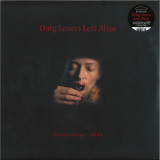
Soundtrack for the critically acclaimed Jim Jarmusch film Only Lovers Left Alive, starring Tom Hiddleston and Tilda Swinton. The score for Only Lovers Left Alive - a collaboration between SQÜRL (Jim Jarmusch, Carter Logan and Shane Stoneback) and Dutch lutenist Jozef Van Wissem - serves as a reflection of the distinct textures of Detroit and Tangier, bridging ancient and modern sounds, entangled and timeless. Avant-Baroque lute weaves through twenty-first century guitar grit, heavy back beats, Moroccan percussion, synth bass, field recordings, and numerous sonic effects to create a cinematic tapestry. Guest vocalist Madeline Follin (Cults) appears on SQÜRL's syrup soaked re-interpretation of the Wanda Jackson hit "Funnel of Love". Zola Jesus' commanding vocal soars through Van Wissem's "In Templum Dei". And Yasmine Hamdan's intimate and evocative "Hal", recorded on the set of the film and mixed by SQÜRL. The film and soundtrack album were released worldwide in 2014, and quickly earned the group the Cannes Soundtrack Award from a consortium of film and music critics. In the years that have followed it has remained a favorite of critics and fans alike, who have continued to hunt down the limited vinyl copies in existence.
Red Vinyl
The unmissable, head-twisting debut LP by Cairo’s 1127 returns on red vinyl pressing for those who missed its shockwaves for the first time back in summer 2019, Huge recommendation if you’re into Autechre, Arca, Croww w, Rabit...
Getting right under the skin with its hugely variegated palette of brutalist, rhythmic power electronics and evocative location recordings, ‘Tqaseem Mqamat El Haram 2016-2019’ resembles something like a soundtrack to a Neil Blomkamp flick set it Cario, Egypt, 2050 where stifling heat and pollution means everyone wears
breathing apparatus and hover cars sputter about its dusty sprawl. It’s surely one of the most shocking and transfixing sides from North Africa this side of the debut LPs by 1127’s peers, Myslma and Zuli, and should be prized by anyone with an ear for futurist rhythms and microtonal synths of a modern, Afro-futurist order.
Comprising collaged chunks from 1127’s archive arranged in a seamless, diffracted flow that recalls Autechre as well as the mutant adjuncts in Arca’s &&&& or Croww’s ‘Prosthetics MechaMix’, the results feel as though scraped from the insides of 1127’s skull, capturing and rendering the sounds of Cairo street raves ricocheting
with spasms of gristly noise, strafing into pockets of cutthroat flashcore and dropping out into smoky,
intimate scenes of Arabic dialogue, all threaded together with a distinctive taste for metallic microtonal synthlines and coruscating noise.
"Matasuna" brings together two important pioneers of funk on its latest release: "The Meters" from "New Orleans"and "The Watts 103rd Street Rhythm Band" from "Los Angeles". The song "Giggin' Down 103rd" by "The Watts 103rd Street Rhythm Band" was first released as a single in 1968 (as Misspress) and is now available again for the first time. The song "Sing A Simple Song" by "The Meters" even premieres as a 45! Both tracks have been remastered to offer the best possible sound.
The A-side opens with "Sing A Simple Song" by "The Meters", a cover version of a song by "Sly & Family Stone" written by "Sly Stone". In direct comparison, "The Meters" cover sounds much more energetic and powerful. The ingredients are simple but effective: heavy drum breaks, funky guitar riffs, deepe bassline and a lively organ. A killer instrumental joint that exudes roughness & funkyness from the first second to the last!
On the flipside "The Watts 103rd Street Rhythm Band" follows up in similar fashion with the song "Giggin' Down 103rd". Instead of an organ like "The Meters", the band offers a super thight horn section backed by killer drums, guitars & bass. A special spicy recipe that thematically fits perfectly for this Funk45!
"The Watts 103rd Street Rhythm Band" was formed by "Charles Wright". Charles, a musician & composer born in 1940 in "Clarksdale, Mississippi", moved to "Los Angeles" in the 1950s. There he played as a singer & guitarist in various doo-wop groups. Beginning in 1962, he formed his own band, "Charles Wright & The Wright Sounds", which was joined in the following years by other musicians who would become known in the future band. The name "The Watts 103rd Street Band" was established in 1967. That same year they signed a record deal with "Warner Bros. Records" and released their first album. More LPs were released in the following years.
The band played mainly cover versions of popular R&B hits in the early years, but began to create their own songs and form their own sound in the late 1960s, which would have a strong influence on other musicians at the time.
Starting in 1969, the first members left the band to work on other projects. Charles also left the band in 1972 to further his solo career and release various albums.
In 1965, the group "The Meters"was founded by "Art Neville"with three other musicians in the musical epicenter of "New Orleans". They quickly made a name for themselves in the local scene. The musician "Allen Toussaint", who was to become one of the most influential record producers of the 1960s, discovered the band and signed them to his label "Sansu Enterprises". They first played as a backing band at live and studio performances of artists of the New Orleans scene, before getting their own record deal with "Josie Records". On this label they released three albums, before releasing more in the following years on "Reprise Records" and "Warner Bros. Records". The band officially disbanded in 1977 and reunited a few years later in 1989.
Since then they have been on stage in different formations as "The Meters", "The Funky Meters" or "The Meter Man".
Their innovative musical style, which was influenced by traditional New Orleans second line music, West African rhythms, Soul and rReggae, set a standard that would influence many musicians. Also, their music had a significant impact on the Hip Hop community, which sampled their songs hundreds of times.
How would Roc Marciano and MF Doom sound if they were born in Athens to immigrant parents?
MC Yinka & DJ Booker provide an answer by teaming up to bring us their first LP “Night Lights”.
MC Yinka finds inspiration in blighted areas, urban struggles and multicultural subcultures. With a unique and characteristic voice, he touches on various social and spiritual matters and concerns.
Night Lights is fully produced by DJ Booker who surprises with his sample selection and the overall approach on the production. He balances between trippy and minimal sounds with dark and abstract samples. The beats vary from broken to “J Dilla – inspired” rhythms to discreet patterns that trigger the imagination and the expectations of the audience.
Not to mention the scratching skills of DJ Booker which spice up the music production and established him as one of the best scratch DJs in Europe according to British magazine “Undercover Hip-Hop”.
The album features one of the most “conscious” MCs, Mr. Lif, well known for his collaboration with the Thievery Corporation, and the hip-hop street performers Twinsanity who call our attention to the raw reality from Athens to Boston.
Night Lights will be released on vinyl by the label Mind The Wax in February 26th, 2021 and includes 10 tracks.
Alan Vega’s name is synonymous with unfettered, tireless creativity. Beginning in the late 1950s, when he was a fine art student at Brooklyn College, through his years playing in Suicide, and all the way up until his death in 2016, Vega was constantly creating. That
process naturally led to a wealth of material that didn’t see the light of day immediately when it was recorded, which came to be known as the Vega Vault. Mutator is the first in a series of archival releases from the Vault that will come out on Sacred Bones Records.
Mutator was recorded alongside Vega’s longtime collaborator Liz Lamere at his NYC studio from 1995-1996, and it serves as a document of a particularly fertile time in his creative life. He had 11 full-length solo albums come out during the ’80s, ’90s and ’00s - plus numerous collaborations, and Suicide records A Way of Life and Why Be Blue. Mutator wasn’t shelved intentionally, but Vega’s back-to-thegrindstone M.O. meant that he had moved on to making his next record before this one was finished. Lamere and Vega’s friend and confidante Jared Artaud (The Vacant Lots) rediscovered the raw, unmixed recordings from the Mutator sessions in the Vault in 2019. Soon after, they mixed and produced them into the visionary album that was lurking within those tapes.
“Our primary purpose for going into the studio was to experiment with sound, not to ‘make records,’” Lamere recalls. “I was playing the machines with Alan manipulating sounds. I played riffs while Alan morphed the sounds being channeled through the machines.”
At the time of the Mutator sessions, Vega was massively inspired by what was happening in the streets of New York - not only the hip hop scenes that were exploding throughout the outer boroughs, but also the literal sounds of the streets, the traffic noise and industrial ambience of city living. That influence trickled into the sounds he and Lamere captured in those sessions. That sensibility, paired with Vega’s unmistakable voice and force of personality, is what made it the great album it is now. The final piece was the production job, completed by Lamere and Artaud 25 years after the songs were first captured.
Alan Vega’s name is synonymous with unfettered, tireless creativity. Beginning in the late 1950s, when he was a fine art student at Brooklyn College, through his years playing in Suicide, and all the way up until his death in 2016, Vega was constantly creating. That
process naturally led to a wealth of material that didn’t see the light of day immediately when it was recorded, which came to be known as the Vega Vault. Mutator is the first in a series of archival releases from the Vault that will come out on Sacred Bones Records.
Mutator was recorded alongside Vega’s longtime collaborator Liz Lamere at his NYC studio from 1995-1996, and it serves as a document of a particularly fertile time in his creative life. He had 11 full-length solo albums come out during the ’80s, ’90s and ’00s - plus numerous collaborations, and Suicide records A Way of Life and Why Be Blue. Mutator wasn’t shelved intentionally, but Vega’s back-to-thegrindstone M.O. meant that he had moved on to making his next record before this one was finished. Lamere and Vega’s friend and confidante Jared Artaud (The Vacant Lots) rediscovered the raw, unmixed recordings from the Mutator sessions in the Vault in 2019. Soon after, they mixed and produced them into the visionary album that was lurking within those tapes.
“Our primary purpose for going into the studio was to experiment with sound, not to ‘make records,’” Lamere recalls. “I was playing the machines with Alan manipulating sounds. I played riffs while Alan morphed the sounds being channeled through the machines.”
At the time of the Mutator sessions, Vega was massively inspired by what was happening in the streets of New York - not only the hip hop scenes that were exploding throughout the outer boroughs, but also the literal sounds of the streets, the traffic noise and industrial ambience of city living. That influence trickled into the sounds he and Lamere captured in those sessions. That sensibility, paired with Vega’s unmistakable voice and force of personality, is what made it the great album it is now. The final piece was the production job, completed by Lamere and Artaud 25 years after the songs were first captured.
On the Corner have taken a deep dive into the murky waters whereancient percussion are jolted through history with a high voltageshock of experimental electronics. Across the territory of 'When theWaters Refused Our History', Sunken Cages channels his ownjourney and that of the world of his ancestors and adroitly breachesthe porous frontiers being pushed by the cosmic adventures-led OntheCorner. Sunken Cages is the moniker for Ravish Momin, an Indian-borndrummer, electronic music producer and educator. For the pastdecade, Momin has been experimenting with enhancing his acousticdrum sounds with electronic ones, and has crafted a unique electro-acoustic approach. He triggers sounds and textures, layers live-loops and manipulates them 'on the fly', to blur the lines betweencomposition and improvisation. While rooted in Indian folk and BlackMusic traditions, Sunken Cages is also influenced by the streetsounds of South African G'com, Angolan Kuduro and Egyptian Mahraganat. He currently leads the electronic music focussed duo 'TurningJewels Into Water' with Haitian percussion virtuoso Val Jeanty.Ravish's unique approach quickly led him to work as a sideman witha diverse cast of musicians ranging from pop-star Shakira tolegendary avant-saxophonist Kalaparusha Maurice McIntyre (of theAACM).
LEGENDARY SESSION ! FIRST TIME EVER ON VINYL AND CUT DIRECTLY FROM THE ORIGINAL MASTER TAPES WITH NO DIGITAL PROCESS WHATSOEVER!!!
TIP ON SLEEVE PRINTED JUST LIKE THE OLD NIMBUS LP’s FROM THE 70’s and 80’s… BRAND NEW ARTWORK FROM ORIGINAL SESSION PHOTOS AND LINER NOTES BY Mark Weber
At long last…On Vinyl…From original tapes. 3/5ths of the Quintet that recorded "‘the Giant is Awakened’ LP in 1969…this album sat unreleased for 20+ years before it saw a small run on cd (with poor mastering the early 2000’s), now, 40 years after it was recorded, finally released in the original format it was intended for….This LP sounds fresh and amazing…if you’ve only heard the cd, you’ve not truly heard this lost gem in its full glory. edition of 500
Born in Mississippi in 1937 and beginning to play the saxophone at 14, Billie Harris relocated to Los Angeles in 1965 after a 4 year stint in the Air Force, becoming one of the great, unsung forces of underground jazz in the city for many years (he later relocated to the Mojave Desert, where, at last record, he still plays in a church band). A Venice Beach street musician and longtime member of the Pan Afrikan Peoples Arkestra - you can hear him playing on Live at I.U.C.C. and Flight 17, as well as Jesse Sharps Quintet & P.A.P.A.’s Sharps and Flats (reissued in 2018) - he was also director of the AZZ IZZ jazz club in Venice Beach during the 70s.
On April 29 and May 3, 1980, Harris entered the studio, backed by Horace Tapscott on piano, David Bryant on bass, Daa’oud Woods on percussion, and Everett Brown Jr on drums, recording, over those two days what was to be his only outing as a leader. Once heard, the tragic lack of further material can’t be ignored. It is a truly stunning piece of work, even more surprising for the fact that it sat unreleased for over 20 years, only to be released as a small, poorly mastered edition on CD during the early 2000’s. Now, finally appearing very first time on the format and label for which it was intended, 40 years after it was recorded, we can hear this lost gem in all its glory.
Harris was 43 years old at the time of the Nimbus West sessions that resulted in I Want Some Water, and the power and experience of his playing, honed over three decades, shows in full force. The band is equally imbued with power, sensitivity, and experience. Tapscott, Bryant, and Brown’s working partnership goes back to 1969, when they recorded Tapscott’s debut as a leader, The Giant Is Awakened. In quintet’s hands, channeling the heavy modal relationships pioneered by Coltrane, heavy spiritual groove lock and unfurl, threaded by the release via incredibly forward-thinking improvisation.
Like so much of the work that came out of the Pan Afrikan Peoples Arkestra scene, I Want Some Water has a giant sound, each track long in length, building slowly over time toward towering heights that leave the listener immersed in one of the greatest treasures of spiritual jazz that almost nobody ever heard. Rhythmic, rollicking, and tonally inspired, the joyous interplay of the band goes deep, locked in, and challenging the predictable path, while making nods to numerous, discreet traditions of music.
As far as reissues go, Nimbus’ first ever vinyl pressing of Harris’ I Want Some Water is about as good as it gets. Not only does it deliver some of the best music we’ve heard all year, but it takes huge steps toward allowing a crucial artist to be celebrated in a way that he’s always deserved.
Cut directly from the original master tapes, featuring brand new artwork from the original sessions and liner notes from Mark Weber, and issued in a limited edition of 500 copies, it’s an absolute must that can’t be missed.
- A1: Quiet Force - Listen To The Music
- A2: Barry Coates - Hovercraft
- A3: Andrew Gordon - Walking The Lonely Streets
- A4: Steve Bach - Rain Dance
- B1: Angelo Vanotti - Sketches Of Anderland
- B2: Slap & Powell - Sex Drive
- B3: Jordan De La Sierra - Nimbu-Pani The Lemon-Water Song
- B4: Jessie Allen Cooper - In My Heart
As escapism from corporate banality turned the corner in the ’90s, a new generation of vibrant, software generated soundscapes emerged. Communal access to the internet propagated the new hive mind of ideas online, giving way to smoother, stress-free textures. The PC revolution opened the gateway to ray-traced playgrounds of color and light, allowing for visions of utopic proportions to manifest themselves on screensavers far and wide. Boot up your machine, load the software on this floppy diskette, and drop out of a reality bounded by the physical laws of the universe.
The eighth entry in Numero’s Cabinet of Curiosities series.
- A Just Message (Intro) W/ Just Blaze
- Welcome To Planet X (We're Coming 4 You) W/Jonny Rice Eminem & The Observer - Produced By Lavi$H
- Dem People W/ Xzibit - Produced By Beat Busta Beats
- Robocop Went Pop - Produced By Young Jordan
- Rebel Party W/ Commentary By The Observer - Produced By Lavi$H
- I Want 2 Kill You W/ Astray & The Observer - Produced By Lavi$H
- Crazypsycholoco - Produced By Aktive
- Intergalactic Hustling W/ Boroc - Produced By Claudio Audio
- Revolutionary Funk W/ P-Funk Pavarotti - Produced By Ynot Of Soundsmith Beats
- Shoot Back (Dear Officer) W/ Tech N9Ne - Produced By Deborahs Son
- Obey/Kxngs Speech - Produced By Klasiq
- The Oath - Produced By Klasiq
- Kxng Tut - Produced By Lew Jay
- Puppet Master W/ King! Rza & The Observer - Produced By Lavi$H
Good vs. Evil is the third studio album by American rapper KXNG CROOKED (formerly known as Crooked I). The album was released on November 11, 2016 and features cameo appearances from notable rappers such as Eminem, RZA, Xzibit, Tech N9ne among other guests The album was well received by critics, who praised its direction, dark beats and narrative skills.
After the most controversial Presidential election in this country’s history, one that has not only created further divisiveness amongst the people residing in it, but one that now includes handful of cities across our nation protesting in the streets it has become evident we are living in a complicated and dangerous time. The societal divide widens so deeply with every passing day that it seems as if at any moment the pendulum could shift. KXNG CROOKED's Good Vs Evil could not appear at a more needed time.
- A1: Fink - Covering Your Tracks
- A2: Alfa Mist -Mulago
- A3: Charlotte Day Wilson - Mountains
- A4: Moreton Feat Jordan Rakei - Count A Heart (Exclusive Track)
- B1: Puma Blue -Untitled 2
- B2: Connan Mockasin - Momo's
- B3: C Duncan - He Came From The Sun
- B4: Oso Leone -Virtual U
- B5: Joe Armon-Jones & Maxwell Owin - Idiom Ft Oscar Jerome
- C1: Snowpoet - Everternity
- C2: Maro - Forever & Always
- C3: Homay Schmitz - Speak Up
- C4: Bill Laurence - Singularity
- D1: Jordan Rakei - Lover, You Should've Come Over (Exclusive Jeff Buckley Coverversion)
- D2: Cubicolour - Counterpart
- D3: Jordan Rakei - Imagination(Exclusive New Track)
- D4: Alejandro González Iñárritu - Imagination (Exclusive Spoken Word Piece)
“I wanted to try and showcase as many people as I knew on this mix. My idea of Late Night Tales was to distil a series of relaxing moments; the whole conceptual sonic of relax- ation. So, I was trying to think of all the collaborators and friends that I knew, who’d recorded stuff with this horizontal vibe. Plus, I was also trying to help my friends' stuff get into the world. I know the story of Khruangbin blowing up after appearing on the series (in fact, I think that's how I discovered them). So, the main idea was to create a certain atmosphere, but also to help some of my favourite collaborators and bud- dies to give their songs a little push out into the world. Hope you like it” Jordan Rakei
Due for release on 9th April, Late Night Tales celebrate their 20th anniversary with the release of multi-instru- mentalist, vocalist and producer Jordan Rakei’s majestic compilation. The 28-year-old modern soul icon effortlessly stamps his own jazz and hip-hop driven sound all over this gorgeous array of handpicked tracks. A beautifully layered blend that is mirrored in the music he’s made, itcomes as no surprise that such a supremely gifted songwriter should deliver a mix that is all about the song.
Rakei, born in New Zealand, but raised in Australia, moved to the UK in 2015; he released his debut album, Cloak, with Oz label Soul Has No Tempo, but his two subsequentLPs, Wallflower and Origin, came out on Ninja Tune, the former#2 in Album Of The Year for Gilles Peterson’s Worldwide poll, while Origin was nominated for Best Album at the AIM Awards. Jordan had this to say on his upcoming mix:
As Jordan says,there’s so much more to the song selection on Late Night Tales’latest outing than a random collection of artists. Many have some sort of personal connection, so just as Bonobo provided a platform for the breakout of Khruangbin on a previous LNT, this may have the same ef- fect for Rakei’s friends. After a soothing opener from Fink, good friend and big influence Alfa Mist (part of the Are We Live collective) delivers ‘Mulago.’ “I want to champion their sound and show the world how good he is, and I thought it’d be fitting to start the mix with family,” says Jordan.
Next up is Charlotte Day Wilson with ‘Mountains,’ followed by ‘Count A Heart’ from Moreton, an exclusive collab- oration with Jordan, who grew up on the same street in Brisbane, Australia. “She was the first artist I ever collabo- rated with, and one of the first artists to be involved in mycareer,” he explains. Elsewhere we hear Scottish producer and multi-instrumentalist C Duncan’s haunting ‘He Came from the Sun,’ Barcelona collective Oso Leone deliver a dreamy ‘Virtual U’ and Bill Lauren’s ‘Singularity,’ which evokes a striking sense of time and place.
Snowpoet’s ethereal ‘Evitenity’ is a “long mediative nar- rative over a beautiful soundscape,” which at times seems chaotic, nicely juxtaposed with undeniable beauty, and Maro’s kooky songwriting shines on ‘Always And Forever.’ Long-time buddy Armon-Jones contributes ‘Idiom,’ and Jordan’s exclusive cover version is a two-for-one, Radio- head’s ‘Codex’ merging with ‘Lover, You Should’ve Come Home’ by Jeff Buckley and another exclusive,original com- position by Jordan, ‘Imagination.’ The latter works as a piece with the spoken (Spanish) word voiced by movie director Alejandro González Iñárritu (Babel, Birdman, and The Reve- nant,) who is a big fan of Jordan’s. “He messaged me when I went to L.A and asked to come to my show. I was in such shock and we hung out after. I thought it would be nice to get him to do this in his native tongue, because I don’t think that’s been done yet on the series.” It certainly is a familyaffair. Not theblood is thicker than water kind, but certainly musical kindred spirits.
Verisimilitude’ continues drummer/composer Tyshawn Sorey’s effort to shatter the jazz piano trio tradition by extending the form to encompass the influence of the likes of Feldman, Debussy and Xenakis.
Now available on vinyl for the first time.
One of the most in-demand drummers in improvised music - he has collaborated extensively with the likes of John Zorn, Vijay Iyer, Steve Lehman, Claire Chase, George Lewis, and Roscoe Mitchell, among myriad others - Sorey is also in the vanguard of artists working in that liminal space between spontaneous composition and notated music.
The New Yorker calls Sorey “among the most formidable denizens of that inbetween zone,” while The Wall Street Journal has called him “a composer of radical and seemingly boundless ideas.”
Featuring Cory Smythe on piano and Chris Tordini on bass, the trio’s first release, ‘Alloy’ (Pi 2014), was described as “shadowy and elegant” by The New York Times. His 2015 release, ‘The Inner Spectrum of Variables’, which also features the same group joined by a string trio, was called “devastatingly gorgeous” by The Chicago Reader and “a genuine masterwork” by Stereogum.
The new work utilizes a wide array of percussion, along with judicious use of electronics to explore a wider textural soundscape. The result is a far-reaching and intensely beautiful work that daringly blurs the boundaries between composition and improvisation.
Personnel: Tyshawn Sorey (drums, percussion), Corey Smythe (piano, toy piano, electronics), Chris Tordini (bass)
With 'BREAKOUT', Echoes of Zoo push their adrenaline fueled jazz sounds to thrilling new levels. Rarely did one single word capture an entire musical atmosphere this accurately: the gates of the cages fell open and won't ever be shut again. 'BREAKOUT' celebrates breaking loose and is constantly
seeking for unexpected and exciting encounters - both culturally and musically. Infused with an eclectic range of western, oriental and African influences, Echoes of Zoo let their psychedelic and energetic jazz roam the streets in all freedom - much like an animal that has just stepped out of his cage and looks you straight in the eye. Meeting is direct, barriers are gone, the adrenaline and energy are rushing high. The band takes a deep dive into the musical melting pots which the world's biggest cities are today:
Balkan ornaments meet Brazilian rhythms
Gipsy scales meet fuzz guitars
Beninese grooves meet Turkish makam
Bass guitars meet Sufi rhythms
Rage riffs meet Kurdish trance
Indian raga meets western guitars
Romanian drums meet swing riffs
Tallava meets drum 'n bass
...
Echoes of Zoo are profoundly inspired by the endless variety of animals and musical genres. Join them on their trip through the city in all diversity, victory and freedom. BREAKOUT.
Echoes of Zoo is a band with a unique sound, under the high tension of Middle Eastern rock music with the striking complexity of West African percussion and a few Dub flavors, all in the service of psychedelic jazz played with a punk attitude. For this project, Nathan Daems (sax) is accompanied by Bart Vervaeck (electric guitar), Lieven Van Pee (electric bass) & Falk Schrauwen (drums), musicians you probably know from other projects they are part of such as Black Flower, De Beren Gieren, Sylvie Kreusch or Compro Oro.
After releasing a first self-produced EP - 'First Provocations' - in January 2019, the group was well received by both the audience and professionals in the sector. Supported and followed by some pioneering organisations and festivals, Echoes of Zoo has already been invited to Brussels Jazz Festival, BRDCST Festival (AB), Brosella Festival (carte blanche guesting Pantelis Stoikos), Leuven Jazz Festival, Amok Festival (KAAP), Recyclart, ...
Seven years and a handful of lifetimes ago, New Bums came
out of nowhere with their debut album, ‘Voices In a Rented
Room’ - a record the New York Times described as “feeling like
it’s falling apart.” New Bums took this as a compliment and,
thus emboldened, they toured relentlessly in support of the
release: criss-crossing the USA in the spring of 2014, with a
European run that summer. Then, silence descended, as the
Bums withdrew to the place from which they’d mysteriously
emerged.
Now, the Bums are back. 2021 finds them with a new album in
hand. Following a West Coast US tour in late 2019 it’s clear that
the duo of Donovan Quinn (Skygreen Leopards) and Ben
Chasny (Six Organs of Admittance, Rangda, etc) are fully
reanimated, as evidenced by the songs and sounds of ‘Last
Time I Saw Grace’.
Retaining the drunk-dog-locomotion of their debut, New Bums
sprinkle a bit of fresh fancy into their signature twin guitarsand-vocals sound, with cleaner recording techniques, further
developments in harmonies and a new appreciation for a song
with more than two parts, making ‘Last Time I Saw Grace’
nothing less than the perfect progression from the purposefully
murky mixes of their debut.
Continuing to embrace an acoustic rock ’n’ roll sound, inspired
by artists such as Jacobites, Robyn Hitchcock, Johnny
Thunders, Replacements and such, New Bums push the words
and the stories to the front of the line, crafting tales with satiric
glee on ‘Last Time I Saw Grace’. However, this world of empty
perfume bottles, bodies tied to masts and moving onward to
devastation (after the bottle on the table pulls out a gun) feels
much more Gombrowiczian dreamscape than drunken night on
the town. Yes, everything is wasted but this is an existential
wasteland rather than a substance-laden one. This combination
of arch Californian post-aristocratic melodrama with torn and
frayed acoustic guitars opens up a new genre entirely, one
those at Drag City are tempted to call Rent Control Romantic.
- A1: Impulsion (03 02)
- A2: Tension Build (00 30)
- A3: Fast Action (02 28)
- A4: The Chaser (01 57)
- A5: Heat On (01 03)
- A6: Runaway (02 04)
- A7: Power Source (00 30)
- A8: Percussion Power (02 51)
- A9: Shivers (03 08)
- A10: Gathering Storm (02 21)
- A11: Drums On Parade (02 16)
- B1: Samba Street (A) (03 00)
- B2: Samba Street (B) (03 00)
- B3: Child’s Theme (A) (01 14)
- B4: Child’s Theme (B) (00 40)
- B5: Child’s Theme (C) (01 04)
- B6: Child’s Theme (D) (01 26)
- B7: Child’s Theme (E) (01 25)
- B8: Spanner In The Works (02 17)
- B9: Tropical Peace (01 45)
- B10: Clippity Clop (01 15)
- B11: Red Indian Drums (00 35)
- B12: Fairy Wand (A) (00 08)
- B13: Fairy Wand (B) (00 09)
- B18: Timpani (B) (00 05)
- B19: Timpani (C) (00 05)
- B20: Vibraphone (A) (00 15)
- B21: Vibraphone (B) (00 15)
- B22: Bell Chimes (00 27)
- B23: Clock Chimes (00 37)
- B14: Fairy Wand (C) (00 12)
- B15: Snare Drum Roll (A) (00 12)
- B16: Snare Drum Roll (B) (00 07)
- B17: Timpani (A) (00 25)
They Say: “Exploring the wide range of moods and sounds produced by percussion”.
We say: MPCs at the ready because this does exactly what it says on the tin, to devastating effect. Oh, and the sleeve is stunning.
Originally released in 1979, Percussion Spectrum was produced by the legendary percussionists Barry Morgan and Ray Cooper. With dope beats taking in diverse styles, from funk and soul and jazz through to Latin, Brazilian, samba and Afro-Cuban, this is an amazing sample source filled with killer drum-breaks and percussion flares. Unsurprisingly it’s one of the most sought-after records from the Themes catalogue.
This library LP is a library in itself, with its mix of short themes of single beats, short breaks and some longer, more fully-formed DJ-friendly tracks. Trust us when we say that this is a box full of percussion firework ready to be thrown onto the dancefloor at the just right moment. We don’t have anywhere near enough space to describe all 34 tracks (there isn’t even enough room on the labels to list them all!) so we’ll pick out some favourites.
Favourites like opener “Impulsion”, a percussive masterclass with drum upon drum upon drum making it feel like a neat prototype to the percussive underscores of Peter Lüdemann and Pit Troja’s eternal The Now Generation LP. And the dramatic “Fast Action” is exactly that, racing along on a rapid roll of congas, cymbal crashes and throbbing kicks. “The Chaser” is classic library cop-funk with dilapidated drum figures, and the outrageously funky “Heat On” is the perfect accompaniment to your wild action sequences.
A real highlight is “Runaway”, and not just because it sounds like nothing else on the record. Here are drums and percussion in that tight funk style that just cries out to be sampled. “Percussion Power” is an extended, near-three minute suite of funky drum solo after funky drum solo that just aches to be looped: open drums to die for people! “Shivers” is a tense, apprehensive underscore with shock stabs that builds to a climax whilst “Drums On Parade” is a showcase of head-nod drums and cymbals in march time. Did someone say “funky”?
Side B starts with a stroll down “Samba Street”. With the noise of the crowd in the background, this is riotous, authentically drawn samba that sounds like it’s been beamed straight in from Rio in full flow. Drop this at midnight and watch the cobwebs fly off any dancefloor. Prefer it without the fake crowd? “Samba Street (b)” has you covered.
The simple, innocent “Child’s Themes” (all five of them) provide a nice, sweet respite from all the funk. Nursery sounds tinged with only a touch of melancholy. The gentle marimba solo of “Tropical Peace” only adds to the sense of serenity we get from the relatively calm second side. The album closes out with a veritable toolkit of tom toms, snare drum rolls, timpani, vibraphones and chiming bells.
Percussion Spectrum is a joyous collection of sounds, as bright, beaming and downright funky as the vibrant cover. The Themes series is known for each record having its own particularly striking sleeve, which was unusual for library records at the time, and Percussion Spectrums’s multi-coloured drumsticks make for one of the most eye-catching.
As with all of our other Themes re-issues, the audio for Percussion Spectrum comes from the original analogue tapes and has been remastered for vinyl by Be With regular Simon Francis. As usual Richard Robinson has taken the same care with restoring the original sleeve from archive scans. This is another one ticked off the list of library records that should be out there for anyone who wants a copy.
- A1: Paradise (Stay Forever)
- A2: Go!Go!Style
- A3: Lady Blue
- A4: Midori Eyes
- A5: Breeze With U
- A6: The Lemegton Bop
- A7: Knife & Crystal
- A8: Ego 24-7
- A9: Last Dance Xx
- A10: Sunset Song
- A11: To The Heart
- A12 17: 00 Under Red Skies
- B1: House Of Bliss
- B2: Headlights On The Shore
- B3 8: Th Street Rose
- B4: Leaving
- B5: End Of The World
- B6: Welcome
- B7: The Plateau
- B8: The Sarcophagus
- B9: Temple Of Tears
- B10: Idle Lands
- B11: Transit (Empyrean)
- B12: Transit (Perdition)
In Zusammenarbeit mit dem britischen Entwickler-Studio Kaizen Game Works veröffentlicht das Kölner Soundtrack-Label Black Screen Records im Frühjahr 2021 Barry "Epoch" Toppings funkigen "City-Pop meets Vaporwave"-Soundtrack zu dem von der internationalen Gaming-Presse gefeierten Open World Adventure Game Paradise Killer auf Vinyl. Barrys Toppings Soundtrack erscheint auf limitiertem 180g Curacao & Pink Doppel-Vinyl und kommt in einem von 80er Animes & City Pop-Alben inspirierten Artwork der deutschen Designerin Mizucat. Zudem enthält das Vinyl ein gefaltetes A2 Poster und einen Download Code. Die Sounds des Paradieses. Die Musik eines kosmischen Traums. Tracks einer anderen Realität. Das Tempo eines Verbrechens, dass alle Verbrechen beendet. Der Beat von lange verlorenen außerirdischen Göttern. Die Playlist des "Investigation Freaks". Lass dich von der Musik ins Paradies führen. Fühle die glühend heiße Sonne auf deiner Haut. Rieche unerträglich heißen Beton. Genieße den süßen Geschmack von Verbrechen, begangen, auf einer tropischen Insel in einer alternativen Realität. Erinnerst du dich daran, wie wir am Strand getanzt haben? Neben den paradiesischen Straßen? Du hast mir dieses Mix-Tape auf dem Dach deines Apartments gemacht. Wir haben den Mond angestarrt. Du sagtest, du würdest den Mond töten. Ich glaubte dir nicht. Wie falsch ich doch lag.
Prague based FM Label connects music, fashion and design. Established in 2020 by Uncalled 4, the label joins the flourishing scene of Prague with a vision of music in which the new revisits the old. The second release, Enough, comes from our very own Detente 2020 - the killer combo of Uncalled 4 and his studio partner and close friend, Universe Of Everything. Featuring NYC hip hop legend Afu-Ra and Charlie One on the vocals, the eponymous track Enough combines iconic 90's street rap with contemporary electronic sounds, presenting a scenic layer that provides a movie-like feeling. The EP also features the Czech Filharmony drummer Jakub Tengler, who jammed buckets, pots, pipes and any other unusual object at his reach to create the heavily percussive Bucket Tube. Norway's Fett Burger takes Bucket Tube on a ride through NYC with his 'Work Out' remix, providing the ever-astonishing impression of walking around the streets of the Big Apple. Olsvang?r remix of Enough is designed to smash the dancefloor. Heavily influenced by both the past and the present, his rework shifts between intelligence and sheer rawness. As a final touch, the release is accompanied by an acapella track that will also be found on future FM label releases. Enough EP comes in a special cardboard sleeve which can be reshaped into a vinyl display holder.
A guitarry hybrid of AZITA’s edgy rock / soul / R&B sound. Grooving good times, acerbic exchanges overheard in the street, shifts in community, the losses you will carry always, dark recesses late at night that echo with a wonder you've never felt before. Life.
All instruments played by AZITA; the wackest, most AZITA-harmonious sounding pop album yet.
For those who find the passage of time a one-way process of attrition, here’s good news for you. In the eight years since AZITA’s last long-player her fevered brain has barely rested and the proof is a new album of unbounded physical and mental activity, music and entertainment, entitled ‘Glen Echo’.
The worlds of the previous AZITAs have left their unmistakable essence. Her singular conception of pop music - the idiosyncratic songs, singing and playing that have graced seven acclaimed releases - is in verdant recurrence on ‘Glen Echo’, blossoming anew, cutting sharply in the spirit and image of her everevolving, always questioning style.
Writing and arranging on keyboards since the time of her solo debut, AZITA focused on guitars for this set of songs. Not simply for swagger or a fresh approach to soloing but as part of a way to elide expected singer-songwriter tropes, to democratically populate the sound-stage in equal partnership instead.
This is a key aspect of the ‘Glen Echo’ sound, one that determined another new choice - AZITA playing everything on the album herself.
Previous long-players ‘Enantiodromia’, ‘Life On the Fly’ and ‘How Will You?’ were achieved via close work with players and engineers who took the compositions from the demo to a finished form. Invariably though, something would get lost in the transmigration somewhere. With ‘Glen Echo’, AZITA comes through fully, jaggedly, most vividly, owning her intention entirely in the dialogue of singing and playing her rock and rhythm and blues.
The lyric sheet is riddled with language that circles, through the many moments of life, aspects of the passage of time, the pre-empted dreams and strangeness of the present and the way we invent an idealized past in response to the changes, guiding the narrative... where? It’s all banded together by AZITA’s wit, equal parts droll and dire, her dispassionate view of fates and outcomes for all of us here together on the planet, textured with unique, cinematic details and sudden dives into a deeply felt, utterly OG sense of soul.
In ‘Glen Echo’ are a multitude of sounds - all the moments in a life: the good time grooves, acerbic exchanges in the street, shifts in community and generosity, moments of loss you know you will carry forever, reflection upon unknown futures and pasts, the dark recesses late at night that echo with a wonder you’ve never felt before. You name it, AZITA’s got some sweet and sour theme music for it.
- 01: The Cosmic Range Palms To Heaven
- 02: Vibration Black Finger Empty Streets
- 03: Abeeku Slow Sweet Burn
- 04: Wildflower Flute Song
- 05: The Pyramids Memory Ritual
- 06: Steve Reid Ensemble For Coltrane
- 07: Trane's Groove Carla Marciano
- 08: Angel Bat Dawid What Do I Tell My Children Who Are Black (Dr Margaret Burroughs)
- 09: Menagerie Nova
- 10: Teemu Akerblom Avo's Tune
- 11: Vessels The Jamie Saft Quartet
- 12: Jonas Kullhammar Paris
Modern sounds for the 21st century featuring modal, progressive and esoteric contemporary jazz from the UK, Spain, Netherlands, Finland, USA, Belgium, Canada, South Africa, Sweden, Germany & Italy.
The first 12 volumes of our hugely popular Spiritual Jazz series have unearthed a wealth of historic recordings in the genre, collating a variety of works from the '50s to the '80s by artists from all around the world.
And so, with Volume 13, we turn our attention to what's happening NOW.
Over the course of 24 tracks and spanning 2 x 2LPs, we present an overview of the contemporary exponents of Spiritual Jazz; musicians who are intent on bringing something personal to the table, as much as they recognize the importance of those who have paved the way for them. We feature music recorded within the past 20 years and from 15 different countries, including modern classics from veterans Steve Reid and Idris Ackamoor, providing a vital link between the past masters and the enlightened new generation.
It's pioneers such as John Coltrane, Sun Ra, Pharoah Sanders et al, with their innovations in reaching another plane of consciousness that was and remains uppermost in the minds of exponents of Spiritual Jazz. Fittingly, several of the artists featured on this compilation, such as Cat Toren and David Boykin, are practitioners of the art of music therapy and sound healing, and have absolute conviction in the role of song as solace. The pioneers may no longer be with us, but their saintly selves loom large, shining a light in the darkness, inspiring many a brave new disciple today, as this album will testify: the new wave of jazz is gathering pace and still sounds fresh, vibrant and as relevant as ever.
Distressed of sound and disturbed of subject matter, “Down-Faced Doll” sees the classic indie outfit connect with their dark-sides to deliver a cacophonous alt/folk stomp unlike anything they’ve released before. Based on a chilling true story told through the eyes of a discarded toy, its lyrics like clues, begin to lay evidence to a scene enough to turn anyone’s blood blue.
As vocalist Ian H. says:
“By far the most disturbing song I’ve ever written. Some songs seem to have a strange compelling energy which no one can rightly claim authorship to. They ‘write themselves’ but of course a great deal of working and shaping occurs too… A true story - well the first two verses are. The last two verses are my attempt to imagine “how did it ever get to this”…”
Customised with discomposing Eastern-inspired guitar riffs and clamouring percussive rhythms, “Down-Faced Doll” instils an unshakable feeling of paranoia, pursuit and unsease to match its haunting storyline. “Ewan and Stephen immediately tuned into its unsettling vibrations to create sounds and dark corners as you are unwillingly dragged through the scenario.” Ian adds.
Created & produced by Bradford (Ian Hodgson, Ewan Butler & Stephen Street), “Down-Faced Doll” was mixed by Stephen Street (Blur/New Order/ Kaiser Chiefs) and mastered by John Davies. It is taken from what will be Bradford’s first new studio album in over three decades: ‘Bright Hours’ - set for release early-on in 2021.
Bradford are a revered indie band formed in Blackburn in 1988. Championed by Morrissey, the band earned a cult status with their acclaimed debut album 'Shouting Quietly' in 1990, a record as-produced at the time by Stephen Street. Touring with the likes of Joe Strummer, The Sugarcubes, Morrissey and more, the band burned brightly and brilliantly. Fading away against the neon glow of the Madchester era, the band split in 1991.
Fast forward to 2018 and a re-mastered 30 song collection entitled ‘Thirty Years Of Shouting Quietly’ was released on Turntable Friend Records. The album was re-appraised as a 'lost English classic'. This rekindling of belief slowly re-ignited the magic and chemistry that always existed between the band now Ian H and Ewan Butler and Stephen Street. So much so, that Stephen decided to join forces with them and become a fully fledged member of the band.
With a new look line-up on illuminating form, as a trio Bradford have lovingly crafted a jewel of a new album: ‘Bright Hours’ to be released early in 2021.
Directly following “Like Water”, their latest single “Down-Faced Doll” is a definitive signal that ‘Bright Hours’ will be every bit worth the long wait...
Ethno-alternative lo-fi absurdism from the mind of London based multi-instrumentalist & Primordial Soup member, Samuel Huxley. Expect everything from Hindu ceremonial music to dark lounge, post-punk & avant-garde, to Kabuki theatre score & world electronica, any number of which can be found within a single track.
The Romance of Baba Loco is the union of wisdom & madness, eastern mysticism & western folly, absurdism to catch you with yer pantaloons down… Bang bang smash to perennial illumination. Cling clang for funk monkeys. The bejewelled vistas beyond, nihilism be gone… The donkey was not ill-tempered after many blows, on the ass, from the stick. He smiled like a gentleman, and kept on clip cloppin’ towards the promised land…
The Romance of Baba Loco is the latest iteration of a recording project by Samuel Huxley that originally made ambient soundscapes for psychotropics (Paradise Dose). In 2017 Samuel was curating infamous venue and scene of a multitude of glories & horrors, The Five Bells in New Cross, SE London. One of his first acts to play was Primordial Soup, at that time a 3 piece absurdist art rock band. They quickly became friends & began performing semi-improv shows as a 5 piece, and later went on to form Primordial Soup Collective who’s main focus was esoteric experimental theatre & film, and rare multidisciplinary exhibitions.
This changing focus of Soup away from sound provoked Samuel to channel his musical compulsions in to his solo project which had by then ventured far away from ambient soundscapes to shrieking Indian and Moroccan oboes over African & Indian tribal rhythms, with the desire to create the raw lo-fi atmospheres of street music. Gradually guitar styles of South East Asia & Latin America were introduced, leading to backing track solo performances & outrageous live improv freakouts with Craig Deporto (ex-Flamingods) & Luke Bell (Ex-Wild Birds of Britain).
Finally two days before the glorious pandemic lock down, Samuel signed to Faith & Industry, which birthed new moniker “The Romance of Baba Loco” and 3 months worth of ceaseless creation. From the Hindu Ceremonial music of the Shehnai & Nadaswaram to post-punk, absurdism & experimental art, The Romance of Baba Loco finally united two seemingly dissonant sides of his personality in a manner he had not previously achieved. The old material was cast off, and these peculiar fruits of imprisonment, can be found on his first release, “Cling Clang For Funk Monkeys”.
- A1: Seventh Street & Collie Smith Drive (Dub)
- A2: First Street & West Road (Dub)
- A3: Second Street & Collie Smith Drive (Dub)
- A4: Fourth Street & West Road (Dub)
- A5: Seventh Street & West Road (Dub)
- A6: Sixth Street & Collie Smith Drive (Dub)
- B1: Jungle Man (Dub)
- B2: Trench Town Man (Dub)
- B3: Rema Man (Dub)
- B4: Jungle Woman (Dub)
- B5: Concrete Jungle (Dub)
- B6: Spanish Town Road (Dub)
Red LP[22,06 €]
12” album of previously released Dub album by Nkrumah “Jah” Thomas from Kingston, Jamaica. Re-issued on WHITE vinyl.
Nkrumah “Jah” Thomas is an esteemed reggae deejay and record producer who first came to prominence in the 1970s, later setting up his own labels ‘Midnight Rock’ and ‘Nura’.
To anyone who has heard the music of Kikagaku Moyo, it should come as no surprise that the band’s origins lie in hours upon hours of late-night jamming, illuminated by nothing more than the geometric patterns playing behind the band’s eyelids, resulting in a natural, free-floating sound, as of-the-earth as it is intergalactic. It may be surprising that the band sharpened their improvisational skills by busking on the streets of their native Tokyo. It may be surprising that the band’s overall sound may owe as much or more to the Incredible String Band as it does to Acid Mother’s Temple.
But what’s perhaps most surprising about Forest of Lost Children, the band’s face-melting, recorded-ritual sophomore album, is how utterly centered and mature the band sounds, especially given their relatively short lifespan as a band. Boundless though they may be, Kikagaku Moyo here sound anything but lost, their child-like wonder manifested in a confident, courageous exploration of sound. Labels – psychedelic, folk, prog-rock, psychedelic-folk-mixed-with-prog-rock – do little to accurately reflect the spectrum of influences on display, let alone the more impactful realization of completeness in Kikagaku Moyo’s songs.
Easily one of the most shimmering crown-jewels in the rapidly expanding BBiB catalog, look for Kikagaku Moyo and Forest of Lost Children to be found taking shape in the expanded minds of listeners everywhere. - Ryan Muldoon
Linus Hillborg’s solo debut Magelungsverket lures listeners through despaired soundscapes of justly tuned electroacoustic orchestral arrangements seeped in rich harmonic synthesis.
Magelungsverket is a rendering of materials from Hillborg’s own computer game hacking project, Orphan Works, where an obsolete game engine was modified to create an interactive installation in which participants drive through the purple midnight streets of a decrepit and abandoned Stockholm. The game's generative soundtrack interacts with the player’s haphazard navigation of a ceaseless digital void of factories, housing projects, run down bars, ditches and lakes. Displaced, uncanny narratives and depictions of both real and semi-fictional locations in Stockholm that could have existed - but do not - procures distinct sequences of sound constructed with the Buchla 200 system, programmed synthesis, bowed cymbals, metal clarinet and tape machines.
The rendered pieces on Magelungsverket have been adapted from Orphan Works’ interactive and generative material into separate, fixed compositions, bound by duration, each one named after a location in this fictional, virtual Stockholm. For instance, Vårbergsobservatoriet (The Vårberg Observatory), draws its name from an artificial mountain that exists in the outskirts of Stockholm, amidst the sprawl of residential areas far beyond the sparkling city center. It was built from garbage scraps left behind after the underground metro system was constructed in the 1970s. In this fictional version, a public observatory was wishfully imagined to have been built on top of it. However fictitious Hillborg has imagined these locations, it is a bittersweet reflection and fragmented mental image of a Stockholm that never existed. Magelungsverket will be released on the 4th of December in a limited run of 200 black vinyls and across digital platforms.
Linus Hillborg (b. 1989, Stockholm) is a composer, musician and sound artist based in Stockholm, operating in numerous fields, ranging from experimental musics and audio-visual installations to post-punk and noise formations.
Growing Bin say sayonara to summer with these bittersweet Balearic gems from Japan’s Nuback. Emotional pop and daydream dub to make you feel younger than yesterday. While the Discogs hipsters hastily hunt down the last, lost street soul OGs, Growing Bin choose instead to indulge in a little Nuback swing. Enlisting the talents of Tokyo’s Dai Nakamura, Hamburg’s home for sensitive sounds provide a much needed vinyl release for the misty-eyed ‘When The Party Is Over’ and ‘Heartbeat Summer’. Largely operating through his own Too Young Records, Nuback trades in textured soul, sympathetic synthesis and forlorn funk - a master at making you move while breaking your heart. Back in 2013, he waved ‘Goodbye To Summer, Again’, giving a digital release to these two tracks, which lurked a little low for the radar until Dai and Basso met somewhere beyond the algorithm, soon bringing this release to bloom. Opening with a fanfare of featherlight pads and full bodied bass, ‘When The Party Is Over’ is pure sonic seduction, holding both Balearic boogie and City Pop in a tender embrace. Delicate guitar and sparkling sequences tug the heartstrings with nostalgic beauty, and Dai’s smooth vocals are made to make you swoon. Emotional pop at its finest folks. On the B-side, ‘Heartbeat Summer’ drops the tempo and soaks up the sun, losing its cares in a haze of loved up dub. As soulful keys sink into spring reverb and steam kettle synths ride a rolling bassline, this downbeat delight lays back in the long grass, making shapes from the clouds and sipping a cool koshu. For summer lovers everywhere; A facemask ruins a first kiss, so start your romance right with Nuback.
Dynamic Sounds Studio has its roots firmly set in Jamaica’s history. It was the first state of the art studio built in Kingston, Jamaica and a firm favourite with all the topflight homespun artists. Bob Marley chose to record the bulk of his seminal 'Catch A Fire' album there and many foreign musicians trying to catch some of that reggae magic and emulate that sound have beaten a path to its doors. As you will see the studio had a history already of its own, that was carved out before it became the aptly named Dynamic Sounds.
Originally named WIRL Studio's (West Indies Records Limited), it was set up initially to record Jamaica's versions of the American Rhythm and Blues tunes that were proving so popular on the island. It was started back in 1958 by Political leader Edward Seaga an astute businessman, who had many interests around the island including clubs and bars. As the R & B music evolved into its own styles from Mento into Ska, one of its main protagonists Byron Lee and his band the Dragonaires would be at the forefront and be seen as ambassadors to the cause. Edward Seaga would choose the band to head the 1964 World’s Fair and take them to New York to showcase the Jamaican Ska Music. His political ambitions leading the American friendly JLP (Jamaican Labour Party) against the Cuban inspired PNP (People's National Party), would see him cutting back his other interests and lead to the selling of WIRL, lock stock and barrel to Byron Lee. On taking over the business he renamed it Dynamic Sounds and extended it to include not only a top of the range recording studio but a pressing plant to distribute the new hot sounds of the day directly to the streets of Jamaica. The address would also change to 15 Bell Road, it's old address No 13, seemingly too unlucky for such a fine establishment.
The studio has become part of the Jamaican culture and each twist and turn in its musical story has been caught and recorded here. We get on board when the music had slowed down to the reggae skank that we now know and love. We have picked some fine cuts that we feel best represent the times. The rhythms are pushed to the fore and the great Sylvan Morris a much-underrated studio master, always came up with some interesting effects to enhance the version cuts. A fine time in reggae's history caught at one of Jamaica's finest studios. Dynamic Sounds from a Dynamic Studio.....
Today Rozzma announces the ‘Khatar Sayeb’ EP, the artist’s first release for XL Recordings. He kicks off the EP release with ‘Hout’, a track that displays Rozzma’s knack for combining tribal sounds and contemporary urban/street music with a sharp, idiosyncratic flair.
Rozzma is an Egyptian sound artist inspired by the era where sound preceded music – he finds inspiration in the similarities between the wilderness of prehistoric times and modern-day chaos. Having already performed his particular strain of music across the world and at festivals like Sonar and Unsound, Rozzma releases ‘Hout’ into the digital world with an animated video created by the artist’s close friend Mahmoud Shiha.
“Hout is a celebration of beating the odds,” says Rozzma. “It’s about a specific state of mind where one finds comfort in the most extreme and unfortunate circumstances to beat the odds that one could instead fear.”
The EP’s title ‘Khatar Sayeb’ means 'loose danger’. “The release challenges the idea that danger and fear are uncontrollable circumstances,” explains Rozzma. “We cannot fully diminish fear or danger. We can only condition ourselves to believe that safety exists during the absence of fear. It is however more dangerous to deny the uncertainty of danger itself. Danger is a very broad state with infinite circumstances. But it is also infinitely uncertain and mainly linked to luck. We do not control our luck; good or bad. And it is solely luck that dictates danger and safety. It is for that reason that one’s best chances may be to condition themselves to find comfort in danger. Loose danger to be specific.”
Rozzma’s world is one of status quos being challenged, whether that be the real world, the historical world or specifically in the world of music. Rozzma won’t let you settle with what you believe. Everything deserves to be challenged.
Stix Records proudly presents Push Push by Taggy Matcher (aka Bruno « Patchworks » Hovart), back with upraising singer LMK, with a strong message to all the street stalkers harassing women!
After the success of “My Man”, from Singasong album in 2014, every visit from LMK at Taggy Matcher’s studio is the occasion to embrace their shared love for vintage “Rub A Dub”, a genre that she champions.
“Push Push” is an assumed tribute to the early digital productions of King Jammy, one of the best references when it comes to marry Lo-Fi & strongness. LMK sings with conviction a clear message to all the stalkers: “Push Push / Get Out Of My Way”… the message is quite clear! On B side, you’ll find the instrumental version for all DJ’s & MC’s ready to blast through their soundsystems.
- A1: Ogni Riferimento A Fatti Realmente Accaduti È Puramente Casuale
- A2: Uh Ah Brr
- A3: Arrivederci E Grazie
- A4: New Dehli Deli
- A5: Il Pacco
- A6: Passaggi Nel Tempo
- B1: New York New York
- B2: Buone Notizie
- B3: La Banda Del B B.q. (Brooklyn, Bronx, Queens)
- B4: Pioggia E Cemento
- B5: Massacro All'alba
- B6: Ogni Riferimento A Persone Esistenti È Puramente Casuale
Record Kicks reissues mythical Calibro 35's third album "Any Resemblance To Real Persons Or Actual Facts Is Purely Coincidental" sampled by Dr Dre in "Compton".
Completing the trilogy of Calibro 35's reissues, Record Kicks proudly presents "Any Resemblance To Real Persons Or Actual Facts Is Purely Coincidental", the third album by Italian cinematic funk heroes CALIBRO 35, whose title track was sampled by Dr.Dre in "One Shot One Kill" featuring Snoop Dog in his 2015 "Compton" album. After the reprint of the previous two records "Calibro 35" and "Ritornano Quelli Di (The Return Of)", this third and last reissue will be available on December 4th on a limited edition LP and digitally in a Deluxe Edition version. The digital Deluxe Edition includes 3 bonus tracks: the band's original compositions "Ballando In Balera" and "Appuntamento al Contessa" and a cover of Herbie Hancock's "Deathwish".
Recorded in Brooklyn in just five days, with "Any Resemblance" the Milan cult combo, while cultivating its damn-near-perfected cinematic vibes, experiments a more improvisational approach to writing. "Massacre at Dawn" comes straight from afro-funk territory, an homage to Brooklyn heroes Budos Band and Menahan Street Band. "Rain On Concrete" instead sounds like a French soundtrack composed some decades ago by Francis Lai or Jean Claude Vannier. There is also a more globally-inspired flavour to several tracks on the album: from the Indian vibe of the sitar-injected "New Dehli Deli," to the streets of San Francisco with the heavy weight of the clavinet on "Thank You and Good Bye," to the high impact horn riffs of Detroit's Motown Studio sound on "The BBQ Band" and "The Package", and then back again to Italy for retro-scat vocals on "Uh Ah Brrr", reminiscent of the best of Ennio Morrione's and Piero Umiliani's compositions from the 60s. Just like the previously reprinted "Calibro 35" and "The Return Of", 2012 "Any Remblance" LP is highly sought-after by collectors and soundtrack aficionados worldwide and by popular demand a reissue sees the light of day on a limited edition Gatefold LP that includes digital download of the bonus tracks.
Active since 2008, CALIBRO 35 enjoy a worldwide reputation as one of the coolest independent bands around. During their ten-year career, they were sampled by Dr. Dre on his "Compton" album as well as by Jay-Z and The Child of Lov & Damon Albarn, they shared stages worldwide with the likes of Roy Ayers, Muse, Sun Ra Arkestra, Sharon Jones, Thundercat and Headhunters and as unique musicians they collaborated with, among others, PJ Harvey, Mike Patton, John Parish and Stewart Copeland and Nic Cester (The Jet). Described by Rolling Stone magazine as "the most fascinating, retro-maniac and genuine thing that happened to Italy in the last years", Calibro 35 can now count on a number of aficionados worldwide, including VIP fans such as Dj Food (Ninja Tune), Mr Scruff and Huey Morgan (Fun Lovin' Criminals) among others.
Twenty vinyl releases is a strong landmark in any labels life most especially in these ever unpredictable days. Tropical Disco Records have reached that number with some verve. Over the last three years they have had a succession of chart-topping, sell-out releases fusing their love of the Jazzier edges of house music with contemporary disco and plenty of sure-fire club hits. So successful has the label been that they have in a short space of time that they have quickly become one of the most established labels releasing across the disco spectrum.
As you would expect Tropical Disco Records have put together a very special collection of tracks to celebrate their twentieth edition. Uniting Italian producer Paul Older with England’s Tung-Sol, Greek disco don C. Da Afro and London’s label head Sartorial the EP marks all points on the European compass. It’s an EP which shows the clear impact that Disco has had across the continent and indeed that we are all united by the power of music.
The opening move goes to Paul Older with his delightful track ‘Nothing’ and it’s the perfect feel-good moment. Wonderfully warm vocals, layers of Saxophone, guitar licks aplenty and some tight drum programming give it an energetic live feel as if Salsoul’s band are playing this in the corner of your club. ‘Nothing’ is a track which transcends pigeon holing and as such is perfect for a variety of situations from sun soaked day parties to peak-time dance-floors.
Tung-Sol’s ‘One for Frida’ is packed with layers of brass giving it a truly enigmatic feel. It’s a track which has discernible African overtones but as seen through the lens of American funk and transcribed by a disco loving auteur. Its effervescent feel is hammered home even further with the addition of Jazzy keys. ‘One For Frida’ is as multicultural a track as you will find in the Disco pantheon and as such will see this picked up by a multitude of genre hopping DJ’s.
‘Shiva’s Chant’ see’s label co-boss Sartorial adding Eastern influences to what is already a globe trotting selection of sounds on Volume 20. Its smooth keys and brass stabs give it an undeniable charm which will see it in heavy demand with sun worshiping DJ’s and for summer playlists alike. Sitars, guitars and trumpets combine here for an intoxicating mix of sounds which help this track stand out from the crowd.
Closing the EP out is perhaps Disco’s most prolific producer C. Da Afro. His sure hands deliver yet another club smash in the shape of 'Street Jam'. Powerful strings immediately establish this as a track which has no intention of letting you do anything other than dance with abandon. It’s a straight to the dance-floor combination of percussion, guitar licks and delightfully effusive vocals. Combining the best moments of 70’s disco he’s crated a sensational club jam.
With their twentieth release Tropical Disco Records continue to redefine the notions of what disco is in 2020. With releases this exciting we can’t wait for the next twenty.
It's back-to-backhits with the new Names You Can Trust split single series, the first of which features two up-and-coming acts in the blossoming Latin music scene of the Pacific Northwest. From Seattle via Argentina and Miami is Terror/Cactus, a futuristic electronic cumbia project from musician Martín Selasco. Selasco's machine-forward audio/visual performances combine a mixture of bugged out digital folklore, live percussion and the omnipresent sounds inspired by the canon of South American chicha concoctions. That balance is on display in the group's debut vinyl release "Churro vs Crow." A field recording of a Mexico City street scene playfully intermingles with the track's heavy production, an innocuous battle between a crow and a churro vendor breathes a little outdoor analog into an avant digital landscape.
On the other side of the spectrum, down south in neighboring Oregon, lies Portland's Orquestra Pacifico Tropical, an 11-piece ensemble formed by a crew of talented musicians from the lush local offerings of the Willamette Valley. The band's big sound is an explosive expression of their own roots, representing the heyday of tropical music that graced stages for decades in Central and South America. Clarinet, brass, electric guitars and that familiar percussive pulse are all alive on their NYCT debut "Regreso." Imagine a return to the cross-pollinated sounds of the psychedelic '70s, an echo from the Andes, the Amazon, through the central isthmus and back to the present, only this time landing in the City of Roses.
Svart Records is proud to present the original soundtrack to the supernatural thriller series Requiem! Debuted by BBC One in the UK and NETFLIX globally, psychological horror series Requiem became an instant hit, not least because of it’s haunting, spine-tingling score. Conjured by award-winning composers Dominik Scherrer (The Missing, Ripper Street & Marple), and Natasha Khan of Bat For Lashes, Requiem is an eerie landscape of sharp, scraping cello, soothing harps and tense string sections. From the urban uncanny to folk horror, there is a distinct atmosphere in the fresh collaborative dynamic between the British-Swiss decorated grandmaster of unique television series soundtracks Scherrer, and the rising enigma of alt-pop, twice Mercury Music Prize-nominated singer/songwriter Khan. Of their alchemical and otherworldly creative chemistry, composer Dominik Scherrer recalls: “Natasha Khan and I spent some weeks in my studio in Brick Lane, coming up with themes and recording outlandish vocals and terrifying sounds. There is a cheeky element to the show, as well as a genuinely scary one. Together with a pastoral spookiness of the cello and strings themes started to give Requiem its own unique atmosphere. We experimented with deviant playing techniques and unconventional recording approaches, to complete a moody air of retro horror and pastoral spook.” Available for the first time on CD and LP, this highly celebrated “spooksome” score harkens back to the 1970s lo-fi soundtracks from BBC’s Radiophonic Workshop or 1970s horror soundtracks. Winning an Ivor Novello award for the “Best TV Soundtrack” in 2019, Requiem is a one of a kind treasure, now rightfully preserved and beautifully presented on lush vinyl and CD format by Svart Records. “Requiem promises much, not least in way of sound. Nominally just another spooksome BBC tingler – old castle in Wales, birds flying into windows, locked room, pagan symbols, creepy locals – it is rendered a whole cut above by not having the heroine’s every move into peril foreshadowed by dissonant eek-eek string” (The Guardian)
GES: Anthology of American Pop Music
Six great pop standards remembered: five pop songs are dissected by sampler, stretched, compressed, and re-collaged. In this way, their identity is lost. What remains is a vague concreteness: flashes of déjà vu and remote echoes that evoke the original.
GES (Gesellschaft zur Emanzipation des Samples)
-
Active members: Helmut Schmidt, Jan Jelinek
Founded: 2009
Headquarters: Federal Court of Justice, Karlsruhe, Germany
-
GES Glossary
Acoustic Surveillance Series
A 7-inch vinyl record series curated by GES focussing on historical methods of acoustic surveillance. Each record introduces a surveillance system from the past. Starting with Uguisubari in 2017, the series will continue with the release of Orecchio di Dionisio in 2021. GES is open to further suggestions on this subject.
Bundesgerichtshof (German Federal Court of Justice), Karlsruhe
“The use of audio samples as artistic practice may justify the infringement of copyright and intellectual property rights.” (ruling of the German Federal Court of Justice pertaining to Metall auf Metall II, 2016). The court is also the official headquarters of GES.
Circulations
What happens to copyright claims when music from a passing car is captured in a street recording? Is it legal to use this recording freely or is it necessary to obtain licensing rights? Circulations re-enacts this recording situation: audio players are placed in public spaces, where they reproduce the desired sample material. The acoustically choreographed space is then recorded, creating a field recording in which everyday noises circulate together with seemingly incidental music.
Emancipation of Sampling
Fuelled by its criminalization, the act of sampling existing recordings forfeited some of its artistic prestige (see Sampling). GES wishes to rehabilitate and re-emancipate the practice of sampling as a form of art in its own right. Strategy: 1. Name samples and sources explicitly. 2. Choose samples that are as popular and as recognizable as possible (Beatles, Carpenters, etc.). 3. The editing and manipulation of the sample must not compromise its recognizability (negotiable). 4. Use as many samples as possible. 5. Always name more sample sources than were actually used in the composition.
Field Recording
A compositional practice widely used in sound art and ethnomusicology that involves the recording of natural acoustical phenomena. Two additional requirements are usually imposed: The recording process should take place outside a studio environment, i.e. outdoors. And the person recording does not generate any of the acoustic material him/herself. GES expands this definition by introducing the concept of choreographed public space (see Circulations).
Gambling
An acoustic event favoured by GES, already used in numerous sound collages (must take place in public). The most popular option is thimblerig, a cup and ball gambling game commonly played in the street. Compositional instruction by GES: Place an audio playback device in the proximity of a thimblerigger. Play works for orchestra (by Debussy or Mahler). Move slowly towards the gamblers with a microphone.
Helmut Schmidt
Multiple identity and fictional character devised by GES. Figures variously within the semiotic system of GES as member, guest artist or public representative. Following the historical example of Subcommandante Marcos (EZLN).
Kraftwerk
The German band founded by electropop musicians Florian Schneider-Esleben and Ralf Hütter (a.k.a. Die Prozessoren) is the natural enemy of GES. Protected by computer-generated avatars, Kraftwerk operates a quote-hostile cultural hegemony. Their strategy: Install a special brand in the collective consciousness by means of a sophisticated system of quotations and references that may in turn not be quoted by anyone else. Other bands with such delusions of omnipotence: U2, Metallica.
Marcel Duchamp
As the inventor of the readymade, Duchamp may be viewed as a precursor to the art of sampling. However, the artist is appreciated above all for his sonorous qualities, as his vocal silence has often been sampled and processed. It was the inspiration for Jelinek's radio play Zwischen.
Orecchio di Dionisio
This 65-meter-deep limestone cave in the Sicilian town of Syracuse, carved out of a hillside in ancient times, has exceptional acoustics: A person standing at the cave entrance can hear every word whispered deep down inside it. The painter Michelangelo da Caravaggio gave it its name (The Ear of Dionysius) in 1608. The cave indeed resembles an ear and – according to Caravaggio – had a specific function: The tyrant Dionysius I imprisoned his political prisoners in the cave in order to spy on them. Orecchio di Dionisio will be featured in the Acoustic Surveillance Series in the near future.
Sampling
Compositional practice whereby recorded music is fragmented, turned into sound collages and transferred into different contexts of meaning. Since the advent of affordable sampling technology in the 1990s, the music industry has been trying to criminalize and/or promote the practice. Both strategies are driven by the same principle: Profit.
Uguisubari
Sound-making floorboards in Japanese temple and castle complexes, featured in the Acoustic Surveillance Series in 2017. In the Edo period, the “nightingale floor” (literal translation of uguisubari) was a popular acoustic warning system. The principle was straightforward: When someone stepped onto the boards, nails would rub against metal clamps beneath the floor, creating a tell-tale squeaky sound that was said to resemble the chirping of the Japanese nightingale.
Wind
A generator of acoustic events and an amplifier/transmitter of existing sounds. A meteorological form of energy appreciated by the GES on account of its unpredictability. A series about wind as an acoustic phenomenon is planned. Working title: Hotel Corridors.
Zwischen (Between)
Radio play by GES member Jan Jelinek based on recordings of various public interview situations. From the speech of the interviewees (all of them eloquent personalities) the pauses between coherent utterances were extracted and assembled. What we hear is an archaic body language: modes of breathing, word particles and onomatopoeic turmoil. A key question for GES: Which comes first, personal rights or artistic freedom? For Zwischen, Jelinek used only recordings by public figures that were already available to the public.
- A1: Brian Bennett - The Swan 1
- A2: Francis Monkman - Stargazing
- A3: Steve Gray - Billowing Sails
- A4: Frank Ricotti - Vibes
- A5: Frank Reidy & Eric Allen - Reflections
- A6: John Cameron - Tropic 2
- B1: Orlando Kimber & John Keliehor - One Language
- B2: Johnny Scott - Utopia Revisited
- B3: Les Hurdle & Frank Ricotti - Dissolves
- B4: John Cameron - Floatation
- B5: John Cameron - Drifting
- B6: John Cameron - Trek
- B7: Alan Hawkshaw - Saturn Rings
Rare musical magic from the Bruton library catalogue – ambient, spacey, pastoral and electronic. Music by John Cameron, Alan Hawkshaw, Fran-cis Monkman, Brian Bennett and more – all total masters of the scene. All very cool. All very now. All will sell very fast.
Over the last three decades Jonny Trunk has collected and written about library music. But he’s never had a great deal of luck with the Bruton catalogue. By this he means that he’s never stumbled across a massive stash, or lucked-out buying a huge run for practically nothing –that’s the kind of thing that used to happen in the 1990s and the early noughties if you were out there looking hard for library music. But he did manage to get about 25 in one hit about 20 years ago when the BBC shut down their “TV Training Department” near Lime Grove and also when a box of Brutons ended up being dumped at a hospital radio, and they didn’t want the records, so Jonny got a call.
There are lots of Bruton albums in existence – over 330 LPs in the vinyl catalogue, issued between 1978 and 1985. That’s a lot of music to wade through if you are looking for sublime modern day sounds. For many years now the “trophies” from the Bruton catalogue have been the beat or action driven LPs – the two Drama Montage albums (BRJ2 and BRJ8) have always been the big hitters, and others such as High Adventure (BRK2) too.
But Jonny has always found himself drawn to the lime green LPs, the pastoral, peaceful albums (The BRDs), which were full of the kind of gentle, lovely music that would turn up in Take Hart as Tony was paint-ing a woodpecker or a badger or an Autumn tree. The other Brutons he likes are the orange ones (The BRIs) simply because they are full of ex-perimental futuristic electronics and would remind him of 1980s ITV backgrounds. This LP series includes Brian Bennett’s cosmic classic Fantasia (BRI 10). Jonny has been knows to refer to this style of library music as “Krypton Factor library”, because it’s exactly what that strange but successful 1980s TV quiz show sounded like.
In recent years as interest in library music has expanded, we’ve watched
the price of a handful of Brutons really going through the roof - not the just the action and drama ones, but the more esoteric and experimental LPs too – like the BRDs and the BRIs. Jonny gets the vibe that people fi-nally want to hear this other more interesting and experimental side of the Bruton catalogue. So what better time than now to put together a compilation of such sublime period sounds.
Not only does this album bring together a set of fabulous cues that would cost the average man in the street a month’s wages (if the origi-nals were all wanted and if you could even track them all down), but it also chops out the need to listen to other tracks on library albums that are nowhere near as good.
The cues here all date from between 1978 and 1984. They come from the BRD, BRI, BRH, BRJ, BRM, BRR and BRs catalogues.
The composers are all legends within the genre, and here, were doing what great library composers do best – fulfilling a brief and utilising modern studio equipment to both commercial and beguiling effect.
THE KILIMANJARO DARKJAZZ ENSEMBLE are a project which has always been tied to films. Films are luxurious because they dispose of all these boring, unimportant, and trivial parts of our lives. This allows them to fully control our sensations, to put us in a very specific mood. Joy and sadness are occasionally OK, endless joy or endless sadness are clinical. But there is one sensation which can be persistent and unconditionally bearable at the same time. In the absence of a better alternative, let's call it "the mood". The mood is what TKDE are aiming at. The mood.
The mood is infinite and illimitable, but not uniform and unique. On "From The Stairwell", TKDE deliver eight new incarnations of the mood. Stairwells have always been intriguing. They appear to unavoidably lead you to your destination, but they only disclose the path bit by bit. What lies far ahead of you and far beyond you is hidden in the shadows. The stairwell could just as well be infinite. You climb up this murky stairwell, passing by many doors. Every door contains a variation of the mood, a short film, a song. You open the first one, "All Is One". The evaporating mist discloses a large and empty room with a barstool in the middle. On the barstool, a chanteuse from the roaring twenties. Her voice starts to trigger vibrations of the ground, the walls start spiralling around her, but she remains untouched in the eye of the storm. Second room, "Giallo". Sly guy, telling smile, nice suit. Walking down the streets in the dusk. The ambience starts to get out of phase, the guy stumbles in horror while blending with the surrounding to a brown soup. Fourth room. "Cocaine". Naked people with pig heads crawl on the floor, on the walls, on the ceiling. They try to hopelessly suck up the white dust which covers every single piece of this room and is constantly spit out by tubes coming out of the walls. Dissonant sounds accompany the work of this desperate hive. As the people manage to counteract the tubes, fragile melodies start to overpower the dissonances. Sixth room, "Cotard Delusion". Baby morphing into a black fluid morphing into an old man which turns his eyes inwards and finds his inside to be completely empty. The journey up the stairwell, down the stairwell, continues. The pictures fill your head and make you forget where you wanted to go in the first place.
"From The Stairwell" is a surprise and a logical step at the same time. It is a surprise because the songs are far less beat-driven in comparison to TKDE's earlier works, and even contain a few hopeful tints here and there. It is a logical step because in the end each song turns to have a very diverse dramaturgic flow. This could raise the conjecture that TKDE, initially started out to make music for existing and non-existing films, wanted to incorporate the audiovisual impression completely into songs, making the films superfluous. At times, "From The Stairwell" makes you think of 60's soundtracks, but the organic feeling of those is always interwoven with mechanical elements. Altogether, every single of the numerous details present in TKDE's new songs feels to be at the right place and you can either just dive into the mood or pick one of the many aspects and enjoy it on its own - be it Gideon Kiers' beats & fx, Jason Köhnen's bass & piano, Hilary Jeffery's trombone, Charlotte Cegarra's voice & piano, Eelco Bosman's guitar, Nina Hitz' cello, Sarah Anderson's violin, or - appearing as guest musicians - Eiríkur Óli Ólafsson's trumpet and Coen Kaldeway's saxophone & bass clarinet.
Following the Turner Street Sound collaboration with Rings around Saturn, Melbourne producer and DJ Midnight Tenderness presents his second offering to Butter Sessions, Digi Modes. Throughout, Midnight Tenderness maintains his fixation with dub-wise rhythms and heavenly melody, delivered with his signature silky smooth production.
Digi Modes begins with the complementary pairing of tracks Crosswinds and Dub Dreams which feature on the limited yellow 7". Crosswinds is a bright medley of garage breaks against hazy synth-work that gently inhales and exhales. Dub Dreams, as its title affirms, is a mirage of sweeping synth loops and chattering rhythms. Elastic Dub is a more traditional homage to early dub works of the 1980s, marked by persistent echoes and rumbling bass that divides and conquers. Reflexitones, and the EP's endnote Regent St Dub, both add a sprinkle of house and electro, primed for a discerning dance floor or perhaps for now, a dance at home. As a whole, Didi Modes is an affirmation of Midnight Tenderness' mastery to adopt and adapt acquainted sounds in a unique way.
Wrapping up the single release series from Carlton Jumel Smith's album "1634 Lexington Ave.", comes the deep beat ballad "Help Me (Save Me From Myself)". Progressing from moody minor keys towards the bittersweet hopefulness of the chorus, the track sounds like fell from Menahan Street Band's debut sessions with Charles Bradley and flew across the pond to soggy Helsinki, where Cold Diamond & Mink nurtured it to it's current glory.
The track starts up in classic hip hop soul style, with open drums and cinematic Rocky horns. But after the intro, when the ghost-like piano notes hit, is when the song really gets going. Carlton delivers one of his best dark-end-of-the-street vocals, matching his Timmion debut "I Can't Love You Any More". Tuomo "Pratt" Prättälä's haunting background vocals seal the deal, lifting the chorus to seventh group soul heaven.
Whether you're completing your Carlton single series with this gem or just getting your first whiff of this contemporary soul master, we salute you.
On the Corner Records was awarded 'Label of the Year' at the Worldwide Awards 2018. OtC is a story of artists and scenes that goes way beyond being a record label. DJ and label owner Pete On the Corner has created a home for innovative, bordercrossing, genre pushing artists. The OtC vision is to bring music to the world that is knocking at the 'Door To The Cosmos'. The label is an inimitable mixture of Miles Davis 'call it what you want' attitude, Sun Ra's Afro Futurism and the ecstatic soul lifting influence of black music on electronic dance music. On 'Door To The Cosmos - Dancefloor Sampler' Pete has curated a volume of cuts from present and future label family. This first in the series, is not just knocking at the door but giving it a kick! It's club music referencing the source, be it Detroit, or UK bass culture combined with future sounds rising from cosmopolitan hotbeds of sonic heat. On this maxi EP Venezuela meets India via New York, the street sound of Dar Es Salaam, Tanzania pulses through UK Jungle. Undergrounds pushing the dance, breaking borders and genre alike. Rhythms from the ancestors channelled for future times.
During the 1970s George Jackson made a series of sublime southern soul recordings at Sounds Of Memphis studios. This LP gathers together rare singles and tracks that were unreleased at the time to showcase this golden period in the soul singer-songwriter’s career.
Recorded using many of the players from the Hi house band, who were at the time being featured on the recordings of Al Green and Ann Peebles.
Four tracks are making their first appearance on vinyl, whilst the compilation features both sides of his rare 1975 Chess single ‘Macking On You’ b/w ‘Things Are Getting’ Better’ and his ER single ‘Talking About The Love I Have For You’, which regularly sells for over $1000 on auction.
Jackson had a long career that saw him write hit singles for artists such as Candi Staton, Clarence Carter, the Osmonds and Bob Seeger, whilst covers of his songs have been UK hits for both Yazz and Joss Stone. However, his success as a writer somewhat obscured his talent as a performer, something that our series of releases focused on him has sought to rectify.
Absolute Unity' is the new Dance Music project from Ryan Grieve, a cofounder of Hole In The Sky Records. Ryan has produced as one half of bands Canyons, Fred Cherry and Heart People, among others, with releases on labels DFA Records, Modular Recordings, Universal Music, Warner Music, Hole in the Sky & I'm A Cliche.
Returning from the haze of major record label obscurity and confusion, Absolute Unity is a return to roots with a focus on simple, raw sounds aimed for DJs to play to dance floors.
Tropical psych outfit, Lola’s Dice, return with an exhilarating double AA side 45 on “Cacri 'e Playa” b/w “Señor Cartujo” . Venezuelan strains of Caribbean rhythms blend with South American grit and humour; aided and abetted by studio maverick and renown bandleader Alex Figueira ( Fumaça Preta, Conjunto Papa Upa).
Lola’s Dice, an ensemble born and battle-tested by years of punk and hard rock before fusing into its current form, a consolidated tropical-psych quartet. The band’s evolution has resulted in music that is a pure body-moving delight — a fuzzy blend of guitars, synths and musical sabor that is very much rooted in the percussive sounds of Latin America, where all band members hail from, yet still comfortable in its punk-ethos.
One such fusion of sounds took place at the Barracão Sound studio in Amsterdam where they first asked rhythm sensei Alex Figueira (who currently joins them on stage whenever his agenda allows him) to help them twist their sound and bring it into the incendiary tropical realm his production work was known for.
Together they vandalized all sorts of rhythmic traditions. The resulting 4-track EP, “Viaje al Centro de Ritmo”, was a perfect match of genre-defying psychedelic madness and Caribbean cool and was duly signed and released by on-the-pulse NY based Names You Can Trust label.
After two years and a plethora of stages Lola’s Dice returned to Figueira's Barracão Sound for another dose of experimentation, diving deeper into their Caribbean roots and twisting them even further. The first fruits are now offered for release jointly by Names You Can Trust (later this year) and Figueira’s own Music With Soul.
The African Caribbean vibrations of “Cacri 'e Playa” tell a story of a stray dog whose sole habitat consists of the beach. A common phenomenon all across the Caribbean coastline shared by Venezuela and Colombia. Wonky synths and surf guitars interplay over a stomping extra syncopated drum beat. All things collide towards the end into a 1970’s style Salsa street party, the relentless cowbell driving everyone forward.
On the flip, “Señor Cartujo” contains a humorous tale about the most popular brand of anise liquor in Venezuela ("Cartujo") and a shameless ode to the glory days of "Techno Merengue", when Latino rappers in the US started making Dominican Merengue with hip hop influenced vocals and house production techniques and equipment. Lola’s Dice, however, take a more psychedelic approach to this merengue, oozing with funky guitars and percussion.
The voice comes from a radio, protests in a country far away. Under the rising sun, cranes stalk the horizon, building more towers for the super -rich. Was it a dream, or did you hear sirens in the night? Qui volé? Who stole?
The rhythm, the battle, the call, a warning. The siren, the street, the horns. The bugs, the birds, the bees. And sounds stolen from your dreams. The last chapter in the Vertigo Inc odd-ysee. Hypnotic, pulsing late - late night leftfield house jams and junkyard rave constructions. On the flip, Flabberghast (Guillaume Coutu Dumont and Vincent Lemieux) massage a jiggling, whooping club dub from the track’s nervous skeleton
Let’s be honest – the first time many of us heard the otherworldly talents of the Ultramagnetic MC’s was on a compilation. A smattering of singles in 1986 had barely registered beyond a small circle in New York, but the inclusion of the 1987 single ‘Travelling at the Speed of Thought’ on Street Sounds’ ‘Hip Hop Electro 16’ set, sandwiched between classics from MC Shy D and Just-Ice, was a watershed moment.
In a way, it’s their most atypical release. The deceptively simple combination of drums ‘borrowed’ from The Rolling Stones and a scratched hook from The Kingsmen’s definitive version of Richard Berry’s ‘Louie Louie’ is one thing. The simple by their standards vocals, however, render it into a loveable pastiche of rock-rap, a more esoteric equivalent of Run DMC’s ‘Walk This Way’.
The flip is more in keeping with their style both on their earlier ‘Ego Tripping’ single and the soon-to-arrive landmark classic album ‘Critical Beatdown’. Over some heavily chopped drums from erstwhile breakbeat classic ‘Apache’ by the Incredible Bongo Band, Ced Gee and Kool Keith showcase flows that were different from anything out there at the time.
‘M.C.’s Ultra (Part II Edit)’ is part brag-rap, part baffling science lecture. Leaning heavily on the thesaurus, it’s a slang heavy manifesto that elevated the boast rap to the next level. While Kool Keith would go on to be the group’s breakout star, this is a showcase for the whole collective, right down to DJ Moe Love’s slithery scratching sliding from one channel to the next.
Only previously released in the UK as a 7” that’s now very hard to source, this is a chance to re-embrace this breakthrough from a legendary group.
A focal point for the unique punk-funk that was coming together in Bristol as the bridge from the 70s to the 80s arrived, Maximum Joy was formed by Glaxo Babies multi-instrumentalist Tony Wrafter and 18 year old vocalist Janine Rainforth. Soon they drafted in additional Glaxo Babies in the form of drummer Charlie Llewellin and bassist Dan Catsis, along with guitarist John Waddington, fresh from The Pop Group. The group set about making a one-of-a-kind mix of funk, punk, pop, jazz, dub, soul, afrobeat and reggae; creating a brilliant burst of danceable tunes wrapped around elastic basslines and complex percussion, punctuated by melodic horns and stabs of guitar, all of it highlighting Rainforth’s naturally enthusiastic vocal style. They immediately took their place on the rosters of influential labels like Y and 99 with iconic debut single Stretch, as the band had clearly captured something special.
Entering 1982, Kevin Evans had replaced Catsis as Maximum Joy set out to make what would be their only full length LP. Recording at Berry Street and The Lodge with producers Adrian Sherwood (On-U-Sound legend), Dave Hunt (Flying Lizards, Pigbag, This Heat) and Pete Wooliscroft (Kate Bush, Talk Talk, Peter Gabriel, OMD, This Heat) the band would mix practiced grooves with imaginative improvisation. The results were absolutely jaw-dropping.
Station M.X.J.Y. kicks things off with Dancing On My Boomerangand promptly sets forth the blueprint for bands like !!! and The Rapture to capitalize on nearly twenty years later. In fact, those bands can only dream of the mix of driving percussion and spectral shards of guitar that Maximum Joy has clearly already mastered. Do It Todayannounces itself immediately with Rainforth delivering a looping and infectious vocal melody that the others dance around playfully, as handclaps keep the stomping groove intact, leaving a dancehall hit for outer space circling your turntable.
If you ever wondered what it would sound like if ESG and The Slits combined forces, Let It Take You There has the answer for you. Llewellin periodically delivers a cascade of marching band percussion while Waddington’s classic R&B riffs are transformed into a slithering snake trying to keep pace with Evans locked in groove as Rainforth’s singsong vocals are reduced to whispered echoes. They close out side one with the delicious slab of pop that is Searching For A Feeling. Clearly pronouncing the band’s intention to find the positives in a dire time for England, they look to rally those around them to focus on making real change in the face of opposing voices via one of Rainforth’s most delightful deliveries.
Side two sees Wrafter stretching out on Where’s Deke?, showcasing what had already been obvious, as he is the band’s secret weapon, often coloring each tune with his horns, sometimes in several styles just seconds apart. He underlines that feeling with the raucous and bouncy Temple Bomb Twist, before they hit a straight groove in Mouse An’ Me, like a dub infected Train In Vain. Well, if The Clash had ever allowed themselves to properly lose their minds on the dancefloor.
A funky afrobeat flute and guitar battle breaks out (way cooler than it sounds) before Rainforth rallies the troops to not only fill up the disco, but also the surrounding streets in political resistance to Thatcherism via All Wrapped Up. It is entirely genuine and their activism has none of the menace of the others in their scene, but rather a feeling of sharp optimism amongst this danceable masterpiece. It is that optimism that always set Maximum Joy apart, and makes their grooves all the more irresistible today.
Sadly, the upward trajectory of the band was cut short as Rainforth left the group, and soon afterwards seemed to stop making music altogether. The reasoning seemed destined to remain a mystery, until earlier this year when she gave a brave interview to The Guardian where she revealed that an assault by someone in the industry caused her to retreat entirely from music for nearly three decades. Luckily, Janine has embraced music once again, and she refuses to let the magic that was Station M.X.J.Y. be lost as well.
Another West-End sure-shot! This sublime piece of early electronic Boogie has always worn it's "classic" badge with a relaxed sense of pride since it's release in 1982, perhaps it's the languid synthed out groove supplied by studio maestros Nick martinelli & David Todd or Brenda Taylor's sublime vocals reminding us all that the game of love is always a 2 way street that are to blame
Whatever it is, this is a solid, classic slice of Disco gold, more on the down to mid-tempo tip but still big enough to keep the dance-floors packed from the Garage to the Loft & beyond with ease! The production simply sounds years ahead of it's time (still does!) & it has the FUNK in bucket-loads, this is as essential as it gets, the real deal. Featured here are all the original mixes that were on the 1982 pressing (Yes! There's a dub mix!).
Re-mastered, re-pressed & re-released for 2015 with all original West End Records label artwork intact. Done in conjunction & with the permission of all right holders.
Jazz funk and gritty rare grooves ensemble from down under - Kerbside Collection - return with their third record "Smoke Signals"! Continuing in a down home, instrumental approach, but this time crafting newer ideas and flavours into their spectrum of warm, analogue, dusty grooves from much more Fender Rhodes electric jazz elements, to New Orleans sprinklings alongside their 60's inspired West Coast style.
"Smoke Signals" continues the wilder tones, textures and 'library' sounds of extra instrumentation found on their last output "Trash or Treasure", whilst introducing hints of fusion and cinematic analogue electric colours into the mix bringing things into early 70s territory. Opening with the lush, analogue synth and keys palate of "Waiting Game", reminiscent of some classic Air "Moon Safari" grooves, before the album properly begins with a fresh rendition of the Rhodes heavy Cedar Walton 70's jazz funk classic "Jacob's Ladder".
Then straight into the street-styled jazz bongo breaks and funky flute of "Traffic", a skankin' New Orleans reggae homage to one of its finest Creole dishes, featuring funky Hammond organ courtesy of guest Jake Mason (Cookin' on 3 Burners) and tasty piano work from multi instrumentalist Andrew Fincher who handles both guitar and keys on the whole record.
The middle of the record comes with a steaming afro funk workout, and a low slung N'awlins styled blues 'n' soul groove, both featuring the fruity, low-end brass action of Papa Jo on the big baritone sax, before taking a gentle emotional breather with a delightful, soft, soulful, Rhodes ballad, and a 'waltz-jazz-wig-out' attributed to their label's A&R Mr Mellow (reminiscent of some humorous UK acid jazz à la Corduroy and James Taylor Quartet) featuring some beautiful jazzy Flugelhorn, and acoustic double bass.
The album wraps up with another cover - a grittier reinterpretation and arrangement of a Bob James 80s jazz funk classic "Westchester Lady" complete with funky flute and soaring guitar solo, before finishing with the explosive rock funk workout and title track "Smoke Signals", rounding out a record with a full spectrum of handmade jazz funk, reggae, soul, library and gritty rare grooves all recorded to tape machine.
Long-time collaborators, longer-time best friends, lifelong analog appreciators; the German duo Iron Curtis & Johannes Albert join cosmic forces once again for another LP mission 'Moon II', a heartfelt voyage through the sounds, movements, styles and machines that created this music in the first place.
Think late 80s New York, early 90s Sheffield and the perennial sounds of Italo and Detroit, 'Moon II' is a lunar safari that celebrates the deepest foundations of house, techno and electronic soul while resolutely refusing to get nostalgic. Written and recorded during an intense two-and-a-half month session in Berlin last autumn, there's a consistency and tangible narrative running throughout as the pair play inspiration ping-pong over the course of 10 tracks.
A little Drexcyian glacial nod here, a hazy Boards Of Canada wink there. The Other People Place, Kerrier District, Environ Records, the Hacienda, Sub Club, Heaven 17, classic electro… All these ingredients are constantly bubbling in the mix for both Curtis and Albert (as individuals and even more so as a duo) and the end result is an album that works as a proper album should. Peaks, troughs, dreamy departures and all beautiful things in between.
Taking off where their debut collaborative album 'Industrie & Zärtlichkeit' (soon to be retitled 'Moon I') left us three years ago, the opening modem sounds on the intro track 'Canggu Laundry Club' dial us into a special sense of time and space.
It's a space where anything feels possible; Visual-inspired acid lines on 'Tiger Trek', lino-spinning body pops and windmills to the street sounds electro style of 'The Ultimate Seduction', the club-focused, Traxx-style Cutie Schamuthie collaboration 'Hurting', the melancholy plucks and struts of 'Feingold', the provocative, slinky, smoky finale piece 'Nektar'… The list of intergenerational and cross-genre landmarks on this adventurous body of work go and on, each track complementing the last as they fuse to create a bigger collective picture. A picture that's charmed together through the consistent use of key classic studio machines.
They call it Introverted Electronic Body Music, we call it warm, free-spirited and ultimately timeless. Perfect for your sets, your afterhours or your headphones alike; it's time to let Iron Curtis and Johannes Albert take you to the Moon and back… Once again.
- A1: Fists Of Fury
- A2: Can You Hear Him
- B3: Hub-Tones
- B4: Connections
- C5: Tiffakonkae
- C6: The Invincible Youth
- D7: Testify
- D8: One Of One
- E1: The Space Travelers Lullaby
- E2: Vi Lua Vi Sol
- F1: Street Fighter Mas
- F2: Song For The Fallen
- G1: Journey
- G2: The Psalmnist
- H1: Show Us The Way
- H2: Will You Sing
- I1: The Secret Of Jinsinson
- I2: Will You Love Me Tomorrow
- J1: My Family
- J2: Agents Of Multiverse
- J3: Ooh Child
Kamasi Washington's wide-reaching double album Heaven & Earth arrives on Young Turks. Much like his previous releases, Heaven & Earth once again finds Kamasi setting out to expand the minds and horizons of all who encounter his music. Recorded as a double album, this expanded canvas gives his trademark tones the opportunity to offer a wider than ever before selection of fully immersive, freestyling psychedelic jazz that carries a distinctly spiritual edge.In an instant, Heaven and Earth really burrows deeper into the external cosmos that we were left circling around the edge of with his debut long-player, The Epic (released in 2015 via Flying Lotus's Brainfeeder label), yet it also carries us further into the distance of the deeply cinematic overtones that his debut Young Turks EP, Harmony of Difference pointed us in the direction of. While it is both instantly recognisable as a Kamasi Washington recording, Heaven and Earth's luxurious running time matched with a searching narrative sees Kamasi breaking out of any sounds or scenes he may be associated with, smoothly transcending into new, dynamic and sonically experimental levels and counterpoints of his now widely praised signature sound.
Washington convened his band, The Next Step, as well as members of the long running collective The West Coast Get Down at Henson Studios in Los Angeles to record the 16 tracks on Heaven & Earth. The music was composed, written and arranged by Washington, with new arrangements of jazz and bebop legend Freddie Hubbard's 'Hubtones' and iconic kung fu film theme 'Fists of Fury,' as well as one song by bandmate Ryan Porter. Thundercat, Terrace Martin, Ronald Bruner, Jr., Cameron Graves, Brandon Coleman, Miles Mosley, Patrice Quinn, Tony Austin and many more contribute to the album.Stretching out at two and a half hours of entirely newly recorded music, Kamasi Washington paints a vision of Heaven and Earth that is spread across two sections with eight movements apiece. It sees him wrestling with and attempting to make sense of the meaning of both Heaven and Earth within his mind and his place within the wider universe as a whole, with the Heaven side representing the world Kamasi sees inwardly, the world that is a part of him, while the Earth side represents the world he sees outwardly, the world that he is a part of. An existential experiment with saxophones that's set to take you on a journey that is as widely thrilling as it is deeply searching.
ALBUM: I came up with the album title after watching a YouTube video by the channel "Watch Mojo" entitled "The Top Ten Dead Music Genres". In this video, they claimed that Synthpop is dead. Since everybody said I was a Synthpop artist, I was astonished to discover that the genre I play is considered "dead". It's relatively tongue in cheek because I don't believe any musical genre is dead and everything can be revisited and everything evolves. That being said, this is an album in which, at least musically, I am working within the boundaries of this genre, while at the same time starting to experiment with other, more modern sounds and concepts. Thematically, I tackle various topics: dysfunctional childhoods (Shortcut), heroic love in a dystopian nightmare (Billions of Years), self-destructive behaviour (Drink and Drive), unrequited, criminal love (House Arrest) and many others.
BIOGRAPHY: Glitter, glam and good vibes from the heart of Berlin! Stephen Paul Taylor (SPT) is a Canadian artist who went viral in David Bowie's old stomping grounds and has played hundreds of concerts, festivals and weddings all over Europe. He makes Synthpop-Art-Punk with undertones of New Order and Talking Heads.
Taylor was in Post-Art Synth-Folk duo, Trike, for five years before branching off into his solo project in 2014. Trike won a $20K award from "The Gong Show" (in Vancouver) in 2011, toured 22 countries, recorded an album in Denmark and Belgium and played hundreds of shows. Taylor then went solo and began playing all over Europe, from Denmark rooftops to weddings in East Germany. He gained a name for himself after achieving viral status and has continued to play all over Europe ever since. Well known for being a street musician, he essentially quit playing in the street in 2018 and focused exclusively on playing on the stage
His music is a blend of both old and new. A strong beat pulses beneath the catchy melodies and captivating lyrics float atop the whole ensemble. His bittersweet words often contrast the happy melodies within the music. He tackles unique subjects that reflect the 'ennui' our our current cultural climate. His newest album "Synthpop is Dead" is an ironic interpretation of the notion of musical genres actually "dying". Did Synthpop actually die or did it evolve? His new album also touches on other themes, from our dependance on fossil fuels to our addiction to self-destructive activities, like drinking and driving. The album uses healthy doses of humour to hammer down its themes
A year after going solo, SPT went viral with his song "Shi*t's F*cked" (His channel has 7.5 million views on YouTube) and appeared on many TV shows and well-known media outlets, from RBB to Arte to Comedy Central. He was also featured on Germany's "Das Supertalent" in 2016. He has 1.5 million listens on Spotify. He's been on the radio in Italy, Latvia, Canada and Australia, to name a few. He was also signed with Budde publishing and his racord label, "SPT Records" is a subsidiary of "Shitkatapult Records"
Dieter Bolle said his "80's influenced" music was "sehr geile" (very beautiful). Electric Six frontman, Dick Valentine, said he's "a firecracker".
JK Group are a powerhouse nu-jazz band fronted by Melbourne saxophonist Josh Kelly, best known for his work with future soul-jazz collective, 30/70, and being the 2019 PBS Young Elder of Jazz.
They sit in the crossover of raw, live jazz and electronic/dance production. At times synth-heavy, effected and soundscapey, while at other times hard hitting groove laden with spiritual jazz overtones and no-holds-barred improvising. Their sound nods respectfully to classic
jazz traditions, whilst carving a path that unashamedly looks towards the future, embracing modern influences and production techniques.
The album received a 5* review from Melbourne's own Mike Gurrieri, and has garnered radio play on PBS, RRR, Worldwide FM, NTS and more. The debut LP 'The Young Ones' is due out on La Sape March 27th. (SAPE010).
It goes without saying that the global metal scene would not be the same without Sepultura. For 35 years now, the Brazilian icons are not only a band revered worldwide; they have been, are and forever will be at the very forefront of Thrash Metal, trailblazing ever since they released their long-since legendary debut album “Morbid Visions” in 1986.
While quickly establishing themselves as leaders of the second wave of Thrash already in the late eighties, to this day they never came even close to stagnation. “Quadra”, their mighty new undertaking, is proof of a will unbroken, a thirst unquenched and a quality so staggeringly high it’s a wonder this band doesn’t implode. Now three albums deep into what may very well be their strongest incarnation yet – uniting the talents of old-school members Andreas Kisser (guitars, vocals) and Paulo Xisto Pinto Jr. (bass), vocal force of nature Derrick Leon Green (vocals) and drummer Eloy Casagrande – Sepultura are an unleashed power to be reckoned with, uniting bucketloads of experience and youthful vigour in a totally revived way.
“On ‘Quadra’, we felt the urge to revisit that old thrash feeling of ‘Beneath the Remains’ or ‘Arise“,’ only seen through the eyes of today,” Andreas Kisser utters the magic words. “Add to that the tribal percussion, the orchestral elements, the choirs, the melodies and the clean vocals and you get a thorough run-through of our entire career, backed by a very contemporary approach.” Fuelled by an energy almost uncanny for a band that has been active for so long, Sepultura storm through a contemporary thrash monument, backed by sublime melodies, a very eerie atmosphere and a fiendishly high level of technicality. Kisser is appreciating these compliments, still maintaining his very down to earth approach. “We don’t heed the past and we don’t try to be preoccupied by the future too much,” he shrugs. “We’re in the now, trying every day to make Sepultura a little bit better. That’s what keeping us strong.”
And that’s what they have been doing for the last 30+ years. Album after album, tour after tour, no gap in between records longer than three years. “Music is all we do,” Kisser states matter-of-factly. “If it wouldn’t be for Sepultura,” he laughs, “I would be a sad and lonely guy. Sepultura is what we are.” And “Quadra” is living testimony to that. The old Sepultura echo through the very fibre of the songs in all its raw and morbid splendour, but yet it’s the present, the experienced and refined beast that is Sepultura in 2020 that’s blasting out thrash metal anthems for a fucked-up age.
With now 15 albums under their belts, Sepultura are the work horses of the metal world, always ready to attack. In many ways, “Quadra” broadens the vision the Brazilian thrash troopers had on “Machine Messiah” (2017), again relying on the impeccable talent of Swedish producing giant Jens Bogren and his Fascination Street Studios. “He is so full of passion, it’s unbelievable, man,” Kisser raves. “He’s really there, he really cares about the projects he’s doing. For Sepultura, he’s like the fifth member of the band. The chemistry was so amazing, 99 percent of what we were trying do to actually worked. That was insane!” Even after more than 30 years at the forefront of international thrash, guitarist Kisser sounds positively baffled by working with Bogren. “We felt like we were in our rehearsal room.”
Bringing together a monumental grandeur and a wild, untamed ferocity, Sepultura stepped up their game musically – and conceptually as well. “We were possessed by the number four, by the numerology of it”, Kisser starts to explain. “I divided the album into four parts as if we were doing a double vinyl. Side one is the pure and raw thrash side. Side two brings in the rhythms and percussion from our ‘Roots’ era. Three is getting a bit experimental and four brings forth the melodies and the acoustic guitars.” With John North’s book “Quadrivium” as a further source of inspiration, Sepultura dive deep into a mystical world full of hidden meanings. “You have four seasons and twelve month in a year just to pick one example. A lot of stuff in our culture is divided like that.”
Plus, Quadra also is the Portuguese word for ‘sport court’ that by definition is a limited area of land, with regulatory demarcations, where according to a set of rules the game takes place,” he adds. “We all come from different Quadras. The countries, all nations with their borders and traditions; culture, religions, laws, education and a set of rules where life takes place.” In the Quadra of thrash, however, we all are the same. And we bow our heads in unison to the mighty leader that is Sepultura.
Who put the dance into Factory Records?”
Be With would like to refer you to FAC 59.
Working with founding member Tony Henry, we’re honoured to present the reissue of 52nd Street’s crucial debut single “Look Into My Eyes”, backed with “Express”. Originally released on Factory Records in Summer 1982, this ultra-rare 12" is a double-sider in the truest sense. Unrivalled Manchester jazz-funk-boogie-soul.
Both “Look Into My Eyes” and “Express” came out of a five day recording session in the spring of 1982 at Revolution Studios in Cheadle Hulme, just outside Manchester. Rob Gretton had just signed the band to Factory, snatching them from under the noses of RCA and WEA Records who had been sniffing around and seemingly ignoring Tony Wilson’s concerns that Factory might not be the right home for a black soul act. Rob clearly thought different.
The band of Tony Henry on guitar and vocals, bass player Derek Johnson, drummer Tony Thompson, lead vocalist Beverley McDonald and John Dennison on keyboards were put in the studio with A Certain Ratio’s drummer Donald Johnson producing the sessions. The band also found themselves with an interesting new member.
The back cover of the finished record credits synth F/X to a mysterious “Be Music”. Turns out that’s Bernard Sumner. Yes, that one. Tony Henry explains that bringing Bernard in was another part of Rob Gretton’s plan, “Barney was a real soul boy at heart and had always wanted to produce and work with black artists… with 52nd Street, he was an honorary member”. The results suggest he fit right in.
“Look Into My Eyes” squeezes so much aural pleasure into one side of a 12" single. A strutting, rich, soul-gliding funk with bass and guitar high in the mix above twisted, bubbling synths. Like Nile and Barney drenched outside the Haçienda that first summer. How can something be this liquid loose whilst sounding so, so tight? The hypnotic, naïve-cum-insouciant vocals from McDonald, backed by her fellas, only add to the track’s charm. Put simply, it sounds like nothing else.
On the flip, “Express” is sheer drama on wax. Tony’s opening lesson in good manners (“Excuse me miss, is this seat taken?”) sees us strapped in for a wild, chaotic, rhythmic ride. All bold keys, synth brass blasts, insistent bells and a galloping groove giving *that rush* atop a bassline to die for. No surprise it was a Frankie Knuckles favourite. Blistering heat.
The 12" was Paul Morley’s single of the week in the NME but his approval did little to get daytime radio play or to sell the record when it was released. It probably didn’t help that, in Tony Henry’s words, Factory were a label “notorious for not promoting their bands, not wanting any communications with the written press and not answering their office phones.” It came and went with none of the fuss that music this good deserved.
But in the near-40 years since they were released, these two tracks have gone on to become cult underground hits for those in the know. Of course that means those original 12"s have gotten rare and pricey. So here’s your chance to own this particular piece of post punk Factory Records funk.
But this record isn’t just a vital slice of Manchester soul history. Tony’s not shy about just how important he thinks the collaboration between 52nd Street and Bernard Sumner was: “this worked out quite well for us in the band but even better for New Order and Factory Records as Sumner studied grooves, rhythms and how to write and construct funk and dance music from 52nd Street and producer Donald Johnson”. You just have to listen to Blue Monday to hear what Bernard did when he started putting what he’d learnt into practice.
“Look Into My Eyes” and “Express” come from a chapter of the history of Factory Records that no-one seems to have gotten around to writing. Working with Tony to reissue the original 12" is the start of putting that right. The story of 52nd Street is more than just a footnote.
DJ Dem’s new 12”, called I Videre, translates into I See in English. Continuing the sonic explorations of timbre and rhythm, the three tracks that comprise the new EP are an envisioning mix of the artificial and the natural acoustic environment. Streets, ambulances, laughter, air; hints of Berlin techno intertwined with the cymbals of an acoustic drums set and Berlin itself; synthetic and human voices creating mazy soundscapes. A blend of house tempos, techno’s futuristic take on sound synthesis, ambientesque stillness/movement and musique concrète’s intertemporal idea of montage music. Rather than going for the usual tropes of dance music’s canon, the music on the EP folds and unfolds on an axis of her own, giving DJs a multi-purpose sonic twister.
Substance, the second album by producer Moisture, sets out to deliver an immersive tech-noir fantasy of emotional and physical deconstruction. Inspired in part by William S. Burroughs 1959 novel Naked Lunch, the conceptual narrative of the album follows a humanoid subject through an urban landscape and the exploration of its depravations.
Sampling and filtering sounds from other music, movies and own field recordings, the tapestry of Substance is a three-dimensional world of hard industrial spaces and fluid organic matter. While it's conception is rooted equally in literature and film as well as music, one can draw comparisons in particular to Barry Adamsons 1989 album Moss Side Story, in that it also works as a chronological narrative; the tracks aligning to make a world of its own.
And while Adamson was aiming to create an imaginary soundscape of his native Manchester, the geography of Substance is based on the city of Malmö. Using field recordings from it's city streets, the album paints a rain soaked, neon-clad portrait of the city's hedonistic nightlife.
On the opening "The Marketplace" we are teleported to Bergsgatan at night (the track title a subtle nod towards Eden Ahbez 1960 song of the same name).
This introduction is similar in line with the experience Burroughs once had in 1957 upon entering Malmö for the first and only time, which he details briefly in Naked Lunch: "averted eyes and the cemetery in the middle of town (every town in Sweden seems to be built around a cemetery), and nothing to do in the afternoon (...)"
This image of Malmö portrayed with dread and loathing holds a longstanding narrative tradition over the cultural geography of the town. Yet it is often paired with an image of great promise and bohemian splendor, seemingly a paradox but often perversely intertwined. This duality has always been a vital mindset in the underground music scene of the town and its illegal after hours clubs. Substance is a work steeped in the grayscale prism of techno and its post-industrial fetischism. Yet in picking it apart, one can find elements of everything from post-punk, drum & bass, trip hop and new age.
The theme of depravation that soaks through Burroughs Naked Lunch seems oddly befitting to this side of Malmö (one wonders what the author would have made of it had he stayed longer) Through rhythmic excursions and the exploration of repetition, the tracks of Substance are arranged to convey this self-destructive longing for depravity. Michel Foucault's ideas on limit experiences serves as context for this peculiar form of endeavour, as he puts it: "the point of life which lies as close as possible to the impossibility of living, which lies at the limit or the extreme."
Tartelet Records kicks off 2020 with the re-issue of a rare Discogs gem from the early 80s by the legendary Danish composer and music educator Lotte Kærså and her band of young musicians, "Græsrodderne."
The re-issued LP entitled Jubiiilæum (Anniversary) consists of songs taken from Lotte Kærså two first albums "Jeg Har Set Det Selv" (I've Seen It Myself) from 1979 and "Hjemme I Vores Gade" (On Our Street) from 1981 - both of which have long been sought after items among
diggers and vinyl collectors.
In the nascent stages of her musical journey, Lotte Kærså's music was already imbued with a new kind of sound. Weaving genres from near and far, elements of exotic sounds such as samba, jazz funk, and dub-reggae come together with a distinctly Danish cheerfulness in the songs' lyrics.
Come Away With "ESG". 35-year anniversary release of the classic genre-busting debut album by the Bronx sisters ESG. The sample-friendly opus that's the inspiration for hip-hop, house and post punk. Music that falls outside of the no wave, new wave and post punk library, it's for the dance floor but it's not funk, there's no horns, no driving organ; it's the opposite of Sly And The Family Stone but no less cool and no less groovy. 'A lasting document of their unique brand of minimal funk that would influence subsequent post-punk, hip-hop, and dance music acts. Stripped down to the most basic of drumbeats and rudimentary bass lines, 'Come Away' confirms the notion that the real rhythm is what happens between the beats. - AllMusic // 'This is dub disco with a punk edge.' Paste // 'Uncut punk-funk straight off the streets of the South Bronx.' Record Collector // 'ESG are that rare thing' Guardian // 'Come Away with ESG sounds so shockingly current.' Paste // 'A musical snapshot of New York City at the beginning of the '80s.' - Allmusic.
Emerging this January with a duo of debut EPs, Black (Vegan Tinder Lord) and White (Hexxex) , Ϟᑢrəən ϟHAᗌ/W blends pummelling techno, industrial grit and experimental noise for a mood-spanning sound inspired by everything from Google Street View to visiting the dentist.
The Black EP gleans from the heavier end of the club music spectrum, plunging into a hardcore well of nosebleed kicks and synapse-frying synths that bang with raw dancefloor energy. The White EP pauses for reflection, transforming Screen Shadow's spiky reveries into tightly-woven technicolour dreamscapes.
Track highlights include the humour-spiced, pitch-shifted "Vegan Tinder Lord"—immortalised by its disembodied, Amnesia Scanner-esque voice—and the percussive, hardstyle-tinged assault course of "Scanna Hex".
On it's white counterpart ,"Hexxex" builds on a Drexciyan beat, while "Corridor" explores the sort of glitchy experimentalism that gets under your skin."Vaxuum" and "Time Orphans" mine deep ambient soundscapes, with the former constructed from a grainy loop and the latter built from rich orchestral tones.
Artwork and music go hand in hand, with logo designer Number III (Paul Nicholson, Aphex Twin logo designer ) cooking up the striking black and white imagery.
Emerging this January with a duo of debut EPs, Black (Vegan Tinder Lord) and White (Hexxex) , Ϟᑢrəən ϟHAᗌ/W blends pummelling techno, industrial grit and experimental noise for a mood-spanning sound inspired by everything from Google Street View to visiting the dentist.
The Black EP gleans from the heavier end of the club music spectrum, plunging into a hardcore well of nosebleed kicks and synapse-frying synths that bang with raw dancefloor energy. The White EP pauses for reflection, transforming Screen Shadow's spiky reveries into tightly-woven technicolour dreamscapes.
Track highlights include the humour-spiced, pitch-shifted "Vegan Tinder Lord"— immortalised by its disembodied, Amnesia Scanner-esque voice — and the percussive, hardstyle-tinged assault course of "Scanna Hex". Inspired by the unpleasant act of a dentist drilling a tooth cavity, "Bodies" burrows deep into your brain, while the glitchy experimentalism of "Corridor" gets under your skin.
Across the two EPs, vocals are processed and reshaped into other sounds using the sculpture-primed Nord modulars. These '90s instruments have since been discontinued, but remain a staple in the Screen Shadow studio and the upcoming live setup.
Artwork and music go hand in hand, with logo designer Number III (Paul Nicholson, Aphex Twin logo designer ) cooking up the striking black and white imagery.
Yes, we know the soul and funk world of the glory days, big labels, radio shows and bands amid a social context of segregation. A context that starts becoming less important when this music genre enters the mainstream in the late 70’s to eventually fade away at a fast pace in the 80’s until its complete disappearance in the 90’s and beyond. This time though, we dive a bit deeper into the hoods, because the social context of today ain’t no greatly different and it has its very own music, deeply rooted in the sounds of the early days, although more immediate and dense of beats and urban feel.
We are in Chicago, a place where every 2 hours someone is shot, and every 14 hours someone is murdered. It ain’t no Iraq or Afghanistan but one of the biggest and most sophisticated cities in the world. In the city’s west and south sides, which are considered the heart of Black America, gang rivalry is tearing its people apart. It has become so brutal that both police and perpetrators agree that this urban warfare is out of control. I started this release process after Yann sent me an heads up on this song and it took me most part of last year to build some mutual trust with Lay Lemons aka Biggz from North Lawndale, main area in the west side of the city and one of the most dangerous places in the world. When I first contacted him, Lay was having a hard time (and still does) as his daughter Raven was caught innocent in a gang shooting crossfire.
After the following investigation, the FBI (yes, big gangs are federal business) arrested and charged some members of The Four Corners Hustlers, yet Raven’s murder has no responsible and Lay suddenly lost his daughter overnight in the summer of 2017. He simply couldn’t concentrate on music, and the silly requests from a mad Italian with his crooked english were probably sounding to him like aliens speaking from outer space. I’m pretty sure this wouldn’t have been possible without the help of Lay’s cousin, sound engineer and recording studio owner living today in Detroit, so accept my gratitude Mr. Tony Amos.
Lay Lemons has never been involved with gangs nor was Raven, nowhere near that business. They are people of music, family and religion trying to survive in one of worlds toughest places. This song, its vibe, the beats, the voice... Are coming straight out of their hood, written around a fire bin on the side of the street and put together with 3 instruments. It has no chorus, it’s verses all the way through, it is a kind of prayer to the unknown in the hope of salvation through everyday strength.
Lay Lemons I salute you.
When Elena Colombi launched the Osàre! Editions label in the autumn of 2019, she explained that the label would become home to bold, daring, future-facing music rooted in experimentation and free-spirited musical abandon. These are all descriptions that could apply to the label’s latest release, a retrospective album of little-known works by Greek musician and producer Thanasis Zlatanos.
Many will not have heard of Zlatanos, or Nekropolis, the band he fronted alongside dear friend and regular collaborator Trygve Mathiesen, yet the music he made during the 1980s was otherworldly, intergalactic and undoubtedly alluring. These songs and instrumentals made extensive use of analogue synthesizers and lo-fi drum machines, as well as Zlatanos’s trusted Gibson Les Paul guitar and his own distinctive voice.
Stylistically, the musician and producer refused to settle on a specific sound, preferring instead to create inspired, often mind-altering pieces that join the dots between wave music, skewed leftfield pop, ambient, prototype electronic and Madedonian folk music. Operating for much of the period from a crumbling house earmarked for demolition, Zlatanos kept up a daily music-making vigil that resulted in a vast vault of music, most of which has remained unissued since the 1980s.
The breadth of and width of Zlatanos’s distinctive approach is laid bare on Retrospective, a compilation album prepared by Colombi and the artist himself that draws on tracks from his numerous albums, those by Nekropolis – whose sophomore set “The New Europeans” was banned in Norway – and his epic archive of previously unheard material.
The artist’s singular but wide-ranging musical vision is free for all to see across the 13 tracks stretched across the vinyl version of the album (digital buyers also get a further four superb cuts). It veers attractively from the ghostly, traditional-meets-futuristic new age electronica of “The Crystal Sight (Excerpt)” and the doom-laden coldwave throb of “Master Chameleon”, to the undulating, soft-touch creepiness of “Surreal Moment”, the Vocoder-laden operatic poignancy of “The New Barbarians” and the squally guitar solos and effects-laden electronics of “The Light”.
Words from the artist___:
"I live in the Internet. Visits from outer space make me compose. I breathe here. I am the master chameleon, the psychedelic clown. I am not here anymore, neither in the picture, nor the reflection. Our bed is a boat that takes us tomorrow without us.
Here is an album of dreams and digital emotions. Analogue recordings made with a Prophet, a Moog Rogue, a tape recorder and a Gibson Les Paul guitar.
As far as I can remember I have always been in a recording studio. I listen to, understand and live my life through songs and music. I have worked alone and with friends such as Trygve Mathiesen. Although I am a guitarist, I continue to work with synthesizers on music that blends elements of Macedonian folk music, recordings from the streets and embryonic electronic sounds.
Some of my albums have been critically acclaimed, others banned by radio stations. For years I worked on endless recording sessions in a crumbling house that should have been torn down. The music on this retrospective compilation was recorded at various points between 1982 and the present day. Some of the compositions first appeared on previous albums, while others have never been released before. They were sat on tapes waiting for a saviour. Now that saviour has arrived and they can be free.
For further proof of Zlatanos’s unique sonic approach, check the startling contrast between the bass-laden slacker pop headiness of “No Expectations” and the spacey ambience of “The Dead Don’t Remember”. Considered together, the selected pieces and those elsewhere on Retrospective forms a snapshot of a genuinely unique and visionary musician, composer and producer. It’s a celebration of someone whose work has previously been overlooked."
- A1: Four Below Zero - Esp
- A2: Florence Miller - The Groove I'm In
- A3: Personal Touch - It Ain't No Big Thing
- A4: Jesse Gould - Out Of Work
- B1: Wild Honey - I've Been Working
- B2: Smokie Brook - Long Time Ago
- B3: Sentimental Souls - It's Party Time With Getting In The Groove
- B4: Eddie Owen - Determination
- B5: Hooker - Hooker (Part 1)
- C1: Dennis Mobley - Superstition
- C2: Magnetic Touch - Ain't Gonna Be A Next Time
- C3: Ella Hamilton & Don Willis Spoon Band - I'm Gonna Fool You!
- C4: Eddie Owen - Shake Off That Dream
- D1: Sons Of Darkness - What It Look Like
- D2: Flame & The Sons Of Darkness - Solid Funk
- D3: King David - Hitch Hike One More Time
- D4: Henry Brooks - Mini Skirt
- D5: Otis & The King Pins - Funky Donkey
Peter Brown is one of the ultimate in Harlem underground music business entrepreneurs. From the 70's, all through the 80's he had a stream of releases on a plethora of labels, but ultimately under the
P&P banner. From soul, to disco to the birth of hip hop, he covered all the street sounds of New York and in a series of comps Demon are exploring his legacy. P&P soul and funk covers the 1970's with a number of rare, sought after masterpieces and some
equally essential obscurities.
From the former category we have the magnificent ESP by Four
Below Zero, Dennis Mobley's Rare Groove instrumental version of Superstition and Florence Miller's soul floor filler 'The Groove I'm In' Super rare funk is present from Wild Honey, Smokey Brooks and Flame & The Sons. The roots of disco is well represented with Magnetic Touch's original version of Ain't No Big Thing and Ella Hamilton's I'm Gonna Fool You.
Black Truffle is pleased to present Realejo, the first vinyl release from Brazilian sound artist and composer Manuel Pessoa de Lima. Having composed works for diverse contexts including cinema, contemporary dance, theatre and television, Lima’s live appearances often take the form of self-reflexive lecture performances that combine electro-acoustic sound, red light, video and spoken text, moving unpredictably from the hilarious to the distressing.
Realejo consists of two side-long pieces of highly idiosyncratic electro-acoustic collage, beginning with recordings Lima made of himself playing the organ in the Schloss Solitude Chapel in Stuttgart. Exploring the peculiarities of the instrument’s mechanics, Lima made hours of recordings with the organ stops half-way open, moving from haunting gliding tones to oddly tuned fair-ground melodies reminiscent of the record’s namesake realejo, a hand-cranked organ traditionally found in Brazil as the musical accompaniment to the work of fortune-telling parrots.
To these organ sounds, Lima added recordings of a security guard made in São Paulo: ‘Just before coming to Stuttgart, I started making field recordings of a security guard in São Paulo. It's something pretty common in residential areas: they sit in a chair with a whistle, and use that to signal when people arrive, leave or pass by in the street. This particular security guard, Miguel Viana, works on the same street my parents live, and where I had my childhood, and he has worked there since I was a small child. He has watched the street at night, from 8PM to 6AM, every single day, except Sundays, for over 30 years’.
The poignant sounds of the security guard’s whistles punctuate Lima’s electro-acoustic environment, which also includes raw digital synthesis, recordings of his friends’ infant child, audio lifted from Youtube, and, on the LP’s second side, elements taken from an earlier work, ‘36 English to Portuguese Lessons’. Finely chiselled from dozens of hours of source material into a detail-rich, mercurial structure, Realejo is alternately jarring and seductive, introducing listeners to a young composer with a powerfully individual voice.
Total Refreshment Centre is proud to present a brand new mini-LP from Neue Grafik Ensemble entitled 'Foulden Road'. French producer, instrumentalist and DJ, Neue Grafik, has been building a strong rep for himself over the past few years, releasing records previously on labels such as Rhythm Section, 22a, CoOp Presents and Wolf Music.
His sound is a hybrid of jazz, house and hip hop, all with his unique geographical flavours of African ethnicity, Parisian roots and a love for London sounds like broken beat & grime thrown into the mix. In his own words "this mini album has been conceived as a journey from Deptford to Dalston, right through Peckham. During a personal period of transition, I put this music forward at a crossroad of all my influences, taking the time to share and experiment with a band more than that, an ensemble. The idea is to incorporate musicians with their own sensibilities, collaborating together as a reflection of our society; unreal & rebellious, but with magic moments, and full of hope.
The best representation of that is Total Refreshment Centre. This building and its community were a perpetual source of inspiration for me over the past two years & gladly allowed the creation of this project". Having been first properly introduced to the community of the TRC during an after-hours jam, it came to TRC founder Lex Blondel's attention that New design had some exquisite compositions of his own. A few weeks later, it was decided that Neue Grafik would form a band and that they would do their first gig at TRC, a week after the first day of rehearsals. No pressure … Lex continued; "we paired him up with Emma-Jean Thackray, to arrange his compositions for a quartet, added Vels Trio's Dougal Taylor on drums, Matt Gedrych from MaddAddam on bass and Jordan Saintard on sax.
Then the band got to work…" Title track 'Foulden Road' commences the session in truly energetic fashion, named after the street in North London where TRC is based, and where these sessions were largely laid down. Keeping with the geographical vibe, next we have 'Dalston Junction', a two-part affair starting on a sci-fi boom-bap tip, before switching to the ethereal flute playing of Brussels musician Esinam, and the first outing on the collection for Brother Portrait.
'Voodoo Rain' is next, a sweet slice of afro-funk, featuring the incredible talents of London's own Nubya Garcia on sax, and the tempo picks up once again for 'Something Is Missing' - this live version comes from the afore-mentioned infamous first gig at TRC.
The goosebump-enducing vocals of Melbourne soulstress, Allysha Joy, set off the second half of the record with the beautiful downtempo track 'Hotel Laplace', recorded at a live session at Giant Steps, before kicking the energy levels back up with 'Hedgehog's Dilemma', once again featuring the vocals of Brother Portrait, as does the closing track, 'Dedicated to Marie Paule', a mid-tempo piece akin to 90's golden era jazz-hop, bringing the set to its conclusion.
This collection of tracks reflect the many moods and various genres indicative of Neue's creative approach illustrated above.
For the celebration of the 50th anniversary of the legendary Machine Gun recordings at the Lila Eule in Bremen, Peter Brötzmann put together a trio with the Berlin pianist, composer Alexander von Schlippenbach and the percussionist Han Bennink, who already sat on the drums 50 years ago. They were so pleased with the music ,that they decided to release it and continue to play gigs as the trio.
Machine Gun was originally recorded in May 1968 by an octet consisting of influential musicians of new jazz and improvised music . The LP was repressed on Cien Fuegos in 2018.
‘Flush Real Pharynx’ is the title of sound designer/artist/composer and DJ Lee Gamble’s new three-part album for Hyperdub.
The triptych loosely explores three stages of the Semioblitz – the aggressive onslaught of visual and sonic stimuli of contemporary cities and virtual spaces. From ‘In A Paraventral Scale’ (the first part of the triptych released at the start of 2019) the coil springs out into the straight-up choked semioblitz of part 2 — ‘Exhaust’. Gone are the serpentine dopplers and seductive supercar engines. ‘Exhaust’s neon-charms coalesce into an MDMA rush of Boston Dynamics dog barks, hypnotic voices and imploding motion sculptures. From the backfiring splinters of ‘CREAM’ through disorientating photo shutter snare patterns of ‘Shard’, ‘Exhaust’s sultry voices take you for a 300mph ride down the psychedelic high street stitching together clashing strands of club soundscapes on its way.
‘Exhaust’ engages in a world well and truly with us right now – explosive, chaotic, unpredictable, contradictory, intoxicating, hyper-colourful, blown-apart and disturbingly engaging in its surreality. It’s Gamble’s ‘Gully Automated Music Concrète’, sounding out from a high rise overlooking the Ballardian motion-sculpture of a collapsing motorway system.
- A1: Next To Nothing Feat Ego Ella May And Emma-Jean Thackray
- A2: Sonnet 17 Feat Ego Ella May
- A3: Still Here
- A4: Somebody Else Feat Andrew Ashong
- A5: Tape Loop
- A6: Stack Feat Pie Eye Collective
- A7: Before The Sun Feat Ego Ella May
- B1: Step
- B2: Joyfulness Feat Alexa Harley
- B3: Circle
- B4 2: Minute Switch
- B5: Wall Street
- B6: Communication Control
Born and raised in South London, Hector Plimmer is a multi-faceted producer, composer and DJ whose sound is drenched in tribal rhythms and beautifully crafted bass. Influenced by beat-makers like Flying Lotus and Theo Parrish, but with the subtleties of the classic Metalheadz era drum and bass, his second album 'Next To Nothing' is released on 25th October 2019. The album features guests Ego Ella May, Emma-Jean Thackray, Andrew Ashong, Pie Eye Collective and Alexa Harley.
After featuring on Brownswood Bubblers 11, curated by Gilles Peterson, Hector proved his talent when he was selected as a winner of the PRS Steve Reid InNOVAtion award. At a performance at ‘Sounds Of The Universe’ Record store, Hector caught the attention of Albert's Favourites' label heads Adam Scrimshire & Dave Koor. A conversation was started which led to the transfer of almost a whole album's worth of material and resulted in his debut full length record ‘Sunshine’.
'Sunshine' was met with rapturous acclaim. The record went on to be awarded Gilles Peterson’s album of the week on his BBC 6 Music show and was championed by both Lauren Laverne and Tom Ravenscroft on the station as well as Jamie Cullum on BBC Radio 2. Its success on the airwaves transcended to streaming with the inclusion in the top 50 viral US chart on Spotify.
"This album has been a real labour of love. I spent the most part of a year trying to make music I thought would be fitting to follow my last album, whilst not actually knowing what that might sound like. 'Sunshine' had been received way more positively than I had anticipated and although praise is a lovely thing, it was the cause of much anxiety when the time came to start on this record. I put a lot of pressure on myself to produce music and kept going down routes that felt forced or just didn’t click for me, in hindsight I realise this was me making music not for myself, but for what I imagined other people might want to hear. In a way 'Next to Nothing' is my first real album, 'Sunshine' was more like a collection of four to five years worth of music compiled into the shape of one. This is my first dedicated attempt at creating a cohesive project, something that shows who I am right now and what got me here."
- Hector Plimmer
As a DJ Hector has a monthly slot on NTS radio. He has played alongside the likes of Gilles Peterson, Kutmah, Alexander Nut, MNDSGN, Onra, Dego, Kaidi, Max Graef & Glenn Astro; Hector finds himself in the good company of those talented selectors who play genres across the spectrum of Hip-hop, Beats, Funk, Soul, Disco, Afro-beat, House and Jazz.
15 years ago in a basement in the Bronx, I attended a bunch of sessions with my long time collaborator and friend, Ray West. Ray is a lifelong DJ and home producer, and only in 2012 did he begin to release music via his well-respected underground label, Red Apples 45. He had a main studio but also this much smaller room in the back which I dubbed “Studio B” in the tradition of any multi-room recording facility who would have a second “B” or third “C” room, and the name stuck. Despite the much lower-level quality equipment in that room, like a Yamaha MiniDisc board burning mixes realtime to CD-R, there was a certain vibe to it that inspired creativity, and a simplicity that encouraged faster working methods. One of the groups that worked there was called Results. Their philosophy was whatever happened in the moment was meant to be on tape and they didn’t spend hours perfecting it. This is rather opposite to how I work in the studio and especially on my own material, of which I can be thorough to the point of finishing less than I’d like. Through working there I realized the potential of having a smaller, simpler second setup, one that was not related to my work as an engineer, or my artist career as a performing electronic musician and techno producer.
Fast forward to 2016 and I would have both a professional studio outside of the home and enough spare gear to make a smaller studio based around a 4-track cassette recorder in my living room. This was a place where I could make whatever I wanted, whenever I wanted, without the disturbances of clients, the chaos of 30th St., or any genre restrictions that I might place on myself in the big studio. I spent some time tracking down a functioning Akai MG614, the holy grail of 4-track recorders. It’s a large machine, making even the MPC3000 look small on the table next to it. With no computer, things were focused. I went through a couple of variations of the setup in my living room beginning with an MPC1000, DSI Evolver, Sonic Potions LXR, Bastl Microgranny, and a variety of classic effects that I didn’t keep in the rack at Butcha Sound like the Yamaha SPX90 and Ensoniq DP-4, plus a bunch of pedals and eventually a Korg Karma keyboard. Then I had the good sense to bring home the Emu SP1200 I was borrowing from The Martinez Brothers. Eventually I brought home the MPC3000 as well. Another thing I kept connected was a Zoom field recorder that captured sirens, street noises, and me playing the upright piano in my apartment live to tape. Results. These recordings were made in Hell’s Kitchen from July 2016 - May 2017 with the window open and the sounds of my Manhattan block inspiring the takes. — Phil Moffa 2019
Orange Vinyl
With "Steamy!" Jukka Eskola Soul Trio reaches its second album on Timmion and delivers another sure-shot for the soul jazz thirsty masses. As with his first self titled debut, this troupe of premium Finnish jazzers turns all the relevant corner stones of soulful and progressive jazz, never running too far up the deep end, but always harnessed with expressive sensitivity and professional cool. It's like the 1960's and 1970's global jazz movement got condensed into a radiant ball of hipness, heady and completely unpretentious.
In addition to the two single releases "Tiny B" and "Stick Of A Branch" Soul Trio dip their groove jazz chops into numbers such as "Five On Three", the shuffling "Jongo Street" and the fatback funky "Steamy". There's also a strong strain of Brazil on several tracks from bossa nova to richly percussive rhythms. On the over 7 minute long "Smash" they mellow out into a beautiful mood that sounds like John Patton swinging with a bunch of European cats. There's even a few studio tricks that we'll leave for the listener to discover.
Calling the Soul Trio a group of virtuosic players is an understatement as all of them have been working at it on a professional level since the 1990's. Trumpetist Eskola and drummer Teppo Mäkynen were both a part of the Helsinki nu jazz movement of the time, which later evolved into the now iconic Five Corners Quintet, while organist Mikko Helevä has hammered his Hammond in underground Finnish jazz funk groups for as long as his two band mates. Together they cook up a stew, which is like a bowl of perfect bouillabaisse, rich with flavour and with nice bits to chew on.
- A1: Preaching To The Choir
- A2: Stronger (Feat Jswiss)
- A3: Superstrada
- A4: Concrete Stardust
- A5: Where Do We Go From Here (Feat Lee Fields)
- A6: Macumba
- B1: Take On The World (Feat Gizelle Smith)
- B2: Return To Space (Feat Peter Thomas)
- B3: Golden Shadow
- B4: Today
- B5: Here We Go (Feat Mocambo Kidz)
- B6: Bounce That Ass (Rmx)
In a world awash with negativity and fear, you are invited to climb aboard the Mocambo mothership where all colours and creeds are celebrated. The Mighty Mocambos have returned - stronger, tighter and hungrier than ever.
Carrying blistering funk lines in their fingers and worldly influences in their hearts, the unique and distinctive Mocambo sound is not one to be confused with retro bands trying to recapture an era. Eschewing traditional recording methods, this DIY crew are
committed to driving forwards, and 2066 sees them at the height of their powers, broadcasting a call for unity.
After reaching new audiences worldwide and earning critical praise for their two long players on Brooklyn's Big Crown Records in their tropical guise as Bacao Rhythm & Steel Band, the band have reassembled and refocused in their original form, the workhorses behind dozens of 45s on the Mocambo label and beyond. Crossing generations, this album introduces some of the world's youngest funk talent to step up and rub shoulders with soul and rap legends, soul sisters, an elder statesman composer/arranger and a brand new emerging artist out of New York.
___ As with all Mocambo releases, the two sides of the record have been meticulously sequenced by the
band. Side A welcomes us aboard with joyous instrumental stomper Preaching To The Choir, and a call to build bridges from Mocambo chanteuse and percussionist Nichola Richards, duetting with emerging raptalent,NewYorkMCJSwiss.B-girlsandb-boysarecalledtothedancefloorasS uperstradaand Concrete Stardust commence, all buzzing synth lines and relentless drums. New Jersey legend and Big Crown associate Mr Lee Fields is guest of honour for Where Do We Go From Here before a horn workout brings us to a close with Macumba. It's time for a breather.
The B side kicks off with the grand return of the Golden Girl of Funk, Gizelle Smith, a sister who's been busy taking on the world. Composer and presenter Peter Thomas narrates a Return To Space to mark the centenary of the debut of his score to sci-fi show Space Patrol, which first broadcast in 1966. We're back down to Earth and the mean streets for the furious drums and car chase workout of Golden Shadow. Today slows down the pace for a reflective ballad with Nichola front and centre - and here's the next generation: the Mocambo Kidz sing along to their parents' instrumentation for Here We Go, a new kids' block party anthem... with no sleep 'til bedtime. The album closer makes it clear that the Mocambos are nowhere near powering down as Ice T and Charlie F unk bring their A-game for an old school attack which, since you're up bouncing anyway, gives you no excuse not to flip the LP and drop the needle right back on to Side A. Onwards!
___ A summation of their journey so far and a celebration in anticipation of what's to come, the album is set
to take its place in a legacy of open minded, organically recorded music, showering listeners with the crew's maze of tantalising sounds pulled from funk, Afro, hip hop with cinematic composition and storytelling.
Agent J
l 12 Bounce That Ass (RMX) feat. Ice-T & Charlie Funk
First run of limited black and white vinyl versions of this huge cold war themed classic. Includes Devil's Dancers amongst other tracks. Huge!!
Minimal Wave proudly presents a newly remastered deluxe double album of archival material by pioneering 80s minimal electronic duo Oppenheimer Analysis. Oppenheimer Analysis formed in London, England in 1982 by Andy Oppenheimer and Martin Lloyd. Their first meeting though was at the 1979 World Science Fiction Convention in Brighton. They quickly became good friends, sharing an interest in the work of David Bowie, electronic music and early synthesizer bands such as the Human League and Soft Cell. They also shared a love of old science fiction movies, 1950s graphics and comic book imagery and a fascination with post-World War II propaganda, the politics and aesthetics of the Cold War, and the social impact of the atomic bomb. Over the next few years Andy and Martin frequented the growing club scene, including Studio 21 on Oxford Street, and became involved in the developing Futurist and New Romantic style sub-cultures. During this period Martin recorded as Analysis, both alone and with David Rome of Drinking Electricity. They released their first single, 'Surface Tension/Connections' on David's Survival label in 1981. In 1982, Oppenheimer Analysis began writing and recording together at Feedback Studio in Battersea, and performed several times at The Bell, Islington, the 1983 World David Bowie Convention in Hammersmith, the Starzone Birthday Party at Camden Palace, the 1984 European Science Fiction Convention in Brighton and other live venues. Their first demo tape and twelve song 'New Mexico' cassette were sold at gigs and by mail-order, and were reviewed in Melody Maker, Sounds and Soundmaker.
For the years to follow, Oppenheimer Analysis became recognized among electro-music aficionados as a pioneering duo who influenced countless other bands during the club and home-recording era of the early 1980s and beyond. Their cassettes became massively collectible. In 2005 they re-formed with the release of a self-titled four song 12' EP of selections from the New Mexico cassette, including 'Cold War' and 'The Devil's Dancers'. This marked the first release on Minimal Wave. Now in 2015, we're happy to present the entire New Mexico collection, newly remastered and cut to vinyl for the first time ever, to celebrate our 10 year anniversary. This first edition of 1000 copies is pressed on deluxe 'nuclear' style black and white 160 gram vinyl, housed in a glossy gatefold silver and black printed sleeve, featuring all the song lyrics on the inside of the sleeve. Release date: May 16th, 2015. This quintessential reissue has been produced in loving memory of Martin Lloyd.
- A1: Rainbow Deux (6 57)
- A2: Let Love In (6 14)
- A3: Sigh (4 08)
- B1: The Darkest Night (7 32)
- B2: Surrender Now (6 08)
- B3: Summer Is Her Name (4 37)
- C1: Are You Ready (3 18)
- C2: Streets (Keep Me Runnin’) (7 00)
- C3: Samba Dreams (3 20)
- D1: Let’s Go Deep (5 27)
- D2: We Should Be Laughin’ (3 45)
- D3: Wishful Thinking (4 00)
TThe melodically adventurous soul of Leon Ware continues its expression in his final opus Rainbow Deux, released on double vinyl on September 13th. The album features new songs recorded and performed by Leon before his health turned, leading to his transition on February 23rd 2017. Co-produced by Taylor Graves, it has stellar musical contributions from the likes of Kamasi Washington, Thundercat, Ronald Bruner Jr, Rob Bacon and Wayne Linsey.
Taylor Graves came into Leon’s musical family in 2002 when he, his brother Cameron and the Bruner brothers Ronald Jr and Stephen (Thundercat) were playing along with their schoolmate Kamasi at an L.A. jazz club. Taylor, Cameron, Ronald and Stephen became Leon’s band for his debut shows in Japan in 2002 and Taylor continued to work with Leon as his mentor and collaborator over the next 15 years.
“Leon was ALWAYS writing something or developing his musical palette” his wife Carol Ware tells us, so it’s impossible to pinpoint any single moment of Rainbow Deux’s genesis. Six of the songs go back to 2012/2013 and were released in 2014 as part of Sigh, a Japan-only CD collection heavy with Rob Bacon’s tasteful licks and Wayne Linsey’s piano vibes. The rest of the material comes from Leon’s sessions with Taylor.
Describing Leon’s and his process, here’s Taylor: “We’d start by having some great homemade food! Then a glass of wine ‘to slow down time’. After we’d have our fill and smoked our joints we’d go into his studio room to listen and create.”
The album was finished-up around August of 2016 in a back-and-forth between Leon and his go-to mastering engineer Toni Economides in the UK.
Leon worked on Rainbow Deux with life’s greatest challenge looming over him, yet it is one of his most focused and cohesive solo offerings since the 1980s. The entire record is a vibe: mellow, deep and smooth as silk. The lyrical themes are eternal, and the music is elegant, soulful and sensual.
The album opens with the hypnotic throb of “For The Rainbow”, coming on like a percussive, slow-mo house shuffle. Gilles Peterson is a fan. The exotic “Let Love In” follows, with its gradual-build Island Funk, intricate guitar picks and sassy female vocals. It explodes when it hits its stride. “Sigh” is the stylish slow jam close-out to side A. Serene guitars and polished drums create neck snapping funk, with a swaggering finger-snap strut.
Side B opens with the easy-burning broken-beaty “The Darkest Night”, the centrepiece of the album. Kamasi Washington’s lurking sax, restrained and beautiful, unfurls into the dank, sticky atmosphere of Thundercat’s signature creeping bass laid over his brother’s in-the-pocket drums. Leon’s vocals are perfect, a masterclass in seductive sax-soul.
“Surrender Now” conjures waves of vocals to swell and wash over the glossy piano, subtly bumping hip-hop drums and bubbling synth-bass stabs. It’s got the trademark Leon layers. “Summer Is Her Name” has Kamasi’s effortless, melancholic sunshine sax give way to rising tempos and propulsive rhythms.
“Are You Ready” is a total highlight (and we’ve been playing it out for ages). It’s a nimble groove of piano and synth rolling around Theo Croker’s sensual trumpet playing. Digi-soul at its finest. With lush G-Funk sensibilities “Streets (Keep Me Runnin’)” sounds like a lost Dam-Funk produced gem. All tough kicks and snares and street sounds. Leon’s hood pass will be forever intact.
“Samba Dreams” is the first of two tracks that bring a little Rio magic to Rainbow Deux. Leon created a whole body of work in partnership with Brazilian legend Marcos Valle that includes “Rockin’ You Eternally” - a hit for Leon - and “Estrelar” – a hit for Marcos. Leon channels his obvious love of Brazilian music here through more of Croker’s sumptuous trumpet, played over loose percussion. “Let’s Go Deep” is next up. A dreamy between-the-sheets quiet storm anthem and a real showcase for Leon’s vocals.
The dripping, honeyed harp-funk of “We Should Be Laughin’” marks the star turn of the brilliant Kimbra. Leon first met her on-stage to do an impromptu duet of “Inside My Love” during an open-air celebration of Minnie Riperton in July of 2014. Kimbra was working with Taylor on her music and he brought her to Leon’s house to do some writing. This was the result.
Warm synths radiate shuffling samba soul on “Wishful Thinking” as those Brazilian rhythms return to bring Rainbow Deux to a close.
During an apartment move Leon and Carol rediscovered some watercolours Leon had done years ago. One of these paintings had been dubbed “Deux Hearts” and Leon decided it should be on the cover of Rainbow Deux, getting as far as approving a draft concept for the artwork.
Carol has overseen developing that draft into the final gatefold sleeve. It brings together quotes, photographs and tributes in what is a reflection on the music, relationships and philosophy of the sensual minister.
Gerry “the gov” Brown, Leon’s long-time sound engineer, was by his side throughout the project, recording and mixing. The album was mastered by Toni Economides and Simon Francis’ additional sensitive work makes sure this double LP sounds like it should on vinyl.
Be With’s first ever release was Leon’s eponymous LP. Re-issuing that album planted the seed of a relationship that has grown to grant us the privilege of presenting his crowning achievement. We know that Leon’s fans all over the Earth will love Rainbow Deux. But we also hope that this album, the final entry in a phenomenal body of work, will reach new fans and find fresh conduits for the spirit of this oft-unsung hero of Soul.
Leon always said “they will get it when I'm gone.”
He also said that “the spirit never dies”…
What is the Inner Dance? A musically assisted trip through thought-movement. It is not a show, it is a party. The participation of a room full of individuals having their own personal experience. Like looking closer at the ground to see there is movement within, focus acutely and see the life within life.
Gene Tellem launches her own label Bienvenue Records, welcoming you to a world of sounds for all the extroverted introverts out there. With headquarters at La Rama in Montreal, we plan on assisting your journey through local & international sounds.
For this first EP Gene lays down the foundation for what is to come. Journey agent tracks for all looking to experience the music, an extended groove, more than just a drop & repeat. ‘Groove PM’ sets the scene, we play in the sun during the day and at night we smooth out the rigid edges of the hustle. ’N’ You’ is here to get you in touch with your natural swing, ride on the simplicity of moderate changes and witness just how much we have. ‘Tender As A Rhodes’ is an ode to that thing that changed it all, the universal jazz sound, dub it out, stretch it out, and watch the whole room come together. As the morning comes we get ‘Chipped’, dance ’til the next day comes and hit the streets with a little pep in your step. Crossing paths with your neighbours on the way home, they might not know but all who witnessed do, we who dance the night are the warriors that keep the light on in the darkness.
Thanks for joining us and please do stay tuned for more.
-La Rama
- A1: Dengue Dengue Dengue - Semillero (Nicola Cruz Remix)
- A2: James Stewart - Nolias
- A3: Blood, Wine Or Honey - The Forest Is Expecting You (Hieroglyphic Being Remix)
- B1: Mnanda - Pambana / Shouts (Sam Jones Construct)
- B2: Khalab - Dense (Maghreban Remix)
- B3: Planet Battagon - Lord Battagon's Rhumba Party
- B4: Penya Ft Sarathy Korwar - Why So Angry (Live)
The must have DJ tool is back for a third chapter
Label boss Pete OntheCorner has dipped into his secret stash of firelighters from around the globe.
On the Corner’s backroom and basement workout ‘Versus’ is brimming with heat and is once again the essential tool for discerning DJs.
The very latest productions, new signees, dubs and remixes bring a future taste of the action On the Corner. This uncompromising and unrivalled collection brings the label’s global family together on wax.
Versus III features tracks from Dengue Dengue Dengue, Khalab, Penya, Planet Battagon, Blood, Wine or Honey, James Stewart and the uncompromising street sounds of Mnanda from Dar es Salaam. Flexing their remix might for this 12”: Nicola Cruz, Mahgreban, Hieroglyphic Being and Sarathy Korwar goin’ in live.
There are some familiar faces occupying this tasty wax and some new comers.
Get your atlases out again as OtC criss-crosses the globe introducing you to artists from afar-afield as Dar es Saalam, Chicago, Hong Kong, Lyon, South London, Peru and Rome.
More golden era heat from the nervous vaults! It keeps coming!
Another stripped back, rough & raw banger from the vintage mid-90's output of Brooklyn's Black Moon crew, a legendary group.
'Powaful Impak' . still sounds super heavy today, a swirling mixture of dancehall vox, Busta samples and ultra raw and banging SP1200 loops courtesy of the mighty Evil Dee & Mr. Walt aka Da Beatminerz. Nobody comes close to the ferocity of this, super hard, street level hip-hop that encapsulates NYC beautifully, ultra gritty! Throw on your timbs, Carhartt jeans and jump the turnstyle to this right here. Essential vintage rap, instrumental included. Cop that.
Fully legit, licensed and reissued by Above Board distribution in conjunction with Nervous Records, NYC. 2019.
Soft Machine is a surreal wander through the mystical sonic forest. A vision curated and designed by Chicago native Justin Aulis Long. A Cyclopian point of view while gazing through a wide lensed scope, which exists in the liminal spaces where light meets dark and angelic forces bath in the sludge and stardust of unfiltered eroticism.
Eye of the Minotaur - collage 001 is a collection of artists working in varying musical practices that are channeling the solitude of mutantness, strolling through the familiar yet unfamiliar halls of the uncanny, refusing ordinary structures of the mundane, grasping the cold humor of cynicism, basking in the dichotomy of cosmos and chaos, and invoking the energies of Eris and Eros.
Setting the ground is Ciarra Black, a Berlin based New Yorker who makes no apologies for her bare knuckled soundscapes. DuPont Street is a ritualistic unification of discordant entities that summons visions of Pazuzu (lord of the demons) and Inanna (goddess of love) fornicating beneath The Tree of Life. Razor edged synthesizers slice through the atmosphere with the precision of an avenging angel’s flaming sword, while a psychedelic drum code activates ritual movement of the body.
As the needle passes beyond the next threshold it is met by a towering totem, bristling with the illuminated light of the sonic astral plane. Erected from the foundational matter that birthed the Detroit electro punk sound, Eyes Up continues to add to the narrative that is drenched in deranged electronics intuitively mangled in a post punk tradition. Dystopian percussive rhythms generate an unorthodox domain where muffled utterances present an aural Rorschach test. Could this be the riddle of the Sphinx, or an ancient spectral being that possesses secret knowledge? Only its creator, Stallone the Reducer, holds the key.
Fixed at the axis of the journey, Perfect Headache Forever, a mystic operating within the DIY spaces of Chicago, levitates on a transcendental mass that is equally melancholic and optimistic. Her voice hosts a strength equal to a pantheon of titans. Armed with a magical electronic musical box, she weaves narratives that are prophetic. Itself Ecstatic is a voyage through a misty soundscape that begins at one point, but ends in a distant other, in accordance with a system of divination.
Gazing into the murky waters of the oracle’s cauldron, Circling Vultures, (a collaborative effort by Justin Aulis Long and Kenneth Zawacki) channel and evoke the spirits of Antonin Artaud and Geroges Bataille. The poet’s voice, engaged in an act of mutilation and self cannibalization, howls while projecting visions of sacred conspiracies, sensations of vertigo while peaking over the edge of the abyss, and the looming weight acquired from the solitude of the Minotaur alone, sitting silently at the center of the labyrinth. Accompanying the mystical bard’s verbal declaration is a triggered mechanized synth that roars with the vitality of Cold War era Wave music, which is then juxtaposed against applications of loose keyboard playing. The artist’s hand is revealed against the calculated actions of machines.
Bringing the document to its finale, Libby Del Barrio, a multi disciplinary artist based in San Antonio, performs a closing ritual in a manner that only she knows. Setting fire to the Elysium Fields while personified as Moze Pray, Del Barrio rejects plastic narratives that aim to pacify. No Tears, is an unapologetic account of life’s feedback loop around the Wheel of Fortune. Sacrificial actions through ceremonial performance reveals a gateway founded on truth and torment. Moze Pray’s ability to combine musical production, poetic vocalization and ritualistic body performance is charged by chaos and amalgamates into a product of pure expression that defies the rose colored filters aiming to conceal harsh realities.
An LP of tracks, taken from various cassette releases, by Belgian synthwave luminaries The Misz (Jan Van den Broeke and Dries Dekocker)! 600 copies on 180 grams vinyl.
The Misz formed in Gent in 1983 by Jan Van den Broeke and Dries Dekocker at a time when they had both just relocated from the country. They lived on the same street and collaborated freely with the limited equipment they had, which always centered around the Fostex 250 4-track tape recorder. They used an unknown monophonic synthesizer, casio synths, roland drum machines, hand drums and guitars through effects pedals, improvising with their voices and often and included friends for additional voices and sounds. They captured these sonic experiments and sometimes released them on cassette in editions of 100-200. They were also included on numerous cassette compilations throughout the 1980s on labels like Mad In Belgium, The Cassette Factory, 3RIO Tapes, Minimart production, Fraction Studio, Cauchy Productions, Home Product, R.R. products, ZNS Tapes, and Body Records. They described themselves as young, immature and bit strange yet totally bold and fearless. They sang about what surrounded them from world politics and environmental catastrophes to love and lust. The songs on The Lonely Crowd span from various cassette releases and have been remastered from their original reel to reel tapes.
Dubplate’s Don Persian has repressed this Hardcore Breaks Techno Riddim, seeing there were only 100 in existence before going for crazy prices, now including a mix from S.Bell capturing a shimmering soundscape vibe, adding perfection to his unsung abilities. This E.P. has some speaker destroyer’s on there, introducing the MixMaster Max into the pot alongside the Persian doing what can only be called world dub music. Sterling breaks shuffling at a downtempo 8 bit vibe with a really heavy bass! MixMaster Max’s history is interesting to say the least...
Born October 1966. Break Dancer in 1984, under the moniker Mad Max, started a crew named The Back Street Warriors, busking all over the UK at places such as Covent Garden/Leicester Square Performing on stage & in clubs. They once jammed with The Rock Steady Crew in Camden Palace in front of an audience.
Then in 1987 he became a DJ, playing all genre’s of music, he first played on RJR Radio, playing Electro, Hip Hop, Soul, R&B & Reggae. Moving forward he started playing Acid House & Four to the Floor Music styles, by the early 90’s he played on Weekend Rush & then went onto Defection, Touchdown, Don & Passion FM, playing Acid & Hardcore Jungle.
In the early day’s, MixMaster Max was one of the Innovator’s of Jungle music by mixing Hardcore, Reggae & Hip Hop together, helping other’s to produce, fuse & gain idea’s in the music industry. He was by Far the most Original, Innovative, DJ anybody had ever heard.
In 1991 he played alongside John Saunderson at the Camden Palace on a Friday night, he also played at the Famous Hacienda Club in Manchester.
He was the first DJ to create the Topsy Turvey, which is one turntable on top of the other, he came runner up in the DMC World Championships in the early 90’s.
He played at some of the Biggest Rave’s back in the day, Pirate club 93, Fantazia 92, Dungeon’s 91/92, Turnmills 92, to mention a few. He also played on Avenues FM & People’s Choice, which were legal Radio Station’s, not forgetting Kool FM & Centreforce.
He performed on stage with the We Papa Girl Rapper’s in 1990 at the Notting Hill Carnival. This Legendary Cult figure is a Master of the Nunchucker’s & TurnTable’s!
His innovative Mixes were ‘legendary’ he was a pioneer precursor to the Art form known as Jungle Music, not to mention his Scratching abilities, which was ‘extraordinary’!
For those that listened to pirate radio back in the day, he was the legendary cult figure that inspired us all, giving us the freshest musical styles that had never been heard before!
He can still be heard on Radio today...What an inspiration this Unsung Hero has been to us All!
Remix extravaganza ahead! What started as an attempt to transport Feater's brillant outsider pop 'Time Millionaire' (taken from the Socialo Blanco album) onto a dance floor with one or two remixes, ended up as a feast served on three different platters with some heavy hitters. First up, Pépé Bradock and Ricardo Villalobos are crossing their beams. Spread over two 12s, the masters of idiosyncrasies and splendid aural design, Bradock and Villalobos treat the voice of Vilja Larjosto with love and care and bring it into their respective universe during peak time: vocals, dubs, acapellas and bonus bits included. Expertly, tricky and inventive. Remix EP no. 3 merges different trajectories of UK dance music traditions (or Ireland for that matter). Man of the moment Krystal Klear takes the material down to love town: the sound of 1980s Island records meets NYC boogie and UK street soul sounds. Hessle Audio's Pangaea follows the other path: uptempo bass fun with a driving dub and an instrumental pass. Last but not least, Feater & Sam Irl themselves deliver a blissed out dub of the original. Oh, and if you have enough time, flip over to the 10 with an Aba Shanti-I approved UK reggae and lovers rock take on it by Blood Shanti.
Available on vinyl for the first time in 40 years, Outernational Sounds is proud to present a masterpiece from the Los Angeles jazz underground - Horace Tapscott's burning, spiritualised 1978 set, The Call.
One of the unsung giants of jazz music, the composer, bandleader, arranger, pianist and community activist Horace Tapscott was the undisputed keystone in the grassroots Los Angeles jazz scene. Throughout the 1960s and 1970s, his radical community arts and music formations the UGMA (Underground Musicians Association, later changed to UGMAA - Union of God's Musicians and Artists Ascension), and his protean big band, the Pan Afrikan Peoples Arkestra, were at the epicentre of music, culture and politics in the Los Angeles area.
From their 1960s base at the Watt's Happening Coffee House on 103rd St, to their decade-plus- long 1970s residency at the Immanuel United Church of Christ on 85thE St and Holmes Ave, Tapscott's groups were the beating heart of underground music in LA. Hundreds of musicians passed through and played their part. Major figures in LA jazz such as Arthur Blythe, Azar Lawrence, Jimmy Woods, John Carter, Bobby Bradford, Sonny Criss, Ndugu Chancler and dozens of others all paid dues or just got down with Tapscott, not to mention the core Arkestra regulars who have since become celebrated names - Nate Morgan, Jesse Sharps, Adele Sebastian, Dadisi Komolafe, Gary Bias, to mention only a few.
Tapscott and the Arkestra were down on the ground - playing fundraisers in park and street, organising teach-ins and workshops for young and old, mixing it with radical theatre groups, firebrand poets, political radicals, Black separatists, community groups and churches. They lived communally, and built an ark for the Black arts in the heart of the city. But as a result of this grassroots community focus and Tapscott's antipathy to the music industry, the Arkestra didn't record for nearly two decades. That only changed when long-time jazz fan Tom Albach started Nimbus Records. The label was initiated specifically in order to document Tapscott and his circle, and the first three records showcased Horace and the Arkestra.
The Call was put together from two studio sessions in April 1978, one at Hollywood Sage and Sound, one at United Western - the latter session had the addition of a string section, who can be heard on the moody Cal Massey composition 'Nakatini Suite' and Jesse Sharps' swinging modal trip, 'Peyote Song No. III', with its swirling soprano solo. In keeping with the communal nature of the Arkestra, the other two compositions, 'The Call' and 'Quagmire Manor at Five A.M.' are also by Arkestra members. But at the centre of the music is the builder of the Ark, the visionary whose original call to action started a movement whose legacy continues to this day - Horace Tapscott.
Heed The Call!
We Are Mattimatti. Two Mattis Living In Different Countries - Sweden (malmö) And Germany (berlin). We Travel Around The World Playing Music While Asking Ourselves, 'who Are We'. The Answer Seems To Change Just As Our Surroundings Do. But The Music Stays With Us And So Does The Friendship. It Is Cliché That It's Hard To Put A Label On Music. And To Say It Has Almost Become A Cliche Itself. But Whole Meaning Of Music Is To Listen To It And Create Your Own World By It. To Create One's Own World One Needs Space. Space That Is Not Interrupted By Either Style Or Defining Categories. Mattimatti Is An Attempt To Step Into That Space Creating Music That Is Solely Built On Improvisation. Our Music Is An Invitation To Places Not Yet Known, Where Rhythmic, Suggestive And Meditative Soundscapes Meet The Present Moment. Music Represents Many Things For Us. First Of All, It Is In-sync With Our Friendship, When The Relationship Is Stuck So Is Our Music. Our Music Is Therapy. We Need To Be Authentic With The Music In Order To Have A Real Friendship And The Other Way Around. As Friends And Musicians We Welcome The Unexpected. This Has Lead Us To Places Where We Never Would Have Ended Up In If It Weren't For The Music. In That Way, Music And Life Walk Hand In Hand. If We Dare To Be Real About It. We Are Living In A World Full Of Confusion When It Comes To Identity. It's Easy To Loose Yourself. All Of A Sudden You Are Standing There Playing Music But Missing The Music At The Same Time, Or Hanging Out With Your Best Friend While Missing The Friendship. We Are Trying To Stay Connected. It Is A Constant Task. We Lose It But Then We Find It Again, Just Like Everybody Else. Sometimes It Ends Up In Music For The Moment. Sometimes It Ends Up In The Shape Of A Record. We Met On The Streets Of Berlin In Spring 2013 While One Of Us Was Playing On The Streets. After We Played The First Time Together, There Was No Question That We Would Travel A Musical Journey Together From That Day. Mattimatti Was Initiated. On Our Quest We Began Playing Improvised Tunes On Sitar And Hang On The Street While Travelling Through Sweden And Germany. This Lead Us To Be Invited To Numerous Festivals All Over Europe While Constantly Developing Our Music And Sound. Since Then Our Set Has Added New Instruments Such As A Drum Kit With Hang, African Harps, Sitar, Guitar, Harmonica, Clarinet, Hank Drum And Vocals On Top Of It Extending The Sound With A Space Echo. The Long, Intimate Tunes That We Are Creating Have An Original Structure And Sound. There Is A Certain Present Resting In The Music Which Is Hard To Describe But Easy To Experience If You Listen To It. Our Live Concerts Have Been Dubbed Mythical, Hypnotic, Magic And Epic. Traveling Is Our Biggest Influence On Music. Mattimatti Are Now Both Based In Berlin & Malmoe And Work Together With The Contemporary Circus, Dance And Music Group - kollektiv Knaster .
We are very excited to present you this new signing and debut EP by Dampé. A studio and live project from South East London. Since moving to the city, Dampé has been intimately involved in its club culture " from running warehouse spaces and booking venues to DJing and performing in groups across the city and Europe, under a slew of different aliases.
The music is made on a boat on the Thames and is a combination of dusty analogue gear, live instrumentation, and samples. For Dampé, influential parties were "Co-Op, FWD>>" and "You're A Melody" and echoes of those dances can almost be felt in the sound. Across five original tracks, the EP explores weirder and worldlier ends of house music, all with a nod to undeniably UK sounds.
"Peach Shuffle" is a made-for-the-floor, broken beat work-out that has this great warped and chopped Persian vocal sample giving the track a unique and world-wide touch, followed by "St James" Road", a crunchy live Rhodes jam and ode to a favourite street south of the river. "Move Me" is all garage-infused vocal loops and singing bowls and acts as an experiment-come-DJ tool. "Carn" is a super-swung hip hop beat featuring "SMBD" aka "Simbad" providing additional keys. Closing out with "Zongo Junction, At Night", a late night roller with material pieced together from saturated CR 78 samples and field recordings made when Dampé was recording sound for a film about witchcraft and the internet across rural Ghana.
To round up this exciting EP we ask a fellow SE London enthusiast "Nebraska" to make a remix of the title track "Peach Shuffle". Cutting up the vocal of the original, adding some mean bass and pouring a smooth "dance floor" sauce over it. The delicious end result is something we are very proud off and we hope you will enjoy as much as we do!
Heavy-weather, beyond-good-and-evil soundsystem poetics, channelling raw and rootical techno, Isolationist abstraction, and dub at its most turbulent and raw-nerved and space-time-warping. New worlds ahead... Equal parts tuff, tail-thrashing dancehall pressure - see 'Hell Dub' - and art-of-darkness ambience and introspection, culminating in the slow-burning, third-eye-opening 23-minute dreamweapon, 'Vertigo'. Part of the Young Echo crew, Ossia embodies the best tradition of Bristol underground music in that he doesn't pay much mind to tradition, just does his own thing. Yes, Devil's Dance shares DNA with those sullen masterpieces we will always associate with the city, from blunted 90s street-soul/hip-hop to sub-loaded dubstep - but like his forebears Ossia is ultimately a mongrel breed, drawing from his own, very contemporary and idiosyncratic well of influences: grime, jazz, steppers, dub, post-punk and industrial abrasion, concrète minimalism... Devil's Dance could easily be not just a forbidding, but a suffocating proposition. But even at its most angst-ridden it feels lithe and aerodynamic, its darker impulses both intensified, and offset, by a pure soundboy's delight in detail and colour and higher dancefloor mechanics. The music pulses with energy, a fever to communicate...and Raki Singh (violin), Jasmine (vocals) and Ollie Moore (saxophone) add vivid flesh-tone to the punishing, plasmic electronics. The record was mixed at an infamous, subterranean Bristolian recording studio, using an arsenal of spring and plate reverbs, modded pedals, tape-delays and compressors: systems of black magic crucial to the album's intense presence and physicality and carefully modulated dread. In the end what we are witnessing, and experiencing vicariously, is a purging, an exorcism: find the devil, dance with the devil... and then chase, chase, chase him out of the earth
Hip hop heads, 7" freaks - Check this one!
Earth shattering early 80's Bronx sounds transmitted back to us as fresh as the day they were terraformed!
NYC's Easy Street label is known for it's contributions to house music, electronic disco and boogie, but there was a handful of early rap singles on the label too including this megaton bomb from the freshly monikered Lil' Jazzy Jay & Cool Supreme from '85, all the way live. This record has it all, dubbed out FX, vox, cuts and brain frying vocoders..... not to mention the monolithic drum machines and dope braggadocios rhyming.
This is the FIRST TIME this mid 80's rap rarity has been made available on a 7". Both the 'club vocal' & 'dub instrumental' are featured here, cut at 33 rpm for maximum sonics. Made available courtesy of Above Board distribution for 2019. Shout out to Easy Street, %100 legit re-issue, re-master & re-press, essential wax!
- A1: Not Drowning, Waving - Frogs
- A2: Mark Pollard - Quinque Ii
- A3: Blair Greenberg - Beach
- A4: John Heussenstamm - Sawan
- A5: Beyond The Fringe - Guitar Fantasia
- B1: Meera , Atkinson - White
- B2: Free Radicals - My Lips Are Moving
- B3: John Elder - Again
- B4: Helen Ripley-Marshall - Under The Sun
- B5: Blair Greenberg - Rainforest
- B6: Sam Mallet - Westgate Bridge At Dawn
- C1: Gary Havrillay - Temple
- C2: Ros Bandt - Starzones
- C3: John Elder - Wayayisma Petra
- D1: Sam Mallet - Stream Daimons' Speak
- D2: Blair Greenberg - Gleaming
- D3: Robert Bleeker - Glowing Trombones
- D4: Tom Kazas - Blankets Of Ice
- D5: Errol H. Tout - As Darkness Falls
Midday Moon is a survey of ambient and experimental music that emerged from Australia and New Zealand between 1980 and 1995. These recordings are sourced from a rich variety of micro-labels, private pressings, theatre soundtracks and artists' personal archives. Curated by Melbourne based DJ and archivalist, Sanpo Disco (a.k.a Rowan Mason), the collection delves deep into the world of outsider music that emerged in Australia and New Zealand in the latter half of the twentieth century, as synthesisers and early workstations began to enter the consumer marketplace. The record is an odyssey in itself, a journey that takes listeners into the unsung world of Australian new age composers. There are stories abound within this volume, from the mysterious disappearance of Helen-Ripley Marshall after the release of her 1988 album 'Green Chaos', to the journey of American-born, Perth based blues/rock guitarist John Heussenstamm, who unexpectedly turned his finger to 'ambient' music in the late 80's; and again from Melbourne based Ros Bandt, who made a series of recordings exploring the resonance of a hollow concrete cylinder 5 stories beneath busy Collins Street in Melbourne's CBD. Compiled by Sanpo Disco / Mastered by Mikey Young . '(Ambient music is) a surrounding influence that induces calm and a space to think... it can accommodate many levels of listening attention without enforcing one in particular.' - Brian Eno / 'A richer and more diverse ambient genre began to form. Music that crafts a unique cultural geography of landscapes and atmospheres: real and imagined, natural and man-made. Some artists turned their attention to the singular acoustic ecologies of overlooked spaces around the country. Others fostered interests in non-Western music cultures and instruments. The common thread is their use of new technologies to conjure interior and exterior regions, through acoustic and synthesised sounds.' - Sanpo Disco
Following releases from Mituo Shiomi / Drum Machine and Takeshi Kouzuki, Italian imprint Alley Version is back courtesy of their third release, the split E.P. 'Parallel Journeys'.
This time about, the label welcomes Sähkö Recordings man Nasty Boy to the fold alongside the label owners, FLML. Opening the release is the sounds of Nasty Boy's thrilling 'Give Up'. A slow tempo dexterous and exotic deep house track. Nasty Boy's other original cut here is 'Touching the void', a more raucous track with a heavy emphasis on drum patterns and sharp, simmering synths.
The B side kicks off with FLML's 'Oblivion Street', an analogue-heavy cut deep house jam that's perfectly suited to those dark, colder nights. Culminating matters soon after is FLML's 'Bouncy Dream', a good-time house record whereby FM piano-laden vibes cause havoc from the get-go. Limited vinyl only.
Welcome to the strange musical world of Tolley & Dara, an experimental duo whose incredible music held a marginal yet vital position on the fringe of the Australian music industry during the late 1970s and early 1980s.
Consisting of jazz bassist and synthesist David Tolley and percussionist Dure Dara, their union was a relationship of romance and intense creativity, a deep spiritual bond consecrated amidst banks of modular synthesizers and racks of exotic percussion instruments.
Recorded over a series of live performances in the spring of 1979, the music featured on Cutheart was edited and assembled from eight improvised pieces recorded at the Universal Theatre Melbourne. Comprised of analogue synthesizers and a vast array of tuned and non-tuned percussion, Tolley and Dara sculpted a cluster of electronic abstractions and organic splashes of Gamelan-influenced percussion; a dense otherworldly soundscape coloured with trance-like vocal scatting and deranged muttering.
Known for his bass playing on the classic Australian jazz-rock album Carlton Streets by The Brian Brown Quintet and also as a member of EX-, (the collaborative project with Daevid Allen from Soft Machine/Gong), Cutheart sees Tolley explore the outer realms of heady improvised electronic music.
While the music of Tolley & Dara exists in a sonic universe all of it's own, similarities could easily be drawn to another likeminded musical partnership, the American husband and wife duo Annette Peacock and Paul Bley. Cutheart is a pioneering recording of extended synthesiser and percussion technique from the Australian experimental underground.
If you read the name Shankar you may right away think of Ravi Shankar, the grand master of contemporary Indian folk music who was very popular in the 60s due to his connection with the music industry in the United States despite staying away from the pure pop music by maintaining his classic sitar and tabla style ragas to express himself musically. Ananda Shankar used to be his nephew who also made a journey to the USA to gather inspirations from rock artists like Jimi Hendrix among others. His first album from 1970, a conglomerate of classic Indian folk tunes and instrumental versions of the hottest rock songs of the day clothed in a veil of sitar melodies and backed up with tabla drum grooves, was an attempt to combine the spiritual approach of his cultural origins with the light minded blissful attitude of western psychedelic pop music. It worked well in the sense that it is still, nearly fifty years later on, a groovy little album that leaves nobody sitting around at any random hippie party. He took a five year break from recording to create what should become his second album and this is what I am about to present to you now. The cover-tunes were replaced by all original compositions with a lush instrumentation that features the typical sitar, tabla and bowed string instruments such as sarong and sera arrangements mixed with sounds that have a definite western origin such as rock guitars, Hammond organ and moog synthesizers plus full drum kits that take care to enhance the actual groove. Psychedelic rock, raga, fusion-jazz and funk flow into each other quite naturally giving birth to something fresh and exciting I would label as Bengali pop'. The borders between eastern and western music get abrogated here. If it was not for a few deeply mythical chants on a bed of drones here and there you could not even tell this was a record by an Indian artist. This album is quite accessible most of the time and comes with a certain slickness that makes it easy for the listener to understand and appreciate what is going on. Still there is the other side of the coin, the depth pop music often lacks. So in the end this might have been too far out for the average western mainstream fanatic back in 1975 when disco began to rule but it is an awesome sound trip for fans of psychedelic dance music like INCREDIBLE BONGO BAND and all eastern influenced popular rock.
The album which was named after the studio Death in Vegas recorded most of their records is the crown on their career. It's an album full of surprises from one of the most interesting electronica groups to come out of the '90s. The production and arrangements from the duo Richard Fearless/Tim Holmes are combined with the greatness by guitarist Ian Button and bassist Mat Flint. It's a fine combination of their electronica sounds and the more rocking music. The vocal guest appearances by Iggy Pop, Jim Reid of the Jesus & Mary Chain, Bobby Gillespie of Primal Scream, and Dot Allison are incredible and they're pushing this record to a higher level. This album's beauty lies in the complexity of the emotions it exhibits.
Richard Fearless is the only active member of the original Death in Vegas line-up. Their sound is influenced by rock, dub and industrial music.
SJ Tequilla continues to build on his small but well formed discography with a new EP on Bright Sounds. His three originals come backed with a remix from cult producer SW. SJ Tequilla has released on his own Shot Of T imprint and DJ Fett Burger s Freakout Cult since debuting in 2017. The Japanese born, Berlin based artist is also close to Sex Tags Mania and regularly holds it down at OHM Club as well as for busking on his live, vintage hardware jams around the streets of Kreuzberg.
The opener is a six minute house bumper with a classic lead acid line and plenty of Detroit pads. The pinging analogue drums are lively and elastic while more thoughtful keys are draped over the top. SUED man SW. steps up to remix and brings a mixture of pad laced serenity old school rave basslines to his hard hitting drums. The B1 is another rugged mix of live sounding drums, acid snuggles and rueful keys while ambient synths stretch off to infinity. Last but not least, B2 sinks into a blissed out dub house vibe, rolling deep and smooth and showing off Tequilla s ability to cook up far sighted synths that have real emotion. This is an EP well school in traditionalism but that also brings some fresh skills and ideas to the grooves.
One thing The Vryll Society aren't short of is admirers, Lauded at just about every turn by press and public alike, the release of their debut LP for Deltasonic Records is hotly anticipated thanks to the promise this band have shown through their live sets and recent single releases.
Discovered and nurtured by the late and much missed Deltasonic founder Alan Wills, they fitted the type for him perfectly. He instantly saw in them similar attributes he'd previously found in the early days of The Coral and The Zutons. The confident swagger, the solid union formed by their band-of-brothers gang mentality, their willingness to stand outside the conventional and often stifling jangly Liverpool scene, and the work ethic. Always the work ethic.
Wills instilled in The Vryll Society something which has become over the ensuing years a key element of what they are, what they've become, and of the music they produce. He gave them belief. A belief that hard work and determination will bring them to the place they wanted to reach.
'Alan taught us that all you need to conquer the world is a rehearsal room, your instruments, a good work ethic and a positive attitude and you'll get there. He kind of taught us the rules and the attributes that you need to have to be successful so we've just continued on that path' says frontman Mike Ellis.
Ellis has stated that it was that attitude and that work ethic which got them through the subsequent tragic loss of their friend and manager in 2014, driving them forward through those times, propelling them to harder work, and bonding them even closer together as a unit.
That unit have spent the intervening time creating and honing their own brand new-psych sound, and building up a fanbase with their superlative live shows. Drawing from an eclectic palette of influence from deep funk to Krautrock, electronica and prog, they've created a heady, intoxicating, pin sharp, and tightly wound mellifluous groove, washed over with cyclical motifs, acres of effects laden guitar hooks, and shimmering, textural technicolour soundscapes. It is at once blissful, dizzying and madly infectious. It's that eclecticism, that kaleidoscopic swirl of influences which brings together hip hop flavours, with the prog stylings of names such as Aphrodite's Child and The Verve - pre Urban Hymns - when the drugs were still working. The dynamic leaps and folds through all these influences is where you find The Vryll Society's own brand perfect pop. Its all there in the loops, in the hooks, the drive and the vibe of this unique band. But this isn't frippery, these aren't throwaway cheap thrills for our disposable times. No, this is heavier. This is music too feed your head.
Live too, The Vryll Society are a formidable force. That gang mentality binds them together over the ideas formed by spending long hours together in the rehearsal every day. Hotwiring these ideas into the heads of the crowd through extended psych jams and deep solid grooves gives a different show every time, and with each and every set, the offer gets better. Recent travels have seen them take SXSW 2017 by storm as guests of BBC Introducing as well as major festivals such as Glastonbury and Leeds/Reading.
The songs that fill the delicious grooves of Course Of The Satellite weren't so much written as devised or developed, brought together organically over months in the band's underground lair, or over weeks in Liverpool's Parr Street Studios. Working closely with producers, Wills' right hand man and Deltasonic brother-in-arms Joe Fearon and Tom Longworth, the album took shape organically, biding its time and finding its way. The result is a work of impressive confidence and stature. It's a record that believes in itself, and for all the right reasons. This is an effortlessly cool album, the sort of record that makes friends easily. The world is ready, willing and more than able to take The Vryll Society even deeper to their heart. The path Alan Wills showed them awaits. It's a path that leads to greatness.
a1 | Course Of The Satellite
a2 | A Perfect Rhythm
a3 | Andrei Rublev
a4 | Glows And Spheres
a5 | Tears We Cry
a6 | When The Air Is Hot
b1 | The Light At The Edge Of The World
b2 | Shadow Of A Wave
b3 | Soft Glue
b4 | Inner Life
b5 | Give In To Me
- A1: Caribea
- A2: Lullaby
- A3: Tree Trail
- A4: Death, When You Come To Me, May You Come To Me Swiftly, I Would Rather Not Linger, Not Linger
- A5: Big Cat
- A6: Frog Bog
- A7: To A Sea Horse
- A8: Dance Rehearsal
- B1: Surf Session, Part 1
- B2: Surf Session, Part 2
- B3: Surf Session, Part 3
- B4: Trees Against The Sky, Fields Of Plenty, Rivers To The Sea: This, And More, Spreads Before Me
- B5: Tap Dance
- B6: Oo Debut
- B7: Drum Suite
- B8: Street Scene
Snaketime Series is one of the earliest and rarest of Moondog's recordings, originally released in 1956. Snaketime' is what Moondog himself referred to as his unique sense of time in music, what he called a slithery rhythm'. And indeed, almost nobody else was making music as unique as this in the 1950s, drawing influence from city sounds, and working on many of his own instrumental invitations, Snaketime Series is truly cutting edge American avant-garde. Reissued on 180 gram LP with deluxe jacket, and a download card.
Following his previous releases on respected imprints such as Optimo Trax and last year's remix of Romanthony's 'Give U Up' on Glasgow Underground, Jasper introduces his own label with two of his most ID'd weapons over the last few months, 'Crypto' and 'These Are The Beats'.
The lead track 'Crypto' is a hypnotic builder showcasing a new, musical maturity expertly applied to his own productions. Digging deeper into the house and techno sounds he has been playing around the world since his early twenties, his heads down production sound is inspired by deeper moments on the dancefloor, whilst retaining the energy his own DJ sets are internationally renowned for.
On the flip 'These Are The Beats' rolls out more hypnotic lead lines and drum machine rolls to further the themes established by Crypto, plunging the dancer into a deeper state of consciousness without forgetting the dancefloor energy needed to hold your attention in the early hours of the morning.
The sound of Jasper's recent productions are the result of years of musical development; birthed in the basements of Subclub and refined the world over. Mitchell Street Records is a reflection of his own musical tastes, an outlet to showcase the music he loves to play.
Since 2010, Buyepongo has led a steadily growing Los Angeles underground movement that combines the vast influence of traditional tropical sounds with the streetwise edges of the Latin American diaspora. Much like their name implies (translation: to cause a ruckus), their hybrid style is focused on the celebration, an infectious, energetic vibe that is universally and rhythmically connected. It'll get your feet moving, and much like many of the records from the golden age of cumbia, these two offerings demonstrate an updated and adapted reverence for the roots that is truly distinct to their own unique place and time.
For the group's latest single, that place, the sprawling Latinx scene east of Los Angeles, met head on with the east coast hot pot of Brooklyn. Recorded and produced in collaboration with Names You Can Trust during the band's serendipitous 2017 trip to NYC, this new release takes two of Buyepongo's most fan-favored and party-tested original songs, two that had yet to be recorded, and combines them with the NYCT forty-five ethos: a stripped-down, warm analog recording that perfectly captures Buye's live, bring-the-ruckus style in the room as it happened. "Por La Vida" romps over the A-side, a modern-day classic in the making whose lyrics (how beautiful is life, always full of surprises...) compliment a sunny, easy-going house party vibe, while "Miri" on the flip evolves from a loping, almost reggae groove into a transcendent journey through Caribbean feel-good sounds.
The New York Downtown Producer/Composer Returns With His First New Album In 3 Years
EIGHTEEN: the year of release, 2018. EIGHTEEN: the age at which I first used a synthesizer.
In creating EIGHTEEN I worked independently in the studio, initially building up tracks with synthesizers and found sounds recorded in my daily comings and goings. After working with the tracks over a period of months,I shared them with a few musicians, who added their own instrumental layers. Though working independently, we all shared a similar working process: working in our personal recording spaces, as opposed to larger recording studios.
The musicians are: Gabe Gurnsey (drums) of Factory Floor, with whom I collaborated on the Beachcombing EP and performed live at London's ICA. I appear on Gabe's newly released album Physical;
Larry Saltzman (guitar) has played in my Love Of Life Orchestra since the 1970's. Well-known for his work with Arthur Russell ('Kiss Me Again', Flying Hearts), he is in high demand in NYC by acts such as Simon and Garfunkel;
Paul Nowinski, (bass) has played with LOLO since the 1980's. Paul has an impressive list of credits, including Les Paul, Keith Richards, Bernard Purdie and the Boston Pops; Matt Mottel, (electric piano), is the newest addition to the Love Of Life Orchestra. He is half the duo Talibam!, a leading act in the noise jazz scene; Lewin Barringer, (guitar), is a talented guitarist and producer in Philadelphia.
After mixing the final tracks, I brought the mixes to Berlin. There I worked with the brilliant mastering engineer Mike Grinser who helped to give the album a unified sound.
I think of this album as electronic music. It was created in my home studio, using analog and digital synthesizers, found sounds recorded on my phone, and instrumental parts contributed by friends. Finely crafted melodies and harmonies are set against subway noises, street construction, and distant foghorns. Sometimes there are sustained clusters, generated by my leaning against the keyboard. Deliberateness paired with randomness: this is what guided the artistic process.
This album is atypical for me as I am not playing saxophone. (I do play one reed instrument - a harmonica.) I grew up with the sax as my primary instrument. Yet my father was a radio journalist so the reel-to-reel tape recorder was a ubiquitous presence in the family home. From an early age,
I experimented with the tape machine: recording, overdubbing and splicing tape. I learned about Varese from Frank Zappa liner notes; I read John Cage's 'Silence.' Electronic music was on my radar.
My first exposure to an actual synthesizer came when I recorded my first single at the fabled Sound City Studio in Van Nuys, CA. The studio had a custom Neve board, but it also had a firstgeneration Moog modular synthesizer sitting unused in the maintenance room. I asked and they kindly let me experiment with it. Soon, I enrolled at the University of California - San Diego after I discovered they had separate studios for their Moog and Buchla systems. These large modular synthesizers were affordable then only by institutions and rock stars. But these would be soon eclipsed by smaller, cheaper synths in the 70's and early 80's. In the same way, recording studio technology became accessible in the 90's. . And thus the personal computer and digital audio allowed studio quality production in the home studio. Electronic music had become democratized.
Handmade music by way of digital technology: this is the music of EIGHTEEN
In line with the release of Blackfilm's new album "Zero One Seven", Denovali release the 2010 collaboration masterpiece "Along the Corridor" with Eraldo Bernocchi for the first time on vinyl.
"(...) From its heavy stone dropping bass to cinematic orchestration, beautiful piano melodies, and progressive dowtempo electronic beats, this collaboration between Eraldo Bernocchi and Blackfilm is an amazing find. Designed as a soundtrack for those lonely nights, walking through abandoned streets and skeleton buildings, Along The Corridors will keep you on the edge of your seat, with your imagination as the only projector for the cinema of your mind.
Italy's heavy dub producer Eraldo Bernocchi is not a new face to the scene. Starting out his career in the 90s, Bernocchi produced under many aliases. ... But it is the works under his real name that deserve the most attention. In 1999 he released Charged recording with Tashinori Kondo and Bill Laswell. In 2005 he appeared alongside Harold Budd in Music For 'Fragments From The Inside' on Sub Rosa. And in 2007 he recorded Manual together with Thomas Fehlmann for 21st Records. There are also numerous EPs with Bill Laswell under Apollo's Re-charged series....
Blackfilm, who continues to remain anonymous, is a Hungarian artist that was first introduced to us through his self-titled debut on the now defunct Spectraliquid Records. Since then, the album has been picked up by Denovali Records and repressed in 2010 on compact disc and vinyl. His dark atmospheric soundscapes and a bricolage of modern classical samples and instrumental hip-hop beats reminded me of my favorite works by Amon Tobin and Future Sound of London, for a brooding soundtrack enveloping your mind with heavy fog of penetrating sound. Since the release, Blackfilm has relocated to London where he has embedded himself with the heavyweights of dub and even darker journeys in the underground ..." Headphone Commute
- A1: Twinkle Brothers - The Best Is Yet To Come
- A2: Delroy Wilson - Here Come The Heartaches
- A3: Cornell Campbell - Stars
- A4: The Claradonians - Day Will Come
- A5: Horace Andy - Don't Try And Use Me
- A6: Cornell Campbell - My Confession
- B4: Delroy Wilson - Cool Operator
- B1: Pat Kelly - Daddys Home
- B2: Delroy Wilson - Who Cares
- B3: John Holt - It's A Jam In The Street
- B5: Max Romeo - Let The Power Fall On I
- B6: Cornell Campbell - Girl Of My Dreams
- B7: Delroy Wilson - Cheer Up
The Suedehead Sound Of The Early 70's Followed The Skinhead Style Of The 1968-70 Period.
The Notable Difference Could Be Seen And Heard, The Sharp Jerky Upbeat Rhythms Were Slowing Down A Notch To What We Soon Be Calling That Early Reggae Sound.
The Tougher Harder Look Of The Rude Boy/skinhead Style Was Relaxing A Little To Almost Meet With The Less Frantic Rhythms To A More Slowed Down Groove Like Sound. The Hair Got A Little Longer, Going From A Mark 1 To A Feather Cut Style..
The 'rude Boy Out Of Jail' Type Lyrics Were Becoming More Conscientious, This Was Another Twist And Turn In The Ever Evolving Sound Of Jamaican Music,
But What Is Sure The Artists And Producers Never Disappointed Us In This Period , So Here Is A Compilation Of Some Tunes That The Suedehead Crowd Were Grooving To....
Hope You Enjoy The Set....
Sleep D and Turner Street Sound split sides on one record to merge classic dub rhythms with a modern outlook. Kicking the spicy seven inch off, Sleep D melt ambient soundscapes, zonked out sound effects and spiritual percussion into a locked dub-house groove fit for the club and lounge. On the flip, Turner Street Sound (the duo made up of Rings Around Saturn and Midnight Tenderness) open their aural arsenal up to live instrumentation and inward dub excavations to produce the poisoness 'Redback Dub' huge bottom end and a instantly classic feel no doubt!
Nach Dem Sensationellen Erfolg Des Ersten Albums - oracle Im Letzten Jahr, Erscheint Nun Das Zweite Album Der Deutschen Jazz-supergroup Web Web. - dance Of The Demons Ist Ein Furioser Tanz Mit Den Dämonen - Mal Im Positiven Spirit Soul Jazz Rausch Wie Bei - land Of The Arum Flower , Das Mit Seiner Ergreifenden Melodie An Ethopian Jazz Der 60er Jahre Erinnert, Oder Mal Verrückt, Entfesselt Wie Bei - sandia .
Web Web Spielt Nun Mittlerweile Seit 2 Jahren Intensiv Zusammen, Man Hat Duzende Konzerte Absolviert Und Man Spürt Förmlich Die Geschlossenheit, Intensität Und Kraft, Die Sich Als Homogener Organismus Aus Einem Guß Heraus Zu Einem Phantastischen Sound Zusammenbraut.
Als Einen Besonderen Glücksfall Konnte Die Band Den Berühmten Marrokanischen Sänger Und Gembri-spieler Majid Bekkas Gewinnen, Der In Rabat Beheimatet Ist. Tony Lakatos Arbeitete Mit Majid Und Joachim Kühn In Den Letzten Jahren Immer Wieder Zusammen, Ebenso Roberto Digioia In Zusammenhang Mit Klaus Doldinger. Insofern Lag Es Nahe, Diesen Brillianten Musiker Mit Seinen Nordafrikanischen Wurzeln Mit Dem Ungeschliffenen Konzept Von Web Web Zu Verbinden. In - maroc Blues , Einer Soloperformance Von Majid, Hört Man Den Warmen Klangkörper Der Gembri, Einem Kontrabassartig-klingendem Instrument (dreisaitige Langhalslaute), Sowie Auch Majids Wunderbare Stimme, In Der Sich Die Jahrhunderte Alte Tradition Der Berber Widerspiegelt. - safar Zeigt Ebenso Die Große Improvisatorische Klasse Von Web Web, Vor Allem Wie Sie Auf Allen Ebenen In Die Spirituelle Sprache Eintauchen.
Majid Bekkas Ist Einer Der Bedeutendsten Musiker Und Vertreter Der Gnawa-musik, Die In Der Südlichen Sahara Beheimatet Ist. Am Konservatorium Für Musik Und Tanz In Rabat Studierte Er Seit 1975 Klassische Gitarre Und Oud.
Nach Ersten Erfahrungen Mit Eigenen Bands In Den 80er Jahren Gründete Er 1990 Sein Trio Gnaoua Blues Band, In Dem Er Blues Mit Gnawa-musik Verband. In Den Darauffolgenden Jahren Interessierte Er Sich Zunehmends Für Jazz, Trat Schon Bald Mit Größen Wie Archie Shepp, Louis Sclavis, Peter Brötzmann Oder Hamid Drake Auf.
- dance Of The Demons- Wurde Wie Auch - oracle An Einem Wochenende Live In München Eingespielt
Toningenieur Ist Wie Auch Bei - oracle Jan Krause (beanfield, Poets Of Rhythm U.v.m.)
Das Nächste, Dritte Web Web Album Wird Im Winter 2018 Ebendort In München Aufgenommen, Und Es Werden Wíeder Ein Oder Zwei Hochkarätige Gäste Dazu Eingeladen.
Web Web Sind: Roberto Di Gioia (piano, Synth, Percussion), Tony Lakatos (tenor- Und Sopranosaxophone), Christian Von Kaphengst (upright Bass) Und Peter Gall (drums).
Roberto Di Gioia Arbeitete Mit Zahlreichen Jazz-legenden Zusammen, Wie Z.b. Mit Woody Shaw, Art Farmer, James Moody, Johnny Griffin, Charlie Rouse, Clifford Jordan, Clark Terry, Roy Ayers, Gregory Porter U.v.m.
Anfang 1990 Wurde Er Mitglied In Klaus Doldingers Passport.
Als Pianist Machte Er U.a. Aufnahmen Mit Udo Lindenberg (mtv-unplugged,2011), Charlie Watts (- music Of The Rolling Stones , 2005), Console (- reset The Preset , 2003), The Notwist (- shrink 1998, - neon Golden , 2002).
Seit 2007 Arbeitet Er Zusammen Mit Samon Kawamura Und Max Herre Als Kahedi: Max Herre (- hallo Welt , 2012), Joy Denalane (- gleisdreieck , 2017), U.v.m.
Seine Eigene Band Marsmobil (produziert Von Peter Kruder) Wird Im Herbst Ihr 4.studioalbum Veröffentlichen.
Tony Lakatos Stammt Aus Der Berühmten Lakatos-familie Aus Budapest, Ungarn. Sein Vater War Ein Berühmter Geiger, Ebenso Sein Jüngerer Bruder Roby. Er Begann Mit Dem Saxofon-spiel Als Er 15 Jahre Alt War.
Tony Studierte Auf Dem Bela-bartok-konservatorium In Budapest, Machte Seinen Abschluß 1979 Und Spielte Seither Auf Über 350 Jazzproduktionen Weltweit Mit, U.a. Mit Al Foster, Kirk Lightsey, Randy Brecker, George Mraz, David Witham, Terri Lyne Carrington, Anthony Jackson. Tony War Mitglied Der Band Pili Pili Von Jasper Van´t Hof. Seit 1993 Ist Er Solist In Der Hr Radio-bigband.
Christian Von Kaphengst Bekam Mit 6 Jahren Klassischen Klavierunterricht Im Peter-cornelius-konservatorium In Mainz.
Von 1988 Bis 1995 Studierte Er Jazz-kontrabass Sowie Instrumentalpädagogik An Der Musikhochschule In Köln.
Sein Jazzquartett - cafe Du Sport Absolvierte Im Auftrag Des Goethe-instituts Tourneen Nach Pakistan, Indien, Türkei Und Westafrika. Seit 1999 Ist Er Regelmäßig Bassist Von Patti Austin Sowie Der New York Voices Für Europäische Konzerte.
Von Kaphengst Spielte U.a. Mit Randy Brecker, Nat Adderley, Roy Hargrove, Joe Sample, Charlie Mariano, Katja Ebstein, Xavier Naidoo, Roachford, Yvonne Catterfeld.
Peter Gall Gewann Bereits In Jungen Jahren Erste Preise Bei Jugendjazzt Und Tourte Mit Dem Bundesjazzorchester Unter Leitung Von Peter Herbholzheimer. Er Studierte An Der Berliner Universität Der Künste Und Am Jazz Institut Berlin Bei John Hollenbeck. Gall Absolvierte Sein Masterstudium An Der Manhattan School Of Music Bei John Riley.
Er Arbeitete U.a. Mit Kurt Rosenwinkel, Seamus Blake, Ben Street, Gabriel Rios, Jasmin Tabatabai, Thomas Quasthoff, Peter Fessler.
Feedback - Web Web - oracle :
"oracle Ist Nicht Nur Ungemein Packend, Sondern Klingt Auch Absolut International, Bewegt Sich Auf Einer Ebene Mit Leuten Wie Kamasi Washington Oder Shabaka Hutchings." - Jazzthetik
"ein Wirklich Erstaunliches Erstes Album" - Süddeutsche Zeitung
"sun Ra Wäre Stolz Gewesen Auf Web Web Und Ihr Erstes Album Oracle." - Soultrainonline.de
"...the Album Is Engaging And Fascinating In Equal Measures. ... Sonically, The Album Embraces The Various Late 1960s And '70s Jazz Aesthetics Of Modal, Fusion And Spiritual Jazz Soundscapes, But 'oracle' Isn't A Strata East Or Black Jazz Tribute Record. This Is Very Much A Contemporary Affair With Its Richness Emanating From The Group's Varied Musical Tastes And Sensibilities And It Favours An Entire Listening Experience." - Ukvibe.org
"raise A Glass And Toast This Supremely Enjoyable Recording." - Birdistheworm
"oracle Contains 13 Tracks Of Pure Retro Sounding Perfection. This Is Like A Long Forgotten Treasure. It's Certainly An Album Serious Lovers Of The Genre Will Embrace." - Reviewgraveyard
"wonderful Album!!" - Simon Harrison / Basic Soul
"this Is Amazing. Going To Have To Grab A Vinyl Copy For The Collection" - Kev Beadle
"fantastic Record ! Love It ! We Need More Music Like This !!" - Peter Kruder
Tired of reading the words 'classic', 'masterpiece', 'missing link', 'cult', in every press release Just trust us on this one: We have no choice but to use those words and urge you to(re)discover one of the ultimate Afro-Disco lost classics.
How could such a masterpiece stay in obscurity for so long Well, no one knows where N'Draman is. He's presumed dead, and so is Mr Patrick, the label owner, an ex-football player
who turned his focus into fashion after suffering a career ending injury. Selling jeans from an outlet in Monrovia (Liberia), he only ventured in the music business for a short period of time,
releasing a handful of incredible albums on his Cosmic Sounds imprint. The word on the street was that Nigerian legend William Onyeabor was somehow involved with the production of the album, or maybe playing synths on it. Both were inaccurate, although N'Draman Blintch's previous and first record Cikamele, was indeed recorded at Willfilms, Onyeabor's studio. And some of the musicians playing here were also key members in his pool
of session musicians. Cosmic Sounds is many things: Psychedelic, politically engaged, funky to death, full of synths,
with an artwork to die for, a perfect crossover of African and Western culture: Music for the body and soul, Cosmic disco before the genre even existed. Did DJ Danielle Baldelli hear it
Was it ever played by Larry Levan or Mancuso In a pre-internet era, it's unlikely but not impossible. We are extremely honored in carrying the reissue of this gem and have treated the task with
utmost respect: both artwork and audio were restored by specialists, and liner notes were written by Temitope Kogbe, Afro-Funk expert who runs the Odion Livingston label, founded
with legendary producer Odion Iruoje. 38 years after its original release, the world is finally ready to hear Cosmic Sounds in all its glory.
Harlem's legendary Disco label Queen Constance has long been a cult favourite among fans of underground dance music for decades.
One of many labels operating under the equally legendary P&P family of imprints Land Of Hits was operated by one Peter Brown, a truly colossal figure in NYC's music scene, it's catalogue still fascinates music lovers to this day. Covering a wide range of styles including Gospel, early Rap and Disco the label's output continually finds it way into the playlists of respected DJ's and selectors across the globe. Mistafide's colossal old-school rap behemoth 'Equidity Funk' has long been a record that makes the serious collectors salivate and is now here in full 12" form repress, too legit to quit.
Not much is known about the crew behind 'Mistafide', their government names are listed online but this is the only record they put out using this name. Suffice to say, this has no impact on the fury and style with which the MC's deliver their raps, backed with the studio nous of impresario Peter Brown. Across 12 minutes 'Equdity Funk' is a slamming Disco-rap monster, interpolating elements of the evergreen B-boy jam 'Theme From SWAT' it sounds like everyone just got into the studio and went for it. In the style of the times this is the real hip-hop flavour, a live band, some MC's and some death defying bars being dropped, proper old school. A truly rare recording, 'Equidity Funk' has been one of those records fans of the Disco-rap era have been fiending for for decades - often commanding prices over the $1000 mark you can now grab this slice of essential NYC street Funk.
This is a 100% legit reissue, made in conjunction with Above Board distribution and the Demon Music group, remastered with love by Optimum Mastering, Bristol UK.
The music on this EP was conceived in China, between 1989 and 1993. The original tracks were mixed to DAT in real time, in a small neighbour-proof studio inside my apartment in Macau, a 19th floor with a view to the hurricanes. There's a small, unexpected or improbable story behind each track, some little magic fused with the local atmosphere, certainly guaranteeing their lasting authenticity 25 years later.
TAIPEI DISCO
Late 80s Guangzhou was an exotic city where the traditional past coexisted in harmony with the present and even already with the future.
I'd rather spend my weekends in Guangzhou than diving into Hong Kong consumerism - as most ex-pats in Macau did. I took a cab at the border and travelled 150 Km through chaotic roads with family and friends until reaching the hot, humid, mega South China metropolis.
We ate on street joints in the evenings, went on to a karaoke bar and ended up at Taipei Disco, the only proper club in town. All the others were inside hotels and played generic music or they were seedy, sleazy, smoky cabarets.
Taipei Disco used to be a cinema and played cantonese pop music and anglo-saxon pop/rock (that was new). The spacious dance floor was generously lighted, the atmosphere was airy and modern. Boys and girls were in the habit of dancing in pairs, one in front of the other, observing a respectful yet sensual distance. When the girl took a few steps back, the boy went along and vice versa. With legs and feet (more than the upper bodies) synchronized with the music, they never exceeded in extroversion. Cool.
I always carried a MicroComposer and a portable DAT recorder in my travels through China and weekends in Canton. Any spontaneous musical idea was imediately recorded and memorized. The MicroComposer allowed multitrack recording, which was very handy on the road. Based on the emphatic choreography of Taipei Disco's dancers, i started to compose a rhythm track while sitting at a table, with headphones, listening to Cantopop in the background. As if by magic - not a rare occasion in music - everything began fitting together. Odd as it may seem, the track ended up sounding more germanic (Kraftwerkian) than Cantonese pop.
The story ends in a circle: the cantonese DJ at Taipei Disco, whom i used to ask to play certain records, wanted to play my music at the disco when it was basically only just a rhythm track and little else. From a cupboard under his set up he took out a battered keyboard (unrecognizable brand) and invited me to play over the track with the available sounds on the keyboard. The circle was complete, with Cantonese clubbers happily dancing forwards and backwards, as if it were another Cantopop hit.
I didn't get payed but the house offered us free ice cream cups in which little Portuguese flags were sticked.
The track would be finished later, in studio, with vocoder strings ensemble and synth solos.
TAIPEI DISCO (LIVE)
The live version of 'Taipei Disco' was recorded during a live set at the China Pop venue, in Macau, 1993. China Pop was a rock club built in the ample space of an old fishing warehouse, located in the labyrinthic Inner Harbour area. It was decorated with large Mao Zedong and Cultural Revolution posters and memorabilia and had a unique atmosphere, fusing Pop Art with film noir. We began our performance at 1AM, pretty early for Macau's nightlife standards. We were lucky. An audience showed up. And in Macau there were always several friends among the audience, which tranformed a musical performance into a relaxed party.
The atmosphere was particularly surreal on that night. The front row was dominated by French Crazy Horse dancers, a sort of Oriental Moulin Rouge. The girls had finished their last performance of the evening at the Crazy Horse and were still energized from their show. During our performance, right in front of us and perfectly synched, we could hear the famous irreverent screams of can-can dancers. You always had to expect the unexpected in Macau.
RED MAMBO (IMPROMPTU)
I was familiar with the Portuguese-speaking African countries well before having lived in China. I found myself returning several times to one in particular, always attracted by its magic and very distinct, identitary culture and music: Cape Verde.
During the early years of DWART a lot of the inspiration for drum machine rhythms (Roland's TR series) came from African music, especially from new musical trends that gained full autonomy with Cape Verde's independence from Portugal, as was the case with funaná.
I had the privilege of having known and befriended some of the greatest Capeverdian composers, musicians and singers during the 70s and 80s, such as Bana, Luís Morais, Cesária Évora, Paulino Vieira, Chico Serra, Tito Paris, and historical bands such as Bulimundo (ambassadors of funaná) and Os Tubarões (great innovators of morna, coladera and funaná, with the sonic impact of an afro-beat big band).
When Luís Filipe de Barros began playing Os Tubarões for the first time on Portuguese radio, that was the turning point for African music in Portugal. The 'Tabanca' album was so widely heard and talked about that it quickly got a Portuguese release through one of the big labels of the time.
The mystic of this band from the Santiago Island would reach the East. Os Tubarões played to a packed room in Macau in 1992, and after the bombastic gig we arranged a dinner and party at my place.
We ate and drank generously and the moment came for a jam session at the small studio on the 19th floor. Because Os Tubarões didn't all fit in the studio, we recorded an impromptu with only three of the musicians: Tótó Silva (electric guitar), Mário Russo Bettencourt (bass) and Zeca Couto (piano). And there we were improvising without barriers, suddenly detached from cultural roots, labels and constraints, a truly unique moment. The track is now being released exactly as it was recorded, imbued with the real communion between the musicians. And it could only be titled 'Red Mambo'. I wish to dedicate it to the memory of Ildo Lobo and Jaime do Rosário, founders of Os Tubarões, sadly and too soon departed from the land of music.
Confused Machines' are excited to release an E.P by the composer and producer Ishai Adar (aka Oosh). Adar started his musical journey in the mid 80's as the keyboard player of the legendary Israeli post-punk band 'Nosei Hamigbaat', together with his high school friend Ohad Fishof.After his withdrawal from the band, he released 'Her': An innovative, experimental, electronic dance album, rare in the Israeli music scene of the late 90's. In this album, he fused 80's synth-pop influences ('Depeche Mode', etc.) with a cutting edge techno sound, which still sounds up to date. This album influenced the local underground electronic music scene of the late 90's.Following the album 'Her', Adar became a prominent composer and created soundtracks for motion pictures such as: 'Year Zero' (2004), Oscar-nominated 'Beaufort' (2007), 'A Film Unfinished' (2010), 'Bethlehem' (2013) and 'Mr. Gaga' (2015).In his current project '12', Adar revisits the synth-pop sounds which shaped his musical taste. He infuses profoundness and character to musical genres such as new-wave, Italo-disco, Euro-pop and contemporary dance music forming - multi-layered, euphoric and romantic melodies. A killer acid-techno remix of the track 12 by the legendary Rude 66 is included in the E.P.
Harlem's legendary Disco label Queen Constance has long been a cult favourite among fans of underground dance music for decades.
One of many labels operating under the equally legendary P&P family of imprints Queen Constance was operated by one Peter Brown, a truly colossal figure in NYC's music scene, it's catalogue still fascinates music lovers to this day. Covering a wide range of styles including Gospel, early Rap and Disco the label's output continually finds it way into the playlists of respected DJ's and selectors across the globe. High Fidelity will be the first in a series of Queen Constance rarities to be reissued, an extremely rare and coveted record that can change hands on the second hand market for big big money, avoid those low rent bootlegs that are out there and cop this fully licensed repress.
The group's self-titled sole long-player is a fantastic 6 track set of gritty, soulful and uplifting funky Disco with a DIY edge. Not too much is known about the artists themselves, or even when the record was performed, recorded or released but it certainly sounds like a group who knew their craft inside out. The energy is high across the record and the group sound like they're on fire, just check the outrageously funkified 'Magic Carpet' and you'll see what we mean. Amazing. The whole project has that enchanting lo-fi, back-street feel to it in terms of production and the mind boggles as to how such a record would have come off had it been recorded at a Motown or any other 'big' studio, but no matter as this release is perfect the way it is, an essential piece of street-level NYC Disco straight from the underground.
This is a 100% legit reissue, made in conjunction with Above Board distribution and the Demon Music group, lovingly remastered with love by Optimum Mastering, Bristol UK.
After a debut outing on International Black last year with his best friend Mallard, LT graduates onto Rhythm Section INTL with a stunning debut solo effort: FOREST FLOOR.Aged just 20 years old, Lewis Taylor aka LT is another prodigal talent from the north of England, whose association with Rhythm Section goes back to his school days. A fan of the label from an early age, Lewis regularly made pilgrimages to the pool hall as soon as he was old enough to do so. It was these visits with his old school friend Mallard (who had recently moved down to London from Derbyshire to study music) which proved to be a formative influence, prompting him to try his hand at production...It turned out he was quite the natural, with his second ever effort as an 18 year old making it onto this very EP. Sitting somewhere between electro, house and techno with a healthy dose of breaks - LT constructs complex arrangements with as much of a nod to the retro summer of love stylings of Lone as to the new age bounce of the Pender Street Steppers. The piano house stabs of 'Untitled (Chesney)' reverberate around chopped breaks and screaming samples, anchored down by bouncy organ bass and FM lead synth which really begs the question: 'How did LT develop such a rich lexicon of club culture references in such a short time' We'd be tempted to believe it was just pure luck, if this mastery of rave aesthetics wasn't repeated throughout the EP...
Mesosphere fizzes with arpeggiated energy before giving way to a magnificent yet subtle drop that will serve festival main stages as well as it will back room clubs. Before the EP is over, LT has one more trick up his sleeve in Forest Floor - the titular track which is the musical equivalent of watching the sun rise through a misty glade after a night spent alone in the wilderness. With this gentle touch, LT proves he's more than another kid on Ableton making bangers - he has breadth, incredible musicality and a rare ability to transcript sceneries into sounds. Finishing with 'North Circular' possibly a reference to the free Parties on the London Orbital or merely just a coincidence you decide.
We couldn't be happier to welcome LT onto the RS INTL roster in what feels like a fulfilment of destiny. It's such a great honour to have nurtured and now introduce the next generation via the Rhythm Section platform.
While notorious in the Chicago streets, RP Boo's music had been unfairly confined to a few white labels and self-released mixtapes until his two archival Planet Mu LPs Legacy and Fingers, Bank Pads & Shoe Prints introduced broader audiences to his sonic history, some of it fifteen years after it was first recorded. I'll Tell You What! is the next step in his mission, and the first time he's released an album of contemporary material. The title, a favorite maxim of his, welcomes listeners to sit down and let him narrate in the unforgettable abstract fashion he's known for. He explores familiar motifs such as the cosmos, movement, and opposition, using densely interwoven vocals, unpredictable percussion, and evil humming bass as his tools of choice. RP Boo's music doesn't follow the traditional rules that most compositions do. Layering decades of samples from yesteryear to the present over his commanding vocal cut-ups, he transports the listener to their own realm of the space-time continuum. The main difference between this record and his prior work is now we hear Boo tell new stories about preaching his gospel outside of Chicago, from his experiences frantically touring the globe over the last five years. The words 'things ain't been the same / since I hopped the plane' are repeated on top of engine sounds and rumbling bass on Flight 1235, a glorious paean to his new jet-setting adventures. The spirit of competition runs through RP's veins as much as blood does, something you can't unlearn when you've been making music for Chicago's footwork circuit as long as he has. The local culture has served as a shelter from the violence that has plagued the city, pitting kids against each other with their feet rather than weapons. On At War Boo reminds us 'we are at war in the streets', a double meaning to both the mayhem in this world and the sweetness of rivalry on the dance floor. Another battle-themed track Cloudy Back Yard, one of the spacier moments on this album, is an abstract on the state of footwork's home. Chicago remains the backyard of this artform even though it's left the porch and traveled to new neighborhoods worldwide. Back at home though, competition among the DJs and dancers continues, and as the man himself says, 'with all this hate, there's smoke, and it's cloudy'. I'll Tell You What! throws more than a few curveballs into the mix. Footwork has always borrowed from hip-hop, and many vocal tracks are almost condensed raps, dating back to the street chants pioneered on Dance Mania Records in the ghetto house days. On Bounty, Boo grabs the mic and brazenly lays down a full-on verse of terror over a thick atmosphere of his signature sweltering low-end and erratic Roland R-70 patterns. While he's most famous for his confrontational battle anthems, his melancholy moments are just as powerful. You get the best of both of those worlds on U-Don't No, with soulful samples finishing his own cocky sentences, one of the most elegant tracks RP has made to date. Deep Sole closes the record out, with the words 'It's always beautiful at the end' looping over waves of hypnotic synthesis, confidently looking death straight in the eyes.
2023 Repress Spice 1 is an undisputed West Coast legend, who first hit the scene after the N.W.A. and – closer to home – Too $hort explosion of the late ‘80s. As history showed, he continued that bloodline with finesse and authority. His nasal flow is menacing and strong, and fans have been consistently captivated by his ‘hood tales since his self-titled debut in 1992. If you want thematic range with your MCs, Spice isn’t that dude – he is all about crime tales and the perils of ghetto life. And he attacks that storytelling sweet spot with each new cut. Spice 1 boasted four singles by the time it was all said and done, and breezed to Gold status on the strength of cuts like the catchy “East Bay Gangster”; the heartfelt tales and truths of “Welcome To The Ghetto”; and the thick, grooving “In My Neighborhood.” He even produced the alcohol-themed “187 Proof,” another of the album’s singles, and the hands-down cleverest vocal outing on the LP. Sonically, the backdrops on Spice 1 range from plunky, keyboard-bassline funk to deeper, fuzzy ‘70s samples – and he sounds strong on top of both. “Break Yourself” is fueled with an electro-funk drive; “1-800 Spice” brings reggae flavor; and “Peace To My Nine” gets chunkier, with a well-placed P-Funk “One Nation Under A Groove” sample. Presented here on official retail vinyl for the first time since its initial release 26 years ago, Spice 1’s debut holds the test of time and carries the California gangsta flag with pride. Some colors just don’t fade.
- A1: Mesafeler
- A2: Askimiz Bitecek
- A3: Yagmur
- A4: Silinmeyen Hatiralar
- A5: Istemem
- A6: Sana Birseyler Olmus
- B1: Seni Her Gördügümde
- B2: Aska Inanmiyorum
- B3: Anma Arkadas
- B4: Saskin
- B5: Eyvah
- B6: Fesuphanallah
- C1: Sevince
- C2: Estarabim
- C3: Arap Saçi
- C4: Komsu Kizi
- C5: Timbilli
- C6: Neden Böyle
- D1: Ilahi Morluk
- D2: Senden Ayri
- D3: Züleyha
- D4: Hop Hop Gelsin
- D5: Yine Yalnizim
- D6: Köprüden Geçti Gelin
Master of the fuzz saz, Turkey's answer to Eric Clapton brings burly axe attacks to the snakey folk melodies of Anatolia. Long proven to cause just the brain-rot you're looking for, here's a Koray collection of tracks taken from singles and LPs for your acid-drenched pleasure. The guitar slinger who was once stabbed for wearing his hair too long around the streets of Istanbul interweaves melodies as old as the ruins of Ephesus with the riffs of Black Sabbath & his own souped-up baglama. Find out why they call him Erkin Baba.
Double LP with extensive liner notes.
Sent from a nearby star system, from one world to ours. Wondering the streets with misguided importance. How du is new to our planet, but does not yet know why he is here, only that he must heal himself and all those he meets in order to find his home. An inherent feeling that he has arrived to protect and serve others from the deepest patterns of evil overwhelms him. Evil that spreads through the mind in conscious frequencies of the brain. Areas we call the Shadow Realms of oneself. Unable to communicate in the correct language his correspondence with Earth people can only be transmitted through sound and melody. Music is his language and his tool. This is the Landing.
Deep Garage with a minimal spin and a broken beat format. A story in sounds. Best served on the rocks. Shouts to the bristol crew. Banoffee x
Our boss Claude VonStroke is the busiest guy we know. When he's not traveling the world or curating an event, he's in the studio every day putting in hours upon hours, relentless in perfecting his craft. He's had a slew of hits the past couple years in the form of remixes and collaborations, and now with the 'Walay (My Bae)' EP, Claude gets back to some inventive and somewhat 'out of the box' solo works.
The title song leads with a melodic riff and an funky vocal that sounds like a defective cyborg is proclaiming love for his partner, 'Walay.' This quasi-human uses the slang 'My Bae' to try and pass for human and we almost believe in his passion. The sound harkens back to old classic rave tracks but also pushes very modern production techniques.
On the flip, 'Raw Nerve' is an emotional exploration in both sounds and lyrics. A melancholy VonStroke dives deep into his insecurities and fears with sonically mutated lyrics like 'I'm feeling so sad, I'm feeling real bad today. When I see you on the street I dont want to compete.' You can feel the social instability oozing out of the vocal only to come back at the close with a violently hard bassline embodying the personal angst and frustration that goes along with not 'fitting in.'
Limited Edition Clear Vinyl
Includes 12' Vinyl and Deluxe CD album, 30 page hard back book
Now that I've been to Nashville,' Kylie Minogue says with audible affection, I understand. It's like some sort of musical ley-line...'
Golden, Kylie's fourteenth studio album, is the result of an intensive working trip to the home of Country music, a city whose influence lingered on long after the pop legend and her team returned to London to finish the record: We definitely brought a bit of Nashville back with us,' she states. The album is a vibrant hybrid, blending Kylie's familiar pop-dance sound with an unmistakeable Tennessee twang. It was Jamie Nelson, Kylie's long-serving A&R man, who first came up with the concept of incorporating a Country element' into Kylie's tried-and-trusted style. That idea sat there for a little while, with Minogue and her team initially unsure about how to bring it to life. Then, when Grammy-winning songwriter Amy Wadge's publisher suggested Kylie should come over to collaborate in Nashville, a city Kylie had previously never visited, something clicked. You know when you're so excited about something,' she recalls, that you repeat it an octave higher and double the decibels I was like that. 'Nashville! Yes! Of course I would!'. I hoped it would help the album to reveal itself. I thought 'If I don't get it in Nashville, I'm not going to get it anywhere.''
Kylie's Nashville trip involved working alongside two key writers, both with homes in the city. One was British-born songwriter Steve McEwan (whose credits include huge Country hits for Keith Urban, Kenny Chesney and Carrie Underwood), and the other was the aforementioned Amy Wadge, another Brit (best known for her mega-selling work with Ed Sheeran). It was then a truly international project: Golden was mainly created with African-German producer Sky Adams and a list of contributors including Jesse Frasure, Eg White, Jon Green, Biff Stannard, Samuel Dixon, Danny Shah and Lindsay Rimes, and there's a duet with English singer Jack Savoretti.
However, the album's agenda-setting lead single Dancing was, significantly, first demoed with Nathan Chapman, the man who guided Taylor Swift's transition from Country starlet to Pop megastar. If anyone knows how to mix those two genres, Chapman does. Nathan was the only actual Nashvillean I worked with. He's got a huge studio in his house, which is probably due to his success with Taylor... there's plenty of platinum discs of her, and others on his walls.' There's something of the spirit of Peggy Lee's Is That All There Is, of Dylan Thomas' Do Not Go Gentle Into That Good Night, even of Liza Minnelli's Cabaret about Dancing, a song which not only opens the album but sets out its stall, providing a microcosm of what is to come. You've got the lyrical edge, that Country feel, mixed with some sampling of the voice and electronic elements, so it does what it says on the label. And I love that it's called 'Dancing', it's immediately accessible and seemingly so obvious, but there's depth within the song.'
The experience of simply being in Nashville was an overwhelming one, before Kylie had even arrived. Once I knew I was going to Nashville, people talked about the place with such enthusiasm. They said without doubt I would love it and, I would come back with songs. They were sending lists of restaurants, coffee shops and bars. It really was a beautiful and genuine response and it felt like I was about to have a life changing experience and in a way, I did.' The reality came as something of a surprise, when she found a far more modern metropolis than the vintage one she'd envisaged. I thought it would be like New Orleans: little houses and bars, with music spilling out onto the street. It reminded me more of Melbourne: apartment blocks going up everywhere! The main strip, Broadway, where the honky tonk bars are, that's where the street was filled with music and it was just amazing.' Mainly, Minogue remembers the heat and humidity. It was 100 degrees. It was like it was raining with no rain.' She also relished the chance to wander around unrecognised, visit a few venerable music bars and soak in the atmosphere. I didn't get to the Grand Ole Opry or the music museums but I managed to go to a couple of the institutions there like The Bluebird Cafe and The Listening Room, and just by being there, through some kind of osmosis, you get this rejuvenated respect for The Song, and the writing of The Song. There's no hoo-hah around it. There's a singer-songwriter there, talking about the song and singing the song, to an audience who are there to listen. Although, I have to confess I was guilty of starting to clap too soon during a long pause at the end of one of the songs. The guy made a bit of a joke out of it and got a laugh from it, but I thought 'Of all people in the audience, no...''
It's probably no coincidence, therefore, that every track on Golden is a Kylie co-write, making it arguably her most personal album to date. The end of 2016 was not a good time for me,' she says, referring to well-documented personal upheavals, so when I started working on the album in 2017, it was, in many ways, a great escape. Making this album was a kind of saviour. I'd been through some turmoil and was quite fragile when I started work on it, but being able to express myself in the studio made quick work of regaining my sense of self. Writing about various aspects of my life, the highs and lows, with a real sense of knowing and of truth. And irony. And joy!'
The songwriting process allowed Kylie to get a few things out of her system. Initially, she admits, it was cathartic, but it also wasn't very good. I think I was writing too literally. But I reached a point where I was writing about the bigger-picture, and that was a breakthrough. It made way for songs like Stop Me From Falling and One Last Kiss. It also meant I had enough distance to write an autobiographical song, like A Lifetime To Repair, with a certain amount of humour. The countdown in that song: 'Six-five-four-three, too many times...'. I don't know if that will be a single, but I can just imagine a girl with framed pictures of past boyfriends, and kind of going 'Oh god, when am I going to get this right'' When she listens back to Golden, Kylie can vividly hear the Nashville in it. It is, she'll agree, probably the first time that a Kylie album has sounded like the place it was made. You wouldn't normally relate my songs to the cities. Can't Get You Out Of My Head sounds more like Outer Space than London. But Shelby '68, for example, was written in London but it was done with Nashville in mind. It's about my Dad's car, and my brother recorded Dad driving it! I don't think I'd have written a number of the songs, including Shelby '68 and Radio On without having had that Nashville experience.'
The latter, she says, is about music being the one to save you.' Throwing herself into the making of the record, she says, crystallised that idea. If there's one love that will always be there for you, it's music. Well, it is for me, anyway.' That song, in particular, carries nostalgic echoes of the golden age of Country, as heard through Medium Wave transistors and tinny home stereos in the distant past. Like any child of the Seventies, Kylie had a basic grounding in Country music, mainly absorbed from older family members. My Step-Grandfather was born in Kentucky and though he lived most of his adult life in Australia, he never stopped listening to his beloved Country artists.' If there's any classic Country singer whose imprint can be heard on Golden, it's Dolly Parton.
Kylie saw Dolly live for the first time at the end of 2016, at the Hollywood Bowl. It was like seeing the light,' she beams. It was incredible. Everyone, whether they know it or not, is a Dolly Parton fan. When I was in Nashville, I did pick up a T-shirt that said 'What Would Dolly Do' Maybe that should be my mantra.' And, whether consciously or otherwise, there's a timbre and trill to Kylie's vocals on Radio On that is distinctly Parton-esque. My delivery is quite different on this album,' she says. A lot of things are 'sung' less. The first time I did that was with Where The Wild Roses Grow. On the day I met Nick Cave, when I recorded my vocals, he said 'Just sing it less. Talk it through, tell the story.' This album wasn't quite to that extreme, but a lot of the songs were done in fewer takes, to just capture the moment and keep imperfections that add to the song. I remember on my last album, a lot of producers were trying to take out literally every vibrato they heard. And that's not natural to my voice. I mean, I can make myself sound like a robot, but it's nice to sound like a human!' Working within the Country genre also gave Kylie permission to write in the Nashville vernacular. Because we were going there, I wasn't afraid to have lines like 'When he's fallen off the wagon we'd still dance to our favourite slow song', 'Ten sheets to the wind, I was all confused', 'I'll take the ride if it's your rodeo'. The challenge of bringing a Country element to the album made the process feel very fresh to me, kind of like starting over. I started to look at writing a different way, singing a different way.'
If ever Kylie lost confidence in the Country-Pop concept, and found herself pondering This is great, but back in the real world - my real world - how will this work', Jamie Nelson was there to badger her into sticking to the path. We found a way to make it a hybrid with what we'll call my 'usual' sound. It had to stay 'pop' enough to stay authentic to me, but country enough to be a new sound for this album. The closer we zoomed in, and the more we honed it, I knew Jamie was right. We sacrificed good songs that weren't right for this album, because we wanted it to be as cohesive as possible. The songs that were hitting the mark were these ones, so we decided to be strong, and that's how we wrapped up the album. What he said, that stuck with me, was that 'I'd hate to get to the end of this and really wish we'd gone for it.'' Having worked with Kylie for so long, Nelson was able to put this latest shift of direction into perspective. He said 'You've traditionally done it throughout your career. You had your PWL time, then you did a complete turn when you went to deConstruction, then another complete turn with Spinning Around, and R&B dance-pop, and then another turn with Can't Get You Out Of My Head, icy synth-pop, and this is another one.' He was right. It felt like the right time to have a change sonically. New label, new stories to tell, and a new decade almost upon me.'
Kylie Minogue will, it's scarcely believable, turn 50 this year. This looming milestone is partly behind the album's title, and title track. I had this line that I wanted to use: 'We're not young, we're not old, we're golden' because I'm asked so often about being my age in this industry. This year, I'll be 50. And I get it, I get the interest, but I don't know how to answer it. And that line, for my personal satisfaction, says it as succinctly as possible. We can't be anyone else, we can't be younger or older than we are, we can only be ourselves. We're golden. And the album title, Golden, reflects all of this. I liked the idea of everyone being golden, shining in their own way. The sun shines in daylight, the moon shines in darkness. Wherever we are in life, we are still golden.' One of the album's shiniest moments is Raining Glitter, an exuberant banger which ventures closest to Kylie's traditional dance-pop comfort zone. Eg White, who is one of the producers and writers and a great character, was talking about disco one day. I said 'I love disco, but you know the brief.' We needed to be going down the Country lane, so to speak. But we managed to bring them both together. When I wrote it, I was thinking about the Jacksons video for Can You Feel It where they're sprinkling glitter over everyone. And I think there's a Donna Summer record that's got that feel to it. I think that's my job: I basically leave a trail of glitter after every show I do anyway.'
Kylie is looking forward to the challenge of incorporating the Golden material into her live shows. Mixing these songs in with my existing catalogue is going to be fun. And it could be fun to do some of those songs with just a guitar. It'll make my acoustic set interesting...'Her incredibly loyal fans - to whom one Golden song, Sincerely Yours, is intended as a love letter' - will, she believes, have no problem with her latest stylistic shift. My audience have been with me on the journey, so I shouldn't be afraid that they won't come with me on this part. I've had fun with it, and I'm sure they will too.'
The time spent making Golden has, Kylie says, been a time of creative and personal renewal. I've met some amazing people, truly inspiring writers and musicians. My passion for music has never gone away, but it's got bigger and stronger.' And if there's an overriding theme to the record, it is one of acceptance. We're all human and it's OK to make mistakes, get it wrong, to want to run, to want to belong, to love, to dream. To be ourselves.'
I was able to both lose and find myself whilst making this album.'
Originally released on Prestige in 1957, this is the third LP from NYC street performer and avant garde/minimalist composer Moondog. Perhaps the least accessible of his early releases, this album is made up of percussive jams, usually on instruments of his own creation, street sounds, poetry, and Far East melodies, despite opening with a swinging number that is, oddly, the most bizarre thing on the album. Another classic from Moondog reissued with its original Andy Warhol artwork. Limited edition of 1,000 on purple and green starburst vinyl.
DJ Katapila's Aroo EP is the latest addition to the iconoclastic producer's catalog of fast-paced, pan-West African-influenced dance music. From a young age, Ishmael Abbey was a beloved local DJ in Accra, Ghana's competitive and rapidly-evolving music galaxy. DJ Katapila's debut release with Awesome Tapes From Africa, 2016's reissue of Trotro, ignited international acclaim for the Ghanaian DJ and producer: The New York Times, Pitchfork, Resident Advisor and FACT heaped praise on his work. Katapila launched a touring career beyond his grueling schedule of all-night parties around Ghana's southern coast and neighboring countries, heading to Europe and the UK, where he performed at festivals and clubs the pasty two years. Katapila brought Ghana's street party culture to audiences overseas, a wave of joy and happy dancers were left in his wake. The song Aroo' uses his earlier song Cocoawra' as a jumping off point and expands upon its endearing quick-rhythmed interplay of vocal hiccups and percussive clinks. Katapila thinks of Aroo' as a simple math equation: Francophone rhythms plus techno equals so hot and danceable.' While traveling this past summer in Europe, he continued to work on the minimalist electronic music steeped in his hometown rhythms that has made him a growing and singular voice in West African music. Having never travelled outside his region before, the contemporary sounds of London impacted his sonic palette, triggering new song African Techno.' He explains, In Europe and the UK they like these techno songs and house music. They have songs that sound like African music, and we have songs that sound like house music and techno music.' Ghana Baby DJ' references his ongoing development of Ga dance music style gbe ohe. It also conjures his daughter's voice and inimitable vibe and blends it with the characteristic clave rhythm of this. The EP's final cut is a track released with a an eye-catching music video this summer called "Monkey." Following radio play in Ghana and demand from fans online, this track makes its debut on vinyl. Awesome Tapes From Africa is proud to present new music from this unmistakably original artist with an honesty and unpretentiousness that feels good at this current point in history.
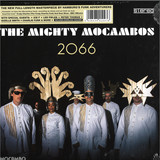
On 30thMarch, Wah Wah 45s will release ORANGE WHIP, the new album by their latest signing, Honeyfeet. The outfit, who have received praise from the likes of The Guardian, have also set festivals alight up and down the country with their unique melange of sounds.
For the last couple of years the Honeyfeet (who name from a line in the Blues Brothers film) have been a conduit for the ideas and expressions of an exotic mixture of Manchester based musicians. This genre-defying band incorporate styles including jazz, folk and hip hop into their music. Someone once called it Folk-Hop and Barrelhouse-pop, and that's just vague enough to make sense.
The band are fronted by Ríoghnach Connolly - also known for her work with Real World artists Afro Celt Sound System and The Breath - "a remarkable singer and flautist who...can ease from Irish traditional influences to soul" (The Guardian). The line up is completed by Rik Warren (vocals/harmonica), Gus Fairbairn (tenor sax), Biff Roxby (trombone/vocals), Ellis Davies (guitar), Lorien Edwards (bass guitar), John Ellis (keyboards) and David Schlechtriemen (drums).
ORANGE WHIP finds the band at their most incredibly diverse. Opening with recent single Sinner (received radio play from the likes of 6 Music and BBC Manchester), which showcases Ríoghnach's extraordinary agile and emotive voice, the album moves with dizzying swagger on songs covering a wide range of subjects. Quickball tells the story of being so infatuated with someone you want to eat them, while Whatever You Do addresses the fear-mongering of the press over folk-hop and oom-pah, and Demons deals with love and redemption on a blast of harmonica-driven country, sung by Rik Warren.
Rik also takes lead vocal on a re-working of Robert Johnson's Love in Vain, a song showing Honeyfeet's more reflective side, his Skip James-esque drawl bringing an eerie quality to the lyrics about a doomed relationship. The band reshape the progression too, swinging the tune slowly and creating a little underground blues club in the midst of the recording.
Elsewhere the band go all New Orleanian on Colonel Hathi's Trunk Juice, a sinister tale inspired by trombonist Biff Roxby's horn riff recalling one of the elephants of The Jungle Book. Further showcasing their virtuosity, on one of the album's best moments - especially the nuanced vocal performance by Ríoghnach, who was raised on Irish folk - on Hunt and Gather the band do their own take on prog-folk, with a flute and cello melody running alongside a brass counterpoint.
Ríoghnach turns in another incredible vocal on the album's final track - future single Meet Me On The Corner. With a pounding beat, it is one of the album's main highlights. Guitar and brass propels Ríoghnach to sing lyrics that could be straight out of the playground, but suggest something deeper, possibly mystical even, in it's demands for a dalliance on the street. It closes the album on a high note, for a band who have that rare ability to distil all their disparate influences, while always sounding like their unique selves.
ORANGE WHIP heralds the sound of a remarkable band going overground.
Gqom Oh! records presents "The Originators", a five track EP respresenting the past, the present and the future of Gqom - the thunderous club sound from Durban, South Africa. The Gqom Oh! label was set up by Rome-based DJ and musician Nan Kolè to highlight the music and artists of Durban, the often overlooked cradle of the new South African sound. The label's 2016 compilation - 'Gqom Oh! The Sound of Durban Vol.1' - broke the sound out of South Africa, Pitchfork calling it The largest and most thoughtful survey of the genre available to western audiences to date'. Recently joining Kolè is Sboniso Brandon Luthuli aka Citizen Boy on the ground as local A&R. The EP's A-Side is dedicated to two of the genre's most prominent producers. DJ Lag is a frontrunner in pushing Gqom worldwide. Making music from a young age and building up a solid reputation in South Africa, he's known as the "King of Gqom". Griffit Vigo, a real innovator in the Gqom genre, grew up in the same area as DJ Lag and has attained a legendary status amongst his peers. "When I was in Durban the first time I noticed that Griffit Vigo was a kind of legendary figure, he'd been inspiring all the Gqom Durban artists for a long time. Nobody knew where he was but everybody was playing him and sometimes using his beats to make new songs. The main track 'Ree's Vibe' was the peak moment of DJ Lag's sets all over the world. If Lag is the Gqom King then Griffit Vigo is the Gqom Legend."- Nan Kolè. Sbucardo is one of the most respected DJs around the streets and the townships of Durban. Featuring Abnormal on 'Iphoyisa', whose lyrics in Zulu translate to We at the club, Mr police man don't disturb us", the track represents the South African scene and Gqom culture in Durban very well. Naked Boyz (officially the first in Durban to explore new territories in broken beat in 2011) 'Story Teller' is characteristic of the Sgubhu style, a blend of Gqom with more conventional house sounds, the new genre taking over Durban and finding its way onto mainstream radio. Scene kingpins Rude Boyz round off the release's line up of Gqom originators with 'Umshunto'.
Alien Ensemble's trombone man Mathias Goetz caused quite a splash when he released his eponymous debut LP under his Le Millipede moniker back in 2015: The multi-instrumentalist's initial offering was clearly something else, impossible to grasp, a musical vessel beyond genre, beyond style or era, seemingly beyond space and time even, a vessel that carried an almost cosmic kind of song-craft - music with no fixed stamp of origin, though it did somehow feel like an Alien Transistor release. Followed by remix album Mirror Mirror, which comprised reworks by 1115, Protein, LeRoy, Olaf Opal, and Saroos, to name a few, it's now time for album #2: The Sun Has No Money.Let's face it: There's nothing as majestic as the sun. At least not in our world. If it runs out of juice one day, it's game over: The End. Light's out. For everyone. At that point, it wouldn't even matter if you're rich or poor. We're all equal under the sun. Same level. And yeah, this might not be major news, but then again... we're talking about the sun. The sun! Guess it's about time to acknowledge its power and superiority, right In fact, you can feel it on your bicycle: pedaling at night, when it's on duty in other hemispheres, and you're working hard at the dynamo, sweating, you can actually feel how powerful it is. In the end you get off the bike all recharged, a tune on your lips - and somehow feeling like a miniature version of the sun yourself. And whenever you feel like that, that's exactly the right moment to grab a melodica and get to work.Following an initial warm-up round sans electricity, this new album soon begins to glow: Mathias Goetz aka Le Millipede doesn't need pedals, he boosts circulation by single-handedly* playing tons and tons of different instruments - it actually feels like thousands, easily. And thus begins a show that has countless levels to it: There are various sonic illusions... and yet Le Millipede doesn't hide anything: He's also willing to show the inner workings, the actual recording process and everything else. In short: he goes meta. Makes songs about making songs. That's right: why not use all these beautiful means to address the issue of money It's not the sun that casts shadows, all it does is recharge, fuel: growth & thriving, that's the sun's area of responsibility. And yet there came a man whose plan was simple: steal the fruit from your garden, only to sell it right back to you, for money. We can hear the sea gulls crying in the distance, as somebody is throwing breadcrumbs up into the wind that carries their voices...It's not the sun that casts shadows - all it does is radiate light. And yet there came a time when someone blocked those rays of light. Now if you're some kind of Diogenes, you'll simply say, Move at least a little out of the sun.' But if you're a teacher, you'll maybe light up your pipe and use that to lighten up. What matters is that the percussion parts, in this case, resemble some serious musique concréte. The sun doesn't know shadows - all it knows, is itself. And yet somebody entered the picture and built an entire city. A city full of streets, so that houses can cast shadows into these avenues. Plus, there's music in the streets, music originally written inside the walls of said houses.One of those streets is known as the Tin Pan Alley: a place that got its name from a music writer who compared the sound of so many pianos to the banging of tin pans. That sound: that's one side of the road that is this album. Some of these melodies appear to be shadows of earlier tunes, dating back to, say, 1898 or even before that, melodies that were first registered in the Tin Pan Alley publishers' offices back in 1912 or 1917. We actually get to see this Alley at that point in time. We see the ropes, the workings. How things come together, the actual act of creation. Suddenly, we can hear the shadows!
Okay, so one side of this street is America. The US of A. The opposite side: Russia. And smack dab in the middle: Europe. A pothole in the center. All the back-and-forth that occurs between these two poles ultimately depends on the movement of the sun. Night and day, taking turns, commuting in and out of sight. We get to meet Prokofiew's and Scriabin's ghost, among other spirits, reframed and published by Le Millipede's own imaginary label imprint on the historic Tin Pan Alley. Indeed there are moments on this album when Le Millipede seems to be playing Scriabin's clavier a` lumie`res (tastiera per luce), when his performance seems to be based on synesthesia, a wild cross-pollination of colors and sounds. In case you didn't know this: In the States, Prokofiew goes by the name Brian Wilson, and Scriabin's also known as Sun Ra - yet another guy who's usually broke, but gets to spend a lot of time out in the sun. Together, these assorted protagonists ask the people of the Antilles for Mutabor dance-tokens and send postcards to Moondog in Germany, right back into the darkness. On the postcards you can see people dancing the Biguine...Firing foreign fossil fuels from all pipes (Brennelementsteuer!), Le Millipede controls the very center of this hustle and bustle: going as far as to employ some southern Chopped & Screwed styles, he's 100% current and zeitgeisty! Houston, we've got a problem: there's some kind of myriapod, centi- or millipede on the loose! Well, give me another sip of lean, sizzurp, dirty Sprite, and on goes the journey in the Pullman coach. Let's follow the sun! Keep on moving, keep things motorik! Here comes the Trans-Eureka-Express. Cherish the backpacking days! A piercing rhapsody of sound (bohrende Rhapsodie), we'll remember them fondly! And thus things move on, the sun, the days, the earth: rise, set, action, round and round... onwards eternally. The sun: the biggest loop known to mankind. As if it was some kind of sonic Rube Goldberg contraption, time seems to be stretching out while listening to that hmmm. After all: time is a lot (a lot!) more than just money. And yeah, the sun is the real big shot on (or rather: above) Planet Earth. Le Millipede's live line-up also includes Markus & Micha Acher (The Notwist etc.), Nico Sierig (Joasihno), and Manuela Rzytki (G. Rag & die Landlergschwister, Kamerakino etc.).
*sole exception: Evi Keglmaier (Zwirbeldirn, Hochzeitskapelle) plays the viola. Words/sun worship: Pico Be
New 7" from the mysterious Gitkin, who crisscrossed the US in the late 70s selling knockoff Gibson guitars to the diverse & disparate groups of immigrants from all four corners of the globe who were coming to the US during the 2nd great migration. Recycling and filtering the sounds he encountered through his own psychdelic lens, he created a sound rooted in other, but deeply his own. This single is taken from his forthcoming album, "5 Star Motel" and features two tracks from the album 'Grand Street Feast' which charts a sand-dusted, melodic funk misadventure, while "Cancion Del Rey' has the sound of the Peruvian chicha - steady-moving, alluring, and lyrical - winding its way through Gitkin's fuzz-filtered licks, and the rhythm underpinning.
- A1: Dj Caress - Stories (Feat. Shimon Adaf & Herzel Shviro)
- A2: Rabo & Snob - Ilussions
- B1: Jerome C - Dont Say Im Crazy (Feat. Einat)
- B2: Roy Harmon - Geshem+Geula
- B3: Ahmed Silan - Hemalot
- C1: Assaf Amdursky - Yona
- C2: Ryskinder - No Love At The Basketball Team (The Models Remix)
- C3: Mo Rayon - One Night (At Erawan Resort)
- D1: Zohar Wagner - Shtucha
- D2: Alek Lee - Amore
- D3: Ori & Yehezkel - Honesty
'Rothschild 12' operated between 2009 and 2017 in the heart of Tel-Aviv, near the bustling intersection of Herzl street and Rothschild boulevard. Located on the ground floor of an elegant eclectic-style building which was built by Mr. Abraham Fogel exactly 100 years before it opened, 'Rothschild 12 began as an art gallery and quickly became a popular relaxed café and bar. While its front terrace faced the hustle and bustle of the city's main boulevard, in its back room 'Rothschild 12' hosted nightly live shows by a variety of established as well as up and coming independent musicians. What started off as improvised jam sessions soon developed into a full program ranging from jazz and rock to world music, hip hop and electronica. Now that 'Rothschild 12 is relocating to a new venue on Herzl street, it is time for a summary - a snapshot of the musical diversity which filled its walls - in the form of the compilation you are now holding. This musical summary of 'Rothschild 12' brings together a modern remix to a pioneering Israeli-Yemenite disco number from the seventies, a bundle of colourful and psychedelic beats,
The next collaborative release between Freeride Millenium and Pauls Musique is a terrific two-tracker from Manchester artist Joseph Louis Harland Manning under his new alias Los Angeles with the 7 vinyl release artwork designed by Daniel Rajcsanyi as part of his 'BABY' exhibition in Austria. Joseph Louis Harland Manning was the drummer of the band Wu Lyf and is involved in projects like Los Porcos, the Mancunian boyband Menage a Trois and Dream Lovers. Under his other aliases he released on Aficionado, Cracki, Ocean Records and Is It Balearic sub label Uber as well as having made music videos for Molly Nilsson. Here he is fine form across a pair of delicate and moving synth tracks. Opener 'L'amour' is a gentle cut that starts with celestial chords and wide-open expanses of synth before a buried deep groove slowly comes to the fore. Breathy vocals also add to the loved-up, dreamy feel and the whole thing carries you away in a majestic reverie that shifts from ambience to new age house. The track features the artists own field recordings from the streets of Berlin, twisting up sounds from the sidewalk into percussive notes that give an organic feel. The perfectly soothing second offering is 'I Wanna Go To Heaven' is a gorgeous synth piece that suspends you in a crystal clear blue sky on a warm summer's day. Chords are smeared and stretched whilst angelic, wordless vocals drift by. It is the sound of a blissful passage to the afterlife and will leave you feeling cleansed. This is a truly emotive package of music that marks another first rate release on this ever evolving label
- A1: Alyth (Nuage Remix)
- A2: Wingbeats (Max Cooper Remix)
- B1: East London Street (Hidden Orchestra Remix)
- B2: Western Isles (Throwing Snow Remix)
- C1: Still (Floex Remix)
- C2: Stone (Matthew Herbert Spring Dub)
- C3: The Lizard (Skalpel Remix)
- D1: First Light (Nostalgia 77 Remix)
- D2: Serpentine (Wrongtom Rotten Row Dub)
- D3: Long Orchard (The Physics House Band Remix)
Hidden Orchestra's 'Dawn Chorus Remixes' follows the illuminating 'Dawn Chorus' album, reworking producer and composer Joe Acheson's latest album of immersive field recordings and expansive soundscapes into an journey through electronica, deep house and ambient psychedelia. Fronted by Wingbeats (Max Cooper Remix)', 'Dawn Chorus Remixes' features reworkings from Max Cooper, Matthew Herbert, Throwing Snow, The Physics House Band, Nuage, Floex, Nostalgia 77, Wrongtom and Skalpel.
Built around a collection of birdsong and other field recordings captured over many years across diverse locations around the UK and abroad, the snapshots within 'Dawn Chorus' intertwine for a transporting listen. The 'Dawn Chorus Remixes' album revisits this vast source material, reinterpreting the structure of the tracks and uncovering new layers of hidden sounds and instruments for the listeners, sometimes unearthing entire musical progressions that bring the tracks into clearer focus.
Max Cooper provides his take on Wingbeats, focussing on the synchronised recordings of birds beating their wings, to reveal a beautiful chord structure hidden amongst the rhythms. Matthew Herbert applies intricate electronic components with a purist house beat on Stone' which follows into The Lizard', remixed by Polish duo Skalpel who were an early influence of Acheson's. Electronic producer Floex transforms 'Still' with layers of oscillating synths, while Wrongtom provides a dub remix and The Physics House Band deliver ambient and progressive sounds for their rework of Long Orchard'.
Key Marketing Points:
- Remixes from high profile acts such as Max Cooper, Matthew Herbert, Floex, Throwing Snow, The Physics House Band, Skalpel and more.
- Available on 2x LP, housed in reverse board sleeve with silver embossed foil title and printed inner-sleeves. Cover art comes from acclaimed artist and printmaker, Norman Ackroyd.
- European AV 'Dawn Chorus' Tour starts November 20th 2017.
- Radio support for 'Dawn Chorus' from Lauren Laverne (BBC 6Music), Nemone (6Music), Huey Morgan (BBC 6Music), Gideon Coe (BBC 6Music), Jamie Cullum (BBC R2) + more
- Previous press support from The Arts Desk, Clash, The Independent, The Guardian, Line Of Best Fit, Blues & Soul, Record Collector, DJ Mag
Praise for the original Dawn Chorus album
You could just listen to that forevermore, couldn't you' MARY ANNE HOBBS (BBC 6MUSIC)
Such a beautiful project' - LAUREN LAVERNE
Out of this world' - THE LINE OF BEST FIT
Gorgeous' - NEMONE (BBC 6MUSIC)
Air Lows is the debut solo album by Silvia Kastel. The Italian artist has been a fixture of the underground since her precocious teens, clocking up many miles in Control Unit with Ninni Morgia ('It's like Catherine Deneuve dumped two cases of post-Repulsion psychiatric notes over Pere Ubu's Dub Housing, lit the fuse and, ahem, stood well back" - Julian Cope), including collaborations with the likes of Smegma, Factrix, Gary Smith, Aki Onda and Gate (Michael Morley of The Dead C). Both solo and in her work with others, Kastel has explored the outer limits and inner workings of no wave, industrial, dub, extreme electronics, free rock and improvisation. Air Lows is both her fullest and most refined offering to date, a work of vivid, isolationist electronics which draws deeply on her past experience but assuredly breaks new ground. Prompted by a late-flowering interest in techno and club music, Kastel sought to create something which combines a steady rhythmic pulse with the otherworldly sonorities of musique concrete, and avant-garde synth sounds inspired by Japanese minimalism and techno-pop (Haruomi Hosono's Philharmony being a particular favourite). The formal artifice of muzak / elevator music, the intros and outros of generic popular songs, the extreme light-heavy contrasts of jungle, the creative sampling of hardcore, and the very 'human' synths in the jazz of Herbie Hancock's Sextant and Sun Ra: all were touchstones for Air Lows' conception and composition, and all strains of music addressing - or complicating - the relationship between the human and the technological. By extension, visual inspirations also proved important: anime, and the avant-garde fashion of Rei Kawakubo. What does that shirt or dress sound like Though used sparingly, Kastel's voice remains her key instrument, whether subject to dissociative digital manipulations as on 'Bruell', delivering matter-of-fact spoken monologues, or providing splashes of pure tonal colour. Recorded between her expansive Italy studio and a more compact, ersatz set-up in Berlin, Air Lows gradually takes on some of the character of the German capital: you can hear the wide streets and uninhabited spaces, the seepage of never-ending nightlife, the loneliness. Air Lows is The Wizard of Oz in reverse: the glorious technicolour J-pop deconstructions of its first half leading inexorably to the icy noir of 'Spiderwebs' and 'Concrete Void'. These later tracks are reminiscent of 2015's magnificent 39 12', Kastel in the role of numbed, nihilistic chanteuse stalking dank, murky tunnels of reverb and sub-bass. But in fact there is contradiction and emotional ambiguity to Air Lows from the outset, and throughout - a sense of both infinite space and acute claustrophobia; energy and inertia; fluency and restraint.
- A1: Forme
- A2: Espace
- B1: Breche
- B2: Particules
Street sounds remixes and ambient noises dronified... music for the soul.
* Aquatic Lab Records presents a very special release to close out 2017. LAB018 plays host to Bristol luminary and Tectonic boss Pinch, who delivers three menacing and forward-leaning apocalyptic cuts.
* The pointed and growling ragga-style techno of A-side 'Brain Scan' is built on battering rhythms and dubwise sonic techniques, in the vein of an old school revivalist production. True to the roots, futuristic in scope.
* On the flip, 'Street Light' is an equally abrasive bassweight roller, counter-balanced by Pinch's cavernous and cinematic sound design. Strictly war sounds for the dance.
* Rounding off the release is soundsystem meditation 'Abducted', an icy, gangster half-stepper drenched in thick reverb and melancholic DMZ-style laments.
* Mastered by Rashad Becker at Dubplates & Mastering (Berlin). 180-gram vinyl.
Durban's 23 year-old producer Emo Kid has announced he is to release eight-track debut EP, 'Gqomtera', through Gqom Oh! on September 22nd. Although titled 'Gqomtera', which Emo Kid explains is a slang term he and others use for the music, the record actually explores Sgubhu — another strain of South African dance music that shares many stylistic parallels with Gqom, though is always written with a 4x4 beat. Like DJ Lag before him, an artist widely considered the king of Gqom, Emo Kid is also considered a pioneer in Durban; 'Some people call me the Sgubhu king, but I'm just happy they're enjoying my music', he says. Based in Inanda, in the Etafuleni area township in Durban, Emo Kid's house looks out over an area called Isandlwana — the spot where the Zulu army famously defeated the British Army in the Battle Of Isandlwana in 1879. It is from this backdrop that he has written the majority of his music over the last few years, including new record 'Gqomtera'. At eight tracks long, 'Gqomtera' provides a comprehensive overview of the Sgubhu sound, with the aim of taking the listener on their own 'Durban Journey'. 'I wanted to show the uniqueness of my own style which I would describe as more musical', Emo Kid explains, 'you can feel the music when you listen but it still hits hard with that Gqom flavour.' That Gqom flavour, powered by hard, fast, uncompromising drums, provides a solid core from which everything else functions. Bright, shimmering trance synths feature on 'Futuristic Gqom', while on 'Enkwarini' — 'another word for a party or fantastic get together' — vocalist Fawell skips over light, playful Sgubhu rhythms. There's also space for harder, deeper cuts like 'Ground Shaker', cut with a twinkling melody line, the charging pace and power of 'Insimbi Yase Dubane' and the anthemic 'Asbambeki' featuring local crew TLC Fam, translating loosely to being unstoppable; 'It means you can't catch us basically', Emo Kid says proudly, 'On the dance floor, you can't touch us, we're on fire.' Capturing the raw, street sounds of his city, Emo Kid is the latest Durban artist to take the music global and with 'Gqomtera', put Sgubhu firmly on the map.
Black Truffle is thrilled to announce the first ever vinyl reissue of legendary performance and sound artist John Duncan's forgotten gem Klaar, originally released by Extreme in 1991 and partly created in collaboration with Andrew McKenzie (The Hafler Trio). Duncan is perhaps most well known for his notorious early performances pieces, which explored violence, self-denial, and the establishment of extreme psychological and physical states in both artist and audience. Alongside these transgressive experiments, Duncan began to create audio works primarily using short wave radio. Where some of Duncan's earlier recordings are composed of magnificently sculpted but abrasive walls of noise, Klaar, recorded while Duncan was living in Amsterdam, occupies a more meditative territory.
Opening with 'Delta', which layers long tones seemingly sourced from slowed down voices over a distant, watery field recording, the remainder of the first side is occupied with the epic title piece, which arranges shortwave radio abstraction, vocal experiments, and field recordings (street sounds, fireworks, monastic chants) into an episodic cinema for the ear. The second side is dominated by the long, brooding 'The Immense Room', where layers of shortwave interference and field recordings are gradually built up into a pulsing, wavering bed of sound infused with a subtly disturbing sense of psychological unrest. This rises to the surface near the end of the piece as sexual moans and ominous rumbles crisscross the stereo image before being abruptly brought to a halt.
A singular work of electroacoustic composition, Klaar is both compositionally sophisticated and infused with a sense of mystery and a vital reality often lacking in more academic experimental music; it sits proudly alongside contemporaneous recordings by Duncan's friends and collaborators Jim O'Rourke and Christoph Heemann and is a must for anyone interested in their work.
- Francis Plagne
- Apollo are proud to welcome Sieren, AKA Matthias Frick back to the fold with his new Ascension EP.
- Features collaboration with fellow Apollo artist Synkro
A software engineer at Ableton by day, Sieren's love for UK influenced bass music and field recording and experimental soundscaping resulted in his Apollo debut 'Static Polymorphism' a masterly EP of spaced out street-rave soul.
Now returning with the five track Ascension EP, Frick has tightened and toughened up his sound somewhat (see the caustic bass glower of 'Slinger'), augmenting his starry eyed wonder with a firmer percussive underpinning and more driving tempos. However still present are his preternatural grasp of emotion and atmosphere that marked him out as one to watch - perfectly underscored by the heartbreaking beauty of the title track.
Fellow Apollo cohort Synkro AKA Joe McBride was instrumental in the curation of Sieren's debut Static Polymorphism EP on Apollo, hand picking the tracks, as well as road testing them in his DJ sets. This time McBride goes one further, collaborating with Frick on the track 'Lost You' to memorable effect - the beautiful pads and ghostly piano are a perfect synergy of their complimentary skill sets. This is richly textured and intricately programmed post-bass music that is sure to satisfy fans of Burial, dBridge, Akkord with its soulful sincerity and warmth.
- A1: Gil Scott-Heron - The Revolution Will Not Be Televised
- A2: Mandingo Griot Society With Don Cherry - Sounds From The Bush
- A3: Roy Ayers Ubiquity - Red, Black And Green
- A4: Philip Cohran And The Artistic Heritage Ensemble - Malcolm X
- B1: Sarah Webster Fabio - Sweet Songs
- B2: Phil Ranelin - Vibes From The Tribe
- B3: Horace Tapscott With The Pan Afrikan Peoples Arkestra - Desert Fairy Princess
- C1: David Mcknight - Strong Men
- C2: Joe Henderson - Black Narcissus
- C3: Oneness Of Juju - African Rhythms
- D1: Doug Carn - Suratal Ihklas
- D2: Duke Edwards And The Young Ones - Is It Too Late
- D3: Carlos Garnett - Mother Of The Future
Underground Jazz, Street Funk & The Roots Of Rap 1968-79. Soul Jazz Records' new release 'Soul of a Nation: Afro-Centric Visions in the Age of Black Power' is released in conjunction with a major worldwide art exhibition, Soul of A Nation: Art in the The Age of Black Power which takes place at the Tate Modern, London, UK (July-Oct 2017) and The Brooklyn Museum, New York, USA.
The album shows how the ideals of the civil rights movement, black power and black nationalism influenced the evolvement of radical African-American music in the United States of America in the intensely political and revolutionary period at the end of the 1960s following the assassinations of Malcolm X, Martin Luther King and the rise of the Black Panther party.
Featuring groundbreaking artists such as Gil Scott-Heron, Roy Ayers, Don Cherry, Oneness of Juju, Sarah Webster Fabio, Horace Tapscott, Phil Ranelin and many others, Soul of A Nation shows how political themes led to the rise of 'conscious' black music as new afro-centric styles combined the musical radicalism and spirituality of John Coltrane and radical avant-garde jazz music alongside the intense funk and soul of James Brown and Aretha Franklin and the urban poetry and proto-rap of the streets.
The Soul of a Nation exhibition draws on the links between Black art forms - art, music, poetry - and how they came together during the civil rights and black power era as part of the wider black arts movement across the United States.
Iconic African-Amercian revolutionary figures such as Martin Luther King, Malcolm X and Angela Davis, John Coltrane, Muhammad Ali all appear in the radical artworks of Barkley L. Hendricks, Romare Bearden, Norman Lewis, Lorraine O'Grady and Betye Saar.
A selection of original radical jazz record sleeves artworks which appear in Soul Jazz Records' earlier groundbreaking Freedom, Rhythm and Sound - Revolutionary Jazz Original Cover Art book will also be on show at the Tate, London throughout the exhibition. The Freedom, Rhythm and Sound book is also newly back-in-print in conjunction with this major exhibition and the release of the Soul of a Nation album.
Stuart Baker (founder of Soul Jazz Records) will appear on the panel of Jazz for Soul of a Nation: Art in the Age of Black Power discussion at the gallery as part of the show. Soul of a Nation comes with extensive sleeve-notes and exclusive photography in a large 36-page outsize booklet and slipcase. Double gatefold vinyl album edition comes with full colour inners + bonus download code and includes full sleeve-notes/photography.
One of the core members of the Apollonia family is the mastermind behind the label's latest release. Shonky steps up with his first solo EP since 'Plombiére' which dropped in July 2016. Full of funky flavours and that distinct 'Shonky style', the new EP consists of four brand new tracks produced exclusively for Apollonia. Each track emanates its own unique vibe, while reppin' Shonk's irresistible groove. On side A we have 'Tyrolien', a jaunty number with bright tones and a tight, rolling groove. Shonky injects it with a series of unusual FX and what sounds like an wizened old creature, speaking about 'the foulest stench in the air'. It's a superb combination and sets the EP off to a great start.Next up is 'Beat Street' which has a heavier set of beats, which stomp down as a marauding b-line gets to work. Tiny fizzes and cheeps in the background add depth, sounding like robotic birds at play in the wild. The track is minimal in its make up, but deep and engrossing, classic Shonky material.Flip the vinyl over and we have 'Torro Rosso', a bold, stomping workout with fresh percussion and a jovial analogue riff. As the bubbly low end percolates way down below, the beats pump the track along and an extra layer of analogue funk enters the fray midway through. The final track is titled 'Serpent a` Sonnette' and swithes the vibe. It's loose, meandering and twisted, with a hypnotic bassline and super sharp percussion. This one is going to get the dance floor locked into a groove, as it progresses a sweet, chirpy melody brightens the mood. Feel the glow!Once again Shonky demonstrates his ability to produce groovy dance floor cuts that have their own unique fingerprint; danceable, unusual and utterly captivating. Grab the new EP now!
De-Bons-en-Pierre is a project from Beau Wanzer & Maoupa Mazzocchetti. Beau Wanzer spends the majority of his days sifting through paraffin embedded animal tissues and reading old issues of Fangoria, occasionally breaking his monotonous routine to record in various fits and bursts. As well as solo material, he is also in numerous projects including Streetwalker, Mutant Beat Dance, Civil Duty, and Corporate Park. He's released on many labels including; Diagonal, L.I.E.S, Cititrax, Nation, Rush Hour, and Light Sounds Dark. Maoupa Mazzocchetti is the pseudonym of Florent Mazzocchetti, a French producer based in Brussels. Florent is strictly devoted to a DIY mentality around music production and his sound revives the electro-industrial aesthetic of the late 70s and early 80s. He's released notable productions on labels such as Unknown Precept, PRR! PRR!, Knekelhuis and Mannequin Records.
While Beau was visiting Brussels he stopped by Maoupa's house to jam for a bit. All songs were recorded on April 4, 2016 between 11:00am and 11:00pm, as single live takes.'Crepes' is a 6-track EP, titled so because they ate crepes the majority of the session. Beau says, "There was a bit of a language barrier. We'd mostly just laugh and nod when something sounded cool to us." The equipment set up included a Roland TR-808, TR-606, SH-101, CR-78, CR-8000, two Syncussions and effects. Over 23 minutes of garbles, sludgy synths and leviathan rhythms. Surfing the slippery slope between industrial and electro, but never quite falling in, just a dip of your pinky toe to to test the temperature.
All songs are mastered by George Horn at Fantasy Studios in Berkeley. Housed in a sewage green/blue jacket featuring a crepe-masked duo reminiscent of pulpy VHS covers. Designed by Eloise Leigh and Florent Mazzocchetti. Each copy includes a 2-sided postcard with a photo taken during the recording session.
Experimental LP inspired on the streets of the big city, listening to the sounds from different angles and perspective of the city. Created just for listening, not for the dancefloor.