Blending sounds of early 70s Funk & Soul, Latin-Jazz, and Afrobeat, Mestizo Beat kicks the year off with a heavy dose of new material. First up is “She’s A Rose b/w Lotsapapa,” their next 45, offering two sides of masterful instrumental soul music written & produced by The Magaña Brothers out of their hillside studio, Spc 166 in Topanga, CA. Side A’s “She’s A Rose” takes us back to the golden years of the Blaxploitation film genre and the soundtracks we have grown to love. This song was inspired by the compositional and orchestral arrangements from the greats, such as Curtis Mayfield’s “Superbad,” Johnnie Pate’s “Shaft in Africa,” and Bobby Womack’s “Across 110 Street.” Featuring Tim Felten of Surefire Soul Ensemble on keys, with horns written and arranged by Jesse Audelo, Mestizo Beat takes the listener on an evolving journey, exploring the mood and cinematic elements of flute, saxophone, and wha’d-out guitar, topped off with a funky drum and percussion break. On the flip, “Lotsapapa” rounds out the B-Side, blending the musical styles of Latin and Nigerian disco-funk into a track that’s perfect for the dancefloor and those late nights out. Written about Bernard “Lotsapapa” Crowe, a notorious drug dealer who survived an attempted murder by Charles Manson, this side is sure to get the body moving with the afro-disco rhythms and chant vocals, dubbed out around a tightly arranged horn section written and arranged by Jesse Audelo and Jason Cressey. “Lotsapapa” features guests Steve Haney from Jungle Fire on Percussion and Cressey of the True Loves on trombone.
With each side highlighting the various talents of the ensemble, Mestizo Beat always stays true to their sound and recording techniques. Both tracks are mixed by Sergio Rios at Killion Sound and are featured on the forthcoming LP, Jaraguá, coming mid-2024.
The new album The Commune Of Nightmares by noise artist David Wallraf is a tapeloop-based musical game of cadavre exquis, a technique developed by surrealist artists.
David Wallraf is a noise artist and theorist living in Hamburg. His artistic work deals with the repressed and uncanny sonic residues of quotidian life, crafting soundtracks for the creeping disaster we inhabit. His works have been released on numerous international tape labels. A recent interest of his is the live scoring of silent films, including works by Luis Buñuel, Maya Deren and Jean Genet. His PhD thesis Grenzen des Hörens. Noise und die Akustik des Politischen (Limits of Hearing.Noise and the Acoustics of the Political) has been published in German, an English translation is in progress.
The Commune of Nightmares stems from the idea that nightmares are the logical reverse of 'capitalist realism': an uncanny undercurrent of daily experiences and an algorithmic haunting of dreams that at the same time is a shared – communal – experience of everybody. All songs are based on tapeloops that were cut arbitrarily from a stash of cassettes, some of which found on the street, others from a stockpile of 4 track tapes recorded in the late 90s and early 2000s – a musical game of cadavre exquis played with random strangers and former versions of DW.
Credits:
All music composed and recorded by David Wallraf in Hamburg-Wilhelmsburg, first half of 2023
George Coleman (born March 8, 1935) is an American jazz saxophonist best known for his work with Miles Davis and Herbie Hancock in the 1960s. Coleman was born in Memphis, Tennessee and learned to play the alto saxophone in his teens. After his work with Ray Charles, George started working with B.B. King in 1953 and switched to playing the tenor saxophone.
George Coleman was a member of legendary outfits such as Max Roach’s quintet, The Slide Hampton Octet, Miles Davis’ Quintet and The Chet Baker Quintet. The list of his collaborations is impressive to say the least, Mr. Coleman recorded and performed with greats such as Freddie Hubbard, Herbie Hancock, Charles Mingus, Ahmad Jamal, Idris Muhammad, Pharoah Sanders, Ornette Coleman, Melvin Sparks, ArtBlakey…and many others.
Coleman was named an NEA Jazz Master, was added to the Memphis Music Hall of Fame in 2015, and received a brass note on the Beale Street Brass Notes Walk of Fame. George Coleman’s performances were included on classic recordings released by prominent labels from the likes of Blue Note, Atlantic, Prestige, Strata-East, Muse, Verve and Impulse!
On the album we are proudly presenting you today: Amsterdam After Dark (Recorded in 1978 at the famous NY Sound Ideas Studio and released on Timeless Records in 1979) the listener is treated to six majestic tracks of the highest caliber and features a remarkable outing of advanced musicianship by jazz-giants in their prime, delivering an inspirational gem of an album.
The all-star line-up includes Sam Jones (Dizzy Gillespie, Duke Ellington, Ben Webster) on bass, Billy Higgins (Donald Byrd, Thelonious Monk, John Coltrane) on drums and Hilton Ruiz (Roy Brooks, Rashaan Roland Kirk, Sonny Rollins) on piano. Most players featured here were also part of the legendary ‘Eastern Rebellion’ collective responsible for releasing multiple ground-breaking albums over several decades.
Amsterdam After Dark shows off George Coleman’s mastery of the sax, his brilliant vintage techniques and deep soulful tones. Coleman plays from the heart and is on top of his game. Expect both original compositions as well as standards, beautiful ballads with elegant (yet fierce) solos alternating between the instruments, growling blues-oriented themes…this is a contemporary sounding Hard Bop & Post-bop crossover album and a must have for any self-respecting jazz fan or collector!
Trumpeter, bandleader and composer Matthew Halsall announces landmark new album An Ever Changing View, an expansive, immaculately conceived project which presents Halsall’s signature blend of jazz, electronica, global and spiritual jazz influences.
An Ever Changing View will be released on September 8th on Gondwana Records (the label Halsall founded 15 years ago) ahead of a landmark show at The Royal Albert Hall in London on September 21st and UK and EU tour dates.
Halsall who has been hailed as one of the leading figures of the UK jazz renaissance has never seen himself as part of any one sound or scene: he builds his own sonic universe instead. An Ever Changing View finds him at his most experimental yet, once again expanding his sound and production techniques to create his unique brand of deeply meditative music.
During the album's creation, he was staying in both a beautiful architect’s house with breath-taking sea views and a striking modernist house, where he composed what he saw “like a landscape painting”. In these new environments, Halsall wanted to capture “the feeling of openness and escapism” and to approach making music again from scratch. “I hit the reset button and wanted to have complete musical freedom,” he says. “It was a real exploration of sound.”
It was hearing jazz on the dancefloor as a teenager that first opened up new possibilities in Halsall’s mind and his music has long drawn on his love for the spiritual jazz of Alice Coltrane and Pharoah Sanders and contemporary electronica from the likes of Warp Records and Ninja Tune. An Ever Changing View melds those forms in a way that feels heady and, at times, even otherworldly. One of the album’s starting points was Halsall’s ever-expanding box of percussion, from congas and kalimba to various clusters of seeds, bells and chimes, which he sampled and looped to use as a foundation for the songs – a first for him and his band. Elevating, charming, totally modern jazz tracks jostle with deft warm magic realism; and laid back grooves with hand percussion, deep bass and the gorgeous glisten of the Fender Rhodes meet hip-hop beats. Halsall himself sparkles, illuminating his beautiful tapestries of sound with lithe, glistening elegiac trumpet.
out of Stock
Last delivered 3 years ago available to reorder, subject to availability
Trumpeter, bandleader and composer Matthew Halsall announces landmark new album An Ever Changing View, an expansive, immaculately conceived project which presents Halsall’s signature blend of jazz, electronica, global and spiritual jazz influences.
An Ever Changing View will be released on September 8th on Gondwana Records (the label Halsall founded 15 years ago) ahead of a landmark show at The Royal Albert Hall in London on September 21st and UK and EU tour dates.
Halsall who has been hailed as one of the leading figures of the UK jazz renaissance has never seen himself as part of any one sound or scene: he builds his own sonic universe instead. An Ever Changing View finds him at his most experimental yet, once again expanding his sound and production techniques to create his unique brand of deeply meditative music.
During the album's creation, he was staying in both a beautiful architect’s house with breath-taking sea views and a striking modernist house, where he composed what he saw “like a landscape painting”. In these new environments, Halsall wanted to capture “the feeling of openness and escapism” and to approach making music again from scratch. “I hit the reset button and wanted to have complete musical freedom,” he says. “It was a real exploration of sound.”
It was hearing jazz on the dancefloor as a teenager that first opened up new possibilities in Halsall’s mind and his music has long drawn on his love for the spiritual jazz of Alice Coltrane and Pharoah Sanders and contemporary electronica from the likes of Warp Records and Ninja Tune. An Ever Changing View melds those forms in a way that feels heady and, at times, even otherworldly. One of the album’s starting points was Halsall’s ever-expanding box of percussion, from congas and kalimba to various clusters of seeds, bells and chimes, which he sampled and looped to use as a foundation for the songs – a first for him and his band. Elevating, charming, totally modern jazz tracks jostle with deft warm magic realism; and laid back grooves with hand percussion, deep bass and the gorgeous glisten of the Fender Rhodes meet hip-hop beats. Halsall himself sparkles, illuminating his beautiful tapestries of sound with lithe, glistening elegiac trumpet.
out of Stock
Last delivered 3 years ago available to reorder, subject to availability
Yasushi Ide, the Japanese Street Music Icon Unleashed "Cosmic Suite 2" in a Revolutionary Blend of Genres.
Yasushi Ide, the revered figure in Japanese street music, has recently unveiled his latest musical opus titled "Cosmic Suite 2," a rebel music masterpiece that pushes the boundaries of musical genres.
This groundbreaking album features collaborations with esteemed pioneers including Afrika Bambaataa, Don Letts, Josh Millan, Jeff Mills, DJ Krush, Tony Allen, and more. By transcending the limitations of time, genre, and even mortality, Ide has crafted a truly unique and eclectic street music experience unlike anything seen before.
Notably, Ide enlisted the expertise of Grammy-winning sound engineer Steven Stanley to embark on the reconstruction of "Cosmic Suite 2" using his renowned dub mix techniques. The outcome of this collaboration is the birth of "Dr. Steven Stanley Meets Yasushi Ide - Cosmic Disco Dub," a mesmerizing rendition that showcases the genius of both artists.
Hailing from Jamaica, Steven Stanley is a highly regarded sound engineer and producer whose illustrious career spans several decades, primarily in the realms of reggae, dub, and rock music. Having worked with acclaimed acts such as Talking Heads, Black Uhuru, and Tom Tom Club, Stanley has solidified his status as a living legend within the industry. His contributions to Tom Tom Club's "Genius of Love" and his Grammy-winning work on Black Uhuru's "Anthem" further exemplify his unparalleled expertise. Additionally, Stanley has collaborated with notable artists including Grace Jones and B-52's.
In "Dr. Steven Stanley Meets Yasushi Ide - Cosmic Disco Dub," Stanley expertly integrates elements from the original "Cosmic Suite 2" tracks, employing his unique dubbing techniques to enhance the sonic experience. Through the addition of his signature dubby reverb and other distinctive sound manipulations, Stanley elevates the album to an entirely new dimension.
"The Battle" Transformed into an Enchanting Disco Dub Experience, Infused with Stanley's Horn Section Effects for a smoky ambience.
In the mesmerizing track "Galactic Beats," the legendary Afrobeat pioneer Tony Allen's powerful drums take center stage. Skillfully applying his dub effects, Stanley adds vibrant layers and new dimensions to the composition, further enhancing its sonic palette.
Another standout is the dub version of "LAVA," featuring acclaimed Japanese singer UA. The track, which was already a fan favorite in its original form, undergoes a remarkable transformation in this dub rendition, further accentuating its appeal.
"Outer Space" Transcends Time and Genre with a Dream Collaboration Between the Late Legendary Reggae Drummer Style Scott and Japan's Turntablist Extraordinaire, DJ Krush. While the original track exudes a stoic and deep cosmic dub essence, Stanley ingeniously reimagines it as a nostalgic old-school dancehall masterpiece.
"Sumimasen" is a track that exemplifies Stanley's mastery, where the unique Japanese word "Sumimasen" (meaning "I'm sorry") is transformed into a psychedelic and deeply immersive dub journey. The track features captivating echoes on the vocals and twisted synth elements, transporting listeners to a cosmic realm of sonic exploration.
Furthermore, it is crucial to highlight "Hear, There, and Beyond," a collaboration between Yasushi Ide, Kan Takagi, the pioneering figure of Japanese hip-hop, and RECK, the bassist from the legendary punk rock band FRICTION. This reconstructed version takes the original track to unprecedented heights. With a remarkable shift to tribal drums in the midst of the song, the energy intensifies, resulting in a wild and exhilarating musical experience.
The reconstruction of this album evokes memories of Mad Professor's "No Protection," a renowned dub reconstruction of Massive Attack's work that remains an enduring masterpiece in the genre. With its exceptional craftsmanship and artistic vision, "Dr. Steven Stanley Meets Yasushi Ide - Cosmic Disco Dub" has the potential to be regarded as another timeless dub reconstruction masterpiece, solidifying its place in music history.
out of Stock
Last delivered 3 years ago available to reorder, subject to availability
buen clima is the solo project of producer, composer and DJ Felipe Castro (Santiago, 1993). Under that alias, he makes a sometimes clean, sometimes dirty mix of techno, house and electro, among other styles, with a soft spot for high BPMs, big, glossy pad sounds and interlocking rhythms. With a background in classical music and free improvisation, his productions and live performances often bring into them unexpected moments of noise, unusual influences and, above all, humour.
« This EP is comprised of five tracks written between 2020 and 2022, and it's got quite a bit of contrast among them, as well as some common threads. Some are gritty and noisy, some are a bit more amiable. However, they all show signs of recurring obsessions with certain rhythms, certain synth sounds, and share a sense of fun and humour. Each is an exploration of different production and synthesis techniques.
Big Butibit Chess Master Pro v.3.5 is on the lighter side, with some big warm pads and jazzy drum sound. It's kind of a sunny ghettotech cut, if that makes any sense. The synth part has a spontaneous feel, it was recorded pretty much in one take.
>:) Is a heavier club track, made to go a little evil, a little mischievous. It's full of squelchy sounds and has a drum part that sounds like a never ending Street Fighter combo, or a bunch of beer bottles being opened one after the other.
Forma/Contenido is also on the darker side, with a droning, oppressive mass of sound that accumulates and evolves all throughout the track. It's very much inspired by the piece "I am sitting in a room" by Alvin Lucier, and is, in fact, a sort of live version of the same premise, a long feedback loop of the voice and the beat recorded and played in the studio.
Arturito is how we call R2D2 in Latin America (or at least in Chile), and it's also my father's name. We both love the original Star Wars and this is a little tribute to that. I had a lot of fun making this track, using only Ableton's Operator synth to make 90% of the sounds. It's a bouncy, evolving electro cut with a lot of quirky bleeps and bloops.
Pequeña midi is definitely the heart of the EP, a slower track made for my cat, who's sitting in my lap as I'm writing this. The rhythms and the sounds are a musical representation of how I imagine her life is like, and of her little games, running around the house. In terms of style I feel like this is what it would sound like if Yellow Magic Orchestra did a slowed down footwork track (play it at 160 BPM if you don't believe me!). »
out of Stock
Last delivered 3 years ago available to reorder, subject to availability
Valencian producer Pépe's love of iridescent melodies, velvety pads and complex rhythms has seen him skilfully combine house, bass music and breakbeat in recent years. His music is globally reaching, having garnered attention from top artists including Ben UFO, Peggy Gou, Shanti Celeste, Moxie, Mount Kimbie and Disclosure.
His heartfelt, mercurial and emotive sound is ever present on his new album for Lapsus, which also incorporates a lush sonic forest, resplendent in detail and jam packed with influences. The album 'Reclaim' opens the door to experimentation and sound design, while embracing the braindance and hyperpop sphere with surprising maturity. It is an amalgamation of electronic sounds and pulsating structures in which orchestral sounds, folk music, ambient textures and an strong vocal presence, both synthetic and authentic, sparkle.
'Reclaim' imagines a post-human future, where nature once again reclaims lost ground and is free to flourish and take root around manmade structures. Pépe exhibits his personal reverence for the work of Antonio Cortés Ferrando, the architect behind the Espai Verd building, which broke architectural and urban planning norms by using computation to create structures that promote the organic growth of foliage. It is a building designed for the future, where flora cultivates indefinitely.
In Pépe’s own words, "At a time when we have witnessed how nature strives to regain ground, once humans are removed from the streets, it is important to start thinking critically about new techniques in the creation of art and design, and imagining a future where posterity is embodied in the rejuvenation of a greener world".
out of Stock
Last delivered 3 years ago available to reorder, subject to availability
"Ela", Dom La Nena's first album, was released in 2013. Co-produced with the complicity of Piers Faccini, the album received the highest praise from the international press (New York Times, NPR, Les Inrocks, Wall Street Journal, etc). On the occasion of the 10th anniversary of its release, here is a reissue of the record, now available on vinyl.
Dom La Nena is a Brazilian singer, cellist, songwriter and producer based in Paris. Having accompanied artists such as Jane Birkin, Jeanne Moreau, Etienne Daho and collaborated with the likes of Marcelo Camelo, Julieta Venegas and Piers Faccini, Dom's solo work has drawn comparisons as disparate as “a young Brian Wilson” (Wall Street Journal), “a bossa Joanna Newsom” (Time Out New York) and “Cat Power’s lost sister” (Pop Dose).
Dom sings in Portuguese, Spanish, French and English. Her lyrics touch upon feelings of longing, melancholy, and nostalgia of a childhood spent living in Brazil, Argentina and France. Performing in a solo capacity alone on stage with her cello, ukulele, electric guitar, keyboard and percussions, Dom employs sophisticated looping techniques, layering vocals and instrumental tracks, building audio soundscapes that create a full band atmosphere in each venue.
Dom’s debut solo album, “Ela”, was released during 2013 and immediately praised by the international music press including the New York Times, Wall Street Journal, Le Figaro, Les Inrockuptibles, Voir, O Globo and many other media outlets. Dom's second album “Soyo”, an internationally flavored collection of indie-folk songs with wandering melodies and lightly layered vocals, was released in 2015 and co-produced with Brazilian musician Marcelo Camelo (Los Hermanos).
Dom's third full length album, titled "Tempo", was self produced and mixed by Noah Georgeson (Devendra Banhart, The Strokes, Rodrigo Amarante) and is scheduled for a spring 2019 worldwide release.
Following in the footsteps of the landmark 1966 double-quartet recording by Joe Harriott and John Mayer, Indian born musician Amancio D'Silva produced some of the most adventurous and sophisticated recordings within the canon of 'indo-jazz', a term used to define a pioneering east meets west synthesis that reflected the shifting musical and cultural landscape of post-war Britain. An experiment which reached a pinnacle in 1972 with D'Silva's seminal recording Dream Sequence by Cosmic Eye (The Roundtable TRZY001), an adventurous fusion of modal jazz and Indian classical music viewed through the psychedelic lens of swinging London. Exotic third-stream jazz conceived by a visionary composer whose virtuosic technique and deeply emotive guitar playing defined his two earlier and now legendary 1969 UK jazz albums Integration and Hum Dono with Joe Harriott, both recorded for the much celebrated Lansdowne label.
Also recorded in 1972 although not released at the time was Konkan Dance, an unofficial sequel to Dream Sequence that further explored the unchartered possibilities of an Indian music-jazz fusion. Featuring many of the same personnel, this session also included support from Don Rendell and Alan Branscombe, two giants of the UK jazz scene who add serious credentials to D'Silva's singular and intimate compositions. For reasons unknown the album was cancelled by Lansdowne at the time and never saw the light of day until being resurrected again in the 2000s. The Roundtable are pleased to once again showcase this important artist and present a new addition of this incredible and almost forgotten piece of the Amancio D'Silva story. Pressed on 180g vinyl and packaged in a custom 1960s-style flip-back sleeve.
Unreleased British Jazz from 1972.
Sequel to Cosmic Eye - Dream Sequence
Includes liner notes and rare photos.
Custom Flipback sleeve.
180g Vinyl
out of Stock
Last delivered 3 years ago available to reorder, subject to availability
Employing a vast array of advanced vocal and instrumental techniques, Broken Gargoyles is arguably Galas" most intellectually, sonically and viscerally formidable work to date. The album finds the visionary artist deftly probing the weaving, warping transformation on the nervous systems of her post-traumatic soldiers and dying diseas ed. Composed in 2020 during the beginning of the Covid-19 pandemic, the first presentation of Broken Gargoyles featured verses by German poet Georg Heym, "Das Fieberspital" and "Die Dämonen der Stadt." The work was finalized in 2020 in collaboration with the artist and sound designer Daniel Neumann. In "Das Fieberspital" Heym describes the horrific state of people suffering from yellow fever who live in paralyzing fear of death and swirling delirium owing to their brutal treatment and isolation in medical wards in early 20th-century Germany. "Die Dämonen der Stadt" also addresses such grim portents of World War I; in this poem, the god Baal observes (like a gargoyle) a town from a rooftop of a city block at nighttime and lets a street burn down during dawn. The final incarnation of the work was played as a sound installation at the Kapellen Leprosarium (Leper"s Sanctuary) in Hanover, Germany
Hailing from Queens, NY, the original members of Onyx were discovered by the legendary Jam Master Jay of Run-D.M.C Onyx released their ninth studio album, Onyx Versus Everybody. Almost 30 years since their debut, Onyx still have raw energy, undeniable boldness and their pulse on the culture. The 10-track LP is a cohesive body of work that is full of street tales featuring appearances by Big Twin, Ricky Bats, Harrd Luck and Termanology. If you're a diehard fan of Onyx, this is one of the group's best projects in their legendary career. According to Sticky Fingaz, the album was completed in just two weeks thanks, in part, to the group's new songwriting process. "We didn't really write anything," he recalls. "We wrote a little bit but you know, we got a new technique where we just vibe and get on it. We recorded everything in the Batcave. That's Fredro's studio." Fredro says their classic "Last Dayz" from their sophomore album, was the inspiration behind the production on their new album. "'Last Dayz' is a Hip Hop classic beat you know? It was in 8 Mile and that made it even more legendary so I wanted to get the vibe on the album," he says. "I know what I know when it comes to making beats and my style never changed. That's why it sounds like 1996 because I didn't change the way I make my beats. When it comes to producing, Fredro claims to have the hardest tracks in the game and he brought that same energy to the new album. "I don't get nothing from a beat machine," he added. "I don't even use a hi-hat. I got my own drums. I play my own drums. My shit is dirty. I need it to be dirty. My shit is filthy. I got the nastiest, grimest, beats in Hip Hop." With their signature hardcore lyricism and gritty production, Onyx Vs Everybody makes a strong case for being named among the best albums of 2022 so far, but that isn't the recognition they seek. "Onyx Vs Everybody is the hottest, grimmest, dirtiest album of the year," Sticky Fingaz boasts. "I don't want the best album of the year. They can have that. This is the grimmest album of the year." Coming off a Versuz beating Cypress Hill at the forum in LA and now on a international tour, for fans of Cypress Hill, Public Enemy, Run DMC
2022 Repress
Many Reggae aficionados see the concentrated phase of Rock Steady between 1967 - 1969 as the Carribean's most productive era of all time. Never before had such sweet melodies, inspiring rhythms and beautiful love lyrics come together. Numerous Soul hits by the likes of Curtis Mayfield, The Impressions, The Supremes all got the bass-driven, Jamaican style treatment. "The Bunny Lee Rock Steady Years" collects some of the most essential and rarest songs of that era - in a better sound quality than ever before! It showcases a wealth of soulful singers, ranging from top acts like Slim Smith (also lead-singer in the Techniques and Uniques) or Alton Ellis to the rather unknown Cnythia Richards or Webber Sisters. All songs were produced by Bunny Lee, one of the greatest Jamaican producers, who had one Rock Steady hit after another - finally earning him the nickname "Striker".
This compilation is a valuable slice of history for Reggae and Soul fans alike, for lovers of great voices, for those who do not confuse "cool" with cold and appreciate a good love song when it comes from the heart.
After a year of releases exploring recent musics from the USA, Europe and the southern hemisphere the Horn of Plenty presents a survey of archival private, demo, and live tapes from local avant-anarcho-punks The Apostles. The tapes were (poorly) recorded in Islington & Hackney squats between 1981-1983 and they capture the fledgling band exploring various line-up’s, styles & techniques with limited means and ability. In 1983 The Apostles released their first vinyl EP and switched mainly to a more straight-ahead anarcho-punk style. They gained a strong following then called it a day in 1989. Their vinyl output is still regarded highly by fans and collectors and their ‘official’ demo tapes have become highly sought-after, particularly since being namechecked by Ty Segall in a 2014 interview. In a 2009 article charting the band’s history (frontman) Andy Martin gives these early tapes a mere footnote and states that, in his opinion, they are ‘Best Forgotten’. With respect Andy, I beg to differ. Best Forgotten shows the band grappling with the political, racial and cultural tensions of the time whilst exploring radical politics and issues around homosexuality and mental health. Their sympathies with The Angry Brigade’s ‘direct action’ ethos extended to their involvement with the squatted Centro Iberico and The Wapping Autonomy Centre where they worked closely with Crass, Poison Girls, Flux of Pink Indians and The Mob among others. Viewed retrospectively, it’s easy to draw comparisons with early Fall records, The Door and The Window etc… but also at their melodic best they echo 60’s beat groups and even 70’s blues-rock. A keen interest in tape collage (supplied here by Ian Rawes who later became established with his London Sound Survey project) and the avant garde also inform the mix. Highlights include a bleak reworking of Lemon Kittens’ Chalet D’Amour and a live version of Simon & Garfunkel's I Am A Rock segueing into their take on Alternative TV’s Splitting In Two recorded at The Recession Club in Ponsford Street, Hackney. The short-lived Recession Club, which The Apostles co-ran and where Andy Martin worked the door, also hosted the first ever Coil concert. On that night he refused entry to Death In June on account of their ‘inappropriate attire’. Best Forgotten comes in a hand stamped, stickered and assembled edition of 500 copies and includes an A3 poster and 32 page A4 zine collecting archival photos and images from The Apostles tapes & zines along with liner notes and reflections on the tracks written by Steve Underwood (Harbinger Sound), Chris Low (former Apostles drummer) and The Apostles frontman Andy Martin, who thought this whole thing was daft.
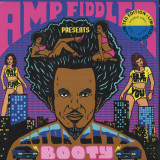
South Street delve into the The Sound Of Detroit from one of its unsung heroes, reissuing Amp Fiddler's 'Motor City Booty' LP on Yellow & Blue vinyl respectively. Coming straight off the D Funk assembly line, it's a full on dance floor affair from Motown to P-Funk, Techno and Neo Soul.
This 12 track album produced by Amp Fiddler & Yam Who? includes the massive 'Soul Fly' sounding like a Mark Ronson production had he been hanging out with George Clinton's Parlet followed by the bonafide P-Funk anthem 'Steppin' both featuring the stunning vocals by the Dames Brown girls.
Amp Fiddler is credited for taking both a young J Dilla and also Q-Tip under his wing teaching them his Akai MPC techniques, setting the path for some of Hip Hop's finest recordings which have defined the shape of things to come.
His musical collaborations & current duties include: Moodymann's musical maestro, keyboard wizard for Theo Parrish's live band, a longstanding Funkadelic member, co-writer for Sly & Robbie, Prince, Maxwell, Jamiroquai & Seal to name a few.
out of Stock
Last delivered 86 days ago available to reorder, subject to availability
The third release from Night Dreamer’s essential “Direct-to-Disc” sessions sees an incredible meeting between legendary US saxophonist Gary Bartz and leading UK spiritual jazz ensemble, Maisha, featuring two Bartz classics and three brand new joint songs written by both Bartz & Maisha in close collaboration.
Having cut his teeth playing with the likes of Charles Mingus, Max Roach, Art Blakey and finally in 1970, Miles Davis at the peak of his electric period, Gary Bartz became a leading figure of the early-to-mid 70s spiritual jazz movement, releasing a string of ground-breaking albums on legendary NYC jazz label Prestige Records with his NTU Troop, featuring classics such as “Celestial Blues”, “Uhuru Dance” and “I’ve Known Rivers”, before collaborating on Blue Note Records with the Mizell Brothers on the anthemic jazz funk of “Music Is My Sanctuary”. An oeuvre much loved by soul jazzers and hip hop fans alike.
Led by drummer Jake Long, Maisha have been central to the UK’s jazz explosion, and have fast become the UK’s most exciting and in-demand young spiritual jazz ensemble, from steller shows at Jazz re:freshed, Total Refreshment Centre & Church of Sound and supporting the Sun Ra Arkestra, to releasing their critically acclaimed debut LP, “There Is A Place” on Gilles Peterson’s Brownswood Recordings in 2018. Theirs is an organic & explosive sound that blends influences from afrobeat and broken beat to Persian music, with a deep love and understanding of jazz, particularly the heritage of spiritual jazz led by titans such as Pharoah Sanders, Alice Coltrane and of course, Gary Bartz.
Which makes this collaboration even more special. Bartz was first invited to share a stage with Maisha by Gilles Peterson to headline the inaugural We Out Here festival. Their chemistry was rich and instantaneous, certainly a two-way street, with the young musicians reinvigorating the legend’s performance and wowing the intergenerational festival audience. A European tour followed, including a London Jazz Festival highlight at the Royal Festival Hall, celebrating the 50th anniversary of his album “Another Earth”, originally featuring fellow legends, Pharoah Sanders, Charles Tolliver, Stanley Cowell, and John Coltrane’s own bassist, Reggie Workman.
Now the relationship has evolved into a special straight-to-disc recording for Night Dreamer Records, that captures the vitality of their collaboration. Whilst Bartz and Maisha reinvent classic Bartz compositions “Uhuru Sasa” and “Dr Follows Dance”, extending the pieces into long piece improvised grooves, their recording session gave birth to three brand new joint compositions, written the very same day. These include the propulsive “Leta’s Dance” that magically combines the Bartz’ soulful musical lyricism with Maisha’s African-jazz influences, and the organic jazz
funk of “Harlem to Haarlem”, featuring a hot solo from guest trumpeter Axel Kaner-Lidstrom of Cykada & Levitation Orchestra fame.
Like previous Night Dreamer efforts from afrobeat star Seun Kuti & Egypt 80, and the beautiful collaboration between Brazilian stars Seu Jorge & Rogê, the album was recorded in Haarlem’s Artone Studio, a stones throw from Amsterdam, in just one-take, straight-to-disc, avoiding post-production embellishments and retaining the purity of the performance lost in modern recording techniques.
This record really is an event, in and of itself, a meeting of talents, minds, generations and zeitgeist moments, captured in a unique and pure manner. The music does not disappoint, as Maisha have been inspired to reach new heights whilst we find Bartz truly reinvigorated, and both artists in tune to the spirit of the other.
Recorded direct-to-disc @ Artone Studio, Haarlem, The Netherlands on Tuesday 29th Wednesday 30th October 2019
DJ Swagger Minor Major Grand Schemes Nearing that halfway mark into 2022, you'd think Bielefeld's most illustrious producer DJ Swagger would have begun losing steam. Following a successful string of releases throughout the New 20's - consistently solid slabs on Thirty Year Records, ec2a, Timeisnow, plus killer collaborations with LUZ1E as DJ DOOM - the young musician pulls out his second full-length on his own GODDESS MUSIC imprint in the form of a slick, multi-genre double-pack: Minor Major Grand Schemes. MMGS is as much a refinement as it is an expansion of Swagger's stylistic bag of tricks, maneuvering through modern styles of club music, pop sensibilities and sleek production techniques that ticks off boxes for both DJs and casual listeners alike. You got your cheeky intros/interludes and your trap-pop miniatures; dusky UKG street devotionals and bonkers dubstep tools; sexy vocal features, clickity-clack percussion, and biiiig low-end. This is what DJ Swagger says about his new LP: This album is the most DJ Swagger sound yet. It wraps up all my influences from techno over hiphop to breakbeat and IDM. I had such a great time working on this and watching the process. I'm beyond grateful for the features and beautiful people that consistently helped me shape this piece of music. As said this is my very own project on my own label. Probably the largest project I ever started and drove to finish. Minor Major Grand Schemes stands for the balance between objective and subjective reality. Your perception of things mirrors on how you see them, feel them and take them for yourself. Minor major, so to say, important or not-so-important, grand schemes, means that things might get more or less important on how you value them. This is at least what I learned for myself doing a long-term therapy late 2020 into early 2021 against depression and OCD. As my view changed, so did my surroundings. As my surroundings changed, so did my view. I found that to be a really important and crucial lesson on how to deal with fear, anxiety and feelings alike. The toughest thing is to learn how to shift your mind towards another, more positive direction. That might take time, a lot of hard work and a strong will. Be sure that it is okay to ask for help, always. If I didn't get the help I got during my down times, I don't know where I would be now. This is why I decided on that name for this album. Consider yourself important and beautiful at any given time. Have fun and enjoy listening to Minor Major Grand Schemes.
out of Stock
Last delivered 3 years ago available to reorder, subject to availability
"Released in 1965 My Generation was the debut album by The Who. The album peaked at no 5 in the UK charts and launched the band onto worldwide acclaim
The album contains songs such as My Generation, The Kids are Alright and The Ox, and has been mastered by long time Who engineer Jon Astley from the original tapes and is packaged in original sleeve with obi and certificate of authenticity. This black vinyl version is engineered by Miles Showell at Abbey Road Studios using a half-speed mastering technique which produces a superior vinyl cut."
West London's post-punk scene is showcased with an EP built on the raw energy of like-minded collective spirits of the time by the short-lived Hamburger All-Stars.
Primarily revolving around the ideas of Justin Adams, a recent arrival in London with his band, The Syndromes, they soon found themselves recording at Street Level Studios - a basement squat in then run-down Little Venice. With producers Kif-Kif Le Batteur (Here And Now / Planet Gong) and Grant "Showbiz" Cunliffe (Blue Midnight / The Fall), their open-minded techniques allowed Adams to develop his increasing interest in the "studio as instrument" principles he loved from the likes of Brian Eno and Lee Perry.
Not a band as such, but friends and musicians from other bands all contributing including The Impossible Dreamers, Alternative TV, Gong and more, this "All-Stars" collective would later go on to be part of, form or affiliated in The Invaders Of The Heart, The Pretenders, Moodswings and Mutoid Waste.
Appearing on just 2 releases, the now rare split 7" and LP for the aptly named 100 Things To Do / Fuck Off Records, the songs initial vocals soon shift into funk and dub improvisations. One Million Hamburgers, Swinging London Pt 2 and Studded Leather Jacket almost fall away into atmospherics, with guitar, bass, percussion and horns augmented by Dr Rhythm machine, shortwave radio and heavy doses of Space Echo that capture the period's rawness and naivety to perfection.
out of Stock
Last delivered 4 years ago available to reorder, subject to availability
Historically informed violin player, prize-winning street musician, new age experimentalist, chamber ensemble performer and conservatoire deviant. The career of Valentina Goncharova (b. Kyiv 1953) shares parallels with those associated with the broader new music movement of the 20th century and the dissemination of home recording technologies.
Valentina’s was a youth spent immersed in the world of classical music study under soviet rule, first in Kyiv- later in Leningrad & now St. Petersburg, from the age of 16. With the supervision of professors M. Vayman and B. Gutnikov she learned concert violin and developed alternate playing styles alongside skilled pianists. A student of the Leningrad conservatoire during the years 1969 - 1983, her repertoire included music for violin and later expanded to contemporary music composition.
The improvisatory nature of free jazz and then-budding experimental rock circles also intrigued Valentina during this period in Leningrad. Departing from the rules of the conservatoire, she briefly performed in underground rock clubs alongside future members of the industrial group Pop- Mechanika (Popular Mechanics). This perpetual state of flux is central to the variety found within ‘Recordings Vol. 1’, though as opposed to any degree of uncertainty Valentina’s practice is one
in flux by way of earnest curiosity.
Pushing further into an exploration of solo electro-acoustic sounds, she took to home taping on a modified Olimp reel to reel recorder. Intrigued by the manipulability of dubbing and the fresh sounds of DIY effects chains, Goncharova developed pickups alongside her husband Igor Zubkov. Her infatuation with the music of Stockhausen, Xenakis, Ganelin Trio and Pierre Boulez channels through considerations of space and erratic sound design, the 3 movements of ‘Metamorphoses’ embodying this textural approach to musique concrete.
The compositional skills developed in Leningrad unfold in the romantic gestures of ‘Higher Frequencies’, whilst manipulated cello combines with synthesise keys across ‘Passageway To Eternity’.
The slow, pulsating drone soundscapes recall the likes of Robert Rutman’s US Steel Cello Ensemble or even deep listening pioneer Pauline Oliveros.
The juxtaposition of written notation and improvisatory flare is central to Goncharova’s sound world. This period of home recording documents a confluence of minimalism, free form and flirtations
with new age tropes (inc. bell chimes and cavernous vocal mantras).
Experimenting with unusual performance techniques, such as shouting into amplified cello strings, Valentina’s home studio functioned as a place to foster full artistic and creative freedom
away from any academic strictures.
Relocating to Estonia in 1984, and in parallel to the deeply personal music of ‘Recordings Vol. 1’, Valentina performed at jazz festivals and gave classical concerts across Eastern Europe. In a sense, the recordings on these discs offer only a glimpse into her lifelong body of work. Over the past few decades she has taught at Tallinn Music College, expanded and updated post- Soviet popular music repertoire, collaborated with the Russian Philharmonic Society of Estonia and given concerts and charity events alongside the Catholic Church.
Hers is a life dedicated to the exploration of sound, a career forged through careful study and ceaseless intrigue. In a time where technological interconnectedness has allowed for music of the pas
to be continually mined and evaluated through new lenses, Shukai present an artist whose tendency for private home-taping had allowed recordings to go unheard for thirty years.
out of Stock
Last delivered 5 years ago available to reorder, subject to availability
he 20th milestone release in the Generation Series lineup, this 5-LP abridged set features 82 tracks that play in the first half of Shenmue III, which takes place in Bailu Village. Comes in a top lid box (similar to recent Generation Series releases from Brave Wave) with liner notes, archival artwork and a digital download code for all 196 tracks.
t’s September 1981 and it’s matter of weeks away from the release of ‘I’M A RAINBOW’, the second album
Donna Summer had recorded for Geffen Records, which had also been produced by Giorgio Moroder and
Pete Bellotte.
• At the time that the album was being recorded, the musical landscape had changed and production
techniques were developing further. Geffen also wanted a more R&B-influenced album, despite the album
having a more R&B feel than ‘The Wanderer’ had done. The songs and their lyrical content were very strong
and Donna’s voice had never sounded better, which was always a tough comparison against previous
albums.
• A decision was taken by the label to withdraw ‘I’M A RAINBOW’ just prior to its release. David Geffen then
brought-in Quincy Jones to produce the next new album; 1982’s ‘Donna Summer’.
a a1. I'm A Rainbow Junior’s Shiny Rainbow Edit
[b] a2. I Believe (In You) (duet with Joe “Bean” Esposito) [Figo Sound Version]
[c] a3. Back Where You Belong [Jean Tonique Remix]
[d] a4. You To Me [Oliver Nelson Remix]
[e] a5. Don't Cry For Me Argentina [Ladies On Mars ‘Buenos Aires’ Remix]
[f] b1. Sweet Emotion [Le Flex Remix]
[g] b2. Brooklyn [Ladies On Mars ‘Child Of Rhythm’ Remix]
[h] b3. Romeo [Ladies On Mars ‘Luv-NRG’ Remix]
[i] b4. Highway Runner [Ladies On Mars ‘Street Race’ Remix]
[Ladies On Mars ‘Independence’ Remix]
Global electronic sound specialist - Producer and DJ Oliver Williams aka "The Busy Twist" is at it again. Among his numerous projects as a producer, this double-sider, dancefloor-focused EP is one of his seldom seen, more personal works in the vein of what he does best: an uptempo, bass-heavy madness, influenced by his regular trips to Africa, Latin America and the West-Indies, packed with undeniable British club music culture and production technique. Highly infectious energy, pure sunshine, 100% good vibes. Following up on The Busy Twist previous collaborations with Congolese singer Tres. "Nanko" is another joyful, sun-soaked, highly danceable Electro-Soukous party joint, loaded with captivating guitar grooves and soulful vocals. On the flip, "Rwendo Rweupenyu (The Journey Of Life) Remix" is an outstanding take on Zimbabwean Sungura Music (one of the country's most popular genres), originally performed by street band Daniel & Gonora Sounds, led by singer-guitarist Daniel Gonora and his drummer son Isaac. Respectfully using Daniel's mind bending guitar riffs and highpitched, uplifting vocals, The Busy Twist and his collaborator delivers an inspiring and remarkably effective version of the original song. Vinyl contains exclusive extended and instrumental Dj-friendly versions of both tracks that won't be available for download anywhere.
out of Stock
Last delivered 5 years ago available to reorder, subject to availability
- The definitive overview of one of Canada's unsung musical heroes - Rare/previously unreleased recordings, photos, and interviews - Lyrics, discography, and filmography - Audio re-mastered by John Baldwin Mastering - Artwork by Christi Belcourt and Alanna Edwards - Liner notes by Kevin Howes (Voluntary In Nature) - Contributions from the Dunn family, Bob Robb, and Alanis Obomsawin (OC) // How did you first experience the poetry, music, and film of Willie Dunn? In a Montreal coffeehouse during the mid-1960s? On a CBC Indian Magazine broadcast with host Johnny Yesno? At a Toronto record store or Native Friendship Centre at the turn of the 1970s? Waiting outside of the Mohawk Nation Longhouse? Maybe in your parent's record collection on the Rez? A White Roots of Peace gathering? Pow wow? The Mariposa Folk Festival? Or was it that Save James Bay Benefit back in '73? On a good friend's stereo? Sitting around a crackling campfire? How about an old NFB film reel or VHS tape in high school? Or while attending Manitou College? A German concert hall in the 1980s? Maybe a direct action protest on the colonial streets of Canada? Busking in Ottawa during the 1990s? College radio? At Willie's celebration of life service in 2013 alongside Alanis Obomsawin and Willy Mitchell? LITA's Grammy-nominated Native North America (Vol. 1) compilation or the very anthology you hold in your hands? There should be no judgment for coming to things when you do. All that's important is remaining open to life-changing messages such as these_ Willie Dunn shared truth through song and celluloid. His original composition, "I Pity the Country," is an unparalleled statement on the greed and hate created by humankind, recorded in 1971 and still unfortunately needed today. "It's like the reason you're supposed to make music," said Kurt Vile about the song to MOJO Magazine in 2015. With "Charlie," Willie was the first to deliver the devastating story of Chanie Wenjack and the Canadian residential school system to the music community, nearly 50 years before the much-celebrated Secret Path, yet ignored outside of Indian Country and the folk festival circuit. Dunn's film technique, featured in 1968's The Ballad of Crowfoot (NFB), predates the "Ken Burns effect" to great effect. Are you catching the drift? Willie Dunn was not only a trailblazing leader in his time, but well ahead of the curve, simply without the PR push and big money backing of major label players. "He was our Leonard Cohen," said singer-songwriter Eric Landry about his musical hero. The only difference is that Willie refused to play the Hollywood showbiz game. In talent, he is Cohen, Dylan, and Cash rolled into one and along with Buffy Sainte-Marie, Floyd Red Crow Westerman, and A. Paul Ortega, brought a new set of perspectives and realities to the folk music tradition. Willie spoke directly to his people and Mother Earth through his creations, not only from experience but by examining his roots and connecting with the world in which he lived. We are humbled to help honor Willie Dunn. May he never be forgotten_ PEACE
Seven years and a handful of lifetimes ago, New Bums came
out of nowhere with their debut album, ‘Voices In a Rented
Room’ - a record the New York Times described as “feeling like
it’s falling apart.” New Bums took this as a compliment and,
thus emboldened, they toured relentlessly in support of the
release: criss-crossing the USA in the spring of 2014, with a
European run that summer. Then, silence descended, as the
Bums withdrew to the place from which they’d mysteriously
emerged.
Now, the Bums are back. 2021 finds them with a new album in
hand. Following a West Coast US tour in late 2019 it’s clear that
the duo of Donovan Quinn (Skygreen Leopards) and Ben
Chasny (Six Organs of Admittance, Rangda, etc) are fully
reanimated, as evidenced by the songs and sounds of ‘Last
Time I Saw Grace’.
Retaining the drunk-dog-locomotion of their debut, New Bums
sprinkle a bit of fresh fancy into their signature twin guitarsand-vocals sound, with cleaner recording techniques, further
developments in harmonies and a new appreciation for a song
with more than two parts, making ‘Last Time I Saw Grace’
nothing less than the perfect progression from the purposefully
murky mixes of their debut.
Continuing to embrace an acoustic rock ’n’ roll sound, inspired
by artists such as Jacobites, Robyn Hitchcock, Johnny
Thunders, Replacements and such, New Bums push the words
and the stories to the front of the line, crafting tales with satiric
glee on ‘Last Time I Saw Grace’. However, this world of empty
perfume bottles, bodies tied to masts and moving onward to
devastation (after the bottle on the table pulls out a gun) feels
much more Gombrowiczian dreamscape than drunken night on
the town. Yes, everything is wasted but this is an existential
wasteland rather than a substance-laden one. This combination
of arch Californian post-aristocratic melodrama with torn and
frayed acoustic guitars opens up a new genre entirely, one
those at Drag City are tempted to call Rent Control Romantic.
Svart Records is proud to present the original soundtrack to the supernatural thriller series Requiem! Debuted by BBC One in the UK and NETFLIX globally, psychological horror series Requiem became an instant hit, not least because of it’s haunting, spine-tingling score. Conjured by award-winning composers Dominik Scherrer (The Missing, Ripper Street & Marple), and Natasha Khan of Bat For Lashes, Requiem is an eerie landscape of sharp, scraping cello, soothing harps and tense string sections. From the urban uncanny to folk horror, there is a distinct atmosphere in the fresh collaborative dynamic between the British-Swiss decorated grandmaster of unique television series soundtracks Scherrer, and the rising enigma of alt-pop, twice Mercury Music Prize-nominated singer/songwriter Khan. Of their alchemical and otherworldly creative chemistry, composer Dominik Scherrer recalls: “Natasha Khan and I spent some weeks in my studio in Brick Lane, coming up with themes and recording outlandish vocals and terrifying sounds. There is a cheeky element to the show, as well as a genuinely scary one. Together with a pastoral spookiness of the cello and strings themes started to give Requiem its own unique atmosphere. We experimented with deviant playing techniques and unconventional recording approaches, to complete a moody air of retro horror and pastoral spook.” Available for the first time on CD and LP, this highly celebrated “spooksome” score harkens back to the 1970s lo-fi soundtracks from BBC’s Radiophonic Workshop or 1970s horror soundtracks. Winning an Ivor Novello award for the “Best TV Soundtrack” in 2019, Requiem is a one of a kind treasure, now rightfully preserved and beautifully presented on lush vinyl and CD format by Svart Records. “Requiem promises much, not least in way of sound. Nominally just another spooksome BBC tingler – old castle in Wales, birds flying into windows, locked room, pagan symbols, creepy locals – it is rendered a whole cut above by not having the heroine’s every move into peril foreshadowed by dissonant eek-eek string” (The Guardian)
out of Stock
Last delivered 5 years ago available to reorder, subject to availability
South Street delve into the The Sound Of Detroit from one of its unsung heroes, reissuing Amp Fiddler's 'Motor City Booty' LP on suitably swanky purple and pink vinyl respectively. Coming straight off the D Funk assembly line, it's a full on dance floor affair from Motown to P-Funk, Techno and Neo Soul.
This 12 track album produced by Amp Fiddler & Yam Who? includes the massive 'Soul Fly' sounding like a Mark Ronson production had he been hanging out with George Clinton's Parlet followed by the bonafide P-Funk anthem 'Steppin' both featuring the stunning vocals by the Dames Brown girls.
Amp Fiddler is credited for taking both a young J Dilla and also Q-Tip under his wing teaching them his Akai MPC techniques, setting the path for some of Hip Hop's finest recordings which have defined the shape of things to come.
His musical collaborations & current duties include: Moodymann's musical maestro, keyboard wizard for Theo Parrish's live band, a longstanding Funkadelic member, co-writer for Sly & Robbie, Prince, Maxwell, Jamiroquai & Seal to name a few.
out of Stock
Last delivered 2 years ago available to reorder, subject to availability
Step in the Arena is the second studio album by hip hop duo Gang Starr, printed as a 1990 release and commercially released on January 15, 1991. The album received critical acclaim and was also included in the book 1001 Albums You Must Hear Before You Die. The Source magazine stated: “Step in the Arena stands alone on a musical level, yet it also remains true to hip-hop’s underground heritage.” In 1998, the album was selected as one of The Source’s 100 Best Hip Hop Albums. Urban Legends/UMC will reissue Step In The Arena on 2LP 180 gram black vinyl on 28th June, 2019.
out of Stock
Last delivered 5 years ago available to reorder, subject to availability
Tropical psych outfit, Lola’s Dice, return with an exhilarating double AA side 45 on “Cacri 'e Playa” b/w “Señor Cartujo” . Venezuelan strains of Caribbean rhythms blend with South American grit and humour; aided and abetted by studio maverick and renown bandleader Alex Figueira ( Fumaça Preta, Conjunto Papa Upa).
Lola’s Dice, an ensemble born and battle-tested by years of punk and hard rock before fusing into its current form, a consolidated tropical-psych quartet. The band’s evolution has resulted in music that is a pure body-moving delight — a fuzzy blend of guitars, synths and musical sabor that is very much rooted in the percussive sounds of Latin America, where all band members hail from, yet still comfortable in its punk-ethos.
One such fusion of sounds took place at the Barracão Sound studio in Amsterdam where they first asked rhythm sensei Alex Figueira (who currently joins them on stage whenever his agenda allows him) to help them twist their sound and bring it into the incendiary tropical realm his production work was known for.
Together they vandalized all sorts of rhythmic traditions. The resulting 4-track EP, “Viaje al Centro de Ritmo”, was a perfect match of genre-defying psychedelic madness and Caribbean cool and was duly signed and released by on-the-pulse NY based Names You Can Trust label.
After two years and a plethora of stages Lola’s Dice returned to Figueira's Barracão Sound for another dose of experimentation, diving deeper into their Caribbean roots and twisting them even further. The first fruits are now offered for release jointly by Names You Can Trust (later this year) and Figueira’s own Music With Soul.
The African Caribbean vibrations of “Cacri 'e Playa” tell a story of a stray dog whose sole habitat consists of the beach. A common phenomenon all across the Caribbean coastline shared by Venezuela and Colombia. Wonky synths and surf guitars interplay over a stomping extra syncopated drum beat. All things collide towards the end into a 1970’s style Salsa street party, the relentless cowbell driving everyone forward.
On the flip, “Señor Cartujo” contains a humorous tale about the most popular brand of anise liquor in Venezuela ("Cartujo") and a shameless ode to the glory days of "Techno Merengue", when Latino rappers in the US started making Dominican Merengue with hip hop influenced vocals and house production techniques and equipment. Lola’s Dice, however, take a more psychedelic approach to this merengue, oozing with funky guitars and percussion.
out of Stock
Last delivered 6 years ago available to reorder, subject to availability
The third release from Night Dreamer’s essential “Direct-to-Disc” sessions sees an incredible meeting between legendary US saxophonist Gary Bartz and leading UK spiritual jazz ensemble, Maisha, featuring two Bartz classics and three brand new joint songs written by both Bartz & Maisha in close collaboration. Having cut his teeth playing with the likes of Charles Mingus, Max Roach, Art Blakey and finally in 1970, Miles Davis at the peak of his electric period, Gary Bartz became a leading figure of the early-to-mid 70s spiritual jazz movement, releasing a string of ground-breaking albums on legendary NYC jazz label Prestige Records with his NTU Troop, featuring classics such as “Celestial Blues”, “Uhuru Dance” and “I’ve Known Rivers”, before collaborating on Blue Note Records with the Mizell Brothers on the anthemic jazz funk of “Music Is My Sanctuary”. An oeuvre much loved by soul jazzers and hip hop fans alike. Led by drummer Jake Long, Maisha have been central to the UK’s jazz explosion, and have fast become the UK’s most exciting and in-demand young spiritual jazz ensemble, from steller shows at Jazz re:freshed, Total Refreshment Centre & Church of Sound and supporting the Sun Ra Arkestra, to releasing their critically acclaimed debut LP, “There Is A Place” on Gilles Peterson’s Brownswood Recordings in 2018. Theirs is an organic & explosive sound that blends influences from afrobeat and broken beat to Persian music, with a deep love and understanding of jazz, particularly the heritage of spiritual jazz led by titans such as Pharoah Sanders, Alice Coltrane and of course, Gary Bartz. Which makes this collaboration even more special. Bartz was first invited to share a stage with Maisha by Gilles Peterson to headline the inaugural We Out Here festival. Their chemistry was rich and instantaneous, certainly a two-way street, with the young musicians reinvigorating the legend’s performance and wowing the intergenerational festival audience. A European tour followed, including a London Jazz Festival highlight at the Royal Festival Hall, celebrating the 50th anniversary of his album “Another Earth”, originally featuring fellow legends, Pharoah Sanders, Charles Tolliver, Stanley Cowell, and John Coltrane’s own bassist, Reggie Workman. Now the relationship has evolved into a special straight-to-disc recording for Night Dreamer Records, that captures the vitality of their collaboration. Whilst Bartz and Maisha reinvent classic Bartz compositions “Uhuru Sasa” and “Dr Follows Dance”, extending the pieces into long piece improvised grooves, their recording session gave birth to three brand new joint compositions, written the very same day. These include the propulsive “Leta’s Dance” that magically combines the Bartz’ soulful musical lyricism with Maisha’s African-jazz influences, and the organic jazz funk of “Harlem to Haarlem”, featuring a hot solo from guest trumpeter Axel Kaner-Lidstrom of Cykada & Levitation Orchestra fame. Like previous Night Dreamer efforts from afrobeat star Seun Kuti & Egypt 80, and the beautiful
collaboration between Brazilian stars Seu Jorge & Rogê, the album was recorded in Haarlem’s Artone Studio, a stones throw from Amsterdam, in just one-take, straight-to-disc, avoiding postproduction embellishments and retaining the purity of the performance lost in modern recording techniques. This record really is an event, in and of itself, a meeting of talents, minds, generations and zeitgeist moments, captured in a unique and pure manner. The music does not disappoint, as Maisha have been inspired to reach new heights whilst we find Bartz truly reinvigorated, and both artists in tune to the spirit of the other.
out of Stock
Last delivered 6 years ago available to reorder, subject to availability
JK Group are a powerhouse nu-jazz band fronted by Melbourne saxophonist Josh Kelly, best known for his work with future soul-jazz collective, 30/70, and being the 2019 PBS Young Elder of Jazz.
They sit in the crossover of raw, live jazz and electronic/dance production. At times synth-heavy, effected and soundscapey, while at other times hard hitting groove laden with spiritual jazz overtones and no-holds-barred improvising. Their sound nods respectfully to classic
jazz traditions, whilst carving a path that unashamedly looks towards the future, embracing modern influences and production techniques.
The album received a 5* review from Melbourne's own Mike Gurrieri, and has garnered radio play on PBS, RRR, Worldwide FM, NTS and more. The debut LP 'The Young Ones' is due out on La Sape March 27th. (SAPE010).
out of Stock
Last delivered 5 years ago available to reorder, subject to availability
It seems KPM have long been fans of Smith and Mudd and, after being introduced to each other by mutual friend Andy Allday, the peerless Balearic maestros were invited to contribute to the library label’s digital-only “Album Shorts” project. The results are predictably wonderful.
With past projects under our belt working with everyone involved so far it made perfect sense for Be With to take on the vinyl release of this instant library classic. But why is it called “Tea With Holger”?
“Holger” is of course Holger Czukay and the whole LP is dedicated to Smith and Mudd’s time spent with him and Ursa Major at Can’s famous Inner Space Studio in Weilerswist, near Cologne.
When not recording it seems they spent a great deal of time sat around being entertained by Holger’s stories and drinking many cups of different sorts of tea from all over the world. These moments provide some their fondest memories of their visits:
“Looking back, it was pretty incredible that we spent part of our lives with Holger in one of the most magical places we’ve ever known, Inner Space Studio. We have our memories and, of course, the Bison album we made with him. But to honour the time we spent with him, we wanted to dedicate an album to him called ‘Tea With Holger’. The names of the tracks are about that time.”
The album was recorded over several years in London, Margate and Gorthleck, a small hamlet in the Scottish Highlands. Mike Piggott, who played with Bert Jansch, handled the strings and played violin whilst Sam Creer lent his virtuoso cello work to the proceedings. The sessions employed a key recording technique from their time with Holger: hit record and play. They wanted to capture magical improvisational moments live and not do the work later on in editing.
In their own words (and in classic library record sleeve style) these tracks are collectively described as “Balearic themes including breezy soul, sun-dappled melodies, warm pianos and sweeping strings”. You want to hear this, right?
The album is vintage Smith and Mudd. The gentle piano ushering in opening track “The Gardener” is soon joined by low, bubbling drums. When the time is just right, lush guitars glisten above a Welsh language vocal that floats like silk. Easy as a sea breeze. “Innerspace” is of course a nod to Can’s aforementioned studio. Dark, heavy piano meets rolling drums before warm chords and luscious strings take over, gliding over moody grooves to drive you home. Closing out side A, “Weilerswist” delivers more beautifully rolling piano and guitars over thumping cellos and building drums.
Side B opens with the full, string-enhanced version of “Away From Me”. This is Smith and Mudd’s prefered version and it’s only available here on this vinyl issue. For us it’s the standout on this all-highlight album. Tribal tones, piano and cello set a melodic staccato for violin to soar over while rolling piano lines and gospel organ chords descend into a drum drop that leads to a glorious vocal lead finale.
Distant synths introduce sun-drenched guitars and uplifting strings in “Kölner Street”, before a spacey Moog solo leads to a spellbinding, sci-fi drop. The sunshine returns before the track ends. The album closes with “Tea With Holger”. Airy vocal swells are punctuated by plucked cellos and picked guitars, all wonderfully warmed by a soulful piano.
Cut by Pete Norman and pressed in the Netherlands by Record Industry, “Tea With Holger” comes in a classic KPM green sleeve complete with track descriptions from Smith and Mudd themselves. The finishing visual touches come courtesy of Richard Robinson. We’ve given this record the same care and attention as we give to each our KPM re-issues, and it’s just as essential.
out of Stock
Last delivered 6 years ago available to reorder, subject to availability
Welcome to the strange musical world of Tolley & Dara, an experimental duo whose incredible music held a marginal yet vital position on the fringe of the Australian music industry during the late 1970s and early 1980s.
Consisting of jazz bassist and synthesist David Tolley and percussionist Dure Dara, their union was a relationship of romance and intense creativity, a deep spiritual bond consecrated amidst banks of modular synthesizers and racks of exotic percussion instruments.
Recorded over a series of live performances in the spring of 1979, the music featured on Cutheart was edited and assembled from eight improvised pieces recorded at the Universal Theatre Melbourne. Comprised of analogue synthesizers and a vast array of tuned and non-tuned percussion, Tolley and Dara sculpted a cluster of electronic abstractions and organic splashes of Gamelan-influenced percussion; a dense otherworldly soundscape coloured with trance-like vocal scatting and deranged muttering.
Known for his bass playing on the classic Australian jazz-rock album Carlton Streets by The Brian Brown Quintet and also as a member of EX-, (the collaborative project with Daevid Allen from Soft Machine/Gong), Cutheart sees Tolley explore the outer realms of heady improvised electronic music.
While the music of Tolley & Dara exists in a sonic universe all of it's own, similarities could easily be drawn to another likeminded musical partnership, the American husband and wife duo Annette Peacock and Paul Bley. Cutheart is a pioneering recording of extended synthesiser and percussion technique from the Australian experimental underground.
Dark Entries reissue the 2nd full length from Carolyn Fok / CYRNAI, an Asian-American female solo artist from the Bay Area. Carolyn's adventures in sound began with recording stories on a tape recorder at age 9 in 1976. A short time later, exploring the scattering of musical instruments and effects units her father left lying around the family home. She became especially fascinated by his TEAC reel-to-reel recorder that set off a lifelong fascination with sound design. By the age of 16 Carolyn had become inspired by industrial electronic act Cabaret Voltaire, as well as anarcho-punks Crass. Creating the stage name CYRNAI, a rearranging alphabet of Carolyn Fok, she played in several Bay Area bands including Treason, A State Of Mind, Trial and Rhythm & Noise between 1983 and 1991.
In 1986 Carolyn moved into her family's building in downtown San Francisco providing a space to develop her own art and music for the next two decades. She was the only tenant of the five story building. The top floor had 36 abandoned rooms with building materials and holes between floors, staircases that created natural reverb. It was during this isolated time that Carolyn would start working on her second release, 'Parts of The Insomnic Wheel,' 60-minutes of ten untitled pieces that ran into each other. This was also the first release on cassette due time constraints of the LP. She spent many nights at the 24-hour diner across the street chatting metaphysics, parallel universes, the 5th dimension and astro-projections. Carolyn would sleep next to paper/pencil and report dream states, experimenting with mental techniques, investigating how far her mind could go. It was a journey to unravel the 'dark night of the soul'. Utilizing her industrial surroundings, Carolyn would bang on sheet metal and record percussion on found materials. Originally released by Ladd-Frith in 1986, this reissue adds 4 unreleased bonus tracks recorded during the same period. Each copy includes a 16-page zine with lyrics, photos and notes by Carolyn. All songs have been remastered by George Horn at Fantasy Studios.
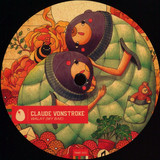
Our boss Claude VonStroke is the busiest guy we know. When he's not traveling the world or curating an event, he's in the studio every day putting in hours upon hours, relentless in perfecting his craft. He's had a slew of hits the past couple years in the form of remixes and collaborations, and now with the 'Walay (My Bae)' EP, Claude gets back to some inventive and somewhat 'out of the box' solo works.
The title song leads with a melodic riff and an funky vocal that sounds like a defective cyborg is proclaiming love for his partner, 'Walay.' This quasi-human uses the slang 'My Bae' to try and pass for human and we almost believe in his passion. The sound harkens back to old classic rave tracks but also pushes very modern production techniques.
On the flip, 'Raw Nerve' is an emotional exploration in both sounds and lyrics. A melancholy VonStroke dives deep into his insecurities and fears with sonically mutated lyrics like 'I'm feeling so sad, I'm feeling real bad today. When I see you on the street I dont want to compete.' You can feel the social instability oozing out of the vocal only to come back at the close with a violently hard bassline embodying the personal angst and frustration that goes along with not 'fitting in.'
* Aquatic Lab Records presents a very special release to close out 2017. LAB018 plays host to Bristol luminary and Tectonic boss Pinch, who delivers three menacing and forward-leaning apocalyptic cuts.
* The pointed and growling ragga-style techno of A-side 'Brain Scan' is built on battering rhythms and dubwise sonic techniques, in the vein of an old school revivalist production. True to the roots, futuristic in scope.
* On the flip, 'Street Light' is an equally abrasive bassweight roller, counter-balanced by Pinch's cavernous and cinematic sound design. Strictly war sounds for the dance.
* Rounding off the release is soundsystem meditation 'Abducted', an icy, gangster half-stepper drenched in thick reverb and melancholic DMZ-style laments.
* Mastered by Rashad Becker at Dubplates & Mastering (Berlin). 180-gram vinyl.