Altsaxofonist Lou Donaldson wurde schnell zu einer festen Größe des Blue-Note-Labels, nachdem er 1952
als Sideman an der Seite von Thelonious Monk und Milt Jackson zu hören gewesen war. Noch im selben
Jahr begann er, eigene Sessions als Bandleader einzuspielen und blickte, als er 1960 ins Van Gelder Studio zurückkehrte um sein hervorragendes Album ”Sunny Side Up” aufzunehmen, bereits auf ein Dutzend
Aufnahmesessions unter eigenem Namen zurück. In vielerlei Hinsicht ist das Album ein Paradebeispiel für
den typischen Blue-Note-Hard-Bop-Sound: eine Mischung aus swingenden Standards und bluesgetränkten
Eigenkompositionen, die von einem Quintett mit viel Gefühl und Ausdruck interpretiert werden.
Vor 30 Jahren, im Jahr 1996, kamen Paul, Gene, Ace und Peter wieder zusammen – um diesen bedeutsamen
Anlass zu feiern, wurden Auszüge aus „Alive!“ und „Alive II“ zusammengestellt und unter dem Titel
„You Wanted The Best, You Got The Best“ veröffentlicht. Diese Sammlung, die nun erstmals aus dem
KISSTERIA-Vinyl-Boxset herausgelöst wurde, erscheint auf 180-Gramm-Schwarzvinyl in einer erstmals
erhältlichen Gatefold-Hülle mit erweiterten Fotos.
Das Originalalbum sowie eine Bonus-LP mit B-Seiten, Demos und seltenen Aufnahmen, von denen einige
zum ersten Mal auf Vinyl erscheinen. Verpackt in einem alternativen Cover-Design und gepresst auf limitiertem, blau marmoriertem Vinyl.
Plush shag carpeting, jazz flutes, analogue synths, funk grooves, exotica, and sultry, Italian-style vocalising: Erotica 70 is the new album from Larry Manteca, known for their inventive, tongue-in-cheek reimaginings of classic Italian soundtrack aesthetics.
This time around, the Milanese collective sets its sights on the distinct sonic landscape of 1970s commedia sexy—a film genre that, for better or worse, defined an era and fed richly into the cinematic education of Larry Manteca’s members.
Through this lens, Erotica 70 also becomes a way of celebrating Piero Umiliani in his centenary year—a composer whose name is closely linked to the erotic comedies of the time.
The nod to Umiliani is baked right into the details, starting with the choice of vintage gear like the Eminent synth and the Wurlitzer electric piano. These instruments deliver that particular blend of jazz, groove, electronics, and sensual charm that made the golden age of Italian film music so unique.
Standout track “Lando” is a joyful, playful homage to actor Lando Buzzanca, who starred in numerous films scored by Umiliani, including the iconic 1973 comedy La schiava io ce l’ho e tu no (My Darling Slave).
Larry Manteca is spearheaded by multi-instrumentalists Alessandro Paiola and Riccardo Danieli, flanked by the cinematic flute of Carlo Pelsa, the swinging drums of Andrea Quattrini, and the magnetic vocals of Valentina Castelli and Alessandra Maria Manzoni.
Recorded across various studios in Northern Italy, Erotica 70 is the imaginary soundtrack to an Italy that no longer exists, recreating its atmosphere while rendering it in full, vivid colour. It’s a record whose music seems to come straight out of a provincial cinema, a smoky late-night club, or a long-lost 70s film. But while it looks back to a bygone era, it does so only to bring it straight into the present, making the past sound surprisingly fresh and contemporary.
Marlon von der Band Scherben sagt folgendes zur Platte: marode aus Düsseldorf legen drei Jahre nach ihrem Debüt mit ihrem zweiten Studioalbum ordentlich nach. Das elf Songs starke Album "Strukturen", verpackt in ein stimmiges Schwarz-Weiß-Cover, arbeitet sich mit einer Mischung aus Resignation, Frust und kämpferischem Optimismus am Irrsinn der postkapitalistischen Gesellschaft ab, ohne dabei in Phrasendrescherei zu verfallen. Persönlich hab ich mich besonders über die schallende Erkenntnis "Ich bin zu dumm für Turbostaat" aus dem Lied "Angekommen" gefreut. Musikalisch bleiben marode sich treu: Tempowechsel, gute Breaks und der harmonierende Wechselgesang sorgen dafür, dass keine Langeweile aufkommt. Insgesamt ist das zweite Album noch einmal runder und fetter als das erste. Wer musikalisch irgendwo zwischen Razzia und Dackelblut zu Hause ist, wird hieran sicherlich Freude haben. Schönes Ding!
You've never played a game like Blippo+ before, and you've never heard a video game soundtrack quite like Greatest Hits from Planet Blip.
Composed by Rob Kieswetter and Jona Bechtolt from the LA-based trio YACHT, the soundtrack collects 71 tracks from the cult classic video game Blippo+, reworked and sequenced into a continuous listen for this special release —a TV static-speckled gatefold double LP, out Oct. 16 via Hologram Opera, marking the soundtrack’s physical debut.
Taking the form of a cable TV simulator, Blippo+ captures the magical feeling of seizing a mysterious signal from outer space and discovering the television programming of an alien culture. Soundtracking the game’s pastiche of programs is Rob and Jona’s genre-spanning score—synth-heavy, eccentrically electronic, with a skewed sensibility that pays homage to cable access, library music, video art, and the late-night margins of the 80s and 90s underground.
TV obsessives will find plenty to love in Greatest Hits from Planet Blip: with surreal theme songs, jangly jingles, zippystings, catchy kitsch, period-accurate menu music and even pop hits from the alien airwaves, this propulsively playful soundtrack will have channel-flippers tingling with nostalgia.
“Planet Blip is an alien planet where art and music are the only currency and ‘consciousness particles’ form the basis of all media. To capture the spirit of this world, we drew inspiration
from all the music we felt best embodied this ethos and ran it through our own utopian blender,” say Bechtolt and Kieswetter.
Blippo+ is an award-winning, experimental, live-action video game created by YACHT and Telefantasy Studios, along with developers Noble Robot and Dustin Mierau, and published by Panic Games. It was released for Steam, Playdate and Nintendo Switch in 2025 to widespread
critical acclaim and has earned a devoted fandom. A Mac version followed earlier this year, and was nominated for an Apple Design Award.
"Simultaneously nostalgic and futuristic, otherworldly yet
welcoming, Blippo+ is an absolute artistic triumph.
" —Deven McClure, Screen Rant
"Blippo+’s presentation might ape old traditions, but the collective impact of its content is richer, deeper, and more entertaining than any mere remembrance.
" —Garrett Martin, Paste/Endless Mode
"In the increasingly reactionary and prescriptive landscape of video games, it is remarkable to encounter something so distinctive, so hopeful, so celebratory, so devoted to expanding the possibility space of art beyond a single medium." —Sam Bodrojan
Love or its absence dominates the intimate songs on the new album from ARBORIST – the musical outlet of Mark McCambridge. Looking For Love, Arborist’s fourth album of exquisitely inventive Americana, places us firmly in his hometown of Belfast, allowing it to act as a microcosm of the wider-world, with all its foibles and charms. We find fictional protagonists scouring the dark corners of the city, wiling-away afternoons in strip clubs, wandering the streets in all weather and reflecting on the harsh reality of modern society, all in search of an elusive love – emphasising our need for it now more than ever.
Looking for Love is ARBORIST’s first album to be self-produced by McCambridge, largely from his home studio in Belfast – and at times it feels like we are in the room with him. It’s a different kind of record for him as previously he has always sought collaboration; whether it be with Kim Deal who chose to sing intertwined harmony on his debut single “Twisted Arrow”, or recording in The Curfew Tower owned by The KLF’s Bill Drummond who described Mark’s songwriting as being “riven with more loss than any record since Leonard Cohen quit this world”, and who Matthew E White and his Spacebomb band collaborated with to such astonishing effect on the previous Arborist LP, 2023’s An Endless Sequence of Dead Zeros, winner of the prestigious Northern Ireland Music Prize. This time, with no outside producer steering the way, McCambridge found that the quiet hours were where he felt most at ease, despite periods of trial and error, and, by his own admission, moments of feeling genuinely lost in it all.
Despite playing many of the parts himself, McCambridge still called upon old friends from the community around him; Spacebomb’s resident bassist Cameron Ralston (Bonnie Light Horseman, Hiss Golden Messenger) again features throughout the record, alongside Eamon Ferris (The Waterboys) on drums, with the great and the good from Belfast’s vibrant music scene. Grainne Meyer plays concert harp and Aga Olek plays violin for the quasi-title track “Looking 4 Love” – an off-kilter love-letter to Belfast. Meilana Gillard provides a sleazy saxophone on “Bye Bye Johnny Cash” – a seedy tale of a man obsessively visiting a dancer in a club, and The Larne Community Youth Choir provide backing vocals for “Go Kill The Fatted Calf” – a song Mark wrote about his son growing up, a take on the parable of the prodigal son, with Jonny Ashe’s blistering guitar solo adding an album highlight. The Errigal Ensemble String Quartet and Aisling Agnew’s breathtaking flute solo feature on “What Is It You’re Asking” – a song about love, or its absence, both personally and universally in these times.
McCambridge was recently honoured with a “Fellowship” by the Seamus Heaney Centre at Queen's University Belfast where he collaborated with such illustrious names from the literary world as Nick Laird, Caoilinn Hughes and Conor McPherson. Through the University he was given access to the music department's Steinways and pipe organs, and decided to try one out for the album’s centrepiece “I’ve Been A Flaneur”. As Mark explains, "The drone on the pipe organ — and the sound of it starting and stopping — was so visceral that I decided to try a half-written song against it right there and then, and this came out in one take… The song was a breakthrough artistically - I don't think I'll ever record in the same way again after this."
The album was engineered by longtime collaborator Ben McAuley (Van Morrison) and mixed by Jimmy Robertson (Anna Calvi, Beth Gibbons, Fat Dog). The results are staggering, devastating and uplifting in equal measure, calling to mind albums such as Songs Ohia’s Magnolia Electric Co., The Divine Comedy’s Regeneration, The Blue Nile’s Hats and Wilco’s Ode to Joy, as well as early-70s records from John Cale, John Lennon and Bill Fay.
Belfast native Mark McCambridge played his first show as Arborist supporting James Yorkston. A solo tour followed, and impressive performances led to notable support slots alongside Low, Cat Power, Echo & The Bunnymen and Guy Garvey. Arborist's debut single, the Americana-tinged "Twisted Arrow," caught the attention of the critics with an astonishing duet with Kim Deal of The Breeders. The debut album Home Burial (2016) and its follow-up, A Northern View, both received glowing praise, from The Guardian ("instant classic" ----) to MOJO ("devastatingly bleak… upliftingly beautiful" ----) to Uncut (8/10), with BBC 6 Music play from Cerys Matthews, Cillian Murphy, Lauren Laverne, Radcliffe and Maconie and Gideon Coe — and Steve Lamacq calling single "Taxi" "one of those records that makes you immediately stop what you're doing." He went on to even greater success with the 2023 Northern Irish Music Prize winning third LP, An Endless Sequence of Dead Zeroes, which was recorded at SpaceBomb Studios in Virginia with musician and producer Matthew E White. For his fourth LP, Looking For Love, he has signed with Fika Recordings and with a tour approaching in November, 2026 looks set to be a seminal year for the Irish artist.
Wewantsounds it delighted to announce a deluxe reissue of Frank Foster's 'The Loud Minority' LP. Released on Bob Shad's Mainstream Records in 1972, it's a landmark album and one of the key political works of the 70s. Featuring an all-star cast of superb musicians including Elvin Jones, Stanley Clarke, Airto, Cecil Bridgewater and Marvin 'Hannibal' Peterson, it is also Dee Dee Bridgewater's earliest full recordings. This special edition includes a 20-page booklet featuring amazing unseen session photos recently unearthed, an introduction by Judd and Mia Apatow (Shad's grandchildren), an essay by British journalist Kevin Le Gendre and an exclusive interview of Cecil and Dee Dee Bridgewater by Paul Bowler. The album's original artwork as been recreated with original photos and the audio newly remastered from the original tapes.
When he recorded "The Loud Minority" in 1972 for Bob Shad's Mainstream Records, Frank Foster had been a solid sax player for nearly twenty years, playing with the likes of Donald Byrd, Thelonious Monk and The Count Basie Orchestra. For this special session, he gathered a stellar line up of old fellow musicians like Elvin Jones and Harold Mabern and young turks including Stanley Clarke, 'Hannibal' Marvin Peterson, Cecil and Dee Dee Bridgewater. Cecil Bridgewater remembers: "Frank, his thing was, any group that he had he wanted to give young musicians a chance." As usual for Mainstream sessions, the studio was booked for two days and the record was cut live, supervised by Bob Shad's trusted men, arranger Ernie Wilkins and engineer Carmine Rubino.
What came out of these two days is now the stuff of legend, four long funky jams fuelled by two distinct line ups playing simultaneously augmented with a powerful 6-piece brass section led by Foster. The album kicks off with the anthemic "The Loud Minority" (sampled by United Future Organization and DJ Shadow) with its long brass introduction followed by Dee Dee Bridgewater fiery poem, a politically charged statement expressing the fight for civil rights, before the whole group comes together for a funky explosion clocking at 14 minutes. "That was a period where we were really into our African consciousness" reminisces Dee Dee in the interview.
The album continues with the funky uptempo "Requiem for Dusty" while "J.P.'s Thing" adopts a slightly more spiritual feel, with a beautiful Fender Rhodes solo and Foster's soprano sax improvisation. The album ends with "E.W. Beautiful People", a long dreamy improvisation climaxing with Dee Dee Bridgewater's poignant vocals.
The Loud Minority is a key militant jazz manifesto and one of the landmark jazz funk albums of the 20th Century. The album was recorded in two days but its legacy lives on and still resonates loudly in the BLM days. Wewantsounds is delighted to reissue this major works with newly remastered audio and a deluxe 20-page booklet full of breathtaking unseen session photos and insightful texts telling the whole story of this superb album.
A genre- blurring statement born from bedrooms and late- night studio sessions, the album fuses live drums, analogue synths, samples, and dense percussion into something critics struggled to pin down - baggy grooves meet electro-pop meets rave culture. Originally designed as an extension of the band's unpredictable live shows, Harder Than It Should Be captures a rotating cast of collaborators and a core four-piece that expanded into an eight-member spectacle. Tracks like Atom Bomb City, Cut It Loose and the cult single These Boys Are Athletes (featuring Bis vocalist Manda Rin) earned radio play and industry buzz - yet the album itself was never formally released. Recovered from early recordings and demos, this reconstruction reflects the original intent: a high- energy journey mirroring the band's live intensity. A document of a moment when MySpace buzz, indie discos and electro experimentation collided in small venues and word-of-mouth scenes.
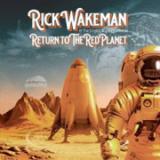
THE EPIC RETURN TO MARS FROM RICK WAKEMAN A NEW PROGRESSIVE ROCK SUITE INSPIRED BY BOTH PAST & THE LATEST DISCOVERIES ON THE RED PLANET FEATURING LEE POMEROY, DAVE COLQUHOUN, ADAM FALKNER & MOLLIE MARRIOTT - RELEASED ON CD/BLU-RAY EDITION - INCLUDES CD OF THE STUDIO ALBUM + BLU-RAY DISC FEATURING DOLBY ATMOS, 5-1 SURROUND SOUND & HI-RES STEREO MIXES & THE MAKING OF THE 'RETURN TO THE RED PLANET' DOCUMENTARY + 20-PAGE PRINTED BOOKLET / CD EDITION / 2LP VINYL. Following his acclaimed 2020 album 'The Red Planet', Rick Wakeman makes a triumphant & inevitable return to Mars with 'Return To The Red Planet', a sweeping new progressive work that fuses science, imagination & musical virtuosity into one of the most ambitious recordings of his career
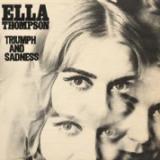
Standing up for joy and pain and all the messy, confusing, beautiful details that make life worth living. Soulful and timeless, her songs tell stories of the heart, finding universal truths in the honesty of personal experience. Released on UK label Mr Bongo and College of Knowledge in Australia and New Zealand, Triumph & Sadness is her most profound album yet - a powerful and unique record inspired by a classic sweet soul sound and rooted in the contemporary moment. Reaching out with vulnerability and poise, it is a plea for connection in a world gone numb. Recorded over four fruitful days at an all- analogue studio in the stunning natural surroundings of rural Victoria (with additional sessions for horns vocals and overdubs at Sound Park in Northcote), Triumph & Sadness was cut directto-tape with all the urgency and warmth of the iconic '60s and '70s sessions that first inspired her. Written alongside Liam McGorry (Temporary Blessings), featuring collaborators from bands Surprise Chef and Karate Boogaloo and mixed by Daptone and The Womack Sisters collaborator Wayne Gordon, it captures the live energy of a band at the top of their game.
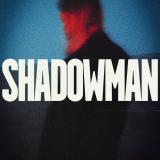
Shadowman ist das gleichnamige Debütalbum des neuen britischen Trios um den Alt-Blues-Rock-Musiker John J Presley, den Produzenten Ben Hillier (zu dessen Referenzen Top-Acts wie Depeche Mode, Blur, Elbow, Villagers und Editors zählen) und Danielle Perry, Radiomoderatorin und Jury-Mitglied des Mercury Music Prize. Die Aufnahmesessions verliefen schnell und intuitiv: Kein Stück benötigte mehr als drei Takes, und das musikalische Spektrum ist weit gefächert und reicht von wuchtigen Gitarren bis zu cineastischen Orchestrierungen, von Bläserarrangements im Stil eines New-Orleans-Trauermarsches bis zu motorischen Drumcomputern, von vielschichtigen Gesangsdialogen bis zu Momenten von Post-Rock-Intensität. Die Studiomusiker Pete Wareham und Marcus Hamblett verliehen dem Werk mit ihren einzigartigen Saxofon- und Bläsertexturen zusätzliche Farbe und Tiefe. Für die technische Umsetzung zeichnet Dan Crook (Killing Joke, Black Grape) verantwortlich. Das Album erzählt Geschichten von Hochzeitssängern, der Intensität der modernen Welt und der Sommersonne.
"Beirut City Pop" vereint zehn Aufnahmen aus der libanesischen Privatpress-Kassettenszene der späten 1970er und 1980er Jahre. Diese Songs, die von kurzlebigen Bands und Studioprojekten entstanden sind, bewegen sich zwischen Disco, Pop, Soul, Jazz, Bossa, Rock und AOR. Viele davon wurden während des libanesischen Bürgerkriegs produziert, zu Hause kopiert und nur im Freundeskreis und in lokalen Gemeinschaften verbreitet, wobei einige ausschließlich auf handkopierten Kassetten erhalten geblieben sind. Viele der Musiker waren über Ziad Rahbanis "Bypass Studio" miteinander verbunden, arbeiteten projektübergreifend zusammen und teilten eine gemeinsame musikalische Sprache. Inspiriert von der Genremischung des japanischen City Pop spiegelt der Titel sowohl den Klang als auch den Geist dieser Aufnahmen wider. Mit Künstlern wie Stephanie Stephanou, Force, Games, Andromeda und Walid Itayim dokumentiert "Beirut City Pop" eine eng verbundene Musikszene, deren Kreativität und musikalische Kameradschaft trotz außergewöhnlicher Umstände Bestand hatten.
HoYoverse und Laced Records präsentieren den offiziellen Soundtrack zu „Zenless Zone Zero“ auf Vinyl – eine fesselnde klangliche Momentaufnahme von New Eridu, der letzten Stadt in einer Welt, die von den „Hollows“ verwüstet wurde.
Diese Sammlung enthält eine kuratierte Auswahl an Musik aus Versionen vor 2.0. Während das Cover-Artwork Agenten wie Yixuan, Miyabi, Anby und Nicole in den Vordergrund rückt, geht die Musik über einzelne Charaktere hinaus und fängt die allgemeine Atmosphäre des Spiels ein.
Die vom San-Z STUDIO kuratierte Trackliste vereint Charakter-EPs (darunter „pinKing“ und „Burning Desires“), dynamische Kampfthemen und den entspannten Groove der „60%“-Reihe.
Mit Genres, die von Metal und 90er-Jahre-Anime bis hin zu Lofi und EDM reichen, spiegelt sie die kühne und vielseitige Identität des Spiels wider.
In Kombination mit einem maßgeschneiderten Cover-Design ist diese Veröffentlichung sowohl ein Sammlerstück als auch eine lebendige Erweiterung des Zenless Zone Zero-Universums.
HoYoverse und Laced Records präsentieren den offiziellen Soundtrack zu „Zenless Zone Zero“ auf Vinyl – eine fesselnde klangliche Momentaufnahme von New Eridu, der letzten Stadt in einer Welt, die von den „Hollows“ verwüstet wurde. Während das Cover-Artwork Agenten wie Yixuan, Miyabi, Anby und Nicole in den Vordergrund rückt, geht die Musik über einzelne Charaktere hinaus und fängt die allgemeine Atmosphäre des Spiels ein.
Erhältlich als 2LP mit 25 remastereten Titeln aus dem Urban-Fantasy-Action Role Playing Game von HoYoverse - mit dabei sind unter anderem Mr.mo, Philip Strand, Sion Tsuji und YMIR, sowie als erweiterte 4 LP Sammler Edt. mit 49 Tracks, vom San-Z STUDIO kuratiert, die Charakter-EPs (darunter „pinKing“ und „Burning Desires“), dynamische Kampfthemen und den entspannten Groove der „60%“-Reihe vereint.
Corps Perdu emerges from Lamin Fofana’s ongoing practice of creating immersive and multisensory sound environments, informed and inspired by the historically rich texts of scholars and poets working in the tradition of Black Studies. The words of W.E.B. Du Bois, Sylvia Wynter, Dionne Brand, Fred Moten, Édouard Glissant, Suzanne Césaire and Aimé Césaire are transmuted and circulated as sound, offered to listeners through radio, live events, albums and installations. Fofana honours his sources with an audible historical awareness, yet his sounds always simultaneously open out into the turbulent uncertainties of the present.
The music we hear on the album Corps Perdu was previewed within a series of collective reading and listening sessions carried out in Paris, Barcelona, Tunis and New York City, where voices from the audience read aloud fragments from a body of texts Fofana had selected. The spontaneous unfolding of close reading and listening, mixed live by Fofana in these collective listening experiences, speaks to the open-ended quality of Corps Perdu. The album, now published, is but one iteration of this ongoing inquiry into the relationship between sound and text.
Corps Perdu presents an introspective journey with no return, and as such is full of omens of all kinds. Across ten tracks Lamin Fofana creates a sibling or companion to the transformation he initiated in his previous album Works in Metal, building a narrative that takes us into Krakatoa prior to its eruption, and lets us listen to Césaire’s ‘flying seed dreaming very loudly’. The album’s track titles and narrative arc hum in and out and alongside Césaire’s poetry, mainly Césaire’s 1950 collection Corps Perdu, in which the ten poems are accompanied by engravings by Picasso merging fragments of bodies and plants—a collaboration that emerged from their first encounter two years earlier, at the Communist-led World Congress of Intellectuals for Peace, in Wroclaw, Poland.
The music on Corps Perdu labours intuitive hand-held melodies through dense processing. There are many rhythms throughout, though these never surrender to the density of the dancefloor grooves we’ve heard Fofana craft on previous albums (think of the ‘Obscure Light’ pair from Works in Metal for example). Instead, Fofana gently releases the clenched hands Césaire’s Corps Perdu begins with: ‘Among me, from myself, to myself, outside any constellation, clenched in my hands only, the rare hiccup of an ultimate raving spasm, keep vibrating word’. The album carries through sound the scattering and liquid fragmentation that shape the desperate metamorphosis of a ‘lost body’.
Keen listeners who have dug below the surface of Oren Ambarchi"s triple-digit discography know that alongside hypnotic minimalism, veins of irreverent and joyously wayward exploration run deep. Cooked is something of a landmark in Oren"s work, bringing this gloriously cuckoo sensibility right into the heart of his most high-profile solo work. Carrying on the grand Ambarchi tradition of meticulously constructed all-star studio jams (which reached new heights with Shebang), Cooked brings together collaborators from Australia, Germany, Japan and Sweden for two side-long epics where the foot keeps tapping even as the mind boggles. Cooked is a long way from the spacious, light-dappled grooves of Ghosted, but Oren"s Swedish bandmates play starring roles here, with Johan Berthling"s double bass anchoring both sides, and drummer Andreas Werliin lending his delicate touch to the second piece, "Sleight of Hand". Beginning with glistening layers of electric 12-string guitar, "Sleight of Hand" takes some key cues from electric Miles touchstones like "Feio" or his epic take on David Crosby"s "Guinnevere", with Berthling"s sparse basslines punctuating an almost weightless cornucopia of shifting detail, glimmering with subtle contributions from Michiko Ogawa on sho and James Rushford on a panoply of acoustic keyboards. Suddenly, everything is overwhelmed by a knotty, hyper-complex "solo" from Marcus Pal on digital synthesis, teleporting us to an alternate history where Allan Holdsworth traded the SynthAxe for Xenakis" UPIC. Building with additional drums and percussion from Will Guthrie to a peak of sizzling intensity, the music then goes sideways into a gently surreal coda, where some distinctly Zawinul-esque chords and Fredrik Rasten"s guitar float over a sprightly rhythm box, the avian inventions of Swedish virtuoso whistler Isak Hedtjärn wafting atop the sunlit stew.
Ariwa Sounds started in a front room in Thornton Heath, South London. Four tracks, some homemade equipment, and Neil Fraser, better known as Mad Professor, at the controls. That was 1980. Over four decades later, the label has more than 300 albums to its name and a legacy that stretches well beyond the reggae scene.
This compilation pulls twelve tracks from across the catalogue. Dub, lovers rock, heavy roots music, digital dancehall — it's all here. What ties it together is the Ariwa studio sound all going through Mad Professor’s desk.
Mad Professor is the backbone of it. Dub Me Crazy got him known and his production credits run from Jah Shaka and Horace Andy to Massive Attack, Sade and The Orb. The tracks here — the Dub Sampler, H2SO4, Disco Dude, Kathmandu Dub — show why.
The Jah Shaka collaboration Only One God is a landmark. Two of the UK's most important dub figures on one track. Dark and heavy roots music.
The Robotics appear twice — Hong Kong Flew! and Miss Mood. They are Ariwa's house band and have backed U-Roy, Lee Perry, Big Youth and more over the years.
Aisha closes things out with Can You Feel It. A track that crosses reggae, soul and boogie funk. Collectors have been after original pressings for years.
Starky Banton, Ragga Doll, Professor Doppler and Earl Lawrence complete the compilation. Exactly the kind of thing that reminds you how wide the Ariwa net was cast.
Sleeve design is by Trevor Jackson. One of the UK's most respected graphic designers. His work has defined the visual language of British music for thirty years. His involvement here signals exactly the kind of release this is. A serious serious catalogue and compilation of music, treated with the respect it deserves.
Ariwa sits alongside Greensleeves as the most important reggae imprint this country has produced. This compilation shows why.
Four essential cuts extracted from the deepest corners of the Newrhythmic digital catalogue.
Hypnotic rhythms, fractured textures and immersive atmospheres converge in a limited vinyl selection focused on tension, depth and movement.
Written, mixed and produced by V/A
Released by Newrhythmic Recs, Spain
Catalog Reference: NRLTD022
Mastered by Jose Angel Palacios
at Newrhythmic Studio - León, Spain.
Format: Vinyl 12 & Digital
Promo / Press : thotpr
For the 004 release we teamed up with roots singer 'Kojo Neatness' delivering that true Kingston reggae vibe. Vocals wererecorded in the mythical 'Caveman Studio' in Jamaica with the help of the great late Nazamba.
Kick'n Dance Records strikes again with it's third release, "Vert Emeraude EP" by
parisian producer Lucas Moinet. Infused with nature sounds, deep atmospheres
and jazz elements, this four-tracker goes from spiritual jazz deep house to club
groove with a distinctive french signature. All tracks were composed and recorded
by Lucas Moinet at Studio 937, with a traditional 90's house music set up. "Vert
Emeraude" & "Dark Woods" are paying tribute to the sound of the infamous Dance
Culture party at Djoon and it's dancers community. On the other hand, "The Deep"
explores deeper territories while "Franklyn Avenue" brings more energy to the
record, with a faster and powerful track. For the ones into deep chords and
musical explorations
*2026 repress - with new labels and small hole. NOTE NEW CATALOGUE NUMBER! One of Shella’s most popular reissues, “Rebel” by Jamaican Canadian roots maestro Rothadam is finally back in stock! Pressed with a small hole (as opposed to the 2017 re-issue with the jukebox punch-out). Supported by King Shiloh, Gilles Peterson and countless others, Rothadam’s “Rebel” is one of the deepest and most sought after roots 45s to ever come out of Canada. “Rebel” evokes Black Ark studio wizardry with Rothadam’s delicate yet defiant vocal, thunderous bass and a massive horn section. This release is a monster double-sider: Two different versions of “Rebel” were recorded in Toronto circa 1975, 76 by different producers (Sid Lovejoy at LMP and Ron Lewis at Half Moon) and backed by different bands. The “Rebel” message in Rothadam’s music is obvious, but more than anything the song is a call for peace and unity reflecting on his life in Trenchtown, Jamaica. Rothadam explains: “…..because where I was living , It’s hard to don’t get involved. It wasn’t an easy thing to just live and just be happy….. Hard life man, hard life…most of my friends when they were doing things that aren’t right…Not me. So in other words, I was born to be a strong man.” Rothadam passed away in 2026 but was delighted with the new audience his music had found. This latest reissue is dedicated to his eternal memory.
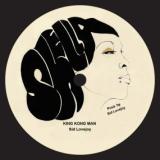
Available for the first time since 1976 the official reissue of Sid Lovejoy’s roots missile “King Kong Man” puts this absolute gem back in circulation.
Bursting out of the gate with psychedelic lead guitar, the track pares down to roots militancy followed by a monstrous Channel One dub.
Originally released on Toronto label “G Clef”, “King Kong Man” was a very tough pull until now.
The song’s mastermind Sid Lovejoy, was a singer, musician and producer who ran a record store, studio and label at 917 Bathurst St in the beating heart of what was then Toronto’s “Little Jamaica” community.
50 years on, Sid’s rallying cry to stand up to tyrants, bullies and oppressors is as relevant as ever.
Sid Lovejoy passed away in 2025 in Jamaica, this release is dedicated to his eternal memory.
One of 3 official releases showcasing Sid Lovejoy's Toronto productions including the long out of print “Rebel” by Rothadam and the impossible to find horns version of “Garden of Life” by Leroy “Heptone” Sibbles.
For over 30 years the Midwest machine menace that is Paul Birken has been developing and exploring his love for the limitless potential that exists when you chain together synths, sequencers, samplers and beat makers, he is a true audio explorer communicating his own unique sonic exploration through his machines + odd dreams. Starting out back in the day merely with a Commodore 64 computer and a few synths, his studio gear arsenal has constantly evolved over the years into a myriad of unfathomable boxes, cables and bangin’ in his attic allowing him to freely manipulate his random audio creations into the most serious and fun grooves anywhere in the techno realms. Along-with his own imprint Tonewrecker Recordings, Paul’s appeared on a huge stack of the most impressive labels including Don’t Recordings, Fun In The Murky, Earwiggle, Mord and of course a plethora of remixes and tracks on our very own RIOT Radio Records.
From within a tomb in ancient lands comes this 'Bandage Boogie.' A hallowed homage to all things that are non-stop breakin' n' stompin' n' boppin' to the RIOT beats that have now manifested themselves on a 'Mummificated' dance floor near you. This aint street life, this is tomb life, and you'll need as many sacred tanna leaves to keep you movin’ as your fiendish high priest will bestow upon you. This brewed techno fluid that we're administering will ultimately invoke 'The Curse of RIOT’ and you’ll be doomed to eternal bouncin' aboot to its 'Pyramid Pongo' beats that go mysteriously THUMP in the night. Each track on here, and especially in his infamously legendary live sets, are unique in that they get erased from his machines after their creation and won’t ever be spawned again, but ssssssssssssssh, Mummy's the word.
The full digital release also features two bonus immortal tracks delving you deeper into the life-giving sounds of this ‘Mummy Wrapsody.’
WARNING: THESE UNWRAPPED TECHNO BEATS CREATE A WONK-A-THON YOU WILL NOT ESCAPE FROM
The almighty Joe of the Farr’s is a highly accomplished UK techno DJ, producer and mastering engineer. Originally associated with Bristol's electronic music scene, Joe studied TV and film sound design before building a solid reputation through hard-hitting, technically sophisticated techno releases on labels including Turbo, DSNT, Bloc, Soma and Power Vacuum. His concentrated output combines aggressive club-focused rhythms with melodic and IDM-inspired elements. Now based in Wales, performing internationally and on home turf, he also operates a professional mastering engineering operation of the highest esteem of which RIOT could simply not operate without, as many others will gladly attest too.
Continuing with the ‘Limited As Fuck’ series of releases, on our fiercely independent techno label based in Scotland, we’ve finally let loose the screamer of a release, from such an integral member of RIOT HQ, that’s been patiently ‘Left Alone’ and waiting for the right time to unleash its User Experience. Joe’s totally went one step beyond and cranked out a pressure filled release of not only persistent anthemic prowess but one of such rigorous determination, all those on the dance floor MUST ‘Obey’ to its diligent beats. And with Rant & Rave Records boss Maedon serving up such an iconoclastic relentless remix, you will absolutely need to submit complicitly to all things RIOT.
The full digital release also features two bonus meticulously disciplined tracks to fulfil your obedient, subservient requirements.
WARNING: NON STOP BREAKIN’ N’ STOMPIN’ N’ BOPPIN’ TO THE RIOT BEATS WILL MANIFEST ITSELF
The Nu’rons were a family group consisting of two sets of brothers and cousins, the four young men in question being brothers Daryl Howard and Raymond Gibson (Daryl’s mother registered him under his father’s surname of Howard and Raymond under her maiden name of Gibson) together with Otho Bateman and Charles Bateman. They were all born and raised in Salem, New Jersey and from the age of ten and eleven began singing with a fifth member and Gibson brother Rudolph as a group called The Gospel 5. They eventually decided to crossover to secular music and as a group known for their energetic dance routines they came up with the new performing name of ‘The Nu’rons’ (taken from the word ‘Neuron’ which is a cell that transmits nerve impulses). However Rudolph was soon to leave the group due to physical illness. Also Daryl Howard and Charles Bateman had also been part of a working group known as The Devotions prior to becoming The Nu-Ron’s.Following hours of practice The Nu’rons eventually felt confident enough to put their own shows together and began to perform at local dances and parties around New Jersey and Philadelphia, often being used as a non-paid warm up act for bigger named artists. They moved between several different managers including Jimmy Bishop (Duo Dynamic Productions) until they came under the tutelage of WDAS radio DJ Georgie Woods (his wife Gilda, being the owner of the Philadelphia Gil, Dion and Top & Bottom record Labels). It was Georgie who introduced them to Manny Campbell who in turn invited them to an audition at his and partner Charles Bowen’s Emandolynn Music studio in Chester P.A. The song The Nu’rons chose to audition with was the self penned “I’m A Loner”, the audition went well, as during late January/early February of 1970 Manny and Charles took The Nu’rons into the Sigma Sound Studio’s with Tom Bell and the TSOP musicians to record “I’m A Loner” and “All My Life” which was released on the Nu-Ron label in April of the same year. The two studio takes presente don this release came short after the band moved on from the collaboration with producer Emanuel Campbell to take music matters in their own hands. Beside recording "Disco Hustle" to be part of the disco boom in Philly of the times, they recorded also “You Came Thru”, a rough yet beautiful heavy bassline driven soul funk recording, and the just amazing “Hurry Up Tomorrow”, here presented in one of the original Studio takes.
Indie shops only. Limited red vinyl rerelease. 500 for the World (just 80 copies for the UK) After falling out with Sir Coxsone, the legendary head of the Kingston label Studio One, Lee Perry first founded his own band and then, in 1973, set up his own studio in his backyard. What was born out of necessity developed into a unique success story. With both the Upsetters and the Black Ark, Perry made music history - most notably with the 1976 release of the album Super Ape, on which he made the genre of dub bubble and boil from the mixing desk in previously unheard ways. For Perry, the studio is like a living organism. Whether he truly experiences it that way or simply lets too much ganja go up in smoke, for Perry the equipment is organic, empathetic, and intelligent. The catch is that the results sound exactly like that as well. Long before sampling was invented, he layered tracks of deep basslines, echoes, and reverb with various self-recorded sound sequences – often played in reverse - on top of, into, and beneath each other. In other words, Perry was the first producer who made the music instead of the band. Among other things, this earned him the title ‘Salvador Dali of Dub.’
'Double Seven, released by Trojan in late 1973, was the last album Lee 'Scratch' Perry would release on the label for some considerable time, and it was essentially the final album project he put together before establishing his own Black Ark studio. Opening track 'Kentucky Skank' sets the tone with a slow creeper whose frying sounds underscore its role as a praise song to the Colonel's KFC recipes; the cosmic Moog blips come courtesy of Ken Elliott at Camden's Chalk Farm studio, also prominently featured on U-Roy's double-tracked, stereo-panned gambling ode 'Double Six.' David Isaacs' 'Just Enough' was cut a few years prior, which makes it slightly out of phase with the rest of the set, though the enigmatic 'In The Iaah' sounds mightily fresh, with its uncredited chorus said to come courtesy of the Wailers. Perry's own 'Jungle Lion' has hilarious roars from the maestro at the start, strangely grafted atop a reggae re-make of Al Green's 'Love and Happiness.'
'Overall, Double Seven melds the soul, funk, reggae and dub elements that were constant in Perry's work during this phase. His enhanced audio spectrum and endless reference points would keep his music continually apart from that made by his peers.'
—David Katz (excerpt from the liner notes)
180g Heavy double vinyl LP with liner notes by Tyran Grillo. Limited Japanese Obi for the first pressing. Original artwork by Russell Mills and photography by Jean-Baptiste Mondino.
The third Time Capsule is a body of dub reinterpretations by celebrated producer Bill Laswell of Ethiopian singer Gigi. Curated by Tokyo record collector, music researcher and seasoned reissue supervisor Ken Hidaka, it is the first time Illuminated Audio is pressed to vinyl after its CD release in 2003.
Ejigayehu Shibabaw was born in 1974 in Chagni, northwestern Ethiopia and by pursuing a career as a singer, went against her father’s strict, traditional gender roles. As Gigi, she embraced the same musical freedom she had strived for in her personal life, incorporating the Ethiopian church, funk, hip-hop, West and South African music into her work. She first settled in Nairobi, then Addis Ababa, where she quickly established herself as one of the city’s leading singers. A move to San Francisco in 1998 led to a long and fruitful creative partnership with bassist and producer Bill Laswell.
Around the same time, Chris Blackwell had stepped away from Island Records to start the art house film company and label Palm Pictures. He took an interest in Gigi and together with Laswell, pulled together an all-star cast of musicians for her self-titled US debut album, including Herbie Hancock, Pharoah Sanders and Wayne Shorter. It won international critical acclaim, not just for its musicianship but for making Gigi a “defining voice for the Ethiopian expatriate community”, as journalist Tyran Grillo praises in his Time Capsule liner notes. From the nation-defining 1896 victory over Italian invaders to the quiet revolutionaries who wear simple shemma garments, Grillo believes the themes in Gigi make it “a shower of sunlight on her homeland for those ignorant of its struggles.”
After its success, Blackwell encouraged them to go back into the studio to rethink the album and Illuminated Audio was born. “Anyone can make a voice sound worldly”, Grillo remarks, “but rare are those who can make one sound inner-worldly.” Gigi was clear with Laswell to give her vocals a minor role “because it’s already been done.” Instead her Amharic verse is fleeting, exhaling through the textures like ghostly fragments; soaring yet muted. Yet the album is still titled under her name, an assertion by Laswell of her central role in the album’s creation. Not only was it a fully endorsed project by Gigi, but she would be present throughout its development, giving feedback on half-finished ideas as Laswell played them back in the studio. “It works perfectly”, she reflected after the album’s release. “We wanted to capture the whole spirit of each track, and Bill’s remixes create a different music language that really puts you in a pleasant place”.
This new vocabulary takes its lead from a technical approach that Laswell had been perfecting during a furtive creative period at the turn of the millennium. Much like his ambient interpretations of Miles Davis (Panthalassa, 1998), Bob Marley (Dreams of Freedom, 1997), and Carlos Santana (Divine Light, 2001), Laswell approached Illuminated Audio by returning to the original multitrack masters. Gigi wasn’t just reworked, but recomposed into an expansive lattice of instruments, submerged in a watery ambience of dub and trance undercurrents.
Sonically, this new language that Gigi refers to, is manifested by the original album’s more understated parts being pushed to the fore. Explaining his contrasting methods, Laswell saw Gigi as being “put together in a way that fits”. Contrastingly, in Illuminated Audio, “a lot of things that I featured in the remix weren’t as audible in the original.” Instrumentation laying near-dormant, deep in the mix, are brought to the fore: the acid rock guitar and Wayne Shorter’s saxophone on ‘Tew Ante Sew’, Graham Haynes’ flugelhorn on ‘Nafekeñ’, Laswell’s bass on ‘Kahn’, the melodica in Mengedegna or the floating synths and talking drums in ‘Gud Fella’.
Brought to his attention by mentor DJ Nori, Hidaka describes Illuminated Audio as a “masterful sonic exploration into ethereal ambience and dub” and made sure this reissue also contained a full remaster to give its “deep musicality” much better dynamics and density in the overall sound. Hidaka admits that Laswell's music “is sometimes so out-there, it is often misunderstood” and, indeed, to dub album non-believers this might seem like a prolific producer imposing himself on another artist’s work; eternally developing rearrangements that never quite get to its destination. But that’s missing its true power and triumph. This is more than the reissue of a remix, but “a wholly unique musical entity”, as Hidaka describes. Illuminated Audio refers to the illuminated manuscripts that comprise the major part of Ethiopian art and its new compositions stand in proud solitude as a rare body of reworks that both informs and enhances their originals.
Das wandlungsfähige Trio Vanishing Twin präsentiert sein neues Album ,Archives" - eine Collage aus postmoderner Songkunst, die im gemeinsamen Schaffensprozess Transzendenz findet. Der Albumtitel spielt auf den unverwechselbaren Ansatz von Vanishing Twin an, tägliche Aufnahmesessions anzuhören, zusammenzufügen und neu zu bearbeiten. Gründungsmitglied Cathy Lucas beschreibt den Prozess so: ,Material sammeln, damit herumspielen, es auf den Kopf stellen, versuchen, die Teile zusammenzufügen und daraus eine Geschichte zu erschaffen". Da Lucas mittlerweile ins ländliche Frankreich gezogen ist und Valentina Magaletti sowie Susumu Mukai in London leben, verbinden sich die drei, indem sie Songs und Instrumentalfragmente in einem virtuellen Studio austauschen. Die geografische Distanz wird durch ihre kollektive Kreativität überbrückt, wobei jedes Mitglied als Multi-Instrumentalist seinen Beitrag leistet. Jeder Musiker bringt umfangreiche Erfahrung in Zusammenarbeit und Improvisation mit, wobei das Anhören und Bearbeiten von Studio-Sessions ein wesentlicher Bestandteil des kreativen Prozesses ist. Konzepte von Urheberschaft und Eigentumsrechten lösen sich in der Musik von Vanishing Twin auf, während die Mitglieder Instrumente tauschen und sich ganz dem Moment der Zusammenarbeit hingeben. Die ,Archive", die dem Albumtitel seinen Namen geben, werden zu Dokumenten der kollektiven Intelligenz des Trios. Die chaotische Energie von ,Archives" treibt Vanishing Twin in ungewohnte Formen und Richtungen. Außerhalb ihrer Komfortzonen findet das Trio neue Momente der Erleuchtung und Freude. Tief im Mix hörst du vielleicht, wie Magaletti zum Bass greift, Mukai unerwartet am Schlagzeug einspringt oder Lucas chamäleonartig durch die Lücken gleitet. ,Archives" verfeinert Vanishing Twins Modell des kollektiven Musizierens, bei dem Egos in spielerischen Mix-and-Match-Spielen in den Hintergrund treten und die Kreativität zwischen den drei Multi-Instrumentalisten fließt. Sie bewegen sich zwischen und außerhalb konventioneller Genrekategorien und reihen sich neben Weggefährten wie dem Tara Clerkin Trio und Still House Plants ein, wodurch sie die Vorstellung vom zeitgenössischen Musikensemble erweitern. Nach einem Jahrzehnt ihres Bestehens sind Vanishing Twin wandelbarer denn je.
Often credited as the father of multi-media theatre, Alwin Nikolais (1910-1993) took complete creative control over his productions - including cutting-edge approaches to lighting and costume that transformed human bodies into shifting sculptural shapes, while also composing wildly innovative electro-acoustic and synth-based audio as accompaniment.
After initially experimenting with musique concrète and tape manipulation (as demonstrated on the 1959 LP Choreosonic Music of the New Dance Theatre of Alwin Nikolais) Nikolais became the first owner of Robert Moog's synthesizer at the Audio Engineering Society convention in New York in late 1964. Relying heavily on the Moog and later the Synclavier synth/sampler, these 21 tracks document Nikolais' highly-prescient compositions across the mid 1960s through to the late 1980s - existing not only as extensions of his other-worldly choreographic productions, but standalone pieces of foundational mid-century American electronic and experimental music.
"Born in Southington, Connecticut in 1910, Nikolais’s early years and early career were in acting, music and puppetry. It was not until the late 1930s that he began his work as dancer/choreographer in Hartford, Connecticut, where he was commissioned by the Avery Memorial Theatre, a part of the Wadsworth Atheneum, to create an evening-length work to the music of Ernst Krenek. Previously his work and study as a pianist-organist found him accompanying silent films. This sort of accompaniment required from the musician not only a playing skill but also a versatility in improvisation, matching movement to sound, and evoking mood to situation.
Nik was drawn initially to dance by his involvement with the percussion scores used by the illustrious early twentieth century German dancer Mary Wigman. In trying to learn more about percussion, he was lured into dance class and thus his career began. His development of music and dance occurred simultaneously. His introduction to the twelve-tone technique opened his mind to the expanding areas of atonal music, and his dealing with music as sound per se. In 1948, after being appointed director of the Henry Street Playhouse in New York, Nikolais formed the Playhouse Dance Company, later known as the Nikolais Dance Theater, and began his aesthetic orientation toward dance as a study of motion. By the 1950s, he had ceased creating literal dances and began his explorations and eventual milieu as an abstractionist.
Sound became an important part of his abstract theatre. For his first dances, which involved his new thinking of dance as both a visual and kinetic art, he used live percussion scores in which he directed his dancers to play instruments of all nature. There was a combination of children’s toy instruments as well as harsh and resonant automobile brake drums, and other pitched auto parts which he also used to accompany classes. Once he installed his own tape recording machines, he quickly used the limited range these instruments provided in a new way, slowing and increasing speed and reversing sound. He also made the sounds adhere to the choreographic structure (not the other way around), thereby giving the dance its independence from the musical phrasing. But the real need remained: the search for new sound. Nik made a sound library, recording noises and percussion and vocal sounds, which the French aptly called musique concrète. Needless to say, he became a master at splicing bits and pieces.
From 1956 to 1962 Nikolais composed eleven major scores for his theatre pieces using such techniques. In 1963, James Seawright, who at the time was assisting Nik in his productions and also working at the Columbia-Princeton Center for Electronic Music, recorded a sound bank for the production Imago (1963). With this material, Nikolais created his first synthesizer score. Imago won the Paris Grand Prix in 1968 and launched the Nikolais Dance Theatre towards its national and primarily international acclaim.
During the same period, Seawright came to Nik and told him of a young man who had invented and constructed a simplified synthesizer and insisted that Nik visit the electronic fair currently being held in New York. Nik did so and met Robert Moog. He was completely taken by the new machine and after making some suggestions to Moog, (which Moog made), Nik bought the inventor’s first machine with the aid of a Guggenheim Fellowship. Moog himself was astonished by what his machine could produce for Nik. This machine was later acquired by the Museum of Musical Instruments at the University of Michigan at Ann Arbor as the first Moog synthesizer. The Synclavier was Nik’s next source of sound and since the mid-1970s remained the major instrument in the Nikolais soundroom.
Alwin Nikolais has been honored and awarded throughout the world. He has received the French Legion of Honor, the Kennedy Center Honors, National Medal of the Arts, two Guggenheim Fellowships, as well as Mellon, Ford, and Rockefeller grants. He has been a recipient of NEA grants since 1966, been awarded five honorary doctorates, all for his remarkable achievements in Dance Theater. His genius has influenced several generations of artists."
—Murray Louis
The first-ever collaboration between Satoshi Tomiie and Brazilian duo Stekke, Soraré is a three-track EP born from an intimate three-person studio session in Curitiba, Brazil. Created entirely through live jams, the recordings capture the spontaneous exchange of ideas as deep, hypnotic grooves emerged from an array of electronic instruments.
Featuring Soraré, Ventoma, and Neiro, the EP preserves the energy and spontaneity of the original sessions, capturing a unique moment of collective improvisation in the studio.
Revered worldwide for their love-fueled, technically adventurous all-vinyl b2b DJ sets, Maya Bouldry-Morrison (Octo Octa) and Eris Drew conceived Alchemical Sisters as a vehicle for creating music together. Alchemical Sisters describe themselves as "psychedelic chaos, acid rollers, and big beat, channeled through hardware instruments and animated by love, touch, rhythm, and spiritual fire." Their self-titled debut double album is forthcoming on Interdimensional Transmissions this October, just in time for Samhain XXVI. Alchemical Sisters was recorded in the forests of New Hampshire by Maya and Eris and mixed by BMG in Detroit in the Interdimensional Laboratory on high end hardware for ecstatically euphonic results. In the cold winter months, Maya and Eris emptied the master bedroom of their forest cabin and sealed it as an alchemical retort--a hermetic vessel in which a higher form could emerge. For a year they slept on the studio floor while, in white nightgowns and under the spell of mushrooms, they brought dulcimers and ancestral instruments into communion with turntables, twentieth-century machines, and new technologies. Alchemical Sisters is the substance crystallized within that vessel by their secret fire. They then brought their music to BMG in Detroit to meticulously mix their vision through hardware, in a high end studio environment. For two weeks at the height of winter, we shut out the world and focused on fusing their sonic vision within the Interdimensional Laboratory. Setting up their computer and sound card, BMG processed their tracking sessions through a high end mixing console, using transformers and tubes and the special properties of many machines to create a solid visceral sound out of a dream, to create a powerful euphonic ecstatic experience from their highly personal highly evolved music, whose sources could be both carnal and celestial. It was important to have their music connect before thought, to feel both the power and the gentleness of their sound, to have the texture and presence of their myriad influences unconsciously affect you. Watching them work together, the patience, the focus, the rigorous thought and discipline, the love, the space and the dedication afforded to each other was a genuinely inspiring thing to witness. They truly are Alchemical Sisters, and we are extremely proud to share their debut album on IT, and their debut performance at IT's Samhain XXVI. It truly is a loop point in time, a full circle moment.
Muyei Power or Orchestre Muyei (muyei means 'our country') was one of the top dance bands of the1970s in Sierra Leone. Soundway Records' first collection of music from this West African country ('Muyei Power: Sierra Leone in 1970s USA') is an album of rock-infused, 'afro' music from a group that traveled the world throughout the mid 1970s. Fusing elements of electric Congolese and Nigerian music with fast, syncopated, uptempo modernised arrangements of traditional music, Muyei Power produced a series of unique single-only releases that have been unavailable for 35 years. The rare recordings featured here are a glimpse of a dynamic and powerful band at the very height of its powers.
Even though lyrically Orchestre Muyei focused on traditional themes and songs, the arrangements and formulation of the instrumental side of things still very much reflected the mixed nature of urban Sierra Leone music, exemplified by a small collection of bands that also included Afro National, Sabanoh 75 and Super Combo.
For the early part of 1970s the band toured extensively throughout Sierra Leone, Liberia and Côte d'Ivoire before making a handful of 45s in local TV and radio studios. The recordings featured here however come from a period of touring the college circuit in California during late 1975 and early 1976. Later that year, as they played the colleges of the east coast, they gave the tracks to the owner of the African Record Centre in Brooklyn, New York. He initially released two of them on his in-house Makossa Records label as 7-inch 45rpm singles in 1976. The tracks from 1975/6 were then not heard of again until 1979/80 when the African Record Centre released many of them on a series of Makossa Records 12's that sounded far superior than the records that had been released a few years earlier.
Orchestre Muyei Power finally split up in 1979 leaving no proper album releases and only a handful of recordings for us to enjoy all these years later.
Scofield and Metheny. What more needs to be said? A masterpiece meeting of musical minds, these two guitar virtuosos entered the studio in December 1993 with Steve Swallow on bass guitar and Bill Stewart on drums to create one of the greatest jazz guitar albums of all time. Produced by Lee Townsend, I Can See Your House From Here is an 11-track set of Scofield and Metheny originals including Sco’s expansive title track and Pat’s rocking “The Red One” and the stunning ballad “Message To My Friend.”
"Just As I Am" – wer spät seine Karriere startet, kann sich bereits ein ausdrucksvolles Persönlichkeitsprofil erarbeitet haben, auch wenn es so wie bei Bill Withers zunächst nicht von Musik geprägt worden ist. Withers diente viele Jahre in der US-Marine, jobbte als Milchmann und installierte bei einem amerikanischen Flugzeugbauer Toiletten in Jets, während seine selbst gefertigten und fleißig verschickten Demo-Tonbänder bei den Plattenfirmen im Abfluss landeten. 1971 folgte der steile Aufstieg, als der erfolgreiche Producer Booker T. Jones ihn ins Schlepptau nahm und ihm Top-Musiker wie den Gitarristen Stephen Stills, den Drummer Al Jackson und Donald 'Duck' Dunn als Bassmann ins Studio stellte.
In seinem Debüt-Album zeigt Withers seine universellen und ausgereiften Fähigkeiten als Sänger, Komponist und Interpret, die er in späteren Aufnahmen kaum mehr übertraf. "Harlem", ein ungeschönter Milieu-Funk über die die New Yorker Slums, "Grandma’s Hands", der obligatorische Rückblick in die Kindheit und die gemütslastige Ballade "Ain’t No Sunshine" mit ihrem gebetsmühlenartigen im Off-Beat kreisenden »I know, I know …« sind freigelegte musikalische Jahresringe eines erfahrenen Mittdreißigers, der endlich zu Wort kommt. Zu dieser Schallplatte des großen Songwriters mit dem kleinen Repertoire gibt es keine Alternative.
Vinyl Packaging: Gatefold LP + download card. Indie Exclusive Transparent Orange vinyl in gatefold jacket Limited to 1000. CD 6 panel Digipak. Gnosis is the highly anticipated 8th full length from Russian Circles. Across the span of their previous seven studio albums, Chicago-based instrumental trio Russian Circles traversed a diverse topography of sounds, moods, and approaches with their limited armory of drums, bass, and guitar. It’s difficult to chart an evolution in their sound when their records have always felt like well-curated playlists. It wasn’t uncommon to hear drone-heavy meditations, dazzling prog exercises, knuckle-dragging riff-fests, haunting folk ballads, and tension-baiting noise rock all within the span of one album. Still, it’s difficult to ignore the progression from the pensive and intricate melodies of Enter (2006) to the layered distorted dirges of Blood Year (2019). It’s been a gradual sonic shift owing to the band’s rigorous tour schedule and a predilection towards playing their more authoritative material on stage. But with their latest album, Gnosis, Russian Circles eschew the varied terrain of their past work and bulldoze a path through the most tumultuous and harrowing territory of their sound. As was the case for so many artists in the age of COVID, the obstacles of geography and isolation forced Russian Circles to reevaluate their writing process. Rather than crafting songs out of fragmented ideas in the practice room, full songs were written and recorded independently before being shared with other members, so that their initial vision was retained. While these demos spanned the full breadth of the band’s varied styles, the more cinematic compositions were ultimately excised in favor of the physically cathartic pieces. Gnosis was engineered and mixed by Kurt Ballou. Drums and bass were tracked at Electrical Audio in Chicago to maximize the natural room sounds of the rhythm section. Guitar and synth overdubs were conducted at God City in Salem, MA to take advantage of Ballou’s vast inventory of amps and effects pedals. Despite the entirety of the album being written remotely, the songs were recorded with the full band playing together to retain the live feel of the material. Owing to the climate of the times and a new writing method, Russian Circles created their most fuming and focused work to date—an album that favors the exorcism of two years’ worth of tension over the melancholy and restraint that often colored their past endeavors. European Co-Headline tour with Cult of Luna slated for Marc 2023 (Dates TBA). Russian Circles have received coverage from most notable press including Pitchfork, Rolling Stone, Stereogum, FADER, AV Club, Consequence, Decibel, Revolver and much more.
After running a sound system and studying electronics overseas, Spanish Town-based Harry Mudie began releasing rhythm and blues recordings by local performers, enjoying more concerted success during the reggae era of the late 1960s and mid-1970s, crafting lasting hits with artists like Dennis Walks and the Spanish Town-based toaster I Roy.
The first volume of the Dub Conference series, made with King Tubby, has stripped-down cuts of some of Mudie’s greatest productions, including ‘Lorna’s Dance,’ a percussion and horns take of ‘Caught You In A Lie’, and a strings cut of the Heptones’ ‘Love Without Feeling.’
Genesis' Foxtrot is the band's fourth studio album, released in 1972. Regarded as one of the seminal albums of the progressive rock genre, it marked a significant milestone in Genesis' discography.
AllMusic's Stephen Thomas Erlewine says Foxtrot is where where Genesis began to pull all of its varied inspirations into a cohesive sound. The startling thing about the opening "Watcher of the Skies" is that it's the first time that Genesis attacked like a rock band, playing with a visceral power, he writes, giving the album a 5-star review.
"There's might and majesty here, and it, along with 'Get 'Em Out by Friday,' is the truest sign that Genesis has grown muscle without abandoning the whimsy. Certainly, they've rarely sounded as fantastical or odd as they do on the epic 22-minute closer "Supper's Ready," a nearly side-long suite that remains one of the group's signature moments. It ebbs, flows, teases, and taunts, see-sawing between coiled instrumental attacks and delicate pastoral fairy tales. If Peter Gabriel remained a rather inscrutable lyricist, his gift for imagery is abundant, as there are passages throughout the album that are hauntingly evocative in their precious prose." — AllMusic
This is the rare art-rock album that excels at both the art and the rock, and it's rightly celebrated for its enduring impact on the progressive rock genre, making it an essential listen for Genesis fans.
Analogue Productions has given Foxtrot the deserving full reissue treatment: Mastered directly from the original master tape by Chris Bellman at Bernie Grundman Mastering and cut at 45 RPM. Pressed on 180-gram vinyl at Quality Record Pressings, and housed in tip-on old style gatefold double pocket jackets with film lamination by Stoughton Printing.
Originally released in 1981, La folie is the 6th studio album by English new wave band the Stranglers. Available for National Album Day on 1LP translucent pink vinyl for a limited run.