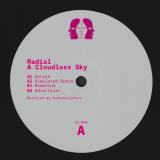
Dutch Barcelona-based Radial joins Rotterdam imprint Fusion Of Thought with 'A Cloudless Sky'. Jeroen Liebregts has been a steady force in underground Techno since the late 90s, with a string of releases under his belt via a multitude of aliases on genre-defining labels such as Mord, Token, Mote-Evolver, and his own Radial Records - only to name a few. 'A Cloudless Sky' marks a return of Liebregts' 'Radial' pseudonym, with four cuts of funked-out, analogue-driven Techno paranoia.
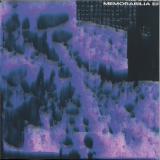
Since its inception, Isness has developed its own identity alongside Analogical Force, focusing on atmospheric and introspective electronics. For its third release, the label welcomes Kid Bucle, the new alias of Ibrah PM, formerly known as Malsum within the d&b scene. Memorabilia marks both his debut on the label and the beginning of a new creative chapter. Across six interconnected tracks, the Memorabilia EP explores memory, landscape and emotion through fluid compositions and richly detailed sound design. Echoes of labels such as Merck or Chocolate Industries can be felt throughout, alongside traces of classic IDM, yet the result remains fresh and distinctly contemporary. Rather than seeking immediate impact, the EP rewards attentive listening, gradually revealing new layers with every return. Deeply immersive and emotionally resonant, Memorabilia further reinforces Isness as a platform where atmosphere, narrative and emotional depth take center stage.
This record was born as a tribute to two great classics of Latin music: “El Reloj” and “Lluvia con nieve”, two songs that have travelled through decades while keeping their popular and emotional power intact.
On the A side, “El Reloj”, composed by Roberto Cantoral, popularised by Trío Los Tres Caballeros and later covered by artists such as Los Panchos and Luis Miguel, is transformed into an elegant rocksteady version, preserving its romantic and melancholic character.
On the B side, “Lluvia con nieve”, a song associated with Mon Rivera, takes the form of an instrumental ska piece, full of bright and danceable energy, led by the horns, the rhythm and the melodic arrangements.
This release is part of Latin Goes Ska, a collaboration between Gatzara Records, Sotasons and STQBlack, together with The Jeggaes, Memi Sillah and Lenin “Güiroloco”. A meeting point between Latin music, rocksteady and ska, conceived as both a tribute and a celebration.
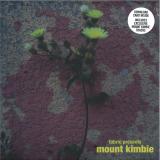
Mount Kimbie’s forthcoming contribution to the acclaimed fabric presents series marks one of the duo’s most dancefloor-focused bodies of work in years. More than simply a release on fabric Records, the project sits within the revered fabric presents mix series, placing Mount Kimbie alongside artists such as Daniel Avery, Midland, Helena Hauff and Overmono, artists who have each delivered defining entries for the series.
Leading the project is first single “Monroe”, a warm yet uplifting club track that unfolds gradually through loose percussion, driving synth work and subtle vocal fragments drifting in and out of the mix, adding flashes of emotion without interrupting the track’s momentum. An ode to their 2017 hit ‘Marilyn’ featuring Micachu, the track carries elements of the original throughout, with flourishes over reverb washed vocals that float around you amongst driving drums and bass. There’s a summery energy running throughout the track, making it equally suited to late-night club systems and open-air festival stages.
Long celebrated as pioneers of the post-dubstep and future garage movements, Mount Kimbie continue to evolve beyond genre boundaries while maintaining the unmistakable sonic identity that has made them one of the defining acts in UK electronic music. Their contribution to the fabric presents series captures the duo at their most refined and exploratory, without losing the emotional atmosphere and understated intensity that has always defined their work.
Released as part of the prestigious fabric presents series via fabric Records, the project signals a bold new chapter for Mount Kimbie.
Der neueste Zuwachs im ständig wachsenden Katalog von D.B., ,The Beat Zealot", ist da, um lebenslange Fans von Instrumentalmusik anzusprechen und neue Hörer auf der ganzen Welt zu begeistern. Grimez ist ein Beat-Fanatiker. Geboren und aufgewachsen in Südflorida, ließ er sich von Entertainern und DJs wie Jam Pony Express inspirieren. Als Teenager verbrachte Grimez Stunden auf dem Flohmarkt, blätterte in Katalogen und suchte sich Kassetten für seine Sammlung aus. In den 90ern zog er nach Ohio, wo er sich in das Sampling verliebte und anfing, eigene Musik zu produzieren. Für jede Doctor-Bionic-Platte holt Grimez eine Reihe hoch talentierter Musiker aus der lokalen Szene mit ins Boot. Im Studio wirft die Gruppe Ideen in den Raum und improvisiert, während Grimez das Mischpult bedient. Später arrangiert er die Tracks und legt ein Thema für ein Album fest. ,Ich arbeite immer an einem Album, aber manchmal bin ich mir nicht sicher, wie das Cover oder der Titel aussehen werden", erklärte Grimez. Die Kunst inspiriert oft die übergreifende Botschaft, die sich in kurzen Zwischenspielen aus Vocal-Samples widerspiegelt, die zwischen den Instrumental-Jams eingestreut sind. Das Cover von ,The Beat Zealot" zeigt einen einsamen Abenteurer, der auf einem Berg steht, von dem aus man auf eine ferne Stadt blickt. Ist er auf dem Weg in die Zivilisation, oder flieht er? Das Album liefert keine eindeutigen Antworten, bietet aber reichlich Inspiration für den neugierigen Hörer. Also, dreh die Musik auf und lass deine Fantasie den Rest der Geschichte schreiben. Freu dich auf weitere sofortige Klassiker von Doctor Bionic...
Der neueste Zuwachs im ständig wachsenden Katalog von D.B., ,The Beat Zealot", ist da, um lebenslange Fans von Instrumentalmusik anzusprechen und neue Hörer auf der ganzen Welt zu begeistern. Grimez ist ein Beat-Fanatiker. Geboren und aufgewachsen in Südflorida, ließ er sich von Entertainern und DJs wie Jam Pony Express inspirieren. Als Teenager verbrachte Grimez Stunden auf dem Flohmarkt, blätterte in Katalogen und suchte sich Kassetten für seine Sammlung aus. In den 90ern zog er nach Ohio, wo er sich in das Sampling verliebte und anfing, eigene Musik zu produzieren. Für jede Doctor-Bionic-Platte holt Grimez eine Reihe hoch talentierter Musiker aus der lokalen Szene mit ins Boot. Im Studio wirft die Gruppe Ideen in den Raum und improvisiert, während Grimez das Mischpult bedient. Später arrangiert er die Tracks und legt ein Thema für ein Album fest. ,Ich arbeite immer an einem Album, aber manchmal bin ich mir nicht sicher, wie das Cover oder der Titel aussehen werden", erklärte Grimez. Die Kunst inspiriert oft die übergreifende Botschaft, die sich in kurzen Zwischenspielen aus Vocal-Samples widerspiegelt, die zwischen den Instrumental-Jams eingestreut sind. Das Cover von ,The Beat Zealot" zeigt einen einsamen Abenteurer, der auf einem Berg steht, von dem aus man auf eine ferne Stadt blickt. Ist er auf dem Weg in die Zivilisation, oder flieht er? Das Album liefert keine eindeutigen Antworten, bietet aber reichlich Inspiration für den neugierigen Hörer. Also, dreh die Musik auf und lass deine Fantasie den Rest der Geschichte schreiben. Freu dich auf weitere sofortige Klassiker von Doctor Bionic...
Victoryland is the Brooklyn-based project of musician Julian McCamman and Dan Howard.. Their 2026 album, My Heart Is A Room With No Cameras In It, is a triumphant, despondent, and ultimately fun experimental pop-rock album. A year on, the record receives the deluxe treatment from new label home Dead Oceans. My Heart Is A Room With No Cameras In It (Deluxe) arrives December
11th 2026, on exclusive crystal clear vinyl, complete with new song “The Ugliest Girl On The Beach” and a new music video for album standout “I got god.” The sound of the album, recorded between Julian’s Bed-Stuy basement and Dan’s Williamsburg studio, is that of a bright and beaming collaboration. Blending lo-fi and hi-fi production, the songs have the glossiness of a radio-friendly hit mixed with the distortion and rough edges of a home demo. Every song keeps at least one element of the initial recording, while building around the loops and half-songs Julian scraped together. The lyrics on the record span from humorous self-aware popisms (“‘you and I’ will soon be, used to be ‘us’”) to crushing realities of bitterness (“i’ll never forgive you, that’s how I keep you close”) and abstract imagery (“mothers wave from doorways, in ostinato”), all delivered with such an immediacy and fervor that in the middle of singing along, you wonder if this guy slept much last night. Much to their surprise, My Heart’s release ushered Victoryland into a whirlwind of a year. Pitchfork praised the album’s “bright, madcap approach reminiscent of the New Pornographers’ Twin Cinema or Clap Your Hands Say Yeah’s Some Loud Thunder.” Stereogum named it their Album of the Week and proclaimed it “a surprisingly cohesive scrapbook of sounds from seemingly every corner of the indie pop umbrella.” The album also received support from Steve Lamacq at BBC 6 Music and Sian Eleri at Radio 1. After a string of sold-out shows in NYC, Victoryland later joined LCD Soundsystem on their North American tour and performed at Pitchfork London, Pitchfork Paris, among other festivals across Europe
Demarkus Lewis is known for his ability to deliver house music at a deeper level while maintaining the energy that keeps the dance floors moving, Demarkus Lewis has grown to be one of the most respected dance artists in
underground house music today. With just about 30 years of DJ experience he has has traveled and shared his craft with the world over. His music has found its way onto labels such as Large Music,Subtractive, Moods N Grooves, Kolour Recordings, iRecords, Phoenix Recordings, Viva Recordings, Guesthouse Music, Kingstreet Sounds, Pogo House Records, Plastik People, Spacedisco Records and his very own labels Grin Music/Grin Trax (Just too name a few). His cut "Every Night" instantly draws you in and hold keeps you moving using a thick bassline and kick pattern, key stabs and a vocal that binds it all together. The B remix is by Gil Aguilar who takes the dedepness and adds chug. This record sold out fast and there are only a few remaining copies left.
Named after the tendency to impose familiar likenesses, such as faces, on random - usually inanimate - objects, Pareidolia is Jake Muir's way of interpreting the consonances between so-called “ambient” music and extreme heavy metal. Extracting the headiest, most atmospheric sections from hundreds of death metal and black metal tracks, Muir plays the role of both DJ and electroacoustic composer, concocting a lysergic elixir of fractal distortions and prolonged, decelerated riffs that slowly evaporates into iridescent vapor. If there's any trace of the original sources left, Muir makes sure that residue is subtly bewildering, like clouds in the sky that form imposing, larger than life images, or trampled bracken that falls into the shape of “trve kvlt” insignia.
The idea for the album materialized when Muir was working on 2022's Talisman, his collaborative album with multi-instrumentalist Evan Caminiti. Processing guitar for the first time, Muir began to unpack his long relationship with rock music and its Escher-like maze of sub-genres, from the tech metal he obsessed over as a teenager to Loop and Main's drone-y, textured variants. Scraping the internet for unconventional contemporary metal albums, he stumbled across music that seemed to hover between different realms, merging its frenetic, noisy sections with psychedelic interludes that harmonize with classic industrial and avant-garde music, material like :zoviet*france:, Nocturnal Emissions and Z'EV.
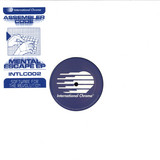
Assembler Code - We've Felt This One Coming For A Minute Now. After An Unstoppable Run Of Releases Along Side Jensen Interceptor On Labels Such As Cultivated Electronics, Private Persons & Boysnoize Records, Ac Is Finally Flying Solo With This 4 Track Electro Assault Masterpiece 'mental Escape'.
Plugging Into The Title Track 'mental Escape', It's A Rugged Machine Driven Work Out Through Idm & Industrial Landscapes Formulated To Present His Vision Of Futuristic Electro Whilst Still Providing All The Nostalgic Rother & Drexcyian Nods We All Love.
Now That The Tone Has Been Set, 'simulant' Follows Suit. Entering The Celestial Sphere Via Some Haunting Sci-fi Strings, We're Slapped In The Face With Slamming Percussion Followed By A Relentless Acidic Modulated Baseline That Takes Us From One Planet To The Next At Light Speed.
The Journey Wouldn't Be Complete With Out His Old Partner In Crime Jensen Interceptor Coming On Board For A Ride. 'type 2' Is A Classic Case Of Past Meets Present. Scrapyard Industrial Groove Ready To Split Speakers At Your Next Warehouse Party Married With A Selection Of Classic Alpha Sounds To Keep All The Purists In Check.
The Thunder Continues To The Very End. If You're A Tape Saturation Fiend Begging For Your Next 808 Crack Hit, Prepare To Have Your Back Bent In Half With Euphoria As Soon As 'hal's Machine Tool' Is Injected Into Your Ears. In Short, 4 Minutes & 44 Seconds Of Hard Nasty Robotic Electro Booty Sweat.
The latest game in the stylish Katamari Damacy series in which you roll your katamari and collect items to become large enough to form a star for the cosmos, Once Upon A KATAMARI, is getting its own vinyl record release called Katamari Once Again! A total of 23 wondrous songs have been personally selected by the game"s sound composer, Yuu Miyake. The album features BGM stage music in addition to songs performed by an all-star lineup of various artists such as Saya Asakura, Amane Uyama, KAF, Clémentine, Kocchi no Kento, Masashi Sada, San Francisco Boys Chorus, Katamari Damacy feat. suis from Yorushika, Daoko, chelmico, Kenji Niinuma, Saki Hanami, Shigeru Matsuzaki, and Yakushimaru Etsuko. Once Upon A KATAMARI immerses you in the colorful worlds and eras of time and history. Product shown is a luxurious gatefold sleeve housing two records inside. The cover was designed by Kazuki Takakura with supervision from Yuu Miyake, the game"s sound composer. When you think of Katamari Damacy, you think of the colorfully chaotic artwork that comes hand in hand alongside it, and this packaging offers a high-quality, must-have item for a fan"s collection.
“One foot out the door, another in the otherworld…”
So begins Hannah Lew’s debut, self-titled solo record, soaked in imperious, wide-eyed pop songwriting and a girl-group/post punk aesthetic that belies the artist’s history in the U.S. underground. A towering, hook-laden album, it’s infused with an optimism and surrealism that conversely deals with the times we find ourselves in.
Recorded at home in Richmond, CA and in The Best House studio with Maryam Qudus in Oakland CA, with the assistance of a crack team of West Coast musicians, this album sees Hannah Lew stepping out from behind the legacy of her two groups Grass Widow and Cold Beat. While musically bearing similarities with her previous work, “Hannah Lew” is a bold leap into direct pop territory, making ample use of a vocal style that teases out the inherent melancholy in her melodies. Mastered by Sarah Register, each song is a perfectly honed nugget that frequently pulls the heart in two directions at once.
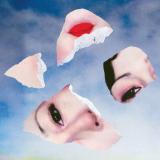
Themes of change, breaking up, shattering old ways of being are shot through the record. For the front cover, a photograph of the artist’s face was printed, ripped up and re-assembled, resembling the creative process embarked upon by Lew for her first “solo” material. The album feels instinctual, almost dream-like in its assemblage of sweeping synths and pulsating, propulsive drum machine beat patterns with Lew’s vocal performances sensitive and caressing over the top. Increasingly relying on the subconscious and dreams to guide her creative process, Hannah Lew frequently abandons literal interpretations or linear narratives, the songs seeming to exist in a swooning, effortless flow-state while remaining emotionally hard hitting.
On an album where every song could be a single, there are kaleidoscopic shades and varying emotional tones in abundance. First single Another Twilight is carried along a pumping, Italo-disco-style 4/4 beat and mono-synth bass line, the low end pulling at the heart and body. Lew’s vocal melody teases the track before swan-diving into a gorgeous chorus as she sings “it’s all over baby and I don’t mind… in decline, I take my time…” The album is suffused with moments like this. On slow builder Damaged Melody, an arpeggiated synth elongates the verse before a cascading synth showers down melodic glitter. The stunning Replica uses dual swirling synth patterns before a driving, synthpop chorus for the ages carries Hannah Lew’s vocal into the stereo field, sailing in on a high register singed with the embers of a break up.
In a departure from previous groups, her solo songs are guided by dreams and free association inspired by Dada and the Surrealist movement and sculpted afterwards. As such, the songs reveal themselves on repeated listens, revealing traces of heartbreak inspired by both personal and global elements - Hannah Lew regards the album “a wartime album.” On Move In Silence, Lew intones “there’s a war outside, just out of view,” revealing the dichotomy at play throughout. With the songs evolving naturally and in a flow state, the pressures and sadnesses of the modern age bleed through, mixed in with Lew’s inherent love, sensitivity and fractured-but-intact optimism. On the swooning, sublime Sunday layers of Numanoid synths open up for the commanding vocal performance pontificating on grief, love, pain as she “feels the ache on Sunday…” As the chorus builds and Lew’s call-and-response vocal adds to the emotional tension, it almost feels like too much to take.
Elsewhere, there are echoes of Hannah Lew’s previous work. On Time Wasted a bass guitar comes in with a heavy, punk attack before the synths and vocal harmonies reminiscent of later Cold Beat elevate everything. The glassy, sweetly resigned closer The Clock sounds like so classic it could be cover, a sweetened Jesus & Mary Chain tune perhaps, before it erupts into volcanic chorus that could only come from Hannah Lew in 2026.
Nippon Psychedelic Soul 1970-1979 is Time Capsule’s continuation of the deep dive into Japan’s rich history of folk and psychedelic soul music.
Vinyl LP with 4 page insert, original artwork and photos
The kaleidoscopic psychedelia of 1970s Japan captured a fragile and fertile moment as the country sought its future in funk grooves, heavy reverb and lyrical hallucinations.
The follow-up compilation to Time Capsule’s Nippon Acid Folk, Nippon Psychedelic Soul takes myriad pathways into the tripped-out undergrowth of 1970s Japan. Finding their feet at home and looking for inspiration abroad, the musicians featured here were engaged in the communal soul-searching that followed the breakdown of the 1960s protest movements. Some made it big, others drifted into oblivion. The music they left behind shimmers with intensity.
At the core was Happy End, the first project of YMO’s Haroumi Hosono, whose distortion-heavy guitar and crisp back-beat laid the foundations for Japanese lyrics that flipped the paradigm of Japanese rock music on its head. With it came a new found sonic ambition, such as in the bold Philly-soul style arrangements of producer Yuji Ohno, whose work with occult wandered Yoshiko Sai shares some of the bittersweet grandeur of Rotary Connection or David Axelrod.
Then there was Jun Fukamachi, a pioneer of Japanese synthesis, whose debut album was a carnival of orchestral funk, euphoric horn lines and rich production, complete with soaring guitar solos, psychedelic organ and a truly cinematic finale. The first and only time Fukamachi would sing on record, ‘Omae’ rips like the ultimate end-of-nighter.
Influenced by giants of the US soul scene, maverick composer Hiroshi “Monsieur” Kamayatsu (otherwise known as ‘the Brian Wilson of Japan’) went one step further, enlisting Tower of Power to play on ‘Have You Smoked Gauloises?’ The B-side to Monsieur’s biggest-selling single, it coasts with sophisticated cool - a liquid bassline and suave keys comping under a roaring trademark ToP sax solo. No surprise it found favour once more on the Acid Jazz dance floors of ‘90s London.
Such was the spirit of experimentation that big studio productions and private press releases sat side-by-side, with the likes of Momotaro Pink and Kazushi Inamura, taking their hopes of success into their own hands with the resources available to them. More reflective but no less robust, theirs was a heavy, fat-backed drum sound, soaked in dramatic, soulful psychedelia.
If some were dreamers and others space cadets, none were further out than sci-fi writer, musician, activist and self-made scientist Tadashi Goino, who transformed his own fantasy novel Messenger from the Seventh Dimension into an operatic prog odyssey with few discernible musical reference points – a majestic and completely bonkers outlier even among company as strange and brilliant as that which is collected here.
Less a compilation of a scene, as a compilation of a sentiment, Nippon Psychedelic Soul is a wild ride from start to finish, shattering the narratives of the Japanese folk and rock tradition into a million tiny pieces.
60 artists from 9 countries gathered in Armenia for the first edition of Notations Laboratory: a two-week interdisciplinary platform initiated and curated by hosq Foundation, bringing together musicians, sound artists, composers, and visual artists to collaboratively explore new artistic forms. Using Avet Terterian’s Symphony No. 3 as a conceptual and sonic point of departure, the participants created 11 original compositions during the laboratory through collective experimentation, improvisation, electroacoustic composition, and cross-disciplinary exchange. Rather than a fixed-genre compilation, the record captures the energy of a temporary artistic ecosystem formed in real time through shared process and collective creation, moving between ambient, drone, contemporary electronic music, experimental folk, and electroacoustic sonic practices. Recorded and produced during Notations Laboratory 2025 at the State Philharmonia of Armenia.
The prolific Lord Of The Isles (aka Scotland's Neil McDonald) has had a string of stunning 12's over the past few years on labels such as Permanent Vacation, Unthank, Shevchenko, Mule and of course his four track 'Year Of The City EP' on Phonica, which was widely acclaimed upon its release in 2012.
This time LOTI presents two long-form tracks, each a mini-masterpiece in itself. The 10 minute plus 'Greane' bursts into life after an intro of kicks and white noise hi-hats. It continues to slowly build, with pitch-bent synth lines and a pulsing bass-line making way for a melacholic shift in mood. Truly original stuff!
On the flip, a swirl of synthetic strings introduces 'Gigha', in a manner that brings to mind Rhythm
Is Rhythm's legendary 'Kao-Tic Harmony', before the drums and infectious acid-line join in. Over the 8 minutes they continue to interweave and play off each other to dazzling effect.
Artwork by Jack Featherstone, the designer of a number of sleeves for Border Community (including the highly praised campaign behind James Holden's 'The Inheritors', its singles and live visuals), Electric Minds, Warm and of course, Phonica.
“Wavebreaker” is a magnificent post-punk and minimal wave album originally self-released in 2024 by Orus Boris — a brilliant work that unquestionably deserved a proper vinyl edition for both its musical depth and outstanding technical quality. Built around a truly exceptional production, “Wavebreaker” moves in line with the finest contemporary wave sounds while constantly expanding its own universe. The album never feels nostalgic or predictable. Instead, it reshapes its influences into something fluid, sharp, and deeply personal, refusing to remain confined to a single language. Alongside its minimal wave foundations, the record introduces subtle incursions into darker electronic territories such as dark electro aesthetics, making each track feel unexpected and constantly evolving. Melancholy collides with tension, elegance with aggression, precision with emotional weight. The result is an immersive and surprising listening experience from beginning to end—a remarkable work that confirms Orus Boris as one of the most exciting and essential voices to follow within the new wave underground. Presented in ONE-OFF truly limited edition of 300 copies lacquered pressed on 180 gr. high quality solid BLACK vinyl. All tracks have been specially remastered and mastered for vinyl by Daniel Hallhuber at Young and Cold Studios (Germany).
This has been a very personal project and a mammoth undertaking for us folks here PACE HQ: 12 tracks unearthed from the cult Scottish figure’s completely overlooked back catalogue. Collected archive material from the past 25 years, originally composed as an OST for the feature length film The Flesher (1992) which was also written, shot and directed by Rae. No copies remain. Deep cuts that span G-funk, hip-hop, house, synth-pop, electro, dub, downtempo, funk/soul, R’n’B with appearances from Rae’s heavyweight list of frequent collaborators… Bernie Worrell, Adrian Sherwood and Jimmy Douglass.
"In 1991, the Scottish Rugby Union & the Royal Bank of Scotland, commissioned me tae make the world's first Scotland World Cup music video... they didn’t pay me so I fought back. It took 18 years tae win, and I nearly lost everything. I turned to audio visual art: under the pseudonym Jock Pleasure - I wrote and directed a feature length film called The Flesher as well as creating 100s of full length DVDs and tracks” (Jesse Rae).
One man took on the banks and won, but it took its toll and in this totemic corpus of work Jesse Rae counts the cost. The Flesher is art as pure defiance: “this stuff is very dark and deep, it is such a vast body o’ work, but when I won my battle against the bank, I secretly returned tae Hodge Close (in the Scottish borders) and dropped the entire work sealed in stone intae the deep deep murky depths of that water, where it has remained since 2009. There are no mair copies."
What we have here then is the salvaged remains. A hopeful dunt of Scottish erotica that gets you right in the pits.
Splice DJ Screw with Dean Blunt, Moodymann, Prince, Cocteau Twins, MF DOOM, Luther Van fuckin’ Dross, Barry fuckin’ White; run that through the B-movie videotape static meets Harmony Korine, Les Blank & early Grand Theft Auto. Empty boulevards. Small-town strip joints. Late-night dial-up. Sacrifice and solace. Outside of the OST, there’s a cast of forgotten characters: primary school kids making house jams, teenage popstars from the Scottish Borders, and the rhapsodic Ayrshire soprano NIKA laying down haunting vocals in Miami.
Celebrated as a cult figure in the USA, Jesse’s work has never fully had the appreciation it deserves at home. Not really. Aye, we know Inside Out and The Thistle. But he’s too easily fobbed off as an eccentric outsider: a helmet-wearing, claymore-wielding gimmick. But do we really know the extent of what this man has done - and gone through - for the sake of art?
Next up on Berlin’s Pure Hate Trax PH009 PH EP by NX1 Incl. UVB Remix. For over a decade, the Barcelona-based duo NX1 have forged and continuously refined a unique sonic identity. Their music radiates an awe- inspiring physicality: powerful low-end pressure, meticulously crafted breaks, and tension-driven crescendos that elevate each track without ever resorting to clichés. The duo has consolidated its position with releases on some of the most respected labels in the scene, including Planète Rouge, MORD, Modularz, Semantica, BITE, Earwiggle and their own imprints NX1 and Nexe Records. Their discography reached a pivotal moment with the release of their acclaimed album “What You Should Know About Yourself”, a defining chapter in the evolution of their artistry. On remix this time we are proud to welcome UVB to the label. The French Berlin based artist needs no introduction due to his constant presence on the Techno scene for well over a decade now releasing on such labels as Mord, 47, Monnom Black, Analogue, STOOR and his own imprints SHIV and Body Theory. Mastered by Paul Mac Graphic design by Slave To Society Distributed by Triple Vision Distribution 2026 Pure Hate Trax
Aural Imbalance returns to Curvature for the first time since the label’s very first release with an EP of stunning atmospheric and old school bliss. A1 - Ghosts of Midi - String Theory (Aural Imbalance remix) Kicking the EP off with a spirited remix of the immense Ghosts of Midi track String Theory, delicate padwork and subtle hats open proceedings before Aural Imbalance deploys a brisk, heavily chopped and spliced Circles break to drive the luscious atmospherics atop a deep, moody 808 bassline. Synths, pads and strings jostle playfully across the soundscape before the breaks fall back before we are treated to a blissful extended ambient outro. A2 - High Time Taking us right back to the early 90’s with crunchy, rustic amen breaks that immediately burst into the mix, Aural Imbalance flexes his old school muscle with a flurry of thumping, distorted breakbeats with an earthy analogue sub bass rumbling below. Synths and light strings add character and juxtaposition to the track to complete an enjoyable and very dancefloor friendly throwback classic in the making. B1 - Magnetism Chunky, belligerent breaks smash their way into a drum-riddled intro as Aural Imbalance unleashes an old school amen workout for the ages. Punctuated by cheerful, swirling sounds of sonic phosphorescence, the drums are chopped and filtered liberally as an earworm melody works its way into the mix. Magnetism is a perfect example of how old school breakwork and atmospheric ambience are such a perfect match. B2 - Night Vision Switching things up with a more introspective vibe, Night Vision sees Aural Imbalance opening with trancey synths before thick drums with metallic snares and dense kicks are introduced - carefully and elegantly arranged with a thoughtfully constructed pattern. The synths continue to surf the audio waves with deep 808 bass accompanying the beats and micro melodies layering throughout.
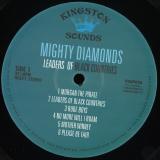
The Mighty Diamonds are one of the most famous vocal groups to come out of the Jamaican Reggae scene.
Their perfect harmonies ride over the wholesome and Garveyite influenced lyrics to such great effect that they will always evoke memories of that time and place, but also like all great music never seems to date.
The Mighty Diamonds consist of Donald ‘Tappy’ Shaw (lead vocals) Fitzroy ‘Bunny’ Simpson and Lloyd ‘Judge’ Ferguson providing those fantastic harmonies.
They began their recording career working with producers Stranger Cole and Rupie Edwards but found their breakthrough success with producer Joseph ‘Joe Joe’ Hookim at the legendary Channel One Studios recording ‘Hey Girl’ and covering two foreign tunes namely ‘Country Living’ (The Stylistics) and ‘Stoned Out of Mind’ (The Chi-lites) which suited their vocal styles perfectly.
The vocal group also cut tracks with other famous producers of the time Joe Gibbs ,Gussie Clarke and Mr.Tappa Zukie of which we focus this release on.On listening, these tunes work perfectly with harmonies weaving together and lifting the songs to another level.
The group also leave some room for a history lesson in the shape of ‘Morgan the Pirate’ and the thought provoking ‘Do You Want to Spend Your Time Wasting Time’.
Well waste no more and enjoy this set by one of Jamaica’s finest vocal groups….