The single release from Jimi Tenor's second thematic album on Timmion Records offers two very different moods. "Summer of Synesthesia" takes us back to those dreamy summer days, a natural overpour of sensations mixing together, sounds becoming colors before turning into flavors. Synthesizers grow into delicate layers over Cold Diamond & Mink's rhythm, and when your heart can hardly bear the beauty of it all, Tenor's soft lyric places the cherry on top. "Tsicroxe" on the flipside couldn't be more different, kicking into gear with a demonic organ arpeggio that sounds like you've just been dropped into a Dario Argento scene. Even though the familiar funk from Cold Diamond & Mink eases the dread a bit, when Tenor busts in with the eerie flute solo, the ritual closes in on its conclusion.
The contents of the backwards vocal bits at the end shall be saved for your turntable so make sure to rewind that track, selector! Also Available From Jimi Tenor & Cold Diamond & Mink: Is There Love In Outer Space? 7", Gaia Sunset 7", Is There Love In Outer Space? LP / CD. The single takes listeners on a sonic journey: “Summer of Synesthesia” flows with warm, dreamlike beauty, while “Tsicroxe” dives into intense, mysterious depths, showcasing Tenor’s dynamic range. Blending synth layers with Cold Diamond & Mink’s classic funk rhythms, both tracks bring elements of 70s soundtrack-style tension and ethereal soul, appealing to fans of both cosmic grooves and suspenseful soundscapes. Tenor’s layered synthesizers, haunting flute, and even backward vocal elements add a captivating texture, making “Summer of Synesthesia” b/w “Tsicroxe” a must-have for fans of genre-blending, atmospheric music.
out of Stock
Last delivered 3 months ago available to reorder, subject to availability
2025 Repress
Singing black-lit liturgies of bog bodies caked in mud, entranced by nocturnal landscapes flickering in the moonglow and powered by queer enchantment, Tristwch y Fenywod are a Welsh-language gothic avant-rock powercoven. Exhumed from the depths of Leeds’
experimental underground, the trio consist of Gwretsien Ferch Lisbeth (Guttersnipe, The Ephemeron Loop), Leila Lygad (Hawthonn) and Sidni Sarffwraig (Slaylor Moon, The Courtneys).
Stark, striking and bewitching, Tristwch y Fenywod’s self-titled album is their debut studio recording, following just 10 gigs and a live demo. Formed in 2022, Tristwch y Fenywod ("The Sadness of Women”) record exclusively in the Welsh language, conjuring an eldritch, subterranean, alien folk music played on dual zither, electronic drums and bass guitar. With towering, siren-like vocals curling around the Welsh consonants, accompanied by stark, martial rhythms and swirling claw-plucked strings, Tristwch y Fenywod feels like an early 4AD recording dredged from the waters of an Anglesey swamp. The effect is simultaneously chilling and stirring.
The eight tracks on the record constitute what feels like a recently rediscovered, unholy grail of edgy, atmospheric, occult feminist goth emissions. Gwretsien’s dual-zither playing scatters melodic fragments and spirals of harmony around the decimated space opened up by the lugubrious bass playing and pounding, brooding drum pads.
Coupled with the Welsh vocal, Tristwch y Fenywod embody a new, unique Celtic darkwave sound, equal part Pornography-era The Cure, Svitlana Nianio’s haunted hammered string-work and the dark beauty of Dead Can Dance or This Mortal Coil. Opener Blodyn Gwyrdd feels like the last ride of Princess Ukok, with lumbering bass and 6/8 rhythms in procession to the event horizon with an entreating, impassioned vocal and surprising lyrical theme. The doomed dancing of the zither provides the mysterious melodic bedrock throughout the album, particularly on Ferch Gyda’r Llygaid Du’s heavy funereal swa and the slowly building, paroxysmal banshee breakdown of Awen: an astonishing swell of thrilling chaos.
The album was recorded and produced by Ross Halden and the band at Hohm Studio, Bradford, Summer 2023.
out of Stock
Last delivered 18 months ago available to reorder, subject to availability
The single release from Jimi Tenor's second thematic album on Timmion Records offers two very different moods. "Summer of Synesthesia" takes us back to those dreamy summer days, a natural overpour of sensations mixing together, sounds becoming colors before turning into flavors. Synthesizers grow into delicate layers over Cold Diamond & Mink's rhythm, and when your heart can hardly bear the beauty of it all, Tenor's soft lyric places the cherry on top. "Tsicroxe" on the flipside couldn't be more different, kicking into gear with a demonic organ arpeggio that sounds like you've just been dropped into a Dario Argento scene. Even though the familiar funk from Cold Diamond & Mink eases the dread a bit, when Tenor busts in with the eerie flute solo, the ritual closes in on its conclusion.
The contents of the backwards vocal bits at the end shall be saved for your turntable so make sure to rewind that track, selector! Also Available From Jimi Tenor & Cold Diamond & Mink: Is There Love In Outer Space? 7", Gaia Sunset 7", Is There Love In Outer Space? LP / CD. The single takes listeners on a sonic journey: “Summer of Synesthesia” flows with warm, dreamlike beauty, while “Tsicroxe” dives into intense, mysterious depths, showcasing Tenor’s dynamic range. Blending synth layers with Cold Diamond & Mink’s classic funk rhythms, both tracks bring elements of 70s soundtrack-style tension and ethereal soul, appealing to fans of both cosmic grooves and suspenseful soundscapes. Tenor’s layered synthesizers, haunting flute, and even backward vocal elements add a captivating texture, making “Summer of Synesthesia” b/w “Tsicroxe” a must-have for fans of genre-blending, atmospheric music.
Ride guitarist and songwriter Andy Bell’s third solo album pinball wanderer is an otherworldly collection of intergalactic wizardry that mixes psychedelic melodies, Can-via-The Stone Roses grooves and Arthur Russell-style experimental textures. With guest appearances from Dot Allison and Neu! legend Michael Rother on a cover of The Passions’ peerless post-punk classic ‘I’m In Love With A German Film Star’, it is perfect for both deep-listening headphones moments and cutting across the coolest, most understated dancefloors. The loose-limbed rhythm tracks were the starting point and were laid down with the help of Andy’s old Oasis bandmate Gem Archer. The rest followed after an intense all-night session last summer, with the completed album being delivered the following morning. It’s Andy’s finest work to date; a quintessential nighttime record where you can slip through the gaps in the notes and revel in the moment.
Two records came out in 1988 that forever changed the perception of "experimental" or "serious" music produced in Portugal. These were "Plux Quba" by Nuno Canavarro and "Música de Baixa Fidelidade" by Tózé (António) Ferreira. Both were released by the same label - Ama Romanta -, an influential independent imprint closely linked to avantgarde pop band Pop Dell'Arte. Because those records appeared in what could be perceived as an "alternative pop" framework, they rescued this difficult music from Academia. It helps that Canavarro played in a successful new wave pop band (Street Kids) during the period 1980-83. By association, being a friend since 1976, António was in close contact with many of the musicians and bands that were part of the equally celebrated and detested Portuguese Rock Boom (roughly 79-82).
He was not a musician then but through his friendship with Canavarro, who had the means to acquire electronic equipment, António became involved with that equipment and shared Canavarro's passion for experimentation and curiosity for knowledge. They tried to get hold of as many technical magazines as possible and learn while testing ideas. In 1983, Street Kids were about to break up, young lives drafted into the Army and maybe, in Canavarro's case, a whole new passion for challenging music similar to his bandmate Nuno Rebelo, by then in the process of discovering a wide range of "other" music mainly through Jorge Lima Barreto. Barreto, who had started Telectu with Vítor Rua, possessed a huge book and record collection and, like Rua before them, Canavarro, Rebelo and Ferreira became fascinated by the pool of knowledge they now had access to by frequenting Barreto's house in Lisbon. He was roughly a decade older, had published several books and other writings throughout the 1970s, cultivated an anarchic stance and a penchant for cultural indoctrination. Rebelo was the first to be introduced via his contact with Rua (who had invited him to play in his other band GNR).
Overwhelmed, he felt the need to share his enthusiasm with friends and eventually took a few to the house in true pilgrimage fashion. To see the Light. Among the few he led there was even João Peste, founder of Ama Romanta. Canavarro and Ferreira preceded him.
Ferreira recalls an exciting learning process added to his experiments with Canavarro's array of synths such as the Korg Ms 20, Korg polysix, ARP Axxe, Roland SH-01, the Ensoniq Mirage sampler... He read in a magazine article about someone who had studied at the Institute of Sonology (then in Utrecht, Netherlands) and went there during a vacation trip in the Summer of 1983. He became excited by the prospect of studying at the Institute but money was a problem. Canavarro, on the other hand, was admitted there in the following year. Back in Portugal, Ferreira eventually abandoned his Chemical Engineering studies in Lisbon's Technical Institute in favour of a more focused music practice. He collaborated with Telectu during 1984 and 85 as a sort of technical engineer, implementing some recording solutions and background tapes and went to work at a thermoelectric power plant in Sines, hoping to make enough money to fund his musical studies. He did and proceeded with the paperwork for admission at the Institute of Sonology, now based in The Hague. António studied there in 1986-87 and the present album includes two compositions developed at the Institute: "More Adult Music" and "This Is Music, As It Was Expected", both featuring the voice of Rodney Waschka II. Among other activities and talents, Rodney is an expert in computer music and to António his voice sounded similar to Robert Ashley's, whose work he admired.
What happened at the Institute was a systematization of António's self-taught practice. Computer software, Musique Concrète, noise and silence, organisation of abstract ideas and sounds. The original notes on the back sleeve of the LP give some indication of process and thinking, but a more detailed account was given by António in the liner notes of the CD reissue in 2002, which are also included in this 2025 LP reissue.
The music sounds deep and detailed, despite the fact of António calling it low-fi ("Baixa Fidelidade"). It flows like an improvised performance where several musicians might be responding to each other, respectful of their mutual space. Drama occurs, as a natural emotional connection is sought by the listener. Piano, bells, drone, processed voices, even the clear narrative of Rodney Waschka II, contribute to create a sort of alternative perceptual reality. The sounds are almost tangible, more a part of the physical world than ethereal manifestations and thus it would not be correct to invoke "ambient music" as a selling point. But although "physical" and distinct, this music is still alien, more so in Portugal's 1988 environment. In March, helped by Canavarro, António set up a home studio and there he recorded the remaining material for this album: "Algumas Pessoas Olharam O Sul E Viram Deserto", "Um Som, Seguido De Uma Cena Negra E Malva" and "O Verão Nasceu Da Paixão De 1921".
"Música de Baixa Fidelidade" stands not only as a proof of great resilience but as one of those magnificent works of art coming from someone who balanced technical inclination and emotional sensibility. Because of that, Tózé Ferreira is able to decode the phantom world of sound for anyone who cares to experience the sensation of inhabiting a version of the Future. First ever vinyl reissue, reproduction of the original artwork with an additional insert. Made in collaboration with the artist and the support of Paulo Menezes (Plancton Music), who provided valuable assistance. Remastered by Taylor Deupree.
Exploring late-night, after-hours meditations on sound; ‘Everything Above The Sky (Astral Travelling with Luke Una)’ is a new compilation by the titular DJ, promoter and enigmatic cultural curator. Off the back of the E Soul Cultura phenomena, this compilation comes at a timely point in Luke’s rich career as he soars the heights of playing all over the world. Avoiding any chance of his sound being pigeonholed, Luke has put together a tracklist of songs and music that have a transcendental feel, after coming off the grid, going back to source, outside the city walls .
Music has long been believed to aid out of body experiences and many of us have searched long and hard for a combination of those elusive ingredients that might alleviate some of the monotony of everyday life, our daily routines and obligations, and those things that seem to block us from the spirit of the universe. In this collection, Luke selects music with all the right ingredients in just the right quantities, allowing the listener to engage in an esoteric journey of enlightenment through sound. Being a prolific collector of music, Luke initially delivered enough tracks to compile several compilations, making the licensing process the biggest effort to date for the label. The music moves softly and slowly, never becoming too intrusive, exemplifying the wonderful elevating properties of simple songs played from the heart.
Luke’s Everything Above The Sky manifesto reads, “Astral Travelling in the meadowlands with acid folk, spiritual jazz, around midnight hocus pocus, cosmic psychedelic soul, magical spellbound whirling swirling love songs, Brazilian ballads of light into machine soul gospel utopia dreaming, Balearic bossa, Outer Space ancient African drum, the breath of trees, escaping the big bad modern world, gathering round winter fires, walking amongst the bracken in Padley Gorge in late summer twilight, overlooking the Hope Valley, escaping ego, detaching and finally letting go amongst the stars with the slowly floating people. It’s beautiful beyond. Everything above the Sky”.
Beginning his career as an original Sheffield house young blood in the mid 1980s, Luke’s move to Manchester and partnership with Justin Crawford saw the birth of Electric Chair, a cornerstone cult night in the UK underground club scene. Then came Electric Elephant, a Croatian festival paying homage to their wild eclecticism from Balearic to Brazilian to É Soul, house, disco and techno. Luke’s much loved, long-running Homoelectric night and more recently Homobloc sell out festival for 10,000 souls has been at the forefront of Manchester’s LGBTQ+ cultural landscape. Luke’s Friday evening show on Worldwide FM captured imaginations and became a cult four-hour must-listen monthly journey for fans all over the world. Today, Luke remains, as ever, at the forefront of a changing milieu, pairing the momentous legacy of Manchester’s 80s and 90s scene with the delivery of what today’s club communities need to get down.
Volume 1 of this expertly curated project of 90s Italian House - put together by Don Carlos.
If Paradise was half as nice… by Fabio De Luca.
Googling “paradise house”, the first results to pop up are an endless list of European b&b’s with whitewashed lime façades, all of them promising “…an unmatched travel experience a few steps from the sea”. Next, a little further down, are the institutional websites of a few select semi-luxury retirement homes (no photos shown, but lots of stock images of smiling nurses with reassuring looks). To find the “paradise house” we’re after, we have to scroll even further down. Much further down.
It feels like yesterday, and at the same time it seems like a million years ago. The Eighties had just ended, and it was still unclear what to expect from the Nineties. Mobile phones that were not the size of a briefcase and did not cost as much as a car? A frightening economic crisis? The guitar-rock revival?! Certainly, the best place to observe that moment of transition was the dancefloor. Truly epochal transformations were happening there. From America, within a short distance one from the other, two revolutionary new musical styles had arrived: the first one sounded a bit like an “on a budget” version of the best Seventies disco-music – Philly sound made with a set of piano-bar keyboards! – the other was even more sparse, futuristic and extraterrestrial. It was a music with a quite distinct “physical” component, which at the same time, to be fully grasped, seemed to call for the knotty theories of certain French post-modern philosophers: Gilles Deleuze, Félix Guattari, Paul Virilio... Both those genres – we would learn shortly after – were born in the black communities of Chicago and Detroit, although listening to those vinyl 12” (often wrapped in generic white covers, and with little indication in the label) you could not easily guess whether behind them there was a black boy from somewhere in the Usa, or a girl from Berlin, or a pale kid from a Cornish coastal town.
Quickly, similar sounds began to show up from all corners of Europe. A thousand variations of the same intuition: leaner, less lean, happier, slightly less intoxicated, more broken, slower, faster, much faster... Boom! From the dancefloors – the London ones at least, whose chronicles we eagerly read every month in the pages of The Face and i-D – came tales of a new generation of clubbers who had completely stopped “dressing up” to go dancing; of hot tempered hooligans bursting into tears and hugging everyone under the strobe lights as the notes of Strings of Life rose up through the fumes of dry ice (certain “smiling” pills were also involved, sure). At this point, however, we must move on to Switzerland.
In Switzerland, in the quiet and diligent town of Lugano, between the 1980s and 1990s there was a club called “Morandi”. Its hot night was on Wednesdays, when the audience also came from Milan, Como, Varese and Zurich. Legend goes that, one night, none less than Prince and Sheila E were spotted hiding among the sofas, on a day-off of the Italian dates of the Nude Tour… The Wednesday resident and superstar was an Italian dj with an exotic name: Don Carlos. The soundtrack he devised was a mixture of Chicago, Detroit, the most progressive R&B and certain forgotten classics of old disco music: practically, what the Paradise Garage in New York might have sounded like had it not closed in 1987. In between, Don Carlos also managed to squeeze in some tracks he had worked on in his studio on Lago Maggiore. One in particular: a track that was rather slow compared to the BPM in fashion at the time, but which was a perfect bridge between house and R&B. The title was Alone: Don Carlos would explain years later that it had to be intended both in the English meaning of “by itself” and like the Italian word meaning “halo”. That wasn’t the only double entendre about the song, anyway. Its own very deep nature was, indeed, double. On the one hand, Alone was built around an angelic keyboard pattern and a romantic piano riff that took you straight to heaven; on the other, it showcased enough electronic squelches (plus a sax part that sounded like it had been dissolved by acid rain) to pigeonhole the tune into the “junk modernity” section, aka the hallmark of all the most innovative sounds of the time: music that sounded like it was hand-crafted from the scraps of glittering overground pop.
No one knows who was the first to call it “paradise house”, nor when it happened. Alternative definitions on the same topic one happened to hear included “ambient house”, “dream house”, “Mediterranean progressive”… but of course none were as good (and alluring) as “paradise house”. What is certain is that such inclination for sounds that were in equal measure angelic and neurotic, romantic and unaffective, quickly became the trademark of the second generation of Italian house. Music that seemed shyly equidistant from all the rhythmic and electronic revolutions that had happened up to that moment (“Music perfectly adept at going nowhere slowly” as noted by English journalist Craig McLean in a legendary field report for Blah Blah Blah magazine). Music that to a inattentive ear might have sounded as anonymous as a snapshot of a random group of passers-by at 10AM in the centre of any major city, but perfectly described the (slow) awakening in the real world after the universal love binge of the so-called Second Summer of Love.
For a brief but unforgettable season, in Italy “paradise house” was the official soundtrack of interminable weekends spent inside the car, darting from one club to another, cutting the peninsula from North to centre, from East to West coast in pursuit of the latest after-hours disco, trading kilometres per hour with beats per minute: practically, a new New Year’s Eve every Friday and Saturday night. This too was no small transformation, as well as a shock for an adult Italy that was encountering for the first time – thanks to its sons and daughters – the wild side of industrial modernity. The clubbers of the so-called “fuoriorario” scene were the balls gone mad in the pinball machine most feared by newspapers, magazines and TV pundits. What they did each and every weekend, apart from going crazy to the sound of the current white labels, was linking distant geographical points and non-places (thank you Marc Augé!) – old dance halls, farmhouses and business centres – transformed for one night into house music heaven. As Marco D’Eramo wrote in his 1995 essay on Chicago, Il maiale e il grattacielo: “Four-wheeled capitalism distorts our age-old image of the city, it allows the suburbs to be connected to each other, whereas before they were connected only by the centre (…) It makes possible a metropolitan area without a metropolis, without a city centre, without downtown. The periphery is no longer a periphery of any centre, but is self-centred”.
“Paradise house” perfectly understood all of this and turned it into a sort of cyber-blues that didn’t even need words, and unexpectedly brought back a drop of melancholic (post?)-humanity within a world that by then – as we would wholly realise in the decades to come – was fully inhuman and heartless. A world where we were all alone, and surrounded by a sinister yellowish halo, like a neon at the end of its life cycle. But, for one night at least, happy.
out of Stock
Last delivered 83 days ago available to reorder, subject to availability
Available on Bedroom Isolation Frosted Silver Still Void Crystal Clear vinyl for indies only. Genre: Indie Rock / Electronic. Following his post-hardcore heroics with Indian Summer and Calm, Marc Bianchi unplugged his distortion pedal and switched on the four track. From his boyhood San Mateo, California bedroom, Her Space Holiday explores the bewilderment of young adulthood through a dreamy prozac lens. This expanded 25th anniversary edition of Home Is Where You Hang Yourself includes an extra LP of remixed songs from Duster, Bright Eyes, Micromars, and Mahogany, an elegant tip-on jacket, lyrics, and 20 milligrams of millennial malaise. Ask your doctor if Her Space Holiday is right for you
Available on Bedroom Isolation Frosted Silver Still Void Crystal Clear vinyl for indies only. Genre: Indie Rock / Electronic. Following his post-hardcore heroics with Indian Summer and Calm, Marc Bianchi unplugged his distortion pedal and switched on the four track. From his boyhood San Mateo, California bedroom, Her Space Holiday explores the bewilderment of young adulthood through a dreamy prozac lens. This expanded 25th anniversary edition of Home Is Where You Hang Yourself includes an extra LP of remixed songs from Duster, Bright Eyes, Micromars, and Mahogany, an elegant tip-on jacket, lyrics, and 20 milligrams of millennial malaise. Ask your doctor if Her Space Holiday is right for you
Available on Bedroom Isolation Frosted Silver Still Void Crystal Clear vinyl for indies only. Genre: Indie Rock / Electronic. Following his post-hardcore heroics with Indian Summer and Calm, Marc Bianchi unplugged his distortion pedal and switched on the four track. From his boyhood San Mateo, California bedroom, Her Space Holiday explores the bewilderment of young adulthood through a dreamy prozac lens. This expanded 25th anniversary edition of Home Is Where You Hang Yourself includes an extra LP of remixed songs from Duster, Bright Eyes, Micromars, and Mahogany, an elegant tip-on jacket, lyrics, and 20 milligrams of millennial malaise. Ask your doctor if Her Space Holiday is right for you.
Available on Bedroom Isolation Frosted Silver Still Void Crystal Clear vinyl for indies only. Genre: Indie Rock / Electronic. Following his post-hardcore heroics with Indian Summer and Calm, Marc Bianchi unplugged his distortion pedal and switched on the four track. From his boyhood San Mateo, California bedroom, Her Space Holiday explores the bewilderment of young adulthood through a dreamy prozac lens. This expanded 25th anniversary edition of Home Is Where You Hang Yourself includes an extra LP of remixed songs from Duster, Bright Eyes, Micromars, and Mahogany, an elegant tip-on jacket, lyrics, and 20 milligrams of millennial malaise. Ask your doctor if Her Space Holiday is right for you.
Warrington-Runcorn New Town Development Plan's new album, Your Community Hub, compellingly continues his sonic exploration of the New Towns movement. The issues the councillors, planners, and architects set out to solve still resound and echo throughout society.
For the latest instalment in this unique project, Gordon Chapman-Fox turns his laser eye to focus on Community and the Community Centres that populated Warrington and Runcorn in order to provide all the facilities people needed within a five minute walk from their home. These planning ideas predated the current discussions of fifteen minute cities by fifty years.
Those 50 years have seen a decline in our community centres and services: handy access to a GP or dentist, Post Offices, youth clubs, local shops, banking and much more. Successive governments have undermined and eroded those basic services. The decline in community services has also been matched with a decline in community and shared experiences with a knock-on effect on the population's health and well-being. The disastrous austerity policies imposed over the last 15 years have exacerbated this long, slow reduction in available spaces for people to meet and communicate, with seemingly no recognition of the societal impact that causes. Short-termism at the expense of the community and how we live our lives.
Margaret Thatcher's statement that "there is no such thing as society" has been taken as a mission statement by successive Conservative governments who have aimed to remove as much support and communality from the citizens as possible. It continues now, the wrong-headed idea that everyone can be left to fend for themselves.
Chapman-Fox's latest album decries the cruelty of where we find ourselves in 2024 and his quiet incandescence about the loss of optimism for what communities should be and could be. It's his most powerful work, and as always, it will deeply resonate with those who tune in to his unique vision and unparalleled productions.
As ever, beautifully packaged and designed by Gordon, the album artwork features photographs from the archive of the architect Peter Garvin, which was kindly provided by his son Richard Garvin. The photographs show Peter's work on the Castlefield Community Centre, a sleek modernist structure clad in white ceramic tiles.
Russian titan Monokle is back to once again traverse many different sound worlds with his new album Ultraflowers. It is one of a number of superb albums landing on Constellation Tatsu this summer and one defined again by its warmth. The title track is a lo-fi, scruffy and deep opener with persuasive breakbeats, while 'Glassy Eyed' is an ambient jungle trip that drips with watery melody. 'Night Objects' offers some introspection and 'Moths' is a glitchy future techno cut with smeared synth soul. '1000Work' layer sup more breaks with elegant ambient melodies and 'Predteche' casts you admit in the deepest corners of space.
out of Stock
Last delivered 20 months ago available to reorder, subject to availability
Omni - the band, not the hotel - are from the former home of the Braves: Atlanta. Playing lo-fi pop that channels the spectre of the late `70s and early `80s, Omni brings you back to an era where any sane person was reeling from the unfulfilled promise of the Space Age and Age of Aquarius bleeding into the looming threat of "Morning in America." Omni distills the buzz and grit that snakes through the best of Television, Devo, and Pylon into surprisingly danceable, hook-laden slabs of raw, angular, sonic bliss. It's still the summer of '78, and pushing the roots of rock & roll to its limits remains in vogue. "Deluxe" serves as a fresh reminder that rock music can work outside of blues rooted, formulaic progressions without playing it safe behind a wall of effects. Arty enough to impress record enthusiasts, yet melodically attractive enough to transcend to those who've never asked: "'Sister Midnight' or `Red Money'?"
Prairiewolf make easy listening music for an age of fracture. They almost do it in spite of themselves. No one can seriously question the head music bona fides of the members of this Colorado-based trio.
Guitarist Stefan Beck has already assembled a formidable discography of jewel-toned guitar zone-outs under his Golden Brown moniker. And keyboardist and guitarist Jeremy Erwin and bassist Tyler Wilcox have both made their reputations as chroniclers of the vast world of out-music. Erwin helms the indispensable Heat Warps blog, a performance-by-performance archive of Miles Davis’s labyrinthine electric period. And Wilcox has been covering the ragged edges of psychedelia and experimental rock at Aquarium Drunkard and other publications, not to mention his own virtual basement for heads, the great bootleg blog Doom and Gloom from the Tomb.
These guys come by it honestly. And yet, given their backgrounds, Prairiewolf’s self-titled debut last spring was remarkably free of face-melters, brown acid blowouts, and ascendant spiritual jazz odysseys. Instead, they dropped a record of beautiful, elegant, low-key cosmic groovers that sounded like the piped-in background music to a resort hotel on Jupiter. It was an unlikely psychedelia, brocaded with mid-twentieth century sonic threading from the hi-fi era: vintage synthesizers, smears of spaghetti western, luxe tropical details, the faint schmaltz of space age pop. Imagine something like a Harmonia residency in the airport lounge. And yet somehow it all worked brilliantly. Prairiewolf became last summer’s cool-down standard. After a year woodshedding around Colorado’s Front Range region, the Prairiewolf boys have fired up their trusty Korg SR-120 drum machine for another outstanding collection of suborbital exotica. The appropriately titled Deep Time operates in its own chronology, unspooling at its unhurried pace. All its incongruous period and stylistic references—the new age pulses, Hawaiian steel, shaggy hippie rambles, lysergic guitar spirals, and orchestral synthesizer flourishes—float atop the album’s own singular temporality. Deep Time makes its own time.
From the moment Beck folds his slide guitar, origami-like, into a sound resembling the call of gulls on the tranquil album opener, “Peach Blossom Paradise,” there is a sense of departure from everyday life. The shimmering “Lighthouse” has a similar sunbaked nonchalance, like an afternoon passed day-drinking in a seaside bar. That they named their lush, kaleidoscopic downtempo track “The Meander” pretty much says it all. The ranging, propulsive “Saying Yes to Everything” seems like a nod in the direction of Rose City Band’s brand of wookie krautrock. And the motorik noir of “Demon Cicadas in the Night” also goes hard. Beck and Erwin’s intertwined guitar jam on the eerie album standout “The Cold Curve” evolves into something that sounds like primitive computer music. A genteel bassline from Wilcox on another album highlight, “Revisionist Mystery,” sets the stage for a loopy space jazz turn from guest clarinettist Matt Loewen of Rayonism. The title of post-rock cowboy tune “Another Tomorrow” might refer to the alternative future that so many critics heard in the music of Prairiewolf’s first album. Or it might simply refer to the persistence of time, however deep. Either way,
I’m thankful for the way Prairiewolf make each of their tunes a little oasis or sanctuary, each subsisting according to its own crystalline little logic for a few minutes. It is no simple task to filter out the omnipresent anger and anxiety of everyday life these days. But Prairiewolf are out here making it seem easy.
"Austin-based funk/prog/rock 10-piece collective GRANDMASTER present their self-titled 15 song debut. produced by fellow Austinite Nolan Potter, the record channels the sounds of inspirators Earth Wind & Fire, Stevie Wonder, John Williams, Parliament Funkadelic, The Bee Gees, & Potter’s own Nightmare Band, while also blending in elements of jazz, prog., and classic Nintendo scores.
The record has already garnered praise and heavy airplay from Austin tastemaker station KUTX, who named them Artist Of The Month back in summer."
Roman Flügel returns to Phantasy with his second release of 2024 on Erol Alkan’s beloved London label, ‘No Solutions EP’. Following on from ‘Hotel Kathargo / Energies’, which garnered a summer of support from a typically diverse array of DJs including Gerd Janson, Jamie Jones and Saoirse, ‘No Solutions’ expands Flügel’s contributions to Phantasy into a triple track delight, another generous expression of his lifelong immersion in electronic music culture.
Transporting the zeitgeist of future-facing, eighties pop production onto modern dance floors, the title track ‘No Solutions’ is a fizzy, escalating ode to some of Flügel’s very earliest musical influences. Playfully channeling the wide-eyed electronics pioneered by The Human League or Soft Cell, it accelerates into a contemporary funhouse of wild oscillations and dreamy melodies.
‘Sapphire’ shifts this sound palette forward, a steady acid-not-acid bubbler that maintains maximum intrigue and pressure, occasionally breaking through its hazy clouds with pillowy breakdowns and a sense of space-age whimsy. Flügel takes the same palette in a different, more exacting direction on ‘Dragged’, spinning a creeping, Krautrock-esque groove that pays homage to the steady, lifting pulse of German kosmische traditions. Lift off!
out of Stock
Last delivered 18 months ago available to reorder, subject to availability
It happened this summer while we were spending our family breaks in a rural house located in the town of "Cuacos de Yuste" in the region of La Vera, Extremadura (Spain). An idyllic setting in nature that we recommend everyone visit... One night, upon returning home after enjoying the magnificent cuisine of the area, we found a hard drive with a note at the entrance of the house. The message was clear and concise, FOLLOW THE SAME STEPS... Suddenly my body shook and I quickly understood that the ALIEN RAVE contact had occurred again. In line with his successful first vinyl, the alien has given us two only vinyl songs, Misconception and the sublime Deep Space, accompanied by Bilocation and No Gods. If you liked the first Alien Rave vinyl, you can't miss this Electrobreak gem. Will there be future contacts? We are sure that yes..
out of Stock
Last delivered 8 months ago available to reorder, subject to availability
Originally released on Robs Records offshoot Pleasure, followed by a repress on Air Trance in 1995 featuring Francesco Farfa & Kiticonti on remix duty, the debut offering from French/UK outfit Prism - aka Pascal Eloy & Grant Wilkinson - ‘Vapour Trails’ EP eventually gets a much needed reissue on Cosmocities this summer, enhanced with a remix from Bliss Inc.
From its initial sortie on the label run by Rob Gretton, former manager of legendary New Wave bands New Order and Joy Division, onto making it to a then en-vogue Italian trance imprint, this record made waves and opened new portals for many lovers of the burgeoning electronic sound, including - years later - Cosmocities head exec himself, holding the special status of being his first ever vinyl record buy. Harder was the path towards that longed-for repress, but with a twist from destiny - after tracking down one half of Prism - Pascal Eloy - to no avail, the label managed to find him through his father, contemporary composer Christian Eloy, plans were set out to release a first EP, ‘Rain’ (2022), and now ‘Vapour Trails’, which comes as the icing on the cake.
A future-facing slice of fast-track trance bound to have ravers melting in XTC thru and thru, the lead single treats us to a deluge of prismatic arps and multi-faceted synthwaves, ushering us into a vivid, mind-expanding kaleidoscope of throbbing colours and propulsive groove; an absolute killer of a tune that’s lost nothing of its frenzied punch. In the hands of Italian duo Farmakit, the track morphs into a further corrosive churner tailored for peak-time rumble in the warehouse with its calibrated mix of acid-drenched bass whorls, hard house bounce and Tangerine Dream vibrations.
Flip sides and here’s ‘O.N.V.I.’ shifting gears towards a more tribal / spiritual kind of uptempo hoodoo, running the gamut wildly from ethereal choirs to warlike drum programming, via sci-fi-indebted cosmicness and proper 303-infused salvos from outer space. New addition to the bunch, the remix from Bliss Inc. treats us to a more focussed parade of jacking house percussions, hi-NRG acid tropes and Afro funk-minded psychedelia, revving up the engines as the room temp rises from hot to sweltering. No surrender
out of Stock
Last delivered 6 days ago available to reorder, subject to availability
Available for the first time on vinyl! Ringo Deathstarr's SHELTER IN SPACE. The very first Levitation Session performance featuring the Austin, TX shoegaze legends. Recorded in the heart of the global shutdown, this double LP features 70+ minutes of live music from the band's catalog. Don't miss this one time pressing and limited edition Double LP!
"SKANLESS SUMMER: 80Z BABYZ (RE-ROCK EDITION)" takes you on a nostalgic yet groundbreaking musical journey, masterfully curated by the LA up-and-coming star T.F. In this innovative album, T.F. seamlessly fuses the raw energy of 80s hip-hop with contemporary beats, re-rocked by Local Astronauts, redefining the very essence of rap music and featuring guest appearances by Larry June, Jay Worthy, Flee Lord, Tiona Deniece and more!
Kool Customer is a collaborative project from B. Bravo and Bay area singer Rojai that brings together the sounds of future funk, 80s boogie, and a little bit of strip club sleaze.
B.Bravo is a 2010 graduate of Red Bull Music Academy with releases on Brownswood, Frite Nite and Ernest Endeavors.
Support from the likes of Benji B (BBC Radio 1), Gilles Peterson, DaM Funk, Sweater Funk Collective .
B. Bravo's shared the stage with artists like Chromeo, Dam-Funk, Flying Lotus and serenaded crowds across the world with his bass heavy outer space boogie and dirty grinding synth grooves at festivals like SXSW, Detroit Electronic Music Festival, and Sonar in Barcelona.
Rojai (pronounced "ROW-JUH") is a San Francisco born singer emerging as a leading voice in the modern funk scene with a vocal range from a raspy, percussive island vibe, to silky r&b.
As a frontman for Kool Customer and Latin-funk outfit Bayonics, Rojai has proven himself adept at crooning on any groove in his soulful timbre.
Being legally blind hasn't slowed down Rojai's ability to write, record and perform. He has channeled his life experience into songwriting and singing, creating music with a spirit and soul that inspires.
Extensive sync history include Awkwafina Is Nora From Queens, Netflix's Fatherhood, as well as 3 unique songs featured on Tyler Perry's Sistas and more
out of Stock
Last delivered 22 months ago available to reorder, subject to availability
Jawad Nawfal and Mazen El Sayed, better known by their stage names of MUNMA and EL RASS, met for the first time in Beirut, during the summer of 2011. A common friend told Jawad wonders about an MC who rapped and slammed in the classical Arabic language, as opposed to the vernacular Lebanese dialect. The two musicians met in a small café in Beirut’s Hamra neighborhood, spoke of music, argued about politics, and decided to collaborate at once. They began working on tracks the following day. A month later, they had already produced a dozen sketches, instrumental beds and accapella vocal tracks. These demos eventually landed in the hands of Ziad Nawfal and Fadi Tabbal, who set out to bring to life the duo’s first recorded album. “Kachf el Mahjoub” (the title is from a Sufi master-work penned some 900 years ago) was eventually released as a limited edition of 500 CD’s, during a launch event at then-budding alternative venue Metro al Madina in Hamra, on the 22nd of February 2012. These CDs went out of print in record time, as can be expected, and the album’s mythical status became reinforced over time – El Rass & Munma collaborated sporadically during the next ten years, but never fully grasped the level of musical intensity and explosive tension attained on this first outing. It has been a longstanding dream of ours, here at Ruptured, to produce a vinyl version of this album, and we are thrilled to say this moment has finally come. Artist ALI RAFEI’s original artworks have been painstakingly reproduced, the music has been dutifully remastered for vinyl by CEDRIK FERMONT, and the records were pressed by our friends at Mother Tongue in Verona. We added bonus track "Fi Kala'at Tarablus" to this 10th anniversary reissue for good measure – recorded during the same sessions that yielded “Kachf el Mahjoub”, it appears on the digital version of the album. “Kachf el Mahjoub” is a landmark album in Lebanon’s alternative music scene, and the MENA region’s hiphop and indie scenes writ large. At the time of their collaboration, El Sayed was a prolific writer and musician, at ease with a variety of instruments, notorious for his masterful flow in the classical Arabic language, with lyrics tackling both social and political sensitive subjects; Nawfal has previously released an impressive number of albums and EPs, exploring downtempo electronica and ambient dubstep, for a number of Lebanese and international labels. The collision of the former’s brazen, slammed vocals and the latter’s harsh beats works wonders on “Kachf el Mahjoub”, Munma’s sound-world perfectly fitting El Rass’s agitated discourse, alternating between broken beats, elaborate percussion, and ambient layers of synths. At times reminiscent of mutant hiphop outfit Shabazz Palaces, at others of the collaboration between dubstep producer Kode9 and the late vocalist The SpaceApe, this album is an uncanny meeting of Arabic hip-hop and electronica, an exceptional event in the realm of contemporary Lebanese alternative music.
out of Stock
Last delivered 23 months ago available to reorder, subject to availability
Colombian artist Kabinett brings a soul and harmonic proposal in the many forms of alternative disco and house through embellished productions and DJ sets finding himself every time as medium for all possibilities.
Involved in music from an early age through classical music, while being exposed and inspired by his older brothers in the many forms of what electronic music was developing, Nicolás, his given name, knew that his future and purpose was only going to be around what matters him the most, music. After learning different instruments in the early years and through a mix of self-education and formal education in contemporary music and music production, as well his first steps as a DJ, at age 20 he was ready to get involved in Colombia's capital electronic music scene as curator, DJ, label owner and music producer.
Founder of vinyl house label Nómada Records next to established artist such as Felipe Gordon & Joint4nine, his mentors, Kabinett have been fed enough to developed a full curation career working for Kaputt Club, El Coq & W Hotels, and more recently Casa Cruxada where he has helped to develop an identity for each which as of today has only enriched the local scene.
More recently as head of Kaputt.wav, his new label, which is now house of artist such as Curses, Iñigo Vontier, Theus Mago, Dombrance, Damon Jee, among many more, promises to keep growing and develope music overseas.
As of his personal artist career, have count on releases in labels such as Glitterbox, Midnight Riot Records, Partyfine, Platino Records, Duro, Playground, Sonido Moderna and more recently in Prins Thomas own label, Intersnajonal which will release his third solo EP in summer 2024.
With a deep understanding and experience on the music scene and a strong influence on dance genres, Kabinett and his music transcends the listeners souls and dive deep into a conscious dance.
out of Stock
Last delivered 23 months ago available to reorder, subject to availability
Something About Livingis an album of live recordings by experimental jazz composer/multi-instrumentalist Robert Stillman. The music was captured over the course of Stillman's time as the solo support act for The Smile (Thom Yorke, Jonny Greenwood, Tom Skinner). The album weaves excerpts from various theater and arena shows along the tour's North American routing into a seamless whole, creating a 40-minute program that represents an expanded version of Stillman's ever-transforming live set.
Something About Livingis the product of a steady, on-stage evolution that happened over the course of the nearly 60 shows opening for the Smile across the EU, UK, US, Canada and Mexico. However, the creative origins of the set began in relative isolation during the pandemic, through Stillman's work on projects like his multi-media installationUnseen Forcesand his monthly broadcast for Margate Radio, both of which drew upon solo improvisation using saxophone, cassettes, Yamaha DX7 synthesizer, and effects.
"At the time The Smile asked whether I'd like to open for them on their first tour, I felt like I'd already been preparing without really knowing it," says Stillman. "I'd been doing this music constantly, but always for a hypothetical audience" During the pandemic, Stillman's solo set-up served as the research lab where he worked on all the concepts he was interested in: solo improvisation, creating and manipulating cassettes, FM synthesis, analogue delays chains, no-input mixing, and non-metric rhythmic pulses. So when he was offered the first Smile tour, the idea was to bring "the lab" onto the stage.
What Stillman could not have prepared for was the experience of playing in venues with capacities of up to ten thousand listeners. "The first tour was in summer 2022, so not that long after the worst of the pandemic, when I had pretty much made peace with the idea that I might never be able to perform for an audience again. Then all of a sudden I found myself in front of huge numbers of people, and felt the massive responsibility of being with an audience, of this thing I'd done alone for so longactually being witnessed, and it was completely overwhelming!" On the flip-side, Stillman also recalls, was a new appreciation of how powerful the live performance was as a social phenomenon. "It's a cliche, but also true: the moment of making and hearing music in a shared time and space has a very specific meaning and power; there was a sense that everyone in the venue was necessary to make it real, regardless of what they were doing, or how they felt about it. There was an inevitability about it that I'd never fully appreciated."
Over the course of the tours that followed, Stillman transformed this appreciation of the shared moment into an ethic of spontaneity that guided the development of his live set. "An important reference for this set has always been an Animal Collective show I saw when I first moved to New York, probably in 2001 or so, that has always set the high-water mark for what I wanted to do live- they were improvising a lot, and out of what would seem to be absolute chaos they'd find their way to something structured, and then back out again into the unknown. It was so thrilling to witness".
ThoughSomething About Livingcompiles recordings from different dates along the tour, Stillman has edited and mixed them into a work that seeks to reflect the ebb and flow between 'chaos and control' that characterizes his live set. Among the compositions featured are some from previous album releases ("Time of Waves", "What I Owe", "What Does it Mean to Be American") as well as some new compositions ("The Dream of Waking", "Renaissance 2.0," and the title track, "Something About Living").
The album/track title "Something About Living" is a reference to a line from Stillman's favorite film,My Dinner With André: "André Gregory is explaining the value of life experiences that, as he says, are'to do with living'.That really struck me, the way he articulated it. I strongly believe live music situations can ask these kinds of questions, for performers and audiences. I hope that's reflected in this music."
[a] 01: Time of Waves (Live in Miami FL) [Live]
[b] 02: What Does It Mean to Be American (Live in Forest Hills NY) [Live]
[c] 03: The Dream of Waking (Live in St Augustine FL) [Live]
[d] 04: Something About Living (Live in Richmond VA) [Live]
[e] 05: What I Owe (Live in Chesterfield MO) [Live]
[f] 06: Renaissance 2.0 (Live in Chesterfield MO) [Live]
Geplant war es von Omega damals logischer Weise nicht, die eigene Karriere in Genre-Phasen einzuteilen. So etwas machen später Musikjournalisten und Fans - und unter ihnen besonders die Statistiker. Nach deren Lesart gilt die zweite Hälfte der Siebziger als Space-Rock-Ära der ungarischen Band. Abgebildet wird sie durch die Trilogie "Time Robber" (1976), "Skyrover" (1978) und schließlich "Gammapolis" (1979). Zwar waren sphärische Klänge bereits davor und auch danach noch im Schaffen des Budapester Quintetts zu vernehmen, derart konzeptionell fokussiert zeigten sich Omega jedoch tatsächlich nur auf diesem Triple. Nimmt man die Erfolgs-LP "Time Robber" weiterhin als Qualitätsmaßstab, hielt auch "Gammapolis" mühelos mit. Die Kompositionen der Gruppe um Sänger Jànos Kòbor waren melancholischer geworden, die bittersüßen Melodien schmeichelten. Das galt besonders für den siebenminütigen Opener "Dawn In The City" ("Hajnal a város felett"), dem Titelsong "Gammapolis" und "Silver Rain" ("Ezüst esö"). Zwischen der westeuropäischen, englischsprachigen Version und dem ungarischen "Original" gibt es neben dem Gesang und der Sprache in der Titelreihenfolge und bei der Songlänge einige kleine Unterschiede. Minimal ließen Omega die instrumentalen Passagen einiger Stücke auf der Muttersprachenvariante länger fließen. Für die westeuropäischen Omega-Platten-Käufer jedoch hatten diese feinen Unterschiede keine Relevanz, kannten sie meist die ungarischen Songs gar nicht. Ebenso wenig dürften sie registriert haben, dass GAMMAPOLIS in Omegas Heimat mit fast einer dreiviertel Million Einheiten die am besten verkaufte LP der Band-Karriere wurde. Das deutsche Cover-Artwork wich jedoch von der ungarischen Version erheblich ab: Zeigte die Bacillus/Bellaphon-Variante die Silhouetten der Musiker vor einem von Flak-Scheinwerfern durchschnittenen Nachthimmel, war auf dem Pepita-Album offenbar die zwar futuristische, allerdings auch karge Welt auf einem fremden Planeten zu sehen.
Fohn brings connection, displacement and new identities into the moment, on pastoral debut album Seanteach - informed by island life, marine folklore and musical tradition.
Connection to the land, the severing of earthly ties, explorations of environment, mythos and generational memory: under the moniker of Fohn, English violinist and producer Tom Connolly (Quade, AD93) takes to the fiddle on which he learned his craft as a child. Forging new bonds with his family’s island home off the coastal west of Ireland, their story is retold in Seanteach (Irish for ‘old house’), released on Odda Recordings.
“Seanteach explores the nature of my relationship with Ireland, and Connemara in particular, where my dad’s family is from,” explains Connolly, speaking on a long-form work that blends new compositions on traditional Irish fiddle with ambient electronics and evocative field recordings.
“It explores how the island of Maighinis became an almost mythological space for me, growing up in England - we would spend every summer there, but it felt equally present for me when we were back in the UK, a sort of mental solace that I found through music especially.”
Each track on the album is a reflection of aspects of that relationship to island life - where physical features intersect with mythology. Such as, ‘Boreen’, named after a colloquial term for rural byroads sometimes shared with otherworldly neighbours. ‘Aisling at Sea’ draws on the primal, unstoppable momentum of the water, while the folklore of ‘Immram’ reflects on generationally-kept tales of marine bravery and supernatural accomplishment.
“The compositions often sit at the fraying edges of memories I’ve inherited from my own experiences, that of family lore, or from stories that I have come across. I wanted the compositions to tread the space between documentation and fantasy that feels so reflective of my relationship with this place.”
Tying these worlds together is the presence and memory of Connolly’s ‘Mamó’ (Irish for grandmother), Bríd. Despite passing during Connolly’s childhood, this “larger-than-life character” shaped his imagination with anecdotes and stories, representing both a familiar figure, and the poignancies of potential and regret.
“Even at a young age I sensed a sadness emanating from her. Through a series of unfortunate and fortunate circumstances, she found herself leaving Ireland and settling in Boston like so many others. Under the impression she was an illegal immigrant in the US she didn’t return to Ireland for decades.”
‘Between the Shoreline and the Gorse’ channels her early childhood, born to a large Catholic family in the island’s ‘Seanteach’, and cast adrift from her old life - a severance of ties that Connolly attempts to make ethereal amends for, with the album named for her family home.
“It’s something that feels so visibly prominent in Connemara with its landscapes charcoaled with deserted ruins. It’s a feeling I also experience, despite never having lived in Ireland, which prompted me to want to explore the idea of longing for something/somewhere ‘un-experienced’, and to a certain extent, fictionalised.”
After seven years, Japandroids have returned with Fate and Alcohol, their fourth and final full-length. Written in part while the Vancouver duo-guitarist-vocalist Brian King and drummer-vocalist David Prowse-were touring behind their 2017 ANTI- debut, Near to the Wild Heart of Life, the album is at once a return to form and a thrilling step forward, testament to the sort of chemistry that they"ve honed over the course of 18 years and hundreds of shows side-by-side. Their aim was simply to write songs that they"d enjoy playing live, without sacrificing any of the nuance or ambition that marked their previous effort. Nowhere on this record is that more deeply felt than lead single "Chicago," a song whose sheer momentum feels inevitable and true-from the inherent romance of its opening chords to the series of snare-led explosions that see it through. Like the rest of Fate and Alcohol, it was recorded in Vancouver with longtime collaborator Jesse Gander, who also engineered 2009"s Post-Nothing and 2012"s Celebration Rock. "The very first demo we have of "Chicago" was recorded in our jam space on February 4th, 2020," King says, "and if you listen to that, it just sounds like a rough version of what you hear on the record. But it"s all there. That, in some ways, is the most ideal circumstance for a band like us: just having something that really rips in your jam space, something that feels good, something that you"re excited about."
Exploring late-night, after-hours meditations on sound; ‘Everything Above The Sky (Astral Travelling with Luke Una)’ is a new compilation by the titular DJ, promoter and enigmatic cultural curator. Off the back of the E Soul Cultura phenomena, this compilation comes at a timely point in Luke’s rich career as he soars the heights of playing all over the world. Avoiding any chance of his sound being pigeonholed, Luke has put together a tracklist of songs and music that have a transcendental feel, after coming off the grid, going back to source, outside the city walls .
Music has long been believed to aid out of body experiences and many of us have searched long and hard for a combination of those elusive ingredients that might alleviate some of the monotony of everyday life, our daily routines and obligations, and those things that seem to block us from the spirit of the universe. In this collection, Luke selects music with all the right ingredients in just the right quantities, allowing the listener to engage in an esoteric journey of enlightenment through sound. Being a prolific collector of music, Luke initially delivered enough tracks to compile several compilations, making the licensing process the biggest effort to date for the label. The music moves softly and slowly, never becoming too intrusive, exemplifying the wonderful elevating properties of simple songs played from the heart.
Luke’s Everything Above The Sky manifesto reads, “Astral Travelling in the meadowlands with acid folk, spiritual jazz, around midnight hocus pocus, cosmic psychedelic soul, magical spellbound whirling swirling love songs, Brazilian ballads of light into machine soul gospel utopia dreaming, Balearic bossa, Outer Space ancient African drum, the breath of trees, escaping the big bad modern world, gathering round winter fires, walking amongst the bracken in Padley Gorge in late summer twilight, overlooking the Hope Valley, escaping ego, detaching and finally letting go amongst the stars with the slowly floating people. It’s beautiful beyond. Everything above the Sky”.
Beginning his career as an original Sheffield house young blood in the mid 1980s, Luke’s move to Manchester and partnership with Justin Crawford saw the birth of Electric Chair, a cornerstone cult night in the UK underground club scene. Then came Electric Elephant, a Croatian festival paying homage to their wild eclecticism from Balearic to Brazilian to É Soul, house, disco and techno. Luke’s much loved, long-running Homoelectric night and more recently Homobloc sell out festival for 10,000 souls has been at the forefront of Manchester’s LGBTQ+ cultural landscape. Luke’s Friday evening show on Worldwide FM captured imaginations and became a cult four-hour must-listen monthly journey for fans all over the world. Today, Luke remains, as ever, at the forefront of a changing milieu, pairing the momentous legacy of Manchester’s 80s and 90s scene with the delivery of what today’s club communities need to get down.
out of Stock
Last delivered 15 months ago available to reorder, subject to availability
William Tyler is a Nashville guitarist and composer. He spent years woodshedding and touring with Nashville groups like Lambchop and Silver Jews before breaking away to focus on his own version of instrumental guitar music. In the summer of 2022 he was fortunate to have an artist residency at Epicenter in Green River, Utah, a tiny high desert town three hours from anything, One of the other non-profit friends of Epicenter was The Tank is Rangely, Colorado. The Tank itself is a giant and tall disused water tower from the high days of train travel and used to store water to cool train engines and such. Empty for decades, it is now an internationally recognized destination for sound art and almost unparalleled echo/acoustics. William Tyler decided to book recording time there and chose to re-interpret all of the songs of hie 2019 album "Goes West" in a sparse yet cavernous solo acoustic setting: "Something about the frailty and space I wanted the songs to imply was lost in the over-production of the studio record, This felt like a reclamation of the songs and also a symbolic tribute to the stunning, haunted and vast possibilities of the American West, especially at the twilight of American Empire.’
out of Stock
Last delivered 23 months ago available to reorder, subject to availability
Forgetting You Is Like Breathing Water, the self-titled debut from the duo of trumpeter Will Evans and guitarist, synthesist, producer and multi-instrumentalist Theo Trump, arrives like a vault revelation. It feels like a decades-old yet newly unearthed masterwork of gorgeous ambient improvisation, the sort of thing scholars live to research and shepherd into deluxe reissue.
The patient, crystalline chords that swell and resonate like a series of confessions; the textured brass murmurs that suggest a ’60s or ’70s Fire Music master at their most poignant. Provocative found-sound experiments threading arcane religious recordings through dystopian soundscapes. Ear-shattering free-noise tumult. Where and when did this music come from? Who are these voices?
As it turns out, Forgetting You Is Like Breathing Water springs from an engrossing human story, though it isn’t necessarily the one you’d expect. This work of stunning maturity is in fact an entrance by two little-known explorers in their early 20s, who grew up together in Virginia, in the shadow of the Blue Ridge Mountains. It documents one of those perfect, sparkling moments in post-adolescence when big decisions and responsibilities are right around the corner, but for a spell, two young artists are able to create among the comforts and nostalgia of their shared past.
It also represents a reunion of sorts, as Evans and Trump connected as toddlers, became inseparable as boys, then pursued independent lives and creative paths as young adults. “Theo is my oldest friend,” Evans says, “and I feel like that’s what this band is — us meeting right in the middle of our interests.”
Now, having conjured this magic, they’ve detached once again: Evans, whose other works include the indie/avant-jazz unit Angelica X, is currently based in New York City. Trump recently moved to England, where he’d participated in his family’s theatre company, to go to school and further his solo ambient project. “This album didn’t start out as something super ambitious,” Evans explains. “It was more just an excuse to spend time together again and make music.”
***
In conversation, Evans and Trump are a delight, especially for cynics who might think that Gen-Z is only capable of doomscrolling. They come across as kindly young intellectuals who grew up using the internet as it was intended, for exposure to ideas and art across genres and generations. Trump points to indie-folk and the oracular post-rock of late Talk Talk, Bark Psychosis and Gastr del Sol. Pressed for his guitar heroes, he cites Bill Orcutt, Mary Halvorson and Marc Ribot, and mentions his devotion to alt-country. Heyday electro-industrial stuff like Skinny Puppy and Nine Inch Nails also meant a lot to him.
Evans is equally intrepid, though his background has a greater jazz focus. Ambrose Akinmusire, among today’s most thoughtfully commanding trumpeters, is a favorite. As for the soulful murmur he offers throughout Forgetting You, Pharoah Sanders’ wistful and lyrical contributions to Floating Points’ work is a touchstone.
The two grew up down the street from each other in the northern Piedmont town of Batesville, Virginia. Their families were friends, holidays were celebrated together and they became the most loyal of pals. As children they had a pretend band.
Then life unfolded, they attended different schools and their paths diverged. Evans discovered John Coltrane and became a jazz obsessive, as Trump found punk and hardcore and later began making ambient music. As a dedicated jazz trumpeter, Evans studied formally and widely; Trump was an autodidact, teaching himself guitar and absorbing synthesis and production techniques. The late teens and very early 20s brought moves away from home and back to home, as well as plenty of listening and learning. The Covid pandemic meant an opportunity to reconnect on long walks. Through it all, together and apart, they remained reverent of each other.
By early 2023, they found themselves living again among the Blue Ridge Mountains. In the evening, after giving trumpet lessons in Charlottesville, Evans would make the eerily beautiful trek “over the mountain” to Trump’s home in Staunton, Virginia. They’d talk and eat and begin to improvise, deep into the night. Evans played trumpet and sometimes drums. (Given the wee-hours recording schedule, the neighbors didn’t appreciate the latter.) Trump plugged a rickety, junk-store Telecaster-style guitar into a cheap solid-state amp and explored open tunings; he also layered on lap steel, electric bass, synths and electronics.
They locked in and relished each other’s gifts. In Trump, those include patience and intentionality and sonic decision-making; for Evans, a distinctive trumpet sound that both musicians think of as a singer’s voice. “Will’s playing is so thoughtful and well placed,” Trump says. “My goal from a producer’s mindset is that the trumpet will occupy the space that vocals would take.”
Often, they got lost in the best way. “The thing I look for most when I’m playing is that feeling of disappearing into what you’re doing,” Evans says. “Usually when that happens, the music is good.”
By the same token, they didn’t pursue free improvisation as an ethic, or as a pure process. Their goal was something closer to spontaneous composition. “We were trying to make good songs,” Evans says simply. Later, Trump did brilliant post-production work, expanding a modest setup into an enthralling soundworld. Under his judicious editorship, music that was wholly improvised sounds at times like a carefully composed new-music commission.
The results speak for themselves. “A Happy Death” summons up a swath of American desolation through the viewfinder of Wim Wenders. “Flesh of Lost Summers” and “Partings” are highlights from an essential ECM LP that never was. “A Collapse of Horses” infuses those seminal post-rock influences with the plod of doom metal or slowcore. The album’s final track, “The Mountains Are a Dream That Calls to Me,” was in fact the first thing the duo recorded, as an evocation of those twilit drives across the Blue Ridge Mountains. “Looking back at what we chose to name the songs,” Evans says, “and some of the sounds and how they make me feel, there is an air of impermanence and loss to this album.”
“I’m excited for everything that’s to come,” he adds, “but I recently thought, ‘Damn — that’s not going to happen again.’ It was a privilege for us to have that time together.”
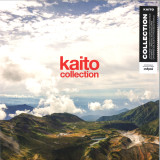
Hiroshi Watanabe, a musician, photographer, and DJ from the Japanese electronic scene, based in Saitama near Tokyo, has been a prolific figure for twenty-five years. He has explored most major genres of electronic music through more than twenty albums. He proudly becomes the very first Japanese artist of InFiné.
After Ryuichi Sakamoto, he is one of the very few Japanese artists who have gained the favor of Western audiences, alongside notable names such as Cornelius, Towa Tei, DJ Krush, Ken Ishii, Susumu Yokota, and more recently Hiroshi Yoshimura. In Europe, he is best known for his project Kaito, which began in 2001 under the prestigious Kompakt label. The name Kaito, in addition to being the name of his son born the same year, carries a double meaning in Japanese, signifying both "universe" and "secret." These references hint at a spirituality visible in his photographic work and contribute to the elements that make Japanese artists masters of the ambient genre.
The collaboration between Kaito and the InFiné label began with his participation in the compilation "Music Activists 2020 (From Home)," which supported artists affected by the Covid crisis, followed by a remix for the single "Motion" by Rone and Vanessa Wagner in 2023. These initial contributions led to a new album featuring nine tracks of ambient music.
Kaito's new album ‘Collection’ comprises nine ambient and melodic tracks composed during the Covid-19 pandemic. These compositions present a majestic minimal and harmonious therapy in response to the world’s adversities, showcasing the producer’s return to the peak of his art. ‘Collection’ was remastered by another genre legend, the German Rashad Becker, and released on vinyl and CD by InFiné in 2024.
out of Stock
Last delivered 20 months ago available to reorder, subject to availability
Veteran electronic music composer Jill Fraser"s new work takes stock of generations and lifetimes of memory, speculating on how the spirit of our songs might be interpreted after we"re gone. With her 1978 Serge Modular, Prism Modular and Ableton Push 3 in the circuit path, she recomposes a stack of American revival hymns, making new creations for the future. A fluent meditation upon mortality and rebirth amid numinous infinities of dimensional sound. The sound world of Earthly Pleasures accesses a seeming infinity of dimensional sound in which the human hand is always keenly felt, no matter how deep the space. It"s a breathtakingly transcendent album that suggests inclusion within a diversity of genres: Ambient, Electronic, New Age, Modern Classical, Gospel, Healing, Sacred... . It is the work of a veteran composer and synth master at the peak of her powers, meditating upon the detritus of memory, the passage of all consciousness, and the rebirth of meaning in a new era.
A new piece by minimalist / experimental composer PHILL NIBLOCK (1933 - 2024), co-composed and performed by ANNA CLEMENTI & THOMAS STERN. Intense, menacing layers of thick drones and alien sounds.
In summer 2022, within just a few weeks and by pure coincidence, 2 proposals regarding PHILL NIBLOCK albums arrived: one suggesting an overdue vinyl reissue of a CD release (more on that when the time has come for it), the other email was from ANNA CLEMENTI saying she and THOMAS STERN were working on new pieces that PHILL NIBLOCK has written for her … when "Zound Delta 2" was complete, PHILL sent photographs for the two artworks, we met twice to discuss details, but unfortunately he died unexpectedly early january this year so the album now is, sad as it is, a posthumous release … an intense goodbye from one of 20thcentury most iconic composers.
Phill Niblock
Phill Niblock (1933-2024, USA) was an artist whose fifty-year career spans minimalist and experimental music, film and photography. Since 1985, he has served as director of Experimental Intermedia, a foundation for avant-garde music based in New York with a branch in Ghent, and curator of the foundation's record label XI. Known for his thick, loud drones of music, Niblock's signature sound is filled with microtones of instrumental timbres that generate many other tones in the performance space. In 2013, his diverse artistic career was the subject of a retrospective realised in partnership between Circuit (Contemporary Art Centre Lausanne) and Musée de l'Elysée. The following year Niblock was honoured with the prestigious Foundation for Contemporary Arts John Cage Award.
Anna Clementi
Italian-Swedish singer Anna Clementi grew up in Rome, where she first studied the flute and completed acting training before moving to Berlin and studying experimental vocal music and experimental music theater with the composer Dieter Schnebel at Hochschule der Künste (now UdK Berlin). Anna Clementi sees herself as an "actress of the voice" rather than exclusively as a singer. In this way she also articulates the diversity of her artistic expression, with which she is always searching for new connections between voice, gesture, language, dance and theater.
During her decades spanning career, Anna Clementi has performed at the most important festivals, has premiered numerous works, many of which have been composed especially for her, and worked with Fast Forward, Michael Hirsch, Rupert Huber, Christian Kesten, Alexander Kolkowski, Olga Neuwirth, Josef Anton Riedl, Iris ter Schiphorst, Dieter Schnebel, Laurie Schwartz, Elliott Sharp, and many others.
A special focus of hers is the work of John Cage, whose pieces she has performed worldwide.
Thomas Stern
Born in Bremen, Thomas Stern moved to Berlin in 1984 where he joined Mona Mur with Alex Hacke and F. M. Einheit (both from Einstürzende Neubauten, with which Stern also worked as live sound engineer for many years). Around 1987 he co-founded the Berlin set up of Crime And The City Solution (Mick Harvey, Alex Hacke a.o.). Over the years, he has has collaborated with artists like Ulrike Haage, Phew, Nick Cave, Ton Steine Scherben, Meret Becker, Nina Hagen, Jaki Liebezeit, Ben Becker, N.U. Unruh, Gry, Iris ter Schiphorst, Automat, Swans, Hans Joacxhim Irmler and many more, on the road or in his own Sternstaubstudio.
credits:
Anna Clementi: voice
Thomas Stern: slide guitar, bass and soundprocessing
Composition by Phill Niblock, Anna Clementi and Thomas Stern
Recorded and mixed by Thomas Stern at Sternstaubstudio, Berlin
Mastering and lacquer cut: Kassian Troyer at D&M, Berlin
Cover photography by Phill Niblock
Layout and design by kaidoh
out of Stock
Last delivered 11 months ago available to reorder, subject to availability
Rob Woodward, AKA Demetae, dons his Tasteless Talk alias for the first time for the ‘Love’s Destination’ EP on La Mano’s Sound Du Jour label. Alongside the single, Woodward is joined by PBR Streetgang and 1⁄2 of PBR Streetgang, Magari, for the remixes. It follows Demetae’s recent ‘Space-time Sleaze’ EP on Sound Du Jour, which won support from Chloé, Mufti, Captain Mustache, Posthuman, and many more.
As Tasteless Talk, Demetae writes 80s-inspired Italo, Disco and Electro Funk, lacing the ‘Love’s Destination’ single on Sound Du Jour with retro synths and the passionate vocals of vocalist MILLICENT. Bodied drums hang down low, airy melodies and nostalgia-rich lyrics at the forefront before Bonar Bradberry and Tom Thorpe’s PBR Streetgang remix the track. Their version ups the energy via an organic breakbeat and layers of additional harmonies while maintaining MILLICENT’s timeless vocal. Bradberry then goes solo for the final track on the EP as Magari, his Scena Finale mix of ‘Love’s Destination’ features bold rhythms, chugging bass and an EBM-tinged feel.
The EP has gained the support of many respected artists such as Solomon, Groove Armada and Claptone. Love’s Destination is expected to be the perfect sound to serenade the closing of the summer season.
out of Stock
Last delivered 16 months ago available to reorder, subject to availability
LA threesome ASHRR aka lead vocalist Steven Davis and producer-musician-vocalists Josh Charles and Ethan Allen are back with a brilliant new album for Ralph Lawson's superb 20/20 Vision Recordings that finds them working by the old mantra of 'art for art's sake'. This effortlessly eclectic record collides electronic soul, post-punk, space disco and indie-dance and is rich in melancholic melody, hazy, late-summer moods and late-night dancing. The vocals bring an indie edge to jangling delights like 'Please Don't Stop The Rain' while 'What's Been Turning You On' is a laidback and languid groove for lazy sessions.
out of Stock
Last delivered 21 months ago available to reorder, subject to availability
Marking the follow-up to acclaimed 2023 EP ‘Empathy Lives In Outer Space’, the impressive quartet kick off their EP campaign with visceral lead track ‘Shapeshifting’, showcasing another unbridled display of powerful emotion and effortless vocals, powered by their phenomenal rhythmic instrumentation.
Hailed by The Sunday Times as “an intriguing musical concoction that doffs its cap to grunge, The Kinks, Iggy Pop and T.Rex”, and accompanied with press support from many highly recognised publications (DIY, Dork, Clash, The Line Of Best Fit, Rough Trade, The Forty-Five), the band have fast become mainstays on the BBC 6 Music (Steve Lamacq), Radio X (playlisted) and Sirius FM airwaves. With their biggest ever headline show announced for The Lexington, London this September to coincide with their EP release, Human Interest are primed to kick on in the summer months, with multiple festival appearances lined up to build on recent supports with the likes of English Teacher, Self Esteem and Hinds.
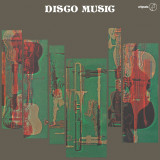
Composed by legendary library guitarist and founding member of I Gres, Silvano Chimenti, and accompanied by his orchestra, "Disco Music" is an essential release of the Usignolo catalog and probably one of the most sought after titles of the series. This album displays a broad range of styles masterfully blended together by Chimenti, going from disco-funky bangers "Happy California" and "Autostrade Americane" that lead way to the more dramatic and suspenseful vibes of "Society Problem" and "Tragedy", finishing off with the rock vibes of "Indian Summer" and the mellow atmospheres of softer, lounge-like songs such as "Lady Primavera" and "Chiara". One of the most complete and well-rounded library albums of its era, "Disco Music" is finally available on vinyl once again after a very long time as a limited edition pressing of 500 copies.
Stop what you're doing and give us your full attention because Hell Yeah mainstay My Friend Dario's new album Senza Estate is going to define the sound of summer 2024. It's an eclectic eight-track collection that has something for everyone and is inspired by dreamy Italian soundtrack composers Piero Piccioni and Umiliani.
Curveball Italian talent Dario is a real dance floor don who collides acid, nu-disco, breakbeat and electro. His take on Balearic is unique and always sends dance floors wild, as proven with his last outing Food For Woofers Vol 2 earlier in the year. His new album is the sound of life by the Mediterranean, Balearic audio pleasure for daytime dreaming and nighttime dancing with vocal tracks written and performed by the UK's Space Echo Records associate Darene Obika.
Dario hails from Catania on the island of Sicily and his inspiration for Senza Estate, which translates as 'without summer,' was an imaginary holiday, weekends at the seaside, car journeys in the sun, relaxing sunsets and late-night dancing. 'For five years, I worked in a shop six days a week so despite living on a Mediterranean island I could never enjoy these things. Instead, I locked myself in the studio and jotted down the ideas, sensations, melodies and rhythms I had about another lost summer.'
'Keep On Cruising' is a downtempo opener with innocent synths that are filled with hope and promise for the warm months ahead. 'Zingarella' is a wide open sea view with wispy pads, seductive flutes and jazzy melodies that bristle with life and the tropical title cut gets more dancey on shuffling broken beats and radiant synth glows. There's a seductive laid-back cool to the tumbling keys of 'Marittimo' and 'What You Need' is a horizontal groove with loved-up vocals, 'Falò' pairs sensual acoustic guitar with work with pillowy drums and 'Il Pianeta Proibito' layers up sci-fi synths and stuttering bass into a bubbly sound that leads to cosmic take-off. 'Acid Panorama' is the melancholic closer which hints that the summer sun is setting one final time after weeks of carefree fun.
But the good news is, you can repeat the joys of My Friend Dario's masterful Senza Estate over and over again.
out of Stock
Last delivered 3 months ago available to reorder, subject to availability








![El Rass & Munma - Kachf el Mahjoub / Unveiling the Hidden [10th Anniversary Reissue]](https://www.deejay.de/images/l/7/0/997770.jpg)