• Within a year of her ground-breaking Double-Album “Bad Girls”, Donna Summer left Casablanca Records
to become the first Artist signed to the new Geffen Records label.
• The third album released for the label was 1984’s “CATS WITHOUT CLAWS”, which was produced by
Michael Omartian, who followed-up his production duties on “She Works Hard For The Money” by giving
the album a mid-80s dance/pop themed sound. The album includes the singles ‘Supernatural Love’, ‘There
Goes My Baby’ and ‘Eyes’.
• “CATS WITHOUT CLAWS” reached the Top 30 in several countries across Europe, also becoming a Top 40
album in the USA and Japan.
• Michael Omartian’s production credits include albums with Michael Bolton, Peter Cetera, Christopher
Cross, Amy Grant, Whitney Houston, The Jacksons, and Rod Stewart. Alongside Quincy Jones, he coproduced USA For Africa’s 1985 No. 1 hit, "We Are the World".
• Donna won a Grammy Award for Best Inspirational Performance for the album’s final track, ‘Forgive Me’.
• This special edition revisits the original album on 180g Pink Colour vinyl.
out of Stock
Last delivered 16 months ago available to reorder, subject to availability
Footshooter is the moniker of Barney Whittaker, a south London-based producer and DJ. His production style takes in influences from broken beat, jazz, house and more, working with rappers, poets and vocalists to create a soulful sound referencing the past while being firmly future-facing in its approach. His records as Footshooter and SAUL have earned airplay and support on BBC Radio 1 & 1xtra, BBC 6 Music, NTS Radio, Jazz FM and Rinse FM, from the likes of Gilles Peterson, Bradley Zero, Errol (Touching Bass), Alex Nut (Eglo Records) Shy One, Virgil Abloh, Zakia, Jyoti, Nabihah Iqbal, Bonobo, Jamz Supernova, Maryanne Hobbs, Mr Scruff and more.
His musically diverse live band sets and DJ sets over the past seven years have taken him to Boiler Room London, Tate Modern, Alexandra Palace, The Jazz Cafe and the Barbican Centre, as well as performances at Brainchild, We Out Here and Love Supreme Festivals. A Balamii Radio resident for the past 5 years with his monthly show 'Sonic Fruits', Footshooter's DJ sets are as versatile and wide ranging as his production credits, spanning the finest soulful house, broken beat, UK Rap, soul, jazz and beyond.
"This is the sound of London right now, and it is fantastic" - Juno Records
out of Stock
Last delivered 16 months ago available to reorder, subject to availability
Nach fünfundzwanzig Jahren Musikkarriere mit fünf Grammy-Nominierungen, zwei RIAA-zertifizierten Goldenen Schallplatten und der jüngsten Veröffentlichung von 'Desolation: A Heavy Metal Memoir', einer ehrlichen Reflexion über sein Leben in der Musik und darüber hinaus, befindet sich Mark Mortons kreative Energie auf einem Allzeithoch.
'Without The Pain', sein zweites Soloalbum, ist eine Hommage an seine langjährige Liebe zum Südstaaten-Rock und wurde von seinem langjährigen Weggefährten Josh Wilbur produziert. Auf dem Album als Features vertreten sind einige der größten Namen aus Americana, Rock und Country:
Der Outlaw-Country-Star Cody Jinks liefert zwei kraftvolle Songs, darunter das eindringliche 'Brother'; Blackberry Smoke-Frontmann Charlie Starr tut sich bei 'Come December' mit Americana-Superstar Jason Isbell zusammen, während Jaren Johnston (The Cadillac Three) beim Eröffnungstrack 'Hell & Back' eine Performance voller Hingabe liefert.
Der Country-Hitmacher Travis Denning - ein aus Georgia stammender Künstler mit einer früheren Nummer 1 in den US-Country-Airplay-Charts - arbeitet an zwei bewegenden Stücken mit, die beide subtile und zarte Gitarrentexturen aufweisen und eine andere Dimension von Mortons Songwriting zeigen.
Troy Sanders (Mastodon) singt bei 'Nocturnal Sun', einer donnernden Doom-Klage und dem schwersten Stück des Albums, während Blues-Gitarren-Phänomen Tyler Bryant sich mit Morton bei dem psychedelischen Blues-Rummel 'Forever In The Light' ein Gitarrenduell mit Feuerwerk liefert.
Für Fans von: Lamb of God, The Cadillac Three, Whiskey Myers, Travis Denning, Clutch, Brothers Osbourne, Blackberry Smoke, Black Stone Cherry, Lynyrd Skynyrd
One of Mile Davis's fnest recordings, an example of one of the 20th century's great ensembles reaching the pinnacle of their craft, a masterpiece by any measure Like his other titles, Relaxin' features a variety of material the band performed simultaneously in concert: the format is perfect for Davis (trumpet), John Coltrane (tenor sax), Philly Joe Jones (drums), and Red Garland (piano). The results are consistently superior in both song selection and execution.
Double LP pressed on yellow and sky blue vinyl ("Feld & Fluss") Dorfromantik is a relaxing building strategy and puzzle game in which you place tiles to create ever-growing, idyllic village landscapes. With Dorfromantik, you can immerse yourself in a quiet, peaceful world at any time and take a break from everyday life. At the same time, the game offers a challenge for those who are looking for one: To beat the highscore, you need to carefully plan and strategically place your tiles. The original superchill Dorfromantik soundtrack by Laryssa Okada (Manifold Garden OST), Pygoscelis and Only Sound is totally living up to game's intention and atmosphere. It is inspired by the warm and nostalgic memories of a childhood spent between city and countryside. These soothing and relaxing tracks created from a wide arrangement of different instruments and musical styles will take you on a peaceful but nonetheless dynamic journey through joyful soundscapes. Dorfromantik was developed by four students from the Berlin University of Applied Sciences (HTW Berlin): Luca Langenberg, Sandro Heuberger, Timo Falcke and Zwi Zausch. The full version of the video game was officially launched in April 2022. It is the winner of multiple prizes and received positive reviews throughout the press. The physical boardgame even won the acclaimed "Game of the Year" award in 2023. What a whirlwind of success! Time to sit down, relax and listen to the unmatched Dorfromantik soundtrack on beautiful, coloured vinyl.
Super-rare, killer disco from late-70's Australia
Remastered and reissued for the very first time 'DISCO' contains all 4 recordings from the 2 original & highly sought-after Ralph White 12" singles released in Sydney, 1978.
out of Stock
Last delivered 11 months ago available to reorder, subject to availability
Lion_and the mean ecstasy of "You've Got A Woman," the B-side to their sole release_comprise a rare burst of psychedelic-Western soul from two names best known for Dutch progressive rock and new wave. Drummer Peter de Leeuwe, departing from the symphonic leanings of Dutch prog-fixtures Ekseption, penned it in 1975, layering syncopated explosions of hand-claps, vibraslap and slick drumwork with neutron-star density, with super-producer Hans van Hemert nearly bursting Glenn Robles' vocals through the fore. The "Shoes Subtle Edit" provides exactly that, gently teasing the organ- and requinto-hinted contours of the track to better suit the treasure within. Chicago-based septet Whitney have brought some attention to "You've Got A Woman" with a recent cover, and the faith with which they recreate much of the original instrumentation proves the extent of Lion's accomplishment.
out of Stock
Last delivered 18 months ago available to reorder, subject to availability
On its 40-year anniversary, this crossover dancefloor gem gets a re-issue AND a brand-new remix from Scandinavian superstar OPOLOPO courtesy of the musical melittologists over at A's & Bee's. His remix drops a bassline of all basslines over the Philadelphia quartets rare 1985 mid-tempo groover, giving it a fresh lease of life for the dancefloors of 2025. This is a charity release, and the label will, as ever, donate proceeds to BBKA, who will use the funds to help educate people about the importance of our flying friends, and how to help in their well-being. Limited edition press in a Dylan Kendle designed A's & Bee's sleeve.
out of Stock
Last delivered 12 months ago available to reorder, subject to availability
This superb music, out from nowhere recalls you that musicians are also artists... Here, you have the meeting of Helius Zhamiq from the Kabal Soundsystem and Illusionconsummer -AKA the label manager of Zero 71 ?- Anyway listen to the stuff and get convinced !
Ground Control, the Boogie / Modern Funk project by DJ Friction with it's first album "Boogie Some More“ was released through Sedsoul Records in 2017. Including the vocal talents of David Whitley, Tansy Davis, Adriano Prestel, Ciaan and Talkboxers Sin2 and CJ. Now in 2025 we proudly present two of the tracks as an exclusive 7“. This vinyl release is just the beginning of a new chapter for DJ Friction as well as for Soulkitchen Distribution. Exclusively signed on a global basis with joint forces and countless products and tracks to come, we herewith launch SOULSONIC RECORDINGS, which is DJ Frictions very own label he runs, A&Rs and produces Neo-Boogie bangers for. Rich licks, banging base lines and a super funky feel will dominate the dancefloors worldwide soon. With these Neo Boogie bangers you can not fail…
out of Stock
Last delivered 7 months ago available to reorder, subject to availability
Electro Swing Master Resh-G is back on vinyl !
DZ never surrender ?
Toolbox never surrender ?
Lets invite a newskool Nash for a gatefold supa collector sleeve.
Some privates jokes a bit everywhere then...
Superb album.
Mastered by FKY the magician (to make it pump !)
Cut by Simon the master.
And finally we'll get a pure jewell... Probably never repressed as it's a gatefold double pack... Not really that easy to make ^^
Enjoy the sound an go for any open air after parties level up !!!
out of Stock
Last delivered 16 months ago available to reorder, subject to availability
Barker's debutalbum Utility (on Berghain's Ostgut Ton label) was something of a sensation in the world of electronic music when it was released. Utility made numerous Best of 2019 year's end lists, including Pitchfork (8,2 review), The Quietus, DJ Mag, Resident Advisor (Recommends) and others. It also earned title of Mixmag's Album of The Year 2019. Now its finally time for the follow-up Stochastic Drift on Smalltown Supersound. And where Barker on Utility was "using ambient materials to remake techno" as Pitchfork's Philip Sherburne wrote, he takes this approach even further here creating - as the title suggests - a dreamy stochastic drift and beautiful freeform float.
out of Stock
Last delivered 40 days ago available to reorder, subject to availability
Barker's debutalbum Utility (on Berghain's Ostgut Ton label) was something of a sensation in the world of electronic music when it was released. Utility made numerous Best of 2019 year's end lists, including Pitchfork (8,2 review), The Quietus, DJ Mag, Resident Advisor (Recommends) and others. It also earned title of Mixmag's Album of The Year 2019. Now its finally time for the follow-up Stochastic Drift on Smalltown Supersound. And where Barker on Utility was "using ambient materials to remake techno" as Pitchfork's Philip Sherburne wrote, he takes this approach even further here creating - as the title suggests - a dreamy stochastic drift and beautiful freeform float.
out of Stock
Last delivered 18 months ago available to reorder, subject to availability
Berlin based Greek artist Georgios Papamanoglou returns to his Deep Series imprint with the ‘Instan Bliss’ EP this March, accompanied by two remixes from Iron Curtis.
Georgios Papamanoglou has been been involved in the underground House and Techno scene since the turn of the millennium, making him mark through his multiple imprints Diaphan Music and Deep Series with releases from himself and other artists such as Nekes and Ekkohaus among others. After a few years hiatus 2023 saw Georgios return to relaunch his Deep Series label with the ‘Dark Path’ EP, featuring a remix from fellow Greek Techno stalwart, XDB. Here he returns with his new project ‘Instant Bliss’ made up of two originals and two remixes from the much loved Office Recordings and Hudd Traxx regular, Iron Curtis.
‘Millions Of Sounds’ opens the release and sees Georgios lay down a bubbling arpeggio lead line, shimmering analogue drums and intricately oscillating synth lines all dynamically evolving and unfolding throughout. Iron Curtis’ ‘Drama Mix’ of ‘Instant Bliss’ follows and sees the German artist employ hypnontic atmospherics, cinematics strings and a choppy bass sequence alongside stripped back drums.
Opening the b-side is Iron Curtis’ second remix the ‘Supersorry Mix’ of ‘Instant Bliss’, this time round laying focus on squelchy 303 licks, crisp breakbeats and an underlying textural tension. Papamanaglou’s original of ‘Instant Bliss’ then completes the package, a nine minune cinematic journey through enchanting strings, polyrhythms and robotic glithes.
out of Stock
Last delivered 42 days ago available to reorder, subject to availability
Wie Hip-Hop nach Hamburg kam
Die Compilation ist als Zeitreise zu den Anfängen der Hamburger Hip-Hop-Kultur konzipiert und umfasst über 100 weitgehend unveröffentlichte Songs und Skits. Begleitet wird das Triple-Vinyl von einem 96-seitigen Booklet, das von den frühen Jahren von Hip-Hop, Rap und DJing in Hamburg erzählt. Präsentiert wird das Werk von den Herausgebern des Buchs und den Kuratoren der Museumsausstellung EINE STADT WIRD BUNT.
Kennt eigentlich noch jemand Easy Business? Was wie ein Ratgeber Video auf YouTube klingt, ist der Name einer der ersten Hamburger Rap-Gruppen. Die vierköpfige Formation aus Steilshoop gründete sich schon in den späten 1980er Jahren und begann bald erste englischsprachige Texte zu schreiben. 1989 nahmen sie gemeinsam mit Mario von Hacht den Song „Money“ in einem Jenfelder Jugendzentrum auf.
Als House-Produzent verfügte Von Hacht über ein vergleichsweise schon recht ansehnliches Produktions-Equipment. Selbst die legendäre Roland TR-808, analoger Drumcomputer und Allzweckwaffe von Hip-Hop-Produzenten, war bereits 1989 Teil seines Maschinenparks. Nur hatte er sie eben nicht für Rap genutzt – bis Easy Business anklopften. Und so öffnete ein Musik-Nerd und Technik-Freak dem Hip-Hop eine Tür in Hamburg. Von Hachts Offenheit für den neuen Musikstil sollte sich auszahlen: 1995 produzierte er mit „Nordisch by Nature“ den ersten Chartstürmer von Fettes Brot.
Es sind Geschichten wie diese aus der Gründerzeit des Rap in Hamburg, um die sich die 3-Vinyl-Compilation EINE STADT WIRD BUNT dreht. Unter den über 100 Songs und Skits aus den frühen Jahren des Rap in Hamburg finden sich neben dem Song „Money“ von Easy Business auch ein Mitschnitt eines Auftritts der Gruppe in der Fabrik im Mai 1991.
Von frühen Aufnahmen von MC Africa True, der später unter dem Namen Nana einige Hits landen würde, bis zu den Britcore-Veteranen von Readykill, von 2 Ruff, deren Mitglied Simple Simon zu den ersten Hip-Hop-Produzenten der Stadt gehörte, bis zu den Reim Banditen, die als eine der ersten hiesigen Bands mit einem Majorlabel-Vertrag als Hamburger Antwort auf die Fantastischen Vier positioniert werden sollten, vereint das Triple-Vinyl eine einzigartige Sammlung musikhistorischer Zeitdokumente. In Kombination mit dem begleitenden Booklet vermitteln sie ein authentisches – und überaus unterhaltsames – Bild von den Anfängen des Rap in Hamburg.
Nach dem preisgekrönten, 2021 erschienenen Buch „EINE STADT WIRD BUNT. Hamburg Graffiti History 1980-1999“ und der gleichnamigen Ausstellung, die bis Anfang Januar 2024, als eine der erfolgreichsten aller Zeiten, im Museum für Hamburgische Geschichte gezeigt wurde, folgt mit der Compilation nun also eine weitere Dokumentation Hamburger Subkultur Geschichte der 1980er und 1990er Jahre. Im Fokus diesmal: die Pioniere des Rap in der Hansestadt.
Zum Team hinter dem Triple-Vinyl gehören neben den vier Herausgebern von EINE STADT WIRD BUNT. Oliver Nebel, Frank Petering, Mirko Reisser und Andreas Timm drei ausgewiesene Kenner der deutschen Hip-Hop-Szene. Oliver Herbst, einst DJ der Hip-Hop-Band City Nord, betreibt heute ein Musiklabel, auf dem die Platte erscheint, und konnte im Zuge der Recherche an viele alte Kontakte anknüpfen. Ebenfalls mit an Bord: der langjährige Chefredakteur des Hip-Hop-Magazins Backspin Dennis Kraus und der Musikjournalist und Moderator Falk Schacht.
Über einen Zeitraum von über zwei Jahren hinweg hat sich das Team auf Recherche begeben. Sie nahmen Kontakt zu Bands, Rapper*innen, DJs und Produzenten auf, die in den 1980er und 1990er Jahren in und um Hamburg aktiv waren. Sie sichteten und archivierten unzählige Stunden von Radio-Shows, Tapes, Demo-DATs und Live-Mitschnitten und führten Interviews mit Hip-Hop-Pionieren aus der Hansestadt. „Unser Ziel war es, ein kaum beleuchtetes Kapitel Hamburger Subkulturgeschichte zu erzählen“, sagt Mirko Reisser.
Begleitet werden die Platten deshalb von einem rund 80-seitigen, reich bebilderten Booklet im Vinyl-Format, das in aufwändig recherchierten Texten nachzeichnet, wie der neue Musikstil ab Mitte der 1980er Jahre in Hamburg langsam heimisch wurde. Zu den zentralen Themen dieser Erzählung gehört die Abwesenheit von technischem Equipment – und der Umgang der jungen Szene mit diesem Mangel.
Ein Vierspur Kassettenrekorder musste für die ersten Aufnahmen im Kinderzimmer reichen. Und wer DJ werden wollte, übte Scratchen mit dem Plattenspieler der Eltern. Anders als heute, wo man mit einem Smartphone in der Hand theoretisch ein Millionenpublikum erreichen kann, stellte die Aufnahmetechnik damals eine große Hürde dar. Wer jedoch über die technischen Voraussetzungen verfügte, Songs aufzunehmen, wurde schnell zur Anlaufstelle für die junge Rap-Szene.
Parallel zu dieser Ära der Technik-Autodidakten, öffneten die Rapper*innen der frühen 1990er Jahre ebenfalls ein Fenster in eine neue Welt: Indem sie anfingen, auf Deutsch zu rappen, grenzten sie sich bewusst von den amerikanischen Vorbildern ab und schufen ein ganz neues Selbstbewusstsein der jungen Subkultur. Und ganz nebenbei auch ein ganz neues Bewusstsein für die Möglichkeiten der deutschen Sprache. „Hier wurde etwas gänzlich Neues erschaffen“, sagt Oliver Herbst.
Viele Künstler, die auf der Compilation vertreten sind, dürften heute nur noch echten Hip-Hop-Nerds bekannt sein. Doch es finden sich auch bekannte Namen auf der Tracklist. Jan Eißfeldt etwa, der heute solo als Jan Delay oder als Teil der Beginner Konzerthallen füllt. Oder Fettes Brot, die von einem Hip-Hop-Trio aus dem Hamburger Umland zu einer der erfolgreichsten deutschen Popbands der Gegenwart heranwuchsen. Oder Deichkind, die zu einem massentauglichen Universal Kunstprojekt avanciert sind.
Wie schon das gleichnamige Buch und die Museumsausstellung, so blickt auch die Compilation EINE STADT WIRD BUNT. hinter die Kulissen einer jungen Subkultur – und erzählt parallel spannende Kapitel Musik-, Technik- und Stadtgeschichte aus der Hip-Hop-Hochburg an der Elbe.
INTERPRETEN
Fettes Brot, Absolute Beginner, Deichkind, Das Bo, Ferris MC, Mr. Schnabel, Sleepwalker, Kastrierte Philosophen, Mellow Mark, David Fascher, Easy Business, Reim Banditen, Readykill, TobiTob, I.L.L. Will, City Nord, MK Cram (Poets of Peeze), Dialektik, 2 Ruff, Nina, Flashmaster Ray, Dennis Deutschland, 2BIAS, MC Africa True alias Nana, Vers Chaoten, Die Erstausgabe, THC (Ter Hartchor), R.A.F. (Reimende Antifaschisten), Direkt Aktion, Fogmoor, Syren, Mental Disorda (Crime Code Barets), Dennis the Menace, Selma, 08/15, Hamburg Royal, Skunk Funk, B-Low, Gizmo, AJ, SMG, Phantom Black, Leon Le Pro alias EL’OMC, Paolo 77, Monti, Hanseknaller, Schlechta Umgang u.v.a.
ZITATE VON
André Luth, Jan Eißfeldt, Mathias Arfmann, Ale Dumbsky, David Fascher, Fatih Akin, Carsten Bohn, Schiffmeister (Björn Beton), Pasha Kamber (DJ MPK), Boris Ekambi, Sleepwalker, Mr. Schnabel, Nana Abrokwa, Simon Vegas u.a.
PRODUCER
Mario von Hacht (Super Mario), Sleepwalker, B-Base, Bubblez, TobiTob, X-Ray, Simple Simon
Much sought after “Everyone Has Got To Go”, a militant 1976 roots stepper by Jamaican/Canadian singer Prince Robinson, aka R. Man Prince.
Born in Rockfort, East Kingston, Robinson auditioned, like many other hopefuls at Studio One, in his early teens, but it was not his time and he would not record in Kingston until a decade later.
After migrating to New York and then Canada, Robinson returned to Kingston in 1976 to record two incredible roots anthems at Joe Gibbs studio “Everyone Has Got to Go” and the impossibly rare “Funny Dream”. He was joined by The Soul Foundation, a vocal trio who laid the track's beautiful harmonies plus some of Jamaica’s greatest session musicians, including Sly Dunbar and Robbie Shakespeare, who were not yet superstars.
The track was mixed at Channel One and the explosive “Super Bionic Version!” Dub by Ernest Hookim and Barnabas enters truly apocalyptic territory.
Luckily for all of us, inside a now battered briefcase that he took to Jamaica in 1976, Prince has kept his mastertapes and promo photos in pristine condition, knowing that his music had value and biding his time.
out of Stock
Last delivered 18 months ago available to reorder, subject to availability
Martin had been a surprise choice for the commission.
It was the Spring of 1977 and two Interstellar Mariners were to be sent hurtling into deep space. Glass was to provide weekly "sonologues" of their progress, audio diarist for a pair of mute mechanical adventurers.
Delivered with a near fanatical diligence over the course of nearly three decades, these stuttering musical biographies would soon bewilder those who had first asked for them.
Martin's work, they judged, had begun to plot its own eccentric orbit, charting more than just the ships' material progress, but rather their imagined psychogeography ("What will they say about me?" "I will never conserve my instruments" "Nobody has gone further").
With his sonic dispatches increasingly ignored and unheard, all funding for the project swiftly fell to dust.
The very best of these scores, chosen from a vast compendium of source material, are now assembled here for the first time. Their muses, two arthritic spacecrafts now nearly half a century old, limp on through deep space, forever onwards and onwards forever...
Der Aufstieg in die höchste Stufe des Metals Es ist die globale Vorherrschaft für die schottischen Modern-Metal-Schwergewichte Bleed From Within, nachdem sie ihr karriereprägendes Album "Shrine" (über 40 Millionen Streams) veröffentlicht haben und Tourneen in der EU mit Slipknot und in Nordamerika mit Trivium und Bullet For My Valentine absolvierten – ist das Quintett nun mit "Zenith" bereit, den Sprung in den Superstar-Status zu schaffen.
In 11 Songs erkundet "Zenith" die Parameter dessen, was pulsierender Metal mit Chören, Dudelsack-Gastsolos und renommierten Gastsängern leisten kann. Ihr Aufstieg in die oberste Liga des Metals steht unmittelbar bevor.
Mit „Looking Back – Living The Years“ erscheint die bislang umfassendste Best-of-Compilation der Supergroup Mike + The Mechanics – eine musikalische Zeitreise durch 40 Jahre Bandgeschichte!
Passend zur gleichnamigen Jubiläumstour vereint das Album die größten Hits, beginnend mit dem DebütKlassiker „Silent Running“. Das Tracklisting umfasst Meilensteine wie den Grammy-nominierten Song „All
I Need is a Miracle“, das mit dem Ivor Novello Award ausgezeichnete und Grammy-nominierte „Living
Years“, den weltweiten Smash-Hit und Evergreen „Over My Shoulder“ sowie Songs ihres fünften und letzten UK-Top-10-Albums.
„Looking Back – Living The Years“ bringt erstmals alle Stimmen der Band auf einem Album zusammen – Paul Young, Paul Carrack, Andrew Roachford und Tim Howar – und ist damit das perfekte Best-of
für Fans und Neueinsteiger gleichermaßen.
Remember: Rod loves you! Es ist 1995. Die Welt ist schlecht aber alle lieben die ärzte. Also kniet nieder!
Denn nur nochmal für’s Protokoll: die ärzte sind aus Berlin (aus Berlin!) und sie sind zurück. Mit Hits, Hits … und noch ein paar Hits.
„Planet Punk“ ist das gewohnt großmäulige Statement der Besten Band der Welt und vier mal Onanieren und eine explodierte Freundin später ist klar: Dies ist eines der kurzweiligsten Alben, das die an Kurzweiligkeit nicht gerade darbenden die ärzte bis dato abliefern. Da fällt der teils brutal, schnell, laut in Szene gesetzte Metal-Sound zwischendrin fast gar nicht auf. Denn es gibt die gnadenlos abseitige Obskur-Avantgarde um Nasenkoteletts, den Rumba-Hüftschwung inklusive Querflöte und Flamenco-Gitarre, den schamfrei in Haudrauf-Manier hinballadierten Freud-Penis-Overkill mit passiv-aggressivem Schlafzimmer-Blick und die ebenso sozialrealistische wie hemmungslos zynische Loser-Hymne. die ärzte: Jetzt mit Friedrichstadtpalast und Friede, Freude, Eierkuchen. Sowie einem der schönsten hässlichen Band-T-Shirts der Popgeschichte, das sich noch Jahrzehnte später als Klassiker am MerchStand behaupten wird. Und „Schunder-Song“. „Planet Punk“ erscheint ausschließlich als Doppelvinylalbum (inklusive Downloadcode) am 7. Oktober
2022.
out of Stock
Last delivered 18 months ago available to reorder, subject to availability
‘The Return of Pachyman’ is a supernatural force
from a brave new world that’s a little bit San Juan,
a little LA, and a whole lot of Channel One in
Kingston, Jamaica. Designed to be a resurrection
of sound systems from the past through which we
can celebrate a post-Trump future, the record
shows that blasting off into reggae’s deep space
has never gone out of style.
Pachy García (aka Pachyman) is perhaps best
known as the drummer / vocalist for the LA-based
band Prettiest Eyes, a unique pop-noise project
that reflects his other formative interest, synth
punk. He thinks of ‘The Return of Pachyman’ the
same way King Tubby might - an ‘X-ray’ of reggae
music, breaking it down to its bare bones.
Originally a guitarist, he moved to Los Angeles in
the early 2010s and developed his passion for
dub. From there, he started recording bass, drums
and piano and collecting recording equipment in
his basement studio, which he calls 333 House.
With ‘The Return of Pachyman’, García wants to
show how the Caribbean flow is transnational, a
vibe that resounds from Jamaica to San Juan to
Southern California. “With this project, I was
looking to make positive music and radiate good
energy; something to kinda disconnect from the
negative things that were happening at the
moment,” Garcia explains. “I am trying to make this
project a service for humanity in the sense that I
just wanted to shine a positive light.”
out of Stock
Last delivered 18 months ago available to reorder, subject to availability
Back in what now feels like a golden period in music and creativity, in the 1970s, many bands were formed by students. It almost seems like so many people could either sing, play, dance or write songs! This was also the case of several Woodland High School students in New York, who created Newban with fellow classmates.
The group started gigging around the tri-state area of New York, Connecticut and New Jersey, and were soon brought to the attention of legendary Bell Recording Studios audio engineer Malcolm Addey, who recorded with the band over a two-month period in 1974. Three years later the tracks made up two superb and sought-after albums released by tax scam label Guinness.
In 1977, Newban headed out to play the Los Angeles nightclub scene, closed a deal with A&M, and changed the band name to Atlantic Starr at the request of Herb Alpert.
For the first time on a 7” format, Soul4Real brings you two of the best songs from Newban. Enjoy the music...
out of Stock
Last delivered 18 months ago available to reorder, subject to availability
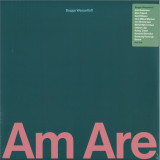
Bugge Wesseltoft has long been a shaper of his own jazz idioms, through his diverse solo albums, his group projects such as New Conception of Jazz, OKWorld! and RYMDEN, and collaborations with artists such as Sidsel Endresen, Henning Kraggerud or Henrik Schwarz.
"Am Are" features special constellations of superb musicians that spans both generations and styles, and is an exploration of sonic textures, dynamic contrasts of mood and style, and ranges from sparse arrangements through to complex layers of dubs and loops and improvisational interplay.
The album begins with Bugge alone on "How?" with layers of undulating atmospheric synth, brought into focus by Bugge's piano at the forefront, creating a minimalist miniature that is both emotive and serene. For "Villrein" Bugge is joined by Elias Tafjord on drums, beginning with a santur-like synth figure, floating over ominous formant sci-fi bass synths bubbling and pulsing, and overlaid by phrenetic piano that only stops to lock into the santur figure before relaunching on its own journeys, all underpinned by Elias Tafjord's expressive drumming. "Is Anyone Listening?" demonstrate's Bugge's songcraft, layering muted percussive piano behind Rohey's distinctive and beautiful vocals punctuated by Martin Myhre Olsen's tenor saxophone, creating a soulful mood tinged with desperation.
"BAG" presents the first classic piano trio of the album - Bugge on piano and synths, Arild Andersen on bass, and Gard Nilssen on drums - announcing itself with an insistent riff, chattering drums, breaking into a progressive rock-style passage of bass and piano in unison. "Reel", the second track from this trio, is a mellow soundscape that evolves to become hazy urban downbeat jazz.
The second piano trio of Bugge (Rhodes and Korg MS20 synth), Sveinung Hovensjø (Electric Bass), and Jon Christensen (Drums and Bells) offers a completely different perspective. The first track "Render" features Bugge's Zawinul-esque Rhodes and monosynth leads, Sveinung's fuzz bass in something of a leading role, all carried with chattering gusto by Jon Christensen's dynamic drumming that brings texture and space as well as rhythm to the piece. "Vender" begins as an atmospheric piece, with reed organ-like synth washes, and octave-processed bass with a somewhat sitar-like tone, meandering until the track breaks down into drums and bass weaving around an insistent drum machine loop, dripping with synth pads and monosynth lead.
"JazzBasill" introduces the third piano trio - featuring Bugge (Piano), Jens Mikkel Madsen (Acoustic Bass) and Øyunn (Drums) - and offers a classic piano trio style with urban sophistication, that is lyrical, and interspersed with staccato cadences, giving a feeling of broken swing, slightly staggered yet driving forwards. The title track "AM ARE" is late night jazz, with baroque whispers, and distinctly melodic.
The final track, "Think Ahead" features the non-standard trio of Bugge (Piano/Organ), Oddrun Lilja (Guitar) and Sanskriti Shrestha (Tablas/Harp). Beginning with a minimalist piano figure, table, and sustained guitar, the track breaks down to a noise surge and ambient windscape, with guitar birds and abstract grinding, before returning to minimalist melodicism.
The shifting personnel across the album, as well as the three different studios in which it was recorded - Village Recording in Copenhagen, Rainbow Studios in Oslo, and his own Buggesroom Studio - creates a feeling of dynamic change and musical variety that is unified by Bugge's piano and keyboards. His playing moves between foreground, where he allows the music to elevate him, and background, where he move gently like a beneficent presence, tending to the demands of the spirit of the musical moments he has captured. It is an album powered by restless exploration and shaped by distinctive musical personalities; it is a journey through different moods, illuminated and brought into focus by Bugge's measured approach and guiding hand.
out of Stock
Last delivered 15 months ago available to reorder, subject to availability
Toulouse appears to be a proper soundsystem town, a real Dub and Bass music hot spot. We were happy to get in touch with with Stefan Dubs from the former Folklore crew, running a handmade soundsystem with up to 6 full super scoops. He released several records under Folklore and later Maquis Son SistÈm, started a liveact which meanwhile runs under SÚn Du MaquÌs, organises soundsystem gatherings and raves around town with the ComitÈ Des FÍtes collective.
Luckily we were able to invite Jan Loup and him to Leipzig in 2023 to shake Bassmaessage with their soundsystem, including the amazing multi-track tape into vintage FX & mixing desk performance. If you ever have the chance to catch them live, you'll hear a special vividly rooted analogue sound, incorporating modern influences, covering various BPM from 120 to 170, but definitely bass heavy all along!
Irie skanks keep you floating along "Mogale Stepper", which shows SÚn's warm but forward bass abilities and the knowledge to keep it steppy without any militant aggressive kicks. "Puur Dub" has a the same instant reminiscence of digital reggae skanking, but adding a brilliant layer of Think break incarnations on top - killing advanced sub connoisseur meetings with ease. On the first check this plate may appear a bit different from the label's cutalogue, but if you settle in these lush textures and twisted dubs you'll see: this is a definitive 45seven sound!
out of Stock
Last delivered 18 months ago available to reorder, subject to availability
Googling “paradise house”, the first results to pop up are an endless list of European b&b’s with whitewashed lime façades, all of them promising “…an unmatched travel experience a few steps from the sea”. Next, a little further down, are the institutional websites of a few select semi-luxury retirement homes (no photos shown, but lots of stock images of smiling nurses with reassuring looks). To find the “paradise house” we’re after, we have to scroll even further down. Much further down.
It feels like yesterday, and at the same time it seems like a million years ago. The Eighties had just ended, and it was still unclear what to expect from the Nineties. Mobile phones that were not the size of a briefcase and did not cost as much as a car? A frightening economic crisis? The guitar-rock revival?! Certainly, the best place to observe that moment of transition was the dancefloor. Truly epochal transformations were happening there. From America, within a short distance one from the other, two revolutionary new musical styles had arrived: the first one sounded a bit like an “on a budget” version of the best Seventies disco-music – Philly sound made with a set of piano-bar keyboards! – the other was even more sparse, futuristic and extraterrestrial. It was a music with a quite distinct “physical” component, which at the same time, to be fully grasped, seemed to call for the knotty theories of certain French post-modern philosophers: Gilles Deleuze, Félix Guattari, Paul Virilio... Both those genres – we would learn shortly after – were born in the black communities of Chicago and Detroit, although listening to those vinyl 12” (often wrapped in generic white covers, and with little indication in the label) you could not easily guess whether behind them there was a black boy from somewhere in the Usa, or a girl from Berlin, or a pale kid from a Cornish coastal town.
Quickly, similar sounds began to show up from all corners of Europe. A thousand variations of the same intuition: leaner, less lean, happier, slightly less intoxicated, more broken, slower, faster, much faster... Boom! From the dancefloors – the London ones at least, whose chronicles we eagerly read every month in the pages of The Face and i-D – came tales of a new generation of clubbers who had completely stopped “dressing up” to go dancing; of hot tempered hooligans bursting into tears and hugging everyone under the strobe lights as the notes of Strings of Life rose up through the fumes of dry ice (certain “smiling” pills were also involved, sure). At this point, however, we must move on to Switzerland.
In Switzerland, in the quiet and diligent town of Lugano, between the 1980s and 1990s there was a club called “Morandi”. Its hot night was on Wednesdays, when the audience also came from Milan, Como, Varese and Zurich. Legend goes that, one night, none less than Prince and Sheila E were spotted hiding among the sofas, on a day-off of the Italian dates of the Nude Tour… The Wednesday resident and superstar was an Italian dj with an exotic name: Don Carlos. The soundtrack he devised was a mixture of Chicago, Detroit, the most progressive R&B and certain forgotten classics of old disco music: practically, what the Paradise Garage in New York might have sounded like had it not closed in 1987. In between, Don Carlos also managed to squeeze in some tracks he had worked on in his studio on Lago Maggiore. One in particular: a track that was rather slow compared to the BPM in fashion at the time, but which was a perfect bridge between house and R&B. The title was Alone: Don Carlos would explain years later that it had to be intended both in the English meaning of “by itself” and like the Italian word meaning “halo”. That wasn’t the only double entendre about the song, anyway. Its own very deep nature was, indeed, double. On the one hand, Alone was built around an angelic keyboard pattern and a romantic piano riff that took you straight to heaven; on the other, it showcased enough electronic squelches (plus a sax part that sounded like it had been dissolved by acid rain) to pigeonhole the tune into the “junk modernity” section, aka the hallmark of all the most innovative sounds of the time: music that sounded like it was hand-crafted from the scraps of glittering overground pop.
No one knows who was the first to call it “paradise house”, nor when it happened. Alternative definitions on the same topic one happened to hear included “ambient house”, “dream house”, “Mediterranean progressive”… but of course none were as good (and alluring) as “paradise house”. What is certain is that such inclination for sounds that were in equal measure angelic and neurotic, romantic and unaffective, quickly became the trademark of the second generation of Italian house. Music that seemed shyly equidistant from all the rhythmic and electronic revolutions that had happened up to that moment (“Music perfectly adept at going nowhere slowly” as noted by English journalist Craig McLean in a legendary field report for Blah Blah Blah magazine). Music that to a inattentive ear might have sounded as anonymous as a snapshot of a random group of passers-by at 10AM in the centre of any major city, but perfectly described the (slow) awakening in the real world after the universal love binge of the so-called Second Summer of Love.
For a brief but unforgettable season, in Italy “paradise house” was the official soundtrack of interminable weekends spent inside the car, darting from one club to another, cutting the peninsula from North to centre, from East to West coast in pursuit of the latest after-hours disco, trading kilometres per hour with beats per minute: practically, a new New Year’s Eve every Friday and Saturday night. This too was no small transformation, as well as a shock for an adult Italy that was encountering for the first time – thanks to its sons and daughters – the wild side of industrial modernity. The clubbers of the so-called “fuoriorario” scene were the balls gone mad in the pinball machine most feared by newspapers, magazines and TV pundits. What they did each and every weekend, apart from going crazy to the sound of the current white labels, was linking distant geographical points and non-places (thank you Marc Augé!) – old dance halls, farmhouses and business centres – transformed for one night into house music heaven. As Marco D’Eramo wrote in his 1995 essay on Chicago, Il maiale e il grattacielo: “Four-wheeled capitalism distorts our age-old image of the city, it allows the suburbs to be connected to each other, whereas before they were connected only by the centre (…) It makes possible a metropolitan area without a metropolis, without a city centre, without downtown. The periphery is no longer a periphery of any centre, but is self-centred”.
“Paradise house” perfectly understood all of this and turned it into a sort of cyber-blues that didn’t even need words, and unexpectedly brought back a drop of melancholic (post?)-humanity within a world that by then – as we would wholly realise in the decades to come – was fully inhuman and heartless. A world where we were all alone, and surrounded by a sinister yellowish halo, like a neon at the end of its life cycle. But, for one night at least, happy."
out of Stock
Last delivered 3 months ago available to reorder, subject to availability
“… it was dance music, it had lyrics, it had songs, it wasn’t all instrumental, it was basically uptempo soul music, to be exact.”*
This quote from Timmy Regisford already sums up everything you need to know about his remix of Basic Black’s “Don’t Make Me Fall In Love.” Signed to Motown during Regisford’s reign as vice president and A&R, their self-titled debut album from 1990 is a testament to the massive popularity of new jack swing at the time. In his remix, the co-founder, resident DJ, and key figure of Club Shelter reconfigures the song’s structure with the signature sounds of New York’s prime dance floor scene, while preserving the heartfelt storytelling of the lyrics and the group’s voices on top of an irresistible groove and a bassline to die for.
At the time, it was only available in the record crates of the Big Apple’s DJ elite and later on as a white label in specialist shops. This soulful, yet driving piece, however, never saw an official single release—until now. Lifted from a DAT tape in Tony Humphries’ archive and carefully and faithfully restored, it now even features a condensed, never-before-released instrumental version of the remix, as well as a bass-and-beats-only edit for mixing purposes by yours truly. New jack swing transformed into New York club music by a king. This remix is a testament to Timmy Regisford’s prowess in the studio, but also honors the roots of the music he loves and grew up on—serving as a perpetual piece of the city’s vast history in underground dance music.
Gerd Janson
out of Stock
Last delivered 13 months ago available to reorder, subject to availability
If every significant artist has an underrated gem in its catalog, then Mirage is that album for Fleetwood Mac. An obvious return to relative simplicity after the dramatic tension of Rumours and experimental ambitions of Tusk, the 1982 album finds the band re-grouping after a brief hiatus and again climbing to the top of the charts. Extremely well-crafted, well-produced, and well-performed, the double-platinum effort distills the group’s hallmark strengths into a filler-free set that never runs short of addictive pop hooks or daft accents.
Sourced from the original analog master tapes, pressed at Fidelity Record Pressing in California, and housed in a Stoughton jacket, Mobile Fidelity’s numbered-edition 180g 45RPM 2LP set presents Mirage in reference sound for the first time. The efforts co-producers/engineers Ken Caillat and Richard Dashut went to capture the splintered albeit formidable band can be heard with stunning accuracy, range, depth, and detail.
Though Rumours understandably gets a permanent spot in the audiophile hall of fame, the smooth, clear, and dynamic sonics on Mirage confirm that the record that stood as Fleetwood Mac’s last effort for five years deserves a place in the same vaunted arena. The presence and imaging of Mick Fleetwood’s percussion alone on this reissue might have you wondering how this slice of soft-rock bliss has gone under-noticed for decades. Other prized aural aspects — separation, definition, impact, tonal balance — are also here in spades.
Like much surrounding Fleetwood Mac in the 1980s, arriving at Mirage was not easy. Caillat searched for studios located outside of Los Angeles on a mission to change up the vibe of the band’s prior recording sessions. Everyone settled on Le Chateau in France, where relations between some members remained icy — and cooperation with the producers strained. Battles with exhaustion, bitterness, and addiction further informed the proceedings at the 18th century complex in the French countryside, where even communal meals were allegedly eaten in silence.
Inevitably, the feelings that co-producer Lindsey Buckingham, Stevie Nicks, Christine McVie, and company harbored — as well as the situations in which they found themselves — drifted into the songwriting. In its rapid ascent to rock-star royalty status, Fleetwood Mac drifted apart, embarked on solo pursuits, and found it was lonely at the top. Emptiness, the illusion of dreams, the longing for love, the want to escape to bygone times of innocence and happiness: Such themes inform a majority of the narratives. Even if the lyrics regularly take a back seat to easygoing arrangements that allow Mirage to come on like a refreshing breeze on a sunny summer afternoon.
Home to three Top 25 singles in the U.S. and having occupied the pole position of the Top 200 album charts for five weeks, Mirage rightfully resonated with the mainstream and attracted listeners on both sides of the pond. And how, via a smart blend of sugary melodies, warm harmonies, interlaced notes, nimble rhythms, taut structures, and passionate vocals. Not to mention the presence of what arguably remains Nicks’ signature song, the biographical “Gypsy,” a meditation on the loss of her close friend Robin Anderson that teems with majesty, mystery, and mysticism — and which gets an assist from Buckingham’s shaded tack piano and richly strummed guitar chords.
Its ranking as an all-time classic aside, that No. 12 hit has plenty of company when it comes to brilliant pop turns on Mirage. On the subject of Nicks, the raspy singer gets a little bit country on “That’s Alright.” Its clip-clopping pace and two-stepping progression complement subtle vocal swells that emerge during the final verse of a tune that is ostensibly about leaving but still conveys forgiveness and grace. And what would a Fleetwood Mac record be without Nicks drawing on the tools of the supernatural — cards, dreams, wolves, and the like — on the twirling “Straight Back.”
Despite the potency of Nicks’ primary contributions, Mirage seemingly unfolds as a tight competition between Buckingham and McVie — and one that ultimately ends in a draw. Buckingham’s salvos include the contagious “Can’t Go Back,” a yearning to time-travel back to the past that’s complete with hall-of-mirrors backing vocals; “Oh Diane,” out-of- left-field ear candy sweetened with hiccupped vocals and salt-and-pepper-shaken grooves; the chiming “Eyes of the World”; and “Empire State,” a delightfully fluttering track whose high-range vocals, lap harp notes, and ringing xylophones hint at the galaxies of sound that would erupt on Tango in the Night.
Then there’s McVie. As elegant, understated, and coolheaded as she’s ever been on record, she pours her heart out on cuts that revolve around her inevitable split with Beach Boy Dennis Wilson. In the process, she punctuates Mirage with a characteristic not always associated with catchy pop music: emotional weight, and the sense of dreaded acceptance in the face of dreams deferred.
“I wish you were here/Holding me tight,” McVie sings over a delicate melody on the album-closing piano ballad “Wish You Were Here.” Though they hoped otherwise, for the members Fleetwood Mac, distance and separation were always close at hand. Believing otherwise, inviting nostalgia, and pretending everything was fine only amounts to a mirage.
Because Sound Matters' meticulous One-Step process creates the definitive sounding audiophile version of k.d. lang Ingénue. This all-analog release comes from the original first-generation master tapes for the first time. Vinyl guru and editor Michael Fremer says, "This k.d. One-Step is insane – It's otherworldly great!"
This One-Step version is strictly limited to 3,000 copies. The album is housed inside a top-quality, foil-stamped, uniquely designed numbered slipcase. The enclosed gatefold jacket will feature an "old style" tip-on jacket with the original artwork.
Special care has been taken to faithfully preserve the original sound with exceptional clarity and depth, capturing the recording's nuances and subtleties at every step to create the best sounding record possible.
The One-Step process is highly regarded among audiophiles and collectors for its unparalleled sound fidelity and represents the pinnacle of vinyl manufacturing craftsmanship.
Ingénue was originally released March 17, 1992 and is k.d. lang's second solo album.
Upon release, the album charted at #18 in the US, #13 in Canada, #3 in the UK and Australia and #1 in New Zealand. Nominated for six Grammy® Awards with the breakout single "Constant Craving" winning a Grammy® Award for Best Female Pop Vocal Performance. "Miss Chatelaine" and "The Mind of Love" were follow-up singles.
k.d. received universal critical acclaim for the album from publications like Mojo, Pitchfork, Rolling Stone, Uncut and dozens more! Today, Ingénue is a true classic album and considered one of the great audiophile recordings of the modern era. This One-Step version certainly proves that!
Notes for This Release:
Ingénue was originally recorded and mixed on analogue tape and produced by Greg Penny, Ben Mink and k.d. lang. The original analogue master tapes were directly used as the audio source for this One-Step pressing! This is the first time the analogue tapes have been used as a vinyl source for this brilliant recording. The results are stunning.
Because Sound Matters used the Neotech VR900-D2 180g High-Performance vinyl compound, which is the same as what is known as Super Vinyl – the best in the world.
Chris Bellman at Bernie Grundman Mastering cut the lacquers with meticulous care! He also did the original mastering of the CD release in 1992.
Dorin Sauerbier at Record Technology, Inc (R.T.I.) has been plating records for decades and is considered the best in the world – he also has done more One-Step processing than anybody. This is a vital step in the process to ultimately delivering the absolute best sounding version of Ingénue ever.
Record Technology, Inc did the pressing – using the exact pressing machine used for so many other One-Step releases. The QC team is constantly monitoring each copy as it comes off the press.
Because Sound Matters' slipcases and gatefold "old style" tip on original art jackets were printed by world-renowned Stoughton Printing Company.
This new all-analogue edition will draw you into the music as never before—at least it did me. The sonic picture is rich, well-textured, harmonically saturated, spatially deep and all the rest of the audiophile buzzwords that no doubt the producers (who include lang) intended to give listeners but until now couldn't fully deliver. The musical flow will have you swooning in your seat. Before the opener 'Save Me' concludes you may already feel overwhelmed and in need of lifting the stylus to catch your emotional breath...What a treat!
-Michael Fremer, Tracking Angle, Music 11/10, Sound 11/10
CSN was the trio's last fully realized album, and also the last recording on which the three principals handled all the vocal parts without the sweetening of additional voices. It has held up remarkably well, both as a memento of its time and as a thoroughly enjoyable musical work." — AllMusic
Crosby, Stills & Nash was a folk rock supergroup made up of American singer-songwriters David Crosby, Stephen Stills, and English singer-songwriter Graham Nash. CSN's 1977 self-titled album is a return to the harmony-soaked idealism with which the trio had been catapulted to popularity; it reached No. 2 on the charts, behind Fleetwood Mac's megasuccessful Rumours.
AllMusic says the songs on CSN show a "great deal of lyrical maturity and compositional complexity compared to those earlier albums (from a far more innocent time). "Just a Song Before I Go" was the latest of Graham Nash's radio-friendly acoustic numbers, and a Top Ten single. "See the Changes" and "Dark Star" ranked with the best of Stephen Stills' work, while David Crosby contributed three classics from his distinctive oeuvre: "Shadow Captain," "Anything at All," and the beautiful "In My Dreams."And Nash's multi-part "Cathedral," a recollection of an acid trip taken in Winchester Cathedral on his 32nd birthday, became a staple of the group's live repertoire.
Ground-breaking music perfection deserves definitive sound and top-notch packaging. This reissue was mastered directly from the original master tape by Chris Bellman at Bernie Grundman Mastering and cut at 45 RPM. Pressed on 180-gram vinyl at Quality Record Pressings, and housed in a tip-on old style gatefold double pocket jacket with textured stock by Stoughton Printing.
Transport yourself to the vibrant streets of Havana with the Buena Vista Social Club's eponymous album, a captivating journey into the heart of Cuban music! Recorded in 1996 by acclaimed producer Ry Cooder, this timeless masterpiece celebrates the rich tapestry of Afro-Cuban rhythms and soulful melodies that have enchanted audiences for generations.
Buena Vista Social Club is both the name given to this extraordinary group of musicians and the album, recorded in just seven days in 1996 in Havana's 1950s vintage EGREM studios. From the infectious energy of "Chan Chan" to the heartfelt nostalgia of "Dos Gardenias," each track immerses listeners in the intoxicating blend of son, bolero, and guajira styles. Led by legendary musicians such as Ibrahim Ferrer, Compay Segundo, and Omara Portuondo, the Buena Vista Social Club ensemble delivers performances that are as exuberant as they are intimate, capturing the essence of a bygone era while igniting a passion for Cuban music that knows no bounds.
The acclaim of the original album has elevated the artists (including Ibrahim Ferrer, Rubén González and Omara Portuondo) to superstar status, inspired an award-winning film by Wim Wenders, and has contributed to popularizing Cuba's rich musical heritage. Produced by Ry Cooder for World Circuit, the timeless quality of the music and the sheer verve of the veteran performers have ensured that this will go down as one of the landmark recordings of the 20th century.
This 45 RPM Analogue Productions reissue pressed by Quality Record Pressings on four dead-silent LPs makes every note a transcendent experience. Meticulously crafted using the finest materials and exacting standards, this reissue pays homage to the golden age of vinyl, capturing the warmth and depth of the original recording in stunning detail. The package includes a 12-page booklet with lyrics and stunning studio images, topped off by a tip-on old style gatefold double pocket jacket made by Stoughton Printing.
Embark on a musical odyssey filled with warmth, joy, and the irresistible allure of Havana nights!
Casquiat and Controller 7 have united on DATUM Recordings for this high class new 45rpm which works as a fine weapon for your record bag or equally well as some superb home listening. Casquiat goes first with 'Set It Off' which has raw drum breaks and direct bars delivered over some wild guitar riffs, slamming hits and old school vocal chops. Controller 7's 'Dope On Plastic' is a percolating funk joint with old school hip-hop energy and some evocative bars that recall the likes of Beastie Boys. Add in smart horns, JB yelps and scratching and you have a real party starter.
Industrial and uncompromised experimental zone melting Speedcore to Ambizent Industrial Msuic.
Abstract... pushing the flashcore out of itslef !
A record bringing something unheard before !!
Ventura (Lausanne, CH), started in 2003, and has released 4 albums so far, with Superheld being the proud fifth. It was recorded with Serge Morattel again, and displays a slightly more aggressive and intense sound than its predecessor, even if it explores a few new paths with songs like the semi-acoustic "Freeze In Hell" or the motorik "Optimistic". The line up still consists of the same three guys, Diego (bass), Grégoire (drums) and Philippe (guitar and vocals) as on the previous album, Ad Matres.
"Daft Punk brought me here, he brought me Daft Punk"
Just knowing that this slice of hyper-rare disco dynamite was crafted by Thomas Bangalter's dad should be enough for you to buy this on sight, if only to understand a little bit more about Thomas and Daft Punk's background. But this is so much more than a Daft Punk family curio.
Born Bangalter in 1947, Daniel Vangarde is a French songwriter and producer. In 1975, Vangarde founded his label, Zagora Records, who we have worked closely with on this lovingly curated reissue. For years, Vangarde wrote and produced songs that remained underground, under several pseudonyms and for various artists. Dubbed "the secret father of French disco" this here groove-fulled firecracker - using his Who’s Who moniker - is for disco-funk, library music and cosmic beat lovers.
The intense, evocative opener "Palace Palace" positively throbs with raw energy and sounds, honestly, like something off Daft Punk's Discovery. The title refers to the fashionable Parisian club Le Palace, essentially the Parisian Studio 54. "I’d been to a nightclub in New York, a big ring where people were roller skating with a whistle. The atmosphere was great. The music was all disco. I made this song when I came back. A vocoder transformed my voice. Back then, it wasn’t used much." The track rides a killer groove and is deceptively complex, with layers of fantastic percussion and ace synth work going on all over it. Listed to on repeat, it's brilliance is simply undeniable.
The louche, slo-mo heater "Hypno Dance" is, in Be With's opinion, *the* deadly dancefloor track. A svelte slice of ace space disco again geared towards the roller skating dance mania of the day. So deep, so disco, so instrumental. An unreal track and, as the title hints at, totally hypnotic. The side closes with the somewhat throwaway "Popeden" - it's a jaunty number that you're probably best skipping, in all honesty. Have we ever steered you wrong?
The B-Side opens with the frankly enormous "Roll Jacky Roll" is another thrilling, high class roller-rink jam with beautiful melodies that's adored the world over. The wonky, abstract "Ad Libitum 80" is a super dope, swirling, staccato electro-funk bounce which sounds light years ahead of its time. This might be the real lowkey sleeper gem on this record. CHECK! This remarkable LP rounds out with the huge "Dancin' Machine". It's got sleek drums that emit an absolutely ace swagger and elements of Italo synth funk feels. A relaxed, slow rhythm throughout ensures you can't help but get your funk on when this crashes soundsystems. We'll leave the final word on this to Daniel: "It amuses me to think that my son Thomas was influenced by "Dancin’ Machine" for "Around The World", he says. Both songs being based on an hypnotic repetitive refrain. Both songs being, of course, timeless pieces of Euro genius.
Who's Who really is a fantastic late-70s-early 80s roller disco-funk essential. The audio has been carefully remastered by Be With regular Simon Francis, ensuring it sounds better than ever. Cicely Balston's expert skills have made sure nothing is lost in the cut whilst the records have been pressed to the highest possible standard at Record Industry in Holland.
When it came to the sleeve for this we were presented with an unusual problem: we usually have to rely on an original sleeve as the starting point for the restoration, but instead we were able to scan the original 35mm transparency of the front cover photo. The problem is that with a modern scanner the results were far sharper than when they made the original sleeve. We’ve played around with the exposure and the colour grading but we’re sorry to say that our version of the front cover still ended up looking too good! Don’t hate us.
out of Stock
Last delivered 18 months ago available to reorder, subject to availability