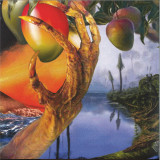
Clothilde’s new album sounds like a constant departure from almost everything. Up until now, her music pieces seemed uncontrolled, a total commitment to the machines. She was, somehow, in between us - listener, audience - and the idea of a machine producing sounds she doesn’t seem to control. Of course, none of this was entirely true, she was mostly in control, but the fantasy, the orchestration of it was beautiful. It was sci-fi-ish, Metropolis-magnificent.
In “Cross Sections” everything is purposely under control. We feel, without being told, that Clothilde is directing the narrative, inviting us to partake of this raw and austere electronic sound, forcing us to learn to enjoy it. This is new. Whereas before she would expect you to stay put and listen, eventually you would understand and give in. Or your body would. Now she is telling you to be there, she doesn’t want to be alone, she wants us to feel this subterranean urgency at all costs.
The real eureka moment comes with “Medullary Rays”, when we start cohabiting with the sounds, when they feel familiar. The darkness becomes real; it is palpable how she is stretching each sound and making them come to life at every moment. It is violent, brutal. Like every track, it's a relief when it ends, it's like coming out of a car crash alive. Much of the A side of is Clothilde pushing the boundaries of her sound. She is not testing but finding new ground and sharing it with us. She is exorcising, demolishing and building over and over again, she is crying and screaming, dozing off with the demential levels of bass, making us constantly listen to alarm bells. She is scaring the shit out of us.
The B side keeps the levels of anxiety high up, especially on the 13-minute “Ring”. Surrealistic drones come and go, every second sounds like the end of something, the accumulation of tension is torrential and it never, never stops. We hope there is a conclusion to this. But there is not. “Cross Sections” builds and feeds on this darkness but, in a way, it is self-contained. Never explodes, never releases itself from itself. It is a continuous process of catharsis that it is never over. It never aims to be. Like, you know, life itself.
We've all been there. It feels familiar. Now it has a sound, or sounds. It can be heard and it is outer dimensional. “Cross Sections” is a tremendous effort from an artist trying to survive something. You never know what is. You don’t need to know what it is. It is just there. Cliché but it has to be said: highest possible volume on this one.
Suche:surreal
Black Vinyl[27,69 €]
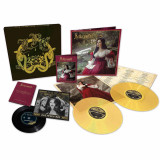
LP Ltd vinyl picture disc version w/ DL card, 500 pressed. Vanishing Twin furthers their exploration of decidedly experimental territories with Afternoon X. Crafted with a playful balance of humour and rigour, with each member embracing the role of the multi-instrumentalist and process, over outcome. Following a series of line-up changes, Vanishing Twin is now the tightly honed collective of singer and multi-instrumentalist Cathy Lucas, drummer Valentina Magaletti (Holy Tongue, Tomaga, Moin) and bassist Susumu Mukai (Zongamin). Harnessing the diverse touchstones of its members; Lucas' left-field song-craft, Magaletti's singular approaches to experimental percussion, and Mukai's long history in the production of electronic music, the band has refined a hypnotic sound at the juncture of minimalism, kosmische, post-punk, and dream-laden, psychedelic pop. These eight fluttering abstractions, culled, collaged, and built upon from a vast constellation of instruments, samples, and unclaimed sources. Lucas employs her voice as an instrument and a generator of raw sound, weaving surreal imagery and uncanny juxtapositions amongst the dance and propellant drive. From infectious grooves of the album's title track and the constrained minimalism of "Subito", to the ambitious heights of pieces like 'The Down Below' and Lazy Garden, which unfurl a psychedelic avant-gardism on the scope and scale of David Axelrod and Scott Walker. Vanishing Twin embark upon a new multifaceted journey that collectively culminates as the bands most forward-thinking and groundbreaking release to date.
Keshavara tragen prächtige Schnurrbärte, verwegene Kopfbedeckungen und sprechen ein abenteuerliches Patois aus Englisch, Hindi, Deutsch und Gibberish. Auf ihrem neuen Album "III" kreieren die Kölner um den deutsch-indischen Musiker Keshav Purushotham Klänge, wie andere Leute Drinks mixen, nachdem sie schon drei genossen haben: Verwaschener Kraut-Pop und diasporische Dub-not-Dub-Exkursionen werden nach Augenmaß miteinander kombiniert und wild geschüttelt. Zuckersüß mäandernde Melodien, entlehnt einem fantastischen Niemandsland in der Grenzregion zwischen exotischen Library-Kompositionen und psychedelischen Soundtracks, verschmelzen mit den Grooves einer Rhythmusgruppe, die sich auch in den Tonstudios des funky Beirut der Mittsiebziger Zuhause gefühlt hätte. Das Ergebnis sind mit surrealistischem Zuckerrand gekrönte Cocktails mit der Wirkung einer halluzinogenen Götterspeise. Musik, die schillert und flirrt, wie eine Fata Morgana in der Wüste. Keshavara klingen in einem Moment, als hätte Ennio Morricone einen Bollywood-Film vertont, und im nächsten wie ein von Curt Boettcher produzierter Eden-Ahbez-Song, oder - nicht ganz so spinös aber nichts desto weniger fantastisch - als hätten Khruangbin und Sven Wunder endlich ein gemeinsames Album aufgenommen. In den glanzvollsten Momenten fügt sich das alles wie von magischer Hand zusammen und kulminiert dann in Songs wie "Spiegelmann" und "Tableau Vivant" - fantasmorgiastischen Partys voller transkultureller Clashes, die uns Hörer dazu einladen, sie in farbenprächtige Gruppenchoreografien zu überführen.
War das Debüt von Keshavara noch ein Solo- und der Nachfolger "Kabinett der Fantasie" im Kern ein Duo-Album, so sind Keshav Purushotham, Niklas Schneider, Benedikt Filleböck und Christopher Martin mit ihrem selbstproduzierten, schlicht "III" betitelten dritten Album endgültig zu einer vierköpfigen Band zusammengewachsen … und zwar um eine alte Farfisa-Orgel herum, die eines Tages als Geschenk im Proberaum gelandet ist: Ein, auf sämtlichen Songs mal mehr, mal weniger präsentes UFO aus einer Zeit der Slow-Jams, Live-Takes und des exzessiven Space-Echo-Einsatzes. Sein analoges Blubbern und sein wabernder Funk rollt dem warmen, organischen Bandsound den roten Teppich aus, und verpasst ihm einen zärtlichen Schubs Richtung 70er. Erfrischenderweise kommt er dort niemals so richtig an, sondern bleibt immer im Fluss. Denn das eigentliche Ziel der halldurchtränkten Korridore dieses Albums ist stets der Weg, genau genommen der kunstvoll gezimmerte Holzweg, der phantastische Irrpfad. "III" ist eine Reise, auf der Zeiten und Orte keine Fixpunkte sind, sondern austauschbare Koordinaten eines augenzwinkernden Vexierspiels. Da ist es nur folgerichtig über "Indische Götter im Sauerland" zu singen. Dass ungeachtet der Nostalgie, die alle neun Songs durchweht wie ein warmer Mittelmeerwind, niemals Sentimentalität aufkommt, ist nicht zuletzt diesem Humor geschuldet.
Die ätherischen Drones, sanft nuschelnden Akkorde und geisterhaft seufzenden Soundschwaden, die Keyboarder Benedikt Filleböck seiner altersschwachen Farfisa bevorzugt in den ruhigeren Momenten und den Instrumentalnummern des Albums entlockt, bilden einen stimmungsvollen Kontrast zu den beiden anderen Säulen des Keshavara-Sounds: Christopher Martins leichtfüßig hüpfenden Bass-Dreiecken und Keshavs sonnendurchfluteten Gitarren-Ornamenten. Im Zusammenspiel mit Niklas Schneiders crispen Drumbeats entsteht ein Fundament, mit dem die kaleidoskopischen Texturen und Melodien vollständig verschmelzen.
Das Ergebnis ist das bisher homogenste Album des Quartetts. Mit "III" erweisen sich Keshavara als gewiefte Soundalchemisten und Weltenwanderer, als eine softe Macht, deren Stärke sich aus ihrer enormen Musikalität, ihrer Fabulierlust und ihrem surrealistischen Witz speist.
«Memory doesn't age, it always remains the same.
"Memoria" is an album about my memories, my hometown, the scent and flavours of my childhood, things I've read, movies I've watched at the cinema and my love for music. It's about going back home, re-establishing a link with the past and recalling cheerful and happy memories.
"Memoria" refers specifically to the regions of Minais Gerais and the Brazilian northeast, its hot climate, the religiousness of the people and its faith in miracles, calling to mind images of mysterious and surreal popular tales, where time flows slowly in an intimate dimension.»
RIYL: Don Cherry, Alice Coltrane, Remi Álvarez, Juma Sultan's Aboriginal Music Society, Horace Tapscott. Atrás del Cosmos were a central force in Mexico City's creative arts community, and often considered the first free jazz group in the country. Founded by a trio composed of pianist Ana Ruiz, percussionist Evry Mann, and saxophonist Henry West, the ensemble was prolific in mentoring a generation of improvisers, cultivating an expanded additive roster, and organizing workshops in downtown Mexico City including inviting Don Cherry to play and instruct on his "organic music" approach in 1977. Between 1977 and 1983, the group lived and rehearsed in a residential space behind the Cosmos theater, hence their celestial-tinged name. But despite their central importance to the local scene, Atrás was rarely recorded and had a scant international presence, leaving behind just a single cassette before their disbandment. Now issued on LP for the first time, the aforementioned tape Cold Drinks, Hot Dreams is a red-hot recording documenting the core group plus double-bassist Claudio Enriquez performing live in 1980, a delirious improvisation with high peaks and low valleys, sucking in an amalgam of influences including New York loft style, Mexican folk music, and the surrealism of Alejandro Jodorowsky into its heady gravitational pull. Ruiz's playing style is virtuosic and expressive, pulling off monumental chords and using the piano's whole register, recalling Cecil Taylor's percussive approach, Matthew Shipp's emotive voicing, and Duke Ellington's mystifying arabesques. Evry Mann dabbles in polyrhythms in tracks like the solo marimba meditation "Clapping Music II," and Henry West wails heavy in the show-stopping cut "M.D." Now finally available after forty years, the music of Atrás del Cosmos will be sure to stun spiritual jazz veterans and newcomers alike3
Belgian saxophonist, composer, and producer Mattias De Craene (Nordmann, MDCIII) announces a new solo album, ‘A House Where I Dream,’ on VIERNULVIER Records. On his second album, he delivers a highly personal and healing journey, presented as an alternative soundtrack to the 1973 cult film ‘The Holy Mountain.’
The record will be released on October 11 on vinyl LP and through all digital platforms.
"The Holy Mountain" is a surreal Mexican film from 1973 directed, written, and produced by Alejandro Jodorowsky, who also stars in the film. The film holds a prominent place in avant-garde cinema and explores themes such as spirituality, mysticism, and the quest for enlightenment. It is in this vein that ‘A House Where I Dream’ is crafted.
“My mind and soul - and thus my music - come home to this motion picture” - Mattias De Craene
The album will be presented live with the film on October 16 at Videodroom during Film Fest Gent.
ABOUT THE ALBUM
With hypnotic tape loops, grainy textures, and mesmerizing saxophone, Mattias De Craene creates possible worlds that herald a spiritual transformation. From the Scottish Highlands and desolate mountains to the deepest recesses of the soul, this music has the power to create cinematic landscapes that transcend time and space. The sound of these 8 tracks is closely related to the minimalist compositions of Terry Riley, but the work of contemporary artists like KMRU or William Basinski is also drawn from the same material.
Above all, this album is a deeply personal journey and unintentionally serves as a metaphor for De Craene's ascent of his own mountain. For the Videodroom festival by Arts Center VIERNULVIER, the saxophonist began working on a new soundtrack for the film ‘The Holy Mountain’ in 2023, but his body and mind abruptly called him to a halt, forcing him to take a professional break. However, this project never left him, leading to an honest and raw quest to find himself as both a person and an artist, with Jodorowsky as a companion de route and music as an anchor. It initiated a long process of dismantling, searching, healing and back again. The album not only provides a sanctuary for dreaming to all who listen, but for its creator it also serves as both an outcry of despair and a source of comfort during challenging times.
All the tracks on 'A House Where I Dream' share an unfiltered grain of life, as one can almost feel the damp breath of the saxophone blowing.
The album opens with the three-part strong 'Transcention,' where the hypnotic interplay between soprano sax and lo-fi tape loops leads to higher realms of the mind and soul.
Alternating between deep frequencies and farout folk modalities, this mantra-like triptych acquires an alchemical character and ultimately transcends time and space.
In the ethereal 'Away,' one can peer into an abyss of resonance while a saturated tenor sax lends guidance in the spirit of Terry Riley's productions. 'You and Me' also bathes in a similar atmosphere, albeit in the vein of healing 90s ambient as granular sax tones converge with celestial chants. 'Gazing Upwards Towards The Sky,' offers different shades of blue as a slumbering tenor sax is juxtaposed to swift sax patterns. On 'A Stranger That Moved Me,' beauty lands in a soft and subtle manner, while the closing track 'Shepherd's Glow' drifts like a mountain wind flaring up at the darkest hour of the night.
The artwork is created by Gent-based artist Sam Timmerman, who portrays the world of 'A House Where I Dream' with playful repetition and mystique.
In 2007 an Italian film festival invites Mouse on Mars to score a film of their choice. The organizers claim to be able to clear the rights for any movie the band chooses. Werner Herzog’s fictional documentary Fata Morgana, which merges footage of several desert explorations by Herzog and his team into one continuous association, has long been a band’s favorite. The film comes with a soundtrack by Mozart, Leonard Cohen, Third Ear Band and field recordings. Andi Toma and Jan St. Werner are sent a DVD to Düsseldorf and start working. The idea is to score the film in real time so instrumentation has to be readily at hand: guitar, percussion, electronics, mouth harp, pedals, software, tapes, samplers. Once the arrangement for the three-part film is sorted Mouse on Mars bring their score to stage. Herzog Sessions is performed twice: first when the band still thought the rights had been cleared, and a second time at London’s Southbank Center knowing that Herzog would have never approved a new score.
--
Mouse On Mars – London Queen Elizabeth Hall soundtracking Werner Herzog.
By Mike Diver, 24.04.2009
Filmed in 1971, Fata Morgana is perhaps not one of Herzog’s best-known works (think Grizzly Man, Rescue Dawn, et cetera…), but then Mouse on Mars have never been ones to embrace the mainstream, quietly letting their modern, experimental take on krautrock do the talking over the years, thus producing some quietly brilliant electronica that far outweighs their modest profile.
The film itself is not altogether dissimilar to the wonderful, Phillip Glass-scored Koyaanisqatsi, with sweeping landscape shots and no obvious plot or narrative, though Fata is concentrated purely in one place – in and around the Sahara Desert, switching from images of barren wasteland to desert tribes and dead, skeletal cattle.
The obvious thing to do when soundtracking such powerful imagery is to vie for dreamy electronic soundscapes which can be sustained for a long period, and whilst this ambient shoegaze approach was present and correct (also carefully constructed and highly effective), Mouse on Mars added a human element to the performance, incorporating a live dimension by using and looping guitars, harmonicas, processed vocals and even a live horn player (quite possibly a flugelhorn. Look it up if you don’t believe me) for the final section of the film.
Some of the most interesting points arose when the duo suddenly switched from solemn, ambient tones to glitchy, bouncing electro (reminiscent of their more upbeat work) whilst on the same film shot – causing the audience mood to flick from tripped-out bliss to attentive semi-wired, utterly subverting any idea of a narrative the film may have possessed. Clever stuff.
Ranging from sinister to surreal to humorous, all the moods portrayed in Fata Morgana were successfully matched by Mouse on Mars’ live rescore – no mean feat. The duo also went above and beyond the call of duty with their own soundtrack, adding a fascinating personal signature to an already unique film.
Vanishing Twin furthers their exploration of decidedly experimental territories with Afternoon X. Crafted with a playful balance of humour and rigour, with each member embracing the role of the multi-instrumentalist and process, over outcome. Following a series of line-up changes, Vanishing Twin is now the tightly honed collective of singer and multi-instrumentalist Cathy Lucas, drummer Valentina Magaletti (Holy Tongue, Tomaga, Moin) and bassist Susumu Mukai (Zongamin). Harnessing the diverse touchstones of its members; Lucas’ left-field song-craft, Magaletti’s singular approaches to experimental percussion, and Mukai’s long history in the production of electronic music, the band has refined a hypnotic sound at the juncture of minimalism, kosmische, post-punk, and dream-laden, psychedelic pop. These eight fluttering abstractions, culled, collaged, and built upon from a vast constellation of instruments, samples, and unclaimed sources. Lucas employs her voice as an instrument and a generator of raw sound, weaving surreal imagery and uncanny juxtapositions amongst the dance and propellant drive. From infectious grooves of the album’s title track and the constrained minimalism of “Subito”, to the ambitious heights of pieces like ‘The Down Below’ and Lazy Garden, which unfurl a psychedelic avant-gardism on the scope and scale of David Axelrod and Scott Walker. Vanishing Twin embark upon a new multifaceted journey that collectively culminates as the bands most forward-thinking and groundbreaking release to date
Nap Eyes' metamorpher fünfter Longplayer versammelt neun faszinierende Songs, die in den vier Jahren seit "Snapshot of a Beginner" aufgenommen wurden. "The Neon Gate" enthält klassische Themen (das unruhige Zusammenspiel von Physik und Philosophie, umherwandernde Meditationen, Selbstbefragungen, Öffnungen der Surrealität, Videospiele), aber auch Anzeichen für abweichende Impulse in Richtung nichtlinearer Abstraktion und improvisierter Komposition in Langform (was zu ihren bisher diskursivsten, dekonstruiertesten und delikatesten Liedern führt) und erzählerischer und lyrischer Formalität (einschließlich der Adaptionen von dornigen Gedichten von Alexander Puschkin und W. B. Yeats), die den Eindruck vermitteln, dass sich Nap Eyes ebenso gewandelt haben wie ihr Verständnis davon, was ein Lied ist, was es kann und wohin es gehen könnte.
Visionary art-pop duo Faux Real (a.k.a. Los Angeles-based Franco-American brothers Virgile and Elliott Arndt) release their debut album "Faux Ever" on City Slang.
Faux Real’s long-awaited debut album "Faux Ever" is a self-described “11-piece symphony for head-banging and longing,” the album sees the fraternal duo continuing to play on the outskirts of language and sound, exploring themes of heartbreak, labor, and the home with harmonies and humor, playful beats, and en franglais. Recorded between Paris, New York, London, Los Angeles, and Provence, "Faux Ever" thrusts Faux Real’s sultry, surreal, and unclassifiable sound towards a glossier pop horizon, an existential sonic pastiche with a glistening digital sheen. "Faux Ever" also includes such certified bangers as the bold, glitchy, and infectious “Rent Free” and the acclaimed “Faux Maux,” both available everywhere already alongside self-directed official music videos streaming now on YouTube. Known far and wide for their DIY, Iggy Pop-meets-Eurodance live performances, Faux Real are building anticipation for "Faux Ever" with international shows in the UK/EU and US.
Format: 140g Crystal Clear Vinyl
About Faux Real:
Elliott and Virgile Arndt founded Faux Real in 2018, blending post-punk, glam rock, and a taste for pop grandeur, fashioning a truly inimitable musical experience. From their increasingly accomplished studio output to mesmerizing, unprecedented live performances, Faux Real invite the audience to join them an enthralling post-realist expedition through contemporary pop culture with razor-edged satire, inspired boy band choreography, and a charged sensuality that has fast earned them a fervent fan following that includes among their number such iconic stars as Duran Duran, Beck, Paramore, Metronomy, and Wet Leg. Now, with the imminent arrival of Faux Ever, Faux Real continue to gleefully ignore boundaries and barriers, assuring the journey is as exhilarating as the ultimate destination.
Multi-instrumentalist and synth wizard Paul White readies his third album for R&S Records, offering up a cinematic journey on ‘Peace In Chaos’ that captures the current mood with its shadowy electronic prowess. With an unabashed love of 80s synth music and film scores, the South London based producer presents an album of perhaps his most pop leaning tracks yet, following on from 2018’s ‘Rejuvenate’ and 2014’s ‘Shaker Notes’. Across eleven tracks, White delves into a world of esoteric electronic pop, as waves of melodic synths wash over towering drum patterns and majestic bass, with White adding his own enigmatic vocals to many of the productions.
- Acceptable Experience
- Lamplighter
- Cut It Like A Diamond
- Name Me
- Memorial Waterslide Ii
- Book Stall
- False Landing
- Horse Head Pencil
- I Have Been Alive
- The Politics Of Whatever
Memorial Waterslides" ist das Debütalbum von MEMORIALS, dem Duo bestehend aus Verity Susman und Matthew Simms (zuvor bei Electrelane und Wire). Es handelt sich um ein surrealistisches Pop-Album, das sowohl zeitlos als auch zeitgemäß ist und eine seltene Mischung aus klassischem Songwriting und Avantgarde-Attitüde aufweist. MEMORIALS kreieren einen Panorama-Pop, der auf Vertrautes und Fremdes zurückgreift, aber bekannte Pfade aber auch neue Wege beschreitet. Mit ihrem verspielten und experimentellen Stil, kombiniert mit einer Liebe zu Melodien, stehen sie in einer Reihe mit Broadcast, Portishead, Arthur Russell, The Velvet Underground, Yo La Tengo und Tortoise. Das Album ist voll von Bildern, die eine verlorene Zukunft, eine verschleierte Gegenwart und eine tagträumerische Vergangenheit heraufbeschwören, wobei jeder Song eine Rolle bei der Schaffung einer wirbelnden Breitwandatmosphäre spielt und den Hörer mit auf die Reise nimmt. Der Sound des Albums, das die beiden komplett selbst produziert haben, wurde von den Experimenten mit Tonbändern inspiriert, mit denen sie zunächst auf der Bühne herumspielten, als sie begannen, ihre vielschichtigen Aufnahmen für Live-Auftritte als Duo zu entwickeln. Nach ihren gefeierten 2023-Soundtracks "Women Against The Bomb" und "Tramps!", einer Europatournee mit Stereolab (sie wurden als "Stereolabs böser Zwilling" bezeichnet) und einem neuen Musikauftrag des Centre Pompidou in Paris kamen Verity und Matthew auf MEMORIALS in umgekehrter Richtung an, indem sie ihren Soundtrack-Alltagsjobs entflohen, um kosmische Reisen durch den Gartenschuppen in psychedelischen Rock, abgefahrenen Folk und wilde analoge Elektronik zu unternehmen. "Exciting and unpredictable" The Guardian. "Everything you'd expect from a duo adept in the strange and esoteric, while also in thrall to pop music's melodic bent." The Quietus. (Limitiertes) Pink farbenes Vinyl mit DLC sowie Digisleeve-CD!
Zimmerman conjures up a kind of Arcadian folk surrealism that is utterly his own.” MOJO "Startling collection of intimate, home-recorded songs from the cult singer-songwriter adored by David Bowie and Big Thief alike. I eulogised the “Arcadian folk surrealism” of his 1974 ‘Over Here In Europe’ but, if anything, this informal collection of intimate home-studiorecordings is even better. Recorded between 1973 and76 whilst living in Belgium this is the kind of assured, organic freewheeling folk music that has the mellow, introspective rough-edged feel of some lost private-press LP, the kind rightly revered by Endless Boogie’s Paul Majors as “real people” music. A true find.” Andrew Male MOJO magazine Never released before collection featuring Ian A Anderson & Maggie Holland recorded 73-77 is among Tucker’s finest - Free-ranging, Playful, Intimate - his Songpoet imagination unbound and in full bloom. Recorded between 1973-76 this is the first ever release for ‘I Wonder If I’ll Ever Come True’ a stunningly beautiful, homegrown collection by Songpoet Tucker Zimmerman and friends. The range and depth is astonishing. From the heady surreal journey of ‘It All Depends’ Upon the Pleasure Man’, to the uplifting Gene Clark-esque 'So It Goes’, to some of his most beautiful & touching love songs in ‘Let’s Start Over Again’ & ‘Song’. Only one song has seen the the light of day before now - ‘Taoist Tale’ from his 1984 album ‘Word Games’. This recording from a decade earlier loses no power in its folkier stripped down style driven by Tucker’s strong narrative.
While living in bucolic seclusion in Belgium with Marie-Claire, Tucker invited visiting musicians (Derroll Adams, Wizz Jones, Maggie Holland, Dave Evans, Ian Anderson) into his home studio to play and live tape whatever songs he had at hand. Maggie Holland and Ian A Anderson feature, while Tucker found a freeing simplicity in just guitar, ’70s organ, bass and piano. We are so grateful to Ian A Anderson, who carefully kept and curated these recordings from 50 years ago. “Every time I would leave, Tucker would hand me another tape full of songs”. Ian worked with Tucker and ourselves to present this wonderful album. The collection is among Tucker’s finest - free-ranging, playful, intimate - his Songpoet imagination unbound and in full bloom. The ethos, the playing, the freedom, feels like Ronnie Lane’s time in the Welsh Borders. Unhurried, liberated, down-home and cosmic. Extraordinary music made among friends.
FFF’s music exemplifies the Dystopian Dreamstates vibe through its ability to evoke exploration of futuristic and alienated themes, and creation of surreal sonic landscapes. His work resonates with listeners seeking music that challenges traditional structures and transports them into haunting, introspective realms. This EP evokes a complex blend of haunting dystopian elements with the surreal, shifting qualities of dream states. Such music creates an auditory landscape that can be both unsettling and hypnotic, often exploring themes of alienation, technology, and subconscious experiences.
After over a year spent in a slight creative slump in a crumbling terraced house in Tottenham, Jam Baxter rang his label boss while heavily intoxicated to request they fly him to Bangkok forthwith, to rejoin forces with '...so we ate them whole' producer and engineer, Chemo. After an initial period of understandable hesitancy, the flights were booked and Baxter found himself suddenly regurgitated from the belly of a Jet Airliner into the magical and surreal surroundings of Mansion 38.
Mansion 38 is the name of the apartment block in Bangkok in which Baxter wrote the entire album, all the while going slowly insane on a heady mix of local liquor and multicoloured pharmaceuticals. The album is very much a product of the month he spent there in a dream-like state, becoming a delusional half-man half- goat figure to be admired and feared in equal measure.
Despite not being the wholesome and creative Zen retreat he anticipated and most probably needed, the backdrop of seedy late nights and impulsive tropical hedonism has resulted in some of his most intriguing and honest work to date. Chemo once again provides the haunting and evocative canvas that is all too perfect for Baxter's colourful imagery and dark psychedelic storytelling, blending a huge array of influences into an album that flows seamlessly from start to finish.
With comrades Lee Scott and Trellion flying to Bangkok on a whim to record their contributions and with videos shot in Bangkok, Hanoi and London this is truly an international project born of grand ambition and abject madness.
Mansion 38 is clear proof that after several years and multiple solo and group projects, Jam Baxter is still angrily shoving the boundaries of hip hop and lyricism further outward.
Nina Ryser's music has always inhabited its own world; a singular and cohesive collection of Keyboard-centric home recordings that marry her undeniable pop sensibilities with a truly bizarre dreamlike aesthetic. With a solo career spanning 7 releases as well as her work in the highly influential art-punk trio Palberta, Nina's artistic voice has been a staple in the American underground for over a decade, her distinctive and consistent sound earning a cult following. Her latest effort Water Giants signifies a departure in both sound and artistic practice - her first solo release recorded outside of her home studio, with a myriad of first time collaborators, it's Nina's most lavish and expansive offering to date, honing in on the heartfelt songwriting at the core of her work. After completing her usual process of demoing the songs for Water Giants, Nina felt that she wanted to try something new, escaping the confines of her minimal studio setup and the limitations of working alone. At the recommendation of several friends, she began working with Lucas Knapp, a Philly based producer who has contributed work to many Dear Life releases (including Florry's The Holey Bible, Hour's Ease the Work, and Joey Nebulous's Joey Spumoni Creamy Dreamy Party All the Time ). Lucas and Nina's recording sensibilities aligned quite seamlessly, breathing new energy into the songs in what she describes as an "effortless collaboration". The result is some of her most pristine experimental pop offerings to date, centering Nina as a dynamic performer and lyricist without foregoing the surreal qualities of her previous work. The album features contributions from many of her peers in the Philly music community, including Jill Ryan (Great Time), Victoria Rose and Nino Soberon (@, Brittle Brian), Eli Kleinsmith (The Knee Jerk Reaction), and her husband Gabe Adels, whom she frequently collaborates with in the synth-pop duo Data. Even the cover art is a departure for Nina, who has previously crafted it herself or with longtime friend/visual artist Izzy Kross, this time assembling a collage of photographs taken by Eve Alpert (Palm) fit for the album's newfound dimensionality. Lyrically, Water Giants stands as Nina's most personal work to date. Taking a cue from her previous release, I Miss My Dog, which was written as Nina was processing the imminent loss of her and Gabe's dog Billy, Nina approached the writing process with unbridled honesty and chose not to edit or overthink her words as she had in the past. The result is a number of candid, heartfelt reflections on love, illness, addiction, anxiety, and the beautiful absurdity of a trash pile on the street. Interspersed throughout the album are Nina's signature woozy instrumentals, which add some escapism to the grounded nature of the material. By putting faith in a newfound collaboration without straying from her natural instincts, Nina has crafted the most dynamic album in her discography, an exciting testament to her songwriting prowess and what can be accomplished by stepping out of your comfort zone as an artist.
Combining the signature soundscapes of Scorn with tartareous textures, the current album "The Only Place" reaches a psychedelic groove, based on what Harris calls "Pushing an original idea further" with his own shades of light and dark and celestial electricity of what SCORN is. These 10 tracks add elements unheard in Scorn since Evanescense and Gyral - ethereal ambiences and floating, near-melodic-but-not-quite moments, a signature of Harris' abilities to generate feelings in a lost world of his own creation. Mick Harris is one of the world's greatest compositional treasures. Starting his career as the energy dynamo behind the drum kit of the UK's Napalm Death, he made the term Blastbeat a household reference, wrote the band's music on his mother's one string guitar, and joined the Guinness Book of World Records for composing the world's shortest song. In the decades succeeding, he has re-inventedmusic several more times, from the wild abstract jazz of Painkiller with John Zorn and Bill Laswell, to the drowning ambience of his Lull project, all while continuing to build a world that he can truly call his own - the dark post-dub of SCORN. "Reaching 54 this year - this won't stop the challenge, driving me more so now than ever" - says Mick Harris, commenting on the recent phase in his creativity. The pandemic isolation and lockdown pushed the work of the maestro more than anything else could have. In 2021, his output is ever-increasing, releasing the newest collabs with Justin K. Broadrick and the single "Distortion", featuring one of the most outstanding voices of hip-hop - Kool Keith - his closest collaborator, Ohm Resistance founder - Submerged. Commenting on the release of "Distortion", Mick Harris said to mxdwn: "I enjoy collabs - they bring something different to the swim." Working on his own and collaborating with everyone from Sleaford Mods' James Williamson, on the previous SCORN release or with Kool Keith and Submerged on "Distortion", Mick Harris never had problems with putting energy into beats and sound landscapes, combining various surreal elements with three basic elements that always push Harris further, that are extremely crucial for both Mick Harris and SCORN as a project - frustration, anger and anxiety. 2024 vinyl version on orange coloured vinyl!
Robyn Hitchcock is a rock’n’roll surrealist. Born in London on March 3rd, 1953 he describes his songs as “pictures you can listen to”. As much a child of Dali, De Chirico, and JG Ballard as of his 1960s musical heroes, he is a master of the absurd, reveling in the beauty of the unexpected. His first publicly visible band The Soft Boys (1976 - 81) has remained an influential art-rock touchstone for generations of musicians. “I just want to be an obscure cult fringe,” he told the NME in 1978; the NME didn’t believe him, but he’s been true to his ambition. Without ever breaking the surface of pop culture Hitchcock has floated at a tangent to the mainstream for nearly 5 decades. His songs have been performed by REM, The Replacements, Neko Case, Gillian Welch & David Rawlings, Lou Barlow, Grant Lee Phillips, Sparklehorse, and Suzanne Vega with the Grateful Dead among others. A confirmed outsider, he nonetheless has devoted listeners around the world who attend his concerts, and also tune into the online streaming shows Robyn seasonally does with his wife, the singer Emma Swift. In 1996 he was the subject of Jonathan Demme’s in-concert film, ‘Storefront Hitchcock’. Robyn Hitchcock came of age in the 1960s when he attended Winchester College, an eccentric hothouse boarding school in the south of England. This is the subject of “1967”, which is both a memoir and an album, due for release in June this year. The memoir is a book “1967: How I Got There And Why I Never Left”, describing how the music of Bob Dylan, The Beatles, Jimi Hendrix and others drastically transformed the direction of his life when he left home for this strange new world. The companion record album “1967: Vacations In The Past” is a selection of the (mostly) hit songs of that year, re-recorded acoustically by Robyn with the help of some friends in Cambridge, San Francisco, and Sydney. He is currently preparing new material to release in 2025. “I like to keep busy”, he says: “We have all eternity to not exist”.
Since first splashing on to the Southern California circuit in the mid-aughts, Geneva Jacuzzi (née Garvin) quickly cemented herself as the queen of the Los Angeles underground. Her immersive and unhinged multimedia performances are the stuff of legend, a psychotropic gallery of masks, costumes, confrontation, and massive art installations. Jacuzzi’s recordings are equally revered, catchy hooks and cryptic moods dusted in 4-track grit. The arrival of her third official full-length, and Dais Records debut, is cause for such celebration. Triple Fire vividly expands and crystallizes Jacuzzi’s signature fusion of midnight melody and mutant aerobics across a 12-track hit parade of wildcard synth-pop and sly post-apocalyptic camp. Her enthusiasm for the album is as bold as her body of work: “Halfway through, we started calling this the record of the prophecy, the record that’s going to save mankind.”
Opener “Laps of Luxury” sets the template – a strobe-lit dreamer’s delight of swaggering synth bass, Haçienda drum machinery, and sultry vocal spellcasting (“Tragic mysteries I’ve known for centuries / I burned all memories and turned to fantasy”). The collection burns through shades of sardonic strut (“Art Is Dangerous,” “Nu2U,” “Keep It Secret”), coldwave kiss off (“Speed Of Light,” co-produced by Andrew Clinco of Drab Majesty), retro-futurist body music (“Dry,” “Scene Ballerina,” “Bow Tie Eater”), and cheeky glitterball pop (“Take It Or Leave It,” “Heart Full Of Poison” co-produced by Roderick Edens and Andrew Briggs). She likens the eclectic spectrum of moods to the continuum of human emotions: “Funny, sexy, sad, scary, witty, hopeful, menacing. Eventually it deconstructs, turns into a party, and then ends sweet and soft.”
Taken as a whole, Triple Fire comes as close as any document yet to capturing Jacuzzi’s kaleidoscopic alchemy of pop sugar and chaos energy, flickering between icy and ironic, chic and surreal, hungry and heartsick. Hers is a muse as rare as it is regenerative, forever reborn at the precipice of the next chorus: “Someone said that Alcatraz had fallen into the sea / Almost sounded like an angel calling me in a dream / I felt an electric shock when I picked up the microphone.”
Originally released in November 1984, Limahl’s debut solo album ‘Don’t Suppose’ is to be reissued on recycled lavender vinyl to celebrate its 40th anniversary. The album is probably best known for the aforementioned ‘Neverending Story’. As well as featuring in the film of the same name (which is being revived for the big screen once more), it more recently found a whole army of new fans when it appeared in the final episode of the third season of Stranger Things. Set in 1985, the song is sung by Dustin (Gaten Matarazzo) and his long-distance girlfriend Suzie (Gabriella Pizzolo) as a way to reconnect after not seeing each other for some time. Following the season's release on July 4, 2019, interest in the track surged; viewership of the original music video had increased by 800% within a few days according to YouTube, while Spotify reported an 825% increase in stream requests for the song.
Further reflecting on the album Limahl goes on… “I can’t believe it’s been 40 years, yet sometimes it feels like yesterday! Looking back now, it's surreal to think that at just 24 years old, being born and raised on a Wigan council estate with no family connections in the music business, I was thrust into a whirlwind of travel and appearances to promote my music worldwide via TV, radio, and press—long before the internet.
“I’m excited to imagine where and how the song will continue its journey. It’s amazing that it still feels relevant 40 years on. I’m not too shy to say how immensely proud I am of its achievements.”
- A1: Moon's Milk Or Under An Unquiet Skull (Part One)
- A2: Moon's Milk Or Under An Unquiet Skull (Part Two)
- B1: Bee Stings
- B2: Glowworms/Waveforms
- B3: Summer Substructures
- B4: A Warning From The Sun (For Fritz)
- C1: Regel
- C2: Rosa Decidua
- C3: Switches
- C4: The Auto-Asphyxiating Hierophant
- C5: Amethyst Deceivers
- D1: A White Rainbow
- D2: North
- D3: Magnetic North
- D4: Christmas Is Now Drawing Near * Featuring – Robert Lee, Rose Mcdowall
- E1: Copal
- E2: Bankside
- F1: The Coppice Meat
- F2: Ü Pel (Insense Offering)
Black Vinyl[54,58 €]
Red in Clear Vinyl. First compiled as a double CD in 2002, Moon's Milk (in Four Phases) is a suite of four EPs that Coil released seasonally via their in-house Eskaton imprint across 1998. The line-up for these sessions were John Balance, Peter "Sleazy" Christopherson, Drew McDowall, and William Breeze. Recorded primarily at their home studio in Chiswick, London on the eve of a permanent relocation to the small seaside town of Weston-super-Mare, the collection has long loomed as a pivotal and pinnacle work in the group's discography, but has never been officially reissued, or repressed on vinyl. Time has only ripened its tapestry of regal strangeness.Arranged sequentially in tribute to the equinoxes and solstices, Moon's Milk captures Coil at a revelatory crossroads, leaning deeper into improvisation, spontaneity, and sound design. "Moon's Milk or Under an Unquiet Skull" initiates the proceedings on Spring Equinox, a two-part netherworld organ séance woven from vocal drones, cathedral keys, seasick strings, and opiated undertow. From there, Summer Solstice skews lighter but no less incantational, with Balance embracing his voice-as-instrument across lucid dream torch songs ("Bee Stings"), purgatorial spoken word ("Glowworms/Waveforms"), sultry chamber pieces ("Summer Substructures"), and falsetto ravings ("A Warning From The Sun (For Fritz)").Autumn Equinox exudes more of a pensive and twilit mood, from the Rose McDowall-sung folk ballad "Rosa Decidua" ("I hear your voice sing near to me / I've put away the poisoned chalice (for now) / And lie down amongst the flowerbeds") to hall-of-lords hallucination "The Auto-Asphyxiating Hierophant" to the liminal string-plucked classic "Amethyst Deceivers," featuring excellent alien guitar by Breeze layered with Balance's oft-quoted couplet: "Pay your respects to the vultures / For they are your future."The album's final chapter, Winter Solstice, is its most swooning, remote, and ceremonial. Opener "A White Rainbow" stirs strings, layered choral vocals, and shivering rhythm into an imploding burial hymn. "North" oscillates bleakly, a ghost in the machine murmuring opaque prophecy ("This black dog has no owner / This black dog has no odour"), while "Magnetic North" is its inverse, a guided meditation of gently flickering software and surreal chakra poetics ("Red rose filling the skull / Yellow cube in the lower pelvis / Silver moon crescent below the navel"). The suite fades to grey with a traditional English carol ("Christmas Is Now Drawing Near"), rendered like an executioner's song by Rose McDowall's doomed, beautiful voice.The Dais box set includes the entirety of the rare Moon's Milk Bonus Disc CD-R / 2019 Threshold Archives CD, which includes three collaborations with Thighpaulsandra. This material is as rich and intoxicating as the previous four phases, ranging from electro-acoustic singing bowl rituals ("Copal") to dissonant electronic recitations of visionary Angus MacLise poetry ("The Coppice Meat") to ominous classical melancholia ("Bankside"). Once again, Coil confirm the vastness of their confounding, infinite alchemy, explored and refined across decades of experimentation - both sonic and bodily. From post-industrial to post-everything, theirs is an art untethered, in the wilds of its own design.
Die südkalifornische Shoegaze-Truppe Cold Gawd kehrt zurück zu Dais mit ihrer zweiten und bisher besten Suite von erdrückender Downer-Seligkeit: "I'll Drown On This Earth". Vom trotzigen Schrei, mit dem das Eröffnungsstück "Gorgeous" beginnt, reißt das Album mit, was Sänger und Haupt-Songwriter Matthew Wainwright als "Go for it"-Modus beschreibt: Nichts zurückhalten, keine Zeit verschwenden. Obwohl der Großteil der Songs im Jahr 2022 geschrieben wurde, waren die Aufnahmesessions nicht vor März 2024 gebucht, so dass genügend Zeit zur Verfeinerung und Destillierung der Hooks, die Schwere und den Dunst der Musik war. Das Ergebnis ist ein perfekter Sturm aus Verzerrung und Dream-Pop, zerrissene Liebeslieder, die sich in schwindelerregende Wände aus Lärm legen. Aufgenommen bei Paradise Recorders in Anaheim, Kalifornien, mit Colin Knight (von der Post-Punk-Band Object of Affection), spielte Wainwright die Streicher ein, während Cameron Fonacier das Schlagzeug bediente. Der Prozess war effizient und effektiv, geschärft durch jahrelange Performance. Songs wie "Portland", "All My Life, My Heart Has Yearned For A Thing I Cannot Name" und "Malibu Beach House" klingen dynamisch und gehen den Musikern in Fleisch und Blut über. Die Texte von Wainwright wurden nur eine Woche vor der Aufnahme geschrieben. Stimmungen der Surrealität, Verliebtheit und Melancholie flackern und verblassen in einem Nebel aus Erinnerung und Hall. Wie auf "God Get Me The Fuck Out Of Here" von 2022 manifestiert sich die zeitgemäße Vision des Shoegazevon Cold Gawd auf faszinierende Weise in Momenten, wie der gedämpften, strudelnden Träumerei von "Tappan", oder dem dunstigen, schleppenden Downtempo von ""Nudism"" (mit königlichem Klavier-Outro). Ihre Muse ist so lebendig wie vielfältig, sie reicht von "Loveless" von My Bloody Valentine über Drake, Post-Hardcore und Beach House. "I'll Drown On This Earth" erweitert auf eindrucksvolle Weise den Kanon von Cold Gawd, dicht an Riffs und Entrückung, Flucht und und Offenbarung, kanalisiert durch gestapelte Verstärker und versteckte Kräfte: "Give praise / to whatever / I got time for / hallelujah."
The way you're saying it, "prolific" isn't the right word for The Bug Club. You've got to say it with the trademark Welsh lilt and pay due homage to this inimitable band's origins in the renowned hit factory of Caldicot, South Wales. Do that, and you're about right with how to summarize a group who've released ten singles, two albums, two EPs, three things nobody knew how to describe, and an album under a different band's name, all since 2021, and while playing 200+ gigs a year. Initially comprising the songwriting core of Sam Willmett (vocals/guitar) and Tilly Harris (vocals/bass) with Dan Matthew (drums), The Bug Club started plying their trade in 2016. They were signed by UK label Bingo Records in Autumn of 2020. BBC 6 Music's Marc Riley was an early champion, hammering the single, booking the band in for a session as soon as it was allowed, and rightfully praising songwriters capable of singing the whole alphabet in a two-minute song and making it work. Third LP On The Intricate Inner Workings Of The System - their first for Sub Pop - sees the band serve up a beefy slab of their speciality Modern-Lovers-meets-Nuggets garage rock. There's B-52's call-and-response fun mixed with AC/DC power chord grunt. Leaning towards fast-paced punk, opening double salvo "War Movies" and "Quality Pints" sets out the stall: duel vocal piss-taking, surreal takes on everyday topics that go full circle and become profound, riffs all day long and then all the next day too. "Quality Pints" deals with the pressing concerns of any conscientious touring outfit, taking to heart the rule of the three R's as penned by renowned fellow pints fan Mark E. Smith of The Fall. Repetition, repetition, repetition. If it's that important, which it is, it's worth saying again. "War Movies" dresses distorted chugging with a comprehensive 'best of' list for the genre, with Sam Willmett offering a solo casually chucked out in a way that will make your dad promptly give up any resurgent guitar playing ambitions. And "A Bit Like James Bond" tackles the UK's sleaziest undercover export at the same time as the embarrassing ego problem that besets much of its population - but it's only heavy(ish) in the fun, loads-of-riffs sense. So, that's what they've been finishing up during their massive month-long break from gigs. In a bid to avoid being branded layabouts, The Bug Club will support their upcoming Sub Pop release with a springtime tour of the UK and Europe beginning May 10, before heading out to the US in September.
Purple[29,83 €]
Southern California shoegaze squad Cold Gawd return to Dais for their second and most supreme suite yet of crushing downer bliss: I’ll Drown On This Earth. From the defiant scream that kicks off opening cut “Gorgeous,” the album rips in what singer and principal songwriter Matthew Wainwright describes as “go for it” mode: holding back nothing, wasting no time. Although the bulk of the songs were written in 2022, recording sessions weren’t booked until March of 2024, which allowed ample time to refine and distill the music’s hooks, heaviness, and haze. The result is a perfect storm of distortion and dream pop, cracked love songs cloaked in swooning walls of noise.
Recorded at Paradise Recorders in Anaheim, California with Colin Knight (of post-punk unit Object of Affection), Wainwright tracked the strings while Cameron Fonacier handled drums. The process was efficient and effective, sharpened by years of performance. Anthemic headbangers like “Portland,” “All My Life, My Heart Has Yearned For A Thing I Cannot Name,” and “Malibu Beach House” sound as dynamic as they do dialled-in, soaked into the bones of the players. The lyrics camelast, written by Wainwright a week before recording. Moods of surreality (“I can hear the blood in my fingers / nothing tunes out / the world’s too loud”), infatuation (“I will follow / everywhere you go / any way to feel / how you glow”), and melancholy (“God kept me around / for no good reason”) flicker and fade within a fog of memory and reverb.
Southern California shoegaze squad Cold Gawd return to Dais for their second and most supreme suite yet of crushing downer bliss: I’ll Drown On This Earth. From the defiant scream that kicks off opening cut “Gorgeous,” the album rips in what singer and principal songwriter Matthew Wainwright describes as “go for it” mode: holding back nothing, wasting no time. Although the bulk of the songs were written in 2022, recording sessions weren’t booked until March of 2024, which allowed ample time to refine and distill the music’s hooks, heaviness, and haze. The result is a perfect storm of distortion and dream pop, cracked love songs cloaked in swooning walls of noise.
Recorded at Paradise Recorders in Anaheim, California with Colin Knight (of post-punk unit Object of Affection), Wainwright tracked the strings while Cameron Fonacier handled drums. The process was efficient and effective, sharpened by years of performance. Anthemic headbangers like “Portland,” “All My Life, My Heart Has Yearned For A Thing I Cannot Name,” and “Malibu Beach House” sound as dynamic as they do dialled-in, soaked into the bones of the players. The lyrics camelast, written by Wainwright a week before recording. Moods of surreality (“I can hear the blood in my fingers / nothing tunes out / the world’s too loud”), infatuation (“I will follow / everywhere you go / any way to feel / how you glow”), and melancholy (“God kept me around / for no good reason”) flicker and fade within a fog of memory and reverb.
Katharine Whalen of Squirrel Nut Zippers fame, makes a triumphant return with her Jazz Squad featuring Austin Riopel on guitar, Danny Grewen on trombone, and the great Griffanzo on pianos. This time the chanteuse delivers an entire album of breezy west coast jazz sounds in the form of a tribute to Chet Baker. It was around 1996 when Katharine Whalen first made her grand entrance onto culture’s collective radar as the sultry, yet effervescent voice of the Squirrel Nut Zippers, where she remained until their initial disbandment around the turn of the century.
In addition to the Zippers putting dixieland jazz on the pop charts in the 1990s, they sneakily introduced an unsuspecting "alternative" crowd to jazz music. Her cultural impact was also felt when she voiced the song "You You You You You" a standout track from Stephin Merritt's (The Magnetic Fields) project titled The 6ths. That song would also find its way into commercials and the film Pieces of April. After recording one solo album for Mammoth Records shortly after leaving the Zippers, Whalen stepped out of the public eye.
However, she’s remained very much in the spotlight of one unique small town; Hillsborough, NC, which has been referred to as Twin Peaks meets Northern Exposure. It’s a surreal literary, liberal Mayberry. If you find yourself in this Southern portal, you can find Katharine Whalen's Jazz Squad playing monthly in a cocktail bar appropriately named Yonder. The album was recorded in an old chapel in Hillsborough by North Carolinian royalty, Jerry Kee (Polvo, Superchunk, The Kingsbury Manx). Each song was recorded with the band all playing together in the same room, the way the old jazz records used to be put to tape.
- Punk Fatwa 03:28
- Prog Suite Ii 02:09
- It Wears A Kilt 02:16
- Licensed 2 Rock 01:42
- S.m.r (Speed Metal Rocker) 01:15
- Alien Chord Ostinato (A.c.o.) 04:43
- Cheap 'N' Nasty 03:42
- Prog Suite 02:54
- The Axes Of Evil 03:18
- Prog Suite Ii 03:10
- A.c.o. 04:01
- It Wears A Kilt Ii 02:05
- Punk Fatwa/Axes Of Evil Segue Into Cheap'n'nasty
- Eti (Extra Terrestrial Intelligence) 04:29
- Prog Suite Iii 03:03
- 13: Th Bar Blues 02:18
- 2: Minute Noodle 00:53
- Guitarmony Suite 03:51
- Cheap'n'nasty Segue Into Licensed 2 Rock
- S.m.r
- The Axes Of Evil
- N.s.a.g (Non Stop Action Groove)
KIM SALMON. Muss man da tatsächlich noch mehr Worte verlieren oder reicht es, zu sagen, das Mr SALMON der unerreichte Meister des Swamp Sounds ist? Mit seinem neuen Projekt und ,Rock Formations" ist er über alle Grenzen erhaben und entwickelt eine Theorie maximaler Brutalität. Dazu tragen auf den Instrumental-Stücken sicherlich die sechs Gitarren und zwei Schlagzeuge bei. Das erinnert an eine potente Mischung aus frühem Grunge der MELVINS oder GREEN RIVER mit BLACK SABBATH in der Ozzy-Ära und dem modernen Sound von Kim Salmons eigenen SCIENTISTS oder SURREALISTS.
[m] PUNK FATWA/AXES OF EVIL SEGUE INTO CHEAP'N'NASTY [LIVE] 04:40
[s] CHEAP'N'NASTY SEGUE INTO LICENSED 2 ROCK [LIVE] 02:30
[t] S.M.R [LIVE] 01:20
[u] THE AXES OF EVIL [LIVE] 03:34
"Vanatühi" by Kiwanoid is a technopagan concept album. Track titles refer to the word "nothing" in various languages.
The sonic landscape is crafted using deprecated tools: a first-generation 4-bit laptop, the DOS operating system, and a tracker program. Inspired by glitch aesthetics, the sound palette includes clicks, error noises, and low-bitrate techno sounds. Initially, the structures of the pieces may appear complex and chaotic. This electronic thicket might seem abstract, cold, and inaccessible, yet upon closer examination, it reveals a plethora of diverse species, coming across as somewhat nostalgic and warm, evoking surreal associations. From beneath towering sequoias peek pixelated ferns, LED eyes are blinking from below the undergrowth, and against the backdrop of a crackling campfire and cave paintings, a lively stomping of microchips unfolds.
Sudden contrasts, sharp cutting edges, a tachycardic bass drum engine, and irregular polyrhythms make themselves physically felt. Elsewhere, haunting lo-fi textures, hidden ambient drones, mysterious hums, and obscurely garbled samples offer introspective breathers. The dynamic range of the music is favourably extensive, and the raw imperfections of the sound are unmasked by reverb effects or other generic tools. Interwoven throughout are outsider rhythm loops, which could find a home at an alien rave party or a hobgoblin honky-tonk. Various human voice samples build a bridge to the listener, allowing them to embody a cyborg-like experience.
While each twist and turn remains unpredictable, these diverse approaches align in complementary patterns and stochastic regularities, making the whole surprisingly coherent, despite its chaos. The album doesn't bore the audience with intentionally irritating compositions or pseudocomplexity - it demands attention, but doesn't try to outrun its listeners.
Wer die Leoniden auch nur ein einziges Mal auf einer Bühne hat performen sehen, wird sich noch lange
erinnern: An surreal glückselige Gesichter auf und vor der Stage, an breite Sound-Kulissen, an solidarische
Circle Pits, Salto-Schläge, experimentelle Synth-Verrenkungen und zirkulierende Gitarren. Der überbordende, von Punk-Spirit getragene Live-Moment bildet seit Tag eins das Zentrum der Band-DNA. Lennart
und Felix Eicke, Jakob Amr, Marike Winkelmann und Djamin Izadi verbreitern die eigene Nische, erhalten
den subkulturellen Geist früher Tage, hieven das Indiepop-Postpunk-Synthgrunge-Ding auf’s nächste Level
und transformieren mit »Sophisticated Sad Songs« kollektives Unbehagen in Sekunden gemeinschaftlichen
Glücksgefühls.
Und damit wären wir beim Leoniden-Paradoxon. Die Lieder des Kieler Fünfgespanns sind maximal tanzbar
und für die größtmöglichen Bühnen prädestiniert. Im direkten Kontrast dazu transportieren dieselben Stücke
auf lyrischer Ebene fast immer negative, weltverschmerzte Gedanken, die nur darauf warten, im kollektiven
Tanzrausch ertränkt zu werden. Musikmachen war und ist für die Leoniden immer Selbsttherapie, Ausdruck und Ventil der eigenen Verkopftheit, kathartisches Dampf-Ablassen - das macht sie ja erst so stark,
so mitreißend. In der anstehenden Festivalsaison wird das Quintett einmal mehr über Bühnen klettern und
hunderte Individuen im Moshpit verknäulen lassen - mit seinem neuen, vierten Album »Sophisticated Sad
Songs«.
From the furnaces of Stoke-On-Trent comes the super-limited debut EP from Formal Sppeedwear, a wonky new wave teacup ready to be sipped.
Taking creative cues from Brian Eno’s Oblique Strategies and Conny Plank’s experimental recording techniques to flesh out synthpop-oriented melodies, the EP stomps along with Scary Monsters-era Bowie guitar lines, early 80s Numan basslines and surreal lyrics - “Ready, set on my mark: Tesco Extra, Marks and Sparks” cries Clewlow on 6 Lofty Ash. There’s a versatility to the tracks; with the jolting staccato of The Line counter punched by EP closer and highlight Dismount’s soaring synth slow burn.
Defying the seas of young musicians moving to London and Manchester to find their path, Beck Clewlow (Bass, Vocals, Synthesisers) Charlie Ball (Guitar, synthesisers), and Connor Wells (Drums, Guitar, Synthesisers) stuck it out in Stoke, using the city as a blank canvas - devoting their spare time to writing and experimenting, building their own studio out of charity shop finds and cash-converter synths and recording equipment.
Out in the creative wilderness of Staffordshire there’s a healthy DIY scene brewing with bands waiting to make their mark; fly posting their own shows, making one-off merch for each gig, sharing lineups with one another. “There is no sense of geographical confinement here, there’s a wealth of talent who act indifferently to their surroundings. It’s particularly nice that some of our friends from here are starting to receive attention from elsewhere” say the band. As fellow locals University and Christian Music start to garner attention from the rest of the UK, it’s time for Formal Sppeedwear to follow suit.
Stoke-on-Trent might not be the first place you’d look to find your favourite new band - The Bootleg Beatles are one of its finest exports if you ask Google - but Formal Sppeedwear are here to show you the kilns are alright.
- A1: Dreaming Of Mars
- A2: Deep Star Deception
- A3: Cryogenic Dream
- A4: Super Ultra Spaceman Theme
- A5: The Future 1995
- A6: Portal To A World Of Sand
- A7: Mysterious Forces From Beyond
- A8: Charting A Course To Elsewhere
- B1: My Zero G Love
- B2: Message From Planet Xs
- B3: Planet Of The Pterodactyls
- B4: Downtown Lost In The City Of Lizards
- B5: Electric Sheep
- B6: Theme From Constellation 7
- B7: Beyond The Known Universe
- B8: Secrets Of The Cosmos
The follow up album to 2019's Dusted Jazz Volume 3. Pressed on 180 gram, White & Orange Marbled Vinyl. Jenova 7 emerges once again as a beacon of auditory innovation with his latest opus, Lost Sci-Fi Movie Themes. Released under the banner of Cold Busted, this collection of 16 tracks serves as a time machine, whisking listeners away on a journey through dimensions both familiar and uncharted since his last foray with 2019's Dusted Jazz Vol. 3. Jenova 7 has meticulously crafted an album that resonates with the essence of ‘90s trip hop nostalgia while propelling us into the cosmos of futuristic soundscapes. The album's standout tracks—“The Future 1995,” “My Zero G Love,” and “Downtown Lost In The City Of Lizards”—are masterclasses in genre-blending and atmospheric storytelling. "The Future 1995" envelops one in a nebula of boom-bap beats, cosmic sound effects, and b-movie vibes, creating a sonic experience that feels like intercepting radio signals from a distant, funk-infused galaxy. Meanwhile, “My Zero G Love” floats the listener through the velvety darkness of space with its sexy lounge feel, portamento synth lines, and the undeniable funk that glimmers under starlight—evoking the sensation of grooving in weightlessness. Then, there's “Downtown Lost In The City Of Lizards,” a track that saunters through the urban jungle with sparkling keys, evocative guitar spurts, and strutting jazz bass, painting a picture as vivid and surreal as its title suggests. Jenova 7's skill lies in his ability to fuse moody, jazz-inflected samples with grooves that draw one into a distinctly atmospheric sound—a cinematic journey through time, space, and emotion. His tracks are experiences, wrapping the listener in a cocoon of vibrant soundscapes that are both introspective and expansive. Lost Sci-Fi Movie Themes is an invitation to explore the unknown, to lose oneself in the depths of imagination and emerge on the other side transformed. For DJs looking to transport their audience to another dimension and for music fans yearning for a taste of nostalgia wrapped in the allure of the future, Jenova 7's latest release is a must-discover treasure. Dive in and let the odyssey begin
Since first splashing on to the Southern California circuit in the mid-aughts, Geneva Jacuzzi (née Garvin) quickly cemented herself as the queen of the Los Angeles underground. Her immersive and unhinged multimedia performances are the stuff of legend, a psychotropic gallery of masks, costumes, confrontation, and massive art installations. Jacuzzi’s recordings are equally revered, catchy hooks and cryptic moods dusted in 4-track grit. The arrival of her third official full-length, and Dais Records debut, is cause for such celebration. Triple Fire vividly expands and crystallizes Jacuzzi’s signature fusion of midnight melody and mutant aerobics across a 12-track hit parade of wildcard synth-pop and sly post-apocalyptic camp. Her enthusiasm for the album is as bold as her body of work: “Halfway through, we started calling this the record of the prophecy, the record that’s going to save mankind.”
Opener “Laps of Luxury” sets the template – a strobe-lit dreamer’s delight of swaggering synth bass, Haçienda drum machinery, and sultry vocal spellcasting (“Tragic mysteries I’ve known for centuries / I burned all memories and turned to fantasy”). The collection burns through shades of sardonic strut (“Art Is Dangerous,” “Nu2U,” “Keep It Secret”), coldwave kiss off (“Speed Of Light,” co-produced by Andrew Clinco of Drab Majesty), retro-futurist body music (“Dry,” “Scene Ballerina,” “Bow Tie Eater”), and cheeky glitterball pop (“Take It Or Leave It,” “Heart Full Of Poison” co-produced by Roderick Edens and Andrew Briggs). She likens the eclectic spectrum of moods to the continuum of human emotions: “Funny, sexy, sad, scary, witty, hopeful, menacing. Eventually it deconstructs, turns into a party, and then ends sweet and soft.”
Taken as a whole, Triple Fire comes as close as any document yet to capturing Jacuzzi’s kaleidoscopic alchemy of pop sugar and chaos energy, flickering between icy and ironic, chic and surreal, hungry and heartsick. Hers is a muse as rare as it is regenerative, forever reborn at the precipice of the next chorus: “Someone said that Alcatraz had fallen into the sea / Almost sounded like an angel calling me in a dream / I felt an electric shock when I picked up the microphone.”
-Daniel Zelonky (aka Low Res) has been producing records since 1978. Notable credits span from The Misfits to his own iconic club track "Amuck".
-His 2022 orchestral funk celebration of "Marvin Gaye's Trouble Man" has earned critical acclaim. This record, featuring many outstanding musicians, breaks the mold of history-conscious record making, eschewing the slavish copying of past styles which has become so common, and exemplifying the label’s stated mission of “Reimagining a futuristic past” where “weird vistas of fresh possibilities unfold before us...”
Suite Crude Revue is a rotating cast of outstanding performers committed to an unshackled aesthetic. Produced, composed, and arranged by Daniel Zelonky, this single presents songs for imagined films.
“Cowpoke Detox” might be termed “spaghetti jazz”. It’s a strange hybrid of spaghetti western style baritone guitar lines supporting jazz noir harmonies, creating a surreal backdrop for the tale of an unrepentant murderer, who feels regret only in terms of the consequences he’s facing.
“Blue Ramen #1” is a lover’s lament, set to what might be termed a “Hollywood samba”: One imagines Los Angeles session players emulating samba for a commercial film, not an authentic Brazilian band. The lush aural environment culminates in a dreamy closing vamp with the impassioned vocal set amid a swirl of improvised trumpet, violin, and piano. This haunting, yet ironic song may well have found its way into the popular consciousness ... if the movie had actually existed!
Rising Sheffield five-piece Dearthworms are set to release their debut album Sapsucker; a ferocious yet considered blend of jagged noise, wonk-rock, and a touch of experimental post-punk, in the vein of the Pixies, The Fall, Shame, Gilla Band, Protomartyr, Uranium Club.
Infused with eerie, surreal lyrics, stepping into Sapsucker is to dive head first into a parallel universe populated by snivelling, pathetic men, tales of eroticism, ruminations on death, and even a giant worm rooted in North-East folklore.
The band, who all have a longstanding history of being in various other bands in Sheffield inc. Blood Sport, Amorous Dialogues, Knorke and Stray Bullet, are a by-product of the local DIY space Hatch; a place that has existed as a creative incubator and experimental breeding ground.
Lyndon Hobson’s production captures the tone of the album itself, which is one equally rooted in anxious introspection as much as it is noisy and cathartic outpourings. This is a debut album that is genuinely distinct and singular, filled with varying twists and turns and off-kilter movements.
LTD WHITE EDITION[24,58 €]
Mit ihrem neuen Album Megafauna in Sichtweite und seit fast 20 Jahren dabei, haben die irischen Experimentierfreaks And So I Watch You From immer wieder neue Ideen aufgenommen und die Grenzen ihrer komplizierten und ekstatischen gitarrenbasierten Posteverything-Kompositionen erweitert. Aber nichts in ihrem Repertoire kommt an den Ehrgeiz und das Ausmaß ihres 2022 entstandenen multimedialen Langform-Ensembleprojekts Jettison heran. Jettison wurde von Rory Friers, dem Gitarristen von And So I Watch You From Afar, konzipiert und von der Band, dem Orchestrator Connor O'Boyle, dem Arco String Quartet und dem bildenden Künstler Sam Wiehl zum Leben erweckt. Jettison ist eine Verschmelzung von ASIWYFAs lebensbejahender musikalischer Akrobatik, der mitreißenden Größe von Filmmusik und den surrealen und erhabenen Möglichkeiten von bewegten Bildern. Die Bühne für Jettison wird mit den friedlichen Klavierakkorden und den orchestralen Klängen von ,Dive Pt1" eröffnet, bevor es mit ,Dive Pt2" richtig losgeht, wo Friers und Kennedy von ihren Landsleuten Chris Wee am Schlagzeug und Johnny Adger am Bass unterstützt werden. Von da an durchläuft die 40-minütige, neunteilige Reise von Jettison die verschiedenen Schattierungen der euphorischen Instrumentalstücke von ASIWYFA, die von der ätherischen Eleganz des Arco String Quartet durchdrungen sind. Kurze Schnipsel kryptischer Dialoge von Emma Ruth Rundle und Neil Fallon sind über das ganze Album verstreut und weisen dem Hörer den Weg wie Wegweiser, die eine größere Geschichte andeuten und das Erlebnis weiter färben, während sie der Komposition insgesamt ein Gefühl des Geheimnisses verleihen. Ob es die Stakkato-Gitarren und Pedalboard-Manipulationen von ,Lung", der dubbige Bass und die spärlichen Folk-Melodien von ,In Air", der hymnische Geist von ,Emerge" oder die perfekte Symbiose aus klassischem ASIWYFA-Elektrojubel und der zarten Anmut des Arco String Quartetts sind, die verschiedenen Kapitel von Jettison bewahren den Geist und die Klangfarbe von ASIWYFA, während sie die Möglichkeiten ihres Sounds erweitern und die Sinne durch zusätzliche Instrumentierung übersättigen.Jettison ist auf keinen Fall ein gewöhnliches ASIWYFA-Album. Vielmehr handelt es sich um eine sehr bewusste Abkehr und nicht um einen evolutionären Schritt hin zu einem immer komplexeren und konzeptionelleren Werk. Die ehemals nur begrenzt verfügbare Veröffentlichung wird nun neu aufgelegt!
Black Vinyl[20,38 €]
Mit ihrem neuen Album Megafauna in Sichtweite und seit fast 20 Jahren dabei, haben die irischen Experimentierfreaks And So I Watch You From immer wieder neue Ideen aufgenommen und die Grenzen ihrer komplizierten und ekstatischen gitarrenbasierten Posteverything-Kompositionen erweitert. Aber nichts in ihrem Repertoire kommt an den Ehrgeiz und das Ausmaß ihres 2022 entstandenen multimedialen Langform-Ensembleprojekts Jettison heran. Jettison wurde von Rory Friers, dem Gitarristen von And So I Watch You From Afar, konzipiert und von der Band, dem Orchestrator Connor O'Boyle, dem Arco String Quartet und dem bildenden Künstler Sam Wiehl zum Leben erweckt. Jettison ist eine Verschmelzung von ASIWYFAs lebensbejahender musikalischer Akrobatik, der mitreißenden Größe von Filmmusik und den surrealen und erhabenen Möglichkeiten von bewegten Bildern. Die Bühne für Jettison wird mit den friedlichen Klavierakkorden und den orchestralen Klängen von ,Dive Pt1" eröffnet, bevor es mit ,Dive Pt2" richtig losgeht, wo Friers und Kennedy von ihren Landsleuten Chris Wee am Schlagzeug und Johnny Adger am Bass unterstützt werden. Von da an durchläuft die 40-minütige, neunteilige Reise von Jettison die verschiedenen Schattierungen der euphorischen Instrumentalstücke von ASIWYFA, die von der ätherischen Eleganz des Arco String Quartet durchdrungen sind. Kurze Schnipsel kryptischer Dialoge von Emma Ruth Rundle und Neil Fallon sind über das ganze Album verstreut und weisen dem Hörer den Weg wie Wegweiser, die eine größere Geschichte andeuten und das Erlebnis weiter färben, während sie der Komposition insgesamt ein Gefühl des Geheimnisses verleihen. Ob es die Stakkato-Gitarren und Pedalboard-Manipulationen von ,Lung", der dubbige Bass und die spärlichen Folk-Melodien von ,In Air", der hymnische Geist von ,Emerge" oder die perfekte Symbiose aus klassischem ASIWYFA-Elektrojubel und der zarten Anmut des Arco String Quartetts sind, die verschiedenen Kapitel von Jettison bewahren den Geist und die Klangfarbe von ASIWYFA, während sie die Möglichkeiten ihres Sounds erweitern und die Sinne durch zusätzliche Instrumentierung übersättigen.Jettison ist auf keinen Fall ein gewöhnliches ASIWYFA-Album. Vielmehr handelt es sich um eine sehr bewusste Abkehr und nicht um einen evolutionären Schritt hin zu einem immer komplexeren und konzeptionelleren Werk. Die ehemals nur begrenzt verfügbare Veröffentlichung wird nun neu aufgelegt!
forgive too slow, Avant Garde artist julia-sophie’s deeply personal debut album is testament to her ability to transform adversity into raw beauty, combining her traditional songwriting roots with her own take on experimental electronica. It features her intimate voice backed by warm and precise electronic sounds whose free spirited explorations give body to the carefully written personal songs julia-sophie comes off the drama of her 2010s rock band, Little Fish, which was signed to a major label. The surreal experiences (like being flown to Las Vegas in helicopters with a bag of slot machine money or given limousines for the day to go shopping), along with having to work in environments where she felt unsafe, drove her decision to leave the fame game. She turned down the offer to emigrate to America and engage with the machinations of the system as it did not feel “true or congruent with who I was”. Instead, she focused her attention on her hometown (Oxford, UK). She started recording lo-fi pop in her garage, using an old laptop, wonky microphones and hitting whatever was around for beats. Candy Says grew to be more of a collective than a band, and eventually co-wrote a film score for indie film Burn Burn Burn and recorded a cover of Running Up That Hill for the Netflix film Close (starring Noomi Rapace). Julia-Sophie soon started recording songs with her friend B, who had a studio stacked from wall-to-wall with analogue recording gear, vintage synths and drum machines. She decided to self-release and the music reached audiences beyond her expectations, including support from BBC Radio 6 and a feature in The Quietus. forgive too slow is Julia-Sophie’s debut solo album, and concerns relationships and the struggles we go through when we “forgive too slow” and can’t break out of patterns from the past. The songs narrate her story of self-destruction (“numb”), love (“falling”), and loss (“telephone”). By the end, embers are still burning and there is no telling if Julia-Sophie has found peace, but we do get a sense that she has gotten closer to the core of her being and is finally living authentically.
*REMASTERED ROUGH TRADE DEBUT LP LIMITED TO JUST 500 COPIES WITH EMBOSSED OUTER SLEEVE AND ORIGINAL INNER SLEEVE ON BLACK VINYL*
Dream POP, they called it. Given AR Kane’s Alex Ayuli once worked for advertising agency Saatchi & Saatchi, it’s no surprise that he and collaborator Rudy Tambala invented their own genre before critics could stick their oar in. It was a canny move, but more importantly, it was accurate: the music of AR Kane was made for dreamers, by dreamers, and its languor and longing made it particularly bewitching listening; their music is often smeared and blurry, happily lost in its own indefinable pleasures. “We wanted dream pop,” Tambala says, “that feeling of a dream where the rules are different. Dream logic.”
-UNCUT REISSUE OF THE MONTH
"A.R. Kane carved out a unique musical path, welding elements of pop, psych, dub, electronica, funk, noise, jazz, ambient and more in a way that had never been done before. Or since. Their debut in particular is a work of unbridled brilliance."
*Electronic Sound*
‘Sixty Nine’ the group’s debut LP that emerged in 1988 had critics and listeners struggling to fit language around A.R. Kane’s sound. As a title it was telling - the year of ‘Bitches Brew’, the year of ‘In A Silent Way’, the erotic möbius between two lovers - and as originally coined by the band themselves, ‘dream pop’ (before it became a free-floating signifier of vague import) was entirely apposite for the music A.R. Kane were making. Crafted in a dark small basement studio in which Tambala recalls the duo had “complete freedom - We wanted to go as far out as we could, and in doing so we discovered the point where it stops being music”. There was an irresistibly dreamy, somnambulant, sensual and almost surreal flow to ‘sixty nine’s sound, but also real darkness/dankness, the ruptures of the primordial and the reverberations of the subconscious, within the grooves of remarkable songs like ‘Dizzy’ and ‘Crazy Blue’. Alex’s plangent vocals floated and surged amidst exquisite peals of refracted feedback but crucially there was BASS here, lugubrious and funky and full of dread, sonic pleasure and sonic disturbance crushed together to make music with a center so deep it felt subcutaneous, music constructed from both the accidental and the deliberate, generous enough to dance with both serendipity and chaos. ‘sixty nine’ remains - especially in this remastered iteration - ravishing, revolutionary – Neil Kulkarni
"A.R. Kane made some of the most exciting, forward-thinking, and science fictional music of their era".s*
Inspired by the Buddhist sutras, Blitzen Trapper’s radiant new album, 100's of 1000's, Millions of Billions, offers a captivating take on rebirth and transcendence, navigating its way through the space beyond dreams and reality, beyond gods and mortals, beyond life and death. The songs here are as sincere as they are surreal, rooted in rich character studies and deep reflection, and the production is intoxicating to match, blending lo-fi intimacy and trippy psychedelia into a mesmerizing swirl of analog and electronic sounds. Add it all together and you’ve got a gorgeous collection of stripped-down bedroom folk wrapped in lush layers of synthesizers and washed out electric guitars, a poignant, expansive exploration of perception and purpose that manages to look both forwards and backwards all at once. This LP is pressed on clear blue vinyl and limited to 1,000 copies worldwide. Launched roughly two decades ago in Portland, OR, Blitzen Trapper broke out internationally with 2008’s Furr, which cemented their status at the forefront of the modern indie folk revival. Rolling Stone hailed the band’s “hazy, psychedelic Americana,” while NPR praised their “explosive live performances and infectious roots-rock swagger.” Dates with Fleet Foxes, Wilco, and Dawes followed, as did festival appearances at Bonnaroo, Lollapalooza, Newport Folk, and Coachella, among others. The band would go on to release six more similarly lauded studio albums, culminating with 2020’s Holy Smokes Future Jokes, which Mojo proclaimed “sounds like the Beatles at Big Pink.”
LUMBEROB has always strived for maximalist sonic vaudeville, always hoped for real electro gabber hardcore noise art, always grabbed for frenzied illegibility, always lurched loosely improvised from a psych-swamp of love. On the new album, HUNTER GATHER, LUMBEROB swings swanky as proper pop deviance. Built from the same loopy logic which drives the stomping slaphappy force of his live show, these tunes are crafted out of lovely and weirdly thunk out loud and large soundscapes. Mixed and mastered by Shimmy-Disc founder Kramer (Daniel Johnston, JD Pinkus, Pan American), the album surprises, estranged from obvious categorization. These slippery little bouncy bangers are bold exercises in genre discovery. It sounds like nothing and it goes with everything. LUMBEROB is a tough act to follow, a surreally inventive performer who spins giddy with excitement, dancing dumb and banging hard. That's just what he does, and HUNTER GATHER is a refined encapsulation of that energy. There's truly a beautiful stupidity to be found here. HUNTER GATHER is noise-pop, art-rock, psych-primitive, dumb-dance. The album teams with bright sounds, spinning visions, and brut poetics. It curves furiously like a naughty noodle and, yes, it spins you dizzy at times. Nothing is old in that feeling ever. Listen loudly.
In the penultimate episode of his widely popular and critically acclaimed HBO series, Painting with John, its creator, John Lurie, sat in a Manhattan recording studio, working out musical parts for the show’s soundtrack. “After the illness started, I didn’t think I’d ever be able to do this again,” said Lurie.
Even as he occupies an enigmatic, multi-faceted, five-decade career characterized by the unexpected, perhaps even Lurie is surprised by this new release of a double-album collection of music, Painting with John, extracted from the series.
Go back a quarter-century or so: As an exotic saxophonist and composer whose pieces alternately recalled cracked-mirror reflections of Thelonious Monk, or Fela Kuti, or Raymond Chandler, Lurie led the vastly influential, downtown NYC jazz ensemble, The Lounge Lizards, through dazzling albums and tours across the globe. He scored indie films and Hollywood hits, collecting a Grammy nomination for Get Shorty along the way and releasing his own surreality-TV series, Fishing with John.
“Featuring appearances from: Special Guest DJ, Ben Bondy, Hysterical Love Project and some other people we can't name for legal reasons"
The holographic swarm that is Downstairs People returns with their latest collection of subconscious songwriting. Simply titled ‘DSP’, Downstairs People’s sophomore album expands on their surreal horoscope of Top 40 musings, with nine works that explore the altered states of pop.
DSP reimagines the FM radio spectrum with distorted hooks, sour candy production and cascading vocal harmonies with no lyrics. Sung to us in an unknown language, it’s an archive of warped transmissions from beyond our solar system, conveniently recorded and presented as a flat, spinning monolith.
A brief history of having no time, and an ode to the subversive power of pop music.
- A1: Hello 00 27
- A2: A Love From Outer Space 05 08
- A3: Crack Up 04 12
- A4: Timewind 00 15
- A5: What's All This Then? 04 03
- A6: Snow Joke 04 46
- A7: Off Into Space 00 04
- B1: And I Say 02 42
- B2: Yeti 00 11
- B3: Conundrum 02 32
- B4: Honeysuckleswallow 03 20
- B5: Long Body 01 21
- B6: In A Circle 04 37
- C1: Fast Ka 00 27
- C2: Miles Apart 03 01
- C3: Pop 03 40
- C4: Mars 00 20
- C5: Spook 03 10
- C6: Sugarwings 03 37
- D1: Back Home 00 07
- D2: Down 05 14
- D3: Supervixens 05 40
- D4: Insect Love 02 52
- D5: Sorry 00 05
- D6: Catch My Drift 05 40
- D7: Challenge 00 06
*REMASTERED ROUGH TRADE DEBUT LP LIMITED TO JUST 500 COPIES WITH EMBOSSED OUTER SLEEVE AND ORIGINAL INNER SLEEVE ON BLACK VINYL*
Dream POP, they called it. Given AR Kane’s Alex Ayuli once worked for advertising agency Saatchi & Saatchi, it’s no surprise that he and collaborator Rudy Tambala invented their own genre before critics could stick their oar in. It was a canny move, but more importantly, it was accurate: the music of AR Kane was made for dreamers, by dreamers, and its languor and longing made it particularly bewitching listening; their music is often smeared and blurry, happily lost in its own indefinable pleasures. “We wanted dream pop,” Tambala says, “that feeling of a dream where the rules are different. Dream logic.”
-UNCUT REISSUE OF THE MONTH
"A.R. Kane carved out a unique musical path, welding elements of pop, psych, dub, electronica, funk, noise, jazz, ambient and more in a way that had never been done before. Or since. Their debut in particular is a work of unbridled brilliance."
*Electronic Sound*
‘Sixty Nine’ the group’s debut LP that emerged in 1988 had critics and listeners struggling to fit language around A.R. Kane’s sound. As a title it was telling - the year of ‘Bitches Brew’, the year of ‘In A Silent Way’, the erotic möbius between two lovers - and as originally coined by the band themselves,
‘dream pop’ (before it became a free-floating signifier of vague import) was entirely apposite for the music A.R. Kane were making. Crafted in a dark small basement studio in which Tambala recalls the duo had “complete freedom - We wanted to go as far out as we could, and in doing so we discovered the point where it stops being music”. There was an irresistibly dreamy, somnambulant, sensual and almost surreal flow to ‘sixty nine’s sound, but also real darkness/dankness, the ruptures of the primordial and the reverberations of the subconscious, within the grooves of remarkable songs like ‘Dizzy’ and ‘Crazy Blue’. Alex’s plangent vocals floated and surged amidst exquisite peals of refracted feedback but crucially there was BASS here, lugubrious and funky and full of dread, sonic pleasure and sonic disturbance crushed together to make music with a center so deep it felt subcutaneous, music constructed from both the accidental and the deliberate, generous enough to dance with both serendipity and chaos. ‘sixty nine’ remains - especially in this remastered iteration - ravishing, revolutionary – Neil Kulkarni
"A.R. Kane made some of the most exciting, forward-thinking, and science fictional music of their era".
*Reissue Of The Week In The Quietus*
LIMITED REPRINT .Introductions by David Fricke and Adrian Shaughnessy. 224 pages, comes in a tactile Geltex hardcover and is beautifully designed by Hiorthøy. Includes a 7" single with exclusive tracks from Fire! Orchestra, The Last Hurrah!! and Maja S. K. Ratkje. It´s no secret that Rune Grammofon founder Rune Kristoffersen is a big admirer of labels like Blue Note, Impulse, ECM, 4AD and Factory, to mention some labels with strong visual identities. But we can´t recall another label that has worked with one designer exclusively for 25 years and some 250 releases. A singular visual language that's as distinctive as Hipgnosis' 1970s surreal juxtapositions, or the brooding portraiture gracing ECM Records' output. Prog (UK) As well as being a piece of guaranteed coffee table eye-candy for music lovers, the book promises an insight into the fascinating process of bringing a record and its cover to life. Creative Review (UK) RG feels like a dream vision of a record label - fuelled by passion, irreverent in tone yet serious in execution, somehow miraculously buffered from corporate industry expectations. The sound and visuals here cover two decades of inspiration and unpredictability, but they also bristle with creative possibilities for a long time to come.Elephant (UK)
Two brand new tracks by The Courettes on RED coloured vinyl. The A-side will also feature on the band's next album! The B-side exclusive to this release! Both tracks feature guest vocals by La La Brooks of The Crystals! 'California' is a song we wrote on our first tour in California last year. We wanted to bring all the sunshine and some psychedelic vibes from The Byrds, the Laurel Canyon, and tons of 12-string guitars to our songwriting. But somehow the lyrics kept some black clouds. It talks about traveling and leaving your loved ones behind. Any musician on the road can relate to this. Although you can have a great time around the world, you're always missing someone. Home is really where your love is. We are very proud of this track, and on top of it we have a guest vocalist. The legendary singer La La Brooks - yes, from The Crystals, the lead voice on the classic 'Da Doo Ron Ron', one of our favourite Phil Spector produced songs of all time. To have La La singing with us is an absolute delight and honour. It's so surreal that we haven't even realised it has really happened! For the mixing our producer Soren Christensen has teamed up with the fantastic Darian Sahanaja (who produced and mixed no less than Brian Wilson's SMiLE album) to enlighten even more the Californian good vibrations. So open up your windows, let the sunshine in and play this one to the max!
Take a trip through alien worlds and bizarre scenarios in a psychedelic Hero’s Journey of thrilling and surreal art from the mind of celebrated artist and composer Jem Panufnik. The Legend of Kaptain Karnival is a highly original lavishly illustrated book that also includes a CD soundtrack recorded under his Jem Stone moniker.
This highly original 94-page, lavishly illustrated book includes a specially created musical soundtrack with an array of incredible musicians including Ben Castle (Quincy Jones, Elton John, Hans Zimmer, Radiohead) and Dominic Glover (Incognito, Primal Scream, Brand New Heavies, Orbital), recorded under his Jem Stone moniker: the kind of deep, hypnotic and delicious grooves Mr Panufnik is renowned for.
The book is 24.5cm square and the 96 pages are printed and bound on heavyweight 150gsm paper with a hardback cover.
All Again. That's the title of the upcoming full-length record from Philadelphia's Queen of Jeans. The LP tracks an entire arc that, by the final hazy vibrato wash of "Do It All Again," bleeds back into the ambient first seconds of the record. "Thought I'd call tonight, hear how you're dealing," Miriam Devora sings to a distant lover on opener "All My Friends" in a neon-lit, melancholy tenor, the precise sound of lonesome love. The full band joins her in a beautiful night time sway, but it's still no use: "I got all my friends around, but I'm not home til I'm alone with you."The rest of the record follows this relationship as it tumbles through loneliness and longing, to elation and joy, to pain and anger, and finally to its foggy close, where Devora admits, "If I got to do it all again, I'd find you there like I did back then."Releasing on Memory Music, All Again is principally an enveloping, rich indie-rock record, changing dance partners between cheek-to-cheek '60s pop sweetness, '90s alt-rock dirt, spacious and pained emo, and the songcraft and melodicism of the sharpest acoustic singer-songwriter acts. Devora (vocals, guitar, keys) and Matheson Glass (lead guitar, piano) took extra care this time to create a Queen of Jeans full-length that reflected in sound and structure the emotional depths they were exploring.It's the first time since their 2015 debut, Dig Yourself, that they've had a full band, with drummer Patrick Wall and bassist Andrew Nitz, to build with. Where on releases like 2022's sparkling lockdown-pop Hiding In Place Devora and Glass had gone into producer and mix/master engineer Will Yip's Studio 4 with sketches and worked with Yip to arrange the songs in studio, this time, they went in with a complete vision for the record. That allowed them to use studio time to expand the record's sonic boundaries. "We had a lot more room to play with some of the ear candy we've always wanted to explore and get weirder in the studio," says Glass.Those elements lend a physicality and playfulness to the memory and emotions that unfurl through All Again. "We're trying to tell the story of when you look back at an important relationship," says Glass. "Years go by, and the more you reflect on it, it becomes more warped and the facts become a little bit more murky. We wanted to play with that and get surreal with the story." (Literally: listen for a "monster" voice in the already-released banger "Karaoke.") The record's artwork, conceptualized by Devora, renders this idea with devastating clarity.
Building on forty years years of GBV history, the majestic and triumphant Strut Of Kings is the forty-first album by indie rock royalty Guided By Voices. Largely recorded in Kings County, New York (Brooklyn), the album is perhaps a gesture towards the malevolent “kings” on the world stage. As the “Serene King” waltzes across the battlefield, Emperor Pollard evokes castles, King Kong and strutting roosters, a surreal yet regal journey.
Timelash is the evolution of Embassador Dulgoon’s cryptozoological sci-fi opus ‘Hydrorion Remnants’ converging with Corum’s surreal sonic mapping as ‘Beguiling Isles’. The combined cinematic vision jettisons listeners through a psychedelic wormhole far beyond the usual perception of known audio latitude.
Aguirre Records has gone all out to inject this tribal dino DNA double slab of wax presented as twelve expansive and mesmerizing tracks of historical mutations linking early communication developments with speculative astrobiological impressions heard as mysterious & riveting melodies that wash over dizzying percussive styles and suspenseful ambience.
A variety of unexampled sounds take shape throughout as tectonic tablature, reptilian choral movements, bubbling bioluminescence, tube calls, orogenic bells, crustacean chatter, lost continent scales, high plains drifting riffs, and primordial soup lapping splashes revealing to listeners a living mural that is ’A Morphology of Wonders'.
The conjuring of cratonic creature harmonics resonate wildly from this interdimensional duet, emerging as Neopangaea music of now
Mick Harris is one of the world's greatest compositional treasures. Starting his career as the energy dynamo behind the drum kit of the UK's Napalm Death, he made the term Blastbeat a household reference, wrote the band's music on his mother's one string guitar, and joined the Guinness Book of World Records for composing the world's shortest song. In the decades succeeding, he has re-inventedmusic several more times, from the wild abstract jazz of Painkiller with John Zorn and Bill Laswell, to the drowning ambience of his Lull project, all while continuing to build a world that he can truly call his own - the dark post-dub of SCORN. "Reaching 54 this year - this won't stop the challenge, driving me more so now than ever" - says Mick Harris, commenting on the recent phase in his creativity. The pandemic isolation and lockdown pushed the work of the maestro more than anything else could have. In 2021, his output is ever-increasing, releasing the newest collabs with Justin K. Broadrick and the single "Distortion", featuring one of the most outstanding voices of hip-hop - Kool Keith - his closest collaborator, Ohm Resistance founder - Submerged. Commenting on the release of "Distortion", Mick Harris said to mxdwn: "I enjoy collabs - they bring something different to the swim." Working on his own and collaborating with everyone from Sleaford Mods' James Williamson, on the previous SCORN release or with Kool Keith and Submerged on "Distortion", Mick Harris never had problems with putting energy into beats and sound landscapes, combining various surreal elements with three basic elements that always push Harris further, that are extremely crucial for both Mick Harris and SCORN as a project - frustration, anger and anxiety. Combining the signature soundscapes of Scorn with tartareous textures, the newest album "The Only Place" reaches a psychedelic groove, based on what Harris calls "Pushing an original idea further" with his own shades of light and dark and celestial electricity of what SCORN is. These 10 new tracks add elements unheard in Scorn since Evanescense and Gyral - ethereal ambiences and floating, near-melodic-but-not-quite moments, a signature of Harris' abilities to generate feelings in a lost world of his own creation. 2024 vinyl version on orange coloured vinyl!
"The Red Room Crystal-Ruby Splatter Vinyl". Netherworld marks a considerable step onwards from the territory that Louise Patricia Crane explored on her debut long player Deep Blue, crafting audial landscapes that go further into both inner and outer space; hallucinatory and surrealistic yet also grittier and more direct. For all that this stemmed in part from early Genesis and The Beatles, Netherworld also sits in alignment with the luxurious but oddly intimate realm of modern classics, by the likes of Tears For Fears, Tori Amos and Joni Mitchell, with passionate intensity set in a bold, cinematic vista. In realising these romantic and expansive visions, Crane not only wrote or co-wrote the entire album, but arranged, co-produced and played a wide variety of instruments on it. Yet as a supporting cast, she has surrounded herself with a formidable selection of mercurial contributors. Once again, Jakko M. Jakszyk (King Crimson) brings his fiery and mellifluous solo guitar work, as well as contributing backing vocals, keyboards and co-production. Elsewhere, the flute soliloquies of Tiny Bard are the work of Jethro Tull's Ian Andersonwhile saxophone duties are handled by Mel Collins, whose work with King Crimson marks only one chapter in an incredibly storied life in music. Providing violin and viola across the stylistic expanse of the album, Shir-Ran Yinon (New Model Army / Eluveitie) returns as a collaborator. The rhythm section for the lion's share of the record consists of the dream team of Tony Levin (King Crimson / Peter Gabriel) and Gary Husband (John McLaughlin / Billy Cobham / Allan Holdsworth) with Nick Beggs stepping in on bass for Dance With The Devil and upright bass on Long Kiss Goodnight. Crucially however, even amidst this kind of company, Louise's voice and vision is never remotely overshadowed-with the talents on offer only serving to make the backdrop to her songs still more vivid, sharp and intense. In as much as Netherworld is a work that exists on a lineage of progressive music and the visionary artists who've expanded their boundaries of exploration to form sound-worlds as big as their imagination, it's also a work of magical realism in the tradition of Pan's Labyrinth, The Company Of Wolves or the work of Gabriel Garcia Marquez and Haruki Murakami-in which the supernatural and otherworldly, lead to a shortcut to the essence of being human. In this World, Louise Patricia Crane is our Storyteller.
- Dance With The Devil
- Tiny Bard
- Celestial Dust
- Little Ghost In The Room
- Toil And Trouble
- The Red Room
- Lady Peregrine's Concubine
- Spirit Of The Forest
- Bête Noire
- Long Kiss Goodnight
- Thieves Fools And Crows
- Midnight View
- (Japanese Doll)
- Ladies Of The Road (King Crimson)
- Dirty (Johnny Winter)
- Dance With The Devil (5.1 Mix)
- Tiny Bard (5.1 Mix)
- Celestial Dust (5.1 Mix)
- Little Ghost In The Room (5.1 Mix)
- Toil And Trouble (5.1 Mix)
- The Red Room (5.1 Mix)
- Lady Peregrine's Concubine (5.1 Mix)
- Spirit Of The Forest (5.1 Mix)
- Bête Noire (5.1 Mix)
- Long Kiss Goodnight (5.1 Mix)
- Thieves Fools And Crows (5.1 Mix)
- Midnight View (5.1 Mix)
- (Japanese Doll) (5.1 Mix)
2x12"[42,65 €]
Netherworld Double Gatefold Vinyl in 'Celestial Dust' transparent gold CD / DVD - 5.1 Surround mixed by Jakko M. Jakszyk: 'Storybook' Edition 'Ladies' Double A-Side 7" Single - Ladies Of The Road / Dirty (Black Vinyl) Netherworld A6 illustrated 'Little Stories' book All housed in a Black Textured Box with Gold Hot Foil Embossing Netherworld marks a considerable step onwards from the territory that Louise Patricia Crane explored on her debut long player Deep Blue, crafting audial landscapes that go further into both inner and outer space; hallucinatory and surrealistic yet also grittier and more direct. For all that this stemmed in part from early Genesis and The Beatles, Netherworld also sits in alignment with the luxurious but oddly intimate realm of modern classics, by the likes of Tears For Fears, Tori Amos and Joni Mitchell, with passionate intensity set in a bold, cinematic vista. In realising these romantic and expansive visions, Crane not only wrote or co-wrote the entire album, but arranged, co-produced and played a wide variety of instruments on it. Yet as a supporting cast, she has surrounded herself with a formidable selection of mercurial contributors. Once again, Jakko M. Jakszyk (King Crimson) brings his fiery and mellifluous solo guitar work, as well as contributing backing vocals, keyboards and co-production. Elsewhere, the flute soliloquies of Tiny Bard are the work of Jethro Tull's Ian Andersonwhile saxophone duties are handled by Mel Collins, whose work with King Crimson marks only one chapter in an incredibly storied life in music. Providing violin and viola across the stylistic expanse of the album, Shir-Ran Yinon (New Model Army / Eluveitie) returns as a collaborator. The rhythm section for the lion's share of the record consists of the dream team of Tony Levin (King Crimson / Peter Gabriel) and Gary Husband (John McLaughlin / Billy Cobham / Allan Holdsworth) with Nick Beggs stepping in on bass for Dance With The Devil and upright bass on Long Kiss Goodnight. Crucially however, even amidst this kind of company, Louise's voice and vision is never remotely overshadowed_with the talents on offer only serving to make the backdrop to her songs still more vivid, sharp and intense.
2024 Reissue
Restaurierte 'Original Gold Sleeve Edition' auf klassischem schwarzem Vinyl. Ein intensives neo-psychedelisches Juwel, das eine Reise durch die Gelassenheit unternimmt, bevor es in seinem eigenen, zuckenden Comedown zusammenbricht. Eine glorreiche Verschmelzung von dissonanter Psyche, Lou-Reed-Getöse und Gospel-Surrealismus. Eine kaleidoskopische Blaupause für alles, was danach kam, mit einem liebevoll restaurierten Artwork. Das zweite Album von Spacemen 3 ist eine bemerkenswerte Abkehr vom Debüt Sound Of Confusion von 1986. Reduziert auf ein Trio (die Gitarristen/Keyboarder Pete ,Sonic Boom" Kember, Jason ,Spaceman" Pierce und der Bassist Pete Bassman), nutzen Spacemen 3 den neu entdeckten Mangel an Perkussion und verleihen The Perfect Prescription einen deutlich weniger rockorientierten Sound mit viel mehr Freiraum in ihren abwechslungsreichen, subtilen Arrangements. "Like taking an acid bath in the dungeon of the mind." Pitchfork //
Antibody presents this new opus by Berlin based Japanese artist Tot Onyx (Tommi Tokyo, formerly of group A).» Satire Of Desire« is her second solo album to date. Here, performance and sound art meet post-industrial deconstructivism. It’s radical, ferocious, wonderfully free and powerful.
Written under the covid-19 pandemic, "Satire Of Desire" is her radical criticism on the man-made catastrophe and sonic response to the cacotopic world that seemed less realistic than the surreal dreams of flying turtles. »My dreams started to become more realistic than the empty streets of Berlin. That's when I began wondering the difference between dream and reality, conscious and subconscious, how we distinguish them and what that even means. That was the beginning of creating this album. The beginning of the future i was unwillingly stepping into.«
Colored edition : Black & Silver vinyl. Standard edition is sold out.
Official reissue. New remastering vinyl of the 1979 LP by Colin Potter + "silver edition" Gatefold cover + complete NWW list on Gatefold inner
Chance Meeting on a Dissecting Table of a Sewing Machine and an Umbrella is the debut album by British experimental unusual and absurd music group Nurse With Wound, released on their own United Dairies label in 1979. An unusual record which blends noise and jamming.
The album's equally unusual title is a quote from the surreal, poetic novel Les Chants de Maldoror by Uruguayan-born French author Isidore-Lucien Ducasse, written under the pseudonym Comte de Lautréamont.It has been included in the "100 Records That Set the World on Fire (While No One Was Listening)" by TheWire in 1998, and is one of the records that have had a lasting impact on avant-garde, experimental and psychedelic music.It was on this record that the famous "NWW list" appeared for the first time, featuring dozens of names of musicians and groups who had influenced Nurse With Wound - a list that now serves as a treasure map for many collectors of the genre and fans of outsider music. It's been replicated here in the innersleeve of the gatefold.
A kaleidoscopic sonic riot, Nandakke? is the hotly anticipated debut album from Japanese-Belgian duo Aili. Featuring 10 tracks of surreal electro-pop, joyful electronica, house music and more, Nandakke? is a euphoric album that sees Aili Maruyama and Orson Wouters more than fulfil the promise of their acclaimed debut EP.
Recorded over the course of six months in Orson's studio, packed full of vintage synths, Nandakke? captures the spontaneous spirit and creativity of those sessions. Exchanging riffs and rhythms, bouncing sounds and samples off each other, Aili and Orson would let the music take them where it wanted. The result,an album full of wild ideas and bold, playful experimentation.
More than anything an exhilarating feeling of discovery courses through Nandakke?, leaving you never sure where it will go next. One minute a pulsing electro-pop number featuring Aili's dad discussing his takoyaki (battered octopus) recipe, the next an explosive high energy workout song like Up & Down.
Certainly Aili was surprised to find herself singing in her own unique version of Japanese again.
"I thought that I was done with that after our debut EP, but apparently not as I speak even more Japanese on the album!" said Maruyama. "Every time we were in the studio these words would just tumble out. It's a complicated language but I just love to play with it.
"In many ways I'm an outsider, I left Tokyo aged 7, so there's a lot I notice as someone who is not a native speaker and it doesn't always make sense, there's a lot of mistakes in it.But in a way that sums up the whole philosophy of the album and how Orson and I work together."
That notion of duality, a sense of belonging but feeling apart, of being between two worlds and inventing your own captures the spirit of Nandakke?, itself a Japanese word that roughly translates to "Well, what was it?".
"It's something you say when you're looking for a word, like you know it but have forgotten how to say it. That's literally how I communicate with my dad the whole time," Maruyama explains. "The main feeling I have when I go to Japan is that I know the language, I can speak it, but part of me still feels like it doesn't have all the vocabulary. There's a gap there that nandakke has always filled for me. All the lyrics come from that place, that seven-year old trying to speak Japanese."
Whether Aili's singing about the language she invented with her father over the years to bridge the gap between them (Nandakke?), the idiosyncratic Japanese relationship to fashion (Fashion) or riffing on children's playground songs (Yubikiri) the result is a remarkable album that defies easy categorisation.
Bursting onto the Belgian scene in 2021 with their acclaimed debut EP, Dansu, its lead track spent 8 consecutive weeks at the #1 spot of Radio 1's VOX list and saw the band nominated for Studio Brussel's De Nieuwe Lichting ('New Generation') award. Since then Aili have appeared playing live on the Belgian TV show Roomies, been tipped by the likes of Rolling Stone, become regulars on tastemaker stations like KEXP and KCRW in the US and Nova in France, toured across Europe and, just recently, played their first sell out shows in Japan.
What Is Not Strange? is the first full-length album by Los Angeles-based composer Tashi Wada in over five years, comprising his most far-reaching and impassioned music to date. Written and recorded over a period that encompassed the death of his father and the birth of his daughter, the album sees Wada reflecting inward to explore broad narratives - being alive, mortality, finding one's place in the world - through new modes of ecstatic, song-based expression. While the denser forms, stark contrasts, and overt surreality may carry a different weight than Wada's earlier work, which elicited perceptual effects with minimal means, the heart of What Is Not Strange? is still in experimentation and unforeseen outcomes.
Black Vinyl[21,81 €]
Nach ihrem angstgetriebenen, selbstbetitelten Debüt von 2018 und der geradezu eskapistischen Welt des zweiten Albums "On All Fours" (2021) tritt das Trio aus dem Süden Londons, bestehend aus Rosy Jones, Lottie Pendlebury und Holly Mullineaux, im Jahr 2024 in eine neue Ära ein. Gemeinsam mit Co-Produzent John "Spud" Murphy (black midi "Cavalcade", Lankum "False Lankum") ist Goat Girls Ansatz auf "Below the Waste" selbstbewusst und reif, während sie ihren Sinn für spielerische Neugier bewahren. Spuds Wissen, sein Enthusiasmus und seine Geduld haben Goat Girls ambitionierte Ziele im Studio zum Leben erweckt und einen unverwechselbaren Sound erzeugt. Die einzigartige Kombination von Stilen und unorthodoxen Aufnahmemethoden, die mühelos zwischen ausladendem Noise-Rock, delikaten Folk-Experimenten und befriedigendem Synth-Pop hin- und herpendelt, sind der Beweis. Wie eine Collage wurde die Instrumentierung größtenteils während eines 10-tägigen Aufenthalts in Irland in den Hellfire Studios aufgenommen, die im Schatten des berüchtigten Hellfire Clubs liegen. Zusätzliche Streicher (Reuben Kyriakides und Nic Pendlebury), Holzblasinstrumente (Alex McKenzie) und Gesang (einschließlich eines Chors aus Familie und Freunden) wurden den Tracks an verschiedenen Orten hinzugefügt, von einer Scheune in Essex bis zu Goat Girls eigenem Studio in Südlondon. Dieser Luxus an Zeit gab der Band die Freiheit zu produzieren, zu schreiben und zu arrangieren, so dass die Songs ihr volles Potenzial entfalten konnten. Thematisch wird die Absurdität unserer zunehmend dystopischeren Umwelt durch den entwaffnenden Realismus von Lotties Texten entlarvt, die oft das Surreale und das schmerzlich Erfahrbare nebeneinanderstellen. Wenn man einen tieferen Blick in die Lyrics wirft, kommen die Dinge zum Vorschein, die man im Leben schätzen sollte - die Schönheit und Freude, nach der diese Platte strebt. Es besteht kein Zweifel daran, dass "Below the Waste" das bisher größte Album von Goat Girl ist und gleichzeitig ihr kraftvollstes und authentischstes Statement geworden ist.
In a flurry of madcap sampling pitched towards the heat of the night, Pedro Zopelar builds on the premise of his 2022 electro- funk love letter Charme, shifting his approach towards a particular
90s flair and a method with a specific end result. Ritmo Freak took root in studio experiments for a momentous — and rare — live set at São Paulo festival Não Existe in 2023, where Zopelar was caught up in one of those right-place, right- time moments we carry with us through life. As he explains himself: “This album is dedicated to freaky club culture. While I was playing at the festival there was a crazy tropical storm outside and the room was packed with the freakiest crowd. I’ve tried hard to immortalize that feeling on this record.” With the intended energy in mind, Zopelar focused on a particular mode of production centred around 12-bit sampling from his ample record collection. Considering his background as a trained pianist, here his musical instincts are forced to work within the limitations of short, snappy cuts from dusty 12”s. The lo-fi sound sources and the resourceful ways Zopelar works them gives the record an unmistakable old-skool flavour which he applies to forthright house, techno and electro funk rhythms, always taking care to draw out the soul of the music.
The stylistic touchstones flow past thick and fast on Ritmo Freak. From the amped up fierceness of the title track with its gaudy, cut n’ paste, vintage techno flavour to the effervescent electro funk of ‘Gabriellinha’s Boogie’ on to the surreal Balearic inversion of ‘Distraction’, this is a high-velocity, endlessly charming record bursting with the musicality Zopelar has made his name on. As the driving force behind many warehouse parties in São Paulo,
Zopelar has been immersed in club culture for a long time, and his distinctive catalogue of jazz, funk, acid and techno has graced highly respected labels like Apron, Selva Discos and Mother Tongue. Throughout, he’s displayed an affinity for the tangled roots of the groove with an open-eared, big-hearted sound. That’s what comes through on Ritmo Freak
Jim Jarmusch und Carter Logan (Gründungsmitglieder von SQÜRL) kehren mit einer klanglichen Erkundung des filmischen Werks des dadaistischen Pioniers Man Ray zurück, einem fesselnden Projekt, das Musik und Film miteinander verschmilzt. In den vergangenen acht Jahren haben SQÜRL das Publikum mit ihrer Live-Vertonung von Man Rays Kurzfilmen in ausverkauften Konzerten an renommierten Orten wie dem Centre Pompidou in Paris, der Queen Elizabeth Hall in London und dem Art Institute of Chicago verzaubert. Der Höhepunkt ihrer Bemühungen fand im Frühjahr 2023 statt, zum 100. Jahrestag von Man Rays erstem Ausflug ins Filmemachen, als der neu restaurierte Film "Die Rückkehr zur Vernunft" bei den Filmfestspielen von Cannes seine Premiere feierte. Der von Womanray (Marieke Tricoire) und Cinenovo (Julie Viez) produzierte Film ist eine Anthologie mit vier Stummfilm-Kurzfilmen von Man Ray - Étoile de mer (1928), Emak bakia (1926), Le Retour á la Raison (1923) und Les Mysteres du Château de Dé. (1929) - jeweils gepaart mit einer Originalpartitur von SQÜRL. Jarmusch und Logan, zwei multidisziplinäre Künstler, die für ihre Experimentierfreudigkeit bekannt sind, wollten mit diesen Partituren einen ekstatischen Zustand schaffen, einen Raum zwischen Bewusstsein und Unterbewusstsein, Realität und Surrealem. Das daraus resultierende Album "Music for Man Ray", das aus einer Live-Aufnahme im Centre Pompidou in Paris im Februar 2023 hervorging, enthält verzerrte Gitarren, hypnotische Rückkopplungen, Loops und affektierte Synthesizer Logan: "Es ist eine Reise, auf die wir das Publikum mitnehmen wollen, indem wir Themen in diesen Filmen beleuchten. Sie sind eigenständig, aber es gibt auch wiederkehrende Anklänge im gesamten Programm." Jim Jarmusch fügt hinzu: "Wir sind sehr stolz darauf, die Begleitband von Man Ray zu sein." Nun erblicken sowohl der Film als auch die daraus resultierende Musik in Form von "Music for Man Ray" das Licht der Welt - beide stehen als Zeugnis für die kreative Synergie zwischen Man Rays bahnbrechendem Kino und der innovativen musikalischen Interpretation durch SQÜRL.
GER Jim Jarmusch und Carter Logan (Gründungsmitglieder von SQÜRL) kehren mit einer klanglichen Erkundung des filmischen Werks des dadaistischen Pioniers Man Ray zurück, einem fesselnden Projekt, das Musik und Film miteinander verschmilzt. In den vergangenen acht Jahren haben SQÜRL das Publikum mit ihrer Live-Vertonung von Man Rays Kurzfilmen in ausverkauften Konzerten an renommierten Orten wie dem Centre Pompidou in Paris, der Queen Elizabeth Hall in London und dem Art Institute of Chicago verzaubert. Der Höhepunkt ihrer Bemühungen fand im Frühjahr 2023 statt, zum 100. Jahrestag von Man Rays erstem Ausflug ins Filmemachen, als der neu restaurierte Film "Die Rückkehr zur Vernunft" bei den Filmfestspielen von Cannes seine Premiere feierte. Der von Womanray (Marieke Tricoire) und Cinenovo (Julie Viez) produzierte Film ist eine Anthologie mit vier Stummfilm-Kurzfilmen von Man Ray - Étoile de mer (1928), Emak bakia (1926), Le Retour á la Raison (1923) und Les Mysteres du Château de Dé. (1929) - jeweils gepaart mit einer Originalpartitur von SQÜRL. Jarmusch und Logan, zwei multidisziplinäre Künstler, die für ihre Experimentierfreudigkeit bekannt sind, wollten mit diesen Partituren einen ekstatischen Zustand schaffen, einen Raum zwischen Bewusstsein und Unterbewusstsein, Realität und Surrealem. Das daraus resultierende Album "Music for Man Ray", das aus einer Live-Aufnahme im Centre Pompidou in Paris im Februar 2023 hervorging, enthält verzerrte Gitarren, hypnotische Rückkopplungen, Loops und affektierte Synthesizer Logan: "Es ist eine Reise, auf die wir das Publikum mitnehmen wollen, indem wir Themen in diesen Filmen beleuchten. Sie sind eigenständig, aber es gibt auch wiederkehrende Anklänge im gesamten Programm." Jim Jarmusch fügt hinzu: "Wir sind sehr stolz darauf, die Begleitband von Man Ray zu sein." Nun erblicken sowohl der Film als auch die daraus resultierende Musik in Form von "Music for Man Ray" das Licht der Welt - beide stehen als Zeugnis für die kreative Synergie zwischen Man Rays bahnbrechendem Kino und der innovativen musikalischen Interpretation durch SQÜRL.
[ENG] Clear Vinyl. Jim Jarmusch and Carter Logan (founding members of SQÜRL) return with a sonic exploration of the cinematic works of Dadaist pioneer Man Ray, a captivating project that melds music and film. Over the past eight years, SQÜRL have been enchanting audiences with their live scores to Man Ray's short films across sold-out shows in prestigious venues like the Centre Pompidou in Paris, Queen Elizabeth Hall in London, and the Art Institute of Chicago. The culmination of their endeavor took place in the spring of 2023, on the 100th anniversary of Man Ray's inaugural foray into filmmaking, when the newly restored Return to Reason premiered at the Cannes Film Festival. Produced by Womanray (Marieke Tricoire) and Cinenovo (Julie Viez), Return to Reason unfolds as an anthology featuring four silent short films by Man Ray _ Étoile de mer (1928), Emak bakia (1926), Le Retour á la Raison (1923), and Les Mysteres du Château de Dé. (1929) _ each paired with an original score by SQÜRL. Jarmusch and Logan, two multi-disciplinary artists known for their experimental prowess, approached these scores as a way to create an ecstatic state, a space between consciousness and unconsciousness, reality, and the surreal. The resulting album, Music for Man Ray, born out of a live recording at the Centre Pompidou in Paris in February of 2023, features distorted guitars, hypnotic feedback, loops and affected synthesizers. In the words of Logan, "It's a journey we want to take the audience on, illuminating themes throughout these films. They are discrete, but there are also recurring echoes throughout the whole program." Jim Jarmusch adds, "We feel very proud to be Man Ray's backup band." Now both the film Return to Reason and the resulting music in the form of Music for Man Ray are seeing the light of day _ both stand as a testament to the creative synergy between Man Ray's groundbreaking cinema and the innovative musical interpretation by SQÜRL.
Inspired by the Buddhist sutras, Blitzen Trapper’s radiant new album, 100's of 1000's, Millions of Billions, offers a captivating take on rebirth and transcendence, navigating its way through the space beyond dreams and reality, beyond gods and mortals, beyond life and death. The songs here are as sincere as they are surreal, rooted in rich character studies and deep reflection, and the production is intoxicating to match, blending lo-fi intimacy and trippy psychedelia into a mesmerizing swirl of analog and electronic sounds. Add it all together and you’ve got a gorgeous collection of stripped-down bedroom folk wrapped in lush layers of synthesizers and washed out electric guitars, a poignant, expansive exploration of perception and purpose that manages to look both forwards and backwards all at once. This LP is pressed on clear blue vinyl and limited to 1,000 copies worldwide. Launched roughly two decades ago in Portland, OR, Blitzen Trapper broke out internationally with 2008’s Furr, which cemented their status at the forefront of the modern indie folk revival. Rolling Stone hailed the band’s “hazy, psychedelic Americana,” while NPR praised their “explosive live performances and infectious roots-rock swagger.” Dates with Fleet Foxes, Wilco, and Dawes followed, as did festival appearances at Bonnaroo, Lollapalooza, Newport Folk, and Coachella, among others. The band would go on to release six more similarly lauded studio albums, culminating with 2020’s Holy Smokes Future Jokes, which Mojo proclaimed “sounds like the Beatles at Big Pink.”
100's of 1000's, Millions of Billions by Blitzen Trapper, released 17 May 2024, includes the following tracks: "Cosmic Backseat Education", "Cheap Fantastical Takedown", "Planetarium", "Long Game" and more.
NAKID presents the first album in years from Max Loderbauer (Sun Electric) and Tobias Freund’s cult Non Standard Institute. Delving deep into the aether with a double LP - almost an hour and a half in length - featuring ruined, vaporous and engrossing ambient variations on a theme.
Planing axes between iridescent new age ambient, sublime folk and avant-classical, to miasmic drone and plangent shoegaze; ‘A Day or Two’ charts the Non Standard Institute’s first actions in 6 years and serves as a compelling reminder of their intuitive work in abundance. Expanding and contracting their sound across 18 parts, they arc from heaving, oddly-tuned drones to smoggy, surreal soundscapes, bringing a wealth of fine-tuned instincts to the table. With Max Loderbauer’s 35+ years as Berlin ambient pioneer with Sun Electric, jams with Villalobos, and roles in Vladislav Delay Quintet and the Moritz von Oswald Trio, he’s matched by Freund’s 40 years of deep engineering expertise embedded in the experimental industrial and techno trenches.
The melancholy, Satie-laced piano meditations that grounded 2018's '5863' are gone, and the human touch that's been present since their very first collaborations is placed under the microscope, enhanced by their use of the Haken Continuum Fingerboard, a gestural synth that was developed to open up new modes of playing. Loderbauer's experience with the piano helps him make the most of the instrument's touch-sensitive 3D surface, while Freund uses two multi-channel loopers, piping the sounds through his arsenal of pedals.
The 18 tracks are billed as "unplanned atmospheres" that arc from sombre, drone-heavy material to humid, tape-saturated imaginary-island jams such as 'Listening To Cells' and 'Are You One Of Them'. On the latter, the duo work patiently, letting dusted string plucks tumble across each other while warbling pads hum below, bending like flutes. On 'Unlikely Events', anxious didgeridoo-like wails are ruptured by environmental rattles, before ominous voices lead us into a pocket of industrialised resonance. In time, the skies open up and the sounds morph into pastoral song, the drone blurring into hopeful pads almost as lucid and eloquent as AFX's 'SAW Vol. II', with sonorous synths that float over formless strings. Reflective, cinematic arrangements for flute and silvery ambient give way to diffusions of denser, resonant polychromatics and pucker up in outernational, alien ambient impulses recalling Connor Camburn jamming with dirashe folk pipes.
Inspired by the Buddhist sutras, Blitzen Trapper’s radiant new album, 100's of 1000's, Millions of Billions, offers a captivating take on rebirth and transcendence, navigating its way through the space beyond dreams and reality, beyond gods and mortals, beyond life and death. The songs here are as sincere as they are surreal, rooted in rich character studies and deep reflection, and the production is intoxicating to match, blending lo-fi intimacy and trippy psychedelia into a mesmerizing swirl of analog and electronic sounds. Add it all together and you’ve got a gorgeous collection of stripped-down bedroom folk wrapped in lush layers of synthesizers and washed out electric guitars, a poignant, expansive exploration of perception and purpose that manages to look both forwards and backwards all at once. This LP is pressed on clear blue vinyl and limited to 1,000 copies worldwide. Launched roughly two decades ago in Portland, OR, Blitzen Trapper broke out internationally with 2008’s Furr, which cemented their status at the forefront of the modern indie folk revival. Rolling Stone hailed the band’s “hazy, psychedelic Americana,” while NPR praised their “explosive live performances and infectious roots-rock swagger.” Dates with Fleet Foxes, Wilco, and Dawes followed, as did festival appearances at Bonnaroo, Lollapalooza, Newport Folk, and Coachella, among others. The band would go on to release six more similarly lauded studio albums, culminating with 2020’s Holy Smokes Future Jokes, which Mojo proclaimed “sounds like the Beatles at Big Pink.”
100's of 1000's, Millions of Billions by Blitzen Trapper, released 17 May 2024, includes the following tracks: "Cosmic Backseat Education", "Cheap Fantastical Takedown", "Planetarium", "Long Game" and more.
"Philadelphia’s So Totally are a portrait of utmost devotion, and how longevity in any kind of relationship can’t occur without it. Since 2015, the band originally called So Totally In Love has humbly studied their surroundings and themselves, perfecting a sound that from inception was present. So Totally’s shimmering guitars and melodies typically sit underneath lush vocals that concurrently embed themselves in a listener’s subconscious, haunting them with heavy mood and nostalgia for 90’s rock groups like Swirlies, Pixies, and The Breeders. Previous releases, and their dedication to spending years playing regionally, brought So Totally to the point of singular focus on drafting a third album, entitled Double Your Relaxation, while in quarantine in 2020.
Upon formation, So Totally collectively bonded over an admiration of Land of Talk. While the influence is certainly present in vocalist/guitarist Roya Weidman’s sugary vocals, the band's love of comfortably resolving melodies, and auxiliary percussion, So Totally sonically have more in common with bands like Sonic Youth, My Bloody Valentine, and Spirit of the Beehive…creating massive walls of sound on each record that plainly implies the quartets towering live experience. Such huge tones aren’t only because of Weidman and guitarist/vocalist Matt Arbiz playing, but the collective effort of the band, which is rounded out by bassist Ryan Wildsmith and drummer Joe McLaughlin.
Lyrically and thematically, Double Your Relaxation explores where influence and “hypnosis” exist in life, specifically in environment, media, relationships, and self (via mental illness), bouncing between perspectives of witnessing, interacting with, and contributing to illusion and how that ultimately affects our idea of identity. The moody and, at times, surreal nature of the songs lends itself very appropriately to the shoegaze and heavy indie style So Totally plays, making them a perfect addition to the canon of the genre."
Where stars drench the sky in hues of infinity, amidst the chaotic waves of supernovas, Sleem Gleam emerges from the abyss to debut a fusion of electronic rhythms and reverberated riffs that crash against the shores of reality.
Riding on a hot acid groove and descending into an electric whirlpool, “Lava Barrels at High Tide” is a stripped-back oceanside bop that epitomizes the swell. Up next, “Totally Pitted” hits maximum wetness with an iconic bass line and blazing flanged-out hats guaranteed to jostle a noggin.
On the flip side, the upbeat electro jam “Cosmic Rip Current” presents a hazard to beach-goers in the form of a thick and psychedelic stellar blip-swirl. Lobotomy Party sends it home at high speed with twacked-out vocal samples and surreal pulsating bass.
Sleem Gleam is the new surf-inspired alias of Minneapolis-based Kajunga co-founder Ry Johnson, aka Ryote. He has been making and releasing electronic music since 2007 and DJing since 2011.
Repress of the 2020 album on aqua blue vinyl. The power of a Winter song is hard to describe, like how the delicate world building of a good book can be more compelling than real life. There's a make-believe, fairy tale surrealism that sets Winter's blend of shoegaze and psychedelia apart while existing in the same universe as the ethereal dream pop of Cocteau Twins and Melody's Echo Chamber. Samira Winter grew up in Curitiba, Brazil, where her Brazilian mother filled their home with the gentle melodies of MPB (música popular brasileira), and her father introduced her to the distorted sounds of American punk. At 18, she moved to Boston where she first released music as Winter, eventually moving to LA's Echo Park. Winter has built a cult following with a stream of bilingual releases and national tours supporting Boogarins, Broncho and Cherry Glazerr, not to mention dates in Mexico, South America and Europe. Three videos to promote album. First digital single premiering on Fader 4/17. Features guest vocalist Dinho Almeida from South American psych legends Boogarins. “Winter’s breathy voice is pretty magical.” Brooklyn Vegan // “Winter makes cosmic dream-pop fit for stargazing. The languid motion of their soaring tunes are filtered through fuzzy sounds of slowly writhing guitar work
Michel Moers, the legendary Telex artist, makes a grand return with "As Is," his second solo album, released 33 years after his debut. This 2024 album features a unique blend of thoughtful electronic music and surrealism, marking a significant evolution in Moers' artistic journey. "As Is" includes collaborations with Claudia Brücken and Belgian singer Daan Stuyven, adding depth and variety to its sound. The album, reminiscent of diary entries and influenced by Erik Satie, was recorded largely in transit. It revisits and updates Moers’ classics, reflecting on modern individualism. Moers' involvement in remastering Telex's catalogue has sharpened his auditory skills, enriching this album. "As Is" is not just a comeback but a testament to Moers’ enduring creativity and relevance in the contemporary music scene
Per WIBERG war als musikalischer Alchemist im Laufe der Jahrzehnte an einigen Klassikern seiner Ex-Bands und Kollabopartnern beteiligt, darunter von Opeth, Spiritual Beggars, Candlemass, The Bakerton Group/Clutch, Switchblade und Kamchatka. Als Soloartist enthüllt er unerforschte Klangwelten, die etablierte Paradigmen des traditionellen Progrock mit temperamentvollen Wendungen dunkler Töne verbinden. Auf "The Serpent's Here" setzt er diesen Weg mit 6 mitreissenden Tracks fort, die zugleich düster und surreal, luftig und doch bedrohlich sind. WIBERG malt lebendige Klangteppiche mit klugem Gespür für Dynamik und nachdenklicher Lyrik. Jeder Song bewegt sich mit verführerischer Subtilität und Spannung, nicht unähnlich den Konventionen des klassischen Film Noir. Und obwohl WIBERG weit von traditionellen musikalischen Konstrukten abweicht, ist sein Schaffen von einer unausweichlichen Melodik und Eingängigkeit geprägt, die selbst seine experimentellsten Zaubertricks nahtlos zugänglich machen.
"In a small room, tilt’s sound rings out like one big voice. Composed of vocalist Isabel Crespo Pardo, vocalist/bassist Carmen Quill, and trombonist/vocalist Kalia Vandever, the Brooklyn-based group writes intricate, viscerally affecting art-pop compositions that blend carefully interwoven motifs with improvisation. Their melodies are chiseled at extremes, vacillating between the angular and the achingly lyrical. All three members are accomplished artists and composers in their own right, coming from strong backgrounds in the jazz world, and featured alongside artists such as Harry Styles, Mary Halvorson, Dave Douglas, Matthew Barney and more. Their stunning debut LP "Something We Once Knew" is in its own class—a record that teaches us how to listen to it as it progresses. Recorded live in the studio without overdubs, its songs chart troubled and surreal journeys toward understanding or acceptance, passing through mystical corners of its members’ singular musical vocabularies. In these pieces, Quill and Vandever move fluidly between handling melodies with their voices and their instruments, harmonizing closely with Pardo’s melismatic lines. Though the band often works in carefully coordinated group gestures, some of the sharpest moments of catharsis on the record come during virtuosic passages highlighting individual members. Often, Crespo steps into the foreground of pieces, their unfettered vocal phrasing and unorthodox technical approaches investing the lyrics with additional layers of meaning. The music on "Something We Once Knew" might be most readily categorized as jazz, but it is hard to focus on anything but its sui generis aspects and its emotional charge."
On Gut Buster, Yosa Peit spawns fleshy sonic escapades, a swarm of vigorously processed vocals and soulful bass, set to a backdrop of visceral percussive structures. Full of roguish curiosity, the record is cast with an air of lo-fi experimentation, but with a platinum glint of pop sensibility. Peit's second album grapples with the destructive force of modern consumption, Gut Buster is an anti-capitalist battle cry that syntheses intimacy and hostility; a surrealist-punk affirmation and a testament to Peit's singular vision and unique approach. The free-ranging sound of Yosa Peit recalls the intense arrangements of a cyber-era Prince with the surrealist tones of Arthur Russell and early Björk. At the album's core, "World Eaters" unleashes scorching guitars in search of humankind's end, "I was born on a planet, I got hungry and I ate it." Even in the face of planetary doom and personal obstacles, Yosa evokes our propensity for mischief, humor and pleasure. "bb moon" processes sound solely from her bass into wicked oblivion. "CALL ME," a song about friendship, chews up it's anthemic melody into a gnarled strut worthy of an A$AP Rocky production, while "HAD3S" urges us to find balance, nodding to the mystical fuzz of Prince. Yosa's work has been called "personal, punk, poignant, deep" yet her genre-defying production, as textured as it is catchy, escapes definition. Gut Buster takes that collective playground for creation to planetary reaches, congregating friends from Berlin, Cologne, and New York's fuzzy musical underbelly: Employee, Funkycan, Gerry Franke, Glenn Astro, Nauker, Paingel, Tbz, and UCC Harlo. The record was mixed by Brainfeeder affiliate Benjamin Vukelic in Portland and Jan Brauer in Berlin. "Glitchy yet supple, the broken beats and warped abstractions are wholly unpredictable yet deliciously odd, like an esoteric mashup of Bjork, Aphex and Laurie Anderson" Electronic Sound Classic Black Vinyl, Gloss Laminated Sleeve, Printed inner "Gut" sleeve plus DL card.
Like all the best stories in rock 'n' roll, the epic journey of When Rivers Meet has never been plain sailing. Right now, the acclaimed Essex-based blues-rock duo Aaron and Grace Bond stand on the brink of their latest career peak, releasing fearless third album, Aces Are High, shaking stages on their Breaker Of Chains headline tour, toasting a third consecutive victory as UK Blues Federation Band Of The Year and pulling an army of fans along in the current. Combining powerful and heartfelt vocals with thundering guitar riffs, Essex-based Rock band When Rivers Meet offers originality with both talent and authentic personalities. Grace Bond leads with her larger-than-life vocals, as well as bringing raunched-up mandolin and violin instrumentals, while Aaron paints with seismic grooves, hypnotic cigar box licks and harmonies that stop all the clocks. With the Aces Are High material now rattling speakers and shaking stages everywhere from the UK festival circuit to Joe Bonamassa's Keeping The Blues Alive Mediterranean III Cruise in August, everything is flowing the right way for When Rivers Meet. "Looking back to 2019, when we really started as a duo, it's so surreal to think that now we're on our third album," reflects Aaron. "And when you see people singing the words back to you - my God, that's so emotional
Melcure presents its eleventh release. Designed and produced by the head behind many aliases. We refer to Felipe Valenzuela and the thousand sonorous paths that the label's creator has taken lately.
"A year of fury" is the title he has decided for this EP. A special moment in his life, where time was relative, and hours were instances to discover the most neuralgic part of his sound design. During this period, and in a surrealistic context, Felipe recorded countless audios. This compilation is a small sample of what happened during this enigmatic stage of his life, and the final selection, a summary of what he considers most representative for him and Melcure.
- 01: How Can I Help You
- 02: We`ll See
- 03: Away From The Loud Crowd
- 04: Tonight In My Dreams She Found Me And We Finally Fell In Love And It Was A Feeling Long Unknown
- 05: 15Mm Pb
- 06: Floats And Strings
- 07: End Of The Summer (Early Version)
- 08: Veronica
- 09: Louis Vuitton Vs. Guilliame Apollinaire
- 10: I Am The Monster
- 11: No Part
- 12: A Song For The Trees, For The Swell Swishy Trees
- 13: Vyznanie #1
On the outskirts of Bratislava, in the pulsating shadows of a refinery's burning chimneys, on the plot of a family house, there stood a small shack. Initially, it housed trials in domestic mushroom growing. Later, after a makeshift acoustic touch-up - lining the walls with old cardboard egg cartons - it became a shelter for music. Sensitive, evocative, nostalgic, lo-fi music by a man named Cadillac Face.
Today we would probably use the term 'safe space', but back then it was (in Cadillac's words) kutica, a cubbyhole. He hid there from a world that ached. Here, Cadillac secretly smoked, sang, and composed. And tried not to go crazy from anxiety. He wrote music unlike anything during his time.
Here, he struggled. With sound (unable to adjust it to his liking), with instruments (which he couldn't bring himself to play), with the world (with which, understandably, he was at odds).
Cadillac Face was a man who didn't belong here.
He wrote and sang in English (in a post-socialist and early-capitalist Slovakia, when command of English was no matter of course); he also wrote in Slovak (blogs and diaries, which, due to a stream-of-consciousness and surrealist style, were as incomprehensible as they were immersive and intimate); gave advice to teenagers (to their quasi-banal questions on talking forums about relationships, life and adolescence, where they were often met with ridicule and mockery); he composed electronic and noise music (at a time when no one had a clue what the abbreviation DAW meant).
This Cadillac's compilation album is not aiming to compete with/replicate Noizy Days - a compilation of Cadillac's contributions to the project Noize Konspiracy. Underground compilations circulated through a local proto-social network. Borderline music without rules - open but often inaccessible. There, Cadillac contributed mostly with experimental-electronic compositions. Noizy Days was compiled by Ďuro Ďurček, one of the initiators of Noize Konspiracy. Both Ďuro and Cadillac have been dead for years.
Songs For The Trees is a selection from Cadillac's songwriting. The most intimate of his intimate recordings. Cadillac at his most fragile, brittle, and quiet. The most romantic, the most tormented, the most painful and direct of his songs I know.
Cadillac became an anthropomorphic grotesque tree. Neither broadleaf nor conifer. Or perhaps it's a candle slowly incinerating – bored, sad, playing the guitar. A tragicomedy. Sometimes it kindles what it doesn't mean to, and it can't put itself out. Or can it?
Genesis' album Nursery Cryme, released in November 1971, marked a significant moment in the band's evolution and showcased the burgeoning talents of their new drummer and vocalist, Phil Collins, plus guitarist Steve Hackett.
Nursery Cryme saw the band take a more aggressive direction of some songs, with substantially improved drumming. The opening piece, "The Musical Box" combined the band's trademark mix of twelve-string guitars with harsh electric guitars and keyboards. The song, a macabre fairy story set in Victorian Britain, became the inspiration for the album cover, and went on to be a live favorite.
This album played a pivotal role in establishing the band's progressive rock sound and laid the foundation for their future success.
Although Peter Gabriel remained the band's primary vocalist, Collins' distinctive voice began to shine through on tracks like "For Absent Friends" and "Harlequin." Collins' vocals added a new dimension to the band's sound, blending seamlessly with Gabriel's, and hinting at the vocal prowess that would later define his solo career. His emotive and versatile singing style contributed to the album's overall charm.
Nursery Cryme is regarded as a crucial stepping stone in Genesis' discography, and with time, became recognized as a progressive rock classic. The album received acclaim for its adventurous and intricate compositions, combining elements of folk, rock, and classical music. Genesis' signature storytelling lyrics, often filled with surreal and whimsical imagery, captivated listeners and added depth to the music.
Critics praised the band's musicianship, with particular attention to the intricate guitar work of Steve Hackett and the melodic basslines of Mike Rutherford.
All the hallmarks of a top-notch Analogue Productions reissue are here for you to savor: Mastered directly from the original master tape by Chris Bellman at Bernie Grundman Mastering and cut at 45 RPM. Pressed on 180-gram vinyl at Quality Record Pressings, and housed in tip-on old style gatefold double pocket jackets with film lamination by Stoughton Printing.
Mit ihrer bisher offenherzigsten, direktesten und intimsten Sammlung von Material stellt sie ihre einzigartige Reise durch die britische Musiklandschaft neu auf. Love In Constant Spectacle beschwört spektakuläre Bilder herauf und destilliert die Vision der Künstlerin in ihrer reinsten Form, wodurch ihr unnachahmlicher Sound und ihre poetische Vision zu neuen Höhen aufsteigen. Sie fängt die Melancholie ihrer frühen Arbeiten ein und treibt sie gleichzeitig voran. Sie skizziert Szenen, während wir beobachten, wie neue Farben, Formen und Sprachen auftauchen und den Rahmen füllen. Mit Love In Constant Spectacle geht sie gemessene Schritte in Richtung eines lebendigen, traumhaften Albums, das im Angesicht der Unvermeidlichkeit des Lebens Entschlossenheit bietet. Die Grundlagen von Weavers Sound sind immer noch offensichtlich - üppige motorische Drums, pulsierende Bässe, speziell modifizierte Synthesizer und exotische Fuzz-Pedale - aber der Strom ist überschwemmt mit Scrabble-Poetry und Letraset-Wiegenliedern, die zu üppigem Eskapismus führen, der freien Hingabe, die man mit Free Jazz und der Avantgarde assoziieren würde. Doch so entschlossen und visionär Weaver auch sein mag, Love In Constant Spectacle wurde nicht ohne Hilfe umgesetzt. Hier finden wir eine lange diskutierte Zusammenarbeit mit Janes erstem Produzenten, John Parish (PJ Harvey, Aldous Harding), der Weavers Prozess in der Umgebung der Rockfield Studios und Geoff Barrows Invada-Studio begleitet hat. Love In Constant Spectacle ist jenseitig, intim und doch distanziert, eine surrealistische Interpretation der Grundlagen, die uns menschlich machen - die Geschichten und Landschaften, die es malt, sind eigene Lebensräume. Es ist eine Reise in unbekannte Gefilde, ein von Herzen kommendes Manifest einer Künstlerin, die sich mit jedem Kapitel ihrer Karriere grenzenlos weiterentwickelt. Klassisch schwarzes Vinyl, reverse die cut sleeve artwork, DLC mit dabei!
From her first single "Muscles" in 2012 to her new album Nini, through numerous collaborations (Sabrina Bellaouel, Chassol, Varnish La Piscine, Hubert Lenoir, etc.), singer-songwriter Bonnie Banane crosses the French musical landscape with a pace that's all her own. With alchemical brilliance, she sets out to reconcile the most opposing realities: cold death, burning passion, and all those timid in-betweens to whom few songs are dedicated. Inspired by what surrounds her, her own story and those of others, between the surreal poetry of Brigitte Fontaine and the gospel of D'Angelo, she cultivates the art of being enigmatic, sexy and eccentric. Nourished by life, her music returns to it: on stage, it's between the exuberance of the clown and the dignity of the mourners that she teaches us to dance with doubt, laugh with gloom, forming the unexpected soundtrack of our lives. With her second album, Nini, Bonnie dedicates herself in a new way to the delicate art of doing what she likes. She chooses to extend the spectrum, finding her own signature in the most uninhibited of eclecticisms.
LEGENDO is a work of sonic weird fiction. A pulp fantasy. A descent through the cracks in reality, punctuated by bizarre encounters and freaky transformations. It oozes an odd mixture of wonder and fear, a fascination with whatever might be lurking around the next unlit corner, met with relentless excitement and leading towards ghastly discoveries. Like a vision of a new mythological age, one that aims more at subverting and making fun of itself than educating towards any kind of morality. Or a self-conscious fantasy RPG turning into a full-on immersive experience. The author, Lubomir Grzelak AKA Lutto Lento, arranged this eccentric narrative as a follow up to his previous LP, the ominous Dark Secret world, while also settling out to subvert the atmosphere of that record. In his Haunter debut he embraces his own quirkier side, delving further into eerie derision and surreal trickery. He achieves that by remodeling his penchant for heavy bass and gloomy dub into a kind of otherworldly folk music, drawing in deterritorialized string instruments, cheeky digital sound design, Coil-ian horror synths, and drums that remind as much of heavy metal as of Hollywood neo-classicism. It is by pushing the envelope on the most contradictory elements that LEGENDO ascends to a form of mocking poetry. Many weird characters are encountered through the narrative: from the various musicians that contributed to the music (such as vocalist John Glacier, guitarist Adam Repucha and koto player Katarzyna Karpińska), but also many fringe fascinations that hail from Grzelak’s native Poland: from the 1897 painting ‘Skarby Sezamu' by Stanislaw Wyspiański that inspired the track of the same name, to the delirious paganism of outsider artist Stanislaw Skukalski, to the lullaby referenced in ‘Iskiereczka’. These entities all dwell inside LEGENDO and conduct its chapters, rendering the liminal dimension of its sound as real as it is in its creator’s mind.
Organ of Corti, the trio of Joachim Nordwall (IDEAL Records, The Gagmen), Mattias Gustafsson (Altar of Flies) and Dan Johansson (Sewer Election, Enhet för Fri Musik) returns with another exercise in the slow-motion decay of analog sound. Usher, a minimal hypnotic track on side A reveals its subtle details after multiple listens while the claustrophobic Trauma on the flipside will grab your immediate attention. Machines that hum, sputter, and crackle while slowly moving forward. Vaguely familiar tape loops, spacious synths and crumbling electronics. A journey into the unknown.
The Swedish underground scene continues to deliver some of the best experimental acts and Organ of Corti firmly establish themselves as part of the foundation with a recent self-released cassette, another cd on New Forces and this new single. While their sound has clearly evolved, these alchemists are staying true to their original intention of forging fragments of surreal nightmares.
- A1: Pourquoi Tu Veux Que Je Parle Si Tu T’en Fous? 00 01:15
- A2: Se Goinfrer De Rage 00 02:09
- A3: Boule Et Bill 00 03:57
- A4: La Plus Grosse Angoisse 00 07:10
- A5: C’est Qui Ton Papa? 00 00:22
- B1: Les Cerisiers, Mon Cœur 00 03:00
- B2: Drôle D’odeur 00 01:07
- B3: Tes Nouilles Trop Cuites 00 03:08
- B4: Si J’avais Un Enfant Handicapé Mental 00 04:42
- B5: Schultz & Damien 00 02:57
In the wake of a profound loss, Marie Klock, a neo-chanson singer and multi-instrumentalist from Paris, presents a poignant tribute with her debut on Pingipung. On “Damien est vivant” Marie Klock pays homage to the poet Damien Schultz, who has recently passed. They were intertwined both in artistic collaboration and deep friendship.
Marie Klock creates a powerful ode to Damien Schultz's surreal, anarchic, witty and at times provocatively obscene French (English translations are included in the vinyl release). The poet's own voice resounds alongside Klock's, oscillating between spoken word and neo-folk vocals. Recorded in an intimate lo-fi setting with co- producer Julien Louvet, the 10 songs are far from a mournful requiem. They showcase idiosyncratic pop music brimming with humour and absurdity. “Damien est vivant” is a celebration of the unique bond they shared, in past and present. The melancholy sometimes takes on an almost whimsical quality, an allusion to the world as perceived through the lens of two kindred spirits.
Marie Klock has appeared as keyboardist on international stages with Sofia Portanet and collaborated with artists such as Jean-Louis Costes, Chilly Gonzales, Charlotte Brandi and Adrienne Pauly. Her self-titled solo LP (2020, Les Disques De La Face Cachée) was a cheeky outing of her synth-chanson act. She is currently working on a duo album with Anadol, to be released on Pingipung in autumn 2024.
“Damien est vivant” will be released on Good Friday 2024. Marie Klock will present the album in live ceremonies.
Black Truffle is thrilled to announce a major archival release from legendary American composer and live electronics innovator Richard Teitelbaum, centred around his soundtrack for Suzan Pitt’s cult 1978 animation Asparagus. Best known to some listeners for introducing Europe to the Moog synthesizer as a founding member of Musica Elettronica Viva in Rome, Teitelbaum’s extensive and radically experimental body of work includes collaborative recordings with master improvisers like Anthony Braxton, Andrew Cyrille and George Lewis, intercultural experiments combining electronics with non-Western instruments such as the shakuhachi, works for computer controlled piano, and large-scale multi-media operas. Recorded at York University, Toronto in 1975–1976, ‘Asparagus (European Version)’ sprawls across both sides of the first LP. Discovered by composer Matt Sargent in Teitelbaum’s tape archive, this is a previously unheard major work for Moog modular and Polymoog synthesizers, unique in Teitelbaum’s oeuvre for its lushness and gently melodic quality. The music unfolds slowly, submerging lyrical melodies and burbling arpeggios into uneasy, glacially shifting harmonic swells, the luscious texture thickened with subtle changes of modulation and phase, calling up the shifting layers of Costin Miereanu’s classic Derives or the kosmische Musik tradition more than any academic synthesizer exercise. Teitelbaum incorporated much of this material into his soundtrack for Suzan Pitt’s Asparagus, which receives its first official release here. Asparagus, famously paired with David Lynch’s Eraserhead for a two-year run of midnight screenings at New York’s Waverly Theatre, uses hand-drawn and stop animation to unfurl an oneiric succession of images, beginning with a sequence in which the female protagonist defecates two stalks of asparagus, which multiply and float out of the toilet bowl to form the letters of the title. Teitelbaum’s soundtrack interweaves delicate drifting tones from the ‘European Version’ with contributions from Steve Lacy and Steve Potts on saxophones, George Lewis on trombone and Takehisa Kosugi on violin. Edited closely to the film, even without images the soundtrack proposes a surreal journey through floating synth tones, squealing horns, propulsive arpeggios, distant chatter, and an old-timey waltz. The final side of the set presents a new realisation of Teitelbaum’s text score ‘Threshold Music’, performed at a memorial concert at Roulette, New York in 2022 by Leila Bourreuil (cello), Alvin Curran (sampler and objects), Daniel Fishkin (daxophone), Miguel Frasconi (glass objects) and Matt Sargent (lap steel). The piece asks musicians to match their instrumental volume to that of the sounds of the environment in which they play, sometimes with the addition of recorded environmental sounds, reinforcing frequencies they encounter in listening deeply to their surroundings. Here the players use a field recording taken at Teitelbaum’s home in Bearsville, New York, their long tones and shimmering, glassy textures delicately emerging from the white noise of the location recording. Released with the full approval of both Richard Teitelbaum and Suzan Pitt’s estates, Asparagus is illustrated with striking images from Pitt’s film and accompanied by detailed liner notes by Francis Plagne. These previously unheard pieces shed new light on the work of a key composer in the American experimental tradition, offering up some of Teitelbaum’s most beautiful and engaging music.
FRN Dancehall might have emerged in Jamaica, but over the last few decades the popular genre's tendrils have stretched out across the globe. In Kampala, Ratigan Era is adding a distinct Ugandan twist to dancehall, fusing it with East African humor and hyper-melodic afrobeats elements imported from Ghana and Nigeria. The versatile MC grew up listening to Jamaican music like Vybz Kartel, Busy Signal and Mavado - in his hometown of Kawempe there was almost no way to avoid it - and it blurred into the background, blending with local church music, US hip-hop and radio pop. He developed this diverse range of influences into a completely unique Afro-dancehall flow that simmers between Luganda, patois, Spanish and English, reflecting the melting pot of cultures and dialects that characterizes contemporary Africa. Ratigan broke out with a memorable feature on Pallaso's Ugandan hit 'Nsaba', a track that echoed throughout the country booming from nightclubs, motorcycle loudspeakers or from convenience stores. Now he's assembled his first album "Era", a furiously inventive interweaving of rubbery vocals and memorable chants backed by futuristic beats from Hakuna Kulala's most boundary-pushing producers. Congolese producer Chrisman takes the reins on 'Gorilla Attack', providing a downtempo groove that echoes recent Jamaican chop deployments from breakthrough artists like Skillibeng and Skeng. For his part, Ratigan ducks and dives between Chrisman's gqom-inspired low end womps and corrosive synths, commanding attention with his smart, dextrous flow and tongue-twisting lyrics.The Modern Institute and Golden Teacher's Richard McMaster handles 'Top Strike Force' leaving space in his wiry, minimal beats for Ratigan to flit between anthemic repetitions and ice-cold AutoTuned wails. On stand-out track 'Badman Style', Ratigan's guttural patois is measured against a dizzy trap-dancehall hybrid beat from HHY & The Kampala Unit's Jonathan Uliel Saldanha, aka Lithium Beats, while on the surreal 'Drop it Down', Japanese mad scientist Scotch Rolex brings out Ratigan's cheeky sense of humor with toytown bleeps and laser zaps. MC Yallah collaborator Debmaster appears on 'Gan Dem', meeting Ratigan's double-time raps with soundsystem destroying rolling subs, and veteran US noisemaker Kush Aurora sprinkles magic dust on 'Cool and Deadly', galvanizing the link between global bass mutations, Jamaica and East Africa.And despite the grab-bag of producers and inspirations, "Ratigan" is a strikingly coherent listening experience that accurately snapshots Kampala's colorful froth of sounds and phrases. Ratigan's outsized personality is welcoming and captivating, providing the sights, sounds and smells of the city with a frenetic rhythm that's as intimate and local as it is far-reaching. It might just be the future we so desperately need.
For a few years Leo Robinson was the sort of hidden secret you sometimes come across in local music scenes. First in Manchester and now in Glasgow, he’d pop up regularly on DIY bills or as local support to a touring act, quietly blowing them off stage with his rich baritone vocal and homespun lo-fi tales of folklore and animism. With The Temple – his debut on PRAH Recordings – he looks set to cross over from being a cult concern.
“There's a spectrum within the album between fully mythologising or symbolising my lived experience, and just stating it in very matter of fact terms - that push and pull between the need to abstract and the need to break through the abstraction and have an honest moment with oneself” he explains. “This is one of the themes of the album as well as part of the process. The aim was to take all these anecdotal or symbolic elements and merge them into one narrative and one world, in a way that you can find your way through the record as if it were a landscape or language with its own logic.”
The record takes on a pastoral, slightly baroque nature that Robinson partly attributes to a friend screening a lot of ‘70s BBC material in his book shop that they used to hang out at. There are also elements of jazz, flickering to life in “The Spring”’s piano-led finale and coda.
Thematically, Robinson likens it to a Jungian ‘Hero's Journey’, his voice possessing a character who goes through several defined stages of consciousness. From conception and the beginning of an earthly life, the first half of the album recognises the development of the protagonist’s narrative and identity, before “The Pink Light”’s freeform departure from the hitherto more song-based suite devastatingly shatters this. The second half of the album then sees the protagonist witness “the uncontainable” water; learning that true divinity lies not in the individual self or lofty notions of gods and temples, but in the unremarkable nettles, insects and dogs on the roadside riverbank - referenced on tracks “The Cormorant” and “The Spring”.
Although now residing north of the border, The Temple was written while Robinson was finding his feet in Manchester, having moved there to go to art school as a teenager (as a visual artist, he has exhibited at the Tiwani Contemporary in London and Cardiff’s Chapter Arts Centre). As a result, many of the tracks bear out the shadows of his experiences in the northern city – at their most visible and explicit on the beautifully fragile storytelling of “The Pavement”. Written the day after the Manchester Arena Bombings, it recalls Robinson waking up to go to work on a hot summer’s day to discover that his street had been blocked off for terrorism investigations; it then progresses through the rest of his day, amidst the grimly surreal aftermath of the previous night.
Having written the chords, melodies and lyrics to the album, Robinson fleshed out the tunes by scoring out parts for the additional instrumentation, but it was only when a friend sent a demo to PRAH that he was able to fund its full recording. Guitars, vocals, piano and French Horn (the latter recorded by Lauren Reeve-Rawlings) were put down at Green Door Studios in Glasgow. Microphones were placed around the room and the sound of the musicians stepping on creaky floorboards and opening creaky doors were left audible to further the record’s live feel. The harpsichord heard on “The Serpent”, meanwhile, came from University of Glasgow lecturer David McGuinness. Strings were then recorded at PRAH Studios by Francesca Ter-Berg and Raven Bush, the Social Singing Choir adding their choral vocals to “Temple II”.
The result is an album that feels both luscious and yet intimately raw; as grand as Richard Dawson at his most panoramic but containing the rough edges and skeletal looseness of a Calvin Johnson work. At times Robinson lyrically moves towards the surreal, but ultimately this is a record grounded in reality; a true showcase of Robinson’s skill as a lyricist and songwriter.
Le jazz homme is the 2nd album of Black To Comm related entity Mouchoir Ètanche. This time heavily influenced by French Jazz (?) as well as the usual suspects: Nurse With Wound, Luc Ferrari, JG Ballard, Surrealism. The human entity has finally been replaced.
"Program music, instrumental music that carries some extramusical meaning, some “program” of literary idea, legend, scenic description, or personal drama. It is contrasted with so-called absolute, or abstract, music, in which artistic interest is supposedly confined to abstract constructions in sound. It has been stated that the concept of program music does not represent a genre in itself but rather is present in varying degrees in different works of music." (Encyclopædia Britannica)
Prompt 1: Pascal Comelade's toy piano falling down the stairs , Hector Zazou pushing from behind, laughing
Prompt 2: Cool jazz played on antique mellotron, low in fidelity, and sad, Glenn Miller‘s grandma crying silently
Prompt 3: A hippie commune version of jazz as played by a cheap computer fed by Chat GPT with medieval buisine fanfare information and samples, trained on the entire Amon Düül II history, heavily looped yet unsynchronized
Prompt: 4: Same, but flutes and synths and trance and chants
Prompt 5: French female artist philosophizes about Shirley Temple, mysterious atmosphere, insensitive homme laughing nervously, heavily looped, hynotic 18th century orgue de salon underneath
Prompt 6: Cool jazz, Echoplex, strange rhythm, Blue Note daydreaming
Prompt 7: Hammond jazz with fake Cyro Baptista loop, Madagascar indri indri lemurs chanting fake sax solos in Malagasy language, electronic bells
Prompt 8: German jazz and artificial prayers, and Shirley Temple returning, with defect Publison recorded at GRM, destroying the voice recording
Prompt 9: Andrei Tarkovsky's moustache meets Johann Sebastian Bach's wig, a well gently lapping in the background, fifths, car crashing into a poor violent onsen geisha
Marc Richter records as Black To Comm for Thrill Jockey and under the Mouchoir Ètanche and Jemh Circs monikers (and solo) for his own Cellule 75 imprint. He collaborated with visual artists such as Ho Tzu Nyen, Jan van Hasselt and Mike Kelley. He also produces soundtracks and acousmatic multichannel installations for institutions such as INA GRM Paris, ZKM Karlsruhe and Kunstverein Hamburg.
One of the most successful and enjoyable debuts in history, The Cars' self-titled album doubles as a greatest-hits collection. That's because not one song here is unrecognized or unknown. A huge reason why the Boston quintet became America's most popular new-wave band, The Cars launched eight tracks still regularly heard on radio stations everywhere. Consider the hit list: "You're All I've Got Tonight." "Good Times Roll." "Just What I Needed." "Moving in Stereo." "My Best Friend's Girl." "Don't Cha Stop." If you're a fan of pop music, this album is mandatory. Just call it the best new-wave rock album ever made.
And now, The Cars sounds better than it has in any previous incarnation. Mastered from the original analogue tapes, Mobile Fidelity's numbered-edition LP allows the music's oscillating rhythms, futuristic keyboard passages, panned stereo images, and rippling textures to be experienced like never before. The songs take on a surreal quality, the Cars manipulating the vibrant music at will to mesmerize the listeners' senses and hold them at bay. Mobile Fidelity's pressing epitomizes the sensation of "moving in stereo."
Led by Ric Ocasek and Benjamin Orr, the Cars managed to unite then-disparate styles: bubblegum pop melodies, angular art rock, progressive arrangements, and terse minimalism. Orr's low, understated singing and Ocasek's cool, detached vocals lend shades of doubt and double meaning to the lyrics, which are further counterbalanced by orchestral keyboard flourishes and electronic beats. The brilliant arrangements also benefit from a laidback cool and understated irony that remain uncommon in the over-the-top world of mainstream music. Obsessed with incorporating the latest technologies and sounds into its palette, the band spiced its tunes with delightfully quirky accents — country-tinged guitar fills, echoing Syndrums, reggae splashes, hard-rock tones, robotic pulses.
The results are the sounds of a creative landmark. At once accessible and eccentric, edgy and catchy, The Cars explodes with emotion, energy, and hooks. It's impossible not to get caught up humming and singing along to every song, an appeal that comes courtesy of Roy Thomas Baker's stellar production. The legendary producer, best known for his work with Queen, ensured that the record seamlessly packed a smooth midrange, spacious imaging, and call-and-answer choruses in one tight package. Baker's trademark touches with harmony vocals abound.
"The MoFi disc is much better than the original in every way. It's more dynamic, much more natural on top, and all three dimensions have a lot bigger space. This disc is great from start to finish, but "Moving in Stereo" will blow you away on a great system in a big room."
—Jeff Dorgay, TONEAudio
- A1: Moon's Milk Or Under An Unquiet Skull (Part One)
- A2: Moon's Milk Or Under An Unquiet Skull (Part Two)
- B1: Bee Stings
- B2: Glowworms/Waveforms
- B3: Summer Substructures
- B4: A Warning From The Sun (For Fritz)
- C1: Regel
- C2: Rosa Decidua
- C3: Switches
- C4: The Auto-Asphyxiating Hierophant
- C5: Amethyst Deceivers
- D1: A White Rainbow
- D2: North
- D3: Magnetic North
- D4: Christmas Is Now Drawing Near * Featuring – Robert Lee, Rose Mcdowall
- E1: Copal
- E2: Bankside
- F1: The Coppice Meat
- F2: Ü Pel (Insense Offering)
Red in Clear Vinyl[57,35 €]
First compiled as a double CD in 2002, Moon's Milk (in Four Phases) is a suite of four EPs that Coil released seasonally via their in-house Eskaton imprint across 1998. The line-up for these sessions were John Balance, Peter "Sleazy" Christopherson, Drew McDowall, and William Breeze. Recorded primarily at their home studio in Chiswick, London on the eve of a permanent relocation to the small seaside town of Weston-Super-Mare, the collection has long loomed as a pivotal and pinnacle work in the group's discography, but has never been officially reissued, or repressed on vinyl. Time has only ripened its tapestry of regal strangeness. Arranged sequentially in tribute to the equinoxes and solstices, Moon's Milk captures Coil at a revelatory crossroads, leaning deeper into improvisation, spontaneity, and sound design. "Moon's Milk or Under an Unquiet Skull" initiates the proceedings on Spring Equinox, a two-part netherworld organ séance woven from vocal drones, cathedral keys, seasick strings, and opiated undertow. From there, Summer Solstice skews lighter but no less incantational, with Balance embracing his voice-as-instrument across lucid dream torch songs ("Bee Stings"), purgatorial spoken word ("Glowworms/Waveforms"), sultry chamber pieces ("Summer Substructures"), and falsetto ravings ("A Warning From The Sun (For Fritz)"). Autumn Equinox exudes more of a pensive and twilit mood, from the Rose McDowall-sung folk ballad "Rosa Decidua" ("I hear your voice sing near to me / I've put away the poisoned chalice (for now) / And lie down amongst the flowerbeds") to hall-of-lords hallucination "The Auto-Asphyxiating Hierophant" to the liminal string-plucked classic "Amethyst Deceivers," featuring excellent alien guitar by Breeze layered with Balance's oft-quoted couplet: "Pay your respects to the vultures / For they are your future." The album's final chapter, Winter Solstice, is its most swooning, remote, and ceremonial. Opener "A White Rainbow" stirs strings, layered choral vocals, and shivering rhythm into an imploding burial hymn. "North" oscillates bleakly, a ghost in the machine murmuring opaque prophecy ("This black dog has no owner / This black dog has no odour"), while "Magnetic North" is its inverse, a guided meditation of gently flickering software and surreal chakra poetics ("Red rose filling the skull / Yellow cube in the lower pelvis / Silver moon crescent below the navel"). The suite fades to grey with a traditional English carol ("Christmas Is Now Drawing Near"), rendered like an executioner's song by Rose McDowall's doomed, beautiful voice. The Dais box set includes the entirety of the rare Moon's Milk Bonus Disc CD-R / 2019 Threshold Archives Copal CD, which includes three collaborations with Thighpaulsandra. This material is as rich and intoxicating as the previous four phases, ranging from electro-acoustic singing bowl rituals ("Copal") to dissonant electronic recitations of visionary Angus MacLise poetry ("The Coppice Meat") to ominous classical melancholia ("Bankside"). Once again, Coil confirm the vastness of their confounding, infinite alchemy, explored and refined across decades of experimentation - both sonic and bodily. From postindustrial to post-everything, theirs is an art untethered, in the wilds of its own design.
Slimelord, Englands eigenartigste Death Metal-Kuriosität, hat auf ihrem Debütalbum "Chytridiomycosis Relinquished" eine wilde und halluzinatorische Geschichte aus den unterirdischen Tiefen zusammengetragen. Das Logbuch der Suche verwebt sich mit den ungewöhnlichsten Elementen der Geologie, alten Mythen, Weltgeschichte, Umweltschutz und Fantasie. Ein Konzept, das so detailliert und komplex bizarr ist wie die Musik selbst.
Nach mehreren hochgelobten EP-Veröffentlichungen sumpfiger Death- und Doom-Abartigkeiten zeigen sich Slimelord auf "Chytridiomycosis Relinquished" in Bezug auf Geschwindigkeit und Schwere in ihrer bisher stärksten Form. Das gewaltige Riffing, gepaart mit ihrer Fähigkeit, verträumte, abgedrehte Wiederholungen und improvisierte Unorthodoxie zu beschwören, wird durch überlagerte Effektpedale und sogar Field-Recordings ergänzt, um eine Atmosphäre von extremer Dichte und exzentrischer Mythosbildung zu schaffen, die ein völliges Eintauchen in die Dunkelheit ermöglicht.
Mit Brad Moores filmischen und unheimlichen visuellen Landschaften, die Slimelords surreale Saga in eine lebendige Realität verwandeln, und zusätzlichen Story-Ebenen jenseits der Texte, die in der Veröffentlichung enthalten sind, präsentiert "Chytridiomycosis Relinquished" eine enorme Weiterentwicklung der musikalischen Komposition und des Produktionswertes. Die umfassende musikalische und ästhetische Vision von Slimelord dringt wie ein Pilz in das Substrat ein, von dem sie sich ernährt.
Slimelord, Englands eigenartigste Death Metal-Kuriosität, hat auf ihrem Debütalbum "Chytridiomycosis Relinquished" eine wilde und halluzinatorische Geschichte aus den unterirdischen Tiefen zusammengetragen. Das Logbuch der Suche verwebt sich mit den ungewöhnlichsten Elementen der Geologie, alten Mythen, Weltgeschichte, Umweltschutz und Fantasie. Ein Konzept, das so detailliert und komplex bizarr ist wie die Musik selbst.
Nach mehreren hochgelobten EP-Veröffentlichungen sumpfiger Death- und Doom-Abartigkeiten zeigen sich Slimelord auf "Chytridiomycosis Relinquished" in Bezug auf Geschwindigkeit und Schwere in ihrer bisher stärksten Form. Das gewaltige Riffing, gepaart mit ihrer Fähigkeit, verträumte, abgedrehte Wiederholungen und improvisierte Unorthodoxie zu beschwören, wird durch überlagerte Effektpedale und sogar Field-Recordings ergänzt, um eine Atmosphäre von extremer Dichte und exzentrischer Mythosbildung zu schaffen, die ein völliges Eintauchen in die Dunkelheit ermöglicht.
Mit Brad Moores filmischen und unheimlichen visuellen Landschaften, die Slimelords surreale Saga in eine lebendige Realität verwandeln, und zusätzlichen Story-Ebenen jenseits der Texte, die in der Veröffentlichung enthalten sind, präsentiert "Chytridiomycosis Relinquished" eine enorme Weiterentwicklung der musikalischen Komposition und des Produktionswertes. Die umfassende musikalische und ästhetische Vision von Slimelord dringt wie ein Pilz in das Substrat ein, von dem sie sich ernährt.
Delivered via the manic pedalboard wizardry and sophisticated finger work of guitarist Tommy Meehan (Cancer Christ, Deaf Club, Cartoon Network) and the utterly brutal and savage drumming of Seth Carolina (Starcrawler), SQUID PISSER's tightly controlled, futuristic hardcore-onslaught of amped-up rainbow vomit is a thing of throbbing, mucous-laden beauty. Conceptualized and formed in 2022, SQUID PISSER decided to fully utilize planet Earth's viral slumber in order to gestate, write, and record - resulting in the opening salvo 'My Tadpole Legion' (Three One G / Sweatband) and a spattering of live shows, already the stuff of legend.
SQUID PISSER continue their live assault and make their SKiN GRAFT Records premiere with "Vaporize A Neighbor", a four-song EP packaged in a full-color 24-page comic book sleeve with comics from Johnny Ryan (Angry Youth Comix), Mike Diana (Boiled Angel), Kali Fontecchio (Maude Macher) and many more. The first 500 copies are pressed on translucent "Purple Bruise" vinyl, include a wraparound obi-strip and come packaged in a crystal clear resealable sleeve. Released alongside "Vaporize Your Neighbor" is the fifteen song CD companion "Vaporize A Tadpole", compiling the new EP, Squid Pisser's debut album "My Tadpole Legion" and additional unreleased bonus tracks. Both releases feature exclusive cover artwork from afro-surrealist A4RO.
Hot wiring dancefloors with their immersive orchestration of uplifting sonic waves, Soft Crash sets out to soundtrack the unified, euphoric heartbeat of the crowds they foster with their mechanical yet fantastical, Italo Body Music. Presenting their highly anticipated EP ‘NRG’, the Berlin-based collaborative project of Berghain resident and BITE label head Hayden Payne (aka Phase Fatale) and French prolific producer Pablo Bozzi works to forge Soft Crash’s unique vocabulary of post-humanist production with the harmonic grandeur of their rhythmic, machine-made anthems.
Fresh off the back of their 2022 debut album ‘Your Last Everything’, Soft Crash present their latest 4 track EP ‘NRG’, chronicling their synonymous surrealist visuals infused with the contagious punch of Italo and Synth-wave. Geared towards the dancefloor from a fresh perspective, Bozzi and Payne pull from their respective wheelhouses to curate a sound additionally influenced by Wave-Pop, Acid House and Post-Punk sensibilities.
Procuring their cerebral yet zealous indentation of dance music, the EP features sanguine vocals from Kyiv-based singer and musician Ready in LED on the first single ‘Free Yourself’. She comments about the track “I became captivated instantly with the idea of the track that Hayden and Pablo sent me. At that moment, I was a bit tired of carefree disco and wanted to reveal my dark side in music. The demo sounded very daring. This track demands attention to itself from the first seconds. My sources of inspiration were glam rock and grunge. I had a blast in the studio, and I hope the people on the dance floors will feel that energy too.”
While full throttle vitality and booming grooves on the title track ‘NRG’ showcase Soft Crash’s take on 90’s sample-filled techno. Closing the extended play with an updated cut of the bewitching ‘Your Last Everything’, featuring Canadian musician and producer Marie Davidson, Soft Crash breathe a new life into the namesake track from their preceding album, concluding with an additional remix of the track by cult favourite producer Alen Skanner. The intrinsic dance floor vigour emulated in NRG further fleshes-out the pair’s recognisable DNA of nurturing a revitalised techno sound, cementing them as pioneers of the Italo Body genre.
Written and produced by Hayden Payne & Pablo Bozzi
Mastered by Conor Dalton at Glowcast Mastering
From out of nowhere - if nowhere is the febrile, warped and twilit imagination of Julia McFarlane - comes Whoopee, the second album by J.McFarlane’s Reality Guest. Whoopee is an esoteric, kaleidoscopic movie in music form directed by Julia McFarlane and co-conspirator Thomas Kernot. Full of life, breakbeats and smokey vignettes on the fragile nature of interpersonal relationships, Whoopee is a stylistic evolution from everything McFarlane has done before. Surreal, beautiful in parts and replete with the aching wisdom McFarlane’s songwriting has always promised, this Reality Guest pulls back the curtain on a whole scene of naked truth. Recorded in Melbourne in bursts since the release of 2019’s Ta Da, Whoopee features a new sound palette and band member in Kernot. The duo dive deep into electronic pop tropes, mining digital synths, samples, breakbeats and deep bass grooves, largely dispensing with live instrumentation. If Ta Da took twists and turns with your expectations, offering a Dada-ist, monochromatic take on pop music, Whoopee is McFarlane’s subterranean love-sick pinks, reds, greens, purples and blues. Becoming something of a tradition, the album starts with an instrumental intro pilfered from a 90s’ spy film or cinema intro music, puffing up the listener for the heart-squeezing bathos of Full Stops. Over a bleary backdrop of walking bass lines, jazz- inflected keys and smoked-out atmosphere, McFarlane’s poetry narrates the fragile state of a relationship: “You put a full stop where I thought there’d be a comma, I want the story to continue even with all the drama.” Over a palpable pain, the narrator is revelling in the drama of a relationship, addicted to tumult and heightened emotion. On Sensory, a space age bachelor lounge pad ballad, the converse state of the previous song is explored, here the narrator is battling the numbness of being out of the drama, stuck in a sensory-deprivation tank, anaesthesized and battling to emerge from the fog. Wrong Planet explores an otherworldly pop music, hewing a bright hook out of a sense of confusion. A bona-fide, sing-along chorus bursts out of the narrator musing on the absurdity of existing in this reality. It speaks of one of Julia McFarlane’s main talents, her knack of inspecting human relationships and states with a clear perspective, like an alien visiting Earth and realising everything we are is really, really strange. Whoopee is both more accessible than previous Reality Guest work and somehow more obfuscated. Where the production on Ta Da was dry, sharp and strange, this Reality Guest is blurred, almost smeared with the effluvium of 90s+00s culture and existence. Through it all, it’s hard to deny the undeniable pull of the songs. Precious Boy carries on the lounge theme with a whole sampler of cut up sounds fading in and out of the haze as McFarlane’s voice is right up to the speaker cooing and free- associating, maybe in love or maybe in confusion... maybe they’re the same thing? Sometimes the listener is invited to just bathe in the tone of the vocal, as on Apocalypse, where the texture and timbre of the vocal is luxurious, bathing in piano tinkles and double bass throb. On lead single Slinky, a cut up beat reminiscent of Washingtonian Go-Go drum patterns leads, the song slipping through your fingers, elusive and presenting sound as pure pleasure. Closer Caviar jumps back into the broken breakbeats of a surreal funk, fuelled by the sensory pleasure of the music, a hedonistic whirl in rapture, the narrator now living life to the fullest in all its giddy heights and deep troughs. This is the album’s main character fully-actualised and in the terrible, beautiful moment.
grey & green splatter vinyl
A1 - Spacewaves
Opening the EP in thunderous style, Aural Imbalance chops impeccable, clean amen breaks, rolling sublimely into a chorus of fluid, delicate keys. The track whisks the listener atop the crest of wavy edits before a quietly turbulent assortment of blips and notes punctuate a bass-heavy breakdown. The latter half combines the elements in surreal harmony for a triump hant crescendo, buoyed by the truly vibrant breaks.
A2 - Tranquil Sea
A masterclass in subsurface ambience introduces Tranquil Sea, glistening melodies cascade into punchy breakbeats, setting the pace. Brimming with sunken off-key 808 bass resonating unpredictably with the spirit of the ocean, Aural Imbalance gently builds the vibe with soothing waves of mesmerising soundscapes as the beats rumble on, inviting you to dance amidst the swirling currents of his inimitable sound.
AA1 - Concordia
Old school analogue breaks take center stage as Aural Imbalance rewinds the clock for a great dancefloor-friendly slice of history with a modern Spatial twist. Quiet plinky keys bubble underneath long, whooshing ripples of the sea, echoed hi hats and a distinctive classic bassline intertwine perfectly, carrying you to uncharted sonic territories that will linger in the recesses of your mind long after the needle is lifted.
AA2 - Fading Fields
Delicate cymbal work and stirring pads combine deliciously before the listener is lifted to blissful serenity with a sumptuous tapestry of synths and micro melodies set to an immense, head nodding break pattern. The noteworthy kickdrum delivers a classic analogue stomp while the drums joyously encircle them
in their droves, showcasing further the variety and density Aural Imbalance offers.
- Carolina's Theme
- Unlistening
- Power Drill
- Mr. Stark
- Centrefold
- Never Gonne Be A Dead Man
- I'll Be Mountains
- My Cup Overflows
- Leather Sky
Turquoise Vinyl[29,62 €]
The UK avant-garde’s rising star, Bristol-based multi-instrumentalist Bingo Fury is announcing his debut album ‘Bats Feet For A Widow’ due out 16 February via tastemaking label state51. Filled with noir elegance, ‘Bats Feet For A Widow’ is an album that revels in extremity. The album was recorded in a local church in Bristol, taking inspiration from the musician’s complex relationship with his strong religious upbringing. The influence of the church building resonates throughout the album.
‘Bats Feet For A Widow’ is full of strange experiments, obscure references, offbeat one-liners, heart-breaking sentimentality and surging creativity. At the heart of it all is Bingo Fury’s crooning bass vocal, lending a vivid and slyly humorous voice to universal themes of love and pain.
Alongside the album announcement, Bingo Fury is releasing new single ‘Leather Sky’, a tender piano ballad charged with real emotion and a heartbreaking cornet refrain played by band member Harry Furniss. In this cinematic track full of paralysing despair, the musician sings: “You know I’m trying to give you everything / It all gets in the way.”
Bingo Fury on the single: “Leather Sky is a difficult song to describe succinctly. It’s about being separated from someone against both of your will. Somebody close to me became very unwell and communication became restricted, almost non-existent. The song took shape during that period. A few of the surreal lines ended up becoming reality.”
Although very much a solo songwriter, Bingo Fury’s compositional process relies on contributions from his entire band - bassist Megan Jenkins and drummer Henry Terrett have been playing together since their teens. In one of their various incarnations, they recruited local avant-jazz legend, cornet player Harry ‘Iceman’ Furniss, with guitarist and percussionist Rafi Cohen later completing the line-up.
The album announcement follows the release of the cacophonous single ‘Power Drill’, which garnered praise from The Line Of Best Fit and DIY. This comes after Bingo Fury’s debut EP, ‘Mercy’s Cut’, that came out last year to an abundance of critical acclaim from the likes of BBC 6 Music, The Quietus, Loud & Quiet, Clash, as well as earning himself a spot on the NME Top 100. Filled with rich, cinematic allure, the EP is both beautiful and unsettling and underlines Bingo Fury’s complete abundance of compositional ideas.
The UK avant-garde’s rising star, Bristol-based multi-instrumentalist Bingo Fury is announcing his debut album ‘Bats Feet For A Widow’ due out 16 February via tastemaking label state51. Filled with noir elegance, ‘Bats Feet For A Widow’ is an album that revels in extremity. The album was recorded in a local church in Bristol, taking inspiration from the musician’s complex relationship with his strong religious upbringing. The influence of the church building resonates throughout the album.
‘Bats Feet For A Widow’ is full of strange experiments, obscure references, offbeat one-liners, heart-breaking sentimentality and surging creativity. At the heart of it all is Bingo Fury’s crooning bass vocal, lending a vivid and slyly humorous voice to universal themes of love and pain.
Alongside the album announcement, Bingo Fury is releasing new single ‘Leather Sky’, a tender piano ballad charged with real emotion and a heartbreaking cornet refrain played by band member Harry Furniss. In this cinematic track full of paralysing despair, the musician sings: “You know I’m trying to give you everything / It all gets in the way.”
Bingo Fury on the single: “Leather Sky is a difficult song to describe succinctly. It’s about being separated from someone against both of your will. Somebody close to me became very unwell and communication became restricted, almost non-existent. The song took shape during that period. A few of the surreal lines ended up becoming reality.”
Although very much a solo songwriter, Bingo Fury’s compositional process relies on contributions from his entire band - bassist Megan Jenkins and drummer Henry Terrett have been playing together since their teens. In one of their various incarnations, they recruited local avant-jazz legend, cornet player Harry ‘Iceman’ Furniss, with guitarist and percussionist Rafi Cohen later completing the line-up.
The album announcement follows the release of the cacophonous single ‘Power Drill’, which garnered praise from The Line Of Best Fit and DIY. This comes after Bingo Fury’s debut EP, ‘Mercy’s Cut’, that came out last year to an abundance of critical acclaim from the likes of BBC 6 Music, The Quietus, Loud & Quiet, Clash, as well as earning himself a spot on the NME Top 100. Filled with rich, cinematic allure, the EP is both beautiful and unsettling and underlines Bingo Fury’s complete abundance of compositional ideas.
The brand new EP "Wellental" by Extrawelt on Traum is herewith reveled to the fans. Their new 3 track vinyl 12" gives a nod to the mayhem and urgency of techno all finely tuned. Straightforward in its brilliance and simplicity, yet carefully measured with a maturity that speaks the language of Extrawelt´s minimalism.
We attest: a unique techno track for the dance-floor on the a side, a trippy track on b1 and a very musical one as B2.
What happens within these 3 tracks is nothing short of alchemy, traversing all sorts of grounds without ever losing the plot. It’s due to the duo’s keen grasp of sound design—they always exchange ideas, on an expansive set of hardware, so no matter what tunnel they’re traveling down head-first, the sounds are always pristine, filled with unexpected details.
The EP opens with the title track "Wellental" which translates as "wave trough". Wave trough valley refers in particular to the points of maximum negative deflection in a traveling wave. In contrast, the points of maximum positive deflection are called wave crests. Musically this converts in a way that, although the title track "Wellental" has a lot of forceful steady forward motion and zig zag sequences cutting into it, it also has that "hanging time" feeling that adds unpredictability and tension to the track. You can defiantly sense that Detroit theme in a post Detroit interpretation here.
The flip-side starts with "Unter Wasser" which is illustrated by urgent uptempo beats that can push it on the dance floor and dreamy, surreal soundscapes on the other hand that account for that great under water feel. The track sounds a bit like the "Deep End" film soundtrack from CAN in that respect.
The B2 track is called "Samtstrand" and there is a reason for this since the track is very gentle and brushes over a surface with velvet hands but in contrast to that, the Extrawelt beats are kicking out the jams here! So this song has a twin drive going!
Part of a (very) loose but somewhat like minded kaleidoscope where one can trace something like a Portuguese hauntology, centred around labels like Russian Library or Prisma Sonora Records, Alexandre Centeio joins Discrepant with the surefire release of 'Panorama'. A multi-instrumentalist and sound artist based in Porto, Centeio - who is also part of Stellarays and The Murmurous Playground - delivers his second album under his own name after 2022's 'Movanta'.
Signalling a departure from the intimate synth driven beautifully soothing landscapes of 'Movanta' while still working within a realm where space and memory play a significant part of both escapism and connection, 'Panorama' opens itself up to a "surrealistic soundscape filled with real and dreamt sound", perfectly illustrated by Ruca Bourbon’s artwork. A sonic fiction conjured from a variety of sources - hand drums, disembodied voices, scraps of unknown realities, skewed loops, oneiric collages, flutes, spectral synths - that float freely between disruption and continuity but within their own internal logic. A very particular and hallucinatory one at that, mind ya. Collapsing notions of time and geography in an aural canvas totally aligned with Discrepant's ethos. 'Panorama' indeed.
Sechs Jahre nach ihrem letzten Album 'Enter The Kingdom" meldet sich die US-Band endlich mit neuem Studioalbum 'On The Northline'zurück!
Die aus Metro Detroit, Michigan kommende Band Frontier Ruckus veröffentlicht mit 'On The Northline' ihr lange überfälliges neues Studioalbum", auf dem die Band lässig Americana, Rock und orchestralen Folk-Pop fusioniert. Matthew Milia, David Jones und Zachary Nichols begeistern mit ihrer Spielfreude und sozial-kritischen Lyrics auf ganzer Länge. Die Jahre nach dem fünften Album der Gruppe, dem opulenten 'Enter the Kingdom' von 2017, waren große Jahre für die Band. Ihr mehr als zehnjähriges ununterbrochenes Touren wurde dann allerdings durch die Pandemie beendet, die jeden zu Beginn des Jahres 2020 betraf, aber während sich diese Surrealität abspielte, durchlief Milia auch eine separate Zeitlinie, auf der er wirklich die Liebe fand, heiratete und zu gegebener Zeit Vater wurde. Fans von Elliott Smith bis hin zu Sufjan Stevens sollten die Band Frontier Ruckus nicht verpassen!
J. Robbins on Basilisk:
2020 gave us the pandemic, which despite all its awfulness also gave me a lot of opportunities to write and demo music - but everyone was terrified to get into the same room together to play. Finally, around February of 2021, I called up Brooks Harlan and Darren Zentek and asked if they would be down to meet me at the studio and do a 2-day session and see how it turns out. Brooks and Darren were into the idea - we were all in full cabin fever mode at that point and dying to do anything - so I sent them the demos and we did it. The musical connection had always already been there, but the energy that came from all being in the same room doing this together - something we had just spent a year wondering if we’d ever get to do again - was wonderful. It felt like having been lost in the desert, and then finding an oasis. I’ve never been so happy with a session - both the results and the experience, and the outcome was exactly what I had wanted: something more stripped down and very immediate.
We were all fired up and we did a second session in March 2022. In the interim I enlisted some collaborators:Gordon Withers to add cello and second guitar to a few songs, Janet Morgan and her two sisters to sing some harmonies, Dave Hadley to play pedal steel on “Not The End,” and Chicago punk legend John Haggerty to add an actual blazing guitar solo to the song "Exquisite Corpse." And I went on working on vocals and overdubs at home. The lyrics were (as always) somewhat therapeutical: “Automaticity” came out of thoughts on aging and remaining present in a world increasingly going on auto-pilot; “Last War” and “Dead Eyed God” work out fears prompted by January 6th and the rise of neo-fascism. More personal matters were trying to work themselves out as well. Recurring childhood dreams ("Deception Island"), surrealist games ("Exquisite Corpse"), and trephination guru Amanda Feilding ("Open Mind") were also in the mix.
Another result of pandemic isolation was that I had also been working on more abstract, electronic based music(inspired by my love of film soundtracks, Peter Gabriel’s music, and by studio work I had done not long ago with the band Locrian), using granular synthesis, sampling, and software synths. So as Basilisk came together, I wanted to see if I could pull those sounds into the flow of the record, open up its vocabulary a little and still make something cohesive. Connection has always been the whole point of music making for me. There are so many ways to come at it, and i don't want to close any of those doors. Going forward, I only want to open more of them.
Remastered and first worldwide release (previously only limited availability in Iceland) Since first bursting onto the global punk scene in 2018, Icelandic trio GRÓA have thrilled audiences across the world by fully embracing an unruly freedom. Made up of sisters Hrafnhildur Einars Maríudóttir (aka Hrabba, age 22) and Karólína Einars Maríudóttir (aka Karó, age 20) and their childhood friend Fríða Björg Pétursdóttir (also 22), the Reykjavík-bred band merge elements of post-punk and noise-rock and art-pop with absolute abandon, arriving at an explosive yet magnificently arranged sound unlike any other. A local favorite, the Icelandic government has recently been sponsoring worldwide travel to share GRÓA with the rest of the world and in 2023 they have played shows around the world including in UK, Western and Eastern Europe as well as USA dates including Washington DC, Seattle, Chicago and New York City. They have recently recorded an in studio performance at KEXP which will be broadcast worldwide in January 2024 and more worldwide touring is planned for early 2024 to support the vinyl and CD releases. Listing iconoclasts like Sonic Youth, PJ Harvey, and Bikini Kill among their longtime inspirations, the Icelandic punk band GRÓA pursued their experimental impulses with more intensity and confidence on Í Glimmerheimi, matching the album’s shapeshifting sound with a surrealist but emotionally potent form of lyrical storytelling. “It’s about a girl who’s trying to escape the world she’s stuck in—this glitter world that looks so good on the surface, but it’s not where she’s meant to be,” says Karó in discussing the album’s concept. “There’s a song called ‘Jetpackstelpan,’ or ‘Jetpack Girl,’ where she leaves the world on a jetpack and flies away to the moon, and she’s never coming back again.” Opening on the kaleidoscopic rhythms and rowdy call-and-response vocals of “Fullkomið” (“Perfect”), Í Glimmerheimi brings that narrative to frenetic and dazzling life, ultimately closing out on “Skrímslið er að ná þér” (“The monster is getting you”): a serpentine and strangely mesmerizing epic whose swirling textures, otherworldly vocals, and sparse yet complex guitar tones illuminate the immense scope and depth of GRÓA’s artistry.
- A1: The Cyclones With Count Ossie – Meditation
- A2: Cornell Campbell – Natty Don't Go
- A3: Freddie Mcgregor – Africa Here I Come
- A4: Bunnie & Skitter – Lumumbo
- B1: Willie Williams – Addis A Baba
- B2: L Crosdale – Set Me Free
- B3: Leroy Wallace – Far Beyond
- B4: Lennie Hibbert – More Creation
- C1: Alton Ellis – Blackish White
- C2: Winston Jarrett – Fear Not
- C3: Devon Russell – Drum Song
- C4: The Gaylads – Africa
- D1: Black Brothers – School Children
- D2: Linton Cooper – You'll Get Your Pay
- D3: Sound Dimension – Congo Rock
- D4: Zoot Simms – African Challenge
This is the new 20th anniversary edition of one of Soul Jazz Records’ classic Studio One releases, now available as a one-off special blue vinyl very limited-edition pressing (2000 copies worldwide).
Studio One Roots set the standard for Soul Jazz Records’ long-standing series of Studio One collections and features many of the classic artists from Clement 'Sir Coxsone’ Dodd’s mighty roster of reggae. This album includes Freddie McGregor, Willie Williams, Cornell Campbell, Alton Ellis, Devon Russell alongside some of the defining crack-session men groups of Jamaican reggae history – The Sound Dimension, Brentford All-Stars, The Skatalites, New Establishment and more. As ever the album is filled with a mixture of
seminal cuts and super-rarities from the vast vaults of 13 Brentford Road.
Stand-out tracks include Alton Ellis’s Blackish White, a surreal and powerful Afro-centric dream, Count Ossie Nyabinghi and Rastafarian drummers genre-defying interpretation of Booker
T and The MGs ‘Meditation’, Willie Williams awe-inspiring versioning of the Skatalites seminal Rastafari anthem Addis Ababa and many, many more.
This album has been fully digitally remastered, analog cut and packaged complete with the following: Original sleevenotes by Lloyd Bradley (author of When Reggae Was King),
compiled by Mark Ainley (Hones Jons), high-quality Soul Jazz mastering, wicked images of Count Ossie and the Mystic Revelation of Rastafari on the cover, and a rare image of Clement Dodd and musicians inside the studio at Studio One on the full colour inner
sleeves.
“The music of this compilation is of a rare, rare beauty and is essential to anyone's reggae collection” All Music
Ultravillage is a collective and burgeoning community of new age music devotees, private press fanatics and underground ambient, minimal and progressive electronic aficionados. T
Mark Griffey, the man behind Ultravillage, has recently made the venture into releasing albums, with the intention of reissuing forgotten personal masterpieces of 1980s and 90s private press synth culture on new label Mid-Air Museum. MM’s first vinyl record release is a collaboration with Scottish reissue label chOOn!!.
Together, they present Accidental Music 1987-1991 by Charles Esposito, a career retrospective of the experimental composer from Martha’s Vineyard, Massachusetts. The cinematic and the sacred swirl around on Accidental Music, which gives new life to intriguing self-released tapes that Esposito put out in the 1980s and 90s. Heard by few on its original release, the music featured on this compilation ranges from Palace of Lights percussive sonics to an almost minimal techno palette, a meeting of pop and twisted electronics with the hypnotic immediacy of ancient ritual.
Accidental Music 1987-1991 develops a series of resonant harmonic spaces, by adding layers of instruments and played objects. Rather than work as acoustic maps of specific locations, these pieces eddy and gather into positive physical presences. But Esposito’s real strength lies in creating depth of field. The foreground might be dominated by glassy chimes or resonant prayer bowl-like timbres, but beyond it a series of sonic veils seems to recede towards murky imperceptibility. There’s also a kind of surreal decorum at play, passages that sound like an immaculately laid dinner table being shaken by an earth tremor while the tinkling complaints of the silver, glass and muffling linen are scrupulously recorded.
Available for the first time on vinyl, Accidental Music 1987-1991 by Charles Esposito is an exploration into
many inner worlds and dreamscapes, an analogue mirage of avant-garde gems. Produced in cooperation with the artist for Mid-Air Museum and chOOn!!.
Mastered for vinyl and digital and featuring liner notes from Mark Griffey.
The new album The Commune Of Nightmares by noise artist David Wallraf is a tapeloop-based musical game of cadavre exquis, a technique developed by surrealist artists.
David Wallraf is a noise artist and theorist living in Hamburg. His artistic work deals with the repressed and uncanny sonic residues of quotidian life, crafting soundtracks for the creeping disaster we inhabit. His works have been released on numerous international tape labels. A recent interest of his is the live scoring of silent films, including works by Luis Buñuel, Maya Deren and Jean Genet. His PhD thesis Grenzen des Hörens. Noise und die Akustik des Politischen (Limits of Hearing.Noise and the Acoustics of the Political) has been published in German, an English translation is in progress.
The Commune of Nightmares stems from the idea that nightmares are the logical reverse of 'capitalist realism': an uncanny undercurrent of daily experiences and an algorithmic haunting of dreams that at the same time is a shared – communal – experience of everybody. All songs are based on tapeloops that were cut arbitrarily from a stash of cassettes, some of which found on the street, others from a stockpile of 4 track tapes recorded in the late 90s and early 2000s – a musical game of cadavre exquis played with random strangers and former versions of DW.
Credits:
All music composed and recorded by David Wallraf in Hamburg-Wilhelmsburg, first half of 2023
Sign Libra's third album Hidden Beauty is an intimate voyage through feminine nature, guided by the arts of subtext, musical collage, and mysterious allusions. Elegantly arranged, enigmatic, and mischievous, Hidden Beauty seeks to "release the invisible and bring fragility to the surface." From the rainforests of Closer to the Equator (Sounds of the Dawn, 2016 / Antinote, 2018) to the surreal lunar landscape of Sea to Sea (RVNG Intl., 2020), Agata Melnikova, the Latvian musician behind the Sign Libra symbol, has developed a signature blend of evocative composition with lyricless, ethereal vocalizing. Hidden Beauty attends to a closer space than her first two albums, a playfully layered pastiche of refined references, drawing musical inspiration from the assortment of Erik Satie, the early work of Mylène Farmer and Laurent Boutonnat, and 90s R&B. The first inklings of Hidden Beauty arrived in 2019, with the basic contours of the album sculpted in 2020 and early 2021. Like Sea to Sea, Hidden Beauty was invented as a solitary creative effort, but this time under uniquely hermetic impositions. Tethered to the world only by screen, the artist sought inspiration from an unlikely array of activities: new, unorthodox approaches at composing, learning French, a virtual pedagogical practice, and plenty of jubilant dancing in her flat, sunglasses on, to 90s dance music. Hidden Beauty moves inward from the distant spaciousness of Sea to Sea in favor of a "chamber-like" sound, reflecting the intimate environs of its creation. Balancing the New Age balletic resonance of Closer to the Equator and the cosmic-dancerly tracks of Sea to Sea, Hidden Beauty combines deft, postmodern arrangements with popular, contemporary suggestions. The reverb drenching her previous recordings is sponged up in the songs of Hidden Beauty, giving the exercises contained within a feeling of presence, and closeness. And always Agata's crystalline vocal furnishings, less a lead vocal than a first instrument, the ever-returning counterpoint in a beatific swirl. The other hidden elements of this work are plenty, and perhaps best left concealed for the listener's enjoyment. Or perhaps they are hidden in plain sight and sound, depending on what the puzzle pieces reveal to your imagination. Sign Libra's Hidden Beauty will be released in vinyl, Japanese import CD, and digital editions on November 3, 2023. A portion of the proceeds from this release will benefit Coral Guardian, a non-governmental organization working internationally and with local communities to protect coral ecosystems.
Trystero comprises Scottish/Luxembourgish producer Thomas Lea Clarke (aka MR TC) and Low Bat, otherwise known as one half of the formidable duo Jean-Luc. Their debut album, Sfumare e Vedere, was conceived over three days aboard Urban Boat, a 1960s barge transformed into an arts and performance space. Moored along the river just outside of Paris, the duo embarked on a joint residency, discovering their complementary creative energies and a mutual passion for all things strange and psychedelic.
As frontman, Low Bat is a fire-powered poet, his unparalleled stage presence resonating through Trystero's music. The French native and fluent German speaker has a natural flair for languages. For this project, he sings in a combination of Italian and English about love, loss, and class struggle, constructing surreal wordplay about pelicans and puttanesca. Meanwhile, Clarke's drone-lead electronic accompaniment takes its cues from sizzling acid, 1990s snap rhythms, post-punk, krautrock and shoegaze. Firmly rooted in these tripped-out genres, Trystero journeys to entirely new cosmic dimensions.
- Pray Them Bars Away
- Leather And Lace
- Forget Marie
- Cold Hard Times
- The Night Before
- Hey Cowboy
- No Train To Stockholm
- For A Day Like Today
- Easy And Me
- What's More I Don't Need Her
- Vem Kan Segla (I Can Sail Without The Wind)
- Me And The Wine And The City Lights (Session Outtake)
- Irst Street Blues (Session Outtake)
- Pray Them Bars Away (Alternate Version)
- Easy And Me (Alternate Version)
- For A Day Like Today (Take 1)
- First Street Blues (Take 1)
- Leather And Lace (Alternate Vocal Mix)
- The Night Before (Mono Single Mix)
- What's More I Don't Need Her (Instrumental)
- Pray Them Bars Away (Take 7 Instrumental)
- Easy And Me (Take 5 Instrumental)
- Cold Hard Times (Take 4 Instrumental)
- No Train To Stockholm (Instrumental)
- Me And The Wine And The City Lights (Instrumental)
- Hey Cowboy (Instrumental)
- Newly Expanded Deluxe Double LP Edition! - Double LP expanded edition includes outtakes, demos and instrumentals, including 10 previously unreleased recordings - 26 total tracks - Album remastered from pristine LHI master tapes by GRAMMYr-nominated mastering engineer John Baldwin - Liner notes by GRAMMYr-nominated reissue producer Hunter Lea including interviews with Torbjo?rn Axelman, Suzi Jane Hokom, Nina Lizell, Don Randi, Hal Blaine and Shel Talmy - Rare film production photos from the Torbjo?rn Axelman archive - Double LP housed in a gatefold jacket // Description: By the end of the 1960s Lee Hazlewood's LHI Records had burned piles of cash, gone through a half dozen distributors and failed to achieve the kind of chart success "Boots" had promised. Fortunately for Lee there was a land where he was still on the top of the charts, a place where women flowed like Bra?nnvin...Sweden was calling. Released as the last LHI LP, Cowboy in Sweden was a soundtrack to the 1970 cult classic film of the same name starring Lee Hazlewood. The film was a surreal psychedelic account of Lee's journey to his new homeland, while the soundtrack was a perfect compilation of Hazlewood's orchestral melancholy country pop songs. Recorded over a prolific globe trotting three year period, Lee's peak on LHI records was ironically the label's swan song.
- A1: The Lamb Lies Down On Broadway
- A2: Fly On A Windshield
- A3: Broadway Melody Of 1974
- A4: Cuckoo Cocoon
- B1: In The Cage
- B2: The Grand Parade Of Lifeless Packaging
- C1: Back In N.y.c
- C2: Hairless Heart
- C3: Counting Out Time
- D1: Carpet Crawlers
- D2: The Chamber Of 32 Doors
- E1: Lilywhite Lilith
- E2: The Waiting Room
- E3: Anyway
- F1: Here Comes The Supernatural Anaesthetist
- F2: The Lamia
- F3: Silent Sorrow In Empty Boats
- G1: The Colony Of Slippermen
- A) The Arrival
- B) A Visit To The Doktor
- C) The Raven
- G2: Ravine
- G3: The Light Dies Down On Broadway
- H1: Riding The Scree
- H2: In The Rapids
- H3: It
Analogue Productions (Atlantic 75 Series)
Celebrating the 75th Anniversary of Atlantic Records!
The Lamb Lies Down On Broadway — Genesis' gold-selling sixth studio album!
180-gram 45 RPM 4LP
Mastered directly from the original master tape by Chris Bellman at Bernie Grundman Mastering
Pressed at Quality Record Pressings and RTI
Tip-on old style gatefold double pocket jackets with film lamination by Stoughton Printing
Genesis' sixth studio album was released as a double album in November 1974 by Charisma Records and is the last to feature original frontman Peter Gabriel. The group's longest album to date, The Lamb Lies Down on Broadway peaked at No. 10 on the U.K. Albums Chart and No. 41 on the Billboard 200 in the U.S..
The album is a concept album and tells the surreal story, devised by Gabriel, of a young Puerto Rican named Rael who embarks on a journey through a series of strange and bizarre events in New York City.
Musically, the album is a departure from the band's previous works, incorporating a wide range of styles including progressive rock, art rock, funk, and jazz fusion. The album features complex rhythms, intricate melodies, and dense layers of instrumentation, showcasing the band's virtuosic musicianship.
The album is notable for its use of storytelling, with each track contributing to the larger narrative of Rael's journey. The lyrics are often cryptic and abstract, and the album's surreal imagery has been interpreted in a variety of ways by listeners and critics.
The Lamb Lies Down On Broadway gained acclaim in the years after its release, reaching gold certification for sales in the U.K. and U.S.. In 1978, Nick Kent wrote for NME that it "had a compelling appeal that often transcended the hoary weightiness of the mammoth concept that held the equally mammoth four sides of vinyl together." In a special edition of Q and Mojo magazines titled Pink Floyd & The Story of Prog Rock, The Lamb ranked at No. 14 in its 40 Cosmic Rock Albums list. The album came third in a list of the 10 best concept albums by Uncut magazine, where it was described as an "impressionistic, intense album" and "pure theatre (in a good way) and still Gabriel's best work." A Rolling Stone poll to rank readers' favourite progressive rock albums of all time placed The Lamb fifth in the list.
The Lamb Lies Down On Broadway is widely regarded as one of Genesis's most important and influential works, inspiring generations of progressive rock musicians.
#40 ON ROLLING STONE'S 500 GREATEST ALBUMS OF ALL TIME: ANTICIPATES LATE 1960S TURBULENCE VIA PROPHETIC SONGS AND DARK THEMES
1/4" / 15 IPS analogue master to DSD 256 to analogue console to lathe
Any discussion about the finest psychedelic rock record ever recorded is incomplete if it doesn't grant consideration to Love's Forever Changes. Ranked by Rolling Stone as the 40th greatest album ever made, and named by Mojo the second-greatest psychedelic set in history, the effort is an internationally recognized seminal work of art. Transcending language and convention, its magnitude and magnificence need to be heard again and again. For here is an effort whose mind-boggling acoustic complexities and kaleidoscopic nuances are tailored for high-fidelity playback.
Nearly unlimited headroom, vast instrumental separation, transparent clarity, artifact-free atmospherics, and faithful balances appear out of jet-black backgrounds. Turn it up as loud as you want; the sole limitation will be your system's potential.
Commercially ignored upon release in November 1967, Forever Changes confronts the alienation, paranoia, violence, and strife that would soon plague the countercultural movement and send the Summer of Love into a tailspin. Apart from its lyrical themes and prescient malaise, the record's enduring nature equally owes to intertwined arrangements sewn together with Latin guitar-picked lines, finessed folk harmonies, mariachi-inspired horn charts, and subdued strings.
The seemingly opposing combination – ominous, dark reflections situated amidst lush, light melodic beds – affords Forever Changes a distinguished tension of claustrophobia and openness, dourness and ecstasy, ugliness and elegance enjoyed by no other record in the rock canon. Much of the contrast owes to leader Arthur Lee's mental state and pertinent observations. Lee, whose suppressed romanticism often surfaces even amidst the blackest shadows and most cynical moments, believed he would soon die, and hence channeled everything from lasting hopes to acid-addled decay to the chilling testimony of a Vietnam veteran in his narratives.
Alternatively sad and beautiful, the album-opening and flamenco-inspired "Alone Again Or" establishes the mood for what follows. Vocals overlap and soar; tempos rise and fall; surrealism trades places with reality.Forever Changes thrives both because of and in spite of a surfeit of labyrinthine chords and difficult notes that never repeat. Its ambitious construction almost forced the already fractured band to cede responsibilities to session musicians, which appear on two tracks. The quintet's resolve to not only complete the album, but to do so with such poignancy and curiosity, further enhances Forever Changes' standing.
No wonder that, in the twilight of his troubled career, Lee performed the record in its entirely during concerts met with overwhelming critical acclaim. It was, and will always be, a personal manifesto of timeless relevance and appeal.
Noema’s new album is a surreal cosmic journey. The music on it is part of a comprehensive art piece that includes remixes, interactive choreography and stage design, theatre, and costumes called ONE.
In ONE, Noema tells the story of his interdimensional space explorations, in which he manifests as four different entities. Because of the energetic state of humanity, these entities became trapped in our dimension and now put on performances to re-power their portal, so that we can all be interdimensional again! During the performance five actors invite up to 120 people from the audience to join the action.
Sun Ra meets Steve Reich meets Larry Levan - imagine it as a “happening” from the 70s.
The music from ONE is loosely based on the minimal music classic “In C" by Terry Riley. It consists of 56 melodic patterns, which are repeated and consecutively played from the first to the last. Every player can move on to the next pattern at their own pace.
Noema’s new album is a surreal cosmic journey. The music on it is part of a comprehensive art piece that includes remixes, interactive choreography and stage design, theatre, and costumes called ONE.
In ONE, Noema tells the story of his interdimensional space explorations, in which he manifests as four different entities. Because of the energetic state of humanity, these entities became trapped in our dimension and now put on performances to re-power their portal, so that we can all be interdimensional again! During the performance five actors invite up to 120 people from the audience to join the action.
Sun Ra meets Steve Reich meets Larry Levan - imagine it as a “happening” from the 70s.
The music from ONE is loosely based on the minimal music classic “In C" by Terry Riley. It consists of 56 melodic patterns, which are repeated and consecutively played from the first to the last. Every player can move on to the next pattern at their own pace.
Emerging from the depths of Cardiff’s burgeoning music scene, heirs to their country’s lineage of storytellers, are Slate. Formed by frontman Jack Shephard and drummer Raychi Bryant, the four-piece band are barely touching their twenties, but together, they have command of post-punk which rings with the gravitas of a death knell; a grasp of atmosphere and melody which touches on the ethereal.
With the addition of bassist Lauren Edwards and guitarist Elis Penri who completed the band at the end of 2021, the four bonded over the written word playing poetry games over pints. Together, they found an affinity with the surreal works of Arthur Rimbaud and the Welsh poets R. S. Thomas and Dylan Thomas, whose reverence for their country and its people bleeds into Slate’s own lyrics.
The 7" collects Slate's stunning 1-2 of debut singles 'Tabernacl' and 'St Agatha', which were both produced by Buzzard Buzzard Buzzard's Tom Rees. Both songs come loaded with frontman Jack Shephard's distinctive, poetic drawl, blistering yet gothic and ornate guitars and rollicking, road-ready drums. Together they offer a snapshot of a band born fully-formed and prove a statement of intent that's hard to ignore.
Of the track, Shephard explains: "'St Agatha' is the first song we wrote about being Welsh. Though, living in in the south, we each converge at the forefront of anglicisation. At the time of writing, we were indulging in literature, landscapes as well as each another, in an attempt to re-connect with much of our disregarded national identity. So much was left unrevealed to us in school. We read about a churchyard on the border, where some people are buried with their heads in Wales and their feet in England. It was the perfect place to tell the story of a conflicted protagonist. Severed at St Agatha’s, between there and the homeland
To celebrate the 25th anniversary of LA the Darkman’s Heist of the Century LP, Coalmine Records has partnered up with the Brooklyn native for a special edition vinyl reissue, marking the first time that the record’s been repressed since its original release. This album is widely regarded as one of the strongest and most underrated releases from a Wu-Tang Clan affiliate, and it’s easy to understand why once you hear its dynamic 18 tracks. The Killer Bee embodies the raw spirit of the Wu while adding his own signature gritty flavor throughout Heist of the Century. He shines whether he’s spitting solo on standouts like “Shine,” “Street Life,” and the title track, and when he’s joined by rap heavyweights like Raekwon, Ghostface Killah, Havoc, and Masta Killah. Rae actually delivers two show-stopping guest performances on”Az the World Turns” and “Spring Water.” The production lineup is just as serious, which boasts credits from the likes of RZA, DJ Muggs, Havoc, 4th Disciple, as well as Carlos “Six July” Broady who produced 10 tracks among others. Whether you were there day one, only started diving into the Wu’s vast discography recently, or somewhere in between, you’d be hard-pressed to find a better representation of their sound than Heist of the Century. “Heist of the Century undeniably continues in the vein of the surrealistic, orchestral sound that branded the Wu-Tang Clan as one of the most revolutionary hip-hop groups of the decade.” MTV.
Big Thief's music, rooted in the songs of Adrianne Lenker, paints in vivid tones "the process of harnessing pain, loss, and love, while simultaneously letting go, looking into your own eyes through someone else's, and being okay with the inevitability of death," says Adrianne.
Masterpiece, Big Thief's debut album, is -lled with characters and visceral narratives, songs that pivot in the space of a few words. Adrianne's voice and guitar playing speak of rich emotional territory with grace and insight. In her words, the record tracks "the masterpiece of existence, which is always folding into itself, people attempting to connect, to both shake themselves awake and to shake o the numbness of certain points in their life. The interpretations might be impressionistic or surrealistic, but they're grounded in simple things.'
Adrianne met her longtime musical partner, guitarist and singer, Buck Meek, in Brooklyn a few years ago, and they quickly formed a creative bond tempered by the experience of traveling and performing for months on end in old dive bars, yards, barns, and basements together. They recorded a pair of duo albums (A-Sides and B-Sides), and Adrianne showcased her songs on a solo album, Hours Were The Birds.
Now, as a full rock and roll band, with Buck on guitar, Max Oleartchik on bass, and James Krivchenia on drums, they bring a steady wildness, giving the songs an even deeper layer of nostalgia. "These guys feel like a pack of wolves at my back," says Adrianne, "they make the songs howl and bark with a fierce tenderness that gives me courage."
After spending last July in an old house that they turned into a studio on Lake Champlain with producer Andrew Sarlo, the resulting collection soars on what Big Thief fan Sharon Van Etten calls "...a real journey, with intelligent stories and twist-and-turn melodies.
Im September 1968 spielte AMON DÜÜL bei den "Internationalen Essener Songtagen", dem ersten fünftägigen Rockfestival Deutschlands, das der spätere Ohr-Labelchef Rolf-Ulrich Kaiser initiiert hatte. Der Berliner Musikproduzent Peter Meisel hörte und sah die Band dort und nahm sie spontan unter Vertrag, zusammen mit Tangerine Dream und Birth Control. AMON DÜÜL stand der Berliner "Kommune 1" nahe und entstand zu einer Zeit, da jeder ein Künstler war, der einer sein wollte. Und so konnte auch jeder, der wollte, ein Musiker sein. Zusammen, im Kollektiv, war alles möglich. Angelika und Helge Filanda, Wolfgang Krischke, Ulrich Leopold, Rainer und Ella Bauer, Peter Leopold sowie Uschi Obermaier spielten in Meisels Studio zeitgemäß high in the sky eine Session ein, die alle Regeln durchbrach und alle Hörgewohnheiten auf den Kopf stellte. Die Aufnahmen wanderten zunächst in den Giftschrank, erst ein Jahr später traute sich Meisel, sie unter dem Titel Psychedelic Underground zu veröffentlichen. Hier ist die Fortsetzung: Die Doppel-LP Disaster/Lüüd Noma erschien 1972, als es die Gruppe AMON DÜÜL schon nicht mehr gab, und sie präsentiert weitere Aufnahmen aus derselben Session. Alle Titel sind surreale, unübersetzbare Wortspielereien, die Stücke sind klanglich besser organisiert, weniger fragmentarisch, klarer voneinander abgesetzt und ausgefeilter nachbearbeitet als auf der ersten LP - der ausgenzwinkernd mitgelieferte Hinweis, alle Störungen und Fehler seien beabsichtigt, hat aber gleichwohl einen wahren Kern. Nun sind diese denkwürdigen Aufnahmen wieder zugänglich, remastered von den analogen Originalbändern. Sie sind das Dokument einer Zeitstimmung, die unwiederholbar geblieben ist. Wer sich für die Anfänge des Krautrocks ernsthaft interessiert, kommt an diesem Album nicht vorbei - das Disaster wartet auf Sie!
Those familiar with the sound and style of the DIY scene in Chicago's Logan Square may be surprised to find out that it was the birthplace of psych pop quintet Lucille Furs. They are a little surprised themselves.
At the time it wasn't exactly the place to hear harmonies and harpsichords so much as songs about sniffing glue. This isn't to say they didn't like the raucous power of Magik Milk, on the contrary. But, as the people who would come to make up the band began to talk, it became clear that they wanted to make something different entirely. They wanted to make something with the heartbeat of sweaty city basement shows but with the unrestrained imagination of places and times where they had never been.
Bassist Patrick Tsotsos will tell you about the music of post-war Greece where his grandparents grew up. Guitarist Nick Dehmlow will tell you about the garage bands of LA. Drummer Brendan Peleo-Lazar can fill you in on a late 60s London studio session as though he was running the tape machine. Mellotron/organ player Constantine Hastalis can show you a record by some long-forgotten folk singer who writes so earnestly you won't forgive the world for forgetting it. Singer Trevor Newton Pritchett is unapologetic about what they borrow. "You might hear the Zombies for their kind of haunting and contemplative quality, the Kinks kind-of casual criticism, the West Coast Pop Art Experimental Band for their distant romantic quality, Temples, Love, Diane Coffee, Charles Bradley or our Chicago people Post Animal, Jude Shuma and Whitney." Now that half of the band is located in Los Angeles you'll be likely to hear those influences, too.
And that's what becomes crystal clear when listening to the upcoming album Another Land. It's an immersive listen, the kind of record you can get lost in on a cross-country drive from the midwest to the west coast. A record with warm blood running through its veins. Music where thought can be abandoned.
The whole record is dressed up in surreal and esoteric terms, in exchange for being topical. Think Dylan lyrics from the late 60s. "Paint Euphrosyne Blue" is kind of a meta-level example of that. The song is a reference to the goddess of mirth, about the human need to adapt to the point of becoming unoriginal. It's about chasing Van Gogh's depression because it makes you feel like a better painter.
The album was written through September 2017 and was recorded following the release of the self-titled Lucille Furs album later that year. It was recorded direct to tape before being completed at Treehouse Records in Chicago.
For fans of: The Kinks, The Zombies, Love, West Coast Pop Art Experimental Band, The Byrds, The Beatles, Foxygen, Triptides, Temples, Mystic Braves, Levitation Room
Those familiar with the sound and style of the DIY scene in Chicago's Logan Square may be surprised to find out that it was the birthplace of psych pop quintet Lucille Furs. They are a little surprised themselves.
At the time it wasn't exactly the place to hear harmonies and harpsichords so much as songs about sniffing glue. This isn't to say they didn't like the raucous power of Magik Milk, on the contrary. But, as the people who would come to make up the band began to talk, it became clear that they wanted to make something different entirely. They wanted to make something with the heartbeat of sweaty city basement shows but with the unrestrained imagination of places and times where they had never been.
Bassist Patrick Tsotsos will tell you about the music of post-war Greece where his grandparents grew up. Guitarist Nick Dehmlow will tell you about the garage bands of LA. Drummer Brendan Peleo-Lazar can fill you in on a late 60s London studio session as though he was running the tape machine. Mellotron/organ player Constantine Hastalis can show you a record by some long-forgotten folk singer who writes so earnestly you won't forgive the world for forgetting it. Singer Trevor Newton Pritchett is unapologetic about what they borrow. "You might hear the Zombies for their kind of haunting and contemplative quality, the Kinks kind-of casual criticism, the West Coast Pop Art Experimental Band for their distant romantic quality, Temples, Love, Diane Coffee, Charles Bradley or our Chicago people Post Animal, Jude Shuma and Whitney." Now that half of the band is located in Los Angeles you'll be likely to hear those influences, too.
And that's what becomes crystal clear when listening to the upcoming album Another Land. It's an immersive listen, the kind of record you can get lost in on a cross-country drive from the midwest to the west coast. A record with warm blood running through its veins. Music where thought can be abandoned.
The whole record is dressed up in surreal and esoteric terms, in exchange for being topical. Think Dylan lyrics from the late 60s. "Paint Euphrosyne Blue" is kind of a meta-level example of that. The song is a reference to the goddess of mirth, about the human need to adapt to the point of becoming unoriginal. It's about chasing Van Gogh's depression because it makes you feel like a better painter.
The album was written through September 2017 and was recorded following the release of the self-titled Lucille Furs album later that year. It was recorded direct to tape before being completed at Treehouse Records in Chicago.
For fans of: The Kinks, The Zombies, Love, West Coast Pop Art Experimental Band, The Byrds, The Beatles, Foxygen, Triptides, Temples, Mystic Braves, Levitation Room
ME LOST ME led by Newcastle-based artist Jayne Dent announces a new album RPG via Upset The Rhythm on 7th July, and is touring across the UK including support dates with Pigs x7. RPG (recorded in Blank Studios with Sam Grant of Pigs x7) is ME LOST ME’s fourth outing as a collective, having transitioned from an ambitious solo project in 2017, Jayne now regularly collaborating with acclaimed North-East jazz musicians Faye MacCalman and John Pope.
ME LOST ME delights in experimenting with songwriting and storytelling, creating a beguiling mix of soaring vocals and atmospheric electronics that playfully weave together disparate genres, drawing influence from folk, art pop, noise, ambient and improvised music. Hauntological in part, RPG is concerned with tales and with time - are we running out of it? Does insomnia cause a time loop? Do the pressures of masculinity prevent progress? Jayne Dent asks these questions and more on RPG, her homage to worldbuilding and the story as an artform, calling back to those oral traditions around a campfire, as well as modern day video games - bringing folk music into the present day as she does so.
ME LOST ME presents sound reaching in opposite directions, straddling time towards the archaic and timeless traditions of folktales, and towards the possible and potential futures of pastoral Britain and the world at large. Part speculation, part reminiscence, what results on the new album RPG is music that sounds ultimately displaced and yet omnipresent, adjacent to a hapless Vonnegut hero whose life is scattered throughout time and history, but full of wonder and curiosity rather than fear.
On track “The Oldest Trees Hold The Earth”, we see time stretched out between the branches of impossibly old beings in the woods. This track was co-written in Aarhus, Denmark with fellow Newcastle folk musician (with Danish heritage) Ditte Elly. The pair wordlessly passed a sheet of paper between each other to write the lyrics, inspired by Højbjerg and Mosegård, the woods they were sitting in. “How long should I wait/Before the moss grows?/On my skin, on my outstretched arms,” the lyrics are sung in a round, the close harmonies delicate and detailed.
A central thesis of this album is the joy of creation, something which is paid homage to in the album’s final track, “Science And Art” (Not because we need it to last/just because we needed to make it - so we invented the words/this language). It is also reflected in the definition that Jayne gives for “folk” itself. She comments, “To me, folk is quite an expansive idea. I think of it as creative work that's often made ad-hoc, with things that are at hand and more often than not it's born of a DIY ethos. It is songs and stories of the people, as in the traditional sense, but also creative coding, game design etc. Whatever outlet someone has for their creative expression could be described as folk. It's the things we make because humans need to make things, and the stories we tell about ourselves and the world around us.”
Crucially, on latest album RPG, Dent expands her songwriting and looks towards the unreal locations of worldbuilding in video games for inspiration. She comments, “I think the main similarity is the importance of a song's setting/environment to inform its narrative and textures, I'm often most inspired when out walking in the natural landscape, in cities and travelling to places I've never been before - the environment I'm in really impacts the work I make. While writing this album, however, I found myself inspired by imaginary landscapes, those in video games, paintings, etc. I was writing stories into these unreal locations instead. Even the songs inspired by real places, like The Oldest Trees Hold the Earth, have a very surreal quality to them in the songs, like they're being warped and turned into something not of this world. I think that's the main difference for me in terms of the thematic content and inspiration behind this album - I've been getting more and more interested in balancing surreal and fantastical environmental elements with ordinary and everyday settings.”
RPG upends the concept of the eternal return - we may be in the midst of inevitable repetition, but we tell stories whilst awaiting the passage of time.
"Being familiar with, and a fan of Jayne's earlier work, it was great to get the opportunity to work with her on the production of her new record. I had in mind a sense of what the record might be, but what came of the sessions, led by the vision Jayne had for the record, totally exceeded my expectations. As far as albums go, it has a breadth of writing and a sonic depth that made it a truly brilliant record. Having Jayne join us on a leg of the Pigs x7 tour in April is going to be ace. The creative nature, the sincerity and bold strokes of ME LOST ME put it in that space outside of any genre pigeonholes, and between our two sets I imagine the audience is going to have a proper sonic bath..."
Sam Grant, Pigs Pigs Pigs Pigs Pigs Pigs Pigs, 2023
“The music of Me Lost Me is beguiling, idiosyncratic and cinematic - or should that be video-game-omatic? This suite of songscapes often hits the sweet spot between ancient and modern with its masterful blend of stark folk, neon electronic burbling and unusual arrangements. Jayne's singing is refreshingly straightforward and nuanced - it's exquisite! - and perfectly punctures the nebulae of synths and brass which billow around the old wooden frames of the songs. Whilst listening I had images in my mind of what Northumberland might look like through the eyes of Simon Stalenhag - foggy moors, a robot looking across the sea to Lindisfarne, twinkling lights on metal towers.... that sort of thing. It's a really great album.”
Richard Dawson, 2023
Retro house sounds from Italy on this release... tunes that still go down well with some of the big name festival dj's during their summer tour! A track that remained unpublished for 33 years until Devil Dee decided to make it public and bring his own voice to the spotlight joined by jazz-blues singer Joan Faulkner (former supporting voice of Boney M and Milli Vanilli, also known by her stage name 'Dee-Vah'). Devil Dee is Davide Mancori - a cinematograph with a flattering career as a club-dj from 80s-90s onwards - who lovingly produced this release which differs from most of the releases on Best Record by its housey vibe. 'And The Beat Goes On' was written in Germany in 1989 by Leonie Gane and Ryan Paris laying the crucial foundations for an evolutionary step of the italian disco music. A step forward for the 'Italo' movement considered obsolete and defunct. In fact, the track is also referring to the latest Italo-Disco which entirely covered the scene of the 1980s with furious activity, If the meeting between Devil Dee and the famous interpreter of 'Dolce Vita' - Mister Ryan Paris - creates the alchemy, the explosive mix is completed with the precious work of Marco Magrini. The arrangement by Pierluigi Cerin and the executive work of Claudio Casalini close the magic circle. Five friends and a great singer from Indiana to fill the dance floors all over Europe, while the images of the provocative and surreal video-clip capture the audience by splitting in two. There are those who do not want to see certain issues publicized and those who appreciate their cheekiness, such as Best Record which by publishing the vinyl printed at 180 grams celebrates the 40 years of activity.
"North London’s midnight man tumbles out his treehouse to deliver twelve potions of minor healing in “Iron Day”, his questing, soul-salvaging songbook. Brimming with majesty and maraud in equal parts, Genghis Cohn synthesises trad. English folk and woe with surrealist dream sequences on this debut long-player. A romance of two hedgehogs, devotional bone temples, broken shadows and sausage kings, GC conjures Brent Hayward strolling through the silver birch and presents to us, in a warmly recognisable form, a grand slab of folk music that challenges its ancient rewards.
Previous acquaintance with GC's lean, amorphous strain of experimental home recordings may encounter a menacing apprehension whilst trying to settle in the splendour of "Iron Day", unnerved by it's posture and the anticipation of songs dissolving or amalgamating in rust and gob at any moment. Still minimalist and direct, but delivered by an altogether different jester, songwriting that has featured in many previous works is smithed into fine, well-wrought suites that build and blend through paced, tempered sequencing and playful, intricate storytelling.
Amidst cavernous inner-dialogue and brilliant, contorted pastoral sequences, GC’s guitar (reported to be over 100 years old!?) laps and thrashes alongside accompaniments of Lauren Collier’s aching violin, a lethargic harmonica and emphatic hand-percussion that drifts in and then out. A dynamic, earthy collection that places future barn-stormers like “Underneath The Oak” and the gentle blaze of “Onion” in cadence with the doom-stricken, ghostly slides as on “Misunderstood” and “Secrets”, all recorded in dazzling clarity that captures the cascading instrumentation as clearly as the settled, tormented humour of GC’s blues. Indispensable candlemeat and essential, joyous listening for fans of; Davy Graham, The Godz, Leonara Carrington, Smelly Feet, Martin Carthy..."
- A1: From The Sun
- A2: Swim And Sleep (Like A Shark)
- A3: So Good At Being In Trouble
- A4: One At A Time
- A5: The Opposite Of Afternoon
- A6: No Need For A Leader
- A7: Monki
- A8: Dawn
- A9: Faded In The Morning
- A10: Secret Xtians
- B1: Swim And Sleep (Like A Shark)
- B2: Faded In The Morning
- B3: So Good At Being In Trouble
- B4: Swing Lo Magellan
- B5: Puttin' It Down
- B6: Two Generations Of Excess
- B7: Waves Of Confidence
Unknown Mortal Orchestra came to life in basements and bedrooms, the musical vision of Portlander-via-New Zealand Ruban Nielson that fused guitar-god riffs, choppy percussion, soul and funk. II, the sophomore album from UMO, emerged in an era rampant hedonism and isolationism and became the blueprint for everything Nielson has become renowned for. It was, and is, the solidification of Unknown Mortal Orchestra as an endlessly intriguing, brave and addictive band. Ten years on, it's back with an expanded edition. Written during a punishing, debauched touring schedule during which Nielson feared for both his sanity and health, II illustrates the emotional turmoil of life on the road, painting surrealist, cartoonish portraits of loneliness, love and despair. These conflicting themes are evident immediately; on the album's sleeve is an unnerving image of Janet Farrar, the famous British witch, Wiccan, author and teacher of witchcraft. The chilling refrain of opener "Into The Sun" sees Nielson deliver the line "Isolation can put a gun in your hand," softly, his words starkly intelligible above a warm, slow-burning melody that quickly brands itself onto your brain. His playful imagery ("I'm so lonely I've gotta eat my popcorn all alone") mirrors the melody, before a solo that borders on psychotropic ends II`s introduction. UMO is unafraid to dig deeper than the rest, their intoxicating, opiate groove bringing rock'n'roll's exaggerated myths to life. And as it unfolds, II does find Nielson reenergized. "One At A Time" and "Faded In The Morning" boast dizzying choruses and instrumentals; these crusty hunks could have been excavated from a lost 1960s treasure trove. "Monki" unravels over seven minutes like the yarn from a stoner's cardigan with an eye-frying pattern. "Dawn" is a minute of disconcerting noise that stands out between the nooks and crannies of the choruses, guitar solos, groove-heavy bass and drums that were recorded live by newly-recruited drummer Greg Rogove and Kody Nielson in a move away from the electronic percussion employed on album one. II closes with "Secret Xtians," a tender observational puzzle that fizzes to a satisfied end. In celebration of the album's 10th anniversary Nielson's complete collection from the II era is finally available in one compilation, and features the five acoustic tracks from the Blue EP as well as two additional B-sides. Unknown Mortal Orchestra was once Nielson's closeted concern. With an album that uses his singular musical imagination and extraordinary talent to parade his emotions with unyielding honesty, it is now a fully realized band operating at the peak of its powers ten years on.
The avant-garde Kraut ensemble Supersempfft laid the foundation for their techno-tropical pop music in 1979 with their debut album "Roboterwerke." In 1981, they followed up with the album "Metaluna," which is now being honored through a re-release on Bureau B. The group, consisting of Dieter Kolb, Franz Knüttel, and Franz Aumüller, fused global influences, experimental sonic landscapes, and surreal lyrics into a unique sonic cosmos. "Metaluna" stands out with its meandering sequences, unconventional rhythms, and psychedelic songwriting that remains groundbreaking even decades later.
KOU is the new project by Apolline Schöser (half of Nina Harker) & Thomas Coquelet.
Apolline & Thomas have been performing since 2022 under the KOU guise with 24 electronic harmoniums. Producing dense layers of tones & overtones. On their debut album KOU steers in another direction. The harmonium appears occasionally, but more prominent are delicate guitar pluckings, distant vocal effects, synths, flutes, piano strokes, a touch of musical magic and Apolline’s jazz not jazz vocals.
As soon as the needle drops it’s clear we are jump-cutting straight to the other side of the mirror. Cats purr, a woman sings as if asleep, drum machines stutter and warp and Alvin Lucier is not 'sitting in a room that is not different to the one you are not in now’. If you’re already confused, join the club. But, it’s the good kind of confused, a bewildering experience akin to the first time hearing the Faust Tapes or watching Inland Empire. Wait though, as pigeons coo and the tape machine clunk-clicks a gorgeous weirdo version of Roger's and Hart’s Blue Moon emerges to let you know this isn’t just dada splurge, there’s a genius pop sensibility at work here too. Side two takes us further into the murk with mournful detuned brass, stoned Joan La Barbara-esque vocalese and a droning Farfisa hymn, before ending with another too-tempting snatch of DIY pop. Some of the references are recognisable. All kinds of 70s/80s European art prog - think early Battiato, Pierot Lunaire’s Gudrun, Lucia Bosè and Gregorio Paniagua's Io Pomodoro etc etc. There’s a strong whiff of 90s us goof-off surrealism too- Bongwater, Siltbreeze, Royal Trux’s Twin infinitives, the damaged folkier side of Alastair Galbraith, Half-Japanese, early Beck even all feel relevant.
Like an oddball group of friends you might meet by chance and end up weirding-out with for days, the minds behind this deliciously odd music allow you to stay for a while in their strange subcultural world. You might not want to live here forever but a short trip, while it lasts, rewires your brain for the better.
Daneshevskaya (Dawn-eh-shev-sky-uh), the project of New York's Anna Beckerman, writes songs steeped in the folklore of her own personal history. Her artist (and real middle) name comes from her Russian-Jewish great-grandmother, a person whose presence she has always felt although their paths never crossed in real life. Beckerman grew up in a musical family; her father is a music professor, her mother studied opera and her own songs often feel spiritual, less so by any religious connotation and more as a hymn-like, archival record of Beckerman's own past, present and future. Her first release on Winspear, Long is the Tunnel, contemplates how the people you meet impact the pathway you travel. Through songs like the poignant "Somewhere in the Middle," the lilting "Challenger Deep" and the surreal "Big Bird," the EP paints a distinctive collage between traditional songwriting and modern turns of phrase that remain spellbound in the unadulterated luster of self discovery. The seven songs read as both patchwork memories/diary entries and elegies to those in her life. Co-produced by Ruben Radlauer and Hayden Ticehurst of Model/Actriz and Artur Szerejko, the final versions of these initial demos also saw contributions from Lewis Evans of Black Country, New Road (saxophone), Maddy Leshner (keys) and Finnegan Shanahan (violin), adding to the gleaming instrumentation that makes each song sound like a world within itself. Long is the Tunnel is filled with hyperreal imagery that denotes a form of escapism: two of the songs reference birds, which Beckerman describes as about being transfixed by something you can't take your eyes o‑ while also being able to leave at will. Long is the Tunnel prolongs this feeling of being completely immersed: by desire, emotion, and fantasy, though the somber melancholy of her love songs are often more manifestations to her internal self than anyone else.
Unlike what we might expect, traditional music is not one-size-fits-all. Each song has its own story,
history and characters which the singers must serve, rather than themselves. On his new album, Look
Over The Wall, See The Sky, John Francis Flynn delicately unpicks these traditional songs and
rearranges them with an emotional force that sometimes leaves them unanchored, floating in a surreal
space between the past and the present, the analogue and the digital, between love and tragedy.
William Eggleston is a famed photographer and musician credited for iconic album covers such as Spoon's Transference and Jimmy Eat World's Bleed American. 512 was inspired and recorded at the Parkview Apartments in Memphis, Tennessee where Eggleston lived for almost ten years. The apartment was full of art and inspiration: cameras, naturally, but also high-end stereo tube amplifiers and objects that you'd rush towards money in hand at your local flea market. But also a gigantic nine foot Bosendorfer grand piano and a massive grand vintage JBL theater speaker console. His home was overwhelmed by music. By recording there the album captures not just his performances, but also the vibe of the place; it often felt as though there were artists lurking in the aether listening along. His visitors over the years were no small change: Lee Friedlander, Carl Sagan, Dennis Hopper , Paul McCartney and many others came to see him and listen to his hypnotic "Musik". You can hear local traffic, a dog barking, weather; reality, in other words. But there was another space layered on top, a kind of surreality echoing his music, as you can imagine a gathering of musicians listening in, eager to join him. Thus came along 512 which features the legendary Brian Eno on bells and production from Leo Abrahams (Regina Spektor, Paul Simon, Jon Hopkins)."
Repress of the sold out Record Store Day release, this time on a different colour. Black Spiders – Those trusted and true sons of the north are back. “We knew the new album had to be special. We’ve been away for a while. The first album was a straight shot, the second on the rocks, with this new one we had to kick down the brewery doors!” Pete Spiby. Back in June of 2017, Sheffield rock beasts Black Spiders waved goodbye to an army of loyal fans with some sonically charged shows before retreating into the shadows. And then, in November of last year, with the world in the grips of the Coronavirus pandemic and after a long year of very little fun from out of the silhouettes they returned with ‘Fly In The Soup’, the first new Black Spiders music in 6 years. Exactly the feel-good shot in the arm the world needed, while we await that other vaccine. The seeds of the Black Spider return were actually planted last summer, when singer and guitarist Pete Spiby began taking to guitarist Ozzy Lister to start writing new material and before they knew it, they had amassed the best part of 40 songs in a very short period of time which they whittled down. And then the pandemic hit. “It’s certainly been a strange process, in unfamiliar territory,” explains Pete. “We started to look at how we could do it given the restrictions and not only that, but we had to replace our original drummer too. For us and probably most other bands, we would usually take a riff or song idea to a rehearsal and thrash it out ‘till we either had something or it ended up in the song graveyard! This time around we couldn’t do that, so myself, Ozzy and on occasion Adam Irwin (bass player) started to send ideas back and forth until we had something to work with in GarageBand. We got to a point where we had enough song ideas with basic structure to go into a studio. It was at this point when we had to look for a new drummer.” With former drummer ‘Tiger’ Si Atkinson unavailable to play, with a week or two of grooming, the band took a chance on Planet Rock DJ Wyatt Wendel to occupy the drum stool. “I've never joined or worked with a band in this way EVER,” laughs Wyatt. “2020 certainly made it surreal. “A Pete/Ozzy writing session at the beginning of the year had produced some promising results, but it felt like barriers were popping up everywhere,” explains bassist Adam Irwin. “We started talking about how we could use technology such as GarageBand to help, and slowly but surely the song writing gathered pace. It was time to hook up with our old producer Matt Elliss and try these new songs out in the studio. “Heading into the studio to record songs we’d written but never played together, with a drummer that we’d never met, is one of the stranger experiences I’ve had while being in a band. Thankfully, Wyatt has turned out to be an excellent addition, who despite his faults (loud, southern) has fit right into the band dynamic. Covid has made life really tough for so many of us in our industry. And yet, this new way of song writing has been liberating, this is the most consistent and prolific we’ve ever been, and I am immensely proud of this album.” Against all of the odds, Black Spiders have crafted an album that features 13 tracks of high-energy, feel-good rock n’roll contrasted by demonic doom that despite the disjointed, isolated way it was recorded. It sounds like a band, firing on all cylinders. “We had to dig down deep to pull out some gems and what would we want from Black Spiders,” questions Pete. War, vengeance, mental health, death, conservation & climate change, where are we from? Relationships, friendships, our flaws. Where are we going? Alien life and Mother Earth - some of which made the record.” Kicking off with the aforementioned ‘Fly In The Soup’ single, this 3rd ST long-player wastes no time in grabbing you by the scruff of the neck and dragging you through an album where good times, hooks and riffs are not in short supply, but the doom-drenched likes of ‘Wizard Shall Not Kill Wizard’ and the psychedelic groove of album closer ‘Crooked Black Wings’ give us an album of many moods and dynamics and a reason to be cheerful in 2021. And why does the album have no title? “It wasn’t hard picking a title for the album, as we decided that the focus should be on the band, not the album title, so we decided not to have one. Let the music do the talking....
‘Restless Thoughts’, the full-length debut from Zooey Celeste, was produced in Brooklyn by Nick Hakim. Centred on Zooey’s hypnotic baritone vocals, set against a backdrop of sparse drum machine beats and droney guitar tones, the album drifts between avant-punk, chamber-pop and lo-fi psychedelia, drawing the listener into a sustained dream state. Colombian-Canadian singer songwriter Tei Shi (aka Valerie Teicher Barbosa) joins Zooey on ‘Big Trouble’ for a sublime piece of surrealist dancepop. LP pressed on turquoise vinyl.
Off World presents the final album in its trilogy of surreal and spacious leftfield electronics. "A stellar project headed by Sandro Perri, one of the most singular producers in contemporary music" (Boomkat), this third volume is another distinctive collection of tracks constructed from semi-improvised ensemble recordings made over the past decade with a varied cast of coconspirators. Drew Brown, Matthew Cooper, Susumu Mukai and Andrew Zukerman join Perri again on a variety of synths and machines, along with violinist Jesse Zubot (Tanya Tagaq, Fond Of Tigers). Perri also continues to add organ and piano to the mix, while Volume 3 notably features first-time Off World contributors Nicole Rampersaud on trumpet and Martin Arnold on guitar, both mainstays of Toronto's vibrant improv and out-music scenes. The Quietus calls Off World "genuinely explorative_the musical equivalent of a Dali-esque landscape" which through all sorts of genre-defying twists and turns, at times evokes "offkilter, late Miles Davis ambience". Off World 3 doubles down on that jazz-adjacent trope in certain respects, while holding fast to Pitchfork's dictum that Perri "cultivates his own genreless brand of futurism." Marked by longer tracks than previous collections, three of the album's five songs clock in around the 10-minute mark, where overtly improvised instrumental playing wends its way across alternately bubbling and woozy electronic beds. "Impulse Controller" is a languidly skewed rhumba where ambling melodic undercurrents and dubby electronic pointillism provide a dulcet promenade for Rampersaud's Miles-esque trumpet excursions. "Ludic Loop" see-saws along in a slow synthy two-step, punctuated by Perri's restrained piano chords and Arnold's fried electric guitar. "Empasse" is perhaps most reminiscent of earlier Off World collections, though again slowed and stretched, with oozing synth bass ostinatos counterposed by ambient layers of viola and violin filigree from Zubot. These three centerpiece longform tracks each highlight one of the album's instrumental improvisers, and taken together, make for the most scintillating sedate and ruminant album in the trilogy. Off World 3 sounds as sui generis as ever, but in wrapping up the series, Perri sprinkles the project's emblematic alien surrealism with decidedly anthropic elements and temporalities. This final volume in the trilogy could also be seen as a re-statement of Perri's politico-aesthetic mission, as aptly celebrated by Pitchfork and its glowing 8.0+ reviews of Perri's 2018/2019 solo albums In Another Life and Soft Landing (released between Off World 2 and the present volume): a uniquely purposeful, subtly detailed cannon of songs "busy, vibrant, and bursting with life, but that aren't ever in a rush to get anywhere."
The new Lorelei K album, Gucci Doom, features an expansion on the band's familiar dreampop sound, with a new, glamorous approach to production and songwriting. From song to song, there is an overarching juxtaposition of fashion, music and cerebral lyricism. Lead singer and songwriter Dahlia Knowles took another deep dive to source the materials used throughout the record. Themes of heartbreak, trauma, and gender dysphoria are set to surreal, emotional pop anthems. Vocals travel from soft, reluctant and raw, to full, confident and powerful. Lorelei K is a Dallas-based dreampop band fronted by artist and songwriter Dahlia Knowles. The band parallels post punk, shoegaze, and alternative pop influences, and translates a complex, emotional world into ethereal and glamorous music. Limited Edition Translucent Blue Vinyl LP version of Gucci Doom album by Texas based Dream Pop group Lorelei K
Jake Muir's latest set of soft-focus, sensual electro-concrète, dissolves X-rated gay sleaze flick soundtracks into a shimmering suite of subdued orchestral flourishes and surreal cosmic psychedelia.
Back in 2020, Muir put together a 90-minute mix for Honey Soundsystem, blending tracks from Kelman Duran, DJ Olive, Daniel Lanois and Terre Thaemlitz with obliquely camp dialog samples from vintage gay porn. The idea was to represent queer sexuality in a looser, more experimental manner, grazing the super-sensory pleasure of the bathhouse experience and the illicit joy of cruising without getting too self-serious while doing it. The mix was so popular that Muir followed it up with a weightless sequel two years later, and began developing the concept into a proper album, using more samples of music and dialogue, eventually performing the piece at the esteemed GRM as part of their FOCUS #4 concerts alongside work by Eliane Radigue, Folke Rabe and Chris Watson.
Bathhouse Blues is split into two side-long pieces that wash and ripple with nervous tension and discreet salaciousness. Opening with a familiar theatre sting, there are echoes here of kosmische and experimental electronics on 'Cruisin’ 87', fashioned into puddles of syrupy, back-room ambience. Occasionally we hear lascivious words thru the fog, men mumbling to each other before sex. "That's beautiful," a voice mutters over a dusky cricket chirp on 'Pipe Dream'. "It is," another replies.
Muir's sonic treatment is suitably explicit, like a 1950s Hollywood jump-cut to a train going into a tunnel; he takes the whole-body, mutual release of queer sex and interprets it with heady gestures, peppering jazzy rhythmic frostings into basins of skewered drone and gurgling synths. His sound is coloured by the pleasure of physical touch, a mussy flux of high frequency scrapes and caresses juxtaposed with woozy, dubbed-out fondles and thrusts. Who said the GRM was buttoned up?
"More Than You Know," the debut album from Iceland's jazz vocal duo Silva & Steini, is a contemporary, introspective update to the classic American Songbook. Equally familiar and strange, these sparse interpretations of vintage standards are woven together with gorgeous piano, surreal Wurlitzer keyboard, tasteful bass clarinet and lush vocal harmonies.
Formed in 1984, Fields of the Nephilim is the creation of vocalist and front man Carl McCoy. Highly influential, especially in the world of goth, but also within the metal and electronic genres, their legacy endures to this day. You can hear their influence on bands like Swans, Godspeed! You Black Emperor, Explosions In The Sky, Wolves in The Throne Room, Behemoth and more. The Nephilim was recorded in a former courthouse in the Somerset countryside where defendants who were sentenced to death were hung. "Moonchild" is the band"s best known song due to it reaching #28 in the UK single charts, and LouderSound called it a classic and said that it "perfectly encapsulates this era of the band: it has some nifty guitar work, great bass lines from Tony Pettitt, Nod"s stellar drumming and McCoy"s distinctive vocals." The song is named after a novel by Aleister Crowley, and there are several other nods to Crowley throughout The Nephilim. In a 2013 remembrance of the album, PopMatters said "The band"s sophomore effort, regarded not only as its best work but also as one of the UK goth scene"s masterpieces, is a seamless, hour-long trek into a surreal land populated by chiming guitars, hypnotic bass, found samples, and McCoy"s storytelling."
Edinburgh (via Bristol) producer, DJ and balearic psychonaut takes us on a playful exploration through his cosmic arboretum on the Memory of Stolen Bush EP, with four of his own tracks and a very tasty remix from Berlin’s Glenn Astro. Café Lotito draws us into a world of atmospheric chug with dreamy whistles, rich, saturated pads and sneaky acid lines sitting atop a tasteful break and a steady, thudding kick. Gottlieb's Lament drops the tempo further, into a shimmering, melancholic lagoon of dubby psychedel ia, with marimbas and melodicas dancing amongst the mournful, lysergic synth work.
The B side steps straight into the dance with the EP’s namesake In The Shadow Of The Oleander, a pulsing, acidic drum machine workout, bustling with percs and bleeps and cru nchy rhythms, all set to a backdrop of soaring pads and drifting harmonics. Glenn Astro’s remix of Oleander pumps things up into an epic, maximalist realm with huge synth lines and a squarely pounding rhythm section turning the playful roller into a peak ti me thumper. Finally the digital bonus track Memories of Hare uses surrealist snippets of colour to pay tribute to a much missed former Bristol haunt, dropping the tempo back down and putting melody and atmosphere front and centre, with a ghostly marimba l eading the procession beside staccato guitars and shimmering synths unknown
Seit mittlerweile über 40 Jahren arbeitet Christian Pfluger an einem faszinierenden Universum aus Zeichnungen, Texten und Liedern, in dessen Mittelpunkt das imaginäre Trio Die Welttraumforscher steht. Während Pflugers musikalische Kollegen Sun Ra und Karlheinz Stockhausen mit ihren Ausflügen zu den Sternen den Weltraum als utopischen Sehnsuchtsort bereits prominent und vom Feuilleton gefeiert durchmessen haben, warten Die Welttraumforscher noch auf entsprechende irdische Würdigung. Einen weiteren Schritt in Richtung Ruhm und Erfolg hienieden machen jedoch die 16 Geschichten in Pflugers literarischem Debüt. Hier geben die Held:innen aus dem vielgestaltigen musikalischen und künstlerischen Repertoire der Welttraumforschung ihre ganz eigenen Geheimisse preis - und entführen mit leichter Hand die Leser:innen in ein kindlich-surreales Paralleluniversum, das in seiner liebevollen Ausgestaltung wohl einzigartig ist. Mit 16 Abbildungen aus dem Welttraumforscher-Kosmos versehen. "Sehr schön mal wieder, was der Ventil Verlag da drucken lässt, ich bin jetzt schon total überfordert: Die Welttraumforscher, die seit 40 Jahren Musik für die geschmackvollsten Wesen des Universums machen, erobern das Reich der Literatur. Und treffen dort alle ihre alten Freunde wieder: Leguan Rätselmann, Kip Eulenmeister, die Muschelmänner und was da sonst noch so lebt im Welttraum. Man braucht zehn, nein, sagen wir: sieben Minuten Lektüre, bis man sich wünscht, man wäre auch solch ein Strichzeichnungsgeschöpf, irgendwo da draussen im All. Wunderbare Geschichten sind das, wie LSD, nur aus Buchstaben." (Philipp Theisohn, Autor von "Einführung in die außerirdische Literatur" "Alle, die 4-Spur-Homerecording und Audiokassetten lieben, werden irgendwann den Welttraumforschern verfallen. Sie sind die ultimativen Kassettentäter. Täter? Nein, Träumer. Wann immer der Blick in der Ferne verlorengeht, sind Träumer am Werk. Sie sind die letzten Utopisten." (Felix Kubin, Musiker) Hardcover 224 Seiten
Red Vinyl[26,47 €]
South London ne-er-do-wells Meatraffle make huge strides forward with this third album of funky trumpet-laced street pop combining a caustic wit with a tender heart. “The best band in the country bar none!” Fat White Family // “A collective of individuals who refuse to be pigeonholed…..they conjure a rich, imaginative and often simply funny world” The Quietus // “Humorous alt-punk…potent…surreal” CLASH // “Their direct and confrontational attitude has not been seen since punk really grabbed England by the balls” FAR OUT // “Your mind will be liberated” Louder Than War // Meatraffle are thrilled to announce they will be releasing 'Base and Superstructure', their third studio album on Blang Records on 29.09.2023. Recorded during lockdown, produced & mixed by Meatraffle keyboardist Chris OC, Dante Traynor (SWEAT, Fat White Family 'Feet'), additional mixing by Angelica Björnsson (Hi - Texas feat. Wu Tang Clan) and mastered by Dean Honer (Eccentronic Research Council, I Monster, The Moonlandingz), ‘Base and Superstructure’ marks a new sonic departure for the band rightly acknowledged as godfathers of the now infamous South London scene, centred around the Windmill in Brixton. The band will be touring in support of the new album later in the year. Founded in 2014, Meatraffle have toured extensively across the UK and Europe as both a headline act and support to the likes of Fat White Family, Sleaford Mods and Warmduscher. Festival appearances include SXSW, Green Man and Liverpool Psych Fest. In addition to their previous two LPs ('Hi Fi Classics' and 'Bastard Music'), the band have released singles on Dan Carey's Speedy Wunderground and Moshi Moshi, plus numerous remixes including 'Meatraffle on the Moon' by the one and only Andrew Weatherall. The band have also played sessions for Marc Riley (BBC 6Music) plus regular plays from other 6Music DJs including Iggy Pop, Gideon Coe and Amy Lamé. “We were looking for labels for a while, sending out demos to small ‘indie’ labels to which we often had the response, “we really like it but we’re not signing anyone at the moment”, which feels like the new “don’t call us we’ll call you!”... We knew we had a good record so didn’t get knocked back and knew it would be a climb as many of these small and large ‘indie’ or ‘alternative’ labels can be even more conservative than the mainstream, I guess having less money and therefore having to ‘play it safe’. We bumped into Blang one night at The George Tavern and instantly had a good feeling about them…and guess what? They loved the music!” - Meatraffle frontman, Zsa Zsa Sapien. Genre-bending independent label Blang Records is a wildly non-commercial label firmly rooted in the DIY/anything goes attitude of punk and antifolk, and has remained consistent in its commitment to releasing outsider music by the likes of David Cronenberg's Wife, Jack Medley's Secure Men, Brix & The Extricated, Milk Kan, Thomas Truax and many more. Live Dates: 13th July 2023 - Peckham Audio, London w/SLEAZE, Brian Destiny, Neuro Placid (headline show).
Black Vinyl[23,11 €]
South London ne-er-do-wells Meatraffle make huge strides forward with this third album of funky trumpet-laced street pop combining a caustic wit with a tender heart. “The best band in the country bar none!” Fat White Family // “A collective of individuals who refuse to be pigeonholed…..they conjure a rich, imaginative and often simply funny world” The Quietus // “Humorous alt-punk…potent…surreal” CLASH // “Their direct and confrontational attitude has not been seen since punk really grabbed England by the balls” FAR OUT // “Your mind will be liberated” Louder Than War // Meatraffle are thrilled to announce they will be releasing 'Base and Superstructure', their third studio album on Blang Records on 29.09.2023. Recorded during lockdown, produced & mixed by Meatraffle keyboardist Chris OC, Dante Traynor (SWEAT, Fat White Family 'Feet'), additional mixing by Angelica Björnsson (Hi - Texas feat. Wu Tang Clan) and mastered by Dean Honer (Eccentronic Research Council, I Monster, The Moonlandingz), ‘Base and Superstructure’ marks a new sonic departure for the band rightly acknowledged as godfathers of the now infamous South London scene, centred around the Windmill in Brixton. The band will be touring in support of the new album later in the year. Founded in 2014, Meatraffle have toured extensively across the UK and Europe as both a headline act and support to the likes of Fat White Family, Sleaford Mods and Warmduscher. Festival appearances include SXSW, Green Man and Liverpool Psych Fest. In addition to their previous two LPs ('Hi Fi Classics' and 'Bastard Music'), the band have released singles on Dan Carey's Speedy Wunderground and Moshi Moshi, plus numerous remixes including 'Meatraffle on the Moon' by the one and only Andrew Weatherall. The band have also played sessions for Marc Riley (BBC 6Music) plus regular plays from other 6Music DJs including Iggy Pop, Gideon Coe and Amy Lamé. “We were looking for labels for a while, sending out demos to small ‘indie’ labels to which we often had the response, “we really like it but we’re not signing anyone at the moment”, which feels like the new “don’t call us we’ll call you!”... We knew we had a good record so didn’t get knocked back and knew it would be a climb as many of these small and large ‘indie’ or ‘alternative’ labels can be even more conservative than the mainstream, I guess having less money and therefore having to ‘play it safe’. We bumped into Blang one night at The George Tavern and instantly had a good feeling about them…and guess what? They loved the music!” - Meatraffle frontman, Zsa Zsa Sapien. Genre-bending independent label Blang Records is a wildly non-commercial label firmly rooted in the DIY/anything goes attitude of punk and antifolk, and has remained consistent in its commitment to releasing outsider music by the likes of David Cronenberg's Wife, Jack Medley's Secure Men, Brix & The Extricated, Milk Kan, Thomas Truax and many more. Live Dates: 13th July 2023 - Peckham Audio, London w/SLEAZE, Brian Destiny, Neuro Placid (headline show).
If the name of this collection of traxxx offends you, move on — there’s no hope for you here. If, on the other hand, Toribio’s salacious fun-pun cracked your cool exterior, here’s an introduction to a set of bangers that helps exemplify New York’s increasingly exuberant dancefloor, and what producer/DJ Cesar Toribio brings to it. His is a ribald, rhythmic take on dance music, neither for the weak of musical character (purists need not apply) nor for the weak of ass (-shaking). In fact, the proof is right there, in Toribio’s label’s and monthly party’s name: Bring Dat Ass. This command is not optional, but *the* key ingredient for a good time.
The five songs Toribio has created for “Tongue In Cheeks,” BDA’s first release, comprise a horny melting pot of tribal house and Linn-drum plug-ins, minimalist synth textures and basslines, hi-hats reminiscent of electro and freestyle classics, some of which are infused with New York’s Latin club history and futures. The lead-off track, “No Pare,” is based on the producer’s 808-driven reinvention of the call-and-response hook from Proyecto Uno’s 1993 merengue-house smash “El Tiburón,” marking the first time the group has ever cleared a sample of this Nuyodominican classic. We predict that “No Pare” will be a Fall 2023 monster.
Guest vocal appearances by The Illustrious Blacks and Maluca, cornerstones of different dance-floor scenes in a city currently hitting peak-energy levels, show the breadth of Toribio’s regard for community: There is a lot of crossover to how the punky Dominicana MC from Washington Heights chooses to slang-tastically “Werk It Out,” and how the Neo-Afro-Futuristic-Psychedelic-Surrealistic-Hippys Monstah Black and Manchildblack infuse a dollop of booty into “Work Dat Shit.” And the two different metallic beats point at seemingly separate parts of Toribio’s musical heritage uniting. There’s no formula, but if there was, it would be: Make it sexy. Make it (consensually) grindy. Make it funny to the point of ridiculous but so funky that the laughter becomes more fuel to the joyous momentum propelling the movement. Then make it home — or try to.
Cesar Toribio’s home is, originally Tampa — and the DR, where he’d spend summers with family. He was a drum-corps prodigy who went to Berklee to become a jazz drummer and be like Gil Evans. He idolized Miles’ orchestral arranger’s work as much as Dilla’s beats, but then discovered house music, so it was a wrap. The 2021 band album Toribio made under the name Conclave — which included his sister Sharin and musicians from such great projects as Standing On the Corner, No Regular Play and Irreversible Entanglements — unearthed the work of a singer-songwriter-arranger-producer of immeasurably nuanced, soulful jazz-house music. But when Toribio started DJing more and more, he decided to listen to the devil on his shoulder who told him to Bring Dat Ass. As Cesar damn-well knows, it’s the devil who has the better jokes and holds the better parties, so his ears perked up. “Tongue in Cheeks” is the music Toribio says he made to play at these parties, because he can’t find it anywhere else. It’s hard to disagree.
McKowski is pleased to confirm details of his debut solo album: ‘Notes From The Boneyard’, a new release that arrives courtesy of the Deltasonic label.
In anticipation of the record, the Irish songwriter and multi-instrumentalist has unveiled the single “Return of Pygmy Pony”.
“Return of Pygmy Pony” is one of 10 cinematic tracks, alongside previous single “Lake”, that comprise upcoming album ‘Notes From The Boneyard’. Envisioning a fictional world known as ‘The Boneyard’, McKowski’s debut will promise a purely instrumental album of atmospheric folk and otherworldly soundscapes to capture your imagination and seep into your soul.
Utilising a unique blend of acoustic guitars, strings, analog synths, and electronic toys, Mckowski creates a haunting and evocative journey across its transient 35 minutes. Gifted with the talents of some old allies, ‘Notes From The Boneyard’ sees guest musicianship from the likes of Steve Wickham (viola), Howe Gelb (guitar), Laura Mcafadden (cello), Dave Murphy (pedal steel), with St Francis Hotel also adding further elements of atmosphere and production.
With one foot rooted in a dark woodland and the other foot stepping into unknown territory, the end result is a must-listen for fans of soundtracks, the surreal, or simply those searching for the unexpected. Like the wooden beauty of Angelo Badalementi’s ‘Straight Story’ mixed with the dark synth undertones such as Carpenter-esque Moog; it’s the ideal companion for those pensive days and long nocturnal hours.
The mystery continues to deepen, as you hear whispers beckoning you out to the sea...
After refining their dark and seductive vision of alternative/gothic metal to surreal, cinematic levels with three EPs and a full-length album, The Cause of Shipwreck, behind them, the Assen-based Blackbriar continue to set their sails towards the future in 2023, signing with Nuclear Blast Records and working towards their second full-length album, again accompanied by long-time collaborator Joost van den Broek.
Formed in 2012 by Zora Cock, René Boxem, Bart Winters, and Frank Akkerman, they crafted their first single in 2014 with “Ready to Kill,” but it was 2015’s second single “Until Eternity” that truly propelled them into the scene. A sweeping track with an equally compelling and beautiful video, it continues to draw many to the act with over 18.1 million views since its debut. Taking advantage of the growing buzz surrounding the band, they independently recorded and released their first EP, Fractured Fairytales, as well as acquiring a second guitarist in Robin Koezen. This EP layed down an impressive foundation for the band’s ethereal and breathtaking sound and brought about new opportunities for the act, including tour dates in The Netherlands, Germany, Belgium, France, Switzerland, Czech Republic, Hungary, and more, where the band played alongside Epica, Halestorm, In This Moment, Delain and MaYan. To keep moving ahead with full control of their creative ideals, the band successfully crowdfunded their follow-up EP, We’d Rather Burn, and brought it to life in October 2018. This EP would be the first time the band worked alongside esteemed producer Joost van den Broek to arrange and produce the effort, and this fruitful collaboration allowed Blackbriar’s whimsical and enigmatic sound to reach new sonic heights. Released the same day as their self-made video for “I’d Rather Burn,” this EP showcased a stronger sense of dreamy atmosphere and brought listeners beautifully grim tales of witches, banshees, and sea sirens. In the time following, keyboardist Ruben Wijga (ex-Re-Vamp) took a larger role within the band and began playing shows, after being involved in the songwriting process since Fractured Fairytales.
A busy 2019 followed, the band released a haunting single in May entitled “Snow White and Rose Red.” A duet with Ulli Perhonen, their take on the Grimm’s fairytale featured striking cinematic visuals to accompany the spellbinding track. Continuing to dig deeper into fairytale realms, Blackbriar closed the year with their third EP, Our Mortal Remains. Ever-sharpening their intoxicating blend of storytelling and breathtaking musicianship, the EP brought about new live exposures for the act as well. Small, sold out tours with Epica in 2019 and 2020, as well as a sold out opening for Delain’s Apocalypse & Chill release show in Utrecht followed, with more future plans then being put on hold due to COVID-19. Championing their continued independence, which included everything from songwriting, maintaining their web presence, overseeing merch, as well as shooting and producing their own videos and photos, Blackbriar reached out to their ever-growing and loyal fanbase for assistance to make their full-length album a reality in 2020. Fans fervently heeded the call, reaching the € 25,000 goal in under 24 hours and ending with a total of € 70,000 and achieving all five stretch goals. An impressive accomplishment for an independent act, which also showcases a strong internet presence with over 214,000 YouTube subscribers and 46.1 million channel views as well as 27.6 million Spotify streams and 150,000 monthly streamers on the platform.
She Spread Sorrow is the work of Italian industrialist Alice Kundalini. In her sparse and grimly atmospheric applications of noise, tone, and electronic sequencing, She Spread Sorrow expresses a volatile emotional core that speaks to abuse and repression with an unblinking candidness.
Orchid Seeds was originally published as part of the instantly out of print On Corrosion - a 10 cassette anthology from 2019 that was housed in a handcrafted wooden box and featuring full albums from Kleistwahr, Neutral, Pinkcourtesyphone, Alice Kemp, She Spread Sorrow, G*Park, Relay For Death, Francisco Meirino, Fossil Aerosol Mining Project, and Himukalt. The collection also stood as the 50th release for The Helen Scarsdale Agency, an imprint founded in 2003 and dedicated to post-industrial research, recombinant noise, surrealist demolition, existential vacancy and then some.
Kundalini’s signature whispered vocals once again beckons her audience closer on Orchid Seeds. Kundalini states that the album, “is about 5 different women of my family. Each track is about one of them with their difficult story and strengths. My family is totally destroyed now, no relation between anyone, but in the past there was a strong tradition of women with interesting personalities.” This sibilant allegorical history comes into focus amidst a claustrophobic and cinematic pall of dark ambient blight and death industrial torpor.
'Blind At The Age Of Four' ist der Einstieg in die anachronistische Welt von Jack Warnes GAUNT, mutig und gewagt, voller musikalischer und technologischer Experimente und visueller Kunst, und folgt auf die Frühwerke ETB I&II und 'Raw Cartoon' (auf Leon Vynehalls Fabric-Sampler). Das Debüt des am Royal College Of Art tätigen Designers und bildenden Künstlers besteht aus sich ständig verändernden Schleifen experimenteller Elektronik, begleitet von surrealen Bildern, die Warne mit analoger und digitaler Technologie, Augmented Reality, 3D-Rendering, Zeichnung und digitalen Maltechniken erschuf. Das gesamte Artwork enthält Augmented-Reality-QR-Code-ausgelöste Bilder.
Stark, cavernous and politically critical dub-poetry lands next on FELT in a vital sign-of-the-times fashion. Where much new music in our scene seems to act as a conduit for escapism, usually via melodic mind-balm or, if vocal at all, lyrical surrealism and ambiguity, the collaborative works of ELDON & Withdrawn take the left turn. The sound design perfectly fits into the FELT jigsaw puzzle: cold, slightly glitch-inspired, echo/reverb minimalism etc, but things are kicked up a stratosphere with the half dancehall-toasting, half scathing analysis of modern Britain coming straight from the mouth of ELDON.
Processed, enveloping kalimba notes shatter off into the distance in the opening moments of 'reGenaRation' before we're plunged into the depths. Bleeding into the title track, the A-side is all claustrophobic commentary on trickle down economics, overdrafts, killer shark metaphors and empire. Adam & Eve? Rewind and there's Shango, god of thunder and lightning. 5 rewinds later - still going. The B-side continues with equal strength, amazing wordplay and broken, industrial rhythms for a broken United Kingdom.
IYA SHILLELAGH is ELDON & Withdrawn
Recorded at Zig Zag Zig Studios
A2 co-produced by How-du
B1 co-produced by Shifting Borders
Mastered by GENG PTP
Design by Fergus Jones
Third Matinee (or 3rd Matinee) was an American rock band formed by vocalist and bassist Richard Page with keyboardist Patrick Leonard. The group formed after the breakup of Page’s band, Mr. Mister, and the demise of Leonard’s band, Toy Matinee. Leonard and Page were writing partners whose efforts included the Madonna hit “I’ll Remember.”
The rest of the band were: Brian MacLeod (drums), Tim Pierce (guitar), and Guy Pratt (bass), Marc Bonilla (guitar) and was completed by keyboard player and Toto member Steve Porcaro.
Third Matinee released only one album, Meanwhile, which was released in 1994. It features artwork by Mark Ryden, who is also known as “the godfather of pop surrealism” and mastered the Lowbrow style. He previously designed artwork for Aerosmith’s Love In An Elevator, Michael Jackson’s Dangerous, and One Hot Minute by Red Hot Chili Peppers.
In the Red Records will proudly present the U.S. edition of Rantings from the Book of Swamp, the freewheeling eighth studio release by Australia’s magnificent and unpredictable Kim Salmon and the Surrealists, as a two-LP. The Surrealists were formed by the Scientists’ singer-songwriter-guitarist Kim Salmon in 1987, betwixt the last two tours by the original incarnation of that pathfinding Perth-bred band. The Surrealists had been dormant in recent years, as the bandleader focused his energy on recording and touring with a reunited lineup of the Scientists featuring guitarist Tony Thewlis, bassist Boris Sujdovic, and drummer Leanne Cowie, who had recorded the career-summarizing 1986 LP Weird Love. (In 2021, In the Red issued Negativity, a new album by that unit, to wide acclaim.) In 2020, as the COVID-19 pandemic lockdown settled around the globeSalmon reconvened with bassist/baritone guitarist Stu Thomas and drummer Phil Collings, who had appeared on the Surrealists’ 2010 release Grand Unifying Theory, the group’s most recent record. As with that work, the new material was created live on the studio floor, and emphasized improvisation in both its structure and content. “The premise for this recording,” Salmon explains, “was that at its commencement the band members would come prepared with no other material than whatever ideas they might be able to individually bring. The lyrical content was all derived from my notebooks (Book of Swamp) from sketches I’d been jotting down over the last couple of years. There was to be no consultation about musical forms until the event began. Once the event began, the band had carte blanche to do whatever necessary to salvage compelling performances over the two live events @ 7PM AEST 6/13/20 + 6/14/20 respectively…….i.e., we had to make it up from scratch!” Captured at Rolling Stock Recording Rooms in Collingwood, Victoria, Australia, by Myles Mumford, the music heard on Rantings from the Book of Swamp was originally presented as a pair of live streams directed by Andrew Watson at Semiconductor Media. The resultant album comprises 13 brain-bending tracks characterized by Salmon’s percolating lyrical imagination and the raw, unfettered interplay of the three seasoned musical collaborators. After the world began to emerge from the pandemic lockdown in 2022, the Surrealists hit Australian stages on the double-barreled “You Gotta Let Me Swamp My Rantings” tour, which featured two different lineups performing two albums in toto: the Rantings from the Book of Swamp trio, and the threesome of Salmon, Thomas, and drummer Greg Bainbridge, who played the material from You Gotta Let Me Do My Thing, the 1997 Surrealists album they cut together. Offbeat, off the street, off the map, and off the wall, Rantings from the Books of Swamp serves as a potent reminder that Kim Salmon and the Surrealists remain a puissant force in boundary-pushing rock music.
Michael Mayer’s IMARA imprint is proud to announce a reissue of German electronica maestro Schlammpeitziger’s second album, Freundlichbaracudamelodieliedgut. Originally released in 1996 by Köln’s A-Musik label, it was the first Schlammpeitziger release to signal to a much wider audience that there was something very special going on in the music of Jo Zimmermann, the mastermind behind Schlammpeitziger. And while he’s subsequently gone on to release a further eight albums for labels like Sonig, Pingipung, and Bureau B, Freundlichbaracudamelodieliedgut is where it really all started for this most singular musician, illustrator and performance artist. Named after the ‘Schlammpeitzger’ or Weather Loach, a fish that breathes through its intestines, moves through substrate, and is surprisingly sensitive to changes in barometric pressure – hence its name – Schlammpeitziger is a similarly remarkable, singular creature.
Like all Schlammpeitziger’s music, Freundlichbaracudamelodieliedgut is overflowing with melody. Using the simplest of set-ups – much of his early music was made with Casio keyboards – Zimmermann magics entire worlds of joy and melancholy. The nine songs here are both rich tributes to the joys of the everyday, and surreal fantasias. “Cosmic Fick” sails out to sea on clouds of taffy and spindrift; “Winterschlafsüßbärentraum” slips and slides around a dream aviary of the mind; the closing “Mango und Papaja auf Tobago” is a diorama spun from springs and Slinkys. Sometimes there are echoes of more peaceable Kosmische music – think Cluster circa Sowiesoso – and both the pacing and the amorphous, tactile textures sometimes recall Chris & Cosey. But Zimmermann’s unique signature is everywhere on Freundlichbaracudamelodieliedgut – simply put, no one else makes music quite as lovely and incandescent as this.
The album’s initial release coincided with an explosion of interest in the music coming out of Köln. This was a unique moment – one where pop, techno, house, ambience, avant-gardism, musique concrete, heavy DSP, and all kinds of other creative phenomena got muddied up in the ‘general jelly’ of Köln’s fast-moving, spirited musical communities. Zimmermann was closely aligned with the music coming out of the A-Musik and Sonig labels – a tightly-knit collection of artists centred around the A-Musik record store, making all kinds of weird and wonderful music, from the electronica of Mouse On Mars to the compositions of Marcus Schmickler, from the electro-acoustics of C-Schulz and Hajsch to the digitalia of FX Randomiz. Zimmermann himself would collaborate with the latter on an album under the name Holosud; friends such as Mouse On Mars and Kompakt’s Reinhard Voigt turned up on Freundlichbaracudamelodieliedgut’s remix EP.
Here, then, is one of the loveliest albums of its era, a pop-electronics album of serious play, one as moistly melancholy as it is melodically riveting. Freundlichbaracudamelodieliedgut is rare beauty indeed.
Michael Mayers Label IMARA ist stolz darauf, eine Neuauflage des zweiten Albums des deutschen Electronica-Maestros Schlammpeitziger, “Freundlichbaracudamelodieliedgut”, bekannt zu geben. Ursprünglich 1996 vom Kölner Label A-Musik veröffentlicht, war es die erste Veröffentlichung von Schlammpeitziger, die einem viel breiteren Publikum signalisierte, dass in der Musik von Jo Zimmermann, dem Mastermind hinter Schlammpeitziger, etwas ganz Besonderes vor sich ging. Obwohl er seitdem weitere acht Alben für Labels wie Sonig, Pingipung und Bureau B veröffentlicht hat, ist “Freundlichbaracudamelodieliedgut” der Ort, an dem alles für diesen einzigartigen Musiker, Illustrator und Performance-Künstler begann. Schlammpeitziger, benannt nach dem “Schlammpeitzger” oder Wetterbarsch, einem Fisch, der durch seine Därme atmet, sich durch den Untergrund bewegt und erstaunlich empfindlich auf Veränderungen im Luftdruck reagiert – daher der Name – ist ebenfalls eine bemerkenswerte, einzigartige Kreatur.
Wie alle Musik von Schlammpeitziger ist auch “Freundlichbaracudamelodieliedgut” voller Melodien. Mit einfachsten Mitteln – ein Großteil seiner frühen Musik wurde mit Casio-Keyboards gemacht – zaubert Zimmermann ganze Welten voller Freude und Melancholie. Die neun Songs hier sind sowohl reiche Hommagen an die Freuden des Alltags als auch surreale Fantasien. “Cosmic Fick” segelt auf Wolken aus Karamell und Gischt hinaus aufs Meer; “Winterschlafsüßbärentraum” schlittert und gleitet durch einen Traum-Vogelkäfig im Geist; das abschließende “Mango und Papaja auf Tobago” ist ein Diorama aus Federn und Slinkys. Manchmal gibt es Echos von friedlicherer Kosmischer Musik – denke an Cluster circa “Sowiesoso” – und sowohl das Tempo als auch die amorphen, taktilen Texturen erinnern manchmal an Chris & Cosey. Aber Zimmermanns einzigartige Signatur ist überall auf “Freundlichbaracudamelodieliedgut” zu hören – ganz einfach, niemand sonst macht Musik so lieblich und leuchtend wie er.
Die ursprüngliche Veröffentlichung des Albums fiel mit einem Aufschwung des Interesses an der Musik aus Köln zusammen. Dies war ein einzigartiger Moment – einer, in dem Pop, Techno, House, Ambient, Avantgardismus, Musique Concrete, Heavy DSP und allerlei andere kreative Phänomene sich in der “Allgemeinen Gelee” der schnelllebigen, lebendigen musikalischen Gemeinschaften von Köln vermischten. Zimmermann stand in enger Verbindung mit der Musik der Labels A-Musik und Sonig – eine eng verbundene Gruppe von Künstlern rund um das A-Musik-Plattengeschäft, die alle möglichen seltsamen und wundervollen Musikrichtungen produzierten, von der Electronica von Mouse On Mars bis zu den Kompositionen von Marcus Schmickler, von der Elektroakustik von C-Schulz und Hajsch bis zur Digitalia von FX Randomiz. Zimmermann selbst würde mit letzterem an einem Album unter dem Namen Holosud zusammenarbeiten; Freunde wie Mouse On Mars und Reinhard Voigt von Kompakt tauchten in der Remix-EP von “Freundlichbaracudamelodieliedgut” auf.
Hier also eines der schönsten Alben seiner Zeit, ein Pop-Electronics-Album voller ernsthaftem Spiel, so feucht melancholisch wie melodisch fesselnd. “Freundlichbaracudamelodieliedgut” ist wahrlich eine seltene Schönheit.
The album features 15 tracks, showcasing Bastien’s truly cinematic sound while exploring new sonic territories. The album touches on the melancholic funk drifting between voiceovers of longing and hurt, through surreal, hallucinogenic folk ballads. It’s the juxtaposition of these genres sewn together with ambient synth skits that really makes the album a musical journey. Playful and serious, as the album title suggests, Bastien manages to induce a rye smile with a tear in the eye.
In Seb’s words, “The album tells the story of a failed relationship, as the man narrators missing his other. Whilst he imagines her comforting him, before accepting the end of the relationship, and feeling that the love he feels, she never did.”
Sharing common ground with luminaries such as David Axlerod, Kate Bush, Roy Orbison, Madlib and The Delfonics; Keb plays guitar, trumpet, bass, drums, piano, flute and more Keb’s writing and recording approach is slightly unique. He explains a little about how his records sound the way they do...
“I have a lo-fi approach to recording, for me it’s about the moment, all my records are time capsules of a certain time in my life, so the sound of the recording is secondary. It’s all about heart, that’s all I’m interested in. If I get a melody I have to record it asap, if the mic isn’t plugged in I use the macbook mic, if I’m not by the computer I’ll record into my phone.
For me personally using/sampling other peoples music isn’t making your own music, using your own soul, showing your own heart, it's just my personal opinion. It’s not right for me. No slur on those that do. If there are any samples on my records, it’s me sampling me. For me, this means the music is mine. It’s ‘of me’. That’s really important for me, because I feel that’s where the honesty is. If my music sounds ‘dusty’, that’s why”.
This approach provides us with a wonderfully inclusive record. The album feels almost ‘performed’ to us, live, on each listen. Coupled with Bastien’s capacity to write music which is almost visual, the album is quite enveloping.
Bastien returns to Def Pressé with this new album after the brilliant, Holy Mountain. Released under the name Grandamme, with friend and collaborator Claudia Kane.
'‘Begin Again’ is the first single to be taken from The Mysterines’ forthcoming LP, and sees the four piece build on their signature introspective lyricism, stripping instrumentation back for an incredibly powerful set up and delivery. It’s the sound of a band truly refining and maturing their craft, and speaking further about the single Lia Metcalfe says: “Written during a full moon in a barn in the West Country, ‘Begin Again’ felt like finding a key to the spirit realm the evening it arrived. It felt like I was embarking on a surreal journey of self dissolution; think of the first verse as a set of instructions, and see how far reality stretches.”
Riding high on the success of their critically acclaimed, UK Top 10 debut album ‘Reeling’ released March 2022, The Mysterines have been achieving remarkable success since the release, including two tours of the UK, two of North America and one in the EU, and now a tour with their personal heroes Arctic Monkeys across UK stadiums this summer.
It’s been nearly eight years since the last Mondo Drag album came out. In that time, the Bay Area psych-prog band toured the US and Europe, performed at major festivals and—once again—reformed their rhythm section. But in the context of the band’s nearly two-decade existence, this period may have been the most fraught. Vocalist and keyboardist John Gamiño lost friends and family members. Meanwhile, humanity suffered the throes of a global pandemic. “It was a dark chapter,” he recalls. “I was going through a lot of stuff personally—there’s been a lot of death, loss of family members, and grief. Plus, the band was inactive. It felt like time was slipping away from me. I felt like I was wasting my opportunities. I felt like I wasn’t participating in my story as much as I could have.” This feeling of time slipping away is the prevailing theme on Mondo Drag’s new album, Through the Hourglass. “For me, Through the Hourglass really encompasses the quarantine/pandemic years,” Gamiño says. “But in a way that includes a couple of years before that for us, because the band was stagnant during that time. Living with that was really impactful on our daily lives. So, the album is reflective. It’s looking at time—past, present, future.” Luckily, Mondo Drag emerged from this dour period reborn. Freshly energized by bassist Conor Riley (formerly of San Diego psych squad Astra, currently of Birth), who joined in 2018, and drummer Jimmy Perez, who joined in 2022, Gamiño and guitarists Jake Sheley and Nolan Girard have triumphed over the seemingly inexorable pull of time’s passage. “Astra was the one contemporary band that we felt was on the same tip as us,” Gamiño says. “We saw the similarities and felt the same vibe. Conor moved to San Francisco in 2018 and heard we were looking for a bassist, so we got in touch. For us, it was like, ‘The synth player from Astra wants to play bass for us?’ We couldn’t think of anybody more perfect.” Perez, meanwhile, brings deep psych-prog knowledge and impeccable skill. “He’s an amazing drummer, and he allowed us to do what we’ve been trying to do,” Gamiño says. “Before he came along, it was like, ‘Where are the drummers who like psych and prog and can play dynamically?’ We ended up trying out metal drummers, but they couldn’t swing. Jimmy was the final piece of the puzzle.” The result is a dazzling and often plaintive rumination on the hours, days, and years—not to mention experiences—that comprise a lifetime. Two-part opener “Burning Daylight” smolders with melancholy, offering a whirl of multi-colored and hallucinatory imagery. “It’s about the California wildfires and a feeling of helplessness,” Gamiño explains. “There’s a juxtaposition between the dark lyricism and upbeat music which is meant to imply a sort of delusional state—and choosing our own delusion to overcome the crushing despair of reality.” Eleven-minute centerpiece “Passages” is a sprawling prog-rock adventure, festooned with lofty guitar melodies, sweeping organ flourishes and a delicately finger-picked outro. But the heaviest song, thematically speaking, might be the mournful and hypnotic “Death in Spring,” which borrows its title from the like-named Catalan novel. “In the novel, people are placed inside opened trees and their mouths filled with cement before they die to prevent their souls from escaping,” Gamiño explains. “The song is about three people I knew who lost their lives to gun violence, addiction, and mental health. It’s my way of cementing their souls in song form.” Mondo Drag fans might be surprised by this blend of hard reality with literary surrealism, but it’s a perfect example of how the last several years have impacted Mondo Drag—and Gamiño in particular. “On all of our previous albums, the lyrical content is more psychedelic and out there,” he acknowledges. “This is the most personal stuff I’ve ever done, so I’m definitely feeling vulnerable on this one.” The title Through the Hourglass comes from the opening of the long-running soap opera Days of Our Lives. It’s less inspired by a predilection for daytime TV than Gamiño’s connection with his late mother, who passed during the time since the last album. “I used to watch Days of Our Lives with her everyday growing up,” he explains. “The song is kind of a reinterpretation of the theme song, although it’s different enough that probably no one will catch it. Now that I’m getting older, I like to put these little Easter eggs in the songs for myself and for archival purposes—for memories.” Through the Hourglass was tracked at El Studio in San Francisco, with an additional ten days of recording at the band’s rehearsal space, which doubles as a hybrid analog-digital recording studio. The album was engineered and mixed by Phil Becker, drummer of space-punk mainstays Pins Of Light. “We’re still here,” Gamiño says. “We’ve been in the studio working on our craft and honing our skills. Now we’re re-emerging for the next stage of our life cycle.”
It contains all the signatures of her best lyricism: delicate and precise phrasings, moments that flicker between beauty and banality, meaning that forms through the accretion of observations, memories, and unexpected adages. This is an album that is at once post-theistic and devoted to a relationship with the divine, each song blinking in and out of "the fragile plane," a place Krieger describes as "a middle ground in the universe," both abstract and peaceful, where time, bodies, and names don't exist.
Krieger initially collaborated with Luke Temple and Jeremy Harris to record her vocals and guitar to tape at Panoramic Studios in West Marin, CA. As the album continued to form, Krieger envisioned instruments - like the French and English horn (Nancy Ranger and Priscilla Reinhart), electric guitar (Jacob Drab), and pedal steel (Kevin Copeland) - as characters which would walk in and out of the soundscape. What emerged from conversations with composer Sammy Weissberg, are brass parts that have a dark, almost surreal logic: horns arise to emphasize a word or phrase, fall out completely, only to rush back with dissonant orchestrations that gesture simultaneously toward deterioration and generation.
While Krieger takes inspiration from Elliot Smith's honesty, Judee Sill's cosmic reaching, and Joni Mitchell's sharp noticing, the dream-like association, harmonic dissonance, and angular melodic ascensions in each song are singularly and delightfully Krieger's.
"I Keep My Feet on the Fragile Plane" is a daring collection of songs by an artist who scries with both the cold glass eye of truth and the beating heart of empathy; who portrays life in all its twisted complexities.
- 1: Hello
- 2: A Love From Outer Space
- 3: Crack Up
- 4: Timewind
- 5: What's All This Then?
- 6: Snow Joke
- 7: Off Into Space
- 8: And I Say
- 9: Yeti
- 10: Conundrum
- 11: Honeysuckleswallow
- 12: Long Body
- 13: In A Circle
- 14: Fast Ka
- 15: Miles Apart
- 16: Pop
- 17: Mars
- 18: Spook
- 19: Sugarwings
- 20: Back Home
- 21: Down
- 22: Supervixens
- 23: Insect Love
- 24: Sorry
- 25: Catch My Drift
- 26: Challenge
A.R. Kive collates the three most astonishing works from that most miraculous of duos - A.R. Kane - comprising the ‘Up Home’ EP from 1988 that signified the band’s dawning realisation of their own powers and possibilities, their legendary debut LP ‘sixty nine’ (1988) and its kaleidoscopic, prophetic double-LP follow up ‘i’ (1989).
In founder-member Rudy Tambala’s new remastering, the music on these pivotal transmissions from the birth of dream pop, have been reinvigorated and re-infused with a new power, a new depth and intimacy, a new height and immensity. Vivid, timeless and yet always timely whenever they’re recalled, these records still force any listener to realise that despite the habits of retrospective myth-making and the
safe neutering effects of ‘genre’, thirty years have in no way dimmed how resistant and dissident to critical habits of categorisation A.R. Kane always were. Never quite ‘avant-pop’ or ‘shoegaze’ or ‘post-rock’ or any of those sobriquets designed to file and categorise, A.R. Kive is a reminder that those genres had to be coined, had to be invented precisely to contain the astonishing sound of A.R. Kane, because
previous formulations couldn’t come close to their sui generis sound and suggestiveness. This is music that pointed towards futures which a whole generation of artists and sonic explorers would map out. Now beautifully repackaged, remastered and fleshed out with extensive sleeve notes and accompanying materials, ‘A.R. Kive’ reveals that 35 years on it’s still a struggle to defuse the revolutionary and inspirational possibility of A.R. Kane’s music.
A.R. Kane were formed in 1986 by Rudy Tambala and Alex Ayuli, two second-generation immigrants who grew up together in Stratford, East London. From the off the pair were outsiders in the culturally mixed (cockney/Irish/West Indian/Asian) milieu of the East End, with Alex and Rudy’s folks first generation immigrants from Nigeria and Malawi, respectively. The two of them quickly developed and fostered an innate and near-telepathic mutual understanding forged in musical, literary and artistic exploration. Like a lot of second-generation immigrants, they were ferocious autodidacts in all kinds of areas, especially around music and literature. Diving deep into the music of afro-futurist luminaries such as Sun Ra, Miles Davis, Lee Perry and
Hendrix, as well as devouring the explorations of lysergic noise and feedback from contemporaries like Sonic Youth and Butthole Surfers, they also thoroughly immersed themselves in the alternate literary realities of sci-fi and ancient history (the fascination with the arcane that gave the band their name), all to feed their voracious cultural thirsts and intellectual curiosity.
It was seeing the Cocteau Twins performing on Channel 4 show the Tube that spurred A.R. Kane into being - “They had no drummer. They used tapes and technology and Liz Fraser looked completely otherworldly with those big eyes. And the noise coming out of Robin’s guitar! That was the ‘Fuck! We could do that! We could express ourselves like that!’ moment”, recalls Tambala - and through a mix of
confidence, chutzpah, ad hoc almost-mythical live shows and sheer innocent will the duo debuted with the astonishing ‘When You’re Sad’ single for One Little Indian in 1986. Immediately dubbed a ‘black Jesus & Mary Chain’ by a press unsure of WHERE to put a black band clearly immersed in feedback and noise, what was immediately apparent for listeners was just how much more was going on here - a
tapping of dub’s stealth and guile, a resonant umbilicus back to fusion and jazz, the music less a conjuration of past highs than a re-summoning of lost spirits.
The run of singles and EPs that followed picked up increasingly rapt reviews in the press, but it was the ‘Up Home EP’ released in 1988 on their new home, Rough Trade that really suggested something immense was about to break. Simon Reynolds noted the EP was: Their most concentrated slab of iridescent awesomeness and a true pinnacle of an era that abounded with astounding landmarks of guitar-reinvention, A.R. Kane at their most elixir-like.
If anything, the remastered ‘Up Home’ that forms the first part of ‘A.R. Kive’ is even more dazzling, even more startling than it was when it first emerged, and listening now you again wonder not just about how many bands christened ‘shoegaze’ tried to emulate it, but how all of them fell so far short of its lambent, pellucid wonder. This remains intrinsically experimental music but with none of the frowning orthodoxy those words imply. A.R. Kane, thanks to that second generation auto-didacticism were always supremely aware about the interstices of music and magic, but at the same time gloriously free in the way they explored that connection within their own sound, fascinated always with the creation of ‘perfect mistakes’ and the possibilities inherent in informed play.
‘sixty nine’ the group’s debut LP that emerged in 1988 had
critics and listeners struggling to fit language around A.R. Kane’s sound. As a title it was telling - the year of ‘Bitches Brew’, the year of ‘In A Silent Way’, the erotic möbius between two lovers - and as originally coined by the band themselves, ‘dream pop’ (before it became a free-floating signifier of vague import) was entirely apposite for the music A.R. Kane were making. Crafted in a dark small basement studio in which Tambala recalls the duo had “complete freedom - We wanted to go as far out as we could, and in doing so we discovered the point where it stops being music”. There was an irresistibly dreamy, somnambulant, sensual and almost surreal flow to ‘sixty nine’s sound, but also real darkness/dankness, the ruptures of the primordial and the reverberations of the subconscious, within the grooves of remarkable songs like ‘Dizzy’ and ‘Crazy Blue’. Alex’s plangent vocals floated and surged amidst exquisite peals of refracted feedback but crucially there was BASS here, lugubrious and funky and full of dread, sonic pleasure and sonic disturbance crushed together to make music with a center so deep it felt subcutaneous, music constructed from both the accidental and the deliberate, generous enough to dance with both serendipity and chaos. ‘sixty nine’ remains - especially in this remastered iteration - ravishing, revolutionary.
The final part of this ‘A.R. Kive’ contains 1989’s astonishing double-LP ‘i’ which followed up on ‘sixty nine’s promise and saw the duo fully unleash their experimental pop sensibilities over 26 tracks, plunging the A.R. Kane sound into a dazzlingly kaleidoscopic vision of pop experiment and play. Suffused with new digital technologies and combining searingly sweet and danceable pop with perhaps the duo’s strangest and boundary-pushing compositions, the album did exactly what a great double-set should do - indulge the artists sprawling pursuit of their own imaginations but always with a concision and an ear for those moments where pop both transcends and toys with the listeners expectations. Jason Ankeny has noted that “In retrospect, ‘i’ now seems like a crystal ball prophesying virtually every major musical development of the 1990s; from the shimmering techno of ‘A Love from Outer Space’ to the liquid dub of ‘What’s All This Then?’, from the alien drone-pop of ‘Conundrum’ to the sinister shoegazer miasma of ‘Supervixens’ — it’s all here, an underground road map for countless bands to follow.” Perhaps the most overwhelmingly all-encompassing transmission from A.R. Kane, ‘i’ bookended a three year period in which the duo had made some of the most prophetic and revelatory music of the entire decade.
After ‘i’ the duo’s output became more sporadic with Tambala and Ayuli moving in different directions both geographically and musically, with only 1994’s ‘New Clear Child’ a crystalline re-fraction of future and past echoes of jazz, folk and soul, before the duo went their separate ways. Since then, A.R. Kane’s music has endured, not thanks to the usual sepia’d false memories that seem to maintain interest in so much of the musical past, but because those who hear A.R. Kane music and are changed irrevocably, have to share that universe which A.R. Kane opened up, with anyone else who will listen. Far more than other lauded documents of the late 80s it still sounds astonishingly fresh, astonishingly livid and vivid and necessary and NOW.
Eight years after its original release in 2015, and sold out upon release, Umor Rex finally presents a vinyl repress of Sirens, by Kara-Lis Coverdale and LXV. This new edition is limited to 500 copies and comes with revised artwork.
Inspired by the link between seduction and violence, Sirens comprises a series of timbrally vast anamorphic pieces that poise the voice as a newly imagined tool of multiplicity. Processes of sample manipulation, signal processing, routing, and source design inform instrumental writing and performance in feedback until intertwined, flickering between states of conflict and consonance. Apparitions of the schizophrenic voice are at one moment fractured and cold and at the next full of warmth and vivaciousness, embodying velvet rituals of romanticism in the digital age.
Ultimately, Sirens is music for ambitious dreamers: surreal sound portraits sound like the warmth of the world laid over an ice cold virtual altar. LXV’s vocal truncations and fleshy sound palettes depict the archivation of the breath and aural fantasies of the flesh which Coverdale sets amongst a vast and unconfined landscape of deeper and unknown force. Harmonically active and dynamic orchestrations underpin post-sacred tonalities while brooding pipe organs, sphinx flutes, and hailstorms of metallic percussion characterize uniquely disjointed discussions between disparate compositional ontologies. At times violent and at others serenely peaceful and seductive, these pieces, at their most powerful moments illuminate a felt space between cybernetic energy and the body.
Composed and recorded by Kara-Lis Coverdale and David Sutton. Mastered by John Tejada. Cover photograph by Cody Cobb. Layout by Daniel Castrejón.
Re-mastered by Kramer in 2022. Recommend If You Like: Raymond Scott, Mort Garson, Joe Meek, Robert Moog, Perrey and Kingsley, John Cage, Brian Eno, Sun Ra, Karlheinz Stockhausen, Hawkwind, Pete Seeger, William Shanter, Fred Rogers. An electro-surrealist musical journey from the mind of Bruce Haack "The Captain" - capturing his inventive genius musically in tandem with tapping into the voice of his inner child, innovative story songs inspired by Bruce Haack's diverse musical interests and a love of Science and explorations of the Natural World, songs to excite the imaginations of listeners, both young and old. Ahead of his time and beyond categorization- Haack continued to create trying to find new platforms in order to promote his electronic music. He scored many commercials during the 1960s and promoted electronic music on TV, even demonstrating his inventions on Mister Rogers' Neighborhood in 1968. He self-released his first children's music album later that year. Haack constantly added new genres and inspirations to his compositions and was greatly influenced by the psychedelic rock of the era. He constantly created new work that reflected not only his varied interests, but his shifting musical horizons. He created multiple youth oriented albums, dipping into science fiction, psychedelia and electronica, using traditional song structures in order to capture children's attention to educate them, while wrapped in one of his many personas. Bruce Haack wanted people to know him through his medium: music. He dedicated his life to exploring, inventing and sharing his eclectic brand of humor and many musical points of view. In failing health, he never stopped pursuing his distinctive musical dreams.
Odd Nosdam really doesn’t need an introduction, unless you’ve been living under a rock for the last 20 years then undoubtedly you’ll know what’s up, and what an absolute humbling pleasure it is to now introduce Nosdam to the Where To Now? catalogue with two new cuts that flow from ethereal, meditative contemplation through to downtown abstracted machine damage..
The record opens with ‘End is Important’, A looping, spiritual lament which forces observation, or resolution around the concept of ‘Endings.’ Passages from Tsunetomo Yamamoto’s ‘Hagakure’ seep in and out of the mix throughout, where spiraling and glistening arpeggios dance across a glorious choral mantra, intended to elevate minds towards some kind of plume of awakening. This is a heady and deep cut which finds Odd Nosdam in full introspection mode.
‘Here to Know’ recalls the work of Patrick Cowley in his best downtown ultra slow swinging funk suit, or the more obvious nods to John Carpenter’s Assault on Precinct 13 OST. However, this is far from a straight up ode to creeping machine funk - Nosdam’s injection of energetic, pulsing synth stabs move the piece into a more surreal territory, creating a masterful and experimental injection of life and colour into an otherwise smoked out landscape.
“Where I found myself when Where To Now? reached out - asking if I'd consider a vinyl release with the label - was over in Barcelona spending time with loved ones at my family's apartment in the district of Sant Gervasi.
After my initial contact with WTN?, I ventured north to Cadaqués to visit Salvador Dalí's house in Port Lligat, where Gala & Dalí spent some 50 summers. While inspired asf touring the glorious property, I captured recordings from a looping video screening in an open air theater. These recordings became the foundation of Here To Know.
Sometimes there’s a break in the road. End Is Important was realized after re-watching the Jim Jarmusch film, Ghost Dog. Stealthy and evanescent, a familiar voice carries this slow-diver with a message to the world warped cruiser in all of us.” - Odd Nosdam
JAUZAS THE SHINING - MECHATRONICA, BROKNTOYS, SHIPWREC , SPECIMEN.
Jauzas the Shining was known as Adjust before taking that new alias - which is a salute to Kubrick's movie and the telepathy of his young character.
Since 2001, he's one of the most active electro producers in France, with several solid EPs released on Shipwrec, Last Known Trajectory, Transient Force, New Flesh, Minimum Syndicat, Mechatronica or Brokntoys and collaborate with iconic artists like Heinrich Mueller, Orgue Electronique, Ekman, Shemale, Faceless Mind, Specimen, and Ultradyne. He shared the decks with the hall of fame of electro music.
From the 90s IDM influences, Jauzas The Shining is a deep odyssey into the cold groove of electro sounds, using his sickness on skyzophrenic beats from his electronic dark side.
Hidden in the shadow of this room, Jauzas looks himself in a broken mirror but he doesn't recognise himself, he doesn't remember..the only thing he knowns is that he's now on board the nautilus ship, deeper and deeper is an ocean of sounds ...Artificial lights, mechanical noise and metallic walls..He starts hearing these voices but he doesn't know who they belong to? Utilising his sickness on skyzophrenic beats and abstract electronic dark side, he became "Jauzas the shining" The mysterious and miraculous journey of Jauzas who spent his nights and days on Formentera.
Here he conjures up a concoction of deep ocean meanderings and spellbound nights, underneath the shooting stars and radiant waters. Images of the past merged with future, becoming a collage of voices across projected shapes which make presence in their ghostlike form. This is another outing which explores the surreal and the abstract, which expressed though Jauzas's electro-musicalities with Specimen.