In the digital age, words are no longer just symbols of communication, but a powerful tool that gives rise to meaningful interconnections between different universes.
Words have the power to transcend time and space, connecting two souls destined to meet.
Il Significato delle Parole (the meaning of words) is Adiel's new effort on her DanzaTribale, a crossover of two minds, generated together with musician Flavio Accorinti: techno sounds like the restless soul that pervades our days, deconstructed atmospheres like shattered generational dreams. The fusion of two cosmic currents, two ways of thinking and creating, characterized by an immanent power, pushing us to imagine new urban primitivism. Two creative processes, transcending individual boundaries to connect into a single overarching vision, to explore new forms of art and storytelling.
The EP, mixed by Donato Dozzy and mastered at Rome's Enisslab Studio by Giuseppe Tillieci, starts with Nulla Resta, a defragmented, dreamlike, ascending climax markedly cyberpunk: dense with references to 90s Progressive Dream, Nulla Resta, with its dulcet melodies, transports us to an artificial reality, a spiritual reality albeit dominated by technology. A reality suspended between fantasy and materialism.
Suspended, like the second track (Sospesa): dark trip-hop's echoes adorned by the voice of Jordie Devlin Mcmorrow. "Shadows on the walls orchestrate our downfall." Dystopian futures intertwine with mysteriously dreamy pasts in a fatal spiral of redemption.
But words remain the catalysing element of this EP.
Parole(words) represents a communicative rare faction that embraces tribes near and far. Black drums echo in the distance in an intimate ballad, in an epic ride, in an ethereal metaphysical journey to the dissolution of the boundary between time and space, between memory and perception.
Notturna, on the other hand, is the epilogue we all deserve; a solemn twilight, a lysergic, dragging escape from the objectivity of the real world.
The images of life do not simply exist in a vacuum. They are defined by the energy that surrounds them, and it is the explanation behind each of these words that we must find if weare to truly understand them. Thanks to the meaning of words, sooner or later, we will be all united again.
Search:surround sound
The Complex Inbetween is a mesmerising journey inspired by the spirit of krautrock early electronic music and experimental rock. JeGong return with their second full- length album which sees them continue their musical journey inspired by the spirit of krautrock, early electronic music and experimental rock. With The Complex Inbetween Dahm Majuri Cipolla (MONO, Watter) and Reto Ma"der (Sum Of R, Ural Umbo) put a dazzling spin on the timeless music of genre innovators like Can, Faust and Neu!, incorporating noisier and more abrasive elements to create a mental odyssey into the uncanny. Born from the collision of the most unreal moments of Ma"der's free-flowing musical associations with Cipolla's stick-wielding hands, these eight compositions form the duo's own mythical realm after the rhythm has been set. As the cradle of electronic music, krautrock is often viewed by outsiders in terms of the mechanical rather than the human, yet Ma"der and Cipolla manage to uncover a human side that has always been present in the music of their forebears. That driving beat which powers album opener «Come To The Center» was never meant to be called `Motorik', as explains its inventor Klaus Dinger of Neu! in one interview. "It is very much a human beat. I like to call it the endless straight. It's a feeling like a picture." With Cipolla behind the kit the machine becomes human, testifying to the power that rhythm can hold over us as a deeply communal obsession. Like their debut, The Complex Inbetween shows the profound knowledge these two musicians have of their source of inspiration as well as their tremendous skill in applying its principles. With the piece «Night Screaming Moves» JeGong expands their sound with atmospheric drone rock elements. A feedback laden guitar motif surrounds the oscillations of mellotron sounds, behind it pounds a slow motion drum beat that is reminiscent of dragging, shuffling footsteps in the dark of night. Evoking feelings of trench coat wearing film-noir or the cloying darkness of cult 70s horror flicks, «Night Screaming Moves» shows that not only are the duo of Ma"der and Cipolla experienced musicians, but cinephiles and soundtrack lovers with a strong sense for moods and emotions. RIYL Neu!, Cluster, Tangerine Dream, Swans, Mogwai, Sonic Youth, John Zorn Ltd Coloured Vinyl!
First time reissue of mega rare 1972 psych-folk album from Venezuela.
180g LP.
One of the most obscure records ever released in Venezuela that was originally distributed in tiny quantities as a promo-only album.
A magic blend of protest songwriting, with a strong environmentalist statement, and folky pop with psych ingredients —such as the use of sitar sounds— recorded by the collective of artists “Una Luz”, and “El Zigui” who was once described as the local Bob Dylan.
The late ‘60s was a short period of time, long enough to turn the world upside down.
Music, paying attention to the ancient Greeks who said that changes in society are also reflected in it, also undergoes violent transformations in its structure. The turbulent joy of rock and roll and twist gives way to the meditative sounds of the waves of the sea contained in surf to finally welcome music of soft and delicate harmonies with songs full of references in their lyrics to the state of society and their relationships with the environment.
On the other hand, in Venezuela, although the expansive wave of May 68 had not reached it, a certain degree of dissatisfaction began to be perceived, especially through the music of a singer-songwriter from the countryside of Venezuela known as Ali Primera, El Cantor del Pueblo. Thanks to a scholarship from the German government, he studied for a few years in that country, and it was there that he recorded his first album, with songs whose lyrics reflect the essence of authors such as Bob Dylan and Atahualpa Yupanqui. And Ali Primera becomes one of the greatest influences of our artist: El Zigui.
Guillermo Sánchez Corao —known as El Zigui for some strange reason— was born in the Venezuelan city of Maracay, capital of the State of Aragua, on January 13, 1948. From a very young age he began to study guitar playing and, already in his teens, we can find him as part of the duo El Zigui & Franklin together with Franklin Laudelino Mejías, another young man with a great musical pedigree.
It is during his bohemian phase as a troubadour, in the surroundings of the Ateneo de Caracas, when his music caught the attention of producer Mario Tepedino, the most important youth music producer at the time. Mario takes him to his TV show “2001 Juvenil”. With the incorporation of other musicians such as Rubén "Micho" Correa —who would later become a great arranger and record producer— he created the group El Zigui y Una Luz, which would later be joined by musicians such as Carlos "Nene" Quintero and Alfredo Padilla, members of the amazing Grupo Pan. Later on, another outstanding singer would also join Una Luz: Guillermo Carrasco.
With this formation they made it into a recording studio in 1972 where they managed to record, in just 30 hours, a long-playing album of which only 60 copies were pressed and has therefore gained cult status among collectors. As expected, the strong content of the lyrics was not supported by the media, making the promotion of the album impossible to accomplish. However, it was with the help of Mario Tepedino that they made it to television, with appearances on “2001 Juvenil” and “Antesala Lunar”, a show that was especially produced for the broadcast of the arrival of man on the Moon.
That was probably one of the main reasons for El Zigui to move to Canada and then France until 1978 when he returns to Venezuela. He would then join bands like Xabañón, Fogón and De Vuelta al Futuro, a 12-member super group. The former members of Una Luz had become well known musicians in the country, especially Guillermo Carrasco who was one of the greatest ballad artists in the ‘80s and targeted by the biggest record companies at the time. El Zigui died in a traffic accident on June 22, 1999. If he had lived through these crazy times... where would he have gone?
Sasu Ripatti presents the third volume in his "Dancefloor Classics" series with five 10" releases coming throughout 2023. Music for imaginary dancefloors, released on Ripatti's own label "Rajaton".
--
”Look up, into the light” she said, while the camera shutter clicked. ”Like this? Does it look holy?” His neck felt stiff. Her reply: ”Yes, just like that. What do you mean holy? Like religious? ”No, more like trying to look very far, somewhere beyond what we can see.” ”Okay, stand still, I’m going to come close to you now. The light hits your face great.” click, click, click.
He noticed her fingernails. They were not polished. Natural. Even somewhat rugged, as if something wore out the fingers slightly. What had these hands held besides the camera? What made the edges of her fingernails drift off?
He thought it’s weird to look straight into the camera. The photographer had closed her left eye, the one not looking into the lens. Then it opened, she looked up, perusing the surroundings, then she closed her eye again, then looked up, closed, looking up, very quickly. It all seemed very professional. Maybe she calculated the light, making sure it’s close to perfect. ”What will these photos look like?” – the thought popped into his head briefly. It was liberating to think it wouldn’t matter.
”What’s that song playing?” he asked. ”Wait a sec, Ol’ Dirty Bastard?” she replied. ”Oh yeah, right. But the sample?” ”Hey, could you look up again, like that. No, lower.”
New directions: ”Look out from the window, turn left.” ”My left or yours?” ”Yours, I always try to think from the direction of my model.” How professional! This is a good shoot, so natural. Should I worry about how the photos look like? No, I don’t want to. His thoughts bounced around. What would the story be like? It’s a big newspaper, everyone will read it. Maybe someone drinks coffee and eats a stroopwafel while they do it. Will they place the waffle on top of the mug for a brief while, so that it gets hot and the syrup melts a little? Then it feels wet, and you can bend the cookie.
She broke his train of thought off midway through: ”Now turn right, but look left, and slightly up, but don’t turn your face right.” ”Umm, like this? Sounds like a set of pilates instructions.” she laughed ”You do pilates?” ”Yeah, it’s hard sometimes. Have you tried?” ”No”, she said. ”I’m not good for sports that are done in groups.” ”Yeah, but in pilates you can just be inside your mind, drowning in your private thoughts.”
”What are you thinking in pilates?” she asked, taking more photos. ”Well, mostly just which way is right. And which left.” click, click.
--
»Picture a Frame,« the debut album by the Belgian composer Elisabeth Klinck, was born out of strict isolation and is nonetheless a result of a collaborative process that saw her working closely with artist Oscar Claus. Enriching her compositions for violin with electronic soundscapes and field recordings from their surroundings, the two entered an artistic dialogue that took place inside its own idiosyncratic space outside of conventional time. It is an intimate record in which Klinck’s expressive playing that incorporates unconventional techniques forms the basis of something much bigger: an invitation to inhabit a specific space at a specific time together with the two of them.
For an entire week in the spring of 2021, Klinck and Claus stayed at an abandoned monastery surrounded by beautiful gardens, but with no power or running water. The intention was to record some of Klinck’s musical ideas on violin, experiment with electronics and acoustic spaces and to get to know each other on a musical level. This proved to be an inspiring and deeply moving process—and the starting point for more. In the winter of that year, the duo set out to the Spanish Pyrenees to build a DIY studio in a small village on a mountain top and record the eight pieces that form »Picture a Frame.« The idea of losing track of time and space is a theme that found its way in these recordings. The two spent their days and nights reading, walking, talking, cooking and taking care of the animals living there but also experimenting with sound, improvising together and making field recordings.
This deep focus on being present in the moment, listening to the world around them and each other resulted in a holistic experience that was translated into music and sound. Klinck and Claus understand this album as a collage, an attempt to evoke the implicit, an essay that suggests a time and space, and a gentle collision between two people that deeply resonate with one another. It’s impossible to argue with that, and even harder not to be drawn into it.
We complete 2019 with the "Sky, Horse and Catch EP" by label boss Noema himself.
On his quest to 'Bring the Jams', the world traveling DJ delivers two stunning tunes, streaked with percussion that he recorded on a trip to Sao Paulo.
Last but not least, Noema's EP comes along with a mind-bending remix by our favourite Romanians Khidja.
The title track translates a 90's Detroit House Groove to the present day and adds Cuica, Berimbau and several other Brazilian drums on top. Riding the complex groove, you encounter eccentric synths, mysterious soundscapes and of course the horse, on this 11 minute long hack.
'Minhocao' trades the horse for a racing car and takes you on a cruise on the same-named elevated highway that leads through the city of Sao Paulo. Surrounded by driving beats, guitar single-notes, massive synth-bass howls and a gritty Moog theme, this jam is a hell of a joyride!
Khidja strips down the original title track to its core and creates a solely percussive version in a half-time groove. By adding a virtuoso Qanon/Saz-like sound the tune develops an arabesque flavour with a dubby bass as the cherry on the top.
Hania Rani announces "On Giacometti" a tender meditation on the life and art of Alberto Giacometti and family. "On Giacometti" is a collection of beautiful recordings inspired by the renowned artist and family and features some of Rani's most profoundly delicate compositions to date. Invited by film director Susanna Fanzun, to score her forthcoming documentary on the legendary artist Alberto Giacometti, Hania Rani took herself to the Swiss mountains to compose in blissful isolation. As Rani explains eloquently below the compositions are based on improvised melodies, simple harmonies and structures and inspired by the silence of the mountains as Rani returns to her main instrument, the piano. The results are beguilingly reminiscent of her beloved debut album Esja, but with subtle extra layers of synthesiser, and on two tracks cello from friend and long-running collaborator Dobrawa Czocher.
'On Giacometti' is presented as a limited edition LP with bespoke packaging featuring Les Naturals - Chocolat (Gmund) sustainable recycled paperboard made from 100 % recovered paper with Foil Artwork by Łukasz Pałczyński. Plus Double sided printed insert and download code inside.
Hania Rani "On Giacometti":
‘When I was asked to compose a soundtrack for a movie about the family of Giacometti I didn't think twice.
Alberto Giacometti, a Swiss artist, who worked mainly as painter and sculptor has been one of my favourite artists for a long time. His individual style, aesthetics and the character of his creative process is still fascinating to me on many levels, so being able to dive even deeper into his universe, getting to know not only him but also his family was an opportunity that I couldn't miss. Little did I know how far this "yes" will take me - not only mentally and on a creative level but also physically. Thanks to the director of the documentary - Susanna Fanzun and by a stroke of luck and a couple of extra questions I decided to move for a couple of months to the Swiss mountains, not far away from the place where Giacometti was born and where the place he called home was, although he didn't live there. Susanna showed me a place close to her hometown where I could rent a studio and work on the soundtrack but also for my other projects. It was the middle of a winter, the area was full of ice and snow, just like only it can happen still in the mountains. The residency house was located in a valley surrounded by high mountains and the sun in the winter season was not coming up for too long during the day. I remember she told me about it and added "that not everyone is feeling well there, but I hope you will". I did.
Being almost separated from reality, the city and its entertainments, people rushing and everything that usually takes my attention I could fully concentrate on the music and soundtrack, spending most of the day with my own thoughts and having enough space to experiment and be free in a creative process. This soundtrack would probably be a very different thing if composed in a place that I am usually living in. I took this a chance to explore something new about myself as a composer and human being, taking the opposite direction that I would usually choose for myself.
The album "On Giacometti" includes the excerpts from the soundtrack, the most representative tracks and those which became a strong voice itself. Based a lot on improvised melodies, simple harmonies, structures and silence it reminds me of my debut album "Esja" which was partly composed and recorded in another chilly place - Iceland. All these components, both mental and physical, guided me back to my main instrument - piano, which I tried to redefine again with a language of the space that I was working in. The space is usually the key element that gives me the answer about the arrangement or character of the project. Space seems to be the first to appear and music is the invisible power which is changing its angels.’ Living surrounded by mountains makes you change the perspective and understanding of scale as Alberto Giacometti once famously wrote in a letter: It gives an impression that things that are actually far away, like mountains, are close and the other ones that are not so far away, like people, seem small, watched from a distance. You feel like touching the mountain top with your finger could be as easy as touching the tip of your nose. The snow additionally protects the whole area from the noise, each sound lands softly on the ground accompanied by echoes of immeasurable space. Each scratch or whisper is becoming an autonomic entity, opening the gate to the world of ghosts and lost spirits. It's easy to think that time stands still there, while nothing is moving and changing at the first sight. But the ubiquitous ice and snow reveal the passage of time, transforming frozen paysage into the wild stream of water - each day, hour and second. Melting and vanishing, clearing the space from white powder and noise consuming surface. Invisible process for a one night traveller, becomes painfully real for longer time settlers. Time flows with each new wave of sound coming through the river, reminding us that we are part of the cycle, which endlessly repeats itself.
- A1: N.y's Finest - Do You Feel Me (Club Mix)
- B1: Groove Committee - Dirty Games (Victor Simonelli Club Mix)
- B2: Street Players Vol. 1 - Make It Thru The Night
- C1: Sound Of One - I Know A Place (118 Bpm Mix)
- D1: Inner Faith - I've Been Changed (Club Mix)
- D2: International Connection - I Can't Help Myself (Previously Unreleased Instrumental Mix)
Vol.1[31,05 €]
In the words of Bill Brewster - DJ History
‘At the turn of the 1990s, there were few more successful New York house producers than Victor Simonelli. Under a dizzying array of aliases – Solution, NY’s Finest, Groove Committee, Critical Rhythm and Cloud 9 being amongst the better-known – the Brooklyn-born DJ/producer delivered a string of underground club hits during the city’s early ’90s house boom.’
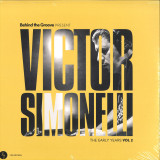
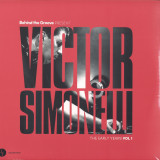
BTG presents “Victor Simonelli: The Early Years Vol 1” a collectors edition double Vinyl release - 2 X 12’s in each Vol
Launching the first Behind The Groove collectors edition vinyl series is New York’s finest Victor Simonelli with ‘The Early Years Vol 1 & 2’ double Vinyl releases. Featuring seminal house tracks such as Cloud 9’s ‘Do You Want Me’, Solution’s ‘Feel So Right’, Instant Exposure’s ‘Wanna Be With You’ and rare mixes of Raiana Page and EZ-AL, this collection brings together classic and rare Victor Simonelli cuts that reflect the early raw energy and buzz of the New York House scene. With ‘Vol 2” scheduled to follow shortly after, this is the most comprehensive collection of rare Simonelli cuts that firmly establishes his esteemed role in 90s House Music as well as introducing new fans to his inimitable sound.
Victor Simonelli is one of the early kings of NYC sampling In house music. The real deal - Victor danced at the legendary David Mancuso’s Loft sessions and developed a serious appreciation for good music. He interned for Arthur Baker at his renown Shakedown Studios (where Arthur worked with the iconic Afrika Bambatta on the seminal dance floor ’Planet Rock’ track) and went on to release hugely influential releases on seminal NYC labels 4th Floor and Nu Groove. Victor’s music was championed by the hugely celebrated iconic House Music DJ pioneers, Larry Levan and Tony Humphries at Paradise Garage & Zanzibar/WBLS/Kiss FM respectively.
Revered as a New York house heavyweight and prolific producer since the turn of the 1990s, Victor Simonelli grew up in Brooklyn, NYC, nurtured by a music loving family, with an avid record collecting father who also worked as a local party DJ. He took music lessons in piano, drums, guitar and bass, before discovering his first love, tuning into NY’s Radio Mix Shows on WBLS, WKTU and WRKS,98.7 Kiss FM) where he discovered the art of mixing and in his own words, ’I just simply got lost in the music’.
Graduating from NYC’s Centre For Media Arts, Victor got an internship in the legendary producer, Arthur Baker’s Shakedown Studios. Soon graduating to editing, mixing and then producing he worked for artists David Bowie, Quincy Jones, Debbie Harry, Sinead O’Connor and Talking Heads. Teaming up with fellow NYC producer Lenny Dee to become the Brooklyn Funk Essentials, they released records ‘Critical Rhythm’ and ‘Subliminal Aurra’ on 4th Floor before Victor went solo as Groove Committee releasing the classic ‘I Want You To Know’ on the legendary Nu Groove Records. Paradise Garage legend, Larry Levan broke ‘I Want You To Know’ rocking 2 copies on his last tour of Japan whilst King of NY House Music,Tony Humphries broke Victor’s new ‘Feels So Right’ across New York on his WBLS/Kiss FM Mastermix show and at his legendary Zanzibar club sessions. It was only a matter of time before Victor’s name became synonymous with quality House music ensuring a worldwide platform for his productions.
In the early 90s alongside his own productions, Victor Simonelli worked on high profile projects, including James Brown’s album, “Love Overdue” BeBe and CeCe Winans single featuring Mavis Staples “I’ll Take You There” and Quincy Jones’ “I’ll Be Good To You” featuring Chaka Khan and the legendary Ray Charles. Never straying too far from his clubland roots, Victor worked with Danny Tenaglia on his classic “The Harmonica Track”.
DJ gigs across the world started flooding in and Victor found himself recording for a dizzying array of labels including Tribal America, Sub-Urban, Bassline, King Street Sounds and Vibe, under a wide range of aliases. He also produced, wrote and remixed for artists such Nile Rodgers (Chic), Afrika Baambata, Hall & Oates, Frankie Knuckles, Kerri Chandler, Madonna and Michael Jackson. Famed for his own productions “It’s So Good” by Creative Force, “I Know A Place” as Sound Of One - the first release on Roger Sanchez One Records -, “Dirty Games” as well as the “Street Players Vol 1 EP”, Victor went on to set up Suburban Records with Tommy Musto and Bassline Records with two other partners. Notable releases on this label include “Do You Feel Me”, Connie Harvey’s gospel inspired, “Thank You Lord”, Urban Blues Project’s “Deliver Me”, Colonel Abrams “Not Gonna Let”, and Mone’s “Better Way”. Never ceasing to produce, DJ, run his own label and host radio shows like Groove Lift, Victor has worked with virtually every NYC producer and has nurtured a next generation talents including Angel Moraes, Jazz ‘N’ Groove, Urban Blues Project, Harlem Hustlers, Jay Jay and Julius Papp. Victor’s releases have also been used on M&S’s “Salsoul Nuggett” hit and Eddie Amador’s underground smash ‘House Music’.
In the late 90’s Victor launched his new Westside Productions, notable for the “Latin Impressions 1 & 2” releases, opened up a studio in Italy as he found himself increasingly working in Europe and now divides his time between New York and Italy. Suffice to say his unique sound of uplifting and spiritual music has kept him at the forefront of House Music and he is credited as one of its leading exponents with his string of classic releases and remixes.
Behind the Groove, branches out from its digital platform to embark on a programme of releases from the iconic pioneer producers of House Music. Esteemed for their high quality features and mixes that continue to explore, celebrate and venerate the contributions of highly respected, scene-shaping Labels, Artists, DJs and Special Events, BTG seeks to bring these talents and tales to the attention of the wider community. Unlocking the stories surrounding the pivotal roles they played and continue to play today in shaping the underground music scene we have come to know and love.
BTG presents “Victor Simonelli: The Early Years Vol 1” a collectors edition double Vinyl release, released on May 12th 2023. ‘Vol 2” follows on May 26th 2023 . These releases are the most comprehensive collection of rare Victor Simonelli cuts that firmly establish his esteemed role in 90s House Music and introduces new fans to his carefree sound.
Black Vinyl[35,71 €]
Lucy has been a prominent figure on the UK folk scene for many years with her
skills much in demand by a plethora of esteemed folk artists, which has meant
her solo career has taken a back seat. Until now.
'We are only Sound' was recorded in the glorious medieval surrounds of Much
Wenlock Abbey, home to Nick Drake's sister Gabrielle who gifted the recording
space - as well as the use of her brother's instruments - through a mutual friend.
Specifically, Nick Drake's piano and guitar were tuned and used in the recording
bestowing a unique quality to the album. Songs were recorded together, in one
room, in one take.
Lucy's crystalline vocals are highlighted by sparse accompaniment: the exquisite
melodies interwoven with intricate - yet delicate - guitar playing and subtle
electronic touches. Songs are introspective and dreamy, written over a span of
eight years during which Lucy experienced motherhood, breakups and all that
comes with such heart and life changing events. "I think these themes and ideas
are universal," she says. "They would resonate for other people too." Lucy
continues, "I find it hard to articulate my thoughts in sentences - it's much easier
to muse through them in songs. It's how I work through my feelings. There's a lot
of wonderings in them, but no answers".
Lucy is joined by Kris Drever (Lau) on guitar and vocals, Ben Nichols (Nadine
Shah) on double bass, Tom Lenthall on piano, Neil McSweeney on bass and M G
Boulter on slide guitar.
Sea Blue Vinyl[35,71 €]
Lucy has been a prominent figure on the UK folk scene for many years with her
skills much in demand by a plethora of esteemed folk artists, which has meant
her solo career has taken a back seat. Until now.
'We are only Sound' was recorded in the glorious medieval surrounds of Much
Wenlock Abbey, home to Nick Drake's sister Gabrielle who gifted the recording
space - as well as the use of her brother's instruments - through a mutual friend.
Specifically, Nick Drake's piano and guitar were tuned and used in the recording
bestowing a unique quality to the album. Songs were recorded together, in one
room, in one take.
Lucy's crystalline vocals are highlighted by sparse accompaniment: the exquisite
melodies interwoven with intricate - yet delicate - guitar playing and subtle
electronic touches. Songs are introspective and dreamy, written over a span of
eight years during which Lucy experienced motherhood, breakups and all that
comes with such heart and life changing events. "I think these themes and ideas
are universal," she says. "They would resonate for other people too." Lucy
continues, "I find it hard to articulate my thoughts in sentences - it's much easier
to muse through them in songs. It's how I work through my feelings. There's a lot
of wonderings in them, but no answers".
Lucy is joined by Kris Drever (Lau) on guitar and vocals, Ben Nichols (Nadine
Shah) on double bass, Tom Lenthall on piano, Neil McSweeney on bass and M G
Boulter on slide guitar.
End of Everything is the intrepid seventh album from Mega Bog, a nightmarish experimental pop ensemble led by Erin Elizabeth Birgy. In 2020, Birgy was surrounded by seemingly endless turmoil: mass death, a burning planet, and a personal reckoning when past traumas met fresh ones. Living in Los Angeles, against the backdrop of brilliantly horrifying forest fires, she questioned what perspective to use moving forward in such dumbfounded awe. Deciding to seize something tangible, she produced a record that spoke of surrender, of mourning, and support in the face of tumultuous self-reflection. Writing on piano and synthesizer, instead of the familiar guitar, Birgy explored a spectrum of new sounds to illuminate a state of volatility and flux that was both universal and personal. Speaking of this transition, she describes the need “to feel… instantly. I didn’t want to dig into secret codes. I no longer wanted to hide behind difficult music. I was curious to give others the same with the music I create; to make music someone could use to explore drama, playfulness, and dancing, to shake the trauma loose.” Heavy grooves, metal guitar squeals, Italo disco bass lines, rhapsodic synth layers, and huge choruses stomp around the delightfully sanguine pop drama. Where previous records stretched out into the abstract and ethereal, End of Everything delivers a hit straight to collective awareness and healing. A seemingly disparate jukebox of sounds – ranging from Thin Lizzy, Bronski Beat, Franco Battiato and Ozzy Osbourne to 90’s house classics like Haddaway’s ‘What is Love’ and Corona's ‘Rhythm of the Night’ - foregrounded a new punchy theatricality in Birgy’s music. The songs she was creating at home followed suit with bolder hooks and more dancefloor energy than she’d ever dared before.
After a creative break of more than 10 years the Contemporary Noise Ensemble returns with the brand new album called »An Excellent Spiritual Serviceman«. With the band’s line-up reduced and the sound of the brass section replaced with programmable synthesizers comes an entirely new sound of the band’s music. Leaning towards composition instead of improvisation the music is now less jazzy sounding - with electric bass being used instead of double bass and drums actually being the only strictly acoustical instrument. But then again you can hear a lot of other prerecorded instruments like marimba, vibraphone, Rhodes and upright pianos surrounded by arpeggiated synths and other programmable electronic instruments.
The album takes you to a journey through jazz, space rock, funk and electronic music with a destination in a form of a rock song which is as well the title song of the album. The Contemporary Noise Ensemble still impresses with maturity and class.
Mo H. Zareei (mHz) returns to Imprec/Cassauna with Proof Of Identity, an album of pulsating, pattern-based electronic pieces that evolve in ways reminiscent of Steve Reich's early work or Philip Glass' Music In 12 Parts. With Proof Of Identity, Zareei confronts issues surrounding identity and authorship in composition specifically when created by non-Western musicians. He simultaneously tackles orientalism and the normative take on identity politics.
Artist's Statement:
More than a decade ago, I made a piece of beat-based electronic music and titled it "Middle Eastern IDM" for a course assignment. After listening to it in class, my professor asked what was Middle Eastern about it. It was only a year after I had left Iran to study in the US, and I didn't know that I could say "I am. I made the piece". So I went back and superimposed a sample of Egyptian protest chants on top of the piece, to make it "sufficiently Middle Eastern".
What prejudiced conservatism and performative liberalism share is gatekeeping practices that box one in a preconceived state of otherness. While the former overtly regards that otherness as inferior, the latter exoticises it through patronising paternalism. To me, it is especially troubling when exclusionary practices are driven by some form of overzealous "diversity and inclusion" agenda. If you don't fit the diversity box they've made for you, too bad. It's your fault for being "insufficiently diverse". "Poor thing, you've been colonised!", they tell you, as they claim ownership over a collection of frequencies and rhythms. When you look at who gets to decide if something's indigenous enough, you see how decolonisation itself has been colonised.
When you listen to this piece, I'm very happy for you to keep in mind that it was made by someone from Iran. But I might need to clarify that this piece has nothing to do with sufism and the whirling dervishes, the interweaving patterns of the Persian carpet, the poetry of Rumi, or Islamic architecture. And if you hear those moments of "non-western" sonorities, that is because I have constructed this piece from samples of a piece of Iranian traditional music – an overplayed piece that was all over TV and radio while I was growing up Iran, one that I never found particularly inspiring or interesting. Here, I have tried to make it more interesting by completely taking it apart and reconstructing it through my personal compositional techniques, aesthetic preferences, and a wide range of musical influences. So in short, while this piece might not sound like your archetypical Iranian music, I assure you that it is Iranian enough.
First LP from Donna Candy, the bass-vocal-drums trio trawled from the sub genres of experimental rock and busy pushing to the front of heavy music. Nu metal bass riffs, switch-pitched fuzz vocals and big, splashy drums layer over unsettling narratives and extreme loops to bring a bit of the pit to the dancefloor.
Begun as an off the cuff party band with the idea of finding a live sound that would fit between 4am trance sets, the trio soon found themselves addicted to the euphoric sludge they created. Swapping their usual guitar for a bass, JS Donny drives Donna Candy with simple riffs, split half clean and half shredded with Boris / Sunn O))) like distortion. Head-banging the whole way, they’ll switch speed or stop suddenly, bending and drawing out notes to ratchet things up for release. Nadja's vocals tear through the top layer - heavily processed and warped with weird imagery. Together there’s a feeling of what it might be like to see Sightings slowed by codeine but with Elvin Brandi on the mic.
Always set up facing each other, off stage and surrounded by the audience, Donna Candy encourage catharsis - reciprocally transforming energy between themselves and the crowd. They build a queer euphoria that pulls apart metal’s narrow dichotomy of nihilistic machismo vs. hyperfemininity, and begins to make the visceral faux-hybridity of nineties nu metal feel possible this time around. ‘Blooming’ brings us six offerings from the band on a four way split release that speaks for itself - once on board with the DC energy you’ll want to be a part of it.
The Croatian production powerhouse and disco boogie impresario steps up to International Feel, and takes a left turn into deep space with a new six track LP Pulsar Diaries.
Ilija’s discography stretches back to 2003, and over those 20 years he’s packed it full with albums, versions, remixes and singles. His releases are often perfectly-penned love letters to ‘80s boogie, electro and disco, and like postcards from an old flame, they’ve landed in an array of record label catalogs, from Bear Funk, Rong, and Electric Minds, to Is It Balearic? as well as his own Red Music and Imogen Recordings. He’s long-been an active voice on the underground club scene, and if you’ve been out dancing in Zagreb, Berlin or even Tisno beach, chances are you’ve gotten down to one of his beautifully blended sets of cosmic-tinged electro funk and disco dubs.
On Pulsar Diaries, Ilija delivers a panoramic collection of spaced-out synths and drum machine grooves, dedicated to the planet and our place in the universe. The A side opens up with the blissful, weightless pads of the title track, before it breaks out into filtered stabs over a minimal b-boy bounce. Delphic Expanse ebbs and flows like a lunar eclipse, sounding like a futuristic version of Key-Matic’s Breaking In Space, all uprock rhythms and syrupy synth horns as it spins off beyond the asteroid belt. Side A closes out with Blackburn Tales, a suspenseful and spacious electro rhythm packed with strings and 303 squelch, which you might call anti-gravity acid, if you were so inclined.
Side B picks up the tempo with Fourth Amendment, perfect for the space station discotheque with its sweeping bass filters and ice-cold synth melodies hovering in orbit. Farewell Theme takes an introspective moment, slowing the pace to a cosmic 90 bpm and inviting a certain cinematic feel to proceedings. This feeling applies not just to the vivid landscapes we travel through, but also wider thoughts about humankind: as we pause for a breath and look around, we find ourselves in Ilija’s space, considering human motivations, like the pursuit of happiness, or the eternal struggle with the self.
Every journey begins with a goodbye, and so the last track of the album feels like the arrival at a new destination: Ursa Major is ablaze with cascading drum fills, bubble-wrapped bass riffs and bright synth chords that sparkle like city lights underneath a re-orbiting satellite.
With Pulsar Diaries, Ilija Rudman has created a rare artifact: an album that straddles several worlds at once. Part soundtrack to space travel, part meditation on the human condition, part deep-burning dancefloor dynamo - whether in the club surrounded by friends or at home by yourself, this is a record that expands the mind and lets the imagination soar.
In the words of Bill Brewster - DJ History
‘At the turn of the 1990s, there were few more successful New York house producers than Victor Simonelli. Under a dizzying array of aliases – Solution, NY’s Finest, Groove Committee, Critical Rhythm and Cloud 9 being amongst the better-known – the Brooklyn-born DJ/producer delivered a string of underground club hits during the city’s early ’90s house boom.’
BTG presents “Victor Simonelli: The Early Years Vol 1” a collectors edition double Vinyl release - 2 X 12’s in each Vol
Launching the first Behind The Groove collectors edition vinyl series is New York’s finest Victor Simonelli with ‘The Early Years Vol 1 & 2’ double Vinyl releases. Featuring seminal house tracks such as Cloud 9’s ‘Do You Want Me’, Solution’s ‘Feel So Right’, Instant Exposure’s ‘Wanna Be With You’ and rare mixes of Raiana Page and EZ-AL, this collection brings together classic and rare Victor Simonelli cuts that reflect the early raw energy and buzz of the New York House scene. With ‘Vol 2” scheduled to follow shortly after, this is the most comprehensive collection of rare Simonelli cuts that firmly establishes his esteemed role in 90s House Music as well as introducing new fans to his inimitable sound.
Victor Simonelli is one of the early kings of NYC sampling In house music. The real deal - Victor danced at the legendary David Mancuso’s Loft sessions and developed a serious appreciation for good music. He interned for Arthur Baker at his renown Shakedown Studios (where Arthur worked with the iconic Afrika Bambatta on the seminal dance floor ’Planet Rock’ track) and went on to release hugely influential releases on seminal NYC labels 4th Floor and Nu Groove. Victor’s music was championed by the hugely celebrated iconic House Music DJ pioneers, Larry Levan and Tony Humphries at Paradise Garage & Zanzibar/WBLS/Kiss FM respectively.
Revered as a New York house heavyweight and prolific producer since the turn of the 1990s, Victor Simonelli grew up in Brooklyn, NYC, nurtured by a music loving family, with an avid record collecting father who also worked as a local party DJ. He took music lessons in piano, drums, guitar and bass, before discovering his first love, tuning into NY’s Radio Mix Shows on WBLS, WKTU and WRKS,98.7 Kiss FM) where he discovered the art of mixing and in his own words, ’I just simply got lost in the music’.
Graduating from NYC’s Centre For Media Arts, Victor got an internship in the legendary producer, Arthur Baker’s Shakedown Studios. Soon graduating to editing, mixing and then producing he worked for artists David Bowie, Quincy Jones, Debbie Harry, Sinead O’Connor and Talking Heads. Teaming up with fellow NYC producer Lenny Dee to become the Brooklyn Funk Essentials, they released records ‘Critical Rhythm’ and ‘Subliminal Aurra’ on 4th Floor before Victor went solo as Groove Committee releasing the classic ‘I Want You To Know’ on the legendary Nu Groove Records. Paradise Garage legend, Larry Levan broke ‘I Want You To Know’ rocking 2 copies on his last tour of Japan whilst King of NY House Music,Tony Humphries broke Victor’s new ‘Feels So Right’ across New York on his WBLS/Kiss FM Mastermix show and at his legendary Zanzibar club sessions. It was only a matter of time before Victor’s name became synonymous with quality House music ensuring a worldwide platform for his productions.
In the early 90s alongside his own productions, Victor Simonelli worked on high profile projects, including James Brown’s album, “Love Overdue” BeBe and CeCe Winans single featuring Mavis Staples “I’ll Take You There” and Quincy Jones’ “I’ll Be Good To You” featuring Chaka Khan and the legendary Ray Charles. Never straying too far from his clubland roots, Victor worked with Danny Tenaglia on his classic “The Harmonica Track”.
DJ gigs across the world started flooding in and Victor found himself recording for a dizzying array of labels including Tribal America, Sub-Urban, Bassline, King Street Sounds and Vibe, under a wide range of aliases. He also produced, wrote and remixed for artists such Nile Rodgers (Chic), Afrika Baambata, Hall & Oates, Frankie Knuckles, Kerri Chandler, Madonna and Michael Jackson. Famed for his own productions “It’s So Good” by Creative Force, “I Know A Place” as Sound Of One - the first release on Roger Sanchez One Records -, “Dirty Games” as well as the “Street Players Vol 1 EP”, Victor went on to set up Suburban Records with Tommy Musto and Bassline Records with two other partners. Notable releases on this label include “Do You Feel Me”, Connie Harvey’s gospel inspired, “Thank You Lord”, Urban Blues Project’s “Deliver Me”, Colonel Abrams “Not Gonna Let”, and Mone’s “Better Way”. Never ceasing to produce, DJ, run his own label and host radio shows like Groove Lift, Victor has worked with virtually every NYC producer and has nurtured a next generation talents including Angel Moraes, Jazz ‘N’ Groove, Urban Blues Project, Harlem Hustlers, Jay Jay and Julius Papp. Victor’s releases have also been used on M&S’s “Salsoul Nuggett” hit and Eddie Amador’s underground smash ‘House Music’.
In the late 90’s Victor launched his new Westside Productions, notable for the “Latin Impressions 1 & 2” releases, opened up a studio in Italy as he found himself increasingly working in Europe and now divides his time between New York and Italy. Suffice to say his unique sound of uplifting and spiritual music has kept him at the forefront of House Music and he is credited as one of its leading exponents with his string of classic releases and remixes.
Behind the Groove, branches out from its digital platform to embark on a programme of releases from the iconic pioneer producers of House Music. Esteemed for their high quality features and mixes that continue to explore, celebrate and venerate the contributions of highly respected, scene-shaping Labels, Artists, DJs and Special Events, BTG seeks to bring these talents and tales to the attention of the wider community. Unlocking the stories surrounding the pivotal roles they played and continue to play today in shaping the underground music scene we have come to know and love.
BTG presents “Victor Simonelli: The Early Years Vol 1” a collectors edition double Vinyl release, released on May 12th 2023. ‘Vol 2” follows on May 26th 2023 . These releases are the most comprehensive collection of rare Victor Simonelli cuts that firmly establish his esteemed role in 90s House Music and introduces new fans to his carefree sound.
Voice Magnetic by Hainbach is the enigmatic Berlin based artist’s sonic diary of 2022. On his sixth release on Seil Records, Stefan Goetsch collages the sounds he made and the ones that surrounded him over the course of twelve months into a powerfully intimate ambient experience.
In his studio or on travels — Hainbach always is working on new material and allows the locations he records his tracks in to find their way into the music. Consequently, on many tracks you can can hear the outside bleeding in — seagulls and waves on "Izmir", the voices of his children while record the piano or the sirens of Neukölln’s police cars in background.
The connecting threads between these pieces are magnetic tape and the human voice — hiss and breath. The result are 15 immersive ambient pieces that make up Voice Magnetic. Often short like the moments that spark them. Fading and intricate, honest and pure.
Based out of Berlin, Germany, electro-acoustic music composer and performer Hainbach creates shifting audio landscapes, using esoteric synthesizers, nuclear test equipment, magnetic tape and a collection of idiophones. Hainbach has become known for his immersive live shows and an unique sound that is both abstract yet very much a corporal experience. Otherworldly and intimate, raw and heartfelt. On his wildly popular YouTube channel, Hainbach shares his love for experimental music techniques and his passion for forgotten machines with a wide audience. Inspiring over one hundred thousand each week to explore synthesis, electronics - and to leave beaten paths.
Critically acclaimed composer, producer and electronic musician Mark Barrott is set to release his new album ‘Jōhatsu (蒸発)’ in April via Reflections, the new imprint from the Anjuna family, which focuses on downtempo, ambient, and alternative releases. An artist that creatively speaking, never stops moving, Barrott’s musical career has taken many forms. From Future Loop Foundation, the alias he used to create and perform ambient drum and bass from the mid-90s, to his Sketches from an Island albums released under his own name, and as founder of the highly influential International Feel label, Barrott has spent close to four decades exploring new sonic territory and pushing the boundaries of various genres, and is considered a pivotal figure in the revival of the Balearic music scene of the last decade. Barrott’s new album, ’Jōhatsu (蒸発)’, is predictably unpredictable. Released on Reflections, the new downtempo label from the Anjuna family, it’s a full departure from anything Barrott’s written before, partly because he was writing to moving picture. Towards the end of 2019, he had been working so relentlessly as a record producer for artists such as South African DJ Themba and the late Virgil Abloh, that he developed Repetitive Strain Injury, and was forced to take time off, and it was during this down-time he received an email from a director asking him to write the score for his new documentary, ‘Jōhatsu... the art of Evaporation’. ‘Jōhatsu (蒸発)’ is an 8-track journey through the sounds, sights, smells and sensations of traditional and contemporary Japanese culture. “What came home to me during the scoring process, was how much shame is a huge part of Japanese culture. There’s a lot of shame surrounding losing your job and around things like divorce & bankruptcy, and it’s been there for centuries, since the Samurai and Bushido.” Some take their own lives, while others decide to simply… evaporate. Jōhatsu refers to these people who decide to purposely disappear, leaving their lives they knew behind without a trace.
"One of the world’s finest purveyors of music to chill out to - he is the master of sunset music" (Pitchfork).
2LP+2CD+Booklet[100,80 €]
180 g black Vinyl
Die legendären Jethro Tull melden sich nach ihrem Top-10-Album 'The Zealot Gene' von 2022 mit ihrem 23. Studioalbum 'RökFlöte' zurück. Zwölf Tracks erinnern die Welt an den kultigen Sound, den die legendäre Band in die Rockmusik einbrachte, aufgenommen mit der aktuellen Tull-Besetzung von Ian Anderson, David Goodier, John O'Hara, Scott Hammond und Joe Parrish James. Präsentiert in zwei Deluxe-Formaten: Ltd. Deluxe dark red 2LP+2CD+Blu-ray Artbook inkl. 2 Kunstdrucken, und außerdem als Ltd. Deluxe 2CD+Blu-ray Artbook, beide mit ausführlichen Liner Notes inkl. einer CD mit Demos und einer Blu-ray mit Dolby Atmos, 5.1 Surround Sound und alternativen Stereomischungen von Bruce Soord (The Pineapple Thief), sowie einem ausführlichen Interview mit Ian Anderson. Auch erhältlich als Special Edition CD Digipak, Gatefold black 180g LP & LP-Booklet und digitales Album (einschließlich räumlicher Audioversionen).
LP[25,00 €]
180 g black Vinyl
Die legendären Jethro Tull melden sich nach ihrem Top-10-Album 'The Zealot Gene' von 2022 mit ihrem 23. Studioalbum 'RökFlöte' zurück. Zwölf Tracks erinnern die Welt an den kultigen Sound, den die legendäre Band in die Rockmusik einbrachte, aufgenommen mit der aktuellen Tull-Besetzung von Ian Anderson, David Goodier, John O'Hara, Scott Hammond und Joe Parrish James. Präsentiert in zwei Deluxe-Formaten: Ltd. Deluxe dark red 2LP+2CD+Blu-ray Artbook inkl. 2 Kunstdrucken, und außerdem als Ltd. Deluxe 2CD+Blu-ray Artbook, beide mit ausführlichen Liner Notes inkl. einer CD mit Demos und einer Blu-ray mit Dolby Atmos, 5.1 Surround Sound und alternativen Stereomischungen von Bruce Soord (The Pineapple Thief), sowie einem ausführlichen Interview mit Ian Anderson. Auch erhältlich als Special Edition CD Digipak, Gatefold black 180g LP & LP-Booklet und digitales Album (einschließlich räumlicher Audioversionen).