DJ Support: Ashley Beedle, Phil Mison (Ibiza legend), Nick The Record, Kenneth Bager (Music For Dreams), Ross Allen (NTS, Worldwide FM), Simon Dunmore, Cedric Woo (Beauty & the Beat), Ban Ban Ton Ton, The Mighty Zaf (Love Vinyl), Femi Fem (Young Disciples), Jay Negron (NYC legend), Bruce Forest (Better Days, NYC), Bruce Tantum (NYC), Colleen “Cosmo” Murphy, Mr Shiver, Hugh Mane, Eccentrics Disco, Eclectics Disco, Fannoire Ge, Percebes Records (Lisbon), For Mankind (Pikes, Ibiza), S/A/M (Cafe Del Mar, Ibiza).
Winner of the 2020 Bob James “Black Lives Matter” remix competition on François Kevorkian’s World Of Echoes Facebook page, Love For Black Lives is available on vinyl for the first time, alongside 2 brand new mixes, on this 4-track EP. It is the debut release on Hobbes Music’s new sub-label Noetic Rhythm, dedicated to releasing music that brings people together on the dancefloor.
Leonidas debuted in 2012 with Sequential EP on Kay Suzuki's Round In Motion label, gaining praise from industry legends. He has collaborated with Hobbes on several releases, including the Balearic hit Web of Intrigue, which topped Bill Brewster’s 2017 DJ poll. His music has appeared on compilations like DJ Harvey’s The Sound of Mercury Rising Vol II, as well as BBC Radio 1 & 6 music.
Listen if You Like = Jon Hassell, Hiroshi Yoshimura, Terry Riley, Rhythm & Sound, Laurie Spiegel, Ariel Kalma, Laraaji, Steve Roach, Kerry Leimer, Suzanne Ciani, Yu Su, Hotspring, La Monte Young, Erik Satie, Music From Memory, Brian Eno, O Yuki Conjugate, Harold Budd, Robert Guthrie, Leif, Gigi Mason, Gaussian Curve, Patricia Wolf, Muslim Gauze, Manuel Göttsching,
Bilingual rapper/producer Joe Cupertino, hailing from Cupertino, California, follows his 2024 mini-album RE: with a 7" single featuring two standout tracks. RE: was conceived as a thematic counterpart to his 2025 release DE: (focused on destruction), while RE: explored the theme of regeneration.
Side A features "Wagamama," with Mamiko Suzuki (chelmico) on vocals and production by longtime collaborator T-Razor. The mellow jazz arrangement evokes a daydream-like atmosphere, perfectly matching the bittersweet theme of the title.
Side B, "Ruby," features Lil' Leise But Gold and production by Ryuju Tanoue (w.a.u). The track blends Brazilian, reggae, and Afrobeat influences into an alternative, cross-genre groove that embodies Joe Cupertino's unique sound.
“In stark contrast to the stress-makingly staccato assault of your average 'ardcore rave, Telepathic Fish was a wombeldelic sound-and-light bath"
Simon Reynolds (Energy Flash: A Journey Through Rave Music And Dance Culture)
The first-ever illustrated compendium recounting the seminal underground South London ambient party that surfaced at the axis through which the likes of Ninja Tune, Warp and Rising High flowed. Telepathic Fish shared fertile waters with Megatripolis and The Big Chill, moving the early 90s London back room chill-out space into the kaleidoscopic spotlight.
Documenting the sights and sounds of South London’s seminal Telepathic Fish ambient parties. Hosted by Chantal Passamonte (aka Mira Calix - RIP), David Vallade, Mario Aguera and Kevin Foakes (aka DJ Food) - collectively named Openmind. With the help of Mixmaster Morris (The Irresistible Force) and Matt Black (Coldcut), they put on some of the earliest chill out events in London.
Rooted deep in the heart of the electronic underground they started DJing and decorating house parties or squats with mind-blowing installations and wholly idiosyncratic design, hosting the likes of Aphex Twin, Andrea Parker and Tony Morley (The Leaf Label). Within a year they were playing VIP after shows for the likes of Orbital and illegal New Year’s gatherings at the disused Roundhouse whilst guesting on Coldcut’s Solid Steel radio show on London’s KISS FM.
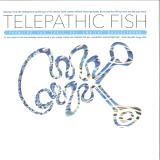
Whilst collaborations with legendary club nights such as Megatripolis saw them share bills with Autechre, Higher Intelligence Agency, Scanner and Global Communication, they also created their own ambient fanzine - Mindfood – to document the scene evolving around them. A 20-page history of their parties is included in the release, richly illustrated with personal photos, artwork and memorabilia from their adventures between 1992-95. The gatefold sleeve also features their Telepathic Fish logo, mirroring an original T-shirt design they sold in Ambient Soho, a record shop three of the four worked in at different times.
The selections featured here are all personal favourites that were played at the Telepathic Fish parties during the 90s. Picked and arranged by Mario, David and Kevin who combed their collections for key pieces they associate with the time and Chantal’s music tastes. Over a hundred tracks were selected, totalling nearly 11 hours of playing time, before being whittled down to the essentials by the trio, forming a snapshot of their world back in the day.
KEY POINTS:
* Features long deleted and hard to find tracks by Caustic Window (Richard D. James aka Aphex Twin), Tranquility Bass, Spacetime Continuum and Global Communication (Mark Pritchard and Tom Middleton).
• Pressed on DJ friendly double black vinyl
• Includes A 20-page history of their parties is included in the release, richly illustrated with unseen personal photos, artwork and memorabilia from the Telepathic Fish crew’s adventures between 1992-95, as well as detailed liner notes courtesy of founding members Mario Ageura and Kevin Foakes.
• Cover includes horizontal obi sticker with quote from Simon Reynolds' book Energy Flash: A Journey Through Rave Music And Dance Culture, describing the Telepathic Fish parties' place in the dance music landscape.
• Lacquer cut by Beau Thomas at Ten Eight Seven Mastering
Selecting melodious and groovy crossover, fusion, and jazz-funk tracks from the Nippon Columbia catalog, including its sub-label Better Days, that City Pop fans will love.
The track selection and commentary are curated by Hitoshi Kurimoto, the most popular City Pop influencer in Japan.
This unique selection includes tracks from Soul Media, Hiromasa Suzuki, Kazumi Watanabe, and Kiyoshi Sugimoto, along with previously unreissued gems.
The artwork is designed by Stereo Tennis, known for its popular '80s-inspired graphics.
A must-have for fans of Japanese Jazz and City Pop.
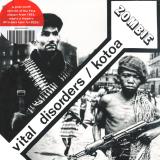
Wah Wah 45s present a unique moment from 1982 where New Wave and Post Punk collided with Afrobeat in the shape of Norwich DIY outfit Vital Disorders and their subversive yet instantly memorable version of the Fela Kuti classic, Zombie.
Band member Suzy Cox explains more:
"The song came to the band through our vocalist Lenneka Van Gilst who was in the group between January 1980 and December 1981. Lenneka grew up in Nigeria and had the original track on vinyl. When she moved to Trowse House, Norwich, the flat under Chris, the VD's bass player, he heard the vibes floating through the floorboards. One thing led to another and it was in our set for ages. Lenneka had left the band to travel to Mexico by the time we recorded the track. We did well to choose it as the song has really stood the test of time. Lenneka had a lot of African Beat which was a big influence on us."
The track came to label boss Dom Servini's attention having been unearthed by BBC 6 Music DJ Gilles Peterson in late 2024, and a vinyl reissue of this rare and one-off gem was the obvious choice. Rather than pairing it with its original punky B-side though, Dom enlisted new signings to the label - young Afro-dub outfit Kotoa - to record their take on the Kuti classic. The quintet delivered what is a three minute, intense take on the Afrobeat genre, complete with youthful voices of protest echoing those of over 30 years ago.
The 7-inch vinyl only release of Zombie comes with re-worked art courtesy of our award winning designer Animisiewasz, taking the home-made look of the original cover and updating it respectfully for 2025.
Demon Music group in conjunction with the Hughes family are proud to present the first official compilation of music
from the movies of legendary filmmaker John Hughes, covering the classic eighties period 1983 – 1989.
For anyone growing up in the 1980s, the films of John Hughes are some of the most iconic of the decade and have
created a lasting cultural impact still felt and referenced across TV, film and music. As well as the characters and
stories created in these iconic movies, what made John Hughes’ movies different from the rest was the symbiotic
relationship between scene and music. Whether Cameron Frye staring at the painting in Ferris Bueller’s Day Off set to
The Dream Academy’s “Please, Please, Please Let Me Get What I Want (Instrumental)”, Duckie and Andie from Pretty
In Pink at prom set to Orchestral Manoeuvres In The Dark’s “If You Leave”, or even Neal and Del’s classic “Those aren’t
pillows” scene from Planes, Trains and Automobiles set to Emmylou Harris’ “Back In Baby’s Arms”.
“Music was a huge part of filmmaking for him, it was a thing he seemed to like the most.” Matthew Broderick
Curated by John Hughes’ music supervisor Tarquin Gotch, this 6LP vinyl boxset includes 73 tracks from the movies
National Lampoon’s Vacation, Sixteen Candles, The Breakfast Club, Weird Science, Pretty In Pink, Ferris Bueller’s Day
Off, Some Kind Of Wonderful, Planes, Trains And Automobiles, She’s Having A Baby, The Great Outdoors and Uncle
Buck.
“Back when we were working on these movie soundtracks, the best way to send music around the world was the
cassette, by Fedex. We sent John cassettes of newly released music, of demos, of just finished mixes (and in return he
would send VHS videos of the scenes that needed music).” Tarquin Gotch
The films of John Hughes spawned many classic tracks, some licensed for the films, some commission specifically, and
many going on to become huge international hits from acts such as Simple Minds, Kate Bush, Furniture, Yello, and
The Psychedelic Furs.
“It serves as a reminder not just to the musicians he championed in the 1980s, but to how intensely his search for
music expanded beyond this era. Until his final days, he was still collecting outrageous amounts of music from around
the world, galaxies removed from the New Romantic and new wave sounds that, to many, still define him.” James
Hughes
Also includes an extensive 24-page booklet including memories from Matthew Broderick, James Hughes, Tarquin
Gotch, Ron Payne, plus track-by-track sleeve notes.
“John said he only made movies so he could choose what music to put in them, so as his success at the Box Office
grew, and thus his power with the studios, the number of tracks in his films, by up and coming UK bands, steadily
grew.” Tarquin Gotch
Billy Idol - "Catch My Fall" (From The 1987 Movie 'Some Kind Of Wonderful')
The Association - "Cherish" (From The 1986 Movie 'Pretty In Pink')
Penguin Cafe Orchestra - "Music For A Found Harmonium" (From The 1988 Movie 'She's Having A Baby')
Zapp - "Radio People" (From The 1986 Movie 'Ferris Bueller's Day Off')
Blue Room - "Cry Like This" (From The 1987 Movie 'Some Kind Of Wonderful')
Ray Charles - "Mess Around" (From The 1987 Movie 'Planes, Trains & Automobiles')
Joe Turner - "Lipstick, Powder & Paint" (From The 1989 Movie 'Uncle Buck')
Darlene Love - " (Today I Met) The Boy I'm Gonna Marry" (From The 1984 Movie 'Sixteen Candles')
Marvin Gaye - "How Sweet It Is (To Be Loved By You)" (From The 1988 Movie 'She's Having A Baby')
Perry Como/Mitchell Ayres & His Orchestra/The Ray Charles Singers - "Juke Box Baby" (From The 1989 Movie 'Uncle Buck')
The Chordettes - "Mr Sandman" (From The 1989 Movie 'Uncle Buck')
Ray Anthony & His Orchestra - "The Peter Gunn Theme" (From The 1984 Movie 'Sixteen Candles')
Lindsey Buckingham - "Holiday Road" (From The 1983 Movie 'National Lampoon's Vacation')
Emmylou Harris - "Back In Baby's Arms" (From The 1987 Movie 'Planes, Trains & Automobiles')
Hugh Harris - "Rhythm Of Life" (From The 1989 Movie 'Uncle Buck')
Spandau Ballet - "True" (From The 1984 Movie 'Sixteen Candles')
Propaganda - "Abuse" (From The 1987 Movie 'Some Kind Of Wonderful')
The Dream Academy - "The Edge Of Forever" (From The 1986 Movie 'Ferris Bueller's Day Off')
Yello - "Lost Again" (From The 1987 Movie 'Planes, Trains & Automobiles')
Bryan Ferry - "Crazy Love" (From The 1988 Movie 'She's Having A Baby')
The Rave-Ups - "Positively Lost Me" (From The 1986 Movie 'Pretty In Pink')
Los Lobos - "Don't Worry Baby" (From The 1985 Movie 'Weird Science')
Steve Earle - "Continental Trailways Blues" (From The 1987 Movie 'Planes, Trains & Automobiles')
The Revillos - "Rev Up" (From The 1984 Movie 'Sixteen Candles')
Boston - "More Than A Feeling" (From The 1988 Movie 'She's Having A Baby')
Balaam & The Angel - "I'll Show You Something Special" (From The 1987 Movie 'Planes, Trains & Automobiles')
The Rave-Ups - "Rave Up/Shut Up" (From The 1986 Movie 'Pretty In Pink')
Pop Will Eat Itself - "Beaver Patrol" (From The 1988 Movie 'The Great Outdoors')
The Vapors - "Turning Japanese" (From The 1984 Movie 'Sixteen Candles')
Silicon Teens - "Red River Rock" (From The 1987 Movie 'Planes, Trains & Automobiles')
out
Demon Music group in conjunction with the Hughes family are proud to present the first official compilation of music
from the movies of legendary filmmaker John Hughes, covering the classic eighties period 1983 – 1989.
For anyone growing up in the 1980s, the films of John Hughes are some of the most iconic of the decade and have
created a lasting cultural impact still felt and referenced across TV, film and music. As well as the characters and
stories created in these iconic movies, what made John Hughes’ movies different from the rest was the symbiotic
relationship between scene and music. Whether Cameron Frye staring at the painting in Ferris Bueller’s Day Off set to
The Dream Academy’s “Please, Please, Please Let Me Get What I Want (Instrumental)”, Duckie and Andie from Pretty
In Pink at prom set to Orchestral Manoeuvres In The Dark’s “If You Leave”, or even Neal and Del’s classic “Those aren’t
pillows” scene from Planes, Trains and Automobiles set to Emmylou Harris’ “Back In Baby’s Arms”.
“Music was a huge part of filmmaking for him, it was a thing he seemed to like the most.” Matthew Broderick
Curated by John Hughes’ music supervisor Tarquin Gotch, this 6LP vinyl boxset includes 73 tracks from the movies
National Lampoon’s Vacation, Sixteen Candles, The Breakfast Club, Weird Science, Pretty In Pink, Ferris Bueller’s Day
Off, Some Kind Of Wonderful, Planes, Trains And Automobiles, She’s Having A Baby, The Great Outdoors and Uncle
Buck.
“Back when we were working on these movie soundtracks, the best way to send music around the world was the
cassette, by Fedex. We sent John cassettes of newly released music, of demos, of just finished mixes (and in return he
would send VHS videos of the scenes that needed music).” Tarquin Gotch
The films of John Hughes spawned many classic tracks, some licensed for the films, some commission specifically, and
many going on to become huge international hits from acts such as Simple Minds, Kate Bush, Furniture, Yello, and
The Psychedelic Furs.
“It serves as a reminder not just to the musicians he championed in the 1980s, but to how intensely his search for
music expanded beyond this era. Until his final days, he was still collecting outrageous amounts of music from around
the world, galaxies removed from the New Romantic and new wave sounds that, to many, still define him.” James
Hughes
Also includes an extensive 24-page booklet including memories from Matthew Broderick, James Hughes, Tarquin
Gotch, Ron Payne, plus track-by-track sleeve notes.
“John said he only made movies so he could choose what music to put in them, so as his success at the Box Office
grew, and thus his power with the studios, the number of tracks in his films, by up and coming UK bands, steadily
grew.” Tarquin Gotch
LP vinyl only release + 4 page liner notes (comes with hype sticker)
The percussive new age soundtracks of '80s and early '90s Japanese TV, anime and manga built alternative worlds and pushed boundaries in the process.
When Japanese composer Yas-Kaz left Tokyo for Bali in the mid 1970s he had little idea of how influential his trip would become. In studying the storied art of gamelan, the jazz and avant-garde percussionist opened a door to a world of sound and rhythm left behind by the West. The music he and his contemporaries made would become known as new age. It also happened to soundtrack the golden era of anime.
Awash with money and with the prerogative to entertain the burgeoning middle classes, anime in the 1980s experienced a creative and commercial boom. Not constricted by generic expectations, production houses such as the now renowned Studio Ghibli were able to experiment liberally with both form and content. And with it came the space for composers to be similarly adventurous.
TV, Anime & Manga New Age Soundtracks 1984-1993 charts this moment across eight tracks spanning classics of the genre and previously unknown rarities. The collection brings together music that found kinship in electronic and acoustic instrumentation, often combining spiritual or environmental themes with percussive, varied and highly refined syncopations of non-Western musical traditions.
Among them is ‘Kaneda’ by Geinoh Yamashirogumi, the shape-shifting group of self-styled musicians, anthropologists and computer scientists that masterminded the soundtrack to game-changing dystopian anime Akira - and with whom the sound, tuning and breakneck speed of Balinese gamelan has become indelibly entwined.
Reflecting the desires of the era to reach beyond Japan’s borders, many of the soundtracks featured were commissioned for narratives set in distant lands or alternative worlds. There’s violinist and composer Norihiro Tsuru’s ‘Farsighted Person’, written for The Heroic Legend of Arslān, set in ancient Persia; Yas-Kaz’s own ‘Hei (Theme of Shikioni)’, for period sci-fi manga & anime series Peacock King - Spirit Warrior; and two tracks - Tassili N’Ajjer and Fiesta Del Fuego - from Yoichiro Yoshikawa’s soundtrack to NHK’s proto-Planet Earth series The Miracle Planet.
Such was the variety and quality of the music produced, if there is a guiding principle to the tracks collected here it is a sense of escapism and adventure that came with the confluence of modern electronic instruments and a fascination with percussive traditions.
Elsewhere, pioneering children’s TV composer Chumei Watanabe’s ‘Fushigi Song’ (performed by a vocal group Korogi ‘72) offers a trippy and infectious groove with sonic similarities to Don Cherry’s ‘Brown Rice’; little-known jazz-funk library group Columbia Orchestra showcase the best of Tokyo’s session musicians on ‘Hearts Beats - Theme for Andrew Glasgow’; before lawyer-turned-composer Kan Ogasawara closes out the compilation with a dramatic flourish on ‘Gishin Anki’.
Following on from Time Capsule’s acclaimed deep-dive into the world of manga & anime synth-pop in 2022, this vinyl only collection is set to broaden and diversify an understanding of how soundtracks shaped the sound of new age music in Japan for a generation.
Curators: Kay Suzuki, Rintaro Sekizuka (Vinyl Delivery Service)
Artwork: Tu-yang
The story of So-Do is both familiar and completely unique. A classically trained multi-instrumentalist with a poet’s sensibility and a passion for folk music meets a worldly bar owner with a love for psychedelia, post-punk and dub in the small town neither could bring themselves to leave. Over two years, they play dozens of shows in independent live houses across Japan, cut and self-release three singles – two 7”s and a 12” – and leave behind just eight tracks, all of which are set to be reissued for the first time forty years on.
So-Do’s Studio Works ’83-’85 collects the full output of this iconoclastic post-punk phenomenon, whose sparse, syncopated arrangements were infused with a dubbed-out flair that owed more to Dennis Bovell’s productions of Orange Juice, the Jah Wobble basslines of Public Image Limited or Adrian Sherwood’s live dubs of Mark Stewart than even they knew at the time.
Because for lead songwriter Hideshi Akuta, music offered an escape from the existential malaise of small-town life, folding a melancholy nihilism into tracks like ‘Kakashi’ and ‘Hashiru’ (which translates as ‘run’), or taking aim at the inequalities and creeping apathies of the middle classes, as he does on ‘Get Away’ and ‘Nothing’.
And if Talking Heads had CBGBs, Sex Pistols had the Roxy, then So-Do had Buddha. Influenced by Buddha venue owner and amateur producer Atsuo Takeuchi, Akuta turned So-Do’s sound towards dub, crafting playful, ironic and funky compositions that crackle with live energy at the vanguard of Japan’s nascent independent music scene.“So-Do is hard to explain,” Takeuchi says. “It’s been a struggle for years to try to find the words for our music.” The answer perhaps, is just to listen.
Both familiar and completely unique, So-Do extend Time Capsule’s genre-defining exposition of Japan’s reggae-inspired music of the ‘70s and ‘80s, as collected on the label’s two critically acclaimed Tokyo Riddim compilations, and London-based live outfit Tokyo Riddim Band.
Embracing the rip-it-up-and-start-again ethos of the early ‘80s, So-Do burned bright for a short time and then burned out. Their legacy is about to be reignited. Expect it to catch alight once more.
All songs are written & composed by Hideshi Akuta
Produced by Atsuo Takeuchi
Artwork by Ben Arfur
Liner Notes by Anton Spice, Ayana Honma, Kay Suzuki
Curated by Kay Suzuki
Licensed from Atsuo Takeuchi (Oregano Cafe)
Tape Restoration and Mastered by Mike Hillier at Metropolis Studios, London, UK
The year is 1974 and we are in Kingston, Jamaica: Lee Scratch Perry has just presented Susan Cadogan's album 'Sexy Suzy' on his Upsetters label. The Jamaican singer, who is just under 25, sees her cover of 'Hurt So Good' flirt with the top of the UK and JA charts but has no idea that 50 years later, she would still be a household name among Jamaican music fanatics.
On the B-side of this LP, produced by Mr Perry himself, the penultimate track is a cover of Little Willie John’s "Fever". Over the years this song has taken an unshakable place in the hearts of reggae lovers worldwide. With nearly 700 different versions referenced to date, Fever already enjoyed classic status at the time, mainly thanks to the success of Peggy Lee’s version released in 1958. Since then, in all styles, across all continents, the song has been reinterpreted, so much so that it's rare to find a year since 1956 without a new version hitting the market! Universal, timeless, this love song is known to all music enthusiasts, but in the reggae scene, it’s Susan Cadogan and Lee Scratch Perry’s version that still reigns supreme.
50 years after its release, Stand High Patrol offer us their own version. Recorded at the end of 2023, the Susan Cadogan / Stand High Patrol collaboration wasn’t initially meant to move beyond its dubplate status. However, due to the track’s success in the dance and a growing demand, it became the first pressed collaboration on record between a Jamaican artist and the Dubadub Musketeerz. Accompanied by its dub version, Stand High’s take on Fever is a creative reimagining and brings to mind that classic 90s UK dub style. Its sits firmly on its foundations, a stepper roots-flavored drum beat. Some might find the interpretation ‘more jazzy’ than Lee Perry’s, but everyone will have their own take. One thing’s for sure—its impact on the dancefloors is undeniable!
The first-ever vinyl reissue of the classic 1986 debut album from perennial pop icon and pin-up Samantha Fox. The only British female solo artist to score three Top Ten hits on both sides of the Atlantic in the 1980s, Samantha made her name as the nation’s favourite Page Three girl before launching an enviable music career.
Touch Me features four hit singles: the international smash ‘Touch Me (I Want Your Body)’ (#3 UK and #4 US), ‘Do Ya Do Ya (Wanna Please Me)’ (#10 UK), ‘Hold On Tight’ and ‘I’m All You Need’. Immediately establishing Samantha’s signature pop-rock sound, on its original release the album hit #17 in the UK, going silver, before reaching #24 in the US with a gold certification. Pressed on striking black vinyl with white and pink splatters to complement the original aesthetic, this edition boasts painstakingly rebuilt artwork and a newly designed inner bag featuring full lyrics. A strictly limited-edition picture disc is also available. Touch Me is reissued alongside Samantha’s self-titled second album and 1989’s I Wanna Have Some Fun.
Flipping rhythms from Guadeloupe, Cuba, Senegal and Puerto Rico, Time Capsule founder Kay Suzuki releases an acid-soaked collection of remixes that transcends time and space.
From the blacked-out basement of Plastic People to the psychedelic dancefloor of Beauty and the Beat, Kay Suzuki’s musical world has been shaped by some of London’s most iconic sound systems. High quality audio, he says, can open portals to new universes. Rhythm is time made plastic and beauty is the space between the beats.
Spanning over fifteen years of music from the prolific DJ, producer, Time Capsule label boss and one time Brilliant Corners sushi chef, this collection of remixes is the logical conclusion of Kay Suzuki’s musical thinking. Drawn to unique percussive or syncopated rhythms, he describes remixes as conversations between the original artist’s sense of time and his own. Weaving broken beat, house and dub influences into rhythms from across the Black Atlantic, these four tracks find each other kinship on the dance floor.
The A-side begins with a dubbed-out rework of the Gwoka celebration rhythm ‘A Ka Titine’ by Guadeloupe’s Gaoulé Mizik that was originally released by Beauty and the Beat in 2022. Layering electronic flares, dub sirens and space echo reverb across the shuffling toumblak beat, Suzuki leans into the track’s creole heritage, turning the track into a sought-after dancefloor jam, played by everyone from Colleen Cosmo Murphy and John Gomez to Yu-Su and Bradley Zero.
Skipping to Puerto Rico, Broki’s ‘Es Que Lo Es’ emerged from a collaboration between Bugz in the Attic’s Afronaut and Seiji and local musicians. Here Suzuki reworks the Afro-Latin percussion into a subtle bruk, conjuring a third space between London and San Juan that remains both of and outside the era in which it was made.
Blackbush Orchestra’s ‘Sortez, Les Filles!’ opens the B-side, taking apart the original and kneading the Senegalese percussion into a chugging Balearic house track, buoyant and full of life. Also first released by Beauty and the Beat, the track features new synth and structural elements that bring out the innate dancefloor potential beneath the surface of the original.
The final track on the collection heads back to the Caribbean and the island of Cuba, where Sunlightsquare a.k.a. Claudio Passavanti worked with vocalist Rene Alvarez and expert in Afro-Cuban percussion, Giovanni Imparato, on ‘Oyelo’. Here, Suzuki strips out the kick completely, leaving an implied rhythm which he calls an “imaginary four-to-the-floor” - a groove that is felt rather than heard, leaving the listener floating in another universe entirely.
A gas generator, a hi-fi system, a semi-abandoned house, and 20 hastily printed flyers. That's how, almost without realizing it, Lapsus was born in 2004. Over the course of two decades, we've ridden a rollercoaster of emotions: from soaring epiphanies, convinced that nothing could stop us, to moments of near defeat when we almost threw in the towel. Let's be honestMaking a career out of music is not exactly choosing the easy path. But epic tales aside, today we look back with pride at having created something that, in our humble view, is genuine. To celebrate Lapsus' journey and what lies ahead--and also keeping an eye on what is yet to come--we've gathered some of the artists who have joined us along the way, musicians we consider friends and for whom we have the deepest admiration. In a way, VINT (Catalan for ''twenty'') is like a sonic photo album, a tracklist that tells our story better than we could ourselves, a collection of unreleased music that celebrates the fact that we've made it this far. Leading this outstanding compilation are forward-thinking producers, with contributions from some of the most respected names in cutting-edge electronic music (A-Z): CLARAGUILAR, GAZZI, Kettel, Kode9, Le Motel, Lord Of The Isles, Marina Herlop, naemi, Nueen, Pepe, Plaid, Seph, Simo Cell, Suzanne Ciani, Wordcolour, and u-Ziq. VINT is our way of thanking you for your unwavering support over these 20 years. We hope you enjoy it!
Open Space is proud to present our first ever full-length LP by LA’s newest 3-man band, Puli. Some words from our dear friend Matt McDermott below:
In recent years, a cadre of musicians from the east side of Los Angeles have reestablished the city of angels as the first city of Balearica. Alex Ho’s “Move Through It” followed in the lumbering footsteps of Project Sandro’s “Blazer.” Now, there’s a new landmark for the floating west coast sound. Swirling, the first album from LA supergroup Puli.
If you’ve got your ear to the ground you know the names involved here. Drummer and producer Damon Palermo’s pedigree stretches back a good 15 years or so, starting off with dub punks Mi Ami. Phil Cho is one of the busiest DJs, musicians and advocates for the deep stuff in LA, throwing legendary hillside parties under the Third Place banner. John Jones, the preternaturally talented guitarist and electronic tinkerer, records as AV Moves, is a key member of the Suzanne Kraft and Baba Stiltz live configurations and plays in The Trilogy Tapes-affiliated act Geo Rip.
But this listing of personnel and credentials puts too fine a point on it. Puli are three close friends who go to parties, DJ and get tacos together, repairing to their Chinatown studio a few times a week and coming out with remarkably textured, idiosyncratic downtempo jams. Building off the solid foundation of their 7-inch of heavyweight dubs for Melbourne’s Constant Delay, Swirling is an exploration of new horizons in chill out.
“Ramona” acts a statement of purpose—with halftime/double-time dub-tinged rhythms, hazy yet bright synth motifs and atmospheric guitar from Jones, not terribly far from the expansive approach of Japanese dub aesthetes Pecker. “Cloudy,” meanwhile, is a sort of deconstructed and bittersweet Balearic pop featuring Cho’s ethereal vocals. “Bongo Springs” is steppers’ house not far from close LA peer Benedek or the Mood Hut crew up north.
But what truly sets this record apart is the space and layers in the production—while it’s nominally an electronic record, Puli is a band that has slowly crafted these songs in the rehearsal space. “Havana Jam” cruises along a sliding roundwound bass guitar take with dubby chords and textural guitars. Palermo’s hand drums and live percussion enmesh perfectly with icy pads on “Leech Seed Dub.” Cho is back on the mic for the gorgeous closer, “C.S.B.”, underpinned by breakbeat and trunk-rattling sub bass. Puli doesn’t sound like anyone else, and is ultimately reflective of the city itself. Listening to Swirling feels like navigating a warren of side streets in the eternal sunshine. Take the drive and dive.
Ever since he made his first trip to Japan to DJ, Optimo Music founder JD Twitch has been bewitched by Japanese music, and particularly the vibrant, imaginative, and often far-sighted sounds which emerged from the island nation during the 1980s. Now he’s put years of digging in Japanese record shops to good use on Polyphonic Cosmos, the latest release on his compilation-focused Cease & Desist imprint.
Subtitled ‘A Beginners Guide to Japan In The ‘80s’, the collection offers a personal selection of Japanese gems recorded and released between 1981 and ’86 – a period when advances in recording and musical technology offered the nation’s artists and producers a whole new tool kit to employ. When combined with the unique musical culture of Japan, where local traditions are frequently fused with Western styles to create timeless, off-kilter aural fusions, this embrace of locally pioneered music technology had spectacular, often unusual results.
Eight years in the making, Polyphonic Cosmos provides an endlessly entertaining musical snapshot of Japanese music of the early-to-mid ‘80s with all of the open-minded eclecticism and sonic twists that you would expect from the Glasgow-based DJ.
Compare and contrast, for example, the gently breezy, morning-fresh folk-plus-electronics bliss of ‘ばら二曲 Baranikyoku (Fellini&Rota)’ by World Standard – the most familiar alias of long-serving musician/producer Sohichiro Suzuki – and the hallucinatory, slow-motion tribal rhythms, post-punk rhythms and tape delay-laden electronics of Imitation’s ‘Exotic Dance’. Or, for that matter, the tipsy mid-‘80s electronic reggae of Pecker’s ‘Sha La La’, the grungy but melodic post-punk strut of ‘You Go On Natural’ by Earthling (a track Twitch accurately describes as “sheer unrelenting groove”), and the unearthly, swirling sonics, new age instrumentation and flotation tank vocals of prolific (and seemingly mysterious) act Geinoh Yamashirogumi’s ‘Rimme Kohkyogaku Meiki’.
It’s a credit to JD Twitch’s curatorial skills that the quality never dips, and sonic surprises lurk around every corner. Consider for a moment the hard to describe, far-sighted audio immersion of D-Day’s ‘Ki-Ra’ – all languid post-pop guitar, enveloping chords, spoken word vocals, shuffling 808 beats and marimba melodies – and the two contributions from video games soundtrack specialist (and driving instrumental synth-pop specialist) Hiroyuki Namba.
The collection naturally includes some selections that have long been favourites in Twitch’s DJ sets – see Masumi Hara’s ‘Your Dream’ – as well as a handful of tracks from artists who may be more recognisable to those with only rudimentary knowledge of Japanese musical culture. The great Yasuaki Shimizu, whose work as Mariah has become far better known in recent years thanks to reissues of some of his most magical albums, is represented via ‘The Crow’, a picturesque chunk of horizontal, hard-to-define jazz-not-jazz smokiness, while the collection fittingly concludes with a sublimely funky, oddball electronic workout from Yellow Magic Orchestra legend Ryuichi Sakamoto (the frankly incredible ‘Wongga Dance Song’).
Toronto-based artist and co-boss of Parallel Minds, Ciel, known for her distinctive, precise, playful, and intricately crafted electronic productions, delivers a vibrant new EP on SUZI titled "Sada’s Dream". Originally performed during a live set at MUTEK Montreal, Ciel has refined these initial ideas into a five-track journey that showcases her unique sound palette, marked by meticulous attention to rhythmic and melodic interplay.
The EP opens with "Be That As It May," setting a contemplative tone with complex rhythms and a haunting flute-like melody that gradually unfolds into a brighter, expansive atmosphere.
Following this, the second track "Viral Load" shifts towards a tougher sound, featuring digital bleeps and arpeggiators that swirl around modern dubstep elements, creating a dense auditory texture.
The third piece, "Divide and Conquer," blends airy textures with a robust, infectious bassline and glitchy, compelling melodies, demonstrating Ciel's ability to balance delicacy with power.
Moving forward, "Bubble Gum Pop," the fourth track, adopts a clubbier vibe with its vigorous house vocals and lively breakbeat drums, offering a sharp contrast to the preceding tracks.
Concluding the EP is "Sada's Dream," the title track. This fast-paced, playful composition marries minimalist rhythms with whimsical bleeps and snippets of vocals, ending the EP on a note that feels both conclusive and invitingly open-ended. "Sada's Dream" is a sonic tapestry that weaves together the subtle complexities of Ciel's signature style with a narrative that is both intimate and expansive, capturing the essence of her artistic vision.
● Essential 14 track collection of "WaJazz" music selected and compiled by renowned Japanese jazz expert Yusuke Ogawa, owner of the Universounds record store in Tokyo.
● Gatefold 180g heavy double vinyl LP. Comes with extensive track-by-track liner notes by Yusuke Ogawa.
● All tracks licensed by Nippon Columbia, Tokyo, Japan.
● Mastering and lacquer cut by Jukka Sarapää at Timmion Cutting Lab, Helsinki, Finland.
---
Universounds, HMV Record Shop and 180g team up for an exceptional release: from blazing hard bop to free jazz, to introspective saxophone solos and massive big band sounds, renowned Japanese jazz expert Yusuke Ogawa presents an essential 14 track collection of "WaJazz" music taken from the Nippon Columbia vaults. Featuring Jiro Inagaki, Minoru Muraoka, Hiroshi Suzuki, Hozan Yamamoto, Count Buffalo, Takeshi Inomata, and much more!
"Japanese jazz has been recognized and celebrated by music lovers worldwide for decades. The origins of this trend may be traced back to the rare groove movement that flourished in the 1990s, but its current deep and wide popularity seems to be connected to the fact that Japanese people have been reevaluating their own jazz since the mid-2000s, locally referred to as WaJazz ("Wa" meaning Japan but also theShōwa emperor period, from 1926 to 1989). Since the beginning of the 2000s, there has been a growing trend to move away from the DJ-focused perspective and to appreciate jazz with a deeper understanding. Nowadays, there is more and more interest in the background and roots in which jazz has developed in Japan, with Japanese jazz as a whole now considered as its own distinctive genre.
Of course, even if we speak about "WaJazz" as one genre, there is a truly wide variety of styles within it. However, when Japanese musicians play, there is something uniquely Japanese flowing through that creates a kind of synergy. It may be the melody, the rhythm, or even something deeper, like an inexpressible flicker. I would be happy if some of its charms and secrets emerge from the fourteen tracks included in this collection." (Yusuke Ogawa)
Yusuke Ogawa has been running the Universounds store in Tokyo since 2001, specializing in jazz and second-hand, rare, and collector records. He is also a reissue supervisor, label manager, DJ, and music writer. Known for his vast musical knowledge, eye for detail, and archival skills, Ogawa has worked on more than 250 reissues and compilations – including the highly praised Deep Jazz Reality and Project Re:Vinyl series. He is the co-author of the Wa-Jazz Disc Guide and the Independent Black Jazz of America books.
TLM033 introduces a new series to Ten Lovers Music, The Coin EP's all with one track either side of a 12".
On the A side we have Cumulative Collective with Suede Bear. Musicians involved in this ever growing project are Roderick Stewart on Bass, Stefano De Santis on Keys, Takashi Nakazato on Percussion, Luke Radford on Sopranino Saxophone and Ayumi Suzuki on Vibraphone. Using musicians from the United Kingdom, Japan and Italy this has a truely international feel to it. The track was produced, arranged and programmed by Steve Conry who also mixed the track along with Stefano De Santis.
Onto side AA and we have Re:Fill with their track Live Vibe. As the name suggests the track was recorded live in Rome, Italy in one take. Re:Fill are Gaetano De Carli on Drums and Stefano De Santis on Keys and they have previously released on Italy's Cognitiva Records. As always Jose Rico takes care of mastering duties keeping that TLM sound.
Die zweite limitierte 7" Picture-Single ist 'The Groover', die ursprünglich Anfang Juni 1973 veröffentlicht wurde. Sie erreichte # 4 der britischen Charts hinter10cc ('Rubber Bullets'), Fleetwood Mac ('Albatross') und Suzi Quatro ('Can The Can'). 'The Groover' hielt sich neun Wochen in den Charts. Weder diese Single noch seine B-Seite 'Midnight' erschienen auf dem 'Zinc Alloy'-Album, das im Januar 1974 veröffentlicht wurde.
*MILKY CLEAR VINYL - 300 COPIES ONLY FOR WORLD!!* Technology + Teamwork’s fizzling synths, interweaving textures and punchy rhythms are beguiling on their long-awaited debut album We Used To Be Friends. However, at the heart of it all it’s the connection between the group’s two members, Anthony Silvester and Sarah Jones, the friendship the much-travelled duo have managed to maintain for nearly 15 years and a showcase of the slow-burning construction of the electronic world that they’ve surrounded themselves with. We Used To Be Friends is ultimately the tale of two storied artists in their own right, holding onto each other through personal and career twists and turns, relocations and broader movements through respective phases of their lives. Silvester and Jones first met and then collaborated as part of biting post-punk five-piece XX Teens in 2008, eventually breaking off to forge their own path together even as the latter’s demand as a drummer grew. Performing with everyone from Hot Chip, Harry Styles and Bloc Party among many others, Jones has been a constant percussive presence across the sphere of alternative UK pop music – she’s also found time for her own solo project Pillow Person and played on records by the likes of Puscifer and Kurt Vile. Silvester meanwhile has performed in art galleries across Europe including: Fridericianum in Kassel, Kölnischer Kunstverein in Cologne, and Vleeshal in Middelburg, as well as providing sound design and composing work for several art films. Technology + Teamwork is the constant throughout all of that though. “Technology + Teamwork's name perfectly describes how we work” Silvester explains. “Sometimes the teamwork is between each other and sometimes it’s between us and the technology.” Although going by the name Technology + Teamwork as far back as 2014, two events conspired that pulled the project into focus for the pair of them: firstly, Silvester spent a year constructing a soundproof studio shed on the border of London and Essex where he lives. Secondly, inevitably, the pandemic brought the globe-trotting Jones back home to just seven miles away from her long-time collaborator and friend. “We probably hung out more than we had for a few years” says Silvester. “Also, after all her Pillow Person releases Sarah had gotten really good with recording vocals and knowing what did and didn’t work and had a really good home studio set up. We still worked separately though, exchanging ideas via email and WhatsApp.” As with many artists through 2020 and early 2021, working separately was a new necessity that they were forced to adapt to. However, it became clear that there were creative benefits to it. “It really changed our sound and our sounds became a lot more focused as a result” Jones says. “I wanted to use the same ideas of improvisation that I might use while playing the drums for myself and apply that to melodies and lyrics.” The album bristles with hyperpop modernity. You can hear it in the manipulated vocals most prominently on Big Blue’s disco strut and on Moving Too’s heady mix of pitched up voice and burrowing sub bass. However, the pair also looked to San Francisco and the West Coast synthesis movement of the 60s, Silvester inspired by the likes of Suzanne Ciani and Don Buchla. The plaintive lo-fi and melancholy of Amsterdam incorporates Mutable Instrument’s Marbles by Émilie Gillet which – inspired by Buchla’s own synthesis work – outputs random voltages to give the track an air of unpredictability. It’s something that occurs throughout the album, the duo revelling in the happy accidents that disrupt the flow of their hook-laden pop. “The ‘Buchlian’ ideas of music having randomness and uncertainty, completely freed us up” Silvester explains. “It felt a bit like having more members in the band, machines that didn't do what you expected or intended.” Perhaps more subtly, is the influence of 17th and 18th century Baroque music, with Silvester drawing a line between it and the 90’s R’n’B he and Jones both love – exemplified perhaps best on K+B’s percussive claps and sultry grooves. The portentous juddering synthpop of the title track, meanwhile, alludes specifically to Handel’s Sarabande. It’s typical of an album that only needs a scratch of its seemingly glossy surface to unearth a myriad of contorted touchstones and reference points that’ve fermented beneath it. Thematically there’s an anxious sense to the record, with tracks often balancing above a quiet sense of unerring tension even at their most bombastic. Moving Too is the result of an existential doubt that hit Silvester while out cycling, with the outro refrain "it's not enough to die you also have to be forgotten" a take on something Samuel Beckett once said. These worries are echoed on the album’s closing track What A Year, which borrows a lot of lines from the late drag performer and fashion designer Dorian Corey including the grimly defiant "you're gonna leave your mark somewhere in this world just by getting through it”. Those clouds offer a counter point to We Used To Be Friends, but then isn’t that what great pop albums do? Technology + Teamwork undoubtedly love the craft of the hook and the song, but they always position themselves left of centre, prepared to scuff things up, pull something out of shape or manipulate something to leave it sounding warped. Much like their friendship, nothing here is particularly linear – and it’s all the better for it. Bio: Anthony Silvester & Sarah Jones first collaborated as part of biting post-punk five piece XX Teens in 2008, eventually breaking off to forge their own path together even as the latter's demand as a drummer grew. Performing with everyone from Hot Chip, Bat for Lashes, Harry Styles and Bloc Party (among many others), Jones has been a constant percussive presence across the sphere of alternative UK pop music - she's also found time for her own solo project Pillow Person and played on records by the likes of Puscifer and Kurt Vile. Silvester meanwhile has performed in art galleries across Europe including Fridericianum in Kassel, Kölnischer Kunstverein in Cologne, and Wleeshal in Middelburg, as well as providing sound design and composing work for several art films. Technology & Teamwork is the constant throughout all of that though. "We Used To Be Friends" proves that Technology & Teamwork undoubtedly love the craft of the hook and the song, but they always position themselves left of centre, prepared to scuff things up, pull something out of shape or manipulate something to leave it sounding warped. Much like their friendship, nothing hear is particularly linear - and it's all the better for it.
In his foundational essay on Los Angeles, L.A. Glows, the essayist Lawrence Weschler speaks on the city's uncanny, immediately recognizable light; "The late-afternoon light of Los Angeles—golden pink off the bay through the smog and onto the palm fronds." Weschler traces the city's mysterious refracted light from the iconic paintings of David Hockney through the city's frequent portrayal on film and TV, noting its ability to put residents into a state of "egoless bliss."
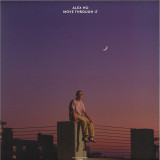
Similarly, Alex Ho's new album for Music From Memory, 'Move Through It', radiates with the unmistakable LA glow. While the Pasadena native's studio work is just now coming to light, Ho has long been a fixture in the Los Angeles dance music scene, throwing what are perhaps the city's most musically expansive warehouse events and carving out a singular voice as a DJ, as heard on his brilliant Moony Habits show for NTS. The eight-track record, however, lands in a more contemplative zone, better suited for a golden hour drive than a night out.
Though it's his first record, 'Move Through It' is the accomplished work of a fully-formed artist, produced patiently between 2017 and 2020 with help from friends including Baba Stiltz, Phil Cho, Damon Palermo and John Jones. "Mark," the Koanic track conclusion side A, is an arpeggiated slow burn reminiscent of Pino Donaggio's brilliant score for Brian De Palma's 1984 film Body Double. Ho's stunning, pure falsetto soars above gentle melodies. "Miss Suzuki," the piece that originally caught the ear of MFM's Jamie Tiller and Tako, opens the record with a blue, cinematic sway. Ho's facility for poignant melodies—easily conveyed through saxophone, vibes, various keyboards and his own voice—shines on "College Crest Drive," as well as the title track. The lyrical "Move Through It" and the restrained and beautiful closing cut, "TYFC," are abetted by glimmering Kraut guitar figures courtesy of John Jones.
While Ho's rhythms and melodies paint a crystal-clear musical vision, the music's emotional centre is more elusive, indicative of a yearning feeling synonymous with the City Of Angels. Hitting these hazy and subtle notes, Move Through It falls within a canon of sun-addled records spanning from Herb Alpert's "Rotation" to Dam-Funk's Private Life trilogy as Garrett. An immersive and concise statement, Alex Ho's 'Move Through It' is as warm and uncanny as the city that inspired it, a definitive LA album.
Whiskey Disco returns with another brilliant EP by Australian producer Kayroy, known for creating new intersections between edits, reworks, and originals that the label is known for.
A driving, tension-heavy original A-side reminiscent of early Sound Stream, complimented by two wonderfully selected reworks - a smartly tightened up beautiful instrumental gem originally by Japanese guitarist & composer, Shigeru Suzuki, and an almost necessary revision of euro-disco genius Alec Costandinos’s opus "Romeo & Juliet".
For the first time ever repressed on FullTime Production the iconic disco record "Easy Going" by Easy Going!
That's a brand-new great landmark for the label as "Easy Going" set a milestone in the italian Disco culture.
If at the end of the Seventies you were at Piazza Barberini in Rome at night, you would have come across a small but crowded club half-hidden in the ascent of Via della Purificazione, a trendy gay club with elegant Fassbinderian furniture, but also a night crossroads for many prominent characters of the cultural and artistic life of the eternal city and a regular stop for the most popular national DJs at the time. Easy Going creature was founded by Claudio Simonetti (Goblin), as a homage to the place mentioned above.
The homonymous 33 rpm debut of 1978 is remastered and repressed on a glossy white vinyl and due next December 13th on FullTime Production!
It features the original LP cover highlighting the mosaic of masculine struggle between a sailor and a strictly naked policeman , photographed in the Roman club.
The music explodes with the piece that will define the group par excellence: "Baby I Love You" also released as the first single, sung by a very filtered voice on a hypnotic rug of keyboards and a captivating melody that define a real masterpiece of italian disco and beyond. The same goes for the remaining three tracks of the album, which are also set to set the dance floor on fire: "Do It Again" is pure dance from Studio 54 and on the flip side, Creedence Clearwater Revival's cover "Suzie Q" and the ballad "Little Fairy".
"Back in 2022, Ban Ban Ton Ton raved about George T’s then digital-only release, “Roll On, Kings Cross”. We described it as a “dynamite dose of poetry and digidub.” Likening the prose – which describes a train journey from the coast to the city – to Michael Smith and Joe Duggan, while comparing the production to Dennis Bovell’s remixes of Jarvis Cocker’s “Swanky Modes”, and The Sabres Of Paradise’s “Wilmot”. Melodica-led with a hefty post-punk flavour, its dub, which focuses on manipulating and morphing the bass-line, we called “hollowed out house.”
These tracks have now been pressed to vinyl for the second release on new imprint Noetic Rhythm, where they’re joined by Leonidas’ “Great Northern” mix. Eschewing his usual futuristic ethno techno jacking, here he drops into roots reggae. Creating something more skanking, more stepping. An extended “discomix” showered in filtered, Mutron Bi-phased percussion, ghostly horns and peppered with the odd syndrum pop. Washes of sampled surf appropriately accompanying George informing us that “to the left there’s the sea.”
The 12 also features, “Dr Doctor”, a fresh collaboration with Yas Mine, The singer / guitarist’s French vocals countering George’s Matt Johnson-esque delivery, and a John Barry / “Midnight Cowboy”-like melodica melody serenading the song’s slow, squelchy, electronic skanking. The dub, instead, showcasing Yas’ fine fretwork." BAN BAN TON TON review
-
"These tracks are massive! I love Roll On King's Cross the best" KAY SUZKI (Time Capsule)
"I played the dub (Dub On, King's Cross) at a club in Oslo alongside some Maurizio and it sounded great. Bit of an oddball." Also played on NTS Radio and in Mixmag mix. JONNIE WILKES // OPTIMO
"Really digging Mr Demure when he drops into dubwise" DR ROB // BAN BAN TON TON
"Yes. Nice" NICK THE RECORD
"Awesome" JONNY ROCK
"I really like this EP... Love the Leonidas dub!" CEDRIC WOO (Beauty & The Beat, LDN)
"Love the blend of Augustus P vibes with a post punk dub feel. Bingo!" DICKY TRISCO
"I love it and will be playing" TREVOR FUNG (Ibiza Legend)
"Yes this is dark but kinda friendly.... brilliant...It's like ghost town ...I love Leo's mix" FOR MANKIND (Pikes Ibiza)
"Love the release and LOVE LOVE LOVE Dr Doctor!!!! Psyched to play this one out all weekend." ZILLAS ON ACID // James Weissinger (Philadelphia, US)
"This is amazing. Dub on kings cross is a banger - really love this one" ARVEENE
"Loving the Leonidas dub" ATEMI (Blackbush Orchestra / Abstrack)
+
PREVIOUSLY
"Melodica heaven" JD TWITCH/OPTIMO (RIP)
"I love this" IVAN SMAGGHE
"It's hot!!" JONNY ROCK
+ plays/support from:
DON LETTS (BBC 6Music)
TOM RAVENSCROFT (BBC 6Music)
HARRI (Sub Club)
[f] Roll On, King's Cross [Leonidas' Great Northern Mix] 06:54
[g] Dr Doctor [Instrumental Mix] 03:25
Isao Suzuki's third release for TBM showcases his remarkable versatility, not only on his primary instrument, the bass, but also on electric piano, organ, cello, and even vocals. The album's expansive, spiritual, and blues-infused title track stands out as a particular highlight. Supervised by Koki Hanawa as part of the series.
The scent of fresh greenery rising into the air. A youthful Hidefumi Toki weaves a vivid and beautiful story through a one-horn quartet.
Making his professional debut while still in high school, Hidefumi Toki went on to perform with groups led by New Herd, Isao Suzuki, Terumasa Hino, Ryo Kawasaki, and Fumio Itabashi. From the late 1970s onward, he also collaborated with Ryuichi Sakamoto and Tatsuro Yamashita, contributing broadly to Japan’s music scene across jazz, fusion, and pop.
This album, recorded in 1976, is his third release, following Toki and Lover Man, a dual-leader project with Yoshio Otomo. It features a lineup of dazzling performances and compositions, including “Sky View”, where his soaring saxophone shines over delicate arrangements, and “Let’s Get Together”, evoking the uplifting fragrance of fresh greenery.
With outstanding support from Mikio Masuda—who also contributes compositions—alongside Yoshio Ikeda and Steve Jackson, the ensemble achieves a remarkable balance.
Defined by a gentle perspective and refined, youthful playing, this is a masterpiece filled with the charm of Hidefumi Toki in his early years.
A classic album recorded in 1976, featuring a superb lineup including Sam Jones, Kazumi Watanabe, and Fumio Karashima, with expansive cello solos. Highlights include an exhilarating duo number with the seasoned bassist Sam Jones, as well as Kazumi Watanabe’s hip guitar solos throughout.
East Wind was a groundbreaking jazz label established in 1974 through the full cooperation of Ai Music, as it was then known, and Nippon Phonogram, as it was then known. Over a period of about five years, the label produced albums not only by Japanese musicians such as Masabumi Kikuchi, Sadao Watanabe, and Terumasa Hino, but also by musicians who were engaged in creative activity on the global jazz scene at the time. In addition to the quality of the performances, the artwork, created with leading designers and photographers, brought a fresh new image to jazz albums and had a major influence on later record production.
Two deep, meditative house tracks built on warmth and repetition. Comes with insert in a silver sleeve.
On “Ritual of Dance,” Nhojj’s voice guides the listener onto a (makeshift) dance floor, as the track builds in intensity, mirroring the rising energy of a dance session. On the flip, “Groove Extracts” leans further into a stripped, hypnotic space. Driven by percussion, bass, and a wandering key solo. It draws you inward towards the more meditative side of losing yourself in the groove. Inviting the body to take over where the mind dissolves.
Ritual of Dance EP is about the journey of dancing alone or together.
out of Stock
Last delivered 31 days ago available to reorder, subject to availability
BUCHLA MEETS ORCHESTRA IN QUADRAPHONIC SPACE ON CIANI/ORKEST
Suzanne Ciani, Metropole Orkest and Simon Dobson release historic immersive performance in multiple immersive formats including quad vinyl.
Silverlake, CA \\ June 4, 2026 – Electronic music pioneer and five-time Grammy nominee Suzanne Ciani joins the internationally acclaimed Metropole Orkest, conducted by Simon Dobson, for the release of CIANI/ORKEST, a landmark live album composed entirely of new work, created specifically for this unprecedented collaboration.
Recorded at Amsterdam Dance Event (ADE) before a rapt audience, CIANI/ORKEST is not a retrospective. It is a bold, immersive meeting of the Buchla electronic instrument and 50-piece orchestral sound. The result is a sweeping sonic landscape, at once intimate and monumental.
Under the direction of the Metropole Orkest, renowned for its genre-defying collaborations with artists from jazz to contemporary classical - strings shimmer, brass swells and woodwinds echo the organic, fluid qualities that have always defined Ciani’s sound. “This project feels like a homecoming,” says Ciani. “The Buchla was always orchestral to me, an instrument capable of infinite color. Hearing those colors unfold through the Metropole Orkest has been profoundly moving.”
At the heart of CIANI/ORKEST lies Ciani’s lifelong commitment to quadraphonic sound. From her early Buchla performances in the late 1960s to her 2018 release LIVE Quadraphonic, Ciani has treated space as a primary compositional parameter. Working alongside immersive producer KamranV, Ciani continues to explore immersive sound as both artistic and human gesture. Kamran’s decades of work in spatial formats, converge here in service of a singular goal: to let sound behave as it does in the physical world. “For both of us, quad is musical,” Kamran notes. “The way Suzanne works, quadraphonic is nested in — not the technology per se — but the intent you bring to the work.”
The recording stands as a meditation on legacy, evolution, and the enduring dialogue between technology and human expression. The live album captures the electricity of performance, the immediacy of touch plates under Ciani’s hands, the collective of musicians responding in real time, and the audience’s shared immersion in quadraphonic-inspired space.
CIANI/ORKEST is released by Atmospheric/AKP Recordings/CyKiK in multiple double-disc quadraphonic 12” Record packages designed by grammy-nominated designer Rebeka Arce. Each pressing is made regionally to minimize carbon emissions and also contributes to nature via Brian Eno's EarthPercent, the music industry's climate and nature foundation.
The release is encoded using the dublab Quadraphonic Universally Accessible Resource Kit (QUARK). QUARK enables binaural listening via standard 2-channel playback or 4-speaker playback via Involve Audio hardware decoders, vintage Regular Matrix quadraphonic receivers, Dolby Pro-Logic II/Dolby Surround Upmixer (DSU) receivers, or any multi-channel audio interface equipped computer. This album is immersive via all formats: digital download, streaming (Qobuz, Spotify, SoundCloud, Bandcamp), radio broadcast, vinyl and high-resolution Dolby Atmos (Apple Music, Tidal, Amazon HD, IIA), Sony 360RA (Nugs, Amazon HD) and Eclipsa Audio (YouTube).
About Suzanne Ciani
Suzanne Ciani is a composer, pianist, sound designer, and electronic music pioneer whose work spans experimental, new age, classical, and cinematic sound. A five-time Grammy nominee and recipient of the Moog Innovation Award, she continues to perform internationally, captivating audiences with immersive modular synthesis performances.
About Metropole Orkest
Based in the Netherlands, the Metropole Orkest is one of the world’s leading genre-crossing orchestras, known for collaborations with artists including Brian Eno, Herbie Hancock, Snarky Puppy, Jacob Collier, and within contemporary classical and electronic spheres.
Dark Entries helps Suzanne Ciani come out of the closet as Steve! Legendary composer, sound designer, and Buchla maestra Suzanne Ciani has a staggering list of accolades and accomplishments, from scoring Hollywood films to releasing influential new age records to literally designing the Coca-Cola bottle-opening sound. In the late 70s/early 80s, Ciani, while living in New York, acquired an Eventide H 949 harmonizer, which offered high fidelity pitch-shifting. In her words, “When I adjusted the pitch of my voice to 0.80, my natural voice became re-invented as what was clearly a gay man, who I called Steve. I became Steve; and Steve expressed himself as only he could.” Ciani adopted the male persona and collaborated with Peter Baumann of Tangerine Dream on “Steve Goes to a Party.” The track features Ciani-as-Steve adlibbing in decadent and delirious fashion alongside Baumann’s robotically funky beats. Steve would emerge again a few years later at George Louvis’s Stardust Studios in New Jersey, to create “Steve Saves the World,” an absurdist and ecstatic proto-house groover complete with a gospel-esque chorus from the Stardust All-Stars. This EP is rounded out by a birthday wish to Ciani’s then-boyfriend Alfred on “Steve Happy Birthday Wishes” featuring Suzanne. Steve’s Out of the Closet perfectly captures the delirious techno-poptimism of the 1980s downtown avant-garde, with parallels in Robert Ashley’s Perfect Lives or Lynn Goldsmith’s project Will Powers, responsible for the track “Adventures in Success.” The Steve sleeve was designed by Eloise Shir-Juen Leigh, and the record also includes a birthday card with liner notes from Ciani.
This album is a masterpiece in which the three core pillars of Akira Ishikawa’s musical vision—jazz, rock, and African music—are fused in a sublime and thrilling balance. One arresting track follows another: the solemn and majestic “Prayer”, evoking the eternal land; the clear yet subtly psychedelic “Dawn”; the serene and beautiful “Love”; and the highly dynamic, explosive “Jumbo”.
The brilliance of Hirmasa Suzuki’s arrangements deserves special mention—simple yet profoundly deep, they give vivid clarity to the album’s overall concept and imagery. Among Ishikawa’s serious, non–instrumental-cover works, this album stands shoulder to shoulder with Electrum, Bakishinba, and Uganda, and should be regarded as one of his definitive achievements.
The sleepy calm of Klondyke, Louisiana, is shattered when an unknown man ruthlessly shoots his way out of a courtroom, abducting a girl hostage at gun-point and tearing out of town in a stolen car. Who is he? What is his concern with the girl, with a multi-millionaire’s secluded house, and with a great oil rig out in the Gulf of Mexico?
Fear Is The Key is a 1972 British action flick directed by Michael Tucher starring Barry Newman (Vanishing Point) and Suzy Kendall, based on Alistair MacLean's 1961 eponymous novel. The film is probably best remembered for its spectacular and lengthy car chase sequence, which necessitated a ten-minute plus action cue that demanded split-second timing so that each bar would blend perfectly with the chase sound effects. Realizing composer Roy Budd was just 25 years old when he recorded this score, makes it all the more impressive. Fun fact: this is the feature film debut of Sir Ben Kingsley so make sure to give it a whirl, especially if you're into hard-driving British jazz. In any case, this soundtrack too will surely satisfy fans of the jazz-funk and library music found on labels such as KPM and Music De Wolfe.
The soundtrack of Fear Is The Key is available as a limited edition of 500 individually numbered copies on pink marble vinyl and includes an insert with liner notes.
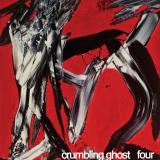
Within the broad church of metal and its many offshoots – rock, doom, stoner and all the rest – it remains a minor thrill to stumble across a group who seem to exist at a slight tangent to everything else. Crumbling Ghost is one such anomaly. Crumbling Ghost are not newcomers. They've been operating for some time, releasing records sporadically, Four' is in fact their fourth release. Along the way they've accumulated a fervent coterie of followers, not to mention the occasional nod of approval from tastemakers such as Stuart Maconie, Stewart Lee and Tom Ravenscroft. And though they've appeared at Roadburn, shared stages with Hawkwind and even Damo Suzuki, they remain (possibly by design) curiously under the radar.
The group's core idea is deceptively simple: traditional folk material refracted through the haze and heft of heavy, fuzzy stoner rock with a chunk of psyche and a smattering of doom. But crucially, this is done without the costumery and theatrical tics that often accompany such collisions. No mock pagan pageantry, no graveyard cosplay, no cartoon Satanism.
What Crumbling Ghost latch onto is not folk as a museum piece, but as a lived experience, the dramas rooted in the culture, stories, and daily lives of ordinary people, the folklore, the tales of love and death, murder and adultery, freedom and oppression. Singer Katie Harnett says. "Doting mothers, possessive, violent partners, vulnerable women, seasonal workers and Royal scandals this album is our representation of the trials and tribulations of human existence and universal experiences that still feel relevant today.
Guitarist John adds. "Themes of murder, betrayal, loss, jealousy, and love are found across the record. In particular, the songs of Martin Carthy have been a particular source of inspiration".
The result is a set of murder ballads, supernatural reckonings and cautionary tales, all wrapped in slabs of heavy, thumping fuzz and atmospheric sonics. Harnett's voice sits at the centre: unmistakably folk rooted, but shorn of prettification, melodic yet capable of real bite.
The album opener 'Bows Of London' is a murder ballad of sisterly hatred and grim sibling rivalry, centred on a haunted fiddle fashioned from a dead sister's bones. The loping relentless, hypnotic backing chillingly and perfectly accompanies the narrative. Of course, the story doesn't end well. 'Bill Norrie' follows, a hooky melody propelled by an insistent bassline and a haunting psych tinged haze punctured with sheets of noise.. The story of young Bill Norrie who sends a token to a married woman, whose jealous husband beheads him, without knowing he was his wife's son from an earlier affair. An instrumental palate cleanser arrives in the shape of 'Valtz Efter Tor Lohne' a Norwegian traditional the band jokingly describe as a "banger".
Then we have 'Lovely Joan' which offers a rare note of sly triumph: a quick witted woman outmanoeuvres a predatory nobleman, escaping with his ring and his horse. Muscular riffs give this tale of empowerment a welcome sense of teeth. 'Gower Wassail' is a traditional Welsh folk tune that captures the raucous spirit of communal ritual, noise making and drink fuelled hope for a good harvest. Captured perfectly here by CG complete with wah wah guitar and a drunken groove catching the song's celebratory chaos. Then we have a little gem in 'Last Of All Sleep' , an original band composition and a genuine highlight: a heavy lidded, shoegaze tinged folk reverie, equal parts distortion and delicacy. It's a drop-dead gorgeous shoegaze-tastic psychedelic grunge mini epic. The album closer 'The Unquiet Grave' is a very apt place to finish. It's about a young man whose constant grief at the death of his true love disturbs her eternal sleep so she cannot rest. Even though the playout on this track, complete with a demonic repeated riff and feedback feels suitably bleak, even this song allows a glimmer of release ... we think.
And there we have it, 7 songs, 7 worlds, all honed to perfection by producer Wayne Adams (Green Lung/Big Lad) that will reward every repeated listen.
Folk and metal/heavy rock do have a connection of course, just look at Green Lung and their 'folk horror' infused musical universe, but Crumbling Ghost are a very different beast.
'Four' amply and beautifully demonstrates that when it comes to 'folk horror' there's nothing quite as horrible as folk ... Here, the horror such as it is, and it must be said, the moments of light, comes not from theatrics, but from the songs themselves – which, after all, is where it's always lived.
Crumbling Ghost are John Mosley – Guitar / Donny Hopkins – Guitar / Ruth O’Loughlin – Bass / Katie Harnett – Vocals / Matthew Atkins- Drums.