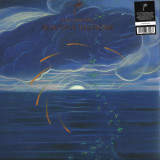
Drop a needle on Psyché's debut album and you'll see visions, or rather Mediterranean visions, be they of waves of heat shimmering above dunes of sand, or of women dancing around a bonfire on a rocky plain, or of bushy cliffs overlooking emerald-green and turquoise sea. The name Psyché is of course ancient Greek for 'soul' or 'mind', signifying the band's love of psychedelic funk, but also the wide range of Mediterranean influences – from Southern Europe to the Balkan Peninsula, and from Anatolia to the Maghreb – that provide an endless source of inspiration for their hypnotic sound and minimalist style.
Psyché members Marcello Giannini (Guru, Nu Genea, Slivovitz), Andrea De Fazio (Parbleu, Nu Genea, Funkin Machine) and Paolo Petrella (Nu Genea) have been active in the Naples music scene for almost two decades, most notably during the first wave of the new Neapolitan Power movement (Slivovitz, Revenaz Quartet). Over the years they have often crossed paths and collaborated on side projects in various genres (math-rock duo Arduo and, more recently, synth-pop duo Fratelli Malibu), before working together as the rhythm section of Nu Genea's live band. Following their first tour with Nu Genea in 2018, they started Psyché with the intent of exploring more minimalist styles and making music with just a few elements.
A unique combination of psychedelia, groove and improvisation, the music of Psyché goes back to the roots of our future; it evokes visions of a mythical past, blending centuries-old music traditions and mixing them with modern genres. Like a warm Mediterranean breeze, it travels across lands, seas and eras, distilling essential rhythms and cosmic pulsations.
The album's opener "Kuma" (titled after the first ancient Greek colony on the Italian mainland, now an archeological site near Naples) is like a vibrant, magical wave. With its deliberately simple harmony and sharp guitar riffs, it travels across the Mediterranean from Italy to North Africa, first lapping gently on Greek and Turkish shores – with some compositional elements reminiscent of Italian pop legend Lucio Battisti – and then speeding up and landing on the driving, syncopated rhythms of afrobeat. While listening to it your eyes fill with images of small white houses shining in the sun, of fig trees heavy with fruit, of spice bazaars and colourful medinas, and you can almost feel the desert wind blowing in your hair.
The journey continues with two examples of Psyché's bold and elegant approach to contemporary afrobeat and cumbia fusion: "Cumbia Mahàre" and "Amma". The former combines minimal synths and exhilarating rhythmic patterns of drums, percussion, guitar and bass, drawing us into the movements of an imaginary ritual dance (the term mahàre was used in Southern Italian dialects to indicate witches). Next is the cinematic and mysterious ambiance of "Angizia" (a snake goddess worshipped by the Marsi in ancient Italy), another fascinating mixture of different sonic traditions and cultures where hip-hop/funk drums are blended with Maghreb influences, Balkan echoes, and hypnotic, Theremin-like synths that have sort of a sci-fi movie quality to them.
The title track "Psyché", with its uptempo afro-rhythms, ethereal vocalizations and refined percussion, is almost a manifesto of the band's style and confirms the freshness of their minimalism, which is not afraid of taking in the sun of lands confined between the sea and the desert. The following "Manea" (named after the Roman-Etruscan goddess of the dead) is an afro-funk number with smooth and introspective dreamy jazz touches, and with an arrangement dominated by a guitar that, dripping notes like drops of water, creates a delicate, cinematic sound. Next, we come to "Hekate" (the Greek goddess of magic, witchcraft and crossroads), a track that fuses psychedelia, spacious Latin guitars and a fast, tight groove. The album comes to a close with the exquisite melodic ballad "Kelebek", which seamlessly combines hip-hop drums and dreamy guitars, and whose warm, flowing sonorities and evocative atmospheres conjure the image of a butterfly (which is what kelebek means, in Turkish) floating over the Mediterranean and, from there, the world.
quête:sy us
- A1: N.y's Finest - Do You Feel Me (Club Mix)
- B1: Groove Committee - Dirty Games (Victor Simonelli Club Mix)
- B2: Street Players Vol. 1 - Make It Thru The Night
- C1: Sound Of One - I Know A Place (118 Bpm Mix)
- D1: Inner Faith - I've Been Changed (Club Mix)
- D2: International Connection - I Can't Help Myself (Previously Unreleased Instrumental Mix)
Vol.1[31,05 €]
In the words of Bill Brewster - DJ History
‘At the turn of the 1990s, there were few more successful New York house producers than Victor Simonelli. Under a dizzying array of aliases – Solution, NY’s Finest, Groove Committee, Critical Rhythm and Cloud 9 being amongst the better-known – the Brooklyn-born DJ/producer delivered a string of underground club hits during the city’s early ’90s house boom.’
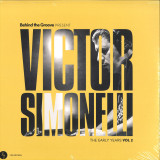
BTG presents “Victor Simonelli: The Early Years Vol 1” a collectors edition double Vinyl release - 2 X 12’s in each Vol
Launching the first Behind The Groove collectors edition vinyl series is New York’s finest Victor Simonelli with ‘The Early Years Vol 1 & 2’ double Vinyl releases. Featuring seminal house tracks such as Cloud 9’s ‘Do You Want Me’, Solution’s ‘Feel So Right’, Instant Exposure’s ‘Wanna Be With You’ and rare mixes of Raiana Page and EZ-AL, this collection brings together classic and rare Victor Simonelli cuts that reflect the early raw energy and buzz of the New York House scene. With ‘Vol 2” scheduled to follow shortly after, this is the most comprehensive collection of rare Simonelli cuts that firmly establishes his esteemed role in 90s House Music as well as introducing new fans to his inimitable sound.
Victor Simonelli is one of the early kings of NYC sampling In house music. The real deal - Victor danced at the legendary David Mancuso’s Loft sessions and developed a serious appreciation for good music. He interned for Arthur Baker at his renown Shakedown Studios (where Arthur worked with the iconic Afrika Bambatta on the seminal dance floor ’Planet Rock’ track) and went on to release hugely influential releases on seminal NYC labels 4th Floor and Nu Groove. Victor’s music was championed by the hugely celebrated iconic House Music DJ pioneers, Larry Levan and Tony Humphries at Paradise Garage & Zanzibar/WBLS/Kiss FM respectively.
Revered as a New York house heavyweight and prolific producer since the turn of the 1990s, Victor Simonelli grew up in Brooklyn, NYC, nurtured by a music loving family, with an avid record collecting father who also worked as a local party DJ. He took music lessons in piano, drums, guitar and bass, before discovering his first love, tuning into NY’s Radio Mix Shows on WBLS, WKTU and WRKS,98.7 Kiss FM) where he discovered the art of mixing and in his own words, ’I just simply got lost in the music’.
Graduating from NYC’s Centre For Media Arts, Victor got an internship in the legendary producer, Arthur Baker’s Shakedown Studios. Soon graduating to editing, mixing and then producing he worked for artists David Bowie, Quincy Jones, Debbie Harry, Sinead O’Connor and Talking Heads. Teaming up with fellow NYC producer Lenny Dee to become the Brooklyn Funk Essentials, they released records ‘Critical Rhythm’ and ‘Subliminal Aurra’ on 4th Floor before Victor went solo as Groove Committee releasing the classic ‘I Want You To Know’ on the legendary Nu Groove Records. Paradise Garage legend, Larry Levan broke ‘I Want You To Know’ rocking 2 copies on his last tour of Japan whilst King of NY House Music,Tony Humphries broke Victor’s new ‘Feels So Right’ across New York on his WBLS/Kiss FM Mastermix show and at his legendary Zanzibar club sessions. It was only a matter of time before Victor’s name became synonymous with quality House music ensuring a worldwide platform for his productions.
In the early 90s alongside his own productions, Victor Simonelli worked on high profile projects, including James Brown’s album, “Love Overdue” BeBe and CeCe Winans single featuring Mavis Staples “I’ll Take You There” and Quincy Jones’ “I’ll Be Good To You” featuring Chaka Khan and the legendary Ray Charles. Never straying too far from his clubland roots, Victor worked with Danny Tenaglia on his classic “The Harmonica Track”.
DJ gigs across the world started flooding in and Victor found himself recording for a dizzying array of labels including Tribal America, Sub-Urban, Bassline, King Street Sounds and Vibe, under a wide range of aliases. He also produced, wrote and remixed for artists such Nile Rodgers (Chic), Afrika Baambata, Hall & Oates, Frankie Knuckles, Kerri Chandler, Madonna and Michael Jackson. Famed for his own productions “It’s So Good” by Creative Force, “I Know A Place” as Sound Of One - the first release on Roger Sanchez One Records -, “Dirty Games” as well as the “Street Players Vol 1 EP”, Victor went on to set up Suburban Records with Tommy Musto and Bassline Records with two other partners. Notable releases on this label include “Do You Feel Me”, Connie Harvey’s gospel inspired, “Thank You Lord”, Urban Blues Project’s “Deliver Me”, Colonel Abrams “Not Gonna Let”, and Mone’s “Better Way”. Never ceasing to produce, DJ, run his own label and host radio shows like Groove Lift, Victor has worked with virtually every NYC producer and has nurtured a next generation talents including Angel Moraes, Jazz ‘N’ Groove, Urban Blues Project, Harlem Hustlers, Jay Jay and Julius Papp. Victor’s releases have also been used on M&S’s “Salsoul Nuggett” hit and Eddie Amador’s underground smash ‘House Music’.
In the late 90’s Victor launched his new Westside Productions, notable for the “Latin Impressions 1 & 2” releases, opened up a studio in Italy as he found himself increasingly working in Europe and now divides his time between New York and Italy. Suffice to say his unique sound of uplifting and spiritual music has kept him at the forefront of House Music and he is credited as one of its leading exponents with his string of classic releases and remixes.
Behind the Groove, branches out from its digital platform to embark on a programme of releases from the iconic pioneer producers of House Music. Esteemed for their high quality features and mixes that continue to explore, celebrate and venerate the contributions of highly respected, scene-shaping Labels, Artists, DJs and Special Events, BTG seeks to bring these talents and tales to the attention of the wider community. Unlocking the stories surrounding the pivotal roles they played and continue to play today in shaping the underground music scene we have come to know and love.
BTG presents “Victor Simonelli: The Early Years Vol 1” a collectors edition double Vinyl release, released on May 12th 2023. ‘Vol 2” follows on May 26th 2023 . These releases are the most comprehensive collection of rare Victor Simonelli cuts that firmly establish his esteemed role in 90s House Music and introduces new fans to his carefree sound.
- A1: Beyond The Rising Sun (Il Faut Trouver Son Coin De Ciel) - Sylvie Vartan
- A2: Third Degree - Andy Ellison & Boz Boorer (Exclusive)
- A3: Pictures Of Purple People - Automatic Shoes
- A4: Stacey Grove - Marsha Hunt
- A5: Chateau In Virginia Waters - Swervedriver
- A6: Child Star - Witchwood
- B1: Cosmic Dancer - Mair (Exclusive)
- B2: Wind Cheetah - Catherine Lambert
- B3: Elemental Child - The Charms
- B4: Visit - Tarwater
- B5: Cat Black (The Wizard’s Hat) - Chris Connelly & The Liquid Gang
- C1: Children Of The Revolution - Burn It To The Ground
- C2: Lofty Skies - Automatic Shoes
- C3: Ballrooms Of Mars - Kelly Reilly
- C4: Spaceball Ricochet – Speedtwinn
- C5: Jeepster - The Polecats
- C6: Soul Of My Suit - Chris Braide
- D1: Calling All Destroyers - Rachel Stamp
- D2: Menthol Dan (Dan The Sniff) - Andy Ellison & Boz Boorer
- D3: Raw Ramp - Black Bombers
- D4: Life’s A Gas - Mexican Dogs
- D5: Life Is Strange - Illa Falazynski
- D6: Visions Of Domino - Schwefel
• A globe spanning (France, Italy, Germany, USA, Belarus, Sweden, Russia, Australia, Canada) covers album of the late great Marc Bolan songs starting with the earliest cover in 1965 • Covering a huge range of genres and styles • A response to the U.S Hit album Angel Headed Hipster which opened up the songs of Bolan to a new American audience by using big names and TV advertising…this concentrates on quality recordings by lesser known artists • Presented in deluxe gatefold sleeve. • Reviews in Record Collector, Vive le rock R2, Shindig, Classic Rock.
buen clima is the solo project of producer, composer and DJ Felipe Castro (Santiago, 1993). Under that alias, he makes a sometimes clean, sometimes dirty mix of techno, house and electro, among other styles, with a soft spot for high BPMs, big, glossy pad sounds and interlocking rhythms. With a background in classical music and free improvisation, his productions and live performances often bring into them unexpected moments of noise, unusual influences and, above all, humour.
« This EP is comprised of five tracks written between 2020 and 2022, and it's got quite a bit of contrast among them, as well as some common threads. Some are gritty and noisy, some are a bit more amiable. However, they all show signs of recurring obsessions with certain rhythms, certain synth sounds, and share a sense of fun and humour. Each is an exploration of different production and synthesis techniques.
Big Butibit Chess Master Pro v.3.5 is on the lighter side, with some big warm pads and jazzy drum sound. It's kind of a sunny ghettotech cut, if that makes any sense. The synth part has a spontaneous feel, it was recorded pretty much in one take.
>:) Is a heavier club track, made to go a little evil, a little mischievous. It's full of squelchy sounds and has a drum part that sounds like a never ending Street Fighter combo, or a bunch of beer bottles being opened one after the other.
Forma/Contenido is also on the darker side, with a droning, oppressive mass of sound that accumulates and evolves all throughout the track. It's very much inspired by the piece "I am sitting in a room" by Alvin Lucier, and is, in fact, a sort of live version of the same premise, a long feedback loop of the voice and the beat recorded and played in the studio.
Arturito is how we call R2D2 in Latin America (or at least in Chile), and it's also my father's name. We both love the original Star Wars and this is a little tribute to that. I had a lot of fun making this track, using only Ableton's Operator synth to make 90% of the sounds. It's a bouncy, evolving electro cut with a lot of quirky bleeps and bloops.
Pequeña midi is definitely the heart of the EP, a slower track made for my cat, who's sitting in my lap as I'm writing this. The rhythms and the sounds are a musical representation of how I imagine her life is like, and of her little games, running around the house. In terms of style I feel like this is what it would sound like if Yellow Magic Orchestra did a slowed down footwork track (play it at 160 BPM if you don't believe me!). »
End of Everything is the intrepid seventh album from Mega Bog, a nightmarish experimental pop ensemble led by Erin Elizabeth Birgy. In 2020, Birgy was surrounded by seemingly endless turmoil: mass death, a burning planet, and a personal reckoning when past traumas met fresh ones. Living in Los Angeles, against the backdrop of brilliantly horrifying forest fires, she questioned what perspective to use moving forward in such dumbfounded awe. Deciding to seize something tangible, she produced a record that spoke of surrender, of mourning, and support in the face of tumultuous self-reflection. Writing on piano and synthesizer, instead of the familiar guitar, Birgy explored a spectrum of new sounds to illuminate a state of volatility and flux that was both universal and personal. Speaking of this transition, she describes the need “to feel… instantly. I didn’t want to dig into secret codes. I no longer wanted to hide behind difficult music. I was curious to give others the same with the music I create; to make music someone could use to explore drama, playfulness, and dancing, to shake the trauma loose.” Heavy grooves, metal guitar squeals, Italo disco bass lines, rhapsodic synth layers, and huge choruses stomp around the delightfully sanguine pop drama. Where previous records stretched out into the abstract and ethereal, End of Everything delivers a hit straight to collective awareness and healing. A seemingly disparate jukebox of sounds – ranging from Thin Lizzy, Bronski Beat, Franco Battiato and Ozzy Osbourne to 90’s house classics like Haddaway’s ‘What is Love’ and Corona's ‘Rhythm of the Night’ - foregrounded a new punchy theatricality in Birgy’s music. The songs she was creating at home followed suit with bolder hooks and more dancefloor energy than she’d ever dared before.
Power, Pain, Privilege is Specimens fourth album & most personal work to date, it follows up on his collaboration album ‘Intersections’ with Peter Broderick, Benoît Pioulard, Midori Hirano & Emilie Levienaise-Farrouch.
Power, Pain, Privilege is a commissioned piece by London’s Southbank Centre and is an abstract sonic exploration of biracial identity, in its historicity as well as through the lens of Ives’ own personal experience of being British-Jamaican. The album is a departure from his largely ambient work and explores haunted and twisted dancehall rhythms, industrial drones, and spoken word pieces that track a course through painful incidents of imposter syndrome, shame, privilege & racism.
The album opens with a computerised robotic voice reading excerpts of the 1930s Fletcher Report: “an Investigation into the Colour Problem in Liverpool and other ports” a report which heavily stigmatises children and mixed heritage families of African and European origin. It could be deemed the official outset in defining Liverpool's ‘half castes’ as a problem and blight to the “British way of life”. Ives’ states “this track sets the tone to the album, the cold analytical and dehumanising approach to reports like this, whilst over 80 years old set the standard for viewing biracial families and to have used a Human voice to recite these pieces of text would have been to give it too much life”
The album is accompanied by a film directed by the photographer & director Lucie Rox which was live scored at The Southbank Centre in London and in Paris at 3537.
Very Limited GREEN SKULL Vinyl.
Standing in a Greyhound Bus station, wearing a Sylvester t-shirt and huge duct-tape-covered glasses, Baltimore ’s Dan Deacon doesn't invoke the image of a composer to the other bus riders. The two suitcases he loads under the bus, which accompany him from city to city, hold the sweat-and-grime-soaked electronics that he uses to craft his raging, maxed-out party music and light show. After 12 tours and 300+ shows in little over 2 years, the gear is beaten and battered, but the show and the energy it produces is anything but.
Dan Deacon has garnered a reputation in the underground as an intense performer and classic showman. The table top full of pedals, a sine wave generator, vocoder and casio blasting through the PA, joined by a makeshift light board with various bulbs and green skull strobe light, make his all out dance-til-you-drop performance a complete experience.
But it isn't all fancy feet and bouncy beats. Deacon is a classically trained composer with a Masters degree in electro-acoustic composition. He has released 7 albums from 2003 to 2006, but those self-produced recordings do not contain the vocal-based experimental pop that he has fine-tuned in live performance. His latest full length, Spiderman of the Rings is the first album bridging the gap between party performer and genuine composer. A mixture of his live show dance anthems, intricate instrumentals and humorous monologues, Spiderman of the Rings establishes Dan Deacon as a new type of entertainer in the contemporary underground.
After releasing their debut project “Voyage” in 2022, Tapioca, the Brussels-Kigali-based, Brazil-inspired duo return with LP “Samba em Kigali.” Building on their sound and influence, “Samba em Kigali” is a definitive step up and clear sonic growth for the twosome, whose debut, RA wrote, is "if Anderson Paak. & Marco Valle made a Brazilian pop-funk record.” Arriving via Berlin’s Jakarta Records May 19th.
Tapioca (32k Monthly Listeners on Spotify), the Belgian duo made of rapper / lyricist Alessandro “Le Tagarel” Vlerick and producer & composer Simon “SiKa” Carlier, tapped into a unique and infectious groove with their debut LP “Voyage,” released in 2022 via Jakarta Records’ “Dubplates” series. Positive reviews came flooding in, including coverage from, among others, BBC Radio 6, KCRW, Resident Advisor, JAZZIZ as well as performances and features on Worldwide FM and Bandcamp Daily. Their debut also landed on global editorial playlists such as Spotify’s “Global Groove,” (600k) “Tulum Vibes” (110k) and Deezer’s “Chilling Pool” (31k). “Voyage,” as the name indicates, was an ode to freedom, escape and the discovery of alternative cultural horizons that brought together various spoken-word testimonies from Portuguese friends around the world. Tapioca’s upcoming LP, “Samba em Kigali,” picks up the thread where “Voyage” left off, acting as an ode to traveling and, more broadly, of the inherent beauty of the African continent. Le Tagarel has worked as a teacher in Kigali, Ruanda, for the past years and his time there is reflected in the album’s buttery lyricism, putting forth the proposition that Africa and Brazil are in fact not so far apart - Africa is, and will always be, present in Brazilian culture. Featuring the Dillaesque sound infused with inspiration from rap, jazz, MPB and funk of the 70/80’s to the stunningly fleshed out lyricism - the LP sways like a ship on the smoothest of seas, a pure ray of aural sunshine to welcome the warm weather. Artwork was stunningly put together by Simone Cihlar (Anderson Paak. Tom Misch, Ivan Ave) and visualizers done by the stalwart crew at Die Ottos (Flofilz, K Le Maestro, Suff Daddy, S.Fidelity, Gianni Brezzo). Jakarta is ecstatic to share such a high-water mark of an album, out everywhere physically / digitally May 19th.
Kicking off “Samba em Kigali” is the impeccably smooth 1st single, “Lagoas de Ruanda” out March 22nd along with LP pre-order announcement. Instantly catchy, the crisp guitar, funky bass and buoyant underlying percussion are the perfect vitamin of joy that gives rise to Le Tagarel’s vocals. The track is a perfect sonic voyage that encapsulates the continued growth of Tapioca’s sound and gives a sonic peek into the LP. Infectious and groovy, the song skirts a line along samba, R&B and jazz with an almost hip-hop bounce.
2nd single, “Sabor Swahili,” out April 12th, is a nostalgic groovy splash that melds soft keys, bass and a percussive edge that slides you into an aural pocket. The song moves in a joyous melancholy that is almost impossible to move to, the under-water synth stabs keep your shoulders loose while the rhythm keeps you bouncing along. Even if you don’t know Portuguese, you’ll be singing along by the tracks end. The joyous 3rd single “Terra Preta” is out April 26th and will lift you up high to keep you in a serene mood anytime, anywhere. Focus track is the headnodding grooves of “Cara de Arabe.” Building from “Voyage,” Tapioca provides a fresh, rare vibe, adding a slight dose of disco to the R&B-driven progressions. “Samba em Kigali” is a unique album that is soaked and marinated in a sonic and visual aesthetic that brings with it feelings of joy, movement, and a global home, and sonic moods ranging from Bruno Berle and Marcos Valle inspired arrangements to bouncing progressions with a swingin’ percussive edge. Besides online promotion from the label and artist profiles, the album will further be promoted by external agencies within the US and UK.
- A1: Vromm - Red Tuna
- A2: Hyphen - Winter Sky
- B1: Saytek - Iyndub01 (Live)
- B2: Pascal Nuzzo – Hold On
- B3: Nphonix & Matrika - Rumble Around
- C1: Acidulant - Make Love To A Machine
- C2: Insider - Something Flash
- D1: Dharma - Structured Chaos
- D2: Som.1 – Ultimatum
- E1: Dino Lenny – Did This
- E2: Adam Antine - Sortavala
- E3: Paul Roux – Bapteme
- F1: Underworld – Appleshine (Film Edit)
- F2: Subject 13, Conscious Route – Dripping Sauce
First released back in the fall of 1989, the In Order To Dance album was a compilation LP that pulled together tracks from a
select band of electronic producers, pushing the boundaries of the house and electronic music that was in its infancy stage.
Released on the R&S Records label, the IOTD series would become pivotal in the development of the electronic music scene
at large.
The world of music is a constant shape shifting, trend moving behemoth. Style may come and go (and come back around
again), stars are made, stars can fall. But the ethos behind In Order To Dance remains the same as it ever has, with a fierce
independent spirit, and a pledge to bring forward the next generation of young artists and their music. And so, here we arrive
at a new collection, fresh for 2023, and just in time for the labels 40th anniversary year, and with the ardent A&R’ing of label
founder Renaat Vandepapeliere, a selection of new tunes is assembled to reinforce the strength and power to be found within
music.
Across thirteen tracks, a squad of refreshingly contemporary producers from around the globe are brought together under the
In Order To Dance banner. Ushering the series into a new era, new variations on the electronic genre and fresh ideas are
fused into a delightfully engaging collection of tracks. There’s deep breakbeats courtesy of UK producer Dharma, smooth and
dubby live action from Saytek and complex bass heavy rhythms from Vromm. There’s esoteric electronics from Hyphen, epic
piano driven deep house from Dino Lenny and swinging jazzy breaks from Nphonix & Matrika. Paul Roux’s melancholic
‘Bapteme’ unfurls waves of deft pianos and guitar swirls over taunt beats, and a driving electro tone is set on Acidulant’s
contribution. Intoxicating rave tropes and hefty breaks come courtesy of Pascal Nuzzo and Adam Antine delivers a wall of
sound anchored by shuffling, funky beats on ‘Sortavala’.
And to accompany the new wave of In Order To Dance, a series of music videos have been produced. Acclaimed artists and
video directors, including Alessandro Amaducci, Ben Marlowe and Gala Mirissa, have all stamped their digital artistic
visions onto these stunning compositions, synching audio and visual for a multi-sensory experience!
‘In Order To Dance 4.0’ by Various Artists is available on R&S Records from 14th April 2023 on 3LP vinyl, download &
streaming services.
After a creative break of more than 10 years the Contemporary Noise Ensemble returns with the brand new album called »An Excellent Spiritual Serviceman«. With the band’s line-up reduced and the sound of the brass section replaced with programmable synthesizers comes an entirely new sound of the band’s music. Leaning towards composition instead of improvisation the music is now less jazzy sounding - with electric bass being used instead of double bass and drums actually being the only strictly acoustical instrument. But then again you can hear a lot of other prerecorded instruments like marimba, vibraphone, Rhodes and upright pianos surrounded by arpeggiated synths and other programmable electronic instruments.
The album takes you to a journey through jazz, space rock, funk and electronic music with a destination in a form of a rock song which is as well the title song of the album. The Contemporary Noise Ensemble still impresses with maturity and class.
Ten years ago, Parish Bracha anonymously released his Disconscious album Hologram Plaza, significantly influencing the still nascent Vaporwave scene. He continued producing a number of disparate anonymous projects until Cascade II was released in 2020 on Arca's Mutant Mixtape.
Cascades of Refinement, which includes the single Cascade II, is Parish's debut album released under his own name and his focus on the dialogue between the digital and the organic continues. The techniques that defined his influential early sound have been refined into a flawless hybrid of analog and digital textures which give his post-minimalist compositions an unmistakably personal expressivity.
Classical instruments are mutilated and transmuted into razor-sharp shards of glass suspended on piano wire above warped opalescent metal while never losing sight of their tonal integrity. Much like the impartial juxtaposition Parish employs in his timbral exploration, each composition explores the concepts of beauty and gentleness through and with extremity, violence, and chaos as equal counterparts, with each successive piece refining and relieving the artificial tension between these states. Employing use of the Una Corda, prepared piano, bowed piano, plucked piano, harpsichord, church organ, untuned violin, voice, synthesizers, and resampled field recordings, Cascades of Refinement lies somewhere in the indefinite space between acoustic and electronic and is beholden to neither.
Parish's initial electroacoustic experiments with piano and strings were interrupted by the pandemic lockdown when he was limited to sampled instrumentation and digital processing available on a computer. Out of this necessity evolved an appreciation for the incidental nature of digitally sampled acoustic instrumentation and the unpredictability of its interaction with digital signal processing.
As work on Cascades of Refinement continued and acoustic recording was reintroduced, the focus turned to the tension between recorded and sampled instrumentation, with the goal of integrating the two into a singular indistinguishable material to be warped and shaped together. Each of the four pieces of the Cascade series explore this tension, successively integrating and collapsing their distinction with each piece.
The subtle artifacts of digital processing and incidental mechanical sounds of the acoustic are amplified and given presence alongside the tonal elements of each piece until a point of indivisibility is reached. The sound of a bow scraping along a string or a granular buffer freezing are neither discarded nor hidden, but selected as the ripest material to accompany and structure each composition. Cascades of Refinement is a dialogue between organic and digital, between the mercurial and infinitely reproducible, not as opposites, but as mereologically cohabiting counterparts with equal expressivity.
2x12"[39,45 €]
Packed full of bonus content, the album has had a fresh 2023 Stereo Remix by Mike Hunter, liner notes by Rich Wilson, and brand-new artwork. Originally released in 1989, Seasons End was Marillion’s fifth studio album and first with Steve Hogarth fronting the band, following the departure of former frontman Fish, spanning three singles; Hooks In You, The Uninvited Guest and Easter which all went on to chart in the UK. As well as a change in vocals, Seasons End also marked a change in visual identity with the band, which has been reflected in the 2023 deluxe edition of the album. At the time there was a desire for a change of direc-tion from the more illustrative style of Mark Wilkinson’s artwork & logo, replacing that with a more photo-graphic graphic style provided by Bill Smith Studio & Carl Glover who went on to work with the band over the coming years. A new direction began, with Steve Hogarth now fronting the band, and with this first release of Seasons End there was a need to retain some familiar elements for existing fans of the band, so a decision was made to carry through the original logo & some nods to previous artworks. The 2023 Deluxe Edition has taken on another new approach, which took some of the original artwork ele-ments without the need for older logos and imagery - presented in a slightly different form. Based around the four main elements of Earth, Air, Fire & Water, from the original cover concept, the rectangular panels became triangular as these elements are often depicted in symbology. The panels are sat in a background with an ab-stract representation of the space out of which these elements are born, giving it all a more universal feel. A whole range of new images were then created for each of the ten tracks using the same abstract painted col-lage style to tie it all together as content for these extended art books that accompany the 2023 releases.
5x12"[127,69 €]
Packed full of bonus content, the album has had a fresh 2023 Stereo Remix by Mike Hunter, liner notes by Rich Wilson, and brand-new artwork. Originally released in 1989, Seasons End was Marillion’s fifth studio album and first with Steve Hogarth fronting the band, following the departure of former frontman Fish, spanning three singles; Hooks In You, The Uninvited Guest and Easter which all went on to chart in the UK. As well as a change in vocals, Seasons End also marked a change in visual identity with the band, which has been reflected in the 2023 deluxe edition of the album. At the time there was a desire for a change of direc-tion from the more illustrative style of Mark Wilkinson’s artwork & logo, replacing that with a more photo-graphic graphic style provided by Bill Smith Studio & Carl Glover who went on to work with the band over the coming years. A new direction began, with Steve Hogarth now fronting the band, and with this first release of Seasons End there was a need to retain some familiar elements for existing fans of the band, so a decision was made to carry through the original logo & some nods to previous artworks. The 2023 Deluxe Edition has taken on another new approach, which took some of the original artwork ele-ments without the need for older logos and imagery - presented in a slightly different form. Based around the four main elements of Earth, Air, Fire & Water, from the original cover concept, the rectangular panels became triangular as these elements are often depicted in symbology. The panels are sat in a background with an ab-stract representation of the space out of which these elements are born, giving it all a more universal feel. A whole range of new images were then created for each of the ten tracks using the same abstract painted col-lage style to tie it all together as content for these extended art books that accompany the 2023 releases.
Brazilian beat maker Fabe has emerged over recent years as one of tech house's most skilled groove smiths. His drums and bass are always seductive no matter their style. Here he links up with Burnski aka Instinct's Constant Sound label for four more irresistible nuggets. 'The Greater Good' is super quick as it glides over rippling bass with silky chords, then 'Newbie Bounce' has a more weighty groove. There is elastic funk and US swing in the shuffling goodness of 'Flow Groover' then 'On Edge' closes out with bulky deep house beats and late-night synth work of the highest order.
Elderbrook kündigt die Veröffentlichung seines neuen Albums "Little Love" an Grammy-Gewinner Elderbrook hat Details zu seinem
kommenden Album Little Love bekannt gegeben und zeitgleich die Veröffentlichung seiner neuen Single "Beautiful Morning" am 28. Oktober angekündigt.
Durch die Kombination von flimmernden Synthesizern, ergreifenden Breakdowns und kraftvollen Lyrics, die das Gefühl der Liebe in ihrer reinsten Form einfangen, beschwört "Beautiful Morning" die Art von Ehrfurcht einflößenden Sonnenaufgängen hervor, auf die der Titel
des Tracks anspielt.
Elderbrooks zweites Studioalbum Little Love wird am 24. Februar erscheinen.
Elderbrook, ein Live-Phänomen, autodidaktischer Multiinstrumentalist, Produzent und Singer-Songwriter, ist bekannt für seine Zusammenarbeit mit einigen der größten Namen der Dance-Musik-Szene, darunter Diplo, Camelphat, Black Coffee, Bob Moses, The Martinez Brothers und Carnage.
Die Veröffentlichung von "Beautiful Morning" und die Ankündigung von Little Love markiert den Beginn eines aufregenden neuen Kapitels in der Geschichte eines Elektronik-Künstlers, der weiter wächst.
- A1: Neon - Lobotomy
- A2: Der Blaue Reiter - Lights Off (Previously Unreleased)
- A3: Ein St Ein - Varsavia
- A4: Modo - Niagara Falls (Previously Unreleased)
- A5: Actor's Studio - Dancing Alone (Previously Unreleased)
- A6: La Maison - Bells In The Night (Previously Unreleased)
- B1: Scortilla - Yhw
- B2: Eurotunes - Swimming Pool Motion
- B3: Oh Oh Art - It's Just A Movie Soundtrack
- B4: Naif Orchestra - Check-Out Five
- B5: 2 Plus 2 Equals 5 - Haiku (Feat Paolo Mauri)
»Italia Synthetica 1981-1985« represents the musical mutation that occurred after the post-punk hangover gave way to more frigid emotional shores, in-line with the synth-wave moment that was sweeping Europe and the white cliffs of Albion. This scene flourished in Italy between 1981-1985, and the musicians that came out of it are still revered today (particularly in the US).
Robotic rhythms and intuitions that, besides sharing common ground with the electronic movements that had come before, also knew how to fill up the dancefloor. Featuring four previously unreleased tracks by Der Blaue Reiter, along with tracks by Modo, Actor's Studio, and La Maison, as well as the still fresh sounding contributions by true pioneers of the genre Neon and Naif Orchestra. Also features Ein-st-ein, Scortilla, Eurotunes, Oh Oh Art, and 2+2=5 featuring Paolo Mauri.
- A1: Ghosts Of Decay (Album Mix)
- A2: Let's All Make Brutalism (Album Mix)
- A3: You've Heard This One Before (Album Mix)
- A4: (B) Owls In Tesco Bags (Album Mix)
- B1: Open Your Head (Album Mix)
- B2: Harder Times (Album Mix)
- B3: (B) We Never Wanted You (Album Mix)
- B4: 98 Russell Street (Album Mix)
- C1: (We Never Needed This) Fascist Groove Thang (Album Mix)
- C2: Thee Difference Ov Girls (Album Mix)
- C3: Empire Statement Humanoid (Album Mix)
- C4: Circus Ov Daath (Album Mix)
- C5: (B) Let Me Dada (Album Mix)
- D1: This Is Phil Talking (Album Mix)
- D2: Sound Ov Thee Crowd (Album Mix)
- D3: I Dare You (Album Mix)
- D4: Borstal Communications (Album Mix)
Sometimes, things "just happen". For months, we’d been working away on various projects and then, without really thinking about it, The Black EP just happened. It seemingly appeared from nowhere.
We’d been talking about the old days; making music with friends and dodgy kit, renting small practice rooms and using makeshift recording studios. It was such a common thing back then, you could pick a dusty space in a half-derelict building for as little as £25 a month. In those days, the Cabs and Human League had studios with posh-sounding names, but in reality, they were the same old workspaces long abandoned by the industries they were built for. Nevertheless, the grand names made them sound magical.
Sheffield had thousands of these spaces, and some still exist today, but their abundance and low-cost made Sheffield a very active place. Someone was always doing something. They’d exploded onto the scene in a flurry of excitement before disappearing just as quickly.
There’s something about these little mesters (workshops) that we believe lives in the very consciousness of Sheffield. It’s one of the reasons we never really had big scenes like Manchester or Leeds. The Hacienda would've never been built here.
We don’t really do big gangs or have that kind of mentality. We tend to exist in little pockets, often leaving each other alone. It would be 30 years before any member of The Black Dog talked to Cabaret Voltaire. Sure, we’d stood outside their practice room as kids, trying to listen in, but never felt any reason to approach. Sheffield is like that.
Once we had the first two tracks of the Black EP, we set off to see Jon at Do It Theesen, where he manually cut the tracks to an extremely limited set of 7" singles using a vinyl lathe. It just felt right to go back to the old ways; a small gang creating something special in workshops and sheds. There’s something very satisfying about it, a perfect circle, if you will.
We pushed further by adopting old practices, working with one synth per person and limiting the use of our computers. We only stopped short of putting everything on beer crates. It seems like madness these days, but there is raw creativity within these confines. Pretty much every band started this way. Depeche Mode travelled to the studio on the London Underground for their first appearance on Top Of The Pops, all lugging a synth each. That's how we approached the creation of this album; stripped back, raw and minimal - it just felt so right.
And then there’s the competitive element that was influenced when the original Human League split and became Human League MK II and Heaven 17. Both continued to use the same studio to write what became the albums "Dare" and "Penthouse and Pavement". There is something about that drive that is very Sheffield, just making stuff and hoping everything falls into place.
In Sheffield, we do things differently, because that’s how we are built. away on various projects and then, without really thinking about it, The Black EP just happened. It seemingly appeared from nowhere.
After having explored our native Switzerland in search of nuggets, we extended our research and came across a goldmine in the south of France. For our 4th release we welcome Soyouz and Groenogen on the imprint for a masterful split EP. On side A Soyouz brings to the table two progressive yet powerful cuts, heavily inspired by 90’s sounds balanced with delicately designed synth lines packed with slick drums as well as robotic voices that make his signature sound. On the B side Groenogen delivers two very powerful tracks. He gives us heavy hitting, driving basslines and extremely smart and sharp synth leads and show us a glimpse of a moody and acid side of his persona. Both tracks showcase his mastery of technical and energetic arrangement. The two French boys deliver a dancefloor wrecking record straight from Toulouse, not to be missed I tell you!
Jean-Luc Mocard met Jean Ronde in September of 2009, while working at the CASIO Palaiseau factory, near Paris. Before, they were both active musicians with a particular taste for synthesized music, touring extensively through European and Asian underground venues and clubs. Eventually, their furious passion for collecting 80’s keyboards brought them together to become the fabulous duo Vive Les Cônes.
Presently based in Porto, Portugal, by a matter of pure chance, Vive Les Cônes is a CASIO explosion, the fuel of a dancing machine that never stops and cherry picks moments from dance and pop music culture along the way. Their live concerts are non-stop hit parades featuring their very own local cult classics, such as “Bonaparty” or “Brocoli-Rave”, and medleys of pop-culture classics ranging from video-game soundtracks, to dance hits, to classical music.
“De France”, their debut album, is the product of years of playing live, training and mastering the perfect CASIO technique. Every track in this album is played live using only pure unmodded Casio PT-380 and Yamaha PSR-37 keyboards, thrift store fx pedals, bringing to the recorded form the meticulously crafted tracks that set dancefloors on fire all throughout the world.
The album is an eclectic journey through electronic and dance music on cheap keyboards, from traces of House Music in “Maillon” and the instant hit “Je Ne Sais Pas”, fumes of vaporwave in “Machine à Vapeur”, and, of course, baguettes of French electro in “Brocoli-Rave”, the track that usually andeuphorically ends Vive Les Cônes’ set.
The Quietus has referred to the duo as a “weird John Shuttleworth take on house music”, but them being French, a better comparison would be something like “Daft Punk lost all their gear on tour and had to play a gig using some old keyboards”. But could they even do it? Maybe a “Pascal Comelade on molly live set for Boiler Room” could make thembetter Justice. We’re not really sure what to compare them to though, and probably there’s no need to compare them to anything, as the best thing you can do is to give them a go and check them out for yourself.
Jean-Luc Mocard met Jean Ronde in September of 2009, while working at the CASIO Palaiseau factory, near Paris. Before, they were both active musicians with a particular taste for synthesized music, touring extensively through European and Asian underground venues and clubs. Eventually, their furious passion for collecting 80’s keyboards brought them together to become the fabulous duo Vive Les Cônes.
Presently based in Porto, Portugal, by a matter of pure chance, Vive Les Cônes is a CASIO explosion, the fuel of a dancing machine that never stops and cherry picks moments from dance and pop music culture along the way. Their live concerts are non-stop hit parades featuring their very own local cult classics, such as “Bonaparty” or “Brocoli-Rave”, and medleys of pop-culture classics ranging from video-game soundtracks, to dance hits, to classical music.
“De France”, their debut album, is the product of years of playing live, training and mastering the perfect CASIO technique. Every track in this album is played live using only pure unmodded Casio PT-380 and Yamaha PSR-37 keyboards, thrift store fx pedals, bringing to the recorded form the meticulously crafted tracks that set dancefloors on fire all throughout the world.
The album is an eclectic journey through electronic and dance music on cheap keyboards, from traces of House Music in “Maillon” and the instant hit “Je Ne Sais Pas”, fumes of vaporwave in “Machine à Vapeur”, and, of course, baguettes of French electro in “Brocoli-Rave”, the track that usually andeuphorically ends Vive Les Cônes’ set.
The Quietus has referred to the duo as a “weird John Shuttleworth take on house music”, but them being French, a better comparison would be something like “Daft Punk lost all their gear on tour and had to play a gig using some old keyboards”. But could they even do it? Maybe a “Pascal Comelade on molly live set for Boiler Room” could make thembetter Justice. We’re not really sure what to compare them to though, and probably there’s no need to compare them to anything, as the best thing you can do is to give them a go and check them out for yourself.
First-ever reissue of the 1988 album. Gatefold LP includes new and restored artwork and a chapbook, featuring forty-eight pages of lyrics, essays, photographs, and Gordon's extraordinary drawings for each song. The Choctaw, Assiniboine, and Texan poet, journalist, visual artist, American Indian Movement activist, and musician Roxy Gordon (First Coyote Boy) (1945-2000) was above all a storyteller, known primarily as a writer of inimitable style and unvarnished candor, whose wide-ranging work encompassed poetry, short fiction, essays, memoirs, journalism, and criticism. Over the course of his career he recorded six albums, wrote six books, and published hundreds of shorter texts in outlets ranging from Rolling Stone and The Village Voice to the Coleman Chronicle and Democrat-Voice, in addition to founding and operating, with his wife Judy Gordon, Wowapi Press and the underground country music journal Picking Up the Tempo. Along the way he cultivated close friendships with fellow Texan songwriters such as Lubbockites Terry Allen, Butch Hancock, and Tommy X. Hancock, as well as Ray Wylie Hubbard, Billy Joe Shaver, and, most famously, Townes Van Zandt, whom he called his brother. Although his work covered a vast array of topics exploring strata personal, local, global, and cosmic alike, Gordon's primary subject as a writer, musician, and visual artist was always American Indian culture, specifically the ways it collided and coexisted with European American culture in the South and West-and within the context of his own life and braided identity. The ten songs on Crazy Horse Never Died, his first officially released and distributed album, were recorded in Dallas in 1988. "Songs" is perhaps an imprecise taxonomy for what Roxy captured on this and his other albums, all of which remain out of print or were released in instantly obscure limited editions of homebrew cassettes and CD-R's. (Paradise of Bachelors plans to reissue remastered, expanded editions of his catalog; Crazy Horse is the first.) He only occasionally attempted to sing, and his musical recordings are primarily corollaries of, and vehicles for, his poems. His sharp West Texan drawl, tinged by formative years of reservation living in Montana and unmistakable once you hear it-high, lonesome, flat, and cold-blooded as a bare rusty blade-instead patiently unfurls in skewed sheets of anecdotal verse and discursive narrative rants. Although Gordon's music at times incorporated powwow style drumming, fiddling, or unaccompanied ballad singing, the majority of it hews to an idiosyncratic spoken word style, accompanied by atmospheric, sometimes synth-damaged country-rock that skirts ambient textures and postpunk deconstructions. His songs are essentially recitations over backing tracks of finger picked guitars, rubbery washtub bass, and buzzing, oscillating keyboards. On the stark yellow and red jacket of Crazy Horse, which he designed himself, Gordon describes these recordings as innately ambivalent in terms of form, content, and identity: These are poems and/or songs about the American West, white and Indian. My life has been Indian and/or white. Maybe there's not a lot of difference-maybe. I guess that's mostly according to which white person or which Indian you're talking about. That's probably what this album's about. Crazy Horse Never Died comprises songs that span the personal and political arcs of his writing practice and the poles of his native and white ancestries.
Gatefold Green Vinyl Double LP with design by Dian Vandermeulen, the popular Canadian visual artist
(limited edition cassette version will be released by Not Not Fun).
Between December 2018 and 2019, Stefana Fratila embarked on a series of research trips across North America (including to NASA Jet Propulsion Laboratory and NASA Goddard Space Centre), meeting with astronomers and scientists in order to address a complex question: “If each planet in our solar system were a different room, what would each room sound like?”
Her ongoing creative research culminated in Sononaut, eight open-source VST plug-ins created for digital audio workstations (DAWs) that emulate the atmospheric conditions of the planets in our solar system (made in collaboration with artist and coder Jen Kutler, using calculations by NASA astronomer and planetary scientist Dr. Conor Nixon).
Her forthcoming album I want to leave this Earth behind is the sonic extension of her creative research.
In her own words: “The album is conceptual, in that it centres on outer space exploration and my understanding of 'Crip futurity'. My vision is for the album to engage listeners in an exercise of imagining the sounds of interplanetary atmospheres– conditions which are inherently unlivable, unbreathable, converting all human body-minds into disabled-bodied-ness. Since I identify as Crip, or disabled, this idea deeply resonates with me. I am the first artist (a disabled producer/musician, no less) to have worked with NASA researchers on a sonic imagining of the solar system’s atmospheres that incorporates real scientific data. If we are all 'disabled' in (or by) outer space, my music is concerned with propelling all listeners into space, leaving Earth behind them, through my music.”
The solar system’s planetary bodies are inherently prohibitive even in regards to Earth’s most ‘able-bodied’ subjects. Her project seizes upon a form of radical agency and science-fictive ambition, placing all human subjects within new worlds, into the interplanetary bodies of our solar system, through her own sonic imaginings.
The album will be released by Toronto-based label Halocline Trance (Casey MQ, myst milano, ACT!).
During a 2019 residency at CMMAS (Centro Mexicano para la Música y las Artes Sonoras) in Morelia, Mexico, Fratila began writing the album on an octophonic sound system (8 planets = 8 speakers).
Afterwards, from her home studio in Toronto, she recorded additional synthesizer parts, finalized arrangements, and incorporated Sononaut (her 8 solar system VST plug-ins) into the album’s production. The album was recorded, written, and produced by Fratila. She worked with mixing engineer Jeremy Greenspan (Jessy Lanza, Caribou, Junior Boys), as well as mixing engineer Lisa Conway and mastering engineer Sage Kim.
Underlining each track is a five-minute soundscape representing the weather on that planet, based on Fratila’s research at NASA. The weather patterns are interwoven with layers of synths and time-stretched samples.
There are very few disabled femme electronic artists gaining exposure in Canada today.
Speicher 125 is a most auspicious collaboration between two great, inimitable voices in techno: Kompakt co-founder Michael Mayer, and Magazine’s own Barnt. They’ve both been productive of late, Mayer with his “Brainwave Technology” EP in 2021, Barnt with his first release on Kompakt, "ProMetal Fan Decor Only Product" in 2022. Of course, they’re also busy with their respective record labels, and international DJing schedules.
You may already have heard their first track, which appeared on Michael’s "&" album from 2014, the psychedelic “Und Da Stehen Fremde Menschen”. For Speicher, though, they set their sights firmly on the peak time dance floor – the result is two stunning cuts of techno euphoria.
On “Teller” Barnt and Mayer unleash a synth storm, tense and thrilling. Percussion piles up against the incessant buzz, but before too long we’re submerged in waves of dense texturology, making the track an object lesson in tension and release. “Duration” is a bittersweet anthem about "life long love". A moving voice tells us about "faith in life" while gleaming, synths, choral swarms and snares shower down from above to form an epic tale about duration and devotion.
Weirding the groove and updating the emotions, Speicher 125 is a monster.
Speicher 125 ist die Zusammenarbeit zwischen zwei unnachahmlichen Stimmen des Techno: Michael Mayer, Mitbegründer von Kompakt, und Barnt von Magazine. Beide waren in letzter Zeit nicht unproduktiv, Mayer mit seiner "Brainwave Technology" EP, Barnt mit seiner ersten Veröffentlichung auf Kompakt, "ProMetal Fan Decor Only Product". Natürlich sind sie auch mit ihren jeweiligen Plattenlabels und internationalem DJing beschäftigt.
Vielleicht hast Du schon ihre erste Kollaboration gehört, die auf Michaels "&"-Album von 2014 erschienen ist, das psychedelische "Und Da Stehen Fremde Menschen". Für "Speicher" haben sie den Peak-Time-Dancefloor ins Visier genommen - das Ergebnis sind zwei atemberaubende Stücke voller Techno-Euphorie.
Auf "Teller" entfesseln Barnt und Mayer ein Synthie-Gewitter, spannend und mitreißend. Die Percussion türmt sich gegen das unaufhörliche Summen auf, aber schon bald tauchen wir in Wellen dichter Texturen ein, was den Track zu einer Lehrstunde in Sachen Spannung und Entspannung macht. "Duration" ist eine bittersüße Hymne über "lebenslange Liebe". Eine bewegte Stimme erzählt uns vom "Glauben an das Leben", während schimmernde Synthies, Chorschwärme und Snares von oben herab eine epische Geschichte über Ausdauer und Hingabe prasseln.
Speicher 125 ist ein Monster, das den Groove neu erkundet und die Emotionen auffrischt.
- 1: Intro (Looped Rolo)
- 2: Changer Loop
- 3: Sa-Loon Loop
- 4: Heavy Smoke
- 5: Lost In Loop
- 6: Mango Punch Loop
- 7: Loops Are Forever
- 8: Rare Gemz Loop
- 9: Hong Kong Loop
- 10: Bossa Loop
- 11: Boog Vs Synth Loop
- 12: Out Of Stylee Loop
- 13: Mind Alterd Loop
- 14: Birds And Trees Loop
- 15: Loner Loops
- 16: No Label Loop, Hi Voltage Loop
Head of the Lo-Fi movement with the SP-404
-In 2006 he dropped the first SP404 kung fu inspired beat tape under the alias 5 ELEMENT NINJA Beatjitzu vol 1. Since then he has garnered a cult following of SP404 kung fu inspired producers and sparked a genre. He is the forefather of said style and has numerous beat tapes under various aliases such as 5 Element Ninja, Lords of da LO FI, GODZ of WuTang, MAZINGA Z, JIM KELLY and of course Bruce Li. -He has worked with Killarmy featuring Cappadonna of the WU TANG CLAN and others. He has complete production credit on albums with LONE NINJA, Recognize Ali and Verbal Kent(Dueling Experts) and lastly CLEVER 1 of DA BUZE BRUVAZ. -Also he has appeared on albums with credits alongside Hop hop royalty RZA, True Master, 4th Disciple and legendary PETE ROCK. Lord Beatjitzu presents 420, a densely packed album that captures the same sense of euphoria and paranoia one can gain from an extensive and smoky 4/20 celebration. He has crafted a soundtrack with loops upon loops of smoked-out loops. Sort of like the smoke rings that used to emanate from Cheech and Chong having one of their notorious sessions. Adding on to his varied discography, this fits more in line with the varied sample chops of his celebrated Mazinga moniker. Intricately woven to provide the perfect soundtrack for 4/20 and any other day or night that you have a moment to kick back and enter another zone. Lord Beatjitzu is a beatmaker originally from Mexico City D.F. who stays studying and constantly honing his craft. Extremely reclusive and low key, he is known strictly through sparse collaborations and various beat tapes which he has put out starting in 2006. He has put out over 100 beat tapes and collaborations under an innumerable amount of known and unknown aliases.
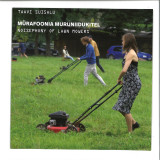
Taavi Suisalu is an Estonian media artist particularly interested into complex and adventurous sounds, field recordings and harsh audio emergencies, organized under the form of symphony or as a result of performative interactions.
In 2014 Suisalu received the Young Estonian Artist Prize as curator of Project of In-existent Villages, an articulate exhibition full of installations and site-specific sound performances. The use of peripheral spaces and the crossovers, sometimes extremely creative, of human interactions, data, sounds and technologies, are recurring in the works of Suisalu, whose subjective perspective unconventionally investigates different social and cultural phenomena. He is always attracted by the different forms of technologies. It can be an old seismograph he reconstructs to record the underground vibrations of a volcano, or, it can be some 3D models he uses to analyze a grain of soil coming from the ancient Pompei. The results of the researches would lead to the installations. The whole set of data is often the premise of a narration, a datafiction, as in the case of the signals recorded from some abandoned satellites, who are later presented with a speed set by the position of other satellites gravitating above the gallery hosting the event.
“Noisephony of Lawn Mowers" was originally composed in 2013, but it was unreleased until now, when Staalplaat, a fundamental label for its unusual experimental connections and for the sound events performed in unconventional spaces, decided to publish it. It's a score for lawnmowers, whose making is given to a conductor and executed by a group of artists. Suisalu reminds us that historically, lawn has been a symbol of power and wealth as it required substantial upkeep and unused land. Today, it still indicates wealth, but is mainly maintained by the owners themselves. This puts us in a schizophrenic situation where we strive to be privileged by taking the role of the servants.
“Silver Meets Ted” is the other track included in the selection. It's a recording of over ten minutes, whose trend cryptically moves on and with some unsettling minimal tolls, always more metallic. Some deaf beats follow, and then we have a splash of water and some slightly hinted neighs, chirps, different spills of liquid, more intense and measured, clackings and vibrations, some hardly identifiable frequencies and again a series of punctuated metal bells. The work by Taavi Suisalu stands out as a calibrated combination of mathematical coherence and elements of surprise, automatized and causal processes, some small oblique utopias, that work well together by improving highly subjective resources and create some slightly unsettling final results.
The »Icol Diston« compilation, released in 2002 on DIN, comprised the three first EPs released by Uwe Zahn under his Arovane moniker. Following up on vinyl reissues of his path-breaking debut album »Atol Scrap« as well as 2000’s »Tides,« the German Keplar label finally makes »Icol Diston« available in its entirety on vinyl for the first time in a remastered version with new artwork. This expansive reissue sheds a new light on Zahn’s first two outings as a producer on the »I.O.« and »Icol Diston« EPs on Torsten ›T++‹ Pröfrock’s legendary label as well as highlighting his radical inventiveness as a remixer with the two renditions of Pröfrock-produced material offered on »AMX.« Taken together, these musically complex and emotionally rich electronic compositions form the prologue to an artistic story like none other while also documenting a very specific era in cultural history.
The energy running through Berlin and its boundaryless electronic music scene at the end of the 1990s is reflected by and refined through these eleven tracks. »There was an overwhelming dynamic of liberation reverberating through the city—through the clubs, the arts, the people,« says Zahn today. At this early stage in his career, he had a head full of ideas and slowly started filling up his studio with samplers, synthesizers, and sequencers to put them into practice. »I would compose percussive structures in my mind during long metro rides and record them once I was back at the studio as well as composing melodies spontaneously on my sequencer.« The Yamaha QY700 would become his sketchbook that allowed him to experiment with different patterns, creating polymetric figures out of discrete musical elements.
Zahn’s sessions, recorded live in stereo and straight to DAT, resulted in two very different EPs of original material. His debut »I.O.« showcases a playful and gentle, albeit dubby and at times moody aesthetic. The four tracks are exercises in sonic worldbuilding, creating vast spaces and filling them with a plethora of intertwining melodies and rhythms. Its successor »Icol Diston« drew on similar parameters, but painted a very different picture in terms of atmosphere and mood. »Berlin’s history felt still so tangible and yet somewhat ghostly during the 1990s, and it is a reflection of all that,« explains Zahn. »The weight of its past, starting with World War II up to the end of the GDR, clashed with an atmosphere of departure, a new zest for life among the people in the city.« It is perhaps no surprise then that the five tracks put a firmer focus on beats, at times even approximating techno or electro grooves despite never eschewing the complexity that is so central to Zahn’s work.
The »AMX« EP features two remixes of tracks originally produced by Pröfrock under two different guises. »Außen vor« had been released under his Dynamo moniker and was reworked by Zahn after having been introduced to his label owner’s Studio 440 sampler, sequencer and drum machine. By leaving the groove at the core of the original track mostly intact but infusing it with more dub as well as anthemic synth drones, Zahn gave it more depth both sonically and emotionally. With his remix of »No. 8,« released under Pröfrock’s tongue-in-cheek pseudonym Various Artists, Zahn followed a more radical approach which led him even deeper into dub territory. »I used a relatively short sample as the tonal foundation and then added an incredibly deep bass and percussive elements,« he explains. Widely different from the original version, it perfectly translated the spirit of this singular masterpiece into another stylistic idiom.
The »Icol Diston« compilation is imbued with a forward-thinking spirit that remains exhilarating until today. It captures the sound of one unique artist, but also electronic music during that time more broadly. This is the sound of opening a new chapter, the willingness to venture into the unknown.
All tracks composed and recorded by Uwe Zahn in 1998/99.
D1 is a remix based on the track by Dynamo. D2 is a remix based on the track by Various Artists.
Originally released on three 12inches by DIN in 1998/99 and on CD in 2002.
Remaster and cut by Kassian Troyer @ D&M.
Cover art by Jim Kühnel based on a photograph by Uwe Zahn.
Text by Kristoffer Cornils.
Offering a three track EP on Token, emblematic UK producer James Ruskin proves his capability and linear focus once again through 'From the Ashes'. Looking past trends to create a lasting record rich in texture and thick with impact, the project affirms what the scene has already known to be true about his work for the past 25 years.
Setting his intentions from the A1, Ruskin wastes no time by creating an intimidating introduction. Saturated percussion and stuttering keys whip through a 4 minute masterclass of sound system focused production. Adventurous in structure, Ruskin remains unquestionably in control of a bursting, almost chaotic track. 'From the Ashes 2' picks up what was left off, containing a hard-set groove with hi hats slithering in progressively from the stereo image to slightly destabilize an impressive club-heavy tool. With intricate work being done in the ambience, the EP's hard hitting second track booms through a cavernous acoustic, giving the record not only body, but dimension. Switching up the rhythm and focusing on more mental synth work for the third act, Ruskin quickly and mercilessly rips through his work with a shrill pad, creating overwhelming tension to be released in the first third of the recording. He brings a dosed dissonance between his elements, reflective of the qualities of vintage techno with today's capabilities and arrangement. Pushing intensity through waves, Ruskin leaves us in anticipation of a fourth track that is never given.
Tom Trago returns to Rush Hour after 10 years with a wonderfully accomplished mini-album, tip!
During the years he spent living in Amsterdam, when his DJ career seemed to become an unstoppable juggernaut, Tom Trago was a regular visitor to Deco Sauna, a local institution that helped him “decompress” and de-toxify his body. Eventually, a more extended period of “decompression” was needed, with Trago moving to the coast to reassess his priorities and spend more time with his young family.
‘Deco’, his sixth album and first for Rush Hour in a decade, was recorded following an extended absence from club dancefloors, as Trago cut back on DJ commitments to prioritise family life. When he returned to the studio, often with his daughter by his side, Trago initially struggled to get back into the groove. The desire to make dancefloor-focused music had – temporarily, at least – deserted him; instead, he found himself drawn towards a desire to create “electronic lullabies” and music that reflected his more pastoral environment (his home backs on to a patch of woodland in which he would walk every day).
Returning to his most familiar synthesisers – and specifically the first synthesiser he bought, on credit, as a young DJ and wannabe producer – Trago set about navigating different musical routes without the straight-jacket of club-focused dancefloors. Occasionally, old friends from Amsterdam would join him in the studio – Tracey and Maxi Mill, both of whom are part of his Voyage Direct label roster, contributed to tracks on the album – but for the most part the production process was a solo endeavour: musical therapy for an artist determined to do things differently after years spent making club hits and sweat-soaked peak-time workouts.
The results are rarely less than spellbinding. Trago sets his stall out with opener ‘Dark Oak’, a gorgeous, colourful, sun-bright scene-setter co-produced by Tracey that layers tumbling lead lines, chiming melodic motifs and kaleidoscopic chords atop the gentlest of bubbly beat patterns. Maxi Mill lends a hand on ‘Central Park’, a deep and hypnotic excursion marked out by rhythmic bleeps, minimalistic beats and layered melodies, and the summer sun-down rush of ‘Never Peace a Puzzle’, where kaleidoscopic synth sounds, meandering solos and looped electronic stabs rush towards a dancefloor of the mind.
Trago’s desire to create “electronic lullabies” for his young daughter comes to the fore on ‘To Be Left Unlocked’, a hypnotising fusion of spacey electronic motifs, Steve Reich style (synth) marimba melodies and slowly building musical intensity, while the echoing Fender Rhodes riffs, squelchy synth-bass, glistening guitar notes and sparse, snappy post hip-hop beats of ‘When The Sky Is Watching Us’ doff a cap to the producer’s roots as a bedroom beat-maker.
Given the project’s genesis, it’s perhaps fitting that Trago chose to conclude proceedings with ‘It Might Be Forever’ and the digital only ‘Blue Dope’, the album’s most rejuvenating, immersive, and vibrant moments. Both feature sustained chords painted with vivid aural brush strokes and come blessed with the merest hint of a rhythmic pulse – a thread that subtly runs throughout Trago’s most mature and musically rich album to date.
Matt Anniss
Essential UK experimental composer Richard Skelton returns to Phantom Limb for new album selenodesy, interweaving his newfound love of electronics and synthesis with mastery of gritty organic texture.
Skelton’s music has always been rooted in landscape, in the loam and grit of the earth: from his 2009 Pennine Moors-inspired modern classic Landings to his more recent Moraine Sequence of geological excavations, his work has been bound inexorably with the stark and untended wilderness of northern landscapes. With this new album, however, Skelton shifts his gaze skyward — in part the result of a move in 2017 to the countryside near the Kielder Observatory, and to a so-called ‘dark sky’ region of the UK. In this remote landscape, light pollution is minimal, allowing the austere majesty of the night sky to be seen with greater clarity.
The resulting album, selenodesy, reveals a new, reverberant spaciousness to Skelton’s use of electronics. It marries the twin worlds of his previous Phantom Limb release - 2020’s These Charms May Be Sung Over A Wound, and its abandoned-factory threnody - with the landscape-revering arcana of his earlier work, which saw him bury instruments in the soil to return months later to recover and record with them, newly imbued with the land they occupied. selenodesy was prefigured by a period of insomnia and the relief found
in stargazing, during which Skelton tried to transcribe his hypnagogic visions: “much of this music came to me in the early hours, in that nowhere state between dreaming and waking. I’d look out the window and the night sky would be swirling with stars. Mars or Venus would be hovering in the corner of the room. I’d lie there and watch the Aurora Borealis dance across the ceiling.”
In selenodesy, we find the lingering, distorted sine waves of album opener “Albedo” that thrum and fizz with an icy, foreboding moonlight, rays of subtle movement that illuminate and darken alternately. Next follows lead single “The Plot of Lunar Phases”, whose passive shrieks echo about a cold, yawning space, reaching an ecstatic crescendo of hissing sonics and swirling celestial drone. Its dynamic range acts like the light of a lunar passage, from utmost darkness to radiant luminosity. Elsewhere, the pulsing, precessional bass of “Faint Ray Systems” gradually opens to reveal mournful, elegiac synthesis that reaches high into the night sky with an unearthly beauty. It is as if, during those long months of lockdown in the Scottish countryside, Skelton tapped into a series of sidereal electromagnetic transmissions, and transposed them into musical form.
Since relocating to Brazil some years back, Needs Music co-founder Lars Bartkuhn has returned to his long-held love of musical improvisation. Although it’s a product of his jazz roots and classical training, the German producer has constantly found new ways to apply it to his work in the sphere of electronic music.
‘Dystopia’, his first solo album for almost nine years, was born out of two interlinked ideas: a desire to create improvised music without the aid of computer sequencers or an electronic drum set, and a deeply held love of storytelling through sound. Bartkuhn set to work improvising with modular synthesizers, acoustic instruments and hand percussion, later adding light-touch overdubs to a handful of pieces. When he listened back to the recordings, an aural narrative emerged, and you’ll hear it if you listen to the album from start to finish, as is intended.
As you’d expect from a musician and composer of Bartkuhn’s undoubted ability, ‘Dystopia’ is a stunning album – an undulating, expansive ambient journey packed with emotional resonance. While Bartkuhn naturally sees it as a logical progression of his previous ambient-leaning work with Kabuki as The First Minute of a New Day (and particularly their self-titled 2020 album Séance Centre), ‘Dystopia’ also features subtle nods to many of his long-held musical loves, including John Hassell’s ‘fourth world’ recordings, the impossible-to-pigeonhole 1970s catalogue of deep jazz imprint ECM, and the far-sighted American minimalism of Terry Riley and Steve Reich.
The album’s emotional depth is evident early on, with the slow-burn title track – all bubbling electronics, billowing chords, clarinet-style notes and gently strummed guitars offering the most melancholic and bittersweet of openings. The becalmed ‘A Drop Of Water In The Ocean’ follows, with discordant aural textures and hand percussion mimicking the rolling ocean, before ‘Largo (Calm Before The Storm)’ hints at unsettling times ahead.
‘Water and Warm Air’, the only track on the album whose starting point was not Bartkuhn’s cherished modular set-up, bleeps and bubbles across the sound space, adding a starry and otherworldly slant to proceedings, while ‘Disembodied Journey (Parts 1, 2 and 3)’ is a sublime, slowly unfurling journey in three movements – all Tangerine Dream style synthesizer motifs, Pat Metheny-esque guitars and jazz-fusion instrumentation.
So the album continues, with the poignant warmth and looped motifs of ‘Still Existing’ and the sparse, dubbed-out minimalism of ‘Do You Know How To Get Out?’ – a kind of 21st century jazz-fusionist’s take on sparse electronic hypnotism – giving wat to closing cut ‘Into The Waves’, a gentle combination of undulating electronic arpeggios and echoing instrumentation that offers a hopeful and undeniably picturesque conclusion.
Fittingly, the album cover features a painting by the late Dutch artist Franz Deckwitz (1934-94), whose images of alien landscapes were used by Phillips on a series of music concrete compilations. The image featured on the cover of ‘Dystopia’, depicting a deep blue ocean and shoreline, was painted by Deckwitz in Amsterdam in the late 1970s and inspired by a trip to the island of Ponza, Italy.
Matt Anniss
Essex-based trio Statues have made their presence felt with a string of impressive singles for a variety of labels from Sweden's Lovely and Plastic Idol in the US. Here they offer up their timely summer breezer 'Clear Skies' with crystal cleat synth lines evocative of John Carpenter or Tangerine Dream powered by a simple but effective groove. Coyote Ambient are the first of two guests invited to remix it, and theirs is more of a classic 90s chillout reworking, while Vendetta Suite combine a similar vibe with some soaring solar guitars and live drums. Another original from Statues, 'The Creek ', completes the package, with arpeggios melded with organic voices and guitars.
Today sees Belgian-Caribbean provocateur Charlotte Adigéry and her long-term musical partner, Bolis Pupul announce their debut album Topical Dancer, due for release on March 4 2022 via Soulwax’s iconic label DEEWEE.
Cultural appropriation. Misogyny and racism. Social media vanity. Post-colonialism and political correctness. These are not talking points that you’d ordinarily hear on the dancefloor but Charlotte Adigéry and Bolis Pupul are ripping up the rulebook with their debut album Topical Dancer. The Ghent-based duo, who broke out with their 2019 Zandoli EP, are rare storytellers in electronic music: they take the temperature of the time and funnel them into their playful synth concoctions – never didactic and always with a knowing wink.
Their debut studio record – which cements them as a duo under both their names for the first time and is co-written and co-produced by Soulwax – is both a triumph of kaleidoscopic electro-pop and “a snapshot of how we think about pop culture in the 2020s.” It captures Charlotte and Bolis’s essence as musical collaborators and the conversations they’ve had over the past two years on tour, as well as their perspectives as Belgians with an immigrant background, Charlotte with Guadeloupean and French-Martinique ancestry and Bolis being of Chinese descent.
Beyond the album’s thematic heft, Topical Dancer reflects Charlotte and Bolis’s idiosyncratic sound: it’s thoughtful but it bangs. Their take on familiar genres is always off-kilter; songs sound undone or a little wonky; but these are nocturnal heaters to make the club throb. “We like to fuck things up a bit,” laughs Bolis. “We cringe when we feel like we're making something that already exists, so we're always looking for things to combine to make it sound not like a pop song, not like an R&B song, not a techno song. We’re always putting different worlds together. Charlotte and I get bored when things get too predictable.”
Topical Dancer is fizzing with ideas – there’s certainly no filler among its 13 tracks. But above all, perhaps, it has a restlessness, a desire not to be boxed in and to escape others’ narrow perceptions of who they are. It’s summarised by the refrain of their new single, ‘Blenda’: “Don’t sound like what I look like / Don’t look like what I sound like.” “One thing that always comes up,” says Bolis, “is that people perceive me as the producer, and Charlotte as just a singer. Or that being a Black artist means you should be making ‘urban’ music. Those kinds of boxes don’t feel good to us.”
‘Blenda’ in particular references how “I am a product of colonialism,” says Charlotte, “and I feel guilty for taking up space in a white country.” The song was inspired in part by Reni Eddo-Lodge’s book Why I’m Not Longer Talking To White People About Race. “It talks about the colonial past and post-colonial present in the UK,” Charlotte continues, “but that isn’t merely a British or American problem, Belgium is part of that as well.” She says that her home country is likewise “oblivious to a big part of its history” which “results in general ignorance and a lack of understanding and empathy towards Belgian inhabitants of immigrant descent.”
On Topical Dancer, it’s less about finger pointing or being dogmatic about all the things they speak about. It’s about emancipation through humour. “I don’t want to feel this heaviness on me,” says Charlotte. “These aren’t my crosses to bear. Topical Dancer is my way of freeing myself of these issues. And of having fun.”
It’s back to the heart of disco with the next release — our sixtieth! — in Most Excellent Unlimited’s long-running series of collaborations with master editor Danny Krivit, this installment on long-play 12-inch vinyl.
Our A-side features the work of Euro-disco maestro Alec Constandinos, whose symphonic suites and long form arrangements for stars like Cerrone and Don Ray made him an essential ingredient on many a glittering dancefloor in the late ’70s. Love & Kisses was one of his earliest disco projects, and one of his most popular. Their song (the “band” was a studio fabrication of Constandinos) “I Found Love” stretches across the entire side of an LP in its original form, but for discerning disc jockeys who leaned towards the funkier side of the spectrum, the percussion and bass breakdown is where it’s at. And if you are a long-time follower of Mr. K, it will come as no surprise that it is here that he focuses his metaphoric razor on the iconic breakdown, and we are left with a tough, driving track that will suit throwback sets as well as slot nicely into modern uptempo programming. As an added bonus, stick around to the very end when Krivit lets the song’s memorable acapella sample (“And I suppose you thought it was all over??”) finish it out.
It simply does not get much bigger than Donna Summer in the world of disco. Her song “Heaven Knows,” a duet with Brooklyn Dreams singer “Bean” Esposito, is one of the many gems in her catalog, and one that still evokes powerful reactions in heads, both old and new. Produced by the dream team of Giorgio Moroder and Pete Bellotte, the power and groove are propulsive and indisputable. Krivit begins with an extended "Mac Arthur Park" horn crescendo that teases the emotion before introducing a newly stripped down singalong verses and chorus of “Heaven Knows”. As the song progresses, a fabulous building effect until the end, a six-minute run through the clouds, enveloped in the ecstasy of that same horn crescendo. A sudden finale, fading into the ether, takes us out and leaves the listener (and DJ) with an open path of which musical road to take next, a master’s touch from an editor who excels at his craft.
In the words of Bill Brewster - DJ History
‘At the turn of the 1990s, there were few more successful New York house producers than Victor Simonelli. Under a dizzying array of aliases – Solution, NY’s Finest, Groove Committee, Critical Rhythm and Cloud 9 being amongst the better-known – the Brooklyn-born DJ/producer delivered a string of underground club hits during the city’s early ’90s house boom.’
BTG presents “Victor Simonelli: The Early Years Vol 1” a collectors edition double Vinyl release - 2 X 12’s in each Vol
Launching the first Behind The Groove collectors edition vinyl series is New York’s finest Victor Simonelli with ‘The Early Years Vol 1 & 2’ double Vinyl releases. Featuring seminal house tracks such as Cloud 9’s ‘Do You Want Me’, Solution’s ‘Feel So Right’, Instant Exposure’s ‘Wanna Be With You’ and rare mixes of Raiana Page and EZ-AL, this collection brings together classic and rare Victor Simonelli cuts that reflect the early raw energy and buzz of the New York House scene. With ‘Vol 2” scheduled to follow shortly after, this is the most comprehensive collection of rare Simonelli cuts that firmly establishes his esteemed role in 90s House Music as well as introducing new fans to his inimitable sound.
Victor Simonelli is one of the early kings of NYC sampling In house music. The real deal - Victor danced at the legendary David Mancuso’s Loft sessions and developed a serious appreciation for good music. He interned for Arthur Baker at his renown Shakedown Studios (where Arthur worked with the iconic Afrika Bambatta on the seminal dance floor ’Planet Rock’ track) and went on to release hugely influential releases on seminal NYC labels 4th Floor and Nu Groove. Victor’s music was championed by the hugely celebrated iconic House Music DJ pioneers, Larry Levan and Tony Humphries at Paradise Garage & Zanzibar/WBLS/Kiss FM respectively.
Revered as a New York house heavyweight and prolific producer since the turn of the 1990s, Victor Simonelli grew up in Brooklyn, NYC, nurtured by a music loving family, with an avid record collecting father who also worked as a local party DJ. He took music lessons in piano, drums, guitar and bass, before discovering his first love, tuning into NY’s Radio Mix Shows on WBLS, WKTU and WRKS,98.7 Kiss FM) where he discovered the art of mixing and in his own words, ’I just simply got lost in the music’.
Graduating from NYC’s Centre For Media Arts, Victor got an internship in the legendary producer, Arthur Baker’s Shakedown Studios. Soon graduating to editing, mixing and then producing he worked for artists David Bowie, Quincy Jones, Debbie Harry, Sinead O’Connor and Talking Heads. Teaming up with fellow NYC producer Lenny Dee to become the Brooklyn Funk Essentials, they released records ‘Critical Rhythm’ and ‘Subliminal Aurra’ on 4th Floor before Victor went solo as Groove Committee releasing the classic ‘I Want You To Know’ on the legendary Nu Groove Records. Paradise Garage legend, Larry Levan broke ‘I Want You To Know’ rocking 2 copies on his last tour of Japan whilst King of NY House Music,Tony Humphries broke Victor’s new ‘Feels So Right’ across New York on his WBLS/Kiss FM Mastermix show and at his legendary Zanzibar club sessions. It was only a matter of time before Victor’s name became synonymous with quality House music ensuring a worldwide platform for his productions.
In the early 90s alongside his own productions, Victor Simonelli worked on high profile projects, including James Brown’s album, “Love Overdue” BeBe and CeCe Winans single featuring Mavis Staples “I’ll Take You There” and Quincy Jones’ “I’ll Be Good To You” featuring Chaka Khan and the legendary Ray Charles. Never straying too far from his clubland roots, Victor worked with Danny Tenaglia on his classic “The Harmonica Track”.
DJ gigs across the world started flooding in and Victor found himself recording for a dizzying array of labels including Tribal America, Sub-Urban, Bassline, King Street Sounds and Vibe, under a wide range of aliases. He also produced, wrote and remixed for artists such Nile Rodgers (Chic), Afrika Baambata, Hall & Oates, Frankie Knuckles, Kerri Chandler, Madonna and Michael Jackson. Famed for his own productions “It’s So Good” by Creative Force, “I Know A Place” as Sound Of One - the first release on Roger Sanchez One Records -, “Dirty Games” as well as the “Street Players Vol 1 EP”, Victor went on to set up Suburban Records with Tommy Musto and Bassline Records with two other partners. Notable releases on this label include “Do You Feel Me”, Connie Harvey’s gospel inspired, “Thank You Lord”, Urban Blues Project’s “Deliver Me”, Colonel Abrams “Not Gonna Let”, and Mone’s “Better Way”. Never ceasing to produce, DJ, run his own label and host radio shows like Groove Lift, Victor has worked with virtually every NYC producer and has nurtured a next generation talents including Angel Moraes, Jazz ‘N’ Groove, Urban Blues Project, Harlem Hustlers, Jay Jay and Julius Papp. Victor’s releases have also been used on M&S’s “Salsoul Nuggett” hit and Eddie Amador’s underground smash ‘House Music’.
In the late 90’s Victor launched his new Westside Productions, notable for the “Latin Impressions 1 & 2” releases, opened up a studio in Italy as he found himself increasingly working in Europe and now divides his time between New York and Italy. Suffice to say his unique sound of uplifting and spiritual music has kept him at the forefront of House Music and he is credited as one of its leading exponents with his string of classic releases and remixes.
Behind the Groove, branches out from its digital platform to embark on a programme of releases from the iconic pioneer producers of House Music. Esteemed for their high quality features and mixes that continue to explore, celebrate and venerate the contributions of highly respected, scene-shaping Labels, Artists, DJs and Special Events, BTG seeks to bring these talents and tales to the attention of the wider community. Unlocking the stories surrounding the pivotal roles they played and continue to play today in shaping the underground music scene we have come to know and love.
BTG presents “Victor Simonelli: The Early Years Vol 1” a collectors edition double Vinyl release, released on May 12th 2023. ‘Vol 2” follows on May 26th 2023 . These releases are the most comprehensive collection of rare Victor Simonelli cuts that firmly establish his esteemed role in 90s House Music and introduces new fans to his carefree sound.
- A1: S O.n.s - & Go Dam - Force Of Will
- A2: Volodymyr Gnatenko - Subra
- B1: Rds - & Eversines - Plooooooink
- B2: Ray Castoldi - 1991
- B3: Maara - & Priori - C'mon
- C1: Big Zen - Really Bad Habit
- C2: Furious Frank - Red Herring
- D1: Sansibar - Between Two Circles
- D2: Roza Terenzi - Beat Pig
- E1: Adam Pits - Spreadable
- E2: Sound Mercenary - Float Downstream
- F1: Syzygy - Can I Dream?
- F2: Sohrab - Silk Road
- G1: D Tiffany - Ghost Filter
- G2: Maara - Floating In The Swamp
- H1: Oma Totem - Sardana Sardana
- H2: Sw - Bixsixstreetlicks
- H3: Eversines - Onigi (Ambient Version)
Six years, more than fifty releases, countless artists and multiple subsidiaries; the Oyster Cult’s reach extends far beyond what sceptics once thought possible. It’s only fitting, then, that we gather some of our finest under the Kalahari banner in celebration.
The anniversary release is upon us. Six whole years since Jacy helped inaugurate the label with a spin on Midwestern house, OYSTER40 signals a landmark occasion. 18 tracks, quadruple vinyl boxset action, and in true Oyster Cult tradition, it comes bearing pearls.
Dancefloor squarely in focus, the Cult assembles on a compilation spanning alumni and new inductees alike. It’s an assemblage of the fractal, explorative and ritual-ready; at once a focused distillation of the Kalahari sound and celebration of its many acolytes. Big on atmosphere, heavy on groove, we delve deeply into the musical DNA shared by all who grace the label.
Tough, direct cuts (Sansibar, Roza Terenzi, Big Zen, Maara & Priori) to the pristine and widescreen (S.O.N.S., Volodymyr Gnatenko, Adam Pits), this is all quintessentially Kalahari. Elsewhere though, the likes of D. Tiffany and SW. journey further into realms of abstraction: the former opting for hi-tech, dreamstate IDM, while the SUED co-founder dissolves a house template into dubby introspection.
Calling upon contemporary talents for the most part, there are also exceptions. Raymond Castoldi - the one-time house producer best known as Madison Square Garden’s music director - returns with an unreleased nugget from ’91, while an ‘Aliens’-sampling track from Detroit-indebted techno outfit Syzygy gets the reissue treatment.
Counting from one to ten is one of the first things we learn when we try to speak a new language. It's also a universal language we use in our beats. Numbers are the inspiration source of this album, and its roots are in the inherent rhythmical existence of numbers in music. There is a numerical theme in all the tracks. Every number matches with different grooves and rhythms, and it all comes together around a single "groove pallet".
- Granul
Die schwedische Industrial-Kultband DEATHSTARS meldet sich mit ihrem neuesten Output "Everything Destroys You" endlich zurück.
Verstärkte Angst, zerstörerische urbane Partynächte, Dystopie und glatter Glamour - ihr vielfältiges musikalisches Spektrum reicht von elektrischen, blitzschnellen Highways voller Spaß, Action und Adrenalin bis hin zu Dunkelheit und tiefschwarzem Humor.
"Der Grund, warum es so lange gedauert hat, ist, dass wir einfach eine Pause wollten - und brauchten - nach dem intensiven Touren und so weiter, und obendrein ist die Pandemie passiert, so dass die Touren verschoben wurden und die Veröffentlichung mit ihnen, so dass es sich fantastisch anfühlt, endlich 'Everything Destroys You' präsentieren zu können", sagt Nightmare Industries.
"'Everything Destroys You' ist das Gesicht der Exzesse unserer opulenten Nächte in der Stadt. Wir schreiben immer über unser Leben, und es gibt keine Fiktion, Spiritualität oder Seele im Mark von DEATHSTARS", sagt Whiplasher. "Es ist einfach nur das vernarbte Großstadtleben im Rohzustand."
Das fünfte DEATHSTARS-Album wurde von Nightmare Industries bei Black Syndicate in Stockholm, Schweden, produziert und von Jay Ruston (Stone Sour, Uriah Heep, Anthrax, Steel Panther, Fall Out Boy) in Los Angeles, USA, gemischt und gemastert.
Ltd coloured 2LP edition, w/ etching on side D! "I'm obsessed with late 90's Meshug- gah, early Dillinger Escape Plan, and early Cult of Luna," explains guitarist Pierre Carroz deftly about the influences behind the sound of his brainchild. Combining the sonic agility of the American math-core pioneers with the relentless ferocity of the Swedish progressive metal innovators, Herod produce a brand of heavy music that is truly face melting. Having played with le- gendary metal acts like Obituary, Napalm Death and Carcass, Herod are no strangers to the international metal scene, and it shows in the calibre of their music. Their upcom- ing third album The Iconoclast puts the full power of their artistry on display, redefining musical heaviness and atmosphere at every turn imaginable. Iconoclast sees the Swiss quintet paint with a consistent palette of groovy syncopated riff- ing, heavy breakdowns, and a diversity of vocal techniques and deliveries. Using similar col- ours and textures to create many different pictures, it's an approach that feels almost experi- mental. Like great abstract painters like Kazimir Malevich or Jackson Pollock, Herod continue to develop their technique and method throughout their oeuvre. Iconoclast is a creation of pure magnificence, combining an undeniable artistic mindset with the best of what modern metal has to offer. «The Edifice» features the incredible Matt McGachy from Canadian technical death metal legends Cryptopsy while the album closer sees the band collaborate with long-time friend Loi"c Rosetti: «The Prophecy» poses him against a most ferocious backdrop, capturing two amazing vocalists of the past and present Ocean Col- lective teaming up and facing off, since Herod's vocalist Mike Pilat was the main vocalist on The Ocean's «Precambrian» album (2007). FOR FANS OF Meshuggah, Gojira, Cult of Luna, LLNN, Vildjharta, Primitive Man, Uneven Structure
Voice Magnetic by Hainbach is the enigmatic Berlin based artist’s sonic diary of 2022. On his sixth release on Seil Records, Stefan Goetsch collages the sounds he made and the ones that surrounded him over the course of twelve months into a powerfully intimate ambient experience.
In his studio or on travels — Hainbach always is working on new material and allows the locations he records his tracks in to find their way into the music. Consequently, on many tracks you can can hear the outside bleeding in — seagulls and waves on "Izmir", the voices of his children while record the piano or the sirens of Neukölln’s police cars in background.
The connecting threads between these pieces are magnetic tape and the human voice — hiss and breath. The result are 15 immersive ambient pieces that make up Voice Magnetic. Often short like the moments that spark them. Fading and intricate, honest and pure.
Based out of Berlin, Germany, electro-acoustic music composer and performer Hainbach creates shifting audio landscapes, using esoteric synthesizers, nuclear test equipment, magnetic tape and a collection of idiophones. Hainbach has become known for his immersive live shows and an unique sound that is both abstract yet very much a corporal experience. Otherworldly and intimate, raw and heartfelt. On his wildly popular YouTube channel, Hainbach shares his love for experimental music techniques and his passion for forgotten machines with a wide audience. Inspiring over one hundred thousand each week to explore synthesis, electronics - and to leave beaten paths.
Lost in the depths of space, AAKAARA takes listeners on a journey to the outer limits of the sonic universe with their latest album “Obsidian Promises”. Blending influences from punk and metal, EBM, architectural design and certain celestial objects, AAKAARA offers a fresh take on industrial techno.
This body of work is dark and brooding, full of haunting and thought-provoking soundscapes. Metallic and cold one moment, blisteringly hot the next. Pounding drums create searing rhythms, acid-drenched synths weave abrasive textures, and noise permeates the stereo field. Inspired by the mysterious and alluring world of black holes, the producer explores the beauty of extremes through sound. “If you know my work or me,” AAKAARA says, “it’s no secret that I have a spiritual connection to, and an obsession with, black holes.
It’s not about doom and gloom, but about beautiful extremes: infinite calmness, ultra-high energy, being deeply centered, and inevitable attraction.” “I try to sonify this in a naive sense. It isn’t an attempt at science; it’s a way for me to practice a makeshift spirituality about these entities through craft and functional dance music for people.”
Spirituality and stellar inspiration were essential to AAKAARA’s life during the three years they spent between Los Angeles and London, while writing this album. It provided a sonic home during a period of transition, when they didn’t feel at home and didn’t have access to a studio.
Everything was made “in the box” using only Ableton 10. After collecting guitar pedals and amplifiers for years, AAKAARA has shifted away from a hardware-focused mindset and is now more invested in the conceptual framework, narrative, and cultural implications of their work. Visuals also play an integral role in this maximalist experience.
The outer sleeve (front and back cover) conveys the “big ideas” visually, while the companion poster includes custom typography, detailed drawings, symbol design, and poetry. The poetry provides a textual counterpoint to the lyric-less music, written in parallel but later stages of the production process. The visual identity of this work is inseparable from the music, describing it in an integral way. It’s the other side of the coin, not simply an accompaniment. With its spiritual connection to the infinite and mysterious, “Obsidian Promises” harnesses the beauty and intensity of celestial entities as musical inspiration, transforming the science into mystical, narrative-driven sonic experience. Get ready for a ride through the unknown as AAKAARA’s latest offering takes you on a high-energy trip through the black hole’s playground.
London’s own Trev appeared on our first release, Body Music Vol 1, as well as other key releases on CoOp Presents and Local Talk. We’ve been fans from the start and, after Trev joined the family, his music went from strength to strength. It was already out-of-this-world production, with serious attention to detail, and this EP is nothing short of excellent! He told us 'there’s no hiding that this EP is, in essence, a long love letter to Brazil', but that it’s also written to 'Iran, London, Lisbon, Japan, probably more - too many to remember!'. Trev described his process as 'listening, learning, combining my favourite elements of all this music that has brought me so much joy over the years'. Right on!
This EP is fresh, different and sonically on point. It’s Bruk, it’s Brazilian, it’s Bass, it’s… all-round-really-good dance music! Trev is a real modern musician, an awesome keys player as well as a producer. He understands the importance of musicality and originality, together with weighty beats and bass, working just as well on the dance floor as they do at a house party… or dinner party, for that matter!
'Nightjar', the title track, draws you in with hypnotic plucks like crickets on a hot summer’s night. Eerie pads float in building tension before the beat drops - Pandeiro and Caxixi serving broken-beat with the kick - pumping the sonic palette and pumping the dancefloor. Deep sinister chords pulse in and out, percussive melodies bring love from the middle east, and we reach a beautiful jazz-harmony break - then it’s straight back to the body movement - this time letting loose with the cowbells and the shakers. Think Brazil, think Persia, think Jazz, think dance-floor, it’s all in there!
'Late Flip' pulls us into a more ethereal intro, with the Koto and skate sounds laying our dream scene. Morphing out of flutes, modular synth plucks pay tribute to the sounds of Lisbon as we drop - a rolling broken beat punch, playful Rhodes and distant vocal chops ring out with the Koto dripping in warm echoes. A truly amazing composition and arrangement that leaves you wanting more!
'Beijo' is one of our faves on this EP. We’re straight in with a kiss - MWAH! - a classic Baile rhythm gets a warm Bruk embrace. It’s passionate and dark and tells a story as old as history. Get lost in the movements between drums and percussion, in the flutes and cicadas, until the organ bass calls it - time to get moving. This really is Trev’s signature dance floor style. A banger with a naughty-yet-subtle bassline, and its own game of perspective - feel this rhythm in more ways than one. Vocal chops and Tamborim place São Paulo’s influence front and centre.
'Grey' takes us on a dusty House/Bruk journey with filtering chords that grow patiently until the beat drops - getting your feet moving and neck bopping! Burning slow, Trev is playful with the harmony, keeping the fun with a roller of a bassline that pulls it all together. It’s a six-and-a-half-minute rich musical journey that feels more like half that time!?
Complete your Dance Regular Vinyl collection with this absolute killer EP from the one called Trev.
Shannon, and veteran electronic producer and remixer producer Dave Clark, best-known for his Sparky moniker, and as one-half of the production/remix team Optimo (Espacio).
First emerging in 2015 with a couple of compilation appearances, Kübler-Ross released their debut, self-titled album in 2020. Originally released as a limited-edition cassette on the Glasgow label Akashic Records, the album — now resequenced and released on vinyl via Suction Records’ minimal synth sublabel Ice Machine — is a collection of tracks recorded over a three year period in a variety of studios, rehearsal rooms, and gigs, documenting the musical variety and ferocity of their incendiary live performances. The Akashic tape, despite being low-key, under-the-radar, and released in limited quantity, managed to earn them a Long List nomination for SAY (Scottish Album of the Year) for 2020.
Standout cut “Bridges”, first released in 2015, is synthpop perfection — sitting comfortably alongside classics from the first wave of UK electronic classics by Thomas Leer and Robert Rental, John Foxx, and even early Depeche Mode. It’s not the only synthpop track on the record, but the album is dominated by a more tough, raw, and punk spirit, featuring aggressive female vocals, live drums + bass guitar, and judicious use of crude analog synthesizers and tape delay fx. Think Liaisons Dangereuses meets Suicide, and you’re beginning to get close…
Available digitally, and on limited vinyl LP in a reverse-board jacket. We’ve also pressed up a special edition with an additional bonus 7”, featuring covers of songs by US minimal synth oddball John Bender,and Australian industrial mavericks SeveredHeads. The special edition LP and 7” are on pink-vinyl LP + green-vinyl-7”, and strictly limited to 200 copies. Both versions include a Bandcamp download card inside.
repressed !
A lot can happen in 15 years. Few things manage to thrive for a decade and a half, especially in music. But a scrappy, left of center, Bay Area house music label, Dirtybird, has managed to do just that. Claude VonStroke, Dirtybird’s founder, is marking this 15-year milestone the only way he knows how… working. This year, VonStroke will throw two dozen-plus parties, three festivals (including the famous Dirtybird Campout), host his traveling Dirtybird BBQ series in major cities across the US, publish a coffee table book, release a seasonal clothing line, stage art shows, produce a fly on the wall docu series...and kick it all off by releasing a new album, out February 21st.
What began as a free party, turned basement record label, has morphed into a truly thriving community whose familial, fun and welcoming vibe has won over hearts and minds across the world. And while Dirtybird has grown and evolved, VonStroke’s core focus on music remains unwavering. The new album ‘Freaks & Beaks’ is a celebration of quirky innovation and a relentless pursuit of something new and fresh, while hearkening back to the freewheeling spirit that inspired the launch of his label. This is a project that draws upon the inspirations of family, old friends, new fans and proper dancefloors.

Claude will let his flock wet their beaks while they wait in anticipation of the new album with two new singles demonstrating the breadth of the dance music landscape explored on the record. Youngblood touches on the deeper sides of Claude VonStroke, a throwback to the label’s early days, featuring local LA music house talent Wyatt Marshall, while All My People in the House is a dancefloor heater that is sure to unite new and old Dirtybird fans together.
Today, Claude also delivers fans part one of an intimate video series, shot by his sister Emily (an accomplished filmmaker), documenting the creation of ‘Freaks and Beaks’, celebrating this historic milestone and taking a deeper dive into the day to day life of Claude VonStroke on the road.
‘Freaks and Beaks’ is the fourth artist album and sixth full-length project from Claude VonStroke. He approached the album with a new process, including committing to daily creative time, experimenting with a lot of new hardware and having fun creating a huge amount of sketches. He made music on many levels of gear all the way from complex modular synths to simple drum apps on his iPad. Keeping it all DIY, he sampled his own voice and his two children on several tracks as well. He allowed himself to breathe while creating over 130 ideas, which were whittled down to the finished 11 album tracks.
Freaks & Beaks nods at the inspirations that underpin VonStroke’s world, inside jokes between him and Justin Martin (FlubbleBuddy), unused experimental live sessions (Session A), playful noodling on synths (Alpine Arpline), obscure French producers (Frankie Goes To Bollywood), championing new talent (Youngblood), irreverent self-aware humor (Birthday Messages) and genre inspirations that range from ghetto tech and drum n bass to hip-hop and breaks. This is VonStroke’s love letter to the vibrancy and genre diversity that have made Dirtybird such a singular label.
Marc Houle has long been an influence to electronic music, as well as many of our Dirtybird flock. Having been an integral part of Richie Hawtin's Minus label in the early 2000s, he's well known for being a live act and producer—with an affinity for analog gear and a sound that crosses between Detroit & Chicago with a new wave influence.
He made his first appearance on Dirtybird in 2017, where Claude hand-selected him to remix 'Whose Afraid of Detroit' for the 10th anniversary. He's back again on the label, this time with his own EP 'Min and Driver'.
The lead track 'Car and Driver' begins with a ferocious acid line and never lets up, with weighty drums and his signature synth elements weaving in and out.
The flip side, 'Min and Soda', is a trippy minimal monster with sparse and bouncing discord throughout, and using negative space to create a track that is full and impressionable.
Ebalunga!!! is thrilled to announce the first official reissue of the self-released, self-produced, and self-titled 1985 LP Scott Seskind. The album is a lo-fi singer-songwriter jewel. Don’t miss it.
“Authentic and personal, at times it reminds this writer of luminaries such as Jackson C. Frank, PF Sloan, Skip Spence, and Phil Orchs while never feeling derivative.
The songs are melodic and haunting, fueled by existential woes, political angst, and good ol’ fashioned love. Scott’s rich voice has an unpretentious gravitas, his simple-yet-effective guitar playing ranging from delicate fingerpicking to angry bashing.
Created at home on a Tascam 4-Track Portastudio, the recording features few frills and is all the better for it. Unlike most mid-80s records it sounds like it could have come from any time since the late ’60s onwards. As a testament to its greatness, and despite the late recording date, it even gets a nod on Patrick Lundborg’s “Acid Archives” compilation website, Lysergiawhere it’s described thus: “Late phase downer-loner folk and singer-songwriter trip, mostly acoustic, some tracks with a small band.” – Andrew Ure for Ugly
Things.Read a long story about the album in the upcoming Shindig! issue: Story about Scott Seskind in Shiding Mag.
The reissue is available on vinyl with a lyric insert.
Mastering (as always) by Jessica Thompson.
Feedbacks and reviews:
“Almost totally inheralded singer-songwriter Scott Seskind gets the reissue treatment, and I couldn’t be happier. About a year ago I pulled Seskind’s sole vinyl release out of the used bin of a Boulder record store, and with its almost Wallace Berman-esque cover art, could immediately suspect it was something special. The first listen didn’t dispel that notion one bit; here was an impressively captivating and moving collection of four-tracked bedroom folk of the highest order, with an out-of-time vibe that didn’t really snyc with its 1984 recording date. Definitely on the loner-ish end of the folk spectrum, with some aspects of the album harkening back to Skip Spence’s iconic Oar, while other moments revealed the urgency of the ’80s lo-fi revolution. But most importantly, the songs were just really, really great and managed to remain haunting long past their leaving.
Here, I thought, is an album that needs to be heard by more people, NOW. I asked around amongst some record collecting friends and discovered it was pretty highly rated by a small circle of people in the know, and that it had even managed to garner a mention in the Acid Archives despite its late recording date, and most excitingly that there was talk that the digital reissue label Yoga had managed to track Seskind down and secure the rights to his LP. (…) So here we have it, the best songs from Seskind’s eponymous LP. (…) I really hope this release continues to garner the listeners that it deserves.” – Michael Klausman
“The one that struck us the most this year was the almost totally unheralded work of singer-songwriter Scott Seskind, who recorded an impressively captivating and moving collection of four-tracked bedroom folk of the highest order, with an out-of-time vibe that doesn’t really sync with its original 1984 release date. Definitely on the loner-ish end of the folk spectrum, with songs that are really, really great and which manage to remain haunting long past their leaving. Truly an album that deserves to be heard by more people immediately. ” – Other Music
Lee Stevens returns to Luv Shack Records for his first solo EP in over ten years, after exploring a more relaxed sound under his Rising Seed moniker.
The opening track “Right On” creates a sonic universe where Ennio Morricone and John Carpenter have joined forces to make synth heavy dance music.
„Maskaron“ sounds like a full homage to new wave and the obscure side of italo disco, topped with chanting reminiscent of 1970s western movies.
On "Trippin´ On Your Love" Lee Stevens taps into early proto-house and synth-dance, complete with arp bass and occasional breakbeats.
Track number four, "Ju Know," features Lee Stevens and long-time collaborator Simonlebon in a moody, upbeat jam with heavy low-end synths, bittersweet vocal samples, and 80s pop-style piano chords.
Finally, the closing track "Destruction" features tight 808 drums accompanying a dark bassline and eerie vocals, with uplifting synth chords reminding us there is still hope.
»Techno is a genre of electronic dance music (EDM) which is generally produced for use in a continuous DJ set, with tempo often varying between 120 and 150 beats per minute (bpm). The central rhythm is typically in common time (4/4) and often characterized by a repetitive four on the floor beat.«
Well, that's what Wikipedia says about »techno« - but can Laura BCR's music simply be called »techno«? We say it's much more than that. The French DJ and On Board Music label founder who took her name from the much-loved and now closed, Berlin record store, Bass Cadet Records, started to produce her very own music in 2020. Music which could easily fit in her transportive, deep techno and dubby ambient DJ sets. Sets that have brought her to some of Europe’s finest venues.
After her releases on SoHaSo, Semantica, Paloma, RDV Music, Technologia Organica or Sublunar we're happy to present to you her latest work for Live At Robert Johnson: »Human Behavior«.
The four tracks all share a deepness which is typical for a lot of her productions so far. This is repetitive music, yes - but also very atmospheric music. Whether it's the helicopter sound in first track »Farewell« which Laura put on top of layers of whirring synths sounds or the swelling and decaying sounds of »Long Wait«. Sounds which swallow you deep into their core and make you forget about the here and now. Yes, Laura's music is hypnotizing - and it has a certain psychedelic quality attached to it as well. This aspect of her music can be heard quite good in »Post Dynamic« with its electronic blowing wind sounds galore. Or in »Human Behavior«, the title track of Laura BCR's LARJ debut. Yet Laura never forgets the importance (and the power) of the bass drum and its four on the floor beat.
A beat that is the heartbeat of techno. And a beat that defines Laura BCR as well.
Now all hail the bass drum and all hail Laura BCR!
Entirely remastered from the original analogue tapes and featuring brand new artwork designed by Luke Insect, this Four Flies reissue finally brings back to life one of the most surprising albums from the strange phenomenon that was the Italian library music of the Seventies.
Gianni Safred's Electronic Designs was released in 1977 on the Milanese label Jump, in their "Music Scene" series, simply as a collection of musical pieces intended for use in television programmes. However, hidden behind a nondescript cover were twelve electronic music tracks revealing a recognizable style of composition; twelve little gems masterly combining experimentation, catchiness and practical functionality thanks to a unified and unique style. Each through a specific mood, these tracks give expression to Safred's distinctive sound, where irresistible mechanical grooves are over-layered with melodic lines perfectly played on a Polymoog or ARP Odyssey.
A native of Trieste, Safred started out with little swing bands soon after WW2, before eventually playing with great soloists like Django Rheinhardt. Ultimately, it is his background as a jazz pianist that makes Electronic Designs so special. As with other Italian jazzmen who got into synthesizers (above all, Piero Umiliani), Safred's blend of complex harmonies and (quasi-) bebop virtuoso flourishes, with its obsessive repetitions and refined tone colours, gives a retro-futuristic quality to this library album, whose electronic music islight-years ahead ofthe 'pop' electronic music of the time and, in many ways, anticipates the best stylistic features of early-Nineties dance music.
Safred best expresses his experimental verve – and does a great job in creating the 'electronic designs' of the title – in "Mystification", "City Problems", "Trapdoor", "Planetarium" and "Poe's Clock", all of which unfold through hypnotic beats and sinusoid or square wave explosions. In other tracks, however, the compositional style is less unconventional, with relaxed yet not banal atmospheres ("Spheres", "Elastic Points", "Sacred Interlude"), as well as flashes of irresistible groove inspired by Herbie Hancock's more pop-oriented work ("Automation Age", "Jazz Motion Study", "Bottom Up"). The album's masterpiece is arguably "Hasty Chant", a detective-funk ride with an unforgettable theme, which manages to pull all of the album's various strands into a cohesive whole – as a side note, the allusive and apt description of the song on the back cover reads: "Things are happening".
Summer Forever And Ever succeeds Blue Gene Stew, 2019’s debut by the Wolfmanhattan Project, a collective unit co-starring three musicians familiar to In The Red listeners: singer-guitarist Mick Collins, front man of the seminal Detroit-bred garage units the Dirtbombs and the Gories, singer-guitarist Kid Congo Powers who played in such legendary bands as the Gun Club, the Cramps, and Nick Cave and the Bad Seeds, and drummer-vocalist Bob Bert, whose skin work has distinguished albums by Sonic Youth, Pussy Galore, Lydia Lunch’s Retrovirus, and Jon Spencer and the HITmakers. The group was founded as a studio project by three musicians who are kept busy by their primary bands. Blue Gene Stew was written and recorded quickly. Powers says, “I think that the new record was much more a group effort. I think there’s more of a group kind of sound, as eclectic as it is. I feel like we all played together, as opposed to playing on each other’s songs.” Bert notes that the band’s music is grounded in spontaneity: “Me and Mick went in and had a couple of rehearsals, and I would come up with a beat, he would come up with a riff. I still have a cassette Walkman, believe it or not, and we’d put it down on that. It wasn’t even a full song. We’d just put down a bunch of ideas. When it came to recording we’d lay down the basic tracks and work out different things, and a lot of it was made up on the spot. It really is a great collaboration.” Recorded and engineered by Mark C. of Live Skull at his studio, Summer Forever And Ever finds Powers playing piano and the Kaoss touch-pad effects unit and Collins playing synthesizer, in addition to their usual instruments. The album reflects the same eclectic mix of musical styles heard on the debut. References and sometimes even direct quotes from sources as diverse as the Andrea True Connection, Captain Beefheart, the Count Five, and Eurythmics leap out of the speakers.
- 1: The Rig (Main Titles) 0:03
- 2: Wake Up 00:6
- 3: Omen 00:58
- 4: Fossils Digging Fossils 00:31
- 5: Flesh Meets Floor 03:2
- 6: Vision 00:22
- 7: Ghost 01:31
- 8: Helideck 04:0
- 9: S.b.v Lights 02:03
- 10: Body, Rejecting 01:11
- 11: Circles 01:15
- 12: Leck 02:48
- 13: Search For Hutton 01:34
- 14: Spiderdeck 02:46
- 15: Alwyn / Discovery 03:06
- 16: Surrender 02:02
- 17: No Fire Without Flare 04:14
- 18: We’ll Bring Him In 01:40
- 19: Survivors, Arriving 03:45
- 20: Person Unknown 00:57
- 21: Don’t Let Him Out Of Your Sight 01:26
- 22: Rov 02:55
- 23: The Altar 03:10
- 24: Fissures Spread 01:00
- 25: Sleep Tight 04:47
- 26: The Charlie 01:49
- 27: Rose Takes Control 03:57
- 28: Bigger Than All Of Us 01:39
- 29: It’s Quitting Time 02:11
- 30: System Priming 02:48
- 31: Life Remains In Life 01:23
- 32: The Wave 04
- 33: The Rig (End Credits) 01:02
Andrew Hargreaves’ Tape Loop Orchestra makes his first mark of the year with a post-rock deep dive that continues the themes of his ‘Liminal Live’ (2020) tape.
’Temporal In-Between’ is presented as a conceptual soundtrack to a metaphysical road trip, a journey through infinitely open space imbued with phantomatic energies”. Hand-in-hand with the cover art by collaborator Keith Ashcroft, the two-part record evokes its subject with a lesser- heard (as in, have we heard him do this before?) use of electric guitar and a patented grasp of liminal, hypnagogic atmosphere to summon sustained arcs of phased chords and an almost wind- played motorik momentum that makes it feel like gliding over unlit moors at night.
The spirits of Eno & Fripp colour proceedings as TLO’s elliptical tape loop system accretes and unfurls its information in slow motion from the shimmering keys and guitar strokes of ‘Upsurge’, and its gorgeous transition to heart-in-mouth sensations, and the soothing plangency of ’Situated Presence’, where signature choral motifs are found occluded by the atmosphere, parting thru the clouds occasionally, but more often pushed to the background, as though heard from a distance like phosphorescent city lights spied from its meridian. More simply; dream food for fans of Romance, The Caretaker, Eno.
2023 Repress
Often called one of Chicago's talented hidden gems, singer/songwriter/DJ/producer Tai Davis means House in almost every sense. He's dropped vocals for established producers such as Paul Johnson, Stacy Kidd, and also Galactik Knights, Nate Caswell and Yakka. Preferring to use vintage analog gear, his classic house sound consistently packs dance floors worldwide!
Track Review: A1) ""Cosmic Groove"" This piece sends you on a trippy journey with a 'spacey' bassline accompanied with groovy drums, but the lush pads and lead synth puts this jam over the top- guaranteed to make the floor burn!
A2) ""Floating"" This is truly vintage-sounding acid with 2 overlapping powerful TB-303 patterns with NO distortion, haunting strings, and a beating drum track for extra thump!
B1) ""Falling Forever"" The mellow but depressing synth pads will definitely grab you, but the repetitive, hypnotizing bassline will keep you. Add a minimal, pounding 808 and it makes this track one to play over and over...and OVER. B2) ""Strobe Light"" A minimalist track with a basic but adequate house piano riff and a freaky synth lead. But the 'popping' claps over the pulsating 909 bass drum paired with an abnormal, repeating bassline makes this one sound like pure 90's house! A definite classic.
'Nicolò's music was born in the foggy winter of the Adriatic coast, and raised in the dusty grooves of Milford Graves LPs. It travelled to London and Berlin, where it collected sweat from crowds dancing in dark basements, leaving it with an organic hue and rhythmic patterns both broken and free.
This is bass-driven music from outer space. RRRing The Alarm!'
Produced and Mixed by Nicolò.
Mastering and lacquer cut by Kassian Troyer at Dubplates & Mastering.
Art by Paolo Bazzana.
Photo insert by Flavia Serrão.
Design by P.Bazzana & F. Serrão.
With Cruisin', their second album for Telephone Explosion, Toronto's Bernice distils their playful sense of composition resulting in the most affecting collection of their young career. Across fifteen tracks, a special kind of contemporary, jazz-inflected pop unfolds, miraculous for being both fun and musically adventurous, all in the name of emotional resonance. Each groove in the bassbin is matched by a little scratch at the listener's heartstrings. The album was recorded at home with Phil Melanson (Sam Gendel, Andy Shauf) and Thom Gill (Beverly Glenn-Copeland, Joseph Shabason), led by songwriter and vocalist Robin Dann (Martha Wainwright) and producer Matthew Pencer, with additional contributions from longtime members Dan Fortin and Felicity Williams (Bahamas) being captured remotely.
Throughout their eleven years as a group, working at the intersections of several scenes and spotlights (many of which begin and end at Toronto's beloved Tranzac Club), Bernice have developed an idiosyncratic musical language that feels immediately inviting and wonderfully refreshing. The group's two previous releases, Eau De Bonjourno (2021) and Puff: In The Air Without A Shape (2018) received generous nods from both Stereogum and Pitchfork, who described the music as "unusually mesmerizing". With the songcraft a little more crystalline and the vulnerability notched up, Cruisin' feels like the right record to open Bernice up to a much wider audience.
Development of the album began in Spring, 2021 during a writing retreat at the family farm in Bond Head, Ontario. Members of the band luxuriated in slow time, tinkering with lyrics and melodies, sharing meals, knitting. From this communal gathering, the concept of 'dedication' emerged as a guiding theme. Specifically, developing songs in an almost epistolary form; as love letters or check-ins for friends, community members, pets and other more elusive acquaintances (a longtime working title for the project was 'Songs For People').
Lead single 'Underneath My Toe', one of the first pieces developed under this theme, finds the group at their most graceful and direct. Beginning with songwriter/vocalist Robin Dann singing simply 'Hi / I miss you all the time', the composition proceeds to shift subtly between soft jazz balladry and low-bit funk, revelling in the intimate beauty of a long-time-no-see letter to a dear old friend.
Though being a band that so deeply values the art of fartin' around, Bernice couldn't settle on such a straightforward approach. During the creative process, a clarifying question arose: 'Can you cruise to it?'. This somewhat ambiguous aesthetic criteria became a guiding light for the album. 'Sure, it's a beautiful song about building trust with a new nonagenarian friend... but can you cruise to it?'.
Case in point, both follow up singles, 'No Effort To Exist' and 'Second Judy', fall into a more nebulous, bewildering category of song. Undoubtedly affecting, emotionally charged, existentially searching, yet also undeniably juicy. Drum patterns skitter into place while synth tones shift on a dime to meet thematic twists. There's errant whistling and curious overdubs. Then in come elegant backing vocals, elevating the narrative while an unlikely, left-field groove is established. Miraculously, the listener is not just moved, but Cruisin'.
Therein lies the marvel of Bernice: they remind us that the rec room funk of Mario Kart 64 need not exist in mutual exclusivity to a rich tapestry of human emotions. Even as we live through this most cursed timeline, we can look into the heart of things, dwell on the challenges we're called to witness, and find a little levity to carry us through; grab a lil' mushroom and cruise the existential soup.
New York painter and musician exploratory industrialist Tor Lundvall initially envisioned his 14th album, Beautiful Illusions, as an entirely instrumental affair, "inspired by memories of sitting in a church or cathedral watching the shifting sunlight through stained glass." Although he ultimately chose to wreath the majority of the tracks with hushed, poetic vocals, his original muse still resonates. These are certainly songs of shadowplay and vaulted skies, the quiet grandeur of dusk deepening on the horizon. Lundvall characterizes the lyrical subject matter, too, in ways both specific and surreal, exploring "the doubts, the anxieties and even the bleak fantasies the mind spirals into during moments of isolation, separation and distance." Tricks of the eye, mind, and ear, magnified by silence and the looming long winter. Shivering pulses and muted bass lines tread the twilight while icicle synths and wiry guitar map the melody until the voice enters, narrating oblique moods of essence and absence, tenderness and truth. Glimpses of dark humor flicker in the wordplay but the greater sonic landscape is one of falling leaves and failing light, small gestures rendered as revelation, cloaked in reverb and spatial fog. Lundvall's mastery of nuance and negative space continues to heighten, whispered brushstrokes of the invisible and the unsaid, what lies beneath and what lies beyond: "Behind the shields and false fronts is usually a sadness. The heartbreaking reflections of what might have been."
The duo WILDES from the south of Germany, consisting of Jana Pantha and Jenny Tulipa, presents a musical mix of electro-synth-pop, post-punk and dark disco influences. After the release of their first EP “RAWWR” in 2021, their debut album entitled “KLISCHEE” will be released on 3 February 2023. Released via the Kommando 84 label, the album features 11 songs and a musical re-interpretation of German-language Neue Deutsche Welle sounds. The songs combine spoken word passages in which the singers combine a certain irony with word-playful rhymes. In addition to world-political, social issues, the songs revolve around the complexity of the new romance in love - between cosmos and stereo. The strong and experimentally avant-garde lyrics accompany the danceable pulse of the drum computer, melodic synth waves and the shimmering solos of the lead guitar.
The album “Klischee” begins with an electro-pop track that combines consistent grooves with atmo- spheric sound arrangements and a lead guitar that accompanies our journey to the moon. With the chorus’ high-pitched words, „Konsum - leg mich auf den Moon“ (“Consumption - put me on the Moon”), WILDES dryly yet humorously allude to a society that couldn’t fly “higher”.
The following cheeky song Leger in Schwarz combines impeccable post punk with influences from the NNDW scene. A short love story led by the electronic beat of the synthesizer makes the hearts of the night beat faster. With casual reduction, a guitar riff leads through the song. The guitar solo finally rounds off the plea about the longing for a good flirt.
Italo disco shimmers and pulsates on the driving song Capri. With lyrics like “Pack the boats - Vai a bordo”, Capri is a homage to the tried and tested Italo feeling with a cappucino on the terrazza, or indeed on the yacht with a view of the rocky walls of the island. An electric charge of sequencers and synth tracks acts here as a lightness of being in contrast to the porosity of the rock.
An electrifying electric guitar solo kicks off the fourth track with a mysterious invitation to Steig ein translated, get in. Hypnotised by the lights of the road, dazzled in the side mirror, a clearly repeating rhythm leads into the chorus and through the coming verses. English spoken-word lyrics add to the stoicism of the German language. The song’s great power ends with the line Lost in the dark, holding open the finale of the “Night Drive” encounter.
Digital and stereo on all channels, the distinctly tight and robust rhythm sounds in the song Apparat. A clear and simple synth melody is heard as a contrast and the electric bass gives the balance of the machine at points. Hiddenly, WILDES points here to the superior power that can control human action beyond all limits. A piece as a laudation to all the science fiction novels that play with the switching of the individual parts.
Side One of the vinyl is finalised by a song called La Grande Bellezza that motivates to dance and sing along. The punky pop craft lives through the recurring beat of the rhythm guitar. Here the focus is on the woman in all her facets. The great beauty, una donna, who can do everything as well as wanting everything and nothing...a strong woman who, however, also staggers and wants to jump off the cliff. Clearly and distinctly, the musical accompaniment of the drum machine and the accompanying synth melody reflect hidden parallel worlds and the ambiguity of character - of life? We get a desire for more and turn the round record.
The B side starts with a powerful guitar riff, complemented by a catchy and strong bassline that runs through the song. In this work, WILDES provocatively describes the West’s lust for the much-cov- eted Schwarzes Gold black gold. The song is reminiscent of the works of the band D.A.F. and thus ties in with the electronic punk sound spate.
The driving guitar riff joins in with the reduced synth bass sequence - the electro-pop song with the title Hitze (Heat) came onto the digital music market as the first single from the LP in the summer of 2022. Pulsatingly, the drum computer lets the beats vibrate to the rhythm of heated air. The duo po- etically describes heat with supercooled voices, a clarity in the sky that makes everything flow, that makes the breath dry. The work ends with a melodic synth solo.
Ich lad dich ein, I invite you - we have all said or heard this sentence before. A chance meeting of two people later leads to the altar in love. A far-reaching question that more or less arises in many love relationships at some point “Do you dare?” positions itself in lyrical contrast to the simple ques- tion in the refrain “Do you need sugar?”. WILDES plays with laconic poetry and, full of irony, makes the listeners think about living together. Krautrock contours are skilfully used in this piece. Reduced to the essentials, the chorus immediately sticks in the ear. A cheerful mix of steel drums and infec- tious solo.
Toccami - touch me! We sit on padded leather chairs - “you’re a rocket! Peng Puff Peng” - this song by the band WILDES joins experimental art-punk-pop, electronically with flowing synth waves we take off immediately. Melodically sung, lyrical layers of lyrics dance loosely light and gracefully in the ears of the viewer. The rhythmic beat visualises the feeling of floating in a spaceship. It’s love in the universe - “I love you, my darling” sounds tipsy in the beat-heavy disco refrain.
Hypnotically, WILDES launches into the final song of the entire LP. The title Zone takes us on a journey through time. Inspired by the film Stalker, we find ourselves in a science fiction setting that couldn’t be more present in today’s European events. The musicality of the electric guitar riffs ac- companied by simple new wave drums drives the listener into unknown realms.
Repetition and electronic synth sounds play a compositional role alongside rocking guitar riffs like their forerunners in the NDW scene. Lyrically, each song varies between pop-romantic and politically critical passages. Listeners start pondering about hedonistic life and its consequences. Sometimes it feels like listening to a Tarantino soundtrack in German, other times it feels like listening to an 80s track by a James Bond. Science fiction fantasies and reality add up in dadaistic theatricality to spir- ited synthpunk of the New German Wave from the South. Discoid beats and driving drums in digital are included.
Swing Family's Music Force is dramatic mid-80s synth-funk. From the maverick mind of Sauveur Mallia, it's a thrilling and uniquely brilliant album from start to finish. It's undoubtedly known and revered for its unbelievable standout track, "Mission Africa". Those that know, know. And if you don't know, get to know. It's the reason this record has been hugely sought-after for the best part of two decades. Originally released on Tele Music in France in 1985 but now tear-inducingly rare, this is the definition of "a welcome reissue."
Swing Family is basically a supergroup of French Funk royalty. Led by French disco lord and Arpadys maestro Sauveur Mallia, they were augmented by trombonist Alex Perdigon from legendary French funk rock collective Godchild, trumpeter Kako Bessot from funky fusion group Synthesis and saxophonist Pierre Holassian, a member of Giant, Janko Nilovic's French jazz orchestra. So, about as heavyweight as it gets for funky French goodness. Mallia handles, of course, bass duties throughout, as well as utilising his arsenal of synths including his E-mu, Yamaha Dx7, Roland MSQ 700, Mini Moog and Oberheimm.
The maximalist disco fusion of "Exorcistor" is perhaps a bit too 80s French cheese for most tastes, so either linger on its singular style or head straight to the soundtracky typo-funk of "Greewich Boulevard". A deep, swaggering powerhouse, it comes on like mid-80s Chic jamming on the set of Beverly Hills Cop with Kashif. Yes, *that* good. It's followed by the vital "Music Force", a synthy, sleazy instrumental full of sax and flute and those 80s drum fills. Just the right side of acceptable.
OR! You can even choose to forget all the rest and just stick "Mission Africa" straight on. A rumbling, strutting, afro-cosmic low-profile banger. The slick drums hit hard, the synth strings warm things up, overlapping horns add swagger whilst electric guitar flourishes and a chanted refrain sit in the mix quite perfectly. A track that's almost impossible to describe and do justice to. You just need to hear it. Preferably as you saunter into your favourite after-hours club, after spotting all your friends at once, as you cut a swathe to the bubbling dance floor. A track quite like no other, it makes you sit up within its first bars and, to us at least, sound like something you'd have heard on a Print Thomas mix from the mid 00s. Basically, it's cosmo-galactic.
The B Side opens with "Musical Stars", an oh-so-80s funk-lite track which, at times, sounds like something Daft Punk may have left on the cutting room floor during their Discovery sessions. Another unimpeachable favourite of ours is the druggy brilliance of "Gentleman & Musician". You can almost hear the white powder through the speakers, as soaring, acidy synths, slick, heavy beats and the irresistible interplay of the primo horn players create a real sleazy wonder. "Film Action" follows, a galloping horn-heavy synth romp with moments of extreme bass breakdown brilliance before the drama-synths of "Episode Double" take things up another notch as it oscillates between gorgeous funky horns and urgent bleepy magic. Super tense, super funky and super stylish. Just ace. The elctro-tinged horn workout "Fatal Lady" closes things out majestically.
The audio for Music Force has been remastered by Be With regular Simon Francis, ensuring the punch of Sauveur's bass and those sick drums come through to the fullest. Pete Norman’s expert skills has made sure nothing is lost in the cut whilst the original and iconic sleeve - complete with perky Liberty Belle - has been restored here at Be With HQ as the finishing touch to this long overdue re-issue.
VE ABOULKHEIR - 22/12/2017 GUILIN SYNTHETIC DAYDREAM (2021)
22/12/2017 Guilin Synthetic Daydream is a perceptual trap. Inspired by an experience of intense perceptive disorientation while crossing a market in China, Eve Aboulkheir reinstantiates, in the field of sounds, the swirling and anamorphic universe of thwarted perceptions, surrounding multitudes and shifted sensations. She thus constructs a dreamlike and artificial universe, suspended and hyperactive, which is both an electronic vortex sucking us in and a mechanical ballet developing its arabesques around us, caught and fascinated by these volutes of sound that fracture like a kaleidoscope in which our eyes-ears are immersed. 22/12/2017 Guilin Synthetic Daydream approaches the musical form in the most direct way possible, i.e. through its effects and its empire on our sensorium.
(fr) 22/12/2017 Guilin Synthetic Daydream est un piège à perception. S’inspirant justement d’une expérience de désorientation perceptive intense lors de la traversée d’un marché, en Chine, Eve Aboulkheir réinstancie, dans le champ sonore, l’univers tourbillonnant et anamorphique des perceptions déjouées, des multitudes environnantes, des sensations décalibrées. Elle construit ainsi un univers onirique et artificiel, suspendu et hyperactif, à la fois vortex électronique nous aspirant et ballet mécanique développant ses arabesques autour de nous, piégés et fascinés par ces volutes de sons qui se fractalisent comme un kaléidoscope dans lequel sont plongés nos yeux-oreilles. 22/12/2017 Guilin Synthetic Daydream aborde la forme musicale de la manière la plus directe qui soit, c’est-à-dire à travers ses effets et son empire sur notre sensorium.
LASSE MARHAUG - HOW TO AVOID ANTS (2020)
Using concrète techniques to collect, transform and assemble sounds of various origins (sounds of tree branches, leaves, but also guitars or synthesizers), Lasse Marhaug elaborates a dense and subterranean work, which unfolds through the multiple dimensions induced by the great diversity of its sound material. There is a labyrinthine feeling in this work, a feeling that is better understood when the inspiration for the title of the piece How to avoid ants is revealed, a very practical and then poetic undertaking, that of avoiding the anthills lining the path to the forest camp in the kindergarten to which his little girl, who was then frightened of insects, was going. It is such an activity of circumvention, diversion and byways that Lasse Marhaug uses to create an exploratory and evasive music.
(fr) Utilisant les techniques concrètes pour collecter, transformer et assembler des sons d’origines variés (sons de branches, de feuillages, mais aussi de guitares ou de synthétiseurs), Lasse Marhaug élabore une œuvre dense et souterraine, qui se déploie au travers des multiples dimensions induites par la grande diversité du matériau sonore. Il y a un sentiment labyrinthique dans cette œuvre, sentiment qu’on comprend mieux lorsque se dévoile l’inspiration du titre de la pièce How to avoid ants, entreprise très pratique et devenue poétique, celle d’éviter les fourmilières jalonnant le chemin vers le camp forestier du jardin d’enfant dans lequel se rendait sa petite fille, alors effrayée par les insectes. C’est une telle activité de contournement, de déroute et de chemins de traverse qu’emprunte Lasse Marhaug pour créer une musique exploratoire et évasive.
Formed in the bygone barren period for British rock music that were the nascent
2010s, The St Pierre Snake Invasion have consistently shown themselves to be
an unapologetically creative force.
The long gap between debut album, A Hundred Years A Day (October 31st 2015)
and the release of underground sophomore smash Caprice Enchanté (June 21st
2019) was something the five- piece were reticent to repeat, but circumstance
beyond the Bristolians' control dictates that third LP, Galore, comes to us in a
markedly different world than the one in which St Pierre were building their
reputation and acclaim.
Sayell himself has been adamant that this latest offering would not be a COVID
album. He did not want it to address the ubiquitous isolation of global lockdown.
It immediately would date the record to a fixed point in time and not allow its
ideas to flourish and find a receptive audience for a continued period. Instead, the
changes represented in Galore are so fundamentally powerful and relatable to the
human condition. It is an album centered around universally resonant themes of
growth.
The summer of 2021 saw the birth of Sayell's first child. The concurrent writing of
the band's third LP has, naturally, been greatly informed by the experience of
impending fatherhood. Wondering about one's own impact on a life that you have
been a part in creating, the anxieties of what will be passed down to another
generation, and reflections on garnered wisdom with age; these are the key
themes that bring us to the band's magnum opus to date.
Alongside these introspective lyrics, the band's sound has taken on new life.
Where Carprice Enchanté was primarily informed by the musicality of Every Time
I Die, The Chariot, Refused and Mclusky, Galore builds on this framework by
incorporating influences as disparate as LCD Soundsystem, Soulwax and
Meshuggah into a coherent and daring whole. A song like That There's Fighting
Talk sees seething aggression taken to a mathcore nightclub, while the title track
and Apex Prey see the band exploring looser, quieter melodicism alongside Sang
Froid's Aisling Whiting, who brings a stake dynamic counterpart to Sayell in a
beautiful and captivating performance.
There are still tracks reminiscent of the band's previous work, such as
Submechano and Sleep Well - the latter featuring a sterling guest appearance
from Sugar Horse's Ashley Tubb - in which we hear the brash punk attitude St
Pierre's ever-growing fanbase adore. But ultimately, from the opening syncopated
notes of Pete Reisner's percussion and Sayell's distinctive vocals on Kracked
Velvet, it's impossible not to hear the palpable shift to another echelon of artis
Liberation is the latest evolution by David West, a dedicated underground dweller and traveler with his groups Rat Columns and Rank/Xerox and previously spotted in Lace Curtain and Total Control. Many familiar elements of West's songwriting creep out from the speakers this time around, albeit in a sonically more adventurous and personal manner. Swathed in analogue and FM synths, pinned down by near-funk drum machines, and with a vision expanded into the past and future. While in previous incarnations, West's alienated and fragile vocal has battled with jangling guitars and distortion, Liberation sets free his woes and ruminations into space. Taking inspiration from the heyday of Mute Records, the beginnings of electronic dance music's rudimentary sampling, broken and sound art, Liberation's debut LP is 10 songs of the road, about the nameless ghosts on the highway, accidental lovers, the alienation of the stranger in a strange land, the unbearable weight of freedom.
Beginning with a curveball, Liberation's first vocal sets out the position of the forever-cuckold, the sad lover hanging on: Looking For A Lover combines a Roland 707's loping mid-tempo with creeped-out synth lines as West intones his intentions close to the ear. Continuing in a more baroque manner, Move Me makes astounding use of string samples and space, with esteemed engineer Mikey Young's (Total Control / Eddy Current Suppression Ring) production prowess making for a distilled yet inviting loneliness. Forget is the night-drive centerpiece of the album, a 7 minute that erupts into a nihilistic sub-disco darkness. A constant theme of Liberation is the friction between West's characters: a frustrated love in victim-status paired with a menacing intent. The adorable, fragile stalker in the moonlight, illuminated by Whatever You Want, a
subjugated protagonist offering they have while the city burns. The brightest pop moment of the album has this in abundance: Cold And Blue, a classic synth pop jam to be played on repeat til the end of time, like New Order played by one man in his bedroom, with no drugs for a cushion, coming down the stairs, she looks like a perfect fear and Im a monument to your existence. But West has moments of touching sincerity that speak direct to the listener, as in album highlight Leaves Falling; a sparse string arrangement frames his vocal, "why do I keep falling for you I must just really like to be alone." Liberation is the freedom from attachments, about how sometimes they're what you want most.
2023 Repress
it was in february 2015 when japanese producer and sound designer kuniyuki takahashi, sometimes known as koss, releases with the ep 'newwave project '2' a record, that tapped some roots of his musical education: new wave, german electro punk from bands like a daf, ebm from acts like front 242 as well as industrial music.
styles, about kuniyuki claims that they are his 'favourite music'. now, nearly two years after his first newwave project ep, he drops an album that is leaning towards his musical love from the past. compared to his former work, that was rooted in worlds of classic, jazz, house, ambient, and electronic song-writing, his new tunes are full of melodic drifts and rhythmical shifts.
as usual all is loaded with tones and rhythms straight from the heart that filter and modulate human emotions without losing their natural source. to get a sound that is fresh but still leaning to the 1980ees, he used some old synthesisers like a roland jupiter 8, a juno 60, a korg ms 20, an old tape echo machine but also new instruments like the roland aira. furthermore, his modular synthesizers talk too.
instead of having a masterplan, kuniyuki just made sound, drifted on his machines and moved into a territory, that his far away from his former sound. also the use sampled voices and other alienated sound sources of unknown origin inject his new tunes otherworldly atmospheres.
his skills as a fine instrumentalist is evidence as kuniyuki also played the piano, percussions or flute, if he felt their warm sound is needed for his freely grooving tracks. some dance in a house or techno outfits.
other slam like a mix of funk and ebm. tunes like 'puzzle' or 'body signal' are twisted treasures that bemuse deeply. in-between you hear the echoes of cosmic spheres, the darkness of the cold war days and some bewitching tribal jungle vibes. a new, moving, unorthodox and yet catchy side of kuniyuki takahashi.
it is not totally novel to him, as he already released some industrial, ebm and electronic with the project drp in 1990 on the belgium label body records. but for his listeners, that know him for detailed house, jazz and classic or that love him as a man of collaborations who already worked together with artists like innervisions jazz house heavyweight henrik schwarz, the famous japanese pianist fumio itabashi or the british synth-pop protest spoken word icon anne clark, the 'newwave project' sheds a light on a different artistic side of kuniyuki takahashi.
it is diversified, has many rhythmical and atmospheric turns but stays stirring and compelling in all twelve tracks. a true new wave, formed, played in and envisioned with a view on the past that was filtered through the now while feeling the future. the cover art work comes from the swiss artist augustin rebetez - a man who also loves to generate unknown poetic universes in his drawings, sculptures, videos and installations.
- A1: Green (Vincent’s Tune) Featuring Roomful Of Teeth
- A2: O’neill’s Cavalry March Featuring Martin Hayes
- A3: Little Birdie Featuring Sarah Jarosz
- A4: Ichichila Featuring Toumani Diabaté & Balla Kouyaté
- B1: Sadila Jana Featuring Black Sea Hotel
- B2: Shingashi Song Featuring Kaoru Watanabe
- B3: Madhoushi Featuring Shujaat Khan
- C1: Wedding Featuring Dima Orsho
- C2: Going Home Featuring Abigail Washburn
- C3: Cabaliño Featuring Roberto Comesaña, Anxo Pintos & Davide Salvado
- D1: St. James Infirmary Blues (Featuring Rhiannon
- Giddens, Michael Ward-Bergeman & Reylon Yount)
- D2: If You Shall Return... Featuring Bill Frisell
- D3: Heart And Soul Featuring Lisa Fischer & Gregory Porter
Red Vinyl[39,45 €]
American cellist prodigy Yo-Yo Ma recorded Sing Me Home with the Silk Road Ensemble, a musical collective with performers and composers from all over the world. The album features guest appearances by Grammy Award winning artists Toumani Diabaté, Gregory Porter, Lisa Fischer, Bill Frisell and many more.

Released in 2016, Sing Me Home was meant to open hearts, ears and minds during a time of tragedy and political turmoil. “All around the world, people constantly meet the unfamiliar through change,” Yo-Yo Ma said of the album. “Rapid or dramatic change can feel threatening, tempting us to build walls to defend against the unknown. At Silk Road we build bridges. In the face of change and difference, we find ways to integrate and synthesize, to forge relationships, and to create joy and meaning.”
Bringing together the cultural backgrounds of the musicians, Sing Me Home is a culturally conscious album, reflecting on modern globalisation and collaboration. From Macedonian folk to traditional music from Mali, and from Irish fiddle to Indian sitar: it all comes together wonderfully. Critics agreed, and the album went on to win the Grammy Award for Best World Music Album in 2017.
There’s writing on the wall that speaks of time immemorial, where symbols exist on the edge of language and abstraction.
It’s upon this precipice that Dominic James Marshall makes his mark, at the helm and on the keys of Cave Art - a slate of scintillating digital sounds, spontaneously arranged, etched in wax. The project is a thoughtful and inventive response to a long tradition of musical sampling.
Familiarity is a vessel through which Marshall channels a fierce artistry and selection is at the heart of what moves it. The trio build upon what makes beat music burrow into us so deeply, maxing out their offerings of giant synths, splintering chords and impactful beats to soul-shifting degrees.
Marshall plunges into the uncanny valley and frolics in it, inventing a fresh path for the genre with irreverent wit and divine grace.
For polymath artist Wesley Joseph, writing a song is like shooting a film - he sees in terms of scenes and colors, lighting the proper mood, drawing the right emotional arc. Music and filmmaking are Joseph’s two great loves. Film came first—he started making DIY videos at age 12 to entertain himself and his friends growing up in a small town in the UK. “There wasn’t really much happening,” he remembers, “and from a young age it created this mindset that doing everything myself was the only way to do it.”
But when he moved to London to study as a filmmaker, he discovered something in the freedom and independence of city life that demanded to be captured in song, and found a crew of collaborators—including A.K. Paul, Dave Okumu, Joy Orbison, Leon Vynehall, Lexxx, Loyle Carner and his childhood friend Jorja Smith—to help him do it. The result was his breakthrough single ‘Ghostin’’ and the 2021 debut ULTRAMARINE - released on his own imprint EEVILTWINN - a deeply textured collection of avant-R&B and soulful future-pop that stretched from psychedelic ballads to hard hip-hop bars (often in the span of a single track) and crystallized the mood of a young cohort trying to find love and live their dreams while the world is falling apart. Whilst his collaboration with Loyle Carner on single ‘Blood On My Nikes’ lead to him featuring on the artist’s critically acclaimed - and #3 charting album - earlier this year.
Now the nascent auteur returns with his Secretly Canadian debut GLOW, eight more songs of love, loss, anxiety, and joy about coming of age at a time of unprecedented change. Showcasing his range across songwriting, performing, and production—not to mention his flawless transitions between singing and rapping, between character studies and raw emotional honesty—it’s a stunningly beautiful work that makes it clear Joseph’s on the path to becoming a world-changing talent.
GLOW opens with the title track’s warm analog synths and cascading vocals that channel the harmonious Northern soul Joseph’s dad raised him on, a shimmering bed of clouds for the project’s opening credits. But like any good director, he quickly deepens the mood, drawing together disparate influences and emotions to build a unique sonic world spilling over with synchronicities and juxtapositions. “MONSOON” conjures nocturnal hedonism at the same time as it contemplates grief.
As on previous projects, Joseph is providing his own visual accompaniments for GLOW, creative directing its artwork and adding to his growing filmography as a director—he’s repped by the renowned production company Stink—with its first video. “COLD SUMMER” finds Joseph singing from a supervillain’s perspective over woozy film-score strings, and the concept bleeds over into its video accompaniment, a cryptic post-post-Tarantino film shot in Kazakhstan.
“I've never really seen them separately,” Joseph says of music and film. “They kind of just constantly drift into each other. And when they come together, it's like it was meant to be in my head the whole time.
It’s usually hyperbole to call an artist as young and new as Joseph “visionary,” but it’s undeniable that he has a vision, one that transcends old ideas of genre and medium, one that seems to get bigger and richer every time he steps into a studio or behind a camera. GLOW is one of the deepest and most satisfyingly cinematic listening experiences of the year—and Wesley Joseph is just getting started.
Swedish drone alchemist Mats Erlandsson is sitting in a fictional room on ‘Gyttjans Topografi’, imagining a virtual chamber orchestra using zithers, tapes, double bass, harmonium, organ, and various synthesisers to draft a treatise on alternative tuning and non-normative harmonic structures. Transcendent material.
“The music on this recording is performed by a kind of fictitious chamber ensemble situated in an imaginary room outlined by textures that alternate between gestural foreground and passive landscape. The three pieces contained within this release are tied together by sharing similar harmonic material and instrumentation and could ideally be perceived as parts of one long performance stretching through the two sides of the record. The textural room in which this musical performance operates is unreliable, unstable, constantly shifting in size and activity from sparse and open to dense and claustrophobic. Inside this non-euclidean performance space a chamber ensemble made up of zithers expanded through analog tape transposition, harmonium and organ, double bass, digital FM, feedback-convolution and Serge modular synthesizer perform a music made from justly tuned intervals arranged in a way that blurs the distinction between traditional minor and major tonal harmony in favour of harmonic progression within an essentially modal framework.
‘Oxidationstabell för Hytta A’ unfolds the harmonic material slowly in three sections where individual lines move independently initiated by the attack of the zither while the textural properties of the room shifts and shimmers. ‘Törnar’ forms a dense harmonic counterpoint where lines built from the same intervallic relationships gradually shift the balance from one spectral focal point to the next while the textural-spatial elements move under pressure and permeate the harmonic layers. The double bass heard on this piece was performed by Yair Elazar Glotman.
The whole of Side B is made up of one piece - ‘Sänka’, using a series of chords made from harmonic inversions of a single set of intervals as an anchor, or synchronisation point, for voices gliding towards, or away, from their designated goal as parts of the harmonic structure of the piece. In addition to the harmonic and textural layers previously present, a third percussive voice is present here whose rhythmic material is intimately tied to the intervallic relationships present throughout the record.
The material used to make these pieces included non-harmonic sounds and contaminated field-recordings that have gone through a sort of feedback process between digital and analog, or acoustic, processing where the recordings were edited, processed and re-amplified and recorded again in acoustic spaces to shape their character and imprint acoustic identities on the recordings. The tonal instruments were treated in a process analogous to this - harmonic material built from recordings and digitally generated synthesis recorded, transcribed, rearranged and overdubbed again with additional electronic or acoustic instruments to form a composite electroacoustic instrumental sound.
Mats Erlandsson is a composer and musician, part of the vibrantly reemerging field of drone music in Stockholm, Sweden, associated with practices characterised by the extensive use of sustained sound. Erlandsson presents his work both as a solo artist and in collaborations, most notably together with Yair Elazar Glotman and Maria W Horn.
Dauw presents 'babel', the debut album from Belgian duo ZONDERWERK. The duo’s name means ‘’without work’’, but it also comes from “bijzonder werk”, where bijzonder is particular, special, unique. They like to work with images/paintings that are “bijzondere werken”, odd works.
babel is an ambitious exercise in translating images into sound. babel was initially created for the eponymous theatre piece by architect and artist Steve Salembier. Inspired by the biblical legend, Salembier envisions the legendary city as an abstract, sprawling modern metropolis in continuous flux. Its steel and glass skeleton is a representation of both an accumulation of overlapping contemporary cityscapes and a metaphor for the anonymous repetitiveness of our daily routines mirrored by the architecture. Subway lines, sky scrapers and whirling highways converge into a megalopolis of monstrous proportions. Despite the composition’s initial context as soundtrack for a theatre play, for the band this album is seen as a standalone work, whose complex sonic material can be appreciated without having seen the piece.
Their score focuses on fleshing out the imposing imaginary universe both in terms of scale and meaning. One of their biggest inspirations were Michael Woolf’s photographs, which served as the basis for the original theatre piece. His use of grey and repetition is translated into looped harmonies and fine-grained drones that progressively open up like blooming ice flowers.
With sounds of bells and metal as their primary materials, Carrijn and Sanders build soundscapes that are at once seductive and unsettling. The atmosphere on tracks like “DreamArp4Kort4” make for majestic, mysterious synths conjuring otherworldly visions, while the angelic glockenspiel set against subtle explosions in “VuurFeest” suggest a serene yet potentially dangerous place. Other tracks like “RoomCarousselTapeLoop5” create multi- layered textured drones through the process of tape decay, a commentary on the cannibalistic nature of the city.
Resulting from an arduous improvisational processusingold samplers with elements such as the Beam harp, a self-made metal instrument with piano strings, reel to reel tape recorders, field recordings and violin, babel perfectly captures the oxymoron of the man-made concrete jungle that is at once inhospitable yet endlessly awe-inducing.
ZONDERWERK is a duo consisting of Linde Carrijn and Dijf Sanders who started this project during the pandemic as a way of exploring their relationship as creative partners. Carrijn has a background in acting but recently came more to the fore as composer/performer with original scores for theatre and her other band Brik Tu-Tok founded with multi-disciplinary artist Maxim Storms. Sanders is a composer and gear enthusiast, more well-known for his eclectic works that draw from a wide-array of non-Western music. His milestone-album Moonlit Planetarium paved to way to a broader audience and recognition from major press in Belgium. In 2021, his work as a producer was recognized with a nomination at the Music Industry Awards.
Soave Records dusts off the psych/synth album by Doctor Steven T. Birchall recorded in 1973 in Indiana, U.S.A. with the following equipment: VCS-3 (The Putney) by EMS, Ampex MM-1000 16 trk, dbx noise reduction, SpectrasSonics Console, Studer A80 Recorder, Eventide Clockworks, Instant Phaser, Cooper Time Cube, EMT Reverb. The absolutely penetrating high tones of the opening track 'Music Of The Spheres' announce us that we are on board, passengers in the hands, or perhaps better to say in the mind, of Birchall who aims to go beyond those "normal" boundaries that we call reality. It is a new world of music that still amazes after half a century. A higher stage of truth projected into the cosmos. Cover art by Earl. E. Hokens.
"The Concert" is the first discographic collaboration between percussionist Alexandre Babel and visual artist Latifa Echakhch. The record is intimately linked to the eponymous exhibition presented at the Swiss Pavilion during the 59th Venice Art Bienniale.
For her exhibition in the Swiss Pavilion, Latifa Echakhch created an orchestrated and enveloping experience, a rhythmic and spatial proposal that allowed the visitor a complete perception of time and of his own body. What is the origin of rhythm? How does the body perceive time? How does the mind rearrange it? Can we substitute one perception for another, the visual for the sound? Can fragments of memory go back in time and recreate a different story?
Her proposal entered a dialogue with the building around it, designed by Bruno Giacometti. The artist revisited its architectural programme as well as the prototypical progression of these exhibition spaces, originally defined for the display of classical art. She appropriated the entirety of the spaces, simultaneously exploring continuity, movement and sequence. Their relationship to light, and the different sounds that emerge from them. Yet the exhibition was entirely silent and the musical composition "The Concert" functions as its sound rendering, by following a similar path.
This one-sided vinyl is a complementary and inseparable partner piece to the exhibition and its eponymous catalogue, the latter having been published in April 2022 by Sternberg Press. The music features field recordings made at the Swiss Pavilion itself as well as pre-recorded percussion sounds and significant contributions by the Berlin-based musicians Jon Heilbronn, Rebecca Lenton, Theo Nabicht, Nikolaus Schlierf.
The record, available only after the closing of Latifa Echakhch’s exhibition offers a concluding phase to the project. The resonance of its sensory score. It reactivates the experience of the physical journey of the installation, without imposing itself as a transcription or an illustration. Through texture, temporality and its totality, the record stands as a resonance of the rhythms that have structured the pavilion, the harmonies that have composed it and the sounds that have inhabited it.
Latifa Echakhch Lives and works in Vevey, Switzerland. She graduated from the École nationale supérieure d’arts in Cergy-Pontoise and the École nationale des beaux-arts in Lyon. Galleries representing her include kamel mennour (Paris and London), kaufmann repetto (Milan and New York), Dvir Gallery (Tel Aviv/Brussels) and Pace (New York). She took part in the main exhibition of the Venice Biennale Arte in 2011 and was awarded the prix Marcel-Duchamp in 2013 and the Zurich Art Prize in 2015. Through her interdisciplinary installations, Latifa Echakhch is recognized for the fine balance between forcefulness and fragility of her visual language, inserting surrealist and conceptual elements, and her use of symbols that–in her own words–are both "political and poetic".
Alexandre Babel Lives and works in Berlin. He is a drummer, composer, and curator. His projects redefine the boundaries of musical convention, confounding listener expectations in the conquest of new contexts. Babel has been the artistic director of the contemporary percussion group Eklekto 2013–2022. In 2020, the monographic Festival Les Amplitudes in La Chaux-de-Fonds focused on Babel’s compositional and curatorial work. He is a laureate of the Swiss Music Prize from the Federal Office of Culture 2021.
Since its beginnings, Hypnótica Colectiva has always shown a special interest in the music recorded and released in the city of Detroit.
A place with which we have both a blood and spiritual bond because of what occurred there socially and artistically during the 20th century.
This love led us to become ambassadors of what was happening there on a musical level, holding cultural events to screen documentaries translated into Spanish, as well as a number of themed sets at our events, dedicated motor city sections in our record shop or recently lectures on the history of the city and its music at the Museum of Illustration and Contemporary Art of Valencia (Muvim).
The time has now come to bring all this history, this musical influence, to the editorial section of our label HC records.
Detroit Legacy was born from the idea of capturing these influences on vinyl. Seeking artists from all over the world who share this passion that inspires them to create their music, what we can define as the universal Neo-Detroit.
For this first edition or first volume, the collective has enlisted in its ranks creators affiliated to the label who have shown us in their careers, this influence and this feeling.
Paul Cignol opens the record with Distance. From Dublin he offers us a track of warm sequences inspired by Deep Techno, with deep pads responding to organ keys and a subtle touch of 303.
Mallorcan LLuis Barcelo Sureda is responsible for the second track Funk Station. With a Techno Soul character that we might hear from Detroitish labels like Acacia or producers like Blake Baxter.
A real eminence in Techno is the Catalan Don Alex Martín, who already released in the mid-90s on Monssieur Garnier's label (France Communications). The Barcelona native brings his wealth of experience and wisdom through Megatech, which transports us to the spectrum of Derrick May’s Transmat who, in his day, was nicknamed "The Innovator". This track provides agile sequences of complex syncopated rhythms, combining with a dreamy Michigan style synth.
The anthem of the album comes from Ghent. The sublime Belgian creator, Mariska Neerman, once again makes our hairs stand on end and our hearts melt with a heavenly composition entitled Stellium.
No one interprets Neo-Detroit quite like Mariska, whom we baptise as a sovereign heiress of the genre in the world. If we have to think of an influence for this piece, we go straight to the genius of Detroit, the one and only Jeff Mills, in his most symphonic and harmonic facet of tracks released on his label Axis Records such as "The March", A Universal Voice That Speaks To All That Will Listen or A New Found Sense Of Being.
Some of these songs have been re-interpreted by world class philharmonic orchestras such as the Montpellier Philharmonic Orchestra at the 2005 Blue Potential (Pont Du Garde). Mariska's score in this song fuses organ keys with harmonic layers and violin - favourite instruments of the Detroitian extraterrestrial - with a harmonic result of strength and hope. An authentic anthem of classic emotional Techno.
Old School electro takes centre stage with the Master from Terrassa Ivan Arnau a.k.a. Dark Vektor. In the influence of Juan Atkins (the creator) as Cybotron or Model 500 and later creators who developed this sound like Aux 88. Metaverso Frik is a great recital of a urban poetry created and interpreted by Ivan, to completely devastating effect.
Croatian Bojan Jascur a.k.a. N-TER, closes the vinyl with We Will Emerge, in a exercise of vindication, a common weapon in the context of Detroit music. Raging, trippy electro in the purest style of Cosmic Force or Dynarec.
This first tribute to 8 Mile doesn't end with the vinyl, as 2 digital bonus tracks are included in the release.
We return to Barcelona with Pastin Futon in another sequence of consecutive oscillated rhythms oscillated much like Kevin Saunderson (The Elevator) in his day and the Techno Groove that we know today.
The most robotic touch of the release is the closer with this synthetic jigsaw puzzle of a track with echoes of the 1967 Detroit Riot, the Detroit Rebellion. Again produced by another Barcelona native, The Bandit (Dj Spy / Util Records). The sequences are very reminiscent of Arpanet and Drexciya.
The idea for the cover comes from Motor City itself by Jon Yowell, first cousin of HC records founder and head of HC records David Verdeguer.
Born, raised and a lifelong resident of Detroit, Jon is an enormously talented musician capable of writing lyrics, performing them on the mic and manipulating a number of stringed instruments as well as the drums, where he is a true master.
The cover is a tribute to the formative backgrounds of many of the city's musicians in every sonic trend. Wayne State University in the capital of Michigan.
Founded in 1868, it has offered didactic teaching to many of the city's musicians.
Not all of Detroit's creators went to university, and even less so when talking about Techno, many artists are self-taught or learned in a non-academic way, but it seems to us a good base to begin to highlight the origins of the city's music in a historic building, where those who have the opportunity to learn about music have been and continue to be educated.
The adapted designs are the work of our image manager Dani Requeni.
Mastering by Steve Voidloss at Black Monolith Studios in London (UK).
Beautiful, soulful jazz record by Jimetta Rose and The Voices of Creation, a Los Angeles-based community choir, a mainstay of the local scene. Highly recommended!!
The Voices of Creation are a community-based choir led by vocalist, songwriter, arranger, producer and mainstay of the Los Angeles scene Jimetta Rose. Made up of a multigenerational group of mainly non-professional singers backed by some of the city’s finest musicians,their music marries hip strains of gospel with layers of jazz, soul and funk. While aspects of their music might recall Kamasi Washington, The Staple Singers or Sly Stone, Jimetta’s unique vision has resulted in new spiritually-charged forms of music whose whole-hearted embrace of love, joy and peace act as sonic healing balms for the soul.
For Jimetta - whose resume includes collaborations with Miguel Atwood Ferguson, Georgia Anne Muldrow, Sa-Ra Creative Partners, Angel Bat Dawid, Shafiq Husayn, MED and Blu - the very act of creation was part of a healing process: “I was very low at the time and I wrote most of the songs going through hardship. But I found comfort in the songs and a way to adjust my mindset to where things got better. So I thought ‘if this music works for me, maybe it will work for other people’ I believe that every person has their own voice and their own note and that we can use our voices to heal ourselves. That’s the intention behind creating the project.”
After putting out a call on social media for people interested in joining her choir she was met with a sea of replies. Members were chosen in less-than conventional fashion: “I recruited people based on their interest in healing themselves and others, not necessarily on their musical experience or being seasoned performers” she says. Among those accepted into the ever-evolving collective, which was begun initially as a community choir, were the likes of Sly Stone’s daughter Novena Carmel, better known as a radio DJ for KCRW’s flagship breakfast show. Jimetta’s upbringing in the Pentecostal church, where she was a youth choir director, fed into her otherwise intuitive teachings of her songs and arrangements to the inexperienced members with help from the group’s seasoned organ player/co-musical director Jack Maeby.
Produced by Mario Caldato Jr. (Beastie Boys, Seu Jorge) and his wife Samantha Caldato the results show the incredible sense of togetherness and communal spirit that the group had built up over time in the rehearsal sessions. The six tracks of their debut album, a mixture of originals and rearranged covers, are performed in a wide-eyed mix of styles that reflect Jimetta’s vision for borderless music: “It’s new black classical music,” she explains. “It’s all the hodgepodge of being an African American but also with creativity and vision for the future. It has a taste of what is to come and what we can do. What we have gone through and who we are now.”
The group’s propensity for warm and buoyant sonics finds representation on album opener Let The Sunshine In, a sparkling rework of the Sons and Daughters of Lite’s deep jazz classic. Their version finds the group’s dynamic group harmonies offset with Allakoi Peete’s nimble afro-percussive touches and plenty of soul- drenched keys courtesy of pianist Quran Shaheed and organ player Jack Maeby. A similarly uplifting take on Rahsaan Roland Kirk’s choral jazz classic Spirits Up Above follows, with Maeby’s groove-laden organ lines inspiring some gorgeous group harmonies as well as prime solo turns from the likes of Kellye Hawkins, Zavier Wise, Tamara Blue, and Khalila Gardner.
Another Sons and Daughters of Lite cover follows as Jimetta leads the choir in the groove-drenched ode to self-affirmation Operation Feed Yourself. Written as a series of mantras for everyday living, the Jimetta-penned composition How Good It Is harnesses the full transformative power of music to generate a stirring and joyful ode to positivity - it’s chanted declarations bringing out some of the group’s most deeply-felt and affecting vocal performances over some superlative piano and organ accompaniment with a surprise feature vocal from Novena Carmel.
Jimetta’s talent for re-imagining songs in her own light is highlighted in Answer The Call, her vivid re-telling of Funkadelic’s Cosmic Slop: “When I listened to the original song, the Mom in the story was really going through it. I thought of how I could turn this into a song that can encompass the glorification of all mothers and I thought of the Egyptian cosmic goddess Nut. To that mother we’re all the seeds planted in the garden. Answering the call in your life is literally that. Finding out exactly what you’re here for through your heart.”
The album finishes with the standout original gospel number Ain’t Life Grand. Over swaying organs and clapped percussion Jimetta’s lyrical mantras serve to emphasise the good feelings that come to those with a grateful heart. Good feeling is an apt descriptor for the mood of the album as a whole. Its shining positivity provides a welcome ray of light in an increasingly dark world. “It’s a shortcut if you will to the better feelings” Jimetta says. “The hope that we need to keep pressing forward. We are saturated and inundated with images of chaos and destruction, death and hatred. There’s so much we can witness. So, I want to make sure that there is a representation sonically of the other parts that are still there to witness so that we can continue to build those things. So that the systems we support actually reflect what we want to experience. So it’s like: “Don’t give up and Let The Sunshine Into You” and then find out what your purpose is and answer the call.”
Edition OF 500 copies, Comes with insert and download code.
An album that sounds like The Menahan Street Band playing in a tropical jungle, at dawn, right at the point when the first rays of sunlight penetrate the dark depths of the forest. During the 2022 summer of natural disasters, under an unprecedented heatwave, and haunted by news reports of ancient relics, sunken ships, and hunger stones resurfacing as rivers dried-up all-over Europe, Amsterdam based multi-instrumentalist producer Alex Figueira started to hear uncanny metallic vibrations And eerie melodies of untraceable origins, day and night. He recalls nightmares of winged creatures inside timeless structures of Escherian architectures playing cosmic instruments amidst tropical storms
and acid rains. As the visions came more often, his wife reported that he babbled during his sleep about South American demon Yurupari. Soon, Alex found himself in a sleepless state and decided to cleanse the studio, with hallowed rites and
the intense burning of Palo Santo. After almost burning the studio down, he turned to his neighbourhood’s most experienced psychic, seeking answers. He was told there were “cosmic entities” trying to manifest a message “too complex for us to understand in this dimension” and the only way he could find peace was to deliver those messages in a decipherable form. It was then he decided to transmute his hallucinations into music, an all-or-nothing cathartic solution.
Alex entered a feverish dream, fuelled by the kaleidoscopic motion of the cosmos, ancient meteor showers, and visions of forgotten interstellar South American gods. He remembers very little of the work, but the outcome is this record. Entirely composed, recorded, produced, and mixed in a frenetic nine-day studio stint.
How the experts describe it:
”Just when outernational vinyl vampires thought they had it all sewn up, the metronomic makeshift
magician known as Alex Figueira unravels the entire fabric of your record collection to expose a gaping
hole where PUNKUMBIA and Transplant-Tropicalia should be. Reducing an expansive palette of
influences to a recipe that tastes wildly exotic but comfortably over-familiar, Alex’s roles as both
scavenger and chef, bookend a whole ensemble of other highly adept musical personalities in between.
Discover this record NOW, or wait until all your friends (or enemies) recommend it to you later.”
Andy Votel (Finders Keepers)
“Incendiary, lysergic takes on South American and Caribbean music from one of the scene's truly
authentic and eccentric producers. You can always count on Venezuelan-born, Amsterdam-based,
multi-instrumentalist, music-fanatic Alex Figueira to surprise and innovate, whilst consistently keeping it
true and real. The former Fumaça Preta drummer & front-man's debut solo album does not disappoint!”
Miles Cleret (Soundway)
“The one man band Alex Figueira comes through with some major flavors on this one. Cumbia beats and
psychedelic elements with that Latin touch of soul & Funk!”
Kenny Dope (Masters at Work)
“I really respect Alex Figueira’s DIY ethos. From running his own little funky recordstore to running his
own label and making his own music by playing every instrument himself. I was already a fan of the song
“Aprende” which he released on 7 inch and with“Mentallogenic” he takes it a step further in that same
vibe. From songs like “La Culebra” making use of a vocoder in his typical latin sound to songs like
“Serious” playing with rhythmic changes and topping it off with some synth flavors. A lovely and fun
album”.
Antal (Rush Hour).
In the movement itself, music makes us aware of the passing of time, always tracking toward itself like a clock. An album is an experience of sound; it can make us believe something imaginary - as if a flute can play itself. The recording becomes any interpretation of motion we want it to be.
Everyone in Water was written and performed by KV Hopper and Elizabeth LoPiccolo. KV is a musician and product designer living in Portland, OR. Elizabeth is a musician, film photographer, and performer living in Brooklyn, New York.
Everyone in Water began with modular synthesis at Portland’s Synth Library in the Fall of 2019. The Synth Library is a collectively run arts organization that supports the education and experimentation of diverse artist communities. Arranging sequencers, generators and filters resonated and inspired new exploration. Sounds evolved over a year as KV shared synth tapestries with Elizabeth in Brooklyn. Voice and flute melodies started to weave in and lyrical themes centered around the sense of place.
Walking & Working is about a ritual of returning home. Household Gloves is about a desire to share a home with someone you know but doesn’t know you. Moving Plants Again is about your home in favor of all living things.
Following up his score for the japanese Netflix Anime series “Carole & Tuesday”, Mocky returns to album mode with his new orchestral opus “Overtones For The Omniverse”. Just days before the first Covid lockdowns, Mocky brought a 16 person orchestra comprising of his usual who’s who of underground talent into LA’s Barefoot Studios (and into the same room where Stevie Wonder recorded “Songs in the Key of Life”) to record a pile of scores he had come up with during his previous year’s sabbatical in Portugal. The result is a stunning orchestral album recorded in 36 hours in one or two takes straight off the written page. Shunning the “possible perfection” of today's recording techniques, Mocky looked back as a way to find an alternate future.
According to Mocky:
“We had to do it quick with no rehearsal to capture that big open sound of people working together in a room - in all its imperfect glory. In the imperfections you find the humanity. And in today’s tech driven spaces you have to fight to preserve a space for humanity. I felt a deep desire to create a sonic trajectory path for us to follow as we ascend and evolve our understanding of love and what it means to be human. This is the inspiration for „Overtones for the Omniverse“”.
The album runs the gamut from Steve Reich infused minimalism overlaid with Dorothy Ashby style harp runs (“Overtures”) to atonal analogue synth sounds over Martin Denny style percussion (“Bora!”). There's a classic Mocky crooning number that gives a Jim Henson-esque take on the state of “Humans” and the album as a whole captures Mocky's skill of bringing together the joyful energy of a unique cast of LA collaborators.
Featuring:
Randal Fisher / Flute, Vicky Farewell / Piano, Vocals, Harry Foster / Bass, Vibraphone, Tubular Bells, Vocals Joey Dosik / Organ and Glockenspiel, Vocals, Guilermo E. Brown aka Pw / Percussion, Vocals, Jhan Lee Aponte (TossTones) / Percussion, Vocals, Timpani, Paul Cartwright / Violin, Molly Rogers / Viola, Gabe Noel / Cello, Contrabass, Liza Wallace / Harp, Coco O. / Vocals, Mocky / Compositions, Drums, Vocals, Roland Sh-1000
O for the O Choir :
Nia Andrews, Leslie Feist, Moses Sumney, Durand Bernarr, Eddie Chacon
Recorded at Barefoot Studios, Los Angeles March 6 + 7, 2020.
All songs written by Dominic “Mocky” Salole and published by Heavy Sheet Music/Warner Chappell except "Wishful Thinking" written by Dominic “Mocky” Salole and Matt Corby and "Bora!" written by Dominic “Mocky” Salole, Guillermo Brown, Aponte Poro.
Produced by Mocky, Justin Stanley and Renaud Letang. Mixed by Renaud Letang at Ferber Studios Paris
Mastered by Emilie Daelemans. Cover artwork by Rand Sevilla. Photo by Vice Cooler.
ABOUT MOCKY
Performer, producer, songwriter, composer and multi-instrumentalist, Dominic "Mocky" Salole came to prominence in the Berlin electronic scene of the mid 2000s, releasing three acclaimed solo albums, co-writing and producing classics like Jamie Lidell's "Multiply" and Feist's "The Reminder" and making waves on stage with close collaborators (and fellow Canadians) Peaches, Feist and Chilly Gonzales.
In 2009, his music took a jazz-inflected turn to the acoustic with the release of "Saskamodie" and in 2011, after work in Big Sur on Feist's "Metals", Mocky relocated to Los Angeles, where he quickly established himself as a co-writer with uncommon credentials and eccentric working methods collaborating with L.A.’s brightest breakthrough artists like Kelela, Joey Dosik, Vulfpeck or Moses Sumney.
Whilst in L.A. songs he has written have been sung by Mary J. Blige, Jill Scott and many more and he has collaborated with artists as diverse as Mali’s Bassekou Kouyate and the GZA. His monthly rooftops gigs at the ACE Hotel breathed new life into the LA live scene and Mocky channeled those new creative energies into his fifth full length album "Key Change" and four digital mixtapes/EPs "The Moxtapes" Vol. I-IV.
After co-producing and co-writing Feist's "Pleasure", Kelela's "Take Me Apart" and Joey Dosik's "Inside Voice", in 2018 Mocky released two albums: "Music Save Me (One More Time)" - a collection of the best of Japan-only/unreleased gems and favorites from his so far digital only "Moxtapes" series and "A Day At United", an instrumental jazz album, recorded in a single day in the legendary LA recording studio United Recording.
In 2019 Mocky delved into soundtrack work by collaborating with legendary Anime director Shinichiro Watanabe (Cowboy Bebop) on the first two seasons of the breakthrough show “Carole and Tuesday” (Netflix) for which he won Best Score at the Anime Awards 2020.
Easily one of the greatest roots reggae albums of all time, Soul Rebels resulted from the intensive partnership brokered by the group and maverick producer, Lee 'Scratch' Perry. It was the first Wailers 'concept' album, conceived as a long-player based on a rebellious theme, rather than a collection of isolated singles, and the presence of the Barrett brothers in the rhythm section pointed the way for greater glories to come. The Wailers first formed as an unruly five-piece in 1963, with Junior Braithwaite as lead singer and Beverley Kelso an early member, sometimes replaced by Cherry Green. During their long tenure at Studio One, Bob Marley gradually shifted to the lead vocal role and the robust core of Marley, Peter Tosh, and Neville Livingston, aka Bunny Wailer, soon emerged as the mainstays of the group. Perry was involved with the Wailers at Studio One, using their talents for backing vocals on some of his solo work, but the partnership that yielded Soul Rebels was in an entirely different league. The title track, Tosh's anguished "400 Years and "Corner Stone" are legendary for their intense power; "It's Alright" set the template for the later "Night Shift," "My Cup" was an individual barebones reading of James Brown's "I Guess I'll Have To Cry Cry Cry," while the playful "Try Me" and "No Water" are suggestive odes. Tosh's dejected "No Sympathy" and the spirited "Soul Almighty" are other winners and the "Cloud 9" revamp "Rebel's Hop" is another joy. All killer, no filler!
Drop a needle on Psyché's debut double-sider – the debut album is out on May 19th – and you'll see visions, or rather Mediterranean visions, be they of waves of heat shimmering above dunes of sand, or of women dancing around a bonfire on a rocky plain, or of bushy cliffs overlooking emerald-green and turquoise sea. The name Psyché is of course ancient Greek for 'soul' or 'mind',signifying the band's love of psychedelic funk, but also the wide range of Mediterranean influences – from Southern Europe to the Balkan Peninsula, and from Anatolia to the Maghreb – that provide an endless source of inspiration for their hypnotic sound and minimalist style.
Psyché members Marcello Giannini (Guru, Nu Genea, Slivovitz), Andrea De Fazio (Parbleu, Nu Genea, Funkin Machine) and Paolo Petrella (Nu Genea) have been active in the Naples music scene for almost two decades, most notably during the first wave of the new Neapolitan Power movement (Slivovitz, Revenaz Quartet). Over the years they have often crossed paths and collaborated on side projects in various genres (math-rock duo Arduo and, more recently, Italo-disco duo Fratelli Malibu), before working together as the rhythm section of Nu Genea's live band. Following their first tour with Nu Genea in 2018, they started Psyché with the intent of exploring more minimalist styles and making musicwith just a few elements.
A unique combination of psychedelia, groove and improvisation, the music of Psyché goes back to the roots of our future; it evokes visions of a mythical past, blending centuries-old music traditions and mixing them with modern genres. Like a warm Mediterranean breeze, it travels across lands, seas and eras, distilling essential rhythms and cosmic pulsations.
"Cumbia Mahàre", on side A of the 7-inch, dives deep into the origins of rhythm, drawing us into the movements of an imaginary ritual dance (the term mahàre was used in Southern Italian dialects to indicate witches). Through the interplay between minimal synths and exhilarating rhythmic patterns of drums, percussion, guitar and bass, Psyché take a fresh and bold approach to contemporary afrobeat and cumbia fusion.
"Ophis", on side B, is a mesmeric blend of African, Balkan and Turkish rhythms and sounds. Ethereal vocalizations and warm, hypnotic bass lines combine with psychedelic riffs and haunting melodies on guitar to evoke ancient cultures whose spiritslithers like a snake across the dunes of a sun-scorched desert.
Alternative Hip Hop Artist Rebel ACA Channels his Pain in "Migraine" ft. Spragga Benz, Rodney P
LONDON - The word "migraine" can make you twinge, especially if you experience the pounding head, vertigo, and tinnitus associated with migraines. Imagine if you put all those feelings into music - that is what Rebel ACA did with his latest single, "Migraine."
Rebel ACA's new single flows through his twenty-year journey of advising on international tax by day and rapping and producing by night. Perhaps, the ACA stands for his accounting qualification.
Dropping in April, there will be two versions, an original version and a DJ Phantasy Remix of "Migraine" on streaming platforms. Depending on the version, "Migraine" is a musical representation of a severe headache. The drum and bass mix features a funky, constant drone throughout the track, while the original version is a funk-latent hip-hop song.
"I suffer very badly from migraines every week," said Rebel ACA. "To me, it was logical to write a song about migraines. The lyrics talk about what it feels like by using synthesizers to bring out the feeling of a migraine."
Joining Rebel ACA on the single is Spragga Benz and Rodney P. The duo shares their thoughts on using marijuana to cure a migraine. While Rebel ACA acknowledges he is not a medical doctor, studies have shown that smoking weed can reduce migraine pain.
"We talk about smoking weed to fight the migraine," he said. "The lyrics revolve around what it feels like to have one in your head. Doctors have told me that migraines are caused by triggers like alcohol and getting f*cked up. Then you get a migraine and now you get more f*cked up on pills or weed to feel better." This revolving cycle spirals throughout the single.
Born and raised in the UK, Rebel ACA experienced London's musical melting pot from birth. Hailing from northwest London, he was exposed to the rich Caribbean influence and massive underground music scene.
From squat parties to illegal raves, London's music was all mashed up, and Rebel ACA soaked up every genre and cultural influence. As a result, he is a successful singer/songwriter/producer who fuses hip hop, reggae, and indie sounds to create his unique style.
"Where I come from, the UK hip hop is like the 90s hip hop in America," he stated. "There is a hip hop scene that talks about poetry. I'm trying to keep it real with my lyrics and talk about things that are important other than guns, money, and bitches."
Rebel ACA's music is versatile but uniquely his own by utilizing numerous live instruments and coming in hard with a big boom-bap sound. The Rebel ACA sound is born by adding a funk influence on his tracks aligned with funky bass. On "Migraine," he uses some vintage 70s French influence vibes to give the single a flavor of its own. There is nothing out there like "Migraine."
Rebel ACA records under Buttercuts Records, a company he owns and operates. The London-based production company has been "bashing out buttery beats" since 2000. Buttercuts Records is the go-to place for releasing hip hop, reggae, breaks, funk, soul, and folk records with a tongue-in-cheek attitude and marketing that surpasses witty wordplay.
As "Migraine" gains international attention, it is easy to understand how Rebel ACA combines old and new hip hop with effortless flows and brilliant lyrics. Maybe the world is ready for an international tax advisor who drops bars and vibes out to some wicked rhymes.
Make sure to stay connected to Rebel ACA on all platforms for new music, videos, and social posts.
a A1. DJ PHANTASY VOCAL MIXfeat. Rebel ACA
b A2. DJ PHANTASY DUB MIXfeat. Rebel ACA
[c] A3. DJ PHANTASY INSTRUMENTAL MIX [feat. Rebel ACA]
[d] B1. OLD KOOL F U NKY MIX [feat. Rebel ACA]
[e] B2. OLD KOOL F U NKY INSTRUMENTAL [feat. Rebel ACA]
[feat. Rebel ACA]
Pink Blue Marbled Vinyl
Angelo is an EP, named after a car, featuring nine songs Brijean have crafted and carried with them through a period of profound change, loss, and relocation. It finds percussionist and singer Brijean Murphy and multi-instrumentalist/producer Doug Stuart processing the impossible the only way they know how: through rhythm and movement. The months surrounding the acclaimed release of Feelings, their full-length Ghostly International debut in 2021 which celebrated tender self-reflection and new possibilities, rang bittersweet with the absence of touring and the sudden passing of Murphy's father and both of Stuart's parents. In a haze of heartache, the duo left the Bay Area to be near family, resetting in four cities in under two years. Their to-go rig became their traveling studio and these tracks, along with Angelo, became their few constants. Whereas Feelings formed over collaborative jams with friends, Angelo's sessions presented Murphy and Stuart a chance to record at their most intimate, "to get us out of our grief and into our bodies," says Murphy. They explored new moods and styles, reaching for effervescent dance tempos and technicolor backdrops, vibrant hues in contrast to their more somber human experiences. Angelo beams with positivity and creative renewal _ a resourceful, collective answer to "what happens now?". Angelo the car is a 1981 Toyota Celica they got off Craigslist during their first stint in Los Angeles, where Murphy and Stuart have since settled. "Such a bro-y, `80s dude car, it's been super fun to drive around in a new town," Murphy says. "He's older than us, he's a classic, he's got a story." It is a spiritual vehicle with a cinematic appeal, first dropping them off in an alleyway for the scene-setting intro, "Which Way To The Club." The question is quickly resolved by "Take A Trip" as a cruising bassline mingles with crowd sounds, hand-claps, cuíca hiccups, whip-cracks, even a horse neigh. Brijean have found some club on this cross-dimensional trip - the kind of imagined space or chamber within one's self capable of "shifting a fraction of who you are," says Murphy. They wrote the track with the simple intention to be "as free as we could be," adds Stuart, likening the flip on the B section to a realm unlocked: "What if the world changed completely? You open the door to a new room." Next is "Shy Guy," a motivational anthem for the wallflowers among us. Murphy sets up the daydream: "We are in junior high, we're on the dance floor, what's going down, who is dancing, who is not, how are we gonna make them dance?" The narrator, the MC, hypes up the room as conga-driven rhythms bounce between languid synth and guitar lines. "Show me how to move...I feel something...I know you feel it too," Murphy sings sweetly, calling back to the opening lines of Feelings, and this time the audience chants it back. It is easy to picture Brijean performing this one - something they only got to do a handful of times until more recently, opening shows for Khruangbin and Washed Out, an experience they found informative. Murphy explains, "It was inspiring to be out there and let loose more. To see how people can expand their expression on stage gave me more liberty with how I viewed my musicianship. My role for so long was to be a backup percussionist, so why would I ever leave the drums, you know? But then after playing all these runs, you see these artists and realize you can, you have permission." "Angelo" and "Ooo La La" deliver the danciest stretch in Brijean's catalog to date. The title track adopts a deep house pulse replete with strings, hi-hats, and kicks. The latter opts for a funkier groove that foregoes verses in favor of warbled hums and extended breakdowns. What follows is perhaps the duo's dreamiest run, a comedown initiated with the honey-hued interlude "Colors" drifting into "Where Do We Go?", a tropicália reverie where Murphy contemplates the passage of time and space. It all culminates in "Caldwell's Way," a fond farewell to their Bay Area community - "a part of my life that I knew couldn't come back," says Murphy. Above shimmering organ sounds, lush strings, and the birdcall of their former neighborhood, she wistfully articulates the uncertainty of moving on by remembering the characters dear to them. There's the wisdom of their neighbor, Santos, who refused payment when helping them move out: "I'd rather have 100 friends than 100 dollars." And the song's namesake, Benjamin Caldwell Brown, a friend and club night cohort for many years. "I'm only miles away, maybe I'm just feeling lonely," the line resigns to warm nostalgia, and "Nostalgia" runs the closing credits to this healing and transportive collection.
Eric D. Johnson rarely lingers at one location too long. As a kid growing up in the Midwest, Johnson's family moved around a lot, but it wasn't until he became a touring musician years later that motion became a central part of his identity. That transient lifestyle stoked an enduring reverence for the world he watched pass by through a van window. A sense of place is a unifying theme he's revisited with Fruit Bats throughout its many lives. From the project's origins in the late '90s as a vehicle for Johnson's lo-fi tinkering to the more sonically ambitious work of recent years, Fruit Bats has often showcased love songs where people and locations meld into one. It's a loose song structure that navigates what he calls "the geography of the heart." "The songs exist in a world that you can sort of travel from one to another," says Johnson. "There are roads and rivers between these songs." Those pathways extend straight through the newest Fruit Bats album, aptly titled A River Running to Your Heart . Self-produced by Johnson_a first for Fruit Bats_with Jeremy Harris at Panoramic House just north of San Francisco, it's Fruit Bats' tenth full-length release and one that finds the project in the middle of a creative resurgence. After two decades of making music, hard-earned emotional maturity has seeped into Johnson's songs, resulting in a more complex sound that's connected with audiences like no other previous version of Fruit Bats. A River Running to Your Heart represents the fullest realization of that creative vision to date. It's a sonically diverse effort that largely explores the importance of what it means to be home, both physically and spiritually. And while that might seem like a peculiar focus for an artist who's constantly in motion, for Fruit Bats, home can take many forms_from the obvious to the obscure. Lead single "Rushin' River Valley" is a self-propelled love song written about Johnson's wife that clings to the borrowed imagery of the place where she grew up in northern California. Then, there's the gentle and unfussy acoustic ballad "We Used to Live Here," which looks back to a time of youthful promise and cheap rent. But the wistful "It All Comes Back" is perhaps the most stunning and surprising track on the album, Johnson's production skills on full display. Built upon intricate layers of synths, keyboards, and guitars, it's a pitch-perfect blend of tone and lyricism that taps into our shared apprehensions and hopes for a post-pandemic life. "We lost some time / But we can make it back / Let's take it easy on ourselves, okay?" sings a world-weary but ultimately reassuring Johnson in the song's opening lines. It's the kind of performance that makes you hope Fruit Bats stays in this one place, at least for a little while longer.
BLUE & BONE VINYL
Eric D. Johnson rarely lingers at one location too long. As a kid growing up in the Midwest, Johnson's family moved around a lot, but it wasn't until he became a touring musician years later that motion became a central part of his identity. That transient lifestyle stoked an enduring reverence for the world he watched pass by through a van window. A sense of place is a unifying theme he's revisited with Fruit Bats throughout its many lives. From the project's origins in the late '90s as a vehicle for Johnson's lo-fi tinkering to the more sonically ambitious work of recent years, Fruit Bats has often showcased love songs where people and locations meld into one. It's a loose song structure that navigates what he calls "the geography of the heart." "The songs exist in a world that you can sort of travel from one to another," says Johnson. "There are roads and rivers between these songs." Those pathways extend straight through the newest Fruit Bats album, aptly titled A River Running to Your Heart . Self-produced by Johnson_a first for Fruit Bats_with Jeremy Harris at Panoramic House just north of San Francisco, it's Fruit Bats' tenth full-length release and one that finds the project in the middle of a creative resurgence. After two decades of making music, hard-earned emotional maturity has seeped into Johnson's songs, resulting in a more complex sound that's connected with audiences like no other previous version of Fruit Bats. A River Running to Your Heart represents the fullest realization of that creative vision to date. It's a sonically diverse effort that largely explores the importance of what it means to be home, both physically and spiritually. And while that might seem like a peculiar focus for an artist who's constantly in motion, for Fruit Bats, home can take many forms_from the obvious to the obscure. Lead single "Rushin' River Valley" is a self-propelled love song written about Johnson's wife that clings to the borrowed imagery of the place where she grew up in northern California. Then, there's the gentle and unfussy acoustic ballad "We Used to Live Here," which looks back to a time of youthful promise and cheap rent. But the wistful "It All Comes Back" is perhaps the most stunning and surprising track on the album, Johnson's production skills on full display. Built upon intricate layers of synths, keyboards, and guitars, it's a pitch-perfect blend of tone and lyricism that taps into our shared apprehensions and hopes for a post-pandemic life. "We lost some time / But we can make it back / Let's take it easy on ourselves, okay?" sings a world-weary but ultimately reassuring Johnson in the song's opening lines. It's the kind of performance that makes you hope Fruit Bats stays in this one place, at least for a little while longer.
She’s out of this world…
Maltese musician & producer Joon’s galactic debut arrives on our shores fully formed a decade after she first set sail. 12 cuts of uniquely addictive Synthesized Pop twist & turn on the rocky waters of life.
Her story begins after a life-changing car crash on the streets of Malta many moons ago. She was lucky to walk away in one piece. “That car crash was a wake-up call,” she says. “It made me realize how precious life is & I started living the life I felt was worth living.” Inspired to finally pursue her love of music full time, she began collecting instruments. Starting with a Stylophone& a vintage rhythm box, she started documenting ideas. Returning home to Malta after a few years in London, she only met one other woman making electronic music on the island. Driven by the desire to make music possible & accessible for the next generation, Joon co-founded the Malta Sound Women’s Network.
Ten years later, she sends us messages in a bottle from across the Mediterranean Sea. Armed with a Moog & her ethereal voice, she transmits hope & joy from a bedroom somewhere between Sicily & North Africa. Her music is right at home alongside outsider pioneers like Fever Ray, Grimes, Laurie Anderson & Molly Nilsson. Dream Again glides across heavy rhythms & eclectic electro. Telling stories of alienation with a throbbing heartbeat & space-age melodies, she lets us into her ultra-vivid world where anything is possible. Produced by Johnny Jewel, the album shines bright like comet orbiting the label’s dark sky, a much-needed vision of light on the horizon.
“Even if I’m sad or heartbroken, I remain optimistic. I want to grow old with no regrets.”
It’s time to Dream Again…
For the 7th installment of their split-series, Dalmata Daniel welcomes both Roberto Auser for his sophomore contribution to the label, as well as a fresh addition to the catalogue: Cestrian, aka. Ali Renault, the tireless Margate-based DJ and producer, well known for his frantic, dazzling and rough releases at labels like Bunker, Cyber Dance Records or Mechatronica.
Massive, thumping kickdrums and hypnotic whispers introduce the first tunes of side A, that is 'Awakening' - Auser's take on slow, EBM-esque industrial vibrations as an eerie, industrial waltz. 'Selvage' drives effortlessly to disco- and retrofuturistic territories, arriving at the closing track of Auser's side, 'Long Night' This third cut is his longest one, steadily building up harmonic layers of dark, intertwining melodies with the devoted beats of a minimalistic drum machine, full of echoes and shimmering high-ends.
Side B starts with the energetic, rolling bassline of 'Satan'. Ideal title for such a fiery, blazing electro hit: if you ever find yourself in any sort of Inferno-situation trying to Shazam that heated banger you hear, it is likely that it's one of Cestrian's intense tracks from this 12". 'Zoltan' delivers a gentle rumbling of a dusty bass-synth. An atmospheric, chill sequence dominates the split's penultimate track, with dreamy chords and smooth twists on a chaotic noise-source. Finishing off the split, Cestrian hits us with 'Lids' - an excited and raw vision of electro, full of hazy sparks and detuned, tense oscillations. The bass cuts into our minds like blades from a giallo-opus, leaving behind nothing but the unsolved mystery of ineffable horrors.
Kristian Matsson has never remained in one place for very long. Having spent much of the last decade touring around the world as The Tallest Man on Earth, Matsson has captivated audiences using, as The New York Times describes, “every inch of his long guitar cord to
roam the stage: darting around, crouching, stretching, hip-twitching, perching briefly and jittering away…Mr. Matsson is a guitar-slinger rooted in folk, and his songs are troubadour ballads at heart.”
Now, Matsson returns as The Tallest Man on Earth with Henry St., his sixth studio album following 2012’s There’s No Leaving Now, full of “vivid imagery, clever turns-of-phrase, and devastating, world-weary observations” (Under The Radar) and 2015’s Dark Bird Is A
Home, his “most personal record… surreal and dreamlike” (Pitchfork). Henry St. notably marks the first time he recorded an album in a band setting. “My entire career I’ve been a DIY person––mostly fueled by the feeling that I didn’t know what I was doing, so I’d just do everything myself.”
But now, longing for the energy that’s only released when creating
together with others, Matsson invited his friends to come and play.
Nick Sanborn (of Sylvan Esso) produced Henry St., which includes contributions from Ryan Gustafson (of The Dead Tongues) on guitar, lap steel and ukulele, TJ Maiani on drums, CJ Camerieri (of Bon Iver) on trumpet and French horn, Phil Cook on piano and organ, Rob
Moose (of Bon Iver, yMusic) on strings and Adam Schatz on saxophone.
Rupert Marnie’s debut album “Evocative Rhythm” is a singular object to begin with. Split over two parts, each one working as an individual piece and under seemingly endless configurations when played together on a pair of record players, “Evocative Rhythm” is an elusive piece of musical abstraction you will play a crucial role in shaping, fashioning it as you dabble with it - certainly curious and cautious at first, then manipulating its raw clay more firmly as you envision it with a clearer idea of where to go with it. Or is that just a mirage?
Fruit of geographical meanderings through Hamburg’s tentacular architecture, Rupert Marnie’s maiden full-length effort reflects that of the city’s tonal, rhythmic and harmonic structures in a uniquely vibrant way: dancy and not, ethereal and full-bodied, oneiric and anchored. From field recordings garnered here and there across town, then either truncated, morphed, stretched out beyond recognition via a wide palette of technical means (granular synthesis, time-stretching, use of resonators, delay, reverb, pitch-shifting…), Marnie weaves a narrative that bridges the gap continually betwixt non-formulaic beatless meditation and proper club-focused functionality, plus the countless possible creations that will emerge when combining both sides of the disc to form your own story out the battery of elements at reach.
Evocative Rhythm” is much more than the sum of its parts. A mirage of ambient, techno, electro, whatever style and labels that could be stuck all over it, yet never managing to say a true word of it.
Antwerp synthesist David Edren describes his latest solo collection in conceptual terms: a harmony of space and time, elements and environments, perception and impermanence. Conceived in the morass of 2020, he began envisioning a widescreen suite of electronic compositions connected to the hidden rhythms of what surrounds and affects us.
The 12 tracks of Relativiteit Van de Omgeving trace a chain of miniature terrariums, from misty meadows and moonlit gardens to cosmic vistas of asteroid showers. It’s music both subtle and symphonic, attuned to the sweeping planetary clockwork of water and wind, birds and insects, seeds scattered in soil forever being reborn: “skating the thin ice of ideas, like a heroic water strider.”
"Plastic Music For Deep Thinkers" is a peculiar fusion of electronic music inspired by a cross-section of Warp Records releases, enriched with intelligently used elements of jazz, hip-hop and experiment. This multicolor creates an original mixture with a very emotional expression. Post-hip-hop, irregular beats intertwine with the club pulse and jazz harmonies, and the omnipresent sounds of synthesizers meet organic samples.
"Conceptually, this album is the result of an insight into the current state of the apogee of "plasticity" and confusion of the world, and at the same time its downfall in shape we know it. The title, full of contradictions, speaks of an artificial and exaggerated reality, but also of necessary, deeper reflection on it. Plastic, integrated circuits and synthetic sounds tell the story of human transformation in modern realities."
As the author himself admits with a grain of salt: "This record sounds familiar, but it is similar to nothing - like the reality I observe."
Szymon Burnos is a pianist/keyboardist, composer, producer and improviser. With his eclectic sensitivity he combines various, often extreme, musical worlds and his inclinations and inspirations reach many languages - from electronic music, through jazz, hip-hop, ambient, to avant-garde. He's known mainly for his activities on the Tri-City improvised music scene and from groups such as Algorhythm, delay_ok, Nene Heroine, Tomasz Chyła Quintet or Mu and the Alpaka Records label.
- A1: Diy Meat
- A2: Das Vulture Ans Ein Nutter-Wain
- A3: He Pepe!
- A4: Hostile
- A5: Stay Away (Old White Train) (Old White Train)
- B1: Spinetrak
- B2: Chilinism (Interlude)
- B3: Powder Keg
- C1: Oleano
- C2: Cheetham Hill
- C3: The Coliseum
- D1: Last Chance To Turn Around
- D2: The Ballard Of J Drummer
- D3: Oxymoron
- D4: Secession Man
- A1: The Chemical Brothers - Fight Test (Original Allbum)
- A2: One More Robot/Sympathy 3000-21
- A3: Yoshimi Battles The Pink Robots (Part 1)
- A4: Yoshimi Battles The Pink Robots (Part 2)
- A5: In The Morning Of The Magicians
- B1: Ego Tripping At The Gates Of Hell
- B2: Are You A Hypnotist
- B3: It's Summertime
- B4: Do You Realize??
- B5: All We Have Is Now
- B6: Approaching Pavonis Mons By Balloon
- C1: All My Life -Morning Of The Magicians (Demos+)
- C2: Ego Tripping Part 2 Or 3
- C3: Yoshimi Battles The Pink Robots
- C4: Hypnotist: Early Version
- C5: Epic Systems Delirium
- C6: In The Morning Of The Magicians
- D1: Do You Realize?? 1St Chords Wayne
- D2: Do You Realize?? Steven New Part
- D3: Fight Test: Primitive Demo With Helium Voice
- D4: If I Go Mad/Funeral In My Head
- D5: Syrtis Major
- E1: Yoshimi Battles The Pink Robots (Japanese Version - Non Lp+)
- E2: Spongebob & Patrick Confront The Psychic Wall Of Energy
- E3: Seven Nation Army
- E4: Go (Feat Sparklehorse)
- E5: The Deterioration Of The Fight Or Flight Response
- E6: Fight Test
- F1: Do You Realize??
- F2: Yoshimi Battles The Pink Robots
- F3: Waitin' For A Superman
- F4: In The Morning Of The Magicians
- F5: White Christmas
- F6: The Golden Path (Feat The Flaming Lips)
- G1: Suspicious Minds (Radio Sessions)
- G2: Assassination Of The Sun
- G3: Can't Get You Out Of My Head
- G4: Do You Realize??
- G5: One More Robot
- H1: Do You Realize??
- H2: One More Robot
- H3: Can't Get You Out Of My Head
- H4: Yoshimi Battles The Pink Robots
- H5: Breathe
- H6: Ego Tripping Atthe Gates Of Hell
- H7: Sunship Balloons
- I1: Fight Test (Radio Sessions+)
- I2: Thank You Jack White
- I3: Do You Realize??
- I4: One More Robot
- I5: Can't Get You Out Of My Head
- J1: Ego Tripping At The Gates Of Hell
- J2: Yoshimi Battles The Pink Robots
- J3: Sunshipballoons
- J4: Up Above The Daily Hum
- J5: Xanthe Terra
The Flaming Lips veröffentlichten 2002 "Yoshimi Battles the Pink Robots", welches das meistverkaufte Album der Band ist und in den USA mit über 700.000 verkauften Alben mit Gold ausgezeichnet wurde.
Das Album enthält einen der kultigsten Songs der Band - "Do You Realize?" - sowie die Singles Fight Test, Ego Tripping at the Gates
of Hell und den Titeltrack. Die 20th Anniversary Deluxe Edition 5 LP Vinyl Box Set enthält das Originalalbum, B-Seiten, Demos und Radiosessions sowie weitere Raritäten. Die Vinyl-Box enthält 56 Tracks, von denen über 30 bisher unveröffentlicht sind, und 40, die zum ersten Mal auf Vinyl erhältlich sein werden.
"Plastic Music For Deep Thinkers" is a peculiar fusion of electronic music inspired by a cross-section of Warp Records releases, enriched with intelligently used elements of jazz, hip-hop and experiment. This multicolor creates an original mixture with a very emotional expression. Post-hip-hop, irregular beats intertwine with the club pulse and jazz harmonies, and the omnipresent sounds of synthesizers meet organic samples.
"Conceptually, this album is the result of an insight into the current state of the apogee of "plasticity" and confusion of the world, and at the same time its downfall in shape we know it. The title, full of contradictions, speaks of an artificial and exaggerated reality, but also of necessary, deeper reflection on it. Plastic, integrated circuits and synthetic sounds tell the story of human transformation in modern realities."
As the author himself admits with a grain of salt: "This record sounds familiar, but it is similar to nothing - like the reality I observe."
Szymon Burnos is a pianist/keyboardist, composer, producer and improviser. With his eclectic sensitivity he combines various, often extreme, musical worlds and his inclinations and inspirations reach many languages - from electronic music, through jazz, hip-hop, ambient, to avant-garde. He's known mainly for his activities on the Tri-City improvised music scene and from groups such as Algorhythm, delay_ok, Nene Heroine, Tomasz Chyła Quintet or Mu and the Alpaka Records label.
(Note: Same tracklist on A & B Sides)
Across 8 concise vignettes, Chantal Michelle alchemizes acoustic instrumentation with a spectrum of layered feedback and field sounds, depicting fractured beauty amongst a precarious reality.
Chantal’s work is characterized by intoxicating juxtaposition and enriched with an array of source material to construct immersive narrative. Much of the work here was recorded during her time in New York City, perhaps a pre-requisite to the heightened tension at play.
Opening with lucid choral vocals, a mysteriously seductive anaesthesia disseminates before evaporating into surging feedback, vocals dissolving as quickly as they appeared.
It’s this oscillation between states that permeates throughout the work. Whether it’s the esoteric rumbling of acoustic drones, or the radiant fusion of distorted chords amongst the warming sounds of tropical atmospheres, moments of serenity are conjured up in a space so bliss that their endings incite an immediate nostalgia. Fleeting melodies are pierced by shattering cries of feedback; gossamer tones engulfed in saturated noise.
Amongst the instrumentation, buzzing field sounds tremor with hyperreal peculiarity and hallucinations shape noise into sounds of the familiar; the rumbling of an overheard aeroplane or the whirring of distant grasshoppers. Similarly, recurring motifs elicit a false sense of security in their subliminal familiarity, soon exposed as echoes, a reverberation of what was left behind.
At the approaching climax, the blissful onset anaesthesia has worn off, interrupted by a powerful chorus of deep, gothic synthesis that fuels post-apocalyptic fever dreams, an unnerving and mesmerising symphony. The unresolved tension leaves us in a state of delirium, questioning if the tranquillity we experienced was ever really there.
Chantal was immersed in Fleur Jaeggy’s The Water Statues whilst recording, and its imprint is woven into the sonic fabric of Broken to Echoes; a sublime liminal dream-state, pervaded by haunting visions. It’s a view of the world captured from inside the enclosure of a cell membrane. Through translucent mesh, we see the billowing tension of our surroundings, protected only by the most delicate walls.
Chantal Michelle is a sound artist, musician, and composer based between the United States and Europe. She works with acoustic instrumentation, synthesis, field recordings, and voice to form densely textured aural landscapes. Her work is characterized by tension, disparate sounds, and non-linear arrangements. It has been realized as multichannel installations, live performances, and recorded material.
She has released three albums to date: Pulse, Puls-ar, Procession (Dinzu Artefacts, 2022), Night Blindness (Quiet Time, 2021) and the collaborative Aunis (Injazero, 2019), all to critical acclaim. The Wire called Night Blindness “a dynamic and engrossing narrative,” and Aunis received praise in The Guardian as “a virtually unprecedented palette of synth sounds.”
Time to resound the trumpet as Australian blackened sludge veterans Lo! return with another grand infernal vision, captured in capital riffs and gargantuan grooves! After the universal acclaim of the band's 2017 studio endeavour Vestigial the Australian interstate quartet show no intention of slowing down with The Gleaners_a soul-ripping hell-ride across nine visceral anthems; an affair of raw violence with a touch of sophisticated madness. Lo! herald the end of the existing order of things, executing crushing judgement upon those tyrants who put the poor to powder. On The Gleaners Lo! firmly continue in the vein of their much-lauded third album, setting an over-arching storyline with multiple characters to a symphony of sonic death and destruction. "Vestigial opened up the writing arena for Lo! in many ways," explains guitarist and main-songwriter Carl Whitbread about the predecessor of The Gleaners. "We created an album of anthems without losing the groove or viciousness of performing live, using defined characters and themes that are revisited and interwoven across the record, while also experimenting with atmospheric and cinematic samples to breathe life into the recording." Above all, this record is nothing but a firm rattling of your cage - and who could expect something else from the minds of this Australian quartet who have been churning out nothing but stellar sludgy blackened hardcore over the past twelve years? Like a Hieronymus Bosch painting, the storyline of The Gleaners has little of a focal point, the characters crawl all over the place - its chaos is complete - but somehow its impact is phenomenal. Lo! have gone and done it again, creating a terrifying vision of the infernal madness of our reality that shakes you to your core! FFO Converge, Baptists, Black Breath, Mastodon, Trap Them, LLNN Ltd red single coloured vinyl w/ poster!
Brazilian experimental multi-instrumentalist Carla Boregas follows plates for Bokeh Versions and Hive Mind with a ghostly set of deep listening electronics that plays like a symphony for an imagined woodwind orchestra.
Carla Boregas is best known from her tenure in São Paulo's genre-bending experimental post-punk scene, playing in long-running outfit Rakta as well as other related offshoots. Her solo material has been knottier to unpick, here developing ideas from a collection of unfinished fragments and notebook scribbles exploring the possibility of finding a wind instrument that could be played collectively by several musicians. Coinciding with the pandemic, however, she soon realised the inherent risks involved with sharing breath and so the concept took a different direction, with added resonance.
Boregas developed a synthetic alternative, layering vocals and environmental recordings to suggest wind instrumentation without attempting to mimic it. The sounds here are airy, but rarely diegetic - on the title track, Boregas uses analog arpeggios and plucked, sustained tones to approximate the kosmische world of Ash Ra Tempel or more recently Emeralds, as if trapped in a wind tunnel, moved forward by an unseen force.
There's a whisper of the ancient past that harmonises with Wojciech Rusin's speculative medieval gasps, and Bloedneus & de Snuitkever's severely underheard ‘Milli Mille’, an examination of the ancient Greek aulos. On ’Grafia Do Invisível' the sound is completely different again, but the concept remains, using precise analog drones and minuscule timbral shifts to imitate the character of a wind instrument and simultaneously harmonise with the deep listening meditations of Éliane Radigue and Kali Malone.
A voice enters the frame on 'Sopro’, chopped into deviated gulps and syllables, creating a language that's unfamiliar and percussive. The use of breath is subtle, and vocalisations criss-cross between synths and faint whistles, forming an expression that's different from its predecessors but intrinsically interlinked. This is where ‘Pena Ao Mar’ excels, by viewing breath and its application in electronic music from multiple angles simultaneously. Fans of Lucy Duncombe, Lucrecia Dalt, or Sarah Davachi - don't miss this one.
When we established Balmat in 2021, neither of us could have imagined that within two years, we’d be putting out an album by one of our musical heroes: Mike Paradinas, aka µ-Ziq. The British producer has been an inspiration to label co-founders Albert Salinas and Philip Sherburne since the 1990s. In fact, his album-length remix project The Auteurs Vs µ-Ziq was one of the very first pieces of electronic music that Philip bought, way back in 1994. To have the opportunity to release his music now feels like a real full-circle moment.
Paradinas, of course, needs no introduction. Under a slew of aliases, chief among them µ-Ziq, the British artist revolutionized leftfield electronic music in the 1990s—coincidentally, this year marks the 30th anniversary of his debut album, Tango N’ Vectif, for his friend and sometime collaborator Aphex Twin’s Rephlex label—and his label Planet Mu has built up a formidable catalog of visionary, forwardlooking records, mapping virtually every corner of the electronic spectrum. With 1977, he turns the clock backward in a sense, and not just with the album’s title: Rooted in classic ambient and electronic sounds, these 15 tracks evoke the anything-goes spirit of the early ’90s, before the tools and tropes had calcified into cut-and-dried styles.
There’s no shortage of familiar sounds on 1977. There are echoes of raves and chillout rooms and transmissions from the fringes of techno; there are detuned synths and glistening reverb tails and, above all, gauzy vox pads, the eerie glue that holds it all together. The title, he says, is meant to invoke a general sense of nostalgia, bookmarking a year in his boyhood when he became more selfaware. More than anything, 1977 sounds like µ-Ziq distilled: Stripped of his signature breakbeats and customary chaos, Paradinas’ first-ever strictly (well, mostly) ambient album presents the essence of his music in a whole new light.
Along the way Paradinas touches on dark-ambient drones (“Marmite”), horror-film themes (“Belt & Carpet”), jungle breaks (“Mesolithic Jungle”), and even house music (“Houzz 13”), which marks the first bona fide dance-floor moment on Balmat to date). Yet the album never—to our ears, anyway— feels expressly retro. Rather, Paradinas plucks timeless sounds out of the ether and gives them a gentle tap, spinning them into unexpected new orbits. At times, 1977 feels like an experience of extended déjà vu: When we first listened to it, we had the sense that we already knew this music. It was as though we had heard it years ago, perhaps on a battered cassette tape lent to us by a friend, and been searching for it ever since. We hope you feel the same.
- A1: Undenying
- A2: Phasor Md
- A3: Galleon In The Clouds
- A4: Green Mirror
- A5: Technautic
- B1: Winding Up
- B2: Ripe Ready
- B3: Illuminated Knights
- B4: Tunnel Vision
- C1: Holding Pattern
- C2: Polygono
- C3: Every Day There's Something New To Say
- C4: Westward Glint
- C5: Play Music Now
- C6: Stillitude
- D1: Piece
- D2: Light On The Sand
- D3: Golden Fluoride
- D4: Thawing Stage
- D5: The Land Of Modor
- D6: The Song Of The Sea
It seems like a long time since we last heard anything from the talented Secret Circuit aka Eddie Ruscha!
Truth is he's been more prolific than ever...just not with his Secret Circuit alias.
For those of you unfamiliar with his work Secret Circuit is audiovisual artist and L.A. native Edward Ruscha V (yes indeed, son of THEE Ed Ruscha, legendary pop artist) who’s been on the music scene since time immemorial. He has been a member of innumerable bands and projects over the years including Medicine, Maids Of Gravity, Radar Bros and punk-dub outfit Future Pigeon to name a few as well as managing to squeeze in time for his equally multifarious and highly productive solo ventures. In just the last few years he's released a string of records under his own E Ruscha V moniker for labels such as Beats In Space, Good Morning Tapes and Fourth Sounds as well as finding time for several collaborations including Doctor Fluorescent (Crammed Discs), The Parels (Lal Lal Lal) and XLNT (DFA). You could say he's prolific!
So it's definitely a long overdue and most welcome return for Secret Circuit. The "Green Mirror" album is a double LP comprised of 21 new pieces (80+ minutes of music) recorded between 2020 and 2022. It captures that spacey otherworldly quality Secret Circuit is known for, but the music also veers towards the warmer, ambient textural territories that his recent E Ruscha V and Only Thingz projects explored...an altogether softer sensibility.
Yet nevertheless this album is very much "Secret Circuit". Invisible Inc wanted to explore a side of Ruscha's that hadn't been captured so clearly before, focussing on his more emotive yet at the same time experimental side (is that a paradox?). Very rarely do we hear musicians using modular synths to create something so human sounding, and when juxtaposed alongside slide guitars, live bass and vocodered vocals, we have something very special indeed.
Then there's the artwork...all lovingly drawn by the bubbling mind and deft fingers of Eddie himself. The package is made complete with a double-sided colour insert with liner notes (which happen to be written in reverse, naturally, so you'll need a mirror to read them) and another of Eddie's mind-warping doodles.
This is not like anything else you will hear...it's true art and you'll definitely need a very open mind to reap the rewards of this beautiful piece of work. A future weirdo classic in the making
Brilliantly remastered (picture) LP/CD with new stunning artwork!
Lo-Fi India Abuse was recorded in 1998, some tracks are “pure” Muslimgauze and some are re-mixs of tracks from Systemwide’s “Sirius” CD (see also Systemwide meets Muslimgauze “at the City of the Dead” 12″). Nearly all of the tracks have hand percussion in varying tempos and intensities and at least 1/2 make use of electronic noise surges. The sound is very crisp and clean, extremely well produced, recorded and nicely varied throughout the length of the disc. Some track by track comments: “Antalya” is obviously from the same sessions as “Fakir Sind” seeing as it shares the same hand percussion sound, whistles, vocal wailing, cut-ups and delays. “Valencia Flames” sounds like a Systemwide remix. A dub bass line, hi-hat and background vocal of some sort are all obliterated by numerous delays, starts, stops and re-starts with an unpredictable nature in these cut-up tracks. “Al Souk Dub” injects background voices, market sounds and drones into the cut-up mix of slow hand percussion playing. “Catacomb Dub” and the final two tracks make use of twinkling synth waves, presumably a Systemwide sound source. “Dust of Saqqara” has a heavy pulsating electronic sound wave over an old beat box rhythm. “Android Cleaver” is brutal (as is “Nommos’ Afterburn”) hand percussion, jabs of noise and an oft repeated, unintelligible vocal sample. Yes, Lo-Fi India Abuse is yet another great Muslimgauze release, grab it!
All tracks recorded by Muslimgauze 1998
Some tracks are re-mixes from Systemwide’s “Sirius” album
Re-mastered by Višeslav Laboš
Sleeve by Oleg Galay
Originally released in 1999 via BSI Records (BSI 1999-3).
- A1: #1
- A2: Get You Back Ft Maassai
- A3: War Ft Hprizm X Funkstörung
- A4: Stop Wars
- A5: Lost My House In France (N Yama Type Beat)
- A6: Rosenheim Cops Arriving (N Yama Type Beat)
- B1: I Went Left Ft Hprizm
- B2: 247 Turmoil Interlude
- B3: Majesty Ft Coppe
- B4: There Were Times Ft Anothr
- B5: Flâner Ft Her Tree
- C1: Consume Land Flea Market
- C2: 83128 Halfing (N Yama Type Beat)
- C3: Crime Drift (N Yama Type Beat)
- C4: Ingozi Ft Silo Inf3Rnx
- C5: Someone Killed Indiana Jones Rip (N Yama Type Beat)
- D1: Neon Soul Ft Taprikk Sweezee
- D2: Unpopular Nostalgia
- D3: At 7Am (N Yama Type Beat)
- D4: Countryside
Welcome to the "Consume Land Flea Market". This is the atmospheric setting and at the same time the luminous title of the debut album of young producer Noayama. "It centers on the contradiction between turbo-capitalist consumerism and the desire for vintage stuff in all kinds of shapes and colors to escape reality for a bit. I think it's quite a nice and suitable metaphor for the position my generation is in right now" says the 21-year-old producer, musician and interdisciplinary artist.
On about 40 minutes, Noah Berger, who grew up near Munich, spans a wide musical arc with his alter ego Noayama. He combines Hip Hop aesthetics with playful Electronica and acts skillfully in the interstices of Pop. Hints of 70s Funk hedonism, Old-School House vibes and modern J-pop sensibilities can also be found on "Consume Land Flea Market." The binding agent of the album is Noayama's "Punk Attitude" which comes through clearly on his tracks and beats and is an elementary part of his producer DNA. "I just like to drift, it's very central to the way I work" adds Noah.
Just as important for him are intergenerational collaborations, which adorn his debut work in numerous ways. An illustrious round of artists is therefore represented on CLFM. It starts with young female rap artist Maassai from the New York underground scene who can be heard on the pulsating opener "Get You Back". Also from N.Y.C is Hprizm, a member of the legendary avant-garde rap group Anti-Pop Consortium, who is featured on the dark and gritty "I Went Left" and the bouncer "War." Funkstörung is also involved here. Not too much of a coincidence as Noah has been encouraged since his teenage days by his father Michael Fakesch, one half of the Glitch-hop pioneers who became famous in the late 90s. With "The Legendary Godmother of Japanese Electronica" Coppe' on "Majesty" and the German singer-songwriter her tree on the song "Flâner", introverted pieces have also found their place on CLFM. In addition multilingual verses with Silo Inf3rnx from the townships in Gugulethu on "Ingozi" and on top "the homies from the neighborhood" Anothr and Taprikk Sweezee who give the album further facets through their contribution.
Noayama combines elements and working methods of the last five decades in a relaxed manner and bundles them into a genuine piece of work. Emblematic of this approach is the choice of features. So is the gear he uses. He incorporates old synths (Roland Jupiter 8, Nordlead) and drum machines (Roland 808, Roland 909) with playful ease with common software tools. It's also pretty convenient that he's currently studying Digital Arts at the Kunstuni Linz. In fact, his semester project is the visualization of his own album which means that every single track and every interlude gets its own video. Well, Noayama is just a gambler.
Kristian Matsson has never remained in one place for very long. Having spent much of the last decade touring around the world as The Tallest Man on Earth, Matsson has captivated audiences using, as The New York Times describes, “every inch of his long guitar cord to
roam the stage: darting around, crouching, stretching, hip-twitching, perching briefly and jittering away…Mr. Matsson is a guitar-slinger rooted in folk, and his songs are troubadour ballads at heart.”
Now, Matsson returns as The Tallest Man on Earth with Henry St., his sixth studio album following 2012’s There’s No Leaving Now, full of “vivid imagery, clever turns-of-phrase, and devastating, world-weary observations” (Under The Radar) and 2015’s Dark Bird Is A
Home, his “most personal record… surreal and dreamlike” (Pitchfork). Henry St. notably marks the first time he recorded an album in a band setting. “My entire career I’ve been a DIY person––mostly fueled by the feeling that I didn’t know what I was doing, so I’d just do everything myself.”
But now, longing for the energy that’s only released when creating
together with others, Matsson invited his friends to come and play.
Nick Sanborn (of Sylvan Esso) produced Henry St., which includes contributions from Ryan Gustafson (of The Dead Tongues) on guitar, lap steel and ukulele, TJ Maiani on drums, CJ Camerieri (of Bon Iver) on trumpet and French horn, Phil Cook on piano and organ, Rob
Moose (of Bon Iver, yMusic) on strings and Adam Schatz on saxophone.
Pressing Info: 180g translucent pink vinyl, limited to 250 copies, download card included. Five years on from their 2018 debut album 'Great Vowel Shift', Lviv, Ukraine-based krautrock outfit Sherpa The Tiger are now returning with their second album, 'Ithkuil, via Fuzz Club Records - with 100% of the profits from the release going to the band to help support them during the war. Where their previous work was centred around vintage synths, minimal ambient and neon-lit kraut-disco grooves, 'Ithkuil' sees Sherpa The Tiger explore more expansive and layered structures and compositions - incorporating intricate guitars, flute, arpeggiators and jazzy piano references, alongside an array of other elements that originate from a broad spectrum of past and present music genres. "This album bears the name of 'Ithkuil' for a reason", the band state: "Like the language we borrowed the title from, the sound of the record has a lot of levels, layers, and orchestral nuances. We consider this album and its pieces a single journey. Every track of the LP works as a mandatory stop for contemplation and reflection that happens on the route of the listener." Sherpa The Tiger began working on the new material in 2019 during their EU live shows in support of 'Great Vowel Shift' and chalk the more textured and cinematic results down to a more collaborative approach. "We wanted to rethink the Krautrock heritage explored on our last album and made a clear stylistic shift that was determined by a totally different approach to our music-making. The tunes on 'Great Vowel Shift' were cooked in a sort of live-looping mode with two musicians jamming. This time, with 'Ithkuil', the process of creation was shared among 4 musicians, and that approach had a great impact on the final result." Several years in the making and now released against a backdrop of war and invasion in their home country, 'Sherpa The Tiger' say that 'Ithkuil' acts as a snapshot of pre-war times: "Since the war caught us in the middle of planning the release as opposed to creating the music itself, the album can be perceived as a wistful reminder of the pre-war life that doesn't seem to be coming back. The life we actually experienced but lost any recollection of and which we are desperately trying to bring back through the music created by the other us now dwelling in an absolutely different reality."
If Es’ debut album for Upset the Rhythm explored the “tension between intent and interpretation”, the London group’s 2023 EP, ‘Fantasy’, constructs a coda for resistance against the distorted gaze. A four-track contact-high anxiety amid fact and facsimile, the new release attempts to define a sound that still resonates in an increasingly confused public theatre, where cerebral dreams manifest in corrupt fascination.
Echoing the legendary Pylon or the later, disco-inspired releases from PIL, tracks like ‘Emergency’ and ‘Unreal’ blend the band’s established disjunctive style of gothic restlessness with brighter, poppy, and danceable tones. These stylistically unwind in transition with the increasingly claustrophobic pieces like ‘Too Late’ and ‘Swallowed Whole’, syncopating a parallel design of the frantic and the fashionable.
Paired with a lyrical intricacy which emits a desire to break the fetish of false representation, ‘Fantasy’ reminds us that worthy punk records, like any manifesto of neurotic suspicion, balance testimonial, speculative-fiction, and social critique. Indebted to the past but pointed sharply to the future, Es deconstruct our modern wreckage of personhood and self-deceit, granting a sense of solidarity inside alienation. Inside ‘Fantasy’ we visualize our own estrangement, and it is only when this mirror fades that we find the tools to fight back.
Hawthorne is the powerful new album and short film from Queens-by-way-of-Detroit emcee Motown Priest, a gifted lyricist with a penchant for writing gripping narratives. More than just a gifted storyteller, he also has a phenomenal ear for production that helps to take this project to another level. It’s a cohesive, poignant, and incredible piece of art that serves as a searing look at the world we all live in today. “This album and film weren’t about cheap moralism or heady preaching, it's a very simple idea of confronting who we are, and who we are affects the world around us,” Motown Priest explains. “This is where Hawthorne, in both music and film, connects.” He’s true to his word, too, because the album’s 12 tracks bang just as hard as they make you think. They’re the type of songs you can sit with and unpack, or you can blast them at full volume to make your system rattle - or both. Tracks like “For Sale” and “The Calogero Effect” boast soulful, nostalgic production that fits their more meditative narratives of succumbing to vices and childhood innocence. On the other hand, “Pandora’s Box” straight-up slaps thanks to its distorted guitars and live drums, while “New Religion” is an aggressive, teeth-gritting banger. It’s all part of Motown Priest’s plan to fully engage with his audience while delivering one of the year’s best releases, regardless of genre and medium. In addition to the album, Hawthorne exists as a short film that further explores many of the same themes (ceaseless desire, identity, and capitalism) through the visual format.Within its 35-minute runtime, the film follows the same protagonist as the album, a young man who seeks change and fulfillment but doesn’t consider the pain and damage he causes along the way. It makes for a damning look at so many cultural ills, and it couldn’t have arrived at a more fitting time.
"This is a melancholy, broody, moody and fun project to get lost in” – CLASH
★★★★★ “Few bands are brave enough to try something this ambitious, even fewer have the talent to pull it off” - UPSET
Accompanied by an awe-inspiring film that immerses viewers in 180 degrees of virtual reality, the brand new album finds the band reinvigorated once again, delivering a serene salvo of songs that defy the heavy weight of adulthood, faith and self-redemption through sounds unlike anything they have made before. Following their previous 2021 LP, The Million Masks of God - an acclaimed collection that cried for help as it explored a man’s encounter with the angel of death - The Valley of Vision puts forth a collective, cathartic expression of gratitude that is brought to life in both the songwriting of frontman Andy Hull, and the cinematic story directed by Isaac Deitz.
Writing for the record began with a chance occurrence in the summer of 2021. Hull was looking through his suitcase for his lyric notebook, but instead found a 1975 book of Puritan prayers called The Valley of Vision, which his mom had gifted to him the previous Christmas. The title became a mantra that helped inspire the idyllic yet otherworldly energy that permeates throughout the album and film. An evolution from its predominantly guitar-driven past, the band almost completely abandons the instruments it is used to, and instead plays with primitive yet powerful piano leads and shimmering atmospheres, backed by sub-synth frequencies of bassist Andy Prince and shapeshifting sounds of drummer Tim Very.
"
A1 - French artist aka Dylan Dylan hits first on the record with energetic groove, breaks and deep synths - that's how we do it!
A2 - HATT.D is a Belgian music maker. A truly moving track with a soothing bass and both broken and straight rhythms. The tune may conjure up images of tropical flora and fauna.
A3 - Dawn Again, a faraway Australian artist, hits with the charming track “I’m Like a Bird" - a minimalistic style house tune with catchy rhythms.
B1 - Manhood is a collaboration of two Russian artists, Denis Kazakov and Lachetto.
The boys wrap us in delicate breaks with cosmic sounds, as if to remind us that we are not alone in this universe.
B2 - German musician Palmate continues the vibe with his dreamy and slightly lo-fi deep house "departure," which sounds like you're going home with happy recollections after a fantastic time with old friends.
B3 - The conclusion of this story will be presented to us by Dj Bigspin, a musician originally from France who now lives in Copenhagen.
He reminds us with his melancholic deep acid hous
Following in the footsteps of "Mind Palace" and "Lost Spirits", respectively issued in 2018 and 2021, Hidden Empire return to Stil vor Talent with their eagerly anticipated third studio full-length, "Momentum". Going the same route that came to define their sound throughout the years, Branko Novakovic and Niklas Schäfers cook a savvy mix of deep electroid flavours and prog techno magnitude which flourishes in the long-playing format. Orbiting the frontier between proper no-nonsense, floor-focussed effectiveness and a trademark exploratory take on electronics, Hidden Empire here delivers one of their most accomplished slices to date, which not only spans the largest span of their many-faceted influences, from tribal anchorage to hypermodern escapology, but breathes a truly epic wind into it.
Draped in luscious, silken envelopes and easternmost ambiences, "Dawn" gets the ball rolling on a mystique-imbued note, halfway meditation-friendly material and square-shouldered club busting wares. Moving into Afro-infused house grounds, "Modesty" finds Branko and Niklas heading for the deeper end of the spectrum, as they pull out a clinically precise blender of rattling percussions, opaque incantations, lush synth swashes and verbed-out machine talk, tailored for nightly boogie rituals in the forest. "Avalanche" opts for a more brooding, deadlier approach. Cutting its path away from prying eyes, this one finds Hidden Empire pulling the stealth weaponry to absolute hypnotic effect - perfect for serious in-between peak time business with its thick, thriller-like tension, mist-shrouded atmosphere and surgical focus. Featuring Felix Raphael on vocals, "Who We Are", is a pop-influenced chugger that perhaps best defines Hidden Empire's ambivalent style, both hi-NRG and innervated with a melancholy that infuses down to the bass and most functional elements. Geared up for big-room traction with its seesawing synths and clinical drumwork, Raphael's moving timbre does more than offer a sensible counterpoint to the track's overall sturdy backbone, it takes it to a whole other dimension completely.
"Repeat The Good" ft. Wolfson balances out a fast-ticking groove with those subtle melodic lines Hidden Empire champion to astounding vibrancy, offering a particularly satisfying glimpse into their vortical imaginarium, whereas "Last Call" has us journeying to straight out Moroder-esque territories, flush with the aptly configured palette of fuzzy space disco bass, fast-paced Italo churn and vocodized talk for good measure. All in breaks and chopped-up euphoria, "Vivid" runs the hoodoo down in muscular fashion and with impressive levels of energy throughout, all set at cranking up the heat one notch further, while "Rebel" provides us with the kind of rough-around-the-edges EBM horsepower and neon-clad synth engineering that'll get the basement in a state of alert. Encompassing all of the pair's idiosyncratic merger of styles - from pop-laced Italo to spaced-out techno wares, through jagged motorik and heavily mecched-out jacking house, "Alright" shows off Hidden Empire's wide arsenal of pyrotechnics under the most compelling of lights. A more openly jagged and quirky weapon that hatches into a full-fledged solar number around the half, "Momentum" roars up the club's highway at full throttle, proving a formidable asset when it comes to plunging dancers into a state of weird, left-of-centre euphoria.
A stroboscopic eclipse is predicted as "Dark Sun" enters the room, deploying its obscure wingspan over the ravers, not quite a bad omen as it lets more light in with every bar, its brittle piano lines and heart-wrenching vocals cutting a path into the crowd's pulsating hearts. Graceful as Hidden Empire's music can be, a moment of utter exhilarating beauty. "Savasana" wraps up the voyage with a pure slab of cyphered 4x4 seduction, as an ASMR-like voice guides us across the soul-questioning haze that blankets our pathway onto a luminous finale. A piece of elusive nature, clearly designed for the club and yet telling a tale of off-piste initiation through twelve fascinating movements, "Momentum" will undoubtedly etch on the listeners' mind as one of the German pair's most strikingly powerful emanations.
Download:
1. Hidden Empire - Dawn Interlude
2. Hidden Empire - Modesty
3. Hidden Empire - Avalanche
4. Hidden Empire & Felix Raphael - Who We Are
5. Hidden Empire & Wolfson - Repeat the Good
6. Hidden Empire - Last Call
7. Hidden Empire - Vivid
8. Hidden Empire - Rebel
9. Hidden Empire - Alright
10. Hidden Empire - Momentum
11. Hidden Empire - Dark Sun
12. Hidden Empire - Savasana
13. Hidden Empire & Felix Raphael - Who We Are (Instrumental)
Let's get it straight: "This is" is THE album by Ghia. It catches the band at its peak and features 10 songs, including not only their impeccable hit, "What's Your Voodoo?" but a full arsenal of yet unheard, timeless, and soulful music without equal. The songs on the album, which were recorded between 1988 and 1991, could be considered forerunners of the downtempo genre, with one foot in the late 1980s street soul direction but sparkling with touches of synth pop and contemporary jazz-funk. Genre limitations aside, all that Ghia ever wanted to do was create music-good music-and you will hear this in the depth of the compositions.
The album starts with "Keep Your House In Disorder," which has yet again become another classic song from the band's catalog since it was featured as the B-side of the "What's Your Voodoo?" reissue. The song is about a relationship in which the woman has trouble adapting to her boyfriend's turn in life. He tells her to "keep your house in disorder," meaning don't take things too seriously, don't stand still, and you will do better to take the sideroads in life.
"This Is" continues with the downtempo numbers "Crystal Silence" and "Close to You." Both are deep, one-of-a-kind, and previously unissued street soul ballads. On these two tracks, you can still hear the band's roots in jazz-funk. Hence, as a follower of the band's output may have yet recognized, instrumentals of these two tracks can be found on their first LP, "Curaçao Blue." In fact, "Close to You" was one of the band's first compositions. Earlier recordings of the song exist with different singers and different vocals, but it wasn't perfect until Lisa laid down the final version and a choir was added. It's difficult for us to recall any late-80s soul tune as beautiful and intriguing as this one. The final section, which begins with "so much baby we can say," sounds ahead of its time, reminiscent of mid-90s contemporary R&B.
Next up is "Eskimo," an equally brilliant and soulful downtempo composition, but with more focus on synth sounds than the previous tracks. Once more, it showcases the creative lyricism of the song writers, Boberg and Simon, imagining a train ride during a rainy and cold night: "feeling like an Eskimo in an igloo in New York."
Eskimo leads to the aforementioned classic, "What's Your Voodoo?" Originally released in 1991 on the small Mikado label, it was reissued on our label in 2019. We already called this "one of the most wonderful and mystic slow motion synth pop tunes ever recorded"-and we still mean it! Let's face it: this was done before British bands like Massive Attack, Tricky, and Portishead laid the foundation of trip-hop. Dare we call Ghia's music "proto trip-hop"? As a special bonus, the digital version of the LP features a previously unreleased mix of the song, which includes added samples; this should clarify how close Ghia actually was to the sound of the mid-'90s.
"Angel On Your Shoulder" and "L O M E" are two more completely unissued and great tracks from the band's shelved works. Being a bit more uptempo than the rest of the album, they fall between contemporary soul/R&B and synthesized pop music. And of course, another downtempo hit needed to be featured on the album: "You Won't Sleep on My Pillow." It was the original A-side of their single release in 1991, and since then it has been featured on various compilations.
The album concludes with a really strong ballad entitled "I Haven't Got The Power." Here we hear only pianist and keyboardist Lutz Boberg with Lisa Ohm, without further instrumentation. Basically recorded in a live session, this showcases once more the talent and ingenuity within the Ghia project.
Whether you agree or not, "This is" may easily be considered one of the best German late 80s/early 90s soul pop and downtempo albums ever recorded. Cautiously, it may even be submitted as the missing link between mid/late 80s soul by bands such as Sade, and later trip-hop groups like Massive Attack. Let us celebrate Ghia and their music, which had been shelved for more than 30 years but has now finally been released on The Outer Edge.
Hot on the heels of last year’s Mermaids reissue retrospective, Hull’s deep listening house forerunners return: this time revisiting a pair of originals as well as previously unreleased versions.
It’s testament to the depth of feeling that Steve Cobby and David McSherry can conjure, that these tracks sound as potent and impactful as they did when they first came out - and not just for the dance. Throughout their 30+ years, the Yorkshire duo have produced ten albums amid many more collaborations, and transformed the remix into an artform, putting their fingerprints on everyone from Busta Rhymes to The Orb to Radiohead.
This EP collection finds them at the full scope of their powers: from disembodied mood music, to tripped-out dubby beats and raw house sessions for the club. The title track Subtle Body sounds like it drifted in through the window in the middle of a snowy night. Its layered chimes, looped delay feedback and floaty chords (played on a Wurlitzer Electronic Piano that Steve bought from Bill Nelson), mark it out as an enduring piece of ambient music, and a favorite for film-makers, able to soundtrack both haunted memories and afterparty comedowns with finesse. It precedes an unreleased instrumental version of Nightfall from Fila Brazillia’s 2002 album Jump Leads (named Mixmag’s chill album of the year), and as an instrumental, the chunky electro bass and mix of ephemeral tones and bird-like chirrups are brought clearly into focus. The attention to detail is what makes Fila Brazillia’s sound palette so rich, and Nightfall a certified smokers’ anthem.
On the B side, the tempo and temperature rises, and we’re treated to The Light Of Jesus, a favorite from Fila Brazillia’s 1994 debut LP Old Codes: New Chaos. Atop a bumping house groove, the song weaves together smooth organ pads and electrified guitar licks with syrupy bass and gospel-tinged exaltations from Charles Bukowski. The EP rounds out with Room ‘96, a live house jam from Hull’s Room nightclub, and a veritable time capsule back to the halcyon ‘90s rave days, when the lights were still on, everyone was home, and anything seemed possible.
The songs here on Subtle Body might be a window into a time long past, but they remain in the present: and as long as bodies seek pleasure, and dancers want to keep going til sunrise, Fila Brazillia will endure, and soundtrack those moments for us all to get lost in.
Frankfurt's celebrated producer, Philip Lauer returns to Especial, this time teaming up with Berlin based vocalist Dena for a special collaboration, covering Julie Stapleton's soulful House classic with a modern interpretation across a number of versions (vinyl and digital).
After the success of the Hotel Lauer EP on Especial way back in 2016, Lauer has continued his ascendency with albums for Permanent Vacation and Running Back, as well as releasing a string of sure-fire, dancefloor friendly EPs for the likes of Cin Cin, Futureboogie and Skatebard's Digitalo Enterprises.
Born and raised in Bulgaria, before making the move the music mecca of Berlin, Denitza Todorova has a carved a path with her electronic, dance pop stylings across releases for the likes of K7 and Kitsune Music. First appearing on Make It Stay from Lauer's last album, it jumped out as the perfect partnership to bring the raw, soulful and uplifting sounds of the cult V4 Visions label up to date. Founded by Alex Palmer, the label was part of the UK's early 90s club sound, releasing street soul, deep house and more, in Where's Your Love Gone, Palmer and 18-year-old writer/vocalist Julie Stapleton hit on the perfect marriage of Lovers Rock and Street Soul yearning with the haunting sounds of US House. Presented as a new take on the classic, but with utmost respect, the EP starts with the Club Mix, a Larry Heard bassline joins a marimba melody, lifting Dena's vocals of youth's lost love and pain. This is followed by the Demo Mix, a warm, beautiful string laden original take that Lauer and the label felt had to be included.
DJ Slyngshot is welcomed to provide a deep, tech remix. A name to watch via his releases on his YAPPIN label and recent EP for Workshop, his remix is an analogue twist of hypnotic, raw dub techno percussion and counter breaks builds as string and piano join. The EP ends in the Synthapella, as bongos, cowbell and whistle are added to create a drifting Balearic version for late summer nights and dawn that highlight Dena's vocals in a 'sunrise' light.
- 1: Young Poet Be Free
- 2: Houdini’s Spell
- 3: Digits
- 4: Freak
- 5: A Mile In My Head (Feat. Archie Shepp)
- 6: Blank Canvas (Feat. Archie Shepp)
- 7: How I Kick It
- 8: The Uh Huh
- 9: Clouds
- 10: The Gift
- 11: Rustic
- 12: Two Seconds Til’
- 13: The Life In It
- 14: A Lost Season
- 15: 21St Century Moses
- 16: Anthem (Feat. Archie Shepp)
- 17: Anecdote Island
MC/Lyricist Raw Poetic (aka Jason Moore) announces Space Beyond The Solar System, his new album out December 9th on 22nd Century Sound, and presents its lead single, “A Mile In My Head,” featuring legendary saxophonist Archie Shepp. Although Space Beyond The Solar System could be considered a concept album by its outcome, its inception started from a string of experiments between Moore and frequent collaborator/producer Damu the Fudgemunk. These initial sessions had no specific direction but became the catalyst for what would become a prolific wave of Raw Poetic projects; five of which have been released since 2020.
It was these initial sessions and the demos they produced that convinced Shepp—who is also Raw Poetic’s uncle—to record what would eventually become 2020’s Ocean Bridges, a collaborative album from Raw, Damu, and Shepp, praised by The FADER as “modern masterpiece at the intersection of rap and jazz.” The trio’s collaboration continues on Space Beyond The Solar System, which boasts three tracks featuring the jazz legend, including today’s “A Mile In My Head,” a sprawling and thought-provoking album stand-out.
At two hours, absorbing Space Beyond in its entirety may be overwhelming for most, especially in the present day, but Raw and Damu are very aware of this. With a total of over 40-plus years of experience between the vocalist and producer, the two of them went down memory lane taking every influence and experience in their personal histories to extract ingredients for a groundbreaking statement. Space Beyond The Solar System is their most comprehensive environment to date.
The creation of Space Beyond sparked a conversation between Raw and Damu about their creative chemistry, with Raw likening their direction to a “space beyond the solar system.” His comment was a eureka moment for the two artists, giving their wandering efforts a sense of definition that was needed. “I think we’ve been exploring music beyond our limits for a few years,” says Raw Poetic. “It’s hard to tell where we’ll land, but we are constantly pushing our way out of the norm. Hence the title, ‘Space Beyond the Solar System.’ It’s just to say, this is new territory for us. Where the sky was once the limit, now it’s just the start.”
Red Vinyl
ASSASSINS did what many bands do: they grabbed a moment out of the air and slammed it onto tape machines and hard drives with relentlessness, cunning, and an attitude.
It was in Chicago, mid 2000’s, and though there was energy in the music scene, it wasn’t coalescing into anything you could use as a heading in the musical encyclopedia. Drag City, Thrill Jockey, Bloodshot, Tortoise, Andrew Bird, 90 Day Men – amazing labels and bands, but discrete and siloed and separated by boundaries that weren’t very real.
In the midst of that complicated morass, ASSASSINS generated a collection of songs that became the album YOU WILL CHANGED US. And it did.
There was confidence built into the fabric of the project: 5 members, 2 singers, massive synced video walls and samples streaming from laptops swirling in three dimensions around the stage. They could go from subtle atmospheric moments to a gargantuan wall of sound instantly. It was hard to do- months in cold practice rooms troubleshooting sections of songs or reworking synthesizer patches put the band through a self-imposed boot camp. And it brought them together as a sort of hive-mind focused on one thing: that these songs could connect. They could cut through the noise and share a state of mind with other human beings.
And it worked. Those early shows were mind bending. It was fun, loud, drunken, and rewarding- that time together, before the record deal, before the tragic let down of being traded and gobbled up by the major label system. The years after that got more difficult, more complicated, more human.
Leading us here: the musical journey of the Assassins has ended. With the up-coming release of their second and final album THE YEAR THAT NEVER CAME, we finally get to hear, and feel, the final statements of their inspiring chemistry.
In July of 2021, founding member, songwriter and singer Joe Cassidy unexpectedly passed away. THE YEAR THAT NEVER CAME is the culmination and end point of a collaboration that started in the early 2000’s with a chance meeting and excited conversation with Aaron Miller at a gig in Chicago. Quickly joined by David Golitko on keyboards, Merritt Lear on vocals and guitar, and Alex Kemp on bass.
It was Miller who saw Joe Cassidy’s song writing in a new context. Cassidy had been known for his beautiful, post- pop inflected BUTTERFLY CHILD, a thoughtful, regal project where Joe’s emotions could soar. Miller saw a different context for that voice- not dreamy, but immediate, not just hopeful, but demanding. He took Joe’s open hand and suggested that it could be a fist, raised in the air, with a crowd of other people doing the same.
At the time of his death legendary composer and songwriter Jimmy Webb (who wrote such hits as ‘Wichita Lineman and MacArthur Park) said Joe ‘was a creative and generous producer but, more importantly, he was a creative and generous friend.’
With the release of THE YEAR THAT NEVER CAME, this band, this relentless creative force, has to finally relent. No one in the band could see a future ASSASSINS that doesn’t include Cassidy. So in one last act of will, for the love of their friend, they did the rigorous work of finishing the songs that they had started together for the second album.
Assassin’s obsession with the notion of time, from YOU WILL CHANGED US to THE YEAR THAT NEVER CAME, flows from the most natural question we all have to ask ourselves: what do I do now? Because: how we react today to life’s unpredictability - that is the tomorrow we build for ourselves.
Die Symphonic Metal Piraten VISIONS OF ATLANTIS live vom Wacken Open Air 2022!
2022 setzten VISIONS OF ATLANTIS die Segel, um mit dem achten Album Pirates erneut auf eine symphonische Reise zu gehen. Zum ersten Mal in den 22 Jahren ihres Bestehens stiegen sie in die Top 20
der deutschen Albumcharts ein. Frei wie die sieben ungezähmten Meere hat die Symphonic-Metal-Band ihre rebellische Seite entfesselt und ihr bisher selbstbewusstestes und ehrlichstes Album abgeliefert.
Auf dieser Reise spielten sie ausgedehnte Touren durch die USA und Europa, sowie zahlreiche Festival-Shows.
Um die neue Ära von VISIONS OF ATLANTIS als Piraten für ihre Fans einzufangen, nahm die Band ihren Auftritt auf dem legendären Wacken Open Air im Sommer 2022 auf - jetzt erhältlich als ihre dritte
Live-Veröffentlichung, Pirates Over Wacken, die am 31. März 2023 über Napalm Records erscheint.
Mit Songs von Pirates sowie Fan Lieblinge wie ”A Life Of Our Own”, ”The Silent Mutiny” und ”A Journey To Remember” bot das Wacken Open Air die perfekte Bühne für diese Live-Veröffentlichung. Pirates Over Wacken ist der perfekte Vorgeschmack auf das, was VISIONS OF ATLANTIS 2023 mit erneut ausgedehnten Touren durch Europa und die USA erwartet! L
Born in Milan to a Cameroonese father and a Polish/Lithuanian mother, Nathan Dawidowicz moved at the age of 6 to Jerusalem. He was spending his childhood in a Jewish ultra-orthodox environment playing the piano and dreaming of being a Fashion designer and musician. After waking up from the reality he was raised in, he moved to Venice and started to explore the "outside world" of the mental barriers of religion. Music and fashion were his medicine, and he quickly became addicted to musical textures and vinyl. His love for music brought him quickly to Berlin, where he currently lives and loves.
Sanctuary Of Ideas is a very personal and optimistic journey by Nathan Dawidowicz. His first solo album is a spiritual path, as cosmic and adventurous as Nathan`s trajectory, with beautiful twists and psychedelic twirls into Dawidowicz personal rabbit hole. A record full of memories and positive affirmations, filled with Jazzy yet psychedelic Cosmic and Krautrock elements. A fusion of inspiration - and a perfect reflection of Dawidowicz heritage.
Idea`s Eve is a stargate to our ancestral power. The source of our inspiration is connected to our past - to the spirits of our ancient memories. Dawidowicz leaves a lot of space to breathe in this magical opener. Enchanting melodies and bubbling sounds surround the listener while his voice keeps repeating a mantra of an ancient love spell. A track where you feel your DNA spiraling up the ladder of evolution. Yet so natural and healing.
Full Moon Dance is the spiritual continuation of the first track. A swirl of magical melodies, yet jazzy but truly cosmic walking up the ladder to another dimension, where warm moon rays and fluffy clouds surround love. The synth lines represent the playful and smooth moon rays reflected on a rhythmical heart-beating ground where tears can be joyfully spent to honor the emotions we usually oppress.
To close the EP, Nathan Dawidowicz worked a half a year to finalize the last track in full detail. 23 Minutes and 18 Seconds long is the Capricorn Rising Over Jerusalemite Temple. This story is where the listener is brought to a higher level of consciousness. Against the rules of our consumerist world, Nathan Dawidowicz focuses on a dramaturgy full of patience for our own lifetime. Acidic lines come and go, powerful synth solos trigger unknown brain parts, and an epic melody accompanies the listener and lets dark emotions melt in a brass-filled part where a voice tells us that time is on our side. The song ends with an epic twist and promises a new start, where our most lovely memories stay in a vortex of light. Beam me up Nathan.
Over the past 20 years, The New Pornographers have proven themselves one of the most excellent bands in indie rock. The group's ninth album and first for Merge establishes them alongside modern luminaries like Yo La Tengo and Superchunk when it comes to their ability to evolve while still retaining what made them so special in the first place. A dazzling and intriguing collection of songs, "Continue as a Guest" finds bandleader A.C. Newman and his compatriots Neko Case, Kathryn Calder, John Collins, Todd Fancey, and Joe Seiders exploring fresh territory and shattering the barriers of their collective comfort zone. Newman began work on "Continue as a Guest" after the band had finished touring behind 2019's "In the Morse Code of Brake Lights". Themes of isolation and collapse bleed into this album, as Newman tackles the ambivalence of day-to-day life during the COVID-19 pandemic. But Newman says that the album's title track also addresses the concerns that come with being in a band for so long. "The idea of continuing as a guest felt apropos to the times," he explains. "Feeling out of place in culture, in society, being in a band that has been around for so long_not feeling like a part of any zeitgeist, but happy to be separate and living your simple life, your long fade-out. Living in a secluded place in an isolated time, it felt like a positive form of acceptance: find your own little nowhere, find some space to fall apart, continue as a guest." Newman discovered new vocal approaches within his own talent. There are new and rich tones to Newman's voice throughout Continue as a Guest, from his dusky lower register over "Angelcover" to his slippery slide over the glimmering synths of "Firework in the Falling Snow," to bold tones he embraces on the soaring "Bottle Episodes." Another sonic change comes courtesy of saxophonist Zach Djanikian, whose tenor and bass luxuriate all over Continue as a Guest's alluring chassis, especially on the menacing build of "Pontius Pilate's Home Movies." Along with Newman's usual collaborators, several songwriters contribute. The bursting opener and first single "Really Really Light" is a co-write with Dan Bejar (Destroyer, the New Pornographers). Then there's "Firework in the Falling Snow," a collaboration with Sadie Dupuis of Speedy Ortiz and Sad13. Even as Newman embraces a collaborative spirit more than ever, his new album is a testament to his ability to discover new artistic sides of himself. "Continue as a Guest" sounds like a thrilling path forward for The New Pornographers, with songs that generate a contagious feeling of excitement for the future as well.
Ltd. Green & Blue Vinyl
Over the past 20 years, The New Pornographers have proven themselves one of the most excellent bands in indie rock. The group's ninth album and first for Merge establishes them alongside modern luminaries like Yo La Tengo and Superchunk when it comes to their ability to evolve while still retaining what made them so special in the first place. A dazzling and intriguing collection of songs, "Continue as a Guest" finds bandleader A.C. Newman and his compatriots Neko Case, Kathryn Calder, John Collins, Todd Fancey, and Joe Seiders exploring fresh territory and shattering the barriers of their collective comfort zone. Newman began work on "Continue as a Guest" after the band had finished touring behind 2019's "In the Morse Code of Brake Lights". Themes of isolation and collapse bleed into this album, as Newman tackles the ambivalence of day-to-day life during the COVID-19 pandemic. But Newman says that the album's title track also addresses the concerns that come with being in a band for so long. "The idea of continuing as a guest felt apropos to the times," he explains. "Feeling out of place in culture, in society, being in a band that has been around for so long_not feeling like a part of any zeitgeist, but happy to be separate and living your simple life, your long fade-out. Living in a secluded place in an isolated time, it felt like a positive form of acceptance: find your own little nowhere, find some space to fall apart, continue as a guest." Newman discovered new vocal approaches within his own talent. There are new and rich tones to Newman's voice throughout Continue as a Guest, from his dusky lower register over "Angelcover" to his slippery slide over the glimmering synths of "Firework in the Falling Snow," to bold tones he embraces on the soaring "Bottle Episodes." Another sonic change comes courtesy of saxophonist Zach Djanikian, whose tenor and bass luxuriate all over Continue as a Guest's alluring chassis, especially on the menacing build of "Pontius Pilate's Home Movies." Along with Newman's usual collaborators, several songwriters contribute. The bursting opener and first single "Really Really Light" is a co-write with Dan Bejar (Destroyer, the New Pornographers). Then there's "Firework in the Falling Snow," a collaboration with Sadie Dupuis of Speedy Ortiz and Sad13. Even as Newman embraces a collaborative spirit more than ever, his new album is a testament to his ability to discover new artistic sides of himself. "Continue as a Guest" sounds like a thrilling path forward for The New Pornographers, with songs that generate a contagious feeling of excitement for the future as well.
Ambassade’s 2019 ‘Duistre Kamers’ album was a huge favourite here at Optimo Music towers so we jumped at the chance to release the follow up; ‘The Fool’.
Following hot in the heels of the acclaimed ‘Young Birds / Palette’ 12” on Optimo Music, ‘The Fool’ is destined to be another Cold Wave, Synth, New Industrial, Experimental …whatever you want to call it …classic. We asked Ambassade to tell us a bit about the album – Born from several years of research and contemplation on the human mind ‘The Fool’ can be understood as a reflection to the dark energies – natural, political, human and otherwise – that are released when it comes to religion, greed and power.
Historically, some rulers have used religion to legitimise their power. We were also inspired by wanting to examine what negative impact religion can have from the fact that it’s always dominated by men.
This was pursued by exploring a wide range of diverse and unusual types of instruments that took on a new approach of tonal expression, with the use of detuned choral and voice samples, droned tape loops and DIY metal and found percussion. It’s from these diverse sources that the process of creativity keeps persistently mutating. This process was focused through the enigmatic electronic and percussion composition from the band which alternates between foreground and background for the haunting vocal performances.
Steve Gunn and David Moore’s Let the Moon be a Planet is a volume of improvisatory exchanges between classical guitar and piano, and a meeting place where two artists become acquainted through instrumental dialogue without a single expectation distracting them from the joy and open field possibility of collaboration.
A project enveloped by an aura of reciprocity, Let the Moon Be a Planet unfolded from an invitation to connect between two New York-based musicians who admired each other’s work but had never intersected: guitarist and songwriter Steve Gunn, whose solo, duo, and ensemble recordings represent milestones of contemporary guitar- guided material, and pianist and composer David Moore, acclaimed for his minimalist ensemble music as the leader of Bing & Ruth.
The exchange began remotely as Gunn and Moore responded to one another’s solo improvisations, embarking on a synergistic progression of deep listening and connection through musical conversation. “We were both fans of each other’s music and this was a chance to try a different process which was much more open,” says Moore. “It felt like something I needed personally as an artist, to not be so controlling over the final output, and to truly collaborate with somebody else.”
Similarly for Gunn, who was exploring new pastures and passages in classical guitar when the dialogue began, the project was an invitation for pure conversation and exchange, creating space for him to revisit foundational forms with his playing: “I was trying to break out of what I was doing, to have something that just pulled away all the elements of usual structured things.”
Let the Moon Be a Planet intertwines the trajectories of two musicians acclaimed for pushing the boundaries of their instruments, unified by a shift away from what they recall as more “detail- oriented” approaches to composition. Fueled by the magnetism of their call and response exercise, Gunn and Moore set out on a nomadic songwriting venture without an intended destination.
“We didn’t know it was going to be an album,” Gunn explains. “There was never pressure on us to complete or make something. It was interesting to start realizing that this could be an album and to take a step back... to arrive at a project after the fact.”
- A1: Laissez-Nous Rentrer Dans Vos Coeurs
- A2: Tina
- A3: L'homme Au Grand Chapeau
- A4: Une Vie Moderne
- B1: French Kiss
- B2: Telstar
- B3: Zazou Sur La Piste
- B4: La Ballade Des Cardiaques
- C1: La Noosphere, La Noosphere
- C2: Rue Merlan
- C3: Le Retour De L'homme Au Grand Chapeau
- C4: Anyhow For The Tennis
- C5: En Hommage A Pop Corn
- C6: Les Ergs N°1, 2, 3 Et 4
- C7: Outpop
- C8: Drone E. M
- D1: Tina Blues
- D2: Telstar Jungle
- D3: Zazou Sur La Piste
- D4: Sequences S.i.r
- D5: Night Tonight
- D6: Love In Loops
- D7: Some Never Fired
- D8: The Gause Mask Serves A Purpose
After the experience of Camizole, Dominique Grimaud began a new (and different) adventure in 1979 with Monique Alba. Alongside Gilbert Artman (Urban Sax), Guigou Chenevier (Etron Fou Leloublan), Jean-Pierre Grasset (Verto) and Cyril Lefebvre (Maajun), Vidéo-Aventures is composed of instrumentals capable of reconciliating Captain Beefheart, Henry Cow, Suicide and... John Barry. All with the backing of Rock In Opposition, which enabled this Musiques pour garçons et filles to become known worldwide.
“Let us enter your hearts”: is the request made by Vidéo-Aventures, and how can we refuse? Especially as Musiques pour garçons et filles, recorded by Dominique Grimaud and Monique Alba fifty years ago along with handpicked colleagues, is as fresh as ever.
1979: having improvised a huge amount (and how!) with Camizole, Grimaud tried his hand at composition and studio recording with Alba. Their first instrument was the AKS synthetiser, with which the duo recorded the instrumental tracks that were then offered to their comrades Guigou Chenevier (Etron Fou Leloublan), Gilbert Artman (Lard Free, Urban Sax), Jean-Pierre Grasset (Verto) and Cyril Lefebvre (Maajun).
At the end of the year, they all came into the studio for a week to record the eight tracks of this mini- album that Chris Cutler would issue a few months later on his label, Recommended. In France it was the beginning of the agitation around Rock In Opposition, to such a point that Musiques pour Garçons et Filles would rise to second place in the NME independent Charts. And this is hardly surprising...
For these instrumental miniatures (here with the bonus of rare archives, some of which are previously unpublished) are uncontrollable: electronics augmented by lap-steel guitar (“Tina”), cunning pop (“Zazou sur la piste”), mechanic sound (“Une vie modern”), street piano (« French Kiss »), disturbing atmospheres (“La ballade des cardiaques”) or something like a TV theme tune capable of adjusting all the colours (“Telstar”)... With such promising ingredients, why stop Vidéo-Aventures from entering?
After almost two years of work, we're glad to invite you to a new journey through the fog of time and enjoy the upcoming reissue of the great Ambient/Folk record from 1984. A well-known to collectors but extremely rare record by Jon Iverson a multi-instrumentalist from Palo Alto and his college friend, mandolinist Tom Walters. They shared a love for singer/songwriter fare and gigged around campus playing covers of Neil Young, CSN, and Loggins/Messina in the late '70s.
"First Collection" was recorded during the Spring of 1984 in a small garage that had been converted to a one-room apartment in the seaside community of Los Osos, California.
With an instrumentation of 12-string guitar, piano, mandolin, analog synthesizers, and sampler, the duo has recorded nine bright, weightless, and diverse compositions where electronic experiments mix with ethnic rhythms, sweeping through inspired folk reminiscent of the work of William Ackerman, John Fahey, Master Wilburn Burchette, and Robbie Basho, to homemade pastoral space folk exuding sophisticated, pale, lunar sonic moods that somehow might remind of the work of Roedelius from the early 80s.
Equipment used for tracking included a rented 1/2" 8-track Otari MX5050 analog tape machine and assorted mics. With only a few thousand albums pressed, First Collection has become a collectable in some circles.
Now, almost forty years later, First Collection has been remixed and remastered from the original 1/2" tapes for this release.
The endlessly prolific and unpredictable Richard Youngs returns to Black Truffle with Modern Sorrow. As any Youngs fan knows, one of the great pleasures of following his career comes from not being able to predict what the next entry in his inexhaustible string of releases will bring: Unaccompanied voice? Country songs? Shakuhachi? Guitar pieces played with his feet? Shredding fuzz bass over the top of hyper-speed distorted drum machine beats? Continuing in the grand Youngs tradition of exploring new techniques, instrumentation and approaches while bringing to all of them his idiosyncratic touch, Modern Sorrow serves up two sides of twistedly elegiac, radically stark takes on contemporary pop production. The side-long title track is built from a piano sample, synthetic bass notes and organ swells, and an iterative blurt that seems to have wandered out of a 90s jungle track. Eventually joined by a shuffling drum machine, the track moves very slowly through a series of chords, each delayed long enough that its arrival comes as a major event. Over the top, Youngs’ heavily pitch-corrected voice is heard. The processing paints his signature wandering melodic improvisations with shades of contemporary R&B; at the same time, it cuts the natural swoops and glides of Youngs’ melodies into rapid microtonal trills, giving his voice a quavering, middle eastern feel. Unfolding languorously over more than 17 minutes, the piece’s final minutes make room for an extended drumless coda, returning to the stark palette of its opening moments. On the second side, the two parts of ‘Benevolence’ push this minimalism ever further, its first half consisting of nothing more than a remarkably slow drum machine hit, bass-heavy chords and pitch-corrected voice, here so heavily processed that it starts to resemble a shawn solo. In its second part, the harmonic foundation drops out from under the piece while two more voices join; at some moments the voices pause, leaving nothing more than isolated, metronomic drum hits. Though Youngs has explored the sound worlds associated with dance music and contemporary pop in previous work, here these elements are radically reduced, foregrounding a meditative bed of silence with a boldness equal to any more academically inclined contemporary composer. Embracing the accessible digital tools of contemporary music production just as at another moment he would pick up a kazoo, like much of Youngs’ work Modern Sorrow uses simple DIY tools to generous ends, producing formally radical music that remains both free from pretension and deeply moving.
Over the past 20 years, The New Pornographers have proven themselves one of the most excellent bands in indie rock. The group’s ninth album and first for Merge establishes them alongside modern luminaries like Yo La Tengo and Superchunk when it comes to their ability to evolve while still retaining what made them so special in the first place. A dazzling and intriguing collection of songs, Continue as a Guest finds bandleader A.C. Newman and his compatriots Neko Case, Kathryn Calder, John Collins, Todd Fancey, and Joe Seiders exploring fresh territory and shattering the barriers of their collective comfort zone. Newman began work on Continue as a Guest after the band had finished touring behind 2019’s In the Morse Code of Brake Lights. Themes of isolation and collapse bleed into this album, as Newman tackles the ambivalence of day-to-day life during the COVID-19 pandemic. But Newman says that Continue as a Guest’s title track also addresses the concerns that come with being in a band for so long. “The idea of continuing as a guest felt apropos to the times,” he explains. “Feeling out of place in culture, in society, being in a band that has been around for so long—not feeling like a part of any zeitgeist, but happy to be separate and living your simple life, your long fade-out.
Living in a secluded place in an isolated time, it felt like a positive form of acceptance: find your own little nowhere, find some space to fall apart, continue as a guest.” Newman discovered new vocal approaches within his own talent. There are new and rich tones to Newman’s voice throughout Continue as a Guest, from his dusky lower register over “Angelcover” to his slippery slide over the glimmering synths of “Firework in the Falling Snow,” to bold tones he embraces on the soaring “Bottle Episodes.”
Another sonic change comes courtesy of saxophonist Zach Djanikian, whose tenor and bass luxuriate all over Continue as a Guest’s alluring chassis, especially on the menacing build of “Pontius Pilate’s Home Movies.” Along with Newman’s usual collaborators, several songwriters contribute. The bursting opener and first single “Really Really Light” is a co-write with Dan Bejar (Destroyer, the New Pornographers). Then there’s “Firework in the Falling Snow,” a collaboration with Sadie Dupuis of Speedy Ortiz and Sad13. “I was feeling like I wanted some help, so I sent it to Sadie and she sent me back this complete song that had these great lyrics,” Newman says. “She included the line ‘A firework in the falling snow,’ and I was like, ‘Yeah, that’s great.’ Sometimes you need that one thing to center the song, and even though I only used a few lines of hers in the end, I couldn’t have finished it without her.”
Even as Newman embraces a collaborative spirit more than ever, Continue as a Guest is a testament to his ability to discover new artistic sides of himself. “I started out as a songwriter more than as a singer, but at some point, you have to sing your own songs,” he says with a chuckle. “For a long time, I felt like the idea of changing a song because I couldn’t hit a note wasn’t okay—I could just get someone else to sing it. But I’m learning now that my songs can actually be a lot more malleable than I thought.” And it’s in that spirit that Continue as a Guest sounds like a thrilling path forward for The New Pornographers, with songs that generate a contagious feeling of excitement for the future as well.
. Follow up EP to 2022s ‘Barbara’, which was praised by The New York Times, NPR Music, KEXP, KCRW, Stereogum, The Line Of Best Fit, Billboard, Consequence, Under The Radar, Clash and more. Fresh off support tours with Alex G in the US and Japanese Breakfast in the UK. Barrie will be showcasing as an offcial artist at SXSW 2023. New EP expands on the sound of ‘Barbara’ while taking a fresh approach to songwriting and collaboration. Brooklyn-based musician and producer Barrie Lindsay, known simply as Barrie, has a passion for creating left-of-center pop music. She spends her days writing songs and tinkering in Logic, stockpiling her creations in a vast archive of folders and hard drives. When it came time to select the songs for her sophomore LP, ‘Barbara,’ she narrowed it down to sixteen tracks. As the record came together, it became clear that there would be two separate projects - the first being ‘Barbara,’ an emotionally charged collection of songs dealing with the loss of a parent, the love of a new partner, and finding one's own identity. The remaining five tracks, which were more light-hearted and o the cu, were compiled into a new project titled ‘5K.’ As an avid runner, Barrie named the EP after the common foot race. The aptly titled lead single, "Races," is a delightful synth-pop track in a unique 12/8 time, built around a bombastic drum kit and giddy key ris. "Nocturne Interlude" acts as a segue between ‘Barbara’ and ‘5K,’ showcasing a haunting melody amidst dark brass-like synths. Second half highlight "Ghost World" has a distorted guitar ri and classic drum pattern that evokes a forgotten 90's radio b-side. The song was recorded entirely by Barrie herself, serving as her own band on guitar, bass, keys, and drum kit. Even though most people would finish listening to the project front to back before finishing a 5k run, the short, sweet, and melodically rich EP begs to be replayed over and over. With ‘5K,’ Barrie showcases her versatility as an artist, closing the loop between the sounds found on her debut LP ‘Happy To Be Here’ and her follow-up ‘Barbara’
Circassian-Turkish Producer Sine Buyuka debuts new solo project Sinemis with lush, graceful album ‘Dua’, gently combining the ancestral Sufi music of her homeland with sophisticated techno-inflected ambient. Dua’s life began with a life-threatening illness. “I started feeling unwell last year and no one could figure out the reason,” Sine writes. “It was a scary time, not knowing and trying to manage symptoms while they slowly worsened. In late 2021, while I was visiting my family in Turkey during the Christmas break, I was taken into A&E. After more tests, I had a diagnosis and had surgery in January.” Following this, within the healing process - highly emotional as well as physical - Sine was drawn to the traditional Sufi music of Turkey and the Middle East. Ritualistic music to accompany ancient sema ceremonies, in which whirling dervishes enter a transcendental consciousness through ecstatic movement and repetition. With this influence at heart, Sine began work on ‘Dua’, with a newly-formed artist name to signify new, unfamiliar music from a celebrated electronic producer. For her, the album marks a significant step in her recovery. But it is also a potent marriage of contemporary and ancestral trancestates, interweaving sci-fi synthesis and floor shaking bass tones with mystic imagery, textures and timbres. A meditative, spiritual balm that melds field recordings, found sounds, ambient soundscapes, electronics and acoustic instrumentation to celebrate life and survival in challenging circumstances. The breathy, cinematic tones of album opener ‘Dua’ hover and shiver in preparatory stasis as broken-machine punctuation begins to dot rhythmically through the space. A yearning, repeated vocal sample - a living, beating heart inside the machine - characterises a crucial theme for the album: the marriage of digital instrumentation with the analogue, the human and the organic. Later, ‘Elegy’ reflects its title with heartbreaking chordal shifts and glitching birdsong, conjuring a sound world somewhere between KMRU and Max Richter. Key track ‘Gazel’ moves in glacial slo-mo, like whirling dervishes frozen in time at the peak of their trance. Euphoric ceremony made haunting and poignant without losing a mote of power…Across the album, the timbres of Sufi ritual are often captured by the otherworldly presence of the historic ney flute, said to be as old as the Holy Books. “Sufi music can be created using several different instruments but the ney flute is at the heart of it. The sounds emanating from this fascinating instrument kept capturing my imagination,” Sine tells us. Working both with samples and with Turkish musician Omar Faruk Tekbilek, Sine achieves a rare balance of reverence and recontextualisation for such a time-honoured instrument, here performed by a lifelong student of its intricacies and mysteries. In Sinemis’ hands, the processing and sonic treatment of the ney even sometimes renders it indistinguishable from Dua’s synthesis and sound-design
- 1: Over The Dune
- 2: Painterly
- 3: Scattering
- 4: Basin
- 5: Morning Mare
- 6: Libration
- 7: Paper Limb
- 8: Rhododendron
Steve Gunn and David Moore's Let the Moon be a Planet is a volume of improvisatory exchanges between classical guitar and piano, and a meeting place where two artists become acquainted through instrumental dialogue without a single expectation distracting them from the joy and open field possibility of collaboration. A project enveloped by an aura of reciprocity, Let the Moon Be a Planet unfolded from an invitation to connect between two New York-based musicians who admired each other's work but had never intersected: guitarist and songwriter Steve Gunn, whose solo, duo, and ensemble recordings represent milestones of contemporary guitar-guided material, and pianist and composer David Moore, acclaimed for his minimalist ensemble music as the leader of Bing & Ruth. The exchange began remotely as Gunn and Moore responded to one another's solo improvisations, embarking on a synergistic progression of deep listening and connection through musical conversation. "We were both fans of each other's music and this was a chance to try a different process which was much more open," says Moore. "It felt like something I needed personally as an artist, to not be so controlling over the final output, and to truly collaborate with somebody else." Similarly for Gunn, who was exploring new pastures and passages in classical guitar when the dialogue began, the project was an invitation for pure conversation and exchange, creating space for him to revisit foundational forms with his playing: "I was trying to break out of what I was doing, to have something that just pulled away all the elements of usual structured things." Let the Moon Be a Planet intertwines the trajectories of two musicians acclaimed for pushing the boundaries of their instruments, unified by a shift away from what they recall as more "detail-oriented" approaches to composition. Fueled by the magnetism of their call and response exercise, Gunn and Moore set out on a nomadic songwriting venture without an intended destination. "We didn't know it was going to be an album," Gunn explains. "There was never pressure on us to complete or make something. It was interesting to start realizing that this could be an album and to take a step back_ to arrive at a project after the fact." Calibrating their focus to connect with a spectrum of inner and external emotional realities, the duo found their way into a world where the most subtle of gestures can eternally flow. Let the Moon be a Planet is an ode to experimentation over outcome; it holds a candle light to the corners of introspection and captures the patterns that flicker within. Cast across the compositions of the album is a gritty, filmic grain _ a quality that emerged partially from recording "without the greatest microphones" or their usual studio environments. For both artists, this lo-fi sensitivity felt integral to the record and its production, and they worked closely with engineer Nick Principe to preserve its otherworldly haze in the final mixes. Across the record's eight compositions, the rippling impulses of Gunn and Moore's inner worlds converge in the spirit of two strangers wandering the same path, engaged in a daydream state of natural back and forth. Melodic tableaux arise, drift and disperse across serene open spaces, painted in earthy hues of nylon string and balmy, undulating keys _ side by side, the duo converse in tessellating motifs and gestures of lucid introspection, cultivated by a shared desire for intuitive play. "This project was such a simple idea," says Gunn. "It got down to the very core of where I am or where I was, and where I'm trying to be as a musician. Making this record became a very beneficial ritual for me, almost a meditative process." As Moore recalls, "Our only motivation for making these tracks was that it felt good to make them and there was nothing else behind it_ I don't know that I've ever made a record that came about so naturally." While Let the Moon Be a Planet was envisioned through a deeply collaborative process, it uncovered a path for Gunn and Moore to respectively return home as musicians. Imbued with the forces of interconnection and balance, the record is an exploration of creative synergy while following the currents of inner experience _ of looking outwards to arrive at one's natural self. Steve Gunn and David Moore's Let the Moon Be a Planet will be released March 31, 2023 in LP, CD, and digital editions. The album represents the first volume of Reflections, a new series of contemporary collaborations orchestrated by RVNG Intl. A portion of the proceeds from this release will benefit St. John's Bread and Life, whose mission is to respect the dignity and rights of all persons by ensuring access to healthy, nutritious food and comprehensive human services resulting in self-sufficiency and stability.
Papa Nugs joins the Space Dust cohort with the 5 tracker “ It Came From The West” transcending various styles and shades of sound. With a more tripped out take on a traditional jacking pallette, the title track kicks off proceedings with a propulsive drumbeat and rumbling bassline providing the perfect bedrock for the acidic squelches above. “Brooklyn Duck” continues the US-indebted styles adding an earworm vocal to the mix.
On the flip a barrage of drums and glassy oscillations form “Be Anew” with the relentless programming carrying through “Knobbly Knees” taking us firmly into electro territory with robotic vocals and a mechanic drum pattern that shows no sign of waning . Closer “Groove Nxt” sees out the EP in energetic fashion with well tuned snares trading blows with crystalline synth work.
Anish Kumar shares “Bollywood Super Hits!”, a five-track compendium of pulsating Bollywood turned house-and-disco cuts that have been turbo-charging Kumar’s recent DJ sets.
The introductory “Asha” bursts open the doors to the project with thumping four-to-the-floor rhythms and the saunter of sampled electric guitar melodies. Followed swiftly by “Sadhana”, a stomping, effervescent jaunt that’s received widespread club-support from the likes of industry stalwarts Daphni and Four Tet. “Nazia” is delightfully percussive and steeped in analog warmth, a soon-to-be disco anthem that yearns for peak time warehouse usage. The penultimate track, “Ananda”, is laced with wandering basslines and hair-raising vocal sampling, leading steadily into the project's conclusory cut “Lata”. Nocturnal and pressurised, the final track rises like a crescendo of razor-sharp techno synthesis and sheer vocal prowess.
“'Bollywood Super Hits!' is a compilation of 5 Bollywood flips I've been playing out in my sets. Classic Bollywood is a genre that holds great importance to me as I grew up listening to many of the hits from that era. It's been amazing to see faces in the crowd light up when they recognise, for instance, a hook from a track that is commonly played at Indian weddings, or the haunting vocal of an old
"When you cut into the present, the future leaks out" William S. Burroughs. Third Ear are proud and excited to release a new Brendon Moeller project exclusive to Third Ear... Ultra Random Analog Orchestra. The project kicks off with 13 tracks released on vinyl over 3 individually released 12" and a digital album with 16 tracks. The music ranges from deep, wide-screen Techno to Ambient and beatless, that pushes the limits of the sonic palette. Artwork by The Designers Republic. Brendon says, "the ability to sculpt an audio collage in realtime employing techniques of randomness is one of my favorite pursuits using a Eurorack modular system.
Valencian producer Pépe's love of iridescent melodies, velvety pads and complex rhythms has seen him skilfully combine house, bass music and breakbeat in recent years. His music is globally reaching, having garnered attention from top artists including Ben UFO, Peggy Gou, Shanti Celeste, Moxie, Mount Kimbie and Disclosure.
His heartfelt, mercurial and emotive sound is ever present on his new album for Lapsus, which also incorporates a lush sonic forest, resplendent in detail and jam packed with influences. The album 'Reclaim' opens the door to experimentation and sound design, while embracing the braindance and hyperpop sphere with surprising maturity. It is an amalgamation of electronic sounds and pulsating structures in which orchestral sounds, folk music, ambient textures and an strong vocal presence, both synthetic and authentic, sparkle.
'Reclaim' imagines a post-human future, where nature once again reclaims lost ground and is free to flourish and take root around manmade structures. Pépe exhibits his personal reverence for the work of Antonio Cortés Ferrando, the architect behind the Espai Verd building, which broke architectural and urban planning norms by using computation to create structures that promote the organic growth of foliage. It is a building designed for the future, where flora cultivates indefinitely.
In Pépe’s own words, "At a time when we have witnessed how nature strives to regain ground, once humans are removed from the streets, it is important to start thinking critically about new techniques in the creation of art and design, and imagining a future where posterity is embodied in the rejuvenation of a greener world".
Sunergy brings together synthesists Kaitlyn Aurelia Smith and Suzanne Ciani for the thirteenth installment of FRKWYS, RVNG Intl.'s intergenerational collaboration series. For this edition, a panorama of the Pacific Coast provides the place and head space for a musical appreciation and consideration of a life-giving form vast and volatile with change. Fortuitously (as is the freaky way), Smith and Ciani were discovered to be neighbors in the small coastal community of Bolinas, California. The two had become close friends, bonding over their experience as woman musicians and, more unusually, their shared passion for the Buchla synthesizer. The music of Sunergy embraces this kinship, with Ciani and Smith respectively performing on the Buchla 200 E and the Buchla Music Easel, two modern configurations of the innovative instrument developed in the '60s by Don Buchla.
Sunergy was recorded in the Bolinas home where Ciani has lived for the last twenty-four years. Her living room overlooks the Pacific Ocean from a cliffside perch, creating an idyllic, inspired setting for music making. Setting up their synths side-by-side, Ciani and Smith took turns keeping time and freely improvising for the album sessions. As a complete piece, Sunergy is shaped by slow, pulsing forms and sinuous, melodic sequences that conjure both an oceanic world and the unlimited sound made possible by modular processing.For her part, Ciani has long been a Buchla voyager. Suzanne proselytized the potential of Don's synthesizer instruments in the '60s and '70s, performing her own compositions before introducing synthesized jingles and sound effects to household audiences. Ciani then achieved wide recognition for her debut album Seven Waves, a collection of colorful, classical song-like melodies fluidly working with harmonic textures and sounds of the ocean shore. Since its 1982 release, Seven Waves has become an important chapter of the ambient canon within which contemporary artists like Smith have developed their own synth syntax. Smith was born just a few years after the appearance of Seven Waves, growing up in Orcas Island, Washington. A place of profound natural beauty, the islands would inform Tides, her first instrumental collection from 2014. Smith composed Tides as an accompaniment for Yoga classes, ultimately freeing her from conventional songwriting into the exploratory, synth-based compositions demonstrated in ecstatic variety on 2016's Ears. Despite the serene setting where Sunergy was realized, the album does not romanticize a complete oneness with nature. Smith and Ciani use their collaborative ground to reflect on the unstable forces at play across the Bolinas horizon. Sunergy takes stock of Bolinas in the 21st century, a once-thriving artist's refuge now vulnerable to real estate pressure extending from affluent San Francisco, and more irreparably, the specter of climate change erasing its many waterfront habitats.
A diametric dynamic is present in Sunergy, a somber meditation amidst the intense cultural and solar forces transforming the landscape, and a hopeful assertion of the surviving creative culture of Bolinas. Far from rehashing the gentle grace of the artists' seminal works, Sunergy instead seeks to awaken and bear witness, employing the Buchla waveforms to mirror the infinite rhythms of the ocean and our essential relationship to it.
Kaitlyn Aurelia Smith and Suzanne Ciani's Sunergy will be released on September 16, 2016 on LP, CD, and digital formats. An accompanying documentary by Sean Hellfritsch will be offered in tandem.
Following on from the compilation of Contact-U's foundational UK dance music, 'Dancing Inner Space, 1982-84', Freestyle return to the Challenge Records vaults to reissue another killer Rick de Jongh & Andy Sojka production in the form of Distance's Just One More Kiss.
"We usually recorded at Vineyard studio which was situated in a Victorian warehouse site behind Borough underground station (later owned by the Stock, Aitken Waterman production team)", recalls Rick de Jongh, "but for a reason I can't remember we recorded this record at Phil Fearon's home studio in Kensal Rise - he probably gave us a good deal!". Fearon had been a member of the band Kandidate and was at the time the lead singer and songwriter in Galaxy and would later go on to helm the legendary Production House label in the late 80s and into the early 90s. Rick recalls the studio, a converted back bedroom, being as well equipped as any pro studio though not without it's quirks - "the odd electrical glitch would occur, especially when somebody put the kettle on, which would play havoc with sync codes etc. and we would often have to start again!"
Most of the track had been laid down by Sojka & de Jongh before approaching vocalist Janey Hallett. "At the time Janey was a vocalist with Mari Wilson & The Wilsations, who had a big hit a year or so earlier with 'Just What I Always Wanted' and was introduced to us by our regular keyboard player Garry Hughes, who also brought along Julia Fordham - then a fellow singer in the Wilsations - who provided backing vocals on the track."
Challenge Records would again later utilize the backing vocals of both Janey and Julia on some of their forays into the world of Hi-NRG records. In places there is a certain Hi-NRG tinge to this track, and at times Janey's vocal (in combination with the stripped back and heavy electro backing track) bring to mind the US-based latin freestyle sound of the late 1980s. All in all, it is another piece of foundational & criminally undersung UK dance music, which surely has a place in a wide-range of DJ's record bags!
As a solo artist and as a member of the duo Perrey and Kingsley, Jean-Jacques Perrey was one of the leading innovators of earlyelectronic music, and a trailblazer of the Moog synthesizer. Alongside composers like Wendy Carlos, Bruce Haack, and frequent collaborator Gershon Kingsley, Perrey was among the first to introduce the world to the synthesizer as a compositional instrument,via notable tracks such as "Musique de L'infini", "Gossipo Perpetuo", and "Baroque Hoedown", famously used as the theme music to Disneyland's Main Street Electrical Parade. Along with many of his contemporaries it was inevitable that such an influential instrumental composer would eventually be sampled into hip-hop tracks. His 1970 Moog composition "E.V.A." was especially popular among producers, making its way into tracks by Gang Starr, Dr. Octagon, Lord Finesse, Pete Rock, and innumerable others. To pay tribute to this prominent composition, Kay-Dee Records is proud to present this loving tribute to "E.V.A." on a 7" single, courtesy of French producer DJ Paikan, who also played sitar, guitar, kobol synth, and monopoly synth on the track & Mixed by Kenny Dope !
- A1: Tolouse Low Trax - Sketches Of A Destroyed Meadow
- A2: Infuso Giallo - Torus
- A3: Claude De Tapol - Du Train Jaune
- B1: Puma & The Dolphin - The Grass Drum
- B2: T-Woc - Marty Eek
- B3: Houschyar - Intercontinental
- C1: Lamusa Ii - Artificiale
- C2: Ynv - Dw3
- C3: Bolva - Rite Ii
- D1: Anatolian Weapons - Float
- D2: Urverhext - Ubertan
- D3: Velvet C - Exalt Cut
Emotional Response is delighted to present elsewhere LVI. The 4th of soFa's compilation series, this double LP takes us to the darker side of the elsewhere ouvre, via another 12 artist / 12 track travelogue.
With certain future-retro feelings, this is club music for the open minded. An album that roams from dreamy ambient territories to rhythmic patterns - internationalism for the adventurous DJ.
Rusty slow-mo bangers and post-industrial synth-wave kidnap the listener to a dystopic and shady wasteland. Elements of ethnic folk, vintage vocoders and Gamelan samples all united on one homogeneous selection.
With artists now known to welcoming new brethren, this is an audio trip to leave reality behind. Exotic, hypnotic, tactile, trance-inducing meditations, washed down with a spoonful of magick.
red marbled vinyl
Crisp beats open a serene, relaxing track in Celestial Beings. Smooth synth work fades in and the dreamy atmosphere builds and smoothly carries the listener along for a blissful ride, which Aural Imbalance fans will be well accustomed to.
Washing in with a lush pad-work intro, light analogue breaks creep in gradually over a deep brooding bassline, setting the tone for a delightful pad-laden journey through time and space.
Smooth glorious pads & light hi-hats welcome exquisite beat-work using the classic Circles break, a collage of delicate samples lightly adding to the ambient tone of the track.
Another treat for the ears with Caladan Shores, Aural Imbalance conjuring serene atmospheric vibes with graceful, elegant pads and synths complemented by that classic understated 808 bassline.
Words by Chris Hayes (Spatial / Red Mist)
blue marbled vinyl
A thundering take on the classic Hot Pants break leads to eerie synth work, developing a powerful haunting atmosphere. An intense driving bassline intertwines with the beats & hats, challenging the balance between the headphones and the dancefloor.
A deceptively simple break expertly programmed with ASC's trademark punch is layered with dreamy 808 bass and long, swirling pads & synths, creating a luscious smooth vibe to the aptly titled Cosmic Energy.
Expertly programmed yet understated break work punctuates Stargate with an unforgettable kick-cymbal-kick-cymbal sequence, laden with room-filling sub-bass, a collage of effects and "that" whale sample used so effectively it feels fresh again in 2022.
Prophecy effortlessly combines a plethora of samples and effects you'll recognise from classic atmospheric drum & bass spanning the 90's and beyond to create a true "old school brand new" vibe set to a variety pack of jungly breaks and occasional vocal hits, with a lush tonal transition towards the latter stages.
Words by Chris Hayes (Spatial / Red Mist)
Wil Bolton is a London-based artist whose work uses synthesizers, guitars, acoustic instruments and effects to create warm and emotive melodies, fragmented and submerged among beds of droning ambient textures and environmental sounds.
Wil has released albums on labels including Home Normal, Hidden Vibes, Krysalisound, Audiobulb, Hibernate, Eilean Rec., Dronarivm and Sound In Silence. He has also shown his sound and video works in exhibitions at ICA, Incheon Art Platform, Liverpool Biennial and others, and has performed at venues including Cafe Oto, Tate Liverpool and Iklectik.
‘Like Floating Leaves’ was recorded January - July 2022 in East London, using modular synthesizers, Mellotron, Yamaha PSR-6, Waldorf Micro Q, Modal Argon8, OP-1, iPhone, glockenspiel, chimes, effects and field recordings from Venice, Stockholm, New York and Tokyo.
White Vinyl
300 copies, red cardboard folder, foil embossed, incl. 6 prints & 17-minute digital bonus track
arbitrary presents »Delirious Cartographies« by composer, improviser and synthesist Richard Scott. Part of the Danish imprint’s Framework editions, this release includes three pieces on 12” vinyl and 6 printed drawings – as well as a text by Scott – published as a limited edition portfolio folder.
"These compositions capture aspects of my personal sonic experience of specific times and places. Extending beyond my usual work with analogue synthesizer, these pieces open the doors and windows to the outside world, incorporating field and live recordings made in various locations and situations. Rather than intending any clear sense of narrative, these are molecular dialogues between elements and geographies which do not necessarily share organic points of connection, other than my own incomplete experience and memory of them."
The final piece »6 Graphic Etudes« (included as digital prints) is intended as a set of visual / sonic sketches, each of which describes a discrete kind of movement or texture. These may have a variety of uses; as musical exercises, as scores, combined as parts of scores, or simply as stand-alone visual propositions / artworks.
The pieces were composed between 2017 and 2021 at Sound Anatomy, Berlin, Spektrum Berlin, EMS Stockholm, NOVARS, University of Manchester University, Boliqueime, Portugal and the Electronic Music Studios University of Huddersfield.
As well as various microphones, hydrophones and recorders, the instruments used on this recording are mostly analogue and modular synthesisers: Hordijk Modular, Serge Modular, EMS Synthi A, various Eurorack modules, Buchla Thunder midi controller, Oberheim Xpander, Clavia Nord Micro Modular, CataRT and maxMSP, Rob Hordijk Blippoo box. On “Thunder, actually bicycles...” Axel Dörner plays a Holton Firebird trumpet with additional live-sampling via maxMSP and a controller interface developed by Sukandar Kartadinata.
Written & produced by Richard Scott. Drawings by Richard Scott. Graphic design by Mads Emil Nielsen. Mastered & cut by Kassian Troyer at D&M, Berlin.
Thanks to Axel Dörner, Rob Hordijk, Beatriz Ferreyra, Ricardo Climent, David Berezan, Joseph Hyde, Richard Whalley, Pierre Alexandre Tremblay, Tim Scott, Andy Adkins, Electric Spring Festival, Sines & Squares Festival, Basic Electricity and Sound Anatomy.
Sintering or frittage is the process of compacting and forming a solid mass of material by heat or pressure without melting it to the point of liquefaction. The material produced by sintering is called sinter. The word sinter comes from the Middle High German sinter, a cognate of English cinder.
Born in the mid-60s, German musician and sound designer Uwe Zahn came on the scene of electronic music with his debut full-length album for DIN, titled “Atol Scrap.” In the very same year of 2000, the influential City Centre Offices label has signed Arovane for his majestic “Tides,” which has withstood the test of time for over two decades now. Back then, electronic music was split between the dance floors and the bedroom listening, with the latter carrying the now-famous acronym for Intelligent Dance Music. And Zahn’s compositions were indeed just that – more than a gimmicky, knob-twisting, stuttering randomization of experimental rhythms and tone, Arovane’s music evoked real emotion which has assembled his followers from around the globe. But his arrival on the scene was more than a predictable trajectory. Zahn’s sound began to take shape in the late 80s when the cut-up hip-hop beats were layered with synthesizer pads and looped samples. This experimentation progressed into what the 90s coined as breakbeat and glitch.
As the 2000s rolled over, and the monumental imprints, such as Skam and Warp, honed their staple repertoire defining the future of electronic music, City Centre Offices had a staple of their own. Often referenced alongside Boards of Canada and Autechre, Arovane’s sound quickly gained a discerning audience, tuning into his melancholic melodies, advanced textures, and complex polyrhythms. The pinnacle of his production was released in 2004, when suddenly, on “Lilies,” Zahn signed off with the final track, which he has titled “Good Bye Forever.” And then there was silence. For nearly nine years, the scene and yours truly mourned the loss of Arovane, assuming that he’s given up. That is until, in 2013, Zahn came out with a brand new album, “Ve Palor,” on the surviving post-IDM imprint, n5MD.
While on hiatus, Uwe spent his time researching, reconnecting, and reflecting on all he’s built. The sound experiments went on, and so did the music scene, morphing, dissolving, re-shaping itself into a new form for new followers. During that time, Zahn spent some time with sound design, creating patches for Access Virus TI, as well as sample packs for various sound developers. After “Ve Palor,” Zahn began collaborating with various musicians from around the world, exploring, directing, and fusing their distinguished sound with his own. On his subsequent releases, he shared credits with ambient artists Porya Hatami, Hior Chronik, Darren McClure, and even yours truly. During our collaboration, Zahn often described the process of building a new vocabulary for our very own defined language, with which my piano spoke through sound.
With nearly two dozen studio releases under his belt, numerous EPs and singles, and just as many appearances on various compilations, Zahn continues to split his time between his fascination with sound design, sonic programming, and musical composition, which sees the light via his ongoing projects, releases, and contributions towards audio plug-ins, software synths, and sound sets for advanced hardware. It’s effortless to slot Zahn’s sound between the genres, scenes, and names, but very difficult to peel apart, define, and then express the essence using words. However, what is simple and essential for the ones who understand, is recognizing, admiring, and subsequently falling in love with all that is encompassing of Arovane. (by Mike Lazarev)
Franco-Swiss composer & director of INA GRM François J. Bonnet, aka Kassel Jaeger, returns with a new solo album. Following a compositional approach stemming from the musique concrète tradition, without adopting a structuralist aesthetic, Shifted in Dreams explores a wide range of instruments and techniques, going seamlessly from instrumental improvisation to field recording, via micro-editing and the use of asynchronous loops. Mixing the electronic sounds of an ARP 2500 synthesizer with the acoustic drones of a positive organ, articulating guitar layers with the resonance of the Cristal Baschet, bringing together recordings of slamming windows and sound produced by complex modular synthesis patches, Bonnet offers a rich and generous palette of sounds, inviting a constantly renewed sonic investigation.
Inspired by three movies of avantgarde cinematographer Maya Deren (At Land, Ritual in Transfigured Time and A study in Choreography for Camera), Francesca Bono (vocalist, performer, founder of Ofeliadorme and member of the Donnacirco collective) and Vittoria Burattini (percussionist, multi-faceted drummer and member of influential Italian avant-rock band Massimo Volume) created a dense hypnotic transfixing collection of songs based upon the sole use of the Juno 60 synthesizer and the organic linear pulsating sound of a drum kit.
These apparent limitations set the scene for an incredibly rich and rewarding voyage that immediately establishes a strong identity that oscillates between circular dream soundscapes and psychedelic rhythmic architectures. Bono / Burattini excels in threading magical images where objects transform without warning (Your House Is A Ghost) and collapse into kosmische grooves (La Trama Del Desiderio) or when humming electronics mold into temporal dimensions (Sogno Nel Vigneto). Burattini’s astonishing use of the drum kit and her mallet driven timbre produce space and tension (Dinner Illusion) perfectly complementing Bono’s synthesized realm made of nuance and reflection (Dancing Demons). One of the album’s key elements is the sparse use of Bono’s singing, an intricate mix of measured phrasing, breathing, spiral structures and extrasensorial-like choirs that seem to reference the rich Italian tradition of cosmic jazz, library music and the unmatched work of the RAI engineers in the 70s working with Gruppo Di Improvvisazione Nuova Consonanza, Morricone, Daniela Casa. The driving Can-like pulse of Le Ossa shows force and flow while Stella’s haunting piano recreates a futuristic horror-movie OST.
Suono In Un Tempo Trasfigurato is beautifully recorded and mixed by Italian composer Stefano Pilia, a perfect match for Bono / Burattini’s sonic explorations and for a record that intersects experimental wave, alien grooves, contemporary electronics and futuristic sci-fi. Their blend of analog electronics and organic pulses place them in a time out of joint where dancing remains the one constant ritual.
Felte Records presents `Glimpse Of Heaven' - a stunning new album by the Hawaii-born, LA-based musician, singer, producer and professional mastering engineer Jess Labrador, AKA Chasms. Labrador's deeply personal work as Chasms has always felt like an unveiling. Following 2019's `The Mirage,' which was a dark, dubby meditation on grief and loss, this new album is both familiar and different. The third full-length under the Chasms name, `Glimpse of Heaven' trades in washes of reverb for starker moments of closeness and intimacy. An exploration of the personal inventory and reckoning necessary to move forward in life, the LP considers not only how we relate to the world, but more importantly how we relate to ourselves. While always distinct, you could previously detect post-punk, shoegaze, and dub sensibilities in the music. Dreamy drift tethered by skittered beats, airy vocals, and melancholic melodies are here like previous efforts too. However, at the same time, Labrador steps into new territory with an expanse of vaporous synths and samples, adding to the project's ethereal electronic pop and dubwise pulse. Lush guitars glisten throughout the album, but this time only in sparse, disciplined embellishments. `Glimpse of Heaven' is a fully realised version of Chasms beyond its influences; to say that this is a seamless evocation of such disparate sounds as Massive Attack, Basic Chanel, Sade, Seefeel and Dif Juz is to say it is wholly unique. While she continues to unfurl her thoughts, there is a shift from opening up to the listener toward allowing the listener to witness her opening to herself. Where the last Chasms record was about various kinds of collapse, `Glimpse of Heaven' is about trying to develop as a whole person. It seems to ultimately be asking whether what we want and what we need align in ways that will get us where we want to be. Can we let go of the comfort of bad habits and steer ourselves toward a less easily obtained but maybe more enduring happiness? `Glimpse of Heaven' is a Chasms record, but really it's a Jess Labrador record. This is the first release operating on her own, and it feels like that's the only way this could have been made. It finds itself in the rare company of those few records that exist within themselves; it's a complete environment. You don't need to know anything to tune in and enjoy the world that she's created. It's a record that feels indebted to itself. It offers premonitions but not directions. It gives us honesty, but doesn't claim to know exactly where that will lead.
YoshimiOizumikiYoshiduO"s debut album To The Forest To Live A Truer Life combines the thrill and precision of masterful improvised music practitioners unearthing new sonic possibilities. Yoshimi P-We, now known as YoshimiO, is best known for her work as one of the founders and drummer in the Japanese rock band Boredoms alongside IzumikiYoshi (synthesizer, sampler, and programmed midi instruments on Vision Creation Newsun and Super æ), and multi-instrumental work in the all female group OOIOO. She has worked as a session player and vocalist on Yoshimi Battles the Pink Robots by The Flaming Lips. A balance of YoshimiO"s live improvisations and IzumikiYoshi"s correlated processed sounds give the pieces a sense of grounding and weightlessness in tandem. Being described by Wayne Coyne (The Flaming Lips) as "one of those strange genius musicians", YoshimiO uses the piano as her primary instrument in addition to her singular voice- every move is bent, stretched, and mutated by IzumikiYoshi"s modular synthesizer into cascades of brightly colored waves and dotted constellations of sound. Rather than taming YoshimiO"s spirited performances, IzumikiYoshi adorns every unique flutter with complementary otherworldly textures. Recorded primarily in a cafe nestled in a forest in Japan, To The Forest To Live A Truer Life is a celebration of pure potential, of music born of the moment expanding in every direction. YoshimiO has collaborated with and worked on numerous projects, most notably a raga band called SAICOBAB, an ambient project called Yoshimi and Yuka, the tribal drum OLAibi, and indie supergroup Free Kitten.
IMPERIAL EP
We figured it was time for some d&b again, we had a few tracks lying around for a while that we wanted to finish and put out and we had 2 collabs that went well together. We wanted to call it the "Tryhard EP", cause all the tracks were so full on. Then Nik & Karol (khomatech) started on the artwork, and couldn't really come up with anything cool with that name, so we decided 'Imperial' was a better name. The artwork took about a week to make. We are very proud of this EP.
IMPERIAL
Phace came out to Groningen again, as he tends to do, to do music. We started this one without working on the main groove first, Florian had brought this awesome chord progression. We made the intro and progression from it, which is quite different musically from our normal stuff. Then we went a bit theatrical with the music, I guess we kind of surprised ourselves with the intensity of the drop. But it was refreshing to do. And it's been going down rather well in our sets.
TRYHARD
This is an older track that has had quite a few incarnations. It used to be called "lomp", which translates to crude, or blunt. We had it lying around unfinished for a long time, and a certain youtube set rip was getting a lot of love, so we figured we'd finish it. Changed the mix, added a rollout section, etc. One of the inspirations for this track is Bad Company - Dogfight, such a sick tune.
DUSTUP
Our friends The Upbeats came down to Groningen amidst one of their Europe tours and we hung out, got in the studio, found an old unused bass riff, used it in the buildup, recorded all of us going 'HA' and 'ZU', worked on drum fills for a long time, temporarily called the tune 'Pumpers', jumped around in the studio and voila! "Dust Up" was born.
CONTAINMENT
This track has had many faces as well. It started as a bit of a Kemal tribute and and an attempt to do as many things with synths as possible, like the main drums for example (FM8). Along the way it became a journey back into the dark spacious sound of the early 2000's era of D&B.
Comes in standard full colour Vision Recordings repress sleeve.
Fan favorite dark dance outfit Boy Harsher have contributed a sumptuously eerie track for the David Gordon Green directed finale to the iconic Halloween franchise. Sacred Bones and Nude Club (Boy Harsher's imprint) are joining forces and releasing a proper 12" maxi single containing four versions of the track "Burn it Down," to be released in tandem with the original score provided by John Carpenter, Cody Carpenter, and Daniel Davies. Boy Harsher said of the experience: "During an extremely brief period of rest between tours, we got this call from the music supervisor of Halloween. The director, David Gordon Green, had listened to our music and wanted to use something for the final installment in the trilogy - Halloween Ends. We flew to New York the next day to meet the team and discuss the possibilities. It was totally surreal. Obviously we're huge fans of Carpenter and the franchise is a fav, but to work with Gordon Green was also so special, his early films (George Washington, Undertow, Snow Angels) were heavy influences on our work. The real kicker is that Halloween Ends was shot in Savannah, GA - the birthplace of Boy Harsher and where we met. Unbelievable. It all felt too synchronous, and we knew we had to make something work although we were about to leave for a multi-month tour that week. We flew home to Massachusetts, dug through old demos, and found "Burn It Down". In the end it was the perfect energy for the bittersweet love affair between Allyson and Corey, so during a couple days off - we cleaned it up and made it come alive."
Liturgy transcends the traditional parameters of what constitutes a rock band. Founded by Ravenna Hunt-Hendrix, Liturgy is a part of a shared discipline of composition, art, and philosophy that thrives on exploring the spaces between. Liturgy"s signature use of rhythmic complexity and repetition are exponentially amplified to maximalist proportions on 93696. Along with guitarist Mario Miron, bassist Tia Vincent-Clark, and drummer Leo Didkovsky, Hunt-Hendrix utilizes Liturgy"s past ruminations on burst beats and circuitous phrases as colors to paint rich murals that overwhelm and invigorate the senses. 93696 is the purest synthesis of the diversity of Liturgy, a sprawling and monumental double album exploring religion, cosmic love, the feminine, and metamorphosis while manifesting the ecstatic with breathtaking grandeur. Liturgy is the project of Ravenna Hunt-Hendrix, whose yearning, energetic "transcendental black metal" exists in the space between metal, art music and sacred ritual. Its current lineup features Mario Miron (guitar), Tia Vincent-Clark (bass) and Leo Didkovsky (drums).
Los Angeles' UKG stalwart brings us the latest Time Is Now release: a 140BPM 5-track special sure to rip open any dancefloor.
Although Sage Hunt wasn't born into the UK hardcore continuum, the UK hardcore continuum was decidedly born into her. In the space of her relatively short career, she has fast become one of the scene's most recognised names, having shared lineups with the likes of Conducta, Sam Binga, collaborated with Oakland badgal bored lord, and appeared on our last TIN compilation alongside Soul Mass Transit System with Sexy Thing. Forlorn EP showcases what else the UKG fanatic has tucked up her sleeve, slammed with big and bad warped basslines, raga vocals, eski samples and saxophone atmospherics. Strap in!
Balearic believers rejoice! Japanese tropical-fusioneers Coastlines are back with the worldwide vinyl release of Coastlines 2. The follow-up to their classic debut, this is the sound of Coastlines's global influences. If the dedication to intricate sonic details is particularly Japanese, the overarching feel captures the sprawling grandeur of the international balearic community. As they put it, Coastlines 2 presents "a more precise and beautifully polished magic hour." If that isn't Balearic, we don't know what is.
Takumi Kaneko and Masanori Ikeda don’t radically alter their sumptuous template with this second LP; and we wouldn't want them to. Yet with a more focused flow from first track to last, both Coastlines and Be With feel this is an even stronger album than their first. One thing that hasn't changed is the use of instrumentals instead of words to express their themes; namely, "the emotional expression of being soaked."
Opener "Tenderly" is appropriately titled, a gentle Latin shuffle easing you back into the Coastlines sound. An organ-heavy synthy exotica that's in step with Lovelock's contemporaneous "Washington Park". Their über-horizontal take on Hawkshaw & Bennett's "Mile High Swinger" (from Synthesiser And Percussion, reissued by Be With!) evokes cocktails-by-the-pool as the sun slowly sets. The blunted deep jazz-funk swing of "Alicia" is a rearranged reimagining of the Gabor Szabo song from his classic Jazz Raga LP. This here sounds like an outtake from The Chronic.
As the sun goes down, "Combustione Lenta" soundtracks the relaxing slow burn of an idyllic bonfire on an isolated beach. Displaying a beautiful new side of Coastlines, we're treated to Moments In Love vibes and melancholic guitar arcs. The piano-laden early morning wonder of "Night Cruise" started life as a completely different song, but the duo found a particularly good loop from the initial sketch and reconstructed it into this sophisticated 80s instrumental soul groove. "Waves And Rays" is all undulating acid waves and lighthouse light. A chopped and screwed steel drum G-Funk with soaring synths and nods toward the squelchy machine soul of Mtume and Jam & Lewis. Yes, *that* good.
The bouncy futureboogie cosmic chug of "Sky Island" represents the beginning of the sunrise, casting images of 80s Japanese fusion and definitely one to play out early doors to get the crowd stepping. "Area Code 868" is the strutting staccato sound of Joe Sample waking up in the Caribbean to craft his piano funk drenched in sunshine. Accordingly, the tentative, naive melodies of "Sand Steps" represent that vivid feeling first thing in the morning, as you step on to the sandy beach in the sunshine and take a deep breath. The world is yours.
The emotional, organ-piano-steel drum-driven "Song For My Mother" is a slo-mo show of sincere gratitude to all the great mothers. "Yasmin's Theme" is Coastlines's Brazilian homage, recalling for them that early summer feeling. It's propelled laconically by the carnival beat of batucada`s big bass surdo drum and complimented by sweeps of warm keys and radiant vocal harmonies. Blissful beatless closer "Asafuji" conjures a scene from a wonderful morning spent with the people of Shizuoka, the symbolic mountain of Japan, Mt Fuji and its inhabitants. It sounds like Dâm-FunK jamming with Sabres Of Paradise.
Coastlines 2 was painstakingly crafted, across the pandemic, at Masanori's rented place in Tokyo and then brought back to his home studio and worked on slowly and repeatedly. With limited time to see each other, the duo became more united in their "consciousness with natural progress."
Mastered by Simon Francis and cut by Cicely Balston at Air Studios, this magnificent double LP has been pressed by the good people at Record Industry.
In early 2022 bandleaders Eric Owusu and Yannick Nolting went to Ghana to work on the first tracks of the upcoming sophomore EP.
Down in Accra they joined forces with Eric's former bandmates from the Kwashibu Area Band.
In the well known Kwashiman area, Jembaa Groove teamed up with legendary producer and multi-instrumentalist Kwame Yeboahs at his Kwashibu Music Studio. The rhythm section was completed by iconic drummer Francis Osei and US-based Paa Kow.
The track features rising Sheffield - based Ghanian Singer K.O.G, who has become a household name in the UK Afro-Jazz Scene and who's raw and powerful singing style Yannick and Eric thought would be the perfect match for this tune.
"Sweet My Ear" is about a new day breaking in. A new dawn. A new vibe and energy coming up. A hymne to sweetness. Received thru all the senses. The smelling, the tasting, the hearing, the feeling.
Symbolized thru the imaginary female energy/character, Yemanja, also known as the goddess of the sea.
Existing somewhere between the post-psychedelic period of Soft Machine and the electric funk of Herbie Hancock's Headhunters, Black And White, the 1976 album from Norway's Vanessa is without question a formidable beast of a jazz-rock record. A potent brew of sonic experimentation and pulsating off-kilter groove. Taking their name from the genus of Nymphalidae butterfly, Vanessa was founded in 1971 by saxophonist Svend Undseth and pianist Frode Holm, the founder of the Oslo record store turned imprint, Compendium Records. Unsurprisingly analogous to the music championed across the Compendium catalogue Black And White is clearly influenced by the UK Canterbury scene, highlighted by Compendium's focus on the recordings of Soft Machine alumni Hugh Hopper and Elton Dean. Vanessa's spirit also lies synonymous with the collective pedigree on the label's roster including British progressive jazz stalwart Keith Tippett and Mirage (a UK group consisting of ex-members of Centipede and The Mike Westbrook Orchestra), together with the avant-rock collective Henry Cow and the experimental synthesiser-jazz of US ex-pat Joe Gallivan (together with Charles Austin).
Often dubbed the 'Compendium house band' owing to Holm's association with the label, the Vanessa sound is inherently familiar yet undeniably original. Each of the album's four long compositions are a meld of complex angular jazz laced with swirling electronic textures - furious rhythms that surge in intoxicating intensity before easing into fluid passages of soulful post-bop. The dichotomy of these styles plants the group firmly into radical new jazz territory alongside their Canterbury contemporaries. Despite their brief existence, the band, alongside the label left an indelible mark on Norwegian jazz-rock and the headier side of European progressive music at large.
Reissue of 1976 Norwegian Jazz-Rock album.
Post-psychedelic period Soft Machine meets the electric funk of Herbie Hancock's Headhunters
Transferred and restored from the original master tape.
Elias Devoldere is the drummer in bands such as Nordmann, Hypochristmutreefuzz, Suwi, Robbing Millions, and John Ghost. Following an ep, Kaiku, released last summer, Bloomed > Exploded is his debut full length as a solo artist. Besides writing and singing, he composed, played, recorded, and produced the bulk of the ten songs himself. 'Everything blooms', he explains the title of his first album. 'Until it explodes, and something else is able to grow from it'. In this case, what came full cycle is an intimate coming-of-age album of intangible atmospherics, crisp melodies, and understated rhythmical patterns.
BLOOMED >
'As a kid, I just wanted to play football, you know?', says Elias. 'But when I was eight years old, my parents made me choose between drawing school and music school'. And thus began a dedication to rhythm for Elias. At 18, he enrolled at the Royal Academy of Fine Arts in his hometown of Ghent, opting for a jazz education. 'Not because I aspired to become a master 'jazz drummer', but to learn music, to become a good musician'. It was at the academy that, after an impromptu jam session, Nordmann first came together. The exhilarating instrumental quartet went on to win second place at the prestigious Humo's Rock Rally in 2014, and released three albums to critical acclaim, with a new one in the works.
Devoldere, in the meantime, had completed his degree with a craving - ironically - for music. 'I was in over my head with jazz for such a long time, and went on an epic discovering spree. Moses Sumney, James Blake, Kendrick Lamar, Connan Mockasin... Lots of stuff I had missed over the years. In a way, I reconnected with the kind of music I was into before jazz dominated my life. Pink Floyd was my first love, for instance, and later Radiohead proved to be a game changer. Diving back into those kind of sounds, I was feeling the urge to follow my old dreams, of being a solo artist - or something more than 'just' a drummer, anyway. So I bought a guitar, an interface for my laptop, and started writing'.
EXPLODED
When he released his 5 track ep Kaiku in the summer of 2021, it summarised a lot of firsts for Elias. First time writing lyrics, first time as a lead vocalist, first time recording his own songs all by himself. The songs had been around for a while, but taking those leaps took a long time. 'Making the ep helped me to find my voice, in every way possible'. Still, in the aftermath of the pandemic, the songs on Bloomed > Exploded sprouted in a time of upheaval. 'Musically the album is quite serene, gentle even. But the themes speak of internal unrest and uncertainty. There are a lot of questions on the album, as it turned out. Duality, as the title suggests, coming from the struggle between a wish to turn everything upside down and a search for peace. Honestly: the prospect of my 30th birthday was messing with my head too'.
Recording during a period of solitude in France, Elias initially relied heavily on synthesizers and drum machines. 'Explode / Boalis was one of the first songs I wrote for this album, and pivotal for its atmosphere, based mostly on electronic elements. Later, I did use 'real' drums on most of the other songs, though, and contributions from other musicians, but the overall mood is very cohesive'. 'Pure', that's how Bruno Ellingham, the UK engineer who mixed the album, described it. Much to the delight of Elias, who reached out to Ellingham because of his previous work with bands such as Massive Attack and Portishead. 'Hearing the end result, I thought he really captured the essence of the original demo's. For me, that adds to this album being a sincere reflection of my true self. 'Take a dive/ Into the place where it's more quiet', as I sing in the last song, that kind of sums it up for me'.
Soundway releases a storming compilation of Cameroonian-born, Nigerian-based super producer Nkono Teles’ solo work.
The pioneer of West African electronic music was known for being tapped by over 100 other musicians to produce or arrange their music, from King Sunny Adé, Guy Lobe, even Steve Monite’s
album “Only You” and more. Having already appeared on Soundway’s best-selling compilation “Doing It In Lagos”, here more of Nkono’s
limited solo work is carefully remastered and reissued on
vinyl for the first time. One of a small handful of pioneers of the Nigerian electronic music scene in the 1980s (alongside the likes
of Jake Sollo & William Onyeabor), Teles was known for being tapped by over 100 musicians to feature on, produce or arrange their music. The list of ‘80s Nigerian records that his sound and style embellished
is seemingly endless: Steve Monite (he arranged and produced the music on the Only You album recently re-issued by Soundway), Dizzy K, Peter Abdul, Odion Iruoje, Steve Black, Rick Asikpo, Feladey, Charly Boy, Majek Fashek & Sonny Okosuns, to name just a few,
all engaged his enigmatic production and keyboard services throughout the 1980s. He became known as the first person in Nigeria to push the use of the drum machine into popular music and created a unique and original boogie-funk sound combining these new
beats with guitars and an array of new and affordable synthesiser sounds that started appearing in the early 1980s.
"Dans cent ans" is not a record: it’s a talisman.
Flavien Berger doesn’t make music, he makes time machines.
In 2015, he released his first album, Leviathan, which he’d imagined like a moment suspended into the bowels of present time.
In 2018, Contre-Temps, his critically acclaimed second album, was narrated like a flashback.
Dans Cent Ans (“In 100 Years”) ends this trilogy and launches into the future with the grace of a poisonous serpent.
Flavien had just finished producing Pomme’s last album and was simultaneously scoring Céline Devaux’s feature film Tout le monde aime Jeanne, when he recorded this album, during six months of isolation.
In the garret of a Belgian house in construction, these 12 tracks were born, close to the sky, both direct and mysterious.
Because Flavien Berger knows how to make machines sound sensual (a key example is the pop song “D’ici là”) and dares to interweave electronics, chanson and art music, organic instruments and synthetic choirs, without ever falling into parodic territory.
Because his voice, more precise, unreverbed, and close-mic’d than ever, sings to our ears – using multisyllabic rhymes (“Trop ivres pour te plaire / Tropiques du cancer”) and surrealist imagery (“la neige restera rose” – “the snow will remain pink”) – stories that feel unknown yet obvious.
And like both previous albums ended with a long eponymous track like a breath of air, “Leviathan” and “Contre-temps”, so does “Dans Cent Ans”, a 15-minute long saga where vocals, wind instruments and machines converse, as if Debussy, Etienne Daho and a Sufi Dervish met in a dream.
After listening to this album, the vertigo of love and the collision of times are one and the same.
In one hundred years, music will survive us all, and its dangerous beauty will awaken other lives. In the meantime, Flavien Berger keeps stunning ours.
“Pour les gens supercool.” This slick tagline caused a commotion among Belgian electronic music fans in 1985 as a jingle in Liaisons Dangereuses, the infamous radio show on local station S.I.S. Antwerpen. Hosted by Paul Ward and DJ Sven Van Hees and playing an exhilarating mix of EBM, house, new beat, acid house, Detroit techno, synthpop and more, the transmit was without a doubt trendsetting, presenting music on the radio that before was only to be witnessed in dark clubs or underground record stores. Listeners needed to make an effort though, since the S.I.S. waves only reached about 10km out of the city center. But a network of copied tape recordings and a fast growing bunch of fans - some of which even driving their cars to parking lots inside the broadcast area to hear the show - created a buzz that would easily exceed the limits of the transmission signal.
In 1989 Ward and Van Hees formed their own band named after the radio show, but to avoid confusion with the eponymous German new wave band, they signed their records with Liaison D or Liaisons D. Assisted by Jan Van Den Bergh (Mappa Mundi, Kumulus, Buzz), Marcos Salon (Outlander), Frank De Wulf (B-Sides, World Party II) and J.P. Ruelle, Liaisons D released a solid string of EP’s and the album “Submerged In Sound” on USA Import Records between 1989 and 1992. We are extremely proud to present four tracks from the album here as a brand new EP, a must-have for fans of their unapologetically rough and ravy sound, testimony of a unique era in Belgium’s electronic music history.
Official reissue of Civilistjävel!'s first, self-titled archival LP in sky-blue embossed sleeve, 500 copies.
A minor masterpiece of high-lonesome, ultra-spacey existential electronics, recorded in the ‘90s and early 2000s, the music on this album had never been heard outside the Swedish artist’s private tape/CD-R trading networks until 2018 - when London’s Low Company presented it in a hand-assembled vinyl edition of 250 with scant context or biographical info. Some people understandably thought the project might be a ruse - was it really plausible that material this accomplished and affecting had fallen under the radar for 20-odd years? Implausible, perhaps, but true nonetheless. Five years on we know that Civilistjävel is indeed the real deal: the alter ego of a discreet but by no means reclusive solo artist based in Uppsala who has for decades been quietly honing his craft without worrying about who's listening. Since 2019 he has become more visible: performing live several times in and around Europe, and last year releasing a brand new studio album, Järnnätter, on Felt Records. Meanwhile Low Company has put out four subsequent, vinyl-only volumes of archival material. These have increasingly tended towards the more rhythmic/techno-oriented impulse in Civilistjävel, so it’s interesting to return now to Volume 1: comprised of the most introspective and isolationist of his works, tapping into deep wells of northern European melancholy. It’s a music made with no audience in mind, but simply to suit itself: cold-world kosmische, intimate minimal synth etudes, bowled percussion clusters and impossibly yearning, 30-days-of-night ambient dronescapes. Created mostly using a Juno60 and Korg MS20, and home-recorded to DAT (crackles and surface-noise preserved intact), you can hear in these seven expansive instrumentals unconscious echoes of Serge Bulot and Anna SjalveTreje’s crepuscular dream-sequences, Scandinavian black metal's mist-cloaked forest-fantasies, the austere dub-techno of Thomas Köner and Basic Channel, and the gristly, consumptive concrète of Nurse With Wound and Asmus Tietchens.
- A1: The Grand Jury - Music Is Fun To Me (Instrumental)
- A2: The Grand Jury - Music Is Fun To Me (Vocal)
- A3: South Side Coalition - (Don't You Wanna) Get Down Get Down (Don't You Wanna)
- A4: Chocolate Syrup - We've Got To Get Together (Brotherly Love) (Brotherly Love)
- A5: Three Ounces Of Love - Disco Man (Part 1 & 2)
- B1: Crystal Image - Gonna Have A Good Time (Instrumental)
- B2: Crystal Image - Gonna Have A Good Time (Vocal)
- B3: Lenny Welch - A Hundred Pounds Of Pain
- B4: Prophecy - What Ever's Your Sign (You Got To Be Mine) (You Got To Be Mine)
- B5: Prophecy - What Ever's Your Sign (You Got To Be Mine) (You Got To Be Mine)
- B6: The Dramatics - No Rebate On Love
- B7: The Electric Ladies - Nothing Between Us
In the mid-70s, Bob Shad’s cult New York Jazz label Mainstream Records turned to the burgeoning underground Disco scene and released a handful of great singles produced by the likes of Tommy Stewart, Jimmy Roach or Bert DeCoteaux. Featuring artists from the early Disco hotbed including South Side Coalition, Chocolate Syrup and Three Ounces of Love, these singles, proving Shad's great flair, accompanied the rise of the New York club and block party culture that was going to revolutionise the musical landscape a few years later. Most of the singles are officially reissued here on vinyl for the first time, with Three Ounces of Love's "Disco Man" full mix previously unissued on vinyl. Remastered by Colorsound Studio in Paris, with liner notes by Charles Waring and artwork by Thomas C. Bradley
Funk and Soul in the early 70s were mutating to a new sound spearheaded by such labels as Philadelphia International Records (PIR), Scepter and Salsoul: Early Disco was taking off and Its sound was earthier and more urban, mixing the nascent Disco beat with strong funk and soul elements. New York was at the epicentre of the phenomenon, thanks to its thriving club scene and also to a new wave of DJs from the Bronx who started playing the music at block parties along with James Brown and Mandrill. bubbling under was a cohort of small independent labels that released some great music on 7" singles to meet the growing demand. Industry veteran Bob Shad and his label Mainstream Records started investigating this new scene and asked his circle of independent producers to bring him their latest production for release. For the occasion, he set up two sub labels, IX Chains and Brown Dog.
Among the producers who'd heard Shad's call were Tommy Stewart who came up with The South Side Coalition's funky '(Don't You Wanna) Get Down Get Down' in 1975 and Prophecy's 'What Ever's Your Sign' a year later. Seasoned arranger/producer Bert DeCoteaux (Patti Austin, Maxine Brown, The Main Ingredient) brought Lenny Welch's soulful 'A Hundred Pounds of Pain' and the superb mid-tempo instrumental 'Nothing Between Us' by The Electric Ladies. Arranger Jimmy Roach came with his latest single with The Dramatics ('No Rebate on Love') whom he'd worked with at Volt and with Three Ounces of Love on their aptly titled single 'Disco Man,' whose unissued long version merging Side 1 and 2 is released here on vinyl for the first time. The sister group would go on to sign with Motown in 1978 and release their sole album self-titled 'Three Ounces of Love.'
Other highlights on 'Mainstream Disco Funk' include The Grand Jury's 'Music is Fun To Me' with its languid funky rhythm arranged by Ted Bodnar, a producer and studio engineer who'd work with Sir Joe Quarterman, Blair and Al Johnson. Also featured on the set is Crystal Image's superb 'Gonna Have a Good Time (part 1 & 2) which typifies the blend of urban funk, glitzy strings and metronomic beat that were signature elements of early Disco.
The style would keep getting more commercial over the years and reach overkill in the late 70s but the block party scene which more than embraced this breakbeat-filled genre would soon morph into hip hop in the second half of the 70s with the help of a few key industry figures such as Sylvia Robinson (Sugar Hill Records). By that time, Bob Shad had ceased releasing records and relocated in Los Angeles but he left behind a small treasure trove of superb obscure singles which are now making their LP debut on 'Mainstream Disco Funk' for the delight of all funk and disco lovers.
Avid Habibi Funk listeners may be familiar with Libyan composer / producer Najib Alhoush, who’s track “Ya Aen Daly” - the Bee Gee’s “Stayin Alive” cover - was included in our second compilation. While the original track never excited us, Najib’s version managed to strip it from its pop approach that had taken over disco during the genre`s peak. At that time, disco tracks mostly were aiming to appeal to the widest audience possible. Najib had turned the original track into something different and very unique. Upon further research we found that Najib was actually the singer and founder of The Free Music band alongside Fakhreddin, Salim Jibreel, Abdulrazzak ‘Kit-Kat’, Mukhtar Wanis and Mohameed Al Rakibi.
Initially, we only licensed Najib Alhoush’s “Ya Aen Daly” from Yousef Alhoush, Najib’s son, who was pleased to hear that there was interest in his father’s music form someone abroad. In the process of exchanging and learning about Najib’s music and career, our understanding was that The Free Music only recorded the one album. This couldn’t be further from the truth, in fact, there were ten albums produced by the group, all impressively coherent with a clear influence from disco, soul, funk and reggae.
The Free Music album was probably the longest it ever took us to gather information, photos and musical source material in a good enough quality to be reissued. This is largely due to the complicated political situation in Libya, compounded by the fact that Libya is still largely cut off from international payment systems, so getting an advance payment to the right person can be a process that takes weeks. The same goes for getting master tapes to a studio abroad and afterwards back to Libya.
When we look for music that works under the umbrella of Habibi Funk, we often come across albums where bands experimented with influences from Soul, Jazz, Funk, Disco and more, usually on a single track or two but then they often go down to a different path for the rest of the album. This was not the case for The Free Music. All their albums are fully dedicated to their unique blend of Disco, Reggae and Funk and it feels that when we made the selection for this album, we could have chosen a completely different number of tracks and the album would be been equally strong.
The lead-off single is the stupendously groovy “Ana Qalbi Ehtar” out February 3rd along with LP pre-order to capitalize on Bandcamp Friday. From the outset, the rhythmic strumming of the funkified guitars give way to the galloping drums and bass, opening up to anthemic vocals and rounding out with a blistering guitar solo, a certified disco-funk classic through-andthrough.
Second single, out February 17th is the disco slammer “Hawelt Nensa Ghalaak.” Guitars, harmonized horns, synths and bouncing bass and drums collide w/ spaced out vox to make the track a dancefloor sureshot for any party.
Third single is “Mathasebnish,” out March 3rd, a pure disco-funk slammer if there ever was one – with stabbing horns, funky bass riffs, a riding rhythm guitar and anthemic vocals, rounded out with stunning flute and guitar solos – the track will surely be on repeat along with the arrival of warmer weather.
Album focus track “Men Awel Marra” is another standout disco-infused tune, showcasing the immense creativity out of Najib and The Free Music. This past summer we finally had the opportunity to get together with Yousef face-to-face at a coffee shop in Istanbul’s central Istiklal road together with our friend Anas El Horani. Yousef told us the whole story of how his father got into music, the start of the band and his father’s continued conflicts with the Gaddafi regime that probably kept his career from becoming even bigger. As always, both vinyl and CD come with an extensive booklet featuring background on The Free Music and Najib Alhoush, including words from Najib’s son, Yousef, as well as unseen photos, cassettes and more.
Veils Of Transformation 1972 - 1980 is a collection of the earliest works of Gregory Kramer, one of the 20th century masters of textural electronic music. This collection is available on CD and cassette with liner notes from Gregory Kramer and Kaitlyn Aurelia Smith, who first brought this fascinating work to the attention of Important Records.
“Greg is one of the pioneers of electronic music and these pieces are unique opportunities to discover how intricate and dynamic early synthesizers are.” Kaitlyn Aurelia Smith
Kramer developed a musical language focused on continuous transformation of timbre, yielding a continuity of attention. This musical language, formed of timbral change, is a compelling aesthetic in its own right and a source of meditative experience. The four works on this album share a deep sense of order derived not from organizing pitches or rhythms, but from the evolution of timbre itself.
Gregory Kramer (b. 1952) is a pioneering electronic composer, inventor, researcher, teacher and author. In 1975 he co-founded Electronic Musicmobile, a synthesizer ensemble later renamed Electronic Musicmobile, a series of synthesizer concerts in New York from which he formed the Electronic Art Ensemble, a highly regarded all electronic quartet. His work extended to developing synthesizers and related equipment. Kramer also co-founded the not-for-profit arts organization Harvestworks in New York City. He is recognized as the founding figure of the intensely cross-disciplinary field of data sonification. Since 1980, Kramer teaches Buddhist meditation.
The four compositions collected here each represent Kramer’s unique approaches:
The structure of Meditations on 32 Parts of the Body (1978) is derived from the means of its production. Recording 5 people chanting an ancient meditation text, then layering to gradually achieve more than one million voices. The layering was all done using analogue tape recorders. The decomposition of the sound reflects the anomalies of tape machines out of sync, and the build up of artifacts from the audio tape itself, such as uneven response curves and tape hiss, are all engaged as musical materials.
Role (1972) was generated using one complex patch on a large hybrid Buchla 200/100 system. Emerging from a zeitgeist that valued pure synthesis as a combined artistic and technological research. At the time this piece was realized its as exceedingly difficult to produce electronic sounds that were internally complex.
Blue Wave (1980) is built on Kramer’s timbral development technique Veils Of Transformation which allows for disparate timbres to be woven into a continuously developing sound.
Monologue (1977) is a virtuosic performance of a massive patch on a Buchla/Electron Farm hybrid electronic instrument. Built into the patch is a pathway for continuous transformation of voice and voltage-controlled synthesizer. The blunt, raw and sometimes harsh sounds of this piece reflect an attitude prominent among composers that music can, or even should, be difficult, contrary to what’s already been done and, by all means, new.
Es gibt mehr als eine Art, BEBORN BETONs neuntes Album "Darkness Falls Again" zu hören: Es lässt sich einfach nur tanzen und als zeitgenössische Synthie-Pop-Hymnen genießen, die musikalisch fest in den goldenen 80ern verankert sind - und mit einer Prise leckerer 90er-Einflüsse serviert werden. Eingängige Melodien und ausgereiftes Songwriting verbinden sich zu einer klanglichen Spritztour. Doch BEBORN BETON legen ihren Finger auch auf den Puls unserer Zeit. Das Trio spricht sich lyrisch klar gegen Frauenfeindlichkeit, sexuelle Diskriminierung und Umweltzerstörung aus. BEBORN BETON wurden 1989 von Sänger Stefan Netschio, Keyboarder und Schlagzeuger Stefan Tillmann sowie Keyboarder Michael Wagner gegründet. Die drei Deutschen setzten sich erfolgreich zum Ziel, den Synth-Pop relevant zu halten und ihn um wichtige Inhalte zu bereichern. Nach den ersten beiden regulären Alben "Tybalt" (1993) und "Concrete Ground" (1994) trafen BEBORN BETON in ihrer neuen Label-Heimat auf namhafte Acts wie WOLFSHEIM und DE/VISION. Nachdem sich die Elektro-Musiker in Deutschland fest etabliert hatten, expandierten die Drei mit dem 1996 erschienenen Album "Nightfall" ins Ausland, wo sie ebenso wie mit den folgenden Scheiben "Truth" (1997) und "Fake" (1999) bei Kritikern und Fans auf große Gegenliebe stießen. Spätestens mit dem im Jahr 2000 erschienenen Werk "Rückkehr zum Eisplaneten" hatten sich BEBORN BETON in ihrer Szene fest als Headliner positioniert und in allen Hochburgen der elektronischen Musik rund um den Globus gespielt. Doch die anstrengenden Touren und die kreativ äußerst anspruchsvolle Veröffentlichung so vieler exzellenter Alben in kurzer Folge forderten ihren Tribut. Nachdem die Band "Tales from Another World" (2002) vorgelegt hatte, worauf sie unter anderem eine ausgedehnte Konzertreise quer durch die USA absolvierte, legten BEBORN BETON eine längere Pause ein. Erst 13 Jahre später kehrten BEBORN BETON zur großen Freude und Überraschung ihrer immer noch zahlreichen Anhängerschaft mit einem neuen Album auf Dependent Records zurück. "A Worthy Compensation" (2015) wurde von allen einschlägigen Magazinen wie Sonic Seducer und Orkus mit Lob überschüttet. Da BEBORN BETON nicht in einen unerbittlichen Produktionszyklus zurückfallen wollten, nahm sich das Trio genügend Zeit, um ein weiteres Meisterwerk zu komponieren. "Darkness Falls Again" hat all die köstlichen Zutaten, die Synth-Pop so großartig machen: Eingängige Songs, die die Beine zucken lassen. Eine Prise Melancholie. Eine Dosis Ironie. Aber auch eine Messerspitze Wut. Und das Ganze wird mit jeder Menge an Verstand gekrönt. Willkommen zurück BEBORN BETON!
White Vinyl
Es gibt mehr als eine Art, BEBORN BETONs neuntes Album "Darkness Falls Again" zu hören: Es lässt sich einfach nur tanzen und als zeitgenössische Synthie-Pop-Hymnen genießen, die musikalisch fest in den goldenen 80ern verankert sind - und mit einer Prise leckerer 90er-Einflüsse serviert werden. Eingängige Melodien und ausgereiftes Songwriting verbinden sich zu einer klanglichen Spritztour. Doch BEBORN BETON legen ihren Finger auch auf den Puls unserer Zeit. Das Trio spricht sich lyrisch klar gegen Frauenfeindlichkeit, sexuelle Diskriminierung und Umweltzerstörung aus. BEBORN BETON wurden 1989 von Sänger Stefan Netschio, Keyboarder und Schlagzeuger Stefan Tillmann sowie Keyboarder Michael Wagner gegründet. Die drei Deutschen setzten sich erfolgreich zum Ziel, den Synth-Pop relevant zu halten und ihn um wichtige Inhalte zu bereichern. Nach den ersten beiden regulären Alben "Tybalt" (1993) und "Concrete Ground" (1994) trafen BEBORN BETON in ihrer neuen Label-Heimat auf namhafte Acts wie WOLFSHEIM und DE/VISION. Nachdem sich die Elektro-Musiker in Deutschland fest etabliert hatten, expandierten die Drei mit dem 1996 erschienenen Album "Nightfall" ins Ausland, wo sie ebenso wie mit den folgenden Scheiben "Truth" (1997) und "Fake" (1999) bei Kritikern und Fans auf große Gegenliebe stießen. Spätestens mit dem im Jahr 2000 erschienenen Werk "Rückkehr zum Eisplaneten" hatten sich BEBORN BETON in ihrer Szene fest als Headliner positioniert und in allen Hochburgen der elektronischen Musik rund um den Globus gespielt. Doch die anstrengenden Touren und die kreativ äußerst anspruchsvolle Veröffentlichung so vieler exzellenter Alben in kurzer Folge forderten ihren Tribut. Nachdem die Band "Tales from Another World" (2002) vorgelegt hatte, worauf sie unter anderem eine ausgedehnte Konzertreise quer durch die USA absolvierte, legten BEBORN BETON eine längere Pause ein. Erst 13 Jahre später kehrten BEBORN BETON zur großen Freude und Überraschung ihrer immer noch zahlreichen Anhängerschaft mit einem neuen Album auf Dependent Records zurück. "A Worthy Compensation" (2015) wurde von allen einschlägigen Magazinen wie Sonic Seducer und Orkus mit Lob überschüttet. Da BEBORN BETON nicht in einen unerbittlichen Produktionszyklus zurückfallen wollten, nahm sich das Trio genügend Zeit, um ein weiteres Meisterwerk zu komponieren. "Darkness Falls Again" hat all die köstlichen Zutaten, die Synth-Pop so großartig machen: Eingängige Songs, die die Beine zucken lassen. Eine Prise Melancholie. Eine Dosis Ironie. Aber auch eine Messerspitze Wut. Und das Ganze wird mit jeder Menge an Verstand gekrönt. Willkommen zurück BEBORN BETON!
Serenades returns with the continuation of a series of split-format releases that talk about living, working, creating and interacting with completely different people from different parts of the world.
Odopt and Dolphins have created enchanting and enigmatic pieces for different experiences – whether you’re left alone with your deep thoughts or on the contrary trying not to think about anything on a full dance floor. That’s the magic of music, in its monologue or dialogue with you, it can answer many of your questions.
Things were different when we started preparing this release and we couldn’t imagine what the year 2022 would throw us into, but we still try to remain committed to love, peace and mutual understanding.
No war!
Dolphins: Benedikt Frey, Markus Woernle, Nadia D'Alò.
Odopt: Grigory Nelyubin, Ivan Maslov.
Sacramento, CA duo Blank Gloss’s third album, Cornered, is an exquisite statement of pop ambient starkness, an album that oscillates between lush beauty and spare melancholy. It follows from their 2021 debut for Kompakt, Melt, an album that saw Morgan Fox (piano, synths) and Patrick Hills (guitar) aligned, loosely, with the cosmic pastorale of the ‘ambient Americana’ movement. Cornered feels like a significant step forward, though – by peeling back the layers of their music, they’ve revealed both its restful core and its solemn gravitas. It is unendingly lovely, but with something disquieting at its centre.
Cornered was recorded quickly, over two days in December 2020. There’s nothing rushed or haphazard about the album, though; everything has its place, with each sonic element contributing profoundly to these nine miniature dioramas. It signals change, quietly but perceptibly, through the way the duo sculpts their material, building out of loose improvisations that morphed into songs. While there was no plan in mind when Blank Gloss settled into the studio, Fox recalls that “right away we realised that things were sounding and feeling a bit different than any of the sessions we had previously.”
That difference can be heard in the increased amount of space Blank Gloss gift to their sound sources. Some of the most moving moments on Cornered come when Fox and Hills strip everything back – see, for example, “Crossing”, which sets pensive piano across a shyly humming drone and quiet arcs of guitar, recalling the driftworks of Roger Eno. Curiously, the album’s distinctive shape and mood develops, at least in part, from a change in instrumentation, with Hills using a MIDI pick-up on his guitar. “This resulted in making things happen a lot quicker,” Fox says. “It also helped create what I think is a bit more sombre, dark feeling to some of the songs.”
Elsewhere, on songs like “Salt”, the piano tussles with flecks of guitar, single tones sent out to mingle with the stars, like Morricone at 16 RPM, while Cornered’s centrepiece, the eleven-minute “No Appetite”, lets long arcs of electronic texture breathe and sigh, tangling together in a cat’s cradle of bliss. Throughout, it feels as though the music is blossoming as you hear it, like watching time-lapse footage of flora in bloom. But perhaps the most seductive thing about Cornered is the sense you get, listening, that the music was something unexpected, a visitation. “It almost felt like we weren’t dictating where the music went and how it sounded,” Fox agrees. “We were just there in a room together in December and these sounds were happening, and we were lucky enough to be recording the process.”
Cornered, das dritte Album des kalifornischen Duos Blank Gloss aus Sacramento, ist ein exquisites Statement von pop ambienter Krassheit, ein Album, das zwischen üppiger Schönheit und sparsamer Melancholie oszilliert. Es folgt ihrem 2021er Debüt für Kompakt, Melt, einem Album, auf dem sich Morgan Fox (Klavier, Synthesizer) und Patrick Hills (Gitarre) locker an der kosmischen Pastorale der „Ambient Americana“-Bewegung ausrichteten. Cornered fühlt sich jedoch wie ein bedeutender Schritt nach vorne an – indem sie die Schichten ihrer Musik abschälen, haben sie sowohl ihren ruhigen Kern als auch ihre feierliche Schwere offenbart. Es ist unendlich schön, aber mit etwas Beunruhigendem in seiner Mitte.
Cornered wurde relativ schnell aufgenommen, über zwei Tage im Dezember 2020. Es klingt jedoch nichts überstürzt oder willkürlich an diesem Album; alles hat seinen Platz, wobei jedes Klangelement einen wesentlichen Beitrag zu diesen neun Miniaturdioramen leistet. Es signalisiert Veränderung, leise, aber wahrnehmbar, durch die Art und Weise, wie das Duo sein Material formt und aus losen Improvisationen aufbaut, die sich in Songs verwandeln. Als Blank Gloss sich im Studio niederließen, gab es zwar keinen Plan, aber Fox erinnert sich: „Uns war sofort klar, dass sich die Dinge etwas anders anhörten und anfühlten als bei allen vorherigen Sessions.“
Dieser Unterschied ist in der größeren Menge an Raum zu hören, die Blank Gloss ihren Klangquellen bietet. Einige der bewegendsten Momente auf Cornered kommen, wenn Fox und Hills alles zurücknehmen – siehe zum Beispiel „Crossing“, wo ein nachdenkliches Klavier über einen schüchtern summenden Drone und leise Gitarrenloops setzt und an die Driftworks von Roger Eno erinnert. Seltsamerweise entwickelt sich die unverwechselbare Form und Stimmung des Albums zumindest teilweise aus einer Änderung der Instrumentierung, bei der Hills einen MIDI-Tonabnehmer an seiner Gitarre verwendet. „Dies führte dazu, dass die Dinge viel schneller abliefen“, sagt Fox. „Es hat auch dazu beigetragen, einigen der Songs ein etwas düstereres, dunkleres Gefühl zu verleihen.“ An anderer Stelle, bei Songs wie „Salt“, spielt das Klavier mit Gitarrenfetzen, einzelne Töne werden ausgesandt, um sich mit den Sternen zu vermischen, wie Morricone bei 16 U/min, während Cornereds Herzstück, das elfminütige „No Appetite“, lange Bögen schlägt, elektronische Texturen atmet und seufzt, um sich in einem Katzenkörbchen der Glückseligkeit zu verheddern. Während des Hörens fühlt es sich an, als ob die Musik blüht, als würde man sich Zeitrafferaufnahmen von blühenden Pflanzen ansehen. Aber das Verführerischste an Cornered ist vielleicht das Gefühl, das man beim Zuhören bekommt, dass die Musik etwas Unerwartetes war, eine Heimsuchung. „Es fühlte sich fast so an, als hätten WIR nicht diktiert, wohin die Musik geht und wie sie klingt“, stimmt Fox zu. „Wir waren just im Dezember zusammen in einem Raum, als diese Geräusche passierten, und wir hatten das Glück, dass die Aufnahme mitlief.”
Limited colour variant "battlefield aftermath with blood & dirt swirl" Following their 2020 debut, Ruin, FORETOKEN's latest album sees the group expand upon their foundations of meticulously lofty soundscapes, mythological narratives, and elaborate musicianship. Utilizing traditional narratives of myths, legends, and folklore from a wide range of Western and Middle Eastern origins, Triumphs examines the ignored collateral damage of the cost of victory through these established mythos. Taking musical inspiration from melodic and tech death metal, as well as power, folk and black metal, Foretoken's core sound on Triumphs is bolstered by subtle and captivating use of traditionally Scandinavian, Southeast Asian, and Middle Eastern instruments for atmospheric depth. Reunited once again with Hannes Grossmann (Hate Eternal, Alkaloid, Obscura, Necrophagist, Blotted Science, and Triptykon) on drums and boasting a guest guitar appearance by The Black Dahlia Murder's Brandon Ellis, FORETOKEN's technical prowess shines through without overpowering any of the nine songs' rhythmic charge. Triumphs was penned throughout 2021 by both Steve Redmond (guitar and orchestration) and Dan Cooley (vocals), with the pair settling on eight original compositions and a cover of Naglfar's I Am Vengeance. Grossmann then commenced drum tracking at his own studio, Mordor Sounds, with guitars recorded by Redmond himself and vocals captured at Trepan Studios by Tony Petrocelly, before mixing and mastering duties were placed in the accomplished hands of Jacob Hansen (Arch Enemy, Fleshgod Apocalypse, The Black Dahlia Murder, and more) at Hansen Studios. Visually tied together by portrait artist Tomas Honz's detailed cover painting, depicting a protagonist's journey in the aftermath of battle, Triumphs aesthetic component is a symbolic embodiment of the duo's enduring fascination with historial consequence via a folkloric lens. Taking fables and fantasy to extreme sonic heights, FORETOKEN's Triumphs is as lofty in ambition as it is accomplished in its musicianship and songcraft.
"Dans cent ans" is not a record: it’s a talisman.
Flavien Berger doesn’t make music, he makes time machines.
In 2015, he released his first album, Leviathan, which he’d imagined like a moment suspended into the bowels of present time.
In 2018, Contre-Temps, his critically acclaimed second album, was narrated like a flashback.
Dans Cent Ans (“In 100 Years”) ends this trilogy and launches into the future with the grace of a poisonous serpent.
Flavien had just finished producing Pomme’s last album and was simultaneously scoring Céline Devaux’s feature film Tout le monde aime Jeanne, when he recorded this album, during six months of isolation.
In the garret of a Belgian house in construction, these 12 tracks were born, close to the sky, both direct and mysterious.
Because Flavien Berger knows how to make machines sound sensual (a key example is the pop song “D’ici là”) and dares to interweave electronics, chanson and art music, organic instruments and synthetic choirs, without ever falling into parodic territory.
Because his voice, more precise, unreverbed, and close-mic’d than ever, sings to our ears – using multisyllabic rhymes (“Trop ivres pour te plaire / Tropiques du cancer”) and surrealist imagery (“la neige restera rose” – “the snow will remain pink”) – stories that feel unknown yet obvious.
And like both previous albums ended with a long eponymous track like a breath of air, “Leviathan” and “Contre-temps”, so does “Dans Cent Ans”, a 15-minute long saga where vocals, wind instruments and machines converse, as if Debussy, Etienne Daho and a Sufi Dervish met in a dream.
After listening to this album, the vertigo of love and the collision of times are one and the same.
In one hundred years, music will survive us all, and its dangerous beauty will awaken other lives. In the meantime, Flavien Berger keeps stunning ours.