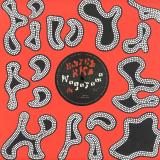
" A very limited 7” for the tropical heads, beat travellers and cosmic cumbia astronauts on the new imprint Sun Of A Beach — the free-spirited daughter of Editions de Lux, who skipped town, fell in love somewhere between Kingston and Cartagena, and came back glowing, barefoot, and heavy on the bass.
At home in the steaming rainforest as much as the urban jungle of the Chapinero district of Bogotá, Colombia’s psychedelic groove pilots Ácido Pantera deliver a double-sided tropical weapon aimed straight at late-night sweatboxes, boat parties, and sun-soaked terraces.
"Te quiero, te amo” is a declaration of love at 132 bpm, bouncing along like a low-rider over cobblestones while neon synths float in the humid air.
Flip it for “Pájaro cantor”, a sound system destroyer that will lock the floor in an acid trance that feels both ancestral and futuristic in the same breath. This one’s featured on the FC26 soundtrack and will have you shimmying like Luis Díaz right before he bangs one into the top corner!
You know what to do!"
Cerca:system x
Back in stock soon!
Dan Piu wrote this album during the "dark, dystopian times" of the last year. The record's themes take in nature, human life, sci-fi, cyborgs and plenty in between with opener 'Tru Confession' being a robust house track stacked with throwback breaks, futuristic synths and old school vocals. There is a real warmth and soul to the machine sounds of 'Un-X-Plored Exodus' while a certain sense of 90s New York house colours 'Upgrade System M59'. 'System Of Ethics' shows off a fine mastery of synth craft that brims with emotion and 'Asteroid Blues' is like a lost Kerri Chandler cut. Essential.
A chopped-and-screwed love letter to the sounds of rebajada – half-speed cumbia, pioneered by Sonido Dueñez in the 1990s, and born from an overheated turntable motor that didn’t make the crowd stop dancing. With Debit’s treatment, rebajada becomes an ethereal, at times intense ambient tapestry that’s also a history lesson.
Spend any amount of time pacing the streets of Monterrey, the bustling city in the north of Mexico where Delia Beatriz, aka Debit, grew up, and you’ll be sure to catch traces of cumbia echoing from Bluetooth speakers, DIY soundsystems, or car stereos. An Afro-Latin dance form and »practica cultural« originating in Colombia in the early 19th century, cumbia evolved rapidly in the early 1900s, as a localised sound played on drums and flutes quickly modernised to integrate European instrumentation like the accordion. When it reached Mexico in the 1940s, the sound shifted again, fusing with mariachi styles and integrating further vallenato folk elements. Eventually, cumbia spread across the entirety of Latin America, splintering into a spectrum of different musical styles such as chicha in Peru, and cumbia villera in Argentina. And over in Monterrey, cumbia inadvertently found its own idiosyncratic groove.
From the 1950s to the 1970s, waves of immigrants from across Mexico and Latin America headed to Monterrey to find work, making a home in Colonia Independencia. Colombian cumbia records, shipped in from Mexico City, Houston, and Miami, became the soundtrack of the neighbourhood, relaying familiar stories to a rural working class adjusting to their new industrial reality. The sound struck a chord with locals, and huge street parties hosted by ramshackle soundsystems known as sonideros unified the diverse community. So when cumbia rebajada materialised serendipitously in the 1990s, it emphasised and highlighted the memory distortions at the heart of the immigrant experience. Local record collector, selector, and sonidero Gabriel Dueñez had been playing cumbia for hours one night when disaster struck: his turntable’s motor overheated and slowed down, turning the music into a warped groan, with half-speed voices echoing over wobbly accordion drones and splashy drums. But the crowd kept dancing, and Sonido Dueñez realised he’d struck gold – cumbia rebajada was born.
Over the next few years, he dubbed a popular series of mixtapes, hawking them at the flea market on the dried-up Santa Catarina riverbed beneath El Puente del Papa, the bridge that links downtown Monterrey with Independencia. These woozy archives became the stuff of legend, poetically but subconsciously shadowing DJ Screw’s series of epochal cassettes that appeared over the border in Houston. Beatriz uses Sonido Dueñez’s first two tapes as the starting point for »Desaceleradas«, entering into a dialogue with time, culture, and geography as she recalls the sonic ecosystem that surrounded her decades ago, long before she emigrated to the USA. If 2022’s acclaimed »The Long Count« was an attempt to recover concealed pre-Columbian history in the face of colonisation, »Desaceleradas« jumps forward, figuring out how memory and shared celebration can resist a more contemporary form of cultural erasure. As AI systems scrape, blend, and decontextualise culture around us, leaving vapid slop, »Desaceleradas« proposes a slower, more careful, and ultimately more human kind of engagement. It’s an archive with a pulse.
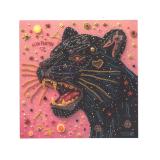
On »Empty Room,« David Granström works with slow transformations, cyclical and isometric patterns as well as just intonation as a way to create harmonic stability, allowing his long-form pieces to develop their own unique temporal and spatial qualities. A prolific figure in Stockholm’s experimental drone scene and a collaborator of Hallow Ground label mates Maria W Horn and Mats Erlandsson, the Swedish composer navigates through moments of quietude and crushing volume on these five tracks. Sonically and atmospherically, the pieces on »Empty Room« simultaneously call to mind Fennesz’s most meditative work or the physical experience of seeing Sunn O))) live, blending guitar recordings and synthesised sounds with forceful effects similar to those of Mario Díaz de Leon’s Oneirogen project while still being as moving and delicate as Alessandro Cortini’s solo work. The album is marked by melodies and harmonies that are the product of a peculiar working process that turned the composer into an intent listener collaborating with, rather than simply using technology.
Having been invited by the self-organising artist group The Non Existent Center for a residency to Ställbergs Gruva, a defunct iron ore mine in Sweden’s Bergslagen region, Granström took his guitar as a starting point for his compositional work that heavily relies on real-time sound synthesis. »I seldomly use the instrument as a sound source in the final compositions and rather transcribe and orchestrate the harmonic structures using sound synthesis,« he explains. »On this album however, I chose to include the actual recordings of the guitar in order to extend the spectra between non-referential synthetic sounds and embodied referential sounds.« Working with precise tunings in order to blend the timbre of the synthesis with the harmonic structures of the composition, he created composite sound objects in which the harmonic elements blend into each other.
Through the re-amplification of synthetic musical materials from the inside of the abandoned mine, his original compositions were enriched with site-specific sound qualities before he further refined them in a singular working process. Granström works with algorithmic and generative processes, using the SuperCollider programming environment and thus blurring the lines between generative and creative forms of composition. »One of the things that I like about this way of working is that it creates a distance between myself as a composer and myself as a listener of the music that is produced entirely by the system,« he says. Granström’s technologically aided eschewing of the conventions of composing doesn’t make the end result any less personal, however. By listening again and again to the newly generated output, Granström simply took on a different role in the process of finalising the music, with the technology and the sounds becoming his co-authors.
By creating systems that generate music, he gains a new perspective on (musical) time, says Granström. »There doesn't have to be a fixed length to the music at all,« he explains. »And by writing music with this in mind, my focus tends to shift towards writing cyclical structures that gradually change and transform over time.« Simple parts, in other words, that emerge as the five complex wholes that form »Empty Room,« a record that itself seems to take on different forms with every new listen.
Introducing Luka Lickshot aka Luke Palmer aka the Wolverhampton Wolverine, prolific reggae DJ and genre warping producer of all things low end inclined.
In previous incarnations Luke has released hypnagogic house for labels such as Workshop and Third Ear, but with his debut LP release ‘Shots Fired’ he takes a sharp turn into the leftfield.
Sonically triangulating early 80s Manc post punk existentialism, 90s darkside trip hop and UK (On-U) sound system culture, the result is something like a more ruffneck Massive Attack jamming with Dome in the Black Ark.
‘Shots Fired’ was forged in an underground Peckham hideout, under strict parameters of time and space, fusing conventional instrumentation with digi know-how, improvised vocals, one take licks and dub fx. Pretty much impossible to pigeonhole the ten tracks but adjacent to / resonant with Giulio Erasmus, DJ Marcelle, Tricky, ‘Hex’….
LIMITED POSTER EDITION (inclusive stickers)
From the dark circuitry of the American underground, Signal 72 transmits a raw message through Zodiak Commune Records. Loosing The Station is not about losing control, it's about releasing it. Letting the system breathe, unhooking from order, and giving the machines room to speak in distortion and pulse.
The sound is intense and immersive: heavy electro rhythms, dense sub pressure, and acidic 303 lines that twist through the mix like voltage on the edge of overload. It's the friction between chaos and precision, mechanical yet human, destructive yet alive.
Each element feels driven by instinct and recorded in the moment. The result is a tense, physical energy that connects directly to the roots of underground electronics, the sound of resistance, transmission, and release.
Broken symmetry. Acid eternal.
Limited to 250 copies !
The Deadheads had never had much luck with spaceships. Their first mission had ended in a catastrophic engine failure, leaving them adrift in deep space for weeks. This time, their craft was hardly more reassuring. A hodgepodge of outdated technology and shoddy repairs made it more of a floating death trap than a reliable cruiser. As they began their descent toward the strange planet, the hull creaked and rattled, sending a wave of dread through the crew.
"Hold on," Matt's voice crackled over the intercom, without much conviction, as if he himself doubted they would make it out alive. Outside, a thick, grayish atmosphere swirled ominously, while the planet's gravity became far stronger than anticipated.
“Fuck, we’re gonna burn at the entrance!” M yelled, his hands flailing on the console as sparks flew from the control panel. The ship’s sensors were completely jammed, and the navigation system flickered intermittently, like a dying light. Below, the planet’s surface was a tangle of lava rivers and jagged rock formations, the kind of place no sane person would ever land. But the Deadheads had never pretended to be. They lived in a state of constant emergency.
As the descent intensified, the alarms blared. On the bridge, the screens lit up with red warnings and flashing messages: "SYSTEM ERROR," "UNSTABLE TRAJECTORY," "SUIVITY SYSTEM COMPROMISED." The lines of code scrolled by too quickly to be read, while a mechanical voice repeated relentlessly: "Imminent impact. Structural integrity at twenty percent."
The once pristine shell of the vessel began to disintegrate, with shards of metal breaking away and disappearing into the atmosphere.
With a final, piercing screech, the ship crashed onto the planet's surface, sending up a cloud of dust and debris. The crew was violently thrown from their seats, stunned but barely alive. They struggled to their feet amidst the wreckage, the ship reduced to a charred shell around them.
"Well," M said, wiping the dirt off his suit with a grimace, "at least the air is breathable." Matt scanned the hostile expanse stretching before them and smiled slightly. "Perfect. Let's hope we have better luck with the planet than with our ships."
With that, the Deadheads gathered their equipment and headed into the unknown, while the remains of their ship slowly sank into the unstable soil of the planet.
Splattered LTD EDITION
Trackwahser side bring a crazy romance, mystic call for a tribal dancefloor banger ! Legend !
Second tune, in collab with Boubou, member of Antinorm-17 Sound System back in the years... The oldschool Acid excitation supported by a thick Hard Techno kick. Put some electricity in the air, be Deter-Mina !
With Roland K side you will get 2 Hardtek missiles !
The first track delivers a high-energy, fast-paced, and punchy vibe, perfect for rocking the dancefloor.
The second, a collab with Darth Leng, takes the energy even further with an explosive mix of styles and unrelenting power.
Tracks designed to get parties rocking and boost good vibes to the max!
With the 7th Grade of the Riddim Dub School series, Prince Istari enters Junior High School. Prince Istari returns with his Riddim Dub School series now on 12inch, pushing deeper into the intersection of dub, drum and bass, and sound system culture. This 6-track EP, titled "lessons into drum and bass wise", explores raw rhythms, analog feedbacks, and heavy low-end pressure.
The EP starts with a Drum and Bass cut with a One Drop of the DUB ME LOOPY tune from Riddim Dub School 5th Grade. INTIMACY COORDINATOR follows with a heavy Disco Dub. The last track on Side A is LABOUR’S DUB, with deep bass polished through spring reverb. The shakers come in late and push the whole thing forward. Side B begins with GONE TOO SOON from Riddim Dub School 4th Grade, in an alternative version. It’s followed by the most upfront track on the release CONQUERING DUB – brass fanfares and a deep disco rocker beat with minimalistic arrangement. NO DUB INNA DI WRONG ends the 7th Grade with a roots way style. It suggests
that dub music doesn't belong to or support negative, corrupt, or unjust actions or spaces. Dub music stays righteous, true, or positive, and doesn’t associate with bad vibes or wrongdoing.
Uluru is back with another Dibba production!
Italian dj and producer Dj Dibba open up to different sounds and surprise us with a contagious Uk Garage Remix.
On the flip, the producer from Albano Laziale (known as the italian Kingston) confirm himself as one of the reggae-hip hop raising stars with “Ego Skank”.
Pull up guaranteed!
Pressed on high quality black and transparent red vinyl (48 gr.)
Edition of 250, cut it loud and fat, highly recommended for big sound systems.
ULURU is a large sandstone rock formation in Australia. It's sacred to the Anangu, the local Indigenous of the area. For many years it had been deprived of its spiritual significance, due to mass tourism, capitalism, as well as greedy and selfishness of people who just want to make money out of it. However, as a result of the Anangu’s resilience, care and staunchness, huge changes took place in the national park around Uluru as well as in the broader public's consciousness, giving again to the Uluru the sacred identity that had been lost.
You might be reading and thinking now: so what's the point? Actually, there's no real point. I would rather say, there’s hope. The hope of seeing humans all around the world following the example of the Anangu. The hope of seeing humans finally stopping to treat the earth and all what’s part of it, what’s on and what’s in it, as a slave without soul. The hope of changing today, and if not today at latest by tomorrow. This system is failing. It's no longer sustainable, and there's no much time left.
So everybody, don't sleep, be critical.
Kontakt Records presents KNT-47 “Chromatic Noise”, a deep exploration of dub techno and dub-infused house from Canadian producer Matt Thibideau. Across three extended cuts, Thibideau sculpts spacious, analogue-leaning grooves where every element has room to breathe. Subtle saturation, soft tape hiss and finely tuned low-end weight create that unmistakable sense of depth, while shimmering chords and carefully placed delays drift in and out of the stereo field. The result is music that feels both hypnotic and alive, built for long blends, late sessions and sound systems that reward detail. “Chromatic Noise” sits comfortably in the Kontakt Records tradition: timeless dub aesthetics, modern production values and a focus on atmosphere over obvious peaks. It’s the kind of 12" that works just as well as a DJ tool as it does for attentive home listening – patient, understated and endlessly playable. Tiny shifts in texture, filter movement and echo tails keep the tension moving forward without ever breaking the spell.
Peter Beyls (1950) works on the intersection of computer science and the arts. He develops generative systems in music, the visual arts and hybrid formats. Beyls studied music and computer science at EMS, Stockholm, the Royal Music Conservatory, Brussels and the Slade School of Art, UC London. Initially he was active in electronic music, as a composer of tape music. Later on, he developed various analog live electronic music systems. In close partnership with Michel Waisvisz, he designed and built the early prototypes of the crackle box synthesizer at STEIM, Amsterdam (1973-1975). Around the same time, Belgian composers Karel Goeyvaerts and Lucien Goethals were his mentors at the IPEM Studio. Over the years, Beyls’ work has primarily centered on generative systems, including extensive series of machine drawings, human-machine interactive music systems using machine-learning and interactive audiovisual installations on which he has also given worldwide lectures. His work has been widely performed and exhibited at various universities and art institutions. The four previously unreleased tracks on this LP are amongst his first electronic music compositions using the Crackle Box, the Synthi 100 and the VCS3, a combination of live improvised electronics with precise tape editing and effects.
Dream Sonic Research kicks off its self-titled imprint with a debut release of four tracks crafted for forward-thinking dancefloors. Ethernal Horizons opens with deep techno textures, 303 acid squelches and immersive ambient layers. Alchemic brings a vintage mood, a straight-to-the-point melody and ’80s-inspired snares, delivering a hard-hitting, dancefloor-ready cut.
On the flip side, Bleep Systems fuses Italian-progressive basslines with UK-style bleep rhythms, before the closing track Information Superhighway drives into faster territories, offering precise, hypnotic tools for movement. A first step for the artist and the label, and a clear statement of intent.
Having established himself as one of the most exciting contemporary dance producers with a string of stellar releases, Japanese producer boys be kko returns triumphantly with the Nagasawa EP, four floor cuts bursting with emotion, shimmering in Tokyo technicolor, and perfectly at home on Bliss Point.
Nagasawa kicks off with a bang. “ChuKii” is a peak time heater: breaks, chopped vocals and punchy toms sear over a low end groove that proves body music can funk. Melodic acid explodes like a firework mid-track, taking the dance floor to psychedelic new heights.
The club psychedelia continues with “Mold Mold”, a minimal, subterranean system roller adorned with swells, bells, and deep, guttural growls dubbed to the vanishing point.
“Sant Esteve (kko Edit)” is melancholic and contemplative jazz house, eschewing cliché and twinging with nostalgia for that moment you felt most free.
“Humor is an important part of my music”, boys be kko reflected over lunch as Izakaya smoke billowed past his face. “Oignon”, the fourth and final track on Nagasawa, is an airy and joyful slice of sampledelia that makes good on this promise. An enormous smile of a track sending listeners off with a slice of sonic sunshine and, dare we say, hope.
- A1: Ree-Vo 'Protein' (The Bug Remix)
- A2: Ree-Vo 'We Go' (Object Object Remix)
- B1: Nøise 'Automatic' (Ree-Vo Remix)
- B2: Ree-Vo 'Groove With It' (Deadverse Remix) By Dälek
Originally released as a digital double a side both lead tracks were chosen by the remixers and the results are like an electrical storm.
Newark, NJ’s Dälek (Will Brooks) drags T. Relly’s growl through the quicksand, a cacophony of whiplashed beats and visceral loops spurring our protagonist on. It’s a gaggle of Ghostface Killas trapped in a hall of mirrors; it’s next door’s MBV heard through the walls whilst submerged in a low-lit bathtub. And Wu Tang are pulling the plug out.
Kevin Martin aka The Bug continues to release teeth rattling sonic masterpieces, his most recent being November’s ‘Implosion’ on his own Pressure label. In his hands ‘Protein’ becomes a submarine bass, head n’ rig wrecker opting here for more of his hooky ‘In Blue’ style Bug mix. As Kevin said – “to my fantastical mind it sounds like Bug dirt ‘n’grind Vs Yin Yang Twins’ louche swagger and Neptunes funk”.
“In Bristol, it was hip-hop and reggae renegades meeting up with white ex-punk guitarists, alternative pop pioneers hanging out with underground roots music makers, and sound system sonic stalwarts grooving out with rave’s space cadets that laid the bedrock for such an explosion. And if you think that such an eclectic melting pot ever went away, you would be wrong. Ree-Vo is all the proof that you need” – The Big Takeover
- A1: Verflossen Ist Das Gold Der Tage
- A2: Staub Und Sterne
- A3: Hinter Uns Die Wirklichkeit
- B1: Bedingungslos
- B2: Die Nächte Sind Erfüllt Von Maskenfesten
- B3: Umschlungen Von Milliarden
- C1: Sanft Verblassen Die Geschichten
- C2: Es Ist Alles Schon Gesagt
- C3: Schwarzer Regen Fällt
- D1: Jeder Gedanke Umsonst Gedacht
- D2: Welche Welt
- D3: Ist Es Das, Was Du Willst
II[29,37 €]
Reissue of the 3rd full length by Thomas Bücker aka Bersarin Quartett.
Melancholia. Longing. It is difficult to speak about these moods or states of the mind without invoking stereotypes. In ancient medicine, melancholia was considered to be one of the four temperaments, matching the four humours. In fact, melancholia, meaning "black bile" in Ancient Greek, was thought to be caused by an excess of this very body substance. By contrast, in more modern interpretations, literates and Freudians relate many variations of longing to the one primordial longing, the desire to return to one's mother's womb. In this context, the womb is considered to be the place of absolute comfort and cosiness, of total bliss. Thus it should not be surprising that to many of us melancholia is a mood which we like to invoke and to maintain, we like to envelop ourselves in it like in a warm blanket. Our brain and our sensory systems appear to be made for perceiving and emotionally responding to music in a very immediate fashion. Consequently music is the obvious drug for all of us melancholia-addicts. However, there is a thin line between melancholia and sadness, and music which is meant to be melancholic too often crosses this line by far. Only very few artists succeed in avoiding this crossing, and in creating music which is melancholia in its most pure form. It is safe to say that BERSARIN QUARTETT - the electronic music project of Thomas Bücker - is one of them.
After his debut in 2008 and the sophomore "II" in 2012 - album of the month in many magazines and in numerous "Best of the year" lists - Bücker in 2015 returned with his third BERSARIN QUARTETT album "III". Much like his two predecessors, III is a pure paradox. It is the creation of a perfectionist, an adamant control freak. Every element, be it a note, an ambience layer, a string arrangement, a field recording, a baseline, a vocal (Clara Hill on Track 11) or a beat, is meticulously modified and then assigned its place in Bücker's vast but still minimalistic arrangements. Thus, superficially Bücker's pieces seem to radiate a certain mechanical bleakness. However, there is a unique reduced warmth and liveliness emerging from these stainless compositions and transcending them. This transcendence is precisely the point where Bücker ironically looses control over his creations. In contrast to the first two BERSARIN QUARTETT albums, III offers a few darker shades and succeeds even further in narrowing down the arrangements to the absolute essentials without loosing the characteristic grandeur of Bücker's sound. Whereas BERSARIN QUARTETT's debut was merely a description of melancholia in its most pure form, III maybe even goes as far a defining what melancholia really is. It is the only emotion in the vast spectrum of human states of mind which one can bear forever.
Kulture Galerie releases its 3rd Digital Artefacts cassette tape: "Mediterranean Blue" by NYC's own Alien D. Alien D is back on Kulture Galerie. Prior to this, Daniel Creahan has been featured on labels such as Lillerne Tapes, Banlieue Records, and Theory Therapy, and now shares a 6 track EP called Mediterranean Blue that lands on Filippo MSM's tapes series Digital Artefacts, the label's more experimental output.
The work is something of a companion piece to his recent release on Theory Therapy, “For the Early Hours of the World in Bloom,” exploring similar states with a more hazy, fluid sensibility. The compositions here trace back to a week spent several years prior on the Puglia coastline, where, in the midst of a read through of Helene Cixious’s Tomb(e), he began compiling a series of works drawing the gleaming sun, swirling waves and jagged, rocky coastline of the region, mixing in fragments of slow, pulsing low end, wafting synth elements and a range of processed samples dwelling on states of transition, life and love. Waves and dripping water swirl around lilting saxophone, kick drums drown the mix in heavily side-chained throbs of bass, and breaks rush in and out of the mix, making for a series of recordings that seem to view the dancefloor as a dream, always front of mind but hazily remembered.
“I was obsessed with these balances between the light-washed, dusty landscape and these quiet modest homes dotting the hills, and all I could think about was the passage of time, falling in and out and back in love, and the slow drift of memory,” he says. “It was like waking up with a new thought.”
- A1: The Jungle
- A2: Love That Boy
- A3: House On Fire
- A4: Sacrifice
- B1: Get My Mind
- B2: Le Queens
- B3: In Your Eyes
- B4: Bold
Montreal indie rock trio Plants and Animals announce "The Jungle", their fifth studio album set to be released October 23rd via Secret City Records. Their shortest album yet and certainly their boldest, "The Jungle" is eight acts in a world full of noise. The album is auto-produced and was recorded at Mixart, their studio in Montreal. The band explains : "We started working on this a couple of years ago. Warren was afraid for a friend's health. He thought he was self-medicating too much and not taking care of himself. He couldn't let go of this image of an overworked dude swallowing too many sleeping pills and falling asleep with the stove on. So it began as the place next door, sometime before Greta Thunberg turned the expression into a rallying cry, where Earth is the house and the people are sleeping. It's terrifying, and on the whole we're not unlike this friend, are we?" "The Jungle" starts with electronic drums that sound like insects at night. A whole universe comes alive in the dark. It's beautiful, complex and unsettling. Systematic and chaotic. All instinct, no plan. Voices taunt,"yeah yeah yeah." This tangled time in which we find ourselves is reflected back in shadows. Every song is such a landscape. The first one grinds to a halt and you become a kid looking out a car window at the moon, wondering how it's still on your tail as you speed past a steady blur of trees. You watch a house go up in a yellow strobe that echoes the disco weirdness of Giorgio Moroder, Donna Summer and David Bowie. You get pummelled by a rhythm then set free by a sudden change of scenery_the wind stops, clarity returns. You're under a streetlight in Queens, soft-focus, slow motion, falling in love. You speak French now too, in case you didn't already. Bienvenue. These are personal experiences made in a volatile world, and they reflect that world right back at us, even by accident. There's one song Nic sings to his teenage son who was dealing with climate change anxiety and drifting into uncharted independence. The band carries it out slowly together into a sweet blue horizon. Warren wrote the words to another shortly after losing his father. It's about the things we inherit not necessarily being the things we want. In a broader sense, that's where a lot of people find themselves right now.