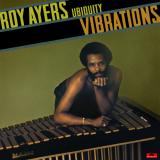
Step into the golden era of soul-jazz with the long-awaited vinyl reissue of “Vibrations” by Roy Ayers Ubiquity — a record that captures the unmistakable warmth, groove, and sophistication that defined Roy Ayers’ sound at its peak.
Originally released in 1976, “Vibrations” stands as a cornerstone in Ayers’ catalog, marking a moment where his signature blend of jazz, funk, and soul reached a refined, deeply cohesive form. Building on the foundations laid in earlier works, this album presents a tighter, more focused musical vision without sacrificing the lush textures and emotional depth that made his music resonate worldwide.
Roy Ayers was a pioneering vibraphonist, composer, and producer whose influence stretches far beyond jazz into R&B, neo-soul, and hip-hop. Often referred to as the “Godfather of Neo Soul,” Ayers crafted a sound that feels both timeless and forward-thinking, pairing silky vocals with hypnotic grooves and rich instrumental arrangements. His work throughout the 1970s helped shape the sonic DNA of modern Black music, and “Vibrations” is one of its purest expressions.
The album flows effortlessly between moods: from the jazz-inflected elegance of ‘Searching’ to the irresistible funk pulse of ‘The Memory,’ the dancefloor-ready ‘One Sweet Love to Remember,’ and the laid-back, atmospheric title track ‘Vibrations.’ Each track showcases a masterful balance between musicianship and groove, brought to life by a stellar ensemble of collaborators who elevate every moment.
Beyond its original impact, “Vibrations” has taken on a second life through hip-hop. Its grooves, breaks, and melodies have been extensively sampled by generations of producers and artists, becoming a foundational source for crate diggers and beatmakers alike. Tracks from the album have been reinterpreted and flipped by influential names such as A Tribe Called Quest, J Dilla, Dr. Dre, and Common, cementing its legacy as a vital bridge between 1970s soul-jazz and contemporary hip-hop culture.
After almost two decades out of print, we are pleased to present this much-needed vinyl reissue of an essential album in Roy Ayers’ career. Whether you’re discovering it for the first time or returning to a beloved classic, this album remains an essential piece of musical history. Pressed on 180g vinyl.
out of Stock
Last delivered 3 months ago available to reorder, subject to availability
Ever since the late 1950s bossa-nova revolution, Brazil’s influence on French music has been undeniable. Pierre Barouh, Georges Moustaki and a vast array of lesser known artists, all made the Musica Popular Brasileira (MPB) an axis of promotion at the service of a cool and metaphysical, modern and mixed Brazilian lifestyle. Some were seduced by the poetic languors of the bossa, some were looking for fun, and others just loved the American hybridization of jazz-bossa, jazz-samba.
What is bossa nova? One of its creators, Joao Gilberto said: "Its style, cadence, everything is samba. At the very start, we didn't call it bossa nova, we sang a little samba made up of a single note - Samba de uma nota so .... The discussion around the origins of bossa nova is therefore useless”. It is nevertheless useful to remember that these magnificent Brazilian songs, which the guitarist describes as samba, were shifted and balanced around improbable chords. "I like things that lean, the in-betweens that limp with grace," said Pierre Barrouh, quoting Jean Cocteau.
With emotion, arrangements for violin and supple guitar licks, bossa nova rapidly changed. A transformation that can be heard in the Tchic, tchic, French Bossa Nova 1963-1974 compilation, the result of a cultural reappropriation, which traveled through the United States and supplemented itself in France.
A musical revolution that has remained significant, bossa nova was born in Rio. From 1956 to 1961, Brazil lived through its golden years. In five years, the country had invented its modernist style. Elected president in 1956, Juscelino Kubitschek de Oliveira, an elegant man with a broad forehead, brandished a promising slogan: "Fifty years of progress in five years". He quickly got to work. Not worried about increasing debt, he launched the project for a new federal capital, Brasilia, designed by the communist architect Oscar Niemeyer. Volkswagen opened state-of-the-art factories and created the “fusquinha”, the Beetle. In Rio, the Vespa made its first appearance. The Arpoador Surf Club crew run into the “girl” from Ipanema, Helô Pinheiro - the tanned garota ("chick"), between a flower and mermaid, who at 17 walked by the Veloso bar, where the fiery author and composer, Tom Jobim and Vinicius de Moraes, were getting drunk on whiskey. From then on, bossa symbolized cool.
In 1958, Joao Gilberto recorded Chega de Saudade, which the directors of Philips denied, calling it "music for fagots". The marketing director, who believed in it, secretly pressed 3000 78-inch vinyls and distributed them at schools around Rio, creating a tidal wave.
American jazzmen then took over. In particular, trumpeter Dizzy Gillespie and guitarist Charlie Byrd. In November 1962, the Brazilian Ministry of Foreign Affairs funded a "Bossa-Nova" concert at Carnegie Hall in New York, inviting the genre’s pioneers. Unprepared, the show soon turned to disaster. But the troupe was invited to the White House by Jackie Kennedy. The first lady loved "the new beat" and in particular Maria Ninguem, a song by Carlos Lyra, later covered by Brigitte Bardot.
In Brazil, the 1964 military coup quickly ended this euphoria. The destructive atmosphere that ensued pushed many Brazilian musicians to leave, if not to exile. Thus, Tom Jobim, Sergio Mendes and Joao Gilberto arrived to the United States. In New York, Joao Gilberto met saxophonist Stan Getz. At the time, he was married to the Bahianese Astrud Weinert Gilberto, who had a German father. She had never sung before, but she knew how to speak English. Getz therefore asked her to replace her husband on The Girl From Ipanema. The Getz/Gilberto record with Tom Jobim on piano, was released in March 1964. Phil Ramone, the "pope of pop" was in charge of sound.
Bossa nova arrived in Paris through the classic “guitar-voice” channel (Pierre Barouh, Baden Powell, Moustaki…) But France loved jazz and Paris had already welcomed its American contributors. All these good people were to pass through Saint-Germain-des-Prés. The cabaret l'Escale became the Mecca of Latin American sound where one could find Pierre Barrouh and his friends, such as the Camara Trio, samba-jazz aces, whose only record was published by the Saravah label. With a band strangely called Les Masques (a band that included Nicole Croisille and Pierre Vassiliu, among others), the Camara Trio recorded an interesting Brazilian Sound, including the track Il faut tenir which is present on this tasty compilation of rarities.
Other enlightened musicians can also be found on the compilation, such as Jean-Pierre Sabar (songwriter for Hardy, Auffray, Leforestier ...) and the French pop rock organist Balthazar. In 1975, Sabar recorded Aurinkoinen Musiikkimatka on a Finnish label, which featured the crazy Vai, Vai, included on this record. We are now following the footsteps of Brazilian electronic musicians such as Sergio Mendes, Eumir Deodato or Marcos Valle who created funk and disco sounds on their keyboards and synthesizers. A style that influenced Véronique Sanson when she wrote Jusqu’à la Tombée de la nuit in 1969 for Isabelle de Funès, the niece of Louis and a great friend of Michel Berger - Sanson did end up singing this track on her 1992 Sans Regret record.
The pinnacle of exoticism and travel, Sylvia Fels’ Corto Maltese includes bongos, sea mist and ocean sounds. The title was taken from Jacky Chalard’s concept album written in 1974, Je suis vivant, mais j’ai peur (I am alive, but I am scared), based on Gilbert Deflez’s science fiction novel.
However, bossa nova extended the scope of popularity. "In the 1970s, I was a fan of Sergio Mendes, Getz / Gilberto. I fell in love with this music that I knew because I had been an orchestral singer, " explained Isabelle Aubret, who in 1971 delivered a composite record of covers by the very funky Jorge Ben, Orfeu Negro, Tom Jobim, Vinicius de Morais and Jean Ferrat. "I recorded this album for Meys Records in Paris, far from Brazil, with wonderful musicians, François Raubert, Roland Vincent, Alain Goraguer...". The latter wrote the arrangements for Casa Forte, a very percussive title borrowed from Edu Lobo, one of the initiators of the bossa who spent time in California. "Jazz and bossa came together and produced very rhythmic music. I love singing, it allows me to dream, to have fun, to feel a high on stage, and these songs brought me joy, made me swing, my singing felt like a dance.”
The world tours of French singers and their desire for the tropics, often brought them to Rio with its hills, forests, caipirinhas and tanned bodies. There are surprises though, like this Iemenja (Iemenja is the goddess of the sea in the Afro-Brazilian candomblé religion). Not unlike the composer and musician Jean-Pierre Lang, based in Sao Paulo, Claire Chevalier taught Brazil to Brazil. In 1970, the singer and painter published a 45-inch vinyl, Mon mari et mes amants (My husband and my lovers), under the improbable pseudonym of Clarinha (little Claire). She was then living in Rio, with her husband, Joël Leibovitz, who founded a band called Azimuth, and who owned a record label specialized in "sambas enredos" songs for samba school parades.
For its B side, she asked Pierre Perret to come up with lyrics for a song composed by Carlos Imperial: "Oh goddess of the sea, o goddess Iemenja, I bring a white rose to adorn your long hair ..." . "Perret came to see us, and we had fun, remembers Joël Leibovitz. We wrote Lemenja for fun, we recorded it at the Havaí studio, behind the Central do Brasil the central station. Erlon Chaves, the arranger who worked with Elis Regina, joined us" adding his share of Afro-Brazilian percussions and funky brass to the mix.
There is a common misunderstanding in Franco-Brazilian history: that bossa, admittedly hedonistic, is perceived as funny, even though the poets who wrote the texts are often philosophizing on the human condition. Its French interpreters pull it towards a carnival inspired universe, far removed from its fundamental essence. Thus, Jean Constantin covered the famous Samba da minha terra, an ode to the art of samba written by the classic Bahian composer Dorival Caymmi, renaming it with the enticing title of Pas tant de tchi tchi pompon: "On your pier there is no tchi tchi / when you arch your back, you know everything is alright ”(lyrics by Gérard Calvi). This expedited bossa aims for the absurd, but retains a certain elegance.
Indeed, Jean Constantin was not an idiot, the rather large man had a huge mustache and liked fantasy, (Les pantoufles à papa, Le pacha, inspired by cha-cha-cha-cha, salsa and jazz) but he was also the lyricist of Mon manège à moi interpreted by Edith Piaf, the composer of Mon Truc en plume by Zizi Jeanmaire and the soundtrack of François Truffaut’s 400 Blows. Le Poulpe, published in 1970, from which this bossa is extract, was arranged by Jean-Claude Vannier, an accomplice of Serge Gainsbourg’s Melody Nelson. In short: "There is enough of samba / By looking at the parasol / Because my poor cabeza / Is going to die in the sun".
Even the American actress Marpessa Down, who was at the heart of the bossa nova revolution with her role as Euridyce in Marcel Camus’ film Orfeu Negro, winner of the 1959 Cannes Palme d'or, fed the clichée with Je voudrais parler au petit cuica - "Tell me how you manage to always make people want to dance / It's true, I must admit that I cannot resist your magic" - in consequence, once can hear the cuica, a little drum inherited from the Bantu.
But bossa nova had many angles. Societal, of course, pushing actresses who were symbols of women's liberation like Brigitte Bardot, Jeanne Moreau, or Sophia Loren to engage in the exercise of accelerated bossa. In February of 1963, Sophia Loren made a record in French in Rome, Je ne t'aime plus, featuring the song De jour en jour, a bossa written by two Italians, Armando Trovajoli and Tino Fornai, which was released a little later by Barclay. Bossa accompanied the 1960s, a decade of moral liberation. Ann Sorel, who interpreted La Poupée des favellas, caused a sensation with L’amour à plusieurs, a provocative song written by Frédéric Bottom and Jean-Claude Vannier. As for the actress Andrea Parisy, she displayed her bourgeois cheekiness in Marcel Carné's Les Tricheurs before interpreting Les mains qui font du bien. And Magalie Noël, the friend of Boris Vian, who sung Johnny fais-moi mal, was hired to sing Une énorme Samba, composed by Alain Goraguer (arranger to Gainsbourg, Bobby Lapointe and Jean Ferrat) with lyrics by Frédéric Botton.
But in the end, of what wood is bossa nova made of? The answer is given by Christianne Legrand, daughter of Raymond the conductor, and sister to Michel the composer: "With me, with jà" - jà means "immediately" in Portuguese. In 1972, the singer, an expert in vocal jazz and a member of the Double Six, published Le Brésil de Christianne Legrand. Two songs included on the Tchic Tchic compilation that demonstrate how bossa, jazz, funk, rock, etc. work like a swiss army knife: the music is used to denounce broken systems, or miracles, HLM et ciné roman, Cent mille poissons dans ton filet, two songs from the O Cafona soundtrack, a successful telenovela broadcast, at the time in black and white, on TV Globo. The first was adapted in French by the fighter and friend of the Legrand tribe, Agnès Varda. The second is content with a play on words, jostling them into a summer fun.
Véronique Mortaigne
out of Stock
Last delivered 3 months ago available to reorder, subject to availability
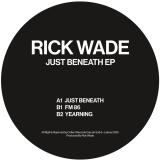
Detroit Legend, Rick Wade joins Collect Records for the first time with Just Beneath EP. A key figure in Detroit's second generation of house producers and founder of Harmonie Park, Rick Wade delivers three deep and hypnotic cuts rooted in jazz, soul and classic machine funk. Warm, stripped-down and functional, with one acid-leaning track adding extra tension to the EP. Underground house music for late night hours. Collect Records operates from Collect, the Lisbon-based record shop and radio located in Cais do Sodre, a meeting point for DJs, collectors and the local underground scene.
out of Stock
Last delivered 76 days ago available to reorder, subject to availability
Ruriko Ogami’s “Typhoon Lady” is set to be released on colored vinyl!
This reissue also includes “ONE LAST LOVE”, a track originally featured as the B side of a single and not included on the album.
The latest remastered audio comes from the album and single, archived in 2018 from the original analog master tapes at 96k/24bit.
Boosted by the popularity of Japanese grooves and further propelled when Japanese creators sampled “Sexy Woman”, the album’s reputation skyrocketed,
driving original vinyl prices to unprecedented highs. Beyond that, tracks like “Typhoon Lady”, which opens with a drum break that exudes funk, and the mellow
“Fuwari Fuwafuwa”, with its tight performance and floating vibe, remain timeless masterpieces even 40 years after their original release.
out of Stock
Last delivered 3 months ago available to reorder, subject to availability
Secret Vault is a new and already essential edit label from what is rumoured to be a group of Far Eastern otakus - a collective term in Japanese for obsessive interests in niche hobbies, in this case, disco. This second drop kicks off with the impossibly joyous and uplifting A-side, with trilling strings that just go up and up and up as the funky drums and elastic male vocals match that energy. Flip it over for an equally euphoric B-side with funky, knotted bass riffs, instrumental grooves and a steamy female vocal. Both are no-brainers for anyone looking to inject big heart into their sets.
Bogdan Ra is based in the musical hotbed of Lisbon and his excellent What Is A DJ? EP takes its inspiration from the late 80s acid house and Italo, displaying a real mix of vintage charm and contemporary relevance that will strike all the right notes on the dancefloor. From the snappy title cut to the electro rhythms of 'Arroios' via the funky disco rhythms of 'Tonic Glue' and feel good factor of closer 'That's All', this is quality production that will more than stand the test of time
out of Stock
Last delivered 30 days ago available to reorder, subject to availability
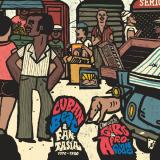
This tidy joint release between Future Rootz and Luchando Music compiles rare recordings from 1970s and 80s Cuba, all sourced from private archives and reel-to-reel tapes. This is the sort of selection to get serious diggers hot under the collar as it explores funk-driven arrangements, jazz-informed horn sections and rhythm-led compositions contoured with Afro-Cuban percussion. There is plenty of tape saturation and analogue noise present throughout that reinforces the archival origins of the music and instrumentation centres on brass, keys and layered percussion, with grooves built from syncopated patterns and live ensembles. Alongside the music, restored credits and contextual research foreground the musicians and recording histories behind these previously unavailable works. Do not sleep on this one.
out of Stock
Last delivered 3 months ago available to reorder, subject to availability
Lava On Wax returns with a new high-quality release — this time taking a fresh turn from its usual reissue path to present a brand-new, original record.
For this first contemporary release, the label proudly collaborates with Nicholas Brancker, a Barbadian Soca pioneer whose illustrious career has seen him work alongside major artists such as Eddy Grant and Roberta Flack, and even earn a Grammy nomination.
Titled Sugar Cane, this project revives the original Spouge rhythm of Barbados — a genre born in the 1960s and largely dormant since the 1970s — and brings it into the modern day. Fusing classic Spouge with Afro influences, the result is a funky, infectious blend of pure Caribbean soul.
An irresistible rhythm, reborn.
out of Stock
Last delivered 3 months ago available to reorder, subject to availability
Blending world-class musicianship with undeniable dancefloor energy, this release marks a bold evolution in Sean Khan’s sound — stepping beyond his signature jazz roots into a rich fusion of house, disco, and jazz-funk.
The A-side delivers a powerful, vocal-led jazzy house anthem, with Omar’s unmistakable voice floating over lush live keys and deep bass grooves. Driven by refined production and crafted for maximum impact, Stéphane and Alex Attias bring a sophisticated yet infectious energy designed to ignite dancefloors. Flip it over, and the B-side turns up the heat — a killer disco-house remix by Alex Attias, powered by tight programming from Stéphane Attias and vibrant keys from Sohan Wilson. Already catching attention from DJs, this track is built for late-night moments and peak-time reactions. The EP also features “As The Tree Grows” — a soulful, live-inspired journey through jazz-funk and disco textures. Warm, groovy, and deeply musical, it channels the spirit of legends while staying fresh and modern — perfect for both listening and dancing. Three moods. One release.cCrafted for the dancefloor. Designed for the soul.
out of Stock
Last delivered 3 months ago available to reorder, subject to availability
Rhythms Of Prescott debuts on Potency with the highly-anticipated Run Of Deluxe EP. This has been getting rinsed by esteemed selectors such as Ben UFO at Houghton Festival through to Shanti Celeste at Dekmantel. The music speaks for itself on this one, listen for yourself. Limited copies!
out of Stock
Last delivered 6 days ago available to reorder, subject to availability
Music springs eternal. Recognising the enduring power of timeless albums to guide us through life, Forever Records is a reissue series dedicated to rediscovering lost musical treasures from across the spectrum of head-feeding, heart-rending electronic music.
Established by Rush Hour co-founder Christiaan Macdonald and Delsin founder Marsel van der Wielen, Forever Records places heartfelt faith in a carefully curated sequence of seminal, largely forgotten records from disparate eras, scenes and spaces within electronic music history. Tipped towards the mellow and introspective, these are albums that stop time when the needle hits the groove, stirring only when it's time to flip over before you sink back into the experience. That's what albums were always meant to be about, back then, right now, always and forever.
The Release:
Striking the sweet spot between sampledelic downtempo and earth-rooted deep house, Fila Brazillia's Old Codes New Chaos is a maverick patchwork of grooves and soundscapes. Crafted in North East England in the vibrant period before chill-out was co-opted by advertising, Steve Cobby and Dave McSherry's sharp-eared funk formula remains a cult classic suite of exquisite productions spanning deep house, broken beat and ambient shot through with wry humour.
Last physically released in limited quantities in 2002, Forever Records are revisiting this 1994 gem with an extensive reissue led by a triple vinyl pressing. As well as a new LP edition of the album, there will also be a uniquely numbered, limited edition housed in a gatefold sleeve that comes with a bonus 10" featuring two previously unreleased tracks.
'Chemistry' and 'Rankine', plus an exclusive print of Catherine Brennand's watercolour painting that graces the front of the album. All editions also features liner notes by veteran music journalist John McCready.
Press response to Old Codes New Chaos:
"The album that made the world finally sit up and take notice of the avant funk grooves coming from Hull's immaculately stoned tech funk magicians." Frank Tope, Mixmag, UK 1994.
"This album… stands out a mile from most of its peers as a work of untouchable genius." Bill Brewster, DJ Mag UK 1994.
"Fila works because they fit into that no man’s land, the space in your record collection where ambient seems too much like wallpaper and house seems just too braindead for your bedroom " Frank Tope, Mixmag, UK 1994.
"Having already created the perfect desert island disc, "Mermaids" and explored the darker side of sub bass on the 17-minute extravaganza "Fila Funk", Fila Brazillia have just unleashed their moving debut LP, "Old Codes New Chaos", and to be quite honest, you'd be fool to miss out this time around." Mandi James, Melody Maker, UK 1994.
“Where Cobby and Man rip up the rulebook on the four to the floor and probably make the greatest afterhours house album in the word”. Tony Marcus, Mixmag, 1996.
A superb Jazz Flavoured Latin Funk Soul album recorded in 1977 by Grammy Award Winning Carlos Franzetti when he was a struggling musician trying to get his first breaks in a tough New York Jazz scene. With a Top Notch grouping including Percussionist Ray Mantilla, Victor Venegas on Bass and Dick Meza from the Tito Puente Orchestra Carlos played all the Keyboards, wrote the numbers and was also responsible for all the arrangements.
Released by Guiness Records (No relation to the Drink) and swiftly forgotten Stateside it was picked up by the DJ's in London's early Jazz Dance scene where "Cocoa Funk" became a must have cut, eventually appearing on Soul Jazz Records seminal re-issue series "London Jazz Classics". It also became a hit in Germany after being re-issued on a double vinyl by leading label Sonorama Records.
Now available again in its original single album format and sounding as fresh as if recorded yesterday from the opening bars of the jazz inflected cut "Beatriz" via the Worldwide sounds of "Sweet And Low" to the Funky Latin Jazz of the title track "Graffiti".
Still changing hands for eye watering sums on collectors sites and now available again for a reasonable sum courtesy of Jazz Room Records.
out of Stock
Last delivered 3 years ago available to reorder, subject to availability
Auf seinem neuen Solo-Klavieralbum „Stephen Hough’s Piano Postcards“ erkundet Sir Stephen Hough die
Welt aus der Perspektive eines reisenden Pianisten, der musikalische Botschaften nach Hause schickt. Er
wählt beliebte Lieder und Melodien aus aller Welt aus und interpretiert sie auf raffnierte Weise neu. Diese
neuen Arrangements sind eine Hommage an die Länder, die er im Laufe seines Lebens auf Reisen und bei
Auftritten lieben gelernt hat – musikalische Souvenirs, die er seinem Publikum mitbringt.
Die asiatische Musik ist vertreten durch „Spring Breeze Prelude“ des taiwanesischen Komponisten Deng
Yu-Hsien sowie durch eine zarte Klavierversion von „Aka Tombo“, einem in Japan sehr beliebten Kinderlied,
das sogar im landesweiten „5-Uhr-Glockenspiel“ zu hören ist. Folklore und populäre Traditionen kommen in
„Cielito lindo” und „Nature boy” zum Ausdruck, während sich die letzte Gruppe von Stücken mit Werken
von MacDowell, Schumann und Sinding der Natur zuwendet. Neben diesen musikalischen Reisetagebüchern
streut Stephen Hough funkelnde neue Transkriptionen von Liedern aus beliebten Filmen ein.
„Piano Postcards“ spiegelt vor allem die Tradition der Pianisten-Komponisten wider: Musiker, die ihr
eigenes Repertoire mit Freiheit und Individualität aufführten, arrangierten und kuratierten. Hough fasst
den Geist des Albums so zusammen: „Der musikalische Appetizer kann tiefgründige Poesie oder Witz und
Laune enthalten, ob subtil oder laut. Alles auf einer handlichen Speisekarte.“
Parisian label Chuwanaga announces the upcoming release of Inner Circle Vol. 1, the first installment in a series of house music releases bringing together artists from the label’s close circle. Available on limited 12" vinyl (300 copies) and digital.
The VA opens with “We All Got To Feel” by Argentine producer J. Koen (Nervous Records / Nite Grooves), a track that encapsulates the essence of deep house. Classy, colorful stabs, refined melodies, and a warm, funky bassline come together in a club-ready cut. It's exactly what you expect when you need a track that delivers — just drop it.
It is followed by “Sunny California” from French producer Kaffe Crème (Floors Records), an ode to the sun — both a celebration and a form of incantation recalling the spiritual energy of Ron Trent and Joe Claussell. The track builds toward a break filled with deep, jazz-inflected harmonies before returning with an electrifying melody carried by layered percussion, leading to an emotional climax.
On the flip side, “It’s A Feeling (House Music)” by the French duo Milk & Honey (Chuwanaga) draws clear inspiration from the Chicago lineage, in the vein of Boo Williams. A looping bassline, deep silky chords, and steady drums create a hypnotic, flowing texture with a myriad of ear candy. It's a feeling, it's a vibe!
The record closes with “The Gatekeeper” by French producers Saint-James (Chuwanaga) & KX9000 (Pont-Neuf Records), a track influenced by the London boogie sound and its broken beat scene. Fans of Dego and Kaidi Tatham will recognize its syncopated grooves and percussive depth, bridging house and broken beat aesthetics.
out of Stock
Last delivered 71 days ago available to reorder, subject to availability
Congolese musician and composer Fabe Beaurel Bambi presents SALA SALA, the debut album from Elikia, a five-piece Congolese Afro-jazz group from Paris, and the first release on Berlin-based Little Tone Records. Recorded live over three days in Paris, the album blends Congolese and pygmy musical traditions with rumba, jazz and spiritual grooves, creating a contemporary, funk-laced and highly danceable sound with plenty of variety across the record. Sung in Lingala, Lari and Kikongo, SALA SALA connects ancestral memory and modern Afro-jazz while carrying a message of hope, responsibility and transformation. For fans of Kokoroko, Ezra Collective, Nate Smith and Richard Bona.
The Mantecas represent one of the finest concentrations of experience and talent in Latin and Jazz music ever to be based in the UK. A pure uplifting Latin Jazz music celebration, limited edition 250 copies: not-to-be-missed, recorded at different locations in London during 2025/26 "On their fabulous fourth album, The Mantecas (formerly Manteca) have moved the needle all the way in the direction of Latin jazz (or jazz latino). In their early years, the London-based eight-piece played a mix of salsa, Cuban timba, boogaloo, Latin funk and descarga (jazzy, improvised Latin jam session), with plenty of vocals, strictly geared for the dance floor. Along the way, the jazz-descarga aspect emerged as a stronger force, though all sorts of other ingredients, from afrobeat to Afro-Cuban, cumbia to samba, ebbed and flowed throughout. Although there's nothing new with the concept of doing an album of instrumental Latin tracks in a jazz mode that's still dance-friendly (Machito, Sabú Martínez, Tito Puente and Tito Rodríguez all waxed jazz latino albums like that long ago), what's new here is The Mantecas' very fresh and confident interpretation of the idiom. And while they share something in common with the accessible, danceable Latinized soul jazz of someone like Mongo Santamaría or Willie Bobo, as well as the Afro-Cubop roots of Chano Pozo, they also bring to mind the more jazz-oriented improvisational legacy of Pozo's amigo Dizzy Gillespie, which is reflected in The Mantecas' explorations of a handful of 20th Century modern jazz giants as they rework timeless classics by John Coltrane, Miles Davis, Oliver Nelson and Wayne Shorter. For this release, all seven tracks are essentially Latin renditions of jazz standards or are Latin jazz originals. There's a mix of jazz and Latin rhythmic structures, instrumentation, arranging, and sensibilities at play, and it's a very natural sounding mélange. Like their previous albums, some of the tunes feature a club-ready blend of hot and cool, in a Latinized British acid jazz / soul jazz way." - Pablo "DJ Bongohead" Yglesias, 2026
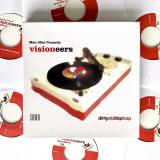
"Dieses Jahr feiert "Dirty Old Hip Hop" sein 20-jähriges Jubiläum, und wir feiern mit einer Neuauflage dieses absoluten Klassikers. Das ursprünglich 2006 erschienene und für die Worldwide Awards nominierte Album ist eine meisterhafte Sammlung von Tracks von Marc Mac (4hero). Mit den Musikern Somatik und Luke Parkhouse sowie den Rappern Voice und Capital A hat Marc Hip-Hop-Breaks & Beats neu interpretiert und in Grooves eingebettet, die den gesampleten Original-Tunes Tribut zollen. Dieser postmoderne Ansatz hat ein Album mit zeitloser Musik hervorgebracht, das Epochen überdauert und gleichermaßen frisch wie vertraut klingt. Und es funktioniert einfach." - Bob Hill. Remastertes 180g Doppelvinyl.
There are records that follow the rules, and others that rewrite them in real time. With O R G A S M A N I A, Byron The Aquarius returns to Skylax with a deeper, freer and more unpredictable statement — where jazz instinct meets raw machine funk, and structure dissolves into pure feeling. Rooted in the lineage of Detroit yet never confined by it, Byron operates in that rare zone where house music becomes expression rather than format. His sound doesn’t chase functionality — it breathes, it stretches, it resists. The EP opens with Back 2 Zion (Tomorrow), a spiritual and meditative journey built on loose drums and luminous chords, carrying a sense of elevation — early morning music where the dancefloor begins to think again. Enter the Co$mos (Fool) pushes further into abstraction, with drifting synths and broken rhythms unfolding in a non-linear structure, navigating between Sun Ra’s cosmic language and Detroit futurism. On the flip, Mr. Captain Crunchhh brings a raw, playful energy — crunchy textures, off-grid swing and an almost improvised groove, alive and unpredictable, a leftfield tool designed to disrupt expectations. Finally, O R G A S M A N I A stands as the centerpiece — hypnotic, sensual and immersive, locking into a deep repetitive groove while evolving in subtle layers, a late-night body experience guided by a sharp musical mind. Across four tracks, Byron The Aquarius confirms his unique position between jazz musician, house producer and sonic storyteller, with a trajectory spanning Sound Signature, Axis, Eglo, Apron and Shall Not Fade, continuing to resonate from Detroit to Berlin and beyond. Artwork by H5 — the iconic studio behind Daft Punk, Air and Vitalic — reinforces Skylax’s timeless and art-driven identity. This is not fast music, this is not algorithm music — this is music for those who still listen. Strictly for the heads. Vinyl only. No repress. Skylax Records.
out of Stock
Last delivered 10 days ago available to reorder, subject to availability
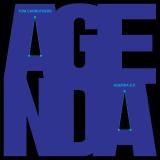
With Agenda EP, Tom Carruthers closes a landmark trilogy on Skylax Records, following Neutralise EP and Deepline. Three records. Fifteen tracks. One coherent vision of machine-driven house music stripped to its raw, functional core. This final chapter dives deeper into direct, club-focused energy, where groove, repetition and tension do the talking. Agenda is less reflective, more physical — built for movement, sweat, and long transitions in dark rooms. Opening track “Chrome” sets the tone: sharp drum programming, metallic pressure, and looping synth phrases that lock the body into motion. “Agenda (Raw Mix)” follows with a tougher, stripped-down approach — no excess, just pure rhythmic insistence rooted in early Chicago jack and warehouse discipline. “Beat Down” pushes further into machine funk territory, where relentless patterns and rugged textures meet in hypnotic repetition. On the flip, “Fade Away” brings a deeper, moodier tension — a late-night track where subtle emotion seeps through minimal structures. Closing cut “What You Want” is classic Carruthers: jacking drums, understated melody, and a groove that feels timeless rather than retro. As with the previous releases, the visual identity is handled by H5, whose modernist, reduced artwork mirrors the sonic philosophy: clarity, impact, and purpose. Agenda EP completes the Skylax trilogy as a statement of intent — not revivalism, not nostalgia, but dance music reduced to its essential elements.
out of Stock
Last delivered 20 days ago available to reorder, subject to availability
Simon W returns to Borft Records with 5 funky analog tracks moving somewhere in the borderlands between Acid House, EBM, Electro and dirty slow Housey Techno. It's slightly skewed and wobbly, disharmonic, distorted and twisted in ways that will make asses wobble robotically on the floor. Go get! Review by Joakim Cosmo
out of Stock
Last delivered 3 months ago available to reorder, subject to availability
Ovatow made quite a stir when he first started dropping deep dubs on his mysterious MySpace page (the main social media at the time). The tracks on the little crappy audio player got hunted down by a flock of DJ's and label heads. From behind a curtain of anonymity he soon started releasing his material on various labels, becoming cult classics in the dub-techno world. It was 2007 when X-dub first appeared on the Dutch imprint SD Records, followed up by his classic release on Frantic Flowers and a string of other projects while keeping his identity secret to everyone. Years later, the rumors proved true... the artist behind these mysterious projects was non other than the Frantic Flowers / Frustrated Funk label head himself. Just testing the waters around him, receiving release offers from close friends and colleagues while he kept his anonymity up. A fun little joke for himself, though the tracks are still relevant and sought after classics today. Both X-dub versions re-appear now, for the first time after almost 20 years, fully retouched and remastered, together with an unknown unreleased jam called Autistic Navigational Spectrum. This is the first in a series of Ovatow work, revived for the heads that appreciate the foggy deep of the Undacurrnt.
out of Stock
Last delivered 80 days ago available to reorder, subject to availability
A definitive archival release documenting the formative years of one of Detroit techno’s most influential acts. Spanning nearly a decade of visionary production, The Collective 1989–1998 Deluxe Edition captures Octave One at their most raw, soulful, experimental, and uncompromising.
Curated from the groundbreaking early period of the Burden brothers’ output, this deluxe collection traces the evolution of Octave One’s unmistakable sound from deep underground machine funk and futuristic rhythm science to emotionally charged Detroit techno classics that continue to shape dance floors worldwide.
This special collector’s edition has been fully remastered and expanded for 430West Records, featuring restored audio, deluxe packaging, and essential selections from a pivotal era in independent electronic music history.
More than a retrospective, The Collective 1989–1998 stands as a document of Detroit innovation: fearless, mechanical, human, and timeless.
Essential for collectors, DJs, and anyone serious about the foundations of techno.
out of Stock
Last delivered 34 days ago available to reorder, subject to availability
Felipe Gordon is back on Shall Not Fade with his new album Tezeta and f*ck is it special.
Felipe Gordon is SNF label mainstay... (we released his triple repressed debut album "A Landscape Onomatopeya" in 2022 as well as 7 x 12" EPs on SNF over the years plus an extra 12" on Lost Palms)... so given his consistent and exceptional output on our record label you'd probably forgive some complacency with this write up, you might even afford us license to assume we're preaching to the choir and allow us to rest easy knowing that at this stage Felipe Gordon's records sell themselves.... Well none of those things are happening here because when an artist makes a record this complete, this good, you have to try to find the words. You use words like "timeless", "complete and "special". Words that can carry the weight. Because when you've listened to an album dozens of times, and not once, in any part, on any listen in any way has it fatigued you, you need to say. When a record felt so wonderfully familiar from the first listen and just kept on giving you the same feels ever since, you need to say. When a record makes you think about you how you feel about certain Air & St Germain albums (even when you know what it means to put that in a press release), you need to say. So here we are, saying these things.. Tezeta is a special record, one that exists in the rarefied air. A proper album. A record that every time you press play you will immediately remember why you own it and why you love it. A record that your subconscious will know so well that if shuffle is on you will know in an instant. An album that when it's in your collection and the first track starts you get a twinge of annoyance because you didn't listen again sooner and when the final track stops you stop too.
Given paint and a canvas we can most of us paint a picture, but only those that are gifted can paint something that makes us feel. Tezeta makes you feel. Feel familiarity when it's playing, yearning when its not, and absence when it ends. This alone would be enough to make the argument as to why this album is special and justify the gushing opening paragraph of this press release. But we're not done yet.
We don't really have a word in english for what Felipe Gordon has created with this album and how it makes you feel. "Tezeta" that word.
Tezeta is a one of four musical modes within the traditional Ethiopian modal music system known as Qiñit. Mulatu Astatke, the father of Ethio-jazz, frequently uses this mode, often translating it as "nostalgia" or "longing". Gordon says Mulatu's own tezeta recordings convey to him "feelings of melancholy and longing from a point of affection". This is exactly the feeling Gordon has captured. It is what he has woven through every recording on this album. Tezeta is the prime ingredient. It's the base note in recipe, it's sprinkled over the signature jazz-sampled house tracks. It powers the vast array of synthesizers Gordon deploys. It underpins the explorations into trip-hop. It's present in Gordon's varied vocal deliveries and it tunes his guitar. It's in the running order. It's the flow. Tezeta is tezeta in electronic music form, with 4/4, breakbeats, samples and synths.
Gordon says a big part of what differentiates this album from from his previous albums is that is was recorded in a period where he allowed himself to create music without the constraints of time or self-pressure which coincided with a moment of heavy personal growth which allowed him to reflect deeply on his work.
There is a word in Portuguese "Saudade" that Gordon says has a similar meaning to Tezeta - Saudade is defined as a deep, sometimes bittersweet, longing or nostalgia for someone or something that is absent or lost. But here at SNF we think that in Tezeta nothing has been lost. Quite the opposite. Through Felipe Gordon's artistic explorations we have all gained something very special indeed.
The CJP Band return to Supa Jams with two more tracks for your listening and dancing pleasure.
First up 'We Must Believe' channels disco (not) disco vibrations on a strings for days sea of spiritual spaceways. Soaring skyward on Boogie driven basslines and roaring sax solos.
This fresh cut nods to the psychedelic soul vocals of Rotary Connection, Idris Muhammad and The 5th Dimension, Carrying a powerful spiritual message of unity and transformation.
On the flip, Charles Earland 1976 jazz funk classic 'Let The Music Play' gets the CJP cover treatment.
A raw, Driving dancefloor burner, Powered by heavyweight drums, Deep Fender precision basslines, Flamboyant Brazilian percussion and crazy guitar and sax solos. Featuring Hannah Williams on guest vocals.
Hand Stamped Sleeve
Limited Pressing
Don't Sleep!
out of Stock
Last delivered 16 days ago available to reorder, subject to availability
London Jazz Classics originally came out in 1993 - the first album ever to be released on Soul Jazz Records. The album brought together rare and obscure dance tracks in a unique mix of jazz dance and fusion, funk, Brazilian and Latin grooves.
The album was ironically titled - none of the music was from London, none of the music was traditionally classified as jazz, and all of the tracks were at the time practically unknown to most people. Instead these were tracks that were filling dancefloors in a nascent jazz dance scene in London being created by a small group of DJs – Paul Murphy, Gilles Peterson, Sylvester, Patrick Forge and a few others.
As demand for these rare groove jazz tracks grew, previously unknown records such as Alive!’s ‘Skindo Le Le’, Doug Richardson’s ‘Salsa Mama’, Carlos Franzetti’s ‘Cocoa Funk’ and Emilio Santiago’s ‘Bananeira’ became sort after and even-harder-to-find items with original copies going for £100s of pounds.
These tracks became part of the soundtrack to this jazz dance scene which has now spread across the world. This music paved the way for the arrival of many of the UK’s new wave of current artists such Shabaka Hutchings, Nubya Garcia and Ezra Collective who today offer a uniquely London sensibility of fusing jazz with wide-ranging cultural influences – everything from afrobeat to soul.
London Jazz Classics was the first album to bring this jazz dance music featured here to a wider audience. More than 30 years since its initial release Soul Jazz Records are releasing this new 2026 edition, bringing the music once more to a new generation of listeners.
out of Stock
Last delivered 3 months ago available to reorder, subject to availability
Get In Where You Fit In, was originally released in October of 1993 and would be his fourth album in a row to be certified platinum. Production was handled by Ant Banks and The Dangerous Crew, which featured live instrumentation, incorporated P Funk samples, and G Funk synths. The lead single "I'm a Player" sampled Bootsy Collins' funky bass of "Hollywood Squares" and Quincy Jones' son QDIII produced the epic Bay Area G Funk laden classic track "Just Another Day". And it wouldn't be a Too $hort record without some pimp and sex tales like "Blow Job Betty", "All My Bitches Are Gone" and the upbeat "Gotta Get Some Lovin". Bay Area legends Spice 1, Ant Banks, and Mhisani aka Goldy join in on the posse cut "The Dangerous Crew" followed by a track with more Bay Area legends Rappin' Ron and Ant Diddley Dog dissin' ex Dangerous Crew member MC Pooh on the title track. Get On Down has repressed this Too $hort 90's fan favorite album on Purple-In-Clear Colored Vinyl.
out of Stock
Last delivered 3 months ago available to reorder, subject to availability
Mit Tether veröffentlicht die preisgekrönte Saxophonistin, Improvisatorin und Komponistin Alden Hellmuth ihr neues Album - der kraftvolle Nachfolger zu Good Intentions, das als Debut Album of the Year International beim Deutschen Jazzpreis ausgezeichnet wurde. Hellmuth, Absolventin des renommierten Herbie Hancock Institute, verbindet hier kompositorische Präzision mit einem markanten, modernen Bandsound. Das Herzstück von Tether ist ein seltenes Zwei-Bass-Quartett, getragen von zwei der radikalsten Musiker der LA-Szene: Logan Kane, ein genreübergreifender Bassist zwischen Jazz, Avantgarde und Punk-Funk, und Miller Wrenn, einer der furchtlosesten Improvisatoren der Westküste. An den Drums sorgt Justin Brown für energetische Dynamik - ein herausragender Musiker, der u. a. mit Ambrose Akinmusire, Christian McBride und Vijay Iyer gearbeitet hat. Besondere Gäste wie Paul Cornish, Finalist großer internationaler Klavierwettbewerbe und auf Blue Note veröffentlicht, sowie Yakiv Tsvietinskyi, eine prägende Stimme des modernen ukrainischen Jazz, erweitern den Klang zusätzlich. Tether ist ein energiegeladenes, modernes Jazzalbum, das Avantgarde-Mut, kompositorische Tiefe und unmittelbare Spielfreude vereint. Hellmuths Quartett erschafft eine kraftvolle, eigenständige Klangwelt zwischen Modern Jazz, zeitgenössischer Improvisation und experimentellen Low-End-Texturen.
out of Stock
Last delivered 3 months ago available to reorder, subject to availability
Frankfurt am Main -- Leipzig duo not even noticed deliver their long-awaited debut album space beyond noise - a 12-track journey balancing club functionality with immersive, long-form listening.
Shaped by years of touring and a shared ritual of visiting botanical gardens around the world, the album blends shapely grooves, field recordings and warm melodic textures into a cohesive, lived- in sound. Subtle environmental details run throughout, creating a natural flow between tracks.
Musically, it moves between electro-funk, breakbeat and hip-hop- inflected cuts, with downtempo and dubby excursions. Highlights include the driving “chrone,” the sundown groove of “diras,” the acid-tinged “plune,” and the hazy two-step moment “skum.”
Designed with warmer months in mind, space beyond noise captures the balance between dancefloor energy and home listening depth.
out of Stock
Last delivered 56 days ago available to reorder, subject to availability
Time to welcome Soul 223 to the label with his debut Delusions EP entitled Fear Of Stopping. Something of a complete legend in our eyes and ears, Steve Pickton has been releasing top drawer tuneage for over two decades both as Stasis on influential labels such as B12 and Peacefrog and more recently as Soul 223 on equally well regarded imprints like Delsin, Soul Jazz and Neroli. Always one to shy away from any limelight or self promotion it's true to say that this underrated British producer remains something of an anomaly, staying true to his underground roots where faceless, shadowy and obscure reigns supreme over the latest over-exposed cover star. This ethos naturally carries through into his music where you will always find both expansive beauty and unrefined rawness in equal measures ensuring his tracks always sound fresh rather than over produced or contrived.
Fear Of Stopping opens the EP with a low-slung disco groove providing the backbone for intermittent pad washes and reversing stabs. The focus here is firmly on the drums and simple conga riff with thankfully very little else to deter you from this sublime slice of abstract dance music.
Next up we have a remix from another ridiculously talented producer who chooses quality over quantity, having only ever had one release under his own name, albeit for one of the most respected labels in the world; Rush Hour. Maxi Mill came to our attention having released one of the tracks of 2011 namely To The Next. On this, his first ever solo remix he brings a brilliant bump to the EP with a raw, warehousey and bass-heavy workout. Just the right amount of strings and pads keep the deep vibe intact but the filtering bass and jacking drums definitely take this one to the floor.
Flipping over we have Walberswick in it's Hoist Covert Mix incarnation. Almost thirteen minutes of spaced out, deep Detroit house music awaits you, ready to lure you in and cocoon you with it's warm and hypnotizing machine funk. Lovely to hear the old Stasis influence working it's way into this one sounding both decidedly old-school and completely futuristic and otherworldly as only the best tracks ever do.
Closing the EP we have Birdbrook Rain dropping the BPM's for a beautifully sparse track that brings with it an almost desolate and disconnected feeling, echoing synths providing a naive melody while a dusty pad shifts simply beneath. A little slice of magic concluding a fresh and interesting EP, we hope you agree.
Multitrack Reworks returns with Volume 14, featuring four exceptional reworks from producer Smoove. Working directly from the original multitrack tapes, Smoove peels back the layers and strips each recording down to its essential groove, revealing these classic tracks in a fresh new context. Across the EP, he delivers powerful drums, slick basslines, precise arrangements and perfectly placed percussion breaks.
Gladys Knight’s Taste The Bitter Love contains all the right ingredients, expertly polished and reimagined for contemporary dancefloors. Heartfelt strings, warm Fender Rhodes and Gladys’ unforgettable vocal performance combine to create a timeless yet modern groove.
Dexter Wansel’s Theme From The Planets has been sampled countless times throughout the years, often intentionally played at the wrong speed. Smoove takes a different approach, reworking the track at a faster BPM while carefully retaining the original pitch, bringing new energy to this much-loved classic.
On Talk Talk’s It’s My Life, the keyboard layers are stripped back to a Balearic-inspired groove, allowing the iconic vocals to take centre stage while maintaining the song’s unmistakable character.
The EP closes with the mighty Donald Byrd and Lansana’s Priestess. Here, Smoove delivers a stripped-back jazz-funk workout, highlighting the track’s infectious rhythm and musical sophistication while giving dancers plenty of room to move.
Volume 14 is another masterclass in respectful reconstruction, breathing new life into four celebrated recordings while preserving the qualities that made them classics in the first place.
out of Stock
Last delivered 38 days ago available to reorder, subject to availability
Somewhere between the after-hours haze and the first flicker of sunrise, Nebraska re-emerges - this time with a twist in the signal. Long respected for his deep-cut sensibilities and dancefloor intuition, Ali Gibbs returns to Delusions Of Grandeur not just as Nebraska, but with a handover to his new alias: Dubl Drat. The Alter Alter Ego EP plays like a transmission from both sides of his creative psyche - one rooted in warm, groove-led house and disco mutations, the other drifting deeper into dubbed-out, heady abstraction.
The A-side opens with Alter Alter Ego in its Nebraska OG Mix form - a crunchy, funked-up mid-tempo burner. Chopped Rhodes solos flicker in and out of the mix while a rolling bassline locks into a low-slung groove - equal parts party-starter and late-night dancefloor hypnosis. Next, The Teckel Track slides the tempo down into a proper slo-mo four-on-the-floor bumpy groove. Fat stabs punch through layers of glitchy FX while a melodic bassline snakes underneath, forming a hazy, infectious earworm tailor-made for those early-night mood-setting sessions. Closing the A-side, Olive (Dubl Drat Dub) signals a shift. Here, Gibbs leans fully into his Dubl Drat persona, dissolving structure into a blissed-out dub excursion.
Chopped breaks scatter across the stereo field, chiming melodies echo into the distance, and granulated percussion parts build a dense, immersive landscape - one to get lost in rather than dance through. Flipping over we have Alter Alter Ego (Dubl Drat Remix) which reconfigures the title track into a stripped-back boogie workout. The groove is leaner but no less potent, driven by a killer bassline and punctuated with signature Rhodes licks - pure, understated club pressure. Finally, Olive (Nebraska Version) offers a gentle comedown. This alternate take softens the edges, introducing additional guitar textures that drift into Balearic territory. It’s nostalgic, introspective, and quietly expansive - a closing chapter that lingers long after the last note fades. The Alter Alter Ego EP isn’t just a new release - it’s a dual-state exploration, a conversation between rhythm and space, between Nebraska and Dubl Drat, and marks the last ever Nebraska release as Ali closes the chapter and the alias for the final time.
out of Stock
Last delivered 66 days ago available to reorder, subject to availability
After ten years 12 Inch Lovers has become a household name not only because of their parties but also because of the fantastic vinyl samplers they released over the past few years, which were sold out in no time and have become true collector's items.
They now continue in the same vein and once again bring a fresh and contemporary mix of hard to find, original house classics or even classics that never had a vinyl release.
These samplers should therefore not be missing from any 12 Inch Lovers collection.
"Gregor Salto" is at it again! Sampler 6 opens with that other and hard to find classic of his "Your Friend". A club classic that has won the hearts of countless clubbers and house fanatics around the world since 2009. And speaking of hearts; Belgian dj-producer "DJ Wout" released this beautiful and emotional remix of "D. Van Horn's" "Somebody Now To Love". A true trance classic and typical in sound for that period that you can find on A2.
On B1 we find a more recent track but which you can already say is a future classic. "MZ" from "Sascha Funke" is still played to this day by top DJs like Solomun and very hard to find on vinyl. A must have! Dutch producer "Karmon" delivered this catchy deephouse remix of "Fabo's" "Where I Stand" in 2012. You can find it on B2.
On C1 we find the beautiful "Andain" classic in the "Gabriel & Dresden Unplugged Mix". "Beautiful Things" was picked up by "Tiësto" at the time and has made it a true classic. Hard to find on vinyl.
"Moko" "Fly" on C2 is a very catchy and quirky track from 2010 that never had a vinyl release! Highly recommended!
D1 brings the dreamy and highly sought after "Today" from "POB & Taylor" in the "Seismic" remix after which we close with D2 with a true classic.
"My Moon My Man" by "Feist" is probably that record which remix is better than the original. "Boys Noize" was responsible for this in 2007 and the rest is as they say history.
Chicago funk band Royal Flush release sonly one full length on their local Texas label Lucky and that was Hot Spot. They did so in 1980 before later reissuing it via GEC and although it isn't one of the most well known albums amongst funk heads, we think that is rather a crime because it is a top notch if not underrated album. It is couched in the traditions of the genre but with nods to styles like P-Funk. If you can find an OG copy you will have to shell out plenty of money and although this same label put out a CD version in 1994, it has not been reissued on vinyl before.
out of Stock
Last delivered 3 months ago available to reorder, subject to availability
Maria is the debut album from renowned Brazilian electric bassist and composer Moyses Dos Santos. A homecoming for the London-based artist, Moyses’ debut reconnects him with his North-Eastern roots while assembling an international cast of collaborators including legendary Brazilian arranger Arthur Verocai, US trumpet sensation Theo Croker and London-based vocal star Lynda Dawn.
After relocating from Brazil to London in the early 2000s, Moyses dos Santos quickly became one of the capitals’ most in-demand players, sharing stages, studios, and writing credits with best-selling artists including Nile Rodgers, Janelle Monáe, Emile Sandé, Gregory Porter and Omar.
In 2022, Moyses toured with Brazilian jazz-funk legends Azymuth, completing the rhythm section alongside Brazilian drumming master Ivan "Mamão" Conti. "It felt like he was my wise Brazilian grandfather figure." Moyses recalls. "When you spend so many years working internationally, you unconsciously start to leave certain parts of yourself behind. Mamão encouraged me to reconnect with Brazilian music, and that's where this record really began."
Brazil’s North-east, where African, indigenous and European traditions collided and fused most intensely, produced a musical heritage unlike anything else on earth, Moyses dos Santos is a product of this syncretism. On Maria, named after his mother, Moyses brings the musical vocabularies of his youth to the fore. From the soul of the church band where he began to learn his trade as a musician, to the rolling batucadas – maractus, baiaos, sambas and frevos – which he played throughout his teenage years.
Drawing on the lineage of North American electric bass giants like George Duke, Jaco Pastorius, and Stanley Clarke, Moyses runs Brazilian musical traditions through jazz, funk, soul and disco: his sound charged with the cosmopolitan energy of London's contemporary jazz scene.
Lead single and album opener “Boa Viagem’ is joyous, carnivalesque dancefloor jazz: a timeless groove for the nightclub and street party alike. Calling directly to a higher power “Brazilian Spirit” is an astral-jazz phenomenon, featuring the transcendent trumpet playing of Grammy nominated Theo Croker. On “Saudade” Moyses calls upon iconic Brazilian maestro Arthur Verocai, whose signature string arrangements cascade around the divine vocals of ascendant London artist Lynda Dawn.
With impeccable style, charisma, warmth and virtuosity, Moyses steps forward with his stunning debut Maria: out on vinyl, LP, CD and digitally on the 12th June 2026.
out of Stock
Last delivered 37 days ago available to reorder, subject to availability
A decade has now passed since French-Algerian collective Acid Arab (a studio and live outfit helmed by producers Guido Minisky and Hervo Calvalho) wowed the world with their debut album Musique De France. Since, they've delivered two more albums, both of which take different approaches to fusing electronic beats and instrumentation with North African and Middle Eastern sounds and vocals. Resonance, their fourth full-length, sees them return to the raw, analogue-rich and bass-heavy club sounds that marked out their formative years at the turn of the 2010s - all heady Arabic vocals, traditional instrumentation, moody grooves, twisted acid lines and knowing nods to everything from acid house, new beat and EDM to industrial funk, dark new-wave throbbers, and the mid-tempo psychedelic pulse of new beat.
out of Stock
Last delivered 31 days ago available to reorder, subject to availability
SCOTTISH TRUMPETER MALCOLM STRACHAN RETURNS WITH HIS MOST UPLIFTING AND GROOVE-DRIVEN ALBUM YET – “LOOK ON THE BRIGHT SIDE” On Look On The Bright Side, Malcolm Strachan sounds more open than ever. His third solo album moves effortlessly between soul-jazz, Latin grooves and Afrobeat touches, anchored by the warm, cinematic feel of 1970s jazz but driven by a clear sense of forward motion. Released on 22 May 2026 via Haggis Records, the album sees Strachan stepping further into his role as a composer and bandleader, drawing together the threads of a career spanning more than two decades at the heart of the UK’s jazz, funk and soul scene. Where his debut About Time (2020) channelled the spirit of classic Blue Note recordings and Point Of No Return (2023) leaned into the groove-heavy CTI era, Look On The Bright Side feels broader in scope – still rooted in groove, but more open to outside influences and a more consciously uplifting tone. “I wanted the music to feel upbeat and positive,” says Strachan. “I start at the piano, working through chord ideas until I find something that feels right. Once the harmony is there, the melodies tend to come naturally.” That approach gives the album its fluidity, with tracks evolving from feel as much as structure and arrangements that leave room for interplay and movement.
out of Stock
Last delivered 3 months ago available to reorder, subject to availability
Leopard DaVinci is the official keyboardist of Dabeull's Band.
“Casual Conversation” pairs Leopard DaVinci’s high-gloss funk production with Moniquea’s signature vocal charisma for an instantly addictive modern funk single. Flirty, confident and groove-heavy, the track balances retro-inspired synth textures with a contemporary boogie pulse, making it a strong fit for editorial playlists centered around funk-forward, danceable and soulful music.
Moniquea already holds a respected position in the global modern funk community, and this release delivers exactly what that audience wants: attitude, melody, replay value and undeniable groove. “Casual Conversation” has crossover potential between dedicated funk listeners, nu-disco audiences and feel-good R&B selectors.
“Flaws” pairs Leopard DaVinci’s signature synth-led funk production with Helena’s fresh and expressive vocal presence for a release that feels both timeless and relevant. Built around a message of self-acceptance and inner strength, the track transforms vulnerability into groove, offering a refined mix of modern funk, boogie and soulful pop energy.
Its lyrical theme makes it especially effective beyond niche funk circles, opening space for playlisting tied not only to groove and retro-funk aesthetics, but also to confidence, empowerment and uplifting mood. “Flaws” is melodic, elegant and emotionally direct — a strong crossover track with both artistic identity and listener accessibility.
This 45 reissues two Spanish classics—DJ’d, sung, and danced to exhaustion—featuring striking arrangements and rhythms inspired by soul, funk, and rock, pushing flamenco-influenced popular music into previously uncharted territory. The flamenco rock of ‘Orgullo’ (1974) by Las Grecas will appeal to international listeners already captivated by the Anatolian sound of Baris Manço, Mogollar… On the B-side, Paco, Paco, Paco’ (1969) by Encarnita Polo is a soul-pop hit with an irresistible syncopated rhythm and killer bass lines. In the final years of Franco’s dictatorship, when Spain’s popular music was kept on the sidelines of avant-garde and countercultural trends, a number of records emerged that dared to bend and hybridize the country’s so-called “national” musical genres (calling it flamenco outright would be imprecise) and infuse them with a dose of modernity. This single brings back two of those local popular classics—DJ’d, sung, and danced to exhaustion—which featured arrangements and rhythms inspired by what their creators had heard in international soul, funk, and rock productions. The first 20 seconds of ‘Orgullo’ (1974) hit with a powerful sonic punch built on ferocious fuzzed-out guitars, distorted keyboards, and thunderous drums that could easily belong in the discography of Led Zeppelin, The Guess Who, or Cream… until, suddenly, Las Grecas start to sing and Flamenco rock is born. It will undoubtedly resonate with international audiences already drawn to the Anatolian sounds of Baris Manço or Mogollar. A few years earlier, in 1969, the brilliant Argentine producer and arranger Adolfo Waitzman had already transformed a harmless light pop tune recorded by a yeyé girl, Encarnita Polo, into a soul-pop hit driven by an irresistible syncopated groove and killer bass lines. The playful ‘Paco, Paco, Paco’ became a bestselling single in Spain and, more than 50 years later, is still celebrated as a brilliant example of the romance between flamenco-inflected sounds and soul-pop. First-ever single reissue.








![Octave One - The Collective [1989-1998] Deluxe Edition LP 4x12"](https://www.deejay.de/images/l/4/6/1246246.jpg)