Produced by David Chazam (Jean-Jacques Perrey, Monique Sonique) "Psychosomnia" by Müholos is a powerful kind of audio synths therapy. Follow the dosage to the letter or be subject to permanent electronic ecstasy!
Cerca:t jacques
Belgian instrumentalists Glass Museum have found the perfect balance between piano and drums, where jazz and electronics collide, uniting the surgical precision of the best contemporary jazz, à la Gogo Penguin and Badbadnotgood, with the electronic influences of Jon Hopkins or Floating Points.
In motion since 2016, the duo consisting of keyboardist Antoine Flipo and drummer Martin Grégoire, have a rich history written around a powerful connection to duality. From the initial impact of the 'Deux' EP in 2018, to the synthetic and organic textures of the critically acclaimed 2020 album 'Reykjavik', Glass Museum has found its balance in symmetry.
Released 29th April via the groove-obsessed Sdban Ultra label, 'Reflet' was born out of a desire for freedom, a wish to innovate and travel differently. This new piece stands out as an artistic climax crafted at the crossroads of time and genres, an electronic proposition wrought by two brave hearts, tempered by the organic reflections delivered through computer free melodies. An album which places the human at the core of its compositions and in order to return to a more instinctive and instantaneous means of creation, the duo retreated to a secret location in one of the most remote parts of the Ardennes. It's there, in the shade of spruces, that the album was first born.
Extremely cinematographic, 'Reflet' delivers a panoramic view point: jazz, breakbeat, minimal techno and deep house, collide on neo classical grounds. From the dynamic instrumentation of album opener 'Caillebotis' to the absorbing oscillations of 'Shiitake' and grand gestures of the album title track, 'Reflet' is an odyssey running through troubled times, an ode to night time, to life, dreams and to all rhythms that convey emotions beyond words. Like its immersive creative process, the album offers a counterpoint and, above all, endless perspectives. Elsewhere, the pulsing, melodic 'Auburn' and entrancing electronic textures of 'Opal Sequences' continue the exploration before the strutting 'Kendama' showcases the electronic sensibilities that are buried within their productions.
Shining as a true instrumental tour de force, 'Reflet' also takes inspiration from the progress of the Ohme Collective. At the crossroads of art disciplines, science, new technologies and societal challenges, this creative community draws the future of visual arts and created the album artwork for this resolutely futuristic album.
Having initially won the opportunity to perform at the Dour Festival, Tournai back in 2016, Glass Museum have picked up a series of awards and distinctions back home in their homeland and they now find themselves dining at the top table of Europe's contemporary music scene. The international music scene opened itself to the band once again in 2019, with the duo performing at Elb Jazz in Hamburg, the legendary Ancienne Belgique in Brussels and the Iceland Airwaves Festival, Reykjavik.
In 2020, Glass Museum distinguished themselves by remixing a track for electronic artist, Rone. Having recently received a César Award for his soundtrack to the Jacques Audiard film, Les Olympiades, the French producer called on the Brussels duo's know-how - a mark of confidence which once again underlines the international reach of Glass Museum. Germany, Iceland, Turkey, Romania, Greece, France or Czech Republic have already approved Glass Museum's singular recipe.
Wewantsounds is delighted to present the first retrospective on vinyl of Saravah Records, one of the most influential French labels founded in Paris by singer, songwriter and producer Pierre Barouh in 1966. Featuring Brigitte Fontaine, Jacques Higelin, Alfred Panou, and many rare tracks reissued on vinyl for the first time, the set gives a glimpse of the free-form, groovy sound of the label between 1965 and 1976. Supervised by Pierre Barouh's son and Saravah historian, Benjamin Barouh, The 2-LP Gatefold set comes with a 4p insert featuring liner notes (Eng/Fr) by Benjamin plus an exclusive interview of Barouh's partner Fernand Boruso by Jacques Denis telling fascinating anecdotes around the label.
Recorded for Benin’s Communist revolution,
‘Rhythm Revolution’ is a rare and truly unique
Afrobeat record - it’s rumoured only 200 copies of
the original release survived.
Ferry Djimmy was a schoolteacher, former boxer,
and a personal friend of Muhammad Ali and Fela
Kuti. He was later Jacques Chirac’s personal
bodyguard.
Recorded at the Satel Studio in Cotonou, the
album is one of the toughest, wildest and deepest
slices of Afro-Funk cut - with raw African rhythms,
distortion, energy and wit.
Alongside nods to Hendrix, Kuti and James Brown,
there is something truly unique about Ferry
Djimmy’s musical legacy.
A must-have for Afrobeat, Afro Funk and Psych
collectors.
• Revised reissue of the acclaimed first-ever book-length investigation into French Touch.
• Back in print for the first time since 2004.
• Updated version features previously unpublished interviews with Daft Punk, Laurent Garnier, Cerrone, Jean Jacques Perrey, Motorbass, Chris Le Friant (aka Bob Sinclar), Air, Etienne de Crecy, La Funk Mob, Cassius, The Micronauts, Stardust, Benjamin Diamond, Modjo, DJ GilbR, i-Cube, DJ Cam and many more...
During the second half of the 1990s, Paris experienced a dance music revolution thanks to groundbreaking artists like Daft Punk, Air, Super Discount, Motorbass, Cassius, Dimitri from Paris, Bob Sinclar and many, many more. It was a scene that became known as French Touch and was heralded throughout the world as the epitome of dance music cool, forever placing Paris on the dance culture map.
Journalist and author Martin James was there right from the start, documenting the scene from its inspirations to its earliest moments and onto its global breakthrough. In the process, he inadvertently provided the French Touch moniker that became adopted throughout the world.
Drawing on a dazzling array of exclusive interviews with the biggest names in French electronic music history, French Connections explores France’s significant contribution to dance music culture that paved the way for the French Touch explosion.
“Endlessly informative and thoroughly enjoyable, James manages to bring even the most boring artists (Air) to vibrant life with his energetic prose and rich imagery.” Bob Stanley, Mojo
“(James) has a rare, imagistic talent for evoking the unearthly sounds of modern dance music.” The Guardian
“Viva Monsieur James! Essential reading for all fans of Gallic grooves.” DJ Mag
“If ever a book was overdue then it’s this one, which charts the influence of French electronica on the world outside the hexagon over the past decade or so… tres bien.” Select
- A1: Tsha - Boyz
- A2: Granary 12 - Mancmania
- A3: Stefan Seay - Acid Kiss (Feat Willyouarenot - Mood Mix)
- B1: Conny - Song For Eva (Shan 3Am Pump Mix)
- B2: Jeran Portis - Unproven
- B3: Ryan Clover - Velvet Lace Dream State
- C1: Uncle Knows - Flock
- C2: Nicolson - 1988
- C3: Jacques Greene - (Baby I Don't Know) What You Want (Baby I Don't Know)
- D1: Gallegos - Sycophantic Maniac
- D2: Aspect - Norf
- D3: Mafro - Miss Me
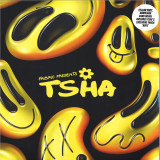
Als BBC Radio 1's Breakthrough Artist Of The Year 2021 tragen TSHA's DJ-Sets eine strahlende, zukunftsorientierte Energie in sich, während sie gleichzeitig Vintage-Dancefloor-Sounds und den klassischen Raver-Spirit atmen. Die Idee von Acid House (siehe Smiley-Artwork) und der Old-Skool-Rave-Kultur sowie das Ethos von Frieden und Liebe haben die junge DJ/Produzentin zu ihrer 'fabric presents' Arbeit inspiriert, die Rave, 90er Dance, House, Techno, UK Garage, Soul, Grime, Disco und Bassmusik sowie ihr eigenes Exklusive 'BOYZ' umfasst. Dabei spiegeln viele aufstrebende Künstler in ihrem Mix den unverkennbar britischen Clubkultur-Sound wider, dem sie mit diesem Werk Tribut zollt.2LP auf smiley-gelbem Doppelvinyl mit DL-Code.
- 1: La Chanson De Prevert
- 2: Les Feuilles Mortes
- 3: Mon Homme
- 4: Paris Canaille
- 5: À Tout Jamais
- 6: Quand Tu Dors Pres De Moi
- 7: Syracuse
- 8: La Foule
- 9: Et Maintenant
- 10: Le Temps De L’amour
- 11: La Mauvaise Reputation
- 12: Sous Le Ciel De Paris
- 13: Est- Ce Ainsi Que Les Hommes Vivent?
- 14: Il Etait Une Oie
- 15: Un Jour, Tu Verras
- 16: Pour Une Amourette
- 17: Que Reste T-Il De Nous Amours
- 18: Petite Fleur
- 19: Le Poinçonneur Des Lilas
- 20: On N’oublie Rien L’absent
- 21: Paname
- 22: L’ame Des Poètes
- 23: Le Tourbillon
- 24: Ne Me Quitte Pas
- 25: La Vie En Rose
26 iconic titles from the golden age of French song, includes 12-page
booklet with complete information in both English and French
Moving away from the big theatres and flourishing in clubs and small cafés, French Song had its summit in the mid-20th Century, when figures such as Edith Piaf, Charles Trenet, Jacques Brel, Georges Brassens, Léo Ferré, Dalida, Charles Aznavour, Henri Salvador, Juliette Gréco, and Serge Gainsbourg, disseminated their art first in Paris, and then throughout the world. It was a new kind of song,
influenced by literary realism and the naturalist movement, and its lyrics frequently focused on the lives of socially marginalized people.
Twenty- six of the best exponents of the genre are included on this splendid collection
- 01: Mister Don Cherry Comprit Que Leur Esprit Etait Abattu Et Repeta Dune Voix Musicale Quelques Blagues Reservees Pour Les Temps De Detresse
- 02: Sunny, Archie, Clifford, Meme Combat
- 03: Que 100 Fleurs Sepanouissent
- 04: La Revolution Est Une Transfusion Sanguine Voila La Mer, Voila La Vie
- 05: La Bourgeoisie Perira Noyee Dans Les Eaux Glacees Du Calcul Egoiste
- 06: Liberez Michel Le Bris_
- 07: Vie Et Mort De Lalexandrin
To avoid the “Quésaco?” on the sleeve of Piano Dazibao, François Tusques explains everything: A wall mural on which the Red Guard expressed their opinions during the Chinese proletarian cultural revolution. So much for the “Dazibao”, very good; but the piano in all that?
The piano, François Tusques was self-taught and his work was influenced by Jelly Roll Morton and Earl Hines before discovering Thelonious Monk, Bud Powell and then... free jazz. In Paris in 1965, Tusques mixed with Michel Portal, François Jeanneau, Jean-François Jenny-Clark, Aldo Romano or Jacques Thollot. He also met Don Cherry and above all recorded, with other like-minded Frenchmen (Portal and Jeanneau alongside Bernard Vitet, Beb Guérin and Charles Saudrais), the first album of free jazz in France, named... Free Jazz.
In 1967, Tusques again served up Le Nouveau Jazz, this time in the company of Barney Wilen (and Guérin, Jenny-Clark, Romano). Three years later his thirst for freedom led him to isolation; between May and September 1970, the pianist recorded, at his home, the first of two albums that he would release on Futura Records: Piano Dazibao and Dazibao N°2.
Under the influence of Mao and Lewis Carroll, the free spirit roamed and composed seven tracks which are not so much free as libertarian. As an homage to some friends (Don Cherry, Sunny Murray, Archie Shepp, Clifford Thornton but also Colette Magny, Michel Le Bris or the Théâtre du Chêne Noir), the pianist played cascading bouquets of notes, free-form wanderings, blues-ambushed dances, growls, discords, a fatal requiem... A cherished freedom, songs of hope and demands, François Tusques offers the most unrelenting of independent records.
- 1: Sous Le Ciel De Paris
- Je Suis Comme Je Suis
- Paris Canaille
- Les Amours Perdues
- Chanson Pour L’auvergnat
- Romance
- La Marche Nuptiale
- Les Feuilles Mortes
- Coin De Rue
- La Valse Brune
- L’eternel Feminin
- Sous Le Ciel De Paris
- La Recette De L’amour Fou
- Java Partout
- Accordeón
- Les Pas Réunis
- La Cuisine
- La Famille Dupanard
- On N’oublie Rien
- C’etait Bien
- Les Imbeciles
- Le Temps Passe
- Paname
- Il N'y A Plus D'apres
- Jolie Mome
Limited Edition 3-panel digipak CD compilation of 26 of Juliette Gréco's most famous recordings, including the complete contents of her legendary LP Nº7 (Philips B 76 515 R), which was selected by MOJO Magazine as her best album.
An emblematic figure of French song with a career spanning seven decades, Juliette Gréco (1927-2020) is famous for having given the most celebrated performances of songs by authors such as Raymond Queneau, Jacques Prévert, Léo Ferré, Boris Vian and Serge Gainsbourg.
"Resistance activist, fashion trendsetter, singer, beatnik, talent scout, actress, lover and, as she said, 'famous before she had done anything', Juliette Greco will be remembered as the first and the last of her kind, and among the most influential people of the 20th century, even for those unable to name a single song to which her name would be linked." - David Hutcheon, MOJO Magazine, 2020
[a] 1 Sous Le Ciel De Paris [1959 Version]
[l] Sous Le Ciel De Paris [1951 Version]
For the third release of Captea, the Italian duo deliver a two tracker EP + remix. Vibra is a tech house joint with a hint of electro, a modern vision of club music that fit any DJ set. Saturnia brings you to another dimension with an acid sequence and voice playing over a badass groove. The B-side is curated by Nuances de Nuit's founder T. Jacques with his reinterpretation of Vibra.
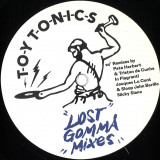
This is a very special EP. As many might know Toy Tonics started as a sublabel of now sleeping German indie dance label Gomma records. Gomma, along with DFA, Output Records and a few other was knownn for a very ecclectic, different approach in dance music. On this LOST GOMMA MIXES EP you find 4 now lost tracks that came out ca 10 - 20 years ago on Gomma, but fit very well in today’s zeitgeist again. Pete Herbert, In Flagranti, Jacques Lu Cont are featured. Who knows about modern disco - knows these producers. And there is a very special name here too: Nicky Siano. The now legendary New York DJ used to be resident at Studio 54 and other legendary NYC venues of the 1970ies and 1980ies. One of his are remix works was for the Gomma rcords band The KDMS. Pure disco euphoria.
"Black Truffle proudly presents The Refrain from Melbourne-based artist Francis Plagne, whose growing catalog of collaborative and solo releases range from song-based work to abstract audio collages.
Closely aligned with Plagne's Moss Trumpet LP (released by Penultimate Press in 2018), The Refrain’s two side-long tracks mix sounds of the mundane with the otherworldly; rising, receding and overlapping. The result feels like being led through a series of scenes devoid of context or direction. Furthermore, it’s hard to define the scenes as either inviting or disconcerting, as they’re often both at the same time. As the record progresses sounds reappear and are juxtaposed so as to only hint at the familiar. A hall of mirrors, perhaps?
Completed in 2020 using material recorded from 2012-2020, the record uses tapes of shelved, unfinished, and forgotten projects that featured field recordings from various locations, domestic sounds of plastic bottles, bubble wrap, creaking chairs, voice, and instrumental recordings, including an appearance from crys cole on Casio. These pieces were re-amped, processed and edited, then additional instrumental pieces featuring synths, guitars, plastic saxophone, melodica, and percussion were added, the results shaped into drifting, episodic assemblages.
Although essentially a tape piece, The Refrain presents as a crude, non-idiomatic composition that feels both timeless and transitory. It’s a million miles from the polish and rigour of GRM, perhaps more in line with Jacques Bekaert’s eponymous Igloo LP, or Costin Miereanu’s Luna Cinese. The Refrain could be read as a psychedelic Krapp’s Last Tape; one man’s response to listening through forgotten and discarded tapes, reflecting, reconciling, and forging a new path. A potent tonic for these absurd times."
-- Nick Hamilton, August 2021
Tape
The occult and folk music have been friends for a while. In the 21st century, hauntology and the resurface of some cult soundtracks from the 1970s and 1980s helped to create a new sense of folk, not associated with the typical acoustic feeling, but more relatable with library, krautrock/kosmische and industrial music. João Kyron and Tony Watts, long time collaborators since the late 1990s with their band Hipnótica, and more recently with Beautify Junkyards (Ghost Box) are well acquainted with this friendship. Hidden Horse is their new project as a duo and “Opala” their first release.
With eight tracks and almost thirty minutes, their first release explores dense and greyish urban utopias. The song titles explore ideas that mix sci-fi, horror, science, space and urban phobia, and the music Kyron and Watts create delivers, using electronics and drums with great relish. Their relationship as musicians, which spans more than two decades, can be felt in the way their music flows with a continuous dialogue.
“Opala” is always keen to take you to another dimension. It lives in its own twilight zone, where the obscure entangles the most obvious senses of reality. It sounds like Jacques Tati “Playtime” with a hauntology soundtrack: it kind of feels that this imaginary world is real, but it’s not. And it sucks you in to be a part of it and enjoy it: close your eyes and let yourself go while listening to “Levitação Magnética” or “Fantasmas do Planeta”. You will feel like a foreigner in a new city.
- Followup to 2015's Insides. - RIYL: Jacques Greene, Leon Vynehall, DJ Seinfeld, Project Pablo - Features cover art by Salvador Dalí protégé Steven Arnold. - Silver halide (gray + black marble) vinyl limited to 1,500 copies worldwide - Vinyl is housed in a black dust sleeve inserted in to a matte varnish jacket with metallic silver spot color // After a run of critically-acclaimed singles and EPs, British producer Michael Greene, aka Fort Romeau, returns to the full-length format with Beings of Light, the long-awaited follow-up to 2015's Insides and his second LP on Ghostly International. While a prolific DJ who orients many of his productions for the dancefloor, Greene still sees the album as the ultimate statement of intent, "a space to stretch out, to speak in full paragraphs rather than stunted sentences." He has explored several stylistic fragments in recent years (including the summer 2018 anthem "Pablo," hailed a Best New Track by Pitchfork), but when faced with the extended pause to the dance community in 2020, Greene felt compelled to focus on a larger body of work. Embracing a back-to-basics mentality, he amassed over a dozen hours of sounds, asking himself throughout the sessions: "Does the music move you? Is it honest?" He came out the other end with Beings of Light, an expressive collection traversing rainy day ambient, moonlit disco, and dream-like techno in pursuit of the power found within our subconscious. Album opener "Untitled IV" ushers in a sprinting tempo in its exploration of the human voice, a recurring device in the Fort Romeau project. Greene uses it as a compositional layer, disembodied with its context often opaque or reduced to a single phrase. Here the voice is scattered in percussive twitches, colliding with a kick drum to induce a near state of hypnosis as horns sound off in the distance. Propulsive standout "Spotlights'' is Greene's ode to the romanticised New York City that lives in our hearts, nocturnal and carefree. A vocal snippet repeats the title with a breezy poise, reminiscent of classic house cuts. "Ramona'' honors the beloved Robert Johnson club in Offenbach, Germany. Hazy, spacious, and sustained, Greene designed the beat with their system in mind, "also with a strong nod to the more modern lineage of exceptional minimal house music from Frankfurt," he says. Two ambient pieces surround the track, "(In The) Rain" sets the scene and "Porta Coeli" (a Latin phrase which loosely translates to "heaven's gate") soundtracks the comedown. The album's closer, the title track, is an arc constructed with atmospheric textures, euphoric swings of percussion, and a well-placed piano refrain, "Beings of Light" is adaptive; one could imagine it reverberating from a club, scoring the emotional apex of a film, or radiating through the realm of dreams.
- A1: Opening - 03 24
- A2: Call Center - 02 22
- A3: End Love - 00 58
- A4: Sister - 01 39
- A5: Mdma - 01 33
- A6: Paris 13Th - 01 52
- A7: Mother - 01 27
- A8: Arrival - 01 43
- B1: Nora - 02 05
- B2: Humiliation - 1 34
- B3: One Month Later - 02 37
- B4: Camille & Emilie - 01 39
- B5: Emilie Dance - 01 54
- B6: Looks - 01 10
- B7: Porno - 2 40
- B8: Nora & Amber - 2 56
Sixteen musical vignettes of electrifying emotion at the crossroads of ambient, modern synthesizer productions and organic orchestral music experimentation, which tint French director Jacques Audiard's new feature film with the illuminated glow of a whole new generation.
Textextext - (add your write up)
When Jacques Audiard contacted him, Rone was just a few weeks away from receiving the Cesar award for best film score for his very first soundtrack "Night Ride", the highest honor in French film for a composer.
Throughout his career, the French director has been able to surprise his audience by playing on the codes of "genre films", while remaining faithful to the aesthetics of "art film". His cinema is both profound and entertaining, sophisticated and accessible, dark and dreamlike.
"Jacques' cinema is physical, sensual, modern", Rone says about the director, "when he asked me to do the music for Paris, 13th District , I immediately accepted, without seeing any images or reading the script. He is simply one of the greatest contemporary filmmakers."
His new feature film deals with youth in general and their sexuality in particular in a way no one may have done before. The story is based on four young characters and their existential questionings, whose destinies intertwined against the backdrop of the Parisian "Olympiades" high rises in the 13th arrondissement.
But time was already running out, as the film was set to be nominated for *Cannes' Palm D'or* at the rescheduled edition of the festival in July 2021. Between the releases of "Rone & Friends" and his remixes for Agnes Obel, Go Go Penguin and Jehnny Beth (who also plays a role in the film), the producer decided to lock himself away in in his brand-new Isola Studio in Cancale, French Brittany. He also invested in a large screen on which he projected loops of the film and started manipulating his gear. "I had Miles Davis in mind and the way he composed "Ascenseur pour l'échafaud" by improvising with his band while watching excerpts from the film."
After a first conclusive test on three scenes of the film which allowed Rone to showcase the skills he had developed in composition in various musical fields, a relationship of trust developed between the musician and the director, which resulted in over 45 minutes of Rone's music used for the final cut.
"There was a lot of music to be made in a short time, but the talks with Jacques were very stimulating. He had a fairly precise idea of what he wanted, while at the same time, I think, having the desire to be surprised, or even a little shaken up."
If the black and white aesthetic recalls the great hours of the "Nouvelle Vague", Rone´s music gives a new layer to the film which fits resolutely with 2020's zeitgeist.
This second soundtrack by Rone is a sonic urban adventure in itself. As it is used in the film, colouring in the lives of Audiard's protagonists, it will have the same impact on us, the listeners, in our own everyday lives.
Following their recent Difference and Repetition, A Musical Evocation Of Gilles Deleuze 2LP/CD this limited 7'' edition features The Tears of Nietszche on side A with Richard Pinhas as guest musician and Vecteur d'abolition on side B with the voice of Gilles Deleuze.
Formed in Paris in 1989, Palo Alto released his first album (a cassette) on the Italian label Old Europa Cafe in 1990. The year 2020 is therefore an opportunity to celebrate the 30th anniversary of this first stone, the founder of a discography rich with 10 albums. The band is now composed of Jacques Barbéri (also a science fiction author), Laurent Pernice (ex-member of the French industrial band Nox) and Philippe Perreaudin (also coordinator of several compilations and reissues: Legendary Pink Dots, Un Département, Nino Ferrer Revisited, Ptôse, Hardy Fox). Literature, and particularly science fiction, is a leitmotiv in the band's work. Antoine Volodine, Thomas Pynchon, Philip K. Dick, Lewis Carroll or J. G. Ballard have been invoked many times. In recent years, Palo Alto has multiplied musical collaborations with, among others, The Residents, Ptôse, Klimperei, Tuxedomoon... From industrial music to inextricable electronic ramifications, by making a detour through improvisation, the musical universe of Palo Alto is multifaceted.
Comes with 10'' booklet and download code. Limited 500. - "Those awaiting", the name chosen by the musicians of Sabreen, still rings true forty years after the foundation of this group in Jerusalem. Voice of the hopes as well as the anger of the Palestinian youth, this group has recorded four self-produced albums. With the weapons of poetry, they will embody the voices of resistance against the occupation but also the desire for emancipation from tradition.Emblematic of this state of mind, their second album Death Of The Prophet was released on cassette at the beginning of the first intifada. It will be the soundtrack, while providing the tuning fork of the future generations. Whether meditative beaches or collective outbursts, joyful outbursts or more serious moments, the band goes through the range of feelings, drawing its inspiration from the sources of classical Arabic music and popular folklore. The result is a unique style, irreducible to any category. All that makes that forty years later, this cult album, never released on vinyl, remains very current. Including booklet with extended liner notes by Jacques Denis and rare photos.
strumentalist Teddy Lasry's story is noteworthy not just in regards to the music he released, but in the ways approached the craft of composing and experimenting with sounds and sonics.
Always intrigued with the capabilities of instruments, their groove and their feel, it was very much his family’s influence that helped to fuel these life long affections. As a performer in a parisien cabaret, Teddy’s father Jacques would mingle with giants like Serge
Gainsbourg and Charlie Chaplin (impressed by his ability to improvise, Chaplin wanted him to become his accompanist, but the pianist politely refused). Jacques and his wife (Teddy’s mother Yvonne), would later become members of the innovative experimental group Les Structures Sonores, and surround their children’s lives with sounds. Electronic music was still in its infancy and Les Structures Sonores, with their resonators that produced long, mysterious tones, were deemed ‘cosmic’. It was the era of the launching of the first Russian Sputnik and every time a radio or television station wanted music for their science fiction programs, they turned to one of their compositions. Showing a natural ability with multi instrumentalism, Teddy was rewarded with a spot in the band, allowing him to really explore unconventional methods of composition.
Following a brief stint with Ariane Mnouchkine's avant-garde Théâtre du Soleil after graduating school, Teddy joined the pioneering prog band Magma, with whom he would record three groundbreaking records during the early 1970s (According to former member
Laurent Thibault, their album Mëkanïk Dëstruktïẁ Kömmandöh and its sound were strong influences on David Bowie during the recording
of Low and Iggy Pop’s The Idiot at Hérouville). Despite the successes with these projects, Teddy was constantly searching for new ways
of expressing himself through music, leading him into the beginnings of a solo career that would last the better part of three decades.
Teddy’s transition into his solo career came with contrasting fortunes, in that he was now becoming a music to image composer but with the unfortunate realisation that his eyesight was gradually worsening (due to being diagnosed with retinitis pigmentosa at an early age). Nonetheless, his solo career would begin in 1975, and for the rest of the decade his sound would become increasingly mired in electrified Funk-Fusion and its endless sonic possibilities. The resulting music would serve to highlight Teddy’s love affair with the possibilities found within tireless instrumentation, with the flute and particularly synthesisers becoming a mini-obession of his (he once spent a 7,000 Francs loan, which was meant to be spent on fixing his roof, on synths).
To this day Teddy continues to record and experiment with music, a passion which in many ways has never left his sid, even at the age of 75. His career was one that was fuelled by innate curiosity and an intrinsic desire to discover new methods of expressionism, be it through the realms of Jazz-Funk, ambient electronics, Swing music or indeed through the medium of instrumentation itself. On this compilation, we look to encapsulate the essence of his innovative sound, and from start to finish a sense of his ingenious approach to composing structure and mood is made abundantly clear. The funk-jazz fusion style that embodied the majority of his 70s work is on full display here, with the vibrant flute driven "Los Angeles", the Miles Davis inspired "Blue Theme", the progressive and driving
"Chamonix", and the deeply intricate "Krazy Kat", along with one of his finest 80s slow jams, "Funky Ghost". Two cuts off the ‘Back To
Amazonia’ album are also featured (Teddy’s last album including his Prophet T8, Yamaha DX7 and Oberheim drum machines). "Raising
Sun in Bali" and the title piece both emphasise an ever present passion for synthesisers. "Birds of Space", a standout track off the e=mc2 album, closes the comp, and is a fitting way to end this journey.
Pulled together in close collaboration with Teddy and his family, this collection of songs looks to introduce new listeners to his work and we are proud to present this limited and carefully remastered compilation on vinyl, including extensive liner notes.
- 1: I Will Wait For You (Les Parapluies De Cherbourg)
- 2: Yesterday When I Was Young (Hier Encore)
- 3: Non Andare Via (Ne Me Quitte Pas)
- 4: Un Uomo Una Donna (Un Homme Et Une Femme)
- 5: Pour Toi (Feelings)
- 6: La Vie En Rose
- 7: Col Tempo Sai (Avec Le Temps)
- 8: Petite Fleur
- 9: Que Reste-T-Il De Nos Amours (I Wish You Love)
- 10: The Goodlife (La Belle Vie)
- 11: What Now My Love (Et Maintenant)
- 12: My Way (Comme D'habitude)
The Italian singer Chiara Civello and the French producer Marc Collin are back together for a second time. After Eclipse, they present « Chansons: Chiara Civello Sings International French Standards ».
A tracklisting of 12 classic songs dating from 1945 to 1975 all by French song writers.
From Michel Legrand to Charles Aznavour, Charles Trénet, Édith Piaf, Jacques Brel or Gilbert Bécaud and Francis Lai. Household names for French music lovers, but not necessarily so for international audiences.