Detroit's veteran Gari Romalis will release the 3rd Eat More House record.We're happy to have him on board. A great mixture between disco & house on 4 fantasic tunes. Vinyl only - be fast and grab your copy!
Since debuting in 2013, J.Tijn has found his corner of the electronic music world, developing a hard techno sound that is raw and unforgiving. A core member of Untold's Pennyroyal label, Jesse Tijn has also released on Overlee Assembly, Power Vacuum and Bedouin Records. For Naked Naked's eleventh release, J.Tijn gives us two versions of 'Pick Your Battles' that are ready for damage on the dance floor.
On the A side, 'Pick Your Battles V1' gives us a dark rolling rhythm being led by a crisp snare hit through a sea of machine bleeps and grinding waves of noise. An unrelenting groove which is sure to keep the floor heaving. On the flip, 'Pick Your Battles V2' hits harder with distorted kick drums, an array of hats and attacking synth bleeps. After almost imploding, the track reaches another level, taking us to peak time madness with aggressive percussion. Heads down, hands up, this is sure to bring heat wherever it goes.
Over the past few decades, there has been a seismic shift in Brazil's musical landscape. A plethora of varying musical undergrounds has developed across the nation. While Rio and São Paulo have been overwhelmed with networks of talented musicians for a long time, creative life is now bursting all over the country. Amplificador exists to document and propagate the wonderfully diverse music currently blossoming from Brazil's vivacious and geographically varied musical undergrounds. Presenting an up-to date insight into Brazilian music, this compilation draws together some of the components of 'Novíssima Música Brasileira' (brand new Brazilian music), ranging from afro-grooves to rock, to modern samba and MPB. The music reaches back across Brazil's incredibly rich musical and cultural traditions, while also taking in influence from other movements around the globe.
Having begun life in 2012 as a Brazilian music blog run by Marcelo Monteiro, Eduardo Rodrigues, Mateus Campos, and Ricardo Calazans, the aim of Amplificador is to document and propel to wider audiences, Brazilian music of the '00s and '10s generation. This is a task made more significant by obvious changes in the way music is consumed. 'People are no longer obliged to listen to what the radio and TV are presenting. There is a whole new generation that wants to listen to new bands and new sounds and we try to connect those bands with other bands, producers, fans and even the mainstream.' These changes in technology and the way music is discovered and shared have developed parallel to the proliferation of these emerging scenes. The ostensible decentralization of the music industry means the promoting and filtering work of journalists and blogs, like Amplificador, have become increasingly important, as people try to keep up with the tsunami of new music and media flooding the country on a daily basis.
Marcelo uses the example of the Mangue Beat movement to explain a trend in contemporary Brazilian music that looks both inwards, to Brazil's own musical traditions and outwards, to movements around the world to create a novel, localised identity: 'The 90's Pernambuco art-social movement was inspired by Coco, Maracatu and Forró all mixed with modern riffs and grooves. The mythical
revolutionary Chico Science, his Nação Zumbi, Mundo Livre, Siba, and many others do this blend perfectly. There are also the references to the older generations and masters - Gil, Caetano, Luiz Gonzaga, João Gilberto, Tim Maia, Jorge Benjor - as a constant inspiration for all bands.' This is very much the case for the Brazilian artists of today.
Music is unquestionably informed by place. Brazil has always been famed for its regional differences in this sense. Indeed there are still pronounced variations between the scenes of Rio, Sao Paulo, Natal, Goiânia, Belo Horizonte and Belém for example, there are also great divergences within cities and while technology has brought changes to the way musical influences are shared, there are cultural differences, rooted in folkloric traditions, that aren't going away. Expressing his appreciation for this fact, while highlighting the potential of Brazil's spread of musical flavours, Marcelo explains that 'what we have now is new ingredients to make an even better mixture.'
This compilation heavily features music from a scene in Brazil's current musical make-up, which draws inspiration from African music, particularly Afro-beat music. Abayomy Afrobeat Orchestra from Rio formed because of their shared love of the music of Fela Kuti, uniting initially in 2009 for a jam session in his honour. But what sets Abayomy apart from other groups of a similar nature, is the fact that their sound also brings with it the songs and rhythms of candomblé. In this sense, Abayomy was the first band of its kind. The thirteen members of the orchestra have a palpable current of Rio's musical heritage - its rhythms and culture - running through them. So while their sound is distinctly African, it is also inherently Brazilian. Similarly, Zebrabeat Afro-Amazônia Orquestra draw upon traditional guitarradas and carimbos from the state of Pará and fuse these with the poly-rhythms of Afrobeat to create another regional hybrid, which stays true to both its Amazonian and African roots, yet which results in a very fresh, Brazilian sound. From Belo Horizonte (capital of Minas Gerais), Iconilli are another key band on Brazil's Afro-groove scene. With influences as varied as funk, jazz and psychedelic rock, congado, mining harmonies, maracatu, coco, ijexá, carimbó, Iconilli somehow manage to balance all of these sounds in such a way that makes it impossible to pin them down. From the Northeastern city of Joao Pessao, Parayba, Burro Morto's pshychadelic afro sound leans more towards rock and funk influences, with hint of regional Brazilian rhythms such as frevo and forro. They add another flavour to the Brazilian afro-groove scene: just one of the many exciting facets of Novíssima Música Brasileira.
While African-inspired music features heavily on the compilation, it is just one of the many styles within. Ive Seixas has a fresh approach to MPB, based on traditional rhythms and instrumentation, punctuated by a pop sensibility, coupled with a powerful female vocal. As an artist she is a product of a 'Do It Yourself' outlook to creativity, taken from her love of rock growing up. In 2013 she embarked on a project of street performance: wandering, like a lonely troubadour with just her guitar. Ive and her project began to gain notoriety and shortly after, her first EP was recorded, featuring some important names of South Rio's underground scene. 'Cervejas Populares' taken from the EP, is a beautiful, sombre piece of modern Brazilian pop, with a traditional samba rhythm. Another artist of the new MPB scene is Fabricio, from the city of Vitoria, who's 'Feito Tamborim' melds rock and funk and is also clearly reminiscent of the old Brazilian masters. It's an appreciation for the national musical heritage, alongside a keen ear for melody and an acceptance of foreign influences that results in these promising new sounds of Brazilian MPB.
Sao Paulo's super group of the underground 'Passo Torto' have been at the helm of an emerging scene in the city: an innovative approach to samba which draws in and experiments with afro grooves, jazz melodies and rock structures. Their sound is naturally very Brazilian, but the nylon twang of Faira Lima Pra Ca, interspersed with ominous strings and light rolling percussion, seems reminiscent of Captain Beefheart or Tom Waits, as the band lament their frustrations with their native city through their music.
The Future of Novíssima Música Brasileira looks very bright. The main challenge (and purpose of this album) is to get the music beyond Brazil's underground and into view of international audiences. In the last 10 years this goal has become somewhat more attainable, as the Brazilian government has begun to see the internationalisation of the nation's culture as a strategic objective, with public projects gaining increased investment and backing. The continuing project of Amplificador is to reinforce this international bridge by writing, filtering and promoting the scene as a whole. There is a wealth of great music currently blooming in Brazil and using new media tools, Marcelo and the team, alongside many others, will passionately continue to get the voices of Brazil's underground heard.
Three mixes from the brand new Berlin based label/project 'In Love We Trust'.Classic New York house inspired for the A side opening tune, driven by an off partiture alto-sax unfolding over a throbbing bass, four to the floor beats and great message delivered by a strong male voice, followed by a slower tempo roller-skate, atmospheric, Garage inspired disco cut with a solid 80's style linn drum grove, catchy riffs and a powerful bass line.
Rougher beats and a more acidic vibe for the flip side, direct and effective floor stomper guaranteed to raise heartbeats.
The enigmatic Amara Touré from Guinée Conakry finally getting a well deserved compilation showcasing all of the 10 songs ever released between 1973 and 1980. Cuban influenced music of a different kind featuring amazing spaced-out guitar works!! Analog Africa compiles a complete collection of Amara Touré's Afro-Cuban compositions, originally released between 1973 and 1980."Lamento Cubana and Temedy are the two finest Afro-Cuban compositions ever recorded. As if they were played in a smokey, poorly lit ballroom where dark rum was sipped ever so slowly" - Vikram Sohonie - Ostinato Records
Analog Africa to release a compilation by Amara Toure, the enigmatic Afro-Cuban musician from Guinea-Conakry, showcasing all of the 10 songs he ever released between 1973 and 1980.
"Latin music, is it really foreign to us Africans I don't think so. Listen to the drums, to the rhythm. It all seems very close to us - it feels like it's our own culture," declared enigmatic singer Amara Toure. It is the late 50s, and Senegal is going crazy to the groove of Son Montuno and Patchanga. Brought to West Africa by Cuban sailors in the early 40s, these styles were immediately adopted by a flourishing music scene that did not hesitate to embrace the Caribbean sound, mixed it with their own Folklore, and, in the process, created something new. Through the unique cultural fusion of West African and Caribbean influences, Latin music took on a new and unique sound - the format was reinvented. Producer Ibra Kasseì and his Miami nightclub acted as the spearheads of this movement. They brought a breath of fresh air into Dakar's nightlife, further energising one of West Africa's most exciting cities. The demand for ballroom parties and live acts exploded, attracting numerous musicians from surrounding countries. One of the musicians who answered this call was percussionist and singer Amara Toureì, from Guinea-Conakry. Spotted by Kasseì while performing with Dexter Johnson, Toureì was asked if he would like to be part of a new project. Little did he know that this project would become a phenomenon.Immensely important for the development of Senegalese modern music, Le Star Band de Dakar, led by Mady Konate, became a sort of musical incubator and workshop, where many musicians learned and practiced their trade before moving on to become stars in their own right. Toureì's talent on percussion was undeniable, but it was his powerful and raw voice that captivated the producer. The fascinating way Toure interpreted Cuban music was unparalleled, and it was this feature that encouraged Kasse to recruit the unknown artist.
Although already brimming with incredible talent, Amara Toure's joining of Le Star Band de Dakar in 1958 began the band's meteoric rise to the top. The band quickly became Dakar's number one orchestra, and it cemented the reputation of the Miami nightclub as the hottest spot in the country. The place was packed nightly, and Dakar was boiling.
Amara Toure's Senegalese adventure lasted for ten years when he received an irrefutable offer and in 1968, joined by a few talented Senegalese musicians, headed to Cameroon and immediately formed the Black and White ensemble. Many live gigs later and it was time for the first songs to be recorded. A total of three singles were produced between 1973 and 1976. These singles, representing the first six songs on this compilation, fully epitomise and distill the essence of what Toureì had learned during his career. His Mandingue roots fused with the Senegalese sound that he had mastered - the perfect foundation for the Toureì's Cuban interpretations.
If Toure's intention was to create the most sensual music ever recorded in Africa, he might very well have reached this goal. The musicians on the recording sound like they are playing in a smokey, poorly lit juke joint, where dark rum was sipped ever so slowly, and the pulse of the music took up a life of its own. How many couples have danced, swayed, and melted together to the distinct sound of Amara Toure Nobody can say for sure ...
Amara Toureì's success poured across the borders of Cameroon, and in 1980 he went to Libreville, Gabon, to team up with the powerful Orchestre Massako. Toureì recorded an LP at that time which is hailed by many music aficionados as one of the very best African albums. The songs from that LP are the last four on this compilation. It took only ten songs for Amara Toureì to become a legend. These ten treasures, representing Toure ìs complete discography, have been carefully re-mastered from original session tapes and vinyl records, and will be released by Analog Africa on 22 June 2015. After the release of his LP in 1980, Toureì seems to have disappeared. Apparently he was last seen in Cameroon but it is unknown if he is still alive today. His music though is definitely alive.
Etruria Beat welcome again the berlinian Dj Oliver Deutschmann! He was already featured on the label with his remix of Dast's 'Architect'. Now he offers two original tracks with a defined and aggressive sound, backed by two huge remixes from Etruria label boss Luca Agnelli and from french Techno stalwart Electric Rescue. Get ready to blow up some dance floors with those 4 hard hitting monsters. The EP opens with Agnelli's remix of Resist", this track is a muscular and stomping. He catches the originals mood and transforms it into a spectacular version that will leave the dance floor in ashes. BIG! The original version of 'Resist' it's a funky and driving technostomper with house chords that creates an obsessive and powerful rhythm, accompanied with a hypnotic vocal saying 'Resist' in132bpm! The B side continues with the original version of 'Hope' which got a melody in the best Detroit tradition and powerful 808 drums. A stripped dark atmosphere ensure a breathless pace, to the final second. Finally, Electric Rescue morphs this one into a powerful loopy journey, A synth hellfire as it's best. All of them are already Berghain approved and rocked countless other floors. Don't be stupid, buy that shit!!! Additional mix downs have been made at Caduceus Lab Geneva
Following up his appearance on Part 4 of our Strength In Numbers compilation, we are ecstatic to present some fresh material from no other than DJ Slip. A name that has been on the tongue of anyone entrenched in the US techno scene since the early 90's, DJ Slip has entranced audiences for years with his brilliantly bizarre take on sonics. Remix duties this time around come from Berghain resident DJ and all around musical powerhouse, Answer Code Request.
Planting the listener on some foreign stratospheres has always been DJ Slip's expertise, and 'Highland' comes as no exception. Echoed synth stabs detune into the dark while a barrage of claps and clangs provide an onslaught of percussive cleverness that is a signature of the Slip sound. 'Aerial' comes at you like a plane colliding with the earth, a kamikaze of dissonance spiraling downwards and then
in reverse. It's driving tempo, surreal drones, and thudding toms cascade into an intense peak time experience. Answer Code Request provides the perfect counter as a remix, smoothing out the edges into a refined, psychedelic expedition that breathes and shifts as it tunnels deeper. All three tracks together create a diverse and gripping package with something suitable for all times of the night.
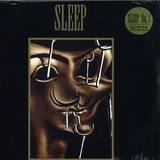
BACK IN STOCK NOW!! "Volume One is the debut album. It was the only album recorded with original guitarist Justin Marler, before he became an Orthodox monk. Volume One showcases a darker sound and stronger doom metal influence than Sleep's later work. The image featured on the cover is taken from the Salvador Dali painting "Soft Self-Portrait with Fried Bacon".
Their only album as a four piece of Al Cisneros, Matt Pike, Justin Marler and Chris Haikus
LP repressed for first time in many years.
allmusic
"For all their budding, precocious talent, Sleep's 1991 debut, Volume One, quickly betrays their still quite heavy debt to doom metal forefathers like Black Sabbath, Witchfinder, and Saint Vitus. Driven by Matt Pike and Justin Marler's lumbering mass of low-tuned guitar riffs, Al Cisneros' (still going as Luke here) serpentine bass and ragged screams, and drummer Chris Haikus' cyclopean kit pummeling, occasional highlights such as "The Suffering," "Nebuchadnezzar's Dream," and "The Wall of Yawn" prove less memorable than they are sensorially overwhelming. And yet, ironically, Sleep's rhythm guitars would never again be kept as under control, nor would their leads sound quite as refined as they do here (see the cleaner harmonies employed to good use on "Numb" and "Catatonic," for example). This was probably due to the onetime involvement of the significantly less stoned Marler, who would soon exchange the group for a monastery where he would study to become a monk. Fittingly enough, however, losing the versatility of a second guitarist was exactly what Sleep needed to focus their singular power into a crushing force, and the remaining trio would flourish immediately behind the sheer physicality of Pike's six-string style, as proven by 1993's superlative sophomore LP, Sleep's Holy Mountain."
Active for over 25 years , Max Durante is a legendary figure in the Italian Techno scene. An early 90's innovator in combining the sounds of Techno , Acid and Industrial with his old school project on the legendary Italian label ACV/Hot Trax. His project 'Automatic Sound Unlimited' with D'archangelo of Rephlex Records fame was ahead of the game back then. So like glove fits hand. Max fits perfectly on Sonic Groove with a cutting edge , menacing time bomb of an EP. Sharp as a razor , hard as steel this is seriously powerful stuff for those that like there techno uncompromised.
This is the story of C POWERS. To understand OYSTERS, you must understand the man behind it all...
THE UNITED STATES TERRITORY OF GUAM, ca. 1989
Abandoned at the island nation's only beachfront techno club as an infant, young Christoph (C POWERS) was adopted by the club's owner, Geraldo Powers. During Geraldo's time as a naval officer, he traveled the world throughout rave's formative years, secretly going to the underground parties when arriving to European ports after having originally fallen in love with early house music as a teenager in his native Chicago via roller-rink parties and the legendary Music Box headed by Ron Hardy. Rear Admiral Geraldo, outed as a gay homosexual during the discriminatory days of Ronald Reagan's U.S. military, was forced to retire, but spared a dishonorable discharge thanks to his roster of medals earning during his exemplary leadership for the invasion of Grenada in 1983.
Throughout his three year stay at the local naval base, the now 30-something Gerry Powers had been struck by the natural beauty and unsettling mysticism of Guam and its peoples and made the choice to permanently set up shop on the island after his unexpected retirement. Taking his partner and newly-crowned Supreme Butch Queen of the New York vogue circuit--Amadeus Lector--with him and financed with $6669.69 in prize money, the new era of DAS POUNDHAUS LTD. was to begin.
In 1990, Gerry founded the notorious Guamanian club DAS POUNDHAUS (the name of which was strongly influenced by a two-week long ecstasy and Polish speed-fueled bender during 1989's inaugural Love Parade in West Berlin). Located inside a decrepit lighthouse originally built during Spain's reign over the island, the club played host to a steady stream of closeted, Pacific-touring U.S. military personnel and later, the party-craving barons of the dot com bubble. Outed in private usenet circles for its off-the-charts hedonism, the club's infamous parties would inevitably lead to its perilous demise, and the eventual deportation of Gerry Powers and his family to the mainland.
But there was one thing that could never be taken away from them...
...synesthesia...
You see, young Christoph was diagnosed with the "disorder" as a pre-teen after having been exposed to nearly a decade of DAS POUNDHAUS first-hand and at such a young age. The youngster was like a fish in water during his childhood in Guam, but when the family was deported in 1999, he began to show signs of anxiety and depression. His ability to hear colors and see sounds had simply turned into a stream of incomprehensible, uncontrolled static. He was now a pariah among his peers. Shunned and admonished. Assigned to sit by himself during school lunch. One of "those" kids.
By this time, his two dads' relationship was on the rocks and would quickly unravel. Amadeus, frustrated with Gerry's incessant ramblings about bunkering in Montana because of the Clinton-Illuminati conspiracy to enslave the middle-class, decided to leave Gerry in an attempt to become a backup dancer for Madonna during her "Drowned World Tour" in 2001 (which would have provided a significant sum of financial security to the family, considering their life savings had been destroyed thanks to the toppling of the NASDAQ from its peak of 5048 in March of 2000--and thanks to those dot com baron stock tips, the Powers were all-in). However, Amadeus' unflinchingly "authentic" vogue style was considered obsolete, and he would go to die in a Reno Motel 6, a victim of drug abuse and that kind of thing apparently.
>>>>Fast-forward to the year2012ish>>>>
JoeFarr inaugurates Leisure System's new GRIDLOCK 12' series with the Longanimity EP, an invigorating exploration of broken techno released April 20th, 2015. Farr has a diverse history, with three well-received releases on Turbo as well as records with DSNT and Power Vacuum. Few producers can claim to have both remixed Tiga and been remixed by Truss, and the Longanimity EP continues Farr's recent drift towards streamlined brutality, leavening intense drum programming with crystalline bursts of color. The clinical and kinetic Oleum' kicks things off and hurdles towards a shatteringly powerful peak, while Mormon Shuffle' boasts twisted functionality without sacrificing roughness in the brittle loops. The monolithic Standard Issue' has an aggressive edge enhanced by whiplash percussion, and the broken piano melody of FS3+4' inverts the joy typically found in that rave standby, preferring to drop the instrument from the fifth floor and let the chords scatter and shatter as they please. The first release in Leisure System's 2015 GRIDLOCK series representing our ongoing interest in melding the freaky and the functional on the dance floor, JoeFarr's Longanimity EP is stocked with tested and tenacious late-night weapons.
Butane's Alphahouse imprint kicks off 2015 with Pablo Inzunza's 'Convenience' EP, featuring three original cuts from the Chilean artist and a remix from the label-founder himself.
Pablo Inzunza is a Chilean DJ and producer most notably known for his recent long player on Butane & Someone Else's Little Helpers imprint, but also acknowledged for material on Germany's Highgrade, and French imprint Monique Musique. Inzunza has explored an array of organic and abstract Techno styles across the early stages of his career and here we see him push on with more powerful dance floor focused cuts via the Alphahouse imprint.
The original mix of title cut 'Convenience' opens things up here and sees Inzunza employ a hypnotic 303 hook as the driving force, while ghostly synth textures flutter away in the depths of the composition and sparse rhythms further fuel its undulating groove. 'Hypnotica' follows and as the name would suggest lays its focus on an entrancing, percussion and pad-led groove, which subtly unfolds over its five and a half minute duration.
Opening up the flip side of the release label-head Butane offers up a tougher, heads down take on 'Convenience', treating us to his typically rough and ready production style with gritty drum lines laid over the original's squelchy 303 lick. Then finally to round things off we have the third and final original from Pablo entitled 'Intimate', which takes on a more house tinged aesthetic this time with organic percussion, sweeping synth stabs and stuttering bass tones.
The eighth chapter of the Subaltern Records saga comes from Italian collective D-Operation Drop, celebrating their return to the label with a dark menacing EP that has shaken dancefloors all over the world.
Don't Breathe:
The title track opens the EP with an apocalyptic vocal which is quickly complemented by roaring synth-monsters and a stone-cold sub bass. This is the obscure side of D-Operation Drop manifesting, taking you to the edge of the dance with relentless fury.
Flumen:
This unreal collaboration with Subaltern's very own Piezo is a continuously evolving journey. Starting off with gentle harmonies, it quickly erupts into a carefully curated symphony of driving bass and cutting edge mids. Carried by truly haunting atmospheres, Flumen builds up and falls down over and over, until finishing in a mad broken-beat turmoil.
*Don't Breathe (Wayfarer Remix):
British young talent Wayfarer shows his takes on the title track adding his trademark melodies and devastating growls. With his razor-sharp sound design and production the man delivers a tight dancefloor stomper which will pose a challenge for most sound systems, driving them to full power.
Broken Arrows are the powerhouse duo of Londonís Bill Ambrose and Spruxx. United over an envy inducing collection of vintage and modern synths and drum machines. Broken Arrows are the sound of a slime coated pansexual Club DíAmore as populated by malfunctioning ED-209s getting real freaky. Taking cues from classic EBM, Minimal Synth, these three dark-fucking-wave destroyers are complimented by a remix from the one-man-brutalist-factory known as Drvg Cvltvre, taking the title track and twisting it into a reimagined 8-bit NES grinder / grindr. Including download code.
Since its 2005 debut, Torsten Profrock's T++ project has grown in stature and scope to the point where it's admired by fans of techno, dubstep, d'n'b and experimental electronics alike, and annexed by none. Anchored in the kind of scuffed, sub-heavy atmospherics Profrock developed in his 90s recordings for Chain Reaction, and naturally influenced by his work with Robert Henke as Monolake, the sound of T++ is singular, always evolving, difficult to fix.
Long ago snagged by the rhythmic innovations of the post-jungle underground, here Profrock makes explicit his debt to the radical fringe of UK garage. Snapping 2-step rhythms are at the heart of all four tracks; for all the distress, deconstruction and detournement they undergo at his hands, the spirit and swing of the British soundsystem tradition is unmistakable.
Further, Wireless is a kind of remix, a commission, shot through with the contorted samples of voice and ndingidi from a handful of old East African 78s (collected on the Honest Jon's compilation Something Is Wrong).
The result is a record that sounds at once ancient and modern, possessing a unique tonal language, and with it a curious, almost occult power — his most expressive, energetic and fully-realised work, affirming the enduring fundamentals of the T++ aesthetic even as it steers it into uncharted climes.
Uncto's seminal 2013 release Pain was an uncompromising exercise in rhythmical brutality amidst a conflux of themes of suffering, industry, man, and machine.
The record now sees itself reinterpreted and reimagined under the auspices of some of the scene's most eminent and accomplished forerunners in what is perhaps, as it arrives on an opulent red double-vinyl format, the label's most ambitious addition to its catalog to date.
Long-time trailblazers Exium first take on 'Dirty Minds' as they apply their unequalled peak-time treatment. While retaining the driving force of the original, the Spanish duo transmute its somber sense of narrative into a singular and infective pattern that unrelentingly maintains its intensity throughout. In contrast, Frenchman Mondkopf's reconstruction is a radical departure from its progenitor, almost as if the merciless titular oppressor ('Schinder') has been injected with an empathogenic truth serum and made to face the toll of his deeds. Serving as his final penance, the resultant insuppressible melodic radiance gushes to the fore as powerfully as his remorse and tears.
Continuing on the second record, Canadians Orphx draw upon the immense and unwieldy cyclicality of 'Judas Cradle' as they deconstruct the torture device into a prolonged yet unfaltering dirge. Harnessing the raw power of the original, they adroitly fuel and layer the modular solemn synths of the drawn-out nine minute epic. Finally, the unequivocal master of industrial cannonry, Ancient Methods (DE), takes on and reins in the unyielding beast of 'It,' leaving the monster not only tamed but fully subjugated to his will. Now capable of executing the most inscrutable order, itsees itself violently degenerated to the barest of elements and recombined anew, with the cadence of its frame shifted and staggered to the striding rhythm of a being more machine than flesh. Providing solace and closure are Uncto themselves, as they complement the compositions with two droning interludes.
Mastered by CGB at Berlin's Dubplates & Mastering, Pain Remixes will be available at fine vinyl retailers
This EP was made during a period where my whole outlook on everything was transforming. The Voidloss project started as an investigation, I was conducting a lot of research and study on the mind, the occult, on different thought modes, and the Voidloss project represented this. The idea was about a leap in to the void. A leap of abandonment into the dark, with total acceptance, total commitment. The idea was to lose myself to the void. This was mainly a spiritual journey for me, and could be best explained by 3 things, the void of Miyamoto Musashi from Go Rin No Sho, The concept of the Tao from the writings of Lao Tzu, and the concept of the abyss from the works of Aleister Crowley. Part of this journey deep inside the self was frightening and horrific, the total loss of self, of all identity and ego, and part of it was beautiful and enlightening. I wanted the music to reflect this, and I wanted the music to change as I changed, as I went to and through all these interesting places. In essence this was about freedom. So fast forward some years and I felt I had sharpened my mind quite effectively, the music had twisted and changed and flowed with me. At the point I began making the music for this EP, I had grown quite angry with the amount of conformity I was perceiving in life. Politically, socially, musically, there was this drive of conformity in the world. I think part of it, and only a part, comes from the prevalence of social media, the need to belong and to be liked, the idea of judging yourself and your works through the perception of others. Musically I felt that within techno there was a tendency for the music to fit within a set of confines dictated by fashion and hype, and this was reducing the diversity of the music, it seemed also that the practices of commercial music were seeping in to techno as the music became more popular. Hype and business driven decisions, brand building and so on. I always felt techno was more about art, and I began to get frustrated. Equally I felt that politically there was less and less choice, as all decisions seemed to lead to the same outcomes. I became more interested in the concept of anarchism, of the idea that government was no longer needed. I have always in my life had a drive to question everything. I've always been 'naughty' and rebellious and done things my way, to my advantage or my disadvantage, I could never accept being anything other than myself all the way. If everyone walks in one direction, I will walk the other way, even if it takes me over the edge of a precipice, just to see what is there. All this stuff influences my music, and during the period of making this EP I was angry, kicking against the things I no longer liked or wanted, screaming dissent. There is a lot of anger and rage, and of course rebellion. I wanted the music to capture that unbridled fury you have when you are in your late teens, when you just start learning about yourself and you start rebelling and questioning things around the time the world is really pushing you to conform. I was soundtracking my own philosophical riot. Previous to this my Voidloss stuff had been more introverted, more pensive and melancholy, more self destructive, more cerebral. For this new music I wanted something more immediate but without being too obvious. In terms of the choices I made I still leaned more towards broken rhythms for beat structure. I find it very difficult to do anything interesting with 4x4 kicks any more, it's too rigid for me, it limits my freedom. I like the looseness you get from more 'drummer' like beats, I guess probably because I have been playing drums all my life. The challenge is to get the same rolling power from broken rhythms as you get from 4 to the floor. It's not easy, there is a ridiculous amount of trial and error and the rejection percentage is high. I also was trying to use less 'synthy' sounds. I wanted to try to take a more acousmatic approach to sound design. With the current modular synth revival in techno I was hearing a lot of 'old' synth sounds re-emerging, and this didn't seem like a progression to me. I wanted to make sounds that were hard to source for the listener, where they weren't sure if it was synth or real world sample, digital or analogue. This involved a lot of experimentation. My process involved a lot of field recording, especially with contact microphones, which open up a whole new world of interesting sounds. You are effectively recording sounds through objects in the environment, 'hearing' the world as these objects hear them, I was using guitars, feedback loops, handmade instruments as well. So I was combining this with different synthesis, granular synthesis, sample synthesis, physical modelling, FM synthesis and of course analogue. Everything was reprocessed and re-synthesised, I tried hard to obscure the source and make something new as much as possible. The stuff on this EP was part of my live PA for some time, so as I learned how the music worked live I could go back and make changes, sometimes the environment I was playing in transformed the sound as well, and so I would try to go back an incorporate this in to the music. For remixes I wanted to choose artists that I respected for their vision as well as for their output, so my list of people I wanted was extremely short. Inigo Kennedy has always been an artist I have respected greatly. His music has always been unique to himself, he remains outside of fashions and trends even though his name has become very big recently. He takes risks with his work, experimenting and exploring, yet remaining relevant to the club, and just tirelessly forging ahead, seemingly for the sake of art above all else. And he's just a really nice guy to deal with. His remix is everything I expected it to be in that it is the unexpected. Regis is another artist who forges his own path in music, you cant really even begin to discuss the avantgarde in techno without including his name, he is one of the foundation stones for artistry and the outsider mentality in techno. His music is always unique to his own vision, and along with it comes an interesting artistic philosophy taking in situationism, post punk and industrial ideology and a good dose of tricksterism ala PT Barnum, all of which comes out in his music and the way it is presented. The man is a truly singular force and it is an honour to have him on this record. Overall the concept here is that of rebellion and dissent. Of asking questions, following your own path, of maintaining some place in yourself that burns like a forest fire.
Whether or not I have succeeded I guess is down to the listener, I'm never happy with my music, I keep wanting to move forwards, or somewhere else, and am constantly trying and failing to capture some essence of perfection. But like Bukowski said
'It's the only good fight there is'
Working on opposite sides of the landmass we call Canada, Vancouver/Montreal duo Potatohead People (producers Nick Wisdom & AstroLogical) have been making waves for quite some time with their signature jazzy boom-bap meets boogie inside the bassbin vibes. Called a "formidable tandem" by OkayPlayer, their sounds have been championed early on by the likes of Kaytranada, Soulection, Nightmares on Wax, Pomo, Exmag, Big Boi, and Phife Dawg. After a few early releases on Vancouver based netlabel Jellyfish Recordings, Brooklyn's Bastard Jazz reissued their 2012 landmark Kosmichemusik EP and pressed a 7" released on Valentine's Day 2013. The association landed their song "Back To My Sh*t" (featuring Frank Nitty of Frank'n'Dank) on a Powerade produced LeBron James documentary and Nick and Astro began working on a debut LP for Bastard Jazz, presented here.
Big Luxury draws from influences disparate as classic jazz, prog rock, disco 90's hop, DJ Shadow-Era downtempo beats, alongside modern influences like the Brainfeeder crew and new electronic sounds coming out of Nick Wisdom's adopted hometown of Montreal. What's resulted is a finely honed, extra buttery album that effortly glides between tempos, but never loses the mood. The album also features a whole host of guest vocalists - J Dilla's younger brother Illa J, legendary Canadian MC Moka Only, New Zealand's Sorceress, and Amalia all provide contributions to the sounds within. Big Luxury is a velvety ride through vibes and a magnificent debut for these talented young Canadians.
Bratha is the studio project of The Analogue Cops and No Mad Ronin. Their first two EPs on their own label Bratha have disappeared from the shops in just a couple of week.
For their first release on Restoration they have been joined by the great Jerome Sydenham on the title track 'I can't stay', an afterparty anthem; smooth and intense, hypnotic and charming, an outstanding balance of hardware power and restrained expertise.
'The craziest come out', on the other side, has the trademark features of the Bratha trio: entrailing, dark and spellbinding and with an heavy pace on the dancefloor.
Continuing the label's fast-paced release schedule, Raíz cooperate with social observer Permanent Hearbreak on the label's 4th vinyl release. The collaboration delves deep into human emotion over three movements, developing around the concept of personal absence. Side A1, With Out You, stretches a somber beat over 6 minutes with graceful overtones and powerful rhythm. Permanent Heartbreak speaks the message of With Out You over wet/dry percussion and heartsick chords. The energy and attitude turn up considerably on the flip side. With Me is a quick jaunt through semi-distorted clap and kick combinations of the jacking variety. Evolving analog style synth work builds the song until its climactic end. Wont Change Me takes cues from the darker Detroit / Kalamazoo sounds with Permanent Heartbreak's cold premonitions laid out over a driving sequence.
Droid Recordings presents a new 2-tracker from the talented Argentian producer Flug. 'Cognitive Process' burrows through the listener's subconscious, starting on the A side with 'Experience,' a polyrhythmic vortex driven by a buzzing, 2-pitch motif.
'Senses' builds hypnotically around a single, repeating tone into a slamming, aggressive power. Both tracks keep things driving and fast-paced toward the 130 BPM range.
out of Stock
Last delivered 2 years ago available to reorder, subject to availability
Part 1 of Slam's Reverse Proceed Interpretations with reworks from Planetary Assault Systems, Flug, Edit Select & Slam themselves.
Confirmed Press & Promo:
Press - * DJ Mag, Mixmag, Tilllate, Raveline, Groove, Daily Record, Edinburgh Evening News, TopDJ Ua, Nightshade Mag, Nitebeat, Posivision, DJ Times, Time Out NY. Sound Effect Magazine
Radio - * Carl Cox Global, Laurent Garnier Radio, Kiss 100, Ministry of Sound, Galaxy Network, Radio Scotland, Dinamo FM, Acik Radio, BBC Radio Ulster, Future Radio, Reconwarriors, The Beat Delivery, Anton Banks, XM Satellite Radio, RTE. Dance Under The Blue Moon (Anja Schneider), WHCR, KVRX, Power FM, Dinamo FM, Rise, Pulse Radio, Proton Radio, BBC Radio Cardiff, The Radio Dept, Fresh FM (Holland), Mystic Vibes (NYC), Show B, An Taobh Tuathail, RTE RnaG, Untitled Music, Ibiza Sonica, 88.1FM WESU (USA), Sutil Sensations. Global Dance Sessions
Online - * Soundwall.IT, Ibiza Voice, Radio Magnetic, Mixxradio.fr, CHRY, WESU, Untitledmusic, Ibiza Global Radio, Paris_One Reverse, Doce Pulgadas Spain, Ibiza Sonica, Andres Aguirre - KVRX student radio, FACT, Little White Earbuds, mnml ssgs, Gridface.
out of Stock
Last delivered 11 months ago available to reorder, subject to availability
Solid stomping galactic techno powered by wide filtered discoid samples is the trademark sound of Marieu, and the A side of the fifth settlement of his own label Enlightened Wax discloses his manipulation talent at its best. 2 Funky acidic dancefloor killers with a shrouded hoodian influences.
For the B side, he recovered 2 gold dust recordings of the misterious Nightjars.Two broken bass driven gems of warehouse garage deeply inspired by Tempa earliest releases and reminiscents of Horsepower Productions early works. 'Mnemonic' has been played already for more than 2 years by artists such as Ben Ufo, Pariah and Blawan before being pressed on wax by Marieu.
There is something singularly unique and peculiar in the degree to which seemingly unsettling themes and extreme taboos have been explored, most notably in the medium of film, in the land of Nippon. Free from the constraints of reality, notions of grotesque brutality, torture, fetishism, and sadomasochism, to name a few, have oftentimes served as driving motifs in the examination of the true nature of violence latent in the most repressed reaches of the human mind. Concurrently, in the realm of electronic music, many Japanese producers have often been able to cultivate and harness a daring yet distinctly refined and inimitable form of organized sonic chaos, one almost instantly recognizable to the occidental ear. The music of Tomohiko Sagae, and in particular his latest contribution to Furanum's catalogue, The Spurt of Blood, is perhaps a quintessential example of the confluence of the former themes and latter medium.
At the outset of the record, the beholder is faced with the 'Vacant Eyes' of a staggering monstrosity, a subdued and subjugated automata in the midst of a bleak dystopia, nearly lifeless but for the grudgingly conceded advance of its death march. As a battery of gratuitous aural violence led by a dominant synth is rapidly unleashed in the subsequent composition, a growing malaise transforms into fractured bone and psyche alike, with no distinction made anymore between the tearing of metal, flesh, or the fabric of the mind. Culminating in 'Severe Pain', with limits of endurance breached and descent into madness the only seeming form of respite, relentlessly rolling drums and hauntingly sublime howls provide the context for the dawning realization of pain as a virtue in and of itself, when a demented pleasure and the exhilarative liberation that lies therein begins to emerge. In the final act, reinterpreted by Furanum stalwarts Uncto, roles are tellingly reversed as the vacant eyes of the victim become that of the oppressor. With cold-blooded precision, the original is reengineered into a force of merciless domination, its elements machined and recalibrated for pure power.Words: PSD
This release blows the trio's instrumental palette wide open for a single continuous piece.
Begun as a one-off collaboration in 2009, the trio of Keiji Haino, Jim O'Rourke and Oren Ambarchi has now become a solid working group, refining its craft through a series of annual concerts at Tokyo's legendary SuperDeluxe. Much of their recorded work has focused on their intense, ritualistic take on the rock power trio of electric guitar, bass and drums, with last year's 'now while it's still warm let us pour in all the mystery' (BT09) containing a series of instant compositions of stunning power and concision that demonstrated how familiar and attuned to one another the three have become.
Presenting the entire first set of the trio's March 2013 concert at SuperDeluxe (the second set will follow on Black Truffle later this year), 'only wanting to melt beautifully away is it a lack of contentment that stirs affection for those things said to be as of yet unseen', their fifth release, blows the instrumental palette wide open for a single continuous piece focused on acoustic strings, synth, flute and percussion. Featuring one of Haino's most delicate and moving recorded vocal performances, the opening section of the record takes the form of a spare duet between O'Rourke's 12-string acoustic guitar and Haino's kantele (a Finnish variant of the dulcimer), behind which Ambarchi provides a hovering backdrop of wine glass tones. While on previous releases the listener has often sensed that Haino was firmly in the driver's seat, here O'Rourke takes centre stage with an acoustic guitar performance that takes the lyricism of John Abercrombie or Ralph Towner and refracts it through the free improvisation tradition of his mentors Derek Bailey and Henry Kaiser. The atmosphere of meditative, abstracted song is reminiscent of some of Haino's greatest recordings, such as the legendary 'Live In The First Year Of The Heisei' volumes recorded with Kan Mikami.
Now part of the family for more than a year, TvFrom86 aka Thomas Zander is releasing his 1st solo EP on the imprint. Tvfrom86 did a brilliant debut on Roche Musique with the single 'Loosing you' including the very good electro funk song 'Brooklyn Business'.
Keeping the good work and the talent for sampling, TvFrom86 explored the funk with dexterity and exactness in Purple People adding just what the sample needed to sublimate it and make it as powerful as it deserves to be. Creative Swing Alliance, side project of the talented label manager for MCDE, Pablo Valentino, and Steven Wobblejay, gave their own interpretation with and heavier bass and no less efficiency.
S3A was invited on the project for the rework of Flying Piano, the third original of the release. The French producer, very proactive at the moment with releases on Lazare Hoche, Hold Youth, Faces, Large Musique and more, definitely didn't steel his nickname. S3A Is telling us three stories in one with a rough analogic sound for an impressive result.
Efficient DJ tool, perfect to turn a dance floor into a mess, By all means combines great rhythmic, samples and voices around a bass guitar for the last original of this French touch record.
Producer CRISTIAN VOGEL, born in Chile and in raised in Bristol, England, represents an inner turmoil within the history of electronic music and techno. Like only a few other artists such as Aphex Twin, he personifies the second wave of techno during which authorship, previously pronounced dead, returned in full force. The former punk, who had completed studies in composition (20th century classical music in Sussex) conveyed a powerful force in his music, which now finds its place very naturally as electronic music; back then, it did more than just shake up the concepts of techno. Complex and intricate rhythms (Süddeutsche Zeitung) dig deep chasms in dark (listening) spaces.
In 1996, together with JAMIE LIDELL as SUPER_COLLIDER, he made a final attempt to breathe life into electronic music, which was still primarily seen as dance/rave/club music, and produced clustered break funk music that was so relevant to its time that many considered it more a music of the future: science fiction for the dance floor. Although the project was not a failure, it did not succeed even halfway in meeting the expectations of an artist who was rather perplexed by the lack of interest he perceived in others in music as art and research. Vogel believes that music has a will to unfold, like a jungle from the undergrowth of industrial cities where music is thought of as an attack and a defense.
Seemingly out of disappointment in the predictably declining hedonism of the scene, he moved to Barcelona and bound his explosive ideas to more accessible formats, founded labels, created networks (No Future, Sleep Debt) and, at the same time, revisited his early days by working more and more on formats such as music for ballet and similar concepts. He also sought freedom precisely in what was referred to as functional electronic music through conceptual and serious endeavors in the artistic sense.
Vogel went under for a time and lived in Vienna before arriving in Berlin nearly two years ago, where he made his first new and daring attempt to assimilate everything that electronic music represented to him on one album: 'The Inertials' on SHITKATAPULT. Shortly after that, his mystical, floating ambient work 'Eselsbrücke' was released, which already spoke the language of the new city.
He now presents a new album on SHITKATAPULT entitled 'POLYPHONIC BEINGS' - a true masterpiece in the inimitable Vogel style, as his fans will no doubt claim. 'POLYPHONIC BEINGS' begins, after two minutes of an irritating noise wave, with a surprisingly classic dub track and grows darker and more abstract from track to track, minute by minute. An eerie and unbelievable sound, with all as it should be: every reverb tail, every movement of the fader, every composed note takes the listener piece by piece into Vogel's own cosmos.
He foregoes interwoven elements for swaying towers of rhythm, powerful sound passages, spaces, roads, mirrors and pathways, leading to a stream of ideas that never wants to end. He aptly quotes Karl-Heinz Stockhausen in the liner notes: These are the "atomic layers of ourselves." And so it is. We are what we hear. This is the definitive CRISTIAN VOGEL.
Thirteenth Step is the second studio album by A Perfect Circle. The American Rock supergroup formed in 1999 by guitarist Billy Howerdel and Tool vocalist Maynard James Keenan.
Originally released in 2003, Thirteenth Step sold well, charting at the number 2 position on the Billboard 200 in its premiere week and staying on the charts for 78 weeks. The album was certified platinum by the RIAA. Following the release of the album, the band toured throughout the U.S., Europe, Australia, New Zealand and Japan.
Three singles were released from the album, "Weak and Powerless", which topped both the Mainstream Rock Tracks and Modern Rock Tracks, followed by "The Outsider" and "Blue", which also charted on the respective charts.
The reissue of this critically acclaimed album is pressed on 180 gram audiophile vinyl,
out of Stock
Last delivered 20 years ago available to reorder, subject to availability
Deathchants own Hellfish debuts on the XTRM output from PRSPCT. Expect his trademark chopping, cutting and powerfull kicks. Perfect blend with the usual XTRM terror. Boom!
Sev Dah brings his brand of powerful, no-nonsense techno with the mighty, pounding Xanax. Life Of The Unborn takes a more experimental approach and offers a dark and haunting soundscape. Inter Gritty is on remix duty, stripping it down and turning the EP around with his jacking, Chicago-inspired take on Xanax.
For his Carpark debut, Saint Pepsi takes a step away from the more genre-shuffling styles of his Internet releases to focus his skills on high-power pop. The title track of the "Fiona Coyne" 7-inch is an uplifting tribute to fantastical romance and the joyous dreams pop culture can provide
Petter B delivers an outstanding new EP on Drumcode proving that Swedish techno is thriving! The first track which, is a collaboration between Petter B, John H & M.E.E.O, uses an arpegiated synth before storming to the main section of the track and breaking down the doors.
The gliding synth sounds really fire with all guns blazing to produce a techno monster that growls. Petter B's next two tracks involve two solo offerings that are heavily techno based.
'Voltage Controlled Time' uses raw distorted drums and a catchy synth line to really give the track a lot of energy and power.
out of Stock
Last delivered 2 years ago available to reorder, subject to availability
Founded by Matthias Schildger & Carlo Ietri in 2013, Repeat is finally ready to conquer the world and bring it's sound to all music lovers out there.
The first imprint of the new label was made by Wigbert // Matt Star & Marvin (incl. Dorian Paic, Dragosh Rmxs) and is called - Play, Stop, Repeat'. It will be out very soon on vinyl and digital.
With the label comes a new booking agency which contains a nice mixture of already well known artists and a few fresh and talented ones.
Here a little overview what you can expect from the first release - Play, Stop, Repeat':
Wigbert - Destroy me:
Wigbert unleashes a monster of a track with - Destroy me' on the dancefloors worldwide. Powerful beats combined with hypnotic rhytmic and some dark vocals will shake your body for sure! This tune will destroy some speakers if you are not careful with the volume... :)
Dorian Paic Remix:
Dorian Paic transforms Wigberts tune into a more happy and melodic but not less uplifting setting with the addition of some nice piano chords. It will put some sunshine into your hearts!
Matt Star and Marvin - In the Trees:
Matt Stars long experience in production combined with the freshness of the very talented Marvin resulted in this deep and groovy track driven by some nice drums and a fat bassline. Dark Athmospheres meets broken beat dubbish minimalism is the best way to describe it.
This track will go straight to your bones!
Dragosh Remix:
Dragosh's interpretation of - In the Trees' is a more percussion orientated track wich will put a lot of smiles on the faces of dancers. Crispy, rhytmic and simply good.
The third output for the PRRUKBLK series is a special one. The Planet Rhythm team came up with an all-star line up consisting out of Rotterdam techno-stalwart 'Bas Mooy', LA based Modularz Head Honcho 'Developer', Berlin resident 'P.E.A.R.L.' and newcomer 'Von Grall'. Developer opens up the A side with a repetitive quest called 'Clench Of Fist'that lingers on and contains minimal yet powerful changes. Berlin Based P.E.A.R.L. delivers a somewhat harder effort with 'Ordeal III' Bas mooy opens up the B-side with the utterly rugged 'Thorfytt' newcomer Von Grall closes down the 12'' with the mystic 'Under A stone'
Nemesis E.P. is the latest 12" release by Painbringer. Featuring 4 oldschool 909 hardcore techno tracks with pure energetic gabber riffs, acid and breakbeats. No pop style, this is straight-in-your-face underground music!
"True", one of Painbringers most populair track, has been reconstructed and remastered especially for this release. 'This is real hardcore!' as stated by the dominating vocal in this powerhouse track.
Taken from an earlier Mokum Records release is "The Invader", an uptempo junglist flavoured hardcore track put on this record as a special bonus. "Lost In Space" is an experimental fusion between psy-trance and hardcore, which takes you on a trip into the dark space and back again. Last but not least; Grimlock has remixed "True" as a modern artcore styled track, 180BPM galore!
Green Vinyl Pressing!
Here comes the second EP by our new artist on Echocord Colour, the super talented Roberto Clementi from Italy. Roberto is one of the most inventive and creative electronic music artists currently making his name known in the underground scene at the moment. Roberto is mostly known for his releases on Soma, eps + recently he released his rst album. He has also been releasing on Brendon Moeller's label Steadfast Records. The track Barrel is a super powerfull Techno track full of deepness, heavy staps and dubby elements.Traps is a slower heavy Dub-Techno trip also perfectly for the peaktime hour.This ep also comes with a heavy monster Norman Nodge Remix.
Trek With Quintronic are the duo, formed from the ashes of prog rock band Masque in 1979. They recorded two pioneering albums of unique electronic rock. 'Landing Plus' compiles the complete discography of Trek With Quintronic on a double vinyl for the first time in over 30 years. Trek With Quintronic wrote songs with a powerful sound, myriads of compositional ideas, synthetic noises and catchy melodies. Paul's rather unique vocals lie somewhere between David Bowie and Richard Butler of the Psychedelic Furs.nThis collection highlights a lost duo with a big sound on par with Ultravox, Human League, OMD or Devo
12 with printed deluxe sleeve and hologram artwork , remixes by South Loundon Ordnance, Musk, Lounge 44
Second installment from freshly launched FILM label comes from The Rhythm Odyssey and Knights Of Olde also known as Stevie Kotey and Dean Meredith. Together they created the powerful and bass heavy original 'Intro Theme". Hotflush Artist South London Ordnance delivers a darker approach of the track, while MUSK takes the track into the peaktime. Last but not least Uncanny Valleys Lounge44 comes up with a decent deep house remix.
Frozen Border turns violent with this massive, industrial-noise EP by mysterious artist Oxcure. Acoustic claustrophobia while drowning in dark metal sounds and a powerful heavy bass remix by Violet Poison.
out of Stock
Last delivered 20 months ago available to reorder, subject to availability