Little Green Men is the deep house music project of UK duo Chris Scott and Scott Bradford, best known for their acclaimed releases as New Phunk Theory on the legendary Paper Recordings, as well as on their own Forensic label.
Originally released in 1999, this rare holy grail has become a highly sought after collector's item, with original copies regularly selling for hundreds of euros on the second hand market.
A true double sided underground classic, this is Little Green Men's rarest and most coveted release, finally back on vinyl. Faithfully remastered and reissued by Endell Street. Essential.
London-based French artist, composer and vocalist Vanessa Bedoret returns with her second
album, About Time, released via Scenic Route.
Across 11 tracks, About Time moves between intimate vocal-led songs, glitching electronics haunting soundscapes and moments of catharsis. Bedoret’s classical training remains at the heart of the record, underpinning an approach that brings together spectral vocals, strings, guitar and experimental electronics with a striking sense of compositional clarity.
Written through a period of significant change in Bedoret’s life, the album explores transition and our shifting perception of time - how some moments disappear almost instantly while others seem to stretch indefinitely.
About Time follows Bedoret’s 2024 debut Eyes and marks a significant step forward for an artist whose work moves fluidly between classical composition, experimental electronics and songwriting. Alongside her solo work, Bedoret has collaborated with Astrid Sonne, Blackhaine , Space Afrika and Mark William Lewis.
,Alas Time Has Passed" ist das Debütalbum von Fine Food Market und erzählt von Neuanfängen nach persönlichen Umbrüchen. Songwriterin Sophie Perras verarbeitet darin Erfahrungen wie das Ende einer langjährigen Beziehung, das Leben auf eigenen Beinen und die Auseinandersetzung mit Einsamkeit. Die neun Songs verbinden Folk und Pop mit Einflüssen aus Country und Kammermusik und wurden live in einer Hütte in den Laurentiden aufgenommen. Zwischen eingängigen Melodien, nostalgischen Erinnerungen und nachdenklichen Texten gelingt Perras ein emotional vielseitiges Album, das Melancholie, Selbstreflexion und Hoffnung auf besondere Weise miteinander verbindet.
CHIWAX CLASSIC EDITION prouldy presents Boo Williams - Lost Of Time.
This fantastic release from 1995 came originally out on legendary Relief Records.
The 2026 version contains a new mastering.
Don't feed the Discogs Sharks!
Nearly three years after Time to Panic's first release, Ildec returns to the label with a new chapter. A journey through trance, techno and hypnotic dancefloor tension.
Tokyo Riddim Band continue their journey striding across times and cultures, this time with their colourful keyboardist and frontwoman Mimi Kobayashi breathing new life into a song she originally penned in 1981. ‘Lazy Love’ first featured on Mimi’s highly sought after Coconuts High LP, which she recorded in LA recruiting top session players to play alongside her. It was also included in Time Capsule’s 2024 compilation of Japanese reggae - Tokyo Riddim 1976-1985.
This soulful pop tune turned deep dub cut retains the romantic charm of the original, whilst the tasteful performances of the Tokyo Riddim Band and Ras Tavaris combined with Prince Fatty’s studio magic give the song a newly found depth.
London based Tokyo Riddim Band is a unique fusion of cultures, bringing together the vibrant energy of three generations of Japanese female musicians with the eclectic sounds of London. Their dynamic performances blend reggae drums, funky bass lines, and the smooth City Pop guitar, all magically dubbed-out live on stage. This is not just music; it's a cultural phenomenon, offering a fresh and exciting take on the reggae scene.
Tour-Maubourg opens a new chapter with Alone Together, his own imprint created to explore multiple aliases and sonic directions under one creative umbrella. Inspired by the 90s classic house north american scene (MAW, Glenn Underground, Strictly Rhythm, Nu Groove, etc.), the label's first record, "It's Time EP", fuses Tour-Maubourg's classic signature sounds, jazz chords, MPC grooves, organic musicianship, and carefully chopped vocal samples in an old school and club-focused aesthetic.
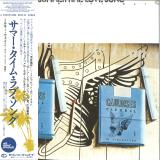
Wewantsounds is delighted to present the first official reissue of the highly sought-after 1979 classic, Summer-Time Love Song by The Milky Way. Originally released on the Seven Seas label in Japan and produced by the legendary Makoto Matsushita-the visionary behind the cult album First Light -the album is a premier example of the sophisticated sound that defined the era. Featuring the cream of Japanese musicians, including Yasuaki Shimizu, the record offers a superb mix of AOR, jazz fusion, funk, and bossa nova. Remastered for vinyl by Colorsound Studio, this deluxe reissue features the original artwork, an OBI strip, and a 4p booklet with a new introduction by Paul Bowler.
a time patterned is Lara Somogyi’s second full-length work: an electroacoustic harp record that maps personal transformation through rhythm, resilience and resonance. Built from loops, pedal textures and electronics, virtuosic arpeggios, stacked tape machines, ambient processing, contemporary extended harp techniques, sweeping symphonic language, and field recordings.
The complete album + 2 bonus tracks - limited edition pressing on 180g purple coloured vinyl, with album cover image by the late American jazz photographer Bob Willoughby (1927 - 2009)
After Space Dimension Controller the Clone Royal Oak series is coming with another young talent. This time its Swedish Genius Of Time, known for their debut release on Aniara records. Three takes on classic house music done by young producers in their unique almost serene style that reveal their nordic roots. Genius Of Time shows that house music can still sound fresh.
Released in celebration of the lasting impact Sonny Rollins has had on music comes this Original Jazz Classics series edition of his 1956 Prestige album Work Time. Recorded at Van Gelder studios the album completes the quartet with players Ray Bryant (piano), George Morrow (bass) and Max Roach (drums). This new edition of the album is released on 180-gram vinyl pressed at RTI with all-analog mastering from the original tapes at Cohearent Audio and a Tip-On Jacket.
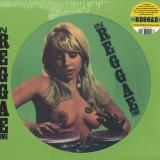
1st repress of the rare UK compilation “In Reggae Time”.
Originally released in 1970, it brings together a series of very rare tracks issued only on 7" singles around 1967 by Ember Records and its sub-labels.
The sound is not just Reggae—it’s only marginally so—offering a vibrant mix of 1960s UK mod, R&B, Ska, and Northern soul.
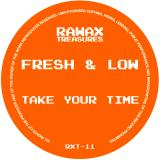
We are very happy to announce the 11th release by Fresh & Low on their own „TREASURES" series on RAWAX! This time we have the honor to present you "Take Your Time" which was originally released on West Side Records in 1996!
Chimney Town: Frozen in Time - Best Selection brings together 19 tracks from the original soundtrack composed by Harumi Fuuki, including "Frozen in Time" and "366 Days (Nagi's Song ver.)", performed by Fuka Koshiba. This edition features one 33 RPM orange vinyl record. Available as a limited pressing, this album gathers in a single release the music of the new animated film by Akihiro Nishino, creator of Poupelle of Chimney Town.
Nippon Psychedelic Soul 1970-1979 is Time Capsule’s continuation of the deep dive into Japan’s rich history of folk and psychedelic soul music.
Vinyl LP with 4 page insert, original artwork and photos
The kaleidoscopic psychedelia of 1970s Japan captured a fragile and fertile moment as the country sought its future in funk grooves, heavy reverb and lyrical hallucinations.
The follow-up compilation to Time Capsule’s Nippon Acid Folk, Nippon Psychedelic Soul takes myriad pathways into the tripped-out undergrowth of 1970s Japan. Finding their feet at home and looking for inspiration abroad, the musicians featured here were engaged in the communal soul-searching that followed the breakdown of the 1960s protest movements. Some made it big, others drifted into oblivion. The music they left behind shimmers with intensity.
At the core was Happy End, the first project of YMO’s Haroumi Hosono, whose distortion-heavy guitar and crisp back-beat laid the foundations for Japanese lyrics that flipped the paradigm of Japanese rock music on its head. With it came a new found sonic ambition, such as in the bold Philly-soul style arrangements of producer Yuji Ohno, whose work with occult wandered Yoshiko Sai shares some of the bittersweet grandeur of Rotary Connection or David Axelrod.
Then there was Jun Fukamachi, a pioneer of Japanese synthesis, whose debut album was a carnival of orchestral funk, euphoric horn lines and rich production, complete with soaring guitar solos, psychedelic organ and a truly cinematic finale. The first and only time Fukamachi would sing on record, ‘Omae’ rips like the ultimate end-of-nighter.
Influenced by giants of the US soul scene, maverick composer Hiroshi “Monsieur” Kamayatsu (otherwise known as ‘the Brian Wilson of Japan’) went one step further, enlisting Tower of Power to play on ‘Have You Smoked Gauloises?’ The B-side to Monsieur’s biggest-selling single, it coasts with sophisticated cool - a liquid bassline and suave keys comping under a roaring trademark ToP sax solo. No surprise it found favour once more on the Acid Jazz dance floors of ‘90s London.
Such was the spirit of experimentation that big studio productions and private press releases sat side-by-side, with the likes of Momotaro Pink and Kazushi Inamura, taking their hopes of success into their own hands with the resources available to them. More reflective but no less robust, theirs was a heavy, fat-backed drum sound, soaked in dramatic, soulful psychedelia.
If some were dreamers and others space cadets, none were further out than sci-fi writer, musician, activist and self-made scientist Tadashi Goino, who transformed his own fantasy novel Messenger from the Seventh Dimension into an operatic prog odyssey with few discernible musical reference points – a majestic and completely bonkers outlier even among company as strange and brilliant as that which is collected here.
Less a compilation of a scene, as a compilation of a sentiment, Nippon Psychedelic Soul is a wild ride from start to finish, shattering the narratives of the Japanese folk and rock tradition into a million tiny pieces.
Time in the context of the cosmos is not merely a measure of change but a profound mystery permeating all aspects of existence. It is both present and elusive, like the light of a distant star we see but can no longer touch at its source. The cosmos poses a fundamental question: what is time? Is it the stream in which we exist or an illusion crafted by our perception? The grandeur of the Universe reveals the extraordinary malleability of time. Gravity can slow its flow, while velocity can stretch it to infinity. At the event horizon of a black hole, time can nearly halt, transforming a moment into an eternity. This teaches us that time is not a universal truth but a phenomenon dependent on conditions and perspective
By 2005, Drugsex Recordings had firmly established its own identity within the Tech House scene, providing a platform for deeper, sounds for the heads and also could further push the peak-time cuts for the era. For the label's fourth release, founder Rob Pearson teamed up with Chris Pascoe. Pascoe’s distinctive style had already earned him recognition through a string of acclaimed underground releases and Rob & Chris kept meeting through the underground party scene so friendship and collaboration were a natural step.
The collaboration resulted in One More Time, a beautifully balanced meeting of two production styles. Combining Pearson's trademark rolling grooves with Pascoe's musicality and deep, understated funk, the track perfectly captures the stripped-back sound that defined the best of mid-2000s UK Tech House.
On the flip, Rob Pearson takes centre stage with the solo production Shadow Maker. Deep, hypnotic and effortlessly understated, the track showcases the signature South London sound that became synonymous with both Evasive and Drugsex Recordings—tight percussion, warm analogue textures and an irresistible groove built for long nights on discerning dancefloors.
Due to high demand, MEU has revisited two of Mr. K’s classics, previously only available as 12-inch extended mixes, and asked the master editor to pare them down to 7-inch size.
A true top-five peak record at the Garage, Thelma Houston’s “I’m Here Again” was “a highlight whenever Larry played it,” Danny Krivit recalls, “and he played it a lot!” Danny’s edit is a homage to Larry and Frankie Knuckles – in particular a similar private edit that Frankie did back in the day and shared with Krivit. “It was on reel to reel and I didn’t copy it correctly and lost it,” Danny remembers. “Reels were problematic! When I tried to get it again from him, unfortunately he had lost it too.” The song (likely an attempt by Motown to capitalize on the previous year’s monster hit “Don’t Leave Me This Way”) is, in its original form, a virtual retake of Thelma Houston’s breakout single, from the subdued, schmaltzy intro to the “oooh BABY!” leading to the chorus. What sets “I’m Here Again” apart though, is the incredible second half of the song. Naturally, it is here that Mr. K’s edit focuses. Over a vicious groove reminiscent of the Originals’ “Down To Love Town” breakdown (Michael Sutton wrote and produced both “Love Town” and “I’m Here Again”) Houston delivers soul-stirring ad libs as the band crackles with electricity behind her, the piano chasing a descending string riff so eagerly. Pure dancefloor peak energy! And the very first time having all these parts on a 7"!
For our flip, Danny has reached deep into the earliest foundations of his voluminous collection, and come out with a psychedelic pop classic rearranged for today’s sound systems and setlists. Recorded in the Beatles’ Abbey Road studio at the height of the Summer Of Love, the Zombies’ “Time Of The Season” is firmly linked in pop culture to the late ‘60s and the Vietnam era, breaking big in the summer of 1969. Krivit’s edit highlights the parade of lush sonic textures that ornament the hip composition, from the iconic, exquisitely echoed bass-clap-exhale riff that opens the song to the cascading Hammond organ solos of Rod Argent. “It’s a song from my childhood that really struck a chord,” Danny says. “Over the years I often played a rough edit which always seemed to go over great. The song seemed to get better and better, and age like fine wine.” We agree!
These two songs have both appeared on previous (separate) MEU 12-inches, but are presented here in custom new edits for the 7-inch format.
Curated By Time digs into the early 2000s once again with 'Skipton Bassett 2001', unearthing four previously unreleased tracks from Affie Yusuf under his Lilac Road Productions alias.
Recorded in early 2000s, the EP captures the raw, stripped-back sound of UK tech house at the time: rolling basslines, tight percussion, trippy details and hypnotic grooves. Four cuts pulled straight from the archives and finally making their way onto wax more than two decades later.
Secret Society is catnip for all the cool cat minimal and tech heads scattered across the global underground and here they mark their first decade in the game with a whopping great big triple album V/A comp that celebrates in style. The label works with exciting talents both old and new, and their 20th outing is the first in a new series, Discipline of Time, featuring six sides of beats. Delphie warps space and time with a lithe, bendy, liquid minimal dub tech twister; Marceline taps into airy, dubby space tech on 'Sale Jugando' and Rh Cher's 'Gwen' (Edward Desert version) is a weird late-night ritual with paranoid voices belting in from the edges. Rhadoo closes with a classic Villalobos-era minimal gem that is wonderfully sparse but for warped lines and abstract FX. "Time is one of our most valuable resources, and how we choose to spend it shapes what we create and who we become" says the label. You could do far worse than spending your time listening and/or dancing to this.
‘Signs Of The Time’ is a powerful, driving roots reggae anthem by Azizzi Romeo calling for global unity. The track features the legendary Max Romeo in what would be his final recording before his passing.
The track is fuelled by the lush, authentic arrangements of Denmark's premier 11- piece roots collective, Guiding Star Orchestra.
Blending heavy traditional rhythms with a modern conscious edge, the track boasts dynamic brass lines and an irresistible groove. Essential for modern roots, cultural reggae, and global conscious playlists celebrating the enduring legacy of a reggae icon.
The release comes with a dub version by Tippy I-Grade who weaves heavy, foundational basslines through echoed horn stabs and beautifully fragmented vocal chops that ripple seamlessly across the stereo field.
It’s an essential addition for listeners who crave the meditative depth of classic 70s dub reimagined through a modern, high-fidelity lens.
TTP007 explores a refined balance between depth and drive.
A1 “Oktogon” opens with hypnotic textures, acid-tinged energy and a powerful groove shaped by Sandro Zampera’s drum programming. A2 “Planet C” drifts into balearic territory, where Mattia Rigon’s romantic sax floats over Colosimo’s warm foundation.
On the flip, “Italian Dream” blends Italo-inspired rhythms with nostalgic atmospheres and Rigon’s distinctive sax lines. Closing the EP, Edb delivers a deep and mesmerizing reinterpretation of “Oktogon”, built around magnetic grooves, suspended tension and late-night dancefloor energy.
A counterculture movement united by an expansive, experimental and deeply soulful sensibility, Japan’s rebel protest music challenged the status quo and changed the country’s music industry in the process.
The birth of Japan’s nascent acid folk scene was rooted in the messy and invigorating political climate of the late 1960s. It is a story of Dadaists, communists, pharmacists and cult leaders, led by a young generation of upstart students, artists and dreamers hellbent on turning their world upside down.
Born on the campuses of Tokyo, Kyoto and Osaka, and centred around newly formed independent label and left-wing stronghold URC, this uniquely Japanese form of folk expression provided an outlet for musicians who were tired of aping Western sounds and instead found ways to sing in Japanese and integrate traditional forms in new ways.
At the forefront of this movement was Yellow Magic Orchestra’s Haroumi Hosono, a polymath innovator whose band Happy End released the first Japanese language rock album, and whose influence would go on to be felt across Japanese music for decades. Alongside, and informed by the Kansai scene’s Takashi Nishioka and Happy End collaborator Ken Narita, they experimented with cadences and accents of the Japanese language to open the door for others to experiment with their own forms of psychedelic folk too.
Some, like Nishioka, were more inspired by Dadaism than drugs, while others, like Kazuhisa Okubo, would ultimately find work as a chemist, having founded two further folk groups that flirted with varying levels of success. Obstinately uncommercial, relentlessly creative, the music featured on Time Capsule’s Nippon Acid Folk represents a broad church of influences.
Perhaps the wildest addition to this congregation however was Hiroki Tamaki, a classically-trained violinist and committed iconoclast, whose synth-prog odysseys hinted at his obsession with the divine. Subsumed by the teachings of Bhagwan Shree Rajneesh, he penned an album in praise of the infamous religious leader of which two superbly mind-bending tracks are featured on this compilation.
Charting the decade from 1970 to 1980 as the dreams of political and spiritual liberation seeded in the ‘60s turned to dust, Nippon Acid Folk surveys a little explored corner of Japanese music history, but one which ultimately laid the foundations for an independent music industry, launching the careers of Hosono and others in the process.
Nippon Acid Folk 1970-1980 is pressed on 12” vinyl and represents the start of Time Capsule’s deep dive into Japan’s rich history of folk and psychedelic soul music.
2026 REPRESS
BOY Records re-issues Time Modem - Der Mantel Der Nacht from 1991!
This special vinyl edition will include for the first time also the track called "Alien Elements" which was only available on the maxi-cd.
re-mastered and highy recommended!
On Board Music returns with its next remixes package. Following the "Point C Remixes" in 2024, the Rotterdam based label now revisits four tracks taken from its charity compilations "The Meaning of Time" and "The Meaning of Time II" - all reimagined by fellow On Board artists. Born during the global health crisis of 2020, "The Meaning of Time" series explored the shifts, fractures, and altered perceptions of time experienced during that period. This new remix edition not only reshapes selected pieces through the vision of close label affiliates and takes them closer to the dancefloor, but also sees all tracks freshly remastered by Neel. The four tracks were given a new life in two different ways - by remastering and reinterpretation. Luigi Tozzi treats Polygonia's aquatic ambient piece "Magnetic Force" and pushes the track deeper into dark and hypnotic late night territories. Vera Logdanidi's emotionally charged arpeggiated electronic work "Water bubble Floating In Space" receives a peak-time reinterpretation by Non Series head Psyk. Swedish artist Dorisburg reworks Human Space Machine's "Danz7" into a dreamier and more percussive journey. Closing the release in true deep On Board fashion is label head Laura BCR, who reinterprets Bas Dobbelaer's "T2310" in an earthy and textured manner, while keeping its ambient techno & dubby spirit vividly alive. Photography by Marius Renard.
Tip! Amazing and subtle groovin house! This is exactly the kind of record that does not need to scream for attention, it pulls you in slowly, hypnotically, with groove, texture and an effortlessly cool sense of restraint.
¿DONDEDOS is young dude/unc duo hailing from the Mission. Pascual Martinez (young dude) and BPT head honcho Jeremy Castillo (unc) have spent the last few years in the stu, cooking up this deep fried, groovin' 4 tracker. Fans of 2011-16 LIES and Future Times releases, “Biology" era Young Marco, Juju and Jordash, and the Wah Wah Wino crew are in for a treat.
In an era where literally every aspect of dance music is overly programmed and manicured, ¿DONDEDOS take a massively refreshing approach marked by true experimentation. All drums were recorded on the Roland R8, and the melodies were live played with a loose, jammy feel not felt on many electronic 12" releases in 2026. They're a jam band baby!!!!!
The fun starts with "Drifting Nowhere," a fried oddball deep house record with one of the year's most infectious basslines. Be ready for it to be on a loop in your brain long after the track has stopped playing.
2nd track "Dies Varos" was described by BPT fam Izaak from Loveshadow as sounding like "part of the Mediterranean touching Mexico." Ahhhhhhhhhhhhhhhhhhhhhh. (that was a deep relaxed sigh, not a scream for once!!!)
"Music for Patios" sounded pretty good on a walk and not on a patio so, just FYI, only a suggestion not a requirement.
Ender Noche Caminando features Diego Herrera (AKA Suzanne Kraft) on sax. In Jeremy's own words, this track features "oddball dancehall drums on the R8 with 80s synth pop dub melodic sensibilities."
CYRK return to their Time Zero imprint with The Future EP, a powerful homage to Belgium's new beat legacy. The release features three original cuts alongside a remix from fellow Belgian artist Shero featuring Ki Jeal. The release will be available digitally on Wrong Era
'Electronic lullabies and folk songs from Ethiopia! A landmark recording from Ethiopia’s vibrant cassette era of the 1980s, Resonance of Time features pioneering composer Wesenyeleh Mebreku reimagining Ethiopian folk melodies through the humble circuitry of an early Casiotone keyboard.
'Historically, the works featured on Resonance of Time (የጊዜ ቃና Yegizie Kana) stand as quiet documents of Ethiopian musical memory. Many of the original songs included in this release emerged during important moments in Ethiopian history when music carried the collective emotion of the nation - love, loss, resistance, dignity, and hope. By arranging these pieces from Ethiopia’s musical heritage instrumentally, Wesenyeleh Mebreku aimed to preserve their essence while protecting them from being confined to a single era or performance style. In doing so, his preservation of Ethiopia’s musical heritage became a contribution to his country’s musical legacy itself, as Resonance of Time serves as an important musical milestone of this composer’s innovative recordings and musical developments in the prolific era of Ethiopia’s 1980s cassette tape culture.
'On Resonance of Time, Wesenyeleh made use of the first Casio electronic keyboard - the Casiotone CT-201 - to arrange and perform Ethiopian folk songs in his own unique style. Implementing the soulful, lo-fi character of the keyboard, Wesenyeleh’s interpretations of these works take on a life of their own. Charming analog tones interpret swirling sounds of organ and piano in kignit modality to the beat of a nostalgic rhythm machine while twinkling synthesizer sounds carry the melodies drifting out of time. The recordings reflect a watershed moment in Ethiopian musical history - when traditional melodies started being interpreted on electronic keyboards, and the advent of cassette tape recording allowed for music to be transmitted more accessibly than centuries-old oral traditions. During this time, Ethiopian musical modes were syncretized with new technology and budding musical experimentation, and Wesenyeleh’s interpretations on Resonance of Time are a landmark recording of this era, following in the tradition of reflecting upon and re-interpreting historical Ethiopian music for a new generation.
'Featured on the release are timeless Amharic folk songs and lullabies, Tigrinya love songs, Gurage and Oromifa popular songs, and even works closely associated with performers from Ethiopia’s 1970s popular music era such as Tiz Alegne Yetintu (ትዝ አለኝ የጥንቱ) which was famously performed by Tilahun Gessesse. Each piece, thoughtfully chosen by Wesenyeleh, is beautifully transformed into instrumental music of his own style - allowing these worlds of song to echo into the future while they are synthesized with the electronic innovations of the 1980s and Wesenyeleh’s own musical history.
'Wesenyeleh says this about his musical approach - ”Instrumental music, for me, is a space of reflection. Without words, the listener is invited to remember, imagine, and feel freely. In Resonance of Time, I hear my own musical philosophy: respect for Ethiopian kignit, careful dialogue with Western harmony, and a deep trust in melody as a storyteller.”
'Each piece performed on Resonance of Time speaks to a time when Ethiopian music was shaped by oral transmission through live performance and communal listening. In today’s fast-moving musical environment, revisiting these works is an act of cultural responsibility. These works remind us that melody once traveled slowly, settling deeply in the listener’s heart. The instrumental format allows these works to cross linguistic and generational boundaries, making them accessible to audiences who may not know the original lyrics but can still feel their spirit.
'Resonance of Time also reflects a broader historical dialogue: the meeting of tradition and adaptation. Ethiopian music has always evolved while holding onto its core identity. These arrangements affirm that evolution does not mean abandonment. Instead, it can be a form of safeguarding - ensuring that the musical wisdom of the past continues to resonate in the present and inspire the future.
'In this sense, the album is both personal and collective. It carries Wesenyeleh Mebreku’s own musical fingerprint, shaped by decades of practice, but it ultimately belongs to a wider cultural continuum. It is the artist’s contribution to keeping time audible so that memory, history, and sound may continue to speak to one another.'
Originally released by Time Capsule in 2021 and long out of print, Stories From Another Time 1982-1988 returns in an upgraded edition following years of demand and rising collector prices on the secondhand market. Widely regarded as a modern cult classic, Mário Rui Silva’s visionary recordings blend acoustic folk, cinematic soul, spiritual jazz and saudade-filled Lusophone rhythm into a deeply timeless and universal work that transcends genre and geography.
This new edition features half-speed mastering cut at Metropolis alongside an expanded 4-page insert with a tribute essay and unseen photographs following Silva’s passing in 2024.
The roots of Angolan popular music explored in the meticulous guitar studies of Mário Rui Silva. For fans of Naná Vasconcelos, John Hassell’s Fourth World ambient, Eduardo Mateo’s psychedelic folk and Cameroonian electronic music visionary Francis Bebey.
Whether on mesmerising acoustic ballads or hypnotic groove-led tracks, the music of Angolan guitarist, researcher and intellectual Mário Rui Silva has a beguiling, melancholy quality, woven into the dynamics of his deft guitar playing.Rhythmically complex yet supremely effortless, the music collected here stems from three albums Mário released in Luanda in the 1980s that reflect his diverse range of influences, from traditional Angolan and West African rhythms to European jazz and classical instrumentation. It is united by a sense of low-key beauty, whether on the chugging opener ‘Kazum-zum-zum’, the jazz-funk keys of ‘Lembrança Dum Velho’, or the twinkling, late-night poly-rhythms of ‘Kizomba Kya Kisanji’.
Born in Luanda, Angola in 1953, Mário dedicated his life to Angolan popular music. His fifty-year career has seen him live between Angola and Europe, rub shoulders with Cameroonian musicians Francis Bebey and Ewanjé, record the seminal album Angola ’72 with fellow Angolan musician Bonga, and draw influence from Brazilian guitarist Baden Powell.
It was the teaching of Angolan legend and Ngola Ritmos co-founder Liceu Vieira Dias that Mário gained a technical, political and spiritual understanding of Angolan musical culture. In the hands of Liceu, the traditional Angolan semba and kazukuta rhythms of the 1940s and ‘50s helped create an emancipatory sense of national pride and collective agency that awakened its listeners to the racism and tyranny of colonial rule, underpinning the country’s push for independence in the process.
What might sound like the intonations of Brazilian influence are what Mário attributes to the “African rhythms taken by the slaves which gave rise to other musical cultures” around the globe. Instead, this music emerged from a collective instinct to assert a cosmopolitan Angolan identity free from the patronising falsehoods of Lusotropicalism.
“There was a need within me to contribute in doing new things,” Mário describes. “In the sense of solidifying the music of Angola that was the result of the meeting of two cultures, and wanting to value the Angolan part whenever possible.”A selection from Mário’s three 1980s albums, Sung’Ali (1982), Tunapenda Afrika (1985) and Koizas dum Outru Tempu (1988) have been compiled here as a 2xLP release by Time Capsule’s Sam Jacob and Kay Suzuki. Together, they provide a snapshot of one man’s journey to the core of his nation’s music, charged with the search for a culture uprooted by colonialism






![Lara Somogyi - a [time] patterned LP](https://www.deejay.de/images/l/7/6/1239076.jpg)