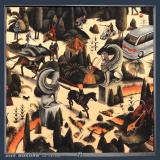
8 years almost to the day after releasing his unique re-interpretation album of his field recordings made in the late 90's in Tanzania, Kink Gong is back with another volume of bushmen madness. Here’s what Kink Gong aka Laurent Jean-neau has to say about his end of millennium trip:
‘’My experience in Tanzania is now over 20 years and most of the so called remix was started in Tanzania and left un-finished, then eventually retouched in Vienna, Paris, Shanghai, Kunming, Dali or Vientiane. 20 years later I searched my Tanzanian files and rediscovered unfinished tracks which are being now refreshed on this new record.
Back to the early days of the XXI century, when I lost my health trying to survive with the HADZAs, the last bushmen in northern Tanzania. In 1999 James Stephenson from NYC invited me to join his Hadzas friends. I would leave the bush to rest in a place with enough food and electricity and start to edit, loop and work on the original recordings, to trans-form them into organic abstract compositions, the only instrument I had recorded a lot with the Hadzas was the malimba and I bought different malimbas in Arusha to take back with me to Europe, I used either the original record-ings or me playing malimbas on some tracks and applied some electronic treatment to it, at that time I used Roland synths for some tracks.
The original recordings are related to scenes at night by the fire with the Hadzas, but also 3 different types of celebra-tions, Epeme Men was recorded on a moonless night with men and women singing and dancing in complete dark-ness in Mangola, an Hadza camp. Irawk Drum Under the Rain was recorded during daytime at a Multi ethnic gathering at the Franciscan Spanish catholic mission with a crowd dancing and singing under heavy rain while an IRAWK large (and wet) drum was being played, Northern Tanzania. Makonde Island was recorded in southern Tanzania at the boarder with Mozambique and is a pure scene of trance taking place on an island where the MAKONDE fishermen off the coast of Mtwara, get wild, hitting plastic containers for the sound, drunk and stoned men and women are hysterical-ly jumping and falling on each other, ending up with a few wounded.
Once again I'm responsible for this act of multicultural sabotage, but don’t forget that you can always listen to the origi-nal recordings on the Kink Gong recs collection. ‘’
Laurent Jeanneau, Berlin 2023
Jazz music has more than its fair share of overshadowed figures that whilst contributing much to the music have little presence in its collective conscious. One such musician is the talented multi-reedist, Sahib Shihab. Born Edmond Gregory, as he was known before he adopted the Muslim faith in 1946, Sahib Shihab's music background shows a deep and significant evolution, influenced by Thelonious Monk, Dizzie Gillespie (his experience in Dizzie's band marked Sahib's switch to Baritone, the instrument he became most readily associated with), and above all by Charlie Parker's Bop. Had it not been for the post-war migration of many top American jazz musicians to Europe, it is quite likely that the legendary Clarke-Boland Big Band might never come into existence. Sahib, one of this musicians disillusioned with the politics and racism of the United States, accepted to join the band of Quincy Jones for an European tour in 1959. When the tour ended, Shihab he remained in Europe where he joined, in 1961, the Clarke-Boland Big Band. The collection 'Companionship', whose line up consists of seven elements which derives from this original band, spotlights the consummate musicianship and individuality of Sahib Shihab and is testimony to his special musical gifts - not only as a top-rank flautist and baritone saxophone but also as a composer. Furthermore, it provides a welcome reminder of the high quality of the Clarke-Boland Big Band's rhythm section, the lively style of vibraphonist Fats Sadi and the power and personality of two of the C-BBB's horn-playing stalwarts, Benny Bailey and Ake Persson. Here's a real rarity, surely a desert island disc. This double album has it all from frantic banging percussive workouts to modal numbers to beautiful ballads. It's a staggeringly good piece of music and worth every penny of the price tag it commands. Let's have a look to the most significant pieces. Francy Boland's "Om Mani Padme Hum", taken from a Tibetan prayer, shows Shihab in exuberant mood, playing against a vigorous percussion background and making dramatic use of his special technique of combining voice and flute. Boland contributes an incisive, effervescent solo. "Bohemia After Dark", a classic original by bassist Oscar Pettiford which he first recorded back in August 1955, finds Shihab in exultant form on baritone. "Companionship" has a Bossa Nova beat and features Bailey on flugelhorn and Shihab on flute, playing with a limpid, floating sound. Bailey's minor-key original, "Stoned Ghosts" was, he says, inspired by listening to some music written by Bela Bartok before he emigrated to the United States. The piece has an infectious back-beat pulse and showcases the superb walking technique of Jimmy Woode. In "Con Alma" Shihab's mellow flute set against a churning 12/8 beat in this stylish Boland arrangement. Woode's performance of the superb Mei Torme ballad, "Born To Be Blue", reveals his great affection for the song. "lt is the perfect combination," he says, "a beautiful melody married to a great lyric. I really love that tune." It is a song of rueful resignation, putting a brave face on the blues. "Balafon" is an up-tempo Francy Boland original written for the French mime artist, Marcel Marceau. The rhythm section really cooks on this track with Kenny Clarke's cymbal work outstanding. Boland's solo here is notable for its neat, left hand punctuations. "Calypso Blues" has been written by Nat King Cole and Don George. lt tells the wry and wistful tale of a Trinidadian in New York desperately homesick for the land where everything 5 so much cheaper (in New York "a dollar buy, a cup of coffee and a ham on rye") and the girls more natural than the artificial, painted beauties of New York. Woode's composition, "Sconsolato" is a haunting theme in A minor and it brings to a close a truly fascinating album. This is dynamic music played with vigour, verve and vitality - and it is an enormous pleasure to rediscover it. A shadowy fugitive from his home in the land of jazz, Sahib Shihab remains a true unsung figure, worthy of more attention. With his equally expert technique on Baritone, Flute, Alto and Soprano saxophones and his capacity to adapt easily to a variety of musical settings. His warm, individual, singsong sound in improvisation and his unusual and interesting compositions mark him out as a hidden treasure in the dusty corners of jazz archive.
A lost MPB gem from rural Finland! We Jazz presents the first ever reissue of this rare 1990 local release by Brazilian duo Rosanna & Zelia. 7" EP with inside out 3mm spine sleeve. RIYL: Gilberto Gil, Joyce, Musica Popular Brasileira, bossa nova, bossa jazz
Liner notes by Mikko Mattlar:
"Rosanna & Zélia were a Brazilian duo of singers and musicians Rosanna Guimarães Tavares and Zélia Nogueira da Fonseca. They moved from Minas Gerais, Brazil to Europe in 1988, released five albums in Germany between 1993–2004 and featured vocals on an Ian Pooley house track Coração Tambor before Rosanna died of cancer in 2006. Zélia still continues her career in Germany, touring actively and releasing new music.
The duo's journey from Brazil to Germany also included two brief visits to Finland. In the years 1989–1990, they spent time in the small town of Seinäjoki in Ostrobothnia. Rosanna & Zélia performed Brazilian music in Finnish clubs and festivals and recorded a 7" EP for local label Maumau Music. The record was distributed mostly in the Seinäjoki area, but the three songs are well-performed and authentic Brazilian MPB, so the largely unknown record now gets its first reissue for a wider audience on We Jazz Records.
But how did two Brazilian women find their way to a small Finnish town to record an EP? The main reason for this was music journalist and promoter Risto Vuorinen, who was on a holiday in Albufeira, Portugal, where a friend of his lived. The streets were almost empty that evening, but Vuorinen and his friend heard fine guitar playing and singing from a bar. There were Rosanna and Zélia performing on a small stage, and the two Finnish men happened to be the only customers. When the artists ended their performance, Vuorinen's friend, who spoke Portuguese, went to talk to them. Rosanna and Zélia told him they had recently come from Brazil and are trying to gain ground in Europe with their music.
Because Rosanna and Zélia didn't know where they would head next, and because Vuorinen liked their music, he thought of bringing the duo to his hometown, Seinäjoki. They immediately liked the idea, and in the autumn of 1989 they arrived in Finland. The national Finnish jazz festival was held in Seinäjoki, and Vuorinen thought Rosanna & Zélia's Brazilian music would fit right in. They performed at the festival and in November 1989, also made recordings in a local studio with backing musicians from Seinäjoki.
Music enthusiast Pertti Hakala had a record shop and label Maumau Music in Seinäjoki releasing music from local artists. He released a three-track EP from the sessions. with two tracks written by Rosanna & Zelia themselves and their cover version of Extra (Brazilian Reggae), written and originally performed by Gilberto Gil in 1983. A small pressing was made for the Finnish market, and Hakala also sent a box of records to Brazil, but for some reason it was sent back.
After their first visit to Finland, Rosanna & Zélia headed back to central Europe, but Vuorinen decided to organize more performances for them for the next summer. Maybe he also wanted to show them the beautiful Finnish summer, as Rosanna and Zélia had so far seen the country only during the darkest autumn. The duo came back to Finland for the summer of 1990 and performed at the Womad world music festival organized as a part of local Provinssirock. They also played in Nummirock and Puistoblues, both respected music festivals, and performed on TV in Helsinki.
Rosanna and Zélia lived in a small apartment in Seinäjoki and played two to three gigs per week all summer. Because there were only two of them, even small pubs could afford to book them, and in 1990 the economic situation in Finland was good. It was before a major economic depression hit the country. The duo travelled by bus or train, and because they were an acoustic duo, they could easily carry their instruments in public transport. Vuorinen got excellent feedback from organizers. Rosanna and Zélia were good performers, but also really nice people.
With the income from their summer gigs, Rosanna and Zélia could buy a PA mixer and other musical equipment. When the summer 1990 turned to autumn, they continued their journey from Seinäjoki to Germany where they settled down."
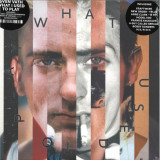
For this uniquely personal retrospective spread over twelve vinyl discs, Sven Väth takes us back to the early days of his DJ career. On What I Used To Play we meet great pioneers of electronic music, gifted percussionists, obscure wave bands, and innovative producers of a bygone 'new electronic' era. Rough beats and irresistible grooves from the identification stage of house, techno, and acid remind us not just how far electronic music has evolved over the past four decades, but how great it was to dance to EBM, techno, and house for the very first time.
If there is one protagonist of the electronic music scene who has remained curious, innovative and at the very cutting edge of music for over four decades, it's Sven Väth. His multi-layered artist albums and Sound of the Season mix compilations have been defining the genre for over two decades, and even today, he is constantly on the lookout for the next top tune to add to the highlights of his next set. At least, that's the case when he's not producing them himself as an artist or remixer. "Actually, it's always been part of my DNA to think ahead," and nothing had been further from his mind than looking back at his past, but when in spring of 2020 the international DJ circuit had to be scaled down to virtually zero, the 'restless traveler' suddenly had time. Time to stop and reflect on "how it actually was back then, at the very beginning of my career..."
"It was a great trip and with every track, beautiful memories came flooding back".
In the London apartment, he had just moved into, Sven has set up a "little music room", where he cocooned himself for several days, "to look way back for the first time and review my musical journey through the eighties, so to speak."
The interim result was six thematically oriented playlists with a grand total of 120 tracks from 'early 80s' to 'Balearic late 80s', together with excursions into afrobeat, European new wave, and EBM sounds and a few epochal techno/house tracks from the USA in between. From these 'Best of Sven Väth's favorites', the project What I Used To Play crystallized. Sven remembers how the Cocoon team reacted to his proposal: "They found the idea of making a compilation out of it MEGA from the beginning and everyone said 'Sven, go for it', but then, of course, the work really started, namely, to clear the rights and to get clean sounding masters of the up to 40-year-old tracks. There was also disappointment, of course. We couldn't clear certain titles because the rights holders in the USA had fallen out with each other or simply disappeared from the scene. In short, it wasn't easy, but now I can safely say we got the most important tracks."
Finally, after two years of research, curation, design, and administrative fine-tuning, the "little retrospective" from 1981 to 1990 is available. The exquisitely packaged, and three-kilo heavy box set is not only physically impressive, WIUTP is also the definitive record of Sven Väth's musical development. On each of the twenty-four sides of vinyl, you can trace track by track, what influenced him during which phase, and how he took off as a DJ from his parents' Queen's Pub straight into the spotlight at Dorian Gray. There and at Vogue (later OMEN), Sven became the style-defining player in the DJ booth that he still is today.
1981 - 1990: Future Sounds of Now
In the early eighties, the crowd in clubs like Vogue and Dorian Gray danced to what nowadays we call 'dance classics' - mainly disco, funk, soul, and chart pop. It was up to a new generation of DJs, including Sven Väth, the youngest protagonist in the Rhine-Main area at the time, to create their own club-ready music mix. Good new tracks and potential floor-fillers were rarities that had to be sought out and found, in order to prove oneself worthy.
Without MP3s, internet streaming, or other digital download possibilities, music didn't just gravitate to the DJ, instead, it had to be tracked down. In well-stocked record stores in Frankfurt and Wiesbaden or even in Amsterdam, London, or New York, Sven and friends sourced the material for countless magical nights. On WIUTP we can follow Sven's very personal journey through this wild, innovative era in which synth-pop, funk, hip-hop, and disco were successively replaced as 'club music' by house, techno, acid, and breakbeat. By the end of the decade, it was clear to see that these once exotic 'fringe' phenomena would soon become 'mass' phenomena.
Early 80s
Dirty Talk by the Italian-American duo Klein & M.B.O. represents the most innovative phase of the Italo-disco genre in the early eighties like no other track. Mario Boncaldo (I) and Tony Carrasco relied entirely on the original synthetic drum and percussion sounds of the Roland TR-808, coupled with the raunchy vocals of Rossana Casale and guitar accents of Davide Piatto. Of course, other tracks from this period were also influential in style, most notably Unit by Logic System, which worked as the perfect soundtrack to the laser lighting system at the legendary Dorian Gray club. With stomping beats and robotic rap interludes, Bostich by Yello also belongs on Sven's eternal playlist - after all, it caught the attention of Afrikaa Bambaataa, who invited the Swiss duo to perform at the Roxy in New York in 1983.
EBM Wave - Mid 80s
From today's point of view, the almost ten-minute-long, downtempo track Giant by Matt Johnson's band project The The, would probably not be considered an obvious club classic. However, a closer (re)listen reveals the rhythmic intricacies of the percussion overdubs by JG Thirlwell (aka Foetus) on Johnson's composition, and it becomes clear why this exceptional piece of music is one of Sven's absolute favorites. Other classics from this phase include Kaw-Liga by the mysterious The Residents, the hypnotic-synthetic Our Darkness by Anne Clark (and David Harrow), and last but not least, the somber, monotonous anthem Where Are You? by 16Bit, one of Sven Väth's projects together with Michael Münzing, Luca Anzilotti from 1986.
US House - Late 80s
You certainly can't talk about Chicago house without mentioning Frankie Knuckles. The resident DJ at the Warehouse not only gave the name to an entire genre, but also produced epochal floor fillers on the Trax label like the timeless Your Love, sung (and moaned) by Jamie Principle. Acid house protagonists Phuture also hail from Chicago, and on We Are Phuture (also released on Trax) we hear the chirping acid sounds of the legendary Roland TB-303 in full effect. Another featured classic is No UFO's by Detroit's Model 500 aka Juan Atkins, who is rightly considered the 'Godfather of Techno' even if the genre-defining track from 1985 still breathes with the spirit of hip-hop and electro from the first breakdance era.
Afrobeat
Le Serpent, by Algerian-born Abdelmadjid Guemguem, is a track that sounds completely different from everything else on WIUTP. Made in 1978, it's a monumental, rousing groove created without bass or synths, just with five congas! Even though Guem sadly passed away in 2021, his immortal, acoustic beats are understood all over the world and will continue to enrich many thousands of DJ sets for years to come. Another classic that not only Sven appreciates beyond measure is Hugh Masekela's Don't Go Lose it, Baby. In addition to being one of the most important jazz pioneers, the trumpeter and freedom fighter from Johannesburg was very experimental, integrating electronic sounds into his music in later years, in a similar vein to Miles Davis and Herbie Hancock. Dutch jazz pianist Jasper van't Hof's afrobeat project Pili Pili has also aged well. The trance-like, almost sixteen-minute-long track of the same name, manages to fill a whole side on the seventh of twelve vinyl discs in the WIUTP box.
UK-US-Euro - Late 80s
Time for a change of scene, in the truest sense of the word, and from a musical perspective, this section is like landing on another planet. First up is Andrew Weatherall's classic remix of Primal Scream's Loaded, featuring the iconic Peter Fonda sample (lifted from the 1966 biker film Wild Angels) that came to personify the mood triggered by the British Second Summer of Love in the late eighties: "We wanna be free to do what we wanna do, and we wanna get loaded...". This period also saw the emergence of M/A/R/R/S whose only single, 1987's Pump Up The Volume, became a club classic with support from DJ legend CJ Mackintosh. In this most eclectic of sections, we also encounter New York house and reggae producer Bobby Konders and his seminal Nervous Acid.
Balearic - Late 80s
Those who know him, know that Sven had already lost his heart to the 'magic island' of Ibiza as a teenager, so with that in mind, the WIUTP project couldn't end without a Balearic chapter. Inspired by Manuel Göttsching's E2-E4, the immortal, eponymously titled Sueño Latino belongs in there without question. Equally popular on the island was, and still is Break 4 Love by Raze, which thinking about it, would also fit perfectly into the house chapter. Last, but not least, there's an overdue reunion with Sven Väth himself, in his role as frontman of the successful Frankfurt trio OFF. Together with Michael Münzing and Luca Anzilotti (later of Snap!) this 'Organization For Fun' created the off-the-wall club hit Electric Salsa in 1986 which incidentally turned into an international chart smash, putting Sven in the enviable position of having to decide between pop stardom and a DJ career. Well, we all know how that decision turned out and the rest, as they say, is history. A not insignificant part of his story is What I Used To Play. Enjoy!
MUSTA presents an elaborate six track EP project, titled 'Tamburi
Parlanti' which translates to 'Talking Drums' in English. The body of
work marks a turning point in his career to make more than electronic
music, and delves into a plethora of live music and field recordings
recorded for the EP, ranging from polyrhythmic tribal drum-patterns to
Afro-funk bass chords, congas and jazz-keyboard, played by local
musicians as well as himself.
Musta's love for music began during his 11 years spent living in the
Dominican Republic. This encounter of Latin rhythms started the musical
genre contamination that to this day distinguishes his productions. In
this EP, like the rest of his releases, the music is diverse, tribal and
hypnotic. Respectful of the past yet constantly innovative. This love of
the past and future has led him to release edits and originals on staple
labels such as Nervous Records, Samosa Records.
Music aside the EP artwork has significant meaning, the mask shown is
that of the ancient Mamuthone icon of Sardinian folklore which goes back
further than 2000 years, defined as a representation of the collective
soul of Sardinia, the ancient ritual of the Mamuthone creatures is that
of a rhythmic dance where 12 of the creatures dance together,
representing the 12 months of the year. With this theme, Musta aims to
connect the dots of this pastime tradition into the EP, reflecting it
visually as well as through the music itself.
"Tamburi Parlanti EP is a collection of songs that I've made myself
around the world, recording and collaborating with various musicians of
many different nationalities. The music reflects my musical path in
recent years which draws strong inspiration from afro-funk and latin
disco from the 70s and 80s. My intent is to create music that presents a
journey between the hottest Latin sounds, over to more African disco
rhythms.
After our last release titled “jazz Baileys” we are back with House Experience Vol.2., this time in Ep format, presented by Bs As deep.
The previous volume was clearly dedicated to being a various artists, also with the participation of Bs As deep.
We have been working since vinyl number 4 with musicians, who have a participation in almost all the tracks released.
When we talk about musicians, we are including keyboardists, saxophonists, percussionists, guitarists or bassists.
Our goal or common thread has always been to achieve a warm and forceful sound, so that it can be heard in any environment, and at the same time be used at any time of the night, on a dance floor.
With those involved in both past and current releases, we share a common idea, which guides us in the interpretation of each song.
We also base ourselves on house influences from the late 90s (96,97,98,99)
Personally, we are moved by those times in which the sounds become more sophisticated, more elaborated in detail, and that is when we believe that the house that we listen to today with soul and jazz sounds, take on more relevance.
They also promote Afro and Latin percussion, leaning towards that New York and Puerto Rican fusion.
For all this, we like to include classic instruments, such as roland rhodes, the much-loved Juno, or korg packages with their inevitable M1.
Many shots are made live through a session expressed by the musician, who improvises for a while, from there we extract some part, which can be used several times in several tracks.
It is always necessary to do an editing job to adapt and correct any dissonance or variation in time that implies desynchronization in the beat. All this working in the sequencer of the daw to use.
On this album you will be able to hear soulful house sounds strongly impacted by keyboards, flutes and session basses, as well as some perfectly adapted percussion samples.
The one that almost got away… A track that many thought would be destined to remain on only the most select of DJs USBs, Kieran Hebden finally clears the sample on one of the most talked about tracks of last year ‘Looking At Your Pager’. Released on yellow vinyl with a full picture sleeve and backed with another massive KH earworm from the vaults ‘Only Human’.
Flipping the script on 3LW’s 2000 R&B heater ‘No More (Baby I'ma Do Right)’, Four Tet, under his KH alias, works that untouchable magic on the sample in true Hebden fashion. Taking that peachy vocal snippet and looping it up to the high heavens with a chest rumbling, wobbler of a bass synth and skippy garage beat you’re treated to a Four Tet warper of gargantuan proportions, finally officially released via Ministry of Sound Recordings under the title ‘Looking At Your Pager’.
In Kieran’s own words, "This track was made in the summer last year just before my first festival set in a long time. I wanted something new to play that would feel universal, positive and futuristic and this is what I came up with.
"Since then I think more people have asked me about this track than for anything else I've ever made and I've had amazing times playing it to the best crowds you could ask for. It took quite a while to get approval for the vocal sample but it finally happened recently and now the music is out in the world for everyone."
The official soundtrack of the 2021 'Rumba Rules, New genealogies' documentary movie by Congolese artist Sammy Baloji and Quebec filmmaker David Nadeau-Bernatchez. A deep dive into Kinshasa’s vibrant Rumba scene, including remastered classics by Brigade Sarbati, Werrason, Papa Wemba, Franco & le Tout Puissant O.K. Jazz
Rumba Rules, New genealogies is about contemporary rumba in Kinshasa, but this music has deep historical roots nevertheless. Born in the interstices of the colonial world and thriving during the three decades of the Mobutu era in Zaïre, Congolese rumba has been iconic and popular all over Africa for decades. The roots of Rumba are even deeper, and the many paths it evokes trigger the imagination. The story goes that this music came with the migration of the ‘Kumba’ drum and dance in previous centuries, African slaves having carried it all around the Americas and giving birth to Cuban ’Rumba’, Colombian ‘Kumbia’ and many others. With its varied rhythms, guitars and horns, through LPs and radio stations, Rumba came back to (re)conquer Africa throughout the 20th century, paving the way for new practices. One could say this music is a sort of palimpsest, a memory in itself of Atlantic migrations and histories.
Rumba is nowadays discussed all around the world, igniting many debates among the Congolese diaspora. Being the constant talk of the town sometimes overloads public debate, and many people get tired of this broken record. Thus, over the last decade, enterprising producers have worked hard to promote Kinshasa’s musical diversity and tried to emulate new sounds to reach worldwide attention. But Kin’ locals and urban dwellers will not be fooled : new shoots cannot hide the forest. Despite some difficulties to innovate, despite the pastoralist sermons and the diaspora fighters pushing for concert cancelations, rumba is still at the core of the Congo today. Talented artists such as Fally Ipupa, Ferré Gola, Brigade Sarbati and others are leading the fifth generation, and the religious world has also proven to be a nurturing environment for the cultural and economic dynamism of this music.
Focusing on the music of Brigade Sarbati and his Orchestra, this record offers a deep dive into Kinshasa’s rumba scene. Halfway between professional studios and Zoom H4 field recordings, the rumba herein is about today’s youth: dense, full of energy and breakdowns, insights and name-dropping. The cavacha rhythm, the solo and bass guitar’s playing style, the singing style and numerous dedications all resonate with the history of Rumba. In an era where digital sound is taking over, it is interesting to highlight the instrumental and live performance compositions of this music. Digital technology is indeed used during the recording and mixing phases, but Congolese rumba still relies strongly on instrumental playing. There is all that but also, many other things to hear on this record… It’s time to let it be. A big thanks to Étienne Tron for making it possible: it is on his initiative and through his patience that this album is in your hands today. (David Nadeau-Bernatchez, december 2021)
Hospital Records proudly present the debut solo album from drum & bass icon Grafix. ‘Half Life’ is an introspective glimpse into the influences and sonic development of the Bristol-based producer, who over the years has established himself as a pinnacle of the dance music world. Grafix’s first ever studio longplayer as a solo artist consists of 14 hotly-anticipated pulse pounding anthems, featuring killer collaborations from the likes of Metrik, Lauren L’aimant, Reiki Ruawai and Chrissie Huntley in his hit singles ‘Somewhere’, ‘Feel Alive’ and ‘Skyline’.
High-octane dancefloor energiser ‘Skyline’ sees drum & bass titans Grafix and Metrik collide for a third time on this futuristic drum & bass cut infused with pure uplifting soundscapes. Enter a world of powerhouse synthesis, relentless basslines and Metrik’s very own vocal performance. This is just the follow up you needed from the mammoth success with the duo’s previous collaborations ‘Overdrive’ and ‘Parallel’.
Grafix draws upon his love for rave culture on the acid heavy ‘Blast Out’ - a no-holds-barred drum & bass system shocker. Skittery vocal chops, shredding bass hits and minimal-funk drums show the side of Grafix well known for tearing up the dance - never afraid to drop a wild card.
From the hypnotic and distorted energies on the likes of ‘CTRL’ and album title track ‘Half Life’, to the forward-facing vibes on LP numbers such as ‘Accelerate’ and ‘The Chance’, the versatile flavours supplied by Grafix throughout are a testament to his years of experience in the studio.
Other album highlights include two tracks with the immensely talented Lauren L’aimant who boasts previous releases on staple dance imprints including Anjunadeep, Colorize and Protocol Recordings. ‘Watch The Sky’ is an anthemic stepper home to Lauren’s spine-tingling vocals and Grafix’s catchy synth hooks. ‘Feel Alive’ captures the pair’s undeniable ability to strike up a euphorically cutting-edge dance music banger.
The ‘Half Life’ LP also features the previously released tracks ‘Radiance’ as well as radio hit ‘Somewhere’ featuring New Zealand’s very own Reiki Ruawai. Both tracks of which are no stranger to worldwide drum & bass listeners.
Grafix’s debut album marks a signature milestone within his musical journey as a solo artist and his achievements so far only scratch the surface. The first single ‘Somewhere (feat. Reiki Ruawai)’ to drop from his album racked up global airwave support with an impressive number of plays from radio tastemakers including Danny Howard, René LaVice, Mollie Collins, the George FM crew in New Zealand and of course, Fred V. With regular support from big hitters including Sub Focus, Wilkinson, Friction, Camo & Krooked and more, Grafix’s music continues to talk for itself when racking up countless DJ spins as well as consistent landings across pinnacle industry platforms such as UKF. Keep an eye out for Grafix at Snowbombing, Hospitality On The Beach Albania and more throughout 2022!
Reissue of Elizio De Buzios's "Tamanquiro". Remastered and pressed on 45 RPM!
Sitting a good 90-minute drive away from Rio de Janeiro’s crowded beaches and packed tourist hot-spots, Campo Grande is not a neighbourhood that attracts travellers from around the World. Traditionally it is home to the city’s lower middle-class, whose aspirations of moving up the social ladder were played out in a suburb that has always been solidly working-class.
Campo Grande is home to Elizio De Buzios, a Brazilian musician who started playing music in the late 1970s and early 1980s. De Buzios began as a drummer, before learning to play guitar and starting to compose and sing his own music. When he turned 18, De Buzios joined a local band formed by some of his friends and other like-minded local musicians: Sol da Terra. The band mostly played samba in neighbourhood bars and small venues around Camp Grande, but De Buzios was interested in more than just samba. While he naturally admired great samba composers such as Cartola and Beth Carvalho, his musical pass went far beyond Brazil’s national music. He also loved MPB and bossa-nova and at home he listed to Joäo Bosco, Milton Nascimento, Luis Melodia, Tom Jobim, and many bossa-nova singers.
In 1980 De Buzios was noticed by a local representative of international major label Polygram, who gave him the opportunity to record two songs. He was excited, so started searching for inspiration for the songs he would eventually lay down. He found that inspiration close to home while passing a neighbourhood shop which made and sold clogs. After noticing a display of then fashionable Portuguese clogs outside the store, De Buzios popped inside to talk to the owner. It turned out that he was a tamanqueiro – as clog-makers are traditionally called in his native Portugal – and was as passionate about music as he was about the footwear he made. Thus inspired, De Buzios returned home to work more on the lyrics and music.
The next day, he headed into the studio to record the song, with Vale Ribeiro, who later went on to produce tracks for Marcos Valle, behind the desk. With Ribeiro’s assistance, De Buzios managed to record two songs in one day: ‘Tamanqueiro’ and ‘Sou Um Louco’, a ballad with English lyrics blended into the mostly Portuguese text. From the start, it was clear that ‘Tamanqueiro’ would be the single’s A-side. Incredibly catchy and funky, with some subtle disco elements, the song remained distinctively Brazilian thanks to the use of the cuíca. Listening back all these years on, De Buzios’ lyrics seem almost spontaneous, carry the track forward, and make it almost impossible not to sing along. Its infectiousness and funkiness made it an instant hit with the first few people to hear it.
When it was released, responses to the song were enthusiastic, even if it never became the Brazil-wide smash it should have been. It resonated well in the local clubs and on the radio, but unfortunately the marketing was handled by an inexperienced Polygram employee who failed to adequately promote the track. As a result, the record sank without trace and De Buzios’ dreams of stardom evaporated. Having just started a family, he realized he could not live off the uncertainty of being a musician. Instead, he got a job at city hall as a civil servant, a role he continued until his retirement a few years ago. ‘Tamanqueiro’ and ‘Sou Um Louco’ remain the only two songs he ever recorded.
In the early 2000s, with the rise of diggers’ culture, ‘Tamanqueiro’ slowly surfaced again. It became a sought after, hard to find seven-inch single, finding its way onto the airwaves once more and into the ears of a new generation of listeners. Some started appreciating the song so much that it was referred to as the “best-Jorge-Ben-song-Jorge-Ben-never-recorded”. And they are right: ‘Tamanqueiro’ does have that Jorge Ben-straight-forwardness. It’s a completely honest song that’s almost impossible not to fall in love with. Thanks to this remastered reissue on Rush Hour, De Buzios may now get the props his sole record so richly deserves.
Now for the good news: De Buzios is still singing in local bars and clubs in and around Campo Grande. He is surprised, but also incredibly proud, that the record he had almost forgotten about is appreciated so much by a group of music lovers he didn’t even know existed. But above all, he is happy that more than 40 years after the recording session, the record lives on – not only on this re-release, but also in his weekend sets in the bars of Campo Grande.
London's SlothBoogie return with the second instalment of their 'Dancing With Friends' series this August, featuring exclusive new music from Kemback, Felipe Gordon, Mak z, Bill Mango, The Revenge and more.
Following the success of the inaugural 'Dancing With Friends', which featured the likes of Kassian, Letherette, Joe Cleen and Ruff Stuff amongst others, the crew are back with that ever so tricky... second album. This sequel however, will not disappoint. The team have scoured the four corners of the globe to provide listeners with a comprehensive follow up that showcases more brand-new music from their favourite producers.
'Dancing With Friends Vol.2' is a deftly curated selection of the diverse styles synonymous with the SlothBoogie sound, ranging from the hazy deepness of cuts by Amy Dabbs, DJ Counselling, Bill Mango, Metropolitan Soul Museum and Kristy Harper to Disco tinged, jazzy, bumpy numbers from the likes of Jesse Bru, T.U.R.F. and Felipe Gordon through to more tripped out acid workouts by The Revenge, Fede Lng & Mojeaux, Togethrs and Pablot.
With this latest collection you can trust SlothBoogie to bring some much-needed dancefloor unity and sun-drenched energy to the world for the summer of 2021. The perfect soundtrack to reconnect and begin dancing with friends once again.
The vinyl format will come as a Gatefold Cover with 2 x 12" cream speckled clear vinyl and will include the full digital album download cards.
Twookie aka the baddest talking tucan around, is here to bring the funk back! Gerald Mitchell and his L'lambourghini Crew return on Mother Tongue with another funk-fuelled project. A real who's who of Detroit finest players including Pirahnahead, Billy Love, Duminie Deporres, Mark Anthony and the Mitchell brothers are here jamming and bringing you that classic "D" Parliament sound. The A side sees the epic story of Twookie Wonder Brown, while on the flipside it's time for a revamped/re-thought version of "Celebrity Bbq Sauce".
A real taste of Detroit's finest bbq sauce!
"Do you feel what I feel too?" Brijean Murphy floats the question at the start of Feelings, the full-length Ghostly International debut from Brijean, her collaborative project with Doug Stuart. Guided by a lush mix of charismatic keyboard chords, grooving bass lines, and radiant bongo-driven rhythms, the "Day Dreaming" lyric doubles as an invitation and a statement of intention. Brijean want you to move, physically, mentally, dimensionally; this is dance music for the mind, body, and soul. With Feelings, they've manifested a gentle collective space for respite, for self-reflection, for self-care, for uninhibited imagination and new possibilities. The album cultivates a specific vibe, a softness Murphy has come to call "romancing the psyche." Growing up in a family immersed in jazz, Latin and soul music, Murphy would become an accomplished DJ, session and live player in Oakland's diverse music scene and one of indie's most in-demand percussionists (Poolside, Toro Y Moi, U.S. Girls). In 2018, she began recording songs with multi-instrumentalist and producer Doug Stuart, who shares a background in jazz and pop in bands such as Bells Atlas, Meernaa, and Luke Temple. Following their first sessions, which resulted in the mini-album Walkie Talkie (released in 2019 on Native Cat Recordings), the duo continued freeform hangs in Oakland, inviting friends Chaz Bear, Tony Peppers, and Hamir Atwal. "We improvised on different feels for hours," says Murphy. "Nothing quite developed at first but we had seeds. We re-opened the sessions a couple months later, after returning from tours, and spent a month developing the songs in a little 400 square foot cottage." Aforementioned album opener "Day Dreaming" is a dynamic celebration of newness: the excitement in finding deeper understandings of yourself as you get to know someone, something, or somewhere new. "Wifi Beach" drops a pin in pure psych-pop exotica. With Atwal on drums, Stuart on bass, Peppers on keys, and Bear engineering, the group improvised the track's intro sequence based on the vision of a lavish 1970s pool party. Establishing the scene is a mid-frequency drum kit disco shuffle augmented by tight congas and timbale effect, as Murphy sings in spurts: "I want to be / Deep in love / I want to be / Say you love me too / I want to be / Honey." The stanzas cut between "reflective moments of wants and being overwhelmed by feelings of the present," she explains. "A lot of the `love songs' I write are to my psyche, self-reflections on how to encourage tender perspectives and make more time for the sweet stuff." Though there is a loose, dance-oriented motif throughout, the material gives way to somnolent turns. On "Ocean," Brijean's anodyne lyrics, reminiscent of Astrud Gilberto's airy croon, float atop a brushed drum pattern, sparkling rhodes lines, and pittering and softly funky woodblock bops. The opening line sets up the rest, "In this gentle space we lay" _ among the album's propensity for movement, tracks like "Ocean" stand out by leaning back for momentary sways of blissful introspection. Murphy calls the charming "Hey Boy" a "psychedelic guide _ the exploration of finding what feels good _ through sorrow, anxiety, apathy." This mentality applies to Feelings on the whole: in these nebulous and verdant worlds of hazy melodies, feathery hooks, and percussive details, the songs simply want us to feel alive. They radiate in wonderful abandon and with a sense of devotion to the self. RIYL: Stereolab, Astrud Gilberto, Air, Little Dragon, Broadcast, Khruangbin, Poolside.
"I am sitting in a garden, I haven't left the property in weeks, someone is dropping off food once a week. I haven't seen a human being in ages, I feel like a reverse Schroedinger cat - do I exist when nobody sees me? I must be somewhere in France but I don't remember. I have lost my consciousness again. When I wake up I hear a broken record looping somewhere in the mansion. A washed-out opera. Behind the trees I see the dilapidated hermaphrodite sculpture in a field of verdant nettles and fern. I hear gunshots far afield, aeroplanes in the sky, sirens on the main road.
When unconscious I dreamt of sitting on the Concorde observing the scarab blue ocean and iridescent clouds from above, an erstwhile receding memory. Sometimes I hear the organ of the nearby Renaissance Cathedral merging with the Russian Church bells.
I am hallucinating again. Someone's humming in the kitchen? Singing? A Radio? I overhear two young women talking about art galleries in the neighbour's garden. Bees attack, again…..again and again. The hairspray finally intoxicates them. An amphoric japanese voice is whispering in my head saying I will die soon. Someone (something?) bangs on the vases. The fountain's water turns dark red.
Fleur calls and says mum died. The funeral will be televised on tuesday. We opt for the synthetic choir for the service. The call is suddenly interrupted. Mold is slowly taking over the house.
I go back inside."
Une Fille Pétrifiée is the debut album of new Black To Comm related entity Mouchoir Ètanche (after one recent 12" on Richter's own Dekorder label). Combining real and fake acoustic instrumentation, sampling, field recordings and excessive yet inaudible post production this is another sublime and ethereal statement. Influences are ranging from (French) Classical & Opera to the anecdotical compositions of Luc Ferrari, Chinese Opera, Chanson, Sacred Music / Church Music, JG Ballard and Surrealism.
Marc Richter records as Black To Comm for Thrill Jockey, Type and Dekorder and as Jemh Circs for his own Cellule 75 imprint. He also produces soundtracks and acousmatic multichannel installations for institutions such as INA GRM Paris, ZKM Karlsruhe and Kunstverein Hamburg.
Released on the Sony Legacy label. If you sit and talk to many of the alternative rock artists dominating today's music you'll find that many of them pay homage to the The Psychedelic Furs. Artists as diverse as The Rapture, Annie Lennox and Buffalo Tom have all released cover versions of the band's singles. Led by front man and songwriter Richard Butler, the Furs won over fans and critics alike by combining poetic lyrics, innovative rhythms and melodies driven by an aggressive, punk desperation. Through it all, the band released seven studio albums to great commercial success and critical acclaim. The band are back playing sold out shows in the UK and return this summer for a series of gigs and festival appearances, notably as part of Meltdownon London's South Bank, curated by Robert Smith. By way of celebration Sony are reissuing all 7 of their studio albums on heavyweight 180gm vinyl in original, replica packaging, with download code insert. Promo & marketing activity.
Elma Rivaga back with the second release signed by Dj D.I.F . Outspoken stuff that works both as distinctive dancefloor material as well as intimate home listening. Enjoy it!
Percussionist Jamie Muir was a member of King Crimson during the recording of Larks' Tongues In Aspic, in 1973. Staying less than a year with Robert Fripp, the Scot had already cut his teeth with another master guitarist, Derek Bailey, as part of the Music Improvisation Company, along with Evan Parker, Hugh Davies and Christine Jeffrey, whose eponymous 1970 album was one of the first releases on ECM. Muir and Bailey recorded Dart Drug eleven years later, in 1981.There's no shortage of great percussionists in the brief history of free improvised music but on the strength of Dart Drug alone Jamie Muir deserves a place at High Table. Unlike for example Han Bennink and John Stevens, though, you can't hear echoes of any particular jazz drummer in Muir's playing, even if he has expressed appreciation for Milford Graves (who himself sounded like nobody else who'd come before him).What on earth did Muir's kit consist of Some instruments are clearly identifiable (bells, gongs, chimes, woodblocks); others could be... well, anything. Old suitcases thwacked with rolled up newspapers Tin cans and hubcaps inside a washing machine Who cares It sounds terrific - but if you're the kind of person who faints at the sound of nails scraping a blackboard, you might want to nip out and put the kettle on towards the end of the title track.Dart Drug is consistently thrilling, and often very amusing - but it's certainly not easy listening. In music we talk about playing with other musicians, whereas in sport you play against another opponent (or with your team against another team). Why not play against in music, too That's precisely what happens very often in improvised music, and Bailey was particularly good at it. How can a humble acoustic guitar hope to compete with a Muir in full flight Sometimes Bailey's content to sit on those open strings, teasing out yet another exquisite Webernian constellation of ringing harmonics and wait for the dust to settle in Muir's junkyard, but elsewhere he sets off into uncharted territory himself.'The way to discover the undiscovered in performing terms is to immediately reject all situations as you identify them (the cloud of unknowing) - which is to give music a future.' Bailey evidently concurred with this spoken statement by Muir, including it in his book Improvisation.Derek Bailey is no longer with us, of course, and Muir gave up performing music back in 1989. All the more reason for seeking out this magnificent, wild album.
A brand new release by the prolific DJ/Producer from Los Angeles. This time it's his personal label Developer Archive which was introduced back in 2010 focused on vinyl only releases. This next release DA09 its alot more of what he has grown so known for strictly focusing on highly effective dark gems that work in the clubs or the warehouses. This extended release gives you more of what he has to come in the future. Huge release! TIP!
Following the massive buzz a round the label's last release (voted THE record of 2017 by some 400+ international DJs and tastemakers on Bill Brewster's DJ History Podcast/poll (2017 Furtive 50) , Hobbes Music kicks off 2018 with a heavy slice of warehouse techno backed with deeper electro flavours, a second double-A-side 12" outing by the anonymous DALI.
You may remember DALI (NB all caps in the spelling) released a debut 12" around this time last year. Support came from Ben UFO, Laurent Garnier, Domenic Cappello (Sub Club), John Heckle, Chris Duckenfield, The Revenge, Tom Findlay (Groove Armada), Sean Johnston and XDB (among others) and a repress happened swiftly, with Laurent Garnier and Avalon Emersonalso supporting most recently (on WWFM and at Berghain, respectively).
DALI has a passion for analogue synths, abstract, hypnotic dance music and all things psychedelic. Don't bother looking her up on the net, social media etc. DALI is eschewing all that, to let the music do the talking for now.
Fuckthegovernment.Ltd, a.k.a. F.T.G (Alfredo Trastulli) and Music Box head honcho, Marco Riff, return to the Skylax fold in 2016 with a cache of house nuggets for our listening pleasure. Their last venture on Skylax saw F.T.G collaborate with a bunch of his friends, resulting in some of the best tracks we'd heard all year, including the unforgettable Fuckthegovernment theme. Their tracks have been celebrated and hailed by some of the best DJs in the game, names such as Derrick May, Ricardo Villalobos, Raresh, and DJ Harvey. The bar set by the first record remains sky high, and somehow, these two manage to raise the bar even higher. It may be the biggest cliche going when talking about an album, but the duo certainly do take us on a journey, through the past and present of house music. It's a record not too dissimilar in tone to Paranoid London's from a few years back, but F.T.G and Marco strip things back even further than those guys did, in our opinion; The sound is more raw with less frills, and no track names to predispose feelings in the listener either. This eight track project is cohesive and elaborate, with movements through sounds both acid and jazzy, minimal and maximal. It explores sounds that came to prominence in famous house locales such as Detroit and Chicago over in the U.S., but the underground European influence is definitely present, from Paris to Berlin, and of course F.T.G and Marco's home of Italy. With this album, these guys add to the underground sound that has cultivated in the city of Perugia for years now, a place that has seen the likes of Simoncino and Nicholas hone their craft.Don't miss out on a piece of Skylax history!
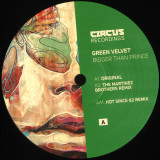
GREEN VELVET MAKES HIS CIRCUS RECORDINGS DEBUT WITH BIGGER THAN PRINCE, HIS MOST TALKED ABOUT TRACK IN YEARS...
BIGGER THAN PRINCE WAS BORN OUT OF A CONVERSATION BETWEEN LABEL BOSS YOUSEF AND GREEN VELVET WHEN BOTH PLAYED THE INDONESIAN LEG OF THE ANNUAL CIRCUS TOUR. THE IDEA OF THE CHICAGO LEGEND CONTRIBUTING A BRAND NEW TRACK FOR THE CIRCUS X // PART 1 COMPILATION WAS FLOATED AND SOON HE WAS JOINING NINE OTHER FRIENDS OF CIRCUS WHO WERE ALL TO FEATURE IN CELEBRATION OF TEN YEARS OF EVENTS.
'BIGGER THAN PRINCE' IS A CLASSIC GREEN VELVET VOCAL NUMBER AND SHARPER AND FRESHER THAN ANYTHING WE'VE HEARD THIS SUMMER. QUIRKY AND DRIVING, ITS SET TO BE ONE OF THE TRACKS OF THE SEASON.
TO BACK THE ORIGINAL, YOUSEF HAS DRAFTED IN MORE FRIENDS OF CIRCUS ON REMIX DUTIES, HOT SINCE 82 AND THE MARTINEZ BROTHERS...
DJ FEEDBACK
STEVE MAC - "LOVE THIS RECORD AND THE REMIXES... GREAT RELEASE!!"
TOTALLY ENORMOUS EXTINCT DINOSAURS - "I LOVE THIS RECORD!!! I'LL PLAY THE ORIGINAL!"
MATTHIAS TANZMANN - "BOTH REMIXES REALLY ARE GREAT!! PERFECT FOR ME!"
LEE BURRIDGE - "IT WAS ALWAYS GOING TO BE THE ORIGINAL FOR THIS GREEN VELVET FAN!"
SINDEN - "ORIGINAL WINNING FOR ME!!!! CLASSIC GREENB VELVET... I LOVE IT!"
ZOMBIE DISCO SQUAD - "WOW! I DON'T THINK I NEED TO SAY MORE. THAT COVERS MY ENJOYMENT MARTINEZ BROS. MAYBE MY FAV."
TIEFSCHWARZ (ALI) - "A GREAT GREAT RELEASE FROM GREEN VELVET. SUPPORT!"
AXEL BOMAN - "THIS IS SUCH A COOL TRACK... LOVE THE ORIGINAL FROM GREEN VELVET!"
DANNY HOWELLS - "MEGA PACKAGE... SUPERB ORIGINAL AND STUNNING REMIXES TOO... ALL GOOD!"
DEETRON - "REALLY LIKE THE ORIGINAL AND THE MARTINEZ BROTHERS REMIX AS WELL. I'LL BE PLAYING."
UNER - "THE MARTINEZ BROTHERS REMIX IS SUPERB!! <3"
DRUMS OF DEATH - "I LOVE THIS WHOLE PACKAGE... WILL PROBABLY PLAY THEM ALL ACTUALLY! "
SOUL CLAP - "PURE FUNK, STRAIGHT UP NASTY!! "
MOXIE - "BIG BIG TUNE!!"
RALPH LAWSON - "THE MARTINEZ BROTHERS REMIX IS BEST OF THE PACKAGE FOR ME. GONNA TRY IT OUT AND LET YOU KNOW."
ALEX WOLFENDEN - "CLASSIC GREEN VELVET TRACK WITH GREAT REMIXS! MARTINEZ BROS' THE ONE FOR ME, FULL SUPPORT."
ANNIE NIGHTINGALE - (BBC RADIO 1) - "HOT SINCE 82 SOUNDS QUITE HOT IN 2013!"
LARSE - (KLUBBING, WDR 1LIVE, GERMANY) - "I LIKE THE MARTINEZ BROTHERS REMIX. WELL DONE GUYS!"
WAIFS & STRAYS (AMOS) - "ALL TRACKS ARE KILLER! THE MARTINEZ BROS REMIX IS AMAZING...FULL SUPPORT."
LUKE SOLOMON - "I HATE TO SAY IT AS I AM SUCH A HUGE GV FAN...BUT MB'S MIX KIND OF TIPS IT FOR ME. SORRY CAJ."
&ME - "I DON'T LIKE IT, I LOVE IT!!!!!!!!!!!!!!!"
GERD - GREEN VELVET = BIGGER THAN PRINCE! LOVIN' THE LINNDRUM WINK... GREAT REMIXES TOO!"
ZDAR - "LOVE THIS TUNE!!! CURTIS IS THE BEST AND ALWAYS BE... VERY GOOD MARTINEZ BROS. MIX TOO! LOVE!"
DJ HELL - "AND ANOTHER BIG TUNE FROM THE NEW PRINCE OF DANCE MUSIC! THIS IS GREAT!"
TOM FINDLAY (GROOVE ARMADA) - "GREAT EP!! MASSIVE, SUPER FRESH! GREAT CHOICE OF REMIXES TOO, BOTH SMASH IT!"
SHADOW CHILD - "YES! THE HOT SINCE 82 REMIX SOUNDS DOPE!!! "
SKREAM - "SICK RECORD!! MARTINEZ BROTHERS REMIX IS MY FAV ON FIRST LISTEN."
JORIS VOORN - "WAHAAHA CLASSIC GREEN VELVET ATTITUDE! GREAT STUFF GUYS!!"
ALIX ALVAREZ - "GREAT PACKAGE. GREAT MIXES, ESP FROM MY GUYS TMB, BEING MY FAVORITE. GONNA TRY IT OUT THIS WEEKEND."
TAYO - "THE COOLEST MOFO OUT THERE. CLASSIC GREEN VELVET. SLEAZY "CONTROVERSY" STYLE BUSINESS. LOVE."
CATZ N DOGZ (VOITEK) - "FUCK!! YES PLEASE!!! THIS IS FANTASTIC... MARTINEZ BROS. MIX MY FAV TO PLAY ON FIRST LISTEN."
IAN POOLEY - "THE HOT SINCE 82 MIX IS WICKED!! I'LL BE PLAYING THIS OUT FOR SURE!"
JD TWITCH (OPTIMO) - "I REALLY LIKE THE ORIGINAL OF THIS!! SUPPORTING."
MARC ROMBOY - "GREAT SELECTION OF VERSIONS AND GREAT TO HAVE A NEW GREEN VELVET IN THE BOX! HS82 IS MY PICK TO PLAY OUT THOUGH!!!"
DIESEL (X-PRESS 2) - "THE ORIGINAL AND THE HOT SINCE 82 MIXES AT ARE THE BEST FOR ME. WE'LL BE PLAYING THESE!!"
COPYRIGHT (DEFECTED RADIO) - "HARD TO CHOOSE A FAV. WHAT A PACKAGE...LOVE THE BEATS ON THE MARTINEZ BROS MIX...KILLER!"
180g Heavy double vinyl LP with liner notes by Tyran Grillo. Limited Japanese Obi for the first pressing. Original artwork by Russell Mills and photography by Jean-Baptiste Mondino.
The third Time Capsule is a body of dub reinterpretations by celebrated producer Bill Laswell of Ethiopian singer Gigi. Curated by Tokyo record collector, music researcher and seasoned reissue supervisor Ken Hidaka, it is the first time Illuminated Audio is pressed to vinyl after its CD release in 2003.
Ejigayehu Shibabaw was born in 1974 in Chagni, northwestern Ethiopia and by pursuing a career as a singer, went against her father’s strict, traditional gender roles. As Gigi, she embraced the same musical freedom she had strived for in her personal life, incorporating the Ethiopian church, funk, hip-hop, West and South African music into her work. She first settled in Nairobi, then Addis Ababa, where she quickly established herself as one of the city’s leading singers. A move to San Francisco in 1998 led to a long and fruitful creative partnership with bassist and producer Bill Laswell.
Around the same time, Chris Blackwell had stepped away from Island Records to start the art house film company and label Palm Pictures. He took an interest in Gigi and together with Laswell, pulled together an all-star cast of musicians for her self-titled US debut album, including Herbie Hancock, Pharoah Sanders and Wayne Shorter. It won international critical acclaim, not just for its musicianship but for making Gigi a “defining voice for the Ethiopian expatriate community”, as journalist Tyran Grillo praises in his Time Capsule liner notes. From the nation-defining 1896 victory over Italian invaders to the quiet revolutionaries who wear simple shemma garments, Grillo believes the themes in Gigi make it “a shower of sunlight on her homeland for those ignorant of its struggles.”
After its success, Blackwell encouraged them to go back into the studio to rethink the album and Illuminated Audio was born. “Anyone can make a voice sound worldly”, Grillo remarks, “but rare are those who can make one sound inner-worldly.” Gigi was clear with Laswell to give her vocals a minor role “because it’s already been done.” Instead her Amharic verse is fleeting, exhaling through the textures like ghostly fragments; soaring yet muted. Yet the album is still titled under her name, an assertion by Laswell of her central role in the album’s creation. Not only was it a fully endorsed project by Gigi, but she would be present throughout its development, giving feedback on half-finished ideas as Laswell played them back in the studio. “It works perfectly”, she reflected after the album’s release. “We wanted to capture the whole spirit of each track, and Bill’s remixes create a different music language that really puts you in a pleasant place”.
This new vocabulary takes its lead from a technical approach that Laswell had been perfecting during a furtive creative period at the turn of the millennium. Much like his ambient interpretations of Miles Davis (Panthalassa, 1998), Bob Marley (Dreams of Freedom, 1997), and Carlos Santana (Divine Light, 2001), Laswell approached Illuminated Audio by returning to the original multitrack masters. Gigi wasn’t just reworked, but recomposed into an expansive lattice of instruments, submerged in a watery ambience of dub and trance undercurrents.
Sonically, this new language that Gigi refers to, is manifested by the original album’s more understated parts being pushed to the fore. Explaining his contrasting methods, Laswell saw Gigi as being “put together in a way that fits”. Contrastingly, in Illuminated Audio, “a lot of things that I featured in the remix weren’t as audible in the original.” Instrumentation laying near-dormant, deep in the mix, are brought to the fore: the acid rock guitar and Wayne Shorter’s saxophone on ‘Tew Ante Sew’, Graham Haynes’ flugelhorn on ‘Nafekeñ’, Laswell’s bass on ‘Kahn’, the melodica in Mengedegna or the floating synths and talking drums in ‘Gud Fella’.
Brought to his attention by mentor DJ Nori, Hidaka describes Illuminated Audio as a “masterful sonic exploration into ethereal ambience and dub” and made sure this reissue also contained a full remaster to give its “deep musicality” much better dynamics and density in the overall sound. Hidaka admits that Laswell's music “is sometimes so out-there, it is often misunderstood” and, indeed, to dub album non-believers this might seem like a prolific producer imposing himself on another artist’s work; eternally developing rearrangements that never quite get to its destination. But that’s missing its true power and triumph. This is more than the reissue of a remix, but “a wholly unique musical entity”, as Hidaka describes. Illuminated Audio refers to the illuminated manuscripts that comprise the major part of Ethiopian art and its new compositions stand in proud solitude as a rare body of reworks that both informs and enhances their originals.
Kassie Krut is comprised of Kasra Kurt and Eve Alpert — former members of Philadelphia math rock institution Palm — alongside Matt Anderegg (Mothers, Body Meat). On their self-titled debut EP, the newly minted Brooklyn three-piece have retained the fangled snarl of their prior work, outlining sugary melodies with visceral flourishes. Front to back, 'Kassie Krut' smudges starkness & filth, settling into a commanding partnership fit for muddy raves, basement punk spaces, and festival stages alike.
After years of twisting rock instrumentation into unknown shapes, the first release by Kassie Krut represents a transformative refocusing of energies. These tracks evince the kind of wisdom that only comes from experience—and the kind of experience that can only be scored by new sounds, still glittering with the metal filings of their making
Familiar. Usually reserved for things we think we know. A face, a place, a feeling, a record perhaps. Until, of course, they aren’t quite the same anymore. Or maybe you aren’t.
Jennifer’s debut album lives somewhere around there.
It’s a record about time, which is already a fairly ambitious subject considering nobody seems to have figured that one out yet. More specifically, it’s about what
time does to a person. The old versions, the new versions, and all the ones in between that you only notice when something suddenly brings them back. Someone you
haven’t seen in years. A room you used to know. A certain way the light falls. That sort of thing.
There’s a bit of a doppelgänger situation going on, too. Finding something completely new and somehow recognising it. Meeting yourself again without immediately realising who you’re talking to.
Which can be nice. Or strange. Usually both. The songs on Familiar sit comfortably with that contradiction. Looking backwards without wanting to go back. Missing things without necessarily wanting them
returned. Realising that people who once occupied most of your waking hours can become people whose address you don’t know. Meanwhile, some tiny, seemingly irrelevant detail from fifteen years ago remains perfectly intact.
Memory has its own filing system. Not a particularly sensible one.
Jennifer wrote a series of poems alongside the album. In them, familiarity appears in melting snow, rough coastlines, a kitchen already warm in the morning, somebody’s hands fitting into yours. Elsewhere she wonders about someone she
once knew everything about and now knows nothing about. They could live around the corner. They could live on another continent. They could, technically, be dead. Probably not. But that’s time for you.
Maybe Familiar is less about remembering who you were than realising you never entirely stopped being them. Things get added. Things disappear. Things come back looking slightly different.
And somehow, you recognise them.
out of Stock
Last delivered 8 days ago available to reorder, subject to availability
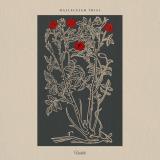
Hallelujah Trial is Tom Roberts (Cranebuilders, Beatowls) and John Canning Yates (Ella Guru): two Liverpool songwriters who knew each other for twenty years before they ever played a note together. Roberts brought a folder of songs to Yates' front room. Yates answered with piano. A weekly ritual of tea and talk became a repertoire, the repertoire became a debut performance at the final La Violette Società, and a few weeks later the songs became an album, recorded in May 2026 in the Gustav Adolf Church, the Scandinavian seamen's church on the edge of Liverpool's Baltic Triangle.
The sound is spacious, stripped back and gloriously melodic: voice, guitar and piano, songs in a room, storytelling that recalls Bill Callahan, Lee Hazlewood and the late Johnny Cash records. Yates' Ella Guru drew a Peel session and 'the best debut album since Marquee Moon' from the Independent on Sunday. Roberts' Cranebuilders recorded two Peel sessions of their own. The pedigree is genuine. The songs are better.
Recorded, mixed and produced by John Canning Yates. Mastered by Jason Mitchell (PJ Harvey, Aldous Harding). Sleeve by Pascal Blua, after a rose from William Turner's herbal of 1568. The closing 'Reprise' carries a hallelujah chorus of friends and family, recorded live in the ch
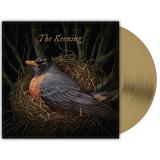
Richly progressive folk-informed heavy post-rock and a sick burn to boot. - The Obelisk Rebecca Vernon (SubRosa), the driving creative force behind THE KEENING returns with her second album, Devotion. The new album sees Vernon and company releasing one of the year's most evocative albums; a truly compelling mix of slow burning, ethereal post-rock, folk, goth, and soaring doom. For Vernon, the writing process for Devotion took place in two starkly different environments. It ranged from the contemplative solitude of a friend’s cabin in a deserted Idaho ski resort, to the hectic reality of a 55+ senior living community in Spokane, Washington, where she was staying with her father. This shift resulted in an explosive album with a subtle duality that resonates throughout its most poignant moments. Take the lead single, "A Little Bit of Blood," for example. Quiet, acoustic guitar strums give way for Vernon's haunting vocals, before the backing instrumentation explodes into a soaring chorus reminding the listener that sometimes the best paths taken are the most difficult. "You drew a little bit of blood to show me Just a little bit of blood to make me see It took a little bit of blood to wake me Just a little wound in the night to free me" In a 2024 interview with Decibel Magazine, Vernon discussed the drastic shift in heavy music's themes in recent years, highlighting a willingness to convey raw emotion: "Metal is beginning to share more vulnerable things, more confessional things. Metal has almost become a safe place to talk about those things. People are being open with their struggles. Twenty years ago, they wouldn't have." Devotion lays these emotional confessions bare and showcases a truly bright burn. Devotion was recorded in April 2022, again at Hallowed Halls in Portland, with Billy Anderson and Nathan Carson featured in their same roles as heard on Little Bird. Once again, Vernon showcases her writing prowess, having a heavy hand on all the instrumentation for Devotion; Vernon played drums, guitar, piano, organ, and hammered dulcimer, and provided most of the vocals on both albums, with a few guest vocalists added to the mix.
For over 25 years, David Madson (aka Odd Nosdam) has been stationed away from the light of the mainstream, diligently working the nightshift. Every so often, we awake to find another of his bleary and beautiful missives slung into the waking world – albums whose assemblages of sampled grooves, atmospheres and voices are unified by a hallucinatory sense of melody, like disparate visions strung together through ribbons of sleep-talk. From his earliest days as a member of the seminal group cLOUDDEAD, through his remixes for artists such as Boards of Canada and Black Moth Super Rainbow, Nosdam has been reporting back from his rounds upon the perimeters of culture and consciousness, forging a musical language all of his own.
On Patrol is the second Odd Nosdam LP to be released on The Notwist’s imprint Alien Transistor – following on from the 2019 album Mirrors – and continues a collaborative history that begun with a 2008 remix of The Notwist song, “Sleep”. It’s a love letter to the vinyl format, produced with the aim of optimizing for a single LP. This objective permeated every aspect of the album’s production, from the duration of each side through to the vinyl mastering (Jessica Thompson) and lacquer-cutting (Dubplates & Mastering, Berlin). As we've come to expect, the album is built almost entirely from found sounds, many of which were taken from obscure and second-hand vinyl gathered during Nosdam’s ceaseless crate-digging escapades. Other sources include field recordings made in 2022 at the Catalonia summer home of artist Salvador Dalí, which are baked into the swirling sci-fi glide of “Here to Know (Adéu Mix)”, and a sumptuous clunking bass line courtesy of Organi’s Mike Walti, which runs like an infinite highway through the fuzzy, sunbaked sprawl of “Deepsimple”.
Odd Nosdam’s work has always swept the entire atmospheric spectrum, from rhythmic vigour to levitational beauty. On Patrol is perhaps his finest assimilation of these extremes. “Sgt. Pepsi” is the perfect case in point: a formidable slow groove capsizes into vinyl crackle after a mere minute, before the song resurrects itself through sweeping strings and vocal harmonies, sliding against each other like the overlain romantic denouements to a dozen Hollywood films from the 1940s. Elsewhere, “Get You In (Belong Mix)” drapes shoegaze guitar over a trundling funk backbeat, straddling the physical world and the outer realms, while hushed voices point toward the song's implied themes of cultural cliques, critical consensus and the plight of the eternal outsider: “Sure, I can get you in... these people are my friends, I’m one of them - I belong.”
This is music that both endures and disappears. Odd Nosdam has always wielded a strange relationship with time, scrambling association with any specific era, weaving together numerous tempos simultaneously. There is no master clock. Each track could happily hold up as an infinite loop, yet Nosdam clearly favours the potency of the gone-too-soon, applying the fadeout just as hypnosis starts to crest. Indeed, the songs are both the product of meticulous long-term construction and spontaneity. While the foundations of On Patrol have come together over several years, the recording process involved channeling vibes through a vintage Roland Space Echo and bouncing song fragments back and forth from hard disk to cassette 8-track, gifting a phased permanence to creative decisions made on the fly – a hat-tip to the production processes of Nosdam's longtime hero, Lee ‘Scratch’ Perry. Like a recurring dream, On Patrol appeals to both the plains of momentary ephemera and the long-established backchannels of the unconscious, equal parts revelation and deja vu.
Text by Jack Chuter
Artwork by Ian Ferguson
out of Stock
Last delivered 6 days ago available to reorder, subject to availability
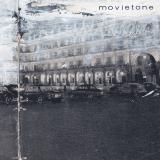
World Of Echo are proud to announce the long-awaited reissue of the self-titled debut album by Bristol’s Movietone. Originally released in 1995 by Planet Records and reissued on CD in 2003 by The Pastels’ Geographic Music imprint, this is the first time Movietone has been reissued on vinyl. An expanded double-LP edition, it includes the extra tracks from the 2003 CD (their first two singles, and an unreleased demo of “Chance Is Her Opera”), and adds three more unearthed gems: demos of “Alkaline Eye” and “She Smiled Mandarine Like”, and an early take of “Late July”, recorded in a garden by Dave Pearce (Flying Saucer Attack) in 1993.
Taken together, this is the definitive collection of music from the first phase of one of Bristol’s most remarkable groups. Movietone was the cumulation of a series of events, explorations, and discoveries, starting at secondary school – the group’s core membership of Kate Wright, Rachel Brook, Matt Elliott and Matt Jones met at Cotham School in Bristol. As for many other groups, their early years were all about experimenting, and finding ways to ‘make do’, a DIY sensibility that would inform Movietone through their decade-long lifespan. From formative rehearsals in a shed in the garden of Brook’s family home, to recording early material to four-track in Redland Library, and on into the Whitehouse and Mr Grin’s studio sessions for their debut album, Movietone’s music fell together in a creatively unpredictable, yet conceptually rigorous manner.
By the time they released Movietone, they’d found a home with Bristol’s Planet, run by author Richard King and James Webster, who had both released their first two singles, “She Smiled Mandarine Like” and “Mono Valley”. There was other music happening around them in Bristol, too, from the Jones brothers’ avant-rock outfit Crescent (who were Movietone’s closest conspirators), through Elliott’s jungle/electronica project Third Eye Foundation, and Brook and Elliott’s membership of Flying Saucer Attack. A closely knit community, Movietone are the centre of this nestling architecture of groups. The vision in the music, mostly, belongs to Wright, but Movietone ran in democratic creative consort. Listening back to Movietone, you can hear this democracy in action through the wildness of the music, which is balanced by the poetics of Wright’s lyrics and melodies.
Full of half-captured memories and entangled abstractions, there’s an elliptical, ruminative quality to much of the writing here that shows the deep influence of the Beat Generation writers, along with a twilight environment captured in the songs that’s pure third-album Velvets, Galaxie 500, early Tindersticks, Codeine. Unpredictable interventions – the crashing glass in “Mono Valley”, the sudden explosions of “Orange Zero” point towards the noise blowouts of My Bloody Valentine, the unpredictability of Sonic Youth; Wright’s understated vocal cadence suggest a deep, embodied understanding of John Cage’s Indeterminacy.
Movietone would go on to make 3 fantastic albums for Domino: Night & Day (1997), The Blossom Filled Streets (2000) and The Sand & The Stars (2003) and their Peel Sessions were released earlier this year on Textile. Still held in high regard by artists like Steven R. Smith, and The Pastels, whose Stephen McRobbie once described them as “one of the great unknown English groups,” it’s an absolute thrill to listen to Movietone anew – still inspired, still seductive, still magic, still mysterious.
Monolink and CIOZ bring a stripped-back electronic edge to Crosstown Rebels with ‘Don’t Talk To Me’. The German multi-instrumentalist makes his Crosstown Rebels debut alongside Italy’s CIOZ, with OMRI. also returning to the label on remix duties. There are few artists in electronic music quite like Monolink. Moving naturally between singer-songwriter, producer and live performer, his music gives as much weight to voice, melody and narrative as it does to electronic production. For ‘Don’t Talk To Me’, he joins Bergamo-born, Berlin-based CIOZ, whose own work is driven by rich musicality and a willingness to move beyond convention. The link-up makes for an intriguing signing to Damian Lazarus’ Crosstown Rebels, bringing together two different approaches to electronic music without either losing their identity.
‘Don’t Talk To Me’ is deliberately pared back, pairing Monolink’s voice and songwriting with sparse textures and gently shifting melodies. Rather than building towards a conventional dancefloor payoff, the track unfolds with a quieter sense of tension, sitting somewhere between alternative songwriting and electronic voyage. An artist whose productions and remixes have quickly made him a recurring presence in the Crosstown Rebels universe, OMRI. takes the track deeper with his remix, adding darker, hypnotic qualities while preserving the original’s restraint. ‘Wasting Time’ closes the release with another sweeping collaboration, built around subtle melodic details and captivating synth flourishes.
The collaboration marks Monolink’s first outing on Crosstown, adding to an impressive career that has seen him craft his distinctive sound via Berlin-based imprint Embassy One and on labels like Cercle Records. Performances have taken that music from Burning Man and Montreux Jazz Festival to Day Zero Bali, where he joined Damian Lazarus for its first edition, as well as sets alongside Lazarus at Club Space, Zamna and more around the world. Meanwhile, CIOZ brings his own expansive approach back to the label, with material also landing via Monaberry, Frau Blau and Stil vor Talent, plus remixes for Diplo, Oliver Koletzki, Patrice Bäumel and the Crosstown head honcho. With both artists comfortable moving between emotional depth and dancefloor function, ‘Don’t Talk To Me’ gives that shared instinct plenty of room to breathe.
out of Stock
Last delivered 8 days ago available to reorder, subject to availability
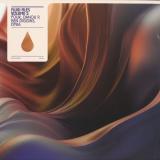
The fifth instalment in the label’s well-established Fluid Files series, this new mosaic of sun-streaked joints summons the voices of faces old and new, sewn together with that similar Chicago-typical, laid-back attitude and a thread of unstoppable funkiness.
Diving first with a slice of velvety, looped out piano house boogie on a solid French filtered house tip, Dutch outfit Fouk lays down a proper enticing number for the late summer hours, packed with elastic bass jack, anthemic stabs and a sun-kissed shimmer straight out a blissed out coastal escape. Label alum Danou P follows up with a further bouncy number, dishing out a seriously infectious mix of acid-abraded bass and warped floor dynamics, ready to knock dancers askew with its lush, synth-flooded hooks and fun-loving, oddball swing.
More on the muscular side of things, Ben Diggins clocks in with the steroid-fueled balearic hoodoo of ‘Mascotte’ - a tune built for the undying after vibes, when the sun begins to rise and the crowd’s levels of serotonin hit a new high. Prismatic and powered-up, Diggins’ track injects any heavy-lidded engine with his own concoction of driving percussion, utopian motifs and fluttering, ambient-leaning harmonics.
Rounding off this four-part sonic journey, Colombian vibist DFRA teams up with Argentinian singer Denise Izaguirre on the heavily Latin jazz-informed, ‘Impulse’. Soulful and oneiric, the song taps in both artists’ musical heritage whilst pushing for new directions through the combined use of electronic and acoustic instruments (congas, trumpet, synths, drum machine…) - contrasting and complementary, shaping an entirely new and singular vision that is drenched in a bittersweet blend of warm melancholy and bracing hopefulness
out of Stock
Last delivered 20 days ago available to reorder, subject to availability
“Stankface” finds Funkmaster Ozone deep in his natural habitat: a raw, playful P-Funk workout driven by a heavy bass groove, punchy drums, elastic synth lines and his unmistakable talkbox. Packed with swagger, humor and irresistible head-nodding energy, the track connects classic Parliament-Funkadelic and Zapp influences with polished modern-funk production.
“Bust A Move” takes Funkmaster Ozone straight back to the golden era of Electro-Funk, combining hard-hitting 808 drum-machine rhythms, funky synth bass, futuristic textures and infectious vocoder vocals. Robotic, playful and built for the dancefloor, the track channels classic old-school electro and boogie energy through Ozone’s unmistakable modern production style.
The Yummy Fur’s first album of new material in over 25 years is seductive and ambiguous; a fast-paced flip through scenes from art, myth, life and fantasy; a witty whole made from glittering scraps. The band’s original incarnation – fronted by singer, songwriter and guitarist John McKeown from 1992 to 1999 – morphed from making quick-hit cartoon-art songs to Eno and Cale-influenced creepers, populated by characters from McKeown’s life in Glasgow and the films, books and poetry that he lived a parallel life through. Everybody Talks About The Weather delights in using every past iteration of the band as potent collage material: a melee of sounds and ideas existing at once, revealing themselves then dipping back into hiding.
Recorded by the original core trio of McKeown, Brian MacDougall (guitar) and Paul Thomson (drums), Everybody Talks About The Weather comes 17 years after the band reformed for sporadic live shows, and seven years after the release of their sorta-greatest hits compilation Piggy Wings (Rock Action). Ten tracks long with nothing to spare, it is as condensed and vital as their best songs, with a new clarity of sound that allows their ambiguities to come into the light.
The album begins with “Cogs”, a taunting inquisition from within. As McKeown stages a fight between his id and ego, the tension heats up between conversational guitar lines and minimalist repetition; threatening sing-song melody and real, palpable menace. The band members are forced in tandem only to break apart, sustaining a genuine sense of just-hidden danger throughout the whole record – except, arguably, “Headphones”, a looser moment which sees McKeown make an existential something out of nothing while waiting for someone in the car (“I should have brought a book.../My ears are bleeding from the compression on your album”)
The songs are riots of reference: “Unity Over Europe” is a slyly complex two act play about the Mitford sisters – Diana, Unity, and Nancy, in a wink to the YF canon – smashing tragic biographical detail together with allusions to Thomas Pynchon and Francis Bacon. Pynchon is also lifted to serve “Blue Sunshine”, a collision of school shooters, serial killers and fictional fuck-ups (“Fast forward to Compton/Fast forward to Pynchon/Fast forward to Columbine'”) whose buzzy guitar lines are taunting and confrontational like a smarmy teenager. The innocuous title of “My Lasagne” belies a song that exists in several time periods at once: a visit to see Guernica, 50 people with their backs to the portrait of Dora Maar; the time that Picasso painted from; the Reina Sofia and the dirty streets of the Malasaña; myth-making musicians and the myths they’re riffing off overlapping and leering at each other.
All this could be laboured in lesser hands, but cultural verbosity is second nature to The Yummy Fur, who transform all this source material into songs that are weird, sexy, funny and absurd. Meaning is not happily understood or flattened. Susan Sontag's essay Against Interpretation accompanied McKeown as he wrote this album, and she’s paraphrased in “Semolina Ballerina”, the album’s justification of artistic ambiguity. Thomson’s motorik beat leads a gathering of back-and-forth instrumental phrases – including a wiry contribution on saxophone – embodying the futility of trying to parse something definitive from repeated action. “Listen to the very first thing that’s in your head,” Sontag-via-McKeown commands directly, then slinks sideways: “Interpretation is a conversation in an unmade bed”
The album features two more focused portraits, or at least The Yummy Fur’s version of such a thing. “Wanda” merges the life of filmmaker Barbara Loden and the title character of her semi-autobiographical 1970 feature film, with Loden’s then-husband Elia Kazan joining the fray of no-good men in her film. It’s a mix of adaptation and avant-criticism, with McKeown’s wordplay and mannered pronunciation mirroring the way that non-fiction and fiction twist around each other in the song. The title track is a series of vignettes and impressions from the lives of the band’s ‘90s inner circle, positing painter Mac McNaughton as a kind of Falstaffian ringleader. As with Piggy Wings and the recent single “New T-Shirt”, McNaughton painted the cover of Everybody Talks About The Weather – like the album’s music, the image of a coy girl in a white dress is an uncanny amalgamation of styles, suggestions and references just out of reach, as though seen in an art museum in a dream.
The album ends with two reads of the same frustration. “King of Nothing” is the closest The Yummy Fur will ever get to sludge-rock: the band melts together into a dusty, dreary haze as McKeown drowns in a drudgery of personal struggle (“Two jumpers on in Babylon/And only cats to talk to”) and the rhythmic toppling of heroes (Rowlands, Duvall, Munro). The majority of visible dirt is cleaned off for “Say Hello”, an uncharacteristic depiction of throwing the windows open after a dark night of the soul. Here, the situation is still cold and hard (“When the sun burns gold, but the heat never reaches your fingertips”) but it feels surmountable. Everybody Talks About The Weather is an unpredictable album from an unpredictable group, but ending on a moment of almost uncomplicated light is maybe its biggest surprise. - Claire Biddles (2026)
The Veils' first three albums are returning to vinyl thanks to Rough Trade Records.
The Runaway Found (2004), Nux Vomica (2006) and 2009's Sun Gangs established the New Zealand band as purveyors of lush, romantic indie, able to sweep through cinematic vistas into intimate emotional corners, via gothic orchestration and atmospheric driving rhythms.
Founded and fronted by singer-songwriter Finn Andrews while still a teenager, over their first three albums, The Veils carved out a musical landscape of their own that was in turn deep and enveloping yet emotionally raw and direct.
Having only enjoyed a limited vinyl run on their releases, due to the format's neglected commercial status during the 2000s, the repressing of The Runaway Found, Nux Vomica and Sun Gangs, offers audiences a fresh opportunity to enjoy these records with the full depth, fidelity and artwork they deserve, and reminding listeners of the musical secrets The Veils revealed to the world.
“It is a sincere joy to see these records that are so important to us and to so many others reissued on vinyl by the label that nurtured us right from the start. I remain hugely grateful to them and to all the songs on these searching, impassioned, and magnificently youthful first attempts.” - Finn Andrews, The Veils
Die Neuauflagen von The Runaway Found (2004), Nux Vomica (2006) und Sun Gangs (2009) geben Fans und Sammlern die seltene Gelegenheit, diese einflussreichen Alben in hochwertiger Vinyl-Qualität neu zu entdecken. Die Re-Releases sind besonders bemerkenswert, da die Originalausgaben auf Schallplatte in den 2000er-Jahren nur in begrenzter Stückzahl erschienen. Zu einer Zeit, als Vinyl kommerziell noch eine untergeordnete Rolle spielte, waren die Veröffentlichungen nur schwer erhältlich. Die neuen Pressungen ermöglichen nun ein Hörerlebnis mit der Klangtiefe, Detailtreue und dem Artwork, die den atmosphärischen Kompositionen von The Veils besonders gerecht werden. Unter der Führung von Sänger und Songwriter Finn Andrews, der die Band bereits als Teenager gründete, entwickelten The Veils mit ihren ersten drei Alben einen unverwechselbaren Stil. Zwischen üppigem Indie-Rock, romantischer Melancholie und filmischer Dramatik schufen sie einen Sound, der von orchestralen Arrangements, eindringlichen Rhythmen und emotionaler Intensität geprägt ist. Mit The Runaway Found, Nux Vomica und Sun Gangs etablierte sich die neuseeländische Band als eine der eigenständigsten Stimmen der internationalen Indie-Szene. Die Alben verbinden weitläufige, cineastische Klanglandschaften mit intimen, persönlichen Momenten und zeigen eine beeindruckende kreative Entwicklung während der frühen Bandjahre. Finn Andrews freut sich über die Wiederveröffentlichungen: "Es ist eine große Freude zu sehen, dass diese Alben, die uns und vielen anderen so viel bedeuten, von dem Label, das uns von Anfang an unterstützt hat, erneut auf Vinyl veröffentlicht werden. Ich bin Rough Trade und den Songs dieser leidenschaftlichen, suchenden und wunderbar jugendlichen ersten Jahre sehr dankbar."
Hailing from Providencia, Colombia (Old Providence Island), Henner, Derrick, Luis, Feliciano and Senen are the Black Diamonds; a band that seamlessly blends the irresistible grooves of reggae with the infectious rhythms of calypso, creating a sound that is both timeless and refreshingly original.
For years, Black Diamonds have been synonymous with the laid-back, soulful reggae sound of Old Providence Island, crafting songs that reflect the Caribbean's easy rhythms and rich cultural heritage. Their debut release, however, takes an unexpected—and thoroughly enjoyable—detour into upbeat calypso, proving that the band is more than capable of stepping outside its comfort zone.
"De Seh Seh" (gossip.. chat and talk to much about the others in Creole) also features a remix by Venezuelan producer and multi-instrumentalist Caribombo, who transforms the song into a dancefloor-ready journey, blending electronic textures with soukous-inspired Afro-house rhythms for a bold, cross-Caribbean reinterpretation.
out of Stock
Last delivered 26 days ago available to reorder, subject to availability
NFY008 lands courtesy of label co-founders Jive Talk, serving up a two-track platter built for dancefloors and delectable dietary choices.
A1: Complimentary Dipping Waffles
A high-energy, bass-heavy peak-time weapon, loaded with shuffling garage hats, live percussion, and infectious vocal chops. Sweet, crispy, and dangerously moreish, it’s hard to believe the waffles haven’t been added to your bill!
B1: Snarah Connor (Dubment Day Mix)
Keeping the syrup flowing, the B-side takes a deeper route, cruising on a smooth, low-slung groove with skippy drums, hypnotic synth work, and a rolling low end. Equal parts heads-down and hands-up, it’s the kind of after-hours ammunition that would have Arnie saying, “I’ll be back” before the record’s even finished.
out of Stock
Last delivered 29 days ago available to reorder, subject to availability
Manonmars’ 3rd album sees him at his most amorphous and psychedelic, at points sharper and laser focused, and at others more blurred and impressionistic than his previous records. Many of the core players remain the same, all of the production is once again handled by O$VMV$M (the duo of Neek and Amos Childs of Jabu) while Paulina Korobkiewicz (also of Young Echo) makes a return handling both the album’s cover artwork and contributing a series of diaristic field recordings and voice notes.
‘The project references movies, cartoons, fictional characters and video games, among other things. The album title is open to interpretation but all of these elements are forms of visual entertainment which have their own unique ability to transcend things like language barriers and cultural divides. The visual element is key because those details bridge the gap on a communicative level.’ - Manonmars
The album blends abstract, blurred braggadocio with more immediate personal details such as on ‘Volcanic Shield’ a posse cut of sorts featuring Bristol improv luminary Dali de Saint Paul and Franco Franco (½ of cyborg rap duo Kinlaw & Franco Franco) - where Mars recalls;
‘Memories of brighter days, happy meal hit the spot
Mum was spinning vinyl playing Super Ape or Pressure Drop
I would spend the weekend with the Turkish mandem on the block
single parent household, mum was studying or on the job
money came and went always was an on and off
made it back from school time to see what’s on the box’
The beat fades away to leave one of Korobkiewicz’s recordings of Mars’ mum talking about her life in London in the 80s, spending her money on reggae records as an ambient chord fades in like an echo of a jungle intro – stretching out as a link between generations of UK music.
The production by and large is brighter and more kinetic than earlier Manonmars records – with O$VMV$M drawing on everything from modern underground rap and drill through to jazz and acid ambient passages.
London is also a central character here, bustling and constantly shifting, either when bleeding in through field recordings, or as an ever-present backdrop in the lyrics;
‘I’m a fusion of Tippa Irie and Topper Harley
Hit the target like the black Atari
I dropped a tab now shit’s A Scanner Darkly
Got the munchies, Imma yam a sarnie
Pour the Wray and Ting like man at Carni
Exit Peckham Rye and turn left, walk past Hannah Barry
Get your (w)raps up like its January’
‘I've always considered London my home, despite spending some time in the South West of England too. My mum had been living in London for 25 years (...) That was a pretty big deal in some ways because it removed us from multicultural society during the period which overlapped with my teenage years. (...) I never got used to how quiet it was in the countryside (...) Bristol was the closest city to where we lived and it was through travelling there and making connections that I became involved in making music and playing gigs.’ - Manonmars
Mars’ practice as a painter (under his given name Jack Martyn Richardson) and photographer also loom heavy over the album, he cites Paul Verhoeven, Abdul Mati Klariwein and H.R Giger as influences – as well as Miles Davis, Drakeo the Ruler and DJ Rashad.
As with much of Richardson’s work the raps at times feel blurred to a point of almost inscrutability, creating a distance between the audience and himself. A process that ties into his visual work and the way he experiences the world as mainly abstract colour without his glasses. He explores this further in an ongoing visual collaboration with Korobkiewicz, ‘Fun and Games’ which serves as a visual archive of one of London's largest and oldest travelling fairgrounds.
‘I was diagnosed with very severe short-sightedness at the age of seven. I remember my early formative years as visually blurred. Some of my photography reflects this experience of partial vision and uncertainty, referencing memory and perception rather than fixed representation.’
Manonmars’ first public outing as a rapper was at a Young Echo radio event, broadcast shambolically from a practice room just off Jamaica street, Bristol in 2011, as much as things have moved on both stylistically and in terms of focus - strong links back to the city remain a key foundation throughout the collaborations and guest appearances.
‘I have no problem with being an outsider looking in. One of the things I enjoy about London is the anonymity (...) it's easy to be a stranger here when so much is happening. I feel like thats more valuable than people may realise.’