A very classic, auditorily both honest and skillful, techno mini-album by US producers D-Knox and Tim Xavier of Black Nation, 773 Tekno, Limited 400serie, and Sonic Mind fame. The duo's six-tracker nods to old-school US 'multitrack' underground techno EPs, but is bombastically engineered for club systems. Stunningly starting with "Soul Kraft Intro", a hymn for the Detroit techno legacy, only to slip into the tracky club rider "Stream Of Consciousness" with short stabs and alarming strings. Ripping acidic riffs and multifaceted hi-hat programming are signatures throughout, particularly highlighted by the teeth-grinding Chicago-styled (almost 'French Touch' compressed) "Dead Star Grinder", and not the least by the ultimately classic "Tomorrow Is A Rainy Day" with its broken beat and deep-standing forward-driving chordal beauty.
out of Stock
Last delivered 26 days ago available to reorder, subject to availability
Portugal's Dextro returns for second EP of stylish deep techno on Mutual Rytm with ‘Planets And Stars’. Dextro’s tunes have long been a staple of Mutual Rytm label head SHDW's sets, with the esteemed veteran previously landing on the label with his ‘Covil Dos Abutres’ EP last year. His return with ‘Planets And Stars’ features a selection of his most requested IDs from recent times, with the Portuguese DJ/producers featuring as a longstanding favourite within the European underground since the 90s through his stripped-back, economical sound that is rooted in masterful design and intuitive grooves. He is a true studio craftsman, whether going deep or more destructive, and that range is on show here as he makes a splash for his sophomore outing. SHDW notes, “‘Planets And Stars’ feels like his most refined and focused work to date. It also further strengthens our relationship, rooted in a shared vision and values around music and how it should be presented.” The EP kicks off with the heavyweight ‘1000 Places’, a track that will rattle walls as eerie synth whispers and sonar blips snake through the mix. ‘Industria Acéfala’ is just as hypnotic with a deep blend of rolling bass and rooted kicks, while unsettling tension comes in the one-note synth loops and scratchy texture. ‘Planets and Stars’ provides an intergalactic trip with cosmic dust, conscious spoken words and an infinite horizon that has you gazing off into the distance. The all-consuming ‘Perpendicular’ is shadowy with impish motifs darting about the mix as watery droplets fall into cavernous kicks. ‘Winter Letter’ is the final 12”cut and is perfectly deep, linear techno with gorgeous ambient details that turn your thoughts inwards. Three digital bonuses expand the trip: ‘Torresmos com Pão’ is unsettling and sparse, ‘Historia da Vida’ ramps up the tension with oversized hi-hats and rising synth turbulence and finally ‘Ghost Particles’ has shimmering bell sounds evoking a spooky moon-lit church in the dead of night.
out of Stock
Last delivered 7 days ago available to reorder, subject to availability
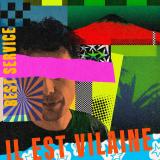
Four years after Les Mystères de Lorient, Il Est Vilaine returns with Best Service, a rich and cosmopolitan album that broadens horizons in a bleak era.
Twelve tracks and interludes crafted with the aesthetic the duo has been refining since its inception: a blend of analog electronics, techno, vintage rock, and synth-pop.
Tailor-made atmospheres, oscillating between raw energy, groove, and dark romanticism, provide perfect spaces for unexpected guests.
Zuhause ist kein fester Ort. Es ist ein sich wandelnder Begriff, der in der Geborgenheit des Mutterleibs beginnt und sich dann in die Sicherheit der elterlichen Arme verlagert. In der Kindheit erweitert er sich auf Klassenzimmer und Freundschaften. Im frühen Erwachsenenalter entdecken wir unsere Unabhängigkeit und fangen an, Räume zu schaffen, die nur uns selbst gehören. Bei der Vorstellung eines ,Zuhauses für immer" geht es weniger um Beständigkeit als vielmehr um einen Rückzugsort. Dort fallen alle Masken ab, und wir finden zu unserem wahren Selbst. HOME ist ein Album, das auf der einzigartigen Chemie zwischen den Outer-World-Mitgliedern Kenneth Close (Positive No) und Tracy Wilson (Dahlia Seed, Ringfinger, Positive No) basiert - eine farbenprächtige Liebessprache, die synthetische Klänge und Samples mit Schlagzeug, Gitarre, Bass, Keyboards und Gesang überlagert und so die Grenze zwischen moderner Technologie, einer gemeinsamen Geschichte und einer einheitlichen emotionalen Wahrheit verschwimmen lässt. Zwei Jahre nach der Veröffentlichung ihres Albums ,Who Does the Music Love?" hat sich Outer World von einem Duo zu einer sechsköpfigen Band entwickelt, wobei ,HOME" sich wie der Soundtrack zu einem imaginären Spionagefilm anhört: hochdramatisch und spannungsgeladen, mit verhedderten Bettlaken als Höhepunkt. Hier gibt es keine Grenzen zwischen den Genres, es findet ein Dialog statt zwischen: ,Outernational"-Grooves, italienischen Western-Soundtrack-Komponisten, Hazlewoods Twang-Gitarren, Spectropop-Beat-Girls der 60er, Lagos-Highlife, zeitgenössischen klassischen Chorarrangements, isländischer Avantgarde, Bond-Bösewichten, Kunstobjekten aus der ersten Punk-Ära, östlicher Philosophie und der Kunstschule in Athens, Georgia, in den 80ern - all das ist darin enthalten, verwoben zu einer einzigartigen Stimme.
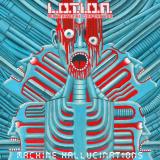
L.O.T.I.O.N. Multinational Corporation have been percolating in the NYC underground for the past 10+ years - gaining notoriety for their unique brand of industrial cyberpunk with intense live shows, fiercely political lyricism and striking visual aesthetics (masterminded by the band’s vocalist, noted visual artist Alexander Heir.) Blending noisy electronics and pumping beats with live instrumentation, the band draws inspiration from the militant minimal techno of Detroit, 90s Gabber, and the thrashing riffs of Hardcore Punk. The upcoming release "Machine Hallucinations" is their most fully realized to date. Exploring topical themes of artificial intelligence, the horrors of ICE raids and the corrupt modern military industrial complex, "Machine Hallucinations" is a violent and sobering critique of the current fractured state of The USA. Recorded and Produced by Ben Greenberg (Uniform) and featuring guest appearances from Iggor Cavalera (Sepultura, Cavalera Conspiracy), LA electro-punks La Pregunta? and vocalist Lulu (Fairytale, Twisted Thing) - as well as an expanded dual-guitar line-up, "Machine Hallucinations" broadens the sonic spectrum only hinted at on previous releases.
"Originally released in 1979 on Sly & Robbie's Taxi label, this album was Black Uhuru's second LP. Recorded at Channel One it set forth a new sound in recorded music technology. The songs blend into dub versions and the mixing is simply stunning. The track Shine Eye Gal also features guitarist Keith Richards"
(but hey, nobody's perfect).
"Hear the meticulous song writing of Michael Rose, joined by Puma Jones & Duckie Simpson, to complete the vocal line-up.
Sly & Robbie and the Taxi Gang created a sublime sonic masterpiece at Channel One studio in Jamaica. They were at their absolute peak of their powers, before being launched as global superstars with Grace Jones.
Black Uhuru went on to be an extremely popular live outfit, touring endlessly around the world, breaking down barriers and making new inroads to territories previously unknown to Jamaican artists.
This Classic reissue is a must for all reggae collectors."
out of Stock
Last delivered 7 months ago available to reorder, subject to availability
D-Leria returns to Non Series in pure form, delivering four fresh, groovy, floor-focused tracks that showcase his signature futuristic sound. A precise blend of hypnotic rhythms, raw textures, and forward-thinking techno, built for the dancefloor.
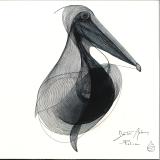
Like a pelican spotting its moment, Dimitri Andreas returns with a collection shaped by patience, precision and instinct.
Pelican marks a new chapter for a respected figure in underground electronic music. While recent years saw Andreas immersed in theatre productions, immersive audio experiences and multidisciplinary artistic projects, his fascination with rhythm, space, tension and emotion never left. It simply found different forms.
On Pelican, those worlds converge.
Across five original productions, Andreas distills the elements that have long defined his sound: hypnotic grooves, organic percussion, tribal influences, rich atmospheres and a deep sense of movement. The title track glides on suspense and anticipation, while Omenica and Mahu explore the groove driven territory that has become synonymous with his name. Cambolisa delivers a powerful melodic payoff, and Ember closes the journey with vintage synth warmth and restless energy.
The release is completed by three outstanding remixes from artists whose influence on contemporary electronic music is undeniable. Deetron reshapes Pelican into a deep and sophisticated techno excursion, Extrawelt transforms it into a cinematic and evolving voyage, while Petar Dundov expands Cambolisa into an emotional and atmospheric journey of his own.
Following a series of acclaimed MOVE Recordings releases supported by DJs including Sven Väth, Timo Maas, Jamie Jones and Fedele, Pelican arrives as a body of work shaped by years of exploration beyond the confines of club culture.
Rather than revisiting the past, Andreas brings those experiences back to the dance floor: music with patience, depth and perspective. Pelican is the sound of an artist returning not to where he started, but with everything he discovered along the way.
Already Supported by Laurent Garnier, Alexi Delano, Âme, Ilario Alicante, Just Her, Adriatique, Karotte, Danny Howells, Drumcomplex, Paco Osuna, Steve Parry, Marco Bailey, Alex Neri, Pole Folder, Amand, Calao, Neon, Gay Barone, ….
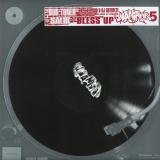
New on the "WANIA mk" series is a double A-side supersonic 12", with two tracks previously circulating as dubplate only. "Bless Up" by Salik (who co-runs Going Good, and of WANIA fame) is simply a deep and controlled Dubstep-goes-Breakbeat knockout. With a prominently loud cut, it carries classic sonics of atmospheric Jungle/D'n'B while running rhythmicallyreduced towards the mid-side Jungle-styled Breakbeat drop. L.A. 2000 & DJ Sotofett continue their collaboration from WANIA mk1 and mk2 with a Dub Techno Stepper. Here, clinically adjusted delays and short reverb support the ultra-reduced rhythm and harmonically gritty stabs, all with just enough drive to introduce the long-awaited sub-bass as a well-timed surprise. THIS 12" IS CUT WITH LOUD VOLUME FOR EXCELLENT CLUB USE!
out of Stock
Last delivered 16 days ago available to reorder, subject to availability
Anders Hajem makes his space•lab debut with four cuts primed for dark rooms, deep forests and open skies.
Opening the EP, E44Z is a driving techno cruncher, pairing serrated riffs with soaring synth lines and relentless momentum. X66Y follows with a growling, psy-infused workout, weaving sci-fi textures through its propulsive groove. On the flip, A44Z tunnels deeper, its hypnotic groove rising and falling through the journey. Closing the release, the title track Absorbe strips things back with spacious, eerie sound design, understated percussion and a deep, rolling bassline that lingers long after the final beat.
out of Stock
Last delivered 5 days ago available to reorder, subject to availability
This release is more than just a collection of tracks—it’s a statement of identity. Rooted in the raw energy of acid, techno, and house music, every sound, groove, and hypnotic sequence reflects a commitment to authenticity and creative freedom. In a world that constantly pushes artists to follow trends, staying true to who you are is one of the most powerful things you can do.
This project was created without compromise, driven by a genuine passion for underground electronic music and the belief that honest expression always resonates the deepest. The acid lines cut through with intensity, the techno rhythms drive relentlessly forward, and the house elements bring soul and movement to the journey.
We truly believe in this release because it represents exactly what we stand for as artists: originality, integrity, and a dedication to the music that inspires me. This isn’t about fitting in—it’s about creating something real. Turn it up and experience the sound of staying true to your identity.
Still hot on the heels of compiling the first volume of the Italian Dancefloor Outsiders, and moved by the urge to explore new musical landscapes and discover sounds produced in subsequent years, we decided to continue our quest of tracking an alternative map of what was happen- ing in the Italian electronic music scene. This second volume takes inspiration from the concept of “Mezzanotte Mezzogiorno” (literally “from Midnight to Midday”), a term first used for a now legendary party held in 1992 at Club Imperi- ale in Tirrenia, Tuscany. The owner of the club, Roberto Pannocchia, was eager to attract a different kind of audience to his venue and so decided to extend the closing time until midday, well beyond the Italian law limits. But as Imperiale was a members club, he was allowed to do it, and he already knew that this act would forever shape the Italian club scene. "Mezzanotte Mezzogiorno" was then used to describe long dancing marathons that lasted for the whole weekend, spread across clubs, after-parties and more off-the-grid open air venues but, most of all, became the symbol of an era. The music ranged from slow, pitched-down landscapes to epic techno progressions, filling both feverishly packed big rooms and colourful chillout zones. A parabola of musical move- ments related to specific genres was born, reaching its peak and then fading towards the end of the millenium.
out of Stock
Last delivered 16 days ago available to reorder, subject to availability
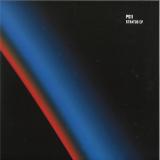
Matthew Antico is the American techno head behind the PS11 alias and he has a fine array of outboard gear in his studio, as anyone who has seen his socials can attest. Here they are all hooked up and work in overdrive from the off as supple rhythms meet dance floor clout in deep underground caverns. 'Stratos' has that anxious, pent-up energy that never resolves, while 'Mile High' hits harder and more insistently but with molten dub chords. 'Mid Point' is a serene and spacious sound with a broken beat and widescreen outlook and 'Mariana Trench' sinks you into the darkness you would associate with the world's deepest ocean. 'Timble Snake' cranks up the suspense with tight loops and inky bass.
out of Stock
Last delivered 2 days ago available to reorder, subject to availability
Oscar Later is the solo project of one half of Once Twice, formerly known as Parallels. The EP takes its premise from the 1967 Outer Space Treaty, which ruled that no nation could claim ownership of the Moon or any other celestial body. Across six tracks, that idea of ownership, distance and free imagination runs through the record, which combines breakbeat and shimmering synths with processed vocals and clips from vintage ads and obscure films.
"I wanted the record to feel like public-domain myths, commercial promises and space-age optimism all colliding," Oscar says, "blurring the line between memory and fantasy."
Opener 'Air Time for Andre' channels chopped-up breaks reminiscent of Skee Mask, combined with processed found audio. 'Wenlocked', named after the East London street where it was written, develops from a downtempo sketch into a heavier club track as the bassline builds, inspired by releases on Voam and Floating Points' live sets. 'It Never Made Sense' steps away from the dancefloor, built around a granulated Orion Sun vocal that, as Oscar puts it, "ties the track into quite a surreal space," leaning towards Burial, Overmono and Radiohead.
The title track, 'The Moon Belongs to You', runs a vocoded 90s ad through a detuned one-note synth. It's the track Oscar says "best encapsulates the intention of the EP as a whole: surreal, wacky and clubby." 'Yaya' keeps the energy up as a straight techno cut, its gated bassline locking in around a chopped vocal and pitched samples. Closer 'That's Quite A Lot Of Zeroes!' expands from a stripped-back Buchla line into something huge, driven by chopped samples and inspired by sci-fi scores like Dune and Annihilation.
The cover is designed by art director Will Millner with designer Josh Lowe, a homage to space food and 80s industrial design geared to survive life on the moon. It's available as a limited vacuum-packed 12" record.
The EP launches alongside a music video for 'It Never Made Sense', directed by Louis Mackay, telling the story of a group of kids who steal the moon for themselves.
out of Stock
Last delivered 29 days ago available to reorder, subject to availability
Emerging from the Hungarian underground, POST ANALOG DISORDER inhabits the fractured space where EBM, hard-beat techno and post-punk converge. Cold, spectral melodies collide with relentless machine rhythms, dissolving the boundaries between body music, industrial tension and guitar-driven darkness into a singular, uncompromising language.
Driven by heavy analogue basslines, razor-sharp sequencers, haunting female vocals and hypnotic guitar motifs, the duo shapes a sound that is both mechanical and deeply human. Each composition unfolds through constant friction, balancing disciplined repetition with emotional instability, where raw physical force meets moments of haunting introspection.
Rather than revisiting the vocabulary of classic EBM, POST ANALOG DISORDER deconstructs and reconfigures it through a contemporary, forward-looking perspective. The result is an immersive work of hypnotic intensity, suspended between industrial ritual, post-punk melancholy and uncompromising electronic experimentation—a record conceived not only for the darkest dancefloors, but for those drawn to the outer edges of underground electronic music.
Frazer Ray lands on Time Is Now with Masha EP. Four tracks of killer, stripped back FWD facing proto/future garage effortlessly pushing the sound into a new direction.
FACTS:
1. Frazer Ray knows how to make a dance. IYKYK…. Recently he’s been shelling Live UKG cooked right in front of you on a custom modular rig. Mad energy. 100% party business.
2. Frazer Ray knows a thing or two about making UK soundsystem music. The artist FKA Soundbwoy Killah is now a decade deep in his discography. And first as ‘Soundbwoy Killah’ and now as ‘Frazer Ray’ he is 2 for 2 with aliases that never miss.
3. New Frazer Ray is always something to get excited about. For 10+ years he’s kept it super tight. Quality over quantity. Always holding dubplates. When releases have landed they drop on only the best labels; including both Rinse and Rinse’s new INGRAM imprint, Ninja Tune’s Technicolour imprint, Sneaker Social Club, Interplanetary Criminal’s Locked On and IPC & Main Phase’s ATW Records. (side note - his Soundbowy Killah - ‘Halcyon Daze’ LP on Sneaker is IMO an all time classic - do not sleep on that one). Aaaannd… if the dubplates got too heavy he’s also occasionally dropped weight on his own U-Phorix label.
Also…..what has always struck me about Frazer’s music is that it’s simultaneously integral in the hardcode continuum while also pushing it forward. It’s always complete. Fully formed. You never bristle. There’s no failed experiments. Just a firm nod to the future for anyone looking.
OK… Run the tracks.
Masha’s vocal licks tell it straight, this one is “Fire”. Proper club business to test the stacks. The drums roll steady in front of a wall of sub bass. A killer mix of post dubstep era goodness, techno sound design and the shuffle & swing of proto dubstep.
Settle Down There’s something 90’s tek step about this one. Dark and moody with a wall of bass. It bristles with texture and atmosphere before – a moment of reprieve in this absolute weapon – Frazer opens up into a dubwise oasis before skittering back into the darkness.
Syren Song is exactly what it says on the tin, alluring Dancehall vocals chatter and roll. Who knew auto-tune and Garage paired so well… Frazer did that’s who.
No Reasons Left is an ethereal closer for the end of the night / start of the morning after. Gliding warm & introspective dubwise breaks with a Reese bassline that hangs in the space between garage and hardcore.
Frazer says…
“This EP feels like I've finally nailed integrating my modular setup (and VCV rack for all you nerds out there) into my productions. I wanted to create deeper production while still ensuring the tracks translate well in the club.”
If this is only the beginning then strap in.
out of Stock
Last delivered 30 days ago available to reorder, subject to availability
Self-made producer Farron debuts on Delsin's Inertia series. Growing up in Southern Germany, Farron has a long history with electronic music, releasing under multiple aliases and for many labels. Since 2015 he launched his own Shaw Cuts imprint as his own personal playground for releasing his own music and from his likeminded peers. Over ten years later it became an essential catalogue for DJ's who are into forward-thinking broken and dub heavy techno. His 'Since Eleven' EP emphasizes this typical sound, four tracks of playful, dub driven classy techno.
out of Stock
Last delivered 13 days ago available to reorder, subject to availability
Symbiotical Records brings together Paris-based producer Dust Yard, whose classically trained background feeds into a sound spanning deep tech house and minimal dub, with Finnish dub techno veteran TM Shuffle, head of Vuo Records, who steps in for the remix. A tight, atmospheric EP rooted in dub house and deep house. Pressed on 140g black vinyl.
The compositions recorded here are a product of work with computers in synthetic speech, song and vocal sounds and were created between 1972 and 1975. The music was realized on two different computer music systems and takes advantage of, and attempts to extend and explore their features. The system employed to realize speech songs was created at the Bell Telephone Laboratories for research in synthetic speech and speech communication. Since the system was not designed for musical purposes, its limitations were severe and its musical use a great (and often rewarding) challenge. The system used for In Celebration and The Story of Our Lives was designed with the expressed purpose of creating synthetic musical voices, and was therefore much better suited to the task at hand. As with any high technology project, there was extensive collaboration in the production of the works.
The works on this disk are called computer music because the sounds were created numerically in a computer before reaching magnetic tape and loudspeakers. The computer did not compose the music. However, it was only used as a sound synthesis and analysis medium. In order to hear the sounds which are represented in the computer as successions of numbers it was necessary to attach a digital-to-analogue converter to the computer. The converter transformed the succession of numbers into a fluctuating voltage which was recorded directly on to audio tape.
The technique used to create the synthetic voices is called speech synthesis-by-analysis. For this method of speech synthesis, only those words, phrases and sentences which have been spoken into the computer previously (via an analogue-to-digital converter) may be synthesized. First the digitally-recorded speech is analyzed by programs which extract the attributes (parameters) of the speech for short time segments (.01 sec.). From these parameters the speech may be recreated in a form which resembles the original recording very closely. But for musical purposes the parameters are most often altered before synthesis. It is possible, for example, to change the natural pitch contour of the speech into a melodic line or to change the speech speed without altering the natural pitch level.
The variety of musical patterns which may be created from the analytic parameters is limited only by the composer's imagination. Most of the speech sounds on the recording were created by changing the pitch and duration attributes of the original on resynthesis, but for a few, the resonances (the formants) of the speech were altered as well. The voice of the book in The Story of Our Lives was created by replacing the program which simulates the sound of the human vocal cords with one consisting of 64 sine tones glissandoing at different rates. All the textures in which more than one voice is heard were obtained by mixing the synthetic voices together digitally.
One of the biggest electronic tracks of 2001, "Diabla" was championed by some of the world's most influential DJs, including Pete Tong, Dave Clarke, Sven Väth, and many more. Widely regarded as a true classic and a genre-defining record, Diabla successfully bridged the gap between house and techno, earning its place as a timeless dancefloor anthem.
This fully licensed reissue arrives courtesy of Armada and the original label, Soma Quality Recordings. The package features a brand-new interpretation from Joris Voorn alongside the much-loved Heavenly Mix and Revisited versions, rounded off with the legendary remix from Kevin Saunderson.
Lars Sandberg, better known as Funk D'Void, has been at the forefront of the global electronic music scene since the mid-1990s. Beginning his DJ career at just 15 years old, Lars discovered his passion for music early in life. Raised by his mother, a professional concert pianist, he always knew music would define his future. Over the decades, Funk D'Void has built a reputation as one of electronic music's most respected DJs and producers, consistently delivering innovative productions and unforgettable sets around the world.
There is an important difference between "mature" club vibes (leather porkpie hats) and "adult" club vibes (a post-ego-death experience of the world through the eyes of an Eames chair). Extrawelt's Jamborghini EP exemplifies the latter in ways that extend beyond sophisticated wordplay*. Well beyond.
Sophisticated electro-techno hybrids occupy an incredibly dangerous space. One false move and you corner listeners into an unsolicited conversation about "gain staging." The four tracks on the vinyl EP thread the needle in thrilling fashion, and then use that needle to stab at the sweet spot between sentient cell tower admin software vibes and the kind of architecture hot people like.
And with the digital exclusives, we've once again saved you from the depths of "bonus beats" hell by supplying three tracks that are as good as anything that has ever been pressed to vinyl. If your knee-jerk reaction is to doubt this, we would simply point out you haven't even heard them yet, and here you are talking shit. Go push your hateful agenda somewhere else.
Extrawelt are fast becoming a Turbo Recordings staple, and don't think the globalist EDM cabal hasn't taken notice. Jamborghini has already received heavy DJ support from Jumpin' Josh Junior, Monoburglar, Now or Never, Tiga, Never Say Never, Rumpled Glory, Moment of Truth, and the Hamburg Chamber of Commerce.
*Our best guess is that the title is meant to evoke a Lamborghini you can have a musical "jam session" in, and not the striking metallic purple Diablo SE30 driven by Jamiroquai frontman Jay Kay in the 1996 video for "Cosmic Girl."
out of Stock
Last delivered 29 days ago available to reorder, subject to availability
His music is characterized by a mix of electronic, deep and tropical house, and techno music produced in a minimalist manner with jazz and soul influences. "Vandaag", containing a sample of the "I Have a Dream" speech by Martin Luther King Jr. became a major charting hit in 2014. Six years later, in 2020, Bakermat released his first studio album The Ringmaster - a ten- track project showcasing his lengths and versatility, including the chart- topping release "Baiana\u0301", awarded Gold and Platinum status, surpassing 100 million total streams, and stamped as the official feature track for EA's FIFA 2021. The Ringmaster also includes the singles "Partystarter", "Trouble", "Learn To Lose", "Baiana\u0301", and "Under The Sun (ft. Kidda)". The full album features collabs with Alex Clare, Gossip Girl's Emily Lind, BRAVES, and 7Chariot amongst others. The Ringmaster is available as a limited edition of 500 copies on yellow, black and red marbled vinyl
out of Stock
Last delivered 23 days ago available to reorder, subject to availability
First release on a new Australian-based vinyl-only record label, Visitors. A various artists from Australian friends in Venda and FLUD (aka Ewan Jansen) accompanied closely by Canadian and Romanian stalwarts, Jay Tripwire and Cosmjn.
Offering four tracks for different moods and grooves that neatly bridge the space between house and techno.
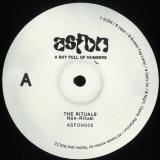
After making waves in the underground with their first release, psychedelic techno explorations from Winkles, A Sky Full Of Numbers head to the shoreline with a five tracker of misty electronica from Japan’s The Rituals, the new collaboration between Tasoko and DOLTZ. Across acclaimed releases on Explore, Bitta, and Delsin, the duo have separately explored deep techno, ambient, acid house and IDM, showcasing innovative sound design and spacious, understated grooves. For AFSON, the duo apply their unique point of view at a lower tempo, pulling away from the peak time to deliver a shadowy journey through dewy electronics.
Opening transmission 503M feels like tuning into a damaged frequency somewhere beyond the cloud line. Misty lead synths slither through blown circuitry while buzzing sequences and short-circuiting percussion crackle against purring bass pressure below.
There’s an eerie electricity in the atmosphere, as if the track’s been exposed to too much heat and left glowing softly in the dark. From the opening bars, The Rituals instantly establish their ability to make techno feel both mechanical and hallucinatory.
Ugan sees the duo descend deeper into the haze. Reverb-drenched synth motifs hover like distant lights through thick fog while a propulsive dub bassline locks into loose electro-funk rhythms beneath. There are echoes of hauntological electronics and early IDM experiments here, but The Rituals avoid nostalgia entirely, steering the track instead towards something crepuscular and alive.
Stepping out of the shadows, Broken Frog Lamp pushes forward on a rolling rhythmic framework as melodies slowly force their way through layers of sea mist and static interference. Atmospheric without losing momentum, the track balances submerged emotional weight with hypnotic forward motion.
The mood softens but never dissipates on Salty Air, a damp and dewy excursion into dubbed-out psychedelia. Rainfall ambience, skittering stone percussion and swelling pads fold around sliding sub bass and filtered stabs, while jazzy cymbals and syncopated hats gently pull the track forward, as the condensation clings to the hardware.
Closing cut “Night, Castle, Reflection” drifts into darker territories, where redlining drums and pulsing low-end pressure throb beneath thick layers of saturated texture. Woozy synth work smears against tightly controlled rhythms, creating an immersive and slightly uneasy atmosphere that closes the EP at its most introspective point.
Taken as a whole, the EP transports you into the midnight hour, when the comforting embrace of stillness can easily nudge you towards hallucination, dissolving the boundaries between dream state and dancefloor hypnosis.
out of Stock
Last delivered 40 days ago available to reorder, subject to availability
Justin James has been turning out ambient, electro and techno soundscapes as Dreamlogicc for a quarter of a century. There have been six albums and 23 EPs in that time and plenty of it has come on Main Drain Studios, where he returns now with four more intricate and immersive tunes. 'Unincorporated Township' is sombre IDM rewired as a dusty techno cut, while 'Land Ho Live' is a jumbled blend of warped bass and half-time rhythms, broken beats and busted bass. 'Tu Long Live' has a bright synth glow and more gritty and glitchy details in the foreground that create an unsettling tension, and 'Snip Ette' is a similar contrast of synth wonder and textural anxiety. Beguiling stuff, for sure.
PUREST FORM pulls visceral dance-punk music from modern-day angst and unrest. The newly formed Los Angeles trio—vocalist Story Beeson, guitarist/programmer Madi Woodward, and bassist Riley Oikawa-Dahlson—draws on their respective backgrounds in hardcore bands and a shared love of industrial and techno, splicing the intensely heavy with the playful and sensual.
RESISTANCE, their debut with Dais Records, delivers a potent, six-track anarchist assault on the system, fueled by collective anger amidst late-stage capitalism and a year of nonstop trauma in Los Angeles, from the fires to ICE.
RESISTANCE builds on the promise of their self-titled 2024 EP, a sonic blueprint that Stereogum likened to Nine Inch Nails' Broken. RESISTANCE is more agile and charged-up, a cataclysmic set with structural jumps and hard left turns, confronting sonic and societal constructs. Serrated riffs meet fractured breakbeats, basslines, and body-quaking feedback, with nods to death metal and acid house in equal measure, all punctuated by Beeson's urgent, anthemic narration, often shouted to near shreds.
In a world increasingly shaped by disposable content, Chat Pile answer with something defiantly real and organic, a mentality that permeates Who Loves The Sun, their third full-length record. Since the band’s formation just over six years ago, the Oklahoma City-based quartet Chat Pile has grown from a scrappy passion project into one of the defining heavy acts to emerge from the 2020s underground. Ray B. (vocals), L. Manhole (guitar), Stin (bass), and Cap’n Ron (drums) create a crushing, crass, and cathartic take on noise rock that captures a raw, undeniably human essence in an age marked by technological overreach and the cold state of society. Nothing about Who Loves The Sun feels synthetic.
Whereas their debut album God’s Country depicted a particularly American flavor of dread, and the follow up Cool World showed a cruel planet defined by global systemic violence, Who Loves The Sun peels the skin back on how collective indifference defines this new century. Spanning imagery of coastlines devouring cities, dead-end jobs, and submission to data-driven inauthenticity, the album dissects the apathy-bloated state of 21st-century existence as a slow-motion apocalypse. As with much of Chat Pile’s work, Oklahoma City itself looms over the album like a character, its sprawling isolation, economic contradictions, and underlying sense of decay embedded in the fabric of the record. The perfect allegory for the thematic essence of Who Loves The Sun is the photo embossed on the record’s cover, where Devon Tower, a glassy, largely vacant monolith, looms high above the Oklahoma City skyline while a burnt-out home or storefront envelops the foreground. The album remains lyrically and sonically confrontational, but Chat Pile approached the songwriting with hooks in mind, drawing on melodic tones of pre-2000s indie rock, alt-rock, and new wave. From the blood-soaked vocal passages of “Christabel ’26” to the eerie trip-hop pulse of “Same Rules,” Who Loves The Sun is deeply human despite its allusions to a dying, divided .
In a world increasingly shaped by disposable content, Chat Pile answer with something defiantly real and organic, a mentality that permeates Who Loves The Sun, their third full-length record. Since the band’s formation just over six years ago, the Oklahoma City-based quartet Chat Pile has grown from a scrappy passion project into one of the defining heavy acts to emerge from the 2020s underground. Ray B. (vocals), L. Manhole (guitar), Stin (bass), and Cap’n Ron (drums) create a crushing, crass, and cathartic take on noise rock that captures a raw, undeniably human essence in an age marked by technological overreach and the cold state of society. Nothing about Who Loves The Sun feels synthetic.
Whereas their debut album God’s Country depicted a particularly American flavor of dread, and the follow up Cool World showed a cruel planet defined by global systemic violence, Who Loves The Sun peels the skin back on how collective indifference defines this new century. Spanning imagery of coastlines devouring cities, dead-end jobs, and submission to data-driven inauthenticity, the album dissects the apathy-bloated state of 21st-century existence as a slow-motion apocalypse. As with much of Chat Pile’s work, Oklahoma City itself looms over the album like a character, its sprawling isolation, economic contradictions, and underlying sense of decay embedded in the fabric of the record. The perfect allegory for the thematic essence of Who Loves The Sun is the photo embossed on the record’s cover, where Devon Tower, a glassy, largely vacant monolith, looms high above the Oklahoma City skyline while a burnt-out home or storefront envelops the foreground. The album remains lyrically and sonically confrontational, but Chat Pile approached the songwriting with hooks in mind, drawing on melodic tones of pre-2000s indie rock, alt-rock, and new wave. From the blood-soaked vocal passages of “Christabel ’26” to the eerie trip-hop pulse of “Same Rules,” Who Loves The Sun is deeply human despite its allusions to a dying, divided .
In a world increasingly shaped by disposable content, Chat Pile answer with something defiantly real and organic, a mentality that permeates Who Loves The Sun, their third full-length record. Since the band’s formation just over six years ago, the Oklahoma City-based quartet Chat Pile has grown from a scrappy passion project into one of the defining heavy acts to emerge from the 2020s underground. Ray B. (vocals), L. Manhole (guitar), Stin (bass), and Cap’n Ron (drums) create a crushing, crass, and cathartic take on noise rock that captures a raw, undeniably human essence in an age marked by technological overreach and the cold state of society. Nothing about Who Loves The Sun feels synthetic.
Whereas their debut album God’s Country depicted a particularly American flavor of dread, and the follow up Cool World showed a cruel planet defined by global systemic violence, Who Loves The Sun peels the skin back on how collective indifference defines this new century. Spanning imagery of coastlines devouring cities, dead-end jobs, and submission to data-driven inauthenticity, the album dissects the apathy-bloated state of 21st-century existence as a slow-motion apocalypse. As with much of Chat Pile’s work, Oklahoma City itself looms over the album like a character, its sprawling isolation, economic contradictions, and underlying sense of decay embedded in the fabric of the record. The perfect allegory for the thematic essence of Who Loves The Sun is the photo embossed on the record’s cover, where Devon Tower, a glassy, largely vacant monolith, looms high above the Oklahoma City skyline while a burnt-out home or storefront envelops the foreground. The album remains lyrically and sonically confrontational, but Chat Pile approached the songwriting with hooks in mind, drawing on melodic tones of pre-2000s indie rock, alt-rock, and new wave. From the blood-soaked vocal passages of “Christabel ’26” to the eerie trip-hop pulse of “Same Rules,” Who Loves The Sun is deeply human despite its allusions to a dying, divided .
In a world increasingly shaped by disposable content, Chat Pile answer with something defiantly real and organic, a mentality that permeates Who Loves The Sun, their third full-length record. Since the band’s formation just over six years ago, the Oklahoma City-based quartet Chat Pile has grown from a scrappy passion project into one of the defining heavy acts to emerge from the 2020s underground. Ray B. (vocals), L. Manhole (guitar), Stin (bass), and Cap’n Ron (drums) create a crushing, crass, and cathartic take on noise rock that captures a raw, undeniably human essence in an age marked by technological overreach and the cold state of society. Nothing about Who Loves The Sun feels synthetic.
Whereas their debut album God’s Country depicted a particularly American flavor of dread, and the follow up Cool World showed a cruel planet defined by global systemic violence, Who Loves The Sun peels the skin back on how collective indifference defines this new century. Spanning imagery of coastlines devouring cities, dead-end jobs, and submission to data-driven inauthenticity, the album dissects the apathy-bloated state of 21st-century existence as a slow-motion apocalypse. As with much of Chat Pile’s work, Oklahoma City itself looms over the album like a character, its sprawling isolation, economic contradictions, and underlying sense of decay embedded in the fabric of the record. The perfect allegory for the thematic essence of Who Loves The Sun is the photo embossed on the record’s cover, where Devon Tower, a glassy, largely vacant monolith, looms high above the Oklahoma City skyline while a burnt-out home or storefront envelops the foreground. The album remains lyrically and sonically confrontational, but Chat Pile approached the songwriting with hooks in mind, drawing on melodic tones of pre-2000s indie rock, alt-rock, and new wave. From the blood-soaked vocal passages of “Christabel ’26” to the eerie trip-hop pulse of “Same Rules,” Who Loves The Sun is deeply human despite its allusions to a dying, divided .
Czarface opens another portal. On Czarface Meets Frankie Pulitzer, the boundary between comic book canon and hip-hop reality dissolves. Frankie Pulitzer, also known in certain dimensions as FacePuller, is no ordinary collaborator, character, or catalyst. He is a hybrid entity: part human, part alien force, fully embedded in the expanding Czarface universe.
Following landmark team-ups with MF DOOM and Ghostface Killah, Czarface continues its “Meets” saga with a full-scale crossover event that pushes deeper into story and sound. Frankie’s presence is both lyrical and mythological, bringing a chaotic, shape-shifting energy that challenges and complements Czarface’s razor-sharp precision. Dusty drums, cinematic soundscapes, and razor-edged bars bring the classic Czarface sound, yet mutated.
The universe widens with appearances from Busta Rhymes, Method Man, and El-P (of Run the Jewels), each adding their own gravitational pull to the project, thus grounding it in hip-hop legacy while amplifying its larger-than-life scope.
out of Stock
Last delivered 33 days ago available to reorder, subject to availability
raum…musik welcomes Jaffa Surfa back for its 121st release with ‘Tribal Diesel EP’, a four-tracker moving through progressive techno, industrial-tinged minimal, house and broken beat. Rather than treating these as fixed genres, Surfa reshapes them into something uncanny and unmistakably tribal, while keeping the groove firmly at the centre.
That approach is clearest on the A-side. “Diggers Diesel” has a ritual pull and, as the EP’s title suggests, finds Jaffa Surfa at his most tribal. Processed drums and splintered voices gradually lock into a hook while murky synths shift beneath them. “Lidl Sin” takes a leaner, slightly industrial but definitely understated route. Its reduced arrangement leaves enough room for each detail to register, with drums, synth stabs and sequenced lines appearing to exist in a state of constant mutation. On the b-side, “NGLZ” is the EP’s most direct house cut, driven by heavy low end, syncopated rhythms and flashes of phased samples. Breakbeat accents and old-school vocal fragments nod towards US house, though the track’s restless movement keeps it from settling into anything conventional. “Upstarz Galeri” closes on a wider screen, carrying traces of krautrock and decades-old sci-fi and cyberpunk soundtracks without ever feeling nostalgic. Airy and expansive, it pairs breakbeats and growling basslines with densely layered samples, giving its machine funk an unexpectedly emotional charge.
'Tribal Diesel EP' never overstates the contrast between its parts. Jaffa Surfa holds everything together through texture, rhythm and an almost cybernetic atmosphere. It is clearly built for the club, but carries enough personality and ambiguity to reward closer listening.
out of Stock
Last delivered 5 days ago available to reorder, subject to availability
Spanish producer Notzing joins Alpenglühen with Vermiström, a four-track EP exploring the deeper edges of experimental dance music.
Over the past few years, Notzing has established himself as one of the most compelling voices in Spain's underground techno scene. His sound is stripped back yet immersive, built from hypnotic drones, stretched loops, and subtle rhythmic developments that gradually pull the listener into a trance-like state.
With Vermiström, each of the four tracks unfolds organically, evolving with patience and precision. Intricate, unconventional rhythms intertwine with long-form sequences and richly processed textures, creating a constantly shifting sonic landscape.
What truly defines this EP, however, is its profound sense of depth and its unmistakable dub aesthetic. Every element occupies its own carefully crafted space: textured atmospheres, meticulously sculpted percussion, and syncopated sequences that seem to exist at two different tempos simultaneously. Creative use of delays and spatial effects subtly references the language of Jamaican dub, while an exceptional level of sound design and mixing gives the record remarkable clarity and dynamic range.
Rather than revealing everything at once, Vermiström unfolds gradually. Each listen brings new details to the surface, as subtle shifts in texture, rhythm and space slowly reshape the music from within.
out of Stock
Last delivered 40 days ago available to reorder, subject to availability
012 proudly presents 01211, a release marking the first-ever collaboration between Claudio PRC and CONCEPTUAL. A long-anticipated meeting of two like-minded artists, Syklit unfolds as a shared exploration of depth, restraint, and sonic research, supported by a masterful revisit by Marcal.
Built around the concept of cycles as continuous motion and transformation, Syklit develops through three original cuts that function as interconnected chapters of a single narrative. Hypnotic structures, stripped-back grooves, and carefully sculpted sound design define the EP. It blends techno sensibilities with an introspective, atmospheric approach. On top of that, Marcal delivers a striking reimagining of Sykli I, merging raw tribal energy with cutting-edge, sci-fi-driven sound design to unleash a relentless groove made for peak-time, late-night sessions.
The result is a cohesive and powerful release, equally suited for immersive listening and deep, forward-thinking dancefloors, celebrating a meaningful first-time collaboration and uncompromising shared sonic visions.
out of Stock
Last delivered 40 days ago available to reorder, subject to availability
Bristol's Ben Pest returns to Co-Accused Records with four drops of full-pelt electro and techno on Lacquer of Empathy EP. A respected live artist and producer known for his production nouse, he’s taken his sound to Co-Accused’s Glasgow parties, Tresor and Glastonbury and released across respected imprints that include Mechatronica, Cultivated Electronics, I Love Acid and more. This release is exactly what he’s become known for turning out: rave-touched and highly effective dancefloor material.
The EP opens with 'D-Transfer', a pacey piece of machine funk which leads into ‘Mam Assid’ which right off the bat is an intensive, driving acid techno number. Over on the B Side, ‘Shruthi EB’ is a twisted machine workout, building and rebuilding through distorted synths before locking into a relentless groove. After being self-released on digital format on his own label The Glutch now gets a vinyl pressing on this EP riffing off a mechanical melody over an air-tight beat. To close out the EP is a digital bonus track with a ‘Rolling Edit’ of Shruthi EB.
out of Stock
Last delivered 21 days ago available to reorder, subject to availability
“Ruins are the style of our future cities, future cities are themselves ruins.” - Izosaki Arata
A note from Lawrence English: Nostalgia is not an ideology, though in this moment, we could be mistaken for thinking it might be just that. Over the past years, the idea of nostalgia has been filtered through various political and technological lenses and has become a tool used for forgetting, rather than remembering. Instead of embracing histories’ complexities and inconsistencies, this version of nostalgia seeks only singular recollection. This contemporary phenomenon of nostalgia has become a methodology at best, and a weapon at worst, used to erode the past and project forward a collapsed and unimaginably sanitised version of things, places, and ways of being from former times. It’s this projection that sees it playing a mounting role in a social pathology associated with reducing the imagined possibilities of future.
The Rest Is My Ghost is a record that interrogates the manifestations of this reductive futuring and celebrates those that have tried (and failed), and those who continue to push back against decayed and revisionist positions. It’s a record that considers the weaponisation of nostalgia for the purposes of cloaking possible futures.
In recent times, I’ve proposed a term for this weaponised use of nostalgia, something I have called Acid Nostalgia. I offer it as a shorthand to describe the de-contouring of the future through a corrosive fixation on a flatten rendering of the preceding times. It is, in part, a certain type of lazy cultural scripting where tropes of the past are presented in the absolute, as empty pictorials; photocopies without any original from which to draw actual meaning, or useful detail.
Acid Nostalgia describes an increasingly common political projection of nostalgia that exists without any subjective connection to the memory surrounding and contained within it. Like acid poured onto a surface, this use of nostalgia seeks to erodes and smooth out the complexity and texture of lived connection and longing, which has until recently guided contemplations of nostalgia. Acid Nostalgia instead erases the texture of histories and de-contours the past, and in doing so dematerialises the horizon of possibility, which by its very nature marks the beginning point for any (and all) imaginable futures. Acid Nostalgia is a dreamless screen, where uncertainty, restlessness and aspiration are subjected to corrosion, breaking down and neutralising the wellspring of futures which are birthed from within the ambiguously charged, complex and at times chaotic atmospheres of the present.
The Rest Is My Ghost is not however some universal reading of these things and happenings. Rather it draws its breath from a very personal pathway carved through my own fraught experiences of nostalgia and framed through a disparate collage of chance encounters, situations, places and provocations. It takes oblique notes from civic and architectural references such as Japan’s Metabolist movement, Hong Kong’s ‘one line sky’ and Los Angeles’s vanished Sodium Vapour lights. It interpolates texts – factual and fictional – by authors such as Franco Berardi, Kate Crawford, JG Ballard, Katsuhiro Otomo, Mark Fisher and Alexei Yurchak who have each so wonderfully sought to rupture the familiarity of now, and push us towards other ways of imaging ourselves, our surroundings and our very ways of being in this world.
I also owe a debt of thanks to Adam Curtis in helping launch what has become this edition. It was his provocation, in a conversation we shared about an overwhelming and profound sense of uncertainty around being able to predict the immediate future and how to respond to that, which sparked the earliest inklings of this edition.
The Rest Is My Ghost is ultimately a record about the promise of constructions and connections to come, material, social and political. It's a record that accepts the fragility of failure as a source of ultimate potential, and a position from which the deepest freedom of imagination might be sought and summoned forth to conjure even the most unimaginable, (but) possible futures.
out of Stock
Last delivered 42 days ago available to reorder, subject to availability