1. Some records hit you with an instant impression of timeless brilliance, and Low Life’s Dogging is one of those records, what the wise call “an instant classic”. 2. From Squats to Lots: The Agony and the XTC of Low Life is more like their second album Downer Edn (read Edition), a little more withdrawn, a little more textured. Complex. Rich. Which is to say: you’re going to need some time with it. 3. Some show, some grow. Low Life have done both. This one is a grower. Spend some time with this one. It’s got that nuanced flavour. Don’t guzzle. Sip. Savour. 4. Sip it, and sense the recurring brilliance of Mitch Tolman’s lyrics, exploring the usual territory of gutter life, lad life, punk life, low life. The dirge. Disgust and shame in white Australia. Council housing, bills piled to the neck, substance abuse and rehabilitation, the fallen lads and lasses who stood too close to the flame, loss and loneliness, from squats to lots. Un-Australian gutter symphony. 5. There is a celebration of resilience and that’s a central theme of this record and a time like ours needs a record like Agony & XTC. Low times are coming through, but if you’re low they won’t get to you. 6. Iggy Pop’s Bowie produced studio rock masterpieces ‘The Idiot’ and ‘Lust For Life’ are important reference points to the 3rd album sounds of Low Life. Here comes success! 7. ‘The Agony and Ecstasy’ is a 1985 novel by Irving Stone about the life of Italian Renaissance painter Michelangelo. Stone wrote another novel about the single eared painter Vincent Van Gogh called ‘Lust For Life’. This synchronicity hit me. 8. Iggy and the Stooges are a pretty safe reference for Low Life (and all good rock music). Iggy and the Stooges are a low life’s Michelangelo, but solo Iggy like Lust for Life is a better reference for this particular incarnation of Low Life, which is to say they are studio rock albums. 9. Bowie later referred to this period of his life as profoundly nihilistic. But Iggy looked at it as the period of his life that saved him from an early grave. This confrontation is Low life lore. 10. Let’s stick to this, because there’s something about this era of Bowie that makes sense with Low Life’s new album, particularly Low. One should never miss the Low in our new album from Low Life. Producer and studio boss Mickey Grossman has the ear for the Low, and he has carved out a little statue of David right here. 11. Mickey’s ears are recording, mixing and producing the best of Sydney, most notably the Oily Boys Cro Memory Grin. A great companion record to this one. Use Agony & XTC AFTER Oily Boys. Not on an empty stomach, and don’t try to operate heavy machinery (bobcat, bulldozer etc). 12. The relationship between Low Life and Sydney hardcore should not be understated, but it also shouldn’t guide how to listen to Agony & XTC. This is not austere, disciplined music. 13. Think, like, if Poison Idea were given the kind of studio time and budget as Happy Mondays. You wouldn’t play it to a teenager. It’s not for children. This is a mature flavour, one for the adults who have had to contend with failure and hardship, medical bills and disappointed family members, betrayed lovers and worrisome growths, police brutality and tooth decay, humiliating bowels and collapsed septums, detoxing and drying out, for those who have seen themselves as corrupted and putrid and unloveable, for those who endure all of this and aren’t willing to lie down and cop it sweet: Low Life are still here and they ain’t going nowhere. NOTES ON HOW NOT TO LISTEN TO AGONY AND XTC OF LOW LIFE: 1. Don’t think of shoe-gaze. It suggests a safe passage to 90’s reminiscences, a vogue style of our time, but nothing to do with Low Life style. Low Life style is always of its time. The content changes. Agony & XTC shares weight of records like My Bloody Valentine’s Loveless and Slowdive’s Kebab, records that were laboured on after the songs were recorded, songs that were written as they were recorded. 2. We can call these “studio albums” as opposed to albums built in the heat of live performance. Studio albums from the 90’s are called shoe-gaze by some journalist nerds, but we know better than to use words like this. 3. Studio albums are excessive and, at the same time, so empty. Agony & XTC, Loveless, Kebab, Rumours: excessive! And empty. This is not to suggest this is Low Lite, some throwback, soft. A band like Low Life can make an overproduced studio rock album without having to use the word shoe-gaze. So, don’t think studio albums mean anything especially 90’s. Don’t look back. 4. Let’s lose these distasteful labels, like “shoe-gaze”, “rehab rock”, “stab”, “guitar OD overdrive”, “western Sydney wonder”. They can fade out. A low life was once referred to as a vagabond. Who uses this term today? Nobody. Language can murder. Words can die. Kill ‘em all! - Daniel 'DX' Stewart, Melbourne, 2021.
Suche:text
Master sampler Fed Conti has a way of making grooves sound as light as a feather, elevating kraut and jazz phrases to dreamy realms where the imagination is tickled. To kick off the forthcoming debut PROGedia album, revered producer and remixer Charles Webster adds his inimitable touch to the single ‘We Are The Night’, expanding on Conti’s heartfelt arrangements, playing with beats and textures, as he travels smooth melodic lines.
PROGedia is the newest alias of the Italian producer Fed Conti, also known as Mahjong and Nardis. After having played his Hammond organ with several jazz deities, and produced samples for Coca Cola and Universal, he is finally unleashing his kinky musical imagination in the PROGedia album; ‘We Are The Night’ kicks off a mixture of kraut, psychedelic grooves and nu jazz, tied together through clever arrangements and a refined sampling process. ‘It’s an escape from modern decadence,’ says Fed, who adores the authentic and offbeat. It only makes sense, then, that the first track of his upcoming album is called ‘We Are The Night’; during the darkest hours PROGedia’s retro extravagance can claim a foothold, offering a warm breeding ground for quirkiness, infatuation, and musical liberation.
The renowned producer Charles Webster, too, is a real music fetishist; he got his first instruments at the age of 13 and went on to collaborate with the likes of Juan Atkins, Derrick May and Kevin Saunderson, founding his own Love From San Francisco project and following with two decades of classy and sophisticated music productions. For this occasion, he has added his unmistakable touch to the ‘We Are The Night’ title track, complementing PROGedia’s infectious grooves with poignant rhythms and motley textures.
Marco Gomes is coming with a much personal and intimate album named ” week “, as much as a real research on sounds and textures. It’s a day to day travel in which each element of the week, each day, with its particular soundscape, is part of an ensemble that expresses the complexity of emotions and the difficulties to catch the real life in its crudeness. This album is kind of melancholic, it’s hard to deny it, but it’s not expressed in a naive or depressed language. Some dark sounds, industrial, are always balanced with melodic or harmonic elements. Rhythms change along the pieces, the idea remains, in this kind of sharp and sweet poetry, in a kind of spiritual romanticism. This quest of sound of structures is an existential investigation on the modern life through the prism of ruled time oppression versus sublimation of the machines.
gem-K is the femme fatale alter-ego of Maria Korkeila, a Finnish multidisciplinary artist working at the intersection of fashion, graphics, textiles, photography and music. Super Utu and Korkeila first crossed paths in 2017 at The Community, a small independent art gallery then located in Paris’s 10th arrondissement run by a group of Finnish expats. It was from then we learnt that Korkeila’s artistry is influenced not by any one discipline but by praxis itself. This can be observed through her myriad creative explorations: In My Room - a site specific installation at Kämp Garden, Helsinki; Her Aalto University grad collection - a junction of photography and textile design through a feminist lens; and Fiskars by Maria Korkeila - a gender-neutral gardening and urban exploration clothing collection.
Textural sound reflections, communicating our enthusiastic, diverse relationship with nature, The Earth, woven from improvised patterns, forming the fabric of composition . . . Among each others closest friends, Jesse Peterson and Carlos Niño sonically painted land, sea and skyscapes, for Pablo Calogero to tell impressionist stories a top, full of questions and answers about the many experiences and adventures in life. Drives To The Beach is an eager companion for you, on your own unique journey.
- A1: Tomaga - Dub Divers
- A2: Zzmmyyhh - Ypy
- A3: Kuzaliwa Upya - Hieroglyphic Being
- A4: Hilal - Tarek Yamani
- A5: Vaguement (Haddadi) - Alan Strani
- B1: And The Ashes Of Our Burning Souls Will Fly Away - Ben Bertrand
- B2: Schein Davon - Conny Frischauf
- B3: Sitt-Il Muhanna - Aya Metwalli
- B4: Zumayyah (Remix) - Joakim
- C1: Yā Mal (Midaf ) - Poul Rovsing Olsen (Archive)
- C2: Zumayyah - Poul Rovsing Olsen (Archive)
- C3: Haddadi - Poul Rovsing Olsen (Archive)
- D1: Bahrï - Poul Rovsing Olsen (Archive)
2LP + 258p book[44,08 €]
New FLEE publication focused on Arabian Gulf's pearl divers, their culture through their soundscape, traditional songs & rhythms. Including archival recordings and reinterpretations by moderns electronic artists such as Joakim, Tomaga, Ben Bertrand, Conny Frischauf, Hieroglyphic Being .....
Available as 2LP, black vinyls & 2LP+258p book (English & Arabic text) bundle.
The pearls of the Gulf have stoked the imagination and desire of people around the world for centuries, their magnificence matched only by the courage of the divers who found them. This project aims to honor the memory of these valiant free-divers, their culture and their music by the means of a 2XLP compilation with undisclosed original recordings of pearl divers and inspired modern-day compositions by artists like Tomaga, YPY, Ben Betrand, Tarek Yamani or Hieroglyphic Being. Along with that record, a 258 pages long book in Arabic and English is available featuring contributions from regional experts and artists to contextualize the tremendously rich theme that is pearling and its music.
- A1: Gimme Germs
- A2: Smell My Tongue
- A3: Carpool Lane
- A4: Dead
- A5: Stranger To Me
- A6: Blasphemy
- A7: Yellow Snow Drink
- A8: Electro Bike Asshole
- A9: Get Drunk On You
- A1 0: I Love You
- A11: Devil Baby
- A12: My Down Is Your Up
- A13: Dead (Mortem Batkovic)
- B1: G Imme Germs (Live)
- B2: Y Ou're Class I'm Trash
PINK 2025 ARTWORK[18,70 €]
The Monsters wurden 1986 in Bern der Schweiz gegründet, als Alternative zur damaligen populären Musik (z. B. Disco, Pop, Top 40 Rock). Sie nannten dies "Teenage Primitive Rock n' Roll Chainsaw Massacre Garage Trash Mix up Rockabilly mit Punkrock und Garage" und haben sich zu einer gefragten Garagen-Punkrockband gemausert, die auf Festivals, in Klubs und großen Hallen so weit gen Osten wie Japan, gen Süden wie Brasilien und gen Norden zu den Skandinavier resit und dort audspielt. Sogar im so Wilden Westen wie New York City in Amerika. Und dann öffnet 2020 die Türen, YAHOO!!! Die Welt wurde komplett abgeschottet und die Pläne aller änderten sich! Da es in naher Zukunft keine Tourneen gäbe, war es jetzt an der Zeit, ein neues Album zu machen. So widmete sich die Band zwei Wochen, um ihren Proberaum aufzuräumen und neue Musik zu schreiben, und 3 Tage im Berner Shirt Off Studio um diese aufzunehmen. Voila! Hier hast du Rosemary's Baby den Knüppel aus dem Sack: 13 raue, laute und spritzig klingende Tracks, die live ohne Overdubs (nur der Gesang/das Geschrei') aufgenommen wurden. Textlich ist das Album eine komplette Katastrophe mit nicht viel mehr als 120 Wörtern, welche aneinandergereiht meistenfalls keinen Sinn ergeben! Es ist eigentlich völliger Quatsch, aber THE MONSTERS lieben es!
Siv Disa, the Chinese-American New York singer currently residing in Iceland has announced her debut album, Dreamhouse on UK based label Trapped Animal. Dreamhouse is available on Sky Blue 180GSM vinyl with a printed inner sleeve including song lyrics. The outer sleeve is printed uncoated high-quality card. Also available on Digipak CD and via Digital streaming and DL. The artwork was conceived and built by Siv Disa. It features a dreamy hand-painted dollhouse—the front image is a photograph of a tangerine sherbet living-room-in-miniature, complete with a teacup table and a glowing salt shaker lamp. The artist herself is hanging on the wall ensconced in a gilded frame overlooking the tableau. The back cover explores the same dollhouse, from a distance: there’s a garden in the basement, a maze of threads in the gallery, and a small ocean in the bathroom. A callback to the intricate maximalism of 70’s psychedelia and Neo-art nouveau, there are layers of details embedded into each room for the viewer to discover. Dreamhouse is a wild journey through its creator's psyches. It moves from gentle break-up songs to dark nights out in the fluorescent haze of nighttime New York and Reykjavik city filled with deep hallucinogenic beats... before it finally closes on a song infused with the isolation of 2020. The first part of Dreamhouse was recorded in upstate New York with collaborator and producer Sam and the sea, they both chose to relocate when the pandemic hit the US – and regrouped at a studio cabin in the wilderness to complete Dreamhouse and take time to escape the ensuing storm we all faced. It’s important to understand, whilst a product finalised during lockdown – this album was largely conceived way before the lockdown or pandemic, this is Siv Disa’s debut album and it was always going to be luminous and otherworldly, as with its creators. Quotes : “psychedelic pop that converges the encompassing textures of Broadcasts with Joanna Newsom’s pleasantly off-kilter melodies” - Line Of Best Fit // “...a haunting feel, while her warm, soft voice invites the listener into even the darkest of stories…Fear is an embodiment of this distinct sound she’s mastered.” Audiofemme // “profound lyrics flow from an ethereal plane, it’s an utterly captivating offering” Get In Her Ears
Debut album Moveys was released to critical acclaim from the likes of The New York Times, NPR, NYLON, AV Club, Stereogum, and more. Pigeons & Planes Rising Band To Know For 2021. Future Touring: European tour spring 2022. RIYL: Alex G, Beabadoobee, Big Thief, Soccer Mommy. Slow Pulp follow up their triumphant debut album 'Moveys' with two 'Deleted Scenes'. "At It Again (Again)" reinterprets the grunged-up album track as a soft and gentle acoustic version. Emily Massey’s vocals float light as a feather over strumming acoustic strings and staccato guitar rhythms. "Iowa" is a hazy, fever-dream take on 'Moveys' standout "Idaho". Recalling the ethereal allure of alt 90s acts such as Mazzy Star or Enya, this adaptation finds the band experimenting with new sonic textures. Somehow both haunting and comforting, the pitched-down, androgynous vocal delivery gives “Iowa” its unique charm. 2020 was a turbulent year of ups and downs for the band. In the process of making their debut record, the Chicago- based indie rock band powered through health challenges, a severe car accident, and a pandemic. On the other side, they emerged with 'Moveys', 10 compelling tracks of blistering energy and emotional catharsis, highlighting the band's resourcefulness and resilience to come together even when the odds were stacked against them. Their debut long-play was released to critical acclaim from the likes of The New York Times, NPR, NYLON, AV Club, Stereogum, and more. Pigeons & Planes recently dubbed Slow Pulp a rising band to know for 2021. To support 'Moveys' and its counterpart, 'Deleted Scenes', the band will embark on a full US headline tour this November and December. Stops will include shows in New York City, Los Angeles, and their hometown of Chicago.
Born and raised in Seoul, Didi Han's passion for the arts began in high school.
During her time at university, where she majored in art and textile design, Didi worked as a designer. Didi Han first began blurring the lines between the arts of fashion and music after working as a music director for fashion shows and selecting music during fashion week. It wasn't long after that, that Didi went to DJ academy to learn how to DJ, inspired by a performance from Nicolas Jaar.
After her success as a member of the "Deluxe Seoul” collective, with whom she played at multiple popular venues across Korea, Didi Han was asked to perform for the world-famous Boiler Room platform on two separate occasions, and later toured across Europe and Asia. While active as a DJ, Didi Han discovered a desire to create her own music. Her 2019 release Forest gave her fans a glimpse of exciting production activities to come, featuring a low-fi texture and the sound of a flugelhorn.
Wake Up is the first project from Didi Han on french label Roche Musique. The 5 track EP was completed after the Seoul based-producer's trip to Bali in 2020. Inspiration from the sounds heard and the experiences had in the warm sunlight and emerald ocean, are what influenced the chill house tracks. Here, Didi Han introduces a mellow and melodic debut-EP which features a lots of percussion. Wake Up mixes elements of hip hop, jazz and house, and features collaborations with established artists such as Wansun Kim, Lydia Lee, Nelick and fellow Korean producer, L-like.
Already keen on Roche Musique musical identity, she quite naturally decided to release her first project under the French label.
“We first met in 2018 while Roche Musique was touring in South Korea, we instantly matched around our vision of the club scene : fresh, bold and spontaneous! In 3 years we had time to build a genuine relationship.”
- A1: A Mark Of Resistance
- A2: There Is Always A Girl With A Secret
- A3: Silence Is Silver
- A4: Bower Of Bliss
- B1: Wooddrifts
- B2: Nkosezane - For My Daddy
- B3: Like Jenga (Only It Reaches All The Way To The Sky And It’s Made Of Knives)
- B4: Doggerland (Between The Acts)
- C1: Fundamental Things
- C2: Fractions Fractured Factions
- C3: I’m In Love With The End
- C4: Surrender
- C5: Gargle (Command V)
- D1: Dishàng Shuãng (Edit)
- D2: Transport Me
- D3: An Infinite Thrum (Archipelago)
- D4: The Abandoned Colony Collapsed My World
absent origin’ reassembles and reimagines recordings and musical
scores composed by Mira Calix, globally, over the past decade. It’s a
collage album about edges and borders, cutting and tearing, and
composing new combinations that point to an audio visual manifesto for the 21st Century.
“Like Duchamp, I had started out wanting to make an album, or box, of approximately all the things I produced. In the end, I realised - as much as a collage is the coupling of two or more realities, it also offers the means to examine the materials and culture of an era, questioning and expanding its borders.” - Mira Calix
Every song on the album was created by applying a different collage
process relating to a different visual artist, spanning the history of collage to contemporaries of the practice. The sonic materials are subjected to a myriad of processes; layered, synthesised, constructed and assembled into electronic melodies, textures and complex, frisky dance rhythms that are constantly shifting in surprising ways. absent origin employs collage to make sense of the current moment of displaced voices, disjunction and political unrest.
Calix’s recording sessions from all over the world are the many
fragments we hear across the album; from India to Tasmania, Jordan to Belgium, China to Uganda, her former home of South Africa, to her
current home in Britain. Slicing into these are further recordings of
vocalists, percussionists, choirs, orchestras, quartets and soloists, never appearing in the form in which they were originally intended. The record is a polyphony of predominantly diverse female voices held together by pulsating baselines, haunting electronic sounds and orchestrated melodies and with them, we travel.
The album fizzes with a political energy and the interconnectedness of
everything. At this moment in time, there is an impossibility of separating one thing from another; the effect is strange and not exactly reassuring.
Collage suggests infinite possibilities and each track here is a singularly unique compositional combine, a dizzying hall of mirrors with its own unlikely harmony, its own distinctive rhythm. On ‘absent origin’, collage becomes the tool to make sense of a present that is often anything but.
2LP in printed inner sleeves with 5mm spine outer, printed insert and
digital download code.
Bjarki leads a pack of international artists who in the past few years have taken a hauntological approach to re-moulding the scents of breakbeat, rave, jungle, trance and IDM into sounds that are entirely their own. Already this year he began his own label bbbbbb with artistic sparring partner Johnny Chrome Silver, released under new alias Cucumb45, performed his new live show at clubs and festivals from Mutek ES and Peacock to Printworks, and recently announced a US tour for July.
TRP015 finds Bjarki in typical, monstrous, floor slaying form with four trance leaning tracks that have proved an inspiration for Nina Kraviz's DJ sets over the past year. Bjarki takes key aspects of trance and takes it for a headspin into the unknown - mangled percussion, disorienting voices, unravelling textural layers, sub aquatic bass frequencies and intense melodies. All make for a uniquely irreverent take on a much maligned genre that most of us secretly adore..
In the words of Jerzy Mączyński, Sariani is a musical meditation exploring Indian musical culture and the widely understood concept of trance. The album has its roots in Mączyński’s growing friendship with Waclaw Zimpel, a fellow Polish avant-garde musician with experience in both experimental jazz and meditative ambient music. The pair first connected online during the early stages of the COVID-19 pandemic, with Mączyński suggesting they join forces on an album-length collaborative project a few months later.
Sariani was recorded over the course of eight months at two different studios in their home city of Warsaw (one of which included access to an empty swimming pool, whose unique acoustics were utilised during the recording). Both composers recorded electronic textures, loops, and rhythms, onto which they added saxophone (Mączyński) and voice textures courtesy of fellow Polish musicians Wiktoria Jakubowska and Olga Koziel.
The album comprises six separate musical stories, each of which was inspired either by a specific “empirical experience” from Mączyński’s travels in India, or wider cultural themes relevant to the country in the 21st century. These include Mączyński’s first encounter with the Book of Rag (‘Raga or Raga’); the essence of spirituality within temple buildings (‘Temple of Jetsu’); a vivid dream featuring a superhero who calls for reflection on equality and freedom (‘Sariani’); and a life-changing trip to Mount Everest with guitarist Szymon Wójcik (‘Everest Inn’, which features recordings made by the pair at the Monkey Temple in Kathmandu).
Simply calling Curtis Harding a soul man feels reductive. Harding's voice conveys pain, pleasure, longing, tenderness, sadness and strength-a full gamut of emotions. Today his voice takes on an optimistic lilt with his his new album, If Words Were Flowers. If Words Were Flowers is Harding's first new music since 2018, a follow up to his critically acclaimed 'Face Your Fears" album. It features songs like " Hopeful" , where Harding croons with devotion over a classic soul groove, textured with infectious horn playing, background singers and modern psychedelic flourishes. Harding fuels his psychedelic sound with the essence of Soul but isn't bound by it. Instead, his songs convey an eclectic blend of genres leaping from the many musical lives he has lived from following his evangelical Gospel-singing mother on tour around the country as a child to rapping in Atlanta, forming a garage band with The Black Lips' Cole Alexander to singing back-up for Cee Lo Green. Through these experiences he fully embraces life's darkest intricacies and conjures dynamic, addictive melodies.
Limitierte farbige LP! "Public Storage" baut auf dem Sound von Vus früheren Veröffentlichungen auf und unterstreicht ihre Stärken als Songwriterin mit einem tieferen Sinn für Glanz, Raffinesse und Dringlichkeit. Sie nennt es eine "sehr invasive und intensiv klingende Musik", die erfrischend unkonventionell zu den zeitgenössischen Trends ist; dies ist Musik, auf die man sich einlässt, anstatt sich zurückzulehnen. Co-Produzent Jackson Phillips (Day Wave) half Vu dabei, eine riesige, körnige, facettenreiche Welt zu erschaffen, in die sie sich stimmlich hineinbegeben kann, wobei ihre ausgeprägte Altstimme frei zwischen beschwörenden, tiefgründigen Betrachtungen und gefühlvollen, himmelwärts strebenden Ausbrüchen hin- und herpendelt. Die ersten Klänge, die wir hören, sind bezaubernd: Vereinzelte Klaviertasten gehen in "April Fool" in warme Schläge und Selbstharmonien über, während Vus Protagonistin ihre Umgebung und ihre Fähigkeit zu kommunizieren verleugnet. Das sanfte bernsteinfarbene Glühen geht über in den Titeltrack des Albums, einen dunkleren, düsteren, lauteren Ort. Vu rennt durch "Public Storage" mit einer Reihe von trotzigen Zurückweisungen (Versagen, Familie, Magie) und kathartischen Forderungen. Es ist eine seltene und kraftvolle Zurschaustellung von Verletzlichkeit von einem Texter, der das Abstrakte dem Autobiographischen vorzieht. Aubade", das auf einem Disco-Synthie-Muster und groovenden Bass-Stabs aufbaut, hat den hellen Schwung seines morgendlichen Namensvetters, der geschickt im Widerspruch zu seinem niederschmetternden Thema steht. Der Kontrast setzt sich in "Keeper" fort, einem pulsierenden New-Wave-Song mit träumerischen Synthesizern und einem coolen, knurrenden Erzähler, der diese Kraft erneut herausfordert. "Gutter" kehrt zum grungigen Lowlight zurück, mit muskulösen Gitarrenriffs, die sich über einem Bett aus Rückkopplungen abzeichnen und zusammen mit orchestralen Streichern zu einem brüllenden Finale anschwellen. Die hintere Hälfte von Public Storage bietet einige der markantesten Momente: Das rhythmische, hooklastige "Everybody's Birthday" spricht von der bösen Absurdität der Gegenwart, dem Ende der Zeiten. Die Nacht ist rot, die Stimmung ist blau, und die Scham ihrer Figur ist goldfarben. Vu hebt sich "Maker" für den Schluss auf, einen letzten Versuch im Existenziellen.
Walking through a forest and paying attention to our surroundings revitalizes the senses enough to ease the drive to do something and is calming enough to allow us a moment of peace and tension release. Mindfulness and meditation come naturally when you allow your senses to focus on the slight and subtle changes around you. Take a deep breath of fragrant air, soak in the feeling of the textured ground and enjoy the sights of the slowly shaking treetops in the sky. Touch the moss-green, soft ground carpeting the shaded stones, sense the abrasive bark on the trees and smell the versatile odors of pure nature. Let the stillness around you influence your state of mind and make you forget the constant motion of society. Take a timeout, immerse yourself in the forest, use all of your five senses to experience everything to the fullest and surround yourself with life existing in this environment - you will realize that you are indeed a part of nature. Shinrin Yoku helps to rejuvenate the exhausted body and balances the body and mind. This is a sensory and intimate experience.
Compound X launch new limited edition vinyl label CX BLACK, with four innovative tracks that set an immediately high standard.
Compound X is DAR and DULUM, both progressive and dedicated journeymen, their visions melting psychedelic rock and deconstructed techno to deliver a forward-thinking take on electronica. Their innovative sound first debuted in April 2020 on Distopic Utopia Records, and a live debut is scheduled for Dark Mofo festival in Tasmania, Australia, this June. The act's dynamic range and genuine sound artistry are what set Compound X beyond the status quo, something that’s clearly displayed with this latest release.
The opener 'Sending Me Signals' is dark and thrilling techno. The blistering synths bring fizzing energy to the hammering kicks, while tortured voices add extra layers of eeriness. There is haunting paranoia to the unsettling voices that loop in the background of 'Gone 2 Far.' The drums are again brilliantly brutal, and the whole atmosphere is utterly arresting.
The synths on 'Asexual Orgasm' sound as if fired from a machine gun with caustic textures, scraping hits, and dehumanised vocals add up to a wall of intense techno noise that will disorientate all dance-floors. Finally, 'Ancient Sentient' is a slightly more spacious cut with buzzsaw synths, undulating rhythms, and distorted bass that makes for maximum impact.
Orange Vinyl
Casey Spillman returns to LOCUS with his four-track ‘Summer Dreaming’ EP.
A favourite amongst the FUSE family and an artist who embodies the label’s sound and mentality throughout his productions and sets, London’s Casey Spillman continues to grow and evolve as one of the hottest talents within the capital. After his ‘Bit More Raggo’ EP on LOCUS in 2020 provided four heavy slabs of dancefloor ammunition for the likes of Skream, Samuel Deep and Varhat, he returns to close October with a quartet of fresh cuts across his ‘Summer Dreaming’ EP.
‘Get Upper’ sees Spillman opt for a powerful combination of warping bass licks, infectious vocals and sturdy kicks, while ‘I Know’ offers up a restless bass-heavy shuffle beneath dubby textures as moody harmonies contrast against evolving leads. The B-Side houses title track ‘Summer Dreaming’, delivering swinging percussion beneath glitchy electronics and trippy atmospherics, before closing with an ode to FUSE’s original home of 93 Feet East across ‘Good Morning Ninety Free’ – a classy cut weaving dusty deep chords amongst taut drums and sweeping synths.
Pilgrimage of the Soul is the 11th studio album in the 22-year career of Japanese experimental rock legends, MONO. Recorded and mixed - cautiously, anxiously, yet optimistically - during the height of the COVID- 19 pandemic in the summer of 2020, Pilgrimage of the Soul is aptly named as it not only represents the peaks and valleys where MONO are now as they enter their thirddecade, but also charts their long, steady journey to this time and place. Continuing the subtle but profound creative progression in the MONO canon that began with Nowhere Now Here (2019), Pilgrimage of the Soul is the most dynamic MONO album to date (and that's saying a lot). But where MONO's foundation was built on the well-established interplay of whisper quiet and devastatingly loud, Pilgrimage of the Soul crafts its magic with mesmerizing new electronic instrumentation and textures, and - perhaps most notably - faster tempos that are clearly influenced by disco and techno. It all galvanizes as the most unexpected MONO album to date - replete with surprises and as awash in splendor as anything this band has ever done. MONO began in Japan at the end of the 20th Century as a young band equally inspired by thepioneers of moody experimental rock (My Bloody Valentine, Mogwai) and iconic Classicalcomposers (Beethoven, Morricone) who came be fore them. They have evolved into one of the most inspiring and influential experimental rock bands in their own right. It is only fitting that their evolution has come at the glacial, methodical pace that their patient music demands. MONO is a band who puts serious value in nuance, and offers signi ficant rewards for the wait. "glacial, metallic, all-consuming post-rock" - Stereogum ,Stunning, eloquent, emotionally gut-busting" - Pop Matters "it's the kind of album that's best played start to finish (and best played loudly), and that can truly suck you in and transport you to another world if you do so." - Brooklyn Vegan
Diving into the archives of Alter Ego - the Italian experimental ensemble of Manuel Zurria, Paolo Ravaglia, Aldo Campagnari, Francesco Dillon, Oscar Pizzo, and Eugenio Vatta - Die Schachtel is thrilled to present Microwaves, a never before released body of recordings of works composed by Atli Ingólfsson, Giovanni Verrando, Yan Maresz, and Riccardo Nova, made with Pan Sonic (Mika Vainio and Ilpo Vaisanen) in 2005. Resting at the outer reaches of avant-garde chamber and electronic music, the LP’s blistering structures, tones, and textures - plowing forward with frenetic energy - remain radical and ahead of their time, more than 15 years after they were first laid to tape.
A modular chamber ensemble with a pointedly anti-academic approach to music, over the course of its activities - running roughly between 1990 and 2010 - Alter Ego developed a devoted following among some of the most forward thinking voices in experimental music, all the while collaborating widely with artists spanning a vast range of practices and disciplines, including Robin Rimbaud, Philip Jeck, Matmos, Gavin Bryars, Andrew Hooker, William Basinski, David Moss, Alvin Curran, Terry Riley, and near countless number of others.
Alter Ego’s diverse activities can be understood as interventions with the disposition toward formality within contemporary chamber music, often pairing themselves with artists working well beyond their own context as a means to develop highly original interpretations of a specific composer’s work. In 2004, this process led them to instigate a collaboration Pan Sonic, the Finnish duo of Mika Vainio and Ilpo Vaisanen, pioneers of a remarkably distinct form of rhythmic, experimental electronic music, and regarded by many as one of the most visionary and irreverent projects working in the field during the '90s and 2000s.
Initially conceived with Fausto Romitelli in 2004 before being sidelined by the composer’s untimely passing the following year, Microwaves acts, in part, a remembrance in sound, featuring four works by some of his closest friends, the composers Atli Ingólfsson, Giovanni Verrando, Yan Maresz, and Riccardo Nova. Each composition, Ingólfsson’s Snap, Verrando’s Harmonic Domains #3, Maresz’s Link, and Nova’s Thirteen13x8@Terror Generating Deity, have roots in a pallet of samples and fragments drawn by each composer from existing works by Pan Sonic. Upon completion, these compositions then entered into a collaborative process between Mika Vainio and Ilpo Vaisanen (Pan Sonic) and Alter Ego (Manuel Zurria, Paolo Ravaglia, Aldo Campagnari, Francesco Dillon, Oscar Pizzo, and Eugenio Vatta), and were performed collectively by both groups during an extensive tour that year.
Distinct and free-standing, while operating as a seamless whole, the four works encountered across the album’s two sides - built from the sounds of flute, clarinet, violin, cello, piano, electronics, and further treatments - present an engrossing intersection between electronic and acoustic sound that diverges from most standing conceptions of electroacoustic music. Each composer’s carefully rendered structures rise and fall within the startling, conversant interplay between the two groups, finding perfect balance - between the frenetic and restrained - in what can only be regarded as one of the most striking and singularly unique expressions of contemporary chamber music realized during the 2000s.
Vast in scope, visionary in concept and artistry, and sonically engrossing, Die Schachtel is thrilled to present these never before heard recordings from the archives of Alter Ego. Microwaves is available on black vinyl, in a limited edition of 350 copies.
Cassette[12,90 €]
With ‘Harmonizer’, his first album in two years, Ty Segall glides
smoothly into unexpected territory, right where he likes to find
himself. Responding to the challenge his new songs gave him: a
synth-tastic production redesign, Ty kicks back with bottom-heavy
creativity, dialling up a wealth of guitar and keyboard settings to do
the deed.
‘Harmonizer’ is a glossy, barely-precedented sound for him, and
truth, it enraptures the ear - but in Ty’s hands, the sound is also a
tool that allows him to cut through dense undergrowth, making for
some of his cleanest songs and starkest ideas to date.
‘Harmonizer’’s production model couches tightly-controlled beats
in thick keyboard textures, with direct-input guitar signal whining
and buzzing purposefully from left to right.
The Freedom Band appear all over the record, but often one at a
time, their contributions leaving a distinctive footprint on the
proceedings wherever they appear. Operating in this airtight
environment with an eye towards precision, feel, and explosive
mass, Ty’s crafted a formidable listening encounter - and once you
get between the lines, the need to know more grows more
compelling with every song.
The first recording to be released from Ty’s just-completed
Harmonizer Studios, ‘Harmonizer’ benefits from a collaboration
with Cooper Crain, who co-produced the album with Ty. The Venn
diagram of these guys unites them in DIY/punk dyed-in-thewooldom; Ty’s propers you know, but Cooper’s own unique
journey in rhythm, minimalism and DIY (as heard on his
productions with CAVE, Bitchin Bajas and Jackie Lynn) mines the
depths around Ty’s peerless vocal attack and aid in the latest
chapter of his never-ending search for unfathomably corrosive
guitar sounds.
Bursting with transcendent energy, ‘Harmonizer’ is an extension of
the classic style of ‘Emotional Mugger’ and ‘Sleeper’, revisiting the
lonely days and loathsome nights of the alienated, grown-upwrong soul, to make it all right in the end.
Vinyl[29,12 €]
With ‘Harmonizer’, his first album in two years, Ty Segall glides
smoothly into unexpected territory, right where he likes to find
himself. Responding to the challenge his new songs gave him: a
synth-tastic production redesign, Ty kicks back with bottom-heavy
creativity, dialling up a wealth of guitar and keyboard settings to do
the deed.
‘Harmonizer’ is a glossy, barely-precedented sound for him, and
truth, it enraptures the ear - but in Ty’s hands, the sound is also a
tool that allows him to cut through dense undergrowth, making for
some of his cleanest songs and starkest ideas to date.
‘Harmonizer’’s production model couches tightly-controlled beats
in thick keyboard textures, with direct-input guitar signal whining
and buzzing purposefully from left to right.
The Freedom Band appear all over the record, but often one at a
time, their contributions leaving a distinctive footprint on the
proceedings wherever they appear. Operating in this airtight
environment with an eye towards precision, feel, and explosive
mass, Ty’s crafted a formidable listening encounter - and once you
get between the lines, the need to know more grows more
compelling with every song.
The first recording to be released from Ty’s just-completed
Harmonizer Studios, ‘Harmonizer’ benefits from a collaboration
with Cooper Crain, who co-produced the album with Ty. The Venn
diagram of these guys unites them in DIY/punk dyed-in-thewooldom; Ty’s propers you know, but Cooper’s own unique
journey in rhythm, minimalism and DIY (as heard on his
productions with CAVE, Bitchin Bajas and Jackie Lynn) mines the
depths around Ty’s peerless vocal attack and aid in the latest
chapter of his never-ending search for unfathomably corrosive
guitar sounds.
Bursting with transcendent energy, ‘Harmonizer’ is an extension of
the classic style of ‘Emotional Mugger’ and ‘Sleeper’, revisiting the
lonely days and loathsome nights of the alienated, grown-upwrong soul, to make it all right in the end.
Lily Konigsberg, Mitglied der beliebten Art-Rock-Band Palberta, lässt auf die Zusammenstellung ihrer frühen Solo-Aufnahmen mit dem Titel "The Best of Lily Konigsberg Right Now", die hauptsächlich aus Bandcamp- und Soundcloud-Veröffentlichungen stammen, nun ihr erstes richtiges Album folgen. Der Titel "Lily We Need To Talk Now" stammt aus einem Text, den sie vom Produzenten des Albums, Nate Amos von der Band Water From Your Eyes, erhalten hat. "Lily We Need To Talk Now" ist eine charakteristische, eklektische Sammlung von Popsongs, die in manchen Momenten an die gitarrengetriebene, punkige Atmosphäre ihrer Arbeit mit Palberta, an Dinge wie Sheryl Crow aus der Mitte der Achtziger und sogar an The Cure angelehnten Post-Punk erinnert. Ein Album, an dem Konigsberg seit 2016 langsam gearbeitet hat, indem sie die Songs im Laufe der Jahre überarbeitet und neu aufgenommen hat. Die elf Tracks umfassende Sammlung ist ihr erstes richtiges Album und durchweg eingängig, wie viele ihrer poppigen und klaren Indie-Rock-Songs, die sie in den letzten Jahren zu einer festen Größe im New Yorker Underground gemacht haben. Ihre Stimme dreht und wendet sich und umspielt ihre cleveren Wortspiele auf neue Art und Weise; es gibt Anklänge an Power-Pop, Pop-Punk und Downtempo-Introspektion, alles gespickt mit augenzwinkernden Ostereiern des Humors. Sie wird von vielen ihrer langjährigen Mitarbeiter unterstützt: Andrea Schavelli, mit der sie 2017 die Split-Scheibe "Good Time Now" veröffentlichte; Matt Norman, mit dem sie seit Jahren im Avant-Pop-Duo Lily And Horn Horse zusammenarbeitet; Paco Cathcart von The Cradle, der ihre 2020er EP "It's Just Like All The Clouds" produzierte; und Nina Ryser, mit der sie im gefeierten Art-Punk-Trio Palberta spielt. Aber es ist ihre Zusammenarbeit mit Amos, die die bemerkenswertesten Neuerungen mit sich bringt.
25 Sekunden Zeit zum Luftholen gönnen einem LYGO ganz am Anfang ihres neuen Albums, bevor "Schockstarre" losbricht, danach bleibt nicht mehr viel Zeit zum Atmen. Für 42 Minuten reißt "Lygophobie", das dritte Album des Bonner Trios, das inzwischen komplett in Köln lebt, mit. Aber es hätte ganz anders kommen können: Mit ihrer letzten Tour im September 2019 verkünden sie eine Pause auf unbestimmte Zeit - nicht etwa, weil sie sich auflösen wollen, nein, einfach um die letzten Jahre mal wirken zu lassen und Platz zu schaffen für den ganzen Kram, für den man sonst neben der Band kaum Zeit hat. Drummer Daniel nutzt die Auszeit, um sich ausgiebig mit Musikproduktion zu beschäftigen und ermöglicht es LYGO so, selbst Musik im Proberaum aufzunehmen. Neue Songs und Texte entstehen schneller denn je, denn im Jahr 2020 gibt es plötzlich wenig anderes zu tun, als zu schreiben. Die Songs des Albums entstehen letztendlich alle in einem 16qm großen Proberaum und werden auch dort aufgenommen. Wer schonmal einen LYGO-Song gehört hat, wird sich auf "Lygophobie" schnell zurecht finden. Hier muss auch nichts neu erfunden werden. Das Magische an Punkrock ist und bleibt doch, dass man auch mit nur einer Gitarre, Bass, Schlagzeug und klugen Texten diese große, komplexe Welt ein bisschen verständlicher machen kann. Wenn auch nur für drei Minuten am Stück. Doch natürlich haben LYGO seit "Schwerkraft" von 2018 auch Neues ausprobiert. In "Kommentarspalte" vertonen sie YouTube-Comments von Schlafgestörten und wagen Midtempo, in "Ufer" gibts endlich ein Gitarrensolo, "13 Stunden Schlaf" wird von einem Klavier eröffnet. "Lygophobie", das ist nicht etwa ein verunglücktes Wortspiel über die Angst vor sich selbst als Band. Es ist ein Begriff, über den LYGO zufällig stolperten: Es ist die übermäßige Angst vor der Dunkelheit. Und obwohl sich die Dunkelheit in all ihren Facetten durch das ganze Album zieht, ist "Lygophobie" alles andere als eine pessimistische Platte. Sie beschreibt eher den Weg zurück ins Licht, wie ihn auch die Artworks zum Album visualisieren. Das ist Punkrock, der so nonchalant zwischen AZ und Clubbühne reinknallt, dass man sich endlich wieder dran erinnert, warum einem diese Musik die Welt bedeutet. Die LP kommt mit schwarzem180 Gramm Vinyl, Gatefold Klappcover aus schwerem Coverkarton. Außerdem liegt der LP ein Download Code bei.
Domino are immensely proud to announce the signing of my bloody
valentine, with new physical editions of the band’s seminal catalogue
being made available. ‘Isn’t Anything’ and ‘loveless’ have been
mastered fully analogue for deluxe LPs and also mastered from new
hi-res uncompressed digital sources for standard LPs, with each
being made available widely for the first time ever. Fully analogue
cuts of ‘m b v’ will also be available on deluxe and standard LPs
globally for the first time.
my bloody valentine, the quartet of Bilinda Butcher, Kevin Shields,
Deb Googe and Colm Ó Cíosóig, are widely revered as one of the
most ground-breaking and influential groups of the past forty years.
During an era in which guitar bands denoted, at best, a retroclassicism, not only did my bloody valentine sound unlike any of their
contemporaries, the band achieved the rare feat of sounding like the
future.
The second my bloody valentine album, ‘loveless’, was released in
1991. Musically, it took an unexpected leap forwards, standing ahead
of anything released at the time. Shields and the band moved further
towards a music of pure sensation, creating textures and tones that
could be felt as much as heard; with ‘loveless’ the band created an
album that overwhelmed the senses. ‘loveless’ is widely considered a
flawless whole and rightly regarded as a masterpiece; a 1990s
equivalent to ‘Pet Sounds’, ‘In A Silent Way’ or ‘Innervisions’, a record
constructed by exploring the edges of what a recording studio is
capable of. It is a record best experienced as a whole, in one sitting -
a listening experience like no other and unmatchable in its sonic
brevity.
Rhapsodia (2018), 17'
(2 movements and 1 interlude)
Dedicated to Marceline Lartigue
Created in the composer's own studio. T
echnical collaboration: Jonathan Prager
Battements solaires (2008), 17'35
Music for Patrick Bokanowski's film.
Produced in the Kira BM Films studios
Production: Kira BM Films with ARTE France and CNC contributions
Best Film Award, 2009 EXiS Festival Seoul (South Korea)
Michèle Bokanowski's art is one of densities, much like the density of a given colour, a given depth. Her sound textures are, indeed, profound, both in the space occupied by their frequencies and the sharp temporal trail they leave behind. Here lies the composer's immense talent that finds the right development for each sound, letting it blossom before altering it, adapting the musical structure to let the sounds "be", even if it sometimes means returning to the most basic form, such as a loop. This is a sign of great honesty and artistic sensitivity; able to stand back and let the music become music. It is the most radical, the most accurate gesture of composition. The two pieces on this record, dissociated in time, both in their approach and destination, nevertheless reflect, each in its own way, Michèle Bokanowski's highly singular and insightful musical intuition.
François Bonnet, Paris, 2020
- A1: Nxquantize & Charlie Maurin – Spark (Ft. Imane El Halouat)
- A2: Sinclair Ringenbach – Aragó
- A3: Demar – Lo Fay (Ft. Holy Hamond & Levis Reinhardt)
- B1: La Dame – Death Of The Samurai
- B2: Lngsigh – Iterative Evolution
- B3: Dangerous Method – Vayapur
- C1: Mbkong – In The Eyes
- C2: Emahix – Tenderoni
- C3: Kumanope – On The Mountain
- D1: Daaria & Corvaxx – Die Alena
- D2: Orbital Lemon – Mountain Break
- D3: P. Real & Albertas – Dedicated 2 U
In March 2020, the Omakase team decided to gather some producers, musicians and singers they knew around a collective project, having the large electronic music spectrum as principal axis. From this idea was born, a few months later, a multiple opus, varied, rich of textures, shapes and influences going from trip-hop and bass to ambient, breaks, beat, house, lo-fi and jungle. This compilation, first record of the label, regroups several talented artists from the modern electronic
music scene who try to question sounds of today and tomorrow.
Proc Fiskal's second album sees a reorientation of the source elements of his music. Where ‘Insula’ fed off samples of the ramblings of his friends and sounds of his hometown, ‘Siren Spine Sysex’ is laden with an inner voice of sampled Gaelic, Irish and English folk music, contorted and imbued into the futurist body of modern pop; the ghostly anima image of the female folk voice and the lamenting wheeze of the accordion rub against the rush of icey 808s and angles of Grime. Joe Powers’ family history is in folk music, with several of his forebears active in the Scottish Folk revival of the 1960s. It's this cultural baggage - the Caledonian Antisyzygy of the earnest folk tradition he was raised in – alongside the modernist dance music he makes, that brings a personal element to the album. The music of ‘Siren Spine Sysex’ examines dance music as folk music, re-routing them both comparatively, with the wordless emoting of chopped and screwed Gaelic vocals leading to joyous pop songs like ‘8 Mgapixel See Thru Phone’ and 'Leith Tornn Carnal’. Though fast and detailed, ‘Siren Spine Sysex’ feels relaxed and pastoral at times, its edits and drums sensual, swelling, and reactive to the music, its textures influenced by the tinny 16 bit flutes, strings, and wacky scores of gaming soundtracks.
Lana Del Rey’s highly anticipated eighth studio album, Blue Banisters, set for release on 22nd October and featuring the previously released songs 'Blue Banisters,' 'Wildflower Wildfire' and 'Text Book.'
Cinema' is a brilliant snapshot of both artists working together in unison, with Fabrice providing his trademark 'high tech funk & soul' sound alongside Wolfgang's keen, tried and tested ability to fuse clever pop inspirations and catchy vocals through the use of robotic mechanics. Perfect music which balances the headphones and dancefloors on the horizon.
Five versions are on hand with the EP, including the original version of 'Cinema,' a French version of the original, as well as a remixes from Detroit's Ectomorph, UK Electro kingpin Carl Finlow, and Dutch synthesis maestro Versalife aka Conforce.
The original version of 'Cinema' is a gorgeous slice of sonic wizardry designed for exploring the borders between underground electronic club music and pop sensibilities. Catchy vocals play alongside a multitude of synth textures, coexisting perfectly in a melodic mélange equally as pleasing to the ears as the dancing feet. Catchy and clever vibes in equal doses.
Detroit legend Ectomorph's 'Sinema Mix' strips away the main elements and twists the original into an analogue heavy, heads-down drum workout saturated with carefully calculated effect manipulations to the vocals. Equal parts trippy and relentless, the remix is a broken beat workout designed to melt minds, fully ready for a dark concrete warehouse when permissible.
Electro legend Carl Finlow (Random Factor / Silicon Scally) delivers an interpretation of the original which stays loyal to the playful pleasantries of the original version. The signature bouncy, staccato-tinted grooves from Mr. Finlow are at center stage, with the UK producer fully embracing the original vocals and musical elements. A crisp, clean and precise remix, just as expected.
Versalife (aka Conforce) brings his beloved Dutch electronic style to higher levels with his take on the original, fully utilizing (what feels like) each and every one of his favorite machines from within his studio. Aggressive, quickly moving mischief is the name of the game with his remix, complete with sharp, attention- grabbing synths stabs and punchy, powerful drum programming.
!
Having played a key role within the fabric of the label since its
inception, Singaporean label Darker Than Wax are very proud to
present “Distant Dancefloor”, the debut album from original family
member Kaye.
Pondering the infamous Charles Mingues quote “Anyone can
make the simple complicated. Creativity is making the
complicated simple.” Kaye expertly crafts eight cuts of nononsense dancefloor heaters, pulling no punches as he channels
his love of Jazz chords and club shaking sounds into one
cohesive and irresistible package.
First single ‘Right For Me’ (due for release 1st September) dives
headfirst into proceedings, with chopped vocals samples
punctuating a driving rhythm section, punctuated by soaring
synth strings. Second single ‘All I Need’ (due for release on 29th
Sept) sees icy synth stabs plunging into a deep sea of percussive
sounds as captivating keys melody weaves itself through the
track’s roots.Sharing the stage are remixes by Jun Kamoda, Cain
and Ricky Razu, flipping the originals to almost unrecognizable
beasts in their own right. The deeply swung drums, off kilter
chord progressions and astral textures of ‘Distant Dancefloors'
meld together into a heady brew, intensifying the lament for lost
moments of nocturnal transcendence, which were so notably
missing from the past year.
Clear Vinyl
Side A begins with Veil of Secrecy, its darkness bubbling up from the depths of a strong bass groove, loaded with rich textures and quirky shifts. Psyk offers his hypnotic trademark on the remix, a stripped down feeling with skillful changes to provoke the mind.
Side B begins with Deep State, its intensity gripping immediately due to its lavish percussion, off-kilter leads and unrelenting rolling bass driving the masterly arrangement. The Fourth Branch marches an eerie minimalism into bass oblivion with an abundance of lush atmosphere and well timed changes.
We recognize that now is a difficult time in society across the globe and especially to our dance music community where the impact is still unknown, however because of this, we believe it is more important than ever to share a common bond and a love for techno.
Hidden proves again its strength in consistency and quality with another hard-hitting four-track EP by label boss, Deepak Sharma.
The release is tough, gritty, dark and reflective of both the times we live and the artist involved: Deepak Sharma's heavy, rolling and sobering originals are paired with a somber, powerful remix with subtle movements by Psyk.
Grey Marbled Vinyl
VARIÁT is the new experimental metal one-man band of Ukrainian artist Dmytro Fedorenko. Through dissonant noise poetry, corrosive synthesis, and subtle seeds of interiority and folk song, VARIÁT creates a sound world of austere urban psychedelia, invoking themes of primitivism and mysticism within the volatile currents of a contemporary digital era.
Conceived in 2020 as a provocative creative outlet, VARIÁT is founded on ideas of transgression, reinvention, and liberation, the consequence of observing prescribed artistic boundaries and pursuing new depths of aesthetic freedom. The project began as an exploration of new recording techniques: metallic materials used as percussion and channelled through blown amps, toms played with a hammer, drilled cymbals, raw, dimensional textures produced from found objects.
For the project’s debut album ‘I Can See Everything From Here’ a library of recordings rooted in musique concrète initiated countless sessions of seismic, discordant guitar noise and overloaded detonations of low end. Synthesizers calibrated and treated to sound like traditional instrumentation, rhythms of deluge and disarray. Compositions constructed with an intent to preserve their original modality; the chaotic spark of their inception.
The artwork created for ‘I Can See Everything From Here’ is an aquarelle (watercolour) painting, an ink-based projection which mirrors the sound of the album with dense, fragmentary shades of black and extensive tendrils of detail. A microcosmic depiction of the graphic power that defines ‘I Can See Everything From Here’.
In four short years of existence, Green Lung have risen from the murk of the UK heavy underground to become a true cult band with a devoted following. Debut album Woodland Rites, released independently in early 2019, quickly garnered attention, resulting in a single being named ‘Track of the Week’ in the Guardian, plays on Daniel P. Carter’s Radio One Rock Show, a tour with fellow UK heavies Puppy and festival appearances across Europe. This brought the band to the attention of the wider music industry, and after multiple offers (including one from a major label) the band decided to stay true to their roots and sign with the Finnish audio wizards at Svart Records, home to several of their doomy inspirations including Reverend Bizarre and Warning. Svart’s deluxe reissue of the album, and the preceding EP Free the Witch,sold out several runs. Two years later, the folk horror-obsessed fivesome have re-emerged from their mulchy catacombs armed with dozens of freshly-whittled riffs. Black Harvest, the sequel to Woodland Rites, is a more colourful, widescreen reimagining of the band’s sound - Dawn of the Dead to its predecessor’s Night of the Living. Recorded at Giant Wafer Studios in rural mid-Wales over the course of two weeks with longtime producer Wayne Adams (Petbrick, Big Lad), it’s a more expansive and textured record than anything the band have done before, boasting a cinematic quality and more attention to detail.
Svart Records are proud to present vinyl editions of Reverend Bizarre's two epic, lengthy CD singles, Slave of Satan and Teutonic Witch. These full unedited versions, not available on any album release in this form, are the very first time that these unholy tomes have been committed to vinyl and should have collectors and completists over the moon and back. Both singles come with hot foil stamped deluxe jackets and inserts. With cover art designed and insert expanded by Albert Witchfinder, including the full text of the satanic sermon.
Einen schönen Fang hat das Chicagoer Label Trouble In Mind vor Kurzem mit DUMMY gemacht: Das Quintett aus Los Angeles verblüfft auf seinem Debüt ,Mandatory Enjoyment" mit einem derart ausgereiften Noise-Pop-Entwurf, das man kaum glauben mag, dass es sich hier um ein Erstlingswerk handelt. Nach gerade einmal zwei veröffentlichten EPs aus dem letzten Jahr, haben DUMMY ihren mit einem wundervollen Groove ausgestatteten Sound auf ,Mandatory Enjoyment" sichtlich gefunden und bis zur Perfektion destilliert. Das spielfreudige Debüt kombiniert geschickt Einflüsse aus Krautrock, Dream-Pop, Ambient, Psychedelic und Shoegaze zu einem Soundgebräu, das sowohl avantgardistisch als auch immer noch genug im Pop verwurzelt ist. Songs wie "Daffodils" und "Fissured Ceramics" zeichnen sich durch unerbittlich treibende Energie und reichlich psychedelischen Lärm aus. An anderer Stelle gleicht Dummy die Aggression mit meditativen Synthesizerlandschaften aus, die sich auf Sounddesign und Studioexperimente konzentrieren, wie bei dem motorischen "X-Static Blanket". Das Herzstück "H.V.A.C." und der letzte Track des Albums, "Atonal Poem", versuchen schließlich, diese beiden Pole miteinander zu verbinden und bieten mehrteilige Reisen durch unbekanntes Klangterritorium. Im Gegensatz zu der glückseligen Instrumentierung untersuchen Dummys sardonische Texte die Last des modernen Lebens, den Konsumismus, den Zusammenbruch der Umwelt, die Entfremdung und andere Ängste, die aus dem Leben in diesem absurden Moment der Geschichte entstehen. Innenarchitektur, Meeresverschmutzung, die Psychologie kommerzieller Architektur und Atomtests sind Themen, die aufgegriffen werden. Die rastlose Kreativität von Dummy treibt die Band immer weiter voran, sie fordern sich selbst ständig heraus und treiben ihren Sound in aufregende und erheiternde Bereiche. Dies ist - wie der Albumtitel schon sagt - "Mandatory Enjoyment". ENG Los Angeles band Dummy refuses to slow down. After releasing two cassette EP's in 2020 (on Popwig and Born Yesterday respectively), Dummy's debut full-length album arrives via Chicago's Trouble in Mind Records. Employing pummeling guitars and celestial ambience within the same breath, the band folds a myriad of reference points into their drone-pop style. Influence from '60s melodicism and '90s UK noise pop can be found woven in with inspiration from spiritual jazz, Japanese new age, and Italian minimalism. Dummy dodges the brooding, dark, dramatic tropes of contemporary "artistic" music often found in punk, experimental, and electronic, instead insisting on joyous and euphoric sonic palettes. They refuse to be artistically stagnant, continuously shifting their approach to writing across 12 tracks. Shaped by performances around Los Angeles in 2019, songs like "Daffodils" and "Fissured Ceramics" feature relentless driving energy and ample psychedelic noise. Elsewhere, Dummy counterbalances the aggression with meditative synthscapes focused on sound design and studio experimentation, like on the motorik "X-Static Blanket". Finally, centerpiece "H.V.A.C." and the album's final track, "Atonal Poem", seek to synthesize these two poles, offering multi-part journeys through uncharted sonic territory. In contrast to blissed-out instrumentation, Dummy's sardonic lyricism examines "the burden of modern life, consumerism, environmental collapse, alienation, and other anxieties born out of living in this absurd moment in history". Interior design, marine pollution, the psychology of commercial architecture, and nuclear testing are all featured subjects. Dummy's restless creativity keeps them moving ever-forward, continuously challenging themselves and pushing their sound into exciting and exhilarating places. This is - as the album title suggests - "Mandatory Enjoyment".
Die zweifache GRAMMY-Preisträgerin Natalie Hemby gilt als eine der bemerkenswertesten Songwriterinnen
der Musikbranche, die hinter den Kulissen einen Hit nach dem anderen kreiert. Jetzt steht sie kurz vor dem
Durchbruch, mit der Veröffentlichung ihres zweiten Studioalbums ”Pins and Needles” am 8. Oktober.
Bekannt für ihren vielseitigen Sound und ihre Geschichten, die ihr acht Nummer-1-Singles einbrachten,
erkundet Hemby auf ihrem Album Einflüsse von Tom Petty über Sheryl Crow bis hin zum Rock und Roots
der frühen 90er Jahre: Musik, mit der sie aufgewachsen ist. In den 11 Tracks liefert Hemby unkonventionelle Texte gepaart mit ihrer genialen Wortwahl, Ohrwurm-Hymnen, herzzerreißenden Balladen bis hinzu
tiefgründigen Rock-Songs. Hemby schafft Songs, die sich wie kostbare Momente anfühlen, an die man sich
gerne erinnert.
In what seems like some sort of cosmic alignment bound to happen, the ever prolific and somewhat elusive Niagara make their way into the Discrepant catalogue with '1807'. Compiling tracks recorded between 2014 and 2018 that appeared scattered among very limited and long out of print self released CDRs, the record feels as much out of time as deeply resonant with these times with no dancefloors. Stripping away most of the beat based approach of early Príncipe releases and Ascender EPs, these 17 vignettes presented in the classic dance maxi 12" format dabble with escapism in a manner that projects them as potential DJ tools for lockdown.
Deeply idiosyncratic, the trio from Loures shows an internal coherence that while not easy to grasp given their mutating creative impulses, weaves each different path into a sonic fiction all their own. Cobbled together from countless hours of jamming on warm spectral synths, field recordings, otherworldly textures or devious drum machines '1807' paints a vivid and dreamlike escape route that goes from the hypnotic arpeggios and rarefied synths of 'Esc8' through the glowing tones and fragmented melodies of 'Egyptiu' and into the malfunctioning swirl of the stark 'Esc 10' or the polluted 4/4 thump and funky guitar line of 'Mapas'. Equally disruptive and inviting.
All tracks composed by Niagara between 2014 – 2018
- A1: Quiet Force - Listen To The Music
- A2: Barry Coates - Hovercraft
- A3: Andrew Gordon - Walking The Lonely Streets
- A4: Steve Bach - Rain Dance
- B1: Angelo Vanotti - Sketches Of Anderland
- B2: Slap & Powell - Sex Drive
- B3: Jordan De La Sierra - Nimbu-Pani The Lemon-Water Song
- B4: Jessie Allen Cooper - In My Heart
As escapism from corporate banality turned the corner in the `90s, a new generation of vibrant, software generated soundscapes emerged. Communal access to the internet propagated the new hive mind of ideas online, giving way to smoother, stress-free textures. The PC revolution opened the gateway to ray-traced playgrounds of color and light, allowing for visions of utopic proportions to manifest themselves on screensavers far and wide. Boot up your machine, load the software on this floppy diskette, and drop out of a reality bounded by the physical laws of the universe. Numero 95 is the soundtrack to the screen saver fever dream we're all trying to climb back into. Eight droplets of proto-vaporwave, synthesized in vinyl (or digital) form, fresh from Numero's archive of forgotten sounds. Are you looking for that half way point between smooth jazz and new age? Mac and PC? Quantum Leap and the X-Files? This software is for you. Housed in a replica floppy diskette, Numero 95 explores an early computer music unbound by scene or region. Eight solo pioneers vibing out at home in their headphones, traveling as far as the sound card would allow. This is music that barely escaped the hard drive and yet percolates at the edges of the algorithm 30 years later. Welcome to Numero 95.
Pilgrimage of the Soul is the 11th studio album in the 22-year career of Japanese experimental rock legends, MONO. Recorded and mixed - cautiously, anxiously, yet optimistically - during the height of the COVID- 19 pandemic in the summer of 2020, Pilgrimage of the Soul is aptly named as it not only represents the peaks and valleys where MONO are now as they enter their thirddecade, but also charts their long, steady journey to this time and place. Continuing the subtle but profound creative progression in the MONO canon that began with Nowhere Now Here (2019), Pilgrimage of the Soul is the most dynamic MONO album to date (and that's saying a lot). But where MONO's foundation was built on the well-established interplay of whisper quiet and devastatingly loud, Pilgrimage of the Soul crafts its magic with mesmerizing new electronic instrumentation and textures, and - perhaps most notably - faster tempos that are clearly influenced by disco and techno. It all galvanizes as the most unexpected MONO album to date - replete with surprises and as awash in splendor as anything this band has ever done. MONO began in Japan at the end of the 20th Century as a young band equally inspired by thepioneers of moody experimental rock (My Bloody Valentine, Mogwai) and iconic Classicalcomposers (Beethoven, Morricone) who came be fore them. They have evolved into one of the most inspiring and influential experimental rock bands in their own right. It is only fitting that their evolution has come at the glacial, methodical pace that their patient music demands. MONO is a band who puts serious value in nuance, and offers signi ficant rewards for the wait. "glacial, metallic, all-consuming post-rock" - Stereogum ,Stunning, eloquent, emotionally gut-busting" - Pop Matters "it's the kind of album that's best played start to finish (and best played loudly), and that can truly suck you in and transport you to another world if you do so." - Brooklyn Vegan
Keeping his carbon footprint at a minimum, Santilli sails from Sydney to Hamburg via ten textured vignettes delicately drawn with guitar, bass and organic percussion. Relaxing, reflective and endlessly
beautiful, ‘Tidal’ explores elemental inspiration through a humanistic gaze.
Whether you know Max Santilli through Ken Oath duo Angophora, previous releases ‘Surface’ and ‘In Circles’, or this is your first time making his acquaintance, you’ll agree he’s right at home on the
Growing Bin. The multi-instrumentalist crafts exquisite acoustic music in tune with the finer moments of Windham Hill and ECM; a perfect fusion of talent, balance and the emotion shared by each release on the Hamburg label.
As befits its inspiration ‘Tidal’ is an organic affair, related through bright acoustic guitar, hazy chimes and hand played percussion. Where the Australian draws you in with hypnotic repetition, the subtlety, warmth and tonal variation serve as a welcome reminder we’re living off grid. Though expert fretwork
often takes centre stage, especially on the delicate B1 ‘Warm You Give’, it’s the blend of kalimba, woodblock, hand drums and shaker which truly transport the listener through open waters; a rhythmic
breeze carrying us through the maritime drones and bowed squall. At times the salt air is spiced with cardamom and cloves (‘Sea’) or lemongrass and galangal (‘Valleys’), as we skirt the Indian Ocean or
the Java Sea. ‘Lapse’ provides subtle hints of fourth world jazz as mallets take the lead, leaving the guitar to provide its own shimmering texture.
Clear your mind, clear your schedule and make some time for ‘Tidal’, an opportunity to breathe in time with the planet
Unter der Regie des Produzenten Chris Cohen und mit Gast-Beiträgen unter anderem von Buck Meek und Tenci, weben die organischen und doch akribischen Folk-Klanglandschaften und tief empfundenen Texte auf dem Debütalbum von Le Ren aus Montreal einen reichen musikalischen Wandteppich. Mit der Veröffentlichung ihrer Secretly Canadian EP "Morning & Melancholia" im Jahr 2020 hat sich Le Ren den Vergleich mit der Musikalität und den kargen, eloquenten Texten von John Prine und Neil Young verdient. Auf "Leftovers" zeigt sie uns die lebendige Tiefe ihres klanglichen und thematischen Spektrums und schreibt mit einer kühnen Klarheit, die sie zwischen klassischen Ikonen wie Joni Mitchell, Vashti Bunyan und Karen Dalton sowie einer neuen Klasse von Folk-Ausnahmekönnern wie Adrianne Lenker, Jessica Pratt und Laura Marling beheimatet. "Leftovers" präsentiert zu gleichen Teilen Melancholie, tiefe Liebe und Heiterkeit, um die Trauernden aufzumuntern, während es ein Patchwork aus persönlichen Liedern über verschiedene Beziehungen zusammennäht: die, die wir mit Müttern, Liebhabern und Freunden teilen. Auf "Leftovers" destilliert Le Ren jahrelanges Material zu zehn straff ausgeführten Tracks, die durch das schwelgerische Zupfen ihrer Gitarre und das kristallklare Timbre ihrer Stimme vereint werden. Im April 2021 traf sie sich mit Chris Cohen in einem gemieteten Haus in Portland, Oregon, wo sie warten mussten, bis ein Nachbarsjunge aufhörte, draußen Lärm zu machen, bevor sie aufnehmen konnten. Die musikalischen Gastbeiträge wurden anschließend hinzugefügt: Kori Miyanishi, Cedric Noel, Saltwater Hank (Jeremy Pahl), Eliza Niemi, Kaïa Kater, Aaron Goldstein, Buck Meek und Tenci (Jess Showman) nahmen ihre Parts separat in ganz Nordamerika auf.
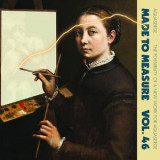
Die französische Avant-Rock-Band Aquaserge ließ schon immer Genregrenzen verschwimmen. Für die Ausgabe 46 der "Made To Measure"-Reihe widmet sie sich auf The Possibility Of A New Work For Aquaserge der zeitgenössischen klassischen Musik ab Mitte des 20. Jahrhunderts: Giacinto Scelsi (1905-1988), György Ligeti (1923-2006), Edgard Varèse (1883-1965) und Morton Feldman (1926-1987). Inspiriert von den unterschiedlichen Ansätzen der vier Komponisten in puncto Dynamik, Klangtextur und Länge der Stücke oder genauer gesagt, Scelsis Forschung über Klangfarbe und Schwingungen, Ligetis Cluster, Varèses melodischer Kubismus und Feldmans graphische Notation, ging die Band das Album intuitiv wie auch methodisch in einem auf neun Musiker*innen erweiterten Line-Up an. Das Album enthält zum einen drei langsame, ausgedehnt-weitläufige Stücke, in denen die Klangfarben der Instrumente miteinander zu einer klanglichen Materie verschmelzen. Diese Materie ist gleichzeitig immobil und mobil, wie in einigen Ligeti- oder Scelsi-Werken. Dagegen enthalten die Hommagen der Band an Varèse und Feldman Momente des Ausbruchs und wilder Improvisation. Diese von Aquaserge geschriebenen Kompositionen, werden mit raren Stücken von Edgard Varèse, eines davon auf Basis eines Gedichts von Verlaine. sowie von Morton Feldman mit einem Rilke-Text komplettiert, und zeigen das Gespür der Band für Melodien.
There’s a mystique in things that appear in threes. In Greek mythology it represents harmony, wisdom and understanding: for Pythagoras it’s the smallest number needed to create a pattern, the perfect combination of brevity and rhythm, while in literature there’s no story without a beginning, middle and end or past present and future. Summed up in the Latin phrase omne trim perfectum, for Southampton based songwriter Ian Miles (Guitarist/Songwriter with UK band, Creeper) the perfect trio presents itself as Degradation, Death and Decay. Inspired by performance art of the 70s and Halloween — taking cues from the visual legacies of Robert Rauschenberg and Serbian film maker Marina Abramovic while musically drawing on bands such as Conor Oberst, Leonard Cohen, R.E.M and The Cure — this first full-length is more art horror project than album. “I never really seen this as a solo project because I’ve been writing and recording acoustic music since I was about 15. I low key released some very old songs way before Creeper started and even during,” says Miles about choosing to step out on his own. “I don’t want to be the focus of this record, it’s not about me so I have decided to hide me. I want people to solely focus on the art.” Layered with haunting vocals and a myriad of rhythmic textures, Miles sets out to explore one of natures most habitual cycles: our individual journeys though life, that life eventually coming to an end and acceptance, striving to give the listener full control over the art rather than focus on the inherently human force behind the mask.
Unter der Regie des Produzenten Chris Cohen und mit Gast-Beiträgen unter anderem von Buck Meek und Tenci, weben die organischen und doch akribischen Folk-Klanglandschaften und tief empfundenen Texte auf dem Debütalbum von Le Ren aus Montreal einen reichen musikalischen Wandteppich. Mit der Veröffentlichung ihrer Secretly Canadian EP "Morning & Melancholia" im Jahr 2020 hat sich Le Ren den Vergleich mit der Musikalität und den kargen, eloquenten Texten von John Prine und Neil Young verdient. Auf "Leftovers" zeigt sie uns die lebendige Tiefe ihres klanglichen und thematischen Spektrums und schreibt mit einer kühnen Klarheit, die sie zwischen klassischen Ikonen wie Joni Mitchell, Vashti Bunyan und Karen Dalton sowie einer neuen Klasse von Folk-Ausnahmekönnern wie Adrianne Lenker, Jessica Pratt und Laura Marling beheimatet. "Leftovers" präsentiert zu gleichen Teilen Melancholie, tiefe Liebe und Heiterkeit, um die Trauernden aufzumuntern, während es ein Patchwork aus persönlichen Liedern über verschiedene Beziehungen zusammennäht: die, die wir mit Müttern, Liebhabern und Freunden teilen. Auf "Leftovers" destilliert Le Ren jahrelanges Material zu zehn straff ausgeführten Tracks, die durch das schwelgerische Zupfen ihrer Gitarre und das kristallklare Timbre ihrer Stimme vereint werden. Im April 2021 traf sie sich mit Chris Cohen in einem gemieteten Haus in Portland, Oregon, wo sie warten mussten, bis ein Nachbarsjunge aufhörte, draußen Lärm zu machen, bevor sie aufnehmen konnten. Die musikalischen Gastbeiträge wurden anschließend hinzugefügt: Kori Miyanishi, Cedric Noel, Saltwater Hank (Jeremy Pahl), Eliza Niemi, Kaïa Kater, Aaron Goldstein, Buck Meek und Tenci (Jess Showman) nahmen ihre Parts separat in ganz Nordamerika auf.
- 1: A Smile-And Perhaps, A Tear
- 2: His Morning Promenade
- 3: At Home With The Infant
- 4: Five Years Later
- 5: Working The Streets
- 6: A Star Of Great Prominence / Breakfast
- 7: The Fight
- 8: The Country Doctor
- 9: The Orphan Asylum / Rooftop Chase
- 10: Night / $00 Reward / Dawn
- 11: Dreamland / The End
- 12: Love Song (Unreleased Bonus)
- 13: The Kid Intermission And Exit Music (Unreleased Bonus)
- 14: Charlie Chaplin Composing Music For The Kid (Unreleased Bonus)
In 2019, we celebrated the 130th Anniversary of
the birth of Charlie Chaplin. In 2020, we celebrated
the 80th Anniversary of the film ‘The Great
Dictator’. This year, we celebrate the 100th
anniversary of the movie ‘The Kid’.
To celebrate these 100 years, Le Chant du Monde
present a deluxe 180g vinyl LP (full mono
remastered version) in luxurious casebound book
packaging.
The release brings together the entire music of the
film, as well as many bonuses completely
unreleased to date, accompanied by a large format
24-page booklet including unpublished texts and
photos.
An edition that will delight Chaplin lovers and vinyl
collectors alike
Keaton Henson’s ‘Fragments EP’ was made as a
companion piece to last year’s ‘Monument’ album,
written and recorded at the same time.
‘Monument’ is a fragile, meditative and emotional
unravelling of grief in the aftermath of losing his
father, and for all its hushed acoustics, ‘Monument’
cocooned its emotion in some beautifully tender
melodies and acute observations. It’s a warm and
relatable listen.
On ‘Fragments EP’, whilst the lyrical themes and
subjects may stray from ‘Monument’’s poignant
subject matter, in its sound and atmosphere, it
feels suitably entwined.
The eight tracks that form the EP orbit a sweeping
kaleidoscope of sonic shapes, shades and
textures. Keaton’s voice offers lyrics in an almost
frozen romanticism. It’s a voice that sounds rooted
in turmoil but also of strength. A happy sadness.
Bleakly beautiful.
Julien Baker shares a mic from across the ocean
in Australia on ‘Marionette’. A songwriter of due
reverence herself, Baker and Keaton share an
affinity with the power of hushed words, fizzing
melodies and an innate wisdom.
‘Fragments EP’ and ‘Monument’ are two fine
bodies of work by this singular, unique British
artist, and two empathetic records of sorrow and
strength.
Ross Sinclair is a drummer, guitarist and founding member of The Soup
Dragons. In the early 1990s Sinclair left the group to complete his studies at
the Glasgow School Of Art.
Ross Sinclair is best known for his Real Life project, initiated in 1994 when he
had the words ‘Real Life’ tattooed across his back. Since then Real Life has become a 23-year performance project, taking form in a wide range of exhibitions, public art and publication contexts. Over the two decades of the Real Life
project, Sinclair’s work has employed various mediums including performance,
painting and music, often at the same time.
Through installation and audience participation Real Life has sought to challenge the conventional exhibition practice and connect with the public. These
projects have been exhibited worldwide. Throughout the course of the project,
a consistent thread of Sinclair’s work has sought to address the nature of the
individual, collective and national identities of Scotland.
During August 2015, Sinclair exhibited his work in 20 Years of Real Life at Edinburgh’s Collective Gallery which celebrated 20 years of his Real Life project.
Sinclair worked with teenagers to create 5 bands and produce an LP titled Free
Instruments for Teenagers. Real Life is Dead/Long Live Real Life The most recent incarnation of the Real Life project came as part of a two-week residency
Ross Sinclair undertook at the Shanghai Himalayas Museum in China, ahead of
his solo exhibition titled Real Life is Dead/Long Live Real Life.
This exhibition served to herald a new phase of Sinclair’s on-going Real Life project. For the exhibition Sinclair added the text ‘Is Dead’ to the ‘Real Life’ tattoo.
The residency focused on the consistent themes of participation, performance
and collaboration, coupled with Sinclair’s use of music in his art throughout his
career. Sinclair worked with students at the GSOA over a period of two years to
develop and record two songs (Real Life is Dead and Long Live Real Life) which
lay at the core of the exhibition. The songs were recorded in both English and
Chinese.
In Shanghai, Sinclair worked with local musicians, artists and singers to create the Chinese-Scottish Real Life Orchestra - a musical dialogue between the
Chinese audience and Sinclair’s Real Life Project. The group came together in
a collective voice, in English and Chinese, to share experiences through music.
The orchestra presented a live performance at the opening reception of the
Phase Three exhibition of CURRENT: Contemporary Art from Scotland, which
provided the soundtrack to Sinclair’s installation consisting of multiple editions
of banners and videos representing the 23-years of the Real Life project. Participants were also invited to respond to the themes of Real Life is Dead/Long
Live Real Life with words and pictures which were displayed on banners and
placards.
Stolen Body are super stoked to announce the addition of French Psych/World rockers Gondhawa to our ever evolving roster.
Gondhawa is a musical laboratory - a fusion between Fela Kuti’s groove and Hendrix’s electricness.
Formed in 2018 in Angers (France) by Idriss (vocals and guitar), Clément (drums) and Paul (bass), the band explores different styles with a boundless energy. Inspired by French sci-fi literature, they invented a language. Outcomes Gondhawii, a fusion of sounds from all over the world and others as yet unidentified. With this new language the whole mind immerses into a delicious trance where we cross odd rhythms, quarter-tone riffs, oriental groove and electric explosions as well as stringed instruments from other countries. (n'goni, sanxian, microtonal guitar)
Gondhawa release their first album, “Kâampäla”. Six powerful and eclectic tracks dipped in stoner, afrobeat and progressive rock. Six tracks linking convoluted rhythms and inventive riffs.
Through the micro-tonal groove of Raba Dishka, the Afrobeat Stoner power of Käampâla, or the softness of Djoliko, a beautiful ballad lulled by the melancholy of acoustic strings from around the world, Gondhawa delivers the soundtrack of an interstellar road movie. An electric tornado with an abundance of rhythms and textures.
1976 Space jazz-folk masterpiece infused with prog scents from one of the true legends of Argentinian music, latin rock pioneer Litto Nebbia. Floating electric piano, acoustic guitar, female choirs and moog sounds combine with Litto's own voice and create a unique blend of delicate beauty. The use of analogue synthesizers in this conceptual album was a turn in Nebbia's work at the time. A long 7-minute suite opens the album, mixing acoustic textures with synth sounds, setting the grounds for the entire LP. Songs of introspective darkness alternate with other tracks influenced by sunny bossanova, musical passages fueled with epic energy where the voice of Mirtha Defilpo accompanies Nebbia along with the intricate and enveloping instrumental work driven by Daniel Homer's guitars and Litto Nebbia's keyboards. The album draws a complex soundscape made up of an almost infinite number of musical pieces, rich in layers and textures, that - decades after its original release - still stands out for their modernity. "Bazar de los milagros" is undoubtedly one of the most advanced recordings of those
that appeared in Latin America at the end of the 70s. Includes the song 'La Caída', as recently sampled on Jay Electronica/Jay Z's hip-hop hit 'The Neverending Story'. "Bazar de los milagros" has also been listed on Japanese DJ and music expert Chee Shimizu's Obscure Sound guidebook, a must for record collectors.
First vinyl reissue, including a facsimile version of the 32-page booklet that accompanied the original 1976 release, and remastered sound.
Mal Waldron's first tribute to Billie Holiday, titled Left Alone, was recorded in 1959, mere months before the singer's death. He returned to salute the legendary vocalist on several occasions since then, with this recording likely being his final tribute, recorded less than a year before his own death. Waldron, who worked with Holiday during her last years, is intimately familiar with her takes of the six standards heard on this disc, along with her own "Lady Sings the Blues." Archie Shepp's often gritty tenor sax is reminiscent of the texture of Holiday's voice, yet he perfectly complements Waldron's lush piano. They also pack a punch with their stark performance of "Left Alone" (Shepp's occasional reed squeaks seem deliberate, as if to imitate breaks in her voice). Waldron also recites Holiday's lyrics set to his composition at the conclusion of the LP. Shepp switches to soprano sax for an emotional take of "Everything Happens to Me" and "I Only Have Eyes for You," with the latter song sounding as if the unheard singer is being ignored by her love interest. Shepp's "Blues for 52nd Street" is both sassy and swinging. This instrumental salute to Billie Holiday is one of the best albums ever to honour her memory. by Ken Dryden/AMG
Horace Tapscott's Pan-Afrikan Peoples Arkestra (P.A.P.A.) was one of the most transformative, forward-thinking and straight-up heavy big bands to have played jazz in the 1960s and 1970s. If P.A.P.A. doesn't have the interstellar rep of that other famous Arkestra, and if the name Tapscott doesn't ring bells like Monk or Tyner, there's a reason why: in an industry dominated by record labels, a band that doesn't record doesn't count. And the Pan-Afrikan Peoples Arkestra didn't record for nearly twenty years. But recording success was never their concern -- they weren't about that. First formed as the Underground Musicians Association in the early 1960s, Tapscott always wanted his group to be a community project.
From their base in Watts, UGMA got down at the grassroots. The group was renamed the Pan-Afrikan Peoples Arkestra in 1971, and soon after they established a monthly residency at the Immanuel United Church of Christ which ran for over a decade, while still playing all over LA and beyond. But they never released a note of music. It was the intervention of fan Tom Albach that finally got them on wax. Determined that their work should be documented, Albach founded Nimbus Records specifically to release the music of Tapscott, the Arkestra, and the individuals that comprised it. The first recording sessions in early 1978 yielded enough material for two albums, and the first release was Flight 17. The album commences with the magnificent title track. It is effectively in three parts. It begins with unaccompanied pianos. Then the ensemble embark on a dense, circular and mechanical movement, a platform for horns and pianos to swoop and dive. We return to Earth with a beautiful solitary flute. The second track, the piano-centric, ‘Breeze’ is different to ‘Flight 17’ in intensity and also brevity but it is quietly as daring as the title track. It concludes with a moving lush wash from the full Arkestra, which sound almost like strings only more substantial. These first two tracks take full advantage of the texture of the unusual mix of the various instruments. Next though, it’s a significant change with ‘Horacio’, which is an exuberant Latin infused jingle. It’s unlike anything else on the album. I like to think it was named after the conductor’s Cuban alter-ego! ‘Clarisse’ gracefully switches between slow blues and bop and is bookended with a grand vaguely East Asian theme. The busy bass line introduces ‘Maui’. As with the previous track, it moves between a number of contrasting melody lines and rhythms but there’s still space for a tuneful sax solo.
This is a must-have album. I think the first two tracks on their own make this release essential. Kevin Ward/UK Vibe/Boomkat
Crepuscule presents a brand new collaborative project by Julie Campbell (aka LoneLady), Stephen Mallinder (Wrangler, Cabaret Voltaire) and Benge (Wrangler, John Foxx). Titled Clinker, the first 800 copies of the 6 track mini album have been pressed in turquoise vinyl.
‘The project began a couple of years ago,’ explains Julie. ‘Benge had these great sketches that were beats and synth patterns, so those were the starting point. I really went to town adding lots of guitar layers and experimenting with different sounds. On some tracks the guitar is deft and rhythmic, as if mimicking sequencer patterns. On others it’s a deconstructed noise-based approach - scratching strings, making fitful, heavy chunks, howls and scrapings of noise and texture.’
Due to competing solo commitments for all 3 members the tracks disappeared into hard drive exile for a couple of years. Julie continues: ‘Last year we revisited the mixes and Stephen added his trademark mysterious and menacing vocals. Now we find ourselves with a finished piece of work. I thought of the name Clinker as I love its meaning: 'stony residue from burnt coal'. This seemed liked an apt description of both industrial and creative processes, and a nice nod to the industrial North of England.’
Stand-out tracks include Camouflage and Condition Collapsing. ‘I’d forgotten how liberating it is to play bass guitar on something,’ enthuses Mal. ‘It compliments Julie’s beautifully angular guitar, and Benge and me ripping up live percussion onto the sound of machines… As a collection of tracks these benefited from a lengthy gestation, as they follow no particular trend and were allowed to twist and turn to develop a life of their own. After successive cycles we suddenly drew it all together so the tracks have a sense of completion and identity.’
‘The real fun for me was during the mixing process when Mal and I looked at each other as the rawness of the tracks hit us on the big studio monitors,’ adds Benge. ‘We knew we had something untameable, and wanted to preserve that feeling of edgy rawness in the mixes.’
The cover image is by Julie Campbell, with overall design by Twilight. The vinyl edition comes with a digital copy (MP3).
Summer was conceived as an entry point for Sonae to access and wrestle with difficult themes, to engage with them authentically, artfully, personally. It was also the starting point for a collaborative audio-visual project with video artist Jennifer Trees (the confronting multimedia installation that premiers in September 2021 at Stadtgarten, Cologne).
Summer articulates these ideas using the unique musical and sonic language that Sonae has been developing across previous releases. The expressive textures and tender melodics of 2015’s Far Away is Right Around the Corner; the atmospheric noise and brute unease of 2018’s I Started Wearing Black; the vicious edges of her 2019 remix-tape Music For People Who Shave Their Heads. Summer is haunted by blistered cellos and spectral string drones, the elegant and emotive movement around diatonic harmonies that echo the classicism and bucolic themes of Vivaldi’s The Four Seasons (1775). Like Vivaldi, Sonae’s work is programmatic, presenting a progressive, intensifying narrative and suggesting aural phenomena of the natural world - buzzing insects, breaking rocks, waves crashing, dust and heat rising - and characterising the seasonal spirit as capricious, volatile and punishing. In these ways, Summer is related to pastoral traditions of European classicism, evoking the aura of doomed and dust-blown gothic grandiosity. It also has feet firmly planted within the lean, sound worlds of underground techno - pulsating four-on-the-floor beats with deep, vibrational sine-wave sub kicks; elegantly bleak, distorted atmospherics that straddle the uncanny space between corrosion and euphoria. The result is a visceral and poetic listening experience. Original, highly affecting, fully engaging body, mind and soul. (…)
Sonae’s music evokes imagination, provokes emotion, and disrupts and defies expectations. She explores the edges and intensities of experience, creating audible and embodied sensations that suggest the physical, atmospheric, and psychological effects of global warming on a living organism. We feel the fatigue, the slowness, sweatiness, dizziness, the sensations of uncomfortable warmth and burning; the atmospheres are hazy, dark and heavy, articulations are brutish and tactile, crunchy and sharp; there is restlessness and resignation, desolation and awe.
Summer is not a warning. It is not an explanation or an argument. It offers no answers. Summer simply holds up a mirror and asks us to experience and behold both the beauty and the brutality of our present reality. It is a work of protest, grief and hope, and it functions as a space for the listener to reckon with these truths and sensations for themselves. (Leah Kardos, London, June 2021)
Sonae (Sonia Güttler) is a German electronic producer and DJ, based in Cologne. Her acclaimed debut album was released in 2015 with Monika Enterprise (Berlin) followed on the same label with her second album in 2018 : ‘’I Started Wearing Black’’. Her Third album ‘’Music For People Who Shave Their Heads’’ has been released in 2019 with bit-phalanx (London).
Sonae plays live solo and with the label collective Monika Werkstatt at places like Institut Für Zukunft (Leipzig), Meakusma Festival (Eupen), Ausland (Berlin), Pop Kultur Festival (Berlin), Fusion Festival (Germany), Uh-Fest (Budapest), Cafe Oto (London), 23rpm Festival (London) The Cube (Bristol) and more on the same bill with Squarepusher, Plaid, Darkstar, Kyoka, Frank Bretschneider, Tim Exile.
Nantais by adoption, the Australian Will Guthrie is a discreet star of the international scene of free, experimental and improvised music; over the past fteen years, he has developed an open and personal approach to drums and percussion, skillfully blurring the lines between his brilliant jazz upbringing, his passion for traditional musics, and his inexhaustible interest in experimental and noise creation, with a pronounced taste for a physical and raw approach to sound. With thousands of performances and some fty albums to his credit, the Australian regularly dispenses his vibratory art solo or alongside the best of improvisation; From Oren Ambarchi to Roscoe Mitchell via Jérôme Noetinger, Anthony Pateras, David Maranha, Ava Mendoza, Jean-Luc Guionnet, Keith Rowe or even Mark Fell. In recent months Guthrie has performed with Tunisian singer Ghassen Chiba, toured as part of “All Around”, a performance with Danish dancer choreographer Mette Ingvarsten and founded the Ensemble Nist-Nah, a gamelan orchestra, in the company of eight other percussionists, out of which Black Truf e published an album, with a second on the way. He also found the time to put in shape a second volume of “People Pleaser”, a discographic act between an autographical assessment, the parenthesis and the musical UFO. A singular exercise in Guthrie's discography, “People Pleaser”, a series initiated in 2017, sees the Australian partially put down his drumsticks and wear a producer cap for a result offering a resolutely singular perspective of / on his work with a very personal dimension. On the rst volume, with a cover signed Stephen O'Malley sets the tone by diverting the chamaré Warhol infulenced visual of the album “Unit Structures” by Cecil Taylor. The portrait of the free jazz pianist has been replaced by passport photos of Guthrie. The result is a diversion into a fairly “Pop” aesthetic whose musical content works in a fairly similar way. Four years later, the cover art's undertones are slightly darker and Guthrie hasn't aged a bit on his new passport photo. The twelve tracks of this second “People Pleaser” combine and arrange eld recordings, heady loops, twists, musical quotes stuck on bedside records, recorded moments captured during travels, ghosty voices from low- lands, a police interview tape and imagined exotic sounds ... Guthrie could walk us for hours on his hard drive like looking at a photo album but he chose to build pieces based on this very personal sound material, much like a mixtape, with special care given to how sounds articulate, overlap and collide. He thus invites his heroes and his friends to join him in skilfully chiseled and nely edited imaginary jams. The rst to take pleasure in this “People Pleaser” is undoubtedly its author as some of his nds are enjoyably playful; we are there embarked in an addictive sound patchwork at high speed where a Balinese Squarepusher is propelled via a defective cathode ray tube in a temple where the happy marriage of the saxophone and the gong is celebrated before this too short respite is interrupted by a sustained hip hop rhythm. The multiplicity and variety of sources give the whole a very pop format and the way in which Guthrie combines sounds, textures, rhythms and vocal elements quickly takes on a narrative dimension and poses this exercise between hip hop and a very personal plunderphonic, evoking as much J Dilla or RZA as the irreverent inventiveness of People Like Us or Wobbly. Will Guthrie has never been in as good company as on a solo album, he also lists on the cover the list of friends, heroes, members of his family and countries who inspired him and to whom he pays homage / collage on this new disc; An aesthetic exercise apart in his discography, both in nitely personal and self-centered and resolutely turned towards what animates him, the aptly named “People Pleaser” reveals the music DNA of the Australian and can be listened to on repeat.
- 1: Dummheit Tut Weh
- 2: Gegen Den Trend
- 3: Durch Die Nacht Fällt Schnee
- 4: Meine Liebe Stirbt
- 5: Jeder So Wie Er Kann
- 6: Thu Den Ska
- 7: Zwei
- 8: Atheismus
- 9: Hamburg
- 10: Johnny Ist Tot
- 11: Thierra Y Libertad
- 12: Jenseits Von Gut & Böse
- 13: Die Stärksten
- 14: Deren Scheiße Nicht Stinkt
- 15: New England
- 16: Fuckdacontract
Das im Frühjahr 1996 produzierte Debütalbum "Kein Schulterklopfen (Gegen den Trend)" wird jetzt in einer limitierten, farbigen, 25 Jahre Edition Vinyl Version wiederveröffenlicht. Die Hamburger Band Rantanplan wurde im Herbst 1995 nach dem Vorbild von Bands wie Operation Ivy und den Mighty Mighty Bosstones gegründet. Die Punk-Ska-Gruppe um Torben Meissner (... But Alive), Markus Wiebusch und Reimer Bustorff (später beide Kettcar) entschloss sich sofort dazu, deutsche Texte zu singen, da Bustorff nur gebrochen Englisch sprach. Mit dem Bandnamen wollte man sich von damals kursierenden Namen wie Pitbull und Bullterrier abgrenzen und entschied sich daher für Rantanplan, den Hund von Lucky Luke, der dümmer als sein eigener Schatten ist.
Honing your skills is under-appreciated in times of instant gratification and the continuous stream of music. Rotterdam-based producer Kofi The Unknown subverts this idea and took time for spiritual introspection, studying rhythms and sound production. Where being a late bloomer normally is seen as a sobriquet, the producer, composer and beatmaker wears it as a badge of honour and solidifies it as an honorary title by pinning it to his debut EP on Wicked Wax: The Late Bloomer. Wearing his heart on his sleeve, Kofi The Unknown shares his journey that led to The Late Bloomer, an emotional journey through sophisticated dance music, straight from the heart, aimed at the soul and feet.
Highly influential to Kofi’s sound and this EP is London’s Broken Beat scene. Syncopated drums, soulful chords and heavy bass lines work in tandem to emphasise the danceability the genre is known for. This is further solidified by the track Kofi released leading up to this release: One for Motet, an ode to the Broken Beat MC and Jazz Refreshed host Jason Hicks. The Late Bloomer further develops Kofi’s ode, but provides his Rotterdam flavour and brings his Hip Hop and Funk lineage into the mix.
Embrace Mistakes sets the stage for what’s to come in various ways. It is a textbook case of how dance music can tell a story and be introspective. Kofi’s honesty shines bright on the entire EP and strikes from the first kick drum on. It also shouldn’t be hard to recognise and feel the emotion the producer shares on the title track The Late Bloomer. The emotionally-laced chords and crushing drums are reminiscent of late nights at a warehouse or emotional sequences from a dystopian movie.
Staying true to his ethos ’exploring the university that music holds’, Kofi finds this beyond music production as The Late Bloomer provides an audible experience through creative mixing. Stuttering analog synths, enveloping leads, multiple percussion rhythms and off-beat snare rolls hit from all directions of the stereo spectrum, further underlining the sophistication of his merit. While the EP follows the Broken Beat accents on dance, it is an equally mindful listening experience.
Kofi The Unknown is a Rotterdam native producer with a knack for rhythms. His keen ear is informed by mentor and Dutch enigma Trian Kayhatu. While Kofi has taken the time to perfect his skills under the guidance of Trian, the two are simultaneously working on the exciting follow-up project to this debut EP. Without looking too far ahead, enjoy The Late Bloomer. It’s not only a crown jewel Kofi proudly wears, it is also establishing him as a future household name in the sophisticated dance scene. "
Delsin welcomes Jayson Wynters into the fold for a four-track EP that embodies techno as a vibrant, expressive artform with the ability to uplift. On The Affect Heuristic, Wynters strides forth with an electrifying machine language, calling to mind the feverish, psychedelic tweaking and layering of visionaries like Dan Curtin and Lee Purkis (In Sync). Across four tracks, Wynters pivots between distinctly Motor City-indebted funk, springy electro-techno and vivid, immersive soundchasms. The artwork - a canny meld of bold geometry, bright colours and rough textures from Erosie and Erris Huigens (Graphic Surgery) - responds to the music in a wholly appropriate way.
Prior to his release this record was simply ‘labeled’ as Punk-Rock but this one comes from the New York Dolls side of Glam Punk. Storm the Gates of Heaven reveals unusual aspects of County's work: serious, reflective and profound. The monologue introducing the title track is the only part that may be considered offensive. The sound is a blend of bass, lead & rhythm guitar, drums & percussion by the versatile Electric Chairs.
Embellished by Hammond organ, the title track rages against and laments the suffering caused by religious wars. Cry Of Angels is an eloquent, even anthemic defense of Enlightenment values on which the guitar textures and the hook around the chorus superbly complement one another. An artful blend of County's characteristic outrage and the pure pop genius that lay behind the garish accoutrements, Storm the Gates of Heaven jams its eight tracks between two undisguised classics, the anthemic title track and a so-optimistic reading of "Tomorrow Is Another Day, not to mention a stunning cover-version of the Electric Prune´s "I had too much to dream last Night"
The vinyl version was pressed in two vinyl options - transparent white (100 copies) and black. Both on 180g.
Moo Latte:
"Snax", my 5th longplay album, is a collection of 16 compositions, contrasting flavours and textures. Each of them is served as a small appetizer. Some are easily digestible, even dietary, some are greasy and full of calories. Each individual song is rather brief and can be a perfect little snack in the middle of a day. However! They will taste the best if you take your time, have a bite of one after another and enjoy the feast. From starters to desserts.
Warning! This album may contain peanut products!
Cooking those instrumental tracks, I yet again explored my jazz background and combined instrumental improvisations with hip-hop, ethno and soul inspirations. Whole album is kept in a non-binding lo-fi vibe but maintaining the hi-fi level of attention to details. With "Snax" I decided to go for a much wider palette of sounds unlike my previous, more conceptual albums. The last track "Worth it" features a charizmatic Philadelphia based artist - Ler Stevens which has shed a new light on my instrumental joint "Coins". The artwork has been created in a collaboration with a talented Polish illustrator - GBUR.
FOUR STROKE BARON return with their third full length studio album ‘Classics’, mixed by Devin Townsend and brimming with catchy riffs and unforgettable choruses. Having streamlined into a duo, Kirk Witt and Matt Vallarino cast a sardonic eye over the human condition - as seen through their own uniquely distorted lens, and told via tales involving a murderous rampage at a kegger while dressed as a knight, to being trapped in a casino during a robbery whilst on acid, and other such adventures. They are our guides as we traverse the filthiest folds in the dark underbelly of Reno, Nevada; illuminating the darkest corners of their twisted psyches with their upbeat and insanely catchy pop hooks.
Having scraped off the detritus of their city, rubbed the crust from their eyes and molded it into the heavy pop songs you hear before you today, they enlisted the only person they knew who could add the extra layer of embellishment that the album required. Enter Devin Townsend. They gave him only one instruction for producing Classics: go as hard and insane as possible. The added textures brought in by Townsend during mixing elevate these 10 tracks to another level.
If you’re unsure of what constitutes a classic, a good place to start is with FOUR STROKE BARON’s 2020 release, Monoqueen, which features covers of the likes of Chvrches, The Beatles and Death Grips. Sometimes it’s necessary to allow time to pass to reveal the true nature of a classic track; FOUR STROKE BARON have shaved the waiting time all the way down to zero. Hit play - the classics are all there waiting for you.
- A1: Freedom Ft. Jack Tyson-Charles
- A2: One For The Trouble
- A3: Recipe For Love Ft. Jack Tyson-Charles
- A4: Coco
- A5: Brown Sugar Ft. Herbal T
- A6: The Gypsy Ft. Jack Tyson-Charles
- B1: The Contender
- B2: Missing Me Ft. Jack Tyson-Charles
- B3: No Guts No Glory
- B4: Making It Right Ft. Juliette Ashby
- B5: On The Road Ft. Jack Tyson-Charles
- B6: Here We Go Again Ft. Wax,Herbal T,Eom
A Wide ranging, eclectic and progressive musical outlook has always been the Lack of Afro approach. His latest material follows suit as he harnesses disparate musical styles ranging from funk, soul and hip-hop to create a contemporary yet vintage musical escapade of superb songs.
On his 4th studio album for Freestyle Records, the influences, sounds and musical textures are more eclectic than ever. Below, Adam talks us through some of the his favourite moments on 'Music For Adverts'.
First out of the box is the steaming funk killer Freedom: This time around I knew I didn't want an intro or a skit to start the album - I needed a strong, heavy opener - I had the melody for the chorus floating around in my head. It was then just a case of working with Jack Tyson - Charles on the rest of it and getting the vibe that the song required.
Long time Lack Of Afro collaborator Herbal T features on Brown Sugar: I had an idea of doing a disco track with an emcee on it, which you don't really hear often. This is actually the first time I've sung on a Lack of Afro track, adding my backing vocal warblings on the choruses! Special shout to George Cooper for the howlin' Hammond solo at the end too.
Of the gritty instrumental No Guts, No Glory Adam explains: I wanted to include 3 instrumentals as I always have a soft spot for them & it's what people know me for. The 'choir' was recorded by layering up my own voice in different octaves, nothing is auto-tuned, its all real. The studio allows me to do stuff like that but I could never sing live - I'll leave that to the proper vocalists.
'Proper vocalist' Jack Tyson - Charles again features on The Gypsy, which as Adam explains uses the classic song format to great effect: One of my favourite LOA tunes to date, Its in keeping with the album mission statement of wanting to write 'proper songs' instead of just grooves.
DIALOGUE was conceived as a series of musical letters written back and forth between Luke Slater, Anthony Child (aka Surgeon), KMRU, Lady Starlight, Speedy J and harpist Tom Moth (of Florence + the Machine) at the height of the pandemic between 2020 and early 2021. Using the common language of rhythmic ambient electronics, each DIALOGUE features three actors in a sonic conversation of longform improvisation between 15 and 25 minutes in length, with Luke Slater the common denominator. The results are a brooding, psychedelic exchange of melody, texture, bass, oscillation, key changes and volume swells, which organically merge into complete compositions. It’s music that both reflects and transcends the artists' common reality of isolation – a meditative, consciousness-expanding conversion of musical ideas born from necessity. Cosmic but not escapist. And very much of its time.
one hand on the steering wheel the other sewing a garden is the name of the second album by Canadian songwriter Alexandra Levy, publicly known by the moniker Ada Lea. On one hand, it’s a collection of walking-paced, cathartic pop/folk songs, on the other it’s a
book of heart-twisting, rear-view stories of city life. Ada Lea has followed up the creative, indie-rock songcraft of her debut what we say in private with surprising arrangements and new perspectives. The album is set in Montreal and each song exists as a dot on a personal history map of the city where Levy grew up. Due on September 24th from Saddle Creek and Next Door Records in Canada, the physical record will be released alongside a map of song locations and a songbook with chords and lyrics, inspired by Levy’s love of real book standards.
Levy penned and demoed this batch of songs in an artist residency in Banff, Alberta. After sorting and editing she made her way to Los Angeles to record with producer/engineer Marshall Vore (Phoebe Bridgers) who had previously worked on 2020’s woman, here E.P. After a long walk to the studio each morning, Levy spent her session days diving into the arrangements, playfully letting everything fall in place with complete trust for her collaborators. She notes “Marshall’s expertise and experience with drumming and songwriting was the perfect blend for what the songs needed. He was able to support me in a harmonic, lyrical, and rhythmic sense.” Other contributors that left a notable fingerprint on the soundscape include drummer Tasy Hudson, guitarist Harrison Whitford (of Phoebe Bridgers band), and mixing engineer Burke Reid (Courtney Barnett). Many songs came together with a blend of studio tracks and elements from the pre-recorded demos.
The resulting sounds range from classic, soft-rock beauty to intimate finger-picked folk passages and night-drive art-pop. And the textures are frequently surprising due to the collage of lo-fi and hi-fi sounds that tastefully decorate the album without ever clouding the heart-center of the song. Tracks like “damn” and “oranges” feel timeless with their AM gold groove and 70’s studio sheen, while songs like “my love 4 u is real '', “salt spring” and “can’t stop me from dying” sound completely modern in their use of electronics, sound effects, and pitched vocals. In their subtle, sonic variety, all of the album’s songs flow together with ease into one big, romantic dream for Levy’s silken vocals to float above.
Inspired by personal experience, daydreams, and Elena Ferrante’s Neapolitan novels, the lyrics of one hand... center storytelling on a bigger scale. The experience and emotions of a year are communicated through Levy’s vignettes of city life. Her prose is centered in its setting of the St Denis area of Montreal as it draws up memories from local haunts like Fameux, La Rockette, and Quai des Brumes in rearview reverie. Levy creates a balance through the album’s year by splitting her songs evenly into four seasons. Opening track “damn”, as a song of winter, kicks off the narrative with the events of a cursed New Year’s Eve party. Immediately this timeline becomes jumbled into a Proustian haziness. The listener is then led through the heat-stricken, brain fog of Summer song, “can’t stop me from dying” and then into the autumnal romanticism of “oranges” before returning back to New Year’s on “partner,” which Levy describes as “a woozy late-night taxi blues reflection on moments when timing can be so right, yet so wrong…”. These collected stories as a whole chart the unavoidable growth that comes with experience. “All is forgiven in time. All is forgotten in time. And when the music stopped, I heard an answer” (from “my love 4 u is real”).
Whether to consider these songs fiction or memoir remains unknown. On one hand, Levy says “Why would I try to write a story that’s not my own? What good would that do?” but on the other hand, she is quick to note the ways that language fails to describe reality, and how difficult this makes it to tell an actually true story. The poetic misuse of the word “sewing” in the album’s title serves as a nod to the limitations words provide. What does it mean to sew the garden? And how can we appreciate its carefully knit blooms when the rearview mirror is so full of car exhaust?
one hand on the steering wheel the other sewing a garden is the name of the second album by Canadian songwriter Alexandra Levy, publicly known by the moniker Ada Lea. On one hand, it’s a collection of walking-paced, cathartic pop/folk songs, on the other it’s a
book of heart-twisting, rear-view stories of city life. Ada Lea has followed up the creative, indie-rock songcraft of her debut what we say in private with surprising arrangements and new perspectives. The album is set in Montreal and each song exists as a dot on a personal history map of the city where Levy grew up. Due on September 24th from Saddle Creek and Next Door Records in Canada, the physical record will be released alongside a map of song locations and a songbook with chords and lyrics, inspired by Levy’s love of real book standards.
Levy penned and demoed this batch of songs in an artist residency in Banff, Alberta. After sorting and editing she made her way to Los Angeles to record with producer/engineer Marshall Vore (Phoebe Bridgers) who had previously worked on 2020’s woman, here E.P. After a long walk to the studio each morning, Levy spent her session days diving into the arrangements, playfully letting everything fall in place with complete trust for her collaborators. She notes “Marshall’s expertise and experience with drumming and songwriting was the perfect blend for what the songs needed. He was able to support me in a harmonic, lyrical, and rhythmic sense.” Other contributors that left a notable fingerprint on the soundscape include drummer Tasy Hudson, guitarist Harrison Whitford (of Phoebe Bridgers band), and mixing engineer Burke Reid (Courtney Barnett). Many songs came together with a blend of studio tracks and elements from the pre-recorded demos.
The resulting sounds range from classic, soft-rock beauty to intimate finger-picked folk passages and night-drive art-pop. And the textures are frequently surprising due to the collage of lo-fi and hi-fi sounds that tastefully decorate the album without ever clouding the heart-center of the song. Tracks like “damn” and “oranges” feel timeless with their AM gold groove and 70’s studio sheen, while songs like “my love 4 u is real '', “salt spring” and “can’t stop me from dying” sound completely modern in their use of electronics, sound effects, and pitched vocals. In their subtle, sonic variety, all of the album’s songs flow together with ease into one big, romantic dream for Levy’s silken vocals to float above.
Inspired by personal experience, daydreams, and Elena Ferrante’s Neapolitan novels, the lyrics of one hand... center storytelling on a bigger scale. The experience and emotions of a year are communicated through Levy’s vignettes of city life. Her prose is centered in its setting of the St Denis area of Montreal as it draws up memories from local haunts like Fameux, La Rockette, and Quai des Brumes in rearview reverie. Levy creates a balance through the album’s year by splitting her songs evenly into four seasons. Opening track “damn”, as a song of winter, kicks off the narrative with the events of a cursed New Year’s Eve party. Immediately this timeline becomes jumbled into a Proustian haziness. The listener is then led through the heat-stricken, brain fog of Summer song, “can’t stop me from dying” and then into the autumnal romanticism of “oranges” before returning back to New Year’s on “partner,” which Levy describes as “a woozy late-night taxi blues reflection on moments when timing can be so right, yet so wrong…”. These collected stories as a whole chart the unavoidable growth that comes with experience. “All is forgiven in time. All is forgotten in time. And when the music stopped, I heard an answer” (from “my love 4 u is real”).
Whether to consider these songs fiction or memoir remains unknown. On one hand, Levy says “Why would I try to write a story that’s not my own? What good would that do?” but on the other hand, she is quick to note the ways that language fails to describe reality, and how difficult this makes it to tell an actually true story. The poetic misuse of the word “sewing” in the album’s title serves as a nod to the limitations words provide. What does it mean to sew the garden? And how can we appreciate its carefully knit blooms when the rearview mirror is so full of car exhaust?
Light Blue Vinyl
**Tracks 'Sixth Sequence' and 'Tenth Sequence' are bonus tracks & exclusive to the vinyl release only.** limited transparent green vinyl LP
Past Inside The Present is pleased to announce 'Wave Variations' which is a new mini-album by veteran ambient producer Dennis Huddleston AKA 36.
36 has often enjoyed exploring self-imposed restrictions, as it forces him to be creative, while allowing an inherently coherent sound between the different compositions. All the arrangements on Wave Variations use a limited pallete of mostly synth-based sounds, with particular focus on keys and melodies. Each track directly influenced the next one.
Dennis has kept almost every track around three minutes in length. He states, 'I feel like a lot of ambient music (including my own) is often unnecessarily long and these small vignettes work as a nice counter to that. Don't expect long build-ups or over-extended crescendos; These are short tracks that take you straight to Elysium and then dissolve into the ether.'
He further explains the output of Wave Variations, 'Ocean tides inspired the album. I think we've all felt that sense of longing and wonder while standing at the beach, staring at the waves and gazing into the endless horizon. I think it's something that transcends all generations of people. Like the waves, these tracks leave as quickly as they arrive. I feel it's one of the most minimal records I have made, with far fewer individual sound sources at my disposal. It keeps me on my toes and forces me to deeply explore the instruments I have available to me.'
This stripped-back sound gives the album a hypnotic quality to it. Like much of Dennis' work, there is a delicate balance between melancholic melodies and rich textures, resulting in an understated yet deeply exhilarating sound. Fans of emotional, melodic ambient music should find plenty to enjoy.
Early support by: Laurent Garnier, AME, Marco Bailey, Jennifer Cardini, Terrence Fixmer, Kyle Geiger, Marcel Dettmann, Apparat, Richie Hawtin, Vril, Charlotte De Witte, Sasha, Benjamin Demage any many more..
Fresh off of a remix for Grimes’ “My Name is Dark”, producer Julien Bracht has been powering through CV19 studio seclusion on full-power, with a distinct vision for brighter days ahead. Bracht’s new album, “Now Forever One,” an emblem of dark analog synthwave, is set to drop June 11. Bracht’s first solo album under his own namesake is cut with surgical precision for the shoegazing astral sound travellers who long to break out of their pandemic quarantines, and reconvene for techno-induced ascension. The album’s first single, “Melancholia,” and it’s accompanying video, is already breaking hearts and charts. An exquisite sonic hybrid of communal revelry and profound introspection, “Now Forever One,” focuses Bracht’s multilayered craftsmanship on resolving this era’s angst with sensory exploration and optimism.
As a lifelong drummer, Bracht’s insatiable musical energy lead him to bang out his first 3 EPs within one year of first being signed in 2011-12. In 2015 he founded the band Lea Porcelain with Markus Nikolaus in London. Their hypnotic post-rock debut release in 2017, “Hymns to the Night,” gained instant acclaim from UK tastemakers Lauren Laverne, Steve Lamacq and Zane Lowe, to name a few. The lads broke back onto the international stage with dates on several major festivals around Europe, including the Leeds/Reading Festival, Great Escape Brighton and Latitude. Rich output combined with the inclusion of live drums in his solo live sets quickly gained Bracht recognition and slots on the global tour circuit.
“Now Forever One” forges Julien Bracht’s transition from techno djing, while continuing the explorations of texture and timbre over functional song structures from Lea Porcelain, to a more open-ended search for the aural sublime — the substrate on which music, life and light glide to create momentary nodes of meaning in an increasingly meaningless sociopolitical atmosphere. These are crucial themes to Bracht’s process and approach. “The intention in my music is to strengthen people’s awareness and minds… I want us all to gather in spirit and stick together.”
The album exemplifies Bracht’s hunt for elemental juxtaposition with the warm Prophet 6’s sawtooth howls and bright pads against chillingly indifferent pulsing basslines and percussion. Clocking in at just under 65 minutes, “Now Forever One’s” tracks are sequenced to take the listener through the full emotional arch of a 15-hour rave, with an emphasis on those moments of collective epiphany where heaving techno floors become the perfect microcosm for an idealistic and interconnected future. Interspersed with improvisational one-takes, the album submerges the listener in polyrhythmic meditations, of which “Streets” and “Nocturne” are standout examples, and soars on the vaulted synth melodies of future dance floor favourites “Melancholia” and “Dreams of Euphoria.” Sascha Ring of Apparat & Moderat puts it perfectly: “I played “Melancholia” the night I got it at Mutek Festival in Mexico City, and instantly knew it’ll shine on a big floor at the right time. It’s just the right balance of majestic melodic deepness.” The sounds are both triumphant and exploratory.
Greater than the sum of its parts, Bracht’s latest release hints at the artist’s emerging potential for nailing our moment’s zeitgeist; learning to live smaller while constantly seeking higher heights. Inhabiting the fertile ground between solitary rumination and dance-floor convenance, the launch of “Now Forever One’s” lunar expedition into the techno oblivion of pandemic lockdown is oddly fitting.
Introducing Cutcross, created to champion the melting pot of bass-centric sounds teetering around 140 bpm. Heading up the concept is Sicaria Sound, a DJ duo who since their inception set out to explore and expand on the possibilities of these sounds whilst spotlighting underground artists. Cutcross is therefore their next step in supporting the forward-thinking music that they've drawn for when curating sets.
Partners in crime Ebb & Texture by way of New Zealand are at the helm of CXT004. Featuring a solo track each plus two collaborative efforts, all four tracks pack a punch via plenty of low-end and lively breaks.
Penny Records presents the vinyl version of the soundtrack from the TV Series "Anna" written and directed by Niccolò Ammaniti. Fueled by Niccolò Ammaniti's passionate and immersive creative style, the score for 'Anna' was approached almost as a character study. 'Anna' exposes a world of extreme conditions where the essentials of human existence flourish in a wide range of emotions and sentiments tainted through the eyes of children. Striking brutality and primal savagery go hand in hand with the beauty of innocence and hope. Rauelsson's musical language for 'Anna' includes tense and spare textures that blend seamlessly with intimate ambient minimalism; classical elements that coexist with electronic drone experimentation and tribal rhythms, candid piano melodies buried in tape loops and otherworldly rituals of wordless voices. To arrive at this music landscape, Rauelsson enlisted an international cast of collaborators including Finnish percussionist Tatu Rönkkö, German cellist Anne Müller, American multi-instrumentalist Peter Broderick and Oslo-based vocalist Simin Tander. With this ensemble, Rauelsson's music documents a journey of survival that highlights the power of imagination and love.
Credits:
Music by Raúl Pastor Medall except A3 (Salvatore Cardillo, lyrics by Riccardo Cordiferro), A5 (Raúl Pastor Medall, Peter Broderick and Anne Müller), B3 (Raúl Pastor Medall and Anne Müller) and A2, B1, B2 (Raúl Pastor Medall and Tatu Rönkkö)
Played by Peter Broderick (Violin), Anne Müller (Cello), Raúl Pastor Medall (Piano, Electric Piano, Synthesizers, Electronics), Tatu Rönkkö (Drums, Percussion) and Simin Tander (Voice) with additional contributions from Christoph Berg (Violin), Aisha Burns (Violin) and Giulia Dragotto (Voice)
Recorded in 2020 at Rockaway Studios (Castelló, Spain; engineered by Raúl Artana), Niu (Benicàssim, Spain; engineered by Raúl Pastor Medall), Old House at Galgeberg (Oslo, Norway; engineered by Olav Torget), Tanum Church (Bærum, Norway; engineered by Olav Torget) and Indigo Studios (Palermo, Italy; engineered by Fabio Rizzo)
Additional recordings by Peter Broderick (Co. Galway, Ireland), Anne Müller (Berlin, Germany) and Tatu Rönkkö (Helsinki, Finland)
Produced by Raúl Pastor Medall and Niccolò Ammaniti. Mixed by Raúl Pastor Medall and Adam Selzer at Niu and Type Foundry (Portland, OR). Mastered by Adam Gonsalves and Adam Selzer at Telegraph Audio Mastering (Portland, OR). Lacquer mastercut by Andreas LUPO Lubich at Loop-O (Berlin, Germany). Artwork by Emiliano "Stand" Cataldo.
"On October 15, 1965, tenor saxophone master and composer Wayne Shorter recorded The All Seeing Eye, a brilliant and ambitiously multi-layered album for Blue Note. Shorter’s goal for the album was to use “a wider range of colors and textures” while continuing his explorations of “life and the universe and God.” Joining Shorter in his quest are Freddie Hubbard on trumpet, Grachan Moncur III on trombone, James Spaulding on alto saxophone, Herbie Hancock on piano, Ron Carter on bass, Joe Chambers on drums, and, on one track, Wayne’s brother Alan Shorter on flugelhorn.
Blue Note Records’ Tone Poet Audiophile Vinyl Reissue Series is produced by Joe Harley and features all-analog, mastered-from-the-original-master-tapes, 180g audiophile vinyl reissues in deluxe gatefold packaging. Mastering is by Kevin Gray (Cohearent Audio) and vinyl is manufactured at Record Technology Incorporated (RTI)."
New school techno star Lee Ann Roberts continues to light up 2021 with another brand new single on her own NowNow Records. Her standout original is backed by remixes from MRD and D.A.V.E. The Drummer.
This year already belongs to South African-born, Amsterdam-based Lee Ann Roberts. Her new label has had high-profile support from tastemakers like Charlotte de Witte & Ken Ishii, and is already well known for its off-grid techno sounds. Roberts herself debuted only last year on Suara. She immediately hit the number 2 spot on the Beatport Hard Techno chart and followed up with more on Octopus Warehouse Series. She has played festivals like Caprices this year and is lined up for BPM as well as plenty more headline gigs.
The excellent 'Feel' is a nine-minute, hard-edged roller. The drums are flat-footed and unrelenting, the synths bring turbulence and dark vocals add dystopian unease. The edgy textures and caustic pads make for a visceral groove that is perfectly designed for shadowy warehouse spaces. An Acid Trip Mix sees the track erupt on wild acid lines that spray about the mix and cannot fail to blow up the dance floor.
Remixer MRD hails from Norway and has released plenty of EPs and an album in a short space of time. He has a ferocious sound that fuses new wave, hardcore and banging techno as evidenced here. His version is break-neck techno with trance pads lighting up the airwaves in euphoric fashion.
The second remixer is the legendary London techno titan and label boss D.A.V.E. The Drummer. He heads up Hydraulix Records and Apex Recordings and always brings the fire. His take on 'Feel' is a wall-rattling banger with oversized bass. Saw-tooth synths rip up the track while the stark, strobe-lit stabs and some buried vocals make the floor sweat.
Belgium's Milo Spykers pays homage to his homeland with "Belgian Bass" EP, featuring four old school rave cuts set for release on his resident label,Lenske Records.
Part of the Lenske family since its inception, DJ/Producer Milo Spykers returns to Lenske Records for his fourth EP on the Belgian label. Packed with four explosive tracks, the EP marks another stand-out release for Spykers following his "Accelerator" EP last summer.
Kicking off with authority is the thunderous opening track "Stainless Steel", armed with a marching kickdrum and whompy bass. The track breaks down midwa yto give way to a weighted synth melody and flared hi hats that conjoin with a triad of melodic themes, creating an intoxicating blend of rhythm and sound. Next up and packed with explosive pairings is "Blood Hound". Taunting synths and a punching kick create a propulsive rhythm. More chaotic than its predecessor, an array of drums are used to raise the intensity. Sinister synth notes blend seamlessly with the dramatic percussion that feels custom built for dark, thumping techno basements.
On the flip is title track "Belgian Bass", a high voltage stomper with a powerful kick, jackin' rhythm and metallic textures. Siren like synths sound out amongst powerful snares and cymbals. Creating an almost cinematic feeling, the track is brilliantly hectic, broken up by a solitary clap before the chaos resumes. Lastly is "Cjax", a raucous roller that feels like a perfect peak time energy spike, ending the record on a triumphant high note. Gurgling vocal samples stir beneath a driving kick drum and syncopated hi hats,while stabbing chords cut across the soundscape, intertwined with elongated droning synth notes that echo in the distance.
Masters within the evolution of ambient and experimental music over the past forty years, Michal Turtle and Suso Saiz come together for the first time for ‘Static Journeys’, a full-length collaborative album. Unfolding over six diverse tracks, Turtle and Saiz imagine the memories, journeys and textures of half-a-dozen cities borne only of their imagination. Developed closely alongside Swiss agency and label PLANISPHERE, the music was premiered in it’s completed form during a performance installation for ON at Kunstmuseum Basel, a transdisciplinary event designed that featured live visuals from Ezra Miller and more.
While both wildly prolific, the music of both Turtle and Saiz was previously the domain of specialist collectors and obsessive record enthusiasts. Since 2015, a series of reissues on labels such as Music From Memory and reinterpretations of Turtle’s music on Planisphere have brought the back-catalogue of these artists to a much wider audience, and to each other. Far from nostalgic and fundamentally curious as expected, ‘Static Journeys’ captures these innovators transferring their unique chemistry into an ambient tete-a-tete rich in detail.
‘Static Journeys’ was recorded throughout 2019 over two individual recording sessions, each lasting a number of days. The first took place in Turtle’s infamous ‘living room’ studio, his cosy and domestic atmosphere providing the initial foundation for the pair’s long-form improvisations; Saiz focused on synthesis and modulation, Turtle providing hypnotic, looping percussion. Later, in a studio in Madrid, the roles became less defined. Saiz’s textures, musical time standing still began to kindly interweave with Turtle’s offbeat melodies.
The results of these meetings are blissful and adventurous. Following the welcoming undulations of opening track Buonovintra Beckons, ‘Missing Papotl’ dives into soaring, new-age percussion underscored by wistful melancholy. ‘ Returning to Brendelton’ unfolds as analogue tropicalia, static indistinguishable from tropical birdsong. ‘Hattalcuia Awaits’ is bound by mystery and anticipation, whereas ‘Leaving Okovozi’ presents a quietly spectacular exercise in minimalism, led by yearning bass and whistling chimes. Finally, ‘Caravan to Inek’ allow for a dense, hopeful finale, incorporating electronic guitar and the afterglow of new connections forged.
Blissful, diverse and occasionally sublime, ‘Static Journeys’ combines experimentation and creative trust to deliver a timeless musical meeting.
Kamarads Records is finally back
and presents its second release made with four European producers from France & Italy,
Jef K, icon of the Parisian house has collaborated on a track with Ilyes from the new generation of electronic producers based in France and you will also find Reda Dare who you already know, an important component of the new landscape of French house.
For Italians: Nicola Brusegan, ambassador and prolific producer of a fresh and romantic vintage deep house, made of analog synths and Mpc grooves and textures from Venice, and Laurent Ci who produced more of a minimalist house tinted with Romanian atmosphere and atmospheres.
The second Kamarads reference will be a Vinyl Only.
While the world continues to be in a bizarre mixture of feelings and circumstances, we can thankfully still hark back to last fall when the sophomore LP from the elusive and innovative KAMM band, Cookie Policies gave us an opportunity to reflect on the past while fully looking toward the future.
The album presented a beautifully unique blend of listening-oriented music styles, combining the early roots of the four producers and their pre-DJ formative musical travels. It is now our great pleasure to introduce an EP set of specifically dance floor-focussed remixes that take the diverse textural arrangements and expansive sonic bliss of the LP and stretch it around some solid percussive membranes, sure to excite many DJs and dancers out there in the wild as things begin to reopen.
KAMM band members Dave Aju, Alland Byallo, Kenneth Scott, each chose one original album track to rework with a more propulsive feel and from Aju's psychedelic West Coast breaks rendition of the noir-esque "CCBPGC", to Byallo's high vibe leveled-up flight of "Bird Call", or Scott's bold section-by-section recreation of the sprawling "The Soft Glow Of Electric Sex" laser-designed for heads-down late night club sessions, the boys came through to say the least. The real A1 treat of this reinterpretation package however comes from unanimous artist choice and label favorite I:Cube, whose majestic take on "Shleem" sees the veteran producer and master remixer move the bubbling ambient piece into bumping and rich space-age deep house territory, equal parts angelically uplifting and pure 5am club-belter/mind-melter.
Following highly praised releases by Hermeto Pascoal & Grupo, Leonardo Marques, Xenia Franca, Moons, and Gus Levy, 180g and the legendary Disk Union continue to explore the best of today's Brazilian music scene with this wonderful album by Bruna Mendez. A chill, mellow and futuristic musical masterpiece with funky and electronic flavours, Corpo Possível leads the way to the new era of Brazilian R&B.
Bruna Mendez is a female singer/songwriter from the inland city of Goiânia, Brazil. Originally a lyricist, she began her musical career in 2008 to express herself as a musician, joining several bands in Rio as well as in her hometown Goiânia. After releasing her debut EP "Pra Ela" in 2014, Bruna released her debut solo album "O Mesmo Mar Que Nega a Terra Cede à Sua Calma" in 2016, which received critical acclaim in Brazil.
After this first album, Bruna also finds interest in electronic sounds and textures, and starts incorporating these elements into her music. Her second album here, "Corpo Possivel", is the result of such an encounter between electronic beats, addictive melodies and a band and musicians playing a tight and propulsive sound. All of this makes Corpo Possivel an album standing out in today's Brazilian music scene, where many extraordinary talents are produced. 180g and Disk Union are proud to release Corpo Possivel for the first time outside of Brazil. This is an essential LP by an artist promised to a bright future on the Brazilian and international scenes.
This album comes on 180g vinyl format.
The principles of the inclusive band "21 downbeat": Intoxication and ecstasy, or thump and confetti! Beyond the usual boundaries and ideas, the band members create their very own sound from their own texts and poems by contemporary authors. Perhaps the musicians can be called Satyroi, cheerful demons in the wake of Dionysus, who is difficult to tame and for whom our current limits and ideas do not play a role. At appearances at Mensch Meier, the canteen at Berghain and at the Fusion Festival, the band has already put on spectacular stage shows that caused euphoria right down to the last row.
The now appearing debut ep "Shower" contains 4 pieces. Energetic percussion meets a rough synthesizer sound, the vocals are mostly polyphonic, clear and straightforward. All lyrics of the EP are based on poems by the award-winning author Yoko Tawada.
Following on from the acclaimed Tiger Balm / Amazonia Dreaming / Immersion LP (BT028), Black Truffle is thrilled to present two major new instrumental works from legendary sound artist and experimental composer Annea Lockwood. Demonstrating the ever evolving and radically open nature of Lockwood’s practice, these two recent works were developed in close collaboration with their performers. ‘Becoming Air’ (2018), developed with and performed by trumpeter Nate Wooley, uses extended technique and electronics to interfere with Wooley’s virtuosic control over his instrument, pushing him into areas of fluctuating pitch and timbral instability. Motivated by a desire for ‘the letting go of sound to be itself’, ‘Becoming Air’ unfolds as a series of texturally distinct moments separated by pauses, each fixing on a particular approach to the instrument (long tones, upper-register whistles, breathy wooshes) and maintaining it in an essentially static fashion, focussing our attention on subtle changes and variations. Dipping into near-inaudibility in the fragile high tones of its opening section, the piece dramatically increases in volume and intensity in its final third, climaxing with a passage of roaring distortion, where the interaction between feedback and trumpet pitches calls up the shuddering interference effects of Robert Ashley’s Wolfman.
‘Into the Vanishing Point’ (2019) is a collaborative work developed with New York piano and percussion quartet Yarn/Wire, who have performed work by major contemporary composers such as Olivia Block, Catherine Lamb and Klaus Lang. Carrying on the ecological and environmental concerns of some of Lockwood’s previous works, ‘Into the Vanishing Point’ was inspired by a devastating news article on the global collapse of insect populations. Discovering that the four members of Yarn/Wire had also read this text, Lockwood mapped out a loose structure for the piece that would allow the composer and four performers to explore their ‘feelings about what is happening ecologically’. Working with a huge variety of instruments, objects and techniques of sound production, the resulting work is an alluringly lush, organically unfolding tissue of unorthodox textures and haunting tones. Though not intended to sonically represent ecological issues in any direct way, its unique sound world of rubbed piano strings, gently handled objects and chiming pitches often calls up natural images: of insects and frogs, wind rushing through trees, a bird’s wings in flight. Presented in a stunning gatefold cover with liner notes by Lockwood, Wooley and Yarn/Wire, Becoming Air/Into the Vanishing Point is a testament to the generosity and experimentation that continue to characterise the work of this extraordinary artist, active for over fifty years.
Debut solo album from leader of legendary psych band Föllakzoid, Available on white color vinyl! RIYL: Föllakzoid, Beatrice Dillon, Huerco S., Arca, Amnesia Scanner, SOPHIE, Kaitlyn Aurelia Smith. Musician and filmmaker Domingæ is probably best known as the founder of experimental psych band Föllakzoid. Written whilst stranded in Mexico and Tokyo on her way to a world tour with Föllakzoid, her new debut solo album Æ has taken the decompositional system she devised for the band and added the depth of inner exploration and a symbiotic relationship with musical craft. The resulting sound is as groovy and hypnotic as the best Föllakzoid tracks but with a seductive and darkening electronic texture. She has become a channel in which the shadows inhabit. Domingæ's sounds and formats are articulated via depuration, expanding in time and space via the subtraction of shifting elements. The process of unlearning and uninstalling previously established creative softwares in order to achieve dissolution has always been a central focus in her creative pursuit. Æ is a result of said experimentation, the dissolution of preconceived notions to create a minimal sound yet rich in textures.
It was once said that listening to ‘Antiphonals’ was, “like listening to a
progressive rock album except it’s just the keyboard parts.” As the
second full-length LP on Late Music, Davachi offers here a slow and
sedate solo affair composed with the various horns and woodwinds of
the mellotron alongside organs, pianos, harpsichord and more quiet
delights.
CD in 4 panel gatefold lancing pack.
LP in standard 3mm spine printed sleeve, poly-lined inner bag and
digital download card.
As a composer and performer of both acoustic and electronic music,
Sarah Davachi’s work is concerned with the close intricacies of
intimate aural space, utilizing extended durations and simple
harmonic structures that emphasize subtle variations in texture,
overtone complexity, psychoacoustic phenomena and temperament
and intonation.
Similarly informed by minimalist tenets of the 1960s and 1970s,
baroque leanings toward slow-moving chordal suspensions and
experimental production practices of the recording studio
environment, in her sound is manifest an experience that lessens
apprehension of consonance and dissonance in likeness of the
familiar and the distant.
Davachi has toured extensively across the globe and has shared the
stage and collaborated with artists such as Grouper, William Basinski,
Ariel Kalma, the Bozzini Quartet, the London Contemporary
Orchestra, Oren Ambarchi, Donald Buchla, Suzanne Ciani, the BBC
Scottish Symphony Orchestra, Jessica Moss, Áine O'Dwyer,
Alessandro Cortini, James McVinnie, Ian William Craig, Kara-lis
Coverdale, Aaron Dilloway, Robert Aiki Aubrey Lowe, Ellen Arkbro,
Loren Connors and filmmaker Paul Clipson.
Between 2007 and 2017, Davachi had the unique opportunity to work
for the National Music Centre in Canada as an interpreter and content
developer of their collection of acoustic and electronic keyboard
instruments. In 2020, she established her own label, Late Music.
Following the critically acclaimed Vinyan cassette, Kāthā is Siamese Twins’ second curated pan-Asian compilation selected to form a continuous and coherent whole, whose strong transcendental ambience comes tinged with Eastern psychedelia. Kāthā is the Khmer and Thai name used for chanted sacred mantras and magical incantations that offer protection, charm, or certain influence in life. Its origins stem from "Gāthā", a Sanskrit term referring to any poetic metre commonly used in legends - verses recited (usually mentally) in rhythm with the breath as part of mindfulness practice or meditation. A hypnotic sound bath in which tribally-rooted ambient morphs into one entity. Drones, live instruments and esoteric textures are transformed into a contemporary Kāthā interpretation.
Composer and saxophonist Brian Brown produced some of the most refined Australian jazz recordings during the 1970s. A versatile musician whose distinct impressionist music melded modern jazz with the outer limits of free experimentation. Considered to be his greatest work was the 1975 concept album Carlton Streets, an ambitious recording that romanticised the sights, sounds and the nostalgia of this once-bohemian Melbourne neighbourhood. Differing from his eco-jazz composition Wildflowers heard on the recent Roundtable compilation Pyramid Pieces, Carlton Streets explores the polar opposite, offering jazz impressions of the urban environment. Comparable to other pioneering jazz-rock groups such as Ian Carr's Nucleus and mid-period Soft Machine, the album is a mosaic of ecstatic jazz-rock groove, spirited free improvisation and expanded experimental textures. A potent fusion that owes as much to Australian 20th-century avant-garde composers as it does to the influence of the electric jazz innovators, specifically early Weather Report and Herbie Hancock's Mwandishi. The Roundtable are pleased to showcase this important artist and offer a new edition of this landmark Australian jazz recording. Restored from the original master tapes and presented in a gatefold sleeve including liner notes and rare photos. Released for Record Store Day 2021.
Over the last few years, NuNorthern Soul has established a number of traditions, most notably annual releases that provide a snapshot of the label’s output while also considering their suitability for certain seasons. Perhaps the most popular is founder Phil Cooper’s Summer Selections series, which each year showcases warm and sunny gems mined from a range of forthcoming releases.
The 2021 edition of the sampler, the third in total, may well be the best yet. Six tracks deep and as subtly varied as you’d expect, the entertaining set features tracks from a mixture of exciting newcomers, experienced producers and long-time members of the NuNorthern Soul family.
To kick things off, Cooper introduces us to Marshall Watson, an American producer who later in the year will release two five-track EPs on the label. ‘A Door To The Sky’, which will feature on the Sunsets On Larkin Part 1 EP, is sumptuously sun-kissed, with delay-laden electric guitar textures and sparkling electronics reclining over a tactile electronic groove.
LOVA’s ‘Echoes of Memories’, the track that follows, recalls the atmospheric, synthesizer-sporting new age Balearica popularised by Quiet Force in the late 1980s. The Italian producer was signed after bringing a USB stick of productions to one of Phil Cooper’s gigs in Ibiza; his Gypsophilia EP will be one to check when it drops later in the year.
Gusk’s ‘Sketch #4 - Anafi Nights’ is seductive and exotic. It’s a crackling and atmospheric musical painting that daubs starry stabs and yearning melodies atop a bubbly, lo-fi drum machine beat. It provides a perfect snapshot of the Greek musician’s Mediterranean Sketches EP, which gathers together home recordings made between 1997 and 2003.
Arguably even more immersive and enveloping is ‘Aqua Blancas Sunrise’ by Tambores En Benirras, the musical project of Cumbrian selector DJ Gripper. A slow-burning delight full of intricate musical flourishes –think drifting female vocalizations, Indian-influenced percussion, twinkling pianos and haunting clarinet motifs the track is one of the many highlights on the Barrow in Furness based producer’s forthcoming debut album for NuNorthern Soul.
To round things off, Cooper has chosen to offer-up cuts from two very experienced artists. George Solar (real name Georg Boskamp) is an Ibiza-based German producer who has been collaborating and releasing music since the late 1980s. ‘Infrared’, his contribution to Summer Selections 3, is a languid and glassy-eyed slab of slow-motion Balearic dub. His Los Ra-yos Del Sol EP will be one to look out for later in the year and is his debut solo release.
The sampler’s final missive fittingly comes from long-time friend of the family B.J Smith, a regular contributor to NuNorthern Soul releases who has reunited with Huw Costin – a vocalist he previously worked with on Smith & Mudd releases for Claremont 56 for a double A side single due later in 2021. ‘Sun When You Come’ is as warming and hazy as you’d expect and features Costin’s emotive, reverb-laden vocals and mazy electric piano solos rising above a suitably horizontal groove. It provides a stunning, sunset-ready conclusion to another superb set of Summer Selections.
After a year of enforced isolation, we've all become experts at introspection. After all if the outlook is grim, why not look inwards instead? Just don't be surprised when all that naval gazing gives you a bellyache. Luckily, Cass. is back on the Growing Bin with the beguiling beauty of 'Ambient Music For A Young Girl', a soothing set which demands your full attention.
In the era of deserted dance floors, when the house and techno crowd export uninspired ambient to keep the streams flowing, Cass. offers an alternative approach to slow listening straight from the heart. Niklas came to Basso with a wealth of sensuous sounds to curate for a new LP, and these six expressionistic vignettes sit together like paintings at an exhibition. All born from the same brush but varied in tone, texture, mood and approach, they achieve an immersive effect without ever fading into the background. Sonic synonyms of Rothko, Turrell and Kapoor, each imbued with hidden depth, each utterly compelling, each conveying a profound calm.
- A1: Power Of Mind (Feat Raw Poetic)
- A2: Reporting
- A3: Enchanted Spirits (Feat Insight)
- A4: Upload Optimism
- A5: God Speed (Feat Blu)
- B1: Four Better Or Worse (Part 1 - Feat Nitty Scott)
- B2: Four Better Or Worse (Part 2 - Feat Blu)
- B3: Four Better Or Worse (Part 3 - Feat Raw Poetic)
- B4: Four Better Or Worse (Part 4)
Black vinyl[25,76 €]
The music that would become Conversation Peace began with a trip to KPM’s London HQ in late January of 2020. I had just finished wrapping up post production on my album Ocean Bridges with Archie Shepp and Raw Poetic. I actually received the invitation during the summer of 2019 during studio sessions for Ocean Bridges and scheduling for the top of 2020 made the most sense. So I packed up a few records and a few drum machines then embarked on my first trip to England. We had a quick meeting about expectations, then it was time to see the archive. As a record collector, I’m very familiar with the legacy of the KPM brand. I had been lucky enough to find a few over the past decade during my digging trips up and down the east coast, but looking at the complete vinyl catalogue was a great privilege. I anxiously began combing through records from morning to night looking for the right sounds. The whole experience was surreal.
Listening to the entire catalogue was a history lesson and the amount of great composers and compositions in the recordings was endless. I’d be lying if I said it wasn’t somewhat overwhelming. As a producer looking for textures, inspiration and grooves, the abundance of those things made it extremely difficult to narrow down what I wanted to use. From drums to sound fx to orchestras to small rhythm sections to ambient noises, I heard a wide variety of things and they were all so well produced and recorded. Every instrument you can think of was there! I spent a little over a week capturing sounds knowing that my work was cut out for me when I returned to my home in DC. Once I got home, I got to work. I captured so much, that it took me about a month just to organize all those ideas. Little did I know the world would drastically change in the next month following my return. My flight to and from London would indefinitely be my last time traveling for a while. I worked diligently with the material and took my time making sure I had strong ideas. The history of KPM and the opportunity to collaborate with the prestigious lineage made the stakes very high for me and I knew I needed to deliver a quality product. It’s an honor to be the first artist to release a KPM Crate Diggers title. - Earl Davis (Damu the Fudgemunk)
‘Concordance’ is Susan Howe’s and David Grubbs’s fifth album in the
fifteen years of their unexpected and richly satisfying collaboration. Here
they’ve pared down their materials to voice and piano, aspiring to the
hushed intensity of their live performances. What had previously resulted
from Grubbs’s recomposition of recorded materials now arrives as
unadorned duo performance.
“Howe is a poet who has spent her career reminding us that our
experiences of meaning and sound are synchronous.” - Tess Taylor, The
New York Times
‘Concordance’ is Susan Howe’s and David Grubbs’s fifth album in the
unexpected and richly satisfying collaboration that began with ‘Thiefth’
and includes ‘Souls of the Labadie Tract’, ‘Frolic Architecture’ and
‘WOODSLIPPERCOUNTERCLATTER’. Where these works feature the
fragmentation and multiplication of Howe’s recorded voice - in a style
akin to her celebrated text collages - with ‘Concordance’ they’ve pared
down their materials to voice and piano, aspiring to the hushed intensity
of their live performances. After fifteen years of working together, the
subtleties of inflection and interaction that previously resulted from
Howe’s nuanced delivery and Grubbs’s composition using recorded
materials now arrives as unadorned duo performance.
One of America's greatest living artists, Bollingen Prize-winning poet
Susan Howe’s text for ‘Concordance’ originates in a collage poem of the
same name published by Grenfell Press, which then became the title
work in her most recent book, published to acclaim by New Directions in
2020. She has continued to rework the text for this performed version,
incorporating material from her 2015 book of essays, ‘The Quarry’. Her
source material is scissored from print concordances of the poetry of
Milton, Herbert, Arnold, Browning, Dickinson and Coleridge, as well as
old field guides to birds, rocks, trees, moths and mushrooms; Howe’s
fiery commitment to placing these echoes of the past in dialogue with the
present speaks to her position as one of America’s essential artists.
David Grubbs is Professor Of Music at Brooklyn College and The
Graduate Center, CUNY. He is the author of ‘The Voice in the
Headphones’, ‘Now that the audience is assembled’ and ‘Records Ruin
the Landscape: John Cage, the Sixties, and Sound Recording’ (all
published by Duke University Press) and, with Anthony McCall,
Simultaneous Soloists (Pioneer Works Press). Grubbs has played in
Gastr del Sol, The Red Krayola and Squirrel Bait and performed with
Tony Conrad, Pauline Oliveros and Will Oldham, among many others.
Children of Silk, originally released in 2015 is the second EP by Sevdaliza, who cited textures such as skin, glass, and silk as the main inspiration behind the EP. “Marilyn Monroe” served as the lead single from the EP and gained critical acclaim. ”Men of Glass” features Atlantic rapper Rome Fortune.
In just a few years time Sevdaliza established herself as an iconic, highly creative, versatile and independent artist who has landed on many celebrity moodboards. Her stunning visual for HUMAN of her debut album ISON has collected over 25 million YouTube views to date and masterpiece Shahmaran about mental slavery, won 2 UK Music Video Awards. Sevdaliza toured 35 countries in the last 5 years and amassed thousands of fans globally (Spotify
200.000, Youtube, 300.000, IG 230.000). In 2020 Sevdaliza returned with her
follow up album Shabrang.
Children Of Silk is now available on vinyl for the first time. This is a limited
edition of 2000 individually numbered copies on gold coloured vinyl.
- A1: Power Of Mind (Feat Raw Poetic)
- A2: Reporting
- A3: Enchanted Spirits (Feat Insight)
- A4: Upload Optimism
- A5: God Speed (Feat Blu)
- B1: Four Better Or Worse (Part 1 - Feat Nitty Scott)
- B2: Four Better Or Worse (Part 2 - Feat Blu)
- B3: Four Better Or Worse (Part 3 - Feat Raw Poetic)
- B4: Four Better Or Worse (Part 4)
Blue vinyl[25,76 €]
The music that would become Conversation Peace began with a trip to KPM’s London HQ in late January of 2020. I had just finished wrapping up post production on my album Ocean Bridges with Archie Shepp and Raw Poetic. I actually received the invitation during the summer of 2019 during studio sessions for Ocean Bridges and scheduling for the top of 2020 made the most sense. So I packed up a few records and a few drum machines then embarked on my first trip to England. We had a quick meeting about expectations, then it was time to see the archive. As a record collector, I’m very familiar with the legacy of the KPM brand. I had been lucky enough to find a few over the past decade during my digging trips up and down the east coast, but looking at the complete vinyl catalogue was a great privilege. I anxiously began combing through records from morning to night looking for the right sounds. The whole experience was surreal.
Listening to the entire catalogue was a history lesson and the amount of great composers and compositions in the recordings was endless. I’d be lying if I said it wasn’t somewhat overwhelming. As a producer looking for textures, inspiration and grooves, the abundance of those things made it extremely difficult to narrow down what I wanted to use. From drums to sound fx to orchestras to small rhythm sections to ambient noises, I heard a wide variety of things and they were all so well produced and recorded. Every instrument you can think of was there! I spent a little over a week capturing sounds knowing that my work was cut out for me when I returned to my home in DC. Once I got home, I got to work. I captured so much, that it took me about a month just to organize all those ideas. Little did I know the world would drastically change in the next month following my return. My flight to and from London would indefinitely be my last time traveling for a while. I worked diligently with the material and took my time making sure I had strong ideas. The history of KPM and the opportunity to collaborate with the prestigious lineage made the stakes very high for me and I knew I needed to deliver a quality product. It’s an honor to be the first artist to release a KPM Crate Diggers title. - Earl Davis (Damu the Fudgemunk)
Within Melbourne’s burgeoning cinematic-soul scene, which includes
breakout acts Surprise Chef and Karate Boogaloo, mysteriously sit
The Pro-Teens.
Helmed by prolific drummer and percussionist Hudson Whitlock, who also
plays in both aforementioned bands, this breakaway studio project involves an
interchangeable collective of incognito, Melbourne-based, esteemed instrumentalists playing under outlandish pseudonyms such as “’Dead Honest’ Dean
Amazing” and “Libby Clique-Baite”.
Symbolically led by keyboardist “Snooch Dodd”, new album ‘I Flip My Life Every
Time I Fly’ is the latest musical concoction from Whitlock’s eccentric brain,
marrying the soul/funk roots of sample culture with the principles of boombap hip hop.
Incorporating the colourful comic book stylings of MF DOOM and Kool Keith,
or the dark and exotic flavours of Gravediggaz and The Wu-Tang Clan, The ProTeens also take cues from their composing heroes Galt MacDermot, Richard
Evans and Marc Moulin.
The Pro-Teens bop, zip, whip and fling on this phantasmagorical journey - an
unorthodox patchwork of cinematic soul, hip hop-guided funk breaks, vivid instrumental textures and film score-esque moods.
The Pro-Teens work on the same analogue recording model adopted by the
tight-knit College Of Knowledge label, self-recorded and produced with the ragtag crew of musicians putting tracks down live to tape in crammed attic studios
and sharehouse recording spaces.
The first limited pressing of ‘I Flip My Life Every Time I Fly’ was released on the
‘College Of Knowledge’ imprint in late 2020. It was one of the highlights of the
year at Mr Bongo HQ who loved the concept and felt this tripped out masterpiece from Melbourne needed to be heard well beyond those lucky enough to
have bagged those limited first copies.
The Paradigm-Shifting Fourth Studio Opus From The Norwegian Pioneers.
Presented On 2cd Deluxe Digipack Format & Including A Retrospective Look
At The Album Courtesy Of Writer Jeff Wagner.
‘Themes from William Blake’s The Marriage of Heaven and Hell’ is the fourth
studio album by Norwegian experimentalists Ulver.
Having been known for their more folklore-tinged black metal compositions on
early studio releases, in late 1997, mainman Kristoffer Rygg invited keyboardist, sound conceptualist, and composer Tore Ylwizaker into the collective, and
together they devised a plan for The Blake Album; an altogether far more adventurous endeavour than prior releases.
What resulted was a seamless integration of electronic & industrial music, with
elements of progressive metal & avantgarde rock, all fused with ambient passages, & following Blake’s plates as track indexes. A work of deep and personal
art, the album, while initially surprising to fans due to its complete shift in genre, has become a classic today, and a prime example of the boundary-pushing
evolution beyond the confines of genre expectations through the latter part of
the 90’s. Upon release, ‘The Marriage of Heaven & Hell’ received widespread
acclaim from critics within the rock, metal & alternative music press, being
awarded Album of the Month in several high-profile magazines such as Terrorizer, Metal Hammer, and Rock Hard.
The album notably includes guest vocal appearances from Darkthrone’s Fenriz,
as well as Ihsahn & Samoth; most known for their work in Emperor.
This newly remastered edition of ‘The Marriage of Heaven & Hell’ is presented
on 2CD deluxe digipack format, including full lyrics/text, plus a new article from
writer and journalist Jeff Wagner on the background, nature & triumph of such
an ambitious release.
First ever vinyl release of ‘Silent Movies’, the 2010 solo album from guitar
great Marc Ribo that finds him taking another surprising step in a career
filled with unexpected turns.
One might expect a program of solo guitar music from Ribot to be filled with
bracing atonality or studies in texture. Instead, Silent Movies is filled with performances of gorgeous contemplation that linger on the mind long after they
are over.
The album reflects Ribot’s fascination with movies and contains pieces intended to function as music for films: some are adaptations of music he has actually
written for films, others for classic silent movies that he scored for his personal
amusement, still others for films of his own imagination.
His goal is to explore, as he says, “the strange area between language and spatiality that exists partly in between music and visual image, and partly as a
common property of both.”
Brian Leeds a.k.a. Huerco S' West Mineral label present a groggy Midwestern ambient doozy with Chat, the first collaborative release by Pontiac Streator and Ulla Straus
Pontiac Streator previously appeared as a guest on the first West Mineral LTD release, Pendant's Make Me Know You Sweet, while Ulla Straus is perhaps best known for her part on the cultishly adored bblisss compilation tape which introduced Huerco S.'s Pendant alias to the world at large.
Their first album together is a bedroom-crafted confection where drowsy blues and raga smudge with lounging exotica themes in a blunted style to properly heavy-lidded effect.
Chat was recorded on July 5th in Pilsen, Chicago on Ulla's bed after a long week spent dancing with friends, staying up all night typing in chatrooms, and hate-watching Fox news. The results channel that experience into four lop-sided creations that feel satisfyingly burned out and immersive, like the murmur of zonked chat between close friends.
In four parts; Chat One thru Chat Four, the record unfurls with a muggy mid-fi tension between its illusive fidelities, kindling a smoky atmosphere that colours listening spaces with seductive smells
and a muggy, keening tension that recalls the minutes before sundown
This balmy feel of the surreal comes out in a sylvan patina of sweetened cicadas and curling pads urged along by a stream of wooden drums, variously recalling Spencer Clark on some kind of
Aguirre soundtrack mission in the tropics, a heatsick Rainforest Spiritual Enslavement piece, or, in the dream-pop drift of the last part, like Leven Signs smudged by Muslimgauze.
Coolly serving to expand West Mineral LTD's remit after that spellbinding Pendant album and a 12" of ectoplasmic dubs from uon, the flux of arid/fluid textures and para-dimensional fidelities in
Chat feels somehow calming yet fraught with a somnambulant appeal that's dangerously easy to
Black Truffle is pleased to announce Parampara Festival 13.3.1992, a stunning performance by Amelia Cuni captured live in Berlin almost thirty years ago. Milanese by birth and resident in Berlin for many years, Cuni lived in India for over a decade, studying the classical vocal style of dhrupad under masters of the form. Though perhaps known to many listeners primarily through her performances of the vocal music of John Cage and collaborations with Werner Durand and Terry Riley, she is recognised internationally as one of the great contemporary proponents of traditional dhrupad singing. These recordings document her performance at the 1992 Parampara Festival at the Haus der Kulturen der Welt, a landmark event celebrating the global spread of Indian classical music, bringing together Indian teachers with their international students.
Accompanied by Gianni Ricchizzi on vichitra vina (a plucked zither played with a glass ball slide) and her own tanpura, Cuni stretches out for a languorous side-long performance of the late night Raag Bageshri, the limpid tones of her vocal improvisations illuminating the droning strings like flashes of the moon revealed by rushing clouds. Initially working patiently through a series of subtle dialogues between Cuni’s melodic extemporisations and phrases in response from Richizzi’s vichitra vina, the performance builds to a series of strikingly beautiful, virtuosic held notes from Cuni at the beginning of its second half, before picking up some brisker rhythmic articulation on the way to its conclusion.
On Devino Amor, Cuni presents her own composition, a setting of mystical texts by the 13th century Franciscan friar Jacopone da Todi, elaborated through various traditional raags. Like the words used for most dhrupad compositions, the text Cuni has selected from da Todi praises divine love, thus linking her otherwise unorthodox use of Italian text to the dhrupad tradition. The result is a performance of a yearning intensity that communicates across any language barrier. On the final performance, Cuni and Ricchizzi are joined by Helmut Waibl on the two-headed pakhawaj drum for a piece using a 14 beat rhythmic pattern that sets in motion a cycle of tension and release, metrical dissolution and resolution, possessing a subtle grandeur.
Illustrated with archival images of the performance and accompanied by new liner notes from Peter Pannke and Lars-Christian Koch, Parampara Festival 13.3.1992 invites listeners to lose themselves in Amelia Cuni’s unique approach to ancient tradition.
- A1: Intro
- A2: U Mean I’m Not
- A3: Butt In The Meantime
- A4: Have U.n.e. Pull
- A5: Strobelite Honey
- A6: Are You Mad S
- B1: That Choice Is Yours
- B2: To Whom It May Concern
- B3: Similar Child
- B4: Try Counting Sheep
- B5: Flavor Of The Month
- B6: La Menage
- C1: Lasm
- C2: Gimme The Finga
- C3: Hoes We Knows
- C4: Go To Hail
- C5: Black With N.v. (No Vision)
- C6: Pass The 40
- D1: Blunted 10
- D2: For Doz That Slept
- D3: The Choice Is Yours (Revisited)
- D4: Yes
Get on Down is proud to present A Wolf in Sheep's Clothing, the debut album by Black Sheep, available for the first time ever as double vinyl release. On the initial release of this classic it was 'The Choice Is Yours' that blew the roof off with even the most of novice rap fans gravitating to the song's energy. The cut has gone on to be featured in a long list of films and commercials (including the KIA campaign with the hip hop hamsters). Singles like 'The Choice Is Yours' and 'Flavor of the Month' made a perfect landing strip for those to delve deeper into the duo's debut. Often humorous ('Strobelite Honey'), often serious ('Black with No N.V (No Vision)', Black Sheep were able to craft an album that displayed their witty sensibilities while also staying conscious in true Native Tongue form. From the moment the album starts with Prince Paul introducing the 'lowlifes of the family tree' you know you are in for something special....and different. Mista Lawnge's production is every bit as textured as fellow counter parts Tribe or De La, while standing out as being completely original and fresh. Tracks like 'Butt in the Meantime', 'Try Counting Sheep' and 'La Menage (Featuring Q Tip)' are great examples of the duo's original style - complex layered beats (everything from Jazz, Soul and Rock all meshed together perfectly) to compliment Dres' distinct voice and word play. With other standout album cuts like 'For Those That Slept' and 'To Who It May Concern' it seemed as if they had an endless bag of treats, each offering something different while preserving the groups style. Polar opposite to what other groups at the time were doing, Black Sheep hit a homerun with their debut that few hip hop acts would ever reach. VH1 called 'The Choice Is Yours' one of the Top 100 Hip Hop tracks of all time and with not one bad or filler track, this full album certainly ranks as one of the best hip hop releases of the 90s.
Repress
Second release on Nina Kraviz (pronounced 'trip') label is another double-EP compilation this time entitled 'De Niro Is Concerned'.
'The idea of this compiled album/concept compilation is about one of those moments when you suddenly realise that you can't continue as you did before and there is no way back. I was in a 4am facebook chat with Reynier (Deniro) and we both thought Robert De Niro might have had a moment like that. Most of the tracks in TRP002 are live recordings, which is a key part of the label's concept: to release music that is abstract and very specific in texture, yet very human, unplanned and organic, because I really believe in music that captures the emotional moment of when it was made." Nina Kraviz
Featuring a great introductory track from the Icelandic wunderkind Bjarki, a superb collaboration between Nina and the seminal Exos, the legendary Steve Stoll delivers a brilliant acid groover, two classic techno tracks from Amsterdam based Reiyner Hooft AKA Deniro, the wonderful trance induced 'L'Importance De Doute' by Parrish Smith, a slice of melancholic techno from Nikita Zabelin and a welcome re-release of the legendary, highly sought after secret weapon Barcode Population - Barcode Population (which will be on the vinyl only) . An eight-track no-holes barred barnstormer of a double-pack.. !!
Guitarists Marisa Anderson and William Tyler distil deeply
rooted and varied traditions into distinctive voices all their own.
Anderson and Tyler are each unyielding in their desire to extend
through those traditions and the confines of ‘guitar music’ to
craft music at once intimate and expansive, conversational and
transcendent.
The duo’s debut collaborative album tethers together their
singular voices into unified narratives that glisten, drive and
sway. On ‘Lost Futures’, Anderson and Tyler’s guitars dance
through lush arrangements and pastoral duets serpentine and
reverent.
‘Lost Futures’ takes its name from writer Mark Fisher’s cultural
theory of the loss of potential futures, the hopes and ideals
which once felt inevitable but have since been interrupted.
Anderson and Tyler’s use of textural drones, rhythmic repetition
and harmonic shifts embody the building tensions of uncertainty
created by profound loss: loss of life, experience,
companionship, compassion. Across ‘Lost Futures’, Anderson
and Tyler mold their instruments into breathtaking panoramas of
blight and bliss. Each movement contains a dense biome of
transportive sound.
The duo’s music together reckons with mounting pressures as
well as the joy of newfound friendship and gratitude for being
able to play together. In tandem, Marisa Anderson and William
Tyler have composed a work of remarkable breadth, brimming
with resplendent odes of solace.
Marisa Anderson and William Tyler are both prolific solo artists.
Tyler has also toured with groups including Lambchop and
Silver Jews and Marisa has contributed to recordings by Beth
Ditto, Sharon Van Etten and Circuit Des Yeux among others.
‘Lost Futures’ features guests Gisela Rodriguez Fernandez on
violin and Patricia Vázquez Gómez playing quijada.
Package features artwork by Sam Smith. LPs include artworked
inner-sleeve featuring photography by Marisa Anderson.
‘Kerber’, the new album from Yann Tiersen, is a
beautifully textured, highly immersive and
thoughtfully constructed piano-based album fused
with electronic music.
Piercing piano keys merge with swirling
soundscapes, as Tiersen explores the possibilities
of infinite smallness.
The album was created and recorded at The
Eskal, the studio he built on Ushant (the island
where he lives), and ‘Kerber’ is named after a
chapel in a small village on the island while each
track sonically maps the landscape that surrounds
Tiersen’s home.
An extensive European tour is scheduled for 2022.
CD in eco card pack with poster illustrated by Katy
Ann Gilmore.
Black vinyl LP includes digital download code.
Incl Daniel Avery Remix
A pivotal figure amid London’s queer club continuum, Joshua James follows up an iconic trilogy of releases on Phantasy with a powerful swerve into pure techno with ‘Amber Rush’, complete with a remix by close friend and Phantasy labelmate, Daniel Avery.
Crackling with energy, its pendulous drums reminiscent of The Chemical Brothers in their Battle Weapon mode, ‘Amber Rush’ matches the thunder-dome ready scope of a big-room anthem with waves of psychedelic texture. The result is guaranteed rapid-fire synapse tickling within even the best (or worst) adjusted of dedicated rave brains.
Avery’s metallic-tinted reimagining subtly shifts the aesthetic of ‘Amber Rush’, gliding out of the strobe and into the fog. Wisely following the course of undulating euphoria mapped out by James, Avery transforms acid tension into graceful heights and somehow deeper plunges, ultimately settling on a killer groove.
- A1: Yyyyyy2222
- A2: Indigo Grit (Feat Guest)
- A3: Lose You Beau
- A4: Solemn
- A5: Lv
- A6: Preparing The Perfect Response
- A7: Ny (Interlude)
- A8: Rings (Feat Guest)
- A9: Noise Sweet
- B1: Like Orchids
- B2: Meet Me At Sachas
- B3: U (Feat Kinseylloyd)
- B4: Track 14
- B5: Girl Scout Cookies (Feat Bianca Scout)
- B6: Ladybird Drone
- B7: With Your Touch
- B8: Strength (Feat La Timpa)
- B9: Honest Labour (Feat Hforspirit)
- A10: B£E (Feat Blackhaine)
Manchester UK's Space Afrika make music of what they term "overlapping moments" - oblique mosaics of dialogue, rhythm, texture, and shadow, half-heard through a bus window on a rainy night. Honest Labour, the group's first full-length since 2020's landmark hybtwibt? (have you been through what i've been through?) mixtape, expands the project's palette with classical strings, shimmering guitar, and visionary vocal cameos, leaning further into their enigmatic fusion of ambient unrest and cosmic downtempo. It's a sound both fogged and fragmented, at the axis of song craft and sound design, born from and for the yearning solitudes of life under lockdown. The album title is tiered, alluding to a legendary patriarch from co-founder Joshua Inyang's Nigerian family tree (who was lovingly called "Honest Labour" for his loyalty and resilience) as well as the nature of self-designated work, such as Space Afrika's music - a "labor of love" in its truest sense. With fellow co-founder Joshua Reid recently relocated to Berlin, the pair began sharing files last fall, piecing together poetic vignettes of looping haze and found sound, inspired by the notion of "records that leave an impression, and help the listener deal with their life." As the isolation of Covid compounded with the worsening winter, the songs skewed increasingly introspective and emotive, reflecting a mood of dissipating futures and the infinite nocturnal unknown. The artists cite two core motivations for Honest Labour: to transcend the sum of their influences, and "to show what we're capable of." Both ambitions are entirely realized. The collection's 19 tracks flow with a synergy and sophistication as rare as they are radical, untethered to the dusty dub-techno templates of Space Afrika's early years. These are interstitial anthems, expressionistic and open-ended, delirious but deliberate, attuned to the drift and dreamstate of the present moment: "Ultimately this is an homage to U.K. energy, and an album about love and loss."
- A1: Yyyyyy2222
- A2: Indigo Grit (Ft Guest)
- A3: Lose You Beu
- A4: Solemn
- A5: Lv
- A6: Prepring The Perfect Response ~
- A7: Ny Interlude
- A8: Rings (Ft Guest)
- A9: Noise Sweet
- A10: B£E (Ft Blckhine)
- A11: Like Orchids
- A12: Meet Me T Schs
- A13: U (Ft Kinseylloyd)
- A14: <>
- A15: Girl Scout Cookies Ft Binc Scout
- A16: Ldybird Drone
- A17: With Your Touch
- A18: Strength (Ft L Timp)
- A19: Honest Lbour (Ft Hforspirit)
Manchester UK's Space Afrika make music of what they term "overlapping moments" - oblique mosaics of dialogue, rhythm, texture, and shadow, half-heard through a bus window on a rainy night. Honest Labour, the group's first full-length since 2020's landmark hybtwibt? (have you been through what i've been through?) mixtape, expands the project's palette with classical strings, shimmering guitar, and visionary vocal cameos, leaning further into their enigmatic fusion of ambient unrest and cosmic downtempo. It's a sound both fogged and fragmented, at the axis of song craft and sound design, born from and for the yearning solitudes of life under lockdown. The album title is tiered, alluding to a legendary patriarch from co-founder Joshua Inyang's Nigerian family tree (who was lovingly called "Honest Labour" for his loyalty and resilience) as well as the nature of self-designated work, such as Space Afrika's music - a "labor of love" in its truest sense. With fellow co-founder Joshua Reid recently relocated to Berlin, the pair began sharing files last fall, piecing together poetic vignettes of looping haze and found sound, inspired by the notion of "records that leave an impression, and help the listener deal with their life." As the isolation of Covid compounded with the worsening winter, the songs skewed increasingly introspective and emotive, reflecting a mood of dissipating futures and the infinite nocturnal unknown. The artists cite two core motivations for Honest Labour: to transcend the sum of their influences, and "to show what we're capable of." Both ambitions are entirely realized. The collection's 19 tracks flow with a synergy and sophistication as rare as they are radical, untethered to the dusty dub-techno templates of Space Afrika's early years. These are interstitial anthems, expressionistic and open-ended, delirious but deliberate, attuned to the drift and dreamstate of the present moment: "Ultimately this is an homage to U.K. energy, and an album about love and loss."
At the end of a crooked, narrow alley, tucked away behind a cluster of spindly palm trees that protect it from the intense, direct Southern California sun and shield it from the persistent dusty haze is the lair of Zen 2000, a new project from a Los Angeles native who's been intimately involved in the city's latest wave of electronic music and Nik Mercer, creative lead behind Let's Play House.
The imprint has set out to, through a tight and concise series of 7-inches, explore spacey textures and ambient colors from an amorphous cast of friends and family members, all either also from L.A. or with a deep spiritual connection to the city.
House of Ho, the name behind this debut single, is a little bit of both, stuck somewhere between the island of Hong Kong and the City of Angels; the pair of tracks included here were written, recorded, and produced between the two cities. Perhaps as a result of claiming both Western and Eastern Hemispheres as their place of origin, the songs sound fundamentally “in between”: in between sprawled-out, wandering ambient and sharply scored instrumental exercises; in between late-night trumpet figurations that twinkle around the Canyons and neon-lit karaoke-bar backing tracks that hit with a particular, sugary snap.
Das musikalische Opfer, Bach's textbook example of counterpoint, inspired Robin Verheyen in 2017 to get to dive into Bach's baroque world. It became a search for the essence of music.The result is a double album 'Bach Riddles'. An adventurous cross-fertilization between baroque, free improvisation and contemporary jazz.
Standing in the Doorway: Chrissie Hynde sings Bob Dylan.
The songs were recorded in lockdown by Chrissie and her Pretenders bandmate James Walbourne, almost entirely by text message. James would record an initial idea on his phone and send it off to Chrissie to add her vocal, before the tracks were mixed by Tchad Blake (U2, Arctic Monkeys, Fiona Apple). The nine-track album will be released via BMG on 21st May.
Speaking about how the album came together and its inspiration, Chrissie says:
‘A few weeks into lockdown last year, James sent me the new Dylan track Murder Most Foul. Listening to that song completely changed everything for me. I was lifted out of this morose mood that I’d been in.
I remember where I was sitting the day that Kennedy was shot - every reference in the song. Whatever Bob does, he still manages somewhere in there to make you laugh because as much as anything, he’s a comedian. He’s always funny and always has something to say. That’s when I called James and said, ‘let’s do some Dylan covers’ and that’s what started this whole thing.’
Standing in the Doorway: Chrissie Hynde sings Bob Dylan includes Chrissie and James’ versions of In the Summertime, You’re a Big Girl Now, Standing in the Doorway, Don’t Fall Apart on Me Tonight and Tomorrow is a Long Time.
After the successful digital release in 2017, the "Ein Fenster zum Sprache" EP is now available for the first time on vinyl as part of Record Store Day 2021.
Amewu has already made a name for itself in the rap landscape and convinces with unbelievable rap talent as well as enormously profound, reflective and poetic texts. Phase by Team Avantgarde and Chris Fader are also represented as features on the EP.
Musically, the EP moves in a creative field of tension between enormously energetic, powerful, processing tracks like "Arrival", and very profound, calmer songs like "Seinbildung".
For this release Ellende was a core of three original members plus a guest musician. The album was recorded between May to August 2020 in Cape Town, Johannesburg, Tokyo, and London. The release contains a twelve page booklet with artwork by Richard Hart. The autobiographical text in English and Afrikaans is of a trip taken to Cape Town in the mid 1970’s where two teenage cousins are confronted with the consequences of their shared family history.
The music can be described as ambient; the sounds are multilayered, often a bit dusty and slow moving. Some of the tracks sound like they have been recorded on old tapes giving the whole album a nostalgic atmosphere. Often a piano acts as the leitmotif, there is plenty of droning and throughout the tracks bits of texts from old French movies float in and out. Most of the music is made with vintage analogue synthesisers such as the Arp Solina, Prophet 5, ARP Solus, Juno 6. Most of the piano’s, Rhodes and Wurlizters are from the late 70’s as well. All the tracks have been recorded on tape, often played back on half speed. Mastering again was done by Rafael Irissari, whose own ambient work we greatly admire.
Unintentional Consequences is the second part of a trilogy of which Ellende’s previous release the double 10” album Odyssey, A Sentimental Journey from 2019 was part one.
’Angelo lost his shit over it. Aaliyah’s 3rd favourite track of all time is on it. David Bowie rocked up with it to a TV interview, declaring it “the most exciting sound of contemporary soul music”.
In 1996, Lewis Taylor released his self-titled masterpiece. A true modern classic, it’s an album that was years ahead of its time. Forget 25 years ago, it could easily have been made in 2021. An effortless blend of neo-soul, sophisticated pop, smart grooves and laid-back white funk, it enjoyed rapturous reviews from critics and music legends alike. But the album never managed to make an impact and given what was likely a token vinyl release at the time, the original records have long since been near-impossible to find. Lewis Taylor’s Lewis Taylor remains a holy relic for some and criminally unknown to most.
Lewis Taylor’s impeccable influences created a dazzling sonic palette: the LP as a whole suggests the visionary brilliance of Prince; the vocal stylings evoke the yearning power of Marvin Gaye; the effortless guitar playing shares the virtuosity of Jimi Hendrix; the haunting tones conjure Tricky; the innovative production and engineering invite comparisons to studio mavericks like Todd Rundgren and Brian Eno; the multi-layered, complex harmonies flash on Pet Sounds-era Brian Wilson; the dark, drama is reminiscent of both Scott Walker and Stevie Wonder; the complex arrangements create textures and moods with the feel of Shuggie Otis on Inspiration Information; the bold experimentation is akin to progressive artists like Faust and Tangerine Dream; the atmosphere is in conversation with Jeff Buckley’s Grace… and we could go on. That might all sound like marketing hyperbole, but not as far as Be With is concerned. It is a genuine wonder how an album this good could’ve passed so many people by.
But despite all the reference points, the similarities are really only skin-deep because the album sounds truly original. It occupies its own distinct, strange universe that feels dark and brooding one moment, bright and joyous the next. Ultimately, Taylor sounds like Taylor.
Although you wouldn’t know it from the credits, the album wasn’t the work of Lewis alone. Sabina Smyth gets an executive producer credit on the original sleeve, but in fact she worked with Lewis on the production and arrangements, did a lot of the backing vocals and she co-wrote Track, Song, Lucky and Damn with Lewis.
Lewis clarified all this in a Soul Jones interview with Dan Dodds in 2016. He explains how not giving Sabina the credit she was due at the time was an unfortunate consequence of where his head was at and he’s now trying to set the record straight.
Together they created an exquisite and sensually-charged record, with a freshness to the writing that makes the songs catchy, melodic-yet-deep and sometimes even funky. The music is predominantly guitar-led and a mixture of organs and synths, live drum loops and electronic percussion make for a sort of modern soul backing orchestra.
On the surface the album is gorgeously laidback, but beneath the lush, sometimes slick, production there’s a murkiness in the seriously gritty funk/hip-hop instrumentation. Lewis Taylor can be a claustrophobic listen. Even its one-word, often seemingly throw-away track titles add to the sense of unease. In its most positive moments, there’s still a sense that things aren’t quite right. The magic comes from this compelling tension.
The languid, strutting “Lucky” is a sensational opening statement. Sinuous electric guitar winds around the shaking percussion with a killer bass line rattling your bones, and Lewis’s voice is sublime. Its six-and-a-half unhurried minutes manage to distill the work of Marvin, Al Green and Bobby Womack because yes, it’s *that* good. Up next is the tough, dusty drum and jazzy, unsettling psych-guitar workout of “Bittersweet”. Aaliyah described it the “perfect song”, which says it all. By turns loping and soaring, tightly coiled and blasting free, 25 years on its discordant, swaggering majesty still sounds like future R&B.
The swinging, blue-eyed funk of “Whoever” oozes sophisticated sunshine soul for hazy days before “Track” sweeps in. The music tries to lift us up, beyond the reach of the vocals trying to drag us back down as Taylor sings “my mood is black as the darkest cloud”. The spare, dubby electro-soul of “Song” closes out the first half of the album with barely contained dread as it creeps towards the lush, synth-heavy coda.
The smouldering “Betterlove” eases us into the second half, coming on like a languorous response to the call of “Brown Sugar”, before sliding into the shuffling, softly-rocking “How”. Somehow the remarkable “Right” manages to both warm things up and smooth things out even more. Taut yet luxurious, it’s definitely not wrong.
“Damn” was to have been the album’s title track and you might also be able to hear its influence on D’Angelo’s Voodoo, maybe most obviously in the chaotic closing moments of “Untitled (How Does It Feel)”. Building to a screeching wall of noise that suddenly cuts dead, “Damn” sounds like the natural end to the album, with the celestial a cappella “Spirit” serving as a heavenly reprise.
When it came to the sleeve, art director Cally Callomon heard Taylor’s music as “sideways off-camera glances at a plethora of influences he had” and wanted to interpret that visually: “I went off into night-time London to see if I could find his song titles in off-beam low-fidelity photographs. I even found a shop called Lewis Taylor”. With a slide for each of the album’s ten tracks, nine of them are on the inner sleeve and the slide for “Damn” makes the front cover. It should’ve been the album’s title, but concerns over distribution in the US scuppered this.
One of UK soul’s most fascinating artists, Andrew Lewis Taylor is an enigmatic figure and a hugely under-appreciated talent. A prodigious multi-instrumentalist who got his start touring with heavy blues/psych outfit the Edgar Broughton Band, he released two albums of psychedelic-rock as Sheriff Jack before Island signed him on the strength of a demo alone. But Taylor was destined to be one of those artists unable (or unwilling) to be pigeonholed and despite the best efforts of Island’s publicity department the music never sold in the quantities it needed to or deserved to. Island eventually let him go in the early 2000s and in June 2006, Lewis Taylor retired from music.
Typical for the mid-90s, this CD-length album was squeezed onto a single LP for its original vinyl release. Simon Francis’s fresh vinyl mastering now spreads out the ten tracks over a double LP so nothing is compromised. And as usual, the records have been cut by Pete Norman and pressed at Record Industry. The original artwork has been restored at Be With HQ and subtly re-worked to work as a double.
This sprawling psychedelic soul opus really is a forgotten should-be-classic. We know that there are those of you who know, and as for the rest of you, we’re a bit jealous that you’re getting to hear Lewis Taylor for the first time.
Concentric Records presents Radiant, the third compilation of its introductory release trilogy. Featuring music by ASWA, HOLOVR, Max Loderbauer, Petre Inspirescu, Supply, The Waves, William Selman, the album evokes luminous, iridescent and ethereal sonic spaces - a journey that overcomes struggles, spinning upward towards the light.
The album opens with calm, bright and assertive tonalities, evoking mental spaces prone to exploration and wondering. Molecular textures and real-world sounds bring us closer to an intimate and physical sphere, a voice. Ultimately everything dissolves into a synthetic domain of acid-like washes, in a cinematic sense of departure.
MAX LODERBAUER has been an active engineer, producer, and musician across four decades. He first came to notice in the late ‘80s as a member of Fischerman’s Friend. Known then as Daimler Max, Loderbauer’s associates included Stephan Fischer and Tom Thiel, as well as producer Thomas Fehlmann. Once the group went dormant, Loderbauer and Thiel established Sun Electric; one of the leading sources of entrancing downtempo and ambient techno through the ‘90s. During the 2000s and 2010s, Loderbauer collaborated in numerous settings, including NSI with Tobias Freund, Chica & the Folder with Paula Schopf, and Moritz von Oswald Trio with Vladislav Delay and Moritz von Oswald. Loderbauer was partly responsible for some of the most progressive and experimental electronic music released during these years. In 2011, he and contemporary Ricardo Villalobos assembled Re: ECM, a project that involved radical transformations of ECM label recordings by the likes of Bennie Maupin, Christian Wallumrød, John Abercrombie, and Arvo Pärt. More recently he consolidated the collaboration with Ricardo Villalobos via the Vilod project, and with Samuel Rohrer and Claudio Puntin as Ambiq - both described as ‘a fertile patch of inspiration, shaking up the principles of minimal techno with the loose, expressive qualities of jazz’. The album opening track - ‘Harmonic’ - feels like a glowing dream. Composed of stunning electronics in a polychromatic, blinding and shimmering light; harmonious interwoven melodies calmly wind down invoking a serene mental state and grounding peace.
WILLIAM SELMAN was the very first artist ever approached by Concentric Records prior to the label’s birth, back in 2018, following his defining release ‘Musica Enterrada’. A musician and multimedia artist currently based in Portland, Oregon, his work employs analogue and digital synthesis techniques, live percussion and instrumentation, and his own rich field recordings to create compositions and sound art focused on the ideas of place and environment. Selman's recent works have been released on Mysteries of the Deep and Hausu Mountain.
PETRE INSPIRESCU is an extremely versatile composer. As co-founder of the legendary RPR Soundsystem together with Rhadoo and Raresh, he mostly produced club-ready, heavily textured takes on tech-house and minimal techno. In 2015 he released his first album on Mule Musiq, considered a significant departure from his previous work, scoring piano, strings and woodwind instruments for the first time, resulting in a set that sat somewhere between ambient and neo-classical. Since then, he continued to explore further sonic territories, adding in vintage synthesizers and occasional nods to dub techno, resulting in melodious sequences of musical movements that relate to the work of classical composers, American minimalists and ambient legends. ‘The Garden’ is a dreamy, intimate and nature inspired composition, recorded in his home studio in Ibiza sometime in the Summer.
DJ and producer SUPPLY (youngest so far on the label) was born and raised in Gießen, within sight of the skyscrapers of Frankfurt am Main, and has been living in Berlin since 2017. Musically socialised through hip hop, he found his connection to electronic music produced in Chicago and Detroit in the 90s by moving to FFM in 2013. For almost 6 years he has hosted his own events in his hometown. His productions connect the dots between hip hop, retro futuristic movie soundtracks and techno, he recently released on YAY Recordings. ‘Inhale / Exhale’ was created during a time of stress and mental tension, partly self-inflicted, partly result of my surroundings, as it turned out in retrospect. The track tries to capture a moment of taking a deep breath by releasing that tension for a moment. I came up with the first sketch one night around 4am, the final arrangement found its way onto a C60 Chromoxid Cassette - inhale - exhale.’ - Supply
THE WAVES is a post-punk and synthwave-inspired project led by Maayan Nidam, that places her vocals at its front and centre. As a musician obsessed with sound and the technology behind its creation, her workflow places a strong focus on the studio environment. Triggering chain reactions between guitar pedals, drum machines, modular synths and acoustic instruments, generating sounds in unpredictable ways. Drum machines keep a steady groove as to give support to an array of guitars and synthesisers, all topped with The Waves own, mostly unmasked, lyrics and voice. ‘Hold On’ was written by Maayan during the 2020 pandemic as she dived deeply in studio work in Berlin. Her lyrics are featured as part of the art print insert, and have became a central statement to the LP and its narrative - the power to hold on and break through.
Jimmy Billingham's HOLOVR project has racked up various releases on some of the most forward-thinking electronic music labels over the past few years, including Firecracker Recordings, Likemind, Further Records, Opal Tapes and his own Indole Records. Though best known for melodic, drifting acid techno and electronica, he's equally at home crafting textured ambient soundscapes. HOLOVR's deeply emotional synth passages and pads will take you on a journey into the outer. 'Melancholy of Time came out of a period exploring ways of producing and recording outside of the grid-based structures that I was previously working with. I wanted to strip it back to what I often find to be the emotional core of a piece of electronic music - ebbing and flowing synth pads - but to push and pull it a bit to create a slight disjointedness, unpredictability and shop-worn texture, as if it's coming apart and fraying, yet retaining a sonic clarity. I recorded it live using looped and layered synth phrases, underpinned by a layer of hiss and pin-prick textures. I find reflections on time and its passing to be a recurrent feature of my work, both in a more straightforward way of harking back to music of a certain period or pieces of equipment but also in a more abstract sense of creating a feeling where time doesn't matter - a deep feeling of now; that escape that you find in music and other ecstatic experiences. Though of course we’re always in - and running out of - time, and hence the melancholy.’ - Jimmy Billingham
Hailing from the German underground scene, ASWA aka Attila Fidan has an intricate, hypnotic style of electro, techno and ambient. Coming from visual arts and not primarily a trained musician, Attila produces under various and multiple monikers: ‘I never really start out knowing which moniker the track will be made under’. Since 2017 he runs a boutique Berlin label named ‘Tape Archive’. ‘Dust Palace’ is a synthetic piece that resonates with a cinematic vastness, closing the LP in an uplifting tone that evokes new departures and new beginnings.
A producer with 20 years of experience perfecting his craft, we’re excited to welcome Ramon Tapia to Drumcode for his debut EP.
The artist previously contributed a pair of cuts to the A-Sides series in recent years with ‘Sonic Therapy’ and Drum Control’, while also playing the Drumcode stage at Tomorrowland in 2019. Elsewhere he’s dropped heat on Truesoul, led by the crisp groover ‘Manipulate’. His ascension to Drumcode for his first full-fledged solo EP release is richly deserved.
As with so many during the past year, Tapia’s taken his studio work in colourful and interesting directions. ‘The Future of Mankind’ is a multi-faceted beast. The title track is a straight-up weapon, driven by an ascendent riff that’s energetic and hopeful in equal doses. ‘Song of Sirens’ sees ambient pads and rolling percussion combine for a quality cut every DJ needs. ‘Screwdriver’ does what it promises on the tin; guttural and textured, it’s a necessary transitional tool for every techno set. ‘Hold On’ is the kind of emotion charged dance music that’ll make us go collectively weak at the knees when raving returns. We’re already excited to hear it rinsed at Drumcode Festival in Malta this September, when Tapia joins the party.
Nadja is a duo of multi-instrumentalist Aidan Baker and bassist Leah Buckareff—active since 2005—and making music which can be described as ambient doom, dreamsludge, or metalgaze. Nadja’s signature sound combines the atmospheric textures of shoegaze and ambient/electronic music with the heaviness, density, and volume of metal, noise, and industrial.
For their new album, Luminous Rot, the duo retain their overblown/ambient sound, and explore shorter and more tightly structured songs reflecting their interests not only in metal, but post-punk, cold-wave, shoegaze, and industrial.
Thematically, Luminous Rot explores ideas of 'first contact' and the difficulties of recognising alien intelligence. This was in part inspired by reading such writers as Stanislaw Lem and Cixin Lui -- in particular, theories on astro-physics, multi-dimensionality, and spatial geometry in "The Three Body Problem" -- as well as Margaret Wertheim's "A Field Guide To Hyperbolic Space," about mathematician Daina Taimina's work with crochet to illustrate hyperbolic space and geometry.
The album was recorded between their home studio, Broken Spine Studios, or Nadja’s live rehearsal studio, both in the district of Lichtenberg, Berlin. Luminous Rot marks the first album mixed by someone else, who in this case was David Pajo. The band comment, “as big fans of Slint, we thought he might fore-front the more angular, post-punk elements of our music - the mix is quite different from our previous albums. But, as usual, we had James Plotkin (Khanate, OLD, etc) master the album as we trust his ears and aesthetic, as he's mastered numerous records of ours.”
Paper Birch is a collaborative experimental noise rock duo formed by Fergus Lawrie (Urusei Yatsura) and Dee Sada (NEUMES / An Experiment On A Bird In The Air Pump) in May 2020. United by mutual feelings of despair, fragility and hope, they passed ideas and sounds between London and Glasgow whilst the UK was in lockdown. The resulting 9-track debut LP morninghairwater is set to be released on vinyl, CD and digital. A melting pot of genres, morninghairwater twists and turns through moments of 60’s inspired
indie-pop, fuzzed out angular shoegaze and glitchy electronic soundscapes with astonishing ease. This album draws not only on the influence of both Lawrie and Sada’s individual back catalogues but which at times echoes with everything from Heavenly to Joy Division. The album also marks the beginnings of a collaborative relationship with renowned visual artist, Thomas James who has created thrilling films for Ghostpoet, Paloma Faith and most recently, The English National Ballet. Whilst morninghairwater may be a product of the universally challenging time in which it was recorded, the duo has already started work on their second album and Paper Birch looks set to be an enduring fixture of the UK experimental scene. Press and radio coverage for Paper Birch “an intoxicating squall of noise pop” - God Is In The TV “Sada’s signature softly cooed atmospheric translucent vocals prove a congruous fit with Lawrie’s
deeper, more grunge-y despondency; sounding at times like Psycho Candy-era Jesus And Mary Chain in harmonious matrimony with Mazzy Star, or, the Pop Group hooks up with MBV” - Monolith Cocktail “mixing in disparate elements from classic 60s pop to glitchy electronica to transportative effect” – Joyzine “with a strong baseline and a sea of roaring guitar, a bit like The Pastels vs My Bloody Valentine (nothing wrong with that!)” - Is This Music “The texture is suggestive, the atmosphere hypnotic and the climate oppressive” - Sun Burns Out “A true jewel of modern and underground psychedelic pop” - Acute Pop
The Room will be Ricky Reed’s first artist album since becoming a house-hold-name producer, and launching his own label with Nice Life Recording Company. The project features Leon Bridges, Jim James of My Morning Jacket, Dirty Projectors, Terrace Martin, Duendita, Ayoni, Lido Pimienta, St. Panther & John-Robert and more. The Room is a title that came to him in the wake of the death of George Floyd and the galvanizing of the Black Lives Matter movement across America and the world. He wanted to create a communal place where it’s as necessary to cry as it is to rejuvenate; where it’s as vital to be angry as it is to find joy. The music is an invitation to share experiences, commiserate, rejuvenate, and offer hope. It is upbeat in places, meditative always, and has real soul to it. Ultimately, Reed feels fundamentally changed by quarantine, particularly with his process of creating. All the songs were written via text and voice memos. The Room feels like an offering to the world at a time when Reed was back in the process again. Back at a new start. “When this comes out, whether it is well or not, the only thing that matters is that I made it.”
DNA Records is proud to present a Cambodian reggae 7” release to showcase some of the talent from this wonderful country and the power that Jamaican music has around the globe.
DUB ADDICTION - Founded in the tropical heat of Cambodia's capital Phnom Penh in 2011 by Sebastien Adnot and Jan Mueller (AKA Professor Kinski), Dub Addiction features a combination of
Cambodian, French, German and Nigerian members. They quickly captured the hearts of local Cambodians and Western expats in a beat.
Cambodian national and vocalist, toaster DJ Khla, is a political activist and is now living in exile in Europe after having fled his country because of military pressure on him and his family. He was able
to escape Cambodia while on tour with Dub Addiction in Denmark.
Their fusion of reggae combined with traditional Cambodian instruments like tro (violin), chapey (traditional Cambodian string instrument) and Roneat (xylophone), along with the toasting of
Cambodian vocalists DJ Khla (Nhem Palla), MC Curly (Kosal Dang) and a variety of traditional female vocalists and international MCs creates a very unique blend.
After all, though South-East Asia and The Caribbean might be far apart on the map, they both get light from one sun.
VIBRATONE - Also a multinational reggae band with members from Cambodia, France, The Philippines, and Brazil, Vibratone formed in Phnom Penh in 2013 with one aim: No cover songs, strictly original creations. With insightful lyrics, they embracing true roots to new roots reggae…with a touch of blues and soul thrown inna di mix! Text edited by Brian Offenther.
Today, beloved DJ, producer and songwriter Lauren Flax announces her forthcoming EP, Out Of Reality out August 6 via 2MR. Much of Out Of Reality’s cohesion comes from Flax’s expansive production, using simple elements to craft intricate backdrops for the questions posed by her songs. On the EP’s titular track, Alejandra Deheza (School of Seven Bells)’s crystalline vocals are woven against a delicate tapestry of arpeggiated keys, sparse percussion and haunting cello. Watch “Out of Reality” here.
Detachment isn’t always detrimental; sometimes you have to step outside to get a better view. Lauren Flax knows this - as a DJ, producer and songwriter, her discography is notoriously genre-defiant, consisting of an impressive array of solo tracks, collaborations, and remixes. The most recent of these – her mesmerizing take on Pale Blue’s “Breathe” - saw her experimenting with a new style of writing. “I wanted to explore that sound more,” Flax explains, “more of a synth exploration, textures with less beats.” The pared-down songwriting approach lent itself to thematic considerations as well: she’d been thinking about the repetitive nature of the life cycle - the Indian concept of Samsara - and felt a general disappointment at humanity’s lack of progress. On her new EP Out Of Reality, she washes that disappointment in lush sonic hues, stepping outside the quotidien for a new perspective.
Though its themes span beyond the scope of our current socio-political moment, Out Of Reality feels, right now, like an especially tantalizing proposition. Pandemic-driven escapism has bred a new crop of otherworldly music designed to transport the listener somewhere better. But Flax isn’t interested in escapism for its own sake - there’s still work to be done here on Earth, after all. Instead, through a combination of live instrumentation and ethereal synths, Out Of Reality grants us a respite from the real so we can return to it with a clear head.
‘Part I’ is the debut LP from Indigo, the moniker and ongoing project of Melbourne-based composer and arranger, Nick Roder.
The first release in what will be an ongoing three-part series, Part I features nine tracks for bass guitar and tenor saxophone. Part II, an exploration of a slightly larger, more sonically diverse musical world will feature string quartet and voice. Finally, Part III will collaborate with choreographer Siobhan McKenna, who alongside Nick will develop a percussive movement work that seamlessly intertwines with the musical work.
“My aim is to create music that is sonically and musically atypical whilst still belonging to an accessible contemporary scene. Each project, album or ‘part’ will set out to explore a single ensemble or group of instruments. In the case of Part I, that ensemble is hollow body bass guitar and tenor saxophone. “ - Indigo (Nick Roder)
The Indigo project itself was inspired by Saxophone & Bass Guitar by Sam Gendel and Sam Wilkes, which prompted Nick to write an album of music for the same type of ensemble. Having only just purchased a bass guitar for a different project, the instrument was still very new to him.
“I was curious to see what I would write with my self-imposed rule of not being able to overdub material, and further, how my limitations as a relatively green bass guitarist would influence the writing of the material. A strong focus on harmonic movement and melodic material was where I eventually found my happy place.”
The result is a phenomenal debut. Burrowing into the space between it’s sparse instrumentation and dulcet tones, Part I is the realisation of a minimalist and concise vision of what a symbiotic relationship between two instruments can yield.
About Indigo
Indigo is the moniker and ongoing project of Melbourne-based composer and arranger, Nick Roder. The Indigo project was conceptualised in 2020 and focuses on deep sonic exploration of little-heard ensembles in a contemporary space.
Since 2018, Nick has been composing soundtracks for video games including The Invisible Hand, Roadwarden, N1NE: Splintered Mind, This Dead Winter and Miska. Nick has also played in art-rock ensemble, Tulalah, exploring sonic textures, combining contemporary jazz/rock with chamber sounds. The modular ensemble released The Flood (Equinox Recordings, 2015) and The Question (Independent, 2017).
Lift-top box including the first 10 numbered records and objects, with a 60-page exhibition style book, plus a bonus 12” single and 2CDs of unheard Joy Division interviews. Strictly limited and numbered to 4000 units WW.
Use Hearing Protection: Factory Records 1978-1979 contains facsimile editions of the first 10 numbered Factory items: 4 vinyl records, 3 posters, a short film, Factory stationery and an egg-timer design. The early history of the label is traced in a 60 page book with text by James Nice, photos by Kevin Cummins and archival interviews with Tony Wilson, Rob Gretton, Joy Division and more.
All 3 original Factory posters are contained in the box as well as the first 4 records: The Factory Sample EP (Fac 2), including the Fac2 stickers, All Night Party by A Certain Ratio (Fac 5), Electricity by Orchestral Manoeuvres in the Dark (Fac 6) and classic album Unknown Pleasures by Joy Division (Fact 10).
Bonus items include a white label 12” single by The Tiller Boys (originally intended as FAC3 but ultimately not released), and a lengthy audio interview with Joy Division, Tony Wilson and Rob Gretton, conducted in August 1979 by journalist Mary Harron, never before heard and now restored across two CDs. Also newly restored, and seldom seen since 1979, is evocative 8mm short No City Fun (Fac 9), featuring music by Joy Division.
STANDARD 2LP VINYL EDITION - LIMITIERT Geboren 1970 in Tokio, verbrachte Jonathan Meese seine frühe Kindheit in Japan, und kam mit drei Jahren 1973 gemeinsam mit seiner Mutter zurück nach Deutschland. Als Kind sprach er nur japanisch und englisch. 1995-1998 Studium an der HfbK in Hamburg, 1998 Durchbruch als bildender Künstler auf der Berlin Biennale. In seinen Gemälden, Performances und Aktionen thematisiert Meese immer wieder die Rolle Deutschlands und deutsche Mythen. Eine ursprünglich beauftragte Meese-Inszenierung des ûParsifalë 2016 in Bayreuth wurde 2014 wegen angeblicher Unfinanzierbarkeit gekündigt. Der Münchener Techno- und House-Produzent Hell ist seit zwei Jahrzehnten ein Bewunderer Meeses. Als Hell vor zwei Jahren bei Jonathan Meese anfragte, ob dieser das Cover für Hells neues, kürzlich erschienenes Album ûHouse Music Boxë gestalten wolle, sagte dieser sofort zu. Die Wertschätzung entpuppte sich als gegenseitig. Man verabredete eine experimentelle Studiosession, um auszuloten, ob die polarisierenden Sprachperformances von Jonathan Meese in Verbindung mit Musik von Hell eine eigene Qualität entwickeln würden. 2019 nahmen Hell und Meese zum ersten Mal gemeinsam auf. Meese steuerte Textideen auf Papier bei, Hell hatte Instrumentals vorbereitet, die sowohl Hells stilistische Interessen, als auch Meeses musikalische Vorbilder - von DAF über Sisters of Mercy bis hin zu Kraftwerk - berücksichtigten. Hell: ûMir wurde in vielen gemeinsamen Gesprächen klar, wie musikaffin er eigentlich ist und wie viel unterschiedliche Musik er kennt. Und vor allem: Wie sehr die Musik ihm auch in seiner Kunst als Inspirationsquelle dient.ë Die Sessions - insgesamt drei, davon zwei gemeinsam mit Meeses 91-jähriger Mutter Brigitte - fanden im Trixx-Studio am Berliner Moritzplatz statt. Meese assoziierte Freestyle über Beats und Loops von Hell. Hell: ûIch bewundere Jonathan Meese nicht zuletzt als performativen Künstler - und gerade auch seinen stimmlichen Vortrag. Im Studio sang, sprach oder flüsterte er dann seine improvisierten Texte über die Tracks, die ich vorbereitet hatte.
A recording of Samuel Beckett’s “Text for Nothing #8” read by Jack McGowan 1958 (used without permission) is burned to a CDR with 99 index points. A Sony Discman in shuffle mode attempts struggles to play the disc. Electromagnetic signals of struggling CD player mechanics are recorded, edited and collaged into two pieces.
LP on white vinyl! What if a song was not a culmination but a singe, an imprint, or a crater left in the wake of creative process? On her new record "Jade", Pan Daijing composes at a different scale than that we've come to know. Since the release of her groundbreaking LP "Lack" in 2017, Daijing has expanded her operatic vision into a series of major commissioned exhibition-performances at institutions including the Tate Modern, Martin Gropius Bau, and the Haus der Kulturen der Welt. Developed for full casts of opera singers and dancers, and reaching for an all-encompassing durational experience of intensity for both performer and audience, the development of these works was for Daijing as emotionally disarming as it was thrilling. In order to continue accessing her own limits, Daijing had to develop a place of sanctuary within her own practice. Its nine tracks written and recorded over the last three years, "Jade" is the sound of solitary release and refuge, of creative self-sustenance. Written without the imperatives of direct address to performers or audience, "Jade" speaks inward, while inviting a kind of rhetorical listening. The artist draws on materials familiar from her previous work: namely, ascetic electronic textures that rumble and pierce, and voice bent in irreverent directions. In place of catharsis, however, her arrangements here linger in tension, extending curiosity towards the delicate void that nourishes extremes. They toy with the minor capacities of song: repetition, chant, observations that conclude without resolving. "Jade" comes from a vulnerable place, tender as in an undressed wound caught in the midst of healing over. Vocals, mostly Daijing's own, arrive as wordless sequences of notes soaring alongside a drone, or plain laughter, or in a few places spoken word. What is said or sung provides fragments of experience and reflection. In the process of piecing together these fragments, the listener is confronted with the tender parts of her own. "Solitude is like an immense lake you're swimming through," says Daijing of these songs. "Sometimes you dip your head in and sometimes you lift it above. On album centerpiece "Let," she speaks to us over the sound of rippling water, returning between anxious scenes to a refrain: "I take my bath in the ocean." We are not just consuming Daijing's story; we are being invited to join her in the water. The album is mixed and mastered by Rashad Becker, featuring artwork by Pan Daijing, cinematography by Dzhovani Gospodinov & design by NMR.
Unveiled Nuance is the newly founded imprint by Manchester’s Means&3rd, a platform solely for his own productions. The Eastern Bloc Records staff member inaugurates his debut vinyl release with 3
tracks covering a balance between hypnotic and driving techno, in keeping with his adopted style of recent years.
‘Thought contortion’ opens the EP with a thunderous low end, propulsive rhythms and immersive sweeps of sound design, teamed with modulated synth patterns that assist the unfolding of its persistent structure. ‘Fragility of perception’ follows with its elastic 3 step synth groove and reverb rich textures which provide the bed while the percussion provides an airy dynamic. ‘Aural Dissociative’ closes the EP with an all together headier affair, a dynamic drone providing the backdrop while flickers of rhythm supplement its evolution and heavily modulated lead lines take the focus.
Pressed on 140g Black Vinyl, reverse board full colour print sleeve with poly-lined inner sleeve
In a release inspired by the smooth rhythms of the region's past, Atlanta-based Dog Bite offers more music medicine in the form of Tranquilizers. The sophomore release transcends the reverie state of Velvet Changes in pursuit of a darker, more full-bodied experience. Tranquilizers migrates into a dreamy sonic realm enveloped in its own soulful influence. Frontman Phil Jones found his extensive listening to iconic R&B musicians such as Otis Redding and Isaac Hayes to be the original muse for the album. In its formation it began as a soul record; however, at its core the release remains grounded in Dog Bite's beloved shoegaze landscapes. With the support of Woody Shortridge on bass and Tak Takemura on drums, Dog Bite purposefully evades sedation through its blend of smoky textures across divergent genres. Being an album submerged between the differences of classic funk and rock music, it is Jones' customary croon that weaves a common mesh in the record's diverse artistry. First making music at the end of his high school days, 23-year-old Phil Jones began Dog Bite after dropping out of the Savannah College of Art and Design. Influenced by the work of J Dilla, Portishead, Caribou, Panda Bear and The Roots, Jones began self-releasing tracks, followed-by a 7-inch and CD on Young Turks. While later touring as the keyboardist to Washed Out he picked up an acoustic guitar and composed his debut-full length, Velvet Changes, released on Carpark in early 2013. In support of Velvet Changes, Dog Bite embarked on an extensive North American winter tour with labelmate Toro Y Moi. The two marked the occasion with a split 7. Jones returns with his newest release on Carpark, the LA EP. In addition to his time with Washed Out, Jones has appeared on a matthewdavid release and produced for Mood Rings and Bosco. As one half of Acid Flashback, he's crafted tunes for the voice of Karen Jacobs (of Toronto's Free Kisses). Dog Bite performs live as a four-piece, featuring Jones' friend Woody Shortridge formerly of defunct Atlanta band Balkans.
**LONG OVERDUE REPRESS - CLEAR VINYL 300 COPIES ONLY** “With Ela’s music I feel emotional, engaged… I can’t help but feel she’s always looking for a sense of belonging and it
seems to inform all the music that she makes. Glasgow must have more of that belonging feeling than most
cities because she’s spent the most time here, an exotic bird in a rainy city she maybe finds a lttle bit of comfort in. It’s
a pleasure to have her here, in this awful time to be living in Britain, her illuminations feel important and hopeful. A
stubborn light; someone making great timeless music out of the humdrum of the everyday.” - Stephen Pastel
Movies For Ears is a retrospective collection of works by Polish-born, Glasgow-based artist Ela Orleans which
navigates almost two decades of songwriting in the heart of the global pop underground. This remastered collection casts
an ear over what Orleans might call the ‘pop sensibility’ within her back catalogue. Released previously on a number of
small DIY labels, Orleans’ music coincided with the explosion of auto-didactic musicians finding their voice in the age of
the blogosphere, artists emboldened by the democratisation of music-making afforded by the internet. From the outset,
Orleans’ childhood studying formal music mixed with cut-up techniques, sampling, sound-art and experimentation to
create a distinctive signature cloaked in an innate melancholy and playfulness. Fully remastered by James Plotkin,
featuring extensive sleeve-notes and rare photos from Orleans’ archive, Movies For Ears presents an appraisal of the
musician’s work, painting a portrait of an artist with an uncanny ability to evoke emotions and ghosts of memories in the
listener.
Each song pulls sunshine from its surroundings, moments of pleasure plucked from eulogies. The Season employs a
hypnotic loop with Orleans’s prophetic voice heralding the season we’re doomed to repeat. In fact the singer is often cast
as the changing protagonist in her songs: on Walkingman, a hazy ballad heavy with ennui, the narrator is laden with the
world’s weight, forever pacing a groundhog day world blank, a pissed-off actor in a Kafka-esque melodrama. On Light At
Dawn we’re in a seedy kitsch bar-room go-go scene, a ghostly rock’roll romance with shimmering percussion, poledancing
in a Lynchian half-dream. Movies For Ears’ moods straddle memory and fantasy: scratchily invoking halfremembered
exotica, the flickering shadows of europhile cinemas screens, a delicately woven world anchored in Orleans
existential meditations on longing, intimacy, solitude and the search for love. These rich textures in every song don’t
overpower some crystalised moments of emotion however: on In Spring Orleans sings simply “I have been happy two
weeks together,” summarizing that feeling of elation when emerging from a depression, a long winter. It’s a moment that
perfectly illustrates the lightness of touch and clarity in the singer’s voice.
The power of the loop and Orleans’ weaving songwriting that breaks its spell is illustrated perfectly by I Know. Over an
aching chord progression, the vocal takes flight into bittersweet loneliness, Pachelbel’s Canon played at a wedding where
only one person shows up. The repeated refrain “I know, I know” ascends to the heavens as the chords descend to the
dumps and the listener is left in the middle, happy but not knowing why, maybe a little changed, two weeks together. On
Movies For Ears, Ela Orleans lets us into a secret: the rare moments of joy to be found in the joins of the loop, the spaces
between things, the spring after the winter are the moments that last after the day has faded.
Tape
"Precision ambient might be a suitable genre description for metra.vestlud's work. Every element has a clearly delineated meaning and purpose, and the precise interaction between these elements makes the musical pieces seem more like songs rather than Eno-style ambiences. From flowing water, to nervous birds and rich emotional textures, ∞ sends us onto a deep and thoughtful sonic journey about the flow of life and the many springs therin."
Artem Dultsev was born in 1993, in Revda, Russia. In 2010 he started to write music and later released under different aliases: Artem Dultsev, Moon Rabbit, Virusmoto. In 2017 he founded with a friend Daniil the label Faktura, where they began to release records from the Urals region. The history of metra.vestlud began In 2019 with the release of the album - Hydrogen Lifeforms (Faktura).
metra.vestlud began as a protest against the standard principles of sound recording and musical theory. All the rules and boundaries were shifted towards the unconscious - that something unique would emerge. But on the album ∞ - the other side of this sub-personality showed itself, the sensual side. The music of metra.vestlud is inspired by the eco-futurism and new age of the 80's-90's.
“The album is dedicated to my wife. In April 2021 we had a son.”
"Two days before the birth of our first child, I was sitting at home alone while my partner was already in the hospital. I wasn't able to visit due to Covid restrictions. Anxiously waiting for any updates, while Germany being in complete lockdown, searching for distraction, I did something I rarely do: look into the public-facing email account of my previous label. Normally, I only find spam in there, but this time there was an email that looked different, it was a demo I was supposed to consider for release. I could tell this person had listened to previous music I had been involved with and deliberately chose to send this to me. I could also tell right away that something special was being sent to me. I downloaded the music, listened to it, and to my surprise, was moved to tears. This was on a Friday night in Leipzig, around 32 hours before our child was born.
Sometimes this world can be incredibly strange but in the most beautiful way. For some reason, someone from Yekaterinburg in Russia, close to where the European and Asian continental plates meet, decided to send me an unspeakably beautiful album for release on my new label (which I technically hadn't even founded yet). The album is centered around love and birth, and it sounds like emotion-fueled beginnings, like a meta-version of spring you can visit any season you like. And I received it less than two days before the birth of our child and a couple of months before the birth of their child - what are the odds? And not just that, I had visited Yekaterinburg many years ago with my parents due to a somewhat mysterious obsession my father had with the place and it had left quite an impression on me. There are some moments in life where you think: "please just pinch me". I am just not sure anymore how much of all of this can be attributed to chance. Probably a lot, but if so, it also means incredibly unlikely and beautiful things do happen even if they probably shouldn't.
In any case, I am grateful metra.vestlud reached out to me at this very special moment in time and I am grateful we have created something that will forever document a very special time in our lives. And we are incredibly happy that we are able to share this document with the world." - kofla tapes
∞ is dedicated to metra.vestlud's wife, In April 2021 they had a son.
Natalie Chami and Whitney Johnson perform as a duo under the
name Damiana.
Both artists have built their own catalogs as multi-instrumentalist improvisers
and composers in the Chicago experimental scene, exploring the intersections
between ambient, electro-acoustic improv, and more legible songcraft based
around their voices and their work with synths and electronics -- all filtered
through their backgrounds in classical performance and education.
Chami’s solo recordings under the TALsounds moniker have appeared on labels
such as NNA Tapes, and Ba Da Bing!, and her collaborative projects include
the trio Good Willsmith. Johnson has released a series of solo LPs as Matchess
on the label Trouble in Mind, and has contributed to recordings and live performances by Ryley Walker, Circuit Des Yeux, and Tortoise’s 20th anniversary
performances of TNT, among other artists.
After meeting in the early 2010s, Chami and Johnson embarked on multiple US
tours together, and their informal duo collaborations naturally crystallized over
time into the Damiana project The duo’s debut album Vines presents their first
recordings after years of live sets and home recording sessions.
The album strikes a balance between the realms of deliberate compositional
sculpting and free-form improvisation, as Damiana’s evolving sessions of looping synth phrases and harmonized vocal lines emphasize austere beauty and
meditation as much as spectral disorientation and instrumental complexity.
While the tracks on Vines create the illusion at any given moment of a standing
cloud, often colored by Johnson’s lush viola and Chami’s effect-manipulated
electronics, a zoomed out perspective of each session reveals an undulating
story arc with contrasting emotional resonances and constantly shifting timbral
focus.
Treading the line between transportive stasis and upward motion, the duo has
honed their sense of when to push forward with a new texture or melodic
flourish without disrupting the atmospheres that they meticulously build together. Packaging: LP Black vinyl. Artwork by Heather Gabel (from the band
HIDE). Manufactured at 8Merch in Poland.
Wackelkontakt are the trio that currently spearheads the Jerusalem scene, playing music that's precise yet eclectic, cruel and abrasive even when vulnerable. An unholy mixture of trap, industrial, experimental and power electronics. Wackelkontakt have already made a global mark with the sensory overload of their live multimedia performances and the scintillating presence of frontwoman Tomer Damsky AKA MC Slice, backed by Eyal Lally Bitton (electronics, visuals, scenography) and Marco Milevski Tomasin (drums and electronics). Wackelkontakt's wildly eclectic approach, bound by an impossibly consistent sound, is a direct result of the band living a minute away from The Old City's Damascus Gate and recording in the ultra-orthodox neighbourhood of Me'a She'arim; Jerusalem is present in the music, not in the shape of touristic exotica but in a sense of conflict, paranoia and isolation. The lyrics are equally contradictory, schizophrenic and chaotic. Emotional manipulation clashes with a desire to shake and be shaken, to allow oneself to become sucked as far as possible from self-loathing. When self-reflection arises it is bitter, ridiculous, pathetic, interweaving with philosophical texts lifted directly from the likes of Deleuze & Guatarri, Foucault, Artaud, WJT Mitchell and others.
Previously known for his progressive trance works, van Wyk has spent a lot of his time as of late composing for the film industry. In 2013, his solo output switched to more pastoral forms of neo-classical leaning ambient with his first full-length Days You Remember, before moving into more piano-based composition for Attachment (2016) and Opacity (2017).
Threads does reflect some of his previous ambient works; however, the album shows van Wyk composing music for (and of) current times. There is a much-welcomed underlying beauty to Threads, but there are also threads of anxious- ness and unwavering intensity throughout its forty-minute run-time. It's an engaging listen full of texture where each piece takes you on an engrossingly escapist journey.
Shin Sekai[10,71 €]
Para One presents " Sundial ", the third extract from his new album SPECTRE: Machines of Loving Grace. After " Shin Sekai " and its commanding choir and drums, the chilling skies of " Alpes ", the producer points his arrow towards the heart. The track goes only up, from its hopeful arpeggio, a melodic bassline building higher floors, towering with layers of direct yet fine drawn synth chords. " Sundial " is wide and intimate, nostalgic, and confident at the same time.
The " Sundial " EP offers 3 remixes. Hot Chip draw first with a dance floor ready version, adding their own signature riffs and textures to the original canvas. The " Nodandanintheokotantan Mix " by England born / Berlin based Call Super chooses a playful replaying of the whole piece, changed into an array of micro percussions, reshaping the main melody from bits and pieces, until a plain piano enters the frame. Finally, Para One himself reworks " Sundial " and reveals even more the versatility of the original track, remodeling it into a manifest to dance, elastic beats and house music stabs in hand.
Repress
From Another Mind continues to establish itself as an essential label with a fantastic fifth
release entitled 'Die Augen Des Teufels' from label bosses SHDW & Obscure Shape.
Marco Bläsi and Luigi Urban are main room techno talents who make no bones about the size of their
sound. Classic techno, rave, EBM and acid all colour their grooves. In 2016 Groove Magazine chose
them as Newcomer of the Year', while they have also released their 'Himmel Und Erde EP' on the
mighty Rekids, as well as remixing the boss's anthemic 'Grindhouse' in recent months. Two years later,
the duo now follow up 'Die Weiße Rose' - their last original release on From Another Mind - with four
tracks that reflect the pair's trademark versatility as producers and the sound they play as DJs.
Things open in monstrous fashion with the brilliant 'Die Augen Des Teufels.' Built on tightly
programmed and unrelenting drums, it has a hypnotic synth line riding about the scales that locks in
your mind while your feet march to the beat. Frazzled synths and icy hi hats add to the pressure and
ensure this one makes a devastating effect. 'Wächter Der Nacht' is equally forceful, with hammering
kick drums and minimal driving percussion joined by a brain frying acid lead synth line that will blow up
any DJ set.
The flip maintains the release's rave-spirit whilst taking things into a more melodic direction. Keeping
up the high class pressure is 'Die Prophezeiung', which has hulking kicks leaning into a stiff wind as
hugely texted synths rumble up top to bring real rawness and impact. This one stays relatively stripped
back and builds atmosphere throughout before closer 'Verlorene Seelen' picks things up again with
quick and slick drums, nimble chords and an irresistible sense of techno force that cannot fail to carry
you away.
The first release in what will be an ongoing three-part series, Part I features nine tracks for bass guitar and tenor saxophone. Part II, an exploration of a slightly larger, more sonically diverse musical world will feature string quartet and voice. Finally, Part III will collaborate with choreographer Siobhan McKenna, who alongside Nick will develop a percussive movement work that seamlessly intertwines with the musical work.
“My aim is to create music that is sonically and musically atypical whilst still belonging to an accessible contemporary scene. Each project, album or ‘part’ will set out to explore a single ensemble or group of instruments. In the case of Part I, that ensemble is hollow body bass guitar and tenor saxophone. “ - Indigo (Nick Roder)
The Indigo project itself was inspired by Saxophone & Bass Guitar by Sam Gendel and Sam Wilkes, which prompted Nick to write an album of music for the same type of ensemble. Having only just purchased a bass guitar for a different project, the instrument was still very new to him.
“I was curious to see what I would write with my self-imposed rule of not being able to overdub material, and further, how my limitations as a relatively green bass guitarist would influence the writing of the material. A strong focus on harmonic movement and melodic material was where I eventually found my happy place.”
The result is a phenomenal debut. Burrowing into the space between it’s sparse instrumentation and dulcet tones, Part I is the realisation of a minimalist and concise vision of what a symbiotic relationship between two instruments can yield.
About Indigo
Indigo is the moniker and ongoing project of Melbourne-based composer and arranger, Nick Roder. The Indigo project was conceptualised in 2020 and focuses on deep sonic exploration of little-heard ensembles in a contemporary space.
Since 2018, Nick has been composing soundtracks for video games including The Invisible Hand, Roadwarden, N1NE: Splintered Mind, This Dead Winter and Miska. Nick has also played in art-rock ensemble, Tulalah, exploring sonic textures, combining contemporary jazz/rock with chamber sounds. The modular ensemble released The Flood (Equinox Recordings, 2015) and The Question (Independent, 2017).
- A1: Peach Of Immortality
- A2: Umbrella Spinner
- A3: Dialogue Between A Grandmaster Of The Knights Hospitaller & A Genoese Sea-Captain
- A4: Vulning
- A5: Lathe Of Heaven
- A6: Sirin
- A5: Nowhere Much Narrower
- A6: Charioteers
- A7: Milk Street
- B1: Magic Mountain
- B2: Ophir
- B3: Paradigm & Places
- B4: Threadneedle
- B5: Ferae
- B6: Forest Of Materials
Black Truffle is pleased to present Sylva Sylvarum, an epic new work from Ora Clementi, the collaborative project of crys cole and James Rushford. Primarily conceived and recorded over several months together in Melbourne, Sylva Sylvarum is a stunning step forward from the mumbled, creaking sound world of the duo’s debut, Cover You Will Softer Me (Penultimate Press, 2014). From the opening ‘Peach of Immortality’, which takes an unpredictable journey from layers of chiming bells, vocal harmonies and lush synth pads to a desolate landscape of half-animal, half-digital wooshes and cries, it is immediately clear that cole and Rushford are working here with an entirely unique sound palette. Throughout the record’s four sides, we hear a large array of carefully detailed synthesizer sounds (many of them recorded at the remarkable Melbourne Electronic Sound Studio), sparse drum machine hits, wind instruments and field recordings of animals, often with a twistedly late 80s/early 90s flavour that at various points calls up New Age references, Robert Ashley’s later operas or the thinned-out textures of early digital GRM.
Threaded through this distinctive array of sounds are the two musicians’ voices, sometimes singing, sometimes speaking through varying degrees of manipulation. A guiding thread through the pair’s collaboration, beginning with their initial experiments with lip-readings, the presence of these two voices – cole’s crisp and sibilant, Rushford’s rich and low – reinforces the sense that the music is immersed in itself, less performed by two people than occurring between them. On Sylva Sylvarum, these voices first come to the forefront on the third piece, ‘Dialogue Between a Grandmaster of the Knights Hospitaller and a Genoese Sea Captain’, where in unison they intone fragments of a description of an imaginary space taken from a 17th century utopian text. The two voices resurface periodically thereafter, most stunningly in the unexpected turn into cushiony dream pop on ‘Magic Mountain’. At other points, the subtle manipulation of pitch and intonation in the close-miked vocal performances filters the recitations through a fog of abstraction that climaxes with the almost incomprehensible alternating syllables of the side-long closer ‘Forest of Materials’. Like the album’s title, these textual elements are drawn from various literary descriptions of utopias, a theme that also informed the pair’s musical approach. Far from anything dryly illustrative, utopia figures into Sylva Sylvarum as an invitation to inhabit otherworldly spaces that, like the empirical details that proliferate in these literary utopias, are grounded in mundane reality but shot through with the eldritch. Admirably framed by the abstracted digital topographies of Sabrina Ratté’s artwork, the uncanny sweep of the album’s fifteen pieces is expansive enough to take in stretches of crackling austerity, warped microtonal keyboard etudes and moments of stunning beauty, the latter most strikingly when cole and Rushford are joined by Callum G’Froerer on trumpet and Joe O’Connor on trombone for a series of dream-like moments moving from growling overtones to poignant lyricism.
Presented in a deluxe gatefold sleeve with stunning artwork by Sabrina Ratté and pressed on mint green vinyl. Mixed and mastered by Joe Talia at Good Mixture, Berlin.
- A1: Dandara's Purpose
- A2: Gap Between Worlds
- A3: A New Hope
- A4: Their Pleas Echoed Through Time
- A5: No More Singing Birds
- A6: Once A Beautiful Horizon
- A7: Remain In Oblivion
- A8: Weight Of A Doubt
- A9: Mãe
- B1: A Leap Towards Freedom
- B2: Crumbling Memories
- B3: Eternal Sigh
- B4: Lingering Question
- B5: Hidden In Logic
- B6: Hopefully A Nightmare
- B7: Golden Menace
- C1: Golden Fortress
- C2: The Relentless Choir
- C3: Stories Of Freedom
- C4: Dandara's Legacy
- C5: Hidden Thoughts Beyond The Crimson Maw
- C6: Resolutely Unimpressed
- C7: Not Born For This
- C8: Not Made For This
- C9: Not Ready For This
- C10: Restless Machines
- D1: The Defeated Crone
- D2: Rushed Ouroboros
- D3: That Party You Can't Miss
- D4: Violent Ambush
- D5: Chained Wings
- D6: Hesitant Salt
- D7: Menina
- D8: Tormented Mind
- D9: Weight Of A Change
- D10: Stories Of Peace
- D11: Dandara's Fanfare
The Dandara: Trials of Fear Edition Original Soundtrack features over one hour of ethereal, surreal and organic music created specifically for the exploration of the Salt's surreal world. Blending eclectic electronic scores with sweeping, melodious soundscapes, Thommaz Kauffmann's score is like taking a ride into a new, wonderous land.
Dandara's light but incredibly strong presence was the starting point for all the sound presented in this album, consisting of a soundtrack that sounds hopeful and melancholic at the same time. Her lonely journey into the corrupted regions of Salt narrates each gesture made to fight the fears deep inside the Salt's most uncharted caves.
The textures and musical aesthetics in this soundtrack match a world that suffers from its abandonment to spontaneity, creativity, and vitality. It is with the presence of Dandara that there is a break in these standards imposed in Salt by an authoritarian regime.
Wrapped up in a beautiful, sturdy tip-on gatefold with a rough, black and white aesthetic, this vinyl 2xLP comes with two "Salt" white 180g in two printed inner sleeves.
Composed, produced and mixed by Thommaz Kauffmann
Artwork by Luísa Almeida
Game developed by Long Hat House
Published by Raw Fury
In January 2019, at the invitation of fiddler Hans Kjorstad, Alasdair
Roberts travelled from his home in Glasgow, Scotland to Oslo,
Norway, where the two men convened with five additional
Scandinavian musicians at Riksscenen, Oslo’s centre for
Norwegian traditional arts and music. Thus newly-formed, the
group worked on arrangements of songs - self-written and
traditional - from Alasdair’s back catalogue, in preparation for
performances at Riksscenen as well as at ALICE in Copenhagen,
Denmark and the bucolic western Danish island of Fanø. The
group was named Völvur (The Seeresses), a reference to the
ancient Icelandic apocalyptic text Völuspa (The Prophecy of the
Seeress).
In January 2020, Völvur visited England and Scotland, to perform
with Alasdair Roberts at Cecil Sharp House, London and at
Platform, Glasgow, the latter as part of Celtic Connections festival.
The group had new material - freshly written songs by Alasdair
and several traditional Norwegian songs sung by Marthe Lea - and
over a couple days at Sam and Rachel’s Studio in Hackney, laid
down the music which now flows forth as ‘The Old Fabled River’.
The musicians who make up Völvur - Marthe Lea, saxophone,
clarinet and voice, Fredrik Rasten, guitars and voice, Andreas
Hoem Røysum, clarinet, Egil Kalman, bass and electronics, Jan
Martin Gismervik, drums, percussion and the aforementioned
initiator of the project, Hans Kjorstad on fiddle - are a busy and
artistically inquisitive group, involved in a diverse range of projects
with a wide variety of musical interests, from folk and jazz to free
music, modular synthesis, microtonality and beyond. They make
an ideal pairing for such voyages in the alchemical world as
Alasdair pursues in his own music.
On ‘The Old Fabled River’, Alasdair Roberts og Völvur meld their
worlds: fiddle and vocal styles formed in the Norwegian valleys
blending now with exploratory clarinet, saxophone and metallic
bowed guitar drones, now fashioned into baroque folk
arrangements. In one case, instrumental accompaniment is laid
aside, as three voices locate a questing fullness harmonizing
together.
oracle and audioMER. are honoured to announce the release of a new LP; Reading the City with music by oracle, Laszlo Umbreit & Mira Sanders.
In 2019 oracle invited artist Mira Sanders to interact with their practice through her writing. Due to the corona crisis, their shared working time couldn’t happen in the planned way:
“The writing project was originally planned as an exchange while travelling together one week on the Buratinas boat, navigating on the canals and rivers starting from Brussels. Due to the sanitary conditions with the Covid19, the trip together could not be realised or at least was complicated.
Instead of seeing the situation as an obstacle, I saw it as an opportunity to travel with them from afar. Me, living outside the city and them, inside. My question was ‘how, through their voices echoing with the urban spaces, will I imagine the city’s everyday life?’. Because one of the things that oracle’s practice does is to offer ways to perceive and encounter the city and its inhabitants.
For the texts I was inspired by the recordings oracle sent me every day during one week. Besides that, the book Invisible Cities written by Italo Calvino gave me a way of structuring my imagination.” – Mira Sanders
Following this artistic exchange and during a collaboration with sound artist Laszlo Umbreit, the idea of the record Reading the City was born. The existing recordings and the written sci-fi episodes by Mira Sanders functioned as a source of inspiration for the electronic sound composition Places, infiltrated by the original voices and city soundscapes. The recordings of the texts From Afar reflect oracle’s playful and spontaneous way of interacting with their given environment. From Afar is an invitation for the reader to immerse in the city while being in movement. Each track on this side has its own identity or colour, often in relation to what Mira’s text evoked, but this also happened in an empirical way, by trial and error.
Places is a composition in movement, following the idea of interaction with imaginary cities but regularly coming back to a presence of the workshop’s raw documentary sound. While being a carefully edited piece, it tries to keep a certain sense of immediacy and improvisation through semi-random dropping of heterogeneous sound materials in the timeline. Accidents are welcome. The arc drawn by the journey through different “places” is an interpretation of what can happen inside (and outside) when experiencing the oracle practice: being around them, imagining what was felt at different moments in the street, from a distance, preparing the itinerary in the city beforehand, talking about what oracle could be as a record and if it can exist outside the moment it happens.
- 1: Low On Love
- 2: I Will Avenge You (Feat. Ryan Scott)
- 3: You Didn't Know
- 4: I Wish (Feat. Cory Wong, Justin Stanton & Michael League)
- 5: True Minds
- 6: Between Me & You
- 7: Good Stuff
- 8: Feels Like This
- 9: Slow Burn (Feat. Jacob Collier)
- 10: Charlemagne (Feat. Alan Hampton)
- 1: Never Mine
- 2: Response To Criticism (Feat. Roosevelt Collier)
- 3: Halfway (Feat. Laura Perrudin)
- 4: Heather's Letters To Her Mother (Feat. David Crosby, Michelle Willis, & Mike "Maz" Maher)
Since making her debut with the 2011 album Weightless, singer/songwriter/multi-instrumentalist Becca Stevens has tested the limits of musical identity, mining everything from jazz to Irish folk to indie-rock in her striving for complete and authentic expression. In her latest musical endeavor—the five-track EP WONDERBLOOM and a soon-to-follow full-length of the same name—the North Carolina-bred, Brooklyn-based artist again defies all expectation, this time dreaming up a groove-heavy, dance-ready sound infused with elements of pop and funk and R&B. But despite its brighter textures and uptempo rhythms, WONDERBLOOM finds Stevens achieving a profound complexity in her lyrics, ultimately redefining what’s possible in creating music that elevates and edifies. Centered on the captivating vocal presence she’s showcased as a member of David Crosby’s Lighthouse Band, WONDERBLOOM telegraphs an unabashed joy that Stevens partly attributes to the project’s production. In a bold new turn for her musical career, Stevens co-produced and co-engineered WONDERBLOOM alongside Nic Hard (Snarky Puppy, Ghost-Note, The Church), overseeing every aspect of the recording and claiming a sense of agency that had long eluded her in the studio. “Nic and I were truly working as equals and trusting each other to get the job done, and it was an incredibly empowering experience for me,” she says. In another major departure, Stevens purposely brought a communal sensibility to the making of WONDERBLOOM —an undertaking that resulted in more than 40 musicians contributing to the album, including Vulfpeck guitarist Cory Wong, Jacob Collier, and all of her Lighthouse bandmates (i.e., keyboardist Michelle Willis, Snarky Puppy bandleader Michael League, and David Crosby himself).
Having already unearthed three collections of archival ‘70s recordings by Catherine Christer Hennix, Blank Forms continues their annual illumination of the visionary Swedish composer’s music by turning to more recent work with this first-time vinyl edition of Hennix’s “Blues Alif Lam Mim in the Mode of Rag Infinity/Rag Cosmosis,” a 2014 piece first released as a CD in 2016 (Important Records).
The double album captures the April 22, 2014 premiere of Hennix’s composition by by the Chora(s)san Time-Court Mirage, her expanded just intonation ensemble, featuring a brass section of Amir ElSaffar, Paul Schwingenschlögl, Hilary Jeffery, Elena Kakaliagou, and Robin Hayward; live electronics by Stefan Tiedje and Marcus Pal; and voice by Amirtha Kidambi, Imam Ahmet Muhsin Tüzer, and Hennix herself. Intended to reveal the blues’ origins in the eastern musical traditions of raga and makam, “Blues Alif Lam Mim in the Mode of Rag Infinity/Rag Cosmosis” has its roots in Hennix’s 2013 realization of an “Illuminatory Sound Environment,” a concept developed in 1978 by anti-artist Henry Flynt on the basis of Hennix’s own “The Electric Harpsichord.”
As Hennix explains in Other Matters, Blank Forms’ 2019 collection of her writings:
“Rag Infinity/Rag Cosmosis presents fragments of ‘raga-like’ frequency constellations following distinct cycles and permuting their order, creating a simultaneity of ‘multi-universes.’ When two such ‘universes’ come in proximity of each other and begin unfolding simultaneously along distinct cycles, there is a kaleidoscopic exfoliation of frequencies as one universe is becoming two, but not separated—the effect of cosmosis is entrained, binding two or more frequency universes into proximity where their modal properties interact and blend, creating in the process entirely new microtonal constellations in an omnidirectional simultaneous cosmic order with phenomenologically ‘transfinite’ Poincaré cycles (cyclic returns to initial conditions).”
As with Hennix’s best work, the organic unfolding of this quivering drone belies a precision that opens onto the infinitesimal. Upon its mesmerizing ebb and flow, the vocalists incant a devotional poem written in Arabic by Hennix and featuring quotations from the Quran. Also reproduced on the album’s gatefold jacket, Hennix’s reduction of the sacred text to its most elegant formulation invites the contemplator to bring their inner knowledge to the composition for use as a prompt for meditation. Yet the piece offers depth to even the most secular listener willing to immerse themselves in music brimming with such serene intensity.
Catherine Christer Hennix (b. 1948) started her creative life playing drums with her older brother Peter, growing up in Sweden where she heard jazz luminaries, such as John Coltrane, Eric Dolphy, Dexter Gordon, Archie Shepp, and Cecil Taylor perform from 1960 to 1967. Directly after high school, Hennix went to work at Stockholm’s pioneering Elektronmusikstudion (EMS), where she developed early tape music, incorporating computer generated speech done at the Royal Technological University (KTH), where she was an undergraduate student. After traveling to New York In 1968, she met artists Dick Higgins and Alison Knowles who invited her to stay at the Something Else Press Town House where she had the opportunity to meet, among others, composers John Cage, James Tenney, and Phil Corner. During the following years she developed fruitful collaborative relationships with many composers in the burgeoning American avant-garde, including, most significantly, Henry Flynt and La Monte Young. Young introduced Hennix to Hindustani raga master Pandit Pran Nath and she would later study intensively under him as his first European disciple. While Hennix continued to make music performing alongside Arthur Russell, Marc Johnson, Henry Flynt, and Arthur Rhames, she also served as a professor of Mathematics and Computer Science at SUNY New Paltz and as a visiting Professor of Logic (at Marvin Minsky’s invitation) at MIT’s Artificial Intelligence Laboratory. In recent years Hennix has led the just-intonation ensemble the Chora(s)san Time-Court Mirage, which has featured musicians Amelia Cuni, Amirtha Kidambi, Chiyoku Szlavnics, Hilary Jeffrey, Amir El-Saffar, Benjamin Duboc and Rozemarie Heggen. She currently resides in Istanbul, Turkey pursuing studies in classical Arabic and Turkish makam.
Berlin’s Philipp Priebe delivers the ‘Ectoplasmatic Friends’ EP via his Stólar imprint early December.
Since the launch of Philipp Priebe’s Stólar in March 2020, the label has set the tone for its sonic palette which leans towards emotive deep house, dubbed out techno and hypnotic electronica. So far the labels has stood as a platform for Priebe’s own material while welcoming remixes from the likes of Just Another Beat artists Kim Brown and
Osaka, Japan’s Metome. Here the story continues with a fresh EP pencilled for 12’’ release in December, again showcasing more of Priebe’s work with accompanying remixes courtesy of Tilman and Lifestyles.
The original mix of ‘Dial 7 For Ghost’ is up first, featuring a robust drum groove, swirling resonant licks and chanting voices before the latter stages ease in a warm, atmospheric chord sequences to carry out the composition. Fine regular Tilman follows next with his take on ‘Dial 7 For Ghosts’, taking things down a typically soul laden house direction from the German artist as he merges the original’s airy atmosphere and bumpy drums with vocal stabs and a classic house bass line.
Lifestyles interpretation of ‘Dial 7 For Ghosts’ follows on the b-side, employing amen breaks, tripped-out warbling effects on the original pad line and a dynamic feel. The second original, ‘An Image Slowly Fades’, then wraps up the EP with cinematic, melancholic synth textures, low-pitched ghostly vocals and low slung drums.
Thomas Köner is one of the most influential modernist minimal composers. Alongside Wolfgang Voigt's "Gas" project, Köner has been centrally responsible for electronic music's fascination with depth and reduction. His signature sound is vast, seemingly endless, which at first seems homogenous and infinite, but once exposed to it, when our senses calibrate to the fine nuances of changes, we discover and immerse into abundance of textures, richness of modulations and almost infinite range of sonic titilations. Köner's work was inspired by his frequent travels in the Arctic, and listeners feel his music as a journey to mysterious worlds of the Arctic region. The experience of being exposed to the extreme cold, the hightening of our senses and ability to notice even the slightest changes in color, sound, light or density that creates this dangerously reductive environment, is like an immersion in the sonic world of this German artist, where masterfully crafted layers of sound open into colossal spaces, teeming with aural life, waiting to be discovered by those who venture into it. The titles of Köner's highly regarded albums from the 90's ever so often play with this affinity - Nunatak, Permafrost, Teimo - all reference to the world of the Artic region, just as his album Nuuk that points us to the capital of Greenland. Subdued and minimal at first glance, this album is brimming with low-end frequences, shadowy resonances and boreal ambience, but at the same time, constant fluctuation and vulnerability of sonic events, makes it very organic, human and almost comforting, like the tiny harbour existing in the sea of ice, it is named after.
Tape
Ambient Music? Oh yes! Number two in the Frank Music tape series comes from the city of Leipzig yet again. Mary Yalex is a mainstay in various genres of dance music. Better go and check her records on KANN & Dial for instance if you haven't already. We are delighted to give you around 39 minutes of textures, sketches, warmth, weirdness and kindness. In other words: welcome to "Sentimental Journey". Mary guides us through a 10 tracks trip over calm pads ("November Strings"), steady bubbles ("Coral Reef"), postponed dreams ("Broken Café Blues"), ascending melodies ("Moonlight") and bitter realities ("Social Distance"). Tape format for the enthusiast, digital formats for all of us. Artwork by beloved illustrator Jana Marei.
Synth legend Suzanne Ciani, Demdike Stare’s Sean Canty & Finders Keepers’ Andy Votel come together on this killer hour-long 2014 synapse popper of a collaboration pooling the occasional group’s esoteric collage-based approach into a remarkably foreboding session pregnant with a dread that’s never quite resolved. Think Vladimir Ussachevsky, Todd Dockstader, Spectre and Company Flow melted thru the Deutsch-Italo industrial DIY tape era and funneled thru an almost impenetrable fog of Ann Arbor basement noizze.
Hustling some of Neotantrik’s most amorphous gestures, ’241014’ is a four-segment movement of reduced Buchla treatments, destroyed vinyl loops and scraping foley suspense; like a cosmic dream diary layered into a collage of drones and clatters. Little in Ciani’s extensive catalogue has hinted at what’s on display here; the joyful lullaby-pop of “Seven Waves” or metallic alien soundscraping of “Flowers of Evil” are only hinted at. She instead paints new sonic vistas, allowing space for her collaborators to make themselves known; Votel’s chiming toy autoharp and Bubul Tarang (a Punjab string instrument) add a distinctive flavor, while Canty’s grimy drones and noise-soaked textures drizzle pitch-black molasses into the cracks and crevices. Together, the effect is a bit like hearing Philip Jeck improvising over Popol Vuh’s peerless Moog-led debut “Affenstunde” or Demdike Stare knocking out impromptu reworks of Tangerine Dream’s abstrakt early run.
Perhaps unusually, the trio have still never set foot in a studio together, exclusively maintaining their practice in-the-moment and on stage when schedules intersect. So it’s all the more remarkable that their improvisations naturally find a democracy of role and such a heightened level of intuition, beautifully converging their thoughts to mutual, open-ended conclusions that leaves billowing room for interpretation. In a most classic sense, it’s like the sensation of sleep paralysis or dream/nightmare ambiguity, with a level of suggestiveness that’s disorienting from end to end.
For the first time the recordings are now available in high fidelity (there was a tape version a couple of years back) - now remastered by Rashad Becker to better represent the otherworldly scope of their actions on stage, from the NWW-like queues and drone of ‘Scanned Accents’ and keening silhouette of ‘Second Action,’ to new sections of subaquatic Porter Ricks-like murk in ‘Anti-Contraction’ and the levitating webs of synth and tactile, sampled textures in ‘Last Canción.’ Tape music and synth music have long shared a passionate embrace, and here turntablism coolly slides in on the action. Canty and Votel’s background in beat tape assembly and crate digging pays off: they’re keenly experimental creators but bring an unfussy sense of rhythm and performance that’s miles beyond any facile repetition of a nostalgia for vintage glory. Combined with Ciani’s delicate Buchla work - it’s a unique proposition.
Born in Naples, educated in New York and now residing in Paris, drummer Francesco Ciniglio combines spotless drumming facility with substantial compositional flair, and has the capacity to move, reflect and express through his music. An in-demand sideman, Ciniglio has collaborated with Wynton Marsalis, Shai Maestro, Aaron Parks, Dayna Stephens, Seamus Blake and Tony Tixier. Following his debut solo release (‘Wood’, with Parks and Joe Sanders), Ciniglio returns as leader for his Whirlwind debut, ‘The Locomotive Suite’, a set of compositions for sextet that combine a personal metaphor of resilience with snapshots of his formative familial influences. Barcelona-based Raynald Colom (trumpet), fellow Paris emigr e Matt Chalk (alto) and Matteo Pastorino (bass clarinet) take the frontline duties, with Frenchman Alexis Valet on vibraphone and rising star Felix Moseholm on double bass. The suite is a collection of substantial, knotty harmonies, rhythmic shifts and spacious textures. But it also experiments internally, with chordal horn textures giving bass and vibraphone more melodic freedom. The unusual scoring is inspired by the soundworlds of Pat Metheny and Ben van Gelder, bridging the gap between music for large ensemble and harmonically focused trio music. Or, as Ciniglio puts it, it’s all about “finding an ensemble that’s not too big or small.” “This album is all about movement - getting a train here, marching there,” summarises Ciniglio. But it also reflects on people and places, and on the personal growth that helps make ‘The Locomotive’ Suite a significant compositional statement.
Über den Zeitraum von mehreren Wochen während des Lockdowns entstanden, präsentieren Nick Cave & Warren Ellis in dieser Woche ihr neues Gemeinschaftsalbum: Carnage – was zu Deutsch so viel wie Blutbad oder Gemetzel heißt. Cave beschreibt das Gemeinschaftswerk denn auch als „eine brutale, aber wunderschöne Aufnahme, eingebettet in eine gemeinschaftliche Katastrophe.“ Obwohl die beiden schon viele Soundtracks zusammen komponiert und aufgenommen haben, und Ellis zudem seit geraumer Zeit Mitglied von The Bad Seeds ist, handelt es sich bei Carnage tatsächlich um den ersten Longplayer, den sie auch offiziell als Duo eingespielt haben.
„Die Arbeit an Carnage war eine komprimierte Phase intensivster Kreativität“, sagt Ellis, „denn es dauerte gerade mal zweieinhalb Tage, bis diese acht Songs in irgendeiner Form standen. Dann erst sagten wir uns: ‘Ach komm, lass uns doch ein Album machen!’ Das alles war also nicht sonderlich geplant.“
Das Klangspektrum der neuen Aufnahmen reicht vom düsteren, elektronischen Puls des Stücks „Old Time“ bis hin zum sehnsuchtsvoll-wunderschönen „Albuquerque“, einer klassischen Ballade, die auf einer kreisförmigen Klavierfigur basiert, überzogen mit hypnotischen Streicherparts. Insgesamt hat das Album eine etwas rastlose Energie, die Perspektive ist im Vergleich zum gefeierten Nick Cave & The Bad Seeds-Vorgänger Ghosteen eher nach außen gerichtet – wobei die beiden auch dieses Mal versuchen, die Grenzen des Songformats zu verschieben, immer wieder neu auszuloten, was ein Song eigentlich alles sein kann…
Während die eigentlichen Aufnahmen in recht kurzer Zeit stattfanden, waren die Songs von Carnage schon davor länger herangereift, in den ersten Lockdown-Wochen, die Cave damit verbracht hatte, „zu lesen, regelrecht zwanghaft zu schreiben und einfach nur auf meinem Balkon zu sitzen und über die Dinge nachzudenken.“ An ein Album dachten die beiden denn auch gar nicht, als sie zusammen ins Studio gingen, um zu jammen. „Das Album“, so Cave, „ist dann einfach so vom Himmel gefallen. Es war ein Geschenk.“
Carnage ist die Fortsetzung jenes kollektiven Improvisationsansatzes, auf den die beiden schon für Ghosteen gesetzt hatten – was Cave zugleich erlaubte, das klassische, eher narrativ strukturierte Songwriting hinter sich zu lassen. Als Rohmaterial dienen ihnen Textideen, die Cave zuvor über einen längeren Zeitraum verfasst und verfeinert; sie handeln zumeist von wenigen Kerngedanken und -themen, einzelnen Bildern und Metaphern, die er mit Worten umkreist. Die eigentlichen Songs entstehen dann in ausgedehnten Improvisations-Sessions im Studio: Anfangs sehe das so aus, wie Ellis berichtet, dass „da zwei Menschen im Raum sitzen und sich etwas trauen, indem sie erst mal einfach passieren lassen, was gerade passiert“. Ihre endgültige Form bekommen die Stücke daraufhin erst durch intensives Editieren und Filtern, wenn Musik und Text zu einer Art Klangcollage zusammenkommen. Das Element der Überraschung spielt bei jedem dieser Schritte eine zentrale Rolle, und mal geht alles ganz schnell – „Shattered Ground“, zum Beispiel, sei, so Ellis, „gleich im ersten Take fertig“ gewesen, während andere, wie beispielsweise der Titelsong, „sich erst kurz vor dem Abschluss der Mixing-Phase zu erkennen geben sollten.“
Wenn man bedenkt, dass Carnage in relativ kurzer Zeit entstanden ist, wirkt die enorme Bandbreite an Themen und Stimmungen um so beeindruckender, denn das Resultat klingt einerseits absolut eindringlich („Old Time“), andererseits auch zutiefst kontemplativ („Lavender Fields“). Wie sich die Stimmungen und Energien verschieben und überlagern, erkennt man auch daran, wie die beiden gewisse Zeilen, Refrains und flüchtige Bilder auf immer neue Weise in den verschiedenen Songs wieder auftauchen lassen, was dem Album insgesamt etwas Kaleidoskopisches gibt. In Songs wie dem aufrüttelnd-aufgebrachten „White Elephant“ und dem fast schon fiebrig-psychedelischen „Balcony Man“ kollidieren surreale Bildwelten, so dass die Zeilen nicht mehr wörtlich zu verstehen sind und an ihre Stelle etwas Suggestives, Impressionistisches tritt.
Die einzigartige kreative Chemie zwischen Cave und Ellis basiert auf einer langen gemeinsamen Geschichte, die sie als Kollegen und Solokünstler verbindet: Erstmals begegneten sich die zwei schon 1993, als Ellis die Geigenparts für einige Songs von Let Love In einspielen sollte, das achte Album von Nick Cave & The Bad Seeds. Wenig später schaute Cave bei einem Konzert von Ellis’ Band Dirty Three in Brisbane vorbei – und landete schließlich auch selbst auf der Bühne, wo sie gemeinsam Interpretationen von Neil Youngs „Helpless“ und Roy Orbisons „Running Scared“ zum Besten gaben. „Damit fing das alles an“, erinnert sich Ellis, der schließlich selbst festes Mitglied von The Bad Seeds wurde. Auch beim 2006 gegründeten Bandprojekt Grinderman arbeiteten sie zusammen, was laut Nick Cave ein Ventil für „die beste Midlife-Krise war, die sich ein Mann wünschen kann“. In dieser Konstellation sollten sie zwei Alben aufnehmen, Grinderman 1 und 2, bis sie die Band dann 2011 wieder auflösten.
Seit 2005 haben Cave und Ellis zudem an etlichen Soundtracks für Film, TV und Theater gearbeitet – u.a. für The Road (2009) und Lawless (Die Gesetzlosen; 2012), beide entstanden unter der Regie von John Hillcoat, sowie für David MacKenzies Hell or High Water (2016) und Taylor Sheridans Wind River (2017). Das gemeinsame Erschaffen derart atmosphärischer Instrumental-Scores, wobei oftmals elektronische Loops von Ellis als Ausgangspunkt fungierten, über denen Cave am Klavier improvisieren sollte, hat ihre Arbeitsweise und ihr Songwriting nachhaltig geprägt.
Mit Carnage legen sie das nächste Kapitel ihres musikalischen Abenteuers vor: Ein Album, das quasi aus Versehen entstehen sollte, während des langen, weltweiten Stillstands der Pandemie-Monate. Die verschiedenen Stimmungen und auch das Rastlose an diesen Aufnahmen spiegelt die existentielle Ungewissheit wider, aber zugleich flackern auch immer wieder Momente der Ruhe auf, Augenblicke der meditativen Selbstbesinnung. Unterm Strich ist es ein Album, entstanden in und gemacht für diese unbeständigen Zeiten, das durchsetzt ist mit Augenblicken konzentrierter Schönheit. Aufnahmen, die ihre unumstößliche Zuversicht fast schon trotzig zum Ausdruck bringen.
Compilation of all new productions from a wealth of international talent, put together by Knekelhuis.
Label Text "This is a story of friendship, about how it grows stronger through the years. But it’s just as much about fledgling togetherness and shared art in times of crisis. The result is an introspective document of contemporary music, in spirit of Eno and Hassell. A space where we embrace our differences and speak the language of collectivity together, where we reflect, adapt and value each artist's contribution equally. To witness a multitude of cultural backgrounds that speak one like-minded language. Soothing and illuminating. And felt like...
Mastered by Amir Shoat and artwork by Keziah Phillips and Steele Bonus."
Finnish producer Sasu Ripatti has been torching the fringes of electronic music since the mid 1990s, a process that's found him melting a wide spectrum of musical innovation into his cult brand of experimental minimalism. From the skeletal jazz deconstructions of his 1997 Vladislav Delay debut "The Kind of Blue EP" to the blurred dub techno variations of 2000's "Multila" and 2012's "Kuopio", Ripatti has betrayed a restless, voracious passion for sound. "Fun is Not A Straight Line" builds on this impressive legacy, retaining his sonic signature and adding a playfulness that harks back to his beloved deep house smash, Luomo's "Vocalcity". After becoming frustrated by the inflexibility of the 4/4 house idiom, Ripatti found solace in rap and bass music's rhythmic complexity and anarchic structures. "I bought Nas's 'Illmatic' when it came out in '94 and have more or less been listening to rap since," he explains. "I'm not really sure why now, but that rap influence wanted to come through." Chopped rap vocals, booming subs and gritty, neck-snapping beats are the primary colors of "Fun is Not A Straight Line", painted into the foreground and blended into an immediately recognizable rhythmic palette. The tracks cross into the same continuum as Chicago footwork, with stuttering samples that build thick walls of bass and flurries of wordless rhymes amid a narcotic haze of beats. On 'monolith', Ripatti's love of New York rap is in full focus as he obscures chipmunked vocals with tight, crackling percussion that disintegrates into rolling kicks; 'speedmemories' is even more upfront, channeling the raw sunshine energy of So So Def electro into rhythms that are powerfully skeletal. Elsewhere, syrupy Southern-fried TR-808 bass womps are tangled with molasses-slow vocals on 'videophonekitty', fuzzed into textured, dissociated ambience. Since the beginning, Ripatti has tried to find a balance between his experimental urges and drive to create more universal music. As his more recent albums have traveled into darker, more extreme realms, he has craved something different for balance. By drawing a crooked line between DJ Premier, DJ Screw and DJ Rashad, Sasu Ripatti has emerged with the most accessible and unashamedly enjoyable album he's produced in years.
Tonnon produced the album with longtime collaborator, and The Beths’ guitarist and producer, Jonathan Pearce. Tonnon wrote the bulk of the songs during an extensive period of touring after the release of Successor - a period where Tonnon performed with Nadia Reid in Europe, The Veils in the USA, and The Chills, The Phoenix Foundation and Don McGlashan in New Zealand. The pair workshopped songs between tours, often recording new parts as the live versions developed.
Tonnon and Pearce recorded between 2017 and 2020, and in that time, Tonnon’s practise evolved heavily. He incorporated new technology into his set, including the Wellington-designed Synthstrom Deluge, which allowed him to adapt his set for new performance environments;Art Galleries, Museums, even New Zealand Fashion Week. He took that technology further when he collaborated with the Otago Museum on the immersive show for Planetariums, A Synthesized Universe, which travelled to Arts Festivals around New Zealand in 2019.
Creating a music video for ‘Old Images,’ which explored a lost passenger train network, Tonnon came to the idea for a new experience-based show called Rail Land. It took audiences on railways to reach distant community halls around Aotearoa. The show saw Tonnon combine historical research and spoken word narrative, with the immersive lighting and musical technology he developed for A Synthesized Universe. In March, Rail Land finished a three-night run at Auckland Arts Festival, cementing Tonnon’s move to the concept show.
Over time, Tonnon and Pearce’s production moved further from the traditional rhythm sections that powered songs like Successor’s ‘Water Underground.’ In their place came off kilter electronic rhythms, like the beat in ‘Two Free Hands,’ and textures that blur lines between organic and synthesized sound. Guitars are set against synthesizers, and drums against drum machines in ‘Entertainment’ and ‘Peacetime Orders,’ which Tonnon also used in his soundtrack for RNZ’s 80s spy-themed podcast The Service. In ‘Leave Love Out Of This,’ a ballad starts with a piano and a string quartet, but ends in a wall of electronic sound.
The constant has been Tonnon’s lyrics. Whether singing about evolution and the future of work in ‘Two Free Hands,’ the television industry in ‘Entertainment,’ or environmental disaster and regulatory failure in ‘Mataura Paper Mill,’ Tonnon has followed a distinct approach to subject matter, description and phrasing that have seen him longlisted for the APRA Silver Scroll three times.
Tonnon’s explorations of local government and civic infrastructure in his work - an unusual preoccupation for a songwriter, have taken new meaning in his adopted home of Whanganui, where last year, he was elected by councillors as Whanganui District Council’s representative for public transport.
After Tonnon moved to Whanganui, and Pearce toured almost constantly after the success of The Beths’ first album, the pair conducted their collaboration over distance, but with key sessions at Pearce’s Karangahape Road studio, including drums and bass with long time band members Stuart Harwood and David Flyger, a string quartet led by Charmian Keay and arranged by Matthew Bodman, and additional drums with The Beths’ Tristan Deck.
As Leave Love Out Of This is released, Tonnon and Pearce find themselves in very different places to where they started, working on Auckland’s Karangahape Road, close to the venues like Wine Cellar and Whammy Bar where they regularly performed. Back in New Zealand since Covid, Pearce has had to adjust to being in one of Aotearoa’s best-known bands, while Tonnon, when not working on conceptual shows, wrestles with how to restore civic infrastructure to a post industrial city in the regions.
Created over a life-altering period of, Leave Love Out Of This is the culmination of years of experimentation and development - with new technology, new sounds, and new ways of creating, and performing music.
Das Phänomen POWERWOLF: Innerhalb der deutschen Heavy-Metal-Szene findet sich wohl kaum eine
andere zeitgenössische Band, deren Erfolgskurve seit vergleichbar langer Zeit derart steil nach oben zeigt,
was mithilfe der im vergangenen Jahr veröffentlichten opulenten Werkschau „Best Of The Blessed“ zum
15-jährigen Bestehen deutlich sicht- und hörbar unter Beweis gestellt wurde. Nun, nur rund 12 Monate
später, steht das achte Studio-Album unter dem Titel „Call Of The Wild“ in den Startlöchern, von dem
mit Fug und Recht behauptet werden darf, dass es neue Maßstäbe setzt!
Zeitsprung ins Jahr 2005. Bereits auf seinem Debüt „Return In Bloodred“ etabliert das Quintett um den
Lead-Gitarristen und Haupt-Songwriter Matthew Greywolf einen in dieser Form nie dagewesenen Stil, der
klassischen Metal melodischer Spielart mit erhabenen Orgelklängen und orchestralem Bombast vereint.
Alles an POWERWOLF, von den elaborierten Texten - die mal augenzwinkernd humorvoll, mal bitterböszynisch von Phantastischem und Historischem handeln - bis zur omnipräsenten sakralen Symbolik, nährt
die mystische Aura des Fünfergespanns, die über die folgenden Jahre mit jedem weiteren Werk an
Bedeutung gewinnen und auf unzähligen Touren in eine einmalige, nicht von ungefähr als
„Metal-Messe“ bezeichnete Liveshow übersetzt werden soll. Die süßen Früchte der eisernen Treue zu den
traditionellen musikalischen Wurzeln, bei gleichzeitiger konsequenter Weiterentwicklung ihres ureigenen Sounds, ernten POWERWOLF aber nicht nur von den Bühnen ausverkaufter Konzertsäle aus, sondern
auch an der hart umkämpften Chart-Front. Dreimal gelang in den letzten Jahren der Sprung aufs
Treppchen der offiziellen deutschen Albencharts - zweimal davon auf die Pole-Position - und im
europäischen Ausland wurden die jüngeren Veröffentlichungen „Blessed & Possessed“ und „The
Sacrament Of Sin“ mit Gold, die Hit-Single „Demons Are A Girl' Best Friend“ gar mit Platin
ausgezeichnet.
Warum außer Frage steht, dass das am 16. Juli 2021 erscheinende Opus „Call of The Wild“ in Sachen
Popularität einen weiteren Quantensprung bedeuten wird, erklärt sich sowohl langjährigen als auch frisch
gewonnenen Fans schon im ersten Hördurchlauf wie von selbst: Gerahmt vom Eröffnungs-Titel ”Faster
Than The Flame”, der sich pointiert als „POWERWOLF in Reinkultur“ beschreiben lässt, und dem
großen Finale ”Reverent Of Rats” verströmen die elf enthaltenen Songs zwar stets Vertrautes, wagen aber
auf jedem Schritt des Wegs Weiterentwicklung in vielerlei Hinsicht. So mutet etwa das
unverschämt-eingängige ”Dancing With The Dead” regelrecht tanzbar an, während ”Alive Or Undead”
als Power-Ballade allererster Güte den Ruf des Frontmanns Attila Dorn als absolutem Ausnahme-Sänger
endgültig zementiert. „Call Of The Wild“, das sich einmal mehr als heißer Anwärter auf den
Chartstürmer-Titel ins Rennen stürzt, ragt anno 2021 als turmhohes Ausrufezeichen aus der
Musiklandschaft hervor und vermittelt wie kein anderes Werk das leidenschaftliche Credo
POWERWOLFs: Metal is religion!
Ronnie Lane & The Band Slim Chance’s klassisches Album ”Anymore For Anymore” aus dem Jahr 1974
wird nun zum ersten Mal seit mehr als 30 Jahren auf Vinyl herausgebracht.
Das Album war Ronnies erstes Soloalbum nach seinem Ausstieg bei den Faces und wurde auf seiner Farm
in Wales aufgenommen, wobei Ronnies Musik einen eher pastoralen Ton annahm und Elemente der Folkund Country-Musik enthielt.
In der Band Slim Chance wirkten das schottische Duo Benny Gallagher und Graham Lyle, Bassist Steve
Bingham (The Foundations, Colin Blunstone) und Schlagzeuger Bruce Rowland (Joe Cocker, Fairport
Convention) mit.
Bewundert und geliebt von Eric Clapton, Steve Winwood, Pete Townsend, Liam und Noel Gallagher, Jimmy
Page, Paul Weller, The Pogues, Ronnie Wood und Charlie Watts, OCS und Rumer, werden Ronnies Songs
bis heute regelmäßig von neuen und etablierten Künstlern gleichermaßen gecovert.
”Anymore For Anymore” wurde in den Abbey Road Studios neu gemastert, auf 180gm Vinyl gepresst
und ist in einer Hülle mit dem unverwechselbaren Original-Artwork untergebracht. Eine neue Innenhülle
enthält seltene Fotos und die Texte von Ronnies Original-Songs, und das Paket enthält eine Reproduktion
des originalen Album-Promo-Posters. Außerdem liegt ein Sound of Vinyl Download-Code bei.
Das Album kommt als 1LP.
Here is the the effortless work of a band entirely confident in their own craft - the consolidation of nearly three decades of peerless songwriting and almost telepathic musicianship amongst the band's three founder members: Norman Blake, Raymond McGinley and Gerard Love. Recorded with the band’s soundman David Henderson alongside regular drummer Francis Macdonald and keyboard player Dave McGowan in three distinctly different environments (initially at Vega in rural Provence, then at Raymond’s home in Glasgow before mixing at Clouds Hill in the industrial heart of Hamburg), it’s a record that embraces maturity and experience and hugs them close.
As ever, song-wise the Fanclub present a textbook representation of democracy in action, the record offering four each by Blake, Love and McGinley. From the almighty chime of opener I’m In Love through The First Sight’s ecstatic soul-search and the paean to unerring friendship With You, Here is a a collection of twelve songs about the only things that truly matter - life and love.
Teenage Fanclub will be touring the UK extensively throughout the Autumn, including two London shows – Islington Assembly Hall and Electric Ballroom – both of which sold out within days of going on sale. Glasgow's finest will also be making an exclusive appearance at this year's End Of The Road festival in early September.
Cold crushed electronics and tape noise by iDEAL faithful, Altar of Flies, returning to his native Swedish label with a 3rd album of possessed and unsettling tonal abstraction and psychoacoustic isolationism.
Known to the reaper as Mattias Gustafsson, Alter of Flies is the Mjölby-based sound artist’s most prolific alias, responsible for dozens of tapes and LPs for Chondritic Sound and White centipede Noise beside his trio of turns for iDEAL since the mid ‘00s. ‘Bortom Reven’ sticks closely to what he does best, conjuring bleakly depressive atmospheres ripe for inhabitation by the harder-to-please followers of North European ambient and industrial musicks, with an alchemic application of field recordings, tape loops, and primitive oscillators that vividly brings his thoughts into the dark light.
‘Bottom Reven’ is perhaps reflective of a certain, ascetic and isolated Swedish characteristic, enacting solitary rituals that better connect Altar of Flies with his environment, or simply entertain him during long, cold, dark nights. With hints of CMvH’s EVP and John Duncan’s searching shortwave radio textures to ‘Hur regn uppstår,’ and more ruptured reception of scrambled ether voices in ‘Terapimusik,’ alongside the title track’s worn-out nub of intrigue, and the damp basement clangour of ‘Under vår livstid’; its not one for those who get shook by the sight of their own shadow, but a real treat for listeners of a lonelier disposition who get off on the sound of the house creaking at night.
Director David Lynch once said "I long for a kind of quiet where I can just drift and dream. I always say getting inspiration is like fishing. If you're quiet and sitting there and you have the right bait, you're going to catch a fish eventually. Ideas are sort of like that. You never know when they're going to hit you." Inspired by this quote in both name and spirit, Hollie Kenniff's The Quiet Drift is an ambient gallery of cloudlike synths, seraphic strings, echoing guitars, and other celestial textures guided to cohesion by Hollie's own wordless singing. Though the album certainly creates (and originates from) the kind of space where Lynch's proverbial "fish" can be caught, The Quiet Drift is a fitting title for Hollie's own history, both recent and distant. During the course of the album's creation, Hollie and her family moved cross-country from an island in Washington state, to an island in Maine before ultimately relocating to Canada. "As a child I visited Ontario year-round," she explains in her own words. She continues "More than any other landscape, I think the lake, rivers, and woods there left the most enduring impression on me. The landscape and pace of life of these places will always stay with me." But the reverberant spaces Hollie crafts need no physical headquarters. Instead of conjuring views of nature at the ground level, her sound more readily evokes a top-down perspective, with the distinct features of the land shrinking underfoot as the listener becomes untethered from geography altogether. The Quiet Drift belongs more to the liminal spaces between life and afterlife, memory and fantasy, landscape and dreamscape, than any mappable locale. Describing her formative years, Hollie says "As a dual US/Canadian citizen who spent my childhood in a rural town-- one that I haven't returned to in many years - I have a sense of not entirely belonging anywhere. When I was a teenager my close friends were male musicians, so I was also an outsider to the degree that they were wild and anarchic in a way that I wasn't. I was a quiet book reader and avid music listener who enjoyed being around a creative group. I was also a radio DJ for alternative and punk music throughout high school." In this light, The Quiet Drift attests that creativity is placeless, and calls into question the stereotype of artists as scene-centric city dwellers. Having come of age in the absence of metropolitan sensory overload, Hollie learned to spot the muse in nature, and within herself, instead of the echo chamber of a frenzied peer group. On The Quiet Drift Hollie Kenniff wholly escapes from such pop-culture feedback loops into transcendent, shimmering realms, and she brings the listener along with her. In this age in which we have all been called to reevaluate our relationship to indoor spaces, and seek refuge in the great outdoors, The Quiet Drift provides an apt soundtrack for such rebalancing.
- A1: Pas Perdus
- A2: Tsom
- A3: Aux Cyclades Electronique
- A4: Ma Rencontre
- A5: Ile De Beton
- B1: Attention Amiante
- B2: Chaque Jour
- B3: 14H
- B4: Nonza
- B5: Ok Skorpios
- B6: Gris Metal
- C1: Des Yeux Roses
- C2: L'observatoire
- C3: Le Pays Imaginaire
- C4: Coeur Inapaise
- C5: Serpentine
- C6: Les Amplis De Mayence
- D1: (Come Potrei) Scordare (Come Potrei)
- D2: Vision Of Love
- D3: Biscarosse
- D4: Kim
- D5: Haute Volupte
Bertrand Burgalat's first album 'The Sssound of Mmmusic', also known as TSOM, is released in an expanded reissue, twenty-one years after its first publication, on June 12th 2021 for the Record Store Day. Bertrand Burgalat combines lush arrangements, dreamy atmospheres and pop culture with class and humor.
In 2000, Bertrand Burgalat decided to evolve openly by releasing his first solo album 'The Sssound of Mmmusic' which had been in the works since the creation of the label 5 years earlier. This album, a true melancholic and sensual sonorama, reveals the very essence of Burgalat's art, fragile, nuanced, with a rare humility. Dotted with banjos and club bass, cascades of synthetic strings and soprano saxophone, geisha choirs and unblocked beats, 'The Sssound of Mmmusic' appears as a contrasting work where opposites unite in perfect alchemy.
Accompanied by previously unreleased tracks for the first time on vinyl, the album features songs like 'Gris métal' with a text by Michel Houellebecq, 'Vision of Love' his cover of Mariah Carey, or 'Kim' five minutes of intoxicating music.
- A1: Marko Mebus Quintett - Movement - 05 22
- A2: Conic Rose - Babyghosts - 03 59
- A3: Moses Yoofee Trio - Neerg & Der - 06 21
- A4: Bokoya - Summer Of Love / White '67 - 04 07
- B1: Wanubalé - Breaki - 06 17
- B2: Linntett Feat. Laura Totenhagen - Earth - 06 52
- B3: Blue Lion Feat. Lina Knörr & Tony Lakatos - After - 04 04
Jazz Montez is a music collective from Frankfurt, Germany dedicated to spreading the gospel of jazz throughout the universe. To them, jazz does not describe a particular style of music but an attitude, mindset and an approach to art and life that can manifest itself in a variety of ways. For their first vinyl release, they invited seven of the most talented and ambitious young groups from all over Germany to Frankfurt to record a track in the renowned studio Lotte Lindenberg. Despite the band's various influences, ranging from classic jazz, afrobeat and funk to hip hop, electronic music and rock, "Jazz Montez Presents Vol. I", mixed in its entirety by Drum&Bass legend Kabuki, works as a cohesive album. Pressed on high quality 180g vinyl, the record comes packaged in a beautiful and eco-friendly bagasse gatefold cover, designed by artist Clara Sipf. It features a 20 page booklet that includes a comic on the making of the album, texts by and information on the participating musicians, an interview with the sound engineers and an essay on the contemporary relevance of jazz. May this record inspire us to go through life guided by a spirit of open-mindedness and collaboration so that we may create a better, healthier and more beautiful world.
The first release on new Melbourne imprint Companion comes from Naarm (Melbourne) based producer Kae Kitzler, under the alias of KiTA. Following on from two impressive singles in 2020, the debut release from the Balinese-born producer is a welcome plunge into long-form listening.
Recorded over the spring and summer of 2020, months spent in lockdown in Kitzler's apartment in the south-eastern suburbs of Naarm, Lucent feels deeply introspective. The EP explores the contradictory influences of Kitzler's upbringing, weaving a gentle ensemble of organic textures with strands of crisp, pulsating percussion. The result is powerfully cinematic, evoking a sense of longing for vaster spaces - an ode to the meditative power of mountain and sea.
KiTA has crafted a release for contemplation and inward meditation, a sonic antidote after a year of social isolation. Reflecting on the process, he concludes "an image comes to mind, a sight common to those travelling at the crack of dawn on tropical coastlines. It is one of the sun rising above the deep blue horizon emitting a gradient of lucent red and gold across the sky." Lucent conjures these feelings of awe, wonder, and transitory periods of wholeness.
At the time of its release, in early 1978 Chinese Restaurant' showed a certain impact. It was recorded between London and Milano, during the second half of 1977. The results were not really punk rock, but post punk' or even some sort of proto post punk' would be adequate. It is something more in the direction of bands such as Ultravox!, Stranglers and Suicide rather than Sex Pistols and Ramones, due to the use of electronic keyboards, obsessive rhythms, tense harmonies, and scratching vocals emerging from generally dark sound textures. Chinese Restaurant' was definitely ahead of its time, especially in terms of Italian rock. Chrisma had their own authentic glory and the minimum we can do is to celebrate it with a beautiful sacred vinyl' reissue.


![Ebb / Texture - Ebb x Texture [hand-stamped]](https://www.deejay.de/images/l/9/7/980697.jpg)