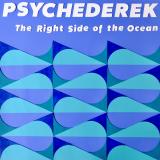
In late 2025, Manchester producer Psychederek established the Via Jupiter label as an outlet for his work.
For the label's fourth release, Psychederek returns with 'The Right Side Of The Ocean', a guitar and percussion themed record that drifts somewhere between balearic pop, new age and loose-limbed disco.
Danny Ward's percussion runs throughout, giving the record a warm, organic pulse beneath its hazy melodies.
'Saint Joan' sets sail with a nostalgic, guitar-led groove, easing us into the world of the EP.
From there, things get a little baggier on 'Aire Salado', a Happy Mondays-adjacent pop song built around Stan Lewis' catchy saxophone riff, with Lois Holmes' backing vocals adding another layer of laidback charm.
'In The Sun' settles deeper into the groove, built around repeating vocal and guitar hooks, dreamy synth pads and a deep, rolling bass line.
Then comes 'Central Drive', where the tempo lifts and the record heads towards disco territory. Its roto-tom driven breakdown takes its time, opening up the groove before eventually slipping back into the track's main synth riff.
Finally, 'Everything Settles' brings things back around, dissolving into an ambient reprise of the opening track. The guitars give way to synths, the vocals become a repeating mantra and the whole thing slowly drifts off into full new-age bliss.
Arkayla release new EP ‘Back To Belle Vue’ amidst
their biggest UK tour to date, following a standout
Summer that cemented them as Manchester’s
Next Big Thing and a band not to be missed at
Victorious, Truck, Latitude and unforgettable Leeds
Festival’s main stage performance.
In a world where stereotypes wrestle for power, "Macho Madness" challenges everything we thought
was normal. Overblown masculinity, the illusion of strength, and staged rituals of dominance - that is
what we call the "Macho Madness".
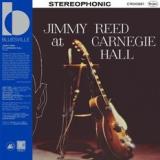
The Bluesville Series from Craft Recordings and Acoustic Sounds!
Inspired by the original Prestige label imprint established in 1959
All-analogue mastering by Matthew Lutthans at The Mastering Lab
Highlighting trailblazing blues musicians from legendary labels
Studio recreation of an electrifying 1961 setlist from Carnegie Hall. This album includes the enduring classic, "Bright Lights, Big City," which was included in The Rock and Roll Hall of Fame's 500 Songs that Shaped Rock and Roll.
Released in partnership with Acoustic Sounds, the album has been (AAA) remastered from the original tapes by Matthew Lutthans at The Mastering Lab and pressed on 180-gram vinyl. A replica tip-on jacket completes the package.
Part of the Acoustic Sounds 40 Series
Releasing 40 titles to celebrate the 40th anniversary of Acoustic Sounds!
2x Grammy-winning album mastered from the original master tape
180-gram 45 RPM double LP pressed at Quality Record Pressings
Housed in a Stoughton Printing tip-on gatefold jacket
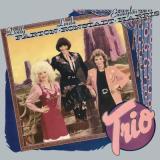
A landmark collaboration and one of the most celebrated albums in country music history, Trio brings together three transcendent voices — Dolly Parton, Emmylou Harris, and Linda Ronstadt — in a recording that's as emotionally rich as it is impeccably produced.
Originally released in 1987, Trio was both a critical and commercial triumph, selling more than 4 million copies worldwide, topping the Billboard U.S. Country Albums chart for five consecutive weeks, and earning the Grammy Award for Best Country Performance by a Duo or Group with Vocal. It was also nominated for Album of the Year. The album yielded four major country hits, highlighted by the haunting, harmony-driven remake of Phil Spector's classic "To Know Him Is to Love Him."
Produced by legendary engineer George Massenburg, Trio is a masterclass in clarity, balance, and vocal blend. Every track showcases the trio's distinct personalities while achieving a near-perfect harmonic unity-three iconic artists elevating one another through tasteful arrangements, pristine acoustics, and song-first performances.
Now, this classic shines brighter than ever. Mastered at 45 RPM and pressed on flat, ultra-quiet vinyl by Quality Record Pressings, this edition reveals rewarding insights for audiophiles, including greater nuance, texture and emotional depth with every listen.
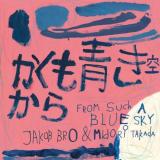
'What feels like a dream, a portal between worlds, a shimmering of ideas – that liminal space is the departure point for Midori Takada and Jakob Bro’s ever-unfolding musical friendship.
'On their second outing From Such A Blue Sky / かくも青き空から, arriving on Copenhagen's Loveland Music in October, the compositions are transformative, and the sounds travel between immediate emotional and abstract planes.
'The classically trained Japanese percussionist Midori Takada, later dubbed an ambient pioneer for the landmark 1983 album Through The Looking-Glass (another portal), left behind her Western classical training and found her own paths, drawing on African and Indonesian drumming, minimalism, theater, environmental music and instant composing.
'Similarly, Danish composer and guitarist Jakob Bro creates otherworldly sounds and beautiful, delicate melodies through intuitive creation and collective listening.
'On From Such A Blue Sky the music is co-composed and created in the studio over three days, from early morning to sundown. The compositions are increasingly open ecosystems, and the range of sound sources expands significantly from the puristic Until I Met You, with Thai gongs, heavy drums, ceramic flutes, electric guitar and pedals adding to the sonic imagery of From Such A Blue Sky.
'From Such A Blue Sky is the second album in a trilogy recorded at AVACO Studios in Tokyo, a studio in Shinjuku renowned for its sound works in Japanese film since 1952. The trilogy is an ongoing continuation of their musical friendship, which has already led them to duo performances at World Expo Osaka, Tessenkai Noh Theatre Tokyo, Pierre Boulez Saal Berlin and Roskilde Festival.'
Naya Beat is incredibly excited to announce the release of an astonishing lost “holy grail”, Mohinder Kaur Bhamra’s 1982 masterpiece ‘Punjabi Disco’. Unknown and inaccessible to even the deepest of diggers, it is the first British Asian electronic dance album recorded and a true lost relic. A chance find of the original multitrack masters during the Covid lockdown led to ‘Punjabi Disco’ being rediscovered. Lovingly mixed down and remastered from these very studio recordings, the reissue also includes remixes by Peaking Lights, Baalti, Mystic Jungle, Psychemagik, and Danger Boys, as well as a cover by Say She She’s Piya Malik and Turbotito & Ragz and a previously unreleased track. It is available for pre-order and out on x2LP vinyl and all digital platforms on October 31st, 2025.
Released the same year and into equal obscurity as ‘Ten Ragas To A Disco Beat’, Charanjit Singh’s acid house opus, the reissue of ‘Punjabi Disco’ is set to have similar reverberations in the world of dance music. Produced by Mohinder’s eldest son and legendary bhangra pioneer Kuljit Bhamra using a recently acquired Roland SH-1000 synthesizer and a CR-8000 CompuRhythm drum machine played by his then 11-year-old brother, the album was recorded at Roxy Music bass player Rick Kenton’s studio in London. The concept for a Punjabi disco album was subsequently stolen from the Bhamra’s by the very record label that had agreed to distribute the album. Eventually self-released with no label support, ‘Punjabi Disco’ vanished into complete obscurity.
A pivotal figure in British Asian music, West London-based vocalist and first-generation immigrant Mohinder Kaur Bhamra became the first woman to sing at Punjabi weddings and other community events in the UK. Her son, Kuljit, would accompany her, playing tabla at her events from the age of six. Wedding music was traditionally a tame, segregated affair: men and women seated and separated on opposite sides of the room. ‘Punjabi Disco’ was born out of a desire to create an unsegregated dancefloor and inspired by the sounds of disco from the era. A tapestry of electric drum rhythm, warbling bass, and psychedelic siren-like Roland synth melodies provide a vehicle for Mohinder’s powerful voice. Part disco, part funk, part acid house, and infused with Punjabi folk melodies, the sound of ‘Punjabi Disco’ is as mesmerising as it is undefinable.
Featuring an incredible gatefold package and exhaustive liner notes by the Guardian’s Global Music Critic, Ammar Kalia, the x2LP release has been cut to vinyl for the discerning listener and DJ by Grammy-nominated Frank Merritt from The Carvery, London.
This is Naya Beat’s ninth release in a series of reissues, remixes, and compilations dedicated to uncovering electronic and dance music from the subcontinent and South Asian diaspora.
More than five decades into one of Brazilian music's most remarkable careers, Joyce Moreno returns with a new collection of songs that reflect the warmth, lyrical sophistication and innovation that have made her one of Brazil's most defining musical voices.
Produced by Joyce Moreno alongside her husband and longtime collaborator Tutty Moreno, the album finds the Rio-born singer, guitarist and composer at her most reflective. Across nine beautifully crafted songs, Joyce pairs intricate guitar work, lyrical intimacy and effortless swing with the musical curiosity that has defined her work for more than half a century.
Invited into the studio by Roberto Menescal at just sixteen years old, Joyce emerged during a transformative period for Brazilian music, releasing her self-titled debut in 1968. She soon established herself as one of Brazil's pioneering female songwriters, writing unapologetically from a woman's perspective at a time when few women were afforded that voice. Her song “Me Disseram” sparked national debate, while later works including “Feminina” cemented her reputation as an artist unafraid to challenge convention.
While some of her politically charged songs were censored during Brazil's military dictatorship, Joyce continued to write with honesty and independence. After studying journalism in the late 1960s, her gift for observation and storytelling became an even more defining feature of her songwriting. Over the following decades she released a succession of acclaimed albums, including the now-classic Feminina and Água e Luz, earning widespread recognition both in Brazil and internationally. Antônio Carlos Jobim would later describe her as "one of the greatest singers", while generations of musicians have drawn inspiration from her fearless artistry and enduring originality.
That same artistic fearlessness remains at the heart of her latest work. The album brings together an exceptional ensemble of Brazilian musicians. Tutty Moreno's expressive drumming underpins Joyce's vocals and guitar throughout, while Jorge Helder's bass, Lula Galvão's guitar and Marcos Nimrichter's warm Fender Rhodes create a sound that is both intimate and expansive. Contributions also come from the legendary Toninho Horta, alongside José Arimatéa, Teco Cardoso, Nailor Proveta, Josué dos Santos and Raphael Sampaio, whose additions add colour and texture without overshadowing Joyce's understated brilliance.
Throughout the album, Joyce balances quiet reflection with effortless rhythmic vitality. “Chovendo na Horta” serves as both a heartfelt dedication and a celebration of Joyce's enduring musical connections, featuring the unmistakable guitar of Toninho Horta. Elsewhere, “Aldeia de Ogum” receives a fresh new arrangement by Nailor Proveta, revisiting one of Joyce's most beloved compositions. Originally released in 1980, the track has enjoyed a remarkable resurgence in recent years, embraced by a new generation of listeners and became an underground favourite among DJs including Floating Points, Four Tet and Danilo Plessow. Now a staple of Joyce's live performances, this reimagined version brings renewed energy to a song that continues to transcend generations.
At seventy-eight, Joyce Moreno continues to write with the same curiosity, generosity and quiet innovation that have defined her career from the very beginning. "For me, it's never too soon to try something new, either in music or in life," she reflects - a philosophy that gives both the album and its title their enduring sense of optimism. This latest album is neither a retrospective nor a reinvention, but the work of an artist who continues to refine her voice with remarkable grace, proving that her most compelling music remains firmly rooted in the present.
Following the album's release, Joyce Moreno will embark on a European tour this November, bringing her celebrated live show to audiences across the UK and Europe. A rare opportunity to experience one of Brazil's most influential and enduring artists in concert, the tour showcases a songwriter whose voice, virtuosity and musical vision remain as compelling today as ever.
New York-based Japanese jazz and electronic music polymath Takuya Nakamura presents his debut album Shape The Future - almost 35 years into his storied musical journey.
An expansive double album, the album’s first LP documents a spellbinding live performance by Nakamura recorded at fabric. A hybrid set combining DJing, live electronics, vocals, and trumpet, the set also features studio versions of special collaborations with Shigeto, Currency Audio and Tim Reaper. The second LP complements the first by assembling studio recordings of select album tracks. Altogether the two volumes make for a definitive display of Nakamura’s exceptional musicianship across jazz, DnB, jungle, broken beat, deep techno and more.
Across his career, Nakamura has played Brazilian music, merengue, salsa and straight-ahead jazz. He’s opened for Sun Ra Arkestra, performed with David Byrne, Laurie Anderson, Lee “Scratch” Perry, Wu-Tang Clan, and Arto Lindsay, appeared on sessions with Terry Riley, ASAP Rocky, Goldie, and TV On The Radio, and remixed the likes of Quincy Jones, Sun Ra, Billie Holiday, and The Streets. He’s also played under director and playwright Robert Wilson.
Although the musical past and present of the Tokyo-born, New York-based DJ and trumpet player is undoubtedly eclectic, Nakamura is abidingly steeped in the sounds of jazz and jungle. This’ll be obvious to casual observers who may have seen any viral videos of him. But there’s more to this. The depth of Nakamura’s engagement with these kinds of music, the way they’ve made him into the person he is, the decades-long path they’ve taken him on; to now arrive at the summit of a solo album is all truly remarkable. Shape The Future resonates with every chapter in this story.
In high school, Nakamura’s friends started listening to jazz and jazz fusion, which piqued his interest, especially when they started going to clubs to see it live, where they managed to see US legends like Sonny Rollins play. Eventually he began to play jazz every day and his musical skill emerged early. He soon became obsessed with getting closer to the source of this music, which led to his studies at the New England Conservatory of Music in Boston with George Russell, an influential figure who had taught Miles Davis and John Coltrane. Nakamura drank it in: not only the technical aspects but the sense of a direct connection to “a music culture where Russell and his friends changed harmony forever. I wanted to know how that was possible!”.
This was a radical experience in itself, but then another revolution happened for Nakamura. He was playing in a venue called The Western Front, near Boston and discovered that the elderly owner had his own soundsystem and was playing what was then - in 1992 - only just becoming known as jungle. This was as freeing a musical revelation as his proximity to the giants of jazz was, and in that instant the two things fused. He understood that using technology to fill a dancehall with sound and a jazz musician’s reflexes are all working to the same ends: “You’re always making decisions,” he says, “but it doesn’t have to be really difficult. It’s the truth of the frequencies, and how they’re affecting people’s minds.”
From that moment on, his life path was set. Moving to New York City, he sought out jungle and its offshoot sounds wherever he could find them, gigging and collaborating relentlessly, and gradually developing his own live and hybrid live/DJ shows. Through regular appearances at New York fixtures Zebulon and CBGBs, and continual shows elsewhere in the city, Nakamura developed his live performance and DJing and it was in these environments that he gradually weaved together his twin loves without compromising either, building an international reputation in the process.
It’s only fitting then that his first album, almost 35 years after he first found his musical direction, should be a live one: a window into this never-ending process. Even here, he had to be persuaded that he should make a record. A member of the fabric team got turned on to his music after their daughter saw him play. Of course, as a jungle lover, Nakamura knew fabric – which has a special place in the history of jungle and drum’n’bass – and “had wanted to play there since I was very young.” You can hear the club in the record: this isn’t just a live show, in keeping with his jungle roots, it’s Nakamura duetting with the soundsystem, and you can feel how the emotions in the room would have ebbed and flowed.
This dynamic translates to a transfixing record. Setting the tone with lushly textured ambient and reverberant jazz, Nakamura segues into cinematic breakbeat and stellar fusion, infusing it all with intoxicating low end and hypnotic rhythms. The LP’s midway point locks into mesmeric percussion heightened by resonant echoes of piano and trumpet. There’s an endless pull to this music. Nakamura adjusts the levels for maximum impact throughout, and the overall effect begins to evoke some harmonious hybrid between a jazz ensemble, a classic Metalheadz 12” and a Theo Parrish DJ set. His electric form continues through surreal jazz, intricate electronics and rolling sub-bass velocity, right up to the subtly devastating final cover of Peter Gabriel and Kate Bush’s ‘Don’t Give Up’, with Nakamura’s fragile vocal sitting in the heart of a huge sound.
From Tokyo jazz nights to formative studies and encounters in Boston to his artistic development in New York, Nakamura reaches another milestone with his monumental debut album. It’s a release that happened just the way a Takuya Nakamura record should. In the same way his instincts led him to musical revelations, taking his own sweet time has led him to make one of the most extraordinary debut albums imaginable, all executed in his own singular style. In Nakamura’s world, the universe finds a way.
It’s a rare occurrence for a band to continue making music into their fifth decade, even fewer top off that achievement with one of their most recent albums being named one of “2023’s Best Albums” by a venerable magazine like SPIN. But The Church did just that with The Hypnogogue, an album so adored by critics and fans alike that it ushered in an entirely new era for the Australian band.
Now armed with their 28th album Lacuna, the psychedelic dreampop legends continue to evolve and transform, remaining not only relevant but consistently delivering music that is innovative yet true to their signature sound. “Intense, forlorn, and exultant,” is how bassist/vocalist/founder Steve Kilbey describes the album.
With a measured command of melody and instrumentation that only comes with experience and age, it’s an album rife with indelible musical clasps that fasten hold of your attention and refuses easy surrender. It’s a steadfast talent that Kilbey hosts close to his chest that’s been ever-present in the 27 albums that preceded it (best evidenced by the jubilant, nearly sold out 2025-2026 Singles Tour legs across Australia and North America, featuring night after night of incredible three-hour sets).
Starting in 1980, The Church continued expanding their highly cinematic and atmospheric blend of indie rock, shimmering post-punk, icy dreampop and psychedelic post-rock without retreading their steps. Beginning with classic early albums Of Skins and Heart, The Blurred Crusade, and Heyday which built a sturdy foundation, 1988’s Starfish broke into the mainstream and gave The Church the international hit “Under the Milky Way.” The hit single has been regarded as one of the most influential and recognizable Australian rock anthems of all time.
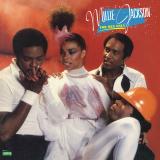
“For Men Only” was released in America in June 1980. Jackson was shown on the front and back cover being fawned over by three attractive black male models. Musically and lyrically it was a concept album, like her previous LPs “Caught Up” (1974), Still Caught Up” (1975) and “Get It Out’cha System” (1978). The main theme was the battle of the sexes in and out of the bedroom with some tracks, especially on side one – ‘This Is Where I Came in’, ‘This Is It’, ‘If That Don’t Turn You On’ and ‘I Wish That I Could Hurt That Way Again’ – segueing into the next through Jackson’s spoken word segments. The album sounded like it could form the basis of stage play and was laced with wit and humour with Jackson, at one point, taking aim at out of work men “watching soap operas all day” and neglecting their chores around the house and in the bedroom. Every song was a gem, with Jackson in the finest vocal form of her career.
This album has not been available on vinyl for decades and Ace Records are delighted to rewax it, not only for Millie Jackson fans but a new generation, who are discovering that class never goes out of fashion.
Hanne Lippard and Renato Grieco's Today's Special is a suite of language works synthesising melody and diction that integrates the literary and the audible in a repertoire of songs that bask in the melody of voice and the punctuations of structured composition. Working with methods of reduction rather than opulence in both tonal composition and rhetoric, each piece pegs the poetic to the musical with compositional schematics and methods. It is important to state that there is little to none improvisation here, instead, the duo set up matrices, rules and structural links that facilitated meaningful locus of exchange between their two practices. Lippard's texts are a collection of new and previously completed works. In these, as is typical for her work, she enjoys the easy pleasure of wordplay, iterative language, and decontextualised anecdote, as in opener Portrait of a Betrayal, a piece about the loss of a phone and the way it haunted the owner who dropped it, based on a lived experience. Grieco's instrumentation works with Lippard's language art as a form of acoustic typography. "I studied graphic design and I think about how you can express typography through voice," she says. "Renato's use of the viola da gamba becomes like an underline, or a font's brushstrokes, in ways that feel typographical." In this, the classically-trained composer Grieco often finds and echoes the pitch movements of Lippard's voice, intonation mirrored and revealed, linguistic meaning doubled and shadowed by plucked, strummed or bowed strings. His main instrument is the viola da gamba, the instrument considered closest to the human voice for its tonal range and ability to mimic inflections and timbre, and here he brings it even closer to the voice, building systems by which it moves with and around Lippard. He also plays piano and Wurlitzer, and joins her in speaking on Receiver and in conversation for final track The Black Rose. "Hanne's voice is an artist's voice, embodied as the artwork itself," he says. "But where my approach is from the perspective of a composer, hers is around rhetoric and language. We worked towards each other in this sense, Hanne finding a space to welcome my voice, and me designing an acoustic space to enhance her vocal persona." In some tracks the structural connections are obvious - the matched tumbling delivery and stepped pitches of voice and piano in Aficionado sounding like two tipsy friends descending a staircase. In others, like the triptych of tracks Three Rungs Ladder, structured with rules derived from nursery rhymes, or cumulative song (akin to the 12 Days of Christmas). For the Colour 1 and Colour 2 pieces, the duo worked from palettes of colours connected to clusters of harmonies, which underlined the power of the word and its articulation. The absurd Labradorable personifies a people pleaser, A Story About Being Blue is an imagined playful monologue from the Deep Blue supercomputer - requesting in sing-song stop motion to be called Debbie, and Larry - as Grieco echoes in factual reportage. Hurtbeat unpacks and recomposes a tweeted non-apology by a Russian art collector about owning a piece of racist art, Grieco shadowing Lippard's generating a third `drop-shadow' performer from the resonances between the duo, typographic re-articulation of the source material. The Receiver includes lines from Robert Ashley's Improvement (Don Leaves Linda), Ashley existing as a spiritual parent of sorts to the practices contained on Today's Special, and here interpolated as if he is being quoted and written through within the audible world of the piece in a palimpsest of borrowed sentences. Closing track The Black Rose contains its own self-aware comedy, a lightly distorted conversation sourced from a Reddit thread about whether black roses exist, recorded as if it were an internet radio or a low budget podcast, the casual exchange stilted in the delivery of platitudes as scripted speech. Today's Special was developed in person over the course of a series of small residencies - at Deutsche Akademie Rom Villa Massimo, Rome; Fondazione Morra, Napoli; Callie's, Berlin. In these limited periods that rarely stretched beyond a week, Lippard and Grieco developed strategies for the works, keeping tightly locked to musical concepts. This, for Grieco, is about maintaining a solid, meaningful connection within the compositions, and committing to everything having a purpose for existing within the work. Each element pulls its weight; has something to say, literally and metaphorically speaking. In the same way that Lippard's work leaves nowhere for her to hide, he wants the music to exist with its own naked purpose: "It's is about exposing nudity via reduced materials," says Grieco. "This is a form of courage we want to embrace. Once we take off everything, it needs to be extremely precise to maintain a connection with the audience. We have a lot of tools to hide behind now, to protect ourselves and our identities as artists, performers, and in life more generally. It's something I don't want to do. I want extreme reduction: no hiding."
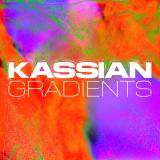
London duo Kassian trade darkness for daylight on Gradients, their third EP for !K7 Records
The EP arrives as a bridge between last year's debut album and a new live show and sophomore LP, due in 2027
As Kassian, Warren Cummings and Joe Danvers continue to sit apart from any one scene. Their fruitful relationship with !K7 has spanned eclectic and global club cuts, including the spatial breaks and bass of 2024's best-selling Supercontinent EP. 2025's debut album, Channels, emerged from lockdown so leaned slow, downtempo and introspective, but this new EP points toward a clubbier, more physical direction that will carry through into album two.
Crucially, the record was written and played live on an array of studio gear rather than assembled piece by piece in the box. It's a way of building towards their first fully live show in 2027 - a hands-on, jam-first approach that leads to "happy accidents" and the unpredictable textures that hardware throws up and no amount of in-the-box planning can replicate.
Gradients is built for the floor without playing to trends and marks some of the duo's most melodic work to date. Rather than sitting purely in heads-down territory, the EP folds in hooks and vocal fragments that lift you out of the smoke and the shadows of the club. The low ends are still rooted in techno with potent drums and bass, but deft vocal hooks and subtle melodies bring a brightness that deliberately steers away from the darker, meaner aesthetic dominating much of dance music right now.
Vocal touches throughout nod to what's going on in the wider underground without tethering to tried and tested tropes. Opener 'Blush' rides warm, soft yet bold melodic riffs, looping in arcs over a hunched, speedy tech house groove. 'Ritmo' is a muscular bouncer with spring-loaded bass, 'Inner Dance' has lurching drums and a cavernous rhythm with vocals that make a playful nod to sound system culture. Last but not least, 'Sweat' is the brightest and most bubbly cut on the EP, with a tight techno low end infused with a velvety whispered vocal.
The Gradients EP is a bright, hardware-built prelude to Kassian's next chapter and a typically well-crafted four-tracker that pairs physical weight with classy emotional release.
Shape of the Unknown’ is kind of a double LP that fully embraces the idea of exploration. It is CHLOÉ’s most expansive and immersive work to date. ‘Shape of the Unknown’ is CHLOÉ’s fourth proper studio album. Its predecessor, ‘Endless Revisions’, was released in 2017. Nine years have passed. Nine years during which CHLOÉ has continued digging for music, DJing at internationally renowned clubs and festivals including Rex Club, Robert Johnson, Panorama Bar, Nuits Sonores, Glastonbury and many more, releasing EPs and remixes, while also allowing herself the time to explore entirely new creative paths.
The challenge is to capture the unknown, make it her own, endlessly reshape its textures, and ultimately preserve its mystery.
The first single ‘Drifter’, released back in June, already offered a striking glimpse of the sonic territories the album would venture into, driven by its hypnotically contoured basslines. The album's two other singles offer different windows into her world. 'Shapeshifter' captures CHLOÉ at her most hypnotic, balancing stripped-back techno and melodic house through deep rolling grooves, expansive bass chords and subtle rhythmic shifts that constantly reshape the listener's perception without ever disrupting the flow. Later, 'Repeating The Obvious' takes a more leftfield route, pairing staggered rhythms with retro-inspired harmonics and an understated indie dance pulse that feels simultaneously familiar and unpredictable.
CHLOÉ has ventured into live performance through new formats, notably alongside percussionist Vassilena Serafimova; immersed herself in film scoring with soundtracks for Paris la Blanche, Arthur Rambo, The Mountain, Blanquita, Guru and Unsubmissives; and developed compelling collaborations, from High Season, her project with Ben Shemie of Canadian band Suuns (which resulted in the album The Call), to her own organic, experimental audiovisual performances under the name Slo/Mo AV.
Throughout Shape of the Unknown, CHLOÉ blurs the boundaries between deep house, hypnotic techno, electronica and cinematic sound design with remarkable fluidity. The album unfolds as a continuous narrative rather than a sequence of tracks, moving effortlessly between beatless ambient passages, rolling analogue grooves and emotionally charged club music. Organic percussion, sweeping bass movements, melancholic harmonies and richly textured synthesisers create a body of work that constantly evolves, where no section feels static and every transition reveals another layer of depth. There is an unmistakable warmth running through the record, with grainy analogue textures and spacious production giving even its most driving moments an intimate, almost tactile quality.
The album’s title is no coincidence. It evokes a form that has yet to be named, something language itself struggles to grasp. CHLOÉ approaches it through an organic creative process. Each piece must first be performed in the studio, almost as if it were being played live. The album will be followed by a series of live performances and DJ sets, including a show at the Olympia on March 18, 2027.
She is joined by a handful of steadfast collaborators. Jazz trumpeter David Enhco appears on two tracks, ‘Undertow’ and ‘Inner Bass’. But above all, there are the voices: Ben Shemie lends his unmistakable presence to the radiant ‘More Than Just a Feeling’. Olivia Merilahti, singer, songwriter and one half of The Dø, appears on the otherworldly ‘TWYR’. Working with Olivia’s already hypnotic voice, CHLOÉ has approached it like a sculptor, enhancing its strangeness and dreamlike quality.
And finally, impossible to miss is the instantly recognizable voice of Kittin. A longtime accomplice, she lends her distinctive phrasing to CHLOÉ’s music here for the very first time. The strongest collaborations are often those that take their time, arriving only when the moment is right. Same kind, same bass, same vibe, same pride.
The result is an enigmatic, nocturnal record, drifting between introspective listening and dancefloor functionality, revealing an artist who remains far more interested in atmosphere, movement and emotional storytelling than conventional club structures. It is an album that invites us to dream more deeply and to dance again, both within ourselves and out in the open.
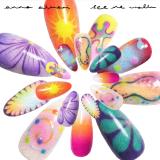
Anna Almani might be your new favourite producer. IFYKYK.. If you don't, then let's get to know..
Anna Almani is a Berlin based “Drag-DJ & Fun-House-Queen”. She is “Big Sister” at ‘Love Letter’ an imprint “for flinta & queer sonic goodness” and she is the alter ego of deep house producer and Poker Flat & Watergate artist ‘Iorie’.
Anna says “This EP is part of my queer expression. It’s all about the attitude to resist, it’s about being yourself unapologetically. It’s a big hug to the queer community and a love letter to resistance on the dancefloor. Be radical, have an attitude and lose yourself.”
When we picked the tracks for this EP we were completely spoiled for choice. There’s so much personality in Anna’s music that every track list made sense. And that’s because there’s a common thread that runs through all of Anna’s music - Balance. Ying & Yang. Dark & Bright, Passive & Assertive, Masculine & Feminine, Fun & Depth all in kept in amazing dynamic balance.
This is Share Now & Save for Later… Gratification immediate and delayed. .. . four tracks to take you through from open to close. From Berlin to NYC and round again
‘See Me Walk’ is gonna be the track that grabs the attention and connects with dancers everywhere. Fast, fun and full of attitude it’s a 909 workout with the energy and syncopation of Ballroom Vogue aaaaand a fabulous diva vocal to match. ’Tender T’ counters the audaciousness with some tenderness. Energetic yet embracing, this introspective proggy, dubby afterhours roller is a proper trip! Full of colour but hazy af.
On the flip ‘Gimme Some’ ramps up the tempo. Fast, urgent and cyclic grooving techno - with a strut - that’s both dubbed out and in your face. ‘Anladın mı’ is a collaboration between Anna and German/Turkish producer Zettka. Low slung house that both jacks and grooves. Rolling basses balanced with playful chords. “Anladın mı” it translates as “Do you understand? or “Got it?”. By now I think we do understand.. That certain je ne sais quoi… Anna Almani has definitely got it.
WHIMM formed around the shadowy heart of the Toronto post-punk underground over a decade ago. The partnership between Mounir Al Shami and Andrew Matthews has emitted sporadic musical shards over time, while slowly evolving into something so much bigger than its beginnings. Ideas seep out of every corner of No Promotion, showcasing a burning desire to explore and challenge while delivering very direct sonic offerings. The result is an album that feels as if you took the entire Coil discography and smashed it into pieces, assembling these precious songs from the fragments. Or as if Vangelis beckoned Section 25 to the studio in hopes of recording the score to a seedy film. The resulting LP is in a state of flux – equal parts motion and decay.
Patrick Flegel, of Cindy Lee, welcomed Al Shami and Matthews into REALISTIK Studios in Montreal to engineer half of the tracks for the album, including lending guitar to the opening track "Five in Decline." That influence is evident early on, as the first three songs are taken from those sessions. "Five in Decline" throbs and barks before racing through the hallways closing in around it. "Another Labour" slows to a spidery waltz as anxious melodies call out to one another. "Returnal" pulses, floats through the night sky and haunts you forever. "Rye" carves a percussive pathway toward similar travellers like Terry Riley and Jon Hassell, before the lament of "A Death Remembered" forms the perfect midpoint for the record. A slow build countered by twitching drums and blanketed by organs recorded at Metropolitan United Church in Toronto, it feels like emotion right on the edge of resolve.
"Rhymes of December" screeches through on a solitary train under the towering cityscape as the flickering lights blur past, its doors opening to the candlelit altar of "After the Last Sky" (those beautiful organs again) with an operatic swirl. "K'20" throws you into a claustrophobic and chaotic cab ride (Who is talking? Are those sirens?) until you finally find the quiet of the early morning, waiting at the window for the sun to join you once again as the first notes of "No Promotion" are delicately plucked. The final song from the Flegel sessions, it is over eight minutes of contemplative beauty. A restless heart that is ready to rest. Closing with a final apparition in the key of The Caretaker, "After the Last Sky (Reprise)" is a return to melody when words lose all meaning.
Al Shami and Matthews weave their lyrics throughout, words describing a search for lucidity, and of reactions and reflections. Al Shami – speaking from the Palestinian diaspora – ruminates on displacement, both personal and collective. His journey from having "been without a land and I can still see clearly" in "Rhymes of December" to a more defiant "we will be back again, no matter how it ends or where we've been" in "Returnal" takes a very insular turn on No Promotion. That sense of alienation pulls at the very center of a relationship when land and circumstances separate: "And after our last breath, all that's left in me is our flesh and fears, your last words would swim for years, you'll never find a home in me." Hearts on the outskirts that know the direction.
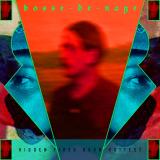
There's a tendency in metal to mistake aggression for honesty, volume for depth. To confuse the performance of darkness with its actual weight. Hidden Fires Burn Hottest, the new album from San Francisco-based post-black metal band Bosse-de-Nage, sidesteps this entirely. It’s the group’s most fully realized work yet, precisely because it refuses to be pinned down.
Bosse-de-Nage have been working with The Flenser for over fifteen years. They were one of the first bands the label ever partnered with and have the longest active relationship in the label's history. But unlike most bands who build momentum through constant touring and visibility, Bosse-de-Nage has largely existed apart from the music world's usual machinery. They've evolved on their own terms, in relative isolation, allowing the work to develop without outside pressure or influence. What began rooted in black metal anonymity has mutated into something that actively defies categorization. The aggression is still there, but it's no longer the point. Hidden Fires Burn Hottest finds the band treating emotions like physical objects, feelings with spatial properties. “No Such Place"" describes a space that can't exist but does anyway, somewhere between thought and location. ""Immortality Project"" examines infinite possibility not as promise but as problem, endless options collapsing under their own weight. These songs don't use metaphor to describe emotion. They make emotion into something you could theoretically touch.
Tracked by Jack Shirley (Deafheaven, Oathbreaker) at Atomic Garden East and mixed and mastered by Richard Chowenhill of Agriculture, Hidden Fires Burn Hottest was years in development, with some tracks beginning in 2018.
The long writing process offered time that most records don't get. Time to live with ideas, revise endlessly, to let structures settle. For the first time, lyricist Bryan Manning wrote everything in advance, creating a surplus to pull from rather than working under deadline pressure. The difference shows.
Coming off Further Still, an album built on constraint and economy, Bosse-de-Nage sought the opposite: sprawl, strangeness, fewer rules. Space for ideas to develop without rushing them. Dynamics that move through quiet as much as noise. Presence earned through atmosphere instead of volume. The record even includes ""Mementos,"" which might be considered the first love song the band has ever written.
Nothing here coheres into a theme. These are pieces pulled from low moments and private feelings made public through sound. The band has never been interested in positivity, in music that resolves cleanly or offers comfort. But bleakness doesn't mean humorlessness. There's something darkly funny running through much of it, even when it shouldn't be.
Hidden Fires Burn Hottest doesn't explain itself. It just insists: what you feel is as real as what you can see."
As Eerie Enterprise, upsammy and Piezo have funnelled their singular styles into a classic-feeling but ultra-modern album of elegant, angular electronica. With a strong melodic sensibility and a highly developed palette of playful sound design in their toolkit, the unexpected pairing grew spontaneous jams into a considered collaboration, and Places Remember Events is the end result.
Individually, Thessa Torsing and Luca Mucci have carved out strong identities within contemporary electronic music. As upsammy, Torsing has applied a delicate precision to ambient and uptempo approaches alike, building up a striking catalogue of releases including her 2020 LP for Dekmantel, Zoom. Meanwhile, Mucci has taken a wayward path through contemporary bass music and techno that matches edgy sound design with playful unpredictability. As Eerie Enterprise, both artists tap into their respective creative instincts while arriving at a unique sound with a nurturing quality they were both missing from modern dance music.
Having appreciated each other's work for some years, in July 2024 Torsing and Mucci seized an opportunity to carve out two days in the studio. There was no expectation of an end product, but the sketches conceived during those open-ended, hardware-oriented sessions felt worthy of a deeper exploration developed and finalised over the following year-and-a-half.
Places Remember Events has an unapologetically nostalgic streak, calling to mind the warm glow of melodically-charged, golden-era electronica. The twitchy rhythmic make-up of tracks like 'Decay + Collapse' and 'Folding Origin' speak to the duo's shared affinity for ravey energy, but even within faster frameworks they lean into half-time space to maintain a light-footed agility that allows the relatively busy arrangements to feel grounded and patient rather than frantic.
There's an appreciation for mystery in the emotional make-up of many of the tracks, not least in the slithering textural exploration and spatial tension of 'Capsule', but elsewhere fragile melancholia guides the melody direction of 'Superradiance' and 'Things Fall Upwards'. The final impression is crisp and modern while delivering an accessible experience that seeks to soothe rather than shock when so much contemporary club music tips towards uneasy intensity.
Finding malleable approaches to their chosen sonics and applying them to intentional song structures, Eerie Enterprise collectively land on a sound that promises a lasting reward for the repeat voyager — satisfying headphone gear in the grand tradition of introspective electronic music, but also with a physical immediacy that will manifest in the live set upsammy and Piezo have put together to perform later in the year.
'Kiliae is a collection of pieces that tell the story of a homecoming. It is a cohesive narrative that captures the feeling of what a home can be, drawing its inspiration from life in that place itself - life that has now become something different after having lived in foreign places for an extended period of time.
'Kiliae captures a certain atmosphere, a feeling that has built up during countless walks and bike commutes in and around the city of Kiel.'
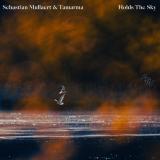
Acclaimed, Swedish composer, producer and live artist Sebastian Mullaert, and Georgian electronic artist Tamarma (Tamara Davitashvili), are set to release the deeply personal and genre-fluid album ‘Holds the Sky’ on the 25th September via Awesome Soundwave, the label curated by Christopher Coe and Carl Cox.
Spanning ambient, experimental and alternative electronic forms, alongside a set of dancefloor-oriented reworks that expand the project’s sonic spectrum, at its core, the album is the result of an unusual artistic convergence that traces back to 2020. Tamarma entered Mullaert’s successful In Bloom mentorship programme on a scholarship, and over a year-long deep exploration of album creation, her work revealed a rare clarity and emotional depth.
One piece in particular became the catalyst. Developed further through Mullaert’s 4 step studio process, it unfolded into a full length album collaboration. What began as a single composition has since grown into an album that documents an organic and intuitive exchange between two distinct artistic voices.
The result is less a collection of tracks than a continuous unfolding; a dialogue shaped by trust, listening and shared curiosity. Rather than aiming for a fixed genre position, the album operates as a living process: a meeting point between tradition and experimentation, between voice and synthesis, between two artists allowing something larger to emerge through their collaboration.
With compositions such as the chiming ‘Being Colours’ and hypnotic ‘Holds The Sky,’ Mullaert and Tamarma have created a body of work that resists easy categorization. The album moves through intimate, meditative passages and more rhythmically driven moments, always anchored in a sense of presence and emotional immediacy. The flickering beats of ‘Winnow’ and ambient manifestations of ‘Lost In Dimension’ and ‘Field of Us’ add a sense of tranquillity, stillness and convergence.
Tamarma’s voice carries both a personal and cultural depth throughout the album, while remaining fluid and responsive to the moment. The result is a sound that feels both intimate and spatial, where voice, texture and atmosphere are closely connected. Her Georgian musical heritage combined with Mullaert’s open-ended electronic exploration, allows something beautiful to emerge, shaped by listening, space and a sense of something larger than either artist alone.
Widely celebrated in the electronic music community, Mullaert has spent the last three decades moving beyond the boundaries of electronic music, from shaping the sound of cult duo Minilogue to creating the fully improvised global platform, Circle of Live, which has seen him perform and collaborate with artists such as Mathew Jonson, Âme, Amp Fiddler, Aurora Halal, Speedy J, Sam Barker, Dorisburg, Move D, Sleep D, Kuniyuki, Pantha du Prince, Leafar Legov, Wayne Snow, Laurence Guy, VRIL, Neel and Erika.
Initially making a name for himself in the world of techno, his performances have moved fluidly between environments, from underground spaces including Berghain’s Panorama Bar to festivals around the world, and venues including the Barbican, London, where he has appeared alongside artists including Joep Beving, Laura Misch and JakoJako. Platforms such as ARTE have featured his performances, placing his work within a broader European cultural context, while support from Resident Advisor and Boiler Room reflect his continued presence within the core of electronic music culture. He has received a Swedish Grammy and the P3 Guld award from Swedish National Radio.
His 2020 album ‘Natthall,’ developed in collaboration with Tonhalle Orchestra Zürich and performed with Subchamber Ensemble, saw Mullaert enter the world of contemporary composition, and merged electronics with chamber music and improvisation. The album was later named among the top post classical releases of the year by BBC Music Magazine.
A new documentary film by Ableton, set for release this summer, captures Mullaert’s Circle of Live project through a performance at Brighton Dome in the UK, featuring Mullaert and electronic artists Clark and Rival Consoles. The film offers a rare insight into the inner workings of collective improvisation at a high artistic level, further cementing Mullaert’s role as a leading voice in contemporary live electronic practice.
Tamara's background is rooted in the landscapes and traditions of Georgia. Raised near the Caucasus Mountains, classically trained in piano and shaped by years as a jazz vocalist, her work carries traces of Georgian polyphonic singing and a strong connection to nature and place. Her transition into electronic music is not stylistic but transformational; a recontextualisation of heritage into new sonic forms.
‘Holds The Sky’ will be available on vinyl and digitally on the 25th September via Awesome Soundwave. The digital release includes three exclusive album track reworks from Mullaert.
For two decades, The Oscillation has occupied its own space within the psychedelic underground, continually reshaping a sound built as much from texture, repetition and atmosphere as it is from conventional songcraft. On 'Interference', released October 30th 2026 via Fuzz Club, Demian Castellanos pushes that approach further than ever, creating what he describes as "a painting of sound rather than music”. It’s an album where noise and melody constantly collide, dissolve and reform into something strangely beautiful: “I wanted it to be accessible but also quite extreme, a sort of beautiful noise. I did my best to push out the parameters whilst trying not to allow it to disintegrate into something with no meaning or focus.” Chasing an elusive balance between accessibility and abstraction, the result is a record that feels simultaneously immediate and disorientating: dense layers of drones, feedback and motorik rhythms give way to unexpected moments of warmth, colour and even uplifting euphoria. Across its runtime, chaos never overwhelms; instead it becomes another instrument, carefully sculpted into hypnotic, immersive compositions. Much of the album emerged through instinct rather than intention. Fragments originally conceived as intros, outros or abandoned ideas gradually eclipsed the songs they belonged to, with tracks revealing themselves organically through a process Castellanos likens to "playing Chinese whispers with musical instruments." Elsewhere, two long-forgotten compositions – ‘Stasis’ and ‘When You Close Your Eyes’ – finally found their place after lying unfinished for almost twenty years. Recorded and mixed by Castellanos at his home studio in the Czech Republic, ‘Interference’ also benefits from a key collaboration with Lorena Quintanilla of Mexican band Lorelle Meets The Obsolete, who provides a transformative presence. Her haunting vocal on ‘La Alusion’ (which she also wrote the lyrics and melody for) became the breakthrough moment that crystallised the album, turning an instrumental sketch into a dreamlike centrepiece and helping shape the final sequence. She also lends her voice to ‘Isolation Freeway’, adding another layer of mystery to an album that continually blurs the line between structure and dissolution. Perhaps most remarkably, ‘Interference’ was created during a period in which Castellanos had largely stopped listening to music altogether: “My hi-fi broke a couple of years ago so I kind of wanted to see what would happen if I didn’t listen to too much music.” Instead of consciously absorbing outside influences, he trusted instinct, memory and experimentation to guide the process. The result is one of The Oscillation's most adventurous and emotionally resonant records to date: a vivid collision of hypnotic repetition, spectral beauty and controlled sonic disruption that confirms Castellanos remains one of modern psychedelia's most singular voices.
Originally released in 2000 on Smalltown Supersound, Kim Hiorthøy’s first record Hei captures an artist who had made very little music before – yet it seemingly was the starting point of a musical career that would stay away from easy categorisation. Now, Hei (2026 Remaster) returns on blickwinkel, released digitally and on vinyl on 30 October 2026, as part of an ongoing series revisiting and reissuing Hiorthøy’s work.
Made in Copenhagen with little equipment — an Akai MPC2000, a stereo microphone and a DAT machine — Hei was assembled from samples, sequences and rhythms, with no outboard mixing or processing. Without really knowing what he was doing, the music was created intuitively while drawing inspiration from instrumental hip-hop he was listening to, the techno and drum & bass he admired but did not yet know how to make, and a broader fascination with music that felt personal, homemade and slightly uncertain of its own identity. Hei sits somewhere between those impulses. It is beat-driven without belonging entirely to beat music, experimental without announcing itself as such, but unmistakably coming from a playful series of events and decisions.
In that regard, the title of the closing track might be a fitting description of the album itself and, in hindsight, also of how we can look at Hiorthøy’s subsequent work. Taken from a story by Tove Jansson, the title evokes a state of openness and curiosity, a state where thoughts and impressions are simply given the space to unfold:
“He didn't care to get up, all day he let new images and ideas come and go as they pleased, now and then slept a little and woke up again and had no idea who he was. It was a peaceful and very exciting day.”
There is something of Hei in that state of mind: a willingness to follow an idea without knowing exactly where it might lead, a willingness to follow guts and the heart rather than ratio. Perhaps that is also what makes Hei still feel relevant today. As Hiorthøy puts it when reflecting on the music he made then and the music he makes now: “If I compare the music on Hei to music I’m making now, the general sentiment or smell or air or tree or pull of what I’m looking for and listening after when I work is, I think, for better or worse, more or less the same.”
All music by Kim Hiortøy
Mastered by Stephan Mathieu
Portraits by Kim Hiorthøy
Design by Jelle Martens
EPILOGUE is the culmination of more than four decades of music-making by Japanese composer, producer and multi-instrumentalist Ken-ichiro Isoda, an album in which environmental sound, electronics, contemporary classical composition and memory converge into a deeply personal late-career statement. Isoda moved through video-game music, film composition, classical production, Okinawan music, television and collaborative projects, continually developing an approach in which acoustic instrumentation, field recordings and electronics could coexist naturally.
His collaborative album Interwoven with aus, released through WRWTFWW, further demonstrated the openness of a musical philosophy Isoda describes as being rooted in fluctuation, imperfection and organic movement.
EPILOGUE brings those threads together while refusing to function simply as a retrospective. The album consists largely of older compositions that Isoda has returned to, reconstructed and reinterpreted from the perspective of the present.
Opening track “TANEKOMA” refers to the Izu Robin, a rare bird native to Hachijō-jima, the volcanic island where Isoda lives. Its song, recorded by Isoda in the mountains, becomes part of the composition itself. Placed at the beginning of the album, “TANEKOMA” becomes both document and prayer.
Elsewhere, “Circulation 2” develops from a work created around the relationship between forest, sea and the movement of water. Flutist Dogen Kinowaki replaces Isoda’s original piano melody with a performance that gives the piece a distinctly Japanese sense of place. Kinowaki also appears on a newly reimagined version of “Beach of the Pliocene”, one of Isoda’s most recognised compositions.“STEPS”, first composed for film in 2008, looks back toward the electronica of that period. For this definitive version, Tsutomu Sonoda of maya ongaku provides vocals, bringing new emotional and lyrical depth to a piece Isoda had wanted to properly complete for more than a decade.
The title track from Isoda’s 1991 New Age album “Yume no Sazanami” is similarly reconsidered. Originally recorded with a small chamber orchestra, the new arrangement replaces elements of the harp and cello with layers of nylon-string guitar performed by Tatsuro Murakami. Perhaps the album’s clearest meeting point between past and present is “WATERWAYS.”The mysterious European ambient artist Aiko Takahashi, transforming an abandoned demo into what is simultaneously the oldest and newest work on the album.
“A Flowering Tree,” written for film in 2013, is reconstructed around multi-tracked flute performances by Dogen Kinowaki. Isoda carries that association into his own arrangement, allowing the piece to function as another quiet meditation on memory, loss and hope.
The album closes with “EPILOGUE” —less a grand conclusion than a moment of acceptance. Isoda chose it as the album’s title piece to hold what he describes as the complex emotions that accompany the twilight of a life spent making music. EPILOGUE is not simply a look back. It is the sound of older music continuing to move, change and breathe in the present: a lifetime of ideas distilled into Isoda’s own form of pure music, shaped by memory, collaboration, nature and the world immediately outside his home on Hachijō-jima.
Spain's celebrated deep house outlet Mate comes correct again here with an EP that deals in rich musicality and mature emotions. HITTO aka Alberto Alba is the Mallorcan producer behind the music and his childhood love of jazz really shines through. Opener 'Beyond Words' has singing synths that speak to the soul with lovely ambient chords. Then, 'Take Me Away' brings groovy percussion and cosmic synth transmissions that make it feel all the more profound. Glenn Underground is the perfect remixer to dial up the sunshine with his astral rework of 'Beyond Words' before 'Swish' shuts down with a mix of smeared chords that radiate sun over a grittier bassline. Four accomplished cuts.
We Shine In The Darkness have made a superb start to life with two first EPs that both sold out. Their third is another hot one with dancefloor-savvy reworkings set to light up summer floors. The A-side reimagines 'Beachball', the beloved 1997 Ibiza house anthem that here becomes a smooth, nu-disco bumper with fine-grain synths and an electro-funk vibe that is finished with a great vocal from Ukrainian singer Teya Flow, lending the track fresh emotional pull. The B-side shifts into 'Gulf Dream', a deeper, more hypnotic and cosmic disco sound that takes its time to unfold, before closer 'Shining Star' channels New York's Neo funk lineage into something super cool and loved up, swaggy and full of summer heat. Vital cuts for vibey selectors.
A new sub-division from Earth Dog Records, reissuing overlooked gems from the North American underground
The ‘90s to early 2000s saw US dance music experience a uniquely innovative gold rush. Records from that period narrate a burgeoning rave-obsessed sub culture, experimenting with the psychedelic sounds of tech house and progressive, with further flirtations with trance, breaks and beyond.
Many of those era’s artefacts have been increasingly difficult to find, and even rarer to hear out in the contexts they were constructed for. Relik exists as a means to preserve the legacy of this formative era, honouring the artists and labels that helped shape an ethos and sound unique to North America, and pivotal to the Earth Dog vision, while exposing this music to a new generation of listeners.
Each reissue will be released with permission and in collaboration with the original artists.
R001: The Vortex Archives
Volume one shines a light on Gainesville’s legendary Vortex Records.
Founded in 1996 by Boyd Westerman and Kyle Hogan, lifelong underground innovators (with Boyd remaining the undisputed king of the Discogs comment section). Vortex was home to a catalog of sounds that helped define a unique tech house and progressive flavoured corner of the North American underground.
Vortex Archives compiles four of our favourite cuts from the label’s discography, that for our money showcases their unmistakable sound best; a seamless fusion of progressive house, tech house, trance and breaks.
Nearly three decades on, these tracks (and the label from where they came) are as timeless and prescient than ever. We’re honored to certify their legacy by bringing them back into circulation.
A huge thank you to Boyd for trusting us with this release and helping to bring a sample of the Vortex catalog back into the world.
Endless respect to all the OGs who archived their catalogues, continued to make incredible music and subsequently paved the way for future generations. We wouldn’t be here without you.
* long version / previously unreleased on vinyl
** exclusive / previously unreleased
Felix Laband's highly acclaimed electronica masterpiece album "Dark Days Exit" (2005) is now available as an Extended Version 2LP vinyl. Originally planned for last year's 20th anniversary, this special edition features a new design by Felix Laband and includes a double-sided DIN A2 art print. Dark Days Exit features four exclusive tracks, alongside five vinyl-only tracks available for the first time in their original long versions. Listening to the key track, Sleeping Household, on Dark Days Exit is unsettling: like being an impostor rambling around an uncanny house, a Lynchian leitmotif in the form of a young girl divulging secrets that you probably shouldn't hear. Dark Days Exit is an album that paints an interior landscape, an invitation to transgress private thresholds. Made with old-school production tools that require hands-on application, Dark Days Exit is a sound-production tour de force. The music is as wide as the savannah and microscopic at the same time, a lesson in what can be achieved when 'music' is placed on an equal footing with sound as a phenomenon, by an artist who decides to apply themselves without reserve. The masterful manipulation of reverb and delays and hyper-detail was a generation ahead of its time, and Dark Days Exit is preferred by audiophiles for testing their systems. Dark Days Exit is intimate, demanding, and a masterclass in tension, and Laband's ability to use all sound without hierarchy to paint a detailed personal vision — one that is less overtly political and streetwise than on subsequent albums — is unsurpassed. Most discerning listeners are into music because, in the hands of a master, it can manipulate our mood and transport us. Felix Laband opens with a sonic portrait of spring happiness and gradually dismantles the atmosphere in front of our ears, as epitomised by the haunting track Black Shoes. No sooner are we afraid than the artist drops us off where we started. In many ways, the intimacy derives from the tight group of friends and believers whom Laband corralled as contributors: Mark van Niekerk (xylophone, "Miss Teardrop"), Jane Rademeyer (clarinet, "Black Shoes," "Radio Right Now"), Brendon Bussy (mandolin, "Black Shoes"), and Derek Gripper (sampled violin, used throughout) and Alex van Heerden on Minka. The difficulty in categorising Dark Days Exit is probably due to Laband listening mostly to ambient and classical music at the time, and consequently registering the album at the lush, cinematic end of the electronic spectrum. There is poise and restraint in the spare use of beats, and when they do appear, they hit hard. Forged in the optimistic post-apartheid years, Dark Days Exit is music about life and death, spanning hope, despair, terror, tension, with humour and empathy. Twenty one years on, the album's gravity endures, due to its almost perverse authenticity, its timeless themes of hope and despair, and its apex level of technical mastery. The additional, immaculately produced tracks add new rooms to the uncanny house we are invited into.
Rooted in raw, minimal, dubby and emotional music, the Amsterdam-based Label Delver focuses on expressive recordings rather than polished productions, with releases that wander across genres.
The label’s first vinyl EP grew out of a shared passion for hardware jams between three friends, who regularly come together for live performances. Recorded in the afterglow of the summer of 2025, Delve Deeper Vol.1 brings together four tracks that combine from deep and hypnotic to more ambient and experimental territories.
Vand joins the roster with a collaboration with Holotropic, adding his singular interpretation of techno to the record. Each artist brings their perspective and while dub techno is the common ground here, the record explores a variety of its expressions.
Holotropic opens with “Sabra”, a patient, raw dub techno cut with subtle traces of the deeper Vril catalogue. Sasemoi’s “Those Who Seek” heads into more ethereal territory, its rhythm gradually surrounded by layers of sound that seem to pull the track upwards. “Binary” goes further into Sasemoi’s more experimental side, with broken rhythms and a heavier dub presence. Closing the record, Vantropic’s “Rift” shifts towards ambient and IDM, built from textured sounds and open space rather than a conventional dancefloor structure.
Born from a summer of shared sessions, Delve Deeper Vol.1 carries something of that time with it: the closeness of playing together, the freedom of improvisation, and a shared love of dub techno.
It's fitting that Mike Jefford is both a photographer and a musician, his music career having slowly evolved like a developing photo coaxes Technicolor images out of the shadows. His sonic palette began taking shape in Medway, Kent with darker, grittier strains: teenage grunge and metal turned into drum & bass and IDM, following the Brighton club scene to Berlin as Positive Centre, until he made a nest in rural Portugal where Laguna Seca’s bright, expressive range would blossom.
A longstanding friendship with Chris Clark supported Jefford’s most pivotal artistic evolution yet, jumping from a decade of techno dusk to music practically overflowing with life as Laguna Seca debuted on Throttle Records.
“O tempo” can mean “the time” or “the weather” in Portuguese, two intensely changing powers whose many different connotations Jefford reflects in a highly varied tracklist. The breadth of climatic catharsis permeates through textural production and songwriting experiments, down into the very bedrock of the album’s engineering process where Jefford traces the long signal chain of time: the amps, desks, and tapes of Motown, the vinyl mastering studio’s intricacies, the Akai samplers that gave modern hip hop its “ghostly and impressionistic” sound, the software that drives electronic music today.
Much as 2026’s O Tempo was inspired by vintage tonality, retro aesthetic, and the likes of CAN, Kraftwerk, and Jimi Hendrix, it’s not an exercise in nostalgia; this is music that could have only been made with today’s technological advancements, revelling in anachronisms and collisions between hindsight and present tense.
It’s tempting to view Jefford’s projects as opposites, but they come from the same sonic values. Positive Centre’s “bleak” and “sinister” world is also incredibly detailed, constantly updating pile-driving grooves with microscopic flourishes and vast ambient swells. The flaring psychedelia of Laguna Seca is a continuation of those textural, material, and kinetic explorations, where plate reverb splashes, blistering and crunchy beats, vocal glimmers, and guitar swagger are all glued together by recurrent themes of memory and time. As each of his projects travel to the same destination, all of Jefford’s roads have eventually led to vibrant colour.
Josh Ludlow - one half of MAKE A DANCE - one of London’s most beloved duos - steps out on his own for a rare solo outing on legendary London imprint Rhythm Section International.
A late contender for EP of the year - the record meanders menacingly across four tracks of mind-altering, dissociative Brain Music, precision engineered to transport a listener and hypnotise a crowd without losing any dancefloor impact.
Interestingly, Bradley Zero (RS label boss) and Mr. Ludlow have a connection dating back to the late 2000s, when they were both drummers in rock and roll bands...almost 20 years later - a shared love of experimental electronic music has brought them back together, resulting in this spellbinding EP.
Channelling a much darker, heads down, aggressive sound than the uplifting house M.A.D have become known for, the record begins with 'Brain Music’, which serves as a Detroit techno-inspired wormhole of a track, guiding us into a parallel, inner dimension.
Time Upside Down is next up and it becomes apparent we have entered another realm entirely. The introductory bars of the song feel like a long journey down a dark tunnel. The sound design and acoustic backdrop are so evocative you can almost see it. Obnoxious bass notes reverberate through the space created by the track, slowly giving way to flurries of high-pitched, resonant acid lines - the sum of which escape easy classification. It would be lazy to call it house music, misleading to call it techno - but it’s definitely not tech house. Elements of disco, electro, post-punk, balearic and Weatherall-esque chug are all in the mix but essentially, this is its own thing - this is Brain Music.
The record continues to the penultimate track “The Kettle”, which starts off in more familiar upbeat, bongo-house territory before the calm is betrayed by a hovering intensity which grows out of nowhere before making space for a humungous bass synth melody - so big in fact that it has never once failed to elicit club-wide bass-face; which for a mid-tempo track is no mean feat. We round things off with ‘Mean Mother’, the most playful of the bunch: a Chicago house-indebted workout reminiscent of Paranoid London at their most visceral. The track feels familiar and almost safe until the synth-work is cranked up to 11, creating a cacophonous SH-101 build-up into a disco-esque drop that would get even the most reluctant raver jumping up and down for more.
Besides all the theatrics and acoustic world building, the evocative sound design and the insatiable, no-nonsense grooves - the thing that makes these tracks stand out is the attention to detail. No two fills are alike, every embellishment is EQ’d and polished to perfection - yet no immediacy is lost. The tracks feel alive, intentional and constantly evolving. Hyperbole aside - we have a serious, generational talent on our hands whose mastery of the equipment, understanding of the dynamics of the dance and unabashed
playfulness is being harnessed into something that stands out head and shoulders above the crowd.
TRjj is made up of several people that meet regularly since 2016. It is practiced collectively with interchanging names and roles, so the full control about disguised authorship would be guaranteed. Everyone involved was set to meet half way. TRjj is a filter for the kinship of many. Its the freedom attained, once you have gotten rid of yourself. This heteronomic practice would be ideal to advocate against reasons which are claimed, biographies that are scripted, economies that are fueled and histories that are written to be recognized as something apparently truly valid and fully finnished.
The long-awaited 7-inch release of the live recording of "Unknown Happiness," the signature song by Maher Shalal Hash Baz led by Tori Kudo!
Coupling two live takes of their signature song with distinct arrangements, an essential release that offers a fresh perspective on the unique world of Maher Shalal Hash Baz!
"Unknown Happiness", the signature song of Maher Shalal Hash Baz, the Japanese experimental music project formed in 1984 and led by Tori Kudo. A piece that perfectly embodies the group's one-of-a-kind musical world?freely traversing folk, jazz, brass, classical music, and improvisation?its simple yet heartwarming melody continues to be cherished by indie and experimental music fans around the world.
Now, the live version that captures the song's charm in its freshest form is finally available on a 7-inch record. Side A features the distinctive ensemble of Maher Shalal Hash Baz, beautifully imperfect and filled with the unique atmosphere that only a live performance can convey. Side B presents a special live version with a piano-centered arrangement, revealing a new dimension of the song.
House music has truly gone worldwide and here at Local Talk Records we like to think that we're open-minded to all shades of our beloved 4/4 rhythms...
This time we've given North Africa an opportunity to showcase their take on electronic deep house...with soul of course.
Egyptian producer Adham Zahran has been on our radar for quite a while now.
With a blend of dark yet beautiful electronic themes we like to think that his sound lands somewhere between Ron Trent, Atjazz or the more electronic Glenn Underground tracks.
For his debut on Local Talk, Adham presents 'Stripped Years', a beautiful production that takes us down below with big strings, supa deep chords and a light yet bumpy 4/4 kick.
Not hard, not pumping, just sexy and deep.
In order to make the North African theme even stronger we asked Moroccan producer Cee ElAssaad to take 'Stripped Years' further beyond the limits of the original version. The result is quite Chicago-ish, slightly more soulful but still very electronic and thumping. Cee gives us two versions, the original remix but also a massive beatless version that works just as well without beats.
BATTISTINO, the artistic alias of Marco Battistini, is an Italian musician, songwriter, producer and DJ. His project is rooted in the meeting point between Italo Disco, French Electro, late-’70s Disco Music and Italian pop culture, reinterpreted through a contemporary vision that avoids nostalgia in favor of a distinctive sonic identity. His main influences include the aesthetic vision of Daft Punk, the musical freedom of Daniele Baldelli’s Cosmic Sound, the international disco movement of the late 1970s, and the golden era of Italian Italo Disco, with a special admiration for Righeira. His productions combine driving synth grooves, pulsating basslines and immediate melodies. Gritty electronic drums, saturated synthesizers and subtle harmonic distortion deliberately break away from the polished sound traditionally associated with classic Italo Disco. The result is a more physical and textured sonic palette that preserves the melodic elegance at the heart of the project. BATTISTINO’s visual identity follows the same philosophy. Elegant, reserved and almost bureaucratic, he prefers to remain behind the scenes rather than at the center of attention. More than a performer, he acts as the curator of a sonic archive, where every track represents a fragment of a larger story.
“Il Segreto” is the opening chapter of a conceptual trilogy inspired by an affair that was never revealed, set on the Italian Riviera in the early 1980s. Rather than telling the story itself, the project explores what remains: silence, forgotten details, invisible traces and memories suspended in time. Music, visual design and imagery all become chapters of the same narrative. Every release is a new file, every track a recovered document, every production another fragment of a story that will never be fully disclosed. BATTISTINO doesn’t tell stories. He preserves them. And, from time to time, he allows part of them to surface.
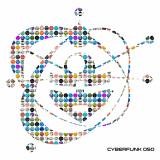
CFUNK 050 is presented as a special collector edition commemorating the 50th Cyberfunk release. The package celebrates more than two decades of the label's music, artwork and visual identity.
The accompanying booklet brings together artwork from across the Cyberfunk catalogue, including labels from some of Quest's biggest and most memorable releases, alongside a personal retrospective from DJ Quest looking back at the creation of the label, the artists who shaped it and the journey back to vinyl.
Dedicated artist pages introduce DJ Quest, Paket, Destroyers, Code BreakerZ and Groovebox, connecting the artists behind release 050 with the wider story of Cyberfunk and the international breakbeat community that continues to support it.
More than simply a four-track 12", CFUNK 050 is designed as a physical celebration of Cyberfunk: its records, its artwork, its artists and the people who have kept the sound alive.
Cyberfunk reaches release number 50. To mark the milestone, DJ Quest opens up the Cyberfunk archives for a special four-track vinyl release featuring new interpretations from Paket, Destroyers, Code BreakerZ and Groovebox.
CFUNK 050 connects the label's original UK Bassline Breaks foundations directly with a new generation of producers. Each artist has been given the freedom to reinterpret classic Quest material in their own style while retaining the character, bass pressure and dancefloor attitude that made the originals unmistakably Cyberfunk.
From Paket's reworking of Muffled Mayhem and Destroyers' take on Cybanet, through to two very different versions of Back To The Old Skool from Code Breakerz and Tech House maestro Groovebox, the release moves across modern breaks, heavyweight club production and rolling groove-led territory.
It is both a celebration of 50 Cyberfunk releases and a statement about what comes next.
A1. DJ Quest feat. Yoof - Muffled Mayhem (Paket Remix)
Spanish breaks heavyweight Paket takes on Muffled Mayhem, retaining the attitude and personality of the original while rebuilding it for contemporary dancefloors with heavyweight drums, powerful bass and the polished low-end pressure that has made him a leading figure in the new generation of Andalusian Breakbeat.
A2. DJ Quest - Cybanet (Destroyers Remix)
Destroyers turns his attention to Cybanet, pushing one of Quest's darker electronic productions firmly into modern club territory. Futuristic electronics, heavyweight rhythm programming and serious dancefloor pressure meet the machine-driven character of the original.
B1. DJ Quest - Back To The Old Skool (Code BreakerZ Remix)
Code BreakerZ completely re-engineer one of Quest's defining tracks for a new generation. Their acid-tinged, hard-hitting approach injects fresh energy into Back To The Old Skool while keeping the hooks and attitude that made the original such an important Quest record.
B2. DJ Quest - Back To The Old Skool (Groovebox Remix)
Groovebox closes the release with a deeper, tech house, groove-led interpretation. Built around movement, rhythm and rolling dancefloor momentum, his remix takes the original somewhere different while preserving the unmistakable old-skool spirit at its core.
What happens when bassweight electronic beats meet the abstract world of one of the most uncompromising MCs on this planet?
Get ready for a special listening experience as Abu Ama and Sensational take you deep into a world of heavy bass, fractured rhythms, strange frequencies and completely unpredictable flows.
Abu Ama is known for his unique production style, combining Dub, Ambient and Industrial soundscapes with Middle Eastern sound structures. His productions create vast, atmospheric spaces where bass pressure and subtle details constantly collide. Over the years, he has developed his signature sound through releases on forward-thinking labels such as Bokeh Versions and Accidental Meetings. With Ringing In Your Ear, Abu Ama presents some of his most adventurous and forward-thinking productions to date.
On the microphone, we are proud to present a true underground legend straight outta NYC: Sensational.
Born Colin Julius Bobb in Guyana and raised in Brooklyn, Sensational became one of the most distinctive and unpredictable voices to emerge from New York’s experimental hip-hop underground. Originally performing under the name Torture, he was already connected to the Jungle Brothers in the early 1990s before developing the completely unique style that would become synonymous with Sensational.
In 1997, he released his debut album Loaded With Power on the influential Word Sound label. Built from dusty beats, unusual samples and lo-fi textures, the record established Sensational as an artist who seemed to operate completely outside the established rules of Hip Hop.
Over the following decades, he continued to explore the space between underground rap, experimental electronics, noise and abstract music. His long list of collaborators included artists such as Spectre, Kouhei Matsunaga, Kid 606, Cardopusher, Handsome Boy Modeling School and many others. His work with Kouhei Matsunaga was even remixed by Autechre.
Sensational was never interested in fitting into a particular scene. His rhymes were surreal, his flows unpredictable and his approach completely his own. For more than three decades, he remained a true outsider — a cult figure whose music connected underground Hip Hop with some of the strangest and most adventurous corners of experimental music.
After Abu Ama and Sensational’s heavy 2023 single International Rokkaz left us wanting more, the two decided to take things much further. What started as a single collaboration evolved into a full length soundclash.
We were already incredibly hyped about this collaboration from the moment we heard it. But while we were preparing for the release of the single MOZZ, the terrible news reached us: Sensational had passed away.
The news hit hard. It is still difficult to believe that we will never hear a new Sensational verse again.
What makes Ringing In Your Ear even more special is that it captures Sensational doing what he did best — completely free, completely unpredictable and completely himself.
We dedicate this record to Colin Julius Bobb aka Sensational, in loving memory of an extraordinary artist, MC and true underground original.
Phillip George Allison was born and raised in Denham Town, West Kingston, the last of six children and the only boy. As a boy he sang hymns at his mother's side. Before long he was singing radio hits at school concerts, where he did Curtis Mayfield, Smokey Robinson and Eddie Kendricks in a falsetto so close to theirs that friends called him "George Smokey."
With Delroy Williams and Shirley Forbes he formed The Mad Lads. Leroy Sibbles auditioned them at Studio One and called Coxsone Dodd over to listen, and they recorded the same day, with Sylvan Morris as engineer and the Sound Dimensions backing them. Ten To One, Losing You and You Never Know were big with the sound systems. George then left music to study electrical engineering at CAST. Years later producer Carl Prince of Gibbous Records asked him to re-record Ten To One, and that brought him back into the studio for the 1984 album So Unusual, where both of these sides first appeared.
Gypsy Woman was one of the first songs he ever sang in class. "Gypsy Woman was originally done by Curtis Mayfield and the Impressions, one of my favourite groups. I chose to do it a little differently, in my falsetto style, like Ten To One that I recorded while singing lead with the Mad Lads."
War Is Ugly "I wrote War Is Ugly during the politically motivated tensions and killings between rival gangs and gunmen all over the island in that period. My message was to the gunmen: turn in their arms and come. War is ugly, love is lovely."
Vega Records proudly presents "Mercy Of Time," a breathtaking new collaboration between Grammy Award-winning producer, DJ, and songwriter Louie Vega and acclaimed South African composer, singer, songwriter, and multidisciplinary artist Msaki.
Widely regarded as one of Africa's most powerful and influential musical voices, Msaki has earned international recognition through her award-winning solo work and celebrated collaborations with Black Coffee, Sun-El Musician, and Prince Kaybee, including the multi-platinum anthem "Fetch Your Life." A South African Music Award winner, recipient of the prestigious 2022 Standard Bank Young Artist Award for Music, and Basadi in Music Songwriter of the Year, Msaki's artistry has resonated with audiences around the world. Her songwriting and vocal contributions to Black Coffee's Grammy Award-winning album further cemented her place among the continent's most revered contemporary artists.
Born from a creative meeting of musical minds, "Mercy Of Time" brings together the extraordinary talents of Msaki, Louie Vega, and renowned Cuban pianist, composer, and producer Axel Tosca. Written by Msaki, with music composed by Louie Vega and Axel Tosca, the song is elevated by the unmistakable rhythmic touch of internationally respected producer and dj Manoo, whose infectious drums provide the heartbeat of the record.
At its core, "Mercy Of Time" is a deeply moving and uplifting composition that blends deep songwriting, rich musicianship, and powerful rhythms into a timeless musical journey. Msaki's evocative lyrics and captivating vocal performance intertwine seamlessly with Axel Tosca's virtuoso musicianship and Louie Vega's signature production style, creating a sound that transcends borders, cultures, and genres.
Rooted in soul and infused with African Electronic and global influences, "Mercy Of Time" speaks to resilience, hope, healing, and the wisdom that comes with life's journey. The song beautifully captures the spirit of collaboration between artists from different corners of the world, united by a shared commitment to authenticity, artistry, and musical excellence.
With all forces combined, "Mercy Of Time" is poised to resonate with audiences across dance floors, airwaves, and listening spaces worldwide. A powerful fusion of soulful expression, world-class musicianship, and timeless rhythm, the release stands as a testament to the creative magic that happens when visionary artists come together.
Following her foundational role in the early years of The Fall, and then the searing post punk of The Blue Orchids, as well as several tours serving as a backing group for Velvet Underground chanteuse Nico, Una Baines found herself starting 1985 without a band. Drafting together members of the all-female Beyond The Glass, and compatriots associated with her past projects, she entered the studio with a clutch of songs and a willingness to experiment. Separating the sides into “waxing”, for the more traditional songs, and “waning”, where the structures become looser and varied, the resulting album was the sole release on her Taboo Records and seemed quickly lost to time, but feels shockingly current in both feminist content, and freak folk execution.
It is a collection of influences that would emerge decades later in the wyrd folk movement, and Furia is not out of place at an intersection of Devendra Banhart and Meg Baird, but there was absolutely nothing like it in 1986. Upon release, Mark E. Smith famously likened it to Third Ear Band, having to dip back to 1970 for a touchstone. Songs like “Bridget of Ireland” could be traditional ballads from decades past, while “No Romance” is a lo-fi new wave hit waiting to happen. “Sheila/Beats My Heart” fashions The Velvet Underground as a feminist protest band, and “Ritual” plays out like all of the Motown girl groups banding together to tell the world that they don’t need a boyfriend to solve all of their problems. It all draws on sources that are so familiar, yet turns them upside down in a celebratory fashion. Is it freak folk? Pagan punk? Pastoral drone? It is all of that and so much more. It is the sound of a woman, and an artist, truly finding her voice, and it is both magical and compelling.
“Remarkably prescient and weirdly beautiful record. A creative, challenging and memorable companion, with a distinct voice and identity of its own: in turn playful, political and experimental. It's highly recommended.” – The Quietus