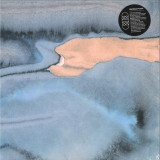
On his third solo album, following the success of "Éternel été", the founder of the electro duo Nôze is exploring, through piano and synths, the encounter between poetry and song. In this new work he has set to music verses by William Shakespeare, Victor Hugo, Pablo Neruda and on three songs, those of the poet Marceline Desbordes-Valmore, a pioneer of romanticism who notably influenced Verlaine and Baudelaire.
But what does this Oh !, giving its title to Ezéchiel Pailhès' third solo album, stand for? Is it an Oh ! of surprise, admiration or pain? "It is rather the Oh ! found in romantic poetry" says the French composer and singer with his deep and sweet voice. "An interjection that refers to a form of lament", even though it can convey other emotions such as complaint, nostalgia, a sad delight or a longed-for solace.
In Tout va bien, his previous album released in 2017, Ezéchiel Pailhès had set two Shakespeare sonnets to music. One of them, "Eternal été" has become a great success, thanks to its lines tinged with spleen and bliss. "Poetry, and its musicality, have always been part of my universe. For this new album, I therefore wanted to explore further the adaptation of poems into songs. "Bien Certain" is, once again, taken from William Shakespeare. "Tu te rappelleras" comes from Pablo Neruda's collection La centaine d'amour. "Oh ! Pourquoi te cacher ?" is from Victor Hugo. As for "Sans l'oublier", "La sincère" and "J'avais froid", they were all written by Marceline Desbordes-Valmore, a 19th century French poetess, still fairly unknown".
With Oh !, Ezechiel Pailhès has become more of a singer than ever before, through seven songs and four instrumental compositions, with intimate and warm modulations, carried by hypnotic piano melodies, instruments with unusual timbre and a subtle electronic production that recalls his past productions with his former duo Nôze.
"I wanted to expand my music further into songs" Ezéchiel adds, "to work more with my voice as a solo instrument and to limit the overlapping of voices and choirs found in my previous records". Produced in his Montreuil home studio, Oh ! is nevertheless imbued with an emotion found in his previous albums, close to 'saudade' or a slight melancholy, sometimes enhanced by chosen texts that evoke the disappointment of love, the longing, the distance between two people, or even men's weakness. "These poems evoke themes that may seem far from the concerns of our times. Yet, they are timeless and eternal; they manage to convey emotions that can often be difficult to say or write."
Among the texts chosen for this new album, the verses of the poet Marceline Desbordes-Valmore (1786-1859) are on a par with William Shakespeare's sonnets or Pablo Neruda's poem found on the same record:
" Sans l'oublier, on peut fuir ce qu'on aime.
On peut bannir son nom de ses discours,
Et, de l'absence implorant le secours,
Se dérober à ce maître suprême,
Sans l'oublier ! "
(…)
" Sans oublier une voix triste et tendre,
Oh ! que de jours j'ai vus naître et finir !
Je la redoute encore dans l'avenir :
C'est une voix que l'on cesse d'entendre,
Sans l'oublier ! "
"Without forgetting, we can run away from what we love.
Banish their name from our conversations,
And, begging the absence for consolation,
Escape the grip of this supreme master,
Without forgetting! "
(…)
"Without forgetting a sad and gentle voice,
Oh, how many days have I seen rise and fall!
And still I fear from the future:
A voice that can no longer be heard,
Without forgetting! "
Although less known today than her male counterparts, Marceline Desbordes-Valmore marked her times and the Romantic movement through the quality of her texts and her formal inventions, which Balzac admired, and whose influence seems to have been decisive on Verlaine and Baudelaire.
"Marceline Desbordes-Valmore's poetry is highly musical," says Ezéchiel with admiration. "Her artistry with rhythm and repetition sounds very good and takes on a new dimension when set to music. She even meant for some of her texts to become songs"
quête:the absence
After a 10 year absence Horizontal is back. 3 songs that revolve around Dinky’s pure musical dogma, arpeggiated basses bounce with the beautiful and contorted voices that play within this psychedelic party. Bathing in blue skies and a deep warm acid glow, this is music to capture your body and soul, made with love whilst dreaming of a brave new world within these innocent melodies.
A new sublabel of the longstanding Canadian electro imprint Suction Records, Ice Machine — focusing on old-school wave/post-punk sounds — launches on Valentines Day 2020 with two fresh Canadian synth-pop LPs on vinyl. Along side a reissue of Ceramic Hello’s cult 1981 minimal synth classic “The Absence Of A Canary,” comes this, the self-titled debut LP from a new Toronto-based duo, Analytica.
Analytica is comprised of David Lush, who’s released several killer solo tapes under the name Memorex, and Gabe Knox, who made a big splash last year with his awesome instrumental synth/kraut solo LP “ABC” on acclaimed UK label Polytechnic Youth.
Analytica make synth-pop the old-fashioned way: driving, verse/chorus pop songs utilizing hardware synthesizers and drum machines, vocals and bass guitar, and recorded to tape. The comparisons to early-Depeche Mode (there’s even a cover of “Reason Man” — an unreleased, Vince Clarke-penned, Depeche song that was part of their earliest live sets), and prime-era New Order (right down to the Oberheim DMX percussion and Peter Hook-style bass guitar) are inevitable, but rarely are these sounds executed with such style and conviction. According to the band, lyrically Analytica “explore facets of the dark age ahead — the propaganda, the nationalism, the environmental disaster in front of our faces - while attempting to offer something of a defence against a nihilistic response to these fears. It's at once a call to arms and a recognition that we're entirely fucked.”
The LP contains 11 songs, and is housed in a stunning reverse-board jacket, and is limited to 500 copies.
Limited edition vinyl imprint Absence Seizure established in 2015, focusing on late-night grooves and bass. Matuss’ 13th release on the label Seizure No.13 EP comes at full-force with its melodic deep house ready for the dance floor or the afters.
The first track on the EP is ‘Continuum’, combining an ambient sensibility with deep house energy, an epic slow-burner which morphs into something quite spectacular as the groove moves on. Next, we have the hypnotic ‘Mer De Soleil’, carried along a melodic bass and a snipped vocal pattern which carry a weightless feel ready for dancing.
The addictive and emotive ‘Solicitors Are Welcome’ employs twinkly synths with a house beat, and features a dreamy vocal from Sophie Buskin. A real end-of-the-night track, its given a re-working from Silent Surrender, sending percussion rushes and an expert manipulation of the vocal work to form an intoxicating listen.
Matuss has shown once again her expert crafting of deep, dance floor rhythms with Seizure No.13.
- A1: Overpowered By Vega Radiations
- A2: Three Suns On Proxima Centauri
- A3: Koi500 System Spacewalk
- B1: Convective Heat Transfer
- B2: Gravity Darkening
- B3: Li-Fi Connected With Rigel B
- C1: Gravity Stirs The Depths Of Insomnia
- C2: Planetary Romance
- C3: Intergalactic Sniper
- D1: Losing Wits On Infnite Moons
- D2: Dark Physical Cosmology
2x12" 180 grams / white vinyl
"The universe,
purity, simplicity and deceits,
profundity, solitude and hardness.
A brilliant yet dark setting.
A place of fleeting ephemeral encounters, real and intense nonetheless, where the forces sustaining it all are neither dark matter nor dark energy, but rather the outcome of the explosion of infinite ancestral love between the creation and its creator, in an era where one was still everything.
Gravity Darkening is an astronomic phenomenon, in which the light emanating from a star is distorted to the eyes of the beholder. A bridge of playful mirrors between reality and its perception in a binary code world, where man can dream unconditionally when reflecting himself in the absence of light.
This album is an expression of the allegorical essence of my lived experience and its resulting analysis, projected into another timeline, parallel to ours".
- Specialivery
Twelve years have passed since eedl released their masterpiece “Everse” spa.RK, 2007 and in that time the duo -formed by Miguel Ángel Martínez and Joan Duat- have shied away from the spotlight and stage. Despite this apparent lethargy, their previous two works - "Parallemped EP" spa.RK, 2003 and the aforementioned "Everse"- provided them with cult national scene status, while raising more than a few eyebrows among European “headz”. Both works continue to sound overwhelmingly modern and
undated, an obvious signal that eedl is a special breed of cutting edge electronic music.
Although creatively silent for a number of years they have remained musically active. As well as his career as a product designer, Miguel Ángel has applied his musical experience to the technology sector, and since 2016 has fully immersed himself in “modular”–Winter Modular, Plankton Electronics and Patching Panda–; Meanwhile, Joan, office programmer and classically trained pianist, has found his equilibrium with work and building a family life.
"Unstored" is their long awaited return to the fray and their second studio album. It is comprised of eight songs, some of which have been have been slow cooked since 2002, with others gestating more recently. Maybe such a long hiatus seems excessive, but the meticulousness nature and obsessive love for detail found in "Unstored" more than justifies the wait, which at times felt like a long goodbye.
This collection of songs navigates between perfectionist electronica, new generation electro, noisy harmonies, glitch and deconstructed rhythms; a sonic memoire with strong roots in British experimental electronic music -reminiscent of Autechre or Plaid-, another reason in understanding the longing produced by their extended absence.
It is therefore with great honour that in early January 2020, Lapsus will release the new album from the elusive eedl project in a luxury edition format.
Since 2000 Mapstation has been the moniker for the solo work of TAL Label founder Stefan Schneider. Schneider has won international acclaim as a founding member of KREIDLER and to rococo rot as well as through unique collaborational works with artists such as Joachim Roedelius (Cluster/Harmonia), Bill Wells, Katharina Grosse, Dieter Moebius (Cluster/Harmonia) Sofia Jernberg or Jochen Irmler (Faust). There has not been a new Mapstation release since 2009's THE AFRICA CHAMBER which had former FELA KUTI member NICHOLAS ADDO-NETTEY on percussion.
The new album PRESENT UNMETRICS, is not entirely a stand-alone creation either. There are guest appearances by THOMAS KLEIN (KREIDLER) on percussion, MICHAEL ACHER (THE NOTWIST) on Sousaphone and an outstanding vocal contribution from japanese singer HACO, all deeply woven into the digital topographics of the music.
PRESENT UNMETRICS offers a collection of radically subtle music. The guiding principle of the album was to construct direct and nuanced tracks which embody a sense of open-ended incompleteness and heterogenous dynamics.
Out of sync bass arpeggios, infused with uneven rythms, fractured synth stabs and intimate melodies, frequently created here with a Schlumberg sine wave generator, are continuously engage with experimentation, both on sound and structure.
Expertly pieced-together and produced in timeless fashio, PRESENT UNMETRICS displays all the coherence and artistic authority of an album on a constant quest so vital to the music of Mapstation. An album that couldn't have been made by any other than Mapstation.
I remember the first time I read W.E.B. DuBois eclectic masterpiece The Souls of Black Folk. The way in which this Weberian scholar flowed from personal account to prose to sociological analysis to music and even political intervention has had a lasting impact on my own work as a cultural anthropologist. It made me understand that as scholars we must use different means in order to give expression to the totality of the lived experience: There is only so much in an academic text.
The experience of alienation has always been at the heart of my scholarly and artistic practice. I have used academic writing, lecturing, theatre performance and electronic improvisation to understand and represent it as a theoretical concept, postcolonial condition and lived experience. I believe, some issues need to be told like a story, some analyzed in most abstract terms and others need to be sung like a gospel. The medium changes the message.
In this sense, I guess, I’m a singing cultural anthropologist.
For some time now I have been engaged in the use of dystopian themes and sounds to paint a sonic picture of structural racism and whiteness of our present. But recently I have grown weary of this Ballardian idea of Future Now and the resulting phantasmagorian aesthetics myself and others have been invested in. The widespread availability of Digital Audio Workstations, sequencers, loopers and delay pedals has lead us into a futuristic cul de sac best described by Mark Fisher as the very absence of future.
Likewise, I am most skeptical of the “naturalist” countermovement, the return of folk. Especially in Germany, I am convinced there is no such thing as an innocent or progressive folk musical expression as it is always connected to the idea of the homeland (“Heimat”) which in turn produces the colony. It seems to me, the current zeitgeist is stuck between a “museum of a dystopian future” and a “museum of an idealized past”, but I wanted to sing about the present.
So, I involuntarily returned to pop music in its two-folded meaning of something popular and addressing not an essentialist notion of “Volk” or its woke cousin “communities”, but society as a whole.
I entered the studio just with a few lo-fi sounding melodies and rhythms from my circuit bent CASIO synthesizer. I had no clue what the finished product would sound like. But as soon as Markus started drumming, in a way strangely reminding me of CAN’s Ethnographic Forgery Series, my uptight sounds were suddenly embedded within a warmer global sound spectrum. The alien at home and abroad and the strange overlapped: We were seeing one and the same sound differently but were gently held together by Tobias’ producing.
Making music is about building coalitions. It’s about suggesting an articulation of styles, sounds and people, that hasn’t materialized, yet, but may help us in the current crisis: I wanted Amon Düül II to send their drug induced archangel thunderbird to rescue the refugees, that had tried to escape the police by climbing up a tree in Munich in 2016. I wanted Sun Ra to taunt far-right protesters in Chemnitz in 2018. And I wanted to mourn the loss of a former kebab shop cum discotheque that served as proof that there is such a thing as a minoritarian universalism.
SCHLAND IS THE PLACE FOR ME is a pop album featuring songs of alienation, not only as a tragic experience, but as a pop-cultural promise. Maybe Bill Callahan sung it best, “I am Star Wars today, I am no longer English grey”. I want those who suffer from alienation to stand in alliance with those who seek alienation, and vice-versa. A coalition, that tolerates the possibility that we are moved by the same groove for contrary reasons.
Fehler Kuti
Munich, Autumn 2019
Music by Julian Warner, Markus Acher & Tobias Siegert
Saxophone on RINDERMARKT by Franz Brunner
Trombone on RINDERMARKT and IL by Matthias Götz
Recorded and mixed by Tobias Siegert in Munich.
SONTAGSFAVORIT mixed by Dario Albiez in Dusseldorf.
Mastered by Duphonic in Augsburg.
Artwork by Atelier Grande, Munich.
After a three year absence, Kasper Bjørke returns to hfn music with a sublime new double EP entitled
“Nothing Gold Can Stay”. Having followed a deeply personal ambient music path that last year led to
the release of “Kasper Bjørke Quartet: The Fifty Eleven Project” on Kompakt Records, (named 5th
Best Contemporary Album 2018 in The Guardian), Kasper has found his way back to producing some
of his signature leftfield danceable beats, which “the past decade has seen Bjørke steadily rising amongst the ranks of artful, eclectic electronic producers…” (XLR8R).The Double EP “Nothing Gold Can Stay” explores both the analogue and organic side of his production work on Side A - while Side B reflects on sounds that he would play today, in one of his nightclub DJ sets. Side A contains four collaborations with four friends from LA, New York and Copenhagen. “Water” feat. Toby Ernest, the slow mo opener to the EP, revives the partnership with Toby that was last seen on 2014’s After Forever album (on the single “Rush”). Toby also provides the vocals on the cover version of Alessi Brothers’ 1975 classic “Seabird” - a track that came about through Kasper’s friendship and musical synergy with DJ and vinyl digger Christian d’Or, who is lead crooning while Toby delivers his signature falsetto. The “Seabird” cover adds a distinct contemporary feeling to the original version while staying true and respectful to the delivery and mood of the songs core. The 2nd half of the release, Side B, is directly aimed at the floor. Having stepped away from releasing club jams for a few years, Kasper is clearly enjoying getting back to the business of making people move. Side B of Nothing Gold Can Stay is both a testament to Kasper’s versatility as a producer and an all-out dancefloor assault, made with precision and sensitivity.
In her most personally narrative work to date, A Fossil Begins To Bray is the follow up on Dais Records for NYC producer Hiro Kone, furthering the dialogue set forth on her 2018 release, Pure Expenditure. While the statements on Pure Expenditure rallied behind a point of dangerous excess and injustice, the material on A Fossil Begins To Bray embark upon a journey of discovery and selfanalysis, proposing a potential reorientation towards absence in hopes of illuminating potential futures.
In Mao’s own words, “This album considers the power of absence as neither a lack or deficit, but as a quiet, indeterminable force to cultivate in this time of looming and unrelenting techno-fascism. It asks that we take pause to consider our learned languages and actualities and to better consider how desire shapes our recollections and interpretations of this ‘existence.’” This allegory is expertly applied to every song on A Fossil Begins To Bray. Mao has established a long history of employing absence in her productions to maximum effect. With a vast assortment of diverse elements at play, no single track ever feels overly convoluted and further illustrates Hiro Kone’s skillful attention to dynamic tension and flow. Tracks such as “Fabrication of Silence” and “Submerged Dragon” perfectly represent the power of absence, utilized in a matter to create unique amalgams of decisive, cinematic techno rhythms from the electronic void. As the melodic elements contained within A Fossil Begins To Bray begin to unravel and slowly take form, the unaware are rewarded with a driving yet tangible refrain that offers resolve in contrast to the dense, textureladen backdrop that forms the album’s foundation. The first single, “Feed My Ancestors”, expands upon Hiro Kone’s signature take on electronic music structures. Seemingly free from the predictable contracts imposed by any one genre’s stereotypes, Hiro Kone throttles the foreboding bassline in favor of more calculated, abstract cut-ups that gracefully hold the track in place between hopeful utopia and something more ominous.
Adapted Vinyl was a UK based techno label active in the late 90’s that picked up regular DJ support from taste makers of the time ranging from Jeff Mills to Mr C.
This, the label’s 7th record disappeared before a public release when the Integrale Muzique distribution company went out of business in 2008, but now gets its first official release date after years of very limited availability
Label founder Suade is the artist behind this release and these days he is best known as a highly-sought-after mastering engineer working for artists like Dense & Pika, Paranoid London, Jamie Jones and Vitalic.
Focusing his energies into family life and the fine tuning of other peoples music it’s rare to see Suade’s own music on a new release, but this hasn’t stopped him from collaborating on original tracks with the likes of Magda and Radioactive Man in recent years.
The EP has four contrasting tracks all with different moods and tempos all blended with Techno’s classic motoric drive.
With it’s absence from the usual music marketplaces creating something of a mystery this record ended up receiving a new, unofficial name on Discogs - The Citadel EP which is a title taken from the broken-beat second track on the B side of the record.
The Citadel is just one of the highlights on this eclectic EP, as it’s a Latronic Notron sequencer workout that patiently deploys layered synths in ever-shifting cross-rhythms for a languid 5 minutes before its deep, underpinning bass arrives evoking desert travel and arrival.
Baikal, named after the huge freshwater lake in Russia, is another stretched out meditation on tone and harmony acting as a foil to the delicate and vibrant Latin American percussion that filters in and out through a massive stereo Moog Modular system creating an energetic yet static, ritualistic atmosphere.
Trajan - the most driving track on the EP, gives a nod to the Probe era Richie Hawtin sound with a touch of Drexciyan melodics with shuffled percussion and bleeps over a snaking TB303 shaped bassline where the classic Acid box is given the role of control sequencer only commanding the thick, dirty oscillators of the big Moog.
A1 track Felix is a contrast yet again. A big room melodic Techno piece with another massive bassline and an almost orchestral level of layering, building to nine counter-melodies in total before letting rip with a classic TB303 acid line that builds from the heart of the track.
- A1: Coloratura Soprano Singer
- A2: Man Wiithout Larynx
- A3: Buccal Speech
- A4: Parabuccal Speech
- A5: Singing Voice
- A6: Glossopharngeal Speech
- A7: Frogsound
- A8: Esophageal Voice
- B1: Injection--Basic Sound Two Times
- B2: Basic Sound Of The Esophageal Voice
- B3: Basic Sound Of The Esophageal Voice, An Octave Lower
- B4: Esophageal Voice By Telephone
- B5: Singing Voice With Larynxphone
- B6: Pipa Di Tichioni
- B7: Western Electric
The larynx or voice box is a small organ located towards the top of the neck in humans and some other animals. Constructed largely of cartilage, it houses the vocal folds that allow for the manipulation of pitch and volume, which are essential for the phonation of spoken speech. It is also involved in bringing air to the lungs when we breathe and it protects the windpipe when we swallow. However, those unfortunate to experience the potentially fatal malignant tumours of laryngeal cancer will have their larynx removed, resulting in a traumatic loss of speech; thankfully, as this rare record issued by Smithsonian Folkways in 1964 demonstrates, removal of the larynx does not necessarily spell the end of speech for such blighted individuals. Instead, through developments in artificial voice creation, patients could learn to employ modes of vocal communication again. The album was recorded by physician Harm A. Drost at the Phonetic Laboratory of the Ear, Nose and Throat Dept of the University Hospital, Leiden, in the Netherlands, working under the direction of Professor H. A. E. van Dishoeck. As the advances were fairly new and surprisingly varied, Drost felt a phonograph album demonstrating the techniques would be useful for those in the field. The album thus features a narrator explaining aspects of several different techniques, followed by examples of patients employing them. Buccal speech (limited to certain consonants), parabuccal speech (collecting air in a space between the upper jaw and the cheek), glosso-pharyngeal speech (a method deemed obsolete where air is forced between the tongue and the palate), esophageal voice (made by reconditioning one’s esophagus via swallowing, suction or injection), various injection techniques and devices such as the larynxophone, pipa di tichioni and “western electric” are all explored here, along with other aspects of the larynx and its absence. Speech After The Removal Of The Larynx is definitely one of the strangest albums ever given a commercial release!
Lanark Artefax releases a new EP titled ‘Corra Linn’ on 24th October via Numbers, l-a-n-a-r-k. net .
It is the Scottish producer’s first solo output since his breakout record on Whities in 2017, which included the ethereal ‘Touch Absence’. The three-track EP arrives after last year’s remix of Björk and an extensive period touring his internationally acclaimed live A/V show.
Recorded sometime in the last year and a half, the three tracks across ‘Corra Linn’ materialise like a cascading data flow; combining lazer sharp digital synths and hyperspatial sound design with scaled up, spine-tingling choral melodies, time-refracted field recordings and ethereal childlike vocal arrangements.
The EP’s title track, ‘Corra Linn’, takes its name from a waterfall in the Lanark area of Scotland, the water of which flows into one of the oldest hydro-electric power stations in the UK. The artwork accompanying the EP is a photomicrographic image of Lanarkite; a rare and precious mineral form. Almost all significant occurrences of Lanarkite were discovered deep within the Leadhills in South Lanarkshire, but it is said that an unknown, but large, quantity of it was once unearthed at the base of Corra Linn waterfall.
Visit the Lanark Artefax web portal l-a-n-a-r-k . net to explore the digital archive accompanying the release.
Tachyon Audio 004 is a solo release by Tachyon's own, Paradaux. Paradaux has been on a production tear of late and offers a four-track E.P. that takes Tachyon Audio to a new place in space-time. Intro (A1) sets the mood of the E.P. right from the off with a broken experimental beat that forces the listener to move rhythmically.
The second track, Bolder (A2), offers distorted rumbling and broken drum kit sounds and tweaks pounding down through ethereal fading pads. This muscular groove is sure to warm up anyone.
Side B of the E.P. starts off with Absence of Rain (B1), a mind-bending desert acid masterpiece.
The E.P. continues its trek through the mind of Paradaux, as Step Down (B2) brings back a strong distorted broken rhythm that flaunts the cohesiveness and foresight of the record as a whole and creates an emotional end to the journey.
Lastly, as with every Tachyon Audio release, a raw sound of space is pressed into a vinyl locked groove. This time an open-source National Aeronautics and Space Administration (NASA) sample -- the Galileo spacecraft making the first flyby of Jupiter's largest moon, Ganymede, this audio track represents data from Galileo's Plasma Wave Experiment instrument.
IGC_for_life
Delsin founder Marsel Van Der Wielen revives his Peel Seamus alias for a debut album proper. The leading Dutch techno label began in 1996 with a cassette-only Peel Seamus release, Publik Draft, which Van Der Wielen primarily distributed through early online channels of communication. There was a small flurry of 12" releases from the project around the turn of the century, but for a long time Peel Seamus has been quiet. Now Van Der Wielen has gathered together tracks from his archives, mostly written and recorded circa 2000, to present the Peel Seamus debut album proper, Susurro. Rooted in the classic Detroit and European techno that Delsin's identity is forged on, it's a deep, rich listen laden with heart and soul to match the mechanics of Van Der Wielen's chosen tools - a masterclass in expressive electronics and a fascinating insight into the musical DNA behind one of the world's finest techno labels.
Ukrainian born and New York-based artist Matuss is delivering anotherinstallment of Absence Seizure. This time she is teaming up with
Norwegian but could be Berlin depending on the time of year
basslines that are pulsated by some intricate synths.
The Absence Seizure imprint is run by none other than Matuss herself along with Abe Duque and they focus on limited edition vinyl with a
nose for deep and meaningful house and techno. The last release saw the two bosses’ team up on Absence Seizure 11 to deliver some
pulsating beats and orgasmic synths. Expect a deeper cut this time around with the two artists verging more to the house side of the
electronic music spectrum on this project. Karina’s ‘Acid Meow’ is the first track on AS012. Karina is one of The
Zoo Project Ibiza core residents a player of all things vinyl with releases on the likes of God Particle and Cymawax. ‘Acid Meow’ has a
fearless acid-tinged bassline that gives the track a motivating drive. Reminiscent of 90s minimalism she’s kept the beats simple
putting all emphasis on the merciless acid sequence. Tip! Real energy to the dancefloor!
Matuss takes over the EP after the initial cut starting with ‘Travel High’. It has a long build to begin with these quizzical keys that
create anticipation. It discharges with an old school funky bassline that is slowly pushed. It’s accentuated by a ghetto vocal belting out
the title of the track and ends with some punchy percussions and bongo drums. She follows up with ‘Ninja Moves’. A more secretive and sultry number.
It tingles out a smooth bassline and revolves some nice chatter claps and snaps to add a certain silkiness to it. A bit of a floater
it has some beeping 80s keys on it that just add to the sway. If you want your mind to drift
you can get lost in this. Last but as always not least is ‘People Like You and Me’. The track starts with that fun festival horn that makes nostalgia exude out of
your prefrontal cortex. It divulges into these rolling clicks and toms that is carried by this dubbed bassline. Eventually
a bright and sunny synth emits light over the track as the vocals invite you in. The juxtaposition of the synth and bassline just work in harmony and
really make this cut hit home.
Appearing on the latest Mnemosyne compilation, Hierarchy marks his debut EP on ASG providing a deep journey into rhythms and textures. Direct but still elusive, Matter/Space/Void delivers lapses of rarefied absence constantly driven by peculiar cadences. The pulsating and fragmented remix by label owner A Sacred Geometry showcases once again his diverse view of techno, constantly evolving into unexpected horizons.
The Soulpop Continuum – by Arno Raffeiner
Six songs, one sound signature, one vision. Supreme Beats Series by Drei Farben House is an album
that firmly stands in the tradition of the big records of the disco era: a vinyl disc full of kicks and licks,
just as much as two sides in amazing sound quality can hold.
The album is the latest work of Michael Siegle, the Berlin-based producer and owner of Tenderpark
Records. 13 years after Drei Farben House's first full-length on the acclaimed Force Tracks label, it
features contributions by singer and songwriter Mavin and none other than Robert Owens who's voice
shaped house music forever. The trademark sonic elegance of Drei Farben House blends perfectly
with the timbre of the man behind Fingers Inc.'s Mysteries Of Love. Siegle's work as a producer is not
so much about turning this rich heritage upside down, but about refining it and creating a space within
that realm that's very much his own.
The title of the opening song with Owens states it: I’m Remaining Here. And Supreme Beats Series
invites you to come over and stay there, too, in a refuge of class and funkiness. The record offers
dense layers of rhythm, vintage keyboard sounds, chucking guitar, and vocal samples that indulge in a
many-voiced conversation. Not to forget the prominent, singing rather than walking bass lines
performed by the hands of Michael Siegle himself with his bass guitar.
New Release Information
You could think of Supreme Beats Series as a cross-section in time and space. It allows you to take a
closer look at the here and now of a much bigger picture, both aesthetically and socially. Siegle uses
the vocabulary of house music in a way that transcends its conception as merely a genre and speaks
of the historic evolution and the profound roots of this music as a movement. His record takes
inspiration from 60s Motown hits as well as the blue eyed soul of the 80s, you can discover influences
ranging from Philly's pre-disco craze to new jack swing and on to the heyday when house-pop divas
stormed the charts. By drawing these lines, Siegle deliberately opens up the space of a visionary
Soulpop Continuum.
In the 1950s, the American issue of Vogue magazine had their say about Coco Chanel's work and its
ever-lasting impression on fashion and design. They claimed it was all about “infinite variety within
narrow limits,“ and meant that as a compliment, of course. Michael Siegle likes to think about Drei
Farben House in a similar way. And you should, too.
Info about the artwork:
As far as the cover artwork of 'Supreme Beats Series‘ is concerned, the release of Drei Farben
House’s new album shows the second part of an image series which has been started with TDPR
release # 021 and which revolves around architectural photos taken by Achim Valbracht. Tenderpark
art director Till Sperrle and photographer Achim Valbracht like these pictures of various commercial
buildings erected in Berlin in the 1990s to be seen as a critique of investor-driven architecture which
has been dominating Berlin for several decades now.
The fascination of these pictures lies in their ambivalence of staging a normalised and globally
standardised kind of beauty, but at the same time revealing a strong sense of isolation - noticeable not
only but also in the absence of human beings. This new series of images is to some extent a
continuation of art director Till Sperrle's and label manager Michael Siegle’s interest in architectural
photography. However, at the same time the photo series also embodies a new angle on the subject
since all previous picture series on Tenderpark had been an affirmation of socially progressive
architecture which expressed a longing for socio-cultural utopia.
“Built By Humanoid” is Humanoid's second album, a mere 30 years after the debut, though Brian Dougans claims the first album wasn't really him anyway.
Humanoid's classic acid house single, ‘Stakker Humanoid’, highly regarded as one of the key tracks from the era (Richard James (Aphex Twin) sights the Stakker project as a major influence), enjoyed massive success in 1988. Reaching No.1 for 5 weeks in the UK dance charts, performances on Top of the Pops, a John Peel session for the BBC and European tours eventually led to an album deal.
Whilst all this was happening, Brian Dougans (one half of electronic legends Future Sound of London) claims he was returning to his squat in Kings Cross with no electricity or water. He not only became disillusioned with the business, but also became increasingly ill from the conditions he was living in. Around 6 tracks into the album, he left London and record label, Streetsounds, returning to Manchester to recover and regroup his thoughts. However, Steetsounds pressed ahead with the album and it was finished in Brian’s absence with guest performers.
Brian left Humanoid behind and went on to create FSOL with Gaz Cobain becoming leading lights in the burgeoning ambient scene, scoring a top 10 album "Lifeforms" on Virgin Records.
In 2003 Rephlex (Aphex Twin’s label) released a posthumous album of 1988 out takes compiled by Brian.
Recently Humanoid tracks have been popping up on modern compilation albums (Touched Music / Gasman, etc) signalling a possible return.
“Built by Humanoid” is a brand new nine track album of future acid cuts, breaks and electronics, a lot of which is credited to 2 synthesisers co-designed by Brian Dougans and English Electronics company Digitana. It is this innovation that has helped usher Humanoid back into the limelight and consequently the album has a rather new and unique sound and style.
The track ‘Polymath’ is created using a possibility / probability theory that results in a track which at no point repeats itself - 303 tinged acidic bubbles. Meanwhile ‘Traktion’ is a break beat, pulse laden, bass heavy monster. ‘Fu*k It’ is the future sound of 303. Fast, frantic and beat driven. Whilst ‘Post Humans’ combines thumping 909 and 303 into an acid hallucination.
Repress available in early May.
Faitiche releases a new collaboration between the Japanese sound artist ASUNA and Jan Jelinek: the album Signals Bulletin brings together joint improvisations and compositions made over a period of three years in Berlin, Kyoto and Kanazawa. ASUNA’s meandering organ drones merge with Jelinek’s pulsating synthesizer and field recording loops to create dense superclusters that span broad harmonic arcs.
"Watching the Japanese sound artist ASUNA playing the organ, some people might be surprised. ASUNA is no virtuoso flying over the keyboard in a rage. Instead, with the calm gestures of an office worker, he cuts strips of adhesive tape to the correct length before sticking them onto the keys of his instrument. In this way, large clusters of keys are held down, creating a dense and sustained range of frequencies, while the sound artist continually prepares further sets of keys or removes tape again. I have rarely seen a more convincing performance concept, with such a power to fascinate.
I first met ASUNA when we both gave a concert at the 21st Century Museum of Contemporary Art in Kanazawa, his home city. He performed the organ drones as described above and I immediately knew I wanted to collaborate with him. Six years and five meetings later, we completed Signals Bulletin. The album includes both joint improvisations and compositions, recorded in Berlin, Kanazawa and Kyoto.
Whether using prepared organ, Casio keyboards or mechanical plastic toys, ASUNA creates rich textures of sound that barely change over long stretches of time. It is a music without breaks. For a while, I was unsure how my loops made using modular synthesizers and live sampling fitted here – until I realized the role I had to take in this duet: I would provide the rhythmically pulsating foundation over which his dense continuums could unfold.
The result is harmonically drifting superclusters that put us into a meditation-like state. It can perhaps be compared to Automatic Writing – a mode of creative expression floating somewhere between concentration and distraction. Both the structure of our pieces and our approach to our instruments allow a similar “absence”: we let the machines play and repeat themselves – while we, in a mild form of trance, adopt the role of observers, intervening only occasionally.
It is no coincidence that ASUNA owns a collection of Doodle Art – drawings jotted down during conversations or while talking on the phone. It is said that works made like this point to the unconscious and reveal pet motifs – because a doodler always inadvertently returns to his or her favourite themes. The artwork for Signals Bulletin features pictures from the collection, in this case sheets of paper from the pads provided in stationery shops to test out pens. The special quality of such doodles is that the jumble of drawings is the work of a collective whose individual members do not know each other. Layer by layer is added, by someone different each time – until it becomes a dense cluster of lines and symbols ..."
Jan Jelinek, Berlin 2018
Compared by many people to Boy Harsher, the duo formed by Ana Schmidt and Kevin Czarnik is the new sensation in the californian synthwave scene; their unique soundscapes, their mesmerizing voice treatments and their punchy analog rhythms promises only but great sensations on the obscure dance temples. 4 tracks that has been selected from their recently released ABSENCE album + a remix by Synths Versus Me will be featured on their very awaited vinyl debut. All tracks have been specially remastered for LONG CUT vinyl by Eric Van Wonterghem at Prodam Berlin.
Second Lp From French Electronic Talent Thylacine
Regardless Of Whether Or Not The Thylacine, A Species Of Marsupial With A Tiger-striped Back, Still Lives
In Tasmania Or Not, It Is In Argentina That This Young Star Of The French Electro Scene Decided To
Record His Second Album. To Create A Follow Up To Transsiberian, His Brilliant First Album That He
Recorded In 2015 Aboard The Train That Links Moscow To Vladivostok, William Rezé, Aka Thylacine,
Bought A 1972 Trailer, One Of The Famous All-aluminum Airstreams.
After Painstakingly Transforming The Trailer Into A Recording Studio, He Put His Beautiful American On
A Freighter Across The Atlantic And Got It Back A Month Later In Buenos Aires.
He Was Drawn To South America By The Pull Of The Unknown, The Absolute Absence Of Reference. He
Wanted To Immerse Himself In Desert And Lunar Landscapes, Explore Multicolored Canyons, Sand
Dunes, Giant Cacti Forests, Snow-capped Peaks... And Write, Alone, In The Intimacy Of His Nomadic
Studio.
After Making Stops In The Middle Of Nowhere, He Returned With Ten Tracks That Marvelously Combine
Moderat's Aerial Melodies, The Solar Touch Of Nicola Cruz, And The Techno Power Of Paul Kalkbrenner.
His Electronica Is Often Laden With Saxophonehis Instrument Of Choice, Which He Started Playing At
The Age Of 6 At A Conservatoryand Features Vocals From Julia Minkin (of Kid Francescoli), Clara
Trucco (a Member Of The Trio Femina), And Juana Molina, "considered The Argentinian Björk," Says
Thylacine.
Mission Accomplished: The Young Angevin's Vaporous Layers Are Tinged With Charango, A Local
Instrument, And Melodies Inspired By Traditional Argentinian Songs. "i Wanted To Go Back To A Music
With A More Acoustic Sound."
And The Tracks Follow One Another, Telling The Story Of His Extraordinary Odyssey: The Hypnotizing the
Road Expresses The Miles Of Road Traveled; The Captivating Tale Of santa Barbara Evokes The Close
Ties Between Inhabitants Of A Tiny Village In The Andes; And The Rhythm Of 4500 M, Cut By The Flow Of
The American Rapper J. Medeiros, Recalls The High Desert Where Thylacine Once Had To Sleep, Forced To
Stop For The Night By Storms Of A Rare Intensity.
Three Months And Ten Thousand Kilometers Later, This "concept Album" Is Ready; It's Called Roads Vol.
1, And Its The First Installment Of A Collection That The 26-year-old Thylacine Expects To Add To As He
Continues His Travels. His Itinerant Studio, Ingeniously Equipped With Solar Panels, Will Take Him,
Hopefully, Very Far.
Serenace, a mysterious duo based in Chicago and Berlin joins the Shaw Cuts squad with 'The Flying Guillotine' - a weapon shaped like a hat with a blade rim and chain attached.
The weapon serves to brutally quash any defiance against the ironfisted Emperor Yung and his regime. The enforcers are twelve specially trained fighters, The Flying Guillotine squadron. 'Sheltered In Absence', its pushing drums and energetic synth elements, chimes to the cruel deeds of the squadron.
The guard Ma Teng flees when he witnesses the brutality unleashed by the men and the lethal weapon. The raging emperor commands his fighters to capture him, but Ma has disappeared into thin air. - Vitrine', a diverse groove combining swinging percussions and warm melodies circles over head, helping Ma to stay undercover.
The slaughter continues as the squadron relentlessly search for Ma. Ma turns back and confronts the army. Equipped with his own deadly weapon, he joins forces with Kreggo and his - 2in1' remix version, wiping out the squadron one by one.
- Spun Coral' sweeps in, drowning out the sound of guillotines gliding through the air until the last member falls. Silence reigns over the battlefield. But the myth of the fatal weapon remains.
Turning Jewels Into Water Is A Live Electronic Duo Led By Indian-born Drummer/producer Ravish Momin With Haitian Electronic Musican Val Jeanty, Who Blend Futuristic Turntables, Ritual Chants, Polyrhythmic Percussion, And Synth Melodies With Global Dance Rhythms. 'map Of Absences' Is A Reflection On The Regressive State Of Human Rights, Refugee Crises And The Worsening Impacts Of Climate Change.
This March, the New York City-based imprint Absence Seizure will see its joint founders Abe Duque and Matuss join forces once more to deliver 'Seizure No. 11', following up on their recent collaborative effort 'Seizure No. 10' with another four tracks of soulful, stripped-down techno.
The EP begins in quintessential Duque fashion, running quirky and soulful melodies over a throbbing bassline and emotionally charged synths, whilst tying in the acid sounds that have been a staple of his music since his very earliest releases all the way back in 1993 as a regular in the New York wave of acid house and underground techno. '22 October' presents us with a progressive and skilfully executed cut, toning down some of the more muscular techno he sometimes produces in favour of a more freeform and chilled out vibe that layers funky synth melodies over bouncy rhythms and drawn-out sonic ambient textures.
The baton is then passed to Matuss for the remainder of the EP, beginning the journey straight off the bat with 'Between 4AM and Basement', beginning as an altogether more threatening number than the release's opener. The minimalism of the stripped-back beats instantly builds a dark atmosphere, creating a compelling flow through the track that opens up into a shuffling house-tinged beat and dreamy background soundscapes that carry you gently along for the ride.
The muted rhythms of 'Meet You at the Back Door' morph and skip around from one beat to the next to forge a jumpy and infectious musical trip that will instantly catch you up in its driven grooves. The EP's finale 'Moon Guardian' then opts for a different tack entirely, starting out with a confident, breaky beat and adding layer upon layer until the track reaches an exhilaratingly multifaceted climax. Unsettling cosmic ambience, distorted vocal samples, crescendos of noise and the ongoing and constantly evolving beats are brought to a perfect balance in this track, bringing the EP to a mysterious and gripping conclusion.
Returning to Giallo Disco after a 2 year absence is the mighty Ketsueki Sakuru. Trademark arps and low-motion rhythms collide this time with the sleaze of a different era. Taking cues from the book of the same name by Chuck Palahniuk the Snuff EP imagines itself as the video game remake directed by Hidetaka Suehiro. Carrying itself with the confidence of a gigalo, not even wearing a smile, the Snuff EP lurks in dark drones, distorted snares, new beat grime and retrosynth moods. Art by Eric A Lee. Mastered by Brassica. Limited to 200 Copies.
Absence Seizure Marks Its Tenth Release This September, A Split Package Comprising One Original From Co-founder Abe Duque And Two From Label-founder Matuss.
Since Its Launch Back In 2015 The New York City Based Absence Seizure Imprint, Launched By Abe Duque And Matuss Has Been A Platform For The Latter's Original Material And Across The Past Nine Releases And Picked Up Support From The Likes Of Young Male, Sage Caswell, Dorian Paic And Eduardo De La Calle Amongst Others. Here Though We See Co-founder Abe Duque Join The Part To Mark The Labels Tenth Vinyl Release Alongside Label Regular Julia Matuss.
Matuss Steps Up With 'crashing Hard' A Murky, Stripped-back Number Fuelled By Choppy Bass Stabs, Minimal Percussive Bleeps And Airy Atmospherics . Next On The Package Is Abe Duque's '11-27-2016', A Typically Raw Affair From The New York Techno Veteran Fuelled By Squelching 303 Lines, Robust Analogue Drums And Dreamy Arpeggios.
The B Side Features Matuss' 'sisabuc Fresh' Closes Out The Package, Stripping Things Back Even Further To Minute, Shuffled Percussion, Stuttering Ethereal Chords And Permeating Sub Hits Which All Flow In Unison Across Its Ten Minute Duration.
For this EP, Jófríður Ákadóttir has re-recorded some of the finest songs from her bands and solo-projects (JFDR, Samaris, Pascal Pinon) with new string arrangements. These versions have a simple, inherent beauty that is juxtaposed with their seething, stark intensity.
To replace the original arrangements with strings was originally planned as a one-off event: When preparing a Pascal Pinon performance in Portugal, Jófríður asked NYC-based composer Ian Davis to help her re-arrange four tracks. After the show Jófríður realized that the material deserved to be captured.
The featured songs were chosen from the repertoire of JFDR (her solo project) and Pascal Pinon (the duo she forms with her sister Ásthildur). There were no objective selection criteria: - I chose the songs that called for strings, songs that I was interested in continuing their story', Jófríður says. - Making this EP was meant to cast new light onto old bodies, to explore what is song and what is arrangement'. Indeed, the arrangements establish a fresh perspective on the selected songs (except for - My Work' - as the track will appear on a forthcoming JFDR album). Being freed from genre, these versions also expose JFDR's voice and its dynamics— the absence of beats gives her vocal performance new possibilities.
The EP was recorded live in a studio in Reykjavík, where Jófríður was joined by producer Albert Finnbogason, her sister Ásthildur (additional vocals and piano) and a string quintet. Ian Davis also made it to the recording sessions and brought two new transcriptions: - I wanted to have moments of clear simplicity juxtaposed with more dense, experimental passages. Sometimes the strings are just holding root notes and simple chords and other times they open up into more contrapuntal and textural moments', Ian explains. As a result, you'll find both moments of modest beauty as well as intensely seething passages. Even if Jófríður's voice clearly is the main attraction here, this EP - as she emphazises herself - is a collective work of those involved: - Trusting your collaborators is the truest gift'.
As The Title Suggests, Joakim Recorded This New Album Last Year At Studio Venezia, The Installation/sculptural Ensemble/recording Studio Created By Xavier Veilhan For The Prestigious 2017 Venice Art Biennale. Built Inside The French Pavilion & Inspired By The Grotto-like Merzbau By Kurt Schwitters, Studio Venezia Had Dozens Of Artists Create And Record There Over The 6 Months Of The Biennale (from Chassol To Brian Eno, From Joakim To Sebastien Tellier), Invited By Xavier Veilhan Himself With The Help Of Co-curator Christian Marclay.
With An Impressive Collection Of Rare Instruments From Medieval Horns To Rare Modular Synths (baschet Crystals And Percussions, A Buchla, A Clavinet...), Studio Venezia Was An Amazing Creative Playground For The Adventurous Musician. Those Instruments Were Captured By A Team Of Sound Engineers In The Best Possible Way Thanks To Nigel Godrich's (beck, Radiohead...) Mobile Studio Loaded With State Of The Art Vintage Recording Gear.
Before Going There In May 2017, Joakim Examined The Instrument List And The Specific Context Of A Studio Open To The Public Within An International Contemporary Art Exhibition To Anticipate His Creative Process. Instead Of Drafting Compositions And Demos Ahead Of The Recording Session, He Decided To Have An in-situ' Approach By Creating A System Involving The Visitors Of The Studio In The Composition Phase. Joakim Asked Random Visitors Of The Pavilion To Pick A Word, A Letter (between A And G), Tap A Tempo And Sometimes Choose The Instruments That He Would Play For Each Piece. The Word Was Translated Into A Chord Using A Transcription Table Joakim Invented. Hence The Song Titles Made Of The Given Word Plus The Name And Origin Of The Contributor. The Music Was Then Mostly Improvised, Based On Those Chords, Scales And Tempi. The Recordings Were Then Taken Back To New York Where Joakim Made Some Light Editing And Mixed The Pieces.
In Terms Of Influences, Joakim Tried To Channel The Spirit Of Proto-ambient German Heroes Cluster, 60s And 70s Modal Jazz, Japanese Evocative Minimalism And Drone Composers' Hypnotic Transcendence.
One Can Hear The Studio Through These Recordings, Which Was The Point, To Use The Studio As An Instrument, Like The Kraut Rock Pioneers Did. You May Hear The Floor Cracking, People Talking Or Coughing, And The Peculiar Quality Of Music Recorded In A Large Space With Its Acoustic Properties, A Rare Occurrence When Everyone Is Now Working From Small Home Studios And Major Large Studios Are Closing Down. This Album Also Marks A Return For Joakim To His Musical Education As A Classically Trained Pianist As You Can Hear Him Improvise On The Piano ( arms', air', dream'), Fender Rhodes ( trust') Or Harpsichord ( absense').
Following The Release Of The Studio Venezia Sessions, Joakim Will Create A Live Performance Based On His Experience In Venice. The Premiere Of This New Solo Performance Is Commissioned By The Villa Medicis In Rome For Their Villa Aperta Festival Early June. More Shows Will Follow.
Great return of the classic and pioneer band of the French Funk scene! After a long absence, Malka Family reformed, burned some scenes and composed a new album without changing anything to its magic formula. Recomposed with almost all original
musicians, they come back today with a new album, Le Retour du Kif. At the heart of a still popular and multicultural Marais area in Paris, young musicians gather to jam. This is where Malka Family is formed. Their first self-produced album, Malka On
The Beach, was released in 1991, and gigs were immediately chaining up all over France and Europe, famous for their eccentric costumed performance and after-parties. In 1992,
Warner France signs them for a second album Tous des Oufs, a real P-Funk space opera with guests such as Sidney, Dee Nasty, Marco Prince (FFF), or Juan Rozoff... They will then traveled France, Switzerland, Italy, Holland, Denmark, Namibia, Japan ...
And in 1994, the band becomes independent again and records an EP for Big Cheese Records, titled Fricassee de Funk. After a final tour for the third album, Fotoukonkass (BMG) recorded with Renaud Létang , the band finally broke up. At a time when Daft Punk is using funk artists to support their performance, when Bruno Mars & Mark Ronson's "Uptown Funk" continues to make the crowds dance, it's time for the original funkateers families to come back and teach a lesson to new generations. After the
band reformed and started touring again since 2015, they quickly decided to record a new album and to leave on the roads again...
- Black and Purple vinyl versions.-LP includes download.
-Son of Blue Note legend Bruce Lundvall.
-12 years since his last record to feature vocals.
Dais Records is proud to unveil the new dark pop masterpiece from artist and composer Tor Lundvall. His first vocal album since 2009's Sleeping and Hiding, and following the release of two instrumental albums and three CD box sets since that time, Tor returns with an album of beautifully intricate sadness and reflection: A Dark Place.Born in 1968 in Wyckoff, NJ, Tor Lundvall is a painter and ambient composer.
The son of Blue Note Records legend Bruce Lundvall, Tor was exposed to artwork, music, and creativity from a young age, and began his professional painting and music output in the late 80s. Widely known for his dark imagery and thoughtful, provocative soundscapes, Tor Lundvall's artwork is all-encompassing. His music, when paired with his paintings, creates a world within which one could easily disappear. An intensely private individual, Tor Lundvall eschews the gallery circuit and live performances for his private studio in Eastern Long Island, NY, preferring to show his artwork privately and focus on studio production and writing without the pressures of the audience and all it encompasses.
Dais Records is honored to provide another glimpse into his world through his recordings. We hope you find it as special and as unforgettable as we do. Artist Statement:It's been twelve years since I recorded my last vocal album, "Sleeping and Hiding" (released in 2009, but recorded in 2005). After completing those sessions, I felt that I had said just about everything I wanted to say lyrically. I wasn't sure if another vocal album would ever materialize, but slowly and surely, new lyrics came with new songs to accompany them. Finding the words to describe this album is almost as difficult as the past couple of years. There is a lot of pain, fear and sadness wrapped into these eight songs. More so than usual, I think. The loss of my father in 2015 and coping with his absence certainly hangs heavily here. I recorded this album at night while I stared out from my bedroom window into the shadows of the garden and the neighbor's house next door. The reflections of the flower lights encircling my bedroom window looked like distant, golden constellations through the glass while I worked. A nice memory. A few of the melodies were inspired by, or constructed around some of my earliest riffs and abandoned sketches, one dating all the way back to 1985. The lyrics to the final track, "The Next World", came to me while swimming alone in the bay one clear October afternoon about five years ago. I originally envisioned a lighter, more optimistic song to accompany my first draft of lyrics, but the piece evolved into a song about final reflections, lost dreams and the terrible sadness of the passing of time.
2025 Repress
On 7th August the godfather Mike Dunn presents an EP fuelled by a pumping heart of pure house, entitled 'DJ Beat That Shhh' / 'Move It Work It'. Taken from his forthcoming album due for release in October 2017.
Both tracks capture Mike's essence, placing his trademark hip house booty style vocals and stripped-back, jacking drums centre stage.
'DJ Beat That Shit' is classic, bumping 90s Chi goodness updated with modern technology, whilst 'Move It, Work It' is a no-nonsence smoke and strobe throbber, that recalls the best of Trax and DJ International.
For anyone who knows their shit, Mike should need no introduction, but for those that don't, he was highly influential in birthing the modern day dance music phenomenon, especially with tracks like 'Face The Nation', 'God Made Me Phunky', 'Let It Be House' and 'Personal Problem'.
Mike created hip house, DJ'd with fellow legends Ron Hardy, Larry Heard and Armando Gallop, produced for house heroes Armando, Fast Eddie and K-Alexi Shelby, and worked with the iconic voices of Byron Stingley and Kym English.
After a long absence from DJing in Europe, Mike returned in 2015 to rock crowds at Panorama Bar, Fabric, Concrete, Sub Club and Glastonbury, demonstrating why the Chicago OG is still very much in demand.
Matuss continue to deliver deep and soulful techno via her vinyl only imprint Absence Seizure, which she helms alongside Abe Duque.
Opening with 'Whistler', Matuss delivers heavyweight bass tones, dubbed out drums and obscure synthesiser transitions before 'Zoya The Destroyer' provides eerie atmospheres, crisp percussion and subtle mid-range motifs which sit on top of a melodic low-end.
On the flip side we have 'Stranger things', which sets an ominous tone with murky ambiences and ethereal pads underpinned by a powerful kick, rumbling sub-bass and percolating rhythms to close the release.
Following up 'Drawn With Shadow Pens' on Spectrum Spools, Belgian sound artist Yves De Mey returns with 'Bleak Comfort', his third solo full-length. Geared towards serving up an intense musical experience, the album deconstructs regular club music to highlight some of its key elements in a transformative way.
An album about absence, malfunction and disorientation, 'Bleak Comfort' is equally packed with floor-functional material and left-of-centre electronics. By turn sizzling and spherical, convulsive and atmospheric, Yves De Mey ushers his listener in a hypnotic kaleidoscope of sounds, providing a fascinating picture of his ever dynamic grammar at variable scales and tempos.
We started with the principle - the cosmic idea that we were taught by our father from a very young age - that the stars and planets make a sound, that deep in outer space there is audible harmony.'With its cathedral-like, richly resonant acoustics, the new HBE album is a brilliant expression of this interplanetary principle. The album is by turns urgent and contemplative, funky and reflective, varied in its textures, but entirely of one piece. Underpinned by concepts of our earth's place in the cosmos, held in place by meditation, swirling with notions of history, science, theology, ancestry, there is a rich conceptual brew here. But always, what talks loudest is the music. The album rings with what back in the 1950s the jazz critic Whitney Balliet called the sound of surprise'. At a time when the phrase Spiritual Jazz threatens in some quarters to become a tired cliche, this is a record that makes you believe again in the genre's validity.
Talking to Cid, one of the Ensemble's two trombonists, one phrase recurs: back to the beginning'. We wanted to go back to the beginning, when we were kids, real young, and our father would wake us up at 5 AM to practice for two hours before breakfast.' One outcome - initially unplanned but subsequently embraced - is that unlike their two previous albums on Honest Jon's, this is an album without a drummer. When we started, as Wolf Pack, just brothers on the street with our horns, there wasn't a kit in sight.' Book Of Sound retains plenty of rhythmic heft, but the absence of a drummer opens up space for a notably varied instrumental palette. Acoustic guitar, piccolo, synthesiser, alto sax - none of them typical HBE Instruments - all have their place on the album. Most striking perhaps are the vocal lines that thread through the album and give it a palpable warmth. In Wolf Pack, we rapped and played, this time we took it a step further.'
Sessions were recorded in Brooklyn and Chicago, and brilliantly mixed at Abel Garibaldi's studio in the Loop ( Abel was like a musician on this record'), and it's the Hypnotic's hometown that permeates. For Cid this is a deeply Chicago record: it's got the vibe of the lake, the vibe of the prairies opening up to the west'. It also has the vibe of those Sun Ra Arkestra albums recorded in Chicago in the 1950s, and - of course - the Phil Cohran albums from the 1960s.
It's Phil Cohran (the father of all seven members of the Ensemble and their first teacher, and not just in music) who is the album's guiding spirit. For Cid it's a major regret that, in the months before their father's death early in 2017, Phil was not well enough to play on the album. He loved the whole idea, and we had the perfect place for his zither'. But Book Of Sound is a magnificent testament to their Cohran legacy. You know, it's tough trying to satisfy everybody with our music. It's hard enough satisfying ourselves, let alone the jazz scene, the hip hop guys, what have you. With this album we just dropped all that as a consideration, and tuned into deeper principles.'
After a decade's absence, spent working in commercial sound design, New York based electronic musician and producer Joseph Fraioli returns to his Datach'i alias for a brand new album entitled 'System'. Featuring 16 tracks of beautiful yet unsettling electronic music recorded exclusively on a Eurorack Modular synth, 'System' will be released on August 19th via Venetian Snares' Timesig imprint. Speaking about the album Fraioli said, 'I've spent much of the past decade building up my own sound design company, Jafbox Sound, and in recent years have become fascinated by modular synths. I'd been making a series of performance videos, showing how they work and that inspired me to start making music as Datach'i again. I suddenly realized I had a growing collection of tracks that worked together and had something new to say. Aaron heard some of them and encouraged me to start thinking of them in terms of an album and here we are.' Venetian Snares says of the album 'Joseph's special take on live modular production has had me really excited this past year. There are so many great tracks, it was nearly impossible to compile this album. I'm tickled he agreed to release them with Timesig!' The first non-VSnares-related release on Timesig, 'System' will be available on double vinyl, CD and digital download. Those who pre-order the physical release via the Planet Mu website will also receive a bonus CD featuring 19 more tracks recorded around the same time as 'System'. In addition Timesig and Datach'i have partnered with TipTop Audio and everyone who pre-orders the album will also be entered into a draw to win a Z3000 Smart VCO oscillator and 'Happy Ending' kit, the perfect introduction to building your own modular system. Having released 6 albums between 1999 and 2006 on labels including Planet Mu and Sublight, Fraioli has spent the past ten years running award-winning sound design company, Jafbox Sound, where his productions for film, TV and adverts have been recognized by the likes of the Cannes Film Festival and the CLIO Awards. In 2014, Fraioli also joined forces with Interpol's Daniel Kessler, forming 'Big Noble.' Their freshman release entitled, 'First Light," combined Fraioli's approach to sound design with Kessler's guitar work to create cinematic, ambient soundscapes.
New Yorks' Matuss returns with the eighth release on her Absence Seizure imprint this September, comprising three originals from the Ukrainian born artist.
Julia Matuss, better known as simply Matuss has been steadily carving out a name for herself over the past decade, initially finding her feet as a prominent DJ in the Ukrainian scene she grew up in before a move to New York saw thing progress and the launch of her Absence Seizure imprint shortly followed. Now eight releases deep the imprint has piqued the interested of DJ's such as D'Julz, DJ Deep, Derek Plaslaiko, TWR72 and Beaner.
Taking the lead on the package is 'Fairy Dust' setting the scene via warbling Rhodes chords, raw dub sweeps and a pulsating low-end drive before a spaced out, sinuous resonant synth lead ebbs and flows throughout the focal point of the composition.
'Baelfire' follows and strips things back to raw percussive feel, employing thunderous claps, a weighty kicks and sweeping filtered sample as the foundation before the latter half of the record works in a frenzied acid-tinged hook. 'Faramant' then closes the package with an amalgamation of organic percussion, natural bass licks and glitchy percussive chimes which all subtly evolve and retract throughout.
After years of absence, Elypsia Records is finally back in full-effect and is proud to bring you this exceptional release by Detroit Housemaster: Rick Wade who is one of the most passionate producers we've had the chance to work with. TIMELESS EP is deep, soulful, melodic Detroit house for pure enjoyment.