UK-based DJ and producer Drum Dance returns with a fresh three-track dance 12” on his Into The Cosmos label. Opening title track ‘Space Ritual’ is an almost 12-minute-long journey beginning somewhere in dreamy ambient, dub techno territory before evolving into a deep meditative trance with hypnotic percussive rhythms, rolling dubbed out hi-hats and euphoric synths; like Balearic meets Black Ark. The track then veers off in a new direction; playful arpeggiated synthesizers and stripped-back electronic drums taking it somewhere resembling early house or a cosmic Italo disco dub mix.
Techno goes outernational on ‘Arp Sequence 3 Dub’; stuttering lo-fi machine sounds and samples collide with pitched calypso percussion, dubbed out roots steppers drums and a deep walking bassline before heating up into a driving frenzy of 4/4 drums, siren synths and run-away FX.
‘Cosmo Jam’ starts life like a raw, moody Detroit house jam; tape-saturated kalimba, electric keys and loose drums skipping in and out of time. The track eventually gives way to a more ruff UK broken beat sound; cosmic jazz keys weave around outernational percussion, rhythmic vocals and a heavy low-end.
The Synewave label has legendary status amongst those who know and now boss man Damon Wild is back on it with a quartet of deep techno treasures. 'Avoidant' is a roaming, cavernous sound with gentle synth notes rising and falling over hefty kicks. 'Invincible' is more sci-fi in style with icy modulations and roaming pads over slinky, kinetic drum patterns and 'Organica' is a jumbled mix of feather hi-hats and more bleeping pulses with kicks pulled far apart. After the Detroit stylings of 'Coronas,' Sonic Mind records boss Donnel Knox aka D-Knox remixes it into something more direct and rhythmically rugged.
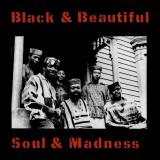
Ursprünglich 1968 in New York auf Barakas eigenem Label Jihad veröffentlicht, ist "Black And Beautiful Soul And Madness" ein leidenschaftliches Zeitdokument der 1960er Jahre. Man könnte es leicht für eine verschollene Veröffentlichung von ESP-DISK halten, fügt es sich doch nahtlos zwischen Sun Ra, The Fugs und Albert Ayler ein. Die Band nutzte ihre Stimmen auf vielfältige Weise: mal singend im Stil von Doo-Wop und Soul, mal rappend im Stil der Last Poets, und oft auch beides gleichzeitig. Emotional fesselnd und von enormer Kraft, wird dieses Werk nun erstmals wieder auf Vinyl zugänglich.
180g Heavy double vinyl LP with liner notes by Tyran Grillo. Limited Japanese Obi for the first pressing. Original artwork by Russell Mills and photography by Jean-Baptiste Mondino.
The third Time Capsule is a body of dub reinterpretations by celebrated producer Bill Laswell of Ethiopian singer Gigi. Curated by Tokyo record collector, music researcher and seasoned reissue supervisor Ken Hidaka, it is the first time Illuminated Audio is pressed to vinyl after its CD release in 2003.
Ejigayehu Shibabaw was born in 1974 in Chagni, northwestern Ethiopia and by pursuing a career as a singer, went against her father’s strict, traditional gender roles. As Gigi, she embraced the same musical freedom she had strived for in her personal life, incorporating the Ethiopian church, funk, hip-hop, West and South African music into her work. She first settled in Nairobi, then Addis Ababa, where she quickly established herself as one of the city’s leading singers. A move to San Francisco in 1998 led to a long and fruitful creative partnership with bassist and producer Bill Laswell.
Around the same time, Chris Blackwell had stepped away from Island Records to start the art house film company and label Palm Pictures. He took an interest in Gigi and together with Laswell, pulled together an all-star cast of musicians for her self-titled US debut album, including Herbie Hancock, Pharoah Sanders and Wayne Shorter. It won international critical acclaim, not just for its musicianship but for making Gigi a “defining voice for the Ethiopian expatriate community”, as journalist Tyran Grillo praises in his Time Capsule liner notes. From the nation-defining 1896 victory over Italian invaders to the quiet revolutionaries who wear simple shemma garments, Grillo believes the themes in Gigi make it “a shower of sunlight on her homeland for those ignorant of its struggles.”
After its success, Blackwell encouraged them to go back into the studio to rethink the album and Illuminated Audio was born. “Anyone can make a voice sound worldly”, Grillo remarks, “but rare are those who can make one sound inner-worldly.” Gigi was clear with Laswell to give her vocals a minor role “because it’s already been done.” Instead her Amharic verse is fleeting, exhaling through the textures like ghostly fragments; soaring yet muted. Yet the album is still titled under her name, an assertion by Laswell of her central role in the album’s creation. Not only was it a fully endorsed project by Gigi, but she would be present throughout its development, giving feedback on half-finished ideas as Laswell played them back in the studio. “It works perfectly”, she reflected after the album’s release. “We wanted to capture the whole spirit of each track, and Bill’s remixes create a different music language that really puts you in a pleasant place”.
This new vocabulary takes its lead from a technical approach that Laswell had been perfecting during a furtive creative period at the turn of the millennium. Much like his ambient interpretations of Miles Davis (Panthalassa, 1998), Bob Marley (Dreams of Freedom, 1997), and Carlos Santana (Divine Light, 2001), Laswell approached Illuminated Audio by returning to the original multitrack masters. Gigi wasn’t just reworked, but recomposed into an expansive lattice of instruments, submerged in a watery ambience of dub and trance undercurrents.
Sonically, this new language that Gigi refers to, is manifested by the original album’s more understated parts being pushed to the fore. Explaining his contrasting methods, Laswell saw Gigi as being “put together in a way that fits”. Contrastingly, in Illuminated Audio, “a lot of things that I featured in the remix weren’t as audible in the original.” Instrumentation laying near-dormant, deep in the mix, are brought to the fore: the acid rock guitar and Wayne Shorter’s saxophone on ‘Tew Ante Sew’, Graham Haynes’ flugelhorn on ‘Nafekeñ’, Laswell’s bass on ‘Kahn’, the melodica in Mengedegna or the floating synths and talking drums in ‘Gud Fella’.
Brought to his attention by mentor DJ Nori, Hidaka describes Illuminated Audio as a “masterful sonic exploration into ethereal ambience and dub” and made sure this reissue also contained a full remaster to give its “deep musicality” much better dynamics and density in the overall sound. Hidaka admits that Laswell's music “is sometimes so out-there, it is often misunderstood” and, indeed, to dub album non-believers this might seem like a prolific producer imposing himself on another artist’s work; eternally developing rearrangements that never quite get to its destination. But that’s missing its true power and triumph. This is more than the reissue of a remix, but “a wholly unique musical entity”, as Hidaka describes. Illuminated Audio refers to the illuminated manuscripts that comprise the major part of Ethiopian art and its new compositions stand in proud solitude as a rare body of reworks that both informs and enhances their originals.
Paraiso has been doing vital work in Portugal - documenting the underground dance scene's history and pioneers in various mediums while also showcasing equally brilliant artists from newer generations. And they've been doing it for a decade now: we all know that a label dedicated to its local scene through and through is something rare and should be celebrated. This compilation 'X - 10 Years of Underground House Music from a Paradise Called Portugal' is a manifestation of that cross-generational spirit, with ten never-before-heard pieces of music by initiators and legends like The Advent alongside more recent veterans like Roundhouse Kick and Vil or younger talent like Phoebe or Van Der. Things start off with Salbany's 'Trax 10', oozing a techno elegance and irrefutable groove that wonderfully portrays the spirit of the Lisbon sound: raw yet ethereal, disarming in its simplicity while containing rave, romance and rhythmic complexities. Label founders Maria Amor & Shcuro firmly carry on the torch with 'Intracellular', gelled by dubby washes, syncopated drums, infectious rhythmic sense and layered with a melodic vocal motif. Vil's 'Cave' brings in stone-cold tight percussion offset by rich, evocative pads and technoid know-how for days. The Advent steps in with an ode to acid-minimalism, raw and slow-burning, with curious and twisted moments peppered with the skill of an expert. Van Der storms in with a piece of hybrid qualities, impeccably blending a swing onto industrial territories for a hypnotic-yet-banging hands in the air dancefloor moment. Scam Dust (the duo of Tiago and Shcuro, from adjacent generations) picks up on the industrial flavours, adds furious jacking rhythmics and live sonic experimentation that takes us to peak-quality effect and noise manipulation. 'Subvert' follows and goes deeper, as if into the depths of the ocean, with aquatic arpeggios and sparse drums that morph into an 303-driven state of mysterious oceanfloor mania - Roundhouse Kick sending us messages from the South. Violet and her 'Dream Machine' emerge with its mutant noisy motif, delay-drenched percussion and steady beat interrupted by keys, drum variations - and a u-turn to its paranoid loopy beginnings. Phoebe enters the chat and brings sonic sun rays in 'Galaxia 2000', a wide-eyed moment lead by colourful, open synthesisers with gates and filters taking us on a beautiful ride on tense, swingy drum patterns. The tenth track comes from Lisbon's rkeat and is full of closing act ear-candy with its beautifully chiseled, groovy as hell percussion, organic sonics and metallic instruments that seem to announce that the next decade is about to be just as good, if not better than this lovely 2016-2026 stint of boundary and scene-pushing.
For their next release, Phase Group invites you deep into the mind of a singular artist to offer a glimpse of their prolific body of work, zooming in on music composed specifically between 2018 and 2021.
Across 16 tracks, ‘Summa 2018-2021’ by Serbian producer Andria reveals a highly unique approach to sound design and composition, spanning the realms of futuristic IDM, ritual ambient, fourth-world techno and other elusive electronic genres.
Listening to this album in its entirety feels like entering a self-contained sonic world, where animistic and ancestral traditions are refracted through unfamiliar forms of technology. It’s an album which moves effortlessly from moments of deep and contemplative abstraction, as heard in tracks like ‘Sunlessness’, with it's atmosphere of otherworldly field recordings and ancient rites, to propulsive tracks that will guide clubs through ceremonial trance states such as ‘Floating Island’, where industrial kicks underline expressive poly-rhythms, evocative synths and snarling digital glitches.
The release is a gripping and immersive listening experience filled with spellbinding and expertly conjured sounds alongside highly effective moments of dance music that will surely find their way into the sets of the most expressive and fearless DJs. This is one for fans of Coil, Shackleton, Andy Stott and Demdike Stare.
Behind the work is Andrija Čugurović the Belgrade-based artist. A graphic designer by day (and in-house designer here at Phase Group), he dedicates his nights and time away from work and production to Belgrade’s underground electronic scene, digging deep into the worlds of Bass, Techno, Industrial, Ambient, IDM, Experimental and Computer Music.
A regular attendee at spots like Drugstore and the 20/44 boat since a young age, Andrija has honed a deep connection with the music he creates and DJs and that is evidenced in this highly original collection of music. This is his second release on Phase Group, coming after his debut EP ‘o o o o o’ in 2020, the second release on the label.
'Summa 2018-2021’ is available digitally and on high-fidelity C-90 cassette, dubbed at Tapeline UK and distributed by Rubadub.
All tracks composed and produced by Andrija Čugurović.
Mastered by Giuseppe Ielasi.
Artwork by Andrija Čugurović.
This fourth album, released on 01 January 2002, features hit singles such as "Evolution" "M" and "Dearest"
This masterpiece features many of Ayumi Hamasaki's signature hits and showcases Ayu's explosive creativity, including her work composing under the name
CREA.
Often credited as the father of multi-media theatre, Alwin Nikolais (1910-1993) took complete creative control over his productions - including cutting-edge approaches to lighting and costume that transformed human bodies into shifting sculptural shapes, while also composing wildly innovative electro-acoustic and synth-based audio as accompaniment.
After initially experimenting with musique concrète and tape manipulation (as demonstrated on the 1959 LP Choreosonic Music of the New Dance Theatre of Alwin Nikolais) Nikolais became the first owner of Robert Moog's synthesizer at the Audio Engineering Society convention in New York in late 1964. Relying heavily on the Moog and later the Synclavier synth/sampler, these 21 tracks document Nikolais' highly-prescient compositions across the mid 1960s through to the late 1980s - existing not only as extensions of his other-worldly choreographic productions, but standalone pieces of foundational mid-century American electronic and experimental music.
"Born in Southington, Connecticut in 1910, Nikolais’s early years and early career were in acting, music and puppetry. It was not until the late 1930s that he began his work as dancer/choreographer in Hartford, Connecticut, where he was commissioned by the Avery Memorial Theatre, a part of the Wadsworth Atheneum, to create an evening-length work to the music of Ernst Krenek. Previously his work and study as a pianist-organist found him accompanying silent films. This sort of accompaniment required from the musician not only a playing skill but also a versatility in improvisation, matching movement to sound, and evoking mood to situation.
Nik was drawn initially to dance by his involvement with the percussion scores used by the illustrious early twentieth century German dancer Mary Wigman. In trying to learn more about percussion, he was lured into dance class and thus his career began. His development of music and dance occurred simultaneously. His introduction to the twelve-tone technique opened his mind to the expanding areas of atonal music, and his dealing with music as sound per se. In 1948, after being appointed director of the Henry Street Playhouse in New York, Nikolais formed the Playhouse Dance Company, later known as the Nikolais Dance Theater, and began his aesthetic orientation toward dance as a study of motion. By the 1950s, he had ceased creating literal dances and began his explorations and eventual milieu as an abstractionist.
Sound became an important part of his abstract theatre. For his first dances, which involved his new thinking of dance as both a visual and kinetic art, he used live percussion scores in which he directed his dancers to play instruments of all nature. There was a combination of children’s toy instruments as well as harsh and resonant automobile brake drums, and other pitched auto parts which he also used to accompany classes. Once he installed his own tape recording machines, he quickly used the limited range these instruments provided in a new way, slowing and increasing speed and reversing sound. He also made the sounds adhere to the choreographic structure (not the other way around), thereby giving the dance its independence from the musical phrasing. But the real need remained: the search for new sound. Nik made a sound library, recording noises and percussion and vocal sounds, which the French aptly called musique concrète. Needless to say, he became a master at splicing bits and pieces.
From 1956 to 1962 Nikolais composed eleven major scores for his theatre pieces using such techniques. In 1963, James Seawright, who at the time was assisting Nik in his productions and also working at the Columbia-Princeton Center for Electronic Music, recorded a sound bank for the production Imago (1963). With this material, Nikolais created his first synthesizer score. Imago won the Paris Grand Prix in 1968 and launched the Nikolais Dance Theatre towards its national and primarily international acclaim.
During the same period, Seawright came to Nik and told him of a young man who had invented and constructed a simplified synthesizer and insisted that Nik visit the electronic fair currently being held in New York. Nik did so and met Robert Moog. He was completely taken by the new machine and after making some suggestions to Moog, (which Moog made), Nik bought the inventor’s first machine with the aid of a Guggenheim Fellowship. Moog himself was astonished by what his machine could produce for Nik. This machine was later acquired by the Museum of Musical Instruments at the University of Michigan at Ann Arbor as the first Moog synthesizer. The Synclavier was Nik’s next source of sound and since the mid-1970s remained the major instrument in the Nikolais soundroom.
Alwin Nikolais has been honored and awarded throughout the world. He has received the French Legion of Honor, the Kennedy Center Honors, National Medal of the Arts, two Guggenheim Fellowships, as well as Mellon, Ford, and Rockefeller grants. He has been a recipient of NEA grants since 1966, been awarded five honorary doctorates, all for his remarkable achievements in Dance Theater. His genius has influenced several generations of artists."
—Murray Louis
In Gianfranco Rosi’s portrait of Naples, Sotto le Nuvole, the ground shakes periodically. Between Mount Vesuvius and the Tyrrhenian Sea, the fumaroles of the Phlegraean Fields hiss volcanic gas and steam. Below the sleeping volcano, modern day Naples emerges in black and white and fills with voices, with lives. From the traces of history and the concerns of the present, Rosi documents a city immersed in its continuous past, with Daniel Blumberg’s minimal soundscape hovering in a sonic space between liquid and air.
Tasked with creating a soundscape that would suspend space within Rosi’s film, Blumberg called upon the extended technique of saxophonists Seymour Wright and John Butcher to create a gossamer fabric of traces and sounds abstracted from their instruments. Having transitioned from theoretical physics to the saxophone, John Butcher has always deeply considered space in the context of his playing. His concerns are with flow, density and how the saxophone is situated in the living world. Zeroing in on the core sonic properties of the mechanical and acoustic components of the saxophone, Seymour Wright has integrated its every breath, reed vibration, keypad clatter and hissed microtone of his alto into his own, unique improvisational language. In his work with these two seminal players, Blumberg makes his most concentrated soundtrack to date - reinforcing the film's sense of overlapping time and space, and pushing at the limits of experimentation.
Initially recorded in Daniel’s flat in London, Butcher and Wright centre themselves around long, consistent tones, so soft that it seems breath is being gently pulled from the saxophone's bell by an invisible hand. Blumberg himself adds haunting bass harmonica, and recordings of Wright’s launeddas - a traditional and ancient triple pipe polyphonic reed instrument from Sardinia, Italy. Blumberg then travelled to the volcanic region of Baia, next to Pompeii. Once a flourishing classical Roman city loved by Nero, Baia slowly sank under hydrothermal pressure, leaving the city in a kind of geological purgatory. Using specialised geophones and hydrophones, Blumberg took those initial recordings and amplified them underwater, sending them calling out across the ruins of Baia’s mosaics, Nymphaeum statues and villas.
“It was important to me that the music was whispered in the same landscape that Gianfranco has worked for the past three years, so that you can hear the volcanic air gulping, the lapping of the waves, the steam and bubbles popping against John and Seymour’s saxophone breaths – an echo from a suspended time.”
What emerges is deeply melancholic, tender, subtle and right at the edges of audio technology. Submerged in an aquarian mausoleum, the mysterious vibrations of the saxophone and its bell become an echo of an echo, wading from the future into the past. ‘Sotto le Nuvole’ is less a soundtrack than a process of aeration - a sonic puncture in the material of the film which allows its central message to breathe, and a remarkable experiment at the limits of the saxophone’s possibility.
Compiled onto one vinyl album for the first time, Landlocked (Numbers, 2026) presents Hallucinator’s 1999 debut album originally released under Mark Ernestus and Moritz von Oswald’s label Chain Reaction. Writing much surrounding the culture of what would be later considered ‘Dub Techno’ and its’ primary distribution center, Hard Wax, leads one down roads of shifting primary sources and decades old overheard smoke break recollections. Maybe brevity primes the listener to the paralinguistic to approach the sound on its terms; focusing on how things are uttered and not what.
This theory will remain unconfirmed. Hallucinator original press release left us with three or so gestures to consider over the years since:
“A new act on CHAIN REACTION”s distinct productional thesis. HALLUCINATOR are 3 people from he UK/London and this their first release ever- that’s all what the artists want to let us know…. This record is dedidacted to the memory of Stephen Lawrence!”
The first gesture is one of personnel. Since ’99, we’ve gotten to learn a bit more about the artists behind the Hallucinator project. All London-based, all writers, composers, and sound-designers— Anna Piva, Edward George, Trevor Mathison. These three seem to flow between parameters as aesthetic tactic and tacit structure to the work itself. For example, other collaborative shapes have come from this lineup including Flow Motion (Piva, George and Mathison) as well as the now defunct Black Audio Film Collective of which George and Mathison are founding members.
The second gesture is in the second line of the previous press release, “distinct productional thesis.” Much of Landlocked’s affect and sequencing seems to suggest an emotional study of entropy at the level of sediment. Rhythms play with space and capacity through polyvalence. The production chose subtractive vertigo, often switching and bringing back in elements that vanished from the track 6 minutes ago. Dubbing out so much of a track, one begins to associate sound akin to memories held in the experience of running your hand across a concrete block as a child. Felt (re)memberance in lieu of narrative tale. Using textures that flicker between colour and percussion, Hallucinator’s 12-tracker of loudspeaker perception music might be a mediation on the psychic wake of the Cold War. Intermittent strata of ambience and groove convects an active margin rifting event underneath a scorched geology of power in Western Europe. Again, this is all grapevine hearsay.
But it’s silence that voices the third gesture. The album’s sparse application of the written word touches on the ennui paradox of being landlocked on an island. Stuck. Trapped in the psychosis of occidental hypercentricism. A looping silence of Black British tragedy: “to the memory of Stephen Lawrence”. 18 year-old Lawrence was stabbed to death at a bus stop in southeast London by six white men in 1993. The rift of grief and implicit reiteration of modern subordination left by this hate act went legally silent for almost two decades until Lawrence’s killers were ultimately sentenced to virtually life in jail in 2012. Only six years removed at the time of Hallucinator’s initial invocation of rememory, the mind-numbing accretion of what Black Studies Professor Denise Ferreira da Silva might call “unpayable debt”, finds demonic ground across Landlocked, forming an aural sense of what continues to be refused.
The album ventures through spaces of overactive non-happenings: ‘Red Angel’’s factory floor dub flashes between smokestack and jungle visions, or the halfway mark’s stilted breath of ‘Dusk’ lending its mood to the sort of sedated dreams built from daily life under colony rule for instance. That linked rhythm links us back to our linked fates across Black and Brown folk is real, thus the syncopated signals through this work behave on the level of transnational radiotelegraphy, sounding out its windswept tension of a body negotiating a meat-grinder schema of linear production and wage for others to know that unspeakable thing can be broadcast in every drum tongue.
As the silence continues to reverb, we return to the sort of meaning-making that cannot be told but felt. Soothing to some, disturbing to others. Landlocked, a Rorschach test for a crumbled empire.
Joe Fujinoki centered the compositions of his latest album Glass Torso round the idea of the fragility of the human body. Fujinoki described the narrative thread of the album as that of “holding the shape of a human body as if it might shatter like glass”. The precariousness of the body, the essence of the body as defined by Fujinoki as the torso, and the object relations between the boundaries of dialectical exercises pack themselves into his creative process.
Fujinoki recorded Glass Torso exclusively with analog synthesizers, stumbling in and out of structural loops to find space for accidental discoveries. The ten pieces of recorded material feel somewhere on the edge of typified form, feeling like a vascular system pumping in and out its undulating liquidities. Maybe this is the hollowed space held together by Fujinoki’s notion of the torso where you hear a microscopic world, dubby and generative. Fujinoki is adept at organizing this realm of subtle sound sources, giving proper considerations of shared tonal space. Seemingly, this handling of the precarity of sonic material elucidates Fujinoki’s mature attention to detail.
Ambient music genre tropes often affirm the listeners vessel for escape and dissociation. It provides an intoxicating allure by respite from an overwhelming exterior reality far outside the listeners controls. Here this space becomes apolitical, or its protest vocabulary softer and subtle. Fujinoki does not aim to tackle hyperobject topics on how to course correct the world, but he does something increasingly rarer to come across. On Glass Torso an alternative space is created not as shelter, but as a meditation on negotiation and compromise. This twenty eight minutes of audio lays down a foundation for imagination, for imagining how to negotiate the fragility of the self. Zoomed out, the implications of his negotiative sonics can be a playground for broader reflections on distributive care and attention.
Fujinoki says he feels “alert” to his physicality and placement in the world amidst vast digital cultures creating impositions on him and his surroundings. On Glass Torso he creates a concretized space on a vinyl record, where the virtual and the tangible antagonize one another that create the spectacle of the listening experience. This spectacle is a soft one, a considered one, and an utmost enjoyable one. Fujinoki juggles opposing forces brilliantly, and formulates an exquisite palette of soft passing music so he can also help the listener with the exquisite burden of their own Glass Torso.”
The Nu’rons were a family group consisting of two sets of brothers and cousins, the four young men in question being brothers Daryl Howard and Raymond Gibson (Daryl’s mother registered him under his father’s surname of Howard and Raymond under her maiden name of Gibson) together with Otho Bateman and Charles Bateman. They were all born and raised in Salem, New Jersey and from the age of ten and eleven began singing with a fifth member and Gibson brother Rudolph as a group called The Gospel 5. They eventually decided to crossover to secular music and as a group known for their energetic dance routines they came up with the new performing name of ‘The Nu’rons’ (taken from the word ‘Neuron’ which is a cell that transmits nerve impulses). However Rudolph was soon to leave the group due to physical illness. Also Daryl Howard and Charles Bateman had also been part of a working group known as The Devotions prior to becoming The Nu-Ron’s.Following hours of practice The Nu’rons eventually felt confident enough to put their own shows together and began to perform at local dances and parties around New Jersey and Philadelphia, often being used as a non-paid warm up act for bigger named artists. They moved between several different managers including Jimmy Bishop (Duo Dynamic Productions) until they came under the tutelage of WDAS radio DJ Georgie Woods (his wife Gilda, being the owner of the Philadelphia Gil, Dion and Top & Bottom record Labels). It was Georgie who introduced them to Manny Campbell who in turn invited them to an audition at his and partner Charles Bowen’s Emandolynn Music studio in Chester P.A. The song The Nu’rons chose to audition with was the self penned “I’m A Loner”, the audition went well, as during late January/early February of 1970 Manny and Charles took The Nu’rons into the Sigma Sound Studio’s with Tom Bell and the TSOP musicians to record “I’m A Loner” and “All My Life” which was released on the Nu-Ron label in April of the same year. The two studio takes presente don this release came short after the band moved on from the collaboration with producer Emanuel Campbell to take music matters in their own hands. Beside recording "Disco Hustle" to be part of the disco boom in Philly of the times, they recorded also “You Came Thru”, a rough yet beautiful heavy bassline driven soul funk recording, and the just amazing “Hurry Up Tomorrow”, here presented in one of the original Studio takes.
Vinyl Packaging: Gatefold LP + download card. Indie Exclusive Transparent Orange vinyl in gatefold jacket Limited to 1000. CD 6 panel Digipak. Gnosis is the highly anticipated 8th full length from Russian Circles. Across the span of their previous seven studio albums, Chicago-based instrumental trio Russian Circles traversed a diverse topography of sounds, moods, and approaches with their limited armory of drums, bass, and guitar. It’s difficult to chart an evolution in their sound when their records have always felt like well-curated playlists. It wasn’t uncommon to hear drone-heavy meditations, dazzling prog exercises, knuckle-dragging riff-fests, haunting folk ballads, and tension-baiting noise rock all within the span of one album. Still, it’s difficult to ignore the progression from the pensive and intricate melodies of Enter (2006) to the layered distorted dirges of Blood Year (2019). It’s been a gradual sonic shift owing to the band’s rigorous tour schedule and a predilection towards playing their more authoritative material on stage. But with their latest album, Gnosis, Russian Circles eschew the varied terrain of their past work and bulldoze a path through the most tumultuous and harrowing territory of their sound. As was the case for so many artists in the age of COVID, the obstacles of geography and isolation forced Russian Circles to reevaluate their writing process. Rather than crafting songs out of fragmented ideas in the practice room, full songs were written and recorded independently before being shared with other members, so that their initial vision was retained. While these demos spanned the full breadth of the band’s varied styles, the more cinematic compositions were ultimately excised in favor of the physically cathartic pieces. Gnosis was engineered and mixed by Kurt Ballou. Drums and bass were tracked at Electrical Audio in Chicago to maximize the natural room sounds of the rhythm section. Guitar and synth overdubs were conducted at God City in Salem, MA to take advantage of Ballou’s vast inventory of amps and effects pedals. Despite the entirety of the album being written remotely, the songs were recorded with the full band playing together to retain the live feel of the material. Owing to the climate of the times and a new writing method, Russian Circles created their most fuming and focused work to date—an album that favors the exorcism of two years’ worth of tension over the melancholy and restraint that often colored their past endeavors. European Co-Headline tour with Cult of Luna slated for Marc 2023 (Dates TBA). Russian Circles have received coverage from most notable press including Pitchfork, Rolling Stone, Stereogum, FADER, AV Club, Consequence, Decibel, Revolver and much more.
Dire Straits' arresting self-titled debut arrived in the midst of punk's reign but couldn't have been further removed from the era's slash-and-burn style. Recorded in West London in February 1978, the band's tasteful, jazz-inflected set embraces folk, blues, and pub rock while also tracing a direct line back to the beat-oriented sound of early rock n' roll. Country and roots accents further distinguish the British quartet's stripped-down music from any 1970s peers, as does the transparent production, which has remained revered among audiophiles the world over – and which has never been better than on this meticulous pressing.
Mastered from the original master tapes and pressed at RTI, Mobile Fidelity's 180g 45RPM 2LP version of Dire Straits features natural tonalities, superb balances, you-are-there imaging, deep-black backgrounds, and pristine clarity. Even if you've heard this album hundreds of times before, you've never experienced it with such lifelike sonics and premium richness. This numbered-edition collector's set immerses you within the smoky, laidback atmospherics of every song. This is how all vinyl should sound.
Crucial to every arrangement, Mark Knopfler's winding guitar lines emerge with supreme transparency and multi-hued textural detail. His intricate playing comes across as if it's being transmitted via his 60s-era Fender Vibrolux amplifier placed right before you. The cleanliness, dimensions, and live feel are that good. His bandmates, too, benefit from the extra groove space afforded by this 45RPM edition. Rhythms skate and swirl; percussive effects resonate with crispness and attack; the leading edges of notes naturally decay.
Dire Straits' strong, well-edited batch of original material further enhances the overall enjoyment and makes the record one whose pleasures go far beyond the organic sonics. Just as Knopfler's narratives pour forth with poetic and surrealist texts, the musical settings – an intoxicating combination of easygoing shuffles, back-hall boogies, and pop-honed ballads – mirror the old-fashioned soulfulness inherent in the classic recordings of the late 50s and early 60s. The lyrics are equally captivating.
Drawing from his time as a youth in Newcastle, Leeds, and London, Knopfler invests tunes with an autobiographical slant and emotional connectivity that become obvious the moment he opens his mouth to sing. "Down to the Waterline," "Wild West End," and "Lions" all feature colloquial touches that add to their reach. By extension, "In the Gallery" functions as a tribute to Leeds sculptor Harry Phillips (father of future Knoplfer collaborator, Steve Phillips) while the record's breakout smash, "Sultans of Swing," pays homage to struggling bar bands.
Through it all, Dire Straits performs with a subtle cool and clever poise that no band ever matched. Just how good is the chemistry? Bob Dylan heard the quartet and invited Knopfler and drummer Pick Withers to play on Slow Train Coming. But even Dylan himself didn't hear Dire Straits sound this magnetic back in its original heyday. Now, everyone can.
In 1996, Busta Rhymes delivered his debut album, The Coming, three years after the Leaders of the New School unofficially disbanded. Though his talents were evident on those Leaders of the New School releases, Busta went on a series of features that only built up the public's desire for a solo Busta album. Right out of the gate, Busta dropped his classic debut single "Woo Hah!! (Got You All in Check)" that made it abundantly clear he was to be mentioned among Hip Hop's greatest solo artists. The energy and originality packed on that one song set a tone for the album that displays Busta's raw talent and ability to bend words with his ever rambunctious flow. The album features production by Easy Mo Bee, DJ Scratch, Q-Tip, and J Dilla. Songs such as "Everything Remains Raw", "Abandon Ship", and "Still Shining" all rise above as The Coming's stand-out tracks, but "Ill Vibe" is the album's crown jewel moment. Busta sounds right at home over this J Dilla beat, trading verses with his Native Tongue cohort Q-Tip. The Coming was a critical and commercial success for Busta Rhymes. It reached #6 on the Billboard 200 chart in 1996 and has since received a platinum certification from RIAA. As mentioned, The Coming boasts the hit single "Woo Hah!! Got You All in Check " which reached #8 on the Billboard Hot 100 chart in 1996. It was nominated for a 1997 Grammy Award for Best Rap Solo Performance. It also ended up sporting another hit single, It's a Party featuring Zhané. The Coming shows amazing variety where Busta can break free from the bells and the whistles of the Busta Dungeon Dragon flow to explore other ways of leaving our jaws open by his incredible lyricism. The Coming surely lives up to its title, as Busta delivers a performance that ignited his impeccable solo career.
Indie shops only. Limited red vinyl rerelease. 500 for the World (just 80 copies for the UK) After falling out with Sir Coxsone, the legendary head of the Kingston label Studio One, Lee Perry first founded his own band and then, in 1973, set up his own studio in his backyard. What was born out of necessity developed into a unique success story. With both the Upsetters and the Black Ark, Perry made music history - most notably with the 1976 release of the album Super Ape, on which he made the genre of dub bubble and boil from the mixing desk in previously unheard ways. For Perry, the studio is like a living organism. Whether he truly experiences it that way or simply lets too much ganja go up in smoke, for Perry the equipment is organic, empathetic, and intelligent. The catch is that the results sound exactly like that as well. Long before sampling was invented, he layered tracks of deep basslines, echoes, and reverb with various self-recorded sound sequences – often played in reverse - on top of, into, and beneath each other. In other words, Perry was the first producer who made the music instead of the band. Among other things, this earned him the title ‘Salvador Dali of Dub.’
Djrum's first release since 2019, the Meaning’s Edge EP is an introduction to a whole new world. For the artist also known as Felix Manuel, it was created in the final stretches of six rather traumatic years work. Having carefully honed his techniques and aesthetics, and learned some hard-won emotional lessons over this time, finally he began to work in a quicker, lighter fashion – and to cleanse his palate a little by bringing in a fresh ingredient: his own flute playing. For listeners, though, it will serve as an appetiser, a way into the delights and complexities of this new phase of his creativity.
It’s a serious work in its own right, mind. The use of flutes – including Bansuri, Shakuhatchi, Western Classical, and synthesised all blending and blurring into one another – gives it a coherence and a sense of airiness that unites the five tracks over half an hour, however divergent their beats get. And as in all his music, Felix’s whole life is in here. Ethnomusicology studies, untold hours of DJing everywhere from the gnarliest squat raves to the most rarefied deep house clubs, explorations of his own neurological and emotional makeup, and the technical finesse of someone who is never not creating music or art, all roll into an experience that’s dazzling, delightful and keeps on giving.
Just the opening track ‘Codex’ alone touches on OG dubstep, Aphex Twin-like braindance, post-classical exploration, movie themes and more. The gentle tones and melodies that rise up out of it perfectly conjure Felix’s running theme of a protective bubble that provides a sense of safety and tranquillity even as the beats and acid gurgles and spurts all around it conjure up the slings and arrows of life’s difficulties.
The tone set, the EP moves through ultra-rarefied glass-like percussion in an almost ambient setting, hints of grime’s counterintuitive patterns, and even more hectic patterns influenced by Tanzania’s hyperspeed singeli style of dance music – but always with that perfect balance of chaos and control, unpredictability and protection. It rewards playing and replaying endlessly, it’s a profound and often joyous experience… and it’s only just the beginning. This is the return of a master craftsperson more focused than ever on his vision and vocation and ready to blow your mind all over again.
Mastered and cut on 140g black vinyl by legendary mastering engineer Matt Colton at Metropolis Studios, London. Pressed at optimal media, Germany.
Rhythm Section International proudly presents it's 8th offering from local boys Chaos in the CBD. Born in New Zealand, but based in Peckham for the last few years (literally just around the corner from Henry Wu and Bradley Zero), these brothers have made a real mark on the scene here in London town and with their latest set of productions are set to take this message further afield.
Having already released internationally on labels such as ClekClekBoom (Paris), Hot Haus (London) and Amadeus (Montreal), the duo's approach to production has matured immeasurably in the last year, as is evident in the restrained potency and poetic subtlety on the 4 tracks across this accomplished EP, Midnight in Peckham.
Taking it's title from the locale the boys have come to know as home, the record channels a delicate late night energy - equally indebted to the hypnotic incantations of Ron Trent as it is to the hazy suburban atmospheres of Burial. These 4 classic cuts pay homage to deep house in it's truest sense - at once sublime, melancholy and meditative . Chaos in the CBD have clearly taken their cue from the mid-west masters of the genre but have not been afraid to let their own influences and environ creep in, and in doing so have created something that is unmistakablely London and infact, timeless.
12th Isle return to familiar downtempo, club-adjacent ambient and analogue house stylings with eight tracks from Japan’s sprawling metropolis. After a series of split releases and dancefloor focused EPs over the last decade, Tokyo based producer Igaxx lands on the label with their debut full length album to close out the year.
Influenced by leftfield electronic music from the 1990s such as releases on Elektrolux and Rising High, Igaxx (Shota Ikawa) works with multi-tracked hardware synthesizers manufactured throughout the 1990s and 2000s, embracing subtle variations and unexpected moments that emerge through performance. Allowing chance and unpredictability to become an integral part of the music, Ikawa’s process and sound design also speaks to the lighter side of vintage UK labels such as Irdial and Radioactive Lamb or the psychedelia-infused touch of the West Coast scene in the states. New Lights exists somewhere between the dancefloor and music for focused listening, carrying a sense of weightlessness and a quiet sense of humour, balancing immersive sonic environments and moments of sly unexpected detail and improvisation.
“To date, I have released several EPs on my own label in Japan as well as on labels across Europe. I am truly happy to finally present my work in the form of a full-length album. It has allowed me to express and unify a broader musical world than was possible within the format of an EP, and that, to me, is one of the album’s greatest meanings.”
Devotional music most often gets distilled into earthy chants and ancient folklore, it doesn't always ascend to the sky like Julinko’s ‘Naebula’ an album that from the first organ note clearly trades in terrestrial dreams for ethereal visions. A feverish quality permeates the whole record, as if a ritualistic performance was being captured from start to finish, a collection of hallucinatory doom, synthetic neo-folk hymns and ghostly art-rock.
Julinko, stage name for Giulia Parin Zecchin, has long been one of the best kept secrets of the experimental community in North-East Italy, with three records that helped define her unique blend of heavy psychedelia, slowcore and dark ambient. On ‘Naebula’ what really stands out is how powerful and soaring her voice is, a weapon of undeniable force that can transform into a vessel of raw fervour or glide effortlessly as a delicate lament. Her unconventional approach shines through on tracks like ‘Jeanne De Rien’, where a marching pulse acts as a pillar for an extended mantra, almost verging into powwow territory. ‘Peace Of The Unsaid’ uses its arrhythmical structure to create space, a crepuscular night ode that reaches the heights of Sinead O’Connor’s most intimate force-fulness while retaining a sweet composure. Whether it’s glacial murderous shrieks or gospel-esque vitality, songs like ‘Cloudmachine’ or ‘Kiss The Lion’s Tongue’ seem to draw as much from a tradition of European minimalism, the use of drones and repetition, to the tradition of folksongs as hymns, where modal harmonies make way for an apparent stasis. Another key element in Julinko’s songwriting is the seamless blend of her minimalistic approach with these dense textures borrowed from a distant outsider metal heritage, Lynchean noir on steroids or wordless exorcisms with deep undercurrents.
“Danny Elfman’s musical score was to die for, and
it was incorporated into ‘Wednesday’’s joyfully
bleak coming-of-age story so brilliantly.” -
Double LP on Purple Goth with Smoky Shadow
vinyl, with full colour gatefold sleeve and inner
sleeves.
Composed by four-time Oscar nominee, two-time
Emmy winner Danny Elfman (‘Milk’, ‘Big Fish’,
‘Men in Black’, ‘Good Will Hunting’, ‘Live from
Lincoln Center’, ‘Desperate Housewives’, ‘The
Simpsons’) and three-time Emmy nominee Chris
Bacon (‘The Tick’, ‘Bates Motel’, ‘Smash’,
‘Gnomeo & Juliet’, ‘Sherlock Gnomes’,
‘Immanence’).
Elfman also composed music for Tim Burton’s
‘Beetlejuice’, ‘Batman and Batman Returns’, ‘The
Nightmare Before Christmas’, ‘Mars Attacks!’, ‘Big
Fish’ (for which Elfman earned one of his four
career Oscar nods) and ‘Alice in Wonderland’,
among others.
Chris Bacon is a protege of the great James
Newton Howard, and won an HMMA for ‘Gnomeo
& Juliet’, which he shared with James and Bernie
Taupin (Elton John).
Online - Promoted through all Lakeshore Records social
media.
Ismael Pinkler lives in Buenos Aires. Belly Dance Services head Nick Hanzo in Vienna. Turns out the exact midpoint between the two is somewhere in open ocean. So they abandoned the plan to meet on Earth at all, and met on planet 126 in outer space.
It turned out to be a strange, hospitable little world — spinning at its own pulse, 126 beats per minute, changing landscape every few kilometers, as if it couldn't decide what kind of planet it wanted to be either. Ismael and Nick wandered it together, letting each new terrain talk them into a different song, until ten tracks had quietly assembled themselves. What they brought back drifts somewhere between shoegaze, techno, ambient, trippy tribal house and pop — grounded and gravitational, emotional and mental, to put it in terms Earthlings might understand.
Now, speaking seriously: Ismael and Nick built Planet 126 by passing sounds and ideas back and forth across the ocean, night after night, for eight months. The entire process — composition, vocal recording, production and mixing — took just eight months, a dream scenario for any electronic musician. The collaboration stayed positive, proactive and fresh throughout, letting the project move forward effortlessly. All tracks were written and produced by both musicians together; Nick wrote the lyrics and recorded the vocals, Ismael handled the mix. No samples, no references — just two people building a world from scratch.
Planet 126 also marks a milestone for Belly Dance Services: the label's 30th release, and likely its last. BDS began with BDS001, a vinyl EP by label founders Hanzo & Yaman, and has been solely helmed by Nick Hanzo for the past five years. Now it comes full circle — laid to rest with a big bang: a double vinyl gatefold album co-produced by Ismael Pinkler and label head Nick Hanzo.
Nicolas Balmer reveals the heavy silence of his soul.
Facing his own mirror.
The soundscape unfolds.
Fire sets the tone.
Kindling of the abyss, driven to go on and on.
Passion in his language contains suffering.
A silver lining, found in delicately layered noise.
A myriad of intertwined sounds paint the melodies of a life.
Holding the memories of those who danced with his shadows and light.
Nicolas releases his album “Leben” on Zürich based Subject To Restrictions Discs. While moving between New Wave, Kraut and Electronics, his intuition for ambient oozes from each composition, fast-paced or slow. As Nicolas Balmer lays bare his most intimate sources of inspiration with Leben. He holds nothing back.
The album is shaped by a sense of optimistic melancholy: restless and contradictory, yet full of hope. The music is not about arriving, but about the journey: loss and finding oneself; despair, love, guilt and forgiveness. This is an album that does not seek to explain life, but rather embraces it in all its contradictions.
Nicolas Balmer is a Zurich-based multi-instrumentalist, producer and synthesizer enthusiast who has been exploring contemporary music for over fifteen years. Working across music, theatre and interdisciplinary projects, he moves between genres and forms. His work includes the electronic project Nico Sun, the experimental duo Gūsū with Xueyan Chen, the collaborative project Konstant with Angelo Repetto and Kenel/Sonne. He also composes and produces music for theatre and performance, as well as working in mixing and production. Across his projects, Balmer is driven by raw textures, emotional authenticity and a search for an independent musical language.
Since 1992, Robin Storey (founding member of the pioneering post-industrial band Zoviet*France) has been creating innovative and thought-provoking music under the Rapoon moniker. Drawing inspiration from his early days with Z*F, he continues to push the boundaries of ambient, industrial, and world music genres, earning him a dedicated following across the globe.
Originally available in 1994 as a limited-edition DAT tape through Staalplaat Records, Cidar was later included as a bonus CD in the reissue of another Rapoon classic, Fallen Gods. Now, after years of anticipation, fans can experience this mesmerizing work as a stand-alone release – remastered and expanded with three previously unreleased tracks from the original 1994 recording sessions.
Cidar showcases Robin’s signature sound – a seamless blend of Z*F-inspired drones and loops intertwined with vibrant African percussion and hauntingly beautiful Asian string instruments. This combination creates an immersive, trance-like atmosphere that transports listeners into a world of meditative sonic exploration.
With its enchanting rhythms and deeply textured layers, Cidar stands as a testament to Robin’s unparalleled ability to craft music that defies genre boundaries while remaining instantly recognizable. Fans of both Zoviet*France and Rapoon will find themselves drawn into the hypnotic sounds of this timeless masterpiece.
The standalone release of Cidar marks an important milestone in the history of experimental music, offering audiences worldwide the opportunity to rediscover or experience for the first time one of Robin Storey’s most influential works.
Building up from his multiple appearances on the label, one of our closest producers, Luca Durán, makes his full studio album debut on TraTra. This work is meant to showcase the vast world of influences the diasporic experience comes with: his rhythm-driven tracks coexist in high contrast, but fluidly, with the experimental and textures of his european school of sound. The title itself works amongst these two edges of Luca's aesthetic existence, the softness from the flight of a Mariposa with the harsh hit of a death blow.
Killing Mariposas is filled with seemingly clashing techniques, field recordings, acoustic instruments, and analogue synthesis, which converge with modern and forward-thinking production tools to build heavily layered music. Constructing an emotional narration from the contemplative to the euphoric. A sort of contextual shapeshifter, with hints of cumbia, grasps of reggaetón and dembow, but always submerged deeply in a windy and fragmented memory.
This whole project gets rounded up by the packed lineup of collaborators, both vocal features and production partners. Astute minds from distinct internet niches: Kelman Durán, Gavsborg, Iceboy Violet, Debit, Rosa Pistola, BEBE YANA, Kamohelo & Kacha.
One true reflection of Luca's production abilities and sonic poetry.
Manchester-based producer Lily Mumby, the creative force behind Lapalace, has chosen Lavender as her botanical muse for this sixth instalment. Like the aromatic herb that grows from tiny seeds to fragrant purple stalks, her compositions unfold with a similar patience and elegance. Her synthesisers breathe with a natural rhythm, creating textures that emerge and recede like morning dew on lavender buds waiting to bloom.
The standout track ‘new age night’ – a stunning love child of William Basinski's decaying tape loops and Aphex Twin's intricate programming—carries subtle lavender-inspired tones, balancing the plant's calming essence with hypnotic rhythms. Just as lavender requires thoughtful tending before rewarding the gardener with its distinctive aroma, Lapalace's landscapes reveal deeper complexities with each listen.
Much like gardening itself, Mumby demonstrates an innate understanding of when to intervene and when to allow natural development. This approach echoes throughout her career, from her debut EP "Ephemera" which caught the attention of Insult to Injury Records' Timothy Clerkin, through to her contributions to Chez De Milo's "So It Goes" Remix EP and Manchester label Skiptrace's various artists compilation.
Her work across BBC Introducing and fossil.radio reflects this same philosophy – creating environments where sound, space, and organic movement find their natural harmony. But this composition really feels that Mumby has come of age. "Music To Watch Seeds Grow By Vol. 6" represents the continued cultivation of Lapalace's distinctive sound and demonstrates the maturity of an artist way beyond her years. This music stands as a lighthouse through a thick fog of nostalgia, much like lavender standing tall amidst an English cottage garden.
Early DJ support including - Auntie Flo, Ruf Dug, Courtesy, Vladimir Ivkovic.
"Tre" is the new long-awaited 12-track album by The Dining Rooms out for Schema after two lps on the research label Milano2000, "Subterranean Modern" and "NumeroDeux" and a lot of appearances on the most important atmospheric-downtempo compilations. 12 tracks and 2 videos to be precise (Maria Arena is the brillant filmaker working with TDR). 12 elements redefining the borders of TDR music, drawing inspiration from Jazz, Africanism, Hip-Hop, House, Soul with true eclectism. "Tre" is a turning point in the history of TDR and represent a sort of change of perspectives.
Der dämonisch großartige Soundtrack zum erfolgreichen Action-Roguelite-X-Base-Management-Game CULT OF THE LAMB von River Boy (Narayana Johnson). 42 speziell für Vinyl gemasterte Tracks erscheinen auf 180g rot-schwarzem Splatter-Doppelvinyl im Deluxe-Gatefold, verziert mit Kunstwerken des Illustrators Carles Dalmau.
Hiroshi Sato's masterpiece “Awakening” has been reissued for the fourth time in a new color “Pastel Blue Vinyl”. The album was cut by world-renowned engineer Bernie Grundman based on high-spec sound data digitally converted to 96KHz/24bit from the original master tapes. The pressing was done at Sony Music's factory in Japan. This is Hiroshi Sato's fourth original album released in June 1982 after his career in Los Angeles, and his first album for Alpha Records. Featuring Canadian female vocalist Wendy Matthews and using the most advanced drum machine at the time, “LinnDrum,” this mellow and soulful album is a perfect fusion of Sato's sound sense and the atmosphere of American West Coast, and has transcended generations, continues to influence many musicians. Guest guitarists include Tatsuro Yamashita, Tsunehide Matsuki, and Yuji Toriyama! Limited edition.
ICE CASTLES, Larry Heard's downtempo ambient, deep house masterpiece available on vinyl again. After nearly three decades out of print, Larry Heard's Ice Castles is finally getting the reissue people have been asking for. Originally released in 1995 (as Sceneries Not Songs - Volume Tu), Ice Castles stands out as one of the most overlooked, but essential records in deep house and downtempo. A hazy, RnB, jazz-inflected suite of tracks from the genre's original architect. Forming a blueprint for his release in the decades to come. From the shimmering ''Crystal Fantasy'' to the aching title track, this is Heard at his most intimate: less dancefloor, more personal. Now, for the first time since 1998, it's back on vinyl. Remastered and expanded to a full double LP with all tracks.
Golden Seconds has arrived — a brand-new Disco label brought to you by Johannes Albert. In the 1990s, Disco House records became dancefloor anthems, drawing on the nostalgia of disco's golden era while incorporating modern production techniques like sampling. Pioneered by influential producers like JohNick or DJ Sneak, Disco House revitalized the uplifting spirit of Disco while infusing it with the infectious rhythms of House Music. A young Johannes became addicted to this happy music in a heartbeat. Fast forward two decades, and he’s crafted his own updated take on the genre, guided by one simple philosophy:
"Sometimes all it takes to make a room go bang is a beat and a sample."
Golden Seconds Vol. II opens the vaults again and delivers a selection of tracks straight from the stash — timeless grooves, dancefloor heat, and that unmistakable disco glow.
Sexy cover included.
NOAHFINNCE’s ‘STUFF FROM MY BRAIN / MY BRAIN AFTER THERAPY’ is a collection of songs written before and after therapy.
The debut double EP collection features guest vocals from Chris Freeman of Hot Mulligan and builds the world of NOAHFINNCE’s unique, hyperactive brain.
The project tackles issues like depression, anxiety, ADHD, past trauma and the path toward prioritizing mental health.
Deeply personal, but always expressed with a cheeky, quirky, not-so-serious sense of humour, NOAHFINNCE showcases the big personality that has amassed a huge YouTube following and led
him toward being a leading voice in Trans/LGBTQ+ youth issues.
With songs like ‘AFTER THERAPY’ and ‘LIFE'S A
BIT’, NOAHFINNCE is poised to break out as this
year’s new star of the new wave of pop punk.
Podcast platform and event promoter based in Milan since 2019, Clausura now launches its label imprint with a vinyl-only four-track VA. The release features contributions from the label’s founders, Brolpi and THEOREM, alongside guest artists who embody the project’s musical vision.
This first record sets the tone for the label’s future direction, shaped by its community, a spirit of musical exploration, and a strong focus on the dancefloor.
"US funky drummer Les DeMerle who is one of the representations of rare groove scenes. hisA1st album which was released in 1968 is finally reissued as vinyl for the first time!AMany killer tracks for diggers are included, such as ""A Day In The Life"" which is also known as sampling material of HIP HOP classic OC ""Time's Up"" and the US No.1 hit great funk numberA ""Aquarius"" by Fifth Dimension.A
In addition, great musicians were joinedAfor this great funk album such as Frank Foster, Lew Tabackin,AArnie Lawrence, Charles Sullivan etc...you can find how young Les DeMerle was a talented drummer even though he was just around 20 years old at that time!"
Xzibit – Kingmaker markiert die lang erwartete Rückkehr der Westcoast-Legende, sein erstes Album seit 2012. Vollgepackt mit Heavyweight-Kollaborationen präsentiert Kingmaker Branchengrößen wie Dr. Dre, Ice Cube, Busta Rhymes, Redman, Royce Da 5'9", Ty Dolla $ign und viele mehr. Mit einer knallharten Produktion und Xzibits charakteristischer, messerscharfer Darbietung verbindet dieses Album rohe Lyrik mit erstklassigen Beats und bekräftigt Xzibits Status als Hip-Hop-Powerhouse. Kingmaker ist ein Muss für Shops und Fans gleichermassen und wird in der gesamten Kulturszene für Aufsehen sorgen.
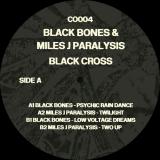
Belfast meets Bradford for a showcase of haunted tribal trances, whirring drum-machine ragas and subsonic ambience. A monolithic face-off on wax. A speaker-troubling duel to the sonic death.
Black Bones and Miles J Paralysis delve into the foundations of Crying Outcast’s fourth transmission: the split EP Black Cross. A release that’s sure to worm its way deep into your musical psyche.
Weapons-grade DJ tools for the margin travellers. Certified. Essential.
Presenting this limited edition 300 picture disc vinyl on Warehouse Manifesto from label boss GAMADON with the original track TERMINATION and five amazing remixes. Each remix is a collaboration between two different artists. The original tracks is a mind-bending, hard-edged electro stomper, shaped with harsh, distorted industrial beats, warped synths and hypnotic bleeps that will make you bounce! Power & X-Tuder's menacing remix growls throughout and drenches you in dystopian dread. Nasty Boxes & Robodrum's cyber-punk banger is filled with cinematic soundscapes and 80's synth-lines, that invite you on an epic electro journey. Code Rising & Geon bring some Miami Bass to the table and provide us with a brutal, percussion heavy, monster. ADJ & Errorbeauty's remix is a metallic, blisteringly harsh journey across a desolate electro wasteland. EXM & Kim Cosmik end the proceedings with an experimental, IDM, glitchy, anthem.
Tomu DJ’s debut on CST Imprint shares ten atmospheric wistful ruminations on being, living, and the spiritual undercurrents that alchemize these experiences into song. Hazy memories recalled through glitchy lush lullabies, moving through whispered skittery percussive states into warm melodic vocal confessions. Playful yet exacting productions ebb and flow between pensive indietronica pop interspersed with blissful club tracks that swing from ambient, drum and bass, breaks and house for the dancers. A sanguine daydream, to be free.
Her fourth album since 2021 but first on vinyl, Tomu’s deceptively simple compositions bely complex emotions. Minimal, every element just so, nothing unnecessary. Her ability to create ideal environments for collaboration on full display.
Parra for Cuva returns in 2026 with a new LP – Nacar – and world tour, marking the next step in his ongoing artistic evolution. Known for creating immersive electronic soundscapes that combine organic instruments with detailed, emotive production, he now extends his vision with a renewed visual language and live experience that deepen the connection between sound and space.
Das wandlungsfähige Trio Vanishing Twin präsentiert sein neues Album ,Archives" - eine Collage aus postmoderner Songkunst, die im gemeinsamen Schaffensprozess Transzendenz findet. Der Albumtitel spielt auf den unverwechselbaren Ansatz von Vanishing Twin an, tägliche Aufnahmesessions anzuhören, zusammenzufügen und neu zu bearbeiten. Gründungsmitglied Cathy Lucas beschreibt den Prozess so: ,Material sammeln, damit herumspielen, es auf den Kopf stellen, versuchen, die Teile zusammenzufügen und daraus eine Geschichte zu erschaffen". Da Lucas mittlerweile ins ländliche Frankreich gezogen ist und Valentina Magaletti sowie Susumu Mukai in London leben, verbinden sich die drei, indem sie Songs und Instrumentalfragmente in einem virtuellen Studio austauschen. Die geografische Distanz wird durch ihre kollektive Kreativität überbrückt, wobei jedes Mitglied als Multi-Instrumentalist seinen Beitrag leistet. Jeder Musiker bringt umfangreiche Erfahrung in Zusammenarbeit und Improvisation mit, wobei das Anhören und Bearbeiten von Studio-Sessions ein wesentlicher Bestandteil des kreativen Prozesses ist. Konzepte von Urheberschaft und Eigentumsrechten lösen sich in der Musik von Vanishing Twin auf, während die Mitglieder Instrumente tauschen und sich ganz dem Moment der Zusammenarbeit hingeben. Die ,Archive", die dem Albumtitel seinen Namen geben, werden zu Dokumenten der kollektiven Intelligenz des Trios. Die chaotische Energie von ,Archives" treibt Vanishing Twin in ungewohnte Formen und Richtungen. Außerhalb ihrer Komfortzonen findet das Trio neue Momente der Erleuchtung und Freude. Tief im Mix hörst du vielleicht, wie Magaletti zum Bass greift, Mukai unerwartet am Schlagzeug einspringt oder Lucas chamäleonartig durch die Lücken gleitet. ,Archives" verfeinert Vanishing Twins Modell des kollektiven Musizierens, bei dem Egos in spielerischen Mix-and-Match-Spielen in den Hintergrund treten und die Kreativität zwischen den drei Multi-Instrumentalisten fließt. Sie bewegen sich zwischen und außerhalb konventioneller Genrekategorien und reihen sich neben Weggefährten wie dem Tara Clerkin Trio und Still House Plants ein, wodurch sie die Vorstellung vom zeitgenössischen Musikensemble erweitern. Nach einem Jahrzehnt ihres Bestehens sind Vanishing Twin wandelbarer denn je.
RAWAX produly welcomes the Legend Funk D'Void to the artist family!
We are very happy to present you in future his amazing past and present releases.
Starting with a real GEM which came out originally in 2001 on Blue Recordings.
Our 2026 became a new mastering. Don't miss!
Transparent grünes Vinyl! Wieder lieferbar! Zum ersten Mal überhaupt seit der digital-only Veröffentlichung 2011 erscheint nun der erste "Minecraft"-Soundtrack in physischer Form. Die Vinylversion enthält zwölf Tracks! "Minecraft - Volume Alpha" ist das Werk des deutschen Komponisten und Musikers Daniel Rosenfeld. Unter seinem Künstlernamen C418 erschuf Rosenfeld den weitreichenden Soundtrack und das lebendige Sounddesign, das das auf Voxel aufgebaute Universum von "Minecraft" zum Leben erweckte. Fans und Kritiker waren durch die Bank weg begeistert von seinen beatlosen, ausgewogenen Electro-Stücken. Die bekannte Gaming Seite "Kotaku" führte den Soundtrack unter der "Best Game Music" 2011 und nannte die Musik "beeindruckend beruhigend", während The Guardian die zerbrechlichen Stücke Rosenfelds aus Klavier und minimalistischem Ambient mit den legendären Künstlern ERIK SATIE und BRIAN ENO. In einem Interview destillierte Polygon "Volume Alpha" auf seine Essenz hinuntern: "Der Soundtrack ist nicht gebunden an die Retro-Ästhetik der Minecraft Graphik. Der Soundtrack setzt sich über sie hinweg. Das Album ist ein Versuch, die kombinierte Game/Music Erfahrung in etwas Himmlisches zu übersetzen."
A much needed repress of French ambient composer and lifeguard Roméo Poirier's cult debut record, Plage Arrière. Released with updated artwork, by London imprint Kit Records.
Plage Arrière is a deep sea meditation on a constellation of Greek beaches across three islands. Trumpets, echo-clicks and Harold Budd-esque shimmer piano whirl together on these sand-caked missives, tumbled and re-engineered by their surroundings like seaglass. Poirier evokes the sub-aqeaous ambitions of Jürgen Müller, or Jan Jelinek inspecting a coral reef.
A new pandemic is making its way to you—from New York to Berlin. A bond destined to last for centuries, this release carries that same timeless energy.
Deep bass, hypnotic rhythms, and subtle percussion come together, pulling you deeper and deeper into the progression. A journey built on tension, movement, and atmosphere.
Following the success of two collaborative releases (EMC “The Show”/2008 and Ace & Edo G “Arts & Entertainment” /2009), Masta Ace joins forces with the metal faced MF Doom for Son of Yvonne, a highly personal concept album that celebrates the life and legacy of Ace’s recently departed Mother. Like his 2004 landmark Disposable Arts, Son of Yvonne is meticulously constructed with stories, settings, and characters that resonate with flesh and bone humanity. Interstitial vignettes provide a thematic backbone to the experience, and each track complements and completes the previous to form a narrative whole: a sometimes visceral, sometimes nostalgic slice of Ace’s young life in Brownsville, Brooklyn. Entirely underscored by MF Doom’s iconic Special Herbs instrumentals, Son of Yvonne features the Juice Crew general Big Daddy Kane, new comers Pav Bundy (The Bundies), Reggie B and even MF Doom on the mic. It’s Masta Ace’s no frills flow, however, that looms largest above the dusty samples and digger loops that define Doom’s production. Ace’s photo-realistic rhymes about stick-up kids, spraycan artists and wack emcees add extra gravity to his already celebrated reputation as “truly an under-appreciated rap veteran and underground luminary” (Allmusic Guide). Like Eminem recalls in his 2008 autobiography The Way I Am, “Masta Ace had amazing storytelling skills. His thoughts were so vivid.” TRACKLIST: A1. DJ Ski's Intro A2. Ninteen Seventy Something A3. Son Of Yvonne B1. Da Pro B2. Store Frontin B3. Me & My Gang B4. Crush Hour feat Pav Bundy C1. Think I Am feat Big Daddy Kane & Mf Doom C2. Fresh Fest Reggie B C3. Hoe-Tel-leftovers C4. Slow Down D1. Home Sweet Home feat Pav Bundy D2. Dedication D3. I Did It D4. In Da Spot feat Milani The Artis D5. Outtakes
Though Scratch may have at times seemed crazy, it is worth noting that creative
genius appears so because geniuses see things others do not see and inhabit
realities unseen. As the music on this album reveals, Lee Perry's Black Ark creations
re-arrange the familiar into something new and magical.
Lee spent his early days working with legendary producers Coxsone Dodd, Duke Reid,
Joe Gibbs, Clancy Eccles and Prince Buster, and by 1968 he was an independent
producer, naming his studio musicians The Upsetters and scoring instrumental hits
with innovative rhythms that helped forge the new reggae style. In 1970-1971 he
produced what many consider the greatest works by the Wailers; in 1968 one of his
Upsetters productions hit #5 on the UK pop chart and more hits followed. That gave
him the funds to build his own studio and in 1973 the legendary Black Ark was born.
Among the many landmark classics cut at Black Ark are such incisive political
commentaries as Max Romeo's "War Ina Babylon," and Junior Murvin's "Police and
Thieves" (covered by the Clash). The Congos' "Heart of the Congos" album is a roots
classic and there are many wonderful obscure singles such as Carlton and the Shoes'
"Better Days." Many dub creations made innovative use of Scratch's sonic wizardry via
echo, phasing, reverb, fanging, wah-wah and various sound effects.
It all came to an end in 1978 as Lee, besieged by extortionists, freeloaders, religious
fanatics and assorted pilgrims, let the studio lapse. And then he set it on fre, some
say due to frustration, others say from mental collapse. He left Jamaica, collaborated
with musicians around the world, toured as a sort of mystic trickster/ shaman and
prospered. But his work at Black Ark will always stand as his ultimate creative
achievement.
Yes, yes funky people, another super sexy, soul, classic dancer makes it onto the DYNAMITE CUTS 7” series. This all-time soul gem “That what friends are for” by the amazing Madeline Bell and Alan Parker. This version is taken from her solo album, uplifting, with a touch of Latin hip movement, is the fresh, must-have 45 everyone is waiting for. On the flip “That’s the way I like it” is a banging version club mover. When you get the best British Library musicians with one of the hottest American soul singers, the magic happens. The band is made up of some of the biggest library legends; Alan Parker, Alan Hawkshaw, Chris Karan and Duncan Lamont to name a few.
Dirty Sound Magnet's album to ease the soul. An album that showcases the depth of DSM's music. Between modern folk and ambitious art rock reminiscent of Sgt Pepper by the Beatles and early Pink Floyd and David Bowie.
Subject Sue is an Amsterdam-based artist creating dystopian nightclub music at the intersection of darkwave and ethereal techno. Inspired by queer club culture and the fragile edge between euphoria and estrangement, her music unfolds into a cinematic nocturnal haze.
Music has always been part of her life. As a vocalist and keyboard player, she performed in various projects and studied Visual Arts, where she explored themes of alter egos, personal realities, and the tension between subjectivity and objectivity in storytelling. Over time, she shifted from being an observer of these themes to embodying them herself. What began as an alter ego gradually evolved into something more personal.
Through Subject Sue, she explores desire, identity, and the strange beauty of the night, transforming fragments of her subjective inner world into cinematic club music. Drawing inspiration from Amsterdam’s queer nightlife and fleeting moments of intimacy, she creates music that inhabits the space between desire and isolation.
Debut EP Details In The Dark explores the blurred boundaries between lust and romance, intimacy and alienation through six tracks rich with pulsating synthesizers, textured soundscapes, and haunting vocal harmonies.
Dark Entries is ecstatic to announce Terminal Fascination, a retrospective release of the music of Camille O’Grady, subversive artist, leather witch, punk poet, and gender saboteur. O’Grady cut her teeth in New York’s burgeoning punk scene at clubs like CBGB’s, where her band Leather Secrets would share the stage with acts like Television. She became one of the few women to be welcomed into the Mineshaft, Wally Wallace’s legendary Manhattan gay BDSM club. Towards the end of the 70s, she would trek west to San Francisco to be with her partner, performance artist and gallerist Robert Opel, who was tragically killed in 1979. O’Grady would pass away from COVID in 2020, with her voluminous works across various media - text, image, and sound - having been unpublished during her lifetime.
Working with O’Grady’s estate, Dark Entries has assembled thirteen of her finest recordings, including instant classics like “James Dean to the Rescue,” “Tourniquet,” and, of course, “Toilet Kiss.” Two songs, “Angel with a Key” and “Love Comes Like a Cutthroat,” were recorded at a studio in Los Angeles for a 7” release that never materialized, while the rest of the material was recorded live in 1979 at The Ambush, a San Francisco leather club. O’Grady’s songs, often written from the perspective of a gay man, explode like a genderfuck version of Patti Smith, like Buffy St. Marie in leather, like the hedonic utopianism of the 1960s dragged (blissfully) through the broken glass of the 1970s. The release of Terminal Fascination coincides with the publication of ‘A Cross-Worlds Angel,’ a 300-page book of O’Grady’s work by Phillip Zimmerman. The record includes an insert featuring liner notes, lyrics, and photographs. Celebrate Camille O’Grady, the artist Jack Fritscher described as an “earth mother, a leather lioness of the arts.”
Dark Entries is Elbow Deep in the Hoopla thanks to J.D. Slater. Legendary actor, director, and composer J.D. Slater is sometimes known as “the Lou Reed of gay porn.” Slater cut his teeth in the New York punk scene, even opening for the Talking Heads and Blondie at CBGB with his project Frenzy. A true polymath of the erotic, he co-founded Raging Stallion Studios with Chris Ward in 1999, which has remained a prolific outlet in the world of gay pornography. Elbow Deep collects the scores from three late 1990s fisting-focused Club Inferno films: At Arm’s Length, Hand Over Fist, and Heads or Tails. Never before released, these works show Slater digging deeper into the electronic music production techniques that were blossoming in that era, like loop-based sampling. Says Slater, “Suddenly I could have access to every instrument in the world. My whole concept of sound and structure evolved with the technology.” The works here are trance-inducing groovers, laced with acid and dosed with brooding ambience. Check out the Gregorian vibes on “Grand Fuck,” the legato lurch of “Stallion Funk,” or the frosty atmospheres of “At Arm’s Length.” Elbow Deep in the Hoopla comes with an insert featuring an interview with J.D. Slater. Starkly sexy, these tracks remind us of Slater’s creed: “The main rule for writing a porn score is to remember what you are writing for.”
If you don't know 'Clouds' then, quite naturally, you'd have to be living underground. The work of Venetian composer Gigi Masin went mostly ignored until Music From Memory's early-2010s reissue campaign pulled him and his ingenious ambient works out of the murk, among which many salvages include his now calling-card, 'Clouds'. Re-pressed astonishingly through P-Vine of all labels, this soul-quelling masterwork - first recorded in 1989 for a split release with Charles Hayward and mostly forgotten until said reissue - appears here at two various RPM speeds. The tune really does invite speeding up and slowing down at your leisure, especially if you're a dance music DJ's DJ who wants to prelude a set with a moment's iconic lushness.
“Neither from here nor from there” is often used to describe migrant identities in territorial terms. In the case of Siete Catorce, it works better temporally: his music has always been so far ahead of its moment that it ultimately carved out a space of its own within both Latin American and global electronic music.
Born in Mexicali and shaped between the Bay Area and northern Mexico, his musical identity emerged through hip hop, dubstep, and the independent borderland scenes. After several years in Mexico City — without a clear place inside the local circuit — he created his own space through his music, developing a distinctive DJ/live set and a singular vision of contemporary Mexican electronic music, becoming a key figure within the city’s most forward-thinking underground.
In 2026, he releases El Valle, his first album in nearly three years. The record moves through different currents of electronic music — ambient, techno, cumbia, and tribal — filtered through a unique rhythmic language marked by syncopation, unpredictable breaks, and a constant tension between restraint and energy.
The album opens with “Mexicali,” alongside Andre Pereda, a tribal track stripped down to its percussive essence, evoking the genre through an ambient and synthetic approach. From there, “Aragón” and “El Rancho” progressively increase the tempo and intensity, combining cadenced phrases with minimalist tribal beats and unexpected turns.
In the second half of the album, now moving through territories of 140 BPM and beyond, tracks like “Montecarlo 1” and “Tierra Roja” drift between futuristic bass music and large-scale techno structures. This is followed by the 8-minute epic “East LA,” where Siete Catorce expands the energy of syncopated techno before releasing it into a pre-Hispanic tribal journey with flute and all the drums required for the occasion.
The closing section arrives with “Tlatelolco,” accelerating into an epic cumbia infused with trance references, and “Los Pinos,” a direct and forceful finale sustained by some of the album’s most precise sound design.
More than genres, Siete Catorce’s work is defined by meticulous sound design and an exceptional rhythmic sensibility — qualities that have established him as one of the most respected drum programmers of his generation.
ATA00BS will be released in a Number Stamped Edition, with Full Cover Art made by Pepe and will be Sealed / Shrinkwrapped.
'Keep it simple' 103636;"Reissue- Tracklist A1. Unknown A2. Pain Is Full B1. Damaged Memory B2. Damaged Memory ( Iori Remix ) Shortinfo: Roberto Bosco has selected Kiny's music to better prepare his first 12, consisting of four tracks, named 'Damaged Memory'.The track Unknown (A1) leads off the dance of the release on Last Drop Records imprint. It's a proper exploration in an unknown sonic territory to most of the people, and also a difficult element to make out for those who are novice to the visonary component in the musical poetic of Kiny. The track starts with rounds of recurring sirens, almost deafening, framed by dark and ghostly noises. Something not easily identifiable, ambiguous and unknown, as the title itself says, is perceptible in its sound. All this helps to shape a bad presage that fades away into the mystery. On the same side we find Pain Is Full (A2) that, according to the producer, was born in a moment of pain which can be overcome only by fighting. In fact, the track is characterized by a more combative and insistent tone, made up by the sound of snare and tom entering since the start and determining an atmosphere of contrast able to shake the listener until the end. Shouts of encouragement suggest an initiation rite in which there is struggle for survival. The titletrack, Damaged Memory (B1) has more quiet register with less ghostly vocals, perceived at times, unlike the previous tracks. The sounds have a vanished effect, such as when you create a halo on a white sheet with the dust of a pencil just sharpened. You will hear a sort of democracy among the sounds held together by the voice, a metaphor of a damaged memory, as the title itself recite, that always makes the same process till the end: it commences by recalling but then forgets. Last, is the version of the producer Iori, Damaged Memory (B2), on the same side.
Mining the rich seam between transcendental escapism and crushing physical pressure, Sciama delivers his first album for Samurai Music. Exploring an energetic pitch between half-time and full-tilt 170, the London-based producer sculpts brooding soundscapes of sheer peaks and deep pits, driven by unrelenting but light-footed forward motion and an imposing strain of sound design. As Sciama, Michael Watters has been marking out his exacting sound since 2019 with an assured run of albums on ASC's Auxiliary label. His second EP for Samurai — the Wave Interaction 12" released earlier this year — pointed to his current area of focus inspired by the teachings of electronic music pioneer Daphne Oram. Contemplating the relationship between precise electronic frequencies and human perception, Celetal Form now delivers the full findings of his exploration. Oram coined the term 'celetal' in her 1972 book An Individual Note of Music, Sound and Electronics, trying to sum up a connection between the celestial and electrical. It's this spiritual dimension contained within sound waves Watters is concerned with, and the shape of the music on Celetal Form follows suit. In an opening statement of abyssal ambience, 'Overload Into Silence' establishes an atmosphere that endures throughout the album. Caught between steely textures, vaporous reverb tails and subtle harmonic interactions, the glacial shift of the many layers under Watters' control reveals an intense amount of detail at play even before drums and bass come into play. From there on in, the intensity ramps up from one heavyweight stepper to the next. There is agile, brittle top-end percussion at work on the likes of 'Induced Resonance' and 'Consuming Pulse', perhaps the most closely connected to D&B, while 'Rational Echoes' and 'Scanning Waveband' deal in urgency and techno-coded tension. A half-time roll guides the huge kick drum undulations of 'No Panacea', and 'Celetal Emergence' opens up into more spacious surroundings to let the subtle microtonal inflections of the synth tones set a curious mood. The two 'Intermodulation' tracks bring Watters' exacting approach into sharp focus, pushing the drums back and foregrounding alien frequencies that coalesce into unfamiliar yet strangely uplifting forms. Throughout Celetal Form this uncanny sensation charges the music with a power that reaches beyond its immediate, surface level impact. This intentional reflection on Oram's visionary thinking charges the current sound of Sciama with energetic intrigue that stands apart and invites a mindful, maybe even spiritual, engagement.
Following the success of Denshi Ongaku No Bigaku Vol. 1 and Vol. 2 in 2023, Cosmocities returns in 2026 with two new chapters in its acclaimed compilation series dedicated to the rich heritage and continuing evolution of Japanese electronic music.
Compiled by label owner Matt Soulie, Denshi Ongaku No Bigaku Vol. 4 further explores the depth, sophistication and diversity that have long made Japan's electronic underground one of the world's most inspiring musical landscapes.
Since its inception, the Denshi Ongaku No Bigaku project has celebrated the artists and sounds that have profoundly influenced the Cosmocities vision. Across four volumes, the series has journeyed through ambient soundscapes, deep house, boogie, jazz-infused electronics and forward-thinking club music. Volume 4 shifts the focus firmly towards the deeper end of the dancefloor, bringing together timeless classics, rare gems and sought-after reinterpretations from some of Japan's most respected producers.
Opening proceedings is Kaoru Inoue's remix of Soft's "Art Farmer", a rolling percussive Afro-house excursion rich in hypnotic groove and organic rhythm. XTAL's "Heavenly Overtone" follows with a beautifully cosmic house journey, combining shimmering keys and celestial atmospheres that perfectly capture the compilation's expansive spirit.
On the B-side, Slow Didi's "Follow Me (Hidaway Mix Instrumental)" delivers a deep and hypnotic groove before Tokyo Black Star's "Fantastique Voyage" channels the soulful, sophisticated energy of classic 1990s deep house. The journey continues with Manabu Nagayama and Soichi Terada's "Low Tension", presented here in a sublime instrumental remix by Satoshi Fumi and Yoshi Horino, where warm piano melodies and elegant synth work create a timeless late-night mood.
The final stretch moves into more driving territory. Hiroshi Watanabe's "The Orionids (2025 Revised)" subtly raises the tempo, blending deep house sensibilities with sleek tech-inflected textures. Kaoru Inoue's "Ground Rhythm", reworked by The Backwoods, plunges deeper into hypnotic territory with a heads-down groove designed for intimate basement spaces and low-lit dancefloors.
Closing the compilation is Bitowa and YAMADAtheGIANT's "Forest (Mixtacy Exclusive Version)", a trippy, immersive finale that leaves listeners suspended in a dreamlike state between nature, rhythm and imagination.
A carefully curated collection of deep, cosmic and forward-thinking sounds, Denshi Ongaku No Bigaku Vol. 4 once again showcases the enduring creativity, innovation and global influence of Japanese electronic music.
The latest release from the Gladio Operations label showcases a new collaboration between two heavyweights of the European electro scene. This seventeenth release brings us a collaboration between Jauzas The Shining, a regular on the label, and the eagerly awaited debut of Swedish producer Obergman.
This EP, entitled “Continuum Analysis”, opens with “Analysis Of My Ego” and “Untitled”, two powerful tracks by Jauzas The Shining, featuring the classic, forceful and dark basslines, beautifully accompanied by deep vocals, very much to the French producer’s taste. The final track is by the Swedish artist, who treats us to “Kap Flora”, a journey to be savoured amidst consistent basslines and arpeggios, which draws us into a soundscape that flirts with trance sounds.
Side B opens with two tracks by Obergman: the first, “Continuum Bender”, with its intriguing and mysterious passages, gives way to “Closed Surface”, a track that slows the tempo down compared to the previous ones, and in which we hear a gentle line of more synthetic and relaxed sounds. The EP closes with the track “Con Gusto” by the French artist, a rhythmic journey with a fast-paced development, enhanced by cinematic vocals.
“What Robot Says L” on What Robot Says Records is a deeply immersive Dub Techno journey crafted for demanding listeners who seek atmosphere, precision, and emotional depth beyond conventional dancefloor music. Across four carefully sculpted tracks, the release moves through shifting moods and textures, balancing raw energy with subtle elegance while exploring the deeper and more hypnotic side of techno.
A1. Nicolas Barnes – Dusted Maze opens the EP with a smooth and introspective approach, combining delicate textures, refined grooves, and floating harmonic layers that capture the timeless spirit of classic Dub Techno through a modern lens.
A2. Continuing the journey with TM Shuffle, Monoder – Vihreesametti delivers a warmer and more fluid interpretation of the genre, blending rolling grooves, dub-driven chords, and sophisticated sound design into a deeply immersive experience.
On the B-side, B1. Denizo – Versus follows with dark dub pressure, stripped-back rhythmic architecture, and evolving ambient detail, creating a hypnotic late-night atmosphere filled with tension and movement.
B2. Closing the EP, The Open Circle – Shinkai dives into deeper and more mysterious territory, emphasizing submerged atmospheres, minimal rhythmic tension, and profound spatial depth that slowly unfolds with every listen.
WRSL1 – “What Robot Says L” is not designed for casual listening, but for those who appreciate Dub Techno as an evolving exploration of mood, space, and sonic detail — a refined and highly immersive statement from some of the genre’s most skilled contemporary artists.
but wait a minute.. Does anybody know What Robot Says?
For its second chapter, Esoteric Ears switches up mood, presenting two tracks for extended sessions, memorable moments and special sunrises.
Lead track ‘Minute Machine’ comes from mysterious new entity Sektor 13. A sleek, contemporary take on Kraftwerkian Teutonic electronic funk, it slinks and slides its way onto any open open-minded dancefloor.
On the flip, bonafide legend Carl Finlow provides a remix, operating under his renowned Random Factor alias. This retains the spirit and vibe of the original, but amps up the funk and composition, swaggering its way into an epic emotional crescendo. Up there with Random Factor's finest work, it’s a true honour to share this with the world. Gracias Sr. Finlow.
Die Legenden der elektronischen Musik, Soft Cell, bestehend aus Sänger & Frontmann Marc Almond und Multiinstrumentalist & Produzent Dave Ball, veröffentlichen mit "Danceteria" ihr sechstes und letztes Studioalbum - zugleich ein Liebesbrief an das New York der frühen 80er Jahre, wo Soft Cell ihre ersten drei Alben aufnahmen. "Danceteria" ist ein großartiger, stilvoller und verspielter Abschied von 47 Jahren gemeinsamer Musikgeschichte von Marc & Dave als Soft Cell und präsentiert Darbietungen, die für die Karriere dieser Electro-Pop-Legenden prägend sind. Mit Anklängen an Sparks und die Pet Shop Boys sowie Texten, für die Lady Gaga töten würde, nimmt das Album den Hörer mit auf eine lebendige Reise durch einen Tag im New York der frühen 80er Jahre – eine Reise, die rund um die Uhr von der Nacht über den verschwommenen Tagesanbruch bis zum direkten Wiedereintritt in den Club führt.
"Danceteria" ist gleichermaßen eine Hommage an den verstorbenen, großartigen Dave Ball. Dieses letzte Album gehört zu den letzten Werken, an denen Ball als Co-Autor und Produzent mitwirkte, bevor er am 22. Oktober 2025 auf tragische Weise viel zu früh verstarb. Marc Almond führte die Reihe der Nachrufe an und bezeichnete Dave als "geniales musikalisches Genie". Die weltweiten Medien und Musikstars wie Neil Tennant & Chris Lowe (Pet Shop Boys), Daniel Miller (Mute Records), Cabaret Voltaire sowie Richard Norris aus Daves Techno-Duo The Grid würdigten ihn voller Anerkennung und Wehmut als Pionier der elektronischen Musik. Dave stellte "Danceteria" zwei Tage vor seinem Tod fertig, und ganz in seinem Sinne wurde die Veröffentlichung des Albums wie geplant durchgeführt. Auch aufgrund von Daves Tod muss "Danceteria" zwangsläufig das letzte Soft Cell-Album sein, wie Marc erklärt: "Ohne Dave kann es keine weiteren Aufnahmen von Soft Cell geben; das wäre schlichtweg unmöglich. Die traurige Realität ist, dass Dave Ball die eine Hälfte von Soft Cell war, und abgesehen von Live-Auftritten kann ich ohne ihn keine Soft-Cell-Songs schreiben."
DJ Support: Mochakk, Joseph Capriati, Jamie Jones, Purple Disco Machine, Groove Armada, Marco Carola ,keinemusik, Adrian Roman, Bill Brewster, Rino, Ruben Mandolini, Terry Farley, Nicolas Masseyeff, Echonomist, Robosonic, Nuno Dos Santos, diskJokke, Dan Marciano Jody Wisternoff / Way Out West, Eelke Kleijn, Henry Saiz, Digitalism, Sister Bliss / Faithless, Innellea, Adriatique, Judge Jules, Sam Divine, TSHA, Simone Vitullo, Joris Voorn, Tommie Sunshine, Fahlberg, Stijn D'hont / DJ Neon
D Stone is a rising force in Amsterdam’s electronic music scene, blending live instruments with electronic production to create his unique take on house music. His sound bridges true house to proto-disco and deeper percussive elements, as showcased in his release Total Unison. A passionate DJ and producer, D Stone crafts infectious tracks by combining samples with live instruments, driving dance floors with his grooves. Born into a musical family, D Stone was immersed in sound from an early age. His father’s influence exposed him to diverse musical styles, sparking his lifelong curiosity. He began playing piano at eight, learned guitar at twelve, and by fifteen discovered electronic music, exploring house as a DJ. A year later, he ventured into production, gaining recognition and landing his first gigs. Inspired by 70s and 80s disco, funk, garage, and 90s tech house, his music blends energy, groove, and soul. With his foundation in live instruments and his forward-thinking approach to electronic music, D Stone strives to create more than tracks—he’s shaping moments that linger in the minds of his listeners.
Envision remixed by DJ & producer Julya Karma Emerging from Brooklyn’s underground and now rooted in Berlin, her practice isn’t about fitting into a lane, it’s about finding what is alive and letting it shape the moment.
Across diverse stages and platforms from Coachella and Lost Village to Berghain, Cercle, Space, The Brooklyn Mirage, DGTL, Time Warp, Audio Obscura, Tomorrowland, and within the orbit of Innervisions, Julya’s performances reflect a commitment to exploration over formula, earning recognition from artists like Laurent Garnier, Dixon, Âme, Adriatique, Rüfüs Du Sol, and Sven Väth.
XKatedral ist stolz darauf, ein neues Album in voller Länge von Label-Mitbegründerin Maria W. Horn zu präsentieren. ,Melting Pillars of Snow" ist eine Sammlung neuer Kompositionen der renommierten schwedischen Komponistin, geschrieben für Kontrabassblockflöte, Sho, Percussion, E-Gitarre, Gesang und Elektronik, gespielt von Horn zusammen mit einem Kammerensemble bestehend aus Anna Petrini, Mattias Hallsten, Magdalena Meitzner und Mats Erlandsson. Das Album enthält außerdem eine Erzählung von Horn sowie einen Gastauftritt von Michael Gira auf der ersten Single ,Scythe of Saturn". Für ,Melting Pillars of Snow" ließ sich Maria von W. G. Sebalds Roman ,Die Ringe des Saturn" inspirieren, einer poetischen Reflexion, die einem namenlosen Erzähler folgt, der an der Küste von Suffolk in England umherwandert. Während sich die Landschaft allmählich verändert, thematisiert der Text auf vielfältige Weise den Lauf der Zeit und die Distanz zwischen Vergangenheit, Gegenwart und Zukunft und spiegelt dabei sowohl weitreichende zeitliche Maßstäbe wie die Zyklen der Jahreszeiten und die tiefe historische Zeit als auch mikroskopisch kleine Momente und Fragmente wider. Mit den Kompositionen auf dieser Veröffentlichung beschwört Maria ein ähnliches Gefühl der Stille herauf - eine Umgebung, in der die Bewegung der Zeit selbst beleuchtet und beobachtet werden kann. Das Instrumentarium auf diesem Album ist Horns bislang ambitioniertestes: Sie ergänzt ihre gewohnte Palette aus maßgeschneiderter algorithmischer Synthese und elektronischer Bearbeitung um eine komplexe Auswahl an Perkussionsinstrumenten, Blasinstrumente, die an beiden Enden des musikalischen Spektrums spielen, sowie E-Gitarre, um so einen spiralförmigen, spektralen Klangteppich durch den gesamten Frequenzbereich zu weben. Die Perkussionistin Magdalena Meizner spielt spezielle Techniken auf dem Obertondreieck, dem Dubachi, den Pauken und dem Tam-Tam sowie auf gestimmten Weingläsern und gestrichenen Crotales. Die von Anna Petrini gespielte tieftönige Kontrabassblockflöte und das von Mattias Hallsten gespielte hochfrequente Sho fügen kontrastierende Akkordarrangements hinzu, die in strengen metrischen Strukturen eingebettet sind. Das Ensemble wird durch Mats Erlandsson vervollständigt, der auf E- und Akustikgitarren spielt und dabei von sanften Arpeggio-Figuren zu düsteren Drones und Feedback-Heulern wechselt.
Der dritte Teil der Pentimento-Trilogie. Aufgenommen am 23. Mai 2015 in der Londoner St John at Hackney-Kirche während Jon Hassells letztem Live-Konzert, gemeinsam mit Rick Cox und John von Seggern. Themen, Motive und Riffs aus Hassells letzten beiden Alben – "Listening To Pictures" und "Seeing Through Sound" – durchziehen diese einzigartigen, halb-improvisierten Variationen. Sorgfältig abgemischt und bearbeitet von Jon Hassell und seinem langjährigen Weggefährten Jeff Rona, bildet dieses Werk einen würdigen Abschluss für die Renaissance der Pentimento-Reihe in seiner späten Schaffensphase.
Mit Selbstbewusstsein und Präzision kehrt der sich ständig weiterentwickelnde Musiker, Produzent und Rapper Ishmael Butler als Shabazz Palaces mit It's a Style Sport zurück. It's a Style Sport bleibt dem Stil von Shabazz Palaces treu - mit seiner gewagten Mischung aus experimentellem Hip-Hop und freier Poesie - und offenbart gleichzeitig eine nachdenklichere und direktere Seite des Musikers aus Seattle. ,It's a Style Sport" zeigt, wie Butler das, was er in seiner legendären Karriere gelernt hat, zu einem verspielten, schillernden Portal zusammenfügt und sich damit erneut als Künstler mit chamäleonartigem Ehrgeiz beweist, angetrieben von Neugier, Mut und grenzenloser Fantasie. Das Album ist das Ergebnis einer gemeinschaftlichen Zusammenarbeit mit vielen Mitgliedern von Butlers Tourband: Evan Flory-Barnes am Kontrabass und E-Bass; Thaddeus Turner an Gitarre, Keyboards und Gesang; Kassa Overall am Schlagzeug; Gerald Turner am Bass und Gesang; Marquetta Miller am Gesang; und Carlos Overall am Saxophon. Butlers langjähriger Freund und Mitstreiter Erik Blood übernahm Instrumentierung, Produktion und Abmischung. Auf It's a Style Sport wird ein Bild von Butlers früheren Leben als Rapper und Performer seiner heutigen Persönlichkeit gegenübergestellt - provokativ und aufschlussreich zugleich. Im Kern ist It's a Style Sport eine Ode an die Rap-Szene vergangener Jahre, als der spielerisch-wettbewerbsorientierte Ehrgeiz das Genre dazu trieb, seine Kollegen stets zu übertrumpfen, zu überholen und an Raffinesse zu übertreffen.
Celebrating 50 years of dancing, Amnesia represents the heart and soul of electronic music in Ibiza. Telling a story that spans five decades, the 50th anniversary vinyl/CD compilation is a window into a legendary venue that has helped establish some of the world's biggest tracks.
From the iconic piano riff of Eric Prydz' 'Pjanoo' to the laid-back groove of 'Benediction' by Hot Natured. A club that spans eras and genres - the disco of Chic's 'Good Times', the synth-pop of New Order's 'Blue Monday', or the gritty electro of Alter Ego's 'Rocker'.
The soundtracks of 50 summers are represented across 50 tracks spanning 10 vinyl/5 CDs. A hand-picked selection that reflects the incredible breadth of Amnesia's cultural influence, featuring music from Calvin Harris, Donna Summer, Paul van Dyk, Candi Staton, Fred Again.., Robert Miles, Laurent Garnier, Binary Finary, and many more.
Setting a high standard for its inaugural release, new record label Sounds of The Blind Prophet announces SBP001, a powerful 12” vinyl collaboration uniting label founder Blind Prophet with worldwide Dub stalwarts Fikir Amlak and Vibronics.
The A-side, “Now Is the Time,” pairs LA-based vocalist Fikir Amlak’s commanding lyrics on community and self-reliance with a high-energy steppers riddim built by Blind Prophet and Vibronics. The flip delivers two raw dub cuts mixed direct from the board by Vibronics at his legendary Dub Cupboard Studio in Leicester, UK.
Embodying the core essence of modern Dub culture—conscious lyricism, driving percussion, and chest rattling bass—SBP001 marks an undeniable opening statement for Sounds of The Blind Prophet.
LUCIANO LAMANNA — A CARLO Blackwater Label — 2026 Distributed by Triple Vision More than ten years in the making, A CARLO is a single-sided EP by Luciano Lamanna for Blackwater Label, dedicated to Carlo Giuliani and to the memory of the events that unfolded during the G8 protests in Genoa in 2001. This record is the result of a long process, one that began more than a decade ago and has remained unfinished until now. Two tracks, both carrying the name and memory of Carlo, finally complete a circle that has been open for years. The first track, “Il Giorno del Sole”, was previously released on physical CD through Blackwater Label. The second, “Amore Infinito”, arrives more than ten years later, completing the dialogue between the two pieces and giving the project its long-awaited counterpart. Together, the tracks form a deeply emotional and personal statement: melancholic, haunting and at the same time driving and hopeful. Lamanna moves through the industrial language that has always characterised his work, while “Amore Infinito” explores a darker, more intimate territory, evoking the emotional intensity of Coil. A CARLO is not intended as a historical reconstruction or a conventional political statement. It is an act of memory.
Industrial noise terrorists LARD, the legendary collision of Jello Biafra and Ministry masterminds Al Jourgensen and Paul Barker, return with the long-awaited repress of their 1990 full-length masterpiece, The Last Temptation of Reid.
A vicious fusion of industrial metal, punk rock, political outrage, and black humor, The Last Temptation of Reid remains as relevant, confrontational, and sonically devastating today as it was when it first detonated over three decades ago. From the opening assault of “Forkboy” (later featured on the Natural Born Killers soundtrack) to the twisted brilliance of “Pineapple Face,” “Drug Raid at 4 AM,” and their unhinged reinvention of “They’re Coming to Take Me Away,” (originally performed by Napoleon XIV), LARD created a collection of songs that still sounds unlike anything before or since.
This new edition has been worth the wait. After production setbacks and multiple rounds of test pressings, Jello Biafra personally halted the project to completely remaster the album, ensuring it finally received the sonic treatment it deserved. The result is the best-sounding vinyl edition of The Last Temptation of Reid ever released. As a special bonus, this edition now includes bonus one sided 12” vinyl of “I Am Your Clock.” Originally a UK exclusive 12”, it’s never been repressed until now.
Originally released on Alternative Tentacles in 1990, The Last Temptation of Reid captured the paranoia, hypocrisy, corruption, and media madness of its era with razor-sharp wit and a patented wall of noise and sonic wizardry. The unsettling truth is that it may hit even harder today.
Industrial noise terrorists LARD, the legendary collision of Jello Biafra and Ministry masterminds Al Jourgensen and Paul Barker, return with the long-awaited repress of their 1990 full-length masterpiece, The Last Temptation of Reid.
A vicious fusion of industrial metal, punk rock, political outrage, and black humor, The Last Temptation of Reid remains as relevant, confrontational, and sonically devastating today as it was when it first detonated over three decades ago. From the opening assault of “Forkboy” (later featured on the Natural Born Killers soundtrack) to the twisted brilliance of “Pineapple Face,” “Drug Raid at 4 AM,” and their unhinged reinvention of “They’re Coming to Take Me Away,” (originally performed by Napoleon XIV), LARD created a collection of songs that still sounds unlike anything before or since.
This new edition has been worth the wait. After production setbacks and multiple rounds of test pressings, Jello Biafra personally halted the project to completely remaster the album, ensuring it finally received the sonic treatment it deserved. The result is the best-sounding vinyl edition of The Last Temptation of Reid ever released. As a special bonus, this edition now includes bonus one sided 12” vinyl of “I Am Your Clock.” Originally a UK exclusive 12”, it’s never been repressed until now.
Originally released on Alternative Tentacles in 1990, The Last Temptation of Reid captured the paranoia, hypocrisy, corruption, and media madness of its era with razor-sharp wit and a patented wall of noise and sonic wizardry. The unsettling truth is that it may hit even harder today.
JUDDER announces the second installment of its vinyl series, bringing together a diverse selection of artists united by their passion for experimental bass music. This time, the record is fully focused on a raw, soundsystem-driven aesthetic. On Side A, French producer Amor Satyr—known for effortlessly navigating between dembow, breakbeat, and techno—ventures into dubstep territory for the first time. On 'Over', he translates his signature style onto the genre’s foundations while retaining the distinctive energy that defines his sound. The record continues with a collaborative effort from Thematic and Nattah. ‘Aurora Pulse' is a cold, restrained piece of leftfield bass at 130 BPM, where a sharp, syncopated subline forms the backbone of the groove, pulsing like the heartbeat of a northern metropolis. Opening Side B, Dawn RAzor and Mani Festo deliver 'Awared', a track where techno and breakbeat converge through layered sound design and spring-loaded drum fills. As it unfolds, the composition gradually draws the listener into a hypnotic journey, dissolving familiar genre boundaries along the way. The release closes with ‘Lockjaw'—a true soundsystem slow-burner from Kahter and Mercy System. Broken tribal rhythms and a constantly evolving arrangement keep the listener suspended in a state of mounting tension, one that intensifies with every new detail introduced. Tracklist: A1 Amor Satyr — Over A2 Thematic & Nattah — Aurora Pulse B1 Dawn RAzor & Mani Festo — Awared B2 Kahter & Mercy System — Lockjaw
The songs of Jules de Corte are condensed, folky gems with an almost effortless charm. Poised between the intimate and the universal, between lightness and darkness, they touch on religion, love, loss, and the small dramas of everyday life. Yet they resist easy translation. Packed with wordplay, de Corte’s signature alliterations, humor, and local cultural references, the songs inevitably lose something in another language. Still, when a Belgian quartet of improvisers takes them on, joined by American songwriter Bonnie ‘Prince’ Billy, the songs are reborn rather than merely transposed: literal fidelity gives way to interpretation, and what is lost in words is often gained in spirit.
Even without tracing every change, their overall effect is fascinating. Songs are slowed down, often doubled in length, and filled with unexpected musical intrusions. They gain fuller arrangements and are placed in an entirely new context. Replacing de Corte’s piano with guitar can create a radically different vibe, as in “Mariska.” An added solo can heighten the contrast between childlike perspective and the almost matter- of-fact brutality of “Little Anita.” In “The Stranger,” another use of contrast unsettles the everyday harmony, transforming it with a subtle, disorienting twist.
Ultimately, these performances show that interpretation is not successful simply because it is literal. With the groundwork laid by Linus, Bonnie ‘Prince’ Billy further liberated the songs from their original versions. Lyrics and melodies become malleable, shaped by his recognizable cadences, timbre, and personal quirks. Like his collaborators, he allows himself the freedom to bend the material to his own approach. There is no radical break between this performance and his other records. Listeners familiar with the originals may be puzzled at first; for those new to de Corte, it is a wholly different experience.
Does it really matter that the original “Little Jesus, Mighty God” is a 100-second nugget combining playful naivete with biblical fervor? In the hands of these five explorers, the song becomes an intriguing contemplation, with subtle musical shades and a recitation in which every syllable carries a maturity that offers a new perspective. Then there is “The Outsider,” which feels as genuine as any original American folk song. The musicians’ process is more than reinterpretation—it is reimagination, bringing new musical compatibility and emotional depth. Whether that depth was there from the start, waiting to be uncovered, or created in the process is beside the point. What matters is that Linus and Bonnie ‘Prince’ Billy have made the essence of these songs their own, paying homage yet dancing to their own tune.
Linus is the Belgian duo of guitarist and banjo player Ruben Machtelinckx and reedist and synthesiser player Thomas Jillings. Across five previous albums — Onland (2014), Linus + Skarbø / Leroux (2015), Felt Like Old language at the crossroads of folk, jazz, minimalism, chamber music and free improvisation. Their music is adventurous, shaped by a particular sensitivity to texture, timbre and the subtle interaction between musicians.
What began as a duo gradually grew into a flexible musical world, bringing Linus together with musicians such as Nils Økland, Ingar Zach, Niels Van Heertum, Øyvind Skarbø and Frederik Leroux. Yet each new constellation has remained recognisably Linus: music in which carefully considered forms leave space for intuition, interaction and the unexpected.
For their sixth album, Linus takes a new step by moving into the world of song and text. Inspired by a shared love for the late Dutch songwriter Jules De Corte, the album is a reimagining of De Corte’s unique repertoire. More than simply interpreting De Corte’s songs, they absorb and reshape them, bringing them into dialogue with their own musical language. In keeping with this open approach, they are joined by celebrated vocalist Bonnie “Prince” Billy. With albums such as 1999’s I See a Darkness appearing on several greatest album lists, Bonnie “Prince” Billy is a cult figure in the alternative folk scene, and his highly intuitive way of singing seamlessly matches the subtle interplay Linus has developed over more than a decade.
No Home is the new album by Lane Hartley, releasing October 23rd 2026 on Royal Oakie Records. Produced in collaboration with David Hartley of The War On Drugs & Adam McDaniel (Animal Collective, Angel Olsen, Geologist), the album was recorded at Drop of Sun Studios in Asheville and features contributions from North Carolina’s tight knit music community–including Mary Lattimore, Seth Kaufman of Floating Action & Dream Sitch, David Hartley, Jack Victor Johnson, and more.
After recording his debut album Naming Horses, Lane left Los Angeles and returned home to the Carolinas, eventually landing in Asheville. It wasn’t too long until the songs started flowing and Lane found himself reaching out to Adam McDaniel at Drop of Sun Studios–a vaunted space that’s been at the heart of indie-rock the past few years, bringing to life recent albums from MJ Lenderman, Wednesday, Fust, and more. McDaniel introduced Lane to David Hartley, and what originally started with discussions to record one song quickly turned into a plan to track a whole album live with a six piece band. Once in the studio, co-producer McDaniel encouraged the group to lean on intuition–“All of the players on this record really brought it to life in such a cosmic way. They instilled so much childlike wonder and fun into the making of the album. It inspired me to keep going” says Lane.
Lyrically the album is a collection of vignettes about people who’ve become alienated from their deepest desires of connection, belonging, intimacy, and autonomy–inspired both by Lane’s own life and the lives of people he’s loved. The unique character of the album emerged when Lane made the decision to pair the dark lyrical content with bright & lush arrangements, inspired by Gene Clark’s No Other, Neil Young’s After the Gold Rush, and Amen Dunes’ Love. In Lane’s words, “The content of the songs got way darker, and my reaction was to make the songs catchier, and to lean harder into the music that influenced me. I wanted each song to feel like a room in a haunted house, with a beautiful garden growing outside”.
Album opener “I Am Not Ashamed” was inspired by the anti-memoir of actress Barbara Peyton, a 1950’s Hollywood starlet who met an untimely end; “It’s about knowing that whatever you’ve done to survive, you still deserve love” says Lane. “Mother” pairs lyrics about ancestral trauma with the sunshine-pop influence of Colin Blunstone, featuring backing vocals from Lane’s sister Barrett Hartley. “It's about coming to terms with the fact that the people meant to protect us are dealing with their own trauma…”
Meanwhile, “All Of This Is Yours” and “Tone Poem” form the spiritual center of the album, an attempt to transmute anger & pain to bittersweet acceptance in the wake of a breakup. “I feel like on the surface this is essentially a breakup album, a lot of these songs are about mourning the end of a relationship and reflecting on what went down. I was falling in love and getting my heart broken, then waking up and driving across the country and doing it all over again.” “Love Is Not A Song” was inspired by Margo Guryan’s Love Songs, pairing bright piano with playful lyrics about an old man who’s been beaten down by life but still believes his greatest love is yet to come. Last but not least, title track “No Home” sums up the album’s key theme of alienation, “It all goes back to this feeling of wanting to belong to someone or somewhere, wanting to belong in your own body.”
Tommy Lefroy has never been afraid of existential questions. From their critically acclaimed debut EP, Flight Risk, the band has captured audiences with their candor wrapped in wit. Both lyrically intimate and sonically vast, the band’s catalog is confessional and commentative, balancing irony with sincerity. They broach their biggest subjects yet on their first full length album, The Precariat. An economic term, the precariat refers to a growing class of people facing increasing instability. “Most people we know are experiencing an unprecedented level of precarity, permeating into the collective psyche. We feel like the best we could strive for in a body of work is an unflinching capture of the moment. The Precariat felt like the perfect title, and emblem of how it feels to be alive these days.” Recorded in Los Angeles at Blue Canyon Studios, The Precariat was produced by band members Wynter Bethel and Tessa Mouzourakis, with co-production from Stephen Sesso, and executive production by Mike Crossey (The 1975, Wolf Alice, MUNA). The album’s songs were written by Bethel and Mouzourakis, over the tenure of their friendship, across apartments and tour vans, phone calls and late night conversations. With themes of friendship, coming of age, personal and collective grief, environmental uncertainty and political decay, The Precariat offers a sonic landscape in which to contend with our rapidly changing world. The album’s title track (largely inspired by Springsteen’s critical narratives mistaken for bleeding heart patriotism) grapples with constant exposure to global suffering, and feeling entrenched within systems that fail us. “The Precariat” disintegrates into the ‘American cities’ outro, an idea started while the band lived in London, about missing home while watching it destabilize from afar. The Precariat faces this head on – all the sheen of the American empire has worn off, and there is much work to be done. “We hope to foster an antidote to precarity – community.”
With his last three records all landing within a calendar year (2024-25), enigmatic Swedish producer Civilistjävel! (aka Tomas Bodén) is on a hot streak of releases, his singular vision increasingly ambitious and expansive. There are few artists working at this level so consistently right now, reinventing, revising and continually developing their language. Following on from 2025’s radically re-worked ‘Versions’ (of Mayssa Jallad’s ‘Marjaa…’), Bodén returns to break further fresh ground with his new album, ‘Älvgång’. Featuring contributions from Soccer Committee, Carrier and guest (aka Jabu’s Jasmine Butt), ‘Älvgång’ foregrounds a more brittle and insistent rhythm-based sound, whilst comprising his most broad-ranging collection of material to date.
‘Älvgång’ grew out of a series of sketches made from late ‘24 and throughout the whole of ‘25 at Stockholm’s renowned EMS Studios, which gave Boden free rein to its extensive collection of vintage analogue equipment and rare modular synthesizers such as the Serge and Buchla systems. As a loose framework of tracks began to take shape, so did a reflection of sorts, on family and foundations, underpinned or influenced by sounds that drifted into Tomas consciousness around this time - ancient Swedish pastoral music, Georgian lithurgical chants, gongs, chimes. An idea settled into place, a dedication to his Grandfather, as the earlier release Fyra Platser (tr. ‘Four Places’) was to his Grandmother. Älvgång is grounded with the sense of time and place of an old family photograph, with the tracks over each side bearing one of two names that are more or less the same location - Strinne was the old name for a this loose collection of villages. These days it is more commonly known as Bjärtrå. Metaphorically speaking, the river runs through both.
Civilistjävel! conjures so many adjectives and descriptors, ‘glacial’ and ‘ambient’ frequently among them - but while not altogether untrue, such terms belie the tension and drama so often present in Tomas’ music. Listening to ‘Älvgång’ is not a passive experience. The eight tracks here feel like a patchwork of memories that bathe in the same ethereal, otherworldly glow of Tarkovsky’s polaroids’.
The machine pulses that dominate this landscape are reigned in and tempered by a human hand; lithe, untethered coils, breathing in and out. ‘Strinne Ett’ sets out with purpose, sensing awe and wonder through the murk, but as the final tone unfurls like a question mark, another chapter begins, unfolding/building like a Tarjei Vesaas novel. These lyrical, abstract miniatures combine to reveal a wider context, fragile humanity standing alone against nature.
Guest appearances on Civilistjävel! records have become a regular occurrence (including recent collaborations with Mayssa Jallad, Laila Sakini, Cucina Povera, Thomas Bush, Eldon + Withdrawn), but are used sparingly and with increasing precision. On ‘Strinne Tre’ Mariska Baars’ (Soccer Committee) voice feels like a balm, a clearing. But as her simple, three-word incantation drifts further into fog, the meaning changes, and her words seem to curdle. Carrier’s beats widen the parameters on ‘Strinne Fyra’, a skittering promise that builds tension then refuses to release it; all false starts, Photek gongs, and trinkling modulars. Jabu’s Jasmine Butt pulls all the threads together for the final track, Thomas Tallis’ ghost walking over offset machine impulses, that work against their own symmetry.
Side two begins inquisitively, scanning bleached, alien surroundings, its sparse pads recalling Aphex Twin’s ‘Selected Ambient works Vol 2’. 'Bjärtrå Två’ picks up the baton from ' Strinne Fyra’ with a ruptured Simmons SDS200 analogue drum synth set free from its shackles, the rhythm eventually slotting into the spaces that were hiding in plain sight. What follows seems like an epiphany; ‘Bjärtrå Tre’ is achingly beautiful, a euphoric, winding ascent that leads to devotional plainsong. ‘Bjärtrå Fyra‘s final unheralded shift feels both tragic and haunting.
Quiet, from the Latin quies, evokes a state of being still. In its verb form, quiet means to clear so that something can gradually come into focus. Kind Stranger by Amedeo Cappelletti is where quiet materializes in a more transient, even foreign, way. Each track takes a step back from noise, borne out of a slow return to music, a different pace, and a familiar place left behind for years.
Kind Stranger, released on Aurora Edition on July 24th, is about the strangeness of a return. Cappelletti's melodic scores work their way between faint noise and disquiet, and sonically muse upon the familiar. That is, when given enough time and distance, the familiar can become unrecognizable, demanding stillness to resituate oneself within it.
The album began taking shape when Cappelletti performed at Aurora Edition at Silent Green, just after he had returned to music following a three-year hiatus. In one month, he wrote forty-five minutes of new material from scratch. Then Cappelletti left Berlin after eight years and returned to the Tuscan countryside where he had grown up, back into slowness.
The album develops as an atmosphere in the truest sense. Resampled voices, found sound, and years of sound design practice converge as compositions form by overlapping texture with spatial depth. Kind Stranger cultivates a quietude that envelops the listener.
Vocal recordings made with Matthew Walsh and Sarah McInerney, collaborators Cappelletti met by chance in a Berlin ice cream shop, appear throughout the album like a current, shaped during a residency at MONOM, Berlin's spatial sound institute. Thematically, the record moves through digital addiction, fragmented attention, and the grief of work done in the darkness.
Kind Stranger is an offering to whoever finds themselves here within the quiet, in this particular quality of sound between return and lingering.
Time to turn on and turn it up, theres a brand new Carlton Melton in the offing… its been a good couple of years since the West Coast space/sike travellers have dropped new music.
‘Phantomize beyond the window, into the portal, the panes of eternal returns, wooden spirals, roots into the realms of everything and nothing, the reason beings’
With Anthony Taibi fully ensconsed in the metaphorical Melton Dome, this four piece is ready to soar, go deeper and wider into the sike psyche than on previous recordings, now fully recording live with drums, bass, guitars and keys...recorded at 3D Light in Freshwater, CA by Anthony Tiabi in 2025, and mastered by the inimitable John Mcbain in 2026.
We have a single LP of 40+ minutes spanning 4 tracks, that have textures, and waves and patterns to lull you into some fever dream of motorik psych! Touchstones like Träd, Gräs Och Stenar / Kandodo / Guru Guru / Eno & Fripp / Birds of Maya / Parson Sound come into view.
There are moments of gentle ambience bordered by speaker shredding guitar soloing, whole passages of Krautrock inspired jams that have form and focus.. you blink and your live flashes before you, the record ends, you want more..
There are moments of gentle ambience bordered by speaker shredding guitar soloing, whole passages of Krautrock inspired jams that have form and focus.. you blink and your live flashes before you, the record ends, you want more.. Carlton Melton masterfully blend hypnotic, long-form psychedelic jams with drone and Krautrock influences.
Band:
Rich Millman
Andy Duvall
Clint Golden
Anthony Taibi
Announced to celebrate summers solstice.. released on the Autumn equinox.. with a full UK tour to boot..
AMBASSADE ventures into the world of Manrira - a dark, alluring feminine presence that confronts systems driven by value, profit, and power. Emerging from dystopian structures, Manrira exists in the liminal space where organic and digital forces collide, merge, and mutate. This new audiovisual work is devoted to the enchanting acoustics of the human voice and its relationship to bodies, architectures, and shifting environments. At the heart of Manrira is the human voice - alive, breathing, and full of presence. It flows like a living instrument, shaping space and emotion. Manrira explores the voice as resonance, as body, and as spatial event. Manrira moves from dynamic song compositions into extended structures, blending live bass, neo-classical elements, ethereal vocals, drum machines, breaks, and techno-driven textures. The result is an immersive experience that invites the audience to listen closely and reconsider their connection to sound, space, and their surroundings.
*** Special edition on yellow flame colored vinyl. Comes with a poster and stickers *** AMBASSADE ventures into the world of Manrira - a dark, alluring feminine presence that confronts systems driven by value, profit, and power. Emerging from dystopian structures, Manrira exists in the liminal space where organic and digital forces collide, merge, and mutate. This new audiovisual work is devoted to the enchanting acoustics of the human voice and its relationship to bodies, architectures, and shifting environments. At the heart of Manrira is the human voice - alive, breathing, and full of presence. It flows like a living instrument, shaping space and emotion. Manrira explores the voice as resonance, as body, and as spatial event. Manrira moves from dynamic song compositions into extended structures, blending live bass, neo-classical elements, ethereal vocals, drum machines, breaks, and techno-driven textures. The result is an immersive experience that invites the audience to listen closely and reconsider their connection to sound, space, and their surroundings.
British producer Ed Davenport lands on Studio Barnhus with four fresh ones built for long nights and well-tuned sound systems.
“Carry On” gets things rolling in suitably hazy fashion, a dopey tech-house shuffle circling around a soft, mysterious piano figure and trancetastic vocals by Tee Amara. “Green Wave” keeps the bounce going with warm chords and an easy spring in its step, before “Mezzh” puts the bass right up front and heads straight for the big room.
“Lift (Dub)” closes the record by nudging things into more acidic territory, never losing the loose, playable feel running through the EP. The digital edition includes the original “Main Pass” version of “Lift”, easing off the acid while letting the melodic side shine through a little more.
Armoonia is the work of Armooniaman, also known as Lele DJ, together with Mattia Fabbri. It sits between tech house and acid house, and it keeps everything smooth. The grooves are easy and fine, nothing pushes hard, everything rolls. Travel at 6 am and Botta open the first side, Bass again and Temperament follow on the second. The record moves from tech house toward acid house without breaking its flow. On a floor that means a steady, groovin line that lets the room settle in rather than forcing it. Four tracks, one mood, and a smooth way to keep a night moving.
He's back once again is Monsieur Van Pratt with more of his so-wrong-they're-right disco edits. This fight volume has two edits reshaping source material with the usual deft touch. His opener 'Linda' runs on clipped drums, tight bass loops and bright string stabs then 'Oye Un Momento' keeps its original vocal but reinforces the groove with heavier kicks and 'El Ritmo Que Te Atrap' has a kitsch Europe feel. On the flip, Disco 86 shifts towards something classier with 'Crees Que Soy Sexy' riding lush chords and plenty of glistening melodies drawn from the Rod Stewart original and 'Tu Amor' is packed with electric vocals and retro future keys for a full send finish.
Der 20-jährige in Pretoria lebende Produzent Sam Austin Audebe alias DJ BLACK LOW schickt sich mit seinem Debütalbum "Uwami" an das beliebte Tanzmusikgenre Amapiano aufzumischen. Der Hybrid aus Deep House, Jazz und Kwaito-Musik eroberte sich in den letzten fünf Jahren zunehmend einen Platz in der westlichen Global-Pop-Fangemeinde, während er in Südafrika bereits an jeder Straßenecke allgegenwärtig ist. Der Sound von DJ BLACK LOW ist im Vergleich zu anderen Amapiano Produktionen etwas roher und direkter und basiert auf verzerrte Samples und Synthies. Mit dabei sind auch Gäste wie DJ La Bengwa und DJ Saxo Boy.
Melissa Weikart and her piano have proceeded through life in step, from her early classical
training to the experimental practice that defines her work today, a blending of sounds and forms that has never been so clear—and so fully realized—as on her new album, Contact. Across twelve shifting and evocative tracks that examine the connective tissue binding us to ourselves and others, the Franco-American musician’s voice and piano navigate personal and emotional terrain with clarity and nuance, forging a rich dialogue between artist and instrument, artist and self, and artist and listener.
Winner of the 2022 Nancy Jazz Pulsations emerging artist award and the instrumentalist prize at the 2023 La Défense National Jazz Competition, Weikart has released two EPs and an album as a solo artist, and one EP and an album—Surprise and Secret—with her electronic duo Beatrice Melissa. A student of jazz and ’70s folk-pop, and a keen lover of improvisation since her time at the New England Conservatory in Boston, Weikart has always conjured the confessional candor of the singer- songwriter in her music, even as she dispenses her lyrics across rich, shifting, dreamlike tableaux.
On Contact, written and arranged entirely by Weikart (aside from “New angles”), she pushes her sound further than ever before. The album is animated by a pressing need for connection, observing what brings us together and what drives us apart, and the life-saving revelations that emerge along the way. The album’s opener, “Crash,” is a dreamy telephone-hour ode, a message in a bottle, to connections new and old. On the wistful “Mesurer le vent,” Weikart conjures Debussy or Ravel, layering contrasting sounds like an Impressionist painting. The title track begins as a showcase of Weikart’s frank lyricism, a splice-reel of missed connections and wasted time, then glides into a hazy, euphoric galaxy of pleas, circling around her thesis—“I wanted to make contact”—that ushers us into “The Intersection,” a song that recalls her the beginning of her career, when it was just Weikart and her keys. “Appétit.e” is built around a sample of her down-the-hall neighbor’s drumming—another subtle, affecting gesture toward proximity and connection—while pulsating synths reminiscent of Air lend the track an unsteady atmosphere. On the Carpenters-inspired “Expectations,” Weikart muses on the relationship patterns, universal and specific, that have always been a hallmark of her songwriting.
The psychedelic “L’amour de construit” is a slow-motion fall down the rabbit hole, as Weikart
considers the way her own emotions are captured and commodified by the confining ways we think about love. The interlude—“L’amour pt. 2”—finds her near the end of that trip, shouting into the void as a last-ditch effort to rescue herself from the fall. The drums near the end of the interlude warn us that there may be no cushion for, until she is saved, again, by the power of revelation, on the confident, resilient “Not Right”—on which a show-stopping, frenetic conversation between singer and piano is gracefully interrupted by a rush of transcendent strings, lifting her back up.
On solid ground anew, “New angles,” featuring Manu Delta, creates a percussion-less groove that relies on experimental synth sounds. The 11-o’clock stunner “Catching up”—composed in a church—meets the singer in a state of ecstatic confession, bringing her to the formative memory that propels “Bicycle,” the album’s closer. Younger, more wide-eyed, she reflects on her move from Boston to Strasbourg, those early days, when Weikart had no other companion than that loyal hunk of scrap metal that took her to the shores of her own soul. She seems to suggest, on “Bicycle,” that a backward-glance is not always troublesome, not always anxiety-producing, but can be grounding: a reminder of where we come from, so that we can keep moving forward.
There's a moment during every great dance floor experience when the music takes over and everyone becomes part of something bigger. "SHOUT!", the latest release from 2SoulFusion Presents Ascension, captures that feeling in its purest form. Featuring the powerhouse voices and ad-libs of Dames Brown and Dawn Tallman, along with an all-star ensemble of master vocalists including Josh Milan, Rahsaan Patterson, Lisa Fischer, Cindy Mizelle, Audrey Wheeler, Ramona Dunlap, and Lea Lorien, this joyful anthem is an invitation to let go, lift your spirit, and celebrate through music.
Produced, written, arranged, and mixed by 2SoulFusion—Louie Vega and Josh Milan—"SHOUT!" draws inspiration from the communal spirit of gospel while embracing the energy and freedom of house music. Driven by simple yet powerful affirmations—"Shout," "Sing," "Move," "Love," "Get Up On Your Feet," "Listen Up," and "Let This Music Take You Higher"—the song transforms into an experience where every voice becomes part of the celebration. It's a journey of anthemic hooks, soaring harmonies, infectious grooves, and unforgettable melodies designed to ignite dance floors, uplift hearts, and remind us that music has the power to unite people through rhythm, joy, and love.
The inspiration for "SHOUT!" was born from a creative exchange between Louie Vega and Charaf Tajer, founder and creative director of the internationally acclaimed fashion house Casablanca. Introduced by longtime friend Joseph Capriati, Charaf shared a bold vision—to bring together the worlds of fashion, gospel, and house music for one unforgettable Casablanca runway presentation in Paris.
Louie Vega recalls: “Charaf was introduced to me by my friend Joseph Capriati, who said Charaf was looking to meet me about an idea he had. His vision was to marry fashion, gospel, and house music within Casablanca's collection. At first, he wanted me to DJ and play gospel house music. I said, 'Instead of playing existing music, why don't I create an original song with a gospel house flavor?' I immediately got together with my 2SoulFusion partner Josh Milan, and together we came up with 'SHOUT!'”
That vision came to life during Casablanca's spectacular Paris presentation inside a breathtaking cathedral, where Louie Vega premiered the original twelve-minute and nine-second composition live. As the music echoed through the cathedral, Dames Brown joined the London House Gospel Choir in a soul-stirring performance while the models walked the aisle on Casablanca's carpet made of their signature green color and a dashing vibrating giant mirror echoing the runway visually. Renowned DJs Luciano and Chloé Caillet were among those who walked the runway, while friends of Charaf Tajer and special guests—including Jaden Thompson, Folamour, Dimitri From Paris, Kapela, and many others—were in attendance, making it an unforgettable gathering where music, spirituality, fashion, and culture merged into one extraordinary experience.
Inspired by that magical evening in Paris, Louie Vega and Josh Milan returned to the studio to expand the original composition into the powerful recording heard today. Built around rich live musicianship, Josh Milan's keyboards, organ, piano and synth bass provide the foundation alongside Axel Tosca's expressive grand piano recorded live, Sherrod Barnes' soulful guitar, and Gene Perez's unmistakable bass groove. Together they create an infectious, organic driving sound that allows the vocals to soar while delivering the unmistakable musical depth and musicianship that define 2SoulFusion.
Leading the celebration are Dames Brown and Dawn Tallman, whose commanding performances are elevated by an extraordinary choir of world-class vocalists. Dames Brown's spirited sermon and ad-libs, and Dawn Tallman’s powerful ad-lib vamping out together with the soaring harmonies of Lisa Fischer, Cindy Mizelle, Audrey Wheeler, Rahsaan Patterson, Ramona Dunlap, Lea Lorien, and Josh Milan, recreate the feeling of a joyful gospel congregation—not confined to four walls, but alive on dance floors around the world. Every chorus encourages listeners to get up, listen up, feel it, sing, move, love, and become part of the experience. Recorded between Honeycomb Studios in Pennsylvania, The Hub Ibiza and Manhattan Center Studios, New York City, and mixed at The Hub Ibiza, "SHOUT!" reflects the continuing vision of the Ascension project, where spirituality, musicianship, community, fashion, and dance music become one.
Stoked to announce the debut record by Faulsk on Ruff Kutz!
Sometimes life can feel cyclical and having the first solo release on the label by someone other than myself had to be the right choice, it just so happened to be the producer from Tāmaki Makaurau / Auckland, which is where I started my lifelong obsession with Electronic music.
Shortly after playing a gig together at Whakamana in late 2024, we started exchanging tunes and I immediately wanted to put a release together with the first track he sent.. The release also features 2 collaborative tracks with myself and consists of 4 deep psychedelic grooves across the tempo ranges, built with the sound system in mind. This is an outrageous debut EP, and I am stoked to have it on Ruff Kutz!
Whilst having a low social media profile and only a few tracks released into the wild, Faulsk seems to have carved out a honed in sonic identity. Mixing Techno and Dub production techniques whilst still having swagger and depth that appeals to the bass heads. Expect expertly crafted soundscapes, interesting loopy grooves, lush evolving pads/stabs and low end wizardry. Genre - Faulsk, just how we like it.
Galvanize was the first track to build the EP with a relentless 4x4 groove, perfectly balanced low end and washy atmospherics, the track gradually evolves to show that less is more sometimes - with it's use of stripped back restraint and negative space to create energetic mood shifts.
On the A2, the first collaboration track Exhalation slows the tempo to 100 BPM for some kind of bass mutation straight from the underworld. This one taps into the tense atmospherics of Galvanize whilst cranking up the intensity with evolving drones and razor sharp percussion to sit amongst the dense soundscape.
The title track on the flip, is a 9 min roll out, reminiscent of early Forest Drive West. The subtle modulation and dubbing on musical parts draws you in and is a nice juxtaposition to the crunching percussion, militant groove and precise low end. Chugging away at 115 BPM, this is a versatile track to inject some kinetic energy into your local underwater dancehall.
Closing out on the B2 we have another collaboration. Upping the tempo to the mid 120s, Retrospect sinks deeper into hypnotism with polyrhythmic grooves and an unresolving feel which creates steady momentum, coupled with lush and evolving synth work which take the track into serenity. Regulate your sound system.
Ever-evolving Amsterdam duo ANOTR continue their forward momentum with the release of their highly anticipated third studio album, ‘Withness’, out via their own imprint No Art. Rooted firmly in dance music, ‘Withness’ sees the pair refine their sound into their most dance-floor focused and cohesive project to date.
Born during their global tour, ‘Withness’ was shaped in real time: written, tested and refined on dancefloors across the world. Following the expansive, genre-blurring approach of their 2025 LP ‘On A Trip’, the duo felt a pull back toward the club - not as a limitation, but as a unifying space. “We really wanted to have a wide variety of songs that we can play out and create moments,” they explain. “Every track needed to make sense wherever people come together to dance.”
That intention sits at the heart of ‘Withness’. A title that reimagines the idea of “witnessing” into something more active and collective. ‘Withness’ is an album about experiencing life with others. It’s about the moments you share, the people who shape them, and the energy that becomes real only when you’re fully present. The album captures the collective high of friendship. Whether in a packed club, at a festival, or in a living room with friends, the album is designed to soundtrack moments of connection.
“The memories you make with people, they’re the witness of those moments. Withness is about being in it together.” - ANOTR
Sonically, the album marks a clear evolution. Drawing from their early club roots while building on the songwriting confidence developed on their previous records, classic drum machines and 909 samples sit alongside warm, 80s-tinged textures, layered vocals and modern production techniques, creating a sound that feels both nostalgic and forward-thinking.
A key part of the process was spontaneity. The duo embraced a free-flowing, collaborative studio environment, often working with a rotating cast of contributors. Their now-signature “open mic” approach encouraged anyone in the room to experiment with melodies, lyrics and vocal ideas. This energy translates directly into the album’s standout moments. From the euphoric pull of ‘Withness’ to the groove-led ‘Do It With Ya’, the uplifting ‘Paradise’, each track is built to live beyond a single setting.
The LP comes at a timely moment, as their single ‘Talk To You ft. 54 Ultra’ has become the biggest global breakout dance single this year. Sitting firmly in Spotify’s Global Top 200, it has surpassed 175 million streams, and is currently No. 21 in the UK Singles Chart. Spotify have tipped it in their much-coveted global ‘Sound Of The Summer 2026’ list and other highlights include peaking at No. 7 in Shazam’s Global Chart, No.1 on Beatport Top 100 and gaining over 600M UGC views so far.
‘Finally’, the forthcoming new record from Catz ’n Dogz, belongs to the latter.
There are albums you listen to, and there are albums you live with. ‘Finally’, the forthcoming new record from Catz ’n Dogz, belongs to the latter.
Across sixteen tracks, Voitek and Greg have created their most creatively ambitious and emotionally open work to date. An album about relationships, friendship and the people and places that shape us. At its heart is a simple idea: music should make you feel something, and sometimes the most meaningful moments are the quiet ones when you finally have time to yourself.
Finally is rooted in the emotional contradictions that make memories so powerful. Inspired by classic American Folk and Soul, its songs are happy and nostalgic; hopeful without pretending that the past doesn’t exist. There is melancholy inside the euphoria and warmth inside the sadness, a constant interplay between looking back and moving forward.
The album begins with the soulful breakbeat glow of 'We’re Gonna Be Alright' featuring Ajii, before moving through the smoky jazz and piano-led intimacy of 'Dance For You' with Miller Blue and the bass-driven energy of 'Sun Goes Down' featuring Charlotte Haining. Closing with the reflective 'Miss You' featuring Mateusz Krautwurst, the record takes in a rich cast of vocalists, musicians and producers, alongside a series of deeply personal Catz ’n Dogz solo productions.
Those collaborations are central to Finally. The album is, in many ways, a celebration of the creative friendships Voitek and Greg have built throughout their journey. Relationships that have allowed them to step outside their comfort zone and rethink what their music can be.
Written and recorded between Madrid, New York, Warsaw and the road, the album finds the duo placing renewed emphasis on songwriting, chord progressions and musical craft. Rather than simply chasing the next track, they took the time to learn, experiment and create something with a sense of permanence.
This is an album for driving without a destination. For watching the sun go down. For remembering somebody you haven’t thought about in years. For those rare stretches of time when there is nowhere else you need to be.
Hector Gannet have always known that place and music are inseparable. For songwriter and guitarist Aaron Duff, North Shields high on England’s north east coast, shaped by fishing, shipbuilding, and the sea, is not just a backdrop but a source. Everything flows from it: the imagery, the politics, the particular stoicism of people who absorb more than their share and keep moving anyway.
‘The Great Shakedown’, their third album, is where that source runs deepest. Featuring bold brass arrangements alongside choir and church bells recorded live at the 17th-century Christ Church in North Shields, the album is Hector Gannet’s most ambitious and most searching work. The brass is a constant throughout: driving the Dexys-style urgency of the title track, lounging through the jazz-tinged Big White Telephone, surging euphorically through singles The Mother Tongue and Seven Signs.
The singles capture something essential about the album, euphoric on the surface, quietly devastating underneath. Beneath its propulsive brass lies an examination of stoicism as both armour and wound, of shared language used to avoid saying the very things that need to be said. It’s a quality that runs through the whole record, which looks at human history and art, the ordinary and the extraordinary, the actions of those in power and the communities who live with the consequences. It is both communal and euphoric - a powerful rallying cry for people at a time when we need it most.
For their eagerly awaited third album, the Parisian trio Howlin' Jaws have teamed up with Swedish producer Kalle Gustafsson Jerneholm (bassist with The Soundtrack Of Our Lives and producer for Foals, The Hives, Jose Gonzalez and Junip) and have taken a major step forward, affirmingthe universal appeal of their explosive yet elegant psych-rock. This new album, Living The Dream, crystallises just about everything we'd ever dreamt of hearing from Howlin' Jaws. Here, more than ever, their dreams take the form of unifying choruses, transforming grief ("Troubled Mind") or separation ("Do What You Gonna Do", "So Sorry") into genuine bursts of hope. Rich in texture (with the Omnichord and Mellotron featuring on the spellbinding "Miss You" and the twilight-tinged "Up On The Roof" respectively) and in wit (led by the biting "Living The Dream"), the eleven-track album is equally diverse in its range of influences. Disco looms large on "Terminal Buzz", country creeps in on "Sunset Laundromat", whilst the fiery "Maximum Speed" is a joyful reminder of King Gizzard & The Lizard Wizard's trippy flights of fancy. The trio are stunning when they're in full swing, but just as impressive when they slow the tempo down. Behind its layers of cosmic keyboards, "Time Has Come" immediately sets the scene and subtly invites introspection. Like an echo at the end of the journey, "That Kind of Pain" rubs shoulders with the stars of the French Touch (the Air school), letting the strings of the Stockholm Philharmonic Orchestra burst forth amidst its melancholic swells. All in all, whether he simmers his albums like an omelette or a beef bourguignon, Howlin' Jaws proves he's never short of imagination.
For their eagerly awaited third album, the Parisian trio Howlin' Jaws have teamed up with Swedish producer Kalle Gustafsson Jerneholm (bassist with The Soundtrack Of Our Lives and producer for Foals, The Hives, Jose Gonzalez and Junip) and have taken a major step forward, affirmingthe universal appeal of their explosive yet elegant psych-rock. This new album, Living The Dream, crystallises just about everything we'd ever dreamt of hearing from Howlin' Jaws. Here, more than ever, their dreams take the form of unifying choruses, transforming grief ("Troubled Mind") or separation ("Do What You Gonna Do", "So Sorry") into genuine bursts of hope. Rich in texture (with the Omnichord and Mellotron featuring on the spellbinding "Miss You" and the twilight-tinged "Up On The Roof" respectively) and in wit (led by the biting "Living The Dream"), the eleven-track album is equally diverse in its range of influences. Disco looms large on "Terminal Buzz", country creeps in on "Sunset Laundromat", whilst the fiery "Maximum Speed" is a joyful reminder of King Gizzard & The Lizard Wizard's trippy flights of fancy. The trio are stunning when they're in full swing, but just as impressive when they slow the tempo down. Behind its layers of cosmic keyboards, "Time Has Come" immediately sets the scene and subtly invites introspection. Like an echo at the end of the journey, "That Kind of Pain" rubs shoulders with the stars of the French Touch (the Air school), letting the strings of the Stockholm Philharmonic Orchestra burst forth amidst its melancholic swells. All in all, whether he simmers his albums like an omelette or a beef bourguignon, Howlin' Jaws proves he's never short of imagination.
Following the success of the inaugural all-Jiri Jiri edition, Batov Records returns with the second instalment of its Give Me Disco series, once again curated by label co-founder and globe-trotting selector DJ Kobayashi. Rather than revisiting familiar disco classics, Give Me Disco Vol. 02 digs deeper, bringing together four dancefloor discoveries from across Europe and Asia, including two previously unreleased tracks available here for the first time.
Spanning Portuguese jazz-funk, Norwegian cosmic oddities, Japanese-inspired psychedelic disco and cinematic groove, the EP reflects the breadth of Kobayashi's record bag - a carefully assembled selection of tracks that have soundtracked his DJ sets for years alongside exclusive material rescued from the vaults.
Opening the record is The Bam Jam Band's brilliantly understated "Theme", a soaring slice of jazz-infused disco from Portuguese musicians Sérgio Alves and Pedro Tenreiro. Originally released only as a now long-sold-out 7 inch on Mad About Records, the track has become one of Kobayashi's trusted secret weapons, championed by discerning selectors including Darryn Jones and Red Greg. Built around Alves' dazzling synthesiser work, "Theme" finally gets the wider audience it deserves. The EP's first exclusive arrives courtesy of D. Apal, instrumentalist and member of Norway's Flammer Dance Band. His only solo release, issued on the band's Lysketrekk Records, has become a cult favourite among adventurous record collectors. Batov now unveils the previously unreleased "60 Meter'n (Rytme)", an extended instrumental dub that strips away the vocals to let the handclaps, cavernous bassline, dub effects and wonderfully eccentric synthesisers breathe, transforming an underground favourite into an irresistible dancefloor weapon.
Side B opens with YĪN YĪN's "Tokyo Disco", taken from the band's acclaimed third album Mount Matsu on Glitterbeat Records. Long-time admirers of the Dutch quartet, Kobayashi has championed them since first hearing the breakthrough pairing of "Dis ̄ kô Dis ̄ kô" and "Dion Ysiusk" on Bongo Joe. Since then, he has hosted the band twice on Soho Radio and supported them live in London. "Tokyo Disco" perfectly captures YĪN YĪN's distinctive blend of Japanese-inspired psychedelia, Southeast Asian influences, post-punk funk and shimmering disco grooves, making it a natural fit for the Give Me Disco series.
Closing the EP is another exclusive from Jiri Jiri, whose contribution helped launch the series on Vol. 01. Ahead of their forthcoming album later this year, the duo unveil the previously unreleased "Spaghetti Western", a wonderfully off-kilter fusion of Morricone-esque cinematic atmosphere, taut funk rhythms and the soulful modern groove of SAULT. Equal parts soundtrack and dancefloor curveball, it provides a fitting finale while offering another tantalising glimpse of what's still to come. With two exclusive cuts sitting alongside two carefully chosen modern classics, Give Me Disco Vol. 02 is another lovingly curated snapshot of DJ Kobayashi's musical universe: borderless, groove-driven and unapologetically built for adventurous DJs, discerning collectors and open minded dancefloors alike.
Built with the immediacy that comes from limitation, iPhone Grime is almost exactly what it says on the tape case. Pulled directly from the portable communication device of Front Left Life's Louis Payne, iPhone Grime is the perfect distillation of raw ideas through a simple medium. When producers can drown in the infinite possibilities of the DAW vortex, a simple phone app can steer you swiftly to the sharpest results. Snippets of real world sound captured on the mic ground these quick-fire beats in a time and place, dynamic and street-level like grime and early dubstep was when it was being imagined on PlayStation games and filmed on ropey phone cameras.
Payne is undoubtedly bringing perspective to his sketches, having forged a connection with London's club scene through his part in the widely hailed Front Left Life parties in Catford, at Venue MOT and elsewhere. With a roll call of guests that cuts a sharp line through the best of bassweight club music right now, his taste and knowledge precedes his first steps into the production arena. Rather than puzzling out the path to a thousand likes for a hardware jam reel, he's opted for a direct line between his brain and the beat at the end of it.
You can hear the naivety behind vocal loops like the one nagging away on 'Follow That', calling to mind the first time you ever tried making a Fruity Loops beat. But these are no amateur throwaways — the technology has moved on and Payne's instincts guide him towards legit constructions that could easily do damage in the club. Sometimes they exist as no more than an eight bar loop, while others like 'Wind It Up (Dream Dealers Version)' or 'Extra Dimensional Being' stretch an idea out. Throughout it all, the looming throb of square wave bass glues the record together and anchors the grime dimension of Payne's job lot of phone jams.
Payne's work is all his own, and the snatches of real life around the beats anchor this music in his own London life. But, like previous shifts in technology and accessibility, iPhone Grime also raises an important prospect—that anyone with one of these apps, a Bluetooth speaker and an idea can bring music out of studios and into the world. History has already proven, when that happens the possibilities become thrillingly unpredictable.
Dich lieb ich, Erde! trauerst du doch mit mir! Und unsre Trauer wandelt wie Kinderschmerz In Schlummer sich und wie die Winde Flattern und flüstern im Saitenspiele
The third stanza of Friedrich Hölderlin’s poem ‘Dem sonnengott’ evokes a narrator who is tortured by Spleen until slumber makes his childlike gloom disappear with music. Although today’s readers might judge these nineteenth century musings of the Imagination as mere stylistic platitudes, they also still speak beyond the grave as universal truths. A mere two hundred years later similar anxieties and hopes are still channeled through various art forms, with changing success and reverberation. Brannten Schnüre are one of those neo-romantic music experimentalists who add to a long tradition of celebrating folk tale and exoticism. Their meticulously crafted loops, hesitant melodies and heavily nostalgic lyricism could easily be translated to what the late philosopher and music critic Mark Fisher called ‘hauntology’, a postmodern longing for a lost future. To describe the beauty of ‘Geträumt hab’ ich vom Martinszug’, however, the term seems somewhat dissatisfying. Romanticism is a hard nut to crack in the Anthropocene, and Brannten Schnüre’s realms of the cerebral are too deeply ingrained in a German tradition of story telling to define them within popular paradigm.
‘Geträumt hab’ ich vom Martinszug’ was recorded in 2014 in Würzburg and functions as the autumn part of the band’s seasonal cycle quadrilogy (the other segments being ‘Aprilnacht’ (SicSic), ‘Sommer im Pfirsichhain’ (Aguirre) and ‘Durch unser zugedecktes Tal’ (Youdonthavetocallitmusic)). It deals with the Saint Martin’s parade, a mostly European tradition to celebrate the medieval spirit of Saint Martin of Tours, friend of children and patron of the poor. Around 11 November children come out on the streets with lanterns and sing ancient songs in exchange for sweets. It’s a period of snugness and expectation, of yearning and dreaming, and therefore a consummate subject for the duo to scrutinize.
To the adult’s ear the dream of the Saint Martin’s parade isn’t all that consolatory. The dark and slow loops of Christian Schoppik rather sound like motifs for a welcome paralysis. Sometimes as a gentle backdrop for vocals by Katie Rich and Schoppik himself, the repetitive structures serve as tricksters that trade innocence for the uncanny. The dream becomes a fever dream which quickly absorbs the listener into a vacuum, an eternal post-panic attack semi-relief. Maybe that’s the amazing paradox of Brannten Schnüre. The space they occupy is never comforting – as if being locked up inside a Carl Grossberg painting – but it’s also a subliminal aural zone you do not want to leave. It’s music as being, as a stream, devoid of climax or catharsis. And because it is flux and being, and exists to be taken, it speaks in art’s purest form. ‘In place of a hermeneutics we need an erotics of art’ Susan Sontag famously concluded her essay ‘Against Interpretation’ with. Well, look no further …
At the foot of the mountain. Our gaze is inclined toward the summit.
Toward the ascent. The destination that awaits us.
From the valley, we look up at the summit: our destination. But also the path: the true destination.
We can already trace our route, and we are already imagining ourselves walking up there. Along the small ridge, just above the tree line. There, we take a short break and look for the exact spot in the valley where we were standing earlier. It is strange to grasp that we have actually climbed this mountain. To look down from up here at the place where we were just moments ago – the same place we looked up from, toward the place where we are standing now.
And now, knowing what it is like to be up here, we remember what we imagined it would be like back then. What we believed it would mean to stand here.
Along the way, our gaze wanders back and forth. Up toward the mountain, down into the valley, sometimes only at our shoes. We keep walking, one step after another. Our thoughts detached. Our body functioning purely mechanically.
Step left. Step right. Step left. Step right.
Our mind has completely detached itself, and our thoughts race at an immense speed. They summon the most different moments. Moments from our lives. Moments that shaped us, that made us who we are. Or are we perhaps simply trying to understand who we are and how we got here?
It is strange that reaching the summit and looking down could make us believe that we have finally reached, or are striving toward, some superior, triumphant position. When in fact, it is really only about looking at the path we inevitably have to take. Processing impressions from a certain distance. Reconsidering what we have experienced, without losing sight of what lies ahead.
Our gaze turns back toward the summit.
Is there a destination?
An ascent? A summit? A descent? The return?
Or is it only about the insights we encounter along the way?
Am Fuß des Berges. Unser Blick ist zum Gipfel geneigt.
Auf den Aufstieg. Das Ziel, das uns erwartet.
Vom Tal aus blicken wir auf den Gipfel: unser Ziel. Aber auch den Weg: das wahre Ziel. Unsere Route kann man jetzt schon abstecken, und wir stellen uns bereits vor, wie wir dort oben laufen. Über den kleinen Grat, leicht oberhalb der Baumgrenze. Dort machen wir eine kleine Pause und suchen genau die Stelle im Tal, an der wir vorhin noch standen. Es ist verrückt, zu begreifen, dass wir diesen Berg tatsächlich hinaufgestiegen sind. Von hier oben auf den Ort hinunterzusehen, an dem wir eben noch waren – an denselben Ort, zu dem wir hinaufgeblickt haben, als wir noch dort unten standen. Und jetzt, da wir wissen, wie es ist, hier oben zu sein, erinnern wir uns daran, was wir uns damals darunter vorgestellt haben. Was wir geglaubt haben, es würde bedeuten, hier zu stehen.
Unterwegs wandert unser Blick hin und her. Hinauf zum Berg, hinunter ins Tal, manchmal nur auf unsere Schuhe. Wir gehen weiter, einen Schritt nach dem anderen. Unsere Gedanken losgelöst. Unser Körper funktioniert rein mechanisch. Schritt links. Schritt rechts. Schritt links. Schritt rechts.
Unser Geist hat sich völlig losgelöst, und unsere Gedanken rasen mit einer ungeheuren Geschwindigkeit. Sie rufen die verschiedensten Momente herauf. Momente aus unserem Leben. Momente, die uns geprägt haben, aus denen wir geworden sind, wer wir sind. Oder versuchen wir vielleicht einfach nur zu verstehen, wer wir sind und wie wir hierhergekommen sind?
Es ist schon seltsam, dass das Erreichen des Gipfels und der Blick nach unten uns glauben lassen könnten, dass wir endlich eine überragende, triumphale Position erreicht haben oder anstreben würden. Dabei geht es doch eigentlich nur um den Blick auf den Weg, den wir zwangsläufig beschreiten müssen. Eindrücke mit etwas Abstand zu verarbeiten. Erlebtes noch einmal Revue passieren zu lassen, ohne den Blick nach vorne zu verlieren.
Unser Blick wendet sich wieder dem Gipfel zu. Gibt es ein Ziel? Einen Aufstieg? Einen Gipfel? Einen Abstieg? Die Rückkehr? Oder geht es nur um die Erkenntnisse, die uns unterwegs begegnen?
On their third album, FANGS, London collective HMLTD have created an entirely new genre: Götherdammerüng (or ÜberGöth). Predictably unpredictable, it could not be further away from their last outing, 2023 rock opera The Worm. The sixteen-piece orchestra has been traded in for Ableton, the timpani and violins replaced with side-chained four-to-the-floor and rave synths, and the gospel choir swapped for guttural gothic howling and black metal screams. The result is both unique and terrifying: a total reinvention and rehabilitation of the goth genre, through the looking glass of modern electronic and doomscroll-era dance music.
This new beginning was accompanied by a change in personnel, with Theo Spark and Andrei Martynchyk joining the fray alongside original members Henry Spychalski and Duc Peterman. Decamping to a ruined château in the Loire Valley, the quartet became obsessed with vampire lore, and the EBM and goth sound that inspired their early work: Fad Gadget, DAF, Nitzer Ebb, Suicide and Bauhaus. FANGS also points to more contemporary influences like Crystal Castles, German hardcore, 2000s blog-house a la Justice, and 2020s sleazepop.
The world crafted in FANGS is full of cosmic pessimism, glowing horror, imperceptible evil and digital dismemberment, ancient curses and ruined castles, Vampires. But it is also a thoroughly fun, and funny, record, as danceable as it is deep. Born of the club, some tracks would not sound out of place on Brat. Like a Smiths song which sounds happy and carefree until your brain tunes in to the misery of the lyrics, it can be listened to - and enjoyed - on two levels. One can get lost in the throb of bass and ludic synths, or tune into the horror of the lyrics which overlay them.
FANGS attempts to offer up a reflection to a culture that - like a Vampire - has lost its own. The result is something not only thoroughly modern, original, and inventive - but that feels genuinely dangerous and potent. FANGS delights in this ambiguity: simultaneously indicting decadence, decay, and moral rot, while luxuriating in its intoxication by it. Cacophonous sub-bass becomes a chthonic call of the void; seraphic rave synths become the screech of Valkyries; four-to-the-floor becomes a deathly funeral march. Vampire apocalypse.
On their third album, FANGS, London collective HMLTD have created an entirely new genre: Götherdammerüng (or ÜberGöth). Predictably unpredictable, it could not be further away from their last outing, 2023 rock opera The Worm. The sixteen-piece orchestra has been traded in for Ableton, the timpani and violins replaced with side-chained four-to-the-floor and rave synths, and the gospel choir swapped for guttural gothic howling and black metal screams. The result is both unique and terrifying: a total reinvention and rehabilitation of the goth genre, through the looking glass of modern electronic and doomscroll-era dance music.
This new beginning was accompanied by a change in personnel, with Theo Spark and Andrei Martynchyk joining the fray alongside original members Henry Spychalski and Duc Peterman. Decamping to a ruined château in the Loire Valley, the quartet became obsessed with vampire lore, and the EBM and goth sound that inspired their early work: Fad Gadget, DAF, Nitzer Ebb, Suicide and Bauhaus. FANGS also points to more contemporary influences like Crystal Castles, German hardcore, 2000s blog-house a la Justice, and 2020s sleazepop.
The world crafted in FANGS is full of cosmic pessimism, glowing horror, imperceptible evil and digital dismemberment, ancient curses and ruined castles, Vampires. But it is also a thoroughly fun, and funny, record, as danceable as it is deep. Born of the club, some tracks would not sound out of place on Brat. Like a Smiths song which sounds happy and carefree until your brain tunes in to the misery of the lyrics, it can be listened to - and enjoyed - on two levels. One can get lost in the throb of bass and ludic synths, or tune into the horror of the lyrics which overlay them.
FANGS attempts to offer up a reflection to a culture that - like a Vampire - has lost its own. The result is something not only thoroughly modern, original, and inventive - but that feels genuinely dangerous and potent. FANGS delights in this ambiguity: simultaneously indicting decadence, decay, and moral rot, while luxuriating in its intoxication by it. Cacophonous sub-bass becomes a chthonic call of the void; seraphic rave synths become the screech of Valkyries; four-to-the-floor becomes a deathly funeral march. Vampire apocalypse.
Ibiza-based Jazz N Palms is back with more musical dispatches from the calmer side of the island that follow on from his Ses Rodes album in 2022. That record was focused on a double album assembled, as if over a Cartesian grid of space-time. While one record was about space/the environment, the other was following the times of the day. This 7" expands that with more music inspired by magical island spaces.
These tracks were recorded in Magrana Studio in Ibiza with three new musicians and, after the post-production, the mixing was made with the help of Ben Westbeech and his beautiful Unfairchild II, an amazing Californian reproduction of the holy grail of tube compressor that has been present in Abbey Road studios since the 60s.
Opener 'El Valle' ('the valley') captures the different shades of light that pass over Ibiza, from early spring light to the arrival of looming clouds and the first thunders of a summer storm. It is the organ which serves as the main character to convey those sensations and the passing from light to dark as a live, loose and dusty groove bounces below. On the flip side, 'La Costa' simulates cruising on the open sea, riding choppy swells as waves lap at the boat and you gaze at the passing landscapes. Only drums and bass have been used to convey the feeling, and the result is a wonderfully uneven, ever-evolving and funky groove full of life.
Fishtailing across a trimmed sod lawn, the parking lot of a box-store strip mall, a fast food drive-thru––it’s a hyperreal Americana fantasy that calls Caroline Rose (she/they) home on 'Gentling the Horse at the Walt Whitman Mall'. The release doubles as the debut of SUCK records, the LA based artist’s own imprint—a fitting next form for an enigmatic musician whose work resists settling into one shape.
'Gentling the Horse at the Walt Whitman Mall' stretches the ordinary into the uncanny. The record pairs sharply observed, memoiristic songwriting with expansive guitar textures that render the everyday with violent clarity and mythic scale. Beneath its melodic sweep and signature hooks runs a current of violence and American dream leakage.
It’s Ennio Morricone with an AR15: surf guitars, spaghetti westerns, and suburban dread colliding until they become their own sharp vernacular. Reality is unstable, so we’ll keep telling stories—and for Rose, the sinister slickness of the everyday grows a new head.
Working with producer John Congleton, Rose built the record through humor, layering, and instinct rather than polish. Songs like “Conversations with Shiv,” “Goddamn Train,” and “Everything in its Right Place” were recorded in studio for the first time, with sessions that prized first impulses over perfection. The result is panoramic but never precious—songs that feel meticulously constructed while always threatening to mutate.
Over the last six years, Rose’s music has evolved alongside their work organizing around stronger labor protections and collective bargaining rights for musicians and crews. Creative and political practice have increasingly become the same project as Rose’s career has taken on its hyper-independent form. Those concerns echo throughout 'Gentling the Horse'. Its landscapes are populated by inherited systems that feel absurd yet inescapable, where humor becomes a survival tactic and satire reveals the quiet violence embedded in everyday Am
Fishtailing across a trimmed sod lawn, the parking lot of a box-store strip mall, a fast food drive-thru––it’s a hyperreal Americana fantasy that calls Caroline Rose (she/they) home on 'Gentling the Horse at the Walt Whitman Mall'. The release doubles as the debut of SUCK records, the LA based artist’s own imprint—a fitting next form for an enigmatic musician whose work resists settling into one shape.
'Gentling the Horse at the Walt Whitman Mall' stretches the ordinary into the uncanny. The record pairs sharply observed, memoiristic songwriting with expansive guitar textures that render the everyday with violent clarity and mythic scale. Beneath its melodic sweep and signature hooks runs a current of violence and American dream leakage.
It’s Ennio Morricone with an AR15: surf guitars, spaghetti westerns, and suburban dread colliding until they become their own sharp vernacular. Reality is unstable, so we’ll keep telling stories—and for Rose, the sinister slickness of the everyday grows a new head.
Working with producer John Congleton, Rose built the record through humor, layering, and instinct rather than polish. Songs like “Conversations with Shiv,” “Goddamn Train,” and “Everything in its Right Place” were recorded in studio for the first time, with sessions that prized first impulses over perfection. The result is panoramic but never precious—songs that feel meticulously constructed while always threatening to mutate.
Over the last six years, Rose’s music has evolved alongside their work organizing around stronger labor protections and collective bargaining rights for musicians and crews. Creative and political practice have increasingly become the same project as Rose’s career has taken on its hyper-independent form. Those concerns echo throughout 'Gentling the Horse'. Its landscapes are populated by inherited systems that feel absurd yet inescapable, where humor becomes a survival tactic and satire reveals the quiet violence embedded in everyday
Underoath reinvents the balance between chaos and harmony with each successive release. Their compositions, conjured from creative tension, become iconoclastic anthems. Even when the band almost combusts, the crackling energy coalesces into something deeply resonant for millions.
Each time they have a chance to do something safe, Underoath challenges themselves instead, with integrity and attitude. Their pair of gold albums and three Grammy nominations stand in stark defiance of the idea of commercial compromise. The Underoath catalog weaponizes noise, aggression, and ambiance as skillfully as melody.
This year the band celebrates 20 years of their album Define The Great Line. Coming on the heels of 2004’s They’re Only Chasing Safety, Define The Great Line saw Underoath pivoting towards a more aggressive sound. The record’s unconventional – and, at times, jarring – intensity served as a stark contrast to the pop-leaning trends that were taking over heavy music at the time.
Featuring fan favorites like “Writing On The Walls”, “In Regards To Myself”, and “You’re Ever So Inviting”, Define The Great Line defied expectations when it debuted at No. 2 on the Billboard 200. It is widely regarded as one of the definitive heavy records of the early 2000s, solidifying Underoath’s legacy as one most influential bands of the genre.
The heart of their sound, which delivers naked vulnerability with thrilling force and cinematic lushness, can be heard in generations of bands who’ve pursued their trailblazing spirit. But Underoath refuses to sit still. Walking an artistic tightrope between immersive access and isolationist otherness, Underoath owns the space between huge choruses and forward-thinking heaviness, both on record and onstage.
It’s rare for a hardcore punk band to make four full-length albums, and rarer still for the fourth album to be the band’s masterpiece. Yet Paratiisi, the fourth album from Helsinki punks Kohti Tuhoa, stands as the undeniable coup de grâce of a catalog overflowing with classic hardcore punk. If you’re already a fan, it’ll comfort you to know Paratiisi leans heavily on the strengths Kohti Tuhoa has possessed since their earliest releases: a timeless sound that combines UK82 drive and hooks with dramatic metal flourishes; a captivating vocalist with the perfect balance of grit and clarity, who can both howl like a banshee and carry a tune; and a particularly Finnish way with a driving, medium-fast tempo. But for all the continuities with Kohti Tuhoa’s excellent previous records, Paratiisi almost feels like the work of a new band. The riffs and choruses that anchor the album are impossibly catchy; Paratiisi bulges with huge moments that practically force you to air guitar and sing along (even if you don’t speak a word of Finnish), the band’s peerless chops and the rich and clear recording driving these climaxes to dizzying highs. But while the hooks are memorable, there isn’t a moment on Paratiisi that feels dumbed-down or overly familiar.
In fact, the album feels notably ambitious, pulling influences from across punk’s historical and aesthetic breadth and digesting them seamlessly into Kohti Tuhoa’s distinctive sound. The lyrics (don’t worry: English translations are included!) meet the same high bar as the music. They’re direct, assertive, and punk, but they’re also subtle and insightful, whether they’re tackling huge issues like microplastics or sharing a very personal account of a sexual assault and its aftermath. And then there’s Paratiisi’s most unexpected moment, “Eliitin Psykopatia,” a free punk freakout in the tradition of “Why (Reprise)” and “L.A. Blues.” If Kohti Tuhoa’s brief foray into free jazz tries your patience, though, don’t worry, because after three minutes of building tension, they reward you with what is bound to be the best riff of 2026, a clash of chords potent enough to blow holes through walls the world over. Paratiisi is the sound of one hardcore punk’s most exciting bands at the height of their powers.
“Slide in the party like three monkeys wearing a trench,” GDP says in the opening seconds of Cross Off Matthew, his first solo album in over a decade. The line is indicative of the New Jersey emcee/ producer’s relationship with music, one that’s ebbed and flowed throughout his career and eclectic discography. Entirely self-produced, Cross Off Matthew feels like a reintroduction as well as an expansion of what makes the cult rapper so beloved. GDP came up in the respective punk, hardcore, and skateboarding scenes of New Jersey, roots that inspired his DIY approach to making hip-hop. He applied a decidedly punk ethos to his brand of neo- boom bap on early releases like 2009’s Realistic Expectations and 2011’s Useless Eaters, albums that celebrated his youthful indiscretions but also signaled an old soul lying beneath the surface.
He opted to release them on punk/indie labels (including Run For Cover and Ride The Fury Records) instead of more traditional hip-hop outlets, and along with an ambitious touring schedule, he carved out a dedicated fanbase throughout the early 2010’s. Cross Off Matthew is a slow-cooked labor of love, born out of taking enough time away from something to understand the journey with greater perspective and appreciation.“I’m older, arguably wiser, but that creative fire stayed with me,” he says. “I wanted to make something that felt nuanced, something that I could feel proud of.” Throughout the album, the production toggles between foreboding and facetious just as deftly as his bars. Tracks like “Island In The Sky” and “Location Therapy” make rap confetti out of caustic guitars and glaring distortion, while “Seroquel” and “Rock For Light,” (the latter a nod to NJ rap royalty, The Outsidaz) embrace GDP’s signature blend of East Coast hip-hop and punk sensibilities, with lyrics that highlight the sharp wit and heady philosophizing that he made his name on. GDP examines vices, interpersonal relationships, the collective dread of late-stage capitalism as well as the pitfalls and rewards of trying to lead a creative life throughout it all. The wiseman that peaked out from beneath the shield of debauchery on his early releases has now come to the forefront, as GDP’s trademark humor and commentary feel refined by years of life lived experience
‘Unfindable Ring', out October 23 on Bayonet Records, is an adventurer’s epic. The arc of the journey, like any good Spirited Away or Neverending Story, lands its wide-traveled protagonist right back at home before bedtime. Grumpy, like many great hero tricksters before him, has always been a project of juxtaposition: upbeat radio-ready hits whose buoyant, goofy hooks belie the dark thoughts they describe. Much of this, Schmitt acknowledges, owes its due to the matter-of-fact morbidity of the trans experience in America. It’s from these experiences—personal, romantic, political, and existential—that the tale of ‘Unfindable Ring’ unfolds.
Ambition and play have always defined the Grumpy sound. Late last year, the Fader praised their “demented, hooky” EP, “Piebald,” whose innovative fuzz-pop confections earned them coverage in NPR and the New York Times. Stereogum heralded them as “wonderfully weird,” and Paste designated them “the best of what’s next.”” Through boisterous collaborations with the likes of Sidney Gish and Claire Rousay, they’ve effortlessly ingratiated themselves with the titans of DIY, and, more recently, Schmitt has become an unlikely favored collaborator of chart-topping country giant Zach Bryan, who named his new record––which prominently features Schmitt’s harmonies–– conspicuously, ‘With Heaven On Top.’
In Grumpy, Heaven Schmitt is joined by Anya Good, Ellie Long (Kid Lake), Austin Arnold, Diego Clare (D.A. Crimson), and Lane Rodgers, who each contribute to every step of the process—engineering and recording, mixing, drafting artwork, producing, and making music videos. A kind of interdisciplinary thieves’ guild, the project, while once Schmitt’s solo eponym, is a labor of communal love.
“We are living these happy lives, and there are people we come across who don’t know us at all who want us to die,” Schmitt, explains. Often the visibility of the joy itself is what prompts the vitriol––“I’m so happy I could die,” Schmitt belts over and over on the chorus (a familiar figure of speech, sure, but one which, upon any scrutiny, shows Schmitt’s hand in the macabre.) A middle finger to fate, Good started asking, “What are you going to do with your One Beautiful Life?” Grumpy is going to keep playing, touring, searching, finding.
Underoath reinvents the balance between chaos and harmony with each successive release. Their compositions, conjured from creative tension, become iconoclastic anthems. Even when the band almost combusts, the crackling energy coalesces into something deeply resonant for millions.
Each time they have a chance to do something safe, Underoath challenges themselves instead, with integrity and attitude. Their pair of gold albums and three Grammy nominations stand in stark defiance of the idea of commercial compromise. The Underoath catalog weaponizes noise, aggression, and ambiance as skillfully as melody.
They're Only Chasing Safety is the fourth studio album by American melodic hardcore band Underoath. It was released on June 15, 2004, through Solid State Records. Following the release of their third studio album, The Changing of Times (2002), half of the band's members were replaced. After finalizing the line-up with vocalist Spencer Chamberlain, the band recorded They're Only Chasing Safety with producer James Paul Wisner (Dashboard Confessional, Further Seems Forever, Paramore). In the heavy and punk music scene, the album is considered a watershed moment. The blend of heavy metal and hardcore influences with a strong pop/punk sensibility spawned a new branch of heavy music. The sound eventually became synonymous with the screamo scene of the mid-2000s. The record went gold in 2011.
Put your hands together and please welcome Linda Lo to Shall Not Fade's Time is Now imprint. The LA producer/DJ's new 12" EP "Masa" drops 23rd Oct 2026 and f**k is it sick.
Linda Lo fuses* mambo, samba, and salsa with UK garage, dubstep, and club rhythms to make guaranteed rewind material that is gonna light up the dance…
* imma talk about this fuses sh*t in a minute.. First we need to get a bit philosophical. Cos rewinds and fusions aside, this EP is alive. It's part of something bigger and cyclical, without a start or an end. It is music. It was part of someone else's music before and it will be part of other people's music in the future. Right now though, it's Linda Lo's music.
Too esoteric? Let me elaborate and, let's talk about fusion. There is the fusion that is – steal a bit of genre X and culture Y, chuck it on the grid and strut about professing fusion – and then there's actual fusion: Music that is something "new" and real and genuine. Music that you end up describing excitedly as a "fusion of" things (even if it inevitably ends up doing it a disservice). Music that is simultaneously one thing and not that thing, and also something else and not that something else too. Music that is just "music" to the creator but is also part of the progression and evolution of music for others. Mala wasn't making "dubstep". Skream & Benga ended up not making Garage. Like many before and after they were making their music and Linda Lo is making her music so let's hear from her about it. Big up Linda. This is real.
Notes from Linda:
-----------------
“Like Croydon by way of Havana”
“Masa, or corn-based dough used to make tortillas and tamales, is a traditional staple food for many in Mexico and throughout LatAm. In the Maya worldview, people's flesh is made out of masa. In order to make masa, corn must be dried, nixtamalized, ground, and mixed (often by hand) to create the right textured dough. I find much of my music work is a collision and a mixing of many elements, all worked into one product. In this way, I've worked these songs, transforming raw rhythms and sub bass into hand-mixed tunes. ‘Masa - EP' presents four delicious heaters. The title track explodes with a fiery double-time dubstep groove. Mambo horn stabs bite through a bass inferno. ‘Cenote' looks down upon a subterranean pool of sound—still on the surface but impossibly deep. ‘Minifalda', pure flirt and gyration, calls in cuica and other voices from a samba bateria. Finally, claves stitch across ‘Mestiza', a fusion of blooming lush orchestration and jagged 2step rhythm.
Around 1960, my grandparents were regular dancers at the Palladium in Los Angeles: young, Mexican, and falling in love to dance music, specifically big band mambo. My mom, consequently, is a fantastic dancer, and her mambo collection along with my dad's exotica records formed the base of my own vinyl collection. When I first discovered garage and dubstep, there was something indescribably familiar to me, something mambo-like about the syncopated offbeat hits and drama. Later, as I began stitching together mambo claves and 2step drums, I assumed I was trying out something totally new. The farther I go, the more I see that I was wrong.
Dubstep, garage and jungle share a parental lineage back to dub reggae, originating from Jamaica. Mambo hails from Cuba, and sister genres of salsa to NYC & PR, and bachata and meringue to the Dominican Republic. Yet, these musical genres of the Caribbean have not developed in isolation. Reggae, mambo, dancehall, salsa, even son jarocho from Veracrúz, Mexico (where my family is from), all developed together, influencing each other fundamentally. Ultimately, all musics of the Caribbean have come from West African polyrhythmic musical heritages. Garage, mambo, dubstep, and salsa are points in time along one musical continuum.
I feel very honored to be a selector working in Los Angeles (and elsewhere!). I hope I can share some music for the next generation of young people to fall in love to. "
-----------------
I'm moved by what Linda writes here. #1 Doing what you love, and finding you are part of something bigger. Creating for yourself freely and hoping to inspire others with healthy amounts of care, humility, freedom, self awareness and enjoyment. (It is inspiring and I'm honoured we are now a part of sharing Linda's music). #2 There's something wonderful about finding connection and a sense of place. A place physical, spiritual and in time. Music can help us all find connection and be part of a place. Wheel it up wherever you are.
The vibraphone may have gone quiet, but the groove hasn't. Roy Ayers passed away on March 4, 2025, in New York City, at the age of 84, but the man they called the Godfather of Neo-Soul left behind a vault deep enough to keep dancefloors moving for generations. BBE Music now hands the keys to Berlin's own Delfonic, whose second volume of reworks digs even further into that treasure chest for six fresh, floor-ready reimaginings. The series began when Delfonic shared a spontaneous edit with BBE founder Pete Adarkwah, and listener demand for a vinyl pressing turned the idea into a full official release. Volume 1 sold out fast and moved through collector circles at speed; Volume 2 arrives with even higher expectations attached, and record heads who missed out the first time won't want to sleep twice. Everything here is pulled from deep, previously-vaulted Ayers sessions. The reworks draw from BBE's celebrated Virgin Ubiquity compilations, a trove of unreleased Roy Ayers recordings cut between 1976 and 1981. These are the rarer cuts serious collectors have been chasing for years, now given a second life courtesy of BBE Music Delfonic is the alias of Markus Lindner, a Berlin lifer. He's been DJing professionally since 2004, building his name across Berlin and wider Europe with a sound rooted in hip-hop but stretched across many genres. For anyone who needs the primer: Ayers pioneered jazz-funk through his group Roy Ayers Ubiquity and was widely regarded as the godfather of neo-soul. His breakthrough came young; he got his first vibraphone mallets at age five after watching Lionel Hampton's band, and by 1963 he had his own recording contract. His records have been sampled for decades by artists including Mary J. Blige, A Tribe Called Quest, Common, and Kanye West, cementing him as one of the most sampled figures in soul-jazz history; a status that only grows with every year that passes. About BBE Music: This is a label with real archival credibility on Ayers specifically. BBE has held the license to the Virgin Ubiquity sessions since 2004, and this rework series is a natural extension of that decades-long relationship. Buyers trust the BBE stamp on soul-jazz reissues and edits precisely because of that history and the care, thought and quality that goes into every physical release, as BBE celebrates 30 years of real music for real people.
If you dig deep enough into the internet's lower depths, you'll find a shaky video shot on a camcorder. In 43 seconds, we see a makeshift drum kit built out of backyard Ostbahnhof trash, hear distorted vocals, and feel the anarchic energy of band and ravers dissolving into each other. It's now been twenty years since Bonaparte played their very first show at the legendary Bar25 on Berlin's Spree river. The ringmaster of this unhinged musical theater was Tobias Jundt then, and it's Jundt again now bringing the Bonaparte extravaganza back to the stage. New and nostalgic sit close together when the party's been going this long. Or, as they put it: "PARADISE IF YOU CAN STAND IT."
From late October through mid-November, Bonaparte will tour Germany, Austria, and Jundt's native Switzerland at full intensity, the full lineup - band to burlesque. Since their 2006 debut through their supposed farewell in 2019, Bonaparte played over 800 shows in 28 countries. Bottom line: "Too Much" isn't enough to properly celebrate a body of work like this. And the new songs from "PARADISE IF YOU CAN STAND IT" are far too significant not to bring to the stage. The lo-fi trash-punk of Bonaparte's earliest records has been built out with added layers, in production (largely alongside British avant-garde electronic artist HELiX) and in the songwriting itself.
The world certainly hasn't gotten any simpler since 2006. Tracks like "EVERYBODY PRESiDENT," loosely riffing on Zoe Leonard's poem "I Want A Dyke For President," and the corrosive "BRAiN ROT" mirror the social chaos we find ourselves in 2026. "OBEY (THERE iS STiLL A RiOT GOiNG ON)" is just as furious, though here the principle of hope still holds, as a multigenerational choir concludes "everything will be okay." Jundt speaks across generations again on "i LOVE YOU (MORE LATER)," dedicated in equal measure to his parents and his daughters: "Let the echo chamber bleed - from here into eternity."
The reconciliation and hope Bonaparte allows for and tends to, amid violence and all that noise, make "PARADISE IF YOU CAN STAND IT" a singular document of an artist grown wiser. Separation and grief don't cancel out love and vitality - they depend on each other. Ultimately, the album is a record of searching for and finding a home. To arrive, you have to let go.
And what better place to let go than in step with Bonaparte's wild, hedonistic party circus, finally back to gently terrorize our cities?
Budapest based concept label Blue Sun arrives with the 3rd edition of their annual VA series, showcasing a colorful taste of the local underground music scene, with some international sidenotes.
Following up on the label’s customs, the 19-track selection is not only released digitally, but also on a limited 200-piece cassette series. Curated by the label heads, the tracks follow Blue Sun's listening-oriented concept without genre restrictions with downtempo, trip-hop, jazz, dub, balearic, ambient, experimental, and electronica as highlights, with pieces that are more difficult to classify.
As before, instead of the usual A-B markings, the two sides are divided by the label's colors: “ORANGE” contains more organic and high-energy music, while “BLUE” contains more pensive and experimental tracks. Moreover, the selection has been carefully curated so that it can be listened to as an endless loop: the end of a side always resonates with the beginning of the other, wherever the listener begins.
The list of contributing artists this year are truly various and just as impressive. From uniqe debuting local artists to internationally recognised performers, it gives a taste of how the Hungarian underground scene sounds like atm. Important to note, that the release marks another debut: the label’s new visual identity by Blue Sun’s new designer, Péter Tóth.
Layne & Chang might not be household names to everyone, but in the underground they’re long-established fixtures. Chang—who’s released music under a string of aliases over the years—was tipped by Urb magazine as one to watch back in the mid-’90s and has been embedded in dancefloor culture ever since. Alongside him, Layne Fox (formerly San Francisco, now back in Florida) brings deep disco credentials, having helmed the cult-loved Disco Dimensions label and recording as 40 Thieves—best known for the underground anthem Don’t Turn It Off. In short, the boogie lineage on this record runs deep.
And that’s before you even get to Dan Tyler. As one half of the Idjut Boys and co-founder of Noid Recordings, Tyler helped lay the groundwork for London’s edit culture long before it became a global phenomenon. His involvement here only strengthens the package.
“Shake Your Body” opens the release with a locked-in, funk-driven groove—swirling melodic lines, subtly acidic textures, warm vocoder touches, and tight, punchy drums all dialed for peak-time movement. On the A2, “In The Desert” shifts the mood into something more transportive: a hazy, late-night burner equally suited to open-air parties, after-hours sessions, or home listening with the lights low.
Flip to the B-side and Dan Tyler delivers two cosmic reworks that push things further out. Psychedelic, elastic, and built for serious systems, both cuts hit that sweet spot between heady and physical—already circulating among a handful of tastemaker DJs and primed for heavy rotation as festival season ramps up.
A strong, floor-ready release that sits comfortably in the Whiskey Disco catalogue—rooted in disco, but reaching well beyond it.
DJ Support: Harvey, Balearic Mike, K Andrews, Apiento, Joe Morris, Idjuts, Piers Harrision, Flo Dill, James Holroyd, Andy Wilson, Kenneth Bager, Phil Mison, Colleen Murphy.
Following the success of the Lovehandles ‘Reworks’ EP, Oswego Music returns with a second volume of reinterpretations via the mysterious ‘Love from the Archipelago’ the alter ego of a renowned European digger, dj and producer.
First up here ‘Endless Ocean’ sees our island hopping hero reimagining an underrated antipodean 80’s track. Its pulsing synths and wistful vocal working as equally on a dancefloor as at the after party, or indeed the morning after the night before.
Track Two on side A ‘Carica’ takes us to South America recalling to some extent the west coast fusion of mid eighties artists like Pat Metheny. Brilliant percussion, vocals and synths combining into a heady, hazy workout- permed hair and tiny shorts optional.
First on the flip ‘En Route’ continues our journey (via the local library) with a gritty, synth heavy piece of post disco experimentalism extended here for your listening pleasure
Lastly, ‘A Grain of Sand’ reinterprets a folky aor number- long overdue in making it to vinyl- remaining (until now) a favourite digital secret weapon for the more ‘horizontally inclined’ dj.
Rounding out the EP, 1900-Isla provides a brief meditation on what it is to be free. A beautiful island in the middle of nowhere, with friends, as the sun sets…
By the time Michael Nau completed Popfly, the songs felt less like compositions than companions. Arriving in fragments, notebook lines, and fleeting observations, these pieces kept company for years until taking their final form. The result is one of Nau's most openhearted, expansive records, both homespun and otherworldly at once. Radiant folk melodies, tape-warped textures, and flashes of everyday wonder coexist in perfect balance on Popfly. Nau has never been a songwriter who forces songs into existence. Instead, he follows them, trusting intuition over agenda and allowing songs to gradually reveal themselves. Writing and recording often blur together, with melodies evolving before lyrics are finished and stray recordings forming the basis for new songs. Popfly showcases these creative detours: thoughtful folk songs, sonic experiments, and accidental beauty transformed into fully realized compositions. Many songs began at home, growing in meaning. Since he entered the Vermont studio, Little Jamaica, with longtime friend and collaborator Benny Yurco, many of them had already lived several lives. "Studio recording feels like covering my own songs," Nau says. This idea flows throughout: performances are lived-in, feeling effortless, as if assembling itself. The title track carries a flicker of wonder in its simple observations. "New Slack" moves with the loose confidence of a song content to follow its own path. On "Lost Station Hideaway," soft static and fading signals become something strangely comforting, as if the song itself is being broadcast from somewhere just beyond reach. Family and friendship are deeply woven throughout the record. Nau's children contribute vocals, bringing warmth and spontaneity to the album's communal spirit, with longtime collaborator and wife Whitney McGraw lending her serene voice. The harmonies that drift from them extend the album's central impulse of people gathering to make something beautiful. Across Popfly, loose-limbed folk songs mingle with homespun psych-pop, porchside country-folk, dreamlike atmospherics, and quietly profound observations. The record moves with the ease of conversation among old friends, finding beauty in tiny revelations, strange coincidences, and everyday mysteries. The record is full of transmissions from different moments in Nau's life, stitched together by instinct, affection, and time. Taken together, they form a portrait of a life spent paying close attention to the world and its small miracles.
Released by Polydor Records on April 1, 1972, Mandrill Is is the second album by Mandrill, the Brooklyn seven-piece led by brothers Carlos, Lou, and Ric Wilson.
Recorded at Electric Lady Studios during the winter of 1971?72, it finds the band refining the adventurous blend of funk, soul, jazz, rock, and Latin rhythms established on their acclaimed debut. With its powerful horn section, deep grooves, percussion-rich arrangements, and flashes of psychedelia and jazz-rock, Mandrill Is sounds both tighter and more ambitious than its predecessor. "Ape Is High" and the horn-driven "Git It All" deliver the album's most immediate funk, while "Cohelo" and "Kofijahm" explore Latin and Afro-diasporic rhythmic traditions. "Children of the Sun" and "Lord of the Golden Baboon" stretch further into expansive, progressive territory, revealing a band as interested in atmosphere, arrangement, and instrumental interplay as in the groove itself. The album's strength lies precisely in that refusal to settle into one category. Mandrill use funk as a foundation for moving freely between soul, jazz, rock, Latin music, and psychedelic textures, creating a sound that is unmistakably their own.
Mandrill Is captures the group at an important early peak: more focused and confident than their debut, yet still willing to follow the music wherever it leads. Pressed on 180g vinyl.
The Malian virtuoso, indisputably one of the most creative talents of his country, deserved his solo career decades ago. In May 2026, we released his debut solo album SOBRA DANCE featuring his wife Mariam Kouyate on vocals. The groovy and variated electric album, went straight to the top lists of World Music Charts Europe and Transglobal World Music Chart as well as selected for TOP OF THE WORLD by SONGLINES. Gaoussou's solo debut got several 5 star reviews.DJANGO BLUES is a tribute to Gaoussou's father and childhood teacher, who's nickname is Django. On this album the talented guitarist and composer goes deeper into the roots of Malian Dessert Blues, with the variations from the Arabic soundscapes from the north.In Senegal, Gaoussou is nick named "The new Ali Farka Toure". But even though Ali Farka was one of Gaoussou's greatest inspirations, Gaoussou has developed an unmistakable style of his own. He breathes music and goes to his studio every day to work. He uses his composing to reflect, and as a ventilator when things are hard -they often are in his country of contrasts- and as a love declaration to life itself. He is a true Mandingue, a Griot, peaceful and kind, as the philosophy preaches.Accompanying such legends like Toumani Diabate and Kasse Mady Diabate, Gaoussou Kouyate, with his beloved village 'Sobra' as his middle name, has long proven his level. Yet his name has been relatively undiscovered. The trio performed a memorable concert at Dakar Music Expo, led by their producers, Dudu Saar and Lucy Duran. What started being noticed internationally through this exceptional trio was Gaoussou's composing skills.The electric SOBRA DANCE album was released first, to contrast and give space to the acoustic GUITARI BARO album. Now comes the time for DJANGO BLUES. This great album features Gaoussou's band as well as an exceptional Moroccan Ribab- Amazigh violin master and singer, Aziz Ozouss.
As part of the 20 Years of BM anniversary celebrations, Bondage-Music proudly presents Bondage Games Pt. 11 — a special five-part vinyl series. Each release is named after a constellation, together forming a unique tribute to two decades of Bondage-Music.
With Bondage Games Pt. 11, the label's iconic vinyl series returns in its most ambitious edition to date. Created to celebrate 20 years of Bondage-Music, the series unfolds across five constellation-themed releases, each featuring four exclusive productions from artists closely connected to the label.
The first chapter, Ursus, brings together four exclusive tracks from Roger Gerressen, Sascha Dive, Rhadow and Lola Palmer. From Roger Gerressen's hypnotic groove-driven Patterned Shards and Sascha Dive's unmistakable deep house craftsmanship on Dub Chronicles #10 to Rhadow's atmospheric Ripples and Lola Palmer's warm and emotional Slow Down, the record perfectly reflects the timeless musical identity that has defined Bondage-Music since day one — deep, soulful, groove-focused and made for both intimate listening and late-night dancefloors.
Pressed on heavyweight 180g vinyl and housed in an individually printed sleeve, Ursus continues Bondage-Music's longstanding commitment to exceptional quality in both music and design. The artwork was created by BM's longtime Head of Artwork, Pete Bombart — a close friend and an integral part of the label since its earliest days. His unmistakable visual language has become inseparable from the Bondage-Music identity, earning a loyal following far beyond the music itself.
Whether collected as part of the complete anniversary series or enjoyed on its own, Bondage Games Pt. 11: Ursus is a celebration of the artists, the friendships and the unmistakable sound that have shaped Bondage-Music over the past twenty years.
As part of the 20 Years of BM anniversary celebrations, Bondage-Music proudly presents Bondage Games Pt. 11 — a special five-part vinyl series. Each release is named after a constellation, together forming a unique tribute to two decades of Bondage-Music.
With Bondage Games Pt. 11, the label's iconic vinyl series returns in its most ambitious edition to date. Created to celebrate 20 years of Bondage-Music, the series unfolds across five constellation-themed releases, each featuring four exclusive productions from artists closely connected to the label.
The first chapter, Ursus, brings together four exclusive tracks from Roger Gerressen, Sascha Dive, Rhadow and Lola Palmer. From Roger Gerressen's hypnotic groove-driven Patterned Shards and Sascha Dive's unmistakable deep house craftsmanship on Dub Chronicles #10 to Rhadow's atmospheric Ripples and Lola Palmer's warm and emotional Slow Down, the record perfectly reflects the timeless musical identity that has defined Bondage-Music since day one — deep, soulful, groove-focused and made for both intimate listening and late-night dancefloors.
Pressed on heavyweight 180g vinyl and housed in an individually printed sleeve, Ursus continues Bondage-Music's longstanding commitment to exceptional quality in both music and design. The artwork was created by BM's longtime Head of Artwork, Pete Bombart — a close friend and an integral part of the label since its earliest days. His unmistakable visual language has become inseparable from the Bondage-Music identity, earning a loyal following far beyond the music itself.
Whether collected as part of the complete anniversary series or enjoyed on its own, Bondage Games Pt. 11: Ursus is a celebration of the artists, the friendships and the unmistakable sound that have shaped Bondage-Music over the past twenty years.
Tokyo-based producer aus debuts on Squama with his new album Mere Meer.
Grounded in the question of how a specific environment can emerge through voice and memory, rather than through recording of an objective reality, the album stands in the tradition of modern Japanese Ambient and Kankyo Ongaku.
aus is the solo project of composer, producer, and curator Yasuhiko Fukuzono. His music is characterized by a precise combination of cinematic strings, acoustic instrumentation, and concrete sound design derived from everyday life.
In recent years, he released music on EM Records, WRWTFWW and his own flau imprint. As a remixer, he put his touch on tracks by Matthew Herbert, Tenniscoats and Craig Armstrong, among others.
His sonic research also extends beyond traditional formats into spatial sound installations and site-specific works, collaborating with experimental figures like Ulla, Li Yilei, and Hinako Omori for institutions such as the Tokyo National Museum.
Much of the album consists of sketches made with synthesizer and voice. Sampled from social media clips, field recordings or a heavily processed version of Fukuzono's own vocals, the voice became a central element of the record. "I have long been interested in the relationship between words and melody.", aus says. In his former work as a speech therapist, he witnessed patients with severe dementia or aphasia, who all of a sudden could recall lyrics when they were sung with familiar melodies. An experience that left a deep impression on him.
During the Covid years, when hearing voices of friends and family sometimes was the only way to feel connected to the outside world, aus began reflecting on the connection between voice and environment. "Every voice represents an encounter with a person, but it's also an encounter with a place."
Unable to travel as freely as before, that limitation became part of his method: rather than just recording actual field material capturing the real world, he would write and perform melodies that simulate a sense of place - an imagined room, an imagined street.
"My interest lies not in the dichotomy between artificial and environmental sounds, but in how they collectively shape a single perceptual field."
By observing and mapping our world, aus creates his own and his new record is a prime example of that process.
Dusky return to Anjunadeep with their forthcoming studio album ‘Signals’. The London duo first debuted on Anjunadeep in 2011 with their critically acclaimed album Stick By This. Expanding the boundaries of deep house and UK club music, the record marked the beginning of Dusky’s rise as one of the scene’s most respected acts. Their breakout track ‘Careless’, released via Aus Music, further cemented their reputation, amassing more than 14 million streams and becoming one of the defining UK house records of its generation. In 2014, the pair launched their own imprint, 17 Steps, which has since hosted releases and remixes from artists including Nathan Micay, LTJ Bukem, Interplanetary Criminal, Denham Audio and Shed. Since then, Dusky have released two further studio albums, Joy and Pressure, alongside a string of acclaimed singles. Their music has earned support from Pete Tong, Danny Howard and Sarah Story on BBC Radio 1, as well as widespread backing from leading DJs including Jamie Jones, Peggy Gou, Gorgon City, TEED and TSHA. While 'Signals' represents a natural continuation of the Dusky story, it also ventures into more reflective territory than previous releases. The album's wider range of influences and more contemplative mood offer a fresh perspective on the duo's sound, while also paying subtle homage to their acclaimed debut album ‘Stick By This’. Featuring multiple collaborations with vocalist Rromarin, alongside a contribution from Nadeem and Pritt, 'Signals' reflects a creative process that unfolded over many years. Some tracks grew from ideas first sketched long ago, while others emerged more recently, giving the album a sense of both history and momentum. Across its 13 tracks, 'Signals' balances Dusky's club-rooted instincts with downtempo offerings. Tracks such as 'Next Life', 'Kadhalan' and 'Lab' showcase the duo's signature combination of bold basslines, driving rhythms and emotional resonance. Elsewhere, 'Elm' and 'Bindweed' slow the tempo and draw on the warmth of soul, the deeper edges of disco and richly textured live instrumentation.
To celebrate the 25th Anniversary of their 7th album from 23 October, 2001 (their last with Brant Bjork), Fu Manchu is releasing California Crossing 25th Anniversary Edition. Recorded at the legendary Sound City Studios in Los Angeles, California by the band and Matt Hyde (DEFTONES, SLAYER, MONSTER MAGNET), California Crossing is the band’s most commercially successful release. The 11 song collection includes “Mongoose” (as seen in a Toyota Super Bowl commercial, Sons of Anarchy, The Hot Chick, Boondock Saints II and more), “Squash That Fly” (their most successful radio single), “Bultaco” (featuring vocals by The Circle Jerks’ Keith Morris) and fan favorites “Separate Kingdom,” “Hang On” and the title track. This limited edition 2,000 unit run is pressed on Custom Red, White and Blue 3 layer color vinyl in a gatefold package. The LP features newly remastered audio for maximum fidelity. "a strangely nihilistic celebration of all things Cali." - The Guardian “Fu Manchu are the stoned Ramones, a matey Motorhead: a band who can rewrite that album into the infinite future and rule perpetually.” – NME
Muss sich alles ständig so schwer anfühlen? Claud Mintz ringt ständig mit dieser Frage. Und zwar nicht in Form von höflichen kleinen Wortgefechten, sondern in Form von großen, langwierigen, existenziellen Kämpfen - von der Art, die einen letztendlich dazu bringen könnte, den Kurs des gesamten Lebens zu ändern. Die 10 Songs auf seinem facettenreichen und glanzvollen dritten Album ,Me and the Music" zeigen den 27-jährigen Singer-Songwriter und Produzenten aus Brooklyn, wie er sich mit dieser Frage auseinandersetzt und schließlich triumphierend zu etwas gelangt, das einer Antwort nahekommt: Die Dinge können schwer sein, aber das bedeutet nicht, dass man keinen Spaß haben kann. Das Leben kann schwer sein, aber das Bier in Ihrer Hand ist es nicht - warum sollten Sie es nicht für einen Moment in die Höhe recken, mit den Freunden um Sie herum mitsingen und Ihre Sorgen für die Dauer eines perfekten Indie-Pop- Songs vergessen? ,Me and the Music" ist Clauds erstes Album seit drei Jahren, seit dem 2023 erschienenen, hochgelobten ,Supermodels". Sowohl ,Supermodels" als auch ,Super Monster" aus dem Jahr 2021 waren weitgehend inspiriert von ,dieser einen unklaren Beziehung", von der er irgendwann während des Schreibens von ,Me and the Music" erkannte, dass sie ,eigentlich nie wirklich etwas war". ,Supermodels" war ein so ernstes Album, und ,ich habe einfach so lange in meinen Gefühlen geschwelgt", sagt Claud. ,Es gibt einen Unterschied zwischen Aufrichtigkeit gegenüber dem Leben und dem Leben zu ernst zu nehmen." Diese Erkenntnis veränderte alles: Im Titelsong von ,Me and the Music" singen sie: ,Das ist der letzte Song, den ich von dir ruinieren lasse", und das meinten sie auch so. Nachdem Claud diesen Song geschrieben hatte - in den berühmten Electric Lady Studios zusammen mit ihren Freunden Hank Heaven und Annie DiRusso -, begannen sie, sich völlig befreit zu fühlen. ,Dadurch wurde viel Bedauern losgelassen, das ich mit mir herumgetragen hatte, und es ermöglichte mir, zu denken _ das macht so viel Spaß", sagen sie. ,Musik zu machen macht so viel Spaß." Das Markenzeichen von Me and the Music sind also Songs, die die Komplexität des Erwachsenwerdens und des Lebens in der Welt einfangen, ohne dabei den Sinn für Verspieltheit oder Spaß zu verlieren. Es ist ein typisches ,Slice-of-Life"-Album , das neue Romanzen, Insider-Witze, Gap-Werbespots, die Band ,America" und das Land Amerika thematisiert und all diese Dinge mit Sorgfalt und Rücksicht behandelt. Die Lead-Single ,She Doesn't Love Me" von ,Me and the Music" ist in vielerlei Hinsicht der Kern des Albums - ein leichtfühliges Lied darüber, wie es ist, in den 2020er Jahren in Amerika queer und trans zu sein. (Es ist eine kraftvolle, mitreißende Hymne, die vor Schmerz nicht zurückschreckt - und trotzdem Lust macht, wie Claud in dem Titel singt, die ,Biere in die Luft zu recken".) Als Claud den Song gemeinsam mit Heaven und DiRusso schrieb, waren sie fest davon überzeugt, dass es ein Yacht-Rock-Song werden sollte; das Demo klang letztendlich dennoch ,Lo-Fi und Indie". ,Me and the Music" wurde von Claud und John Congleton (Alvvays, St. Vincent) produziert und bedeutet für Claud, dass sich der Kreis schließt: Mit diesem Album hatte Claud endlich das Gefühl, als Produzent selbstbewusst genug zu sein, um die Rolle des Co-Produzenten zu übernehmen (und hat seitdem eine Reihe viraler Singles von Romy Mars produziert). Die Zusammenarbeit ist natürlich ein wesentlicher Bestandteil von Clauds Arbeit - wer wären wir ohne unsere Freunde? Neben Claud gehört er zu einem Viertel zu Shelly, einer Band, die er gemeinsam mit Clairo, Noa Getzug und Josh Mehling gegründet hat. Auf ,Me and the Music" arbeitet Claud bei dem Titel ,The Legend" erneut mit ihrem langjährigen Kollaborateur Dan Nigro (Olivia Rodrigo, Chappell Roan) zusammen. Der Song thematisiert das Gefühl, tief in jemanden verliebt zu sein, der nicht mit einem gesehen werden möchte, sagt Claud: ,Es geht gewissermaßen um eine beschissene Beziehung und den Wunsch, die Liebe zur Schau zu stellen, ohne jedoch dazu in der Lage zu sein ", erklären sie. Doch wenn es auf ,Me and the Music" ein echtes Liebeslied gibt, dann ist es ,I Owe You", ein Dream-Pop-Road-Song, der hingebungsvoll und facettenreich ist. Er fängt den Geist von ,Me and the Music" als Ganzes ein: die Dinge Tag für Tag zu nehmen, Bilanz über das zu ziehen, was einen umgibt, und die schönen Dinge anzunehmen, wenn sie sich bieten. Das fühlt sich gar nicht so schwer an.
Kay Slice’s music is more than meets the ear. He channels a movement. His sound moves beyond borders, blending highlife rhythms and poetic verses into a sonic force that connects the soul of Africa with its scattered children across the globe. Slice is rooted in legacy but speaks to the now. Bold, layered, and deeply aware.
This isn’t fusion. It’s ancestral alignment with a futuristic edge.
From the electrifying grooves of West Africa to the sharp truths of hip-hop, Kay’s music isn’t merely entertainment; it’s a cultural awakening. His performances are highlights: Ghanaian drums, balafon chants, and rhythmic prophecy shaking stages to their core. His storytelling is vivid, raw, and intentional. The immigrant experience reimagined through sound and soul. And as Kay says about this new single, “Moving with purpose, driven by the will to put in the work. The time is now to raise Mother Africa.”
Following his powerful debut From Back To Back (2022), Kay is stepping into full artistic clarity. In 2026, it all comes to a head with Kay’s next album, scheduled for autumn 2026, forged across borders, driven by the spirit of his Ghanaian ensemble and a love letter to highlife, elevated with modern energy.
No longer bound by survival, Kay is moving like a general of sound. Leading with grace, grounded in legacy, but always forward-moving. His shows? Think rituals. Think liberation. Think sweat, spirit, and rhythm. Kay Slice isn’t finding his voice. He is the voice of diasporic pride, ancestral rhythm, and future Africa.
Among the most influential hip-hop artists to emerge in the rapid creative expansion of the early 1990s, Queens duo Organized Konfusion helped reshape rap's aesthetic horizons with the 1991 release of a groundbreaking self-titled album. A dizzying display of lyrical dexterity and forward-thinking production, Organized Konfusion helped lay the foundation for what would become underground hip-hop, with intricate wordplay and cerebral rhyme structures. Both Pharoahe Monch and Prince Po shine throughout the album, revealing
the immense talent that would later establish Monch as one of hip-hop's most revered voices and spark Po's collaborations with producers like Danger Mouse, Madlib, Large Professor, Oh No, and more. From playful nostalgia to sharp social commentary to surreal linguistic explorations, the duo navigates chaotic drum breaks with dense rhyme patterns, vivid imagery, and ever-shifting narratives. After decades of limited availability and unofficial bootlegs, this is the first official vinyl reissue of Organized Konfusion since its1991 release. Featuring three rare bonus tracks, this 35th anniversary edition is available on 2LP and CD, giving a long overdue spotlight to one of hip-hop's most important albums.
Early DJ Support: Massimiliano Pagliara, Paranoid London, Logan Fisher, Terry Farley, James Holroyd, Rocky (X Press 2), Francois K, Marcel Vogel, Sean Johnston, Austin Ato, Ron Basejam, Richard Rogers, Oliver Dollar, Crazy P and many more
Creating an international name for itself over the past decade as a sample pack label, Samples From Mars made its inevitable venture into the music world originally as a home for founder Teddy Stuart’s work. Long before making samples, Stuart garnered credits working as a grammy-nominated recording engineer in the hip hop world, and DJing / producing with Justin Strauss as A/JUS/TED, for labels such as DFA, Domino Records and Southern Fried Records. Now the label is set to release a variety of genres - house, disco, techno, ambient, all with a vintage tinge and a focus on high quality, analog production.
Enter Salt Queen. Visual artist and musician Magali van Caloen together with Samples From Mars founder, Teddy Stuart. Based in New York, the duo combine hardware dance aesthetics with dry, salty takes on familiar club moments into music that sits somewhere between funny, raw and unpredictable.
Salt Queen’s debut ‘ARE U OK’ is an acid-laced, deadpan spoken word track with an opening line that snaps any room to attention. A disorienting club encounter unfolds over Italo-inflected 808s and a relentless 303 bassline. There are no chords and no melodies - just a skeletal groove and an intimate voice circling the dancefloor. Drifting between concern and provocation, the vocal runs through cliché club conversations before destabilizing completely into a siren-laden crash out. The ‘Freak Nasty Club Mix’ ditches the plot and lets the hardware breathe, with a thick SH-101 bassline anchoring the first half before a sudden switch into an unrelenting acid pattern that refuses to settle. Two versions of the same wild night out.
ALLVEI (pronounced AHL-vay) is an ambient-jazz trio featuring Norwegian guitarist Eivind J. Vullum (HMD,Vibrasjon), Polish saxophonist Jerzy Mączyński (Polish Jazz, UHF) and Swiss drummer Nicolas Stocker (ECM, Nik Bärtsch’s Mobile). With its roots and meaning coming from a specific region on the North-Westcoast of Norway, ALLVEI describes an eternity in time, and the endlessness in space. It’s a musical and physical journey that begins deep in the mountains of Norway via Warsaw, Zürich and ends in Kristiania. It’s a fitting name for the trio’s musical experiments, operating in a continuous evolving sonic space. The five compositions act as a visual site-map of the first cycle of the ALLVEI project. From the subtle minimalism of ‘Almberg’ and unruffled sounds of ‘Driva,’ an enchanting web of rhythmical structures and ethereal sounds unfold, centred around subtle polyrhythms and free improvisation. ‘Mariensztat’ brims with exotic textures and tasteful arrangements, while understated explosions and quietly composed atmospheres dictate the pace of ‘Züri,’ before the album climaxes with the surging ‘Kristiania,’ awash with Stocker’s shuffling drumbeats.
Naarm/Melbourne-based artist Now Always Fades returns with Coalesce, the follow-up to his widely acclaimed 2025 album Into The Doldrums. The project of Xavier Bacash, Coalesce sees the musician evolving his modernised approach to downtempo and trip-hop, genres in which he has been heralded as a leading new voice amid their growing popularity. Across the record, NAF's musical and thematic universe expands with the return and addition of a series of new vocal collaborators, speaking to the versatility of a voice as a contextual instrument. In doing so, throughout 'Coalesce', he continues to develop a kind of sonic consistency that focuses on shared emotion above all else. In pursuing those feelings, Now Always Fades finds himself alongside a series of strong and soulful voices: Alia Seror-O'Neill, otherwise known as Alias Error; Lili Hall; and Olive Kimoto, NTS Radio host and singer behind influential 90s band Locust. Throughout the record, each vocalist finds themselves on tracks entirely for them, and in doing so, the NAF project provides everyone involved, and the listener, with something sonically new but emotionally familiar at every turn.
IGNEA explores nostalgia on their upcoming album, Monumental (October 23, 2026, via Napalm Records). The Ukrainian four-piece navigates through unique facets of the past—from the grandeur and ambition of Cold War space dreams to the melancholy of urban decay and forgotten modernist structures, all the way to the emotional weight of personal and collective memory. All lyrics on Monumental were written by vocalist Helle Bohdanova. Mixing and mastering were handled by Grammy Award-nominated producer Jacob Hansen (DELAIN, Amaranthe, Volbeat, Amon Amarth, Arch Enemy, and more). Monumental is IGNEA’s second full-length that was written during the full-scale war in Ukraine. The recording process mostly took place in the winter of 2025-2026, during icy temperatures and long power outages in Kyiv.
We worked closely with surviving members of The Nerves, Paul Collins and Peter Case along with Jack Lee's daughter Cynthia to bring The Nerves - Best Collection to you.
Unlike previous releases that often relied on secondary copies or rips from vinyl and CDs, we were able to locate the original source recordings and have Warren Defever master/remaster them at Third Man Mastering in Detroit for this release. This is what makes this record so special—it features the definitive versions of these tracks as they were originally intended, some have not been heard since the day they were recorded. We hope you enjoy it.
We worked closely with surviving members of The Nerves, Paul Collins and Peter Case along with Jack Lee's daughter Cynthia to bring The Nerves - Best Collection to you.
Unlike previous releases that often relied on secondary copies or rips from vinyl and CDs, we were able to locate the original source recordings and have Warren Defever master/remaster them at Third Man Mastering in Detroit for this release. This is what makes this record so special—it features the definitive versions of these tracks as they were originally intended, some have not been heard since the day they were recorded. We hope you enjoy it.
The Future Bubblers compilation brings together artists from across the Academy cohort and wider applicant community, with sounds spanning jazz, soul, electronic, hip hop, folk, experimental and everything in between. It’s a snapshot of the boundary-pushing talent emerging through the Future Bubblers community. This rollout is designed to put the people who make independent music possible at the heart of the release: listeners who choose to support artists directly, record shops that nurture culture locally, and the community that has grown around Future Bubblers over the last decade.
“My Love” is one of its key tracks on “Summer End”, the current album by French singer & songwriter Al Sunny. Now that summer really has ended, Al Sunny asked a few producers and DJs from all over France to deliver their interpretation “My Love”. Featuring a wonderful organic take by Ludovic Llorca aka Art of Tones this EP is available digitally and as limited four track 12inch vinyl edition including the Art of Tones, Hugo LX and Jared mixes.
Art of Tones
Art of Tones is the house and disco project of acclaimed French producer Ludovic Llorca. Launched in 2006, the alias quickly earned international recognition through its distinctive combination of soulful musicianship, powerful grooves and dancefloor energy. His catalogue includes releases on respected labels such as 20/20 Vision, Local Talk, Glitterbox, GAMM and Toy Tonics, establishing him as a highly regarded producer and remixer within the global house scene.
Hugo LX
Hugo LX is a Paris-based DJ and producer whose musical universe moves effortlessly between deep and soulful house, downtempo beats, jazz, hip-hop and ambient influences. Known for his refined production style and wide-ranging musical knowledge, he has released music on respected labels including NDATL, MCDE, Balance and People of Earth, alongside projects on his own Doma Music imprint. Both behind the decks and in the studio, his work is defined by warmth, subtlety and a deeply personal approach to electronic music.
Jared
Jared is a French DJ, producer and event curator based in Bordeaux, with a strong connection to house music and club culture. Over the years, he has performed at a wide range of events and international stages, including Tomorrowland, developing a reputation for energetic and carefully constructed DJ sets. His musical approach combines a deep understanding of the dancefloor with warm grooves, contemporary production and an enduring passion for house music.
Duality, the second studio album by American rock band RA, originally released in 2005, captures the group at a moment of creative expansion. Building on the heavy, melodic foundation of their debut From One, the band broadened its sound with richer arrangements, deeper emotional themes, and a more polished production approach.
With Duality, RA refined their blend of alternative rock, hard rock, and atmospheric textures. The album features several fan‑favorite tracks, including “Fallen Angels”, “Sky”, “Tell Me” and “Got Me Going”. One of the album’s standout moments is RA’s cover of “Every Little Thing She Does Is Magic”, originally by The Police and written by Sting.
Duality is available on vinyl for the first time and includes an insert with lyrics.
FORBIDDEN’s legacy is one of being the youngest, hungriest and most ambitious of the Bay Area brethren that has launched metal paradigm-shifters from Metallica to Machine Head. With a reconstituted lineup, guitarist Craig Locicero and bassist Matt Camacho, have crafted an hour-plus masterpiece of thrashy predilection, emotive musical movements, and prog-scraping sonic ambitions. From the intensity of opening track, “Single Point Failure” to the philosophical shades of 9-minute closer, “Flower of Life”, this is FORBIDDEN not merely stretching beyond the steely foundations of 1988’s classic Forbidden Evil or the quantum leap of 1990’s Twisted Into Form, but the sound of a band with a new sense of scope and purpose. Produced by Zach Ohren (Machine Head), Forbidden isn’t merely a revival for quintet whose membership has included players from Machine Head, Voivod and Imagika, but full-blown reinvigoration and purgative endpoint for this Bay Area metal institution.
FORBIDDEN’s legacy is one of being the youngest, hungriest and most ambitious of the Bay Area brethren that has launched metal paradigm-shifters from Metallica to Machine Head. With a reconstituted lineup, guitarist Craig Locicero and bassist Matt Camacho, have crafted an hour-plus masterpiece of thrashy predilection, emotive musical movements, and prog-scraping sonic ambitions. From the intensity of opening track, “Single Point Failure” to the philosophical shades of 9-minute closer, “Flower of Life”, this is FORBIDDEN not merely stretching beyond the steely foundations of 1988’s classic Forbidden Evil or the quantum leap of 1990’s Twisted Into Form, but the sound of a band with a new sense of scope and purpose. Produced by Zach Ohren (Machine Head), Forbidden isn’t merely a revival for quintet whose membership has included players from Machine Head, Voivod and Imagika, but full-blown reinvigoration and purgative endpoint for this Bay Area metal institution.
Amazing house anthems! The debut release, FD001 quickly gained international attention for its lowslung, dirty house groove, catching the attention of Claude VonStroke and the Dirtybird camp, with the track selected for Claude’s Live @ Movement mix. Since launching the label, Freak Division has continued to build momentum with a growing catalogue of original releases while also maintaining a strong presence on respected house labels worldwide. Drawing inspiration from their US house influencers, the duo’s recent productions have evolved to incorporate the warmth, swing and character of classic 90s house. The new direction has also seen the emergence of their latest moniker, House Monsters, showcasing a deeper connection to timeless house music while pushing their sound into new territory.
This special 3LP clear vinyl collates the “Back To Black” era in a definitive package. Featuring the original studio album, 4x unreleased demos, rare B-sides and demos, alongside the notable live performance from Paradiso, Amsterdam (February 8th 2007) from the Back To Black tour, never released in full and on vinyl.
This edition features brand new alternative cover artwork, including Amy’s handwritten lyrics, and never-before-seen photos by original album photographers Mischa Richter and Alex Lake, plus brand new, exclusive liner notes from Mark Ronson and Salaam Remi.
2026 celebrates the 20th anniversary of the 5x Grammy award winning album “Back To Black”, universally regarded as one of the greatest, most important and influential albums in pop history.
Full Range Motion co-founder 393AD returns to his own label with 'Known Universe EP', providing four more introspective modular-based jams using Perkons as the main rhythm box. The Amsterdam-based DJ, producer, and nightlife devotee opens the EP with 'Void' a percussive, rolling, and fluttering cut. 'Cluster', on the same side, is a devious tool in the right hands with its abstract groundwork and overwhelming single stab 3D sound design. Over on the flip, 'Wall' is straitjacket paranoia-techno in stripped form. Closing this EP is 'Filament', the name itself providing a vivid cosmic image for the track: intertwining, spiralling melodies connecting filmic scenes of interstellar dust.
Shyam Anand is a long-term friend of Smallville and an MPC wizard with a wide-open heart. We are super happy to finally present a 12“ that is fully his own.
After an amazing contribution to Smallville 49 (check out Exerpts!), Snad aka Spandrel aka Shyam Anand presents a full 3-tracker on Smallville, packed with his irrisistible grooves, the usual unexpected twists and an overall magical atmosphere. Growing up near Philadelphia, then moving to Chicago and later exploring the global underground scenes of Berlin and Mexico City, among others, Snad is a busy man. He runs his own imprint Spandrel, co-runs We R The Aliens and has an impressive back-catalogue of contributions for several favourites like Running Back, Courtesy of Balance, Kimochi, Long Vehicle, 20:20 Vision, Phonica and many more.
On this 12" the A side belongs solely to Bubblescope - 14 and a half minutes of mesmerizing Ensoniq DP/4 Vocoder driven modular spheres, an endlessly deep bubbling piece of art that builds an intense feeling that could last for hours.
The B side sees Snad staying deep – Lukewarm Lava explores the broken beat world before taking you on a ride. The beloved B2-spot goes to Tanni - an integral part of Julius' warmup-sets since forever and thus a special one to finally put on wax.
Bubblescope comes with a Full Cover Artwork by Stefan Marx.
This special 3LP clear vinyl collates the “Back To Black” era in a definitive package. Featuring the original studio album, 4x unreleased demos, rare B-sides and demos, alongside the notable live performance from Paradiso, Amsterdam (February 8th 2007) from the Back To Black tour, never released in full and on vinyl.
This edition features brand new alternative cover artwork, including Amy’s handwritten lyrics, and never-before-seen photos by original album photographers Mischa Richter and Alex Lake, plus brand new, exclusive liner notes from Mark Ronson and Salaam Remi.
2026 celebrates the 20th anniversary of the 5x Grammy award winning album “Back To Black”, universally regarded as one of the greatest, most important and influential albums in pop history.
Following the Home Listening Acid and House Compilation releases, Mark Churcher aka A-Eno-
Acid returns with his debut LP.
A raw transmission from the underground — deep, hypnotic and unapologetically acid. Rooted in the late-1980s sound of warehouse parties, pirate radio and underground dancefloors, this is an album built for DJs, dancers and heads who know. 808s, squelching 303s and hypnotic grooves — pure acid house energy.
Non Series marks its 15th anniversary with a special compilation gathering artists from different backgrounds whose music reflects the spirit and musical identity of the label. Most have never released original music on Non Series, but their individual approaches and distinctive sound fit naturally within this compilation.
An eclectic selection of tracks, ranging from hypnotic sequences and intricate percussion to heavy low-end pressure and deep atmospheres, coexists without following a predetermined formula, allowing each contribution to retain its own character.
Rather than presenting a chronological retrospective, the compilation offers a snapshot of the label's ongoing evolution, bringing together artists from different backgrounds and generations whose work finds a natural connection with the Non Series aesthetic.
Fifteen years of releases, collaborations and continuous exploration, brought together in a compilation that looks back without attempting to define the label, leaving its sound open to further evolution.
Zur Feier des 25-jährigen Jubiläums ihres siebten Albums aus dem Jahr 2001 (ihres letzten mit Brant Bjork) veröffentlichen Fu Manchu die California Crossing 25th Anniversary Edition. Das Album, das von der Band gemeinsam mit Matt Hyde (Deftones, Slayer, Monster Magnet) in den legendären Sound City Studios in Los Angeles aufgenommen wurde, ist die kommerziell erfolgreichste Veröffentlichung der Band. Die aus 11 Songs bestehende Sammlung enthält "Mongoose" (bekannt aus einem Toyota-Super-Bowl-Werbespot sowie aus Sons of Anarchy, The Hot Chick, Boondock Saints II u.a.), "Squash That Fly" (ihre erfolgreichste Radio-Single), "Bultaco" (mit Gesang von Keith Morris von den Circle Jerks) sowie die Fan-Favoriten "Separate Kingdom", "Hang On" und den Titelsong. Diese auf 1.000 Exemplare limitierte Ausgabe erscheint als El Camino Sand Splatter-farbiges Vinyl im Gatefold-Jacket. Für die optimalste Klangqualität wurde das Audiomaterial des Albums nun neu gemastert. "a strangely nihilistic celebration of all things Cali." - The Guardian "Fu Manchu are the stoned Ramones, a matey Motorhead: a band who can rewrite that album into the infinite future and rule perpetually." - NME
Like Roses aus Berkeley, Kalifornien, sind eine echte Macht. Offenherzige Texte über Liebeskummer, Verlust und Selbstreflexion treffen auf energiegeladene Hooks und rauen, melodischen Gesang, der geradezu dazu einlädt, lauthals mitzuschreien - eine Kombination, die der Band eine treue Fangemeinde sowie Nordamerika-Tourneen an der Seite von Acts wie Pierce the Veil, Neck Deep und Mayday Parade eingebracht hat. Seit 2018 ist die Band am Start, hat ein paar Singles und EPs veröffentlicht und präsentiert nun ihr erstes richtiges Album. "Gänzlich unprätentiös beschreiben Like Roses ihren Sound wie folgt: "Leute mit Instrumenten, die davon schreien, wie traurig sie sind - und zwar über den Lärm, den sie mit besagten Instrumenten machen." So weit, so emo. Aber eben mit Pop-Punk-Drive und einem Fünkchen Mathrock." - Visions 2023 "Emo is alive and well in the Bay Area band Like Roses, whose song "Wrist" captures the nostalgic sound of early-2000s melodic pop-punk through the lens of queer yearning" - "Wrist" (Like Roses), New York Times - Song of the Week Für Fans von Joyce Manor, Modern Baseball, Tiny Moving Parts
This is more a relic than a record. A token of respect to the music that made me who I am. Everything I do starts here — the urge to pull songs I love into the club shape I play today, for one reason only: to make someone else feel what I feel when I hear them. Two techno improvisations, ANG and OSC, built on two songs that mattered enormously to me and to electronic music — bands that started their own revolutions, in their own time, mostly off to the side of the mainstream.
These came out too good to keep to myself. Vinyl only. 300 copies. No repress, ever. First come, first served. Bandcamp and selected stores. No digital, no promos — this one stays sealed.
Dis Fig, producer and vocalist Felicia Chen, embraces every facet of heaviness. Chen is driven by a desire to express deeper emotions through meticulously crafted, innovative production and expressive vocals. On acclaimed collaborations with The Bug, The Body, and Asian Dope Boys, Chen"s sound is indelible. Her solo work utilizes electronic, industrial, and bass-forward music as filters for sonic plentitudes, unbounded and wholly her own. Every granule of sound is in service of alchemizing intense emotion and vulnerability. What To Make Of These Mortal Hands is an ambitious widening of Dis Fig"s scope, traversing tectonic dynamic shifts and heartrending arrangements in a filmic study of humanity"s capacity to create both beauty and devastation. Dis Fig has a preternatural ability to ground massive sounds with tactile rhythms and her instinctually connective voice. The album is a staggering display of innovative songcraft and unfathomable emotion-a musical world like no other.
Dis Fig, producer and vocalist Felicia Chen, embraces every facet of heaviness. Chen is driven by a desire to express deeper emotions through meticulously crafted, innovative production and expressive vocals. On acclaimed collaborations with The Bug, The Body, and Asian Dope Boys, Chen"s sound is indelible. Her solo work utilizes electronic, industrial, and bass-forward music as filters for sonic plentitudes, unbounded and wholly her own. Every granule of sound is in service of alchemizing intense emotion and vulnerability. What To Make Of These Mortal Hands is an ambitious widening of Dis Fig"s scope, traversing tectonic dynamic shifts and heartrending arrangements in a filmic study of humanity"s capacity to create both beauty and devastation. Dis Fig has a preternatural ability to ground massive sounds with tactile rhythms and her instinctually connective voice. The album is a staggering display of innovative songcraft and unfathomable emotion-a musical world like no other.
Opening the release is Bonifaz ‘Encore’ a sample heavy slice of filter-house with a sprinkling of French touch,
laid out across five and a half minutes with with a chuggy bass line, dubby synth stabs and an amalgamation of
choppy vocal chants all dynamically evolving and unfolding throughout amongst a crisp, robust rhythm section
that carries the groove throughout.
On the flip side, Uit de Hoogte offers up 'Whooop!' built around a acid-tinged synth hook with envelope
fluctuations through, sweeping resonant synth flutters, heavily swung drums and intricately processed vocal
lines resulting in a high-octane workout perfectly primed for the peak time hours on the dance floor.
,Reona" ist das Debütalbum von REONA bei Kou Records - Stepptänzerin, Metal- Percussionistin, Improvisatorin und eine der originellsten Klangkünstlerinnen der heutigen Zeit, weltweit. Das Album wurde im Januar 2026 an zwei Tagen im Studio Dede aufgenommen und von Randall Dunn produziert. Es fängt REONAs ganzkörperliche Performance in Echtzeit ein: Stepptanzschuhe und ein Holzbrett als rhythmische Grundlage, überlagert von Metallblechen, Ketten, Edelstahlschalen, Plastiktüten, Lautsprechern und einem ganzen Arsenal an gefundenen und handgefertigten Objekten, die im Laufe jahrelanger Auftritte gesammelt wurden. Die Instrumente tragen ihre eigene Geschichte in sich - ein Schild aus Okinawa, auf dem die Warnung vor nicht detonierten Bomben steht, ein Schild einer Transportfirma aus dem Jingisukan-Topf-Museum in Iwamizawa, eine Festglocke, die zu Beginn der COVID-Ära erworben wurde, südindische Essgeschirr, ein Ölkännchen aus Taiwan. Stampfen, kratzen, berühren, schlagen, blasen, stöhnen - REONA nutzt alles voll aus, von ihren Beinen bis zu ihrem Mund, und lässt dabei die Grenze zwischen Tanz und Percussion, Körper und Instrument verschwinden. Ihre Praxis befindet sich an einer selten besetzten Schnittstelle: die japanische Noise-Tradition von Merzbow und Otomo Yoshihide auf der einen Seite, die perkussive Körperlichkeit von Milford Graves und Han Bennink auf der anderen - ohne Präzedenzfall dafür, was passiert, wenn diese beiden Welten in einem einzigen Körper aufeinandertreffen. Track 7, M108, enthält einen Gastauftritt von Atsuo - dem Schlagzeuger der legendären japanischen Rockband Boris - in einer Kollision zweier unterschiedlicher, aber verwandter Ansätze zu Rhythmus und Noise.? Aufgenommen, gemischt und produziert von Randall Dunn. Gemastert von Ben Greenberg. Dolby-Atmos-Mischungen von Ben Greenberg. Lackschnitt von Paul Gold bei Salt Mastering. Cover-Artwork ,Legend of the Snow Spirit" von Kazuki Tomokawa; Porträt auf der Rückseite von Allison Brant.
,Bands Like It When You Yell `YAR!' At Them" war ursprünglich eine Promo-EP von Minus the Bear, die 2002 als Vorgeschmack auf das Debütalbum ,Highly Refined Pirates" erschien. Was als einfache Werbe-CD begann, entwickelte sich schnell zu einem Fan-Favoriten und erscheint 2026 erstmals offiziell auf Vinyl. Die Veröffentlichung zeigt die Band in ihrer frühen Hochphase und vereint ihren charakteristischen Mix aus Indie-Rock, Math Rock, Funk, verspielten Gitarrenfiguren und elektronischen Elementen. Neben frühen Albumtiteln enthält die EP mit ,Drop It Like It's Hot" auch einen exklusiven Song, der die kreative Experimentierfreude der Band eindrucksvoll dokumentiert. Heute gilt ,YAR!" als wichtiges Zeitdokument der Anfangsjahre von Minus the Bear und als perfekte Ergänzung zu ,Highly Refined Pirates", einem der prägendsten Indie-Rock-Alben der frühen 2000er-Jahre. Von Bernie Grundman für Vinyl remastert und mit bei 45 U/min geschnittenen Lackplatten trägt diese limitierte Auflage von 1.000 Exemplaren auf "San Juan Sands" Vinyl dazu bei, die aufregenden Anfangsjahre einer der beliebtesten Bands des amerikanischen Indie-Rock zu dokumentieren und zu bewahren.
Bristol innovator Addison Groove has long been reshaping footwork and bass music, but now steps into an entirely new world as Astel. Shards is an album in which he explores ambient frontiers with a sense of space, emotion and hints of nostalgia on Biofield Records, a new label from Darwin designed for deeper listening. There is a weightlessness to the music, with 'Cosmic Affinity' casting you adrift in the deep unknown with smeared pads and gentle flutters of hope way off in the distance. 'Starlight Shards' is all shifting tones and feathery lines, while 'Astral Radiance' has a sandy texture as well as long, sweeping synth arcs. It's an escapist world that provides plenty of prompts for your own endlessly deep reflection.
Powerful trio music by pianist Takehiro Honda, known for his strong touch and bluesy feeling, together with an American rhythm section. The album features a line up of compelling originals, including the overwhelmingly powerful "Minors Only" and the title track "Salaam Salaam," whose title means “peace” in Swahili.
,Lick the Spoon, Let it Soften" ist das zweite Album von Lamplight, dem Projekt des in Virginia ansässigen Songwriters Ian Hatcher-Williams und seiner Band aus bewährten Mitstreitern, darunter Mitglieder von Lightning Bug und hemlock. Das selbstbetitelte Debütalbum aus dem Jahr 2024 wurde von KEXP, Stereogum, WBUR, Brooklyn Vegan und The FADER gelobt, landete auf Playlists von Apple Music, KEXP und der Numero Group und führte zu gemeinsamen Auftritten mit Jake Xerxes Fussell, Advance Base, John Andrews und Mutual Benefit. Während das Debüt über mehrere Jahre hinweg Gestalt annahm, entstand dieses Album recht schnell. Die meisten Songs entstanden im August im Rahmen einer ,Ein-Song-pro-Tag"-Schreibübung, teilweise inspiriert von Kahlil Gibrans ,Der Prophet". Das Album wurde dann komplett in Eigenregie in einer Hütte am See in Vermont produziert und aufgenommen, mit einer weiteren Session in der Stadt im selben Winter. Das Ergebnis ist zugleich gemeinschaftlich und privat: ein Album über Trauer und ein verändertes Verständnis von Liebe in all ihren Formen, das sich durch straffere Arrangements und prägnanteres Songwriting auszeichnet als sein Vorgänger. Es ist außerdem unverhohlen appalachisch geprägt. Das ist kein Alt-Country, aber selbst seine vielschichtigsten Momente tragen einen natürlichen Twang in sich.
Animative is new work by composer, producer, saxophonist and synthesist Josh Johnson (SML, Jeff Parker ETA IVtet, Flea and The Honora Band), his third album under his own name, and his first for International Anthem/Nonesuch. The album further advances Johnson deep into a territory he has been exploring for years: live-processed electro-acoustic takes on deconstructed rhythmic jazz. The ten track album - co-produced by Johnson and Paul Bryan, featuring contributions from Meshell Ndegeocello, Macie Stewart, Marquis Hill, Ben Lumsdaine, and more - is a marvel of electro-acoustic innovation that combines compositional brilliance and technological ambition into a mesmerizing blend of skeletal soul-jazz, post-bop, electronic minimalism, and dreamy ambience.
Animative is new work by composer, producer, saxophonist and synthesist Josh Johnson (SML, Jeff Parker ETA IVtet, Flea and The Honora Band), his third album under his own name, and his first for International Anthem/Nonesuch. The album further advances Johnson deep into a territory he has been exploring for years: live-processed electro-acoustic takes on deconstructed rhythmic jazz. The ten track album - co-produced by Johnson and Paul Bryan, featuring contributions from Meshell Ndegeocello, Macie Stewart, Marquis Hill, Ben Lumsdaine, and more - is a marvel of electro-acoustic innovation that combines compositional brilliance and technological ambition into a mesmerizing blend of skeletal soul-jazz, post-bop, electronic minimalism, and dreamy ambience.
Mit "Buddha-Bar 30 Years" feiert eine der weltweit bekanntesten Marken für Lounge-, Downtempo- und anspruchsvolle elektronische Musik ihr 30-jähriges Bestehen. Die hochwertige Jubiläumsedition vereint drei sorgfältig kuratierte Mixe von DJ Ravin, Kenneth Bager und Carlos Campos, die gemeinsam die stilistische Vielfalt und klangliche Identität von Buddha-Bar widerspiegeln. Zwischen Lounge, Balearic Sounds, Organic Grooves, Ethno-House und modernen elektronischen Klangwelten entsteht eine facettenreiche musikalische Reise, die den internationalen Erfolg der Marke eindrucksvoll dokumentiert. Ergänzt wird die Edition durch ein exklusives Artwork des zeitgenössischen Künstlers Yoons, das den Sammlercharakter der Veröffentlichung zusätzlich unterstreicht. Als musikalische Retrospektive und hochwertiges Lifestyle-Objekt richtet sich Buddha-Bar 30 Years gleichermaßen an langjährige Anhänger der Reihe, Sammler und ein internationales Publikum mit Interesse an stilvoll kuratierten Compilations.