Suche:the arc

Styles
Alle
Herck - Sonetul Noptilor Fecunde Part 2

Curtea Veche are proud to present the Exclusive debut album from one of Romania's finest talents Herck.
The Vinyl Only LP will come over 2 parts, Part 1 showcasing Herck's Musical side, 6 beautifully produced tracks over 2 records.

Part 2 coming a little later with 4 huge club tracks on a single 12"
that will finish off the LP.
Already getting played by some of the biggest names in the industry like Raresh, Sepp, Cap, Nu Zau & Archie Hamilton amongst others. 300 limited press

collecting

Bestelle jetzt. Wir sammeln aktuell Bestellungen für eine Nachpressung.

8,36

Last In: vor 9 Jahren
Herck - Sonetul Noptilor Fecunde Part 1 (2x12")

limited repress!

Curtea Veche are proud to present the Exclusive debut album from one of Romania's finest talents Herck.
The Vinyl Only LP will come over 2 parts, Part 1 showcasing Herck's Musical side, 6 beautifully produced tracks over 2 records.

Part 2 coming a little later with 4 huge club tracks on a single 12" that will finish off the LP.
Already getting played by some of the biggest names in the industry like Raresh, Sepp, Cap, Nu Zau & Archie Hamilton amongst others. 300 limited press

collecting

Bestelle jetzt. Wir sammeln aktuell Bestellungen für eine Nachpressung.

15,92

Last In: vor 5 Jahren
Federico Molinari - Congo Toys

For the latest instalment in the Apollonia story we look to Argentina and the talented producer Federico Molinari. Having been based in Germany for the last couple of decades, Federico has refined his sound, developing a strong signature through his DJ sets and his studio productions, most of which he has released via his label OSLO. Federico's ability to craft effortless grooves and timeless rhythms is evident here on this killer new three-tracker. Side A is the eight-minute long roller 'Congo Toys'. The focus here is on a crisp 4x4 beat, which keeps things simple - under this lies a sturdy bassline. All the while, the low end is accompanied by a series of bleeps, which could almost be the chatter between two archaic computers, modulated and weaving in and out of the beats and bass. On the flip, we have two more dance floor-ready joints. Like ' Congo Toys, 'Tres Cuartos' is focused around a simple foundation, with layers of unusual effects - an overriding sense of playfulness comes through in Molinari's production, perfect for the boogie down crew. Last up, 'Joyfex' takes us further into leftfield, hypnotic, hazy atmospherics draw us into their web and we're tangled up in a mesh of vibrating whirrs and echoing, distorted voices. Sublime business from an Apollonia favorite

Auf Lager

Bei uns am Lager und sofort versandfertig

8,36
Unknown - Ganduri Spirituale Ep

LTD Color repress !

Curtea Veche returns with this 3 track vinyl only release! 'Ganduri Spirituale' 3 huge techno Groovers from an exclusive unknown artist... Huge support coming from the likes of Archie Hamilton, Nu Zau, Georgia Girl and more!

collecting

Bestelle jetzt. Wir sammeln aktuell Bestellungen für eine Nachpressung.

10,04

Last In: vor 8 Jahren
Various - Parquet Most Wanted Ep 4

The masterclass collection of deep melodic sound is going into the fourth round! "Parquet Most Wanted Vol. 4", featuring worldwide supported & impressive productions by SOLEE, SOUL BUTTON & ANDREA ARCANGELI, MIDAS 104 & OLIVER LIEB and JOS & ELI. These tracks are already played by A-List DJs like Solomun (Diynamic), Richie Hawtin (Minus), Kollektiv Turmstrasse, Edu Imbernon, Guy J (Lost & Found), Moonbootica, Eelke Kleijn, Hernan Cattaneo (Sudbeat), Nick Warren, Oliver Schories (SOSO Hamburg) and many more! 100% must-have for every melodic House & Techno lover!

collecting

Bestelle jetzt. Wir sammeln aktuell Bestellungen für eine Nachpressung.

10,04

Last In: vor 8 Jahren
Christian Wunsch, Rhomb, Datura Dilema - Dead Architect Series : Portfolio Two

" Modularz returns with a new release. the return of the limited project - Dead Architect Series " Portfolio Two
focusing the entire release on Historic Architectural marvels and attempting to release tracks fueled by how they have influenced each of the producers and redistributing the energy through the language of techno.

Auf Lager

Bei uns am Lager und sofort versandfertig

10,50
Max Durante - Metastability

Active for over 25 years , Max Durante is a legendary figure in the Italian Techno scene. An early 90's innovator in combining the sounds of Techno , Acid and Industrial with his old school project on the legendary Italian label ACV/Hot Trax. His project 'Automatic Sound Unlimited' with D'archangelo of Rephlex Records fame was ahead of the game back then. So like glove fits hand. Max fits perfectly on Sonic Groove with a cutting edge , menacing time bomb of an EP. Sharp as a razor , hard as steel this is seriously powerful stuff for those that like there techno uncompromised.

Auf Lager

Bei uns am Lager und sofort versandfertig

10,04
Developer - Archive 5

Developer

Archive 5

12inchDEVELOPER005
Developer Archive
11.05.2015

A couple years ago Developer created a Modularz sub label named " Developer Archive " the idea was to slowly release tracks taken from his personal collection and specifically made for his live DJ sets. Through Developer Archive these tracks are now being released in a limited amount and the chosen selection are the ones that Developer felt made the largest impact in clubs and venues around the world.

Auf Lager

Bei uns am Lager und sofort versandfertig

10,55
Agustin Pereyra Lucena - Ese Dia Va A Llegar  LP

"I think I have never met anybody, with the exception of Brazilian guitarists Baden Powell and Toquinho, as connected to his instrument as Agustín Pereyra Lucena" – Vinicius de Moraes

Far Out continues its exploration into the singular catalogue of Argentine guitarist and songwriter Agustin Pereyra Lucena with a special Record Store Day edition of his most celebrated album Ese Dia Va A Llegar.

Agustín Pereyra Lucena was one of South America’s outstanding guitarists. Hailing from Buenos Aires but obsessed with the music of neighbouring Brazil, Agustin abandoned his architecture studies to pursue music full-time, earning friendship and collaborations with Brazilian music's greatest figures including Vinicius de Moraes, Baden Powell, Toquinho, Dorival Caymmi, Maria Bethania and Chico Buarque.

Originally released in 1975, the album has been better known in some parts of the world as Brasiliana – a title repurposed by Agustín's European record label in the 70s to exoticize the sounds of South America for the continental market. It finds Agustin and band—which includes key collaborators Guillermo Reuter on contrabass, and Carlos Carli on drums and percussion— at their most blissfully laid back. The album features idiosyncratic renditions of classics by Antonio Carlos Jobim, Vinicius de Moraes, João Donato and Agustin’s personal hero and friend Baden Powell, alongside Agustín's own works which ooze with captivating mystical wonder.

The analog warmth of the recording is such that it feels like you’re there in mid-seventies Buenos Aires, on a balmy late night session at Estudios Audión, with a group of phenomenally impressive musicians. The heat generated is offset only by the cool temperament of everyone involved. On the handful of vocal tracks on the album, Agustin’s gentle voice is responded to by the liquid smooth vocals of Laura Hatton, Luis Maria Cosenza and Patricia Scheuer.

Agustin’s unique position in the annals of his continent’s musical history has been lovingly maintained by Agustin’s nephew Jose Luis Pereyra Lucena, who has entrusted Far Out Recordings to preserve and re-release Agustin’s works. The music has been professionally remastered at London’s Metropolis Studios, using multiple copies of well kept original vinyl.

Reissued worldwide for the first time under its original title and cover as Agustin originally intended, Ese Dia Va A Llegar will be presented in a limited edition obi-stripped gatefold replica sleeve.

vorbestellen

Der Artikel ist noch nicht erschienen. Du kannst den Artikel jetzt vorbestellen, dieser ist nach Wareneingang für dich versandbereit.

26,85
The Cool-Notes - The Unreleased Demos LP

LP in Picture Sleeve
Unearthed from the band’s own archive and signed from the band, these previously unreleased demo sessions capture The Cool-Notes at the height of their Brit-soul creativity in the early ‘80s. This RSD release remasters and reissues this once super-limited release which has been selling for £300. This is exactly the kind of find collectors dream about — unreleased UK soul gold. Remastered, 180g Heavyweight Vinyl, Reimagined Sleeve and Labels.

lagernd ab24.04.2026

21,43

Last In: vor 6 Tagen
Varoius Artist - Play Records: 30 Years at Play
 
13

2 x LP Yellow Vinyl in Picture Sleeve

Celebrating three decades of cutting-edge electronic music, iconic Canadian Melleefresh’s Play Records marks its 30th anniversary with a premium collector’s edition vinyl release. Founded in 1996, Play Records was the launchpad for much of deadmau5’s early catalogue as he rose to global stardom. This special anniversary edition dives deep into the Play Records archives, showcasing previously unreleased gems, exclusive tracks, and rare remixes and covers spanning the label’s storied history. The release comes as a 2×LP transparent yellow vinyl, housed in an iconic artwork sleeve with photography marking the label’s rich legacy.

nicht am Lager

Bestelle jetzt und wir bestellen den Artikel für dich beim Lieferanten.

29,20
PENNY ARCADE - DOUBLE EXPOSURE

PENNY ARCADE

DOUBLE EXPOSURE

12inchTR6071
Tapete
17.04.2026
  • Regrets
  • Memory Lane
  • Worst Trip
  • You've Got The Key
  • Everything's Easy
  • Early Morning
  • Rear View Mirror
  • Time
  • Instrumental No.1
  • We Used To Be Good Friends
  • Mercy
  • Riverside Drive

Double Exposure ist das neue Album des britischen Multiinstrumentalisten James Hoare, bekannt aus Bands wie Veronica Falls, Ultimate Painting und Proper Ornaments. Unter seinem Solo-Pseudonym Penny Arcade präsentiert er ein Werk, das noch roher, spontaner und experimenteller klingt als sein Debüt Backwater Collage (2024). Die Songs entstanden größtenteils schnell und intuitiv - aufgenommen auf einer 16-Spur-Bandmaschine, mit alten Drumcomputern, schwebenden Orgeln und reduzierten Arrangements. Gitarre ist erstmals nicht das zentrale Element, auch wenn Stücke wie "Regrets" zeigen, wie eindringlich Hoares Gitarrenarbeit bleibt. Das Album bewegt sich zwischen psychedelischen Folk-Momenten, Lo-Fi-Experimenten, souligen Anklängen und analogen Klanglandschaften, die an die Offenheit von Syd Barrett oder die Tape-Ästhetik von White Fence erinnern. Songs wie "Worst Trip", "Rear View Mirror" oder das träumerisch-verrauchíte "We Used To Be Good Friends" wirken wie spontane Momentaufnahmen - unfertig im besten Sinne, atmosphärisch dicht und voller subtiler Melodien. Double Exposure ist ein Album der Stimmungen und Schichten: ein intuitiver, unprätentiöser Blick in Hoares kreative Innenwelt, geprägt von Umbrüchen, Ortswechseln und der Schönheit des Ungefilterten.

vorbestellen17.04.2026

erscheint voraussichtlich am 17.04.2026

23,49
Various - Tchic Tchic: French Bossa Nova 1963-1974  Colored Edition LP 2x12"
  • A1: Les Masques - Il Faut Tenir (1969)
  • A2: Isabelle Aubret - Casa Forte (1971)
  • A3: Christianne Legrand - Hlm Et Ciné Roman (1972)
  • A4: Jean Constantin - Pas Tant D'chichi Ponpon (1972)
  • A5: Billy Nencioli & Baden Powell - Si Rien Ne Va (1969)
  • B1-: Marpessa Dawn - Le Petit Cuica (1963)
  • B2: Jean-Pierre Sabar - Vai Vai (1974)
  • B3: Sophia Loren - De Jour En Jour (1963)
  • B4: Isabelle - Jusqu’à La Tombée Du Jour (1969)
  • B5: Sylvia Fels - Corto Maltesse (1974)
  • C1: Frank Gérard - Comme Une Samba (1972)
  • C2: Ann Sorel - La Poupée Des Favellas (1971)
  • C3: Charles Level - Un Enfant Café Au Lait (1971)
  • C4: Andrea Parisy - Les Mains Qui Font Du Bien (1970)
  • C5: Audrey Arno - Quand Jean-Paul Rentrera (1969)
  • C6: Aldo Frank - T’as Vu Ce Printemps (1970)
  • D1: Christianne Legrand - Cent Mille Poissons Dans Ton Filet (1972)
  • D2: Clarinha - Lemenja (1970)
  • D3: Hit Parade Des Enfants - Aquarela (1976)
  • D4: Jean-Pierre Lang - Tendresse (1965)
  • D5: Magalie Noël - Une Énorme Samba (1970)
  • D6: Françoise Legrand - La Lune

Ever since the late 1950s bossa-nova revolution, Brazil’s influence on French music has been undeniable. Pierre Barouh, Georges Moustaki and a vast array of lesser known artists, all made the Musica Popular Brasileira (MPB) an axis of promotion at the service of a cool and metaphysical, modern and mixed Brazilian lifestyle. Some were seduced by the poetic languors of the bossa, some were looking for fun, and others just loved the American hybridization of jazz-bossa, jazz-samba.


What is bossa nova? One of its creators, Joao Gilberto said: "Its style, cadence, everything is samba. At the very start, we didn't call it bossa nova, we sang a little samba made up of a single note - Samba de uma nota so .... The discussion around the origins of bossa nova is therefore useless”. It is nevertheless useful to remember that these magnificent Brazilian songs, which the guitarist describes as samba, were shifted and balanced around improbable chords. "I like things that lean, the in-betweens that limp with grace," said Pierre Barrouh, quoting Jean Cocteau.


With emotion, arrangements for violin and supple guitar licks, bossa nova rapidly changed. A transformation that can be heard in the Tchic, tchic, French Bossa Nova 1963-1974 compilation, the result of a cultural reappropriation, which traveled through the United States and supplemented itself in France.

A musical revolution that has remained significant, bossa nova was born in Rio. From 1956 to 1961, Brazil lived through its golden years. In five years, the country had invented its modernist style. Elected president in 1956, Juscelino Kubitschek de Oliveira, an elegant man with a broad forehead, brandished a promising slogan: "Fifty years of progress in five years". He quickly got to work. Not worried about increasing debt, he launched the project for a new federal capital, Brasilia, designed by the communist architect Oscar Niemeyer. Volkswagen opened state-of-the-art factories and created the “fusquinha”, the Beetle. In Rio, the Vespa made its first appearance. The Arpoador Surf Club crew run into the “girl” from Ipanema, Helô Pinheiro - the tanned garota ("chick"), between a flower and mermaid, who at 17 walked by the Veloso bar, where the fiery author and composer, Tom Jobim and Vinicius de Moraes, were getting drunk on whiskey. From then on, bossa symbolized cool.

In 1958, Joao Gilberto recorded Chega de Saudade, which the directors of Philips denied, calling it "music for fagots". The marketing director, who believed in it, secretly pressed 3000 78-inch vinyls and distributed them at schools around Rio, creating a tidal wave.

American jazzmen then took over. In particular, trumpeter Dizzy Gillespie and guitarist Charlie Byrd. In November 1962, the Brazilian Ministry of Foreign Affairs funded a "Bossa-Nova" concert at Carnegie Hall in New York, inviting the genre’s pioneers. Unprepared, the show soon turned to disaster. But the troupe was invited to the White House by Jackie Kennedy. The first lady loved "the new beat" and in particular Maria Ninguem, a song by Carlos Lyra, later covered by Brigitte Bardot.

In Brazil, the 1964 military coup quickly ended this euphoria. The destructive atmosphere that ensued pushed many Brazilian musicians to leave, if not to exile. Thus, Tom Jobim, Sergio Mendes and Joao Gilberto arrived to the United States. In New York, Joao Gilberto met saxophonist Stan Getz. At the time, he was married to the Bahianese Astrud Weinert Gilberto, who had a German father. She had never sung before, but she knew how to speak English. Getz therefore asked her to replace her husband on The Girl From Ipanema. The Getz/Gilberto record with Tom Jobim on piano, was released in March 1964. Phil Ramone, the "pope of pop" was in charge of sound.

Bossa nova arrived in Paris through the classic “guitar-voice” channel (Pierre Barouh, Baden Powell, Moustaki…) But France loved jazz and Paris had already welcomed its American contributors. All these good people were to pass through Saint-Germain-des-Prés. The cabaret l'Escale became the Mecca of Latin American sound where one could find Pierre Barrouh and his friends, such as the Camara Trio, samba-jazz aces, whose only record was published by the Saravah label. With a band strangely called Les Masques (a band that included Nicole Croisille and Pierre Vassiliu, among others), the Camara Trio recorded an interesting Brazilian Sound, including the track Il faut tenir which is present on this tasty compilation of rarities.

Other enlightened musicians can also be found on the compilation, such as Jean-Pierre Sabar (songwriter for Hardy, Auffray, Leforestier ...) and the French pop rock organist Balthazar. In 1975, Sabar recorded Aurinkoinen Musiikkimatka on a Finnish label, which featured the crazy Vai, Vai, included on this record. We are now following the footsteps of Brazilian electronic musicians such as Sergio Mendes, Eumir Deodato or Marcos Valle who created funk and disco sounds on their keyboards and synthesizers. A style that influenced Véronique Sanson when she wrote Jusqu’à la Tombée de la nuit in 1969 for Isabelle de Funès, the niece of Louis and a great friend of Michel Berger - Sanson did end up singing this track on her 1992 Sans Regret record.


The pinnacle of exoticism and travel, Sylvia Fels’ Corto Maltese includes bongos, sea mist and ocean sounds. The title was taken from Jacky Chalard’s concept album written in 1974, Je suis vivant, mais j’ai peur (I am alive, but I am scared), based on Gilbert Deflez’s science fiction novel.


However, bossa nova extended the scope of popularity. "In the 1970s, I was a fan of Sergio Mendes, Getz / Gilberto. I fell in love with this music that I knew because I had been an orchestral singer, " explained Isabelle Aubret, who in 1971 delivered a composite record of covers by the very funky Jorge Ben, Orfeu Negro, Tom Jobim, Vinicius de Morais and Jean Ferrat. "I recorded this album for Meys Records in Paris, far from Brazil, with wonderful musicians, François Raubert, Roland Vincent, Alain Goraguer...". The latter wrote the arrangements for Casa Forte, a very percussive title borrowed from Edu Lobo, one of the initiators of the bossa who spent time in California. "Jazz and bossa came together and produced very rhythmic music. I love singing, it allows me to dream, to have fun, to feel a high on stage, and these songs brought me joy, made me swing, my singing felt like a dance.”


The world tours of French singers and their desire for the tropics, often brought them to Rio with its hills, forests, caipirinhas and tanned bodies. There are surprises though, like this Iemenja (Iemenja is the goddess of the sea in the Afro-Brazilian candomblé religion). Not unlike the composer and musician Jean-Pierre Lang, based in Sao Paulo, Claire Chevalier taught Brazil to Brazil. In 1970, the singer and painter published a 45-inch vinyl, Mon mari et mes amants (My husband and my lovers), under the improbable pseudonym of Clarinha (little Claire). She was then living in Rio, with her husband, Joël Leibovitz, who founded a band called Azimuth, and who owned a record label specialized in "sambas enredos" songs for samba school parades.


For its B side, she asked Pierre Perret to come up with lyrics for a song composed by Carlos Imperial: "Oh goddess of the sea, o goddess Iemenja, I bring a white rose to adorn your long hair ..." . "Perret came to see us, and we had fun, remembers Joël Leibovitz. We wrote Lemenja for fun, we recorded it at the Havaí studio, behind the Central do Brasil the central station. Erlon Chaves, the arranger who worked with Elis Regina, joined us" adding his share of Afro-Brazilian percussions and funky brass to the mix.

There is a common misunderstanding in Franco-Brazilian history: that bossa, admittedly hedonistic, is perceived as funny, even though the poets who wrote the texts are often philosophizing on the human condition. Its French interpreters pull it towards a carnival inspired universe, far removed from its fundamental essence. Thus, Jean Constantin covered the famous Samba da minha terra, an ode to the art of samba written by the classic Bahian composer Dorival Caymmi, renaming it with the enticing title of Pas tant de tchi tchi pompon: "On your pier there is no tchi tchi / when you arch your back, you know everything is alright ”(lyrics by Gérard Calvi). This expedited bossa aims for the absurd, but retains a certain elegance.

Indeed, Jean Constantin was not an idiot, the rather large man had a huge mustache and liked fantasy, (Les pantoufles à papa, Le pacha, inspired by cha-cha-cha-cha, salsa and jazz) but he was also the lyricist of Mon manège à moi interpreted by Edith Piaf, the composer of Mon Truc en plume by Zizi Jeanmaire and the soundtrack of François Truffaut’s 400 Blows. Le Poulpe, published in 1970, from which this bossa is extract, was arranged by Jean-Claude Vannier, an accomplice of Serge Gainsbourg’s Melody Nelson. In short: "There is enough of samba / By looking at the parasol / Because my poor cabeza / Is going to die in the sun".

Even the American actress Marpessa Down, who was at the heart of the bossa nova revolution with her role as Euridyce in Marcel Camus’ film Orfeu Negro, winner of the 1959 Cannes Palme d'or, fed the clichée with Je voudrais parler au petit cuica - "Tell me how you manage to always make people want to dance / It's true, I must admit that I cannot resist your magic" - in consequence, once can hear the cuica, a little drum inherited from the Bantu.


But bossa nova had many angles. Societal, of course, pushing actresses who were symbols of women's liberation like Brigitte Bardot, Jeanne Moreau, or Sophia Loren to engage in the exercise of accelerated bossa. In February of 1963, Sophia Loren made a record in French in Rome, Je ne t'aime plus, featuring the song De jour en jour, a bossa written by two Italians, Armando Trovajoli and Tino Fornai, which was released a little later by Barclay. Bossa accompanied the 1960s, a decade of moral liberation. Ann Sorel, who interpreted La Poupée des favellas, caused a sensation with L’amour à plusieurs, a provocative song written by Frédéric Bottom and Jean-Claude Vannier. As for the actress Andrea Parisy, she displayed her bourgeois cheekiness in Marcel Carné's Les Tricheurs before interpreting Les mains qui font du bien. And Magalie Noël, the friend of Boris Vian, who sung Johnny fais-moi mal, was hired to sing Une énorme Samba, composed by Alain Goraguer (arranger to Gainsbourg, Bobby Lapointe and Jean Ferrat) with lyrics by Frédéric Botton.

But in the end, of what wood is bossa nova made of? The answer is given by Christianne Legrand, daughter of Raymond the conductor, and sister to Michel the composer: "With me, with jà" - jà means "immediately" in Portuguese. In 1972, the singer, an expert in vocal jazz and a member of the Double Six, published Le Brésil de Christianne Legrand. Two songs included on the Tchic Tchic compilation that demonstrate how bossa, jazz, funk, rock, etc. work like a swiss army knife: the music is used to denounce broken systems, or miracles, HLM et ciné roman, Cent mille poissons dans ton filet, two songs from the O Cafona soundtrack, a successful telenovela broadcast, at the time in black and white, on TV Globo. The first was adapted in French by the fighter and friend of the Legrand tribe, Agnès Varda. The second is content with a play on words, jostling them into a summer fun.


Véronique Mortaigne
vorbestellen17.04.2026

erscheint voraussichtlich am 17.04.2026

27,31
Cousin Feo & Dre Mendoza - Provoleta - 5th Anniversary’ LP

BLUE & WHITE COLOUR IN COLOUR VINYL

In the culinary arts, it’s easy to overcomplicate the final product. Theme, presentation, texture…they’re important but should work to complement the raison d'etre of any food. At the end of cooking a dish, it should taste good and feed people. Some dishes, like barbeque or provoleta, resist the tendency towards hollow showmanship. One of their expressions can be more or less aesthetic, but the first purpose is to be simple and tasteful. Argentinian provoleta goes so far as to blur the line between ingredient and dish. It relies on the inherent flavor of provolone being heated at the right speed for the perfect amount of time. You can add garlic or chives or red pepper to the slice, but ultimately they serve to bring out an essence that’s already there.

Los Angeles’ Cousin Feo has developed his rapping acumen in the five years since releasing Provoleta, but returning to the project today shows that he always had the penmanship, grit and delivery that christens an emcee worthy of remembrance. Like the bubbles rising up in the appetizer that is the album’s namesake, Feo showed that true profundity is found in the simple gestures.

Since dropping the project in 2019, Cousin Feo has expanded his vision of a world where hip-hop and football, two proletarian art forms, mingle in creative and compelling ways. He has collaborated across multiple continents, chronicled football histories, aided in canonizing legends, kept the flames high in age-old rivalries and constantly forced his audience to search for the last time they heard bars this hard. In anyone else’s hands it would be too great a task.

The maturity he showed on Provoleta wasn’t nascent, it was an inherent quality forcing itself to the surface. The songs refract his experience as a working class Angeleno through the archetypes of Argentinian football legends. The kernel that unites the two worlds is hustle. When Feo was coming up, missteps had greater consequences than crashing out in the group stage and street deals had the weight of a Boca-River Plate match.

Each track uses slightly different ingredients to let Feo’s underlying talent shine. “Maradona” feels salvific, fitting for a football legend canonized from the Andes to the Alps and a Los Angeles rapper looking to inspire similar hope in the neighborhoods that raised him. On “Di Stefano” Feo massages the instrumental with the same composure of the late forward, until he pierces through the headphones like one of Di Stefano’s arrows. It’s also refreshing to hear a song celebrating Messi before his meme-ification, focusing on the universal truths contained in his footballing talent instead of using number 10 as a stand-in to make a point in a fruitless argument. And he still finds space to show deference to Batistuta, Kempes and other members of the Argentinian pantheon who’ve been erased from the popular imagination by the national team's contemporary success.

Real ones know that true players, true rappers, and true artists will always stand the attacks of time and consensus. In Provoleta’s first verse, Cousin Feo says he moves with the hand of God. Maybe one day he’ll tell the whole truth and let us know how he was able to wrestle the pen away too. Limited edition of 300 hand-numbered copies.

vorbestellen17.04.2026

erscheint voraussichtlich am 17.04.2026

30,67
Elijah Minnelli - Clams As A Main Meal

Even in these most turbulent of times, dub musician and fatigued onlooker Elijah Minnelli remains an inexplicable stalwart on the lower rungs of the Breadminster County Council.

His latest record ‘Clams As A Main Meal’ continues his astute siphoning of council funds, this time with help from the Breadminster Board of Abstinence. As a further mark of respect, the original head of the Board, Dr. K'houldoux, graces the cover art in his infamous ‘Looming Moon of Desire’ guise.*

As fine a backdrop as any for Minneli’s off-brand dub experiments, and ‘Clams...’ is the truest representation of his varied wheelhouse yet...

We find vocal appearances from dub goliath Dennis Bovell and Welsh-language singer Carwyn Ellis. A pair of tracks which build on 2024’s acclaimed ‘Perpetual Musket’, a collection of folk songs reworked alongside reggae vocalists, released by FatCat Records. It garnered glowing reviews, with nods from The Guardian and The Quietus concluding with prominent appearances on their respective yearly round-up lists.

Elsewhere, the album finds Minnelli in a more experimental mode, all wheezing contraptions and cockeyed bass, creaking with the weight of creation, a satisfying tactility laid seam-side up.

As well as ‘Perpetual Musket’, the new album follows years of sold out 7" singles, handmade and self-released. Online, the tracks have amassed global streams numbering in the millions. His tracks have found play across an eclectic range of radio mixes and dance floors, most notably the likes of Andrew Weatherall, Batu, Optimo and Zakia Sewell (BBC6Music).

It is perhaps worth mentioning that this everbuilding interest in his work is at great odds with the growing suspicions amongst his fellow townsfolk, who see his Breadminster County Council Music Initiative as nothing more than an empty cash-grab.

Further Reading on the Breadminster Board of Abstinence

In the late 70s, Breadminster was awash with the last vestiges of the hippy era. Though the flared silhouette of the lower leg remained, the utopian ideals that had once flowed merrily around the youth's shaded ankles had begun to wane. LSD and free love had led to a sharp spike in population and a generation of children raised by air-headed psychonauts unprepared for the bleary-eyed strictures of parenthood.

Aware of the crisis, the County Council entrusted Dr. Paulinque K'houldoux to spearhead a pushback, and it was his pro-abstinence movement - a mixture of education initiatives and radical renutrition campaigns - that came to impact Breadminster's census deep into the new millennium.

Being a pseudo-archipelago Breadminster has fundamentally limited resources, however deep-seated ties to distant coastal villages meant that oysters were a regular part of the local diet. K'houldoux pinpointed this as a factor in the town's overpopulation, and believed that simply replacing these with clams (a “lesser mollusk”) would help lower the erotic urges of the people. It was his “anti-aphrodesia” movement that first championed the idea of “Clams As A Main Meal,” and the slogan “Consider Abstinence” carried the message yet further.

The Breadminster Board of Abstinence soon became involved in all cultural happenings in the area, with K'houldoux MCing at prominent festivals and performances, sometimes dressed as the “Looming Moon of Desire” - an idea of his relating to the tide, seafood, menstrual cycles, and his privately held celestial predilections.

It was in 1981 that it was revealed Dr. K'houldoux had never fully qualified as a doctor and was seeking exile in Breadminster due to a series of botched bracelet heists in which he had previously been involved. K'houldoux was subsequently extradited to Basingstoke, where he served 3 of a 12-year sentence, owing to the lunar-oriented prisoner health campaigns he helped implement.

It has been a strange twist of bureaucratic fate that the Breadminster Board of Abstinence has never stopped receiving public funding, despite its lack of clear utility. And while its roots are tied to a rose-tinted past, the Board continues to sponsor cultural events and projects to this day.

An extract from: Eugeniq Schooner's article in Sydney Parishioner: “Clams, Breadminster and Countercultural Abstinence Trends” (2008)

nicht am Lager

Bestelle jetzt und wir bestellen den Artikel für dich beim Lieferanten.

24,16

Last In: vor 4 Monaten
Christina Kubisch - TUNING

Christina Kubisch

TUNING

12inchFAIT-41LP
Faitiche
17.04.2026

Faitiche welcomes a new artist: Christina Kubisch belongs to the first generation of sound artists. Her practice ranges from performances, concerts, to works with video and visual art, but she is best known for her sound installations and electro-acoustic compositions.

TUNING brings together three pieces by Christina Kubisch from different periods of her oeuvre. What they have in common is the way they transform sound phenomena originally considered “non-music” into compositions.

Jan Jelinek: Gaming in Silence (2024) is the most recent work on this compilation. It’s a collage of electromagnetic waves, voice, and abstract sound textures. How did this combination come about?

Christina Kubisch: Gaming was commissioned as a fixed-media composition for the Sound Dome at ZKM Karlsruhe. Since Resonances: The Electromagnetic Bodies Project (2005), I’ve been making recordings in the old and new server rooms at the ZKM and in their permanent collection of historical computer games. Computer games like Asteroids (Atari, 1979) and Poly-Play (VEB Polytechnik, 1986) have specially generated analogue electromagnetic waves that interest me in particular on account of their density, rhythms and textures. I originally studied painting and to me the work of composition often feels like painting an abstract picture. I alter my source material as little as possible, layering and overlapping until a distinctive sound space emerges. In recent pieces, I sometimes combine magnetic waves with field recordings or live instruments. In Gaming it’s my recording of a Chinese song about silence.

JJ: Two persons walking through a street in Madrid (2004) is a recording from your Electrical Walks series. Here we should give a brief explanation of one of your best known works: participants in an Electrical Walk move through public spaces wearing prepared headphones that allow them to receive electromagnetic waves from their surroundings – for example from security gates, ATMs or neon signs. They discover a situation that normally is inaudible to the human ear and they can actively shape it by choreographing their movements. I really admire this piece, not least because there’s no clear dividing line between participants and artist. What exactly do we hear in Two persons walking through a street in Madrid (2004)?

CK: With this early work, I wanted to understand what is heard by people participating in an Electrical Walk in the same place but moving in different ways. The Spanish composer Miguel Alvarez-Fernàndez and I set off from opposite ends of a major shopping street in Madrid, met briefly in the middle, and then continued to the end. We both recorded our walks and I then layered them over one another. You might call it a work of electromagnetic conceptualism.

JJ: Diapason (2009 version) is an installation that plays a composition based on sounds from fifteen tuning forks. This setting is audible in the recording: there’s no dramatic arc, no beginning or end – instead, it recalls a piece of aleatoric music focussing on the decay phase. How did you come to make this work and could you tell us something about your compositional method?

CK: Diapason is part of a series of three pieces that deal with “non-instruments” or instruments that no longer exist: electrical mine bells used to send signals to the workers underground; a historical glass harmonica originally used for medicinal purposes; and tuning forks that were used by doctors to test people’s hearing. All of these methods are no longer in use. The sound of the tuning forks, audible only if held close to the ear, was recorded at the electronic studio at Berlin’s Technical University in such a way that even their decay remained audible. The frequencies range between 64 and 2048 Hertz and they can be adjusted at micro-intervals using small movable weights. The sequence and the duration of the pauses are dictated by chance and were not defined in advance. The 2009 version was created for an installation in the historic Holy Cross Church (Korskirken) in Bergen. Visitors could enter and leave the space at any time, deciding for themselves where and for how long they wished to listen to the sounds played back over an array of small loudspeakers placed on the floor of the apse.

Credits:

Gaming in Silence: commission of the ZKM/Hertzlab, Karlsruhe 2023
elektronic sound processing: Tom Thiel
sound engineering and mixing: Eckehard Güther

Diapason: produced at Elektronisches Studio of TU Berlin
rearrangement: Eckehard Güther

Christina Kubisch, published by Edition Christina Kubisch / Random Musick Publishing

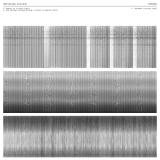
image front: Transitionen 2021 by C. Kubisch, sonagrams of electronic waves (courtesy: Galerie Mazzoli Berlin)
image back: Diapason Tuning Fork, property of Folkmar Hein, Photo: Archiv Christina Kubisch

design by Tim Tetzner
mastered by Giuseppe Ielasi
Thanks to Miguel Álvarez-Fernández, Folkmar Hein, Dominik Kautz and Mario Mazzoli

vorbestellen17.04.2026

erscheint voraussichtlich am 17.04.2026

27,31
Loom & Thread - Dispersion (LP)

Loom & Thread

Dispersion (LP)

12inchMACROM83
Macro Recordings
17.04.2026

With Dispersion, Loom & Thread return to the volatile architecture of the expanded piano trio - and quietly fracture it from within.

Daniel Klein (drums), Tobias Fröhlich (double bass) and Tom Schneider (keys, sampler) remain the sole agents on stage and in the final recording. The triangle holds. And yet, the field has expanded. For their second studio album, the trio fed their improvisations with the timbral signatures of guest saxophone and vibraphone players - not just as additional voices to be featured, but also as material to be absorbed, atomized and redistributed. The result is not augmentation but thorough refraction.

Where the debut album explored the recursive labyrinth of Schneider's live sampling of his own piano, Dispersion introduces an external grain into the feedback system. Breath and metal. Reed turbulence and struck resonance. The trio sampled extended improvisations by saxophone and vibes players: Victor Fox, Asger Nissen, Volker Heuken, and L&T's own Daniel Klein; dissected their attacks, overtones and decay curves, and integrated these fragments into the trio's internal circuitry. What emerges is a play of presences without bodies - instrumental ghosts circulating through the dense weave of rhythm and keys.

At first, one might hear the familiar relational tension: Klein's polyrhythmic elasticity interlocking with Fröhlich's tensile double bass figurations, Schneider poised at the hinge between tonal field and percussive impulse. But soon, the surface splinters - again. A vibraphone shimmer appears, yet no mallets are visible. A reed multiphonic surges through the texture, bending space between bass and drums. These events are neither quotations nor overlays; they are redistributed energies, dispersed across the trio's grammar. A digital multidimensional interplay ensues.

If the first album unfolded as a two-tiered game - live phrase and sampled reflection - Dispersion adds a further axis. The sampled materials from other improvisers are stripped of their erstwhile two-way interaction and reconstituted as malleable particles. Signifier detached from origin, resonance detached from gesture. The trio navigates a constantly shifting topology in which acoustic memory and electronic manipulation are indistinguishable.

Crucially, the album never abandons the physical urgency of three musicians reacting in real time. The additional timbral layers do not thicken the texture into opacity; rather, they introduce stark points and arrows of diffraction. Density opens into prismatic clarity. Lines splinter and regroup. What seems like a quartet or quintet collapses back into three bodies negotiating an expanded field.

Dispersion is not about addition but about distribution - of agency, of timbre, of temporal perspective. It is an album in which the trio setting becomes a site of multiplicity without surrendering its immediacy. A dissolution not only of the divide between present experience and memory, but between inside and outside, self and other.

Three musicians. Countless vectors. A music that fractures in order to cohere.

CREDITS:
Tom Schneider: piano & sampler
Tobi Fröhlich: double bass
Daniel Klein: drums & percussion

sample sources:
Victor Fox: tenor saxophone
Asger Nissen: alto saxophone
Volker Heuken: vibes
Daniel Klein: vibes

Recorded by Martin Dressler at Bauer Studios, Ludwigsburg.
Mixed & mastered by Martin Ruch.
Artwork by Viet Hoa Le.

nicht am Lager

Bestelle jetzt und wir bestellen den Artikel für dich beim Lieferanten.

17,61

Last In: vor 5 Tagen
Bill Plummer And The Cosmic Brotherhood - Bill Plummer And The Cosmic Brotherhood LP
  • 1: Journey To The East
  • 2: Pars Fortuna = Part Of Fortune
  • 3: The Look Of Love
  • 4: Song Plum
  • 5: Arc 294°
  • 6: Lady Friend
  • 7: Antares

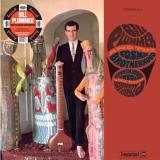
Welcome to the mind-expanding 1968 jazz recording of Bill Plummer and The Cosmic Brotherhood—where Eastern and psychedelic influences meld together to produce one of the trippiest jazz albums on Impulse Records. This LP is a much-sought-after sonic travelogue, with the pop-psych spoken-word sitar freakout of “Journey To The East” to Bill Plummer’s swinging, rapid fire/cool jazz compositions, to his covers that go straight to the heart of any 60’s genre-crossing jazz fans. Featuring an incredible who's who of the high-caliber talent bubbling over in the Los Angeles music scene at the time: Carol Kaye (legendary bass player of The Wrecking Crew), Maurice Miller (drummer in The Jazz Corps), Dennis Budimir (guitarist with Chico Hamilton Quintet, Ravi Shankar & Frank Zappa), Mike Lang (Piano with Flamin’ Groovies & Hal Blaine), Tom Scott (Saxophone with Gabor Szabo & Thelonious Monk), Ray Neopolitan (Bass for The Doors & Leonard Cohen), Milt Holland (Percussionist with The Wrecking Crew &
Captain Beefheart), Bill Goodwin (Drums for Mose Allison & Tom Waits).
Housed in a beautiful gatefold sleeve with iconic liner notes by Frank Kofsky, who comes out swinging hard in favor of the album, while shaking the dust off any jazz snobs left in the '60s who still were not ready to embrace the future of jazz. Produced by Bob Thiele who produced everyone from John
Coltrane, Art Blakey to Charles Mingus, this sonic rarity is yet another impressive vinyl reissue from the folks at Jackpot Records.

vorbestellen17.04.2026

erscheint voraussichtlich am 17.04.2026

32,98
LIS FEATURING VERONIKA RUD WESSBER - IN THE WAKE OF BLUE
  • 1: The Promise
  • 2: Longing
  • 3: In The Wake Of Blue
  • 4: Flux
  • 5: Vapor
  • 6: When Birds Flock
  • 7: The Endless Thread
  • 8: The Quiet Edge
  • 9: Shadows In Bloom

April Records proudly presents the new album from Danish trombonist and composer Lis Wessberg. Her most personal album to date, In The Wake of Blue is a song-driven work exploring transience, love, and transformation. Expanding her writing while remaining rooted in her distinctive instrumental voice, Wessberg creates an intimate musical landscape where lyric, melody, and texture carry equal weight. Wessberg has established herself as a leading voice on the European jazz scene through her band Yellow Map and a series of acclaimed releases on April Records. Her previous album, Twain Walking (2024), marked her first step into English-language songwriting and earned a Danish Music Award nomination in 2025 for the track Behind the Walls. In The Wake of Blue develops this direction further. The album draws on images from nature - sea, tides, clouds, mist, and birds - used as emotional anchors rather than abstractions. These elements frame songs that move from uncertainty and loss toward openness, connection, and renewal. The title reflects this arc: "blue" as melancholy, depth, and memory, and what emerges in its wake. Vocalist Veronika Rud is central to the album"s sound, bringing vulnerability and clarity to the songs. Rather than a traditional singer-led project, the music unfolds as a dialogue between voice and trombone, with Wessberg"s warm, airy tone mirroring and extending each song"s emotional core. At times the two move in close unison; elsewhere, they diverge and reconnect. The core ensemble - Steen Rasmussen (piano and keys), Lennart Ginman (bass), and Jeppe Gram (drums) - provides a responsive, understated foundation, while string quartet Live Strings appear on two tracks, expanding the ensemble"s depth and resonce. In The Wake of Blue offers a quietly assured statement from an artist continuing to refine a voice that speaks as clearly through brass as it does through words.

vorbestellen17.04.2026

erscheint voraussichtlich am 17.04.2026

23,11
Artikel pro Seite:
N/ABPM
Vinyl