With World Beats Vol. 3, Lello Di Franco recruits a powerhouse team of remixers known for their dancefloor instinct—featuring Gerd Janson, Johannes Albert, Ben Hixon, and Gerd. Together, they preserve the cosmopolitan, percussive pulse of the original tracks while elevating them into peak-time club anthems. This masterfully crafted remix EP breathes new life into the project through diverse yet seamlessly cohesive interpretations. A must-listen for lovers of sophisticated house, nu-disco, and forward-thinking global sounds.
CHIWAX CLASSIC EDITION prouldy presents Boo Williams - Lost Of Time.
This fantastic release from 1995 came originally out on legendary Relief Records.
The 2026 version contains a new mastering.
Don't feed the Discogs Sharks!
Life is like a mirror ball! The first one in a hopefully long-lived series of disco and pop influenced Super Sound Singles on Running Back, comes courtesy of the unmistakeable Gibson Brothers. Leaving their biggest wedding hits "Cuba" and "Que Sera Mi Vida" to the side, the philanthropic and smile-forcing "Ooh, What A Life" gets an extended edit service by Shan & Gerd Janson, who cut away some of the fat and make it fit for fun on contemporary dance-floors. The flip side sees them remixing and sandpapering "Heaven" into a disco-house interbred (filters and looping mandatory). To quote John Lyndon: "Disco sucks You never heard that from me."
Mark Funk and Danny Cruz's Cruise Music label continues to offer-up the best of its digital-first EPs via the popular Vinyl Jams sampler series. There's a real sun-splashed, dancing-on-the-terrace feel to much of the music contained on this 14th volume in the series. Mark Funk steps up first with the loopy, filter-rich disco-house release of 'Never Never', which rises and falls in all the right places in search of hands-aloft action, before Makito drops the vibraphone solo-laden deep house-meets-garage-house flex of 'Heavy Vibes' (think Masters at Work collaborating with Roy Ayers and you're close), Over on side B, Danny Cruz serves up 'Sugar', a tooled-up, house-style re-edit of a joyous disco gem, while Filth & Smell's 'Panama Sweet Spot' is an electric piano and sax-loop-fired slab of thickset house funkiness.
Across the cosmic boundaries via spiritual exploration and in the void between shimmer and shadow you will find the astral soundscapes of Birds Of Pandaemonium...
Emerging from Brooklyn's late-night music ecosystem, 'Hazy James' Armstrong and Tim Wagner met nearly 20 years ago through the city's DJ and club scene. Each with different but complementary musical backgrounds which included a mix of folk, guitar, DJing, synths, drum machines, country rock, disco, jazz, and rhythm-heavy club music (being just a few!), the duo began various musical endeavours together & "exploring the darkness while pursuing light" which eventually lead to the birth of Birds Of Pandaemonium.
It was only a matter of time that the stars aligned (via an introduction from Shane Watson of Causeway) to bring the Birds onto the musical radar at Sprechen which led to the release of 3 renowned E.Ps and ultimately, their debut album, Eudaemonia. Obscure covers including Idris Muhammed's Loft classic 'Could Heaven Ever Be Like This', the rave defining Born Slippy by Underworld and the post punk/new wave 'On Islands' by New Musik sit alongside original songs shaped by fresh reflections on life, grief, and love with elements of dream pop, shoe-gaze & gothic pop to give wistful and pulse-driven listening experience that is hazy, romantic, and deliberately genre-blurring.
A truly unique listening experience that delivers broad strokes of sunsetting psychedelia and bleary-eyed optimistic, astral dream-pop across all 8 tracks.
Is it balearic? Not really, it's pretty much a genre all on its own (answers on a postcard).
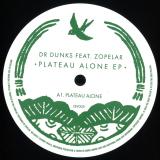
Quiet Village invites Eric Duncan AKA Dr Dunks for his latest EP ‘Plateau Alone’ featuring Zopelar. Dr Dunks is one half of DJ duo Rub-N-Tug.
New York music veteran Eric Duncan AKA Dr Dunks lands on Quiet Village with his latest release ‘Plateau Alone’ featuring Zopelar, dropping 18th September. Beginning his journey over three decades ago in New York's underground scene as one half of the duo ‘Rub-N-Tug’ alongside Thomas Bullock and one half of DFA’s ‘Still Going’, Duncan has built a reputation for his genre-defying music and sets, mixing disco, house, funk and electro. His production and remix catalogue over the years includes Grace Jones, Todd Terje, LCD Soundsystem, Groove Armada, and more. Producer and DJ ‘Zopelar’ hails from Brazil, taking inspiration from the Brazilian music scene and lacing it with jazz, soul, and house, with releases on Apron Records, Tartelet Records, Soul Clap Records, and Selva Discos
The ‘Plateau Alone’ EP comprises three funk-fuelled tracks. Syncopted electro synths fl ood opening track ‘Plateau Alone’ with an 80s-inspired groove, where bass melodies and textures create an otherworldly feel. Second track ‘Slow One Eleven’ slows the pace; percussion and strings featuring rock accents create a steady groove as Duncan adds his signature sonic sound. Low-down bass blends with dub-chords and alien textures in ‘88 Lights’, creating a warm and cosy closing to the EP.
A limited edition clear vinyl pressing for Vol. 1 of DINTE's critically acclaimed collection of pirate radio adverts & idents, taken from recordings of London stations between 1984 & 1993.
Electronic music legends Soft Cell release ‘Out Come The Freaks’, the very first single from singer Marc Almond and multi-instrumentalist and producer Dave Ball’s final album ‘Danceteria’. Download and stream the track, featuring vocals from the late Dave Ball and special guest vocals from Nona Hendryx.
‘Out Come The Freaks’ is a cover of Was (Not Was)’s mutant disco classic and sends Soft Cell into prime disco territory, conjuring the hedonist spirit of early 80s Manhattan and a Danceteria floor filler spun by DJ Mark Kamins. There couldn’t be a more fitting alternative disco banger to pull back the curtain with and beckon you into the world of ‘Danceteria’. The final album is a homage to the legendary nightclub where young Marc and Dave would party until the small hours after the recording sessions for their seminal 1981 debut ‘Non-Stop Erotic Cabaret’. The final flourish of glitter to Soft Cell’s ‘Out Come The Freaks’ comes courtesy of guest vocals from Nona Hendryx, the iconic singer, one third of Labelle of ‘Lady Marmalade’ fame, and producer of Lisa Lisa and Bush Tetras.
This is the very first material to be released from ‘Danceteria’, Soft Cell’s forthcoming sixth and final album. It is also the first time new music has been released since the sad, untimely passing of Dave Ball in October 2025. Almond led the tributes, describing Ball as a “brilliant musical genius” and the world’s media hailing Dave as an electronic music pioneer. Dave finished ‘Danceteria’ very close to his passing and it is in full tribute to him that the album release goes ahead as planned. More details are to follow very soon about the release date.
You'd be hard pressed to name a song with the driving, emotional intensity and raw energy of the Hamilton Movement's anthemic ode to heartbreak, "She's Gone." Issued as the B-Side of the band's 1976 single "We're Gonna Party," and distributed in and around Indianapolis, there is no evidence the song garnered significant attention upon release—yet over the past fifty years it has amased a cult of devotees across the globe. But while interest in the group's music remains strong, little information has surfaced about the Hamilton Movement's history, and until now, there have been no official reissues of their work. This collection presents the band's discography, alongside previously unreleased music discovered on tape; it is the Indianapolis soul album that should-have-been.
The keys to the Hamilton Movement's mystery can be found in central Indiana, where promoter Dick Melvin has lived the past few decades, in a rural suburb of Indianapolis, amidst forests and cornfields. Melvin served as the group's manager throughout their entire existence, but his involvement extended far beyond typical managerial duties. He co-wrote and co-arranged the band's music; he produced and released their recordings on his Look Out label. Dick is also the band's archivist. His home is filled with boxes of demo sessions, live tapes, contracts, posters, and promotional photos documenting his work with the Hamilton Movement. He entrusted his archive to Now-Again's care and they've assembled this album under his watch. Dick's story, and the story of his band, are presented in an extensive, oversized booklet with Dick's rarely-seen photos and ephemera and words by Now-Again's Egon and Naptown historian Kylie Long.
Adam Ten and Yamagucci team up on Rekids with ‘Keep Workin’’. Label head Radio Slave steps up with a remix.
Frequent collaborators Adam Ten & Yamagucci drop 'Keep Workin’' on Rekids, with a remix from label boss Radio Slave. The single is an irresistible club tool with immeasurable bass weight. Bold, rubbery drums and grinding low-end combine in bouncy fashion while a vocal fragment loops up top to create perfect dance floor tension. Brighter chords eventually rise through the mix, providing emotional release that will get hands in the air and take things to the next level.
On the remix, Radio Slave strips the original ‘Keep Workin’’ back to dusty, shuffling drums with jazzy flourishes. The track has a live, lived-in feel, complete with vulnerable piano keys that haunt the spaces above its weighty groove and transfix any crowd with eerie beauty.
Adam Ten is a long-time House innovator, Maccabi House co-founder and Upon You Records and Higher Ground artist, with over twenty Top 10 Beatport releases and millions of streams to his name. He blends the grit of Techno with escapist melodies in versatile, curious sets and productions that have earned him bookings worldwide. Yamagucci has made an equal impact on the world stage through his field recordings and organic percussion, adding a unique twist to his tracks on labels like Disco Halal, as well as Diynamic and Crosstown Rebels, labels that Adam Ten and Yamagucci have also collaborated on together.
Gilles Peterson: "Fascinating… love this. Thoroughly recommended"
The Observer: "The focus is on great grooves and fine playing. A band to seek out."
The Guardian: "Delightfully quirky album of folk songs reimagined from Afrobeat to reggae"
The Times: "Minyo Crusaders sound like nothing else lurking on your Spotify playlist"
(PRESS FOR PREVIOUS ALBUM)
Minyo Crusaders return with theiir highly anticipated sophomore album TOUR OF JAPAN following on from their debut that has sold 4k on vinyl since release and their runaway single smash 'Cumbia Del Monte Fuji' that has almost hit 5million streams on Spotify.
Since the release of their debut in 2019 the band have toured Europe four times playing major European festivals such as Roskilde, Best Kept Secret, Green Man Festival, WOMAD, Fusion, Les Escales, Lowlands and many, many more, succesfully road-testing the songs from this album.
On this new album which has been mixed by Mario from Frente Cumbiero, Minyo have finessed their winning formula of adapting ancient Japanese folk somgs to global rhythms with influences this time from Ethiopia, boogaloo, salsa, West Africa and jazz. Says band-leader Katsumi: "The concept of this album is the sea with various expressions".
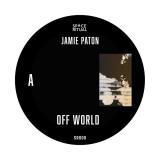
Two stripped back downtempo jams from Bristol based producer Jamie Paton up next for SR008. Jamie’s distinctive dubbed out productions have been a firm favourite over the years since discovering his music on Emotional Especial, Hoga Nord, Multi Culti and Club Blanco. He’s a prolific remixer who’s worked with Goat, Plus Instruments, Minami Deutsch, Dâdalus & Bikarus, Blancmange, Johnny Aux, Khidja, Gatos Negros, Food Pyramind, and many more. This release is a perfect fit for Space Ritual and delves into
the darker side of his sound.
Off World is a slow & low spooked out dancefloor trip that meanders through layers of dark, eerie, rattling percussive echos and deep creeping bass. Contrasting atmospheres build throughout entering into a spacious call and response interplay. Fell Swoop's heavyweight bass and haunted sonics take you deep into uncanny space. The raw and swampy bass groove powers through sharp and ominous textures that circle around it.
Pressed to 10” with hand printed artwork on a black reverse board sleeve. Limited to 150 copies.
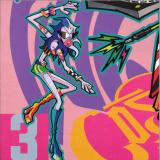
Cosmic Voodoo is an immersive musical experience that combines the best of cosmic disco with the pulsating energy of contemporary electronica. Through alternating synthesizers and acoustic instruments, this project presents an irresistible arsenal of sounds.
This is the third volume of four that will create a unique graphic work created by the famous Aldo Drudi.
Written and produced by Daniele Baldelli, undisputed master of cosmic-disco, and Mattia “Matta” Dallara, sound explorer and producer of Cosmic Temple, this EP is a journey that evokes dreamy and nostalgic atmospheres, perfectly in line with disco roots.
The tracks unfold between enveloping grooves, spacey synthesizers and rhythms that pay homage to the 1980s, generating a sound that is both classic and innovative. An electronic tribal ritual, a dancing spell that can transport the listener to a parallel universe full of psychedelic sounds and magnetic beats.
Ideal for those who like to lose themselves in the depths of sound and be guided by vibrations that oscillate between past and future.
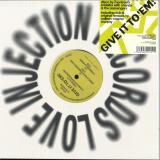
With a sound that draws from the energy of classic disco, touched-up for modern clubs, Kridelka, Chanda & the Passengers come with a scorching contemporary cut that is primed to light up dancefloors this summer - with staying power to become a future dance floor staple.
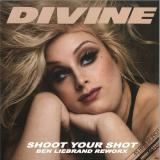
Although Shoot Your Shot sits slightly under the radar compared to Divine’s signature anthems such as You Think You’re A Man, I’m So Beautiful, Walk Like A Man and Native Love, this remix stands proudly alongside them. Liebrand injects the track with a driving Hi-NRG pulse, unmistakable Italo-disco flourishes and a powerful club groove, while Divine’s larger-than-life vocal performance and the unforgettable spoken-word alphabet breakdown remain front and centre.
On the flip, Liebrand delivers an inspired bonus, seamlessly blending the music from Divine’s worldwide club classic Native Love with the vocals from Shoot Your Shot, one of the artist’s biggest European hits. The result is a brilliantly executed hybrid that captures the excitement and creativity of the late-’80s remix scene while celebrating two of Divine’s most enduring recordings.
A rare glimpse into a golden era of European dance music and a testament to Ben Liebrand’s reputation as one of the most innovative remixers of his generation.
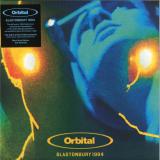
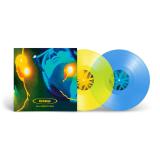
The first ever full official release of Orbital's legendary Glastonbury 1994 performance !
Originally performed and broadcast to a generation discovering electronic music in real time, Orbital's set at Glastonbury '94 became a defining cultural moment - not only for the band, but for dance music itself. At a time when electronic acts were still fighting for recognition on major festival stages, Orbital proved that dance music could be as emotional, cinematic, and powerful as any headline rock performance. The iconic headtorches, the energy of the crowd, and the sheer ambition of the performance helped cement the set as one of the most important live electronic shows ever witnessed. A gamechanger for the dance music scence.
Although the performance has long circulated online and remained a fan favourite for decades, there has always been overwhelming demand for an official release.
The first ever full official release of Orbital's legendary Glastonbury 1994 performance !
Originally performed and broadcast to a generation discovering electronic music in real time, Orbital's set at Glastonbury '94 became a defining cultural moment - not only for the band, but for dance music itself. At a time when electronic acts were still fighting for recognition on major festival stages, Orbital proved that dance music could be as emotional, cinematic, and powerful as any headline rock performance. The iconic headtorches, the energy of the crowd, and the sheer ambition of the performance helped cement the set as one of the most important live electronic shows ever witnessed. A gamechanger for the dance music scence.
Although the performance has long circulated online and remained a fan favourite for decades, there has always been overwhelming demand for an official release.
In Permanent Vacation 20th anniversary year, Joe Goddard returns to the label with You — a fivetrack EP that feels both timeless and deeply connected to the label's musical DNA. Blending disco, house, electronica and subtle folk influences, the release captures the optimistic spirit of the early 2000s while sounding effortlessly contemporary.
Across five beautifully crafted tracks, Goddard balances warm melodies, organic textures and dancefloor elegance with his unmistakable songwriting touch. The EP features three standout collaborations: Glynn joins on the uplifting "Cutting You Loose", fellow Hot Chip member Alexis Taylor lends his unmistakable voice to "Hide & Seek", while Absolute appears on the intimate closer "Gentle Man".
You is a fitting addition to the Permanent Vacation catalogue—music that looks back without nostalgia, embraces the present, and reminds us why timeless records never go out of style.
Still Music are proud to present the reissue of “A Message For The DJ” by one of Detroit’s finest, Delano Smith featuring the distinct vocals of Diamondancer. Featuring the now legendary remix by Jimpster, that has constantly been played since it’s initial release in 2005 by DJ’s across all scenes within the House spectrum.
Original copies of this Deep House classic are hard to come by on the second-hand market, regularly changing hands for close to £70, if you’re lucky enough to find one! Here’s your chance to get one over on those pesky Discogs sharks. Don’t delay!
Pablo Sánchez´s new solo album “Archipiélago” is out now. The new long player, a follow-up to his “Nocturnal” album as Basic Need will be released on Sisternoise Records and is a 42 minute voyage sailing through uncharted waters.
Every archipelago is a constellation of islands, distinct yet bound by invisible tides. Archipiélago, the latest work from Pablo Sánchez, follows this same geography of sound and memory. Its islands are not of sand and rock, but of places which inspired the artist throughout his life; Buenos Aires, Caracas, Puerto Rico, New York, Madrid, Berlin, and Barcelona. Each city has left a trace, a shoreline carved into Sánchez’s musical journey and left a distinctive musical mark.
The ten songs gathered here are like sovereign entities, each with its own character, its own rhythm, its own language. Together they form a single territory, a map drawn by musical experience, longing, and imagination. They are ports of call, but also fragments of a larger voyage, where tradition and experimentation, nostalgia and discovery, coexist to create a common territory. Along the way guest magicians Animal Feelings and Salomeya add their vocal sparks to the voyage.
Archipiélago is not a destination but a map of crossings, a territory of sound where the journey itself becomes home.
Two of Jean Carn's seminal hits combined. 'Was That All It Was' is a big hitting disco exploration with hints of Jean's gospel choir background coming to the fore. The flip houses the classic 'Don't Let It Go To Your Head' - covered on many an occasion since it's release back in '78.
MASA 007 sees DJ Sodeyama at his most incisive and introspective, delivering three cuts of direct, mental techno, complemented by a powerful remix from Atomic moog. Across four tracks, the record flows with clarity and purpose, driven by sharply defined drums and acid-tinged textures, while layered with expansive ambient pads and evolving atmospheres, resulting in a sound that is both forceful and deeply immersive. Atomic moog’s reinterpretation, a signature of this modular wizard duo, built around earthy psychedelic pads, field recordings and organic synths, cements MASA 007 as a refined statement of modern techno’s cerebral intensity and emotional depth.
Amazzonia is the new album by Alex Puddu and the second volume following the erotic series
I Desideri Di Sadie (Piaceri Tropicali), where the inspiration took us to an imaginary journey in Southeast Asia. With this new album “Amazonia,” Alex Puddu takes us on a trip to Central America, the Caribbean islands, and South America, exploring a new groove of Latin-funk, reggae, and seductive sleazy disco . Here, Sadie’s adventures unfold, from the jungle to the cities and onto the enchanting tropical beaches. Another journey through temptations, on the islands, discovering the beauty of Alex Puddu’s “Erotic World.”
"Amazzonia" was written, arranged, produced, and recorded by Alex Puddu, who plays all the instruments on the album himself. He was assisted by two of the best bassists on the Italian nu-disco and Balearic scene: Domenico Andria—who has played with Pellegrino/Zodyaco and worked closely with Alex Puddu on several releases—and Daniele Labbate, who has performed as a session bassist for artists including Nu Genea and Mystic Jungle.
Other featuring musicians on the album are:
Imelda : Lead and backing vocals
Adrian Wilding: Vocal on Gimme Dub
Hendrik Jørgensen: Trumpet
Jesper Løvdal: Saxophone
Pittsburgh Tracks presents the second Cheek Inc. record - “Next 2 U” - a catchy vocal house record for summer. The collaboration between longtime friends keeps going.
The A1: original mix features a bouncy groove where the infectious vocal hook and shuffly drums keep everyone dancing.
The A2 “bang mix” amps things up with pianos, an energetic 303 lead, a build up, and subs that drop for maximum impact.
The B1 “club mix” is as it says on the tin: plenty of energy with a manic bassline, tight, stripped down rhythms, and a top-line melody that emphasizes the vocals.
The B2 “bass mix” features Sleeve’s STRIPPERTM bringing the heat with staccato beats, a twisting midrange vortex of sound, and plenty of darkness with discordant pads, where the stripped-back vocal punctuates to bring a bit of air at the right moments.
Slippery Yard’s third ecosystem lands with “The future is behind”, a very specific immersion into Lugo-based Javier Marimon’s own dub take. We have been fans of Javier’s music for years, one of those who makes up his own palette through experimentation. Textural low end, immersive granular synthesis and groove development in a way nobody approaches, sketchy yet very personal.
Amsterdam based fellow producer Bas Dobbelaer provides us a very different clean perspective of the surface of Slippery Yard biome. Biggest mention to our beloved ecosystem designer Fredonné for such a high quality 3D artwork of the new discovered ecosystem.
With the stunning Planes In Reverse, Sascha Funke, the Berlin-born producer and DJ, and long-time member of the Kompakt family, releases his first album in almost a decade, since 2017’s Lotos Land. It’s a welcome return for one of the most eloquent and elegant producers in electronic and dance music, someone who’s always been able to say more with less, and the ten tracks here, moving effortlessly between techno, house, minimalism, disco house, and home listening tunes, are all gorgeously sculpted miniatures. With guest appearances from partner Julienne Dessagne (Fantastic Twins), with whom Funke has also worked in Saschienne, there’s something homely and family about it, too; a family of sounds, a home of tone. There’s also something consummate about Planes In Reverse, as though Sascha Funke has perfected the album format. There’s no flab here, no excess – it plays out like a perfectly designed experience, ten tracks, coming in under fifty minutes, an album where every moment matters.
It’s full of variety, but everything has the unmistakable Funke thumbprint, one that was developed during the late ‘90s / early ‘00s minimal techno and microhouse moment, but which was always open to other ideas and other sounds, too. Planes In Reverse came together quickly for Funke: “Last winter, I had two or three new tracks, which gave me a core feeling: ‘Ah, this could be the direction of something like an album.’ Sometimes it can be very easy that you wrap it up and then it becomes something coherent and solid. This happened within two or three months; it was very fast and direct.” Everything fell into place – the ten tracks revealed themselves, the album sat together as a whole, and the final piece of the puzzle was returning home again to Kompakt, who have supported Sascha Funke from the very start, releasing his first single, “Campus”, back in 1999.
Planes In Reverse opens stealthily with “What You See”, where rhythms percolate and bass prowls while gaseous textures fill the sonic spectrum. It’s also the first appearance of Fantastic Twins on the album; here, she speaks a hypnotic mantra, a prelude to the title track, where Dessagne has a pure pop moment, her voice ecstatic and vibrant. Indeed, Planes In Reverse plays out like thesis and antithesis ending in synthesis, the tracks nestling next to each other even as they shuttle between sounds, genres, perspectives. There are some beautiful moments dropped throughout Planes In Reverse – the heavenly textures that make the title track feel so cloud-bound; the glassy and orbital tones that drop from the skies through the disco house inspired “Karat”; the clamour and clatter of hyper-edited voices shuffling through “Splitter”; or the field recordings of Sascha’s son football training session that drop “Zockers” into a different place and space, slowly giving way to a beautifully paced electro-pop mantra. “In Germany,when the kids play a computer game, or when they play football, we describe it as zocken. They’re the players, they’re the Zockers.“ Funke explains.
Planes In Reverse winds down with the beautiful “Kruso”, where ticklish, loving arpeggios careen around the room, and drift-work chords shimmer and shuttle between your ears. It’s a perfect comedown to an album that feels breathes in and out at an organic pace, nothing above 130 BPM, everything sitting together just so. Indeed, that’s the feeling you take away from Planes In Reverse; it sums up the spirit of Sascha Funke productions perfectly, while also existing beautifully as its own world dreamt unto itself. It’s Sascha Funke down to the very essence. Nothing unnecessary, nothing extraneous: Pure Funke.
We are finally ready to unveil one of the most exciting projects we have worked on in our label's history: a new release by legendary disco project Hudson People, best remembered for their essential classic "Trip to Your Mind" - which just received its anniversary issue on our label!
Now it's time for "Hold On" - a brand-new single featuring several mixes based on an original recording from the late 1980s, with the completely unheard yet incredibly soulful voice of singer Rickey Owens, whom composer and producer Reginald Hudson worked with at the time.
When we first got in touch with Reg Hudson several years ago, we were originally interested in releasing his "Shake It - Make It Loose" album, which he recorded with John Davis (later known as one of the real voices behind Milli Vanilli). While talking about John Davis (RIP) and other great GI singers such as Karl Keaton, Reginald Hudson immediately mentioned Rickey Owens as one of the best singers he had ever worked with.
Of course, we had never heard of him, as none of his music had ever been released. But when Hudson showed us some old demos and sent us the original DAT recordings, we were immediately hooked.
"Hold On" was recorded in or around 1988 with a simple drum machine and keyboard accompaniment - essentially a demo intended to be recorded properly in a better studio. But the vocal performance was simply stunning, complete with beautifully recorded ad-libs. Owens had a truly remarkable, clear voice with an incredible amount of soul. Luckily, Hudson had his old DAT tapes digitized several years ago, so the acapella recordings survived in excellent shape.
We immediately reached out to several producers to create reworks of the track. The 12" EP compiles some of the most club-friendly of these new mixes - but there is more to come…
First up is Thomas Redfern, a senior producer, professional studio musician and keyboardist from London, UK. His version is a catchy, funky yet deep House track that could easily become a favourite on dancefloors around the globe. Redfern also blessed us with a dub mix that takes things even deeper.
But it gets even catchier on side B of the vinyl. Tom Quick sped up the tempo, added filters and delivered a rework that could make fans of Chromeo, Daft Punk, Stardust and any late-'90s French House afficionado go completely nuts. Yes, we mean it! With a fresh twist on the original, the track has a massive club appeal that we hope both DJs and dancers will dig.
The vinyl single is completed by a mix from German legend DJ Friction, whose version is based on synth layers from the Tom Quick mix. Friction added new drums and bass, giving the track the distinctive modern electro boogie funk vibe he is known for. His mix brings to mind classics such as Shannon's "Let the Music Play" and works of Freestyle's Tony Butler.
The vinyl 12" with 4 mixes is released on The Outer Edge's brand-new sublabel, 1st Floor Records, which focuses on more dancefloor-oriented material. More mixes are available digitally and should not be missed.
PR Feedback:
„Killer“ – Gilles Peterson
„Disco, deep house and boogie all in there! Superb!“ – Groove City Radio
„Dope!!“ – DJ Craze
„The boogie mixes are so good!“ – Selvagem
„Awesome and Huge Package“ - Leon El Ray
„Wow, Trip to Your Mind is so good and this is a real grower“ - Ibiza Sonica
„Really liking the Balearic & Redfern Mix, thanks!“ – Mystic Bill
„Both Thomas Redfern mixes are ace!“ – Deeper Shades of House
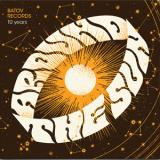
Around The Sun is a 23-track anniversary compilation marking ten years of Batov Records, featuring artists including Mulatu Astatke & Hoodna Orchestra, Sababa 5, Satellites, Boom Pam, MOMO. and Mamman Sani. The collection reflects the label's catalogue across Ethio-jazz, Anatolian psych, Mediterranean disco, contemporary jazz, instrumental music and other globally influenced styles. The release includes two Batov edits, several tracks appearing on vinyl for the first time.
A hot slice of Latin dance music — produced by the legendary Masters at Work, the house icons and masters of that Nuyorican sound, “Little” Louie Vega and Kenny “Dope” González — from Los Amigos Invisibles, the Venezuelan band who have spent decades perfecting the art of getting away with everything.
Packed with raunchy songs (of course) that fuse every American genre under the sun — from salsa to acid jazz to disco to funk — this record tore up dance floors twenty years ago.
Mexican producer/musician MONSIEUR VAN PRATT returns to our TSTD shores with his second two track Edit trip into the world of Mexican obscure, super rare Coverversions.
His first 7 Inch (with an amazing Edit of a Cover of Bobby Caldwell's "What You Won't Do For Love") has been the most repressed and highest selling Issue in our long ongoing TSTD EDIT Vinyl series.
For the upcoming 7 inch he delivers two brandnew fun reworks:
Side A is a slow disco edit of a super rare Mexican late 70s cover version of Bill Withers' classic love song "Just The Two Of Us".
Side B is a midtempo Rework of a Mexican cover of "Upside Down" by Diana Ross w/ Nile Rogers
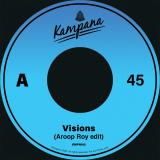
Kampana brings to you two more reworks from Aroop Roy's legendary DJ Weapons series, on 7" for the first time. 'Visions' gives a disco lift to an obscure, but anthemic soul cut , with stunning vocals and classic sound.
'High Riding' is a funky rework that chops and splices the original sample into an infectious jazzy disco groove, building into an epic climax.
Forty years of cassette releases, pressed for the first time on vinyl
First of two instalments exploring the previously unreleased sonic archives of one of Poland’s most enigmatic
living artists - with its first volume focused on his deep listening practice and spiritual reverie (recorded 1990–2013)
The last time Andrzej Dudek-Dürer took a banknote bearing the face of the Polish anarchist Jarosław Dąbrowski from his pocket to trade it for a pair of shoes was in 1969. He bought them for 120zł - the equivalent of 100€ today - and never replaced them since then. Only rebuilt them, year after year, drawing a needle and thread through the leather each time it split, closing one wound before the next one opened. It became a ritual of precision, stitching a record of another year into their soles.
That same year, in Wrocław, he arrived at a conclusion that would recalibrate everything that followed. Convinced he was the reincarnation of Albrecht Dürer, he adopted the surname Dudek-Dürer, stopped cutting his hair and began wearing the same garments every day. It was the first ritual of many, though he wouldn't have called it that yet. Look closely enough, over the decades, and it is always the same gesture, returning in different material: hair growing in a single unbroken strand, a needle drawing thread through leather, sitar strings pulled taut across a neck he built with his own hands and magnetic tape spooling forward inside the cassette boxes stacked against his walls.
None of this began in a vacuum. Dudek-Dürer emerged from the Wrocław neo-avant-garde, in a Polish art world where an exhibition could be cancelled overnight by the stroke of a censor's pen. In 1973, his exhibition Auto-crucifixion was shut down by the state, and for a time he found himself blocked from exhibiting his own art at all - the one force in his life that ever came close to cutting the thread.
He seemed to experience it differently. In 1974, after long, patient research into sitar craftsmanship, he built his first prototype with his brother, a knowledgeable luthier. In 1978, in a smoked-out jazz club, he took his first steps into sound recording with the unreleased album Jazz From Underground with his first band. By 1979, recognition started to travel further than he could.
Turning toward Far-Eastern philosophy, meditation and the idea of reincarnation was another language of freedom for him. It was a way of claiming an inner territory the state could not reach, a border it could not close. Mail Art served a parallel function, reaching further out: in a country that restricted travel and expression, sending and receiving art through the postal system became an act of quiet rebellion.
The body, in his understanding, is only an envelope readied for constant transformation. From this came Metaphysical Telepathy: during the years he could not leave Poland, he treated that confinement as a rehearsal room, sending his mind out ahead on the same thread his body would later follow. Living Sculpture grew from the same root with performances of stillness beside static art objects, until the boundary between the object and the man beside it simply dissolved. Camera Meditation extended the same instinct into photography: a shutter click flattening three dimensions into two so that a single instant could be held forever. Inspired by the pioneers of self-portrait photography like Robert Cornelius, he used it to document time itself, and kept explaining to me: "You know. This is not about vanity. This is about observing time passing.”
The isolation did not end suddenly. It ended the way his own philosophy had already predicted it would, from the inside first. Mail Art quietly solved the problem politics couldn't. Correspondence built during years of confinement slowly worked its way through doors the state itself had kept locked. Contacts made through folded paper and stamps became invitations. Ultimately, invitations became passports.
In 1983 he made his first trip outside Poland, to Germany, in search of the audio technology he couldn’t get his hands on before. In 1985, he was invited by the Indian embassy in Poland to give a sitar concert on an instrument he had spent a decade patiently stringing together - half sitar, half tanpura, built from patience and determination. After the collapse of the People's Republic of Poland, the travels kept unspooling: South Korea, then Mexico, then Australia, Canada, New Zealand, Singapore, Japan and the United States - each stop leaving behind its own small knot of tape, tied off and carried home.
In the decades since, recognition arrived at the same unhurried pace: he conducted workshops at UC Berkeley, served as vice-president for artistic affairs of the Union of Polish Art Photographers and the Union of Polish Visual Artists between 2010 and 2014 and received the Bronze Medal for Merit to Culture - Gloria Artis. His visual work gradually entered collections including the National Museums of Warsaw, the Stedelijk Museum, Tate Modern, MoMA and the Venice Biennale. His musical practice, by contrast, never found that kind of room - left to circulate quietly, sharing his cassette tapes directly, waiting for someone willing to follow it further.
It took months before I could find a way to reach Andrzej Dudek-Dürer - his presence online is very close to nonexistent. Surprisingly, LinkedIn turned out to be the only door still open, a faintly absurd irony given everything else about him. I packed the strict minimum for a three-day trip and an empty notebook and made my way to Wrocław. His headquarters sits in the neighbourhood of Grabyszyn: a two-storey pre-war house that has belonged to his family for generations. The man who opened the door was long-haired, long-bearded, in his trademark leather shoes and patched jeans. We sat in his living room, in front of a computer where decades of recordings sat organised in cryptically named files, surrounded by books and objects that had arrived one layer at a time, leaving room for only two chairs in the middle. His shoes sat by the door, rebuilt so many times they had become their own quiet sculpture. Cassette tapes filled boxes against the walls, almost unlabelled, each one a spool of thread holding decades of sound that had never once been asked for, until now.
I listened for hours: meditating in front of strangers on the porch of a Seoul temple until the tourists stopped taking photos and simply waited with him; a stand-off with border guards at the US–Mexico crossing over an instrument they couldn't identify and didn't trust; a session with the Stockhausen family that he still, decades later, describes like it happened last week. All of it interrupted, occasionally, by the smell of soup boiling and fresh bread warming on the ceramic stove. After two days, it felt like being handed the end of a very long thread and asked, gently, to keep following it. I left with a USB drive holding his full discography, signed with his unmistakable signature.
Astral Meditations From A Living Statue is a length of that thread, drawn out from the boxes stacked against his walls - recordings gathered from different rooms, different countries, different decades. This first record breathes slowly: incense-thick, meditative, built for stillness. A cutting-edge séance in outer space where machines learn how to dream.
It begins with the neo-classical improvisations of Andrzej, space-delayed, recorded at Klub Muzyki i Literatury in Wrocław in 2002. 'When..So' opens the curtains with a deep-rooted meditation accompanied by slow-decaying piano figures illuminated by a candle-lit spirit gathering.
Los Angeles, 1990: a dormant villa, a grand piano, the voice of Bonnie Barnett. 'Exception' is captured in a single room, in a single afternoon - voice and keys circling each other, neither one leading, until the silence between the notes starts to feel like the instrument.
'The Meta...' and 'Tired Of...', recorded at Studio Morandi in Ponte Nossa, Italy, in 1992, settle into a sitar drone built entirely from patience - overtones stacking and beating against each other, strung by a man who never once set foot in India. 'Mastery Of...' follows, recorded the same year at Studio Suski in Łomianki, pushing that same hum further still, until pitch dissolves into a spectral reverie. 'Transcendental Sound', from 2000, closes the first record in a slow bath of celestial frequency - better heard beside the shores of the Odra river.
More than fifty years after deciding that a life could become an artwork, Andrzej Dudek-Dürer continues to inhabit that decision. His shoes keep wearing thin against the earth's crust. His hair keeps growing, one strand at a time. His cassette tapes keep spooling in the dark of their boxes.
Now the thread finds its last shape: a single unbroken groove, spiralling inward from the outer edge to the label at the centre. Never cut - the way nothing else in his life ever was. Drop the needle and it will find that groove and follow it, the same way a needle once followed leather, once followed a border it couldn't cross, once followed string into an instrument that didn't exist until he built it. This record is the other end of a thread that has been travelling for fifty years. For the length of both sides, it rests here, in your hands. This is a timeless proof that the Lord of the New Age was never lost."
The 2018 album Igor Stravinsky’s The Soldier’s Tale is the adaptation by Roger Waters (co-founder of Pink Floyd) on the 1918 same-titled theatrical work. Waters recorded this version with members of the Bridgehampton Chamber Music Festival at Bridgehampton Presbyterian Church.
The original theatre work is one “to be read, played, and danced” by three actors (the soldier, the devil, and a narrator) and dancers, accompanied by a septet of instruments. The libretto relates the parable of a soldier who trades his fiddle to the devil in return for unlimited economic gain. The music is scored for a septet of violin, double bass, clarinet, bassoon, cornet or trumpet), trombone, and percussion. The libretto is adapted by Roger Waters from the translation by Michael Flanders and Kitty Black, based on the original text by Charles-Ferdinand Ramus.
The Soldier's Tale is available as a limited edition of 1000 individually numbered copies on green vinyl and comes in a gatefold sleeve with linen laminate finish. The vinyl package includes a 4-page booklet with lyrics and pictures.
The chart-topping, multi-Platinum and Ivor Novello-winning Passenger returns with a new album ‘Wild Love’. Passenger - real name Mike Rosenberg - was inspired by recently (and unexpectedly) becoming a husband and father. ‘Wild Love’ captures the whirlwind of emotions as their relationship developed - the excitement, the upheaval, the trepidation and the joy. Passenger says, “Going from a working relationship to a romantic one is scary. The older you get, the more of the spikier sides of love you’ve seen. Things go sour for all sorts of reasons and with someone so close, the stakes are so much higher. ‘Wild Love’ is the title track because it sums up the theme of the album. Do you give in to your doubts and do nothing, or do you face your fears and go for it? I wrote the song as I was realising that the choice was obvious.” While the ‘Wild Love’ album charts the couple’s personal experiences - taking the plunge, cherished early memories together, the realisation that this new love could be one that lasts - the single ‘It Was Gonna Be You’ is an outlier from a previous chapter in his life, a story of discovering that relationships can rapidly unravel. It is set to a classic Passenger sound of bright, buoyant melody coloured with flourishes of piano and Americana-tinged guitar twangs. The uplifting, energised atmosphere of the ‘Wild Love’ album opens with its most direct moment, the infectious ode-to-change of the live favourite ‘Boomerang’. The title track and centrepiece ‘Wild Love’ will also be familiar from shows, a delicate piano-based country song which taps into the elation and fear that came as the couple’s relationship took shape. There are sonic surprises too, such as the way in which the frisky ‘Caution To The Wind’ draws on both ‘70s Elton John and the insistent keys of Bruce Hornsby and the Range’s ‘The Way It Is’, or the ‘80s synth embellishments on ‘Lightning Strikes’. A rare cover is also included with his take on Taylor Swift’s ‘Willow’, the song that soundtracked the couple’s blossoming love.
The chart-topping, multi-Platinum and Ivor Novello-winning Passenger returns with a new album ‘Wild Love’. Passenger - real name Mike Rosenberg - was inspired by recently (and unexpectedly) becoming a husband and father. ‘Wild Love’ captures the whirlwind of emotions as their relationship developed - the excitement, the upheaval, the trepidation and the joy. Passenger says, “Going from a working relationship to a romantic one is scary. The older you get, the more of the spikier sides of love you’ve seen. Things go sour for all sorts of reasons and with someone so close, the stakes are so much higher. ‘Wild Love’ is the title track because it sums up the theme of the album. Do you give in to your doubts and do nothing, or do you face your fears and go for it? I wrote the song as I was realising that the choice was obvious.” While the ‘Wild Love’ album charts the couple’s personal experiences - taking the plunge, cherished early memories together, the realisation that this new love could be one that lasts - the single ‘It Was Gonna Be You’ is an outlier from a previous chapter in his life, a story of discovering that relationships can rapidly unravel. It is set to a classic Passenger sound of bright, buoyant melody coloured with flourishes of piano and Americana-tinged guitar twangs. The uplifting, energised atmosphere of the ‘Wild Love’ album opens with its most direct moment, the infectious ode-to-change of the live favourite ‘Boomerang’. The title track and centrepiece ‘Wild Love’ will also be familiar from shows, a delicate piano-based country song which taps into the elation and fear that came as the couple’s relationship took shape. There are sonic surprises too, such as the way in which the frisky ‘Caution To The Wind’ draws on both ‘70s Elton John and the insistent keys of Bruce Hornsby and the Range’s ‘The Way It Is’, or the ‘80s synth embellishments on ‘Lightning Strikes’. A rare cover is also included with his take on Taylor Swift’s ‘Willow’, the song that soundtracked the couple’s blossoming love.
Twenty-five years after its original release, Markus Guentner's debut album In Moll returns in a special anniversary reissue on Black Knoll Editions, reaffirming its place as one of the defining ambient recordings of the early 21st century.
Released in 2001 during the formative years of Kompakt's influential Pop Ambient series, In Moll emerged from a period of rapid transformation in electronic music. New technologies, expanding digital networks, and shifting creative possibilities allowed artists to imagine entirely new sonic worlds. Amid this fertile landscape, Guentner's music stood apart. Combining delicate melodic fragments, slow-moving harmonies, and a remarkable sense of spatial depth, In Moll introduced a distinct artistic voice whose impact can still be felt a quarter-century later.
The album arrived shortly after Guentner's contributions to the inaugural Pop Ambient compilation, including the now-beloved "Regensburg 1," named after his Bavarian hometown. Those early recordings immediately captured the attention of Kompakt founders Michael Mayer and Wolfgang Voigt. Recalling his first encounter with the music, Mayer describes listening to a demo CDR with Voigt while wandering through Cologne late into the night, replaying the tracks for hours. "We knew that we had found something outrageously beautiful and we wanted the whole world to listen."
Across its running time, In Moll unfolds like a series of dreamlike landscapes, inviting the listener into a world that feels both familiar and strangely other. Bells, hisses, distant textures, and slow-moving bass tones drift through vast expanses of atmosphere while luminous synthesizer washes seem to blur the horizon in a fine digital mist. The album's transportive qualities are matched by a remarkable sense of compositional discipline. Every gesture feels deliberate, every texture carefully placed. Balancing warmth and melancholy with restraint, Guentner created a body of work that rewards both close listening and complete surrender.
Reflecting on the album twenty-five years later, Wolfgang Voigt describes Guentner as "one of the first, but also one of the most important ambient artists" associated with Kompakt, calling his music "an integral, timeless part of the long history of pop ambient." Music critic and former Pitchfork Editor-in-Chief Mark Richardson, who reviewed In Moll upon its original release, similarly noted that the album "marked the arrival of an important new voice," and today regards it as "one of the finest ambient releases of the decade."
The album's influence continues to extend far beyond its original audience. For many listeners, In Moll served as an entry point into a new understanding of what ambient music could be. Black Knoll boss Rafael Anton Irisarri first encountered the album shortly after its release in 2001. "It immediately opened a door to a world of music I didn't know existed," he recalls. "At a time when I was still discovering my own creative voice, Markus showed me entirely new possibilities for what electronic music could communicate." Simply put, "The Sight Below would not have existed without In Moll paving the way."
Far from a historical curiosity, In Moll continues to feel strikingly contemporary. What once sounded futuristic now feels timeless, its patient pacing, attention to detail, and sense of wonder remaining entirely intact. The album's enduring power lies not only in its influence, but in the curiosity it continues to inspire, inviting listeners to step inside its world and lose themselves within it.
To mark its twenty-fifth anniversary, Black Knoll Editions presents the most complete edition of In Moll to date. Newly remastered in full analog by Rafael Anton Irisarri, this expanded release pairs the original album with a newly reworked interpretation by Markus Guentner himself, revisiting the material through the lens of twenty-five years of artistic development. The anniversary edition also features a new visual presentation designed by Guentner, offering a visual counterpart to the album's continued evolution. Together, these recordings and visuals celebrate both the enduring legacy of In Moll and its ability to reveal new dimensions twenty-five years later.
This 25th Anniversary Edition on Black Knoll Editions celebrates a recording whose quiet impact has only grown with time, preserving a work that remains as evocative, singular, and essential today as it was in 2001.
Twenty-five years after its original release, Markus Guentner's debut album In Moll returns in a special anniversary reissue on Black Knoll Editions, reaffirming its place as one of the defining ambient recordings of the early 21st century.
Released in 2001 during the formative years of Kompakt's influential Pop Ambient series, In Moll emerged from a period of rapid transformation in electronic music. New technologies, expanding digital networks, and shifting creative possibilities allowed artists to imagine entirely new sonic worlds. Amid this fertile landscape, Guentner's music stood apart. Combining delicate melodic fragments, slow-moving harmonies, and a remarkable sense of spatial depth, In Moll introduced a distinct artistic voice whose impact can still be felt a quarter-century later.
The album arrived shortly after Guentner's contributions to the inaugural Pop Ambient compilation, including the now-beloved "Regensburg 1," named after his Bavarian hometown. Those early recordings immediately captured the attention of Kompakt founders Michael Mayer and Wolfgang Voigt. Recalling his first encounter with the music, Mayer describes listening to a demo CDR with Voigt while wandering through Cologne late into the night, replaying the tracks for hours. "We knew that we had found something outrageously beautiful and we wanted the whole world to listen."
Across its running time, In Moll unfolds like a series of dreamlike landscapes, inviting the listener into a world that feels both familiar and strangely other. Bells, hisses, distant textures, and slow-moving bass tones drift through vast expanses of atmosphere while luminous synthesizer washes seem to blur the horizon in a fine digital mist. The album's transportive qualities are matched by a remarkable sense of compositional discipline. Every gesture feels deliberate, every texture carefully placed. Balancing warmth and melancholy with restraint, Guentner created a body of work that rewards both close listening and complete surrender.
Reflecting on the album twenty-five years later, Wolfgang Voigt describes Guentner as "one of the first, but also one of the most important ambient artists" associated with Kompakt, calling his music "an integral, timeless part of the long history of pop ambient." Music critic and former Pitchfork Editor-in-Chief Mark Richardson, who reviewed In Moll upon its original release, similarly noted that the album "marked the arrival of an important new voice," and today regards it as "one of the finest ambient releases of the decade."
The album's influence continues to extend far beyond its original audience. For many listeners, In Moll served as an entry point into a new understanding of what ambient music could be. Black Knoll boss Rafael Anton Irisarri first encountered the album shortly after its release in 2001. "It immediately opened a door to a world of music I didn't know existed," he recalls. "At a time when I was still discovering my own creative voice, Markus showed me entirely new possibilities for what electronic music could communicate." Simply put, "The Sight Below would not have existed without In Moll paving the way."
Far from a historical curiosity, In Moll continues to feel strikingly contemporary. What once sounded futuristic now feels timeless, its patient pacing, attention to detail, and sense of wonder remaining entirely intact. The album's enduring power lies not only in its influence, but in the curiosity it continues to inspire, inviting listeners to step inside its world and lose themselves within it.
To mark its twenty-fifth anniversary, Black Knoll Editions presents the most complete edition of In Moll to date. Newly remastered in full analog by Rafael Anton Irisarri, this expanded release pairs the original album with a newly reworked interpretation by Markus Guentner himself, revisiting the material through the lens of twenty-five years of artistic development. The anniversary edition also features a new visual presentation designed by Guentner, offering a visual counterpart to the album's continued evolution. Together, these recordings and visuals celebrate both the enduring legacy of In Moll and its ability to reveal new dimensions twenty-five years later.
This 25th Anniversary Edition on Black Knoll Editions celebrates a recording whose quiet impact has only grown with time, preserving a work that remains as evocative, singular, and essential today as it was in 2001.
A soaring new chapter unfolds from the forthcoming Elements Of Life album with the release of “Soar,” an uplifting and deeply moving collaboration featuring the incomparable Lisa Fischer. Written by Josh Milan and Louie Vega and produced by 2SoulFusion—Louie Vega and Josh Milan—the song is a powerful testament to resilience, transformation, and the limitless possibilities that emerge when spirit, soul, and music unite.
Built upon a rich tapestry of live musicianship, “Soar” embodies the signature sound that has made Elements Of Life a beloved musical movement around the world. At its core is Lisa Fischer’s breathtaking vocal performance, delivering a message of hope, elevation, and self-discovery with the emotional depth and conviction that have made her one of the most revered voices of her generation.
At the heart of “Soar” is a message of encouragement, resilience, and unconditional support. Through its uplifting lyrics and soaring melody, the song speaks to anyone navigating life's uncertainties while striving to become their fullest self. Lines such as “Clouds hang low, but the sky's still wide” acknowledge the challenges we all face, while the recurring refrain, “I just want you to soar,” serves as a powerful affirmation of faith in another person's journey. Equally moving is the song's central sentiment, “The more you do for you, the better I feel,” expressing a selfless form of love that celebrates growth, healing, and personal fulfillment. Universal in its message yet deeply personal in its spirit, “Soar” reminds us that one of the greatest gifts we can offer is the encouragement to rise, evolve, and embrace our own potential.
The production blends organic instrumentation with sophisticated arrangements, creating a timeless soundscape that feels both expansive and intimate. Multi Grammy Award-winning bassist Christian McBride anchors the composition with his masterful upright bass work, while Josh Milan's lush keyboards, piano, organ, clavinet, and atmospheric textures provide the song's harmonic foundation. Live drums from Tony Cintron and vibrant percussion from Luisito Quintero infuse the track with an irresistible pulse, while Ivan Renta's expressive soprano saxophone solo adds another layer of emotional richness, and a tasteful guitar groove by Sherrod Barnes.
The song's message is elevated further through a powerful vocal ensemble featuring background vocals from Lisa Fischer, Dawn Tallman, Ramona Dunlap, and Lea Lorien, creating moments of communion and uplift that echo the song's central theme of hope, growth, and believing in the possibilities that lie ahead. For Louie Vega and Josh Milan, “Soar” represents another defining moment in their longstanding creative partnership. Through Elements Of Life, they have continually blurred the boundaries between house music, soul, jazz, Latin rhythms, gospel, and global influences, creating music that resonates as deeply on the dance floor as it does in the heart. “Soar” continues that tradition, offering listeners a song that inspires movement, reflection, and renewal.
Recorded at Honeycomb Studios in Pennsylvania and Manhattan Center Studios in New York City, and mixed at Daddy's Workshop in New Jersey, the production benefits from the expertise of recording engineers Yas Inoue & Josh Milan, with final mastering by the Maestro of mastering Herb “Pump” Powers for PM Mastering.
As anticipation builds for the forthcoming Elements Of Life album slated for February 2027, “Soar” offers a powerful glimpse into the project's next evolution— a celebration of musical excellence, spiritual connection, and the enduring power of song to lift us higher.
For the seventh edition of the Vega Records 5 Pack Unreleased series, Louie Vega once again opens the vault to reveal a special collection of unreleased recordings, alternate versions, remixes, demos, tribute reworks and deep cuts from the Vega Records musical family.
5 Pack Unreleased VII brings together 15 tracks across five 12-inch records, showcasing the wide musical spectrum that has always been part of the Vega Records story. From soulful house and deep grooves to jazz, soul, Brazilian influences, live instrumentation, Latin influences, powerful vocals, disco-rooted rhythms and the freedom to experiment in the studio, this collection moves through many different sides of the music.
Some of these recordings have been waiting patiently in the vault. Others represent alternate versions of songs that continue to evolve through different interpretations. Together, they create another musical journey through the sounds, collaborations and ideas that have shaped the Vega Records universe.
These final recordings speak to something that has always been important to Louie’s musical journey: respecting the music that came before while finding a way to reinterpret it through his own musical language.
From Loleatta Holloway and Duane Harden to Elements Of Life, 2SoulFusion, Domo Domo, Brutha Louie & Brutha Basil, and the tribute recordings, 5 Pack Unreleased VII brings together different generations, different voices and different musical influences under one roof.
The Elements Of Life sound continues throughout the collection, with “Sunshine (I Can Fly),” “Every Step” and “Dreamer” offering special previews into the musical direction of the forthcoming 2027 Elements Of Life album.
This is the seventh chapter of the series, but the philosophy remains the same:
Open the vault.
Share the music.
Let the DJs discover it.
Let the dancers feel it.
Five records.
Fifteen tracks.
A collection of unreleased music, special versions, studio discoveries, tributes and musical experiments from the world of Vega Records — with plenty more waiting inside the vault.