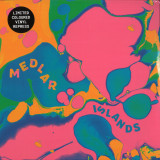
South Londons’ indomitable Medlar delivers an ambitious new album
The long-time underground favourite has collaborated with the likes of Dele Sosimi, Rebekah Reid, Deevoenay, Finn Peters, Sam Virdie, Afla Sackey and Arnau Obiols on an album that finds him taking his production to new levels.
From roots playing illegal raves in the South West to building up a cultured catalogue that bounces between house and garage, Medlar has long been part of the underground conversation. He has dropped a previous album and many innovative remixes and edits for the likes of Billy Cobham and Shirley Lites, worked in the studio and on stage with Afro legend Dele Sosimi and most recently released an album under his own name that collected myriad different sonic sketches from the past 15 years.
Islands is an altogether different proposition that comes after establishing himself as a mix engineer and producer of other people's music. In that time, Medlar has honed his skills, learnt new tricks and grown more able to express himself in sound. The result is an album that explores a more electronic palette inspired by '80s fusion sounds whilst maintaining a loose, organic flow through his use of live instrumentation. “The idea for the LP was for a collection of music which could sit alone as club tracks, but would work equally well as part of a whole. The name Islands came from this, as there's some connecting ideas but the tracks sit independently in their own little sonic worlds. I took a lot of inspiration from early 80’s electronic music produced during early years of MIDI technology… proto house, jazz fusion, electronic disco and experimental ambient. I wanted to juxtapose some of these methods with more contemporary production and make something that's ultimately quite fun!” says Medlar of the record which could easily soundtrack a summer road trip.
Across 11 tracks, he blends old-school techniques like a fusion of live instruments, FM synthesis and MIDI triggered vocal samples with more contemporary touches such as punchy, club-friendly drums and dub inspired, speaker-wobbling low end. The result is less reliant on samples than his previous works and makes for a perfect blend of retro authenticity and future freshness.
quête:the earl
Priori’s hit EP Pareidolia gets a well deserved remix treatment. The relation between Priori and Midgar started early 2023 with the release of his Pareidolia EP, where a remix for Keplrr followed quickly the year after. Now, early 2025, a group of close friends and admired artists were invited to rework the Pareidolia’s originals. Midgar affiliate Forest Drive West uses the opportunity to present not one but two remixes.
Presenting one half-time 85 bpm twist of Hazard and another slowpaced murky techno groover. Originally from Montreal, Maara forms the Canadian connection and she turns Memory Palace into a beautiful bouncy dub-techno floater. Sound experimentalist Notte Infinita takes his turn on Pareidolia’s title track and creates some magnificent eyesclosed drum & bass hypnotism. At last, Amsterdam’s upsammy brings back the light with her iconic playful approach. She flips the steady groove of Glass Shards into a jumpy interplay of rhythms and joy
- A1: Strawberry Fields Forever
- A2: Penny Lane
- A3: Sgt Pepper's Lonely Hearts Club Band
- A4: With A Little Help From My Friends
- A5: Lucy In The Sky With Diamonds
- A6: A Day In The Life
- A7: All You Need Is Love
- B1: I Am The Walrus
- B2: Hello Goodbye
- B3: The Fool On The Hill
- B4: Magical Mystery Tour
- B5: Lady Madonna
- B6: Hey Jude
- B7: Revolution
- C1: Back In The Ussr
- C2: While My Guitar Gently Weeps
- C3: Ob-La-Di Ob-La-Da
- C4: Get Back
- C5: Don't Let Me Down
- C6: The Ballad Of John & Yoko
- C7: Old Brown Shoe
- D1: Here Comes The Sun
- D2: Come Together
- D3: Something
- D4: Octopus's Garden
- D5: Let It Be
- D6: Across The Universe
- D7: The Long & Winding Road
- E1: Now & Then
- E2: Blackbird
- E3: Dear Prudence
- E4: Glass Onion
- E5: Within You Without You
- F1: Hey Bulldog
- F2: Oh! Darling
- F3: I Me Mine
- F4: I Want You (She's So Heavy)
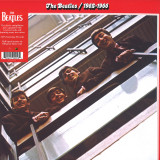
The Beatles 1962 – 1966 & The Beatles 1967 – 1970 (2023 Edition) 6LP BLACK
These landmark compilations have introduced generations of fans to the incredible history of the most storied band in music. For its 50th anniversary, the collections have been expanded: ‘Red’ has 12 additional tracks, including for the first time some of George Harrison’s earliest songs and some classic Beatles versions of R&B and rock ‘n’ roll hits that were so influential on the band. ‘Blue’ has 9 additional tracks including “Blackbird” and “Glass Onion” including the last new Beatles song, “Now And Then” for a total of 21 new additions which are all compiled onto the 3rd disc, effectively creating a ‘new’ LP for each set.
Together the 6LP’s contain 75 tracks, 36 of which have new mixes for 2023. The inserts contains new sleeve notes by journalist and author John Harris. For current fans and future generations alike, the new 1962 – 1966 & 1967 - 1970 collections are a joyous celebration of The Beatles’ timeless musical legacy.
The Vendetta Suite is back to light up the early part of 2025 with a brilliant brace of singles on Hell Yeah. Kicking things off is a glorious acid house/disco thriller backed by a soothing out of body escape.
We’ve often referred to The Vendetta Suite as Belfast’s best kept secret, but with the quality music he keeps releasing he is rightly picking up ever more of a profile. The Hell Yeah regular has long been a key part of his native Northern Irish scene thanks to the way he mixes genres; ambient, post-rave Balearic, dub and acid house all in the mix with his own unique psychedelic magic.
First up is ‘The Jam Answer’, which taps into plenty of classic sounds but reinvents them for modern dancefloors. Bendy acid lines weave in between the dusty analogue drums, familiar acid house vocal samples and fizzing chord stabs bring the heat before a cosmic synth lead sings out with sunny soul. ‘Island Hill Microdot’ channels dreamy Chicago house, the futuristic styles of IDM with the blissed out warmth of Balearic. Carried along with gentle percussion, it’s an immersive soundscape that makes for the perfect tropical distraction.
Two very different but equally effective cuts from The Vendetta Suite.
- A1: Love Me Do
- A2: Please Please Me
- A3: From Me To Yo
- A4: She Loves You
- A5: I Want To Hold Your Hand
- A6: All My Loving
- A7: Can't Buy Me Love
- B1: A Hard Day's Night
- B2: And I Love Her
- B3: Eight Days A Week
- B4: I Feel Fine
- B5: Ticket To Ride
- B6: Yesterday
- C1: Help!
- C2: You've Got To Hide Your Love Away
- C3: We Can Work It Out
- C4: Day Tripper
- C5: Drive My Car
- C6: Norwegian Wood (This Bird Has Flown)
- D1: Nowhere Man
- D2: Michelle
- D3: In My Life
- D4: Girl
- D5: Paperback Writer
- D6: Eleanor Rigby
- D7: Yellow Submarine
- E1: I Saw Her Standing There
- E2: Twist & Shout
- E3: This Boy
- E4: Roll Over Beethoven
- E5: You Really Got A Hold On Me
- E6: You Can't Do That
- F1: If I Needed Someone
- F2: Got To Get You Into My Life
- F3: I'm Only Sleeping
- F4: Taxman
- F5: Here, There & Everywhere
- F6: Tomorrow Never Knows
This landmark compilation has introduced generations of fans to the incredible history of the most storied band in music. For its 50th anniversary, the collection has been expanded with 12 additional tracks, including for the first time some of George Harrison’s earliest songs and some classic Beatles versions of R&B and rock ‘n’ roll hits that were so influential on the band.
The 3LP collection now contains 38 tracks, 30 of which have new mixes for 2023. The set’s 12 newly added tracks are collected on its 3rd LP. An insert contains new sleeve notes by journalist and author John Harris. For current fans and future generations alike, the new 1962 – 1966 collection is a joyous celebration of The Beatles’ timeless musical legacy.
- A1: Fujitronic (Flute Mix)
- A2: Money Palaver (Extra Warm Mix)
- A3: Jupiter Rising (Disco Dub)
- B1: Otto Part 1 (Synthethic Dub)
- B2: Artificial High (Rhythm Mix)
- B3: Artificial High (Vocal Mix)
- B4: Clave Song (Extra Dubbed Mix)
- B5: Anthem (Room Dub)
- C1: Musical Message (Disco Dub)
- C2: Otto Part 4 (909 Mix)
- C3: Message (Room Dub)
- C4: Tronic Rhythm (Flute Dub)
- D1: Ritm Dub (Piano Mix)
- D2: Kabu Anthem (Cosmic Dub)
"No Warranty Dubs" is made by a logic powerhouse combination, Jimi Tenor & Kabukabu meets DJ Sotofett, with most of what you can expect from all parts involved. You're served Afro Dub & Jazz in a bold and classic sonic execution. Through all 15 cuts the echoes are real and rhythms upfront, with proper extended Disco Dubs and versions of Afrobeat and Free Jazz contrasting body and soul. The album is tuneful and rugged, some cuts have vocals & synth swimming alone, while others glue the drummers groove to slick piano from beginning till end.
Followers of Jimi Tenor's life in music will be able to dive into his trademark song writing, signature flute breathing and indistinguishable style of saxophone playing, as well as his tender and electrifuingly psychedelic vocals known from early days of Puu/Sähkö and Warp releases. Kabukabu's heavyweight instrumental performance trancends regular studio recordings with joy and precision as a core element. Kabukabu's Ekow Alabi Savage aka Ekowmania (from last years "Dr.Afrodub" album) embeds deep rhythm knowledge throughout the entire musical landscape. Last in the chain is DJ Sotofett, producing and mixing his probably most classically crafted output to date. With silky gloves and clanking wrenches every element has been tweaked, re-mixed & dubbed excessively to justify a fully musical, psychedelic, warm and rhythmically rich experience.
"No Warranty Dubs" is as warm as the chords of "Money Palaver (Extra Warm Mix)", and as bombastic as opening track "Fujitronic (Flute Mix)". The album reaches it's most tender moments with the sweet "Musical Message (Disco Dub)" and dives straight into obscurity when guest drummer Ilmari Heikinheimo contributes to "Otto Part 4", a rare freejazz cut with TR-909 tickering from start til end. The simplicity of "Tronic Rhythms (Flute Dub)" is worthy a tear in an eye, while brittle souls can scatter to the thunderous horns and drenched rhythms of "Kabu Anthem (Cosmic Dub)".
Maurice Starr,Eleanor Grant,Leon Moses,Dutch Robinson,Silk,Jackie Moore&Wilson Pickett,The F
The Lowdown: A Catawba Records Story LP
- A1: Maurice Starr - You And Me
- A2: Eleanor Grant - Don’t Knock My Love
- A3: Leon Moses - She’s Too Serious
- A4: Dutch Robinson - Lowdown (7-Inch Mix)
- A5: Silk - Somethin’ ‘Bout The Way
- B1: Eleanor Grant - Lovin’ Your Good Thing Away
- B2: Jackie Moore & Wilson Pickett - Seconds Of Your Love (Satril 12-Inch Edit)
- B3: The Fantastic Aleems Ft Leroy Burgess - Get Down Friday Night (7-Inch Mix)
- B4: Sandy Kerr - Thug Rock (Logan’s Dub)
Catawba Records was born in the late seventies; a label founded by Richard Mack who ran promotions for CBS Records. Mack was responsible for breaking Gold & Platinum sellers including Earth Wind & Fire, The O’Jays, Wild Cherry, Emotions, Santana, Betty Wright and The Jackson’s. Catawba Records hosted some of the coolest up and coming names in dance music during the early to mid eighties, including Dutch Robinson, Jimmy Castor, Wilson Pickett, Jackie Moore and Brook Benton. Celebrating its 40 year anniversary, Catawba is back with a limited edition pressing featuring edits of the favourites, new and unreleased tracks and a gatefold packed with history.
- A1: Cujo Vs Two Fingers - Babou The Dog
- A2: Amon Tobin - Cruel Like Flint
- A3: Two Fingers - Golden
- A4: Two Fingers - Yumyum Rhythm
- A5: Amon Tobin - Mighty Tetra
- B1: Cujo - Early For Clink Street
- B2: Cujo - Nine Bars Back
- B3: Amon Tobin - In Long Dark Grass
- B4: Amon Tobin - Deep In Time
- B5: Amon Tobin - Red Shift
Vol 2[23,74 €]
Contains tracks by Amon Tobin, Two Fingers, and Cujo previously only available to members of The Nomark Club, Nomark’s online subscription service.
NOMARK SELECTS Vol.1 includes the first new Cujo music since the Adventures in Foam album (1996)
A compilation of previously publicly unavailable tracks selected by the members of Nomark's online subscription service, The Nomark Club. The album features work from Amon, Two Fingers and sees the return of Cujo, Tobin's earliest alter ego.
- A1: Black Sky (The Dub Extravaganza) (Leo Zero Edit)
- A2: Black Sky (The Dub Extravaganza) (Leo Zero Extended Edit)
- B1: Black Sky (The Dub Extravaganza) (Part 2)
- B2: Black Sky (The Dub Extravaganza) (Part 1)
Originally released as a DJ only promo 12" single in 1992, The Dub Extravaganza Part 2 of Shakespears Sister's 'Black Sky' was an early taste of Underworld's remixing prowess, with Darren Emerson and Rick Smith twisting the original's goth pop into a nine-minute progressive house boiler. Since then, copies of the single have been much sought after.
- Finally The Dub Extravaganza Part 2 is re-issued on vinyl, alongside The Dub Extravaganza Part 1 and two newly commissioned of the re-edits of the Underworld mix by Leo Zero.
- Limited Glow-In-The-Dark green vinyl with newly commissioned artwork - Record Store Day 2025 Exclusive.
ver the years, Andreas O. Hirsch has shaped a distinctive sound, exploring the possibilities of the electro-acoustic instruments he const- ructs. The Carbophone as well as the Electrified Palm Leaf are plucked instruments akin to the African Kalimba or Mbira. In combination with effects and loops, Hirsch creates an experimen- tal space, influenced by early electronics, Asian and African music as well as the possibilities of editing and collage. The majority of the pieces on The Salamander Treaty were made using the Carbophone Jr., a small traveling version of his original Carbophone which was the basis of the previously released Early Carbophonics. Shaped by the joy of discovery, the eight tracks traverse peculiar worlds of sound, carried by a warm downbeat and analogue vibe. Alongside the Car- bophone Jr., other instruments come into play: a vibrato-soaked guitar leads through the slowly evolving ‘Rise’, marked by a recurring Shepard tone and sounds made by striking the bars of an antique wall clock. In the straightforward yet sub-aquatic ‘Te- atime Unlimited’, a pitch-shifted Morse key wanders erratically in the background. Tape-delayed har- monicas serve as a flying carpet for ‘Drifting Newts’, and rubber bands make their melodic-rhythmical appearance through ‘Back Door Minimal’.
The Salamander Treaty refers to War with the Newts, a prophetic and black-humoured science fiction novel by Karel Čapek from 1936, which tells the story of the rise of the salamanders, who become in- creasingly intelligent and eventually begin to compete with mankind. The album is a pacifist response to this dark scenario: Hirsch’s salamanders prefer to hang out under the stars (‘Drifting Newts’), drink tea (‘Tea Time Unlimited’) and — as illustrated on the back cover — write conspiratorial-pacifist demands instead of calling for war (e.g., ‘Teaoism International’, ‘White Lilies’, ‘For Congress’). In image and word, the album invites looking at the term ‘treaty’, which phonetically contains the words ‘tree’ and ‘tea’, as a friendly reminder that the drafting of every treaty and agreement on this planet should be accompanied by a peaceful spirit.
Music, mix and artwork by Andreas Oskar Hirsch. Mastered by Volker Hennes. Pressed on BioVinyl by Optimal, who state that their manufacturing process reduces CO2 emissions by approximately 90% for the PVC component. 12“ LP, coloured sleeve, download code included,
LIMITED TO 100 COPIES!.
- A1: Porto Feliz (Mozar Terra)
- A2: Janeiro (Ion Muniz)
- A3: Serena (Steve Sacks
- B1: A Chegada (Dom Salvador)
- B2: Para Ana (Ricardo Dos Santos)
- B3: Pra Nova (Aloisio Aguiar)
- B4: Constelação (Alfredo Cardim)
- C1: Ascensão (Mozar Terra)
- C2: Clodes (Alfredo Nascimento)
- C3: Naquela Base (Guilherme Vergueiro)
- D1: Atlantico (Ricardo Dos Santos)
Gatefold 2LP
Far Out Recordings proudly presents a landmark discovery in Brazilian jazz: the long lost album by drumming pioneer Edison Machado. Recorded in New York City in early 1978 but never released, Edison Machado & Boa Nova captures a pivotal figure in Brazilian music history at the height of his artistic powers.
Combining North and South American jazz traditions with Machado's revolutionary samba innovations, Edison Machado & Boa Nova represents a triumph against the odds. After facing persecution under Brazil's military dictatorship and being forced to sell his drum kit in 1976, Machado found renewed creative purpose in New York with the Boa Nova ensemble. The resulting album captures the essence of his genius - sophisticated yet wild, controlled yet daring, leading an ensemble of some of the best jazz, samba and bossa nova players of the day.
At just fifteen years old, Machado revolutionized Brazilian music through an accident that would change everything - when his snare drum broke during a performance, he began playing samba rhythms on the cymbal. This innovation, known as "samba no prato" (samba on the cymbals), brought new layers of dynamism to samba and proved instrumental in the development of bossa nova alongside contemporaries like Antonio Carlos Jobim and João Gilberto.
A complex and passionate figure, Machado was notorious for his militant perfectionism and "attacking" style of drumming. Having spent some years of his youth in the Brazilian army, musicians often remarked that he played as if he were at war. But his innovative style, while exhibiting complete control and sophistication, somehow so often danced right on the edge of chaos and wild abandon.
After making his name in Rio's legendary Beco das Garrafas (Bottles Alley) in the 1950s and early '60s, Machado went on to form Bossa Três - the world's first instrumental bossa nova group. His influence spread internationally through collaborations with Stan Getz, Sergio Mendes, Antônio Carlos Jobim, Milton Nascimento, and Chet Baker, while his 1964 album Edison Machado É Samba Novo stands as a masterpiece of Brazilian jazz.
At 80 minutes in length, Edison Machado & Boa Nova, the lost 1978 New York sessions, is a singular achievement in Brazilian jazz. The format itself is a rarity in the canon. It’s packed full of exceptional technical precision and creative vitality, with sophisticated arrangements and masterful improvisation from its exceptional sextet of Brazilian and US musicians: Paulinho Trompete (flugelhorn/trumpet), Ion Muniz (tenor saxophone), Steve Sacks (baritone saxophone), Mozar Terra (piano), and Ricardo dos Santos (double bass).
The album features unheard compositions by Brazilian masters Dom Salvador (Salvador Trio, Harry Belafonte, Edu Lobo), Guilherme Vergueiro (Raul De Souza, Leon Ware, Joyce), Aloisio Aguiar (Arthur Verocai, Airto) amidst the plethora of captivating original material by the members of the Boa Nova ensemble.
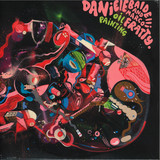
Leng Records’ first album of the year release comes courtesy of two contrasting legends of Italian dance music, Afro-Cosmic pioneer Danielle Baldelli and sometime FPI Project member Marco Fratty (real name Marco Frattini).
Both producers have a wealth of experience. Baldelli first to rose to fame as resident DJ at the near mythical Cosmic Club in the early 1980's, before moving into music production two decades ago. Since then, he’s collaborated with heaps of producers – most notably DJ Rocca, Marco Dionigi and Dario Piana – but “Oil Painting” marks his first collaboration with Frattini, an experienced producer whose bustling discography stretches right back to the Italian house explosion of the late 1980's and early ’90s.
The pair’s debut collaborative release is bold, bubbly, vibrant and funky, with the storied Italian veterans making extensive use of live instrumentation, vintage synthesizers and chugging, floor-friendly grooves. As you’d expect from a Baldelli-related project, the influences are obvious – think funk, dub-disco, cosmic rock, Italo-disco and nu-disco – but the resulting colourful cuts refuse to settle on one specific style.
Firmly focused on the dancefloor, “Oil Painting” is a gleeful, celebratory and excitable as anything either producer has released to date. For proof, check the surging arpeggio style synth-bass, kaleidoscopic synthesizer lines and eyes-closed rock guitar solos of “Automatic Amplitude”, the flute-laden dub disco shuffle of “Jasmine Flavour”, the organ-laden cosmic funk chug of “Oil Painting” and the lolloping disco-funk exuberance of “Steam Engine”, where crunchy guitar licks and Meters style organ stabs wrap themselves around a vintage disco bassline and head-nodding, toe-tapping drums.
The highlights don’t step there, either. Check the percussion and delay-laden Afro-Cosmic funk fusion of “Slinky Funk”, a veritably tropical excursion that repurposes the bassline and incessant cowbells from Cymande classic “Bra”, and the Clavinet-heavy stomp of “Positive Flow”, whose snaking, constantly-changing saxophone solo and flash-fried guitar riffs help create a thrillingly excitable mood.
From start to finish, “Oil Painting” is an album full to bursting with musical joy and umpteen giddy calls towards the dancefloor. From producers of Baledlli and Frattini’s experience, we’d expect nothing less.
Limited Edition to 200 copies incl. Remixes by DALO, Benedikt Frey and Nathan Dawidowicz
R.i.O. welcomes Brainwave Research Center, a NYC-based duo consisting of house/techno producer Chase Smith and documentary filmmaker Christa Majoras. In early 2023 they freed their debut album "figure 1" via their own label BRC. Two more albums followed. All documenting their love for experimental yet charming music of all kinds.
Their influences span a vast spectrum, from Steve Reich, Laurie Spiegel, and Edgar Froese to Martin Rev, John Carpenter, early Kraftwerk, or the ambient techno of Pete Namlook's Fax +49-69/45046 label. Yet, Brainwave Research Center forges a sound distinctly their own, seamlessly blending analog synthesis with electro-acoustic experimentation.
On "Psychic Antenna", the duo takes a gentle rawer approach. The tracks range from the manic verbal Die-Tödliche-Doris-like loops of "I Find Myself" to the meditative cosmic trance of "Open Your Mouth." "Orange Drop" and "Transmitter Park" toy with the dancefloor, channeling slow-motion acid trance and krautrock echoes.
The release is rounded out by three remixes: R.i.O.'s own Benedikt Frey delivers a deep, trippy groover full of inner musicality, while close companion DALO crafts a dark, echo-drenched pop rework, and Berlin's Nathan Dawidowicz injects psyched nu-disco rhythms, expanding "Psychic Antenna" into seven notions of intense neural oscillations.
ML
An exclusive 7" re-release of this psychedelic funk ballad from Tulsa's "Outback" Band. As featured on Now-Again's 'More Loving On The Flipside' compilation, "Strangers (In Our Homeland)" epitomises the expression of social & political change during an era of psychedlia infused music. In partnership with the two surviving members of Outback, both Symphonical & Now-Again are proud to showcase the voice of independent artists.
----------
The origin of "Outback" dates back to the late 50s, a five-piece blues outfit named "Little Lo and the Rest of Us" included music educator & bass guitarist Edward "Cha-Cha" Cherry, saxophonists Eugene "Buggy" Roach & James "Flab" Farley whom, alongside drummer Roscoe J. Dabney III "Roach", Ronnie Wilson on trumpet, guitarists Roy "Rochester" Walker & Michael Collins, would form The Magnificent Seven, the house band for Tulsa's 'Rose Room'.
Alumni of Booker T. Washington High School, The Magnificent Seven influenced & set the standard for the Tulsa sound, as demonstrated through their only single, recorded in 1966, the two part 'Pluck-A-Pluck'. 'The Sevenettes', the groups' female vocal trio, included the rotation of Lena Luckey Wilson, Gwendolyn French, Rose Brewer Lewis, Jeanetta Williams & Maxayn. The Magnificent Seven, led by "Cha-Cha", toured nationally throughout the 60s with their infectious, raw R&B sound, and were the platform for many of Tulsa's talent including Ronnie & Charlie Wilson who would later create the GAP Band.
Roscoe J. Dabney III, the first Black Panther to establish the Tulsa chapter in 1969 known as the NCCF (National Committee to Combat Fascism), proposed the name change to "Outback" in the early 70s. Their sound & formation was changing from R&B to Psychedelic, from the grit to the phase, epitomised by their unique line-up of having two bassists playing simultaneously, both Reggie Cherry & "Chilly" Willie Lewis, the musical foundation to their only recorded single, "Strangers (In Our Homeland)" & "Reggie's Thang".
Song writer & band affiliate, Maurice Pope, produced the lyrics to "Strangers (In Our Homeland)" and handed over the musical attributes to Willie Lewis & Outback to convey his message, as sung by Lena Luckey Wilson. Dabney recalls the song is based on religious scriptures, whilst highlighting the parallel of Black slavery in the U.S.
"Reggie's Thang", written by Dabney's cousin, bassist Reggie Cherry, provides a psychedelic instrumental, a sound which Lena recalls is what set apart Outback from other Tulsa groups. As well as playing clubs, the seated shows provided an environment for the group to showcase their musicianship to those who wanted to be immersed & listen.
Their single, released on Empathy, was recorded in 1972, and are the only known recordings by Outback. Recorded live onto 8-track at a studio located at on East Pine St in the heart of Tulsa's Black community, an independent & unknown studio located on a strip mall.
The Outback members who recorded are:
Lena Luckey Wilson - Vocals
Roscoe J. Dabney III "Roach" - Drums
"Chilly" Willie Lewis - Bass
Reggie Cherry - Bass
Edward "Cha-Cha" Cherry - Keys
Joyce Daws - Trumpet
Roy Walker "Rochester" - Guitar
Robert Luckey "Uncle Bobby"- Percussion
Fredy Berry "Freddy" - Tenor Sax
Band leader & group manager: Edward "Cha-Cha" Cherry
Booking Agent: Ernie Fields Sr.
In 1973 whilst performing in Ft. Worth, TX, Buck Ram approached Willie Lewis backstage and invited him to join The Platters, Lewis accepted. Supposedly, a recording deal was offered to Outback in exchange, which never happened.
The group continued in various formations after Lewis left, however as an integral member, the feeling never equalled their original form and soon after dissolved.
Leon Russell approached Lena Lucky Wilson in 1974 to go on tour with the GAP Band as their backing singer, upon returning Tulsa Lena moved to Los Angeles to pursue her musical career with Leon & Mary Russell amongst various others.
Dabney continued music and became a TV producer & director in 1976.
The only surviving members of Outback today are Lena Luckey Wilson & Roscoe J. Dabney III.
On Katelyn Clark and Mitch Renaud's »Ouroboros,« astronomical and astrological phenomena, concepts and symbols such as the Great Year or the Eternal Return serve as the starting points for sonic explorations and experimentations. Focusing on a uniquely tempered range of frequencies, from low-enddrone rumbles to airy pipe swirls, the duo develops a minimalist and highly evocative sonic universe on their debut album for Hallow Ground.
Working as composers, improvisers and curators in Canada's vibrant experimental and early music scenes, Clark and Renaud began developing »Ouroboros« through extensive improvisation with a reduced setup. Clark, who has worked extensively with historical keyboards since her studies in Amsterdam and Siena, played a small pipe organ modeled after a 14th-century instrument while Renaud brought a modular synthesizer and his interest in feedback systems to the collaboration. Later, the duo further refined their artistic dialog and the sonic interactions of the two instruments through the shared space of a two day recording session in Vancouver. Subtle crackling, acoustic beating and other (psycho-)acoustic effects in five pieces document this encounter, giving the music a profound physicality while hinting at the bodily presence of the two collaborators.
Just as the cyclicality of natural phenomena or the repetition of planetary movements is both a scientific fact and of the cultural imaginary, the sound worlds of »Ouroboros« are fundamentally rooted in time and space while transgressing the idea of a »here and now« through their conceptual links to geological and planetary time. The interplay of portative organ and modular synthesizer, which merge fluidly and in ever-changing ways, leads to a kind of circularity, a timelessness, a no-time. At the same time, the movements and subtle changes undermine the idea of repetition in the negative sense. After all, the Eternal Return, as Gilles Deleuze writes in regard to Nietzsche, is not the return of the same but a repetition of repetition. The only constant is change, the production of new intensities, of new forms of life – and of new frequencies.
- How Big Is Time
- It Happened Once
- The Quarry
- It Will Be Gone Adm
- The Most Special Place
Elori Saxl's soundtrack for the VR film Texada is an exploration of the smallness of human existence within the grand scope of geologic time, mirroring the film's exploration of Texada Island's limestone-rich landscape. Saxl, inspired by her own experiences of island life on Madeline Island, assembled a soundscape that captures both the vastness of Earth's ancient processes and the intimate moments of human existence. Using analog synthesizers, baritone saxophone (performed by Henry Solomon), and processed field recordings of water and rocks, she created ambient layers that evoke cycles, waves, and the transformative forces of nature. The score begins with an exploration of Earth's origins and the emptiness of a rocky planet before life emerged. This foundation grows into pieces like "The Quarry," where the central geological feature, limestone, takes on a dynamic presence. As loops and rumbling textures evoke the rise and movement of stone over millennia, as abstracted creatures spiral upwards, full of life. The album concludes with "The Most Special Place," which serves as a final bridge between the cosmic and the intimate, leaving a lasting impression of how deeply human lives are intertwined with the ancient geology beneath our feet. Saxl's compositional process itself mirrors the themes of transformation and cycles. Working with limited time and resources, she recorded Solomon's saxophone parts early in the project, later repurposing fragments through re-pitching, stretching, and digital effects. As she explains, "I experimented with bringing out the human character of the saxophone by highlighting breath and imperfections while also pushing it into an alien/unrecognizable/bigger world through digital processing and effects." The result is a soundtrack that feels both organic and otherworldly, capturing the grand scope of Earth's timeline while remaining grounded in human emotion and connection.
‘SUN SHONE’ is a multidisciplinary music and art project of Istanbul-born, Amsterdam-based Deniz Omeroglu AKA Loradeniz,. ‘SUN SHONE’ marks the arrival of her debut full-length album: eight tracks of ambient electronic music painted masterfully with a palette of synthesizers, effects, percussion and ethereal voice.
‘SUN SHONE’ was conceived in two parts: the first tracks coming spontaneously to life in the aftermath of heartbreak, with Omeroglu trusting the creative flow and using it as a method of self- healing. What was initially planned as an EP release grew into a full-length album as she spent one month consciously working on the perfect B-side to complement the music.
Omeroglu wrote, performed and produced everything on the album, drawing on her deep knowledge of music theory and production; in addition to studying classical piano in the Conservatory from an early age, she holds both a Bachelor’s degree in Composition Studies and a Masters degree in Sound Design.
Many of the compositions on ‘SUN SHONE’ centre around interplaying synth arpeggios, oscillators expertly tuned for an equal degree of menace and sweetness that balances on a knife-edge. This ambiguity is echoed lyrically across the record, with its recurring themes of love lost and memories revisited. From the spoken word of opener ‘Saint Odds’ and ‘Swimmer’ to the layered choral swells of ‘No Moon’ and the melodic hooks of ‘Brick House’, Omeroglu’s voice is central to ‘SUN SHONE’, employed with impressive versatility. At times, it feels simultaneously fragile and powerful, perhaps nowhere more so than in the yearning swells of “Cloud Sofa’, a healing lullaby for lost love that offers up one of the most delicate moments on the album.
Whilst this may loosely be referred to as an ‘ambient’ album, Loradeniz’s knowledge of modern day production techniques and experience as both a sound designer and seasoned DJ (both in clubs and on radio) makes its presence felt throughout; echoes of Artificial Intelligence-era IDM appear in the dancing arpeggios and rhythmic pulses of ‘Sea Serpent’ and ‘Waterbear’, while the album closer ‘Aftersun’ could easily be imagined working as the euphoric last tune of a club set at sunrise.
With her debut album, Loradeniz weaves together an impressive breadth of styles and sounds, all held seamlessly together by a feeling; a cathartic desire to bring out all the melancholia from within. The album opens with the words ‘The search of love continues in the face of great odds’ a suitable mantra for a record that manages to combine melancholy with intense rushes of positivity and hopes for the future.
- A1: Leuchtturm (Remastered 2025) 04 28
- A2: Neuland (Remastered 2025) 05 30
- A3: Ag Penthouse ( 2 Epoche ) (Remastered 2025) 05 17
- A4: Unland (Remastered 2025) 05 39
- A5: Ral 7035 (Remastered 2025) 04 09
- B1: Wanderlust (Remastered 2025) 06 50
- B2: Distel (Remastered 2025) 07 16
- B3: Traumschön (Remastered 2025) 05 29
- B4: Junge Männer Von Gestern (Remastered 2025) 01 43
- B5: Der Endlos Blaue Himmel (Remastered 2025) 01 55
Originally released on CD only – those were the days – “Triola im Fünftonraum“ counts as one of the most iconic albums of the early Kompakt era. Experience this timeless masterpiece of lush electronica lovingly restored and remastered for the first time on vinyl – 21 years after its inception.
We found this review from back in the days that perfectly sums up what “Triola im Fünftonraum” is all about:
The press material for “Triola im Fünftonraum” made allusions to home listening, when the album is mostly about movement… in a car …preferably a fast one … on a muggy spring day.
This might catch followers of producer Jörg Burger off guard. Up until this point, the producer’s Triola tracks – limited to three consecutive appearances on Kompakt’s yearly Pop Ambient series and a spot on “Leichtes Hören Teil 1” – were free-floating ambient washouts (albeit wondrous free-floating ambient washouts) with no pulse. The album, on the other hand, is beat-driven. Though still resolutely ambient – more an update of Burger’s lushest Bionaut tracks, only fully engaging instead of mildly diverting.
The soft, synthetic hand drums and tranquil vapors of “Leuchtturm” from Pop Ambient 2003, remain untouched and begin the album. Two other tracks that might sound familiar receive dynamic overhauls, now supported with quick dance rhythms and additional layers of synth gauze; the whispy flute trills and lightly flickering keys of “AG Penthouse”, for instance, are melted into a churning rhythm and some singing keyboard vamps that resemble a relaxed take on Tangerine Dream’s suspenseful soundtrack work for “Thief” (minus the crazy guitars).
What really makes the whole thing glow is the manner in which the tracks are attached, flowing in and out of another, rising and cresting and receding, with supreme poise – even if its title provides no indication, the album is as much a travelogue as Carl Craig’s “Landcruising”, Morgan Geist’s “Driving Memoirs” and Model 500’s “Deep Space”.
These are some of Burger’s most inventive productions, a remarkable feat since he’s been doing this so long. Catch yourself in the right frame of mind and you’ll wonder if everything he has released has been one extended ramp-up to this. In this age, it’s also refreshing to have a purely ambient techno album with absolutely no connection to “Boards of Canada”.
In other words, it’s a landmark for both its label and its genre.
Andy Kellman
Copyright 2025 TiVo Corporation
Ursprünglich nur auf CD veröffentlicht – das waren noch Zeiten – zählt „Triola im Fünftonraum“ zu den ikonischsten Alben der frühen Kompakt-Ära. Dieses zeitlose Meisterwerk schwelgerischer Electronica erscheint nun 21 Jahre nach seiner Entstehung erstmals liebevoll restauriert und remastered auf Vinyl.
Wir haben diese zeitgenössische Rezension gefunden, die perfekt zusammenfasst, worum es bei „Triola im Fünftonraum“ geht:
Das Pressematerial für „Triola im Fünftonraum“ spielt auf das Zuhören zu Hause an, obwohl es in dem Album hauptsächlich um Bewegung geht … in einem Auto … vorzugsweise einem schnellen … an einem schwülen Frühlingstag.
Das könnte die Fans des Produzenten Jörg Burger überraschen. Bis zu diesem Zeitpunkt waren die Triola-Tracks des Produzenten – beschränkt auf drei aufeinanderfolgende Auftritte in der jährlichen Pop-Ambient-Reihe von Kompakt und einen Platz auf „Leichtes Hören Teil 1“ – frei schwebende Ambient-Auswaschungen (wenn auch wundersame frei schwebende Ambient-Auswaschungen) ohne Puls. Das Album hingegen ist beatgetrieben, obwohl es immer noch entschieden Ambient ist – eher eine Aktualisierung von Burgers üppigsten Bionaut-Tracks, nur dass es voll und ganz fesselt, statt nur leicht abzulenken.
Die sanften, synthetischen Handtrommeln und die ruhigen Dämpfe von „Leuchtturm“ aus Pop Ambient 2003 bleiben unangetastet und bilden den Auftakt des Albums. Zwei weitere Stücke, die einem bekannt vorkommen könnten, erhalten eine dynamische Überarbeitung, die nun von schnellen Tanzrhythmen und zusätzlichen Schichten von Synthesizer-Gaze unterstützt wird; die flüsternden Flötentöne und leicht flackernden Tasten von „AG Penthouse“ zum Beispiel verschmelzen zu einem aufgewühlten Rhythmus und einigen singenden Keyboard-Vamps, die an eine entspannte Version des spannenden Soundtracks von Tangerine Dream erinnern, der für „Thief“ (ohne die verrückten Gitarren) verwendet wird.
Was das Ganze wirklich zum Leuchten bringt, ist die Art und Weise, wie die Tracks miteinander verbunden sind, wie sie ineinander fließen, ansteigen und ihren Höhepunkt erreichen und wieder abklingen, und das mit höchster Gelassenheit – auch wenn der Titel nichts darauf hindeutet, ist das Album ebenso ein Reisebericht wie Carl Craigs „Landcruising“, Morgan Geists „Driving Memoirs“ und Model 500s „Deep Space“.
Dies sind einige von Burgers einfallsreichsten Produktionen, eine bemerkenswerte Leistung, wenn man bedenkt, wie lange er schon dabei ist. Wenn man sich in die richtige Stimmung versetzt, fragt man sich, ob alles, was er bisher veröffentlicht hat, eine einzige Vorbereitung auf dieses Album war. In der heutigen Zeit ist es auch erfrischend, ein reines Ambient-Techno-Album zu hören, das absolut nichts mit „Boards of Canada“ zu tun hat.
Mit anderen Worten: Es ist ein Meilenstein für das Label und das Genre.
Andy Kellman
Copyright 2025 TiVo Corporation
- Stand Up And Fight
- One Family
- Cosmic Journey
- Miles From Home
- Wake Up To The Day
- Morphology
- Breaking Through Time
- Natural Law
- Dancing Past Nibiru
- Field Of Dreams
Golden Ratio are Simon Stoll & Gary Clegg
It all started as a lockdown project in 2020 with Gary and myself exchanging ideas down the ether which grew into a body of work that we were excited to take further. We continued with the online process and enlisted some musicians we knew to fill in the gaps. Initially, this featured Jake Telford on sax and flute who is also credited with co-writing Morphology and Natural Law and Andre Espeut vocalist also credited with co-writing Stand Up & Fight, One Family and Wake Up To The Day. As restrictions lifted we were able to get some drummers into the studio: Filippo Galli (tracks 1 & 2) and George Addison-Atkinson (tracks 3-9). Other musicians featured are Kevin Davy, trumpet on Breaking Through Time, Gianluca Chiarella guitar solo on Morphology and Mohammed Nazam guitar on One Family.
In terms of previous experience, Simon was a member of Mamas Gun in their very early days before concentrating on a business career but has actively played with musicians from the north London music scene since the late 90’s. Gary played on the dance mix of Lazy by David Byrne produced by DJ Mark Wilkinson, played for Funkshy (Tansay Omar project), played in Charlotte Kelly’s band (from Soul II Soul) and was resident bassist at the Iceni club in the 90’s.
It’s long been our dream to have our own project featuring original compositions and dedicated to the style of music we love, our routes being the jazz funk and acid jazz scenes from the 70’s, 80’s and 90’s. We now have the opportunity to try and realise this dream and feel your label would be a perfect fit for us as it echoes and promotes those same musical influences.
First time on LP, a previously unreleased, remastered collection limited to 1000 units / white vinyl. The Legendary Guitar Player Who Inspired Stevie Ray Vaughan, Joe Bonamassa, and Kenny Wayne Shepherd. Johnny Winter had a unique career plan: to make music. The lightning-fast guitarist fulfilled this wish magnificently, decade after decade., becoming one of the most respected singers and guitarists in rock. From the Sixties onwards, Winter was the unofficial torchbearer of the blues, standing up for his idols like Muddy Waters and John Lee Hooker and promoting their careers. A musical prodigy, he grew up in Beaumont, Texas, on a diet of blues and rock'n'roll. As a teenager he hitchhiked to Louisiana almost every weekend to play in small nightclubs. After a short stay in college, he gave up his academic career and devoted himself to making music. This is the first collection of the "early years" to distinguish between the formative blues roots and the advance to the rock idiom. It is the best forerunner of his breakout record "The Progressive Blues Experiment" and the "Johnny Winter" album. Curated By Blues Historian Bill Dahl